SCOTTISH TRANSPORT AWARDS BOOK OF WINNERS

transporttimes

transporttimes

As ever, it has been a real privilege to chair the judging panel for the Scottish Transport Awards. There’s no such thing as a quiet year in transport but the past 12 months, culminating in the formation of a new government and welcoming a new Cabinet Secretary, have been exceptionally eventful, productive, challenging and rewarding.
been said that we only hear about transport when things go wrong, but so much goes right – or, simply, just goes. Every day of the year, in every part of Scotland, our network and its staff keep people and goods moving, services and the economy running.
Taking the time to celebrate these accomplishments is so important, especially as we gear up for an incredibly busy summer, even by Scotland’s standards.
The judging panel for the 2026 Scottish Transport Awards:
Alison Irvine
Chief Executive, Transport Scotland; Chair of the Scottish Transport Awards Judging Panel
Bettina Sizeland
Director of Bus, Accessibility and Active Travel, Transport Scotland
Robert Jack
Managing Editor, Passenger Transport
Paul White
Director, CPT Scotland
Hannah Ross
Chief Executive and Accountable Officer, Scottish Rail Holdings Limited
Having the opportunity to reflect on all of this as we review the award nominations is one of the highlights of my role as Chief Executive of Transport Scotland. So many fantastic people, organisations and projects which don’t routinely get recognition receive their well deserved moment in the spotlight, and the gathering of so many influential figures across the sector is a really special event.
We all share one collective goal – improving Scotland’s transport system. It has often
The awards ceremony last month was a timely reminder of that phenomenal daily effort, as well as some truly innovative and industry-leading projects. The use of technology to make journey planning smoother; the power of collaboration to make the whole network more efficient and resilient; the harnessing of innovation to transition to greener, more sustainable forms of power.
Not to mention the sheer talent of individuals delivering exceptional customer service and the leadership and professionalism keeping the system moving in the face of all manner of challenges.

Glasgow will be back on the international stage as it plays host to the Commonwealth Games again, the Edinburgh Festival attracting its usual crowds of visitors from home and abroad, Trnsmt Festival and the Royal Highland Show have already concluded and a number of other major concerts and events give us the chance to show what we do best – keeping Scotland moving with energy and positivity.
At the same time, Transport Scotland is focused on the priorities of the new administration and how we, as ever, deliver the vision to help reduce inequalities, reduce transport emissions, support our economy and improve our health and wellbeing.
And of course I hope you all get some well-deserved and important rest and relaxation, perhaps cheering on Scotland in the bumper summer of sport!
The year ahead promises another busy, challenging and exciting set of opportunities. Opportunities to make people’s lives simpler, healthier, wealthier and more fulfilled. I am already looking forward to joining you all again next year to reflect on another set of successes. We should all be so proud of the work that we do and the difference that we make, every day, in all parts of our country.
Sponsored by Charity
Partner

Supported by







12.5m Passengers served in 2025
Multi-modal, multi-operator Ticketing
Proud supporters of the Scottish Transport Awards









Stephen Flynn MSP Cabinet Secretary for Economy, Tourism and Transport
"It’s so important that we recognise not only the projects and achievements of the past year, but the people behind them. Their work makes a real difference to lives across Scotland"
The Transport Awards are about recognising excellence across a sector that is so fundamental to Scotland’s success.
I was sorry not to be able to attend the ceremony this year. Given the transport challenges that have faced our island communities I thought it important to visit the Western Isles in person at the earliest possible opportunity to demonstrate and discuss my commitment to improving the services that they rely on.
I do however hope I can join the awards next year to thank everyone involved and congratulate the winners and nominees in person. The first few weeks of my ministerial role have been busy, demanding and fascinating as I learn so much about this industry.
We all know that transport is fundamental to the First Minister’s priorities - it underpins economic growth, leisure, tourism and national prosperity. It is a huge part of our economy, helping to support over 150,000 jobs and just under £10 billion of Gross Value Added.
This new Government will focus on ensuring that public services are more agile and responsive to the needs of the people of Scotland, and I look forward to forging connections across the transport sector over the coming weeks and months. It is the hard work, professionalism, dedication and resilience of its people that keeps our critical system moving forward.
Reflecting on the work of winners and nominees over the past year, I am struck by many impressive innovations. Our Public Transport Operator of the Year, ScotRail, also won Most Innovative Transport Project of the Year for its for its world-first deployment of lowearth orbit satellite technology
to improve onboard Wi-Fi connectivity across remote and rural Scotland.
Additionally, we’ve seen aerodynamic ‘shape shifting’ haulage trailers that reduce in size when carrying less cargo; the transformation of a car park site in Dundee into an active travel transport hub; and exploration of the transition of freight fleets to zero-emission vehicles in the North East.
The role of technology also continues to shape how we plan and experience our journeys – including integrating current and historic data to help partners map travel patterns and plan sustainable transport; piloting an AI traffic signal in Glasgow, using real-time data at junctions to prioritise buses and reduce congestion; and using intelligent tracking to adapt gritting routes in real time in South Lanarkshire, helping to conserve salt and reduce fleet emissions in winter.
Developments like these are making the transport system more proactive and userfocused than ever before.
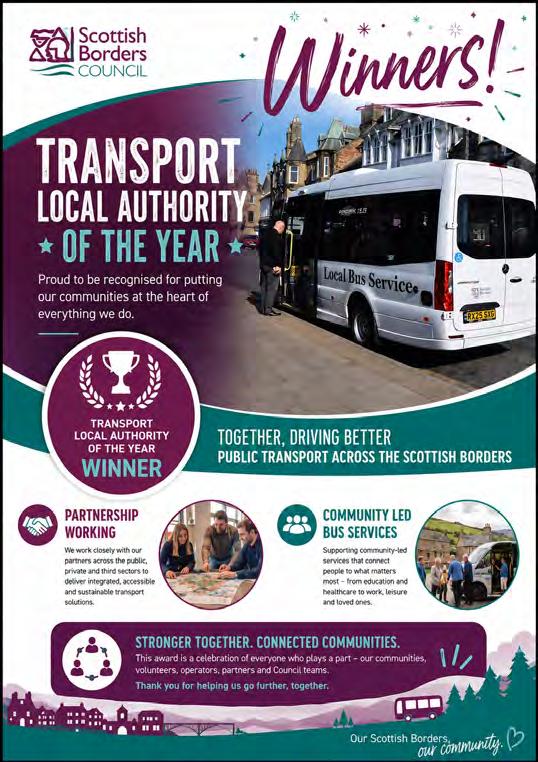
Equally important is the design and planning of places – creating safer, more inclusive streets and enabling active and sustainable travel. The Local Authority of the Year, Scottish Borders Council, was recognised for transforming public transport in the region, bringing services in-house and expanding demand responsive transport options.
The opening of the Glencoe Greenway has created an accessible, traffic-free route for many thousands of visitors; and recently in Arbroath, the former A92 dual carriageway was repurposed as an accessible space for active travel and enabling connectivity with transport hubs.
I am pleased to see a strong theme of the connection
between transport and community value. Railway contractors and volunteers had transformed a derelict wasteground near Abington primary school in Biggar into a natural play environment. Aberdeen Airport partnered with charities and local fundraisers for regional causes, while advancing their own environmental sustainability work; and further improvements to the Coalie Park project in Leith have made the space more accessible and attractive to the local community and visitors.
Lastly, on the importance of road safety and accessibility, I was pleased to see several initiatives nominated for awards including casualty reduction programmes on our trunk roads; bus priority measures in our cities; and 20 miles per hour traffic management. These are vital for us to achieve our shared goals for safer road behaviours and improved design.
Our collective ambition is clear: to deliver a sustainable, inclusive and resilient transport system that supports Scotland’s wider priorities.
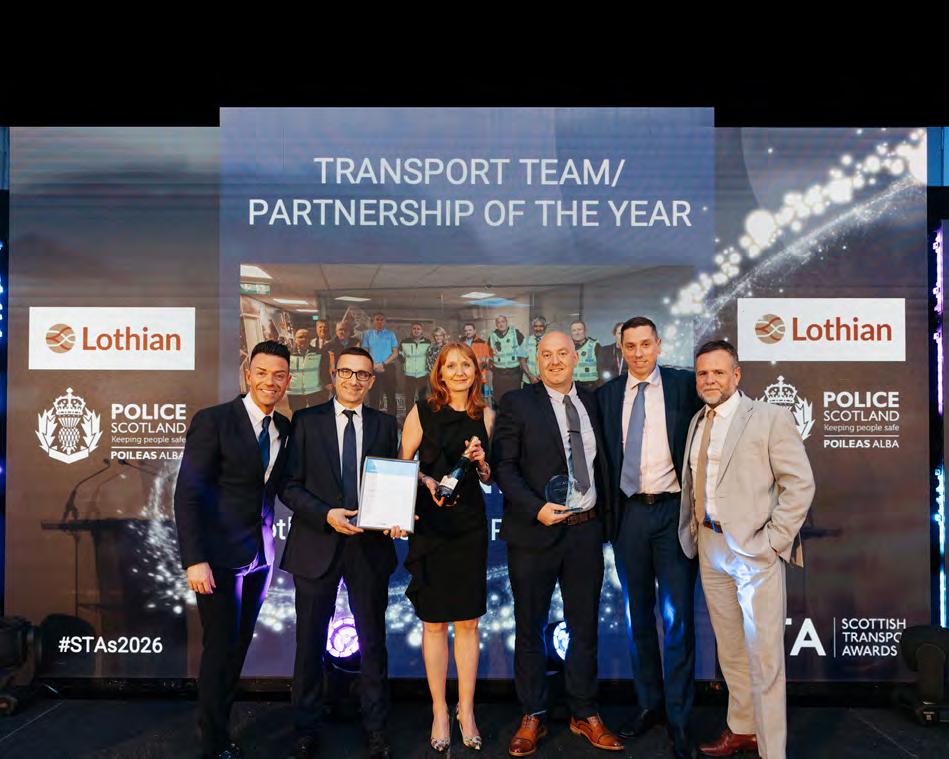
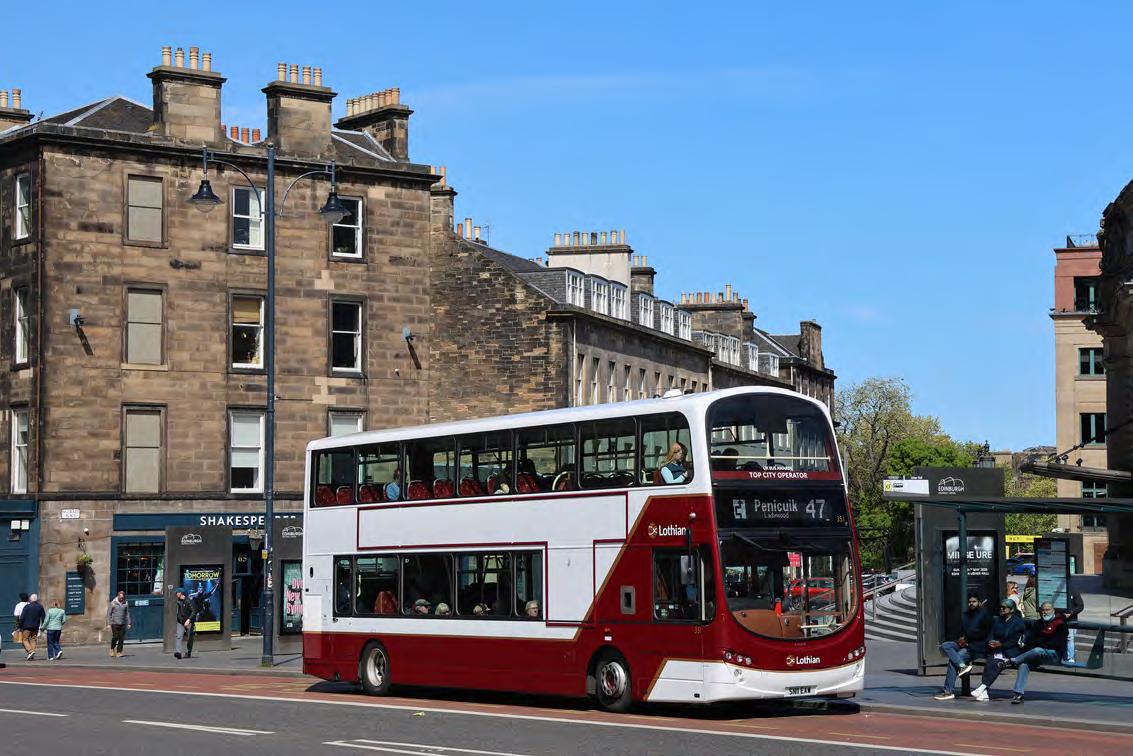
The strength of our partnerships – from local authorities and operators to engineers, planners and community organisations – not least our Partnership of the Year between Lothian Buses and Police Scotland, which is tackling antisocial behaviour and improving passenger safety, is fundamental to success.
It’s so important that we recognise not only the projects and achievements of the past year, but the people behind them.
Their work makes a real difference to lives across Scotland.
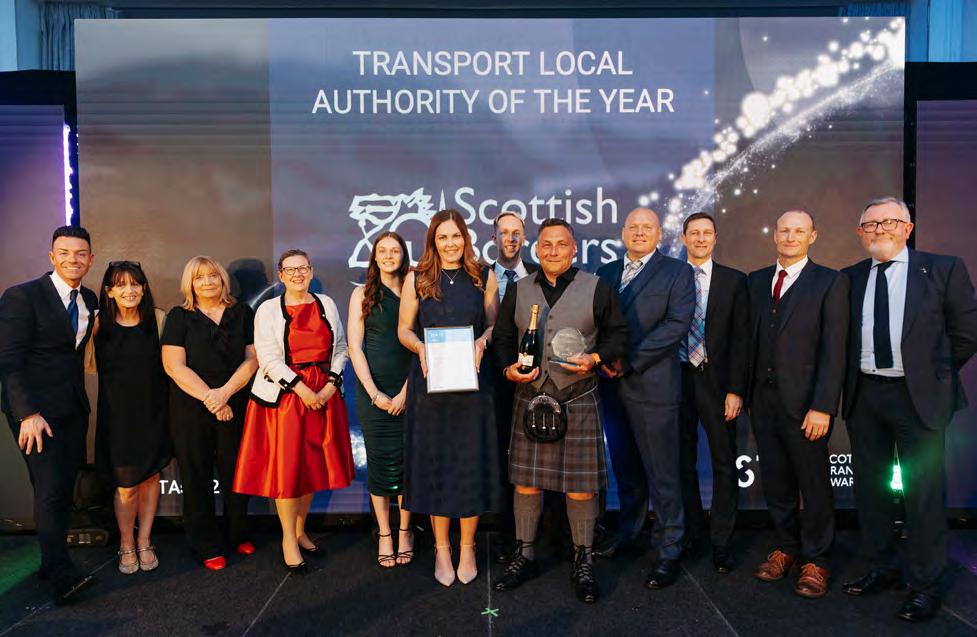
A submission in this category should demonstrate progress and improvement across a range of sustainable transport policy areas supported by measurable outcomes. We are looking for evidence that public transport patronage levels and/ or mode shift and customer satisfaction ratings are moving in the right way, albeit in a post-Covid context. Submissions should include the approaches being utilised to attract people back to local transport and what approaches are being used to ensure accessible and affordable travel is available for all. Evidence on improving public health through increased active travel infrastructure and networks, the use of decarbonised fleets (e.g. electric buses) and road fatality statistics will also be necessary.
Scottish Borders Council Passenger Transport Team is a small team responsible for delivering school transport, local bus services and rural transport across one of Scotland’s most geographically extensive local authority areas.
Over the past year, the team has delivered a series of changes to public transport provision across the Scottish
Borders, including network expansion, service reintroduction and the strengthening of rural and town-based links, alongside partnerships with local operators.
The core bus network, delivered in partnership with Borders Buses, has grown from approximately 500,000 passengers in 2019 to more than 850,000 by the end of 2024. This represents an increase of around 70% compared to pre-pandemic levels, and exceeds recovery trends seen across many comparable rural networks.
A key operational change saw the Council increase its direct service delivery following withdrawals by commercial operators and rising operating costs. The Council-operated fleet increased from 18 to 32 vehicles, supported by Scottish Government Community Bus Fund and UK Government Levelling Up funding. This supported the introduction of town services in Kelso, Galashiels and Peebles, alongside revised rural connections in Upper Tweeddale, Morebattle and Yetholm, providing access to wider services including education, healthcare and employment.
Route planning was developed using a data-led approach, incorporating ticket machine data, mobile movement information and workforce postcode analysis to inform service changes and prioritisation. Council-operated services recorded growth from approximately
2,000 to almost 12,000 passengers per month over the period, alongside reported improvements in reliability and customer feedback.
Demand Responsive Transport pilots were introduced in Selkirk and Berwickshire, delivering more than 3,400 journeys for residents in areas not served by fixed-route services. The Council also supported over 100 school transport trips, carrying more than 3,000 young people across the year. Access improvements at Borders General Hospital and enhancements to community transport links are also in development.
Customer-facing changes have included updated timetable displays, tap-and-pay payment options and the installation of 15 Real Time Information screens at key locations across the network.
Highly Commended:
South Lanarkshire Council
Other shortlisted entries:
South East of Scotland Transport Partnership
Previous winners:
2025: Orkney Islands Council
2024: Strathclyde Partnership for Transport


If you work in finance you read the FT...
If you work in passenger transport you need PT...
This category encompasses all aspects of road safety, traffic management and enforcement. Examples of projects that would qualify are speed management, road space reallocation projects (for example bus lanes) and parking enforcement schemes. We will be looking for results such as casualty reductions, improved journey reliability, modal shift, or congestion reduction.
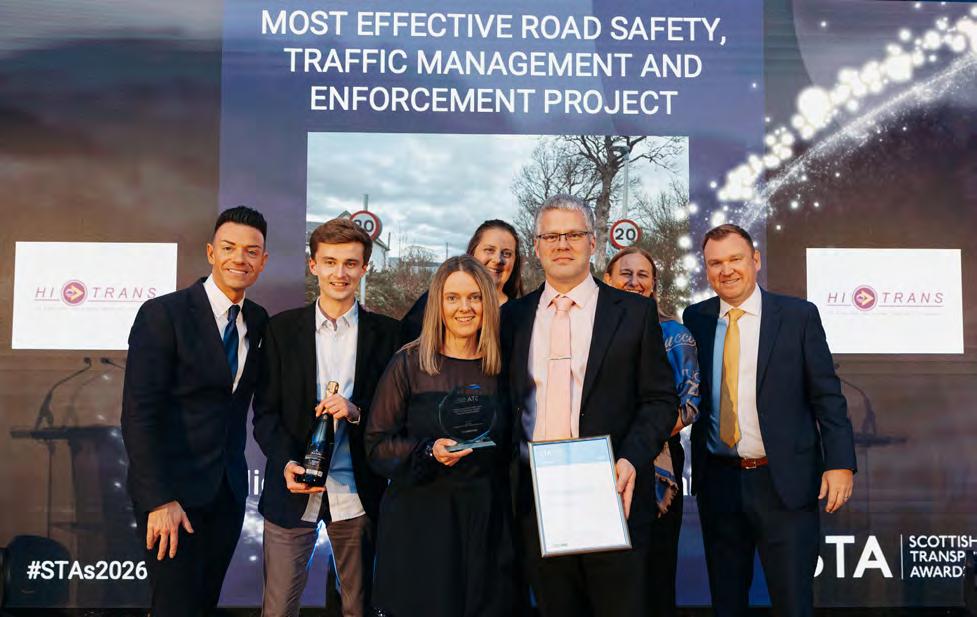
Highland Council is the largest local authority by landmass in the UK, serving 237,000 residents across a geographically diverse region. In June 2023, a team of four officers began implementing a region-wide 20mph programme across 127 settlements, converting around 600km of roads from 30mph to 20mph.
Following Transport Scotland early adopter funding, 211 settlements were assessed, with 127 selected for implementation. The programme was delivered using a single Temporary Traffic Regulation Order covering all settlements simultaneously, reducing administrative complexity across a large rural area. Delivery focused on new signage, road markings and painted roundels, with additional traffic calming introduced only
where lower compliance was anticipated, ensuring resources were targeted effectively. The Council undertook an extensive programme of engagement with elected members, community councils and local communities throughout development and implementation. A six-week public consultation attracted more than 11,000 visits and over 5,300 responses, while targeted surveys were undertaken for 11 roads where proposals generated particular local interest. Survey findings and post-implementation assessments were shared with councillors and community councils.
Monitoring has demonstrated measurable reductions in vehicle speeds across the network. Speed surveys undertaken at more than 250 locations found that roads with existing average speeds of 28mph or above recorded an average reduction of 3.2mph, with the largest individual reduction reaching 7mph. The greatest reductions occurred on roads where speeds had previously been highest, helping to maximise the safety benefits of the programme.
In May 2025, Highland Council approved making the 20mph limits permanent. Early collision data to the end of 2025 indicates a positive downward trend as the new limits become established. The programme demonstrates how a proportionate, evidencebased approach can successfully deliver a large-scale speed management initiative across one of Scotland's most geographically challenging local authority areas.
Highly Commended:
Transport Scotland/BEAR Scotland - A9
Perth to Inverness Casualty Reduction Project
Other shortlisted entries:
City of Edinburgh Council and Marston
Holdings - Driving Change: Measurable Road
Safety and Network Benefits Through Blue Badge Enforcement and Pavement Parking
Connected Places Catapult - S4EV –ChargeSaint
Glasgow City Council & Stantec - Glasgow Citywide 20mph Project
Glasgow City Region Bus Partnership –Don’t Be a Bus Blocker
South Lanarkshire Council - Data Led Road
Safety and Casualty Reduction Programme
South Lanarkshire Council - Streetscape Management
Previous winners:
2025: Project Centre :NSL and City of Edinburgh Council
2024: South Lanarkshire Council: Road Safety Programme
2023: Glasgow City Council: Ultra Smart Cycle System (USCS)
2022: South Lanarkshire Council: Casualty Reduction Programme
2020: City of Edinburgh Council: 20mph Programme
2019: Scotland TranServ, Strategic Road
Safety Team: Saving Lives through Innovation
A submission in this category should demonstrate how changes to bus services and facilities have brought about improvements. An increase in passenger numbers; modal shift; improved customer satisfaction ratings; or improved reliability are all examples of the ways success could be documented.
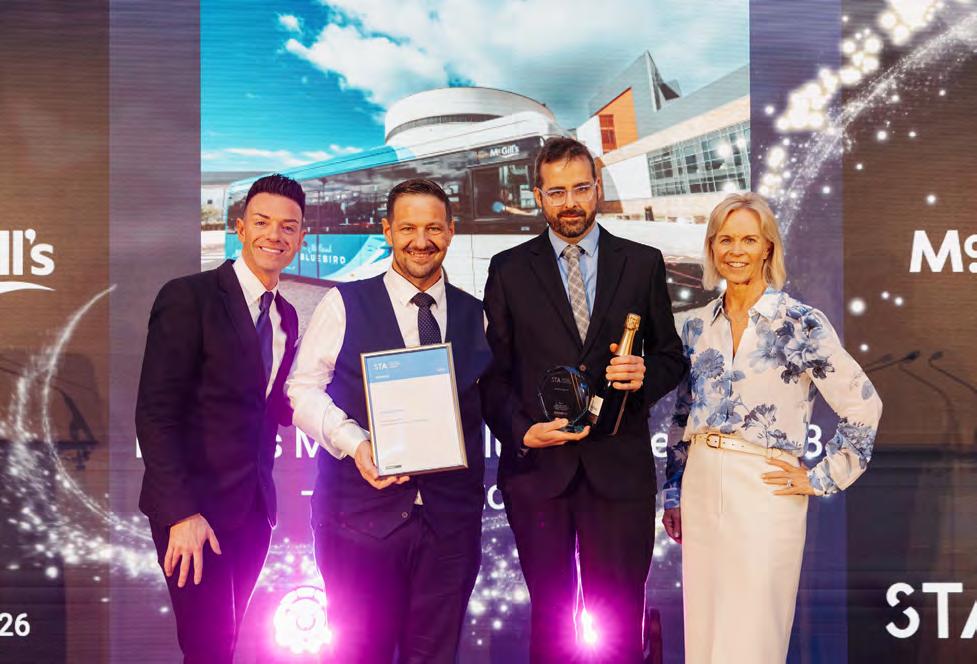
McGill’s Midland Bluebird Service 38 – Falkirk to Stirling
Service 38, operated by Midland Bluebird, provides a key link between Stirling and Falkirk, connecting communities along the corridor with employment, education, healthcare and retail destinations, including Forth Valley Hospital.
In 2023, Midland Bluebird invested £900,000 in the route, replacing ageing vehicles with newer double-deck buses and introducing a revised timetable with additional running time to improve reliability in response to increasing congestion and roadworks. The changes halted declining patronage and established a platform for future growth.
In 2025, McGill's invested £20 million in 30 new electric buses, supported by the
Scottish Government's ScotZEB 2 fund. Eight of these zero-emission vehicles were allocated to Service 38, providing a quieter and more sustainable fleet for passengers. At the same time, the timetable was enhanced from a 20-minute to a 15-minute frequency, creating a turn-upand-go service. This required two additional vehicles and represented a 33% increase in annual operating costs for the route.
Since September 2023, passenger numbers on Service 38 have increased by 30%, with the enhanced frequency contributing a 10% increase, equivalent to around 2,000 additional passenger journeys each week. The route now carries approximately 20,000 passengers weekly.
The revised timetable and deployment of the electric fleet have also contributed to a 16% improvement in punctuality. Customer feedback has shown a 57% increase in compliments received during the three months following the timetable and fleet improvements, alongside a reduction in service-related enquiries.
A programme of customer engagement included a public open day at Larbert depot attended by more than 3,000 visitors and re-launch events in Stirling and Falkirk. Infrastructure improvements, including new passenger information panels, have also been introduced along sections of the route, with further work underway to improve
access to bus travel for patients travelling to Forth Valley Hospital.
Highly Commended:
Climate Action Strathaven: 3C Bus Service - Strathaven to Glasgow
Other shortlisted entries:
First Bus Scotland - Glasgow Service 500 Airport Service
FlixBus McGill's - 090
ScotRail - Glasgow City Centre Bus Link
Scottish Borders Council - Peebles Town Service
Scottish Citylink Coaches - Service AIR: Glasgow – Edinburgh Airport
Scottish Citylink Coaches - Service 900: Glasgow – Edinburgh
Previous winners:
2025: Lothian Buses: Lothian County Service 43
2024: Glenfarg Community Transport Group: The 55 Bus
2023: Strathclyde Partnership for Transport: Keeping Communities Connected
2022: Scottish Citylink Coaches: Saltire Cross Network
2020: Scottish Citylink Coaches: Service 900: Glasgow – Edinburgh
2019: First Glasgow: Service 75
Sponsored by
This Award is open to all rail, bus, taxi and ferry passenger service operators. Entries for this Award should outline the range of initiatives that the operator has been involved in to improve services and facilities together with results that have been achieved.
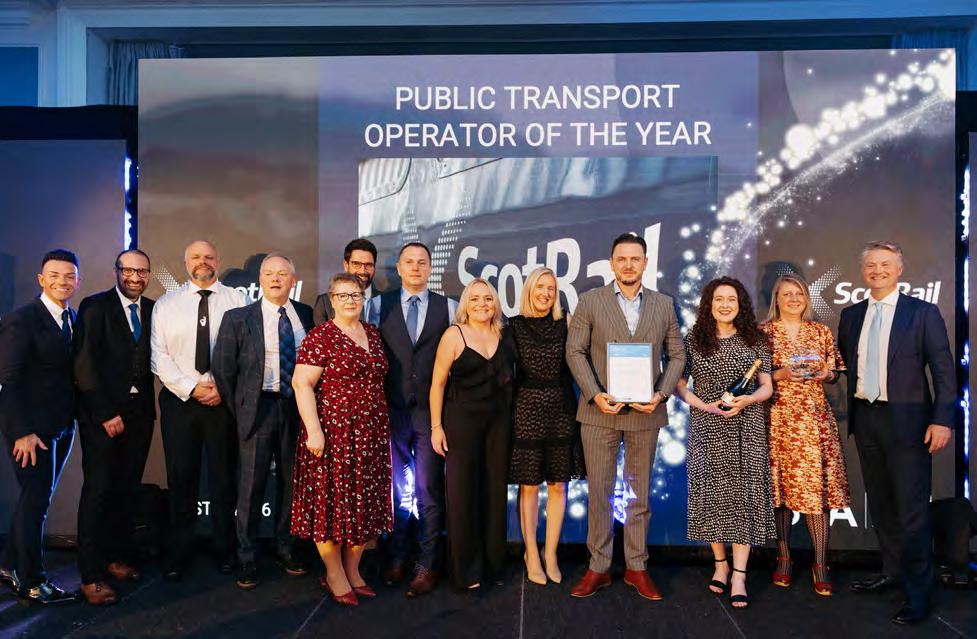
ScotRail operates more than 2,200 daily services across Scotland and carried almost 85 million passenger journeys in the past year.
The most significant fare change introduced during the year was the permanent removal of peak fares from 1 September 2025, implemented under Scottish Government policy. Customers now pay the same fare regardless of time of travel, with some journeys reduced by up to almost 50%, including flows between Edinburgh and Glasgow. The change applies across the network and removes peak pricing differentials from all ScotRail tickets. ScotRail, in partnership with Scotland’s Railway, invested £7.7 million in upgraded
braking systems across more than 70 trains. The works were completed to improve adhesion management and operational performance during autumn conditions, supporting consistent braking capability on routes affected by low rail adhesion.
To address connectivity on rural and remote routes, ScotRail introduced improved 4G coverage at selected locations including Corrour on the West Highland Line. The system uses satellite-enabled connectivity supplied by Clarus Networks and integrated with existing onboard technology, providing passengers with access to online services and operational information in areas with limited mobile coverage.
Passenger demand increased over the year. December 2025 recorded 7,866,187 journeys, the highest December total since 2022. Boxing Day recorded 97,877 journeys in a single day. The current timetable provides approximately 4.1 million seats per week
across 14,807 services.
An independent report by Steer published in March 2025 estimated that ScotRail contributes £4 billion to the Scottish economy and supports 11,300 jobs directly and indirectly. The report also estimated that passenger expenditure of around £567 million supports activity across tourism, leisure and hospitality sectors.
Customer satisfaction is recorded at 91%, placing ScotRail among the higherperforming large rail operators in Britain.
Scottish Citylink Coaches
Other shortlisted entries:
Caledonian MacBrayne
Edinburgh Trams
First Bus Scotland
Glenfarg Community Transport Group
Lothian Buses
McGill's Bus Group
Previous winners:
2025: FirstBus
2024: Scottish Citylink Coaches Ltd
2023: Edinburgh Trams
2022: McGill’s Bus Group
2020: Stagecoach East Scotland
2019: Stagecoach East Scotland
An entry in this category covers projects or initiatives that can demonstrate improved access to travel or the travel experience for disabled people. We will be looking for entries which highlight innovation, the extent to which the proposer has sought to build upon learning through engagement with disabled people, positive team or partnership collaboration, and the extent to which they benefit disabled people who are in hard-to-reach groups.
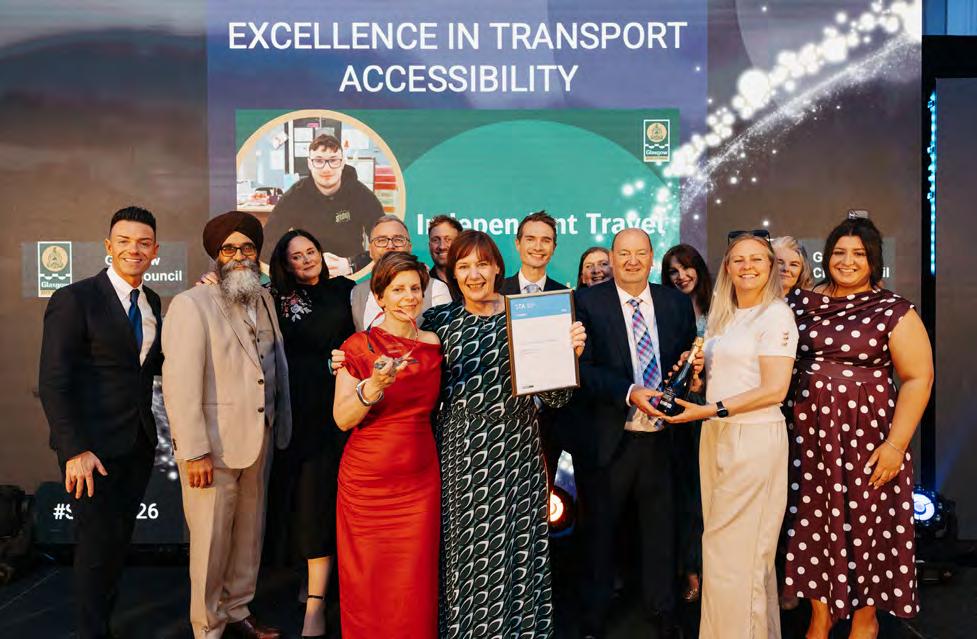
Glasgow City Council, in partnership with Enable Scotland, developed Scotland's first city-wide Independent Travel Skills Programme for young people with additional support needs. The programme was introduced following a review of home-toschool transport in 2023/24, which identified a reliance on taxi transport and limited opportunities for young people to develop independent travel skills.
The programme was piloted across five secondary schools – Abercorn, Cardinal Winning, Hollybrook Academy, Parkhill and St Oswald's – and was developed with schools, families, pupils and partner organisations. Over a 16-week period,
participants receive practical travel training covering journey planning, using public transport, personal safety, time management and responding to changes during a journey through a combination of group, individual and workplace-related travel.
Individual risk assessments were undertaken with families before participation, with free public transport cards provided to remove financial barriers. Learning materials were adapted to meet individual needs, including photo-based journey plans for non-verbal learners, while delivery by a single Enable Scotland officer provided continuity throughout the programme. The training also contributes towards SQA National 2 qualifications.
Since its introduction, 53 young people have completed the programme, with 30 no longer requiring taxi transport for journeys to and from school. Participants have also used their travel skills to access employment, volunteering, social activities and community facilities independently.
The programme has also supported wider outcomes for schools and families. Feedback indicates increased confidence in independent travel, while schools have reported improvements in attendance and engagement. By developing practical travel skills at an early stage, the programme has increased opportunities for young people with additional support needs to use public transport as part of their everyday lives.
Other shortlisted entries:
Edinburgh Airport - Excellence in Transport Accessibility
HITRANS - HI-BIKE Inclusive Cycling Membership
Lothian Buses - Excellence in Transport Accessibility
Network Rail - East Kilbride Enhancement
Project
Rail 74 Community Rail PartnershipInclusivity Matters
ScotRail - The ScotRail Passenger Assistance Meeting Point project
Scottish Citylink Coaches - Guide Dogs
Scotland Partnership
Strathclyde Partnership for TransportNorth Lanarkshire People and Place Programme - MyBus Expansion
Previous winners:
2025: Sustrans: National Cycle Network
Accessibility Programme
2024: HITRANS: Go - Hi and Motability
Mobility Credit Pilot
2023: Aberdeenshire Council: The Aberdeenshire Bothy 2022: Joint winners: Cyclehoop Ltd & Glasgow City Council
2020: City of Edinburgh Council, Edinburgh Cycle Hire Scheme
2019: Aberdeenshire Council,
Integrated Travel Town Masterplan Project Approach
Transport planning and the development of transport plans are the cornerstone of sustainable, integrated and efficient transport networks. This category is open to national, local and regional authorities and agencies including any partnerships with any engineering/planning consultancies. Plans must have been published/compiled in the last year and can focus on entire multimodal networks or individual areas such as Active Travel or bus networks for example. Entries should show consideration and alignment with other policies and strategies, including the National Transport Strategy and demonstrate how the transport planning contributes to planning of other portfolios including economic development, land use planning, climate change as well as health and education.
Strathclyde Regional Bus Strategy (SRBS)
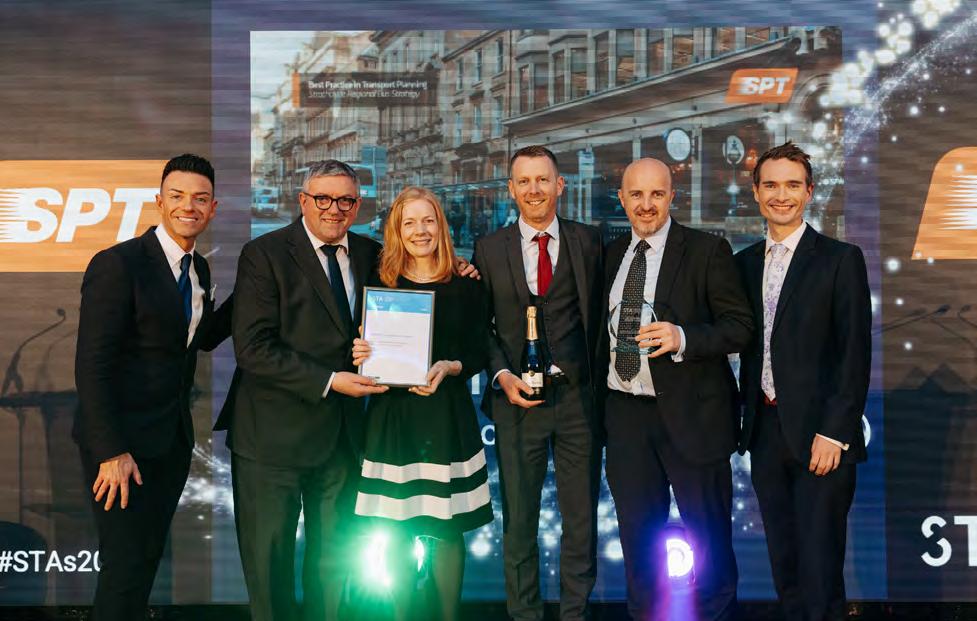
Strathclyde Partnership for Transport (SPT), the regional transport partnership for the west of Scotland, has developed the Strathclyde Regional Bus Strategy in collaboration with SYSTRA. The strategy sets out proposals for reform of the regional bus network and provides a framework for
the use of bus franchising powers under the Transport (Scotland) Act 2019.
The strategy follows SPT’s Regional Transport Strategy published in 2023, which identified bus reform as a key area of focus in response to stakeholder and public feedback. The SRBS forms the next stage of this work and sets out a structured approach to future bus network development across the region.
The strategy is aligned with the four priorities of the National Transport Strategy. These include improving access to public transport, supporting modal shift from private car use to bus services, contributing to climate objectives through fleet decarbonisation, and supporting wider health and wellbeing outcomes through transport provision.
SYSTRA supported the development of the strategy through policy analysis, engagement work, data assessment and option appraisal. This included development of governance options for bus services and preparation of potential implementation scenarios covering network structure, fleet transition, ticketing systems, customer service and passenger information.
Following approval of the strategy, an outline programme for franchising implementation was produced within three months.
The strategy was informed by two stages of consultation. The draft strategy consultation received responses from over 5,000 individuals. This followed earlier engagement on the Regional Transport Strategy, which
received more than 11,000 responses.
Consultation findings showed that 62% of respondents expressed dissatisfaction with the current bus network. The same consultation recorded 83% support for SPT progressing bus franchising powers.
Highly Commended:
Scottish Borders Council & the Workforce Mobility Project - Full Bus Network Review
Other shortlisted entries:
Connected Places Catapult - Urban Tide – uMove AIctiveRoutes
Connected Places Catapult & University of Strathclyde – WattRoutes Project
Mott MacDonald - Clyde Metro Case For Investment Stage 1a
South East of Scotland Transport Partnership - SEStran Regional Bus Strategy
South Lanarkshire Council - Local Transport Strategy: Exemplifying Best Practice in Transport Planning
South Lanarkshire Council - Delivering Best Practice in School Travel Planning and Road Safety
Previous winners:
2025: The Edinburgh & South East Scotland City Region Deal: Workforce Mobility Project
2024: City of Edinburgh Council: Edinburgh's City Mobility Plan and Our Future Streets



Entries in this category need to demonstrate how particular policies and projects have improved the street environment. Examples of initiatives for this Award include environmental enhancement schemes, pedestrian schemes or parking and warden policies. Before and after photographs help the Judges with this category. Alternatively, a cycling strategy may form the basis of a submission for this category or an individual scheme, which has brought significant benefits. Increased numbers of people cycling or reduced cycle casualties are two ways that you could document the success of your work.
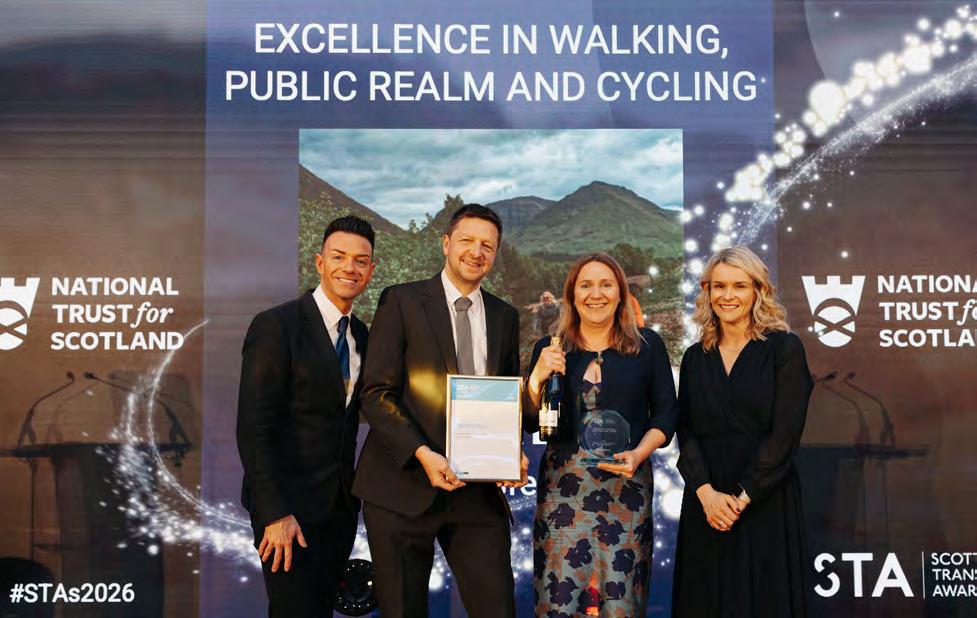
Glencoe Greenway
The Glencoe Greenway is a partnership project led by the National Trust for Scotland with the Walk, Wheel, Cycle Trust and local communities, providing a 5km traffic-free route through the Glencoe National Nature Reserve. The project offers an alternative to travelling by car for visitors accessing one of Scotland's busiest visitor destinations.
The A82 through Glencoe carries more than two million vehicles each year, with congestion and roadside parking presenting
challenges for people walking, wheeling and cycling. Surveys undertaken in 2021 found that 48% of respondents felt unsafe because of parking or driving activity, while 70% considered traffic to have a negative impact on the landscape.
Delivered between 2023 and 2025, the project includes 3km of new shared-use path and the upgrade of a further 2km of existing routes. The paths were designed to provide accessible gradients and widths for wheelchair users, people with buggies and cyclists, while landscaping and surface materials were selected to complement the surrounding environment. Benches and interpretation panels were also installed along the route.
The project also included a new pedestrian underpass beneath the A82 and a bridge over the Leac na Muidhe Burn, completing a missing section of the 6km Glencoe Orbital Trail. The bridge was designed to withstand mountain river conditions, while flood warning signs linked to sensors provide information for path users when water levels are high.
In its first year, the Greenway has been used by more than 25,000 people. Monitoring has also recorded a 95% reduction in cycling on the A82 through Glencoe, with people instead using the traffic-free route. The project has also supported the expansion of local cycle hire businesses, providing increased
opportunities for both visitors and local residents to travel by bike.
Other shortlisted entries:
Angus Council - Arbroath A Place For Everyone
City of Edinburgh Council/ Balfour Beatty - Leith Connections
Connected Places Catapult - ORCHY –Marked Cycle Wayfinding System
Cycling Scotland - Safe, Secure Cycle Storage in Social Housing Across the SPT Region
Dundee City Council - Active Travel Dundee (Schools)
ScotRail - Active Travel Strategy
Scottish Canals - Fountainbridge Canalside Improvements, Edinburgh
Strathclyde Partnership for TransportWalking Scotland / SPT Community Path Fund
Previous winners:
2025: Angus Council: NCN1 Carnoustie Phase
2 Project
2024: Glasgow City Council - East City Way
Phases 6 & 7
2023: Aberdeenshire Council: The Aberdeenshire Bothy
2022: Joint winners: Cyclehoop Ltd & Glasgow City Council
2020: City of Edinburgh Council, Edinburgh Cycle Hire Scheme
2019: Aberdeenshire Council, Integrated
Travel Town Masterplan Project Approach

Suppliers of equipment and services to the rail industry are eligible to enter this category. Entrants should demonstrate the benefits accrued from the use of these products and services e.g. increased efficiencies, improved reliability, decreased crime levels etc. It may be that you have innovatively applied existing products and services or introduced a new product or service that has traditionally been used outside the rail sector.
Story Contracting delivered four infrastructure projects across Scotland’s Railway during the Christmas and New Year period, totalling 47,717 working hours across a series of constrained possession windows. The programme was delivered in collaboration with Network Rail and formed part of a wider programme of planned rail improvement works.
The works were scheduled within festive possession periods, which represent one of the most limited access windows in the rail calendar. The coordination of four separate projects during this period reduced the need for additional future possessions and consolidated delivery activity within a single programme window.
At Exxon Bowling, a 2,500-tonne reinforced concrete underbridge was installed during a five-day Christmas and New Year blockade. The structure forms part of the Glasgow City Region City Deal and will provide a future access route beneath the railway, supporting redevelopment of the former Exxon Mobil site covering approximately 150 acres. The project recorded 32,507 working hours and £615,941 in monetised social value.
At Drumchapel Station, drainage renewal works were completed across two 29-hour festive blockades. The works were delivered in a high-output format equivalent to a series of weekend possessions, completed within the festive period to reduce the requirement for repeated weekend access.
A total of 1,500 productive hours were completed, with no accidents or incidents recorded during delivery.
At Balgonie, a stone masonry arch was
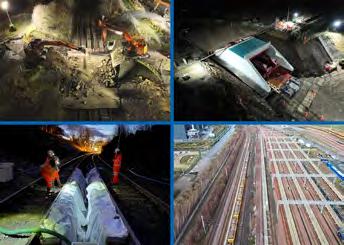
redecked to increase clearance for overhead line equipment as part of wider enabling works on the Fife and Borders route.
The works were completed during the festive period to align with planned access requirements and to support subsequent electrification activity on the route.
At Millerhill Depot, two stabling roads and associated track infrastructure were installed within a live depot environment. The works increased stabling capacity and operational flexibility to support future Battery Electric Multiple Unit deployment on the Fife and Borders route, with infrastructure brought into operational use following completion of the programme.
Other shortlisted entries: Alstom
AmcoGiffen
QTS Group
Volker Rail
Previous winners:
2025: Story Scotland
2024: AmcoGiffen: NR Civils Asset
Management - Emergency and Reactive Works
2023: Story Contracting
2022: Rail Systems Alliance Scotland
2020: BAM Nuttall – Rail Division
2018: Siemens Rail Automation - Scottish Signalling Enhancements and Renewals
An entry in this category should document how you have employed new technology or a new way of working to bring about great results. Again we need to see evidence that the project has brought about good results, demonstrated benefits to users and or efficiencies throughout the operation. Please note that if your project is very recent, we appreciate that results may be limited.
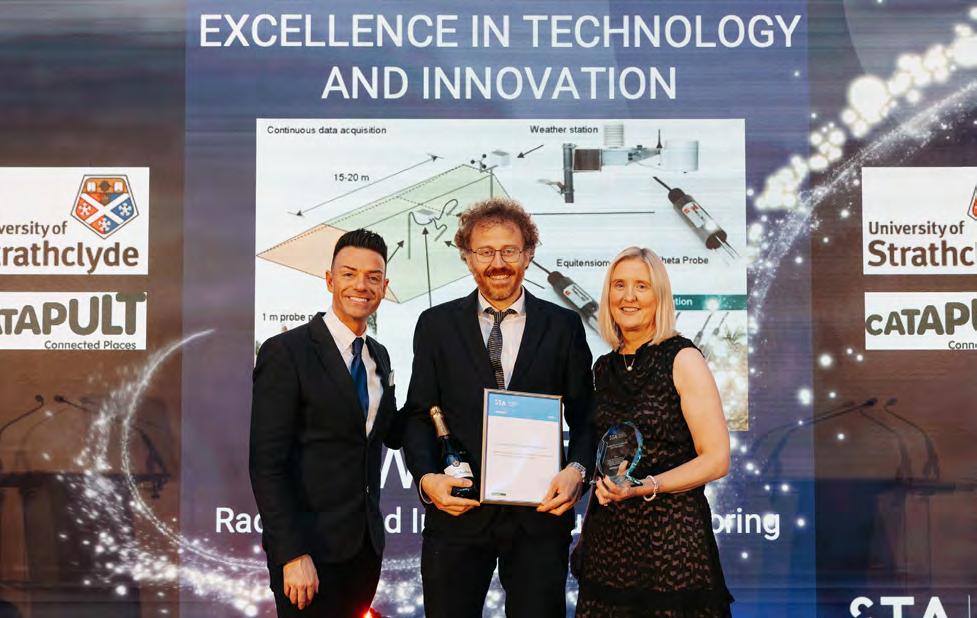
Radar-Based Infrastructure Monitoring Platform
The University of Strathclyde has developed a radar-based infrastructure monitoring platform through the Department for Transport’s TRIG programme, in partnership with Accolade Measurement Ltd and the University of Trento. The project focuses on monitoring the structural condition of bridge infrastructure across the road network.
Local authorities in Scotland are responsible for more than 2,000 bridges with an estimated combined value of over £7.62 billion. Existing structural monitoring approaches typically rely on physical sensors attached to bridge components or on commercial radar systems, which can cost around £100,000 per unit and limit large-scale deployment.
The Strathclyde system uses a low-cost
radar unit priced at approximately £1,000 per device. The platform operates without physical contact and is designed to detect sub-millimetre structural movement. A single unit can monitor multiple points on a structure and is designed for deployment in a range of environmental conditions, including remote and exposed locations.
The system incorporates IoT-based cloud processing and AI-based anomaly detection. The AI component is trained to identify normal structural behaviour and to flag deviations for further assessment. This enables continuous monitoring of assets and provides alerts when changes in structural performance are detected.
The project progressed through laboratory testing, field trials and AI validation, reaching Technology Readiness Level 4–5. Laboratory testing compared radar outputs against ground-based measurement sensors to confirm sub-millimetre accuracy and capture vibration data. Field trials were conducted on a 327-metre highway bridge in Italy, demonstrating multi-point monitoring from a single device under live traffic and environmental conditions.
AI testing identified progressive structural changes during trial conditions, supporting the system’s ability to detect developing faults. The platform is intended to support wider use of continuous monitoring across bridge assets, reducing reliance on manual inspection and enabling more frequent condition assessment.
Highly Commended:
Glasgow City Council - Bus Priority AI Measures
Other shortlisted entries:
AmcoGiffen and Safety Shield Global –Revolutionising Safety Through the People, Plant Interface (PPI) App
Arnold Clark Automobiles LimitedArnold Clark Charge
Derry Bros Shipping & Customs Clearance FOR EV - Removing the Capital Barrier: Enabling Scalabe EV fleet transition for local authorities
Scottish Citylink Coaches - TransMach Project
South Lanarkshire Council - Winter Service Innovation: Smarter, Safer and More Sustainable
UrbanTide Limited - uMove Mobility Insights
Walk Wheel Cycle Trust - Schools dashboard in SPT
Previous winners:
2025: First Bus: AI-driven Timetables
2024: Fugro: RILA® Survey of Scotland Rail
2023: Lothian Buses: LB Roads
2022: AGS Airports Ltd - Project CAELUS
2020: Amey, Transport Scotland, Strathclyde University and Highland Galvanizers - ReGalvanising VRS
2019: Liftshare: Solving commuter problems with data
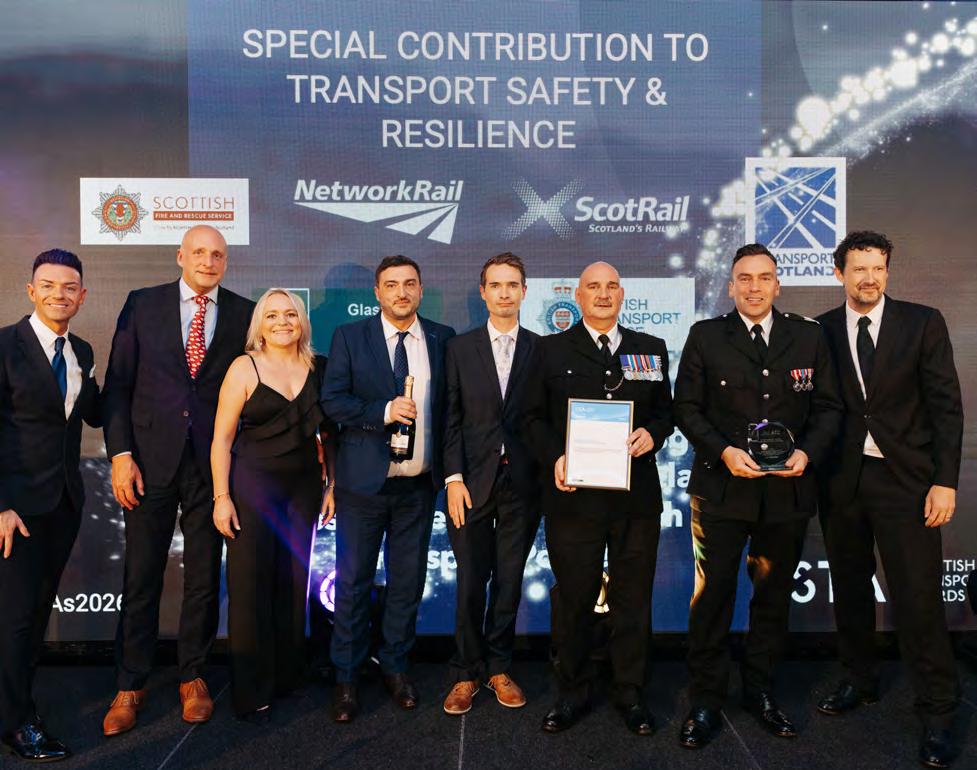
This special award recognises an individual, team or organisation that has demonstrated exceptional leadership, professionalism and collaboration in response to a significant incident, emergency or operational challenge affecting Scotland's transport network.
WINNER
SCOTTISH FIRE AND RESCUE SERVICE, NETWORK RAIL, SCOTRAIL, GLASGOW CITY COUNCIL, TRANSPORT SCOTLAND'S RESILIENCE TEAM AND BRITISH TRANSPORT POLICE
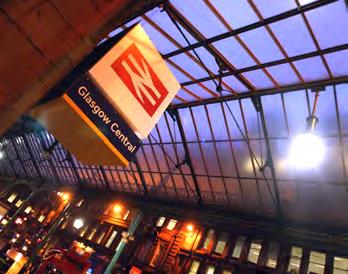
Earlier this year, the fire at Glasgow Central Station presented one of the most significant operational challenges faced by Scotland's transport network in recent years.
The incident demanded an immediate response, close collaboration and strong leadership from a wide range of organisations.
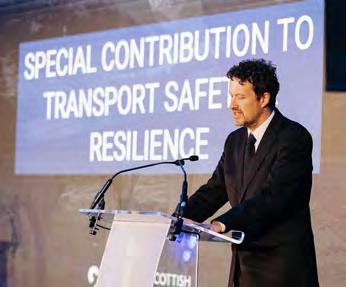
The judges were unanimous in their view that the professionalism, dedication and partnership demonstrated by Scottish Fire and Rescue Service, Network Rail, ScotRail, Glasgow City Council, Transport Scotland's Resilience Team and British Transport Police in response to this incident warranted special recognition.
Presenting this special award at the Scottish Transport Awards in Glasgow, Robert Jack, Managing Editor of Passenger Transport said: “Working together under extremely challenging circumstances, the organisations involved helped protect public safety, manage disruption, restore services and provide reassurance to passengers and the wider public.
“The judges therefore agreed to present the 2026 Special Contribution to Transport Safety & Resilience Award to the organisations whose collective efforts exemplified the very best of Scotland's transport and emergency services communities.”
A submission in this category should demonstrate how your organisation has implemented policies to reduce its impact on the environment (for example reduced carbon footprint), supported by clear results. The types of projects that would qualify for this category include the use of alternative vehicle fuels and technologies or freight practices which have resulted in mileage and/or emissions/reductions.
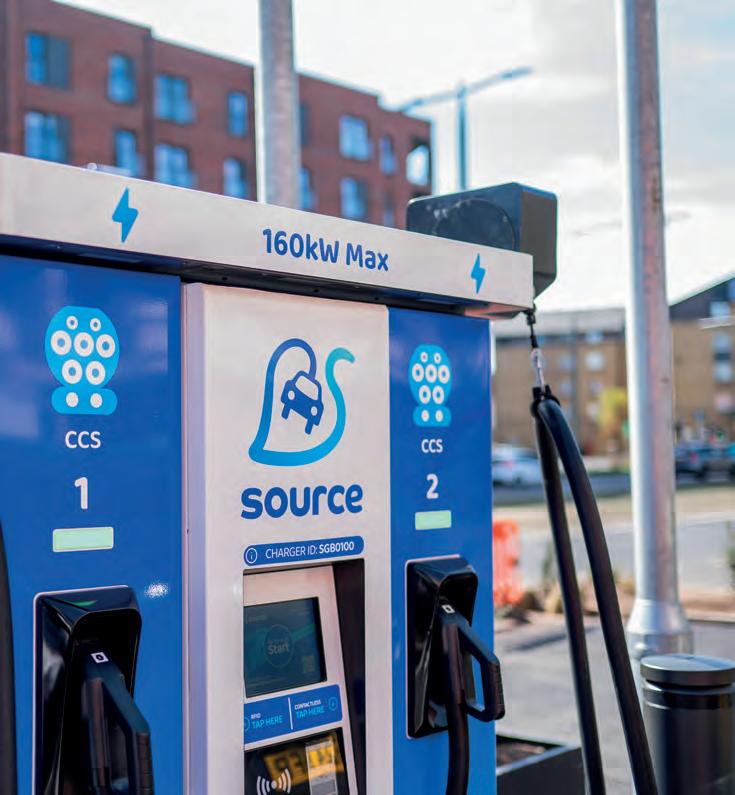
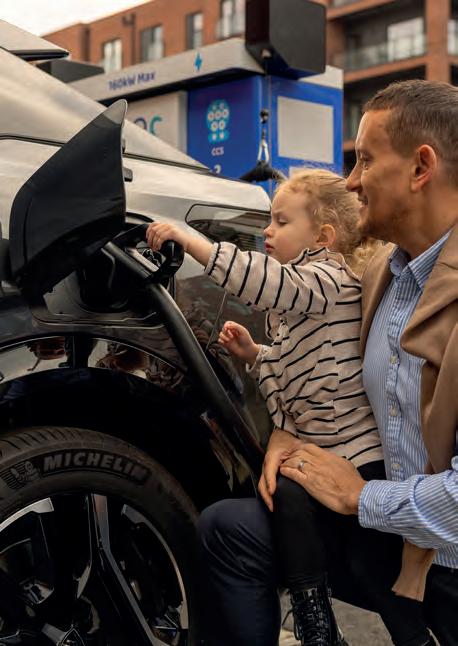
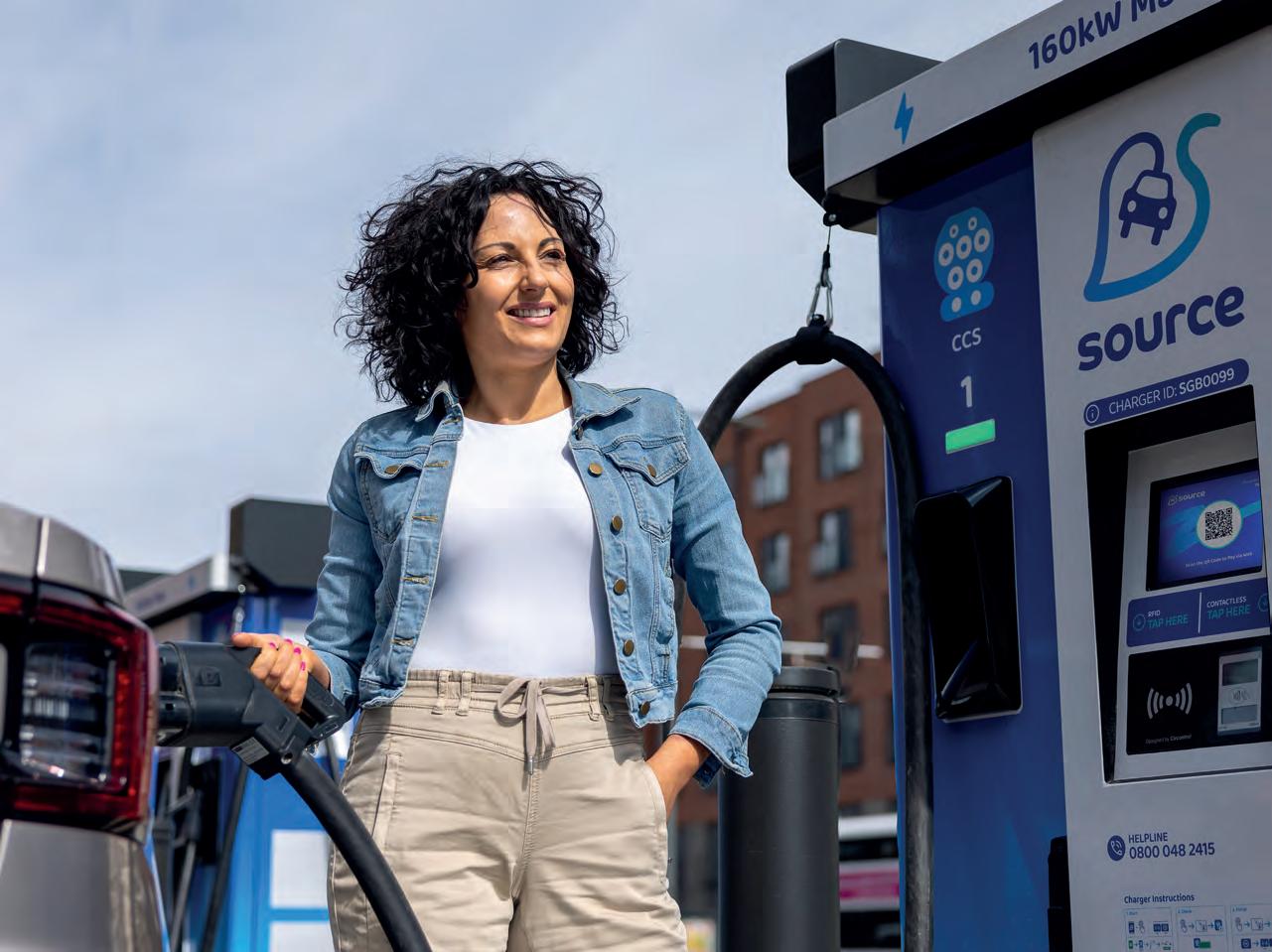
Charging Scotland's Future
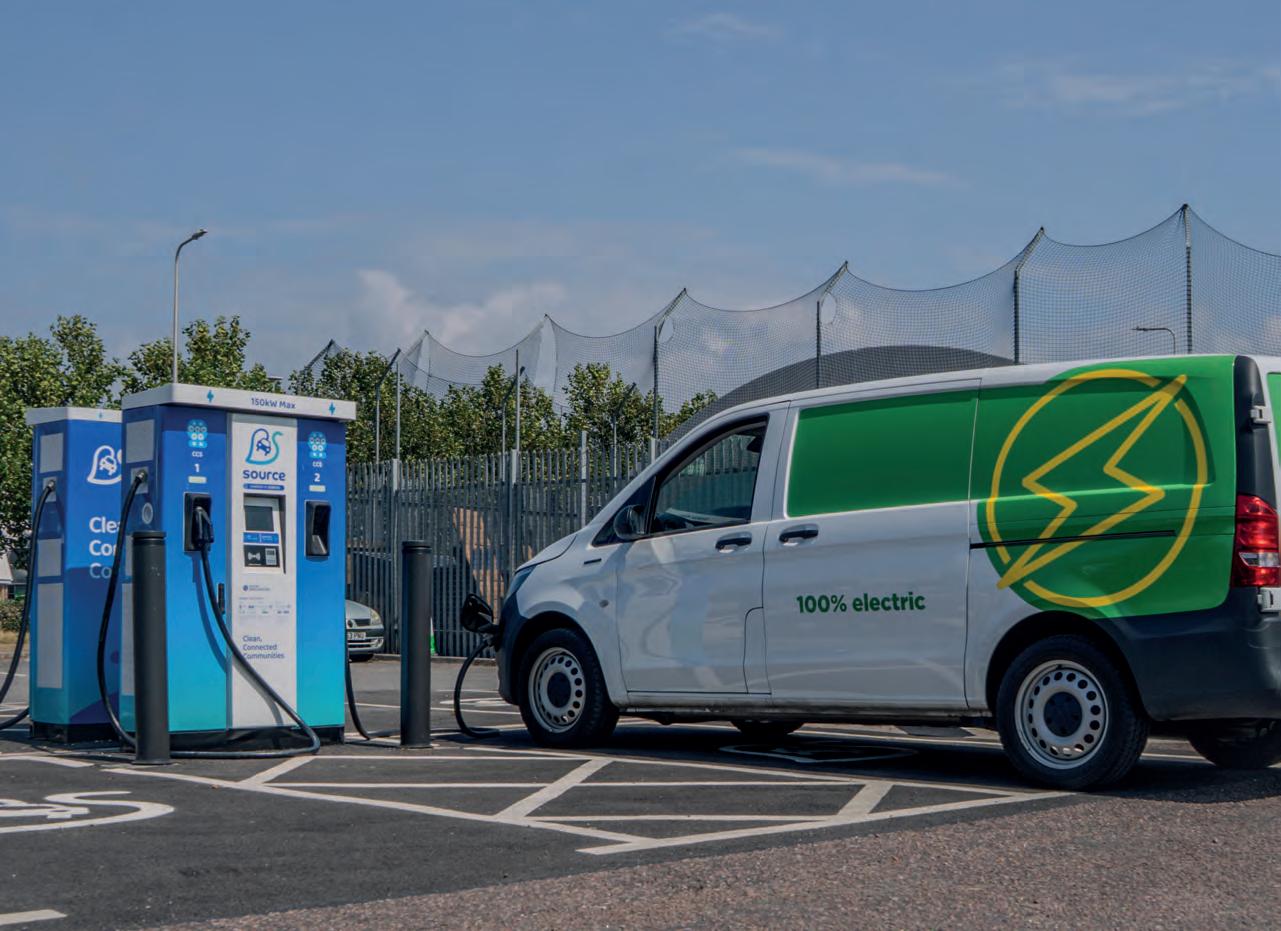
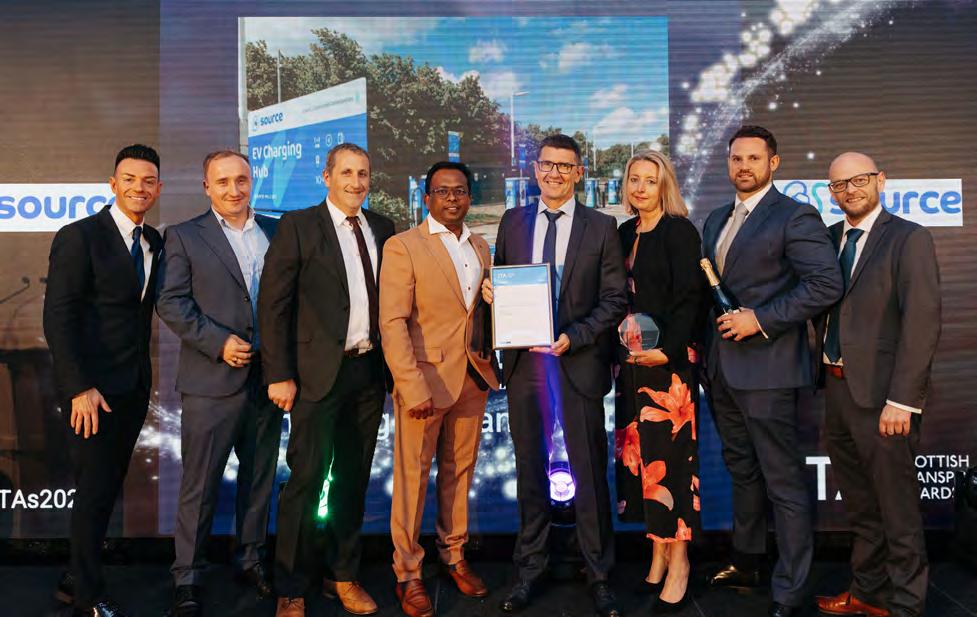
Source is a joint venture between SSE and TotalEnergies operating ultra-rapid electric vehicle charging hubs powered by renewable energy. Since January 2024, the company has developed a network of charging locations across Scotland.
The rollout forms part of wider changes in Scotland’s public EV charging provision, with existing publicly funded infrastructure transitioning towards private sector operation by the end of 2026. The programme is intended to support continued availability of ultrarapid charging capacity across urban and regional locations.
Site selection is based on assessment of driver demand, fleet movement patterns,
existing infrastructure provision and grid capacity. This approach is used to identify locations where charging demand is expected and where network connections are feasible.
Since May 2024, nine operational sites have been delivered in Dundee (two sites), Edinburgh, Glasgow, Greenock, Inverurie, Kirkcaldy, Motherwell and Stirling. The network provides 104 charging bays across these locations.
Total energy delivered across the Scottish network since May 2024 is 1,911,337 kWh. All sites are supplied using renewable electricity.
The network is monitored remotely on a 24-hour basis. Target availability is set at 99% and above. Technical issues are identified through remote systems, with a proportion resolved without the need for site attendance. Response processes are in place for faults requiring on-site intervention.
The Edinburgh site has been assessed under ChargeSafe standards and achieved a rating of 4.32. Design features across the network include designated accessible bays, wider parking spaces and lighting provision at each location.
The network is integrated with multiple roaming platforms, providing access for registered users across Scotland’s electric vehicle network. Payment options include a range of contactless and app-based systems used across the industry.
Highly Commended:
City Of Edinburgh Council - Cycle Hire Scheme
Other shortlisted entries:
Alexander Dennis - Enviro200EV: lighter and narrower with increased accessibility and efficiency
Amplify EV Ltd - Restoring Public Charging in Inverness
Glasgow Airport - AGS Airports
Contribution to Sustainable Transport
Network Rail - East Kilbride Enhancement
ScotRail - Biodiversity Enhancement
South Lanarkshire Council - East Kilbride
Active Travel Network – Connecting People and Places
Stagecoach Scotland - Powering Greener
Journeys for Communities Across Scotland
Previous winners:
2025: Royal Highland Show: Traffic Management Working Group
2024: Aberdeen City Council: Aberdeen City Centre Bus Priority Measures
2023: WSP and Highland Spring Group: Blackford Rail Freight Facility
2022: First Glasgow: Electrification of the UK’s biggest bus depot
2020: BOC: BOC's Kittybrewster Hydrogen Refuelling Station
2019: Dundee City Council: Dundee EV Infrastructure Project
Sponsored by
Projects entered into this category need to demonstrate good results- it could be a project that is the first of its kind in Scotland or a project that has been done before but has been approached differently. Projects should stand out as being that bit different.
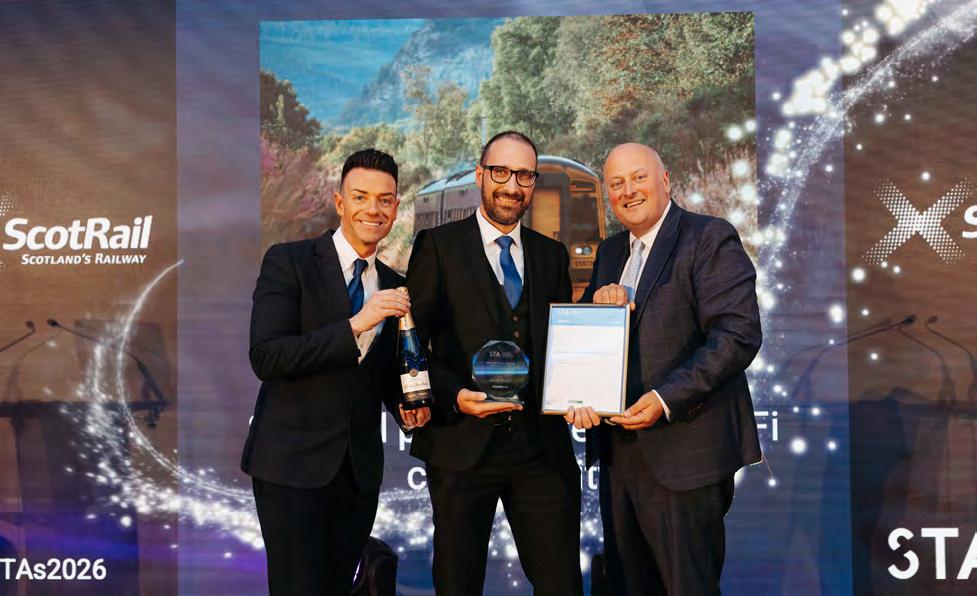
ScotRail pioneers remote Wi-Fi connectivity
ScotRail has introduced low-earth orbit satellite broadband technology on passenger rail services as part of a trial to improve digital connectivity across rural and remote parts of Scotland. The project involved the installation of satellite antennas on six Class 158 trains based at Inverness depot.
The system was developed in collaboration with Clarus Networks and SpaceX and was designed to operate in areas where mobile and 4G coverage is limited or unavailable. The antennas have been certified for use on rail vehicles and integrated into existing onboard systems.
The project was delivered by ScotRail’s engineering and IT teams, who managed supplier coordination and ensured compliance
with relevant rail safety and technical standards, including EN50155. Integration work covered installation, testing and operational deployment across the selected fleet.
Funding support was provided by the Scottish Government, Scottish Futures Trust and Highlands and Islands Enterprise, reflecting the focus on improving digital connectivity in rural areas of the rail network.
When in operation, the system connects to satellites where line of sight is available, providing onboard Wi-Fi for passengers.
Performance testing has shown increased data speeds compared with existing 4G-based connectivity on the same routes.
The system also supports enhanced GPS tracking, providing more consistent location data in areas where conventional mobile signal is limited. This data is used to support operational planning and real-time service information.
Passengers on fitted services are able to access online communication, streaming and remote working applications during journeys. The system is also used to support onboard staff devices, including ticketing and service delivery functions.
The trial has demonstrated potential applications for satellite connectivity across wider rolling stock fleets and other transport modes where mobile coverage is limited.
Highly Commended:
Dundee City Council - Bell Street Green Transport Hub
Other shortlisted entries:
Aeroflow & Connected Places CatapultAerodynamic Shape-Shifting Trailers
AMEY TI - Unlocking Future ConnectionsAmey, Transport and Infrastructure, Scottish Prison Service, Speedy Hire, Hatton Traffic Management, & Breedon
Edinburgh Trams - Edinburgh Trams - Tap On, Tap Off (TOTO)
Glasgow City Council - Travel Skills Programme
Nestrans - Study into the Economic and Technical Feasibility of Battery Electric Vehicles in the North East of Scotland
Transport Scotland - The Digital Travel Data Services
Previous winners:
2025: Zenobe: ScotZEB 2 - Collaborating to achieve fleet electrification at speed and scale
2024: Aberdeen International Airport: Project CAELUS
2023: The Highlands and Islands Transport Partnership (HITRANS): Go-Hi MaaS Pilot Project
2022: Sustrans Scotland – Minecraft, St Philomena's Primary School
2020: BEAR Scotland, Transport Scotland and BEAR Scotland – A83 Rest and Be Thankful Catch -Pits and Glen Kinglas Rock Bunds
2019: Jacobs, Transport Scotland, Scotland TranServ & SibbaldVR Site Safety
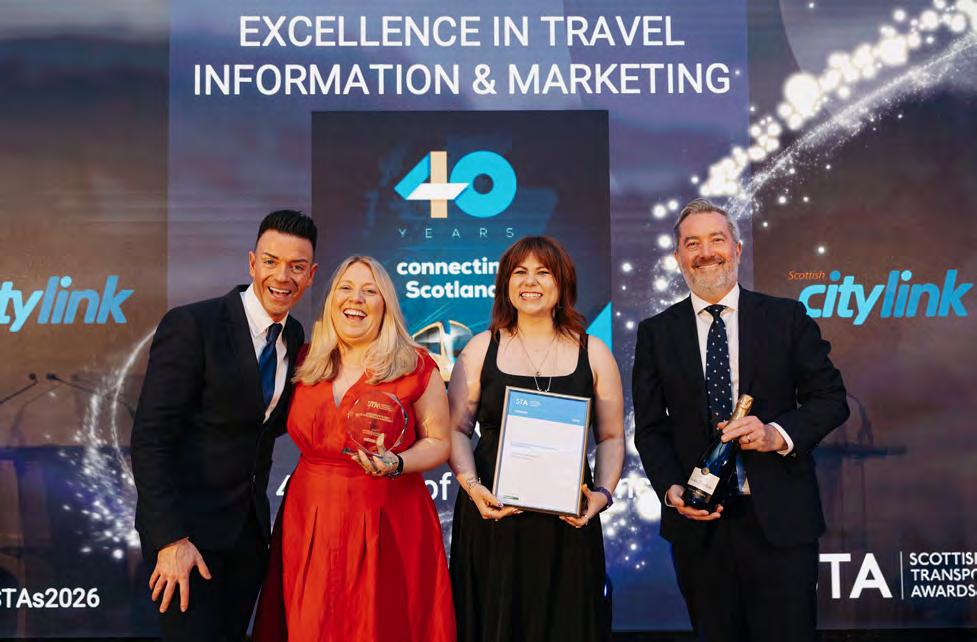
This category covers all areas of transport marketing including information, promotion and travel planning. We will be looking for clear evidence that the approach that you have chosen has brought about results. This may be patronage increases, modal shift or greater awareness of a particular service/ facility, or feature.
40 Years of Connections
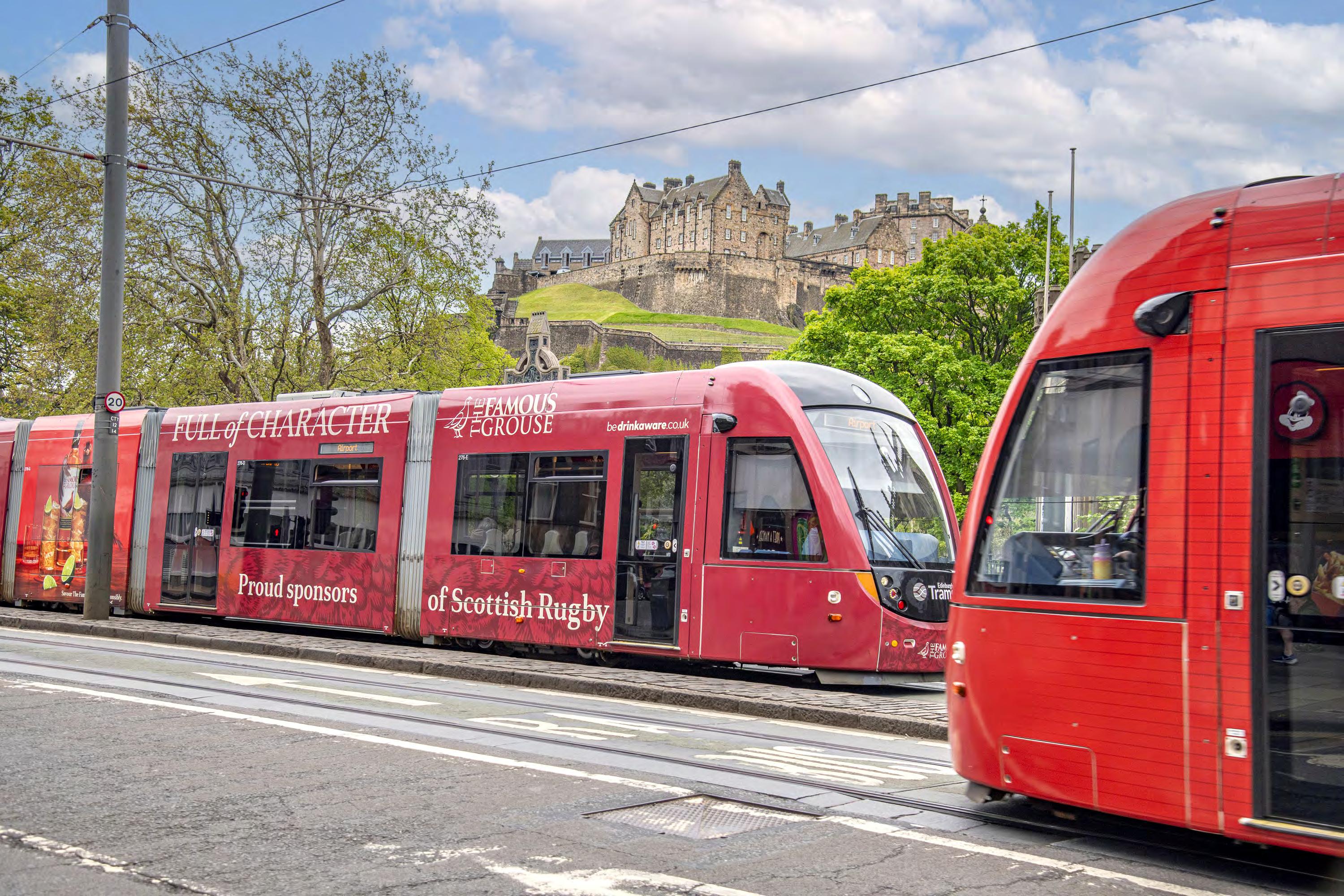
Scottish Citylink delivered a year-long campaign to mark its 40th anniversary, structured around the message “Smart thinking, Citylinking!”. The campaign combined heritage content, customer engagement activity and future-focused messaging across multiple channels.
The campaign was delivered in three phases across 2025. Phase One (February–April) focused on the company’s history and customer stories, drawing on legacy material to highlight past developments in the network. Phase Two (May–August) focused on customer participation, including competitions, promotional activity, events and a nationwide coach tour across the network. Phase Three (September–December) focused on future developments, including sustainability
commitments, technology investment and planned service improvements.
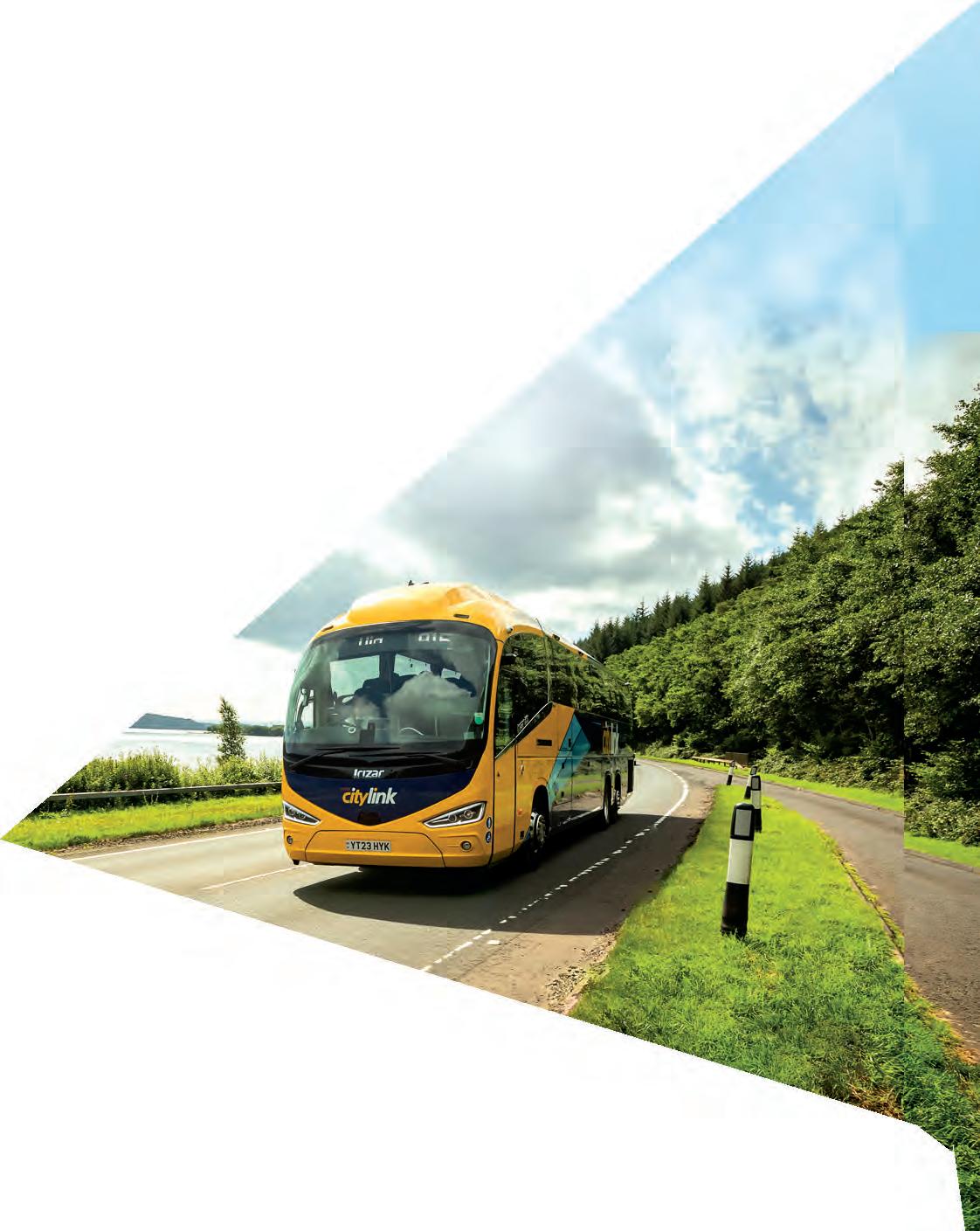
Special-edition retro liveries were applied to selected vehicles throughout the campaign period, providing on-network visibility across routes operated by Citylink. The vehicles were deployed across the network and used as part of wider campaign communications.
The campaign used a mix of paid and organic social media activity, out-of-home advertising, radio sponsorship and television advertising on STV. Activity was delivered across commuter, student, family and concessionary travel markets.
In Phase One, paid social media activity reached 3.62 million unique users, compared with a forecast of 760,000. The activity generated 3.2 million Facebook impressions, more than 5,000 website clicks and 2,798 ticket sales. Total revenue generated from this phase was £37,000 from a media spend of £4,000.
Television advertising on STV was broadcast during the summer travel period and reached 44% of adults in Scotland. Combined STV and Bauer audio-visual activity achieved a 69.4% reach across audiences. Radio sponsorship activity ran throughout the campaign period to support frequency of exposure.
Passenger volumes increased during the campaign period, with higher levels recorded during Phase Two in the summer period. Time-limited promotional offers
were used during selected periods. Customer feedback collected during the campaign indicated changes in brand perception and increased recognition of the company’s long-term operating history.
Other shortlisted entries:
Caledonian MacBrayne - Every Journey Starts a Story
First Bus Scotland - LFG Youth Campaign
Glenfarg Community Transport Group
McGill's Bus Group - Service 38: Powering Positive Travel Change
ScotRail - ‘Spirit of Scotland Rover’ M-Pass
Stagecoach South Scotland – ‘Electric Eleven’ Marketing Campaign
Strathclyde Partnership for Transport - My Glasgow, My Subway
Previous winners:
2025: Caledonian MacBrayne: Every Journey Starts a Story
2024: First Bus: Under 22s ‘Free to Explore’ Campaign
2023: Strathclyde Partnership for Transport: Delivering a Step-Change in Bus Passenger Information and Standards
2022: Sustrans Scotland - #andshecycles
2020: Edinburgh Trams & Scottish Rugby, Successful Partnership Campaign
2019: Edinburgh Trams, Airport Marketing Project
Sponsored by
A submission in this category should demonstrate how effective team work has brought improvements to transport services or facilities. We will be looking for evidence that working practices, or improved working practices have delivered improvements.
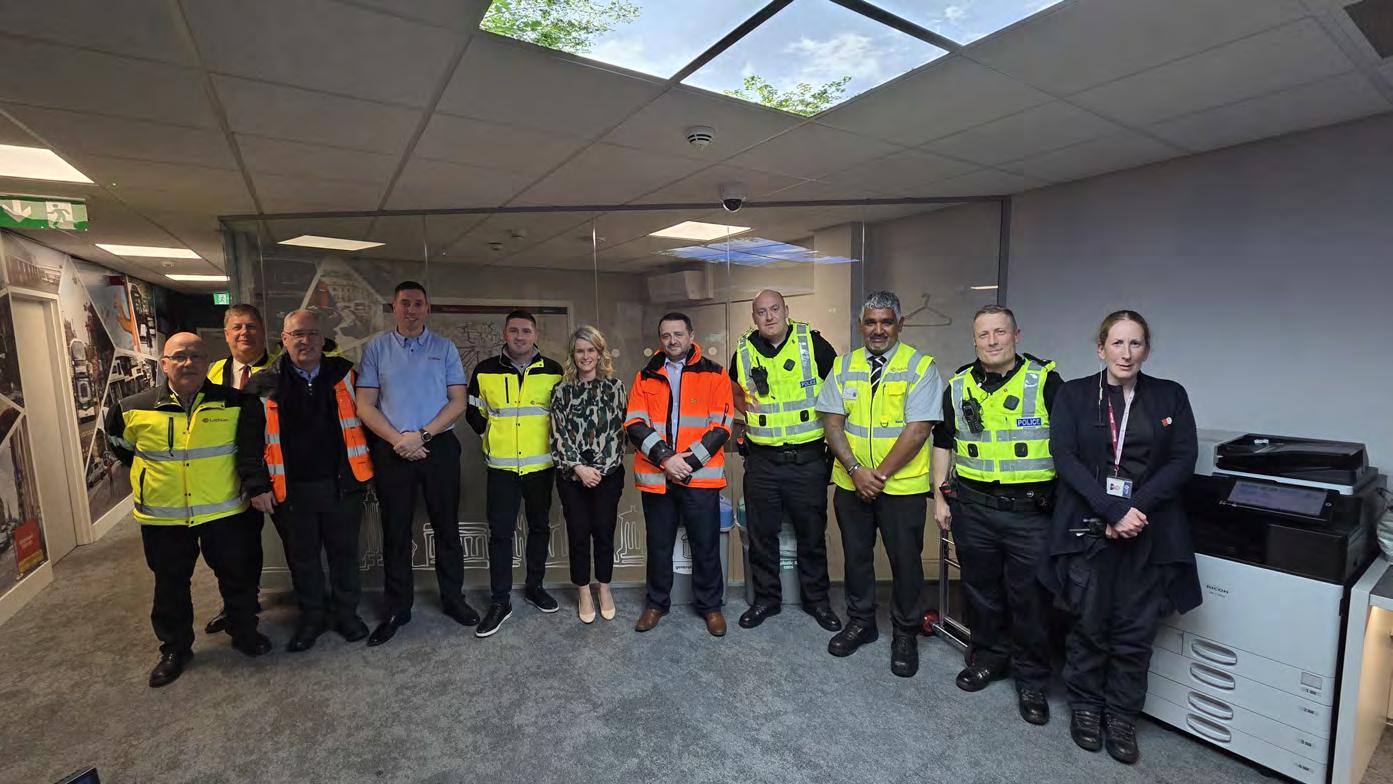
Following a series of antisocial behaviour incidents during the Halloween and Bonfire Night period in 2024, Lothian Buses and Police Scotland established a coordinated partnership approach to reduce disruption during the 2025 period.
In 2024, Lothian Buses experienced multiple incidents of antisocial behaviour during the Halloween and Bonfire Night period. This resulted in the withdrawal of services on Halloween and preemptive service changes on Bonfire Night, introduced to protect staff and customers. These interventions affected scheduled bus operations across parts of Edinburgh during periods of high passenger demand.
In response, Lothian Buses and Police
Scotland developed joint working arrangements implemented throughout 2025. This included joint patrols in locations identified through previous incident data and operational records. Police Scotland and Lothian also delivered engagement activity in schools across Edinburgh and the Lothians, reaching over 1,500 pupils.
Lothian worked with Fearless, the youth service of Crimestoppers, to produce digital communications aimed at encouraging reporting of antisocial behaviour. The Igniting Change Youth Summit at the O2 Academy included presentations using onboard CCTV footage and driver accounts, delivered to school groups from across the city.
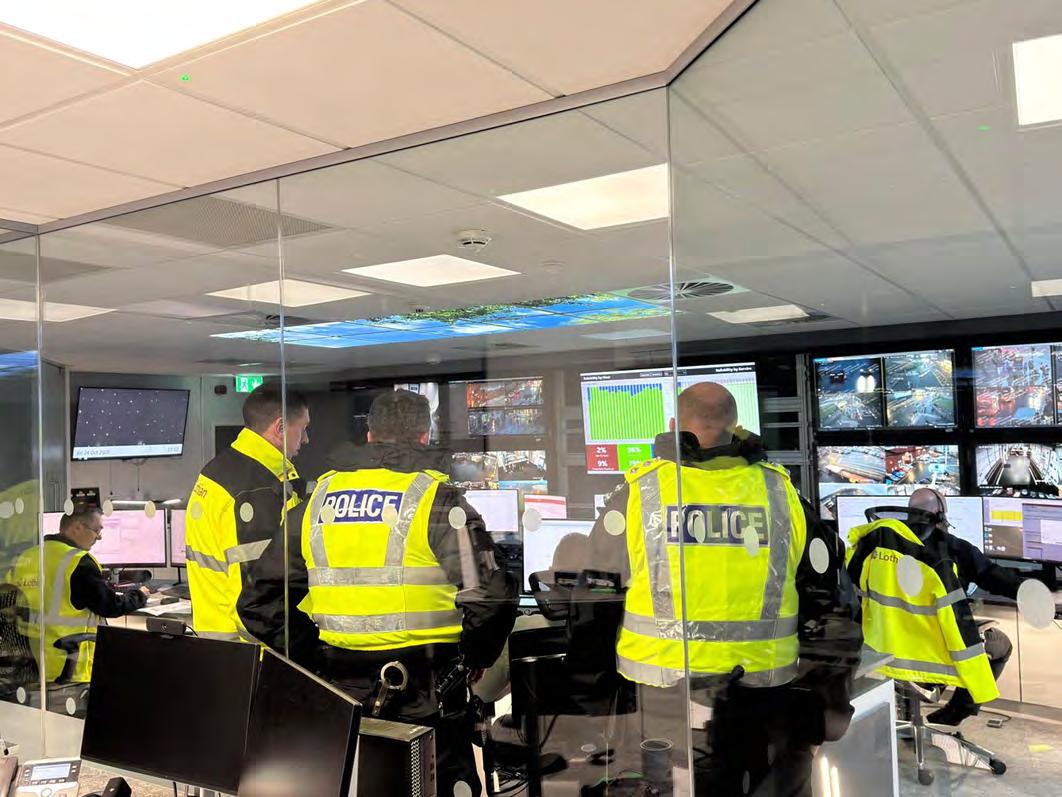
Ahead of Bonfire Night 2025, Police Scotland officers were embedded within Lothian Buses’ Service Delivery team and Control Room to support operational coordination and incident response. Police roadshow sessions were also held at Lothian depots, enabling direct engagement between staff and officers. Joint communications were issued to staff in advance of the period, outlining operational arrangements and reporting processes.
During Bonfire Night 2025, three services were briefly diverted. All other scheduled services operated as planned across the network. This compared to wider service disruption across the network in 2024.
In October 2025, Lothian Buses launched a Youth Engagement Strategy which includes antisocial behaviour reduction as a defined objective, reflecting the approach developed through the partnership with Police Scotland.
Other shortlisted entries:
Alstom - Polmadie 150
Connected Places Catapult and Department for Transport - Transport Research Innovation Grant (TRIG) Team
First Bus Glasgow & Glasgow Airport
Network Rail - East Kilbride
Enhancement Project
Scottish Borders Council – Schools Academy
ScotRail - improvement of customer experience and resilience of ScotRail's service delivery
ScotRail & Age Scotland - Scotland’s Railway ‘Age Scotland Charity Partnership’ Volker Rail, Kent Group, SVM & Network Rail - Glasgow Central Principle Supply Point Relocation
Previous winners:
2025: Network Rail: The Levenmouth Rail Link Project
2024: Edinburgh Trams: Trams to Newhaven 2023: Transport Scotland: The Death of Her Majesty the Queen, the funeral cortege from Balmoral to Edinburgh
2022: Transport Scotland: Delivering the Transport Plan for COP26
2020: Transport Scotland, ScotRail, Network Rail, Glasgow City Council, SPT, Stewart Milne Group and Elmford / Park Lane: The Delivery of Robroyston Rail Station and Park and Ride
2019: Transport Scotland in partnership with Combined Operating Companies – Battling the Beast from the East

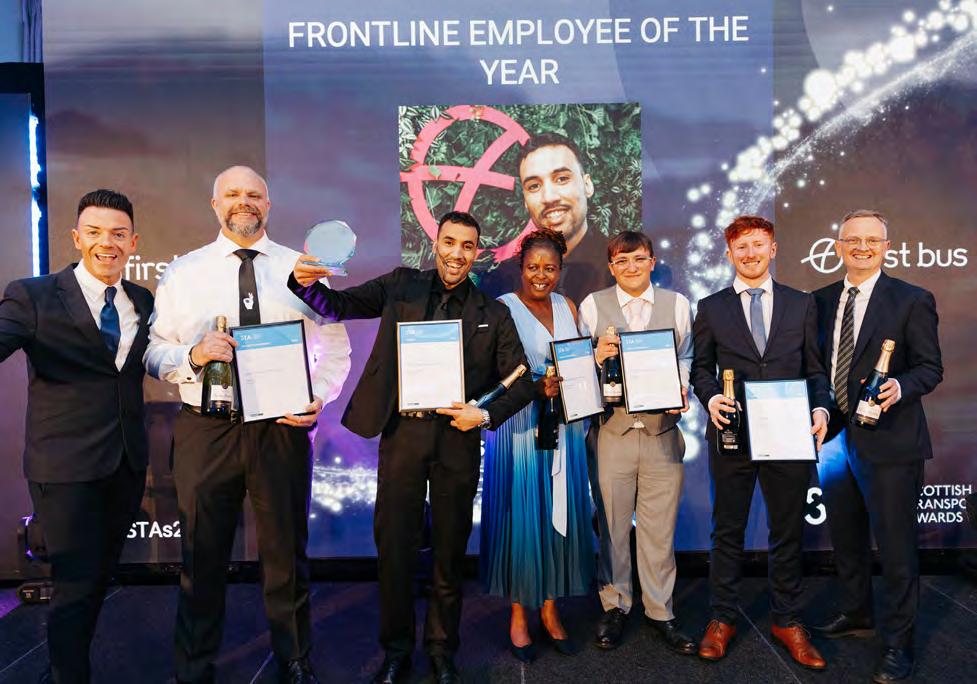
We're looking for nominations for this award for a frontline member of staff (for example, school crossing patrols, bus drivers, highways inspectors, receptionists) who has gone beyond the call of duty in their role and delivered a better service as a result. The nominee will have demonstrated a real commitment to their service and your nomination will need to outline briefly what they have done to deserve this award, supported with statistical or anecdotal evidence. Supporting letters are useful in this category.
First Bus Scotland
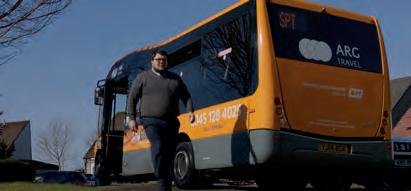
Mansour is a frontline bus driver with First Bus Caledonia. During normal service operations, an incident occurred in which a passenger threatened other passengers with scissors while on board the vehicle.
Mansour stopped the bus safely and contacted the police. Passengers were instructed to leave the vehicle while assistance was requested. The situation was escalated to emergency services. Following the initial incident, the
passenger exited the bus and moved onto a bridge structure above the M8 motorway, where they made threats to jump. Mansour left the vehicle and approached the individual in an attempt to communicate with them and prevent further escalation. He then attempted to restrain the individual in order to prevent a fall from the bridge.
During the intervention, contact was lost and the individual fell from the bridge. Traffic on the motorway below was brought to a halt during the incident response.
First Bus has reported that, outside of this incident, Mansour maintains a consistent driving performance record. He holds a Drive Green score averaging 15 and has recorded no collisions or passenger injuries

in the past six months.
He has completed four driver quality monitoring assessments, achieving an average score of 2, which is the highest available under the scheme.
His Operations Manager, Scot Seivwright, has described him as “customer focused” and noted his “outstanding compassion”, and stated that his handling of the incident took place under highly stressful circumstances.
Alex Whitelaw - First Bus Scotland
Kieran Innes - FlixBus
Pummy - McGill's Bus Group
Jamie Lee Wilson - Scottish Citylink Coaches
Sam Ryan - ScotRail
Previous winners:
2025: Lorna Hunter
2023: Lindsey Reid, Transform Scotland
2022: Billy Bell, First Glasgow • Stephen Docherty, McGill’s Buses • Marc Macduff, First Glasgow • Dale McDonald, CrossCountry • Stuart Mearns, Edinburgh Trams
2020: Pamela McCluskey, Driver, First Scotland East
An entry in this category would provide evidence of excellence or significant improvement in overall performance or provision of facilities over the past 12 months. KPIs and customer satisfaction results will be particularly relevant as evidence of this. We encourage all airports to submit their most recent ASQ scores.
Edinburgh Airport is Scotland’s busiest airport and handled 16.98 million passengers in 2025, representing a 7.5% increase on 2024 and 15.1% above 2019 levels. It is the only airport in Scotland to have exceeded prepandemic passenger volumes.
A 2025 BiGGAR Economics report estimated that the airport contributes £2.7 billion in gross value added to the Scottish economy and supports approximately 43,000 jobs across related sectors.
During the year, a £24 million investment programme in security infrastructure was delivered, including the installation of new X-ray equipment and additional security lanes. The airport became the first in Scotland to remove the 100ml liquids restriction introduced in 2006.
Following the changes, more than 95%
of passengers passed through security in under 10 minutes, compared with 90% in 2024. More than 97% of FastTrack passengers passed through security in under five minutes, compared with 87% in the previous year.
The check-in hall was redesigned using a simulation-led approach. The layout incorporates self-service kiosks, baggage drop facilities, lighting improvements and wayfinding changes. Peak hour processing capacity increased from 1,761 passengers in 2022 to 3,406 in 2026 within the existing terminal footprint.
Average kiosk transaction times of 64 seconds have supported passenger flow during peak periods. Around 70% of firstwave demand is now processed using approximately 30% of the available floor area.
An eleven-acre airside solar farm was brought into operation during 2025. The installation provides approximately 27% of the airport’s total energy requirements. Public transport mode share reached 39.6% in 2025, compared with 33.7% in 2019. The airport’s Community Fund distributed over £255,000 to 91 organisations during the year. More than £200,000 was also raised for Edinburgh Children’s Hospital Charity over a two-year period. A STEM Centre was opened on site, delivering 10 school sessions since launch. Internship placements increased from 6 to 13, and work experience placements increased from 6 to 37. A dedicated Employability Officer was appointed in 2025 to support programme delivery.
Other shortlisted entries: Aberdeen International Airport Glasgow Airport
Previous winners:
2025: Aberdeen International Airport
2024: Glasgow Airport
2023: Glasgow Airport
2022: Aberdeen International Airport
2020: Glasgow Airport
2019: Glasgow Airport
2018: Edinburgh Airport


With 160+ destinations and 39 airlines, it’s no wonder we’re UK and Scottish Airport of the Year.
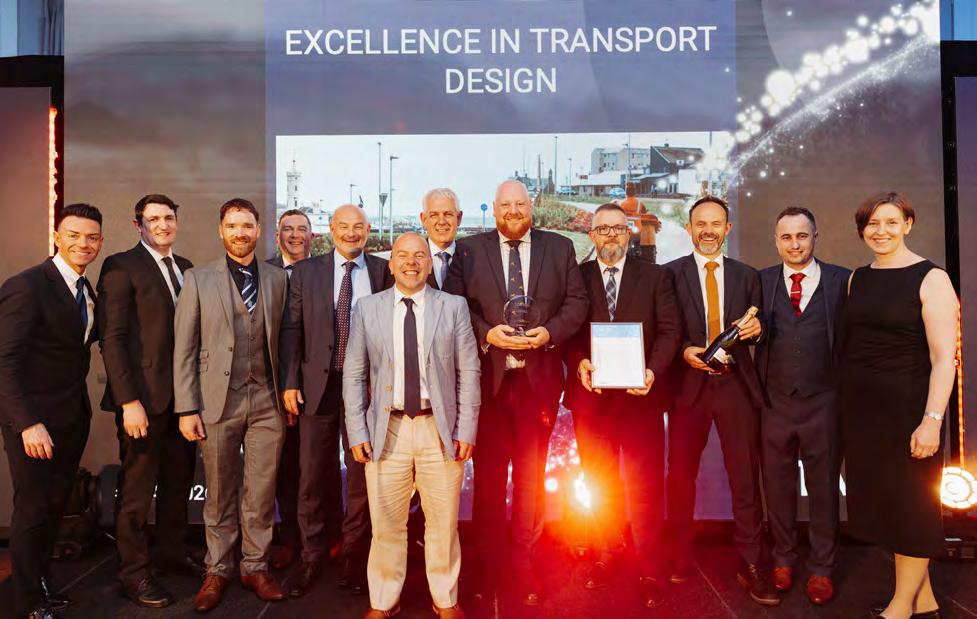
Entries submitted into this category should demonstrate a focus on sustainability and high quality. Designs should also be befitting and sensitive of the community in which it is being implemented and that co-design has been meaningfully included. There should be evidence the design has been futureproofed including potential for flexibility/ extendability and be environmentally and economically sustainable. Excellence should be demonstrated in innovation, invention, and originality - it could be a design that is the first of its kind in the country and shows that it adds value and stands out above the rest. Entries can include a wide range of scheme designs from cycle hubs, bus, rail and metro stations and airport terminals.
Angus Council’s Arbroath – A Place for Everyone project involves the redesign of a section of the A92 dual carriageway in Arbroath. The scheme covers approximately 1.5km of corridor and forms part of a wider programme of active travel infrastructure improvements in the town.
The project was delivered by reconfiguring road space to reduce the
number of traffic lanes and introduce segregated walking, wheeling and cycling routes, while maintaining vehicular access along the corridor. The scheme is aligned with national active travel policy and funding frameworks, including the Sustrans Places for Everyone programme.
The corridor connects key locations within Arbroath, including the harbour, West Links, High Street, transport hubs and Arbroath Abbey. The route also links to National Cycle Network Route 1, providing onward connections for longer-distance journeys.
The design includes upgraded junction layouts, new crossing points and accessible pathways. Public realm works along the route include tree planting, landscaping and seating provision.
The project was developed through consultation and engagement with local stakeholders and communities. The design process incorporated feedback and evidencebased assessment of movement patterns and connectivity needs across the area.
Post-completion monitoring has recorded increases in walking and cycling activity along the corridor compared with preproject levels. The changes form part of wider monitoring of active travel behaviour in Arbroath.
The scheme forms part of a wider regeneration context for the town centre and seafront, supporting connections between residential areas, commercial areas and cultural sites.
The project was delivered with a total investment of £14 million, including over £10 million in external grant funding. The corridor has been designed to allow for potential future extensions and integration with wider active travel routes across the area.
Other shortlisted entries:
Glasgow City Council – Glasgow City Region Bus Partnership’s Don’t Be a Bus Blocker
National Trust for Scotland - Glencoe Greenway
ORCHY & Connected Places Catapult -Marked Cycle Wayfinding System
South Lanarkshire Council, SPT, Network Rail, Transport Scotland - Hairmyres Interchange
Strathclyde Partnership for TransportNorth Lanarkshire Active Travel Hubs
Walk Wheel Cycle Trust - A Safer Route to School
Previous winners:
2025: City of Edinburgh Council: Roseburn to Union Canal Active Route and Greenspace Improvements
2024: City of Edinburgh Council: City Centre West to East Link and Street Improvements
Project
2023: ScotRail: Highland Explorer: Unlocking active travel on the West Highland Line
2022: Scotland’s Railway: Glasgow Queen Street station redevelopment
Sponsored by

This new award for 2025 will recognise the social impact benefits of an activity, project, programme, initiative, or policy on individuals and communities. Positive examples of social impact could include: Job creation; Improved access to services and facilities - education, healthcare, leisure, and cultural experiences; Reduced crime; Improved safety; Environmental/ conservation; Cultural preservation; Scheme impact mitigation strategies. Submissions should capture the positive benefits and impact on individuals and our communities. Evidence such as testimonies, examples of societal benefits and where possible monetary value should support the submission.
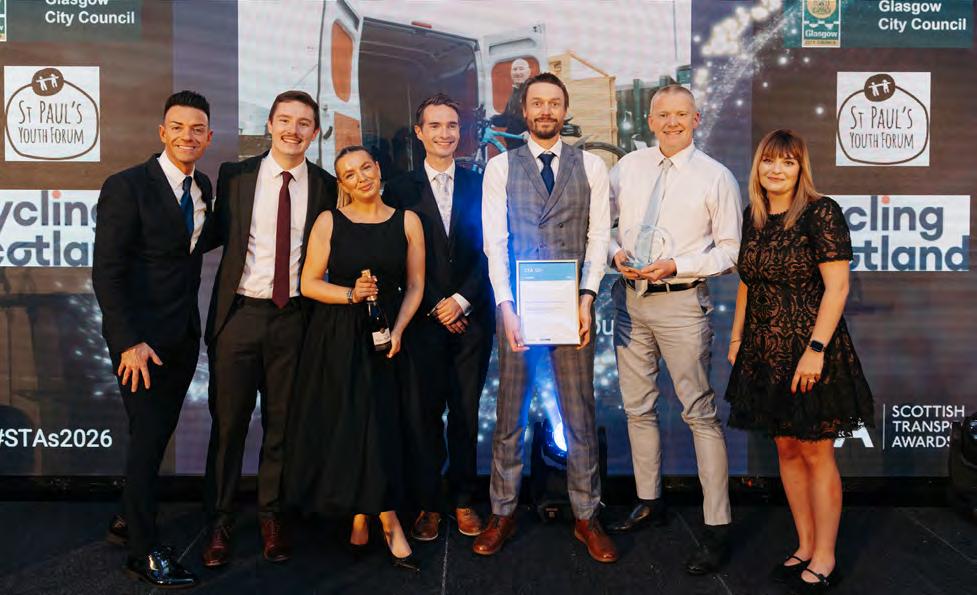
Bike Reuse Pilot
The Glasgow Bike Reuse Pilot is a partnership project between Glasgow City Council, St Paul’s Youth Forum, HMP Barlinnie and Cycling Scotland, delivered through Strathclyde Partnership for Transport and funded by the Scottish Government’s People
and Place Programme. The project focuses on the reuse of bicycles collected through Glasgow’s household waste recycling centres.
Bicycles identified at Dawsholm, Polmadie and Shieldhall recycling centres are assessed for reuse potential, including minor repair, refurbishment or parts recovery. Staff at the sites have been trained to support the identification and diversion of suitable bicycles from waste streams.
Collected bicycles are transferred by St Paul’s Youth Forum to HMP Barlinnie, where a structured workshop programme is delivered. Up to 16 prisoners participate in bicycle refurbishment activity, carrying out repairs and restoration work within the prison workshop environment.
The refurbished bicycles are distributed to children, families, schools and individuals across Glasgow. Distribution is supported through local community organisations and is targeted at people who may face barriers to accessing cycling.
The programme is expected to refurbish approximately 500 bicycles by March 2026, with an estimated 6.2 tonnes of metal diverted from disposal. Between October 2025 and January 2026, 294 bicycles were processed through the scheme, including provision for 150 young people on a waiting list held by St Paul’s Youth Forum.
The project is also used as an employability and skills development programme for participants at HMP Barlinnie. Prisoners undertake practical training in bicycle mechanics and workshop processes,
with activity designed to support future employment opportunities on release.
The initiative is supported by multiple delivery partners across community, justice and transport sectors. It forms part of wider activity linked to active travel, reuse of materials and diversion of waste from landfill within Glasgow.
Highly Commended:
Amey, Transport and Infrastructure, Scottish Prison Service, Speedy Hire, Hatton Traffic Management, & Breedon - Unlocking Future Connections
Other shortlisted entries:
Aberdeen International Airport - Social Impact Strategy in Action
City of Edinburgh Council, Balfour Beatty & Water of Leith Conservation Trust - Coalie Park Improvement Project
Glasgow Airport - FlightPath Fund
Lothian Buses - Excellence in Social and Community Value
Network Rail - Safety Education Programme
QTS Group - Abington PrimaryLegacy Project
ScotRail – In the Community Story Contracting Ltd
Previous winners:
2025: Lothian Buses & Police Scotland: Operation Crackle
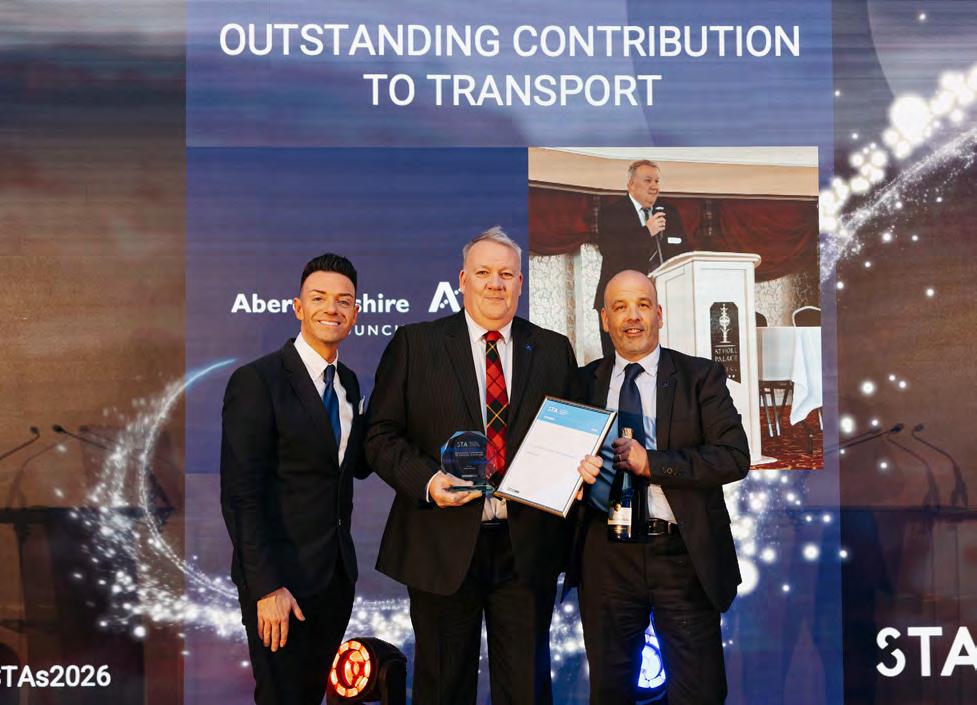
This prestigious award honours those who have demonstrated exceptional leadership, innovation, and dedication in improving Scotland's transport infrastructure, services and sustainability. The winner of this award is nominated by the judges.
Ewan Wallace has worked in national and local government since 1990 with the vast majority of his career being focussed on strategic transport networks, programmes and projects in the North East of Scotland, including new railways stations, major road projects, passenger transport, road safety and active travel.
His current role as Head of Environment & Sustainability at Aberdeenshire Council brings together those areas of work alongside a broad range of council functions focussed on the environment and leading of climate change and sustainability.
Ewan has made a major contribution to the Scottish Collaboration of Transportation Specialists (SCOTS), the strategic collaborative body that represents Scotland’s 32 local authorities and seven
regional transport partnerships. He has held various roles at SCOTS since 2004 and has filled the role of Chair on two occasions. In that role he has worked extensively with Scottish Government and Transport Scotland on a range of projects, policies and strategies and also with UK colleagues via the UK Roads Leadership Group.
The Outstanding Contribution to Transport was presented to Ewan by his colleague, Philip McKay, Head of Roads & Infrastructure at Aberdeenshire Council, Vice-Chair of SCOTS. Philip told the audience that Ewan worked in local government but had also been “a central figure in shaping transport policy and practice across Scotland”.
He said: “Through SCOTS, [he has] ensured that local government attains a strong and credible voice, helping translate professional judgment into informed decision making.”
Philip said Ewan had led a significant shift in the way SCOTS operates, through a rebranding and removing the perception that it was only a forum for Chief Officers. He also opened the membership up to a much wider cohort, a change that has strengthened SCOTS and made it far more representative of the profession as a whole.
Philip said: “Those of us who work closely with [Ewan] will recognise his approach -
calm, pragmatic, focused on delivery, and with a knack of asking exactly the right question. Unfortunately, that's usually just as you think the meeting's about to end.
“In a profession where consensus can take a bit of effort, [he has] a rare ability to bring people with [him], keep things moving, and quietly get things done.”
Summing up, Philip said his colleague had led when it mattered, modernised when it was needed and had strengthened the profession in the process.
A past Chair of the Institution of Civil Engineers (ICE) and President of the Aberdeen Association of Civil Engineers (ACCE), Ewan is also a member of the Chartered Institution of Highways & Transportation (CIHT) and a graduate of the University of Abertay.
He describes himself as “a proud North East Loon who is blessed with a lovely wife and two young daughters who have to treat every holiday like a site visit”.
Previous winners:
2025: Roy Brannen
2024: Hannah Ross and Daisy Narayanan
2023: Valerie Davidson
2019: Neil Gellatly
2017: Andrew Burns
This award recognises an individual who has made an outstanding and enduring contribution to the transport sector. It celebrates a career dedicated to improving transport for passengers, communities and industry alike, through exceptional leadership, innovation, service and commitment. The recipient will have left a lasting legacy, helping to shape the development and success of transport in Scotland. The winner of this award is nominated by the judges.
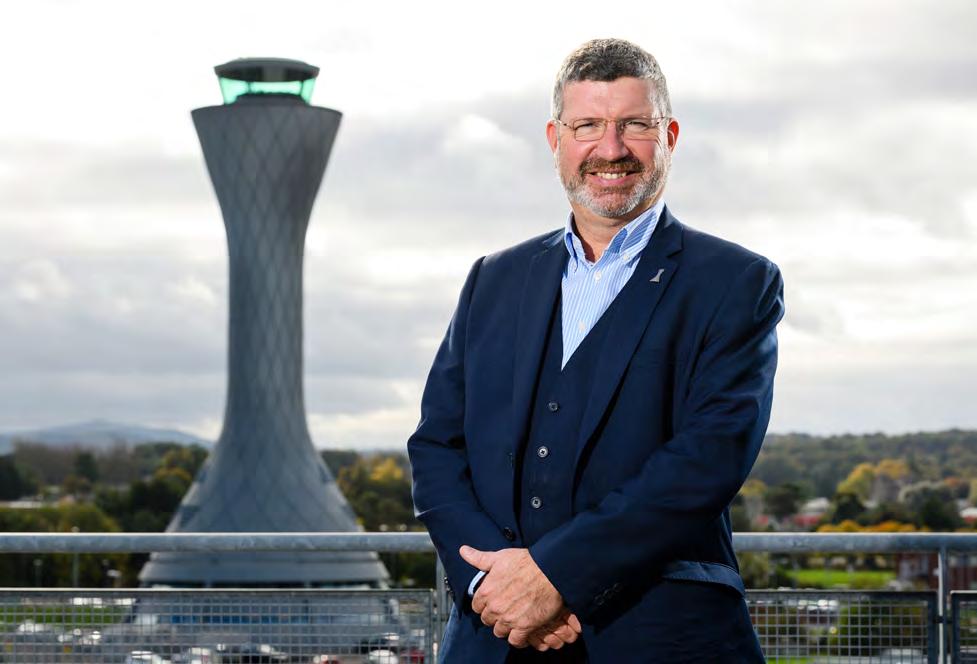
Back in February Gordon Dewar announced that he would step down as CEO of Edinburgh Airport after 14 years. Commenting at the time, on behalf of Edinburgh Airport owners VINCI Airports and GIP, Stewart Wingate, VINCI Airports Managing Director for the UK, said: “Gordon is an extremely talented executive and has done a tremendous job at Edinburgh Airport over many years ... His legacy of a strong team, exceptional growth and a clear valuedriven strategy stands Edinburgh and its airport in good stead for the future.” Dewar’s contribution extends across Scotland’s transport sector and beyond.
After starting his career with Halcrow, he held senior roles at First Edinburgh, ScotRail, Arriva, Glasgow Airport and Edinburgh Airport, before leading Bahrain Airport Company. He returned to Edinburgh Airport as CEO in 2014. Under his leadership, passenger numbers grew from nine million to almost 17 million.
The Lifetime Contribution to Transport award was presented by Bettina Sizeland, Director of Transport Integration and Connectivity at Transport Scotland and a member of the Scottish Transport Awards judging panel.
Bettina said: “This award recognises an individual whose career has had a profound and lasting impact on Scotland's transport network, economy and international connectivity. Over more than three decades, our recipient has held senior leadership roles across the transport sector. But this award is not about the position he has held, it is about the legacy he has created.
“As Chief Executive of Edinburgh Airport, he has helped transform Scotland's busiest airport into a globally-connected gateway, supporting tourism, trade, investment, and economic growth across the country. He's also been a respected and influential voice across the wider transport sector, championing the importance of connectivity and working collaboratively to improve Scotland's transport network.”
Concluding her remarks, Bettina added: “We, the judges, felt that his leadership, vision, and commitment have made an exceptional contribution to transport in Scotland and leave a legacy that will benefit the country for many years to come.”
Gordon was unable to collect his award in person as he had just arrived in the United States for the World Cup, but he offered his thoughts in a pre-recorded video message.
He said: “To be given an award like this for 35 years in the transport industry, across buses, trains, consultancy, and airports, and to be given it by my peers is the really most important part, when you understand challenges, tribulations, and the whole thing we have to do. So getting recognised by you is a really, really great honour. But of course, as you all know, this individual work masks all of the people that have made it possible, teams I've worked with, customers I've worked with, people who hired me ... Genuinely, I just want to say, thank you. I'm really humbled by this. It's a great honour.”
Previous winners:
2025: Gillian Murray
2024: Ralph Roberts
2023: Neil Johnstone
2020: Robert Andrew
2019: George Mair
2018: Eric Stewart
OUR
PROUD OF WHAT WE DO and proud to be recognised amongst the best in our industry