




Lose the pounds – and save the ££s!
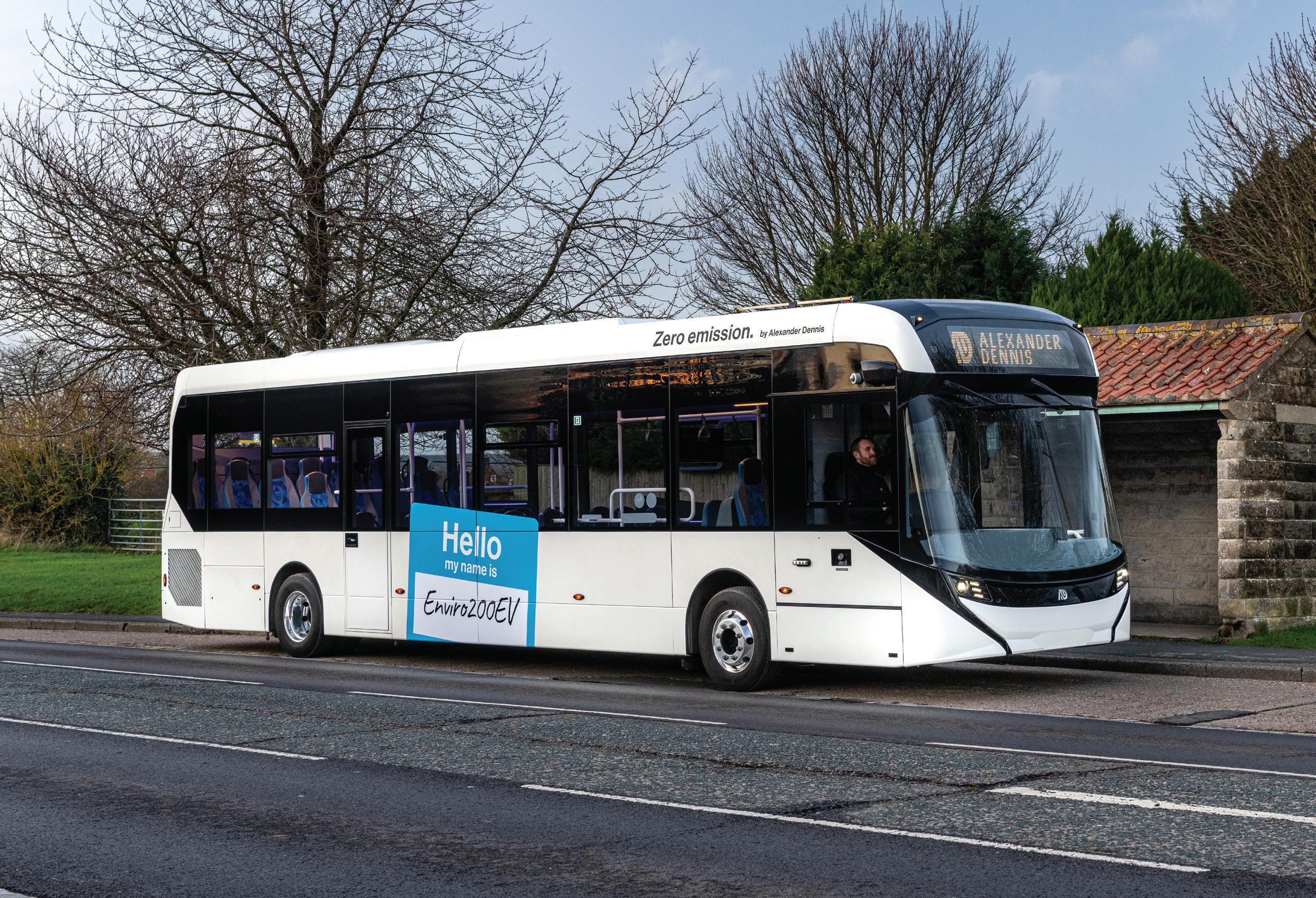
With a lightweight design saving two tonnes against other buses of similar length, the next-generation Enviro200EV comes without the fat – for better energy efficiency that makes it less hungry at the charging point.
Choose between 9.9m, 10.9m and 11.7m length and tailor the Enviro200EV’s interior layout to your requirements – with up to two extra seats than other single deckers despite being not as tall, shorter and narrower!
Welcome to The ALBUM Report 2026, a publication from Passenger Transport devoted to Britain’s independent and municipal bus companies. Returning for its tenth year, this year’s report also incorporates the Conference Workbook for the ALBUM Conference 2026, hosted by Blackpool Transport at The Village Hotel in Blackpool. We hope you enjoy reading it!
DAVID ASTILL
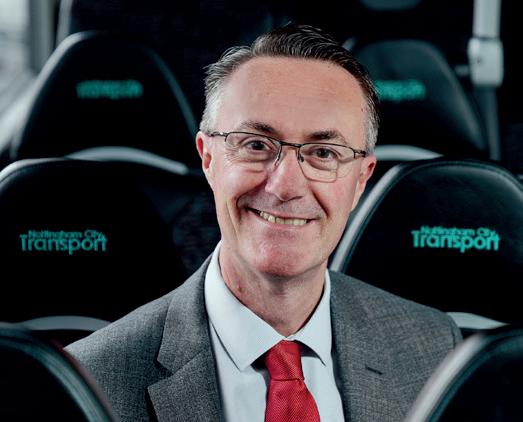
ALBUM Chair - and Nottingham City Transport MD - David Astill reflects on the big issues
REVIEW 2025/26
Some of the key events amongst the membership in the 12 months since the last ALBUM Conference
LEA HARRISON
We speak to Blackpool Transport’s new MD, Lea Harrison, about his vision for the company
ALEX PERRY
Setting out ALBUM’s policy positions in a rapidly evolving legislative environment
Ticketer's Tom Wilsher explains ow Driver Connect is redefining on-road communication
How Velociti Solutions’ Control360 can reshape control room performance
Intuitive Talent Solutions CEO Nina Lockwood on bus franchising and the skills gap

Integrated vehicle CCTV: Hardware and software working as one
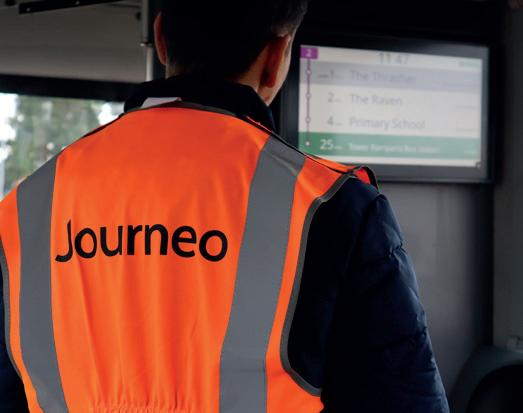
How Journeo’s Next Stop Announcement system makes PSVAIR compliance simple JOURNEO Ian Downie of
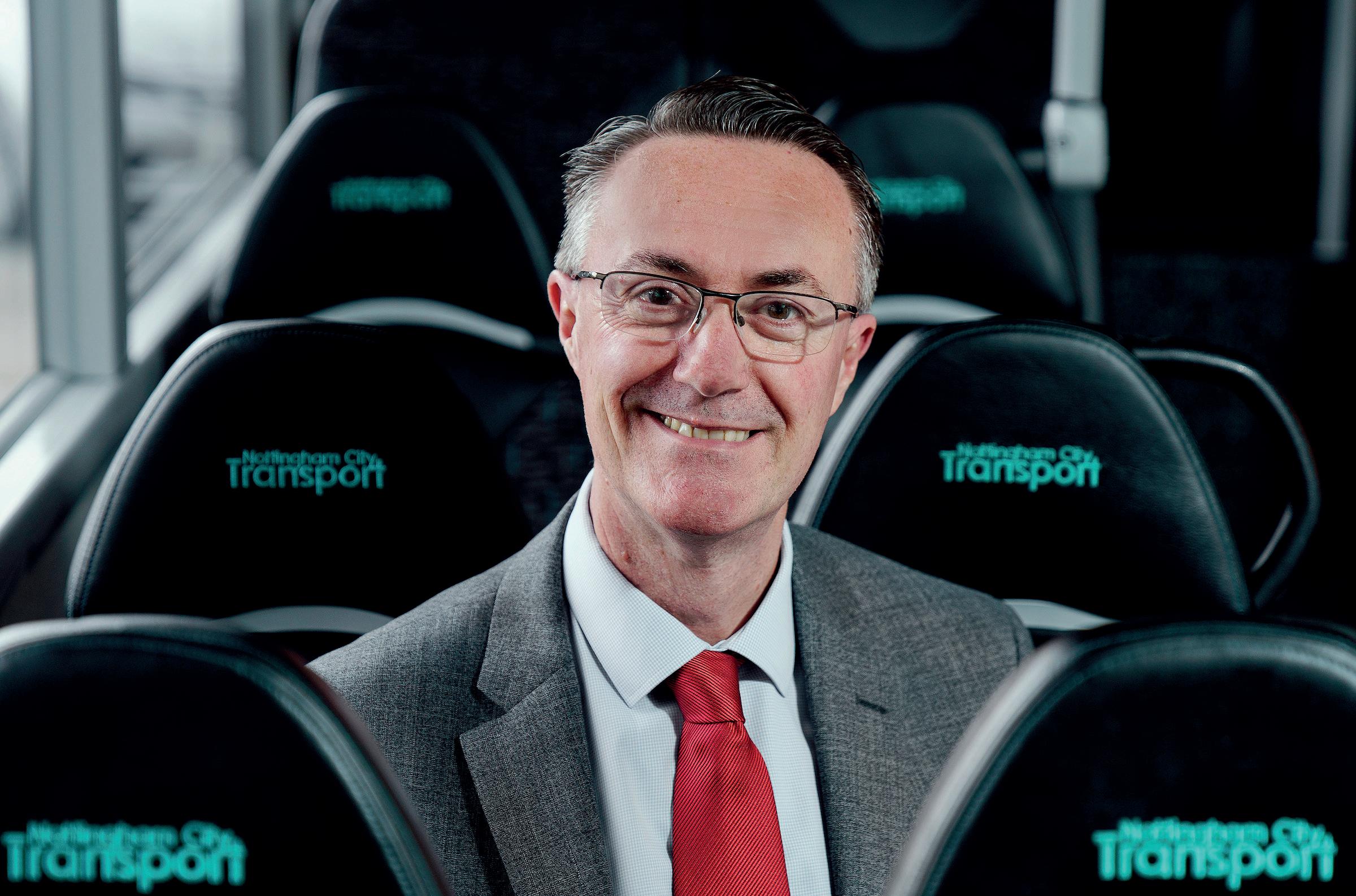
Nottingham City Transport MD and ALBUM Chair David Astill reflects on another year of strong performance but growing pressures
It has been, by most measures, a successful year for Britain’s independent, municipal and SME bus operators, but as David Astill is quick to point out, success in today’s market rarely comes without complications.
Speaking in his dual role as Managing Director of council-owned bus operator Nottingham City Transport and Chair of ALBUM, the association representing the UK’s non-aligned operators, Astill reflects on a period defined as much by achievement as by mounting external pressures.
From fare policy and inflation to supply chains and ownership structures, the landscape is shifting, perhaps more so than ever, and not always in ways that favour the
sector’s smaller players.
Yet, he believes, the story is undeniably a positive one.
For Astill, the past 12 months have underlined the collective strength of the ALBUM membership base, a group often overshadowed by the dominance of the major transport groups but increasingly difficult to ignore in terms of performance.
“I think what’s notable is ALBUM’s success - at all levels,” he says. “Doing so well at the UK Bus Awards, then the Transport Focus Bus User Survey, where eight of the top 20 are ALBUM members. None of the groups can boast that; not one of them has eight operations in the top 20.”
That achievement is not incidental, he argues, but reflective of a broader structural advantage.
“ALBUM, as a group, is buoyant”, he argues. “Those locally owned and locally managed companies are making an incredible contribution to the success that’s occurring in the bus industry.”
At NCT itself, that performance has been particularly consistent, not to say satisfying. The operator has long been a fixture near the top of the Transport Focus rankings, and this year’s first-place finish in England is the culmination of a decade’s work rather than a sudden breakthrough.
Astill continues: “Going back over the last 10 years, we’ve had a remarkable record. We’ve always been in the top five, so being top this year is great. We’re obviously doing something right, and I think it’s that we do the basics well.”
That phrase, doing the basics well, recurs frequently in Astill’s thinking. It is both a philosophy and, he suggests, a differentiator.
“The big groups are always asking whether they can come and see us and see how we do it, and I always say, it’s rudimentary, we do the basics well,” he reveals. “There’s a lot to be said for locally managed and locally owned, which is what ALBUM is all about, really.”
That emphasis on local accountability stands in contrast to a wider trend across the transport sector, where private equity ownership has been increasing within major groups.
For Astill, the distinction is not ideological so much as practical. Ownership structures shape decision-making and, ultimately, service delivery:
“Being locally owned and locally managed means that ALBUM members know their markets and understand their customers and that’s reflected, once again, in the Transport Focus scores.”
He stops short of direct criticism but draws a clear line
between di erent ownership models, particularly regarding financial priorities.
“We have to make a return for our shareholders, but it’s a sensible return and it’s a modest return,” Astill says.
That balance, he suggests, allows operators like NCT to make decisions that prioritise service quality, even at a cost: “We have had a horrendous year of roadworks, which makes our achievement with the Transport Focus scores even more remarkable, but in order to deal with those roadworks, we invested about half a million pounds in additional resource to ensure our services ran reliably.”
It is the kind of decision that might not survive the cut-andthrust of private equity.
Astill continues: “Strictly speaking, a wholly commercial organisation wouldn’t do what we did, but adding in that resource to ensure we o er a reliable service to our customers means everything to us. If we had been working for di erent shareholders, I don’t think that would have been possible.”
If there is one issue that encapsulates the tension between policy ambition and operational reality, it is the bus fare cap.
Introduced in 2023 to stimulate demand following the Covid-19 pandemic, the scheme has divided opinion within the industry, and Astill’s assessment reflects that complexity.
At a headline level, the numbers are stark. Rising costs, coupled with the increase in the fare cap from £2 to £3, have had a measurable impact on revenue and patronage in some markets.
“The National Insurance hike last year was a big thing for businesses like us,” he reveals. “We had £1.3m of extra cost straight o the bottom line because of that at a time when many of us are still reeling from the 50% increase of the fare cap in England.”
For operators in urban areas, where many short-distance fares were already close to the original £2 cap, the e ects have been particularly pronounced.
“There are at least 21 urban bus operators reporting patronage
decline - we are one of those areas. Those areas report patronage falling by anything from 5% to 12%. Leicester has reported patronage decline of 12%. We lost 5% of our fare-paying customers in 2025-26. That’s a big number.”
The issue is not simply the level of the cap, but the absence of a clear long-term framework.
“I’m concerned there isn’t an exit strategy,” Astill adds.
The longer-term outlook is unclear. While the current extension runs to Spring 2027, Astill questions whether the funding model is sustainable.
“While the government has said the reimbursement will be capped at £150m, I’m very conscious about the support there is for rail fares and capping that will cost £600m,” he says. “Would it really have been that di cult for the Treasury to have found some more funding to keep the bus fare cap going at a sustainable level for operators?”
At its core, the issue is one of policy consistency: “We all went into the fare cap with good faith in 2023… The mistake was to carry it on for as long as we did, especially, so it seems, where there’s no further money available for the reimbursement.”
Overlaying the fare cap debate is a broader concern about economic stability. Just as
“How hopeful am I about that happening? Well, we can always be hopeful”
inflation appeared to be easing, global events, specifically those in the Middle East, have disrupted the outlook. “Just when we thought inflation was back under control,” Astill believes. “That’s now blown out of the water.”
For operators in the midst of planning their next financial year, that uncertainty has immediate consequences.
The impact is not confined to fuel costs, though they remain a key variable. It extends to the broader challenge of running a stable, predictable operation in an increasingly volatile environment.
Against that backdrop, decisions around fleet investment take on added significance, and Astill is candid about the role of international manufacturers.
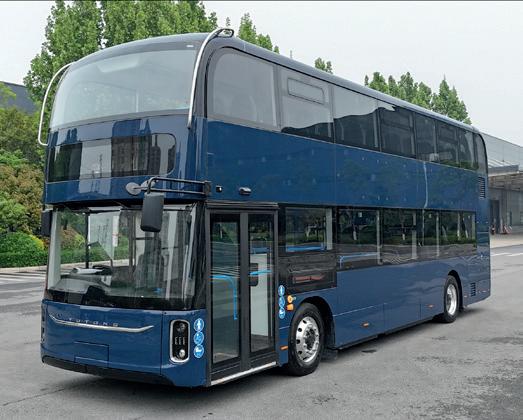
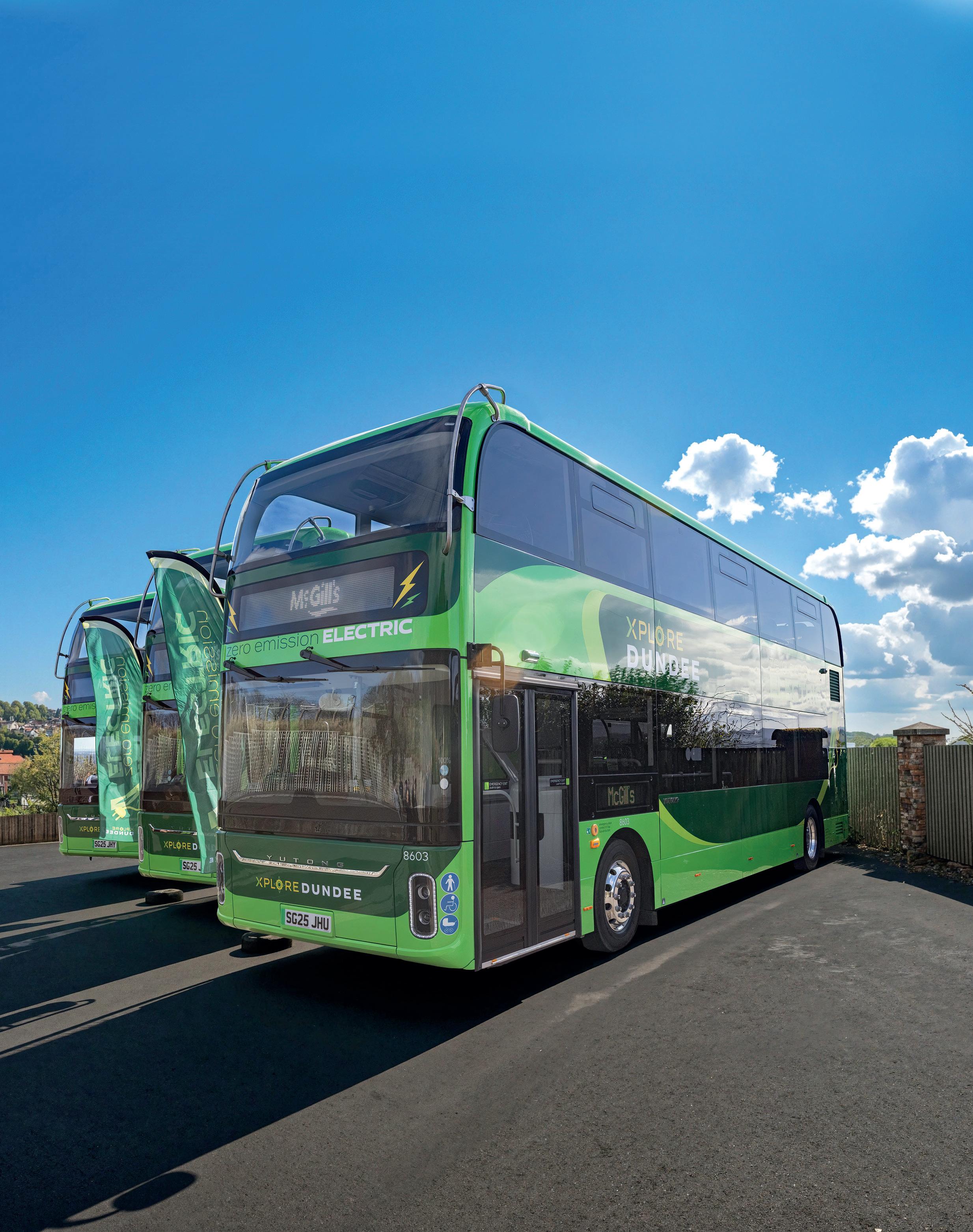
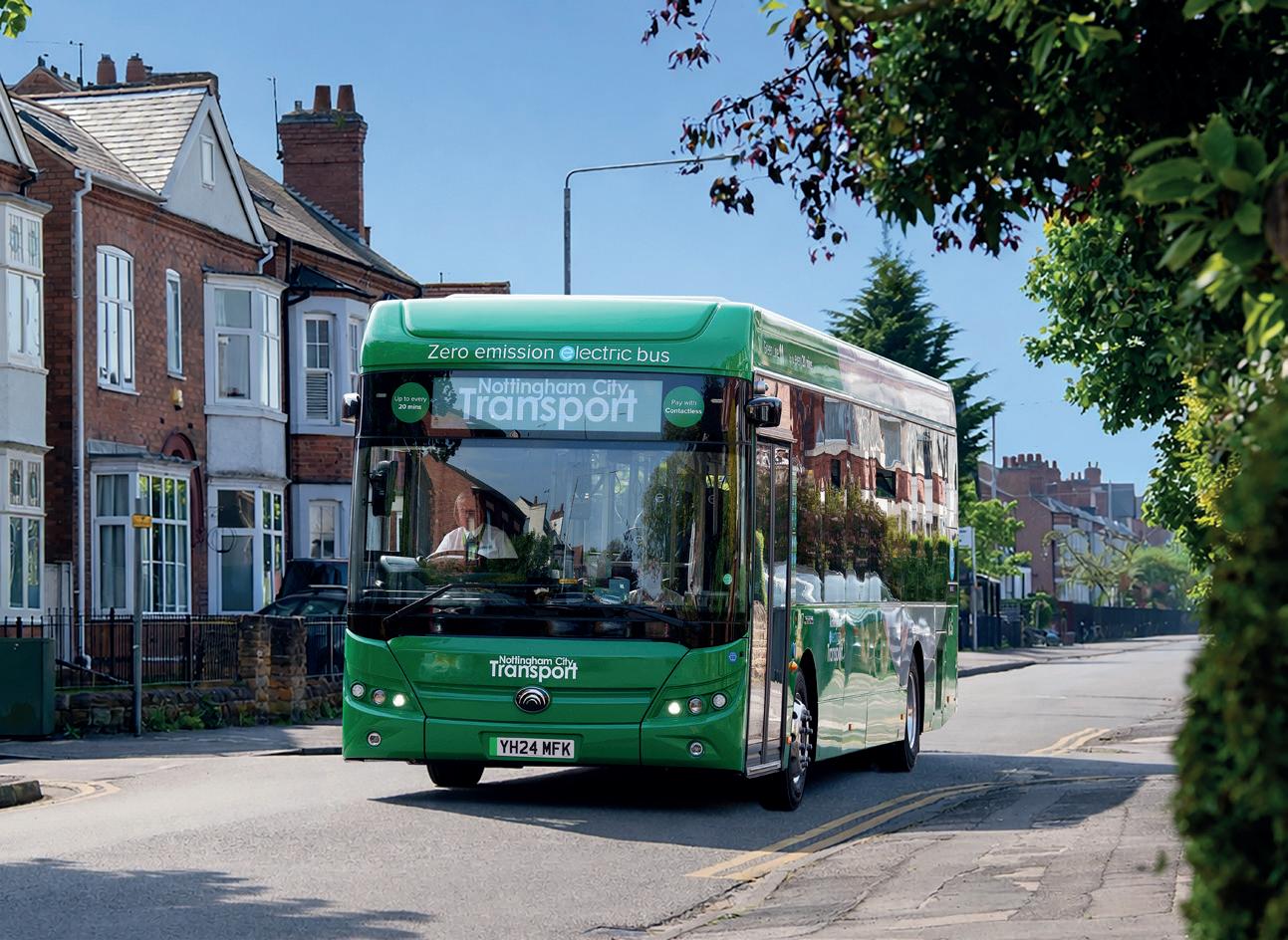
The growing presence of overseas-built vehicles, particularly from China, has been a point of debate within the industry. Around a quarter of NCT’s fleet now comprises battery-electric buses from
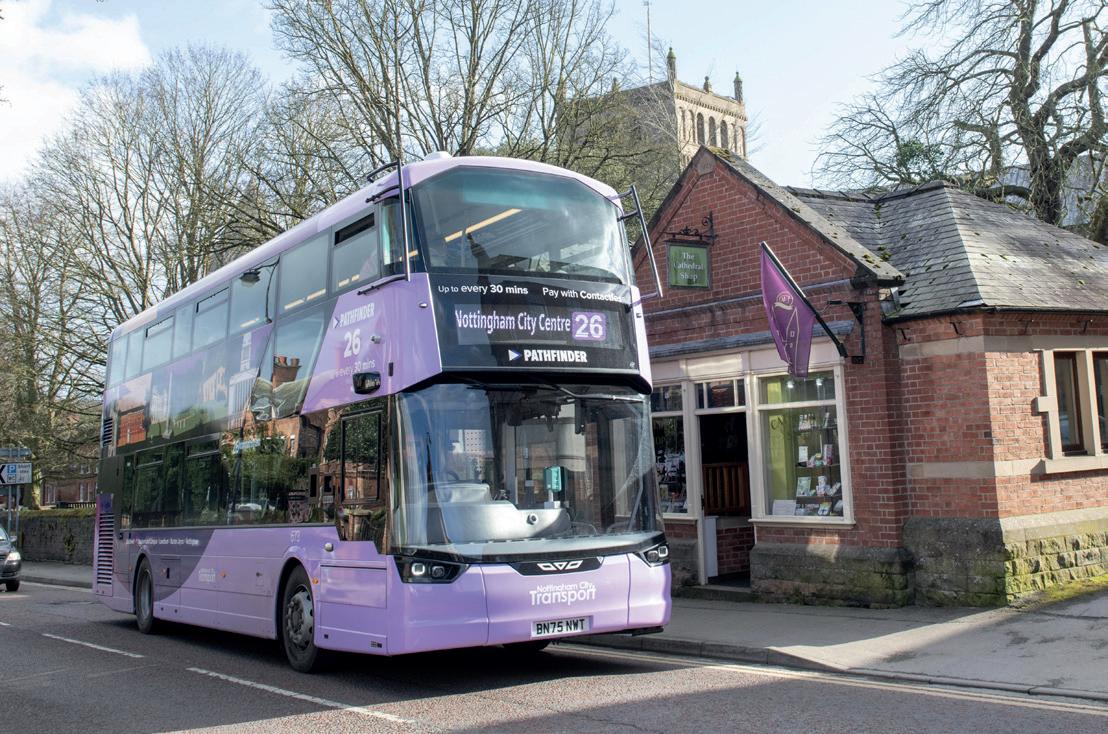
Chinese manufacturer Yutong. He suggests that, for ALBUM members, the issue is ultimately one of value and reliability.
“The Yutongs we’ve bought are as good as ready for the road when they’re delivered,” Astill claims. “We’ve had disappointing experiences with UK manufacturers in recent years.”
It is not, he emphasises, a rejection of domestic bus builders, but a reflection of reality.
“We’ll be very happy to buy British when we feel the British product is the best option,” Astill adds. “Buses are very expensive things to buy, and we need to be confident that we are buying something that’s worth the money.”
While procurement decisions are largely within operators’ control, the same cannot be said for structural changes to the market, in particular, the continued rollout of bus franchising.
Astill’s view is pragmatic; in many metropolitan areas, the direction of travel is already set.
“I think we’re probably resigned to the fact that in the old metropolitan counties, the mayors are going to go for franchising,” he says. “I can’t imagine any of them won’t.”
The question, he suggests, is not whether franchising will happen, but what it will deliver.
For SME operators, the concern is more immediate: access: “At the moment, many of the franchising lots have been put together in such a way that they are out of reach of the typical SME operator - they are too big to bid for, and the process is just too involved.”
Despite these challenges, Astill welcomes the shift in how buses are perceived nationally. Once a marginal political issue, they have moved closer to the centre of policy debate.
But what of his hopes for the future?
Astill would like to see franchising models that are “sympathetic to the SME sector”. He would also like low inflation and a sense of security that gives operators longer-term knowledge of the operating model and the funding environment.
He concludes: “How hopeful am I about that happening? Well, we can always be hopeful.”

Your direct line to every driver.
One feature. Total connection. Enable two-way calls, broadcasts and text messaging on your Ticketer TK300 with Driver Connect.




















































Secure, long-distance calls over 2G+, with standard and emergency priority levels for more e ective communication.
BROADCASTS

Schedule or send real-time, targeted by driver, service, vehicle or depot. Auto-play and playback available - ensuring no update is missed.
Colour-coded by priority with free-text and canned driver responses. Schedule or send real-time, targeted by driver, service, vehicle or depot.
Some of the key events amongst the membership in the 12 months since the last ALBUM conference
ALBUM
Bus operators urged to make deals
Speaking at the ALBUM Conference in Nottingham in May, David Leeder, Founder and Managing Partner of Transport Investment Limited, told bus operators that the franchising tide will stop short of many parts of the country - and a window of opportunity exists to influence policy
“There’s a general sense that there will be a lot more funding - and I think there won’t be ... because the economic situation is rather difficult,” he said.
“I think for shrewd operators … what you should be doing is working with your local authorities to structure deals that are symmetrical and well thought through and economically viable now, rather than waiting for horrible things to happen.”
He added: “Proactive operators can do deals with local authorities.”
ALBUM ALBUM urges focus on Welsh passengers
ALBUM called for a balanced and inclusive approach to Welsh bus reform in June.
In a statement issued ahead of the Senedd’s climate change, environment and infrastructure committee probing bus reform, the group warned that franchising alone is not a “silver bullet” and risks marginalising small operators if not carefully designed. ALBUM emphasised that all reform should be judged by its ability to improve the passenger experience, through more reliable services, better value, and increased accessibility.
While acknowledging franchising could play a role,
ALBUM said it should sit alongside other models, including enhanced partnerships. It urged Transport for Wales to ensure franchise contracts are accessible to SMEs, with manageable tendering requirements and support for public sector operators.
ALBUM also stressed that tackling congestion, investing in infrastructure, and providing long-term funding are key to delivering a sustainable bus network that serves all communities across Wales.
BLACKPOOL TRANSPORT Blackpool teams up with Northern
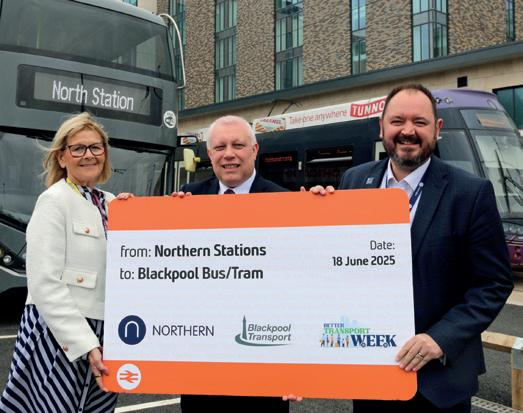
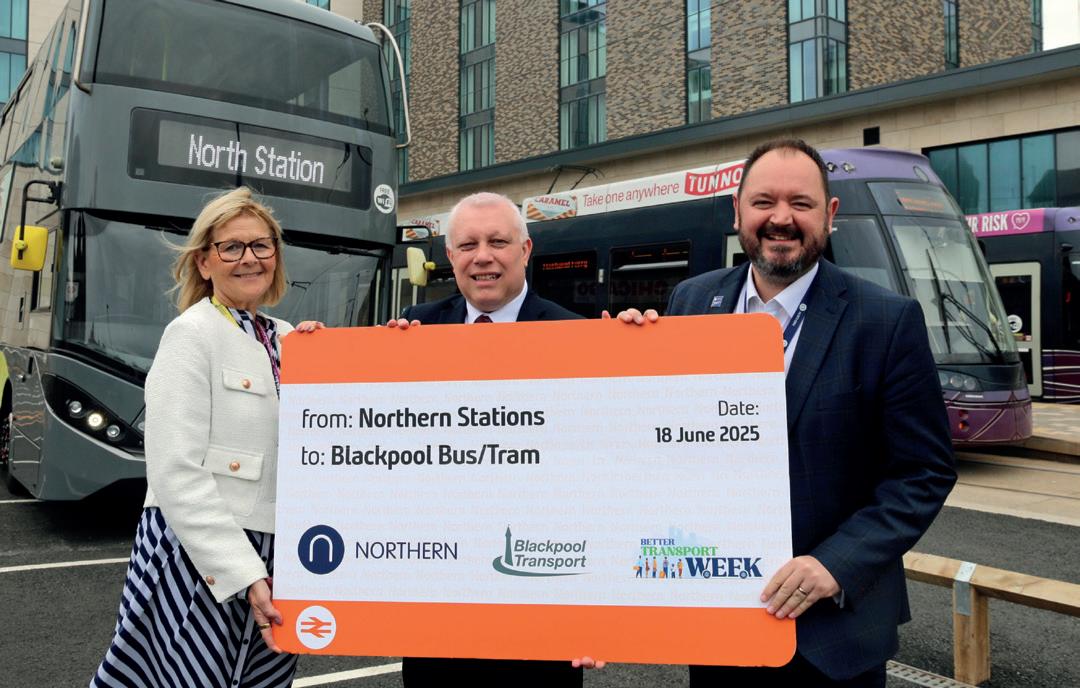
Blackpool Transport teamed up with train operator Northern in June to offer a new combined train, tram and bus ticket, offering seamless onward travel opportunities to and from Blackpool’s stations. The ticket is available via Northern’s app, website, at ticket machines and from ticket offices across the Northern network.
ALBUM
ALBUM welcomes TfGM changes to procurement
In July, ALBUM welcomed Transport for Greater Manchester’s introduction of measures to support small and medium-sized bus operators (SMEs) in its next round of franchising procurement.
The changes include maintaining smaller franchises proportionate to SME capabilities, reduced bid requirements, restrictions on depot use, and targeted briefing sessions for SME bidders.
In response, ALBUM said that a diverse range of franchise sizes could increase competition, support local economies, and improve service quality. The group is encouraging other authorities to adopt similar approaches to SME operators in future procurement.
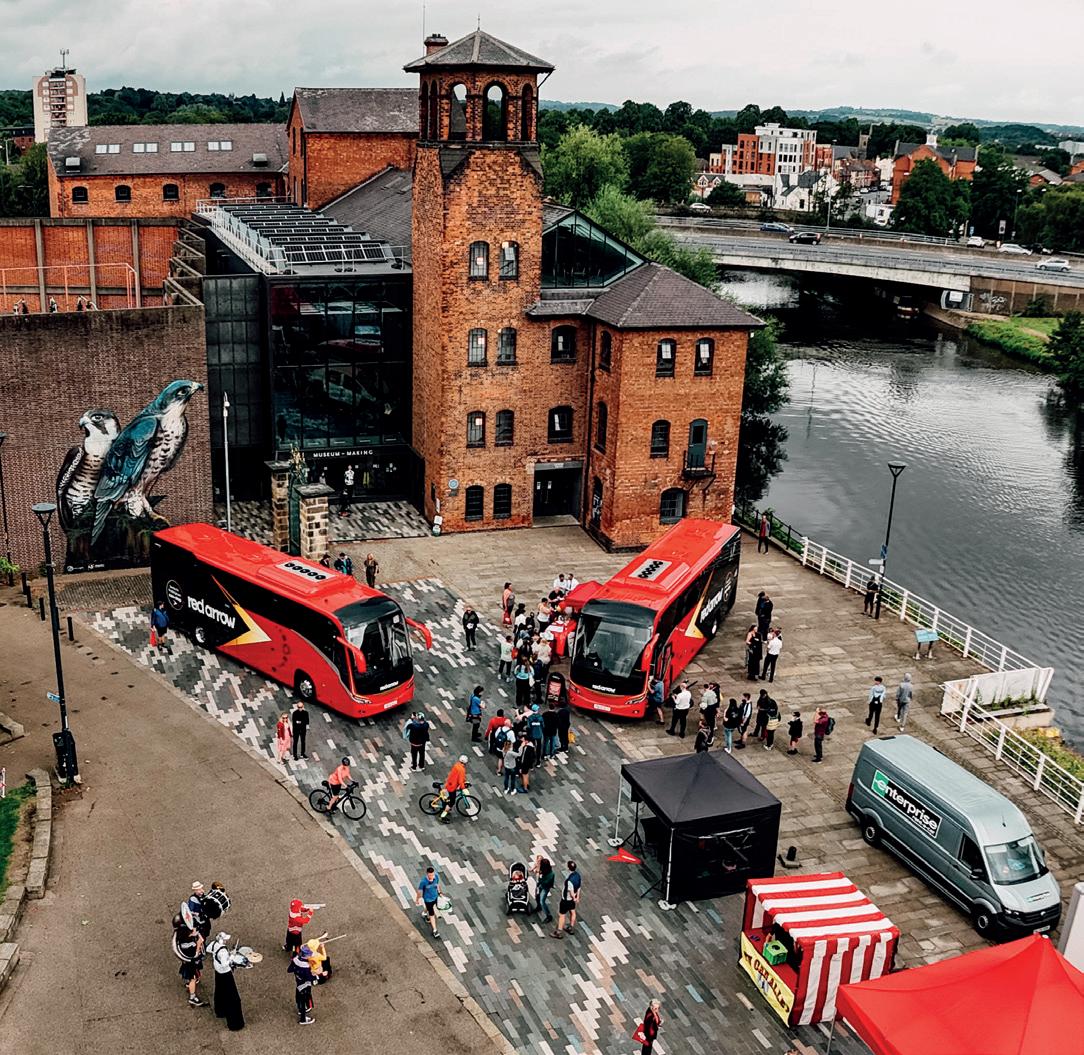
Trentbarton revealed its £3m investment in 10 new Yutong GT12 coaches for its flagship DerbyNottingham Red Arrow route in September. Each 53-seat coach features Wi-Fi and USB charging, bringing long-distance comfort to commuters, leisure travellers and hospital visitors.
Trentbarton Managing Director Tom Morgan said the upgrade highlighted the bus operator’s commitment to high-quality, greener services, encouraging more people to choose buses as “the best, greenest and most relaxing and productive way to travel”.
MCGILL’S GROUP
McGill’s depot plans reveal growth agenda
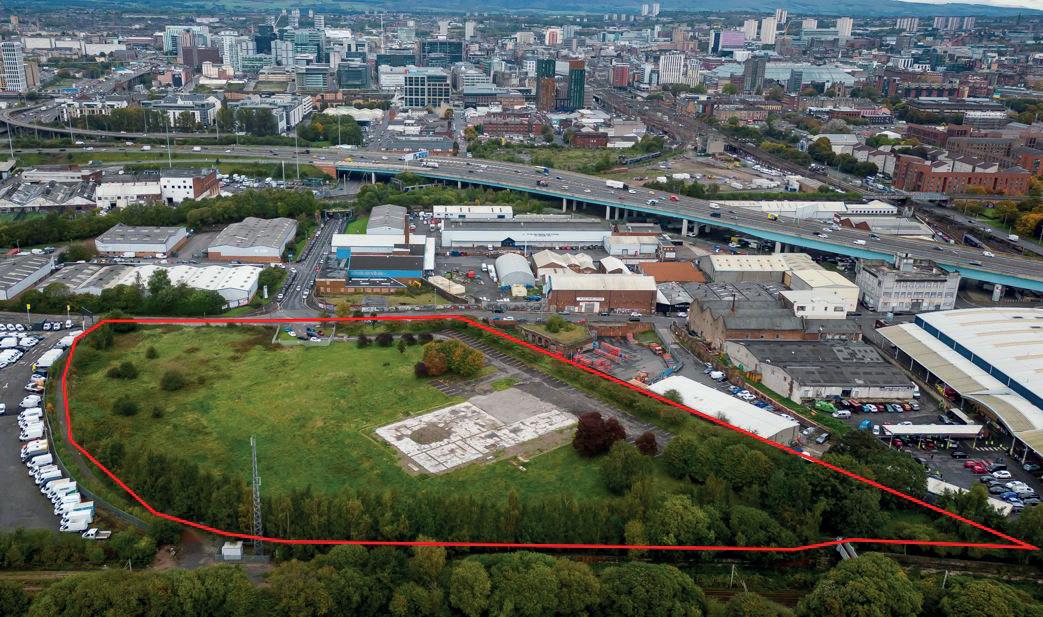
McGill’s Group unveiled plans for a £25m depot on a prime site in Glasgow in September,
positioning the UK’s largest independent bus operator for expansion as Strathclyde Partnership for Transport (SPT) advances plans for bus franchising.
The company confirmed it has completed the acquisition of a 6.55-acre brownfield site on Kilbirnie Street in Tradeston, 1.5 miles south of the city centre. The location offers space for up to 300 vehicles, giving McGill’s both a modern operational hub and significant headroom to expand its fast-growing coach fleet alongside its core bus operations.
With franchising on the political agenda, the depot strengthens McGill’s credentials as a serious contender for future contracts, despite opposition to the region’s plans from McGill’s owners Sandy and James Easdale.
Ralph Roberts, Chairman of McGill’s Group, described the purchase as central to the company’s growth strategy: “This is a strategic purchase that fits squarely within McGill’s three-year plan. With a modern, low-carbon fleet and the backing of owners Sandy and James Easdale, McGill’s Group is in excellent health and firmly focused on revolutionising public transport in Scotland.”
LOTHIAN Award honour for Lothian boss
Lothian Chief Executive Sarah Boyd was named ‘Director of the Year’ in the medium and large business category at the Institute of Directors Scotland Awards, held in Glasgow on October 9. The awards recognise outstanding leadership across Scotland’s business community. Boyd’s accolade followed her recent promotion to Chief Executive, a role that sees her oversee the further integration of council-owned bus operator Lothian with Edinburgh Trams.
Boyd was recognised for her leadership since being appointed Managing Director of Lothian Buses in 2022. During that time, the company has continued to record strong passenger growth,

carrying more than 116 million customers in the past year and expanding its network across Edinburgh and the surrounding region.
Lothian Chair Susan Deacon said: “This recognition is testament to Sarah’s exceptional leadership, hard work, and dedication to Lothian. Sarah is a true champion of diversity within transport and has fostered a more inclusive workplace for all of our colleagues which has seen the business go from strength to strength. She is a very worthy winner of this award.”
OWN BUSES
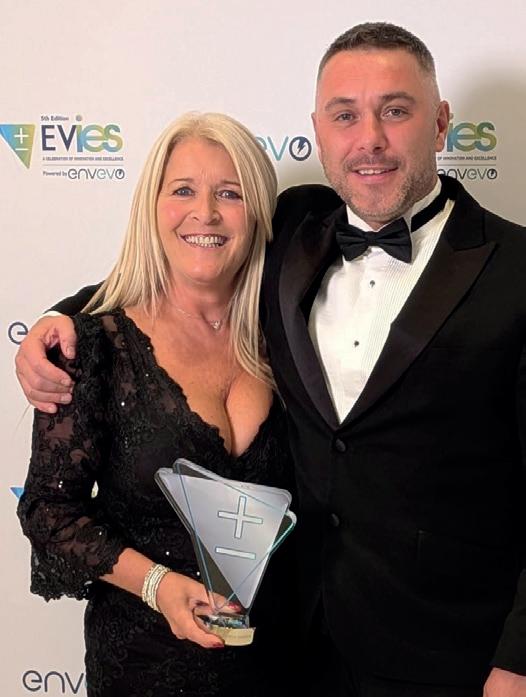
Warrington’s Own Buses celebrated a double success after receiving top honours at two major industry award ceremonies in London in October.
The council-owned company was named winner of the Best Fleet Electrification Initiative at the prestigious EVIE (Electric
cleaner, greener and more sustainable transport for the town. The company completed the rollout of its all-electric fleets earlier in 2025, supported by investment from the Department of Transport’s Zero Emission Bus Regional Areas (ZEBRA) scheme and Warrington Borough Council, making Warrington one of the first towns in the UK to fully electrify its bus network.
Ben Wakerley, Managing Director of Warrington’s Own Buses, said: “We’re incredibly proud to receive national recognition for our work to decarbonise Warrington’s bus network. Electrifying our fleet has been a major undertaking, made possible by the dedication of our team and our strong partnership with Warrington Borough Council.
“These awards are a testament to what can be achieved when a community comes together to deliver a cleaner, brighter future for local transport.”
SOUTH WALES TRANSPORT South Wales Transport sold
Vehicle Innovation & Excellence) Awards, recognising its bold and successful transition to an all-electric bus fleet. On the same evening, Warrington’s Own Buses was also Highly Commended in the Exemplary Contribution to Net Zero category at the National Transport Awards.
These accolades highlight Warrington’s Own Buses’ commitment to delivering
Swansea-based South Wales Transport was sold to Tower Transit ahead of the introduction of bus franchising in Wales.
SWT was founded in 2005 by Bev Fowles, a former Managing Director of several First bus companies. His son David joined him soon afterwards. When the business was sold last year, it employed 80 people and 46 vehicles, operating a mixture of tendered, commercial and school routes. The business continues to operate as before, with David Fowles now Managing Director. Bev Fowles continues to work there full time and is likely to help steer Tower Transit’s bidding for franchises, which are due to go live in South West Wales in 2027.
Bev Fowles said there were no successors in the family to take on SWT, his grandsons having careers as a doctor and a vet.
“We were concerned for the staff and the name of the company, and the standing that it has in the Swansea area,” he said.
Fowles said the staff had taken the change of ownership well and
were impressed with the message they received from Tower Transit: “They see it as another step forward in their security.”
Bev Fowles entered the bus industry in South Wales in 1974 after working as a school teacher. He worked in logistics and various bus and coach companies. After leaving First in 2002, he founded 2Travel, which floated on the Alternative Investment Market to raise money for expansion but soon folded.
Council-owned bus operator Newport Transport named Morgan Stevens as its new Managing Director in November, following more than 15 years with the municipal operator.
Stevens moved into the top role from his previous position as Operations Director, succeeding David Jenkins, who returns to his post as Finance Director after serving as interim MD since the departure of Scott Pearson at the end of 2023.
Having joined Newport Transport as a Route Inspector, Stevens has steadily risen through the ranks, spending the past decade leading operations. During that time, he has played a key role in modernising the business and driving significant growth in recent years.
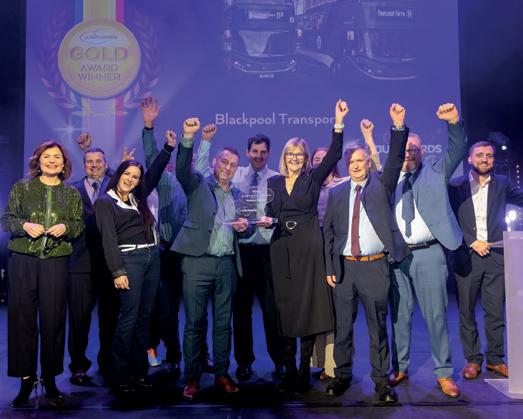
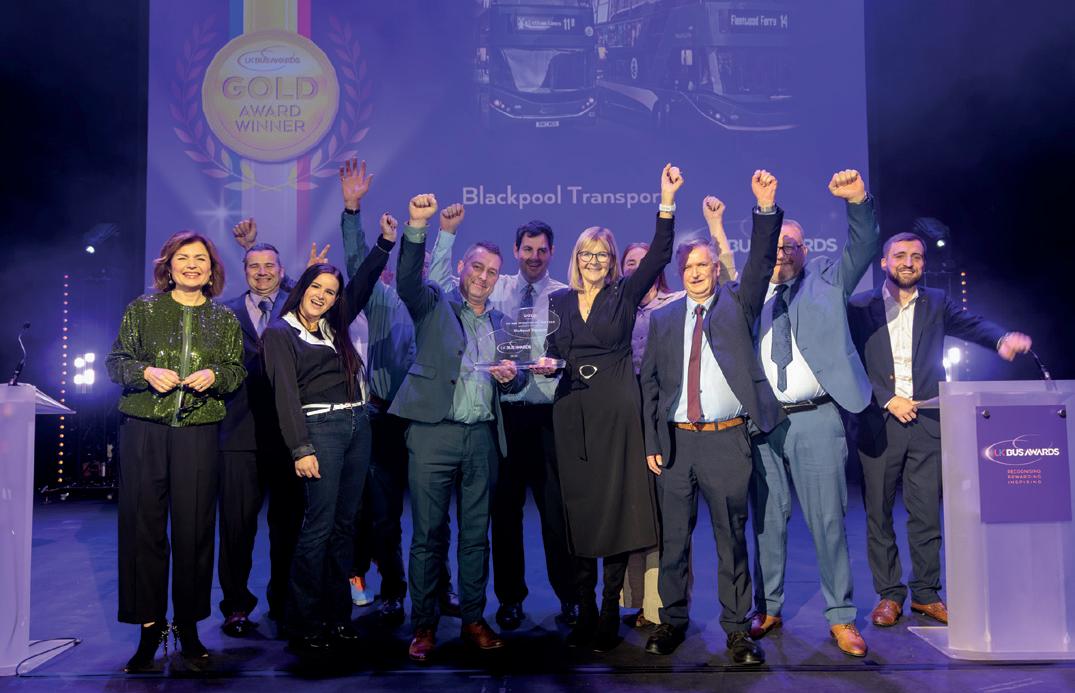
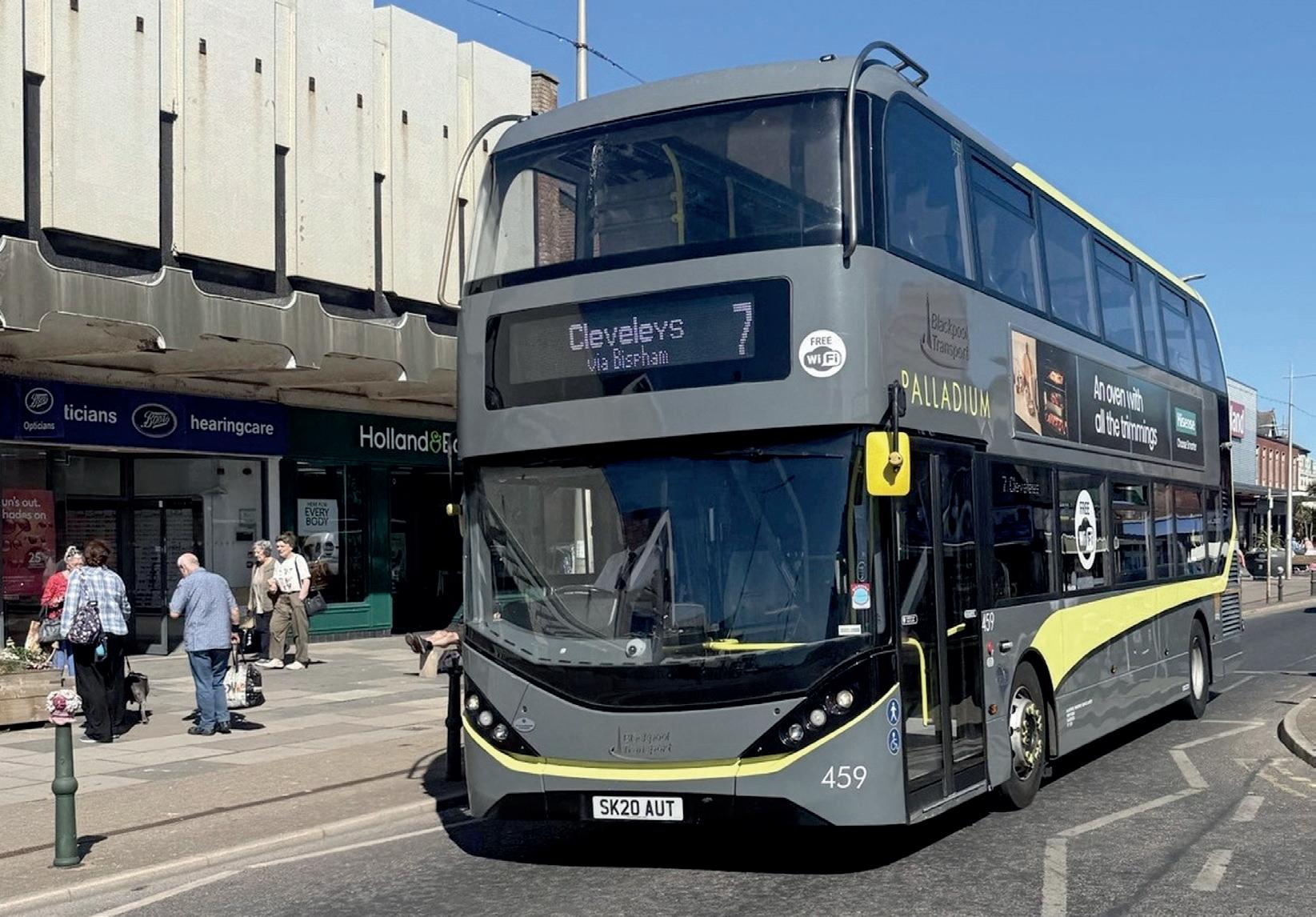
Blackpool Transport was named UK Bus Operator at the UK Bus Awards in London in November.
The council-owned company was named the winner of the Gold Award in the Top SME Operator category before fending off competition from three ALBUM operators - Lothian (Top City Operator), Reading Buses (Top Shire Operator) and Diamond Bus North West (Top Contracted Operator) - to win the best operator prize.
More than 700 people attended the presentation ceremony, which took place at Troxy, London, on November 25.
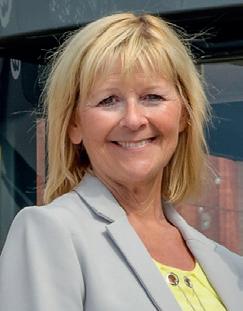

Commenting on Blackpool's success, Managing Director Jane Cole said: “To win this accolade is a fantastic achievement for the entire Blackpool Transport team, especially as we faced very strong competition from much larger operators ... Importantly, it is also a huge vote of confidence in the changes we are making to deliver a bus service that Blackpool and surrounding towns can be proud of.”
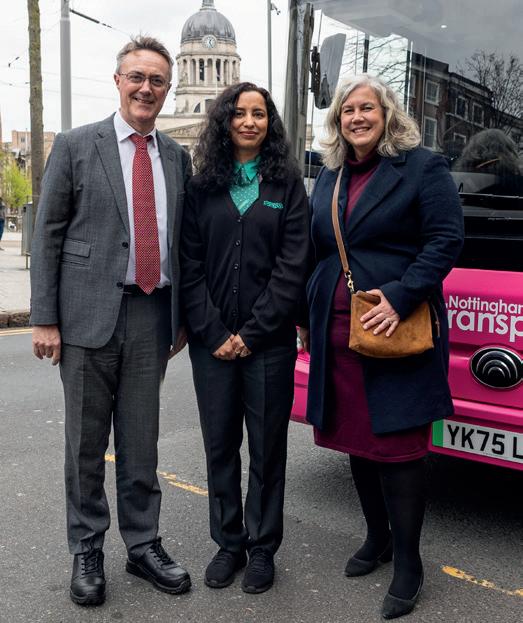
Receiving the Top National Bus Driver, Chris Moyes Memorial Award, was Zohra Rani of Nottingham City Transport. She was honoured for her exceptional professionalism, customer care and leadership as a role model for drivers across the UK.
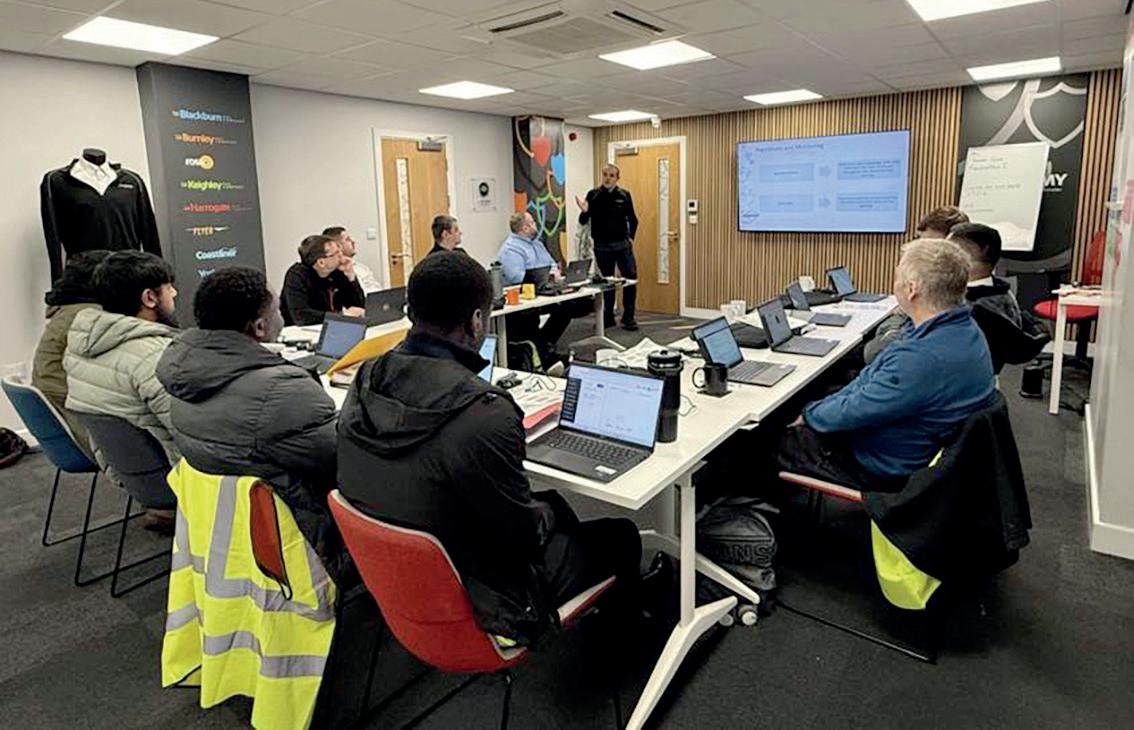
Transdev Blazefield launched a new Level 2 Bus Driver Apprenticeship programme in January, developed in partnership with training provider Realise, as part of its investment in future driver recruitment and training.
The programme will be delivered through The Academy, Transdev’s training centre, and is intended to widen access to PCV driving careers. It will be funded entirely through the operator’s Apprenticeship Levy contributions.
Under the scheme, apprentices will complete 326 hours of training over an eight-month period. Each course is valued at £8,000 and will be delivered across Transdev’s nine bus operations in the two regions. Trainees will gain experience on a range of vehicle types,
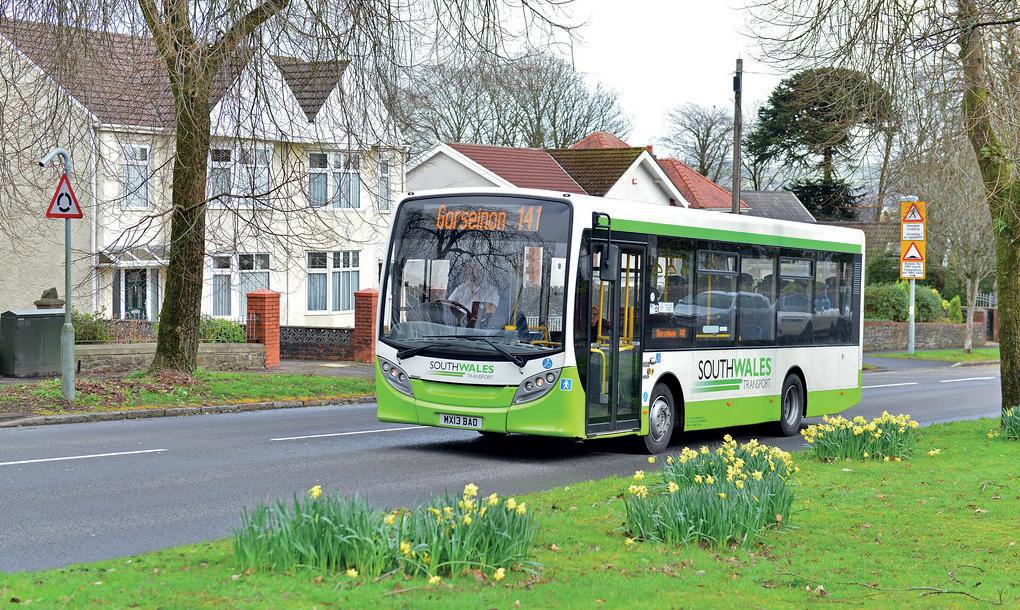
Swansea-based South Wales Transport was sold to Tower Transit
including Volvo B10, Volvo B7 and Alexander Dennis E200 buses, to provide exposure to different sizes and specifications of passenger vehicles.
Realise has previously supported more than 1,200 apprentices on comparable programmes with other UK transport operators, reporting a 98% first-time pass rate and an average learner satisfaction score of 4.7 out of 5.
Transdev Training Manager
Dale French said: “Our new apprenticeship scheme is hugely significant for us; not only will it enhance our current training experience for colleagues but also open the door to a whole new cohort of local talent.”
He added: “By investing in this new programme, Transdev are also investing in the communities we serve across the North of England.”
BLACKPOOL TRANSPORT / NCT Honours for Cole
Jane Cole, Managing Director, of council-owned Blackpool Transport, was also awarded an OBE in the New Year’s Honours List for services to public transport and to the community in Blackpool. Cole joined Blackpool Transport as Managing Director in 2014 and has made a huge contribution to improving bus and tram services.
David Astill, Managing Director of Nottingham City Transport received an MBE for services to public transport. Astill joined Nottingham City Transport as Commercial Manager in 2007. He joined the board as Commercial and Operations Director in 2018 and took the helm as Managing Director in April 2021.
READING BUSES
Reading goes Zippy to launch electric fleet
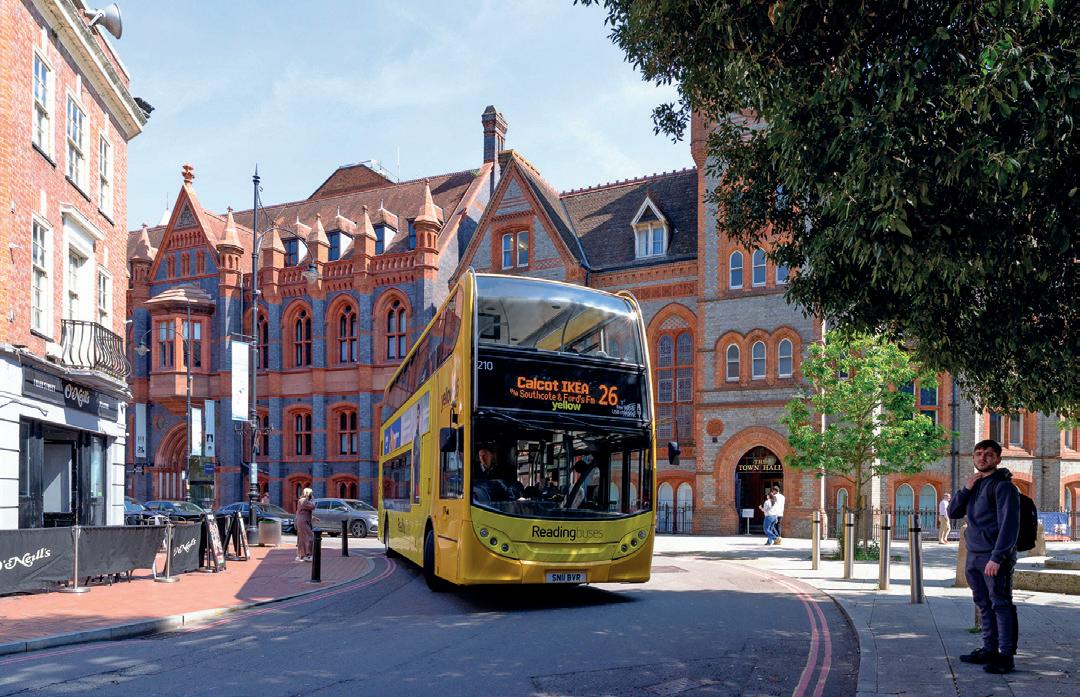
In February, council-owned operator Reading Buses introduced 24 Alexander Dennis Enviro400EV double deckers on two routes - the flagship Purple Route 17 between Tilehurst, central Reading and Wokingham
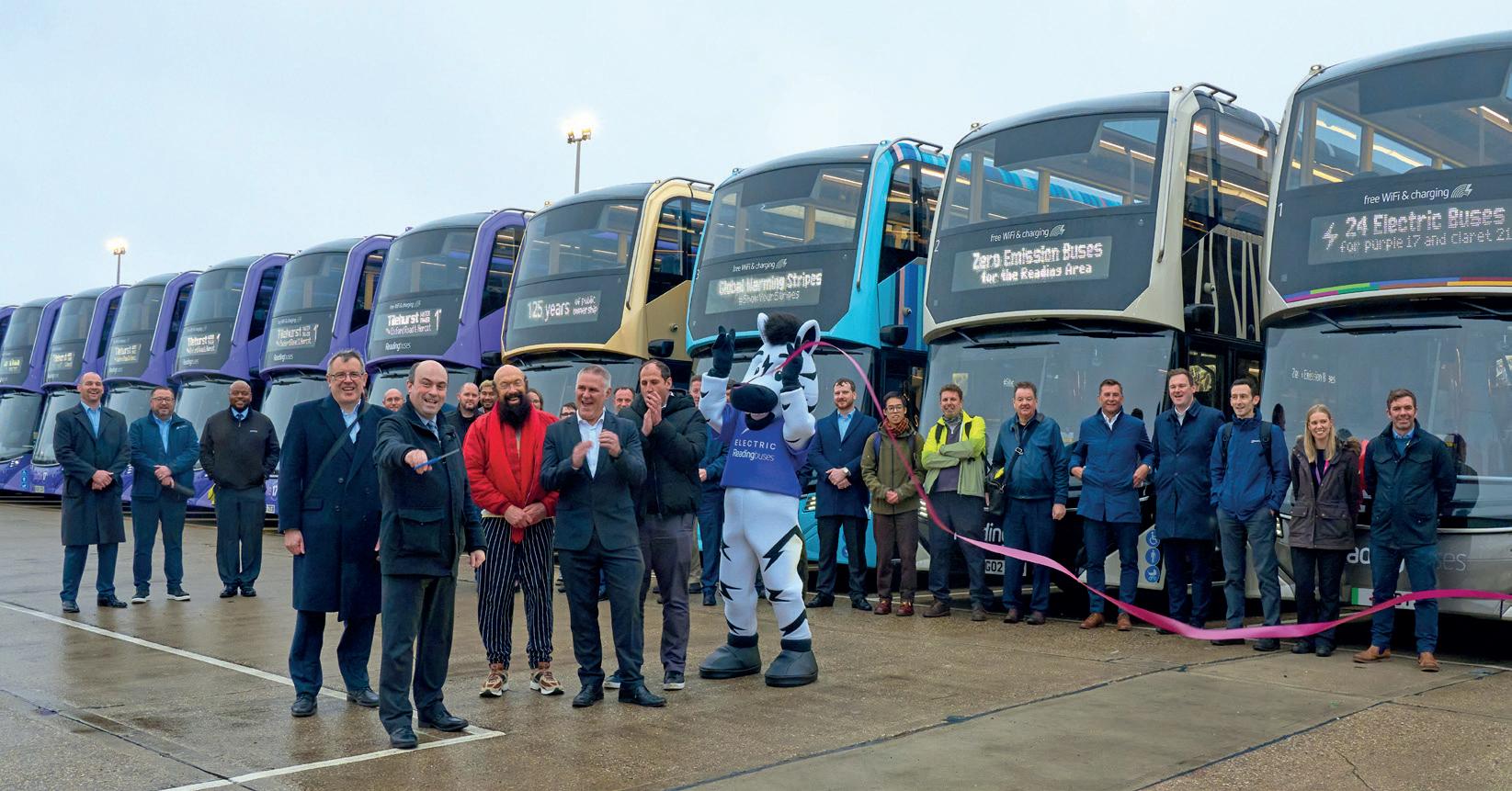
Road, and the Claret 21 between central Reading, the University of Reading and Lower Earley. Both routes run 24 hours a day, seven days a week.
The investment in electric vehicles wasn made possible following a successful bid by Reading Borough Council to the Department for Transport ZEBRA fund (Zero Emission Buses for Regional Areas) to cover 75% the additional costs of buying electric vehicles and the associated depot infrastructure. That government scheme has also spawned a new marketing philosophy for the municipal, which has playfully named the new fleet - Zero Emission Buses for the Reading Area - or ZEBRA for short. The launch event on a damp winter day introduced a new mascot for the zero-emission buses - ‘Zippy the Zebra’ - who will be present at future events including the ever popular Reading Buses open day.
As is customary for the operator, the fleet features a high interior specification and vibrant coloured branding designed by Ray Stenning and his team at Best Impressions, plus some ‘generic’ buses designed to be able to be used on either route. These include one with a special ZEBRA design, one in an eye-catching ‘Berkshire Warming Stripes’ livery designed by Ed Hawkins from Reading University to raise awareness of global warming, and one decked in a vibrant gold design to celebrate the 125 year anniversary of the municipal
transport operation this year.
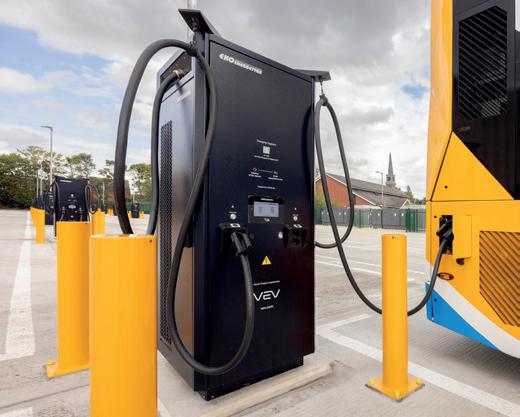
To accommodate the new fleet, significant work was required at the operator’s depot, including the installation of charging equipment in partnership with infrastructure specialist Zenobe.
Alongside fleet changes, the company is also pursuing other environmental initiatives, including plans to expand a solar array at its depot.
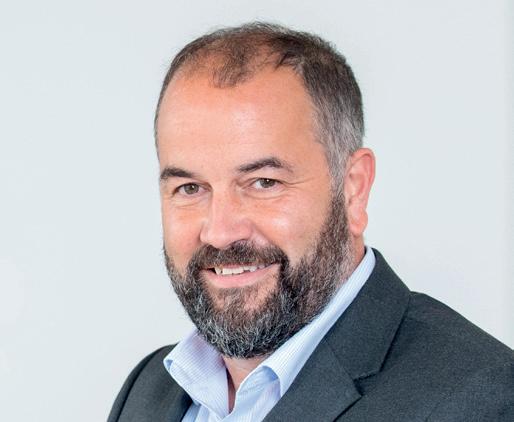
In February, Blackpool Transport Services announced the appointment of Lea Harrison as its new Managing Director. He succeeded Jane Cole, who retired in March after leading the council-owned bus and tram operator since 2014.
Harrison joined from Edinburgh Trams, where he had spent the past 10 years as General Manager
improvements and extensions as well as ensuring the day-today operations were in line with customer and client expectations. In 2011, Harrison became Head of Service Delivery with Nottingham Express Transit concessionaire Tramlink Nottingham, where he introduced two network extensions in August 2016, before moving to Edinburgh.
He will take up his new role on March 1. Harrison’s arrival coincides with the retirement of Cole, who in 12 years at the helm has overseen the introduction of a modern bus fleet and the extension of Blackpool’s trams. She was awarded an OBE in the 2026 New Year’s Honours List.
Blackpool Transport Services Chair John Boughton, said: “I’m delighted that somebody with Lea’s experience is so keen to come and work in Blackpool. He will bring a wealth of knowledge about well-connected public transport operators that puts customers first.
“I’d also like to place on record my immense thanks to Jane, who has spearheaded enormous change at BTS over the last decade, and she will be missed.”
and then Managing Director. During that period he oversaw a range of projects including an extension to the city’s tramway network and the introduction of a ‘Tap on, Tap o ’ contactless ticketing system across both buses and trams. The business reports that these initiatives contributed to 250% growth in patronage, alongside multiple customer service awards at the Global Light Rail Awards and from the Institute of Customer Services.
After starting his career in the armed forces with the Royal Corps of Transport as a driver for eight years, Harrison then progressed to the rank of corporal before leaving the Army for civilian life. His career in light rail began in 1991 as one of the first tram drivers on Manchester Metrolink before promotion ultimately saw him as Metrolink’s Head of Contract Delivery, where he worked on line
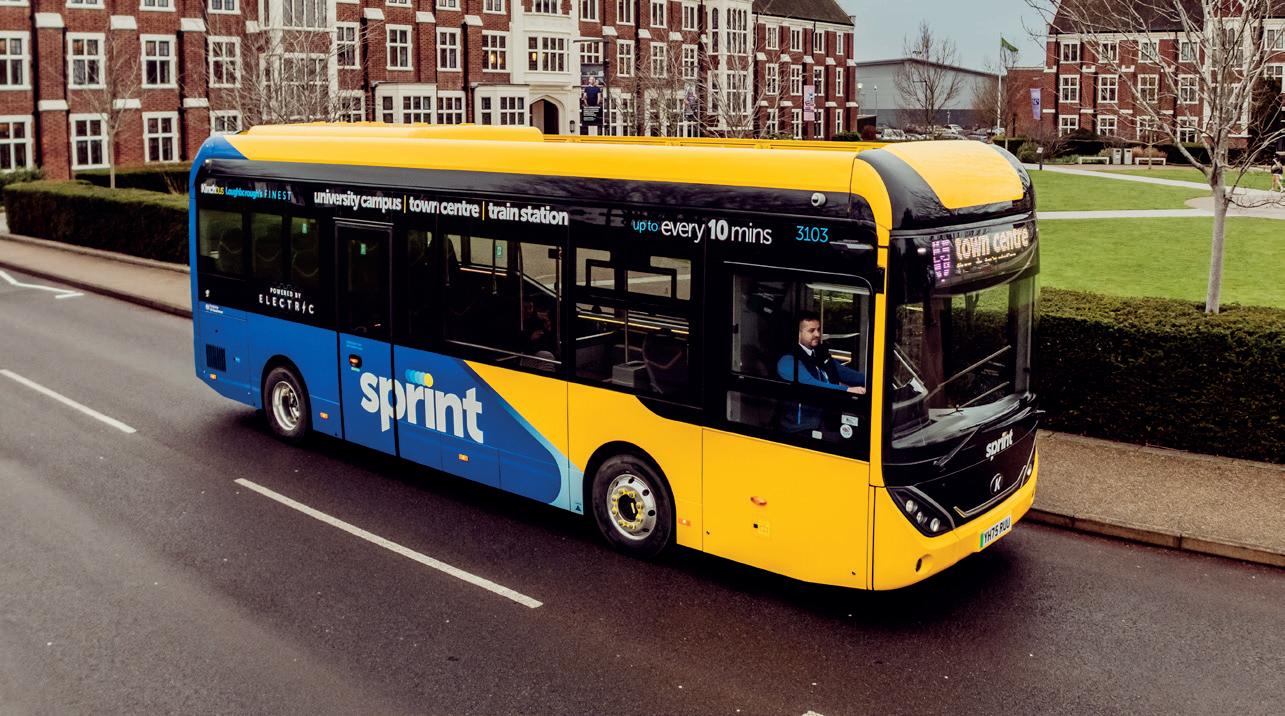
ALBUM companies performed strongly in the 2025 Your Bus Journey survey of passenger satisfaction from independent watchdog Transport Focus, which was published in March.
The survey revealed that three of the top five bus operators in England and three of the top four operators in Scotland, are ALBUM members.
The independent survey, based on feedback from over 50,000 bus journeys across England and Scotland, ranks overall passenger satisfaction as:
England
■ 1st: Nottingham City Transport (94%)
■ 4th: Notts & Derby Buses (92%)
■ 5th: Reading Buses (92%)
Scotland
■ 1st: McGills Bus Service (97%)
■ 2nd: Lothian Buses (94%)
■ 4th: Xplore Dundee (89%)
We speak to Blackpool Transport’s new Managing Director, Lea Harrison, about his vision
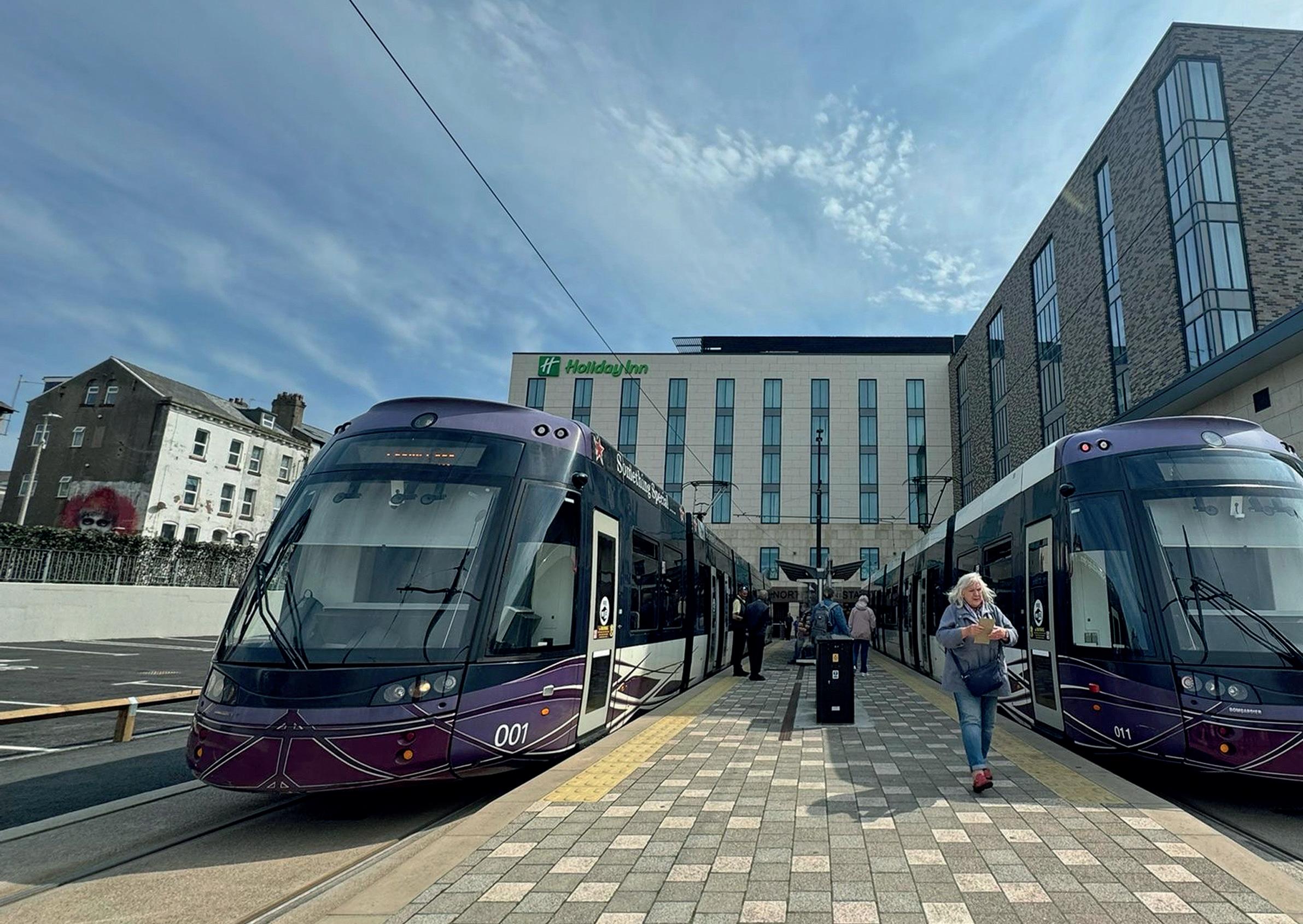
Blackpool Transport’s new Managing Director says that taking up the high-profile role felt like returning home, and he’s relishing the opportunity to build on the many achievements of his predecessor.
Lea Harrison has many fond memories of days out in the seaside town during his childhood in Manchester, just 45 minutes away. Since then, he’s built a distinguished career in light rail, most recently as Managing Director of Edinburgh Trams.
During his 10 years north of the border, he led the awardwinning tramway into a new era
with the successful launch of a tramway extension through Leith to Newhaven. Now he’s looking forward to a fresh set of very different challenges on the Fylde coast.
In his first interview since taking the helm following the retirement of Jane Cole OBE in February, he explained: “I’m fortunate to be joining an organisation that is already one of the most wellrespected transport operators in the country, with customer satisfaction ratings and levels of reliability that are well above the national average.
“A dedicated workforce, which is nearly 600-strong depending
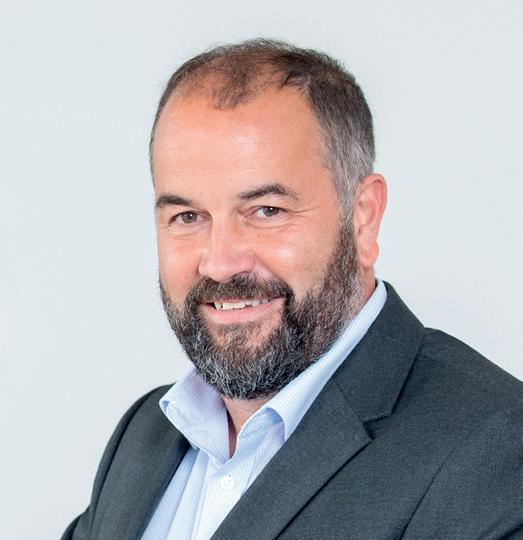
Lea Harrison: relishing opportunity
“The real challenge now is sustaining this success in the longer term”
on the time of the year, is also one of our most valuable assets and we’ve never had a problem with recruitment or retention.
Blackpool Transport is one of the area’s leading employers and it’s an organisation people really want to work for. In fact, we have several examples of three generations of the same family here.
“This stability, and our roots in the local community, mean that there is a real connection with our regular customers, while a recent willingness to respond to feedback from all stakeholders has laid firm foundations for the future, and earned Blackpool Transport the title of Bus Operator
of the Year. But the real challenge now is sustaining this success in the longer term. In fact, sustainability - in every sense of the word - is at the heart of everything I want to achieve here in Blackpool.
“Environmentally, this includes a long-term ambition to run an allelectric bus fleet and continually striving to improve energy e ciency across the organisation.
“Equally important is financial sustainability, and this applies to all three key areas of the business - buses, trams and our heritage operations. Ultimately, this is always reliant on fare revenue that can be reinvested in services to create a virtuous circle.
“While moving towards o -tram ticketing and a fully contactless, multi-model payment system will play an important role in maximising revenue from existing services, having more buses out
“To use a very appropriate analogy for a transport operator in Blackpool, if we were a stick of rock, we would have the word sustainability running all the way through!”
on the road, and more trams on the tracks will be essential for future growth in the ‘farebox’.
“As our existing fleets age, this will become increasingly di cult, so we need to look at working smarter with the resources we already have. However, in the longer term, some outside investment will be vital, although this doesn’t mean just going ‘cap in hand’ to the local authority or central government asking for financial help to carry on. It requires detailed business plans that demonstrate a clear return on investment.
“These proposals require careful analysis of emerging travel patterns and wider changes within the communities we serve
- something that has become increasingly apparent in the years following the Covid pandemic.
“As most restrictions eased, both our buses and trams enjoyed a swift recovery, boosted by a trend in ‘staycation’ holidays, but fell back again as international travel returned to pre-pandemic levels.
“Since then, we’ve seen a decline in the number of people coming to Blackpool for a traditional holiday, o set by an increase in day-trippers and couples and families enjoying short breaks.
“We need our services to evolve in line with these changes while meeting the needs of residents who rely on our services year-round for work and leisure. This will require strengthening our existing relationships with major employers in the region, local hotels and Blackpool’s many tourist attractions.
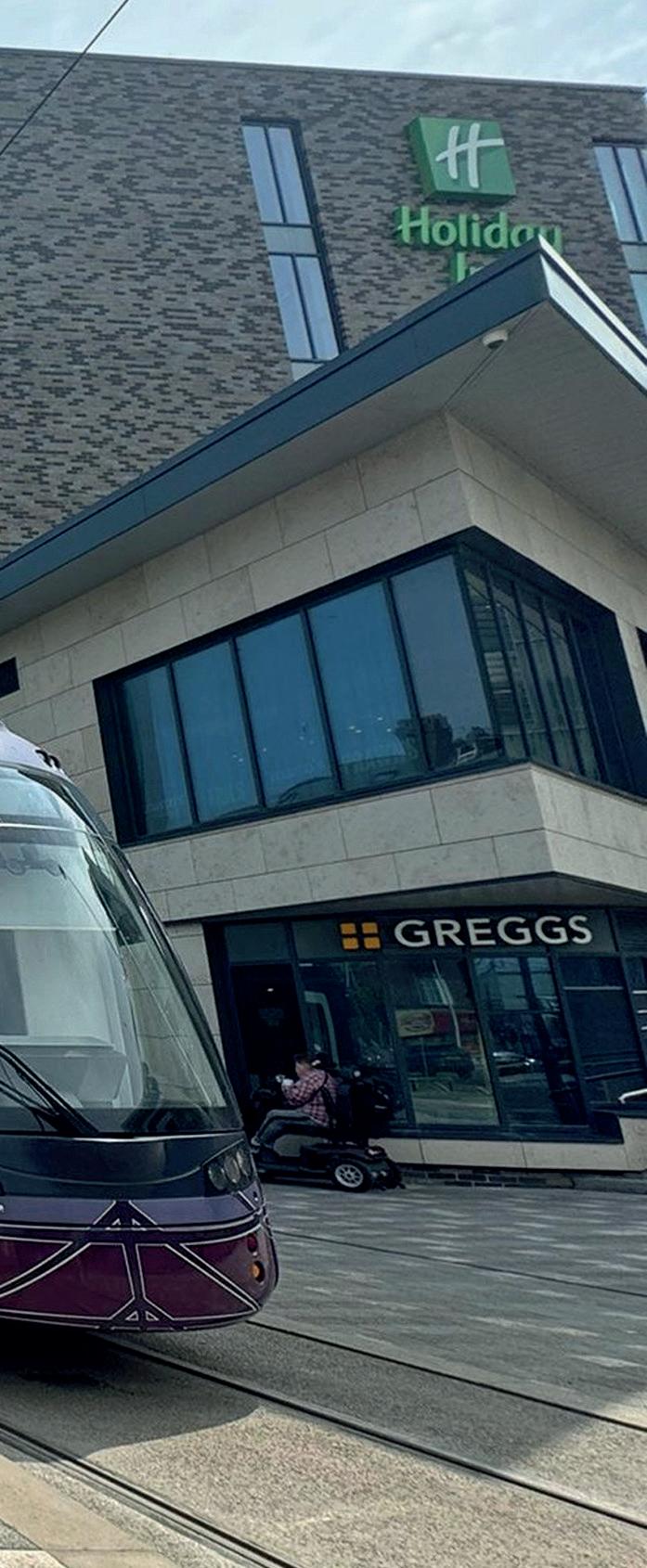
“In fact, we will have a key role to play in the revitalisation of one of the country’s most popular seaside towns as a custodian of one of its top tourist attractions.
“Blackpool is as famous for its historic trams as it is for its tower and the Pleasure Beach, and we’re drawing up ambitious plans to preserve the town’s rich tramway heritage. Once again,
sustainability is the keyword, and while there may be some di cult decisions ahead, we’re developing a bold vision for their future preservation.
“This includes the continued operation of trams that meet current safety standards in a way that doesn’t have an impact on the running of scheduled tram services and a suitable home for other restored vehicles.”
This approach typifies Lea’s approach to his future leadership of the award-winning bus and tram operator: continuous improvement based on solid business plans that deliver sustainability in terms of safety, enhanced services, financial viability, and the environment.
“To use a very appropriate analogy for a transport operator in Blackpool, if we were a stick of rock, we would have the word sustainability running all the way through!” he added.
“We will have a key role to play in the revitalisation of one of the country’s most popular seaside towns”
Alex Perry sets
he last 12 months have been a defining time for bus legislation with the Bus Act 2025 receiving Royal Assent in October 2025. The government claims that they are facilitating the biggest set of bus reforms since deregulation, centred on local control, franchising, simpler powers for councils, better reliability, cheaper fares, and faster rollout of zero emission buses. The emphasis has been on devolving decisions to Local Transport Authorities who the government believes are best placed to make decisions. The best solution may well vary by area for a whole range of reasons.
TThere has been intense lobbying and consultation during the formation of the Act followed by meetings with the Department for Transport (DfT) to shape the guidance. ALBUM and specifically member feedback can play a vital role here as we are able to explain the practical challenges and supply examples to the DfT. This helps shape the guidance so that we get the best possible outcomes from the legislation.
On a positive note, buses are high on the political agenda and as a result the funding to the bus sector has been the highest for many years. Importantly, and after sustained lobbying, there is now a three-year settlement which allows a better level of planning rather than annual allocations.
The challenge will be to get the best possible value from that public money which gives real benefits to the passengers. Firstly, we must retain the current passengers and then grow the market. Whatever approach is taken, either through Enhanced Partnerships, Franchising or some hybrid model, unless commercial patronage and revenue increase ever more subsidies will be required - and that just is not sustainable in the current climate.
Fare Cap
If a new Fare Cap Scheme is introduced from April 2027
ALBUM is asking for:
n A multi-year proposal with adequate funding, published at least six months in advance of the intended start date;
n Sufficient stand-alone funding to be provided without changing other current funding streams;
n Absolute transparency of the reimbursement formula so that each operator can determine the viability of the scheme, decide whether to participate and prepare a comprehensive multiyear business plan;
n A commitment to long-term funding and a mechanism to increase reimbursement to cover bus industry cost inflation;
n Sufficient arrangements which allow for extra reimbursement to be paid for passenger growth through service initiatives;
n Allowing fares outside of the price cap to be increased up to bus industry inflation levels or CPI, whichever is the greater;

“Firstly, we must retain the current passengers and then grow the market”
n A clear exit strategy with a phased exit to avoid price shocks with inevitable passenger resistance/decline and complaints.
On Franchising ALBUM continues to make the case for SMEs and has set out below a series of practical recommendations it
believes should be considered at the earliest stage of a potential bus franchising process:
n Provide evidence that the LTA has taken note of, and implemented, the advice from the Competition and Markets Authority report of September 2024;
n Ensure that smaller ‘lots’ of core bus service work are available for SMEs to bid for and be able to win;
n Ensure that SMEs are not viewed as only interested in school work as this is demonstrably not the case;
n Ensure that some form of restriction is placed on how many ‘lots’ can be awarded to any operator/entity;
n Consider providing the fleet for SMEs and/or a preferential financing scheme;
n Carefully consider what levels of quality/standards are required for the fleet;
n Consider allowing the shared use of the premises that the franchise authority is considering supplying;
n Consider a direct award to current SMEs which are performing well on their current routes or networks, as this could allow a smoother transition;
n Relax the vehicle quality requirements on school contracts to strike a balance between quality, emissions, fleet availability and affordability;
n Follow an Invitation to Negotiate (ITN) rather than an Invitation to Tender (ITT) process which gives the ability to negotiate and is likely to deliver a better output;
n Consider offering additional support to operators to understand the changes and new requirements such as Social Value;
n Consider the cross-boundary services and the service permit regime very carefully.
Legislative Principles:
Policy Position: ALBUM members recognise that central and local government have set di erent legislative structures across Great Britain with di erent levels of public sector influence and control. Where commercial services are operated, local authorities are largely protected from the revenue risk; in those areas, ALBUM members are keen to work with authorities in Enhanced Partnerships to develop measures that will provide priorities for bus users on the highway network.
Bus
Policy Position: BSOG (and its devolved equivalents) is an important element of state support for bus passengers as it is a subsidy for the passenger. There should be consistency about the amounts paid and the commitments required from operators; BSOG should not be devolved to local authorities as this funding would not be ringfenced to bus service funding.
Concessionary fares:
Policy Position: the governments in each nation should review the operation of concessionary fares schemes to ensure that operators are not being under-reimbursed for the concessions being provided.
Punctuality and reliability:
Policy Position: ALBUM believes bus priority is essential to increase modal shift, and measures must be developed jointly by the DfT, local authorities and operators, to introduce and improve priorities for bus users. ALBUM members will commit to work with local authorities to develop binding agreements on the impact of priority measures and the improvements that can flow from them.
Cross-boundary issues:
Policy Position: Neighbouring authorities must consider and act on the needs of current and future bus users placing their needs above LA boundary issues. Where an LTA is proposing a franchise, the neighbouring
authorities should be no worse o either financially or by level of service provision to the public because of the franchise.
Policy Position: ALBUM members propose that a full, non-PCV licence would serve as a provisional PCV during supervised training. As an absolute minimum the law should be changed to allow the classroom elements to commence before receipt of a provisional licence.
Policy Position: the DfT should continue to engage with operators, both through CPT and ALBUM, impacted groups and Local Authorities. ALBUM will seek a position whereby operators may agree with their LTA, perhaps as part of Enhanced Partnership discussions, an exemption for vehicles over 15 years old provided that the monies saved are committed to other, agreed, benefits for disabled and lessmobile passengers
The role of SMEs in the tendered bus market:
Policy Position: Local Authorities should recognise the contribution that SMEs and existing municipal operators make to services provided on their behalf, including their ability to recruit and retain local sta . Procurement procedures should recognise that SMEs have limited resources. Local Authorities should have a formal policy position as part of their tendering/franchise arrangements which meet the CMA’s recommendations and guidance.
Subsidised bus services:
Policy Position: ALBUM supports the creation of a duty to provide subsidised bus services to meet needs identified by Local Authorities. The DfT should create an assessment model to ensure that Local Authorities do not set unrealistically low thresholds for need, to reduce the level of services being provided. The need for subsidy should be matched with a multi-year subsidised services revenue budget.
De Minimis:
Policy Position: ALBUM believes that the “de minimis” arrangements in the Transport Act 1985 should be maintained as they allow for a swift implementation of an agreement between an LTA and operator without entering a formal contract subject to far longer lead times.
Electric and zero emission buses:
Policy Position: ALBUM supports the transition to non-diesel vehicles if this is accompanied by reliable advice and guidance on the necessary steps and by long-term funding plans that secure the necessary investment over a suitable transitional period. The essential government funding must be easily accessible so that SMEs can make these major investment decisions with confidence.
The date from which new non ZEBs cannot be used on English bus services:
Policy Position: ALBUM members believe that it is not currently possible to set an end date for the
sale of non-zero emission buses as the new technology (including associated infrastructure) is not yet fully developed. There are particular issues in rural areas which are more expensive and potentially more di cult to connect to the grid.
Local Authority ownership of bus companies:
Policy Position: ALBUM neither supports nor opposes the creation of Local Authority bus companies. All companies competing in the market (whether in a deregulated environment or where there are contracts for the right to operate or for subsidies to provide uncommercial service) should be competing on equal terms. However, existing LABCOs should be able to continue to operate given they are ultimately government owned assets/investments and have considerable local value.
Franchise direct awards:
Policy Position: ALBUM proposes that a local authority that currently wholly owns a bus company and is considering franchising across its area should be permitted to make a direct award of a contract for its bus company’s existing network in perpetuity. In all other cases (including any new local authority bus companies formed after the passing of the Bill), the local authority should put its franchised network out to competitive tender.
Multi-operator ticketing:
Policy Position: ALBUM believes that multi-operator tickets are a premium product for which a premium price should apply. Furthermore, there are additional costs in revenue apportionment and in the negative impact on cash flow. Certain multi-operator tickets are also multi-modal, which is a further benefit justifying a premium.
ALBUM members now have a combined fleet of just under 6,000 vehicles creating a powerful voice. These policy positions are driven by members very much ‘ at the coal face’ of bus operation, who are best placed to understand the realities.

There’s a lot of excitement, and a real sense of momentum, around bus franchising in the UK. After so many years of debate and consultation, we’re now seeing franchising becoming a reality as it’s rolled out in a number of areas across the country.
One size doesn’t fit all with bus franchising; a number of areas have chosen not to go down this route. But the shift towards franchising where it’s being implemented captures a real sense of optimism. The government’s focus on better integrated and more accessible public transport - including the expansion of multi-modal, tapand-go travel - points the way towards a more connected future. It’s a compelling vision, and one that the sector has mostly rallied behind.
But, as I was reminded recently when talking with a client in the midst of bus reform, once the decision to franchise bus services
has been taken, it has to be properly delivered. This is where the conversation now needs to focus; not on whether franchising is the right model, but on the capacities needed to make it work for everyone.
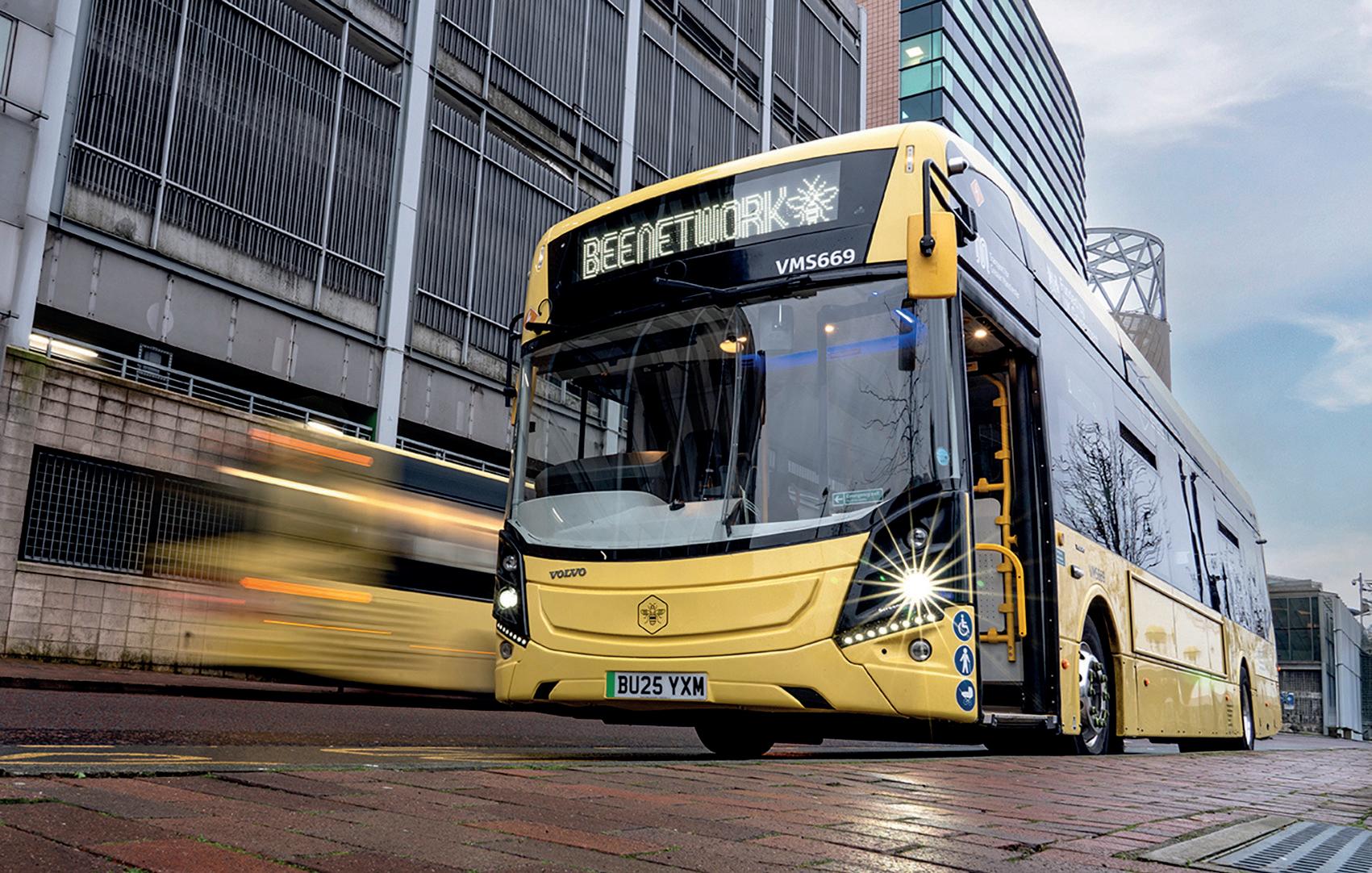
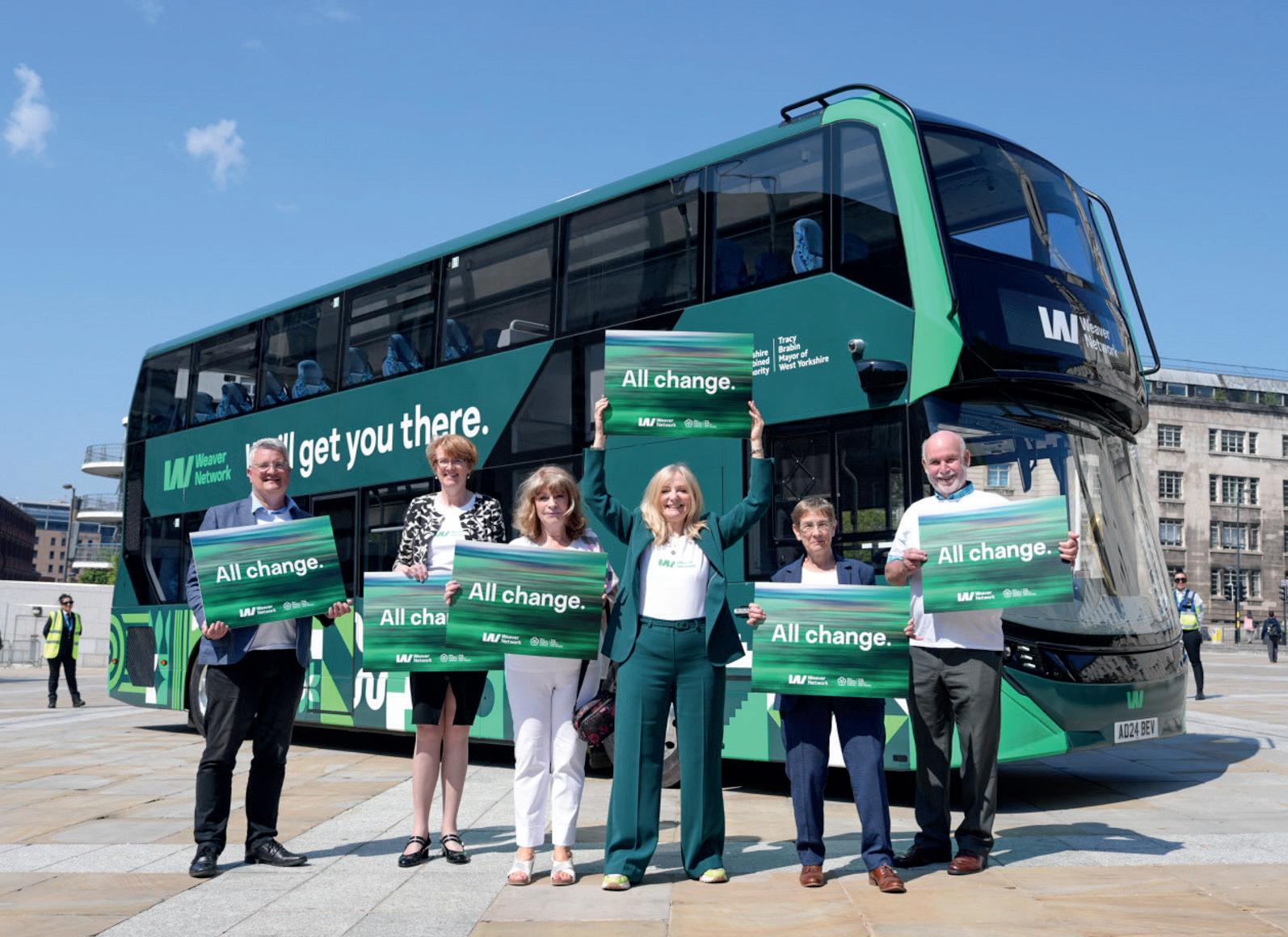
It’s clear that bus reform has reached a critical stage. Having been a policy aspiration for so long, we’re now seeing franchising taking shape on the ground. Greater Manchester’s Bee Network, of course, is already up and running, while authorities across a host of other areas - Liverpool City Region, West Yorkshire, South Yorkshire, the North East and West Midlands - are also progressing their own plans.
This represents a fundamental shift in the role of local government with regard to buses. Since deregulation in 1986, local authorities have gone from directly providing bus services to

playing a more supervisory role in a liberalised market. Franchising, however, makes combined authorities directly responsible for designing networks, procuring services, overseeing performance and ultimately ensuring that the system delivers for the passengers who rely on it.
This marks a significant shift, and one that poses significant challenges. Bus franchising requires a level of operational, commercial and organisational
understanding that many local and combined authorities don’t currently possess. Without this, bus reform risks falling short.
There is a visible gap between the demands of franchising and the capacities combined authorities currently have at their disposal. Managing a franchised bus network effectively requires a deep understanding of bus operations, covering everything from scheduling to health and safety, as well as fleet management and engineering.
A strong commercial understanding has to go hand in hand with this. If combined authorities are to take on responsibility for franchising bus services, they need to be able to design robust contracts, ensure value for money and assess potential risks.
The actual task of running bus services will, of course, remain with operators. But franchising does change the dynamic. Authorities must be informed and capable clients, able both to support operators and hold them to account where necessary. Without embedded expertise, it becomes very difficult to manage performance and drive improvements.
This is not to imply that no progress has been made. Quite the opposite; many local authorities have already taken significant steps forward. Yet the scale of the transition means that ambitions and actual capacities remain mismatched.
One of the most significant and often underestimated aspects of this transition is the shift towards digital ticketing and contactless payments. The UK Government’s Better Connected scheme, details of which were published on April 2nd, is another step in this direction, expanding tap-andgo travel for buses, trains and trams in cities and towns across England.
The move to contactless and digital ticketing is generating vast amounts of data. For the first time in the bus sector, there is detailed
visibility into how passengers use public transport: where and when they travel, how frequently they do so and how they interact with di erent modes of transport.
This presents us with a major opportunity. If we can make good use of this data, we can harness it to inform better network design, more targeted marketing and, ultimately, increased ridership. This allows us to make bus services, and public transport in general, more proactive and more focused on the needs of realworld passengers.
But collecting data is one thing; extracting insights from it and turning them into meaningful action is another. Local government, on the whole, is still in the process of acquiring and developing the analytical and commercial skills needed to seize this opportunity. In their absence, there is a real risk that the potential value of this data goes largely untapped.
Alongside these challenges sit the practical necessities of service delivery. Franchising requires the design and evaluation of complex bids; combined authorities must be able to assess multiple tenders, balancing cost and quality. This is resource-intensive work, requiring experienced professionals.
At the same time, multiple regions are progressing their bus franchising arrangements in parallel. This means that there is a lot of demand for people with a specialist skillset, not only in procurement but across operations, commercial and leadership roles. This puts more pressure on local authorities, leaving them scrambling to find talent and competing against each other in a small candidate pool.
There is a wider risk, too, that the intensity of activity needed just to get franchising systems up and running - getting contracts out and getting services on the road - leads to a focus on shortterm priorities at the expense of longer-term, strategic objectives.
Perhaps the most complex challenge of all lies within the labour market. As we’ve already
touched on, combined authorities are competing to recruit people with bus industry experience, proven to understand the realities of running services. But there are only so many of these people, and many are already working for bus operators.
This creates an obvious problem. Authorities need this expertise to make franchising succeed, but in recruiting from the same pool, they risk weakening the operators who are essential to delivering services on the ground. Simultaneously, operators must retain and attract talent to remain competitive in franchised environments.
The result is a more competitive market for a particular set of skills, potentially putting upward pressure on salaries. There is also the risk of internal imbalances within organisations; for instance, drivers or engineers might gravitate towards roles o ering better pay, terms and conditions - potentially creating gaps in bus service provision elsewhere.
There is also a long-term concern around skills shortages. There is an inconsistent approach to leadership development across the bus sector, making succession planning even harder, while national graduate programmes vary in their e ectiveness. In areas such as engineering, in particular, there is a need to build stronger talent pipelines. Unless we address that, even if we do succeed in the short term, the sustainability of the bus sector over time may be jeopardised.
All of this points to a broader tension in the bus sector. Franchising requires long-term thinking, developing skills and organisational capacities that can support evolving networks. But all too often, the reality is that shortterm pressures predominate. Deadlines loom, expectations run high and the need to deliver the next phase takes precedence.
This can mean that firefighting takes up a lot of time and energy. Immediate issues are prioritised at the expense of strategic planning. While this is entirely understandable, it could have unintended consequences that we have to be mindful of.
There is a danger that in the drive to get franchising live, shortterm milestones are prioritised over longer-term necessities. This can also be seen in workforce planning, with recruitment e orts often geared towards filling immediate gaps rather than establishing a sustainable flow of talent for the future.
Also, bus franchises are short-term by their very nature, with franchises awarded for five
“Franchising can deliver transformative change for the bus sector and put it on a much firmer footing for the future”
years with an option to extend by another two. This creates its own issues and challenges for senior leaders, who can never be sure whether they will retain the franchise the next time it is awarded. This causes a degree of uncertainty not previously experienced by an industry where it’s not uncommon for people to stay with the same operator for 20 years or more.
If franchising is to deliver on its full potential, then, there has to be a real commitment to long-term capacity building. That means not only investing in getting franchising systems running, but in the people and processes that can continually adapt and improve them over time. Without that, franchising alone may not deliver the transformational impact it promises.
It is essential, first, to recognise the opportunity that bus franchising represents. It has the potential to transform bus services, making them better integrated and more responsive to the needs of passengers.
The social value of this is particularly important: improved access to healthcare, education and employment, reduced isolation and stronger, betterconnected communities. While these benefits are not always easy to translate into monetary terms, they are fundamental to the role that public transport plays.
However, the challenge now is to ensure that the structures and skills are in place to deliver on that promise. This means investing in people, recognising that these capacities are not built overnight and that success depends on the strength of the teams tasked with delivering it. It also means keeping our focus on the long term, even in the face of short-term pressures.
Franchising can deliver transformative change for the bus sector and put it on a much firmer footing for the future. But it will only do this if we can close the capability gap and ensure that the right people, with the right skills and support, are in place and ready to deliver.




Bidding for, and operating bus franchises demands deep operational and commercial expertise. But competition for experienced leaders has never been higher.
We specialise in placing senior executives who already understand the realities of running bus networks. We also have a deep network of interim experts who know exactly how to run a successful bid.
With exceptional retention rates and a 12-month guarantee on permanent roles, there’s never been a more risk-free recruitment option.
Talk to the specialists in senior, executive and interim recruitment for the bus sector. intuitiverecruitment.com say-hello@intuitiverecruitment.com
Tom Wilsher, Head of Product Management at Ticketer, introduces an innovative new feature that improves communication with bus drivers
We recently sat down with Tom Wilsher, Head of Product Management at Ticketer, to reflect on the journey behind Driver Connect - Ticketer’s innovative new feature that is already enhancing communication and delivering real value for its customers.
In this interview, Tom shares how the idea for Driver Connect began, the thinking that shaped its development, and how the technology is transforming communication between control rooms and drivers across the industry.
So, Tom, let’s go back to the beginning - how did the idea for Driver Connect first take shape? Like many of our innovations, Driver Connect began with customer feedback. We repeatedly heard that operators needed a more reliable, sophisticated and cost-e ective way to keep in touch with their drivers. For years, operators have relied on traditional radio technology and while it has played an important role, radio brings limitations. It requires extra hardware and, in many cases, costly licences.
Additionally, its short-range frequencies can also make communication patchy or inconsistent, especially for services travelling far beyond the depot or through rural areas.
It became clear the industry needed something strongercommunication that matched the pace and complexity of modern transport operations. Operators wanted clearer audio, consistent coverage, and targeted communication, without the additional hardware or installation work.
Driver Connect was designed to meet that need. Our goal was simple: make communication more integrated, intuitive and dependable, using the technology that operators already have on board. By leveraging the capabilities of our existing Ticketer solutions, we have created a modern, accessible and cost-e cient alternative.
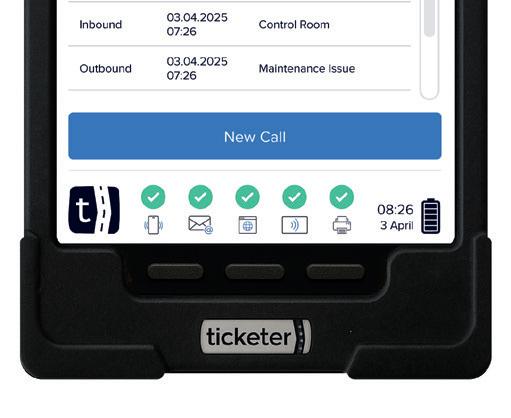
Tell us more about Driver Connect’s functionality… Using the Ticketer TK300’s built-in microphone and speakers, Driver Connect o ers three powerful communication components in a single solution: two-way calls, voice messaging and text messaging.
The first component is two-way voice calls - one of Driver Connect’s most powerful features.
Driver Connect
“Like many of our innovations, Driver Connect began with customer feedback””
It allows drivers and control room teams to hold real-time conversations as if making a standard phone call. Because Driver Connect runs on 2G signals and above, communication can take place across greater distances than traditional radio permits, and without interference. Calls coming into the control room can be categorised as standard or emergency, with the latter initiated either via an on-screen button on the driver console or integrated with a physical emergency button inside the cab - pre-existing or installed during rollout. This flexibility ensures drivers always have a quick, reliable way to reach support - whether they need routine guidance or urgent assistance.
The second component, Voice Messaging, delivers a more advanced and precise alternative to the blanket broadcasts typical of radio systems. Instead of sending the same announcement to every driver regardless of relevance, control rooms can record and send voice messages to only those who need to hear them - whether that’s drivers running a particular service, individuals, depots or specific vehicles. This reduces unnecessary noise and ensures drivers only receive information that truly applies to them. Voice messages can be set to auto-play as soon as they become active, with playback also available when it’s safe to do so. Alongside this, broadcasts can be configured with start and expiry times to control exactly when updates are available. This ensures updates remain timely and relevant - and means drivers who start their shift later or were away from the vehicle won’t miss important information,
as they can play back messages whenever they’re ready.
The final component, Text Messaging, adds another important layer of precision and flexibility. Control rooms can send or schedule written messages, and drivers can respond using either free-text replies or predefined quick responses. To help prioritise communication, messages are colour-coded based on urgency and supported with visual and audio alerts, ensuring no critical updates are overlooked.
Together, these components create a communication ecosystem that is far clearer, more precise and more e ective than radio methods, giving operators and drivers a modern, reliable and fully integrated way to stay connected.
It sounds like Driver Connect was designed with both drivers and control room teams in mind. Was that intentional? Very much so. From the beginning, we focused on making Driver Connect valuable and intuitive for both sides.
Our commitment to improving two-way communication was central, while ensuring the system remained simple and safe for
drivers and control room sta . They needed a communication tool that felt familiar and easy to use, especially during busy or high-pressure moments. Features like emergency priority calling, which automatically moves urgent calls to the top of the queue, were essential - but so was helping drivers resolve everyday issues more quickly.
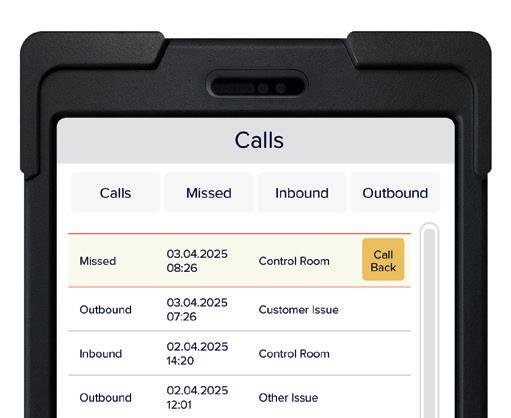
That’s where call categories come in. Customers have the option to define call categories within the Ticketer Portal, for drivers to subsequently choose from when ringing the control room.
This means calls can be triaged more e ectively and directed to the relevant team more quickly - for example, an engineering-related call can be immediately diverted to the engineering room.
For control room teams, clarity and visibility were key. Sta can set their availability, view inbound call activity instantly, and see inbound call queues, missed calls and wait times. And then from a Ticketer Portal UX perspective, we wanted to make it as easy as possible for sta to initiate calls to drivers from various locations within the Portal. For example, if sta are monitoring a specific
within the Ticketer Portal. This means operators can immediately benefit from clearer audio quality, more reliable connections, improved targeting precision, enhanced visibility through reporting, and lower ongoing costs, all without the burden of maintaining extra hardware.
For operators without a communication system currently, Driver Connect removes the barriers - typically cost and logistical - that traditionally make adoption di cult by o ering a modern, cost e ective and easy-to-deploy solution that o ers seamless communication.
Furthermore, Driver Connect is scalable - customers can purchase only the components needed versus all three components, further o ering a more accessible means of introducing communication technology for the first time.
emergency call performance. This data helps teams understand not just how often communication takes place, but how e ectively it’s being managed.
Two clear benefits emerge. Operators can easily identify whether emergency calls are being answered quickly or repeatedly missed, improving responsiveness. Reporting also strengthens accountability by showing both control room teams and drivers their communication patterns.
These insights help operators identify trends, remove bottlenecks, and improve safety and e ciency. More in-depth reporting will follow as more customers adopt Driver Connect, with future development shaped by real-world usage and feedback.
Any final thoughts?
“These components create a communication ecosystem that is far clearer, more precise and more e ective than radio”
vehicle within the Tracking page and want to call the driver, they can do it directly from that page rather than having to click elsewhere to do so. That speed and ease of software use was also tantamount, as we know it’s those incremental time gains that can make a major overall di erence to response times and operational e ciency.
Moving on from functionality, what operational challenges does Driver Connect help solve?
For those with an existing setup, Driver Connect provides a more advanced, flexible and cost-e cient alternative. Because it requires no additional hardware, installation downtime or new licenses, rollout is extremely straightforward - it’s deployed over the air and activated directly
And from a driver’s perspective, what do you think they will appreciate most?
Customers consistently tell us that relevance is everything. When broadcasts are too general or too frequent, they can have the opposite e ect - reducing engagement. Driver Connect’s targeted messaging means drivers receive updates that relate specifically to their route, their shift or their vehicle. They know immediately that the information matters.
The emergency call feature is another major benefit. Drivers know that if something urgent happens, their call is prioritised instantly. It overrides all other calls and moves straight to the top of the queue. That assurance is invaluable, especially in stressful or time-critical moments.
Ultimately, drivers feel more informed, more supported, and more connected to their control room teams.
Will there be reporting available to help operators optimise communication?
Yes. Reporting sits within the Ticketer Insights Hub and currently focuses on call activity. Operators can see who is calling, how calls are being handled, response times, missed calls, and
I’m genuinely excited to see how Driver Connect continues to grow! Customer feedback so far has been incredibly positive, and it’s clear that the feature is already making a meaningful di erence to daily operations.
Our aim has always been to give operators and drivers clearer, faster and more reliable ways to communicate - helping teams react to what’s happening out on the road in real time. Ultimately, Driver Connect is about strengthening connections, improving safety, and making people feel supported. If we can achieve that, then we’re doing exactly what we set out to do.
Visitors to the ALBUM Conference can head to stand 19, where Ticketer will be demonstrating Driver Connect, alongside their other exciting enhancements. If you have any questions about Driver Connect or the functionality discussed in this article, please either scan the QR code or contact info@ticketer.co.uk.





























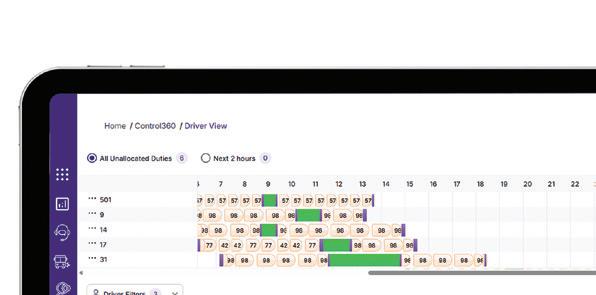
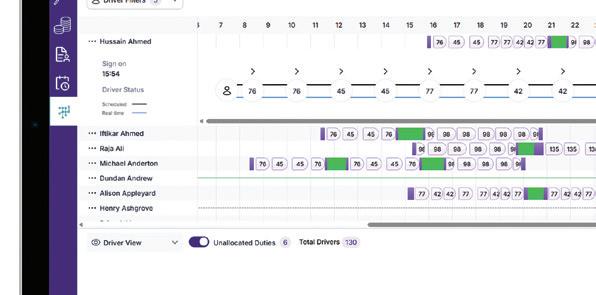
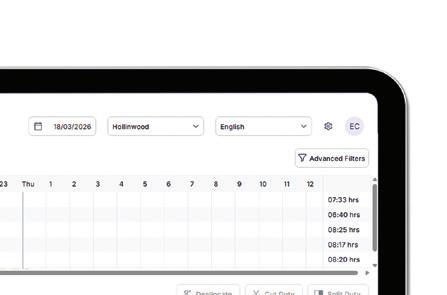
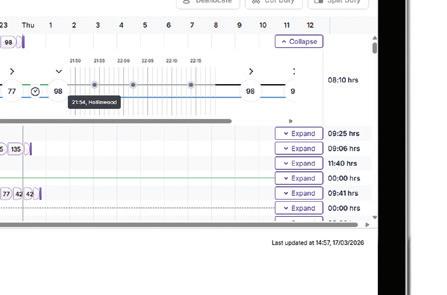


















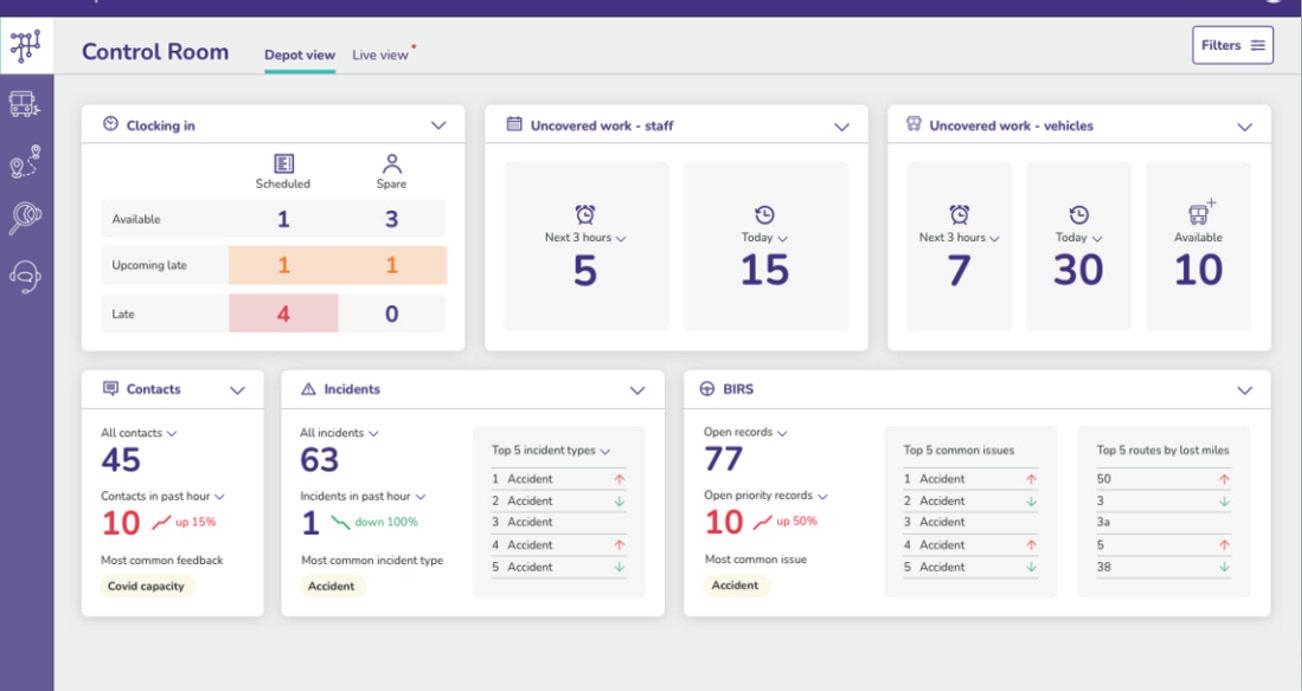
For many UK bus operators, the control room has long been defined by its ability to respond quickly under pressure. When disruption occurs, it is the place where decisions are made quickly to keep services moving, but as networks grow more complex and expectations continue to rise, simply reacting is no longer enough.
What is emerging instead is a new expectation: that control rooms should not only manage disruption, but actively improve performance. This shift, from visibility to performance improvement, is where platforms like Velociti Solutions’ Control360 are beginning to make a tangible di erence.
As Nick Brookes, Chief Customer O cer at Velociti Solutions, puts it: “The control room is the heartbeat of any bus operation, but without a joined-up view, teams are often working harder than they need to just to stay on top of the basics.”
Over the past decade, operators have invested heavily in a growing suite of digital tools. Real-time tracking, engineering platforms and customer information solutions are now commonplace.
Yet despite this progress, many control rooms still face a persistent challenge: too much information and insu cient clarity.
Data exists, but it is often fragmented.
Controllers may be able to see where buses are, which drivers are on duty, and what incidents are unfolding. However, connecting those dots in a meaningful way often requires manual e ort, switching between systems, and making judgment calls based on incomplete context.
The result is a form of “informed reactivity” that is better
than before but still fundamentally limited.
Control360 takes a di erent approach. Rather than simply aggregating data, it structures it around decision-making. The platform brings together multiple data sources into a single operational view, while prioritising what matters most in the moment.
A key shift enabled by Control360 is the way it reframes responsibility within the control room. Instead of passively monitoring events, controllers are equipped to take ownership of outcomes.
For example, a delayed driver sign-on is no longer just an alert. Within Control360, it becomes a managed event, linked to specific services, compliance considerations, and potential network impact. The system not only flags the issue but also supports a structured response.
Aiden Proctor, Head of Product - Bus at Velociti Solutions, explains: “One of the key benefits of Control360 is how it anticipates problems before they become service failures. It doesn’t just highlight an issue, it helps teams resolve it quickly, compliantly, and with full visibility of the wider impact.”
This reduces ambiguity and creates consistency in how


decisions are made.
Over time, that consistency builds confidence across the operation. Decisions are no longer dependent on individual experience alone but are supported by shared workflows and reliable data. For operators, that translates into more predictable service delivery, even in challenging conditions.
Control rooms are, by nature, high-pressure environments. Controllers are required to process large volumes of information quickly, often while managing multiple incidents at once.
One of the less visible benefits of Control360 is how it reduces this cognitive load. By eliminating duplicate data entry and minimising the need to switch between systems, the platform frees up capacity.
As Proctor notes: “Controllers are making high-stakes decisions constantly. By removing the need for system-hopping and guesswork,
we give them the headspace to focus on keeping services running and passengers moving.
Beyond real-time decisionmaking, Control360 improves how operational information is captured and used. Control rooms generate large volumes of data daily, but it is often fragmented or lost across systems.
By bringing this into a single platform, Control360 ensures information is consistently recorded, visible, and accessible.
As Brookes explains: “Most operators already have lots of technology in place. The challenge has been joining it up.”
This joined-up view helps teams reference past events, maintain continuity across shifts, and improve communication. Over time, it reduces variability in how incidents are handled, supporting more consistent and reliable control room decisions.
What stands out about Control360 is that it is not simply a technology upgrade. It reflects a broader shift in how control rooms are expected to operate.
The emphasis is no longer just on reacting quickly, but on understanding impact, taking ownership, and driving performance improvement over time.
In this sense, the platform serves as a bridge between real-time operations and strategic thinking. It supports the immediate need to keep services running while also contributing to longer-term performance goals.
As Proctor puts it: “It’s not just about solving problems in the moment. It’s about giving operators the tools to build more resilient, e cient networks over time.”
The pressures facing UK bus operators are unlikely to ease any time soon. Reliability, e ciency, and adaptability will remain central challenges. What tools like Control360 suggest is that the answer may not lie in adding more systems, but in making better use of the ones already in place.
Integrated vehicle CCTV: Hardware and software working as one
Timespace is the UK’s leading developer and manufacturer of digital video recorders (DVRs) for vehicle CCTV. Tens of thousands of Timespace DVRs are installed across UK public transport, with top-tier fleet operators continuing to choose Timespace for high-quality, reliable technology that delivers long-term value.
DVRS FOR ALL TYPES AND SIZES OF FLEETS
Timespace DVRs support 4-20 channels of video, with options for PAL, AHD and/or IP cameras. The new V700 builds on the success of the widely adopted
V400 and is a full-HD recorder, delivering excellent image quality. With its ONVIF interface, the V700 can also integrate with other vehicle systems, helping operators streamline their onboard technologies.
LANLINK PLATFORMA COMPLETE SOLUTION, INCLUDED AS STANDARD
Fleet operators need a powerful back-o ce platform with the tools to e ectively manage their vehicle CCTV systems, and Timespace’s LANLink provides exactly thatwithout additional licence fees or ongoing subscriptions.
“LANLink gives operators all the tools they need to manage
their vehicle CCTV systems as standard”, says Robert Heylen, Timespace’s Technical Director. “Our focus has always been on delivering high-performance hardware, and LANLink ensures customers can unlock the full capability of their Timespace DVRs”.
LANLink enables remote footage download over WiFi or mobile networks, making it simple to view and share video. Comprehensive CCTV health information helps fleet managers optimise system availability, while live camera streaming allows incidents to be monitored and responded to in real time. Combined with
integrated GPS tracking, LANLink brings fleet visibility into a single, professional-grade platformprovided as standard with no ongoing software costs.
NEW SAFETY FEATURES
LANLink now also includes overspeed detection and Driver ID features, providing fleet managers with additional operational insight. The overspeed feature uses CAN data recording (built into the Timespace V600 and V700 DVRs), while Driver ID has been developed through integration with selected ticket machines.
UK DESIGNED, MADE AND SUPPORTED
All Timespace design, development, manufacturing and support is based at our UK premises in Huntingdon, giving us full control of quality and service.
www.tspace.co.uk 01480 414147

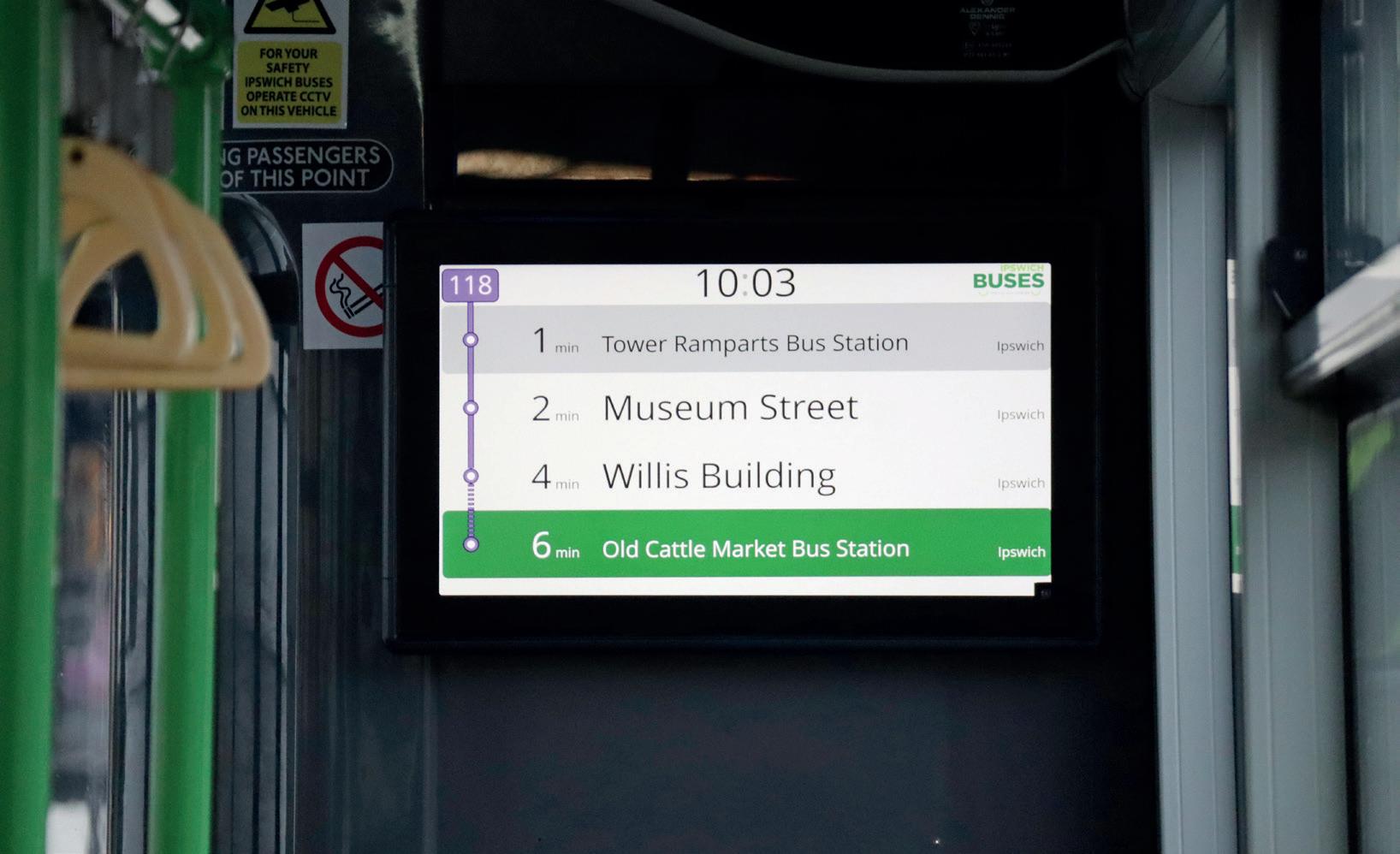
Journeo’s Next Stop Announcement system makes PSVAIR compliance e ortless. Mark Johnson, Journeo's Director of Fleet Systems, explains how
Journeo is giving bus operators an easy way to meet the latest accessibility legislation and keep passenger information simple with its Next Stop Announcement (NSA) innovation.
Designed to be easy to install on vehicles of any age, NSA uses existing data and Journeo’s cloud-based Portal software to help operators large and small comply with the Public Service Vehicles (Accessible Information) Regulations 2023 (PSVAIR).
The industry has been rapidly installing products and systems to meet the PSVAIR requirements since they were introduced in 2023. The government correctly asked operators to prioritise accessibility for a group of passengers who, for varied reasons, have more cause than most to feel anxious about using public transport.
However, as can happen with any response to new legislation, not every solution has hit the
mark. Often they are complex to install and create a lot of hassle for operators. If they don’t work as intended, they create a disappointing and damaging experience for passengers.
Our Next Stop Announcement is here to change that.
At its core, Journeo NSA o ers easy installation, simple operation and a future-proofed approach to travel information that allows more passengers to feel confident about taking the bus. Already in use by one regional bus company, NSA is designed to be as light-touch as possible. Working intelligently in the background, it takes the open data that operators already use to build the right content for each vehicle and automatically downloads passenger information to displays. It handles any changes automatically, removing the need for any manual intervention.
Our UK-built, transport-grade designs are certified for bus and rail environments. They provide robustness and reliability with a 10-year service life. Every unit includes panel failure detection and remote diagnostics, and should anything go wrong there is just a single item to repair or replace.
Most importantly, wide viewing angles and anti-reflective glass create a clearer, more accessible experience for passengers.
NSA is scalable and can support any fleet, from 10 to 10,000 vehicles. The solution supports retrofits, fleet changes and new additions, so operators need not worry about the age and lifespan of their vehicles. The use of our EDGE on-vehicle gateway future-proofs the system so that additional services, like CCTV systems, can be connected or added later on.
Combined with the Journeo Portal SaaS back-o ce platform, it also allows operators to use their vital local knowledge to deliver the best customer and passenger experience through text-tospeech management and aliasing, such as adapting the name of stops to suit local conventions. On-route, diversions can be quickly configured in the Portal or initiated locally by drivers. All of this together removes the need to manually program vehicles or undertake depot-level updates, resulting in significant time and cost savings.
We’ve also built our hardware to make things easy for operators and accessible for passengers. By combining processing and monitoring capability within the display we’ve made installation simple. Existing units can quickly swapped out, and new systems can be added without the need for extra technology or hardware.
And it’s all supported by Journeo Portal, our industryleading SaaS back-o ce platform. Currently in use on a third of all UK buses and built on years of experience, the Portal gives operators the assurance of constant system health monitoring. This means operators experience fewer surprise failures and less time waiting for displays to be fixed, and passengers see fewer errors or blank displays.
Journeo is a trusted supplier to numerous bus operators and local authorities across the UK and Ireland. We o er end-to-end UK support, with software, hardware, services under one roof.
NSA is just one of the innovations we’re launching in 2026, all of which are focused on making critical tasks smarter, safer and more sustainable for public transport operators. This will include a suite of AI tools designed to bring new levels of intelligence to CCTV data, which will ultimately improve passenger confidence and customer service.
To find out more, visit journeo.com or call on 020 3651 9166.
Ian Downie, Head of Yutong UK at Pelican Bus and Coach, on scaling-up
Pelican was appointed Yutong importer for the UK and Ireland in 2014. In that year 19 vehicles were sold. Since then the business has grown its sales volume every year whilst continually investing in people, equipment, premises, training and parts stock to ensure service support is always available for the expanding vehicle parc. The 2,000th Yutong vehicle to be sold in the UK entered service in June 2025, and we have substantial orders for the next 12 months.
In 2018, we purpose-built a new showroom and service centre to better serve our customers. However, due to rapid growth, we quickly outgrew this facility. In 2022, we opened a new parts warehouse, followed by a larger
centre in 2023. The original property has been retained for our, ‘Completed in the UK’ programme, continuing to play a vital role in our operations. We currently employ 230 sta in the UK, including 20 apprentices.
Yutong is the world’s premier bus and coach manufacturer. It is the largest global manufacturer of buses and coaches with over 575,000 vehicles delivered in the past 11 years. It is also the world’s leader by sales volume of medium and large size buses and coaches, having a market share of more than 30% in China and more than 10% of the entire market worldwide. Added to that, Yutong is the world’s largest manufacturer of electric buses and coaches, having developed its first electric bus in 1999. We
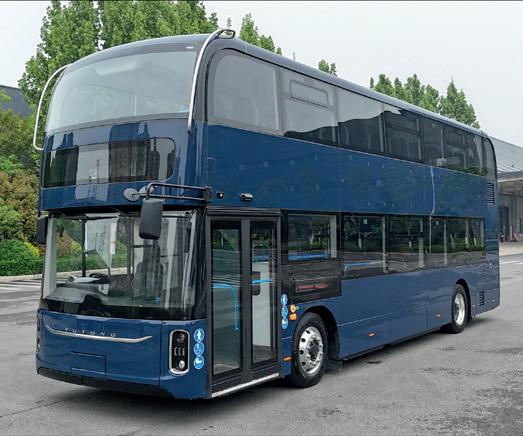
A popular and evolving product
“[Yutong] now have 230,000 zero emission vehicles in service which have completed 54 billion kms of service in 100 plus countries”
now have 230,000 zero emission vehicles in service which have completed 54 billion kms of service in 100 plus countries.
Our product range o ers zero tailpipe emission single deck buses at 9.5m, 10.9m and 12.17metre lengths, as well as an double decker. In addition we o er diesel coaches as well as the only RHD electric coach product in the UK.
The relationship with ALBUM first started with the very first sale to Newport, quickly followed with substantial orders from Cardi , McGills, Centrebus, NCT and trentbarton.
We are very proud and honoured to be the Gold Sponsor of this event in Blackpool, and look forward to seeing operators and fellow suppliers next month.
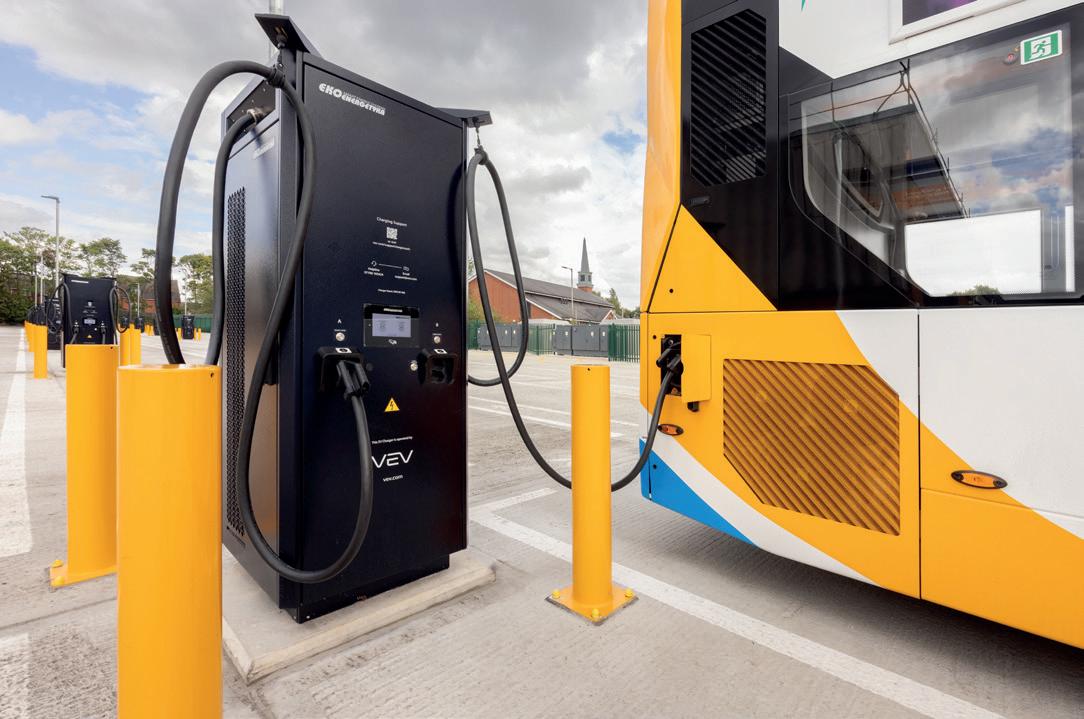
Electrification is no longer a future ambition for Britain’s bus operators. It is becoming part of day-to-day depot reality.
Across the UK, operators are transitioning fleets under growing regulatory pressure, evolving funding models, and rising public expectation. Diesel is on borrowed time. The question is no longer whether fleets transition, but how to do so without compromising service reliability or overinvesting in the wrong infrastructure.
And that’s where the real challenge lies.
Many operators understand electrification is necessary but remain uncertain about how to approach it. The risk isn’t just delay; it’s getting it wrong. Overbuilding infrastructure, locking into inflexible systems, or treating electrification as a procurement exercise rather than an operational transformation.
Early adopters have exposed these pitfalls, now the opportunity is to take a more controlled, operationally-led approach.
THE MYTH OF THE “PLAN”
On paper, electrification looks straightforward. Vehicles are specified. Chargers are installed.
Grid connections are secured. But real-world bus operations are more complex.
Peak vehicle requirement, late-running services, seasonal temperature changes, and shifting duty cycles all introduce variability. Energy prices fluctuate. Depot constraints emerge. What looks robust in a spreadsheet can quickly come under pressure in live operation.
This is where strategies begin to unravel. The issue isn’t a lack of planning, but an overreliance on static planning in a dynamic operating environment.
Electrification brings complexity that cannot be solved simply by adding more infrastructure. Overbuilding chargers or grid capacity is often a symptom of uncertainty, not a solution.
The turning point is recognising that uncertainty can be managed. Electrification works best when it’s managed as an integrated, systems-based operation. That means continuously aligning vehicles, charging, and energy use with live service requirements, making decisions based on real depot data, and accepting that variability is the norm.
■ Operations-led decision-making protects service reliability.
Achieving this requires a shift in mindset, from designing for certainty to managing variability.
What operators need is not another abstract strategy, but a practical way to navigate the transition. The priority is clear: reduce uncertainty, avoid over-investment, and ensure electrification strengthens rather than disrupts existing operations.
This approach is already being applied in live depot environments. At Stagecoach’s Chesterfield depot, electrification required more than installing chargers. The challenge was to maintain operational reliability while controlling infrastructure cost and ongoing energy spend.
In practice, this requires an intelligence layer connecting vehicle telematics, charging infrastructure, and depot constraints. Platforms such as VEV’s fleet management system, VEV IQ, provide real-time visibility and control, helping ensure the right vehicles are charged at the right time (and where possible at the right cost), without disrupting service.
The result is not just e ciency, but confidence: the ability to deliver the same timetable every day while managing energy intelligently behind the scenes.
Progress is often slowed not by technology, but by long-held assumptions.
More chargers do not automatically mean greater resilience. Energy risk cannot always be solved through fixed contracts. And operations should not have to adapt to infrastructure constraints.
In practice, operators are finding the opposite:
■ Right-sized infrastructure delivers better utilisation and lower capital cost;
■ Flexible energy strategies reduce exposure to price volatility;
The solution combined rightsized charging infrastructure with dynamic load management and detailed operational reporting. On-site solar generation was also introduced to reduce longterm energy costs and improve resilience.
Crucially, the system was not fixed. It was designed to adapt to real-world conditions, including changing schedules, vehicle usage, and energy demand. By connecting data across vehicles, chargers, and depot constraints, platforms such as VEV IQ enable operators to make informed, real-time decisions, not just at the planning stage, but every day in operation.
Electrification is often framed as a disruption to be managed. In reality, it can be an opportunity to improve operational control, reduce exposure to energy volatility, and build more resilient, future-ready depots.
The operators who succeed will not be those who install the most infrastructure, but those who take a measured, operationallyled approach, retaining control of how their depots run as the technology evolves.
Handled correctly, electrification doesn’t just replace diesel. It creates a smarter, more flexible way of running bus operations.































As the retiring Managing Director, it is both a pleasure and a personal milestone to welcome you to this year’s ALBUM Conference. After many years in this industry - and particularly with Blackpool Transport - I’ve had the privilege of seeing first-hand the resilience, ingenuity, and pride that define our sector. This conference has always been an important moment in the calendar, but this year, for me, it carries an added sense of reflection as well as optimism for what lies ahead.
Buses remain the backbone of accessible, sustainable public transport in our communities. They connect people to work, education, healthcare, and social opportunities, while playing a crucial role in reducing congestion and supporting environmental ambitions. Yet we all know that delivering these services effectively is not without its challenges. Continued support - through clear policy, stable funding, and strong partnerships - is essential if operators are to keep pace with changing passenger expectations and the wider demands placed upon us.
Small and medium-sized enterprises, municipals and coach companies are at the very heart of the transport sector. SMEs bring agility, innovation, and deep local knowledge, enabling them to respond quickly and effectively to the needs of the communities they serve. They are often the lifeblood of the industry - maintaining vital routes, supporting local economies, and providing a level of care and attention that only a locally focused operator can deliver.
From my own experience in Blackpool, we’ve seen what can be achieved when those strengths are backed by clear ambition and sustained investment. A strong and consistent local brand, investment in high-quality, modern vehicles, and a relentless focus on customer experience have all
played a part in driving patronage growth and rebuilding confidence in bus travel. Equally important has been the role of partnership - working closely with the local authority and other stakeholders to ensure that buses remain central to the town’s transport strategy and wider economic success.
These are not unique lessonsthey are ones that resonate across many of your own organisations. But they do underline an important point: when SMEs are supported and empowered, they deliver real value, not just for passengers, but for the communities and economies we serve. Ensuring that the conditions exist for SMEs to thrive is therefore critical to maintaining a diverse, competitive, and resilient bus market.
This conference gives us the opportunity to come together, to share experiences openly, and to tackle the challenges ahead with a collective voice. By continuing to collaborate - operators, local authorities, and partners - we can ensure that our industry not only adapts, but continues to grow and succeed.
As I prepare to step away from my role, I do so with a great deal of pride in what has been achieved, and confidence in the people who will take this industry forward. Thank you for being part of this journey, and for your continued commitment to the communities we all serve.

Jane Cole OBE, Retiring Managing Director, Blackpool Transport
































Learn
Plan

















































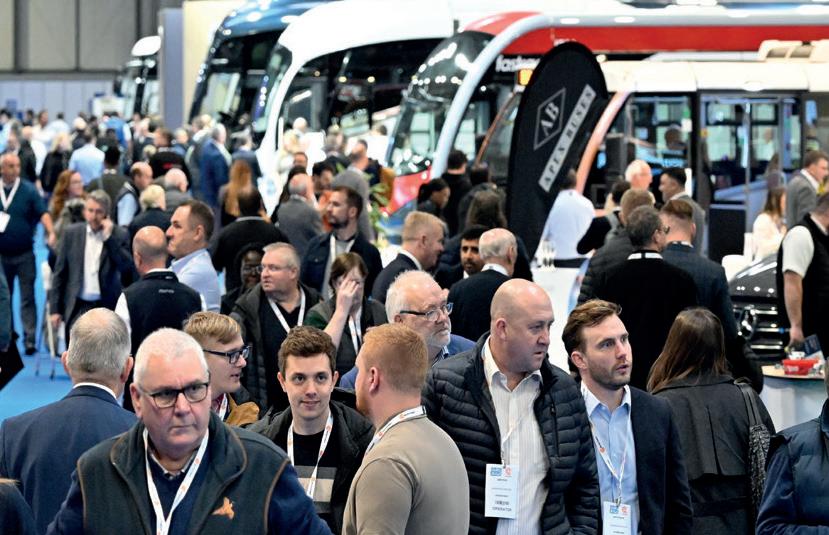














MONDAY 11TH MAY
10:00
First Tee time for Golf
15:00
Hotel check-in opens
16:00 and 16:45
Shuttle bus from The Village Hotel to Hampton by Hilton South Shore.
18:00
Shuttle bus from Hampton by Hilton South Shore to The Village Hotel
18:30
Blackpool Extravanganza! Held in the Inspiration Suite, Village Hotel
23:00
Shuttle bus from The Village Hotel to Hampton by Hilton South Shore.
TUESDAY 12TH MAY
08.30, 09.30 and 10.30
Shuttle bus from Hampton by Hilton South Shore to The Village Hotel
10:00
Conference registration and exhibition opens
11:40
Welcome to Conference with Jane Cole OBE and host Dave Guest
12:00
Keynote Speaker Steve Norris
12:30
Reaction to Keynote Speaker - Panel discussion with Steve Norris, Robert Williams, CEO Reading Buses and Alison Edwards, Director of Policy and External Relations at CPT
13:15 - 14:15
Lunch is provided in the Helter Skelter restaurant for all operator and supplier delegates
14:15
Chris Cheek - reflections on the
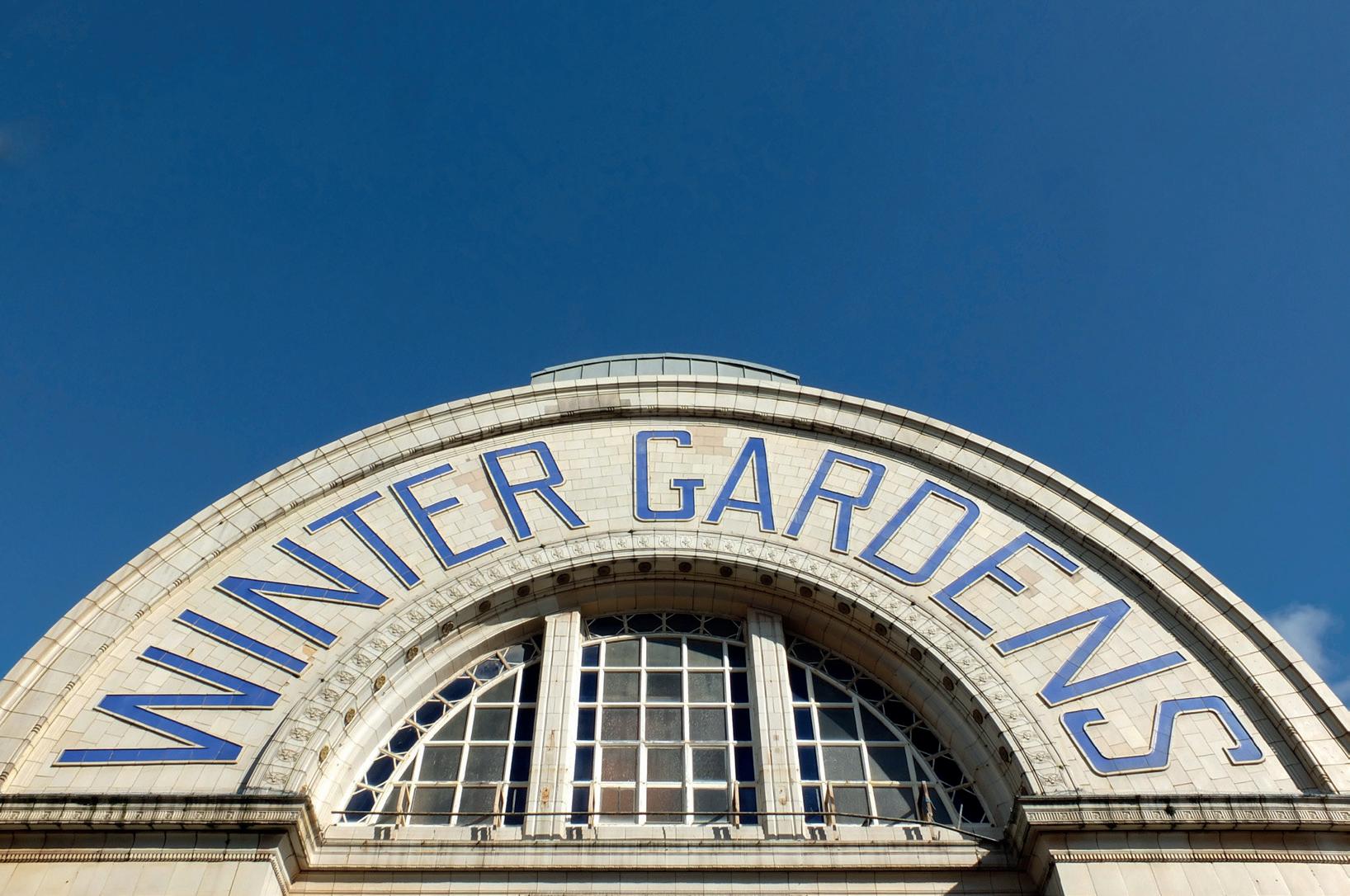
Dinner will be held at the
30th anniversary of the UK Bus Awards, alongside presenting his latest research for CPT on the impact of congestion on bus passengers
15:00
David Joshua - Using AI Is Not Optional: Your Competitors Have Already Started
15:45 - 16:15
Refreshments with the exhibitors
16:15
Stelios Rodoulis, Head of Bus Centre of Excellence - highlighting new skill sets and resources from the Bus Centre of Excellence for operators and local authorities
16:45
Alex Perry, ALBUM Policy Advisor - Conference Day One Round Up
16:30 and 17:15
Shuttle bus from The Village Hotel to Hampton by Hilton South Shore hotel
17:00
Conference ends for the day
18:00
Gala Dinner at the Blackpool Winter Gardens. Arrival is from 18:30, with the evening commencing at 19:00 and dinner at 19:30. Transport departs
from the Village Hotel at 18:00, 18:30 and 18:45 and 18:15 from Hampton by Hilton.
The event and bar will close at 12:30am, with transport available from 23:30 once the main evening entertainment has finished.
WEDNESDAY 13TH MAY
09.00 and 10.00
Shuttle bus from Hampton by Hilton South Shore to The Village Hotel
09:30
Conference registration and exhibition opens
10:30
Welcome to Conference Day 2
11:00
Jane Cole OBE and Bev Holden - the bus industry from a people perspective
11:45
Alison Edwards, Director of Policy and External Relations at CPT, Keeping Customers and Staff Safe Throughout Their Journey: Tackling anti-social behaviour (ASB) and violence against women and girls (VAWG)
12:30 - 13:30
Lunch and exhibition time
13:30
Kerri Cheek, Senior Bus Safety Development Manager, will share insights from Transport for London
14:15
To be confirmed
15:00
Conference Day Two Round Up
15:15 - 16:15
Refreshments with the exhibitors
16:15
Town Hall Event: Interactive and thought-provoking Q&A with industry experts discussing the hot topics of the day!
Chaired by Jane Cole OBE, James Spencer (Managing Director, Portland Fuels), James Backhouse (Director, Backhouse Jones), Chris Cheek (Consultant) and Graham Vidler (CEO, CPT), will give their opinions on key industry challenges such as the impact of the Iranian war on fuel prices and supply, ensuring compliance with disability law and the future franchising.
17:15
Conference ends
In

The Spine, 2 Paddington Village, Liverpool L7 3FA


We are delighted to be hosting our 8th UK Bus Summit in partnership with Passenger Transport. The event will take place on 10 September 2026 at The Spine, Liverpool, during a pivotal period for bus policy, just days after the launch of Liverpool City Region’s first franchised bus services.
Delivered by Transport Times, in association with Passenger Transport, and supported by Liverpool City Region, the Urban Transport Group, CPT, the Bus Centre of Excellence and Women in Bus and Coach, the Summit provides a trusted forum for insight, discussion and collaboration.
2026 is a seminal year for the most widely used form of public transport as empowered local and regional authorities and devolved governments seek to harness bus’s potential in growing local economies, improving connectivity and accelerating decarbonisation. Following new legislation, bus reform is visibly being put in to practice with franchised models rolling out across parts of the UK and enhanced partnerships being strengthened in others.
The Summit will bring together politicians and policymakers, transport authorities, operators and the wider supply chain to explore the latest policy and operational developments across the UK.
You will have the opportunity to hear from key decision-makers and industry leaders, with discussion focused on:
Reflections on the launch of Liverpool City Region’s franchised bus services
The role of mayors and devolved authorities in shaping bus networks
Franchising and enhanced partnerships: what works where Franchising pilots in rural areas and other tools for sustaining rural services
Options for local authorities without a devolution deal
Delivering reliable, accessible, affordable and safe services
How technology and data can improve performance and customer experience
Supporting decarbonisation and greener fleets
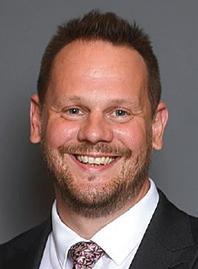



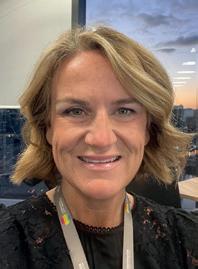
Reserve your place now via www.transporttimes.co.uk
Readers of Passenger Transport magazine and members of CPT, the Urban Transport Group, Women in Bus and Coach and Bus Centre of Excellence, are eligible for a 10% discount on bookings.