The Headwinds Facing Healthcare
are Strong. We are Stronger— BUT WE WILL NEED EVERY VOICE
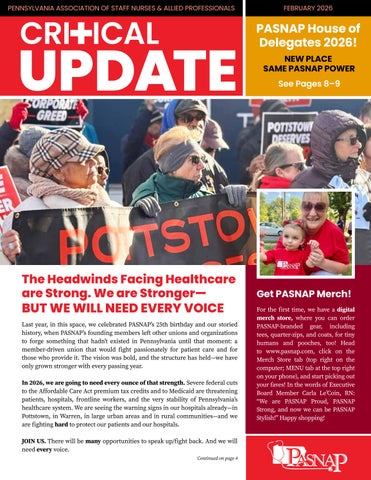
Last year, in this space, we celebrated PASNAP’s 25th birthday and our storied history, when PASNAP’s founding members left other unions and organizations to forge something that hadn’t existed in Pennsylvania until that moment: a member-driven union that would fight passionately for patient care and for those who provide it. The vision was bold, and the structure has held—we have only grown stronger with every passing year.
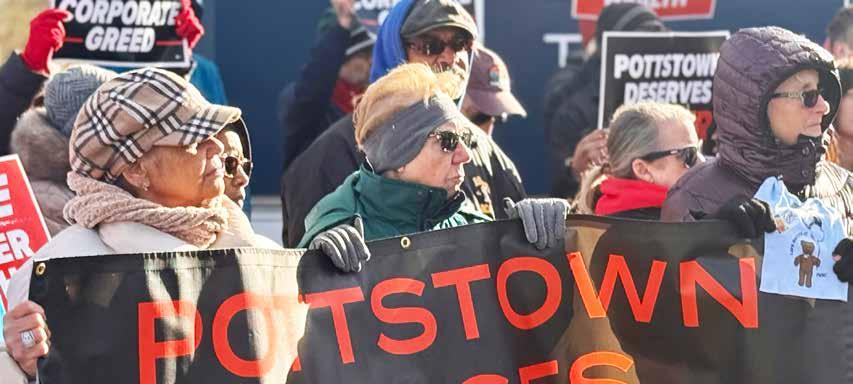
In 2026, we are going to need every ounce of that strength. Severe federal cuts to the Affordable Care Act premium tax credits and to Medicaid are threatening patients, hospitals, frontline workers, and the very stability of Pennsylvania’s healthcare system. We are seeing the warning signs in our hospitals already—in Pottstown, in Warren, in large urban areas and in rural communities—and we are fighting hard to protect our patients and our hospitals. JOIN US. There will be many opportunities to speak up/fight back. And we will need every voice.
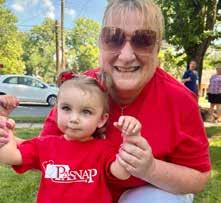
For the first time, we have a digital merch store, where you can order PASNAP-branded gear, including tees, quarter-zips, and coats, for tiny humans and pooches, too! Head to www.pasnap.com, click on the Merch Store tab (top right on the computer; MENU tab at the top right on your phone), and start picking out your faves! In the words of Executive Board Member Carla Le’Coin, RN: “We are PASNAP Proud, PASNAP Strong, and now we can be PASNAP Stylish!” Happy shopping!
MESSAGE FROM PASNAP PRESIDENT MAUREEN MAY, RN
When We Take Action Together, WE WIN!
PASNAP is a fighting union—and being part of a fighting Union means taking action. Check out our new “Action Center” on www.pasnap.com to see how you can get involved and stand up for safer hospitals, stronger contracts, better working conditions, and the resources and protections we need to provide the best care for our patients. Whatever your interests and availability, there’s something for you:
• Share your story about workplace violence
• Help push Congress to extend ACA tax credits
• Join the PASNAP Texting Team to connect with and mobilize unorganized nurses and healthcare professionals around the state
Every action—big or small—strengthens our collective voice. Together, we’re making a difference for healthcare workers in Pennsylvania and across the country!
Check out the many ways you can join the PASNAP fight.

Dear PASNAP Family,
As I look back on 2025—our 25th year as a force for patient-centered care and caregivers here in Pennsylvania and nationwide—I am struck by the resilience, the commitment, and the fight we have shown. We have come together in solidarity again and again and again, to stand up for our patient communities, for the highest standards of patient care, and for the protections and resources we need to provide it. This has never been more necessary.
As the corporatization of healthcare has accelerated, the needs of frontline caregivers have intensified, and having a voice on the job and a seat at the table for RNs and allied professionals have never been more important—for the future of our professions, but also for the safety and well-being of our patients. At PASNAP, we have taken up that mantle with passion, incredible tenacity, and great success.
• We fight hard to advance patient-centric care and resources and protections for frontline caregivers in our contracts. In 2025, Jeanes Techs and Professionals United, Chestnut Hill Nurses and Techs United, Fox Chase OCR United, and Indiana Registered Nurses United all won first PASNAP contracts. Plus, PASNAP members in the Wyoming Valley Nurses Association, Brooke Glen Nurses United, Pennsylvania Independent Nurses at Butler Memorial Hospital, Suburban General Nurses Association, Pottstown Nurses United, Temple Allied Professionals, and Temple University Hospital Nurses Association all stood strong against C-suite pressure to win contracts that further prioritize patient-centric care, staffing, and protections against workplace violence.
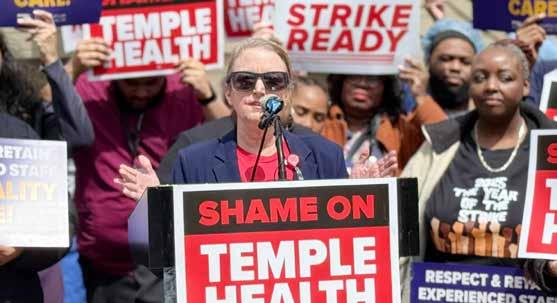
• We fight hard to enforce the wins we get in our contracts—something we unfortunately have to do often. In just one recent example, the Temple University Hospital Nurses Association (TUHNA) defended their contract when the hospital up and reneged on a week of paid parental leave, separate from FMLA, that was enshrined in their 2022 contract. Last year, an arbitrator ruled in TUHNA’s favor, and 100-plus RNs are getting the extra week of paid leave they deserve!
• And we fight hard in Harrisburg to ensure that the state has our back in protecting patients and healthcare workers in Pennsylvania. Our top priorities this past year have been safe staffing ratios, workplace violence, and protections against private equity and for-profit hospital ownership. Nurses
take a pledge—the Florence Nightingale Pledge—to devote ourselves to the welfare of all dedicated to our care. We make sure our legislators do the same for all they are elected to serve.
It’s through our solidarity as a Union that we can make a difference for our patients and our professions in the years to come.
We couldn’t do all this without resources—and that comes from our member dues. We voted as a Union several years ago to increase our membership dues, and that change has both given us the resources we need to engage in the fights we have, and to build up our resources for the fights to come. Maintaining the financial stability and strength of the organization is such an important part of our Executive Board’s responsibilities that the Board has proposed to add that as a formal part of our PASNAP Bylaws. We will be voting on this change at our upcoming House of Delegates meeting. The change is below, added language in bold.
I look forward to seeing you all at the House of Delegates in April! In solidarity and with tremendous appreciation for you and for all you do,
Maureen May, RN PASNAP President
Proposed Bylaws Change
ARTICLE I. PASNAP Objectives
The objectives of PASNAP shall be as follows:
A. To protect and advance PASNAP’s organizational security;
Once
PASNAP, Always
PASNAP! Become an Associate Member!
Newly retired or no longer part of a PASNAP local? Join PASNAP as an Associate Member! The fight for our hospitals, our colleagues, and our patients has never been more important, and as a PASNAP Associate Member, you can attend House of Delegates and stay involved in PASNAP’s fight for protections for healthcare workers and patient-centered care in PA. Dues are $20 per month. Sign up here.

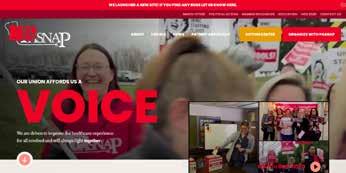
Our Redesigned Website Will Make You PASNAPPROUD!
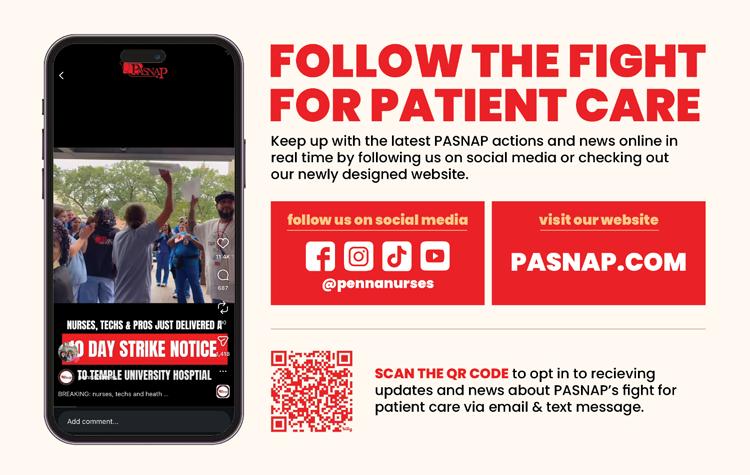
Our solidarity, our mission, and our leadership on behalf of patients, caregivers, and healthcare here in Pennsylvania and across the nation are now on full display at www. pasnap.com. Check it out!
B. To improve the structure of PASNAP in order to ensure full and effective participation of all members, thereby establishing and maintaining an independent, self-governing organization;
C. To promote and to protect the rights and welfare of its members;
D. To advance professional rights and to enhance professional responsibilities in order to further the consistent development and improvement of the profession and its practitioners.
E. To maintain fiscal stability, safeguard the union’s resources, and ensure they are used for the benefit of its members and to fulfill its mission.
FUNDING OUR FRONTLINES
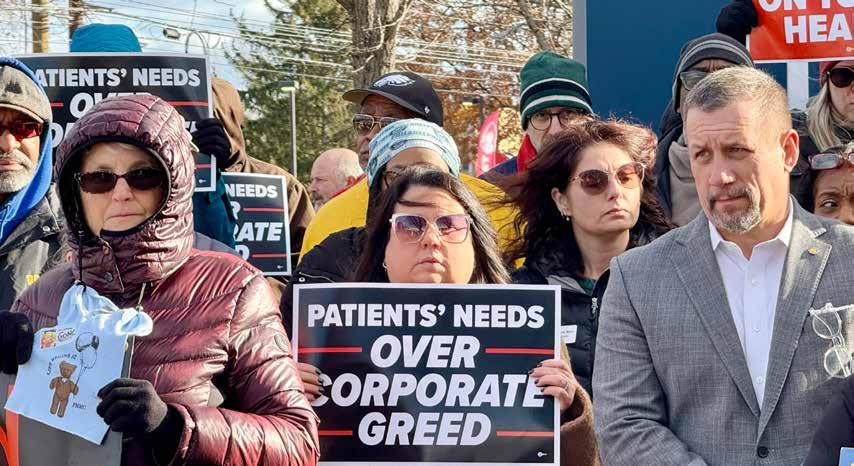
PASNAP IS CALLING ON CONGRESS
Protect Our Patients, Hospitals & Communities
Healthcare isn’t a privilege—it’s a lifeline. It is a right. And it’s essential for every Pennsylvanian.
We’re asking all PASNAP members to take action: Visit the “Action Center” on www.pasnap.com, and use the links there to:
• Sign our Healthcare Bill of Rights: Coverage is Care!
• Tell your members of Congress: Healthcare is in danger—and we demand better.
What’s At Stake for Us and for Our Patients in 2026
Severe federal cuts to Medicaid and Medicaid Expansion, combined with Congress’s failure—so far—to renew the enhanced premium tax credits that make Affordable Care Act (ACA) insurance coverage affordable for working families, have triggered a full-blown healthcare crisis in Pennsylvania that will spare no one. No patient, no hospital, no community.
Those of us at the bedside are already seeing the warning signs. We are the canaries in the coal mine. And we have to be prepared to fight to defend our hospitals and our patients.
This isn’t about politics. It’s about whether hospitals can stay open, whether units remain safely staffed, and whether our patients have anywhere to go when they need care.
The Threat to ACA Coverage: Premium Tax Credits
At the heart of last fall’s extended government shutdown was the extension of enhanced premium tax credits, which helped millions of Americans afford health insurance through ACA marketplaces. In Pennsylvania, that marketplace is Pennie, where more than 500,000 residents get their health coverage. The vast majority rely on premium tax credits to keep monthly costs manageable. But Congress allowed those credits to expire at the end of 2025, and monthly premiums skyrocketed.
Last fall, Pennie estimated that if enhanced ACA premium tax credits were not renewed, 150,000 Pennsylvanians, including laboring mothers, trauma victims,
those fighting life-threatening disease, and ordinary working people, would be unable to afford the increases and would lose access to critical, life-saving care.
When patients lose coverage, they don’t stop getting sick. They just delay care, skip medications, and show up in emergency rooms far sicker and with far fewer options. More patients without health insurance also means less compensation for hospitals, which are already seeing increased challenges in terms of funding. This will lead to reductions in the quality of patient care, cuts in services, and hospital closures.
Medicaid Cuts: A Second Blow
As if rising premiums weren’t enough, federal lawmakers are also considering deeper cuts and new restrictions to Medicaid, threatening coverage for more than 300,000 working Pennsylvanians and putting 47 hospitals across the Commonwealth at risk of closure.
Most of these hospitals are in rural and underserved communities. They are lifelines. Losing them would mean longer emergency transport times when every second counts, fewer maternity units, and no safety net for patients when they need care most.
NOTE: As we went to press, federal lawmakers were proposing a 2-year delay in some of these cuts, which would provide some welcome respite. But the bipartisan proposal hadn’t yet been brought to a vote.

Bernadette Golarz, DNP, CRNA Temple North Anesthesia Coalition
“There’s power in numbers. As corporate entities get larger and larger and hospitals merge and become bigger and bigger, we need to be bigger, too—that’s our bold move. I want to see us grow and link arms with one another and other unions, and keep fighting the good fight, together.”
Washington Doesn’t Stay in Washington
Rising premiums and lost Medicaid coverage feed into the same precipitous spiral: People get sicker, hospitals get weaker, closing service lines, and communities suffer. At a press conference with Pennsylvania Congressman Brendan Boyle, PASNAP President Maureen May, RN, warned of the dangers these cuts pose: “We already work in a crisis environment as we save lives and care for patients. But if these cuts go through, we’ll all pay the price. It will destabilize hospitals— something we’re already seeing now.”
What happens in Washington doesn’t stay in Washington. It shows up every day at the bedside. When access is cut, suffering increases. When healthcare is underfunded, caregivers shoulder the cost—through moral distress, impossible workloads, and the heartbreak of preventable loss.
WE NEED TO CONTROL THE NARRATIVE “This Is About Care, Not Cuts”
If frontline caregivers don’t frame this fight, the beancounters in hospital C-suites and politicians in Washington will. We know what they’ll say—we’ve heard it all before: They’ll throw around words like “spending” and “efficiency.” But we know, this is about care.
Look for PASNAP to be out front, reminding reporters and legislators at every turn:
• This isn’t a budget issue. It’s an access issue.
• Cuts don’t save money—they shift costs to patients, ERs, and workers.
• And the collapse of our healthcare ecosystem is a choice, not an inevitability.
Want to help control the narrative? Join the PASNAP Content Creators Team and help shape PASNAP’s online presence and amplify our message. Whether you’re a social media pro or just curious to learn, you’ll collaborate with the PASNAP Communications Department to brainstorm ideas, create videos and graphics, and help tell the stories that move people (including legislators) to action. Sign up here!
FUNDING OUR FRONTLINES
WE NEED YOUR VOICE
Become a Political and Community Outreach Chair!
We need Members from every Local to serve as Political and Community Outreach Chairs (PCOCs), helping to lead engagement with elected officials and community members to build support for our hospitals as well as our issues in Harrisburg and in our communities. It’s a lot of fun, and you can make a huge difference for your colleagues and patients.
Interested in becoming a PCOC or learning more about it? Reach out to your Local president or PASNAP staff member Sean Gavin at sgavin@pasnap.com
At the bedside, we are already seeing the warning signs. Hospitals across Pennsylvania are shutting down areas of care, forcing patients to travel farther for critical care. Communities are losing maternity services, behavioral healthcare, cancer care. Even ICUs are closing—Pottstown Hospital in Montgomery County just closed its ICU; Philadelphia’s Jefferson Frankford Hospital did the same. And whole hospitals are being sold or consolidated.
We Have to Fight Back
In the face of these unprecedented threats, silence isn’t an option. We have to act.
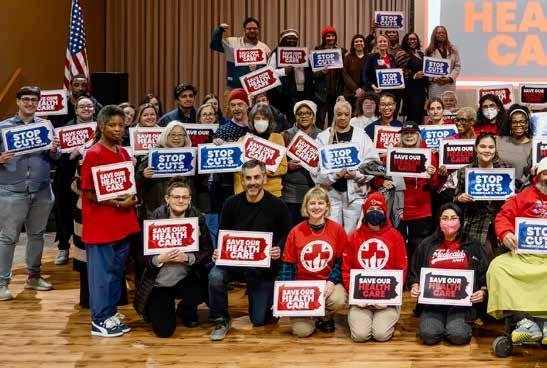
Late last month, PASNAP hosted a Forum to Save Our Healthcare, joining forces with 10 allied organizations, bringing together caregivers, patients, community advocates, and labor and health policy leaders to forge a united front in defense of care in Pennsylvania.
The forum wasn’t just a conversation—it was a call to action. Together, we shared firsthand accounts of what these cuts would mean in real terms: closed units, unsafe staffing, delayed treatment, and patients falling through the cracks. We named
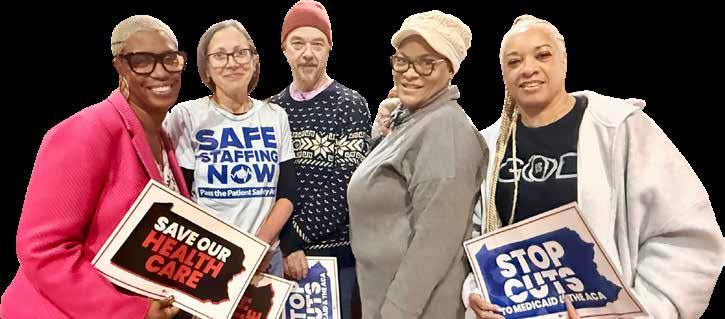
January 22, 2026: Temple University Hospital RNs at the Forum to Save Our Healthcare.
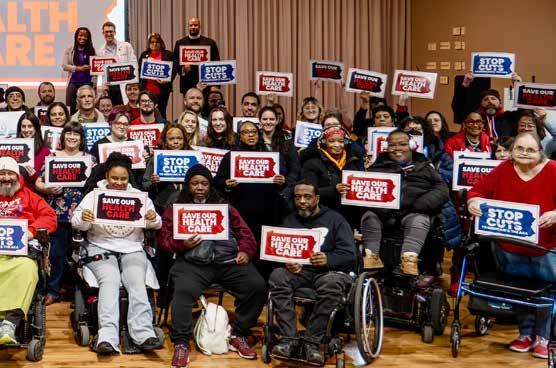
what is at stake and made clear that protecting healthcare requires collective resistance, not isolated concern. Because when hospitals are weakened, entire communities are put at risk—and that is a fight none of us can afford to lose.
At the forum, we unveiled a “Healthcare Bill of Rights,” that contains the principles and standards and rights that our healthcare system should uphold to protect patients, communities, and healthcare professionals. We asked our own members and coalition partners to sign on to this document, as well as our elected officials and healthcare institutions. You can see the text of this document and sign on at healthcarebillofrights.com
Building on that momentum, PASNAP and our partners are taking the fight public. We are speaking out in newspaper opinion pages across the Commonwealth to make sure lawmakers and the public hear directly from those who provide care and those who depend on it. These op-eds lift up the voices of bedside caregivers and patients, cut through political talking points, and expose the real-world consequences of federal inaction.
This is how we fight back: By organizing together, by telling the truth about what is happening in our hospitals, and by demanding accountability from those in power. United, we are making it clear that healthcare is not negotiable—and we will not stand by while it is dismantled.
Anne Wagner, RN, Wills Eye Nurses and Techs United
“To me, acting boldly against the pressures we’re facing in 2026 starts with pushing hard for protections for ourselves and our patients in our contracts. We want to give our patients the best quality care that we can. To do that, we need to feel safe in our place of work, both literally when it comes to security and we need to feel that our jobs are secure. So we need to push back when hospital management wants to cut resources for us and our patients, even during challenging economic times.”
By law, the Union is required to furnish the following information annually. If you have questions, please call (610) 567-2907.
PASNAP, like other unions, spends the vast majority of its funds on collective-bargaining related activities as well as some amounts for political lobbying, community services, charitable donations, publications, certain litigation and other matters. As an employee represented by PASNAP and covered by a contract containing a union security or agency fee clause, you are required as a condition of employment to pay dues or an agency fee to the Union. Employees who are members of PASNAP enjoy all the rights and privileges of union membership including attending union meetings, voting to ratify contracts, running for union office, voting for union officers, and participating in certain union benefit programs that are provided only to union members.
Employees may choose not to be members of the Union. Employees who are not members of the union pay dues or agency fees, but they do not enjoy any of the rights and privileges of membership. Non-member employees may be “Beck Objectors” and may request an adjustment to their dues based on their objection to the Union expenditures that they believe are not reasonably related to representational activities including collective bargaining, contract negotiations, and grievance adjustment and related activities. Nonmembers who choose to object should request an adjustment to their dues. Such a request must be in writing, and it must include the employee’s full name, address, social security number, current wage rate, and employer. Such a request must be sent to PASNAP, 3031 Walton Road, Suite C-104, Plymouth Meeting, PA 19462-2326. Such a request is valid until withdrawn by the employee.
Non-members who submit an objection will receive information regarding how the union calculates representational expenditures and have their dues reduced to reflect the percentage of non-representational expenditures from the previous fiscal year which covers the period of July 1, 2025–June 30, 2026. This reduction in dues will commence on the first day of the month following the receipt of the objection. Beck objectors will be required to pay 85% of union dues.
Non-members objectors have the right to challenge the union’s calculations of representational expenditure before an impartial arbitrator on an annual basis pursuant to the American Arbitration Association’s Rules for Impartial Determination of Union fees. Such challenges must be made in writing, explain the basis for the challenge, and be received by the Union at the above address within 30 days of the employees receiving the calculation information. If more than one member challenges the calculations, the challenges will be consolidated for hearing. The decision of the impartial arbitrator will be final and binding. PASNAP will pay the cost of arbitration. Challengers must bear all other costs in connection with presenting their appeal, such as travel, witness fees, lost time, representation, etc.
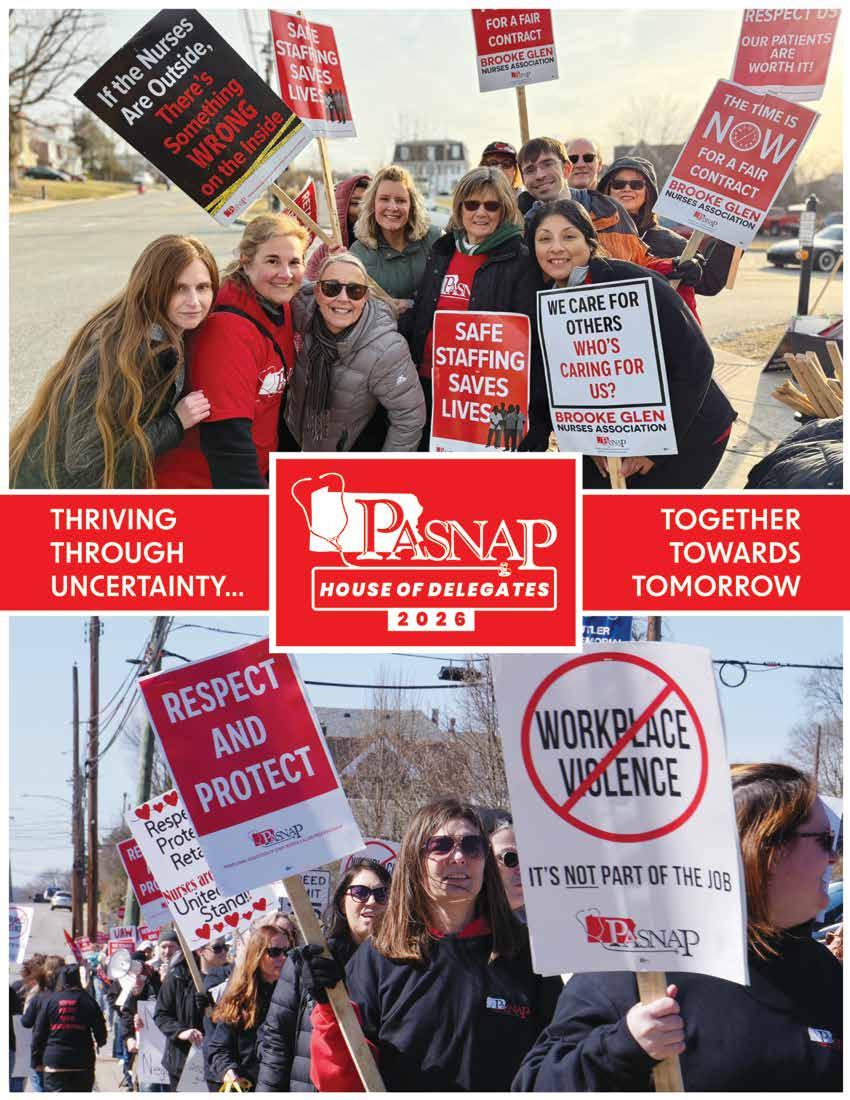
PASNAP HOUSE OF DELEGATES 2026
SUNDAY, APRIL 26–TUESDAY, APRIL 28
Wind Creek Bethlehem
Every year, we come together at our House of Delegates meeting to strategize ways to build a more powerful, engaged, and active union—to meet members from all PASNAP locals, to elect members to our statewide Executive Board, to share what works and what we are planning in the year ahead, to learn, to collaborate, and to have fun.
In 2026, our House of Delegates will move to the Lehigh Valley—to Wind Creek Bethlehem, located on the site of the former Bethlehem Steel, once the secondlargest steel producer in the U.S. The resort will showcase PASNAP’s fight, our steely strength, and our resilience as a Union. Plus, it includes a spa and a casino, and is just gorgeous.
Like last year, we’ll have a semi-formal celebration on Monday night! We’re asking everyone to wear PASNAP colors—either black or red!
Our theme reflects the headwinds facing healthcare in 2026: THRIVING THROUGH UNCERTAINTY, TOGETHER TOWARD TOMORROW. Our solidarity, in this moment and specifically at the House of Delegates, where we will make plans for how we will protect our patients, preserve our hospitals, and defend Medicaid and the Affordable Care Act going forward, has never been more important.
All PASNAP members, associate members, soon-to-be members, and retirees are welcome to attend, either as official delegates or simply attendees. Food and hotel costs are covered!
REGISTER AND RESERVE
YOUR ROOM NOW!
And contact your local board if you’re interested in running for a local delegate position!
Interested in Running for PASNAP’s Statewide Executive Board?
There are eight PASNAP Executive Board positions up for re-election at this year’s House of Delegates: Vice President, Treasurer, and six At Large Members, all with two-year terms
By completing and returning this Consent to Serve form, you are expressing your interest in filling one of these positions and consenting to serve in that position if elected by voting delegates.
I, (print name), consent to serve as: n Vice President n Treasurer n At Large Member of the PASNAP Executive Board
Signature Date
Executive Board Consent to Serve forms are due to the PASNAP office by April 14th; no forms will be accepted after that date. Forms can be mailed to PASNAP, 3031 Walton Road, Suite C-104, Plymouth Meeting, PA 19462-2326; or scanned and emailed to hilary@pasnap.com. PLEASE follow up with an email to hilary@pasnap.com to alert us that your form has been submitted and to confirm its receipt.
BARGAINING UPDATE

Bargaining in the East
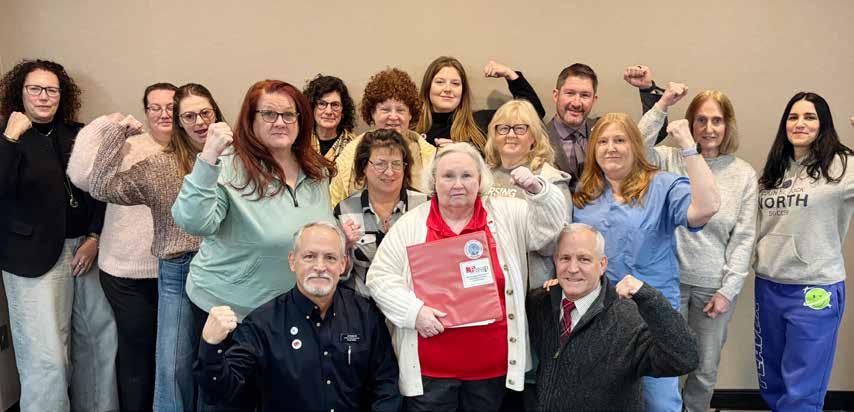
Einstein Nurses United, St. Mary United Nurses Union, and Wills Eye Nurses & Techs United are all bargaining for new contracts as the national spotlight turns to Philadelphia, where we as a nation fought for our collective voice when we signed the Declaration of Independence on July 4th, 1776. May the force of the semiquincentennial be with ENU, SMUNU, and Wills Eye this year! Check the PULSE for updates this spring.
Jeanes
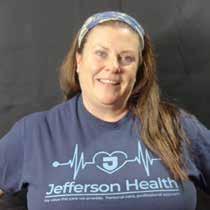
RN Case Managers Bargaining to Join Jeanes Nurses United RN Case Managers everywhere juggle enormous responsibility, navigating patient needs with skill, advocacy, and coordination. But at Jeanes Hospital, under the vast Temple Health system umbrella, they’re asked to do it with one hand—sometimes two!—tied behind their backs, thanks to little staffing and even less support. They sat across from management at the bargaining table for the first time late last summer, after deciding to join the Jeanes RN Union—and they’re still bargaining now. Follow the PULSE and PASNAP social media for updates as they fight for the resources and respect they deserve.

Mighty, Mighty Nurses: St. Mary United Nurses Union
Can you see us now, Wills Eye?
Wills Eye Nurses and Techs United
Winning Out West
PASNAP now has six—count em!—locals in western PA! In addition to longtime PASNAP locals the Pennsylvania Independent Nurses at Butler Memorial Hospital, the Warren General Hospital Professional Employees Association, ACMH Nurses United, and ACMH Techs United, we added the Indiana Registered Nurses Association at Indiana Regional Medical Center in 2024. In 2025, the techs at Butler Memorial Hospital voted to join their nurse colleagues in PASNAP.
New Boss, Same Fight in Butler
In late May, 235 Butler Memorial techs, fed up with their deteriorating working conditions in the three years after the hospital merged with Excela, voted to join their Union siblings—the Butler nurses—in PASNAP. Then, late in 2025, news broke that Butler/Independence will merge once again—this time with West Virginia University Health System (WVU Medicine). The first merger brought chronic understaffing, deep cuts to benefits and resources, alarmingly high turnover—and the Butler techs’ vote to unionize.
What will this merger bring? Hopefully, stability, a renewed commitment to both quality care and the caregiver community that has held Butler Memorial together—and well before that, a contract!
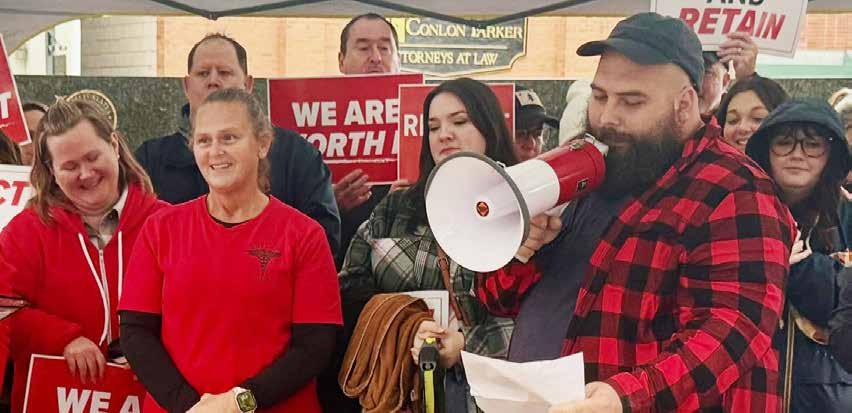
Now deep into bargaining for their first contract, the techs recently opened economic negotiations with a powerful presentation detailing the true cost of chronic understaffing and high turnover on both the hospital and the community. And they’re gearing up for a major fight over wages and management’s ongoing attempt to exclude 40 Techs and LPNs from the bargaining unit. Check the PULSE and the PASNAP Facebook page for updates!
October 30, 2025: Techs at Butler Memorial Hospital held a press conference to let the community in on their fight.
POLITICAL UPDATE
Why PAC Is So Important—Have You Signed Up?
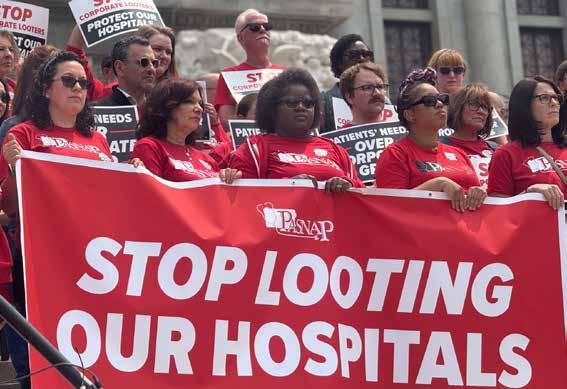
The Hospital and Healthsystem Association of Pennsylvania (HAP) spends hundreds of thousands of dollars through their PAC to elect HAP allies—often influencing the legislature against what would be best for frontline caregivers and patients in PA. To push our legislative goals forward, we have to be able to go toe to toe with hospital lobbyists—which means, along with in-the-building advocacy, we need resources. If we all chip in $5 per paycheck—the cost of a single cup of coffee—to the PASNAP Political Action Committee (PAC), we can do exactly that, and fight back.
Our industry is changing rapidly. As hospitals merge and become corporate behemoths, workers are under attack like never before. Plus, changes in the National Labor Relations Board are making things harder, not easier. The only way to win is to fight, and we need PAC money to wage that fight! Use the QR Code below to sign up for PAC!
(PASNAP PAC is a completely separate fund from Union dues. Union dues are not used for political contributions).

ON THE LEGISLATIVE DOCKET
Harrisburg 2026
We are smack dab in the middle of the two-year 2025/2026 legislative session in Harrisburg, which means that any bills that didn’t make it over the finish line and to the Governor’s desk for his signature in 2025 are still in consideration in 2026. As a result, on deck for us this legislative session are some familiar bills as well as some brand new ones:
• The Patient Safety Act (Formerly House Bill 106), which passed the House in 2023 but stalled in the Senate during the 2023/2024 legislative session, would mandate nurse-to-patient ratios based on acuity in every hospital in PA. In 2026, we will be pushing for enforceable nurse-to-patient ratios in the Department of Health’s in-the-process-of-being-revamped hospital regulations.
• The Attorney General Oversight of Hospital Transactions Bill (House Bill 1460), sponsored by PASNAP ally state Rep. Lisa Borowski and inspired in part by Prospect Medical’s reign of terror in Delaware County, passed the House with strong bipartisan support last summer but ran out of runway before extended budget negotiations consumed Harrisburg. The bill empowers the Attorney General to scrutinize critical, community-affecting healthcare transactions before they are finalized to determine whether the transactions are in the public interest and to challenge them if they are not. We are watching this bill closely and will update you on its progress.
What’s Your Legislative Priority?
The PASNAP CPR (Communications, Politics & Research) Department is compiling a list of legislative priorities for PASNAP caregivers: nurses, technical specialists, professionals, paramedics, pharmacists, CRNAs, midwives, social workers—you name it. Do you have a legislative priority you want to add to the list and to PASNAP’s legislative agenda? Reach out to CPR Director Steve Morris at smorris@pasnap.com today!
• The Health Facility Employee Violence Prevention Act (House Bill 926), which would give caregivers a seat at the table in tracking and preventing workplace violence in their hospitals, passed the House during Nurses Week 2025, but like the Oversight of Hospital Transactions Bill, it hasn’t yet seen any legislative action in the Senate due to the famously long state budget negotiations of 2025. We are hoping for some momentum on the bill this spring, and we’ll update you with any progress.
• The Regulation of the Use of Artificial Intelligence in Healthcare (House Bill 1925), which seeks to put guardrails around how AI is used in healthcare in Pennsylvania. The bill was introduced by Emergency Medicine physicianturned-State-Representative Arvind Venkat in October. With the extended budget negotiations last year, the bill hasn’t yet seen any legislative action. But check the PULSE and pasnap.com for updates.
AI AT THE BEDSIDE: It Can Help,
But Caregivers Have to Take the Lead
Artificial intelligence is here. Very rapidly, it’s become embedded in nearly every aspect of our daily lives—including at the bedside, where AI’s potential for improved outcomes is undeniably real. But its potential for misuse and the subversion of in-the-moment clinical judgement is also very real. Which is why it’s PASNAP’s strong stance that AI must be regulated in Harrisburg and challenged at the bedside on an ongoing basis.
On December 15th, PASNAP President Maureen May, RN, testified before the House Communications and Technology Committee in Harrisburg in support of House Bill 1925 (see “On the Legislative Docket: Harrisburg 2026” for more details), which seeks to regulate AI in healthcare in Pennsylvania. “We know from experience,” she said before the committee, “that we can’t rely on our employers to ensure innovation serves caregivers and patients before the bottom line. We need to make sure that clinical personnel remain in charge of making clinical decisions, even if AI is in the mix.”
Head to Harrisburg with Us!
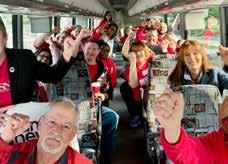
The PASNAP Political Team makes frequent trips up to Harrisburg to meet with legislators to tell them what we’re seeing firsthand at the bedside and why we can’t rely on our hospitals for safe staffing and workplace violence prevention—we need legislation to protect us and our patients! If you’re interested in joining your colleagues and coming to the Capitol for a day, please let us know and we’ll send you additional info and possible dates.
We fight for what we and our patients need in our contracts, but we need to fight for legislation, too. And although the venue’s different, the same rules apply—there’s strength in numbers! Join us!
Interested in learning more? Reach out to your Local president or PASNAP staff member Sean Gavin at sgavin@pasnap.com
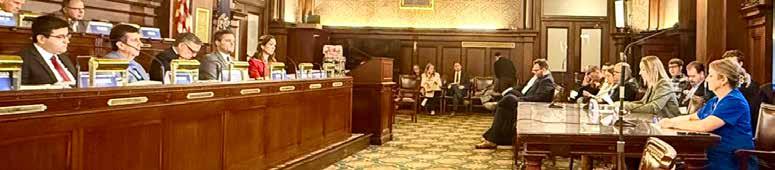
If AI is going to be in healthcare—and it already is—frontline caregivers have to be at the table when it’s introduced and the state has to back us up in protecting the privacy and care of all Pennsylvanians. For more on how AI is showing up in healthcare and Maureen’s complete testimony, check out www.pasnap.com. Click on PATIENT ADVOCACY/AI IN HEALTHCARE. There will likely be a committee vote on the bill at the end of March and then it will move to the full House Floor for a vote.
EDUCATION UPDATE
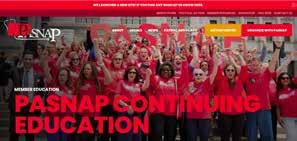
PASNAP CE Courses Are Live!
PASNAP members now have access to fully online Continuing Education (CE) courses designed by and for PASNAP nurses and allied professionals. You can learn at your own pace on your own time and you won’t have to spend a dime: ALL PASNAP CE courses are free for PASNAP members, including associate members.
You can access our CEs through the “Education” page on www. pasnap.com: Just click on the large “PASNAP Continuing Ed Courses” button. All courses are fully online and approved by the Pennsylvania State Nurses Association. They can be used as credit for both nurses and allied professionals, including technical job titles within PASNAP. As a PASNAP member, you get instant access and CE tracking in one convenient platform.
These courses are available now:
1. HIPAA: Protecting Your Professional License (1 CE credit hour)
2. Workplace Violence Is Not Part of the Job (1 CE credit hour)
3. Healthcare Begins With Self-Care (1 CE credit hour)
“A Smack in the Face”
The Department of Education Moves to Classify Advanced Nursing Degrees as “Unprofessional”
In a shocking move, the Department of Education is proposing stripping the “professional” designation from advanced nursing degrees, making CRNA and NP students (as well as many others seeking healthcare degrees) ineligible for the full freight of federal loans available to students in “professional” programs. This isn’t just bureaucratic wordplay—it’s “a smack in the face” and a direct attack on our profession.
Under the One Big Beautiful Bill Act, new federal student loan caps for graduate programs that aren’t classified by the Department of Education as “professional” would mean lower loan limits ($20,500 annually/$100,000 aggregate) starting on July 1, 2026. Graduate programs classified as professional would get higher limits ($50,000 annually/$200,000 aggregate).
As we went to press, the U.S. Department of Education was proposing redefining “professional degree” programs in a way that would exclude many advanced nursing degrees, including Master of Science in Nursing (MSN), Doctor of Nursing Practice (DNP) and research-focused nursing PhD.
“By denying nursing students access to the loan programs that make graduate education possible, the Department is deciding that only the wealthy deserve to advance in nursing,” said Maureen May, RN, PASNAP President. “This move undermines decades of progress toward a stronger, more diverse, more equitable nursing workforce.”
Nursing is a profession. Period.
It requires deep clinical expertise, advanced education, and an enormous responsibility for patient lives every single shift. PASNAP is calling on federal officials to sit down with frontline nurses, educators, and Union leaders before finalizing any policy that could cripple the future of nursing.
Use this QR code to check out our continuing ed page today—and check back often!

Nurses Are Professionals. Period.
The Department of Education must allow 30 days for public comment before cementing their terrible proposal into policy. The comment period is open now and will stay open only until March 2nd. Use the QR Code to head to the DOE website. Choose “Public Comments” from the menu along the left side of the page, and tell the Department of Education what you think of this change and why it will hurt nurses and patients.

PASNAP EXECUTIVE BOARD
In 2000, when the nurses who created PASNAP left other Unions to form this one, we had a vision for the kind of Union we wanted to create and be a part of— a member-driven Union that would focus on and fight for patient care and those who provide it at the bedside, whether those caregivers were PASNAP members or not. Twenty-six years later, PASNAP continues to be run by dedicated nurses and healthcare workers elected by their peers. These leaders from across the state define our collective vision, set our priorities, and work to advance patient-centered care and the best interests of those who provide it throughout Pennsylvania.
OFFICERS

President
Temple University Hospital Nurses Association

ANGELA NEOPOLITANO
Vice President Crozer Chester Nurses Association

DEBBI BOZEMAN
Treasurer
St. Mary United Nurses Union

SHANNAN GIAMBRONE
Secretary
Suburban General Nurses’ Association
BOARD MEMBERS AT LARGE

St. Mary United Nurses Union

KATE DENNEY Crozer-Chester Paramedics Association

PEGGY MALONE Einstein Nurses United

KALI VANWERT Northeast Pennsylvania Nurses Association (Geisinger Community Hospital)

Temple University Hospital Nurses Association

BERNADETTE GOLARZ Temple North Anesthesia Coalition

SABRINA NIXON Temple Allied Professionals

LE’COIN Einstein Nurses United

Fair Acres United
“I don’t just want nurses and healthcare workers to stay in the hospital. I want PASNAP to continue to take it to Harrisburg and to D.C., and for our collective voices to be louder and our influence to grow larger with each passing year. I want more people to know that we are here and that we will roar for our patients and for ourselves if we need to. Cover your ears, because we’re coming—and we’re coming loudly!”
— CARLA LE’COIN, RN PASNAP Executive Board Member
MAUREEN MAY
ROBERT BOZEK
CARLA
SHIRLEY CROWELL Nurses Association of Lower Bucks Hospital
PHYLLIS BROWN
VICKY REDDEN