The conference is right around the corner and the perfect chance to reach out to your labor or management partner.
Kathy Kerber and Darrell Roberts, Best Practices Task Force co-chairs, share advice for why attending Partners in Progress is good for your organization.
Attention JATC trustees: The second annual JATC conference welcomes you February 19 in Orlando, Florida.
For nearly 30 years, the Task Force has been working hard at promoting and expanding market share and labor-management cooperation.
Local 110 and Poynter Sheet Metal partnered to develop humanpower for one of America's largest megaprojects. Here's how they did it.
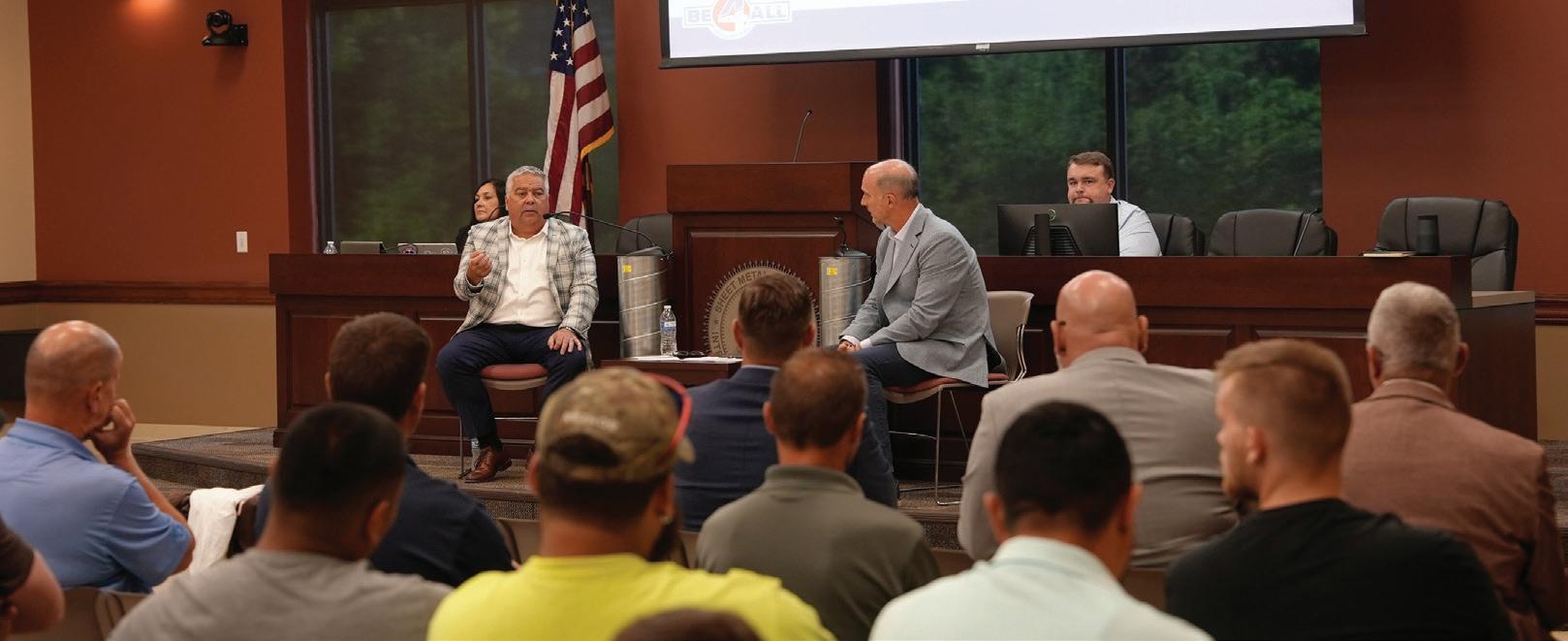
A BE4ALL Town Hall meeting in Chicago answered the question on everyone's mind: How does diversity, belonging, and excellence affect me?
WAYS TO
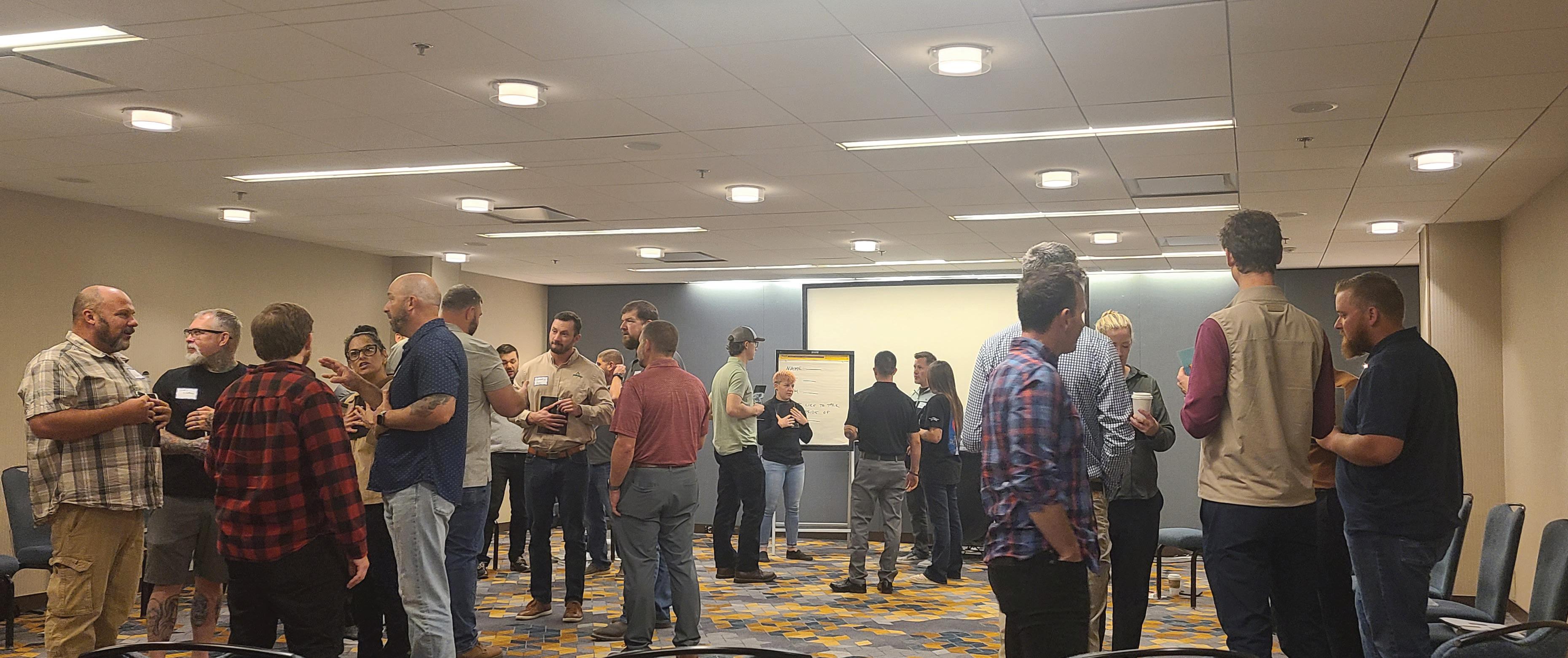
Heading to the conference (or any networking event) and nervous about small talk? Here are some tips for making the most of it.
Second Harvest Food Bank is once again the conference charity for Partners in Progress. You can support this worthy cause today.
Pilot program equips participants with skills to power a healthy industry.
Find Partners in Progress online at pinp.org or at issuu.com/ partnersinprogress. An archive of all issues is available. Issues may be downloaded and printed for no fee.
For comments or questions, email editor@pinpmagazine.org
Readying for connection at Partners in Progress 2026
The Partners in Progress Conference is right around the corner. This issue is packed full of reasons to go and topics to explore while you are there, so I won’t go over it again here. What I will mention is that this is the perfect opportunity to challenge yourself, and your role in your organization, to do something new, something bigger. As the only conference dedicated exclusively to bringing labor and management together, Partners in Progress does half the work of a new connection or conversation for you: you are there, so is your labor or management partner, and you are surrounded by hundreds of people there for the same reason. The scene couldn’t be more favorable for opening a new door, closing an old one that is no longer serving you, or taking a leap into a new subject or area that interests you, but that you’ve never had the time, energy, or courage to explore. If breaking the seal of discomfort is the issue holding you back from growth (spoiler alert: it almost always is) then here is your chance. Vow now to leave this conference a newer, more open-minded and creative person than the one who walked in the front door.
We kick off this issue with wise words from the Best Practices Market Expansion Task Force’s co-chairs, Kathy Kerber and Darrell Roberts. Each will tell you that coming together benefits both parties and the industry as a whole, and that the Conference is sure to deliver on some key takeaways you might not even know you need. See their words of wisdom on page 4.
Speaking of the Task Force, you may not realize it but this entity has been driving labor-management cooperation efforts for nearly 30 years, with no signs of slowing down. Its ability to stay true to its founding mandate while remaining nimble enough to respond to current market needs and trends is a formidable testament to its members and their efforts. Learn about The Task Force, its history, and what it can do for your local area on page 6.
Switching gears a little, we caught up with Local 110 and Poynter Sheet Metal in Kentucky to find out how they created a blueprint for success in working together to find humanpower for a megaproject and helping people stay employed when the project completes. Poynter Sheet Metal won the bid for the biggest HVAC project in their history, a megaproject that ultimately brought them 789,242 work hours installing roughly 38 miles of ductwork weighing a little over 5 million pounds. But the location presented a unique challenge that they could only solve with their partners at Local 110. See page 10 for all the details.
Earlier in 2025, SMACNA and SMART hosted a BE4ALL Town Hall meeting in Cleveland, Ohio, that answered a question that is eventually on everyone’s mind when it comes to implementing diversity, equity, inclusion, and belonging in their organizations: How could an initiative focused on creating an environment of
welcoming, belonging, and excellence truly benefit the average sheet metal worker? Flip to page 12 to find out how then SMACNA president Tom Martin and SMART general president Mike Coleman answered this question with help from moderator Dushaw Hockett.
Since we are nearing the Conference, I thought it a good idea to focus this issue’s Leadership section on the Art of Small Talk. If casually chatting with a stranger makes you feel uncomfortable, flip to page 14 for some pro tips from communication expert John Millen. Remember, great connections can only make your organization better.
As in all years, this year’s Conference includes a charity focus, and Second Harvest Food Bank is the chosen recipient. In 2024, SMACNA and SMART members raised $20,941 for this worthy group through online donations and a cookie sale. Find out how we can beat these impressive numbers in 2026 on page 15.
And finally, wondering what the future of leadership holds for the sheet metal industry? See page 16 to learn about Emerging Leaders Training, a Task Force initiative that brings future leaders together for fellowship, mentorship, and education.
If you have any questions about the Partners in Progress Conference, please visit pinp.org/conferences/pinp26 for answers. You will find the schedule, speaker information, JATC Conference information, and everything else you need to know to make this most of this highly-anticipated event.
We will have four Partners in Progress magazine journalists onsite at the Conference, and they will be eager to meet you, hear your stories, and connect on future collaborations in these pages. Be sure to reach out if you have an amazing example of labor-management cooperation to share. You can email jessica. kirby@pointonemedia.com to connect during the event. We look forward to meeting you!
Steven English, Partners in Progress Conference 2024
The Partners in Progress Conference is Quickly Approaching
Kathy Kerber and Darrell Roberts share key takeaways you can expect from Partners in Progress 2026
By Geoff Williams
It’s true: we live in a digital world. But in February 2026, virtually all the major players from the sheet metal industry will be getting together in person, at the 2026 Partners in Progress Conference at the Walt Disney World Swan and Dolphin hotel in Orlando, Florida, and you don’t want to miss it.
Over three glorious days, attendees will have the chance to meet and revisit fellow stakeholders, build stronger bonds with colleagues and labor-management partners, and engage in thought-provoking talks and discussions about how to build partnerships in your local area.
Two dynamic speakers on tap include Kathy Kerber, president and COO of KSM Metal Fabrication in Troy, Ohio, and Darrell Roberts, assistant to the general president of SMART Union, in New York City. We caught up with both of them to get a sense of what to expect when we hear from them this February at the Partners in Progress Conference.
Kathy Kerber, president and COO of KSM Metal Fabrication
A little about Kathy Kerber: Ms. Kerber has been with KSM since 1997, after a successful several years working as an executive at U.S. Bank. Like many sheet metal companies, KSM Metal Fabrication is a family business, one that started in Troy, Ohio, in March 1979 by Dan Kerber, Kathy’s father. It did well almost from the start; three years after its opening, it was already moving into a bigger facility.
Soon after joining KSM, Kathy became its president and has continued the company on its growth path to become a major player in several industries, making formed parts for the aerospace industry, the food service, and automotive sectors, among other things.
What Kerber will talk about at the conference: In a nutshell, Kerber will be sharing best practices for building labormanagement partnerships, representing the contractor side.
The takeaway from her talk: “I hope that participants come away with a better understanding of the Best Practices Market Expansion Task Force and what we do,” Kerber says. “We want them to understand how the partnerships between labor and management are beneficial to our industry and that good, strong relationships make us stronger.”
The takeaway she hopes people get from the conference: Kerber says that the entire Partners in Progress Conference is generally a meeting of the minds that benefits everyone who attends.
“We want to know labor-management best practices in local areas so that we can share that information with other areas around the country,” she says. “We also want to share success stories of strong labor and management relationships.”
Why you should attend: Kerber recalls how she first came to the conference over 15 years ago with her local union leaders and that it “changed our working relationship for the better.”
“We were fortunate enough to have a business manager and chapter executive see the benefits of us going together to a Partners in Progress Conference,” Kerber says. “We went to sessions together, and we had dinners together and just talked. We just got to know each other on a personal level. When we got back, we scheduled meetings and continued meeting and having open discussions. Our area has seen great success from working together after that first conference, and we continue to strengthen our relationship by continuing to go and keeping our lines of communication open.”
Darrell Roberts, assistant to the general president of SMART Union
A little about Darrell Roberts: Mr. Roberts has a long history of working as a signatory sheet metal worker, but for years now, he’s been moving up the leadership ladder. He spent almost 14 years as the executive director of Helmets to Hardhats (H2H),
a nonprofit program that connects veterans with construction careers. After H2H, Roberts was hired as SMART’s Director of Organizing, and not long after (in July 2023), he was promoted to Assistant to the General President at SMART.
And we would be remiss to not mention his impressive military service, particularly his time spent in the United States Navy as a hull technician, where he attained the rank of petty officer second class. He also has served in the Army National Guard as a staff sergeant, and from 2003 to 2004, he was an infantry squad leader in a yearlong deployment to Kosovo.
What Roberts will be talking about at the conference: In a nutshell, Roberts will be discussing best practices for building labor-management partnerships, representing the union side.
The takeaway from his talk: Roberts says that one of his goals is to explain “how we get from there to here. How do we actually get to be partners in progress?” Finding ideal best practices is an ongoing quest for labor and management because the world is always changing, says Roberts, and just as best practices are finessed and perfected, something comes along to upend it all.
“That’s nothing new,” Roberts says. “Every time you have a tried-and-true practice where everyone says, ‘This is the way it gets done,’ the next thing you know, boom!, something like AI pops in. We have so many pieces of technology that we use now to do our jobs, with robots laying out walls and ducts.”
The takeaway he hopes people get from the conference: Roberts says that one of the helpful outcomes from attending these conferences is that so many ideas and strategies are being shared in one place, and of course, you’re not going to want to embrace all of them.
“Sometimes the best practice in one part of the country is not always the best practice that can be used elsewhere,” Roberts says. For instance, a local or company may have a six-prong strategy for achieving an outcome, and maybe all of those six steps don’t work for you, but two or three of them do. Generally, you’re going to pick up some new, helpful information from everyone, whether it’s what works or what doesn’t, Roberts says.
Why you should attend: “We’re all going to miss out on things from time to time,” Roberts says. “But I hope everyone makes an effort to be there or sends someone who can. We have so many breakout sessions that are valuable, and we’re going to have so many great speakers and attendees.”
He says that it’s also an excellent opportunity to simply make new friends throughout North America. “You’re going to get a chance to see new ideas and concepts and speak with your peers about things that are happening and techniques everyone’s using—that will help you no matter what you’re doing, whether you’re a labor leader or contractor. Whatever position you hold in our industry, you’ll find value in Partners in Progress.”
Geoff Williams is a freelance journalist and author, specializing in business and personal finance, based out of Loveland, Ohio. He has written for cnnmoney.com and the Wall Street Journal’s Buy Sidewould, among other well-known publications.
JATC Trustee Conference
We’re excited to announce that the JATC Trustee Conference is returning on February 19, 2026, following the Partners in Progress Conference.
JATC Trustees and Coordinators you are invited to the second bi-annual 2026 JATC Trustee Conference, located in Orlando, Florida at the Swan and Dolphin Resort on February 19, 2026.
Take advantage of a full day of insight and collaboration tailored just for JATC Trustees. Topics are designed to strengthen and advance all union sheet metal workers' apprenticeship programs. Conference highlights will include the following:
• *NEW* D.O.L. Approved Competency Based Apprenticeship Standards option
• JATC Accreditation: The Past, the Present, and the Future
• Grant and Loan Program Opportunities
• ITI Curriculum and Online Training Updates
• Recruitment and Retention Strategies
• NEMI and SMOHIT Updates
• Interactive Q&A Panel Discussions
Breakfast and lunch will be provided.
We encourage each JATC to bring a minimum of at least one labor trustee and one management trustee to the conference. Coordinators may also attend although the conference is tailored for trustees.
Please note: Hotel accommodations for JATC Trustees will be reimbursed at the contracted rate for the nights associated with the Trustee Conference only. Coordinators that attend will only have hotel reimbursed if at least one labor and one management trustee attends.
Register at pinp.org/conferences/pinp26
Discovering the Best Practices Market Expansion Task Force
The Best Practices Market Expansion Task Force is the driving force behind the industry’s labor-management cooperation resources. But where did it come from? And how can you build a labor-management partnership using its resources?
By Jessica Kirby
Many of you are gearing up for the Partners in Progress Conference, February 16-18 in Orlando, Florida, and you are reading this issue of Partners in Progress magazine. That means, whether you know it or not, you are taking advantage of some of the Best Practices Market Expansion Task Force’s (the Task Force) most far-reaching, important resources. But what is the Task Force, exactly? Where did it come from, and what can it offer your local area?
In a nutshell, the Task Force is a key instrument of labormanagement partnership intended to ensure the unionized sheet metal contractors and workforce remain competitive, grow markets, and institutionalize best practices in marketing, operations, recruitment, and cooperative behavior. In 1999, labor and management started working together to increase industry marketing and grow union market share. This early work focused on communications and marketing tools.
On May 14, 2002, SMACNA President Ron Rodgers and SMWIA (now SMART) General President Michael Sullivan established the Labor-Management Cooperation Committee (LMCC) to foster cooperation and jointly advance marketing and best practices. Its purpose comprised four main objectives:
• increase market share for unionized sheet metal (and related HVAC) work by promoting cooperative practices between labor and management, especially in marketing and customer
education (e.g., to help signatory contractors and union labor compete more effectively with non-signatory firms)
• identify, promote, and communicate industry best practices developed locally, and help replicate them in other locales
• provide funding and grants (via the joint structure) so local chapters or labor-management groups can host partnership conferences, develop marketing campaigns, or adopt best practices
• oversee or support a marketing plan and communications systems over a multi-year horizon to help local units grow share
At this time, the Task Force became the operational arm for a multi-year marketing and implementation plan with LMCC support. Its goals were adoption or replication of local best practices, communications systems, and tracking results. That means the Task Force’s mission shifted from one-off marketing to creating repeatable programs, such as the Partners in Progress conference, which was first held in February 2000. This first event planned for 150 people, but more than 400 contractors, business managers, business agents, and industry leaders registered. Topics included humanpower, organizing, and emerging markets and featured an eye-opening discussion with construction owners on the factors that influence their decisions
in selecting the right contractor and workforce for their projects.
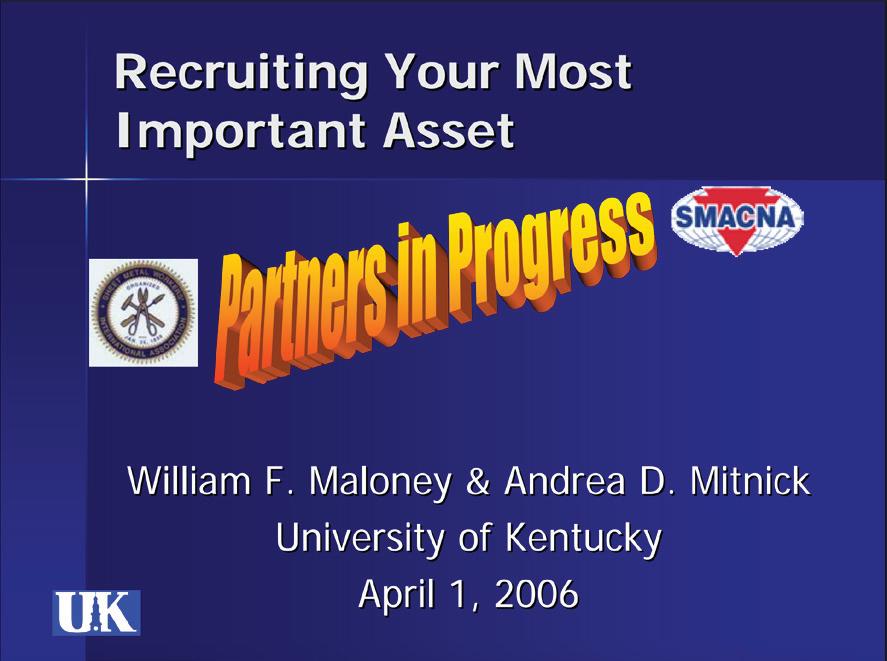
The success of that first partnership conference led to SMACNA and SMART holding a conference every two years, and in 2004, the number of conference participants reached almost 500 leaders, enthusiastically sharing experiences and ideas on how labor-management cooperation can make a difference. The conference was officially named the Partners in Progress Conference in 2006.
Other Task Force initiatives of this time included grant support for local partnership conferences, best-practice guides, and “how-to” blueprints so chapters and local labor units could replicate successes.
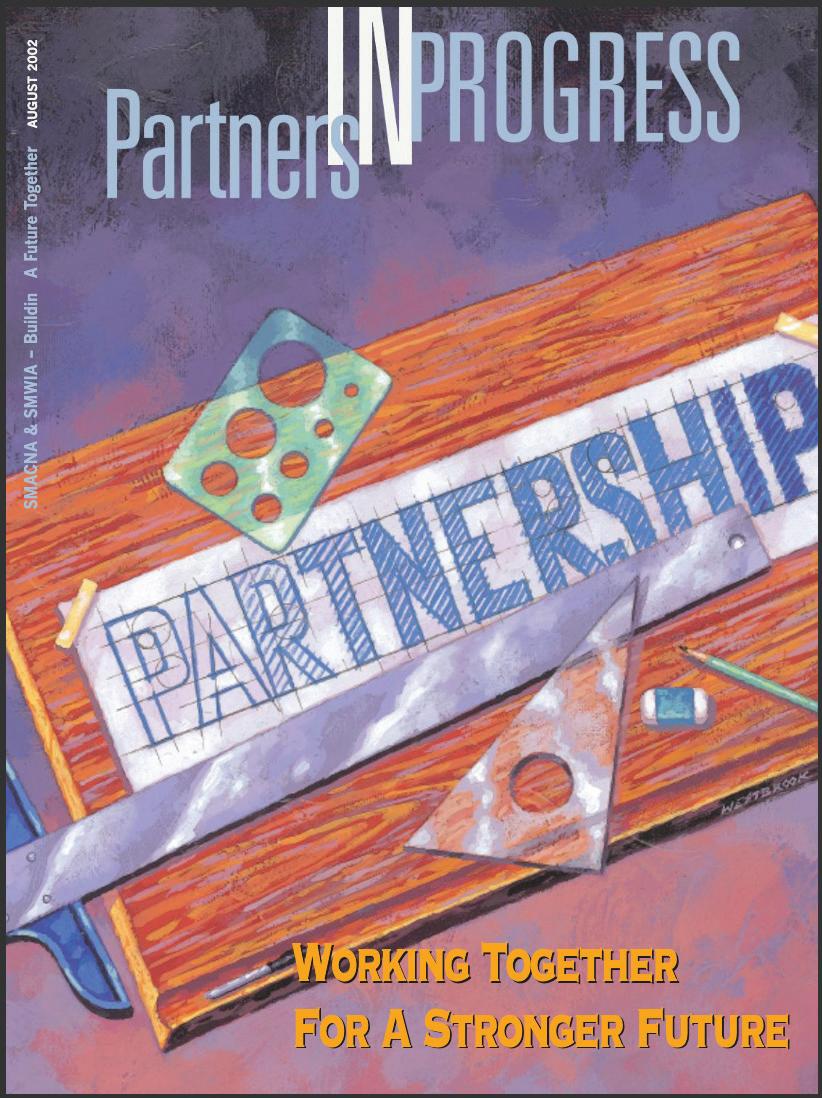
The first issue of Partners in Progress magazine, published in August of 2002, represented another way the task force planned to reach out to every union member and every employer with information that would help spread the spirit of partnership.
“To our Partners in Progress,” said Rodgers and Sullivan in their first editorial, “two years ago we decided to start off the 21st century with a renewed spirit of partnership. We had no idea how a joint labor-management conference would be received; however, we knew our industry would not grow unless we joined together in finding ways to increase our overall market share.”
This new era also kicked off a joint educational program to further Best Practices in labor-management cooperation at the local level. SMACNA and SMART visited local areas to present the newly established best practices, which were based on a joint study commissioned in 2000 to identify high-performing areas, determine high-performance traits, provide guidance to enhance local market performance, and gather a list of best practices.
The study identified joint marketing programs, joint labormanagement committees, project cost awareness and/or building inspector training, residential initiatives, and programs designed to measure and monitor market share as the most innovative Best Practices available.
“The Task Force was based on a simple premise that SMART and SMACNA could be more successful cooperating and working together,” says Clarke Ellis, principal and co-founder of the Continuum Advisory Group. Ellis has worked with the Task Force for several years following its formation, and it retained him several years ago to facilitate future plans.
“This premise was validated with research that found chapters and Locals who met regularly, worked on market expansion together, recruited new workers together, and cooperated on other initiatives performed better in the market than those who didn’t,” Ellis says. “And the more things they did together, the better their performance.”
The Task Force put in many hours between planning meetings, traveling the country spreading the best practices news, and capturing and documenting new best practices.
“One thing that was always present with the group was fun,” Ellis says. “When a group that is experienced and committed to industry advancement gets together, they will get lots of
Clarke Ellis, principal and co-founder of the Continuum Advisory Group
Michael Sullivan
“Although the requirements of labormanagement cooperation changed over these years, the Task Force’s core mission—to grow market share for signatory, union-affiliated contractors by spreading what works—stayed the same.
”meaningful work accomplished, and they will have a blast. It was inspiring to be with such a team as they enjoyed working together to make their industry better. They got the Task Force off to a great start.”
Although the requirements of labor-management cooperation changed over these years, the Task Force’s core mission—to grow market share for signatory, union-affiliated contractors by spreading what works—stayed the same. What changed is how the Task Force pursues that mission: it moved from simple marketing to a full toolkit (replication grants, branding, recruitment, strategic project work, and measurement) aligned with modern industry challenges, such as labor shortages, megaprojects, and competitive procurement. By the 2010s, programization and local support was moving ahead in full force.
Don’t add to your HVAC problems. Hire Expertise.
Now that the Task Force is heading into its 24th year, its accomplishments are vast and word of its success is spreading. Today, the Task Force calls for eight members from both SMACNA and SMART, led by a labor co-chair (currently Darrell Roberts) and a management co-chair (currently Kathy Kerber). Some of its most impactful initiatives include the Expertise branding and websites, online resources based on best practices that all SMART and SMACNA members can use, Partners in Progress magazine, the Partners in Progress Conference, and many chapter-local partnerships that have progressed because they used jointly funded initiatives to improve their relationship and collaborative performance.
As the Task Force moves into the future and new leaders will take it forward, it continues to build value for the union sheet metal industry by staying true to its founding members’ mission: “‘Partners in Progress’” is not just a slogan,” Rogers and Sullivan concluded, in that first editorial. “It is a joint mission that will succeed because our individual characteristics are strong—skilled workers and contractors working together.” Visit pinp.org and plan to attend the Partners in Progress Conference to take advantage of every opportunity to connect with your labor or management partner.
Jessica Kirby is editor-publisher for Point One Media, a small but sturdy family-owned trade magazine creator representing some of North America’s most successful construction associations. She can usually be found among piles of paper in her home office or exploring British Columbia’s incredible wilderness. HVAC Expertise: It’s like blanket coverage for sheet metal
Two wrongs don’t make a right.
Building a Labor-Management Partnership in Your Local Area
Wondering where to start? Check out and register to access the pinp.org, the SMART-SMACNA Joint Best Practices Market Expansion Task Force website that serves as a clearinghouse for resources, educational programs, and proven industry best practices, including:
• Expertise Branding Logos – Take advantage of SMACNA and SMART’s branding campaign and sign up your company, local union, chapter, or JATC to display the HVAC, Industrial, Architectural and/or Green Expertise logos on websites, marketing materials, letter head, and all communications.
• Free Professionally Prepared Ads for Marketing – Once you have incorporated expertise logos into your communications strategy, you will have access to free, professionally prepared ads to promote the advantages of hiring a contractor with the right expertise who will use professionally trained craftspersons on customers’ jobs.
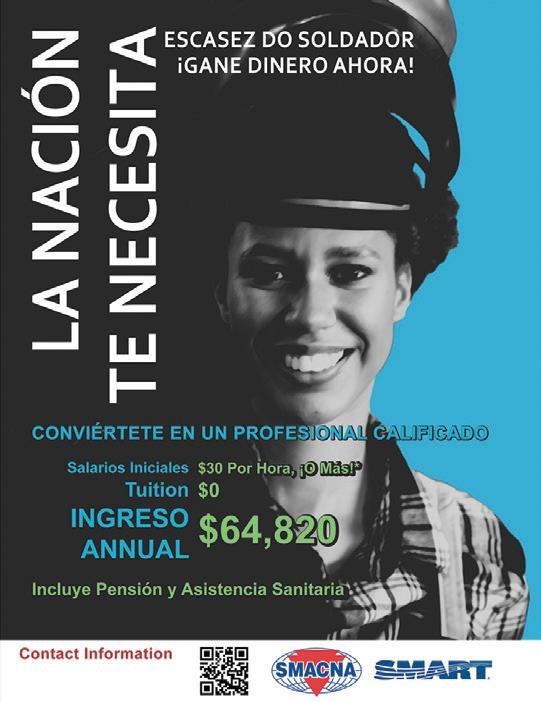
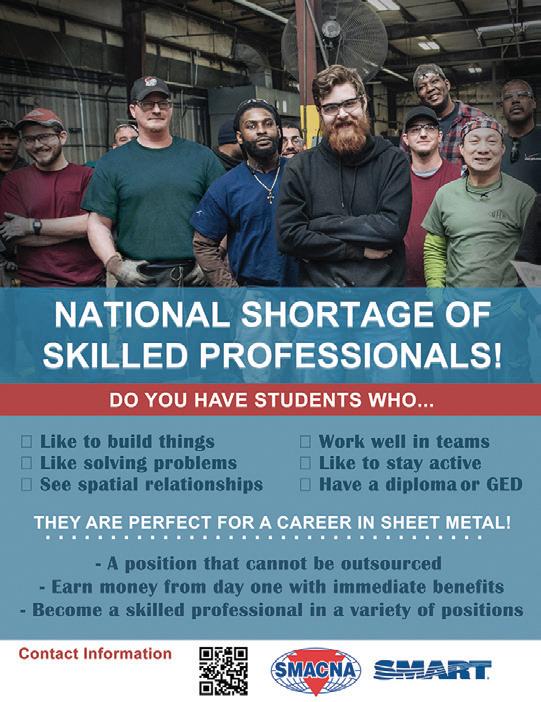
• Customizable Recruitment Ads, Banners, and Posters for Your Local Area – Knowing what messages about the tremendous career opportunities in the sheet metal industry resonate best with potential applicants, parents, and/or guidance counselors is key to any successful recruitment campaign. Professionally prepared recruitment ads are available in English and Spanish. Some ads are designed so that local areas can enter starting wages that new employees earn while they learn and the wages for journeypersons. Other customizeable tools include banners for websites and posters for job fairs. Ads and materials can be modified with local information and ordered and purchased through the website and shipped to directly to you, or you can download them and have them printed locally.
• Peer Recruiting/Brand Ambassador Program – Employees who have fulfilling, well-paid jobs will likely have the most influence inspiring their peers to seek career opportunities the sheet metal industry. Sign onto the “My Job is My Gym” Industrial Athlete Brand Ambassador Program and take advantage of the industry social media recruitment campaigns led by SMACNA and SMART. Industrial Athlete t-shirts for Brand Ambassadors and employees can also be ordered on pinp.org. Note that there are webinars on the website that walk industry partners through the various recruiting resources and provide suggestions for incorporating them in local campaigns.
• Partners in Progress Publications & Past Conferences – Need a refresher on what other SMART Locals and SMACNA Chapters are jointly working on in their local areas? Visit pinp.org to read current and back issues of Partners in Progress magazine, which feature industry success stories. Also posted are the presentations and materials from Partners in Progress Conferences from 2024 back to 2002.
What Else?
There are certainly a lot of resources and great ideas on pinp.org, but there are some additional things that SMACNA and SMART affiliates can do to promote their partnerships and the industry.
• Enhance Labor & Management Attendance at the Next Partners in Progress Conference – Expose as many labor and management representatives as possible to the important presentations and messages at the 2026 Partners in Progress Conference, which will be held February 16-28, 2026, in Orlando, Florida. Bring new labor and contractor representatives to each conference. Identify several apprentices who have the potential to aspire to industry leadership and bring them to the conference to learn why it is so imperative that labor and management work together. Get their fresh perspective on how to accomplish that.
• Follow SMACNA and SMART on Social Media – See the innovative projects that labor and management partners are working on or building in their local areas.
• Submit Local Success Stories to be Featured by Partners in Progress – Take advantage of all the free, positive press coverage you can get for your joint labor-management initiatives. Share details on local building projects, labor-management initiatives, recruiting or marketing campaigns, charitable events, or other success stories with the Partners in Progress editors at jessica.kirby@pointonemedia. com to be featured in the bimonthly magazine, a press release, and/or social media posts. This coverage can reach potential customers and job applicants and instills pride in members who have worked on featured projects.
• Invite the Best Practices Task Force to Meet in Your Local Area – The SMART-SMACNA Best Practices Market Expansion Task Force meets twice annually to develop and refine industry resources and programs for labor and management partners. Consider inviting the Task Force to meet in your local area to share their work and ideas with some local union and contractor and chapter representatives.
• Need a Resource but Can’t Find it? – Reach out to the SMART (ppimentel@smart-union.org) and SMACNA (mpowers@smacna.org) staff representatives or to the Best Practices Market Expansion Task Force. Chances are they can direct you to some helpful resources. If not, those individuals may be able to suggest needed resources to the task force for development.
Mega Teamwork for a History-making Megaproject
By / Sheralyn Belyeu
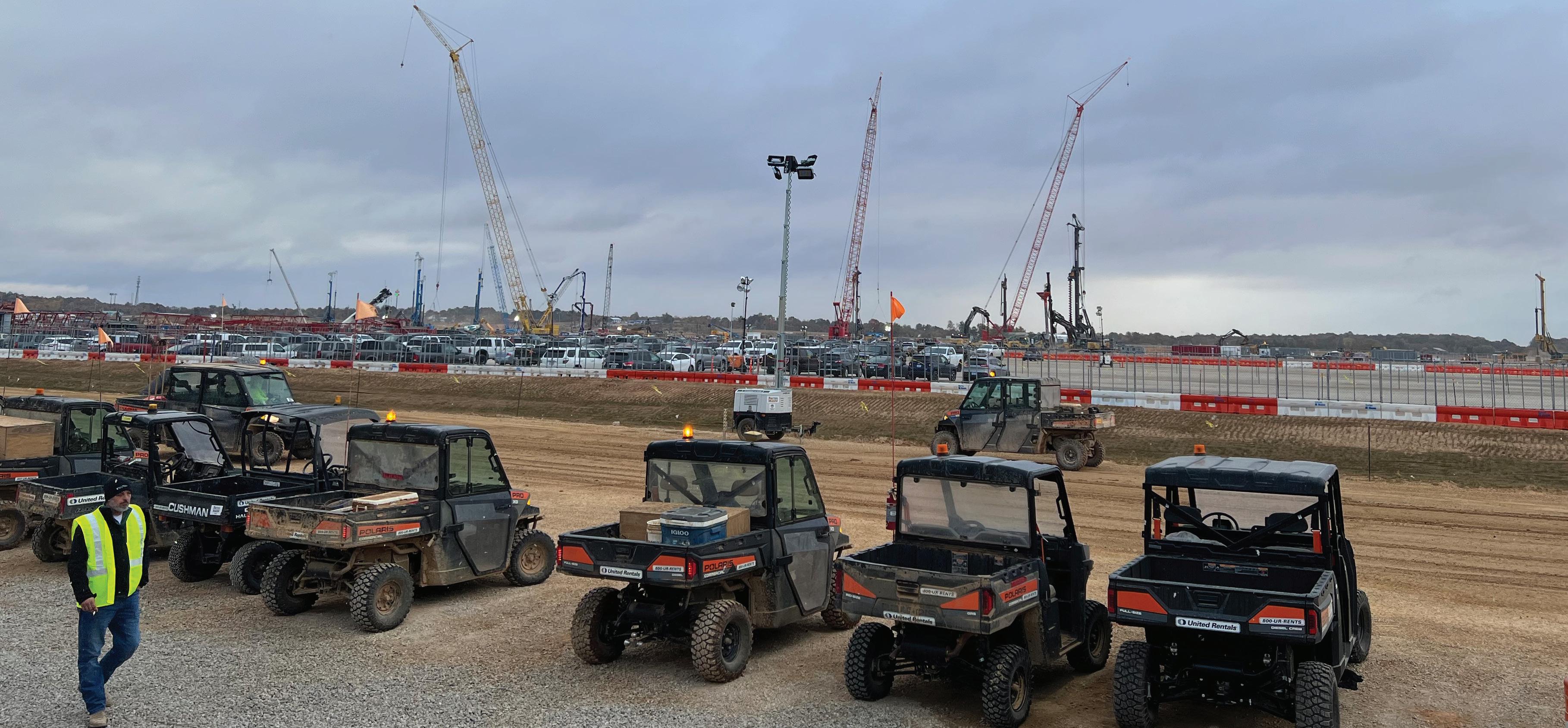
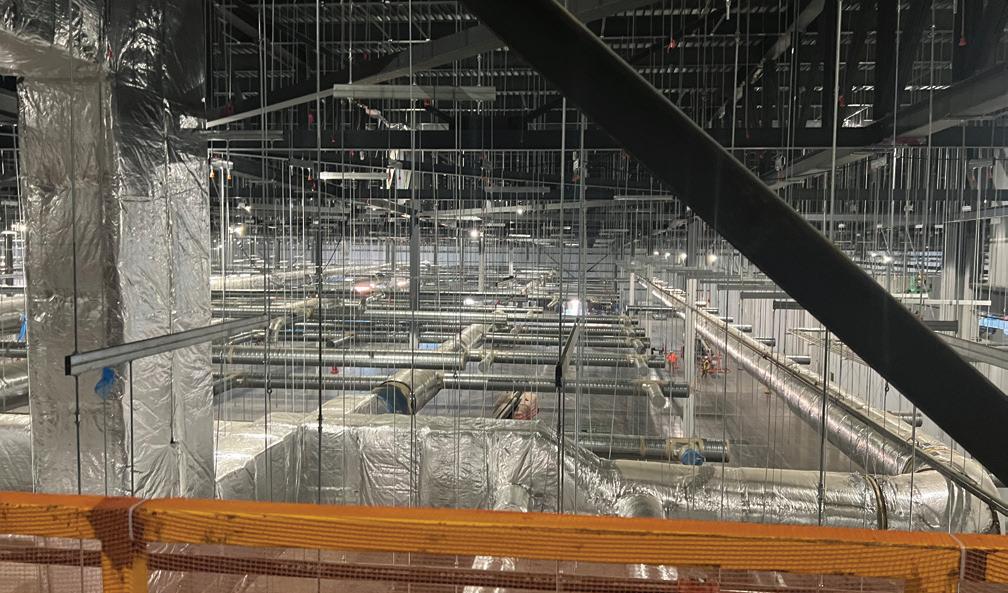
Poynter Sheet Metal of Indiana won the bid for the biggest HVAC project in their history, a megaproject that ultimately brought them 789,242 work hours installing roughly 38 miles of duct work weighing a little over 5 million pounds. But the location presented a unique challenge.
“Central Kentucky is not real union heavy,” explains Andy Wright, senior project manager for Poynter Sheet Metal. That meant they had to build a workforce before they could build the project.
Fortunately, Poynter had an existing relationship with Local 110, which was already preparing for the increased demand. “Poynter let us know right away that they were interested in going after this project, and they had concerns because of the workforce demand,” says Jeremy Waugh, Local 110 organizer. “At the time, we were right around 486 active building trades members. This project was calling for a peak of 400-500 just for Poynter, and we had architectural companies down there, too. They knew it was going to be a tall ask because they were expecting more sheet metal workers on that site than we had active members.”
Faced with the hard truth that a megaproject could absorb the entire local, the International stepped in. “Our International set up a big meeting with us, the International Training Institute, and Poynter to talk about what this was going to look like, what resources did the Local need,” Waugh says. “It was a good exercise in teamwork.”
Together, they pulled together a blueprint for success. The first step was to find help for Waugh. The International subsidized a second organizer about a year before the actual project groundbreaking. “We needed time to get them trained up and acclimated to the position,” Waugh says.
Local 110’s signing process was another choke point because it took one to two months. The JATC was sending notifications through the mail and had separate dates for testing and
interviewing. “We cut the fat out of that,” Waugh says. “We added direct entry language so they could take the exam and go through the interview process in one night.”
The iTi helped the JATC update training. “We revisited the standards at the school to make sure that they aligned with the timing, or the lack of time, that we were going to have,” Waugh adds.
Poynter provided detailed plans to help firm up the timeline. “We reviewed what our workloads were going to be and analyzed that with the schedule,” Wright says. “Because we planned the job out up front, we were able to say that by this date we're going to need X number of people, and so on. We gave them as much time as we as we could to make sure that they were able to meet our labor needs.”
Wright and Poynter’s project executive stayed in communication with Waugh throughout the project, calling at least weekly and sometimes daily.
By December 2022, Local 110 had bulked up to 538 total building trades members with 366 journeypersons and 83 in the apprentice program. One year later, they had 811 total building trades members with 621 journeypersons and 133 apprentices.
“Local 110 took care of everything,” Wright says. “I don't
think they missed the mark at any point in time. Whenever we made a call, and we would call for up to 50 at a time, they were able to fill the needs.”
“The new organizer and I were hitting job sites, talking to anyone who was at a construction site or wearing a welding hat,” Waugh says. “We told Poynter, you get the work and we'll supply the people.”
In-person organizing was only one prong of Waugh’s strategy. The Local rebuilt the website for a current, fresh look and invested in advertising, securing a billboard close to the job site. “The billboard was a great bonus,” Waugh says. “All of our advertising matched the billboard. We had stickers with QR codes and business cards with QR codes leading to our website.”
The advertising campaign included a satellite office that the Local leased about ten minutes from the job site. “We created an ecosystem where people saw our imagery at the job site, and then saw an office downtown, and knew that we were the people to get them a job,” Waugh says. “We were getting calls from fitters, carpenters, iron workers, and all kinds of people from the town.”
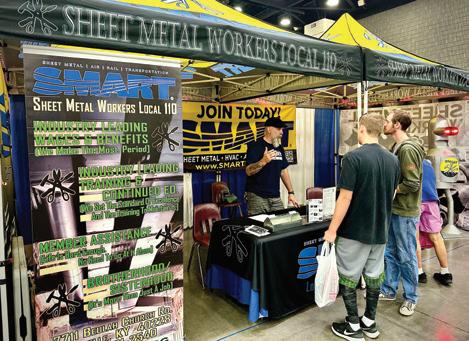
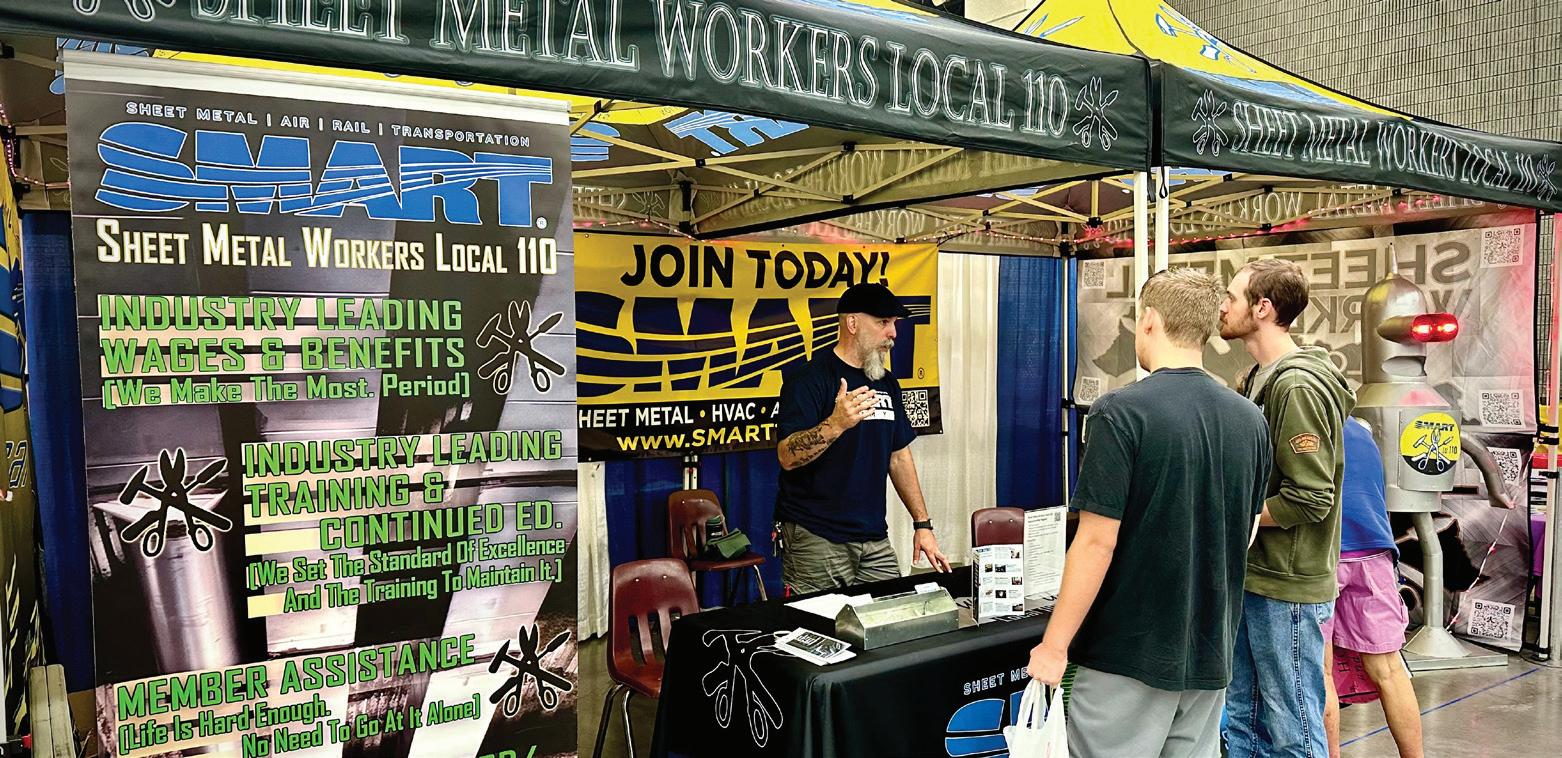
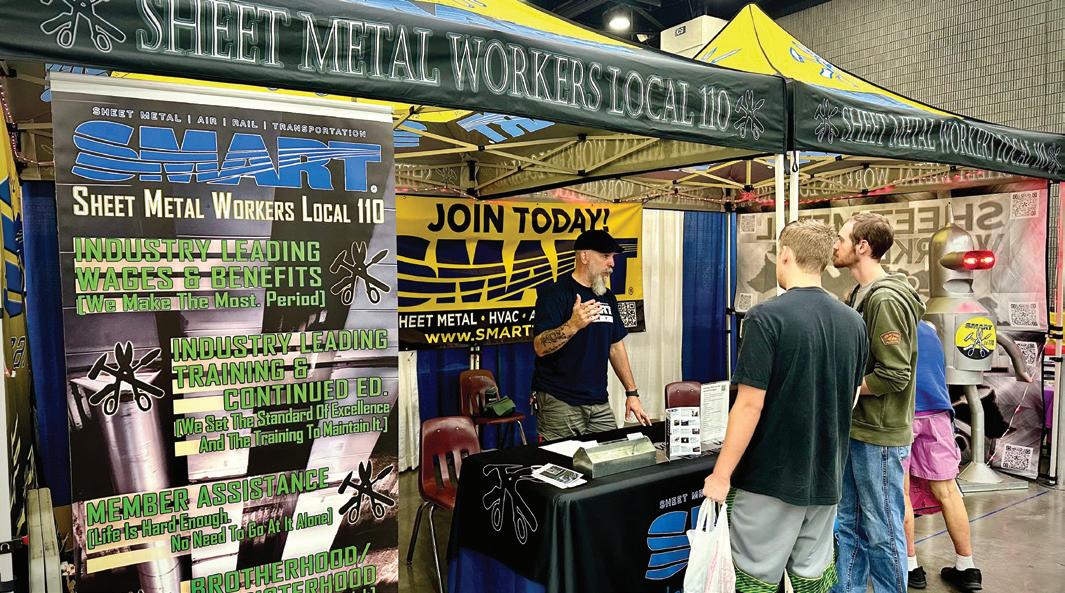
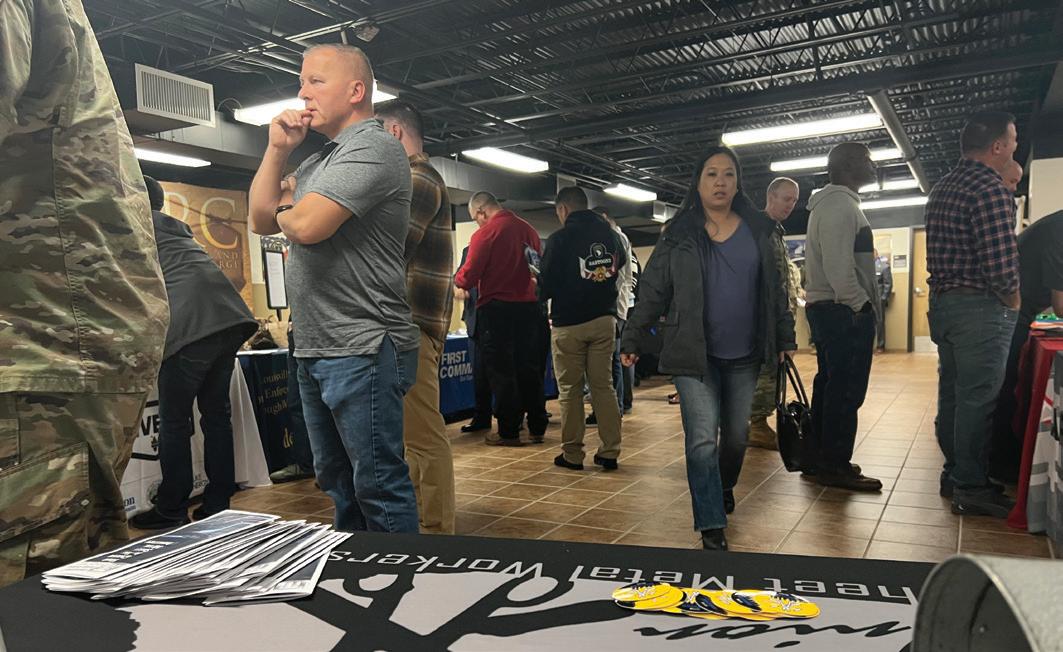
“A lot of people wanted to be a part of this mega project,” Wright says. He experienced the interest first-hand when he represented Poynter at career fairs. “We went to some job fairs before the project started, just to have our name out there. Local 110 would have a booth, and we would have a booth as an employer. As people would approach us, I would steer them toward Local 110 to get signed up.”
So many new members joined the local that one point, 60 to 70% of the people on the site were new to the sheet metal union. “This was a true testament to Local 110 going out to find people,” Wright says. “They did an exceptional job. They were bringing in people all the time.”
A Colorado native, Sheralyn Belyeu lives and writes deep in the woods of Alabama. When she’s not writing, she grows organic blueberries and collects misspellings of her name.
After the Megaproject
This megaproject was an opportunity to grow Local 110, but the work wouldn’t last forever. “When we did our recruiting, we promoted the fact that we are part of an international association with sister locals across the United States and Canada,” Waugh says. He encouraged new members to consider traveling. “We have fellows in Ohio right now, in Indiana, Tennessee, South Carolina, North Carolina, and Georgia. They branched out and are enjoying seeing different states.”
While some members are traveling, Local 110 is using the infrastructure they developed for the megaproject to sign new people in Kentucky. “There was no longer a need for two subsidized organizers for the building trades, but we had an opportunity to keep the other organizer as a production organizer,” Waugh says. After about a year and a half, the new organizer brought union density at one facility to 50% and almost doubled membership in another facility from 30% to about 60%. “He’s had a significant impact.”
Davis-Bacon Compliance
This massive project received US federal funding, which placed contractors under the Department of Labor’s Davis-Bacon and Related Acts regulation. Under Davis-Bacon requirements, contractors are allowed to pay either a journeyperson’s rate or an apprentice rate, with no pre-apprentices or untrained helpers. If the local provided labor in any other classification, the law would require contractors to give those inexperienced workers full journeyperson’s pay.
“They wouldn't be able to pay the apprentice rate because they're not apprentices,” Waugh says. “Workers have to be in an accredited apprenticeship program to be considered apprentices, so they would have been forced to pay inexperienced people at the highest rate for all the hours they worked on that project.
“We were upfront with our contractors because we wanted to ensure they were safe and protected. The last thing we wanted was for our contractors to get audited, so we not only supplied the workforce at a rapid rate, but we made sure they were classified properly.”
Inclusion Isn’t Optional
BE4ALL’s first Town Hall in Cleveland sparks conversations on respect, mentorship and the future of the trade.
By Natalie Bruckner
“But how does it benefit me?”
That question, submitted by an online attendee during the first Belonging and Excellence for All (BE4ALL) Town Hall in Cleveland, was read aloud by moderator Dushaw Hockett, founder and executive director of SPACEs. It was the kind of question that went right to the point and reflected what many in the room had been wondering but were afraid to ask: How could an initiative focused on creating an environment of welcoming, belonging, and excellence truly benefit the average sheet metal worker?
“One of the ways is by bringing in and retaining members because their contributions help fund our pensions and support our health insurance programs,” explained SMART General President Michael Coleman, who was on stage with then SMACNA President Tom Martin.
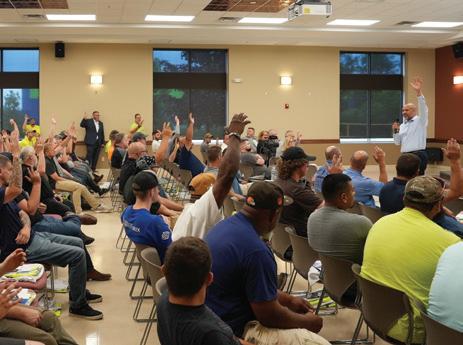
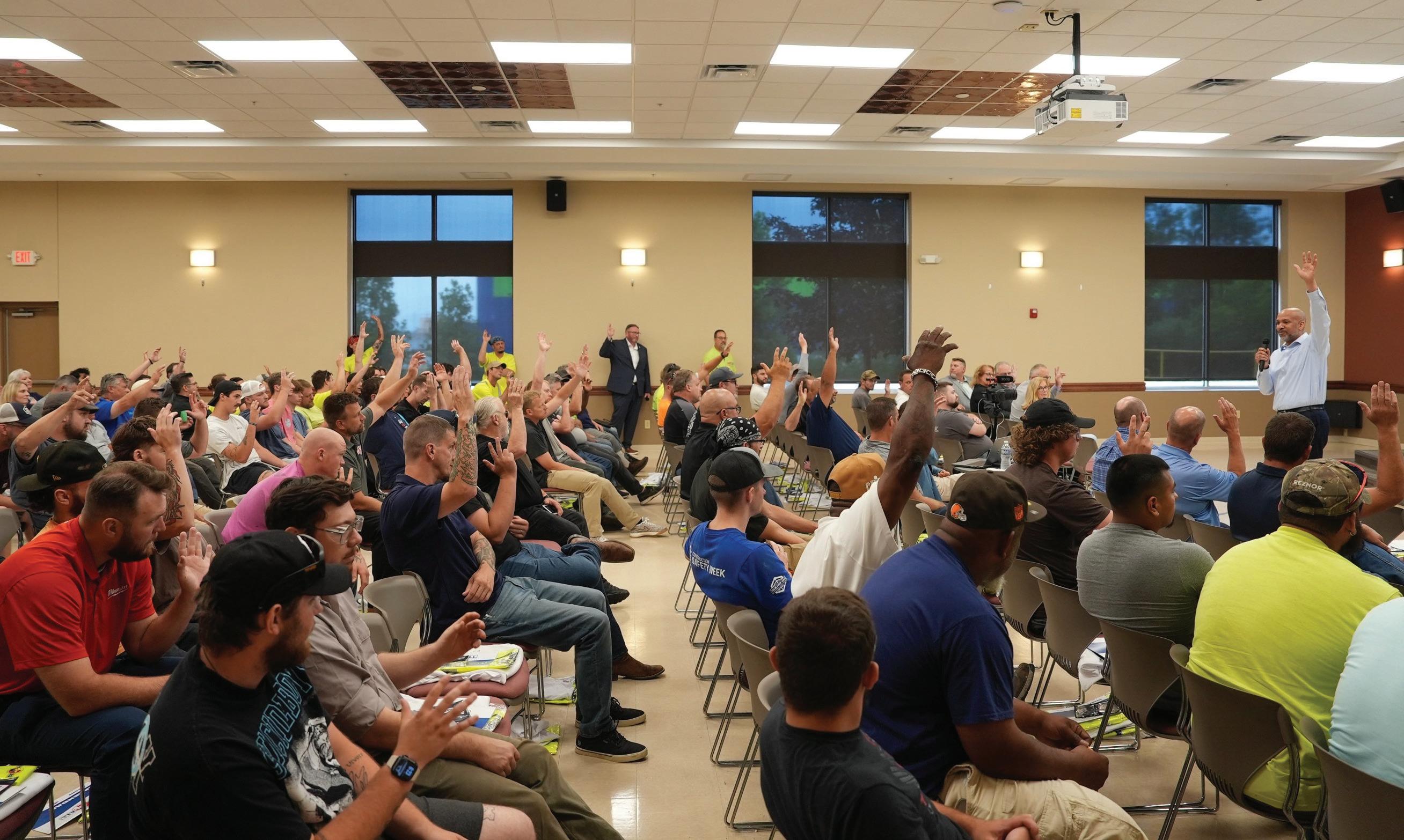
That question was one of many raised during the Town Hall where attendees were encouraged to speak openly and ask questions without judgment. More than 200 members filled Local 33 union hall, and many more joined via a livestream, ready to engage in candid discussions about what BE4ALL really means for members, contractors, and the future of the sheet metal industry.
At its core, BE4ALL is a partnership between SMART, SMACNA, and the International Training Institute (ITI) that seeks to strengthen the unionized sheet metal industry by creating workplaces where skill and respect are equally valued, where members can bring their full selves to the job, and where
the next generation can see a future in the industry worth joining. But what does this actually mean?
“That was the biggest reason for holding a town hall: to address widespread misconceptions about BE4ALL,” says SMACNA’s Caroline McGraw, project manager, labor relations, who organized the event. “Many people assume it’s only for women or minorities and think, ‘It doesn’t affect me, so I don’t care.’ But really, BE4ALL is about helping everyone. It’s about ensuring that everyone has a safe and inclusive workplace and securing the future of union sheet metal work for all.”
Against that backdrop, Corey Beaubien, president and business manager of Local 33, opened the Town Hall meeting with a forward-looking message: “The industry is growing, and we need to grow with it.”
One of the strategies to do this, as discussed by Martin and Coleman, focused on recruiting and supporting the next generation of apprentices, while highlighting that BE4ALL’s communication, mentorship, foreperson training, and open-door leadership are about raising standards across the industry to make it more enticing.
“We need to build a culture to build that respect and give people opportunities,” Martin explained. “As I traveled around the country, I saw first-hand there are a ton of opportunities in our industry… and we want those opportunities for everyone.”
Coleman added, “That is what makes us more competitive.”
Speaking to mentorship—a reoccurring theme during the
meeting—Martin shared that every person should feel like they have an opportunity to be mentored. However, it can be difficult to find people willing to lead the next generation. One member commented about how difficult it can be to get people to mentor others, despite its profound importance in the trade. That comment really stood out to Paul Shymske, business representative for Local 33. “That really stuck with me,” he said. “Everyone wants a better union, but few are willing to step up and do the work. It’s even in our constitution—you’re supposed to teach the next generation. We depend on them.”
Following the meeting, Shymske reflected on some of the broader challenges members face. “It’s tough right now because, politically, in the United States, everyone’s using buzzwords like ‘DEI,’ so BE4ALL can be confusing,” he said. “Also, it’s gotten tough as there are members who can’t even work together now—white male versus white male—because they’re politically divided. It’s put us in a strange place as a union.
“The point of BE4ALL is to respect each other’s opinions, regardless of where you come from, what you look like, or whether you’re male, female, or nonbinary. It shouldn’t matter. You just need to respect your fellow members.”
In one defining moment, a virtual participant asked if the initiative was lowering industry standards. “Absolutely not,” Coleman responded. “In fact, it’s the opposite. It’s about raising the standards for everybody. Along with the support comes the expectation that you’re going to be the best you can be in this industry. That’s what this is about: it makes us all better. It gives us that competitive edge.”
Both Coleman and Martin also talked about specific accomplishments BE4ALL has achieved so far. Coleman highlighted the Rapid Response Protocol, a guide to preventing and responding to incidents of bias, harassment, or harm, calling it “one of the best documents I have ever read in this industry.” Martin, meanwhile, touched on the BE4ALL website, beforall. org, which has best practices, Toolbox Talks, and other resources readily available.
The session was followed by a smaller roundtable discussion between the leaders and Cleveland-area contractors, also moderated by Hockett.
For many, the Town Hall helped open their eyes, and feedback from attendees highlighted the session’s impact. “Some of the older members said the session was different from what they expected, which was great, because it made them think,” Shymske reflects. “Everyone has biases. For example, if I say, ‘I’m going to my doctor’ and you close your eyes and picture that person, most people immediately imagine a man. That’s bias. It doesn’t make you bad; it just means you’re human. The goal isn’t to eliminate bias—it’s to recognize it. That’s where growth happens.”
Shymske said younger members who attended appreciated having a forum for candid conversations and felt like they were being heard. “They know they’re different from my generation, Gen X, but they want to build understanding between generations, and that’s what BE4ALL is all about,” he added.
McGraw said the event’s feedback included appreciation for the clarity it provided and that one of the key takeaways was that BE4ALL welcomes everyone, regardless of background. Shymske agrees, adding, “It’s not about making anyone feel guilty—it’s about fostering an inclusive culture where everyone feels safe and valued. There’s a place for everyone. The world’s changing—good and bad—and if we’re going to make a difference, we have to be inclusive.”
Shymske and McGraw agree that attendees seemed to leave with a new perspective. Due to the Town Hall’s success, plans are already underway for more of the events, with one planned in spring 2026 in Seattle and another later in the year in Houston.
In his closing remarks, Coleman emphasized that the core purpose of BE4ALL is to create a level playing field and support each other. “It’s a way for us to become better, achieve more success as an industry, and not only recruit but also retain individuals. It’s about respect and respecting each other. That should be inherent, but sometimes it’s not. That’s what this is about—simply being good human beings.”
Natalie is an award-winning writer who has worked in the United Kingdom, Germany, Spain, the United States, and Canada. She has nearly three decades' experience as a journalist, editor, and brand builder, specializing in construction and transportation. When she's not writing, you will likely find her snowboarding, mountain biking, or climbing mountains with her rescue dog.
“The point of BE4ALL is to respect each other’s opinions, regardless of where you come from, what you look like, or whether you’re male, female, or nonbinary. It shouldn’t matter. You just need to respect your fellow members.”
6 Easy Ways to Make Small Talk
By John Millen | johnmillen.com
A few years ago, I was working with a CEO on an investor presentation. Let’s call him Steve. We decided to grab lunch and hopped on the elevator. A few floors down the doors opened and a couple of his employees got on.
Steve, the CEO, was looking down. Steve looked up and said, “Good afternoon” to the employees then looked back down at the ground. Steve wasn’t being mean, he told me later, he just feels awkward making small talk.
And he’s not alone. I have a lot of clients and friends, very smart people, who don’t like small talk. Some think it’s too trivial, some consider themselves uninteresting, some fear openendedness, and others fear rejection.
With this in mind, I’m going to discuss the art of small talk in business, and how it can help you build relationships, establish trust and open doors to new opportunities.
For full disclosure, as my wife will attest, I’m an incessant small talker everywhere, and I mean everywhere I go: the grocery store, hotel lobby, doctor’s office, and elsewhere.
I hear the most fascinating stories and often make friends on the spot. We trade numbers and develop ongoing relationships. It’s a real thing.
First, let’s define what we mean by small talk. Simply put, it’s the casual conversation that happens before or after a formal business meeting, conference, or networking event.
It’s the chat you have with a colleague while waiting for a meeting to start or the brief exchange with an industry partner at a conference. While it may seem inconsequential, small talk can have a big impact on your relationships and your professional success.
Here are six easy ways to make small talk effectively:
1. Be prepared
Before attending an event or meeting, do some research on the attendees or speakers. Check their LinkedIn profiles, company websites, and social media accounts to learn more about their interests, hobbies, or recent achievements.
This will give you some topics to bring up in your small talk and help you make a positive impression.
2. Start with a question
People love to talk about themselves, so ask open-ended questions that invite the other person to share their thoughts and experiences. Avoid questions that can be answered with a simple “yes” or “no.”
Instead, ask questions that show you’re interested in learning more, such as, “What inspired you to attend this event?” or “What’s been your biggest takeaway so far?”
3. Listen actively
Pay attention to the other person’s responses and show that you’re engaged in the conversation. Nod your head, make eye contact, and ask follow-up questions that demonstrate you’re listening and interested in what they have to say. This is how you'll find ways to make your small talk meaningful.
4. Look for common ground
Finding shared interests or experiences can help you establish a connection and build rapport with the other person. For example, if you both enjoy hiking or have kids in the same age range, you can bond over those topics and create a memorable interaction.
This common ground will frequently occur as you listen to how they answered your questions. When you hear an interesting, shared connection start to go deeper by asking more questions and sharing your own experiences. This will start to strengthen a bond between the two of you.
5. Keep it professional
While small talk is more casual than a formal meeting, it’s still important to maintain a professional demeanor. Avoid controversial topics, gossip, or personal issues that might offend or embarrass the other person.
As your relationship develops you can become more casual in the future.
6. Follow up
If you make a positive connection during small talk, follow up with the person later on to reinforce the relationship. If it feels right, ask to trade phone numbers or emails.
If that’s too forward, take out your phone and offer to connect on LinkedIn. Look the person up while you’re talking and send an invite on the spot.
When you’ve made this connection, be sure to follow up in the next week to continue building your relationship: a call, coffee, or a meeting.
In conclusion, small talk can be a powerful tool in your organization and life, helping you build relationships, establish trust, and open doors to new opportunities.
By following these tips and being genuine, attentive, and professional, you can make the most of your small talk and set the stage for success in your career
John Millen, storytelling and communication coach, conference speaker, and course creator, has more than 25 years of communication experience. His purpose is to help leaders and entrepreneurs grow their businesses and careers by developing their storytelling and communication skills. Learn more at johnmillen.com
Food for Thought Partners in Progress Welcomes Back Second Harvest
Second Harvest Food Bank of Central Florida will be the Partners in Progress 2026 Charity of Choice. Here’s everything you need to know.
By Jessica Kirby
Each Partners in Progress Conference engages a charity organization in the host community and runs a fundraising project to benefit this group. This year, Second Harvest Food Bank of Central Florida was an obvious choice, especially since it drew overwhelming support at the 2024 conference.
“When we went about looking for a conference charity, I met with various leaders across Florida who all identified Second Harvest as an innovative leader in providing services to families in need,” says Paul Pimentel, director of communications for SMART International. “The group represents the efficiency and effectiveness our partnership represents, making them a natural fit for a sponsored charity.”
A growing number of people in Central Florida are one medical problem, one car accident, or one unexpected expense away from facing hunger. Every day, these individuals and families are faced with making tough choices between food and needs.
Second Harvest, which runs out of Orlando, is on a mission to create hope and nourish lives through a powerful hunger relief network, while multiplying the generosity of a caring community. It operates to close the gap of unmet need in Central Florida in several effective ways.
“Access to healthy food is crucial and essential,” Second Harvest says. “Thanks to donor support, more than 300,000 meals are being provided every day to Brevard, Lake, Marion, Orange, Osceola, Seminole, and Volusia counties.”
Students come to Midway Safe Harbor, one of Second Harvest's Kids Cafe sites, to participate in after-school program for tutoring, recreation, and food. Over snacks and warm suppers, kids build relationships and expand their horizons.
“When a student has a balanced meal, a nutritious meal, they're not hungry and they're ready to learn," says Quinn Byrd, director at Midway Safe Harbor.
Fresh fruits and vegetables, whole grains, and low-sodium foods are costly, especially on a limited budget. Rosa, a senior living in Seminole County, visits one of Second Harvest’s local food pantries to stock her pantry and refrigerator. She is able to
afford a variety of healthy food thanks to Second Harvest’s help accessing Supplemental Nutrition Assistance Program (SNAP) benefits, formerly known as food stamps.
“I'm diabetic and use SNAP to buy the things that are good for my health,” she says. “If I spend all the money on vegetables, there's nothing left. I'm very grateful for all the support I get from Second Harvest.”
SMACNA and SMART members will have the opportunity to raise funds for the charity through an online donation drive and an in-person cookie sale at the conference.
The conference charity is typically chosen for its proven direct impact on the people where the event is held. Second Harvest meets these criteria tenfold with a food bank with a food delivery service for those who are home bound, job skills training through their culinary school, which puts disadvantaged individuals to work, and a disaster relief program.
Second Harvest also runs kids’ programs, the Mercy Kitchen— an expanded production kitchen and storage facility—culinary training, and nutrition education and resources.
In 2023, with the help of numerous donors, volunteers, and a caring, committed community, the food bank distributed enough food for 81 million meals to partner programs, such as food pantries, soup kitchens, women’s shelters, senior centers, day care centers, and Kids Cafes.
“Your trust and generosity make our relief efforts possible,” Second Harvest says. “But the work is far from complete. Thousands of families, kids, and seniors experience hunger, with all signs pointing towards needs continuing to increase. Thank you for trusting us with this important work and joining us in the fight against hunger.”
To learn more about Second Harvest Food Bank of Central Florida, visit feedhopenow.org. Donate now to Second Harvest at pinp.org/conferences/pinp26/2026-conference-charity
Jessica Kirby is editor-publisher for Point One Media, a small but sturdy family-owned trade magazine creator representing some of North America’s most successful construction associations.
Launching the Next Generation of Leaders
Pilot program equips participants with skills to power a healthy industry
By Natalie Bruckner
In October 2025, fifth-year apprentice Areesa Willie of Boston-based Quality Air Metals and Local 17 walked into a room full of industry peers and discovered something she had never expected: She is a leader. “It was a life-changing experience,” she says.
Willie was one of 26 participants nominated to attend the inaugural Emerging Leaders Program, a new initiative developed by the Best Practices Market Expansion Task Force, jointly funded by SMACNA and SMART. The program is designed to help emerging leaders from labor and management strengthen key skills, improve collaboration, and prepare for the long-term challenges the sheet metal industry faces.
The nomination came as a complete surprise to Willie. “Honestly, I was shocked,” she says. “First, I’m an apprentice. Second, I never thought of myself as a leader. Being chosen to go was such a huge thing for me. Everything I learned there was incredible, but what stood out most was realizing I deserved to be there.”
The idea for the program grew out of discussions following the 2020 Partners in Progress Conference, says Maggie Powers, SMACNA’s director of labor relations, who worked alongside Louise Medina, SMART director of special projects, to develop the program. “It started by allowing locals to nominate one emerging leader from labor and management to attend the conference and those individuals received complimentary registration,” Powers says. “After that, we tried video sessions every couple of months. We had some participation, but it became hard to manage. The format was not working as intended.”
The program was reimagined and expanded into a dedicated training experience with the pilot session held at the Hyatt Regency O’Hare in Chicago and facilitated by Kristi Kromidas and Mike Reed of TribusAllen. Both will return to moderate an
Emerging Leaders session at the upcoming Partners in Progress conference in Florida.
Over two days, participants explored fundamental concepts such as communication, coaching, decision-making, and managing organizational change.
Kevin Bartlett, attendee and preconstruction manager at F+F Mechanical in North Haven, Connecticut, says a key part of the course was completing a WethosAI personality assessment, where he learned about his entrepreneurial leadership style. “I’ve taken tests like this before, but this one was quite different,” he explains. “I scored really high on the ideas side, and it showed me that my ideas, while exciting to me, can actually be exhausting to team members who are more practical in their approach. That insight gave me introspection I could turn into effective action.”
He adds that, compared with previous trainings, the program provided solid, practical material participants could take with them. “When it came to topics like conflict resolution, I think this class probably did the best job. It provided a framework for having difficult conversations with someone, which is essential in leadership today.”
For attendee Chris Demers, a journeyperson at Kleeberg Sheet Metal in Ludlow, Massachusetts, and a member of Local 63, one of the program’s highlights was the group’s diversity. “There were people from all over the country with different job titles, experiences, and years in the industry,” he says. “I talked with people who are already project managers and learned how they got there. I gained knowledge and resources I can use for the future. I know I can reach out to anyone from this training if I need advice.”
Dahlia Johnson, an instructor with Local 9 in Colorado, viewed her nomination as recognition of the commitment she has shown since entering the apprenticeship program in 2018 and credits
her continued focus on building skills, helping establish Local 9’s first women’s committee, and breaking ground as the local’s first female shop steward, executive board representative, and JATC instructor. “What really made me step back was the age range and several titles, or lack thereof, of the participants,” she says. “That really drove home that anyone can be a leader, and it’s the leadership that can make or break a crew.”
The participants agree that understanding that leadership doesn’t always look the way it used to was a powerful lesson. “I honestly didn’t think I belonged when I arrived,” Willie says. “There were foremen, people with 20 years’ experience, and trainers. By the end, I realized I am a leader by example, and I am grateful for that realization.”
Johnson’s path into the sheet metal industry has been transformative from day one. “I went from being on food stamps, a single mom living in the projects, making minimum wage as a dog bather, to stepping onto a job site on a Monday, not even knowing how to use a drill. I had to Google it,” she laughs. “This industry has changed my life.”
Throughout the program, participants reflected on the challenges and responsibilities of leadership, and it was here that Willie learned about the importance of empathy. “A lot of people focus on being on time and working hard, which matters,” she says. “But leadership is also about understanding what someone is going through. Addiction, for example, is a real issue in our industry and there is great support for those in need.”
Powers says participants report that they now see their value as leaders, mentors, and connectors who can help sustain strong labor-management relationships in their local areas. “This investment helps build a strong, diverse pipeline of future leaders equipped to elevate our industry for years to come,” she says.
To extend its impact, each cohort will now participate in ongoing peer-group engagement and virtual follow-up sessions throughout the year, fostering continued growth and sustained leadership development.
“The 2025 cohort will return for secondary training,” Powers says. “They’ll also be introduced to the 2026 cohort and encouraged to interact with them. The returning group will help give the incoming cohort a preview of what they’ll be learning.
We want to build continuity and long-term engagement across cohorts.”
Looking ahead, Willie is eager to apply what she learned and encourages others to take advantage of the program. “If someone is offered this opportunity, 100% take it,” she says. “It changed how I see myself, how I see others, and how I see my union and our role, in a very positive way.”
Johnson echoes these sentiments. “The camaraderie I felt sitting in that room, all of us learning practices and skills that we all have strengths and weaknesses in, brought us closer,” she says. “I gained practical skills for being a better leader, and I gained brothers to lean on and learn from.”
Attendee Doug Poundstone, director of manufacturing operations at DMI Companies in Pennsylvania, says the program reinforced for him that leadership development needs to start earlier and be more intentional.
“From a management standpoint, it was a reminder that leadership is not tied to a title, but to behavior and influence,” he says. “The program did a great job building confidence, breaking down labor-management barriers, and creating a shared understanding of what effective leadership looks like. I left with a stronger appreciation for how important it is to invest in people early if we want a sustainable, prepared pipeline of future leaders.”
Medina agrees and says that the program is a good example of what’s possible when SMART and SMACNA work side by side with a shared goal. “What started as an idea grew into something meaningful because people were willing to listen, adjust, and invest in the process. I walked away with new connections across the industry and a better understanding of where others are in their journey, and I know I wasn’t alone in that.”
Natalie is an award-winning writer who has worked in the United Kingdom, Germany, Spain, the United States, and Canada. She has nearly three decades' experience as a journalist, editor, and brand builder, specializing in construction and transportation. When she's not writing, you will likely find her snowboarding, mountain biking, or climbing mountains with her rescue dog.