
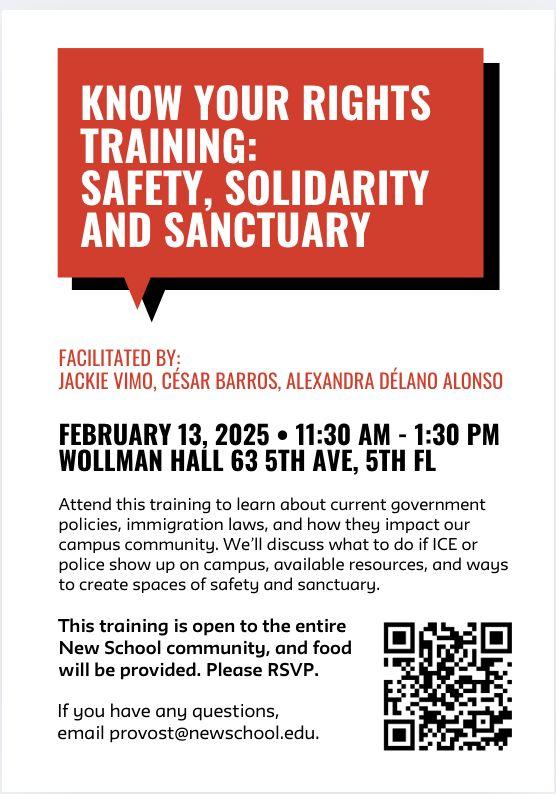

We keep us safe.


• Resurgence of sanctuary movement in US in 2017
• Roots in the 1980s sanctuary movement (Central America), Underground Railroad
• New Sanctuary Movement (2006)
• Sanctuary cities vs Secure Communities, 287(g) agreements
• Sanctuary movement post-2016
• Context of travel ban, DACA, end of TPS, deportation priorities, public charge
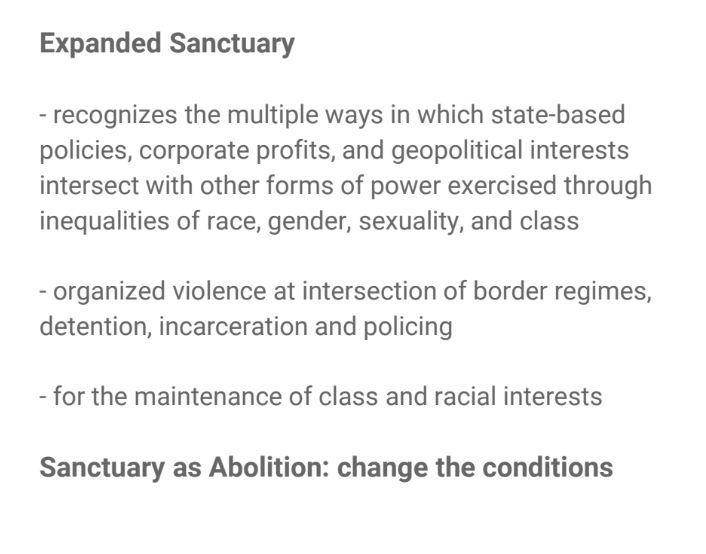
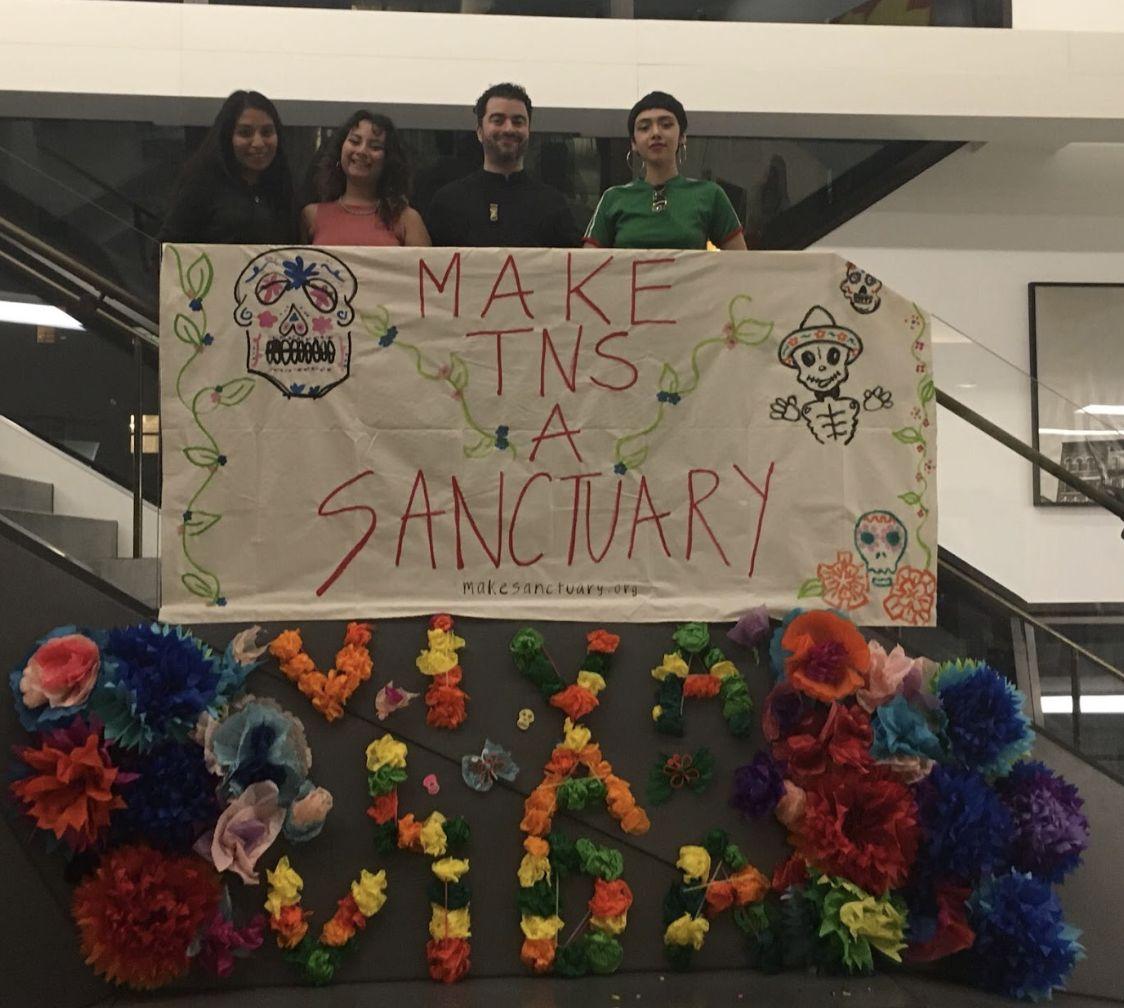
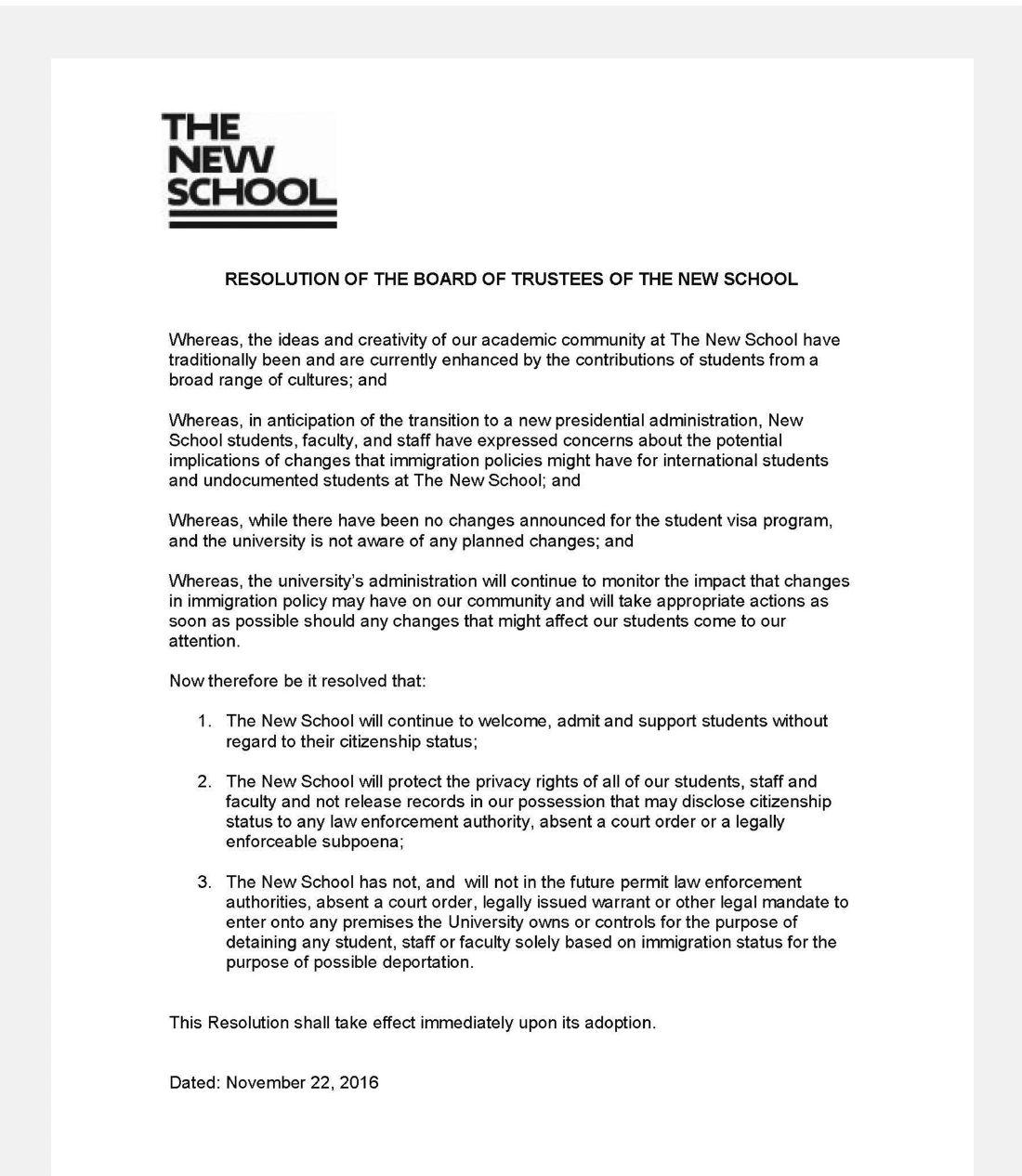
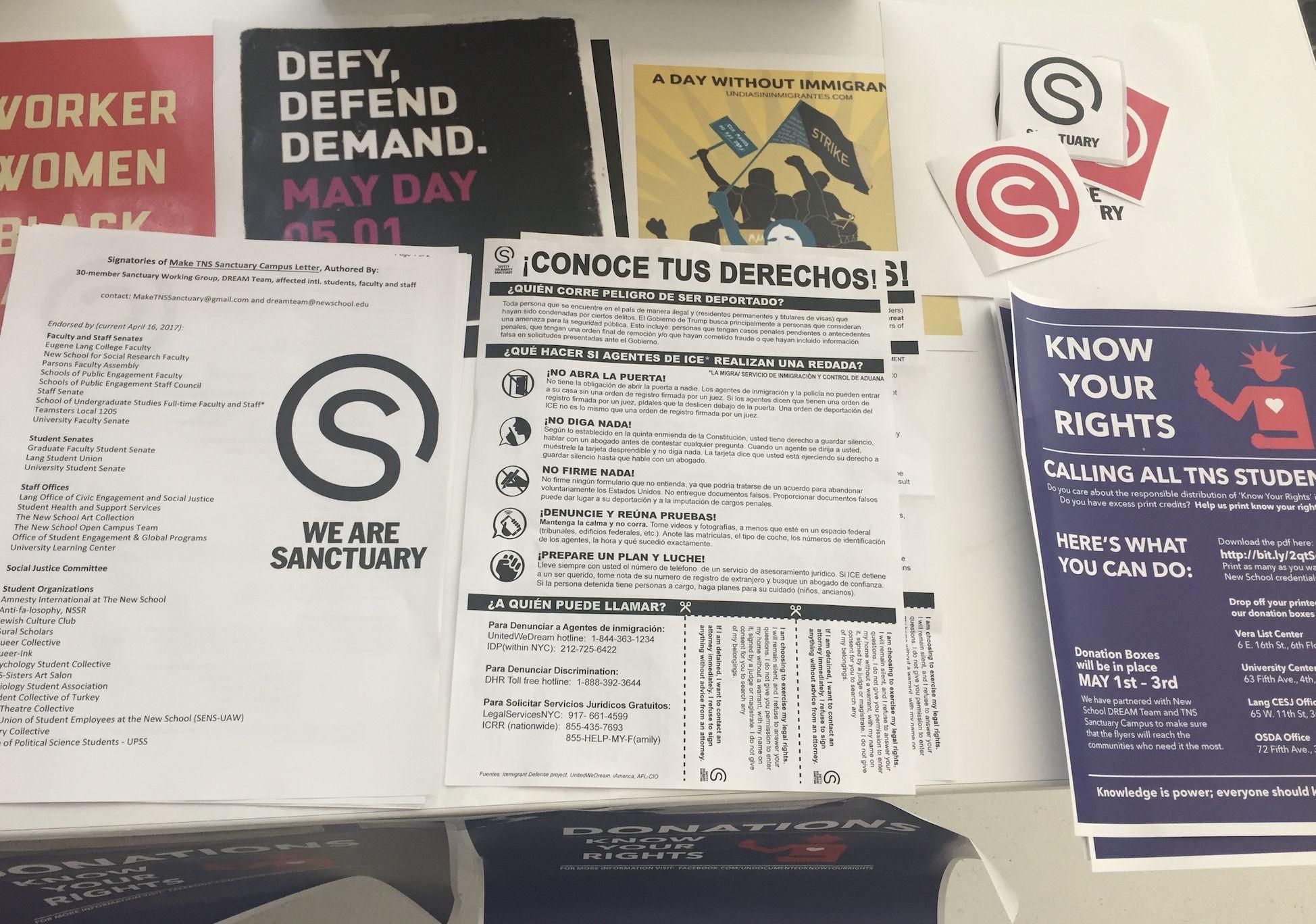
• Sanctuary Campus
• More than 200 universities mobilized, art spaces, unions, hospitals, schools…
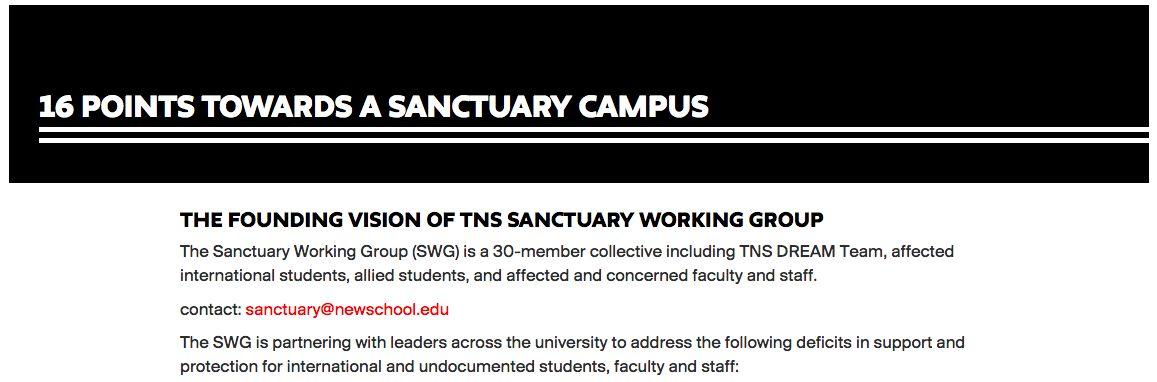
1. To review data collection practices
2. To deny requests to share such information with ICE, CBP or other agencies unless mandated by court order, warrant or subpoena; AND to inform affected students of such requests;
3. To require trainings for all staff;
4. To prohibit faculty, staff and campus security from requesting or reviewing information regarding immigration status;
5. To reevaluate the protocol for referring student conduct to the NYPD and other law enforcement agencies, in light of minor criminal citations and misdemeanors becoming deportable offenses; to prioritize harm reduction alternatives such as counseling and mediation;
6. To increase institutional financial aid for noncitizen students, especially undocumented students and those who might be affected by a repeal or change in DACA;
7. To provide emergency housing and expand job opportunities on campus for noncitizen and international students who cannot travel during academic breaks due to their immigration status;
8. To provide free or low cost competent and expanded legal support for all affected members of our university community including members of mixed-status families;
9. To provide health care stipends for students who do not have access to Medicaid due to their immigration status and who cannot afford to pay for school insurance; to provide access to specialized mental and emotional health support for affected members of our community.
10. To develop alternatives to class attendance for students unable to attend in person due to their immigration status;
11. To facilitate the extension of international students’ visas by (a) lowering the required assets for and lengthening the duration of I-20 status; and (b) waiving status maintenance fees for affected students;
12. To create a resource center and staff position dedicated to supporting undocumented students and those with mixed-family status and orienting prospective applicants from US high schools who are undocumented;
13. To fully staff the International Student and Scholar Services office with accountable personnel specialized in responding to the needs of international students, particularly those without access to loans or credit or with complex immigration status.
14. To create and sustain on-campus working groups that include students, faculty and staff to assess and address the evolving needs of all those affected;
15. To add our name to the “Statement in Support of the Deferred Action for Childhood Arrivals (DACA) Program and our Undocumented Immigrant Students” already signed by more than 600 colleges and universities across the US [Completed: TNS president’s signature requested Nov. ’16, he signed it Mar. ’17].
16. To publicize broadly that the New School is a sanctuary campus. To be effective, TNS must implement these steps in consultation and collaboration with the members of our community who are directly affected, including the students, faculty and staff who are members of the SWG and TNS DREAM Team.
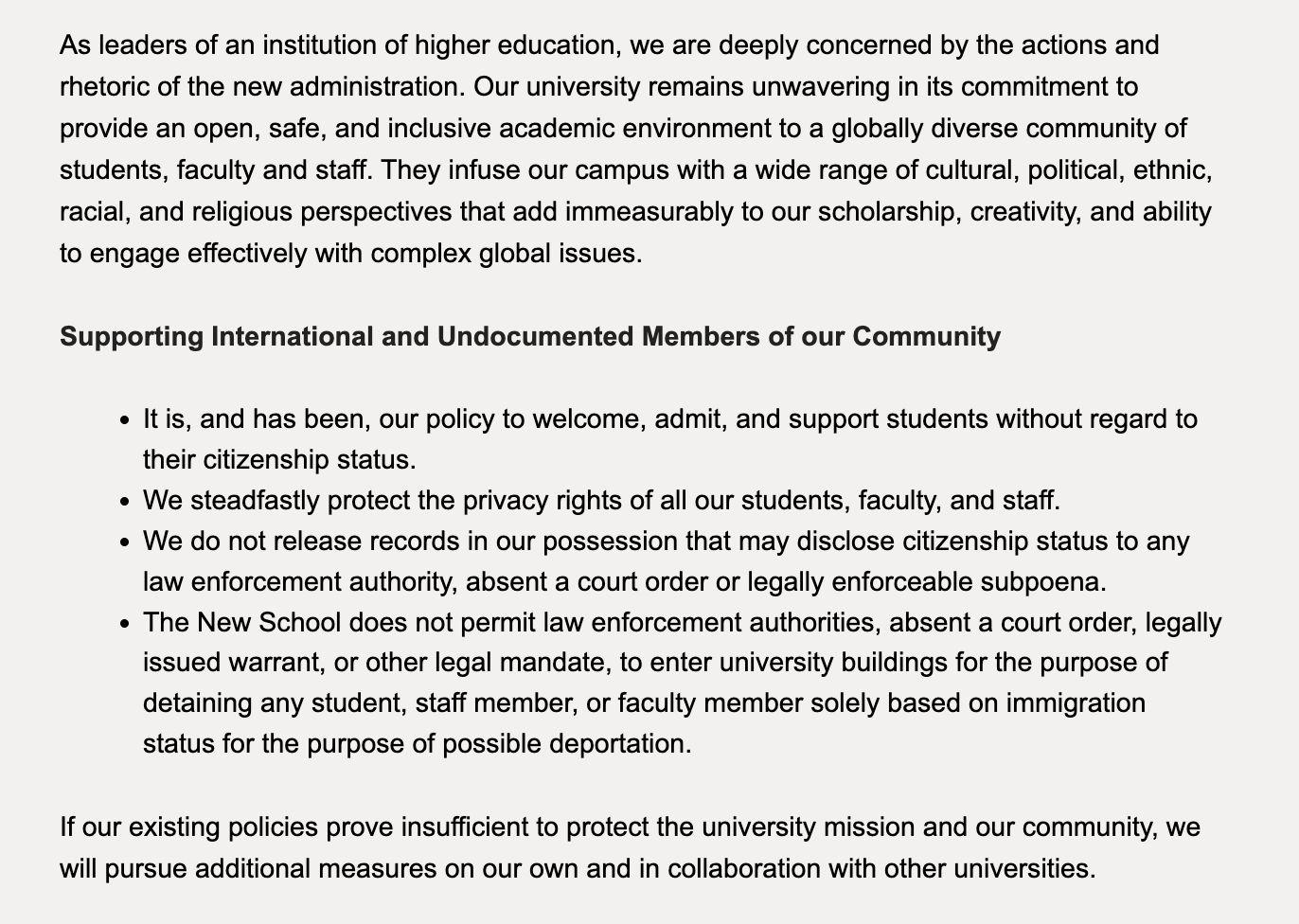
Message from President and Provost, Jan 29, 2025
Do no harm (to those you want to defend)
The information shared during this training/workshop is provided for informational purposes only and should not be construed as legal advice on any subject matter.
La información compartida durante este entrenamiento/taller es para propósitos informativos solamente y no debe ser interpretada como consejo legal en ninguno de sus aspectos.
• Context/Background
• What is ICE? How it operates?
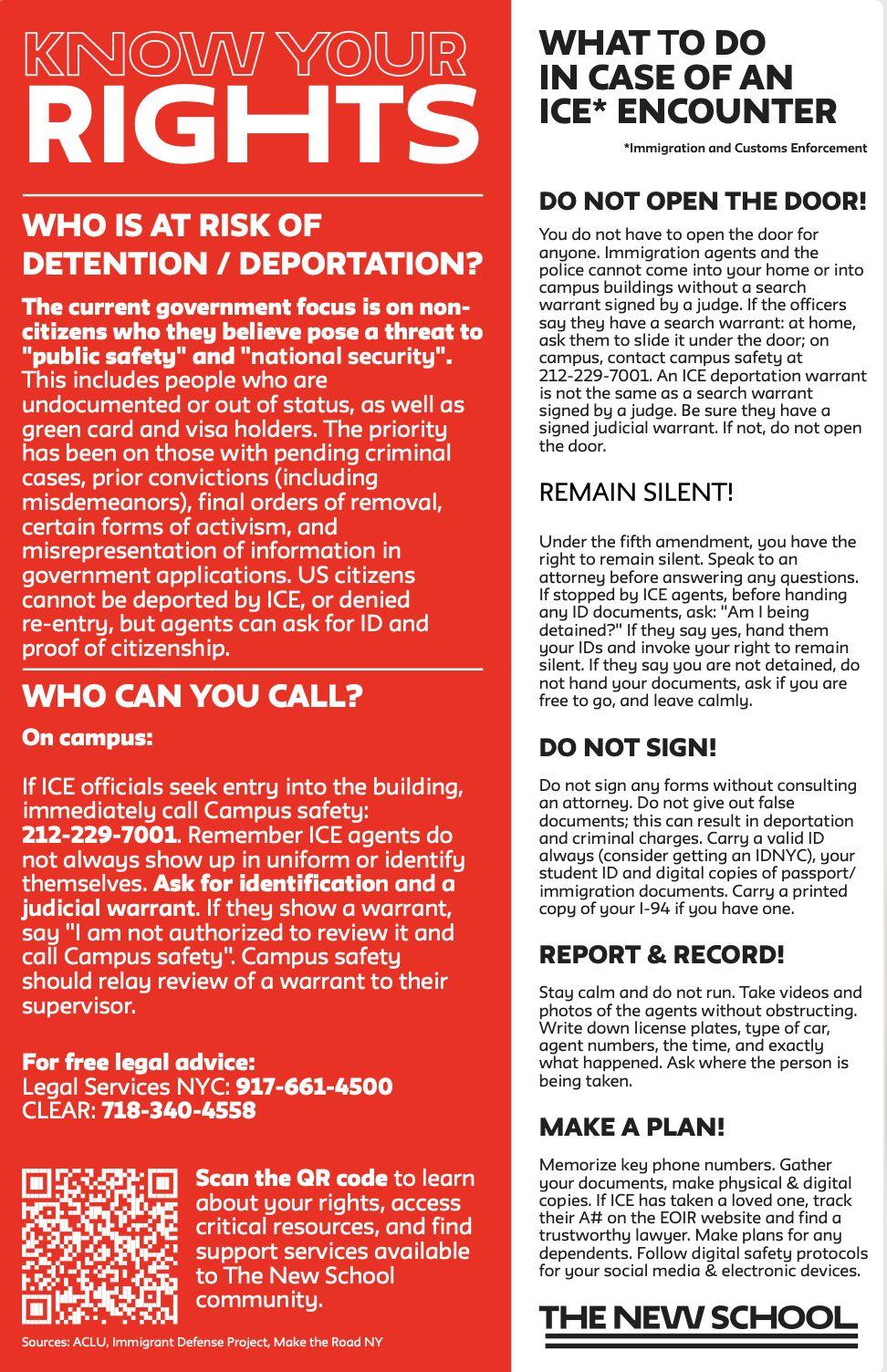
• Who is at the highest risk of ICE arrest/detention?
• What to do if ICE gets to my home?
• What to do if ICE gets where I work/to my business?
• What to do if ICE approaches me on a public space (the street/a park)?
• What to do if ICE comes to campus?
• What materials/contacts/strategies can I have to prepare in case of arrest/detention?



Everyone who lives in the U.S. has legal rights, regardless of immigration status.


You have the right to remain silent!
The Fifth Amendment protects criminal defendants from having to testify if they may incriminate themselves through the testimony.
A witness may " plead the Fifth" and not answer if the witness believes answering the question may be self-incriminatory.

The Fourth Amendment Protects vs.
• Some factors involved:
• Reasonable expectation of privacy
• Public v. private spaces
• Beware of plain view
• Consent
• Don’t consent! DOCUMENT!

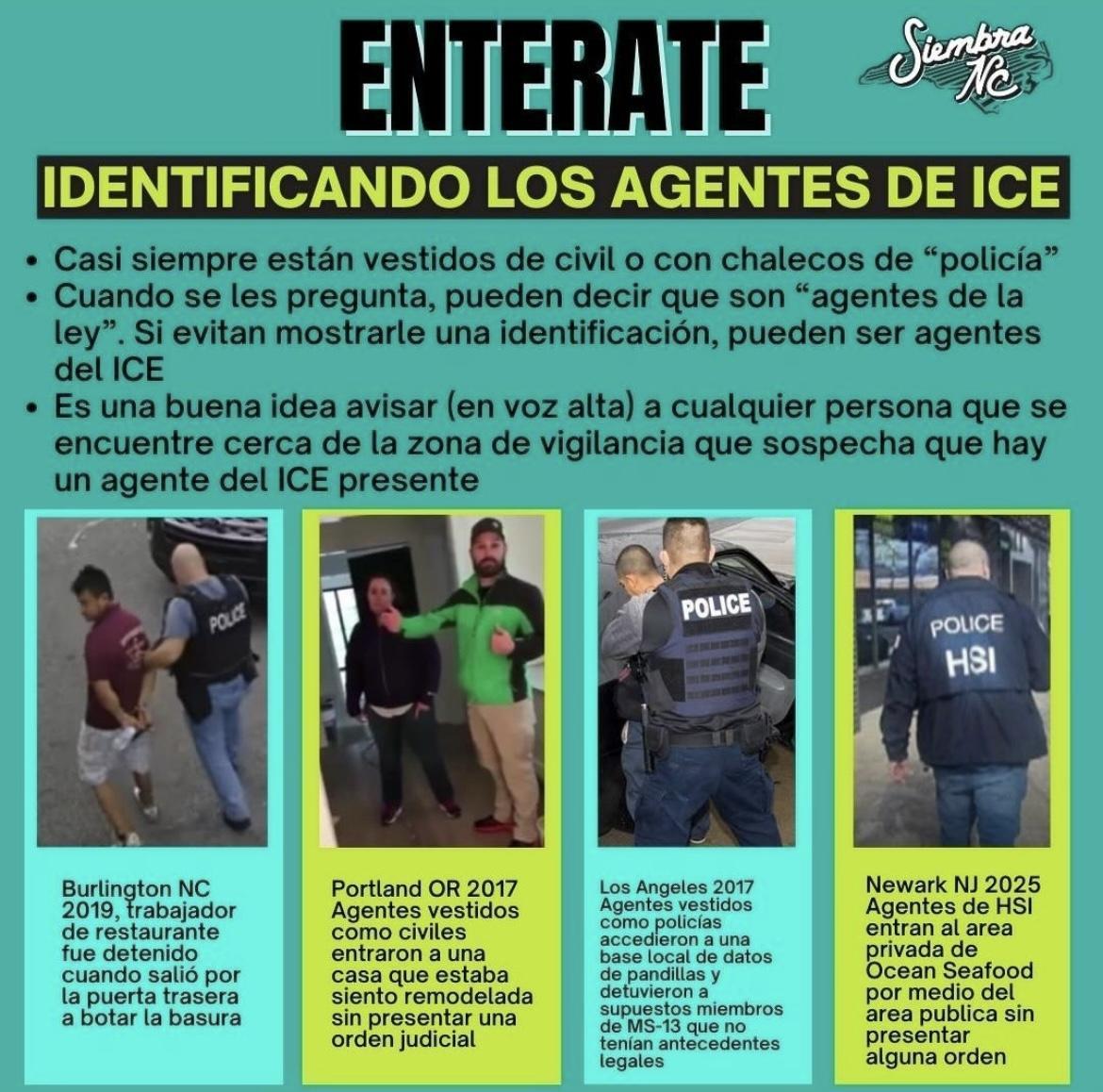
• Immigration and Customs Enforcement
• It is a federal (not local/not state) police that enforces immigration laws. They are a part of the Department of Homeland Security (DHS).
• They tend to operate in the shadows, more like a secret police than the regular law enforcement.
• They don’t like to be identified as ICE in public.They usually use the word Police on their vests or other acronyms like, HSI.

Being arrested by the police is not the same as being detained by ICE.
The majority of people arrested by the police in NewYork will not be transferred directly to ICE – because we have local laws that do not permit police or jails to transfer people.
BUT BEWARE: Being arrested does increase the risk of being detained by ICE in the future.
➔ Fingerprints taken by police are shared with ICE.
➔ ICE finds out when people are arrested or jailed by police and may look for them afterwards at home or work.

If you are arrested by the police, consult an immigration attorney to learn your options.
✓ People who were ordered deported in the past and
✓ people who have had contact with the criminal legal system
Before we start with what to do and not to do in our interactions with ICE in every kind of space:
You have a constitutional right to remain silent.
Why is this important? Because you may say something that they can use to incriminate you or others
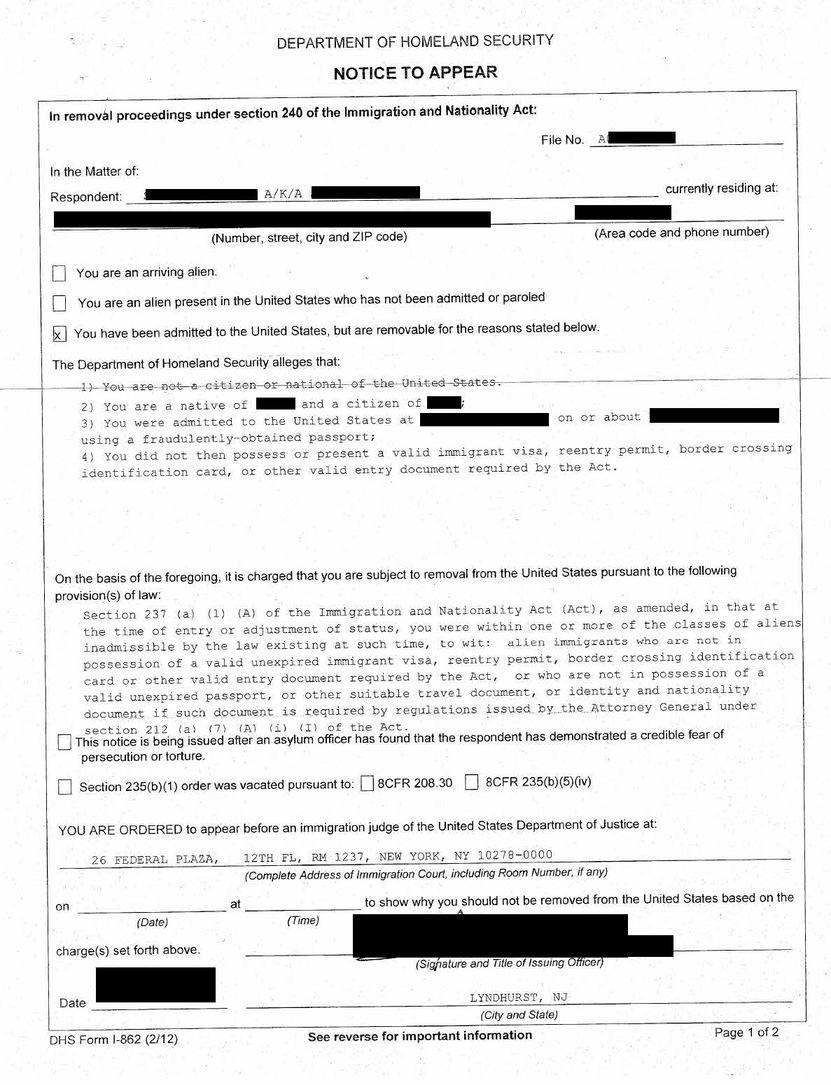
You have the right not to sign any document if you don’t want to.And do not sign anything unless under the advice of your lawyer or an immigration advocate


•You do not have to sign papers that you do not understand. Wait until you talk to a lawyer.
•Do not let someone scare you into signing papers.
•By signing something, you are saying that you read and understand the document and agree with what it says.
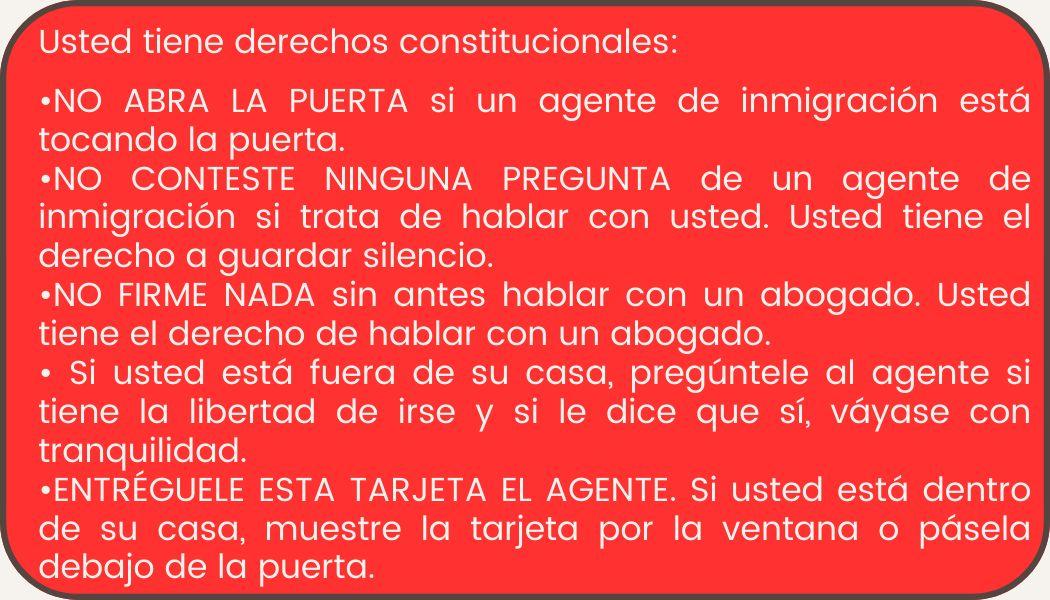
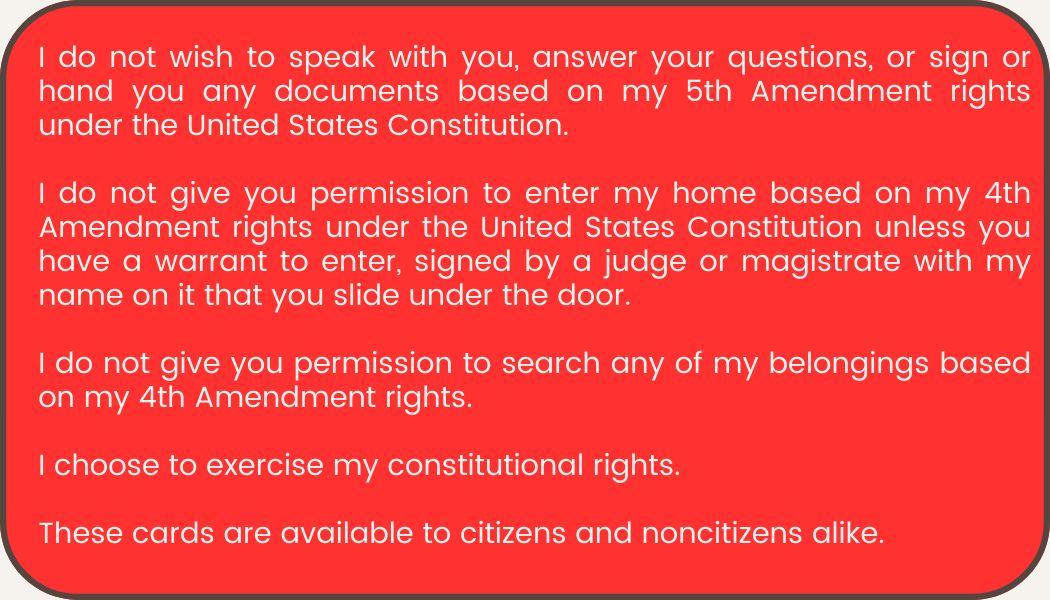

• Do not open the door, no matter how frightening the situation might be.
• Ask the people knocking the door to identify themselves. It is possible that, if ICE is at the door, they will say “Police”.
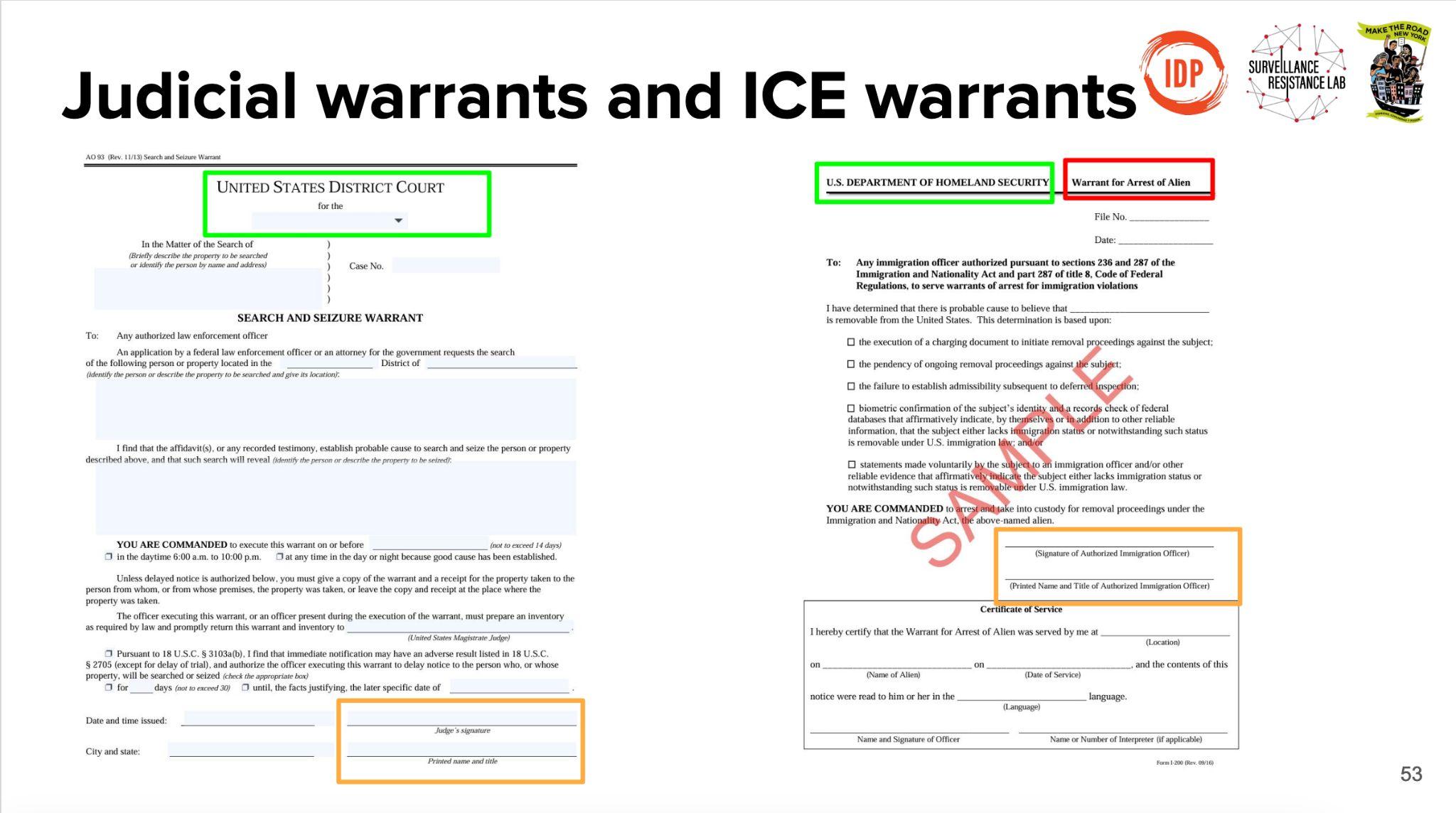
• If they identify as law enforcement, then ask them for a judicial warrant
I will not open the door if I don’t see a judicial warrant.You can slide the warrant under the door (practice saying this!)
• You should plan for this situation. If you live with others, ask them to record the whole interaction. One person should be in charge of this. (Plan ahead!)
• If they have a judicial warrant (unlikely) or if they manage to enter. You should stay as calm as you can. Invoke your right to remain silent and do not sign any document.
I am invoking my right to remain silent. I do not want to answer questions. I want to speak to my attorney (practice saying this!)

• If someone at home is arrested, ask officer where are they taking them. Have the phone number of friends/allies/organizations, so you can let them know immediately.


What do we do if ICE gets to the place we work at and we work at a place where the public is allowed to enter?
• ICE can enter public spaces without a judicial warrant: restaurants, coffee shops, stores, etc. These workplaces should make sure to have a private room with clear signage. ICE cannot enter those private spaces without a judicial warrant.
• The owner or manager is the only person who should interact with ICE.
• All workers should enter the private room (no matter their immigration status).

• If you work at one of these places or are a manager or the owner of one of these places, make sure that these measures are agreed upon by everyone, so everything works according to plan.
● About training staff not to allow ICE into the private areas of the business.
● Only the owner/manager should give consent after confirming ICE has a judicial warrant.
● If ICE comes, all employees, no matter their status (even citizens) should go to the private room.
● Same principles apply – Stay silent. Do not give consent.

Employers do not have to help ICE identify or sort workers!
What do we do if ICE approaches us in a public space (the street or a park, for example)?
● ICE does not need a judicial warrant to arrest someone in public or to stop a car.
● But ICE does need reasonable suspicion to believe people are here in violation of immigration law, which is why silence is important.
● ICE usually knows the person they are targeting, but ICE may arrest others vulnerable to deportation at the same time.
● ICE sometimes collects information or fingerprints from other people who are near an arrest.
street or a park, for example)?
If an officer ask for your ID ask: Am I being detained?
If the answer is no, then ask: Am I free to go? If they answer yes, then go.
If they say you are arrested, then: provide your ID and remain silent.
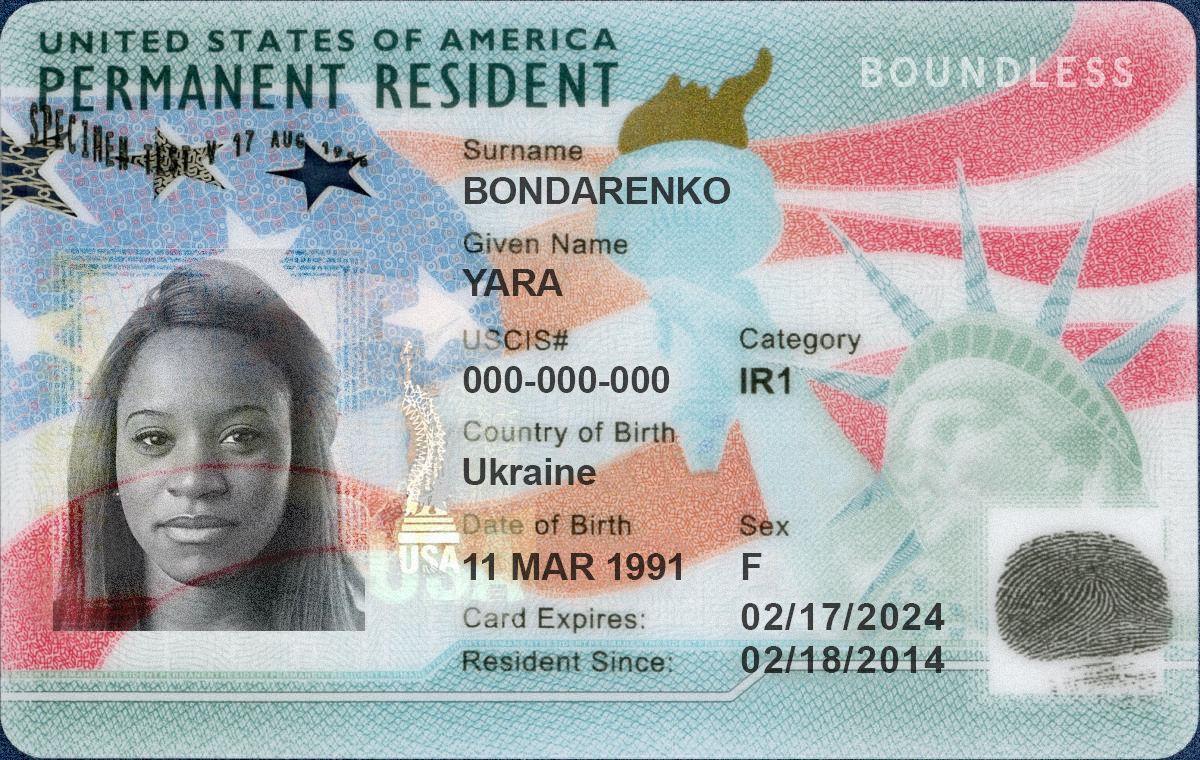
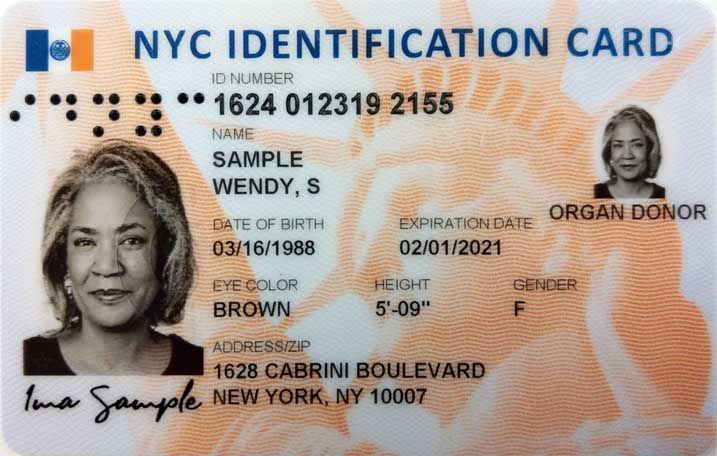
✓ If you have a valid work permit or green card, carry it with you at all times. (Keep a digital copy on your phone)
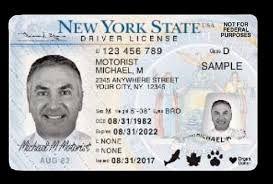
✓ If you do not have one of the above documents, generally it is advisable to carry a municipal ID, state ID or driver’s license if it was issued in the United States and contains no information at all about your immigration status or your country of origin.
Do not carry any documentation about your country of origin.
Do not carry any false identity documents or false immigration documents.

• The New School Policy
● Specifically, it is, and remains,The New School’s policy to welcome, admit, and support students without regard to their citizenship status.
● We steadfastly protect the privacy rights of all our students, faculty, and staff. We do not release records in our possession that may disclose citizenship status to any law enforcement authority, absent a court order or legally enforceable subpoena.
● AndThe New School does not permit law enforcement authorities, absent a court order, legally issued warrant, or other legal mandate, to enter university buildings for the purpose of detaining any student, staff member, or faculty member solely based on immigration status for the purpose of possible deportation.
From this one could assume that:
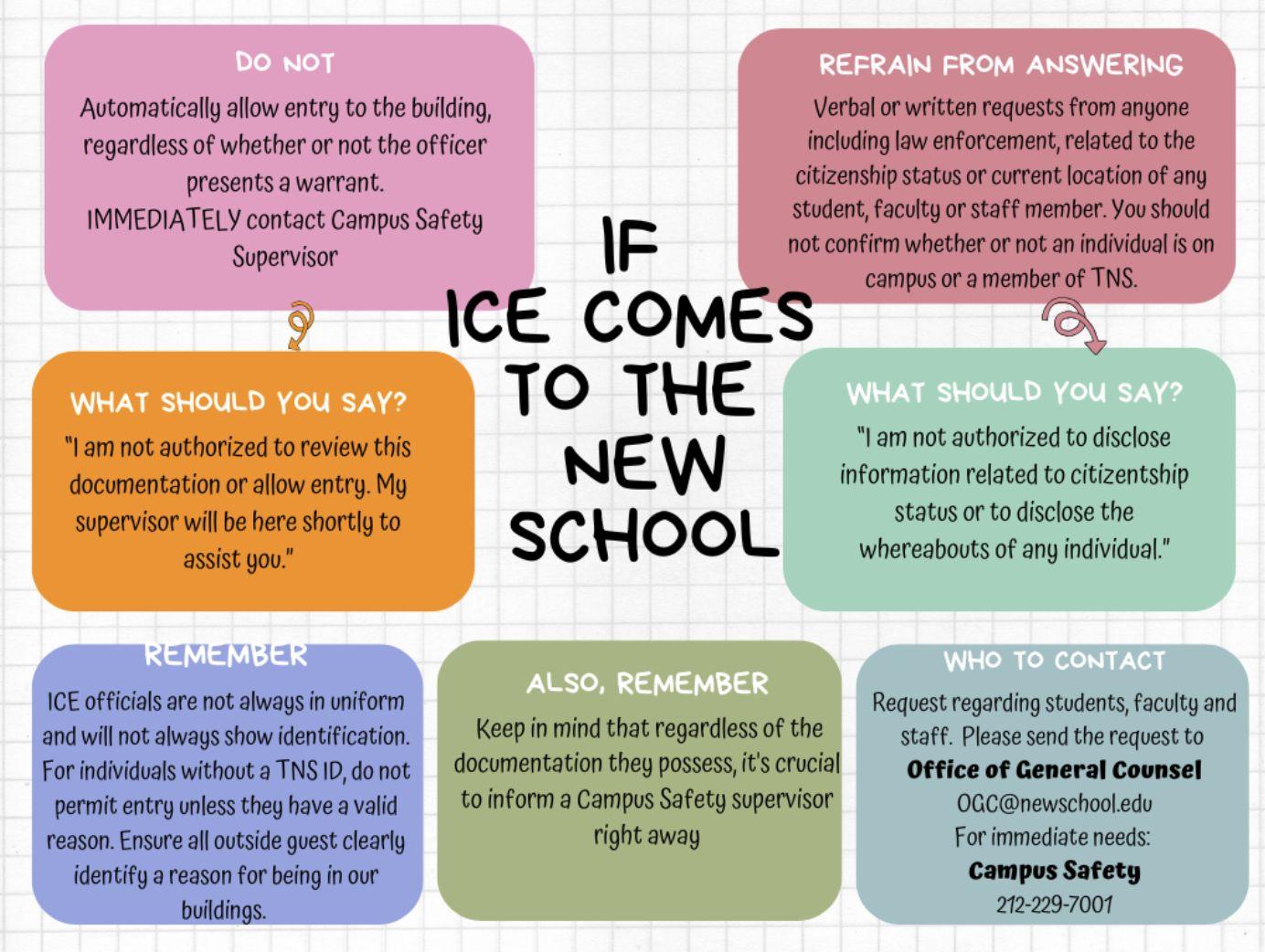
• ICE must notify campus police with an OFFICIALSIGNED & DATED warrant from a judge. We still need clarification on what “other legal mandate” means. But legally, ICE detainers have no force of law.
• ICE are not to enter classrooms/campus spaces.
• Any information shared with external agencies must go through the proper channels.
• If ICE shows up at your office/classroom, send them to campus police. Post a sign on your office door that says Private.

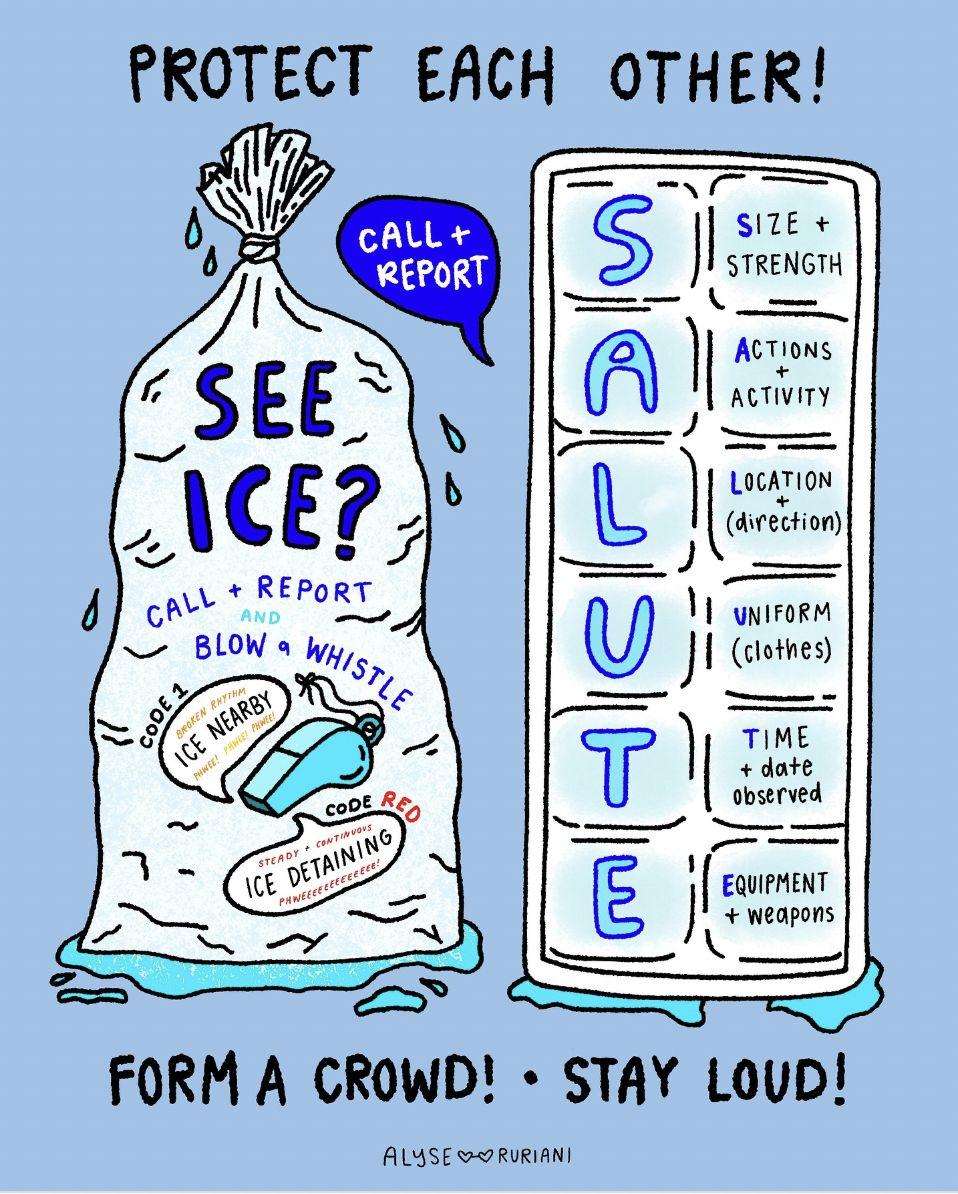
De-Escalate: If you see ICE or DHS, stay calm. Do not be hostile, because they may take it out on the person you are trying to protect. ICE doesn’t have jurisdiction over citizens.Assert your rights to record and bear witness. Be aware that physically obstructing is a crime.
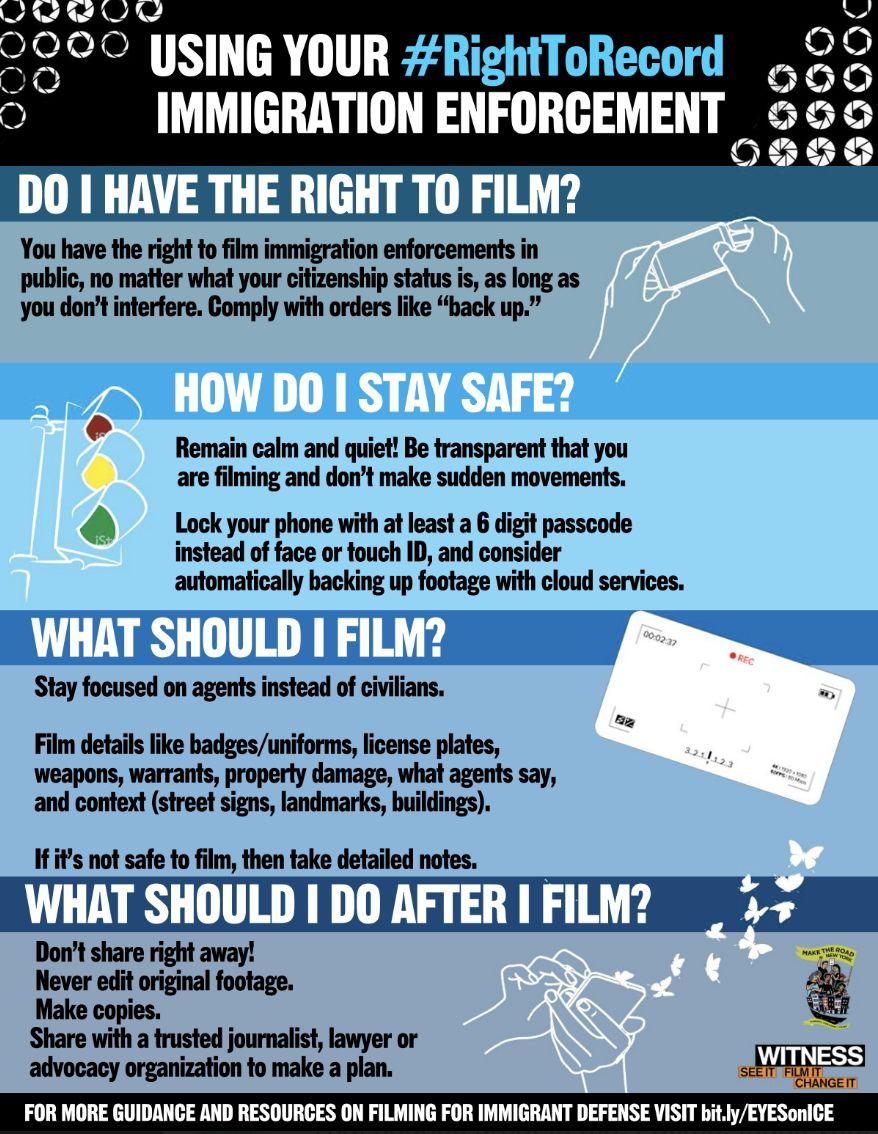
Record: Keep your phone charged with backup power handy. Use a password to protect your phone from unwarranted search and seizure. Unlocking with a fingerprint or your face does not provide the same legal protections. Filming is legal from a reasonable distance.
If ICE is present, start to video (not live streaming); state time, date, exact location; film vehicles, officers, badges, license plates, warrants (avoid filming person at risk, instead film the officers). Send footage to yourself and trusted allies.
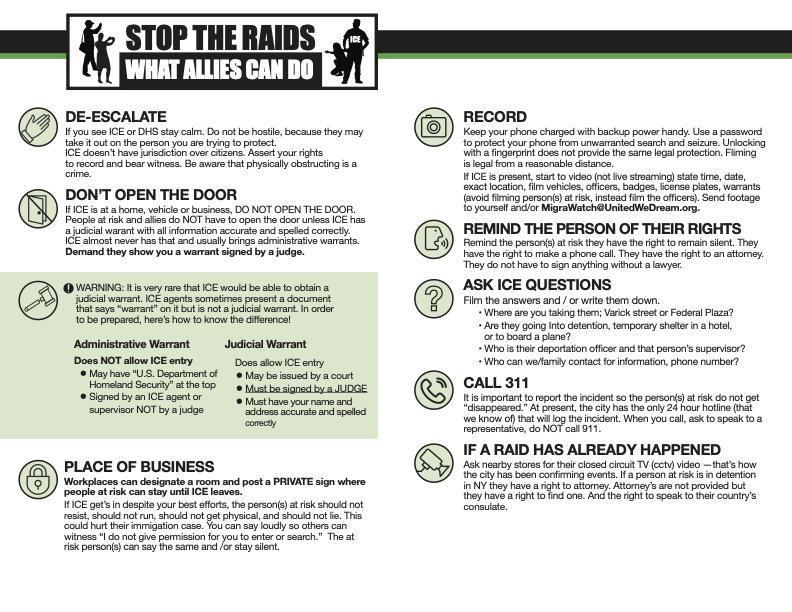
Ask questions to ICE:
Film the answers and/or write them down:
• Where are you taking them?
• Are they going into detention, temporary shelter in a hotel or to board a plane?
• Who is their deportation officer and that person’s supervisor?
• Who can we/family contact for information, phone number?
Remind the person of their rights: Remind the person(s) at risk they have the right to remain silent.They have the right to make a phone call.They have the right to an attorney.They do not have to sign anything without a lawyer.

What documents to gather? How can we plan ahead?
Memorize the phone numbers of family and friends to call in an emergency.
Gather your important documents such as birth certificates, passports, court date notices, documentation from any criminal case (including tickets and proof you have paid), in a safe place that your family can access.
Memorize your “A” number
This begins with the letterA, has 9 digits, and is on your immigration documents.This number is very important to get any updates about your case.
Visit our website www.weprotectusny.org for more information.

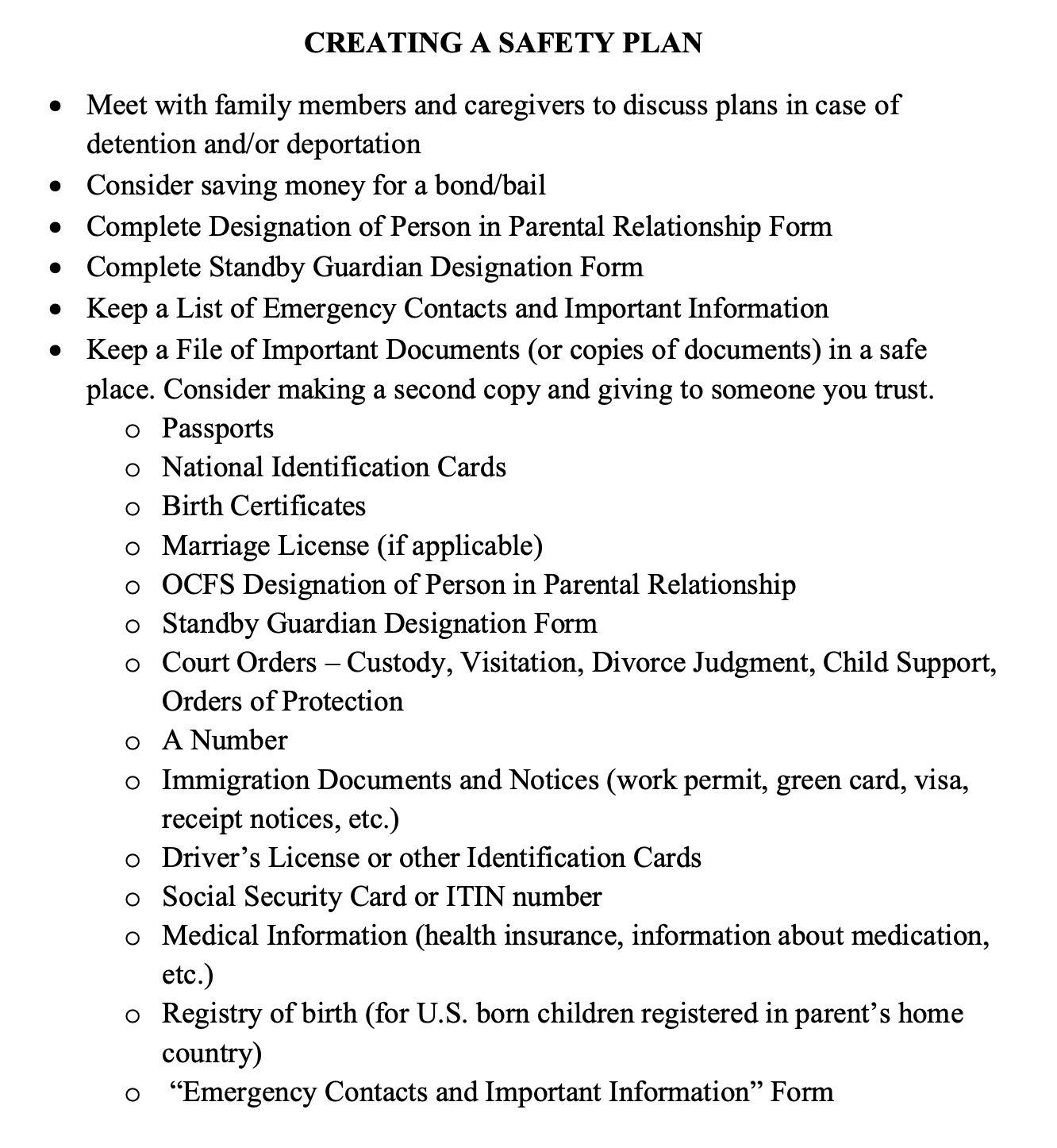
From the immigration Defense Project Packet
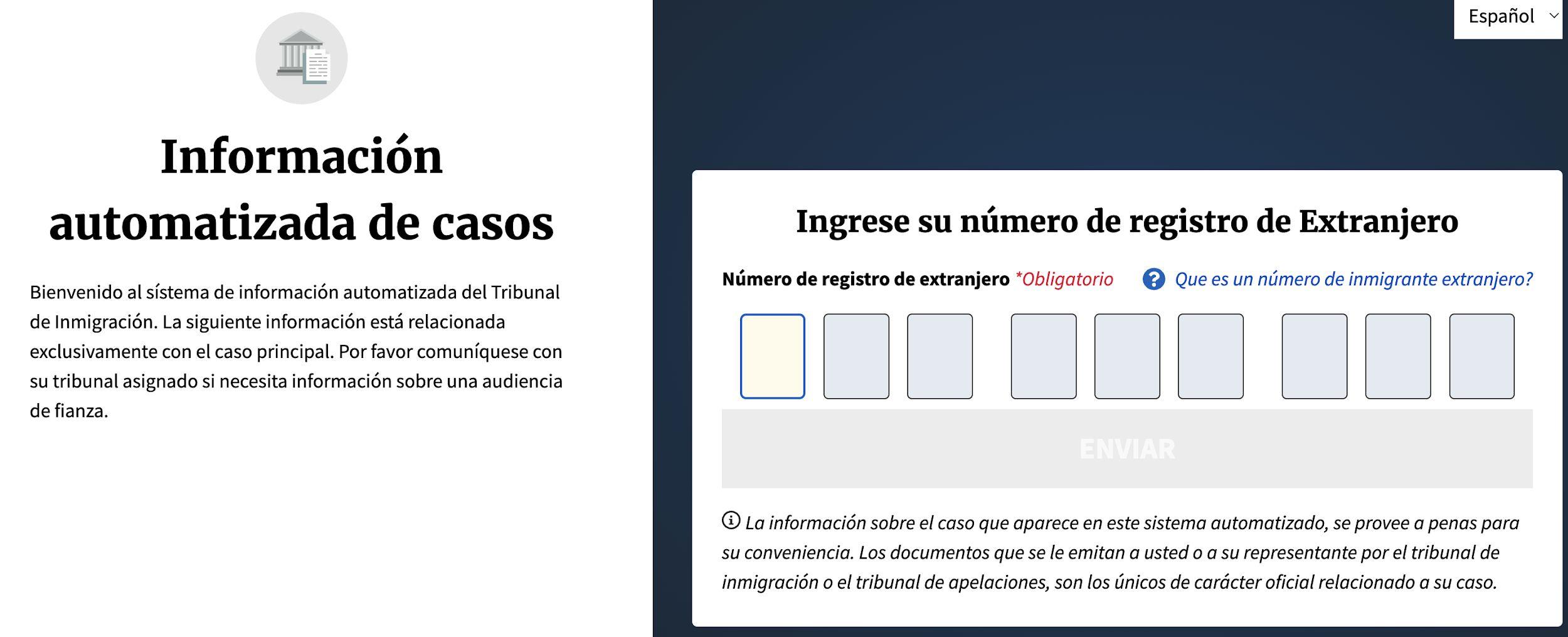

Keep the card in your wallet but also try to memorize
Practice out loud with friends, loved ones, co-workers
Against the language of criminalization
Against us/them
Do not assume, and protect information
Sanctuary campus classroom statement
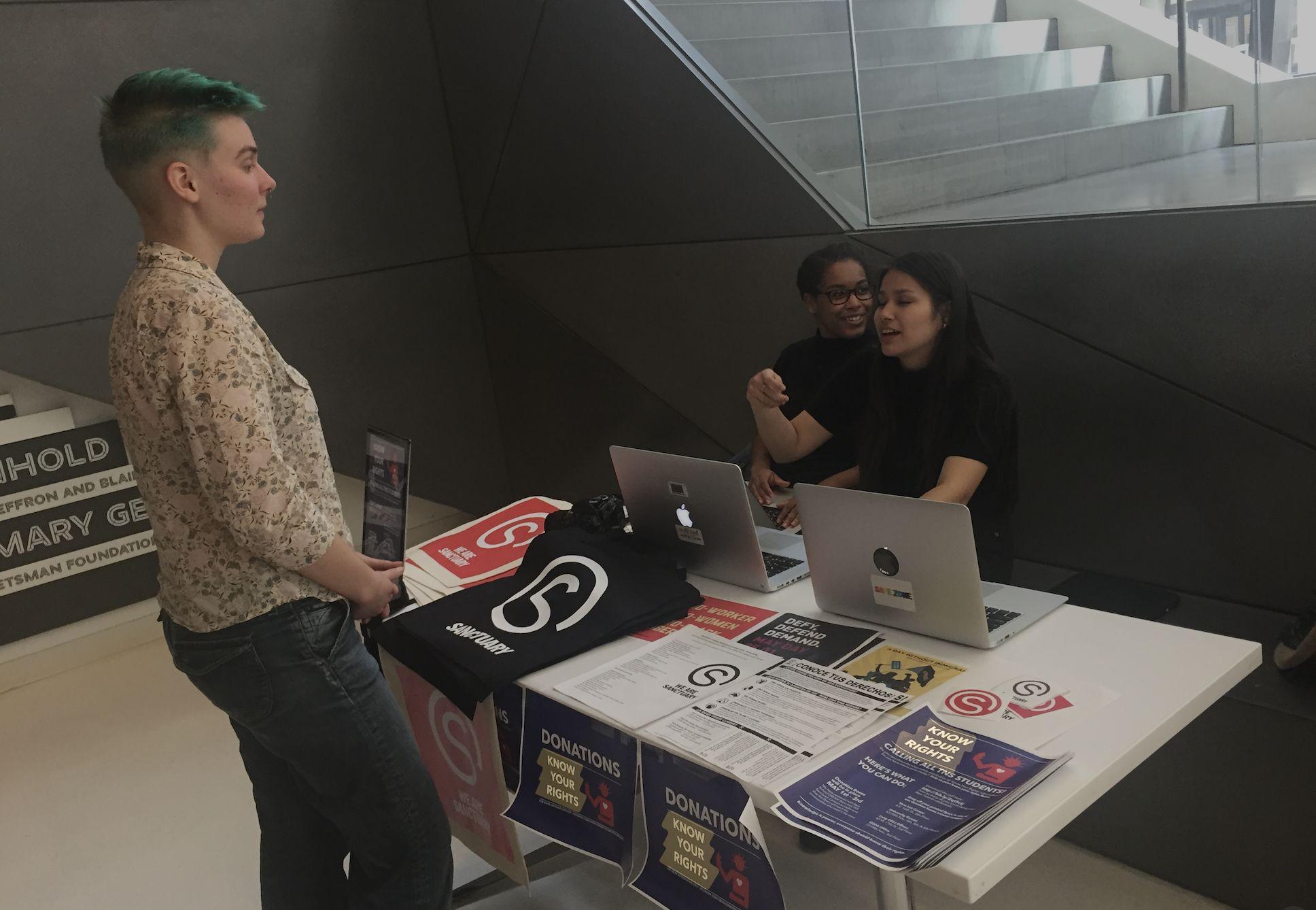
Advising and Accompanying Students
Financial Aid, International Students Office
Share Information
Attend trainings
Share information privately and in public spaces
Organize
What do you need? What do others in our community need?
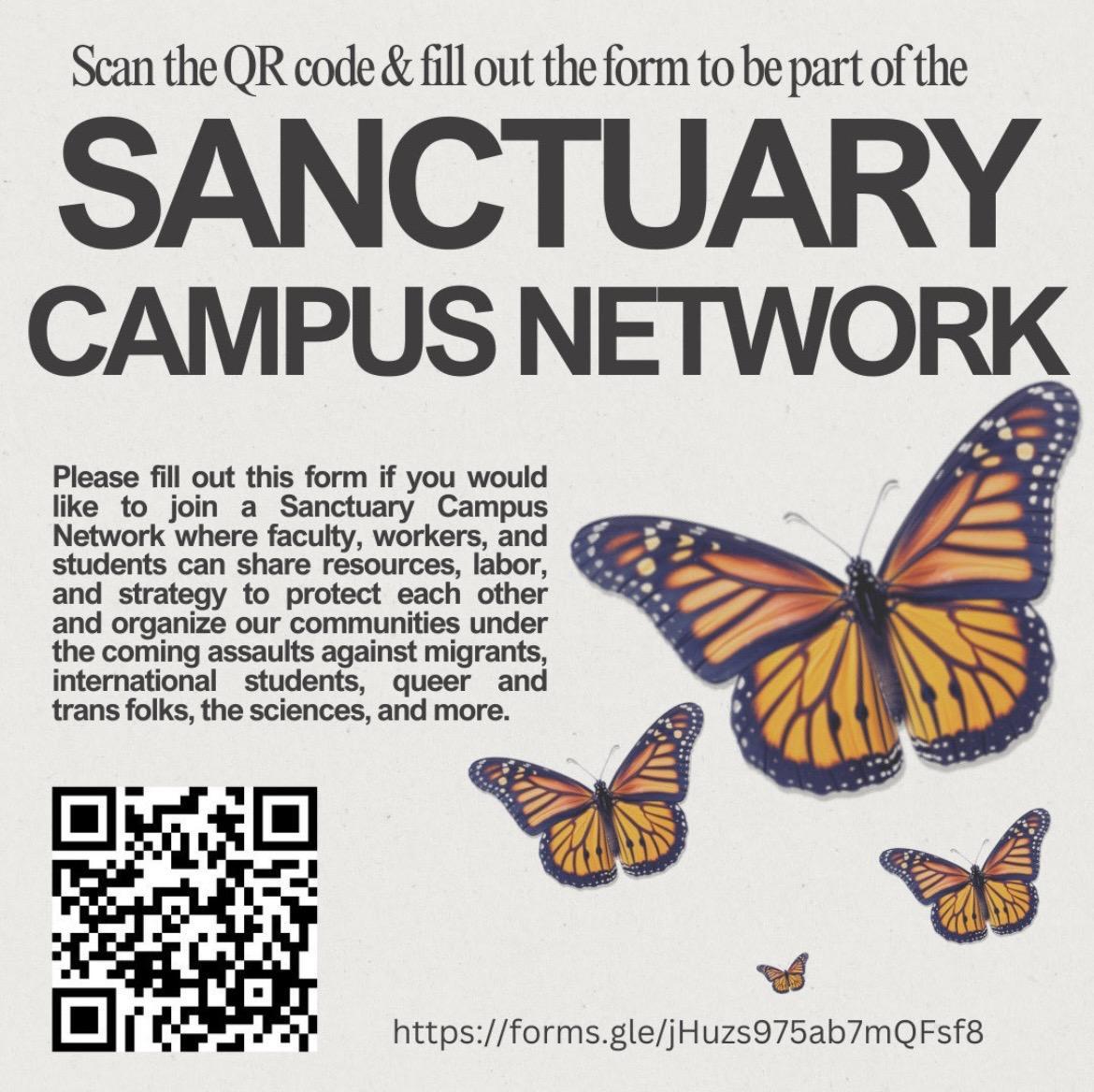
Create a group, join sanctuary campus group
● Immigrant Defense Network –The Immigrant Defense Network is a statewide coalition of 90+ nonprofits and community groups in Minnesota dedicated to defending immigrant rights, providing legal information and support, and organizing collective action so immigrant communities can live with dignity, safety, and full civic inclusion.
● ACLU KnowYour Rights: https://www.aclu.org/we-have-rights
● Make the Road NY: https://maketheroadny.org/we-protect-us/
● Resource Pages with a curated list of CTAs, Know-Your-Rights, and other ways to get informed: Defense of Humanity: Solidarity and Resources for Minnesota and Elsewhere