Ethical Hacking: A Complete Guide to Protecting Digital Systems
Introduction to Ethical Hacking
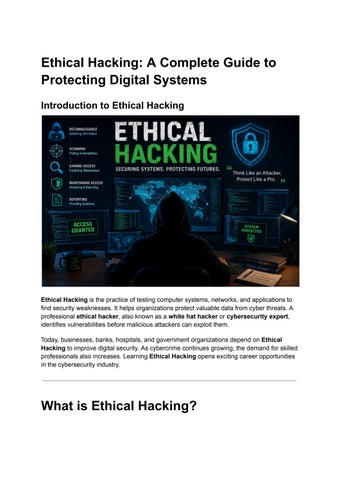
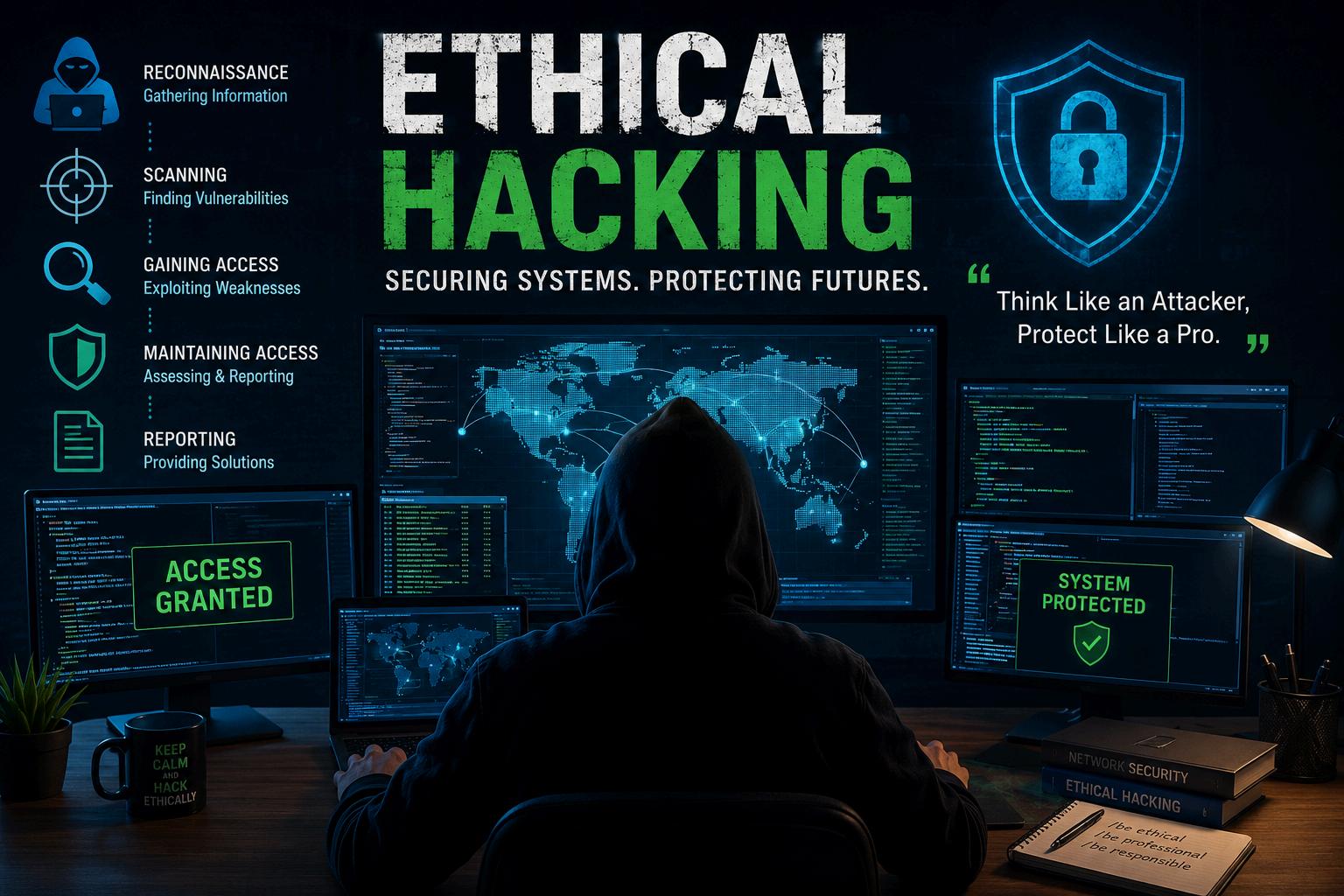
Ethical Hacking is the practice of testing computer systems, networks, and applications to find security weaknesses It helps organizations protect valuable data from cyber threats A professional ethical hacker, also known as a white hat hacker or cybersecurity expert, identifies vulnerabilities before malicious attackers can exploit them
Today, businesses, banks, hospitals, and government organizations depend on Ethical Hacking to improve digital security. As cybercrime continues growing, the demand for skilled professionals also increases Learning Ethical Hacking opens exciting career opportunities in the cybersecurity industry What
is Ethical Hacking?
Ethical Hacking is the authorized process of testing computer systems for security flaws Unlike cybercriminals, ethical hackers work with permission from organizations. Their goal is protecting systems instead of causing damage.
A certified white hat hacker uses professional techniques to identify weaknesses After testing, they prepare detailed reports and recommend security improvements. This process helps organizations strengthen their cybersecurity defense https://whitehatcoders com/ethical-hacking-course-in-chandigarh/
Importance of Ethical Hacking
Modern businesses face thousands of cyber threats every day. Ethical Hacking helps reduce these risks by identifying vulnerabilities early
Major benefits include:
● Improves system security
● Prevents cyber attacks
● Protects sensitive information
● Reduces financial losses.
● Builds customer trust
● Supports legal compliance
● Improves network reliability.
● Strengthens business reputation
Without proper cybersecurity testing, organizations remain vulnerable to hackers
Types of Ethical Hacking
Different organizations require different forms of Ethical Hacking depending on their infrastructure
1. Network Hacking
Network Ethical Hacking tests routers, switches, firewalls, and servers It identifies weak points within computer networks
2. Web Application Hacking
This process examines websites for security vulnerabilities Ethical hackers detect weaknesses before attackers exploit them
3. Mobile Application Hacking
Mobile security testing checks Android and iOS applications It ensures user data remains protected
4. Wireless Network Hacking
Wireless testing evaluates Wi-Fi networks and communication systems Strong wireless security prevents unauthorized access
5. Cloud Security Testing
Cloud Ethical Hacking identifies security risks in cloud platforms It protects online business applications and data
6. Social
Engineering Testing
This testing evaluates employee awareness about cyber threats It helps organizations improve security training
Skills Required for Ethical Hacking
A successful ethical hacker combines technical knowledge with analytical thinking.
This tool helps security professionals evaluate password strength during authorized audits
These tools assist white hat hackers in improving cybersecurity.
Applications of Ethical Hacking
Ethical Hacking supports security across many industries
Common applications include:
● Banking security
● Healthcare protection
● Government cybersecurity
● Educational institutions
● E-commerce platforms
● Software companies
● Cloud computing
● Financial services
● Mobile applications
● Data centers
Organizations depend on cybersecurity experts to protect digital assets
Career Opportunities in Ethical Hacking
The cybersecurity industry offers many rewarding careers.
Popular job roles include:
● Ethical Hacker
● Penetration Tester
● Cybersecurity Analyst
● Information Security Consultant
● Security Engineer
● Network Security Administrator
● Vulnerability Assessment Specialist
● SOC Analyst
● Incident Response Analyst
● Security Auditor
Certified professionals receive competitive salaries and excellent career growth.
Benefits of Learning Ethical Hacking
Learning Ethical Hacking offers several advantages
Key benefits include:
● High industry demand
● Excellent salary packages
● Global job opportunities
● Continuous learning
● Professional certifications
● Remote work options
● Strong career stability
● Personal skill development
Cybersecurity remains one of the fastest-growing technology fields
Certifications for Ethical Hacking
Professional certifications improve knowledge and career opportunities.
Popular certifications include:
● Certified Ethical Hacker (CEH)
● CompTIA Security+
● CompTIA PenTest+
● Certified Information Systems Security Professional (CISSP)
● Offensive Security Certified Professional (OSCP)
● GIAC Penetration Tester (GPEN)
These certifications validate professional cybersecurity skills.
Best Practices in Ethical Hacking
Successful Ethical Hacking follows professional standards
Important practices include:
● Obtain written authorization
● Respect privacy policies.
● Document every finding
● Protect sensitive information
● Follow legal regulations
● Update technical knowledge regularly.
● Use trusted security tools
● Report vulnerabilities responsibly
Responsible behavior builds trust between organizations and security professionals.
Challenges in Ethical Hacking
Although rewarding, Ethical Hacking presents several challenges
Common challenges include:
● Rapidly changing cyber threats
● Constant technology updates
● Complex network environments
● Strict legal requirements
● Continuous skill improvement
● Increasing attack sophistication
● Managing large security systems
Professional training helps overcome these challenges.
Future of Ethical Hacking
The future of Ethical Hacking looks highly promising Businesses increasingly depend on digital technologies and cloud services. Artificial intelligence, machine learning, and connected devices create new security challenges
Organizations need experienced white hat hackers to secure their digital infrastructure Skilled cybersecurity experts will remain valuable as cyber threats continue evolving. Students entering this field today can expect strong career growth and global opportunities
Conclusion
Ethical Hacking plays an essential role in protecting modern digital systems. It helps organizations identify vulnerabilities before cybercriminals exploit them Professional ethical hackers strengthen cybersecurity through authorized security testing and responsible reporting
Learning Ethical Hacking provides valuable technical skills, attractive career opportunities, and long-term professional growth As cyber threats continue increasing, the demand for qualified cybersecurity professionals will remain strong. Investing in Ethical Hacking education today creates a secure and successful future in the technology industry.