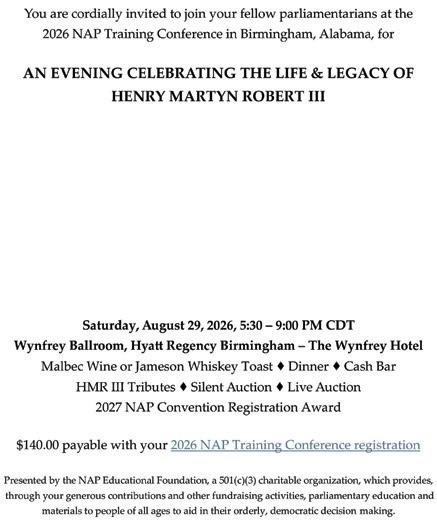
Join us for a conference experience that blends professional growth and Southern charm, with excellent educational sessions and practice labs in a historic setting. Forge new friendships and renew old ones.
Hyatt Regency Birmingham –The Wynfrey Hotel 1000 Riverchase Galleria Birmingham, AL 35244
Full details are posted at: www.parliamentarians.org/2026-ntc/
NP
President
Mona Y. Calhoun, PRP
Vice-President
C.J. Cavin, PRP
Secretary Donna Mitchell, PRP
Treasurer
Mark Apodaca, PRP
Directors-at-Large
Corliss Baker, RP
Tamara D. Harris, PRP
Ramona Hill, PRP
District Director
Representatives
Steven Cook, PRP
Justin Pappano, PRP
Parliamentarian
Al Gage, PRP
Executive Director
Jessica Herzog
Legal Liaison
Kevin Judd, PRP
NAP’s Vision: The National Association of Parliamentarians® is globally recognized as the premier provider of parliamentary leadership.
NATIONAL PARLIAMENTARIAN
NatioNal ParliameNtariaN®
Official publication of the National Association of Parliamentarians® 213 S. Main Street • Independence, MO 64050-3808 816.833.3892 • 888.627.2929
hq@nap2.org • www.parliamentarians.org
Editor
Carl Nohr, PRP
npeditor@nap2.org
Assistant Editor
Beverly Przybylski, PRP
NP Review Committee
Traci Bransford-Boss, PRP, Chair
Ann Guiberson, PRP
Sandy Olson, PRP
Parliamentary Research Committee
Ronald Dupart, PRP, Chair
Rosalie Stroman, PRP
Al Gage, PRP, Parliamentarian
Special Consultant
Ronald Dupart, PRP
NATIONAL PARLIAMENTARIAN®
(Registered U.S. Patent and Trademark Office, ISSN 8755-7592) Published quarterly by the National Association of Parliamentarians®
Subscription and change-of-address requests should be directed to NAP at the above address.
Annual subscription: $30 • Single copy: $8
NP Submission Guidelines
National Parliamentarian® generally publishes only original works that have not been published elsewhere. Articles will be edited to conform to The Chicago Manual of Style (18th ed.) and may be edited for content and length. Article text should be submitted in Microsoft Word or rich text format and transmitted via e-mail. Any images, photos, illustrations and graphics should be submitted separately as high resolution files. Any images or other copyrighted materials must be accompanied with permission to use. Materials submitted will not be returned unless special arrangements are made in advance with the editor. Authors should include a short biography note and a high resolution headshot for publication. Any AI tools used in the preparation of the submission must be described. Contributors must include a completed “Assignment and Transfer of Copyright” form with their submission, granting NAP the copyright or permission to publish.
Submission Deadlines
Volume 88, No. 2 (Winter 2027) ......................... November 1, 2026
Volume 88, No. 3 (Spring 2027) ............................ February 1, 2027
Volume 88, No. 4 (Summer 2027) .............................. May 1, 2027
FROM THE EDITOR
The National Parliamentarian® (NP) is one of the longstanding educational benefits all members of the National Association of Parliamentarians® (NAP) receive . It has been published since 1938 . The purposes of the NP are to promote the object of NAP and provide guidance on parliamentary procedure . Members contribute to the NP by submitting parliamentary questions, short articles, and feature articles for publication .
Reading the articles in the NP will contribute building blocks of knowledge to our continuing education . The editor of the NP invites all members to contribute material to this educational resource . Readers appreciate articles from senior parliamentarians who share their unique and comprehensive experiences through the written word . Recently credentialed members, having gone through the rigors of study and testing, develop insights into learning that could benefit others . Even nascent parliamentarians may have something to share . Selection of articles for publication is not limited by author experience, but by their alignment with the purposes of the NP and their scholarly value to our community .
The Questions and Answers section also provides excellent parliamentary education . Questions on parliamentary procedure may be submitted to npquestions@nap2 .org . They are reviewed and answered by the Parliamentary Research Committee and may be published in the NP . Through this section, members share challenging parliamentary situations, and we all learn from the expert answers . The Parliamentary Research Committee warmly invites you to submit questions .
Why write an article? Part of what makes NAP great is our community of shared parliamentary experiences and understanding of parliamentary law and procedure . The NP is part of this, serving as a conduit from the minds and pens of our contributors to the readers Authorship transforms experience and understanding into words that create readers’ understanding . The NP team warmly invites more readers to become writers!
So, put pen to paper (or more likely fingers to keyboard) and compose the next great article for your NP!
Yours in service, Carl Nohr, PRP NAP NP Editor, 2025-2027 npeditor@nap2.org
PS: Submission Guidelines are found on the bottom of the masthead page in each issue of the NP . To submit articles for consideration for publication or request general information, please reach out to npeditor@nap2 .org . To submit parliamentary questions, email npquestions@nap2 .org .
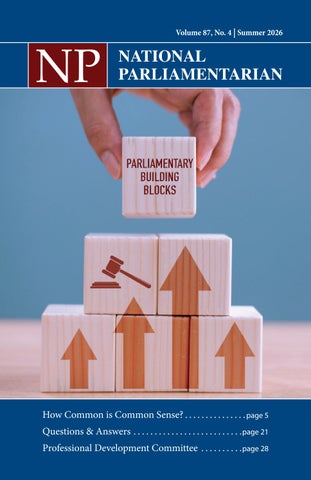
Parliamentary Building Blocks
“The
beautiful thing about learning is nobody can take it away from you . ”
— B. B. King
In a world that changes faster than any single credential can capture, the decision to keep learning is not optional . A commitment to lifelong learning ensures that we continue to practice with confidence and provide the highest level of expertise to those we serve .
Like building blocks, continuing education does more than add knowledge It reinforces the foundation, sharpens perspective, and opens the doors of opportunity . Whether you are new to the practice of parliamentary procedure or decades into it, the discipline of intentional learning signals something important— that you take your professional responsibilities seriously enough to invest in them .
Each course, workshop, or conference you attend adds another layer to your foundation . These new “blocks” don’t just sit on top of what you already know—they connect, strengthen, and expand your overall understanding . Over time, this process helps you build stronger skills . Without continuing education, skills become outdated, and the knowledge gaps widen . In contrast, those who commit to lifelong learning continue to grow .
One of the most effective ways to continue building is by attending the NAP National Training Conference in Birmingham, Alabama, August 27-30, 2026 . It offers more than just information; it provides opportunities to connect with and learn from parliamentary experts, network with peers, and gain insights from attending sessions focused on practical skills and knowledge that build your understanding . A conference environment accelerates learning, helping you stack multiple “blocks” quickly while inspiring new ideas .
If you want to enhance your leadership skills, I encourage you to attend the Virtual Leadership Conference, August 7-8, 2026 . Come prepared to learn, to connect, and to return to your units and associations equipped, energized, and ready to make an even greater impact . Your next level of excellence begins with showing up .
“Live as if you were to die tomorrow . Learn as if you were to live forever . ”
—Mahatma Gandhi
In Parliamentary Service,
Mona Y. Calhoun, PRP 2025-2027 NAP President
How Common is Common Sense?
Eli Mina, PRP
The role of a parliamentarian should go beyond being a procedural wizard who can quickly locate citations from Robert’s Rules of Order Newly Revised (12th ed .) (RONR) or other parliamentary authorities . As I have consistently discovered in forty-two years of consulting, the most valuable service you can offer your clients is that of an active listener and a problem solver .
To help solve a complex real-life problem that a client is facing, one of your most important friends is plain old common sense . As RONR 47:6 states, “…any presiding officer will do well to bear in mind that no rules can take the place of tact and common sense on the part of the chairman . ” How common is common sense? Let us look at two examples .
Example 1: Learning From Feedback
Back in the 1980s, one of my first professional assignments was to write a parliamentary opinion for a local government client on the reconsideration of an adopted motion . I researched RONR and the client’s
procedural bylaw, wrote what I thought was a well-researched opinion, and sent it to the client . I also sent him the invoice for my time and received payment within a few days . So far, so good . A couple of weeks later I contacted the client to obtain his feedback . His response was candid: “It was an impressive technical analysis, but you missed some pragmatic angles . To avoid this, you should have asked me more about the problem that needed to be solved.” I invited his detailed feedback and could see how right he was . I then wrote an updated document for no additional fee and addressed the points I had missed . I also expressed my sincere gratitude for his feedback . This experience taught me to always start my first conversation with a client like this, “Before we discuss the parliamentary aspects of this assignment, I need the full details of the problem that needs to be solved, so I can help you solve the right problem without creating a worse problem in the process . ”
Within a month, I had my first opportunity to implement this conclusion . The president of a non-profit organization called and said this, “I need your advice on a super contentious annual general meeting, but I can only afford to pay you for a one-hour pre-meeting consultation . When can we meet?”
When we met, my first request was, “Tell me about the problems that led to this annual meeting shaping up to be so contentious . ” His response was, “We have a super-wealthy member who, in essence, manages to bully the board by making his annual donation conditional on our taking on his favorite projects . After years of this, our members found out, and they are very angry . This means that our annual general meeting is shaping up to be very messy . ”
My next question was, “Are the members justified in being angry, and if so, are there measures you can take to resolve this issue now and thereby prevent a potentially messy annual meeting?” Our conversation started by generating options by which the years-long bullying of the board could be ended without losing the wealthy member’s commitment . With only fifteen minutes of the budgeted service time remaining, I said, “Let’s now talk about the upcoming annual meeting . ” My client’s response was, “I see no need to talk about the
annual meeting . This conversation gave me the tools to deal with the issues at hand and set the stage for a productive, orderly, and collegial annual meeting . ”
The above example illustrates the power of being inquisitive . My conclusion? As a professional advisor, you must resist the temptation to offer quick procedural advice until you fully understand the problems that the client faces and for which they need your wisdom and procedural expertise .
Example 2: Needing a Larger Meeting Space
A colleague told me the story of a church that was very successful in attracting and retaining members . This success brought with it a problem: The meeting hall was too small to accommodate the growing community, so the board began to examine options . They found themselves weighing two options: one was leasing a larger hall for their gatherings and services, and the other was purchasing a new building for the congregation . The board concluded that the best long-term option, without a doubt, was to purchase a building for the congregation . However, there were fears that the anticipated higher fees would cause numerous resignations, making the solution potentially more costly than the problem .
To prevent the negative outcomes, the board decided to postpone the decision and then organized a comprehensive communityconsultation program . They hired external professionals to help research options for meeting locations . They then prepared a document with a preliminary analysis of some leasing and purchasing options . For each option, the board prepared a list of pros and cons, as well as the financial commitment each option would require of each member family
The above effort was followed by a community-consultation program in which each board member met with a set number of families in their homes . They facilitated conversations about the various options and which one would best serve the congregation in both the short and long terms This initiative took about a month, and the board then convened a special general meeting to debate and vote on the option identified through the consultation process as the best path forward—purchasing a particular building .
The proposal was debated at a membership meeting and adopted,
although not unanimously . But here is the key outcome: the substantial effort to engage the community in assessing the various options made the membership meeting’s tone very positive And the best news was that not even one family abandoned its membership . Why? The reason for this success was that the board adopted an approach which was sensible, thoughtful, and visionary .
In closing, I share a light-hearted story . In the fall of 2019, I delivered a workshop for a group of about twenty local government staff . Throughout the two-day session, I kept referring to everyone’s “best friend,” which, of course, was that plain old common sense . On my flight back home, I discovered a note that one of the attendees left on my table . I unfolded the note and read it It said, “Eli, I really appreciated your focus on common-sense solutions to the problems that today’s democracies are facing. Having said that, here is some news for you: Common sense is the least common of all the senses.”
Her comment was funny and made me laugh, but I also recognized that it was both accurate and astute . NP
Eli Mina, PRP, is a Vancouver-based consultant who has served clients since 1984 as a credentialed advisor on meeting procedures, a professional presiding officer during contentious meetings, and a workshop facilitator. Eli’s clients come from municipal governments, credit unions, regulatory bodies, labor unions, indigenous communities, and the non-profit sector.
Absentee Voting
Carl Nohr, PRP
Absentee voting is voting by a person entitled to vote who is not attending a meeting or polling station in person . There are several variations . Early voting, and voting by postal mail, e-mail, or online voting platforms, allow an eligible voter to cast their own vote . Proxy voting transfers the eligible voter’s right to vote to another person . This article reviews parliamentary principles and organizational rules related to absentee voting . Depending on its form, absentee voting is an exception to one or more parliamentary principles related to membership and voting . In common parliamentary law, voting is a right of membership, which is singular, personal, and nontransferable . 1 Consistent with the nature of a deliberative assembly, this right, along with the closely related rights to debate and amend motions, is usually exercised only by those present at a regular or properly called meeting with an established quorum . 2
The opportunity to debate is fundamental to the nature of deliberative assemblies . It is the right of a minority to seek to persuade others to its point of view . Absentee voting prevents the member from contributing to and hearing debate at
a meeting . Similarly, in elections, it removes the opportunity to make or consider nominations from the floor . 3
The right to propose and adopt amendments is the keystone of the members’ power to control the actions of their organization . 4 Because absent members do not participate in debate or amend motions, it is consistent with the nature of a deliberative assembly to exclude them from voting . Also, it is a parliamentary principle that members present and voting act for the entire membership, provided the rights of the absentee members are protected by having a quorum present . 5
It is important to ensure that all voting members, whether voting in person or absent, have access to the same information on which to base their voting decisions . When there is an in-person or electronic meeting where attendees can debate, amend motions, or make further nominations from the floor, votes by attendees must not be counted together with votes from absent members who have not heard the debate, amendments, or
1 RONR (12th ed.) 1:6
2 RONR (12th ed.) 1:1
3 AIPSC (2nd ed.) 6:33-34
4 RONR (12th ed.) 12:3
5 RONR (12th ed.) 40:1
nominations . 6 If access to information varies, members are effectively voting on different questions, rendering the outcome of such a vote meaningless . There are circumstances that justify absentee voting as an exception to parliamentary principles . An organization may wish to have a vote of the full membership even though a much smaller number usually attend meetings . This could include elections, bylaw amendments, or other matters of great importance . 7 Some motions may be adopted by a majority of the entire membership; such a vote is difficult to obtain in person for most organizations . Absentee voting can also be useful when circumstances prevent in-person meetings and electronic meetings are not practical or allowed . There are two categories of absentee voting . In the first, the member retains the right to vote but exercises it outside a scheduled meeting . This includes early voting, electronic voting on online platforms, and voting by postal mail or e-mail . In the second category, the member transfers the authority to vote to another person, who then votes on the member’s behalf at a meeting . This includes the various forms of proxy voting . Early voting provides a voting opportunity for members entitled to vote but expecting to be absent from polling areas during the voting period . Provisions must be made for
uniformity in the ballots to be used and for verification of voting so that a member cannot vote more than once . Online voting platforms are readily available and can be configured to meet the unique needs of an organization . Online voting platforms can be used during both electronic and in-person meetings, and for absentee voting between meetings .
A vote by postal mail or e-mail may be useful when in-person meetings are not practical or possible . 8 It is important that the mailing list corresponds exactly to the list of eligible voters and that addresses are correct . 9 Postal mail or e-mail voting may be used for all voting members, or only for those unable to attend an assigned polling station or a meeting on a certain date . A secret ballot can be managed with special paper ballots using multiple envelopes . 10 Precise instructions must be provided . Secret voting can also be provided by e-mail or online voting platforms . 11 When there are windows of time available for voting, these must be clearly stated, and reminders should be used liberally to improve voter participation .
6 RONR (12th ed.) 45:56
7 George Demeter, Demeter’s Manual of Parliamentary Law, (Little, Brown and Company, 1969), p. 117
8 RONR (12th ed.) 45:57
9 RONR (12th ed.) 45:58
10 RONR (12th ed.) 45:60
11 RONR (12th ed.) 45:61
Absentee Voting
Proxy voting allows individuals to delegate their voting right to another person, who may or may not be a member of the organization . It is an exception to the principles that the right to vote is personal, nontransferable, and limited to members present at a regular or properly called meeting with a quorum present . It is thus incompatible with the parliamentary concept of a deliberative assembly and should not be allowed unless legislation or special circumstances require it . 12 If an organization wishes to use proxy voting, and a legislative provision allowing it is absent, it must be enabled in the bylaws . 13 If an organization wishes to prohibit proxy voting, the adoption of RONR as its parliamentary authority should be sufficient, provided neither legislation nor bylaws permit it . 14 However, if legislation states that proxies are allowed unless an organization’s bylaws prohibit them, then a specific bylaw prohibition is needed . Proxy voting should never be allowed for board meetings, as it is incompatible with a director’s personal fiduciary duties of care, loyalty, and obedience . 15
There are two types of proxy voting, differentiated by who holds the decision-making authority on how to vote . The person delegating the right to vote is called the principal, and the recipient of the voting authority the proxy . The American Institute of
Parliamentarians Standard Code uses the terms proxy giver and proxy holder . 16 In a general proxy, the principal transfers the authority to decide how to vote entirely to the proxy . In a directed proxy, the principal decides how to vote and instructs the recipient of the proxy accordingly . Both general and directed proxies may be limited in duration, in the matters of business to which they apply, and in the meetings at which they may be exercised . General and directed proxies differ in whether new information arising between the time the proxy is assigned and the time the vote is taken can influence how the vote is cast . In a general proxy, the proxy can react to new information and change the vote accordingly . In a directed proxy, the principal determines the vote; neither the principal nor the proxy can react to new information unless there is a provision for the principal to issue new instructions . A directed proxy can be used when questions are set in advance but should be avoided where new information can be anticipated before the voting time . If specific notice and relevant documentation is not received prior to a meeting, it may
12 Henry M. Robert, Parliamentary Law, (Appleton-Century-Crofts, Inc., 1923), p. 194
13 RONR (12th ed.) 45:70
14 RONR (12th ed.) 45:71, 56:49n1
15 AIPSC (2nd ed.) 6:43
16 AIPSC (2nd ed.) 6:39
be better to refrain from voting than to give a proxy . 17
Proxy votes may or may not count in establishing a quorum, depending on the rules of the organization . If the organization does not have a rule, then proxies count in establishing a quorum . 18 Depending on legislation or bylaws, serving as a proxy may be limited to members of an organization, and the number of proxies a given individual can hold may also be limited . 19
The concept of proxy voting applies to principal and alternate delegates at a convention . 20 In the absence of the original delegate, the alternate has all the voting power . This reverts to the original delegate upon his return, unless specific adopted rules state otherwise . Proxy voting may be used in legislative bodies, with limits . For example, the Senate Manual allows the use of proxy voting for committees, provided the committee has adopted enabling rules, and the absent committee member has been informed of the matter under consideration and affirmed his vote . 21 Proxy voting is not used in the parent deliberative assembly . Proxy voting in a stock company is based on the principle that share ownership includes voting rights . 22 Because the shares can be transferred, the attached voting rights can be transferred . Such rights are usually proportionate to the number of shares
owned, and hence the parliamentary principle of one member one vote does not apply . The company’s rules should state whether proxies must be shareholders themselves . Proxy voting in companies typically includes election of directors, governance matters, and executive compensation . Regardless of the type of proxy or organization, detailed rules must be in place regarding the who, what, when, where, and how of proxy voting . Rules for assignment of voting rights should be explicit as to how the proxy can be created, who is eligible to hold it, and how many proxies an individual may hold . The holder of a proxy may be a designated officer, such as the chair of the board, or a named individual . The type and duration of the proxy and the matters to which it applies must be clearly stated . The dates of meetings at which proxy votes may be used should be explicit, and whether proxies count in determining a quorum at a meeting must be clearly specified
17 M. Kaye Kerr and Hubert W. King, Procedures for Meetings and Organizations, 3rd ed., (Carswell Thomas Publishing Company, 1996), p. 34
18 AIPSC (2nd ed.) 6:47
19 AIPSC (2nd ed.) 6:41
20 George Demeter, Demeter’s Manual of Parliamentary Law, (Little, Brown and Company, 1969), p. 33
21 Senate Manual, (U.S. Government Publishing Office, 2024), Standing Rules of the Senate 26.7a
22 Henry M. Robert, Parliamentary Law, (Appleton-Century-Crofts, Inc., 1923), pp.194-195
Absentee Voting
Proxy holders have a duty to act according to instructions and within the limits of the proxy . It should be clearly spelled out in the governing documents that the proxy has a duty to exercise the proxy voting authority in the interest of the principal, and that this should be done with the skill and diligence a prudent person would exercise in managing the affairs of another . For any proxy, the principal should have confidence in the judgement and integrity of the person he intends to appoint as his proxy to be certain their instructions, if any, are followed, since there is no opportunity to verify how the proxy votes . 23 If the proxy votes in a secret ballot, they must keep the principal’s vote confidential . Proxy modification and cancellation rules are vital to avoid misunderstandings as to how and when a proxy can be changed or ended . Commonly, a proxy may be cancelled either in writing or by the principal’s attendance at the relevant meeting to cast their vote personally . If all these details are addressed in the relevant rules, proxy voting can be an effective means of increasing voter participation .
A review of the history of common parliamentary law shows that absentee voting is a relatively recent addition to voting procedures . It is not mentioned in Hatsell’s Precedents of Proceedings in the House of Commons, a principal authority on British law from 1796
that influenced the subsequent development of American parliamentary law . 24 Absentee voting is not mentioned in Thomas Jefferson’s 1812 Manual of Parliamentary Practice for the Use of the Senate of the United States, 25 Cushing’s 1845 Rules of Proceeding and Debate in Deliberative Assemblies, 26 and Robert’s 1876 first edition of the Pocket Manual of Rules of Order for Deliberative Assemblies: Robert’s Rules of Order . 27 Absentee and proxy voting are described in the 1915 fourth edition of Robert’s Rules of Order, which is the first edition of Robert’s Rules of Order Revised . 28 Further information on both topics is provided in Robert’s Parliamentary Law . 29 While absentee voting is an exception to parliamentary principles,
23 Floyd M Riddick, Miriam Butcher, Riddick’s Rules of Procedure, (1985), pp. 155–156
24 John Hatsell, Precedents of Proceedings in the House of Commons, 3rd ed., (1796)
25 Thomas Jefferson, A Manual of Parliamentary Practice: for the Use of the Senate of the United States, (Joseph Milligan and William Cooper, 1812)
26 Luther Cushing, Rules of Proceeding and Debate in Deliberative Assemblies, (William J. Reynolds,1845)
27 Henry M. Robert, Pocket Manual of Rules of Order for Deliberative Assemblies: Robert’s Rules of Order, (S. C. Griggs and Company, 1876)
28 Henry M. Robert, Robert’s Rules of Order Revised, (Scott, Foreman and Company, 1915), sec. 46:16,18
29 Henry M. Robert, Parliamentary Law, (Appleton-Century-Crofts, Inc., 1923), pp. 194-196, 294-295
it can be effective in meeting the needs of organizations in certain circumstances . Permission must be granted in legislation or bylaws, and details provided in rules . There are several forms of absentee voting . Early voting may improve absenteeism at polls . Postal and e-mail voting, as well as online voting platforms, can enable more members to participate
in voting . Proxy voting moves voting authority from one member to another individual and can allow more members to participate in a vote than can attend a meeting . To achieve the benefits of absentee voting, the risk inherent in deviating from parliamentary principles can be mitigated through attention to detailed rules . NP
Carl Nohr, PRP, joined NAP in 2013 and became a PRP in 2018. He has served as a director, chair, vice chair, secretary and speaker for several associations. He has served in NAP as a director-at-large and vice president. He is a student of good governance, meeting management, and professional presiding, and loves to share his knowledge and experiences through workshops and articles.
NAP is approaching a historic milestone— 100 years in 2030!
100TH Anniversary Celebration
The 100th Anniversary Celebration Committee is officially underway and wants to hear from you!
Scan the QR code or use the following address to help us shape a celebration worthy of this legacy by submitting your ideas.
www.parliamentarians.org/100ideas/
Robert’s Third Law of Motions A more effective teaching tool
Lorenzo R. Cuesta, PRP
Newton’s Third Law of Motion (action-reaction) is well illustrated in Robert’s Rules of Order . For every parliamentary motion, there is an equal and opposite reaction motion . The ideal teaching plan would be to interactively present the action side of a concept and then immediately present the reaction . Teaching both sides as a single, integrated premise ensures that parliamentary procedure is learned fully and coherently
Generally, the most common approach to teaching parliamentary procedure is to focus on the standard descriptive characteristics of every motion . Though this thorough approach is both comprehensive and logical, it is neither practical to the learning process nor meaningful to the learner . The objective of this article is to offer a bold teaching approach which introduces a conventional parliamentary concept and contrasts it with another closely related concept . The learner will encounter the substantial yet opposite impacts that the concepts have upon each other In this method, every characteristic of each concept carries meaningful, yet complementary consequences, for the other . The result is less memorization . RONR has many concepts that can be learned in this fashion . Let us consider a few parliamentary concepts and some of the associated action-reaction options .
1. “If there is no objection…”
Action: An easy way for a better-informed member to evade resistance from less-informed members is to resort to the assumed motion approach by saying, “If there is no objection, we shall adopt a motion to . . . ” This adopts the motion without allowing for debate or requiring a vote . RONR (12th ed .) 4:59 .
Reaction: The way to force deliberation and voting on the motion is to call out, “I object . ” No explanation is required . The chair must then follow the six steps required by Robert’s Rules of Order to handle a motion . 4:59 .
2. Call for the Orders of the Day
Action: An assertive member will arm himself with this privileged motion to exploit the adopted agenda’s time limits to thwart the opponents’ opportunities to have their motions considered . 18:1 .
Reaction: There are three defenses: adopt a motion to set aside the orders of the day, adopt a motion to Extend Limits of Debate, or adopt a motion to Suspend the Rules . 18:4(7) .
3. False statements during debate
Action: During debate assertive members may make self-serving statements that are not easily verifiable . The speaker expects that no one will challenge the statements . 4:30, 43:21 .
Reaction: All officers and members owe it to the association to refute or correct any potentially untruthful statement made in debate . Anyone in doubt should interrupt the speaker with the applicable incidental motions Parliamentary Inquiry (33:3) or Request for Information . 33:6 .
4. Chair’s ruling
Action: Too often a less than completely neutral chair will innocently interpret the rules in favor of their interests . 3:9 .
Reaction: All members need to be familiar with the Point of Order incidental motion . 23:1 . Additionally, the chair could be replaced for the duration of the meeting . If the chair is an appointed or elected chair pro tem, a simple motion would vacate the chair and allow filling the vacancy . 62:11 . If the chair is not an appointed or elected chair pro tem, a motion to Suspend the Rules to deny the chair the authority to preside is required . 62:12 .
5. Call the Previous Question on all pending questions
Action: Cutting off debate favors the domineering members as they are typically the ones who have already spoken . In cases where more than one question is pending (e .g ., postpone, refer, amend, main motion), intense opposition to any one question would not readily develop . 16:1 .
Reaction: Members need to be aware that while the motion Previous Question is not technically amendable, it has a special characteristic that is like amendment . Several versions of the motion can be made to end debate on an entire series of pending motions, on a portion of the series, or only the immediately pending motion . Opportunity for discussion could thus be ensured . 16:5(6) .
6. Division of a Question
Action: Often a member may propose a motion which contains several parts, one of which may be a less desirable motion lumped into the verbiage to hide it from the members . 27:1 .
Reaction: A member must verify that if the parts of a motion are related but can stand alone, the motion can be divided into separate motions . A majority vote would divide the question . Each part would then be considered as an independent motion . 27:1 . Additionally, if two parts are not related, a demand by one member will force the parts to be considered as independent motions . 27:10 .
7. A motion is defeated
Action: The opponents of the defeated motion insist that through the negative vote the body has voted to prohibit the action proposed by the defeated motion .
Reaction: The members must understand that a negative vote has approved nothing, particularly not the adopting of the opposite of what the defeated motion proposed . Furthermore, some defeated motions can be renewed at the next meeting, or even at the same meeting, so long as there has been progress in business or debate . 38:6-7 .
8. Refer a motion to a committee
Action: A new motion is not in order if it conflicts with a motion that has been referred to a committee because the referred motion is still within the control of the assembly . 10:26(5) .
Reaction: Once the referred motion has been made the pending question by discharging the committee, it may be amended to incorporate the details of a new motion . This requires a majority vote if the committee presents a partial report or fails to report as instructed, or a 2/3 vote regardless of the committee’s progress . 36:4(7) .
9. The finality of a vote
Action: A valid vote on a properly handled motion is final . 4:49 .
Reaction: Those who voted on the prevailing side can move to Reconsider the vote on the day it was taken if it is a one-day meeting . In a session or convention of more than one day, Reconsider can be moved the day of the vote or the succeeding day . 37:1 . At any time, anyone may attempt to repeal the decision with the motion to Rescind or modify an ordered action with Amend
Something Previously Adopted . 35:1 .
10. It’s the rule
Action: Rules must be complied with . 2:8(4), 8:14 .
Reaction: Some association rules may provide for their own suspension or amendment For the duration of a meeting, rules of order that pertain to parliamentary procedure and special rules of order may be suspended by a 2/3 vote with some limitations . 25:7,14 . A standing rule that does not pertain to parliamentary procedure can be suspended by a majority vote . 25:15 .
11. Announcement of the vote
Action: The winning side is announced based on the chair’s assessment of the vote . 4:49 .
Reaction: A single member can demand that a vote be taken in a more precise manner by calling Division . 39:1 . Or a member who voted on the prevailing side may move to Reconsider the vote . 37:1 . Before or at the next regular meeting, a majority vote may order a recount of any election or ballot vote . 45:41 .
12. Abstain:
Action: An elected member abstains and justifies his failure to serve his constituents by pointing out that Robert’s Rules of Order does not compel a member to vote . 45:3 .
Reaction: In some organizations, governing documents suggest that representatives are elected to advance the interests of their constituents Abstaining from voting dismisses their constituents’ voices . Bylaws and special rules of order supersede Robert’s Rules of Order . 2:12, 16 .
Instead of teaching by having students memorize the standard descriptive characteristics of each motion, this article offers an alternative teaching approach that emphasizes the dynamic power of parliamentary procedure by focusing on the opposing forces present in every situation . NP
Lorenzo
R. Cuesta, PRP, is a Past President
of the California State Association of Parliamentarians. He has been teaching parliamentary procedure for twenty-seven years. He is convinced that telling is not teaching, listening is not learning, and only enlightening is educational.
Either/Or
David Mezzera, PRP
On your paper, create nine blanks:
Then answer each question and place a letter into each successive blank based on the better answer to each question in order .
1 . If the vote required to adopt the Previous Question is always two thirds, put the letter E in the first blank; but if it can on rare occasions be adopted just with a majority, then put the letter S in the first blank .
2 If a member may sometimes call out “abstain” during a particular vote, put the letter X in the next blank; but if a member should never call out “abstain,” then put the letter T .
3 . If an incidental main motion to Stand at Ease appears in RONR (12th ed .), put the letter U in the next blank; but if there is no such motion, then put the letter C .
4 . If the privileged motion to Recess is adopted, and the recess must begin immediately, put the letter E in the next blank; but if the recess doesn’t necessarily have to begin immediately, then put the letter D .
5 . If the motion to Take from the Table may only be made at the same session at which it was laid on the table, put the letter Y in the next blank; but if it may also be taken from the table at the next monthly meeting, then put the letter L .
6 . If an officer gives a report which contains a recommendation and the officer may follow up by moving its implementation, then put the letter M in the next blank; but if the officer may not make the motion to adopt their own recommendation, then put the letter L .
7 . If the motion to Amend Something Previously Adopted has no time restrictions on when the motion may be made, put the letter O in the next blank; but if there are certain restrictions on the timing of this motion, then put the letter E .
8 . If there are two categories of ordinary committees; special (or ad hoc) and standing (or select), put the letter R on the next line; but if this split of categories of committees is not correct, then put the letter N .
9 . If a Main Motion takes precedence over nothing, put the letter T on the last blank; but if a Main Motion can take precedence over selected incidental motions, then put the letter E .
Answers are on page 26.
David Mezzera, PRP, is a past president of the California State Association of Parliamentarians, a past District Eight Director, and a past chair of the NAP Educational Resources Committee.
Learning from Mistakes
Beverly Przybylski, PRP
Scenario #1
Our president says that minutes are an historical record and do not require a motion to approve . She asks for corrections but doesn’t announce that the minutes are approved . Is this a mistake? Can we learn from this?
Scenario #2
Our club ends its meeting year with the installation of new officers in June, following several monthly meetings to elect the nominating committee, receive its report, and hold elections . Recently the timing was inconvenient, and the club wanted to conclude everything by the May meeting, a month earlier than required in our bylaws . Therefore, the club arbitrarily decided to change the timing of all these steps to suit its needs this year Was this a mistake? Can we learn from this?
Scenario #3
We use voting cards to vote, and during a recent meeting the chair interrupted a delegate who had been recognized to speak, ruling that she was ineligible to debate due to the absence of her voting card . The chair knew the member was a delegate . Was this a mistake? Can we learn from this?
Answers are on page 27.
Beverly Przybylski, PRP, began studying parliamentary procedure when she was faced with taking on a leadership role in a large organization. She joined NAP in 2007 and has been a PRP since 2011. She serves local, state, national, and international organizations as a parliamentarian, bylaws consultant, and presiding officer. She recently completed two terms as president of the Oregon Association of Parliamentarians and now serves as treasurer. She has served two terms as president of the Rose City Unit of Parliamentarians and presently serves as the secretary/treasurer. She also serves on the board of the Washington State Association of Parliamentarians as the MAL representative.
&Questions Answers
The intent of this column is to provide general answers or advice (not formal, official opinions) about the questions asked . The answers are based on the most recent edition of Robert’s Rules of Order Newly Revised, unless otherwise indicated, and do not take into account such governing authorities as statutes, bylaws, adopted special rules of order, other parliamentary authorities, or earlier editions, except as specifically mentioned . The abbreviations used in these questions and answers are explained in National Parliamentarian®, Vol . 87, No . 1, Fall 2025, p . 17 .
Questions should be e-mailed to npquestions@nap2.org.
Effective Date of Amendment to Bylaws
QQUESTION
Our organization recently amended the bylaws, providing that candidates for elected offices may not serve more than two consecutive terms in the same office. The bylaw amendment was adopted. Now, as the election for officers is approaching, there is a difference of opinion on who may seek office.
One group of members maintains that anyone who served in a particular office during the two most recent terms (two consecutive terms) is, under the bylaw amendment just adopted, not eligible to be elected to the same office.
The other group of members feels that the new bylaw amendment restriction on serving in a particular office does not affect any past service in office. This faction believes that anyone may be elected to an office regardless of previous offices held or number of terms served.
Which group has the correct interpretation of the newly adopted bylaw?
ANSWER
“An amendment to the bylaws goes into effect immediately upon its adoption unless the motion to adopt specifies another time for its becoming effective, or the assembly has set such a time by a previously adopted motion . ” RONR (12th ed .) 57:15 According to RONR, while the amendment is pending, a motion can be made to amend the enacting words of the motion to amend by adding a clause such as: “…with the proviso that [or, “…provided, however, that”] this amendment shall not go into effect until after the close of this annual meeting . ” Or, while the amendment is pending, an incidental motion can be adopted that, in the event of the amendment’s adoption, it shall not take effect until a specified time . There is no indication that the assembly of this organization specified an effective date for the amendment that was adopted; so, for the upcoming election, anyone
&Questions Answers
who served in a particular office during the two most recent terms (two consecutive terms) would not be eligible to be elected to the same office . 57:15 .
Other points to consider
“Amendments to the bylaw article on officers may raise difficulties in relation to the time at which adopted changes take effect, unless special care is taken . A society can, for example, amend its bylaws so as to affect the emoluments and duties of the officers already elected, or even to abolish an office; and if it is desired that the amendment should not affect officers already elected, a motion so specifying should be adopted before voting on the amendment, or the motion to amend can have added to it the proviso that it shall not affect officers already elected . ” 57:16 .
“It is important to note that, although the time when a bylaw amendment takes effect can be delayed by the assembly, the amendment becomes part of the bylaws immediately upon adoption If the amended bylaws are printed, a footnote or similar device should indicate that the amended language is not yet in effect and, if language was removed by the amendment, the text of that provision should be given if it is still applicable in the organization . ” 57:17 .
Approval of Minutes by a Committee
QQUESTION
A national organization meets only twice per year—once in April for its mid year meeting and once in September for its annual meeting. No regular meeting is held within a quarterly time interval. The recording secretary prepares the minutes of each meeting and sends them to a two person or three person committee appointed by the president to review them for corrections before they are distributed to the executive board and state presidents.
It has long been the custom of this organization for the president to present the minutes of the immediately preceding meeting for approval at the next meeting. For example, at the September 2025 annual meeting, the minutes of that meeting were scheduled for approval at the April 2026 mid year meeting. This practice has been followed for years.
At the April 2026 meeting—which was held virtually—the national president placed on the agenda the approval of the September 2025 annual meeting minutes, which had already been reviewed by a committee and distributed four to five months earlier. The question has now arisen: since those minutes were from an annual meeting, should they instead not be brought up for approval at the next annual meeting in September 2026?
A related question follows: must the national president wait until the April 2027 mid year meeting to present the minutes of the April 2026 mid year meeting for approval? Or would it be more efficient at the September 2026
&Questions Answers
annual meeting to ask first for corrections to the April 2026 mid year minutes, approve them, and then ask for corrections to the September 2025 annual meeting minutes? This latter approach appears more logical than the long standing custom.
ANSWER
“Minutes of one annual meeting should not be held for action until the next one a year later . ” RONR (12th ed .) 9:22 .
RONR further provides that when the next regular business meeting will not occur within a quarterly time interval, and the session does not last more than a day, “the assembly should authorize the executive board or a special committee to approve the minutes submitted by the secretary . ” 48:12 .
In this national organization, the April mid year meeting and the September annual meeting are not held within a quarterly time interval . Although the organization’s custom has been for the president to appoint a small committee to review the minutes, the assembly should formally authorize such a committee to correct (if necessary) and approve the minutes .
Once a committee has been properly authorized to approve the minutes of both the April mid year meeting and the September annual meeting, the president no longer needs to present the minutes of the previous meeting for approval at the next session . Instead, the president may simply call on the special committee chair to report that the minutes have been approved .
Importantly, “the fact that the minutes are not read for approval at the next meeting does not prevent a member from having a relevant excerpt read for information, nor does it prevent the assembly from making additional corrections, treating the minutes as having been previously approved . ” 48:12 .
The Role of the President in an Election
QQUESTION
The Aurora Gardens Senior Civic Association, founded in 2005, meets on the third Wednesday of each month at noon. Although the association’s bylaws designate Robert’s Rules of Order Newly Revised as its parliamentary authority, the members generally pay little attention to the bylaws and tend to follow the practices of other organizations to which they belong. At the annual election of officers, held during the November meeting, the president announced that—“in the interest of impartiality”—she was authorizing the nominating committee to conduct the election. Because the chair of the nominating committee had no prior experience as a presiding officer, the president provided her with a script to follow.
continued
&Questions Answers
At the meeting, the nominating committee chair delivered her committee’s report, then proceeded to call for nominations from the floor and subsequently closed nominations. As there was only one nominee for each office, the presiding officer declared each nominee elected by acclamation, consistent with the bylaws. This procedure struck me as highly irregular, since in every other organization in which I have served, the president has always conducted the election of officers. I understand that the president may not appoint or serve on the nominating committee, but is that not sufficient to ensure impartiality? Was the president correct in relinquishing the chair to the nominating committee chairman for the conduct of the election?
ANSWER
First, “the presiding officer of an assembly—especially of a large one—should be chosen principally for the ability to preside . ” RONR (12th ed .) 47:6 . One of the president’s major duties is “to state and to put all questions that legitimately come before the assembly as motions or that otherwise arise in the course of proceedings…and to announce the result of the vote . ” 47:7 . These duties plainly include the conduct of elections .
The American Institute of Parliamentarians’ Standard Code of Parliamentary Procedure (AIPSC) (2nd ed .) 27 .18 reinforces this point: “The president does preside during an election even when he or she is a candidate for office ” In other words, the mere fact that the president may have an interest in the outcome does not disqualify the president from presiding . The actual language and procedure to be employed by the chair in conducting the election is prescribed in RONR (12th ed .) 46:18-21 .
The nominating committee was under no obligation to conduct the election . “A nominating committee is automatically discharged when its report is formally presented to the assembly, although if one of the nominees withdraws before the election, the committee is revived and should meet immediately to agree upon another nomination if there is time . ” 46:17 .
Furthermore, the nominating committee chair in this situation does not appear to have been selected as a chair pro tem on the basis of her ability to preside— indeed, she had no experience in that role That fact alone weighs against her appointment, since a chair pro tem must be chosen for competence in presiding, not for symbolic impartiality .
“On certain occasions—which should be extremely rare—the presiding officer may believe that a crucial factor relating to …a [pending] question has been overlooked and that his obligation as a member to call attention to the point overweighs his duty to preside at that time To participate in debate, he must relinquish the chair; and in such a case he turns the chair over: a) to the
continued
&Questions Answers
highest-ranking vice-president present who has not spoken on the question and does not decline on the grounds of wishing to speak on it; or b) if no such vice-president is in the room, to some other member qualified…” 43:29 .
No such “crucial factor” exists in the conduct of an election of officers . If the president believed she needed to relinquish the chair in the interest of impartiality, the proper course would have been to turn the chair over to the highest ranking vice president present or, in their absence, to another qualified member—not to the inexperienced chair of the nominating committee .
This president appears to have acted with the association’s best interests in mind when she chose to relinquish the chair . In highly political or competitive environments, however, this practice can be risky . As RONR cautions, “The practice in some organizations of permitting the chairman of a committee to preside over the assembly or put questions to vote during the presentation and consideration of the committee’s report violates numerous principles of parliamentary law relating to the chair’s appearance of impartiality and the inappropriateness of his entering into debate, not to speak of the regular presiding officer’s duty to preside . ” 47:12 .
Once the president relinquished the chair, she assumed all the rights of membership—without the impartiality constraints placed on the presiding officer—including the rights to nominate additional candidates and to vote in a non-ballot election .
The prohibition against the president’s involvement with the nominating committee is sufficient to ensure the president’s impartiality . “The president, president-elect, and immediate past president should not appoint any members of the nominating committee, serve on the committee, give the committee instructions, or take any part in its deliberations, although they may provide information upon request . This requirement protects both the officer and committee from accusations of favoritism or self-perpetuation . ” AIPSC (2nd ed .) 26 .19 .
In answer to your question, it was incorrect, unnecessary, and, in general, potentially risky for the president to relinquish the chair for the conduct of the election to the nominating committee chair .
Questions & Answers Research Team
Ronald Dupart, PRP, Chair Rosalie Stroman, PRP Al Gage, PRP, Parliamentarian
Answer Key
Either/Or from page 18
If you got all of them right, give yourself an E X C E L L E N T rating . If you got all of them wrong, then you might have to S T U D Y M O R E! Here are the RONR references for the better (and not so good) answers .
1 . The Previous Question must always be adopted with at least a two-thirds vote [16:5(7)] . Hence E and not S .
2 . A member may vote “abstain” while responding to a roll call vote [45:48] . Hence X and not T .
3 . Stand at Ease is not a motion at all . It is an action taken by the presiding officer to pause for a moment without taking a recess [8:2(4)] . Hence C and not U .
4 . If the privileged motion to Recess is adopted, the recess is to begin immediately [20:2] . Hence E and not D .
5 . Removing a motion that was placed on the table may be made at the same session or the next regular meeting (if it is within a quarterly time period [34:3]) . Hence L and not Y .
6 . In a committee report with a recommendation, the person giving the report may move the adoption of the recommendation . For an officer’s report, the reporting officer may not move the adoption of the recommendation [41:14] . Hence L and not M .
7 . The most obvious time restriction to making the motion to Amend Something Previously Adopted would be if the motion previously adopted had already been partly (or fully) implemented [35:6(b)] . Hence E and not O .
8 . There are two categories of ordinary committees: special committees, which includes select and ad hoc committees, and standing committees, which are not considered select committees [50:10] . Hence N and not R .
9 . A Main Motion takes precedence over nothing—it cannot be moved while any other motion is pending [10:8(1)] . Hence T and not E .
Answer #1
Answer Key
Learning from Mistakes from page 19
The president is partly correct; minutes are a historical record, but they need to be approved . “The official record of the proceedings of a deliberative assembly is usually called the minutes . ” RONR (12th ed .) 48:1 . “A formal motion to approve the minutes is not necessary…” 41:10 . But when the minutes are presented, and after calling for and processing corrections, the president must announce the minutes approved—adding, as appropriate, “approved as written” or “approved as corrected ” Then, according to 48:14, the secretary writes the word “Approved” and the date . Until the minutes are approved, they do not become “…the official record of the proceedings of the society…” 41:12 .
Answer #2
This was a mistake According to 41:20, if the bylaws require that certain business be considered at a specific meeting, this is considered a special order . It is included on the agenda as such and taken up at the appropriate time . But if the club does not want to—or cannot— consider that business when it becomes due, a motion to Postpone to a Certain Time may be adopted while the business is pending . This motion will delay the action “within limits, to a definite session, day, meeting, or hour, or until after a certain event . ” 14:1 . This subsidiary motion works to delay business, but there is no method, other than to amend the bylaws (according to the proper procedure in the club bylaws), to take up the business before the time it is scheduled . More flexibility in the bylaws may avoid similar problems in the future .
Answer #3
Yes, the ruling was in error . While voting cards may be authorized as a special rule of order or convention rule to indicate voting preference (45:16), the absence of a voting card is not a valid basis for denying a member’s right to debate . This restriction was particularly egregious because the chair knew the member was entitled to speak . A Point of Order should have been raised immediately to correct the breach .
The 2025-27 Professional Development Committee (PDC), under the leadership of Regenia Moore-Lee, PRP, has focused on the launch of three exciting program initiatives designed to actively support NAP members pursuing the Registered Parliamentarian or Professional Registered Parliamentarian credential . The three initiatives are: ParliPrep, ParliPartners, and Presiding Experiences .
ParliPrep delivers a comprehensive study of parliamentary procedure for credentialing exam preparation.
This 17-week advanced parliamentary training series is designed to help members prepare for the credentialing exams . This year’s program, for 455 registrants, was effectively delivered from January through April 2026, under the leadership of ParliPrep Coordinator, Lucy H . Anderson, PRP. Each session was specifically curated to focus on the standards and requirements for the RP and PRP exams as outlined in the updated NAP Criteria for Credentialing and the Body of Knowledge . Each ParliPrep session was presented by parliamentarians well known for their teaching skill and parliamentary expertise, including a descendant of Henry M . Robert, members of the RONR (12th ed .) authorship team, and current and former NAP board members .
ParliPartners provides opportunities to earn CEUs for group mentoring.
ParliPartners was developed to enhance individual member readiness for credentialing via mentoring while creating stronger units . According to NAP’s Mentoring Coordinator, Kelly Lucas, PRP, NAP has received requests from over 180 members who desire to have a mentor . There are currently 50 NAP mentors, and ParliPartners seeks to increase the pool of available mentoring resources
by including NAP units, associations, and districts as mentor sponsors (ParliPartners) . CEUs are offered to mentors enrolled in ParliPartners . This new initiative is in its pilot stage with three participating groups . A launch is expected in the fourth quarter of 2026, with details to be announced at the upcoming NAP National Training Conference . Kudos to the Green Gavel Electronic Unit, Parliamentarians of Kent County, and Steve Cook, PRP, for their participation in this new initiative .
Learn to Preside with Ease in Presiding Experiences. Presiding Experiences is a culminating workshop designed to provide credentialed members who have successfully completed the ParliPrep series with the opportunity to understand the key attributes of effective presiding, review presiding scenarios, and practice advanced presiding . Presiding Experiences consists of a supportive, virtual half-day workshop featuring small groups .
This new PDC initiative, coordinated by Sandy Olson, PRP, is being piloted in July 2026, with initial funding provided by the NAP Education Foundation .
For additional information about these initiatives, feel free to contact us at pdc@nap2.org or mentoring@nap2.org.
NAP 2025-2027 Professional Development Committee:
Regenia Moore-Lee, PRP, Chair
Lucy H. Anderson, PRP
Kelly L. Lucas, PRP
Esther A. Heller, PRP
Tyna D. Davis, PRP
Kamala D. Allen, PRP
Carole R. Albright, PRP
NAP Bylaws, 2025, Art. X, Sec.1H
Lavon Moore, PRP
Sandy Olson, PRP
Vice President C.J. Cavin, PRP –Board Liaison
President Mona Calhoun, PRP –ex officio member
NAP Operational Policies and Procedures Manual (NAPOPP), July 2025, 10.7.
Mutiny on the high seas –when Captain Bligh is in the chair!
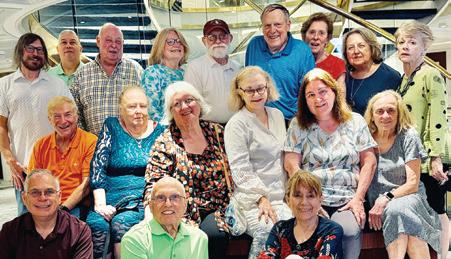
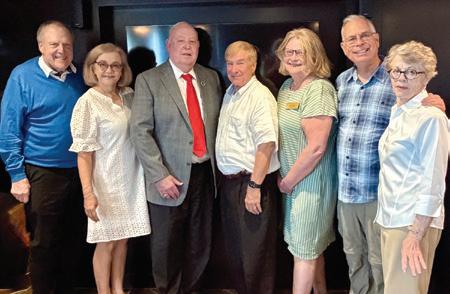
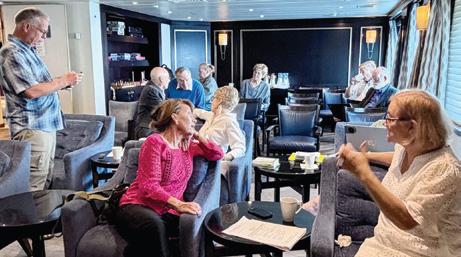
Are you one of the newest members of the “Order of the Ditch”—that distinguished group of travelers who have traversed the Panama Canal? If you participated in the NAP Educational Foundation cruise on the Star Pride from Costa Rica to Panama, then yes, you are! Attendees enjoyed an eight-day voyage starting on the Pacific Ocean side, stopping at the following ports: Quepos and Golfo Dulce, Costa Rica, and then Isla Parida and Balboa, Panama . We transited the Panama Canal, concluding our journey in Colón, Panama, on the Atlantic side . Along the way, we visited ports rich in
Elaine Milam Vetter
culture and history—destinations that offered experiences and memories sure to last a lifetime!
A day-long educational workshop called the NAPEF Professional Development Cruise – “Mutiny on the high seas – when Captain Bligh is in the chair” was conducted by experienced and knowledgeable NAP instructors . The topics had a nautical theme and covered a wide range of subjects of interest to all experience levels . The training awarded seven CEUs, including one for Professional Responsibility . Linda Lawson monitored attendance while Jim Lawson served as timekeeper for
presentation was worth its bounty in gold!
Excursions at the ports offered us an opportunity to see historic sites, interesting people, and observe animals
Ready for an adventure? The NAP Educational Foundation has already started planning for the 2027 cruise and educational event . Plan to join us!
Ranking Motions and Raising the Bar: My Road to RP
Sonya C. Ponds
A Journey Charted
In the summer of 2025, I passed the National Association of Parliamentarians® (NAP) Membership Examination . I allowed myself a moment of satisfaction, but almost immediately I knew I needed to raise the bar . I set my sights on earning the Registered Parliamentarian (RP) credential by January 2027 . At first, the goal felt energizing . What could be more inspiring than pursuing mastery in a discipline grounded in fairness and orderly deliberation? Then I reviewed the performance expectations in the NAP Criteria for Credentialing . They were serious— very serious NAP, as it turns out, is not impressed with enthusiasm alone . The RP standard requires more than familiarity with the rules . It demands composure, precision, and sound judgment when circumstances shift and a room is waiting for clarity . I suspect I am not the only member who has read those expectations and felt both inspired and slightly ill-equipped . In that moment, I understood that this journey would require fluency, not just confidence .
Appreciation for My Starting Point
My interest in parliamentary procedure began before credentialing was even considered; quite frankly, I did not know it existed . It began with watching viral city council meetings online . I found them fascinating and, at times, concerning . When meetings were well run, participants felt heard . When they were not, frustration grew into chaos . I began to see that parliamentary procedure was not about technical superiority . It was about protecting fairness and creating space for thoughtful decision making .
Claiming My Compass and My Time
With that purpose in mind, I committed to serious preparation . My RP study plan was intentionally layered because I knew this credential requires more than reading alone . I reviewed RP prep videos through NAP University to reinforce concepts and learn how experienced parliamentarians approach complex questions . I enrolled in ParliPrep and ParliLab to take a deeper dive into key topics, test my understanding, and practice applying the rules when the facts shift . My copy of Robert’s Rules
To further move from study to application, I am presenting on the basic concepts of RONR to my non-collegiate sorority and Toastmasters groups . Researching and teaching the fundamentals helps me discover what I truly understand, what still needs work, and what sounds much easier in my head than it does out loud . The questions and curiosity of my peers become additional motivation to immerse myself in my studies . Recognizing that mastery thrives in community, I joined the SartwellTunstall and the eNAP Units and attended as many webinars as possible throughout my district and others . Each discussion offers insight and practical wisdom . Even Quizlet flashcards fill spare moments throughout the day . My next steps also include joining a live study group and securing an NAP mentor who
It Takes, Marks the Spot
The statistics make clear that earning the RP credential is challenging . I know it may not happen on the first attempt . Still, I am willing to try and, if necessary, try again . This pursuit is not simply about adding letters after my name . It is about facilitating those quiet moments when a member understands the process and gains the confidence to speak . It is about helping presiding officers navigate tension with clarity . It is about ensuring that quieter voices are not lost in disorder . Meetings shape decisions . Decisions shape communities . When meetings are fair and orderly, voices rise . That is worth the effort . January 2027 is not merely a date . It is a commitment . I intend to be ready and, more importantly, worthy of the responsibility the credential represents .
An Alabama native now living in Maryland, Sonya C. Ponds is a workforce development leader, trainer, and counselor with a PhD in Counseling and Psychological Studies from Regent University. She designs engaging learning experiences that help individuals and organizations grow with clarity and purpose. Her work is grounded in her research on belongingness and its impact on growth and development. Sonya is known for creating spaces where people feel seen, supported, and challenged to rise beyond simply surviving toward thriving. She believes her life’s purpose is to help adult learners move from optimal to phenomenal through the power of curiosity and authentic connection.
NEW REGISTERED PARLIAMENTARIANS*
NAP congratulates the following members for attaining the status of Registered Parliamentarian:
Joseph Henchman (DC) Donna Kosicki (GA) Eliza Kragh (MT)
SILENT GAVELS*
Yvonne Odimgbe (TX) Christopher Wright (WA)
NAP remembers our members who have passed from our midst; may they rest in peace: Martha J Haun (TX) Glenda Peters (OR)
NEW MEMBERS*
Alicia Agnew (PA)
Chelsea Alionar (OR)
Gwen Anderson Warren (GA)
Suzanne Andrego (NM)
Gabrielle Au (ON)
Deborah Baber (MI)
Candace Bacchus (MD)
Adrian Bankhead (CA)
Venetia Barnes (FL)
Adele P Barthe’ (FL)
Mario Bataille (FL)
Robyn Biggar (BC)
Didi Boynton Swilley (GA)
Heather Bradman (FL)
Thelma Brooks (NC)
Janice Brown (NY)
Simone Butler (AL)
Arve Carter (NC)
Lynard Carter (FL)
Stacy Carter (MD)
Alan Church (ID)
Dawn Corporan (MI)
Richard Creecy (IA)
Alice A Cryer-Sumler (Electronic)
Dhruv Dhawan (BC)
Tara Douglas (NC)
Helena Duncan (MD)
NAP welcomes our new members:
Jernai Ellis (VA)
Caleb Ferguson (WV)
George Fouras (CA)
Carmen Frohman (MI)
Christian Galapon (HI)
Connie Glaze (VA)
Treda Grayson (MD)
Mariko Hama (CA)
Shakeia Hampton (SC)
Michelle Heaton (CA)
Hilda Heflin-Miller (AL)
Christy Hicks (DC)
Elliott Higgins (TX)
Joel Hondorp (MI)
Jari Christopher Honora (LA)
Kathy L Horton (FL)
Joseph Housey III (MD)
Alonzo Ingram (SC)
Kenyatta Jarrell (GA)
Tabitha Jefferies (MD)
Helen Jimmerson-Johnson (NC)
Shyanne Jones (KS)
Tameica Jones (SC)
Te’Nisha Jones (IL)
Harry Khanna (VA)
Devonna Klaassen (AB)
Jonathan Kyle (WV)
Robert Lanou (FL)
Jayna Lauer (FL)
John Lawless (WA)
Rita Lawless (WA)
Joanna Lewis-Lockridge (TX)
Tiffanee L Lymore (IL)
Melanie Mason-Spence (OK)
Alexander Mayben (WA)
Alia McCants (NY)
Kevin McCarter (LA)
Michael McCormick (CO)
Yvonne McGhee (DC)
Matt McIsaac (AB)
Anya McVean (BC)
Matthew Moore (NY)
Megan Mraz (MI)
Wilf Mulder (BC)
Sia Nyorkor (OH)
Elizabeth O’Dell (MI)
John Ojeifo (Electronic)
Thomas O’Mahar (NV)
Daryl Parks (IL)
Paula Peek Roberts (GA)
Alison Perera (WA)
Olivier Prat (Electronic, Europe)
Courtney Richardson (DE)
Caroline Richardson Mahaffey (SC)
Asha Rizor Geneus (DC)
Darell Robinson (AL)
MJ Robinson (NY)
Chuck Sabatka (OK)
Moein Sadrkhani (TX)
Katherine Sakkis (FL)
Elaine Sampson (WV)
Ana Schwab (NV)
Matt Seel (KY)
Briar Sexton (BC)
Chelsea-Anne Shields (ON)
Diana Shiplet (WA)
Tayneata Starr (MI)
Lisa Yvonne Stephens (GA)
Allison Tarpley (GA)
Christopher Turan (TX)
Shirley Wales (MD)
Catie Wall (NC)
Fred Wallace (MD)
Jerrold Walton (PA)
Tammy Welter (WI)
Suzanne Whallon (PA)
Shawn Williams (NJ)
Darius Wilson (TN)
Valerie Wrice (SC)
Marilyn Young (OK)
Teena Ziegler (AZ)
* For the period February 1 through April 30, 2026