
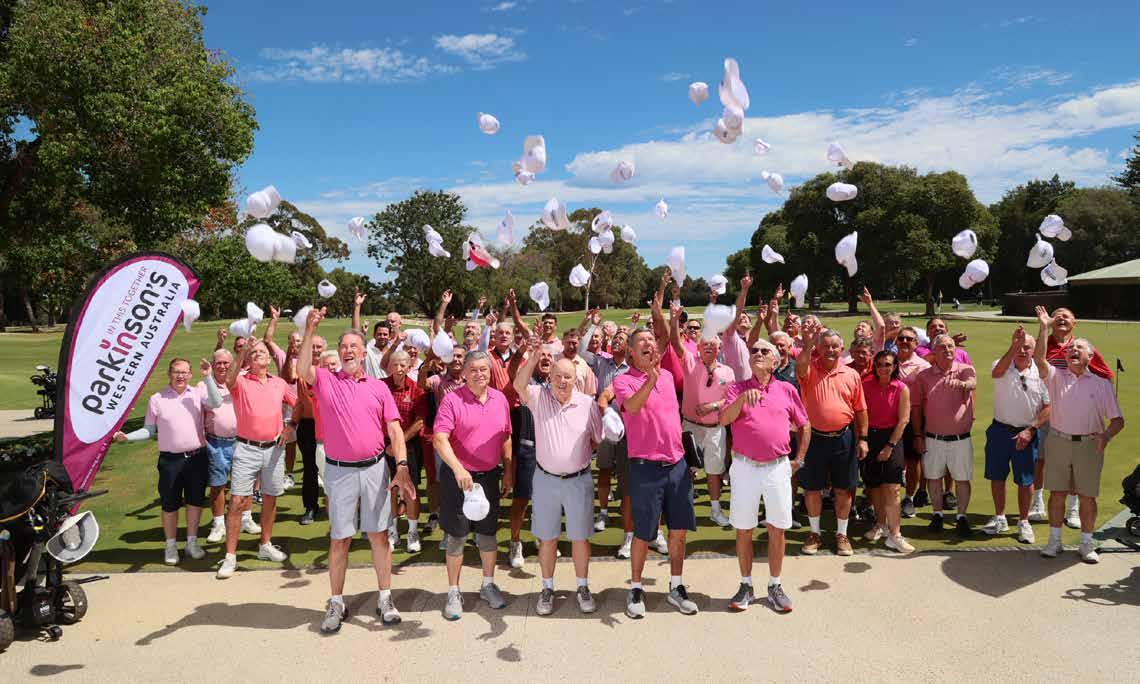
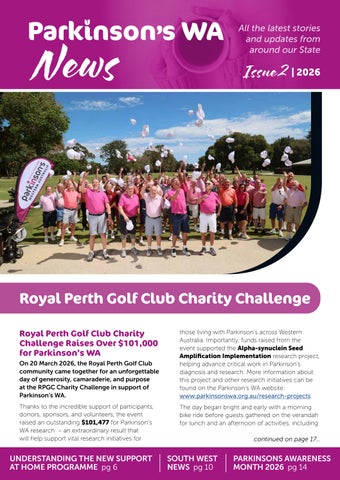
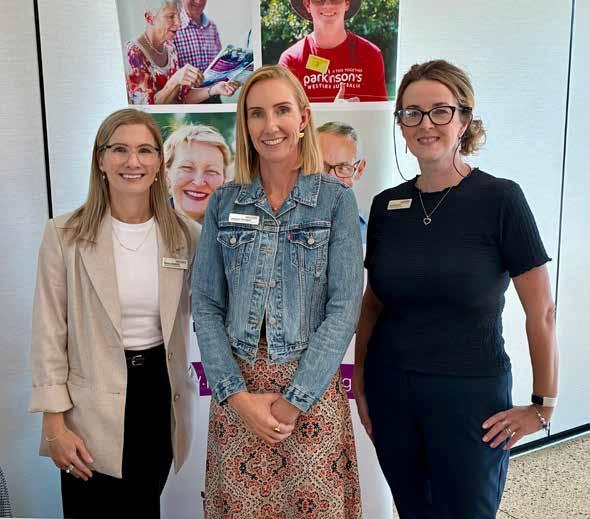
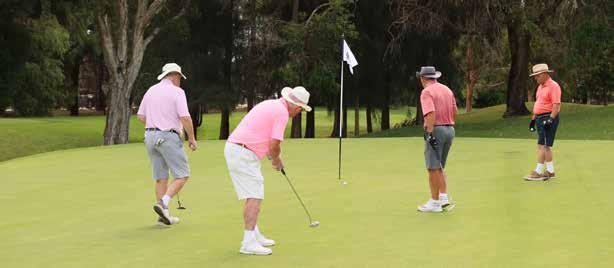
On 20 March 2026, the Royal Perth Golf Club community came together for an unforgettable day of generosity, camaraderie, and purpose at the RPGC Charity Challenge in support of Parkinson’s WA.
Thanks to the incredible support of participants, donors, sponsors, and volunteers, the event raised an outstanding $101,477 for Parkinson’s WA research – an extraordinary result that will help support vital research initiatives for
those living with Parkinson’s across Western Australia. Importantly, funds raised from the event supported the Alpha-synuclein Seed Amplification Implementation research project, helping advance critical work in Parkinson’s diagnosis and research. More information about this project and other research initiatives can be found on the Parkinson’s WA website: www.parkinsonswa.org.au/research-projects
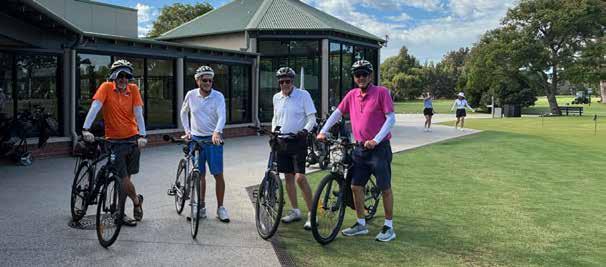
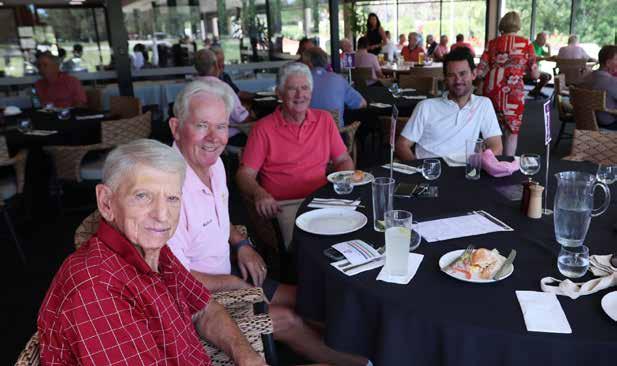
The day began bright and early with a morning bike ride before guests gathered on the verandah for lunch and an afternoon of activities, including
continued on page 17...
LOCATION/POSTAL ADDRESS
The Niche, 11 Aberdare Road, Nedlands, WA 6009
TELEPHONE (08) 6457 7373
FAX (08) 6457 7374
EMAIL info@parkinsonswa.org.au
WEBSITE parkinsonswa.org.au
Chair
Gary Steinepreis
Deputy Chair
Professor Natalie Gasson
Treasurer
Peter Roberts
Secretary
Tamlyn Lennox
Board
Dr David Blacker, AM, Kate Roberts, Geoff Waldock, Annette Raynor
Chief Executive Officer
Yasmin Naglazas
Clinical Lead
Sheree Ambrosini
Business Partner, Marketing and Fundraising
Kerrin Girando
Business Partner, Finance Manager
Salil Koonja
Business Support, Office Manager
Toby Gummer
Parkinson’s Nurse Specialists
Amanda Coultous, Fiona Roscoe, Jo Chadwick, Kayleigh Rawle, Donna Mallaby, Tina Williamson
Business Support, Clinical Service Development, Governance, and Research
Laurie Dyer
South West Administration Support
Joanna Clement
Business Support, Marketing and Fundraising
Jessica Wenham
Project Officer, Support Groups
Rhiannon Girando
Business Support, Finance
Roselyn Brough
ADVERTISING ENQUIRIES
fundraising@parkinsonswa.org.au
Disclaimer - Parkinson’s Western Australia Inc has endeavoured to ensure that the information in this newsletter is accurate; however, we accept no responsibility for any errors, omissions or inaccuracies in respect to the information contained in the material provided by Parkinson’s Western Australia Inc. Nor is the provision of material by Parkinson’s Western Australia Inc. to be construed as any representation that there is no other material or information available in relation to the information provided. Further, Parkinson’s Western Australia Inc. accepts no responsibility for persons who may rely upon this information for whatever purposes.

Over the past few months, it has been encouraging to see the continued strength, resilience, and connection within our Parkinson’s WA community. As always, our focus remains on supporting people living with Parkinson’s, their families, and carers – while also strengthening awareness, advocacy, and access to services across Western Australia.
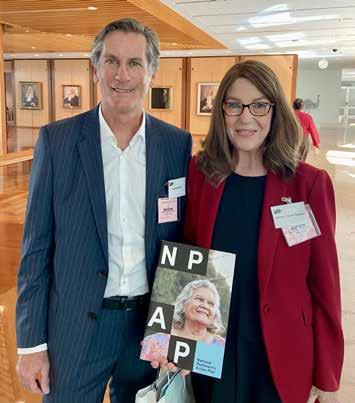
An important milestone during this period has been the launch of the National Parkinson’s Action Plan. This represents a significant step forward in creating a more coordinated and equitable approach to Parkinson’s care across Australia. Parkinson’s WA has been proud to contribute to the conversation, and we remain committed to advocating for the needs of our Western Australian community within this national framework.
A key highlight during this period has been the steady growth in participation across our support groups and programs. Whether in-person or online, these gatherings continue to provide vital opportunities for connection, shared experience, and practical support. The value of community cannot be overstated, and I extend my sincere thanks to our dedicated facilitators and volunteers who make these spaces so welcoming and impactful.
We have also continued to expand our education and outreach efforts. Our team has delivered a range of information sessions for both the community and health professionals, helping to improve understanding of Parkinson’s and promote earlier recognition and better care pathways. These efforts are essential in ensuring that no one faces Parkinson’s without informed support.
Advocacy more broadly has remained a priority. We have continued to engage with key stakeholders to highlight the ongoing challenges faced by people living with Parkinson’s, particularly in relation to access to specialised nursing services and regional support. While progress can sometimes feel gradual, these conversations are critical in driving meaningful, long-term improvements.
Looking ahead, our upcoming tax appeal will focus on raising much-needed funds to support an additional Parkinson’s Nurse Specialist. The demand for specialist nursing support continues to grow, and we know the profound difference these
continued on page 3...
roles make in improving quality of life for people living with Parkinson’s. We encourage our community to support this appeal where possible and help us expand this vital service.
Research continues to be an area of great interest and hope. We remain committed to sharing updates and opportunities for involvement in research initiatives, recognising the importance of advancing knowledge and treatment options for Parkinson’s.
As we look ahead, we remain focused on building on this momentum. There is more to do, and we are committed to continuing our work with purpose, compassion, and collaboration.
Finally, I would like to thank each of you – our members, supporters, volunteers, and partners – for your ongoing trust and engagement. Your involvement is what makes this community so strong.

Adj Professor Yasmin Naglazas Chief Executive Officer
Following the launch of My FIGHT with PD, a neurologist with Parkinson’s disease on September 5th, 2025, I’ve met and spoken with hundreds of people affected by Parkinson’s. The book has provided an excellent reason to visit many of the Parkinson’s support groups in Western Australia. Kirsten and I have visited groups from Burns Beach (young onset group) in the north, to Busselton in the south and eight other groups in between. We have also done on-line meetings with groups in Beverley, Albany and Esperance.
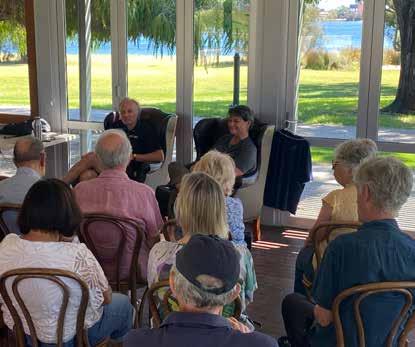
It’s been fascinating to share experiences with so many different people and to learn how they manage
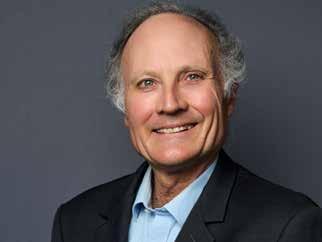
the ups and downs of living with Parkinson’s. One of the inspirations for me to write the book, was from the books written by Michael J Fox, particularly when I read them after my diagnosis. I felt strangely comforted to read of him going through many of the challenges that we all face and learning how he tackled these. Probably the most frequent feedback comment I’ve received about my book, is along the same lines, that recognising that other people are going through the same or very similar issues. There seems to be a sense of reassurance and comfort in this. The connectiveness of this “club” that none of us would have wanted to voluntarily join, probably helps us as individuals to manage. The scientific data suggests that social connection is indeed a crucial aspect of health for everyone.
The “tag line” for Parkinson’s Western Australia, “in this together”, is thus very well chosen.
Dr David Blacker, AM Honorary Medical Director
As we move into June and settle back into the rhythm of the year, I’ve been reflecting on the momentum and community spirit that carried us through World Parkinson’s Month in April. It’s always a meaningful time for those of us working in Parkinson’s care, but this year felt especially powerful. The stories shared throughout April reminded me again of the strength and honesty within our Parkinson’s community
April is often seen as a month of awareness, but for people living with Parkinson’s and those who support them, it’s also a time to speak openly about the parts of the condition that don’t always get attention. It’s a chance to acknowledge the symptoms that sit beneath the surface - fatigue, broken sleep, changes in thinking or mood, swallowing challenges, and bladder or bowel issues. It also creates space to talk gently about hallucinations or delusions, which can be unsettling for the person and their family. These are everyday realities, and they deserve to be recognised.
For our Parkinson’s Nurse Specialists, April highlighted the real, day to day work that sits at the heart of our role. We’re in homes and aged care facilities, helping people make sense of their symptoms and supporting families as things change. We answer questions, problem solve, and guide people through the ups and downs of the condition. At its core, our work is about partnership - listening, educating, advocating, and making sure people feel supported rather than isolated.
A real highlight this year has been seeing members of our WA community step into the global space. Donna and Amanda travelled to the USA in May for the World Parkinson’s Congress - an extraordinary opportunity to learn from international leaders, researchers, and people with lived experience. They return to us with fresh insights, new ideas, and practical strategies that will strengthen our local practice. Their commitment to bringing that knowledge home is something we’re genuinely excited about, and it reinforces that while we are a local community, we are part of a much larger global movement striving for better outcomes.
As we move beyond April, the challenge - and the opportunity - is to keep the conversation going. Awareness Month may be over, but the needs of our community continue every day. Medication timing still matters. Falls prevention still matters. Swallowing safety still matters. Emotional wellbeing still matters. And ensuring that aged care staff feel equipped and supported to care for residents with Parkinson’s remains a priority.
Thank you to everyone who contributed to the spirit of April - by attending events, asking questions, sharing stories, or simply taking a moment to learn something new. Your engagement strengthens our community and fuels the work ahead.
Here’s to carrying that awareness forward, month by month, in the way we care, connect, and advocate for people living with Parkinson’s.
Sheree Ambrosini Clinical Lead
I have decided to finally retire properly after working with PWA for 10 years, the last 2 years doing casual relief. I have really enjoyed my time with Parkinson’s WA as a Parkinson’s Nurse Specialist providing support for people within our community living with Parkinson’s.
I feel privileged to have been able to work closely with so many people in different areas of the SW, South Metro, Narrogin area and Esperance. Thank you to all who opened their door to me and shared your stories and challenges living with Parkinson’s. I witnessed so much courage, patience and loving care within so many situations and I take great inspiration from all of you.
I have been nursing for over 50 years and thought it might be interesting to briefly share a bit of my nursing history. I have always said it is a career that can take you anywhere!
I started nursing as a student at Fremantle Hospital in May 1975, qualifying as an RN 3 years later and then worked for another year as a Staff Nurse in Coronary Care and ICU. I then travelled around Europe and into Africa - working in London at Guys and Bromptons Hospital and in Kenya as a private nurse.
On returning to WA and starting my family, I
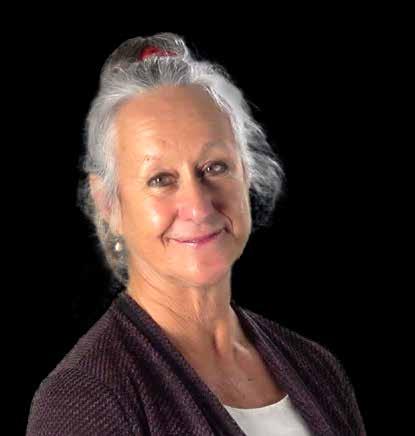
worked at Pemberton Hospital often doing night shift while juggling child care. The next move was to the role of Team leader with Silver Chain in Denmark followed by the big move to Silver Chain Country Services managing Bunbury area and project work with Head Office.
We then bought our beautiful farm south of Busselton and I changed roles again to the Palliative Care Coordinator at Busselton Hospice. I worked there for 15 years with a wonderful team of nurses and 100 volunteers, during that time in 2008 I was nominated and awarded WA Nurse of the Year!
Finally, I came to work with Parkinson’s WA, and I have really enjoyed working with such a wonderful team offering support in the community.
Thank you to Yasmin and the Board for supporting the important role of Parkinson’s Nurse Specialist that makes such an important contribution. Thank you to all the office staff and the nursing team for all your support and friendship.
Liz Buckley
As the demand for our services continues to grow, we want to ensure you’re getting the support you need – when you need it most. That’s why it’s important for our clients to contact us directly if you have a question, concern, or would like to request a home visit.
Due to the increasing demand, we rely on our clients to call us for appointments when they are required. Our Parkinson’s Nurse Specialists will not schedule ongoing appointments, giving you the flexibility to reach out at your convenience. The best way to schedule your next appointment is to is to call the Parkinson’s WA office on (08) 6457 7371.
The Triage System is available for any questions or concerns that are related to your Parkinson’s. If you contact the PWA office, your call will be prioritised and managed by one of the Parkinson’s Nurse Specialists, and you will receive a return phone call within 24 hours, where possible excluding weekends.
We’re here to support you – and we appreciate your help in enabling us to provide timely care for everyone.
Many people are not aware that there is government-funded support available to help you stay living safely and well at home for as long as possible.
The new Support at Home programme is designed for people aged 65 and over who need some assistance to remain independent. This could be help with things like personal care, cleaning, getting out and about or accessing health services in the home.
If you’re not already receiving support, you can start the process by:
• Speaking with your GP
• Calling My Aged Care – 1800 200 422
• Or going online and completing a self-referral
Many people delay getting help simply because they don’t know what’s available, so it’s worth exploring your options early as there is a wait involved!
Since November last year, the Australian Government introduced Support at Home, replacing the old Home Care Packages programme.
For people living with Parkinson’s, this change is important. While the intention is to simplify services and improve access, there are some key differences that are worth understanding so you can make the most of your support.

One of the biggest changes is how funding is managed. Instead of funds building up over time, your budget is now allocated across 12-week (quarterly) periods. This means you are expected to use your funding within that timeframe. Only a small amount can roll over (generally the higher of $1,000 or 10%), and anything above that is lost. In simple terms, it has become a “use it or lose it” system.
Another key change is how services are structured. Support at Home separates supports into three main categories:
• Clinical supports (such as nursing, continence aids and most allied health)
• Independence supports (such as personal care, social support and transport)
• Everyday living supports (such as cleaning, gardening and meal delivery)
This links closely with the introduction of copayments. The system is means-tested, so your income and assets may affect how much you contribute. Everyday services like cleaning and gardening are more likely to attract a higher co-payment.
That said, it’s important not to be put off if you have a higher income or more assets and feel like you may not be eligible or that the costs will outweigh the benefit. In many cases, the programme can be tailored to work in your favour.
A key advantage is that clinical services generally have no co-payment. For people living with Parkinson’s, services such as physiotherapy, occupational therapy, speech pathology and dietetics can help maintain mobility, reduce falls risk and support independence.
Some people choose to fund everyday services privately, while using their package for targeted allied health and clinical care where there is no out-of-pocket cost. For many, this approach provides excellent value.
Mavis has been living with Parkinson’s for a couple of years and wants to remain independent at home.
With a moderate to higher-level package, her supports are planned across each 12-week period. She receives help with showering, social outings as she no longer drives far and a fortnightly clean that includes changing the linen on her bed. These supports are important, but may involve some co-payment.
Where Mavis really benefits is through her clinical supports. She attends regular physiotherapy to maintain her strength and balance and also accesses a dietitian and speech pathologist when needed. She even joins a Parkinson’s exercise or boxing group, helping with both movement and social connection.
Because these services fall under the clinical category, they come with no out-of-pocket cost, allowing her to maximise her support.
Mavis’ plan works well because it is balanced and purposeful. She uses her funding within
each quarter, focuses on maintaining her independence and makes the most of the clinical supports available to her.
If you’re new to this, the first step is to get started! Speak with your GP or contact My Aged Care by phone or online to request an assessment. From there, you’ll be guided through the process and connected with providers in your area.
Nicole Walton is the owner of Choice Home Help and has been a Registered Nurse for over 30 years. Based in the northern suburbs of Perth, she also supports clients in Geraldton and the surrounds. Nicole is known for cutting through red tape and explaining aged care in plain English, offering honest, obligation-free advice so people can understand their options. She will also be attending upcoming support groups over the next few months, sharing information and making herself available afterwards to discuss individual situations, with no obligation.
Nicole Walton Director - Choice Home Help
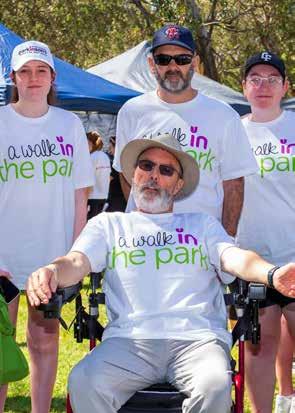
Sunday 13th September 2026 - Early Bird Registrations Now Open!
Members keep an eye out on your emails for your special code for 50% off your registration fee.
Join the community for 2026 A Walk in the Park and help make a meaningful difference for people living with Parkinson’s across Western Australia. Whether you walk 2km, 5km, or simply come along to show your support, every step helps raise awareness, connection, and vital funds for Parkinson’s WA.
This much-loved community event brings together families, friends, carers, and supporters for a fun and inspiring day filled with movement, hope, and solidarity.
Early Bird registrations are now open – don’t miss your chance to save and secure your spot! Register today and be part of something truly special.
13 Sept 2026

Could it be depression - When mood in Parkinson’s is more than just feeling sad, tired or fatigued.
Depression is experienced by up to 50% of People with Parkinson’s (PwP), recent studies report that it is underdiagnosed, misdiagnosed and undertreated.
There is no clear cause of depression in Parkinson’s, however it’s thought to be related to changes in areas of the brain that produce serotonin, norepinephrine and dopamine –these are chemicals that are involved in regulating mood, energy, motivation, appetite and sleep. In addition, the frontal lobe of the brain, which is important in controlling mood, is known to be underactive in Parkinson’s. This highlights that depression is not just a psychological reaction but also has a biological basis in Parkinson’s.
The symptoms of Parkinson’s can overlap with the symptoms of depression (fatigue, sleep problems, loss of facial expression). Symptoms of depression should NOT be brushed aside or considered as a normal part of Parkinson’s, - PwP should not have to suffer in silence.
Some people who are depressed may experience:
• Excessive worrying
• Persistent sadness
• Crying

• Loss of interest in usual activities and hobbies and loss of social connection
• Increased fatigue and lack of energy
• Insomnia
• Feelings of guilt
• Loss of motivation
• Complaints of excessive aches and pains
• Feelings of being a burden to loved ones
• Ruminations about disability, death and dying
People with these symptoms should discuss them with a doctor.
It is vital that you are screened at least annually for symptoms of depression. Regular screening can identify changes in Mood. Talk to your Parkinsons Nurse Specialist, GP and/ or treating team. Also confide in a loved one, carer or friend if your mood is feeling low for more than a few weeks.
If depression is left untreated – Studies show that depression causes personal suffering and also appears to intensify problems with mobility and memory.
Treatment needs to be tailored to a person’s individual needs. Some treatments include medication with antidepressants, cognitive behavioural therapy, and a combination of both can offer the most effective improvement and result in increased mood stability and sense of well-being.
This can lead to increased re-engagement in social connections, improved motivation and a feeling that life still has much to offer. BUT just as important are supporting the staples of Parkinson’s treatment, we already know MOVEMENT is medicine, so being able to maintain regular exercise, healthy diet, and social engagement will lead on to benefit positive mental health… this creates a flow on affect to better control of Parkinson’s symptoms.
What else can you do to promote good mental health.
• Techniques such as breathing exercises, massage, music therapy, guided imagery, and meditation can help manage anxiety and depression
• Good sleep hygiene (consistent sleep schedule, limiting naps, reducing caffeine/ alcohol) supports mood and reduces anxiety/ depression.
• Set Small, Realistic Goals: Focus on exercise, socialising, and self-soothing activities. For example, walking for 15 minutes, making a phone call, or enjoying a cup of tea.
• Reintroduce or Modify Enjoyable Activities: Adapt past hobbies or find new ones that fit current abilities.
• Challenge Negative Thoughts: Write down negative predictions, discuss them with others, and test their accuracy through real-life experiments.
• Reinforce Success: Achieving small goals reinforces positive feedback improving mood.
You’re not alone
Depression in Parkinson’s is a very common non motor symptom that is often underdiagnosed and undertreated. Don’t assume that feeling sad most of the time is normal. There are many strategies to help in the management of depression.
If you are a person with Parkinson’s or are caring for someone with Parkinson’s and you notice
• prolonged periods of sadness
• loss of motivation
• changes in mood
• feelings of loss, guilt, hopelessness
We encourage you to talk to a health professional.
Seek screening for depression annually. Treatment is available, it is individualized and includes both medical and lifestyle interventions. There is no need to suffer. SEEK HELP from your family, friends and Parkinson’s team.
Tina Williamson Parkinson’s Nurse Specialist
Lifeline - 13 11 14
Text Support - 0477 13 11 14
https://www.lifeline.org.au/text
Perth: 1300 555 788
Peel: 1800 676 822
13YARN - 13 92 76
Support from Aboriginal and Torres Strait Islander Crisis Supporters, 24/7
The Samaritans https://thesamaritans.org.au/
You can go to any ED and ask to speak with a Mental Health Professional.
Sir Charles Gairdner Hospital also has a dedicated Mental Health Observation Area (MHOA) for short term assessment and care.


The year continues at a busy pace for us here in the South West. On Tuesday 5th May, we were delighted to host our 2nd Annual Busselton Seminar.
This year’s seminar focused on the important role Allied Health professionals play in the management and support of people living with Parkinson’s. The session highlighted how services such as physiotherapy, speech pathology, occupational therapy, dietetics, exercise physiology, and social work contribute to maintaining independence, mobility, communication, wellbeing, and overall quality of life throughout the Parkinson’s journey. It was wonderful to see another strong turnout, with a mix of familiar and new faces attending the event. We sincerely thank everyone who joined us and contributed to another successful and informative day.
We continue to work within our hybrid model of care, balancing time on the road for home visits, clinic appointments across Bunbury, Busselton, and Nannup, as well as providing ongoing support through telehealth consultations. This flexible approach allows us to remain connected with clients across the region and provide support in a way that best meets individual needs.
We have welcomed Joanna Clement as our new South West Administrative Support Officer. Joanna works part-time out of our Bunbury office and is a very welcome addition to the team, providing valuable administrative support across the service.
Donna attended the 7th World Parkinson Congress in Phoenix, Arizona at the end of May, alongside Amanda, one of our Metro Parkinson’s Nurse Specialists. The Congress brought together healthcare professionals, researchers, people living with Parkinson’s, and carers from around the world to share the latest research, treatments,
and innovations in Parkinson’s care. We look forward to hearing about the latest developments and insights upon their return.
Our regular support groups continue in both Busselton and Bunbury, providing valuable opportunities for connection, education, and peer support. Our second carers support group for the year will be held in Busselton on Monday 25th May, and we look forward to welcoming carers from across the region.
The South West PNS team continues to prioritise safe and sustainable service delivery, while remaining mindful of regional travel demands, weather conditions, and the unique challenges of providing care across a large geographical area.
Please take care of yourselves, and remember we are only a phone call away whenever support is needed– we are here for you, and we are in this together.
Fiona Roscoe and Donna Mallaby South West Parkinson’s Nurse Specialist
This project is working on making a new lab test available in Western Australia, the test is to help detect and study diseases like Parkinson’s. The test will look for a protein called alpha-synuclein when it becomes misshapen (which is linked to these diseases). The method we’re using is called RT-QuIC, and it has the potential to become a simple, non-invasive diagnostic tool.
One problem is that current prototype versions of this test take a long time – between 3 and 5 days – to get results, which isn’t practical for routine clinical use. So, a big part of this project has been improving how fast and efficient the test is, without losing accuracy.
To do this, we systematically tested different conditions in the lab, such as:
• The chemical makeup of the solution used in the test
• Salt levels
• Types of additives (surfactants)
• Temperature and shaking conditions during the test
By adjusting and combining these factors, we were able to significantly speed up the test.
The improved prototype version now produces results in about 30 hours, which is much faster than before, while still giving reliable results.
Another challenge is cost. The key protein used in the test is expensive to buy commercially. To address this, we are developing a method to produce this protein ourselves in the lab using bacteria. This involves growing the protein,

extracting it, and purifying it to make sure it’s suitable for the test. This work is still in progress.
So far, we have recruited 22 participants for the study:
• 14 people with Parkinson’s
• 2 people with a genetic form of Parkinson’s
• 3 people with a related condition (multiple system atrophy)
• 3 healthy individuals
We’ve collected blood and skin samples from all participants.
Next steps (next 6 months):
• Confirm that the test only detects the target protein (and doesn’t react to other similar proteins)
• Apply the improved test to real patient samples (blood and skin)
• Fine-tune the test as needed for different sample types
• Recruit an additional 8 people
In short: We’ve made the prototype test much faster, are working on reducing costs, and are about to start testing it on real patient samples to see how well it works in practice.
continued on page 19...

ParkC is a Western Australia–based research group dedicated to improving understanding of Parkinson’s and supporting people living with Parkinson’s and their carers.
The group was established in 2008 by Dr Meghan Thomas (then at Edith Cowan University) together with Associate Professor Andrea Loftus and Professors Natalie Gasson and Romola Bucks; and later moved to Curtin University. From the outset, ParkC was founded on the belief that meaningful progress is achieved when researchers, health professionals, people with Parkinson’s, and carers work together in genuine partnership.
ParkC’s research has focused on three main areas.
The first was the development of treatments and delivery methods that may help protect or restore brain function, using laboratory based research. The second area aims to improve understanding of the wide range of experiences of Parkinson’s, including identifying different subtypes of the condition. The third focuses on non medication approaches to reducing the impact of symptoms, such as exercise, psychological therapies, brain stimulation, and cognitive (thinking) training.
ParkC’s largest project to date, Heterogeneity and Subtypes of Parkinson’s, followed people with Parkinson’s over more than ten years. Participants completed detailed assessments every two years, providing information about both motor symptoms (such as movement difficulties) and non motor symptoms (such as mood, sleep, cognition, and wellbeing). In total, 267 people took part in this study, completing more than 600 assessments. Although data collection has now finished, the team continues to analyse the data and publish findings that help build a clearer picture of the diversity of Parkinson’s experiences.
Over 19 years of collaborative work, ParkC researchers (including the four principal investigators and many research associates) have published more than 30 scientific papers and presented their research at numerous
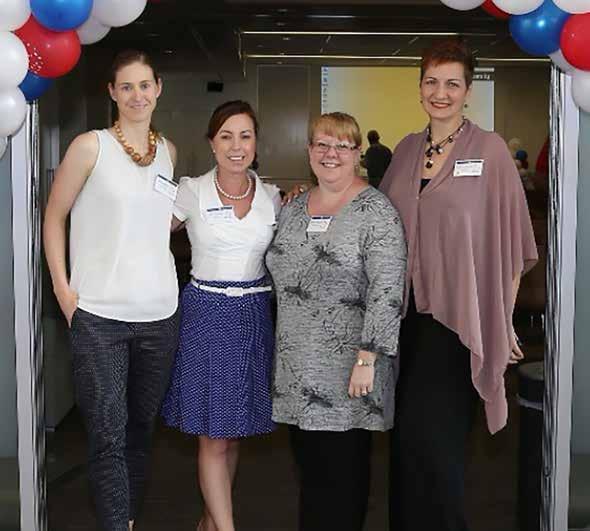
Founding directors 2015 (L-R
national and international conferences, ranging from Australia to countries such as France and Italy and many in between. The group has been supported by funding from a range of sources, including research grants and university funding, and have supervised more than 90 honours, masters, and PhD students working on Parkinson’s related projects.
ParkC’s current primary project, funded by Parkinson’s WA and led by Professor Natalie Gasson and Dr Emily Corti (with Associate Professor Andrea Loftus), examines the effects of cognitive training and gentle brain stimulation on everyday functioning, quality of life, movement, sleep, mood, and carer experience. To date, 25 people have completed the study, and we aim to recruit a further 15 participants in 2026. Participants are asked to complete questionnaires, a two hour assessment (either at home or at Curtin), attend Curtin twice a week for four weeks for brain training and stimulation, and complete follow up assessments after the program and again 12 weeks later.
Training future allied health professionals remains a key priority for ParkC. Currently, four psychology honours students and two PhD students are working with the group on projects exploring brain health, pain, communication, and everyday functioning in Parkinson’s.
Although ParkC remains a relatively small research group, its work is guided by collaboration, purpose, and lived experience. If you are interested in taking part in any of our projects, please contact us at ParkC@curtin.edu.au
The “Stars of the South” is an initiative by The Business Community of Dwellingup to promote the artistic talent of people who are into Cooking, Poetry, Art and Music.
“The Stars of the South” was hosted by The Dwellingup Hotel in the beautiful little town of Dwellingup and sponsored by many of the local businesses.
One of our clients and well-known Advocate for Parkinson’s WA Sue Edge won the poetry category taking home $1500 in prize money with her poem Broken Crayons still colour.
Congratulations on all the other winners in the categories of Cooking, Art and Music.
Sue, is also holding a Mega Bingo Night next month – see the advert below:

Friday 10th July Peel Thunder’s Lane Group Stadium
Come dressed in your best op shop find and win a prize
Any queries email Sue at noosemum@gmail.com
Host a Fundraiser for Parkinson’s WA with Your Local Sporting Club!
Partner with your local sporting club to host a fundraiser for Parkinson’s WA! Your support helps provide specialised nursing, resources, research, and assistance for those living with Parkinson’s.
Broken Crayons still colour
Hands that tremble, Hearts that fight, Living in shadows, Searching for light. You see the shake but not the soul., We’re still here, still whole.
Words may falter, Steps may stray
But our spirits rise in a quiet ballet.
Don’t write us off, we’re not erased
This life we lead is not a waste.
Broken crayons still colour bright.
We shine in darkness, we hold the night
Don’t forget us, We’re still alive
In every crack there’s strength to survive
The world feels distant, walls closing in But inside this shell there’s a fire within.
A smile might fade but not our will We’re more than a tremor, We’re human still.
Don’t pity our struggle, don’t look away We need your love, not just today Hold our hands even when they shake See the person, No the ache.
Please don’t ignore us, Let the Red Thread stretch To surround us all and in your hearts, please etch…
Broken crayons still colour bright
We shine in darkness We hold the night. Don’t forget us We’re still alive In every way, we’ve strength to survive.
By Suzie Edge
• Reach out to your local sporting club and plan an exciting event like a charity match, host a fun run, auction, or raffle.
• Spread the word and get your community involved!
Every effort counts in raising vital funds and awareness. Contact us at Parkinson’s WA for ideas and support in organising your event.


April was a powerful and inspiring month for the Parkinson’s community across Western Australia as we came together to recognise Parkinson’s Awareness Month and World Parkinson’s Day.
Throughout the month, Parkinson’s WA celebrated the strength, resilience and voices of people living with Parkinson’s through education, advocacy, storytelling and community connection.
One of the highlights of the month was our Parkinson’s Awareness Seminar on April 30, which officially sold out due to overwhelming community interest. The strong response reflected the growing desire for knowledge, support and innovation in Parkinson’s care. The seminar brought together leading experts and lived-experience voices to explore the future of multidisciplinary Parkinson’s care in Australia. Attendees heard from:
Professor Michele Callisaya - Implementing the ParkinsonNet Model to Improve Multidisciplinary Parkinson’s Care in Australia
Dr David Blacker AM - Exercise is More Than Medicine for PD
Financial Members of Parkinson’s WA were also given exclusive access to the live stream and seminar recording, ensuring more members of our community could benefit from these important conversations.
Dr David Blacker Featured on Forrest.Chat
During April, our Honorary Medical Director, Dr David Blacker AM, also featured in an insightful conversation on Forrest.Chat with host Paul van der Mey.
Drawing on his unique perspective as both a physician and a person living with Parkinson’s, Dr Blacker shared thoughtful reflections on advocacy, care and what it truly means to support people living with Parkinson’s.
Together, they explored four thought-provoking questions:
1 What sort of physician are you?
2 What does it take?
3 What does it mean?
4 How do you do it?

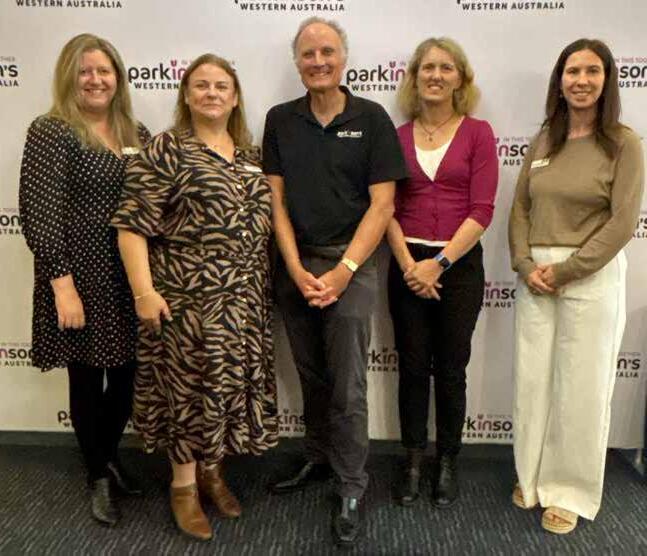


The conversation offered valuable insights into compassionate care, lived experience and the importance of understanding Parkinson’s beyond the clinical perspective.
Our CEO, Yasmin Naglazas, joined host Simon Chong and co-host Andrew on In Plain Sight by Vision Australia Radio for an engaging discussion about how Parkinson’s impacts West Australians.
The conversation highlighted the importance of support groups, connection and community in helping people live with greater hope, confidence and meaning. It also shone a light on the real experiences of people living with Parkinson’s and the work being done to create a more empowering and less restrictive future for our community.
In a stunning show of solidarity and awareness, landmarks across Western Australia lit up purple throughout World Parkinson’s Day and the surrounding days.
We extend our heartfelt thanks to the many locations that helped shine a light on Parkinson’s awareness, including:
Albany CBD precinct lights
The Bell Tower
Council House
Curtin University
Elizabeth Quay Area
Fremantle Prison
Kings Park – Fraser Avenue lights
Matagarup Bridge
Northbridge Tunnel
Perth Convention and Exhibition Centre
Yagan Square – Canopy Lights
As well as many other incredible locations across Bunbury, Geraldton, Mandurah, Rockingham, Northam, Joondalup, Gosnells and beyond.
These iconic landmarks helped spark conversations, raise awareness and show people living with Parkinson’s that they are not alone.
Parkinson’s Awareness Month 2026 was a reminder of the power of community, education and advocacy. Thank you to everyone who attended events, shared stories, tuned into conversations, wore purple and helped raise awareness throughout April.
Together, we continue to build a more informed, connected and supportive community for people living with Parkinson’s across Western Australia.
How long have you been volunteering for Parkinson’s WA?
I will celebrate two years of volunteering with Parkinson’s WA in June 2026.
What part of volunteering for Parkinson’s WA do you love the most?
I enjoy all aspects of volunteering, but the Melville Support Group is especially close to my heart. The group is made up of beautiful people who have become great friends.
Who or what inspired you to volunteer for Parkinson’s WA?
I noticed there was a lack of support groups in the area where I live, and I wanted to help
The Cannington Support Group had its first meeting on the 7th of May at the Riverton Library. There was an excellent turn out with 28 attendees who were kind enough to bring plenty of food to share. It was a warm, welcoming environment thanks to everyone there, and it made my job of leading the group very easy. I thoroughly enjoyed watching small groups and bonds form on just day 1! I believe this group will become a wonderful, supportive community in time.
Feedback from attendees reinforced the importance of local connection opportunities for people living with Parkinson’s, with many sharing how valuable it was to meet and talk with others who understand their experiences. A sincere thank you goes to the staff at Riverton Library for their support in helping the day run smoothly and making the event so enjoyable for everyone involved.
If you would like to start a Support Group in your area, please contact me on 6457 1980 or supportgroups@parkinsonswa.org.au
Rhiannon Girando Support Group Coordinator
both myself and others learn more about the Parkinson’s journey.

What is your favourite place you’ve travelled to?
Antarctica was an incredible adventure, and spending three months in France was “simply the best.”
What does a perfect day look like for you?
Starting the morning with a walk on the beach, followed by family calling in for lunch or dinner.
Can you share a fun fact or favourite quote?
A very wise friend once said to me:
“You need to be bigger than the problem.”
It’s something I have remembered and shared with others many times over the years.


a putting competition and 18 holes of golf. The energy and enthusiasm continued well into the evening with a sit-down dinner, raffles, and the ever-popular fines, all contributing to the fundraising success.
One of the highlights of the event was the collective effort shown by participants and team members who went above and beyond to secure donations from friends, family, and colleagues. Their dedication and commitment played a significant role in achieving such a remarkable fundraising total.
A heartfelt thank you goes to the event organisers – David, Tony, Keith, Peter, and Chris – whose tireless hard work, dedication, and countless hours of planning ensured the event ran seamlessly from start to finish. Their passion for the cause was evident in every detail of the day, from coordinating activities to thoughtful touches like the purple golf balls, helping create such a memorable and successful event.
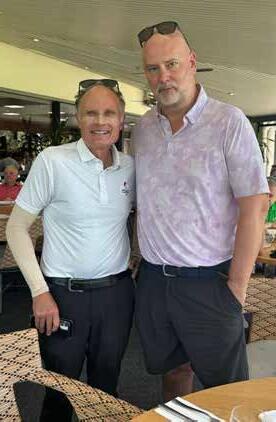
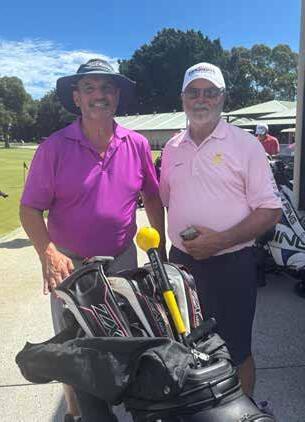
Parkinson’s WA would also like to acknowledge the exceptional staff at Royal Perth Golf Club for their outstanding support and hospitality throughout the day.
Most importantly, thank you to everyone who attended, donated, volunteered, and contributed to making the RPGC Charity Challenge such a meaningful success. Your generosity and community spirit are helping drive important Parkinson’s research forward and making a real difference in the lives of many Western Australians.

Carer’s North
Coffee Catch Up Butler
Kings Park
Kingsley
Midland
Medical Professionals
Support Group
Western Suburbs
Fremantle Carer’s
Melville
Mandurah
Mandurah Early Onset
Mandurah Carer’s
Beverley
Bunbury
Bunbury Carer’s
Busselton
Collie
Rockingham Esperance
Rockingham Carer’s
We would like to reach out to you, our community and ask if you are willing to share your Parkinson’s story. You can be a patient, a carer or a loved one, we want you to share your thoughts and experiences.

Margaret River
By sharing your experience, you can help provide understanding, encouragement and hope to others. Please visit our website to see some of the amazing stories that our community have already sharedhttps://www.parkinsonswa.org.au/stories
To share your story please reach out to: marketing@parkinsons.org.au or call 6457 7373

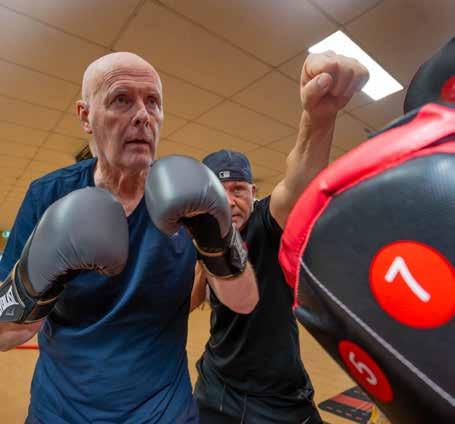
Fazio’s PD Fighters is a groundbreaking fitness program empowering individuals to tackle Parkinson’s disease, one punch at a time. Created by former Australian Boxing Champion Rai Fazio, this revolutionary non-contact boxing therapy is designed to alleviate common Parkinson’s symptoms while building strength, fitness, and confidence.
Backed by evidence-based research conducted in Western Australia, the program has been developed in collaboration with one of Australia’s leading neurologists, Professor David Blacker, and a team of exercise physiologists. www.faziospdfighters.com
...continued from page 11
Living with Parkinson’s Phase 1 has now been completed.
This phase involved a series of online interviews exploring experiences with eating and cooking, as well as perspectives on food as medicine. A total of 15 people living with Parkinson’s disease (PD) and 6 health professionals and specialists participated. We sincerely thank all contributors for sharing their time and insights. The research team is currently analysing the data and preparing academic publications to disseminate the findings.
Insights gained from Phase 1 have directly informed the development of Phase 2, which
focuses on collaborative co design. This phase will bring together both people with lived experience, including families’ members and caregivers and PD-related professionals, such as dietitians, nurses, allied health professionals to jointly develop a meal box concept tailored to the needs of the Parkinson’s community.
We recently advertised for research participants to support the project and we were thrilled when members of the Parkinson’s WA community stepped up to support the research project.
To review other research projects that we have funded or supported please see our website: https://www.parkinsonswa.org.au/researchprojects
Leaving a legacy to Parkinson’s WA will ensure your memory will live on and give hope to people who diagnosed with Parkinson's, today, tomorrow, for however long they need us.
Right now, hundreds of people are receiving our support because of the generosity of individuals.
Parkinson’s WA is proud to partner with Gathered Here to offer you the opportunity to write your Will for free, including making free, unlimited updates to your Will for life. It’s so easy to include a bequest gift for Parkinson’s WA in your Will at the same time.

Gathered Here is an easy online will writing service that allows you to appoint guardians for your children, divide your estate and leave gifts to charities that matter most to you, like Parkinson’s WA.
We understand that writing your will is a private matter, and we treat all enquiries with respect and confidentiality, for a confidential chat or to organise a meeting in your home or for further information, please complete the form below or contact Kerrin Girando on (08) 6457 3745 or email kerrin@parkinsonswa.org.au I
Living with Parkinson’s can make getting a good night’s sleep challenging. Here are some tips to improve sleep hygiene:
1. Stick to a routine: Go to bed and wake up at the same time every day.
2. Create a Relaxing Environment: Keep your bedroom cool, dark, and quiet.
3. Limit Stimulants: Avoid caffeine and heavy meals before bedtime
4. Limit Device Use: Reduce screen time before bed or use night mode on your devices.
5. Stay Active: Regular exercise can help improve sleep quality.
6. Manage Symptoms: Talk to your Parkinson’s Nurse or Specialist about managing symptoms that disrupt sleep.
If you would like to receive your Parkinson’s WA newsletter via email, please contact the office by email - info@parkinsonswa.org.au or phone - (08) 6457 7373.