
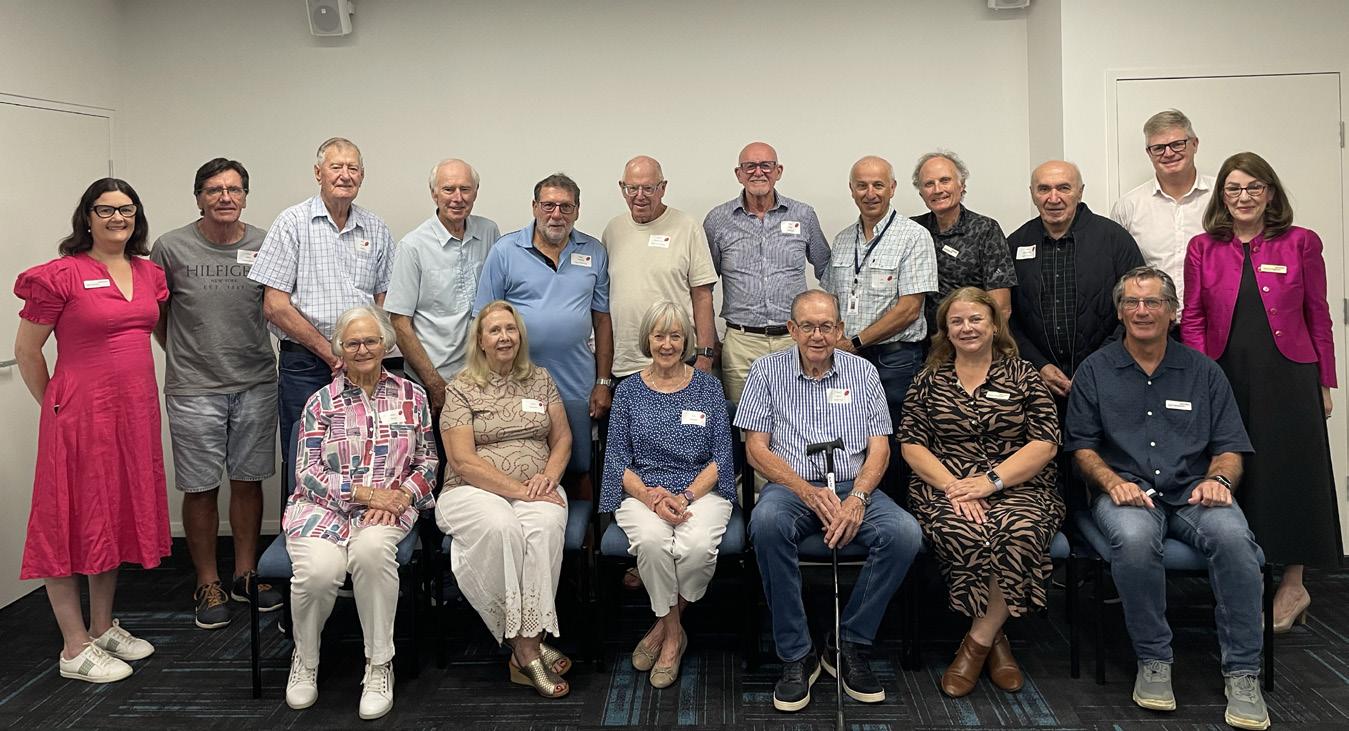
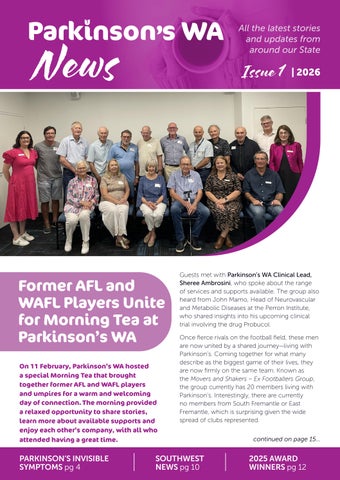
On 11 February, Parkinson’s WA hosted a special Morning Tea that brought together former AFL and WAFL players and umpires for a warm and welcoming day of connection. The morning provided a relaxed opportunity to share stories, learn more about available supports and enjoy each other’s company, with all who attended having a great time.
Guests met with Parkinson’s WA Clinical Lead, Sheree Ambrosini, who spoke about the range of services and supports available. The group also heard from John Mamo, Head of Neurovascular and Metabolic Diseases at the Perron Institute, who shared insights into his upcoming clinical trial involving the drug Probucol.
Once fierce rivals on the football field, these men are now united by a shared journey—living with Parkinson’s. Coming together for what many describe as the biggest game of their lives, they are now firmly on the same team. Known as the Movers and Shakers – Ex Footballers Group, the group currently has 20 members living with Parkinson’s. Interestingly, there are currently no members from South Fremantle or East Fremantle, which is surprising given the wide spread of clubs represented.
continued on page 15...
LOCATION/POSTAL ADDRESS
The Niche, 11 Aberdare Road, Nedlands, WA 6009
TELEPHONE (08) 6457 7373
FAX (08) 6457 7374
EMAIL info@parkinsonswa.org.au
WEBSITE parkinsonswa.org.au
Chair Gary Steinepreis
Deputy Chair
Professor Natalie Gasson
Treasurer
Peter Roberts
Secretary
Tamlyn Lennox
Board
Clinical Professor David Blacker, AM, Kate Roberts, Geoff Waldock
Chief Executive Officer
Yasmin Naglazas
Clinical Lead
Sheree Ambrosini
Business Partner, Marketing and Fundraising
Kerrin Girando
Business Partner, Finance Manager
Salil Koonja
Business Support, Office Manager
Toby Gummer
Parkinson’s Nurse Specialists
Amanda Coultous, Fiona Roscoe, Jo Chadwick, Kayleigh Rawle, Donna Mallaby, Tina Williamson
Business Support, Clinical Service Development, Governance, and Research
Laurie Dyer
Business Support, Marketing and Fundraising
Jessica Wenham
Project Officer, Support Groups
Rhiannon Girando
Business Support, Finance Roselyn Brough
ADVERTISING ENQUIRIES
fundraising@parkinsonswa.org.au
Disclaimer - Parkinson’s Western Australia Inc has endeavoured to ensure that the information in this newsletter is accurate; however, we accept no responsibility for any errors, omissions or inaccuracies in respect to the information contained in the material provided by Parkinson’s Western Australia Inc. Nor is the provision of material by Parkinson’s Western Australia Inc. to be construed as any representation that there is no other material or information available in relation to the information provided. Further, Parkinson’s Western Australia Inc. accepts no responsibility for persons who may rely upon this information for whatever purposes.

As we reflect on the year highlighted in the Parkinson’s WA Annual Report 2025, I am struck by both the scale of what we have achieved together and the growing importance of the work that lies ahead.
Over the past year, our organisation has continued to evolve in response to the increasing number of Western Australians living with Parkinson’s and the complexity of their needs. Demand for our services continues to grow, and meeting this demand remains one of our greatest challenges. Yet, as outlined in the Annual Report, our team has continued to deliver high-quality, personcentred support across education, information, allied health, community programs and advocacy—often going above and beyond to ensure no one feels they are facing Parkinson’s alone.
What stands out most to me is the unwavering commitment of our staff. Their professionalism, compassion and willingness to adapt in a constantly changing environment are extraordinary. Just as importantly, the connection we have built with our Parkinson’s community continues to deepen. The relationships formed through our programs, support groups, events and everyday interactions are at the heart of everything we do. They remind us that Parkinson’s WA is not just a service provider, but a community built on trust, understanding and shared experience.
Looking ahead, the year to come brings both opportunity and responsibility. Demand for support is expected to continue to rise, and we must ensure we have the capacity, systems and workforce to respond sustainably. A key part of this work is our Digital Strategy, designed to take Parkinson’s WA into the coming years with stronger foundations, better ways of working and enhanced outcomes for the people we support. Our recently revamped website is an early and visible part of this journey—making it easier for people to find information, access services and stay connected with us.
A particularly significant milestone on the horizon is the launch of the National Parkinson’s Action Plan in March/April 2026. This plan represents a critical step forward in shaping a coordinated, nationally consistent approach to Parkinson’s care, research and support. For the first time, there is a shared framework that acknowledges the growing impact of Parkinson’s and the need for long-term, sustainable solutions. The Action Plan provides an important opportunity to strengthen advocacy, improve equity of access to services and ensure the voices of people living with Parkinson’s are embedded in future decision-making. Parkinson’s WA is proud to be part of this national movement and will continue to advocate strongly for outcomes that benefit our Western Australian community.
As we move forward, our focus remains clear: to improve quality of life for people living with Parkinson’s and those who support them. We will do this by strengthening our services, investing in our people, embracing innovation and, above all, listening to our community.
Thank you to everyone who contributes to Parkinson’s WA—our staff, volunteers, supporters, partners and the Parkinson’s community itself. Your ongoing commitment and trust inspire us every day.
Together, we will continue to build a responsive, connected and future-ready organisation that meets the needs of today while preparing for the challenges of tomorrow.

Yasmin Naglazas Chief Executive Officer
Welcome to the first From the Nurse’s Desk for 2026. As we step into a new year, it has been wonderful to reconnect with a renewed sense of energy, purpose, and optimism across the Parkinson’s WA team.
One of the standout highlights as we begin 2026 has been the response to our Experiential Learning Program (ELP) for nurses. While this program has been offered in various formats over the past few years, we have been overwhelmed by the level of interest this year. We are incredibly grateful for the number of nurses keen to participate and to further develop their knowledge and skills in Parkinson’s care through this Parkinson’s WA initiative. The enthusiasm shown reflects a strong commitment to professional growth and a deep dedication to improving care for people living with Parkinson’s.
Our 2026 seminar program is also shaping up to be an exciting and diverse one. A range of education sessions, and community-focused events are currently in the pipeline. There will be plenty to look forward to throughout the year,

so keep an eye out for further details as these sessions are confirmed.
Behind the scenes, we’ve kicked off the year with a big office clean-up, and it’s amazing how refreshing a cleared and organised space can be. Decluttering has brought a renewed sense of focus and motivation, and the team is feeling refocussed and ready for the year ahead.
There’s also a real buzz in the office as Amanda and Donna, along with Dr Blacker, prepare to attend the World Parkinson’s Congress in Phoenix, Arizona, this May. We’re proud to have Parkinson’s WA represented on the international stage and look forward to the insights, learning, and new ideas they’ll bring back to share with our community.
As we move through 2026, we’re looking forward to a year filled with learning, collaboration, and a continued commitment to supporting people living with Parkinson’s across Western Australia. Thank you to our nursing colleagues, clinicians, and community partners for the essential work you do - we’re excited for what lies ahead.

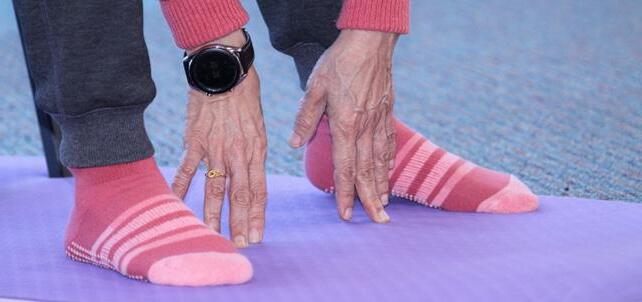
Parkinson’s is often recognised by changes in movement, but for many people the most challenging symptoms are the ones no one can see. Anxiety, apathy, pain, changes in thinking, and impulse control difficulties are all common in Parkinson’s, yet they are often misunderstood or overlooked.
Anxiety may feel like constant worry, inner restlessness, or panic, and can fluctuate during the day or worsen when medication is wearing off.
Apathy is not laziness or a lack of caring - it’s a neurological symptom that can make it hard to start activities, even when motivation is still there emotionally.
Pain may present as aching, cramping, burning, or general discomfort, sometimes without a clear physical cause.
Cognitive changes can include slowed thinking, difficulty concentrating, or problems with planning and word finding, and often vary from day to day.
Some people experience Impulse Control Disorders, such as compulsive spending or gambling, which are related to medication, not something people choose.
As one person shared, “The hardest symptoms were the ones no one could see.”
Sleep problems are also very common in Parkinson’s and can have a significant impact on wellbeing. Many people experience REM sleep behaviour disorder, where dreams are acted out with talking, shouting, or sudden movements. Others struggle with insomnia, waking frequently through the night, or finding it difficult to fall asleep in the first place. Frequent night time urination, stiffness, pain, vivid dreams, or anxiety can all disrupt sleep and leave people feeling exhausted the next day. “I’m tired all the time,” one person said, “but my sleep never feels restful.”
Sleep hygiene refers to habits and routines that support better sleep, and while it won’t fix all sleep problems in Parkinson’s, it can make sleep
more predictable and restful. Simple strategies include going to bed and getting up at roughly the same time each day, keeping the bedroom dark, quiet and cool, and using the bed mainly for sleep rather than television or phones. Reducing caffeine later in the day, limiting alcohol, and avoiding large meals close to bedtime may also help. If digital devices are used in the evening, switching phones, tablets, and computers to night mode or reducing screen brightness can lessen exposure to blue light, which can interfere with sleep. Many people find benefit in a calming wind down routine, such as gentle stretches, reading, or breathing exercises, to signal to the brain that it is time to sleep. Daytime napping can be helpful for managing fatigue but keeping naps short and earlier in the day may reduce night time disruption. If sleep remains poor despite good sleep habits, it’s important to discuss this with your Parkinson’s Nurse Specialist or treating team, as Parkinson’s related sleep problems often need tailored medical and multidisciplinary support.
People living with Parkinson’s often say that small changes can make a difference. Keeping medication timing consistent, creating a calming night time routine, ensuring clear and well lit paths for night time toileting, and talking openly about non motor symptoms are all important steps. Speaking with your Parkinson’s Nurse Specialist and neurologist about symptoms such as anxiety, low mood, pain, sleep disturbance, and behaviour changes is essential, as these symptoms are treatable and should not be ignored. Support from the wider multidisciplinary team can also be invaluable. Occupational therapists, psychologists, psychiatrists, and sleep specialists can help identify practical strategies and tailor solutions to your individual challenges. Invisible symptoms deserve recognition and care just as much as visible ones. If any of these experiences sound familiar, you’re not imagining them - and you’re not alone.
continued on page 5...
o Aim for regular bed and wake times to help your body clock settle.
o Keep the bedroom dark, quiet, and cool, with clear and well lit pathways for safe night time toileting.
o Use the bed mainly for sleep, rather than watching television or scrolling on devices.
o Reduce caffeine and alcohol, especially later in the day, and avoid heavy meals close to bedtime.
o If using phones, tablets, or computers in the evening, switch them to night mode or reduce brightness to limit blue light exposure.
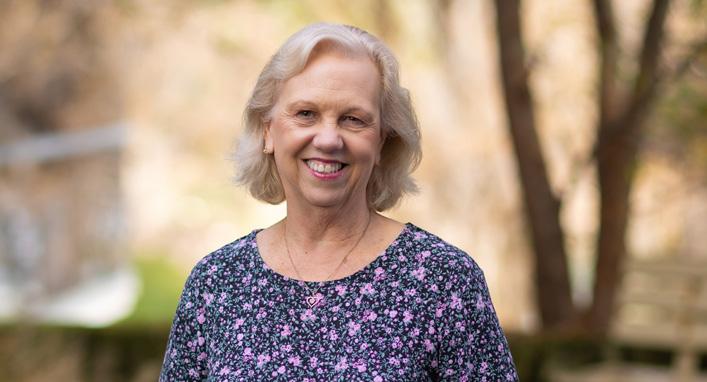
How long have you been with Parkinson’s WA? 8 months
What part of your job do you appreciate the most?
I love being part of a caring team. I really enjoy organising people so being able to co-ordinate and manage the nurses’ diaries, enabling them to see more patients brings me immense satisfaction. I enjoy interacting with the patients on the phone and meeting them in person at our seminars or if they pop into the office.
Who or what inspired you to pursue the career you have today?
As a young child assisting my father with “secretarial duties” for my primary school’s P&C, I gained a passion for administration/secretarial work. I have worked in the Health Sector for most of my career and this is where I feel I “fit”.
Favourite place you’ve travelled? Anywhere I am currently travelling to is my
o Establish a calming wind down routine such as gentle stretching, reading, or relaxation breathing.
o Short daytime naps can help manage fatigue but keeping them earlier and brief may support better night time sleep.
o Ongoing sleep problems should be discussed with your Parkinson’s Nurse Specialist or Specialist, as many Parkinson’s related sleep issues benefit from medical and multidisciplinary support.
Sheree
Ambrosini
Clinical Lead
favourite! It doesn’t matter if I am overseas or in Australia, I make sure I enjoy each place for what it is.
Describe what a perfect day outside of work would look like for you?
I currently enjoy spending time with my grandchildren and exploring Perth and its surroundings with them in tow, as we have only been living here for a few years, so most places are “new” to us.
Share a fun fact or your favourite quote: I celebrated a special “zero” birthday on the Ferris Wheel in Montreal, Canada where I experienced my first “summer” birthday (I am a July baby) and wore a sundress and sandals!

When a parent is diagnosed with Parkinson’s, the impact of the diagnosis is experienced by the whole family- including children.
Children are very perceptive and may observe changes in their parent, more than the adults realise. Children may notice:
• Movement/posture changes
• Tremor
• Changes in energy or mood
• Reduced facial expressions.
As a parent it is normal to worry about how the diagnosis may affect your children but providing them with simple explanations and emotional support can make a profound difference to their wellbeing.
How can you help your child understand Parkinson’s?
• Be honest. Hide the truth, and they may create a story that’s much scarier. Besides, kids are intuitive and probably already know something’s up.
• Discuss it in an age-appropriate way, using child-friendly analogies if appropriate eg “Mum’s brain battery runs low sometimes, and her medicine helps recharge it” or
“Dads face muscles are a bit stiff so he might smile less but he is not angry with you”
• Reassure children that Parkinson’s is not contagious and not caused by anything they did
• Encourage children to ask questions
It is normal for children to feel worried, confused or even frustrated about a parents Parkinson’s but you can help support them by:
o Check in with them regularly on how they are feeling
o Let them know that it is okay for them to feel the way they do
o Give them permission not to worry or feel like they have to take responsibility for managing your condition
o Help them identify people they can speak to such as: PNS, School counsellor/psychologist, Teacher, family friend.
o Empower them- Give them concrete ways to help out, be it with daily tasks such as housework or more proactive activities such as fundraising, they feel more empowered.
Kayleigh Rawle Parkinson’s Nurse Specialist
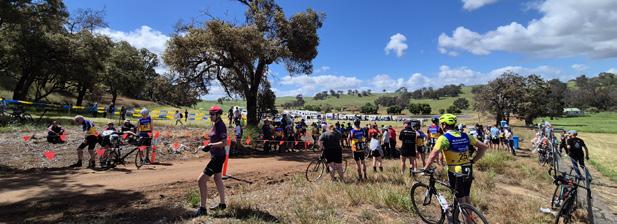
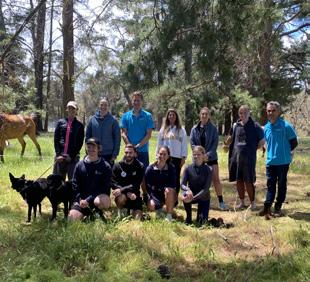
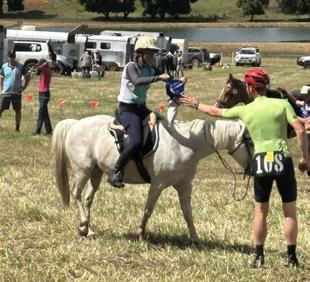
Department of Primary Industries and Regional Development (DPIRD) staff and friends from across South Coast Western Australia, once again stepped up to participate in the 2025 Blackwood Marathon Relay in support of people living with Parkinson’s. With the strong backing of their friends and families, DPIRD teams and supporters demonstrated exceptional commitment and community spirit.
Now in its 46th year, the Blackwood Marathon Relay transformed the Blackwood River Valley over the weekend, with 367 competitors swimming, running, paddling and cycling the approximately 60 km course from Boyup Brook to Bridgetown.
A group of Albany-based DPIRD staff entered three teams—Racing 4 Ryder 1, 2 and 3—named in honour of their former colleague Arjen Ryder and his wife Yvonne, who tragically lost their lives aboard Malaysia Airlines Flight 17 when it was shot down over Ukraine in 2014.
In a moving display of teamwork and compassion, the Racing 4 Ryder teams selected Parkinson’s WA as their charity of support, collectively raising $1,480 for a cause close to many of their hearts. Their fundraising efforts were matched by strong performances on the day, with two teams achieving

podium finishes—first place in the mixed open category and second place in the women’s category. Parkinson’s WA extends its sincere thanks to all DPIRD staff and friends who took part, challenged themselves, and rallied their communities. Their commitment helps ensure the continued delivery of vital support and services for people living with Parkinson’s across Western Australia. Thank you for racing, remembering and making a meaningful difference.
We would like to reach out to you, our community and ask if you are willing to share your Parkinson’s story. You can be a patient, a carer or a loved one, we want you to share your thoughts and experiences. By sharing your experience, you can help provide understanding, encouragement and hope to others. Please visit our website to see some of the amazing stories that our community have already shared - https://www.parkinsonswa.org.au/stories
To share your story please reach out to: marketing@parkinsons.org.au or call 6457 7373
Parkinson’s WA has had a lot of interest in more recent times to support beginning and advanced research, with an opportunity for funds from the established Zrinski Foundation, a generous donation from the Zrinski family with the intention of supporting research into Parkinson’s in WA.
Consistent with the interest from researchers and consortiums, the levels of approval for PWA to support research have been redefined:
• LEVEL 1 - Fast Tracked Projects (reviewed by the PWA Research Committee Chair and Senior Nurse, drawing on committee expertise when needed). These are projects that are looking for advertising via PWA’s social media channels specifically and not necessarily seeking funding support;

• LEVEL 2 - Seeding Grant Projects (up to $10K) (reviewed by the PWA Research Committee; approval or otherwise to be ratified by the Board of PWA; and
• LEVEL 3 - Zrinski Foundation Grants ($10K+) (to be reviewed by the PWA Research Committee at a scheduled meeting); approval or otherwise to be ratified by the Board of PWA.

Late last year Parkinson’s WA launched a new section on our website to showcase the Research Projects that we are supporting – you can find this at : https://www.parkinsonswa.org.au/researchprojects
Current Projects featured:
• TONiC study for Parkinson’s disease
• “Brain Bites” meal box Research for People Living with Parkinson’s
• Alpha-synuclein Seed Amplification Implementation
• The relationship between a blood-based protein and Parkinson’s
• Dietary changes in those living with Parkinson’s
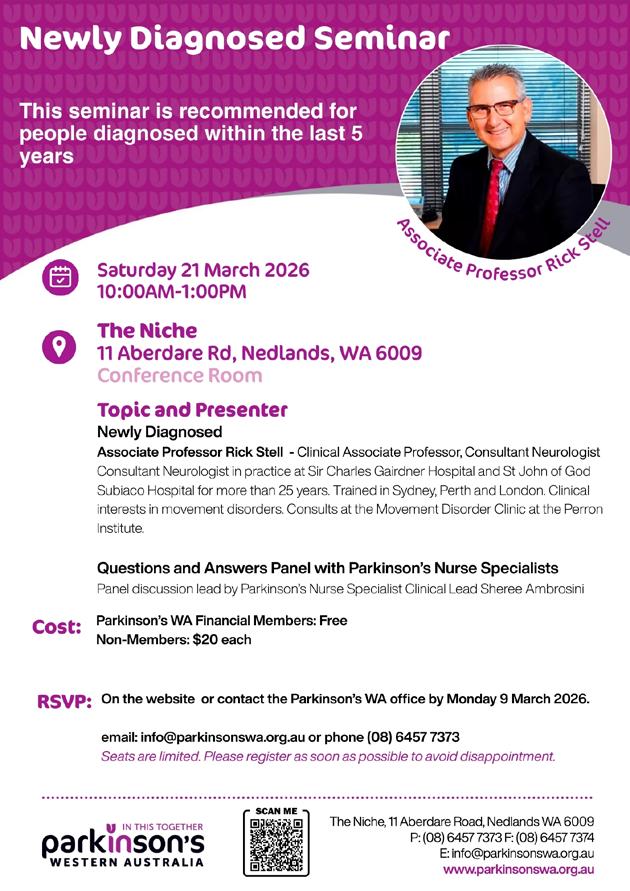
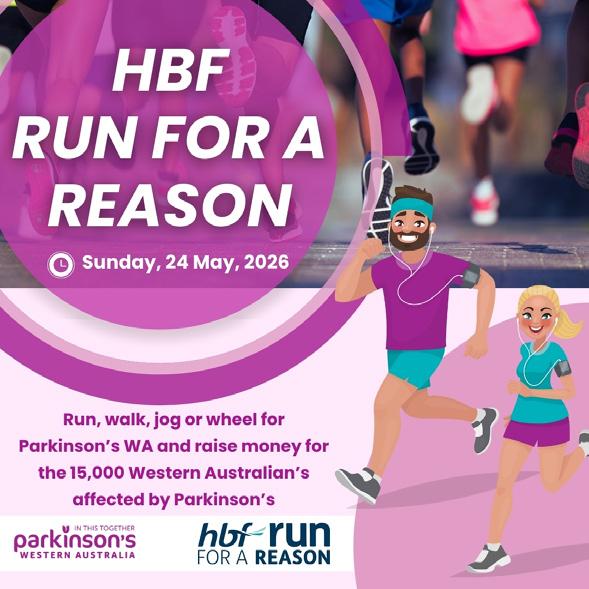

Sunday, 24 May 2026

Ready to make a difference? The 2026 HBF Run for a Reason is back and better than ever!
Join us on Sunday, 24 May for a day of inspiration, connection, and making an impact. Whether you run, walk, or wheel, this is your chance to support Parkinson’s Western Australia and help raise funds for a community that needs it.
Sign up here - https://loom.ly/Wi_tg3k
Over the past couple of years, we’ve been incredibly grateful for the amazing individuals who have run and raised funds for Parkinson’s WA. This year, we want to double the impact! Run for your loved ones, family members, friends, colleagues, community members, or even just for fun, and help us support the Parkinson’s WA community in a big way. Let’s make 2026 our most impactful year yet!
Sign up today and get ready for Perth’s best day out!
We hope 2026 has begun gently and positively for you and your loved ones. The South West PNS team is excited to continue supporting our Parkinson’s community this year, with new initiatives, seminars, and outreach clinics designed to make care accessible, safe, and meaningful. We look forward to connecting with you, sharing knowledge, and celebrating the small wins together—because we are In This Together, every step counts.
The South West Parkinson’s Nurse Specialist (PNS) service operates using a blended, hybrid model, combining face-to-face clinics, outreach visits, and telehealth appointments.
The PNS triage phone line is available for patient support and is covered each week by all the Parkinson’s Nurse Specialist including Fiona and Donna, ensuring timely advice and guidance when needed.
This approach balances accessibility, timely clinical support, and safety for patients across the region.
To improve access to face-to-face care for patients living outside of our usual travel boundaries, a combination of outreach clinics, central clinic locations, and telehealth appointments is being used.
• Bunbury clinic is ongoing, led by Donna with support from Clinical Lead Sheree, providing regular local access for patients in Bunbury and surrounding areas.
• Busselton clinics are led by Fiona and now offer a face-to-face option for some Bunbury
patients who live outside her usual travel boundary. These clinics also serve Busselton patients who prefer a local option.
• Nannup clinic is led by Fiona and provides face-to-face support for patients from Manjimup and surrounding areas.
• Telehealth appointments remain available for those unable to attend in person or who require urgent clinical review.
These outreach clinics provide a safe, accessible, face-to-face option for patients who live further away, complementing the hybrid model of care across the South West.
• Busselton Allied Health Parkinson’s Seminar –May 5th
“Active, Connected, Nourished: A Holistic Allied Health Approach to Parkinson’s”
Venue: Shire of Busselton Undalup room. Speakers include occupational therapy, exercise physiology/physiotherapy, speech pathology, and dietetics. The session will feature presentations, discussion tables, resources, and lunch.
• South West Parkinson’s Seminar (Bunbury) planned for September/October, featuring popular guest speaker Dr Ramesh.
Support groups continue across Bunbury, Busselton, Collie, and Margaret River. Carers groups are now planned and booked for both Bunbury and Busselton locations, with PNS support to facilitate.
continued on page 11...
...continued from page 10
Donna will attend the World Parkinson’s Congress in Phoenix, Arizona, May 2026, gaining valuable research-based insights to bring back and benefit our South West Parkinson’s community.
The PNS team will continue to support WACHS and Community education sessions, delivered by Fiona and Donna, as part of ongoing professional development and community awareness.
The South West PNS team continues to focus on safe, sustainable service delivery, mindful of travel distances, weather conditions, and regional demands.
Please take good care of yourselves, and don’t hesitate to contact us whenever you need support—we’re here to help and In This Together.
Fiona Roscoe and Donna Mallaby Parkinson’s Nurse Specialists
Support Group Leaders
Development Day: Connecting, Learning, and Growing Together
On Thursday 5 February, Parkinson’s WA was proud to host our annual Support Group Leaders Development Day — a dedicated event celebrating and supporting the incredible volunteers who lead our community support groups across Western Australia.
Held at our offices, the day brought together Support Group Leaders from across the state to connect, learn, and share experiences in a relaxed and welcoming environment. These passionate volunteers play a vital role in the
lives of people living with Parkinson’s, creating safe and inclusive spaces where members can access understanding, encouragement, and meaningful connection.
Parkinson’s Nurse Specialist, Kayleigh Rawle, provided an informative update on the latest developments in Parkinson’s care and research, offering valuable insights for leaders to take back to their groups. This was followed by an energetic Q&A section where leaders were able to address concerns their members have been facing and further enhance their knowledge. Another highlight of the day was a presentation from Alike WA, with a heartfelt thank you to Janel Wong for sharing practical guidance and best-practice approaches to running successful and engaging support groups. Our leaders found this workshop to be valuable and enlightening.
As the day drew to a close, we took the opportunity to acknowledge and thank our Support Group Leaders. Every one of them is a volunteer, generously giving their time, energy, and compassion to support others. Their dedication truly forms the backbone of our community, and we are deeply grateful for the difference they make every day.
To all our Support Group Leaders — thank you. You are the heart of Parkinson’s WA.
Rhiannon Girando Project Officer, Support Groups
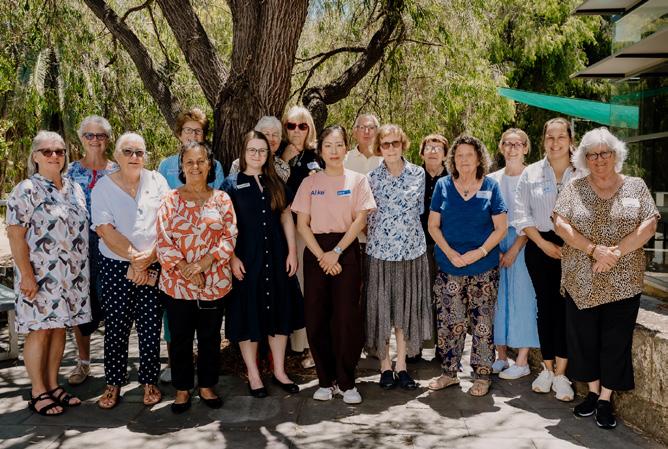
Project Officer, Support Groups – Rhiannon Girando and Janel Wong Alike WA with our Support Group Leaders
Parkinson’s WA is proud to announce the recipients of its 2025 Annual Awards, recognising outstanding individuals and organisations whose dedication, leadership, and compassion have made a meaningful difference to the Parkinson’s community across Western Australia. These awards celebrate the remarkable contributions of volunteers, health professionals, community advocates, and fundraisers who go above and beyond to support people living with Parkinson’s and those who care for them.
Parkinson’s WA congratulates all 2025 award recipients and thanks them for their invaluable contributions to the Parkinson’s community across Western Australia.
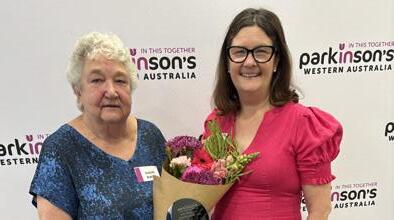
WINNER: Judith Baker
Judith Baker has been honoured for her exceptional service as Leader of the Midland Parkinson’s Support Group. While caring full-time for her husband who lives with Parkinson’s, Judith has led the group with unwavering commitment, overseeing meetings, finances, and day-to-day operations with professionalism and care.
Drawing on her background as an accountant, Judith ensured transparent and accurate financial management and made significant behind-thescenes contributions to Parkinson’s WA. Parkinson’s WA warmly acknowledges her tireless service, generosity, and compassion.
Judith truly embodies the spirit of volunteerism.
WINNER: Paula McGinley
Paula McGinley, Senior Occupational Therapist at Fremantle Hospital’s Parkinson’s Service, is recognised for her outstanding commitment to improving the lives of people with Parkinson’s and their carers.
With more than 12 years of dedicated service, Paula is a highly respected clinician, educator, and advocate. She works collaboratively across disciplines, contributes to research and innovation, supports carers through education workshops, and maintains strong partnerships with Parkinson’s WA and Curtin University. Her work exemplifies true community spirit and dedication.
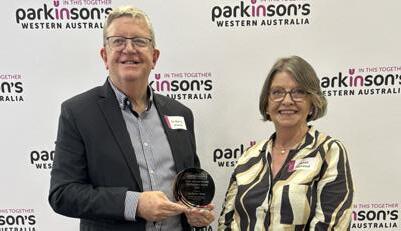
WINNER:
Dr Barry Vieira, General Physician, is recognised for his long-standing leadership in geriatric and rehabilitation medicine across Western Australia. His work has played a vital role in improving diagnosis, service delivery, and care pathways for older patients in both public and private health sectors.
With a strong interdisciplinary approach and a particular focus on supporting people living with Parkinson’s, Dr Vieira consistently champions functional independence and quality of life. As a valued member of the Parkinson’s WA Professional Advisory Panel, he has provided trusted guidance, advocacy, and support well beyond individual patient care.
Parkinson’s WA is proud to honour Dr Vieira with this award.
The Denmark-Walpole Football Club is recognised for its creative and inspiring fundraising initiative, the Big Splash, which raised both funds and awareness for Parkinson’s WA while bringing the local community together.
Motivated by personal connections to Parkinson’s, the club’s efforts showcased compassion, creativity, and strong community leadership. Their initiative highlights the powerful role local sporting clubs can play in supporting meaningful causes.
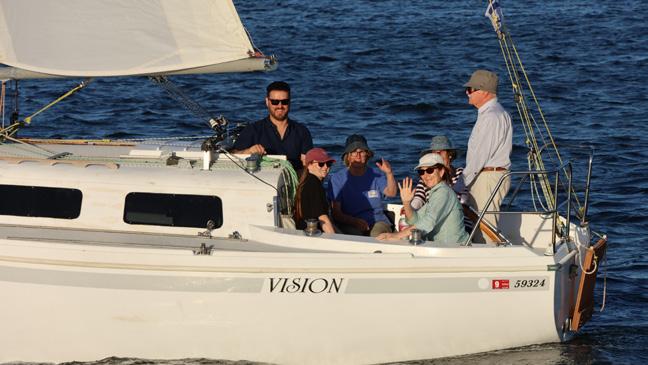
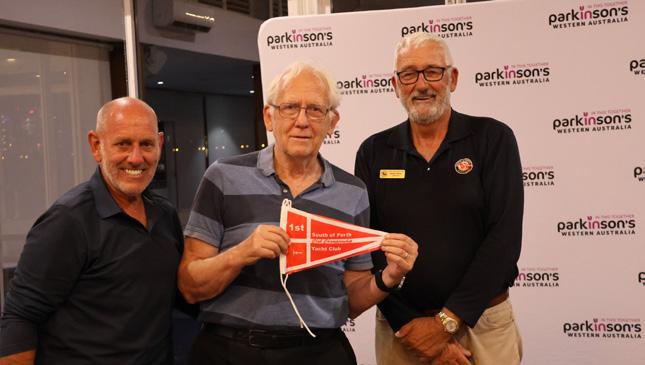
Twilight Sailing has become one of the most treasured traditions for our Parkinson’s WA members, and this year we proudly celebrate our 18th season in partnership with the South of Perth Yacht Club. It is a truly special event on our community calendar — one that members eagerly anticipate each year, with tickets highly sought after and often snapped up very quickly.
Aside from a brief pause during the COVID-19 pandemic, our sails have been catching the summer breeze year after year, offering moments of joy, laughter, and freedom on the Swan River. For many of our members, Twilight Sailing is more than an event — it’s a highlight of the year, circled on calendars well in advance.
This much-loved tradition began with a heartfelt idea from the late Peter Willmott — a passionate sailor, long-time South of Perth Yacht Club member, and respected insurance professional. After being diagnosed with Parkinson’s in 1999,

Peter reached out to our Nurse Specialist service for support and quickly became an integral part of the Parkinson’s WA family. He served on our Board for many years, sharing his trademark wit, warmth, and generosity of spirit.
Blending his love of sailing with his desire to give back, Peter proposed a simple but powerful idea: an evening on the water for people living with Parkinson’s. What began as a single sail has since grown into one of our most eagerly anticipated social events — a time when symptoms fade into the background and participants can simply relax, connect, and enjoy the serenity of the river.
Although Peter passed away in 2018, his legacy lives on in every Twilight Sail. Each year, as we glide across the water he loved so dearly, we raise a glass in his memory — grateful for the tradition he created and the community it continues to bring together.

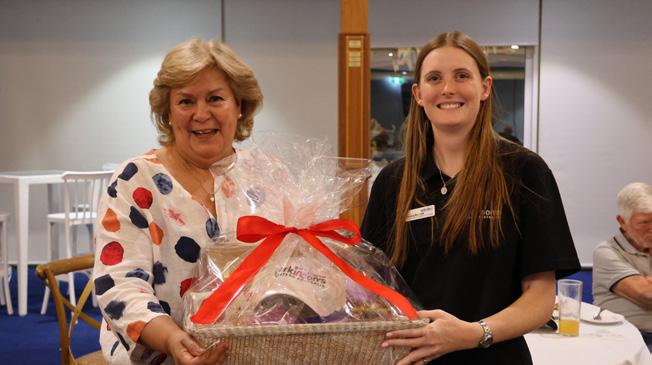
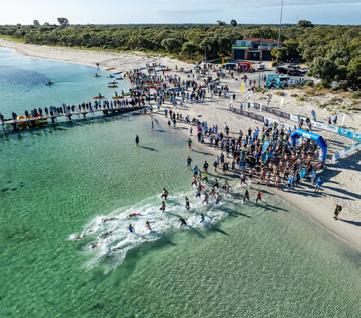
The 2025 Yahava KoffeeWorks Cool Water Classic, held in November 2025, once again delivered an unforgettable day of endurance, determination, and community spirit along the stunning Geographe Bay coastline. With ideal conditions, swimmers took on the iconic 20km course from Dunsborough to the Busselton Jetty, testing both physical strength and mental resilience.
This year’s event saw an outstanding performance by Callum Greenshields, who claimed the men’s solo title and etched his name into the record books once more by breaking his own course record. Christine Murray delivered a commanding performance, taking out first place after an impressive and determined swim across the full 20km course.
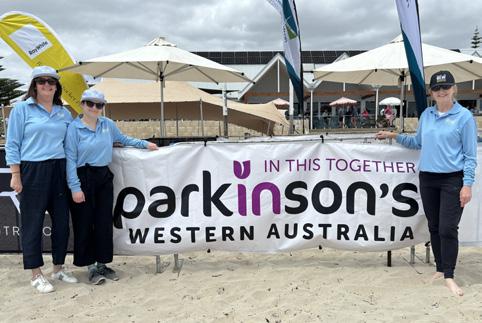
Parkinson’s WA was thrilled to return as the charity partner for the second consecutive year, continuing a valued partnership with this iconic open-water event. The Classic once again provided an important platform to raise awareness and show support for people living with Parkinson’s, while strengthening connections between swimmers, supporters, volunteers, and the wider community.
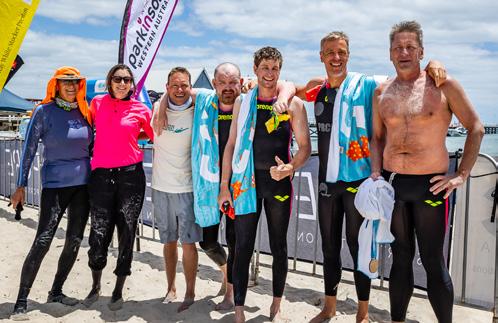
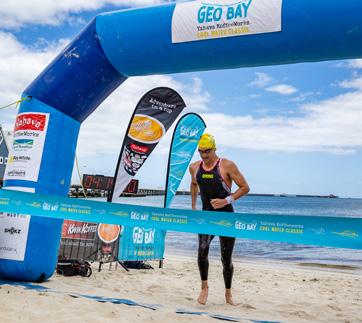
As always, the event was made possible by the dedication of volunteers stationed along the course and shoreline, including many from our community including our very own Parkinson’s Nurse specialists Jo and Liz. All of the volunteers ensured swimmer safety and smooth transitions throughout the swim. Their commitment, alongside the support crews and spectators, created an encouraging and energetic atmosphere from start to finish.
More than just a race, the Yahava KoffeeWorks Cool Water Classic continues to be a celebration of open-water swimming, resilience, and community connection. From elite solo competitors to determined teams, the 2025 event highlighted the passion and spirit that define this extraordinary challenge.
Parkinson’s WA extends its sincere thanks to the organisers, participants, fundraisers, volunteers, and supporters who made this year such a success and is already looking forward to being part of the Cool Water Classic again in 2026.
Kerrin Girando Business Partner, Marketing and Fundraising

The group formed following a conversation between Bryan Pleitner—a two-time premiership player and founding member of the Cardies Coffee Club for former West Perth players— and former politician Ken Wyatt, during which Bryan shared his Parkinson’s diagnosis. He also mentioned fellow footballer Ron Boucher, the former formidable ruckman for Swan Districts. The two later caught up for lunch, where it was suggested, they reach out to other past players’ groups to see if there were more ex-players living with Parkinson’s and form a support network.
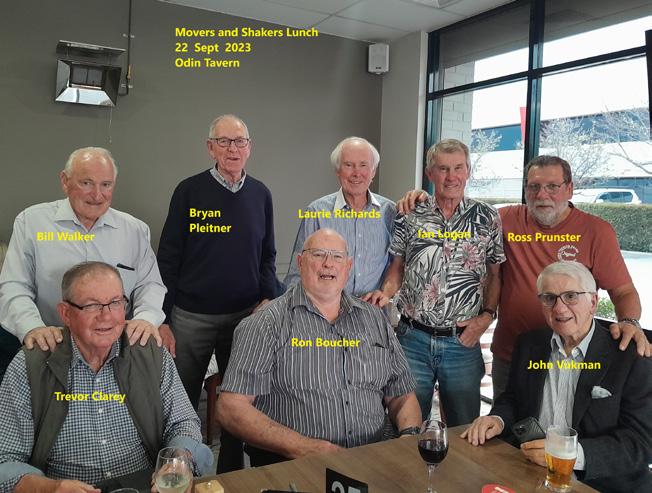

Steven Arnott, retired West Perth player, has been instrumental in keeping the group engaged and up to date on the latest Parkinson’s developments, drawing on his role as CEO at the Perron Institute.
Although Bryan was unfortunately unable to attend the Morning Tea and sent his apologies, the event itself came about after he connected with Parkinson’s WA and recently became a member. Reflecting on his involvement, Bryan shared:
“My wife Cecilia was on my back for a long time to join Parkinson’s WA—she saw the benefit long before I did. I hope that by getting the group involved with Parkinson’s WA, they can discover the knowledge and assistance available.”
The Morning Tea was a meaningful and enjoyable occasion, highlighting the strength of shared experience, support and mateship—on and off the field.
If you know anyone living with Parkinson’s who has a connection to the WAFL, AFL or SANFL and would like to be a part of the group please email : supportgroups@parkinsonswa.org.au
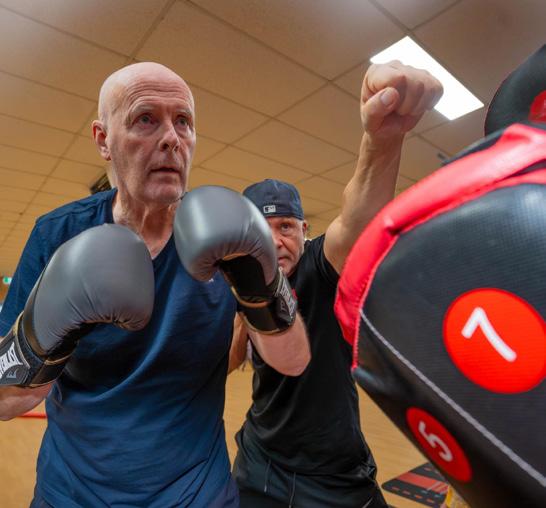
Fazio’s PD Fighters is a groundbreaking fitness program empowering individuals to tackle Parkinson’s disease, one punch at a time. Created by former Australian Boxing Champion Rai Fazio, this revolutionary non-contact boxing therapy is designed to alleviate common Parkinson’s symptoms while building strength, fitness, and confidence.
Backed by evidence-based research conducted in Western Australia, the program has been developed in collaboration with one of Australia’s leading neurologists, Professor David Blacker, and a team of exercise physiologists. www.faziospdfighters.com
Parkinson’s WA members are eligible for an extra free class