How Paper Animation Can Make Everyday Photos More Engaging
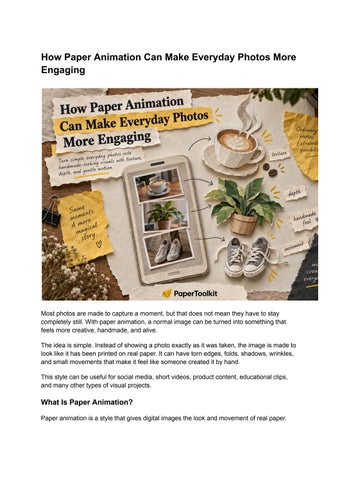
Most photos are made to capture a moment, but that does not mean they have to stay completely still. With paper animation, a normal image can be turned into something that feels more creative, handmade, and alive. The idea is simple. Instead of showing a photo exactly as it was taken, the image is made to look like it has been printed on real paper. It can have torn edges, folds, shadows, wrinkles, and small movements that make it feel like someone created it by hand. This style can be useful for social media, short videos, product content, educational clips, and many other types of visual projects.
What Is Paper Animation? Paper animation is a style that gives digital images the look and movement of real paper.
For example, a person in a photo can be separated from the background and turned into a paper cut-out. The edges can look slightly rough, a soft shadow can appear behind the subject, and small movements can make it feel like the paper is moving on a table. Another option is a fold-out effect, where the image appears on a folded sheet of paper and slowly opens. The result is still based on the original image, but the way it is presented becomes much more interesting. Source : https://www.papertoolkit.com/
Why Does the Paper Look Work So Well? Digital images are usually very clean. Edges are smooth, backgrounds are perfect, and everything can feel polished. Paper is different. It has texture, small marks, folds, fibers, and uneven edges. These small details make the visual feel more natural. A slightly torn edge or light wrinkle can make an image feel as if someone actually printed it, cut it out, and placed it on another piece of paper. That handmade feeling is one of the main reasons paper animation can stand out.
Start With a Good Photo The original image has a big effect on the final result. A photo with one clear subject usually works better than a very busy image. This could be a person, pet, product, flower, car, food item, or almost any object that is easy to recognize. Good lighting also helps. If the subject is clear, it is easier to create a clean cut-out and make the paper effect look natural. Photos with very crowded backgrounds can still work, but removing the background first may give you a better result.
Turn the Subject Into a Paper Cut-Out One of the easiest ways to create a paper-style visual is to turn the main subject into a cut-out. Imagine a photo of a butterfly.
In the original image, the butterfly may be sitting on a flower with a natural background. After removing the background, the butterfly can be placed on a paper surface with a slightly rough white edge. Add a paper texture and a light shadow underneath it, and suddenly the butterfly looks like it was cut from a printed photo. A little movement can make the effect even stronger. It might gently move from side to side, rotate slightly, or appear to lift from the background.
Add Texture Without Hiding the Image Paper texture is important, but it should not take over the photo. If the texture is too strong, details in the original image can become difficult to see. A better approach is to keep the texture light. Small fibers, gentle wrinkles, or a slightly uneven paper surface are often enough to create the effect. The viewer should still be able to clearly see the subject. The paper effect should improve the image rather than cover it.
Use Shadows to Create Depth A simple shadow can make a big difference. Without a shadow, the paper cut-out may still look completely flat. When a soft shadow is placed behind it, the subject appears to sit slightly above the background. This gives the image depth. The shadow does not need to be dark or dramatic. A small, soft shadow normally looks more realistic because real paper only sits a short distance above the surface.
Try Fold-Out Effects for Reveals Paper animation is not limited to cut-outs. Fold-out effects are another useful option. In this style, the image begins as a folded sheet of paper. As the animation plays, the paper opens and reveals the full image. This works especially well when you want to introduce something gradually.
It could reveal a product, a travel photo, a message, an illustration, or a person. Instead of showing everything immediately, the viewer gets a short reveal. That small amount of movement can make a simple image feel much more interesting.
Paper Animation for Social Media Paper-style effects fit naturally into short-form content. On platforms where people quickly scroll through videos and images, the first few seconds matter. A normal photo may be easy to pass by. The same photo appearing as a moving paper cut-out can create a stronger visual hook. Creators can use paper animation for: ● ● ● ● ● ● ● ● ● ●
Reels Short videos Story posts Video intros Photo transitions Product showcases Educational content Creative ads Announcements Personal projects
The effect can be used on its own or combined with text, music, voiceovers, and other video elements.
Keep the Movement Natural A common mistake is adding too much movement. Paper animation usually looks better when the motion is small and controlled. A gentle shake, small rotation, slow fold, or light movement can feel more natural than fast and dramatic motion. Think about how a real piece of paper might move. It would not usually spin around quickly or jump across the screen. Keeping the motion simple can make the final result look cleaner and more believable.
A Simple Way to Make Photos Feel Different
You do not always need to create new images to make better visual content. Sometimes you can take a photo you already have and present it in a new way. Paper animation does exactly that. The original image stays recognizable, but torn edges, texture, shadows, folds, and movement give it a fresh look. It can make an everyday photo feel more creative without completely changing the subject.
Final Thoughts Paper animation is a simple way to bring more personality to still images. It combines real-world paper details with digital movement, which creates a style that feels both familiar and different. A normal photo can become a cut-out, fold open like a sheet of paper, or move gently as if it were part of a handmade stop-motion scene. You do not need complicated effects to make it work. A good image, clean cut-out, soft texture, natural shadow, and simple movement can be enough to turn an ordinary photo into something people are more likely to notice.