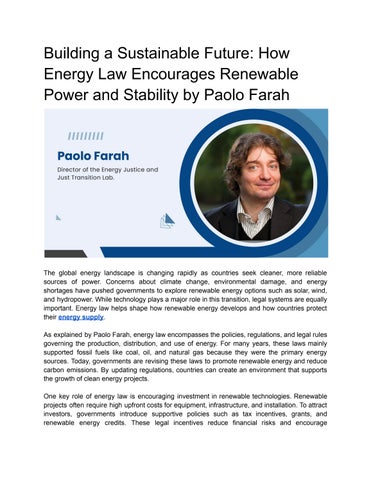
Building a Sustainable Future: How Energy Law Encourages
Renewable Power and Stability by Paolo
Farah

The global energy landscape is changing rapidly as countries seek cleaner, more reliable sources of power Concerns about climate change, environmental damage, and energy shortages have pushed governments to explore renewable energy options such as solar, wind, and hydropower. While technology plays a major role in this transition, legal systems are equally important Energy law helps shape how renewable energy develops and how countries protect their energy supply.
As explained by Paolo Farah, energy law encompasses the policies, regulations, and legal rules governing the production, distribution, and use of energy. For many years, these laws mainly supported fossil fuels like coal, oil, and natural gas because they were the primary energy sources Today, governments are revising these laws to promote renewable energy and reduce carbon emissions. By updating regulations, countries can create an environment that supports the growth of clean energy projects
One key role of energy law is encouraging investment in renewable technologies. Renewable projects often require high upfront costs for equipment, infrastructure, and installation To attract investors, governments introduce supportive policies such as tax incentives, grants, and renewable energy credits These legal incentives reduce financial risks and encourage
businesses to develop new energy projects As a result, more solar farms, wind turbines, and other renewable facilities are being built around the world.
Energy law also provides guidelines that ensure renewable energy projects operate responsibly. Clear regulations help developers comply with environmental standards, manage land use, and connect renewable energy systems to national power grids Without proper legal frameworks, renewable projects could face delays, conflicts with local communities, or environmental concerns Strong regulations help maintain transparency and balance between energy development and environmental protection
Another important benefit of energy law is improving energy security Many countries rely heavily on imported fuels, which can create risks if political conflicts or economic problems disrupt supply chains. By supporting renewable energy development, energy laws help countries generate more power locally This reduces dependence on foreign energy sources and creates a more stable and reliable energy system.
Renewable energy also supports a more flexible and decentralized power structure Instead of relying only on large power plants, renewable systems can generate electricity in many locations through rooftop solar panels, wind farms, and small hydro facilities Energy law helps manage this system by setting rules for energy storage, grid access, and fair pricing
Energy law plays a vital role in supporting renewable energy growth and strengthening national energy security Through incentives, regulations, and modern policies, legal frameworks guide the shift toward cleaner, more reliable energy systems. As demand for sustainable energy continues to grow, effective energy laws will remain essential to building a resilient, environmentally responsible energy future.