
Number 54
June/2026



Number 54
June/2026
The United States and Iran have signed a peace agreement, formally ending the conflict that had been weighing on the global economy in recent months. This outcome had largely been anticipated, and the progress toward peace had already produced tangible effects: oil prices retreated to around US$80 per barrel. As the agreement becomes more firmly established, prices could potentially return to pre-conflict levels of between US$60 and US$70, providing significant relief to inflationary pressures worldwide. Nevertheless, caution remains warranted. Historically, peace agreements in the Middle East have often faced setbacks, and the possibility of renewed tensions or isolated attacks in the near future cannot be ruled out.
In Brazil, the official inflation rate (IPCA) rose 0.58% in May and remains above the government’s inflation target ceiling of 4.5% per year. Inflation accumulated 4.72% over the previous 12 months. Prices are expected to remain under pressure in the coming months. Once inflation becomes entrenched, it tends to decline slowly, even when factors such as oil prices improve. Moreover, inflationary risks are not limited to geopolitical tensions. Weather conditions are increasingly becoming a concern. The debate is no longer whether a Super El Niño event will occur, but rather how intense it will be. A stronger-than-expected event could damage Brazilian agricultural production and push food prices higher through next year. Despite inflation remaining above target, Brazil’s Central Bank Monetary Policy Committee (COPOM) decided in its June meeting to cut the benchmark Selic interest rate by 0.25 percentage points, bringing it to 14.25% per year. The reduction was modest and signals continued caution. Interest rates remain at very high levels, keeping credit expensive and limiting both household consumption and corporate investment. Economic activity continues to show mixed results.
Industrial production expanded 2.7% in April compared to the same month last year, but this performance was largely driven by oil, natural gas and mining extraction, which surged 10.6%. Excluding this segment, industrial growth was considerably more modest. Year-to-date industrial production has increased 1.7%.
Retail sales rose 1.4% in April compared to the same period in 2025, according to the Brazilian Institute of Geography and Statistics (IBGE), and are up 1.8% yearto-date. Consumers continue spending, supported by a strong labor market, but are increasingly feeling the impact of inflation and elevated interest rates.
The services sector grew 1.9% in April and has expanded 2.2% so far in 2026, remaining the most resilient segment of the Brazilian economy.
Tourism continues to outperform the broader economy. According to FecomercioSP, the sector posted a record revenue of R$23.2 billion in April, up 2.7% year-overyear and 3.6% higher in the first four months of 2026. More travelers are circulating throughout the country, boosting hotel occupancy and air transportation demand.
However, there is an important caveat: a significant portion of this growth stems from higher airfares and hotel rates. Travel volumes are increasing, but so are the costs borne by consumers.
Brazil’s high interest rates continue attracting foreign capital, strengthening the Brazilian real. The U.S. dollar briefly approached R$5.20 before retreating toward R$5.00, helping contain inflationary pressures.
However, investors should remain attentive. With lower Selic rates and higher inflation, real interest rates are declining. In addition, the interest rate differential between Brazil and the United States is narrowing, which may limit further appreciation of the Brazilian currency. There is also limited room for faster interest-rate cuts or significant additional strengthening of the real. The primary reason is Brazil’s fiscal situation, which continues to generate investor concern. Government spending
remains above revenue levels, increasing public debt. Adding to these concerns, Congress continues debating measures that could further strain public finances, commonly referred to as fiscal “time bombs.”
Unless Brazil improves its fiscal position and policymakers move toward greater budget discipline, economic growth is likely to remain modest. Ultimately, Brazilian households bear the consequences through slower income growth and greater dependence on expensive credit. This challenge is compounded by the rapid
Inflation (IPCA): Brazil’s official inflation rate rose 0.58% in May, bringing the 12-month cumulative figure to 4.72%, above the government’s 4.5% target ceiling.
Food and fuel prices remained the main inflationary drivers, reflecting the impact of the recent Middle East conflict.
Even with oil prices easing, inflation tends to respond slowly. When prices remain elevated for extended periods, they often resist declining even after the original causes disappear.
expansion of online sports betting, which is consuming a growing share of household budgets.
Globally, economic growth continues to slow, and the International Monetary Fund (IMF) has been revising its forecasts downward.
Online Betting and Consumer Spending: A FecomercioSP survey found that one in every three residents of São Paulo (35%) now participates in online betting to supplement income, an increase of 10 percentage points compared to 2024.
Among lower-income households earning up to two minimum wages, participation reaches 40%. The concern is that 12% of bettors have already taken out loans to continue gambling.
Not surprisingly, 74.2% of São Paulo households were in debt as of May, the highest level recorded in the past three years.
3
Agricultural Production: IBGE estimated a record grain harvest of 350.4 million metric tons in 2026, representing growth of 1.2% compared to 2025. Soybeans remain the standout crop, reaching a record 174.6 million metric tons, up 5.1% year-overyear and accounting for nearly half of total grain production. While this year’s outlook remains positive, attention is turning to the potential impact of a Super El Niño event. If weather conditions intensify, the next harvest could be affected, putting upward pressure on food prices throughout 2027.
Brazil has the potential to stand out positively in this environment thanks to its large economy and substantial consumer market. However, the country risks missing this window of opportunity, particularly in an election year, when implementing necessary economic reforms becomes even more difficult. MAY/2026
• Consumer Confidence (ICC): The Consumer Confidence Index reached 120.6 points in May, a decline of 0.4% compared to April, although still 7.9% above the level recorded one year earlier. This marks the third consecutive monthly decline and reflects rising food and fuel prices, which directly impact consumers already burdened by high interest rates and growing indebtedness.
• Business Confidence Index (ICEC): The Retail Business Confidence Index remained in pessimistic territory at 94.9 points in May, down 4.8% from April and 4.6% below May 2025. Like consumers, retailers continue to face challenges from high interest rates, household indebtedness, geopolitical uncertainty and the approach of national elections.
Note: Both the ICC and ICEC range from 0 to 200 points. Readings between 100 and 200 indicate optimism, while levels below 100 indicate pessimism. Although these indicators are based on surveys conducted in the city of São Paulo, they broadly reflect national trends, given that Brazil’s largest city accounts for approximately 11% of the country’s GDP.
Brazil’s Tourism industry closed May 2026 with sales continuing to expand, but with a warning sign that attracted attention in the PANROTAS Tourism Economic Development Index (IDET PANROTAS).
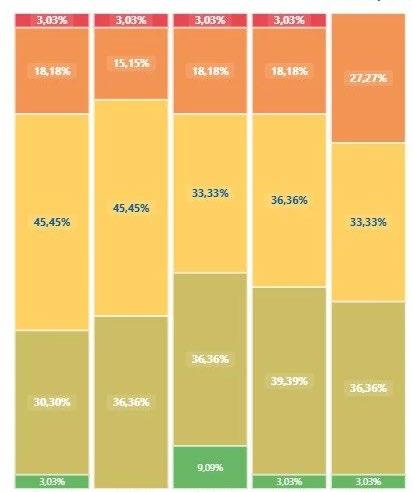
While 78.79% of the 33 largest Tour Operators, Consolidators, and Travel Management Companies (TMCs) included in the IDET PANROTAS database reported sales growth compared to the same month in 2025 and maintained levels similar to April 2026, business confidence declined. The percentage of respondents rating the outlook for the coming months as “Poor” jumped from 12.12% in April to 30.30% in May.
This represents the sharpest increase in pessimism recorded by IDET PANROTAS since the beginning of the survey series. The index was officially launched in April by PANROTAS, with support from Travel Leaders Hub, and is now published monthly.
According to IDET PANROTAS, the key characteristic of May was this contrast: sales remained strong, with an average increase of 26.51% among companies reporting growth— very close to April’s 28.57%—while business sentiment regarding current market conditions deteriorated. In April, 66.66% of respondents rated the month as “Good” or “Very Good”; in May, that figure fell to 54.54%.
Profitability indicators also weakened. The proportion of tourism companies reporting higher margins than a year earlier declined from 69.70% in April to 63.64% in May, while the percentage reporting margin declines increased from 6.06% to 9.09%.
Hiring trends also softened. In May 2026, 48.48% of companies employed more staff than in May 2025, down from 54.55% in April. Meanwhile, the share of companies with fewer employees nearly tripled, rising from 6.06% to 18.18%.
Looking ahead to the next six months, optimism has eased. Only 39.39% of executives expect conditions to be “Better” or “Much Better,” compared with 42.42% in April. At the same time, the proportion expecting deterioration increased from 18.18% to 27.27%.
What is driving this decline in confidence despite strong sales? The answer lies in margins, operating costs, and the behavior of three major external factors that have shaped the industry this year:
• Exchange rates
• Oil prices
• Inflation
The IDET PANROTAS survey is conducted monthly with 33 of the sector’s largest companies, including 11 firms from each of the three segments: Consolidators, Tour Operators, and TMCs.
HOW ARE SALES COMPARED TO THE SAME MONTH LAST YEAR (YOY)?
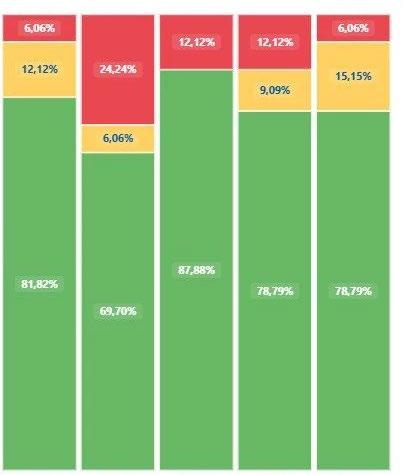
BUSINESS CONFIDENCE IN THE MARKET OVER THE NEXT FEW MONTHS
Consolidators
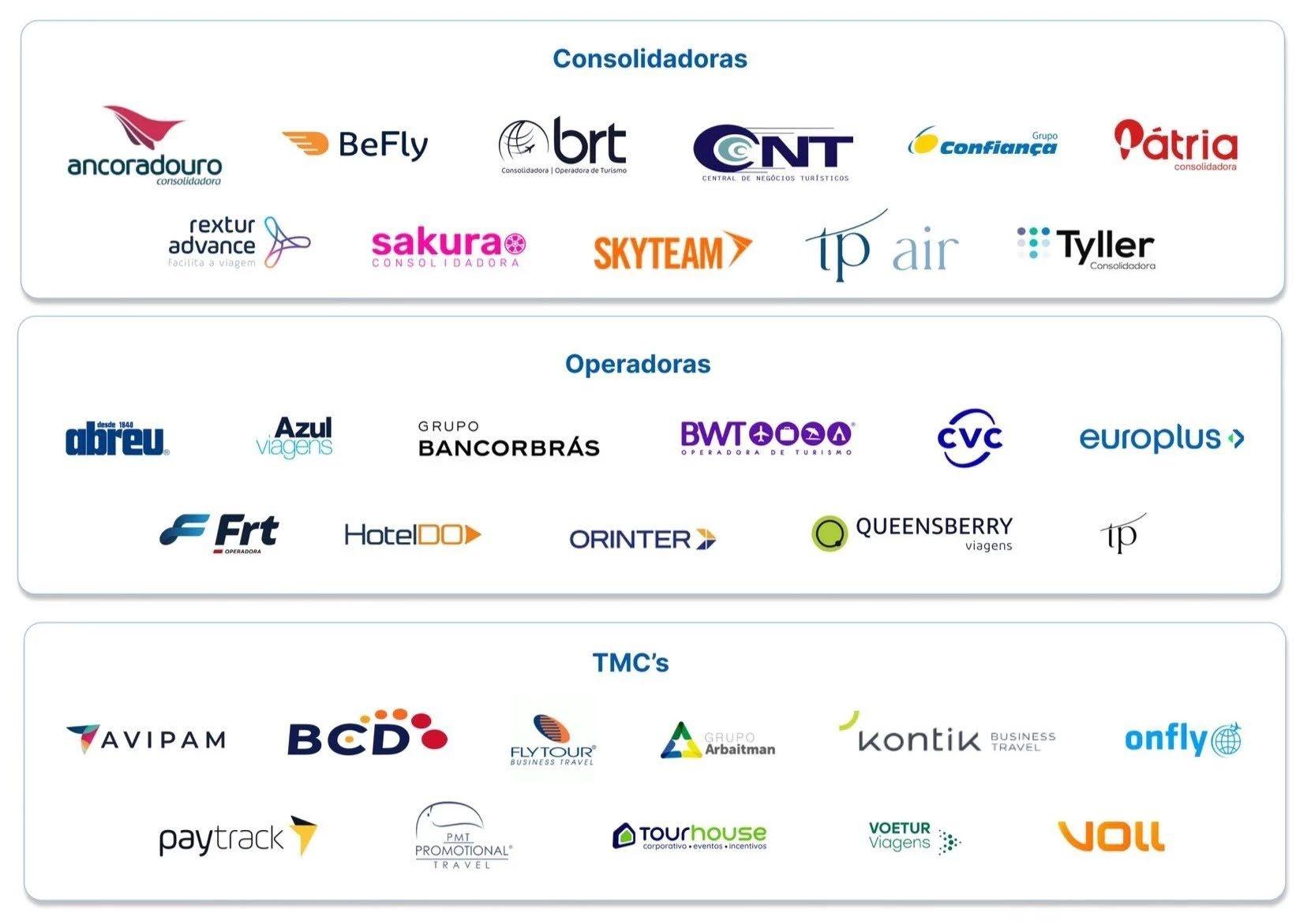
Tour Operators
Sales performance during the first half of 2026 has largely mirrored the findings of IDET PANROTAS, with particularly strong demand in both corporate travel and leisure travel within Brazil and to Europe. For the United States, Brazil followed the pattern observed among major outbound travel markets worldwide, recording a slight decline. However, this is expected to be offset by increased Brazilian travel during June and July due to the FIFA World Cup. Data from Abracorp, Brazil’s leading association of travel management companies, show that total revenue generated by member agencies reached R$6.06 billion, representing growth of 9.77% compared to R$5.52 billion during the same period in 2025.
From January through April, according to data from Alagev, another leading corporate travel association, the business travel segment generated R$66.3 billion, an increase of 6.1% compared to the first four months of 2025.
Alagev’s figures encompass all corporate travel sales, not only TMC revenues as reported by Abracorp.
Meanwhile, data from the Braztoa Yearbook 2026—which includes Brazil’s leading tour operators—show domestic travel sales totaling R$18.66 billion in 2025, accounting for 7.1 million passengers. International travel generated R$5.3 billion and 2.61 million passengers.
Among domestic destinations sold by Brazilian tour operators, the Northeast region maintained its position as the clear leader. Bahia was the most-sold state, while Maceió ranked as the most-sold Brazilian city. The Beto Carrero World theme park was the country’s top-selling tourist attraction.
Internationally, the United States remained the best-selling country among Brazilian tour operators. Lisbon was the most-booked international city, while Walt Disney World Resort was the leading international attraction. Europe emerged as the most-sold continent in 2025.
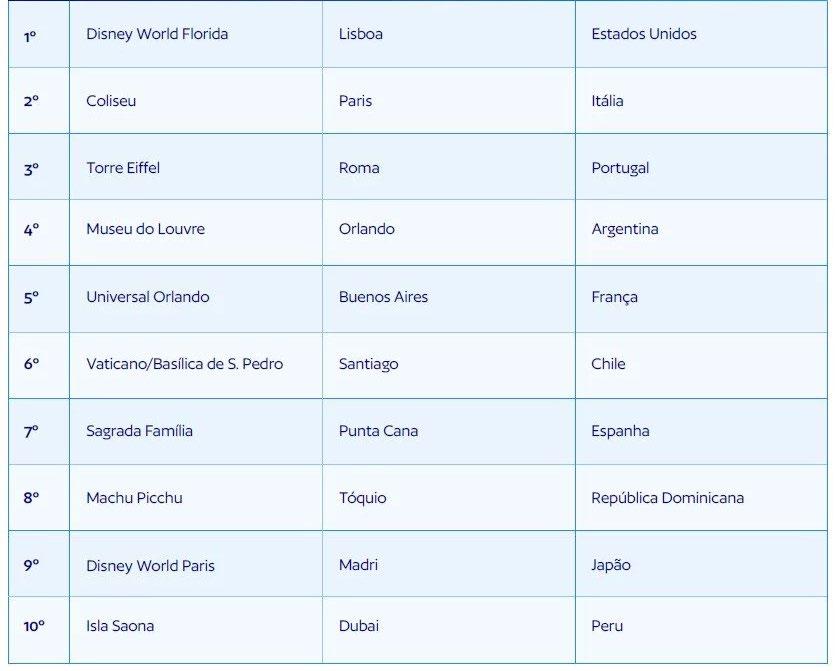
Source: Braztoa
• The Brazilian government has authorized two new airlines to operate flights to Brazil: Spain’s Wamos Air S.A., part of the Abra Group—which also owns Gol Linhas Aéreas—and Nigeria’s Air Peace Ltd. Airlines already operating in Brazil have also announced important developments.
• LATAM Brasil revealed an expansion of its international operations in Northeast Brazil, increasing frequencies on the Fortaleza–Lisbon route and launching new seasonal services between Natal and Buenos Aires, as well as Maceió and the Argentine capital.
• Additionally, between December 15, 2026, and February 28, 2027, LATAM’s Recife–Buenos Aires/Ezeiza route will increase from one to four weekly flights, operating on Tuesdays, Thursdays, Fridays, and Sundays. These changes have led LATAM to adjust other routes. Flights between Fortaleza and Santiago, as well as Fortaleza and Miami, will no longer be available for travel from October 2026 onward.
• Meanwhile, Gol Linhas Aéreas has resumed seasonal nonstop flights from Fortaleza and Manaus to Miami. The routes operate twice weekly and will continue through August 9.
• Royal Air Maroc (RAM) will bring forward the launch of its fifth weekly flight between São Paulo
and Casablanca to October 28, coinciding with the start of the Northern Hemisphere winter season and Brazil’s leisure travel period.
According to a study released by ABAV Nacional, Brazil’s leading travel agency association, the country’s travel agency sector is mature, resilient, and predominantly composed of micro and small businesses. Together, these companies account for more than 92% of participating businesses, including Microenterprises (45.3%), Small Businesses (24.7%), and Individual Microentrepreneurs (22.4%).
The sector’s stability is reflected in its longevity: 78.4% of agencies have been operating for more than five years, demonstrating accumulated expertise across different economic cycles of the tourism industry. The ABAV Census also revealed that travel agencies continue to invest in specialization and new tourism niches.
Although traditional segments such as Sun & Beach Tourism and Cultural & Heritage Tourism remain pillars of the Brazilian market, the study points to an ongoing transition from a purely intermediary role toward a more curated travel model.
Among the emerging high-value segments are:
• Nature Tourism and Ecotourism
• Luxury and Gastronomic Experiences
• Celebration Tourism
Nature Tourism and Ecotourism continue to gain momentum through adventure-focused itineraries aligned with global sustainability trends.
Luxury and Gastronomic Experiences emphasize personalization, where long-term client relationships carry greater value than transaction volume. Meanwhile, Celebration Tourism is expanding rapidly in niches such as destination weddings and honeymoons.
This report is produced by PANROTAS and FECOMERCIOSP to support your business decisions. The contents are valuable assets to Destinations and Travel Organizations, both domestic as well as international. For further information please contact ri@fecomercio. com.br redacao@panrotas.com.br