IDEAS THAT MOVE YOU



INDIA
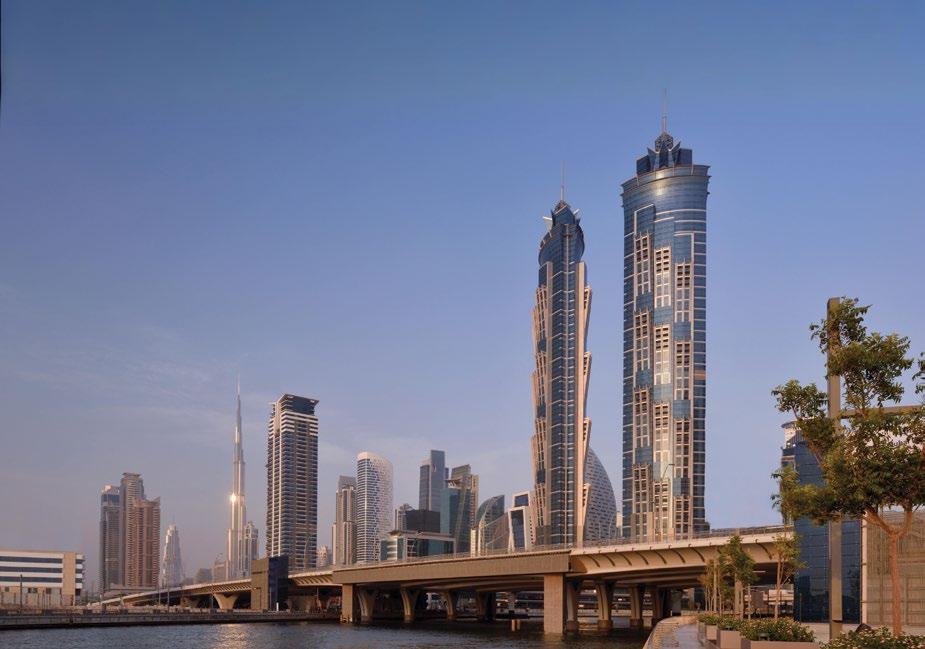


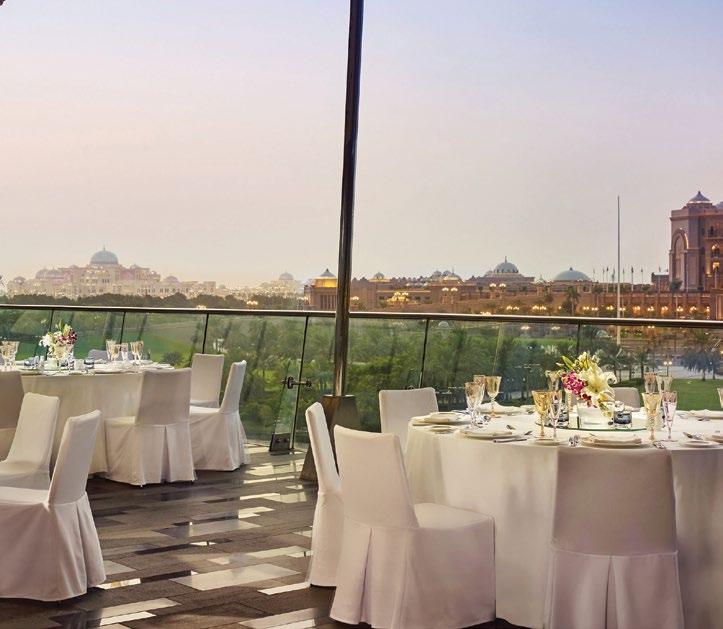
JW Marriott Marquis Hotel Dubai is the city’s most iconic luxury business hotel, offering scale without compromise. From 12 award-winning dining venues to comprehensive spa and fitness facilities, and nearly 10,000 square meters of meeting and event space, every detail is designed to support productivity, connection and balance - in the center of Dubai.
jwmarriottmarquisdubai.com | +97 1 4 414 0000 | jwmm.ays@marriott.com








WHERE NATURE GUIDES
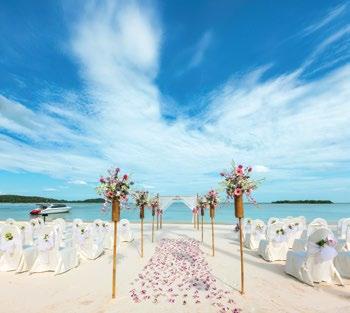
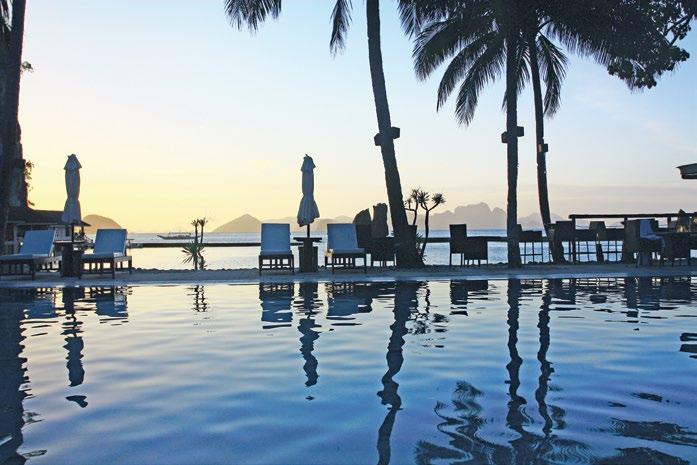
Powder-white sands and calm, clear waters set the scene at Pangulasian Island, where quiet eco-luxury unfolds at an unhurried pace. Days drift from barefoot mornings to clear-water swims, guided by the gentle rhythm of island life.
















A sanctuary of calm, Lagen Island invites you to slow down and follow the rhythms of nature. Framed by limestone cliffs, forest, and tranquil waters, days drift through gentle swims, quiet reflection, and the serene pulse of Bacuit Bay. Begin your holiday at

WHERE NATURE GUIDES




TO THE FEBRUARY
AS WE MARK OUR 11TH ANNIVERSARY.
We’ve all seen luxury travel going through a paradigm shift. This shift is gravitating towards hyper-personalised and immersive, rather than just indulgence. And, the watchwords are ‘slow and experiential’.
As the year picks up pace, business travel regains its familiar rhythm. What’s changing, though, is not where we go, but how we choose to be while we’re there. There is a quiet intention behind it all, an idea that has guided our conversations over the past eleven years.
In this issue, we move from Amsterdam’s cultural pulse on page 12 to Oman’s emergence as a discreet luxury destination on page 20, before turning our lens to the real-world impact of the travel choices we make on page 21.
Closer to home, Goa takes centre stage on page 22. We then explore how artisanal cooking supports well-being on page 25, the revival of classic aperitif rituals on page 26, the science behind nervous system regulation on page 27, and the enduring appeal of little luxuries on page 28. Our cover story unfolds across Palawan and Manila, beginning on page 34, where pace gives way to presence.
We then look at how weddings are being reimagined through contemporary sensibilities on page 44, examine the cultural evolution of collecting horology on page 76, and step inside a Spanish Baroque museum on page 86, where art and history continue to converge at the edge of Kelvingrove Park.
In this day and age, where a deluge of content is hurtling towards us at supersonic speed, we are bringing to you this careful curation that we are certain you will like. We hope this anniversary issue reaf rms the value of considered storytelling. So, just take a pause. And, before you embark on this journey, simply take a long, deep breath.

Gargi Guha Consulting Editor
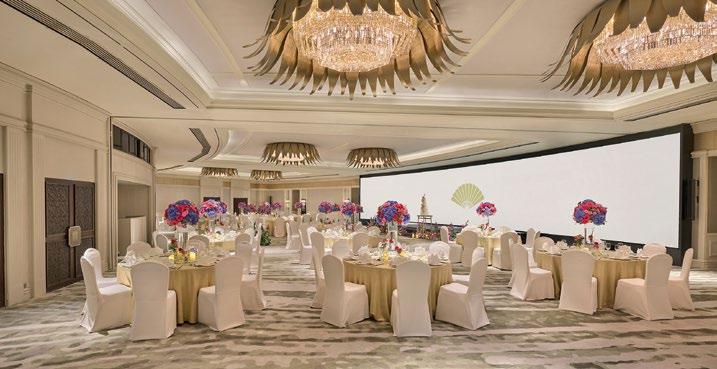
ituated in the heart of Singapore’s prime Marina Bay district, the 510room Mandarin Oriental, Singapore offers an elevated backdrop for meetings and events that leave a lasting impression. From intimate boardroomstyle gatherings to large-scale conferences, the hotel presents an exquisite collection of versatile venues designed to adapt effortlessly to every meeting and event.
Mandarin Oriental, Singapore defines refined meetings and events through thoughtful design, seamless planning, and elevated experiences.
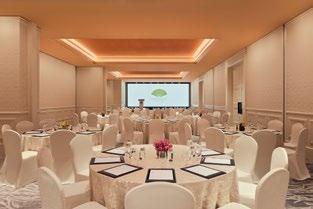
At the centre of this offering is a portfolio of flexible event spaces, including expansive venues that can be seamlessly reconfigured into smaller breakout rooms, naturally lit settings that encourage focus and engagement, and a striking 599sqm ballroom designed for immersive experiences. Anchored by a 20-metre curved LED video wall, the ballroom allows hosts to craft visually compelling events that resonate long after the final session concludes.
Pillarless and defined by its elegant fan-shaped design, The Oriental Ballroom delivers a sophisticated environment for meetings, events, and celebrations.
With unobstructed sightlines to the LED display from every angle, state-of-the-art audiovisual capabilities, and meticulously curated menus showcasing diverse global cuisines, the experience is both seamless and immersive for organisers and guests alike.
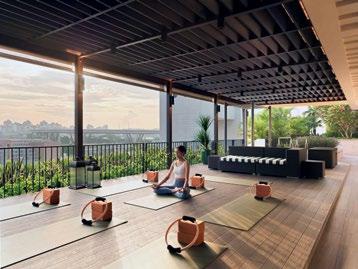
Beyond infrastructure, Mandarin Oriental, Singapore brings a deeper sensibility to meetings through its Mindful Meetings concept. Designed with a holistic approach to well-being, these thoughtfully curated experiences integrate wellness-led enhancements that promote balance, clarity, and sustained energy. From guided yoga sessions to
therapeutic sound meditation, each element is carefully introduced to support both mental focus and physical ease throughout the event.
Culinary artistry further elevates every occasion, with bespoke menus crafted to suit the discerning tastes and diverse preferences of our guests. Each dining experience becomes a journey of flavour, reinforcing Mandarin Oriental, Singapore’s commitment to creating meetings and events that are not only impeccably executed, but genuinely memorable.
For more information, please visit www.mandarinoriental.com/singapore


Andrew Gould is President of Publishing at Roc Nation, where he oversees the company’s global music publishing business. A lifelong classical pianist and Wharton MBA, he brings deep creative and executive experience from Roc Nation, BMG, Downtown Music Publishing, EMI, and Epic Records, with a strong focus on artist advocacy, creative development, and industry leadership. He reflects on leadership, presence, and global movement on page 29.
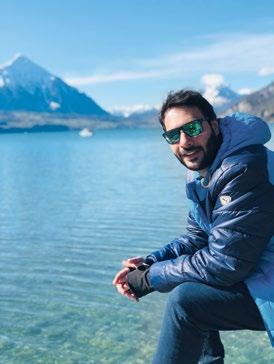
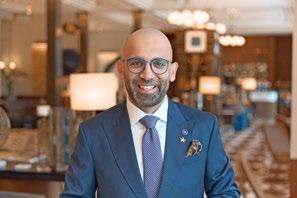
Georges Al Asmar is General Manager of Waldorf Astoria Dubai International Financial Centre and a leading voice within Hilton’s luxury portfolio. With over 20 years of international hospitality experience, he is recognised for his strategic acumen, commercial leadership, and people-first approach to delivering exceptional guest experiences and high-performing teams. He shares his perspective on how intention and connection are reshaping luxury on page 33.
Jiaan Kris Jamshŷd Lam a hotelier by profession, with a Master’s degree from the ESSEC Business School in Paris, has a passion and a love for the arts. When he’s not in the kitchen, Jiaan indulges in playing the guitar and immersing in the timeless symphonies of Western classical music. An avid traveller, he is constantly absorbing new cultures and capturing moments, exploring the cultural evolution of collecting horology on page 76 and how vehicles are being reshaped for working lives on page 86.

Heena Paryani is a travel and lifestyle writer covering hotels, dining and destination culture across Asia. Drawn to places with strong character and evocative design, she captures the details that shape a journey through sensory, experience-led storytelling, writing about escapes that nourish both body and soul, with a personal passion for wellness woven naturally into her work. She documents a journey between island stillness and city life on page 34.

Supriti Chavan is an Environmental Advisor and Carbon Specialist at Balfour Beatty in Scotland. Blending her professional expertise in sustainability with a passion for travel and photography, she advocates low-carbon practices while using visual storytelling to inspire deeper connections with nature and a more responsible approach to the world we explore. Her photograph-driven piece appears on page 98.
PUBLISHER & CEO RAVI LALWANI
MANAGING DIRECTOR JULIAN GREGORY
EXECUTIVE DIRECTOR MEENA LALWANI
EDITORIAL
CONSULTING EDITOR GARGI GUHA
PRODUCTION & DESIGN HEAD AMIT CHAVAN
FEATURES WRITER NAINA SARMA
SOCIAL MEDIA & FEATURES EXECUTIVE MARIA VERGHESE
CONTRIBUTORS ANDREW GOULD, GEORGES AL ASMAR, JIAAN KRIS JAMSHŶD LAM, HEENA PARYANI, SUPRITI CHAVAN
ADVERTISING
COMMERCIAL DIRECTOR RAVI LALWANI
EMAIL RAVI@PANACEAPUBLISHING.CO.IN
CONTACT
EDITORIAL TEL 022-40046646
EMAIL EDITORIAL@PANACEAPUBLISHING.CO.IN
WEBSITE BUSINESSTRAVELLER.COM TWITTER.COM/BT_IND
INSTAGRAM BUSINESSTRAVELLERIN FACEBOOK.COM/BUSINESSTRAVELLERINDIA
ADVERTISING TEL +91 9820022110
SUBSCRIPTIONS
TEL +91 9004015411
EMAIL SHMIRA@PANACEAPUBLISHING.CO.IN
PRINT SUBSCRIPTION 1 YEAR FOR JUST ₹2,400
Business Traveller India is published 11 times a year at our address (right). Business Traveller India is the first of its kind to be published in India. The magazine is entirely independent of all commercial interests within the travel industry. All rights reserved in respect of all content, articles, illustrations and photography published in Business Traveller India anywhere in the world. Reproductions or imitations are expressly forbidden without the permission of the publishers. Unsolicited manuscripts will not be accepted for publication and Business Traveller India accepts no responsibility for loss or damage to them. The opinions expressed by contributors are not necessarily those of the publishers, who cannot accept responsibility for any errors or omissions.
Business Traveller has the following international editions: Germany, Poland, Hungary, Asia-Pacific, China, India, Netherlands, North America, Middle East and U. K RNI NO.: MAHENG 2016/71766. Printed & Published by Ravi Lalwani on behalf of Panacea Publishing Pvt.
( India ) Pvt.
Printed at
Plot No.1C/716, Off Dadoji Konddeo Cross Road, Between Sussex And Retiwala Ind. Estate, Byculla ( East ), Mumbai - 400
Maharashtra and Published at 3 Hampton Court, 123, Wodehouse Road, Colaba, Mumbai 400 005.



TRAVEL
Maui: Visiting with intention
AIRLINES
Emirates
Radisson, IHG
Ruby Group
SUSTAINABILITY
Luxury the Omani way
HOT TICKET
WORDS NAINA SARMA,
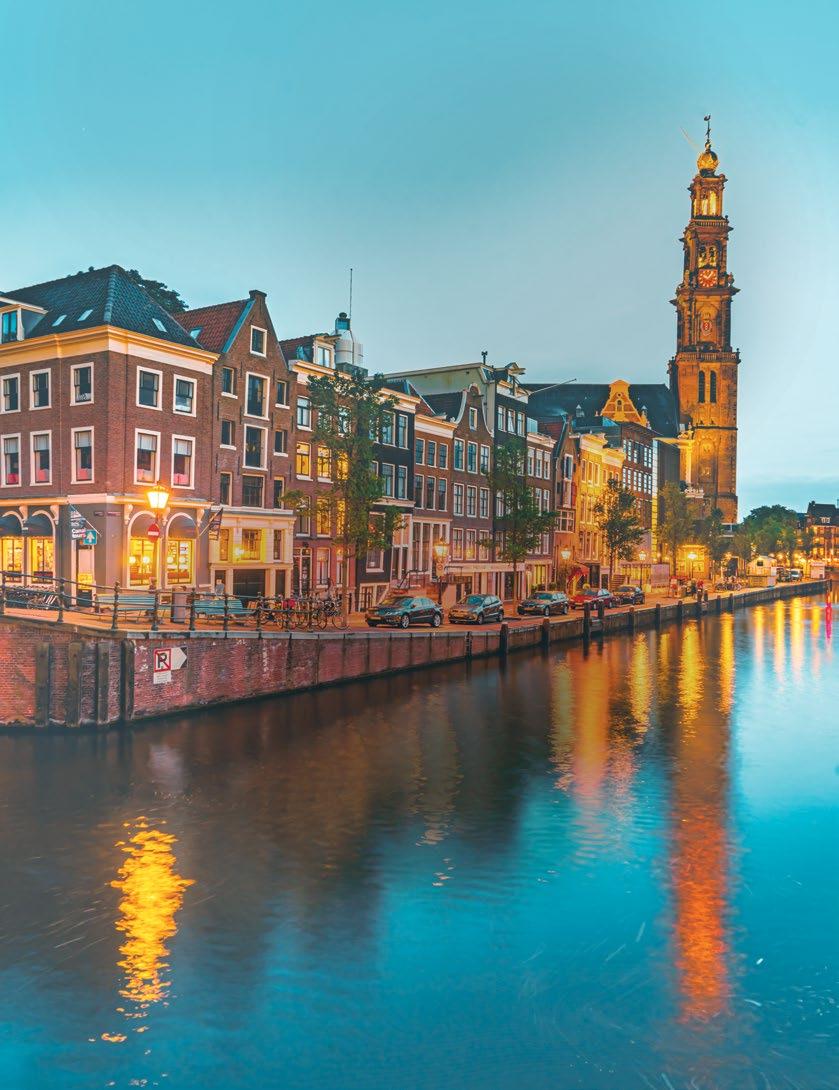
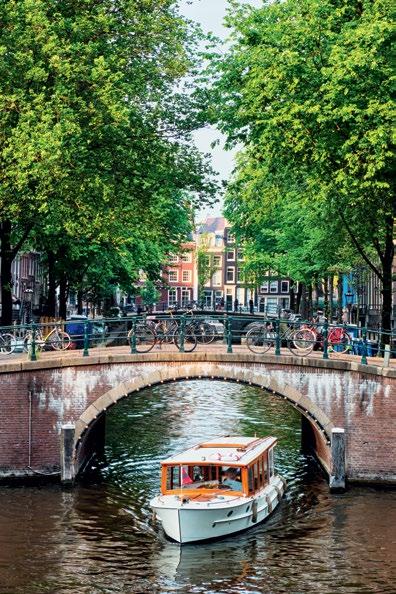
t the crossroads of trade, art, and ideas, where water threads its way through a city shaped by openness and order, Amsterdam reveals itself with understated confidence. This is a place defined by balance: between history and modernity, movement and calm, freedom and structure. Canal houses lean gently toward one another, their gabled facades reflected in slow-moving water, while bicycles trace quiet arcs across stone bridges. Morning arrives with a pale northern light, filtering through plane trees along the Herengracht, as cafés lift their shutters and the city eases into motion.
Mornings might begin with a walk along the canals, the air crisp, the streets still lightly populated, followed by coffee taken standing at a neighbourhood bar or seated beside a window overlooking the water. Days unfold between world-class museums and working districts, where design studios, galleries, and offices coexist with residential streets. The city’s cultural depth is woven into daily life: Rembrandt and Vermeer sit alongside contemporary architecture, while centuries-old warehouses now house hotels, restaurants, and creative spaces shaped by modern Dutch sensibilities.

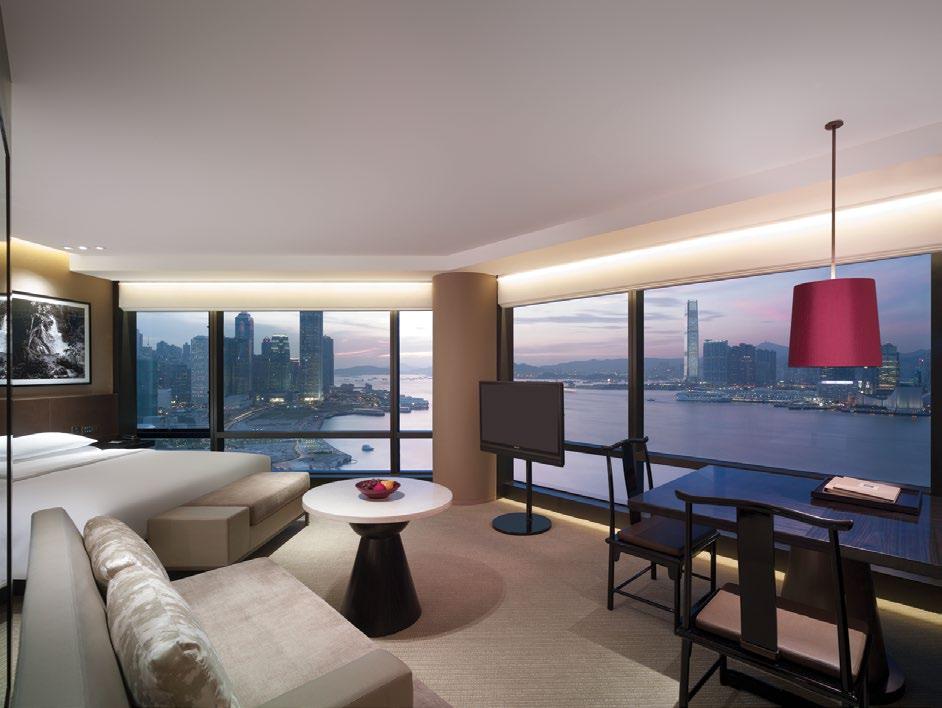
For both business trips and MICE events, Grand Hyatt Hong Kong o ers 542 rooms and 21 adaptable event spaces, making it an ideal choice. This urban oasis provides rooms with stunning views of Victoria Harbour and the lively city skyline. Additionally, tailored meeting packages are available to cater to all your requirements.
For reservations or more information, please contact our Sales team:
Tel: +852 2584 7878
Email: hkggh-sales@hyatt.com

Dining in Amsterdam reflects the same clarity of thought. Menus are increasingly seasonal and locally rooted, with chefs favouring restraint over excess. Simple plates featuring fresh seafood, vegetables treated with care, and bread and butter taken seriously dominate the table. Brown cafés remain essential, offering warmth and familiarity, while newer dining rooms introduce a quieter kind of sophistication, confident without performance. Hospitality here is practical, calm, and unpretentious, expressed through space, light, and an ease that makes visitors feel immediately at home.
What distinguishes Amsterdam today is its sense of intentional living. The city has grown more deliberate about how it welcomes the world, favouring quality of experience over quantity of visitors. Cycling culture, green spaces, and thoughtful urban planning are not gestures but habits, shaping a lifestyle that values movement, proximity, and time well spent. Like its best moments, Amsterdam’s luxury lies in clarity, balance, and a confidence that needs no embellishment.
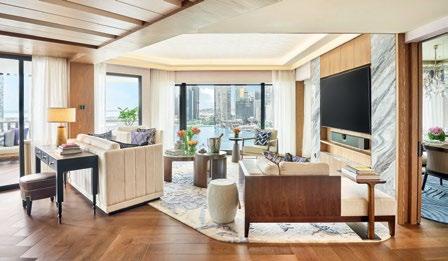
Delve into a world of refined luxury and elevated comfort within the signature suites at Mandarin Oriental, Singapore. Perched atop the hotel’s uppermost levels, this impeccably designed four-bedroom Royal Marina Bay Penthouse and threebedroom Presidential Suite are private sanctuaries defined by space, elegant interiors and panoramic vistas of the city skyline.
Designed for luxury living by the bay, the suites unfold into an expansive living area complemented by a separate dining room that exudes an inviting setting for bespoke in-suite dining experiences. The master bedroom is a haven of space and comfort, thoughtfully adorned with plush furnishings, sweeping views, and a luxurious en-suite bathroom. Connecting rooms, each with its en-suite bathroom, provide seamless comfort for families and guests alike.
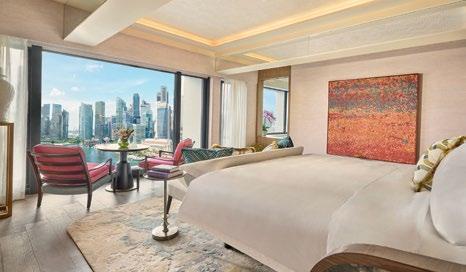
Floor-to-ceiling windows frame unobstructed views of the Singapore skyline and the iconic Marina Bay waterfront. The private outdoor balcony of each suite offers an exclusive vantage point to soak up the sights and sounds of the city’s rhythm.
Luxury is enhanced with exclusive access to the HAUS 65 club lounge, where a curated collection of indulgences awaits, including a champagne breakfast, delectable afternoon tea, evening cocktails, and more.
Unparalleled service, breathtaking vistas, and an opulent space come together in these signature suites reimagining a luxury retreat by the bay.

DRAMATIC COASTLINES, lush valleys and legendary sunsets. But the island’s story in recent years has also included profound loss. In August 2023, wildfires devastated large parts of West Maui, including historic Lahaina, leaving deep social and economic scars as communities grieve and rebuild.
Nearly three years on, Maui is reopening to visitors, but with a renewed focus on responsible tourism. Tourism remains central to the island’s economic recovery: since the fires, overall visitation has increased 11 per cent and spending is up nearly 20 per cent, but the community’s well-being remains at the heart of the effort.
Local authorities and tourism leaders are encouraging visitors to travel with intent and respect. That means recognising that many families still depend on tourism dollars, while remembering that recovery continues long after headlines fade.
Part of responsible visitation is understanding the context of the island’s recovery, supporting local businesses and cultural stewards, and being mindful of the experiences of residents who endured loss and displacement.
Practical guidance has been shared by Hawaii’s tourism bodies and cultural organisations. Visitors are advised to approach their trips with patience and grace, support local restaurants, artisans and guides whose livelihoods are tied to tourism, and respect places that remain sensitive or restricted. This includes refraining from entering impacted zones such as Lahaina’s burn area, even for photography, out of concern for safety and dignity.
Beyond caution, there are ways travellers can deepen their connection to Maui’s culture and landscapes. Exploring upcountry towns, engaging with community-led experiences, and choosing locally owned services help direct tourism benefits where they matter most. Over time, these thoughtful choices can contribute to a more sustainable model of travel, one that honours both Maui’s stunning natural beauty and its resilient people.
Visiting Maui responsibly today is not just about supporting an economic rebound. It’s about being part of a community’s story of renewal, acknowledging the history beneath the scenery, and ensuring that travel enriches both visitor and host.



JAPAN HAS RECORDED A SIGNIFICANT SURGE IN INDIAN VISITORS IN 2025, with 315,100 Indian tourists travelling to the country during the year, the highest on record. The milestone reflects a strong resurgence in leisure and cultural travel between the two nations following pandemic-era restrictions, and highlights India’s growing influence as a source market for Asia’s inbound tourism.
The increase comes as direct air connectivity expands, visa facilitation improves, and traveller confidence continues to strengthen, making Japan an increasingly attractive destination for Indian holidaymakers. Key cities such as Tokyo, Osaka, Kyoto and regional destinations with natural and cultural appeal have drawn particularly strong interest from Indian visitors seeking a blend of modern urban experiences and traditional heritage.
Tourism authorities and industry stakeholders attribute the growth to multiple factors, including enhanced flight frequencies, seasonal promotional campaigns, and a broader shift in travel preferences toward longer stays and multi-city itineraries. Japan’s diverse experiences, right from serene temples and scenic countryside to world-class hospitality and culinary exploration, resonate with Indian travellers’ evolving expectations.
The record inbound figures also align with Japan’s broader tourism strategy, which aims to diversify key source markets and deepen engagement with growing outbound segments such as India. With robust economic ties and cultural curiosity driving demand, the trend suggests that India will continue to be a pivotal market for Japan’s tourism ecosystem in the years ahead.
GLOBAL PASSPORT POWER RANKINGS FOR 2026 have placed several countries at the top of the list, reflecting the strength of their travel access and mobility freedoms. The latest index that is compiled by Henley & Partners and widely cited in the industry measures how many destinations passport holders can enter without a pre-departure visa, a key indicator of global travel freedom and geopolitical reach.
At the summit of the rankings, Japan and Singapore share the lead, offering their citizens visa-free or visa-on-arrival access to over 190 destinations worldwide. Close behind are South Korea, Germany and Spain, each with access to nearly as many countries, underscoring the continuing influence of European and Asia Pacific travel agreements.
The index also highlights notable movers in recent years, including passports from the Gulf Cooperation Council and several Nordic nations, which have strengthened diplomatic ties that expand mobility for their citizens. In contrast, passport power can vary widely across regions, with some countries offering significantly less visa-free access due to economic and diplomatic factors.
For frequent travellers, especially business professionals and global nomads, such rankings go beyond prestige. The ability to enter markets without prior visa arrangements can reduce friction, cut costs and open opportunities for spontaneous travel, meetings and cross-border engagements, factors that resonate strongly in an era where agility and adaptability are critical.
The most powerful passports in the world are not static; changes in international relations, bilateral agreements and global mobility trends continue to reshape travel options year by year. For global Indians and those with multinational lifestyles, tracking these shifts offers valuable insight into how mobility advantages are evolving across the world.
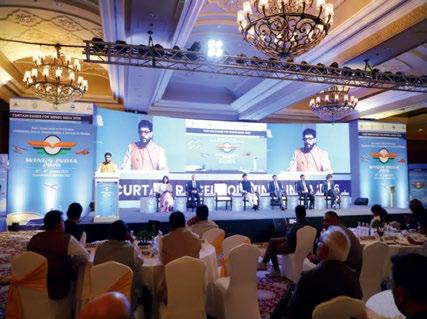
THE CIVIL AVIATION MINISTER OF INDIA inaugurated Wings India 2026 in Hyderabad, marking the commencement of one of the country’s most significant aviation events. The biennial expo brings together key stakeholders across the aviation ecosystem, including airlines, manufacturers, regulators, industry experts and service providers, to showcase innovation, foster partnerships, and discuss the future trajectory of Indian and global aviation.
Wings India serves as a platform for policy dialogue, technological exhibitions, and business development, reflecting the rapid evolution of India’s civil aviation sector. With robust growth in passenger traffic, expanding airport infrastructure and rising interest from global carriers, the event underscores India’s strategic position as one of the world’s fastest-growing aviation markets.
The inauguration highlighted the government’s commitment to enhancing connectivity, supporting regional air services and integrating emerging technologies into the sector. Delegates and exhibitors will engage in a series of conferences, product showcases and networking forums over the course of the event, providing insights into opportunities spanning commercial aviation, MRO, training, sustainable aviation and more.
Wings India 2026 underscores not only the vibrancy of India’s aviation landscape but also its ambitions to strengthen domestic capabilities and deepen international collaboration, as the industry charts its path toward future growth and resilience.
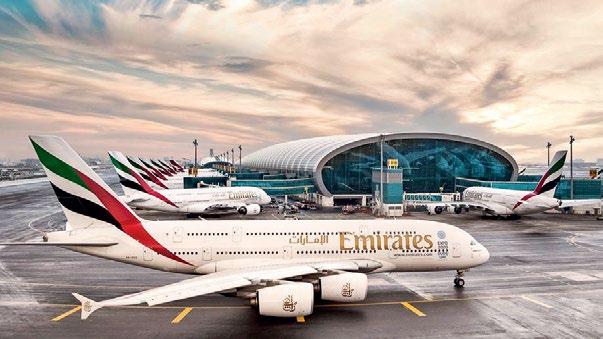
EMIRATES AIRLINES HAS ANNOUNCED plans to recruit 20,000 employees by 2030, a significant workforce expansion that aligns with Dubai’s broader ambitions to strengthen its position as a global travel and hospitality hub. The initiative reflects the carrier’s confidence in long-term sector growth, even as airlines worldwide adapt to shifting demand and evolving travel patterns.
The hiring push spans a range of functions, with opportunities expected across flight operations, cabin crew, customer service, engineering, IT and digital transformation roles. Emirates’ leadership has linked the recruitment drive to its strategic network expansion and service diversification, aiming to support increased capacity and enhanced passenger experience across its global routes.
Dubai’s tourism and luxury hotel sectors stand to benefit from the move, as the inflow of skilled talent reinforces ecosystem growth and demand for premium services. The announcement arrives amid robust travel sentiment to and from the UAE, with major events, business travel demand and luxury tourism contributing to sustained
Industry observers note that such hiring intentions also signal renewed optimism within aviation, countering recent cycles of contraction in parts of the global airline labour market. Emirates’ proactive workforce strategy underscores its intent to remain competitive, adaptable and service-forward in a rapidly transforming


RADISSON HOTEL GROUP HAS EXTENDED ITS FOOTPRINT INTO INDIA’S SPIRITUAL TOURISM circuit with the signing of three new properties in iconic cultural destinations, reinforcing the global group’s strategy to tap into lifestyle and experienceled travel demand. The latest expansion brings internationally branded hospitality options to cities that blend devotion, heritage and growing visitor interest.



IHG HOTELS & RESORTS AND THE RUBY GROUP have announced the opening of their first Ruby Hotel in the United States, with Ruby Hotel Chicago now operating in the city’s downtown River North neighbourhood. The launch represents a strategic expansion of the lifestyle-leaning brand into North America, blending Ruby’s boutique sensibilities with IHG’s global hospitality reach.
Ruby Hotel Chicago offers a contemporary guest experience with design centred on flexibility and comfort, featuring stylish interiors, social spaces and modern amenities tailored to both leisure explorers and
urban business travellers. Its location provides residents with easy access to the city’s dining, cultural and business districts, reinforcing River North’s reputation as one of Chicago’s most dynamic neighbourhoods.
The partnership between IHG and Ruby Group reflects a broader trend in branded hospitality, where lifestyle hotel concepts are gaining traction among travellers seeking memorable stays that balance personality and service. With Ruby Hotel Chicago now open, IHG expands its lifestyle portfolio in the U.S., offering new options for travellers who value design-driven properties within vibrant urban environments.
The newly announced hotels, Radisson Hotel Varanasi West, Radisson Resort Ayodhya and Radisson Hotel Rishikesh Pauri, are poised to serve both domestic and international travellers drawn to these historic sites. Each property is designed to combine contemporary comfort with local cultural sensibilities, enhancing the way guests explore destinations that hold deep spiritual and historical significance.

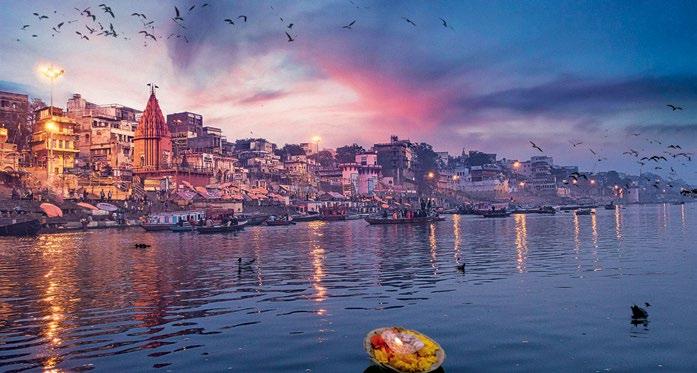

Varanasi, one of the world’s oldest living cities, continues to attract pilgrims and cultural tourists who seek authentic experiences along the ghats and narrow lanes that line the Ganges. The signed Radisson hotel on the city’s west side will offer modern amenities while providing access to Varanasi’s vibrant rituals, heritage walks and riverfront life.


In Ayodhya, a city sacred to millions with its roots in ancient lore and pilgrimage traditions, the newly signed Radisson Resort is expected to elevate hospitality standards in a market witnessing renewed interest following recent infrastructure and pilgrimage circuit enhancements. Meanwhile, Radisson Hotel Rishikesh Pauri will serve as a gateway to the spiritual town known for yoga, meditation and the Ganges’ serene stretches.
The lineup of properties underscores Radisson’s confidence in India’s diversified tourism growth, particularly in regions where cultural and spiritual journeys blend with lifestyle travel. By offering internationally recognised service standards in these markets, the group is catering to evolving traveller expectations, where meaningful experiences, cultural immersion and comfort converge.
The move also reflects broader trends in India’s hospitality sector, as branded, experience-oriented stays increasingly complement traditional leisure and business travel segments. With these additions, Radisson Hotel Group continues to broaden its presence across destination types and geographies, aligning with demand from travellers seeking depth, authenticity and modern comfort.
Why the Gulf’s most understated nation is redefining
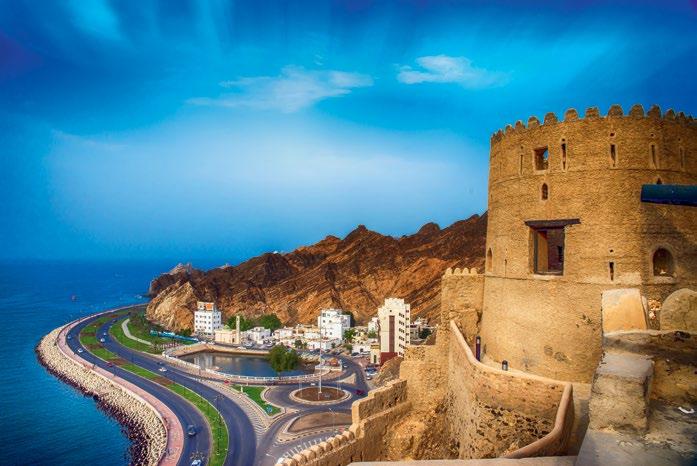
In a region long associated with spectacle and speed, Oman’s emergence as one of the world’s top three destinations for 2025/26 signals a recalibration in how business travellers define value. The Sultanate’s rise is not driven by scale or skyline, but by structure, measured economic growth, cultural continuity, and an environment designed for long-term engagement rather than shortterm impression.
Muscat sets the tone. Strict planning regulations mandate traditional Omani architecture, preserving a lowrise, whitewashed city framed by mountains and sea. For executives, this translates into clarity and calm: shorter commutes, quieter districts, and a capital that functions at a human pace. Oman’s ‘anti-Dubai’ appeal is not an absence of luxury, but a more restrained, deliberate expression of it, one that prioritises focus and ease of movement.
This philosophy extends to policy. Under Oman Vision 2040, the government is actively diversifying beyond hydrocarbons into tourism, logistics, manufacturing, and services. Through the Ministry of Heritage and Tourism’s national investment programme, over RO 2.59 billion has already been secured via usufruct agreements, with a target of RO 3 billion by 2025, creating opportunities for private enterprise while strengthening SME participation. Complementing this is the 10-year Golden Residency
Visa, designed to attract investors and professionals committed to long-term value creation.
Oman’s MICE credentials are also gaining momentum. The Oman Convention and Exhibition Centre (OCEC) has hosted a growing roster of international conferences and incentive programmes, supported by streamlined coordination between government bodies and trade organisations, positioning Muscat as a credible hub for regional summits and executive gatherings.
Luxury hospitality underpins this ecosystem. Properties such as Mandarin Oriental Muscat, St. Regis Al Mouj, and Al Bustan Palace, a Ritz-Carlton Hotel, offer business-ready environments with executive lounges, discreet meeting spaces, and high-touch service. OMRAN Group’s portfolio, including JW Marriott Muscat, W Muscat, InterContinental Muscat, and Alila Hinu Bay, adds a sustainability-led dimension increasingly relevant to corporate travellers.
Beyond work, Oman’s landscapes provide efficient decompression. From the Al Hajar Mountains to the monsoon-washed green of Salalah during Khareef, the country offers contrast without excess.
Oman is not a destination that competes for attention. It earns credibility. For business travellers seeking outcomes over optics, it is the Gulf’s most quietly strategic address.


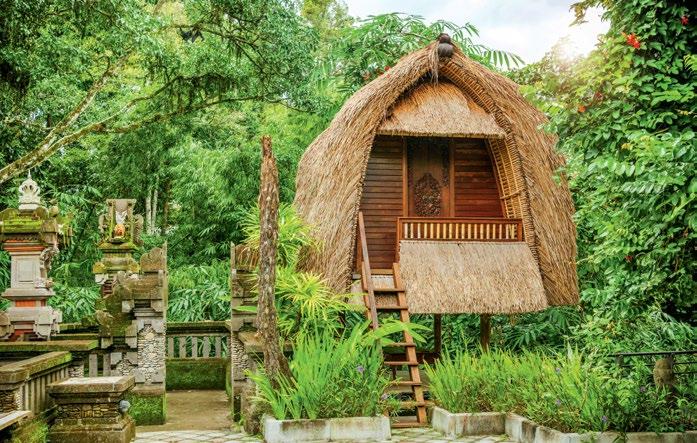


Travel is often discussed in terms of experience: the comfort of a room, the ease of a check-in, the pleasure of a well-timed meal. Less visible is the economic system that activates the moment a traveller arrives. Every stay sets money in motion, and where that money travels matters as much as how far you go.
A hotel bill appears deceptively simple. Yet a single night’s stay is divided across multiple layers. A portion flows to ownership and brand structures, particularly in globally managed properties. Another is allocated to staffing, front office teams, housekeeping, kitchen crews, maintenance, and security. Beyond the hotel itself, there are suppliers: farmers and fisheries, laundry services, logistics providers, artisans, drivers, and technicians. The economic footprint of a stay extends well beyond the walls of the property.
The distinction between extractive and embedded travel economies lies in how deliberately that footprint is designed. Some hotels operate as largely self-contained entities, importing food, materials, and even labour, with limited integration into the local economy. Others function as economic participants within their destination, sourcing locally where possible, investing in training, and maintaining long-term relationships with nearby producers and service providers.
For the traveller, these differences are rarely advertised. They surface instead through subtle cues. Menus that shift with seasons often reflect local sourcing rather than fixed supply chains. Staff continuity points to investment in employment rather than high turnover. Retail spaces that feature regionally made objects suggest a circulation of value beyond the hotel lobby. None of these elements announce themselves as a sustainability measure; they simply indicate how a business is structured.
Food is one of the clearest indicators. A hotel that relies heavily on imported produce and standardised menus tends to direct a significant share of spending outward. In contrast, properties that work with local growers, fisheries, and bakeries keep a larger portion of guest expenditure circulating nearby. This approach often results in fresher offerings and menus that reflect place rather than uniformity.
Labour, too, plays a central role. Training programmes, internal promotion pathways, and long-term employment contribute not only to service quality but to economic stability within a destination. In regions where tourism dominates local economies, these practices can determine whether travel creates resilience or dependency.
Even experiences offered to guests, guided walks, cultural programmes, and wellness treatments, carry economic implications. When these are designed in collaboration with local practitioners rather than outsourced entirely, they help distribute value more broadly while also deepening the travel experience itself.
Sustainable travel, in this context, is not about minimising presence or abstaining from comfort. It is about understanding participation. Travel inevitably leaves a mark; the question is whether that mark strengthens the place visited or simply passes through it.
For travellers who move frequently, this awareness becomes a form of discernment. Choosing where to stay is no longer only a matter of location or luxury, but of how a destination absorbs and benefits from your arrival. In following the economic footprint of a stay, sustainability shifts from an abstract ideal to a practical consideration, one rooted in structure, continuity, and the quiet movement of value.




Eat, drink, shop, relax

Slow mornings, layered histories, and a coastline that rewards those who linger beyond the obvious
Set along India’s western edge, where the Arabian Sea meets a land shaped by centuries of trade, faith, and migration, Goa unfolds at its own pace. This is not a destination that rushes to explain itself.
Palm-lined roads wind past village chapels and spice farms, Portuguese-era homes sit quietly behind laterite walls, and the scent of the sea drifts inland, carried by afternoon heat. Goa’s rhythms are subtle rather than spectacular. Mornings stretch gently, afternoons dissolve into shade and water, and evenings gather around food, music, and conversation.
Goa’s identity is layered and lived-in. Catholic churches and Hindu temples stand within walking distance of each other, their calendars shaping the year through feasts, festivals, and rituals. Portuguese-influenced architecture coexists with traditional Goan homes, where tiled roofs, shaded

verandahs, and inner courtyards reflect a climateaware way of living. In neighbourhood bakeries, poi bread emerges from wood-fired ovens before dawn, while local markets hum with the trade of fish, fruit, and flowers. Goa does not curate its culture for display; it allows visitors to step into daily life as it unfolds.
While its beaches are well known, Goa’s quieter pleasures often lie slightly inland. A morning might begin with a walk along the backwaters, where fishing boats move slowly through mangroves, or a drive through the village roads of Salcete and Bardez, where rice fields and coconut groves soften the landscape. Short distances lead from the sea to forested hills, spice plantations, and heritage homes reclaimed by time rather than redesigned by trend. Movement here is unhurried, and the reward lies in detours rather than destinations.
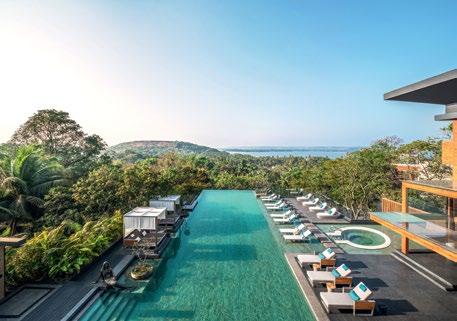
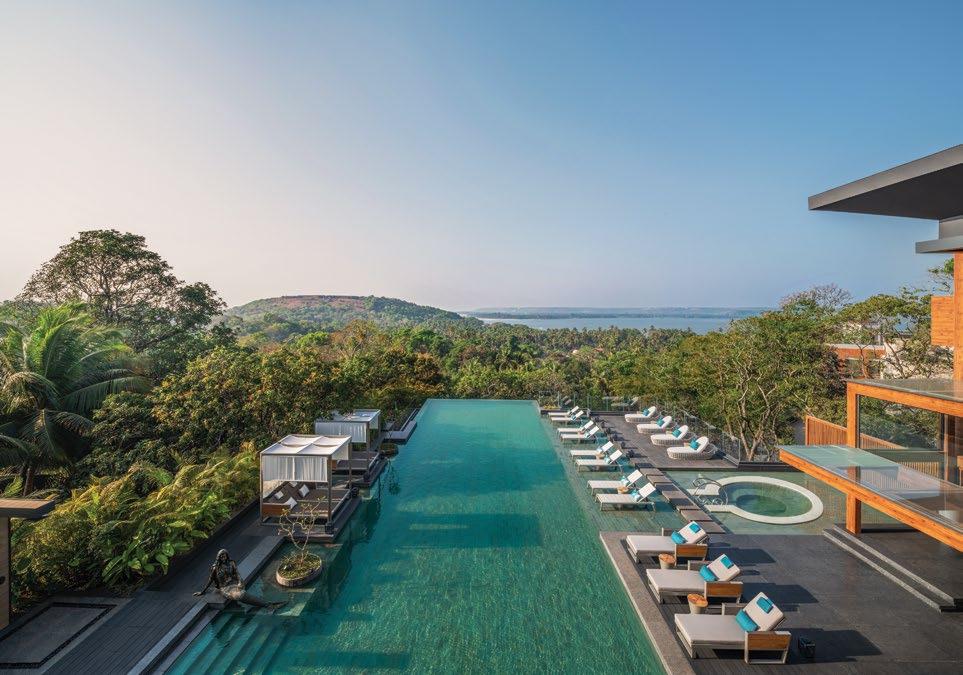
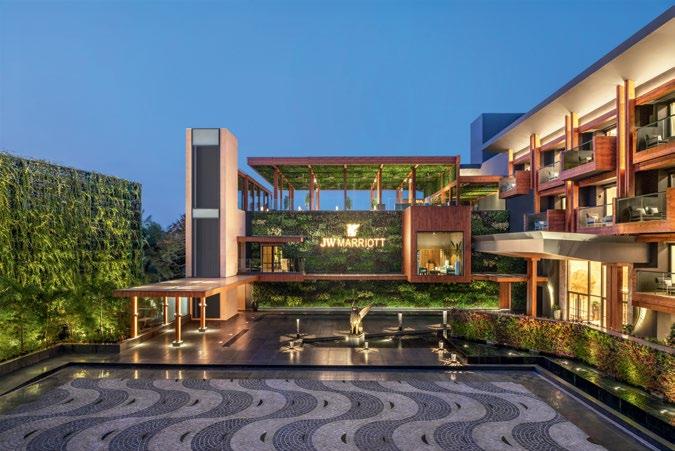
Set amid the gentler pace of North Goa, JW Marriott Goa offers a retreat that reflects its surroundings rather than insulating guests from them. Spread across landscaped grounds, the resort is designed with a sense of openness, where water features, shaded walkways, and low-rise structures encourage an easy flow between indoor and outdoor spaces. Architectural details draw from Goan forms and materials, with warm tones, tiled roofs, and courtyards that respond naturally to the coastal climate.
Guest rooms and suites are oriented to maximise light and views, whether across gardens, pools, or the horizon beyond. Interiors are calm and considered, favouring space, texture, and comfort over ornamentation. Public areas unfold gradually, with multiple pools, quiet seating pockets, and communal spaces that invite lingering rather than constant activity.
The resort’s dining venues echo this sense of place, offering menus that balance regional flavours with broader, well-executed choices. Local seafood, Goan-inspired preparations, and lighter coastal fare sit comfortably alongside international classics, making it easy to settle into a rhythm that suits both short stays and longer pauses. Wellness facilities, including the spa and fitness spaces, are integrated into the landscape, reinforcing the idea of restoration rather than retreat.
What sets the property apart is its location, which allows guests to step easily beyond the resort. Nearby beaches, village roads, markets, and heritage sites are all within reach, encouraging exploration without long transfers. Days here move fluidly between poolside calm and coastal discovery, between structured comfort and the freedom to engage with the wider region. It’s a stay shaped for travellers who value ease, space, and a genuine sense of connection to Goa.
Shopping in Goa favours discovery over display. In Panaji and Assagao, small stores stock locally produced pottery, linen, jewellery, and homewares shaped by regional craft traditions. Weekly markets bring together spice sellers, organic farmers, and artisans working in wood, shell, and metal. The pleasure lies not in volume, but in provenance, objects that feel tied to the land rather than manufactured for it.
Goan cuisine is deeply personal, shaped by family recipes and seasonal availability. Coastal kitchens favour fish curry rice, prawn balchão, and recheado preparations rich with spice and vinegar. Inland, slow-cooked pork dishes, coconut-based stews, and vegetable curries reflect a more agrarian rhythm. Cafés and tavernas encourage long meals rather than quick turnover, and food is served with generosity rather than flourish. What defines Goan cooking is balance: heat tempered by sourness, richness offset by restraint, and a respect for ingredients that need little embellishment.
Goa reveals itself most clearly to those who stay a little longer. It is not a destination to be consumed in highlights, but one to be lived in, even briefly. In its quiet roads, layered histories, and unhurried meals, Goa offers a reminder that the most lasting travel experiences are often the least hurried.
The conversation around food and wellbeing is shifting away from restriction and toward discernment. In 2026, the desire is no longer to eat less, but to eat better, to choose food that feels indulgent while remaining rooted in quality, seasonality, and craft. What’s emerging is a renewed appetite for artisanal eating: cooking that privileges origin over excess, technique over processing, and familiarity over novelty. This movement is driven by a growing weariness with industrialised food. Highly processed ingredients and exaggerated portions have lost their appeal, replaced by a quieter confidence in food that feels made rather than manufactured. Diners still want pleasure, but they are increasingly drawn to dishes that carry a sense of intention. meals that feel nourishing without announcing themselves as ‘healthy’.
of this shift is a return to old recipes and classical techniques. Slow cooking, fermentation, curing, and preserving are regaining prominence, not as nostalgic gestures but as practical, flavour-driven choices. These methods deepen
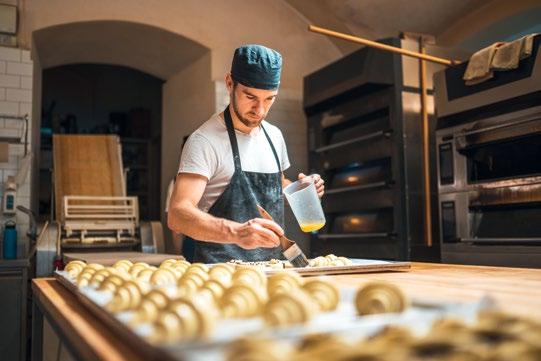
taste, improve digestibility, and create food that feels complete rather than engineered. Kitchens are revisiting what worked long before convenience became the priority. Ingredients, too, are becoming more expressive of place. Forgotten vegetables, parsnip, salsify, Jerusalem artichoke, turnip, black radish, chard, and horseradish, are reappearing on plates, valued for their character rather than their polish. They
bring earthiness, bitterness, and texture, encouraging a broader, more mature palate. Fermented foods such as kefir, cultured dairy, and pickled greens are moving beyond the margins, integrated naturally into everyday cooking.

Herbs and flowers are also playing a larger role, not as decoration but as flavourbuilders. Edible flowers like hibiscus add acidity and colour, while herb- and chilliinfused butters provide richness without heaviness, allowing small amounts of fat to carry greater impact. Mushrooms and other adaptogenic ingredients are being treated less as supplements and more as culinary elements, folded into broths, sauces, and grains with restraint.
What defines artisanal eating in 2026 is transparency without performance.
Diners want to understand where food comes from and how it is made, but without being lectured. The emphasis is on proximity, local markets, regional producers, seasonal sourcing, and on kitchens that are confident enough to let ingredients speak for themselves.
Ultimately, this approach to eating reflects a broader cultural recalibration. Well-being is no longer pursued through extremes, but through consistency and care. Artisanal food, made with attention and respect for process, offers a form of everyday balance, one that satisfies appetite, supports health, and restores a sense of trust in what’s on the plate.

For a long time, the aperitif slipped quietly out of favour. Supplanted by elaborate cocktails and latenight drinking, the ritual of a small, measured drink before dinner began to feel old-fashioned. Today, it is returning, not as nostalgia, but as a reflection of how people want to drink now.
The appeal of the aperitif lies in its restraint. Traditionally low in alcohol and built around bitterness rather than sweetness, aperitif drinks were never meant to intoxicate. They existed to signal transition: from day to evening, from work to leisure, from appetite to meal. In cities across Europe, this rhythm never disappeared. In places like Milan, Paris, and Barcelona, the aperitivo remained an unspoken daily pause. What’s changed is how widely that sensibility is now spreading.
Bars and hotel lounges are increasingly structured around earlier hours. Drinks menus favour vermouths, amaros, sherries, and fortified wines, served simply, often with soda, citrus, or ice. The pleasure is not in complexity, but in clarity. A Negroni Sbagliato, a spritz built on vermouth rather than prosecco, a glass of fino sherry with
olives. These are drinks that invite conversation rather than demand attention.
The return of the aperitif also reflects a broader shift in drinking culture. As people drink less overall, when they do drink, they want it to feel intentional. Aperitifs fit naturally into this mindset. They allow for flavour without excess, sociability without overindulgence. One drink becomes enough.
For frequent travellers, the ritual carries additional appeal. Time zones blur evenings, and heavy drinking no longer suits early mornings or long days ahead. A light, bitter drink before dinner feels civilised, grounding, and
easy to repeat night after night. It offers continuity across cities and cultures, a familiar pause that travels well.
Hotels have been quick to recognise this. Lobby bars are quieter, brighter, and more conversational in the early evening. Aperitif hours are replacing happy hours, with small pours, thoughtful snacks, and a sense of ease rather than urgency. The experience feels less transactional and more social.
What distinguishes the aperitif’s return is its lack of performance. There is no spectacle attached, no insistence on novelty. It is a drink designed to prepare rather than overwhelm, to sharpen the palate rather than dull it. In an age that values moderation, clarity, and pace, the aperitif feels less like a revival and more like a correction.
Not everything needs to be stronger, sweeter, or louder. Sometimes, the most satisfying way to drink is simply to begin.
Stress is not the problem. How the body responds to it is. Two people can experience the same pressure, long hours, travel, and disrupted sleep, and yet recover very differently. The difference often lies not in willpower or fitness, but in the nervous system’s ability to regulate itself.
The nervous system governs heart rate, breathing, focus, digestion, and sleep. When it is well regulated, the body moves smoothly between states of alertness and rest. When it is overloaded, even small demands can feel outsized. Training the nervous system, then, is less about adding effort and more about improving response.
Breath is the most immediate tool. Slow, controlled breathing directly influences the autonomic nervous system, particularly the vagus nerve, which plays a key role in calming the body. Practices such as extended exhales or nasal breathing are increasingly supported by research showing their impact on heart rate variability, a marker associated with recovery and stress resilience. These techniques are not about relaxation alone; they improve the body’s ability to shift states efficiently.
Rhythm is the second pillar. Human physiology responds to regularity. Consistent sleep and wake times, predictable movement patterns, and even daily walking at a steady pace help stabilise the nervous system. Unlike high-intensity interventions, rhythmic practices create a baseline of calm

that allows the body to absorb stress without tipping into fatigue. This is why activities such as walking, swimming, and steady cycling continue to feature in modern wellness programmes.
Recovery completes the system. Rest is no longer viewed as the absence of training, but as an active process that strengthens resilience. Sleep quality, light exposure, and periods of mental disengagement all play measurable roles in nervous system health. Tools such as contrast bathing, sauna use, and gentle mobility work are being adopted not for their novelty but for their proven effects on regulation and recovery.
What distinguishes this approach is its practicality. Training the nervous system does not require specialised equipment or extreme discipline. It rewards consistency rather than intensity, and awareness rather than force. For those navigating long workdays, travel, and cognitive demand, this form of training offers durability rather than peak performance.
Well-being, in this context, becomes less about optimisation and more about capacity. The ability to meet stress, respond appropriately, and return to balance is what defines resilience. And unlike visible markers of fitness, a well-trained nervous system is felt rather than seen, quiet, steady, and remarkably effective.
Howbreath,rhythm, and recovery shaperesilience

Quiet luxuries designed to bring order, comfort, and composure


Designed for recovery rather than indulgence, these eye patches address the visible toll of long hours in the air with quiet precision. Lightweight and serum-soaked, they hydrate, soothe, and reduce signs of fatigue without feeling heavy on the skin, making them easy to use mid-flight or immediately on arrival. The effect is subtle but noticeable, restoring clarity rather than masking tiredness. They function less as a beauty step and more as maintenance, a discreet intervention that helps the face catch up with the schedule.
Clean, modern, and discreetly masculine, H24 is designed for movement rather than display. The refillable travel format slips easily into a carry-on or jacket pocket, making it practical for long-haul flights and tightly scheduled days that move quickly from cabin to meeting room. Its freshness feels composed rather than assertive, offering a quiet reset between time zones without overwhelming shared spaces. For frequent flyers, it is less about fragrance as a statement and more about continuity, a familiar note that helps mark the transition from travel to arrival.



Made from Loro Piana’s signature ultra-fine wool, the Twelve Scarf is the sort of object that elevates travel without demanding attention. Its generous dimensions invite it to be draped, folded, or gently cocooned as cabin temperatures shift, offering a tactile buffer against dry air and sudden drafts. Lightweight yet warm, it feels substantial in hand without feeling bulky in luggage, and its muted palette complements tailored suiting as easily as casual layers. It functions as both a shield and a signal, quietly purposeful, material-rich, and calibrated for the many hours between departure and arrival.




Crafted from washable silk with integrated, gentle weighting, this sleep mask is designed to encourage deeper rest by minimising sensory distraction. The silk feels cool and breathable against the skin, adapting comfortably whether worn upright in a cabin seat or lying flat on arrival. The added weight is calibrated to feel calming rather than restrictive, helping the eyes settle without pressure. For avid flyers navigating time zones and irregular sleep windows, it becomes a practical tool for real rest rather than a symbolic travel accessory.
An evolution of Bose’s longestablished noisecancelling expertise, the QuietComfort Ultra headphones are built to create a controlled auditory environment in flight. Advanced active noise cancellation reduces cabin hum effectively, while spatial audio technology adds depth and clarity to music, films, and calls. The lightweight design and cushioned ear cups remain comfortable over long hours, and battery life supports extended journeys without constant charging. They offer not just sound quality, but the ability to disengage fully when needed.
Designed for travellers who cross borders often, this passport cover pairs Louis Vuitton’s Monogram Eclipse coated canvas with a smooth leather interior that feels durable without bulk. Inside, multiple card slots and flat pockets allow passports, boarding passes, and essential cards to stay organised and easily accessible through airport checks. The
darker palette keeps the design discreet, while the construction ensures it ages well with use. It is less about display and more about maintaining order during the repetitive rituals of travel.






This aluminium-bodied power bank combines high capacity with a refined, utilitarian design suited to constant travel. Qi2 certification ensures reliable magnetic alignment for MagSafe-compatible devices, allowing wireless charging without cables during flights or layovers. With a 20,000 mAh capacity, it comfortably supports multiple devices across long travel days, while its solid build resists wear inside crowded carry-ons. It is a functional essential elevated through material choice and thoughtful engineering.
Constantly moving between cities, cultures, and time zones, Andrew Gould reflects on how a life in transit shapes leadership, creativity, and decisionmaking. Business Traveller India speaks with the President of Publishing at Roc Nation on why presence still matters, how travel sharpens perspective, and what better travel should look like for leaders and creatives always in motion.

Q AYour role requires constant movement between cities and time zones. How has a life in transit shaped the way you make decisions and lead teams?
I don’t draw a hard line between work and life; if something matters, I respond when it needs responding, regardless of time zone or whether it’s morning, noon, or night where I am. It’s simply the way I work, and it allows me to stay in motion without missing a beat. If something is urgent, it gets handled immediately rather than waiting for a perfectly carved-out block of ‘work time’.
From a leadership standpoint, travel raises the bar on hiring and delegation. You need people who are competent, motivated, and trusted enough that the business runs smoothly without constant supervision.


That makes communication even more important. I don’t want my team to ever feel that my being on the road makes me less accessible. If anything, it means I have to be more deliberate about staying connected.
When you’re travelling for work, what helps you stay sharp, whether that’s certain routines, environments, or ways of carving out focus on the move?
I’m very intentional about departure and arrival times, especially on the first leg. If I’m heading east from LA, I’m usually on the first flight out; it helps offset the time change, gets me to sleep earlier that night, which, of course, helps my performance the next day. At this stage of my life, sleep matters; I aim for no less than six hours. One of the professional hazards of crossing time zones is sleep disruption from time to time, and a quick nap can work wonders.
Walking is a big anchor for me. If something’s within a mile, I’m walking, and often even if it’s farther. It’s how I experience a city, think clearly, take calls, and get my movement in when the gym isn’t realistic. I also start most mornings with a short meditation to get centred. When it’s time to focus, I usually retreat to my hotel room, desk or bed, papers spread out, working through emails, calls, and reading with music on.
You’ve spent years building relationships across music, sport, and business. How important is physical presence today, and when does travel still matter more than virtual connection?
I’m old school about this. Video calls are good for some things, but there are still plenty of situations where showing up in person really matters. If I’m seriously courting a new artist or client, I get on a plane to meet them on their home turf, or wherever they are if they’re on the road. It sends a clear message about my commitment, and it matters to me, and matters to them.
Being there gives me context I can’t get remotely: seeing them perform live in their home market, spending time together in the studio listening to music in real time. That’s where early trust and creative alignment actually form. Travel matters most when you’re asking someone to let you into their world, not just their inbox.
The same applies internationally; if you want to expand into new markets and cultures, you have to show up authentically. Over the last 14 months, my team and I have been to Seoul three times, Mumbai and Mexico each twice, and Spain and Paris each once. Showing up is the only way.
As AI becomes more embedded in travel and business, there will be a huge need for companies that emphasise keeping quali ed, attentive, human touchpoints
Different cities bring different energies. Are there places where you find yourself thinking more creatively or seeing opportunities more clearly?
Walking isn’t just about staying sharp for me; it’s also where creativity starts, because it’s on the streets of a city where I can feel its pulse. Walking through a city is how I separate signal and noise, and once my thoughts are ordered, I can move fluidly between strategic and creative thinking. Art museums play a similar role for me. When art lands emotionally, and that doesn’t happen often, it can be profoundly energising. The Tate Modern in London and the Van Gogh Museum in Amsterdam both do that for me, but Paris is the ultimate, specifically the Impressionist wing at the Musée d’Orsay, one of my favourite spaces anywhere; Claude Monet, Pierre-Auguste Renoir, and Edgar Degas consistently pull something out of me. Paris, more than any city I’ve been to, inspires and elevates me in a very special, personal way.
The pace of your work is intense. How do you use travel time on flights, airports, and hotels to reset rather than simply recover?
For me, a true reset does not happen on the road; that bar is set high. It requires at least a full day at home with my family, and likely includes watching a Disney movie with my two-year-old daughter and having a nice dinner with my wife. Travel can never replace that.
That said, while work travel can be intense, I genuinely enjoy it. I love flying, airports, and the in-between moments. On the road, how I ANDREW GOULD THE
use my time is based on what’s on my to-do list and how my mind and body are feeling. I may be finishing a deliverable before landing, or I may close my eyes for 30 minutes, knowing that when I open them, my output will be stronger. Flights are also when I catch up on films, pop culture, and reading that tends to pile up during busy stretches. Airports are for nourishment, calls, other work, and walking (surprise). Hotels are for working, resting, and getting to the gym when scheduling allows. The hotel room is also where I FaceTime my family. I want my daughter to know that even when I’m on the road, I’m always thinking of her.

Having experienced travel at every level, what separates spaces that genuinely support productivity and creativity from those that merely look impressive?
I respond best to moody spaces, not necessarily dim, but spaces created with a clear, thoughtful point of view. When a room has personality and warmth, it creates comfort, and that comfort is what allows me to tune out distractions and dial in my focus.
Lighting plays a huge role here. I obsess over it and strongly prefer warm, soft, golden light over anything fluorescent, bright, or cold. The energy of the people moving through the space matters too; a lower volume of professionals travelling for work creates a very different environment than heavy tourist traffic.
At this point, I know the kinds of spaces that work for me, and I know how to spot them before I arrive. They are the complete opposite of the generic business centres you find in so many hotels, which, ironically, are created for guests to be productive.
You work for a company that operates globally and thinks culturally. How does moving through different markets influence how you read audiences and trends?
Being in different markets sharpens my instinct for what’s authentic versus what’s manufactured. Authenticity doesn’t guarantee something is exceptional, but exceptionality is almost always authentic, and you can best gauge that when you’re close to it.
To really read an audience or a trend, you need to see it firsthand: how an artist performs live, who’s in the crowd, and how they respond. Those moments tell you whether something is real and sustainable or shallow and fleeting.
Ultimately, authenticity is about truth, an artist being honest about who they are and what they represent. When that’s real, it resonates deeply; when it’s not, it feels cheap and short-lived. Being on the ground, moving through markets and cultures, is how I develop that gut-level read, and that instinct helps me identify what might be impactful or even transformational.
As someone who spends much of life in motion, what would ‘better travel’ look like for leaders and creatives over the next decade?
The first thing that comes to mind is more human interaction between travellers and service providers. Automated systems and chatbots have their place, but they’re often unhelpful when something matters, and they’re a real vibe killer. When you need help, you want to talk to a person.
As AI becomes more embedded in travel and business, there will be a huge need for companies that emphasise keeping qualified, attentive, human touchpoints. The technology should support the experience, not replace it.
Also, there is an opportunity for more thoughtful personalisation for frequent travellers, especially with airlines. I fly Delta religiously (and love them). They have years of data on me, my likes and dislikes, as well as my routines. Nothing over the top, rather more easily implemented, thoughtful gestures and comforts that make the experience even more enjoyable, from beginning to end. All airlines could be making improvements here in the near future.


In today’s luxury hospitality landscape, meaning, intention, and emotional connection matter more than material grandeur
or much of its history, luxury hospitality has been defined by what meets the eye: sweeping architecture, polished stone, and the quiet theatre of grandeur. These elements still have their place, but they are no longer the essence of luxury. Today, the most compelling experiences are not built on material excess, but on intention, sensitivity, and emotional depth.
The modern luxury traveller is discerning and deeply aware. Well-versed in beautiful spaces, they are less interested in being impressed and more invested in feeling understood. As a result, luxury hospitality is undergoing a subtle yet significant shift, from statement to substance, from spectacle to sincerity. What lingers now is not the marble underfoot, but the meaning behind the experience.
Bespoke experiences lie at the heart of this evolution. True luxury is no longer one-size-fitsall; it is personal. Guests seek moments that feel instinctive and considered, shaped around who they are rather than what tradition dictates. When service anticipates without intruding, and details are remembered rather than requested, luxury becomes effortless. It lives in the quiet confidence of a team that knows when to step forward and when to step back, creating
a sense of ease that cannot be manufactured.
Emotional connection matters just as much. The places we truly remember are not the ones we photograph, but the ones we feel long after we leave. These connections are born from authenticity, genuine interactions, thoughtful storytelling, and environments that reflect character. In an age of curated online personas, travellers are increasingly drawn to places that feel real, grounded, and quietly assured.
True luxury is no longer de ned by what you see, but by what you feel long after you leave
Curation has replaced abundance as the new marker of refinement. Offering more is no longer the goal; offering with purpose is. Whether through a dining experience rooted in seasonality, a wellness ritual designed for genuine restoration, or moments that reveal a strong sense of place, curation signals care. It reflects a belief that time is the ultimate luxury, and that every element should justify its presence.
This transformation mirrors a wider cultural shift. As lives become faster and increasingly digital, travellers crave stillness, connection, and meaning. Luxury hospitality has become a counterbalance, a space where one can pause, feel present, and reconnect. The role of a hotel today is no longer simply to host, but to understand and
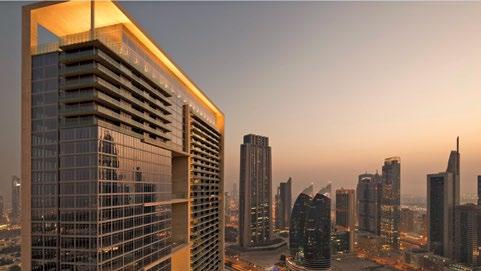
Within this evolving definition, enduring brands are those that adapt with intention, refining their offering without losing their soul. At Waldorf Astoria DIFC, this philosophy comes to life through experiences that feel personal rather than prescribed, where refinement is measured not by opulence but by thoughtfulness. Luxury today is not about how much is displayed, but how deeply it resonates. In a world where everything is available, meaning is what remains rare, and it is this quiet depth that defines modern luxury.















From island stillness in Palawan to evenings that unfold slowly in Manila, a journey shaped by

rhythm, conversation and place



Set within the protected waters of Bacuit Bay, El Nido’s island resorts occupy some of the most picturesque landscapes in the Philippines. Framed by towering limestone cliffs and clear turquoise seas, Pangulasian Island and Lagen Island each offer a distinct sense of place, shaped by their geography, natural environment and connection to the surrounding seascape.
Pangulasian Island, often referred to as the Island of the Sun, is defined by its long sweep of white sand and gently sloping shoreline. Open to the sea and backed by lush forest, the island has a light and expansive feel, where beach and water naturally take centre stage. Shallow turquoise waters stretch out from the shore, creating calm swimming areas ideal for leisurely dips, paddleboarding and kayaking along the coast. Behind the beach, dense jungle supports native flora and birdlife, making short nature walks and early morning strolls particularly rewarding. Stays here are designed to make the most of this open setting, with villas positioned to face the sea or sit quietly within the

greenery. Its rhythm of life is shaped by sunshine, sea swims and unhurried hours on the sand.
Lagen Island presents a contrasting atmosphere shaped by its dramatic position at the base of steep limestone cliffs and thick rainforest. More enclosed and introspective in character, it feels oriented toward the land rather than the open sea. A naturally sheltered bay forms its shoreline, creating still waters for gentle kayaking and calm boat excursions. Forested walkways weave through the landscape, and wildlife is part of daily life, from monitor lizards crossing paths to birds calling from the canopy. Accommodation here is woven into the forested terrain and cliffside contours, reinforcing the sense of being immersed in nature. The island’s personality is defined by shade, greenery and a slower pace.
Together, these two islands reflect El Nido’s wider ecological identity, one defined by karst landscapes, rich marine life and a deep connection between land and sea. All sit within a protected marine reserve where conservation and low-impact tourism guide daily operations. Their natural settings are not simply backdrops but central to how each island is experienced. Pangulasian is shaped by openness and light and Lagen by forested calm and enclosure.
Each island offers a slightly different perspective on this corner of Palawan, from wide sunlit shores to jungle-lined bays and nifty little coves that lead straight into the sea.
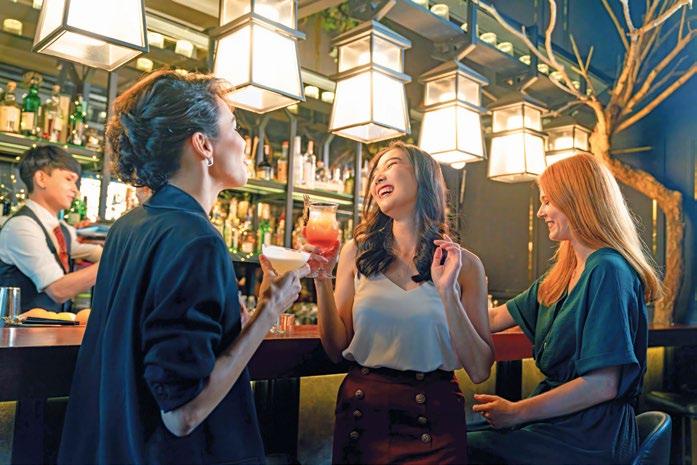
There is a particular ease to dining in Manila, one that becomes apparent only after spending time in the city. Meals are rarely treated as brief interruptions. They are anchors in the day, moments designed for connection rather than efficiency. Whether inside a discreet hotel bar or a long-standing restaurant that has outlasted trends, the city encourages diners to settle in.
This sensibility shapes Manila’s bars and restaurants today. They favour longevity over novelty, atmosphere over spectacle. For those passing through on business or blending work with leisure, these spaces offer a reliable way into the city’s social fabric, one table, one drink, one evening at a time.
Some restaurants in Manila endure not because they chase attention, but because they quietly earn loyalty. These are the rooms diners return to when the occasion matters, when familiarity feels reassuring, and when consistency itself becomes a form of luxury.

At Hossein’s Persian Kebab, Persian cooking is guided by heritage rather than trend. Owned and run by an Iranian restaurateur, the kitchen places its confidence squarely in expertly grilled kebabs, where saffronmarinated meats arrive tender, smoky, and precisely seasoned. Juicy koobideh, fragrant chicken, and robust lamb skewers are paired with buttery basmati rice and classic accompaniments that reward simplicity done well. Long regarded as one of the city’s most dependable destinations for Persian cuisine, Hossein’s
draws a loyal following that values flavour and familiarity in equal measure. The adjoining hookah lounge adds a leisurely note to the evening, encouraging conversation to linger as comfortably as the scent of
institution, Korea Garden has long been a reference point for Korean food in Manila. Its appeal lies not only in wellexecuted classics, but also in the breadth of its vegetarian-friendly offerings, a detail appreciated by diners navigating group meals. Tables fill quickly with regulars, and the experience feels reassuringly unchanged,
Meals are rarely treated as brief interruptions. They are anchors in the day, moments designed for connection rather than efficiency
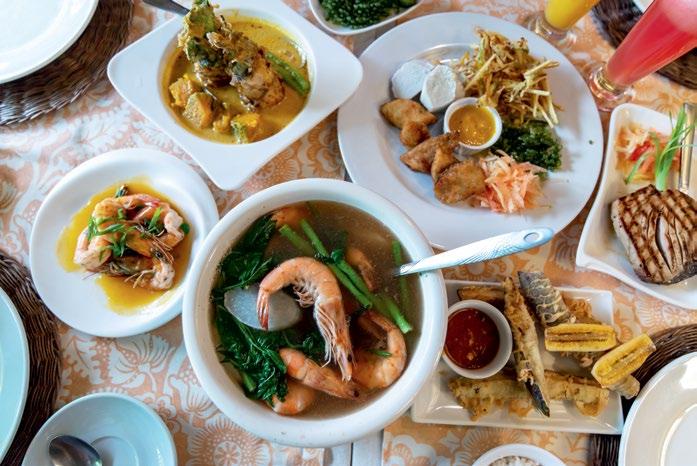
For Thai cuisine, People’s Palace strikes a careful balance between polish and warmth. The dining room is refined without feeling formal, and the menu delivers familiar Thai flavours with clarity and confidence. It is equally suited to composed lunches and relaxed dinners, offering a dependable pause within the city’s energetic pace.
To understand Manila’s culinary identity, however, one must also sit down to Filipino food. Sarsa, recognised with a Michelin star, presents regional dishes with thoughtfulness and restraint. Its approach balances tradition with refinement, offering diners a deeper engagement with local flavours while remaining inviting and accessible.
At A Mano, Italian cooking is delivered with clarity and confidence. Handmade pastas, wood-fired pizzas, and a well-curated wine list define the menu, supported by a dining room that feels lively without becoming overwhelming. Its recognition on the World’s 50 Best Pizza list reinforces what regulars already know, that A Mano understands consistency and crowd appeal without sacrificing craft. It is a natural choice for evenings that call for something familiar, polished, and reliable.
If some evenings call for familiarity and polish, others simply demand something warm, dependable, and unpretentious. For ramen cravings after hours, Mendokoro Ramenba has become a reliable reference point. Open until around 11pm, it attracts a steady flow of diners seeking deeply savoury broths and precisely made noodles. The tonkotsu is rich without excess, the shoyu clean and balanced, and the experience focused
There are evenings
is not a backdrop, but the purpose itself
squarely on the bowl. It is efficient, comforting, and quietly satisfying, particularly after a long workday or late arrival into the city.
There are evenings in Manila when dinner is not a backdrop, but the purpose itself. For these moments, Helm offers an experience defined by precision, restraint, and calm. The dining room is intentionally subdued, allowing attention to remain on the progression of the meal rather than the room itself. Each course arrives thoughtfully composed, encouraging diners to slow down and engage fully with what is placed before them.
Helm has earned international recognition, including a Michelin star, yet it wears its accolades lightly. The experience feels intimate rather than performative, making it a considered choice for a celebratory meal or a quiet splurge. Conversation remains hushed, service is measured, and time seems to recede, offering a rare pause in the city’s otherwise energetic rhythm.
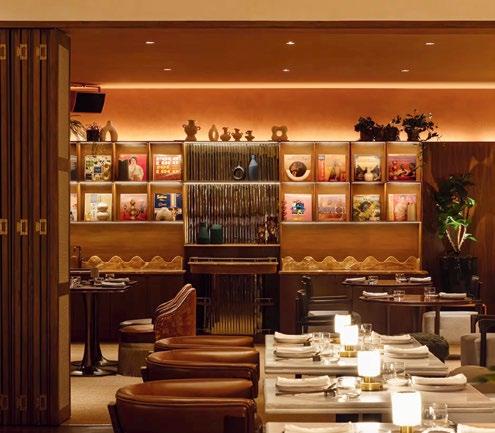
To dine well in Manila is also to encounter the emotional register of Filipino cooking, a cuisine defined by balance rather than excess. Sourness, smoke, sweetness, and richness often appear on the same table, sometimes within the same dish.
Sinigang is perhaps the most revealing expression of this palate. The tamarind-based soup arrives bright and bracing, its acidity cutting cleanly through slow-cooked pork or seafood, warming without heaviness. Inasal speaks to the country’s love of smoke and marinade,
with grilled chicken basted generously in calamansi, garlic, and annatto oil, crisp at the edges and deeply savoury at the centre.
Adobo, the most familiar of Filipino dishes, varies from kitchen to kitchen. Simmered slowly in vinegar, soy sauce, and aromatics, it is comforting rather than showy, revealing its depth over time. Dessert brings a different kind of indulgence. Halo-halo layers crushed ice, fruit, beans, jellies, and leche flan into a playful mix of textures, while ube appears everywhere from cakes to ice cream, its earthy sweetness unmistakable and quietly addictive.
These flavours linger long after the meal ends, offering travellers a sensory understanding of the country that extends beyond any single restaurant.
Manila’s evenings often start gently. Drinks precede dinner, conversations unfold unhurriedly, and the mood shifts gradually rather than dramatically. The city’s most compelling bars understand this pacing well.
At Medusa, the supper club concept is executed with polish and intent. Evenings unfold around good food and considered cocktails, punctuated by a stylised performance that adds theatrical flair without overwhelming the room. The experience feels controlled rather than raucous, making it well suited to early evenings and intimate gatherings. Medusa is not designed for late-night excess. Its appeal lies in atmosphere, pacing, and a sense of occasion that remains composed.
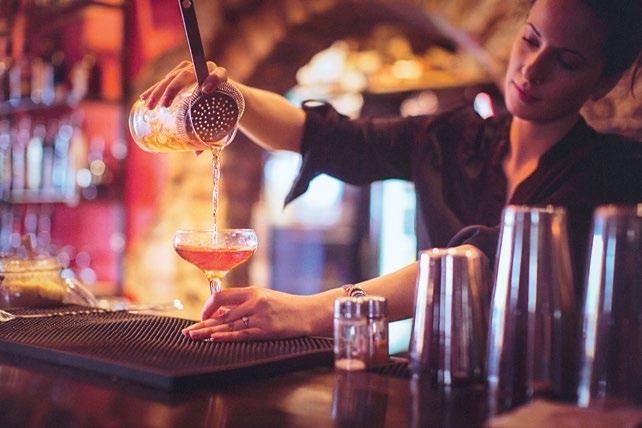
Energy lifts noticeably at Mamacita, where bold Mexican flavours and a convivial dining room gradually give way to a livelier atmosphere. What begins as a relaxed meal often evolves into something closer to a party, making it a natural choice for travellers easing into the city’s social rhythm.
For cocktails taken seriously, The Curator remains a benchmark. Drinks are crafted with precision and minimal flourish, allowing technique and balance to take centre stage. It is a place for those who appreciate clarity and intention in the glass.
To close the evening more quietly, The Spirits Library offers a welcome change of pace. Jazz plays softly, lighting stays low, and the atmosphere encourages a final drink or two rather than excess. It is a fitting end to a long day, when conversation matters more than spectacle.
For travellers navigating Manila between meetings, hotel bars often provide the city’s most reliable meeting points. Neutral yet expressive, these spaces attract a blend of locals and visitors, offering familiarity without feeling anonymous.
At Uma Nota, Brazilian flavours, music, and energy create a lively but approachable setting. The bar works equally well for informal meetings and relaxed evenings, with a crowd that reflects the city’s international outlook.
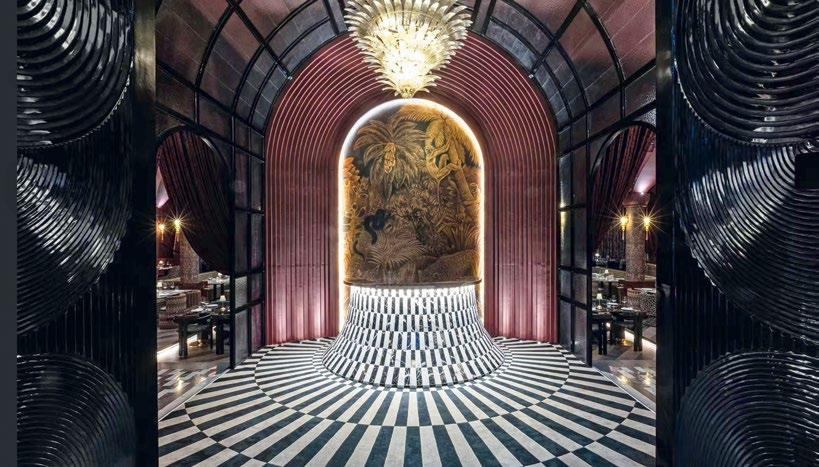
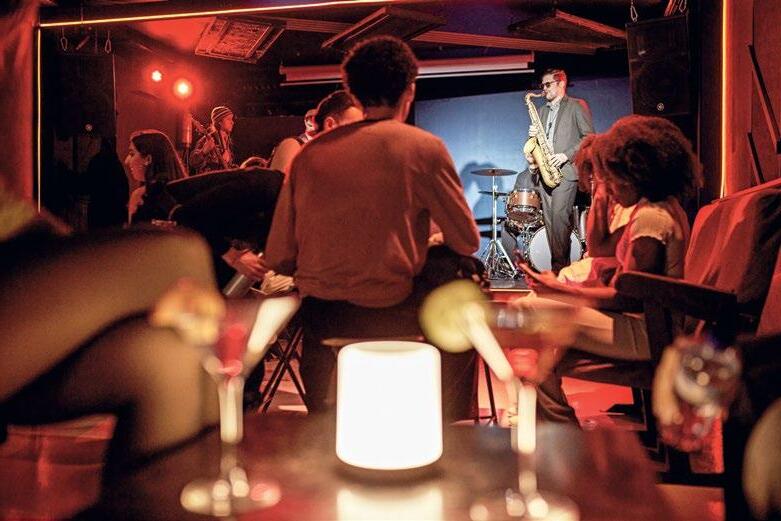
More restrained in tone, Mistral offers a polished environment where conversations take precedence. Drinks are prepared with consistency and care, making it a dependable choice for p re-dinner gatherings and unhurried nightcaps.
At Coconut Grove within the historic Admiral Hotel, nostalgia plays a subtle role. Classic cocktails, low lighting, and an old-world elegance encourage lingering, offering a reminder that Manila’s past continues to inform its present, particularly in the spaces where people come together to unwind.
Manila is not a city that reveals itself through spectacle alone. Its pleasures are found in repetition, in returning to the same table, the same bar, the same familiar flavours prepared with care. For the business traveller, this consistency becomes its own form of luxury.
Whether through a hushed tasting menu, a late bowl of ramen, or a drink taken at a hotel bar where conversations stretch comfortably into the evening, Manila offers experiences that feel grounded rather than performative. It is a city that rewards attention and time, inviting visitors not just to pass through, but to engage, linger, and return with a deeper understanding of its rhythm.
After the measured sociability of Manila, where evenings revolve around conversation, dining, and familiar rooms, El Nido offers a different kind of pause. The transition from city tables to island shores feels less like an escape and more like a recalibration. Here, time is marked not by reservations or schedules, but by light, water, and weather. It is a natural counterpoint to Manila’s energy, offering space to linger in a different way.
Manila is not a city that reveals itself through spectacle alone. Its pleasures are found in repetition, in returning to the same table, the same bar, the same familiar flavours prepared with care


Located along Pangulasian’s expansive beachfront in Bacuit Bay, El Nido Resorts Pangulasian Island Resort is designed around openness, space, and direct access to the sea. The resort’s villas are arranged to face the water or sit within tropical greenery, allowing guests to choose between uninterrupted views of the bay or a more secluded setting framed by forest. Architecture and planning emphasise a close relationship with the shoreline, making the beach and surrounding waters a constant presence throughout the stay.
Life at Pangulasian unfolds at an unforced pace shaped by its beachfront setting. Guests have immediate access to swimming, as well as water-based activities such as kayaking and snorkelling arranged by the resort. Days move easily between the beach, resort facilities, and shared spaces designed for lingering rather than movement. As the afternoon softens, the shoreline becomes a natural gathering point, with Bacuit Bay’s open horizons defining the transition into evening. Pangulasian is well suited to travellers who value a sense of calm luxury, where generous space, natural light, and attentive hospitality quietly shape the experience.
Architecture and planning emphasise a close relationship with the shoreline, making the beach and surrounding waters a constant presence throughout the stay
At El Nido Resorts Lagen Island Resort, the experience is defined by its forested setting and naturally sheltered location within Bacuit Bay. Set against limestone cliffs and dense tropical rainforest, the resort is integrated into the landscape, with pathways winding through trees and shared spaces positioned to feel protected and enclosed. The surrounding environment plays an active role in the atmosphere, creating a sense of immersion that feels distinct from more open island settings.
Accommodation at Lagen is designed to blend into the terrain, reinforcing a feeling of retreat rather than arrival. The calm bay in front of the resort supports gentle water activities such as kayaking and boat excursions, while land-based moments unfold beneath the forest canopy. Days here tend to move inward, shaped by shade, quiet surroundings, and the absence of urgency. Lagen appeals to travellers drawn to stillness and nature, where the focus is on continuity and ease rather than constant activity, and where thoughtful hospitality supports a slower, more reflective pace.




IAt the intersection of legacy and modern elegance, luxury hotels are redefining how Indian weddings are imagined and remembered
WORDS GARGI GUHA
Indian weddings have always been a convergence of splendour and service. And, luxury hotels are no longer just venues for those seeking out their dream wedding location. They are curators of once-in-a-lifetime experiences, seamlessly blending legacy with modern finesse. As families seek celebrations that are deeply personal yet visually spectacular, these iconic hotels offer more than opulence. They promise a setting worthy of memories that will last generations.




Hyatt Regency Bangkok Sukhumvit seamlessly blends a prime city address with refined hospitality, making it a great setting for couples envisioning an unforgettable wedding. Set along the iconic Sukhumvit Road, the hotel offers the luxury of being at the heart of Bangkok’s pulsating energy while still feeling like a calm, contemporary retreat for guests.
Favoured by Indian travellers seeking comfort and style in Thailand’s bustling capital, the hotel impresses with its
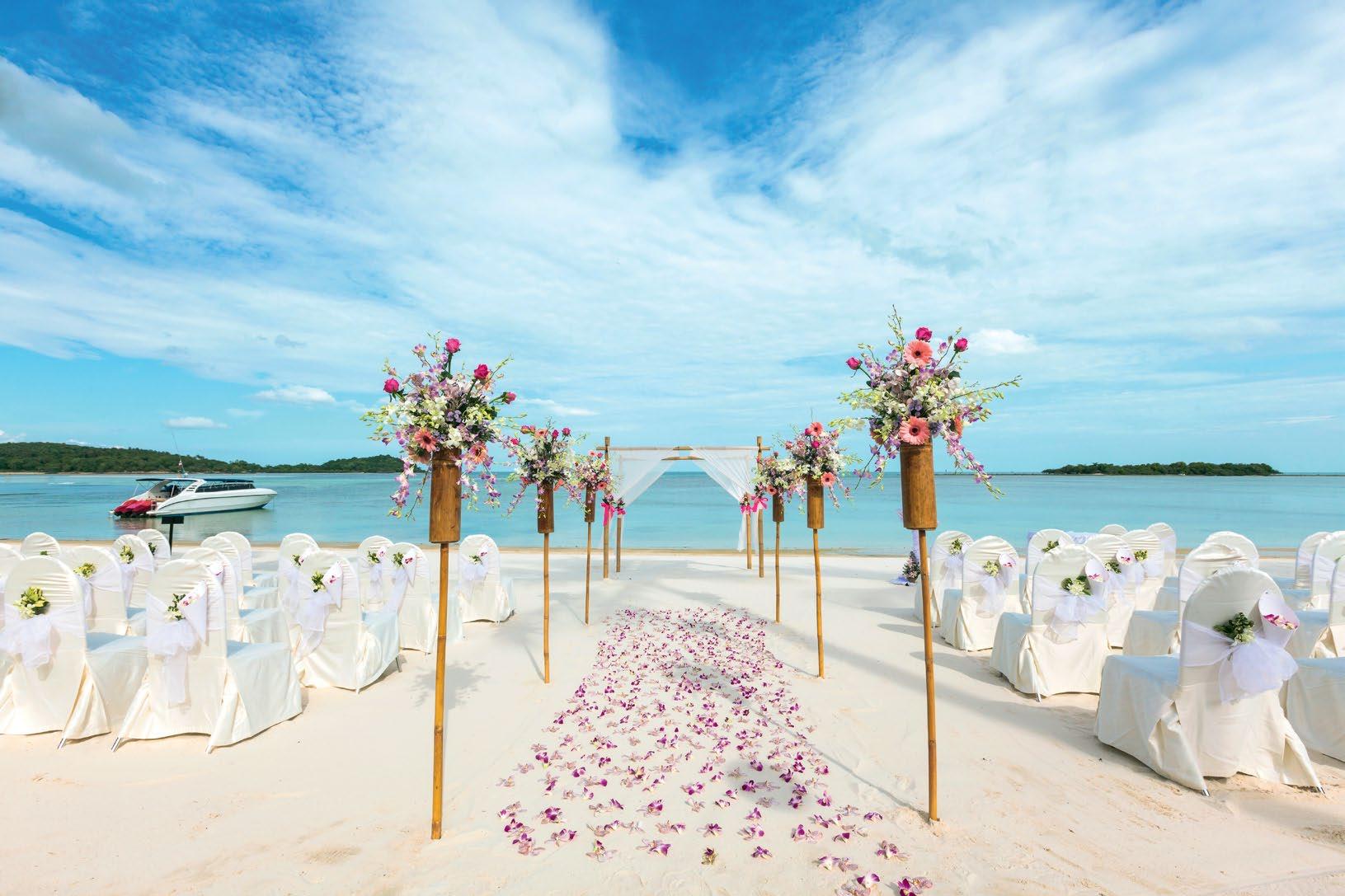
thoughtfully designed spaces and extensive facilities. An inviting outdoor swimming pool, beautiful leafy terraces and multiple indoor venues provide versatile backdrops for celebrations, whether one is planning a close-knit sangeet or a multi-day wedding. This flexibility makes the hotel particularly appealing for elaborate destination weddings, including Indian celebrations that unfold across several events.
At the centre of its event offerings is the expansive Regency Ballroom, spanning 617 square metres and designed to

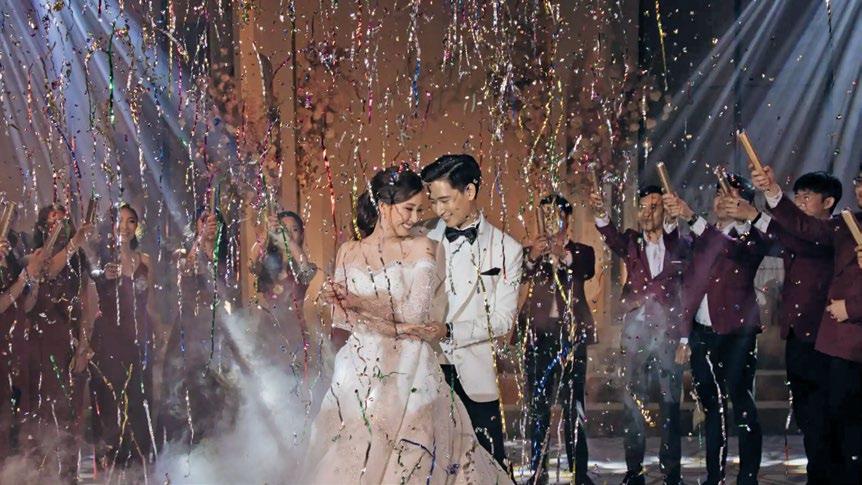
adapt effortlessly to different styles and scales. From elegant pheras and traditional ceremonies to grand receptions and lively sangeet evenings, the ballroom can host gatherings of up to 700 guests with ease.
A key highlight is the ballroom’s pillarless layout, which allows uninterrupted views and flexible décor installations. This is ideal for elaborate mandaps, stages or immersive thematic designs. The hotel’s central location, modern luxury and adaptable event spaces make Hyatt Regency Bangkok Sukhumvit a compelling choice for couples seeking a sophisticated urban venue that can be transformed into a memorable wedding setting.

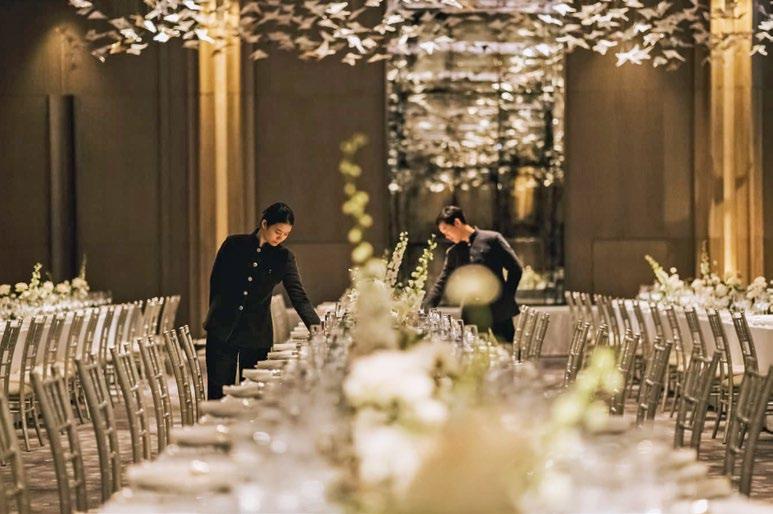
At Capella Bangkok, weddings are conceived as deeply personal expressions of love, carefully designed around each couple’s unique story and vision. Set along the banks of the Chao Phraya River, this elegant resort offers a collection of river-facing venues complemented by intuitive service and exceptional culinary experiences, creating a seamless setting for celebrations.
Central to the experience is a dedicated team of Wedding Specialists who work hand in hand with couples to shape every aspect of the occasion. This works especially well for Indian weddings, which are inherently familial affairs. Creativity is key, with floral artistry and versatile spaces allowing each celebration to feel distinctive and effortlessly luxurious.
For Indian weddings in particular, the resort stands out as an inspired choice, offering a resort-style riverside setting alongside expertly curated Indian and vegetarian cuisine. The Courtyard becomes a vibrant stage for a traditional baraat procession and an unforgettable mandap ceremony.
The Chao Phraya River itself adds a sense of romance and drama, its timeless beauty lending a cinematic quality to every celebration.
The resort’s experienced “Wedding Whisperers” design bespoke ceremonies rooted in cultural tradition while reflecting personal style.
The venue portfolio is equally compelling. The grand Ballroom spans 747 square metres, filled with natural light from floorto-ceiling windows, with a ceiling of 1,864 hand-blown glass butterflies, a poetic tribute to 1864, the year Charoenkrung Road was completed. A generous foyer accommodates up to 280 guests, while a private Salon offers a serene retreat for pre-ceremony preparations. More intimate celebrations can unfold in the Atelier with river views, the lush Courtyard, or aboard an elegant riverboat, ensuring every wedding at Capella Bangkok is truly unforgettable.
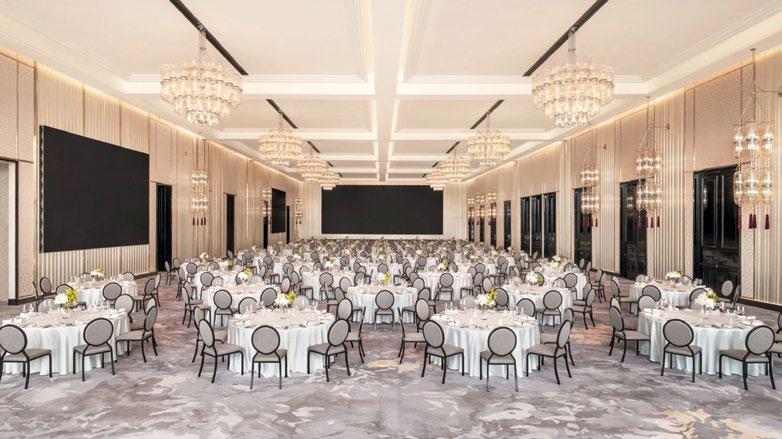
The Ritz-Carlton Bangkok, overlooking the verdant expanse of Lumpini Park, offers an exceptional setting for couples seeking a grand, city-centric wedding. Its prime address ensures effortless access for guests, while the serene park views lend a rare sense of calm and elegance to celebrations in the midst of the capital’s throbbing energy.
At the centre of the hotel’s wedding offerings is the spectacular Ritz-Carlton Grand Ballroom, a vast and versatile venue designed to host up to 2,000 guests. Ideal for milestone celebrations on a truly impressive scale, the ballroom can also be divided into four distinct sections. Built-in LED screens elevate the experience further, making it easy to showcase same-day edits or cinematic visuals during the celebration. Beyond the scale and aesthetics, the
hotel delivers a seamless, all-inclusive experience. Couples benefit from the expertise of seasoned chefs who curate memorable wedding feasts, alongside professional security teams and dedicated technicians to manage lighting, sound and visual setups. Practical touches such as overnight delivery and pickup services ensure logistics are handled smoothly, while the hotel’s elegant terrace, framed by views of Lumpini Park, offers an additional openair setting for pre-functions or intimate moments.
The Ritz-Carlton Bangkok is also known for its signature wedding concepts, thoughtfully designed to suit different styles and traditions. From engagement ceremonies to traditional ceremonies, these curated celebrations can be tailored to individual preferences. Among the most popular offerings are The Grand Wedding
Celebration and The Legendary Wedding After-Party, both created to deliver a sense of occasion.
The Grand Wedding Celebration package includes a host of premium inclusions, from complimentary use of audiovisual equipment and free-flowing soft beverages to luxurious stays for the couple and their families. Highlights include an Executive Suite for the bride and groom, indulgent spa treatments and an elaborate multi-tier wedding cake.
For couples who want to keep the festivities going, The Legendary Wedding After-Party provides the perfect finale. With exclusive venue access until midnight, refreshments for guests and late-night comfort food, it offers a relaxed yet spirited way to conclude the day. The Ritz-Carlton Bangkok stands as a one-stop destination for couples dreaming of a truly unforgettable celebration.
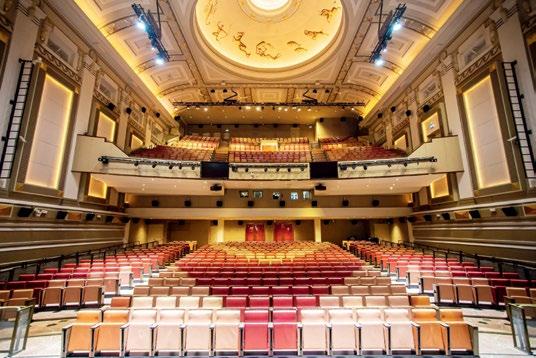
The Capitol Kempinski Hotel Singapore is a destination where classic grandeur is seamlessly infused with contemporary refinement. Located in the heart of Singapore’s historic hub, part of the integrated Capitol Singapore complex, near City Hall MRT station and key cultural sites, this iconic hotel offers an exceptional collection of venues that set a memorable stage for one of life’s most meaningful moments. The hotel’s experienced wedding specialists ensure every element is flawlessly planned and beautifully delivered, which can be quite pertinent in Indian weddings that involve many different power dynamics within the family.
For couples seeking a warm and romantic setting, The Atelier provides an inviting atmosphere beneath its distinctive wooden, loft-style ceiling. The space is ideal for
hosting intimate banquets, allowing loved ones to gather in an environment that feels both stylish and personal. Those looking to add a creative flourish to their celebration will find 15 Stamford, the hotel’s signature restaurant, particularly captivating. With its striking stained-glass ceiling and thoughtfully curated floral décor, it offers a sophisticated yet intimate setting for a stylish wedding celebration.
Capitol Bistro presents another versatile option, and for smaller, convivial moments, The Bar at 15 Stamford offers a cosy ambience, perfect for raising a toast with close family before or after the main event. The Private Room provides a serene and enclosed space framed by an elegant wooden partition. This venue is particularly well suited for intimate rituals such as a mehndi ceremony, offering privacy without compromising on style. For couples dreaming of a truly dramatic
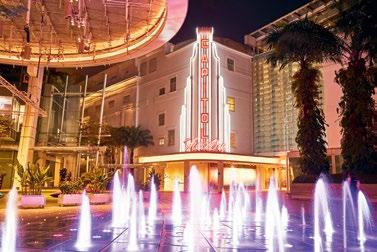
and culturally resonant setting, The Capitol Theatre stands apart. Meticulously restored to its original grandeur, this iconic landmark is one of Singapore’s most storied performance venues. Featuring a grand stage, Southeast Asia’s first floor rotational system, and beautifully preserved architectural details, the theatre offers a wedding setting unlike any other in the city. Its scale and theatricality make it especially suited for elaborate ceremonies, statement celebrations, or wedding receptions designed to unfold with a sense of occasion. Whether used for a formal ceremony, a choreographed entry, or a celebration that blends performance with tradition, the Capitol Theatre transforms weddings into immersive, unforgettable experiences.
Throughout the planning journey, The Capitol Kempinski’s dedicated wedding specialists remain closely involved, guiding couples through every step with care and precision. From conceptualising the celebration to executing the finest details, their expertise ensures a seamless experience. At The Capitol Kempinski Hotel Singapore, weddings are not simply events; they are thoughtfully crafted celebrations designed to be cherished for a lifetime.
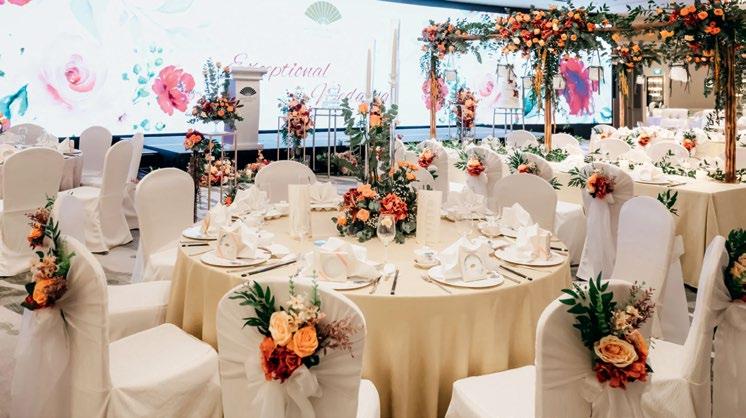
enliven
Mandarin Oriental, Singapore, stands out as an exceptional destination for weddings, seamlessly combining refined luxury with a deep understanding of cultural traditions. Renowned for its impeccable service and iconic Marina Bay setting, the hotel offers a highly personalised approach, ideal for both grand, multi-day celebrations and elegant, intimate ceremonies.
A key highlight is its bespoke culinary experience. Unlike fixed banquet menus, Mandarin Oriental Singapore invites couples to work directly with its expert banquet chefs to design customised Indian menus from the ground up. From cherished regional favourites like Punjabi, Gujarati, South Indian or Mughlai, to contemporary interpretations and global accents, every dish is tailored to reflect personal tastes,
traditions and budgets. The culinary team is particularly adept at accommodating dietary preferences essential to Indian weddings, including Jain, vegetarian, halal and other specific requirements, ensuring every guest is thoughtfully catered to.
Equally impressive is the hotel’s diverse collection of wedding venues, each adaptable to vibrant Indian décor and ceremonial requirements. The grand Oriental Ballroom is ideal for large-scale receptions, featuring a dramatic 20-metre LED wall, advanced sound systems and opulent interiors that can be transformed for lavish celebrations. For daytime events or smaller functions, the Garden Suite offers serene, light-filled interiors and an inviting foyer, while the Atrium Suites provide intimate, contemporary settings enhanced by floorto-ceiling LED walls.
For more personal ceremonies, the Harbour View Suites and the Royal Marina Bay Penthouse deliver panoramic views of Marina Bay, creating a striking yet intimate atmosphere. Couples seeking an outdoor element can also consider the Harbour Terrace or private cabanas, which blend city skyline views with exclusivity.
Throughout the planning journey, dedicated wedding consultants oversee every detail, from menu creation and tastings to event flow and service execution. Their expertise ensures that cultural nuances are respected while modern expectations of luxury are exceeded.
At Mandarin Oriental, Singapore, weddings are approached as a personalised culinary and cultural journey rather than a standardised event; brought to life by world-class service, elegant venues and a commitment to turning each couple’s vision into a flawless reality.
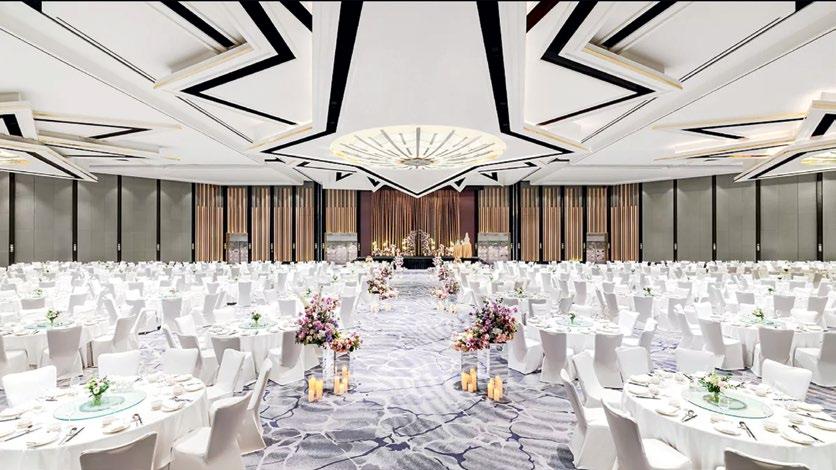
Fairmont Singapore is the perfect setting for a fairy-tale wedding where elegant venues, thoughtful planning and impeccable service come together to create celebrations that feel effortless and unforgettable.
One of the largest, Fairmont Singapore boasts an impressive 108,000 square feet of event space, including three distinctive ballrooms designed to host weddings of every scale and style. Renowned for its meticulous attention to detail and warm hospitality, the hotel offers couples the freedom to design a celebration that is entirely their own; refined, personal and beautifully executed.
From the very first planning meeting, couples are supported by a team of
experienced wedding planners, along with talented chefs, bartenders and service professionals who work seamlessly behind the scenes. Each expert is committed to delivering a smooth and stress-free experience, guiding you through planning, décor, menu design and event flow right up to the moment you exchange vows.
For smaller, more intimate celebrations, the Atrium Ballroom offers an inviting and versatile setting. Accommodating up to 28 tables, the space can be transformed to reflect personal style, with flexible options for lighting, sound, furniture and décor. Its adaptability makes it ideal for elegant ceremonies, refined banquets or contemporary celebrations with a personalised touch.
For couples dreaming of a large-scale
affair, the Fairmont Ballroom stands out as one of Singapore’s most expansive wedding venues. With the capacity to host up to 150 tables, its grand proportions and adaptable layout make it perfect for lavish Indian celebrations that leave a lasting impression. Whether styled for a traditional shaadi or a modern, dramatic setting, the ballroom provides a spectacular canvas for your vision.
Every wedding space at Fairmont Singapore is fully customisable, ensuring no two celebrations are ever the same. From classic and timeless to bold and modern, the hotel’s team works closely with each couple to bring their ideas to life with precision and care. From the first consultation to the final toast, the team remains dedicated to creating a seamless, memorable celebration.
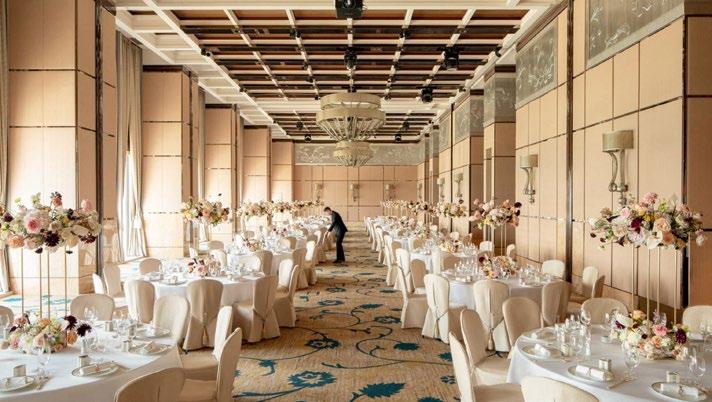
An address like no other
Four Seasons Hotel Hong Kong is widely regarded as one of the city’s most prestigious venues for Indian destination weddings, combining iconic views, exceptional gastronomy and world-class service. Set along the edge of Victoria Harbour, the hotel offers a spectacular urban backdrop for celebrations that are as visually striking as they are deeply personal. From colourful mehndi ceremonies to lavish receptions, every event is executed with precision, creativity and a deep respect for cultural traditions.
Recognised globally as a leader in luxury hospitality, Four Seasons Hotel Hong Kong is an award powerhouse, home to eight Michelin stars under one roof and accolades from institutions such as World’s 50 Best Restaurants and World’s 50 Best Bars. The hotel is both a social and cultural landmark, a discerning choice for families
for milestone celebrations and weddings of significance.
The hotel’s event spaces are among the most sought-after in Hong Kong. With a prime waterfront location, guests are immersed in panoramic views of Victoria Harbour, surrounding mountains and the vibrant central business district. Whether hosting an intimate family ceremony or a grand celebration for up to 600 guests, the hotel’s light-filled venues provide a dramatic yet elegant setting. The two signature ballrooms; the Grand Ballroom on the second floor and the Harbour View Ballroom on the fourth, are particularly well suited for elaborate Indian wedding décor, ceremonial set-ups and high-energy celebrations.
A dedicated team of wedding and event specialists oversees every detail, from décor and rituals to logistics and guest experience. Custom menus are a
key highlight, crafted in collaboration with Michelin-starred chefs. The hotel is highly experienced in catering to Indian weddings, accommodating vegetarian, vegan and specialised dietary requirements with ease. Beyond weddings, the hotel also excels in curating bespoke experiences for guests. A professional concierge team designs personalised itineraries showcasing Hong Kong’s cultural and culinary highlights, from temple visits and Chinese art tours to immersive tea-tasting experiences.
A standout highlight is the range of transformative pre-wedding experiences for the bride and groom, along with indulgent wellness packages designed for bridesmaids and groomsmen, thoughtfully curated to elevate and complement every wedding celebration.
At Four Seasons Hotel Hong Kong, Indian weddings are elevated into luxurious, meticulously orchestrated celebrations, where every moment is designed to be unforgettable.
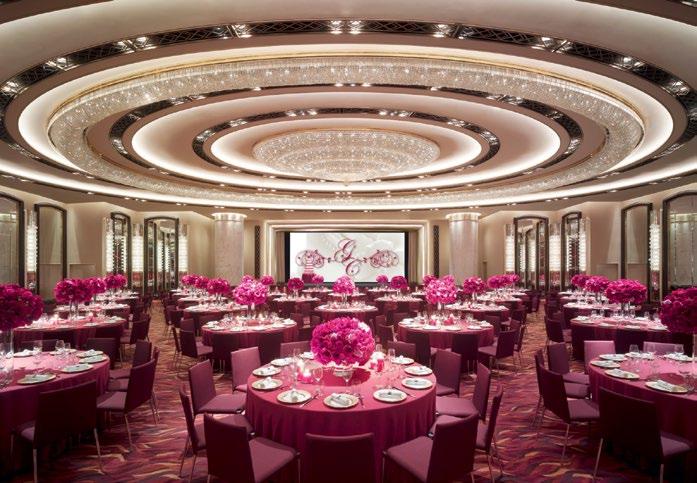
Panoramic views and an iconic address
Grand Hyatt Hong Kong presents a refined and comprehensive setting for weddings, with sweeping views of the iconic Victoria Harbour. With its impressive scale, prime waterfront address and reputation for excellence, the hotel is a preferred destination for hosting everything from high-profile conferences to elegant social celebrations. Offering an extensive portfolio of 21 flexible event venues, Grand Hyatt Hong Kong is designed to accommodate events of varying sizes with ease and sophistication.
One of the hotel’s strongest advantages is its strategic location in Wanchai, directly connected to the MTR and other locations.
For the Indian market, Grand Hyatt Hong Kong offers several standout features, particularly in the realm of large-scale weddings. The Grand Ballroom is among
the most prestigious event spaces in the city, with the capacity to host up to 1,600 guests, making it well-suited for grand Indian wedding receptions. Accommodation is equally impressive, with spacious rooms and suites that blend classic elegance with contemporary design, ensuring comfort and luxury for travelling families
Culinary excellence is a defining pillar of the Grand Hyatt experience. Backed by over 35 years of catering expertise, the hotel’s food and beverage team is highly experienced in creating memorable dining journeys tailored to client preferences. Indian guests benefit from bespoke menu options that reflect regional tastes and cultural traditions, alongside careful attention to dietary needs such as vegetarian requirements. Guided by Hyatt’s philosophy of “Food. Thoughtfully Sourced. Carefully Served.”, the hotel emphasises quality ingredients that support personal well-being, community
responsibility and environmental sustainability.
Among the hotel’s 11 acclaimed restaurants and bars, Tiffin holds a special place as an award-winning Indian restaurant, serving authentic Indian cuisine for both lunch and dinner. The presence of a dedicated Indian chef ensures authenticity and depth of flavour, while also enabling the creation of customised Indian menus for celebrations. With its waterfront location, extensive facilities, culinary expertise and cultural sensitivity, Grand Hyatt Hong Kong offers a compelling proposition for Indian weddings.

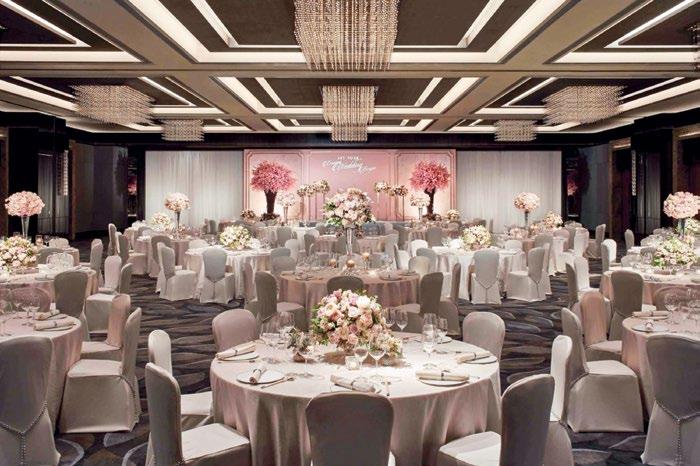
JW Marriott Hotel Hong Kong offers an elegant setting for weddings, combining refined luxury with impeccable service. Located in the heart of Admiralty, the hotel is ideal for couples seeking a sophisticated urban celebration with seamless access for local and international guests.
At the centre of its wedding offerings is the Grand Ballroom, a pillarless space spanning over 1,000 square metres. Designed to host large-scale celebrations, the ballroom can comfortably accommodate up to 1,000 guests, making it well suited for lavish wedding receptions, grand banquets and multi-cultural ceremonies. With high ceilings, flexible layouts and a neutral, elegant palette, the space can be transformed to reflect a wide range of
wedding styles; from classic and opulent to modern and minimal. State-of-the-art audiovisual facilities, advanced lighting systems and large LED screens ensure flawless production for entrances, speeches and entertainment.
Complementing the Grand Ballroom are a selection of smaller function rooms and prefunction areas, ideal for hosting weddingrelated events such as engagement ceremonies, cocktail receptions, mehndi functions or intimate family gatherings. These spaces allow couples to plan a seamless series of celebrations under one roof, with smooth transitions between events.
Culinary excellence is a defining feature of JW Marriott Hotel Hong Kong weddings. The hotel’s experienced culinary team works
closely with couples to curate customised menus, catering to a wide range of preferences and dietary requirements. From global cuisine highlights to tailored regional menus, every dining experience is thoughtfully crafted and beautifully presented.
A dedicated team of wedding specialists oversees every aspect of the celebration, from planning and décor coordination to event flow and guest management, ensuring a stress-free experience. Luxurious guest rooms, wellness facilities and attentive hospitality further enhance the overall wedding journey.
The hotel has a JW Bridal Suite Package with perks like an overnight JW Suite stay, in-room breakfast, champagne, wedding amenities 20% off F&B, and discounts on extra rooms, as a very special add-on for dream weddings.
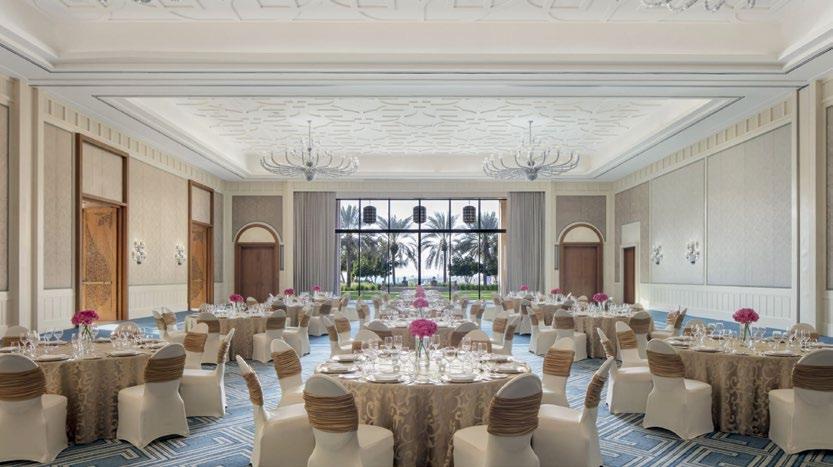
At Four Seasons Resort Dubai at Jumeirah Beach, the Dana Ballroom sets the stage for celebrations defined by grandeur and breathtaking coastal beauty. Reached via an impressive sweeping staircase finished in shimmering tones of silver, blue, and cream, the ballroom immediately creates a sense of drama and anticipation. Overlooking the lush Dana Garden and extending seamlessly onto a beachfront terrace, it offers one of Dubai’s most coveted wedding settings, where refined interiors meet the natural allure of the Arabian Gulf.
Thoughtfully designed to balance indoor sophistication with outdoor versatility, the Dana Ballroom spans more than 590 square
metres and is fully privatised to ensure absolute exclusivity. This makes it suited for lavish weddings and celebrations. Its beachfront location adds a distinctive charm, with gentle sea breezes and panoramic sunset views enhancing ceremonies and receptions alike.
Culinary excellence is at the heart of every celebration at Four Seasons. The resort offers an extensive range of menus crafted to appeal to global tastes, with special attention given to Indian weddings and events. Guests can enjoy a rich selection of vegetarian and nonvegetarian Indian dishes, authentically
prepared by the resort’s dedicated Indian chef. From beloved regional classics to elevated contemporary interpretations, each dish is created with precision, respect for tradition, and refined presentation.
For families seeking a more personal touch, the culinary team is happy to collaborate closely to design bespoke menus that honour specific rituals, flavours, and signature dishes. With a multicultural brigade of chefs representing diverse culinary heritages, Four Seasons ensures that every cuisine is treated with authenticity and finesse.
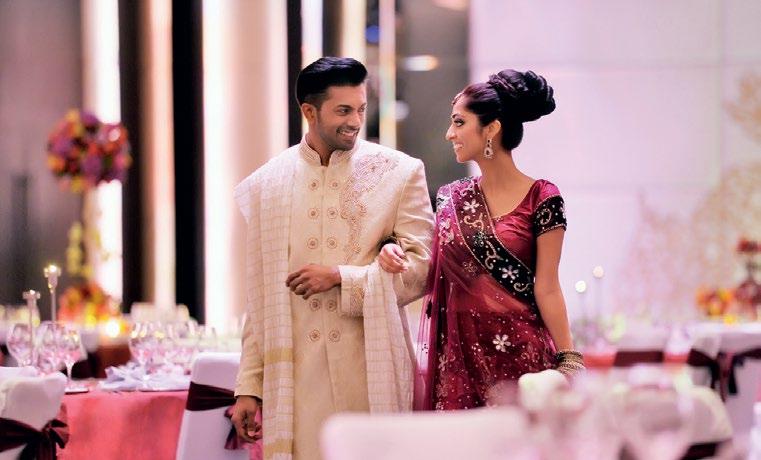
JW Marriott Marquis Hotel Dubai stands out as one of the city’s most soughtafter luxury destinations for grand Indian weddings, celebrated for its scale, sophistication, and impeccable service. Rising as an iconic architectural landmark in Business Bay, close to the Dubai Canal, the hotel provides a spectacular setting for opulent multi-day celebrations that seamlessly blend traditional Indian rituals with contemporary Arabian elegance. With panoramic city views and proximity to landmarks such as the Dubai Mall and Burj Khalifa, it offers both convenience and prestige for destination weddings.
The hotel features an impressive selection of versatile event spaces, including expansive indoor ballrooms
and stylish outdoor areas ideal for ceremonies, receptions, and pre-wedding functions. Its largest ballroom can host up to 900 guests, making it one of Dubai’s premier venues for large-scale celebrations. For couples seeking an open-air experience, the spacious pool deck offers a refined al fresco setting, perfect for evening receptions under the stars.
What truly elevates the experience is the expertise behind the scenes. Marriott Certified Wedding Planners guide couples through every stage of the journey, from shaping the overall vision to executing each intricate detail. Trained to manage weddings of all kinds, including ethnic
celebrations, these specialists assist with budgeting, menu selection, décor planning, table settings, and sourcing trusted florists, photographers, and entertainment, ensuring a seamless and stress-free experience.
Culinary excellence is central to every celebration, with bespoke menus crafted by the hotel’s skilled in-house culinary team. Menus can be fully customised to reflect cultural preferences, regional flavours, and personal traditions, adding a meaningful and memorable dimension to the festivities.
JW Marriott Marquis Hotel Dubai also offers tailored wedding packages and exclusive offers for private functions, allowing each celebration to feel truly personal.
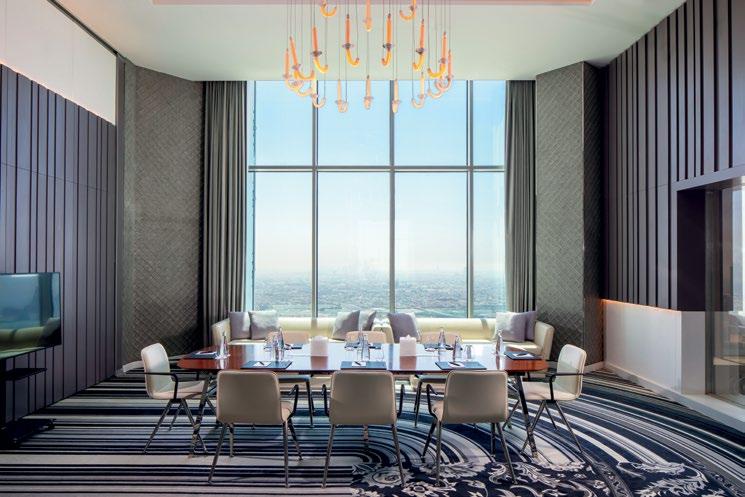
SLS Dubai Hotel & Residences presents a strikingly modern setting for couples seeking a sophisticated and contemporary wedding celebration. Famed for its elevated skyline location, the hotel offers a collection of luxurious venues framed by breathtaking panoramic views of Dubai, including the iconic Burj Khalifa. With a seamless blend of cutting-edge design, exceptional service, and thoughtfully curated experiences, SLS Dubai creates a destination for memorable weddings.
A ballroom provides an elegant option for intimate wedding celebrations, while chic outdoor spaces add variety and flair to the occasion. The ballroom comfortably
accommodates up to 80 guests, creating a refined setting where design and atmosphere take centre stage. An adjoining terrace complements the space and is best suited for moments such as coffee breaks or smaller transitions during the celebration.
For outdoor celebrations, the terrace at Fi’lia offers a stylish option with sweeping city views, accommodating up to 100 guests for a seated dinner or 150 guests for a standing reception. Elsewhere across the property, contemporary interiors designed by Paul Bishop reflect bold aesthetics, refined finishes, and a sense of modern luxury that carries through to the hotel’s expansive rooms and suites.
Couples are supported at every step by a team of dedicated wedding specialists who oversee each detail, from venue styling to flawless event flow. Culinary experiences
are a highlight, with award-winning chefs crafting bespoke menus tailored to personal preferences and cultural traditions.
Beyond the festivities, SLS Dubai enhances the wedding journey with indulgent spa experiences designed to relax and rejuvenate the couple and their wedding party ahead of the big day. Luxurious accommodations and opulent suites provide a stylish retreat, perfect for beginning married life in comfort and elegance.
Chosen for its unforgettable views and a distinctive atmosphere, SLS Dubai Hotel & Residences offers a wedding experience defined by vibrant energy and contemporary glamour.
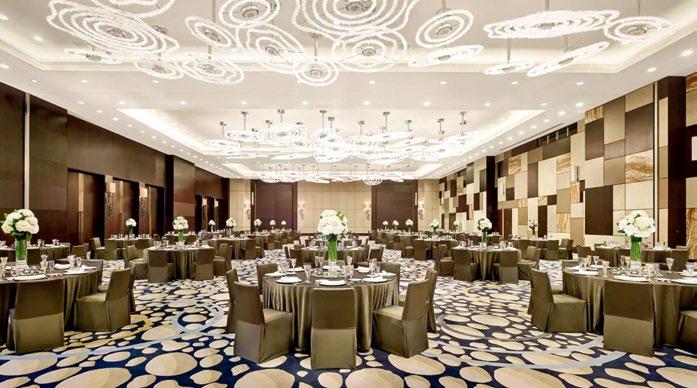
At Grand Hyatt Abu Dhabi Hotel And Residences Emirates Pearl, weddings unfold with a sense of elegance and theatrical sophistication. The showpiece Al Bateen Ballroom spans an impressive 1,040 square metres and can host up to 1,000 guests, making it ideal for grand Indian wedding celebrations. Designed for seamless hosting, the ballroom features a private entrance, a dedicated bridal suite, an exclusive VIP Majlis, and a refined pre-function area that sets the tone for opulent arrivals and pre-event receptions. For smaller, more intimate celebrations, the Mouza Ballroom and Lum’a Terrace provide flexible indoor and outdoor options, enhanced by sweeping views of the sea and the nearby palace, creating a picturesque backdrop for ceremonies and social events.
Thoughtfully curated offerings make Grand Hyatt Abu Dhabi Hotel And Residences Emirates Pearl particularly appealing to Indian wedding hosts. The hotel presents fully customizable menus, including authentic Indian cuisine prepared by experienced Indian chefs who bring regional flavours and traditional techniques to every dish. Multiple venue options allow families to host different functions, such as mehndi, sangeet, and receptions within the same destination. The accommodation is equally suited to multi-generational celebrations, with spacious rooms and suites, extra bed options, generous bathrooms, and twobedroom apartments with kitchenettes for extended stays.
Wellness plays a central role in the guest experience, with Luma Spa offering hammam rituals, sauna and steam rooms;
ideal for pre-wedding relaxation. Guests staying in suites or Club-level rooms enjoy access to the Grand Club Lounge, featuring complimentary breakfast, all-day refreshments, and evening cocktails.
The hotel also offers attractive wedding programs, including the Abu Dhabi Advantage Program with complimentary visa support for Indian couples planning destination weddings. Bespoke wedding packages can be tailored to décor, menus, and cultural styling, while the World of Hyatt Meeting Planner Program rewards couples with honeymoon bonus points for future stays worldwide. For honeymooners, romantic sea-view rooms with private balconies, couples’ spa treatments, and personalised touches such as floral décor and champagne ensure a truly memorable beginning to married life.
Set along the waterfront with sweeping views of Abu Dhabi Creek and the Sheikh Zayed Grand Mosque, Fairmont Bab Al Bahr is one of the capital’s most distinctive destinations. Contemporary in design yet deeply connected to its surroundings, the hotel offers a sense of balance between cosmopolitan energy and quiet elegance. It is a place where business, leisure, and celebration coexist naturally, supported by thoughtful service and refined spaces that allow every occasion to unfold with ease. Designed to host moments both professional and personal, Fairmont Bab Al Bahr brings together intuitive hospitality and a strong sense of place, creating an address defined by purpose, scale, and understated confidence.
Accommodation at Fairmont Bab Al Bahr is shaped by light, comfort, and generous proportions. Rooms and suites feature floorto-ceiling windows that frame panoramic views of the creek, city skyline, or mosque, creating an immediate sense of openness and calm.
Suites offer expansive living areas suited to extended stays, private meetings, or quiet retreats, making them ideal for executives, families, and guests marking special milestones. For those seeking an elevated experience, Fairmont Gold introduces a more personalised way to stay. With private check-in, exclusive access to the Fairmont Gold Lounge, and curated privileges throughout the day, the experience is designed to move seamlessly between work, rest, and celebration.
Further enhancing each stay is the guidance of Fairmont’s Les Clefs d’Or Concierge team. Internationally recognised for their expertise, they curate bespoke itineraries and offer privileged access across the city, ensuring every detail feels considered and effortlessly tailored.
Dining at Fairmont Bab Al Bahr plays a defining role in the hotel’s identity, with
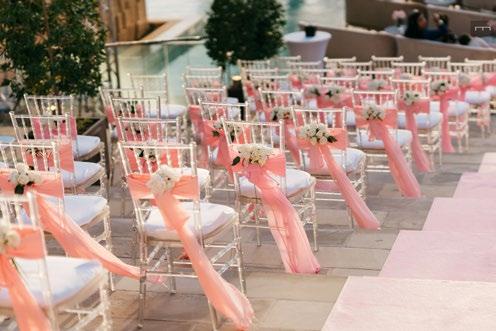
experiences that are firmly part of Abu Dhabi’s culinary landscape. At its centre is the Fairmont Grand Brunch, widely regarded as one of the city’s most celebrated weekend rituals. With expansive live stations, international flavours, and a vibrant social atmosphere, it draws guests from across the capital and continues to set the benchmark for brunch culture.
Mazaj brings a strong sense of place to the table, presenting Emirati and regional flavours in a contemporary setting that honours tradition. Rooted in heritage yet thoughtfully modern, it offers an authentic cultural experience shaped by warm hospitality and seasonal specialities.
Evenings take on a refined tone at Marco Pierre White Steakhouse, where classic technique and premium cuts create an ideal setting for business entertaining and special occasions. Marco’s Italian offers a more relaxed alternative, inviting guests to gather over comforting flavours and easy conversation.
Throughout the day, the Lobby Lounge serves as a natural meeting point for coffee, light fare, and informal moments, completing a dining portfolio that transitions effortlessly from morning to night.
Fairmont Bab Al Bahr is recognised as one of Abu Dhabi’s leading venues for gatherings of international scale. From executive meetings and conferences to destination weddings and landmark celebrations, the hotel offers a versatile collection of venues designed to adapt to every purpose and occasion.
The Fairmont Ballroom provides an elegant setting for large-scale conferences, gala dinners, and high-profile events, while the iconic Falcon Lawn offers a coveted outdoor backdrop for waterfront weddings and bespoke celebrations. Supported by an experienced Banquet and Events team, each occasion is delivered with precision, confidence, and attention to detail.
Here, business leaders, couples, and global travellers discover a destination where moments are shaped by setting, scale, and thoughtful hospitality. At Fairmont Bab Al Bahr, every gathering is designed to leave a lasting impression.
Direct: +971 2 654 3333
Email: babalbahr@fairmont.com www.fairmont.com/abu-dhabi
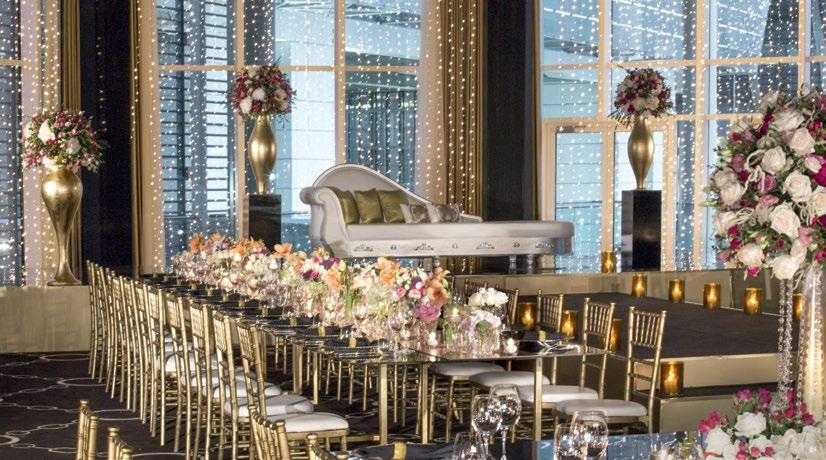
Four Seasons Hotel Abu Dhabi at Al Maryah Island is a coveted destination for grand Indian weddings, celebrated for its bespoke service and ability to host elaborate multi-day celebrations infused with cultural richness. The hotel offers a collection of sophisticated venues paired with dedicated wedding specialists who curate personalised experiences, seamlessly blending traditional rituals with modern themes. From vibrant décor concepts to imaginative settings inspired by Arabian nights or cinematic grandeur, each celebration is designed to feel distinctive and deeply personal.
Couples and guests can raise a toast to new beginnings on elegant terraces
overlooking the water, capture timeless photographs along the hotel’s striking marble staircase, and enjoy exquisite dining experiences crafted by worldclass chefs. In the days leading up to the wedding, private venues are available for hosting lively henna celebrations, rehearsal dinners, and intimate family gatherings. For moments of relaxation, Pearl Spa provides indulgent treatments, offering the perfect escape before the festivities begin.
The hotel’s elegant ballrooms are bathed in natural light streaming through floorto-ceiling windows, creating an airy and sophisticated ambience. Panoramic views of the Abu Dhabi skyline add drama and visual allure, while a selection of private spaces allows for pre- and post-wedding events tailored to every scale and style.
Four Seasons wedding planners are
experts at transforming ideas into reality, drawing on Abu Dhabi’s natural beauty and the hotel’s architectural elegance as a backdrop.
The hotel’s wedding packages reflect Four Seasons’ signature excellence. Options include the Pearl package with refined cuisine, a wedding night in an Executive Suite, and thoughtful inclusions, the Rose package featuring spa privileges, a romantic in-suite setup, and a complimentary threetier show cake, and the exclusive Oud Royal package, offering a lavish bespoke menu, spa benefits, a dramatic cake, and a complimentary stay on the couple’s first anniversary. Together, these offerings create a truly unforgettable wedding journey.
WORDS GARGI GUHA
Airport lounges have evolved into one of aviation’s most ambitious ground offerings, setting a benchmark that few global hotels can rival. They reinforce brand loyalty by extending an airline’s promise of luxury and care. With global travellers now seeking a quiet refinement and intuitive service, these airport lounges can transform travel downtime into a restorative experience.



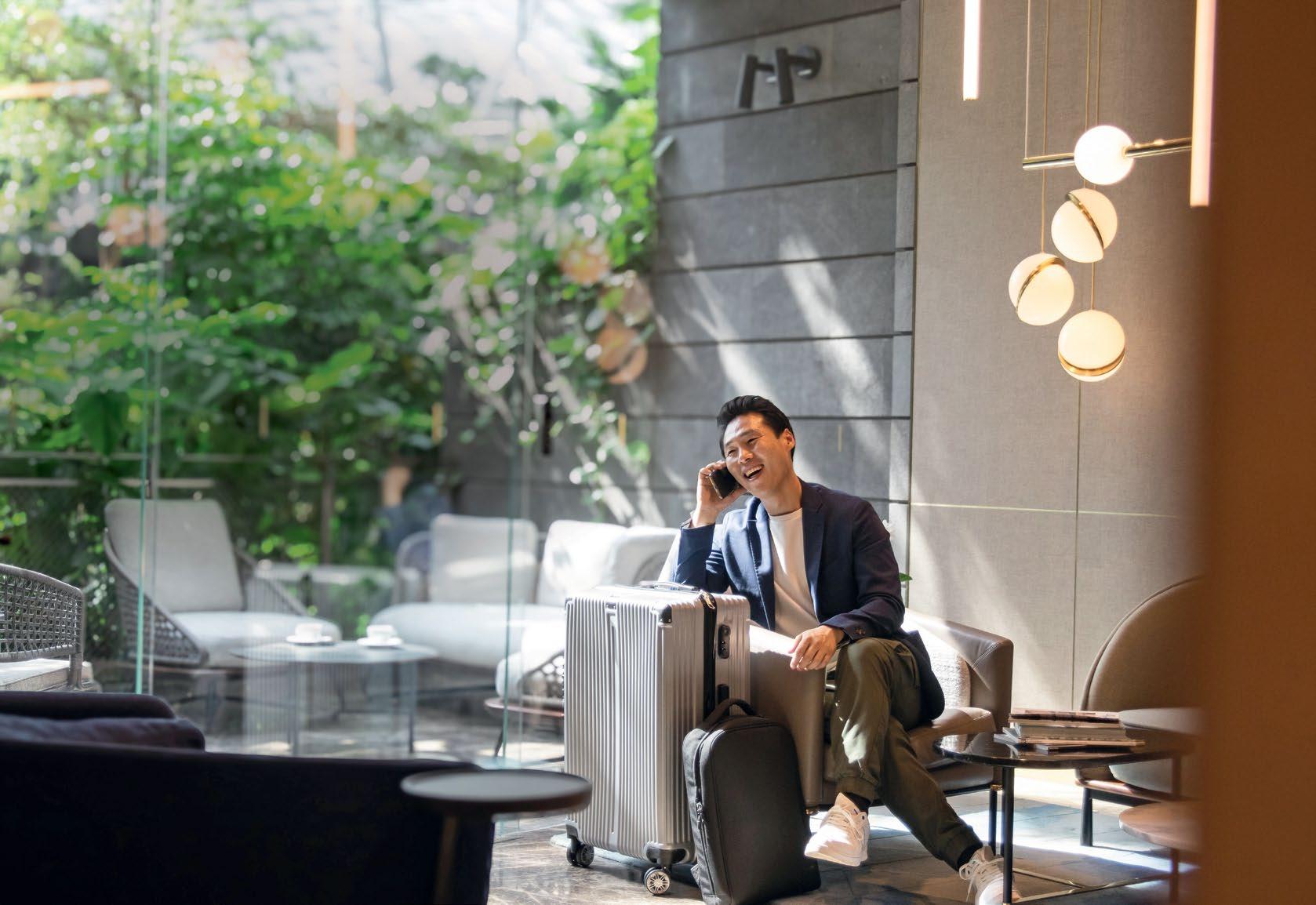


Here are some of the world’s most acclaimed lounges, run by the top-tier airlines.
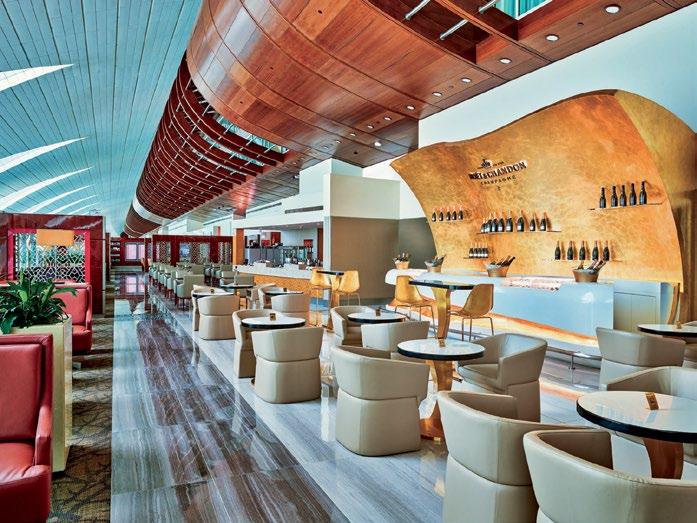
the Emirates Lounge experience is more of a prelude, an immersive portal to the airline’s long-haul promise. Opened in 2008 as part of Emirates’ purpose-built terminal, the lounge experience sets the tone for the sophisticated service one might expect on board.
Spanning three First Class Lounges, three Business Class Lounges and a dedicated Emirates Lounge for premium customers, the scale is remarkable, yet it never feels overwhelming. Instead, the design follows Emirates’ signature philosophy of expansive calm. Marble floors gleam softly under ambient lighting, leather seating is arranged with generous spacing, and curated artworks lend quiet gravitas to the space. It is a luxury that whispers; refined, functional, and instinctively reassuring to the seasoned traveller.
What truly distinguishes the Emirates Lounge is its sense of flow. Thoughtfully zoned areas allow passengers to dine, work,
rest or rejuvenate without interruption. There are serene reading corners with chaise longues and blankets for those craving solitude, business centres equipped for productivity, and family-friendly zones that ensure younger travellers are equally considered. In select lounges, the Moët & Chandon Champagne Experience elevates the ritual of travel, while dedicated bars showcase premium wines and spirits with polished ease.
Dining here mirrors the airline’s global repertoire; international buffets, à la carte options in First Class, and specialised experiences such as the Costa Coffee Barista Experience and the Health Hub with fresh juices and nutritious bites. Wellness, too, has its own pride of place; shower spas and relaxation zones ensure passengers arrive refreshed rather than fatigued.
Perhaps the most compelling USP is integration. With direct boarding access from the lounge in Terminal 3, the journey from leather armchair to aircraft seat is
almost imperceptible.


In 2025, the introduction of Emirates First refined this offering even further, reinforcing Dubai as the airline’s flagship hub. Consistent across concourses, yet tailored in detail, the Emirates Lounge is not merely an airport amenity. It promises one of the most comprehensive and considered lounge experiences in the world.









In 2024, Qatar Airways quietly raised the bar again, unveiling Al Mourjan Business Lounge, The Garden at Hamad International Airport, a space that reimagines the airport lounge as a sanctuary rooted in nature, wellness and understated grandeur. True to the airline’s reputation for thoughtful luxury, t his is not merely an extension of its award-winning ground experience; it is a destination in itself.

Set within the airport’s Northern expansion, The Garden overlooks The Orchard, HIA’s lush indoor tropical landscape. Floor-to-ceiling windows flood the 7,390-square-metre lounge with natural light, while exotic plants, organic textures and elegant furnishings blur the boundaries between indoors and out. The effect is calming and cinematic, more of an oasis between journeys.
Designed exclusively for Qatar Airways’ premium passengers, the lounge accommodates up to 707 guests and has wellness firmly at its core. Twenty-four
private rooms, available complimentary for the first six hours, offer a hushed, cocoonlike privacy, while seven spa treatment rooms, manicure and pedicure stations, massage chairs and a fully equipped gym allow travellers to restore body and mind between long-haul flights. Families are equally considered, with a nursery, children’s playroom and recreational areas woven seamlessly into the layout.
Dining unfolds as a refined, globe-trotting affair. In the East Wing, expansive hot and cold buffets showcase international and local cuisine alongside sushi counters, fresh bakeries and made-to-order salads and poke bowls. Coffee and patisserie bars serve barista-crafted beverages, pastries and gelato, while cocktail and bistro bars offer curated wines, spirits and light bites. The West Wing provides quieter refreshment zones, prayer rooms and meeting spaces for those seeking respite or focus.
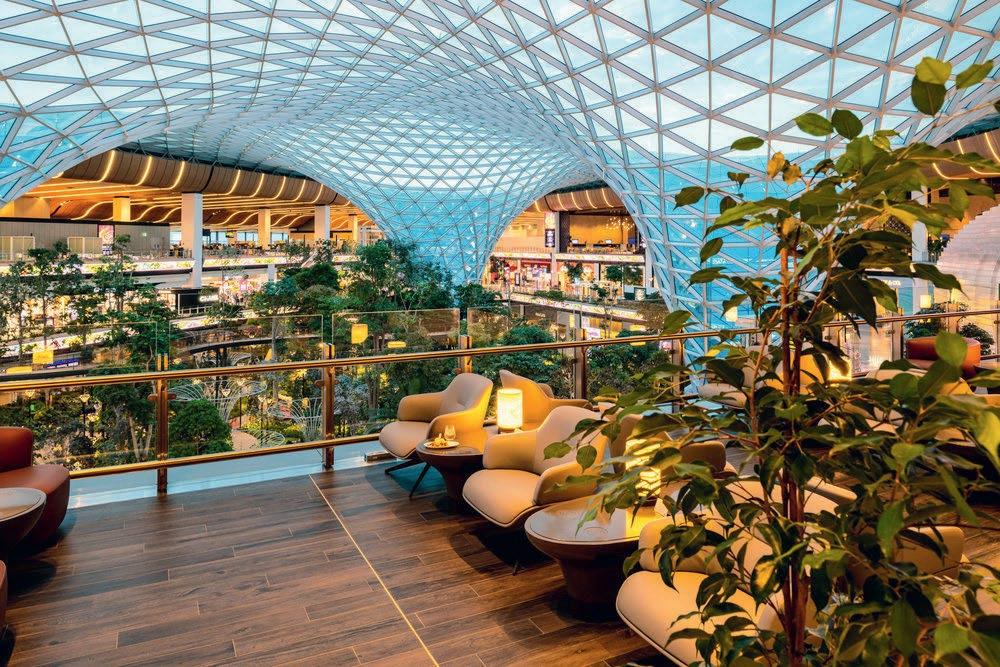
iconic Al Mourjan Lounge, South, together accommodating nearly 1,600 guests and reinforcing Doha’s position as one of the world’s most sophisticated transit hubs. With its emphasis on nature, comfort and design-led indulgence, The Garden captures Qatar Airways’ philosophy perfectly: travel, but make it elevated.
Al Mourjan, The Garden complements the


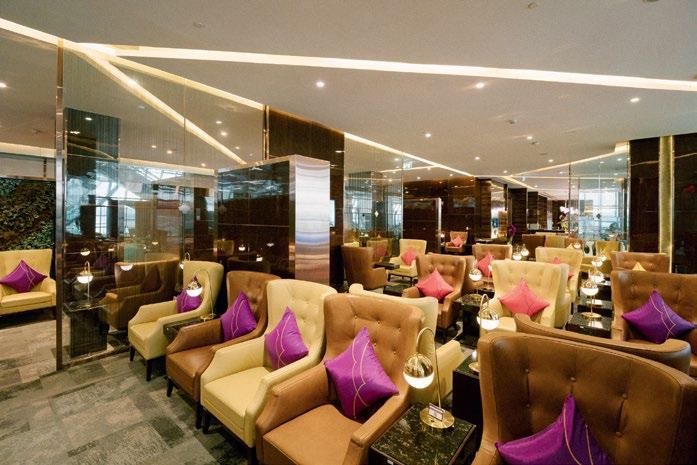
At Bangkok’s Suvarnabhumi Airport, Thai Airways’ principal lounge, the Royal Orchid Prestige, complemented by the adjoining Royal Silk spaces present an elegant fusion of Thai graciousness and spatial planning. As the national carrier’s flagship Business Class lounge, it is designed to ensure that time spent on the ground is as refined and restorative as the journey in the air. And, who can beat the Thai hospitality, anyway! Genuine warmth and radiant smiles light up the spaces, making the lounge a welcoming prelude to the flight.
From the moment guests enter, the lounge makes a strong impression through its considered use of natural light. The elongated layout is divided into a series of well-defined seating areas that create a sense of openness while preserving moments of quiet and privacy. Expansive floor-to-ceiling windows allow daylight to stream in and frame views of the bustling terminal beyond. This lends an overall calm, insulated atmosphere.
The design language is rooted in Thai Airways’ distinctive colour story and cultural references. Signature accents of royal purple are offset by emerald-hued plant dividers, creating calming pockets within the expansive lounge. Polished yet never showy, the aesthetic strikes a balance between refinement and restraint. Clever zoning, subtle partitions and a mix of seating styles ensure the large space feels intimate, encouraging guests to unwind, connect or focus as they choose.
Comfort and functionality are thoughtfully addressed. Deeply cushioned armchairs, side tables fitted with power points and clearly defined work areas cater to the needs of business travellers, while quieter nooks offer space for repose and contemplation. Dining is equally considered, with a dedicated area serving a spread of international favourites alongside Thai classics, complemented by coffee and refreshment bars designed to accommodate both brief visits and extended layovers.
Practical touches, including shower facilities and easy access to departure gates, underscore Thai Airways’ mindful design approach. In a crowded airport ecosystem, the Royal Orchid Prestige Lounge stands out not through flash, but through thoughtful cultural subtlety and an atmosphere that balances energy with repose.
At London Heathrow’s Terminal 5, British Airways’ flagship lounge experience has evolved into a refined reflection of contemporary British luxury: measured, confident and effortlessly social. With the completion of its most recent refresh at the Terminal 5 B gates, the airline has reaffirmed its commitment to making time on the ground feel as considered as the journey in the air.
The refreshed Galleries Club Lounge at T5B strikes a careful balance between theatre and tranquillity. At its heart is an enhanced food offering, where chefs finish select dishes with fresh, locally sourced ingredients, adding a subtle sense of occasion to pre-flight dining. Nearby, a redesigned deli station invites guests to graze at their own pace, offering an expanded selection of hot and cold dishes, breakfast favourites, sandwiches and refined light bites, well-suited to both short connections and longer waits.
Design plays a leading role in the lounge’s
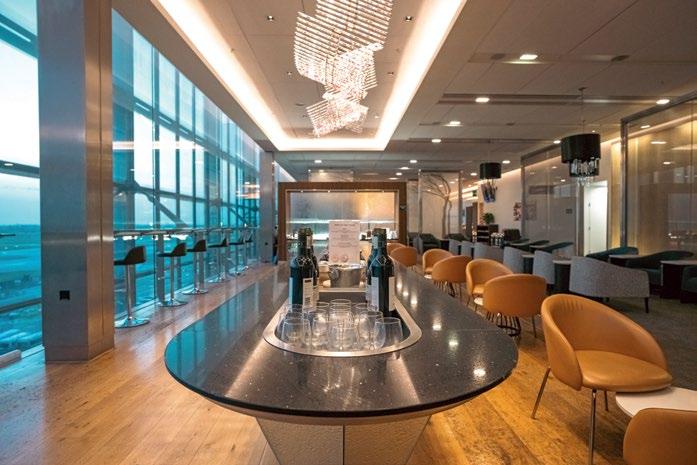
renewed appeal. Bespoke furniture, updated flooring and soft furnishings lend the space a warmer, more elevated aesthetic, while thoughtful zoning ensures choice and comfort. A dedicated quiet zone caters to travellers seeking calm before departure, reinforcing the lounge’s ability to adapt to different travel moods, whether productive, indulgent or restorative.
The social pulse of the Galleries Club Lounge remains unmistakably British Airways. Plant-based menus have been introduced across the airline’s London Heathrow and US lounges, broadening choice for guests while placing sustainability at the heart of the offering. For those seeking something special to sip, British Airways’ mixologists have developed a bespoke cocktail selection that highlights a spirited line-up of British ingredients. An exclusive partnership with Bottega adds a celebratory note to the experience, inviting guests to enjoy a glass or two before taking to the skies.
Beyond Terminal 5, British Airways has extended its lounge refresh across Heathrow. At Terminal 3, the Club Lounge now features a redesigned bar, enhancing the social rhythm of the space. Back at Terminal 5, First Class guests are welcomed into the airline’s First Lounge, home to the exclusive Concorde Bar and dining area, alongside a newly introduced bar curated by British Airways’ Master of Wine, offering everything from celebratory bubbles to refined mocktails.
Seamless access completes the experience. Contactless entry across Heathrow lounges allows eligible passengers to enter with a simple scan of their boarding pass, reinforcing a sense of ease from curb to cabin.
Together, these enhancements position British Airways’ Heathrow lounges as destinations in their own right, spaces where design, dining and a distinctly British sense of hospitality converge with quiet confidence.
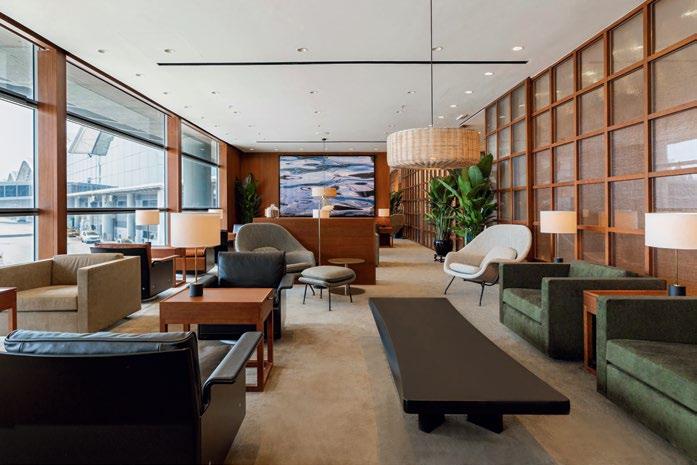
At Hong Kong International Airport, Cathay Pacific’s Business Class lounges are widely regarded as some of the most accomplished ground experiences in aviation. This is my personal favourite, as, having lived in Hongkong for a few years, it used to be the default departure stop, whenever flying out. Spatial design and signature service touches echo the airline’s ‘Move Beyond’ philosophy. With a portfolio of lounges catering to both departing and connecting passengers, each space offers its own nuanced expression of comfort.
Cathay Pacific’s beloved lounge, The Bridge, has reopened at Hong Kong International Airport, marking the first chapter in an ambitious, multi-year lounge enhancement programme at the airline’s home hub and beyond. Perched at a prime crossroads near Gate 35 in Terminal 1, the redesigned space blends new features with familiar signatures to elevate the pre-flight ritual into something far more restorative. Conceived through a distinctly human-centric design lens, The Bridge trades airport sterility for warmth. Every sensory detail, from furniture and lighting
to scent and sound, has been considered to encourage travellers to slow down, settle in and exhale.
The Bridge is divided into the left and right-hand sides, with the left offering Chinese favourites, and the right focused on international culinary fare. On the left-hand side, customers can visit Cathay Pacific’s iconic Noodle Bar serving signature dishes such as wonton and dan dan noodles, and dim sum. The rotating menus are further enriched by new delicacies, from main dishes such as biangbiang mian to braised beef shin with cauliflower, to vibrant salads and desserts.
space for First class customers and Cathay Diamond members to unwind in comfort and privacy while being looked after by the engaging Cathay team
This reopening also precedes renovations of The Wing lounges, with The Deck and The Pier stepping in, as Cathay Pacific prepares to unveil new flagship lounges in Hong Kong, Beijing and New York under its HK$100 billion investment vision.
In addition, The Bridge features The Nook, a brand-new concept for Cathay Pacific’s lounges that complements and extends the culinary offerings of the Noodle Bar, while also expanding the dining seating into this cosy corner. Customers can enjoy a curation of Chinese regional small plates and lighter bites, such as made-to-order, filled bao, crispy scallion pancakes and steaming rice rolls, and a selection of dim sum served from a custom dim sum cart.
The Deck, one of Cathay Pacific’s Business class lounges, is also undergoing upgrades. From 21 May, it will temporarily operate as a First class lounge while The Wing is under renovation, with eligible guests still able to access The Pier, First and The Pier, Business throughout this period.
The right-hand side boasts a dedicated
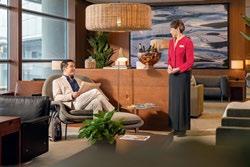
{ THE CLUBHOUSE }
At London Heathrow’s Terminal 3, Virgin Atlantic’s Clubhouse transforms the idea of a pre-flight lounge into something more experiential. This hovers somewhere between a plush exclusive members’ club and an airport retreat. Sociable yet soothing, the space channels Virgin’s signature spirit; fashion-forward, spirited and distinctly people-first.
From the moment you enter, the Clubhouse sets itself apart from conventional lounges. Expansive floorto-ceiling windows flood the interiors with daylight and frame views of the runway, while bold red accents, stylish furnishings and abundant greenery create an atmosphere that feels both refined and easygoing. Carefully delineated zones, from relaxed seating areas and work-friendly corners to convivial social spaces, allow travellers to shape their time according to
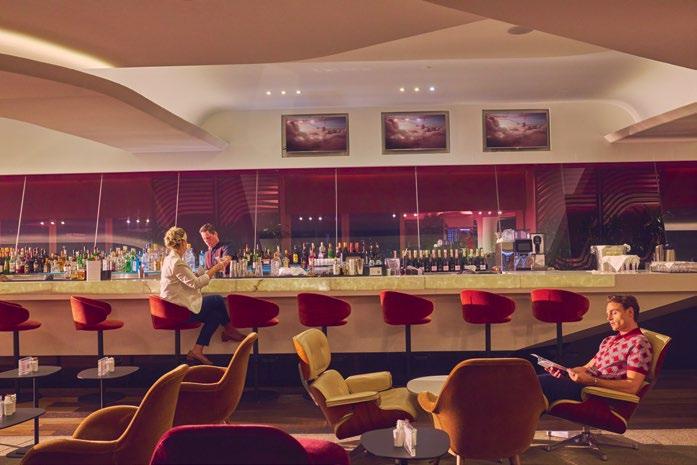
mood, whether that means a quiet drink or a productive work session.
Central to the experience is the lounge’s acclaimed bar and dining programme. Skilled mixologists prepare house favourites such as the famed Virgin Redhead, while the brasserie presents thoughtfully crafted, delectable dishes throughout the day. With table service and the option to order via QR code, dining here feels intentional and indulgent. Much like a favourite dining establishment visit.
Beyond its culinary appeal, the Clubhouse places equal emphasis on wellbeing and interaction. A rooftop terrace offers cinematic views of aircraft movements, relaxed seating areas invite unhurried conversations, and a games zone sits comfortably alongside dedicated quiet areas, catering to both energy and calm.
In essence, the Clubhouse transcends

functionality. It becomes a lively, humancentred environment where design, service and atmosphere combine to make the wait for departure feel like an experience. Very much like the ethos of the airline itself.




WORDS NAINA SARMA

Business travellers are not looking for novelty every time they check in. What they want is reliability, rhythm, and a hotel that understands how a working day actually unfolds. Arrival times shift. Meetings run long. Dinners are often solo. Mornings start early, sometimes after nights that didn’t end on schedule.
This is our edit of hotels that consistently show up for those realities. Location matters, but so does how quickly you can settle in. Design counts, but so does whether a room works just as well at 7am as it does at 11pm. Dining needs range from quick breakfasts to unhurried dinners, and downtime should feel restorative, not performative.
Across India’s key business cities, the hotels in this selection stand out for different reasons. Some offer height and perspective over dense commercial districts, others lean into heritage, while a few take advantage of beachfront or resort-like settings without losing sight of the working traveller’s needs. What they share is an understanding of pace, purpose, and practicality.
These are hotels that make business travel easier to manage and easier to return to. Places that don’t demand attention, but earn trust over repeat stays.































Rising above Lower Parel’s dense grid of offices, residences, and retail, The St. Regis Mumbai occupies a vertical vantage point. Senapati Bapat Marg runs below, High Street Phoenix and Palladium sit next door, and key commercial districts are close enough to keep the day moving without constant recalibration. Inside, the hotel leans into a polished, contemporary expression of the St. Regis lineage. Rooms and suites unfold with floor-to-ceiling windows that frame the city skyline, with their layouts generous enough to accommodate long working hours and unhurried downtime in equal measure. Furnishings are tailored and restrained, creating spaces that feel practical as well as indulgent. Dining spans a wide spectrum. Seven Kitchens anchors the allday rhythm with multiple live cooking stations, while By the Mekong draws attention upward with Southeast Asian menus and elevated views. Sahib Room & Kipling Bar blends Indian


St. Regis Butler Service is available to all guests, providing personalised assistance throughout the stay.
Guests receive priority access to the padel and pickleball courts at Phoenix Palladium’s Racquet Club, with bookings arranged via Huddle or the Experiential Concierge.
The Penthouse at The St. Regis Mumbai offers elevated stays with enhanced service and exclusive access across dining, accommodation and wellness.

flavours with a more formal dining atmosphere, and Koishii brings Japanese-Peruvian influences into the mix, while Sette Mara opens out to skyline views with Middle Eastern plates. Drinks have their own cadence across The St. Regis Bar and Koi Bar. The Drawing Room carries the brand’s afternoon tea ritual, and hosts the St. Regis Evening Ritual, marked by a Champagne sabrage inspired by the legacy of Napoleon Bonaparte and the tradition of Mrs. Astor. The rooftop pool entices guests for early swims and late afternoons, with the skyline acting as a constant reference point. The spa, steam rooms, and fitness and yoga studios see a gentle ebb and flow throughout the day, shaping the quieter hours of the hotel, and providing respite from the pace of the city. The hotel’s meeting spaces occupy a significant vertical spread, from discreet boardrooms to the Astor Ballroom, which regularly hosts large conferences and formal events.






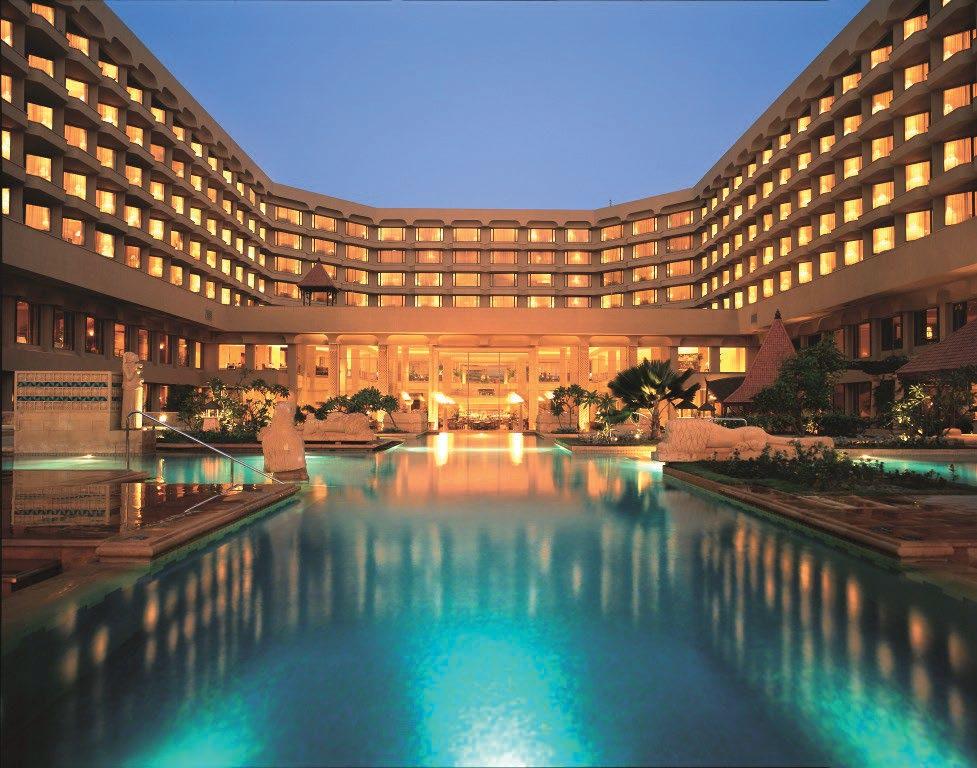
Set along the shoreline of Juhu Beach, JW Marriott Mumbai Juhu meets the city where land and sea converge. The hotel’s address on Juhu Tara Road places the beach directly at its edge, while neighbourhood landmarks and western business districts remain within easy reach. Inside, the mood is relaxed but assured. Rooms and suites are designed for comfort over display, many opening out to sea-facing views, with marble bathrooms, plush furnishings, and layouts that lend themselves to longer stays rather than quick stopovers. Dining moves fluidly through the day. Bombay Baking Company sets an informal tone with coffee and baked goods, while Lotus Café anchors all-day
Executive Lounge access is available to guests staying in select rooms and suites, offering a more private setting for breakfast, refreshments, and evening service.
Direct beach access allows guests to step out onto Juhu Beach without leaving the property, a rarity among large business hotels in Mumbai.
Dedicated wedding planning teams operate on site, coordinating multi-day celebrations across indoor and outdoor venues.
dining and its well-known brunches. Saffron focuses on Indian cuisine in a more formal setting, while evenings draw guests toward Mezzo Mezzo for sunset dining and cocktails and Reflections, the sea-facing lounge that remains one of the hotel’s defining social spaces. Outdoors, multiple pools and landscaped areas open toward the water, reinforcing the hotel’s resort-like character. Wellness is centred around The Spa, complemented by fitness facilities that support daily routines. Meetings, weddings, and large-scale events form a significant part of the property’s life, with multiple event spaces led by the Grand Sangam Ballroom, which regularly hosts conferences, celebrations, and multi-day wedding programmes.
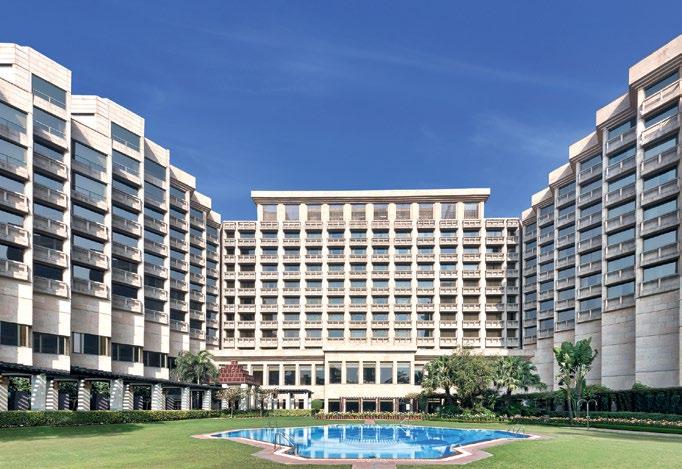
Situated in the commercial hub of Bhikaji Cama Place along Ring Road, Hyatt Regency Delhi has been a landmark in the city’s hospitality scene since the early 1980s, combining a sense of established presence with facilities that support both business and leisure stays. The location keeps the diplomatic enclave, major corporate centres, and markets such as South Extension and Hauz Khas within easy reach. Inside, the hotel’s seven-storey layout and landscaped gardens create a sense of urban calm amid the capital’s energy. Accommodation spans a wide range of rooms and suites equipped with modern amenities and high-speed internet, with many offering panoramic views of the city or the hotel’s greenery. Dining is one of the hotel’s strong suits, with venues such as La Piazza bringing a classic Italian experience with wood-fired ovens, The China Kitchen offering contemporary Chinese cuisine, TK’s Oriental
Regency Club Lounge access is available for eligible guests, offering a quieter setting for breakfast and evening refreshments.
Proximity to public transport includes a short walk to Bhikaji Cama Place Metro Station, connecting easily to wider Delhi transit routes.
The Regency Ballroom can seat up to around 600 guests in theatre-style setups, perfect for large weddings and corporate events.
Grill focusing on pan-Asian dishes, Syrah centring on wine and pairings, and Aangan Reloaded presenting Indian regional flavours in a lively setting. Leisure spaces include an outdoor swimming pool and a children’s pool that invite afternoon laps or relaxation, while Club Olympus Spa, Salon & Fitness features a steam room, sauna, hot tub, chill pool, and treatments for guests seeking wellness breaks. The landscaped garden and 24-hour fitness centre with yoga options provide alternative ways to unwind without stepping far from the hotel. Complementing its leisure offerings, Hyatt Regency Delhi dedicates nearly 3,000 square metres of flexible event space to meetings and celebrations, with daylight-filled venues and the Regency Ballroom among the options regularly used for conferences, weddings, and social functions.
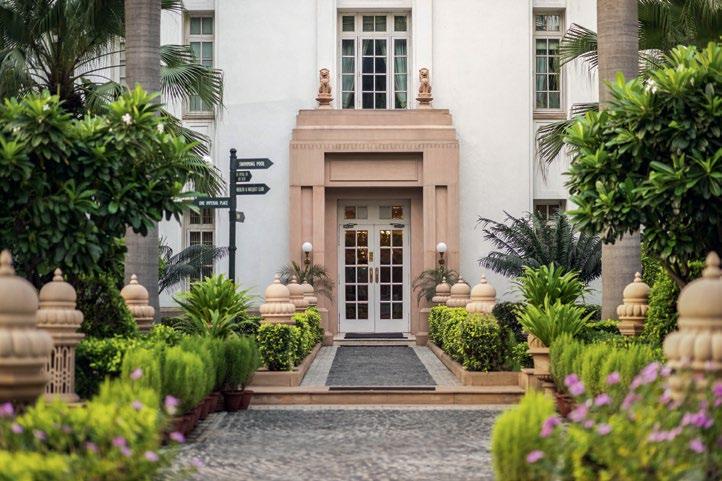
In the heart of India’s capital, where history meets modernity, stands a symbol of timeless elegance-The Imperial New Delhi. Revered for its unparalleled blend of colonial charm, contemporary luxury, and cultural prestige, this iconic hotel is more than a destination; it’s a statement of sophistication. Blending Victorian, Art Deco, and Lutyens’ architectural influences, the Grand Dame stands against a backdrop of sprawling landscaped gardens in an eight-acre estate and houses the world’s largest private art collection. Guests are welcomed into interiors where marble colonnades, hand-knotted Persian carpets, and original artworks evoke a sense of grandeur, while the city’s cultural, political, and entertainment districts, including India Gate, Parliament and shopping arcades, lie within easy reach. Premium accommodations range from elegant Imperial rooms to spacious Heritage and Signature suites- Art Deco, Luxury and the iconic Imperial Suite, each outfitted with refined sophistication, marble bathrooms, and views over the hotel’s gardens or
The hotel’s extensive Indo-European art collection, spanning more than 5,500 original pieces from the 17th to 18th centuries, is featured prominently throughout public spaces and corridors.
Day trips to the Taj Mahal, custom city tours of Delhi’s monuments and markets, and ‘off the beaten track’ experiences are available through the hotel’s curated itinerary offerings.
Guests can travel in style with The Imperial Fleet, a dedicated luxury car service for intercity journeys and bespoke excursions
surrounding cityscape. Dining comprises some of Delhi’s most celebrated culinary venues: classic Indo- European flavours at 1911 Restaurant, authentic Ethnic Asian at The Spice Route, and Timeless Italian fare at San Gimignano, supported by vibrant bars – 1911 Bar, The Hardinge Bar and the legendary Patiala Peg Bar and Afternoon tea at The Atrium. Leisure spaces include a striking mosaic tiled outdoor pool with signature cocktails and snacks, as well as capital’s most luxurious spa- The Imperial spa with steam, sauna, and private wellness spaces that draw on both international and therapies rooted in tradition, including Ayurveda. Meeting and event facilities in the hotel span intimate boardrooms and meeting spaces, a magnificent lawn and a garden to The Royal ballroom, regularly hosting conferences, social events, gala dinners, and receptions that benefit from the hotel’s central setting and storied atmosphere. It’s a rare opportunity for India’s elite to own a piece of history, re-imagined for today’s discerning connoisseur. www.theimperialindia.com



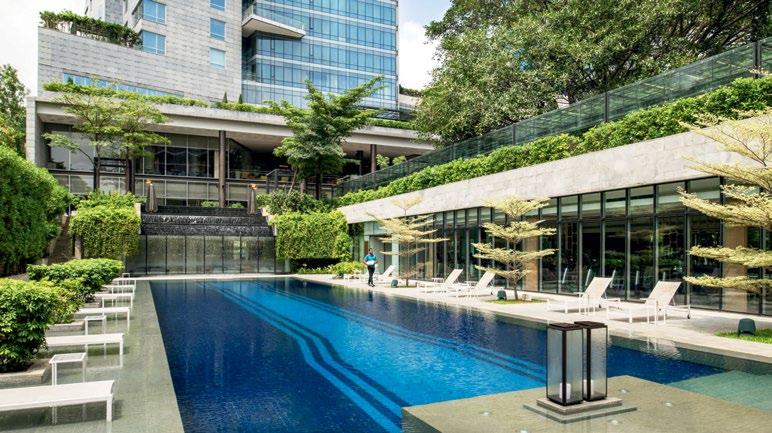
Perched within the mixed-use Embassy ONE development on Bellary Road, Four Seasons Hotel Bengaluru at Embassy ONE blends refined urban living with easy access to the city’s hightech and commercial hubs. The hotel’s address places the Central Business District, UB City, Manyata Tech Park, and prominent exhibition venues within short driving distance, while lush indoor-outdoor spaces woven with greenery create a calm counterpoint to the city’s energy. Inside, accommodations range from spacious deluxe rooms and club rooms with garden or pool views to expansive corner and suite categories designed for work, relaxation, and extended stays, each appointed with contemporary furnishings, intuitive technology, and thoughtful layouts. Dining unfolds across a range of distinct venues. CUR8 presents an extensive all-day buffet with global and local dishes, Far & East elevates modern Pan-Asian
Kids for all seasons is offered at the hotel, with dedicated activities and amenities designed for younger guests staying with families.
Bespoke city experiences can be arranged through the concierge, including curated cultural outings and personalised itineraries around Bengaluru.
Four Seasons Chat allows guests to connect directly with the hotel team via the Four Seasons App for requests, reservations, and local recommendations before and during the stay.
cuisine with panoramic city views, The Lobby Lounge & Terrace offers light meals, coffees, and afternoon tea, while Copitas and The Collection bring vibrant cocktails and bar culture into focus. Outdoors, multiple pools and landscaped areas draw guests toward both leisure and gatherings, and Infuse Spa delivers curated treatments, massages, and holistic wellness experiences. Fitness facilities, steam rooms, and outdoor relaxation spaces support daily routines, from morning workouts to unwinding moments. Meetings and events occupy a significant footprint too: the hotel offers several flexible indoor and outdoor venues, including six function rooms with modern support spaces that regularly host corporate meetings, galas, and celebrations large and small. Across stays, the hotel’s blend of connectivity, atmosphere, and meals creates a setting where business, leisure, and social rhythms intersect naturally.
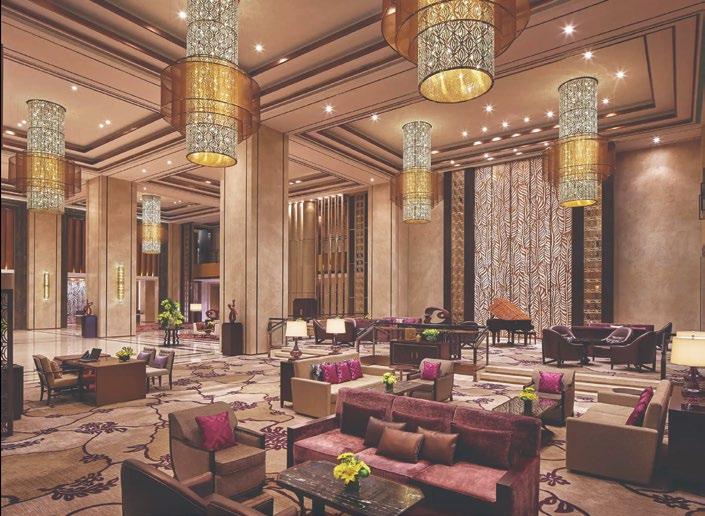
Situated on Palace Road in Bengaluru’s central Vasanth Nagar district, Shangri-La Bengaluru places guests within easy reach of the city’s cultural landmarks, parks, and commercial hubs while presenting a calm, refined environment once inside. The hotel’s 397 spacious rooms and suites are designed with contemporary comfort and thoughtful amenities, many offering city views that unfold into the horizon. Dining at Shangri-La Bengaluru is varied and well-established, with venues covering international formats and speciality cuisines. b Café presents all-day dining with live cooking stations and international selections, Caprese on level 18 serves Italian classics paired with panoramic views, Ssaffron
Shangri-La Circle membership benefits apply at this property, letting guests earn and redeem points and access tier-based privileges across the global Shangri-La network.
Airport transfers can be arranged through the hotel’s private car or limousine services from Kempegowda International Airport.
Horizon Club Lounge and rooftop spaces provide elevated city views and dedicated settings for refreshments and private moments beyond standard guest areas.
focuses on elevated Indian cuisine crafted from marketfresh produce, and Shang Palace offers authentic Chinese fare. The Lobby Lounge and other bars cater to casual drinks and light bites throughout the day, completing a culinary landscape that supports both business and leisure stays. Outdoors, a temperature-controlled pool and landscaped terrace invite relaxation between engagements, while CHI, The Spa, extends a range of wellness and treatments alongside steam, sauna, and dedicated treatment suites. Fitness facilities accommodate daily routines, and multiple event spaces provide flexible settings for meetings, social functions, and celebrations. Across a stay, the hotel’s position, amenities, and food experiences combine to offer both convenience and depth in Bengaluru’s vibrant cityscape.


Horology is not simply the science of measuring time. It is the art of giving meaning to the invisible
LLong before time was miniaturised, regulated, and ultimately domesticated on the wrist, it existed as an architectural, philosophical, and intellectual presence. Time once occupied rooms. It demanded space, silence, and reverence. It lived in observatories where astronomers charted the heavens, in palaces where power was choreographed by ceremony, in counting houses where commerce obeyed the bell, and in salons where science, art, and conversation converged. These early clocks were not indulgences. They were instruments of civilisation. They lent meaning to Being. To possess accurate time was to possess authority. Navigation determined empires. Trade depended on synchronisation. Faith itself was structured around hours and ritual bells. The clock was not an accessory. It was an instrument of order imposed upon a chaotic world. Every advancement in horology marked a moment where humanity asserted
understanding over nature, both incrementally and painstakingly, often at great cost of intellect and patience. That is why the best horology, even now, carries an almost moral seriousness. It is luxury, yes, but luxury born from discipline rather than display. It is also why the clocks and watches market has matured into something far more compelling than a mere category of consumption. In 2025, auction results confirmed what seasoned collectors had sensed for several decades: the centre of gravity is shifting from speculation toward scholarship. I touch upon five Maisons today. Not through technical expertise but as a lover of horology, sharing my passion with like-minded people who may see the beauty I do. These are five maisons of many whose influenced horology - different as they may be - both foundationally and with endurance: Breguet, Jaeger-LeCoultre, Patek Philippe, Vacheron Constantin, and Cartier. Each approached time from a distinct philosophical position. Each pursued innovation not as novelty, but as necessity.
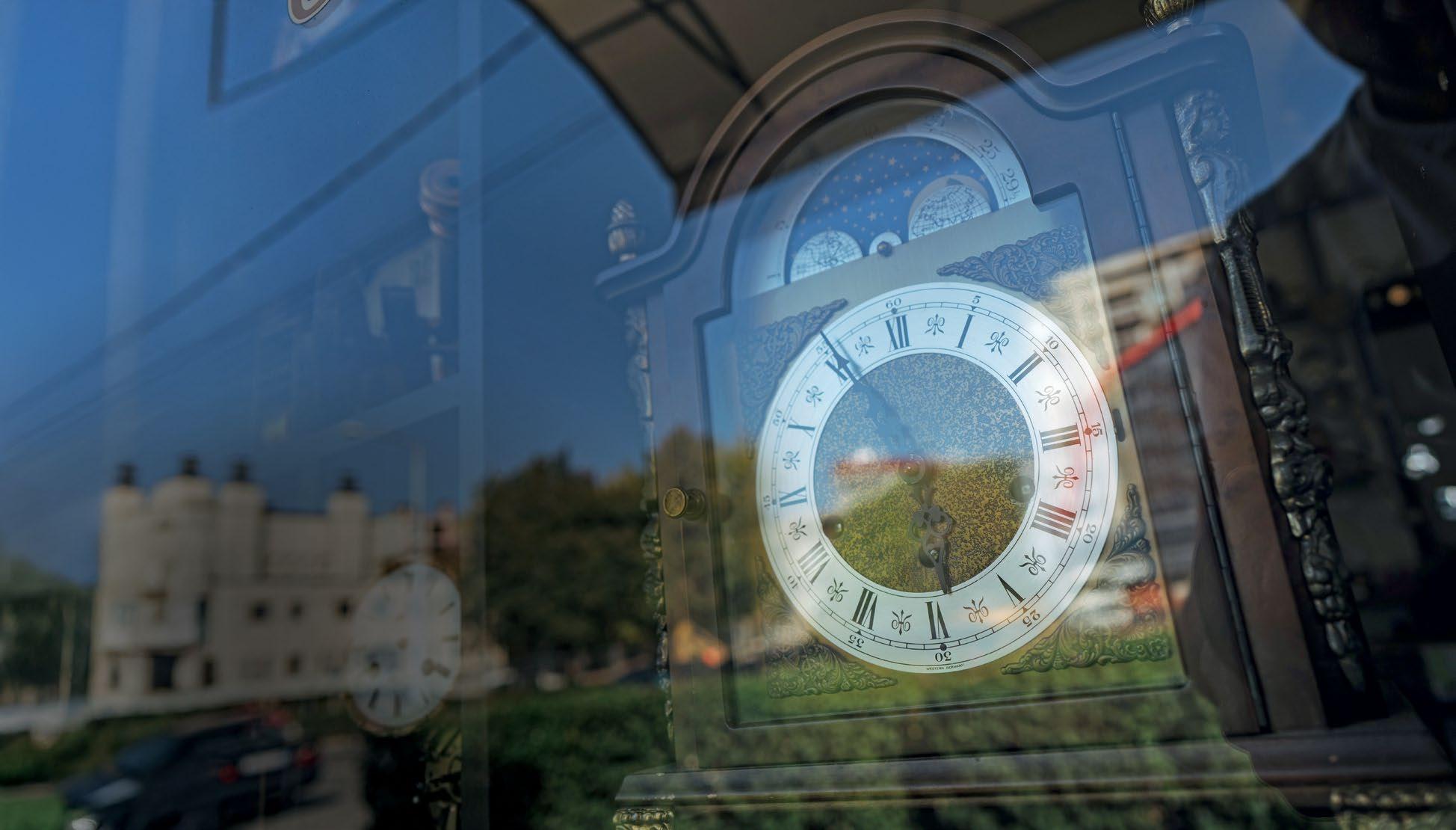
IInnovation in this discipline is rarely theatrical. It unfolds over the years quietly, often invisibly. The most consequential breakthroughs are frequently misunderstood at their own time, only later recognised as inevitable.
Abraham-Louis Breguet did not simply refine watchmaking; he reorganised it. His inventions, most famously the tourbillon, were not conceived as an ornament, but as intellectual responses to gravity, error, and instability. Today, as the house marks its 250th anniversary, Breguet’s legacy feels less historical than architectural: an enduring framework upon which modern chronometry still rests. In parallel, Vacheron Constantin, celebrating 270 years of uninterrupted creation, stands as horology’s longest continuous conversation with excellence. Its longevity is not a matter of survival, but of sustained relevance. That relevance was made tangible through Le Quest du Temps, the maison’s landmark exhibition, which did not merely showcase objects but articulated a philosophy: time as a pursuit, not a possession.
Jaeger-LeCoultre occupies a different but equally formidable position. Known, with quiet authority, as The ‘watch-maker of watch-makers’, the manufacturer has long been the unseen engine behind horology’s greatest achievements. Its
capacity to conceive, calculate, and execute mechanisms for itself and others has earned it a reputation not built on spectacle, but on trust. You then have Patek Philippe, the company that shows that innovation need not announce itself. Its exquisite bird-singing boxes, which were not only a mastery in mechanical technology, but with the addition of clocks, added an air of exquisite horological craftsmanship. Further, with its early mastery of acoustic and astronomical complications. Patek Philippe has demonstrated that technological ambition is most powerful when expressed with restraint. Its clocks, like its watches, are essays in continuity, but for generations, modern ideas written in classical grammar.
Then there is Cartier, the prince of jewellers, whose contribution to horology is inseparable from its mastery of illusion. Cartier did not ask how time might be measured more precisely; it asked how time might be made more enchanting. Cartier elevated the art of horology into the realm
of visual poetry. Where others pursued mastery through exposure, Cartier pursued it through concealment, proving that in true luxury, discretion can be the most radical innovation of all. Together, they shaped the intellectual architecture of modern horology, and in each case, it was not merely the “what” that mattered, but the “why”, the temperament behind the technology.
This brings us, inevitably, to the central idea: to understand modern watchmaking without understanding clocks is to misunderstand horology entirely. Watches are not the origin of horological thought; they are its distillation. Before complications could be miniaturised, they had to be perfected at scale. Before energy efficiency became fashionable, it was existential. Gravity, temperature variation, friction, and power reserve were not abstract problems; they were daily adversaries. Clocks were the laboratories where these challenges were confronted, debated, and ultimately solved.
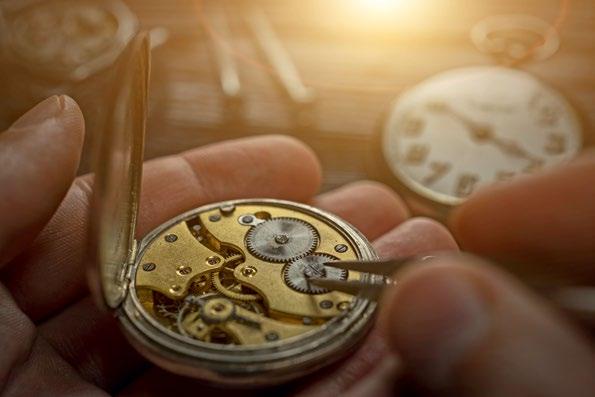






The rst Breguet tourbillon, and the rst tourbillon ever made, is widely regarded as Breguet No. 169, a pocket watch - 1801 King George III
Abraham-Louis Breguet conceived the Sympathique clock; the audacity lay not in decoration, but in organisation. This was a clock designed to govern another timekeeper - a watch. Among the approximately 35 Sympathique clocks originally made by Breguet, only about a dozen complete examples are known to survive today.
The Sympathique clock by Breguet is an object so intellectually complete that it feels less like a product and more like a thesis. Its innovation lies not in complication for complication’s sake, but in hierarchy. In an era when portable timekeeping was inherently compromised by motion, shocks, and daily handling, Breguet did something quietly radical: he accepted that the watch, left to its own devices, could never be as accurate as a stationary regulator. Rather than fight this limitation, he designed around it.
So let me break it down for you and let your imagination drive your thoughts. Simply, the ‘Sympathique’ is a clock designed to preside over a watch. The clock became the master. The watch became the student. Precision, in this system, was not individualit was relational.
Only after appreciating this conceptual leap does one arrive at the mechanics. Once the watch is placed in its cradle, the regulator or clock automatically winds it, it then corrects the time and sets it, and if that was not enough, it then regulates the watch’s movement. In short, it corrects accumulated errors, restoring the watch to an ideal reference.
So, how was this energy transfer achieved in 1795? How does it work by simply placing it in a cradle? Let your imagination flutter on that question for a minute.
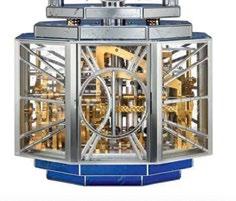
La Quête du Temps astronomical clock Vacheron Constantin 2025 270thanniversary celebrations - 23 complications from perpetual calendars and retrograde indicators to sidereal time, sunrise/sunset tracking, and precision moon phases.
Mechanically, the brilliance of the Breguet Sympathique lies in how multiple operations are sequenced automatically through pure mechanical logic.
When the watch is placed into its cradle, its case makes contact with a set of precisely positioned levers inside the clock. These levers confirm that the watch is correctly positioned. Once done, the clock’s mechanism releases a controlled impulse from the clock to the watch. This power is carefully controlled so that it is done without risk of over-winding. Simultaneously, a separate part (known as a train) engages the hand-setting mechanism. Through a differential system, the clock compares its own time, governed by a highly stable regulator, with the position of the watch’s hands, which are then





JLC Calibre 920 for Audemars Piguet 1967, at the time, the thinnest fullrotor automatic movement ever created, almost mythical status
advanced or retarded until they correspond perfectly to that of the clock. Importantly, this correction is done gradually and symmetrically, avoiding shock.
Once winding and setting are complete, the system automatically disengages. Springs return the levers to their neutral positions, and the watch is mechanically isolated again. Now fully wound, precisely set, and synchronised. The owner performs no action beyond placing and removing the watch. Magnificence in Motion.
If Breguet approached time as a philosopher-engineer, Cartier approached it as a magician. Rooted in high jewellery, visual drama, and Parisian theatre, Cartier asked a different question: not how time could be improved, but how it could be made wondrous. The Pendule Mystérieuse or Mystery Clock stands as the purest expression of this ethereal vision. Floating








hands, apparently unconnected to any mechanism, challenge centuries of horological expectation. Their luxury is not only in materials, but in sensation. The sensation of seeing the impossible behave with perfect precision.
The clock was perfected by Maurice Couët, a Master Clockmaker who created the first inspired examples in the early 1910s, and later collaborated with Cartier to design the movement. But let’s take a step backwhat movement? The clocks are beautifully ornate with magnificent materials and jewels. Bordered Clear Rock crystal dials where the hands seemingly floated, on a pedestal. Pass your hand either in front or to the rear of the dial and see it pass ‘crystal clear’. You might think it involves magnetism, or maybe there’s a minuscule movement in the centre where the hands meet - but your guess would be in vain. These clocks do not invite explanation; they invite disbelief.
So then, how does this clock, which transported you into a mysterious world, work?
The beauty of Cartier’s mystery is that the engineering preserves the illusion. The hands are typically mounted on transparent discs - generally rock crystal. The movement, generally in the base or top, drives those discs from the edges of the dial, where the mechanism can be hidden within the structure. In essence, each hand has a disk, and each disk moves in totality. The viewer sees only the effect, not the cause. In many areas of collecting, transparency is treated as a virtue; in Cartier’s world, concealment becomes a higher sophistication. The miracle is not that it works, but that it works while refusing to show you how. Cartier understood that concealment, when intentional, can be more luxurious than revelation. The mystery clock does not deny engineering; it protects it,
allowing beauty to speak first. This idea that mechanics may serve poetry rather than dominate it has echoed through Cartier’s horological style ever since.
If Cartier’s mystery is about concealment, then the Atmos clock by Jaeger-LeCoultre is about humility before nature. Its innovation is almost philosophical in its restraint. The Atmos clock remains one of the most intellectually elegant responses ever devised to the problem of energy. The Atmos consumes so little energy that it approaches the theoretical minimum for mechanical timekeeping. The primary ways for a clock to work are, firstly, to wind it with a key. This in turn winds gears or springs, which provide energy to a pendulum or other mechanism, allowing it to run. The second - affix a battery or plug it into electricity. The battery or electricity powers the movement, which makes it work, and the third a weight which when moved intentionally. wind the gears, springs, and power the timepiece.
With the Atmos, neither do you wind it. Neither does it have a battery, nor does any weight-driven system power it. The idea feels almost improper in its elegance: a clock that seems to run without being wound, without being plugged in, without demanding attention. It is the opposite of conspicuous. It is, in the best sense, inevitable. So how then does it receive energy?
How the Atmos is perpetual, or at least perpetually renewed, belongs to that rare category of inventions that feel like they
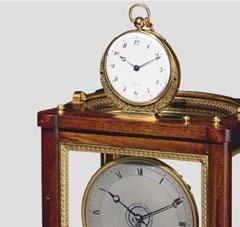
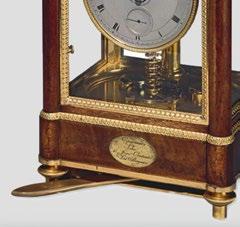
in August
should not exist because they are too elegant. The Atmos is powered by minute environmental changes. At the back of the movement lies a hermetically sealed capsule filled with a gas mixture; small fluctuations in temperature and pressure cause this sealed capsule to expand and contract. When it does, it provides tiny amounts of energy that, through extraordinary efficiency, are sufficient to keep the mechanism alive. It is literally the atmosphere that keeps the Atmos moving. It is a clockmaker’s meditation on economy. This is not perpetual motion in defiance of physics, but perpetual renewal in harmony with it. The Atmos represents a moment when horology stopped trying to dominate nature and began listening to it.
Next comes Patek Philippe, which warrants two mentions. Its most credible technology lies in its astronomical regulators and experimental clockmaking tradition, particularly its solar-powered desk clocks and astronomical clocks, which approach time not as spectacle,
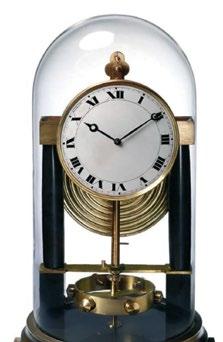





illusion, or energy minimalism, but as scientific continuity and absolute reliability. Continuity: time engineered to remain correct, relevant, and dignified across generations.
The former is perhaps the least discussed and yet among the most intellectually telling expressions of Patek Philippe’s philosophy. The innovation here is not solar power itself, but the way it is integrated. Patek

Philippe did not present solar technology as futurism. It did not disrupt form or proportion. Instead, it absorbed modern energy harvesting into classical horology with such discretion that one might miss it entirely. The clock remains traditional in appearance, dignified and restrained, while quietly drawing power from light.
Patek Philippe, ever the custodian of continuity, approached innovation with characteristic discretion. The result was not disruption but enhancement - a modern source of energy behaving with old-world restraint, as if the future had been taught etiquette. Secondly, Patek Philippe’s Star Caliber 2000 desk clock (which looks like a pocket watch) does not merely tell time. It places time in its proper setting. It allows the owner to witness the quiet co-existence of human order and celestial rhythm, where days, seasons, and years unfold alongside the turning of the stars, the breathing of the sun, and the subtle irregularities of nature itself. In its presence, time ceases to feel mechanical and instead becomes contemplative: something observed rather than consumed, something understood rather than hurried. The Star Caliber 2000 transforms time from a sequence of moments into a living continuum, inviting its observer to step back, look upward, and recognise that every hour belongs not just to a schedule, but to the universe.
How Patek Philippe uses solar energy in clockmaking sits at the intersection



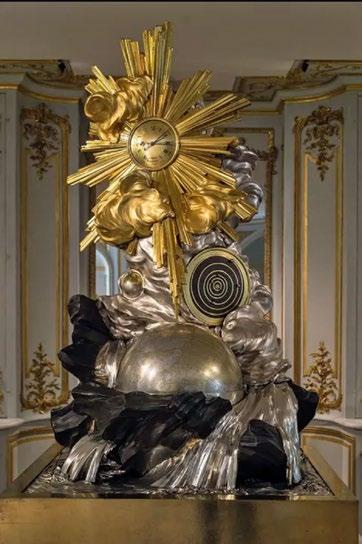
Finally, there is the Création du Monde (Creation of the World) by Vacheron Constantin, perhaps the most intellectually ambitious of all. Its innovation lies in its scope of imagination. While most clocks are content to measure human time, the clock measures cosmic time. Lunar phases, planetary movements, sidereal hours, and celestial cycles are not decorative complications. They are mechanical translations of astronomical genius.
The clock stands apart as a meditation on time’s origins rather than its measurement. Inspired by the genesis of the universe, it transforms the passage of hours into a symbolic narrative where celestial bodies, cosmic order, and artistic craftsmanship converge into a single, contemplative object. More than a clock, it is a cosmological tableau: time unfolding as creation itself, rendered through precious materials and meticulous handcraft, inviting the observer to consider not what time is, but where it comes from. The Vacheron Constantin Création du Monde clock is conceived to express the birth and order of the universe through horology. Using rotating celestial elements to evoke the emergence of order from chaos, it tells the time while simultaneously presenting a poetic interpretation of the cosmos.
The mechanics are correspondingly formidable. Vacheron Constantin’s astronomical calculations are where
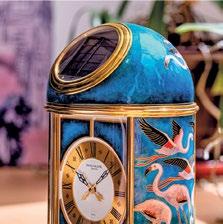

of modernity and tradition. Mechanically, photovoltaic cells convert light into energy that sustains the movement, reducing reliance on manual intervention. This allows the clock to draw power from its environment in a manner that is contemporary, yet conceptually harmonious with horology’s oldest ideals: autonomy, reliability, and longevity.
The important point, aesthetically, is that the technology does not demand attention. It serves. It remains, in the best sense, invisible because the object’s identity is still anchored in classical proportion and finishing.
Conceptually, this represents continuity rather than rupture. It is innovation that behaves politely. It reflects Patek Philippe’s long-standing belief that the future of horology should look as if it belongs to the past.




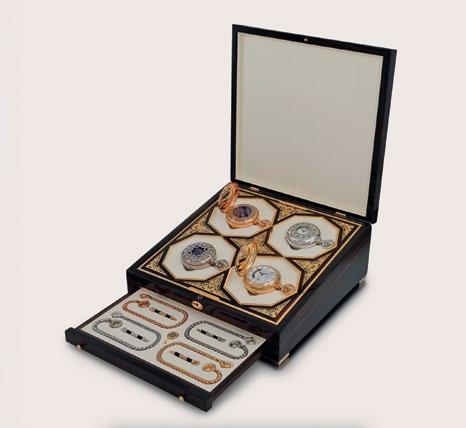
four-piece set of Patek Philippe Star Caliber 2000 pocket watches for auction in Abu Dhabi in December is estimated between USD10-20 million
horology begins to resemble applied cosmology. Planetary motion is irregular. Lunar cycles are imperfect. Astronomical time does not repeat neatly. To express these realities mechanically requires not only precision but prediction. Gears, cams, and ratios must be calculated to reflect celestial behaviour over decades, sometimes centuries. The result is a clock that does not merely tell the time; it situates the observer within the universe.
Rather than prioritising calendars or astronomical data, it situates the passing of hours within a broader, almost metaphysical narrative - turning plates to show planetary positions around the sun, moon phases, and constellation maps on a globe which rotates. It showcases time as an echo of the universe’s genesis.
The clock’s indications translate celestial cycles. Some regular, some irregular, these are put into mechanical motion. It is not merely a question of adding complexity; it is the challenge of integrating multiple truths of the sky into one coherent, continuously running statement. The moon does not behave like a metronome. Planetary motion is not as simple as a circle drawn by a child.
To make these realities legible through wheels, cams, and carefully coordinated
ratios is to turn mathematics into sculpture. The achievement is not only that it displays such information, but that it does so with refinement, as if the heavens were naturally meant to be read in gilt and enamel.
These five clocks, Sympathique, Mystery, Atmos, Solar, and Astronomical, form a constellation of ideas. Each addresses time from a different philosophical angle: correction, illusion, harmony, continuity, and cosmology. Together, they establish the intellectual groundwork upon which modern watchmaking was built.
Only after understanding these clocks does one fully appreciate the watches that followed.
What matters, however, is that these clock innovations did not remain confined to the drawing rooms and grand interiors where they were first admired. Their philosophies migrated beautifully, and almost inevitably, into watches. Horology has always been, at its highest level, a story of compression: compressing ideas, mechanisms, and meaning into smaller and smaller theatres.
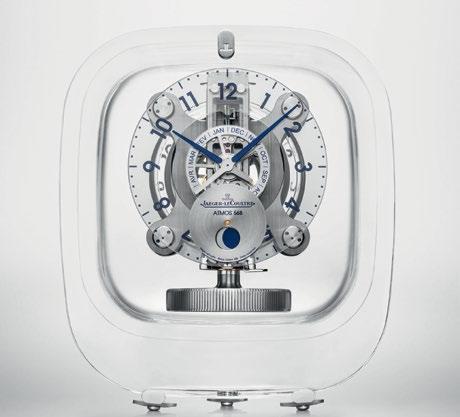
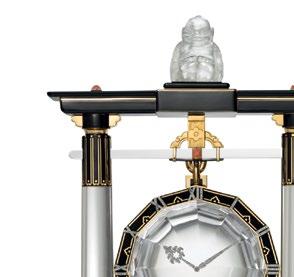
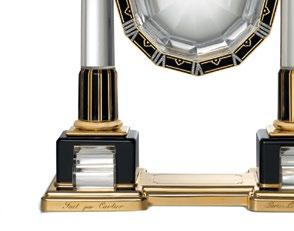

This is precisely why these objects and their descendants - pocket watches and those on the wrist, have become increasingly compelling as assets of passion. The market does not reward mere shininess forever. It rewards meaning. It rewards objects that, when the room becomes quieter and the collector becomes older, still feel worth owning. The 2025 auction season offered proof of this: from multi-tens-of-millions watch totals and record-setting Geneva weekends to the clock results that made experts pause and smile, as if reminded that horology’s most profound magic often occurs on a scale large enough for an entire room to witness.
The auction season this year showed us these matters. The Breguet Sympathique No. 1 by FP Journe (1991) sold at Auction for USD 6.6 Million in May, a 1925 Cartier Mystery Portico Clock sold at USD 4.2 Million in November, and a rare, complete four-piece set of Patek Philippe Star Caliber 2000 pocket watches for auction in Abu Dhabi in December was estimated between USD10-20 million. A rare Vacheron
Constantin Ref. 6448 “Unique Piece” sold for CHF 6.98 Million and a Jaeger-LeCoultre Atmos 568 by Marc Newson Atmos sold for close to HKD 1,75 Million.
For the modern collector, especially one accustomed to thinking in portfolios rather than purchases, there is an inevitable question behind this resurgence: what, reasonably, should one aim for in appreciation when acquiring clocks and pocket watches? The honest answer is that horology is not just an asset to be traded. It pays dividends in pleasure, knowledge, and status long before it pays in currency. But the market does offer reference points. Knight Frank’s Luxury Investment Index reporting has shown horological





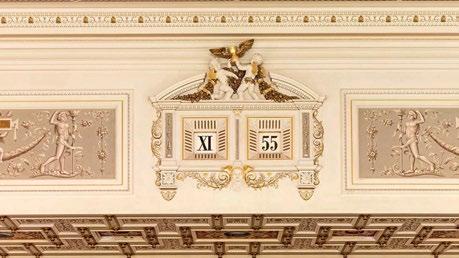
instruments rising +52.7% over five years and +125.1% over ten years (to Q4 2024), while posting a modest +1.7% 12-month change. It is an illustration of both long-term strength and short-term realism.
Talking about the evolution of great timepieces would not be complete without more than a mention of A Lange & Sohne. When Ferdinand Adolph Lange, inspired by the Five-Minute Clock in Dresden’s Semper Opera House, put the design onto the dial of his watches - little did he know he would transform watch design forever.
Time is, after all, a construct. Yet, it is the construct through which we experience life itself. We measure ambition, loss, success, and memory by its passage. We do not remember days; we remember the way time felt inside them. Perhaps that is why clocks and watches, at their highest level, have never been simply about telling the hour. They have been about dignifying it. When craftsmanship reached its zenith, makers like McCabe produced clocks of such refinement that they transcended utility and entered the realm of art. When empires needed navigation, John Harrison answered with the marine chronometer, giving the world the confidence to cross oceans with accuracy rather than hope. When society demanded mobility, Drocourt, Leroy, and Jacot perfected carriage clocks, time made portable without losing dignity, without losing grace. When modern life
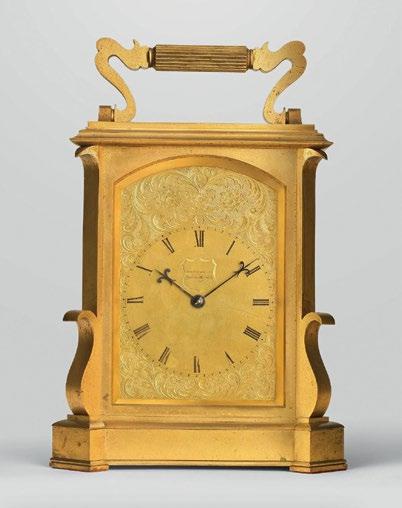



demanded intimacy, Breguet brought time to the wrist, proving that the grand ideas of horology could become personal companions rather than distant monuments and standing quietly behind this entire narrative is Frodsham, a near-mythical figure whose devotion to precision shaped chronometry with uncompromising discipline, as if accuracy itself were a moral obligation.
To collect the great clocks of history is neither to simply own beautiful objects, nor even only assemble a portfolio of appreciating assets. It is to participate in humanity’s longest and most intimate dialogue with time, with nature, and with the cosmos. It is to live with objects that ask more of you than admiration: they ask attention, understanding, and a willingness to be humbled. Collecting these is not just about owning a timepiece; it’s about owning a piece of time itself.


How the modern business traveller is quietly rebuilding the car into a place that works




There is a peculiar moment that most business travellers recognise, even if they rarely articulate it. It happens somewhere between the second phone call of the morning and the first meeting of the day. The car is barely moving. The outside world feels loud and disordered. Inside, time stretches, and it becomes clear that this space, however temporary it once seemed, is where much of the day will actually unfold.
For years, professional mobility was treated as something to be endured. Commutes were dead time. Traffic was a nuisance to be tolerated before real work began. That assumption no longer holds. In India’s largest cities, where movement is slow and schedules are fluid, the car has become an extension of professional life. Work does not pause when the vehicle starts. It simply relocates.
This shift has changed how discerning private vehicle owners think about what belongs inside their cars. Accessories are no longer chosen because they look impressive or promise novelty. They are selected because
they solve problems that arise repeatedly, sometimes daily. The emphasis has moved from enhancement to enablement.
What is interesting is that this change did not happen all at once. It happened quietly. One device at a time. One inconvenience removed, then another and before long, the car stopped feeling like a place one passed through and began to feel like a place one occupied.
The accessories that matter now are not extravagant. They are thoughtful. They anticipate needs rather than react to them. They reflect an understanding that time spent on the road is not incidental to professional life, but integral to it.
The following five products illustrate the transformation in progress. Each addresses a specific tension faced by India’s business traveller. None of them is essential in isolation. Together, however, they reveal how the private car is being reshaped into something far more deliberate than it used to be.


There is a particular unease that comes with leaving a car unattended. It is rarely dramatic. More often, it is a low-level uncertainty that sits at the back of the mind. Was the parking area secure? Did someone brush past the bumper? Did anything happen while the vehicle was out of sight. The BlackVue addresses that unease not by promising control, but by extending awareness beyond the act of driving itself.
At a technical level, the system records in dual channels. The front camera captures footage in true 4K Ultra High Definition, while the rear camera records in Full HD. The resulting video is sharp enough to be useful rather than merely illustrative. Road markings, traffic behaviour, and vehicle movements are recorded with clarity that removes guesswork.
Yet this alone does not explain why the system has developed such a following among premium car owners. The defining feature is its integrated LTE connectivity. With a dedicated SIM card, the camera remains connected to the internet independently of the driver’s phone. This seemingly small distinction fundamentally changes how the device behaves.
Footage can be accessed remotely. Notifications are delivered instantly if the vehicle detects motion or impact. Live video feeds can be viewed from anywhere. The car, in effect, continues to communicate even when the owner is elsewhere.
I recall speaking to a senior consultant who travels weekly between cities. He described checking his phone during a meeting break, not to respond to messages, but to confirm that his car had remained undisturbed in a hotel basement. The act took seconds. The reassurance lasted the rest of the day. He admitted that before installing the system, he would occasionally leave meetings early to move the car. That habit has since disappeared.
The design of the camera reflects a certain restraint. It is compact, cylindrical, and visually unobtrusive. It does not compete for attention inside the cabin. This matters. Products that constantly remind users of their presence tend to fatigue them over time.
There is a quiet confidence to a system that works continuously without requiring validation. It does not demand interaction. It does not interrupt. It simply observes, and in a driving environment where unpredictability is the norm, that steady presence feels reassuring rather than invasive.











Vehicle protection is one of those things most owners agree is important, and then postpone indefinitely. The reasons are familiar. Traditional car covers are awkward to handle. They take time to deploy. They attract attention in crowded areas. Eventually, convenience wins, and the cover stays folded in the boot.
The AutoBot Smart Automatic Car Cover succeeds largely because it accepts this behavioural reality rather than fighting it. At the press of a button, the cover extends and retracts automatically. The process takes seconds. There is no bending, tugging, or adjusting. It is difficult to overstate how much this simplicity changes usage patterns. Protection that requires effort tends to be sporadic. Protection that requires almost none becomes routine.
The cover shields the vehicle from the sun, rain, dust, and environmental pollutants. Over time, this reduces paint degradation and helps maintain lower cabin temperatures. For business travellers who return to their cars after long meetings, the difference is immediate and physical.
There is also an emotional aspect that is easy to dismiss but hard to ignore. Walking back to a car that feels cared for, rather than weather-beaten, subtly resets one’s state of mind. It introduces a sense of order at the end of a demanding day.
The system’s installation is discreet, and when not in use, it blends into the vehicle without altering its appearance. This is important. Luxury today is as much about what is hidden as what is visible. It is tempting to describe the automatic car cover as a convenience feature. In truth, it is more accurate to see it as a behaviour enabler. It removes the small barriers that prevent people from doing what they already know they should.









Air quality is an issue most urban professionals think about abstractly. It appears in news headlines, policy debates, and health advisories. What is less often acknowledged is how personal it becomes when one spends several hours a day inside a confined space.
The Philips GoPure 5212 is designed for precisely that context. It focuses not on the city as a whole, but on the immediate environment of the vehicle cabin.
Using advanced filtration technology, the system removes fine particulate matter, allergens, and harmful gases from the air circulating inside the car. PM2.5 particles, which are particularly prevalent in congested traffic, are filtered continuously. The impact is subtle rather than dramatic. There is no sudden sense of freshness. Instead, there is a gradual absence of irritation. Fewer headaches. Less fatigue. A sense that the air inside the car feels calmer, for lack of a better word.
I once spent an afternoon stuck in traffic after a long flight, documents open on my lap, calls scheduled back-to-back. The purifier had been running quietly for hours. Only when I stepped out into the street did I realise how much tension I had not been carrying. It is an unscientific observation, perhaps, but a memorable one.
The system operates automatically and quietly. It does not demand adjustment or attention. This is crucial. Tools that require frequent input often end up unused.
For business travellers, clean air is not about indulgence. It is about maintaining clarity during long stretches of concentration. In that sense, an in-car air purifier is less a wellness accessory than a productivity tool.

















Not all essential accessories are glamorous. Some exist purely to prevent disruption. The RoadPro Portable Power Inverter falls firmly into this category. By converting the vehicle’s power supply into standard AC output, the inverter allows laptops and other equipment to be charged directly from the car. This capability becomes indispensable during long commutes, intercity travel, or days spent moving between meetings without predictable access to power outlets.
There is little romance in this function, and perhaps that is its strength. The inverter does not promise transformation. It promises continuity. Work can continue. Batteries do not die at inconvenient moments. Schedules remain intact.
Modern inverters include safety mechanisms that protect sensitive electronics, making them suitable for professional equipment. They are compact, portable, and easy to store. It is worth noting that this accessory rarely draws attention until it is missing. Then its absence is felt immediately. That, perhaps, is the clearest indication of its value.
















For all the technology available today, physical comfort remains stubbornly analogue. Working from a car without support is inefficient and, over time, uncomfortable. The AutoExec GripMaster addresses this reality with disarming simplicity. The desk rests securely on the seat or steering wheel when the vehicle is stationary. It provides a stable surface for laptops, writing, and document review. Built-in compartments help organise essentials. What it offers is structure. Not perfection, but structure. It acknowledges that mobile work will never replicate an office environment, but it can be made more functional. There is a certain honesty in this accessory. It does not pretend that the car is an ideal workspace. It simply makes it workable.









There is a temptation to romanticise mobility, to frame constant movement as freedom. For India’s business traveller, the reality is more nuanced. Movement is often mandatory, time-consuming, and unpredictable. Yet within that reality, small decisions can make a significant difference.
The accessories discussed here share a common quality. They respect the user’s time. They operate quietly. They solve problems without creating new ones. They do not demand attention, yet they reward it.
Luxury, in this context, is not about excess. It is about intention. It is about recognising that the hours spent between destinations are not lost hours, but lived ones.
The modern car has become a place where work happens, where conversations unfold, and where moments of quiet are occasionally found. Thoughtful accessories do not change that fact. They simply make it more manageable.
And perhaps that is the most human aspect of all. Not the technology itself, but the way it adapts to the rhythms of real lives, lived largely in transit, yet always moving forward.
Bull & Bear at Waldorf Astoria Dubai
International Financial Centre
Airbus 321neo
Thai Airways
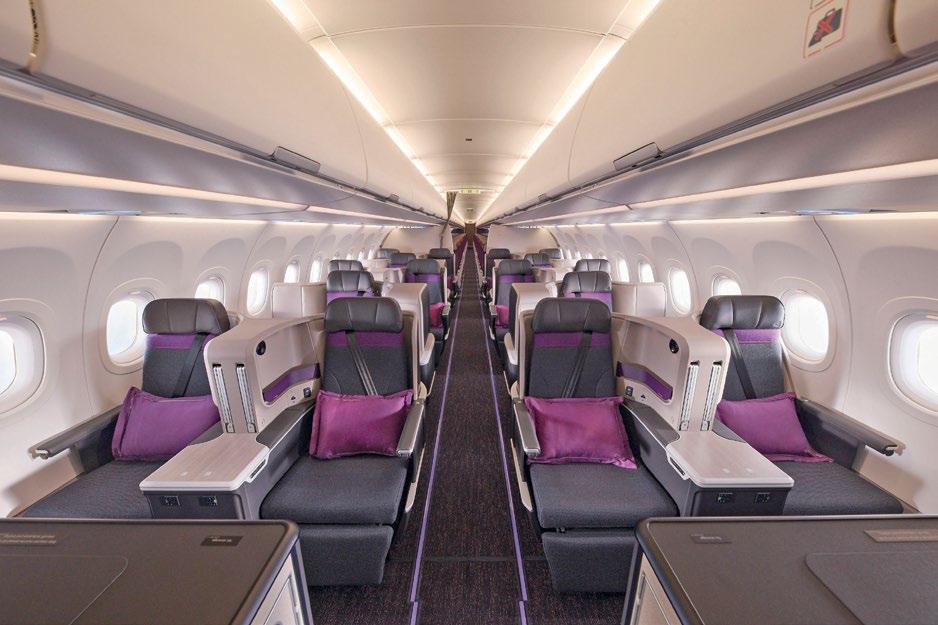
On Thai Airways’ new Airbus A321neo, the airline’s Royal Silk business class is reimagined for regional travel, carrying its long-standing codes of comfort and Thai hospitality into a narrower, more contemporary cabin designed for shorter journeys.
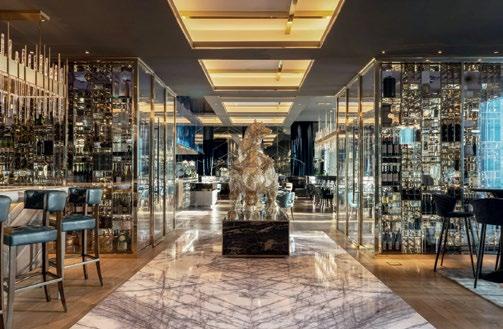

Bull & Bear at Waldorf Astoria DIFC centres its menu on premium cuts, heritage classics, and considered service
What it’s like
Located within Waldorf Astoria Dubai International Financial Centre, Bull & Bear is the property’s signature restaurant and distinguished steakhouse, shaped by a sense of occasion that feels both classic and current. The Art Deco-inspired interior sets a refined tone, while expansive views toward the Burj Khalifa anchor the dining room. The atmosphere is assured rather than theatrical, lending itself easily to business lunches, celebratory dinners, and unhurried evenings. Throughout, service moves with quiet precision, reinforcing the restaurant’s polished, confident rhythm.
The meal began with roasted bell pepper and tomato soup, finished with basil oil and accompanied by a tempura zucchini flower. The soup was smooth and well-balanced, its natural sweetness offset by gentle acidity, while the zucchini flower added a light, crisp contrast that brought texture without excess.
For the main course, the Mediterranean seabass fillet arrived with a Provençal-style garnish, accompanied by a side of mashed
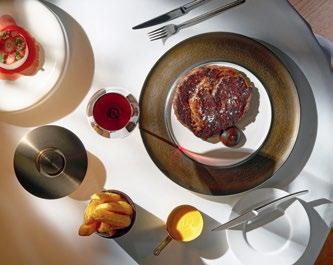

The menu includes classic steakhouse dishes alongside lighter mains, making it suitable for both working lunches and unhurried meals.

Bull & Bear delivers a dining experience grounded in quality ingredients and classic execution.
COST
Approximately AED 400 – 500 per person, with seasonal variations in pricing.
CONTACT
Waldorf Astoria Dubai
International Financial Centre
Burj Daman, Al Mustaqbal Street
DIFC, PO Box 507251 Dubai, U.A.E
Tel: +971 (0) 4 515 9999
https://www.bullandbeardifc.com/
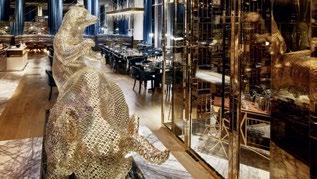
potatoes. The fish was cooked with precision, its flesh moist and delicately flaking. The Provençal garnish added savoury depth and a gentle brightness that lifted the dish, while the mashed potatoes provided a smooth, comforting contrast. A glass of white wine was poured alongside, its crisp acidity and mineral notes cutting cleanly through the richness of the plate and tying the elements together with ease.
Bull & Bear’s broader menu reflects its steakhouse identity, with premium cuts, heritage dishes such as the classic Waldorf salad, and rotating highlights including Wellington Wednesdays and a traditional Sunday roast. An extensive wine cellar and thoughtfully curated pairings complete the experience.
Service
Service is prompt, knowledgeable, and well-timed, with staff comfortable guiding wine pairings and pacing courses efficiently.
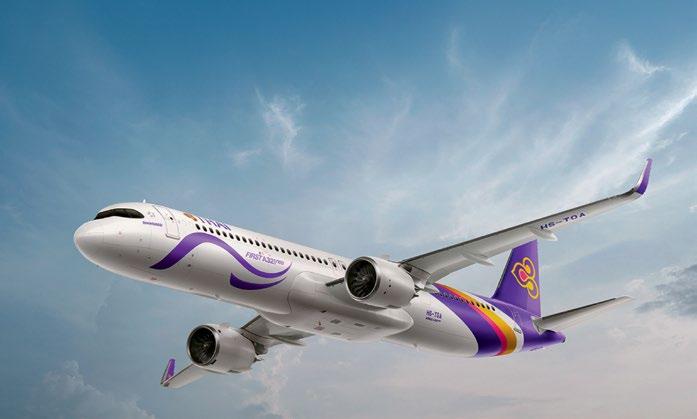

Thai Airways’ Royal Silk business class is the airline’s premium cabin offering, shaped by comfort, attentive service, and the codes of Thai hospitality. With the introduction of its new Airbus A321neo fleet from January 2026, Thai Airways is translating that long-established premium sensibility onto a narrowbody platform designed specifically for regional travel. The aircraft, named Bowonrangsi (HS-TOA), marks the first step in a broader fleet renewal programme aimed at restoring capacity and modernising the airline’s short- and medium-haul operations.
Configured with 175 seats in total, the A321neo features 16 Royal Silk business class seats and 159 economy class seats, clearly defining its role as a high-density regional aircraft with a meaningful premium cabin. The type is being deployed on routes including Singapore, Phuket, and Delhi, with plans to expand services to secondary cities in China and across the CLMV region. For Thai Airways, the A321neo represents both a capacity solution and a product reset, allowing Royal Silk to remain
competitive on shorter sectors without diluting its core standards.
Check-in followed the established Royal Silk process applied across Thai Airways’ international network. Business class passengers were directed to the dedicated Royal Silk counters, keeping the flow clearly separated from the main economy queues. Documentation and baggage were handled at a single counter, with priority baggage tagging confirmed during the process.
Where available, Royal Silk passengers benefit from priority security and immigration clearance as part of the airline’s ground service offering. The experience felt structured and predictable, reinforcing the sense of consistency that frequent travellers associate with Thai Airways’ premium cabins across different stations.
As a Royal Silk passenger, access was provided to the airline’s designated premium lounge prior to departure.
The space offered a noticeably quieter environment than the main terminal and was arranged with a mix of individual armchairs and shared seating, accommodating both work and downtime.
Complimentary food and beverages were available throughout, with a selection designed for light pre-departure dining. Wi-Fi access and conveniently placed power
the A321neo represents both a capacity solution and a product reset
points allowed devices to remain charged without needing to move around the lounge. The experience functioned as a natural extension of the Royal Silk ground offering, providing continuity before boarding.
Boarding was conducted with Royal Silk passengers called first, easing movement through the single-aisle aircraft. Entry through the forward door led directly into the business class cabin, which is clearly defined and separated from the rest of the aircraft.
The Royal Silk section comprises 16 Thompson Vantage lie-flat seats, arranged in a staggered 2-1-2 configuration. On a narrowbody aircraft, this layout makes a tangible difference, creating a mix of paired seats and individual ‘throne-style’ window positions that offer greater separation and privacy. For solo travellers, particularly women travelling alone, these individual seats provide a reassuring sense of personal space and a more self-contained seating environment.
Seat 11H, a first-row aisle position, offered a clear view of how Thai
for regional flying. The seat converts into a fully flat 180-degree bed and offers multiple recline positions that allow fine adjustment of head, back, leg angle, and lumbar support. Even before departure, the proportions and shell structure signalled that this was a true business class seat rather than a scaleddown regional compromise.
Seat controls are clearly labelled and positioned within easy reach. A personal high-definition in-flight entertainment screen is mounted directly ahead, remaining easily viewable across different seating positions. In-seat power supports device charging throughout the flight. Storage around the seat is practical rather than expensive, with space for essential personal items, while the side console and shell help define individual space.
The A321neo’s LEAP-1A engines reduce fuel burn and cabin vibration, contributing to a smoother ride and GOOD -TOKNOW
Taken together, the Royal Silk seat on the A321neo feels purpose-built for regional premium travel. With 16 seats in Royal Silk and 159 in economy, the configuration reinforces the aircraft’s focus on serving high-demand regional routes while maintaining a clearly defined premium cabin.
Once airborne, the Royal Silk cabin settled quickly into its rhythm.
and remained soft through the cruise, creating a calm daytime environment suited to both work and rest.
Lunch was served shortly after take-off, following Thai Airways’ Royal Silk Thai and World Gourmet service format. The offering is structured as a two-course hot meal, with pre-select options available on applicable routes, and is designed to suit the pace of short- and medium-haul flights.
The service included a composed progression from appetiser to main course, followed by dessert, with bread offered alongside. Beverages were available throughout, including alcoholic selections, hot drinks such as coffee and tea, and non-alcoholic options. Overall, the lunch reflected the airline’s standard Royal Silk onboard dining approach, balancing choice, consistency, and comfort.
As the flight progressed, there was sufficient time to recline, disengage, and settle into the journey. Each Royal Silk seat is equipped with a high-definition screen offering Thai Airways’ onboard library of approximately 150 movies, 300 television programmes, and around 300 music titles. The system is easy to navigate and wellsuited to a flight of this length. The aircraft is also equipped with high-speed Wi-Fi, supporting connectivity throughout the journey.
Arrival in Singapore was smooth and wellpaced. Disembarkation from the forward door allowed Royal Silk passengers to exit early, making a practical difference at the terminal. Priority baggage handling ensured checked luggage appeared promptly,
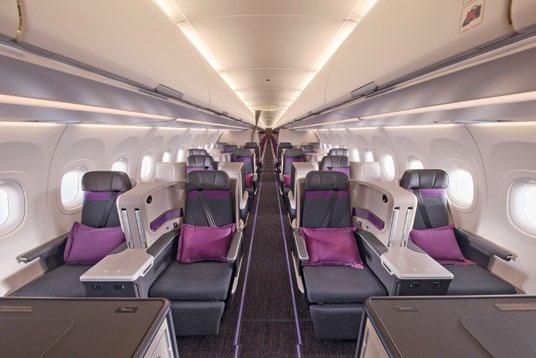
Royal Silk on the A321neo makes short regional flights feel cohesive rather than compromised. The lie-flat seat reshapes a two-hour sector, the layout works equally well for solo travellers and pairs, and the service is paced to match the journey.
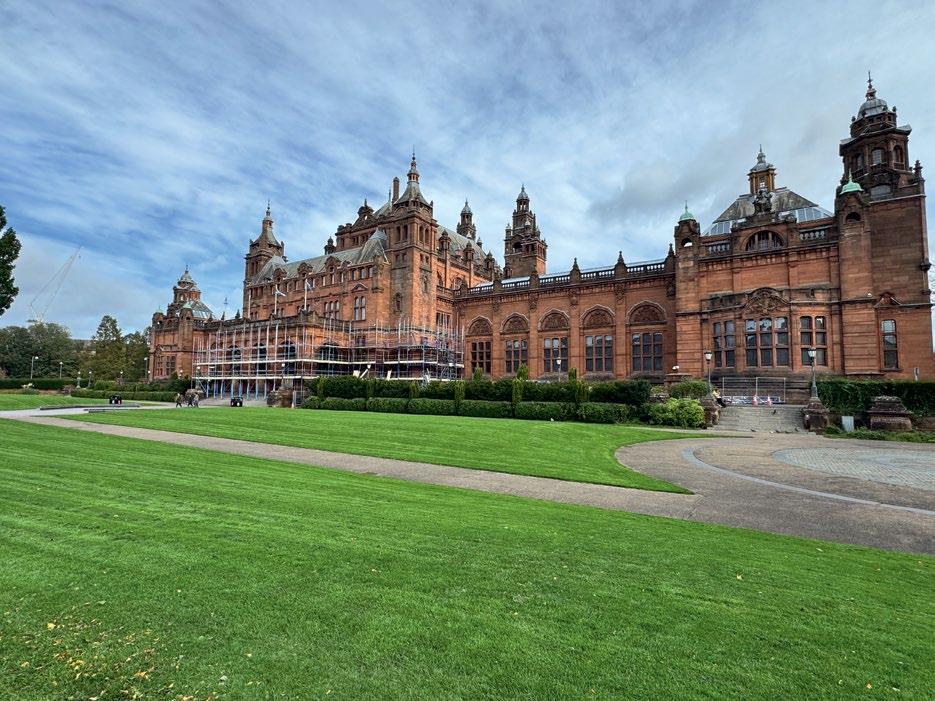
This photograph of Kelvingrove Art Gallery and Museum, that had first opened its doors in 1901, was taken by Supriti Chavan on her iPhone 15 Pro. One of Scotland’s most visited museums, Kelvingrove is a firm favourite with both locals and visitors, celebrated for its dramatic Spanish Baroque–style architecture and its warm, family-friendly spirit. Set on the edge of Kelvingrove Park, the museum houses
22 permanent galleries spanning art, natural history, arms and armour, and archaeology, from ancient Egyptian artefacts and European masterpieces to wildlife displays and the work of Charles Rennie Mackintosh. Carefully refurbished and reopened in 2006, the museum balances historic grandeur with contemporary storytelling, making each visit feel expansive, accessible, and endlessly rewarding.