WARRENTON LIFESTYLE




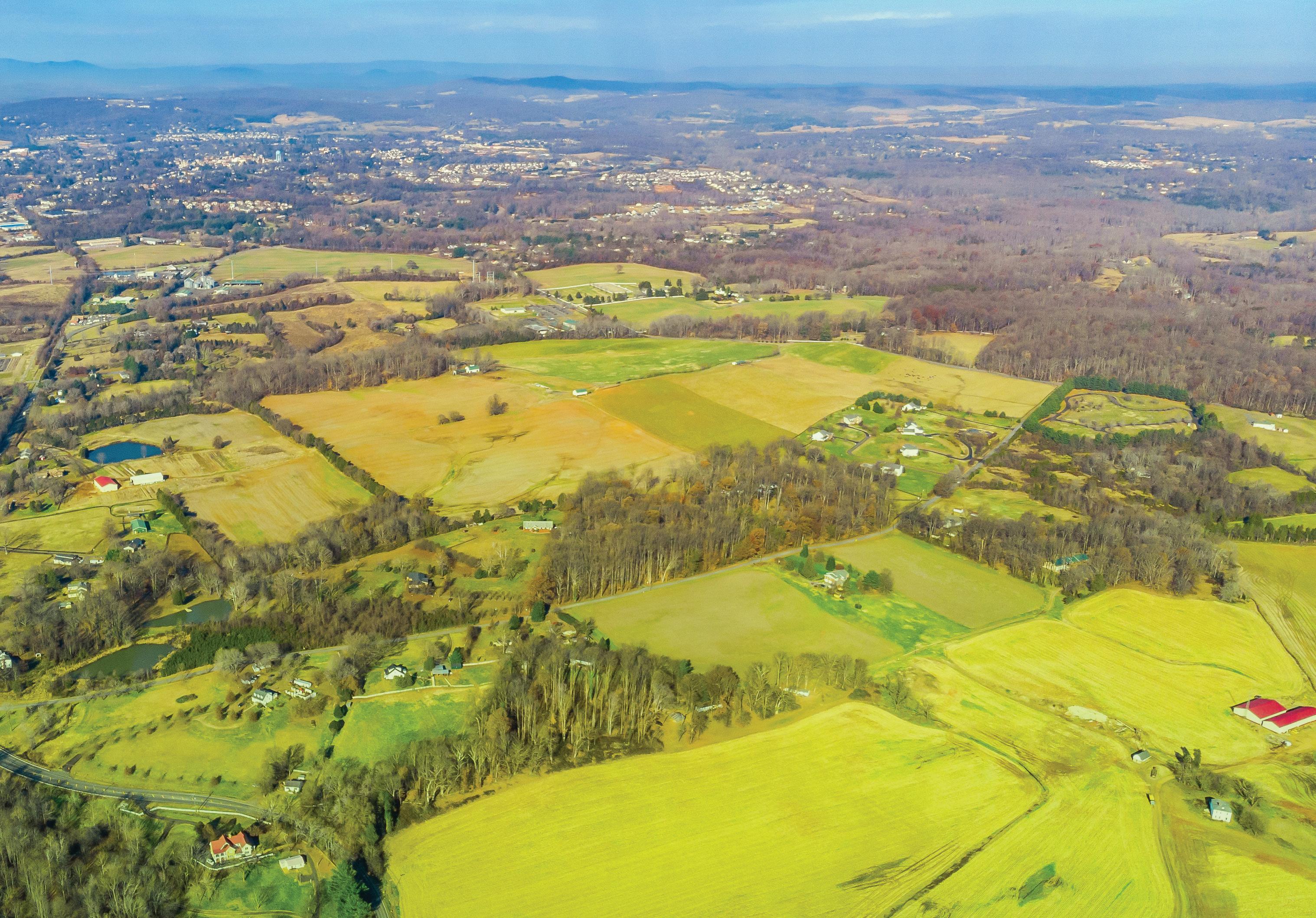


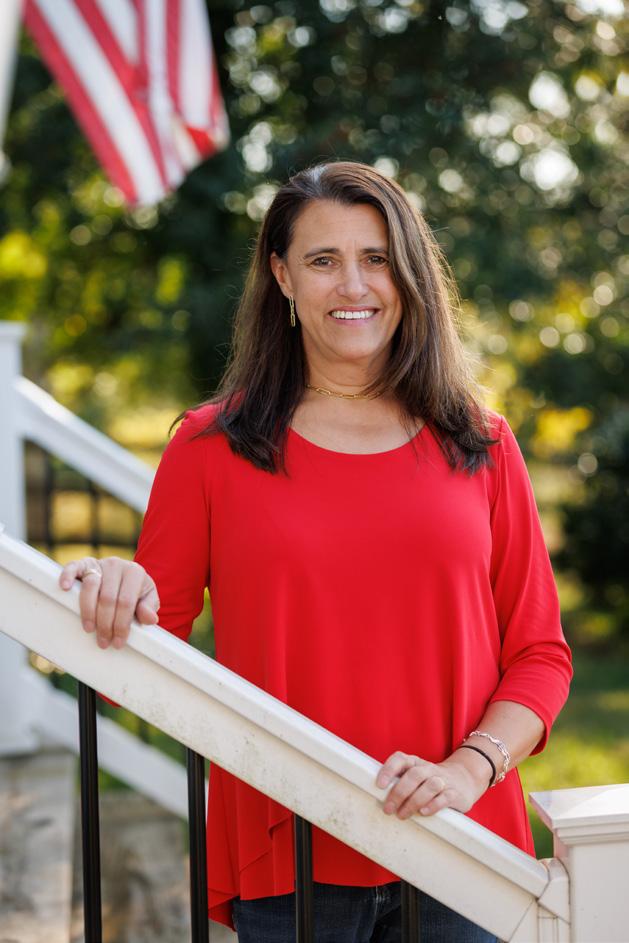
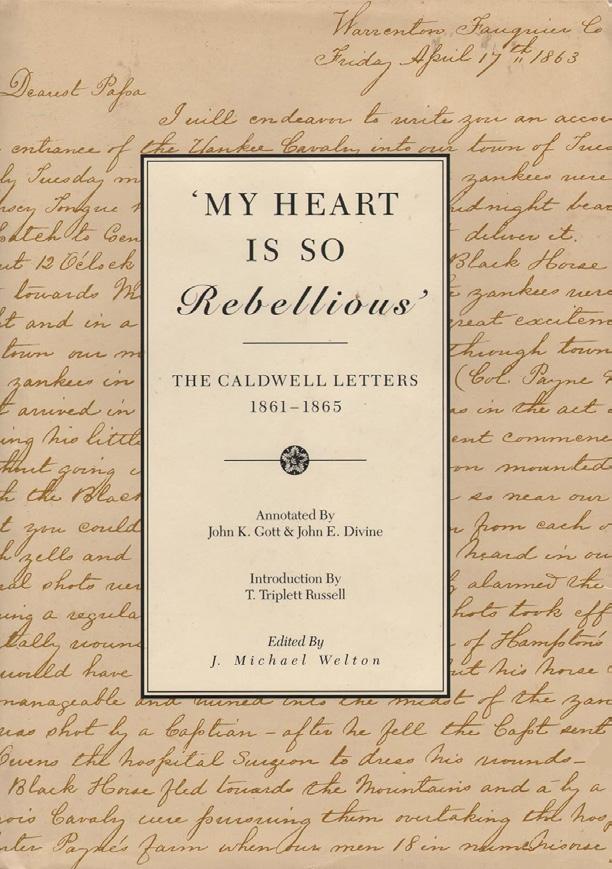
As readers may have guessed by now, I have a minor obsession for local history. Some might find it unusual, but when I read for pleasure, I often reach for nonfiction. Recently, I discovered “My Heart Is SO Rebellious: The Caldwell Letters, 1861–1865,” a collection of correspondence edited by J. Michael Welton with an introduction by T. Triplett Russell and annotations by John K. Gott and John E. Devine.
The letters are primarily between Susan Caldwell, a Warrenton mother, and her husband, Lycurgus, who was working for the Confederacy in Richmond during the Civil War. Susan wrote prolifically, and her words offer a remarkable window into life in wartime Warrenton. Within them are threads of military occupation, battle details, economics, race relations, medicine and everyday survival—far more than could ever fit into one article.
With Mother’s Day approaching, I decided to explore Susan’s role as a mother. Even after so many years, so much of it still feels familiar. Her worries, her devotion, her pride in her children and
her longing to keep their absent father connected to family life are timeless. Every letter includes news of the children. Susan faithfully recorded milestones, illnesses, small triumphs, and daily happenings. Any mother in any era can identify with her.
There were painful silences in her correspondence as well, most notably while recovering from the birth of their fourth child, Lucy Lee, in 1861, and later during the devastating depression that followed Lucy Lee’s death from scarlet fever in 1864, just shy of her third birthday.
A Celebration of Fauquier County
PUBLISHER
Dennis Brack
dennis@warrentonlifestyle.com
EDITOR
Pam Kamphuis pam@warrentonlifestyle.com
ART DIRECTOR
Kara Thorpe kara@warrentonlifestyle.com
ADVERTISING
Sales Director: Jim Kelly jim@warrentonlifestyle.com, 434-987-3542
Multimedia Marketing Specialist: Tony Haugan thaugan@fauquiernow.com, 540-672-8547
CREATIVE SERVICES DIRECTOR
Jay Ford creative@warrentonlifestyle.com
ACCOUNTING
Carina Richard-Wheat cwheat@insidenova.com 540-905-7791
SUBSCRIPTIONS
Email: subscribe@warrentonlifestyle.com 540-675-3338
EDITORIAL & ADVERTISING OFFICE
Warrenton Lifestyle Magazine 70 Main Street (by appointment only) Warrenton, VA 20186 • 540-349-2951 ON THE WEB
FauquierNow.com/lifestyle
Facebook: @FauquierNow, @WarrentonLifestyleMagazine Email Newsletter: Sign up at FauquierNow.com
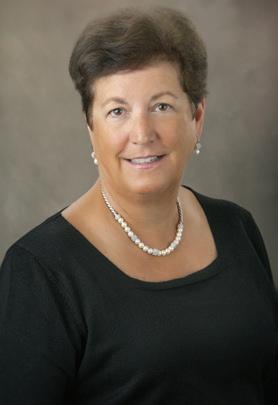
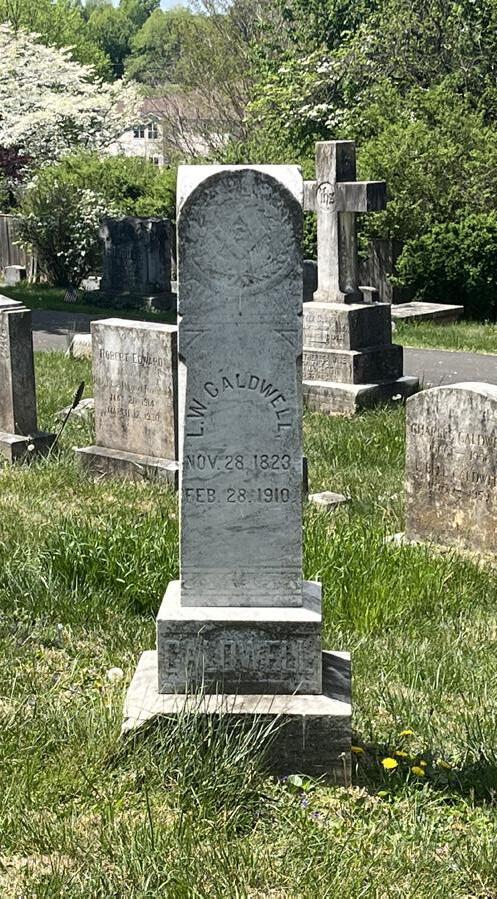
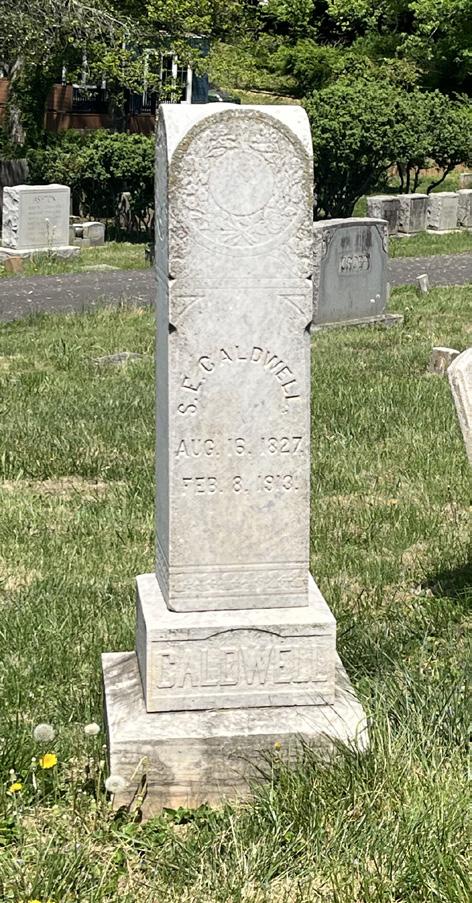
As you will see in this issue, I visited Warrenton Cemetery to photograph the graves of Susan and Lycurgus. It bothers me that I found no clear record of Lucy Lee’s burial. I would imagine she rests there too. In the autumn of 1864, burials were tragically common. Perhaps she had a wooden marker that has since disappeared.
But Susan’s words ensure that her daughter is not forgotten. That, perhaps, is the quiet power of local history: even when markers fade, lives, loves and joys can still be remembered.
Susan and Lycurgus went on to have two more children and continued raising their family of five in their home on Smith Street. The lively, loving household that Susan held together through the war would have carried on, albeit with the constant motion, noise and mischief of children that any modern parent would recognize. And it’s possible, though somewhat doubtful, that Lycurgus even learned to hang up his clothes and change his socks. Across the centuries, some things never change.
EDITOR Pam Kamphuis pam@warrentonlifestyle.com
The Warrenton Lifestyle Magazine is published monthly and distributed to over 11,500 selected addresses. While reasonable care is taken with all material submitted to The Warrenton Lifestyle Magazine, the publisher cannot accept responsibility for loss or damage to any such material. Opinions expressed in articles are strictly those of the authors. While ensuring that all published information is accurate, the publisher cannot be held responsible for any mistakes or omissions. Reproduction in whole or part of any of the text, illustration or photograph is strictly forbidden. ©2026 Rappahannock Media LLC.
The Lifestyle magazines is a sister publication with Fauquier County's Leading Online News Source, FAUQUIERNOW.COM Visit us for the latest local news, calendar, classifieds, obituaries, real estate announcements, newsletter sign up, Warrenton Lifestyle content, and more.
facebook.com/FauquierNow twitter.com/FauquierNow





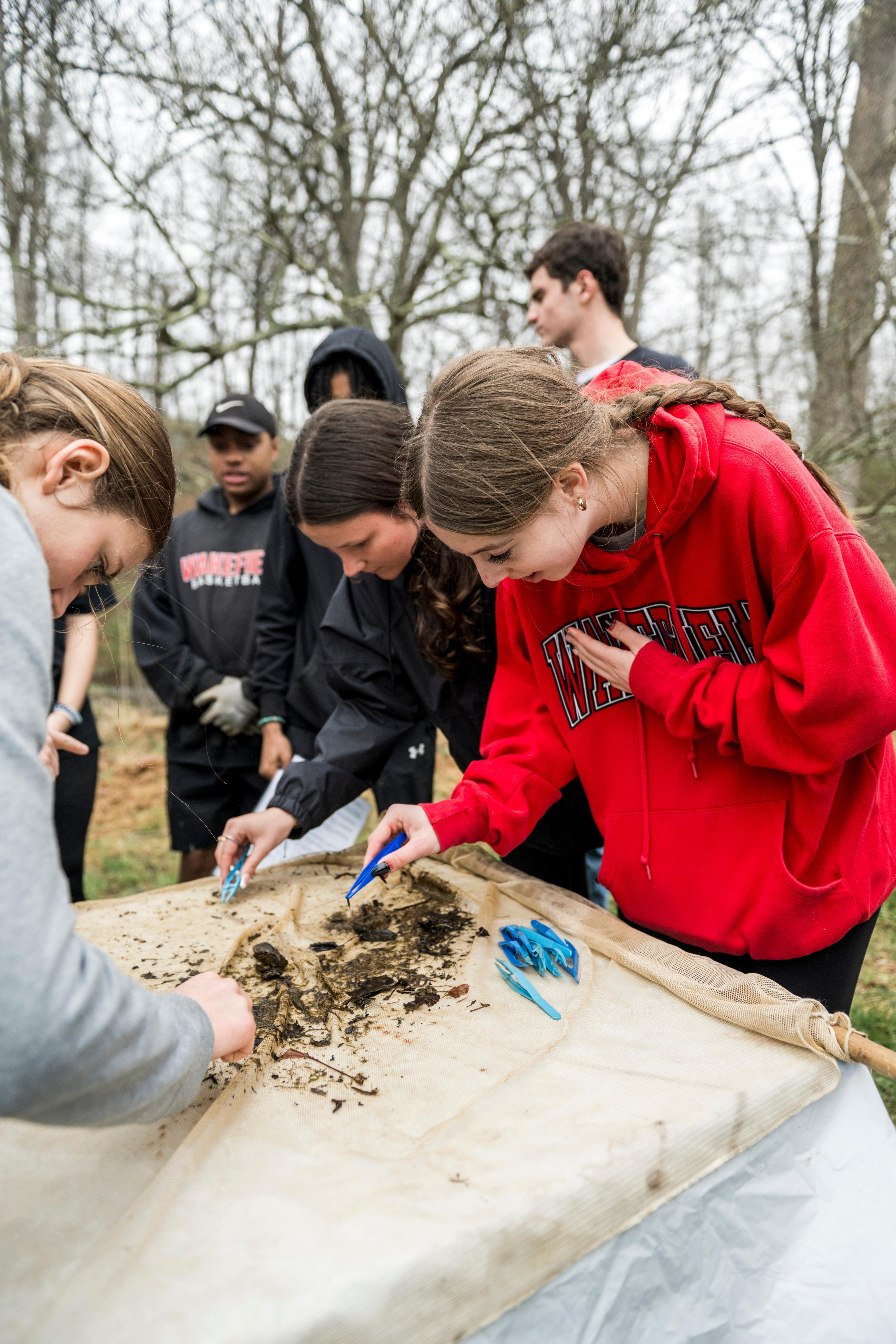
At Wakefield, the college process isn’t treated as a finish line. Rather, it’s a journey of discovery.
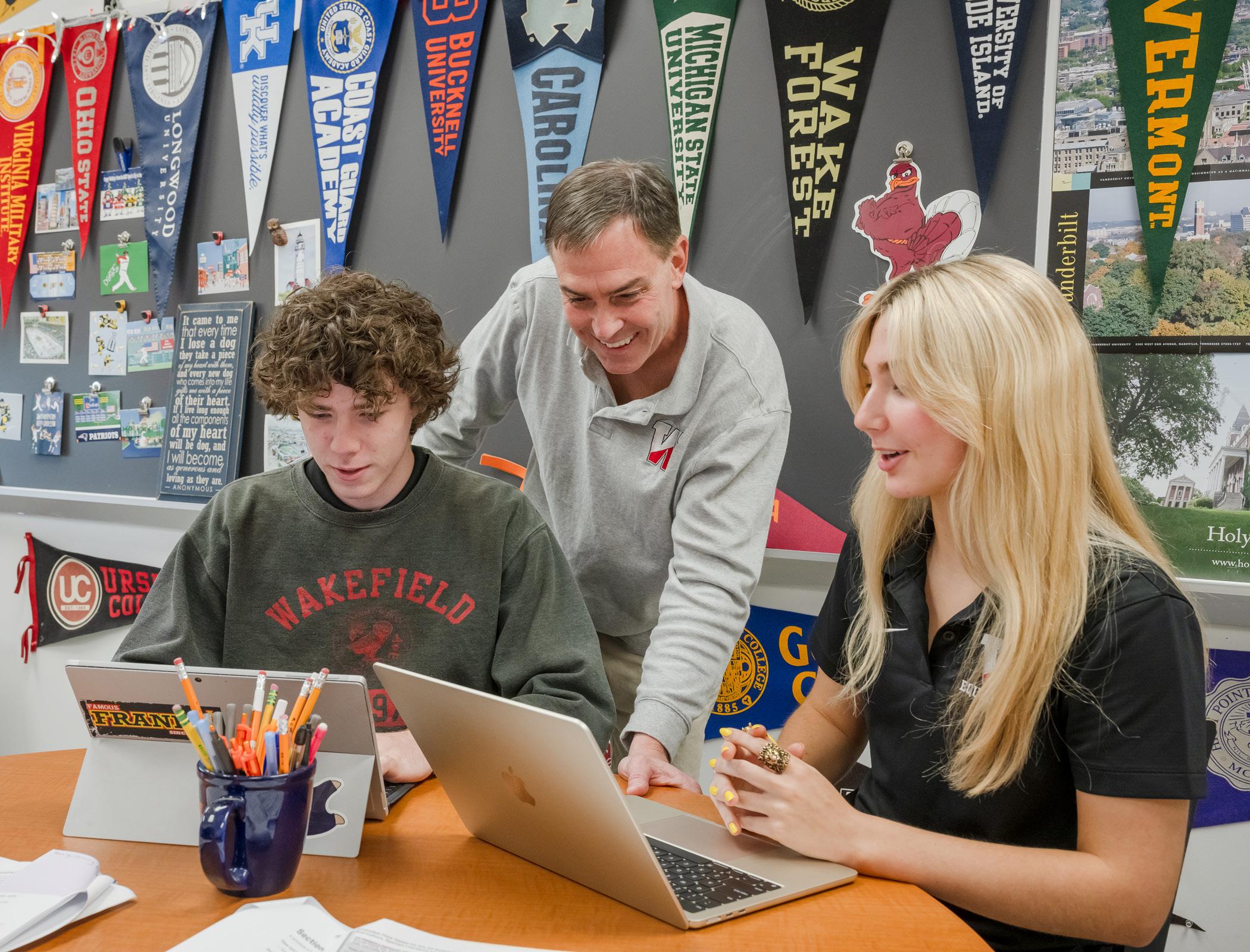
Beginning as early as eighth grade, Wakefield’s college counseling program is designed to guide students through a thoughtful, student-centered exploration of who they are and where they belong. Rather than focusing solely on admissions outcomes, the program emphasizes something more meaningful: helping each student find the right fit.
That philosophy shapes every step of the process. Students are encouraged early on to explore their interests, challenge themselves academically, and engage deeply in the activities that matter most to them. Through a balance of dynamic coursework (including Honors, Advanced Placement, and Dual Enrollment) and authentic extracurricular involvement, students begin to build a profile that reflects not just achievement, but purpose.
As they move through high school, support becomes increasingly personalized. What starts with group guidance in ninth grade evolves into individualized meetings with students and families, creating a collaborative partnership between counselor, student, and parent. Together, they navigate course selection, standardized testing, essay writing, and the development of a balanced, intentional college list.
Structure and support go hand in hand. With access to tools like Naviance, a clear college planning timeline, and dedicated workshops for both students and parents, Wakefield ensures that families feel informed and students stay organized and confident throughout the process.
Equally important is exposure. Wakefield’s junior class college tour offers students the opportunity to experience a wide range of campuses - large and small, urban and rural,
BY ELISE SCALISE
"At its heart, Wakefield’s college counseling program is about more than college admission. It’s about moving forward with confidence, clarity, and a strong sense of self."
well-known and under-the-radar. These visits bring clarity to the search, helping students move beyond assumptions and toward a deeper understanding of what truly fits.
Throughout it all, Wakefield’s college counselor, Matt McDonough, and upper school teachers emphasize a balanced, realistic approach to admissions. Students learn that success isn’t about perfection or quantity, but about thoughtful choices: challenging themselves appropriately, pursuing meaningful commitments, and presenting an authentic story.
The result is a college process that feels less overwhelming and more empowering. Wakefield graduates go on to attend a wide range of institutions, from major research universities to small liberal arts colleges and specialized programs, each choice reflecting a student’s individual path and goals.
At its heart, Wakefield’s college counseling program is about more than college admission. It’s about moving forward with confidence, clarity, and a strong sense of self.


Some students realize partway through high school that they’re capable of more—more challenge, more opportunity, more direction.
At Wakefield, students are guided through their final years with intention, building the confidence & clarity to find the college path that truly fits.

What to do? There's lots going on in our area — and there's never enough time! This page and our free weekly Best Bets email newsletter (scan the code below to subscribe) aims to help you make plans and have fun.
Saturday, May 16, 10 a.m. - 2 p.m.
105 East Main St., Remington
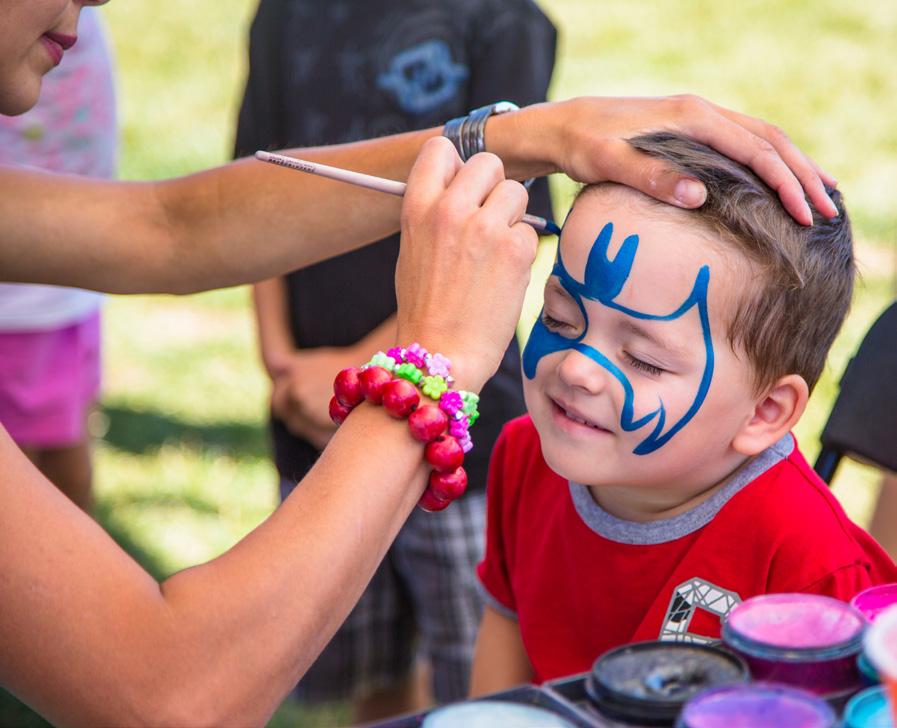
Bring the whole family to the Remington Children’s Festival for a free day of fun, learning, and community. Kids of all ages will enjoy hands-on STEM activities, games, live demonstrations, Touch-a-Truck, face painting, free books and interactive booths designed for learning through play. Meet local organizations, first responders, educators, and community groups while exploring exciting activities focused on creativity, health, safety, and discovery. Everyone is welcome, free admission and fun for all ages.
May 1-17, weekend performances
Vint Hill Theatre on the Green 7255 Aiken Drive, Warrenton
Audiences are sure to enjoy seeing Fauquier Community Theatre’s original work filled with lush music, intrigue, and humor about a Scots-Irish Gaelic family with a powerful secret fleeing political persecution in 1814 America. Part coming-of-age story, part action thriller and part homage to the incredible connection of family, the musical features an evolution of early American music, beginning with its roots in Scotch/Irish culture and exploring aspects of early folk. With its blend of history, music, and theatrical storytelling, “Tales of the Artisan” offers audiences the rare opportunity to experience a brand-new musical brought to life on stage for the very first time.
Saturday, May 9
8 a.m. - 5 p.m.
Trip Bopp Farm
Fauquier High School, Warrenton
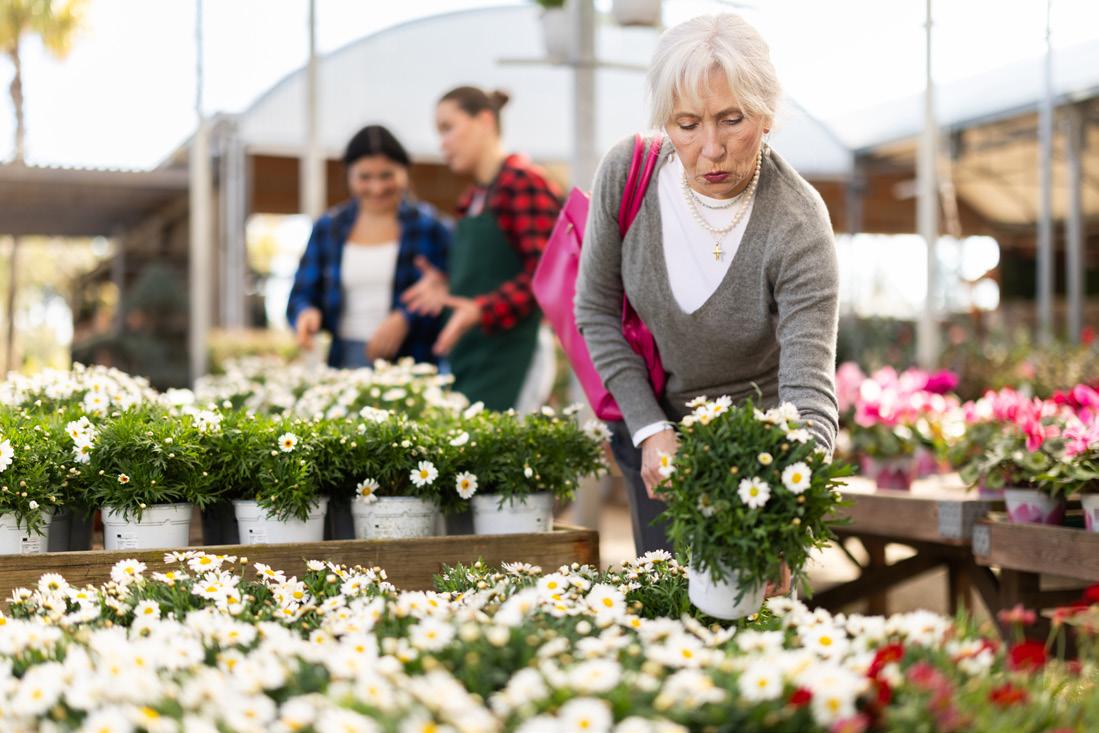
Celebrate Mom at the FHS fair & plant sale! Enjoy a fun-filled day featuring the annual plant sale benefiting the Fauquier High School Agriculture Department, along with other school clubs and organizations. Browse beautiful plants, shop local vendors, and enjoy food trucks, live music, a petting zoo, face painting, glitter tattoos, and more. A perfect way to spend the day with Mom while supporting local students!
Monday, June 1, 7-8:30 p.m.
Fauquier High School, 705 Waterloo Road, Warrenton

Travel back in time with the Fauquier Community Band to ancient lands, where swords and sandals ruled the day. This exciting lineup of music will echo the bravery and heroism of ancient civilizations like Rome, Greece, and even Ancient China. We won't judge you if you come dressed in togas to enjoy this evening of musical swordplay! Play the raffle to win great prizes, and enjoy a complimentary dessert reception at the end of the show. The concert is family friendly, free to attend, and no tickets are required.
COMMUNITY CALENDAR: Hosting an event? Add it to the calendar at no charge and it may be chosen for Best Bets! FauquierNow.com/calendar



















































Friday, May 22, 5-8 p.m. Buckland Farm Market, 4484 Lee Highway, Warrenton
Enjoy an unforgettable evening showcasing live, original music at VA Songwriters Rounds. At this curated event featuring talented local singer-songwriters in a Nashville-style round-robin format, 2–3 artists will share the stage at a time, rotating through original songs and stories for an intimate listening experience. Hosted by Curt Davis, Derek Morris, and Drew Fleming. The night continues with live music from Eclectic Company from 8–11 p.m.

Sunday May 24, 9 a.m. - 3 p.m.
Sumerduck Motorsports Park, 14027 Royalls Mill Road, Sumerduck
The Bug Invasion returns to Sumerduck Motorsports Park for its fourth big year of all things VW! Enjoy a full day celebrating classic and modern Volkswagens with car show entries, drag racing, vendors, concessions, food trucks, kids’ Power Wheels races, face painting, music from the DJ and more. With returning fan-favorite “Bugout” ideas plus new surprises, this is a must-attend event for VW enthusiasts and families alike.



Saturday, May 16, 9 a.m. Warrenton Cemetery, Chestnut Street, Warrenton
The John D. Sudduth American Legion Post 72, working in collaboration with Boy Scout Troop 10, is now recruiting volunteers to help install flags commemorating Memorial Day on the graves of veterans in the Warrenton Cemetery. Between 100-200 volunteers are needed to place over 900 flags. Please email Flags Project Coordinator Lulu Baer at flagsin72@gmail.com or call (540) 222-4498 if interested in volunteering. The “Flags-Out” project to remove the flags will take place Saturday, May 30.


Compassionate, expert care for every patient in every community we serve — that’s what world-class care at UVA Health means. We’re right here with providers you know and trust, offering primary and specialty care throughout Warrenton, Bristow, Manassas, and Gainesville, and at three community hospitals: Prince William Medical Center, Culpeper Medical Center, and Haymarket Medical Center. When your needs become more complex, you have seamless access to advanced specialists, innovative treatments, and clinical trials. With dozens of locations across northern Virginia, exceptional care is right around the corner.
Find care near you.
Driven to bring hope to life.
giving back
Warrenton Lifestyle’s ongoing “giving back” feature highlights some of the countless time and talent volunteer opportunities in Fauquier County and nearby. In this we hope to bring awareness not only to the needs of our neighbors and the organizations that help but the many ways you can be a part of strengthening even more what is already an impressive community.
Help nourish neighbors in need by volunteering with the Meals of HOPE program at Fauquier Family Shelter Services. This meaningful opportunity invites individuals, families, businesses, and community groups to prepare and share meals with those facing hardship in our community. Whether you organize a potluck-style breakfast, lunch, or dinner, provide simple sack meals, cook onsite, or sponsor a meal through a local restaurant, every contribution makes a difference. Choose a date that works for you, and Program & Volunteer Coordinator Tracy Forloines will follow up with details—making it easy to turn compassion into action.
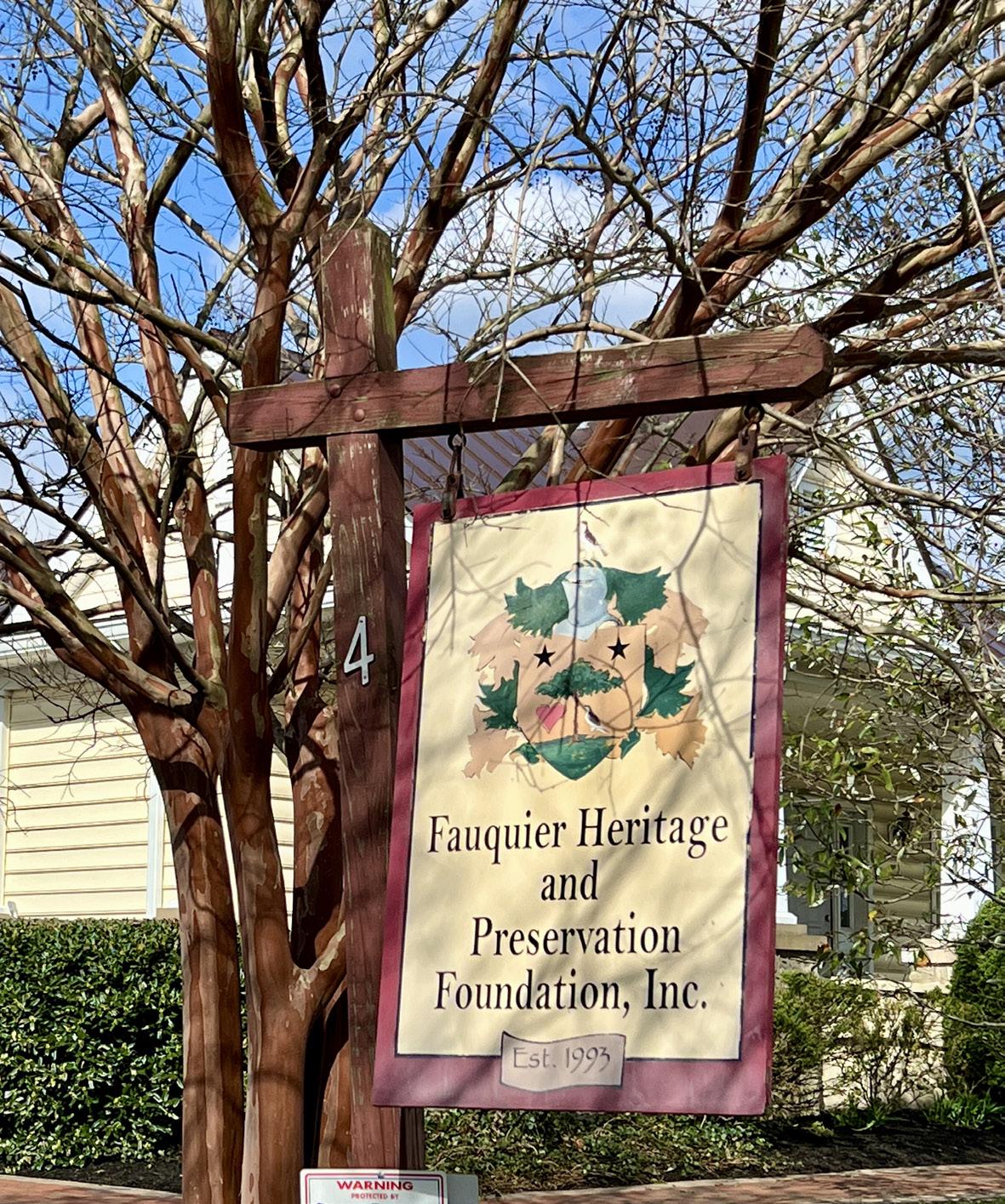
The Fauquier Heritage and Preservation Foundation at The Gott Library
The Gott Library is Fauquier’s hidden gem for historical and genealogical research, housing an extensive collection of local historical documents, photographs, maps, family records, and more. Volunteers are needed for a variety of tasks, including document scanning, research assistance, marketing and outreach, social media, IT management (PC, network, software), archives management, project management, and more. Whatever your interest, you can find a niche at The Gott Library. Flexible schedule, onsite and remote opportunities. Students 14 and older are also very welcome and encouraged to reach out for summer opportunities. thegottlibrary.org 4110 Winchester Road, Marshall gottlibrary@gmail.com 540-364-3440
For more opportunities to help, check the PATH Foundation’s Volunteer Hub database at letsvolunteer.org or inquire at another nearby nonprofit or organization that relies on volunteer assistance.
Are you an organization in need of volunteers? Email editor@warrentonlifestyle.com with information.

SHORTS A roundup of updates, business news, and odds and ends from around Fauquier.
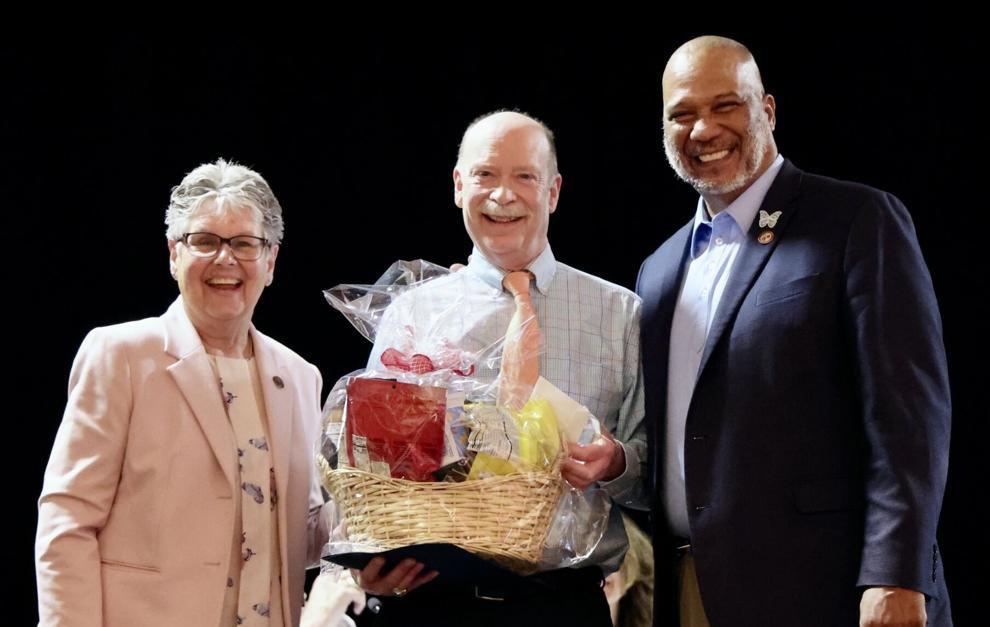
Kettle Run High School English teacher Joe Golimowski is Fauquier County’s 2026 Teacher of the Year.
Golimowski, who teaches 11th grade Advanced Placement and Dual Enrollment English, was honored Monday night by the School Board.
“Mr. Golimowski reflects the dedication and commitment we see across Fauquier County Public Schools and we are grateful that he has remained with us,” Superintendent Dr. Major Warner said in a school system news release. “In his classroom, students feel valued, challenged and inspired to grow. He not only teaches English but helps students become confident thinkers and writers. We are grateful for the impact he has on his students and school community.”
Golimowski joined Kettle Run High
School when it opened in 2008 and now serves as English Department Chair. He also serves as the division’s Lead Advanced Placement teacher, mentoring colleagues and supporting high-quality instruction across schools. In addition, he coaches the Academic Team and sponsors the National English Honor Society.
Golimowski founded the Kettle Run Writing Center, a student-led program that promotes peer collaboration and strengthens writing across disciplines. He also supports the Reading Buddies program in partnership with Greenville Elementary School, helping foster a love of literacy in younger students.
With 17 years of experience in Fauquier, Golimowski is known for his dedication to student success, academic excellence and strong relationships with students and
colleagues, the release said. Colleagues describe Golimowski as a collaborative leader who empowers others, while students point to his humor, authenticity and consistent encouragement as reasons they feel confident taking academic risks.
“He makes you feel appreciated and capable,” one student said. “His class is the perfect balance of structure and fun. One you never forget.”
Another noted, “Mr. Golimowski doesn’t just teach writing—he teaches you to believe in your voice.”
Golimowski will represent the division at the regional level of teachers of the year and serve as an ambassador for the teaching profession.




Mother’s Day | May 10 th



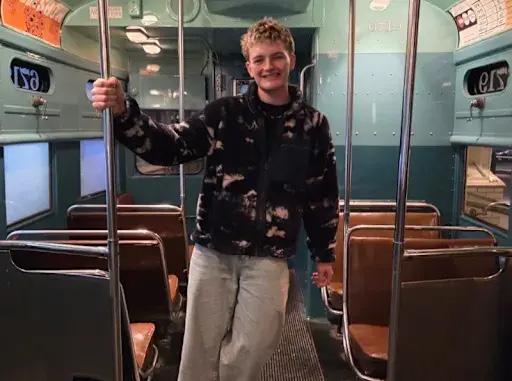
Liberty High School junior Silas Sheretz has been selected as a BigFuture Ambassador by the College Board for the spring 2026 cohort.
The BigFuture Ambassador program is a community of high school students who volunteer to support their peers in planning for life after graduation. As a BigFuture Ambassador, Silas will promote college and career planning and encourage students to take next steps using BigFuture.org, a free College Board platform that offers tools and guidance for exploring careers, researching colleges and planning for financial aid, according to a Fauquier County Public Schools news release.
Over 5,800 ambassadors nationwide work within their communities to raise awareness about post-high school planning, inspire classmates to take key steps toward their futures and share helpful resources through social media, school events and peer networks.
“We are incredibly proud of Silas for earning this esteemed role,” Eric McCaslin, director of counseling at Liberty High School, said in the release. “Becoming a BigFuture Ambassador is a national opportunity to demonstrate leadership and a commitment to helping others succeed as they navigate the transition from high school to the next stage of their lives.”
The BigFuture Ambassador program is open to students in grades 9–12 and encourages participants to cultivate leadership, communication and collaboration skills. Students also play a role in shaping the tools and resources available on BigFuture.org, which are accessed by millions of students nationwide.
“I’m honored to represent my school in this program and excited to share BigFuture’s tools with my classmates,” Sheretz said. “I hope my work makes a difference for others as they plan their next steps after high school.”
More information about the BigFuture Ambassador program is at BigFuture.org.

BY TREVOR BARATKO
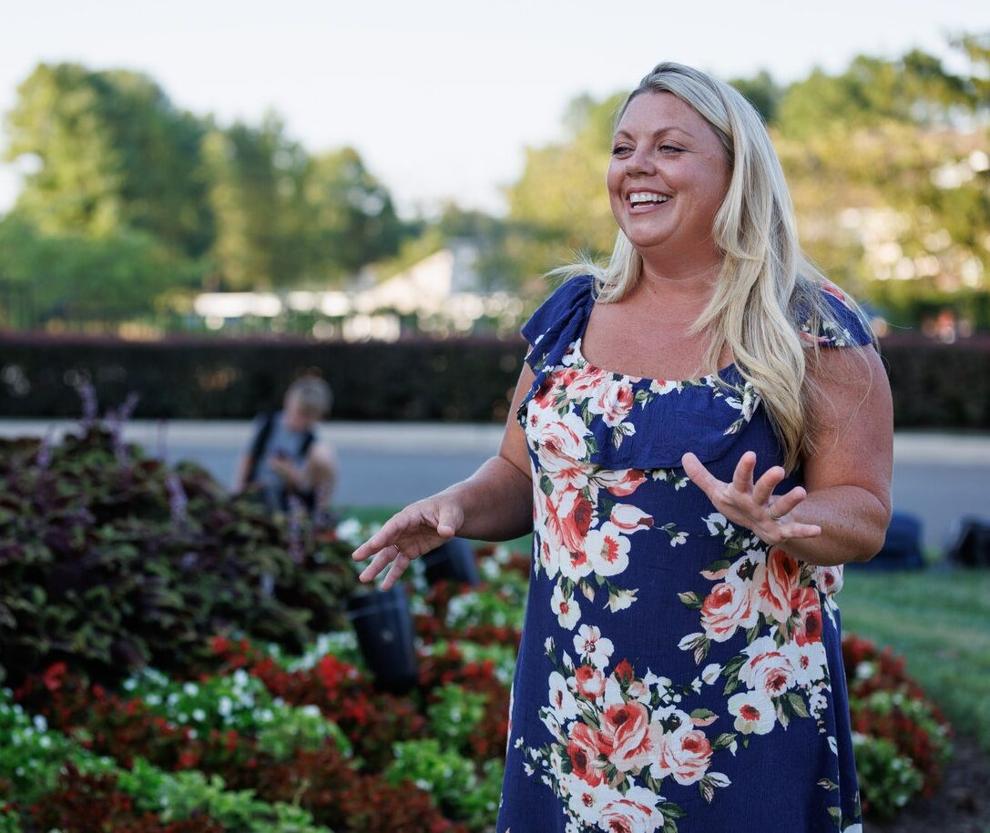
Manassas-based nonprofit Boxes of Basics has opened a second location in Remington, marking a step forward in providing clothing to children in need across the region.
Boxes of Basics officials say the new site will allow the nonprofit to serve more children and families in Fauquier and potentially the Culpeper region. The new Remington location is at 201 E. Main St.
“This expansion reflects both the need we see in Fauquier County and the strength of a community that cares deeply about its neighbors,” Sarah Tyndall, Boxes of Basics founder and executive director, said in a news release announcing the expansion.
The nonprofit provides thousands of
“boxes of basics” to children each year. Each box includes a full wardrobe: four play outfits, four school outfits, pajamas, a dress-up outfit, a seasonally appropriate coat, new shoes, socks and underwear. Two age-appropriate books, a STEM activity and a hygiene kit are also included.
“All items are new or like-new and thoughtfully selected and all outfits are wrapped and labeled; when a child receives a Box of Basics, it feels like they are opening a gift,” the release states.
Over the past year, Boxes of Basics has operated a pilot program in Fauquier County, handing out over 450 boxes to county children.
Over 10 Fauquier businesses already
partner with Boxes of Basics by hosting donation bins, helping make it simple for residents to support children in need.
View the full list of locations at boxesofbasics.org/clothing-donations-1.
More information is at boxesofbasics.org.



We would be grateful for your votes!
Caring for patients and families as they face the challenges of a life-limiting illness has long been our calling. From easing patients’ physical and emotional suffering to helping families cope with loss and grief, it is an honor to be with the Warrenton community when life matters most. To learn more about our care – and the compassionate people behind it – you can reach us 24/7.
BY JACK BOWMAN
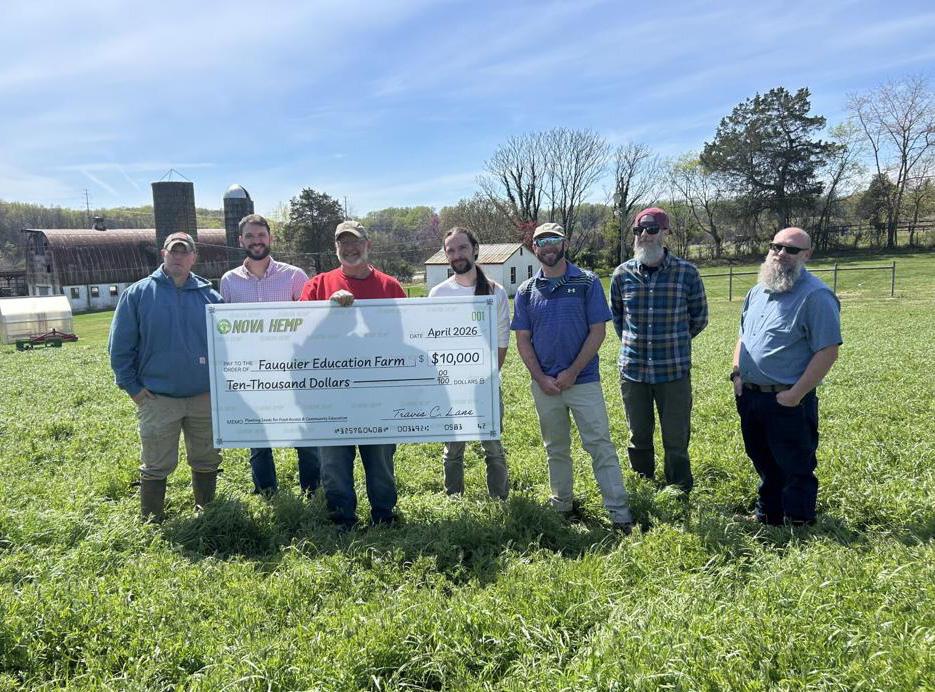
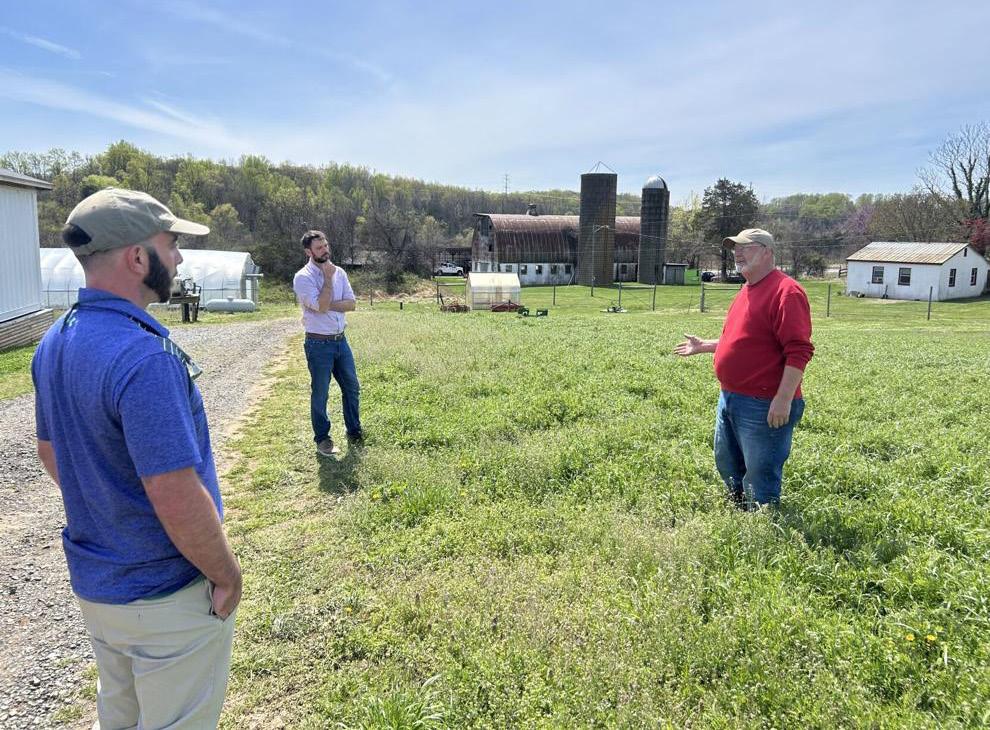
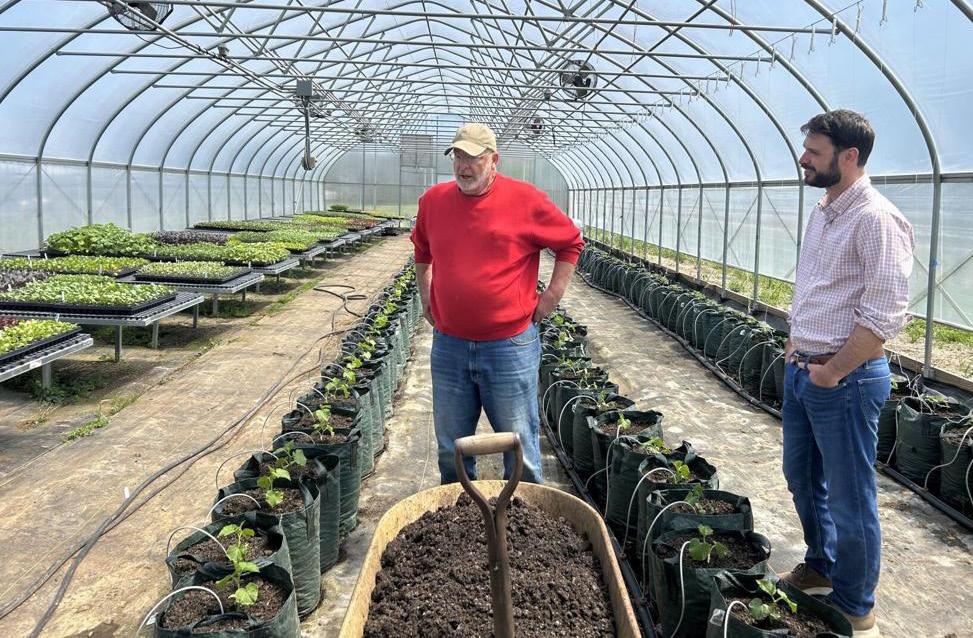
Nova Hemp, a Warrenton-based cannabis business, donated $10,000 to the Fauquier Education Farm in April to support the farm’s mission of community education and food access.
Travis Lane, Nova Hemp’s owner, presented the check to the farm’s executive director Jim Hankins with state Dels. John McAuliff and Michael Webert in attendance.
“I’m happy to be able to support the cause,” Lane said to the small group gathered for the tour. “I value this because it’s helping the community and helping people eat.”
Lane said he also values the education that the farm provides, “getting kids out” to learn about farming and food production.
Both delegates commended the contribution and its potential impact.
“Ten thousand is a lot,” Webert, a Republican representing parts of Culpeper and Fauquier counties as well as Rappahannock County, said after the check presentation. “Especially when it comes to vegetable production.”
Webert, who is experienced in farming himself, said the donation could cover “a lot of materials,” contributing to the farm’s operation in the face of a tight budget.
“The $10,000 donation is a pretty hefty donation, and it’s always very helpful, particularly with their budget,” Webert said. “Jim mentioned $200,000 a year, but that’s also with the staff that work here.”
McAuliff, a Democrat representing parts of Fauquier and Loudoun counties, said the donation exemplifies the
Fauquier community’s generosity.
“One of the things that makes Fauquier fantastic is that there’s so many community organizations, there’s so many businesses that are willing to reinvest all of their success right here in the community,” McAuliff said. “It’s not going out of town, it’s not going somewhere else. This is one of the best examples of that.”
The Fauquier Education Farm is a nonprofit established in 2010 to “further develop a program of agricultural education and the growing of fresh
“I value this because it’s helping the community and helping people eat.”
produce for lower income residents.” It provides educational opportunities and donates thousands of pounds of produce to local food banks such as the Fauquier Food Bank, Fauquier FISH, the Rappahannock Food Pantry, the Culpeper Food Closet, the Haymarket Regional Food Pantry and more.
Hankins said many people think the county funds the farm, but in reality the county’s contribution is typically $5,000. He said it is the donations from the community, like Nova Hemp’s, that “make a big, big difference.”
“We’ve got a whole lot of $25 and $50 donors,” Hankins said. “But $10,000 allows us to start thinking about doing something a little differently.”
According to Hankins, the farm recently faced dire economic straits. He said community support and
















emergency funding from the county have helped correct the course.
“At the beginning of 2025 we realized we had three months of funding and six months before we were going to get any significant amount of money,” Hankins said. “So that has turned around quite a bit.”
Hankins said this specific donation is significant in its generality, as it is not tied to any specific project.
“This is unrestricted funds, which means that it can go toward paying for the salary and the bills,” Hankins said.
This was not the first time Nova Hemp donated to the farm; Lane mentioned he had previously made an effort to contribute $1,000 annually. He said Nova Hemp’s growth allowed them to increase their contribution this year, a practice he hopes to continue.
“We want to continue being a contributor,” Lane said. “I don’t expect that this would be the last time that we do something like this.
“Honestly,” Lane said, “annually would be great, maybe even two times a year.” L



Located in Winchester, the Museum of the Shenandoah Valley is a rare heritage experience that offers a blend of indoor and outdoor activities to appeal to people of all ages and interests.
Whether you are an art aficionado, a history buff or a garden enthusiast, or just enjoy hitting the trails, there’s something for everyone at this cultural heritage center. You’ll need to set aside at least a few hours but you can easily spend an entire afternoon exploring the museum.
The museum, gardens and walking trails sit on land that can trace its history to James Wood (1741-1813). Wood settled the property in 1735 and donated portions of his land to establish the city of Winchester in 1744.
Wood went on to be appointed lieutenant colonel in the Continental Army. He later became an elector in the first U.S. Presidential election, held in 1789, and subsequently served as Virginia’s 11th governor.
Wood’s son Robert inherited the property and replaced the original wood home with
a large brick mansion in 1794. He named it the Glen Burnie House, “burn” being the Scottish word for stream. The property was passed through generations until inherited by the last Wood descendant, Julian Wood Glass Jr., in 1952.
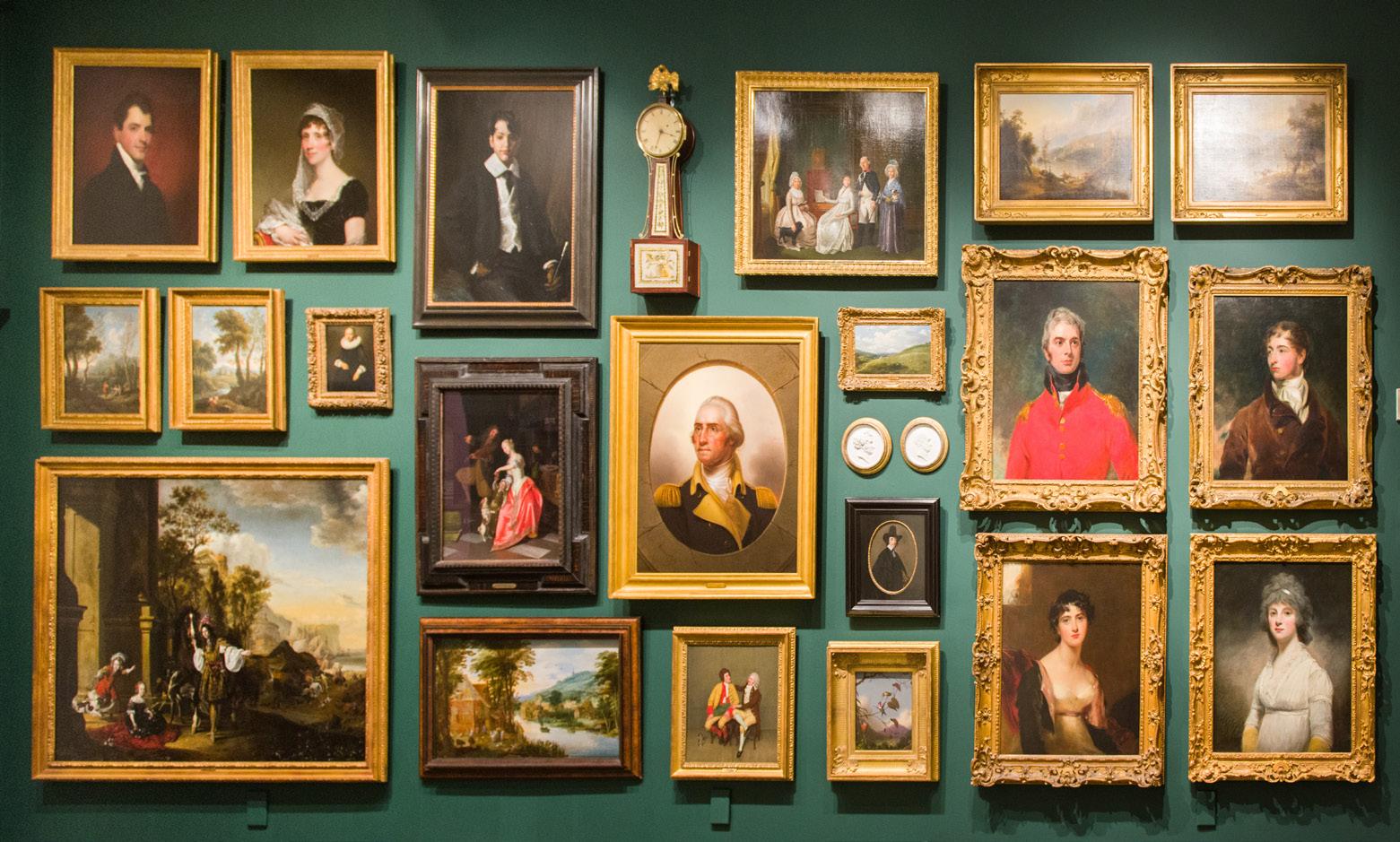
Julian Glass and his partner, R. Lee Taylor, restored the home and gardens into a country retreat, where they entertained in high style. The couple furnished the property with Glass’ fine art and furniture collections, many of which are now on display.
Before his death in 1992, Glass established the Glass-Glen Burnie Foundation, and the house and gardens were opened to the public starting in 1997. Taylor continued to live at Glen Burnie until his death in 2000.
In 2005 the Museum of the Shenandoah Valley was built to expand Glass’ vision and share with the public his vast art collections, as well as the history and craftsmanship of those who have called Shenandoah Valley home for generations.
The museum comprises four main galleries

Celebrating regional history, culture, art and nature
BY JACKI DYRHOLM
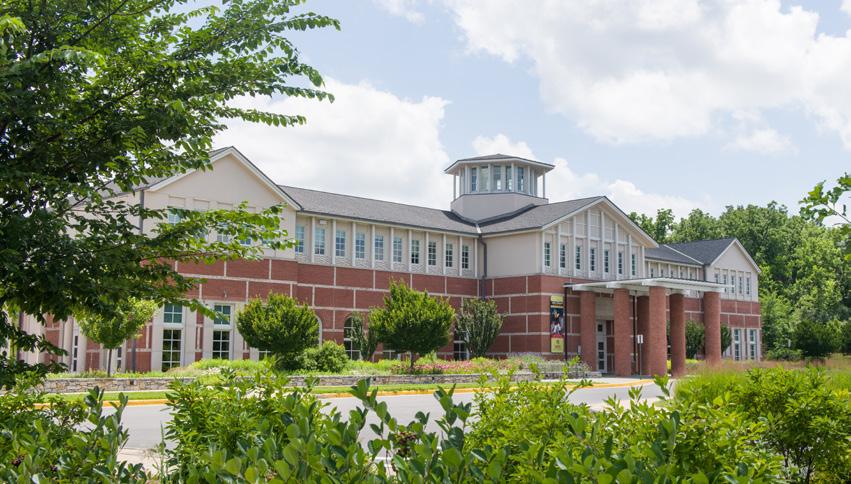
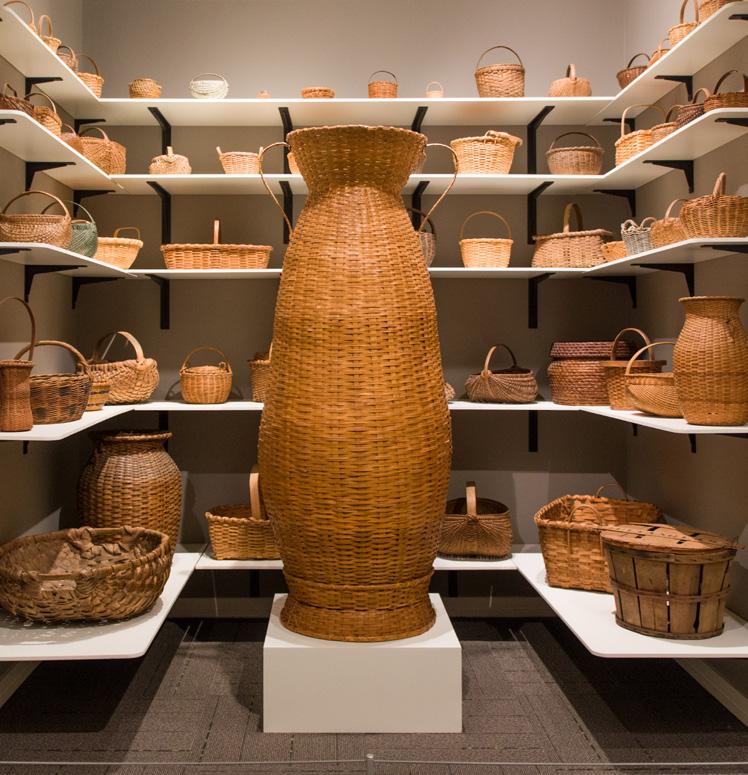
with permanent and temporary exhibits. On the first floor is the Lewis and Glaize Halls, which showcase current regional artists.
Upstairs, is the Shenandoah Valley Gallery, the R. Lee Taylor Miniatures Gallery, the Founders Gallery and the Changing Exhibitions Gallery.
In the Shenandoah Valley Gallery, the rich history of the region is told through artifacts, furniture, paintings, multi-media presentations and dioramas.
Taylor created beautiful miniature houses and rooms on display in the R. Lee Taylor Miniatures Gallery. They include details like books with real writing on the pages and candles made of wick and wax.
Arnold Newman: Masterclass (through August 2, 2026) - Over nearly seven decades, Arnold Newman (1918–2006) created iconic portraits of some of the twentieth century’s most influential innovators, celebrities, and cultural figures. This powerful exhibition features more than 100 photographs of famous sitters like JFK, Pablo Picasso, Andy Warhol, Truman Capote, Salvador Dali, and Marilyn Monroe.
Earth & Sky: Sculptures by Marguerite Elliot (May 30October 11, 2026) - Opening May 30 in the MSV gardens, Earth & Sky: Sculptures by Marguerite Elliot features nine largescale metal installations exploring humanity’s impact on the natural world. From cell phone–inspired Sentinels to twisted Medusa Trees, the sculptures confront environmental challenges, including the loss of birds and forests, while celebrating resilience and hope.
Revolutionary Valley (Opening July 4, 2026): Organized in conjunction with America’s 250th anniversary, this exhibition reveals the Shenandoah Valley as a place where generations have shaped ideals that continue to define America. Featuring powerful, untold stories and remarkable objects, many on public display for the first time, the exhibition tells the Shenandoah Valley’s story before, during, and after the American Revolution.
Totems & Talismans (through August 2, 2026): On view in the Glen Burnie House, Totems & Talismans features a series of works by multimedia artist Pamela Winegard. Created with thread, fabric, and beads, these intricate pieces explore towers and totems as symbols of watchfulness, protection, and personal connection.
The Founders Gallery and the Changing Exhibits Gallery both contain rotating displays of objects from the Shenandoah Valley Collection and the collection acquired by Julian Glass throughout his life. Recently on display in the Changing Exhibits Gallery was a hodgepodge of furnishings and paintings by Jacob Lawrence, one of the first nationally recognized Black artists.
Renovated by Glass and Taylor in the 1950s and again in 2014 by the museum, the Glen Burnie home offers a peek into its history, its occupants and the region’s history. There’s also a miniature version of the home, of course created by Taylor.
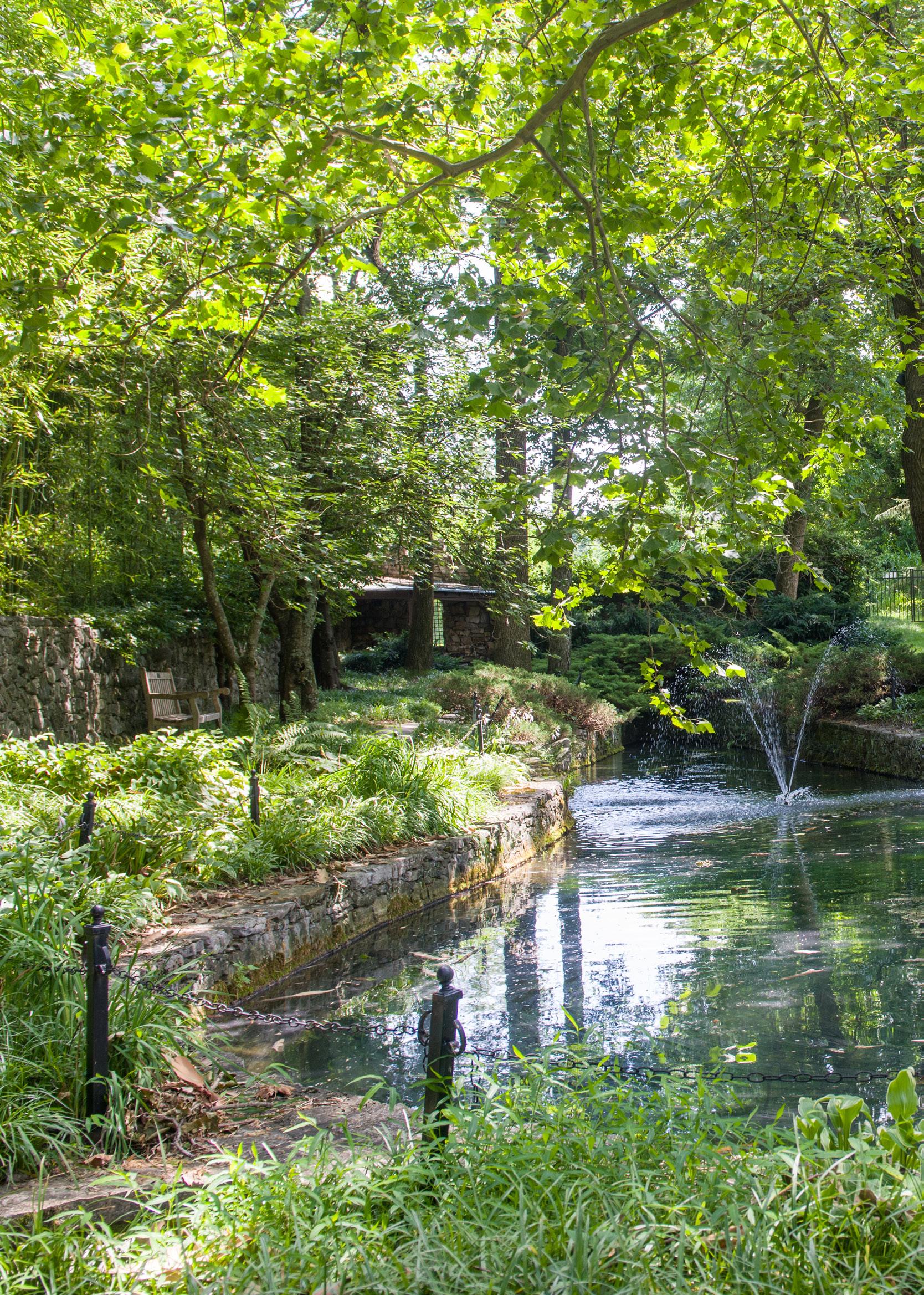
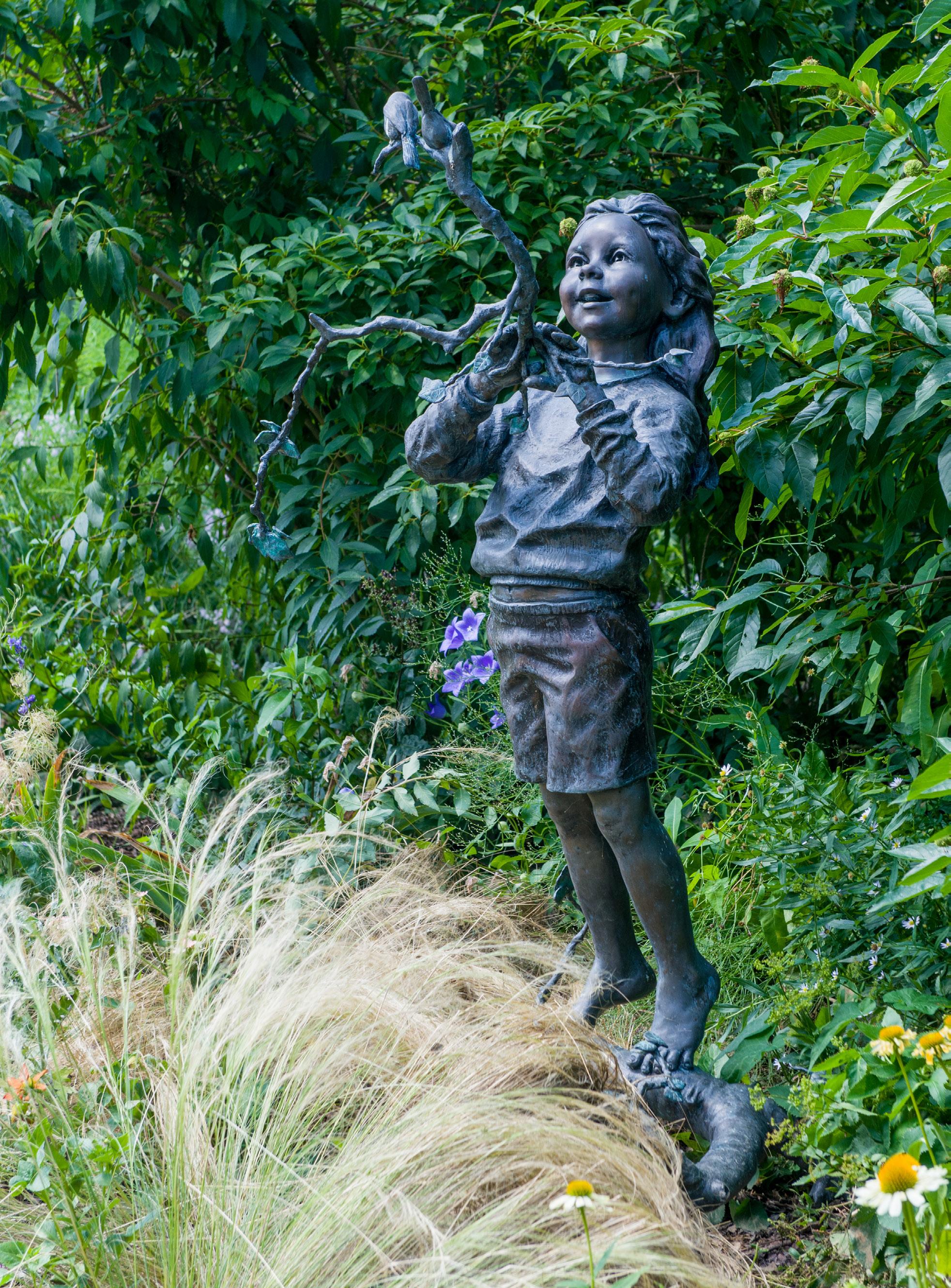
The Glen Burnie Gardens comprise 7 acres of lush green space surround-

ing the house. Within these acres are a grand tree-lined walkway, a statue garden, a rose garden, an Asian garden complete with tea house, a perennial garden and a kitchen herb garden. There is always something blooming depending on the season, and an information kiosk provides information.

Surrounding the Museum of the Shenandoah Valley are miles of trails that cross 90 acres of fields, woodland and marshland. They are ideal for walking, running and biking. Leashed pets are welcome.
Along the trails are various sculptures and several kid-friendly areas, where children are encouraged to run and play while connecting with art.

The Museum of the Shenandoah Valley in Winchester is more than a history or art museum; it is a dynamic cultural center that features ever-changing exhibits, programs, activities and events. There’s always something new happening, so check with the museum’s website or social media to plan your day trip.
Admission: $15 adults, $10 youth/senior, ages 12 and under are free; includes access to the Museum, Glen Burnie House and Gardens. Admission is free on Wednesdays. Trails are always free.
Hours: Galleries & Gardens 10 a.m. to 5 p.m. Tuesday-Sunday; Trails open daily 7 a.m. - dusk
Amenities: Include picnic tables in the garden, bistro tables on the first floor, and snacks and beverages available for purchase in the museum shop.
Jacki Dyrholm lives in Warrenton with her family and a menagerie of animals. Follow her travels at jackigoesplaces.com and on Facebook.

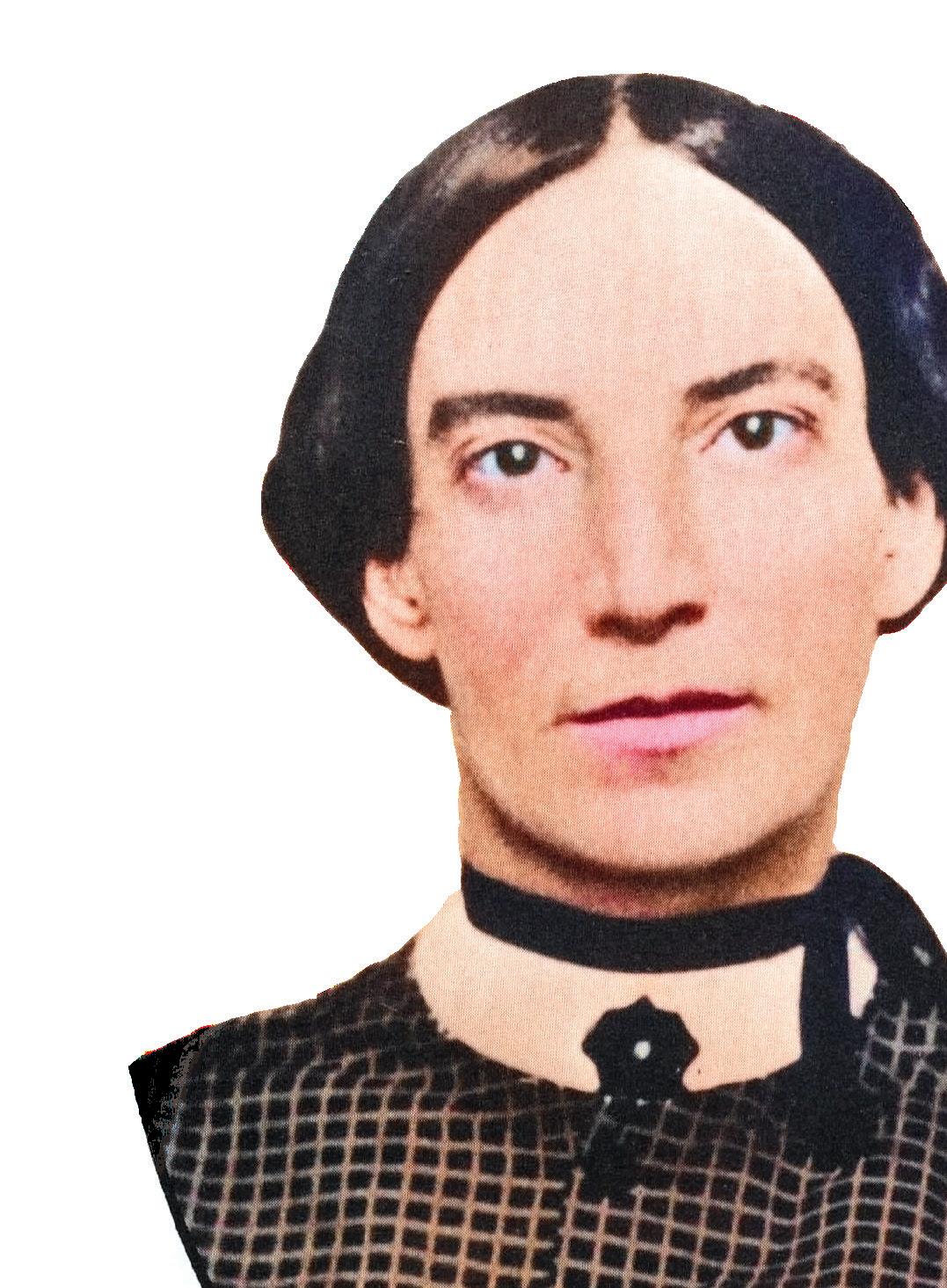
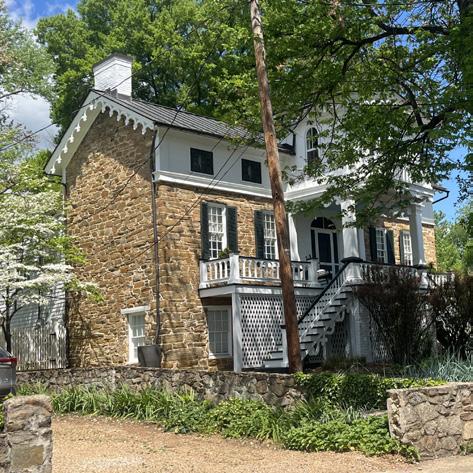
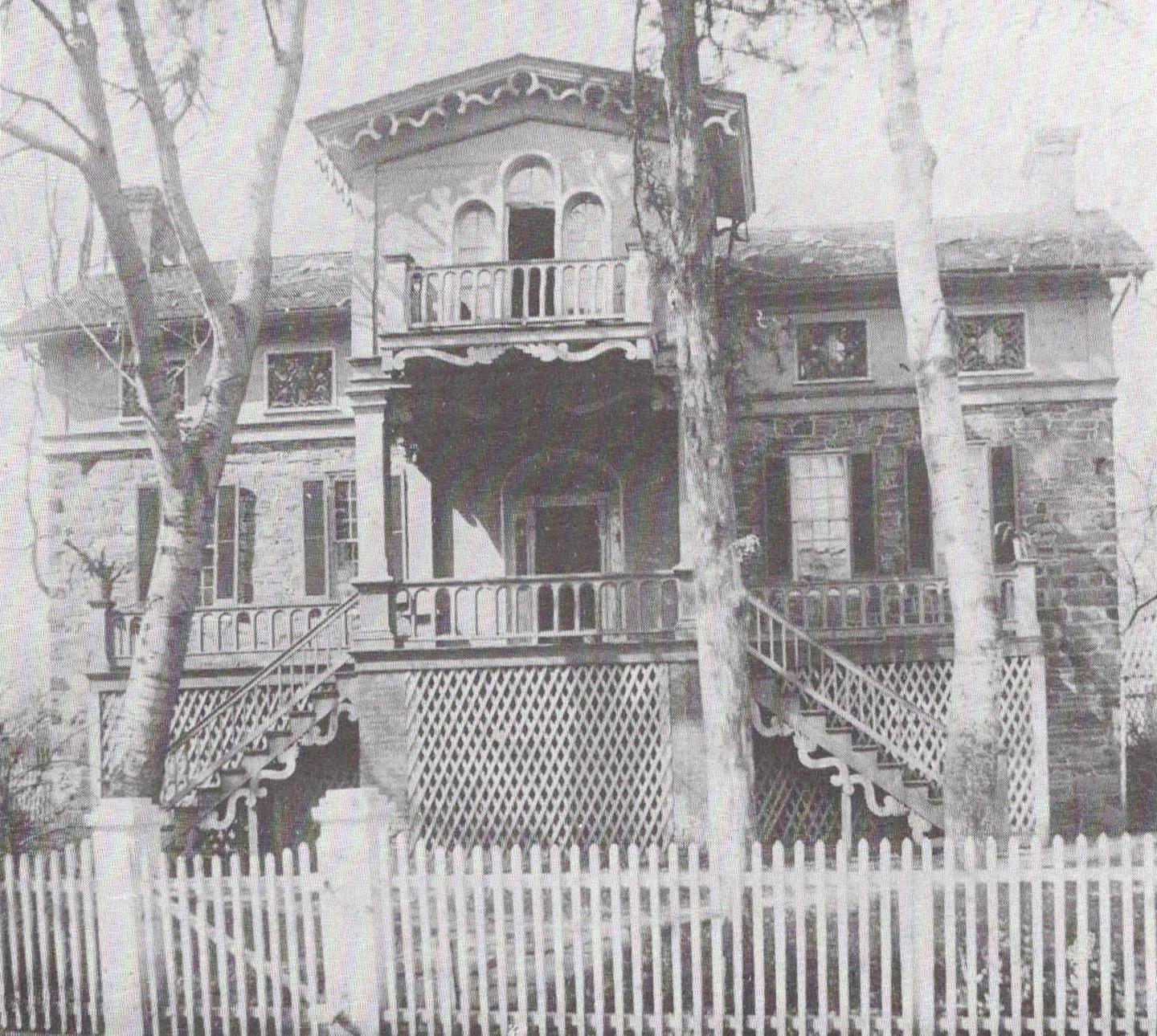
Susan Emeline Jeffords Caldwell of Old Town Warrenton spent much of her time thinking about the same things all mothers think about, alternating between her love and pride for her family and worrying about things like her children’s clothes, their illnesses, their behavior, Christmas disappointments and household finances. While Susan’s feelings are familiar to any mother and she walked the very same streets we walk today, she lived in a different time that presented different challenges: she was raising young children in the early 1860s when Warrenton was a key strategic
BY PAM KAMPHUIS


location for both Confederate and Yankee army which changed hands multiple times during the Civil War.
How do we know so much about her? Glimpses into her life can be seen in “My Heart Is So Rebellious, The Caldwell Letters, 1861-1865,” edited by J. Michael Welton, introduced by T. Triplett Russell and annotated by John K. Gott and John E. Divine, a collection of correspondence between Susan and her husband, Lycurgus Washington Caldwell, who served in an administrative capacity in Richmond until he was moved to active service at the end when the Confederacy was collapsing.
Preserved across the years, Susan’s letters offer a window into life in Old Town Warrenton during the Civil War. While there is a significant amount of information on many different aspects, much of her correspondence revolved around her children, and given that Mother’s Day is coming up I thought we’d explore her experiences as a parent which are so familiar to many.
Susan and the couple’s children lived in the family home on Smith Street, which was shared with her husband’s mother, sister and brother-in-law, the Finks. When the war started, the family included six-year-old William, four-year-old Frank,
and two-year-old Jessie, who were joined by Lucy Lee, born in October 1861.
Susan felt the absence of her husband keenly, but, as mothers do, she always put her children first. Instead of joining Lycurgus in Richmond, she remained in Warrenton.
“Were I alone I would not be from you, but the comfort of the little ones has to be taken into consideration—and it has been solely for their good that we have sacrificed the pleasure of the society of each other for the past 12 months.” They remained separated until the war was over.
Like mothers today, Susan was immensely proud of her children and detailed their accomplishments and milestones in her letters to their father. But she also struggled with the frustrations and feelings of inadequacy familiar to all mothers when childcare seems overwhelming.
I would give anything I possess if I could just act more quietly and been more amiable towards the children.”
I feel wearied in waiting on the children… the fault lies in myself.”
And it’s hardly a stretch to imagine she felt overwhelmed, with three children under six who were by all accounts normal, healthy, energetic and mischievous, and a newborn. Once an apparently diabolical neighbor gave each child a duckling, creating pandemonium in the garden and then tears when they all escaped under the fence.
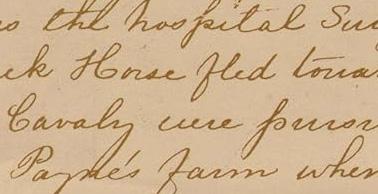
On June 18, 1862, Susan wrote, “We sent for…to cut Jessie’s hair and the poor little soul was frightened out of her wits— she thought he would hurt her—but after a while she became more reconciled and now she looks like a boy, hair cut short. I have had a very severe attack of head ache…” One wonders if the two events are in some way related.
She confessed to her husband, “Many a time I feel as if I am overburdened with anxiety and care that causes me to feel annoyed at little things that others would laugh at…I feel wearied in waiting on the children…the fault lies in myself. I need to cultivate patience—but it seems to me









if I shall never gain the grace—at times I would give anything I possess if I could just act more quietly and been more amiable towards the children.”
Sound familiar to any other moms out there? And this was written before Lucy Lee was born.
As with all mothers, balancing finances is a part of family life. Many of her letters ask her husband to compare prices in Richmond to see if goods for clothing materials and some luxuries (such as coffee) could be bought for a better price than in Warrenton.
“Have you tried to purchase any woolen goods for the boys winter clothes? I would not have you give extravagant prices—but if reasonable and heavy & good for the children you better get some and send. Don’t get black. Black [doesn’t] suit children.”
The Caldwell and Finks families were fortunate in that they had access to a farm—likely a relative’s—outside of town for basic food supplies. Others in town were not so lucky and suffered as the war went on. In April 1863, Susan wrote, “The children are all well, are well fed and
clothed, in fact they have never felt the effects of war and blockade. They enjoy everything in abundance.”
By this I believe she meant that necessities were abundant, but clearly luxuries were scarce. Making holidays magical was as important to her then as it is to mothers today, but the war made an impact.
On December 28, 1862, she wrote, “On Christmas morning the children ran into the parlor hoping to find a ‘Tree laden with presents and niceties.’ They were much disappointed…and we told them ‘Old Chriss’ was a Yankee, and our pickets would not permit him to pass through our lines. We could not find a book or toy all over Warrenton…”
Much about Susan’s life feels familiar—until illness enters the story. Then the distance between her world and ours becomes heartbreakingly clear.
First of all, survival of childbirth was not guaranteed for either mother or child, but all women knew that. Before Lucy Lee’s birth, Susan wrote philosophically, “If the Good Lord should spare my life during what I must soon pass through…” Customs were different then, when
Of course, with children come husbands, who do not seem to have changed much over time.
For one thing, Lycurgus was an abysmal correspondent. Although I’m sure his work kept him busy, almost all of the letters in the book are from Susan to her husband, and comparatively few are received in return. One might think that some of his letters lost through the years and not available for inclusion in the book, but no. Susan chastised him repeatedly that he was stingy with his letters, and once wrote, “I am
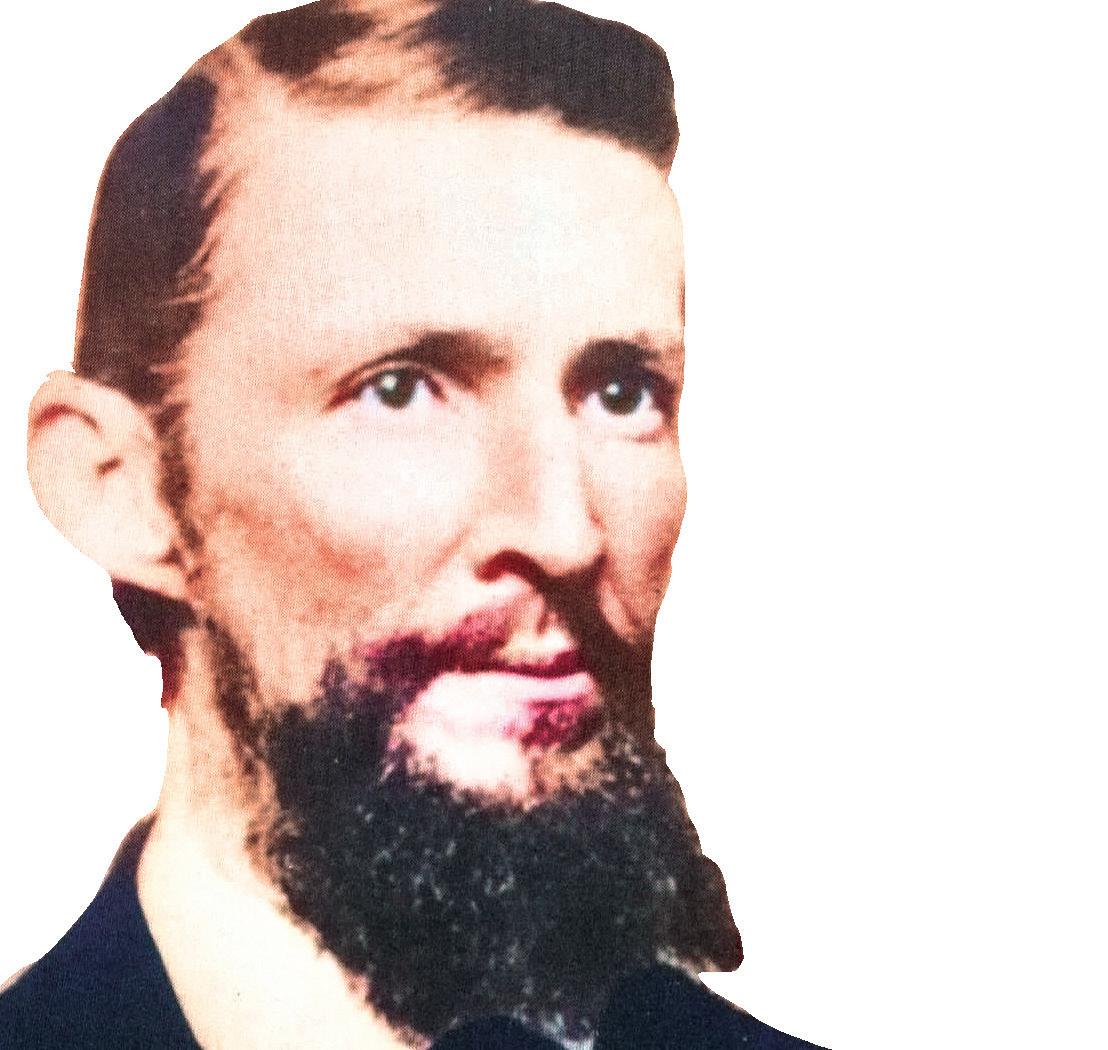
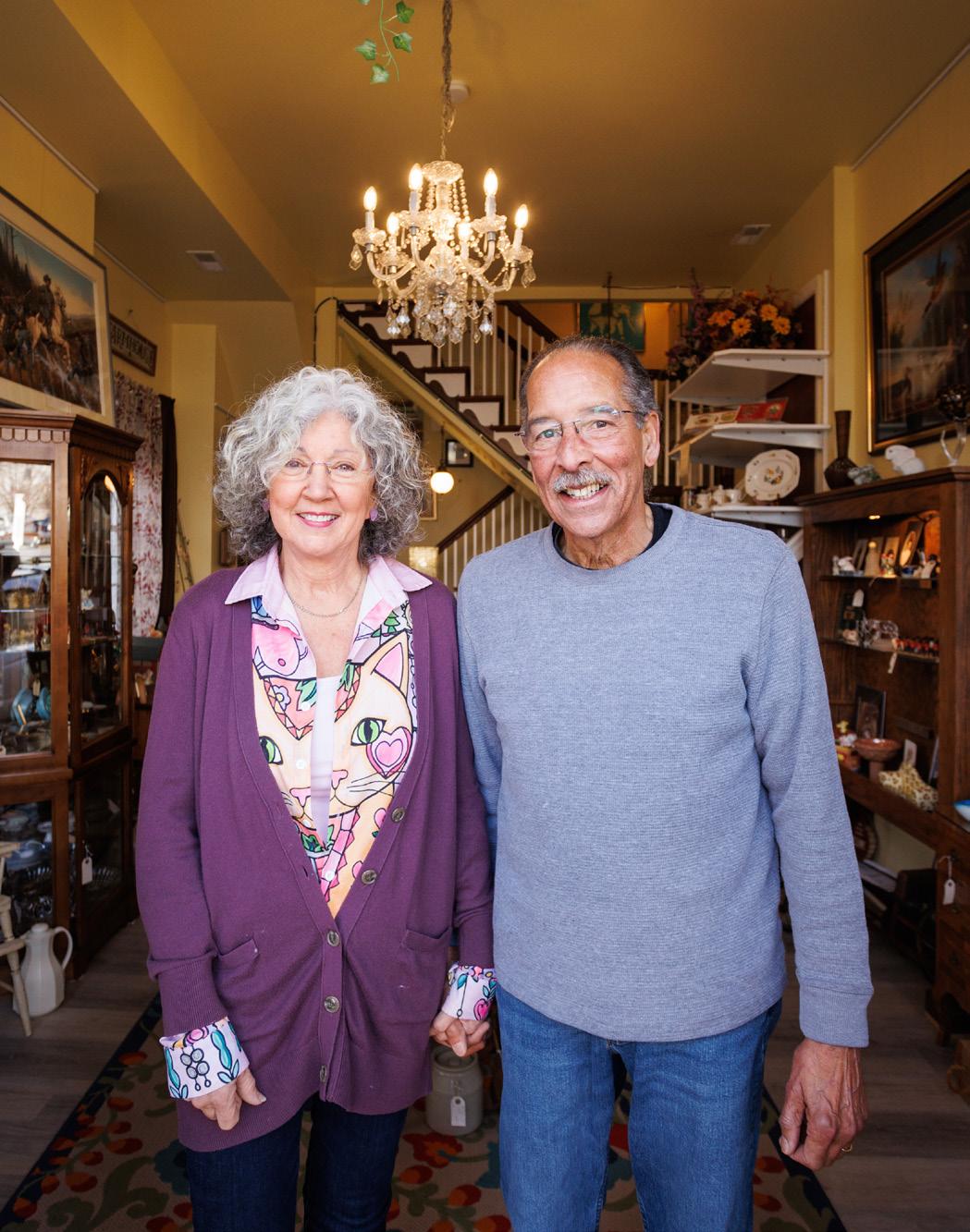
Greg and Rosa Harris’ collectible shop 2nd St. Hoarders in Warrenton is a treasure. The adorable little antique and collectible shop on Second Street in Old Town was Rosa Harris’ idea. She saw it as an opportunity to start, at least, to clean out the vast array of ... stuff ... that her husband’s family had gathered over the years. Now Greg Harris, Fauquier native, retired FSCO lieutenant, and “recovering hoarder” is finding joy in sharing collectibles and their stories.
She frequently reminded him to hang his good clothes so they wouldn’t wrinkle, and to change his socks when they became wet
up this morning this early only to write and insist as well as beg you to write just one line…”
She frequently reminded him to hang his good clothes so they wouldn’t wrinkle, and to change his socks when they became wet. And then, a few months later she wrote, “I have bought you some socks.” She had a friend, Mrs. Goodloe, in Richmond to whom she referred him for any fashion related issues, but who knows if he listened or just dumped his clothes in the corner every night.
pregnancy was not spoken about openly. Susan had to write to her husband in Richmond to ask him to write to Dr. Chilton, who presumably lived in the still-standing Chilton House on Culpeper Street a few blocks away from Smith Street, to let him know that she would be needing his services at the end of September.
Susan cared for her children through many of the childhood ailments we do today: colds, stomach aches, toothaches, teething and ear infections. Remedies varied significantly from today, although some may still be applicable.
For instance: “We were much alarmed about Frank a few nights ago. He had gone to bed and was aroused by a fly buzzing about his ear—he tried to fight it off—I went to him and found it was in his ear and could hear the buzzing but could not see it. We put whiskey in his ear and send for the Dr. When he came he filled the ear with oil—and Frank grew easy— but we did not see the fly. The Dr. said it must have been killed by the whiskey.” I suppose that’s as good a remedy as any, even today?




What we are largely protected from today, things like typhoid, mumps, malaria, pneumonia and influenza, could devastate a family, especially young children. The children received the available vaccines, but danger lurked around every corner.
The worst of all for Susan was the scarlet fever which took Lucy Lee within


Around the clock care ranging from 4 hours to 24 hours per day wherever our clients call
a matter of days. Her youngest child died on September 10, 1864.
The loss of a child, while less frequent today, would be the same devastating experience for any mother. Susan plunged in a deep depression that she struggled with for months.
“I feel that it is at times more than I can bear—I need strength. …I can see, or hear of nothing but my own deep trouble… at times I feel as if I could scream my existence away I feel so depressed—time seems so long…that intense longing to see my baby and the knowledge of the impossibility of it takes such entire possession of my soul that my brain sickens & reels…I cannot gain power over my own rebellious heart to say Gods Will be done.”
Susan’s world was very different from ours, but in that moment, she becomes instantly familiar. Mothers in any time period face this painful truth: they can comfort, guide, and fiercely love, but they cannot shield their children—or themselves—from all that life may bring. L

















BY STACY SHAW
PHOTOS BY LUKE CHRISTOPHER
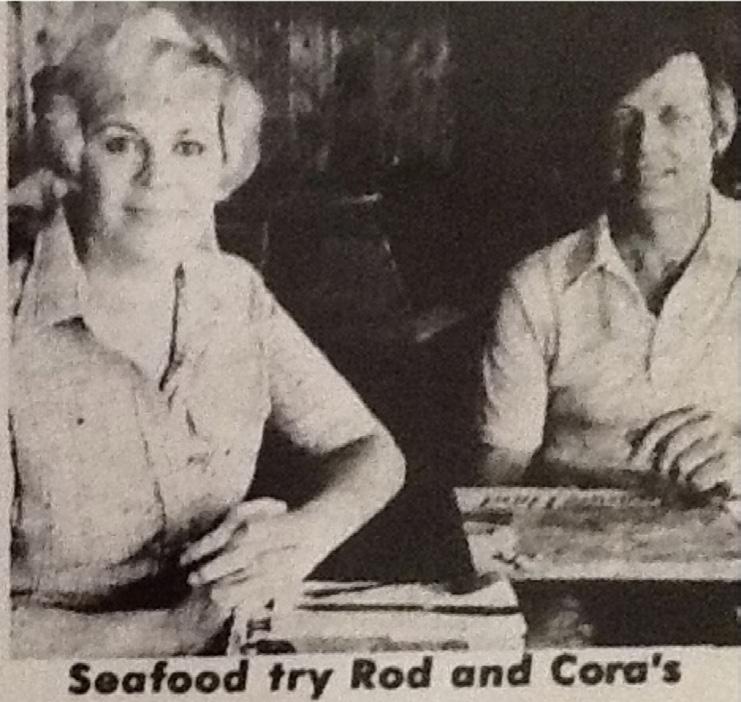
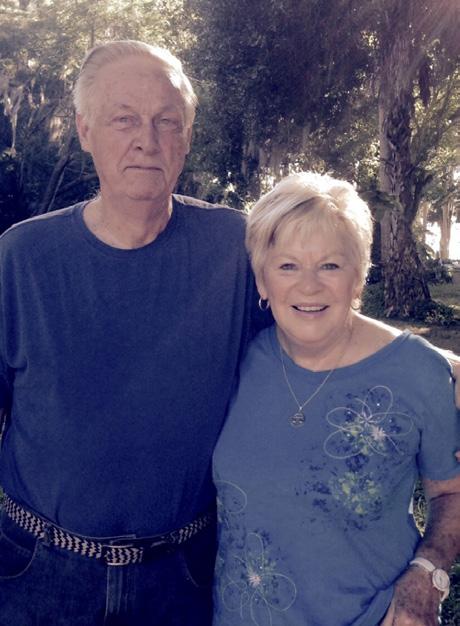
Rodney Stringer, 95, original owner of Blue Ridge Seafood, never planned on running a restaurant - let alone one that would remain in his family for almost five decades.
In the mid-1970s he was working as an air traffic controller in Leesburg and felt the itch to pursue small side businesses.
“I was looking for something to do during the last seven to eight years in air trafficking,” Rodney said. “[I always did] something on the side.” He drove a taxicab, sold firewood and Christmas trees, but selling crabs proved most successful.
Around 1977, a coworker suggested he buy a popular hamburger restaurant on Route 29 in Gainesville and turn it into a crab house.
At first look, Rodney was unimpressed by the building, but his wife, Cora, now 91, had worked as a hostess at a seafood restaurant. She realized Gainesville was due for a restaurant of its own, plus this one had an apartment on site.
“She was always looking for three bedrooms,” Rodney said. “She decided we would live upstairs.”
The Stringers moved with their daughters, Donna and Gail, who were in their late teens and early 20s, and they got to work updating the restaurant.
In 1979 they opened the restaurant under its original name: Blue Ridge Family Restaurant.
The Stringers added crabs to the menu but
continued selling hamburgers and french fries. Business was booming.
“It was just a new place to go, so when it opened, [the customers] just rushed in,” Rodney said. “When we had crabs, everyone wanted crabs and they couldn’t get them out there [fast enough].”
“I just can’t keep up with this,” Rodney remembered thinking. “All these people coming in from Vint Hill for hamburgers and we don’t have enough of a grill.”
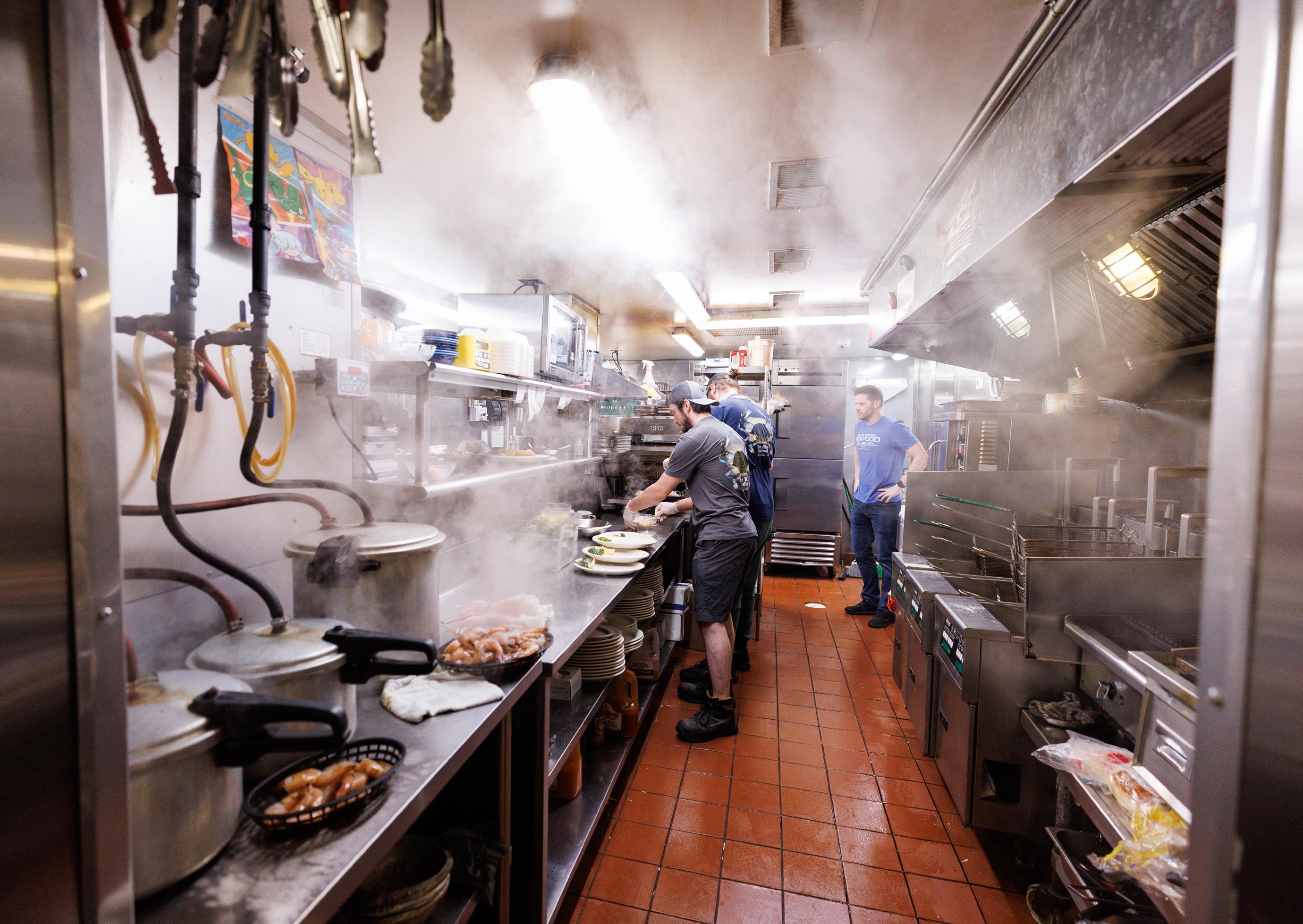
They got inventive. They added shrimp. They phased out hamburgers. They boiled crabs in bulk in large metal cans outside. By 1982, Rodney dedicated himself fulltime to the restaurant. “It was a rough road, but I enjoyed it.”
The restaurant slowly expanded the menu, and finally, the family renamed it Blue Ridge Seafood.
Over the years, the Stringers kept the atmosphere casual. With picnic tables covered in paper, Blue Ridge Seafood remains a place where customers don’t have to worry about getting messy. And when the family expanded the space, they attached a large carport to the building.
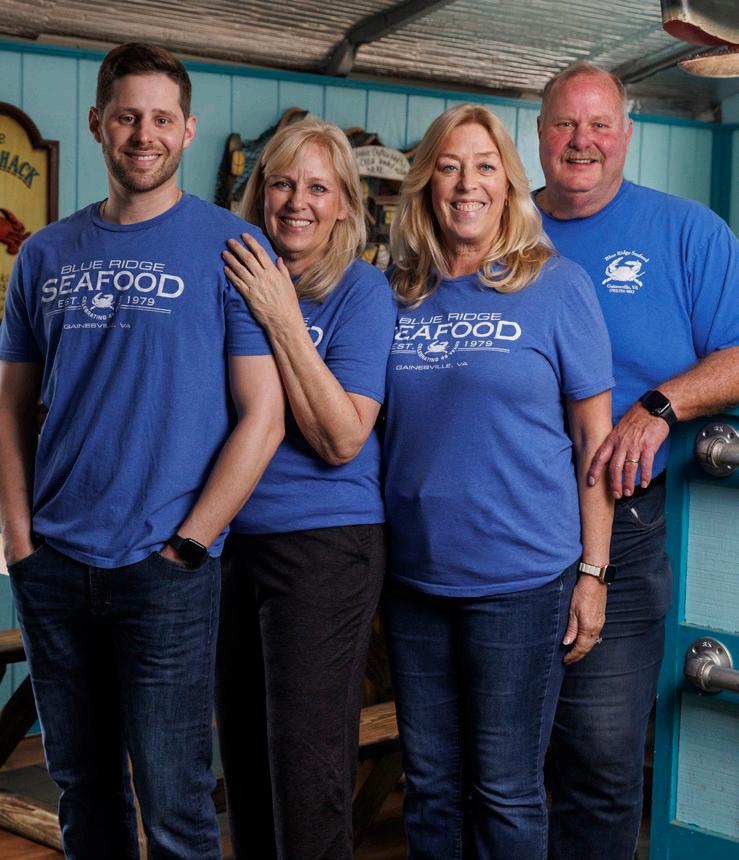
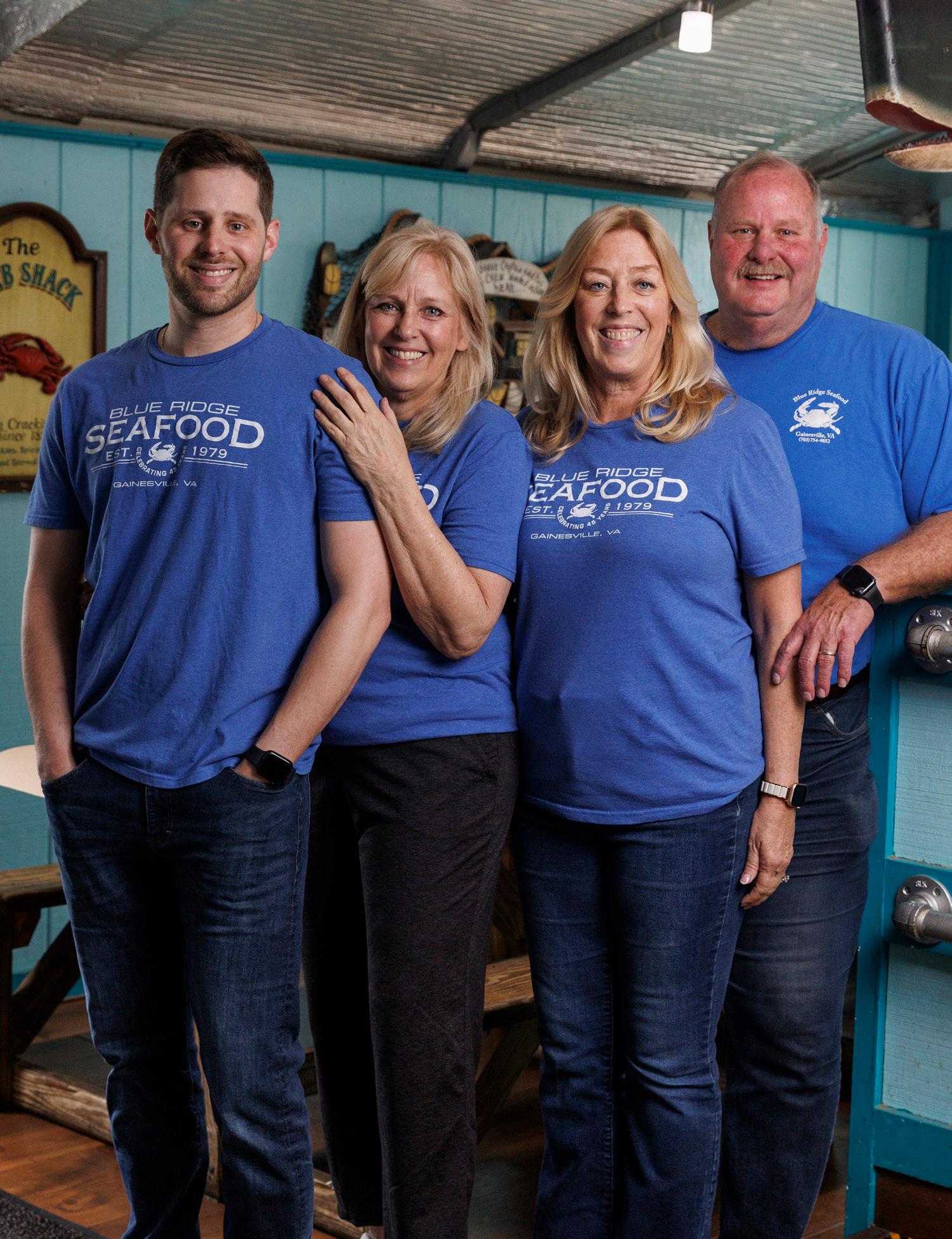
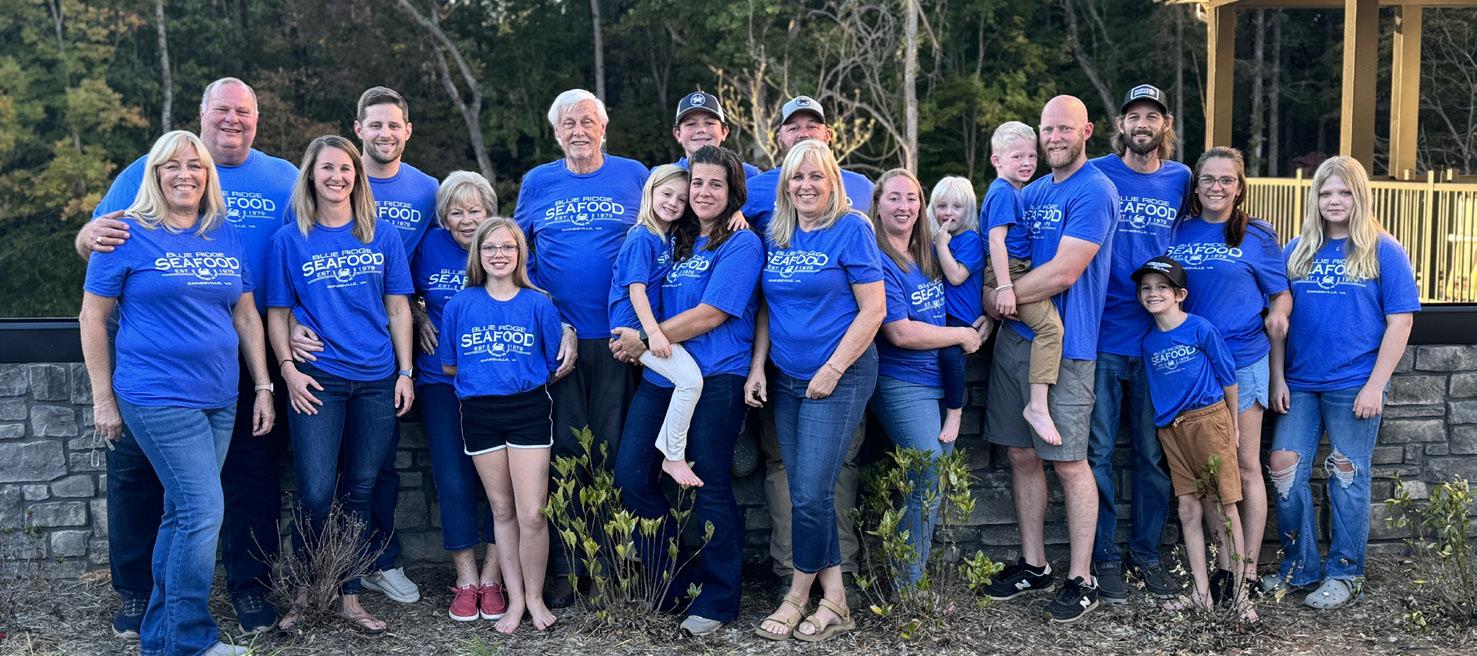
It was 100% a family business. “I came to work here in my 20s to help with the business,” said daughter Donna Donovan, now 66. “I’ve just been here ever since.”
The Stringers’ other daughter, Gail Constant, now 69, worked at Blue Ridge in her 20s. Her son, Kevin Ellis, and his wife, Angie, met working at the restaurant. Gail’s other son, Stephen Ellis, is a member of the catering team. His wife, Sarah, is the present manager, and their teenage son,
Tucker, cleans tables.
When their parents moved to Florida in 2006, Donna and Gail took over the business with help from Donna’s husband, Mark. His sister, Jeanie Lingo, is the longtime bar manager. “At some point in time almost all the family worked here in one way or another,” Donna said.
The Donovans’ sons, Daniel, 38, and Kyle, 35, practically grew up with the restaurant, and Kyle returned to be the general manager after teaching in Loudoun County.
“It’s perfect for him; he’s a people person,” his mom said. “It’s in very good hands.”
Kyle said he loves the job. “It’s kind of cool to keep your grandfather’s legacy going.”
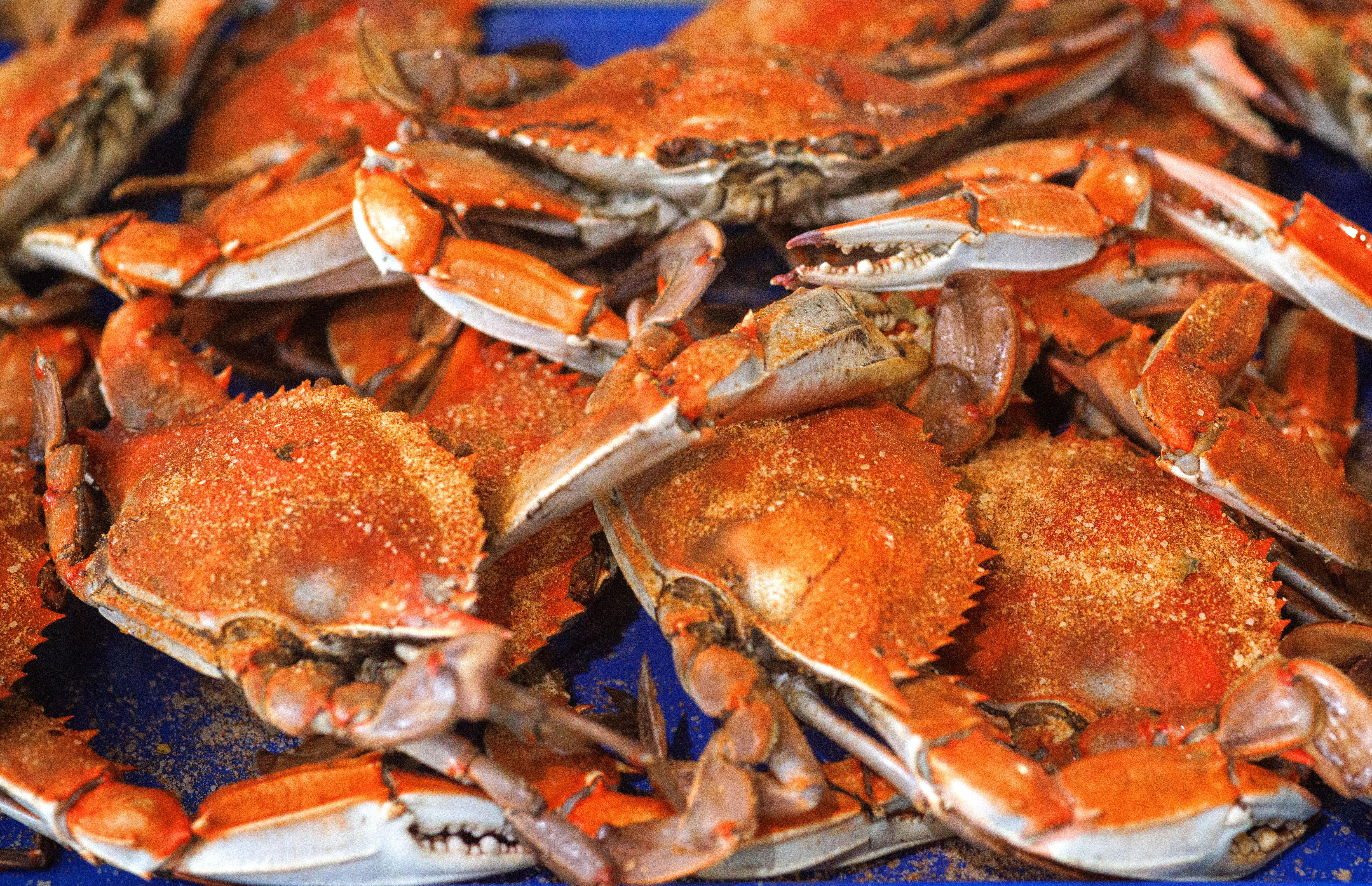
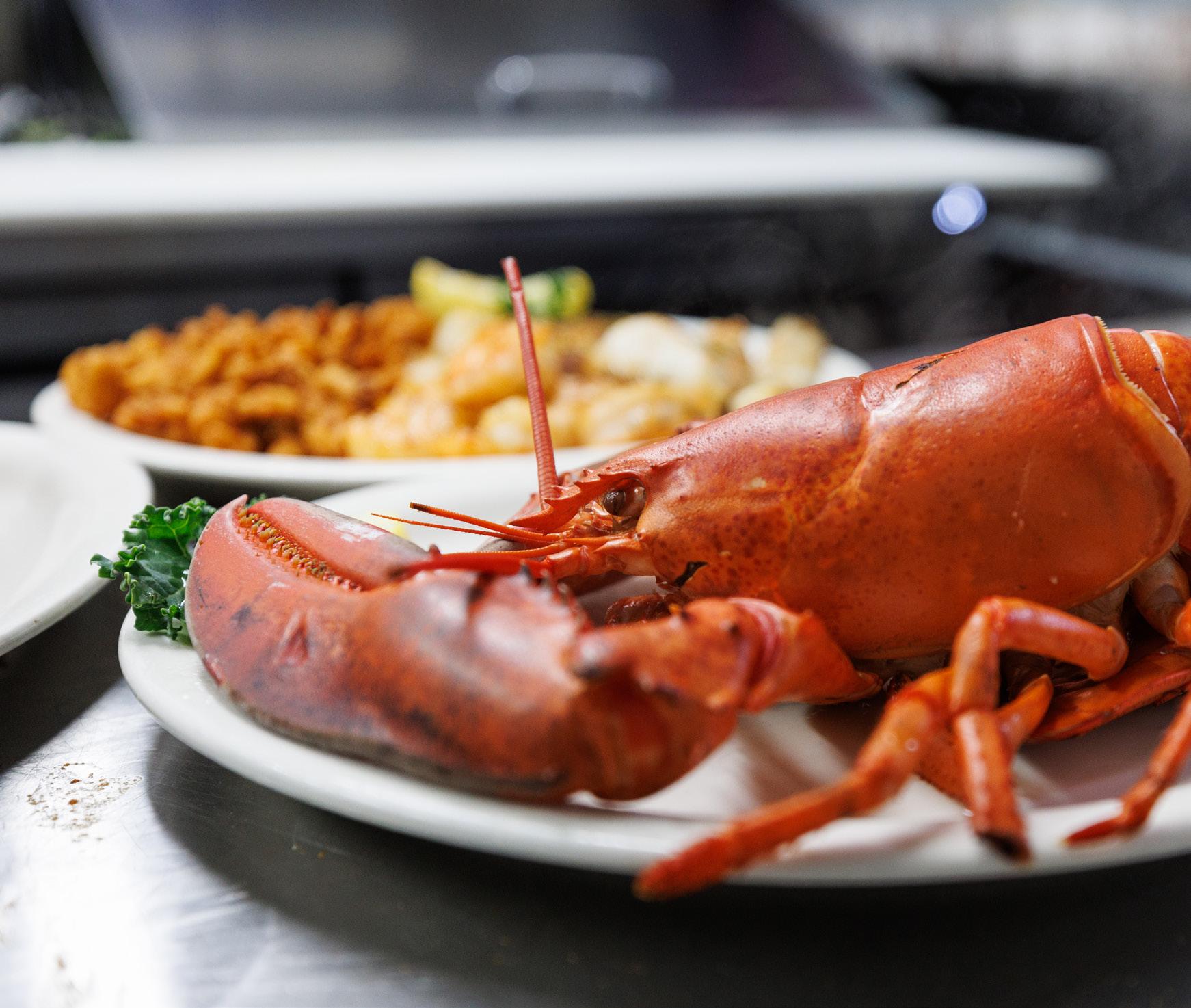
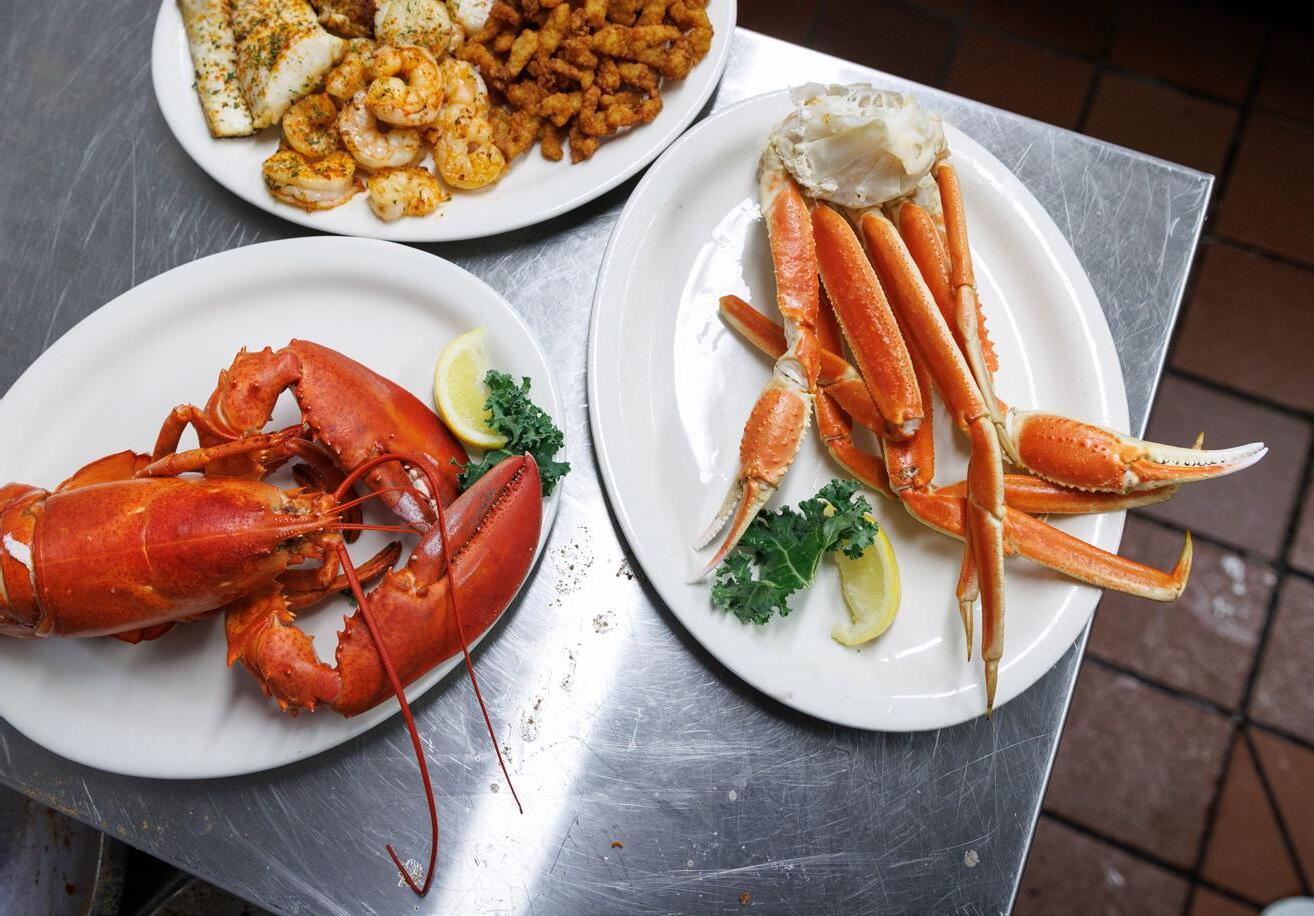
Kyle believes the restaurant’s success comes from its quality seafood, including shrimp sourced from the Gulf of Mexico, lobsters from Maine and snow crabs from Alaska. Blue crabs, oysters and scallops usually come from the Chesapeake Bay and Virginia’s Eastern Shore.
“We do our best to get domestic seafood the best you can and support our communities,” Kyle said.
Blue Ridge has a remodeled deck and tiki bar. Live bands play on Friday and Sunday nights when it’s warm.
Sherry Knicely of Fauquier County has worked at Blue Ridge for 26 years. “I love the family,” she said. “It’s a fun job. The staff get along well, and we have loyal customers.”
She said customers come from as far away as Winchester, Charlottesville and Maryland, and regulars introduce her to their children and grandchildren.
“It’s just a real family around here,” she said. “The older ones of us, we’ve lived here, and our kids have played together. Everybody’s kids worked here – both of my boys worked here.”
Mark Jenkins has been eating at Blue Ridge since it opened.
“When it came to seafood it was always Blue Ridge for my mom and my dad, my aunt and my cousins,” he said. “The seafood is second to none. It is the best. The blue crabs have been incredible the past few years, large meaty good crabs.”
Jenkins values family businesses. “The reason they are here and continue to thrive is they care. That’s the vibe here. It is still mom and pop, while every single business I’ve known in this area is a conglomerate."
After moving, Rodney and Cora Stringer opened a seafood restaurant near St. Augustine. They are now fully retired, but Rodney still misses working. “I’d flip burgers if I could,” he said, “but I won’t do it for $15 an hour.”
When he bought the business 47 years ago, he never imagined it would still be going strong.
Even if his family sold the restaurant, he hopes Blue Ridge Seafood would live on. “I hope some others continue in the business. I don’t want to see it go.” L
Want to go?
Where: 15704 Lee Highway in Gainesville.
Hours: 11:30 a.m. to 8:30 p.m., and until 9:30 on Fridays and Saturdays. Closed on Mondays. Online: blueridgeseafood.com
Stacy Shaw is an award-winning journalist. She is the editor of Haymarket/Gainesville Lifestyle Magazine and publisher/owner of the local news site Bristow Beat.com.


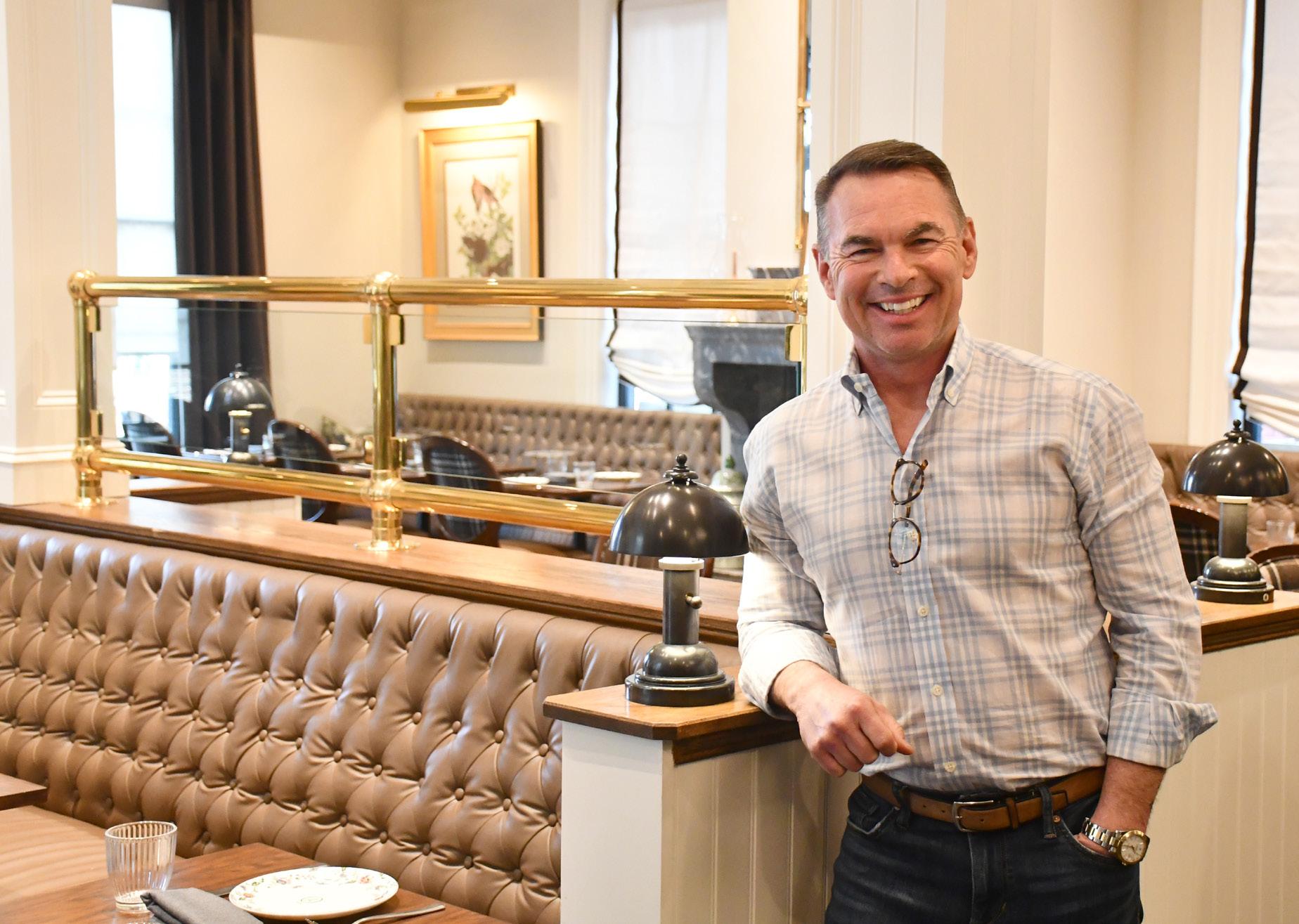
the 22-acre wedding venue in Aldie. He built the Knightsbridge Estates of single-family homes in Aldie and helped build the Highland Apartments on Walker Drive in Warrenton.
BY LELAND SCHWARTZ
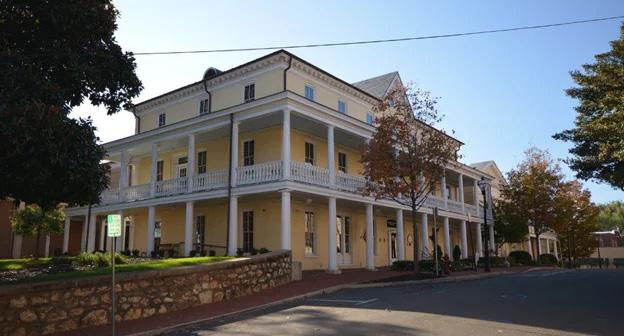
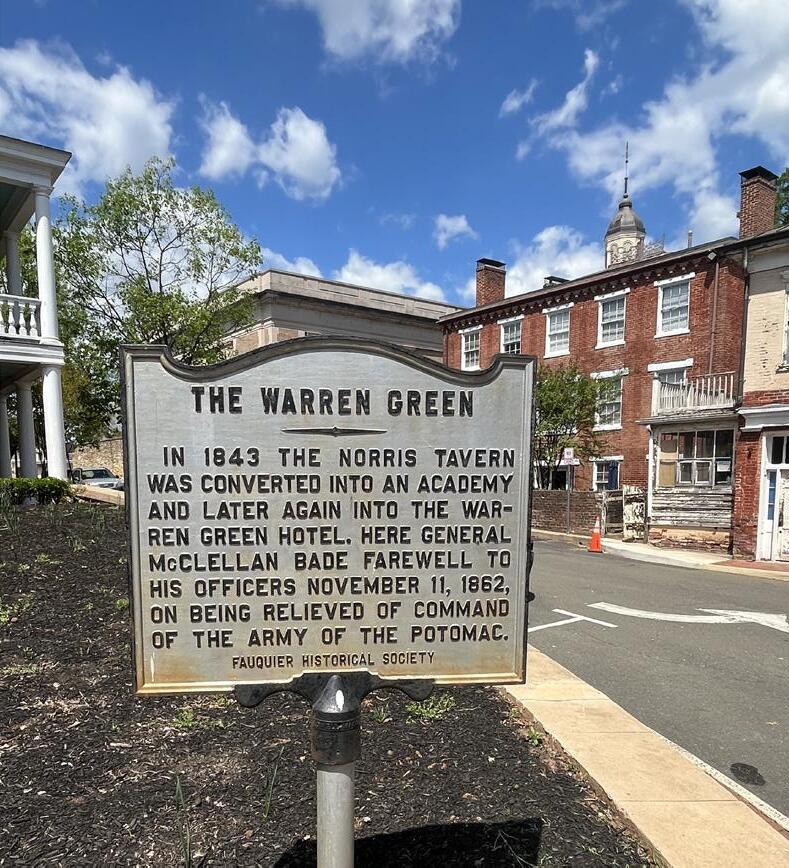
It was last summer when Kevin Ash got a call from consultants hired by Fauquier County to find a developer suited to convert the historic Warren Green building into a boutique hotel in Warrenton.
“They called and asked if I would take a look at the property,” Ash said in an interview, adding there were nine interested parties and his plan was one of three that endured.
Ash not only built the new 39-room Hotel Burg in Leesburg, but restored Manor 1858,
Ash bought Middleburg’s Fun Shop building on Washington Street and is opening up a restaurant this fall – name and cuisine to be determined – at the street level of the building. The Chase club’s Middleburg venue will be located upstairs from the restaurant and includes private dining space.
The club, open to members seven-daysa-week and includes a fitness center and a speakeasy, is a key part of the Leesburg hotel and is central to his plans for the Warren Green.
Annual dues at The Chase, Ash said, are $2,500 and include reciprocity between the three locations. The club in Leesburg has 450 members, and the club in Warrenton would be able to have between 300-400, according to Ash.
The developer got some pushback regarding the club being private, but he says, “it’s
BY LELAND SCHWARTZ
no different than joining the fitness club.”
Other private clubs in the county include The Fauquier Springs Country Club, the Fauquier Club, which is a few steps away from the Warren Green building on Culpeper Street, and the Middleburg Tennis Club on Zulla Road near the Fauquier-Loudoun county line.
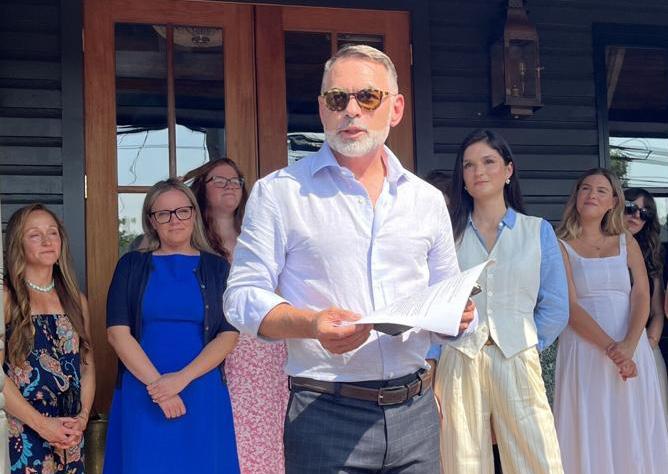
Ash said he was keenly aware that some local artists and musicians wanted to use the old Town Hall at 18 Court St. – which the Warrenton Town Council voted 5-2 on April 14 to let him purchase as part of the Warren Green hotel project – as a community arts center.
“I am very much looking forward to working with Warrenton’s artists, including E.J. Peter, in making their music and artwork a central part of the Warren Green,” Ash said after the vote.
He also said he wanted to express his “deep heartfelt thanks to all the Warrenton business and property owners for sharing all the reasons they support the project with the Town Council.”
“I also appreciate the five Town coun-













cilmen who took the time to ask detailed questions and Mayor Carter Nevill, who came to visit the Hotel Burg in his due diligence.”
“Now we get to fully utilize the Warren Green for hotel rooms (between 25-27) and use the Court Street building for an 80-seat restaurant and social space,” a clearly excited Ash said.
The restaurant will be open to the public.
Ash said that after he shared his email address in an earlier FauquierNow story (kash@madisondale.com) saying “If anyone has any ideas, email me,” he received several suggestions he “will bake into the project.”
The next steps include getting the two buildings rezoned for commercial use, obtaining approval for a breezeway to connect the buildings and winning approval for the interior restoration designs.
Ash says the new Warren Green Hotel would become a member of both Experience Old Town Warrenton and the Fauquier Chamber. “The hotel and the management will be very active in the community.”
Matt Carson, the Experience Old Town Warrenton chairman who owns Britches and SiteWhirks on Main Street, said the organization’s members are “overwhelmingly in favor of the project.”
“Reviving these buildings as a hotel and event space would be a tremendous gift for our community,” the group said in an open letter to the town. “It promises to create new jobs in hospitality, maintenance, events, and related services; attract visitors who will support our local shops, restaurants, and attractions; and generate increased economic activity that strengthens Old Town Warrenton as a whole.”
The Warren Green and 18 Court will be managed by the same real estate management firm, PM Hotel Group, which oversees dozens of hotels, restaurants and bars across the country, including Ash’s Hotel, his wedding venue in Aldie and American University’s Airlie conference center in Warrenton.
All the construction would be done by two firms Ash owns: the design, development and consulting group, Madison Dale, and Clay Construction, which will serve as the general contractor.
If all goes well, Ash said the project could be completed in 18 months.
“We’re not going to change a thing,” he said. “The Warren Green will look exactly the same.”
Between the hotel, the restaurant and the Chase Club,
Ash says there will be about 75 new local jobs. Having obtained 18 Court St. enables the hotel to have a lobby bar and café.
Ash told the Town Council he expects the project to generate about $400,000 per year in tax revenues in addition to all the other benefits to Old Town, greater Warrenton and Fauquier.
Ash said the offer for 18 Court matched the same cost per square foot that the county agreed to take for the Warren Green, where Ash said the purchase price was $2 million.
Ash grew up in Woodbridge, went to night school at NOVA Northern Virginia Community College and worked as a stonemason and framing houses for Pulte Homes and Clark Construction.
He built and bought his first houses at 23, he said. “I had to use all my credit cards.”
Ash’s prediction for the project, which he believes will bring over 550 people a month to Warrenton: “I think the town will have the best possible hospitality venue.”
In a letter from the county’s Board of Supervisors to the Town Council regarding the hotel project, board Chairman Kevin Carter said the supervisors believe the project “represents a meaningful opportunity to attract visitors and serve as a catalyst for economic development in downtown Warrenton.”
Mayor Nevill called the project “a historic preservation and economic win that solidifies Warrenton's future as a destination for quality economic development and tourism.”
Like the town itself, the Warren Green building was named after Gen. Joseph Warren, a hero of the American Revolution who was killed at the Battle of Bunker Hill and was famous for dispatching Paul Revere and William Dawes on their midnight rides in 1775. L












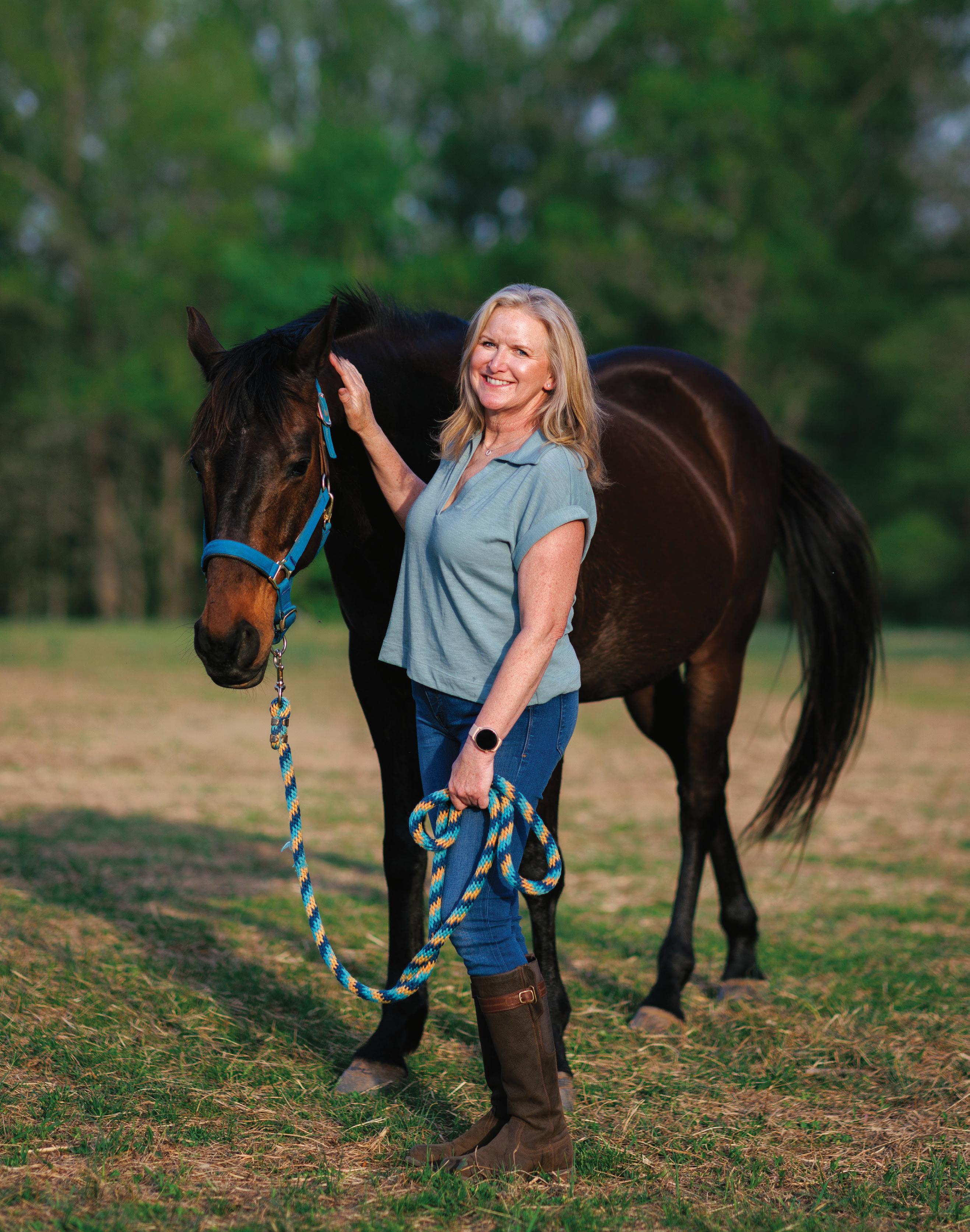
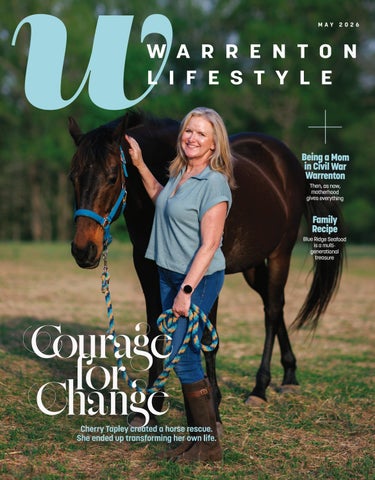
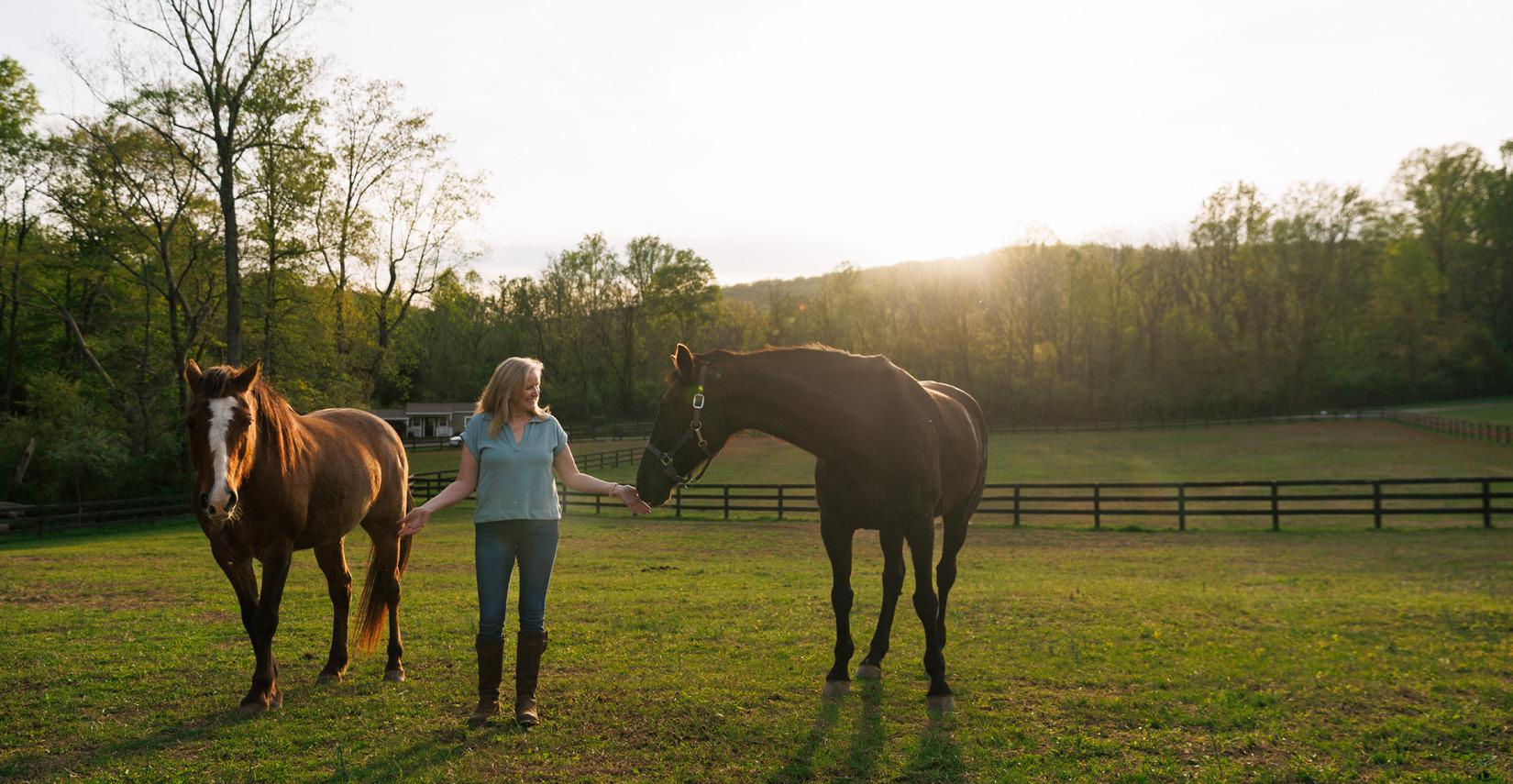
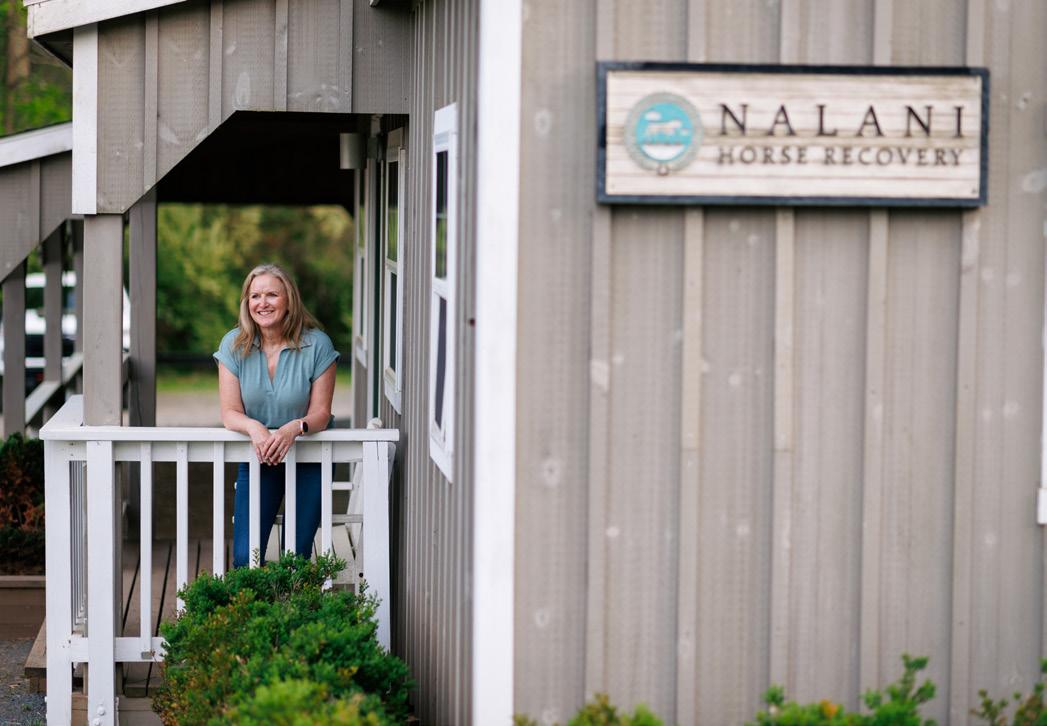
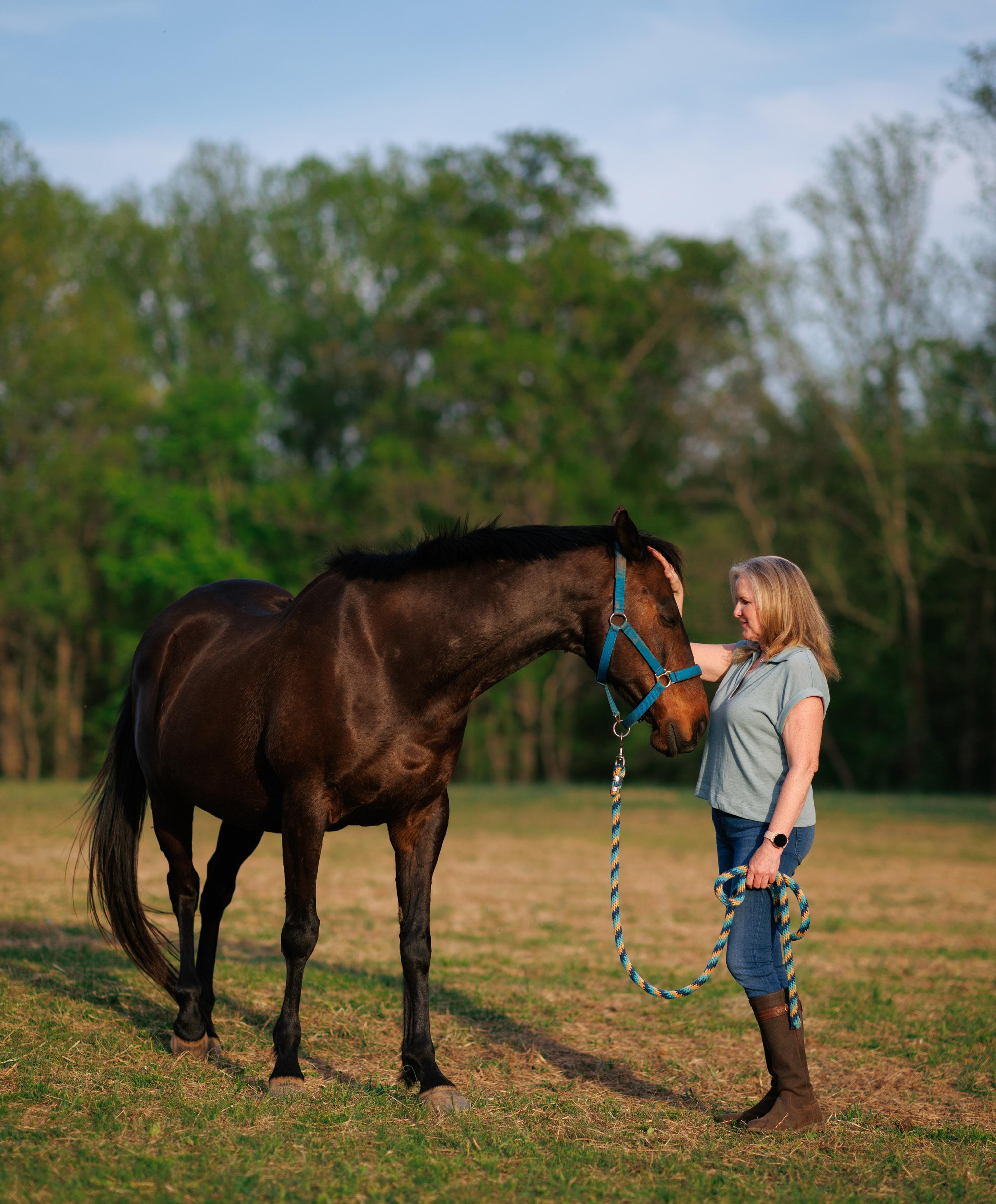
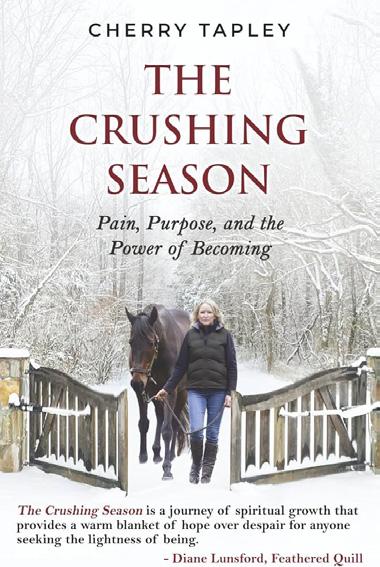
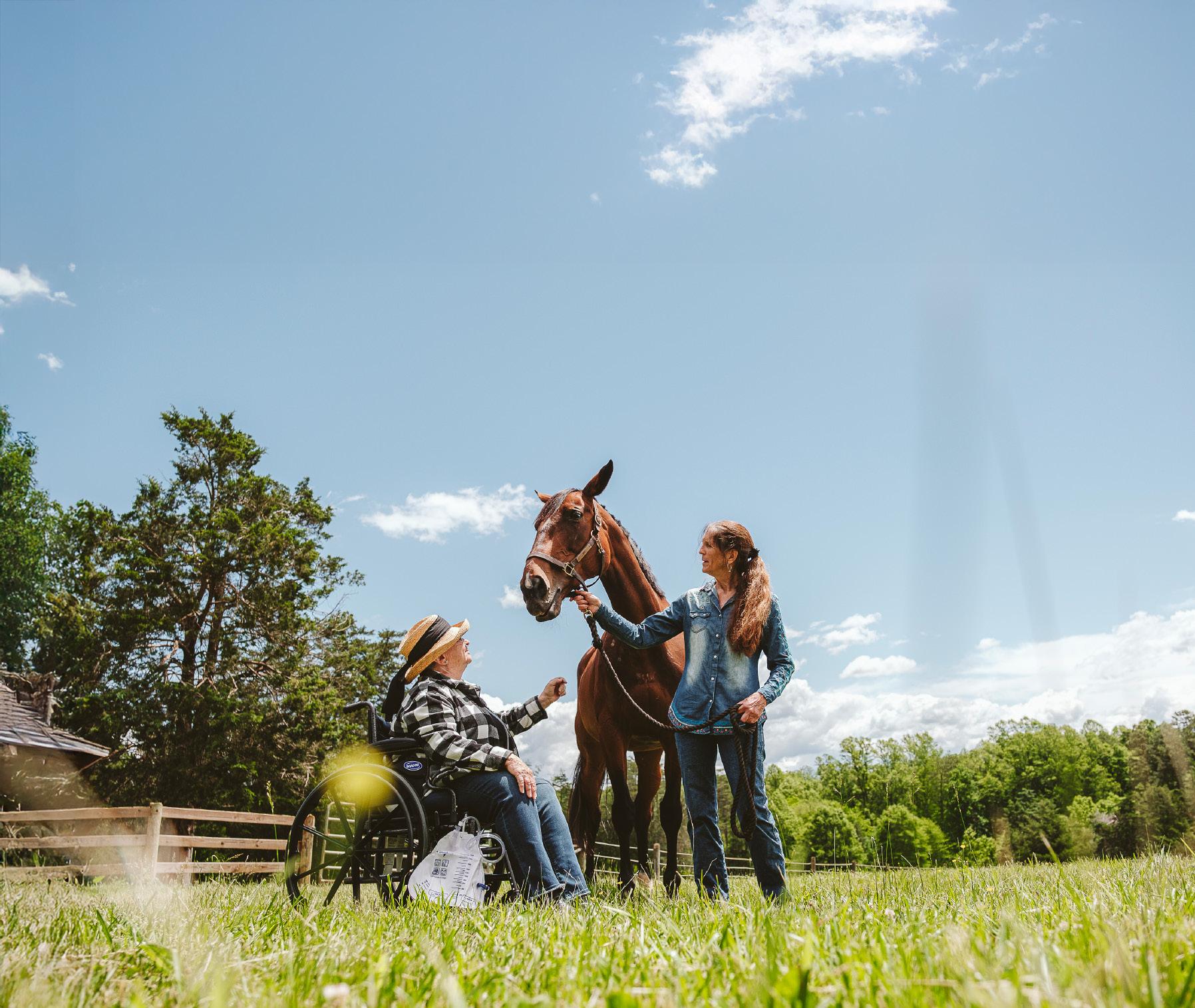
Cherry Tapley did not grow up in the horse world, nor did she set out to run a nonprofit. But after discovering horse rescue in her forties, she found a calling that changed the course of her life. In the decade since founding Nalani Horse Rescue, Tapley has built a sanctuary in Broad Run, rescued nearly 50 abused and neglected horses — and remade her own life in the process.
HOW DID YOU GET INTO HORSE RESCUE?
I had always wanted a horse when I was a little girl, but I didn’t start riding until I was 42. I loved it. I didn’t know horse rescue existed, but I came across a website for one. It broke my heart. I knew I was supposed to help.
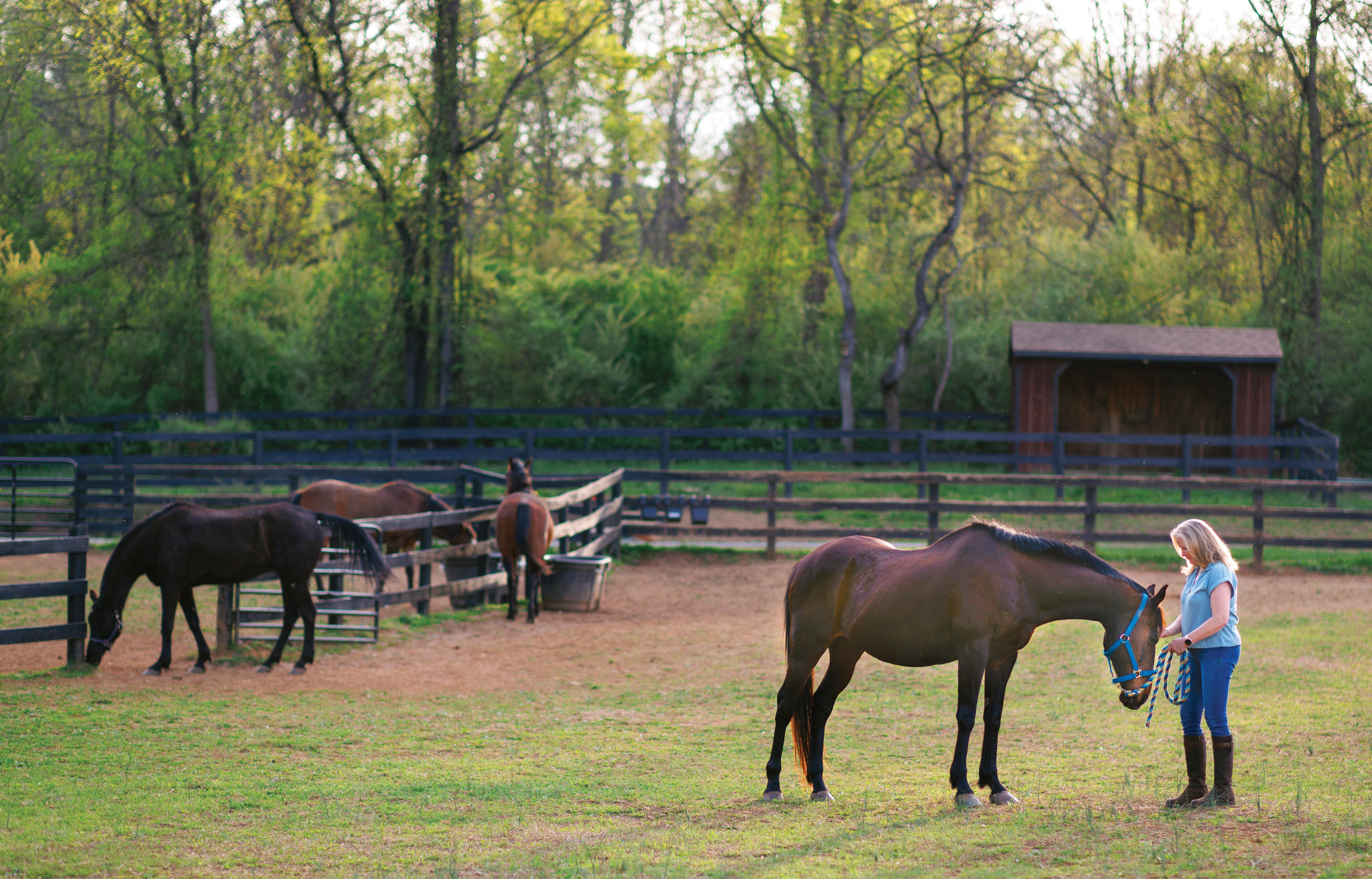
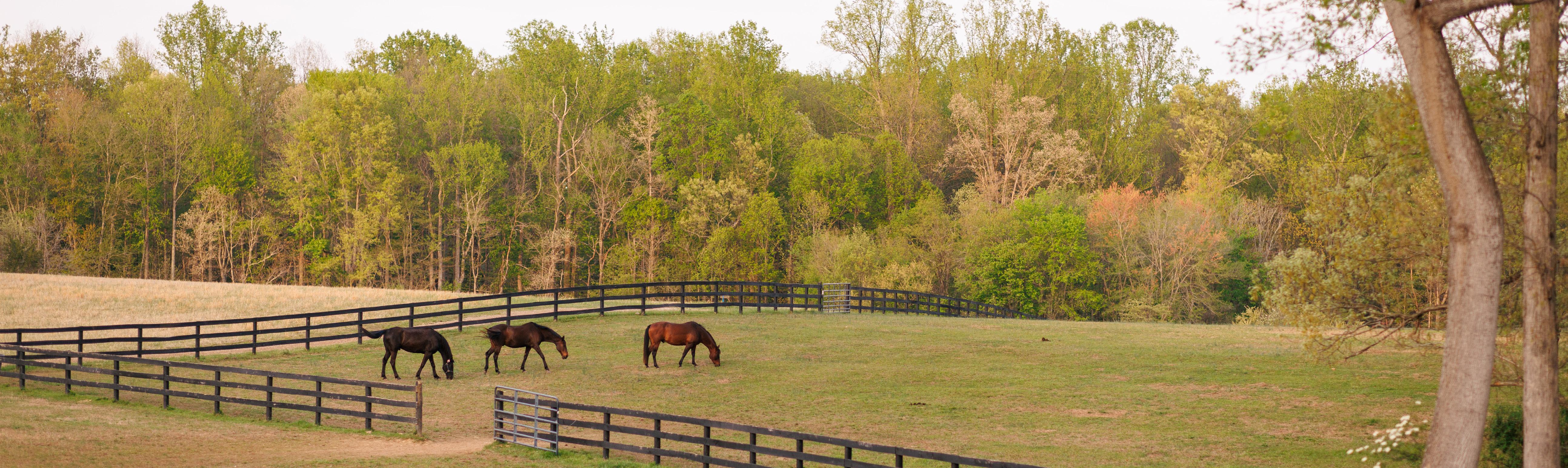
Even though I didn’t have much experience with horses, or nonprofits, I started Nalani Horse Rescue, a 501c3nonprofit, in 2016. We provide a peaceful place for abused and neglected horses to heal, physically and emotionally. We have about ten acres of lush pasture where the rescues have room to run free, play and live in a natural herd setting. We are verified by the Global Federation of Animal Sanctuaries, the highest rescue certification available.
HOW HAS NALANI GROWN SINCE IT STARTED?
My mission is changing over time, and I think that’s just how it is, because I’m learning and changing too.
My original plan, back when I didn’t know anything and thought everything was going to be easy, I thought I would stay on the fringes of rescue, helping horses that had fallen through the cracks, rehab them, adopt them out, and maybe just do that one at a time. My first rescue was a horse named Teddy.
Then I had a bad riding accident and was airlifted to Inova Trauma Center in Fairfax. A few months later, I got back on Teddy. It takes courage to ride again after a fall. Having a life-threatening accident, coming face to face with dying, made me think about how I was living my life. It gave me courage to go all in. AND THAT WAS WHEN EVERYTHING CHANGED FOR YOU?
Yes. I had done all the things you’re supposed to do — what society thinks is important. I went to college, had a good job, got married, had a family, was on the PTA.
But I felt pulled toward a different life. All the things that had seemed important to me — having my house perfectly organized, wearing the right things — suddenly didn’t matter anymore. The horses showed me who I was, and I realized I wasn’t living an authentic life.
I walked away from my marriage and moved to the country, where I didn’t know anyone. It was really out of my comfort zone. I was terrified.
WHAT DO YOU MEAN BY “ALL IN?”
I moved beyond the “easy” horses that could easily be rehabilitated and adopted. I started going to the horse auctions, where many horses go to buyers that send them to slaughter. Those are horses that really need help. They are at the end of the line — the skinniest, the saddest, the most broken. Now I am committed to going to the auction once or twice a year.
WHAT IS THE AUCTION LIKE?
The one I go to is [in Pennsylvania]. It’s known as a dumping ground for horses. They’re tied nose to nose down the line, and it can be very dangerous walking through there. Horses are trying to break free, and sometimes they’re running loose down the aisle. The vibe there is definitely not good — bad energy. ARE MOST OF THESE HORSES ADOPTABLE?
My second rescue was from the auction, and he was older and had been through a lot of trauma. I realized he really just needed sanctuary. He stayed with me until we had to put him down.
About two years ago, I officially added the sanctuary concept to my mission. It really takes the pressure off. It used to be rescue, rehab, rehome. But I raised money specifically for sanctuary purposes, and I rescued two older horses from the auction that I wouldn’t have been able to rescue otherwise. They were a bonded pair, and they just needed to live out their lives here.
MOVING BEYOND “THE CRUSHING SEASON” WITH HORSE RESCUE

WHAT IS THE HARDEST PART OF THIS WORK?
There’s never an end. If I rescue one horse today, there’s another tomorrow. There’s always more. I had to come to terms with the fact that I can’t save every horse out there. Making the decision to being committed to the ones I have means I have to walk away from some others. AND YOU ADDED NALANI ENCOUNTERS. TELL ME ABOUT THAT.
Nalani Encounters is an Equine Facilitated Learning program that focuses on the benefits of connecting and relating to horses. It can be beneficial for people recovering from trauma or PTSD.
What I didn’t know at the beginning was that building relationships with horses would teach me so much about myself. My experience had such a profound impact on my life that I became driven to find a way to share it with others. I became certified through the HERD Institute. My mission to help horses evolved into a desire to help people by partnering with the horses I rescue. An Encounter doesn’t involve riding. It’s more about practicing mindfulness while spending time with and interacting with the horses.
But the Encounters are still secondary to my main mission, which is still rescue.
YOU WROTE A BOOK THAT WAS JUST PUBLISHED. IT’S ABOUT THE ROLE OF FAITH IN YOUR LIFE?
I didn’t start out that way. When I started writing my book, it wasn’t even going to be a story about faith. It was going to be a story about all these crazy things that had happened in my life.
But as time went on, it became undeniable. I feel like there has been this hidden hand involved in everything. I realized this is a faith story, a God story, and a transformation story. It’s about the way God changed me into the person meant to fulfill this purpose.
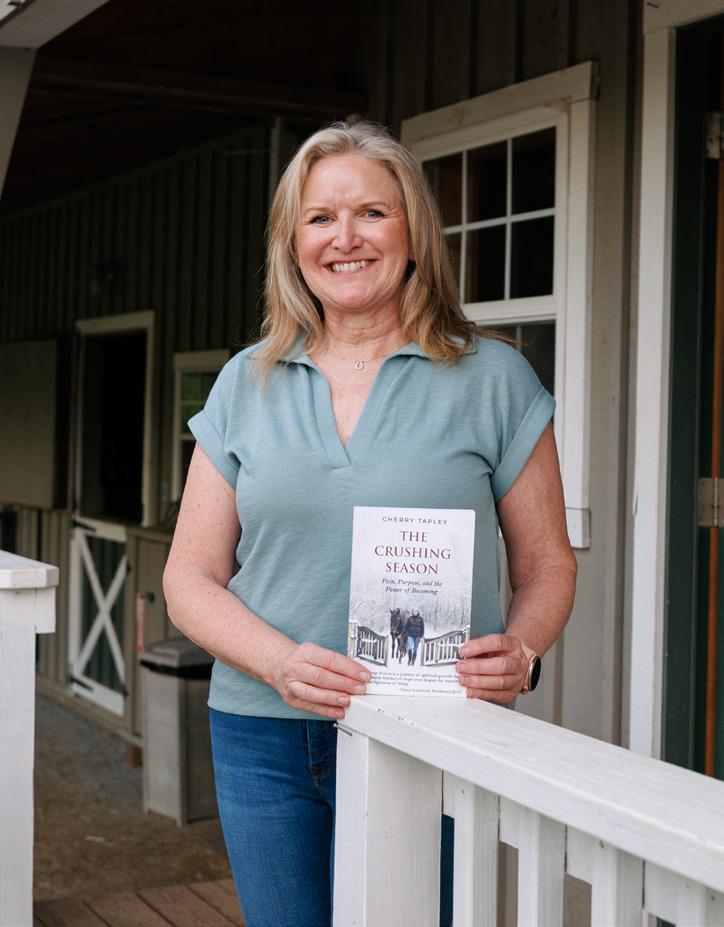



THE BOOK IS TITLED “THE CRUSHING SEASON.” WHY?
Finding a title for a book is really hard. I was obsessed with what my book was going to be called. Finally, I said I was going to stop thinking about it and let God let me know when the title was ready.
Then I was sitting with two friends, talking about what I should name the book, and I said something like, “If you think about it, I was crushed in so many ways — physically, mentally, emotionally, financially.” One friend said, “It was like a whole season where you were crushed.”
And I had my title. HOW HAS THE BOOK BEEN DOING?
I’ve been getting really good feedback. A lot of it is that people can see themselves in the story. They say, “I can relate to this. I had this happen in my life too.”
So many people have said it made
them feel like they weren’t alone. That’s the most important thing to me. One of the reasons I was so vulnerable in it was because I felt maybe my story would help other people. DO YOU THINK YOU RESCUE HORSES, OR THEY RESCUED YOU?
They definitely rescued me. They brought purpose and meaning into my life.
I started a horse rescue with no experience. I wrote a book, and I’ve never been a writer. Even public speaking for fundraising was something I had never done before. Now, going back and living a life that wasn’t truly authentic is not an option. I’m very fulfilled. Even though it’s so much harder — my life before was much more comfortable and much easier — this is harder, but better. L
Nalanihr.org




writers’corner
Warrenton author James H. McGee publishes sequel to espionage thriller
BY PAM KAMPHUIS
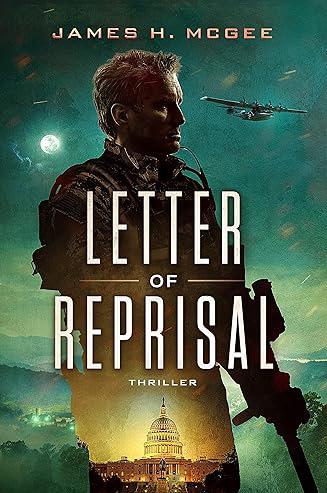
When Warrenton Lifestyle last interviewed Jim McGee in May of 2023, he had published his first espionage thriller, “Letter of Reprisal,” the previous year. Drawing upon his own experiences and what he learned from the many intriguing people he met along the way during a 30-year career in national security, hostage negotiation, SWAT and counterterrorism, McGee’s debut proved to be a gripping novel.
“Letter of Reprisal” followed Harry York, a retired special forces legend, and the special mission team he put together “off the books” to penetrate a lawless region of Central Africa to eliminate a deadly threat engineered by the Chinese government.
The hook is the “off the books” part: York is empowered in his mission by a Letter of Reprisal.
“Letters of Marque and Reprisal” refers to a concept that had been used back in sailing ship days to empower privateers as a supplement to naval forces. While it hasn’t been used in modern times, it remains in the U.S. Constitution, forming the basis of McGee’s novels: what if it were used today to authorize private citizens to act against enemy forces?

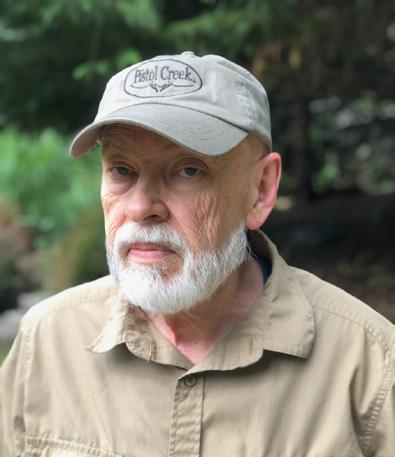
JIM MCGEE earned a PhD in modern German history with a dissertation on the early history of the Gestapo, became a Fulbright Fellow at the University of Munich, and then taught college level history before entering the security profession. After 30 years of service, he retired in 2018 as Senior Security Advisor for the U.S. Department of Energy. Currently, in addition to authoring his novels, he is a contributor to several magazines, including the American Spectator and the National Review, where he serves as a national security pundit and often highlights the “Greatest Generation.” He and his wife of more than 40 years, whom he met when, as an Army CID special agent, she took a hostage negotiation course he was teaching, have lived in Fauquier County for the last three decades.

When readers turn to our pages, they see people they know and others they’d like to know – local heroes, amazing kids, neat neighbors, and rising stars. They see beloved businesses, favorite mail carriers, and long-standing members of the community. They see their family and friends. They see themselves. And when you advertise in Lifestyle, over 65,000* of them see you.
To Advertise, Contact
Jim Kelly Sales Director jim@whglifestyle.com | 434-987-3542
Tim Haugan Multimedia Marketing Specialist thaugan@fauquiernow.com | 540-672-8547
*Total Combined Readership They spend time with us, so they’ll spend
Now, Harry York, still going strong at the age of 70, is back with another Letter of Reprisal in the sequel, “The Zebras from Minsk,” forming a new team which faces vicious human traffickers, Chinese communist special operators and a corrupt anti-America billionaire in a dangerous mission. The action moves from the Blue Ridge Mountains of Virginia where plans for a sinister plot to destroy American infrastructure and disrupt upcoming elections are discovered in a crashed van on a rural road where the responding law enforcement officer is murdered, and spreads across the U.S. to the remote forests of Belarus.
McGee had planned for a sequel as he finished the first book. When we last interviewed him in May of 2023, he said, “I’ve already started a sequel. Along the way I became ‘friends,’ so to speak, with the characters I’d created, and while some, sadly, became casualties, I want to involve these friends in fresh adventures.”
Readers of “Letters” will enjoy seeing these old friends again, and new
readers can jump in too as “Zebras” was written to be enjoyed without prior knowledge from the first book.
And while “The Zebras from Minsk” is another exciting espionage tale, McGee said it is more character driven. The members of York’s team (some old, some new) take center stage over the action as McGee works on developing and deepening their characters and relationships. York’s wife has a more prominent role in “Zebras,” and McGee introduces a love story into the mix. “The characters are central to the story; the book’s not just a shoot ’em up.”
And this certainly seems to be working well for McGee. “Zebras” has received some very positive reviews in both the U.S. and internationally and has been highlighted in the top 100 in Amazon’s “conspiracy thrillers” category.
And fans will be glad to hear that McGee is at work on a third book to finish off the trilogy, tentatively titled “The Cathedral of Sorrows,” which will expand on a subplot introduced in “Zebras” and take the heroes back to
Africa to protect Christian communities that are under attack. L
“The Zebras from Minsk” is available on Amazon in kindle and paperback format, and is also available to Kindle Unlimited subscribers.





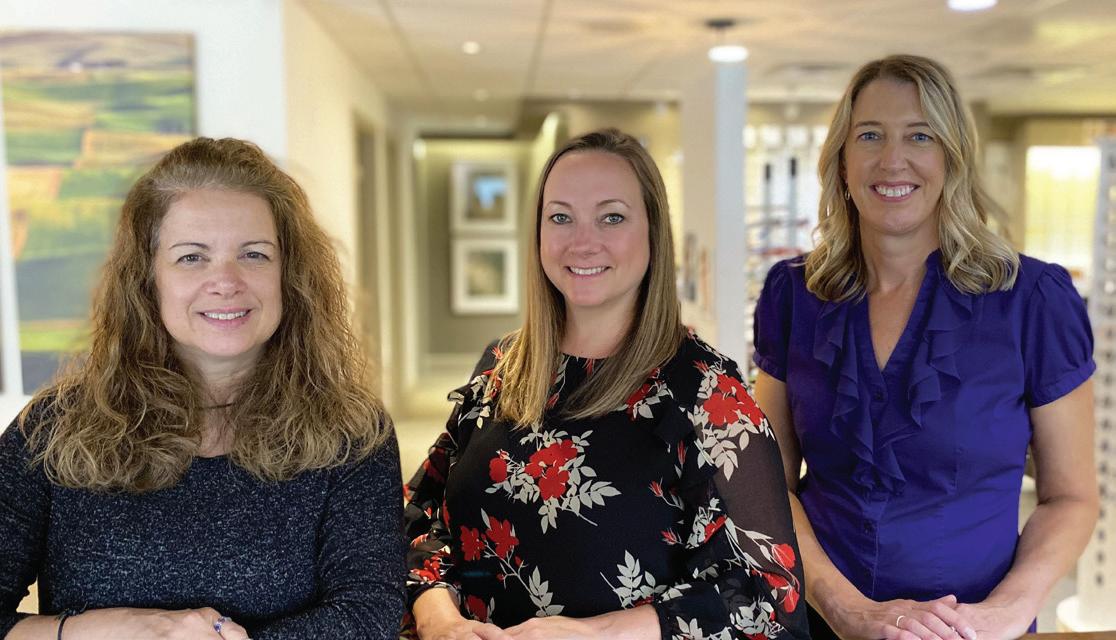



Local business... the heart and the lifeline our of community. From retail stores to restaurants, entertainment and service providers, these are the organizations and people who make this county a great place to live. Our annual “Best of” competition strives to highlight local businesses as voted on by you, our readers.
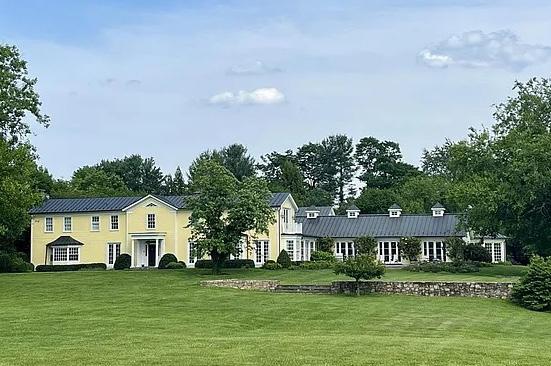
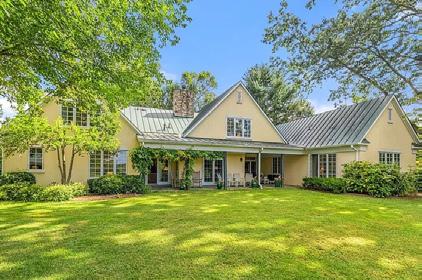
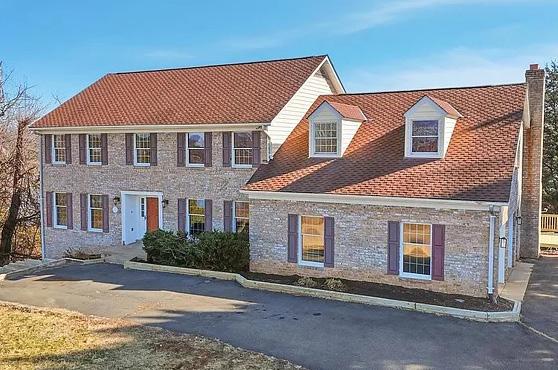
The ten highest-priced homes that sold between mid-March and mid-April 2026 in Fauquier County. Data and photos from Zillow.com.
3050
$4,450,000
$3,672,750

$3,250,000

$1,825,000



“The March housing market across our four-county region saw a strong increase in sales activity, with 158 homes sold compared to 118 this time last year. While more homes are selling, the median home price adjusted to $563,000 from $642,000 a year ago. Inventory continues to grow, with more active and new listings giving buyers additional options. Homes are taking a bit longer to sell, averaging 60 days on market, showing a shift toward a more balanced pace as we head into the spring market.”
—Wendy
Johnson, 2026 Greater Piedmont REALTORS®
President
Median Sales Price: $675,000, down from $713,000 Sales Activity: 91, up from 67 Days on Market: 16, down from 28
Greater Piedmont REALTORS® is a trade association representing 650 REALTORS® in Fauquier, Culpeper, Rappahannock, and Madison counties.
3522 SUGAR HILL LANE, GOLDVEIN
$1,600,000
Sold March 18

7150 KENTHURST LANE, THE PLAINS
$1,580,000
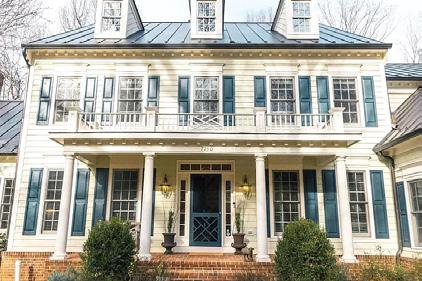
5355 HILLSIDE DRIVE, WARRENTON
$1,149,900
Sold March 25
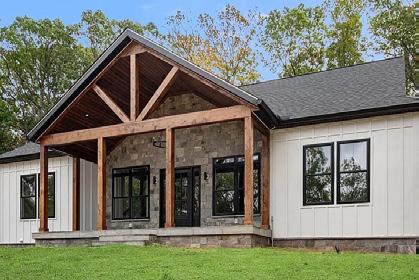
5556 MERRY OAKS ROAD, THE PLAINS
$1,025,000

6743 LAKE DRIVE, WARRENTON
$1,000,000
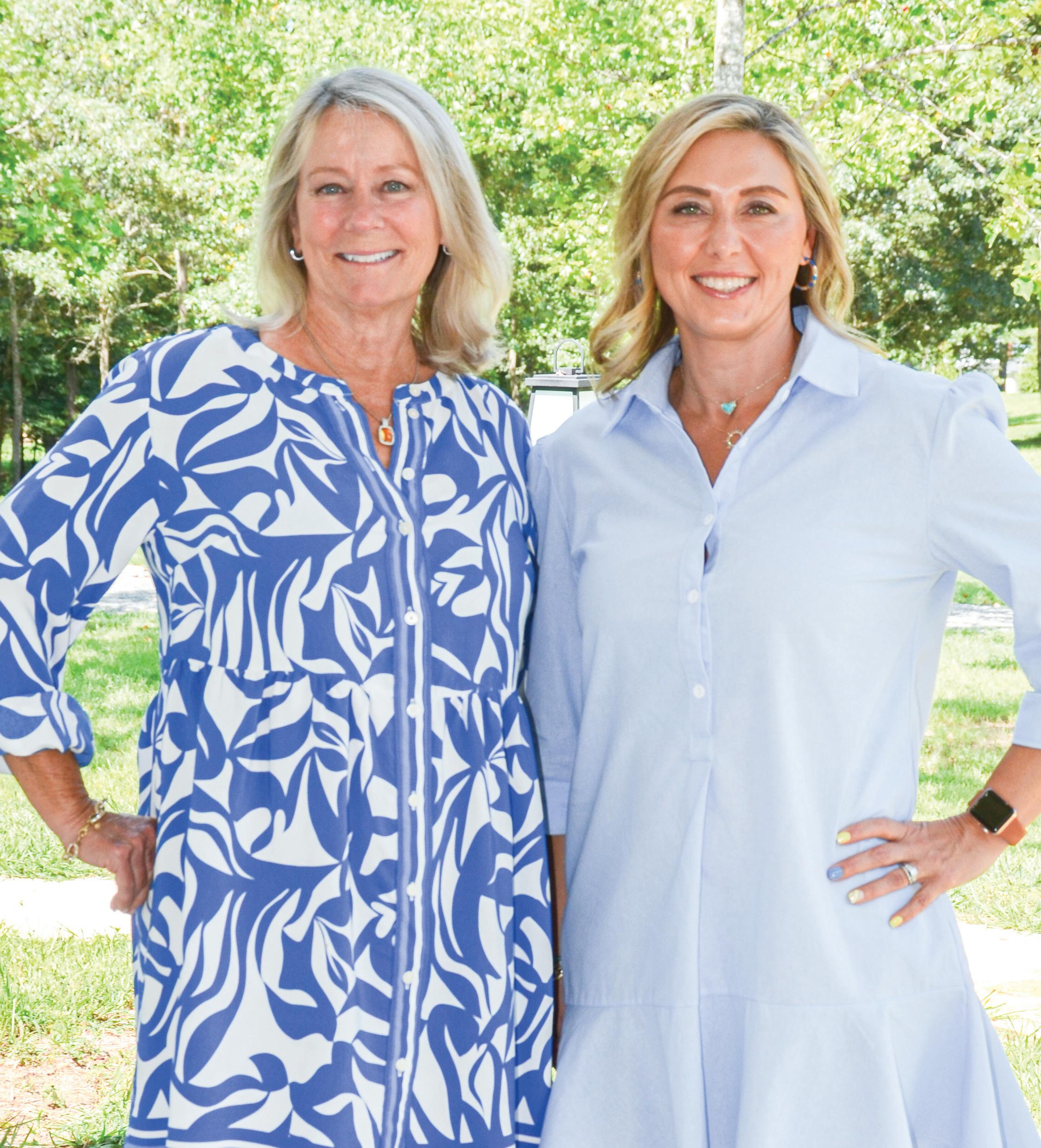










Chef Asha Clare of Warrenton is the owner and creative force behind The Kitchen Fairy, an artisan hospitality company that artfully weaves dining, event design and guest service into unforgettable culinary experiences. Growing up in Madison County, Clare was introduced to cooking with fresh garden ingredients by her grandmother, and developed a lifelong appreciation for food made with love and intention. Known for her elegant yet rustic and chic style, she handcrafts meals that are as thoughtful as they are delicious, rooted in local, organic, and sustainable ingredients.
KITCHENFAIRY.CO
BY CHEF ASHA CLARE
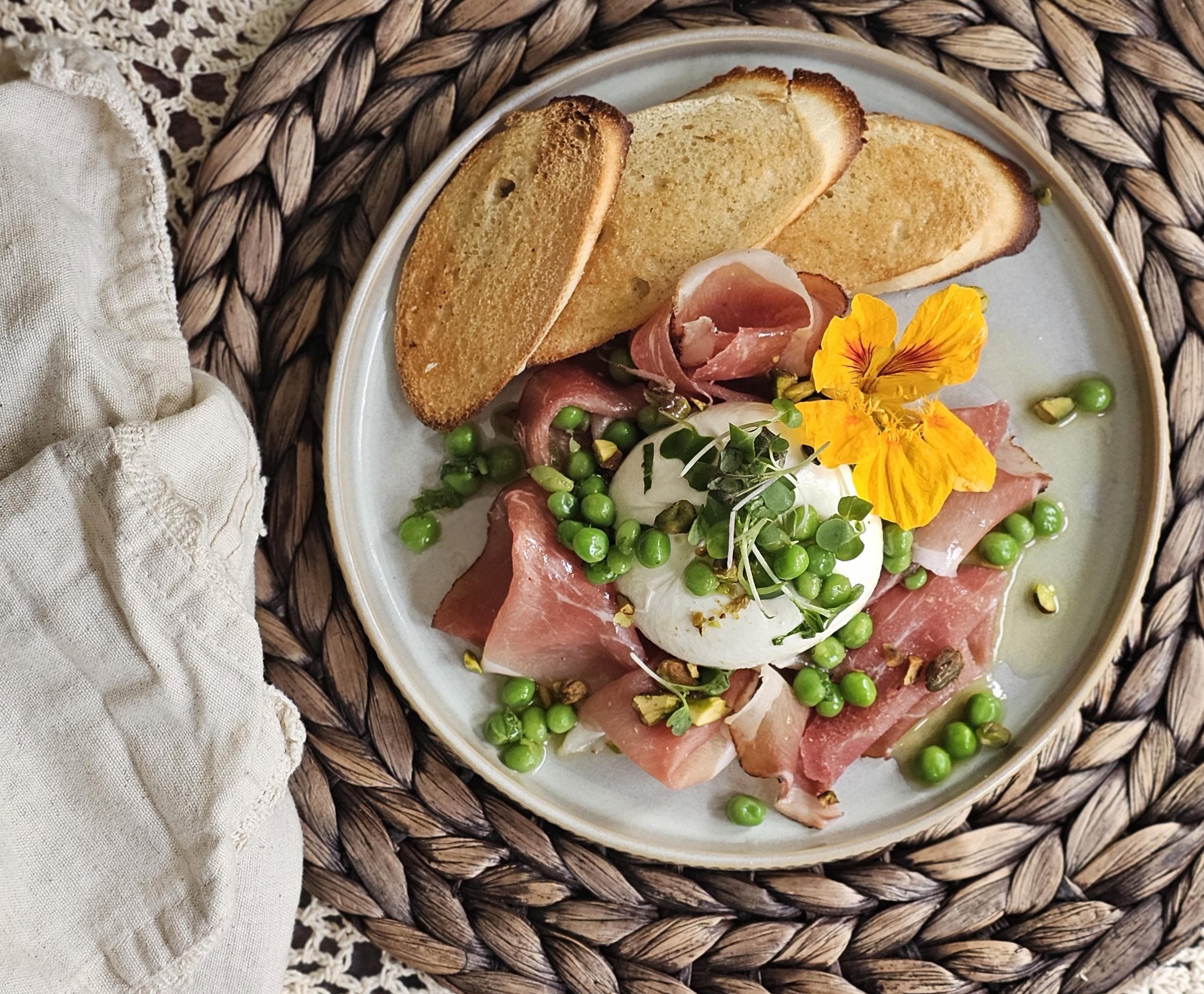
Speck is a cured lightly smoked ham made from the hind leg of a pig. Authentic Speck is primarily from South Tyrol, Italy, where its origins date back centuries. It is dry-cured with salt, pepper, juniper, and other spices like bay. The ham then alternates between periods of cold smoke and air drying.
The flavor of Speck is savory with a touch of smoke and aromatic notes from the spices used during curing. Speck is often described as more robust, darker, and slightly denser than Prosciutto crudo.
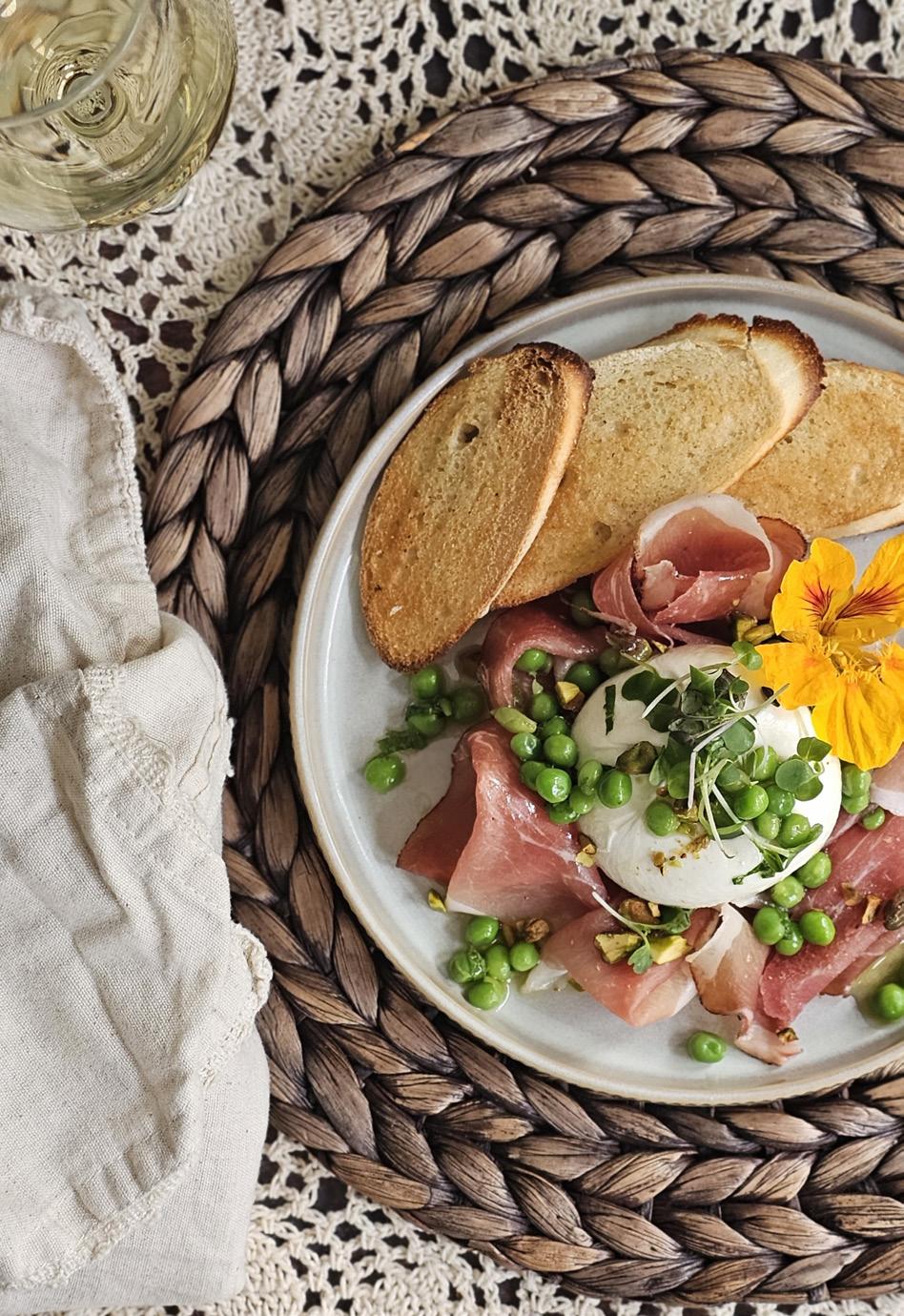
Burrata hails from the Puglia region in Southern Italy and is a soft, round pouch of mozzarella cheese filled with a decadent mixture of stracciatella (shredded mozzarella) and rich cream. Burrata’s distinguishing feature is the contrast between the chewy, elastic outer shell and the internal blend of cream and curds that flow from the cheese when cut.
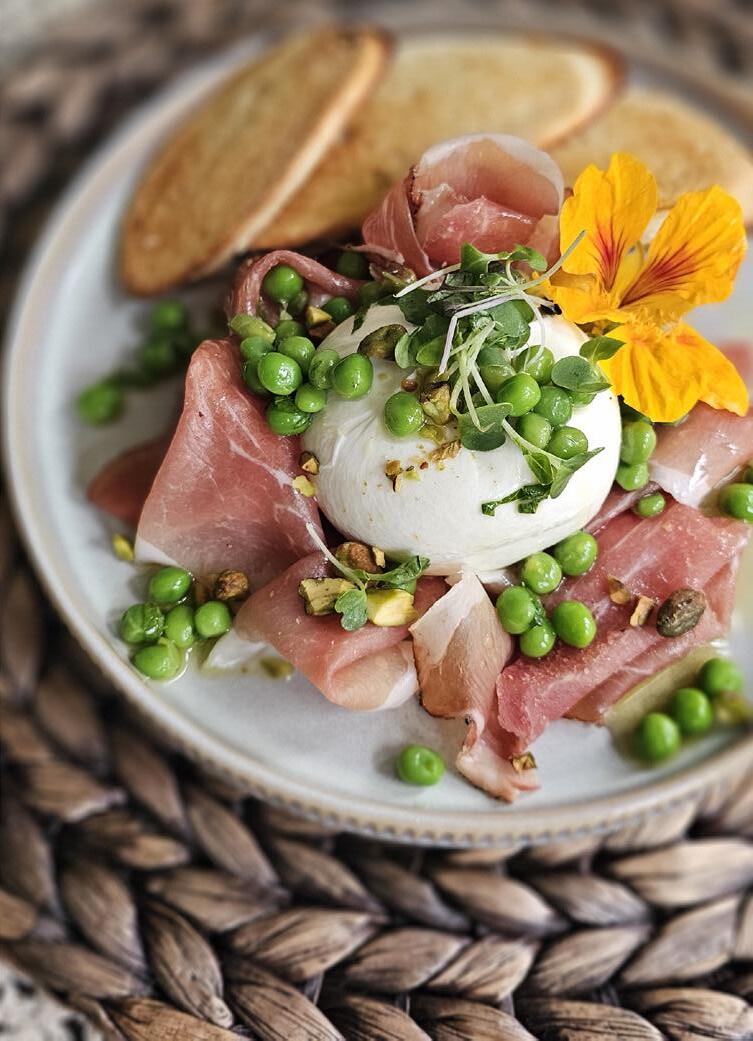
If you are a fan of Italian food, you will most certainly love this recipe; it is literally dripping with Italian heritage and charac ter. Burrata with Speck and Minted Peas is the epitome of what Italians do best when it comes to food – elegant simplicity. It’s rich and creamy with a touch of smoke, yet in credibly balanced, bright, and satisfying. The Speck’s smoke and light herbaceousness adds a touch of complexity that makes the dish pop. It’s the perfect first course or light lunch. This is one of my favorite “go-to” recipes in the warmer months. There is so much to love about this dish besides its deliciousness. This is a no-bake recipe, the ingredients are easily found at most grocery stores or online, and assembly is a cinch.


Sound good to you? Yeah, I thought so, so let’s dig in!
INGREDIENTS
1 8-ounce tub (2 4-ounce balls) of burrata, cut into eight pieces
16 thin slices Speck (approximately 6 ounces)
½ cup fresh or frozen baby or spring peas
¼ cup packed, finely shredded or chopped, fresh mint (more for garnish)
2 teaspoons fresh lemon juice
3½ tablespoons extra virgin olive oil (more for drizzling)
¼ cup freshly grated Parmigiano-Reggiano cheese (more for garnish)
Salt and pepper to taste
GARNISH
Black pepper, freshly ground
2 tablespoons of freshly grated Parmigiano cheese
Shredded mint
Microgreens
½ teaspoon freshly grated lemon zest
Extra virgin olive oil
Grilled or toasted bread (for serving)
INSTRUCTIONS
1. In a small pot of salted boiling water, cook the peas just until tender. Immediately drain and rinse under cold water. Pat dry and put the peas in a medium bowl.





2. Toss the peas with the mint, lemon juice, olive oil, and ¼ cup of Parmigiano cheese.
Season with salt and fresh ground pepper to taste.
ASSEMBLY
1. Using four small/medium appetizer or salad plates, arrange four slices of speck on each plate.
2. Spoon the pea mixture over the speck.
3. Top the speck and peas with two pieces of the burrata.
4. Top the burrata with a grind of black pepper, a light sprinkling of Parmigiano cheese, shredded mint, microgreens, lemon zest, and a drizzle of olive oil.
GILDING THE LILY (GARNISH IDEAS)
Toasted nuts: pistachio, hazelnut or pine nut
Finishing oil: pistachio, truffle or hazelnut
Finishing salt: Maldon sea salt flakes, smoked Maldon sea salt flakes, truffle salt, or Italian sea salts like Trapani or Cervia
Fresh ground pink peppercorn
Dried Calabrian chili flakes
Julienned preserved lemon
Fresh basil, torn or chiffonade
ACCOUTREMENTS
Bread: ciabatta, baguette or country boule
Salad of field greens and a light vinaigrette
Sliced fresh fruit: peach, apricot, cantaloupe, or tomato

Yield: one cocktail
INGREDIENTS
2 oz. Limoncello

2 teaspoons fresh lemon juice (Amalfi or Sorrento lemons if you can find them)
Lemon sparkling water
2 small sprigs of mint
Lemon rind twist
Ice
DIRECTIONS
1. Chill all ingredients before making the cocktail.
2. In a wine goblet or Collins glass, lightly muddle one small sprig of mint.
3. Fill the glass half way with ice.
4. Pour the Limoncello and lemon juice over the ice.
5. Top off with sparkling water
6. Garnish with a sprig of mint and a twist of lemon rind L




DISCOVER







BY PETE SMITH
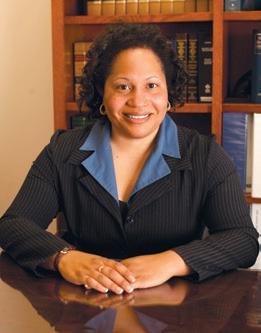
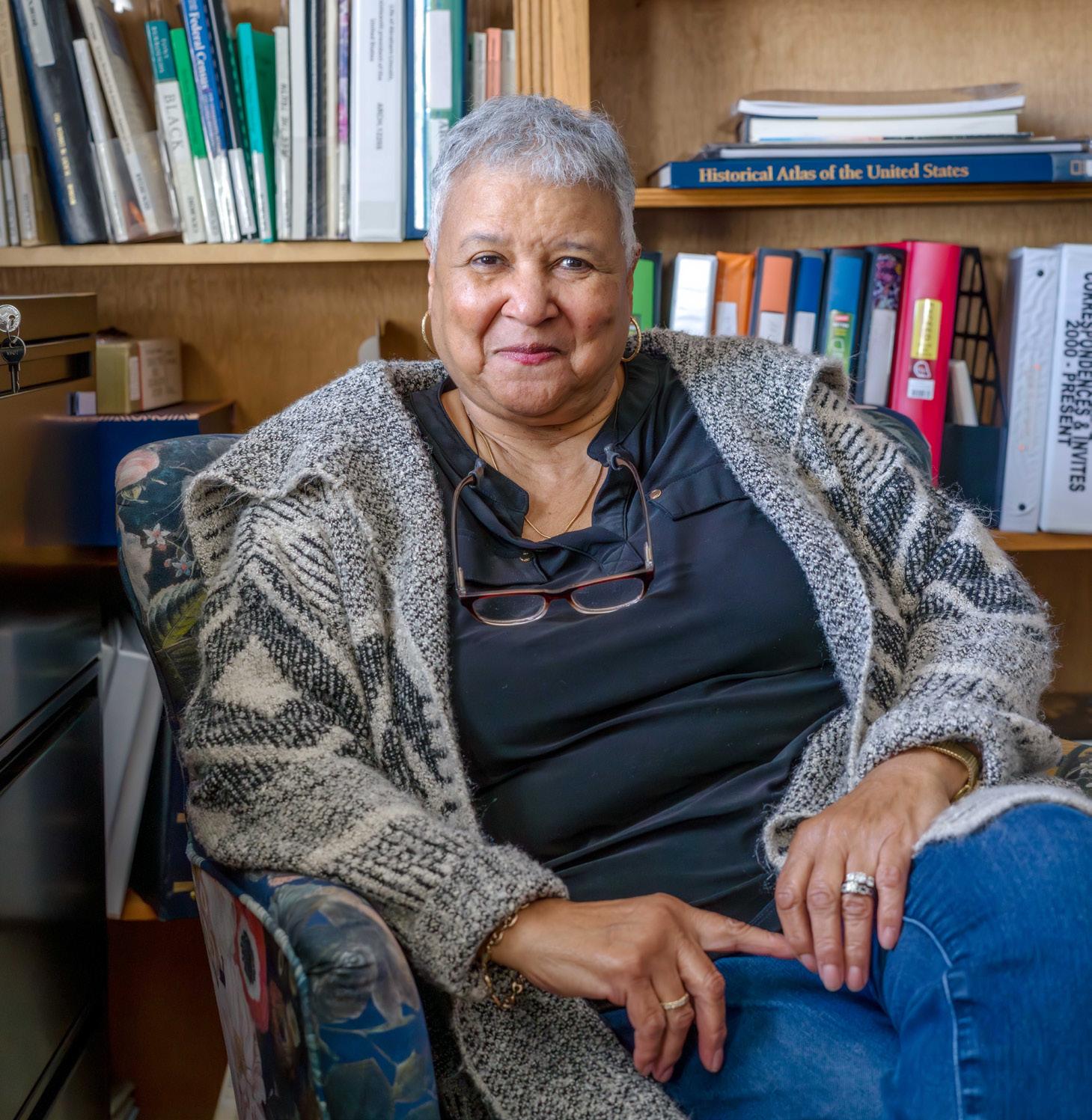
For more than three decades, Karen White has been making the invisible visible — recovering the lives, families, and communities of African Americans in Fauquier County who might otherwise have been lost to history. Born, raised, and still residing in the county, White is herself a descendant of free and enslaved African Americans of Virginia dating to the early 1700s. That deep personal connection has become the seed of an important public institution. When Karen and her close friend
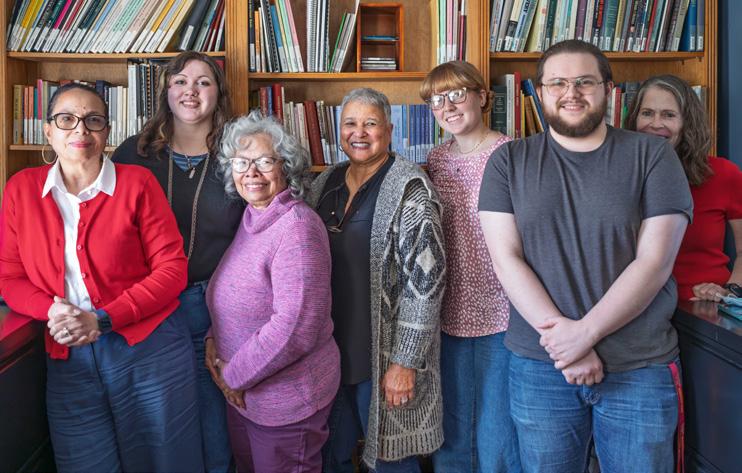
Karen King Lavore began researching their own family lines in the late 1980s, their research revealed significant gaps in public records documenting local Black history. This led them to found the Afro-American Historical Association (AAHA) in
1992, providing a space for community members and researchers to access historical materials including property deeds, census data, church records, and personal narratives.
The scope of Karen’s contributions is striking. The AAHA’s museum houses thousands of artifacts chronicling African American history in Fauquier County through slavery, Reconstruction, the Jim Crow era, and the Civil Rights movement. Recently, Karen partnered with the Piedmont Environmental Council to develop a digital story map detailing locations of African American schools, churches, and communities — giving the public an interactive window into a history often invisible in traditional textbooks. She also co-created the “Know Their Names” database, which has already cataloged over 80,000 free and enslaved African Americans from Fauquier County’s history.
AAHA has also begun to restore the historic Morgantown Schoolhouse near Marshall, which educated three generations of African American children from the early 1890s until 1963.
Karen, her staff, her funders, and her volunteer have worked together to ensure that the African American story is not a footnote to Fauquier County’s history, but central to it. Through institutional vision, meticulous scholarship, and unwavering community commitment, she has built one of the most important historical preservation organizations in the Piedmont region. L



| fauquiernow.com/lifestyle