V VERITAS
The
Palo Alto STEM magazine
April 2026 Volume 6 Issue 2
In Silicon Valley, and specifically in Palo Alto, we are lucky enough to have the opportunity to grow from some of the most progressive minds in assorted STEM fields, with a thriving community of students who are ready to share their discoveries with the rest of Paly. At the same time, many students might also feel intimidated by, or disinterested in these fields despite its proximity to and importance in our daily lives.
Veritas hopes to bridge the gap by repackaging scientific content to be interesting for all, promoting open-mindness with a flexible approach to scientific education, and embracing new approaches to science and technology without hinderence by tradition.
We believe science and technology are a common thread that impacts everyone’s lives and holds the potential to unify communities just like other forms of entertainment, like music, movies, and sports just to name a few.
The staff publishes advertisements with signed contracts providing they are not deemed by the staff inappropiate for the magazine’s audience. For more advertising with Veritas, please contact palyjournalismincubator@gmail.com
Veritas, a science and technology magazine published by the students in Palo Alto High School’s Incubator Journalism class, is a designated open forum for student expression and discussion of issues concerning its readers. Veritas is distributed to its readers and the student body at no cost.
Veritas is printed two to three times a school year by aPrintis in Pleasonton, California. All Veritas Work is Available at issuu.com/ palyveritas.
For the full list of publication policies, visit palyveritas.com
Editors-in-Chief
Arjun Jindal
William Xue
Managing Editor
Doreen Hou
Business Manager
Richie Zhang
Staff Writers
Araina Gupta
Alexander Lawson
Benji Sandel
Caitlin Ko
Doreen Hou
Jeshurun Wang
Joyce Ma
Julia Curtis
Naomi Espinoza
Priya Tamura
Art/Photo Directors
Doreen Hou
Alexander Lawson
Adviser
Paul Kandell
The staff welcomes letters to the editors. We reserve the right to edit all submissions for length, grammar, potential libel, invasion of privacy, and obscenity. Send all letters by mail to 50 Embarcadero Road, Palo Alto, CA 94301, or email veritaspaly@gmail.com
Connect
@paly.magazine issuu.com/palyveritas palyveritas.com
April 2026
Dear readers,
Welcome to our first edition of 2026! As Palo Alto High School's science and technology magazine, this issue highlights how scientific and technological advances affect students' lives, both on campus and in our local community. We also explore the science behind extreme sports and the rush of adrenaline that keeps young people coming back for more, even when the risks are real (pp. 6–7).
If you have ever wondered what that third cup of coffee is actually doing to your body during a late-night study session, our caffeine deep dive has you covered (pp. 8–9). We spotlight AP Capstone computer science students and the research projects they are building from the ground up (pp. 12–13). On the opinion side, we put leading AI chatbots head-to-head to find out how they actually stack up beyond the marketing (pp. 18–19), and step back to examine the often-overlooked human cost of technology on youth (pp. 14–15).
As editors, one of our favorite parts of putting this magazine together is watching how many of these stories hit close to home, they are shaping the way we drive, study, eat, and think, right here in our community. Like past editions, this issue offers only a glimpse into those changes.
Enjoy!
— Arjun Jindal and William Xue, Editors-in-Chief
4 6 8 10 12 14 16 18
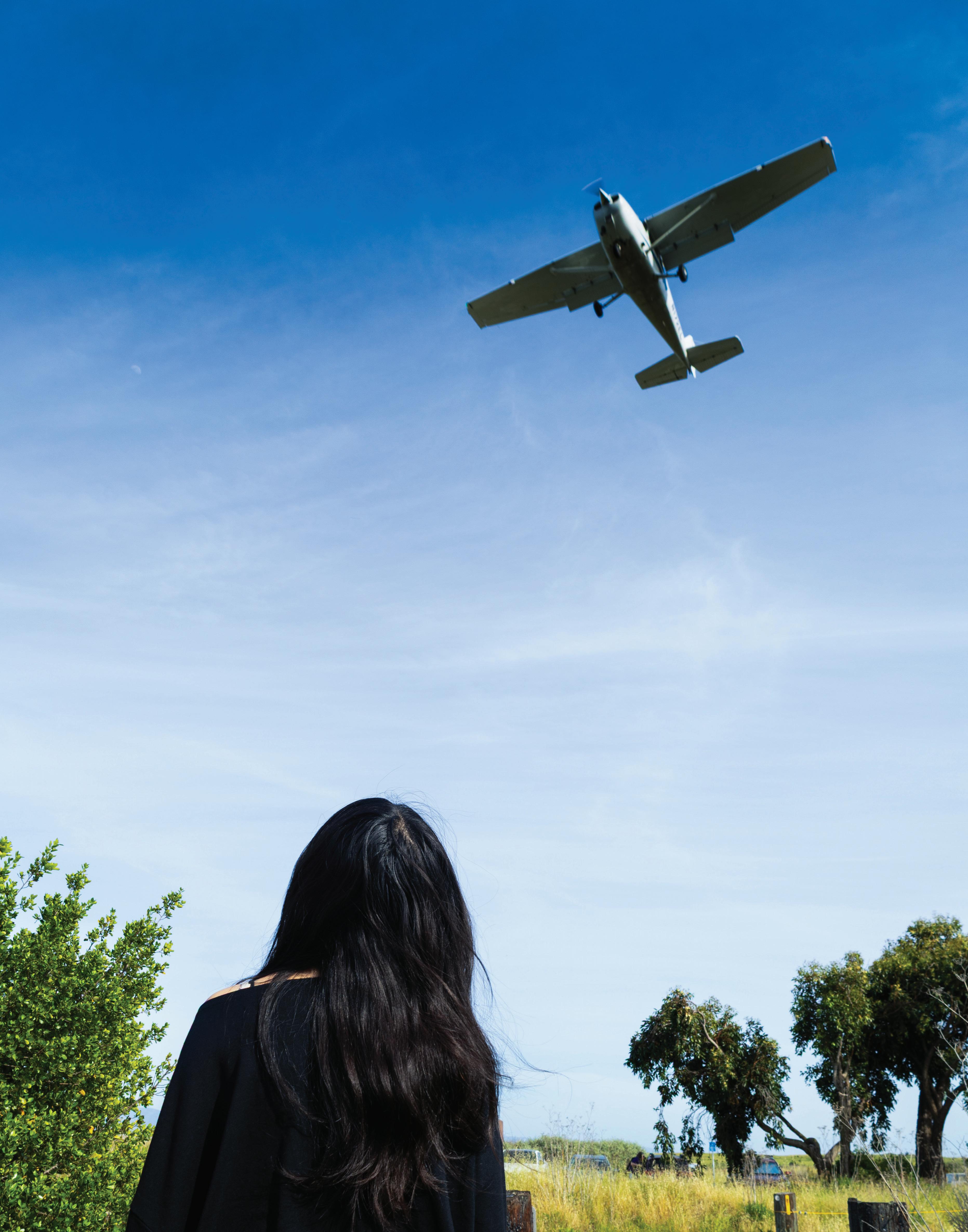
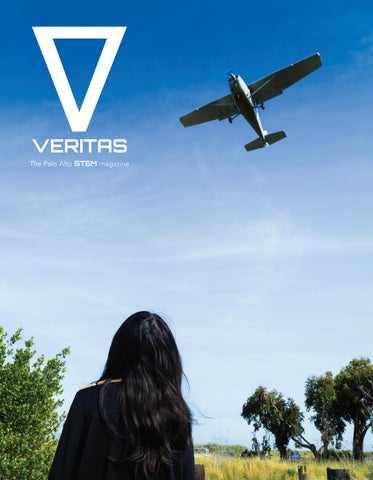
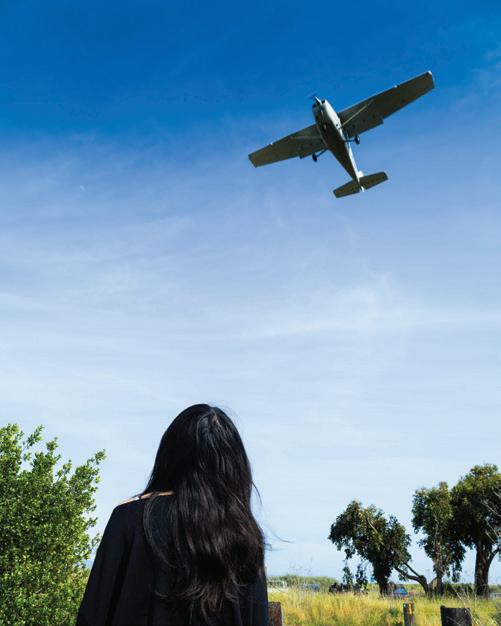
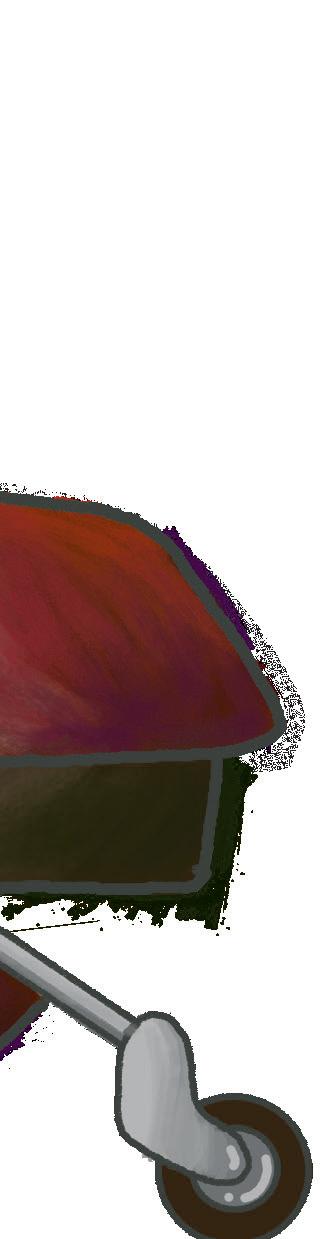
For this issue’s cover, Veritas chose to feature a student watching a small aircraft taxing into Baylands Airport in Palo Alto, capturing the spirit of our feature on the journey to earning a pilot’s license.
For most Palo Alto High School students, only one license comes to mind: the driver’s license. It takes practice, memorization, and a few trips to the DMV, which can be quite tedious, but the concepts of driving are simple.
For a select few Palo Alto High School students, however, there’s a license far more difficult to get — the private pilot’s license. According to Junior Kento Stutz and Senior Brian Liu, the journey towards it is mentally, temporally, and financially demanding, but above all, it’s an application of a lifelong passion.
Kento Stutz, a student pilot at Palo Alto Airport, has found that his time in the air has completely reshaped his view on the privileges driving comes with.
According to Brian Liu, price is another challenge student pilots must face in getting their
dollar piece of equipment,” Liu said.
Reflecting the low margin for error when flying, ‘ground school’ serves as the

“Getting my driver’s license was pretty easy,” Stutz said. “When you’re getting a pilot’s license, you have to learn all these regulations, all these different procedures. Unlike [driving], you can’t just pull over to the side of the road and handle issues. You have to be prepared for any situation you can face.”
"Getting a pilot’s license is one of the coolest things you could do."
cost is probably close to $400 or $500, sometimes even short of $600 if it’s a really packed day. So it’s … been a really expensive endeavor.”
— KENTO STUTZ, 11th grade
Student pilots also have to spend significant time in the air to refine their flying skills.
“You have to do a lot more hours in the air [than in a car], because they probably trust you less with a million-
“Ground school really helped me understand why and how things worked in the plane, and also helped me understand why we have these regulations in the first place,” Stutz said.
At its core, ground school promotes safety among prospective pilots, and one of the biggest ways it does so is through intensive instruction and training for different weather conditions.
“In order to become a pilot, you not only have to learn how to fly a plane, but you also have to become sort of a meteorologist and learn how to analyze
weather patterns to make sure you’re safe,” Stutz said.
Stutz, like many other student pilots, scrutinizes weather forecasts multiple times before a flight for any problems that may arise.
“Before you fly, even the night before, you check,” Stutz said. “The government has a website where you can see the forecast, so you can check and make sure there’s no new storms or anomalies.”
As a student pilot, Stutz is required to fly under visual flight rules (VFR). Because of this, his vision must remain unobscured since he is not allowed to navigate solely with instruments, leaving him especially vulnerable to atmospheric conditions.
“When you’re flying in the morning, especially here at Palo Alto, there’s fog and clouds pretty low to the runway, so you always have to check before you head to the airport to make sure you can still fly, because as a VFR pilot, I can’t go into clouds,” Stutz said.
Despite the high price tag and time investment, Paly’s student pilots find great joy in flying.
I think the most exciting part about aviation is the freedom it provides,” Stutz said. “I can kind of go anywhere, like, if me and my friends wanted to take a trip to Tahoe, on a random weekend, we could go up and ski for the day and fly back… Getting a pilot’s license is one of the coolest things you could do because of where you’re able to go.


The reason behind the pursuit of extreme sports and teenage risk taking
Racing down mountains, scaling cliffs, and braving ocean currents — high-risk, adrenaline-filled sports have stolen the attention of Paly students as excitement towards these activities continues to rise.
A ScienceDirect article found that extreme sports are continuously attracting the attention and interest of the youth. In general, the main participants of these sports seem to be drawn to the high risk and adventure.
From a more scientific angle, people are attracted to the rush of adrenaline that comes with these activities.
According to Palo Alto High School sports medicine teacher Stacey Kofman, adrenaline is a hormone that is produced from the adrenal glands, above the two kidneys, that stimulates our body’s fight or flight responses.
“When we're scared of something, we have that heightened sense that heightens the response of some things wrong,” Kofman said. “We increase our breath rate, our blood pressure starts to increase and our heart rate starts to increase.”
The hormone, adrenaline, is produced when the brain senses danger. Conversely, many people pursue activities that will get them the boost of that hormone. According to a study done in 2017 by researcher Kent Berridge at the University of Michigan, people enjoy the feeling of danger not only from adrenaline but also dopamine, as it creates a thrilling mix of fear and excitement when we know we are safe.
“There's a lot of people who like that feeling in their body,” Kofman said. “Think about it when you go on a roller coaster, slowly going up and you anticipate that, and then all of a sudden the bottom drops out and you get that feeling, that rush. That's controlled. You know what you're in for.”
Teenagers in particular are drawn to
thrill-seeking or high adrenaline activities, partially because their brains are not yet fully developed. According to Odette Hornby et al., there’s an exponential increase in teen participation in extreme sport due to the expansion in media coverage in the past decades.
“It’s a lot of nerves and excitement when you’re staring down the mountain,” freshman Nova Westin said. “I’ve been skiing since I was three, and I still get a thrill every time I go.”
The rush and excitement caused by adrenaline also translate to risk-taking. For teens, their underdeveloped brains make them less afraid and more willing to try different things.
“I think they go hand in hand,” Kofman said. “The riskier it is, for some people, the more they want to do it. ... People, once they get over their fear of trying something and they realize it wasn’t that bad, and they survived it, are more willing to do it again.”
In some circumstances, this can be beneficial. According to the National Library of Medicine, risk is not limited to unsafe behavior, and taking risks is actually a necessary part of adolescence. These are referred to as healthy risks, meaning they benefit a person’s wellbeing, they carry mild potential costs, and they are generally socially acceptable.
injuries, and physical challenges, yet people continue to participate in them.
“I’ve gotten injured multiple times,” Westin said. “But that hasn’t stopped me from skiing.”
People often face withdrawal symptoms stepping away from extreme sports. According to a study done by Odette Hornby, some experience anhedonia (inability to feel pleasure), craving and negative effects when not participating. Thus, there needs to be a balance between chasing excitement and remaining safe and responsible.
“It’s a catch, right?” Kofman said. “You want to have some autonomy in the activities you’re doing. But let’s find some healthier alternatives.”
“The riskier it is, for some people, the more they want to do it.”
— STACY KOFMAN, P.E. teacher
Finding a way to combat negative risk taking is not always easy or straightforward. A study from the National Library of Medicine found that reducing this behavior comes from increasing a person’s self-control, sense of power, and by developing positive goals.
These solutions are almost entirely mindset changes, meaning that an individual must do most of the work alone in order to help themselves, but there are still ways to support those you know.
Some types of healthy risks include enrolling in a challenging course, participating in sports, and public speaking. These activities help adolescents exercise their independence and promote positive health outcomes.
Unfortunately, despite the opportunity for growth and experimentation that comes with trying new things, adolescents can be negatively affected by adrenaline as well.
The adrenal glands are triggered in stressful situations, and the National Library of Medicine found that constant stress can lead to an increase in risk taking.
This increase could draw adolescents towards dangerous activities like extreme sports.
These sports have high risks, potential
For example, introducing a struggling teen to alternative sources of adrenaline could help mitigate dangerous behavior. Activities such as riding roller coasters or going ziplining can provide a similar rush of adrenaline without the high risk.
Despite the danger and safer alternatives, teenagers will likely continue to seek out high adrenaline sports, and injuries are bound to come with them. The most important part is to remain aware of the consequences that come with any extreme sport.
“We have to realize that maybe some of these things we’re doing are risky,” Kofman said. “And that's why, for some of these sports, waivers are important [...] and you understand what you're getting yourself into.”
What caffeine does in the brain and why students use it
On many mornings, the checkout line at CVS is full of students buying energy drinks to start their day. Whether it is a Celsius, a latte from Peet’s Coffee or a boba drink, caffeine is an everyday indulgence for many Palo Alto High School students. What does this chemical do in the brain that makes it so enticing?
Jesus Garcia, a biology professor at Foothill College, explains the neurochemical effect of caffeine. According to Garcia, it increases alertness because of its interaction with signaling chemicals in the brain.
“It works by blocking adenosine receptors,” Garcia said. “It also triggers the release of other neurotransmitters like dopamine.”
Throughout the day, adenosine builds up in the brain and, eventually, high levels of this signaling molecule allow a person to fall asleep. By blocking these receptors, caffeine effectively blinds your brain to the buildup of adenosine until the caffeine has been metabolized, at which point adenosine floods the receptors.
use, the body builds up a resistance to caffeine, leading to the “crash” caffeine drinkers may experience later in the day.
“It gives you the benefit of feeling more awake, but it is also harming your body.”
— Chase Wong, junior
“It [caffeine] is a central nervous system stimulant,” Garcia said. “[Routine coffee drinkers] who stop drinking coffee can start getting jittery and shaky because they go through withdrawals. They get the same effects as if they were on methamphetamines for an extended period of time and then went cold turkey.”
Garcia said that with regular
Junior Chase Wong said he has noticed more of his peers drinking
How much caffeine is in popular drinks, according to the Center for Science in the Public Interest website, cspi.org/caffeine-chart.
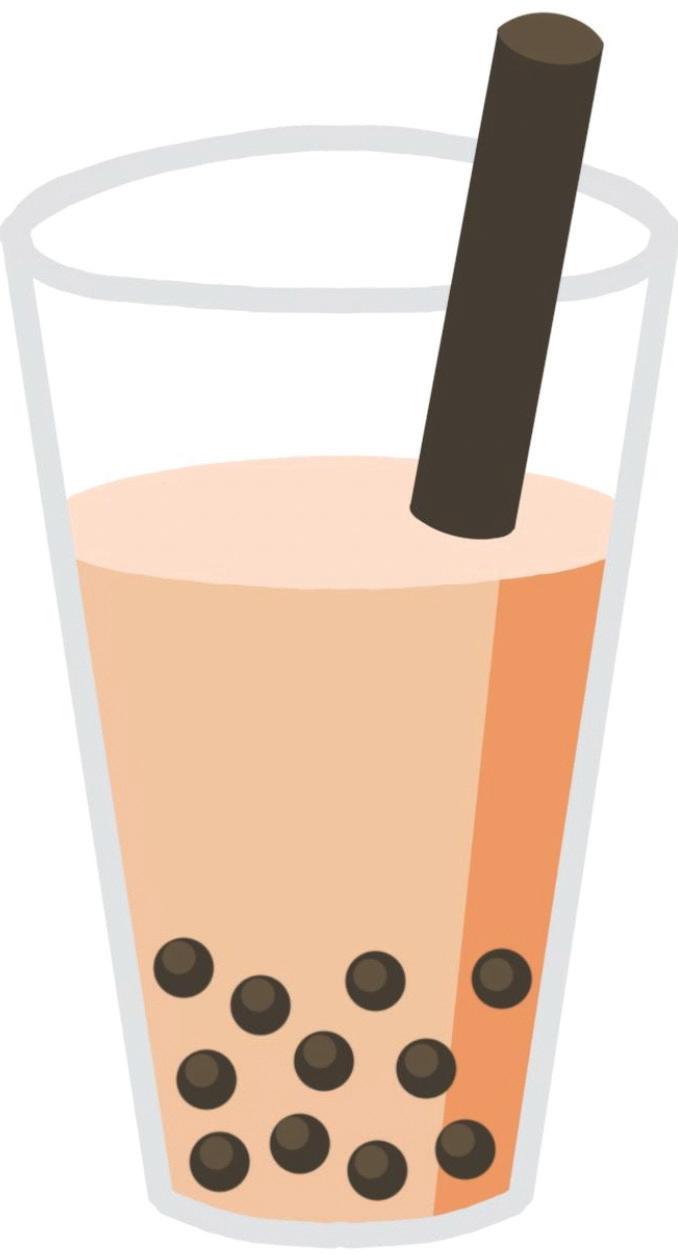

caffeine to ward off feelings of tiredness.
“They [caffeinated beverages] are popular with high schoolers because they give dopamine to your brain and they give you more energy,” Wong said.
“Students see it as a way to ‘catch up on sleep’ without sleeping. It gives you the benefit of feeling more awake, but it is also harming your body.”
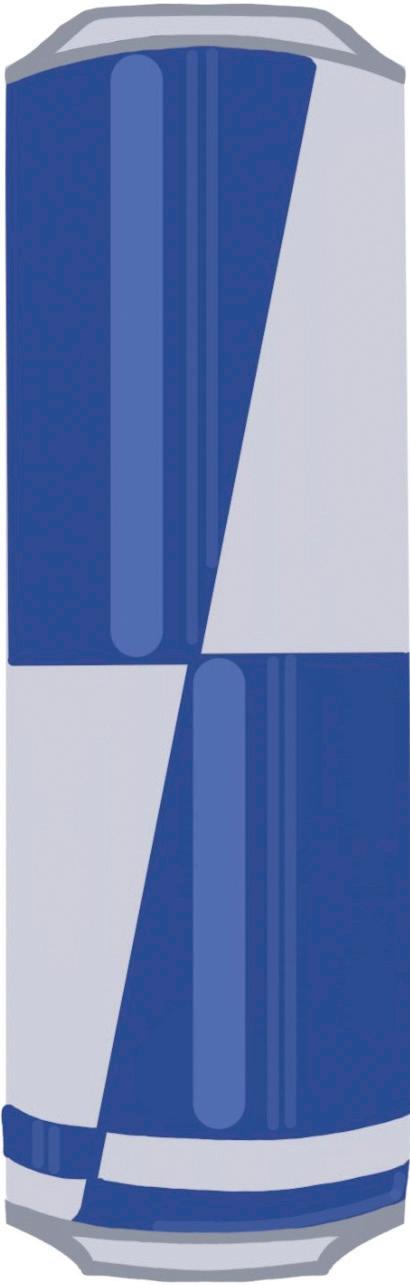
75 mg 80 mg 30 mg 200 mg
can become a vicious cycle.
“The biggest problem that energy drinks cause is sleep deprivation,” Madwed said. “Specifically, [being used as] a substitution for sleep is even worse, as it creates a cycle of consumption and reliance without realizing that what they are using to solve their problem of sleep is what is actually causing it.”
“Kids are overextended, and so they feel like they need stimulants to keep going.”
— Samuel Howles-Banerji, Chemistry teacher
Junior Wilem Madwed is conducting a research project on energy drinks in his AP Seminar class and said the issue of student caffeine use
Though he acknowledges the health risks for students, Paly chemistry teacher Samuel Howles-Banerji points out how caffeine use must be evaluated as one component in a complex situation.
“If we’re worried about it [student health], we should look at the cause of the problem and not the symptoms of the problem,” Howles-Banerji said. “I don’t think that our community is at a point where we’re willing to address the root causes.”
According to Howles-Banerji, these root causes are systemic pressure and stressors that students face.
“Students are overcommitted — meaning that they are doing too much all the time — both academically and extracurricularly,” HB said. “Kids are overextended, and so they feel like they need stimulants to keep going. In the range of stimulants that kids could use … caffeine is substantially less problematic [than other drugs].”

As national debates over childhood immunizations escalate, a recent local measles exposure highlights the tangible risks of declining vaccination rates and why Santa Clara County health officials are doubling down on established mandates.
On Feb. 27, Santa Clara Public Health Department recorded the first confirmed measles case in a resident since May 2025. Previously, the county had remained measles-free from 2019 until last year.
Vicky Khoury, a pediatric infectious diseases physician at the Stanford Medicine, told Veritas that declining childhood vaccination rates nationally can have immediate and severe public health consequences.
“When fewer children are vaccinated, communities lose the protective effect of herd immunity, increasing the risk of outbreaks of diseases that had previously been well-controlled,” Khoury said. “Declining vaccination rates for measles are contributing to rising cases and deaths in the United States. The U.S. is now at risk of losing its measles elimination status.”
that prior vaccine recommendation schedule,” Surasi said. “The recommendations have not changed in any of the jurisdictions in the state, including Santa Clara County.”
Text by PRIYA TAMURA
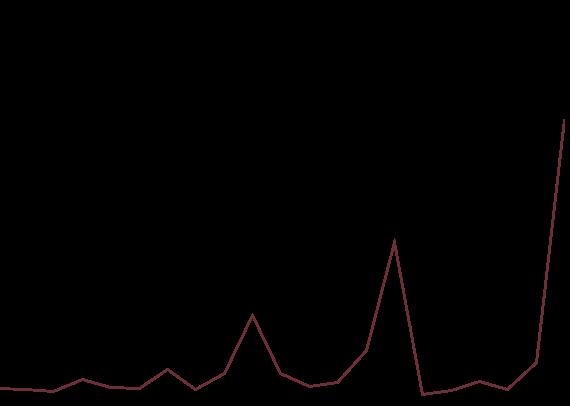
After years of near-elimination, U.S. measles cases are rising, per data from the Centers for Disease Control and Prevention.
Palo Alto High School senior Evanllelyn Sanchez Vargas, member of Paly’s Pediatrics Club, said maintaining established requirements is crucial for the well-being of the student body.
“The Covid vaccine is a great example of just the influence that a vaccine can have because it helps prevent a vast majority of infections,” Sanchez Vargas said. “It’s just a great modern-day example of why vaccination is a necessity.”
“The U.S. is now at risk of losing its measles elimination status.”
Vicky Khoury, Stanford Medicine pediatric infectious diseases physician
Despite the rising case numbers, Krishna Surasi, assistant public health officer at the County of Santa Clara Public Health Department, said California’s state-level policies provide a strong buffer.
“We’re very fortunate to be in California because the California Department of Public Health has decided that they’re going to continue using the previous vaccine recommendations, and all California insurers are required to cover vaccines per

While local and state guidelines remain unchanged, federal guidelines have been significantly revised. The Department of Health and Human Services updated the U.S. childhood vaccine schedule earlier this year, reducing the number of routinely recommended shots.
The federal retreat has prompted a wave of opposition from state health departments. According to a Kaiser Family Foundation policy report, 30 states have announced they are no longer following the federal Centers for Disease Control and Prevention recommendations as their benchmark for childhood vaccines.
Khoury said the U.S. immunization schedule was built over many years using extensive clinical trials and ongoing safety monitoring, and should not be discarded.
“Public health recommendations, especially those affecting childhood vaccination, should not be changed without strong scientific evidence and the careful review and support of medical and public health professionals,” Khoury said.
Khoury said she worries about the long-term impact of the new federal guidance on the public’s trust in medicine.
“My other big concern is that shifts in long-standing guidance can create confusion or inadvertently undermine public confidence in vaccines that have consistently been shown to be safe and highly effective over many years,” Khoury said.
Locally, Surasi said high vaccination rates, driven largely by school entry requirements, have kept massive outbreaks in check.
“For kids to enter school, there are vaccination requirements,” Surasi said. “So historically, we’ve seen very high rates of routine childhood vaccinations.”
Sanchez Vargas said she agrees that mandates are crucial but acknowledges nuances.

“I feel like being a requirement does help the overall health of the community by reducing any serious illnesses ... but there’s always going to be exceptions to that,” Sanchez Vargas said. “A lot of people may have religious exceptions.”
Surasi said that regardless of shifting national policies, the medical consensus on vaccines remains clear.
“Vaccines are one of the most effective public health interventions in history,” Surasi said. “They protect people from these diseases so well that most young doctors have never even seen a case of measles or polio.”
The loud chatter of the room quiets as Solar Car Club president, Elsa Lagerblad, moves to the front of the room. Students listen as Lagerblad explains electric engines while using her own solar car for reference.

Palo Alto High School’s Solar Car Club aims to get more students involved in sustainable engineering biweekly on Mondays in the engineering classroom.
Club president Elsa Lagerblad says that the club provides a new lens to STEM.
“We’re living in an unprecedented time of climate change and of more awareness about green technology,” Lagerblad said. “While we have a really big STEM focus here at Paly, I feel like sometimes what we’re missing is a sustainability- and environmental-centric STEM focus. By having this club, not only are we doing a lot of hands-on STEM engineering work, which is good, and people love that, but we’re also kind of bringing it through a new lens that we don’t often get at Paly.”
Co-president Laura Zhang said that the club has also built a community around learning about solar engineering.
“The most rewarding experience for me is really getting to know more about solar cars in general and I feel like I’ve learned more about the community around it,” Zhang said. “There’s not many courses about solar cars and solar engineering in general, so I think it helps to understand more about engineering for people who want to learn more.”
According to Lagerblad, the club will be providing more opportunities for its members to learn about solar cars.
“People can either choose to do this more hands-on project where they build a little mini solar car and race it around Paly or they’re going to be doing a little mini research project,” Lagerblad said. “We’re
really excited to be doing our solar car projects.”
Luana Le, a freshman student in the club, shared her experience on the project.
“We just started our solar car projects where we each got assigned individual roles to help build a car with our team,” Le said. “My role is designer. I help design the car and make it look good.”
Lagerblad said she hopes that students will take away more than knowledge about solar cars, but of broader skills.
“I hope that they [club members] take away a lot more knowledge about how the
state of sustainable engineering is,” Lagerblad said. “I hope they take away a passion for doing this kind of hands-on work and working in a team because that’s a big part of it as well as just being in a team and being collaborative within your engineering.”
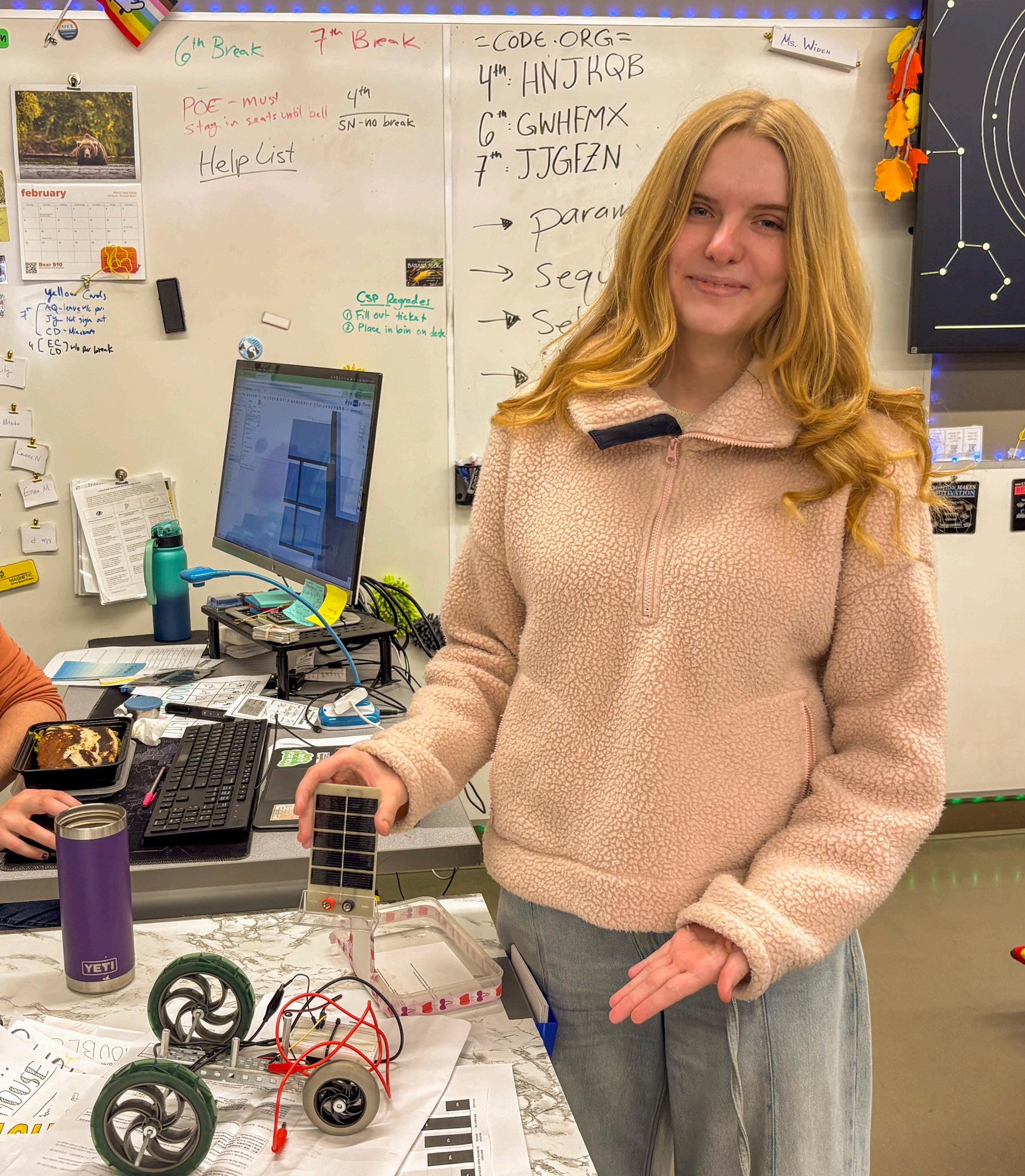
Below: Elsa Lagerblad, president of Palo Alto High School’s Solar Car Club, presents a miniature solar car. Lagerblad is looking forward to more students joining Solar Car Club, which promotes opportunities for students to learn about sustainable engineering.
The silence of the room is broken only by the clattering of keyboards. Students line the desks, their faces illuminated by the white lines of code on their screens. This is Computer Science Capstone, where students bring their focus to real-world application of their projects.
CS Capstone is a year-long dual-enrollment course that prepares students to apply their computer science skills in a real-world setting, bridging classroom learning with career-oriented application. It follows a structure different from the majority of classes Paly has to offer, using a yearlong, project-based curriculum as opposed to multiple different lessons and units. As a result, students must demonstrate independence, strong academic discipline, and overcome difficult decisions, challenges, and everything in between.
According to junior Deniz Buyukkokten, the amount of investment required in CS Capstone is strongly dependent on the type of project a student decides to pursue.
“It [time investment] depends on your project and how much you challenge yourself,” Buyukkokten said. “Like I said, the rigor is very dependent on what you choose to do. When it comes to assessments, the biggest thing you’re graded on is how much you learn.”
said. “Students will come up with two or three ideas, and then we’ll sit down and talk about [what they will look like] over the course of a year, what’s going to be the thing that’s going to inspire you the most? Because that’s the thing you’re going to pay more attention to and that you’re going to do during those times when you don’t want to do something else.”
The first month is spent picking and planning projects, which is when students brainstorm ideas to help decide their projects for the rest of the year.
“We spend the good first month of school breaking projects into manageable chunks,” Bell said. “We come up with ideas that people are interested in and then we guide them through the process of actually building it over time.”
“[It would be] really good for anyone who’s disabled, because the way I’m designing it … if you’re blind, you should be able to use it just fine.”
- DENIZ BUYUKKOKTEN, CS Capstone student
When it comes to choosing the right project, CS Capstone teacher Christopher Bell says that the best projects are the ones that inspire their respective students the most.
“I just kind of guide them into picking what they’re most interested in,” Bell
Buyukkokten to realize their ambitious projects. Buyukkokten saw this as an opportunity to carve a path into the AI assistant sphere he hadn’t seen anyone else do before.
“I chose to try to make AI interact with software, especially after I looked it up and realized no one else was doing it the same way I wanted to,” Byukkokkten said.
“I mean, that [passion], that’s the number one thing in all different fields. So there isn’t one field or topic that is better; students’ interest [is what] makes [projects] useful.”
- CHRISTOPHER BELL, CS Capstone teacher
Throughout the rest of the year, students continue working on projects while also giving presentations on other computer science-related topics.
“You get some project time during class, too, and then there’s a presentation,” Bell said. “So it’s a mix of working on your project and working on the giant presentation where you do like a demo for the entire class and try to teach them something.”
CS Capstone enables students like
Byukkokkten’s vision is to create a project that goes beyond the scope of the classroom and raises the quality of life for people in the real world.
“If it gets to a level where I’m satisfied, it’ll be open source, free to everyone,” Byukkokkten said. “It would be very nice to have an AI assistant where … You can just tell it [what to do], whether that’s by speech or by typing.”
Byukkokkten is also considering accessibility, ensuring his AI can be equally beneficial to all people.
“[It would be] really good for anyone who’s disabled, because the way I’m designing it. … if you’re blind, you should be able to use it just fine. … if you literally don’t have hands, you should be able to use it just fine. Even if you can’t speak, you can [use it],” Buyukkokten said.
Working on his project is a complex task and is not without its struggles. Buyukkokten often faces bugs and growing academic pressure, impacting his ability to work on his project.
“A [part] of coding is [that] your code will inevitably error at some point, and you’ll have to fix it,” Byukkokkten said. It’s junior year, so there’s a ton of other classes


that keep having all these different tests coming up, and that really makes [working on my project] more difficult.
Sometimes students hit roadblocks when working on their projects, but, according to Bell, it can teach them important lessons about the realities of computer science.
“We’ve had technical issues where we can actually no longer continue with this project the way that it is. So now we have to pivot and rework, which is valuable, but it can also be frustrating.”
According to Bell, all of the best projects he sees all have one thing in common — passion.
“I mean, that [passion], that’s the number one thing in all different fields,” Bell said. So there isn’t one field or topic that is better; students’ interest [is what] makes [projects] useful.”
Text by JESHURUN WANG and JOYCE (LEYI) MA
We were the children who grew up with social media, and we were the children who spent the nights away with our faces illuminated by our handheld corner of paradise.
The cell phone — conduit for the Internet — is still the provider of it all: streams of entertainment on endless platforms, an illusion of constant connectivity, and a never-ending bombardment of the next new thing feeding into our brains.
How could we resist when we had the entire world itself in the palm of our hand?
This carefully crafted paradise is no accident. Social media platforms — perfected over the years by companies to systematically consume our attention and time in the name of advertisement revenue — are the gateway drug of choice for the younger generation. Our minds were the product on sale, and they were lucrative.
The cascading mental health impacts of social media technology have long been documented.
According to a 2025 study published by the Centers for Disease Control and Prevention, teens with higher non-schoolwork screen use were more likely to experience depression and anxiety symptoms, as well as have low social and emotional support.
The overuse of social media has also been linked to a larger pandemic of isolation in young adults across the U.S.
Now, with the rise of AI chatbots like character.ai, ChatGPT, Gemini, Deepseek and an endless diaspora of others, the stakes have grown higher.
As more and more young people seek out chatbots for emotional connection, AI
hallucinations and spirals have led to real consequences. For instance, according to a 2024 report by The New York Times, a 14-year-old boy died by suicide after con versations with a chatbot on the platform.
There have also been documented cases of “AI psychosis,” where chatbots encourage delusions with their users and create a false reality. In fact, in the same

according to a 2026 article by The Week, by the age of 13, sexual or romantic roleplay is the dominant topic that is discussed
The Week also mentioned a similar report by Aura, which states that by the age of 11, 44% of conversations with chatbots
As is often the case with laws, the guardrails against unregulated technologies
AI is becoming more entwined in our daily lives, and more and more people will also be exposed to the associated risks in the coming years if precautions and limita-
The problem with AI use among children has already seeped into the younger generations through their education at an early age, and through the commercializa-
Palo Verde Elementary School 5thgrade teacher Carrie May says she noticed that her students are acclimated to technology now, that they are more focused, for instance, when she uses short video snippets to bolster concepts in lessons, which is often more effective in getting students to listen and pay
“They do tend to be more engaged when you incorporate media into your lessons,” May said. “It’s such a
According to May, younger elementary students have more trouble paying attention with
class activities.
“It’s a bit harder for them to focus on things when there’s no technology present, because technology can be so engaging for students, especially for younger students.”
In light of recent controversies over limiting cell phone use on school campuses within the Palo Alto Unified School District, May said she has seen a rise in the use of smart devices among her 5th-grade students, as well as among younger students.
Because of recent trends, she has implemented a no-smartwatch policy to keep students on task.
“So many kids have smart watches, like Apple watches and similar, and absolutely have phones,” May said. “It became very apparent to me how distracting it was for students to have those devices.”
Similarly, Palo Alto High School junior Katya Kuykendall said that childhood experiences and interactions have changed from her generation.
“[I would] go to a playground with some friends, and I would see some … little kids on their iPads, like in a circle of friends, just like on their iPads playing, and I think that’s really different than what my childhood was like,” Kyukendall said.
Art by JOYCE (LEYI) MA
sleep, leading to anxiety and stress.
“I think the increase of internet connectivity with young children has definitely kind of changed the role of innocence in childhood, because they’re more connected with things that are like brain rot,” Kyukendall said.
But what can we do? Limiting screen time overall sounds effective at first glance, but according to a 2021 peer-reviewed study published in Clinical Psychology Review, screen time in itself is not the main issue — instead, mental health is far more dependent on the screen content and activity.
Furthermore, both children and adolescents use technology (and, by extension, the wider internet) for practical and social purposes — including schoolwork and connecting with friends — which means going cold turkey is not feasible.
“I think the increase of internet connectivity with young children has definitely kind of changed the role of innocence in childhood.”
—Katya Kuykendall, Paly junior
According to Darlene Denis-Friske, a registered psychotherapist with the College of Ontario, this constant flow of “connection” can be overwhelming and exhausting for children exposed to it 24-7, changing the inherent meaning of having a meaningful childhood in the traditional sense of connecting with people physically rather than through an online chat.
We recognize the increased radius of connectivity that comes with chatting online, and a constant online presence is harmful for the child and detrimental to their growth.
A report by John Hopkins Medicine found that social media use is linked to higher rates of depression, as these platforms increase social isolation and decrease
While there isn’t a clear-cut solution, the American Academy of Pediatrics recommends parents and caregivers have open conversations with their children regarding screen use as a family — specifically, using the 5Cs framework to create a Family Media Plan. This framework structures these important conversions and helps family members understand the child’s personal motivation for using social media, what Content is drawing their attention, how to develop healthy coping strategies to calm down instead of turning to technology, and what social media is crowding out in their lives — all crucial aspects that need to be communicated clearly and transparently.
One thing is clear: Parents need to have these conversations with their children sooner rather than later to set healthy boundaries with digital media use before children are exposed to its harmful effects. Instead of letting technology run both parental guidance and our children’s lives, it’s time for us all to take control and set our own norms.
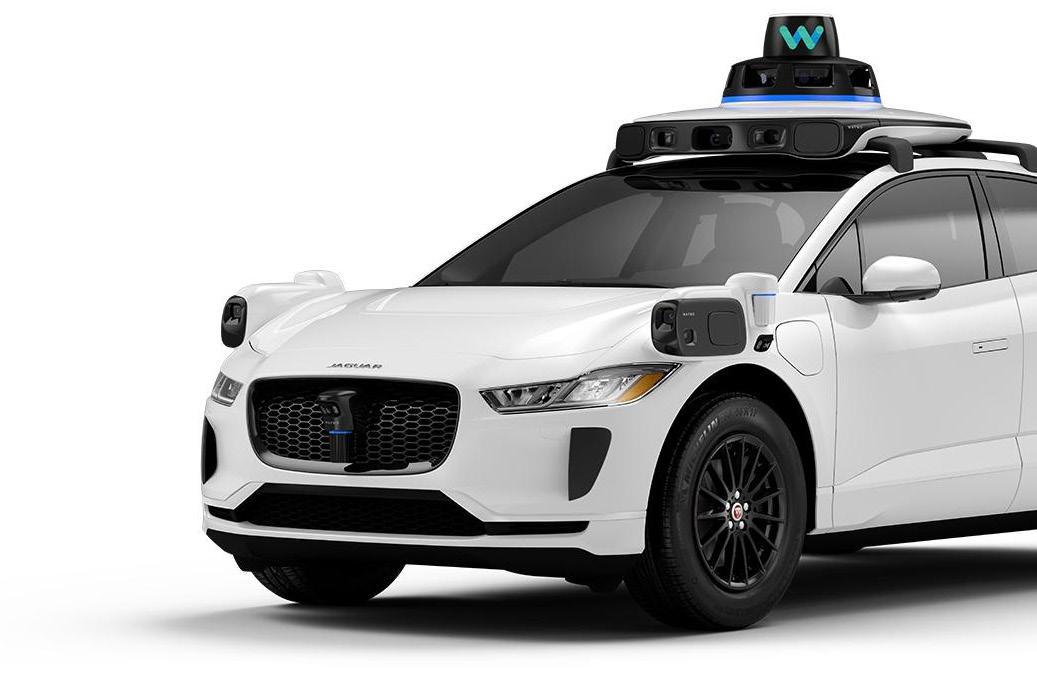
Isaw a Waymo trying to take an unprotected left turn, and it held up traffic for so long that the line of cars behind it was through the intersection behind them,” Palo Alto High School junior Vedika Argawal said as Waymo, an autonomous driving service advertising sustainable and safe rides, expanded its operation to Palo Alto and surrounding cities over the last year.

“Waymo is committed to holding safety to a higher standard,” Waymo’s website said. “We [the Waymo team] aim to offer freedom of movement for all, create a sustainable, efficient transportation ecosystem, and make the planet better than we found it.”
“But is Waymo’s standard really higher than competitor rideshare services like Uber and Lyft?
According to Kristofer D. Kusano, an autonomous driving engineer at Waymo, its automated driving system across 7.14 million miles finds that ADS (automated driving systems like Waymo) had 80% fewer injuries-related crashes and 55% lower police-reported crashes compared to human drivers.
traffic. Paly junior Vedika Argawal experienced this effect of automated driving recently while walking in downtown Palo Alto.
“
“I saw a Waymo trying to take an unprotected left turn, and it held up traffic for so long that the line of cars behind it was through the intersection behind them,” Agarwal said. “In the Bay Area, especially with smaller streets like University Avenue, if there’s a gap for you to take the turn, you have to, but Waymos aren’t programmed to take the risk … They just hold up traffic until somebody stops for them.”
“ Waymos aren’t programmed to take the risk. They just hold up traffic unfil somebody stops for them.
—Vedika Argawal
Many riders like Palo Alto High School junior Siena Siljak feel safer taking Waymo because it strictly obeys the law and usually doesn’t make impulsive decisions.
“I feel safer because a Waymo can’t get distracted as a driver can,” Siljak said. “Also, the process is pretty easy. You just select the location you want to go, and it matches you with a ride, so there’s no confusion.”
Since Waymo is programmed to follow strict rules with no exceptions, the expansion of Waymo into cities leads to problems like holding up vehicles and blocking
ing temperature and “cabin theme.”
However, many riders believe the replacement of rideshare drivers is unethical. Uber currently employs over nine million drivers worldwide, while Lyft employs over two million, according to their websites.
“ I feel safer because a waymo can’t get distracted like a human driver can
—Siena Siljak
Siljak said Waymo offers a place for people to relax, pushing off the social pressure riders face when a human driver is present. “I prefer Waymo over Uber,” Siljak said. “I’ve never been in an Uber alone, mostly because I don’t really feel comfortable being alone in an Uber with some random person.” Waymo offers many other services that make the rides more comfortable. For example, the car connects to both Spotify and Youtube Music, allowing you to stream your own music during the ride, as well as adjust -
Paly senior Reyes Aronson refuses to ride Waymo for this reason.
“It’s taking the Uber and Lyft drivers’ jobs,” Aronson said. “And I’ve never seen an Uber malfunction.”
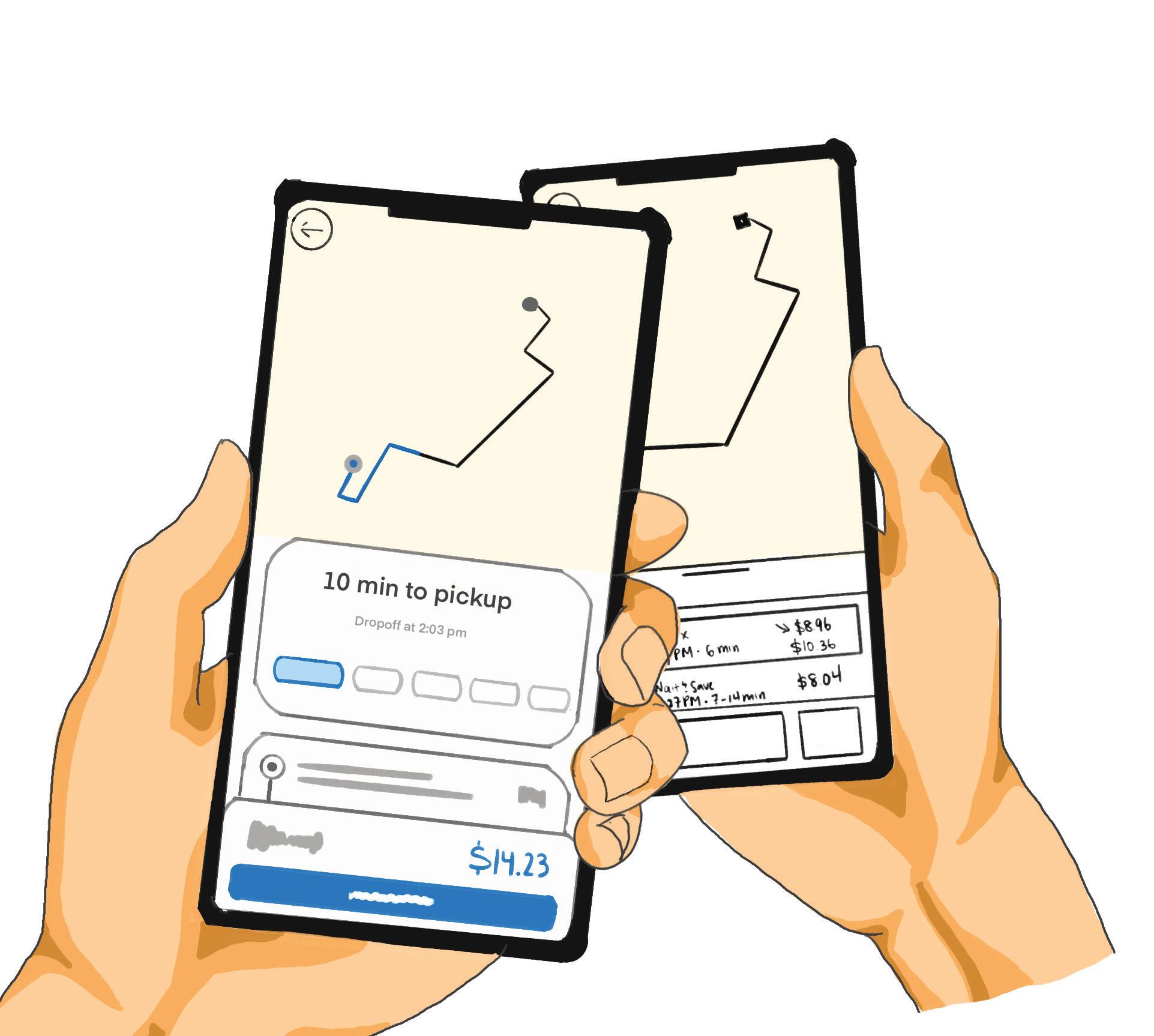
Waymo has also recently been more expensive than human rideshare services. Obi, an app that compares various live rideshare service prices, simulated more than 94,000 ride requests in the San Francisco Bay Area between Nov. 27 and Jan. 1 and found that Waymo costs an average of $19.69 for a ride, while Uber was slightly cheaper at $17.47 and Lyft averaged at $15.47.
But for Siljak, the price is worth the safety.
“I really don’t mind paying a little extra to feel safe,” Siljak said. “The rider’s comfort should be the top priority.”
GUPTA and BENJI SANDEL

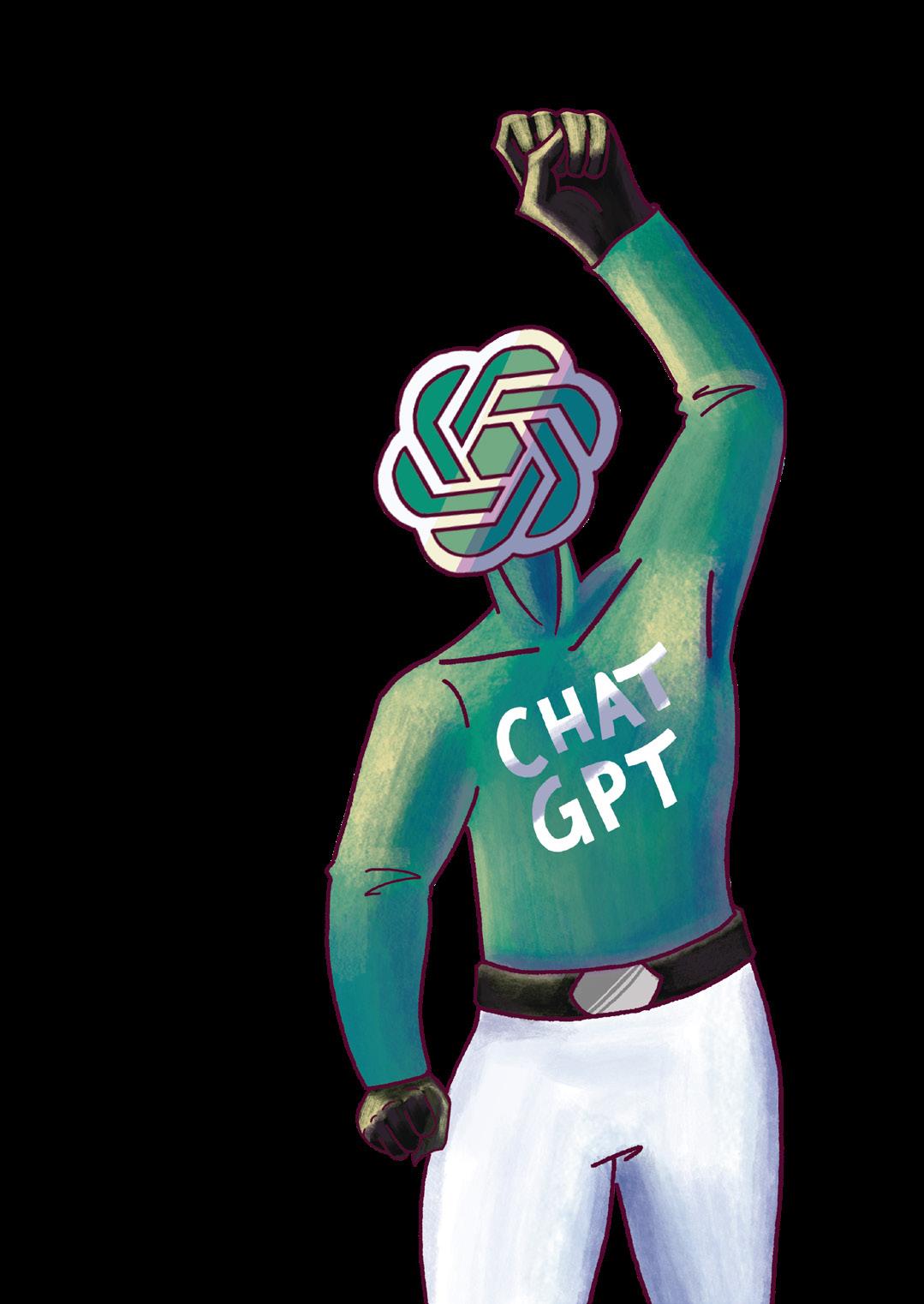
You’re working to finish a literary analysis late into the night, but it seems like every single AI model you ask gives a completely different response. One suggests a complete rewrite of your essay, another signs it off as it is, and a third floods you with detailed feedback. Nowadays, the question isn’t just what the answer is, but what chatbot you should be using.
Artificial intelligence, or AI, has rapidly become essential to high school life. Whether it’s solving problems, researching, or outlining essays, the usage of AI tools has become the norm.
David Wu, Palo Alto High School senior and AI Club president, said in an email that in his experience, most Paly students use AI to help clarify concepts and work through problems.
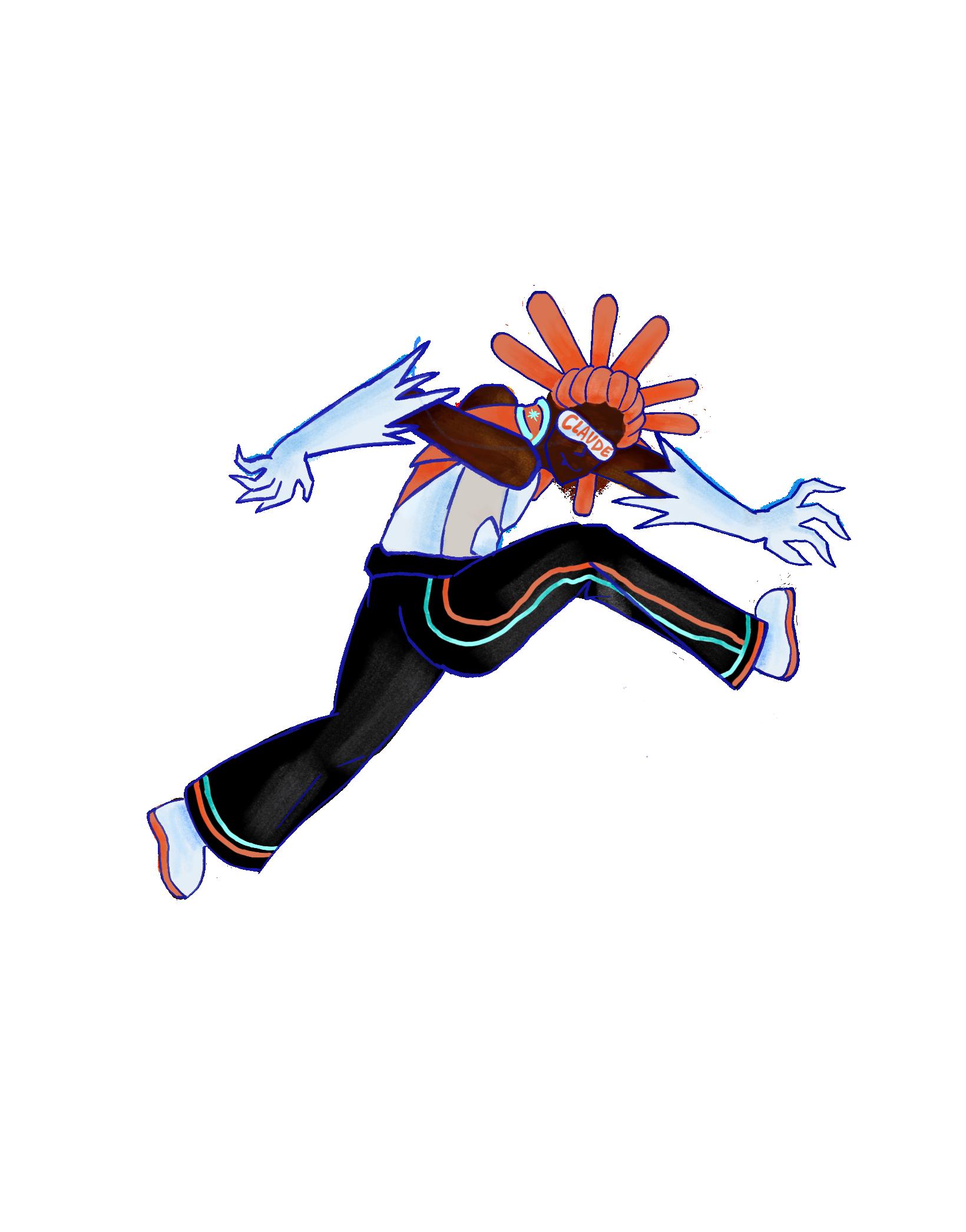
“Students are primarily using ChatGPT, Claude, and Gemini,” Wu said.
With so many options, how do you decide what AI tool to use? According to Koushik Sen, a professor of computer science at UC Berkeley, his students decide between AI models based on two factors.
“One [factor] is which chatbot is good for the particular task that they are trying to solve, and the second is the cost,” Sen said.
OpenAI, Google, and Anthropic are companies leading the generative AI revolution. Currently, the latest AI models by each are ChatGPT 5.2, Gemini 3 Pro, and Claude Opus 4.5, respectively.
These tools are all powered by large language models (LLM), which is AI that has been trained on enormous sets of data to generate human-like responses according to an article published in IBM’s think.
Currently, Gemini 3 Pro is $19.99 monthly, ChatGPT 5.2 Plus is $20.00 monthly, and Claude Opus 4.5 is $20.00 monthly.
Sen measures a model’s quality by how well it can perform complicated logical tasks such as proving mathematical theorems and giving medical diagnoses.
“The best LLMs like ChatGPT 5.2, Opus 4.5 from Anthropic, and Gemini are pretty good at these,” Sen said.
While there are differences between these AI models, Sen says there isn’t a huge difference between leading models for general usage. “They try to be good at everything: coding, math, literature, science, and everything,” Sen said.
Sen personally uses Gemini the most due to its conciseness in responses, while using ChatGPT and Claude for more specific tasks.
“For general use, I use Gemini 3 Pro, mostly for research and asking questions,” Sen said. “Sometimes I do use GPT for deep research, and I use Anthropic extensively for coding and software development.”
For students to figure out what AI models suit their needs the best, websites such as LMArena.ai, which uses crowdsourcing, and SWE-bench.com, a standardized benchmark providing useful comparison metrics.
LMArena.ai is an online arena-style game that pits models against each other. The website gives two responses to prompts given by users — one from each model.
After users read the responses, they can pick the response they liked the best, at which point, the identity of the model that wrote each response is revealed.
Data is compiled for which AI model is the most preferable by users. As of now, Gemini 3 Pro tops the leaderboard.
Another metric comes from SWEbench (Software Engineering Benchmark), which is a benchmark used for evaluating LLMs through testing their capabilities in solving software problems.
On the SWE-bench leaderboard, Claude 4.5 Opus is first with 74.40% of problems solved. Gemini 3 Pro and ChatGPT 5.2 follow with 74.20% and 71.80% respectively.
Wu said that students should try many different models due to each having different styles and strengths.
“I would recommend not exclusively using one model alone, but instead using multiple different models,” Wu stated. “It increases the likelihood that one of the model’s responses or explanations will ‘click’ with you.”
Verbatim: What AI models do you use and for what task?
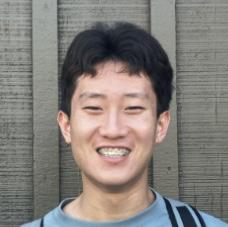
“I use Gemini for a lot of school work because I find it very easy to screenshot a problem...and just ask it to solve it. And I also use Claude for debate because I think their responses on a lot of political issues or things that require longer responses are very good.”
— BEINAN REN
10th grade

“ChatGPT— It's really good at comparing things. Like, I’ll use it for research and I’ll ask which article is reputable or more accurate in instances.”
— AMI YANAGUCHI
12th grade
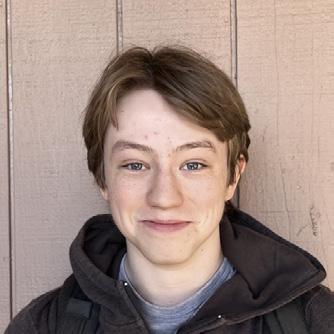
“I like using Perplexity because it cites its sources. The research that it has is … accurate, and it's also been recommended to me by multiple people, and I think it has high quality responses, especially compared to ChatGPT.”
— MARCELLO ATTARDI 12th
grade