

The Campanile

ARTBYCHARLOTTELIU
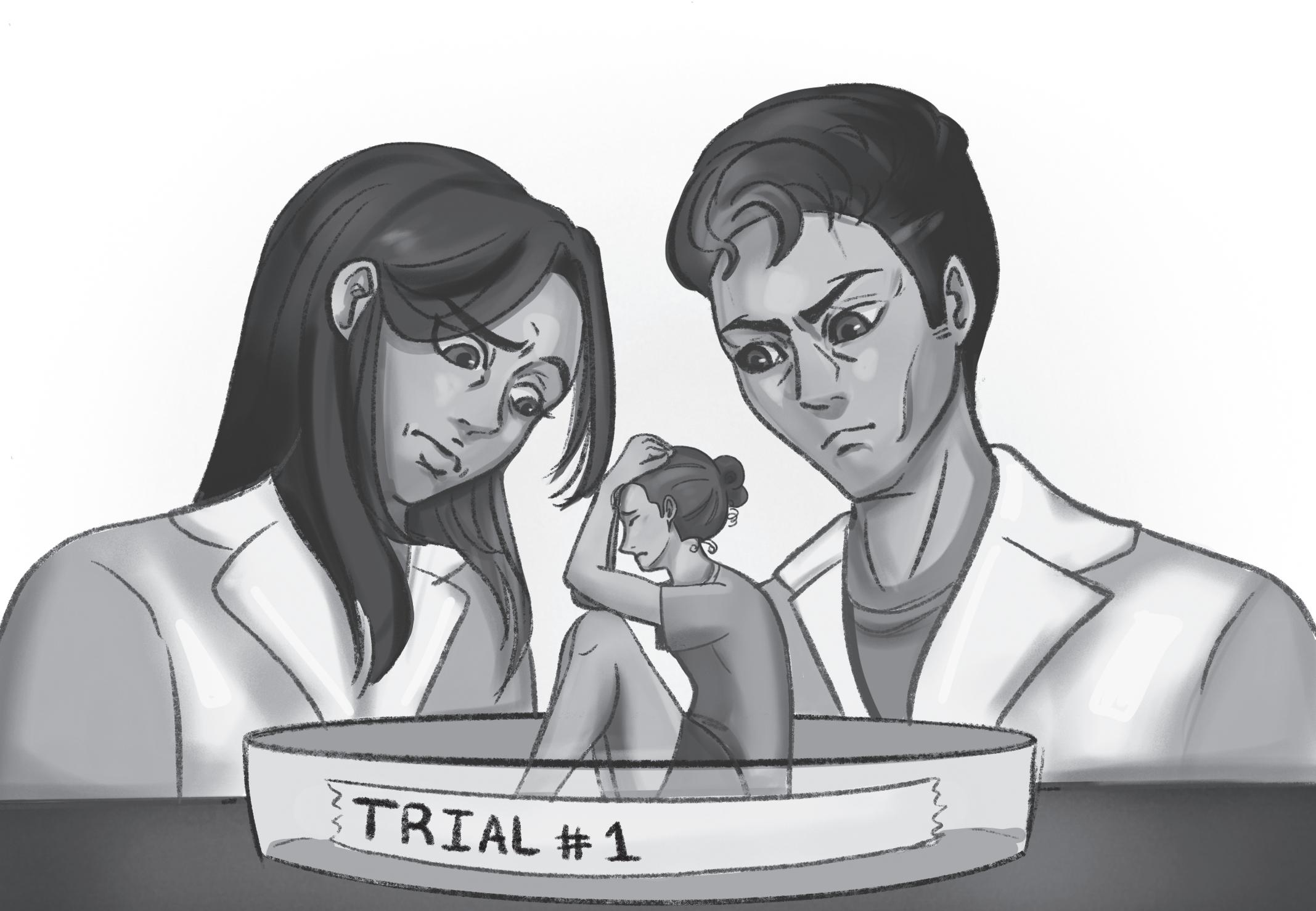
California upholds prison involuntary servitude
California voters rejected Proposition 6, a proposed constitutional amendment that ends involuntary servitude in prisons, with 53.3% of votes for “No”, during the recent November election. e ballot measure needed a majority vote to pass and would have made work assignments voluntary for incarcerated individuals and allowed them to earn time credits for participation.
According to Scholars Strategy Network, 94% of prisoners earn between $0.08 to $0.37 per hour to do menial work such as kitchen work and laundry work assigned to them. However, incarcerated individuals who volunteer to help combat wild res can get paid up to $10.00 per hour. Additionally, if prisoners do not work, they can get punished for not working.
Tina Curiel, a formerly incarcerated person and the head of communications for the San Francisco-based Center on Juvenile and Criminal Justice, said she was frustrated by the decision.
“(I was) very disappointed, very disappointed,” Curiel said. “(I) really thought that there was an opportunity here for

California to step up and right a wrong from a long time ago. And I want to say (I was) surprised. I had hoped that this would be an easy thing for us to vote to overturn slavery that way.”
On the other hand, Will Stover, a junior and campaign intern for District 13 State Senator Josh Becker, said involuntary servitude in prisons can be bene cial for preparing incarcerated individuals for release.
“I think that (involuntary servitude in prisons) really serves as a re-education factor for these prisoners to reintegrate themselves into society… if they’re not being mistreated, (and) if the working conditions are good,” Stover said.
According to Context, California’s rejection of Prop 6 comes at a time when Nevada, Alabama, Oregon, Tennessee and Vermont have moved to ban involuntary servitude.
Although other states have passed similar measures, Curiel said she believes one reason the proposition did not pass was because supporters of prison reform focused more on decreasing drug and felony sentences by opposing Proposition 36.
“At the same time, we were ghting Prop 36, and Prop 36 is like a criminal justice bill that rolled back other reforms,” Curiel said. “We’re worried it is going to be lling jails and prisons and forcing people into those positions.
In addition to the fact that Prop 36 was on the ballot, AP US History and World History teacher Katya Villalobos also said one reason Prop 6 may not have passed was the confusing language used in propositions.
“It’s very confusing, and I completely understand, that if you really don’t want to support something, (you might think), ‘we will just vote no, and people will take care of it later,’” Villalobos said.
However, involuntary servitude is not the only issue connected to this proposition. Villalobos said this prop is connected to reparations in California.
“ ere is a lot of evidence to say that as a result of the Jim Crow laws that were passed after the Civil War, after Reconstruction ‘failed,’ African Americans, particularly in the South, were incarcerated and served on work gangs, and they built a lot of roads in some of those southern states,” Villalobos said.
Additionally, Villalobos said there is a long history of slavery in prisons, especially regarding African Americans.
“It’s (a) loaded history in terms of how you view incarceration, particularly during that period of 1876 to early 20th century — the increasing rates of incarceration and disproportionately the percentage of African Americans in the South,” Villalobos said. “People were being sent (to) prison
everywhere, but in the south, particularly, the percentage of African Americans that were sent to prison and then had to serve on those work gangs (was higher).”
However, Stover also said beneath the issue of involuntary servitude lies a more pressing concern.
“ e underscoring issue is that I think that the reason we’re pushing so hard on involuntary servitude is that there’s a huge boom in imprisonment percentages,” Stover said. “I think that that’s really down to the education that we have in our country. I think that there’s not enough focus put on education and access to higher education.”
Curiel said that under current laws, incarcerated individuals are punished for refusing involuntary servitude, which creates a major obstacle for rehabilitation programs.
“With slavery still being allowed under involuntary servitude, people are punished if they try to choose to go to rehabilitation versus their assigned work that they’re getting paid slave labor, wages, if any,” Curiel said. “And so it’s basically condemning them to, ‘Are you not going to get out as soon because you’re not getting to work towards rehabilitation?’”
Because this decision is not a choice incarcerated people should have to make, Curiel said this situation puts incarcerated people in an abusive position.
“We’re putting people in an even worse position that are already incarcerated and denying them a route towards working towards themselves and getting out sooner because rehabilitation counts as good time credits, which would help them get out sooner when they go up for parole,” Curiel said.
Overall, in regard to all California propositions, Stover said it is important for students to research propositions like these to prepare for their futures as voters.
“I really think that we must do our due diligence because we’re going to be a big voice that frankly needs to be heard now,” Stover said. “It’s our civic duty, and I think just educating ourselves and even practicing making those decisions for what prop you want to vote … (is) very important.”
Curiel said she hopes California will pass a similar measure to eliminate involuntary servitude.
“I hope that going forward, we (eliminate servitude) on the next ballot measures,” Curiel said. “I know it’s a long road ahead, but we plan on trying to bring this back, and then eventually we do end involuntary servitude as a legal form of slavery in California.”
Naveen Narayanaswami Sports Editor
Luca Vostrejs Lifestyle Editor
Paly and Gunn held their 47th annual jazz concert in the Gunn auditorium on Dec. 13. Shawn McGinn, the director of Gunn’s Jazz band, said jazz music starts with working together to build energy.
“A group tries to create music together and then gures out how they enjoy playing the piece.” McGinn said. “ en, you really have the starting point to begin to make music — wanting to listen to each other, wanting the other person to be good and then just playing with lots of energy (and) really going for it. McGinn said that both jazz bands performed spectacularly and brought enthusiasm.
“It’s like they say in sports, ‘Leave everything on the eld,’” McGinn said. “It’s that kind of feeling like I tried as hard as I could. I focused so hard. My general thought is that there was a lot of good energy. Ninety- ve percent of the feeling that I have right now is just joy about the whole experience because these students worked really hard for this, and they had a good experience. We met our objective for the night.” McGinn said the synergy of the Paly and Gunn Jazz band contributed to the positive atmosphere.
“I’ve always loved the collaboration between Gunn and Paly,” McGinn said. “I feel like in an athletic space, there’s always kind of a bit of a rivalry but in music, it’s like, ‘How can you work together best?’”
Paly freshman Liani Ragade, who plays the bass guitar, said the concert was good exposure for each school’s jazz bands.
“I thought it was really cool that we came and got to experience what the Gunn band sounds like and see friends from the Gunn band,” Ragade said. “ ey’re just so many di erent styles of jazz.” Ragade also said the Paly jazz band puts in a lot of work behind the scenes to prepare for performances.
“We rehearse three to four days a week, from 7:55-8:50 (a.m.) during zero period, and we do a lot of work,” Ragade said. “Mr. Wilner gives us pieces that are challenging, but they also build our skills.”
However, jazz music is not only for musicians. McGinn said the beautiful part about jazz is its inclusiveness.
“Jazz music has always been like the best music, in my opinion, for integrating all walks of life,” McGinn said. “Everybody’s welcome, come and play, come and do it, and so it’s always been (about) inclusion. It’s a colorblind kind of music, and it’s super beautiful in that way.” Ultimately, Ragade said people should make an e ort to support the jazz band and experience future concerts.
“I think concerts are a great way, whether you’re a big fan of music or not, to come and listen to musicians who practice really hard on their skills,” Ragade said. “(You get) to listen to all di erent kinds of music at performances, and you can get familiar with jazz music. Maybe you decide you like it yourself.”

ART BY HUDSON PRESS
Freshman and Saxophonist Elliot Hull plays the jazz band’s opening song. Gunn’s jazz band Director Shawn McGinn said the concert succeeded. “I’ve always loved the collaboration between Gunn and Paly,” McGinn said. “In athletics, there’s always a bit of a rivalry but in music, it’s ‘How can you work together best?’”
Greene GIVES students receive President’s Volunteer Service Award

Eighteen Greene Middle School students received the President’s Volunteer Service Award on Nov. 20 for their work with Greene GIVES, a program that connects students to local service opportunities.
Lisa Bertelsen-Kivett, the founder of Greene GIVES, said the program allows middle school students to develop a relationship with their peers and neighbors through service.
“Not only were they doing good work, but they were having fun doing it,” Bertelsen-Kivett said. “ ey truly built their own community, and they are all good friends.”
Flour Power, a program created within Greene GIVES, has donated over 1,500 loaves of bread to local organizations such as the Hotel de Zinc homeless shelter and the Boys and Girls Club since its launch last year.
e initiative’s founder, Jessica Galbraith, said she started Flour Power because it allows students to learn how to contribute positively to the community.
“I think the kids feel empowered and one of the bene ts is that there’s a lot of anxiety in our community,” Galbraith said. “Going out and xing some of the problems is so good for them.”
Seventh grader Geo rey Kivett is a PVSA gold award winner, given to kids with over 100 hours of service, and said he appreciates the lessons he

has learned through the volunteer program.
“No action is too little,” Kivett said. “Being able to make bread with my friends so that we can all join in on the experience of helping others and understanding their situations is amazing.”
Seventh grader Zoe Tsiagbe, who also won the gold award, said her favorite part about Flour Power is helping people in need.
“I feel so grateful to get this award,” Tsiagbe said. “It’s amazing how by doing something you love, you can be rewarded in such a great way without even knowing that you were going to be.”
Since Greene GIVES is over a year old, Galbraith said the program’s leadership is exploring next steps they can take to expand the program while preserving its mission.
e most important aspect is that the kids are nourishing and feeding our less advantaged community with really healthy food,” Galbraith said. “In the future we’re hoping to be able to expand the program so that more kids will be able to join and do even more things through Greene GIVES.”
Proposition 2 passes, granting $10
billion
in funds to public schools, colleges in state
Proposition 2, a bill funding California public schools and community colleges, passed on Nov. 6. e bill’s passing means the state will distribute $10 billion through grants, with $8.5 billion going to K-12 schools and $1.5 billion going to colleges.
Proponents of the bill argue it will address necessary infrastructure upgrades that many schools lack. According to the Public Policy Institute of California, 38% of students attend schools that do not meet the state’s health and safety standards.
However, according to Community College League of California President Larry Galizio, the funding the bill pro vides is insu cient in addressing needed renovations.
“We probably have 40 million people, and we have 115 community colleges, and then we have one all online college,” Galizio said. “So there are 115 commu nity colleges throughout California, and they have buildings that are old, and there are industries and businesses that need educated and trained workers.”
Galizio said it would take $27 billion to completely renovate all the colleges in the state to bring them up to modern standards.
“You have buildings that need seismic upgrades, or they have utility and infrastructure that is decrepit and in need of repair,” Galizio said. “You have growth needs at some of the colleges, especially in places like the Inland
Empire or the Central Valley, where populations are increasing and where the colleges were built in a di erent era, with a di erent economy and a di erent set of needs. You also have the need for new programming and new buildings and modernization.”
Galizio said these grants, allocated at the discretion of the Chancellor’s O ce, will be used for objectives such as upgrading buildings to meet health and safety standards.
e Chancellor’s O ce will work with the colleges, rst (to) identify where those health and safety needs are, and that will be
ings,” Galizio said. “But there are some areas of the state where the voters have not passed local bonds, and those will probably be some of the top priorities because they have the greatest need.” For schools that have these alternate methods of funding, Galizio said they would likely be given lower priority. Teacher librarian Sima omas said the money may not be given to Paly due to its renovation work. ere are buildings on this campus that haven’t really been updated since the ‘70s, but it sounded like there are schools that are in even worse states of repair, so I’m not sure how high priority Paly would be,” omas said. For PAUSD speci cally, omas said renovations were already ongoing throughout the district.
“Most, if not all of the schools in the district are going through phases of renovation,” omas said.


MIRAI MATSUZAWA/THE CAMPANILE Greene GIVES founder Lisa Bertelsen-Kivett announces the President’s Volunteer Service Award to students on Nov. 20. “Not only were they doing good work, but they were having fun doing it,” Bertelsen-Kivett said.
Mirai Matsuzawa Sta Writer
ART BY SOFIA SINGER
Lea Kwan Senior Sta Writer
Fourth wave
Fourth-wave feminism, a feminist movement which began in the early 2010s, focuses on womens empowerment, challenging gender roles, sexual harassment, body shaming and gender equality.
According to History.com, the rst wave of feminism focused on women’s su rage rights, the second on deconstructing traditional womanly roles like wife and mother, and the third on sexual harassment in the workplace and a lack of women in positions of power. However, these previous waves of feminism faced the issue of centering too much on privileged white women.
Now, unlike previous generations, fourth-wave feminism brings in the voices of women of color, trans women, and nonbinary people as a culmination of previous movements. It utilizes social media to spread awareness and gain support, with new feminist TV shows, movies, songs and podcasts painting a new story about women.
Despite its prevalence, not many Americans consider themselves strictly feminist. According to the Survey Center on American Life, 35% of Americans consider themselves somewhat feminist and 33% consider themselves not feminist at all. Forty-two percent of women say the term feminist describes them very well or somewhat while 27% of men say the same. e gender gap is more pronounced through ages 18 to 29, with women making up 55% and men only 31%.
Lisa Knox, recording secretary of the Palo Alto Women’s Club, said feminists’ goals used to be more about gaining basic human rights.
“It was during our lifetime that women were not allowed to get a credit card without their husbands co-signing permission,” Knox said. “Even our generation takes that for granted because we were children and didn’t really even know. I don’t think we’ve gotten there yet. We were busy trying to get women to just even get hired for traditionally male jobs.”
#SOCIAL MEDIA
Sophomore Alana Chun, co-president of the Women’s Representation in Media club, said women and girls often lack female role models in the media, but with fourth-wave feminism and its prevalent online presence, more and more girls can see those roles lled.
“Some of the biggest challenges women face with representation in the media are seeing how the women are represented now and feeling like they have to act a certain way to t into what the stereotypes that are portrayed in the media,” Chun said. “It’s hard for girls to really feel comfortable in their own skin, if they see people in the media they may not relate to and that don’t represent them as a person.”
However, Chun said the media is improving the diverse roles given to women.
“When I was younger, a lot of the shows and movies were all about girls getting saved by a prince or by a man, and I think it’s nice for girls to be able to see a strong female character who can work on her own and take care of herself on her own,” Chun said.
Junior Maya Mohan, president of the Women in Data Science club, said she has noticed a change in women’s representation in children’s animated lms, adding feminist undertones to media that can in uence children in positive ways.
“In past children’s movies, Disney Princesses always had a Disney prince to accompany them whereas Moana, for example, is (one of) the rst Disney princesses who doesn’t have a male love interest,” Mohan
said. “Especially for younger children, being able to see that a princess can be very dainty and have a prince in her castle and go ght monsters across the sea is really nice to see.”
Fourth-wave feminism isn’t just bene ting women by giving them role models in the media, it’s also opening the stage for men to be open about their experiences.
In a 2003 study by Gross and John, they found males scored signi cantly higher than females on the Emotion Regulation Questionnaire (ERQ), and this study was later con rmed by another in 2009 by Haga et al.
AP English Language and Composition teacher Alanna Williamson said movies and TV shows promoting feminist values can bene t men as well.
“I think that (feminism is) dismantling the patriarchy, but that’s for men too,” Williamson said. “ at’s why Barbie was so powerful — because men are impacted also.
Men should really care about how the patriarchy impacts them and doesn’t allow them to feel feelings or have male friendships that are really close.”
However, senior Amani Fossati-Moiane said he has seen how feminism can sometimes be misunderstood or interpreted negatively.
“I think the whole concept of feminism is to be inclusive, but there are cases where feminism can be aggressive,” Fossati-Moiane said. “Sometimes, people might use feminism to justify a cultural double standard in (everyday interactions).”
With the rise of social media, Katelyn Kramer, the vice president of Outreach for Stanford Society of Women Engineers, said online platforms can help support women.
“A lot of my social media is very positive regarding feminism, empowering women and seeing women in male-dominated elds — maybe not always being treated equally or having full equality achieved, but at least getting to these points,” Kramer said. “I think that’s taken as positive a lot in the media, but in the real world, it’s not always taken positively. ere’s still people ghting for real equality, like getting the same pay.”
According to the Pew Research Center, 28% of teen girls say social media makes them feel worse about their own life, compared to just 18% of teen boys.
Additionally, Chun said social media can promote unrealistic standards for women and girls.
“Sometimes looking at social media can make you feel bad about yourself, like it’s not normal for a girl to be interested in computer science, and you only see videos of girls going shopping,” Chun said.
However, Naomi Lilly, director of storytelling and marketing for Girls for Gender Equity NYC, said women having positions of power does not address the larger systemic issues such as women’s safety from sexual violence, healthcare disparities and cultural attitudes towards women.
“It’s still not enough when you’re still facing larger systems that don’t agree that you deserve those rights,” Lilly said. “Having that one vote doesn’t necessarily create the change that we need, which is why I think the community organizers that look like us, that care about us, that aren’t facing the larger systemic obstacles, are important.”
And community organizers can come in the form of those who have power in the hierarchical system already. Williamson said those with privilege should strive to uplift minorities.
“I hope that anyone in a position of power, where you’re not (a) marginalized person, can check your own privilege
and be willing to be uncomfortable with how you might be contributing to a system that isn’t what you want to be contributing to — not because you’re a bad person, but just because there’s systems in place that do that,” Williamson said.
#POLITICS
e power of the feminist movement can also be found in politics, but it remains increasingly hard to pass bills that help women with the increasing polarization of the political sphere.
According to e Associated Press, Donald Trump’s presidential campaign targeted men through the country’s economy, culture and political system. is resulted in a gender divide in the election, with young female voters being 12% more likely to support Harris than young male voters. Furthermore, only 42% of voters say a female president would be a crucial milestone in history.
Mirroring the political polarization seen throughout the country, Williamson said feminist sentiment has grown more divided.
“ ere’s a lot of anti-feminist stu that gets brought up — whether you’re prolife or pro-choice, the arguments about it tend to be really demeaning towards women, so that sucks,” Williamson said.
“And as a teacher, in more recent years, my (female) students have been promoting feminism more, while a lot of my male students have reverted and have gotten less feminist.”
Williamson said Gen Z is becoming more and more conservative.
“A huge amount of the people who voted for Donald Trump ended up being from Gen Z, which was really surprising to a lot of people because we thought Gen Z was very progressive,” Williamson said. “ e younger generation seems like it’s getting pretty intensely conservative with white male younger voters. And I think that is a direct result of the ease of access to those opinions in a way that they didn’t have before. And I think also seeing things online can be (like) a vacuum, so you’re only seeing one lens.” Senior Declan Baker said young men may not realize who their vote is a ecting.


wave #Feminism
“Speci cally in this year’s (presidential) election, I saw a lot of men and boys my age vote for Trump, and some of them were even celebrating Trump winning against women in two separate elections,” Baker said. “It’s sad and scary to see so many young men, who have been raised by strong, independent mothers, not recognize that and (reject) feminism.” Lilly also said she believes the ght for equality would have still been a battle regardless of election outcome.
“Women’s rights are under attack — they’ve always been under attack,” Lilly said. “I don’t necessarily know if the loss or a win would have changed that completely. I think it’s a matter of the systems that we’re working against because we’re also looking at a fully Republican senate and a House of Representatives majority, so either way it would’ve been an uphill battle.”
#GIRLS IN STEM
According to the National Center for Education Statistics, STEM college degrees continue to remain male-dominated — from 2011 to 2021, the percentage of STEM bachelor’s degrees held by women only increased from 35.2% to 38.2%.

Chun said providing role models for young girls has a huge impact on their future aspirations, especially in male-dominated elds like STEM.
“A major success of this movement has been providing role models for young girls that can inspire them, help them realize that they can do whatever they want in life and that they’re as good as all their boy peers,” Chun said. “From a young age, I wanted to be a lawyer, a doctor, an astronaut, and before our time and generation, that wasn’t really something that was as common. When (my mom) was younger, girls were expected to (take) on the role as a stay-at-home mom, and that’s great if you want to do that, but I was raised knowing I can keep working.”
And on campus, senior Samhita Konduri, co-president of the Girls Who Code club, said there are more male students in many STEM clubs at Paly.
“Even in Palo Alto, there’s still kind of a lack of equal representation in our STEM clubs at school,” Konduri said. “It’s more of just feeling out of place in the more general STEM clubs at school because if no one’s saying anything, you still kind of feel like another person, kind of separate from the rest of the people in the clubs.”
Konduri said this feeling inspired her to start Girls Who Code, where she could relate more to her peers and feel more included and comfortable.
“I have a lot more fun with STEM and technology and coding and everything because of Girls Who Code,” Konduri said. “ ere’s kind of a feeling that we all deserve to pursue this, and no one’s doubting each other there, so you just feel a lot more encouraged. Like, ‘Yeah, I can do this. I can keep going on this path.”
While pushing for inclusivity, Kramer said she has noticed inherent biases against girls in STEM-related elds.
“I’ve had experiences where teachers in my engineering classes
have an inherent bias and say things like, ‘Oh, you’re a woman in engineering,’ and notice that there’s a di erence about that, usually with a negative connotation,” Kramer said. “It’s so implemented in society because when someone says ‘doctor,’ the rst thing you think of is a guy, and so it’s how society has raised us and shaped our views.”
According to the US Department of Labor, women working full-time, on average, are only paid 84% of what men are paid. Kramer said this inherent bias can lead to pay gaps and other inequities in the workplace.
“Sometimes women can just be seen as inferior and can be given di erent tasks according to that, like a less complicated or less essential task,” Kramer said. “Or, if you make a mistake, you could be weighed more heavily or blamed because of your gender.”
At Paly, however, Williamson said women have fairly equal opportunities for pursuing leadership roles.
“We’ve had female principals,” Williamson said. “Two of our (assistant principals) are women of color, and a lot of our instructional leads are also women, which is great. It’s also easier in our line of work because our salaries are just based on years of experience. So it makes it extremely equal.”
Similarly, Mohan said the surge in gender diversity within STEM elds is encouraging.
“Especially in the eld of data science, being able to see more girls and women encourages people to join tech and data science and often pursue their passion and look further into a eld that’s often assumed to be more male dominated,” Mohan said.
#INTERSECTIONS
According to the National Organization of Women, Black feminism can be traced back to the 1830s, although it was most prominent in the 1960s and 1970s with the second wave of feminism. White women at the time often neglected Black queer women, so people like Pauli Murray, the co-founder of NOW, worked with others to build a black feminist movement. Ultimately, Murray’s theories on the intersection of race, gender and sexual orientation contribute to today’s modern fourth-wave feminism.
Williamson said earlier waves of feminism often excluded nonwhite women from their movements, but that sentiment has changed with this new wave.
“I think also now when we think about modern feminism, we’re trying to think about gender equity and trying to involve men as part of the conversation whereas before it was just like, ‘Let’s lift the voices of women,’” Williamson said. “A lot of conversations around and within feminism have often placed it as like women’s fault or responsibility to change things, when a lot of times we need men to be allies.”
Beyond becoming more inclusive to men, Mohan said modern feminism has shifted to encompass the issues of race, class and sexuality.
“Feminism began more as a socio-political movement to achieve gender equality for all females, but it’s now become more of a movement to achieve equality for people of all genders,” Mohan said.
Similarly, Lilly said while feminist movements have always relied on partnerships between women of all races, fourth-wave feminism in particular emphasizes the intersectionality of women’s identities more clearly than in the past and makes a greater e ort to ensure the voices of women of color are heard.
“Women of color have always been the backbone of feminism — their issues have always been front and center of the larger movement itself,” Lilly said.
Some of the issues that women of color have brought to light in the feminist movement include sexual assault. According to the Global Fund for Women, the #MeToo movement, founded in 2006 by Tarana Burke, aims to support survivors of sexual violence, focusing on young women of color from low-income communities. In October 2017, the movement became global as survivors came forward to speak out about their experiences, with #MeToo hashtags trending on social media. Celebrities like America Ferrera, Gabrielle Union, Reese Witherspoon and Jennifer Lawrence shared their experiences online, bringing more awareness to sexual violence and harrassment against women.
Chun said the #MeToo movement has pushed for more advocacy and awareness against sexual assault and gender discrimination.
e #MeToo movement has de nitely impacted girls in general because it’s helped people be more open about their past and things that have happened to them, and I think that’s also impacted the media as well,” Chun said.
Lilly also said fourth-wave feminism is more than women advocating for their experiences but also rede ning what being a woman means.
“What is really important within this movement is recognizing everybody does not t into one box,” Lilly said. “Especially when you think about trans women as they’ve been locked out of the story — that’s something we prioritize at GGE. at’s one very important place to start — just recognizing how expansive an idea of a woman can be and fully recognizing all people who identify as a woman.”
Lilly also said this movement brings to light various issues, not just women’s rights.
“Intersectionality exists at the point of di erent parts of your identity converging, and for women of color, that often is our identity — as a person of color but also as a woman,” Lilly said. “You can factor in other parts like our sexual orientation.”
Kramer said her background as a woman combined with coming from a lowincome household has presented challenges, but having opportunities at Stanford has helped her nd her passion.
“I didn’t see a place like Stanford as an option to go to school, but having this exposure and seeing that no matter where you come from, you can go to college or into STEM, was really important for me,” Kramer said. “Stanford Society of Women Engineers does a great job at that, and we have so many members and a diverse group of women that are all really passionate and willing to help.”
#FUTURE
Kramer said youth leaders are instrumental in changing current societal norms about what women should do or be.
“We have all the quali cations, and we just don’t get there because people are biased,” Kramer said. “Being able to overcome that gap and having more women in leadership positions would be something I want to see in the future.
To do this, Lilly said they need to be more involved in organizations and feminist movements.
“Everything we do at GGE is informed by young people, and I think that’s what’s often missing from larger organizations and larger collective movements,” Lilly said. “Recognizing that they are the next generation, and that they are using your leadership as an example for the voices they would like to grow, is a reason that they need to be involved.”
Williamson said success in the feminist movements comes from bringing di erent groups to work together, not against one another.
“ e more that we can lessen us versus them, the better,” Williamson said. “But also recognizing that there are inherent di erences in treatment and opportunity. We want to lessen the degree of us versus them, but also you can’t just say, ‘I don’t see (a di erence).’ So it’s nding the balance between erasure and inclusivity.”
Lilly said, ultimately, the fourth-wave of feminism only furthers a continuing ght for gender equality and women’s rights.
“ e work everyday is something to be worked on, and it’s why organizations like GGE exist to push forth these messages and the hope,” Lilly said. “We are bringing in a new generation of folks who can make that dream become a reality.”

STORY BY ANNIKA CHU, CYNTHIA HUANG & CHERIANNE YOON
ART BY ANGELIKA GERA
Eldest Expectations
Right before sophomore year started, thousands of questions ooded my mind: Which classes should I take? Would my teachers be easy to talk to? How much harder would this year be than freshman year?
I tried to gure it all out on my own, but in doing so, I realized the true missing piece – an older sibling to tell me what to expect. Now, as the rst semester of my sophomore year comes to a close, I can’t help but wonder how much easier it would’ve been if I didn’t have to learn everything the hard way. Talking with my younger sibling at home every
over again, especially as kids grow older and move onto the next stages of their life — puberty, then adulthood.
As teenagers experiment with their futures, parents want to clearly communicate their expectations to guide their children. Moreover, older siblings feel even more pressure to live up to their parents’ standards because they serve as strong role models for younger siblings. A study of 350 children aged ve and six by Brigham Young University demonstrated how younger siblings tend to look up to their older siblings as role models.
family. A lot of times rstborns also help parents raise the younger child. Sometimes, an older sibling is the only person who can understand and teach the younger sibling in di cult situations. Parents may lack the experience, time or knowledge to fully understand the youngest, so they rely on the eldest, whose in uence may be the only way the lesson will get through. In extreme cases, the eldest child can feel the burden of acting as another parent, something that comes with a heavy load of responsibilities they may not be ready for. But the eldest child can also embrace this role because exactly the problem because though it is a generous act, the responsibility of

Categorizing individuals by race dilutes unique cultures, identities

Isabelle Carlsen Business Manager
I am proud to be able to speak Flemish. It’s my mother’s native tongue, one she’s immensely proud of. I’ve been taught the language my whole life and grew to love it. Yet, in my everyday life, rather than being acknowledged by my culture and background, I am given a label and personality solely based on my skin tone — white.
Being called “white” feels increasingly like a pejorative. White people are often meant to feel ashamed of their history and culture, stereotyped as racially illiterate, having a savior complex, and being ignorant of other cultures.
I have always known I was European-American, but as I grew up, I was taught alongside peers to treat my race and ethnicity as the same. However, they are di erent; race is the color of your skin, while ethnicity is your cultural background and ancestry. According to the U.S. Census Bureau, a person is considered “white” if they have ancestry in Europe, the Middle East or North Africa. However, many individuals, while claiming European ancestry, have neither real connection to the culture nor norms/mannerisms of the country they are from.
Moreover, with many countries being considered “white”, it’s important to understand that there are many di erent nationalities and ethnicities between continents. As each individual has a di erent nationality, background and ethnicity, it is crucial to recognize people for their ethnicity rather than based on the color of their skin.
us, racial categories often misrepresent individuals’ identities and should be instead evaluated by ethnicity. is would help better allocate resources to minority communities and allow for less confusion if categorization is necessary for an individual. For example,
Hispanic individuals are often thought of as separate from race, so using ethnicity instead of racial identi cation for questions about demographics would make it less confusing to answer for this community. is concept should also be applied to the Common Application and the Census as I’ve noticed discrepancies under the student pro le and demographics section. e Common Application asks for your identity by selecting one or more of the following: “American Indian or Alaska Native,” “Asian,” “Black or African American,” “Native Hawaiian or Other Paci c Islander” and “white.” e application then asks what best describes a white background, listing the options: “Europe,” “Middle East” and “other.”
Having only these options misrepresents individuals’ ethnic backgrounds by not acknowledging how diverse individuals are as there are so many di erent countries included in what is considered “white.”
And ethnicity and nationality can be hard to de ne due to changing political borders or the country’s geography, thus, if a platform wants true representation and demographic statistics, it would be better to include a section where applicants can have the option to self-describe their background.
Growing up in my family, with my dad being born and raised in California and my mother from Belgium, I was taught the di erence between what it means to be a white American compared to a white European, speci cally a Belgian-American. Since I was little, I have experienced sitting through long dinners spanning three or more hours, cooking Belgian dishes for American holidays such as anksgiving, and learning about Belgian history and my great-grandma’s experience with WWII.
Additionally, during my ninth and 10th-grade history classes, I was only taught the geography of North and South America, Africa and India in depth, but not Europe. A friend of mine even thought Copenhagen, the capital of Denmark, was in the Netherlands, and

another thought Antwerp was there too. is struck me hard, seeing how someone who identi es as the same demographic as me on paper doesn’t even know the places and culture where I come from, the places my family is proud to call home.
European and American cultures, despite both being often reduced to the same term, are starkly di erent. When I visited Paris, I felt the traditional French culture of public transportation or traditional “sightseeing” was being corrupted by American-styled tourism, all ocking to a singular destination using the Big Bus Tours. Paris streets were ooded with these buses and tourists were constantly hopping on and o rather than exploring the city by foot and experiencing all it had to o er. is is just one example of how American culture and European culture are inherently di erent, and though they in uence each other as all cultures do, they should be viewed as di erent.
Moreover, as more Americans begin traveling and exploring Europe, American in uence has begun to blur the lines and corrupt traditional European cultures. I remember when in France, I was so excited to visit Rue Saint-Honoré as I heard so much about it being
the center of French haute couture. However, walking down the street with my mom, I was underwhelmed, saddened and astonished at how many American and international chains were located there, scattered all around the area.
While these chain stores are popular locations for visitors, they often miss the more authentic parts of these places. My friend who visited Italy, with Starbucks being so readily accessible in Europe, mostly drank the chain’s hot chocolate during her stay and never tried an authentic Italian cappuccino.
Americans and Europeans should be seen and thought of as two distinct groups rather than just “white” as they have di erent mannerisms, cultures, and perspectives, evolving away from each other due to the continents’ geographic isolation. While calling someone white allows society to categorize individuals more easily, this ultimately separates us, placing us into boxes that dilute much of our own culture and identity. By focusing more on ethnicity than race, we as a country can ensure that we continue to pride ourselves as a multicultural place, one where each person can be proud of their unique identity and history.
Mirai Matsuzawa Sta Writer
ARTBYSOPHIAKELLY
ART BY MEDHA MUPIDDI
School needs more advanced humanities
Iwatched in awe as my friend, who goes to a di erent school, nailed every question on the French Revolution and the rise of nationalism in our trivia game. When I asked her how she knew so much, she casually replied, “Oh, I’m taking AP European History at my school and took AP World History last year. What history class are you taking?” I froze for a second — I’d never even realized these were options. Despite hearing about almost every STEM AP imaginable at our school, I suddenly realized at that moment how much Paly lacks in advanced history and social sciences classes.
Other than AP United States History, Paly doesn’t o er any other AP history classes, limiting students’ opportunities to engage with history at a more advanced level. While regular history courses build skills like analyzing the context of historical sources and understanding the e ects of the past on the present, AP classes o er a faster-paced environment where students explore these topics more thoroughly, gaining a deeper understanding. ese are skills that are valued among colleges and universities, and are useful in a wide range of careers as well.
Not only are these skills valued, but without taking the classes at an AP level, some students may be seen as less competitive applicants to the universities they apply to. Taking advanced courses in high school shows colleges a student is academically motivated and can handle rigorous coursework. Additionally, these courses can give students credits they can use to skip basic courses at colleges to learn at an accelerated pace that matches their interest in the subject.
According to members of the social studies department, Paly may not o er AP World History and US Government because introducing these classes freshman and sophomore year may cause underclassmen to feel pressured to take them, causing unnecessary stress.
However, our school only allows freshmen and sophomores to take one or two AP classes in a year — computer science, art history or foreign languages. e rest of the schedule is lled by graduation requirements, such as PE. When students become juniors and seniors, dozens of APs open up to them, resulting in students taking as many as six or seven APs in a school year.
If Paly o ered more APs earlier, such as AP World History and US Government, in freshman or sophomore year, students would feel less pressured to overload their schedule with APs in junior and senior year in an e ort to catch up with students from other schools.
It also seems unfair students interested in humanities aren’t given the same opportunities o ered to students interested in STEM. Many Paly students who are passionate about history are left with no choice but to self-study for AP history classes, which takes up a lot of extra time and e ort compared to taking an AP class on campus. Humanities o er a deeper understanding of our culture, human behavior and the events that have shaped our world, and many students want the chance to explore these subjects in greater depth and with more rigor throughout high school. Our school already o ers the basic course for freshmen and sophomores, so why can’t we provide the option to take the AP class as well?
When students self-study, they resort to looking at online videos and resources, which lack the structure and support that is usually provided in a classroom. Also, students who self-study often have to pay hundreds of dollars to enroll in online AP courses to access the content and obtain a transcript, which not all students can a ord.
Gunn High School already o ers classes such as AP
Human Geography to juniors and seniors, so o ering similar AP history classes to freshmen and sophomores at Paly would help standardize the options available between the two high schools. is would provide earlier

opportunities for students to explore their interests and ensure all students, regardless of the school they attend, have access to the same opportunities.
Students passionate about history and social sciences deserve the same opportunity as their peers interested in STEM subjects to explore their areas of interest with depth and rigor. Humanities provide a di erent skill set that is just as vital in a student’s life — critical thinking, analytic reasoning and an understanding of cultural and societal issues. As one of the best high schools in

Head injury protocol must be improved
High school sports are an essential part of student culture, o ering opportunities to develop physical tness, discipline and teamwork. However, that opportunity also comes with inherent risks, particularly in high-contact sports such as football.
According to the Centers for Disease Control and Prevention, 15.1% of high school athletes report at least one concussion each year. ese injuries, which a ect the developing frontal and temporal lobes, pose serious long-term health issues for student-athletes, such as Chronic Traumatic Encephalopathy, which can a ect cognitive wellbeing and cause speech behavioral changes. However, this is likely an underestimation of those a ected since head injuries often go unreported due to the athlete’s lack of understanding that an athlete has a concussion in the rst place. Approximately 16.8% of student-athletes who have su ered a concussion will experience a second, usually more severe one due to the brain under redevelopment. Unfortunately, many schools lack the protocols to address head injuries in student-athletes, and that puts their safety at risk. While 43 states require some
form of concussion education, the National Institute of Health reports these programs are often minimal and only emphasize basic recognition and primary guidelines such as checking for dizziness or headaches, a level of schooling insu cient for minimizing long-term health risks.
e training sta at Paly sets a pronounced example of a public school that takes student-athlete health very seriously. Showing up to both home and away games, the sta ensures that injuries are attended to and taken very seriously.
Another critical area for improvements in athlete safety is athletic equipment. Worn-out or outdated helmets that aren’t equipped with features to reduce impact in football increase the chances of serious injuries.
Another valuable tool that should be universally applied by speci c sports coaches is baseline testing.
Paly and many districts across the nation have established a reference point for each athlete at the start of every season by assessing their cognitive function. is data-driven approach can provide clearer guidance on when it is safe for an athlete to return to play,
reducing the risk of long-term damage and making it an extremely accessible option for athletes because it can be used on an app downloaded to their phone. Although it is a rst-response function that is designed to be a preventative measure before visiting a professional or doctor, it is de nitely a higher-proven method than self-testing your symptoms through a Google search.
Improving high school head injury protocols is more than a health concern; it is a moral mandate. Students have the right to compete in environments that prioritize their well-being while keeping the same competitiveness that comes with being a student-athlete. By investing in proper training, equipment, testing and education, schools can create a safer environment for athletes to excel both on and o the eld.


top of it, the shiny ornaments placed strategically over every inch of the spiky leaves. At the very tip of the tree lies a large gold star, topping o Stanford Mall’s Christmas masterpiece. Festive carols play in the background as people walk around in Santa hats.
Every year as soon as anksgiving passes, Christmas is the talk of the town. Teachers will start playing Christmas music in their classrooms, and may even add Dreidel Dreidel Dreidel as the one token Hanukkah song in an attempt at inclusivity. Even in our elementary schools, invitations for Christmas parties begin to be sent out. I remember being in fourth grade, and my classroom had a “winter” party, in which we decorated little plastic ornaments and ate Christmasthemed cookies. At the time, I saw no issue with it. Now as a high school student, I see these traditions in a di erent light. e way that Christmas envelopes our society and even lters into public schools seems contradictory to the diverse community we have in Palo Alto.
Starting on Dec. 21 this school year, winter break is one of the most anticipated breaks among students. Despite its name, it’s still colloquially referred to as Christmas break. We need to all start calling it by its name — winter break.
Moreover, when people refer to the winter break as “Christmas break,” it overtly excludes everybody who doesn’t celebrate that holiday or has a di erent culture. Even though people may not have any ill-intent in their phrasing, their words still inadvertently make heavy generalizations about our diverse community that may celebrate the many other winter holidays, including Kwanzaa, New Year’s and Hanukkah. When using the term Christmas break, it minimizes the value of other holidays and makes it appear as though the entire break solely revolves around Christmas. Ultimately, to recognize Palo Alto’s diversity, it’s important that we start shifting our view of language to make sure that the wording is as inclusive as possible. By calling it “winter break,” we create a more inclusive environment for everyone, no matter their traditions, culture or religion.
ART BY ANGEL ZHANG
RAHUL SHETTY/THE CAMPANILE
Annika Chu News/Opinion Editor
So a Singer Sta Writer
Rahul Shetty Photo Editor
Graduated senior Jeremiah Madrigal carries the ball, avoiding tackle, in a game against Milpitas High School on Oct. 29, 2023. According to the Centers for Disease Control and Prevention, 15.1% of high school athletes report at least one concussion each year, which writer Rahul Shetty says could be easily prevented with better head-injury awareness.
Inmates should be forced to work
Californians voted in the November election to keep wording in the state constitution that allows involuntary servitude in state prisons.
With 53.3% voting against Proposition 6, incarcerated individuals will not have the option to earn sentence-reducing credits through participation in work programs and will face disciplinary action for rejecting assigned work.
In rejecting Proposition 6, e Campanile thinks Californians made the right decision.
Prison labor has economic and rehabilitative bene ts, and e Campanile values the economic bene t of maintaining so-called involuntary servitude in prisons. e work of incarcerated individuals reduces operational costs within prisons and contributes to the State workforce.
Additionally, passing Prop 6 would have cost California an estimated $1.5 billion more yearly to pay incarcerated individuals minimum wage, a signi cant portion of the $14.3 bil-
lion annual prison budget. Currently, arduous jobs in prison are voluntary and wages compensate for di culty and danger.
For example, incarcerated individuals who volunteer to help combat wild res can get paid up to $10 per day, according to Governing, a non-partisan magazine on statelocal government. In addition, because the Americans with Disabilities Act protections apply to prisons, incarcerated individuals may be entitled to accommodations for their disabilities.
Due to the many options afforded to incarcerated individuals in California, e Campanile thinks it is reasonable to require work in the form of prison maintenance. Mandated work is a proven way of keeping incarcerated individuals busy while simultaneously developing job skills.
Not only will prison work prepare them for jobs upon release, but less idle time among incarcerated individuals will lower violence within prisons, according to the Brennan Center for Justice.
While ideally, California could provide rehabilitation for incarcerated individuals, rehabilitation programs within California do not have a history of success.
State data shows only 40% of incarcerated individuals utilized services o ered to them by a $100 million rehabilitation program.
us, e Campanile thinks involuntary servitude is a more cost-e cient and e ective method of preparing incarcerated individuals for life after prison than rehabilitation e orts.
However, e Campanile does have reservations about
the current system. Since Colorado became the rst state to outlaw involuntary servitude in prisons in 2018, incarcerated individuals have reported continual subjection to forced labor.
Furthermore, according to the Scholars Strategy Network, 94% of incarcerated individuals earn between 8 cents and 37 cents per hour, signi cantly below the state minimum wage of $16 per hour.
Even though most work is menial, we think wages should be standardized for jobs such as kitchen or janitorial work.
e Campanile understands enslaving incarcerated individuals is morally unjust.
However, we agree with the majority of Californians that our current laws do not cross the line into slavery.


e Palo Alto City Council voted unanimously on Nov. 19 to implement the rst part of its multi-step plan to ll vacancies in major commercial centers.
e city updated its policy for California Avenue, now allowing chain stores with fewer than 50 locations across the state to open a shop, an increase from the previous limit of 10 statewide locations. Additionally, throughout commercially zoned areas, the city council made it easier for businesses to acquire conditional use permits to open a store.
e Campanile supports the city’s policy, believing it will funnel tra c to retail hotspots and in turn boost small businesses.
Small businesses are essential to preserve the local character of our downtown areas. Residents often form stronger relationships with store owners who are their neighbors and have an active stake in the betterment of our community. ere-
fore, whenever possible, e Campanile urges the city to give priority to small businesses over chain stores when lling vacancies.
e vacancy rate for businesses is 10% on California Avenue and 15% on University Avenue, a legacy of the pandemic and high rent costs. Neighboring cities have been hit hard too — the vacancy rate in Mountain View is at 8.5%.
Since California Avenue was permanently closed o to cars in November 2023, several small business owners on California Avenue said in interviews with e Campanile that they think increasing accessibility for chains will bring more customers to their stores. Chain stores also provide convenience and standardized products for which will also likely increase the number of customers who shop in commercial areas.
e Campanile also thinks the new policy effectively prevents the largest chains from over-
If California provides just accommodations, only requires menial work and pays according to labor di culty, prisons should demand work of those who are incarcerated.

The Campanile
whelming and outcompeting small businesses. Because chains with more than 50 locations operating in the state must still obtain conditional use permits, large chains — often accustomed to redesigning buildings to t their companies’ traditional store designs — will still be prevented from accessing our downtowns.
e unanimous support of the Palo Alto City Council and the CEO of the Palo Alto Chamber of Commerce speaks to the con dence Palo Alto leaders have in the plan to revitalize our downtown areas while maintaining our local charm. Ideally, the city should also address the root causes of the surge in vacancies on California and University Avenue. It is critical to address why small businesses are closing and not entering the city instead of just mitigating the issue by allowing larger businesses in. Ultimately, while easing zoning restrictions for chain stores requires careful oversight to protect the role of small businesses in building community connections and maintaining our local identity. e Campanile supports the approval of a policy that will revitalize small businesses that rely on in-person customers, reduce vacancies and expand options for the community.
Samanvika Senthil Kumar
ART BY ANGELIKA GERA
B1 B1

Blooming community gardens

s Palo Alto resident Annie Carl
Rinconada Community Garden, she spots native spring winds around owers. From the
globe gilias and golden yellow tidy owers and
“My favorite part of (gardening) is trying to help not only the native bees, but all of the insects and pollinators,” Carl said. “We have a native garden that we built together, and it’s a good place to go and to notice the native bees or butter ies, especially the monarch butter y because we always have monarch butter ies visiting the garden.”
In addition to the Rinconada garden, the city has four others where gardeners have ac
program of the University of California Coop erative Extension Master Gardener Program in Santa Clara County. She said she teaches classes at the gardens to show community members how to grow fruits and vegetables at home and said the mission of the Mas ter Gardener program is to help distribute science-based information to the local public and people who want a garden.
As an educator, Erickson appreciates the unique opportunity the community gardens provide to teach gardeners using hands-on techniques.
“(We teach) about urban trees, soils, com posting; our point is to demonstrate that, and then be able to teach people in a live setting,” Erickson said.
Carl said she particularly appreciates the welcoming atmosphere these community gardens promote.
“I always thought that the community garden was awesome because we meet new people, and we share di erent styles of gar dening; we share seeds; we share seedlings … and knowledge,” Carl said. “People really were thankful for having the space and this time


the Rinconada Community Garden and at home.
“Especially during tomato and zucchini season, you can be really proli in terms of big zucchini, and that’s always fun, and then tomatoes are cool because you make so much with them like homemade pizza and pasta sauce,” Lee said. “ is that it’s a useful skill, and it’s cool to make your own food and have your own food.”
People from Paly: Whitney Denson gives back

e colorful isles of a New York gift show bustle with excited buyers as Whitney Denson clutches a shimmering Christmas ornament.
As the owner of Five Ten Gifts, a small boutique in Palo Alto, Denson is always looking for unique items to provide for her customers for the holiday season.

A 1983 graduate of Paly, Denson attended the University of California, Davis, then transferred to University of California, San Diego. Later, she started working at Peet’s Co ee and then traveled to Europe.
“ ey were not going to hold my position because I was going traveling (so) I said, ‘I’m gonna go,’” Denson said. “I’ve always loved Europe, and I’ve always loved design. So I always wanted to go and spend time in Paris, see museums and fashion and all of that.”
After Denson’s overseas travels, she said she encourages people who graduate from Paly to travel around the world.
“You get a di erent perspective, and you nd out that we’re not so di erent from one another,” Denson said. “You nd out di erent ways of living, di erent ways of dressing, di erent ways of everything. And you just see the world di erently.”
After she came back to the US, Whitney said she worked for an event design rm before opening Five Ten Gifts in 2006.
“ ere were certain parts (of the event design rm) that I really loved like the design-driven elements, and I knew the vendors from working at the design rm, so I thought I’d just bring it all together,” Denson said. “Palo Alto didn’t have a store that I thought o ered that, so I went ahead and tried that.”
ere were other bene ts to settling in Palo Alto for Denson besides the lack of competition, including what she calls a lovely lifestyle and numerous opportunities.
“It’s been nice to stay in a place I love — the amenities, the weather, proximity to San Francisco, the beach,” Denson said. “Professionally, it’s been nice to be a part of local companies like Peets and the local design company.”
Whitney said she has observed many changes in the community and experienced many ups and downs throughout the years.
“Palo Alto has slowly changed since opening—things stayed fairly consistent until the pandemic which led to abandon(ed) ofce spaces and downtown struggling,” Denson said. “We hope (it) will get better, but at times (it’s) hard to be optimistic.”
Denson said she also loves to contribute to the community and help others.
“I like to be involved with the city to help downtown stay clean and vibrant, and I try to be involved in local charities that may need help with fundraising,” Denson said. “I volunteer at St. Elizabeth Seton School and o er time and items from the store in their silent auctions and golf tournaments.”
In addition to helping the community, Denson said she especially loves shopping for gifts, even in far places like New York, to restock her business.
“You go to shows at convention centers or large venues, and everyone has their products,” Denson said. “People will come and want to show you their line.” Despite the interesting wares, the job isn’t all easy. Denson said running a shop requires having a multitude of skills.
“It’s not just one thing,” Denson said. “You have to buy. You have to keep up the store, keep up your storefront marketing, do your books, do your banking. ere’s a lot of stu that’s maybe not as fun.”
Denson’s advice to high school students is although you may encounter ups and downs, you should always go with the ow in life.
“Be a person of yes,” Denson said. “‘Yes, I’ll try this. Yes, I’ll go there. Yes, I’ll do this. Yes, I’ll meet them. Grab whatever you can out there.”
Alex Isayama & Gavin Lin Sci/tech Editor & Managing Editor
Standardized Struggles
Well into the night, junior Zoe Jovanovic sits in her bed, the glow of her computer screen lighting up the room. Logging into the College Board to access her assignments on AP Classroom, she sighs. She’s tired of her life revolving around around a single organization. All it seems to do is create more work for her.
e College Board is one of the largest standardized-test developers in the United States, administering SAT and AP exams. Although the College Board is registered as a nonpro t with the IRS, top executives earn millions of dollars every year. And in 2022 alone, the College Board earned $1.6 billion in revenue.
ese pro ts have raised questions surrounding equity for people like Jovanovic. For each college a student applies to, they have to pay $12 per exam to send scores. And in 2024, registration to take most AP exams cost $99 except for AP Seminar and AP Research, which cost $147 each. Students who demonstrate signi cant nancial need can request a reduction to $37 per exam, but it still costs them $12 per college per test to send scores.
“I think it’s really unfair, especially for people that can’t a ord and do want to take a bunch of those tests,” Jovanovic said. “You’re expected to pay so much. I think the bar (for the cost of tests) should just be lower because a test costs so much.”
Students who perform best on these standardized assessments tend to have a higher family income while kids with fewer resources may nd barriers in succeeding in these classes.
And a recent study found that students from families in the top 1% of the income distribution are 13 times more likely than students from the bottom 20% to score 1300 or higher on the SAT.
College and Career Center College Advisor Sandra Cernobori said, originally, the SAT was implemented to promote equity.
“It’s ironic that the very tests that re ect so much of an unfair bias towards richer kids was originally given as a way to allow for more equity in the system by standardizing it,” Cernobori said.
Given the high price of exams, a junior who requested to remain anonymous because they don’t want their opinion to a ect their relationship with their teachers, said variations in academic rigor across schools often hinders e orts at standardization.
At some schools, about 60% of AP exams taken by low-income students this year did not earn scores high enough to pass, while 95% of Paly students taking an AP passed at least one exam.
“Even though (AP exams are) supposed to be standardized, Paly itself makes the classes hard,” the junior said. “What I’ve heard from my cousin is that, at her school, it’s more common to get a 3 or not pass than to get a 5. It seems like most teachers at Paly have a really high 5 rate just because our classwork is so much harder than the actual test.”
e junior said because the College Board holds a monopoly over the college entrance-exam system, itis unfairly taking money away from students.
“ ey own everything,” the junior said. “ ere’s no way, besides AP classes, to take advanced classes, except for the IB system. ey’re supposedly a nonpro t, but they seem to be generating a lot of pro t, and I don’t think they’re actually giving back to the students the way they say they do.”
But Cernobori said the College Board has gotten better at helping low-income students obtain fee waivers.
“I think equity is really complicated on many levels,” Cernobori said. “I would say, in recent years, they’ve made it easier for students to request fee waivers, which was very challenging in the past for anyone to receive.”
Still, Cernobori said the most selective colleges use a holistic approach and will consider the nancial barriers in admission decisions.

e junior said for her, the fundamental issue with the College Board is that it takes advantage of students who feel pressured to participate in its system.
“Let’s say you want to take the SAT — people take it two, three times to try to improve their score,” the junior said. “If you can’t pay for that, you have one chance. You have to devote a day. If you can’t drive, you have to pay for gas too, or your parents have to pay you and not work. Even changing locations cost money. ey’re really milking
you, they’re trying to drain students, and it’s really, really sad, because people are limited because of money.” e College Board did not respond to an interview request for this story.

Junior Alice She er’s eyes glance at her most recent LinkedIn noti cation — a new connection request from a fellow classmate. As she checks out the pro le, she can’t help but feel overwhelmed by the abundant extracurricular activities, internships and awards on display. She er created her LinkedIn account after being recommended to make a pro le to maintain connections with peers at a summer program. She has since kept her LinkedIn account up to date.
“I like how you can add all your experiences, and it keeps a resume on there,” She er said. “It’s super convenient because it keeps track of the things you’re doing and have done.” LinkedIn is a professional networking website and app designed to help individuals from diverse professional backgrounds, including students, job seekers, and small business owners, advance their careers.
While LinkedIn markets itself as student-friendly, English teacher Alanna Williamson said it isn’t intended for high school students.
“LinkedIn is typically for adults,” Williamson said. “It’s a professional tool speci cally for the purpose of hiring and networking.” Additionally, sophomore Joyce Ma said LinkedIn can cultivate a competitive environment for students who often strive to showcase their achievements.
“I know classmates who literally have every single thing they’ve done listed on their LinkedIn,” Ma said. “Seeing my peer’s LinkedIn accounts drives me to do even more extracurriculars, to just compete with them.” Ma said while LinkedIn can be a source of inspiration, it often creates
pressure for students to constantly prove themselves and showcase their achievements.
“Looking at everyone doing all this amazing stu , everyone trying to be their best, it’s great,” Ma said. “But also at the same time, it creates a huge rat race of trying to one-up each other.” Williamson agrees and said the competitive nature of platforms like LinkedIn can amplify students’ anxieties about getting into a “good” college.
“Comparison is the thief of joy, right?” Williamson said. “ at’s what’s at play here, and I think that comes from a genuine fear of not getting into college.” Ultimately, She er said while LinkedIn can be a useful tool, it’s crucial to maintain a balanced perspective to avoid letting comparisons undermine personal growth.
“It can also be really demoralizing when you look at people your age who are doing the same things as you, but theirs are better,” She er said. “It’s really important that we take a step back and realize everyone’s a di erent person. We’re all going at the speed that we’re supposed to be going at.”
LinkedIn did not respond to an interview request from e Campanile.
Meryem Orazova Sta Writer
ARTBY MAX WAKENSHAW
Elise Andrade Sta Writer
ART BY MEDHA MUPPIDI
Social media changes reading
Hundreds of students mingle in the library each day to study, sheltered from the cold or relaxed on the couches. However, despite this mass of potential readers in close proximity, the rows and rows of bookshelves remain unbrowsed. With the never-ending stream of coursework, tests and extracurriculars, many nd it di cult to make space for leisure reading.
Talia Boneh, co-president of Paly Book Club, said the intimidating nature of reading can be a barrier for some students.
“Opening up a book, seeing all those words, getting through hundreds of pages can seem very di cult on your brain,” Boneh said.
e Book Club’s other co-president, Kensie Pao, said many students don’t see reading as a relaxing hobby because it is often associated with school-assigned books that can be long, boring or di cult.
“You’re not going to want to read Shakespeare on your free weekend,” Pao said. “But there are a lot of really good books out there … e goal with Book Club is to get people to realize that you can read books for relaxation.”
English teacher Hunter Reardon also said one crucial reason for the fallo in reading among young people is the ubiquity of social media, which has made reading seem less like a fun way to relax and more like a di cult chore.
e National Literacy Trust found that only 35% of eight to 18-year-olds enjoy reading in their free time, an 8.8% drop from last year.
“ e dopamine that we get from noti cations, messages and videos on social media is just so constant that it’s hard for people to get the same joy out of reading books,” Reardon said.
Consequently, librarian Sima omas said the instant grati cation of social media can take away from the available time for leisure reading.
“ e scrolling leaves you with that empty (feeling) like you just ate a bunch of empty calories,” omas said. “You might spend an hour scrolling and not remember any of it, whereas, if you had spent that time reading, it’s calming, it brings down your anxiety levels. It’s good for your brain.” But omas said social media has impacted youth reading culture in positive ways, too. She said, for instance, BookToks can encourage students to read more by popularizing books like those by Colleen Hoover, who is known for writing romance novels like “It Ends With Us”.
“All of a sudden, this one autumn, all of these students (asked), ‘Oh, do you have any
Colleen Hoover books?’ I had to look into it,” omas said. omas said social media can also increase the diversity of authors by allowing smaller authors to gain recognition easier.
“(Hoover) had a big article in the New York Times about having the rst ve best seller spots on the paperback Best Seller list,” omas said. “She goes from self published to an overnight millionaire.”
In addition to giving a platform to smaller authors, Pao said books can also gain readership through movie and TV adaptations like “ e Summer I Turned Pretty,” Hoover’s “It Ends With Us” and even “Percy Jackson.”
“Whatever is the most publicized in the media (is) the kind of book that I tend to gravitate towards,” Pao said.
Despite Boneh’s passion for books, she said she once found reading daunting.
Boneh said social media can help students like herself overcome the challenges of reading by exposing them to a variety of genres and topics.
“I got into reading because I was seeing so many books being advertised on my social media,” Boneh said. “In the summer before I entered high school, I had a breakthrough where I read one book, and then suddenly I was obsessed with reading.” omas said ultimately, social media is just a modern evolution of a platform to spread bestsellers.
“I think there have always been big hit books, and the nice thing about those reading experiences (is that) you might come to it (because) everybody said to read this, but then you might be more open to reading another book afterwards,” omas said.
While excessive time spent on devices can have many negative social e ects, omas said many books and authors like fantasy writer Holly Black have online communities where people can make content and interact directly with the author .
“It’s not just (the author’s) book, but their whole life is their brand,” omas said.
“It’s an interesting interface that books now have with the readers. Not only are you reading this book, but now you’re in on all the jokes and all the memes.”
While digital technology and social media can bring new books to the table, they can also revitalize classic literature. Reardon said while modern books are more popular with his students, modernizing classics like Shakespeare via lm adaptations improves accessibility and engagement.
“(Shakespeare is) almost like reading a book from a di erent culture,” Reardon said.
“Reading parts of the play but also watching lm versions allows better access and helps students to move past the di culty of understanding the language and the norms of the time period.”

Aside from preserving classic literature, Reardon also said modern technology like audiobooks improve accessibility and convenience.
e audiobook is likely to become more and more popular because it has the advantage of being able to be consumed while
doing something else,” Reardon said.
As the digital world continues to develop, omas said she hopes to see reading continue and grow among youth, countering many of the negative e ects that social media has on teens’ brains.
“ e Oxford Dictionary named brain rot


In the fast-paced, busy atmosphere of Paly, recovery, energy and focus are essential to student athletes. As a weightlifter and football player, junior Lara Saslow said nutrition and balance are the key to her success.
“I usually try to eat unprocessed foods because I feel like it makes me feel better throughout the day, and it gives me more energy for school and then sports,” Saslow said. “Along with that, some other tactics I use to maintain my health while continuing to exercise a lot are hydrating constantly and eating protein to help me build muscle.”
Unprocessed foods include natural in gredients in their original state, while minimally processed foods are derived from natural ingredients with very slight alterations to be able to store more easily.
Many fruits and vegetables in grocery stores have this. Processed foods usually contain 2-3 ingredients, and most can be eaten right away without further preparation. Ultra-processed foods often include arti ers and more, according to Harvard research, which also found that processed foods have been linked to an obesity epidemic, heart disease and diabetes.
In addition to physical improvement, Saslow said that her diet provides mental bene
“I feel better when I eat unprocessed foods, probably because it sustains me, but also because just knowing that I put things in my body that are good for it (makes) me feel better,” Saslow said.
as the word of 2024, and reading is really the antithesis of brain
“ at’s what I love about reading. You can read manga. You can read Russian 19th century novels. You can read anything in between from the very challenging to the very easy, and it’s all good for you.”
— also more accessible,” Wakrat said. “Unprocessed food is healthier and makes you feel better both mentally and physically throughout the day.”
Junior James Otuhiva said his progression as a wrestler contributed to his diet.
“I would say processed foods used to be a big part of my diet, especially when I wasn’t taking wrestling as seriously as I am now,” Otuhiva said. “I was just eating whatever I wanted, but I cut most of that out. I am very disciplined with my eating habits now, not only for wrestling, but it makes me feel better in general.” Additionally, Otuhiva said eating habits directly correlated with his performance.

Junior Matis Wakrat said unprocessed and processed foods have di erent e ects on how he feels throughout the day.
“I think processed foods are worse for you in general, but I also believe that they are cheaper and easier to nd
“I think unprocessed foods are much better to eat because then when I go exercise it feels a lot cleaner, versus processed foods feel like they stick in my stomach a lot more,”
However, Wakrat said somemany companies promote their products as healthier due to containing certain ingredients, but in reality they are misleading.
“Companies like Celsius, where it says there’’s zero sugar in it and it’’s good for your metabolism, I feel like a lot of it’s not very true,” Wakrat said. “Not to say it does have sugar — I just feel like it’s not very eine there is in them. I do drink it still though because sometimes nding good rou-
“In the end, it’s about listening to your body and nding balance,” Saslow said. “Fueling it with the right foods and nutrition makes both your mind and your muscles work better, which makes the real di erence in the long run.” So a Singer
rot,” omas said.
ART BY SOFIA SINGER
PHOTO ILLUSTRATION BY ETHAN CHAN
Ethan Chan Sta Writer
Maruwu Seicha disappoints
The smell of vegetal umami and sweet matcha overpowered our senses as we walked into Maruwu Seicha, University Avenue’s newest cafe. e line of customers snaking around the block, eagerly awaiting their chance to sample the store’s unique and authentic Japanese matcha culinary experience only built our anticipation.
Maruwu Seicha’s modern minimalist design, e used with hints of Japanese aesthetic, contrasts with the chaotic energy of the crowded space. e cafe’s buzzing atmo sphere — with custom ers swarming around — re ects the fast-paced lives most Palo Alto citi zens live.
Maruwu Seicha was founded in San Francisco’s Japantown but opened its Palo Alto University Avenue location with a soft opening on Oct. 20. By sourcing their matcha from tea farms of Uji, Kyoto, Maruwu Seicha has at tracted the attention of many locals and out of towners.
Uji Matcha Cheese Tart ($4.50)
is baked treat — which almost looks like a miniature pie — presented an immediate sensory contradiction. e lling was unsurprisingly sour and creamy, but this combination still caught us o guard. Disappointingly, the celebrated matcha avor was overwhelmed by an aggressive cheese prole. e tart’s shell seemed like a promising delicate pastry but instead delivered an unpleasant, almost rancid taste that left much to be desired (a palate cleanser, to be precise). We also did not appreciate having to pay $4.50 for a tiny desert we barely ate. Despite the letdown, we pressed on hopeful to explore the remainder of our order.

However, upon reaching the register, our excitement de ated as we learned the cafe had run out of its signature matcha soft-serve ice cream and gelato — especially upsetting considering the establishment is known for its matcha.
Nevertheless, the cashier provided us with other recommendations.

al, especially compared to the complexity of the hojicha chocolate. Although the hojicha chocolate is not one we would recommend to all matcha-lovers, it is worth experiencing if you are crazy about chocolate. 8/10
Ice Hojicha Latte with Okinawa Boba ($7.20)
3.5/10
Hojicha Rich Chocolate & Hokkaido Milk Gelato Cup ($6.90)
is gelato o ered a glimmer of hope after our unfortunate experience with the cheese tart. Initially, the warm brown chocolate roast tea smoothly contrasted the milky white hokkaido milk, which was visually appealing. But the rst bite of the hojicha killed our hopes. e chocolate avor, though rich, made the roast tea avor pro le bitter and o -putting. But to our delight, the hokkaido milk’s simple avor was exception-

After the hojicha overpowered the gelato in our previous choice, we feared this drink would share the same the latte tasted bitter and sweet at the same time which was confusing. But, after having a few more sips, the sweetness was nally apparent and the drink became enjoyable. syrup coating chewy boba complimented the taste and helped control the bitter hojicha avor. is drink may not be our top pick, but if you love smokey and bitter notes with just a touch of sweetness, and burning a hole in your pocket, then it’s de nitely up your alley.
6.5/10
Iced Strawberry Matcha Latte ($6.90)
We saved the best for last. is drink stole the show with its bold, earthy matcha avor that perfectly balanced the creamy smoothness of milk. Layers of vibrant-green matcha,
e
Funpanile


silky-white milk and ruby-red macerated strawberries created a stunning gradient that was as photo-worthy as it was appetizing. As for the taste? Even better. e sweet strawberry puree added a fruity twist and completely is is a refreshing choice for anyone craving a subtle adventure without straying too far from the classic matcha latte.
We walked into Maruwu Seicha with high expectations. Given the long wait, limited menu and seating and questionrst item, we were left nements — consistent ingredient availability, avor balancing and a more streamlined operation — Maruwu Seicha could become a noteworthy addition to the downtown food scene. For now, it remains a destination for adventurous eaters and one likely to disappoint picky ones.


Meryem Orazova
LUCA VOSTREJS/THE CAMPANILE
C1
Sports
Reining Passion
With the bright sun in her eyes, junior Danica Chew grips the reins on her horse to guide it through a challenging three-foot jump.
Although she has perfected her maneuvers in training over the past few years, she competes with randomly drawn horses, many of which she initially meets minutes before her routine.
Chew participates in traditional equestrian competitions in an unconventional way: through the Interscholastic Equestrian Association, which lowers the cost of equestrian sports by providing athletes with horses.
“It an organization that is a bunch of di erent barns around the country,” Chew said. “ ey provide the horses and the saddle equipment for students, and they’re trying to make horseback riding more accessible. You don’t have to have your own horse to compete.”
Chew said the variability of IEA competitions and the horses she receives makes every competition both challenging and engaging.
“You rotate horses every week, so you get to be on a di erent horse every single time to improve your skills and learn how to ride di erent horses,” Chew said. “At shows, you randomly draw a horse’s name, and that’s the horse you have to compete on for that show.
I haven’t gotten bored of it for the past ve years.”
Chew also said equestrian competitions provide
riders with man di erent disciplines to compete in.
“ e main two categories are English and Western,” she said. “Western is the stu you see in those rodeo movies. en on the English side, it’s more of the jumping you see, and that’s the part I do.”
To combat the high cost of equestrian sports, senior Helena Bondolowski, who rides on a horse she owns, said her family looked for horse options outside of the United States to lower their costs.
“We actually imported one a little over a year ago now,” Bondolowski said. “We found that importing was much cheaper. e whole sport is very expensive, so I built out his record here to shape him to what I wanted him to be.”
However, Bondolowski said her connection with her horse is what makes her sport unique.
“You’re building a bond with an animal and that trusting relationship,” Bondolowski said. “You’re working with other people on your team, but at the end of the day, it’s about the relationship between you and your horse.”
Chew said adaptability, especially to a horse’s character, is also crucial to IEA competitions.
“Like humans, horses have all di erent kinds of personalities,” Chew said. “ eir personalities also apply to when you’re riding them. Some horses like to go fast, and sometimes they can be hard to slow down. ere are other horses who are super lazy and don’t want to go.”
Chew said, unfortunately, outsiders typically underestimate the skill and work necessary to compete in equestrian sports.
“A lot of people don’t see horseback riding as a sport,” Chew said. “While horseback riding may not be as physically demanding as basketball (or) soccer, it’s a di erent
kind of skill. It requires a lot of patience. It requires a lot of strength. e horse does not know what it’s doing in ve seconds. e rider is telling them every single thing that they have to do.”
And Chew said having a growth mindset to succeed in equestrian sports.
“Luck brings a lot of ups and downs in riding,” Chew said. “It’s OK to fall down. I’ve fallen down so many times, and just getting back up and doing your best is what’s important.“
Athletics Director Jennifer Crane said sports like horse riding give students the ability to pursue their interests in unconventional manners.
“It’s awesome when students follow their passion,” Crane said. “ ere’s so much pressure on students. I think it’s so valuable for students to have that outlet and that passion.
Isabella Bian Newsletter Editor


e regular cross country season ended last month, with the girls varsity team as a whole, and senior and co-captain of the boys team Tristan Kippes individually qualifying for the California Division II State Championship on Nov. 30. at event took place in Woodwark Park in Fresno along with the Division I through Division V State Championships. Palo Alto placed 15th in the 1-mile race and 12th in the 2.1-mile race. Senior Kinga Czajkowska said she was pleased with her performance at the State competition.
“I had a very good experience at states,” Czajkowska said.
“I hit a big personal record and got second in (Division) 2.” Kippes said his experience was less exciting; unlike the usual close team dynamic in cross country, he was an individual quali er.
“It was a di erent feeling than the other races, but, luckily, I still had the unwavering support of my parents and coaches, as well as my teammates,” Kippes said.
e State Championships marked the end to what many on the team said was a successful season but not one without struggle.
“I would not have been able to overcome the adversity of the season without my teammates,” Kippes said.
“We are all good about supporting each other, and it’s a big reason for the bounce back after a slow start to the season.”
e team competes in the El Camino Division, a step below the De Anza Division, in the Santa Clara Valley Athletic League.
Participating in 10 events throughout the season, the team saw a high of 69 runners for the SCVAL #2, and 39 personal records at both SCVAL #3 and SCVAL Finals. is year, cross country sent eight runners to the state nals, compared to two competitors last year.
Although this number may appear to be an unusual feat, the feeling of success is something that both Czajkowska and Kippes are well acquainted with.
Both have been to State competitions before.
But for Kippes, this year’s state championship was somewhat di erent because he said it was a great way to conclude his high school cross country career.
“Due to my experience from freshman year, I was able to improve on my time for the course on the season and get close to my personal record from last year pre-injury,” Kippes said. As the fall season wraps up, Czajowska said she is looking forward to the spring season.
“I think it was a very good way for me to wrap up my senior season,” Czajkowska said. “I’m happy with how I ran, and I’m excited for track.”

“We
Varsity football fell short in their CCS semi nal game against Aptos High School, losing 49-35. Although the rst three-quarters of the game was competitive, the Viking’s fatigue began to show at the beginning of the fourth quarter.
Senior and cornerback Erik Taylor said from a defensive standpoint, certain drawnup plays that Aptos continuously ran caused exhaustion for his team.
“ ey continuously ran a Wing-T play on o ense which means they have four di erent running backs, so you wouldn’t know who had the ball at any point,” Taylor said. “And the rain threw us o , especially when the ball was out of sight. We also had a couple of penalties on both defense and o ense which were bad drive-killers.”
e Vikings also faced serious injuries to their starting lineup early in the playo s. Senior wide receiver and captain Jeremiah Fung, out with a shoulder injury late in the season, made his playo debut against Aptos. Fung said rushing back from an injury can be a dangerous risk. e recovery road when I got hurt was looking long,” Fung said. “I saw a couple of doctors who told me it was not going to be easy. I was still doing as much PT as possible to get healthy and get back on the eld with my brothers. From a team perspective, I felt like there was a di erent energy out on the eld, and over time, as a team, we were able to pick ourselves back up.”
Fung also said as a senior, the leadership role he and others hold on the team can be bene cial and inspirational for the next class of seniors.
“Leading by example is the biggest thing for me and a lot of the other boys,” Fung said. “Helping the juniors step into leadership roles because we have a lot of people on the team who can step into those roles. It’s all about getting people to do the small things which make a di erence such as being more vocal is what makes a good leader.”
Senior Tristan Kippes training at the teams last practice before the state meet.
are all good about supporting each other, and it’s a big reason for the bounce back after a slow start to the season,” Kippes said.
Paly vs. Sacred Heart
Paly vs. Capuchino
Paly vs. James Lick
W, 56-13
Paly vs. Santa Teresa
vs.
LUCA VOSTREJS/THE CAMPANILE
RAHUL SHETTY/THE CAMPANILE
Mirai Matsuzawa Sta Writer
Sophomore Justin Fung hands the ball to senior Isaiah Phillips in CCS semi nals. “Leading by example is the biggest thing for me and a lot of the other boys,” senior and captain Jeremiah Fung said.
Rahul Shetty Photo Editor

Hope for a rebound
As her team shoots free throws, running down the court after each missed shot, sophomore Katie McCue charges past them on the brink of collapse. Her mindset is strong, though, as her coach encourages resilience and perseverance through the last ve minutes of an exhausting Saturday afternoon practice.
Coach Kevin Blunt says mentality is the key strength of the girls varsity basketball team.
“My favorite part of the team is the rhythm we can get into when playing and everyone is helping each other,” McCue said. McCue said her team endured a soul-crushing 0-24 season last year. Ranked in the A league due to the legacy of the 2022-2023 team, last year’s team found themselves playing teams with twice their experience.
ese mainly underclassmen girls had to combat juniors and seniors on the opposing teams with college recruitment o erss. On top of that a new head coach, Blunt, was brought on.
Sophomore Ella Hoy, a point and shooting guard, said Blunt, has been on and o coaching girls basketball for the past 20 years.
“Last year, I think he was getting used to his new position here, so things were a bit slower,” Hoy said. “ is year, he has really leaped into practice to make sure that the team can reach their full potential this year.”
Blunt said the team still faces challenges, having only four freshmen, ve sophomores and one junior.
“We don’t have anybody who has won league titles, so experiences are limited,” Blunt said. “It’s hard to share your experience of winning if you haven’t won. We don’t have any veterans
on the team, per se. at a ects us a lot because we have girls who were just playing middle school last year, and they’re thrusted into playing varsity. ere’s a big jump there.”
And junior Camryn Ogawa said being the only upperclassmen on the team has been di cult. “ ere’s de nitely pressure being the only upperclassman on varsity,” Ogawa said. “I do wish I could lead the team better. However, I don’t have all the experience that the other upperclassmen who had played before had when it came to varsity basketball. Since my freshman year, I was on JV — the sudden jump in sophomore year from JV to varsity had been kind of scary, and then the expectation to lead the team was intimidating. I can’t imagine the feelings that the freshmen this year have. at’s why I try my best to make the whole team feel welcomed and appreciated.”
Hoy said the greatest struggle with not having many upperclassmen players is the lack of leadership.
“With such a young team, it’s been hard to establish that dynamic,” she said. “Having someone who has experience playing varsity basketball for a couple of years is de nitely important for newer players who are getting comfortable at a higher level of play.”
Blunt said he plans to combat this disadvantage by prioritizing gaining experience through consistent practice and scrimmages.
“ ey play and learn how to play,” Blunt said. “A lot of it is reps. em playing against older players and seeing how physical the players can be. It’s just the mentality of how they approach the game that’s di erent from someone who’s never been there.”
For Hoy’s part, she said she enjoys Blunt’s coaching style and appreciates his experience as a former basketball player.
“Coach Blunt brings a lot of experience with him as a coach as a D1 and professional player — he knows what he is talking about,” Hoy said. “He also has a really constructive coach style where he focuses on perfecting the smaller details that will ultimately make us better players and athletes.”
Hoy also said she has improved through Blunt’s push for mental strength and is excited about the new underclassmen.
is year, the returning players already understand what it’s like and have improved all aspects of our game,” Hoy said. “We’re also so lucky to have such a talented freshman class that is adjusting to playing varsity and is going to bring a lot to the team this year.”
Blunt said he has seen improvement since last season and expects to win this season.
“Last year, we were losing games by 20 to 30 points,” Blunt said. “By the end of the year, we were only losing by about 10 to 15 points. So that’s a big reduction. I think, this year, with
Mind over miles:
the schedule we’ve moved down in the league. Now we have a chance to win some games this year.”
Coaching six days a week for two hours each day, Blunt said he uses multiple methods to teach his players, depending on their styles of learning.
“I know some of my girls are visual learners and some of them are audio learners,” Blunt said. “So I always have a board with me, draw it out for the visuals and also say it. We watch game lms and things like this so they can see what works.”
Basketball is near and dear to many of the players’ hearts and the team environment seems to be growing.
“I have been playing basketball since I was around 5 years old. My whole family has been playing basketball at one point in their life and my Dad has been our coach through our time during middle school and below. I followed my siblings footsteps and played basketball with the same passion they had,” Ogawa said.
Blunt says the team bond strengthens as the girls grow closer through additional activities outside of practice and games.
“We’re going to be planning some o the court events like going to the Santa Clara University and watching games,” Blunt said. “We’re going to do a cycle run for our fundraiser just to get them out of the court and to do stu for the community. eir chemistry is slowly growing. ey’re young — it’s a slow process, but it’s getting better.” Hoy said the team atmosphere has grown and the team is beginning to overcome disadvantages stemming from their youth.
“I think we all really like spending time with each other,” Hoy said. “Everyone on the team is very di erent and brings their own personality and skills, and I think variety is super important in a team.”
Re ection of a long distance runner
My eyes start to blur as the sun shines in them. e thud of my shoes hitting the road and my ragged breath are the only things I can hear. at, and the silent voice in my head. is is a common experience for many runners who are trying to persevere through the pain to nish their race. In a 2020 study conducted by Strava, an exercise tracking platform, 50% of runners said they hate running or tolerate it while only 8% said they ran because they loved it. Strava titled this the “runner’s paradox.” Why do those 50% of runners keep choosing to participate in a sport they dislike?
Running cross country and track for the past three years — as well as
being a casual runner before high school — I’ve come to realize this “paradox” is what makes running so addicting.
I often get remarks from people asking questions like “Why would you willingly run? Are you insane?” and of course, “Who would do that for fun?”’ And oftentimes I think they may be onto something. Everyday, runners push themselves beyond their limits, sometimes causing them to throw up or pass out, unable to nish their workout. is is where the mindset of runners and non-runners differ. When non-runners ask these types of questions, their immediate thought is the physical pain we endure. ey overlook the other half of our sport — the mental game:
waking up at 6 a.m. on Saturday mornings to run at the Baylands in the freezing cold; persevering through 60-minute runs after an exhausting day of school to hit my weekly mileage; using that voice in my head to push through fatigue and nish, regardless of how slow I cross the nish line. I love running because it builds inner-strength and pushes me to exceed what I once thought was possible.
e reason runners have a lovehate relationship with the sport is because the pain of our sport is what pushes us to be the best we can be.
While runners may hate the sport in the moment, we love the result. Running forces us to build

Girls soccer falls to Aragon in preseason home opener
At its rst preseason home game, girls soccer lost to Aragon 3-1 on Dec. 3. e match was tied 1-1 at halftime, but Aragon pulled ahead in the second half.
Freshman and left back Kiana Siress said, going forward, the team needs to improve its communication.
“I, for sure, could have done better,” Siress said. “But I think, as a team, we all didn’t perform as well as we could.We lacked (communication) a lot in this game, and I think that’s what happened and why we lost.”
Head coach Jeremy Romero said the team is still nding cohesion for the new season, which a ected their teamwork.
ere’s a lot of new players that are coming together, so there’s a lot of learning points that we took away from today’s game,” Romero said. “ ey’re starting a new formation — everyone’s kind of new in di erent positions, so I think this was a rst realization that we have a lot to work on, but we have the talent to get it.”
Siress said the team environment o ers younger players a good opportunity to practice and learn from older players.
“After a couple of practices, everyone realized we’re all going to be on the same team, so we might as well get to know each other,” Siress said. “Being a freshman — it’s not easy, so having support and having all the juniors and seniors be really kind is very helpful.”
Senior and captain Polina van Hulsen said the team is making progress in re ning their skills. is is our rst game of the season,” van Hulsen said. “ ere’s always room for improvement, and I think that we could bring that out in the rest of our games in the season. We had some good ideas like good game awareness, playing into space and running onto the ball.”
To continue improving, Romero said the team will experiment with di erent strategies and push themselves further during practice.
“Our focus will be on nding out what players play better in certain positions, even if it makes them uncomfortable,” Romero said. “We have to train at a higher intensity because when it comes to certain occasions, you always fall back to the level you train at. You don’t rise to the occasion.” Siress said the team’s strong bond will enable them to grow as a team.
“We’re all cooperative — we allow ourselves to learn from others and not take anything personally,” Siress said. “We have a lot of skill, and I think we just have to start incorporating that into games, and then we’ll be very good.”
And Romero said he has high expectations for the team for the upcoming season.
“Our biggest strength is our grit and determination to ght from the rst whistle to the end,” Romero said. “We are going to go back to the practice eld, and we’re going to continue to grind it out in practice … My expectations are to get to CCS and win it all.”
consistency, resilience, dedication and mental perseverance — equally as important as the physical aerobic and anaerobic training we do. is mental training develops our work ethic, applicable to all parts of our life.
So, why should you care about any of this? I hope in some way or another, you are able to push yourself beyond your limits by adopting your own “runner’s paradox.” Challenge yourself, build mental perseverance, grit and discipline. Maybe, just maybe, you’ll end up loving the same thing you once hated.


Senior Kaitlin Lowry dribbles around defenders in the preseason loss against Aragon. “ is is our rst game of the season,” senior and captain Polina van Hulsen said. “ ere’s always room for improvement, and I think that we could bring that out in the rest of our games.”
Freshman Sophie Li shoots a free throw in a 53-23 loss to e Menlo School on Dec. 8. “ ey play and learn how to play,” Coach Kevin Blunt said. “A lot of it is reps. em playing against older players and seeing how physical the players can be. It’s just the mentality of how they approach the game that’s di erent from someone who’s never been there.”
Zoya Prabhakar Sta Writer
Annika Chu News & Opinion Editor
ANNIKA CHU/THE CAMPANILE
ZOYA PRABHAKAR/THE CAMPANILE
LUCA VOSTREJS/THE CAMPANILE Luca Vostrejs Lifestyle Editor Senior Ryan Kim warms up before the CCS championships race at Crystal Springs on Nov. 16. Writer Luca Vostrejs says while runners may hate the sport in the moment, they love the result.

Rivalries: toxic tradition or healthy competition?
As senior and varsity cross country runner Ryan
Kim sprints down the nal stretch of the Central Coast Section Championships — the last cross country race of his high school career – his lungs burn, each new step he takes more excruciating than the last.
However, the threat of a rival runner passing him in the last few seconds fuels his determination to push through the pain.
“During races, they are usually right next to me, so it helps towards the end of a race when they’re kicking,” Kim said. “I just want to pass them, so I kick hard too.”
However, Kim said the competition with other teams can lead to unhealthy levels of pressure.
“My sophomore year, there was this guy whom I would beat by pretty big margins, and then junior year he started beating me by a lot,” Kim said. “I got really stressed out about that.”
For junior rower Dorin Flynn competition between teammates was the main source of pressure in her sport.
“Inner-team rivalries are almost more stressful than rivalries with other teams because you’re always trying to be faster than one person on your team,” Flynn said. at can cause a lot of stress, versus not being able to see another team actively training.”
Although some athletes experience pressure and stress due to rivalries, Athletic Director and former Division 1 eld hockey player Jennifer Crane said rivalries never played a huge role in her personal athletic journey.
“As an athlete and as a coach, I never focused on the other team,” Crane said. “I know a lot of coaches will say ‘ e other team has this player and they’re really good’… but one of my messages to my athletes is you have the autonomy and the responsibility to show up mentally, with your heart, and physically.”
Flynn said she used to be a very self-motivated athlete, but over the course of her career, rivalries — both healthy and unhealthy — have in uenced her performance.
“An unhealthy rivalry is if you’re too scared to lose,” Flynn said. “I think that can be very unhealthy, because it can create a toxic environment.”
For Crane, respect is the most important factor when competing against rivals.
“Both opponents recognize it’s in jest, and it’s understood:‘We have a rivalry but we also respect each other,’” Crane said. “(It’s important to) maintain respect, remembering that these athletes and these teams are human beings just like you are an athlete and a human being.”
Furthermore, Flynn said a healthy approach to a rivalry can be a mutually bene cial relationship in which athletes push and motivate each other.
“If you’re rivals to someone, then that means you’re pushing each other,” Flynn said. “You’re probably not going to win or lose against them every single time.”
Over time, Kim said gaining maturity has helped him approach competition with a better mindset where
he is motivated by opponents.
“When I was younger it was just like, ‘I want to beat them as much as possible,’ but as the years go on, I realize having rivals is good because it pushes you to work harder,” Kim said. “ e beauty of a sport is having people that you improve with, and I think it’s cool to see a group of rivals improve together.”
Once he was able to approach rivalries this way, Kim said they bene ted his performance.
“I think it’s good,” he said. “It pushes me to work harder, and I think it’s good for the sport. ere’s days when you’re really tired and you don’t want to do anything, but then you think ‘ is athlete is putting in the work,’ and it motivates you to get out of bed and do your workout.”
In the future, Crane said her vision for Paly athletes is to be able to use rivalries to unify rather than divide themselves.
“( e most important aspect is) camaraderie and focusing on our team lifting each other up, becoming a unit and joining together for a common goal in beating this rivalry,” Crane said. “I think it’s a time and an opportunity to pause and reevaluate what our goal is so that we can shift our perspectives and mindset so that we can remove some of the pressure.”
Amaya Bharadwaj Sta Writer

e NBA. e greatest American league since Cris Collinsworth’s glaze and Patrick Mahomes’s black magic ruined the NFL. While I’m obviously kidding, this NBA season has already demonstrated incredible entertainment. With a throwback to 2016 with teams like the Warriors, Hawks, and Cavs attempting to rival recent powerhouses like the Celtics and Mavs. e best of the best will be facing o in what is sure to be an electric playo s, and I will take a look at the early December playo picture. e playo s are played between 16 teams. Eight teams from each conference— the rst six decided by records, and the nal two from the winners of the Play-in Tournament played between the teams ranked seventh through 10th.
Celtics to take the Eastern Conference
Taking the top spot in the Eastern Conference will be the Boston Celtics. e reigning champs will continue their dominant run, simple as that. Not only did they give Jayson Tatum and Derrick White a contract extension, but Jaylen Brown is still formidable, and Kristaps Porzingis has looked comfortable since his return from injury. A supporting cast consisting of Jrue Holiday, Sam Hauser and favorite to win 6th Man of the year, Payton Pritchard makes this a simply unfair lineup.
e two seed will be the Cleveland Cavaliers. With Donovan Mitchell, Darius Garland, and Evan Mobley as the o ensive leaders, it’s easy to see why they started 15-0 and now lead the conference with a 21-3 record. In the rst 20 games of the season, they claimed the top spot league-wide in

points per game and eld goals made per game, with 122 and 45.3 respectively. e third seed will belong to the New York Knicks. Although the team faced a major injury crisis in the playo s last year, they were a formidable team before that. is year, with Karl-Anthony Towns and Jalen Brunson being 11th and 12th in the league in PPG and the team’s 50% FG conversion rate — the second in the league — the Knicks will easily make it back to the playo s. e Milwaukee Bucks will take the fourth spot in another good year for Wisconsin sports. ey’ve started the season slowly with a record of 11-11, but they have all the tools to make a comeback. ey’re the only team with two players in the top 10 for PPG; Giannis Antetokounmpo is the PPG league leader, and Damian Lillard is 10th. In the fth spot, I see the Orlando
Magic. With last season’s surprise trip to the playo s and Jamahl Mosley’s extension, this team is well founded. ey’ve started the season strong, undefeated at home as of Dec. 9. However, Franz Wagner has just torn his oblique, and Paolo Banchero hasn’t played since October with a torn oblique of his own. A young team will need to pick up the slack without the Magic’s two star players to hang on to fth. For the nal playo spot exempt from the Play-In tournament, it’ll be the Indiana Pacers. Tyrese Haliburton is an all-star guard, and Pascal Siakim, who averaged 21.7 points and 7.3 rebounds in his games last season. ey didn’t have the busiest summer, but the o ense has started strong with 48.6% FG made, sixth in the league; their 3-11 record on the road is a blemish, but if they can perform on the road they will climb up to sixth before season’s end. Finally, the Hawks and Heat will beat
the 76ers and Bulls in the Play-In to clinch the seventh and eighth seeds, respectively. under to dominate Western Conference e rst seed in the West will be the Oklahoma City under. A 57-win season last year plus Alex Caruso and Isaiah Hartenstein joining over summer is a great start. With the highest defensive rating in the league, the reigning coach of the year and a solid o ense spearheaded by Shai Gilgeous-Alexander and his unprecedented consistent 30 PPG, they are a championship-caliber team. e Mavericks will nish in the runnerup spot. Despite dropping as lows tenth, a seven-win streak has propelled them into second, and they will stay there. Following last year’s nals loss to the Celtics, Luka Doncic, Kyrie Irving and Bay Area legend Klay ompson represent a star-studded o ense. ey’re averaging 43.6 FG made per game, the fourth-best in the league. e third spot is for the Grizzlies. Right now they’re tied with the Mavs and beating the Mavs in FG and PPG, but they will lose out in the long run. Jaren Jackson Jr. is leading the team in points, blocks, and steals per game, and any dip in form will hurt the whole team. Ja Morant is still questionable, but is slowly progressing with managed minutes, perhaps giving the team a needed mid-season boost.
In the fourth spot will be the Golden State Warriors. For the rst time in 13 years, Stephen Curry will be playing without Klay ompson. e team looks entirely di erent after ompson and Chris Paul’s departure and the introduction of
Boys soccer won their second home game of the preseason, defeating Santa Teresa High School 4-0 and moving to 3-1-0 on Dec. 6.
Senior and co-captain Lucas Yuan scored the rst goal, followed by sophomore and wingback Rohan Bhatt, junior and mid elder James Park, and nally, Bhatt struck again to round out the scoring.
Senior and goalkeeper Jacob Kinsky said that although their opponents were tougher than expected, the team’s energy and con dence helped Paly get a resounding win.
“( is game was) a little bit more challenging than our previous game, but we came out and played strong, fought hard and we de nitely came out to win and (do) what we needed to do,” Kinsky said.
With Paly still undefeated after four games, Park said the team’s boosted con dence will help them succeed moving forward.
“I feel like we played con dently as a team, and we’re getting better day by day because of it,” Park said.
Junior and mid elder Finnegan Schoebel said the new formation, which utilizes four mid elders instead of the traditional three, helped them succeed in this game.
“We played through the middle a lot today and were able to try a new formation in the mid eld, which really worked out for us,” Schoebel said.
However, the game also highlighted areas of improvement for the team. Senior and cocaptain Zachary Crystal said they still need to work on their tactics.
“We need more strategy and plays, we need to work on our set pieces and on recovering the ball a bit faster as they were strong on the counterattacks,” Crystal said.
Kinksy echoed Crystal’s sentiment and said with the right adjustments, the team could have a successful season ahead.
“Overall our creativity in long balls, passing, and attacking hard, keeping the pressure high allowed us to get them tired in the second half which opened the window for us to really attack and score,” Kinsy said “If we keep doing what we’re doing I think we can make it all the way to CCS.”
new players and some players entering their sophomore year. Some of those players, notably Buddy Hield, have helped the Warriors succeed even with Stephen Curry nursing a knee injury, and will help the Warriors in a rebound year. e fth spot belongs to the Nuggets. It feels wrong putting them this low, but a slow start to the season gives me no choice. ey’re more than capable, with PPG leader and MVP Nikola Jokic. However, they may be held back by their mid-tier defense and the worst o ensive rating when Jokic is not on the court.
e sixth spot belongs to the Timberwolves. It will be a close-fought battle with a host of strong teams in the West, but truthfully they should be comfortably in the playo s. Once again, a slow start to the season will need to be clawed back by the more than capable leadership of Anthony Edwards, Rudy Gobert and Julius Randle. e Rockets and Suns will beat the Rockets and Clippers in the Play-in.
Come mid-June, the live-action version of How to Train Your Dragon will roll around. But the cinema will be on the court. e Celtics will ght to extend their reign, while the Cavs will try and force their way back into the spotlight. Nuggets fans will watch on in awe as Jokic cooks teams like a backyard BBQ, while Wizards fans join Jets fans in the valley of despair. But one thing is certain: unmatched entertainment value.

Isabelle Carlsen Business Manager
Junior Ronan Teetzel battles for the ball. “If we keep doing what we’re doing I think we can make it all the way to CCS,” senior Jacob Kinsky said.
ISABELLE CARLSEN/THE CAMPANILE
ART BY HUDSON PRESS
GRAPHIC BY ROHAN BHATIA
Rohan Bhatia Sports Editor

Science & Tech
Vegetarian diets can create challenges
itting at In-N-Out with her friends, senior Aarohi Shah snacks on a box of fries and sips on a soda t her dietary preferences. As someone who became vegetarian for health reasons, Aarohi said after consuming meat, nds herself navigating limited menu options while her friends enjoy
Aarohi also said dining out cult because restaurants often have limited options that cater to her
“Even if there’s a place with vegetarian options, a lot of times it has stu I’m allergic to in it, so that’s a struggle,” Aarohi said.
“When traveling, I always have to make sure that there’s something on the menu that I can eat, but you kind of get used to it.
It’s not the biggest deal in the world — it’s just annoying and sometimes other nd it annoying, but I always nd workarounds where I bring my own
Raised as a vegetarian, senior Aria Shah, who is not related to Aarohi, faced similar challenges and because of them recently decided to include white meat in her diet for more options and protein. is summer, I decided to start eating meat because I was traveling a lot, so I just needed more because I needed more protein options,” Aria said.
“I was getting a little worried about my protein intake, and I wanted to try more foods because I feel like it
AP Testing will look di erent for students this year since beginning in May 2025, 28 AP exams will move to Bluebook, a digital format used by the College Board.
Of these 28 tests, 16 will be fully digital, while 12 will be hybrid where students access the questions online but submit their free-response answers on paper.
Fully digital exams will be mainly for humanities-focused subjects such as English and History, while the hybrid exams are mainly for STEM subjects such as Chemistry and Biology.
One popular AP exam, AP English Language and Composition, will be among those making the transition to fully online. AP Lang teacher Keith Tocci said the College Board rst introduced digital exam in the middle of the COVID-19 pandemic.
“ e exam was digital in 2020 and again in 2021 because of COVID-19,” Tocci said.
During the pandemic, all AP exams were digital and 45 minutes long. is change received backlash, though, as students had a multitude of technical di culties before and during the tests.
Now, the digital exams range from 2-3 hours long. However, this recent shift towards digital exams was not in uenced by the legacy of the pandemic, according to an announcement from Trevor Packer, the head of the AP program. Packer said the primary reason for the transition was the vulnerability of paper exams to theft and cheating.
limited my options for a really long time. It kind of limited me to just pasta, and even pasta sometimes has meat in the sauce, so it was very basic food when I was traveling.”
But Aarohi said she’s able to maintain a standard level of protein in her diet through protein-heavy vegetarian foods.
“ ere’s a lot of protein sources you can get from paneer, tofu, protein bars and protein shakes,” Aarohi said. “I have protein bars that I really like. ere’s beans and veggies. have some amount of protein in it, and you can drink milk if you’re not intolerant.”
Christopher Gardner, the director of Nutrition Studies at Stanford and a researcher of plantbased diets, said the number of individuals adopting plant-based diets is increasing.
“My sense is that the proportion of vegans and vegetarians is changing very little,” Gardner said. “But the proportion of exitarians, cutting back on meat and eating more plant-based options, is growing.”
Senior Disha Manayilakath, who was raised vegetarian, said it is a common misconception that vegetarian diets are di cult to maintain.
“I feel like sometimes people think that I’m some sort of activist that really can’t stand animals being killed,” Manayilakath said. “ e reality is I’m not — I literally just don’t eat meat. Some people are like ‘Oh my God, can I eat this around you?’ I don’t know how other vegetarians are, but it’s not like I’m allergic to it or that I can’t be around it. It’s just a diet preference, and it’s not like I would ever judge someone because they’re obsessed with meat.”

“Other people have no clue how I do it, but honestly, I don’t even think about it,” Manayilakath said. “I’m just so used to it — I’ve been this way since I was born. I think if you’re used to eating meat a lot and then you suddenly decide you want to go vegetarian, that would be really hard, but because I’m just so used to it, it’s not hard.”
Gardner also said non-vegetarians often believe vegetarian foods aren’t avorful.
“Misconceptions about vegetarian diets are that they are boring and rabbit food,” Gardner said.
“In fact, there are vegetarian dishes from around the world that are quite varied and delicious, such as chana masala from Indian cuisine, hummus from Middle Eastern/Mediterranean cuisine, gado-gado from Indonesian cuisine, stir-fry veggie dishes from Asian cuisine, bean and rice dishes from Latin American cuisine.”
Manayilakath also said some assume vegetarians have a di cult time being around others when eating meat.
Junior Brian Liu agrees and said he is looking forward to the change.
“I think digitizing the AP Lang test will make writing much easier because typing is a lot faster than writing with a pencil,” Liu said.
Liu does have some concerns about being able to engage with some of the exams, though.
“For hybrid exams, I think that switching between digital and physical formats might be confusing for some students, especially when they’re under pressure,” Liu said.

As the College Board currently mails schools thousands of tests in advance, the widespread distribution of paper tests is prone to theft and leaking of answers. Digital exams are supposed to make questions more secure while also making test-taking more streamlined, accessible, and student-friendly. Beginning in March, the SAT became fully digital for similar reasons.
Tocci said there are both upsides and downsides to this shift for writing-intensive AP exams.
“ ere are bene ts to sitting and writing an essay by hand. It focuses you and requires you to put ideas together in a linear fashion,” Tocci said. “If you can type more e ciently and put your ideas together with more exibility, I think there are going to be lots of bene ts for students.”
Gavin Lin Managing Editor
“Reading questions on a screen and writing responses on paper might slow down peoples’ work ow.”
With new content released online, Tocci said he will incorporate more lessons from the resources provided by the College Board for his class next year. However, this transition has also raised some skepticism about equity and access. For example, despite transitioning to digital and eliminating the need for paper materials and shipping, the AP exams still cost around $99.
AP U.S. History teacher Katya Villalobos said another problem could be the accessibility challenges that arise as a result of relying on computers for the exams.
“We obviously are fortunate. Many students have their own computers, so Paly and Gunn will be ne with the (transition),” Villalobos said. “But I know that there are some concerns from some of my colleagues about the equity issue, about the schools, because not all schools have access to those resources.”
e College Board agreed to an interview request for this story but had not responded to the questions submitted to them by press time. e online version of this story will be updated with their response if it is received.
A full list of the digital AP Exam subjects can be found on the College Board website.
For those considering a vegetarian diet, Gardner said it can be bene cial to take a more gradual approach when cutting out meat, depending on the needs of each individual.
“Go at your own pace,” Gardner said. “Some people are good at making large changes all at once. Others are more successful when the changes are made slowly and spread out over time. If there is something you are cutting out of your diet or cutting back on, make sure you nd something that is as enjoyable or more so as the replacement.” Looking forward, Manayilakath said she is uncertain how her diet is going to evolve and is curious how college dining halls will a ect her preferences.
“I’m going to college next year which is going to be interesting since it’s not really my choice of what I get to eat,” Manayilakath said. “But a good amount of people, I would say, are vegetarian, so vegetarian options are something that I think will be available. But I have no intention or any reason right now to not be vegetarian.”
Ultimately, based on his nutrition research, Gardner said eating minimally processed plant foods with limited animal products is generally healthiest.
“ ere is no one best way to eat that works for everyone, which is good news because that allows people some exibility,” Gardner said. “However, overall, for the intersection of human and planetary health, the foundation of a good diet should be a whole food, plant-based diet.”
Heather Song Managing Editor
Every hour, up to three species go extinct, according to the Center for Biological Diversity. But with the Quagga Project, a South African initiative, scientists are pushing back time to revive the quagga, a zebra subspecies that went extinct in 1883.
According to its website, the project was founded in 1987 by scientist Reinhold Rau and uses selective breeding to get closer and closer to a quagga. Scientists select zebras exhibiting the same patterning as the quagga to pass on their genes. Eventually, the project hopes to see a specimen that looks the same as a quagga, with a brown coat and reduced striping on its hind legs. For scientists, the goal is to atone for human-caused extinction.
Even though humans have driven many animals to extinction, not just the quagga, senior Nathan Jiang said he wonders about the scientists’ choice.
“Why don’t they bring back a cooler animal like the dodo birds or the dinosaurs?” Jiang said. “Why the quagga?”
From a more critical perspective, science teacher Nicole Loomis said it might be impossible to revive the quagga with the methods the Quagga Project is using.
“I’m not sure that you would get a quagga again from this selective breeding,” Loomis said. “Because why were they striped like that in the rst place? What evolutionary bene t did that have, and does that evolutionary force still exist?”
e evolutionary force might be gone, but there is a deeper problem. Senior Allie Jackson said that though the Quagga Project might be able to make animals that look like quaggas, the project will not truly revive the quagga.
“ ere are genetic aspects to a quagga that are not visible,” Jackson said. “Even if you breed it a lot, it will never be the same as the original quagga.”
Loomis also has ecological concerns about bringing back quaggas. She said she wonders about a possible habitat for the quaggas and the e ect quaggas could have on the ecosystem.

“I don’t know what kinds of animals there are to keep their population in check at this point,” Loomis said. “ ey may not have any diseases or natural predators, and so it’s possible that they could explode in population, and then you’d have too many quaggas, and they’d be eating up all the grass and destroying the grassland.” But Loomis also said there are potential bene ts to the Quagga Project.
“Since they’re native, (they will) have a better outcome than if they tried to introduce something that wasn’t native,” Loomis said.
But ultimately, Loomis said it’s impossible to predict the future.
“I hope it goes in the middle of the road and it’s ne, but I think there’s the solid possibility that it could go wrong in either direction,” Loomis said.
Outside of genetic or ecological concerns, Jiang said he also worries about animal cruelty in the Project despite its e orts to make up for past mistakes. ere’s de nitely a lot of ethical concerns because you don’t really know what they may be experiencing,” Jiang said. With all of these problems — the grey moral ground, the possible adverse impacts on the environment, and the limitations of the project — Jackson said conservationist e orts should be focused on other areas.
“Humans should have less of a harmful impact on animals,” Jackson said. “We should try to prevent future extinctions.” e Quagga Project did not respond to requests for comment.
ART BY ANYA RASMUSSEN
PHOTO ILLUSTRATIONS BY DIVYAGANDHI