Page 2
Page 6
Page 2
Page 6
The United States federal government shutdown, which started on Oct. 1 and went for 43 days, paused many federal programs including the Supplemental Nutrition Assistance Program, or SNAP. e shutdown limited monthly food bene ts to low-income individuals and families, resulting in many SNAP recipients struggling to access food.
e shutdown ended on Nov. 13 when the House of Representatives passed a bill to fund the government until the end of January.
During the shutdown, legal battles between states and the federal government over SNAP bene ts sowed confusion and distress. Chris Richardson, a volunteer for the Palo Alto Downtown Food Closet, said he has seen an increase in people relying on the shelter’s resources.
“We’re certainly seeing a lot more extremely vulnerable folks attending, for example, the anksgiving meal,” Richardson said. “Our numbers at the food closet have gone way up. ey’ve gone way up across the country. ere was a lot of uncertainty, and even the folks that are getting paid, they missed almost a month where they weren’t getting their SNAP bene ts, and so they didn’t have access to food outside of charity in a lot of cases.”
Palo Alto resident Pamela Chesavage, who volunteers with local food distribution programs, said the shutdown also forced SNAP recipients to reduce their daily food consumption.
“We’ve de nitely heard from folks that they were struggling (to nd) what they were going to eat during the day, even the folks in the shelter,” Chesavage said. “ ey might get some breakfast foods, and they’ll get dinner, but they don’t get lunch, so they would have to go without anything to eat all day.”
“If it wasn’t for SNAP, what do you think everybody would be eating?” Reyes said. “I’ve seen people eat out of garbage cans … If they say we’re the richest country, then why are people su$ering?”
However, even with SNAP, bene ts rarely cover the cost of food for an entire month. In California, the average CalFresh bene t – the SNAP program in California is referred to as CalFresh – per person per day is $6.23, but the estimated minimum food cost is $12.20 per day. is discrepancy forces many to rely on food pantries even while receiving SNAP bene ts.
Chesavage said many SNAP recipients run out of funds even without a government shutdown.

2.4 million people projected to lose SNAP bene ts in the next decade
Although SNAP bene ts have since resumed, prior legislative mandates had already tightened restrictions on access to bene ts. Under the “One Big Beautiful Bill” signed in July by President Trump, SNAP recipients must now submit to expanded work requirements. In addition, the bill raises the required work age from 54 to 64 years old in order to qualify, and it increases the number of required work hours to 80 per month.
As a result of increased restrictions, the bill will reduce SNAP funding by approximately $186 billion — a 20% cut — over the next 10 years. An analysis by the Congressional Budget O#ce estimates the expanded work requirements alone will reduce SNAP participation by 2.4 million people over the next decade.
e bill also imposes a ve-year waiting period to qualify for bene ts directed at some residents, including legal immigrants and refugees.
Supporters say these new restrictions are an attempt to combat supposed waste, fraud or abuse in the SNAP program, despite an April Congressional Research Service report nding SNAP fraud “rare.” “ ere are people who just are not making enough money to support their food needs,” Chesavage said. “Anybody who quali es for those bene ts would be really struggling without them.”
Currently, to qualify for SNAP, a person’s gross monthly income, income before taxes or other deductions, generally must be at or below 130% of the poverty line of $2,798 a month — about $33,576 a year for a three-person household.
Additionally, Chesavage said there is also public uncertainty about why bene ts are actually necessary.
“ ere’s a misconception that people who get these bene ts don’t actually need them. My experience has been that there are people who are in pretty dire straits that really do need them,” Chesavage said. “ e income that you can get is pretty low. If you make more than $1600 a month, you don't get bene ts. I think it's a little bit di$erent for families.
ey get additional food bene ts for their children. But seriously, it's for feeding children. Why would you not want to do that?” Michael Jackson, who said he has been homeless in Palo Alto for 33 years, said social welfare programs like SNAP are critical resources for those who aren’t able to provide for themselves.
“I do believe we need a social network for people who just can’t (work) or are unable to at certain times,” Jackson said. “ en there’s people who are just di$erent, mentally or physically. So di$erent that they’re never really going to fully integrate like everybody else, so they need a little help.” Chesavage agreed and said SNAP bene ts are particularly crucial for those unable to work due to disabilities or other limitations.
ere are a lot of people who aren’t able to work,” Chesavage said. “ ey are either on disability or are applying for disability, so they are literally without any kind of nancial ability to make any money because they’re either mentally disabled or physically disabled. CalFresh and the general assistance is what they can survive on until they can either get disability bene ts or they get better and they can get a job.” Jose Reyes, a retired Air Force member who relies on SNAP, stressed its importance.
“When those bits of money are not loaded onto that card, then those folks don't have anything to live on,” Chesavage said. “Even with CalFresh bene ts as they are, most people cannot survive o$ of their CalFresh all month long, because they usually run out. Even if they're frugal, they'll run out within the third week.”
Reyes said the government should provide SNAP recipients with adequate resources so they don’t need to rely so heavily on external sources.
“I really would like to see that they give everybody what they really need to survive,” Reyes said. “A lot of people, when they get that food for the month, it doesn’t last long, and then they have to (seek other resources) or they have to su Richardson said SNAP cuts have worse e
“When folks have to decide whether to buy food or pay their rent or address their medical needs, those are long-term e month of missing out on a bene Richardson said. “ meeting all their basic needs. And so when you remove a bene t like SNAP, it’s like a house of cards: everything else falls down as well.”
Despite being what she called an e#cient and e Chesavage said there are common misconceptions about SNAP.
“One very obvious misconception is that people without documentation can get food stamps, and they just can’t,” Chesavage said. “It’s impossible for anybody without a proper ID and a Social Security number to get government bene ts. at’s a huge misconception that has been spread by the current administration.”
According to the Department of Agriculture, 90% of SNAP recipients are native born, and 96% are U.S. citizens.
Adding on, Chesavage said people often assume the unhoused have steady access to resources and support, even though that isn't the case.
“ ere’s a huge misconception that these people are hooked up with services, and there’s plenty of things that they can do to help themselves,” Chesavage said. “But what’s pretty obvious when you volunteer or work with people who are unhoused is that they su from nancial poverty, but from relational poverty. have anybody working with them who really cares about them and can really walk alongside them to get the services they need. And some unhoused individuals have trouble navigating the mountain of administrative tasks needed in order to access bene ts and access resources.”
But Jackson said government assistance like SNAP can also sometimes trap people in a cycle of poverty.
“I don’t see the government help as helping because I think it actually keeps you in this middle ground where you have just enough,” Jackson said. “I do know there are certain rules, like you can’t have over $2,000 in your bank account … Well, how do they expect you to advance in life and get up and out of that poverty level if you can't have more than $2,000?”
Food insecurity is also more widespread than many people assume.
Nearly 42 million Americans receive SNAP bene ts, with children living in about 34% of participating households. In California, SNAP serves nearly 5.5 million people, including roughly 132,000 in Santa Clara County. According to a Feeding America interactive, 7.2% of the population in Santa Clara County is food insecure.
ere were emergency funds for such a situation, and they refused to release those, and so I think it puts a much greater distrust in the government to be pulling something like that.”
Richardson, though, has hope despite these uncertain times.
“Not only did we get donations for places like the food closet and other food sources for low-income individuals, but we noticed a lot more community involvement,” Richardson said. “We’re noticing more and more folks wanting to volunteer now, and that's really heartening. No matter what’s going on at the federal level, communities (want) to stick together and take care of their neighbors. And hopefully, that’s what we’ll see through the rest of this administration.”
Dashel Chun & Lucas Lai
Sta Writer & Sports Editor



Even in wealthy areas, Richardson said food insecurity remains a serious issue.
“In the richest state with the (fourth) biggest economy in the world here in California, you’d think that we wouldn’t have food insecurity, but it’s pretty rampant, even in a Richardson said.
And apart from increasing food insecurity, Chesavage said the SNAP cuts increased public distrust of the government.
“People are pretty angry at the government for how much they went to bat to keep SNAP bene of the money that they could have distributed, that would have been the thing they should have done

Palo Alto’s 94306 and 94301 zip codes — among the most expensive in America — have created a housing problem for teachers. e median Palo Alto home price in 2024 was $3.6 million. For the 2023-24 year, PAUSD teacher salaries were $137,128 on average, making it di$cult for teachers to a ord homes in the district.
e 231 Grant Avenue project, a district-subsidized sta housing development, is the district’s latest attempt to address this issue. e projects began construction in 2023 and have begun to open for educators. Greene social studies teacher Francisco Asmaeil, said he has spent more than a decade commuting to Palo Alto from San Francisco. Every year, he said Palo Alto housing prices have drifted further out of reach for teachers, making subsidized housing more of a structural necessity than a bene t.
“Ideally, everyone could a ord to live where they work. at’s how society functions well,” Asmaeil said. Asmaeil also said many PAUSD teachers have to commute long distances because of the community’s high housing costs –– a consistent challenge despite income increases.
“If we get raises, that’s great,” Asmaeil said. “But it doesn’t make us competitive in the housing market. at’s the unfortunate truth.”
History teacher Corbin Dodd, though, said the 231 Grant Avenue project may help.
“Teachers won’t generally make as much money as working in a tech job would, and it’s great that there’s some sort of mechanism to close that gap.” Dodd said. But for Asmaeil, the cost of living in the 231 Grant Avenue development is still misaligned with teacher income.
“ e rent I quali ed for is way more expensive than what I pay for in my rent-controlled apartment in San Francisco,” Asmaeil said.
Despite these concerns Asmaeil said he thinks the idea behind the development is a good one.
“Given the larger situation, subsidized teacher housing makes sense,” Asmaeil said. “It’s not ideal, but I’m open to it.” Dodd agrees.
“I’m very supportive of it,” Dodd said. “Any sort of social service you could provide to teachers, I’d be in favor of. I think that teachers will de nitely bene t from access to subsidized housing.”
Dodd also said traveling long distances to work can have a major e ect on a teacher’s performance.
Commuting is tiring,” Dodd said. “If you come into work tired, you’re going to be less e ective at your job.”
Dodd also said teacher-community integration is necessary for building rapport with students.
“I have to imagine the project is a positive,” Dodd said. “Teaching is such a relationship-driven profession that I think it’s important to learn about the community you serve.”
Former PAUSD board member Jennifer DiBrienza said given the cost of living in the Bay Area, there is no way a school district can pay most sta enough to live close to where they work.

“Many districts have invested in workforce housing in a variety of ways, but all of them require a huge nancial investment,” DiBrienza said.
e scope of district nancial investment was the central concern for former board member Todd Collins, who cast the sole vote against subsidized teacher housing when he was on the board in 2023.
“It was structured so that we had to make our contribution from the General Fund, which is the same pot of money that we use to pay teachers,” Collins said. ere’s nothing wrong with the project itself. It was the way we had to pay for it.”
“Many in the community and some members of the board and administration were hesitant to invest
millions of dollars of our reserves into a rst-of-its-kind project,” DiBrienza said. Since then, the district has reworked nancing for subsidized housing to better suit the needs of teachers. e revised plan now draws upon sponsorship from the county’s housing fund, as well as a $30 million grant from Facebook.
DiBrienza said depending on the success of the project, the district may look into additional long-term programs.
“I think the most impactful bene t will be the opportunity to see how popular this program is,” DiBrienza said. “If the teachers and sta are happy with the opportunity and this project provides a chance
to work out the kinks, we might nd it is worth it to pursue our own housing project for more of our sta .” For now, DiBrienza said, the project is hardly a cure-all, but it represents a promWising start towards moving sta just a short drive away from their classrooms. She said, “ is project represents our appreciation for and celebration of our sta and all they do for our students and families every day.”
e Board of Education discussed o ering an on-campus, dual enrollment Multivariable Calculus at Palo Alto High School during its Dec. 4 board meeting. e proposed course, if approved for the 20262027 school year, would allow students enrolled in it to earn both high school and community college credit. As of press time, a vote on this proposal is scheduled for the board’s Dec. 16 meeting.
Principal Brent Kline, though, does not support that idea and is instead proposing a
version of the course that would be o ered on campus but taught by a Foothill College instructor and receive only Foothill credit. Typically, new courses move through multiple approval layers: department leaders, Ed Council, a district-level Steering Committee and nally the board of education. However, Kline said district policy also says course proposals can come directly from a sta member for board approval, a path he thinks will likely happen in his case.
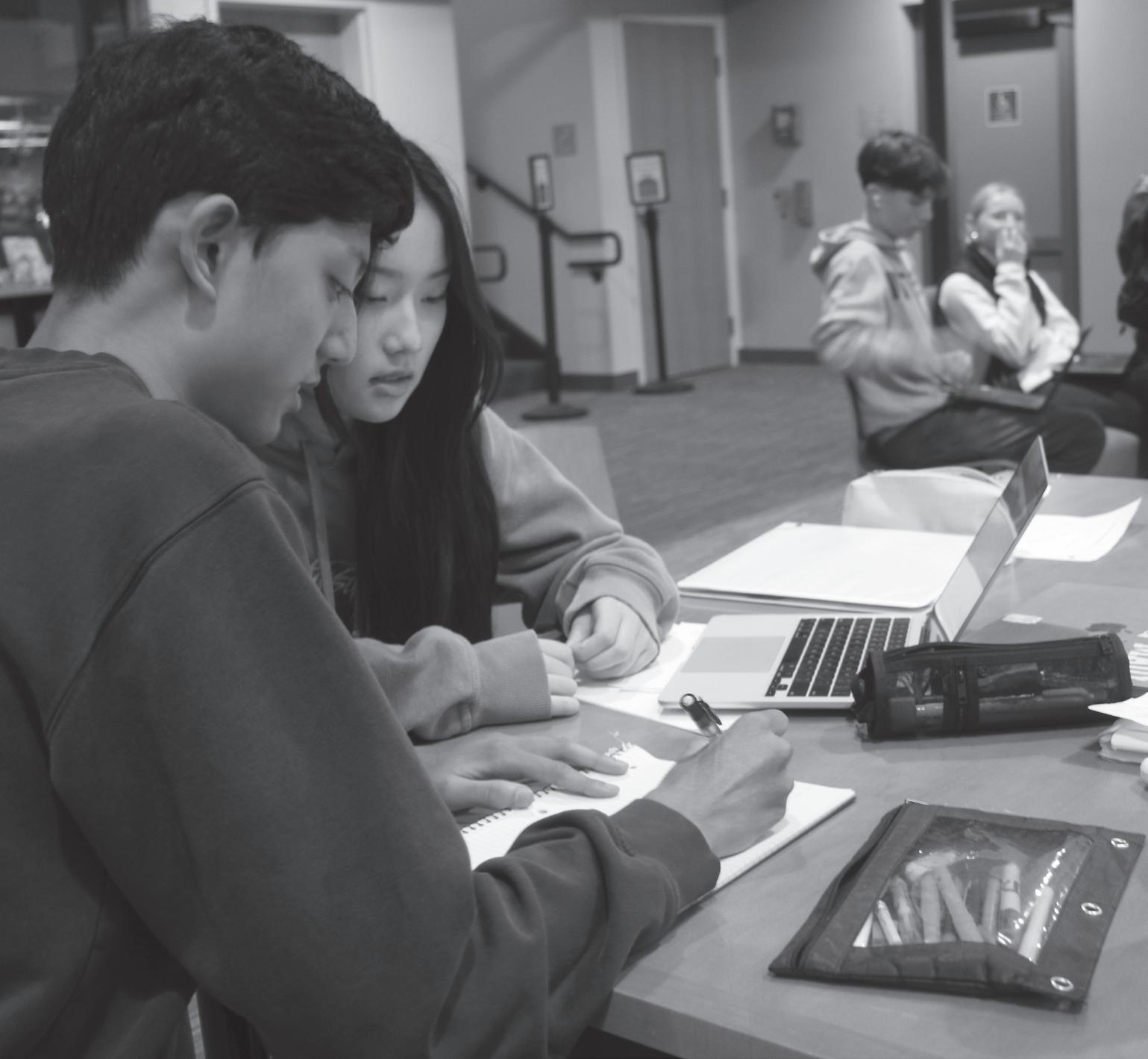
Multivariable Calculus, which students can now only take o campus or online, is a college-level class that extends beyond AP Calculus BC. If the board approves either version of the course, Kline said whether it runs next school year still depends on sta$ng, enrollment and student interest.
Supporters of o ering the course on Paly’s campus as dual enrollment crecit said the current format restricts who can take the class. Junior Paul Wang said the scheduling forces di$cult trade-o s.
“Right now, MVC is o ered after school at Gunn and over Zoom, however, many student athletes like me have to skip practice to go to class,” Wang said. Wang also said o ering the class during the school day would not signi cantly a ect academic pressure.
“Most people in advanced math are already on the pipeline for MVC,” Wang said. “If anything, I think it’s really important for the school to give us more support options to increase our threshold for what we can take in terms of courseload.”
Even so, Wang said the district’s broader cultural pressures, not the course itself, is the root problem of student stress.
“I don’t think external academic pressure is good, and this is more of a culture issue our city has towards STEM,” Wang said. “I believe that pressure can be either used as motivation or stress.”
But other students, like sophomore Olivia Woo say adding MVC during the
school day would only bene t a small number of students.
“Only about 1% of students would be in this class, and it could devalue every other existing math course at our school,” Woo said.
Instead Woo said the district should focus its e orts on adding more advanced classes in other areas.
“We already have plenty of math options, while other departments do not have nearly as many enrichment opportunities,” Woo said. “AP World History is one example of a commonly o ered highlevel course that is not available at Paly. ere are fewer courses for students who want to demonstrate enrichment in the humanities compared to math.”
And unlike Wang, Woo said adding this class as an option would increase schoolwide academic stress.
“Our campus already faces signi cant academic pressure, both on and o campus,” Woo said. “Increasing academic intensity for a minimal group of students could negatively a ect overall student well-being.”
In response to these concerns, Kline said MVC does align with Paly’s academic mission but acknowledged concerns about student stress. Which is why he thinks his proposal – an on-campus course only for college credit – would be a good compromise.
“We’re here to provide every student an enriching and also a challenging academic experience,” Kline said. “ ere’s some negativity out there that kids are being
pushed too far, and so I think ensuring that we maintain a level of awareness of how our kids are feeling and what they’re doing, (is important), so we could support them in all kinds of needs”
Kline also said the school already recommends limits on AP and honors classes, though those guidelines are not always followed.
“If we’re starting to get an uptick of students that are showing signs of being stressed … we need to communicate what is beyond bene cial in terms of class loads,” Kline said.
And Kline said MVC is unlikely to ever become broadly popular because of how advanced the course is.
“It’s a small number of students that take it,” Kline said. “I don’t know if (we’ll) ever get there because it takes acceleration and a lot of willpower.” Additionally, Kline said adding MVC as a Paly course could shift the school’s academic pro le, a potential negative for students applying to four-year colleges and universities who don’t take the course.
“If you add it as a high school course, then our school pro le would say Multivariable Calculus is the highest level course,” Kline said. “ at could negatively a ect about 95% of our students in that they’ll never get that goal.”
Regardless of the board’s decision, what Kline said he hopes to do is balance the needs of the small number of those who want a college-level math class on campus with the need to maintain a healthy academic atmosphere on campus.
“Right now, we o er it through Foothill as a college course, and that’s what I would prefer doing.” Kline said. “But long story short, we’re going to o er it, but I think it’s smarter to o er it at the college level. It gives kids credit and doesn’t negatively a ect the majority of the school.”
The U.S. Mint manufactured its last penny on Nov. 12, forcing retailers across the country to round cash transactions — a shift
Either way, Blackburn said the transition will likely be gradual for the general public.
“Nostalgia is the main thing keeping it around,” Mudd said. “In 1909, Congress decided to introduce Lincoln’s head on the coinage and it was a

e government has more pressing issues to work on,” Du

Yummy Future, a downtown cafe that opened in late October, sets itself apart from competitors by using a robotic arm to assist baristas.
e Palo Alto store marks the brand’s third location, after being founded in Illinois in 2018 by Jack Cui and Garret Yan. Neither Cui or Yan responded to requests for an interview for this story.
e robotic hands aim to “address labor shortages and rising operational costs in the restaurant sector by automating routine, labor-intensive tasks,” according to Founders, Inc.
e cafe uses an all-digital ordering system to send orders to an in-house robot, allowing Yummy Future to serve some drinks to customers without a human — until it comes to stirring drinks and adding toppings.
Palo Alto resident Avery Chen said he decided to go to Yummy Future with his friends who saw videos of the cafe on social media.
“We came for the robotic aspect of it, and it’s pretty interesting to watch,” Chen said. “It’s a satisfying process that is di erent from other places.”
Barista So a Marquez said the store’s robotic arm is what initially drew her to apply for the job.
“I thought it was really interesting knowing that there was going to be a robot in a co ee shop,” Marquez said.
at was something I had only seen in a couple of videos from di erent countries, so it was a really interesting concept.”
Yummy Future’s mission is to amplify hospitality. With the robot designed to take much of the repetitive work o of baristas’ hands and make way for baristas to welcome customers, learn names and host moments.
Marquez said this mission carries into their work culture.
“Co ee shops are well-known for having really chill people,” Marquez said. “People just want to come in
and make co ee and have a good day. is place really embodies that.”
Junior Elsa Packard rst visited Yummy Future after a friend recommended it as a calm study spot.
“( e robot) makes the store feel more calm and put together since there are less people running around making drinks,” Packard said.
Packard said the quality of drinks is also an important element of the cafe.
“I don’t think the quality is a ected as a result of the drinks being made by a robot, but it does make me wonder if the drinks will taste pretty consistent since they are programmed in the robot,” Packard said.
In fact, according to the Yummy Future website, the robotic arm can make up to 120 drinks per hour at a 99.7% recipe accuracy rate, deploy self-cleaning features and optimize steps to reduce wait time. is e ciency, the company says, allows double the daily tra c rate compared to other cafes.
To expand its enterprise, Yummy Future is selling its co ee-making robots online. e products — “Co eein-a-Box” and “Counter-Bar-in-a-Box” — can be installed anywhere, includingo ces, homes or airports. e goal of this is to be meaningful somewhere in every neighborhood they serve.
Ultimately, Packard said despite being crowded, she would add Yummy Future to her rotation of study places.
“ e one downside is it gets pretty busy sometimes so it’s hard to nd seating,” Packard said. “But, I would recommend it to my friends because they have a decent menu. It’s very quick and has an overall nice ambience.”
F
or over 70 years, a grassroots Palo Alto tradition has brought holiday joy to low-income families who might otherwise go without.
Green Envelope Fund, formerly known as the Christmas Bureau, began in 1955, when two PAUSD school nurses realized many students weren’t receiving holiday gifts. Hoping to spread some holiday cheer, they began collecting toys, gifts and food to give to families in need, an e ort that steadily grew into a citywide nonpro t. is year, the organization changed its name to Green Envelope Fund. CoPresident John Fitton said the new name better represents the community they now serve.
“As we’ve grown as a community and become more diverse, more multiracial, more multidenominational, we felt like this name re ected the community who we were here to serve more accurately,” Fitton said.
Co-President Lynne Russell said the new name came in part from the green envelopes used to send the annual appeal letter to donors and to send checks to recipients.
ere was a time when someone was delivering the checks, and they had a big stack of green envelopes, and a recipient said, ‘Oh it’s the lady with the green envelopes,’” Russell said, “We realized, oh, that’s how they recognize our organization.”
Over time the organization has expanded beyond PAUSD families to unhoused residents and seniors.
For the past decade, GEF has partnered with Alta Housing, a nonpro t that provides a ordable housing for people in Palo Alto, Mountain View, and Redwood City. Alta’s Housing sta help determine who quali es for the Green Envelope Fund, which was distributed in early December.
Resident Services Manager Chelcy Toscano said the nancial support that GEF provides makes a signi cant di erence to residents.
“Since residents are low-income, the amount of money they can get from GEF can help them give to their family, either toys or to feed their family,” Toscano said. “ ey really look forward to being able to give their family this, because they wouldn’t be able to otherwise.”
While people like Toscano understand the signicance of the nonpro t, Fitton said many don’t think of Palo Alto as an area with low-income families.
“Palo Alto is rightfully viewed as a very wealthy area,” Fitton said. “If you look up the zip codes here, they’re among the highest in the country. One thing we realized in this work, especially with the district, was that, yes, there’s great wealth here, but there’s also poverty and great need.”
is year, Green Envelope Fund expects to support around 2,500 individuals, including about 250 PAUSD families.
Board member Elizabeth Moragne said she has seen countless examples of the nonpro t’s impact on the local community since joining.
“We heard from a crossing guard who was so cold, but after receiving our check she was able to go to Ross and buy a pair of warm boots,” Moragne said. “One woman was able to restart her phone, thereby allowing her to hear back about job applications. Many people mention what they do for their children and grandchildren for the holidays. It’s truly inspiring how these families can make a small monetary gift stretch so far.”
Many recipients write thank-you notes sharing how they used the funds — whether to buy warm clothing, repair a wheelchair, purchase holiday gifts or cover an unexpected expense.
One PAUSD parent wrote they were able to buy essential winter clothing for their children because of the fund’s support.
is year, my children will be lucky enough to be gifted shoes and gloves and a beanie to keep warm during early morning bus rides to school,” the parent wrote.
Despite the organization’s impactful work and long history, Russell said few residents know the fund exists.
“We’ve been around for 70 years, and almost everyone I’ve talked to has never heard of us,” Russell said.
“We’re all volunteers, and we’re bare bones in the sense that we’re not trying to spend money. We’re trying to use all the money that comes in to go to recipients.”
And Russell said even small donations can have a signi cant impact on recipients.
“You don’t have to make a huge donation,” Russell said. “A small donation … is going to make a big di erence to people who are receiving checks from us.”
Alana Chun Sta Writer

Concert programs rustle and the Performing Arts Center lights dim. People take their seats before the Peninsula Symphonic Band Fall Concert begins. With a bright spotlight highlighting the metallic features of brass instruments, Palo Alto Adult School music teacher Ted Henderson directs the band to begin.
Henderson and his students are among many in the community who bene t from PAAS.
Established by the Palo Alto Uni ed School District in 1921, PAAS serves approximately 4000-5000 students each year and, according to their website, is “committed to providing a broad range of accessible, exible, and ective educational programs that enable our diverse community of adult
“With kids, you’re working on foundational skills that they need — you just see it build,” Sherman said. “Over time, with adults, they come with so much experience and knowledge already, and so you just take them where they are.”
Henderson said one of the biggest di erences between adult school and K-12 school is the teaching styles.
“You don’t have grades to hover over them, so you have to motivate them in a completely di erent way,”
Henderson said. “If you go in the wrong direction too often with adults, they can just choose and not sign up anymore, and you don’t have your band. It is really a
balancing her life as a parent of a Paly freshman and going to class is di%cult but provides opportunity.
“It’s de nitely hard to balance everything, but it’s nice to be able to learn something new as an adult,” Uyan said. “We have so many things to go through, and sometimes we just don’t have time to learn new skills.”
Uyan also said the PAAS community provides ways to connect with other people.
“Sometimes, I walk my dog and see a lady who appears to be a very close neighbor,” Uyan said. “We didn’t know each other before, but now we know each other and (are) saying hi, so it’s good to be connected with people from Palo Alto through these classes.”
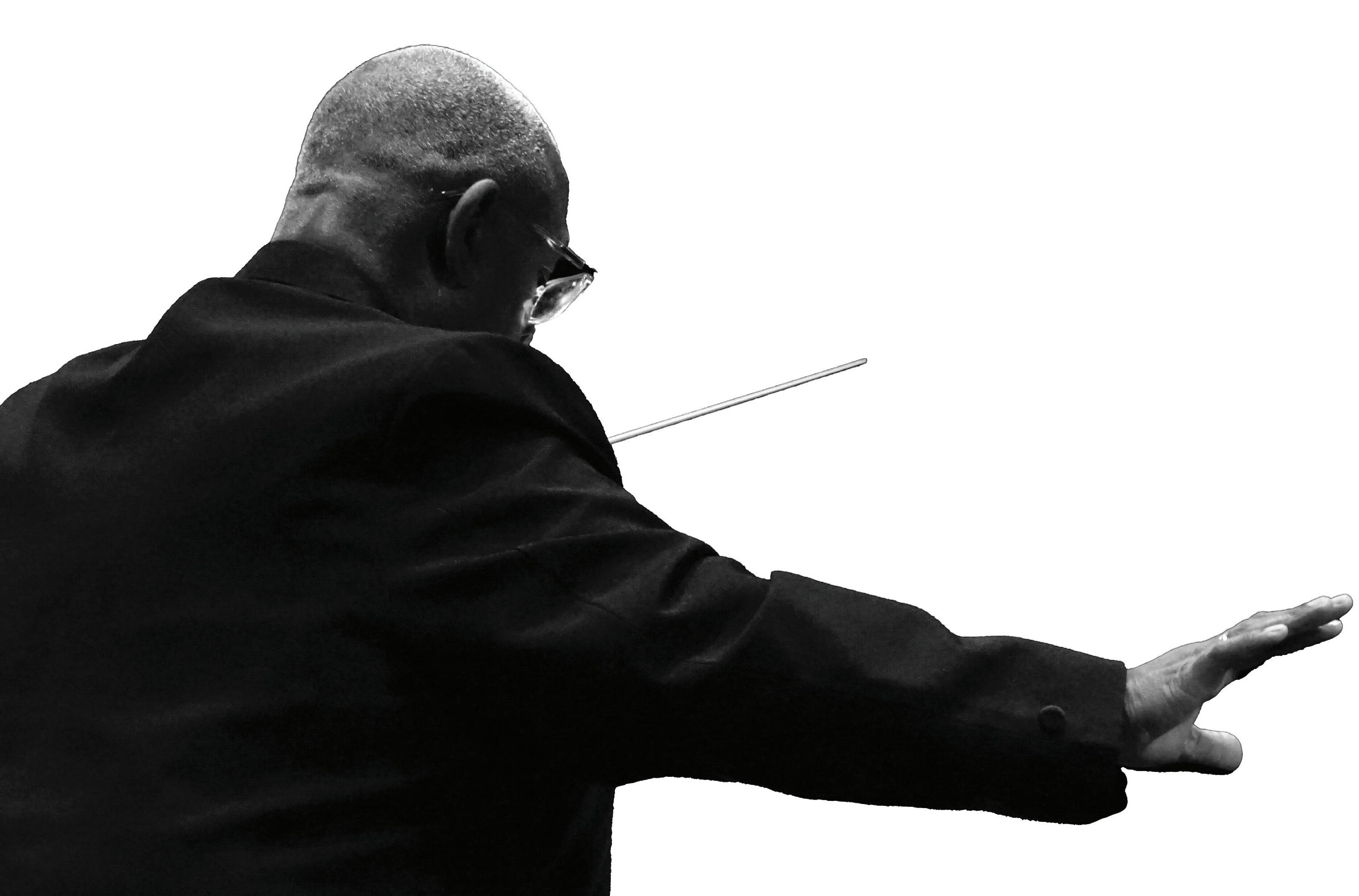
According to Sherman, about 35% of PAAS ESL students are parents or grandparents of students from all over the Bay Area.
“ ey’re here just to better themselves in a multitude of ways, but it’s really to connect with their grandkids or their kids and have something more in common with them,” Sherman said. “A lot of our students will say one of the big problems they have at home is not being able to understand their kids.”
To place students in the correct class, students in the ESL pathway go through Sripriya Kannan, the PAAS Testing and
“I make sure all the students know I am available to them for information on services in the community, but my main focus is on the students in our higher level classes,” Kannan said. “I meet with them as they enter into our Advanced Low level classes to nd out what their speci c goals are and help them achieve their goals.”
Kannan said she meets with many students over the course of the quarter, allowing her to see their progression.
“We have an amazing set of teachers who are kind, smart and passionate about ESL and adult learners,” Kannan said. “ ey are the real support for our adult students who are returning to school after so many years.”
Anjani Sarma, another ESL teacher, said the community can support PAAS ESL students by showing patience, empathy and kindness toward
“It’s also helpful when community members take a language class themselves,” Sarma said.
“ ey gain insight into the challenges adults face when learning English.”
Having nearly nished her rst quarter of Spanish class, Ravoori encourages those looking to add to their skill set to enroll if the school ts their schedule.
“If there is something that you’ve been mulling over, or nd something that you think is of interest, then sign up,” Ravoori said. “ e quality of education and the instructors is a ordable.”

through time have gone through refinements,” Williamson said. “A movie that fits into a genre but subverts conventions is in the refinement stage. A lot of modern Christmas movies do that — they take genre conventions and make little changes or subversions.”
She also said this evolution allows holiday movies to reflect more modern family dynamics and social perspectives.
“One of the biggest differences with modern holiday movies is that they play with the idea of family — maybe your family looks different from other people’s families,” Williamson said. “In one indie Christmas film, it’s about a lesbian relationship — bringing someone home and not wanting to be open about one’s sexuality. at’s a super interesting refinement of the genre for people who maybe haven’t seen themselves represented in Christmas movies before.”
Additionally, Williamson said visual elements — such as setting, costumes and makeup, lighting, and blocking and props — play a key role in creating the cozy, immersive feeling that people associate with the holidays. e mise en scène of the film establishes so much of that magic, making us feel like it’s December and really immersing us in the world,” Williamson said. “ ere’s scenic realism in terms of the location of the film. For example, I don’t live in New York, but if I watch Eloise at Christmastime, I want to really feel like I’m at the Plaza Hotel — it’s decked out, and we’re really there.”
Senior Madeleine Connolly said the detailed, festive settings in these movies sparked her imagination as a child, inspiring her to recreate that holiday magic in her own home.
“In ‘ e Grinch,’ when they show the general shots of the town, it’s so cool just seeing how it’s decorated — it’s so intricate and pretty,” Connolly said. “I definitely wished our street was similar. When I was younger, we put up colorful Christmas lights around our staircase … I definitely want to do it when I’m older with my family.”
And senior Kathryn Chen said watching “A Charlie Brown Christmas” every year has become a cherished tradition that shaped her holiday memories growing up — including family trips down Christmas Tree Lane.
“Now that I’m older, the movie feels a lot shorter, and sometimes the message hits harder,” Chen said. “Watching it is


“It’s the opposite of a lot of cliché Hallmark Christmas movies. Instead of (learning), it’s about Buddy going into the big city and teaching people about Christmas spirit. It touches a lot on themes of people’s lives being overly occupied by the corporate world.”

“Home

In the end, Rodriguez said although her relationship with holiday movies has evolved as she’s grown older, watching them with her family helps her connect with the past and shapes her own sense of what makes the holidays meaningful.
“When I was little, I didn’t really register that watching a movie like this was a tradition,” Rodriguez said. “Now, as I get older, I’ll think about what traditions I want to carry forward … It’s really nice because it brings me back to being a kid. e older I get, the more happy it makes me to watch these movies because it reminds me of all my happy holiday memories.”
Annika Chu Print Managing Editor
“Kevin is an intellectual, and it’s very entertaining to watch him goof around with some adults. It was so wholesome when the kid had a heart-to-heart with the pigeon lady — it was a connection that was very heartwarming, very Christmassy and very, very jolly.”
“ e Nightmare Before Christmas”

“I like that it’s versatile as a Halloween movie and a Christmas movie. I really like when they fight the Halloween monster guy because I think it’s fun and freaky. It’s a combination of my two favorite holidays — Halloween and Christmas.”
Julie Yang ('27) “Elf”
“Home Alone”

“I watched it when I was little, so we watch it every year, and it’s become a tradition. I think it’s really fun — it’s got a lot of humor in there, and it also has good family dynamics … At this point I could probably quote it — I know exactly what happens, so it’s very familiar for me.”
Zara Harwell ('27)

“I grew up with it for the past 10 years, and it’s always a family favorite when we get to rewatch it. We always go on the couch and get some hot cocoa and cookies, and it’s just a really good heartwarming feeling. My favorite scene is when Kevin puts the spider on the burglar’s face — it’s so funny.”
Cailey Quita ('26)


SLibraries serve not only as repositories of knowledge and entertainment, but also as local community centers and study spaces. As students, we have access to both the school’s library as well as Palo Alto’s acclaimed system, which includes five branches spread across the city. Obviously, the school library has the most convenient location for students, and it’s filled with cozy study spaces and a calm, inviting environment.
But its hours are limited, especially on offschool days, and since it doesn’t have the largest collection, students may often find the books they’re looking for aren’t available. at award for largest collection goes to the Mitchell Park Library, located at 3700 Middlefield Rd.
Renovated and re-opened in 2014, the modernized library features three floors of endless shelves containing all genres and mediums — from picture books and movies to non-fiction and Chinese literature.
enior Joy Tan, president of the Psychology Club, walks into the classroom.
A friend compliments her: “I love how you’re always being positive.”
She smiles: but inside, her thoughts grow complicated.
Tan said she often feels an expectation to stay joyful.
“I’ve always felt that pressure, especially because my name is Joy, so people expect me to be happy all the time,” Tan said. “But also now as the president of the Psychology Club, there’s this unspoken idea that if you care about your mental health, you’re supposed to be calm, positive and put together all the time.”
Tan is one of many students who feel pressure to appear happy or positive, and this pressure puts stress on these students.
Positive thinking can help people navigate life. Daniel Goleman, author of “Focus: e Hidden Driver of Excellence” claimed that positive thinking heightens prefrontal activity in the brain, resulting in enhanced mental functions such as creative thinking, cognitive flexibility and even faster processing. And Tan said sometimes trying to view things in a positive way can actually help your mood.
“Positive thinking is a very transformative way to change how you perceive the world,” Tan said. “If you always perceive things negatively, it is not good for your own mental health and also the people around you. For example, if you have a very stressful test coming up, you don’t want to think that you’re going to fail it. You want to think that you’re going to do your best on it.”
However, the pressure to put up a happy front can sometimes force people to hide their true feelings, which may lead to toxic positivity: the excessive and unrealistic belief people should maintain a positive attitude, no matter the circumstances.
Tan said this behavior is called surface acting.
“We talk about the expectation to show certain emotions on the outside, even when you feel something different on the inside,” Tan said. “I’ve caught myself doing that. I’ve seen my friends also do that. It’s … basically putting on a smile even when you’re extremely exhausted and stressed.”
Anna Lembke, a professor of Psychiatry and Behavioral Sciences at Stanford, said toxic positivity can harm emotional growth.
“I work with patients whose major problem is denial and avoidant coping, where they refuse to acknowledge their painful emotions and the very real problems in their lives,” Lembke said. “Instead, they pretend everything is fine, when it’s obviously not.”
Lembke said masking painful emotions can even be dangerous.
“When we ignore our psychological suffering, it usually gets worse and leaks out in unconscious ways,” Lembke said. “When we spend too much
As the largest of Palo Alto Library’s branches, Mitchell also serves as a hub for a variety of community events, from weekly Family Storytime to an annual Chinese New Year festival. In addition to its community spaces, Mitchell features abundant study spaces and generous hours (10 a.m.9 p.m.), providing students with a late night option after the school library closes four hours earlier. In contrast, most of Palo Alto’s other libraries are only open until 6 p.m., and some have even more restrictive hours. Can’t lock in? No worries. Students looking for a break from studying can take advantage of expansive Mitchell Park or buy a drink from Ada’s Cafe, conveniently located outside the library’s front doors. But excepting the hours between 6 p.m. and 9 p.m., Mitchell isn’t the only choice for stressful studying. Despite having abundant study spaces — including an open patio with a mediocre view of the road — Mitchell Park’s busy nature means open seats can be hard to come by. ose who prefer quieter spaces may find it difficult to focus in the expansive, bustling museum of distractions.
time ruminating on negative thoughts, we fail to see the good things in our lives.”
Positive thinking isn’t putting on a happy face. It’s finding joy in spite of problems. Tan said doing simple things can have a major impact on her mood and allow her to practice healthier, positive thinking.
“I think just encouraging each other and also taking time to do what we want (is important),” Tan said. “It could be taking 10 more minutes in the morning to do your makeup or buying that blind box. ese little things can bring so much joy into our lives.
According to Tan, as interest in positivity has grown, students are also considering the question about how they can process their emotions in a healthy way.
“Last year, second semester, right before final season, we had a workshop dedicated to stress relieving and also positive thinking,” Tan said.
“So that was just where everyone came in for a group therapy session where we all shared things about what was making us stressed, what we are doing about that stress and also what we hope to do. And just hearing what everyone had to say was really insightful, and it really broadened my mind on how many different ways there was to relieve stress and to be more positive in life.”
Psychology teacher Melinda Mattes said processing emotion requires space, opportunity and community.
“Cognitive psychology argues that our perception can influence our response in all ways: cognitively, emotionally and behaviorally,” Mattes said. “So even though staying positive at all times is neither possible nor desirable — and probably a bit delusional — taking time to gain perspective that may allow you to perceive a situation from a more productive vantage point is valuable. And it can be really helpful to have trusted people in your life who can see your situation from a different angle.”
Lembke agrees and said the key to a healthy perspective lies in positive thinking.
“It’s important to stay hopeful for a better future and grateful for the things that are going well, while also acknowledging our problems and doing what we can to solve them. So it’s a balance,” Lembke said.
Tan said students should focus less on competition and more on self-compassion, especially in Palo Alto.
“We’re often put in competition with each other, and that comes with a lot of stress,” Tan said. “So it’s important to not compare yourself to others, but to compare yourself to yourself because self-growth is incredibly important. But at the same time, it’s important that you’re being kind to yourself because life’s so short.”
Grace Kim Staff Wrtier

Ultimately, different people work better in different environments. As such, the Rinconada Library (1213 Newell Rd) may present a better option for students who prefer a more peaceful setting. Far less busy than Mitchell, its unassuming exterior conceals a hidden gem. Within the brown brick walls lies a quiet haven — both for avid readers and stressed students cramming for tests.
e library’s collection, while smaller than Mitchell’s, is still diverse and modern and also provides a dedicated space for teens. Although much smaller than Mitchell, Rinconada’s cozier, less open design lends itself to a more personal, almost serene atmosphere, which can help alleviate stress and anxiety.
Students looking for fresh air can take advantage of the outdoor space immediately surrounding the library, which includes a community garden and art gallery. In addition, they can take a short trek to the nearby Rinconada Park. While not as large as Mitchell’s, the redwood trees and walking paths can provide a stress-relieving diversion. On one hand, the outdoor space is smaller than Mitchell’s and the park is disconnected from the main library grounds. But on the other hand, that also means on a walk around the library on weekdays, you are unlikely to run into more than a few people.
Still, Rinconada is far from empty and much more than just a library, especially on weekends, where it proves a popular spot for families. e grounds periodically host
events and weekly classes — from music recitals and chess classes to pottery lessons and the Great Glass Pumpkin Patch held every fall.
Rinconada is a great alternative to Palo Alto’s flagship library, but it’s not the only one.
e College Terrace Library (2300
Wellesley Street) sees even less action than Rinconada, and is conveniently located in the College Terrace residential district. However, the library is also the smallest of the five, so its collection may be limited.
Additionally, the library’s hours are even more restrictive, being closed on Sundays and Mondays. So unless you live nearby, the College Terrace Library is probably not worth going out of your way to visit.
A similar alternative is the Downtown Library (270 Forest Avenue). From a bird’s eye view, the library has similar pros and cons to College Terrace, even having the same hours. However, while small, it is significantly larger than College Terrace, and its location could be more convenient for students who live nearby or frequent the downtown area often.
While not ideal for studying or browsing, it would seem inappropriate to omit the Children’s Library (1276 Harriet St) from a review of the city’s libraries.
For students who grew up in Palo Alto, the Children’s Library might hold a special place in their childhood memories. e shelves now seem way too low and the chairs so small it’s hard to believe I ever fit in them, but the humble building tucked between houses remains unmistakably nostalgic.
From the artful book drop chute to the cozy reading spot in the corner, every nook and cranny is a memory. Ultimately, the Children’s Library is where I began my reading journey and is one of the reasons I think Palo Alto’s library system is so successful.
From the modern and expansive Mitchell Library to the cozy Rinconada branch and the three humble smaller locations, the Palo Alto libraries serve a wide range of the community. Event organizers, bookworms, families and students can all find somewhere that fits their needs and their personal preferences, offering a space that feels right for them.
If you’ve never taken advantage of this amazing resource, now — whenever you happen to be reading this — is a great time to start, whether you’re cramming for finals, looking for a new book or just searching for an escape from the stress of school and our lives.

Mary Shelley’s “Frankenstein” is a timeless piece of literature that has been adapted numerous times since its publication in 1818. Its most recent adaptation is the movie “Frankenstein,” directed by Guillermo Del Toro. We watched the movie while reading and discussing Shelley’s original book. Comparing them scene by scene, we observed that the movie leans more into gothic romance and emotional desperation than the novel. Del Toro’s “Frankenstein” is an inspiration in storytelling and a must-watch for anyone ready to go on an emotional roller coaster. roughout the movie we see the creature learn and grow as he struggles to navigate through life and t into human society. Victor quickly regrets his creation and deems the creature unintelligent, after only speaking “VICTOR.”
However, after being abandoned by Victor, we see a full character arc of the creature. After being cast away and attacked by humans, his initial jovial attitude quickly turns towards rage and anger. e creature becomes driven by hatred, and develops a resentment towards all humans because of his inability to form human connection. However, at the end of the story, the creature nally starts to accept his fate. Victor apologizes to him, and the creature accepts that he may not ever be able to nd human connection, but that this does not mean he should torture all humans.
Del Toro captures this complex arc of the creature by splitting the movie narration into two di erent parts: Victor’s story and the creature’s story. By doing this, we
can understand the values, longings and characteristics of both Victor and the creature. While the movie clearly paints Victor as the villain of the story, we felt some empathy for Victor because the movie had a portion that was from his perspective, where we fully understood his decisions. We also felt that the movie did a fantastic job capturing the relationships and tensions between characters. Since Victor and his brother William grew up separately, they were raised completely di erently. eir father favored William while being harsh to Victor, even beating him at times. e true tension comes when Victor falls in love with William’s ance, Elizabeth, creating palpable animosity between them. In addition, Victor sees William as a servant, creating a condescending relationship between them. e tension between Victor, William and Elizabeth makes the movie far more engaging than the book, making us excited to see how the dynamic plays out. Additionally, the creature’s pure heart and his innocent curiosity in the beginning sharply contrast with Victor’s sel shness and madness. Victor’s abusiveness and arrogance is especially evident when the creature had just been created because of their stark character di erences. Altogether, these relationships made us always guessing what would happen next.
While the movie was good, there were a few main areas of growth: the lack of detail on Victor’s motivations and the physical appearance of the monster. e beginning of the movie, which details Victor’s childhood, di ers vastly from its original text.
depicted as a cruel, reputation-obsessed aristocrat physician instead of the kind, empathetic and gentle character he was in the original novel. Supposedly, the abusive nature of his father is re behavior towards the monster, but that connection is not made clear.
undergoes a signi the novel, the monster is described as a grotesque fear in any person who witnesses it, with stretched yellow skin, straight black lips and a shriveled complex ion. Instead, Del Toro’s monster, who is played by Jacob Elordi, is covered with smooth scars and has luminous, ivory-white skin. Critics have noted that it bears resemblance to a cracked marble statue, which signals more beauty than disgust.
atively interprets “Frankenstein,” emphasizing a larger emotional depth to the monster, which highlights the tragedy of human neglect and rejection. While the motivations behind Victor’s creation and a closer representation of the book, we ulti mately believe that the pros outweigh the cons. reading this movie to give it a watch.





When senior Devon Kardwell saw Bellarmine College
Preparatory senior Max Manolov in the background of her friend’s photo sophomore year, she knew she wanted to reach out. But instead of asking for his Snapchat or Instagram, Kardwell wanted his phone number.
“Snapchat is so impersonal, so casual, so I knew if I was actually going to pursue this person, I was going to ask for their number,” Kardwell said. Manolov said as someone who’s cautious about social media interactions with strangers, Kardwell’s choice stood out to him.
“I think asking for a number is probably the most personal you can get,” Manolov said. “I felt that it had more meaning than to just ask for my Snap.”
Yet stories like this are gradually becoming the minority among today’s teenage couples. With the growing influence of social media and messaging apps and the rise of casual relationships, the youth dating scene is rapidly evolving — at the expense of human connection, some say.
Social media has become a major part of teenage dating cul-
ture, influencing many teens’ relationship choices. According to a 2024 Pew Research Center survey of 1,391 U.S. teens, around 60% of teens use Instagram and 55% use Snapchat, and in an opt-in survey conducted by e Campanile of 31 Paly students who responded across all grade levels, 66.6% of them said they “agree” or “strongly agree” social media and messaging apps have played an important role in their romantic relationships.
Sophomore Brandon Leung said social media has negatively affected the way many teenagers build romantic relationships.
“Social media has definitely screwed up some of the relationship check boxes that people try to hit,” Leung said. “It has heightened standards and lowered trust within relationships.”
Junior Zoe Pashalidis attributed these new relationship struggles to social media representations. “ ere can be unrealistic expectations when people only capture the good moments of their relationship, when there can be a lot of things that they’re battling behind the screen,” Pashalidis said.
However, junior Ishaan Juyal said, like many issues related to technology, there are both benefits and drawbacks to sharing relationships on social media.
“On one hand, it’s a great way for people to share what they’ve been doing with their partner, and it makes them feel more connected with other people,” Juyal said. “But then sometimes couples can end up becoming so consumed by the way their relationship is perceived in social media that they end up using social media as a reflection of their relationship rather than their actual dynamic.”

Because of this, Tribeca erapy therapist Matthew Lundquist, who has worked with teens for over two decades, warned against looking to social media for examples of how relationships should be.
“Social media projects this particular idea about what people look like, and how much fun they’re having and how hot the person they’re dating is,” Lundquist said. “I think all humans can really struggle with these kinds of illusions, but there’s some evidence that teens in particular can really struggle with sorting out the difference between projection and reality.”
And for Pashalidis, Snapchat is particularly problematic in fostering distrust.
“Snapchat makes it really easy for teenagers to add a lot of people and talk to a lot of people,” Pashalidis said. “And with the chats self-deleting, if you have a partner, it makes it really easy to lie to them.”
To make things worse, Leung said some social media companies put features behind a paywall, taking advantage of teens who use their apps to form relationships, reflecting the changing dynamics of modern relationships.
“Snapchat Premium has all these features, like seeing people’s best friends lists and their streaks,” Leung said. “It’s lowering the trust between people in relationships. e fact that you feel you need to buy Snapchat Premium, I think that’s a good reflection of how social media is belittling how relationships work in our modern times.”
However, others say social media does not always lessen the depth of relationships. Sophomore Sotary Cordova said apps like Snapchat and Instagram have strengthened her and her boyfriend’s relationship.
“We did have a class together, but I think Snapchat definitely brought us closer,” Cordova said. “I didn’t know who he was, but because of social media, I was able to talk to him and connect with him and get to know him.”
Still, Bay Area-based parenting coach Sean Donohue said parents today are worried about the role technology can play in their teens’ romantic relationships.
“ ey are more out of the loop than ever,” Donohue said. “ ey don’t know what’s going on, or who their teenager is talking with or how they’re talking.” Donohue also said many parents want their teenagers to focus on connecting with others offline.
“A lot of parents don’t understand that you can have a really healthy relationship with someone using technology, and that a lot of teenagers enjoy talking with people and getting to know people through technology,” Donohue said. “But the parents also make a good point, because real, in-person experiences are always much more human and deeper than anything online.”

Kardwell, however, said parents shouldn’t interfere with teenage dating unless signs of an unhealthy relationship appear.

Maybe the man standing outside your window with the rose
the image
that
Maybe it’s
“
isn’t
we’re going after.
more of an equal partnership. So times have evolved for sure, yet I can’t help but feel emotionally attracted to the beauty and the art of oldentime culture.
— Madhav Prakash, organizer for Stanford’s student-run dating app, Date Drop
Stanford junior class president Madhav Prakash, an organizer for Stanford’s student-run dating app Date Drop, said dating apps can help young people find forms of companionship aside from romantic relationships.
“Beyond (dating), it would be quite a pity if you went four years without maximizing the amount of people you meet and get to know,” Prakash said. “So sure, we call it Date Drop, but it’s also valuable to find friends. It’s quite exciting to see different ways people are engaging with it.”
Prakash also said many young adults use dating apps to look for casual relationships, which have become a larger part of the dating scene.
“I would say a significant chunk of my friends are on dating apps,” Prakash said. “I feel like college is a place where a lot of meet-cutes do happen, but that also there’s a huge culture of not wanting to commit. So there’s lots of casual things happening, situationships happening and people hooking up.”
While it may be difficult to know the extent of technology’s impact on the teen dating scene, some argue a growing reliance on technology to form relationships is part of a recent cultural shift in youth dating.
One consequence resulting from social media app dating is roster culture, a practice where one entertains many romantic interests at the same time, casually adding or removing people from their list.
ese relationships are often casual, appealing to students with busy lives, but Pashalidis said the minimal commitment makes roster culture counterintuitive for pursuing a serious relationship.
“Having a roster shows the girl or the boy that you’re not serious about them,” Pashalidis said. Junior Elena Salvatierra, though, said she doesn’t notice roster culture as much as talking culture in teenage dating.
“In my experience, having a roster is laughed at if you take it seriously,” Salvatierra said. “Having a talking stage is definitely a valid thing, but I think having a roster is not a prideful thing. It’s kind of a joke, in my experience.”
Juyal said another shift in modern dating culture is the growing inclusion of LGBTQ+ people.
“Now we live in a world where a lot more people are more willing to treat dating like a more casual thing,” Juyal said.
“(People don’t have to) act in a (certain) way in terms of gender roles in dating.”
Prakash said the accessibility of information through social media propels these casual relationships. rough social media, he’s able to find mutuals, unlike having to first meet people in person.
“I sort of have a sense of who the attractive gay guys are in my year at Stanford,” Prakesh said. “Even though there are 2000 people in a year, we all follow each other (on social media). So, when you meet somebody, it’s not the first time you’re meeting them. You know something about them, which maybe makes it easier.”
With the rise in casual relationships, some students say they run into confusion with boundaries. Lundquist said in his years of work, it has become increasingly unclear to many where their relationships stand — dating, talking, Snapping or exclusive.
“ ere’s been just a big change from 20 to 30 years ago, in terms of what dating even means, and how it’s designed to be defined,” Lundquist said. “It’s this idea of friends with benefits or something that’s casual, versus a time when there was a lot more formality and clarity.”
Donohue said this is in part because his generation wasn’t concerned with the added layer of social media.
“It can be very confusing dating nowadays because of all these apps and the nuances of technology,” Dohohue said. “When we were growing up, we didn’t have to deal with texting somebody and then being insecure because we’re waiting how many minutes or hours before they text us back. We didn’t have to stalk their Instagram, curious what they are doing or who they are with.”
Regardless of these cultural shifts, Donohue said teenagers looking to date still need to have a high level of maturity to maintain a healthy long-term relationship and awareness of their own well-being.
“It’s kind of like you’re driving in a car with somebody who’s a new driver, and you know they don’t have a ton of experience,”
Donohue said. “So put your seatbelt on and be careful. And if they’re not a good driver, then don’t drive with them again, because you’re putting your life at risk, and you’re worthy of a lot of love and respect.”
“My parents just thought, because of their own past experiences, ‘Oh, this isn’t gonna work out,’” Kardwell said. “And I’d say, ‘Your past experiences don’t affect your child’s experiences, because even though a lot of high school sweethearts don’t work out, it doesn’t mean all of them won’t.”
Ultimately, Juyal said, dating in high school can be beneficial, especially when experiencing both the positives and negatives of a relationship without the pressures of adulthood.
“It teaches you how to date in a safer environment where you’re managing less stress,” Juyal said. “Are we emotionally mature enough to handle a relationship? Probably not. But this is the time where it’s the best place to be emotionally immature and learn from that.”
With more widespread use of social media, it can be easy for teens to develop unrealistic expectations of what relationships are like. Junior Luiza Teixeira said these expectations can place pressure to date on teens, even those who don’t want to be in a romantic relationship.
“You get surrounded by a lot of these things, even if it’s not what your heart actually desires,” Teixeria said. “I’ve experienced this. At a point, I felt like I was super lonely, and I would have someone over. I didn’t even want to do anything sexual; I just wanted to have someone there.”
Leung also said high school relationships get overhyped, creating unrealistic expectations for long-term relationships.
“ e chance that you run away with your high school love, marry and have a family is not the largest,” Leung said. “So I think that if they’re not who you’re going to be with in the long run, what’s the point of dating someone if after you go to college? You’re just going to part ways.”
Pashalidis said teens can also feel pressured to act more mature and rush into relationships as a result.
“I think teenagers in relationships oftentimes try to act like adults,” Pashalidis said. “ ey take it way too seriously, when in reality, we’re really not adults. I also think that teenagers also try to act too mature, and then they do things that they’ll regret, like hooking up with random people.”
Manolov said teenagers shouldn’t feel undue pressure to date before they feel ready.
“Life doesn’t shut down at 18,” Manolov said. “You find friends, you find adventure, you find love at every age. So sometimes what feels like missing out at 16 turns into being a more prepared and interesting person at 22.”
Salvatierra said today’s teenagers veer away from the traditional romantic standards of previous generations, a change that comes with both positive and negative effects.
“Our generation kind of has lost the magic of dating,” Salvatierra said. “I feel like in my mom’s day, guys would have to do a lot more to win a girl over and keep dating them. I think in our generation, it’s more mutual, so that’s a good thing. But it’s also hard to feel, after a first day of establishing something, that someone stops trying.”
As a therapist, Lundquist said he tries to consider both sides of the social media debate when advising teens.
“I’m not automatically inclined to devalue online relationships, but I do think that in-person, offline relationships are important,” Lundquist said. “When technology interferes with people physically getting together in person, I think that there’s something lost there.”
Regardless of whether people fully recognize the effects of social media on relationships, freshman Fabiana Littlefield said, students need to focus on staying in the present moment and prioritizing in-person interactions in relationships as it allows for more authentic communication between partners.
“When you’re with somebody, just try to actually be with them and not be thinking of other stuff or be on your phone,” Littlefield said. “You don’t want to go back in your memories and realize, ‘I didn’t spend any of my time with them because I was on my phone, and I wasn’t taking advantage of what I had.’”
Prakash said a balance can be reached to preserve old perspectives of love while also adapting to how society has evolved.
“I think preserving the sanctity and the beauty of what love can be, and the intense passion that goes into things like relationships and sex and stuff is important,” Prakash said. “But also, the era in which those things existed was an era where we didn’t know much about consent, and we didn’t know much about women’s rights, and we didn’t know much about queer liberation.”
Ultimately, Prakash said, the future of relationships reflects the changing world today’s teenagers face.
“Maybe the man standing outside your window with the rose isn’t the image that we’re going after,” Prakash said. “Maybe it’s more of an equal partnership. So times have evolved for sure, yet I can’t help but feel emotionally attracted to the beauty and the art of olden-time culture.”

On the eld and o the court for many teams, captains are the leaders. When stakes and pressure are high, many student athletes say the turn to them for guidance, motivation and advice.
Head golf coach Doyle Knight said a team captain is more than just the top performer; they bridge the gap between the coaches and the players.
“I look for somebody who’s got a good rapport with the players, but (also) someone who can support me,” Kight said. “ ey’re kind of like the guy who when I’m having the team do something, who understands why I’m doing it, so if any of the guys were questioning it, he can just say, ‘No, this is what we’re doing.’” Knight also said captains are expected to lead throughout the season, enforcing the coach’s ideas.
“He’s the leader of the team and also kind of represents me as far as backing up what I’m trying to do with the team,” Knight said.
While Knight describes a season-long leadership model, sophomore Ian Jiang, captain of the junior varsity football team, said the football program chooses game captains as well and captains who are leaders throughout the season.
e game captains are chosen weekly to re ect the performance of players during practice or during the game,” Jiang said. “ e game captains are more symbolic rather than a leadership role. ey are the four people that are representing the team at the start of the game. Team captains, however, maintain a level of leadership throughout the whole season whether they are game captains or not.”
While core responsibilities remain similar, the captain’s role adapts to the demands of each sport. Jiang, who is also JV quarterback, said in football, captains manage on- eld strategy, oversee conduct and communicate directly with coaches.
“As a quarterback and a team captain, I was in charge of the o ense,” Jiang said. “I would meet with my o ensive coaches to establish the game plan for the week as well as completing the playbook installs. We were the rst to know about any changes to the players, positions, coaching or practice plan.”
In golf, however, leadership often emphasizes team support over strategy, especially after tough matches.
“A strong captain creates an atmosphere of camaraderie and keeps everyone focused on our goals,” Knight said.
Lacrosse captains combine game involvement and relationship varsity lacrosse captain Jayden Ishihara said.
“I de nitely think that in some cases, being a captain, you’re also sort of the middleman between coaches and players, especially during the o -season,” Ishihara said. “As captains were more integrated within the team, closer to the team than the coaches, so I feel that makes it easier for us to communicate with them and get the message out about o season training or schedule changes or anything like that.”
Despite these di erences, the essence of leadership and accountability remains the same across sports. Knight said these key traits can weigh more than skill.
“He wasn’t my best player, but he was a good leader,” Knight said. “He got the guys motivated. When they weren’t showing up for practice, he would talk to them before I had to. en, at the same time, when they didn’t really like what I was trying to get them to do, he would explain to them why I was doing it, and they started doing it.”
Additionally, Jiang said humility and patience are equally important traits for team captains.
“You can’t have an ego going into leading the team,” Jiang said. “Being humble and allowing criticism from your own players is the only way for you to gain their trust as a leader.”
For this reason, Knight said the role of captain can also be transformative because it o ers opportunities for personal growth. He pointed to a previous student who overtime improved her teamwork.
“She just had that natural leadership ability,” Knight said. “She was a junior at the time, and by the time she was a senior, she did a fantastic job working with the girls, and they all respected her.”
While a team can learn and grow from a captain, Ishihara said becoming captain also reshaped his understanding of leadership.
“When I came into the captain position, I was sort of expecting everyone to follow what you’re doing, and that’s de nitely a large part of it,” Ishihara said. “But another part of being captain is staying accountable. If you’re going to have other people do all these workouts or drills, you have to be doing them yourself as well, and you also have to hold yourself to a higher standard.”
However Ishihara said becoming a captain brought many challenges.
“My biggest challenge has probably just been lling in the shoes of the captains from last year,” Ishihara said. “I feel like the transition from just a normal team player to a captain has been a somewhat big jump. Having to orchestrate all the preseason practices, lead all the drills and make practice plans. I feel like it’s a large amount of responsibility, and it’s been challenging to manage that and manage my school work.”
Cross country team captain Max Soparkar agrees and said nding balance between helping and focusing on his own performance takes practice.
“Trying to get everyone to listen all the time (is challenging) because there’s a lot of di erent things going on at once,” Soparkar said. “So nding the right things to focus on … that’s kind of di cult for me because I want to help out with all of them.”
Soparkar also said he was driven to be a good team captain by a desire to continue a tradition of improvement and supporting teammates.
“For me being a team captain kind of means working towards making a better team for everyone,” Soparkar said. “I want to help people improve themselves in the same way that I’ve improved in the past and carry on the legacy of my previous team captains that I’ve had.”
Jiang also said leadership comes with responsibility and constant self-evaluation.
“It is also important that you are patient with your players. ey might do things over and over without listening to what you are saying,” Jiang said. Ultimately, Jiang said good captains are humble and act with care.
“You have to know your place,” Jiang said. “You are still a player on the same team, and you are not better than anyone else.”
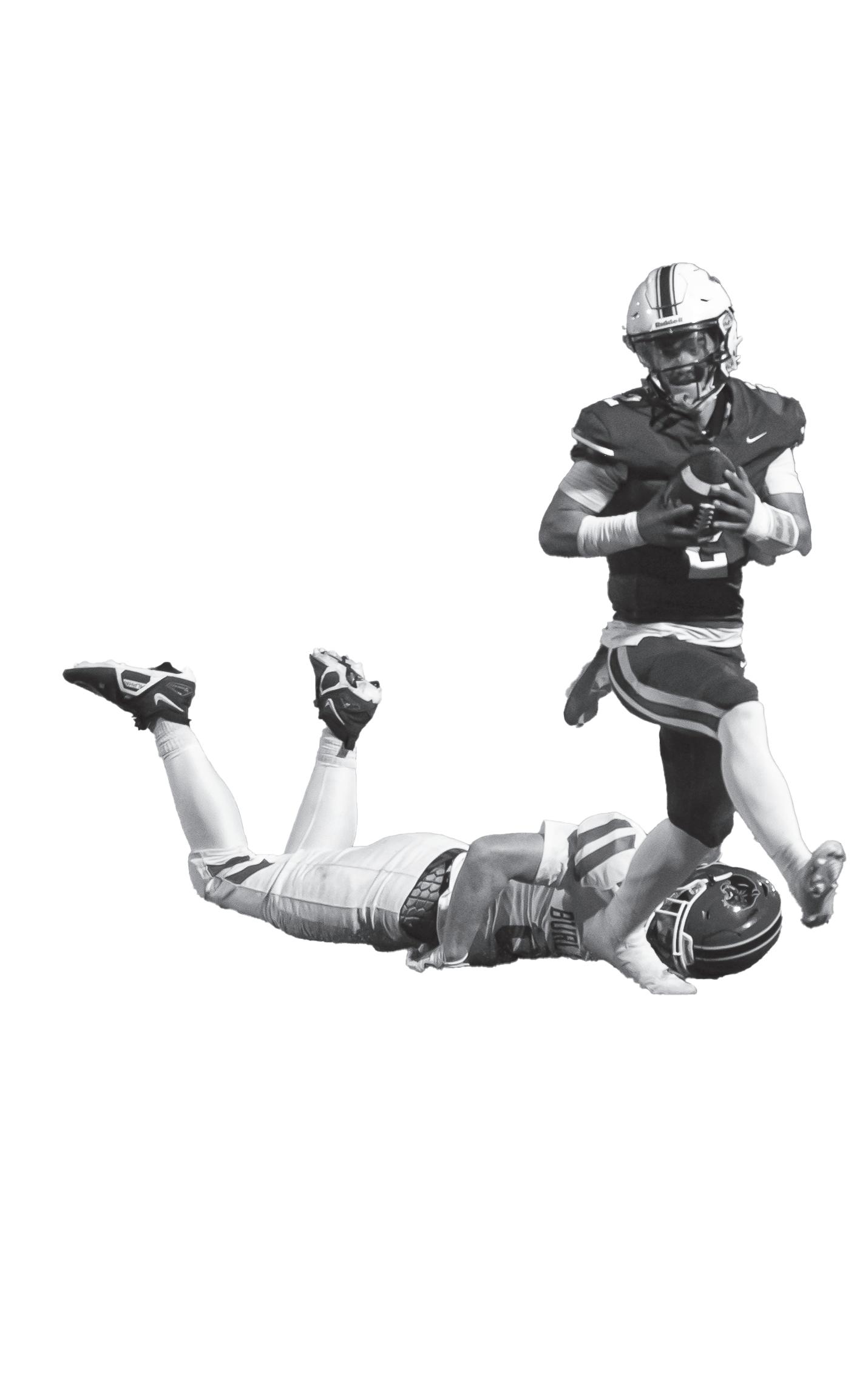

Boys basketball beats Silver Creek High School 71-42
Boys varsity basketball defeated Silver Creek High School 71- 42 on Dec. 6, extending its record this season to 3-0.
Head coach Je LaMere said the team played well, but still has room for improvement.
“Some of our ball handling against the press (was) a little bit loose,” LaMere said.
“So our dead ball defense (has) to get better and (we have) to continue working on o ensive execution. But they’re trending in the right direction, so we have to just keep improving every aspect of our game.”
Sophomore shooting guard Ian Cierniak said he was happy with the team’s o ense, which has improved signi cantly since the beginning of the season.
“We did really well playing together and running our o ense,” Cierniak said. “We are de nitely improving since the rst couple scrimmages of the season, and it’s just good to see the progress being made.”
Cierniak also said consistency is key moving forward.
“We need to make sure we work consistently on applying pressure during
those runs,” Cierniak said. “But overall, our defense, rotations, and running the o ense was pretty good.”
Senior guard Kacey Washington said he wants the team to continue staying grounded.
“I think a lot of it is staying true to our form,” Washington said. “Defensively, we have to stay true to our assignments. We can’t get jumpy, we can’t get excited. We can’t be too optimistic when we look to get turnovers. We end up allowing them to score in transition.”
Looking ahead, Washington said they now have an example to go o of when playing tougher teams.
“I think this is a start,” Washington said. “When we play teams in higher leagues, we can put on tape what we did tonight and we can show the strengths of what we can do and what the potentials of this team are.”
As planes take o and club teams scatter across the country for weekend tourna ments, senior Sophie Oshige laces up her skates in a cold rink far away from Palo Alto. While her peers catch up on sleep or study for a test, Oshige is stepping into the rink for another high-stakes hockey game in Canada, one of many she attends throughout the year.
Oshige, who has played hockey for eight years, is one of many student-athletes who play a club sport. She said she spends around 22 hours a week practicing.
“I’m really passionate about the sport,” Oshige said. “Ever since I started playing, I fell in love with the game. It has become an outlet for me to get rid of any stress or negative emotions I feel through out my day-to day-life.”
At the same time, Oshige said her intense travel and practice schedules often clash with her fast-paced academics.
“It de nitely makes it hard for me to manage, because a lot of times I miss school for traveling and games,” Oshige said. “I get behind in a lot of school work, which really puts stress on me and sometimes a ects my academic performance.”
Freshman Mia Wong, who has played soccer for nine years and is on a club team in Palo Alto and a team who plays in Europe, struggles with the same balance between academics and her club sport.
“Sometimes it’s hard to focus on school, but I try to prioritize my schoolwork over soccer,” Wong said. “If there’s any con ict, I would choose school over my sport, and it has worked for me so far.”
Oshige said she has had to nd di erent ways to stay on top of her schoolwork.
“Planners really help me with my time management, because it is hard to stay on top of the commitment (of) playing hockey and doing school,” Oshige said. “I would say scheduling things ahead of time really helps.”
For Oshige, the community around her is an important part of her sport.
“Aside from being a really fun game and something I’ve commit ted to, I really enjoyed the social aspect of playing ice hockey, and I have made some friends that I wouldn’t picture my life without,” Oshige said.
Senior Shalin Dwivedi said he has had a similar experience to Oshige.
“I have friends that I wouldn’t have made otherwise,” Dwivedi said. “I hang out with them outside of school, and honestly, most of my friends are made through lacrosse.”
But Wong said pressure often builds up around tournaments, causing added stress.
“I can build up some stress leading up to important events or tournaments or games, but if you have a good coach, I think you’re OK,” Wong said.
In the end, Dwivedi said he had some advice for students consider ing playing club sports.
“I play for a club because it’s a good way to develop skills, and it’s really fun to play with my friends,” Dwivedi said. “I would recommend it to anyone who wants to level up their playing and be part of a team.”

After a strong start, girls varsity basketball beat Gunderson High School 63-25 in their rst home game of the season on Monday, Dec. 8. Head coach Kevin Blunt attributed the win to the team’s preparation.
“I thought we were improving game by game,” Blunt said. “I thought that the girls were ready to go today. ey executed, and we came out with the victory.”
Sophomore Elanor Wells, a point guard, shooting guard and small forward, said the team had great connection during the game.
“I thought today we had very good communication and the team chemistry was really there,” Wells said. “I think our passes were really good, and we were sharing the ball with the freshmen and especially our newcomers.”
Wells also said the team’s ball movement and playmaking ability were keys to success.
“One thing we did really well were our passes, for sure, and we ran a lot of our plays,” Wells said. “Before, something we were struggling with was we weren’t running our plays really well, but today, we got in our sets and it really worked.”
In addition, Blunt said intensity is key to the team’s success.
“It’s just playing with energy and e ort,” Blunt said. “I’ve been preaching that to the girls because without energy and e ort, we can’t set the tone and try to implement what we’re trying to do out there. It’s important that they start with energy and e ort so that way we could go out and be aggressive from the beginning to the end.”
But Blunt said maintaining this intensity throughout all four quarters is an area where the team can improve.
“I was looking at our closeouts, boxing out, and just making sure that the way we
start the game is how we end the game,” Blunt said. “I’m always preaching that we’re not playing for the rst quarter, we’re playing for the fourth quarter because that’s when games are won and lost. So that’s just a model, and we’re going to continue to go that route, and just get in better shape as we go.” Looking forward, Wells said the team should continue to improve and strive for greatness.
Wells said, “I think that from now on, we know we can build from this, and we can really have this high expectation of how we play.”
Girls varsity basketball’s next home game will be against Menlo on Friday, Dec. 12.
Dashel Chun Sta Writer

As junior Ella Hoy dribbles past defenders and ghts her way through the paint, she pushes through contact and uses her physicality as an advantage, but the crowd doesn’t match her energy. She suspects the crowd thinks she has crossed a line, one that rarely exists for males who play with similar intensity. Hoy is not alone. In women’s sports, coaches and athletes often say physical play is viewed di erently than in men' s sports.
Hoy said she notices this di erence all the time.
“I think women basketball players tend to shy away from contact, and generally the di erence in physicality between men and women is de nitely apparent,” Hoy said.
She also said the reaction to girls’ physical plays is often interpreted di erently from that of boys.
“I think when women are being aggressive or being really physical, it can be perceived as being aggressive or like they are trying to start something with another player,” Hoy said. “But for a man, (it) might be perceived as hard work and strength.”.
Lacrosse coach Ed Hattler said expectations for women athletes have changed over time.
“Over the course of my lifetime, there’s been more and more participation in sports from girls and women,” Hattler said. “Also, they’ve gotten bigger and stronger. Over time, their sports have incorporated physicality similar to male sports. ey train in the weight room. In the past, I think there was an expectation that women play more gently. at has changed, and seeing a female athlete impose her will on her opponent is common.”
While acknowledging this double standard, Hattler said he doesn’t see a di erence between female and male physicality.
“For me at this point, I don’t judge these physical plays di erently from male athletes,” Hattler said.
Junior Elif Dogan said the physicality double standard extends across all women’s sports.
“I think girls’ sports as a whole is constantly judged di erently than male sports, whether it's deserved or not,” Dogan said. “Personally, in my experience playing basketball, I've noticed that people will judge girls sports di erently no matter what.”
Dogan said public perception plays a major role in this.
“I just think in the sports world in general, male sports are much more popular, watched and admired,” Dogan said. “I understand why, but I think people look down on or make fun of female athletes that have such true talent or put in so many hours of work and show so much intensity and physicality.”
Despite any alleged criticism, Dogan said she has never felt the need to change her aggressive style of play.
“I've never felt pressure to tone down my intensity or physicality for any unnecessary reason,” Dogan said. “I think having emotion during games and being physical is all a part of the game.”
Sophomore lacrosse player Ethan Blanding said he’s noticed di erent contact regulation in boys’ versus girls’ lacrosse.
“I have repetitively noticed that during the boys games it is completely normal for physicality during any moment in the match,” Blanding said. “But girls’ lacrosse is a little to no-contact game; during the game, you tend
to see (a) lack of physicality. Despite the same levels of competitiveness, contact is greatly looked down upon.”
Despite this di erence, Blanding praised the skill needed to participate in the sport, regardless of gender.
“I think a big misunderstanding about girls’ sports is the common idea that they’re less competitive or serious,” Blanding said. “In girls’ lacrosse, even though there’s less allowed contact, the game depends heavily on speed, strategy and technique. e rules don’t make the game easier. ey just make it di erent.”
Regardless of any societal norms, Hoy said she enjoys the physicality of the sport she plays.
“I enjoy the competitiveness of my sport because I think it’s made me a tougher person, but it’s also what makes basketball fun,” Hoy said. “I think it also can cultivate bonds with your teammates. e physical aspect makes basketball fun because it keeps you on your toes.”
Ultimately, Blanding said the public perception of girls’ sports is reliant on how much physicality there is.
Blanding said, “Girls compete just as hard and play with the same drive to win, but some people don’t notice that because they only pay attention to the amount of contact instead of the skill involved.”
Afew minutes before practice, a Paly athlete, who asked that e Campanile not use her name due to the sensitive nature of the topic, stands at the edge of the field, rehearsing the same sentence in her head over and over. She wants to tell her coach she’s on her period and isn’t feeling well, but she can’t seem to get the words out. Talking about personal topics can feel hard with a male coach who doesn’t understand the experience of being a teenage girl in sports, but a study by researchers at the University of Canterbury showed gender stereotypes and societal expectations influenced how athletes rated their coaches, with the “ideal” image of a coach at an elite level being male, regardless of whether the athlete was male or female.
Senior track athlete Lilia Kuzmicheva, who has had both male and female coaches said, many stereotypes exist about male coaches.
“Male coaches are stereotypically harsher, stricter and scarier,” Kuzmicheva said. “I think approaching female coaches and building a relationship with them is a lot easier.” Junior track athlete Anaira Khurana agrees and said she feels more comfortable talking about sensitive topics with female coaches.
“(For things like) body image, weight concerns, stuff about appearance, periods, I would go to a female coach,” Khurana said. Kuzmicheva has also found some topics are more difficult to discuss with coaches of the opposite gender.
“Topics like nutrition, for example, are harder to talk about, because obviously, the female body is very different,” Kuzmicheva said. And when approaching male coaches, Kuzmicheva said she is more cautious around them.
“ ere would be a certain distance I would keep,” Khurana said. “But if it’s a female coach, I feel comfortable telling her absolutely anything.”
But these coaching stereotypes can negatively impact male coaches, even those focused on providing equal opportunity. Girls wrestling coach Jon Kessler said it can be difficult to find a balance between coaching and compassion.
“We always have a positive atmosphere in the wrestling room, and sometimes it’s tough because you have to coach hard,” Kessler said. “(We want to create) opportunities for everybody to compete and learn the same way, get the same type of coaching.”
Ultimately, Kessler said his coaching staff tries its best to be approachable to everyone, regardless of gender.
“(We keep) open conversations (and are) happy to chat with any wrestler about any issue or concern that they might have … on or off the mat,” Kessler said. “If they have any questions, (we) help guide them.”
Still, discomfort can linger, and Khurana said she is more conscious about clothing choices when around male coaches.
“A lot of the time in the weight room, with a male coach, it does get a little awkward, especially because it gets really hot, and we’re training in sports bras,” Khurana said. “Sometimes I do get conscious of that. I’m hoping that the coaches are nice people who wouldn’t really care about it, but with a female coach, I’ve never had to worry about stuff like that.”
Kuzmicheva said in a perfect world, there would be coaches of both genders on staff to support the team.
“Female coaches are more supportive and easier to talk to, and it’s just nice having someone of the same gender to practice with and get advice from, because it can be different than the advice male coaches give,” Kuzmicheva said.
Kuzmicheva also said as she progresses in her sport, it gets more important to have a role model of the same gender.
“A lot of high school sports just have one male coach, and that’s fine,” Kuzmicheva said. “Collegiately, when you become more serious, it may be helpful to have someone of your gender that you can talk to about your problems with. ey are more understanding.”
Kessler, though, said finding gender balance in a coaching staff can come down to availability.
“It would be great, but unfortunately for our sport, it’s still growing in the girls and women’s field,” Kessler said. “One of our (female) volunteers (has) been out. … Any time we have her here, it’s great for our girl wrestlers to (talk to) her, because sometimes maybe they’re not as comfortable talking to a male.”
Khurana said the issue is important enough that she hopes schools take diversity into account when hiring a coaching staff, ensuring athletes feel supported and represented.
“A lot of times, female coaches can be role models, showing us that women can lead and be good athletes, and male (coaches) can do the same for boys,” Khurana said. “It definitely matters to have both, and both bring different perspectives and approaches into a sport.”
Amaya Bharadwaj DEI Manager
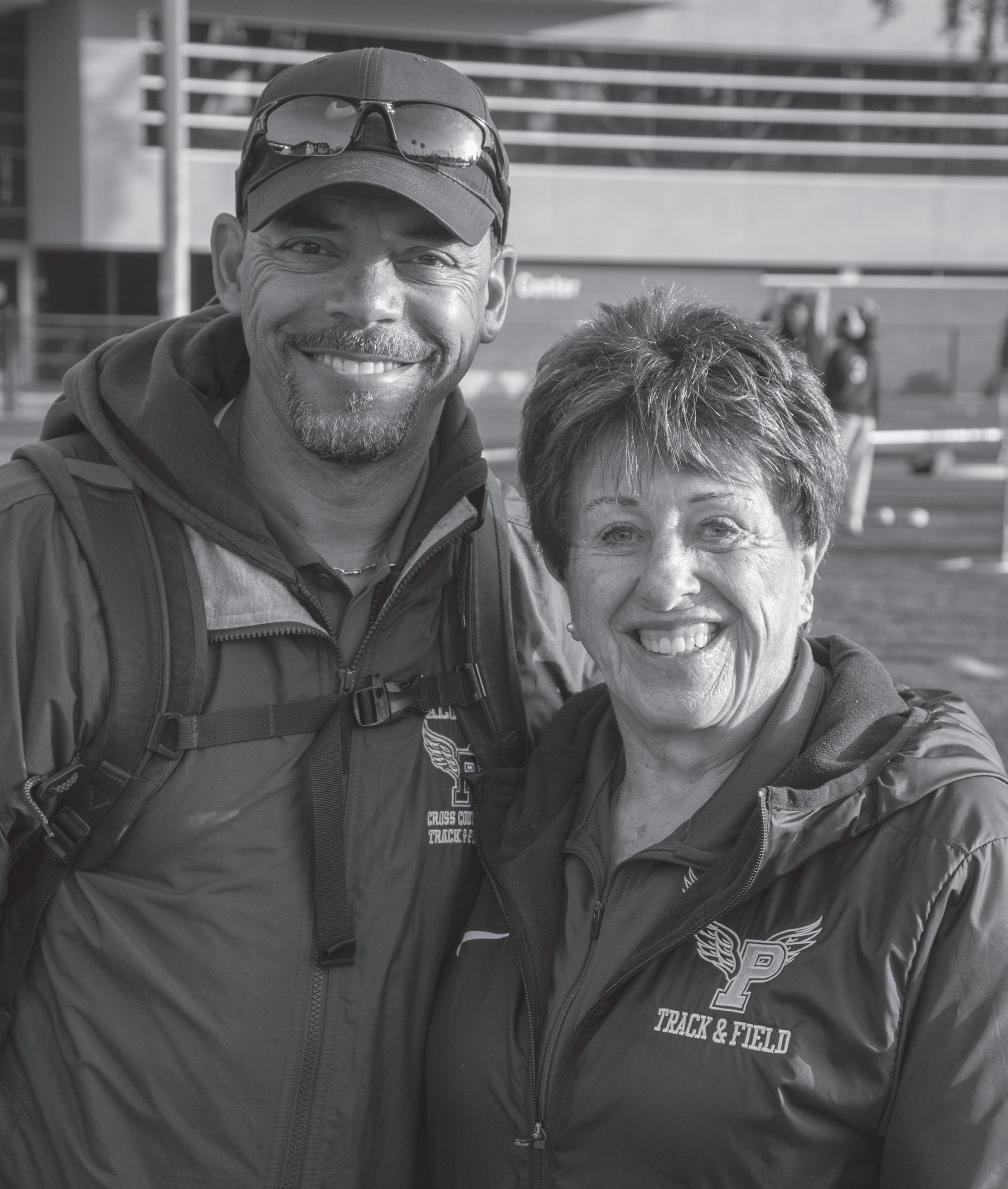

The sudden growth of artificial intelligence has dramatically impacted society, culture, the economy and even relationships. With the growth of AI chatbots, many of which are built on large language models, many adults and teens rely on AI on a regular basis, and this dependence has sparked worries about the future of AI’s impact on humans. As reliance on AI grows, some people have even begun to depend on AI chatbots for therapeutic support, companionship and romantic relationships, according to the American Psychological Association. is trend is particularly apparent in teens’ developmental years, according to MIT Media Lab graduate student Sheer Karny. e chatbots are very good at simulating or emulating human behaviors and making themselves seem anthropomorphic,” Karny said. “Even just the expression of a subjective experience might do a lot for humans to make them feel like something is happening.” Karny said therapeutic and romantic relationships with chatbots often form spontaneously and unintentionally. By surveying the Reddit community of r/MyBoyfriendIsAI, Karny and his colleagues found “AI companionship rarely begins intentionally: 10.2% developed relationships unintentionally through productivity-focused inter-
“Once you have this kind of emotional intimacy, you express vulnerability,” Karny said. “And if there’s a sudden change in the model’s disposition to you or how it’s behaving, it might be very distressing and cause pretty extreme things like grief that push people into really negative headspaces.” ese intense situations are similar to those experienced in human relationships, and AI relationships have even caused some to commit suicide. A study on Reddit’s R/MyBoyfriendIsAI found in conversations with AI, 1020% of users form visualizations of their AI partner, have intimate discussions and rely on AI for therapeutic aid. As a result, a study on “ e Rise of AI Companions: How Human-Chatbot Relationships Influence Well-Being” showed the top positive impacts of AI relationships were emotional support (33.33%) and entertainment and leisure (31.4%), while the top negative impacts of AI relationships were time consumption (21.84%) and social disconnection (18.83%).
Karny said one of his greatest worries is how dependent humans are on AI when it comes to personal decision making. Rather than using AI as a tool for support, users have started depending on it because of its artificially

In addition, another study on “ e Rise of AI Companions: How Human-Chatbot Relationships Influence Well-Being” found that “while only 11.8% of participants reported companionship as their primary motive for using chatbots in the single-choice question, 51.1% referenced companionship-related terms such as ‘friend,’ ‘companion,’ or ‘romantic partner’ in their free-text descriptions of their relationship with their chatbots.” And as this AI reliance grows, Jared Moore, a computer science Ph.D. student at Stanford, said users’ human interaction might decrease.
42% of students using AI for non-academic purposes use it as a companion
“Models have tendencies to overly agree,” Karny said. is term is called sycophancy: over-agreement to the point where it’s delusional and essentially not pushing back when an idea really is just
Junior Jonah Sandel said he notices this phenomenon in many chatbots.
“It’s very agreeable with you,” Sandel said. “If you talk to it a lot, it can push your opinions on you even more … so people who believe certain things, when they talk to AI a lot, might struggle to see the other side of the arguSandel said this may isolate people in their own bubbles of opinion. Junior Summer Mehta said it is especially important for teens to have access to trustworthy resources, something AI chatbots can’t necessarily provide. ere are very interesting downsides to a dependency on something that is not able to give you unbiased or legitimate answers to your questions,” Mehta said.
In addition, Mehta said face-to-face relationships are indeed straining as a result of “Some element of human-tohuman connection can never be destroyed — in that way I’m optimistic,” Mehta said. “I’m pessimistic about the fact that I’ve already seen people become more reclusive with the advent of AI. I’ve seen people who depend on AI more than they depend on their friends, because AI will always tell them they’re right.” Mehta said she has also observed behavior changes in her peers as a “I have noticed a lot more reclusion,” Mehta said. “I’ve noted a lot more egotistical behavior of some people, and I’ve noted a lot more behavior of people who always believe they’re right, because they’re always told they’re
According to a poll by the Center for Democracy and Technology, students using AI for non-academic purposes reported they used AI for advice on relationships (43%), mental health support (42%), friendship/companionships (42%) and romantic relationships (19%).
“ at’s what I worry about when we see people interact with AI systems more as their proper therapist or intimate relation where they’re not then sharing with their peers,” Moore said. “I worry that we are … working towards something we don’t want with AI.”
Despite his concerns, Moore said he understands how therapeutic relationships and companionships might feel easier and more comfortable with AI.
“A lot of people talk about it as an aide,” Moore said. ey feel shame about sharing certain things, and they feel less shame when talking to an AI as opposed to talking to a person. My concern with AI therapy is just when we try to replace therapists full bore.”
Mehta also said the immediate responses from AI chatbots contribute to that feeling of safety.
“A huge benefit is that it is always there, right on your phone or your computer,” Mehta said. “It will always respond to you right when you ask it a question.”
Moore said facing shame and truth is often necessary in order to fully recover or improve mental health. But AI chatbots instead reinforce the user’s own perspective.
A study Moore and his colleagues conducted concluded that many commercially available therapy bots respond with inappropriate advice, often disregarding the complexities of mental health conditions. In testing various chatbots, it was found that the responses often encourage delusions and struggle to recognize signs of crises.
erefore, Moore recommends that, in terms of therapeutic support, AI should be used as a tool to process emotions and find points of improvement through cognitive reframing for now. Moore explained that more specific research and refining needs to be done to be able to rely heavily on AI as a therapist.
Moore said, for now, he recommends AI be used to replace busy work rather than subjective human relational tasks.
“ ink of AIs as tools, not companions,” Moore said. “ ey can help describe a variety of things from meiosis to nuclear fission to differential equations and they can give that in a variety of patterns that might be appealing based on your learning style … I just don’t want to replace human relationships with them.”
Sandel agrees and said AI use is inevitable, but each person needs to regulate it for themselves and be hyperaware of how they are using it.
“Whatever we do, AI is definitely going to be part of our lives, so learning to use it and rely on it in certain ways is definitely going to be beneficial,” Sandel said. “But we also have to make sure that we’re not using it for things that would be better done with another human.”
Ultimately, Karny said the future of AI should support human creativity, social well-being and critical thinking.
“AI should take into account all the factors that lead humans to be healthy cognitively but with good social lives as well,” Karny said. “It should help us maintain our skills and our interests, rather than swiping them from under us. at’s probably where the future of AI goes, or the future that we hope to build.”
Dalia Saal
News & Opinion Editor
Music echoes as someone finds their way to the kitchen counter, pouring another round of alcohol into red solo cups. As they turn, they offer you a drink with a relaxed smile. “It’s only one. Loosen up a little, have some fun.” You shake your head and their smile falters. A couple of people glance over, curious and a little amused. e moment passes quickly, but it’s a reminder of how deeply society’s standards can decide what’s “normal.”
Saying no to alcohol might seem like a harmless personal choice, something that wouldn’t provoke much attention. After all, we are accustomed to hearing about people refusing to do drugs or experimenting with substances. In fact, abstinence is often praised. But when it comes to refusing alcohol — the

You
most accepted and widely consumed drug among adolescents — it carries a unique stigma. For many high schoolers, drinking is seen as a rite of passage, and sobriety is met with more judgment than expected. In recent years, the rise of sobriety culture led by movements like “Sober Curious” and “Dry January” has created space for open conversations about alcohol. While these initiatives have encouraged abstinence, the stigma remains prevalent. In social settings, when you refuse alcohol, it’s like you’ve made a mistake. Unlike saying no to drugs –– which is seen as a sign of strength and self-control –– saying no to alcohol creates an assumption it’s for a personal reason — like past trauma or health concerns. Why else would someone choose not to drink? is assumption is even more exacerbated with teenagers, who are often figuring out their identities and social belonging. Alcohol becomes a shortcut to social acceptance. is dynamic points to something deeper: alcohol has become so ingrained in our societal norms that not drinking feels wrong. is plays a key part in addiction to alcohol, especially for teenagers. Even worse, this normalization can shape their view before they’re even fully aware of how alcohol impacts them. Most teens start drinking not out of curiosity, but out of fear of being excluded. To make matters worse, those who are addicted to alcohol are not only overlooked, but actively enabled. Society has learned to laugh off the drunk friend, to portray unhealthy relationships with alcohol as just “being young” or “letting loose.” It’s almost become an expected behavior, one that’s regularly joked about in pop culture and social circles. People talk about their drunk nights and hangovers like they are badges of honor, and their inability to quit drinking is framed as a quirky flaw, not a sign of addiction. is teaches the younger generation that dangerous behavior is okay
as long as it’s socially accepted, and reinforces the idea that drinking is simply a teenage phase they are supposed to go through.
Compare this to how addiction to other substances is viewed. A person addicted to drugs like heroin or cocaine is often met with judgment and concern about their health. is addiction is seen as weakness or lack of self-control. at person is expected to seek help, get clean and be held accountable for their actions in a way that the “problematic drinker” is often not confronted with. Teenagers especially receive these mixed messages. ey are heavily warned about the dangers of drugs in schools, yet rarely taught that alcohol is equally capable of harming their developing brains and influencing long term behavior.
Alcohol’s presence in media and the way it’s marketed and advertised also adds to the stigma against sobriety. Its presence in films, TV shows and advertisements often portrays drinking as “fun” and “glamorous”. e party scene is rarely depicted without alcohol, leading to the belief that you can’t have fun without it. e media not only normalizes alcohol, but portrays alcohol as proof you’re fun, mature or socially “in the know”. With its strong presence and marketing in media, even kids are exposed to it, and impressionable children can stick to this belief throughout their life.
is leniency towards alcohol might seem confusing when you look at the statistics. According to the National Institute on Alcohol Abuse and Alcoholism, alcohol is one of the leading preventable causes of death in the United States, responsible for more than 178,000 deaths each year. However the deep normalization of alcohol use makes its danger easy to overlook.
With 99,017 of these alcohol related deaths being ages 16 and older in 2020, it reminds us that alcohol remains one of the most accessible substances for teenagers, despite its legal age restrictions. Teenagers get it through fake IDs, stealing from grocery stores and gas stations, or even through their own parents.
While we’re beginning to see a shift in how we talk about mental health, particularly with younger generations becoming more open about therapy and self-care, the conversation around alcohol remains unchanged. e belief that alcohol is a natural part of socializing has made seeking therapy for it even more challenging.
e first step toward getting rid of the stigma around sobriety is shifting the conversation. Rather than portraying sobriety as something to be ashamed of, we need to celebrate it as an empowered, personal choice, just like we celebrate abstaining from other substances. In the same way we acknowledge the gravity of addiction to other substances, we must start to recognize the harms of alcohol addiction. It’s time to recognize the choice to abstain as courage to make your own choices, even when social norms push back.

Maia Wadhwani Guest Writer
shouldn’t have to plan summer break during winter


Mirai Matsuzawa News & Opinion Editor
As the semester starts to wrap up, there are a million things running through my mind: the last wave of unit tests before the supposed “dead week,” finals that could make or break my grade and selfishly putting together a Christmas wishlist to keep me motivated.
I just want to rest after this academic onslaught, but not even a relaxing winter break will distract me from one far more daunting task — planning my summer break. It shouldn’t be like this.
Although I want to focus on finishing the semester strong, planning my summer inadvertently gets in the way. After putting it off for as long as possible, I know I will be forced to think about summer as soon as winter break starts. In fact, with hundreds of colleges hosting pre-college summer programs, applications open as early as October. With most regular deadlines for summer programs in December or January, I need to prepare essays, build portfolios, create something entirely new or juggle a combination of all three for each program.
Repeating this process multiple times is exhausting and distracts from studying for

classes and enjoying my hard-earned rest during break. e process is stressful and not something most high schoolers want to be thinking about in the middle of winter. Many try to get a job or internship over the summer. Whether it’s working at a local restaurant, running a summer camp or interning at NASA, students want quick ways to earn money, gain experience and strengthen their college applications. With a natural hiatus in late December to early January, winter break becomes the time to start applying.
High school students are encouraged to apply for summer jobs at least six months in advance, as applying earlier can increase your likelihood of being considered. e competitive social culture can lead to already burnt-out students vying for prestigious positions.
If you’re more into sports, the same problem arises. I have played club soccer my entire life, and our team often goes to showcases throughout the summer. As with many other club sports, showcase dates are released by the time winter break rolls around.
With both students and parents on break, it becomes the perfect time to put those dates in the calendar and start planning summer vacation around them. However, many families choose to spend a part of their summers away from home.
Traveling logistics, from plane tickets to hotels, are much easier — and cheaper — when planned ahead.
Planning earlier also gives families more time to organize with other people, but picking the date, location and budget of a trip that everyone can take part in takes time and effort. It’s a process that’s best to start as early as possible — adding yet another dish to students’ already overfilled plates. While some early planning may be unavoidable – travel logistics, job deadlines and summer applications – it’s important to remember high schoolers need breaks to refuel and recharge. Even though you may have to put days into crafting a perfect application and stress about all of the tiny details six months in advance, taking time to prioritize yourself and your mental health is just as important. If you don’t do that, winter break stops feeling like a break and starts to feel more like two weeks of exhaustion and burnout, even before the second semester begins. When winter break rolls around this year, in the midst of the planning and necessary deadlines, remember to let yourself enjoy it for what it’s meant to be. Spend quality time with family, catch up on sleep, celebrate the halfway point of the school year and prepare yourself to do it all over again.

e modern landscape of fashion feels oversaturated. Almost every month, a new trend appears on social media
cally materializes at Paly
Outfits may be important for selfexpression, and social media in conjunction with er opportuniment creatively. just copying what media, are you truly your creative and lessly conforming to pressures from social media and your on this cycle. Britannica “the rapid production of inexpensive, low-quality clothing that often mimfashion labels, big-name brands, and independent designers… consequently, previous purchases, perhaps worn a handful of times, are extends the term by noting “the rise of the fast fashion industry in the late 20th and early 21st centuries has had from its myriad environmental impacts to its exploitation
Behind every quarter-zip that is sold, there is the masked
harm that is pollution. According to an analysis by Business Insider, fashion production comprises 10% of global carbon emissions.
To put that number into perspective, the fashion industry emits more carbon each year than all international flights and maritime shipping combined.
On top of all that, there is arguably an even greater cost: the exploitation of garment workers. According to a George Washington University Law and Policy Brief, fashion industries are located in huge overseas factories where their individuals work up to 16 hours a day, earn wages that keep their families below the poverty line, and the use of child labor is encouraged.
!is abuse lasts, in large part, because of the demand for fast fashion. In order to keep clothing cheap and trends hot, fast industries exploit their workers, leaving millions of workers paying for our disposable clothing habits.
!is demand depends on constant trend turnovers. And what perpetuates trends?
Social media.
On top of all of the mental health issues we associate with social media, there’s also the environmental degradation from fast fashion as an unwelcome cherry on top.
I’m not suggesting we all adopt uniforms. But we should ask ourselves: When did clothing stop being about comfort and start being about a monthly performance?
More importantly, who benefits from that performance? Because it’s certainly not us. And not the environment or garment workers either.
!e unfortunate truth is the fast fashion industry is one of many platforms that sell us the illusion of individuality. Whether iPhones, cars, or even quirky kitchen gadgets, social media’s push of trends causes us to overlook whether or not we need a product because we’re so focused on being trendy.
To start pulling yourself out of this illusion, you can’t just take one quantum leap. You need to start in small steps. So, the next time you think of buying clothes because it’s trending, pause. Do you actually like it, or have you just been told to like it?

School clubs have become too resume based, performative
On every Club Day, students wander from table to table, signing up for clubs they’ll probably never attend. If you ask students why they would join a club, you’ll hear varied responses.
Yes, you might get an, “I really like science,” or the occasional, “I’ve always wanted to volunteer.” But unfortunately, most of the time, you’ll see a different mindset: Join everything. Get a leadership position. And hopefully, admissions officers will notice your incredible initiative and passion.
Somewhere in this mess of a system, the original purpose of clubs has been lost.
School clubs should be an opportunity to seek out a more niche community –– to pursue passions together. Yet today, they’re too often used as resume padding for college applications. Simply put, a club title has become more valuable than the actual experience behind it.
School clubs should be founded and driven by genuine passion, not by the pressure to look accomplished. If involvement only exists to strengthen college applications and resumes, you lose what clubs were originally meant to be: connection, collaboration and the freedom to authentically explore what you care about most.
While roughly six out of 10 children nationwide participate in at least one extracurricular activity, many club rosters are bloated with names, even though data shows only a fraction of those students ever become active participants.
You can see this data reflected everywhere, even at Paly. Club sign-up lists are cluttered with dozens of names, even though meetings consistently sit half-empty. A club might be active for a month, fueled by ambition, but then quietly fade once the resume bullet point is secured. Everyone’s seen it happen, and it’s an issue because it discredits the meaning of involvement.
Clubs haven’t always been like this. If you talk to your parents or older students, they will tell you about a time when clubs grew from interest, instead of obligation. It’s not entirely an individual’s fault, however: the system rewards this cycle. As college admissions become more competitive, leadership stands out. If you can’t get a leadership position from a preexisting club, then the solution is simple: you just create one. Colleges ask for leadership, so students chase titles. Schools allow clubs to exist with long rosters

and low attendance, so students sign up without commitment. Students think they’re supposed to join — and have leadership roles — in everything. As a result, there’s a strong pressure to demonstrate our burning interest in some niche activity or topic. !is ambition is good, but ambition without passion burns out quickly, and that’s when clubs die. When the fake enthusiasm fades, people start quietly disappearing after the first meeting. We need to start asking whether the clubs we create actually have an impact beyond a line in a resume. We shouldn’t stop creating clubs, but we should start creating them for the right reasons. If someone wants to start a club because they love coding, chess, baking or poetry, that’s great — especially if their goal is to build community, create discussion and offer something meaningful. But if the purpose ends at “founder sounds impressive,” then the club
isn’t serving students, but rather catering to an illusion of passion. !e solution isn’t complicated. Students don’t need 15 activities they barely go to. !ey need a few they genuinely show up for and care about. Start a club only if one related to something you truly care about doesn’t already exist, and join one or two others if you actually look forward to them. !at’s how involvement becomes meaningful instead of performative.
For me, this has meant choosing a small number of places where I know I’ll contribute, and not just appear on a roster. !at approach doesn’t just feel better; it makes each experience more rewarding. One club you care about can impact your life more than five you barely attend. Passion makes clubs strong, commitment makes them memorable and authenticity is what makes involvement matter. If we rebuild club culture around genuine interest, instead of image, schools don’t just gain better clubs. With authentic and genuine clubs, schools ultimately gain richer communities.

“Wicked: For Good,” the long-awaited sequel to “Wicked” (2024), demonstrates a spectacular progression of Oz’s complex society. From an interesting development of character relationships and abundance of plot twists to the life-like sets and costume designs, the movie successfully engages the audience.
While its runtime of 2 hours and 45 minutes may test some people’s patience, and the soundtrack may not be as captivating as the first film’s, the movie’s clear connection to “ !e Wizard of Oz” ties up loose ends well and makes for a compelling watch.
Under the direction of Palo Alto native Jon M. Chu and with casting by Bernard Telsey and Tiffany Canfield, the film’s cast is notably diverse. Starring Cynthia Erivo, Ariana Grande, Michelle Yeoh, Jonathan Bailey and Marissa Bode, who represent the LGBTQ+ community, people with disabilities and people of color, the film highlights Hollywood’s positive shift toward more inclusive casting.
!e movie continues the journey of Elphaba !ropp and Glinda Upland, as Elphaba works — often alone — towards a “better” Oz, while Glinda grapples with her own role in its power structure. !e film explores nuance and complexity in its characters, and what it means to be “good” versus “bad” in society. Each choice Elphaba and Glinda make is understandable, adding depth to their fractured yet alive friendship.
At the same time, the film touches on popular culture references and issues, including disabilities, animal rights, natural disasters, justice, misinformation, substance abuse, dictatorships and complex relationships. Its relevance to our world creates a deeper connection for the audience and engages them to find meaning in the film.
In the breathtaking world of Oz, Shiz University stands out as a pinnacle of production design with a vibrant color palette and intricate detail, creating an immersive experience. Costume designer Paul Tazewell complements this with outfits that symbolize each character’s journey and progression from the initial film.
For example, Elphaba’s cape features a tree-bark pattern as a reflection of her new forest home since leaving Shiz, while Glinda’s new iridescent bubble dress is colored the same as her new means of transportation: her bubble. !e attention to detail and subtlety enhance the storytelling and beauty of the movie.
In addition, the characters’ relationships allow the film to dive into the complexities of human nature. Elphaba and Glinda’s friendship is tested by separation, jealousy and weariness, yet their underlying love grounds their dynamic in reality.
Both characters’ relationships with Prince Fiyero add another layer of tension, as he struggles to choose a girlfriend that fits him, simultaneously causing jealousy: classic popular-dude drama. Yet, he eventually proves his good intent despite his own difficulties.
Meanwhile, Nessarose !ropp has similarly complex dynamics with her half-sister Elphaba. !eir relationship is in constant strain due to jealousy, loyalty and the idea of sisterhood protection. !is ultimately turns into a cycle of hurt and unintended consequences.
Another clear relationship is between !e Wizard, Elphaba and Glinda. While in the beginning of the film, they are greatly intimidated and submissive, throughout the course of the movie, they begin to learn to resist and fight for what is right. !is transition marks a turning point as Elphaba and Glinda began to take things into their own hands to improve Oz.
!e plot also includes several twists that recontextualize familiar “ !e Wizard of Oz” characters, delivering powerful ‘Aha!’ moments for anyone familiar with the original “ !e Wizard of Oz” film, making the films feel more connected and complete.
While some critics have questioned the length and decision to split the movie into two parts, we thought this approach was beneficial in order to include all nuanced elements and see the transforming character dynamics over time.
And while the production design of individual locations were stunning, the spatial relationship between each setting — Emerald City, Shiz University, Munchkinland and Kansas — was unclear, and the locations seemed disconnected from one another, which made the movie at times hard to follow, especially when referencing several different locations in short time frames.
On top of that, the virality of the songs from the first movie created a wave of pop culture dominance that seems absent in the second movie. !e final song of “For Good” was a spectacular duo between Cynthia Erivo and Ariana Grande, but there wasn’t the same abundance of catchy, musically-supreme songs that played one after another like in the first movie, making this film somewhat less engaging.
Regardless, the performance of the two leads is spectacular. Erivo brings a substantial amount of emotional depth and vocal power to Elphaba and her songs, making her conflict believable, while Grande’s commitment to being Glinda (with the eyebrow gymnastics being its own subplot) sells the role as a character with both charm, grace and vulnerability. !eir chemistry both on and off screen is undeniable, and when they sing together, their voices blend into a beautiful harmony that only enhances the film.
We highly recommend watching “Wicked: For Good” because of its relevance to many audiences and the various ways to relate to it. !e characters and their relationship developments were uniquely relatable and realistically deep, the set and costume design were immersive and entertaining and the complex but unified plot was successfully engaging. So follow the yellow brick road straight to your nearest theater, because this is one Oz-some flick you won’t want to miss.



The Supplemental Nutrition Assistance Program was fully restored last month after a 43-day federal government shutdown that temporarily halted bene ts for millions of Americans, straining food banks and shelters nationwide. As households continue to recover from the disruption, a new federal rule expanding work requirements for SNAP recipients is expected to reduce the average monthly number of SNAP recipients by about 2.4 million people over the next decade.
SNAP, more commonly known as food stamps, provides bene ts with monthly funds on a debit card that can only be used at approved grocery stores. e program is intentionally limited to “cold” or unprepared foods and ingredients meant for meals cooked at home, not restaurant food or hot prepared items. Even with these restrictions, SNAP bene ts often do not last an entire month, leaving many recipients reliant on local food kitchens and shelters even under the old system.
e Campanile thinks lawmakers should reverse these changes and strengthen SNAP instead of weakening it. As one of the few programs proven to reduce poverty
and food insecurity, SNAP should be expanded to reach more people, not morphed into a system that punishes people for circumstances that are beyond their control. Speci cally, the newly implemented 80 hour per month work requirement dramatically widens who must meet work standards to keep bene ts. O cials have warned that hundreds of thousands nationwide could lose SNAP bene ts over the next year, not because they’re abusing the system, but because they live with disabilities, juggle unpredictable schedules or care for children and aging parents. ese are the people the policy punishes. As a result, more people rely on food kitchens and shelters. During the shutdown, many of these community organizations were
overwhelmed, even as community members stepped up with donations and volunteer e orts. While this response re$ects the strong local support of our community, it also shows a hard truth. Charities cannot replace a national safety net, and hunger is not a problem communities should be left to solve on their own.
Local data reveals the extent of the consequences. In Santa Clara County, more than 133,000 residents rely on SNAP for basic groceries. Cutting these bene ts only increases pressure on these groups and widens inequities we already see in our regions. Expecting charities to absorb the impact of federal cuts is neither realistic nor fair. Hunger is not a problem that communities should be left to solve on their own. Critics of SNAP often argue that the program discourages initiative
and traps people in cycles of poverty. Others claim it as a waste of tax dollars. But research shows the average American contributes only $36 per year to SNAP, while every dollar invested generates $1.79 in economic activity. Cutting these bene ts removes money from local economies, forces families to rely on emergency services and only exacerbates longterm inequities. Punishing people for circumstances beyond their control does not end poverty, it keeps the cycle going.
SNAP is not perfect, and we believe aspects of it should be improved. e process should be streamlined, and bene ts should better re$ect the true cost of living. But making the program harder to access does not encourage independence, it denies assistance to people who need it most. e Campanile thinks these new restrictions will only widen the socioeconomic gaps that already divide communities nationwide.
e measure of how well a society works is ultimately how it treats its most vulnerable. Food security is not a privilege to be earned; it is a basic human right. A government that can a ord excess should be able to ensure that its people do not go hungry.
We should de-digitalize relationships
Humans are fundamentally social beings, and our well-being is intrinsically tied to the depth and quality of our relationships. e Campanile acknowledges the importance of social media and technology in maintaining long-distance relationships. However, despite promising greater connection, social media harms our ability to have genuine connections and relationships. e Campanile therefore thinks students need to make more of an intentional e ort to build in-person relationships, regardless of whether they are romantic or platonic.
Social media’s illusion of connection is replacing in-person interactions. In fact, according to the American Psychological Association, in 2017, American adolescents were spending 22 minutes less per day on social interactions than in 2003 ––140 hours less each year than they do today. And, according to the National Library of Medicine, adolescents who spend “excessive time on social media often feel more isolated despite being constantly online.” As a result, we are losing essential communication and initiative skills, as well as our ability to connect with one another in meaningful ways. erefore, social media is killing communication. Instead of having real conversations, we’re increasingly relying on posts, likes or comments to stay up-to-date with our communities. It creates connections that fail to go beyond surface level,
as brief and inauthentic online exchanges replace nuanced face-to-face interactions. is prevents us from being fully present with one another, creating an illusion of intimacy that fails to build true personal connections. Perfectly curated pro les fuel the issue by creating unrealistic comparisons and making real-world bonds feel less ful lling. However, people prioritize convenience over depth because of fear of commitment, burnout or a belief that school perfection is the only way to succeed. Shallow relationships may allow people to avoid these fears. e accessibility of hookup culture simultaneously makes it more appealing and erodes the deeper vulnerability needed for strong relationships. Additionally, even in established romantic relationships, social media impedes our ability to be fully present by creating constant distractions. A 2021 study published in the International Journal of Mental Health and Addiction about the e ects of social media found high Instagram usage leads to lower relationship satisfaction and an increase in con$ict and negative outcomes. ese negative outcomes led to an addictive use of Instagram, creating a cycle of both poor quality relationships and high social media usage.
Another manifestation of this digital distancing is the prevalence of roster culture, a behavior where one engages with many suitors at once. e
Campanile acknowledges roster culture can be freeing and, occasionally, healthy –– it allows for normal exploration if all parties are on the same page. However, at the same time, a lack of intention contributes less meaning in relationships because it is increasingly used to avoid deeper investment. Relying on a “roster” can be a way to mask insecurities in an attempt to avoid feeling lonely or rejected. Having a roster isn’t inherently bad, yet it is too often used as a way to stay uncommitted, preventing true intimacy and connection.
is isn’t to say the old norms surrounding dating were always good: the modern tolerance for various types of relationships is beautiful, and it’s good that people today have more space to date in ways that match their gender identity, sexual orientation, cultural background and comfort level. Yet through social media, we’re isolating ourselves from true, healthy relationships as a culture. Ultimately, humans are social beings, and we rely on each other for our happiness and wellbeing. e Campanile believes students need to recognize the harm social media has on our relationships, and more importantly take action to foster more in-person relationships. As social media creates distancing behaviors that minimize vulnerability and impede our ability to form meaningful connections with those around us, it is up to us to prioritize forming genuine relationships.
Adviser Rodney Satterthwaite
Letters to the Editors: Email all letters to editors to palycampanile@gmail.com. e Campanile prints letters on a space-available basis. We reserve the right to edit submissions. e Campanile only prints signed letters. Advertisements: Advertisements with e Campanile are printed with