
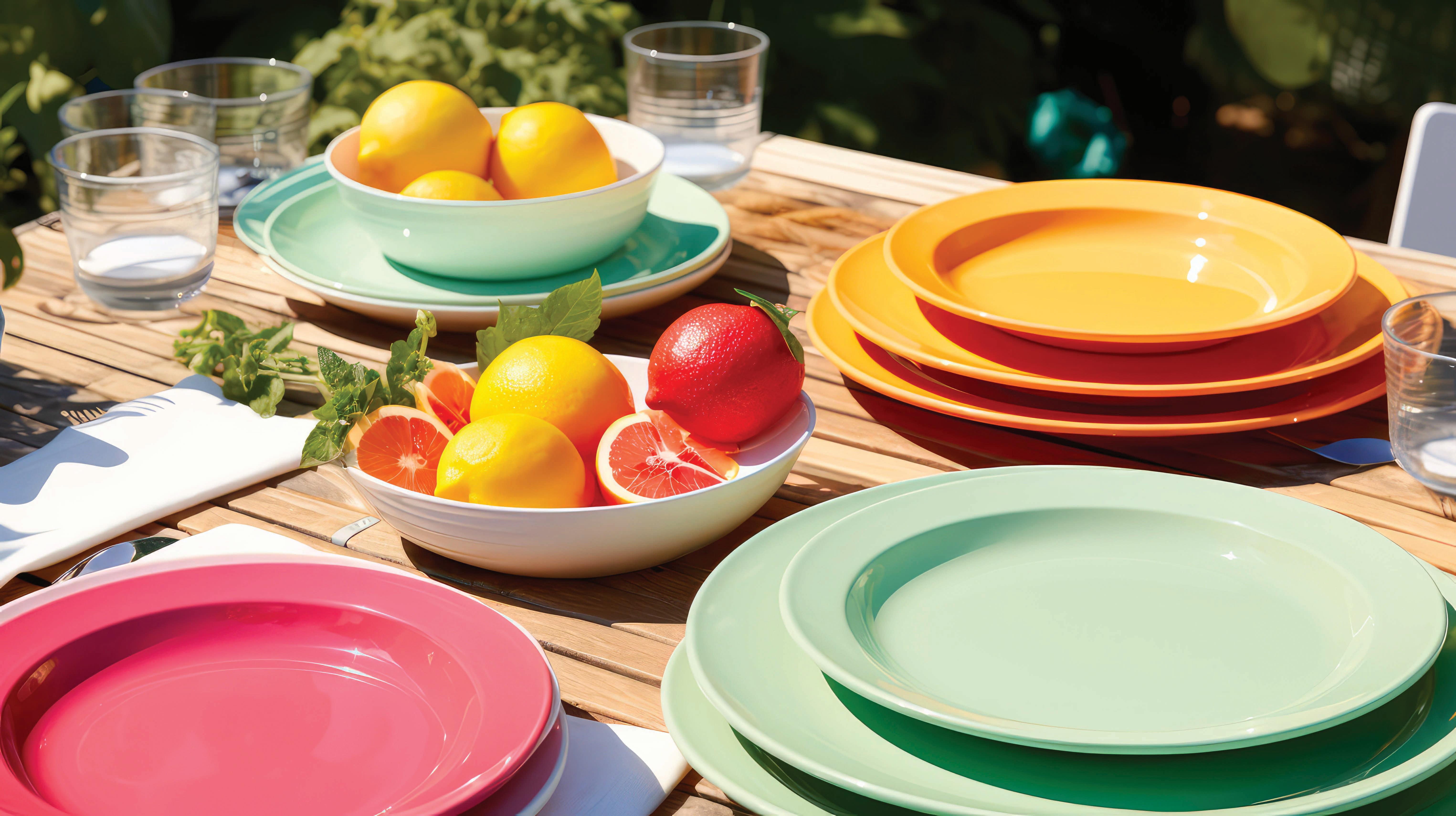
Melamine touches daily life from durable dishes and kitchenware to high-performance laminates and coatings.
Power your production with the world’s most implemented melamine technology: 32 plants and counting.
27 Correcting catalyst use
Juergen Neumann, Sabin Metal Corporation, USA, highlights how improved catalyst gauzes can increase catalyst lifetimes and enhance ammonia conversion rates.
10 Inside Asia’s market dynamics
Claira Lloyd, Owen Gooch, Amba Coombe, and Jay Harland, Argus Media Consulting Services, provide a comprehensive overview of fertilizer affordability as well as phosphate, urea, and sulfur market dynamics in Asia.


31 The next generation
Timothy O’Connell, Johnson Matthey, UK, explains how nickel is a vital component of reforming catalysts and how an improved design can reduce resource consumption while increasing efficiency.


15 Avoiding fatigue loads in green ammonia plants
Karan Bagga, thyssenkrupp Uhde, Australia, and Klaus Noelker, thyssenkrupp Uhde GmbH, Germany, provide insight into strategies that can help reduce the impact of fatigue in green ammonia production.
20 Green ammonia: process optimisation and industrial validation
Davide Carrara, CASALE, and Robert Kender, Linde GmbH, analyse process optimisation and dynamic evaluation of ammonia plants operating under fluctuating conditions.
34 Teaching urea plants new tricks
Nikolay Ketov, Stamicarbon (NEXTCHEM), the Netherlands, discusses how to navigate the complexities of urea synthesis with digital solutions.

39 Prilling for precision
Francesco Viola, Saipem, explains why prilling buckets should be designed as an integrated unit, not as independent parts, to ensure high quality urea prill production.
45 Packaging fertilizer the sustainable way
Sigrid Eder-Ince and Claudia Hagn, Starlinger & Co. Gesellschaft GmbH, Austria, discuss how pinch bottom bags made of woven polypropylene can offer attractive bag design, high product protection, versatility, and cost-efficiency.
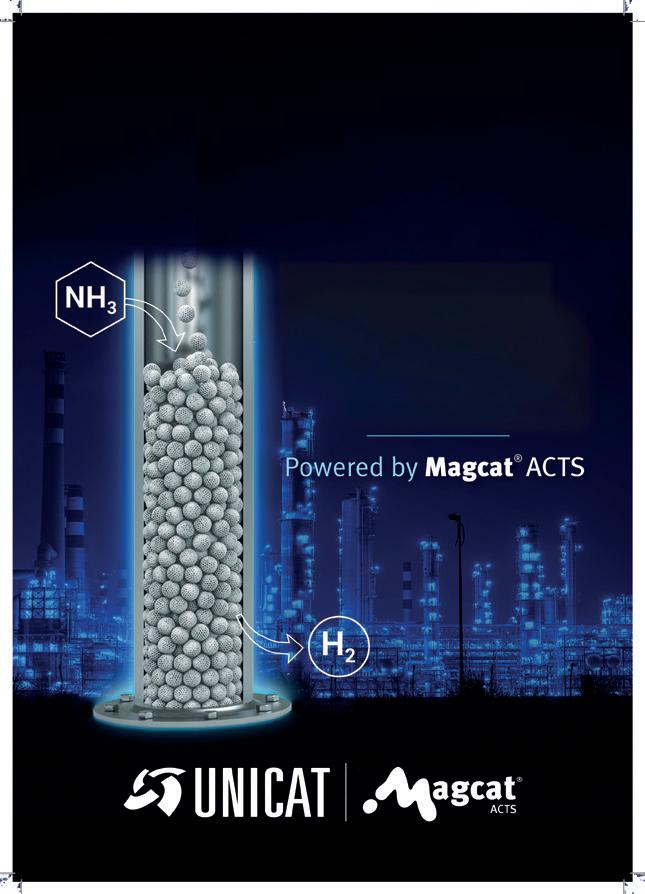

Magcat-ACTS is an advanced ammonia (NH3) cracking catalyst engineered for tubular fired reformers. A proven solution for operations in steam methane reforming (SMR) duty, it delivers superior heat transfer, enhanced porosity, and has an expanded geometrical surface area. Ongoing developments have explored optimised formulations tailored for medium to high-temperature applications, achieving high conversion rates and superior efficiency in hydrogen generation.


State-of-the-art safety, reliability, and superior performance in a complete package.
Worley Chemetics’ SARAMET® Acid Towers achieve performance requirements in all plant operating modes. Our customized SARAMET® metallurgy is selected for each application — including Dry, Inter, Final, ALPHA™ or Oleum Towers.
• Proprietary gas inlet nozzle designs engineered to eliminate localized corrosion
• Designed for retrofit or new tower installations
• Allows use of existing or new tower foundations minimizing installation time
• Scope of supply ranges from detailed engineering and manufacturing drawings with material supply, to complete EPC
• Full tower life cycle support, including technical and inspection services

MANAGING EDITOR
James Little james.little@palladianpublications.com
SENIOR EDITOR
Callum O’Reilly callum.oreilly@palladianpublications.com
DEPUTY EDITOR
Oliver Kleinschmidt oliver.kleinschmidt@palladianpublications.com
EDITORIAL ASSISTANT
Willow Munz willow.munz@palladianpublications.com
SALES DIRECTOR
Rod Hardy rod.hardy@palladianpublications.com
SALES MANAGER
Ryan Freeman ryan.freeman@palladianpublications.com
PRODUCTION
Iona MacLeod iona.macleod@palladianpublications.com
ADMINISTRATION MANAGER
Laura White laura.white@palladianpublications.com
HEAD OF EVENTS
Louise Cameron louise.cameron@palladianpublications.com
DIGITAL EVENTS COORDINATOR
Merili Jurivete merili.jurivete@palladianpublications.com
EVENTS COORDINATOR
Chloe Lelliott chloe.lelliott@palladianpublications.com
DIGITAL CONTENT ASSISTANT
Kristian Ilasko kristian.ilasko@palladianpublications.com
DIGITAL ADMINISTRATION
Nicole Harman-Smith nicole.harman-smith@palladianpublications.com
JUNIOR VIDEO ASSISTANT
Amelie Meury-Cashman amelie.meury-cashman@palladianpublications.com

With the closure of a single waterway the fertilizer industry has been thrust into a difficult period. In the wake of the US-Israeli attacks on Iran the country announced the closure of the Strait of Hormuz in the Persian Gulf – a critical junction which sees approximately one-third of the world’s fertilizer exports pass through. With the closure of the strait due to the threat of mines and potential missile strikes out of Iran, shipping has essentially come to a halt. Now, as previously discussed in the comment for the January/February issue of World Fertilizer in relation to the invasion of Venezuela, fertilizers are a commodity that is vulnerable to wars and geopolitical upheaval.
One of the chief concerns is the impact on affordability. Since the outbreak of the war fertilizer prices have spiked, with urea prices surging by 35%1 and calcium ammonia nitrate prices rising by 15% in Lower Saxony, Germany.2 Existing trade agreements have been interrupted, with India recently agreeing to buy 1.3 million t of urea from the Middle East, which now may not arrive in time. Brazil relies almost entirely on urea imports, half of which typically comes through the Strait of Hormuz.3 Meanwhile, Saudi Arabia’s Maaden has sought to alleviate some of the challenges and hardship by diverting exports via the port of Yanbu in the Red Sea.4 But this requires moving large amounts of fertilizer across the country, adding additional cost and complexity. It also does not provide a guarantee of safety, as the Houthis in Yemen still conduct attacks on ships in the region. Nevertheless, Saudi Arabia is fortunate to have access to an alternative export route while other major exporting nations like Qatar remain isolated.
The other issue to address is the loss of oil and gas assets in the region. Fertilizer production is energy-intensive and relies on natural gas as a feedstock, with energy making up as much as 70% of production costs.3 The near closure of the strait, combined with missiles strikes across the gulf on energy facilities, have forced many energy production sites to pause output. Subsequently, this has shut fertilizer plants in the Persian Gulf and beyond with three urea plants in India cutting their production capacity as LNG supplies from Qatar cease.3
Palladian Publications Ltd, 15 South Street, Farnham, Surrey GU9 7QU, UK Tel: +44 (0) 1252 718 999 Website: www.worldfertilizer.com
Subscription claims: Claims for non receipt of issues must be made within 3 months of publication of the issue or they will not be honoured without charge.
Applicable only to the USA & Canada: World Fertilizer (ISSN No: 2398-4384, USPS No: PENDING) is published 8 times a year by Palladian Publications Ltd GBR and distributed in the USA by Asendia USA, 701 Ashland Ave, Folcroft PA. Application to Mail at Periodicals Postage Prices is pending at Philadelphia, PA and additional mailing offices. POSTMASTER: send address changes to World Fertilizer, 701 Ashland Ave, Folcroft, PA. 19032.
The conflict could not have come at a worse time for farmers in the western hemisphere as they prepare for the spring fertilizer application season. Without proper fertilization, yields could decrease and in extreme cases some isolated regions could experience a period of scarcity. In Europe, sources of fertilizer were already tight with the sanctions placed on Russian fertilizer, now that tight grip could turn into a stranglehold if things are to continue as they are. Recent developments have highlighted the importance of countries securing their own domestic supply of fertilizers, whether that be through greater investment into local production facilities or taking the time to build up long-term storage reserves. The conflict in the Middle East has fully exposed the vulnerabilities of having an over-reliance on imports – for a secure fertilizer future, nations should learn from this and invest more in home grown-fertilizer production.
1. https://www.worldfertilizer.com/special-reports/10032026/middle-east-conflict-strains-fertilizer-supply-chains/
2. https://www.euronews.com/2026/03/20/europes-fertiliser-crisis-prices-surge-due-to-iran-war-and-dependenceon-russia
3. https://www.reuters.com/business/energy/how-does-iran-war-affect-fertiliser-supplies-prices-foodsecurity-2026-03-17/
4. https://www.worldfertilizer.com/phosphates/19032026/maaden-to-export-phosphates-from-yanbu-in-the-redsea/

Speed, silence, range, and payload. These are critical requirements of high-performance drones for fertilizer dosing and application.
Drones, also known as unmanned aerial vehicles (UAVs) or unmanned aircraft systems (UASs), are increasingly being used in agriculture. In addition to liquid fertilizer application, they are deployed to spray pesticides and herbicides.
Manned light aircraft and helicopters have performed these activities in the past, but with the shortage of skilled pilots and the high risk and cost of manned aviation, the attractive economics and safety profile of UAVs are winning the day.
Battery operated drones lack the power and range to displace light aircraft in many agricultural applications. Due to the heavy battery, there is little power left to lift the liquid fertilizer cargo. So, alternative fuels and powertrains with superior performance are essential.
In aviation the challenge is to conquer gravity, and this battle is most acute when considering vertical take-off and landing (VTOL) hover drones which are at the frontline of modern fertilizer dosing and application. In this respect, hydrogen is the stand-out choice. No other fuel touches it: the gravimetric energy density of hydrogen is almost three times that of kerosene.
A hydrogen-fed drone powertrain using an HTPEM fuel cell offers a power-to-weight ratio up to 1.2 kW/kg, competing with an internal combustion engine. So, when combining the fuel and the powertrain, the hydrogen system is well placed. The third element in the power train system is the hydrogen storage tank.
Manned light aircraft and helicopters have performed these activities in the past, but with the shortage of skilled pilots and the high risk and cost of manned aviation, the attractive economics and safety profile of UAVs are winning the day.
The combination of kerosene and an internal combustion engine, as used in light aircraft, can be extended to drones, but there is a superior alternative.
When maximising the profitability of UAV fleet ownership and operation is the priority, liquid hydrogen stands head and shoulders above other fuels. When combined with a PEM or high-temperature PEM (HTPEM) fuel cell, it aligns perfectly with modern agricultural use cases.
Aluminium alloys combine strength and light weight with a reasonable cost and high availability. This has led them to be the default choice for aircraft bodies and wing structures. Due to their strength-toweight ratio and resistance to hydrogen embrittlement, aluminium alloys are also ideal for building cryogenically insulated liquid hydrogen fuel tanks for drones.
Putting together the HTPEM fuel cell, liquid hydrogen fuel and aluminium storage means the drone will have outstanding mission capabilities, combining higher speed, increased maximum take-off weight (MTOW) and extended range.
As food security and affordability come further into the spotlight, and international competition is fierce, modern farming will need to turn to high productivity tools like UAVs and UASs to compete.

The first weeks of the conflict in Iran resulted in a spike in the cost of oil and natural gas. Fertilizer prices have been rising steadily, but the spike in fossil fuel prices has also resulted in a sudden hike in fertilizer prices, as high as US$567/t by the end of those first weeks, according to the BBC.
The main component of fertilizer is ammonia, NH3, which is produced from the reaction of nitrogen (N2) and hydrogen (H2). Hydrogen is conventionally sourced from methane (natural gas). Ammonia is then produced via the Haber Bosch process. This results in the cost of ammonia production being heavily tied to natural gas prices.
In contrast, green ammonia is manufactured from hydrogen produced via electrolysis. When powered by renewable energy sources, this eliminates the requirement for natural gas or other fossil fuels. Historically, green ammonia has struggled to achieve cost parity with conventional Haber Bosch ammonia, so an increase in natural gas prices triggered by the Iran conflict may aid its competitiveness.
The impact of geopolitics and conflict has been seen before on fertilizer prices, with the price also spiking after Russia’s invasion of Ukraine. Prior to this, Russia had been the top exporter of nitrogen fertilizer to Europe, sending around 3 million t in 2022. However, even without geopolitics, IDTechEx has seen examples of local, low-cost green ammonia production resulting in cheaper fertilizer than ammonia that is conventionally produced.
Local, modular ammonia production technology has been developed by companies such as TalusAg and Nium. Yet these modular facilities produce roughly 1 tpd of ammonia, a fraction of the millions of tonnes produced annually by incumbent ammonia production. However, as ammonia is toxic and requires either pressurisation or cooling to transport, it can result in high import and transportation costs, especially in areas over 500 miles from a deep seaport. When combined with low-cost renewable power, or green premiums such as the 45V tax credit in the US, there are already existing examples of small scale local ammonia production being cheaper than importing conventional ammonia, prior to the Iran conflict.
ICL, a global specialty minerals company, has announced the opening of a new specialty fertilizer production facility in Maharashtra, India.
The launch comes at a critical time for India, which relies heavily on fertilizer imports and has been facing supply disruptions due to the latest geopolitical instability and the closure of the Strait of Hormuz – a key global shipping corridor. These delays are already affecting fertilizer availability worldwide and could pose long-term risks to food security if not addressed. This new facility supports the Government of India’s ‘Make in India’ initiative and reflects ICL’s strategy to expand local production in high-growth markets. By manufacturing water soluble fertilizers (WSF) within India, ICL aims to reduce dependence on cross-border supply chains, diversify production routes and ensure more reliable access to essential agricultural inputs.
The plant will produce advanced WSF solutions, that enable precise nutrient delivery and higher agronomic efficiency. According to customs import data and growth trends from previous years, India WSF market has demonstrated a high single-digit CAGR. By expanding access to these solutions, the facility will support Indian farmers in adopting more efficient and sustainable growing practices, helping to increase yields and strengthen long-term food security.
The new facility will span approximately seven acres (28 000 m2) and will replicate ICL’s advanced production model currently operating in Israel.

Argus Clean Ammonia Americas Conference
27 - 29 April 2026
Houston, Texas, USA
https://www.argusmedia.com/ en/events/conferences/cleanammonia-americas-conference
15th Stamicarbon Symposium: UNFOLD
18 - 21 May 2026
The Hague, the Netherlands https://events.stamicarbon.com/en
Argus Clean Ammonia Asia Conference
2 - 4 June 2026
Tokyo, Japan
https://www.argusmedia.com/ en/events/conferences/cleanammonia-asia-conference
49th Annual International Phosphate Fertilizer & Sulfuric Acid Technology Conference
5 - 6 June 2026
St Pete Beach, Florida, USA
https://aiche-cf.org/schedule
AmmoniaTech 2026
18 June 2026
Online
https://www.accelevents.com/e/ ammoniatech-2026
Southwestern Fertilizer Conference & Centennial Anniversary
12 - 16 July 2026
New Orleans, Louisiana, USA
https://www.swfertilizer.org/
KBR has been awarded a 10-year catalyst supply contract by Indorama Eleme Fertilizer & Chemicals FZE (Indorama) for its entire ammonia plant portfolio.
This marks the first long-term catalyst agreement for KBR in the ammonia sector, further reinforcing the company’s position as a leading global ammonia solutions provider.
Under the terms of the contract, KBR will provide complete catalyst solutions for Indorama’s six ammonia plants in Nigeria, Georgia, Uzbekistan, and India.
“We are proud to build on our long and successful relationship with Indorama, which spans multiple ammonia projects and decades of collaboration, and this new project extends our support beyond technology licensing into long-term catalyst solutions,” said Jay Ibrahim, President, KBR Sustainable Technology Solutions. “KBR is committed to delivering differentiated, high-performance technologies that are designed to achieve optimal plant performance and create sustained value. By leveraging our expertise across ammonia design, operations, and catalyst optimisation, we expect Indorama will benefit from enhanced efficiency, improved reliability, and stronger operational performance across its global ammonia portfolio.”
Saipem has been awarded a new Urea License Agreement by Mitsubishi Heavy Industries Ltd (MHI) for a new fertilizer plant in Turkmenistan.
The contract entails the license for the use of Saipem’s proprietary and patented SnamprogettiTM Urea technology as well as the related engineering services associated. The urea unit will have a production capacity of 3500 tpd and will be designed in accordance with the highest standards of efficiency, reliability, and safety.
The new project follows the Garabogazkarbamid plant, commissioned in 2018 in Garabogaz, Turkmenistan, developed with the participation of MHI and Gap Insaat Yatirim ve Dis Ticaret A.S., for which Saipem supplied the Snamprogetti Urea technology under a contract awarded in 2014 by MHI.
The new contract is also part of a consolidated industrial collaboration between Saipem and MHI, characterised by joint projects across different technological areas.
USA Central Farm Service, TalusAg, and CleanCounts plan to produce ammonia in Minnesota
Central Farm Service (CFS), TalusAg, and CleanCounts have announced a collaborative project to build Talus10 local ammonia production facilities in Minnesota, US, marking the first time locally produced ammonia fertilizer will be commercially available.
Pending support from the Renewable Development Account (RDA) which will be decided in Minnesota’s 2026 Legislative Session, the project will deliver a first-of-its-kind regional supply of ammonia fertilizer directly to CFS member-owners, helping shield farmers from the price volatility seen in ammonia fertilizer markets.
Using electricity from Blue Earth Light & Water, the two Talus10 systems will each convert air, water, and power into up to 20 tpd of locally produced ammonia, enabling reliable, local production of a fertilizer essential to crop production across the region and a fuel for power generation.







Claira Lloyd, Owen Gooch, Amba Coombe, and Jay Harland, Argus Media Consulting Services, provide a comprehensive overview of fertilizer affordability as well as phosphate, urea, and sulfur market dynamics in Asia.

sia’s fertilizer sector, from raw material to end product, is nuanced and varied, and it is also an important driver of supply and demand dynamics which have a significant impact on global pricing. The phosphate, urea, and sulfur markets are no exceptions to this variance and the nuances of these sectors within Asia are discussed in this article, including a view on fertilizer affordability.




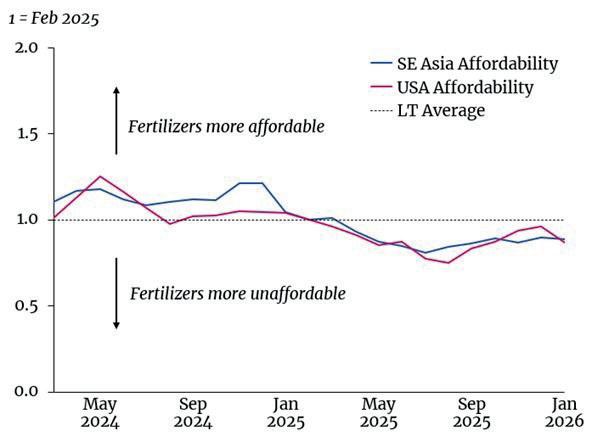
Affordability swings in Asia affect sub-regions differently, mostly as a result of market intervention methods. China manages affordability through administrative levers and export discipline; Southeast Asia opts for a more free-market approach relying on crop - price swings with lighter policy scaffolding; and India engineers outcomes via heavy input subsidies and crop price support. Asian fertilizer affordability in 2025 was affected by elevated fertilizer prices coupled with subpar crop prices, but farmers felt the effects of this differently depending on how far their governments leaned into price management, stock policies, and trade controls.
China has repeatedly prioritised its domestic supply of fertilizers over exports since 2022, using quota - style export management and industry self- discipline to keep domestic nitrogen and phosphate prices steady for its farmers. China is more susceptible to potash price swings given MOP consumption has been more reliant on imports rather than domestic production since 2020, with 70% of MOP consumption in 2024 coming from imported and drawn
down stocks. But given potash demand only accounts for 15% of total nutrient demand in China, the effects of potash price swings on overall fertilizer affordability are limited.
On the crop side, China stabilises farmgate returns through minimum purchase prices (MPPs) and larger reserve budgets. For the 2025 - 2026 season, the rice MMP was raised to ease affordability issues, particularly for DAP. China also lifted the 2025 budget for stockpiling grain and oils, reinforcing floor prices and procurement capacity. With fertilizer exports throttled and crop prices underpinned by MPPs/reserves, China’s input - to - output ratio is substantially determined by policy and together these policies allow for China to largely bypass global affordability issues.
Outside targeted subsidy schemes, Southeast Asian governments generally, though not exclusively, intervene less aggressively than China, leaving farm economics more exposed to swings in traded crop and fertilizer prices.
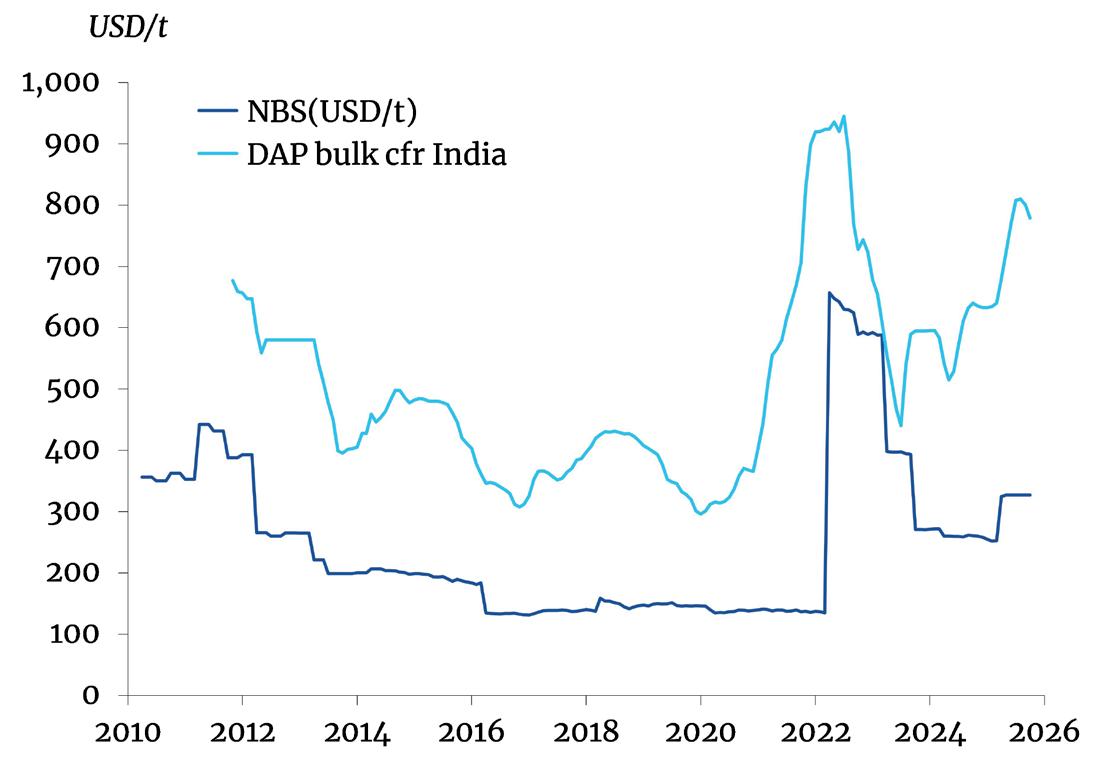
The Argus Southeast Asia Affordability Index (Figure 1) compares a nutrient - weighted basket of urea/DAP/MOP (weights derived from regional NPK demand) against a crop price basket of rice and palm oil (weights based on fertilizer demand by crop in the region). Despite globally poor affordability, palm oil price strength in 2025 helped prop up farm revenues and softened the effects of high fertilizer prices. Palm oil production is concentrated in Southeast Asia, allowing this region to be less heavily affected by global affordability issues given palm oil is largely a cash crop. This means it brings cash income to farming households and is a major export earner for producing countries. This allowed average affordability across 2025 to be better in Southeast Asia than regions like the US.
On inputs, India fixes a maximum retail price (MRP) for urea, and pays nutrient - based subsidies (NBS) on phosphates and potash, seasonally recalibrated (with an added occasional, but recently reoccurring, special subsidy package) to keep retail DAP/NPK/MOP in reach. For crop prices, the Minimum Support Price (MSP) system underwrites prices for key crops, anchoring farm revenues. Nitrogen, phosphate and potash support, and MSPs means affordability is as much fiscal as it is market - driven in India.
India’s affordability is usually highest for nitrogen given the large support provided by the MRP, which encourages over - application of urea vs phosphates and potash. This can depress nitrogen - use efficiency and long - run yields, so even when the price math looks farmer - friendly, the agronomic affordability (returns per balanced kg of nutrients) can suffer unless subsidy relativities shift. In 2025, Indian demand for DAP was strong due to good weather conditions supporting application, which caused demand to increase and Indian stocks to be drawn on bringing DAP stocks down through 1H25. The NBS was raised in India in the 2025 - 2026 season, but not enough to mitigate for the
elevated DAP prices and general fertilizer prices through the year. Consequently, the special subsidy package was carried over from the previous season. This allowed Indian imports to rise 40% on the previous year, to cope with elevated demand and rebuild stocks through 2H25. Without metrics like the NBS, this would not be possible and India would have experienced heavier effects of poor fertilizer affordability.
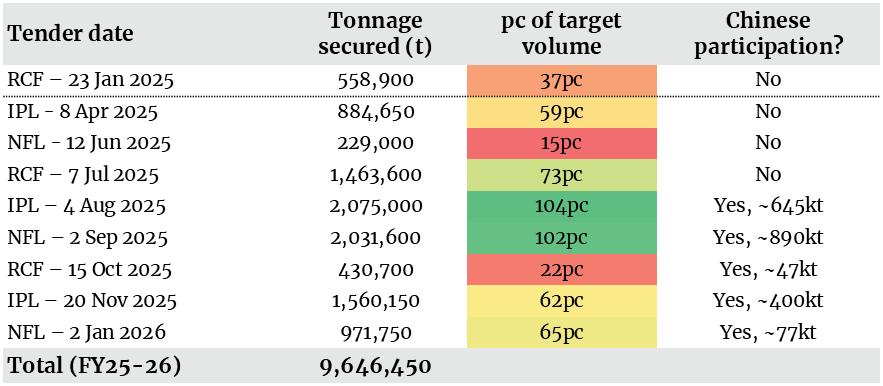
The urea market behaves very differently depending on whether or not China is active in the export market. Since October 2021, China has maintained various forms of export restrictions. The current approach uses export quotas and strict government oversight of inventories and prices to shield domestic consumers against global price spikes. In the absence of Chinese exports, the global market is structurally tight, and prices tend to find renewed support whenever they approach the low US$400/t fob.
On the demand side, India – China’s largest trading partner for prills – has seen its urea requirements increase significantly throughout 2025. This is largely due to weaker domestic production and favourable monsoon rains that has driven record fertilizer offtake. Without China, India has repeatedly struggled to secure full tender volumes. Of the first three tenders issued in January - June 2025, India secured 1.59 million t of urea against a target volume of 4.5 million t (35%) with zero Chinese participation, see Figure 3. The Chinese Government does not typically issue export quotas during its domestic application season, which runs from January to April. This coincides with a period of seasonally strong global demand, leading to heightened competition between buyers west of Suez and India.
Chinese suppliers proved in 2H25 that they could meet domestic demand while still participating meaningfully in the export market, shipping 4.8 million t of urea internationally. Exports have now largely tapered off following the final quota allocation in the 4Q25. For calendar year 2026, exports of around 6.3 million t are forecasted, although market speculation remains that 2027’s quota could be increased further. The incentive to export remains strong. A substantial wave of new production capacity – combined with only modest domestic demand growth of around 2.1% over 2024 - 2026 – supports the case for higher quotas and an extended export window, assuming plant utilisation rates at existing units remain elevated. Producers are enjoying robust margins and remain highly competitive globally, supported by Chinese coal costs being at their lowest level for more than four years and persistently high urea prices. If exports exceed the 2026 forecast, this would introduce significant downside risk to the price outlook. With over 80% of China’s installed capacity geared toward prilled urea production, the India trade route will be critical for China to sustain exports in excess of the level that they achieved in 2H25. There are relatively few alternative markets for prills, and many offer lower netbacks.
Plant closures, such as those currently occurring in China’s petrochemical sector, do not appear to pose a meaningful risk to this export forecast. Most of the country’s oldest and least efficient urea plants were purged during the environmental compliance programme of 2016 - 2020. As a result, China’s plant closure rate fell sharply – from 12% in 2017 to just 1% in 2023. The medium - term forecast assumes utilisation rates eventually revert to the long - run average of around 77 - 78%. On this basis, export forecasts – remaining in the 5 - 7 million t range through 2030 – should be considered a relatively conservative scenario.
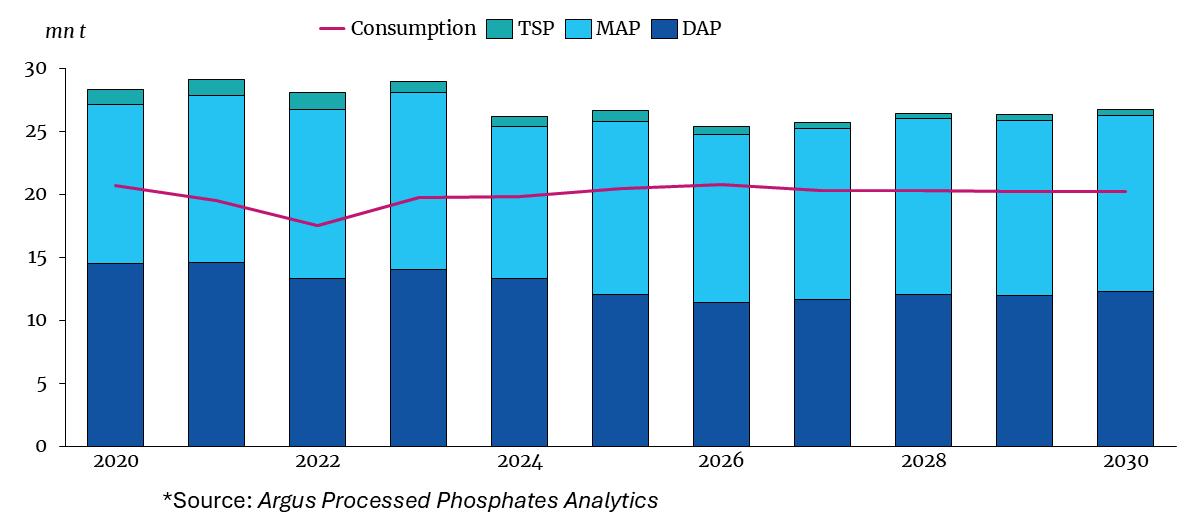
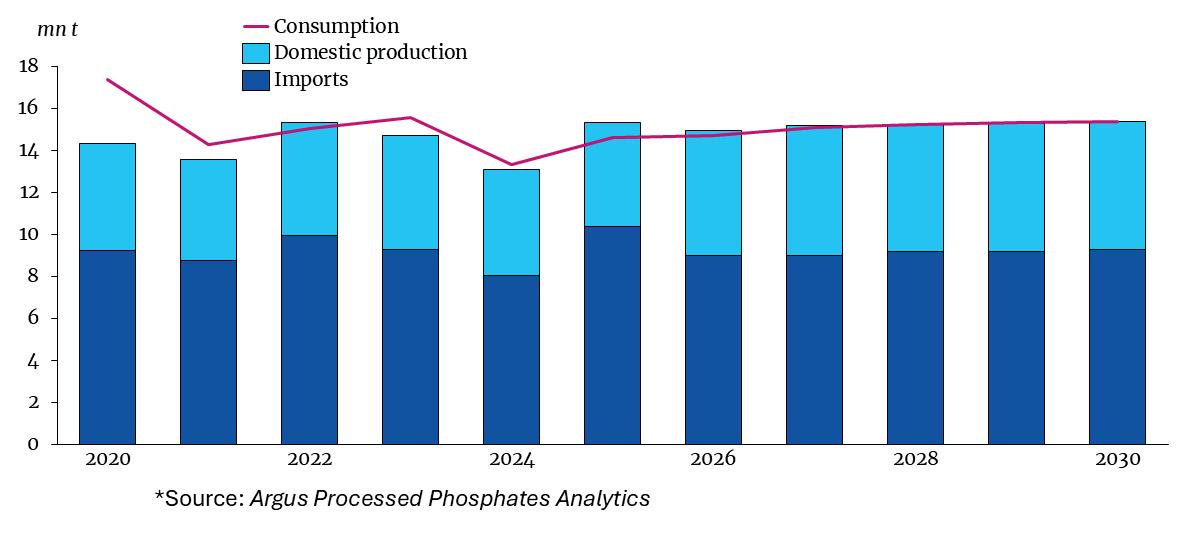
Asia is the biggest producing and consuming region of phosphate fertilizers (DAP, MAP, TSP). In 2025, the region consumed a little under 38.2 million t of phosphate fertilizers and produced just under 32.5 million t. But the dynamics within the region are what make it more interesting, as while these figures are notable and high, they are largely attributable to one country, China, where domestic demand is met by domestic supply. Furthermore, China is also one of the key suppliers of phosphates to the wider Asian and even global markets. But notably when it comes to trade, Asia is also the biggest regional importer, taking receipt of just over 13 million t of DAP, MAP, and TSP in 2025. This is because of South Asia, which is home to India: the biggest single importer of DAP in the world.
Asia’s prominence and importance in the phosphate fertilizer sector is set to be maintained, particularly as agriculture is such a prominent component of many economies within the region. But some dynamics are set to alter due to legislation, new capacity, and the evolution of fertilizer application when related to environmental policies.
When it comes to China, the biggest producer and consumer in the world, consumption of phosphate fertilizers (DAP/MAP/TSP) will steadily decline, largely driven by government policy and a focus on environmental regulation. China’s environmental policies surrounding the phosphate sector have become increasingly more stringent since the early 2020s and this will likely result in a steady decline in consumption of DAP, MAP, and TSP as more targeted, tailored, and specific P 2 O 5 delivery methods are prioritised, such as specialty fertilizers and NPKs. But China’s production of phosphates is set to increase from 2025 levels of 26.6 million t to 27.2 million t by 2035,
despite declining domestic demand as China regains some of its position in the export market. A strict export policy has been in place here since October 2021, similar to that discussed in the urea section of this article, to shore up tonnes for domestic farmers. But this is set to ease across the longer term, as domestic demand wanes and producers need to return to the export market to protect margins and profits takes precedence.
For the region’s imports, South Asia and Southeast Asia are the ones to watch in the medium term, but for two different reasons. South Asia’s reliance on imported phosphates will ease across the next five years to average 9.1 million tpy from the 10.3 million t imported in 2025. This is driven by the ramp up of new production capacity of DAP, particularly in India: also because India will have been able to replenish some of its stocks, a key driver of South Asia’s
import requirements, as they were notably low at the start of 2025 and needed to be rebuilt. But, by 2035, South Asian imports will total around 9.6 million tpy with much of this growth attributable to Pakistan as farming land is recovered from the acreage destruction of the last few years because of severe flooding in the country, and improved farmer affordability. When it comes to Southeast Asia, imports of phosphates will grow in 2035 to around 2.3 million tpy, but this is a far cry from the peaks of the late 2010s when imports averaged 2.7 million tpy. In Southeast Asia the decline in import demand will be driven again by a preference for more targeted, tailored ,and specific P2O5 delivery methods, largely in the form of NPKs, and this will be encouraged by the addition of nearly 1 million tpy of NPK capacity in the region across the timeframe.
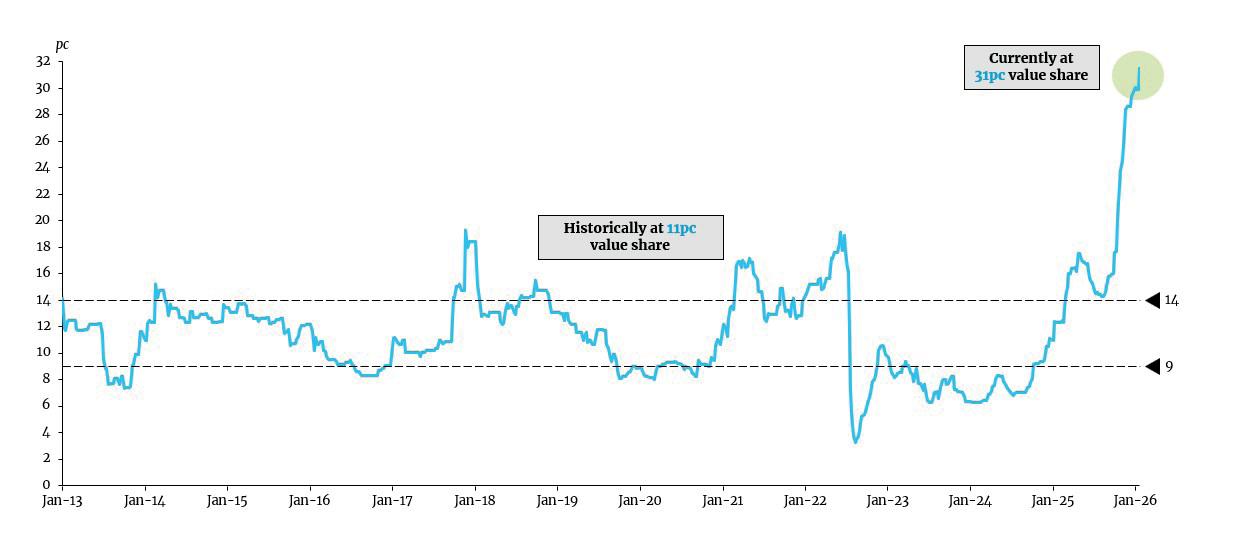
In Asia, sulfur as a commodity is on the rise, with developing sectors finally realising the essentiality of the element. Current pricing is highlighting that sentiment, with levels reaching the second highest in history in January 2026. Demand has emerged not only from the nickel sector in Indonesia, but the electric vehicle battery recycling sector in South Korea, and the lithium sector in China, with the growing importance of sulfur as a nutrient for fertilizer application underpinning pricing across the region. These shifts to new pockets of Asia-based demand, combined with a few other key factors, have left pricing at an unprecedented high with market participants wondering if this will be the new norm. Asia’s prominence in the global market is expected to remain, and will shape market dynamics as the landscape evolves.
A key factor in the sulfur price maintaining the recent price hike is the lack of phosphate-based demand destruction. Historically, phosphate producers would have likely stopped buying sulfur before it reached the US$400s/t Middle East (ME) fob levels, eroding demand and pushing pricing to begin to soften. Instead, there has been very limited sulfur demand from DAP producers. With high DAP pricing and strong inventories in India, Southeast Asia, and Latin America through the 1Q26, the usual refusal to accept higher-priced tonnes has not emerged, leaving other buyers with more imminent demand, largely Indonesian nickel producers, to accept the price rise. Margins are still workable for the majority of DAP producers if levels remain under US$600/t ME fob. The sulfur value share of DAP – the value of sulfur in 1 t of DAP – has increased from 11% historically to 31% currently. This highlights how disconnected the pricing of the two nutrients has become over the past few months, and how the metals markets are increasingly displacing fertilizers as the key force in shaping sulfur market dynamics.
Karan Bagga, thyssenkrupp Uhde, Australia, and Klaus Noelker, thyssenkrupp Uhde GmbH, Germany, provide insight into strategies that can help reduce the impact of fatigue in green ammonia production.

reen ammonia plants operate to the pace of renewable energy. As wind and solar output rises and falls, hydrogen from electrolysis follows suit. Electrolysers can respond quickly, but the ammonia synthesis loop – built for high pressure and temperature – does not naturally welcome irregularity. Each dip or spike in the hydrogen feed nudges the synthesis loop away from its preferred, steady regime.
An example of how renewable energy availability fluctuates over a year, and how this shapes ammonia production, is shown in Figure 1. Even without technical detail, Figure 1 makes the central point clear: energy in a green ammonia plant is not constant, and the process must be designed to cope with this variability.
Fatigue is material weakening caused by repeated loading, not by one extreme event. Each pressure or temperature cycle may be within safe limits, but thousands of small cycles can initiate microscopic cracks that slowly grow and eventually cause failure. A simple analogy is bending a paperclip back and forth: one bend will not break it, but many will. In pressure equipment, fatigue arises from:
n Pressure cycles (rising and falling internal pressure).
n Temperature cycles (rapid heating and cooling).
n Combined thermo-mechanical effects in thick-walled parts.
Codes such as ASME BPVC VIII Division 2 set cycle thresholds and define when detailed fatigue analyses are required. 1 In green ammonia plants, where renewable energy drives frequent load changes, understanding fatigue is essential for safe, long-term operation.
When hydrogen feed decreases, ammonia production decreases, and so does the loop pressure. At lower flow-rates, the catalyst volume becomes oversized, the reaction fronts move within the converter, and temperature profiles shift. Over time, this pattern of pressure cycles and temperature cycles can accumulate and weaken equipment. Pressure vessels, heads, shells, and welded nozzles are strong under steady loads, but every material has limits to how many cycles it can endure before fatigue damage begins.
In a conventional plant, significant cycles are rare – typically associated with start-up and shutdown events. In green ammonia, thousands of small variations may occur each year, if they are not mitigated, driven by the variability depicted in Figure 1. Design codes (e.g., ASME BPVC VIII Division 2)1 provide rules for counting and assessing these cycles so designers can determine when detailed fatigue analysis is needed.
Rather than fighting fluctuations with oversized hydrogen storage or over-reinforced pressure equipment, one key approach is to operate flexibly using a plant-wide Master Controller.2
The concept is illustrated in Figure 2, which shows how the electrolysers, hydrogen storage, air separation, compression, reactor loop, and refrigeration are coordinated under one predictive controller.3,4 While simplified, Figure 2 conveys the key idea: the plant does not passively mirror the renewable profile; it actively smoothens and manages it.
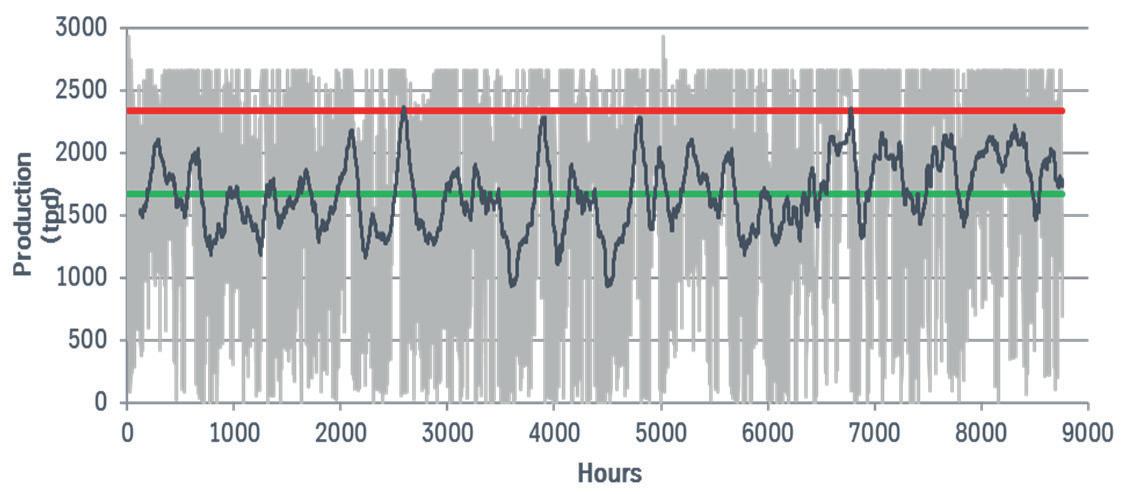
Figure 1. Light grey: example for the availability of energy over one year, combined from solar and wind power for a potential green ammonia site. Dark grey: ammonia production from this energy, using energy storage for the reduction of peaks. Red: design capacity of the plant. Green: average output of the plant.
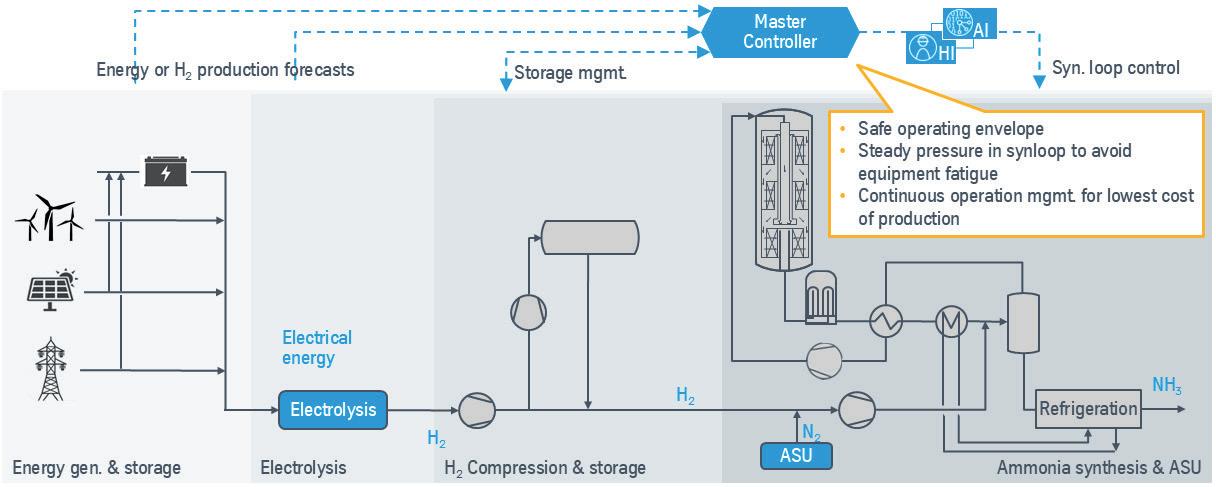
2. The Master Controller for dynamic green ammonia plant load management.4
The Master Controller receives real-time hydrogen production data and a short-term forecast of renewable power (typically reliable over several hours). When production exceeds what the loop can process, surplus hydrogen is stored; when supply dips, the plant draws from storage. The Master Controller is combined with thyssenkrupp Uhde’s ammonia synthesis technology which is proven in more than 130 plants built. It is important that it also adjusts the internal parameters of the synthesis loop in order to adjust the production rate in a not too fast manner:
n It manages recycle flow via controlled valves, keeping loop pressure nearly constant and reducing fatigue causing pressure cycles.
n It retains heat when necessary by reducing steam withdrawal, and activates electric preheating at very low loads to keep the catalyst above its setoff temperature.
n It adjusts a bypass around the cooling train to influence ammonia concentration entering the reactor, ensuring conversion matches the available hydrogen.
Together, these actions transform the ammonia synthesis into a responsive, forecast driven system, ensuring high
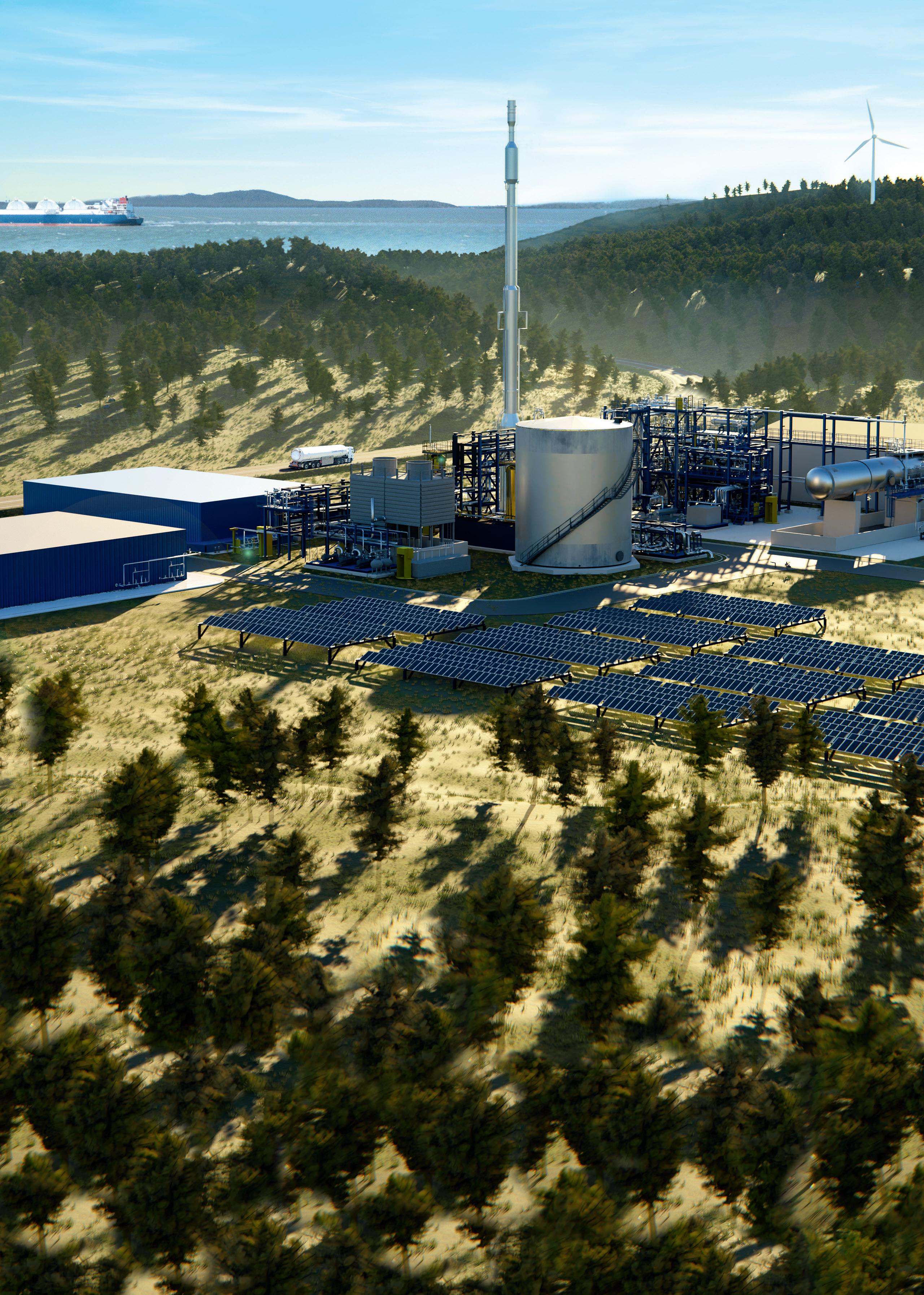
With our green ammonia plants and together with our customers, we pave the way for an environmental future. Additionally to a green plant without CO2 emission, our modelling tool RHAMFS ® optimizes the plant capacity and hydrogen storage according to fluctuating renewable power. By reducing the hydrogen storage, capital costs are reduced. The ammonia plant controller also reacts very fast to power fluctuations by adjusting the turndown ratio in the plant. www.thyssenkrupp-uhde.com
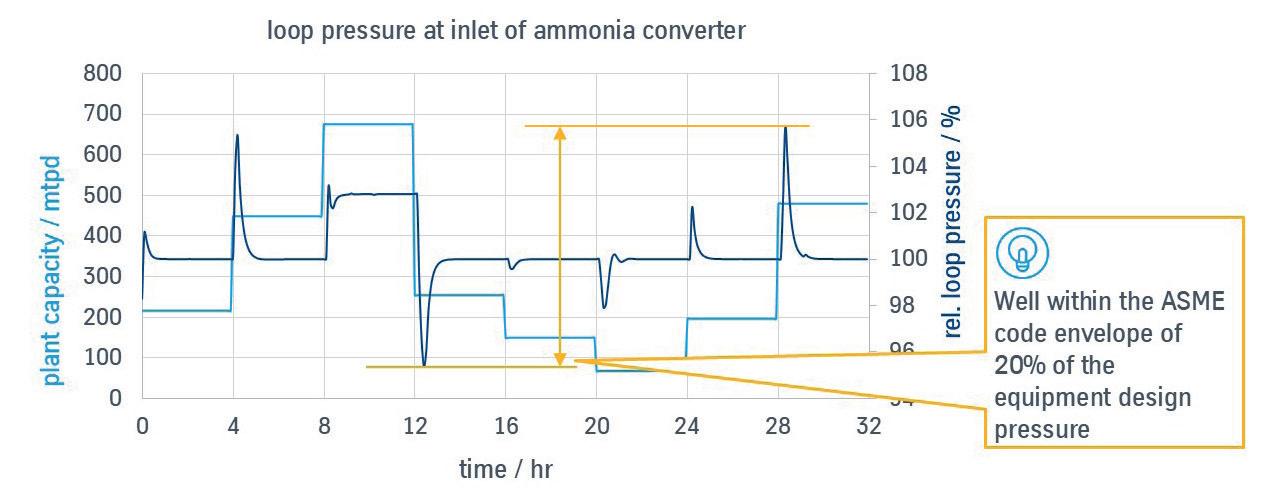
Figure 3. Dynamic simulation of green ammonia plant with variation in ammonia production rate (light blue, left axis) and controlled synthesis loop pressure (dark blue, right axis), using the Master Controller.
utilisation and availability of the plant, which is a significant driver for economic production of green ammonia.
The control strategy has been validated in dynamic simulations using real renewable profiles and testing in installed large scale plants to calibrate the dynamic models. Production was varied between 10% and 100% of design capacity, a range a conventional plant cannot achieve. Despite those swings, the Master Controller kept loop pressure within roughly -5% to +6% of the set-point.
This is illustrated in Figure 3, where the light blue curve shows the changing production rate and the dark blue curve shows the controlled loop pressure tracking close to its target.
Figure 3 demonstrates that flexible operation is achievable without large hydrogen inventories and without driving equipment into damaging pressure cycling. It is the result when a variable input shown in Figure 1 is subjected to the coordinated solution portrayed in Figure 2.
Pressure cycles are only half the story. Temperature gradients –especially in thick walled components like reactor nozzles and heat exchanger inlets – create local stresses. Inner surfaces respond almost instantly to hot or cold gas; outer surfaces lag behind. The difference across the wall generates stress that, if repeated often enough, can initiate cracks.
In one study, the thick walled hot gas inlet nozzle of the gas/gas heat exchanger of the synthesis loop was examined in detail. Naively counting temperature cycles suggested tens of thousands of cycles over a 20-year life – apparently above ASME code limits. However, when realistic transient heat transfer was modelled (using FEM), the actual maximum temperature difference for the design was only 27°C (49°F), which falls below the ASME threshold at which cycles must be counted. Such detailed analysis shows that the component experiences less damaging cycling than simple estimates would suggest and thus validates the selected design.
Flexible operation is enabled not only by control but also by good mechanical design. The following principles help reduce fatigue risk:
n Favour integral constructions (full penetration welded parts) over attachments that create stress concentrations.
n Avoid abrupt thickness changes, sharp corners, and nozzle placements in highly stressed regions.
n Use finite-element analysis to locate peak stress zones early and refine geometry.
These details pay long-term dividends: they make components more tolerant to the daily rhythm of renewable-driven operation.
While advanced process control and robust equipment design already play a key role in enabling flexible green ammonia operation, additional performance gains are being realised through the targeted application of artificial intelligence (AI). The strong coupling between renewable energy availability, electrolysis load, synthesis loop dynamics, and storage requirements creates a multi-variable optimisation problem well suited to machine-learning algorithms, which are under active development at thyssenkrupp Uhde.
This becomes particularly important for plants deploying a mix of electrolysis technologies, and especially solid oxide electrolysis (SOEC), which enables high-efficiency green ammonia production but introduces tighter thermal and operational constraints. Machine-learning algorithms are implemented as an extension of first-principles models, layered on top of established dynamic simulation and control systems to enable robust predictive optimisation under intermittent and partial-load conditions.
With dynamic load management, coordinated hydrogen storage, and the predictive and patented Master Controller, modern green ammonia plants can ramp between 10% and 100% of the nameplate capacity and adjust at 3%/min while staying within safe mechanical limits.
n Figure 1 shows the challenge: fluctuating renewable energy and production.
n Figure 2 shows the solution: integrated, predictive plant-wide control.
n Figure 3 shows the result: stable loop pressure despite large production variation.
Thanks to these innovations, pressure and temperature cycling remain within acceptable ranges, fatigue risks are controlled, and expensive over-design or large scale storage can be avoided. The plant becomes a responsive system that follows renewable energy safely, efficiently, reliably and economically – exactly what green ammonia production demands.
1. ASME BPVC VIII Division 2, The American Society of Mechanical Engineers, 2023.
2. MIELKE, B., et al., ‘Avoiding Fatigue Load of Equipment in Green Ammonia Plants’, 69th Safety in Ammonia Plants and Related Facilities Symposium, AIChE, New York, 2025.
3. Patent application WO 2023/099743 A1; Method for operating an ammonia plant, and plant for producing ammonia.
4. KEIL, B., RENK, C., MIELKE, B., and BAGGA, K., ‘Beyond the Trend: Challenges in Green Ammonia Economy’, Nitrogen & Syngas Conference 2025, Barcelona, 2025.





















































⊲ Plant Managers and Operations Leaders
⊲ Process, Chemical, and Production Engineers
⊲ Process Safety and HSE Professionals
⊲ Maintenance, Reliability, and Inspection Specialists
⊲ Technical Consultants, Suppliers, and Technology Providers

















August 30 – September 3, 2026 | Le Centre Sheraton Montreal, Canada
For 70 years, this symposium has brought together the global ammonia community to share practical experience, proven solutions, and lessons learned to improve plant safety, reliability, and performance. Join engineers, operators, managers, and safety professionals from around the world to discuss real operational challenges, emerging risks, and technologies shaping ammonia production today.
Professionals involved in ammonia plant design, operation, maintenance, and safety, including:
Gain practical insights, connect with industry experts, and bring back solutions you can apply immediately at your facility.
Help shape the next generation of safety innovation in ammonia and related industries.

Davide Carrara, CASALE, and Robert Kender, Linde GmbH, analyse process optimisation and dynamic evaluation of ammonia plants operating under fluctuating conditions.
mmonia synthesis is a well established process traditionally based on fossil fuel feedstocks, primarily natural gas and coal. When hydrogen is instead produced from renewable power, green ammonia becomes a versatile energy carrier, capable of efficiently storing and transporting clean energy. Its higher energy density and easier handling compared to hydrogen make it particularly suitable for long distance transport and large scale energy integration.
Conventional ammonia plants benefit from a stable and continuous energy supply, allowing operation at high load factors with limited variability and mature, optimised process infrastructures. In contrast, green ammonia production is intrinsically subject to fluctuations in renewable energy availability. As a result, irregular operation, lower capacity factors, and challenges in cost effective sizing of plant components become inherent aspects of the technology.

The design and control of a green plant based on renewable energy principles are supremely important for avoiding an uncontrollable surge of capital investment, and to provide continuous and stable operation of the plant without affecting the reliability of the relevant components.
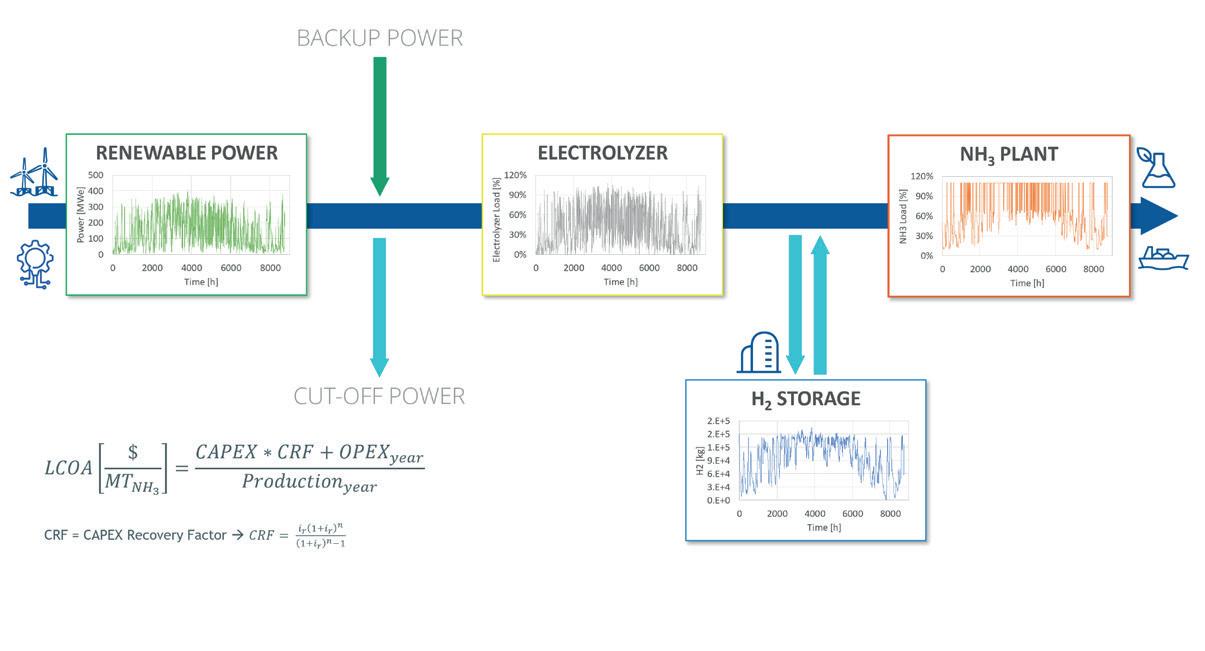
Tools such as levelised cost optimisers and dynamic operation simulators have become indispensable for green ammonia projects to be convenient and reliable. Specifically: n Process optimisers, like the one developed by CASALE, are of utmost importance for the analysis of the power input profile, and eventually defining the best design to minimise levelised cost of the product.
n Dynamic analysis of the plant under fluctuating operation is mandatory to assess the reliability of the equipment.
The predominant contribution to the levelised cost of ammonia (LCOA) is the levelised cost of hydrogen (LCOH), being that more than 90% of operating expenses (OPEX) and capital expenditure (CAPEX) are tied to the production of hydrogen. For this reason,
the wise use of produced hydrogen is the one factor that can determine whether a project will see the light of day. Process optimisers define the minimum LCOA achievable on the basis of a specific power profile, i.e., the best way to make use of the available power (Figure 1).
The dynamic analysis includes:
n Renewable power profile analysis.
n Availability and cost of grid power.
n Electrolysers, specifying their optimal size.
n Hydrogen storage, including its sizing, control philosophy, and integration in the plant.
n Ammonia plant, with its unique and independent controls.
n Nitrogen generation, suggesting the optimal N2 profile (consequent on hydrogen profile).
All of a plant’s sections act as a whole, with the design being closely interconnected and heavily contributing to the project’s economic feasibility.
Analysing the power profile is the first step for the set-up of a green ammonia plant (Figure 2). There are some important parameters to calculate such as:
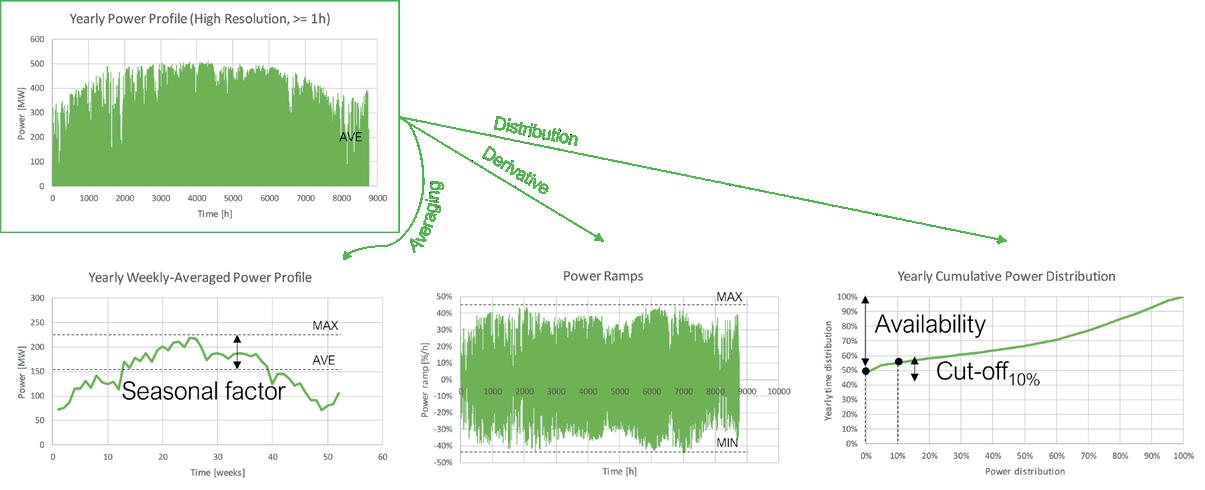
n Capacity factor: defined as the ratio between the average production and installed capacity, which gives a benchmark for the generation throughout the year.
n Seasonal factor: defined as the ratio between the average of the daily average power and the maximum daily average peak. This parameter allows an understanding of how big the fluctuations between different seasons are.
n Ramps up/down: defined as the load variation taking place in 1 hour while considering the average capacity, which gives an indication about the stability of the renewable sources.
n Availability: defined as how long a certain percentage of the installed capacity is available.
n Cut-off: defined as renewable power that cannot be used or stored. This parameter must be minimised in order to reduce the inefficiencies.
Power profile variability and fluctuation can give a preliminary idea on the economic feasibility of the project, since high variation and low availability leads to larger hydrogen storage, with detrimental effects on the CAPEX.
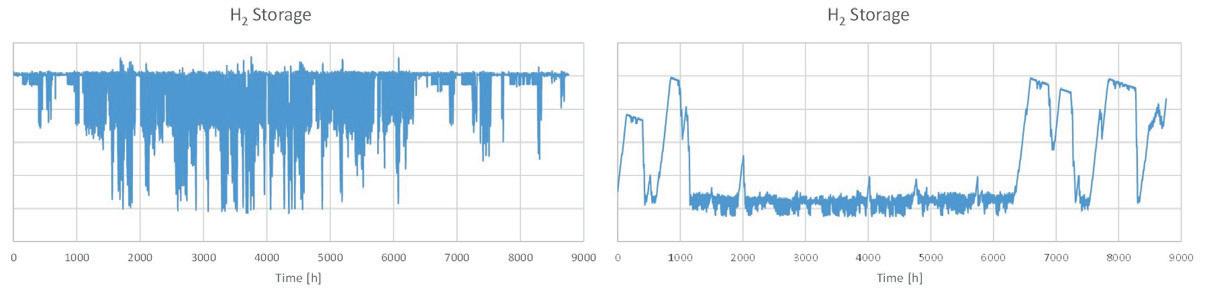
As the electrolyser dynamic is much faster than the ammonia plant dynamic, a hydrogen buffer is quite often required. The storage serves two main purposes: optimisation of plant design capacity and buffering for different load variation rates. While for profiles with a low capacity factor, the hydrogen storage serves primarily to optimise the size of ammonia synthesis (which does not have to be designed for peak hydrogen production), when the capacity factor is higher than 50% the main goal of the storage is to mitigate the velocity of the fluctuations (Figure 3).
Despite the advantages, the cost of hydrogen storage is typically high. The size of the storage should always be minimal to allow for convenient LCOA. Of course, when the renewable source is available and stable (for instance, hydroelectric or geothermal power), hydrogen storage can be avoided.
Case studies: process optimisation
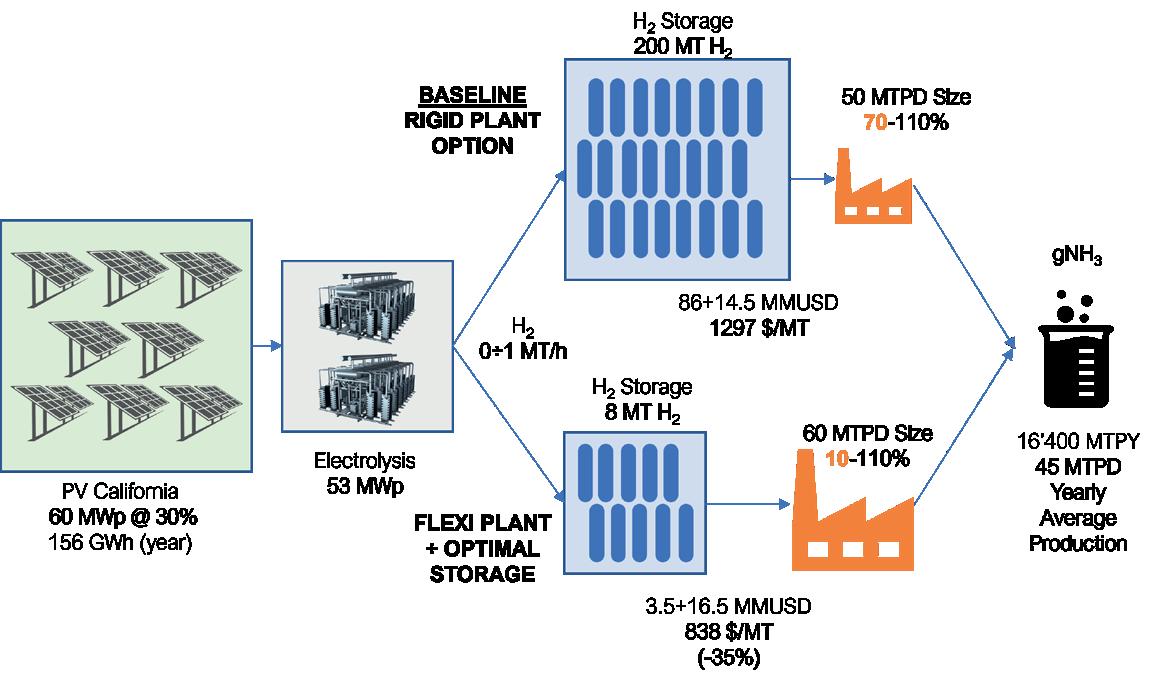
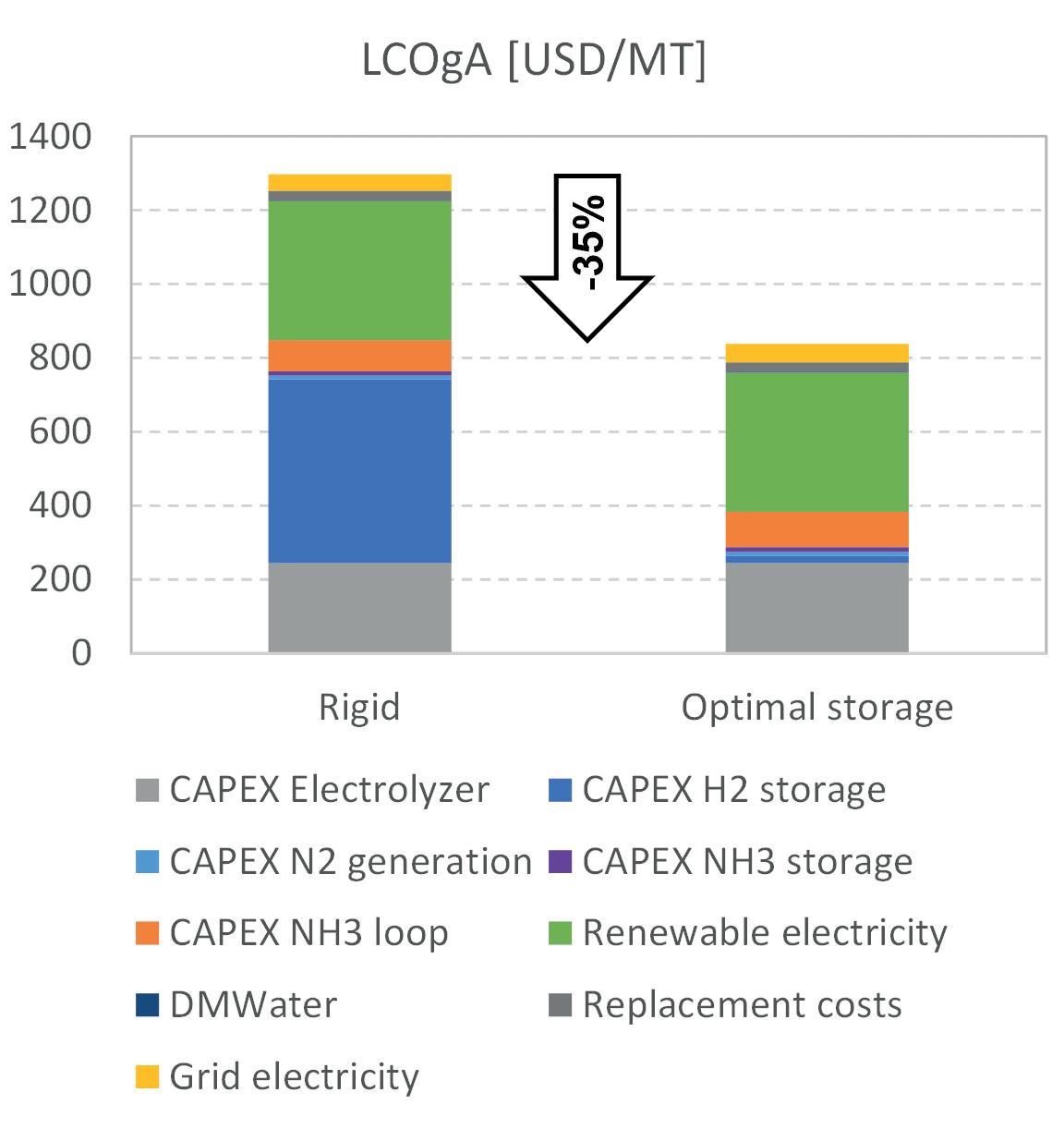
A conventional, rigid ammonia plant (70 - 110% rangeability) supplied with renewable-based hydrogen results in a very high LCOA, mainly due to the oversized hydrogen storage required to buffer power and hydrogen fluctuations.
In contrast, a plant capable of rapidly following these fluctuations – continuously adjusting its capacity to the available hydrogen flow – offers substantial economic advantages.
Ammonia plants using CASALE’s technology are designed for an operating range of 10 ÷ 110% of nominal capacity, with load increasing/decreasing ramps up to 3%/min.
The first impact in the adoption of the flexible loop and to the use of a specially designed optimiser is a significant smaller hydrogen storage, which size is reduced by more than 20 times (Figure 4):
For a reference case based on solar power, the LCOA was calculated according to the flexible loop technology and a marked reduction of the LCOA up to 35% was obtained (Figure 5).
Maximising project viability requires the integration of robust process optimisation tools with highly flexible ammonia synthesis schemes.
The role of the optimiser during engineering
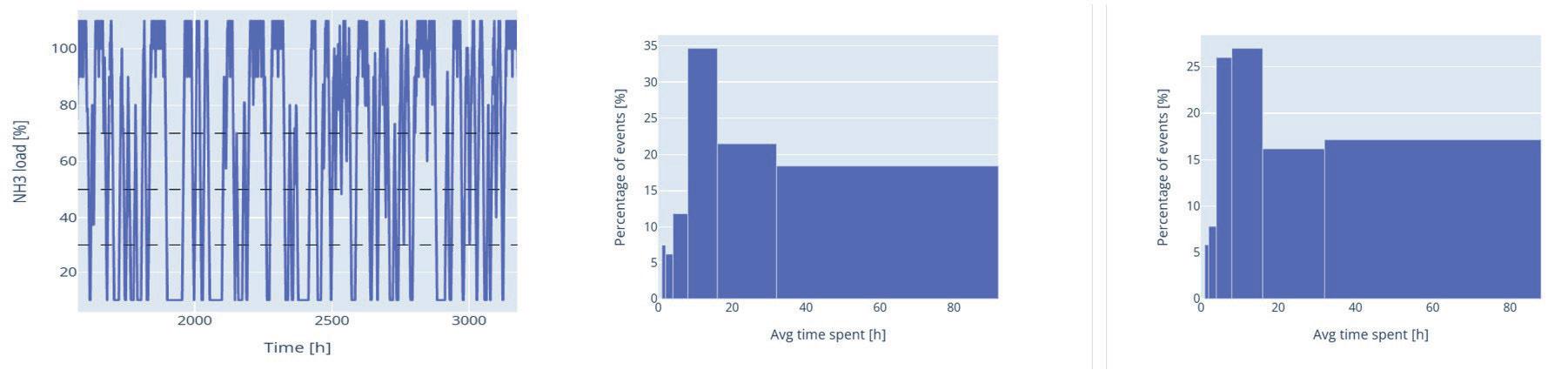
New developments with the optimiser have enabled advanced analysis of the power profile. Using these tools complex evaluations can now be performed, such as identifying how many times specific thresholds are exceeded or determining the percentage of operating time spent within defined capacity ranges.
Thanks to these improvements, it is now possible to quantify events such as the exact number of compressor antisurge activations or the number of full and partial cycles experienced by the plant (Figure 6). This, in turn, enables a detailed assessment of stress cycles, allowing engineers to properly design each component for long service life and high reliability.
Besides the optimiser, other tools have been developed in order to be able to assess the dynamic of the system in order to forecast how the system will react to power and reagent changes.
CASALE’s own flexible plant design (operated under a fluctuating power profile) is based on four main pillars:
n The power supply is used to maintain the synthesis loop in operation at minimum load.
n The plant can deal with hydrogen production in an intermittent way.
n Hydrogen storage is designed and operated in order to never have the storage completely full or empty.
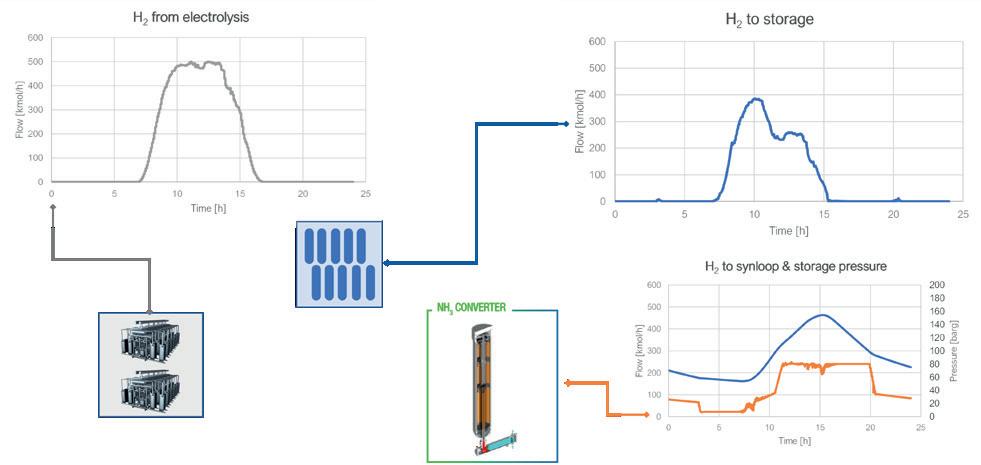
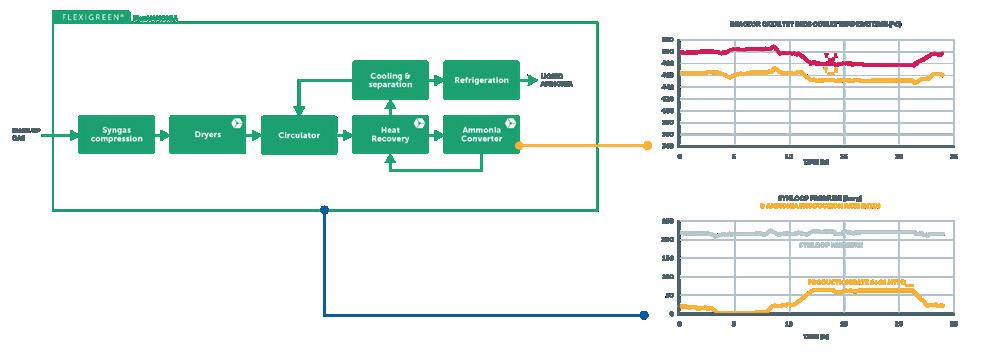
n The synthesis loop controls the reactor and loop load and H/N ratio. The target is to avoid loop depressurisation or over pressurisation and reaction loss.
Extensive dynamic simulations have been performed and some of the results are shown in Figure 7, where a real power profile has been considered as input. The entire plant (electrolysers, hydrogen storage, ammonia plant) has been sized, and a full control strategy has been implemented in the model.
This refined model becomes the primary tool for defining the most effective control strategies for ammonia synthesis operating parameters. Pressure control is particularly critical: in all CASALE schemes, the loop pressure is kept constant to avoid fatigue cycles caused by pressure fluctuations.
Within the array of critical equipment that makes up an ammonia production plant, the synthesis converter plays a central role. Its operational reliability is essential, as any malfunction or process upset can result in significant economic losses. It is, therefore, crucial to adopt strategies that mitigate the risk of production loss caused by reaction extinction, unexpected failures, or extended repair times.
The impact of a capacity-cycle (100% - 10% - 100%) can be evaluated by the difference in operating temperature and pressure of an element between nameplate capacity and minimum turn-down conditions.
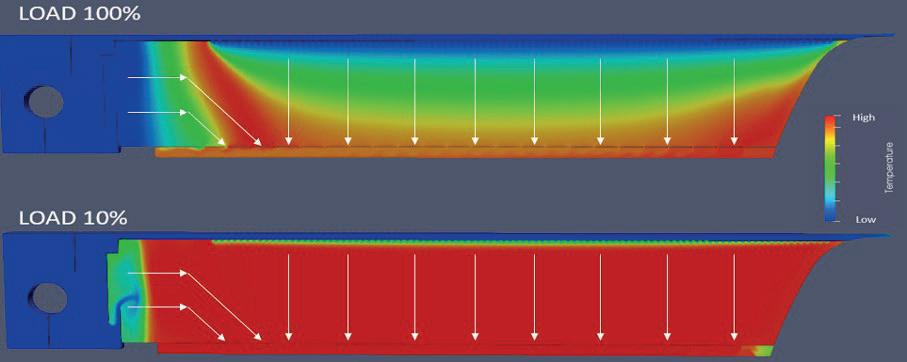
Given the challenges associated with variable-load operation, an extensive computational fluid dynamics (CFD) campaign was conducted to characterise converter behaviour at reduced plant loads. This study included a thorough analysis of process, fluid dynamic, and mechanical phenomena, providing a detailed understanding of converter performance under highly dynamic conditions.
As described previously, the operation pressure of the synthesis section is controlled and maintained constantly.
On the other hand, the temperature variations inside the ammonia converter are subject to specific phenomena:
n Exothermicity of the reaction: the temperature increases along the catalyst bed.
n Chemical equilibrium: once reached, the reaction stops and so does the heat production.
n Preheating of the converter feed due to reaction heat.
n Control of the inlet temperature of each bed for performance optimisation.
Since all these factors are already incorporated into the proprietary kinetic model, it is possible to obtain an accurate representation of converter internal behaviour even at minimum turndown conditions (Figure 8).
The kinetic analysis performed on the converter shows that the heat released by the reaction is sufficient to preheat the feed stream even at minimum load. This confirms that no external heat input is required to sustain operation at 10% capacity: the converter remains fully self-sustaining across the entire operating range.
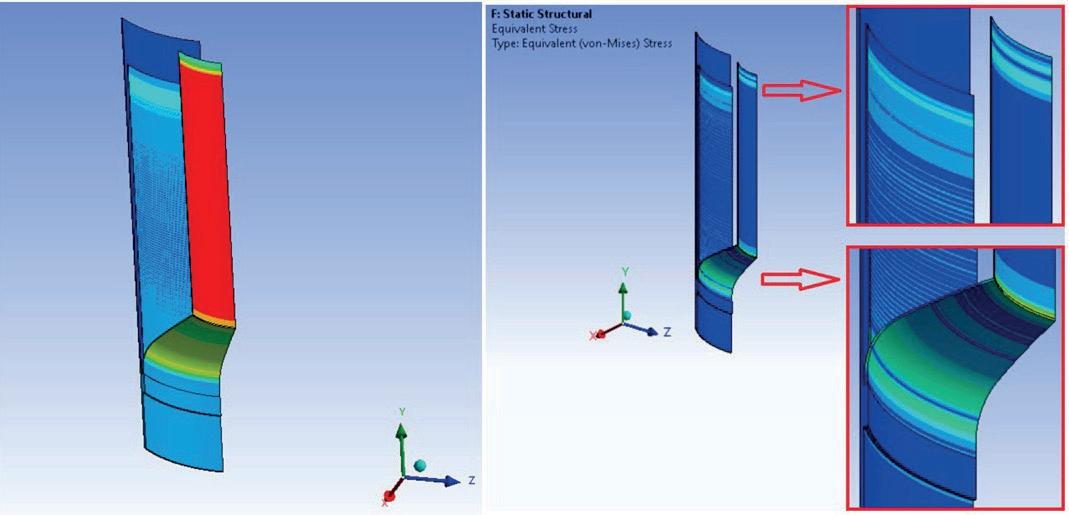
The next step is the CFD simulation, which is used to further validate the thermal and kinetic predictions and to generate an accurate temperature field map (Figure 9) for the subsequent mechanical assessment (Figure 10).

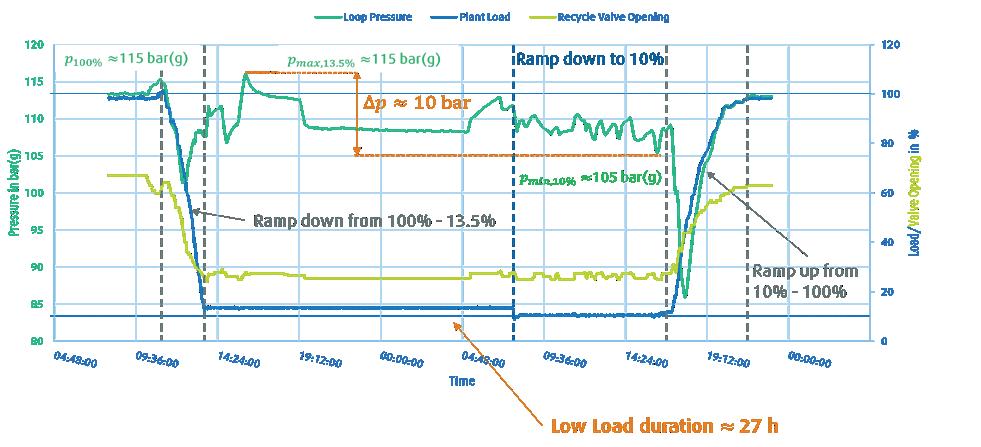
Figure 11. Converter operating pressure (right y-axis), load and opening of recycle valve (right y-axis) over time during low-load test campaign.
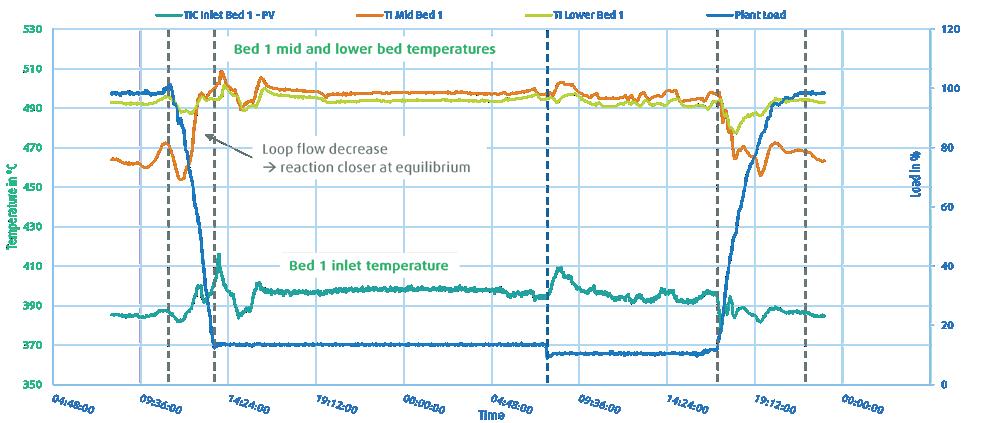
Figure 12. Converter bed 1 temperatures (left y-axis) and load (right y-axis) over time during low-load test.
CFD analyses clearly showed that reducing the plant load –and therefore the flow rate through the converter – causes the reaction to quickly approach chemical equilibrium. This behaviour was expected, as the amount of ammonia to be synthesised at low load is very small relative to the available catalyst volume.
Interestingly, the simulations also revealed a uniform flow distribution within the catalyst bed, confirming reaction stability and the absence of maldistribution phenomena even at low throughput.
For green plants operating in cyclic service, temperature variations associated with these load changes may lead to fatigue phenomena. Fatigue is driven by cyclic stress fluctuations within the material, leading to crack initiation and propagation, and potentially to component failure at stress levels well below the material’s yield strength.
For the ammonia converter, stress fluctuations arise from the pressure and temperature variations generated by load changes, themselves driven by fluctuations in plant feedstock. To properly account for these effects, a new assessment methodology has been developed which, building on established static load evaluation practices, introduces additional analysis steps tailored to this new operating scenario.
Building on the results obtained – and confident in both the robustness of these methodologies and the engineering quality of the synthesis section, particularly the converter – the next step is field testing.
A low-load test campaign was conducted at an industrial Linde facility. The objective was to validate the simulation results and the pressure control mechanism, and to determine whether a brownfield Linde Ammonia Concept (LACTM) plant can effectively cope with the challenges associated with reduced flow conditions (less than 10% of nominal mass flow).
This campaign also aimed to identify any unforeseen operational issues that might arise when the plant operates at low loads for more than 12 hours (Figure 11), a duration chosen to simulate a typical day-night cycle experienced in solar-dominated regions.
The selected facility operates as a conventional inert free LAC plant and does not have an automated pressure control system, nonetheless it has been possible to adjust it manually, effectively simulating the process control scheme envisaged for green plants.
The inlet temperature of bed 1 is controlled and kept constant throughout the low load test campaign (Figure 12), the same behaviour is also representative of other catalyst beds.
The collected data trends confirm the results of the CFD study: the reaction quickly shifts towards equilibrium due to an excess of catalyst in relation to the reduced flow. Furthermore, the reduced variance in the measurements indicates a very homogeneous temperature field, confirming that no maldistribution occurs within the beds and that equilibrium is reached shortly after the gas enters the catalyst bed.
It is important to highlight that no external heat was provided during the whole duration of the test, meaning that the reaction in the converter is completely stable and self-sustaining, exactly as per predictions.
Given the presented results, it is clearly proven that a brownfield conventional LAC plant equipped with a CASALE radial-axial flow converter is capable of handling reduced flow conditions and can be operated stably at 10% load for a duration of 27 hours without significant pressure changes or any unforeseen operational challenges.
For new converters specifically designed to operate under fluctuating loads, targeted modifications to the standard internal geometry are introduced to extend operating life and enhance the reliability of critical components. As a result, an improved configuration of NH3 converter internals has been developed for this purpose, while still preserving the proven design and construction principles of traditional converters.
Green ammonia production faces significant challenges, including power fluctuations and seasonality, which introduce new constraints in ammonia plant design.
Flexibility therefore becomes a key enabler for competitive green ammonia production: the more flexible the ammonia loop, the lower the achievable LCOA.
Solutions green ammonia plants can rely on include:
n The capability to optimise plant components design and cycles analysis.
n The dynamic analysis for the entire plant.
n Effective control of process parameters.
n Robust and reliable design for ammonia converter operation, validated with real plant data.
With CASALE’s analysis tools and flexible ammonia loop, it is possible to optimise the ammonia plant size as well as the hydrogen storage and electrolyser size, to maximise the utilisation of the renewable sources, even suggesting the optimal size for the renewable energy plant. It is not only efficiency, but also reliability, that is unlocked by dynamic tools and new improvements to cyclic profiles analysis.


Juergen Neumann, Sabin Metal Corporation, USA, highlights how improved catalyst gauzes can increase catalyst lifetimes and enhance ammonia conversion rates.

henever there is a discussion about catalyst gauzes for ammonia oxidation, questions inevitably arise about a new product that stands out from the known catalysts in its performance and design.
The questions are certainly justified, since the basic characteristics of today’s catalyst were already defined in the 1930s and the last modification dates back almost 30 years, to the 1990s, when the transition from weaving to knitting technology took place.
Despite intensive research efforts, there have essentially been no fundamental changes or innovations since that time; only the flexibility gained through knitting in terms of alloy and wire diameter has been used more intensively.
This article outlines the different degrees of freedom with which modifications can be made to the catalyst and simultaneously points out the resulting consequences, which impose economic limits on development, both in terms of manufacturing possibilities and financial consequences for the user.
Various statements regarding new catalyst gauzes all ultimately boil down to the application of different methods of research
and development, analysis, and evaluation to finally create the best catalyst gauze from a multitude of different possibilities. A look at the meagre results of such research efforts in recent years shows that this approach is not necessarily the most promising.
For companies like Sabin Metal, the core of such an approach is first and foremost the clarification of the question: what are the
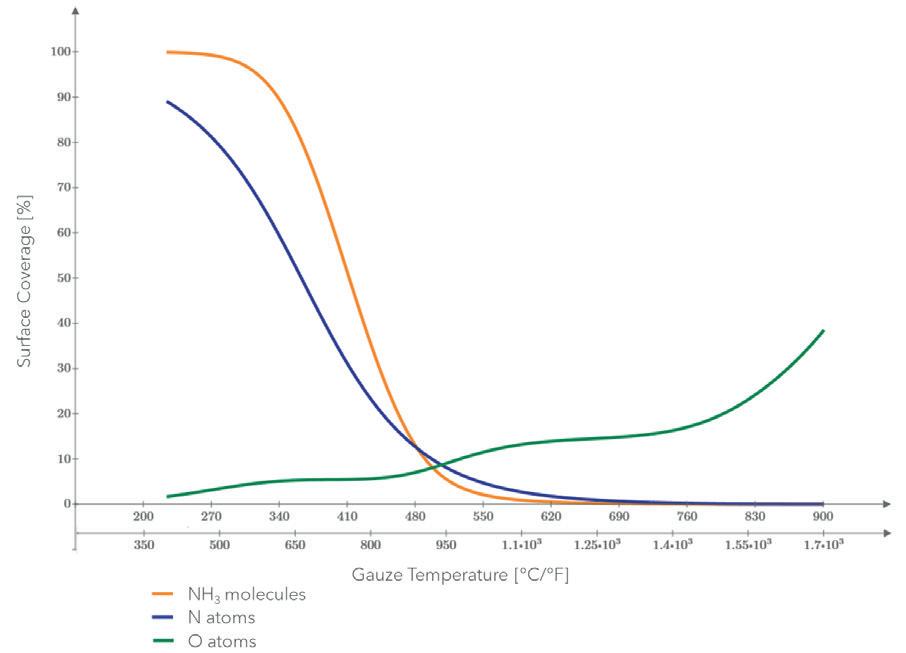
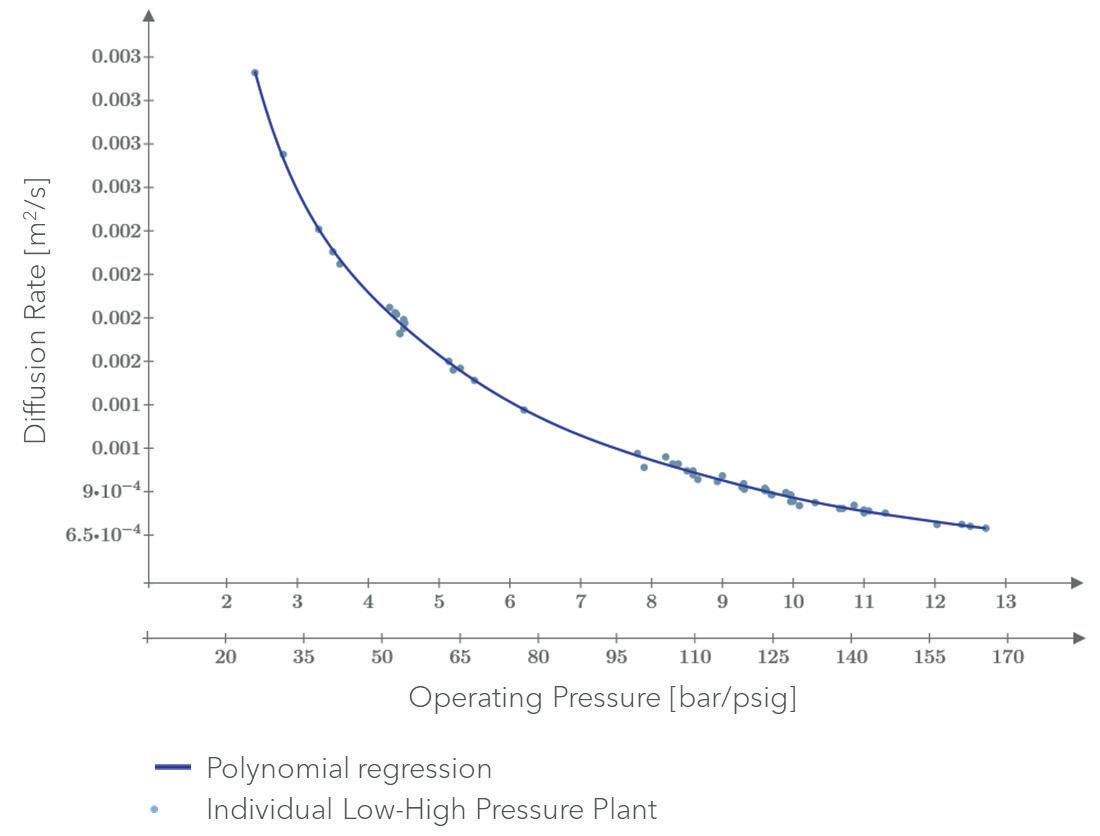
Figure 2. Correlation of operating pressure and NH3 diffusion rate in air under reaction conditions. The blue dots represent individual plant data.
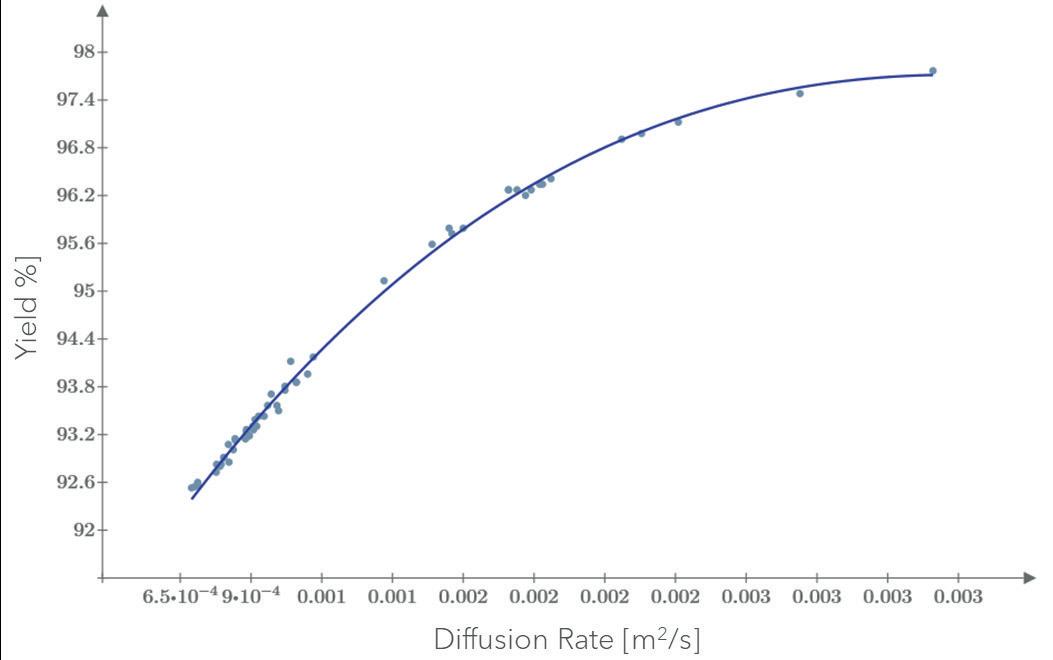
Figure 3. Correlation of NH3 diffusion rate and process yield under reaction conditions. The blue dots represent individual plant data.
requirements of the ammonia (NH3) oxidation reaction on the catalyst gauze? Certainly, this includes the gas permeability of the catalyst as well as the lowest possible resistance it presents to the gas flow. However, essentially, it is about the specific relationships between the transport processes of the reactants to the catalyst surface and the kinetics of the reaction on the surface itself.
The ammonia oxidation reaction is a mass transport-limited reaction. This fact has been known since the 1920s. However, this phenomenon is consistently ignored in the development of new catalyst structures, so the meagre yields resulting from the intensive research efforts of the past 30 years are not surprising.
The situation is quite different when it comes to efforts to elucidate the mechanism and kinetics of ammonia oxidation on the catalyst surface. In the early 2000s, considerable efforts were made to investigate the reaction mechanism and kinetics, which are described in detail in the work of Kraehnert and remain valid to this day.1 This allows researchers to accurately model the reaction process on the catalyst surface as a function of the individual operating parameters.
Undoubtedly the most important factor in the overall consideration of the NH3 oxidation reaction is the mass transfer-controlled regime under which the reaction takes place at the prevailing high reaction temperatures.
Mass transfer-controlled regime means that the reaction between oxygen and ammonia on the catalyst surface proceeds much faster than the transport of NH3 molecules from the bulk gas phase of the mixed gas to the catalyst surface.
Consequently, the catalyst surface becomes depleted of NH3 molecules and, correspondingly, of nitrogen (N) atoms, and only the oxygen present in excess in the gas mixture increasingly accumulates on the surface at high temperatures. Figure 1 shows the course of the occupation of the surface sites over the catalyst temperature for NH3 molecules and N and oxygen (O) atoms. For the sake of completeness, it should be noted that NH3 molecules and N/O atoms occupy different surface sites.
Regarding Figure 1, it should be noted that it makes no sense to assume that increasing the catalyst surface area would lead to an increase in NH3 conversion. Such a measure would not result in more NH3 molecules being transported to the catalyst surface; the only effect would be an increase in the proportion of unoccupied surface sites on the catalyst surface.
The NH3 molecules move in two ways: firstly, convectively with the gas flow in the direction of the pressure gradient and secondly in undirected diffusion in all spatial directions due to their kinetic energy. In their diffusion motion, the NH3 molecules move in all directions in space until they collide with another gas particle and change their direction due to the elastic collision. The distance the NH3 molecules travel between two collisions is called the ‘mean free path’ and characterises the average speed at which they move through space, the diffusion velocity. The higher the operating pressure, the higher the concentration (i.e., the gas particle density), and the shorter the mean free path an NH3 molecule travels before colliding with another gas particle. This means that the higher the operating pressure, the lower the diffusion rate at which the NH3 moves through the process gas. Figure 2 shows the diffusion rate of NH3 over the operating pressure for low- to high-pressure plants (the dots shown in Figure 2).
The transport process directly influences the process yield, which, according to the kinetics of ammonia oxidation, is dependent on concentration and temperature. With increasing temperature, the reaction shifts from the undesirable formation of N2 increasingly towards the formation of the desired product NO. This is primarily due to the fact that achieving a higher temperature is based on a higher NH3 conversion rate, and accordingly, with increasing temperature, fewer nitrogen atoms are present on the catalyst surface, and the ratio of oxygen to nitrogen atoms increases (see Figure 1). The greater the ratio of oxygen to nitrogen atoms on the surface, the higher the NO selectivity of the catalyst.
Accordingly, the process yield of ammonia oxidation shows a direct correlation with the diffusion rate of the NH3 molecules under the operating conditions of the plant, as shown in Figure 3.
According to the relationship between the NH3 diffusion rate and the operating pressure of the process, the highest yields are achieved in low-pressure processes at 2 - 3.5 bar, and the lowest yields are correspondingly found in high-pressure plants operating at pressures of 8.5 - 15 bar (absolute).
The convective gas velocity essentially describes the speed at which the gas volume flows through the gauze layers of the catalyst package, and thus the residence time that an NH3 molecule spends in the catalyst package, or rather, in the gauze layer. The magnitude of the NH3 diffusion rate, the speed at
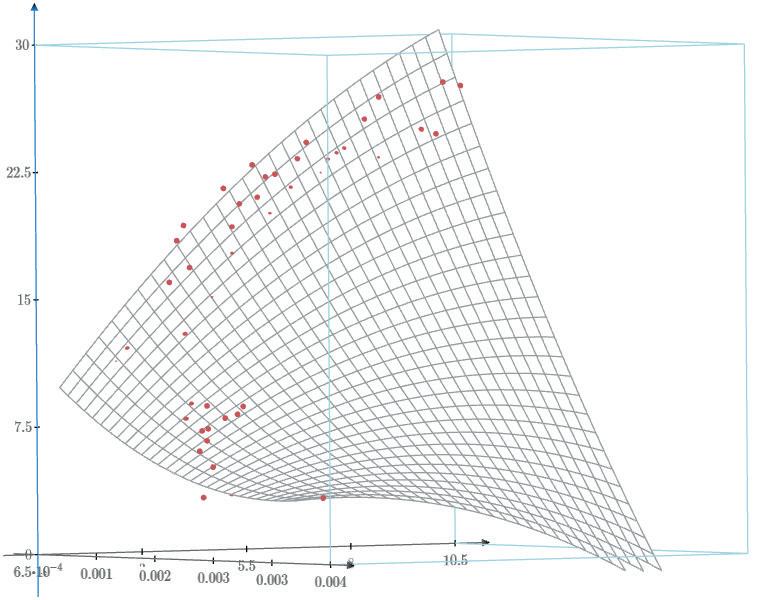
Figure 4. Correlation of the number of gauze layers in the catalyst package with the parameters of gas velocity and NH3 diffusion rate. The red dots represent individual plant data.
which the NH3 molecules move in space, is a measure of the probability that an NH3 molecule in the gauze layer will penetrate to the surface of the catalyst.
The two quantities, convective gas velocity and NH3 diffusion rate, describe the time that an NH3 molecule remains in the volume of a gauze layer and the probability with which it reaches the catalyst surface, from which the necessary number of catalyst gauze layers in the catalyst pack is calculated to ensure 100% conversion of NH3
Figure 4 shows this correlation using a 3D-surface spanned by the x- and y-axes, the gas velocity and the NH3 diffusion rate, with the z-axis representing the number of necessary gauze layers in the catalyst package. The reference is the individual parameters of a large number of plants, which extend over the entire pressure range from low-pressure to high-pressure plants.
The crucial parameter for complete NH3 conversion is the number of gauze layers in the catalyst package, which is determined by the two degrees of freedom of the diffusion rate and the convective gas velocity, which in turn depend on the operating pressure and the NH3 load of the reactor.
In comparison, the different gauze structures can be reduced to their spatial extent, i.e., their height, whereby their specific surface weight is usually coupled with the wire diameter, and therefore they ultimately differ only in their porosity.
The two extremes of known structures are represented by woven mesh structures, which have a minimum height of twice
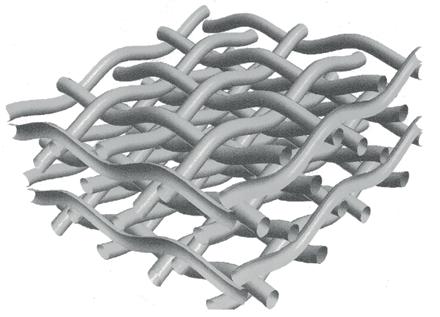
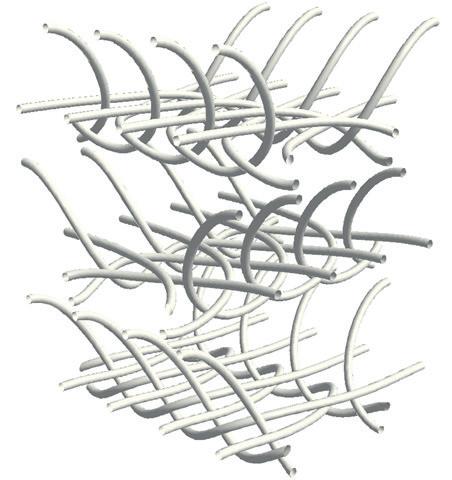
the wire diameter and thus minimum porosity, and knitted gauze structures, which, due to their loop formation, occupy a maximum volume with more than three times the height of a woven mesh and therefore exhibit maximum porosity. To illustrate the differences, Figure 5 shows a woven fabric structure and Figure 6 shows a structure of knitted gauzes.
If one considers the two structures from the perspective of mass transfer-controlled reaction processes, it becomes clear that the residence time of the gas in the volume of the woven mesh is significantly lower than in the distinct larger volume of the knitted gauze.
Despite the significantly different residence time of the process gas, both types of gauze exhibit an analogous conversion rate of NH3. This means that the shorter residence time in the woven mesh must be compensated for by a higher probability that the NH3 molecule reaches the catalyst surface. The lower porosity therefore ensures better accessibility of the catalyst surface. For the same specifications of wire diameter and specific weight, residence time in the gauze volume and accessibility of the catalyst surface compensate each other, so that one can assume a comparable NH3 conversion rate in the gauze layers for such comparable gauze specifications, regardless of the structure and porosity.
The different structures originated by the various knitting technologies therefore offer no mutual advantages. The only real advantage that distinguishes the different knitting technologies from one another is the flexibility associated with the knitting technology to use different wire diameters and to create different wire densities in the knitted gauze.
This is less evident in low and medium pressure plants, as the operating weight of the catalyst package in such plants has already been reduced to a minimum and the comparatively small number of 4 - 9 gauze layers in the catalyst package leaves little room for specification changes. The yields of 95 - 98% achieved in these plants also offer little potential for further optimisation.
The situation is different in high-pressure plants, where catalyst packages with up to 27 gauze layers are used, which sometimes have a comparatively short service life of only 70 - 90 days. Here, the gauze manufacturer still has all degrees of freedom available in choosing the gauze specification and catalyst package composition. The degrees of freedom used by Sabin Metal to optimise the catalyst design are the wire diameter, which reflects the resistance to the reaction conditions, and the wire density integrated into the catalyst volume, which reflects the conversion of the NH3 content remaining in the reaction gas in the considered gauze layer of the catalyst package. The different gauze specifications in the various gauze layers are chosen to ensure maximum service life of the catalyst package with consistently stable and high yield. This approach achieves catalyst lifetimes that approach 120 - 130 days and even 1 - 2% higher selectivity’s in the NH3 conversion on the catalyst, even in plants where the catalyst is sometimes exposed to challenging reaction conditions.
1. KRAEHNERT, R., (2005): “Ammonia Oxidation over Polycrystalline Platinum: Surface Morphology and Kinetics at Atmospheric Pressure”. (Doctoral thesis), Technical University of Berlin, Doktor der Ingenieurwissenschaften.

Timothy O’Connell, Johnson Matthey, UK, explains how nickel is a vital component of reforming catalysts and how an improved design can reduce resource consumption while increasing efficiency.
mmonia manufacturing is a vital industry for global food security. Growing demand for fertilizers, driven by population growth, continues to be a key driver for ammonia demand.
Most global manufacturers of ammonia use natural gas as a feedstock, using steam reforming to make syngas, which is purified to deliver a hydrogen feed that is reacted with nitrogen to make ammonia. Whilst the manufacturing process to make ammonia from natural gas is more efficient than the manufacture of ammonia from coal gasification, ammonia and fertilizer production remain global industries with a high carbon footprint.
Government legislation in many jurisdictions is directing industries to reduce emissions of CO2 and
other gases which are recognised as contributing to climate change. The ammonia industry faces challenges to reduce emissions, but also has an opportunity to contribute to future decarbonisation as a carbon-free fuel, or as a more easily transportable hydrogen carrier.
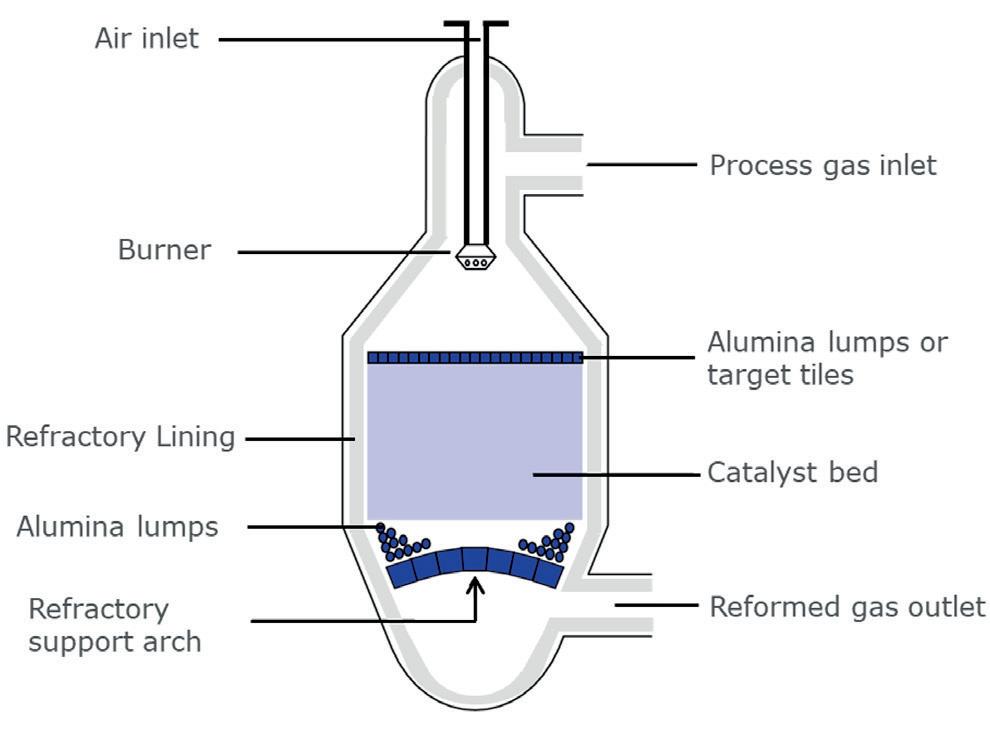
Reforming catalysts are at the heart of the process to make hydrogen, which is later reacted with nitrogen to make ammonia. The active catalytic component of reforming is nickel (Ni). The ammonia manufacturing process from natural gas uses two reforming stages, a primary reforming stage using a heated reformer, and a secondary reforming stage which introduces air to the process and uses combustion to drive the reforming reaction. The secondary reformer in the ammonia process drives a lower methane slip out of the reforming section than comparable flowsheets which rely on a gas reformer only.
The process within secondary reformers features fuel rich combustion at the top of the reformer and catalytic reforming in the main part of the reformer. The components of the secondary reformer are shown in Figure 1. Air is introduced and reacts with the process gas in a combustion zone at the top of the reformer. Endothermic steam reforming means that the secondary reformer has a temperature gradient with the hottest region in the combustion zone above the catalyst bed and the coolest region at the reactor outlet. The very high temperatures require a refractory material to line the reactor and usually a protective layer is added above the catalyst bed.
Catalytic reactions in the secondary reformer convert CH4 to CO and H2:
CH4 + H2O ⇌ CO + 3H2
CO + H2O ⇌ CO2 + H2
In the secondary reformer, the high temperatures from the burner provide a high level of thermal energy. This means that the required level of nickel in the catalysts in the secondary reformer is lower than the level of nickel used in the primary reformer.
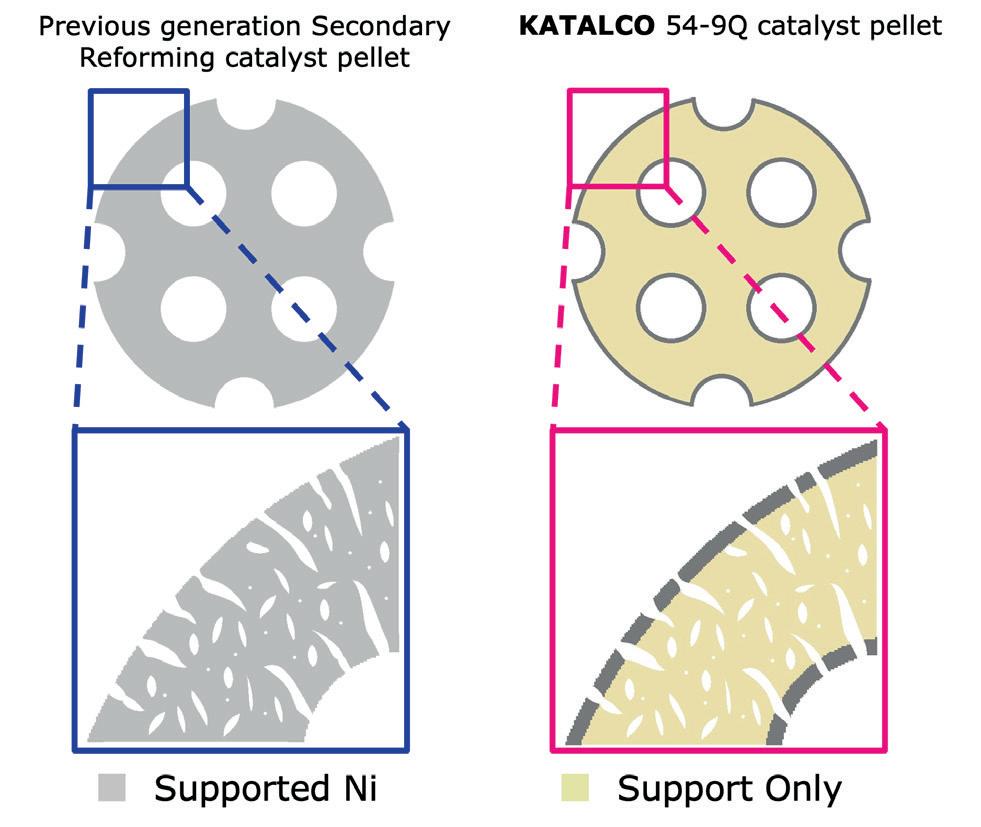
One catalyst developed for secondary reforming is KATALCOTM 54-9Q. This catalyst utilises manufacturing technology which locates the nickel at the surface of the catalyst pellets (Figure 2 and Figure 3). The elevated temperatures of the secondary reformer mean that the reaction occurs at the surface of the catalyst, since under these conditions the process is limited by diffusion.
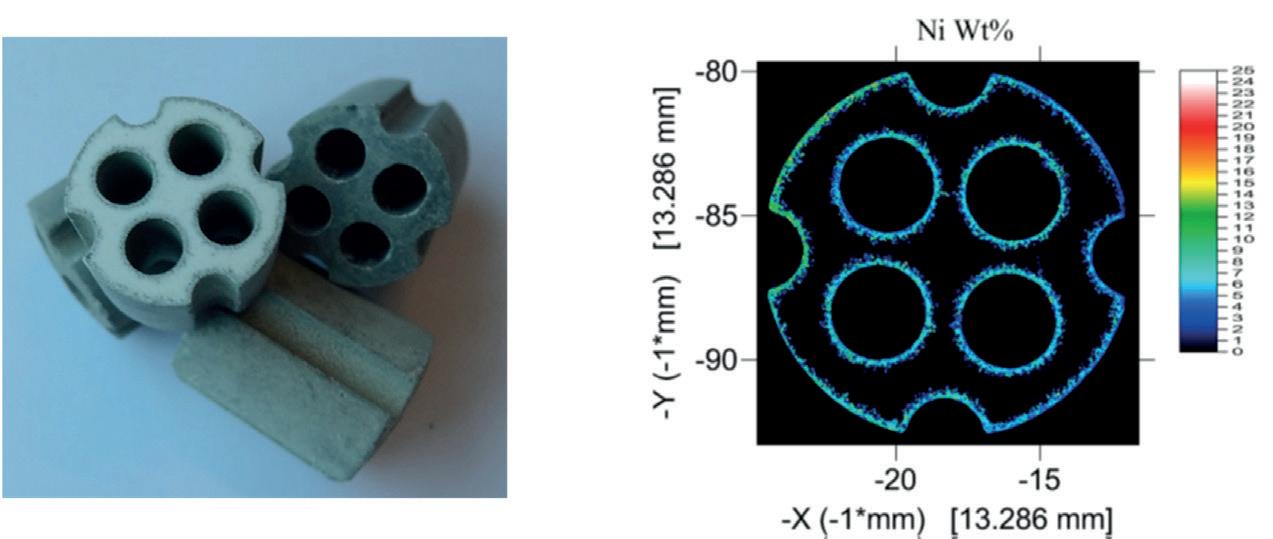
Since the reaction occurs mainly at the surface of the catalyst, the ability to locate the active nickel in the reaction zone increases catalyst performance. This is because locating the nickel in the reaction zone allows for an increase in the surface concentration of active sites, effectively increasing the surface area of the catalyst and operating at a lower space velocity within the reactor. Johnson Matthey has modelled the performance of KATALCO 54-9Q catalyst within secondary reformers and the outcome of this model is shown in Figure 4. The catalytic reaction proceeds under equilibrium conditions because of the high temperature in the secondary reformer. The 54-9Q catalyst shows improved methane conversion, with lower methane slip at the exit compared to the 54-8Q catalyst because of the higher level of active sites for 54-9Q catalysts. The improved catalytic performance for the 54-9Q catalyst is maintained throughout its lifetime.
The catalytic reforming reaction is faster than the diffusion of reactants and products under
secondary reforming conditions. Since gas diffusion is slow, there is not enough time for the reactants to reach the end of the pores within the catalysts before the reaction is complete. By increasing the surface concentration of the active sites in KATALCO 54-9Q, the catalyst performance is increased, since the catalytic activity is proportional to the geometric surface; a higher concentration of active sites at the surface improves performance. This is represented in Figure 5.
For a large secondary reformer, it has been calculated that the benefit from the performance of KATALCO 54-9Q to be up to US$25 000/yr of ammonia production.
Steam reforming catalysts, including secondary reforming catalysts, use nickel, therefore the cost of secondary reforming catalysts responds to the market price. After a period of relative price stability, nickel prices increased at the end of 2025: following the announcement of closure of a nickel mine in Indonesia. Indonesia is currently the world’s largest supplier of nickel at about 65% of global supply.
The other benefit of the surface location is that while 54-9Q catalyst offers an improvement in performance over previous generation catalysts, it uses a lower loading of nickel than previous generations of catalysts.
The increase in nickel prices (Figure 6) will increase the price of nickel catalysts to ammonia operators, but KATALCO 54-9Q could reduce this impact on ammonia operators owing to the lower loading of nickel than previous generation catalysts. It has been forecasted that if current increased nickel prices are maintained at 16% above the previous year, this will lead to an extra US$35 000 price increase for changeover of secondary reformer catalysts for a 42 m3 reactor in an ammonia plant in 2026. Higher increases are possible if nickel prices continue to increase.
Nickel is a critical global material, and all the nickel that is not mined and processed into catalysts reduces the catalyst manufacturers Scope 3 emissions for the nickel supply chain, which are subsequently beneficial for operator sustainability targets. It is estimated that the reduction in Scope 3 supply chain emissions will be worth between 1 - 10 t CO2e for ammonia manufacturers who transition to catalysts with a reduced catalyst loading for each catalyst fill.
Reduced methane slip at the secondary reformer outlet due to the higher performance of the 54-9Q catalyst could reduce natural gas feed consumption by up to 35 tpy, some of which could be realised as reduced CO2 emissions.
Catalyst design to locate nickel in the most effective region of supported secondary reforming catalysts improves performance. The improvement in performance is sufficiently beneficial, enabling ammonia operators to improve the yield of hydrogen from lower methane slip using KATALCO 54-9Q over previous generation KATALCO 54-8Q catalyst.
Locating nickel in the most effective region of the catalyst reduces use of nickel for secondary reforming catalysts. This lowers global demand for nickel, therefore reducing the emissions contribution from mining and processing.
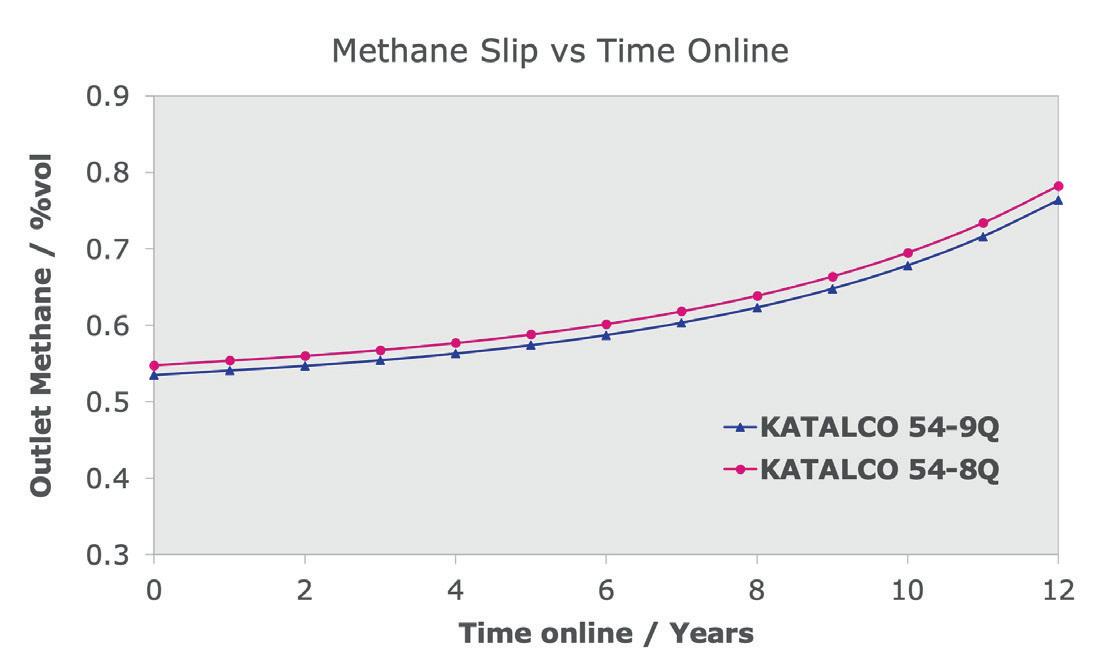
Figure 4. Modelled performance for KATALCO 54-9Q in secondary reformers compared to previous generation catalyst.
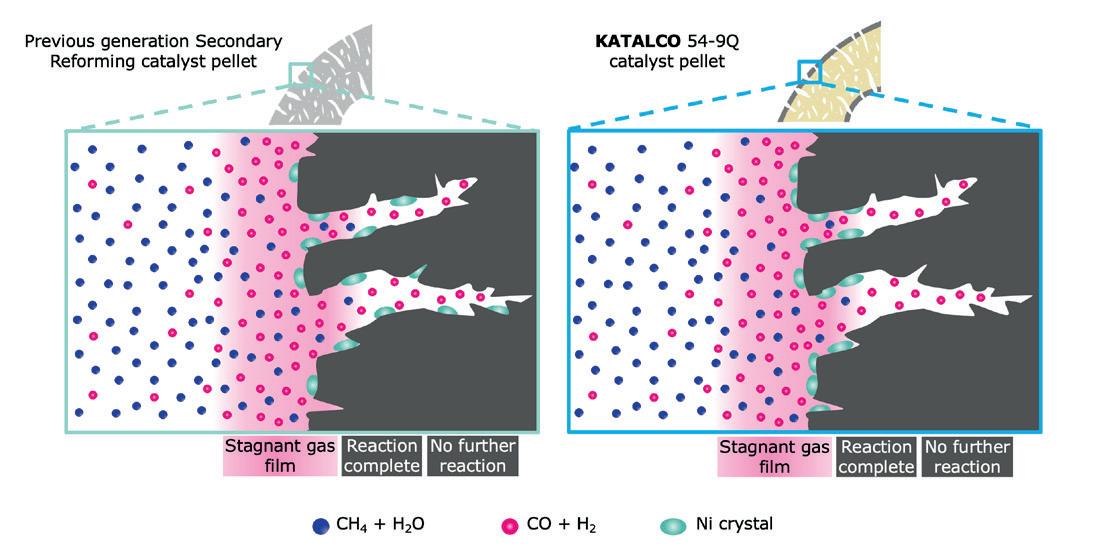
Figure 5. Representation of how KATALCO 54-9Q is an improved match for secondary reformer duty compared to KATALCO 54-8Q.
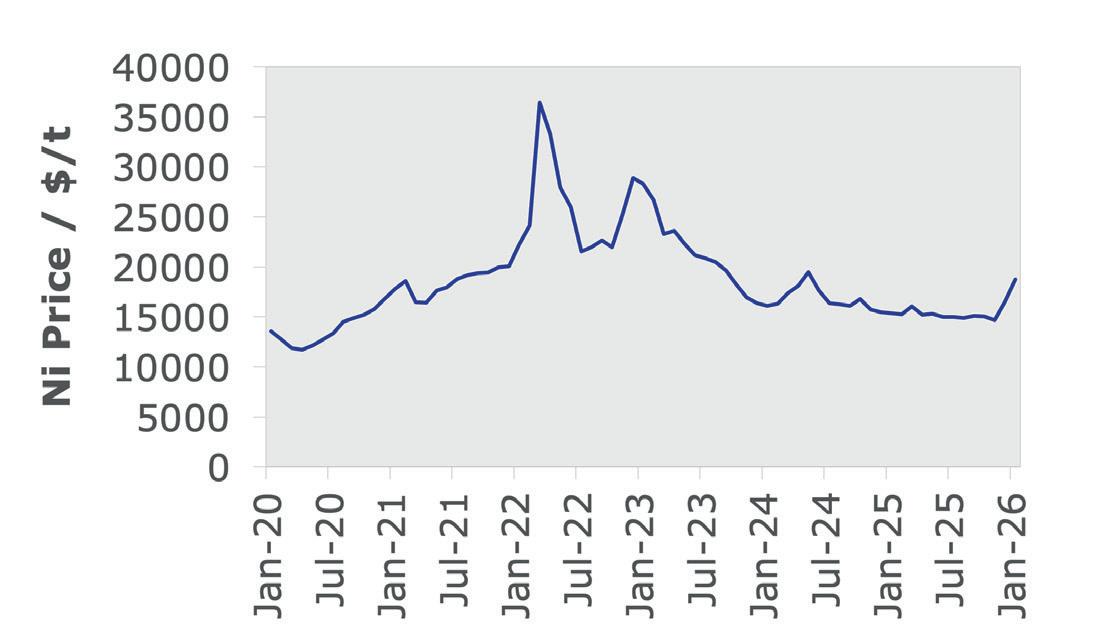
Figure 6. Nickel price development between January 2020 and January 2026 (source: London Metal Exchange).
Improved secondary reforming catalysts which deliver lower methane slip reduce the requirement for recycle of methane within the plant. Whilst this is not a benefit that correlates directly with fuel (and therefore cost) savings for modern ammonia plants, the opportunity to reduce recycling of methane should deliver efficiency savings which can be reflected in lower CO2 emissions for the manufacture of ammonia, with benefits against the EU Emissions Trading Scheme (ETS) or the Carbon Border Adjustment Mechanism (CBAM) levies in Europe.
Note KATALCO is a trademark of Johnson Matthey Davy Technologies.

Nikolay Ketov, Stamicarbon (NEXTCHEM), the Netherlands, discusses how to navigate the complexities of urea synthesis with digital solutions.
odern fertilizer plants operate in an environment defined by tighter energy balances, stricter emission limits, and higher reliability expectations. Managing these complexities requires advanced process design and demands higher training standards for personnel.
In recent years, the integration of digital tools into the start-up and day-to-day operations of urea plants has evolved from a supporting feature into a strategic enabler. Training simulators and real-time process monitoring solutions are now critical elements

in achieving stable, efficient, and safe plant performance. This article explores how advanced urea technology, combined with high-fidelity digital solutions, supports smooth start-ups, safe operations, and long-term operational excellence.
For world market leaders in urea technology, it is important that they continuously innovate and introduce new solutions for extending the lifetime of the plant, reducing emissions, and lowering energy consumption.
Since developing the CO2 stripping process in the 1960s, Stamicarbon, the nitrogen technology licensor of NEXTCHEM (MAIRE Group), has consistently refined urea technology to meet evolving market and regulatory requirements.
The most recent milestone in urea technology is the introduction of an ultra-low energy (ULE) design, part of NX STAMITM Urea. This design represents a significant step forward in energy efficiency by fundamentally optimising heat integration within the synthesis section. The core difference from the conventional urea process is that in the ULE design, the heat supplied in the form of steam is used three times (see Figure 1) instead of two.
The use of a medium-pressure recirculation section (MP section) is the key technological advancement of this process. This is achieved by arranging the carbamate to be flashed at medium pressure and reheated using the heat of reaction and condensation. The reheated carbamate is then used for heat recovery, specifically for evaporation.
The result is a substantial reduction in utilities consumption: steam consumption can be reduced by up to 40%, and cooling water demand by approximately 16% compared to traditional CO2 stripping designs. Steam consumption drops to below 560 kg/t of urea, compared to approximately 870 kg/t in conventional configurations.
The ULE design concept can also be applied to revamp existing urea plants, regardless of the original technology provider.
While the chemistry of urea synthesis is well understood, the physical behaviour of urea and carbamate mixtures under high pressure and temperature is complex. Accurately modelling these systems requires detailed thermodynamic and kinetic descriptions, mass and heat transfer calculations, vapour-liquid equilibria, and hydrodynamic considerations. Based on decades of urea technology development, it is understood that having a suite of digital services is important for enhancing plant effectiveness, boosting productivity, and supporting employee training.
One of the technologies (also available in the NX STAMITM Digital portfolio) is the process monitor. This tool uses a knowledge-driven plant model with amplified predictive performance. The mathematical model behind the process monitor, like those utilised for designing a urea plant, includes mass and heat transfer equations, reaction kinetics, vapour-liquid equilibria, and hydrodynamic aspects, covering the entire plant. In total, the plant model consists of more than 5000 linear and non-linear equations. An in-house developed, equation-oriented, flow-sheeting program ensures fast solutions to large and complex problems.
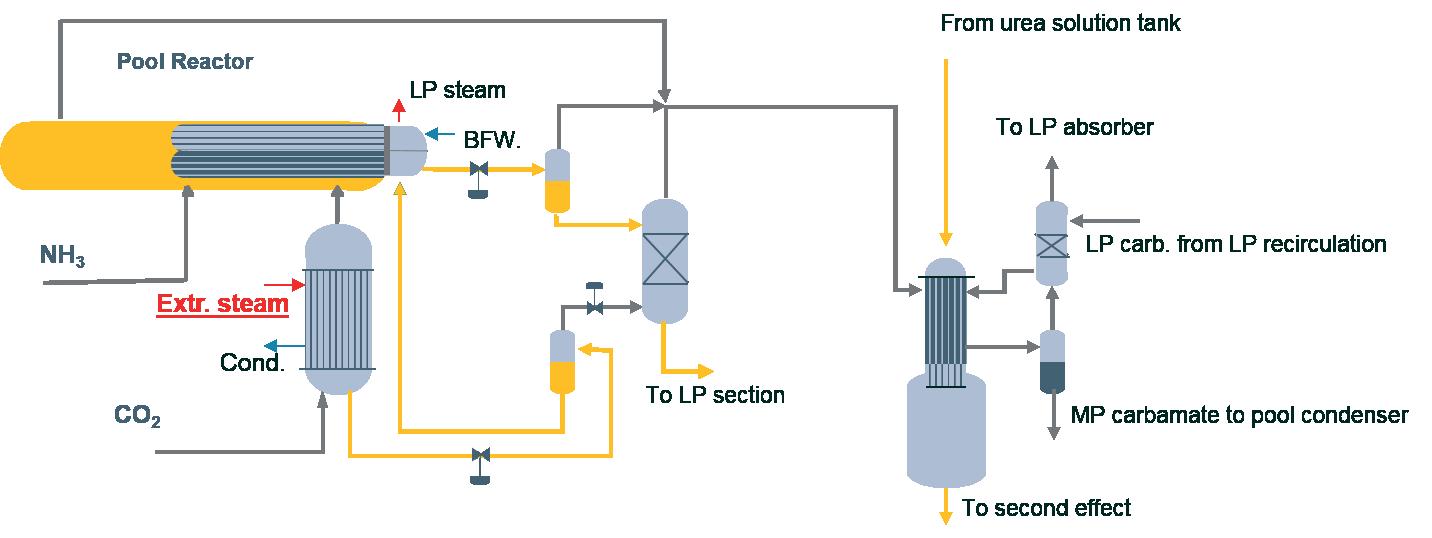
The process monitor feeds real-time plant data into a model that calculates key performance indicators (KPIs) like plant load, energy consumption, and emissions, as well as soft sensor key variables such as equipment efficiency, load, and reactor conversion. This processed data is then made available to operators and stakeholders through intuitive dashboards, facilitating informed
decision-making and operational excellence. The Stami Digital Process Monitor has already demonstrated its effectiveness in enhancing plant load and reducing energy consumption with the first references established in 2020.
Another digital tool plants can use is the high-fidelity Technology Training Simulator (TTS): this allows for efficient training of plant operators on start-up and shutdown procedures, day-to-day plant operations, and various scenarios in the plant. It helps understand the dynamic behaviour of the urea melt and granulation plant and simulates upset conditions in a digital environment to safely and effectively prepare operators for emergencies.
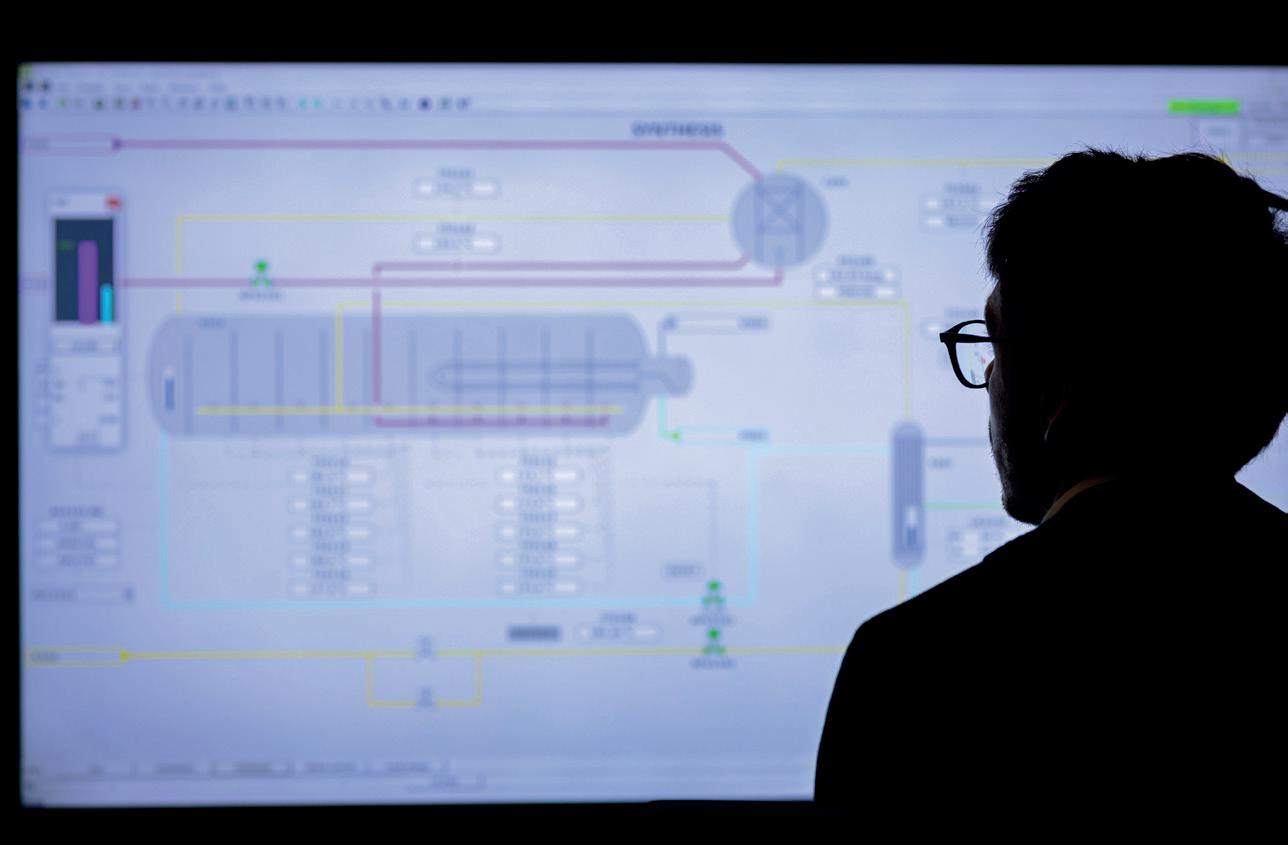
TTS offers significant advantages for any urea plant. Its thermodynamic and kinetic models enable personnel to receive comprehensive training on the urea process and its dynamic behaviour, including standard operating procedures like normal operation, start-up, blocking-in, restarting, and draining. As part of the training program, the model can simulate upsets in the plant, allowing operators to practice responding to upset conditions and returning the plant to normal operation.
The training simulator can be configured to replicate something like Stamicarbon’s own ULE urea plant precisely. This can include process equipment, control,
interlocking systems, and safety trip system (STS), with a corresponding distributed control system (DCS) interface that mimics the look and feel of an actual operator’s room. Additionally, it prepares operating staff to run the plant at maximum capacity while minimising steam consumption and ammonia losses and allows for testing new or modified operating procedures before implementation. This increased staff knowledge and experience leads to safer and more stable plant operations. It also helps to reduce start-up time due to a thorough understanding of the plant dynamics by the operators, which avoids unwanted plant trips during start-ups.
35 Years of manufacturing excellence
From stand-alone machines to automated full factory solutions
EMT has proven for over 35 years to be the right partner for all your blending, bagging and handling machines in the fertilizer industry.
Check our site today how we can assist you find the best solutions for your situation, scan the QR-code or go to www.emt.tech
• For big bags/Jumbo bags of 500 to 1250 kg
• Capacity 50 to 70 tons per hour
• Systems can be combined to an output of 120/180 tons per hour.
• Options include stainless steel construction or containerized units.
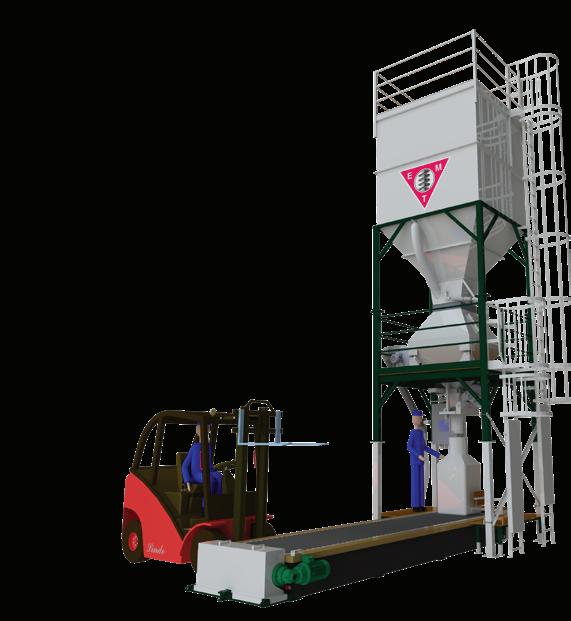
•Capacities from 20 to 250 tons per hour
•Stand-alone or portable system
•50-250m3 per hour
•Automatic dosing process
•Options for built-in conditioner & liquid heating
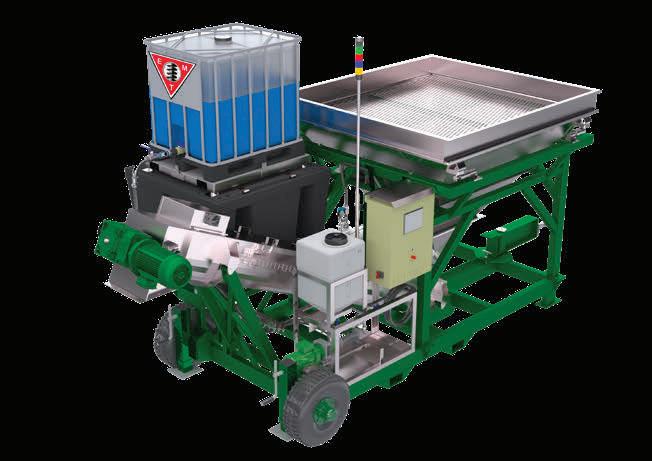
• Continuous blending process
• Unlimited number of weighing hoppers
• Capacity from 20 to 300 tons per hour
• Fully automatic computer controlled mixing process
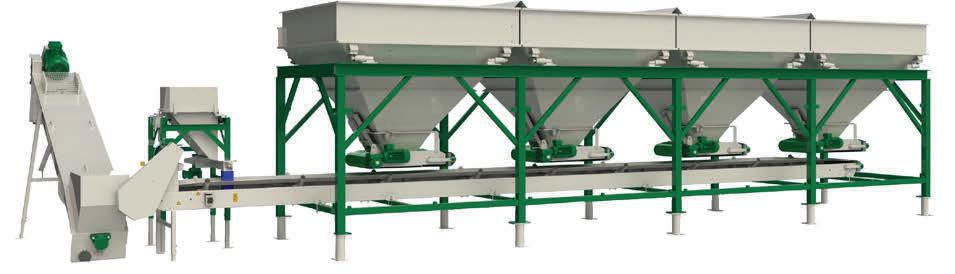
The ease of operation is one of the benefits of the ULE design compared to traditional plants. The presence of the medium-pressure recirculation section with the carbamate bundle mitigates disturbances that typically occur in traditional CO2 stripping plants, arising from discharging liquid directly from the stripper to the low-pressure section.
plant upsets, higher on-stream time, increased plant safety, and lower emissions. These improvements result in substantial cost savings during the plant’s operation.
As urea plants continue to face increasing pressure to operate more energy efficiently, safely, and sustainably, both







Francesco Viola, Saipem, outlines why prilling buckets should be designed as an integrated unit, not as independent parts, to ensure high quality urea prill production.
rilling buckets for urea production are highly engineered rotating devices designed to generate a controlled droplet field from highly concentrated molten urea. Their performance depends primarily on internal liquid distribution, hole geometry and patterning on the perforated outer surface, and manufacturing accuracy. These factors directly influence droplet formation; cooling behaviour in the tower; and final product quality metrics such as average prill size, fines and oversize fractions, and product temperature at the tower base.
A typical design consists of a conical rotating assembly comprising an internal distributor, multiple fins, and a perforated outer surface (skin). Molten urea is routed to the inner face of the skin and extruded through precision holes as droplets. The droplets fall through the prilling tower and solidify into prills during their descent, supported by tower airflow and heat and mass transfer. Bucket speed and flow conditions influence droplet size and trajectory, residence time in the air stream, as well as cooling and solidification.
The key performance driver in prilling bucket design is the combined optimisation of internal routing and hole geometry and patterning. These parameters control droplet formation and therefore the main quality metrics required by customers: average prill size, uniformity, fines and oversize fractions, and product temperature at tower base. This means that both the internal distribution system and the design and placement of holes should be
developed together as an integrated unit, not as independent parts.
Every component is designed to ensure assembly accuracy and stable operation across the expected range of flow conditions. Key construction elements include: top plate, bottom plate, perforated skin, distributor pipe, fins, and drive hub.
Prilling bucket technology has evolved over decades to address historical limitations in droplet generation,
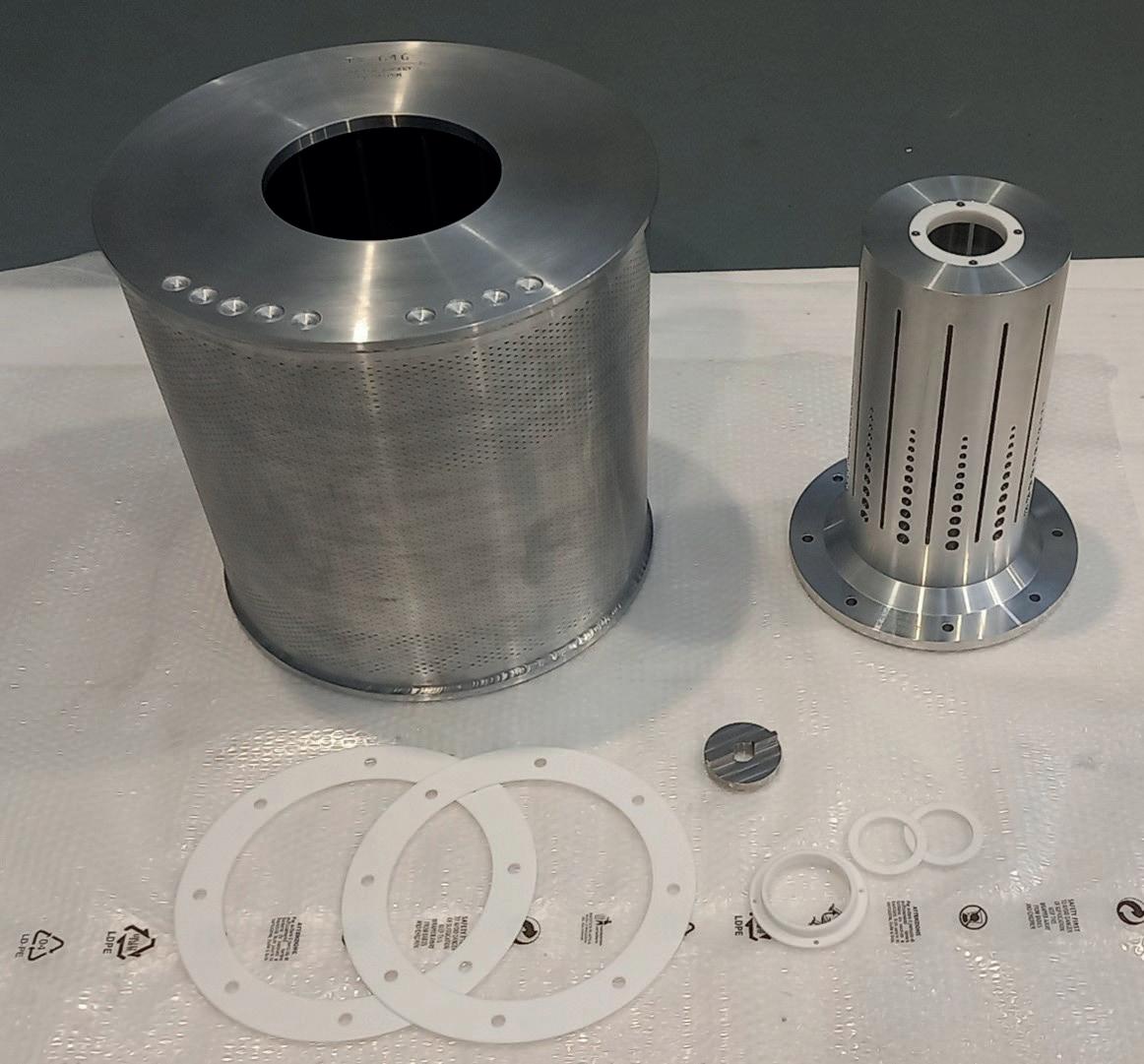
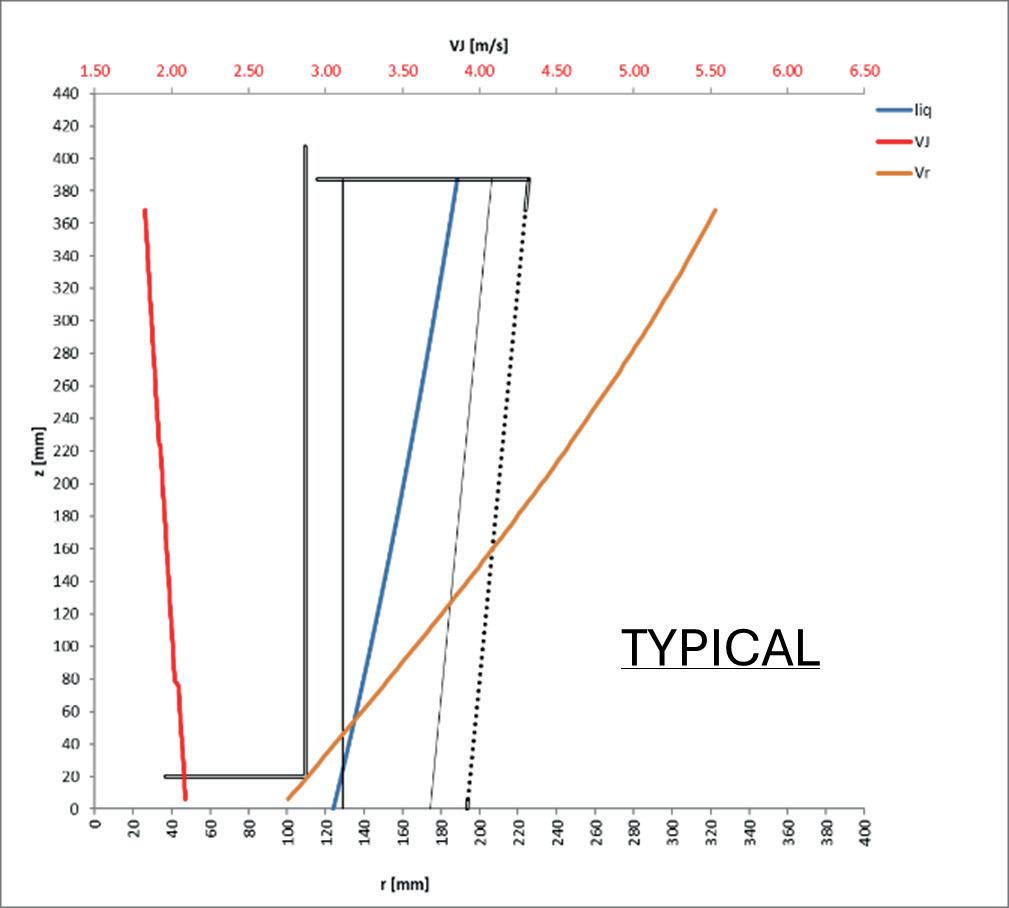
distribution stability, product quality, repeatability, and manufacturability at scale. Early prilling solutions included static showerheads and centrifugal buckets, each associated with constraints affecting droplet size control, operational flexibility, and tower performance. A pivotal step occurred between 1969 and 1971, when modifications to centrifugal bucket technology led to the first patented application of the ‘Tuttle’ bucket concept. In 1973, the establishment of the Tuttle Prilling System (TPS) enabled systematic design, manufacturing and installation of successive bucket series (e.g., T, TX, TXL), with broad deployment reported over time. Around 500 buckets from these series have been set up globally.
In 2018, TPS became part of Saipem, enabling further integration of bucket engineering within a wider urea technology portfolio and supporting additional improvements in design standardisation, modelling, and manufacturing methods, as described in the following sections.
The design process for modern prilling buckets is client centric and begins with a structured analysis of operating requirements. Key parameters include tower geometry (height and diameter; for example, a configuration may feature ~ 70 m of free fall and ~ 20 m internal dia.), target prill size (e.g., 1.8 - 2.0 mm), product temperature limits (e.g., ≤ 50°C at the tower base), and ambient air conditions. Engineering efforts focus on balancing production capacity, prill size distribution, product temperature, air flow, and bucket geometry.
Although each bucket is engineered for specific conditions, consistent performance at typical flow rates is generally maintained due to adjustable rotational speed control. Adjusting the bucket’s rotating speed allows you to keep the average prill size consistent under different loads. However, this may also cause changes in the amount and distribution of small and large prills. This trade-off underlines the importance of defining operating envelopes early and translating them into robust routing and hole pattern design.
Design features typically include tailored hole geometry and distribution along the bucket radius to optimise droplet formation and prill distribution within the tower cross section. General arrangement drawings are prepared for client approval prior to manufacturing, followed by detailed engineering documents that guide workshop construction.
Modern design increasingly leverages computational fluid dynamics (CFD) to simulate droplet formation and expected prill size distribution, moving beyond empirical rules to a parameter driven approach. CFD supports optimisation of droplet generation behaviour, prill distribution within the tower,

2-4 June 2026 | Tokyo, Japan
Join regional and international peers
Regional market insights
Gain a competitive edge with new comparative sessions on China, India, the Middle East and Australia. Understand supply trends, project progress and pricing outlooks to inform your strategy.
Connect directly with utilities, shipping companies, heavy industry leaders and emerging offtakers. Drive meaningful conversations and unlock commercial opportunities.
Stay ahead with the latest developments in cracking, storage and safety standards. Learn from real-world case studies on project readiness and permitting.
Understand the regulatory updates and changes shaping demand in key markets such as Japan and Korea, and gain critical perspectives on European markets.
Industry leadership
Hear from influential voices in government, industry associations and key market players such as ACME, Hoku Energy, JGC Holdings Corporation and Japan Bank for International Cooperation (JBIC).
150+ attendees
+65 9786 1582
+44 (0) 207 199 0529
+44 (0) 7923 245 514
75+ companies
20+ countries
and cooling dynamics, enabling more accurate predictions and continuous design improvements.
Material selection is critical due to the chemical environment, operational handling and maintenance needs. Aluminium alloys are commonly used as standard construction material, selected to balance corrosion behaviour, machinability, structural requirements, and balancing constraints.
Manufacturing has evolved from manual drilling and assembly to industrialised methods such as CNC drilling, controlled assembly sequences, and standardised balancing procedures. This shift improves repeatability, reduces defects, supports scale up and shortens lead times – all central to consistent prill quality. Precision in drilling and hole quality is particularly important because hole diameter, orientation, and spatial distribution are
strongly linked to droplet formation and therefore granulometric distribution of the final product.
During operation of a prilling bucket, several recurring challenges may arise. Exploded prills are frequently associated with excessive product temperature or oversized prill formation. The presence of fines is typically linked to elevated residual moisture levels. Conglutinated prills can indicate damage to the perforated skin. To ensure consistent product quality, it is essential to conduct regular visual inspections and maintain diligent process monitoring throughout production.
CFD and process simulations are also valuable for understanding tower behaviour, including droplet distribution, air flow and cooling performance, which can exhibit nonlinear behaviour across seasons in natural draft prilling towers.
Over the years, TPS designed and supplied multiple prilling buckets to a urea prill producer across two production trains. To optimise granulometric distribution under different operating conditions, the client frequently exchanged buckets among units. The buckets in service proved effective in handling high ambient temperatures and humidity, particularly during the summer season.
The client requested an upgraded bucket design aligned with specific product requirements to replace existing buckets. Following the integration of TPS into Saipem, an upgraded TX bucket design was delivered, installed, and commissioned.
Such buckets were originally intended to run at 220 rpm producing prills with 2.10 mm average prill size (see Table 1). Thus, resulting in a uniformity factor – fraction between 1.7 mm and 2.80 mm – is of 79.7% on the average.
The new bucket provided improved performances (see Table 2) With average uniformity factor standing at 84.9%.
The upgraded design achieved an average uniformity factor of 84.9%. The fines fraction (particles smaller than +1.00 mm) was 0.8%wt, compared with an expected value of 1.5% and 0.9% obtained with the former bucket. Similarly, the oversize fraction (+2.80 mm) was 3.1%wt, below the expected 5% and markedly lower than values observed with the earlier design (approximately 8%). The share of product within the 1.70 - 2.80 mm range reached 84.9%wt, aligned with the datasheet figure and exceeding the minimum guaranteed value.
An average prill size of approximately 2.10 mm –consistent with the technical specification – was achieved at a bucket speed of 230 rpm. Product temperature was around 43°C with an ambient temperature of 23°C, resulting in Δ T of +20°C. This is lower than the +30°C Δ T specified at a design air temperature of 47°C. These findings support the observation that natural draft prilling tower behaviour can be non-linear across seasons; higher Δ T values typically occur during the hottest months, therefore design considerations should account for both the duration of the hot season and typical maximum ambient temperatures. Finally, product quality indicators – including moisture content, free ammonia, biuret content, and crushing strength – were within satisfactory ranges.
The client reported that overall performance of the unit was satisfactory and consistent with the expected distribution. Across the operating range of bucket speeds, oversize and undersize proportions and the uniformity factor was varied but remained within acceptable limits. No issues were encountered during installation.
Compared with the earlier design, the upgraded configuration showed a higher uniformity factor across the speed range, with lower oversize and slightly lower fines fractions.
Current development efforts focus on standardising critical components (such as drive hub design and fin curvature), exploring vibration assisted concepts for enhanced droplet control, and strengthening manufacturing partnerships to support bucket supply and life-cycle needs. These initiatives aim to improve process control and product quality while supporting reliable manufacturing and delivery.
A recent advancement enabled the development of a dedicated procedure for the design and manufacture of micro prill buckets. Micro prills differ significantly from conventional prills in terms of size distribution, typically ranging from 0.42 - 2 mm dia., with an average of about 1 mm. Since the smallest bucket previously designed


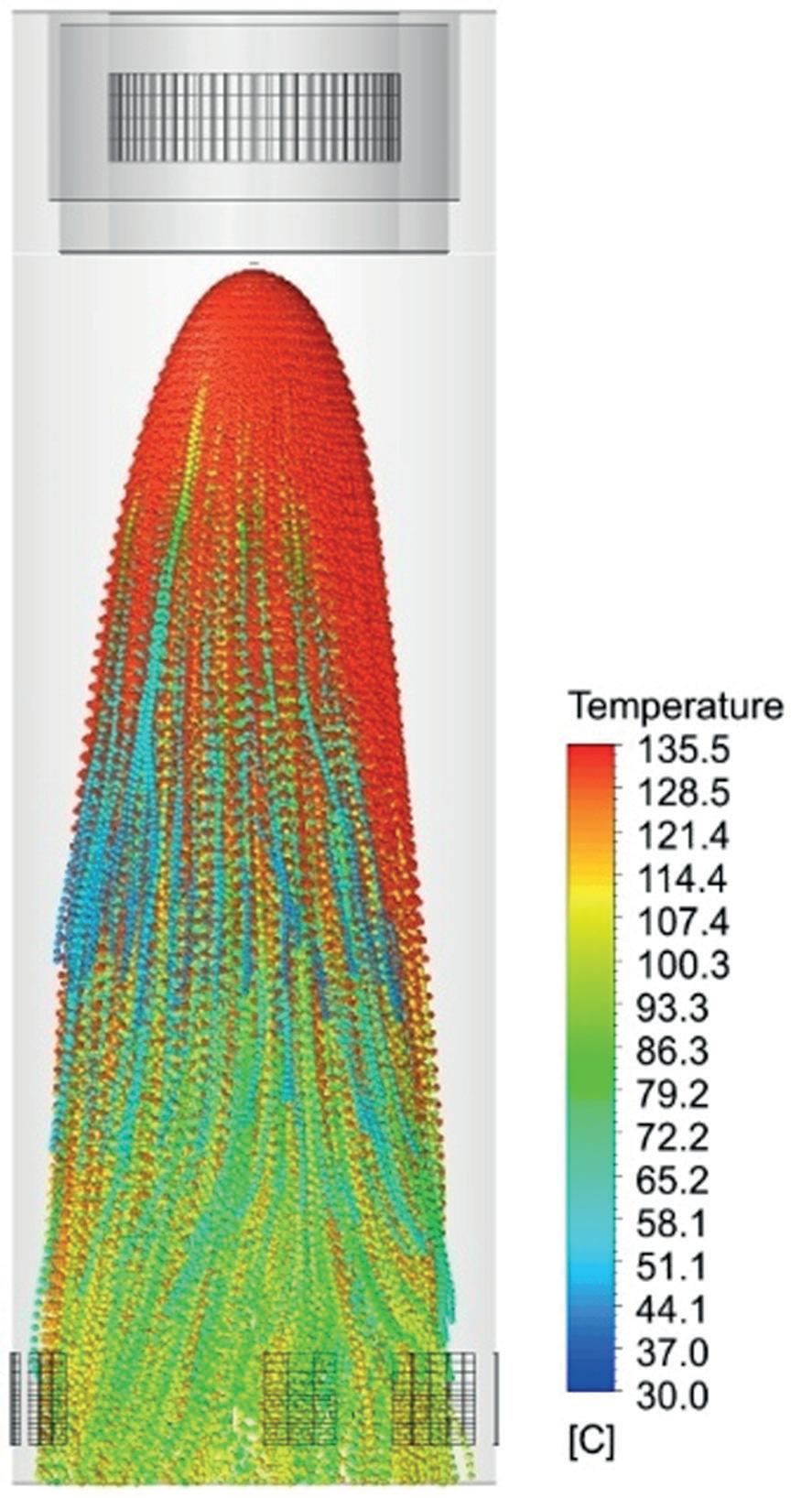
targeted an average prill diameter of 1.6 mm, designing a bucket for micro prills introduced substantial challenges in both design parameters and manufacturing and quality control.
The micro prill bucket operates at rotational speed more than 50% higher than standard buckets, requiring hole diameters less than half those used for conventional prills and extremely accurate mechanical balancing. These requirements demanded dedicated manufacturing methods, including step by step drilling with intermediate tool cleaning and enhanced quality control procedures. To verify small, angled holes more precisely, inspection practices included the use of focused light in a darkened environment to confirm hole geometry and cleanliness.
Prilling buckets are highly engineered devices that strongly influence granulometric distribution and overall urea product quality, thus making Tuttle Prilling Buckets an important component for any company’s urea technology portfolio. Performance is driven by the integration of internal liquid routing, precision hole geometry and patterning, validated process modelling (including CFD), and manufacturing accuracy (CNC drilling, controlled assembly, and balancing). Continuous development increasingly targets both conventional prill specifications and emerging requirements such as micro prill production, which demands tighter tolerances, higher rotational speeds, and enhanced quality control.






Sigrid Eder-Ince and Claudia Hagn, Starlinger & Co. Gesellschaft GmbH, Austria, discuss how pinch bottom bags made of woven polypropylene can offer attractive bag design, high product protection, versatility, and cost-efficiency.
Sustainability has been a buzzword in the packaging sector during the past few years. Design for recycling (DfR), recyclability, biodegradability, and other keywords are determining packaging design, especially with regard to legislations such as the EU Packaging and Packaging Waste Regulation (PPWR), which requires all packaging used in the EU to be recyclable by 2030, stating 70% recyclability as the minimum threshold. Advanced and sustainable packaging is also characterised by lowest possible weight and the associated economical use of raw materials, as well as extremely low rates regarding breakage and product loss.
With a worldwide production of about 208 million t of inorganic fertilizer, the fertilizer industry requires millions of sacks and bags for transporting and storing fertilizers. The most commonly used types of packaging are woven polypropylene (PP) bags, multi-wall kraft paper bags, LDPE/HDPE film bags as well as FIBCs (big bags) for large volumes, e.g., for mixing plants or in ports. Austrian specialist in woven PP packaging production technology Starlinger has developed a cost-efficient and environmentally-friendly bag with pinch bottom closure that provides improved content protection during transport and storing for inorganic fertilizers.
With a base layer of polypropylene tape fabric, PP*STAR bags feature a reverse-printed biaxially oriented polypropylene (BOPP) film which is laminated onto the PP tape fabric, creating a mono-material composite. Using this visually attractive material, which also provides beneficial barrier properties, the PP*STAR pinch bottom bag has been developed. This type of packaging owes its unique strength and stability to the special properties of the PP tape fabric, which is produced in a highly specialised process. It starts with tape extrusion where a thin polypropylene film is extruded, cut into narrow tapes which are stretched and oriented to increase their tensile strength. In the next step, the tapes are wound up and used to weave tubular fabric, which is cut open and wound up as flat fabric. BOPP film – printed on the reverse side to protect the print motif from abrasion – is then laminated onto this flat fabric using an adhesive layer of thinly extruded polypropylene. In the final production step, the BOPP laminated PP fabric is converted into open-mouth pinch bottom bags in a fully automated process by forming a continuous tube, cutting
the bag segments, and closing the bag bottom by means of hot-air welding. The result: an attractive, lightweight, and at the same time break-proof, and fully recyclable packaging solution that features high tear and puncture resistance. The tear-proof bags not only contribute significantly to reducing breakage rates during logistics and storage of dry bulk goods such as fertilizer, they are also resistant to reactive chemical substances found in fertilizers such as various types of salts. Their barrier properties reliably protect the contents against insect infestation or spoilage caused by microorganisms.
As previously discussed, the topic of sustainability has reached virtually all industry sectors. For fertilizer producers who use sustainable packaging in order to meet their internal sustainability goals or sell their product on markets with defined sustainability criteria, woven PP pinch bottom bags offer a cost-effective solution. As a mono-material packaging – the bags are made entirely of polypropylene as there is no glue added in the conversion process – they are 100% recyclable. Due to the special production process, the bags have a low packaging weight while featuring high strength and durability. Low packaging weight means less raw material consumption, which reduces production costs. In addition, only minimum waste is generated during bag production due to the material-saving laser cut for the pinch bottom on the pinch bottom bag conversion line. The laser cutting unit is a unique element of the machine: while other conversion lines use step-shaped die cutters for cutting the pinch bottom, the laser cut developed by Starlinger allows to individually customise the step cut for the pinch bottom. It can be changed easily with quick adjustments on the machine control unit (GUI), avoiding extensive machine downtime or retooling.
The efficient laser cut method also minimises waste: the pinch bottom cutting edge of the following bag forms the top cutting edge of the previous bag which optionally can be cut flush in a later process step.
Starlinger’s own pp*starKON X pinch bottom bag conversion line has been developed with a focus on cost-effective, fast, and sustainable production. It possesses technological features that aim to ensure material-saving bag conversion without compromising on performance and quality.
The conversion line automatically converts flat fabric into pinch-bottom bags in inline operation. Equipped with the patented laser perforation system, it allows the processing of a wide range of different formats. The laser cutting unit is not only more cost-effective than mechanical perforation systems, but it enables packaging producers to create unique bag formats tailored to specific market demands. It allows free shape design for the pinch bottom cut as well as for vent holes in the bag gusset or carrying handles. This way, packaging manufacturers can adapt quickly to changing market conditions at any time and respond to customer needs and requirements.
Additional features of the conversion line include micro-perforation on any desired area of the bag for ventilation, as well as an easy-open closure for comfortably opening and closing the bag.
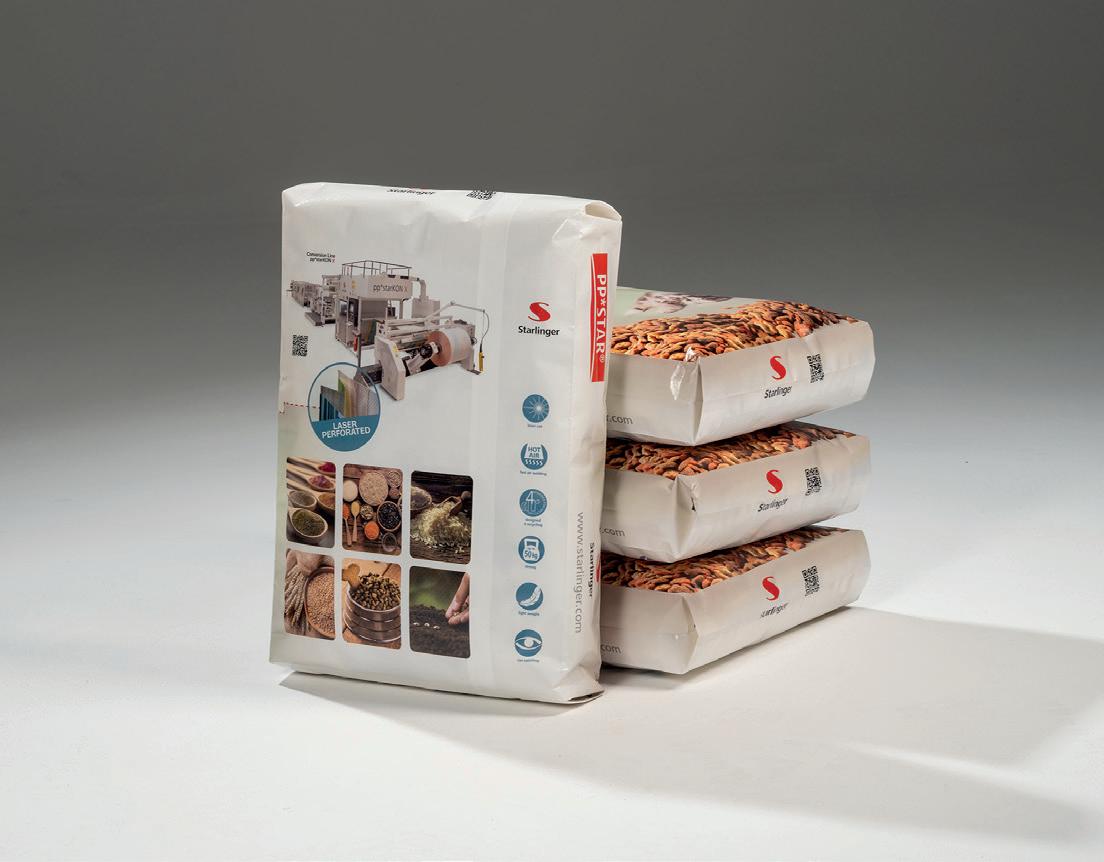
1. PP*STAR® bags combine the strength of woven polypropylene with the look of a reverse-printed BOPP film in a pinch bottom bag (Source: Starlinger).
The specially developed hot air welding unit closes the bag bottom by applying hot air, thus avoiding the use of adhesives. PP*STAR pinch bottom bags thus meet DfR criteria and are 100% recyclable.
An intelligent software program with a self-explanatory graphical user interface (GUI) enables the input, calculation, and storage of different bag formats and laser cuts in the machine control system. These can be selected at the touch of a button without the need for lengthy




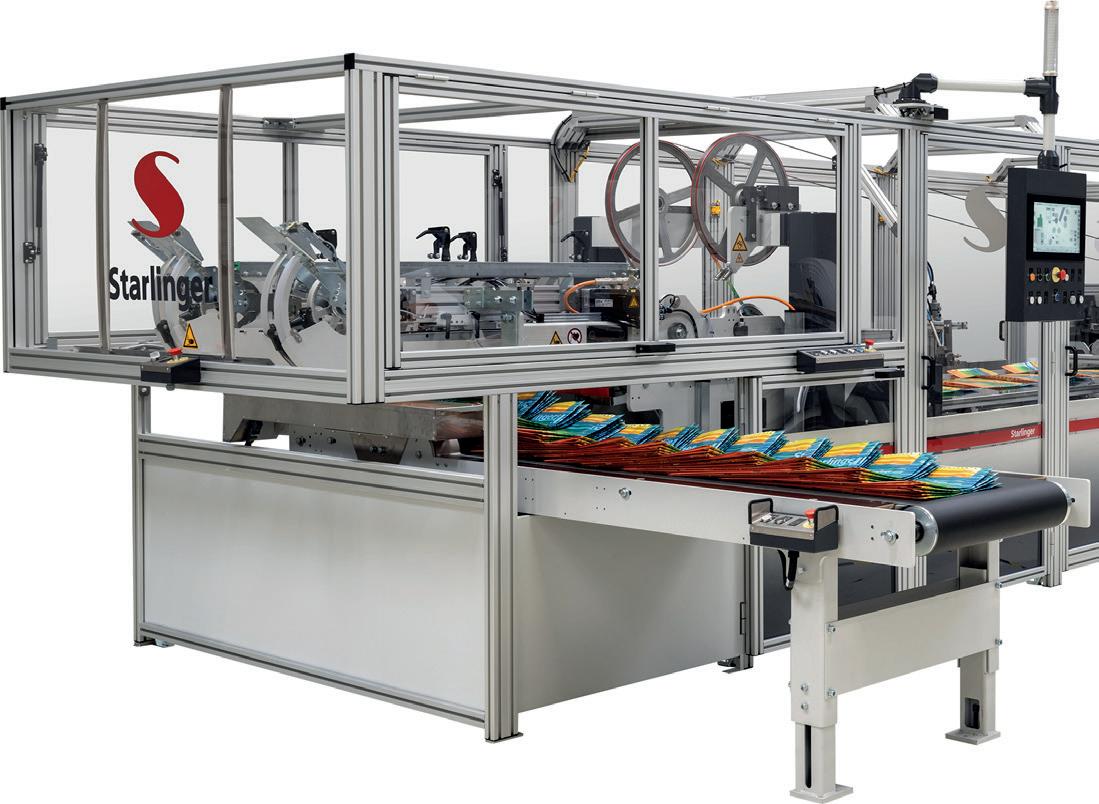
Figure 2. With its specialised technology features, the pp*starKON pinch bottom conversion line enables reliable, fast, and cost-efficient woven pinch bottom bag production (Source: Starlinger).
changeover procedures or downtimes when changing formats or designs.
The entire process is monitored to ensure continuous operation and consistent quality. Based on sensor feedback, the system control carries out automatic adjustments that minimise energy consumption, machine downtime, maintenance requirements, and production waste. In line with sustainability principles, this maximises throughput and makes optimal use of resources by
reducing waste to a minimum through rapid error detection and correction.
Woven PP pinch bottom bags are a packaging solution for sensitive dry bulk goods such as fertilizer that meets all the requirements of an innovative, versatile, protective, and environmentally friendly packaging. The mono-material composite of woven PP fabric and reverse-printed BOPP film ensures excellent barrier properties, resistance to external influences (humidity, UV radiation, chemicals), and attractive shelf presentation. Woven PP pinch bottom bag conversion technology features laser cutting and hot-air bag bottom welding, allowing the cost-effective, fast and sustainable production of pinch bottom bags in a wide range of designs and sizes. It enables packaging producers for the fertilizer industry to supply attractive and safe pinch bottom bags, both for the business-to-business and end-consumer markets which require less input material and thus cost less, and are a 100% recyclable, mono-material packaging.
Notes
PP*STAR® is a registered trademark of Starlinger. PP*STAR® bags are produced exclusively on Starlinger machinery.
Reference
1. FAO. 2025. Inorganic fertilizers – 2002-2023. FAOSTAT Analytical Briefs, No. 108. Rome.
A podcast





Sponsored by
The rollercoaster ride of 2025
Alan Gelder, Senior Vice President of Refining, Chemicals, and Oil Markets at Wood Mackenzie, reflects on downstream developments over the past year, and looks ahead to what 2026 may bring.
LNG outlook: North and Latin America
Fauzeya Rahman, LNG Specialist and Editor at ICIS, looks at the key trends, opportunities, and challenges facing the LNG markets across North and Latin America into 2026 and beyond.
TSCA: a critical turning point
Rob Benedict, Vice President for Petrochemicals and Midstream at American Fuel & Petrochemical Manufacturers (AFPM), guides us on the latest developments with the Toxic Substances Control Act (TSCA).
SAF: ready to take flight
Maurits van Tol, CEO of Catalyst Technologies, Johnson Matthey, explores the role of sustainable aviation fuel (SAF) in reducing emissions, and outlines the most promising pathways and innovations in the sector.

Listen and subscribe here


We aren’t just an engineering licensor, we are a trustworthy partner, supporting our clients from A to Z, with tailored solutions. Whether revamping plants or designing new ones, we o er customized contracting and construction services, and products to improve reliability, extend operating life and optimize chemical plant performances. With our one-stop-partner approach, you benefit from a single point of contact and full responsibility for the project designed for your plant, whether you need to produce nitrogen derivatives, sustainable fuel, chemicals, or store and transport your renewable energy.
At Casale we value collaboration, we believe in strategic partnerships and long term relationships to foster seamless project execution and guarantee operational excellence.
If you want someone you can trust to bring out the best in your facility, rely on us and our experience of more than a century.