
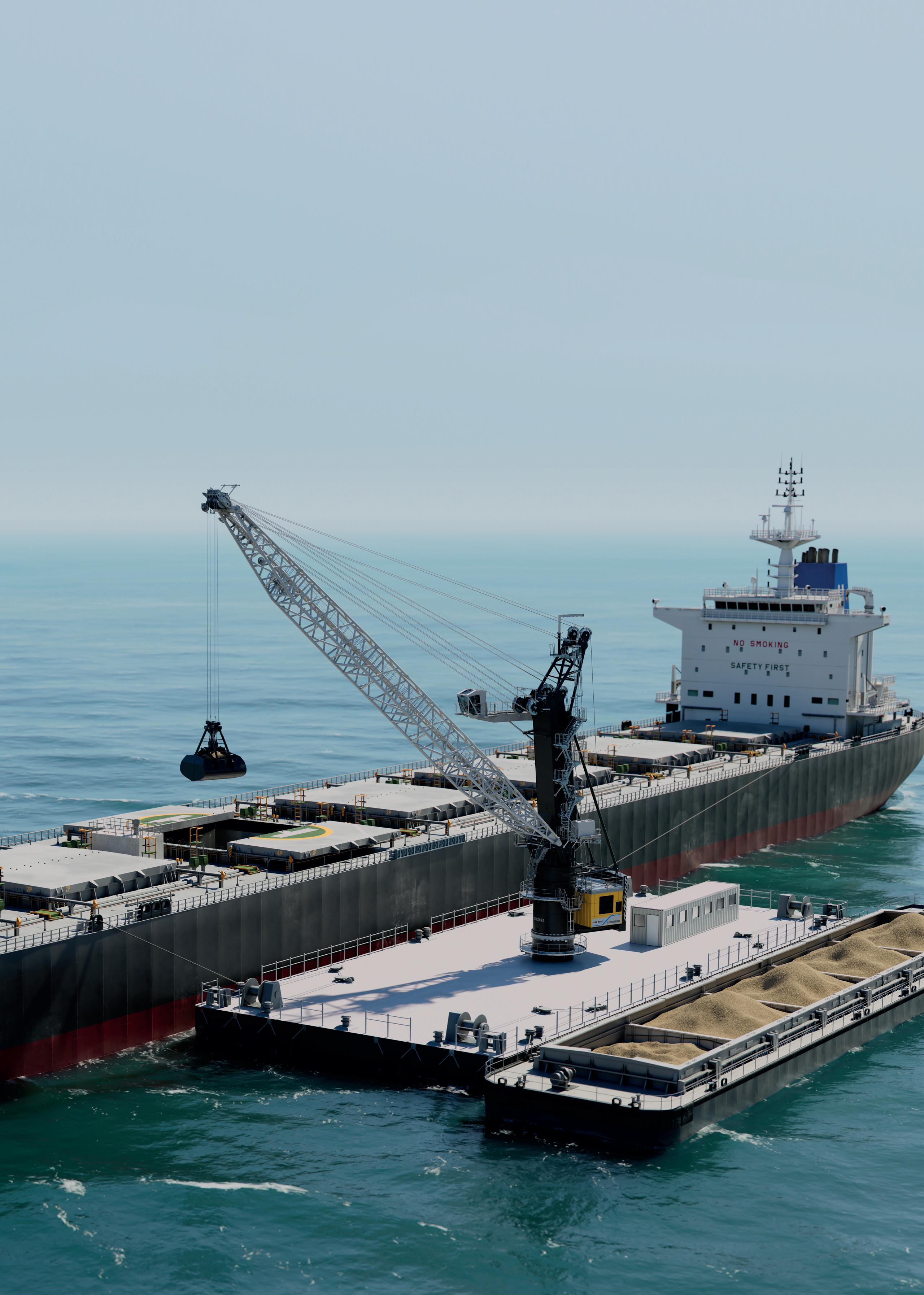

Coal remained resilient in 2025, holding relevance despite economic slowdown, weaker trade flows, and sustained policy pressure. Vasudev Pamnani, Director at iEnergy Natural Resources Limited, forecasts that coal trading will stay subdued in the near term but regain visibility as power reliability and structural demand reassert themselves.
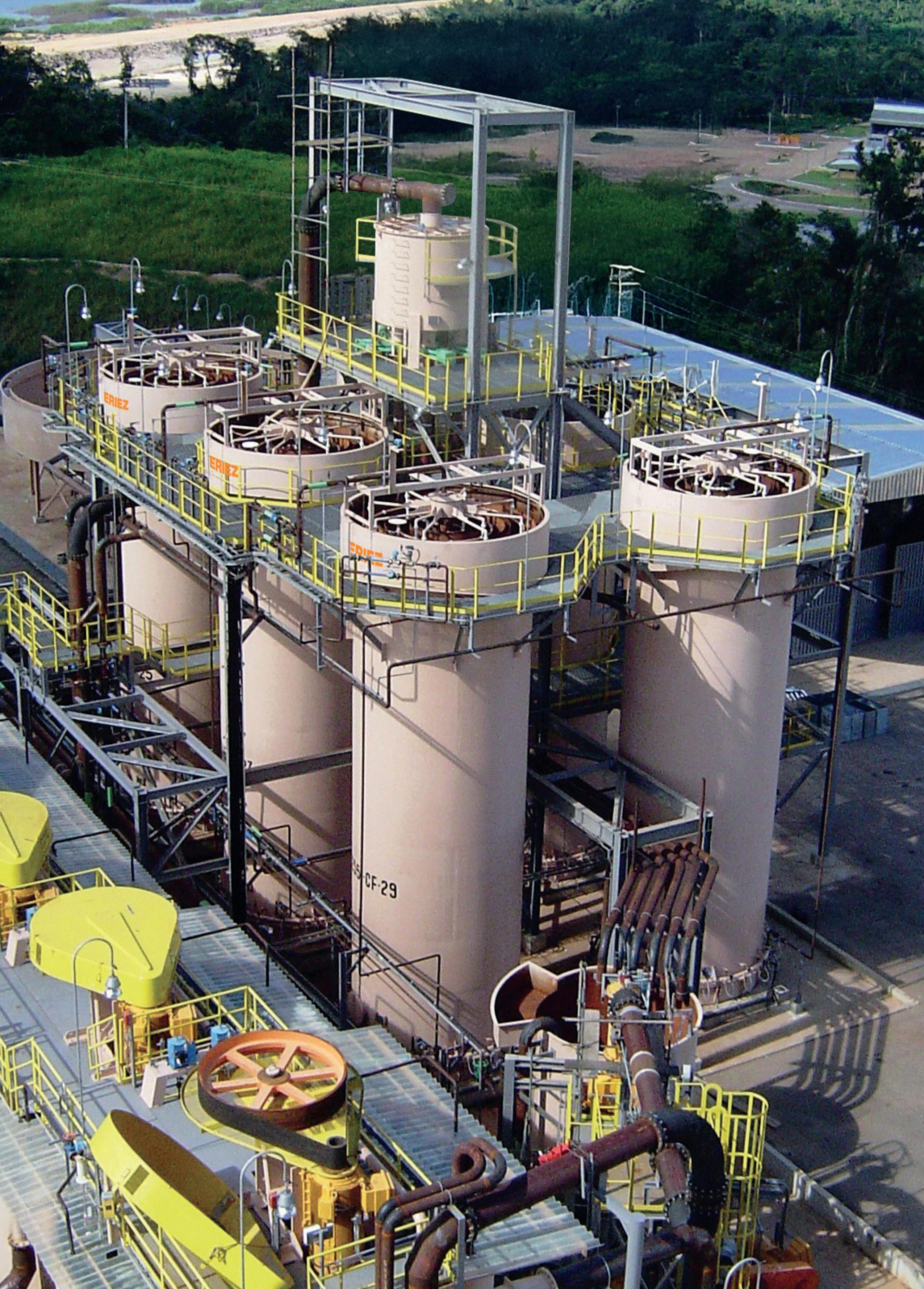
Erich Dohm, Eriez, USA, describes how persistent loss of ultrafine coal slimes can instead be converted into reliable value.
Steven Kidd, Conveyor Belt Specialist, outlines the causes and effects of unplanned conveyor stoppages, and investigates the extent to which repair costs and loss of productivity can be easily avoided.
25 Conveyor Performance And Dust Control In Coal Handling
Kinder Australia emphasises the importance of managing material carryback in coal handling, which reduces dust generation and improves the efficiency and longevity of conveyor belts.
29 Reliable Operation Of Steel Cord Conveyor Belts
Bernd Küsel, CBG, Germany, highlights the importance of in-depth, internal conveyor belt monitoring, to ensure maximum safety and efficiency when transporting raw materials in mining operations.

37
David Handel, RST Solutions, Australia, notes how fine particle management strengthens efficiency, reduces costs, and improves environmental performance across the global coal supply chain.
The Most Overlooked Automation In Coal Mining
Liam Sheeder, Belt Tech Industrial, USA, examines how optimising conveyor infrastructure – through disciplined maintenance and operational execution – continues to offer meaningful performance gains.
41 Critical Control Management
Imran Aslam, Sindh Engro Coal Mining Company (SECMC), Pakistan, discusses how SECMC’s blueprint for risk-based safety is shaping a 11.2 million tpy future.
46 Aligning Conveyors With Intrinsically Safe Ultrasonic Sensors
Sage Miles, Migatron Corporation, USA, illustrates how intrinsically safe ultrasonic sensing is key to protecting conveyor infrastructure and maximising efficiency in coal mining.
50 Choosing The Right Hydraulic Hose For Longwall Mining
James Shepherd, Gates Corporation, USA, explains how strategic selection can save operations from costly failures and extended shutdowns.
53
A New Operational Standard For Coal
Fraser McKillop, Alfred H Knight, considers the challenges faced by the global coal market and breaks down why outsourcing sampling and analysis is the new operational standard for the industry.

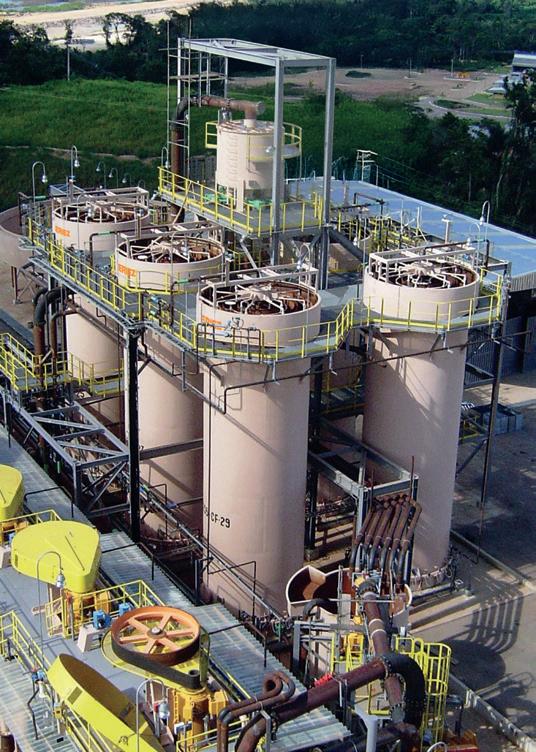




Invest in the best for maximum recovery. Eriez has supplied more than 1000 flotation columns throughout the world for mineral concentration and purification. Column flotation offers superior metallurgical performance, engineered for high recoveries and concentrate quality. Eriez. Always the right choice.
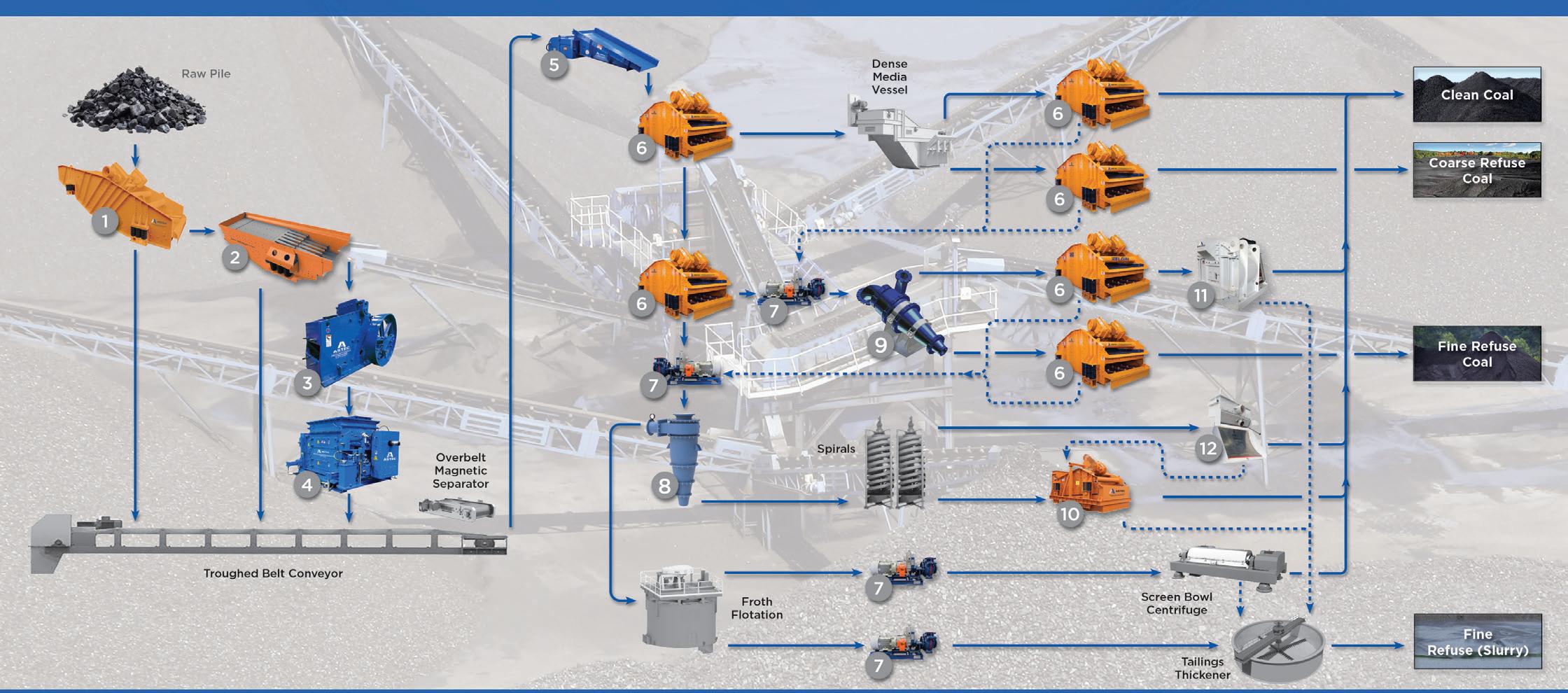
1. Tabor™ Multi-Slope Screen
2. Tabor™ Grizzly Feeder
3. Pennsylvania Crusher™ Jaw Crusher
4. Gundlach™ Multi-Roll Crusher
5. Jeffrey Rader™ Electromagnetic Feeder
6. Tabor™ Horizontal Screen
7. DuroLast RB™ Slurry Pump
8. Elgin Classifying Hydrocyclone
9. Elgin Dense Media Cyclone
10. Tabor™ Reverse Incline Screen
11. CMI™ Horizontal Vibratory Centrifuge
12. Coanda™ Sieve Box
Chairman of FutureCoal and Group CEO of Seriti Resources Holdings
MANAGING EDITOR
James Little james.little@worldcoal.com
SENIOR EDITOR
Callum O’Reilly callum.oreilly@worldcoal.com
EDITOR
Will Owen will.owen@worldcoal.com
EDITORIAL ASSISTANT
Jody Dodgson jody.dodgson@worldcoal.com
SALES DIRECTOR
Rod Hardy rod.hardy@worldcoal.com
SALES MANAGER
Ryan Freeman ryan.freeman@worldcoal.com
PRODUCTION MANAGER
Kyla Waller kyla.waller@worldcoal.com
ADMINISTRATION MANAGER
Laura White laura.white@worldcoal.com
DIGITAL ADMINISTRATOR
Nicole Harman-Smith nicole.harman-smith@worldcoal.com
DIGITAL CONTENT ASSISTANT
Kristian Ilasko kristian.ilasko@worldcoal.com
JUNIOR VIDEO ASSISTANT
Amélie Meury-Cashman amelie.meury-cashman@worldcoal.com
HEAD OF EVENTS
Louise Cameron louise.cameron@worldcoal.com
DIGITAL EVENTS COORDINATOR
Merili Jurivete merili.jurivete@worldcoal.com
EVENT COORDINATOR
Chloe Lelliott chloe.lelliot@worldcoal.com
World Coal (ISSN No: 0968-3224, USPS No: 020-997) is published twice per year by Palladian Publications Ltd, GBR, and distributed in the USA by Asendia USA, 701C Ashland Avenue, Folcroft, PA 19032. Periodicals postage paid Philadelphia, PA, and additional mailing offices. POSTMASTER: send address changes to World Coal, 701C Ashland Ave, Folcroft PA 19032.
Annual subscription (quarterly) £110 UK including postage, £125 overseas (airmail). Claims for non-receipt of issues must be made within four months of publication of the issue or they will not be honoured without charge.
Palladian Publications Ltd, 15 South Street, Farnham, Surrey, GU9 7QU, UK
t: +44 (0)1252 718999 w: www.worldcoal.com

Coal in 2026: From correction to coordination
The opening months of 2026 have delivered a clear signal: coal remains central to national energy security, industrial stability, and economic growth.
In the US, Winter Storm Fern placed the grid under pressure, with coal generation increasing sharply to stabilise supply as demand surged. In Australia, the decision to extend Eraring, the country’s largest coal-fired power station, until 2029 reinforces the same point: reliability cannot be compromised before alternatives are fully ready. When systems are tested, firm capacity proves essential.
In South Africa, Minister Gwede Mantashe has called for coal to be ‘reimagined’, not only as a power source, but as a strategic industrial asset capable of unlocking critical minerals, chemicals, and broader economic value. That shift signals something important: coal-producing nations are recognising that they must shape their own industrial future.
For several years, the global debate was framed in absolutes – phase out, divest, eliminate. Yet rising electricity demand, grid congestion, geopolitical volatility, and accelerating industrialisation have reinforced a fundamental truth: energy policy must be grounded in engineering, economics, and national priorities.
Coal remains the world’s largest source of electricity and a foundational input into steel, cement, and critical mineral supply chains. Demand growth across Asia and parts of Africa continues, driven by urbanisation, manufacturing expansion, electrification, and digital infrastructure. Data centres and advanced manufacturing are reshaping load profiles and reinforcing the need for dependable supply.
The defining question for 2026 is not whether coal has a role. It is whether coal-producing nations and companies will take ownership of that role – and modernise it.
This is where Sustainable Coal Stewardship (SCS), a pathway developed and advanced by Michelle Manook and the FutureCoal team, provides direction. SCS is a structured modernisation agenda for the coal value chain, encompassing efficiency improvements, methane management, high-efficiency technologies, carbon capture and storage, land rehabilitation, and the development of higher-value products beyond combustion – including coal-to-chemicals and critical minerals.
At its core, SCS recognises that sustainability is the ability to sustain – to sustain power systems, employment, industrial growth, and environmental improvement through measurable, technology-driven progress.
Across major coal economies, this approach is already advancing. India is scaling up coal gasification to strengthen industrial self-sufficiency. China continues deploying high-efficiency plants and expanding carbon capture while integrating coal into broader industrial value chains. In North America, research into coal-derived materials and critical minerals is linking coal directly to supply-chain resilience and advanced manufacturing.
These strategies reflect a common theme: countries are not abandoning coal. They are modernising it on their own terms.
FutureCoal’s expanding network of national chapters is central to that effort. The Southern Africa Chapter has shown how aligning producers, transporters, industrial users, and policymakers strengthens policy clarity and a unified voice. The India Chapter embeds coal modernisation within national development planning, and this year additional chapters, including AUSPAC and China, will extend that model of structured collaboration.
Each Chapter is built on a simple principle: energy and industrial policy must reflect national realities. Coal-producing nations and companies are not bystanders in the global debate; they are shaping their own trajectory.
Through the Chapters and SCS, FutureCoal is aligning the value chain around a modernisation agenda – deepening government engagement, supporting credible investment, and accelerating technology deployment.
2026 must be the year coal takes ownership of its future, and that future will belong to those who choose to modernise with clarity, conviction, and responsibility.
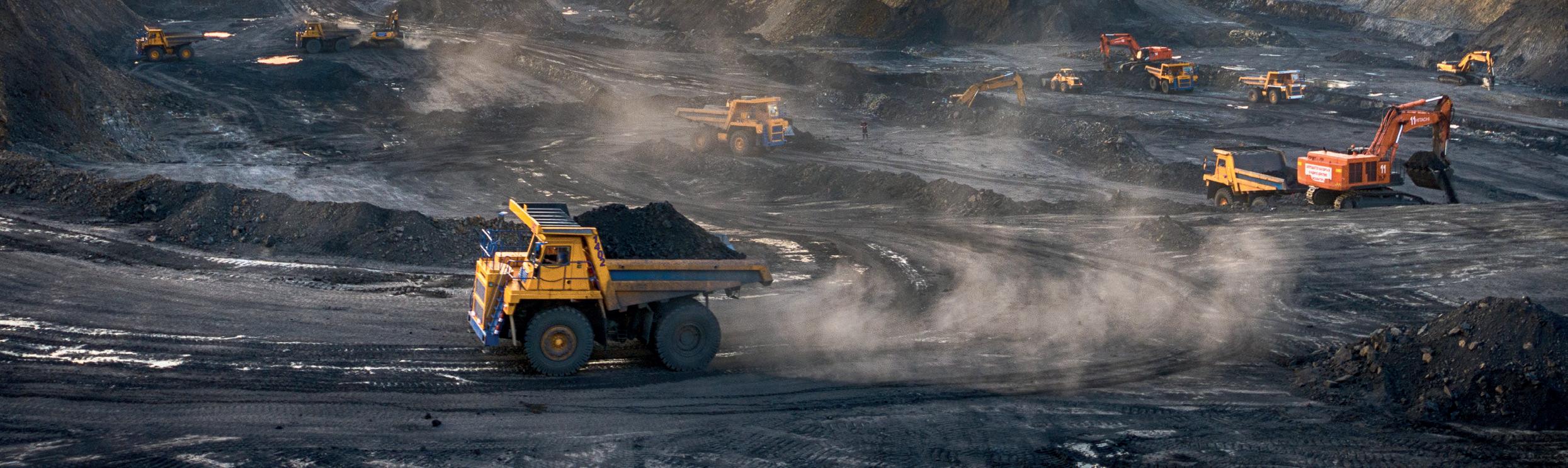
Liberty Coal has recommissioned a key dragline at its Optimum Colliery following the completion of a comprehensive refurbishment and technical restoration programme valued at almost R500 million.
The Marion 8200 dragline, among the largest of its kind in the world, features a boom measuring just over 100 m and can excavate coal to depths of nearly 80 m while hoisting approximately 135 t of material in a single scoop. The refurbishment included the installation of a state-of-the-art operator’s cab, integrated computerised offsite camera systems, as well as advanced performance and engine monitoring technology.
The recommissioning of the dragline marks an important operational milestone in Liberty Coal’s efforts to restore and strengthen mining operations at Optimum Colliery.
“This a huge milestone in terms of Liberty Coals plans to achieve full operational capacity of 1 million tpm for the Optimum Colliery. The increase in production rates will
directly translate into the creation of more jobs at the mine”, said Hlayiseka Chauke, Acting CEO.
As part of the refurbishment programme, structural integrity assessments and non-destructive testing (NDT) were conducted across major load-bearing components to verify compliance with design specifications and operational safety standards. The dragline’s bucket system, rigging components, and fairlead assemblies were also inspected and refurbished to ensure optimal digging performance and reduce wear during high-volume overburden removal operations.
The dragline will play a central role in Liberty Coal’s planned surface mining operations, enabling large-scale overburden stripping to expose underlying coal seams. Following its return to operating capacity after years of neglect and vandalism, Liberty Coal expects significantly improved stripping ratios and efficiencies in overburden removal cycles, supporting increased run-of-mine (ROM) coal production once fully deployed.
AUSTRALIA Coal’s momentum in Australia builds as New Hope Group joins Global Coal Alliance
FutureCoal, the Global Alliance for Sustainable Coal, has welcomed New Hope Group as a new member, reflecting a growing shift in Australia toward a more balanced and realistic conversation on coal, energy security, and industrial resilience.”
The announcement comes amid renewed focus on energy reliability, following recent assessments by Australia’s energy authorities and the International Energy Agency underscoring coal’s continued role in supporting grid stability and meeting global industrial demand through the coming decades.
Australia remains strategically significant in global coal markets, holding the world’s third-largest coal reserves, generating more than AUS$90 billion in annual exports and supporting approximately 350 000 jobs across the economy.
FutureCoal Chief Executive Michelle Manook said New Hope Group’s membership reflects a shift in Australia’s energy debate.
“Australia is returning to energy realism”, Manook said. “As reliability, affordability, and system performance move
back to the centre of policy discussions, companies like New Hope Group are choosing to engage constructively in shaping coal’s future.”
Manook said New Hope Group’s profile and standing will strengthen the Global Alliance.
“New Hope Group is an important addition to FutureCoal’s membership”, she said. “As an Australian coal producer with associated port and agricultural operations, it brings a practical, long-term perspective on how coal continues to operate alongside other energy sources and industries.”
Guided by FutureCoal’s Sustainable Coal Stewardship (SCS) Roadmap, New Hope Group joins the Global Alliance in advancing a technology-led modernisation of the coal value chain, including emissions reduction, innovation, and stronger environmental and operational standards.
Rob Bishop, New Hope Group Chief Executive, said the company welcomed the opportunity to engage through a global platform that connects Australia’s coal industry with international dialogue.
AsiaCoke 30 March – 01 April 2026 Jakarta, Indonesia www.metcokemarkets.com/asiacoke
Coal Processing Technology (CoalProTec) 27 – 29 April 2026 Lexington, USA www.coalprepsociety.org
Coaltrans China 09 – 11 June 2026 Beijing, China www.fastmarkets.com/events/coaltrans-china
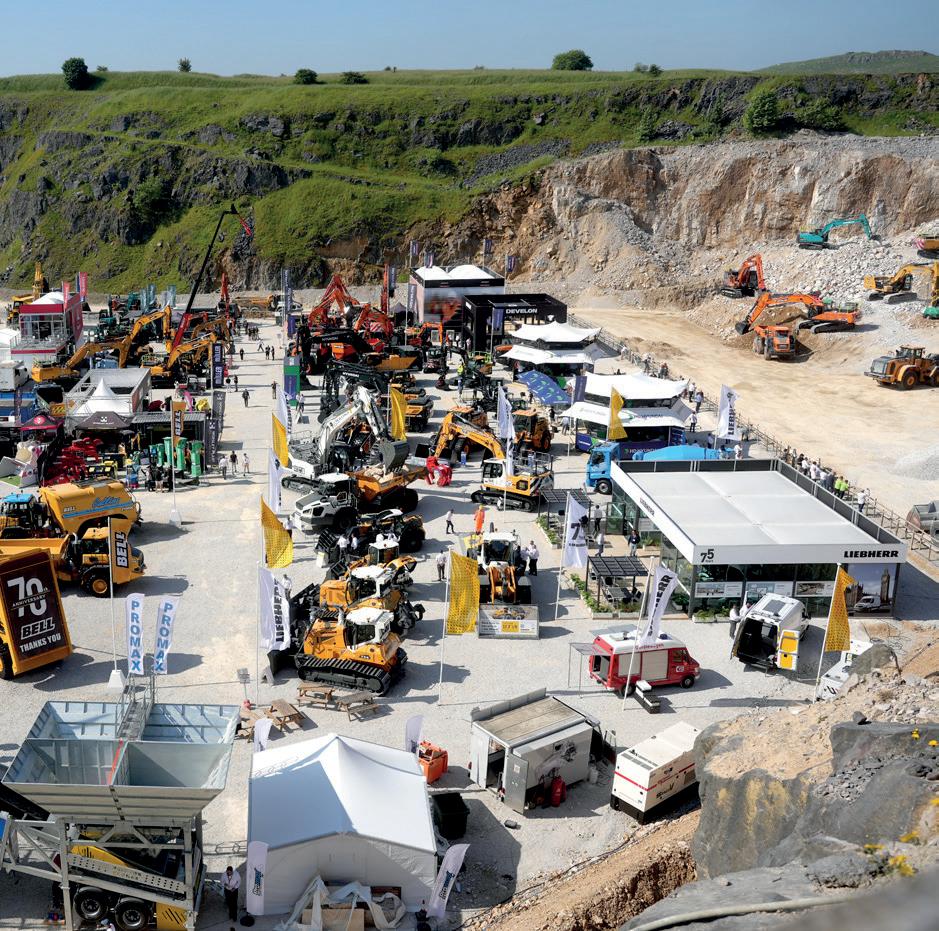
Hillhead 23 – 25 June 2026 Buxton, UK www.hillhead.com
To stay informed about coal industry events, visit World Coal’s website: www.worldcoal.com/events
rehabilitation
Thiess Rehabilitation has successfully delivered the rehabilitation of Muswellbrook Mine in the Upper Hunter Region of New South Wales under a two-year contract with Idemitsu Australia’s Muswellbrook Coal Company, transforming the former opencast mine into sustainable land for future use.
This project brings the Thiess founding story full circle, rehabilitating the site where the Thiess Brothers first pioneered opencast mining in 1944.
Group Manager, Thiess Rehabilitation, Jonathan Miln said: “Completing the rehabilitation of Muswellbrook Mine is a proud milestone for Thiess, representing the final and enduring legacy of the site. Drawing on our history at Muswellbrook Mine and leveraging our whole-of-mine-life knowledge as well as operational and technical expertise, our team was honoured to return and take on the responsibility of delivering long-term value to both the land and the local community through its post-mining transition.”
Rehabilitation works were completed on schedule, and the team achieved an exceptional safety milestone of 830 consecutive days recordable injury-free.
USA US EPA approves Wyoming’s CCR permit programme
� Boosting profits and sustainability: The power of cyclones in Canadian coal mining
� A compact solution for deep mine cooling in Poland
� Multotec’s Middelburg branch adapts to coal’s evolving demands on South Africa’s Highveld mines
Follow us on social media for all the latest industry


The US Environmental Protection Agency (EPA) has announced the final approval of Wyoming’s partial coal combustion residuals (CCR) programme. This will allow Wyoming, rather than the federal government, to permit CCR disposal in surface impoundments and landfills.
The EPA worked closely with Wyoming to assess the state’s programme application, gaining insights into how the state will implement its programme within its borders. After reviewing Wyoming Department of Environmental Quality’s application, the EPA determined that its application meets the standards for approval. With this approval, Wyoming is the fifth state in the nation, joining Oklahoma, Georgia, Texas, and North Dakota, to take control of its CCR permitting and oversight.
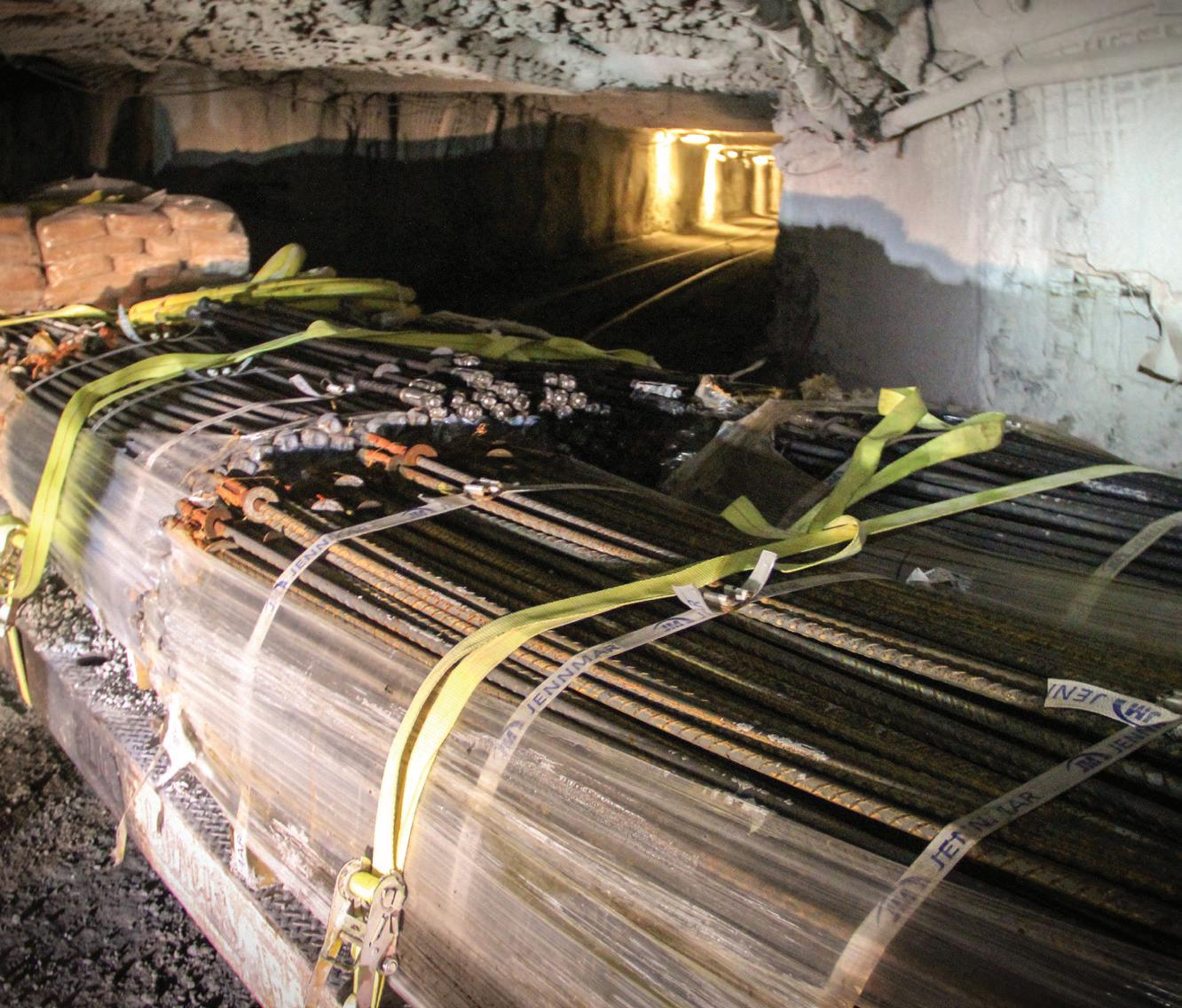
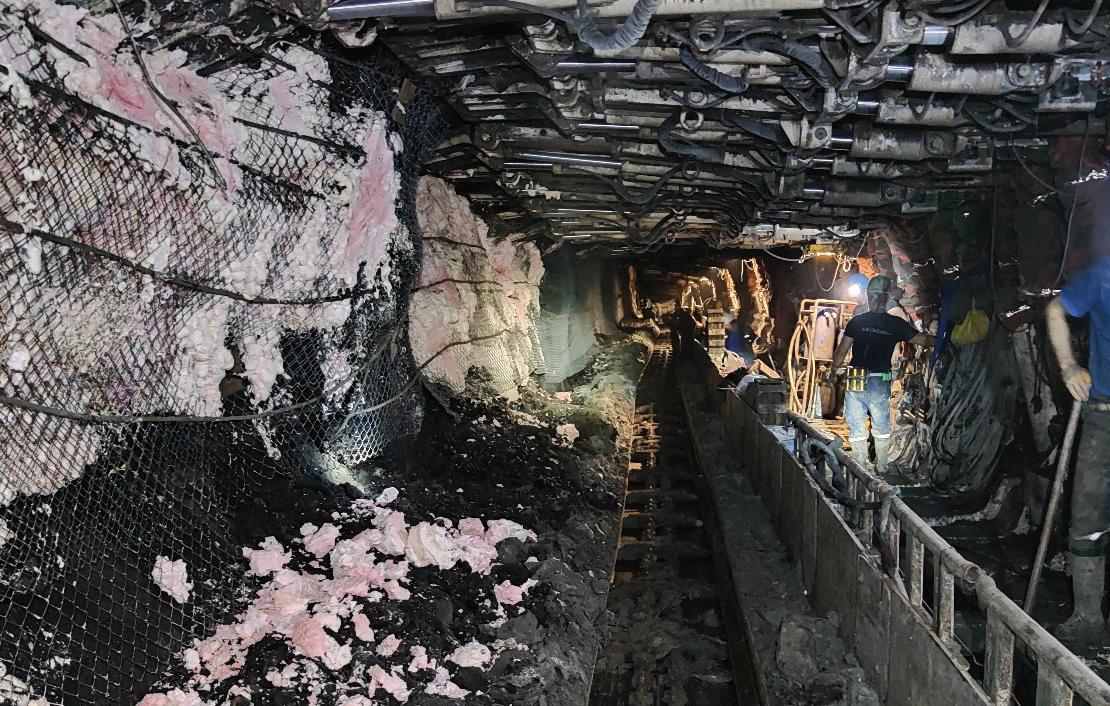
DEMANDING CONDITIONS
Our commitment to you, our customers, is guided by three words; safety, service, and innovation. We are constantly moving forward creating products of the highest quality and providing you with the services which make the impossible possible.
At Jennmar fabrication takes place in our numerous strategically located manufacturing facilities associated with our affiliated brands. From bolts and beams to channels and trusses, to resin and rebar, and more, Jennmar is ideally positioned to meet the industrial fabrication demands of our customers. Our ability to provide our customers with a complete range of complementary products and services ensures quality, efficiency, and availability resulting in reduced costs, reduced lead times, and increased customer satisfaction!
From our Engineers to our Technical Sales Representatives we work tirelessly with you to ensure your safety is at the forefront. We will be with you every step of the way.
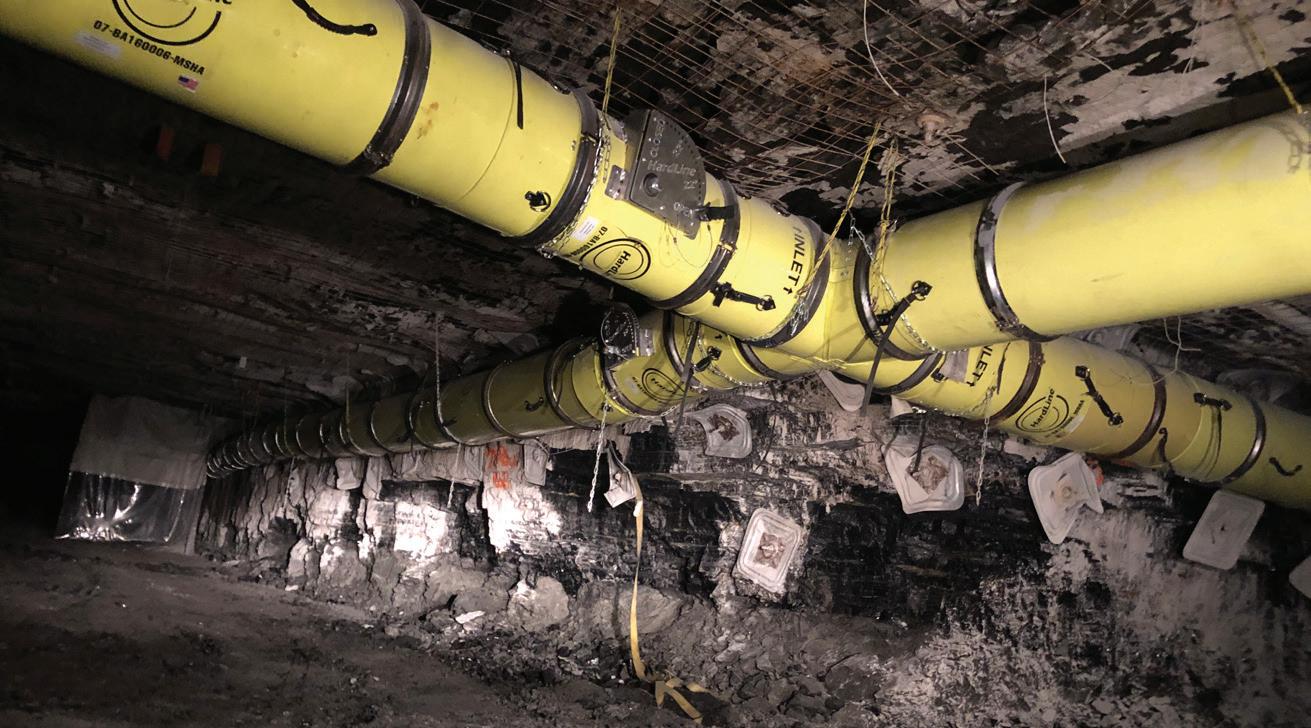

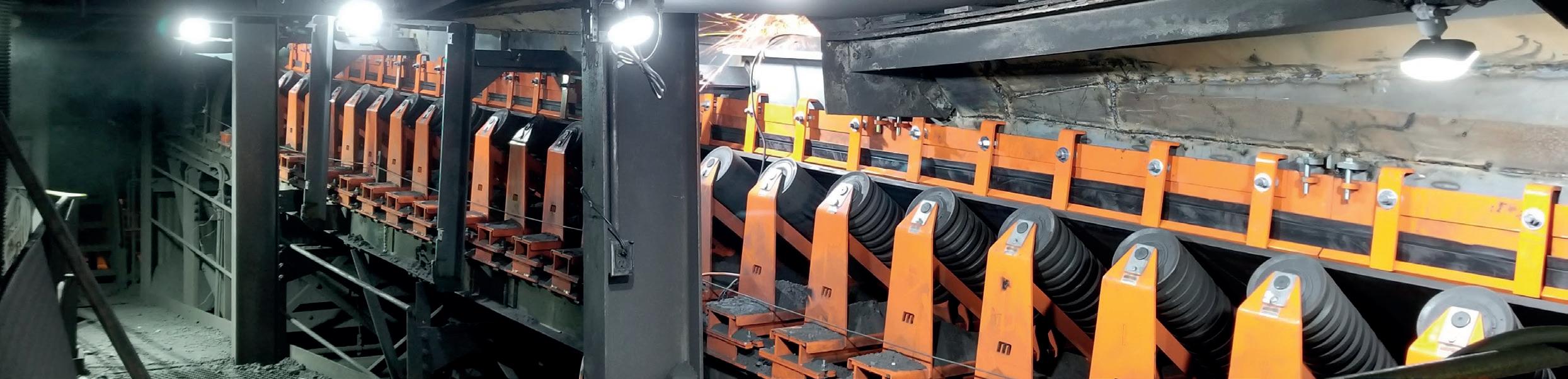
Conveyors in coal mines, processing plants, terminals, and power plants all contend with punishing, abrasive, and dusty material. Coal particulates, such as respirable crystalline silica (RCS), are highly regulated, and general coal dust can be extremely explosive at high concentrations. Martin Engineering recognises the issues coal operations have with sealing and damage at conveyor transfer points, so it designed Martin® Skirtboard Liners (otherwise known as ‘canoe liners’ or ‘wearliners’) as a solution.
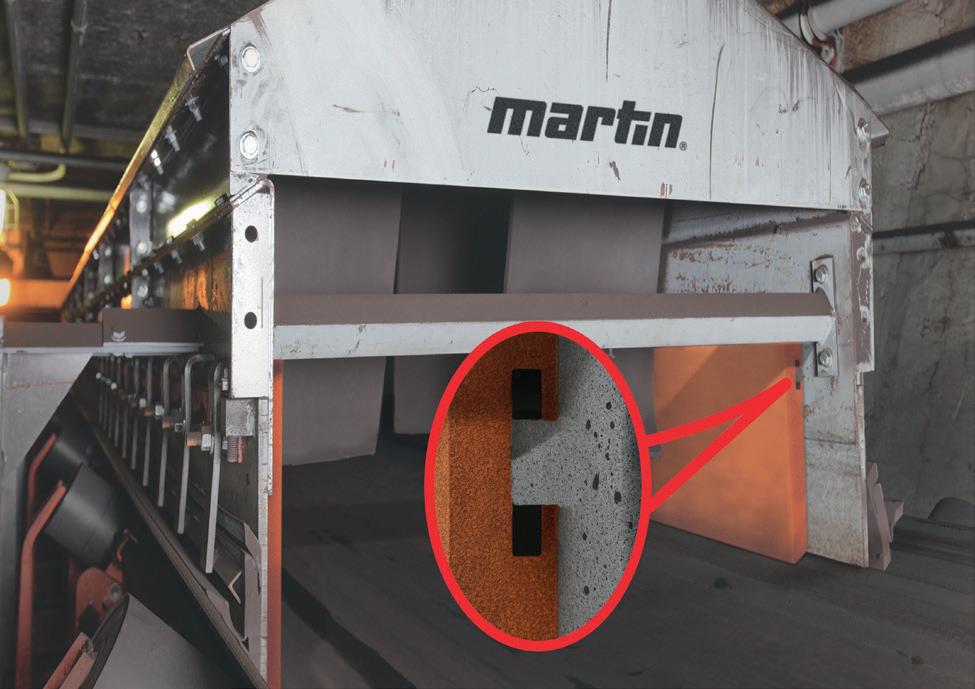
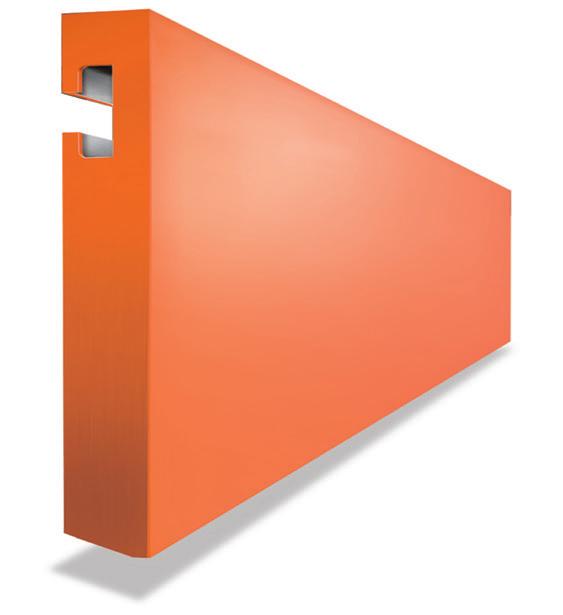
Martin Skirtboard Liners can be retrofitted and attached to the structural sides of the transfer point enclosure to contain dust and spillage. Fast-moving abrasive coal naturally spreads across the belt and quickly erodes the skirtboard, creating holes that release dust. Martin Skirtboard Liners absorb impact and abrasion by creating a dam to shield the wall and other sealing accessories from the weight of the material load. Liners are also stackable to line higher drop chutes.
The bottom edges of Martin Skirtboard Liners are machine-cut to the trough angle and the length of the transfer point to help seal the enclosure. The unit protects the skirting from larger material and spillage, allowing the skirting to focus on sealing in turbulent, dusty air. This prolongs the life of the skirting, reducing maintenance and downtime.
Commonly, steel plating is welded to the inside of the transfer chute, which requires confined space entry and hot work to replace. Martin Skirtboard Liners feature a steel plate, molded and encased in thick urethane, to prevent bond issues. The unique T-slot mounting interface allows the liner to be adjusted from outside the chute wall, eliminating the need for confined space entry.
� Longer equipment life.
� Designed for safer maintenance.
� Engineered for better performance.
� Manufactured with superior materials.
The system can be retrofitted onto transfer points to help create passive dust control. When combined with Martin ApronSeal™ Urethane Skirting and Martin A.I.R. Control™ Dust Curtains, operators can control airflow without the expense of air cleaners or hoods. The result is longer periods of dust/spillage control, improved safety, and less maintenance, reducing the overall cost of operation.
Coal remained resilient in 2025, holding relevance despite economic slowdown, weaker trade flows, and sustained policy pressure.
Vasudev Pamnani, Director at iEnergy Natural Resources Limited, forecasts that coal trading will stay subdued in the near term but regain visibility as power reliability and structural demand reassert themselves.

Few markets were as closely watched in 2025 as coal – and fewer still defied expectations the way it did. Amid slowing economic momentum, energy transition pressure, and cautious trade flows, coal neither surged nor collapsed. Instead, it held its ground. Expectations were muted, and coal’s relevance was repeatedly questioned through the year. Yet, in the face of global headwinds, the market stood firm. That resilience delivered a quiet but powerful message: the era of ‘king coal’ may be under challenge, but it is far from over.
Asia anchors global coal demand amid slower growth
The market’s performance was shaped by tempered growth rates, even as demand stayed broadly stable. Across Asia – the core of global coal consumption – usage remained broadly stable. China and India continued to anchor demand, with domestic production absorbing much of the adjustment as
imports were selectively reduced. This recalibration limited international trade flows, but helped prevent any sharp contraction in overall consumption.
On the supply side, major exporters showed little appetite for aggressive expansion. Production and exports from major exporting nations were largely stable or marginally lower, reflecting a market responding to demand signals rather than flooding supply. The result was a market that stayed balanced, albeit without momentum.
Price performance, however, told a different story. Neither buyers nor suppliers found a convincing argument to push prices higher. Attempts by exporters to lift prices met resistance, as buyers across Asia adopted defensive, need-based procurement strategies.
In hindsight, 2025 was a year of strain rather than surrender for coal. Trade flows weakened, prices softened, and growth disappointed – but stability amid adversity was itself telling. As debates around coal’s
long-term future intensify, its performance through one of the most challenging years in recent memory suggests that while the crown may feel heavier, the king has not stepped down yet.
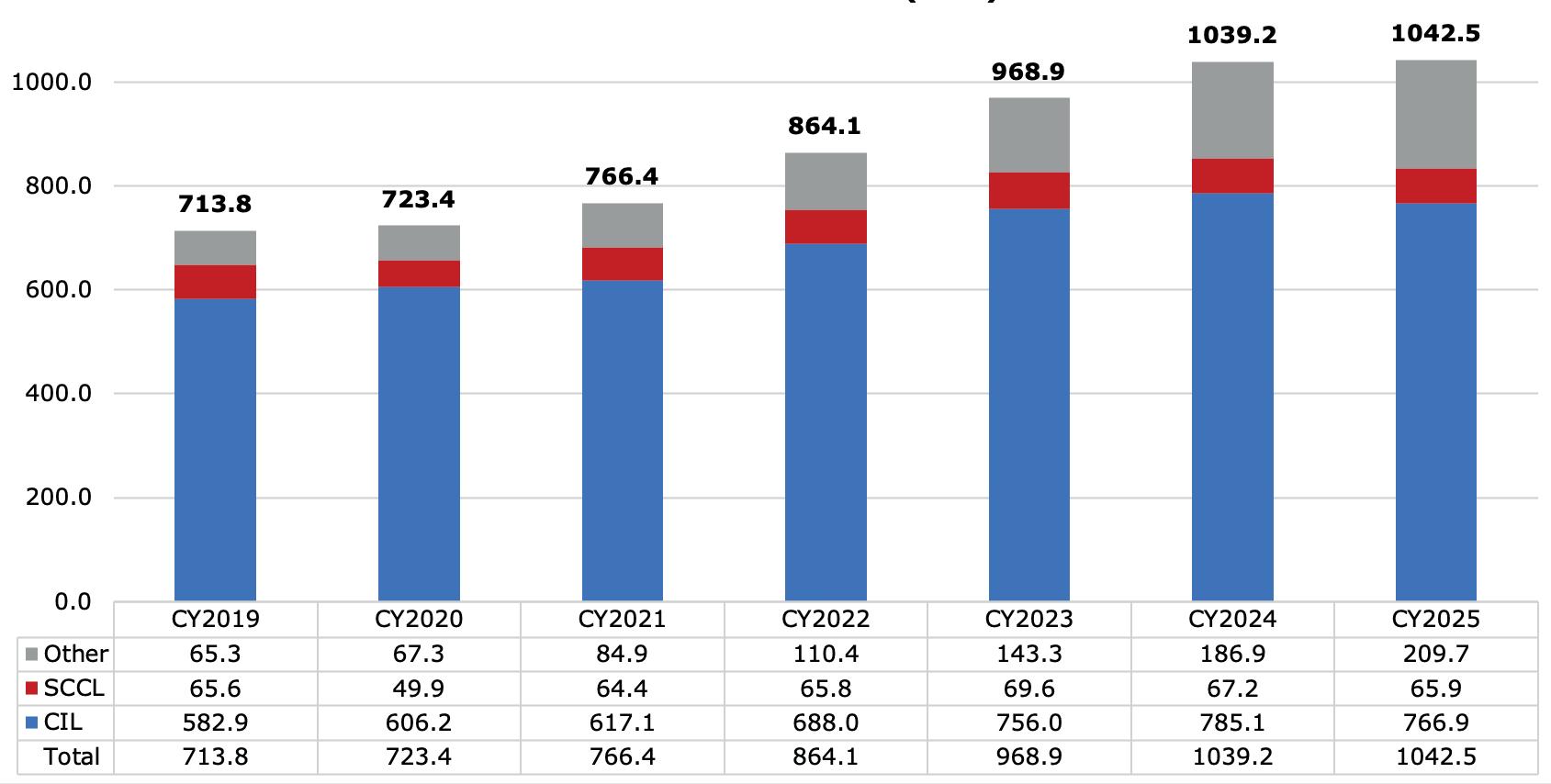
India’s coal market entered 2025 carrying unusually high expectations. As global growth slowed and China’s demand momentum weakened, India was widely viewed as the marginal growth engine for seaborne coal. Forecasts reflected this optimism, calling for strong production growth, rising imports, and record consumption. What followed was not a breakdown of demand, but a year of adjustment that reset assumptions about pace, not direction. Rather than accelerating, the market stabilised. Domestic coal production during 2025 stood at 1.04 billion t, effectively unchanged from last year. This outcome fell short of growth expectations,
yet it also demonstrated supply continuity at a time when global coal markets were marked by volatility. Imports adjusted lower, with thermal coal imports declining 6% y/y, as buyers recalibrated procurement strategies amid comfortable inventories and muted demand signals.
Key factors behind softer coal demand
Policy and macroeconomic factors reinforced this cautious environment. The imposition of higher US tariffs weighed on sentiment, while depreciation of the Indian rupee increased landed import costs and encouraged more conservative buying behaviour. At the same time, the government restructured coal taxation, raising the GST on coal from 5 – 18% while removing the INR 400 t cess. This structural change altered cost pass-through mechanisms across industries, benefiting some consumers while increasing the tax burden for others. In steel, restrictions on metallurgical coke shifted raw material
demand toward imported coking coal, compressing margins already under pressure from weak exports and global oversupply.
Industrial activity remained uneven, limiting electricity demand growth near 2% y/y. A prolonged monsoon and higher hydro and renewable output cut coal-fired generation by 4% y/y. This eased offtake pressure on utilities and reduced the urgency for incremental imports, despite tightening port stocks later in the year.
Rising inventories put mounting pressure on domestic miners, as power plants with adequate stocks refused further coal deliveries. To manage the surplus, the government permitted power plants under long-term contracts to export up to half of their contracted volumes.
A closer look at production highlights a shift within India’s supply structure. Coal India Limited produced 766 million t during 2025, down 2% y/y and SCCL output stood at 65.9 million t, down 1%. This softness was offset by strong output growth from captive and commercial miners, whose production rose 12% y/y to 209.7 million t.
Imports: Thermal weakness, steel raw materials gain
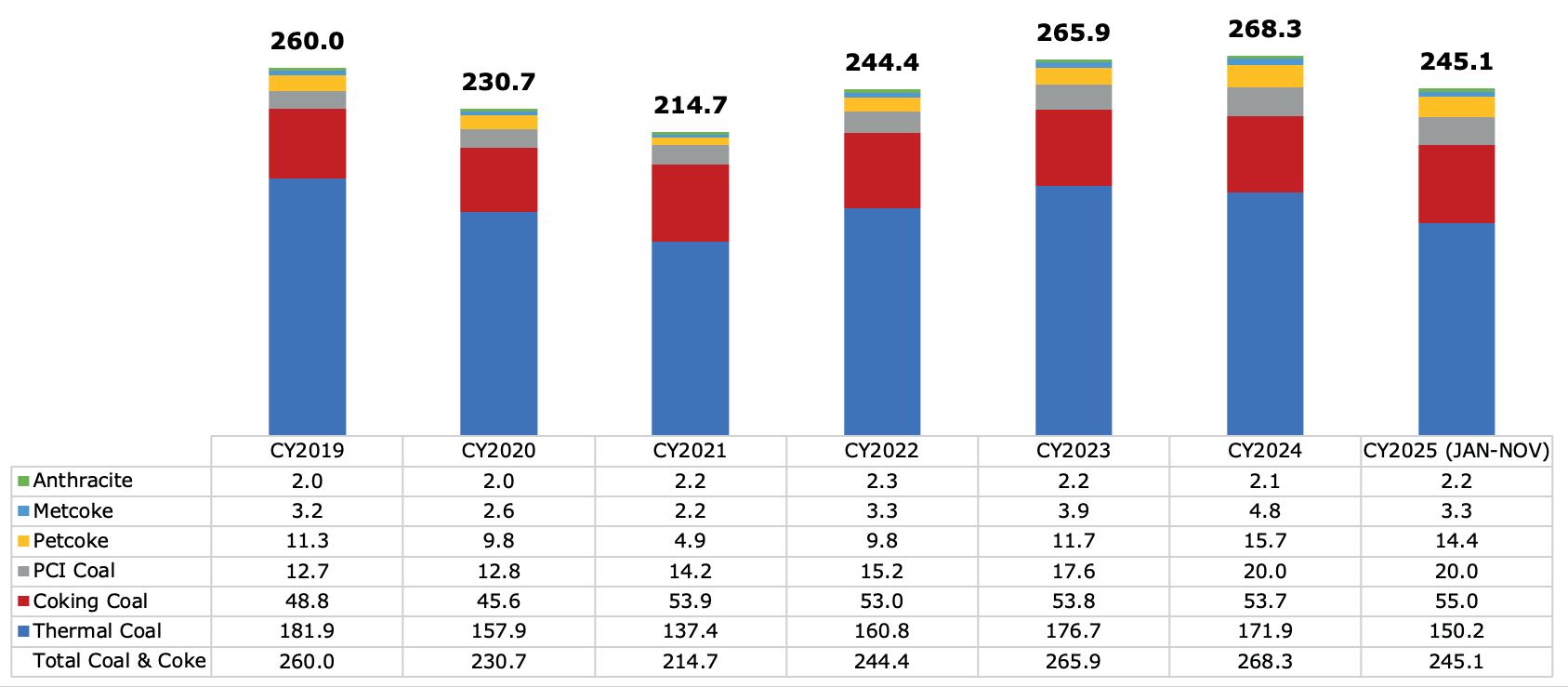
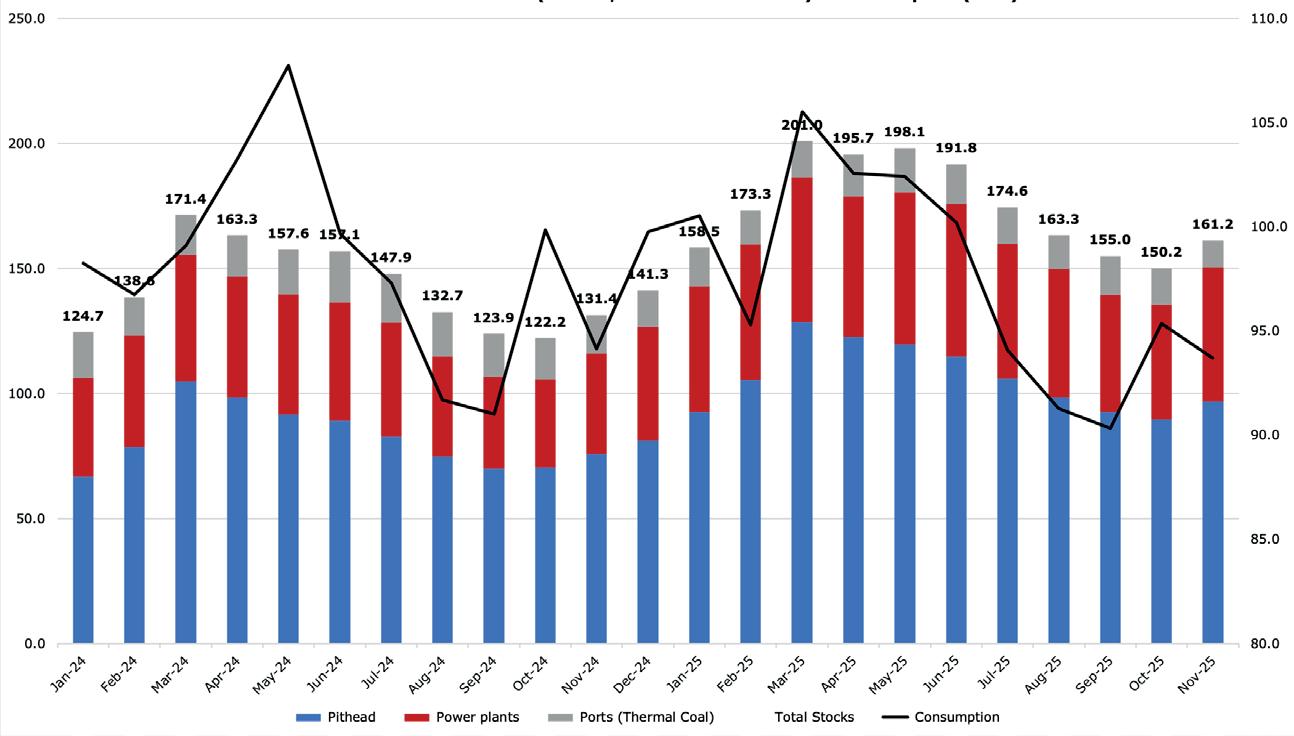
On the import front, India’s total coal imports during January to November 2025 – including thermal coal, coking coal, PCI, pet coke, met coke, and anthracite – stood at 245.1 million t, down 2% y/y. Thermal coal imports were particularly weak at 150.2 million t,
a 6% y/y decline. While coking coal and PCI imports rose by 9% and 12% y/y respectively, this increase was largely structural, driven by curbs on met coke. Met coke imports fell sharply by 24% y/y.
Inventory build-up signals demand caution
Inventory trends offered one of the clearest signals of the year’s underlying balance. Average coal stocks during January to November 2025 rose sharply to 174.8 million t, compared with 142.8 million t a year earlier. By the end of November 2025, pithead stocks with miners stood at 96.8 million t, up 27% y/y, while inventories at power plants climbed to 53.7 million t – 34% higher y/y. In contrast, port stocks fell to 10.8 million t in November, marking their lowest level since February 2022. Even so, the drop in port inventories failed to trigger aggressive buying, as buyers continued to rely on drawdowns from existing stocks rather than fresh procurement.
By November, coal consumption reached 1.071 billion t, slightly lower y/y. While the shortfall was modest, 2025 fell short of growth expectations but underscored the market’s resilience and ability to absorb macro, policy, and demand shocks without structural stress.
Thermal coal prices remained under pressure throughout 2025, as repeated supplier attempts to lift the market ran into firm buyer resistance. Measures such as production restraint and revised pricing strategies failed to gain traction, while weakening demand in Western markets accelerated the correction, particularly in mid and higher-CV coal. This sharply narrowed the premium over lower-CV material and reshaped procurement economics across Asia.
Price trends across calorific bands were a key driver of this shift. On an annual average basis, South African RBCT 6000 NAR prices fell 15% y/y to US$88.2/t in 2025, while Australian Newcastle 6000 NAR dropped 21% y/y to US$103.3/t. In contrast, Indonesian 3400 GAR prices eased by only 7% y/y to US$31.6/t, compared with sharper 15 – 17% y/y declines across Indonesian 4200 – 6500 GAR grades. This uneven price correction significantly narrowed inter-grade differentials, enhancing the relative value proposition of higher-energy coal.
India’s trade flows mirrored this realignment. Imports from Indonesia declined sharply, while shipments from South Africa, the US, and Russia gained share, supported by more competitive pricing and higher calorific value.
Trade flows weakened towards the end of 2024 and remained subdued through much of 2025, as heightened trade tensions, slowing global
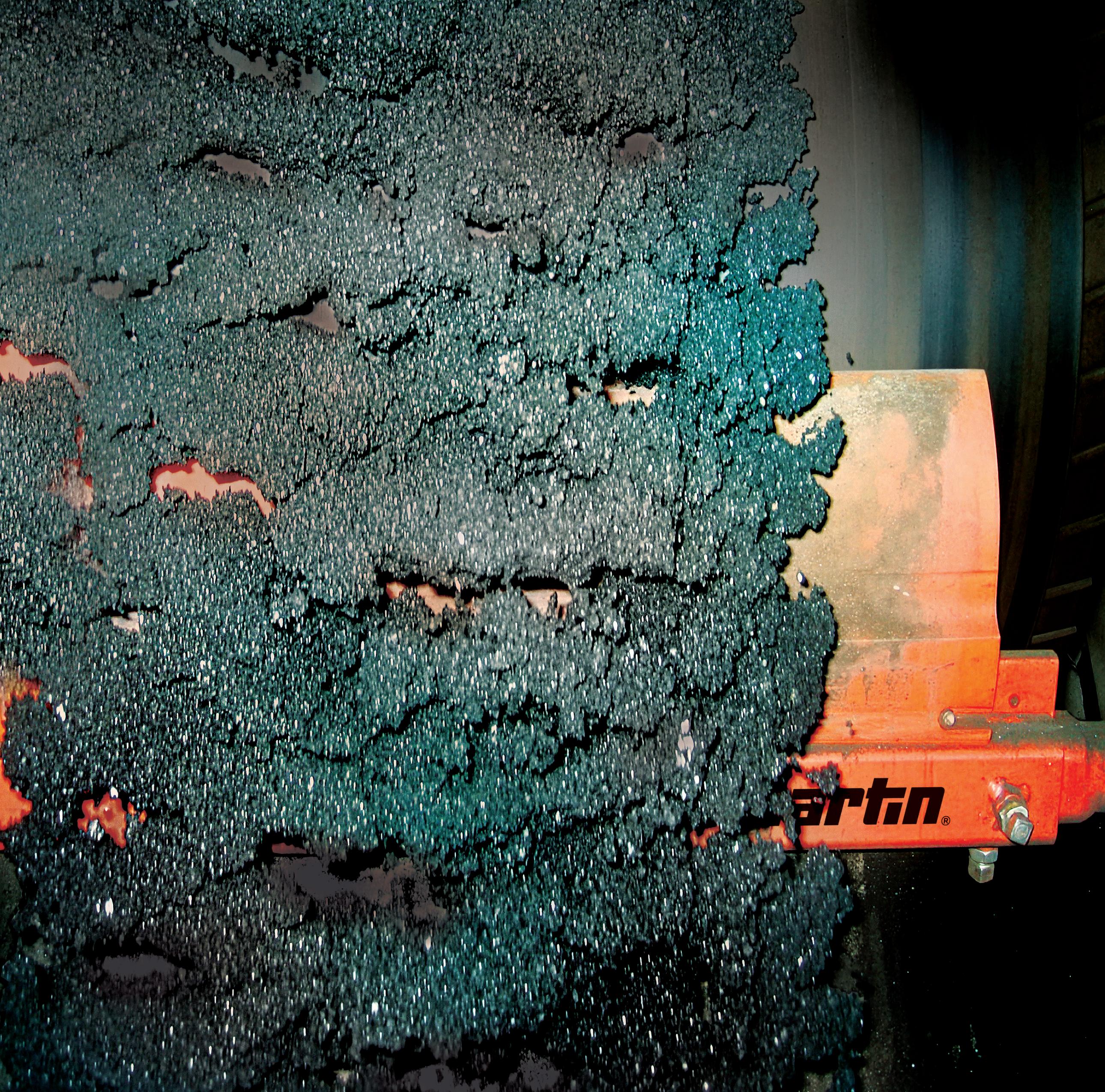
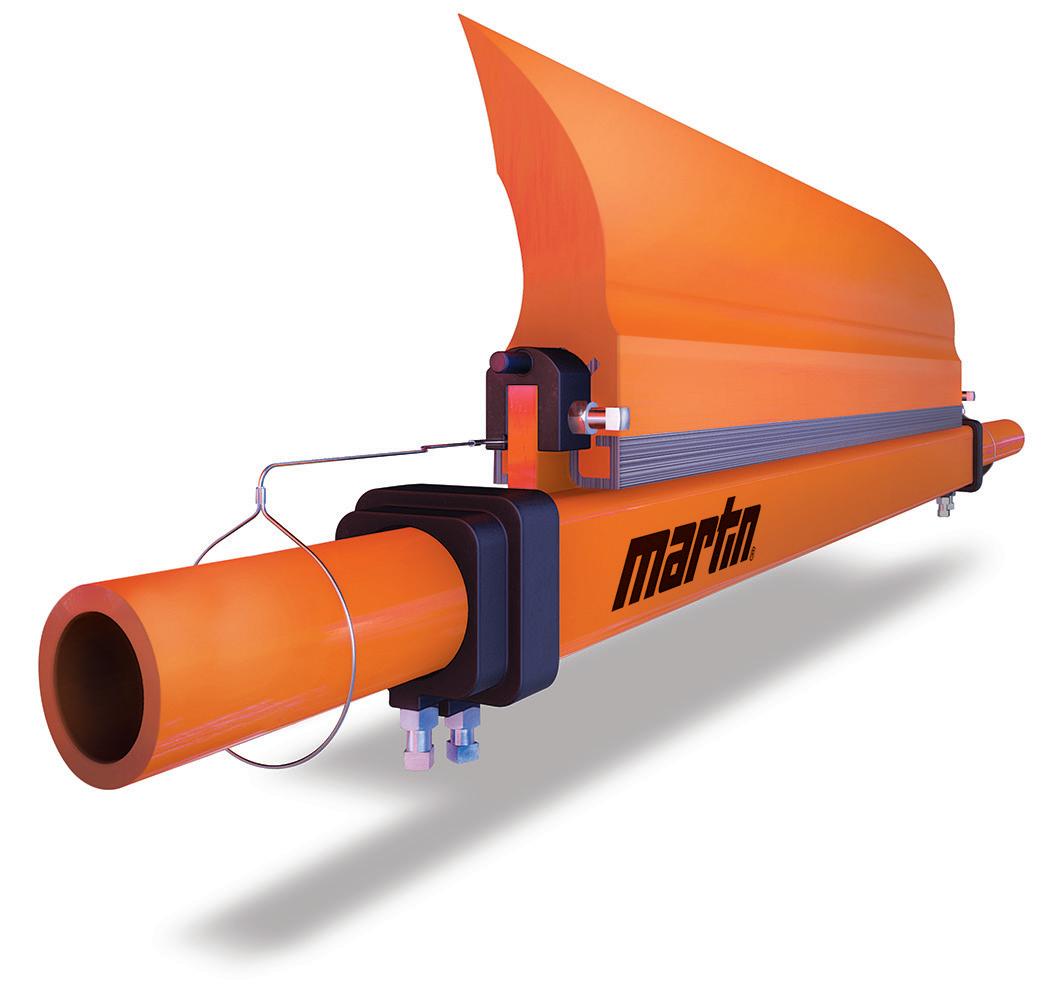
Martin’s innovative QC1+™ primary belt cleaners deliver the industry’s best performance for demanding coal handling operations all over the globe. These cleaners discharge material from the belt while minimizing the carryback that can lead to potential belt or component damage, fire risks, unscheduled downtime for clean-up, and diminished production.
QC1+™ cleaners feature Martin's patented Continuous Angle Radial Pressure blade-to-belt technology and a rugged mainframe construction. Their specially formulated urethane blades can be efficiently sized to match the width of the material path. To get maximum cleaning effectiveness for an extensive range of belt sizes and speeds, go with Martin’s QC1+™
economic growth, and weak industrial activity weighed on the global coal market. These pressures were most visible in seaborne trade, where cautious buying behaviour, elevated inventories, and limited spot activity restrained any sustained price recovery.
Given the depth and duration of pressure in 2025, the coal market is expected to remain weak in early 2026, with downside risks persisting in the near term. Demand, however, is likely to regain gradual momentum in the second half of the year, supported by seasonal requirements and a modest improvement in industrial activity.
In 2026, coal production is projected to rise by 1% y/y to 1.05 billion t, while demand increases by 1% y/y to 1.32 billion t. Import requirements are expected to remain broadly stable, easing marginally by 0.3% y/y to 265 million t, keeping the import share unchanged at 20%. Overall, 2026 is expected to be a year of stabilisation rather than recovery, with market conditions broadly in line with 2025 levels.
2027 outlook: The quiet comeback of reliable power
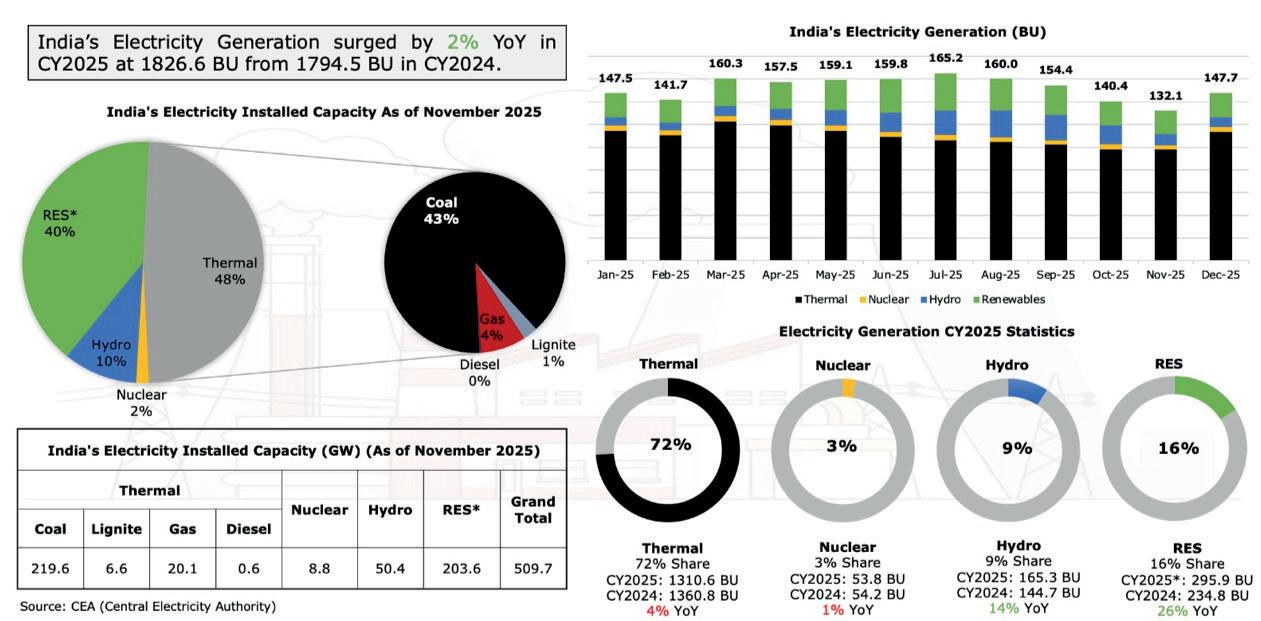
2027 is shaping up to be another inflection point for coal demand – quietly reminding markets that coal is far from being ‘phased out,’ despite how often its obituary is written. Rising coal-fired power capacity, growing electricity needs across emerging Asian economies, and the rapid expansion of data centres that require stable, round-the-clock power continue to anchor coal’s relevance. Even as end-use technologies evolve – most visibly the shift toward electric mobility – the underlying demand for electricity keeps rising, conveniently keeping coal in the background as the system’s safety net. Renewable capacity additions have been aggressive, but reliability remains the industry’s unresolved problem. Solar and wind output still hinge on favourable weather, storage remains expensive and insufficient, grid integration is uneven, and dispatchable backup capacity is limited. Add transmission bottlenecks, cost inflation, and tighter financing, and the gap between renewable targets and actual system performance only widens. In practice, many green solutions shine on policy decks – until uninterrupted power is required, at which point coal is called back into service.
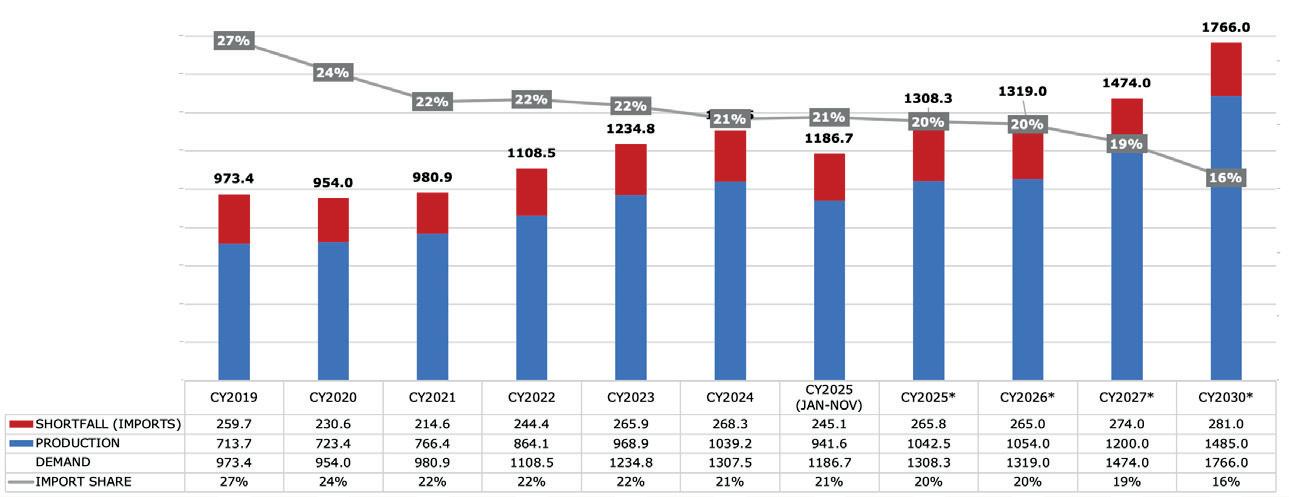
India’s energy strategy reflects this realism. Despite ambitious renewable targets, the country plans to add around 80 GW of coal-fired capacity by 2030. At India’s stage of economic development, power shortages are not an option, and energy security cannot depend on sources that perform best only under ideal conditions. Reliability and scale still matter.
As a result, coal demand is expected to regain momentum from 2027. Production is forecast to rise sharply by 14% y/y to 1.2 billion t, while demand increases 12% y/y to 1.47 billion t. Imports are projected to grow 3% y/y to 274 million t, even as their share declines to 19%.
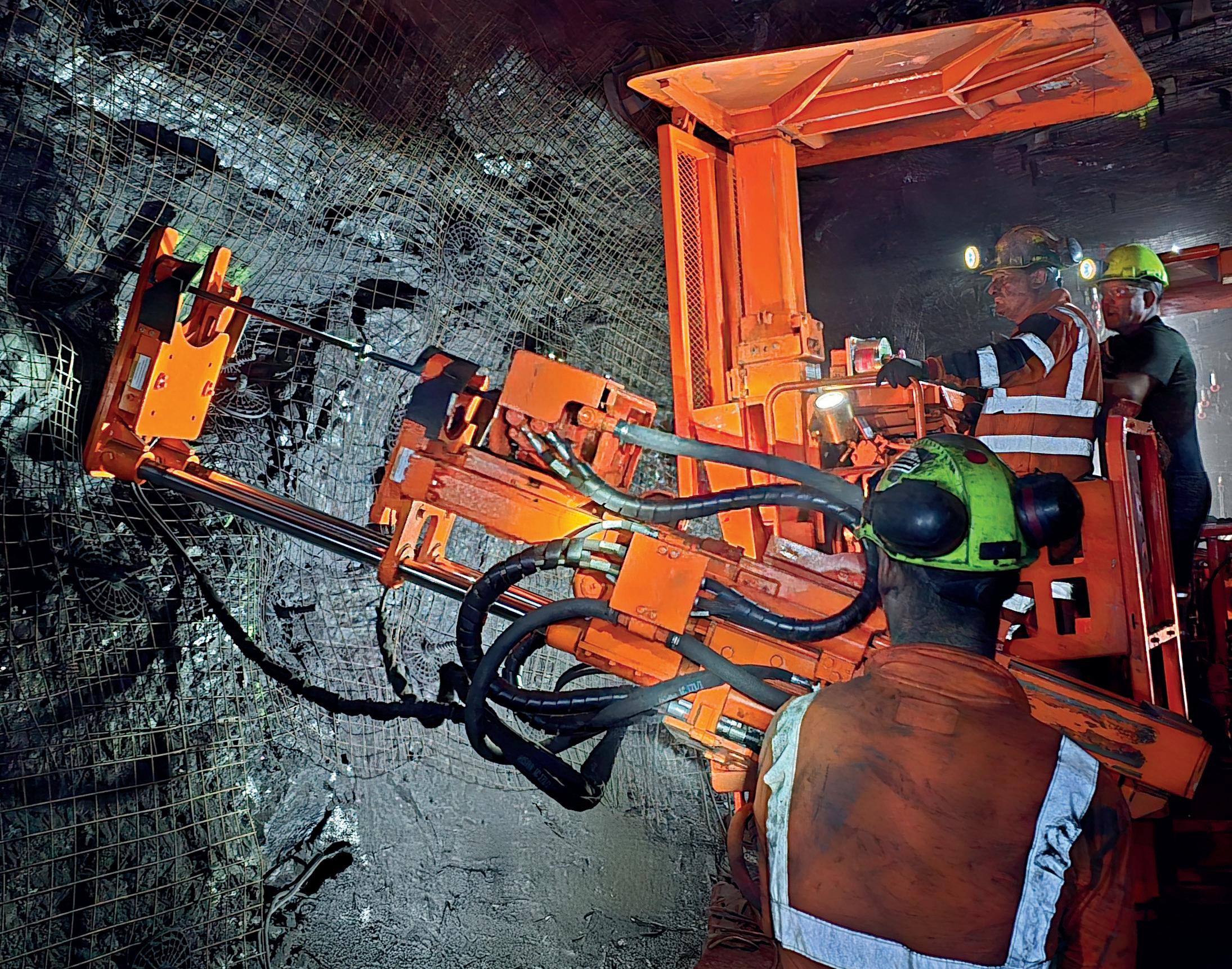
When it comes to underground roof support, one size doesn’t fit all. That’s why we start with you—your challenges, your goals, your mine. Through open conversations and collaboration, we design and build custom solutions specific to your underground operation.
At Fletcher, our equipment is as dependable as the answers we’re built on. From the first conversation to the final bolt, we’re with you every step of the way.
Erich Dohm, Eriez, USA, describes how persistent loss of ultrafine coal slimes can instead be converted into reliable value.
For decades, the coal preparation industry has accepted the loss of ultrafine coal slimes as an unfortunate cost of doing business. These particles contain valuable carbon, yet their clay content, dilute concentrations, and difficulty dewatering have made recovery appear uneconomic or operationally risky. That premise no longer holds. High intensity froth flotation, together with modern pressure filtration, now provides a practical path to capture ultrafine coal at commercial quality and moisture. Plants that adopt this approach can raise overall yield, reduce refuse disposal costs, and even improve product specifications.
The change is anchored in two technological shifts. First, high-intensity flotation systems allow operators to apply intense bubble-particle contacting for ultrafines while preserving the deep, well washed froths that control clay entrainment. Second, pressure filtration recovers sub 45 µm solids at high efficiency and at moistures suitable for blending, which closes the historical yield gap left by screen bowl centrifuges on the slimes fraction. Together, these advances convert what used to be a high volume, low solids waste stream into a consistent contributor to plant production.
Three constraints have traditionally kept slimes out of product. The first is entrainment. In mechanically agitated cells, a significant portion of ultrafine clay is recovered to the froth product in the water phase through the mechanism of entrainment. This mechanism raises ash and forces operators to pull lighter to protect quality. The second is flotation kinetics in dilute services. Slimes circuits operate at a few percent solids by weight, so volumes are high and larger cell sizes are needed for recovery using conventional technology. The third is dewatering. Screen bowl centrifuges achieve excellent dewatering on fine material but capture of the ultrafine portion is limited, sending valuable carbon to the main effluent and on to the thickener, where recirculating frother and stable foams can hamper operations.
Column flotation addressed the first issue with deep froths and counter current wash water, which displaces dirty interstitial water and the clays carried in it. The result is higher selectivity at a given combustible recovery. Yet full height columns can be difficult to retrofit, and their structural requirements may not suit a dilute, high throughput target.
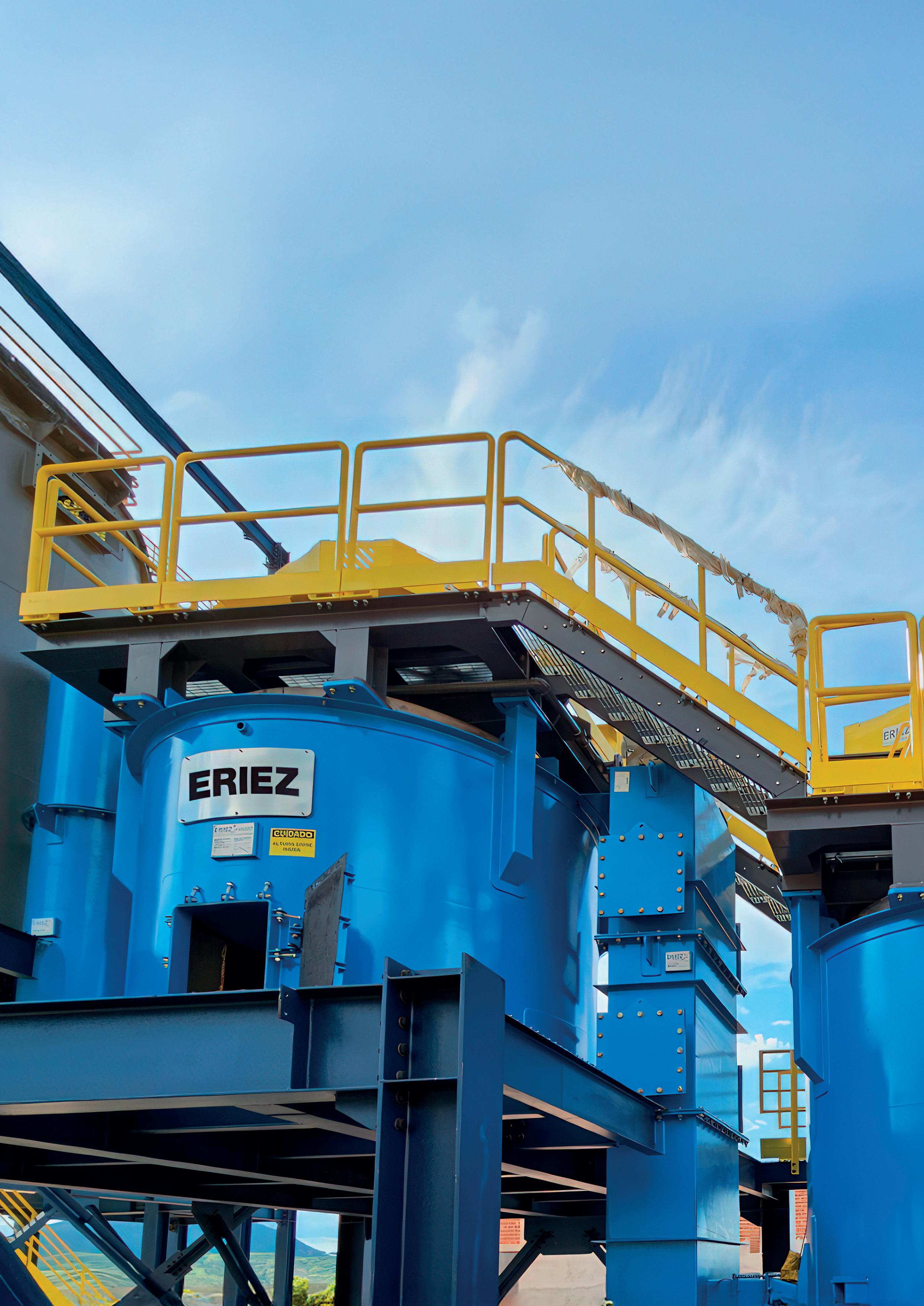
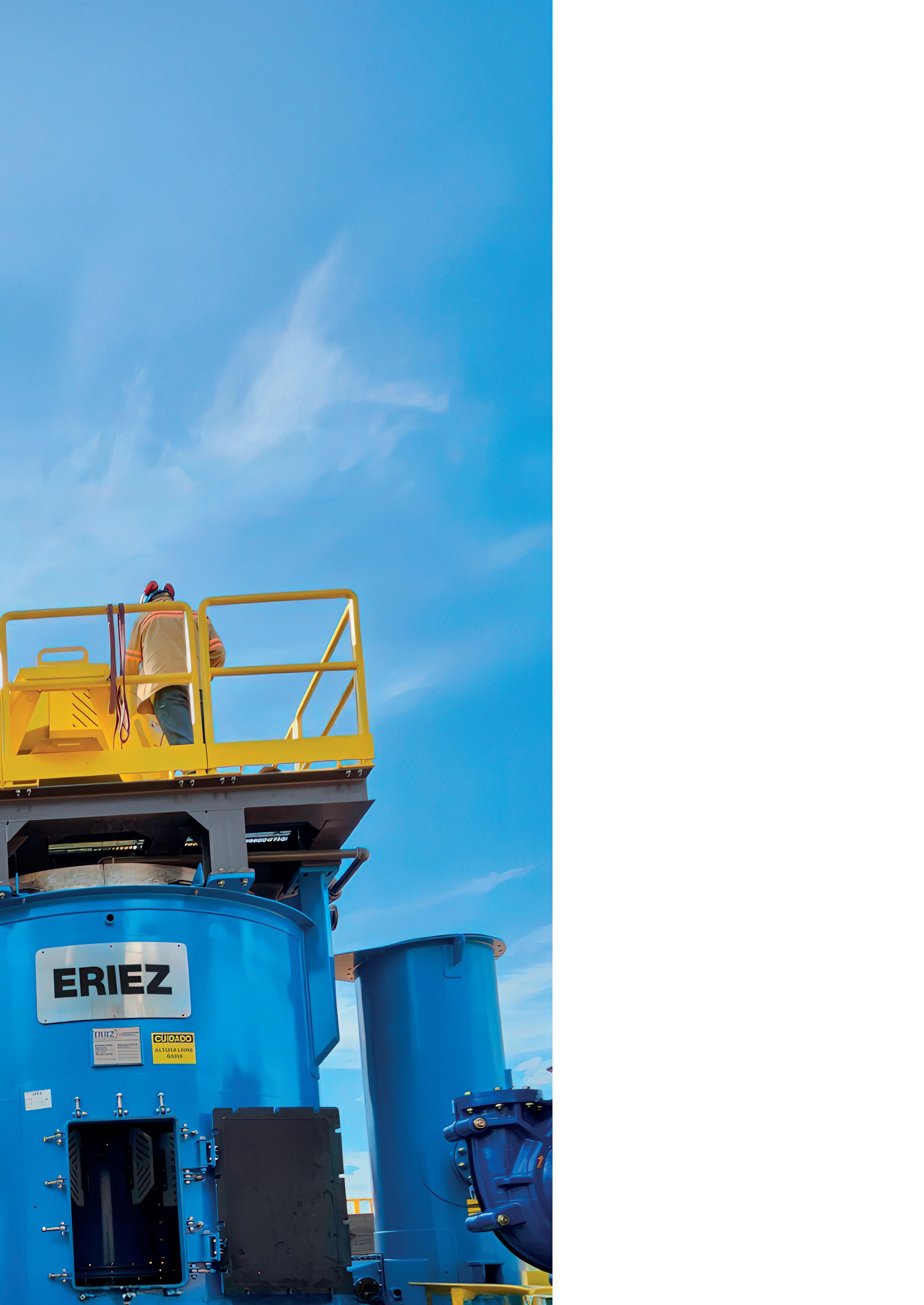
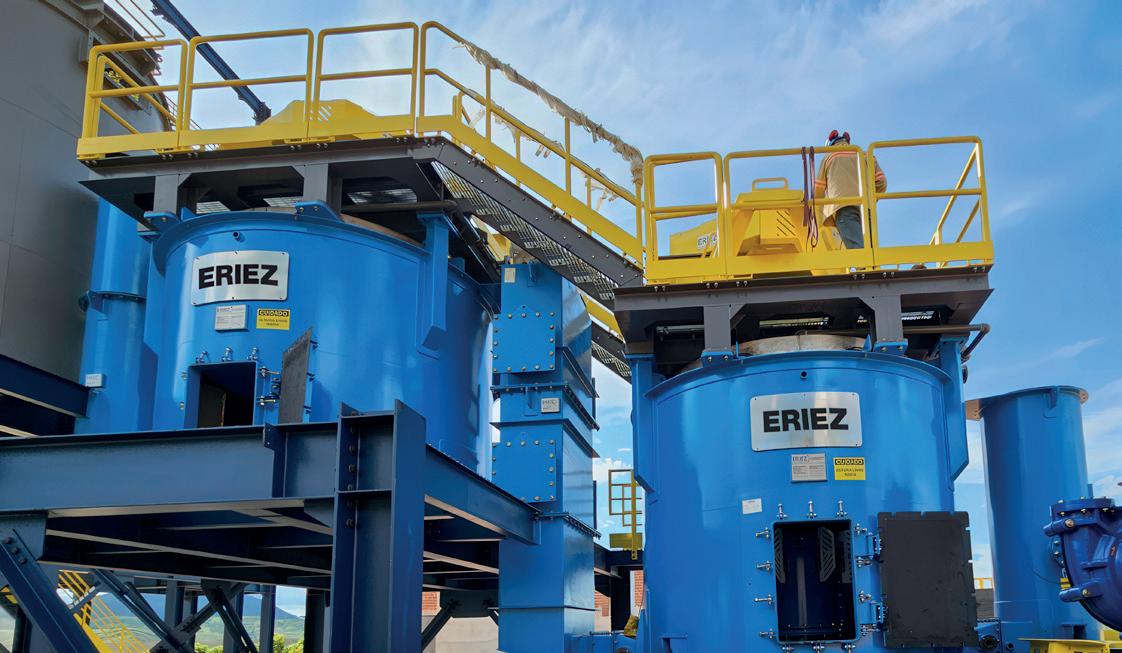
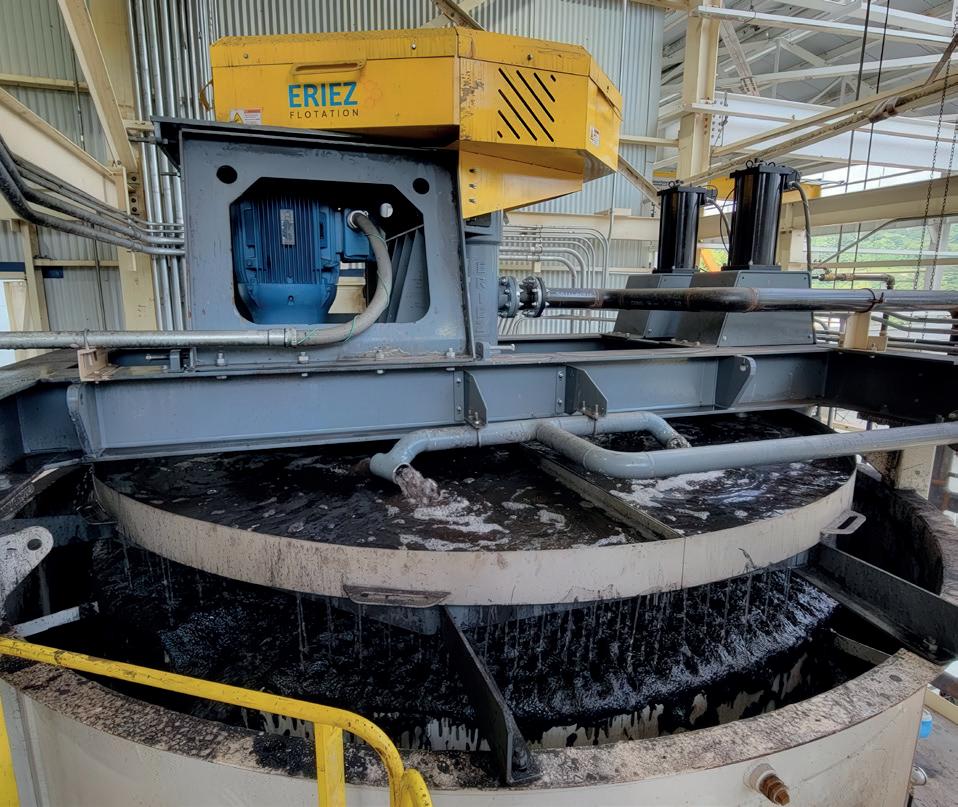
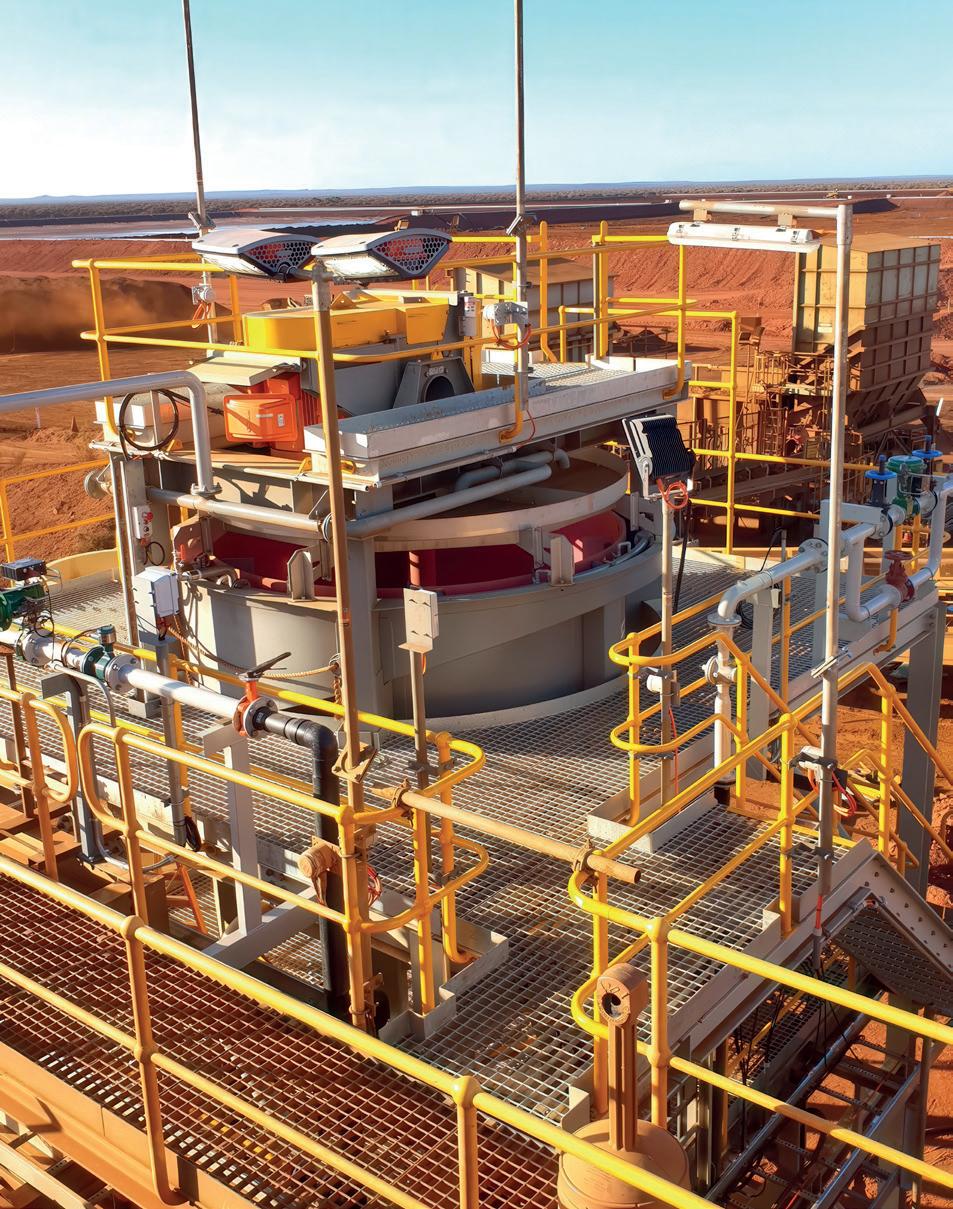
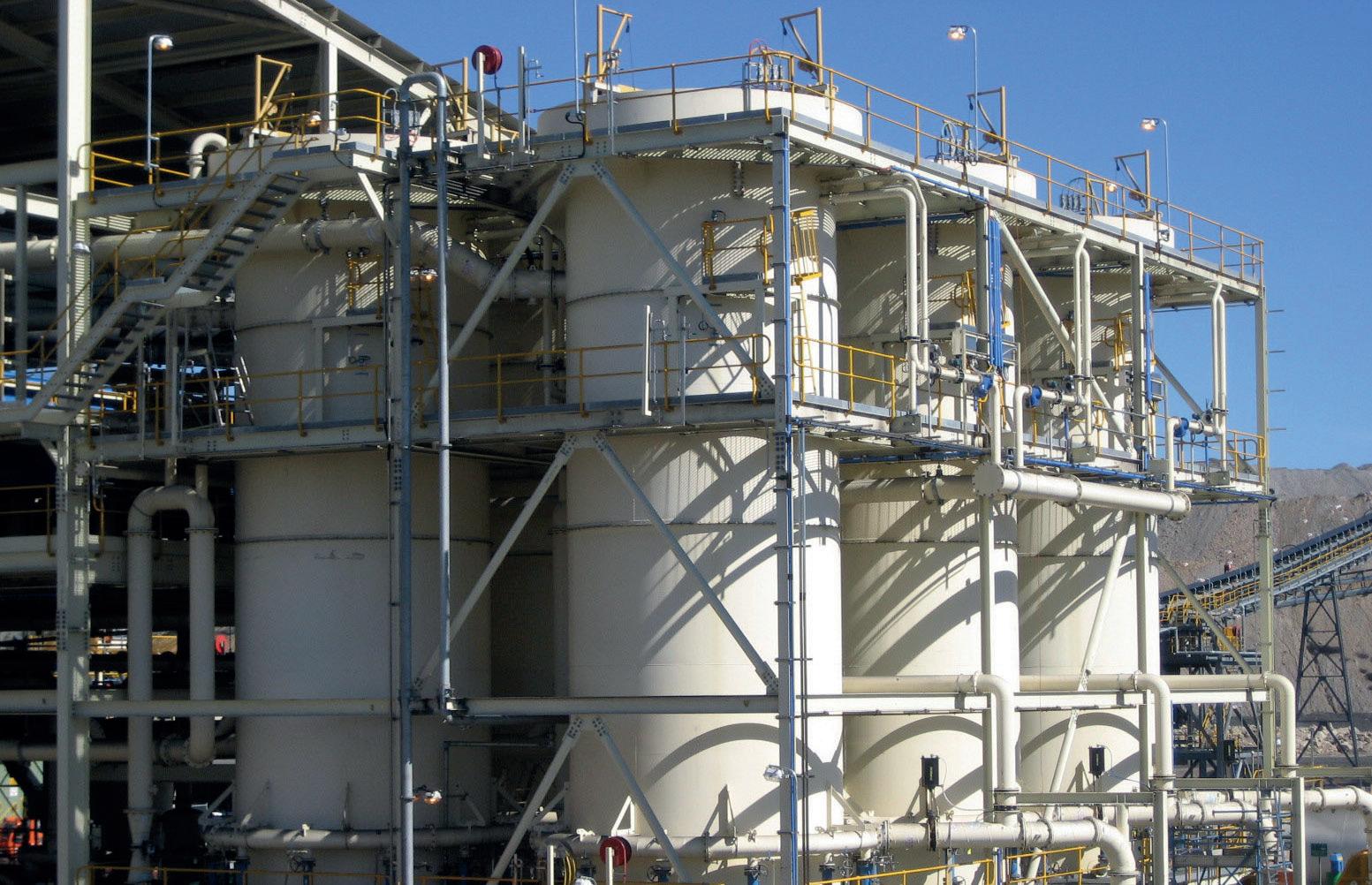
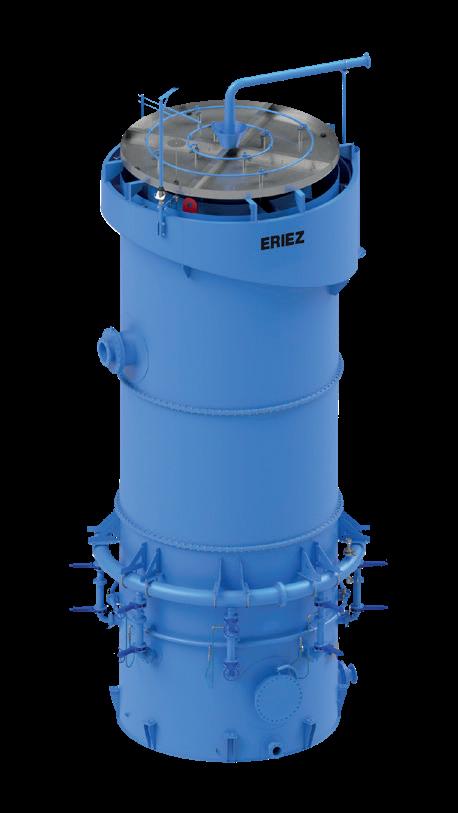
Eriez StackCell® technology was developed to deliver column like metallurgy with a much smaller footprint. Particle collection occurs in a compact contacting chamber engineered for high turbulence and fine bubble generation. The aerated slurry then enters a quiescent separation chamber that
supports a stable froth with wash water and controlled depth. This decoupled design concentrates energy where ultrafines need it and preserves the froth environment required to produce a low ash product. In practice, required cell volume is often about half that of a comparable column installation, which reduces steelwork, air requirements, and civil loads, and it allows gravity fed modules to be added in series around existing circuits.
The hydrodynamics of the flotation cell matter. Rotor and stator blades in the StackCell’s isolated contact chamber increase shear and raise turbulent dissipation rates. This results in ultrafine air bubbles with increased probabilities of particle collisions, which is essential for ultrafine particle recovery. The StackCell separation chamber then supplies the quiescent conditions for deep froth formation and wash water addition to drain and rinse entrained clays. This combination sustains short residence times without sacrificing product quality.
Even an excellent ultrafine concentrate has limited value if it cannot be dewatered to ship. On this point, pressure filtration has become the decisive complement to high intensity flotation. Whereas screen bowl centrifuges remain highly efficient for 1 mm × 0.25 mm material and acceptable down to about 45 µm, their recovery of slimes is limited. Modern plate and frame presses produce low moisture cakes from ultrafine concentrates and recover the solids that previously exited in the main effluent. The benefits extend beyond yield. With fewer floatable solids and less frother in thickener circuits, plants often see calmer operation, higher refuse ash, and greater freedom to optimise reagent dosage in flotation.
A practical strategy emerges from these strengths – keep screen bowls on the coarser fines where they excel. Direct the true slimes concentrate from StackCell units to a filter press sized for batch operation and integrated with metered cake blending. The split duty
raises total recovery while preserving familiar moisture performance on the deslimed fines product.
A consolidated example illustrates how these elements work in concert. At the Core Natural Resources Leer Preparation Plant, the site had already implemented deslimed flotation for the +45 µm fraction, dewatered through screen bowl centrifuges to protect overall moisture. Attention then turned to the overflow of the secondary classifying cyclones, a low solids, high volume stream that had historically reported to refuse. Bench-scale release analysis and kinetics on representative samples showed that a concentrate below 7% ash was feasible at around 70% combustible recovery with residence times on the order of 90 seconds. A StackCell pilot campaign confirmed the target recovery at acceptable ash and established operating ranges for air, wash water, froth depth, and reagent scheme under plant water chemistry.
The selected design included two rows of StackCell SC-70 modules to meet a concentrate target below 7% ash, assuming a typical feed near 2% solids and roughly two minutes of residence time. The arrangement allowed straightforward gravity feed and easy bypass, which simplified commissioning and minimised risk to the established processing circuit.
Commissioning commenced in July 2023. After ramp up and optimisation, the circuit achieved a six month average product in the upper 6% ash range with narrow variability, aligning with expectations from bench and pilot work. The slimes concentrate was directed to a plate and frame filter press. Thickener behaviour improved as fewer floatable ultrafines and less persistent frother circulated through the plant. Refuse ash on the slimes fraction rose toward the 70% range, consistent with successful extraction of low ash carbon from the cyclone overflow stream. The overall effect was incremental saleable tonnage at contract moisture without destabilising the pre-existing deslimed flotation line.
This experience highlights two design lessons. First, ultrafine service is governed by carrying capacity as much as by residence time. Properly sizing the froth surface area is the key to pulling hard while holding product ash to target levels. Second, treating dewatering as a size specific problem avoids forcing one machine to do two different jobs. Screen bowls remain the right choice for deslimed fines. Filter presses are the right choice for slimes. The combined effect is better recovery, steadier operation, and moisture control that meets market requirements.
Success begins with sound characterisation. Representative sampling of the deslime

overflow and careful analysis by size, ash, and liberation supply the inputs for release and kinetics analysis. Those tests map the feasible grade vs recovery envelope and give residence time bounds. Pilot work then validates froth washing set points and refines chemistry requirements for plant water conditions. A disciplined path from bench to pilot to industrial design helps ensure that the full scale circuit lands on the same grade vs recovery curve established in the lab.
Design should respect both flotation kinetics and carrying capacity. In slimes service, froth surface area often limits throughput. Sizing modules to stay within established carrying capacity for the given size distribution, while confirming residence time requirements, ensures optimal product ash is achieved. Building in a modest design margin is often cheaper than retrofitting later. Gravity feed and modular design improve maintainability and simplify temporary bypass during start-up and optimisation.
Dewatering integration deserves equal attention. Filter presses are batch units. Successful operations meter cake into the product stream with appropriate blending control and mass balance checks, so that a batch device feeds a continuous shipping schedule smoothly. Plants that anticipate this operational rhythm find that filtration complements flotation rather than constraining it.
Finally, reagent strategy must recognise that washed froths for ultrafines often require more persistent frothers than conventional fines circuits. Optimising dosage against downstream behaviour is essential. With pressure filtration removing ultrafines before the thickener, frother recycle falls and the circuit gains headroom. That stability feeds back into flotation performance, enabling consistent operation at the target set points.
Metallurgical coal remains central to blast furnace steel production, and while alternative ironmaking routes advance, constraints in ore quality and hydrogen production cost suggest that BF BOF will remain relevant for years. In this context, recovering more metallurgical coal from existing feedstocks is one of the most reliable ways to strengthen margins and reduce waste. Ultrafine slimes recovery with high intensity flotation and pressure filtration is a practical lever. It adds saleable tonnes, raises refuse ash, and preserves moisture compliance. The capital is modular, the operating principles are established, and the results are repeatable when circuits are designed on the basis of measured carrying capacity and validated kinetics.
The industry has moved beyond viewing slimes as inevitable loss. With high-intensity froth flotation and modern filter presses, operators can now convert a persistent problem into a dependable source of product. The opportunity is immediate, and the implementation is within reach for plants willing to revisit long held assumptions about what ultrafines can contribute.
1. NIELSON, J., DOHM, E., and HOBERT, D., Arch Resources’ industry first application of Eriez StackCell® technology for recovery of low-ash metallurgical coal from an ultrafine refuse stream, Proceedings of the 2025 SME Annual Conference and Expo, Society for Mining, Metallurgy, & Exploration.
2. BETHELL P., KEIM, S., and NIELSON, J., Froth flotation and subsequent dewatering circuit optimization, Proceedings of the XXI International Coal Preparation Congress, (2025).
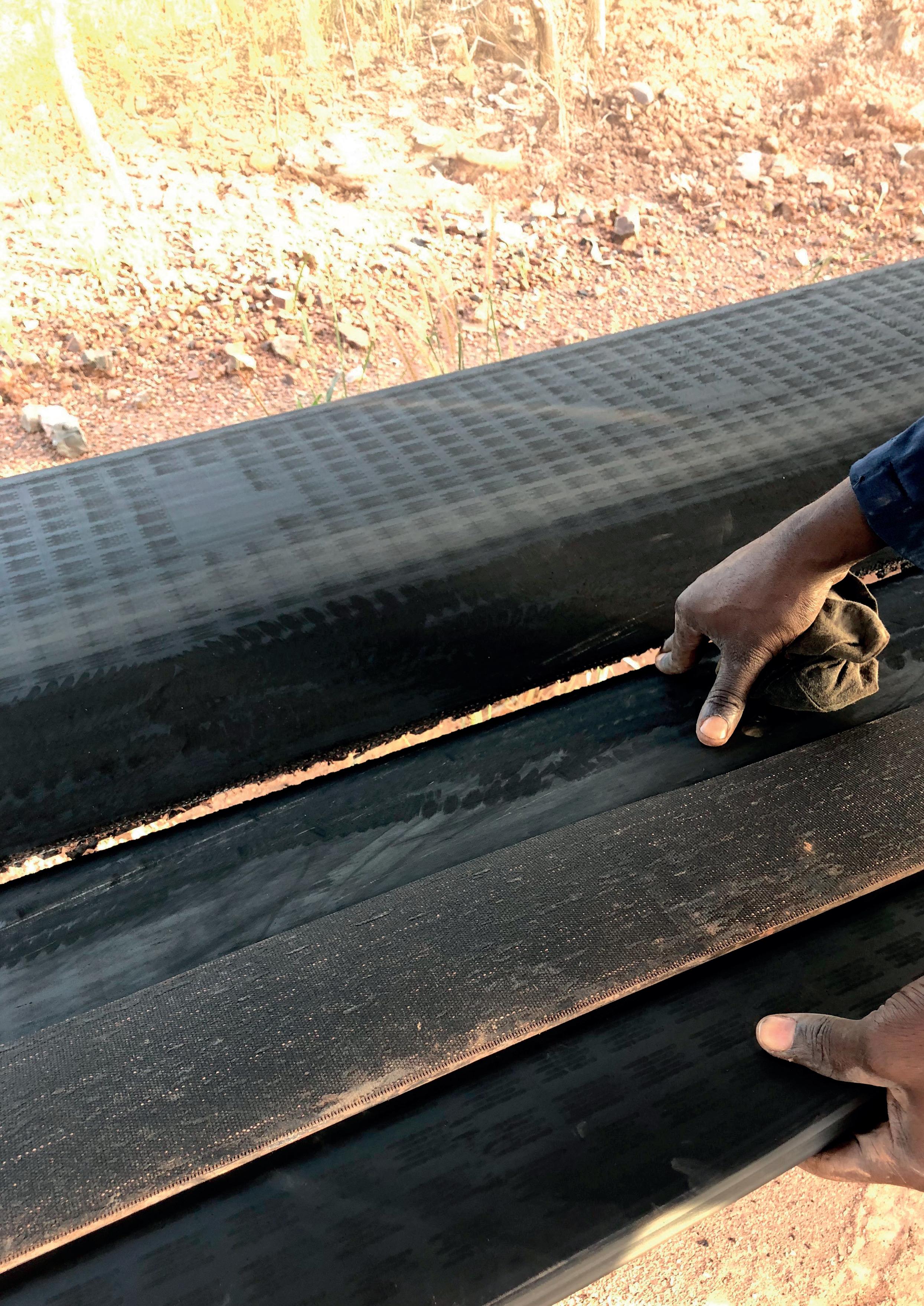
Steven Kidd, Conveyor Belt Specialist, outlines the causes and effects of unplanned conveyor stoppages, and investigates the extent to which repair costs and loss of productivity can be easily avoided.
When a conveyor stops running, the costs do not stop. The cost of lost productivity and the cost of carrying out running repairs and emergency belt replacement runs into many millions every year. This article explains the causes and how much of the loss can be avoided.
The inner carcass is the backbone of every conveyor belt, providing inherent characteristics such as tensile strength and elongation (‘stretch’ under tension). There can be enormous differences in the strength and quality of the synthetic fabric used to create the carcass. These are dictated by whether the belt manufacturer is at the ‘quality end’ of the market or the ‘cut-price’ end.
Despite apparently being the same specification on paper, the strength under load both longitudinally and transversely can be inconsistent. Although the amount of nylon used in the longitudinal strands of the fabric may be sufficient to achieve the required tensile strength, in an effort to reduce cost, the use of the nylon transversal weft material is often kept to a minimum and in many cases, not used at all.
Consequently, rip and tear resistance are reduced, leading to stoppages to carry out patch and clip repairs and, in more serious cases, inserts or whole belt replacement. In addition, low-quality fabric plies with an inconsistent longitudinal and/or transversal spread of tension can cause a conveyor to be stopped to rectify tracking, steering, and handling problems.
Such inconsistencies are problematic because the declared longitudinal tensile strength of a belt is the combined result of the individual fabric plies working together in tension. For example, an EP 630/4 belt contains four layers of polyester/nylon (EP) fabric reinforcement and has a nominal overall tensile strength of 630 N/mm. Each ply has its own breaking strength, typically around 160 N/mm. When the plies are bonded together to form the belt’s carcass, their individual strengths effectively ‘join forces’ so consistency is highly important.
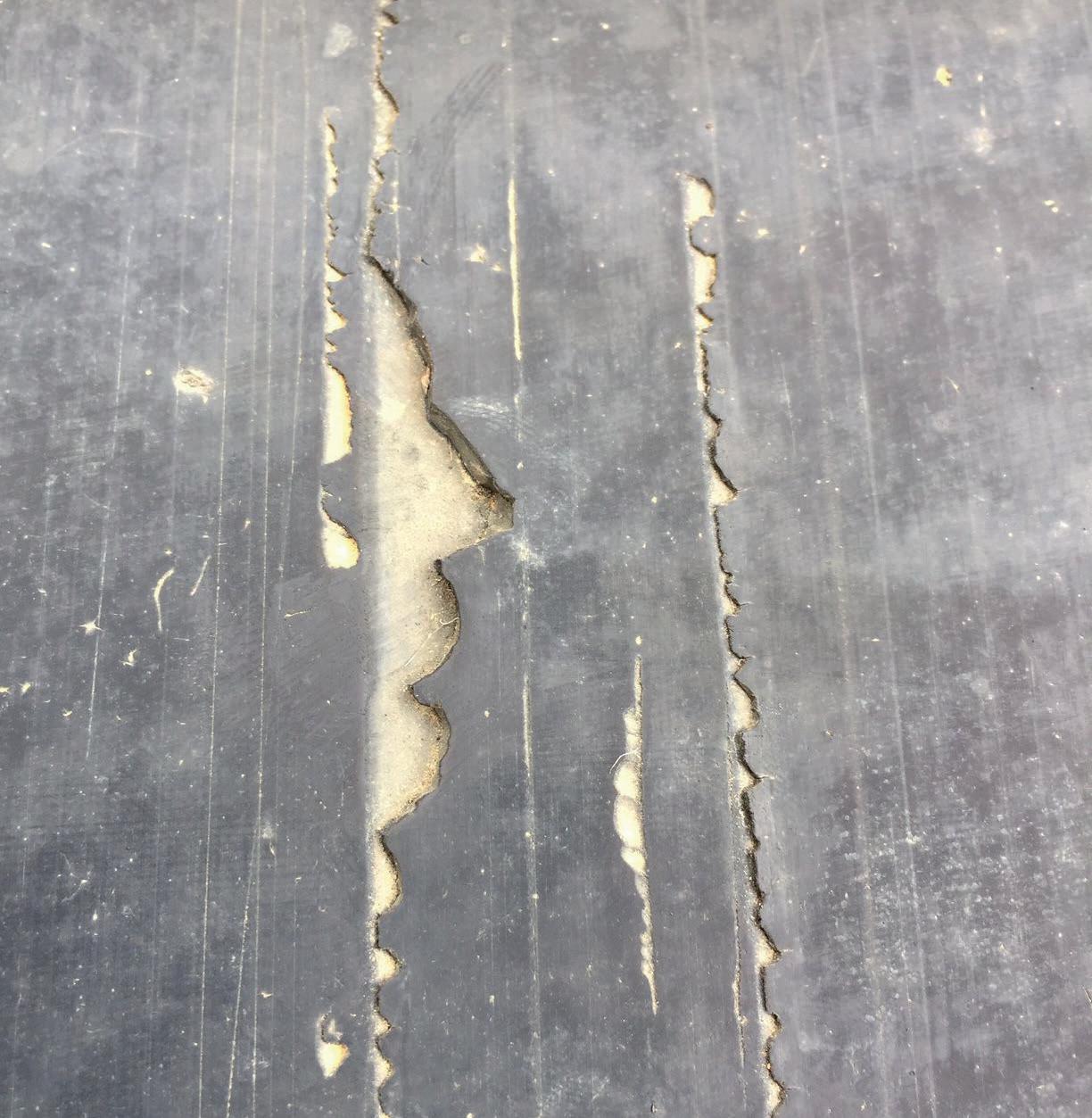
The physical properties of the rubber are the single biggest influence on both durability and the length of a belt’s working lifetime. The primary cause of intervention to deal with cover damage is an inadequate resistance to abrasive wear, cutting, and gouging of the surface. There are two internationally recognised sets of standards for abrasive wear, EN ISO 14890 (H, D, and L) and DIN 22102 (Y, W, and X). In Europe it is the longer-established DIN standards that are most commonly used.
Both standards measure abrasion resistance based on the amount of rubber lost during ISO 4649/DIN 53516 testing, but the test cannot measure resistance to cut and tear propagation. If it is insufficient, then a small area of damage can easily increase in size due to the continuous material loading and the flexing around the drums and pulleys, which spreads and links up with another area of damage causing pieces of rubber to be cut out from the surface and become yet another reason to stop and carry out running repairs.
The overall quality and strength of the rubber is critical in minimising the need to carry out repairs. It is therefore important to understand that rubber represents some 50% of the material cost of producing a conveyor belt, so for manufacturers who want to create a price-competitive edge, it provides an irresistible temptation to sacrifice standards of resilience in return for greater sales and faster re-ordering of replacements. This is why the sharp stone that finds its way between the drum and the belt will cut into low-grade rubber with ease whereas it will hardly make a mark in good quality rubber that is deliberately engineered to withstand such demands.
Faced with recurring stoppages caused by belt damage, there can be a temptation to fit a belt with thicker covers and more plies but almost invariably, this is not the solution. It is the quality and strength of the rubber and the strength and design of the inner plies that have the biggest influence. A belt that is too thick for the size of pulleys and drums and reduced flexibility in both length and width can result in dynamic stress issues and troughing and handling problems. Thicker covers will also not prevent surface damage and its propagation, or rip and tear. For rip, tear, and impact damage problems, the only true solution is to fit belts that have been specifically engineered to handle such demands including super-strong, special weave pattern fabric plies.
The splice joint is the weakest point of any conveyor belt and splice joint failures are widely regarded as the most common cause of conveyor stoppages. Quite apart from the loss of output and the repair/replacement costs, which are considerable,
there are also safety implications, so maximising the strength and long-term durability of splice joints is invariably a good cost-saver.
Joint problems are most prevalent in low-grade, imported belting with poor adhesion between the plies or between belt and splicing materials, and poor belt elongation (elasticity) being inherent weaknesses. Having the optimum level of adhesion has an enormous impact on the creation and ongoing reliability of splice joints. Adhesion levels that are too high can cause significant difficulties and slow the
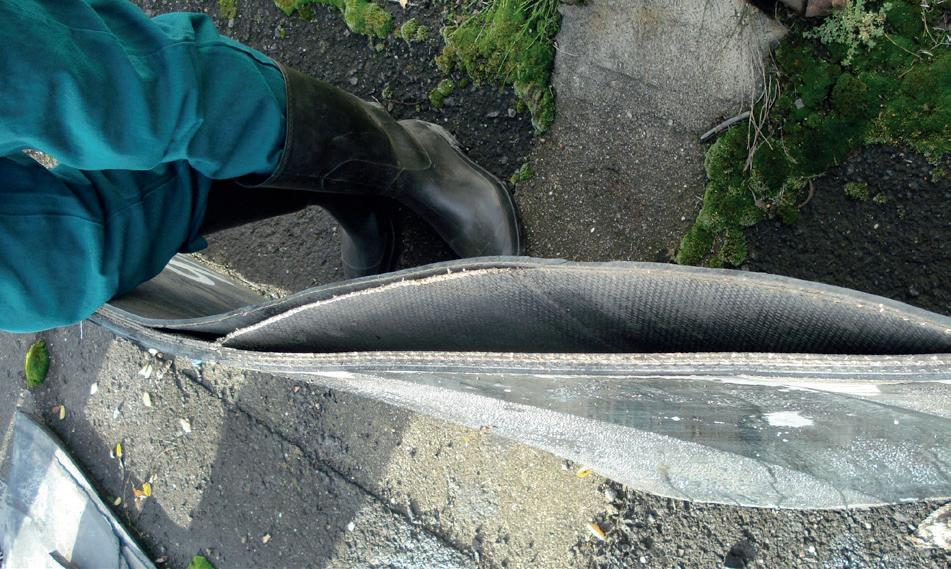
making of both hot and cold vulcanised joints. It can also result in insufficient tension, which can lead to premature wear and tear. Far more commonplace however is an inadequate level of adhesion, which can severely compromise the strength and reliability of the splice.
Low elongation is another symptom of low-price multi-ply belting and is mostly an issue in areas where the belt needs to stretch, such as troughing and bending round pulleys, which can cause localised tension build-up leading to shear stresses that may in turn cause delamination (ply separation) issues.
With raw materials making up around 70% of the cost of producing a rubber conveyor belt, the use of sub-standard rubber and fabric ply material is unavoidable.
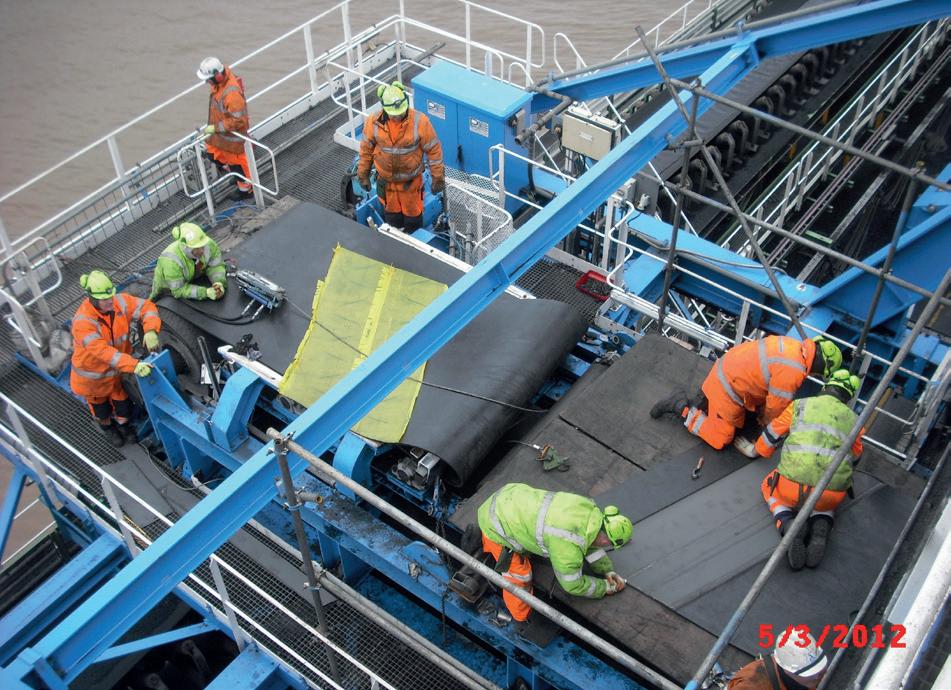
The most common method of making a splice joint is the step splice, which requires the removal of one of the layers of fabric plies so that the belt ends can be overlapped and then either cold glued or hot vulcanised together. This method is popular because it is regarded as being easier and quicker. However, although it takes a little longer to make and requires a higher level of skill, the finger splice method results in a far stronger and more reliable joint that, when made properly, can outlive a step splice many times over.
For the uninitiated, a finger splice joint is where a zigzag pattern is cut into both sides of the belt ends, creating several interlocking ‘fingers’. These are then aligned, interlocked together and finally bonded using a hot vulcanising press to create a splice that is exceptionally strong and smooth, which makes it almost impossible for the joint to be damaged by scrapers.
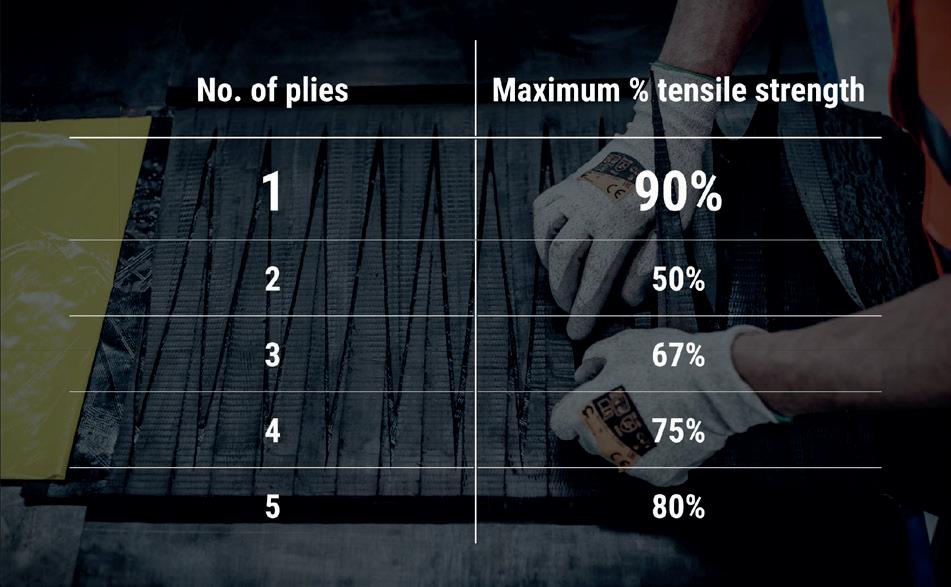
Crucially, when the belt is working under load, the finger splice is vastly superior in terms of resistance to dynamic failure because they retain up to 90% of the belt’s original tensile strength.
By comparison, a 3-ply step joint only achieves a maximum tensile strength of 67%. The superior strength and durability of finger splices therefore reduce the frequency of repairing and re-splicing almost entirely.
There is no such thing as a ‘cheap’ conveyor belt because the irrefutable fact is that low prices necessitate the use of poor quality, low-grade raw materials, the omission of essential protectors such as antiozonants, and lower production values. Such deficiencies are the primary cause of unplanned stoppages and premature belt replacements. The often unseen cost of lost output and repairs is huge, so it is essential that it become an integral part of the calculation when comparing conveyor belt price offers. As the old adage goes, price is what you pay but cost is what you spend.
Kinder Australia highlights the importance of managing material carryback in coal handling, which reduces dust generation and improves the efficiency and longevity of conveyor belts.
Coal handling facilities rely on conveyor systems as the backbone of continuous material movement.
Whether transporting run of mine coal or feeding processing and power generation infrastructure, conveyors operate under conditions that combine high tonnages, fine particulate material, and continuous
duty cycles. Within this environment, seemingly minor inefficiencies in belt cleanliness or roller performance can escalate into persistent dust issues, accelerated wear, and increased maintenance exposure.
One of the most significant contributors to dust generation on coal conveyors is
material carryback. Carryback occurs when coal fines and sticky material remain adhered to the belt surface after discharge and are transported along the return belt section. As this material detaches unpredictably, it accumulates beneath conveyors, becomes airborne, and increases the frequency of clean up and intervention activities. Addressing carryback at its source, rather than relying solely on downstream dust suppression, is therefore a key consideration in conveyor system design and optimisation.
The return belt section represents a critical control zone for managing carryback and belt behaviour. Once the belt has discharged material, any remaining coal on the belt surface is no longer controlled by transfer chutes or containment systems. Instead, its behaviour is influenced by belt tension, roller condition, and belt alignment. If carryback is allowed to persist along the return belt, it can lead to uneven material build up on rollers and structural members. Over time, this affects belt tracking, increases rolling resistance, and contributes to secondary dust sources well away from the original discharge point.
Effective management of the return belt section therefore requires solutions that both remove residual material and support consistent belt tracking without introducing additional maintenance complexity.
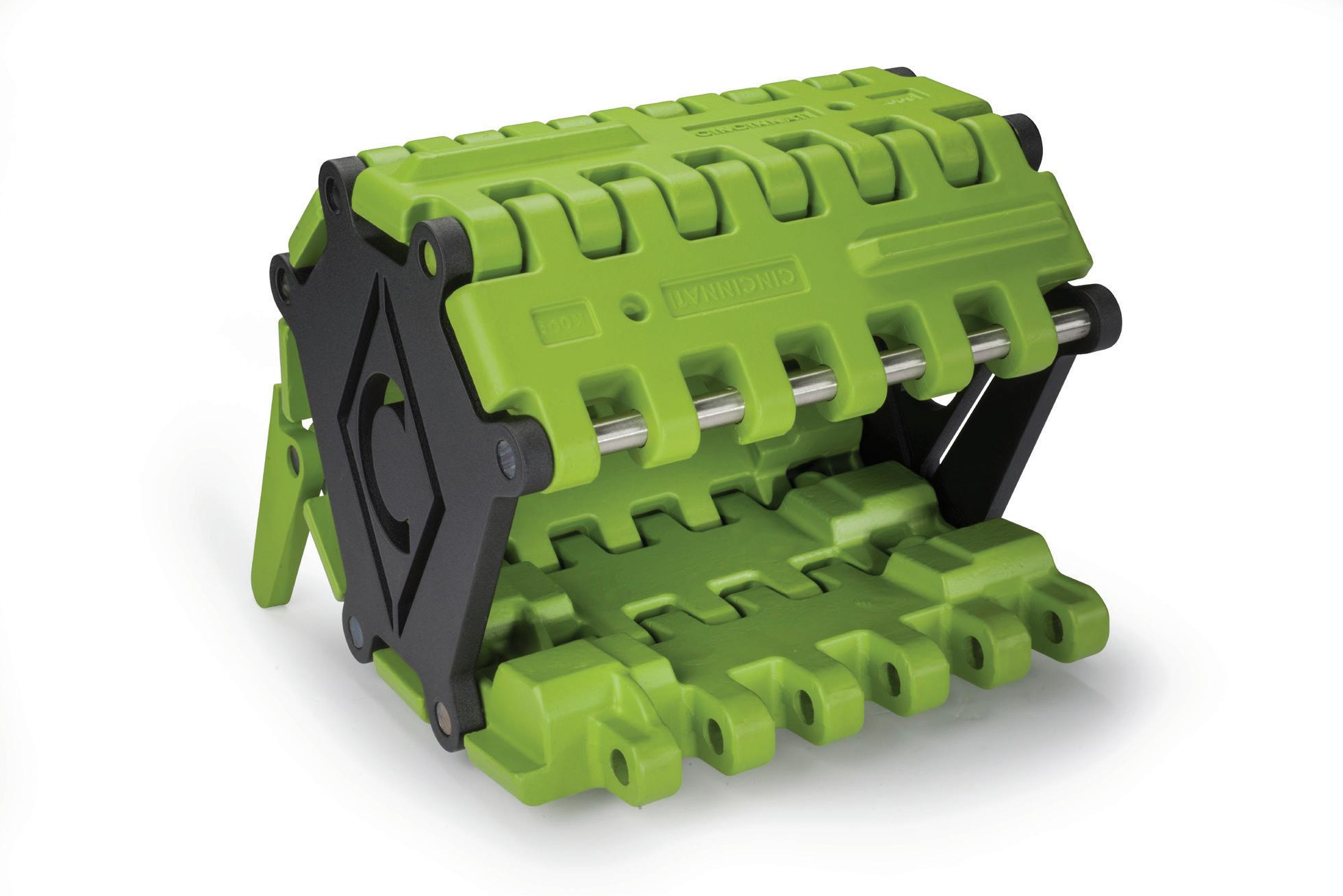
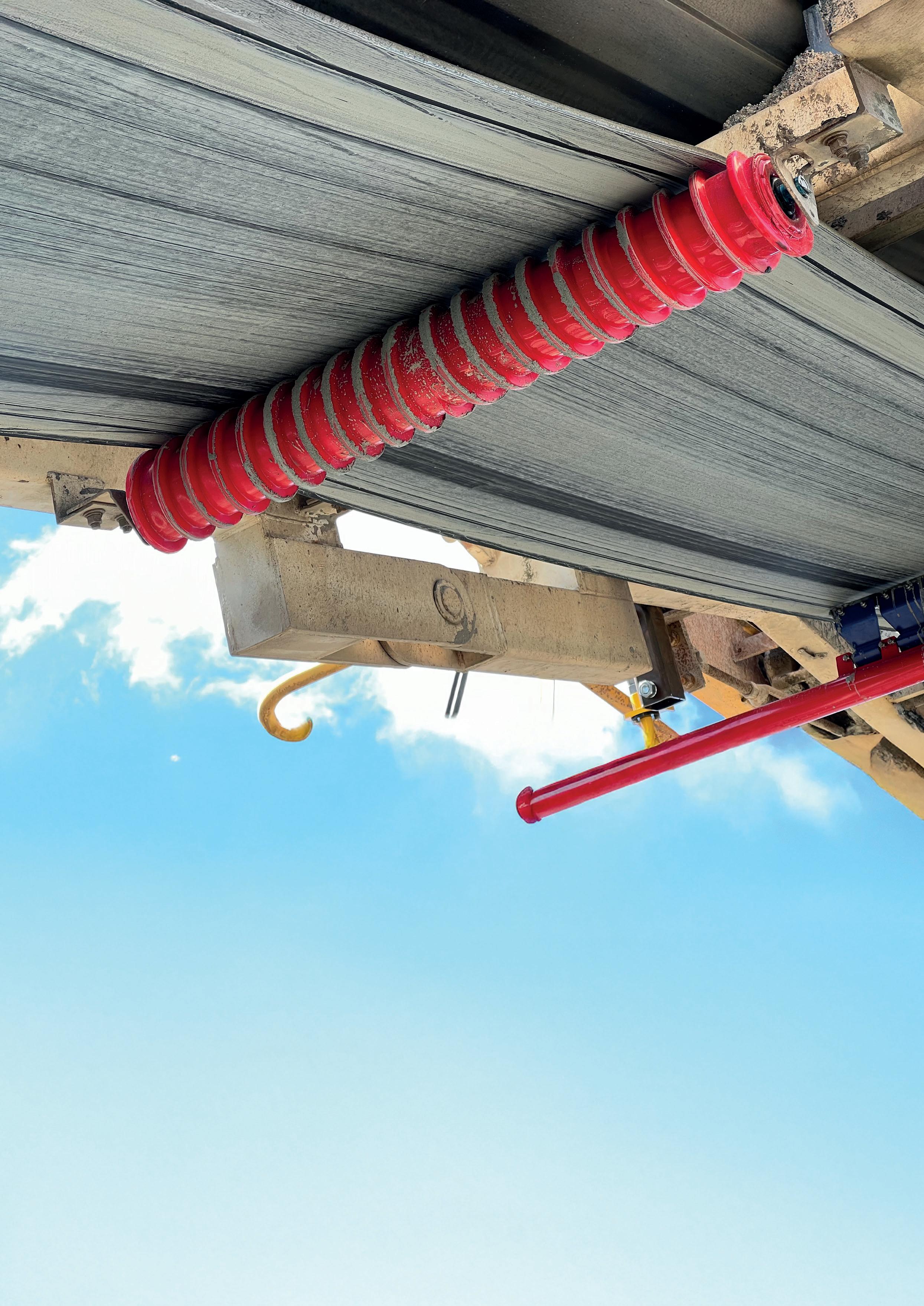
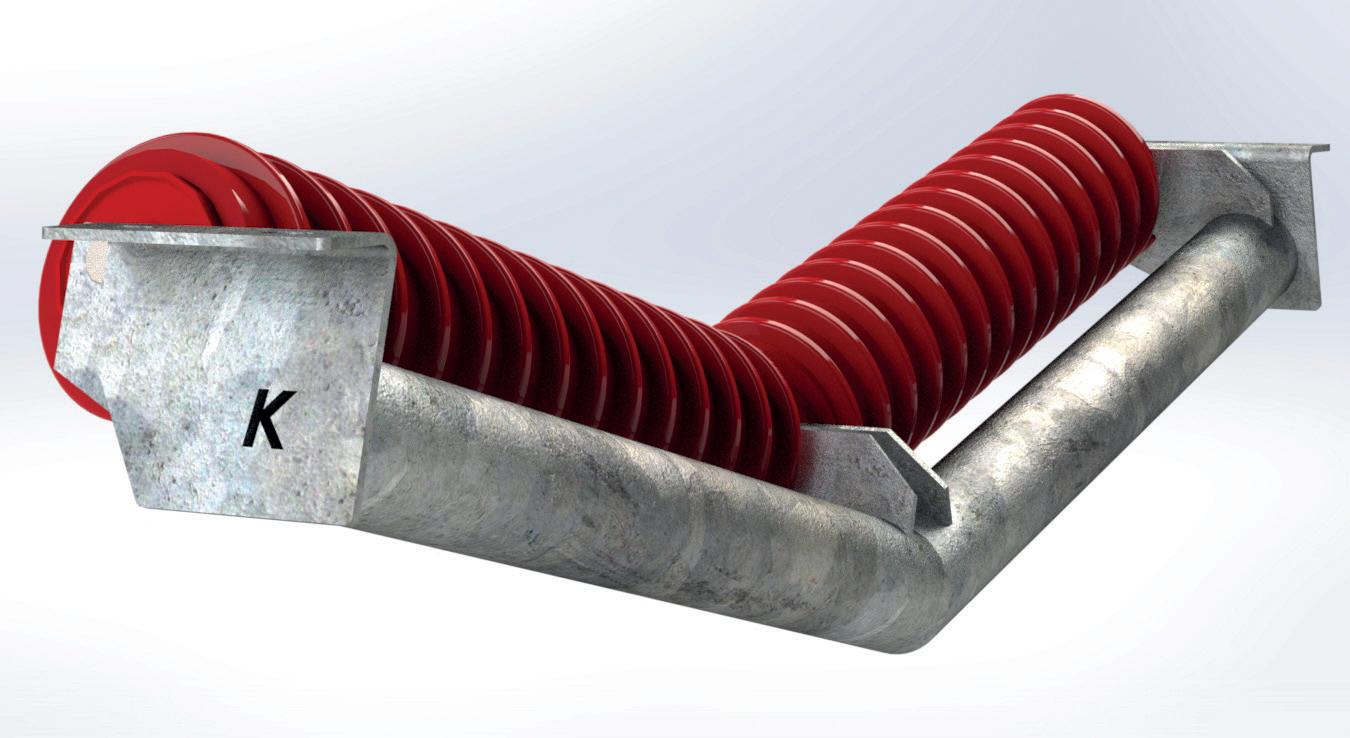
One mechanical approach to managing carryback involves the use of cleaning and tracking rollers installed along the return belt section. The K-Spiromax® Cleaning and Tracking Roller is based on a standard return belt roller fitted with resilient polyurethane rings arranged in a spiral configuration. This spiral pattern is designed to interact continuously with the belt surface as it rotates, encouraging adhered material to be displaced and preventing build up on the roller surface itself.
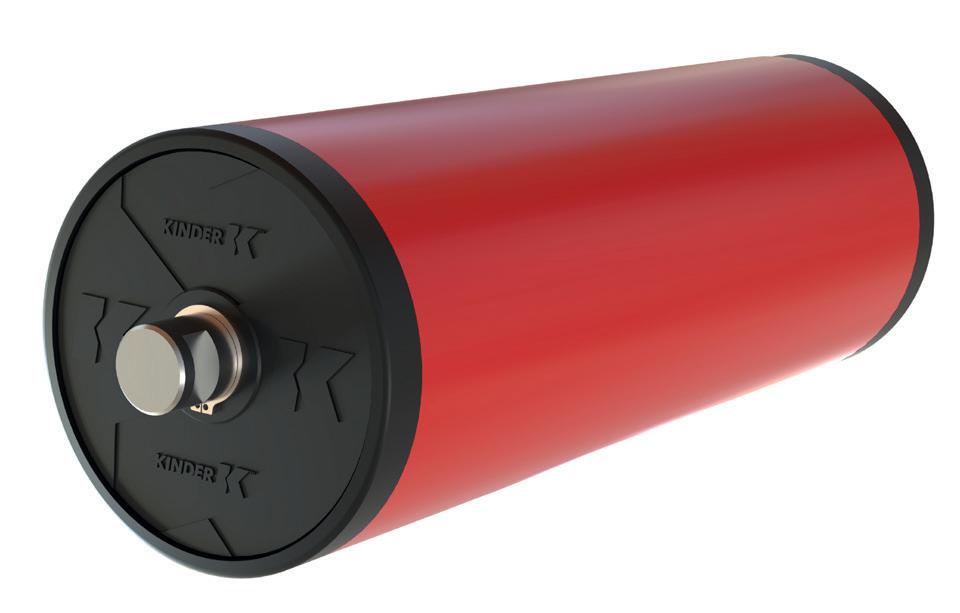
Unlike flat faced rollers, the spiral geometry creates a self-cleaning action that moves material away from the belt centre. This action assists in belt centring by discouraging lateral belt movement that can result from uneven loading or material accumulation.
These rollers are suitable for use across a wide range of belt widths and can be installed at any point along the return belt section. Placement is most effective immediately after the discharge point or above a collection hopper where carryback levels are highest. On longer conveyors, installation can be limited to the section where material adhesion persists, reducing unnecessary component use while maintaining performance.
Once installed, the rollers operate without the need for adjustment or routine maintenance, an important consideration in coal handling environments where access to return belt structures may be constrained.
Cleaner return belts directly translate to improved dust outcomes. When less material is transported on the return belt, there are fewer opportunities for coal fines to fall from elevated structures or be re entrained into the air stream. This reduces reliance on reactive dust control measures, such as water sprays or increased housekeeping, which often address symptoms rather than root causes.
Improved belt tracking further supports dust control by minimising belt edge wear and reducing spillage caused by belt misalignment. Over time, these incremental improvements contribute to a more stable conveyor system with lower overall dust generation.
Beyond belt cleanliness, the performance of conveyor rollers themselves plays a central role in reliability and safety. Rollers are subjected to continuous loading, abrasive coal dust, and in some cases, elevated temperatures. Failure of individual rollers can lead to belt damage, increased friction, and localised heating, all of which present operational and safety risks.
Traditional steel rollers have long been used in coal conveying, but their weight, noise-characteristics, and failure modes can present challenges in high duty applications. Polymer based conveyor rollers provide an alternative approach, particularly where manual handling and fire risk are key considerations.
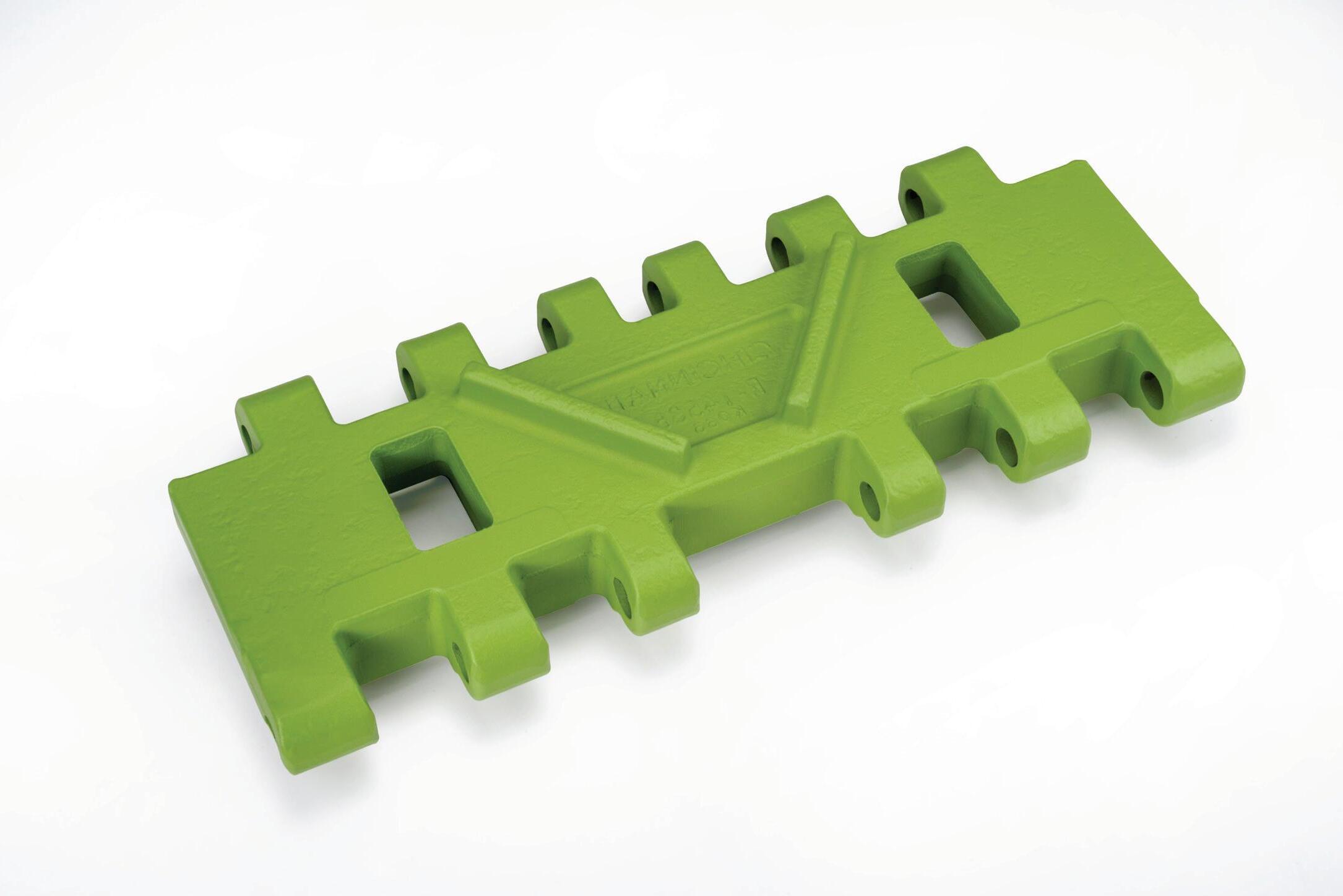
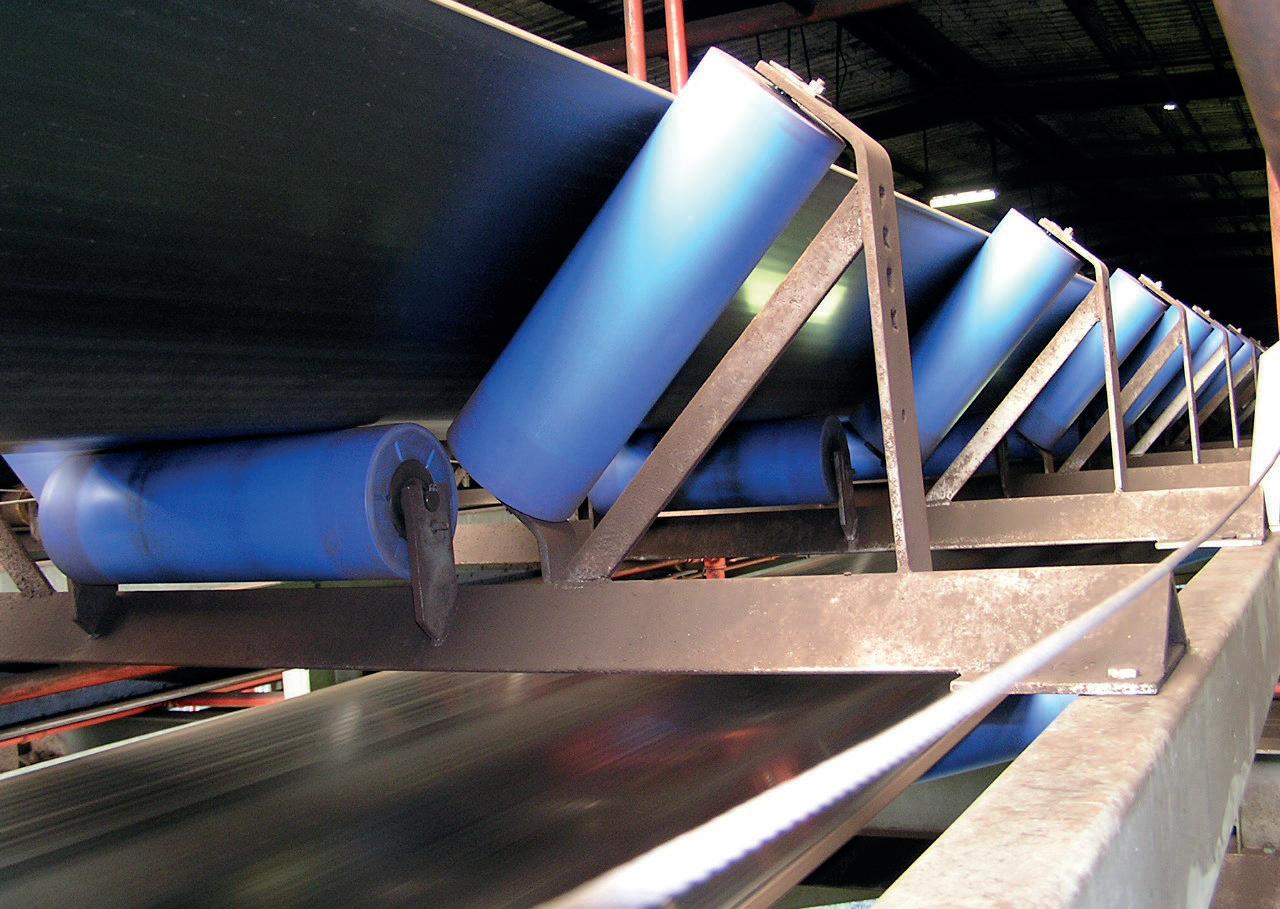
K-Polymer Conveyor Rollers are manufactured from polymer materials rather than steel, resulting in significantly reduced individual roller weight while maintaining suitability for heavy duty coal conveying applications.
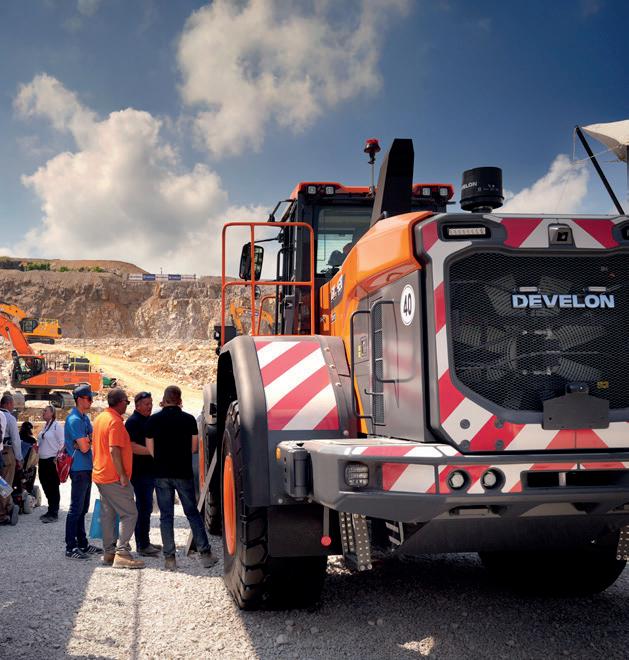



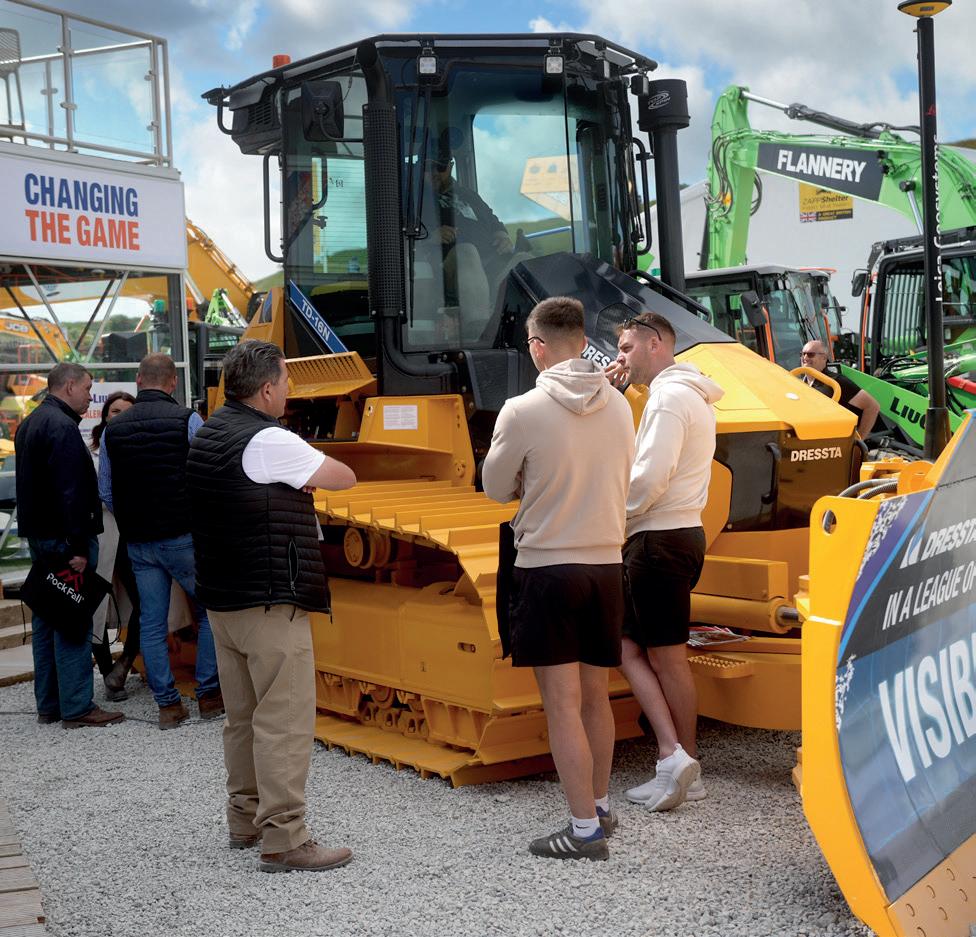
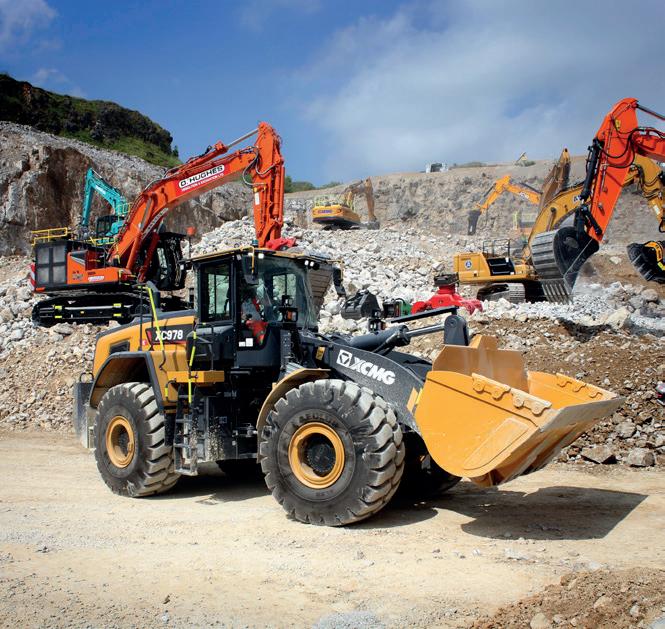




Extended use of polymer conveyor rollers in coal handling has been demonstrated through long term operational application. In one coal fired power generation facility, polymer rollers were progressively installed on conveyors transporting brown coal at throughputs of approximately 2400 tph. Belt widths ranged from 1200 – 1400 mm, with belt speeds between 4.5 – 5.0 m/s.
Prior to the introduction of polymer rollers, steel rollers required frequent replacement due to wear and failure. Approximately 50 steel rollers were replaced each month on conveyors rising through multiple levels of the facility. The physical demands of handling steel rollers, each weighing around 12 kg, were compounded by steep access routes and long distances, creating ongoing manual handling challenges.
The transition to polymer rollers significantly reduced these handling demands due to the lower weight of each unit. Over time, more than 8000 polymer rollers were installed across the conveyor network, with condition monitoring conducted using regular thermal imaging inspections.
Fire risk is a critical concern in coal handling facilities, particularly where conveyors operate
within enclosed structures. Roller failure can contribute to frictional heating, which poses an ignition risk when combustible dust is present. Polymer rollers reduce metal on metal contact scenarios, supporting fire risk management strategies within coal conveying systems.
Noise exposure is another factor influencing conveyor design and operation. Steel rollers can contribute significantly to ambient noise levels along conveyor routes. Polymer rollers generate less operational noise, improving the working environment without the need for additional acoustic controls.
Effective dust control in coal operations is achieved through a combination of engineering controls rather than a single intervention. Conveyor hardware selection, including cleaning rollers and conveyor rollers, forms a foundational layer of this approach. By reducing carryback through return belt cleaning and minimising roller related dust generation, the effectiveness of enclosure systems, extraction, and dust suppression measures is enhanced. Cleaner conveyor structures also reduce long term dust accumulation, lowering ongoing housekeeping demands and exposure risks.
Coal conveyor systems operate in environments where dust generation, mechanical reliability, and safety are closely linked. Carryback on the return belt section remains a primary contributor to secondary dust sources, belt misalignment, and increased maintenance exposure. Addressing these issues through conveyor hardware selection allows dust and spillage to be managed at the point of origin rather than through reactive controls.
Return belt cleaning and tracking rollers provide a mechanical means of reducing carryback while supporting stable belt behaviour. At the same time, the use of polymer conveyor rollers in coal handling applications demonstrates how roller design can influence manual handling demands, fire risk, and noise exposure without compromising conveying performance.
When considered as part of an integrated conveyor design approach, these elements support cleaner belt operation, reduced dust release, and more predictable system performance. For coal operations seeking to improve reliability and control dust across extensive conveyor networks, attention to return belt behaviour and roller performance remains a fundamental engineering consideration.


(the tensile force at which it breaks) – e.g. ST4000 (4000 kN per metre of belt width) – and the maximum tension that could occur during operation.
The German standard DIN 22101 (2011) takes into account dynamic loads on splices by their verifying fatigue strength. Fatigue strength must generally
be verified on a cyclic testing machine as described in DIN 22110-3. This test helped reduce safety factors for large mining projects with a dynamic splice efficiency of over 45% to as low as 5:1.
However, such a reduced factor presupposes that the ‘clinical’ conditions of the belt factory are transferred 1:1 to the construction site – for example, in the desert or in the tropics. The splicing material would have to be just as fresh, there would have to be no dust, dirt, moisture, or temperature influences, the vulcanising press would have to function perfectly, and all fitters would have to work flawlessly. In practice, this is virtually impossible. Of course, the actual breaking strength of a splice made on site can no longer be tested destructively.
The tensile forces in conveyor belt splices are transmitted via shear forces in the surrounding rubber. If the rubber fails, the steel cables come loose and the belt tears. The cover plates contribute about 15% to the strength of the splice – if they are worn down, the strength decreases accordingly (Figure 1).
In practice, a single weak point is enough: it can cause the entire belt to tear due to the zipper effect. It is impossible to predict when this will happen. Rubber is hyperelastic and behaves non-linearly degressively under shear stress – initially stiff, then increasingly softer.
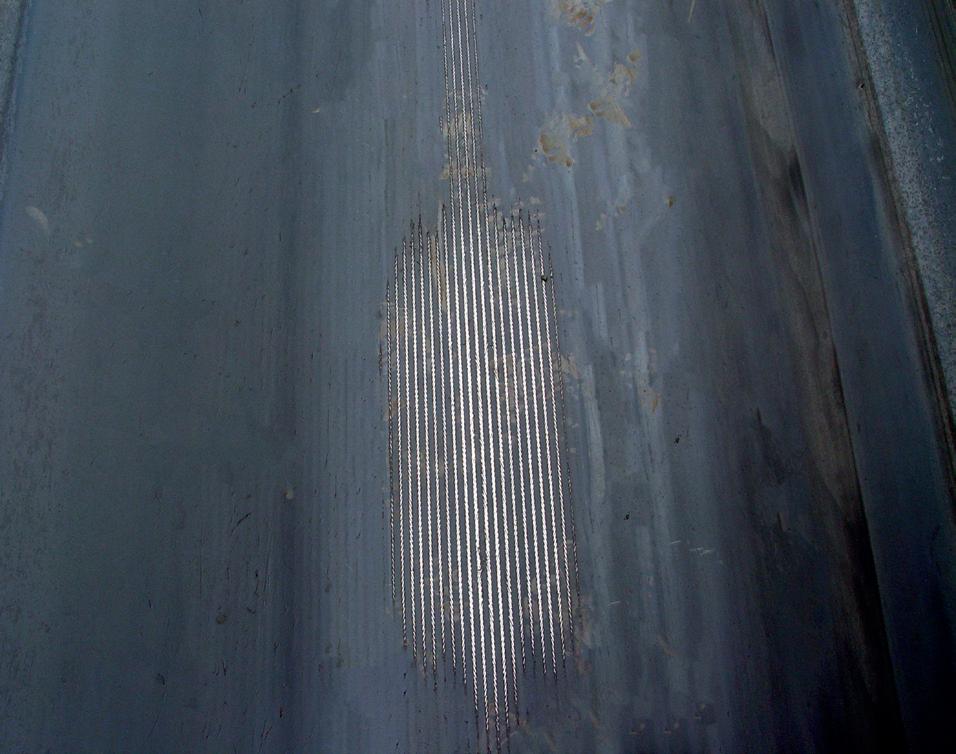
This makes it impossible to determine when or how quickly a splice will fail after damage. Such risks can occur suddenly during emergency braking or malfunctions. Early detection of damage is therefore essential.
The blind spot in mining
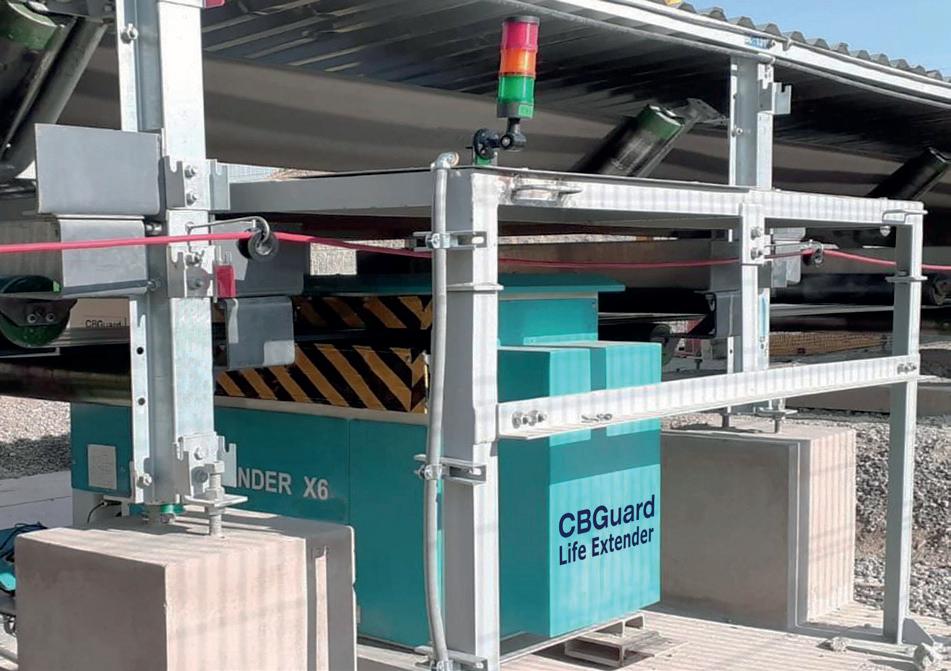
Conveyor belts are still largely left to their own devices. Many mining companies consider investments in intelligent monitoring systems such as the CBGuard Life Extender (Figure 2) to be ‘nice-to-have’. Instead, they prioritise short-term production targets over long-term safety and cost-effectiveness. Apart from sporadic visual inspections – which require plant shutdowns and can only detect gross damage – or the use of simple surface scanners and magnetic resonance systems, nothing usually happens. Belts are often taken out of service prematurely because it is assumed that they will not last much longer. Why are conveyor belts, which are exposed to enormous loads and are the most expensive component of a conveyor system, so severely neglected? This results in an enormous waste of investment and operating costs.
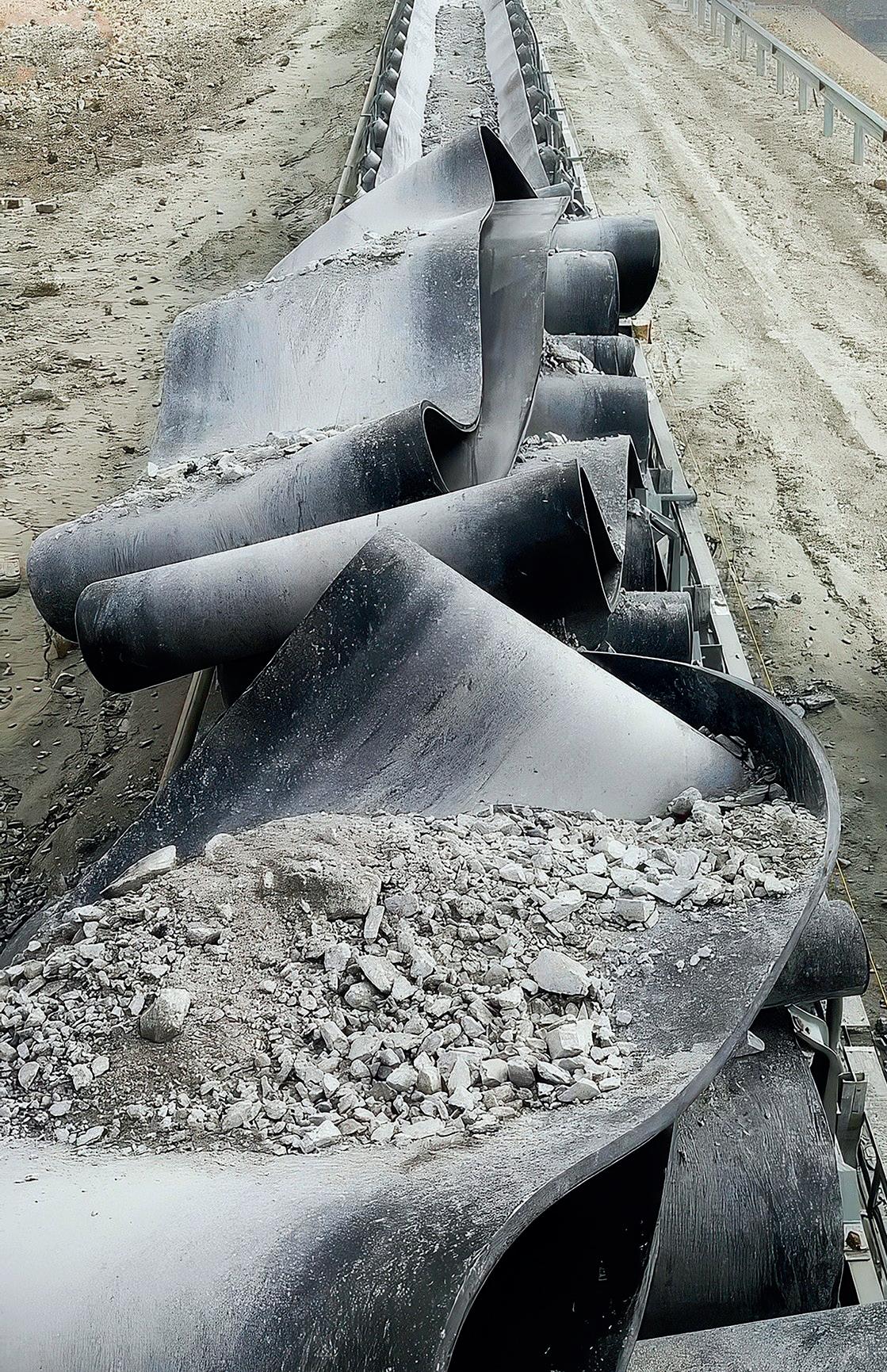
The failure of a conveyor belt can bring entire production lines to a standstill and lead to significant production or delivery delays. Repairing or replacing a section of the belt is extremely time-consuming and costly. An extreme example: an ST10000 belt weighing 150 kg/m, with a conveyor angle of 6.8° and a system length of 6500 m, generates a slope force of over 8000 kN when loaded. If the belt were to tear, kinetic energy of 14 GJ could be released – similar to the impact of a fully loaded Airbus A380 crashing into a wall. Repairing the system would take months or years and cost hundreds of millions of dollars. Figure 3 shows such an accident involving a smaller belt.
One of the main reasons for disasters of this kind is a lack of awareness of hidden defects. Many operators rely on visual inspections or periodic checks, which only detect superficial damage. Critical internal defects such as corrosion of steel cables, breaks, or delamination remain undetected until it is too late. However, every cable and, in particular, all splices must be monitored in real time. This is only possible with an X-ray system.
The advantages of seamless, high-resolution real-time monitoring of all components of a steel cord conveyor belt with the CBGuard Life Extender X-ray scanner are as convincing as they are diverse. Precise and early diagnoses prevent premature replacement of the belt. Instead, the conveyor belt can be operated safely up to its actual load limit – typically extending its service life by 20 – 50%. This not only leads to significant cost savings, but also brings ecological advantages: longer service life means less waste (which is particularly problematic with conveyor belts) and more careful use of valuable resources. At the same time, occupational safety benefits significantly: operating personnel no longer have to






enter dangerous areas unnecessarily to check the belt manually. Plant downtime for inspection is completely eliminated, as X-ray monitoring takes place continuously during ongoing conveying.
The use of CBGuard supports compliance with international standards such as ISO 45001 (occupational health and safety management systems), reduces liability risks, and, as a result, often lowers insurance premiums. Overall, a high-resolution X-ray scanner strengthens operational resilience, prevents costly chain reactions caused by undetected damage, and, above all, protects the health of employees.
Last but not least, maintenance costs are significantly reduced: instead of large-scale replacement measures, only the segments that are actually affected are repaired or replaced in a targeted manner – and in good time, before small defects turn into dangerous and very expensive damage.
A company that relies on this modern monitoring technology sends out a strong and credible signal: safety and sustainability are top priorities.
When using the non-stationary calculation method described in the second chapter, there is still a high safety factor, which necessitates more expensive and
heavier belts – due to a higher rope weight and thicker rubber cover plates – resulting in higher investment and operating costs. The higher weight requires larger and more expensive system components such as motors, gearboxes, brakes, support structures, idlers, etc., which in turn wear out more quickly due to the heavier belts. Power consumption increases. All of this contributes significantly to higher conveyor costs. The ST10000 mentioned above, the world’s strongest conveyor belt, is likely to represent the technical limit. With even higher strength, the ratio of belt weight to payload deteriorates so much that its use becomes uneconomical. In addition, a stronger belt – e.g. an ST11000 – is practically no longer feasible. Continuous X-ray monitoring could break this deadlock by lowering the safety factor, allowing the ST10000 to be used for applications that would previously have required a stronger belt. The same applies to all lower-strength steel cord belts.
A radiographic conveyor belt scanner such as the CBGuard makes it possible to detect under which conditions and within what time frame specific defects develop. It can function as an IoT device, exchange data with other machines via IoT gateways, and thus optimise the entire conveyor process. It can also be coupled with IoT sensors, e.g. for load, temperature, or current motor power. The X-ray data – such as images of the inside of the belt, measurements of rope integrity, and wear indicators – can be transmitted in real time to a cloud platform via protocols such as MQTT or OPC UA. AI algorithms based on deep learning recognise patterns and predict upcoming types of failure.
An even more important step is a digital twin: a virtual copy of the physical conveyor belt based on CAD models, simulation software, and real-time data. The X-ray data from the CBGuard continuously updates this model –each scan simulates the current condition, including stress distribution, material ageing, and potential breakage points. The twin can run through scenarios, such as the effects of a 20% higher load, temperature changes, or an emergency brake. In an IoT-integrated setup, it shares data with other twins, e.g. from motors or drive drums, to synchronise the conveyor process and reduce energy consumption. In an AR/VR environment, maintenance technicians can view the twin through glasses: they see the real belt overlaid with virtual X-ray views and predictions.
Steel cord conveyor belts are central to efficiency in mining, but are often only monitored superficially. The assumption that ‘externally intact = safe’ is deceptive. Steel cord conveyor belts are subject to extreme, varied stresses. Critical damage almost always occurs internally, especially at the splices. High safety factors mask these hidden risks. Predictive X-ray-based internal inspection is now a decisive competitive and safety advantage. Modern real-time radiographic scanners significantly extend belt life, increase safety, reduce downtime, and lower overall costs.
David Handel, RST Solutions, Australia, notes how fine particle management strengthens efficiency, reduces costs, and improves environmental performance across the global coal supply chain.
Coal mining today operates under unprecedented complexity. The global industry must continue meeting rising energy and metallurgical coal demand, particularly in developing economies, while navigating long lead times for new supply and increasingly variable market conditions.
At the same time, producers are required to operate with far greater precision, improving efficiency, lowering costs, tightening water use, lifting safety outcomes, and meeting increasingly stringent environmental and ESG expectations. Together, these pressures demand new approaches for extracting maximum value from existing assets while staying within evolving regulatory boundaries.
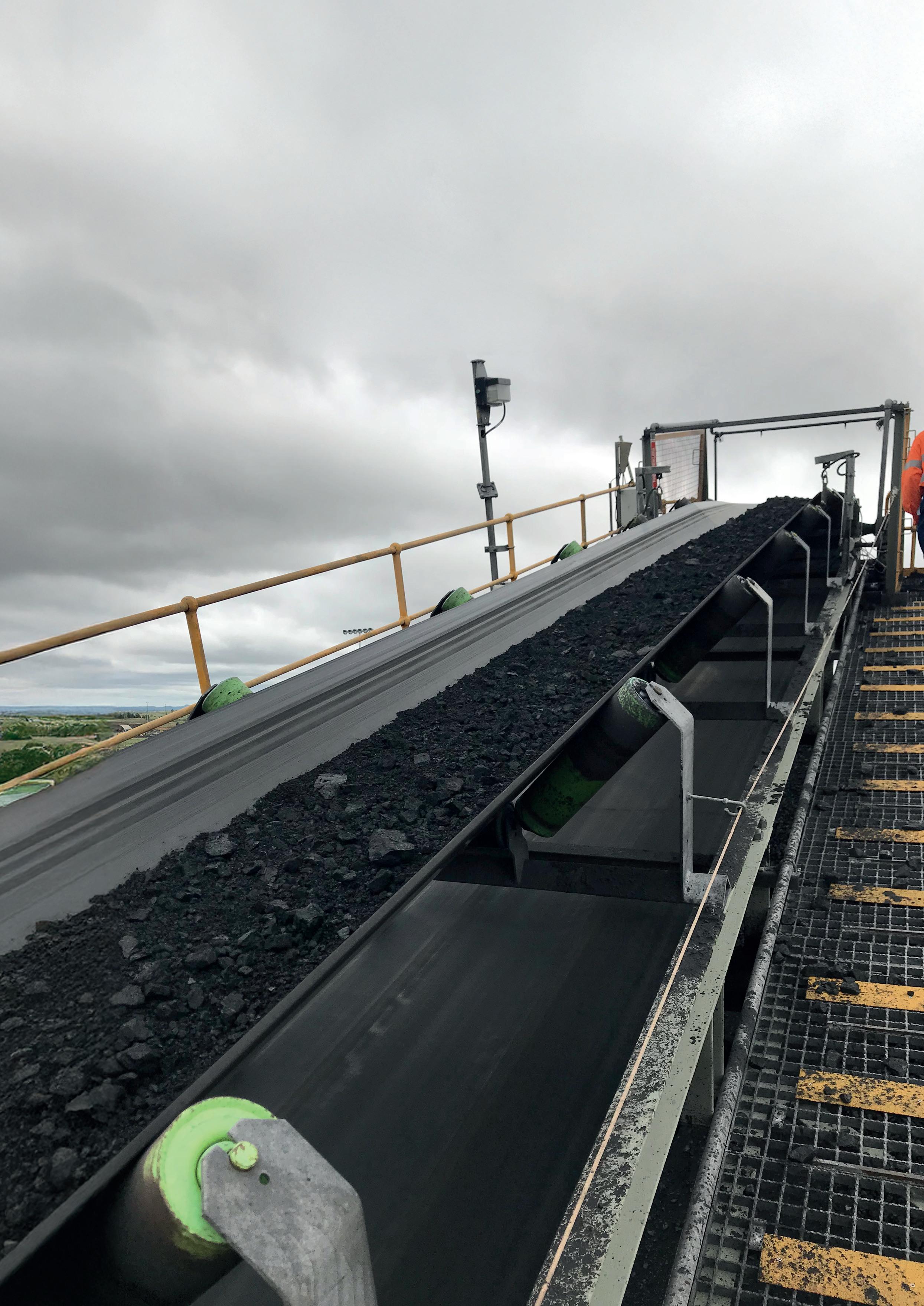
Across both above-ground and underground mining operations, every stage of coal production, from excavation, loading, and haulage to crushing, conveying, processing, stockpiling, transport, and export, experiences performance losses linked to a single, often underestimated factor-fine particle behaviour.
Fine particles influence how fine particle material moves, how it responds to moisture, how easily it breaks down under mechanical stress, and how readily it becomes airborne or cohesive.
When uncontrolled, they can generate dust clouds, destabilise haul roads, accelerate machinery wear, reduce conveyor efficiency, degrade coal quality, and impair overall material flow. Their behaviour under shifting moisture, temperature, and handling conditions can create cascading challenges across the supply chain, undermining productivity and elevating risk.
Fine particles may originate as coal fines, dust, clays, tailings solids, or weathered surface materials, but their impact is consistent. Dry, they can lift easily into the air; wet, they can form cohesive masses that disrupt flow, destabilise road surfaces, impede equipment, and diminish product quality. Effective control of these particles is therefore fundamental to achieving stable, efficient, and optimised mine performance.
For more than 30 years, RST Solutions has developed advanced technologies that modify fine-particle behaviour in real mining environments worldwide at every stage of the coal supply chain.
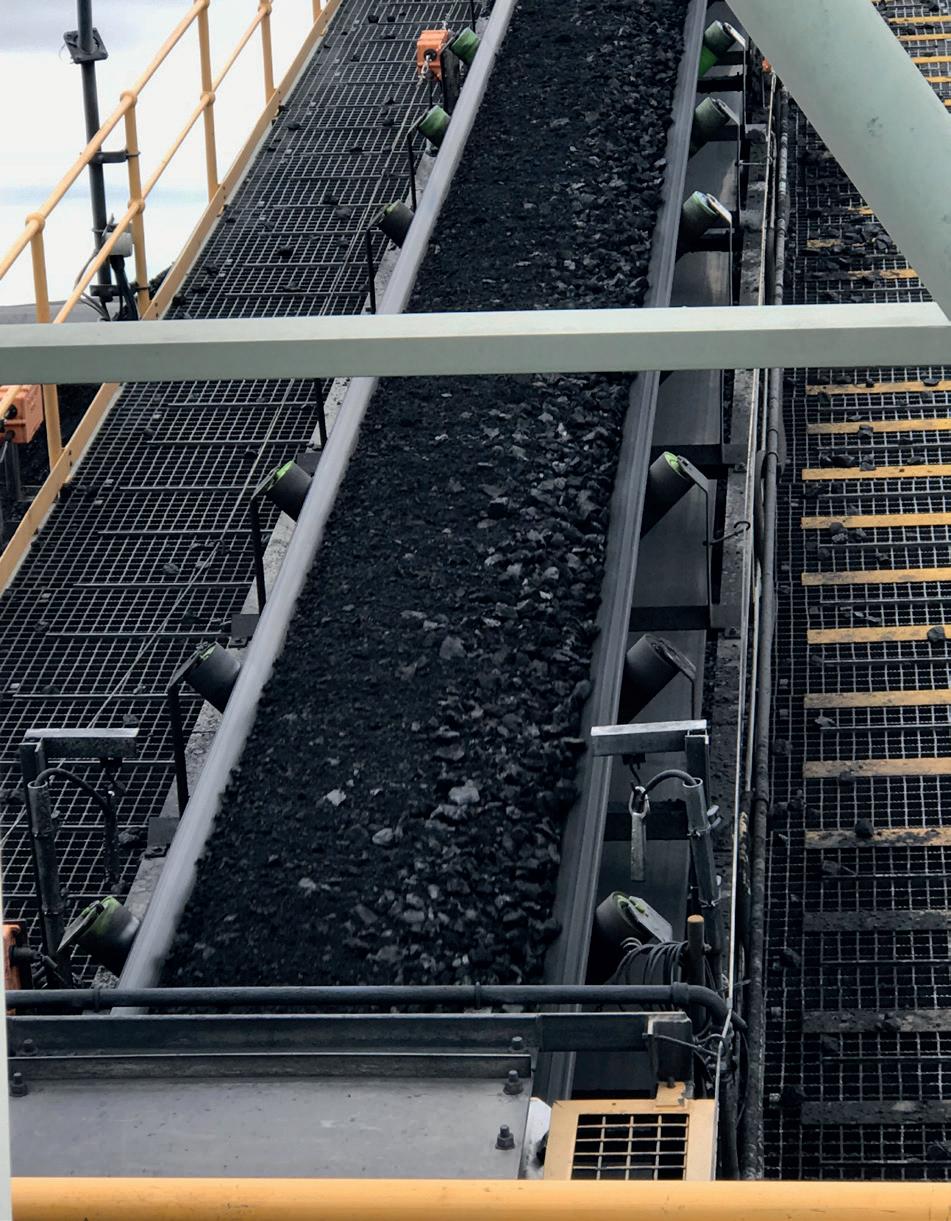
Through its Fine Particle Management (FPM) framework, RST Solutions integrates advanced technologies, tailored chemistries, engineered application systems, and site-specific process optimisation to deliver measurable improvements in productivity, safety, water efficiency, environmental performance, and coal quality – supporting operations from pit to port.
Coal operations worldwide are contending with deeper pits, wetter overburden, increasingly variable coal seams, and fast-changing climatic conditions spanning monsoonal rainfall, freezing winters, and hyper-arid deserts. Water scarcity, escalating haul-road traffic, stricter dust-exposure limits, and amplified environmental scrutiny further intensify these pressures. Mines must therefore operate more efficiently with fewer unplanned stoppages, while demonstrating strong environmental stewardship.
Surface mines frequently battle extremes of dust or mud, both outcomes of fine-particle behaviour. In dry climates, evaporation rates produce persistent dust events that reduce visibility, slow production, and heighten regulatory risk. In wet climates, excess moisture turns fines into mud, resulting in slippery haul roads, increased carryback, equipment blockages, and compromised coal condition.
Underground mines face different constraints but similar particle-related challenges. Float dust threatens air quality, wet or sticky coal impacts conveyors and chutes, and unstable floor materials disrupt mobility and increase maintenance. Predictable fine-particle behaviour is essential for maintaining safe operations in confined environments.
Across all conditions, the industry is expected to minimise water consumption, improve dust-capture efficiency, reduce sediment and tailings discharge, and maintain consistent coal quality throughout the supply chain.
RST Solutions’ FPM framework and extensive product range modifies particle behaviour so fines remain stable, predictable, and controllable throughout each stage of mining and material handling. Through engineered chemistries and system optimisation, it binds and controls dust, enhances moisture efficiency, improves conveyor and equipment performance, reduces fines losses, and protects coal quality.
RST Solutions’ technology suite supports six major operational pillars: � Excavation and loading.
� Underground applications: Controlling dust and improving stability.
� Haul roads: Stability, traction, and dust control.
� Material handling, conveying, and processing.
� Coal moisture management and quality protection.
� Stockpiles, environmental management, and water efficiency.
Each pillar addresses different expressions of particle behaviour and contributes to more efficient system-wide performance.
and loading: Establishing material stability early
Excavation is one of the earliest points at which fine particles influence productivity. Sticky, high-moisture clays and coals reduce bucket fill, increase carryback, and foul truck trays, while dry, fine-grained coal becomes airborne during digging and dumping.
RST Solutions supports this stage through:
� Release-It, which forms a thin release film on trays, buckets, and hoppers to reduce sticking and improve haulage efficiency.
� Wetting agents, speciality polymer/surfactant blends, which increase water penetration into hydrophobic coal surfaces, improving dust suppression during excavation without overwetting the material.
These treatments establish more predictable material behaviour at the beginning of the supply chain.
Underground applications: Controlling dust and improving stability
In underground operations, fine particles present air-quality challenges and influence the performance of floor materials and conveyor systems.
RST Solutions’ underground-specific foams and wetting agents, polymer blends are designed to suppress float dust using minimal water, making them suitable for humid, confined conditions.
Stabilisation chemistries improve the bearing capacity of heaving or soft floors, supporting safer movement of equipment and personnel. Predictable fine-particle behaviour is critical to maintaining operational continuity underground.
Haul roads underpin the productivity of any coal operation, and fine particles contribute significantly to road degradation, mud formation, dust release, and traction loss.
Stabilising subgrades and pavements
RST Solutions’ RT20 Dynamic and CompaK-T stabilisation systems of polymers modify fines within road materials to increase strength, reduce plasticity,
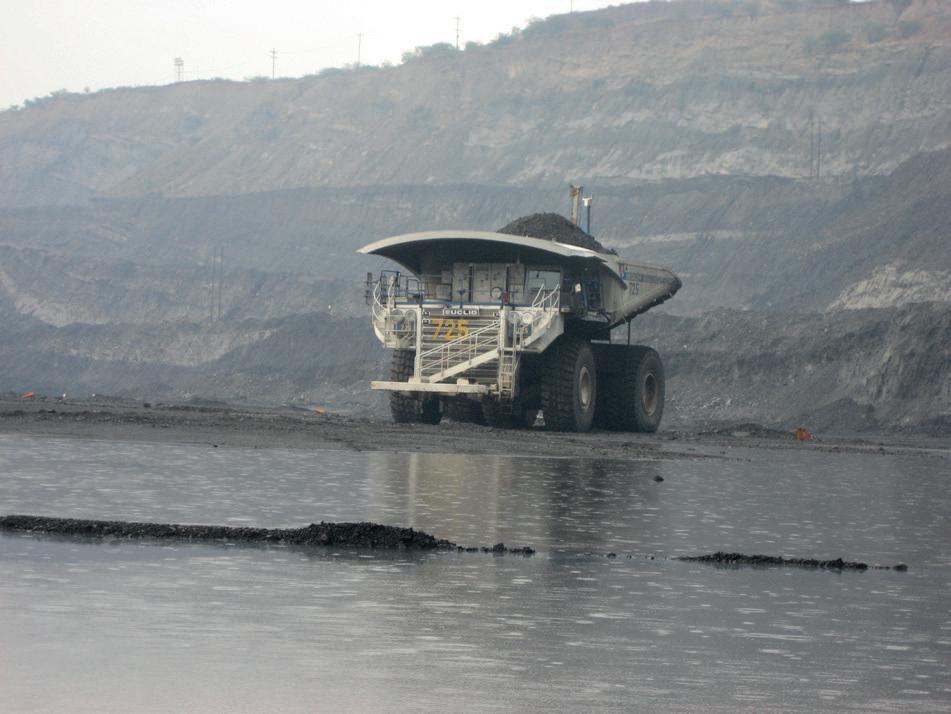
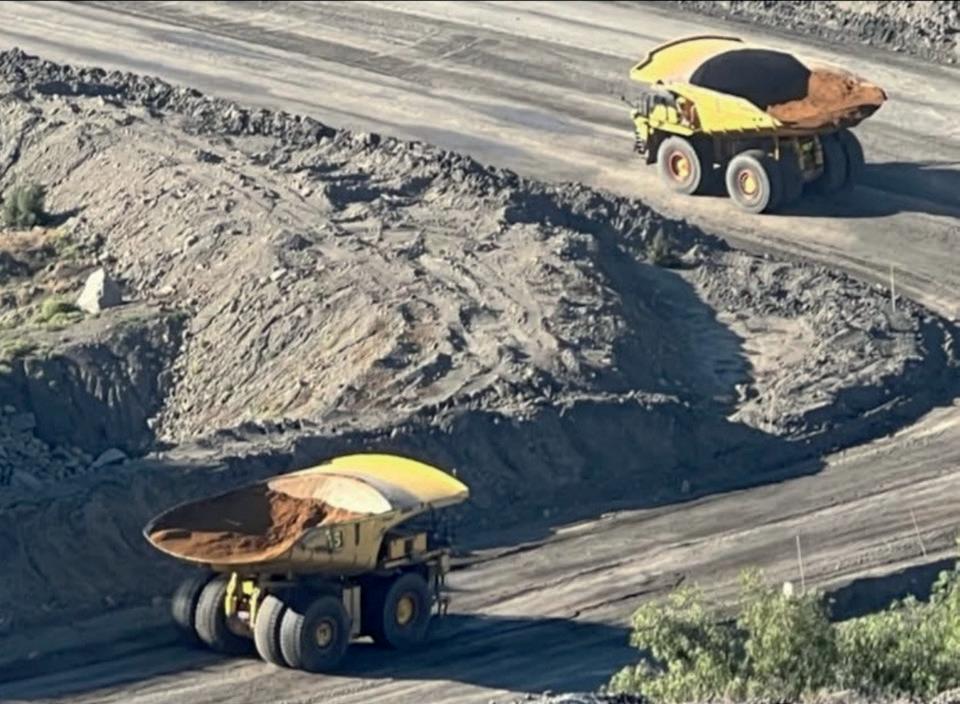
improve compaction, and extend pavement life, even under high traffic loads or wet-season conditions.
Reactive clays become dangerously slick when wet.
RST Solutions offers a range of products that reduce
clay activity, improving safety, reducing rolling resistance, and lowering maintenance requirements.
Dust suppression and water efficiency
RST Solutions’ polymer dust suppressants reduce evaporation, extend water-cart cycles, and create longer-lasting dust control. For long-term sealing, crosslinked polymer treatments form durable surfaces, particularly effective in arid regions.
Material handling, conveying, and processing
Loading, haulage, and reclaim
Fine particles readily become airborne during loading and reclaim. RST Solutions’ water-enhancement agents improve wetting efficiency, suppressing dust while maintaining flow characteristics.
Conveyors and transfer points
Transfer points are high-impact zones where dust is commonly liberated. RST Solutions’ foam-based suppression systems create fine, stable bubbles that bind dust with minimal moisture addition. Anti-stick agents reduce belt fouling, carryback, and blockages, supporting continuous operation and extending equipment life.
Rail transport and shiploading
Wind exposure, vibration, and free-fall transfer during transport and export can break coal further and liberate fines. RST Solutions’ spray-on crusting systems form durable surface coatings on rail wagons, while shiploading agents suppress dust in free-fall streams, maintaining product integrity through the final stages of export.
Coal moisture management and quality protection
Reducing DEM and improving water use
RST Solutions’ linear, crosslinked-polymer systems reduce dust-extinction moisture (DEM), enabling stable handling with less water. Lower moisture improves heating value, decreases transport weight, and reduces freeze-related issues.
Moisture addition control
Controlled moisture addition prevents fines re-entrainment during long transport intervals. RST Solutions’ moisture-control chemistries maintain optimal levels without overwetting.
Protecting coal quality
RST Solutions’ technologies bind coal fine particles to reduce oxidation and fragmentation, preserve lump integrity, and maintain consistent particle-size distribution from pit to port.
Stockpiles, environmental management, and water efficiency
Stockpile capping and crusting
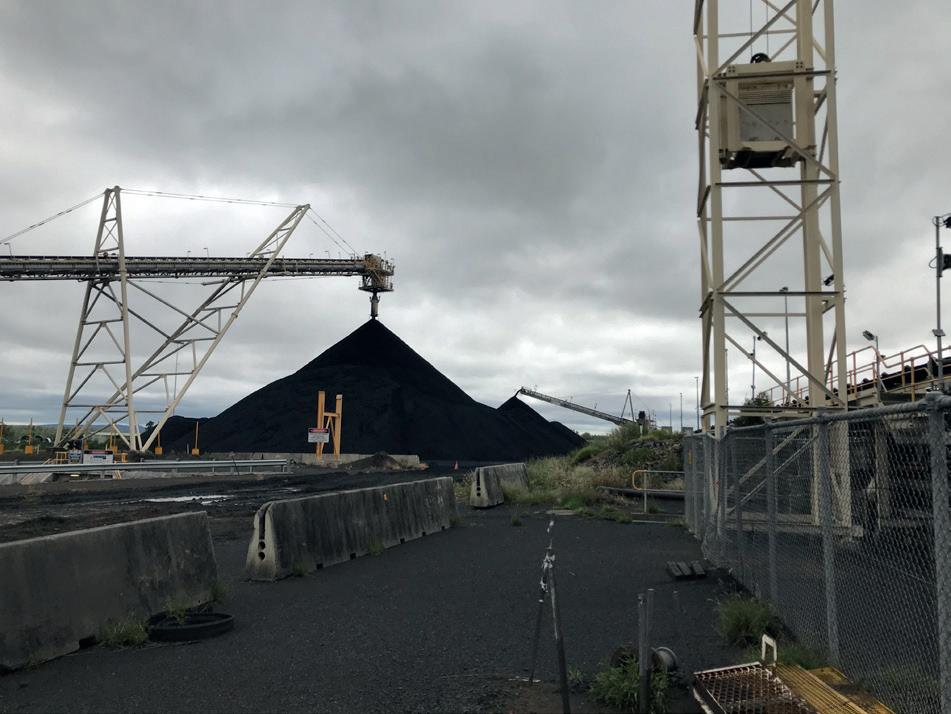
RST Solutions’ polymer crusting agents stabilise exposed coal surfaces, reducing wind erosion and maintaining stockpile condition while minimising water use.
Sediment and tailings control
Flocculants, RST Solutions’ linear and binding polymers, improve tailings settlement rates and increase the clarity of recycled water, supporting environmental compliance and reducing sediment discharge.
Climate adaptation
RST Solutions tailors treatments for a range of conditions:
� UV-stable, minimal-water systems for arid areas.
� Rapid-penetration stabilisers for wet tropics.
� Winter-grade binders for cold regions and dry polymer options.
Improved droplet distribution and moisture retention reduce water use and enhance overall efficiency.
Evolving industry expectations
As regulatory requirements intensify and operational expectations rise, coal producers increasingly recognise the value of advanced dust-control and fine-particle management systems.
RST Solutions’ FPM framework supports operations in maintaining efficiency, safety, and environmental responsibility for global coal mining operations. By stabilising haul roads, reducing dust emissions, optimising moisture, and preserving material flow, the approach delivers measurable improvements across diverse mining environments.
There is a clear shift toward precision dust and fines management, not only to meet compliance thresholds, but as a core management strategy for cost reduction, water efficiency, and consistent, high-performance operations.
RST Solutions aligns advanced innovative technologies, chemical, mechanical, and operational interventions into one coherent framework. This integrated approach equips coal producers with the tools to meet rising efficiency demands, reduce environmental impact, and deliver consistent performance in an increasingly complex operating landscape.
RST Solutions’ end-to-end methodology shows how a holistic understanding of fine-particle behaviour can reshape the way coal is mined, moved, and managed across global supply chains, rather than treating dust flow disruptions or moisture variability as isolated issues.
Liam Sheeder, Belt Tech Industrial, USA, examines how optimising conveyor infrastructure – through disciplined maintenance and operational execution – continues to offer meaningful performance gains.
Automation is once again at the centre of the mining conversation. Autonomous haulage systems, digital twins, and artificial intelligence are frequently cited as the next step in improving safety and efficiency across coal operations.
Yet, while the industry looks ahead, it may be overlooking one of its most successful automation stories – one that has been quietly delivering results for decades.
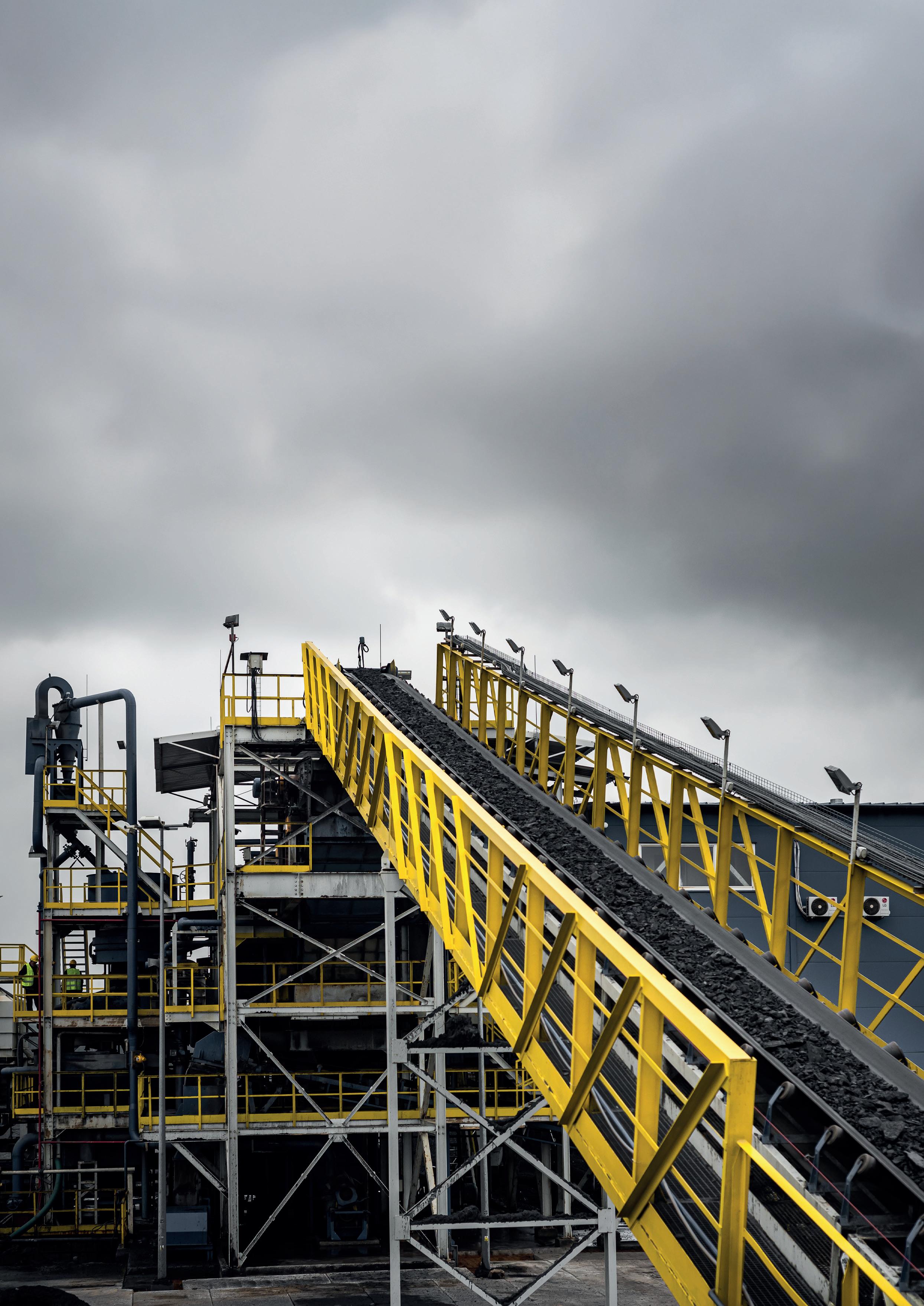
Conveyor systems, often viewed simply as material-handling infrastructure, remain the most widespread and reliable form of automation in coal mining today.
The question facing operators is not whether automation has a place in coal mining – it already does. The more pressing question is whether the industry has fully optimised the automation it already relies on.
Long before automation became a focal point of mining innovation, conveyor systems were already delivering continuous, predictable material movement with minimal human involvement. In coal operations, conveyors reduced reliance on manual haulage while providing a consistent flow of material from face to plant.
Over time, these systems have evolved through incremental improvements in belt construction,
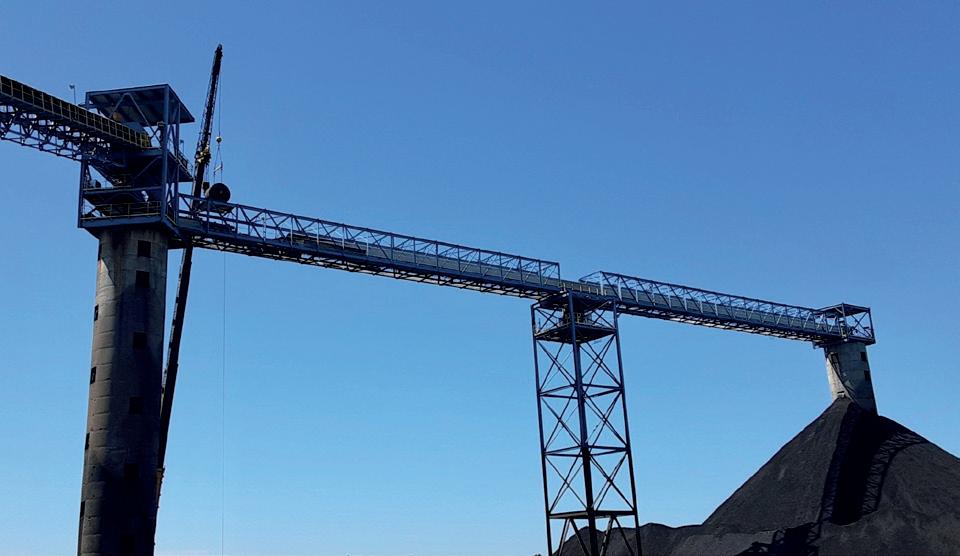
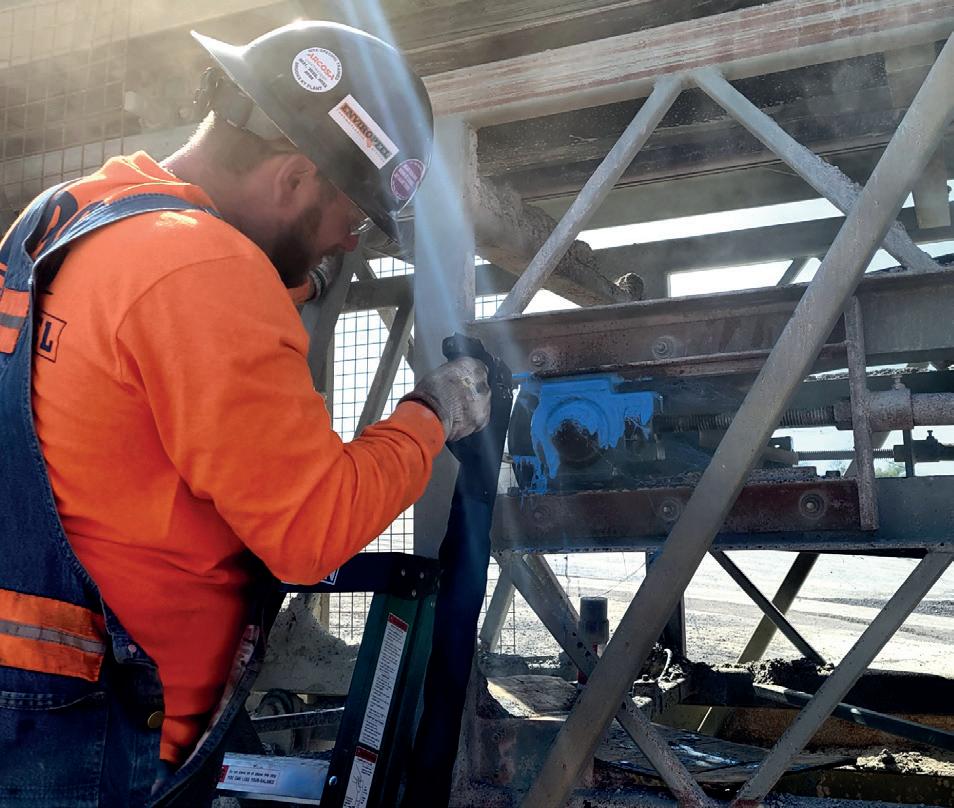
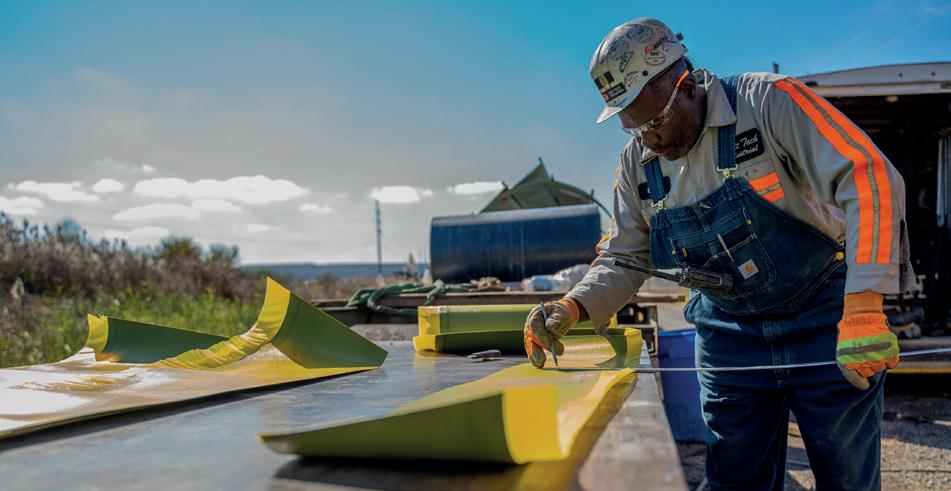
splicing methods, and component design rather than wholesale reinvention. As a result, conveyors have scaled alongside increasing production demands while maintaining a high degree of operational reliability.
This long-standing role positions conveyors not simply as material-handling equipment, but as one of the most established and widely deployed automation platforms in coal mining.
Across many coal operations, operators are balancing production demands alongside ongoing labour constraints, cost pressures, and regulatory requirements. As a result, day-to-day decision-making is increasingly shaped by practical considerations such as equipment availability and maintainability, rather than by the pursuit of experimental or unproven technologies.
In this environment, reliability has become a central focus. Operators are placing greater emphasis on uptime and consistency, particularly in systems that directly influence material flow and downstream processing. Solutions that introduce additional operational complexity without a clear and immediate benefit are often approached cautiously.
Ongoing workforce challenges, including limited availability of experienced maintenance personnel, have been widely documented and continue to influence equipment selection and maintenance strategies across the mining sector. With fewer experienced maintenance personnel available at many sites, operators are favouring equipment and practices that can be supported by existing skill sets and established procedures. Systems with well-understood failure modes and predictable maintenance requirements are therefore viewed as lower-risk investments.
Capital discipline further shapes decision-making. Rather than committing to large-scale system overhauls, many operations are prioritising incremental improvements that extend asset life, reduce unplanned downtime, and deliver measurable performance gains within existing maintenance programmes.
Despite continued advances in mining technology, many coal operations experience performance losses driven primarily by equipment condition and mechanical wear rather than by limitations in automation or control systems. In material-handling infrastructure, these losses are most often associated with maintenance-related factors rather than the absence of advanced technology.
Within conveyor systems, relatively minor issues –including lubrication deficiencies, component wear, misalignment, and splice degradation – can develop gradually over time. Because these conditions do not always produce immediate operational disruptions, they may persist unnoticed or unaddressed until they contribute to unplanned downtime, secondary belt damage, or increased safety exposure.
In practice, maintenance-related performance gaps often emerge not from isolated failures, but from the cumulative effect of small deferrals. Routine activities such as lubrication, inspection, adjustment, and housekeeping may be extended or deprioritised during periods of high production demand, allowing minor issues to persist longer than intended. While each individual deferral may appear inconsequential, their combined impact can be significant.
Over time, these deferred actions increase the likelihood that components intended to be serviced or replaced under planned conditions are instead addressed reactively. This shift from preventive to corrective maintenance can accelerate wear, increase the risk of secondary damage, and introduce greater variability into system performance. In conveyor systems, this pattern is particularly evident in high-duty applications or abrasive operating environments, where even small deviations from recommended maintenance intervals can have an outsized effect on reliability.
While monitoring tools and automation technologies can improve system visibility, they do not eliminate the underlying need for routine inspection, preventive maintenance, and timely intervention. As a result, conveyor performance remains closely linked to the consistency and effectiveness of maintenance execution rather than to the level of technological sophistication alone.
This relationship is reflected in industry guidance and technical literature, where maintenance execution and asset condition are consistently identified as primary drivers of reliability in bulk material-handling systems. Publications and conference proceedings from organisations such as the Society for Mining, Metallurgy & Exploration, National Institute for Occupational Safety and Health, and Mine Safety and Health Administration repeatedly emphasise the role of preventive maintenance in reducing unplanned outages and improving operational stability.
Viewed in this context, the efficiency gap present in many coal operations is less a consequence of missing technology and more a reflection of how existing systems are maintained and supported. Closing this gap often depends on sustained attention to fundamental maintenance disciplines rather than large-scale system changes.
For many coal operations, improving performance does not require the introduction of entirely new systems. Instead, gains are often achieved by optimising existing infrastructure through targeted maintenance, component upgrades, and process refinement. While these efforts require time and financial commitment, they are typically aligned with existing maintenance and operating budgets.
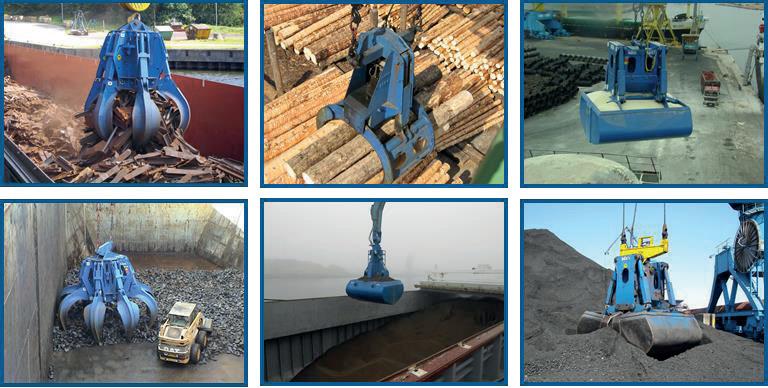
Within conveyor systems, optimisation frequently focuses on belt condition, splicing practices, component selection, lubrication, and alignment. Attention to these areas helps slow the progression of wear-related issues that contribute to unplanned downtime, secondary damage, and increased safety exposure.
Compared to large-scale system changes, incremental optimisation efforts generally present lower operational risk and can often be implemented without significant disruption to production schedules. This approach aligns with operating environments where equipment availability and continuity remain central priorities.
From a financial perspective, optimising existing systems can extend asset life and reduce the frequency of emergency repairs, contributing to more predictable maintenance costs over time. Importantly, these benefits are often realised without the need for major capital investment.
Conveyor systems occupy a unique position within coal operations due to their fixed configuration, continuous duty cycles, and mechanical simplicity. Unlike mobile or highly variable equipment, conveyors operate within predictable parameters, making performance outcomes closely linked to component condition and maintenance execution.
Because conveyors function as continuous systems, changes in performance tend to develop gradually
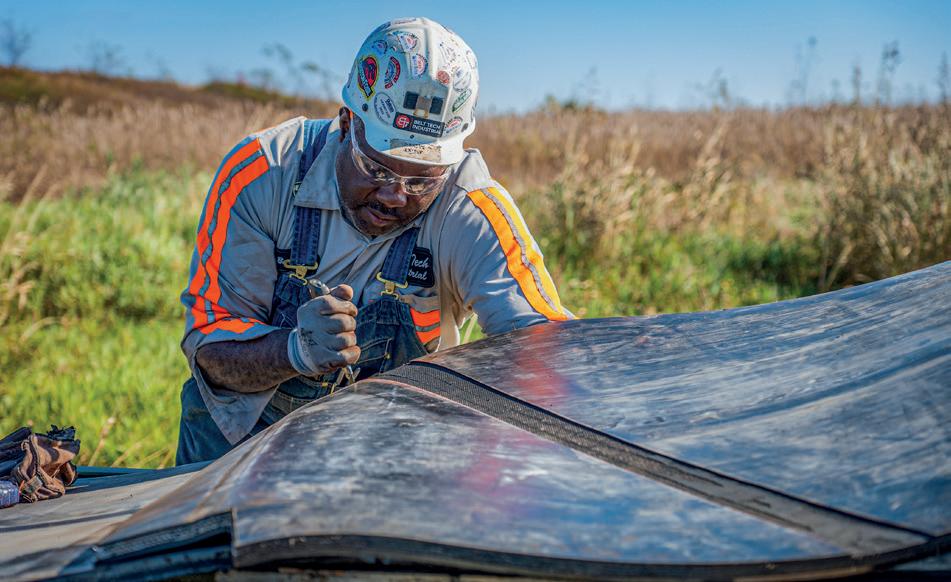
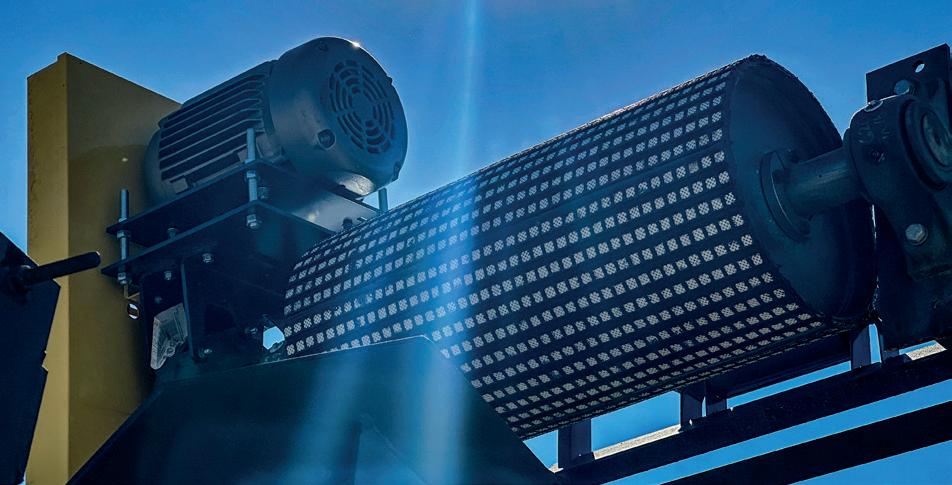
rather than abruptly. Indicators such as vibration, noise, temperature changes, belt tracking behaviour, and material flow characteristics often provide early warning of emerging issues, creating opportunities for timely maintenance intervention before production is affected.
The primary failure modes that influence conveyor reliability are also well documented and widely understood. Wear and degradation affecting belts, splices, idlers, pulleys, and bearings have been studied extensively within the mining industry, enabling operators to apply proven inspection and maintenance strategies rather than experimental approaches.
As a result, conveyor optimisation lends itself to scalable improvement. Incremental actions – applied consistently across multiple systems – can enhance reliability and availability at a site-wide level without introducing additional operational complexity or reliance on specialised support.
Innovation in coal mining is often associated with emerging technologies, digital platforms, and increasingly autonomous systems. While these developments continue to influence the industry’s direction, they represent only one dimension of operational progress.
In contrast, mature systems such as conveyor infrastructure often retain untapped performance potential through improved maintenance practices, component selection, and operational discipline. These gains are not driven by technological novelty, but by consistent execution and attention to asset condition.
This perspective aligns closely with the realities facing many coal operators today, including labour availability constraints, capital discipline, and a continued emphasis on reliability. In this context, innovation is frequently measured not by system complexity, but by stability, predictability, and sustained performance over time.
Viewed this way, innovation does not always require additional automation layers or wholesale system changes. In many cases, it involves applying well-established practices more consistently across critical infrastructure, ensuring that existing systems perform as intended throughout their service life.
As coal operators continue to evaluate new technologies and operational strategies, conveyor systems remain a central element of safe and efficient material handling. Long recognised as a form of automation in their own right, conveyors continue to deliver value through reliability, scalability, and operational simplicity when properly maintained and supported.
Ensuring that existing conveyor infrastructure is optimised and sustained will remain a critical component of operational performance, reinforcing the role of disciplined execution alongside technological advancement in coal mining.
Imran Aslam, Sindh Engro Coal Mining Company (SECMC), Pakistan, discusses how SECMC’s blueprint for risk-based safety is shaping a 11.2 million tpy future.
In the last quarter of 2024, SECMC adopted a mine-wide Critical Control Management (CCM) programme within a broader Critical Risk Management (CRM) framework. The goal is simple and uncompromising: risk-based safety – preventing serious injuries and fatalities by ensuring the few controls that matter most are clearly defined, continuously verified, and independently assured. SECMC has built 109 bow ties, each tied to a material unwanted event (MUE) across production, coal handling, maintenance, and FIFO operations.
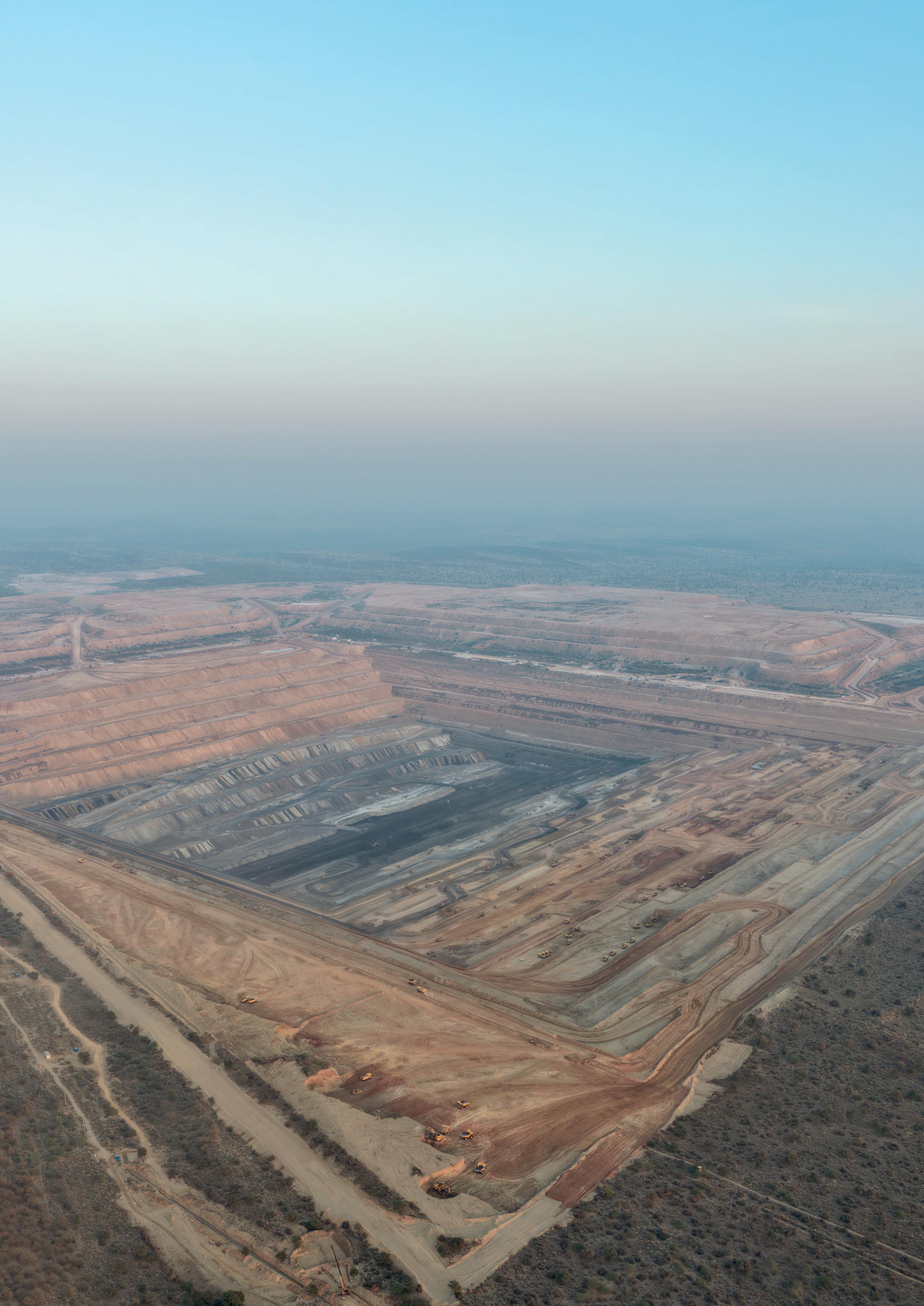
As the operation moves from 7.6 million tpy to 11.2 million tpy in Phase 3, this safety-first discipline naturally strengthens operational reliability – but reliability is the outcome, not the objective. The objective is to keep people safe, every shift.
SECMC operates one of the region’s most significant opencast coal mines, supporting national energy security and local industry. The mine is engineered for 7.6 million tpy,
with Phase 3 lifting capacity to 11.2 million tpy by June 2026. A modern pit of this scale blends high-density traffic, large mobile fleets, continuous materials handling, high-voltage power distribution, complex workshops, and a fly-in/fly-out (FIFO) workforce. That operating reality makes risk-based safety non-negotiable: controls must work on demand in the real world of dust, gradients, weather, night operations, contractors, and SIMOPS.
The International Council on Mining and Metals (ICMM) advances practical tools that help mining companies lift environmental, social, and safety performance. Among these, ICMM’s guidance on CCM has reshaped how industry tackles fatal risks: identify
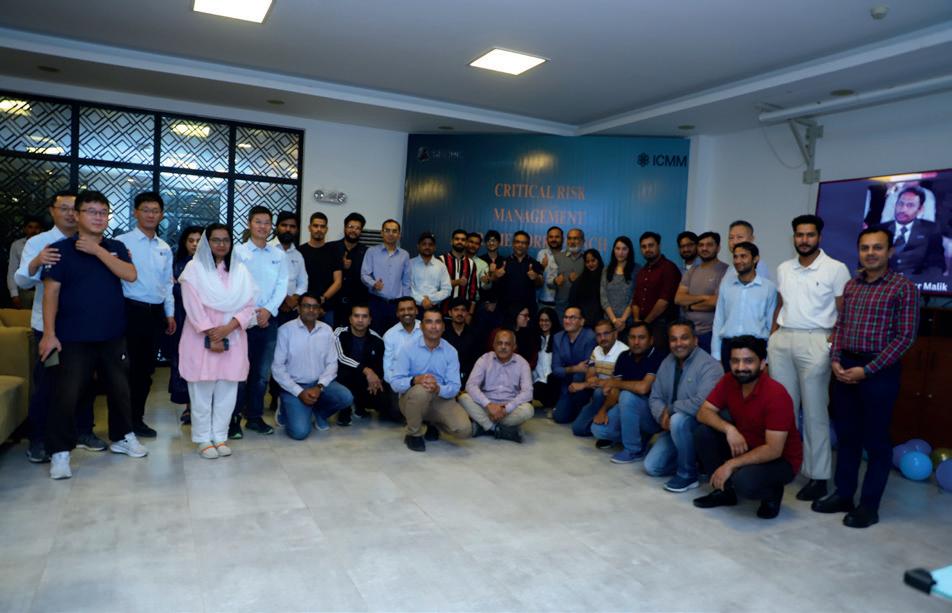
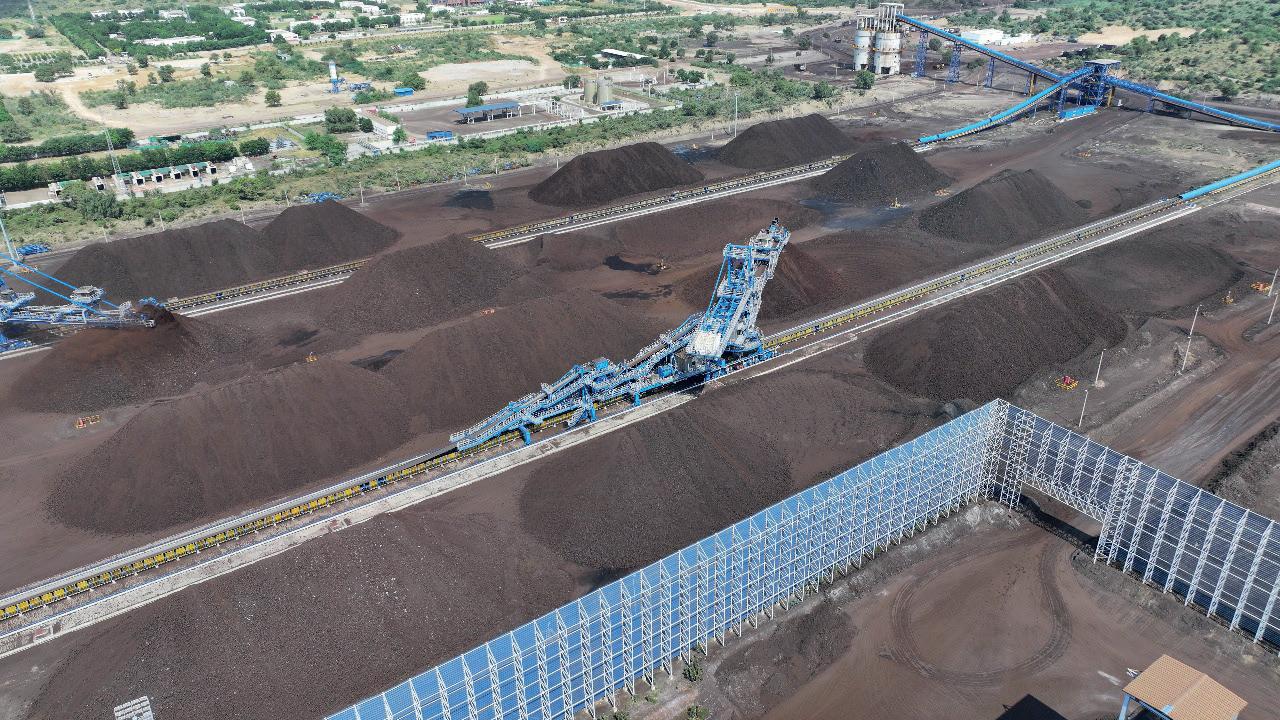
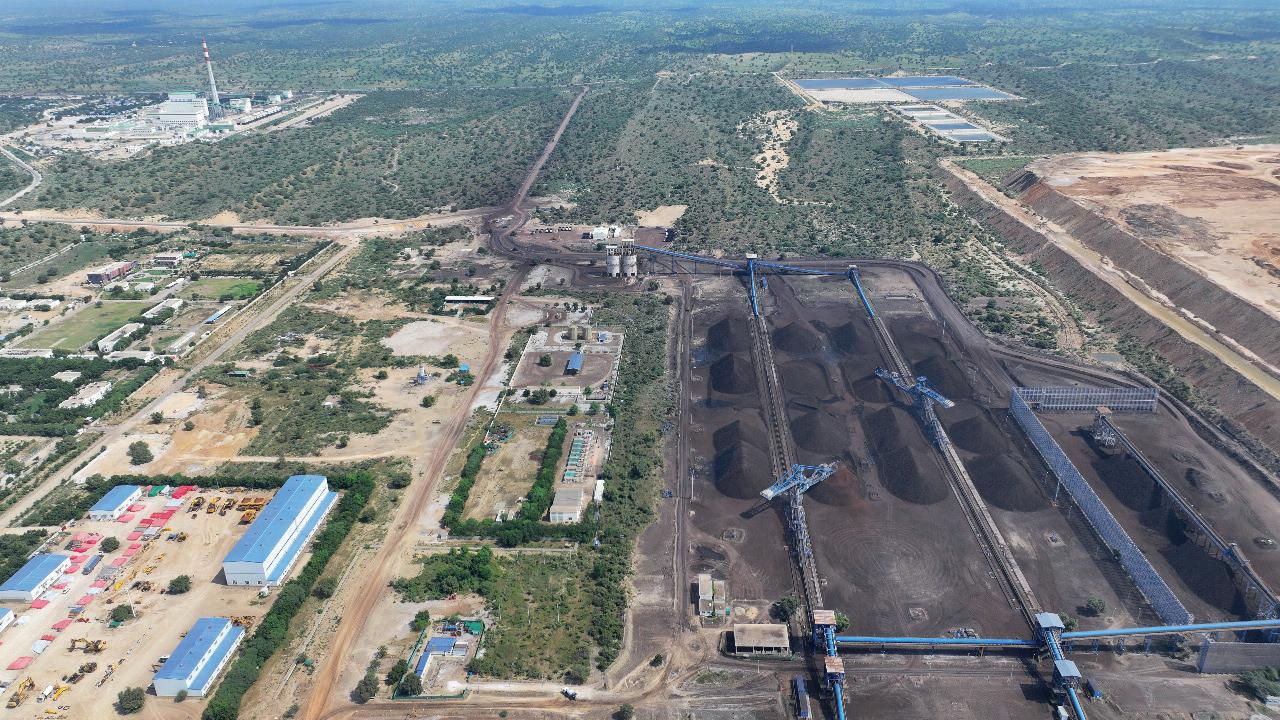
your highest-consequence scenarios (MUEs), isolate the critical controls that prevent or mitigate those scenarios, define exactly how those controls must perform, and then prove – through assurance and independent verification – that they are healthy today. It is a pragmatic blueprint for risk-based safety.
What CRM and CCM mean in practice
CRM is the overarching framework that focuses the organisation on fatal and serious harm potential – not just frequency. CCM is the safety method inside CRM that makes this focus operational:
� Name the risk which could have a serious impact (the MUE).
� Name the few controls that must not fail (critical controls).
� Define performance criteria in the field (testable criteria and evidence).
� Check the checks (assurance and independent verification).
This is risk-based safety, not checklist compliance. It concentrates scarce attention on life-saving protections, and it creates a line-of-sight from the operator’s pre-start to the boardroom: Is the control healthy right now? How do we know?
Core principles of CCM
� Identify MUEs.
� Identify critical controls that prevent or mitigate those MUEs.
� Define performance standards for each critical control.
� Assign control ownership (accountability).
� Conduct verification and assurance to confirm effectiveness.
� Learn, adapt, and continuously improve the control framework.
CCM = Risk-based safety, not just compliance
� Traditional safety counts incidents; CCM measures control effectiveness.
� It shifts attention from low-consequence, high-frequency issues to low-frequency, high-consequence events.
� It embeds risk-based decision-making into daily operations, maintenance, and supervision.
� Helps prioritise investment in controls that protect life, environment, and reputation.
In 4Q24, SECMC chose to apply ICMM’s CCM method everywhere – not just in ‘high-risk pockets’. The standard became explicit: every critical control must exist in design, be visible in the field, and be provable on any given day.
Build the safety map: 109 bow ties, 109 MUEs, and 260 critical controls
SECMC completed 109 bow ties – one per MUE –across production, coal handling, maintenance (workshops and in-pit), and FIFO. Each bow tie defines threats, critical controls, performance requirements, assurance tasks, and independent verification. Examples include:
� Vehicle-to-person collision: Traffic segregation; geofenced speed limits; collision-avoidance systems with ≥95% uptime; seatbelt interlocks; IVMS and escalation.
� Geotechnical collapse (pit/dumps/stockpiles): Design conformance; windrows ≥½ tyre height; SSR/prisms; evacuation ≤2 minutes; TARPs with clear triggers.
� Refuelling fire/explosion: Earthing/bonding (resistance <5 Ω); certified dry-breaks; hot-work exclusion; spill/foam readiness; ignition source control.
� Electrical shock/arc: LOTOTO with ‘test-for-dead’; arc-rated PPE; restricted HV access; annual protection testing.
� Tyre and wheel energy: Remote inflation in cages; line-of-fire exclusion; rim/lock-ring inspection; hot-tyre/pyrolysis protocols.
� Confined space: Continuous gas monitoring; attendant and rescue readiness; competency sign-off; drills.
For each critical element, SECMC authored concise performance standards with binary pass/fail criteria and named owners. Language is operational: ‘CAS self-test passes on pre-start; weekly health report evidence availability ≥95%; failure ⇒ park or downgrade; repeat in month ⇒ MOC’. This precision turns intent into observable safety practice.
Prove it – assurance and independent verification
� Assurance (by the control owner): Shift/daily/ monthly proof tests captured in routine work.
� Independent verification (HSE, Geotech, Electrical TA, Mine Excellence): Quarterly for life-critical controls. Failed tests trigger immediate escalation (stop, fix, MOC). Trends feed a CCM dashboard for leadership action.
Manage interfaces (SIMOPS) deliberately
Bow ties are cross-linked so controls do not fail at boundaries:
� Blasting ↔ Haulage: Dynamic road closures; exclusion cordons; radio holds.
� Maintenance run-ups ↔ Traffic: Test pads, spotters, temporary pedestrian exclusions.
� Diesel farm ↔ In-pit refuelling: Common earthing/bonding standards; tanker traffic; ignition controls.
� Power distribution ↔ Mining: Overhead line corridors; boom/equipment clearance; permit-to-dig for buried services.
� FIFO ↔ Fit-for-work: Driver D&A screening, seatbelts, IVMS, fatigue transitions between flight arrival and shift start.
SECMC’s accomplishments
� Coverage: 109 MUEs mapped across production, coal handling, maintenance (workshop & pit), and FIFO. Developed 109 Bowties and identified 260 critical controls out of 900+ controls.
� Field-usable performance standards for every critical control: Short, specific, testable – used in pre-starts, inspections, and audits.
� Assurance calendar: Owners perform shift/daily/ monthly tests; life-critical controls get quarterly independent verification.
� Escalation discipline: Any failed test on life-critical control ⇒ immediate stop/lock-out; repeat ⇒ formal MOC and leadership review.
� Interface management: Joint permit reviews for SIMOPS and cross-area work (e.g. hot work near fuels, cranes, under powerlines, etc.).
� Competence: Verification of Competence (VoC) embedded for safety-critical roles; contractor onboarding aligned.
� Safety intelligence: Dashboards track proof-test pass rates, CAS uptime, Geotech evacuations, refuelling earthing logs, IVMS speed/seatbelt compliance, and timed drills.
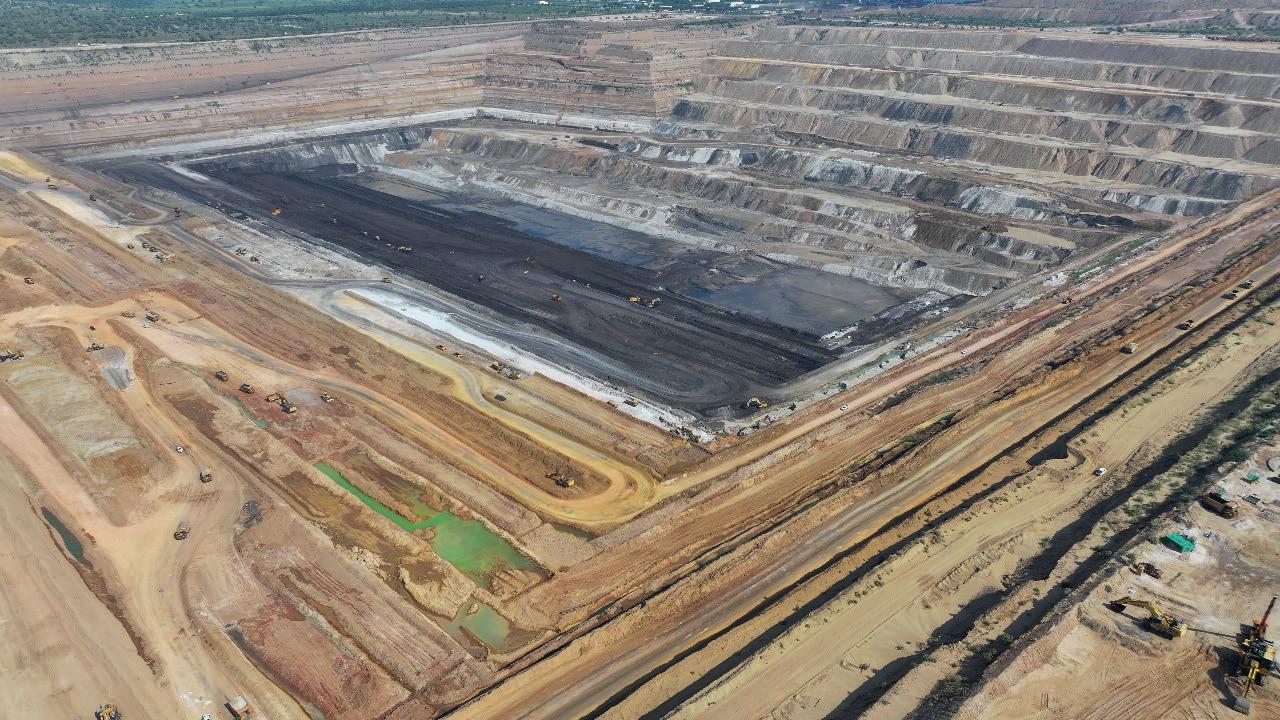
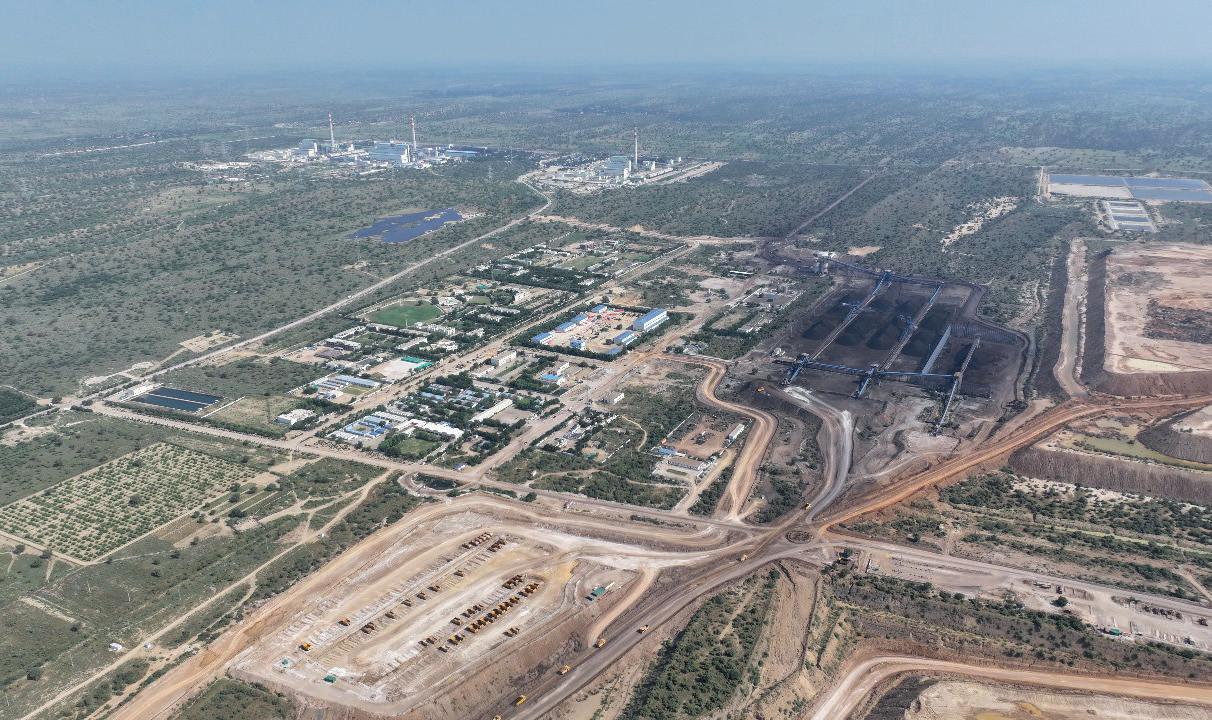
Why this matters – for people first, and business second
The right attention on the right risks
Risk-based safety directs time and resources to the highest-consequence exposures. When critical controls are healthy, the probability of a serious or fatal event falls dramatically. That is the heart of CCM.
A safer mine is naturally steadier
While safety is the aim, steady operations follow fewer critical stops, fewer severe incidents, less rework, and cleaner shift handovers. As SECMC scales to 11.2 million tpy, this stability reduces hidden costs and preserves capacity where it belongs –on safe production.
Clear expectations for contractors and OEMs
Testable standards and independent checks create a shared safety language. Expectations are unambiguous; performance is visible; escalation is consistent. That lifts quality and pace without diluting safety.
Evidence that builds trust
Boards, regulators, lenders, and communities want to see how you know controls work. CCM’s assurance and verification provide evidence, not assertions – supporting license to operate and stakeholder confidence.
Culture you can feel in the pit
When operators can say, “I proved the control this morning”, safety becomes personal, current, and real. That confidence is contagious – and it is how a workforce moves from compliance to commitment.
What’s next
� Deeper quantification: Keep setting numeric thresholds (e.g. CAS ≥95%, evac ≤2 min, earthing <5 Ω, speed compliance ≥98%, windrow ≥½ tyre height).
� Exception-based oversight: Use telematics and sensors (CAS health, brake performance, pump flows) to surface the few controls needing attention today.
� Scenario-driven drills: Realistic, timed drills for Geotech evacuation, refuelling fires, blast holds, and tyre/wheel events – measure, learn, improve.
� Learning loops: Every deviation logged and learned; repeat issues trigger redesign via MOC, not reminders.
� Scale with discipline: As Phase 3 grows headcount and fleet, keep the same safety cadence – owners, tests, verification, escalation.
Closing thought
The same controls that keep people safe also keep production flowing. Reliability follows safety, not the other way around.
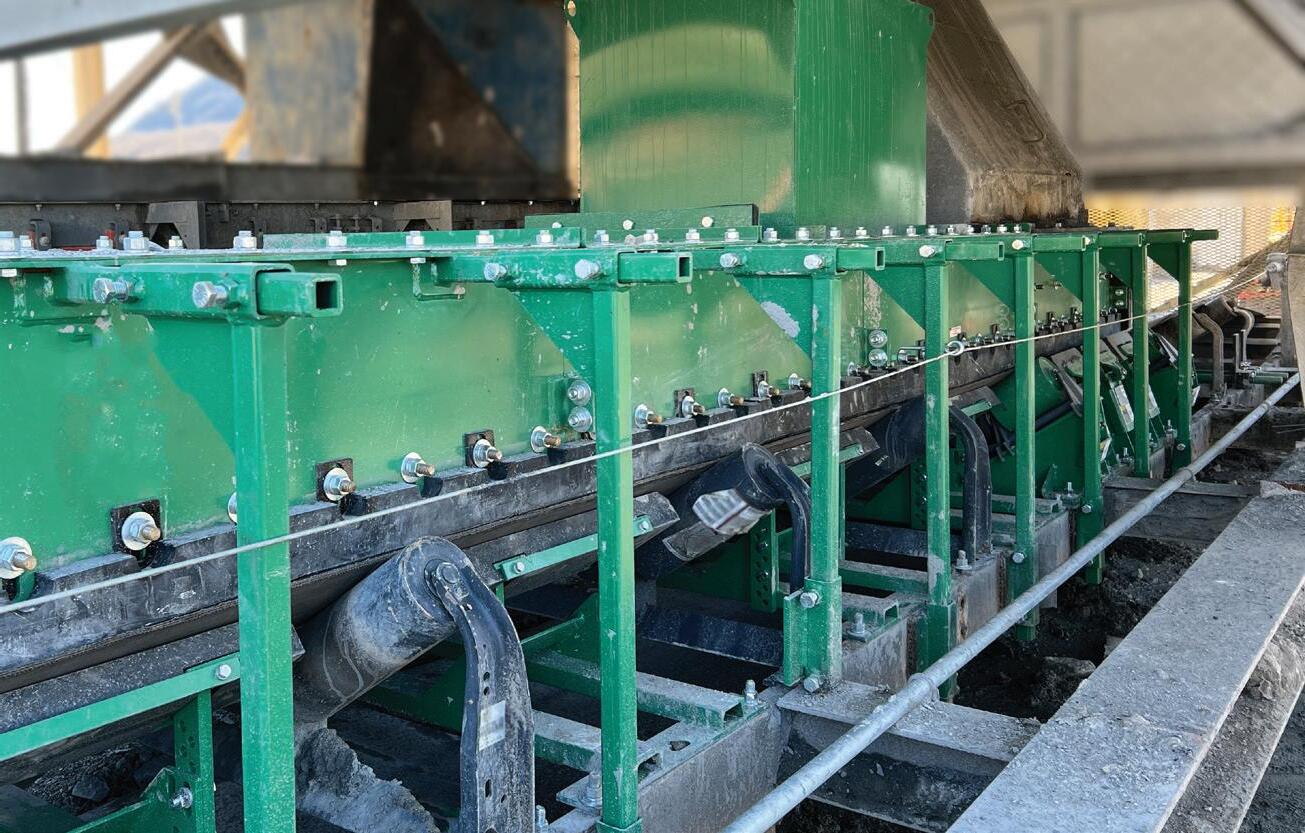
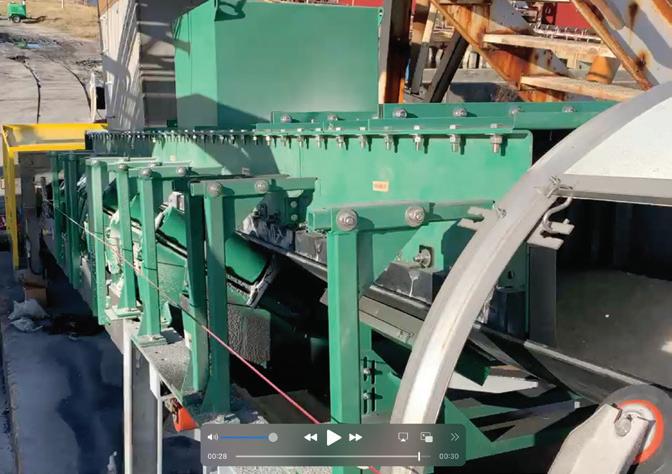
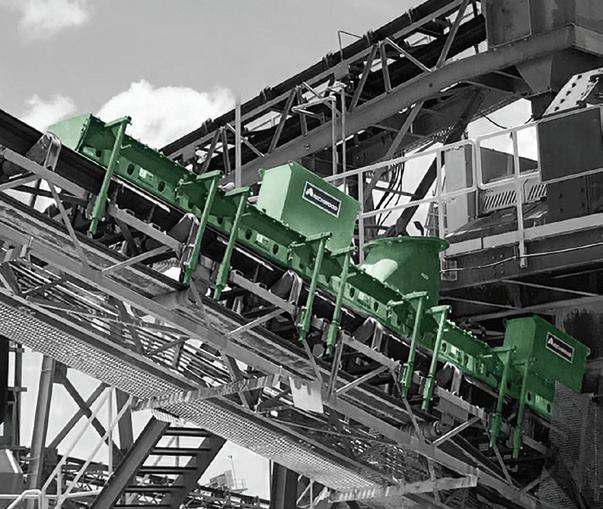
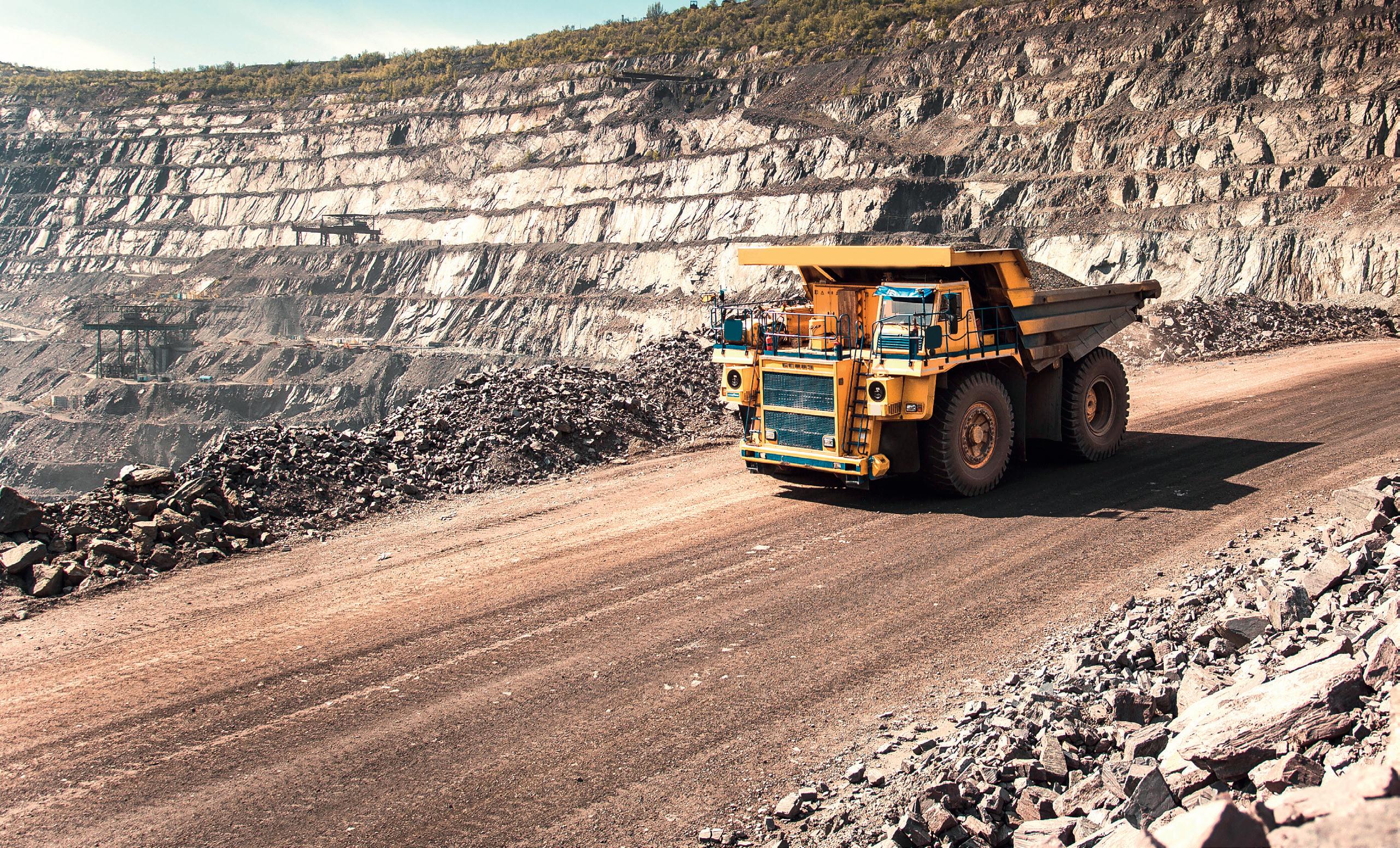
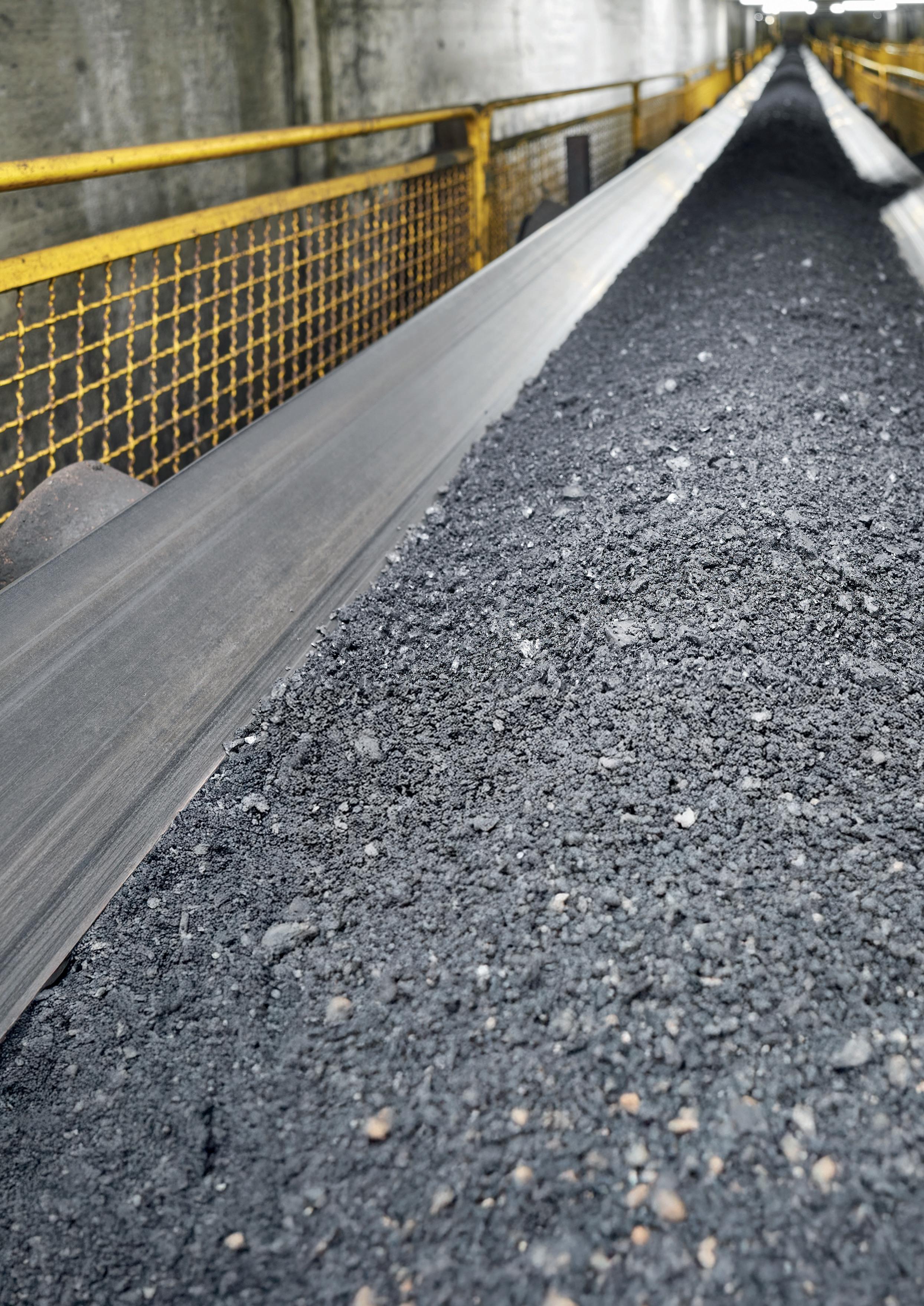
Sage Miles, Migatron Corporation, USA, illustrates how intrinsically safe ultrasonic sensing is key to protecting conveyor infrastructure and maximising efficiency in coal mining.
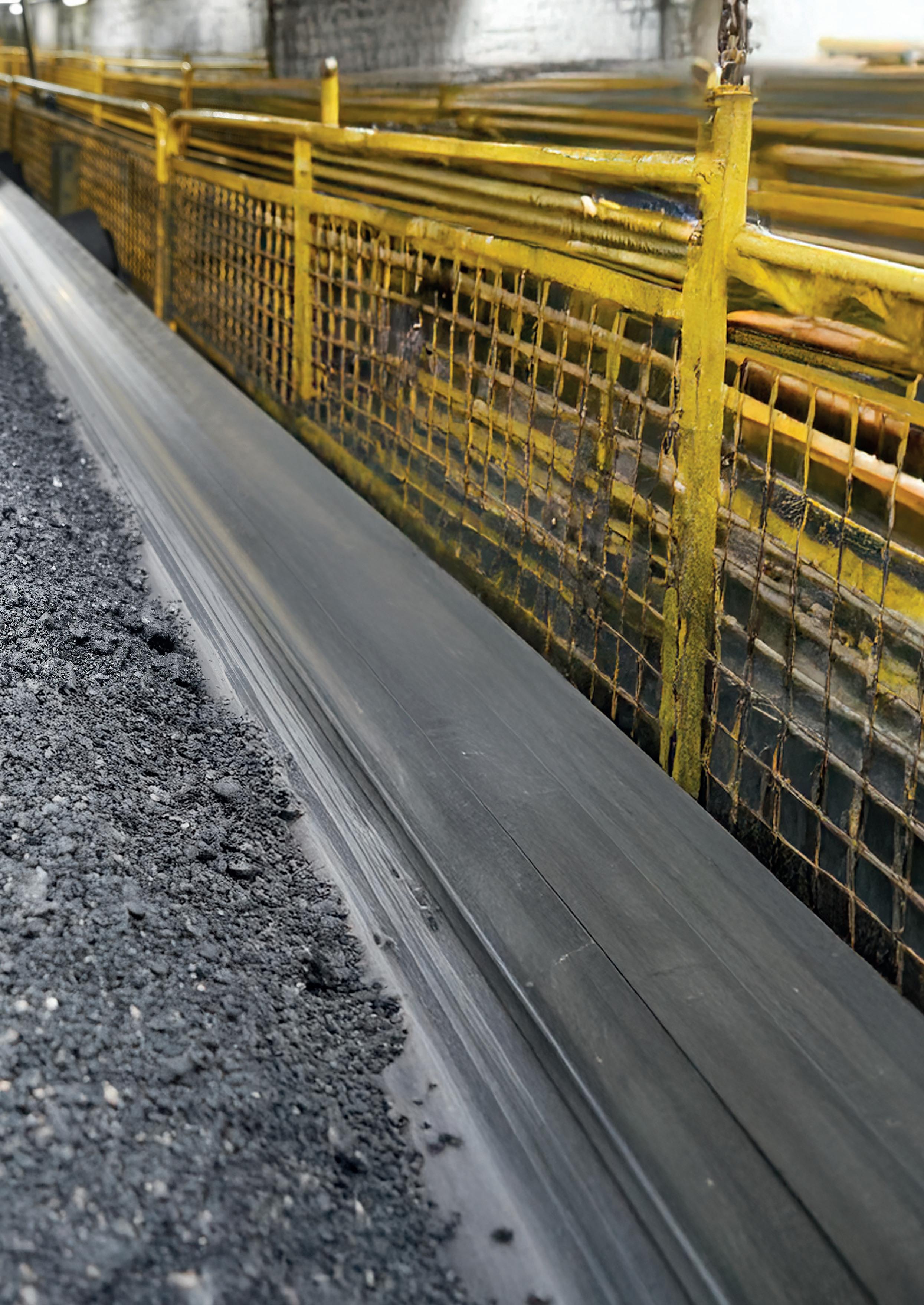
Coal-handling conveyors – spanning underground drifts, surface transfer points, and preparation plants – form critical links in production continuity. Each belt carries combustible material through confined, dusty areas where heat, friction, or misalignment can quickly evolve into safety hazards. Even minor lateral belt drift may cause friction against structural steel, leading to belt edge damage or ignition of fine coal dust layers. In confined underground environments, this risk is amplified by the possible presence of methane gas.
To mitigate these hazards, coal operators are increasingly implementing continuous belt-tracking and material level monitoring using non-contact ultrasonic sensing technology. These systems measure distance without physical contact, provide real-time feedback to programmable logic controllers (PLCs), and can be deployed safely in hazardous areas when designed according to intrinsic-safety principles defined by MSHA, ANZEx, ATEX, and IECEx standards.
Migatron’s intrinsically safe ultrasonic sensors – the RPS-409A-IS2, RPS-409A-MSHA, and RPS-429A-IS – serve as examples of how non-contact technology can improve reliability, uptime, and safety in both underground and surface conveyor systems, along with connected applications. Ultrasonic sensing eliminates the mechanical wear and contamination issues common to contact-based tracking devices. The absence of moving parts reduces maintenance frequency and improves long-term reliability. The sealed transducer face requires only periodic cleaning to remove dust buildup.
In underground applications, intrinsic safety further enhances reliability by removing the need for explosion-proof housings that can corrode or accumulate conductive dust.
Ultrasonic sensors measure distance using acoustic time-of-flight. The sensor emits a short burst of sound and measures the time until the echo returns from the target surface. Multiplying the travel time by the speed of sound yields the distance to the object.
Because the speed of sound in air varies with temperature, Migatron’s ultrasonic sensors include temperature-compensation circuitry to maintain consistent accuracy over a wide range of temperatures. For conveyor systems, this ensures measurement stability whether installed in hot plant galleries or cold underground entries.
Unlike optical or laser-based instruments, ultrasonic sensors are largely unaffected by dust concentration and lighting conditions. The sound waves penetrate airborne coal dust, providing reliable readings even during heavy loading or belt discharge. This makes ultrasonic sensors well-suited to coal-handling environments where dust contamination and lighting conditions challenge most other distance-measurement technologies.
Migatron’s IS-series ultrasonic sensors utilise precision piezoelectric transducers, internal signal amplification, and echo-filtering that distinguish valid returns from background noise. This enables accurate belt-edge and material level monitoring even under dusty and bright light conditions.
Coal operations require the highest level of safety. Migatron’s IS-approved sensors have a Ma equipment protection level (Ex ia I Ma); therefore, the sensors can remain energised and functioning in coal mines, with firedamp and coal dust present. With a T4 temperature class, heat is also kept to a safe level for coal operators.
Migatron’s IS-approved sensors meet these requirements:
� RPS-409A-IS2 – ATEX/ANZEx/IECEx approvals, with Ma equipment protection level, analog voltage output, ranges up to 5.5 m.
� RPS-429A-IS – ATEX/IECEx approvals, with Ma equipment protection level, two-wire 4 – 20 mA, analog current output, ranges up to 2 m.
� RPS-409A-MSHA – MSHA approval pending, Gassy Mines, analog voltage output, ranges up to 2 m.
Each sensor connects through an approved galvanic isolator or Zener barrier located in the safe area. The combination of a certified sensor and barrier forms an intrinsically safe system, allowing measurement in the hazardous area.
A major source of belt damage occurs at the edge of the belt, where the return strand transitions to
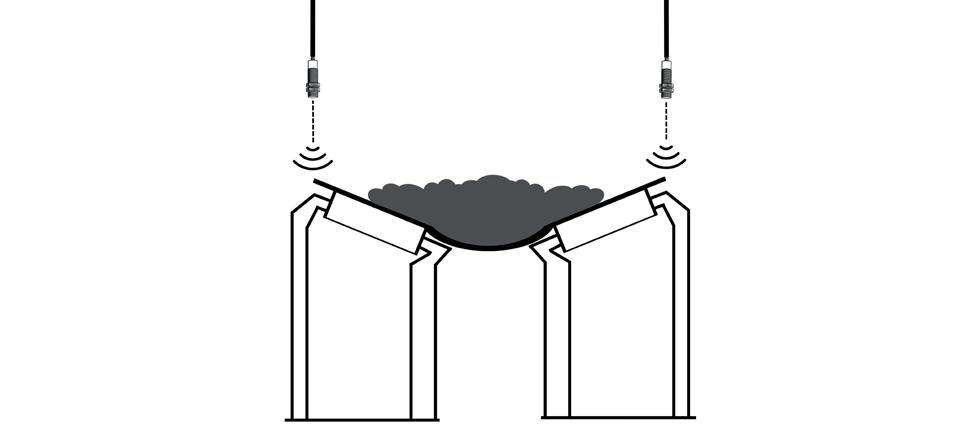
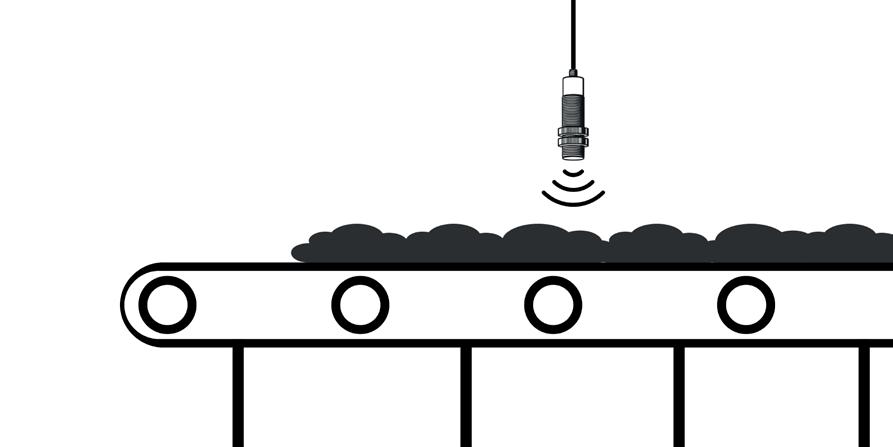
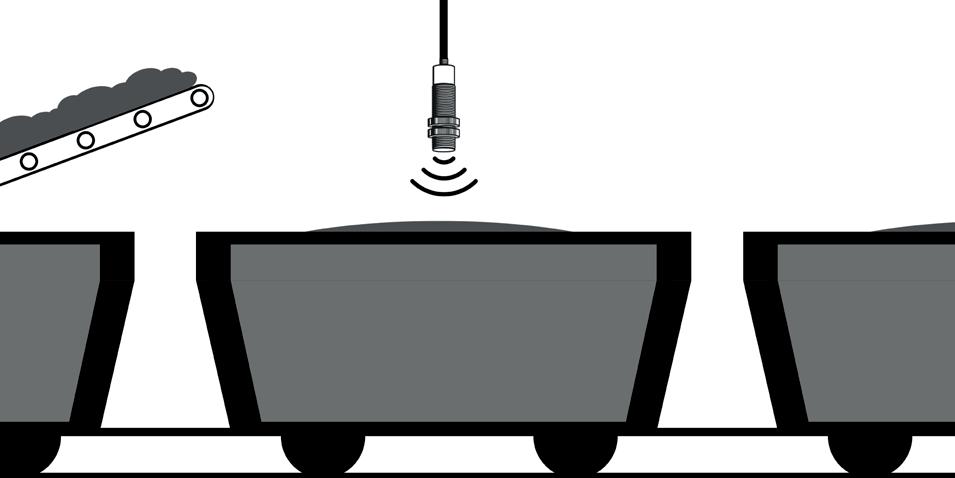
the carrying side. Variations in tension or loading can cause lateral drift, allowing the belt edge to contact frame members or idlers. Traditional mechanical tracking switches rely on physical contact and are subject to wear, contamination, and false alarms.
An intrinsically safe ultrasonic sensor offers a non-contact alternative. The sensor continuously reports the position of the belt, allowing the conveyor to automatically adjust the belt alignment (Figure 1). Because the ultrasonic sensor operates with a beam angle of only a few degrees, it can distinguish the belt edge from nearby supports. The sensor’s sealed housing (IP67) prevents dust and water ingress. This non-contact sensing solution creates a safe, continuous alignment system with minimal maintenance requirements.
When the designated speed of the belt is constantly changing, coal workers need precise sensing technology to monitor the level of the material going by. Ultrasonic sensors provide an elegant solution. A Migatron ultrasonic sensor can be mounted just above the conveyor belt, to measure the level of the material on the belt (Figure 2). As the material travels on the conveyor belt, the sensor continuously outputs voltage proportional to distance. The PLC compares this measurement against the programmed target distances representing discharge points.
In other applications, the ultrasonic sensor can be mounted at the top of a bin or hopper. Here, the sensor can detect when the bin or hopper is being filled or emptied, continuously measuring the level of material (Figure 3). Integrating an ultrasonic sensor ensures consistent flow of coal from conveyor belt to hopper car, with the addition of intrinsically safe approvals; thus, allowing the sensor to operate in hazardous areas.
Ultrasonic sensors interface easily with standard PLC architectures. Migatron’s intrinsically safe ultrasonic sensors output a linear analog signal corresponding to the measured distance. PLC analog input modules convert this signal to engineering units, which are then processed in the control logic.
A common configuration uses two sensors – one on each side of the conveyor. The PLC continuously calculates the difference between the two distance values to determine belt centering. If the differential exceeds a preset limit, corrective action is triggered automatically through servo or hydraulic actuators.
When designing ultrasonic alignment systems for coal conveyors, several parameters should be considered:
� Mounting geometry: Sensors should be installed perpendicular to the moving surface with minimal angular deviation to ensure consistent measurement.
� Crosstalk management: If multiple sensors are installed in close proximity, use the Sync/Tx line to prevent crosstalk (supported by the RPS-409A-IS2 series).
� Barrier configuration: Verify that total loop resistance, inductance, and capacitance remain within the limits specified by the IS approval.
Proper configuration of these parameters ensures reliable, repeatable distance measurement and preserves intrinsic-safety compliance throughout the conveyor installation.
An OEM that specialises in advanced underground mining equipment needed an intrinsically safe ultrasonic sensor to monitor the alignment of their conveyor belts within MSHA-regulated mining environments. The sensor had to provide accurate detection and easy integration but also withstand firedamp conditions and coal dust. Migatron worked hard to provide the solution, collaborating with the OEM’s engineering team to develop a custom solution using two RPS-409A-40P-MSHA ultrasonic sensors (Figure 4).
These intrinsically safe sensors featured an analog voltage output (0-10 VDC), an IP67-rated housing, and temperature compensation. To achieve MSHA approval, the system included an MSHA approved safety barrier for use with the RPS-409A-40P-MSHA ultrasonic sensors.
This collaboration enabled the customer to confidently operate their machinery in environments where safe and consistent operation are vital, setting a new standard for precise sensing technology in the coal mining industry.
For control engineers in the coal industry, conveyor belt alignment and material level monitoring represent essential reliability functions that must operate safely within hazardous areas. Finding the appropriate sensing technology that can provide accurate measurements and readings, but is also durable, reliable, and does not come in contact with the material is a common challenge in the industry. Ultrasonic sensing provides a robust, maintenance-free method for monitoring these processes without physical contact.
Migatron’s intrinsically safe ultrasonic sensors – RPS-409A-IS2, RPS-409A-MSHA, and RPS-429A-IS – combine precision measurement, fast response, and compliance with MSHA
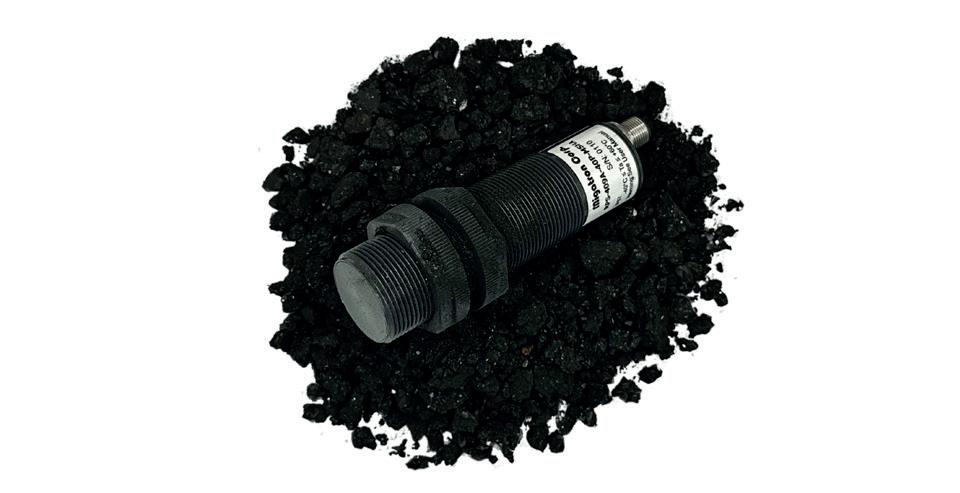
Figure 4. Migatron’s RPS-409A-40P-MSHA ultrasonic sensors are designed to help provide precise detection, easy integration, and withstand coal dust and firedamp conditions.
(pending approval), ANZEx, ATEX, and IECEx standards. Their non-contact operation eliminates mechanical wear, while their IS-approved design ensures full compliance, providing precise measurements in hazardous areas.
By integrating these sensors directly into PLC-based control systems, coal operators can achieve continuous, closed-loop alignment and positioning control that enhances both safety and operational uptime. In environments where dust and methane coexist, intrinsically safe ultrasonic sensing remains one of the most reliable tools for protecting conveyor infrastructure and maintaining consistent coal flow from mine to market.

James Shepherd, Gates Corporation, USA, explains how strategic selection can save operations from costly failures and extended shutdowns.
Longwall mining operations rely on rugged machinery and finely tuned hydraulic systems that must perform reliably under continuous pressure. In such harsh operating conditions, even minor failures can bring the entire operation to a standstill. Despite representing only a fraction of total equipment cost, hydraulic hoses are the leading cause of unplanned downtime – and one of the highest preventable expenses – in longwall mining.
In the cost-driven mining world, hose selection often becomes an afterthought. Mines are pushed to reduce upfront costs wherever possible. Hose assemblies may appear interchangeable, but not all hoses are created equal. A subpar product that is not suited to the rigours of longwall movement, abrasion, and installation demands can lead to significantly higher costs over time – especially when failures force unplanned downtime or complications during longwall moves.
The true cost of a longwall move
Longwall mining is unique in that the equipment itself must periodically be relocated to a new panel. A single longwall move, which involves dismantling, transporting, and reassembling the entire system, can cost anywhere from US$300 000 – 500 000 depending on site conditions, distance, labour, and downtime risk. With that level of investment, the last thing any operation needs is avoidable delays.
Hoses play a surprisingly important role in whether a longwall move proceeds smoothly. During a move, equipment is dragged, lifted, hauled, repositioned, and reconnected across a harsh, debris-filled environment. Hoses experience abrasion, pinching, bending, twisting, and pressurisation cycles that are far more severe than wear experienced during routine production. A low-durability hose may survive the first panel, but may not survive the first move. By contrast, durable hoses specifically engineered to withstand such a demanding application can maintain integrity across two or even three longwall moves, minimising replacement labour, preventing delays, and even reducing the risk of failures during the crucial startup phase in the new panel. Extending a hose replacement cycle can be enough of a justification to opt for something more durable. If you consider the cost of downtime and repeat labour, the savings can be exponential.
Despite technological advancement across longwall systems – from the integration of monitoring and control systems to advanced sensors for safety enhancements – hose failure continues to be a significant contributor to lost
production time. These failures stem from both mechanical and environmental factors and carry substantial financial consequences. A single hose-related shutdown can halt operations for up to 24 hours, at a cost ranging from thousands to more than US$100 000/h. In many cases, the higher upfront price of a premium hose is offset tenfold by avoiding even one hour of unplanned downtime.
The most significant factors stem from the demands placed on hoses within the system.
Supports, shearers, crushers, stage loaders, pumps, and roof systems rely heavily on hydraulics, and continuous impulse cycling results in hose fatigue. As longwall panels have grown consistently in length and width over the last decade, longwall mining equipment must operate across a larger face, moving higher volumes of material and running for longer continuous cycles. These increased production demands and longer operational cycles place a greater demand on equipment – and hydraulic – performance.
The operating environment accelerates equipment wear. Factors such as coal dust and rock fines create an abrasive atmosphere unmatched in most heavy industries. Hoses do not just pressurise and depressurise – they flex, drag, get pinched between shields, absorb impact from falling debris, and operate in a wide range of temperatures. Each of these factors alone would challenge hose integrity. Combined, they create conditions where only purpose-built, high-performance components can survive.
Operator experience is another critical factor in hose maintenance. According to the US Energy Information Administration projections, about 220 000 workers – or more than half than the current workforce – will be retired or replaced by 2029. This creates a skill and knowledge gap in the industry.
Experienced operators usually develop an intuition for hydraulic system health that is difficult to replicate. They recognise the early warning signs: unusual heat buildup on hose covers, slight weeping at crimped connections, abraded spots from contact with shields, and more. Veteran miners know which hoses are prone to failure in specific positions and can anticipate problems before they escalate into shutdowns.
Newer operators, even with excellent training, simply have not been able to build this pattern recognition. They may not know that a hose showing minor surface wear is weeks away from catastrophic failure. As the workforce turns over, mines cannot rely solely on operator vigilance to prevent failures. This makes hose selection even more critical: choosing more durable, application-specific hoses upfront creates a more forgiving system that performs reliably, even when operated by less experienced crews.
Proper documentation of hose specifications, installation procedures, and replacement intervals also helps bridge this knowledge gap, ensuring that institutional knowledge does not walk out the door with retiring workers.
The stamped method of hose selection
Equipment operators and technicians can significantly reduce the likelihood of premature hydraulic hose failure by giving maximum consideration to hose selection and installation. Although no selection method can prevent every failure, mines that approach hose specification as an engineering decision, rather than simply a purchasing choice, consistently see longer hose life, fewer failures, and smoother longwall moves.
To support this engineering-based approach, you may want to consider STAMPED – an acronym that represents the seven steps in hydraulic hose selection –accepted as the industry standard in determining which hose is appropriate for the task, helping guarantee safety and efficiency.
Choose a hose with an adequate inside diameter to minimise pressure loss and to avoid hose damage caused by the heat generated by excessive fluid turbulence. A correctly sized hose will allow equipment to operate at full power and help maximise production throughput.
The hose must be capable of withstanding the system’s minimum and maximum fluid and ambient temperatures. If temperatures exceed the working temperature of your hydraulic system and heat-related failures occur, a higher-temperature hose may be needed.
Determine where or how the hose will be used, and any appropriate industry standards it must meet, such as the British Coal Standard or Mine Safety and Health Administration. You will need to know the equipment type, working and impulse pressures, fluid to be used, bend radius, and more. Mining applications are typically high abrasion environments, so upgrading to a hose with an abrasion-resistant cover is essential for extending maintenance intervals and ensuring reliable performance.
The entire hose assembly, along with the couplings and O-rings, must be compatible with the type of fluid being used in the hydraulic system. The hose cover also needs to be compatible with anything it is exposed to externally.
Know the system pressure, including pressure spikes. The hose’s published working pressure must be equal to, or greater than, the normal system pressure and any pressure surge it will encounter. Applications such as
longwall roof supports have static pressure requirements, which are fairly unique in hydraulic applications; ensure that the hose is rated to meet either the dynamic or static pressure of your application.
Identify the type of connections the system uses and select couplings that are compatible with those connection types. Selecting compatible coupling terminations is paramount to safety in any hydraulic application. Hydraulic hose manufacturers design and test their hoses and couplings together as a system – if different brands are mixed and matched, it creates a risk of failure. Consult the manufacturer’s crimping data to determine if the hose and coupling combination is approved and safe.
How much fluid must go through the hose? This will determine the size of hose that must be used. Undersizing a hose leads to increased pressure loss, turbulent flow, and excessive heat buildup. Oversizing the hose adds unnecessary cost, weight, and bulk.
Coal extraction depends on countless variables, and effective hose selection is one of them. Using the STAMPED method helps ensure every hydraulic hose is matched to its application, allowing you to make the most of available resources and keep operations running smoothly.
Coal mining has always operated on practical logic: equipment must be robust, easy to maintain, and reliable. Over-engineered solutions often create more problems than they solve. The same applies to hoses, where reliability is the priority.
The right hose construction strikes a balance between durability and compatibility with the longwall system. Operations that treat hoses as strategic components, rather than consumables, will achieve longer replacement intervals, smoother longwall moves, lower equipment ownership costs, and higher productivity. And while hoses are not the most expensive part of the system, they can be one of the most effective ways for reducing overall operating costs.
Longwall mining continues to evolve. Panels are getting longer and new technologies are available every year. As demands rise, long-term reliability becomes a function of how well each component is specified for the realities of longwall service.
The industry stands at an interesting inflection point. As experienced operators retire and newer technologies demand higher system reliability, the tolerance for preventable failures continues to shrink. Mines that recognise the importance of hydraulic hoses in their operation are positioned to avoid costly failures that have plagued the industry for decades – and to gain meaningful competitive advantage.
Fraser McKillop, Alfred H Knight, considers the challenges faced by the global coal market and breaks down why outsourcing sampling and analysis is the new operational standard for the industry.
After a volatile few years, the global coal market appears to be stabilising. However, tight margins, combined with stricter environmental and energy targets, are making the market more challenging.
The coming years could be defined by physical complexity, as coal itself changes fundamentally. Low-grade lignite is abundant, while high-grade bituminous coal remains scarce. As the spread between grades widens, the ‘global coal price’ has become a less reliable metric, and simple, single-seam sourcing is no longer sufficient.
To bridge this quality gap and create value, operators are increasingly forced to blend different grades,

producing complex mixes that can behave unpredictably in combustion. In this environment, laboratory analysis moves from a regulatory formality to an essential tool for maintaining operational performance and protecting margins.
Mine site laboratories are vital for production control. However, relying solely on them for commercial trade exposes operators to financial risk. Off-specification cargoes can incur penalties or, in worst-case scenarios, be rejected, potentially damaging the margins of the entire operation. Therefore, ensuring the accuracy and reliability of analytical data has never been more critical.
One of the most common and costly assumptions in modern coal trading is that blending behaves linearly. Commercial teams often operate under the spreadsheet logic: mix 50% of Coal A with 50% of Coal B and the resulting specifications will be the weighted average of the two.
For some quality parameters, such as calorific value, this approach can generally hold. Coal, however, is far more complex than carbon content alone; it is a heterogeneous mixture of minerals.
For key operational metrics, particularly Ash Fusion Temperatures (AFT) and combustion performance, assuming linear behaviour is often misleading. When certain minerals interact in the furnace, 1 + 1 does not necessarily equal 2.
The critical risk arises when coals with contrasting ash chemistries are blended. For instance, a coal rich in acidic materials (such as silica and alumina) combined with one containing basic minerals (like iron, calcium, or sodium) can form a eutectic mixture. This combination melts at a lower temperature than either of its parent coals.
In practical terms, a blend expected to melt at 1325°C based on linear calculation could, due to mineral interactions, melt at 1150°C.
Even modest reductions in ash melting temperatures can have significant consequences. Boilers designed for higher-melting coals may experience slagging
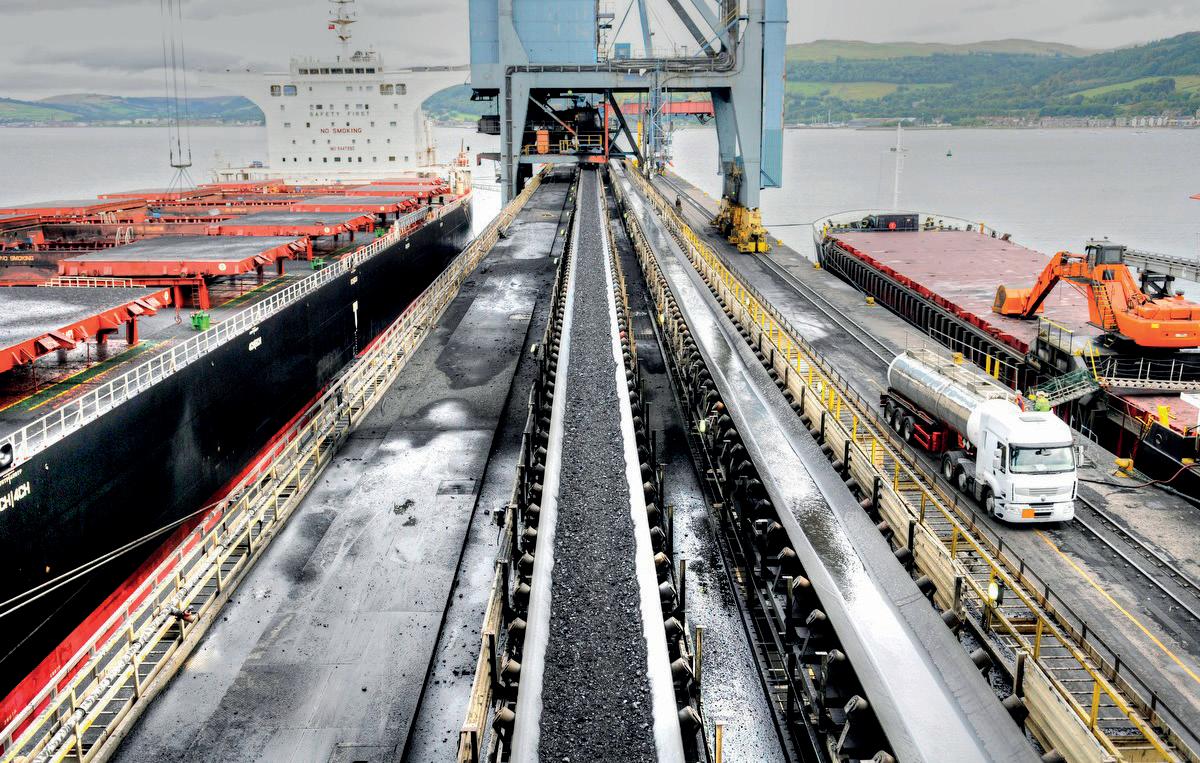

and fouling, leading to unscheduled maintenance, reduced efficiency, and, in severe cases, the need to derate output. It is estimated that global losses from slagging amount to billions of dollars annually, resulting from physical damage and reduced plant output.
Preventing operational disruptions requires more than routine compliance analysis. Advanced techniques, such as ash rheology testing, map not only the temperature at which ash deforms but also its flow behaviour and viscosity under furnace conditions.
Specialist laboratories, including independent ISO 17025-accredited facilities, can simulate reducing and oxidising atmospheres, analysing mineral interactions to predict combustion performance. In this way, laboratory analysis shifts from a reactive measurement to a predictive tool for operational planning, helping operators understand the behaviour of complex blends before they reach the furnace.
While AFT and combustion behaviour are critical, other parameters remain essential for both operational and commercial decisions:
� Calorific value (CV): Influences efficiency, pricing, and blending decisions.
� Moisture content: Impacts handling, transport weight, and combustion behaviour.
� Ash content and sulfur: Affect emissions compliance and boiler wear.
� Hardgrove Grindability Index (HGI): Determines mill operability and maintenance requirements.
Consistent, representative measurement of these parameters allows producers and buyers to align expectations, optimise plant performance, and mitigate the risk of disputes or penalties.
In discussions about coal quality, attention often gravitates toward the laboratory: the precision instruments, the analytical methods, the certificates that underpin commercial decisions. Yet the largest source of quality risk occurs before a sample ever reaches the bench. It begins at the sampling point.
Across the coal chain, from mine load-outs to export terminals and power plant intakes, sampling variance routinely accounts for the majority of total testing error. Decades of industry research, including work grounded in internationally recognised sampling theory, consistently show that 80 – 90% of overall error originates from the way material is extracted, prepared, and handled. Analytical error typically represents only a minor fraction.
Coal is inherently heterogeneous, and modern blending practices increase that heterogeneity. As cargoes combine materials with different densities,
ash chemistries, and particle size distributions, even small deviations in sampling practice can influence the reported quality. A sample that does not capture the full cross-section of a stream may not reflect the material being traded, leading to results that appear precise but are not representative of the cargo.
This disconnect creates commercial exposure across the supply chain. A buyer may receive material outside contract tolerances. A seller may face penalties or disputes. A utility may need to adjust its combustion settings due to unexpected ash behaviour. In each case, the root cause is often a small but systematic bias introduced at the sampling stage.
Maintaining representative sampling systems in high-throughput environments is difficult. Mechanical sampling units require routine verification to ensure cutters are aligned and timing is correct. Stockpile and reclaim sampling present additional challenges, particularly where material has segregated during handling. These pressures, common at mine sites, ports, and loading terminals, can allow sampling bias to accumulate unnoticed.
Strengthening the sampling process does not require reinvention. It requires consistency:
� Ensuring mechanical sampling systems are routinely inspected and verified.
� Maintaining clear sample-handling protocols.
� Applying internationally accepted standards (ISO 13909, ASTM D7430).
� Integrating independent oversight at key custody-transfer points.
For organisations operating in a margin-sensitive market, these controls play a critical role. Reliable data allows sellers to stand behind their certificates with confidence and assures buyers that the results reflect the material they will actually receive.
While sampling addresses the quality of the material, the physical integrity of the cargo requires equal vigilance. Across the coal chain, inspection processes such as hold cleanliness checks, draught surveys, barge gauging, and stockpile condition assessments help ensure that cargoes are transported safely and without contamination.
Quantity verification protects both buyers and sellers by providing an objective measurement of tonnage, while temperature monitoring reduces the risk of self-heating during storage and transit, a particular concern for high-moisture lignite and certain export stockpiles. Together, these steps form the physical foundation upon which sampling and analysis can deliver meaningful results.
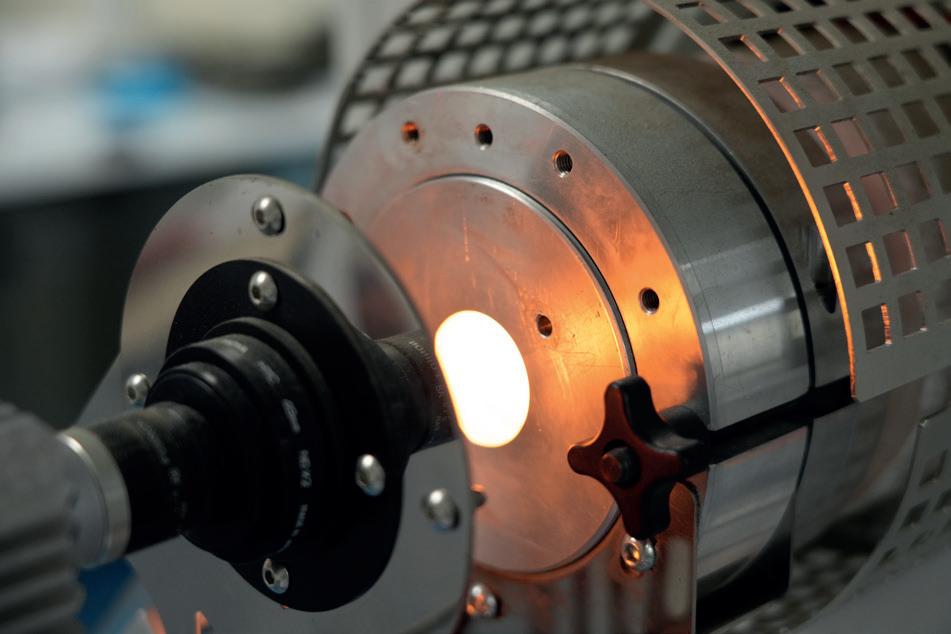
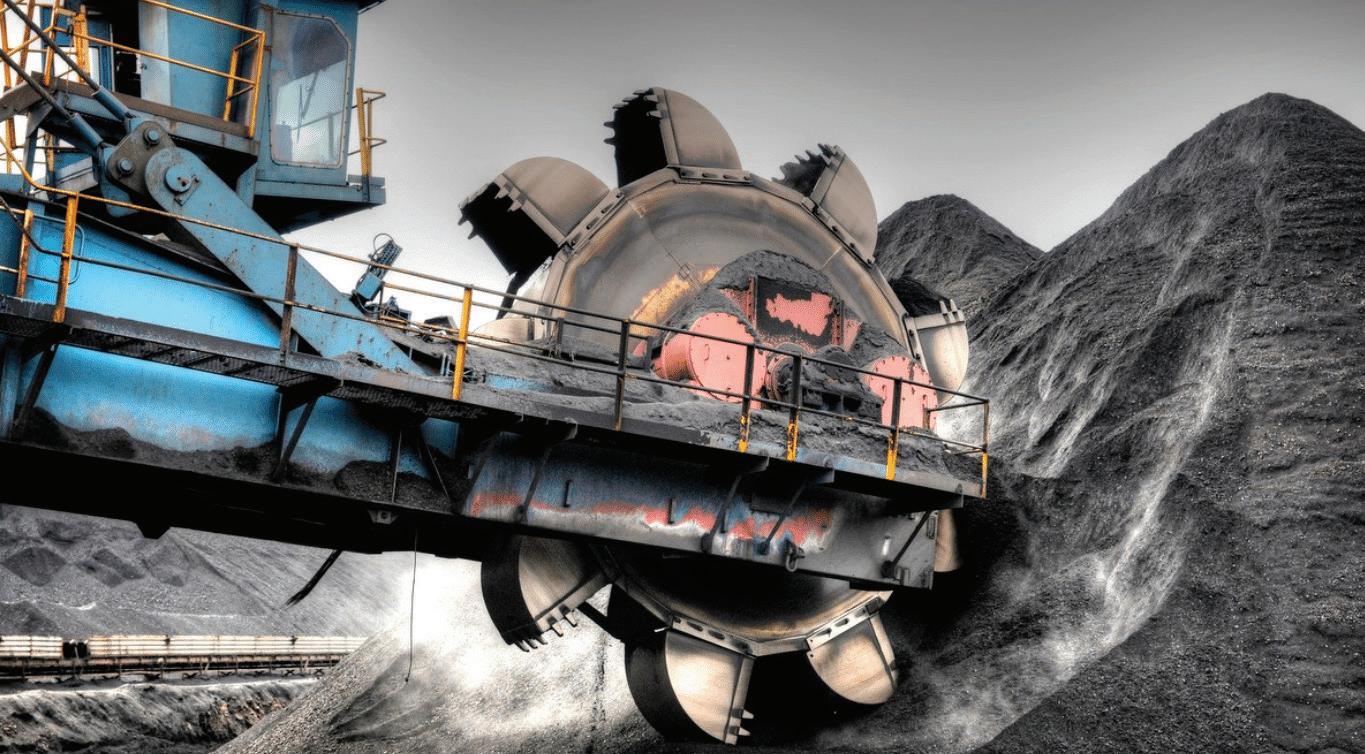
As global coal trade shifts from volatility to complexity, confidence in quality becomes a shared priority across the entire supply chain, from mine operators and blending facilities to traders, utilities, and end-users. In a market where margins are tight and products are increasingly heterogeneous, reliable sampling and analysis are no longer optional; they are the foundation of fair value, operational efficiency, and dispute-free trade.
As blending, logistics, and combustion challenges intensify, the limitations of fully internal quality systems have become more visible. Mine-site laboratories excel at production control, but independent support brings what internal teams cannot: unbiased oversight, higher-level analytical capability, accredited reporting, and the ability to detect the non-linear risks hidden in modern blends. This is why many organisations are increasingly standardising outsourced or hybrid models, not as a cost, but as a safeguard built into the core of their operations.
By strengthening the physical basis of quality data, through bias testing, independent auditing, and robust laboratory oversight, organisations protect their commercial position, reduce avoidable losses, and trade on certainty rather than assumption. In this environment, accurate analysis is not just a technical function. It is a strategic advantage, an operational enabler, and an investment that pays for itself many times over.











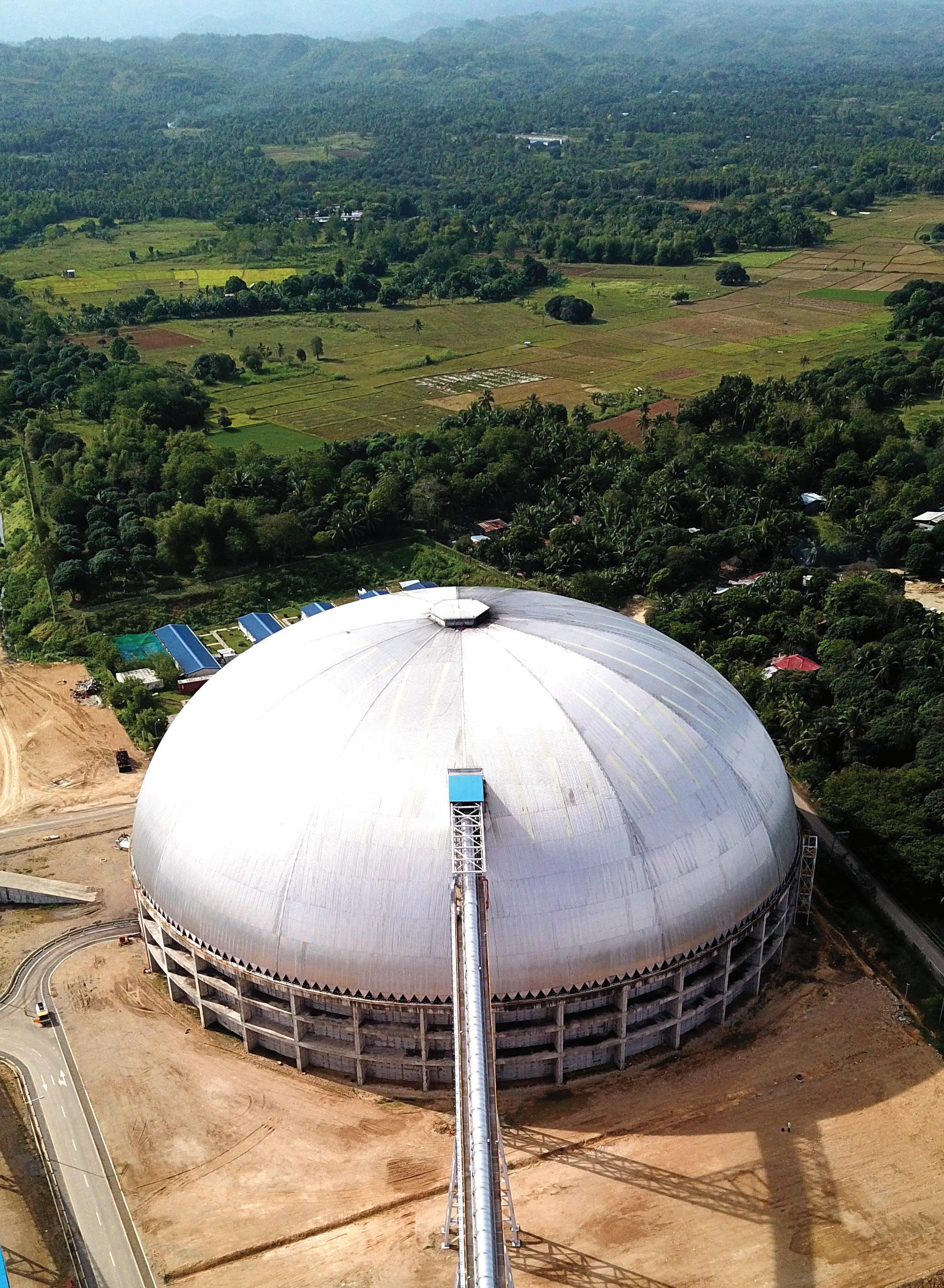







Designed for long-term performance and proven protection in the most demanding environments.