Nel’s Vision for the
Nel’s Vision for the
Maximize your mega-scale blue hydrogen and ammonia production with our SynCOR™ technology. Achieve more than 99% carbon recovery, unmatched efficiency, and the lowest levelized cost of hydrogen. Powered by our industrially proven autothermal reforming, SynCOR is a next-generation technology for today – and tomorrow.
Step into the future with SynCOR today!
Comment
04 Powering the future
Conrad Purcell, Shu Shu Wong, Kayley Rousell, and Ziv Gould, Haynes Boone, analyse how the Middle East and North Africa (MENA) region is becoming a prominent player in the green hydrogen market.
10 A scalable route to industrial decarbonisation
Phil Ingram, Johnson Matthey, argues that early deployment of blue hydrogen will help establish the infrastructure, demand, and revenue mechanisms for the broader hydrogen market.
14 The tide that lifts all boats
Kathy Ayers, Ph.D., Wilhelm Flinder, and Russell Morgan, Nel Hydrogen, outline why electrolyser innovation is for the collective good of the entire hydrogen economy.
21 Cracking the code for a low-carbon future
Nirav Shah, Evonik Catalysts, discusses how ammonia cracking can support a sustainable hydrogen economy by enabling efficient storage and transportation.
24 Ready, set, go!
Christopher Polaniecki, Honeywell, USA, explores solutions to digitally unlock the potential of green hydrogen and ammonia within the competitive landscape of the hydrogen industry.
28 From design to operational reliability
Jagadesh Donepudi and Michelle Wicmandy, KBC (A Yokogawa Company), discuss how digital twins can be used to improve operations in green hydrogen projects.
35 Making hydrogen cost-effective
David Meyer, Siemens, considers how automation, simulation, and machine learning can reduce hydrogen production costs and ensure its commercial future.
39 Next energy era control rooms
James Nyenhuis, Emerson, USA, outlines the importance of empowering operators with intuitive, exception-based visibility to enhance safety and scalability.
43 Hydrogen ambition meets infrastructure reality
Garry Hanmer, Atmos International, UK, explains why pipeline simulation is becoming essential for emerging hydrogen systems.
48 Hydrogen compression for tomorrow
Svitlana Snelder, Yann Ardouin, and Rens Hulstijn, Howden, A Chart Industries Company, explain how diaphragm compressors are being advanced to deliver reliable performance at high pressures and scaled hydrogen flows.
53 An alternative material for higher speeds
Frank Shoup, Manish Thorat, Brian Pettinato, Hanxiang Jin, and Derrick Bauer, Ebara Elliott Energy, explore the feasibility and impact of implementing an aluminium impeller for high-speed centrifugal compression.
59 Compressing under pressure
Michael Vidovitsch, HOERBIGER, considers how hydrogen compressors can be designed to maintain efficiency under high pressures as green hydrogen scales up.
63 Unlocking hidden revenue streams with turbomachinery
Daniel Patrick, Atlas Copco Gas and Process, USA, discusses how oxygen and pressure letdown recovery can create additional revenue sources from hydrogen production.
67 A pivot to pragmatism
Keigh Taylor, Black & Veatch, discusses the shift in the UK hydrogen market to focus on simple projects with long-term offtake.
71 Scaling the skies
Chris Dudfield, Intelligent Energy, UK, presents a scalable model to demonstrate closed-loop hydrogen integration and accelerate the deployment of fuel cells for aviation.
74 Liquid hydrogen storage solutions
Dr Barry Prince, Dr Rajendran Parthipan, and Dr Neil Glasson, Fabrum, explain why liquid hydrogen is the most viable low-carbon fuel for hard-to-abate sectors.
77 A hydrogen liquefaction system for all
Francesco Dioguardi, Stirling Cryogenics, the Netherlands, illustrates how established cryogenic principles can be applied in modern liquid hydrogen systems.
Nel has a history tracing back to 1927 and is today a leading pure play hydrogen technology company with a global presence. The company specialises in PEM and alkaline electrolyser technology for production of renewable hydrogen. Nel’s product offerings are key enablers for a green hydrogen economy, making it possible to decarbonise various industries such as transportation, refining, steel, and ammonia.

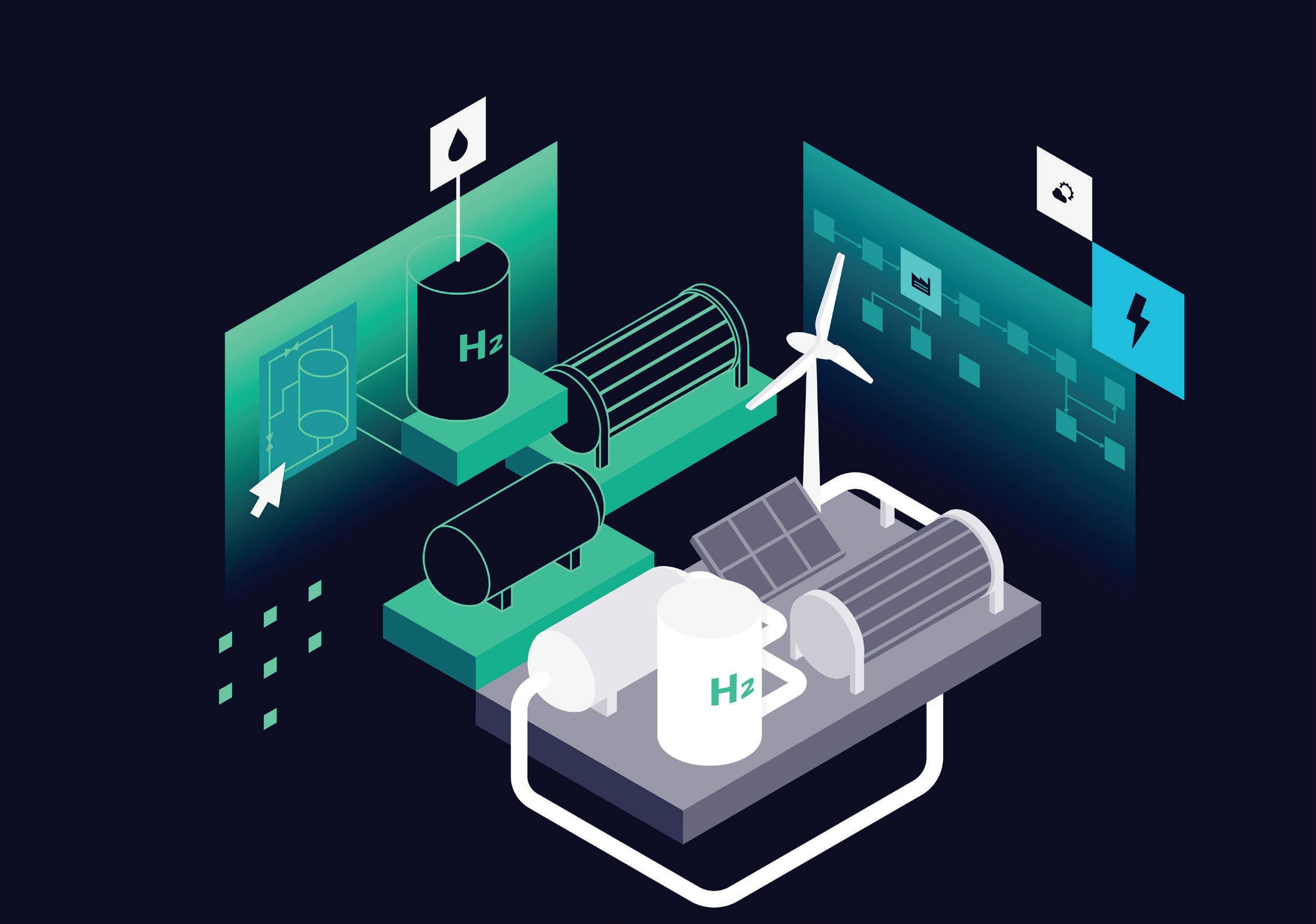
The digital twin, leveraging Industrial AI, provides predictive insights that optimize performance across the entire hydrogen value chain.
Scan to learn more


Callum O'Reilly Senior Editor
Managing Editor James Little james.little@palladianpublications.com
Senior Editor Callum O'Reilly callum.oreilly@palladianpublications.com
Deputy Editor Oliver Kleinschmidt oliver.kleinschmidt@palladianpublications.com
Editorial Assistant Willow Munz willow.munz@palladianpublications.com
Editorial Assistant Ellie Brosnan ellie.brosnan@palladianpublications.com
Sales Director Rod Hardy rod.hardy@palladianpublications.com
Sales Manager Chris Atkin chris.atkin@palladianpublications.com
Sales Executive Ella Hopwood ella.hopwood@palladianpublications.com
Production Manager Kyla Waller kyla.waller@palladianpublications.com
Head of Events Louise Cameron louise.cameron@palladianpublications.com
Digital Events Coordinator Merili Jurivete merili.jurivete@palladianpublications.com
Digital Content Coordinator Kristian Ilasko kristian.ilasko@palladianpublications.com
Digital Administrator Nicole Harman-Smith nicole.harman-smith@palladianpublications.com
Junior Video Assistant Amélie Meury-Cashman amelie.meury-cashman@palladianpublications.com
Events Coordinator Chloe Lelliott chloe.lelliott@palladianpublications.com
Admin Manager Laura White laura.white@palladianpublications.com
The eyes of the world are currently fixed on events in the Middle East, with the Iran war sending tremors through the world economy and sparking concern that it could trigger a global economic crisis.
Energy lies at the centre of these pressures — with disruptions to oil and gas supply, particularly through the strategically critical Strait of Hormuz, sending prices soaring, fuelling inflation, and exposing the fragility of a global economy still heavily dependent on secure and affordable hydrocarbons.
Many countries throughout Asia are currently taking steps to mitigate the impact of possible energy shortages should the conflict persist. Sri Lanka has declared every Wednesday a holiday for public institutions to conserve fuel, Bangladesh has introduced planned blackouts, and other countries are encouraging work from home to reduce fuel use. Thailand’s government has even asked workers to ditch suits in favour of short-sleeved shirts in order to reduce reliance on air-conditioning.
Like the war in Ukraine before it, this conflict has exposed the world’s reliance on oil and gas from geopolitically sensitive regions, where supply security can be quickly undermined. It raises serious questions for countries doubling down on fossil fuels, and reinforces the importance of diversifying energy systems, accelerating the deployment of low-carbon alternatives, and strengthening domestic energy resilience.
Hydrogen offers a critical pathway to a clean and more resilient energy future. Crucially, its value lies not only in enabling decarbonisation, but in offering countries the opportunity to develop domestic sources of clean energy, reducing exposure to volatile global fuel markets.
At the same time, the potential for trade is a major driver behind many low-emissions hydrogen projects. The International Energy Agency (IEA) notes that almost 45% of hydrogen from announced low-emissions production projects is intended for export. 1 And the Middle East has ambitious plans to lead the world in this area, utilising its abundant solar and wind resources, existing energy infrastructure, and strategic location between Europe and Asia. Countries in the region have started to focus on green hydrogen development as part of national strategies to diversify their economies and reduce dependence on fossil fuel exports. Numerous projects are underway, with Saudi Arabia’s state-owned NEOM project a stand-out example. It is expected to produce 600 tpd of clean hydrogen by the end of this year.
This issue of Global Hydrogen Review includes a report from Haynes Boone examining how the MENA region stands ready to become a key player in the green hydrogen sector (p. 4). The article also acknowledges a number of critical challenges facing the region’s burgeoning hydrogen market – and it is important to note that it was written before the onset of the current conflict in Iran. These challenges have only since been intensified, and the same global dynamics now impacting oil and gas markets also raise important questions about whether international hydrogen trade risks replicating the same geopolitical vulnerabilities.
Editorial/advertisement offices: Palladian Publications
15 South Street, Farnham, Surrey GU9 7QU, UK
Tel: +44 (0) 1252 718 999 www.globalhydrogenreview.com
Nevertheless, the current conflict strengthens the case for hydrogen – not just as a traded commodity, but as a strategic asset. It offers countries a pathway to build more diversified and resilient energy systems at home – increasing energy security and accelerating the transition to clean energy.
1.


Conrad Purcell, Shu Shu Wong, Kayley Rousell, and Ziv Gould, Haynes Boone, analyse how the Middle East and North Africa (MENA) region is becoming a prominent player in the green hydrogen market.
The global energy industry is undergoing a transformative shift, driven by the urgent need to cut emissions and accelerate the transition to sustainable, renewable energy sources. Across the Middle East and North Africa (MENA), countries are setting ambitious net zero targets, such as the United Arab Emirates (UAE), Bahrain, and Saudi Arabia. This signals a regional commitment to sustainable energy and a low-carbon future.
The MENA region holds nearly 60% of the world’s oil reserves, and approximately 40% of the world’s natural gas resources. The oil and gas industry is also deeply intertwined with hard-to-abate (HTA) sectors, such as drilling, petrochemicals, and heavy transport, all of which are inherently difficult to decarbonise, due to their strong reliance on fuels which cannot be easily replaced by low-carbon alternatives. However, owing to its chemical characteristics and potential, hydrogen offers a key pathway to achieving decarbonisation, which is particularly beneficial in the context of industries which are difficult to electrify.
In an effort to attain their net zero commitments, 15 countries from the MENA region have invested in an excess of US$150 billion to mass scale hydrogen production, representing one of, if not the most, ambitious hydrogen hubs worldwide. Such sizeable monetary investment and ambitious net zero commitments can only succeed when supported by clear, stable government policy and regulatory framework, such as the UAE’s Energy Strategy 2030, Saudi Arabia’s Vision 2030, and Oman’s Hydrom, which will be explored in greater detail below.
The MENA region has emerged as one of the most dynamic global hubs for green hydrogen investment and production. The region aims to produce nearly 10 million tpy of hydrogen by 2030, focusing predominantly on green hydrogen. This production target is enabled by more than 110 hydrogen projects taking place across the region, over 90% of which are dedicated to green hydrogen. Whilst all the MENA countries are playing their part in its repositioning as a global leader in the field, a number of countries in particular, for their project count, ambition and investment, are worth considering in further detail. Backed by billions of dollars in planned investment, these endeavours leverage the region’s abundant solar resources and existent export-oriented infrastructure to ensure globally competitive green hydrogen production. Yet, realising this potential depends heavily on scaling up renewable energy capacity, as the primary method for the production of green hydrogen lies in the process of electrolysis powered by clean electricity. In addition, mass-scale hydrogen production relies on the foundations of supportive regulatory and export frameworks, without which the region’s hydrogen ambition will not be possible. Green hydrogen is produced through the process of electrolysis, which uses renewable electricity to split water into hydrogen and oxygen. Consequently, renewable energy sources, such as wind, solar and hydropower, are essential to provide the clean electricity required for large-scale green hydrogen production. The MENA region is geographically well positioned, with intense and reliable sunlight, and flat land with strong winds. 10 of the 15 global countries with the best solar potential are situated in the MENA region, and the average sunlight in Dubai is amongst the highest globally.
Saudi Arabia is the MENA region’s frontrunner to produce the largest volume of hydrogen by 2030. It is host to several hydrogen production projects, with the flagship NEOM Green Hydrogen Project being the most prominent. The NEOM plant alone is anticipated to produce 600 tpd of hydrogen, with the country expecting to produce 4 million tpy of clean hydrogen by 2030. Currently, Egypt leads the way in the region for the number of planned projects, with a total of 38, the majority of which focus on producing green hydrogen, and once operational, will generate an estimated production capacity of 3.8 million tpy by 2040. The UAE has approximately 10 hydrogen production projects in development and construction, with the aim of producing 1.4 million tpy of hydrogen capacity by 2030. Oman is actively developing a number of green hydrogen production projects, with the aim of delivering 1 million tpy of output by 2030.
In an attempt to achieve economic diversification away from fossil fuel dependence, and shift towards their abundant renewable energy resources, governments across the MENA region are actively supporting their countries to become major producers and exporters of green hydrogen.
Saudi Arabia’s government-owned Public Investment Fund has committed to an investment of US$10 billion in the production of green hydrogen through the venture of Energy Solutions Company. In addition, Saudi Arabia’s state-owned NEOM project, which has been estimated to have cost between US$500 billion and US$1.5 trillion, is expected to be operational with a production of 600 tpd of hydrogen by the end of 2026. Meanwhile, the Egyptian government has ratified a suite of incentives for green hydrogen production companies, including the Green Hydrogen Incentive, providing a rebate of between 33 - 55% on the income generated from the project, with the government also implementing a VAT exemption on all associated equipment, tools, and machinery. Another example of government support from within the MENA region is Oman, and its establishment of Hydrom to orchestrate interest in green hydrogen. Oman’s Hydrom has revealed fiscal incentives for its latest auction to secure land for green hydrogen production, with a 90% land lease fee cut, and corporate tax exemptions for up to 10 years. The UAE government has also launched a number of initiatives to encourage and boost the development of the local green hydrogen industry, such as ‘Make it in the Emirates Hydrogen’ which supports hydrogen development as a core function of the UAE’s strategy to decarbonise, and the Green Hydrogen Project, a first of its kind to produce hydrogen using solar power.
It is anticipated that the MENA region has the potential to become a global leader in the production of green hydrogen and is expected to produce more green hydrogen than it needs with exports from North Africa alone predicted to bring in as much as €90 billion revenue.
Zeeco is the world leader in innovative high-hydrogen firing solutions that deliver the performance you want. From burner retrofits to new construction, from pilots to monitoring and controls, Zeeco provides a complete hydrogen-firing solution backed by our worldwide experience and regional expertise.
Successfully firing hydrogen requires understanding its compounding impacts on fuel, flame, and combustion control. No one brings more knowledge or experience to the challenge than Zeeco.
Zeeco: Explore Your Hydrogen Options
The realisation of revenue from exporting hydrogen is, however, only possible with the existence of robust and reliable infrastructure. Fortunately, the region already benefits from existing infrastructure, used for exporting its rich reserves of oil and gas, which can be transformed to handle hydrogen exports. Additionally, and conveniently, the MENA region is strategically located between Asia and Europe, giving it an advantage to meet potential demands from both continents. Europe, Japan, and South Korea are currently the largest importers of green hydrogen and are projected to remain the dominant importing markets, driven by limited domestic supply and strong decarbonisation commitments.
A prime example of a MENA country which can utilise its geographical advantage is Egypt, highlighted by the country’s Petroleum and Mineral Resources Minister, Karim Badawi, who described the Suez Canal as a “core pillar of future hydrogen supply chains.”
Whilst many MENA countries have announced ambitious plans for green hydrogen, dedicated legislative frameworks remain scarce across the region. Instead, the vast majority of MENA countries rely primarily on strategy implementation and policy statements which lack binding, regulatory force. Nevertheless, governmental departments across the MENA region are beginning to implement regulatory frameworks to support the nascent green hydrogen economy. This is fundamentally imperative not only in order to promote and ensure clarity, commercial confidence, and risk mitigation necessary to attract private investment, but also to ensure that safety measures and operational requirements are mandated.
Various countries across the MENA region have combined national strategies and targeted policies to govern the development of the industry. A number of key examples include:
y The UAE’s National Hydrogen Strategy 2050 (NHS 2050), which aims to strengthen its position as a producer of green hydrogen by 2031. The NHS 2050 seeks to achieve its goal with the deployment of 10 policy enablers, which include establishing necessary legislative mechanisms, creating the infrastructure to link production with demand, and building international partnerships for investment opportunities.
y Egypt’s National Council for Green Hydrogen, tasked with overseeing the implementation of its national low carbon strategy. In addition, Law No.2 of 2024 provides several significant tax incentives for the production of green hydrogen.
y Oman’s aforementioned Hydrom, which was launched following a royal decree issued by the Prime Minister in 2022 to allocate land in the region for the purpose of renewable energy, and specifically green hydrogen projects.
y Morocco’s Ministry of Energy, Mines and Environment’s roadmap for green hydrogen, which focuses on two primary objectives, namely the production of green hydrogen and its exportation.
In terms of opportunities, many countries from within the MENA region have traditionally relied heavily on oil and gas exports. However, in order to meet their respective net zero goals, MENA countries have taken a strong interest in green hydrogen in a bid to secure new export revenues. The International Renewable Energy Agency has estimated that hydrogen could meet up to 12% of global energy demand by 2050.
Although significant progress has been made in developing the green hydrogen economy, the MENA region still lacks a dedicated legal framework for hydrogen production. In most cases, the applicable legislation for hydrogen projects is limited to broad gas market regulations. Not only is a comprehensive legal framework required for hydrogen production, storage, and export, health, safety, and design standards for hydrogen infrastructure will need to be legislated for in order to address the physical and chemical properties of hydrogen, and the specific risks that the gas carries.
In addition, and as mentioned above, the process of electrolysis creates green hydrogen by using renewable energy to split water into hydrogen and oxygen. It follows that the production of green hydrogen is therefore reliant on a constant source of water, and the region must concurrently take steps to mitigate constraints on freshwater supplies. Estimates suggest that a number of MENA countries, including Saudi Arabia, the UAE, and Qatar, will require 5.6 trillion litres of purified water in order to meet 2050 levels of green hydrogen demand, which, for the most water-scarce region worldwide, poses a significant threat to meeting green hydrogen production targets.
Finally, given the ambitious green hydrogen production targets set across the MENA region, the issue of infrastructure and export capacity is at the forefront. For the sector to achieve its growth targets, significant and rapid expansion of shipping port facilities will be essential.
The MENA region is positioning itself as a global leader in green hydrogen production, leveraging its abundant renewable energy resources and strategic geographic location. With over US$150 billion invested and ambitious targets to produce millions of tpy of green hydrogen by 2030, countries such as Saudi Arabia, Egypt, the UAE, and Oman are spearheading this transition. Government initiatives, fiscal incentives, and existing export infrastructure provide a strong foundation for growth. However, the success of this hydrogen economy hinges on overcoming critical challenges, including the establishment of robust regulatory frameworks, securing sufficient water resources, and scaling infrastructure to meet export demands. If these hurdles are addressed, MENA’s hydrogen ambitions could significantly contribute to global decarbonisation and economic diversification.
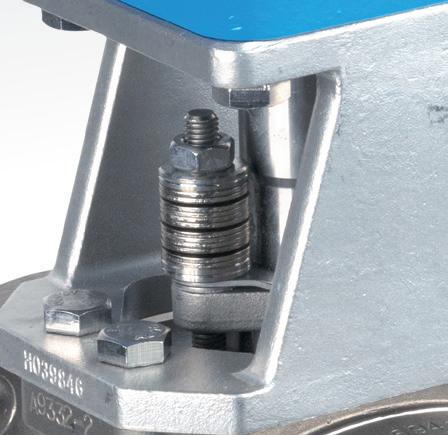
Your flow control partner in the energy transition

Reliable and proven valve solutions for demanding energy transition applications.
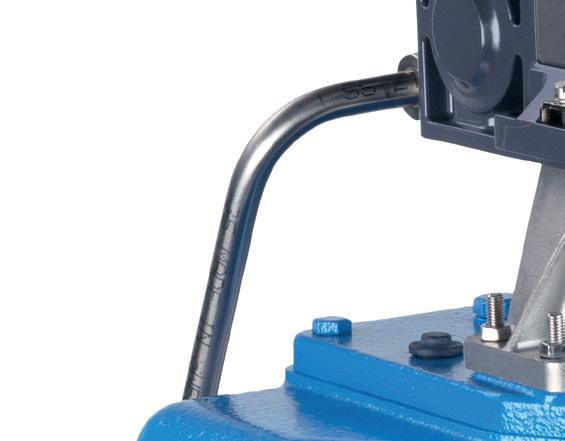
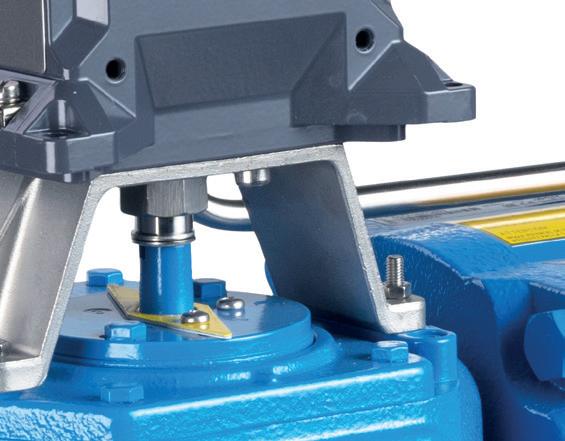
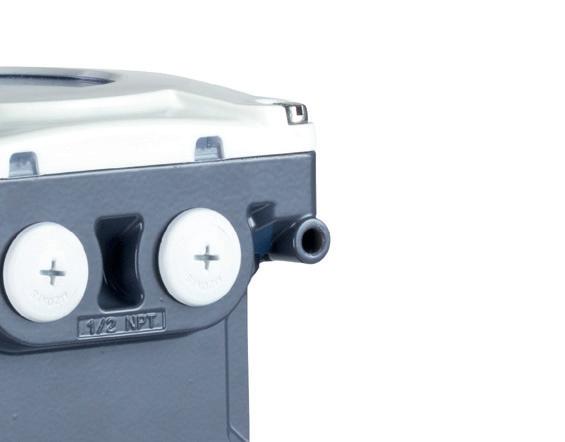
Creating a greener way forward with superior performance and a comprehensive service o ering – built on extensive industry experience and proven performance in all key applications, including green and blue hydrogen, a variety of sustainable fuels as well as Carbon Capture, Utilization, and Storage (CCUS).










Phil Ingram, Johnson Matthey, argues that early deployment of blue hydrogen will help establish the infrastructure, demand, and revenue mechanisms for the broader hydrogen market.

The global energy transition is moving forward, but not at the pace required to meet near-term climate targets. While industry and governments have set ambitious goals to reach net zero, the technologies capable of delivering large scale decarbonisation are developing unevenly. Hydrogen is expected to play a significant role in the future low carbon energy system, yet its affordability and when the demand will be sufficient to scale up remains uncertain. A persistent challenge is the gap between the clean hydrogen capacity announced worldwide and the much smaller proportion that has reached final investment decision (FID). The International Energy Agency (IEA) suggests only 4.2 million t, around 10% of announced capacity,
has reached FID. 1 This is mainly due to a lack of demand because of high costs of low carbon hydrogen compared to unabated alternatives.
Low carbon hydrogen can be produced either from natural gas with carbon capture and storage (CCS-enabled hydrogen, commonly referred to as ‘blue’ hydrogen) or through electrolysis using low carbon electricity (electrolytic hydrogen, commonly referred to as ‘green’ hydrogen).
Both production pathways have different roles to play. Green hydrogen will be essential in the long-term and will eventually play a significant role in decarbonisation due to its low carbon emissions, but its development curve is steep, and the industrialisation of electrolytic
production has not yet reached the level required to support decarbonisation of heavy industry within this decade. By contrast, blue hydrogen offers a short-term solution and can support a rapid energy transition due to its mature technology and high capacity. This is why there is not a single solution pathway to decarbonisation.
Hydrogen is often described as central to the future energy system because of its versatility and its compatibility with sectors that are difficult to electrify. Refining, chemicals, steel, glass, fertilizers, dispatchable power, and long-distance transport all rely on molecular energy carriers. These sectors

cannot decarbonise solely through electrons. The solution for decarbonisation depends on value for money, affordability, and scalability.
Electrolysis is developing quickly, but it faces constraints that are unlikely to be overcome within this decade. These include the availability of suitable renewable energy, the industrialisation of electrolyser manufacturing, optimising the efficiency, the permitting of large scale plants, and the complexity of integrating variable renewable sources. Many announced projects rely on renewable electricity that has not yet been built or assume power purchase agreements that are commercially challenging in today’s market. This does not undermine the importance of green hydrogen but highlights why a complementary solution is required.
By contrast, blue hydrogen can deliver near-term volumes at industrial scale. Technologies such as steam methane reforming (SMR) and autothermal reforming (ATR), which underpin its production, have decades of operational heritage in syngas, ammonia, and methanol plants. Johnson Matthey’s (JM) Advanced Reforming TM technologies are proven examples at scale. The company’s LCH TM technology with ATR or a combined gas heated reformer (GHR) and ATR configuration, is designed to achieve high hydrogen yields while enabling high efficiency.
A consistent theme across global policy is the shift towards carbon intensity-based incentives. This marks a significant step forward. Colour classifications like green or blue do not reflect real performance. Actual lifecycle carbon intensity is what matters for decarbonisation, cost competitiveness, and compliance with global and regional regulatory schemes. Not all low carbon hydrogen technologies are the same, nor do they deliver the same level of carbon intensity.
When assessing the carbon intensity of blue hydrogen, the choice of reforming technology is critical, particularly in how CO 2 is generated and captured within the process. Lifecycle performance is shaped by process efficiency, capture effectiveness, and natural gas consumption, and external power consumption from outside battery limits, all of which influence emissions, cost, and regulatory compliance.
ATR offers a fundamental advantage over conventional SMR because the majority of the CO 2 is produced within the syngas stream, where it is at high pressure and high partial pressure compared to CO 2 produced in the duct of an SMR. This allows CO 2 to be captured using pre-combustion technology, resulting in smaller capture units, lower solvent circulation rates, and reduced compression requirements. High capture rates, of 99%, are proven with materially lower capital and operating costs than post-combustion technology. This is because
post-combustion capture faces the challenges of dilute, low-pressure CO 2 streams that require significantly larger and more energy-intensive equipment to reach comparable capture performance.
To support the use of pre-combustion carbon capture technology, the ATR processes the hydrocarbon feed using controlled partial oxidation to generate the heat to facilitate the endothermic steam reforming reactions. Partial oxidation is achieved by oxygen addition, while steam reforming is catalysed over well-proven, highly active catalysts to enable the efficient production of hydrogen. On exit from the ATR, low carbon high pressure steam is generated over a reform gas boiler (RGB). This steam provides a valuable source of high-grade energy that can be used to drive compressors and other rotating equipment across the process flowsheet. By meeting internal power demand in this way, the process reduces reliance on external electricity supplies and avoids additional CO 2 emissions associated with imported power. LCH technology is designed to exploit the inherent thermal efficiency advantages of ATR, allowing more effective heat recovery and energy integration across an ATR-based process flowsheet.
Further thermal efficiency can be achieved by combining a GHR with the ATR. In this configuration, high-grade process heat leaving the ATR is recovered directly to drive additional reforming reactions in the GHR, rather than being used solely for steam generation. This reduces the reforming duty required within the ATR itself, lowering overall fuel consumption and improving process efficiency. In the true series arrangement, known as the MAXERGY TM design, recovery of high-grade heat from the ATR to drive reforming reactions in the GHR enables a reduction in hydrocarbon feedstock demand of more than 15% compared with conventional SMR, supporting improved efficiency and lower carbon intensity.
LCH technology, whether configured as ATR or ATR in combination with GHR, provides high carbon capture rates with reduced natural gas consumption. The resulting hydrogen achieves carbon intensities well below the thresholds set by the most stringent regulatory standards. Lower feedstock demands from the ATR/GHR flowsheet also reduce upstream emissions, limit exposure to feedstock price volatility, and improve long-term cost predictability.
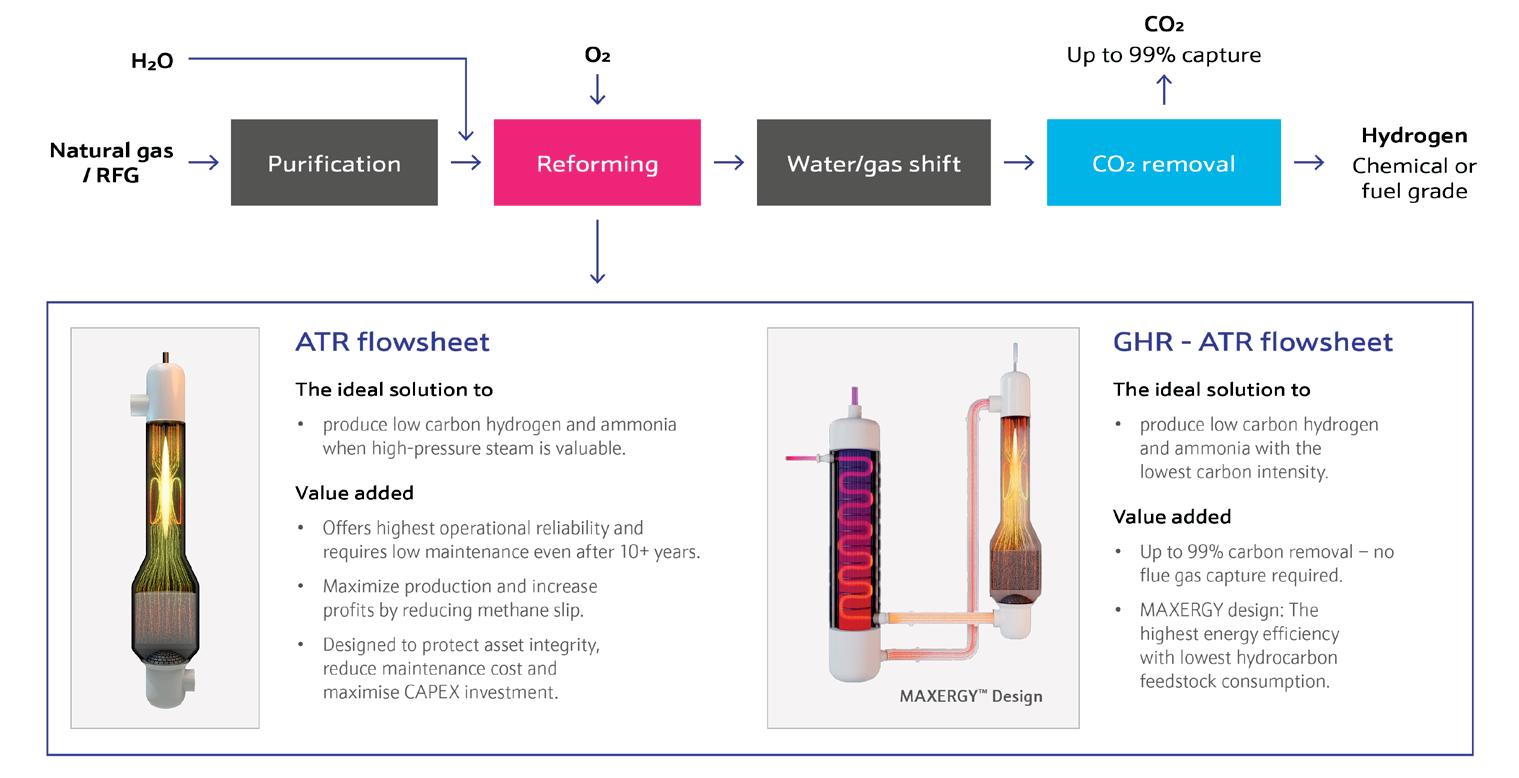
Use of the ATR flowsheet allows low carbon energy to be generated in parallel with the product hydrogen, limiting the need for imported power and reducing exposure to emissions and price volatility associated with external electricity supplies.
At a system level, the higher energy efficiency of LCH technology reduces the size of associated utilities such as air separation units, power import or onsite generation. This simplifies integration within hydrogen hubs and supports faster deployment at industrial scale.
Decarbonising a region or sector requires more than simply producing hydrogen. Storage, pipelines, compression, CO2 transport, and sequestration must all be developed in parallel. The early projects now advancing in the UK and elsewhere show that success is dependent on clustering. Co-location of asset owners, industrial offtakers, pipeline operators, and CO2 transport providers reduces risk and accelerates deployment.
Blue hydrogen plays a critical enabling role in the development of these hubs because it can be deployed at the scale needed to anchor shared infrastructure. Without these early volumes, pipelines would be underutilised, sequestration networks would not reach commercial scale, and industrial users would lack confidence in long-term availability. Blue hydrogen therefore provides not only low carbon molecules but also the economic rationale for the infrastructure that green hydrogen will later rely upon.
The UK has huge potential to take a leading position in blue hydrogen due to its abundant natural gas connections, large industrial demand centres, and extensive geological storage potential for CO2. These factors enable early low carbon hydrogen production and provide an efficient route to long-term decarbonisation of heavy industry and the power sector.
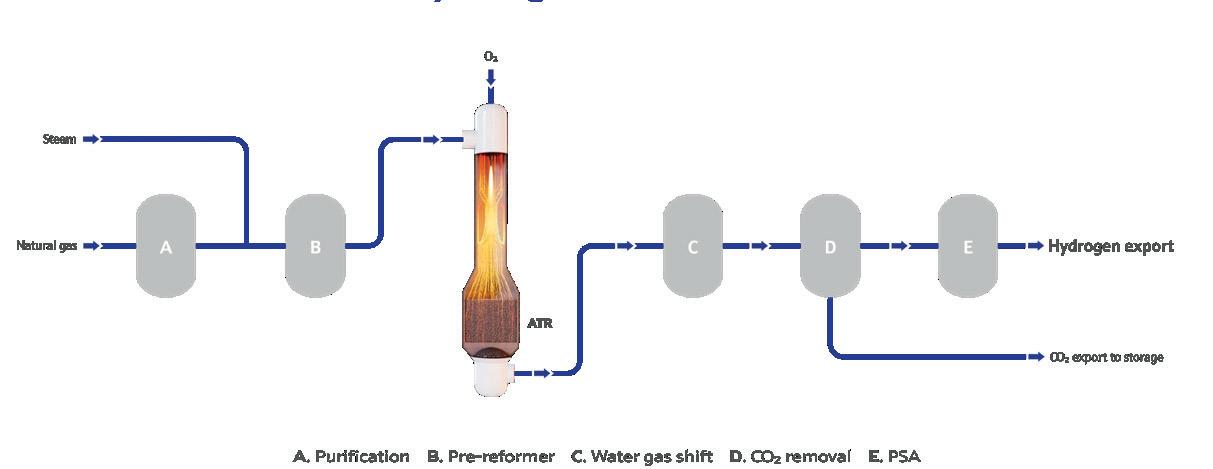
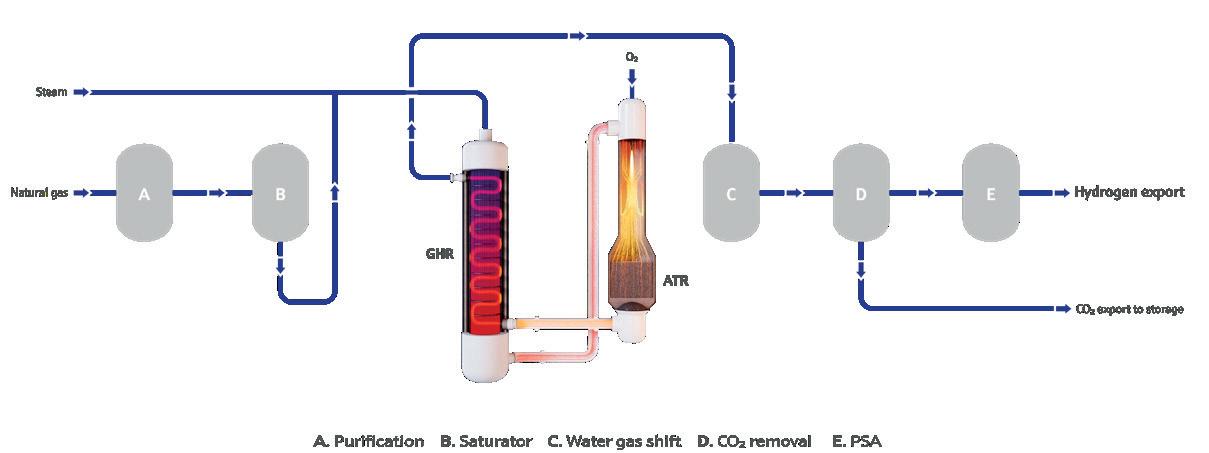
It is sometimes argued that hydrogen production must follow a single pathway, whether CCS-enabled or electrolytic. In practice, progress in one supports and accelerates progress in the other, strengthening the wider low carbon hydrogen value chain. Early deployment of blue hydrogen helps establish essential infrastructure, long-term demand, and durable revenue mechanisms for the broader hydrogen market. Once shared pipeline and storage networks are in place, green hydrogen producers can access established markets without the cost and complexity of developing parallel infrastructure.
This pathway avoids stranded assets and avoids locking industry into high carbon processes while waiting for electrolytic routes to scale. It represents a pragmatic approach to decarbonisation, recognising that hydrogen demand must be met long before green hydrogen reaches its full potential.
Hydrogen’s role in the global energy transition will grow significantly, but only if the first wave of projects is delivered at scale. Industrial sectors need clean molecules immediately. Policymakers need credible pathways that deliver emissions reductions now and create the foundation for long-term clean growth. Investors need technologies with proven performance and predictable costs. To wait for a single technology pathway to mature would be to miss the window for impactful decarbonisation. By deploying blue hydrogen now, industry can create the conditions for green hydrogen to flourish and ensure that the transition moves at the speed the climate challenge demands.
1. ‘Global Hydrogen Review’, International Energy Agency (IEA), (2025).


Kathy Ayers, Ph.D., Wilhelm Flinder, and Russell Morgan, Nel Hydrogen, outline why electrolyser innovation is for the collective good of the entire hydrogen economy.
The sustainable hydrogen industry faces a deceptively simple problem: it needs to compete with established energy carriers, hence the cost of producing it must come down. The electrolyser sits at the heart of that equation, where the single most powerful lever for reducing the levelised cost of hydrogen (LCOH) is continuous and rigorous research and development (R&D). That effort works across two inseparable dimensions: the electrochemical performance of the stack itself, and the engineering intelligence that determines how stacks are packaged. Advances that either translate directly into lower project costs or energy efficiency – where the interaction between the two is where some of the most significant gains are now being realised.
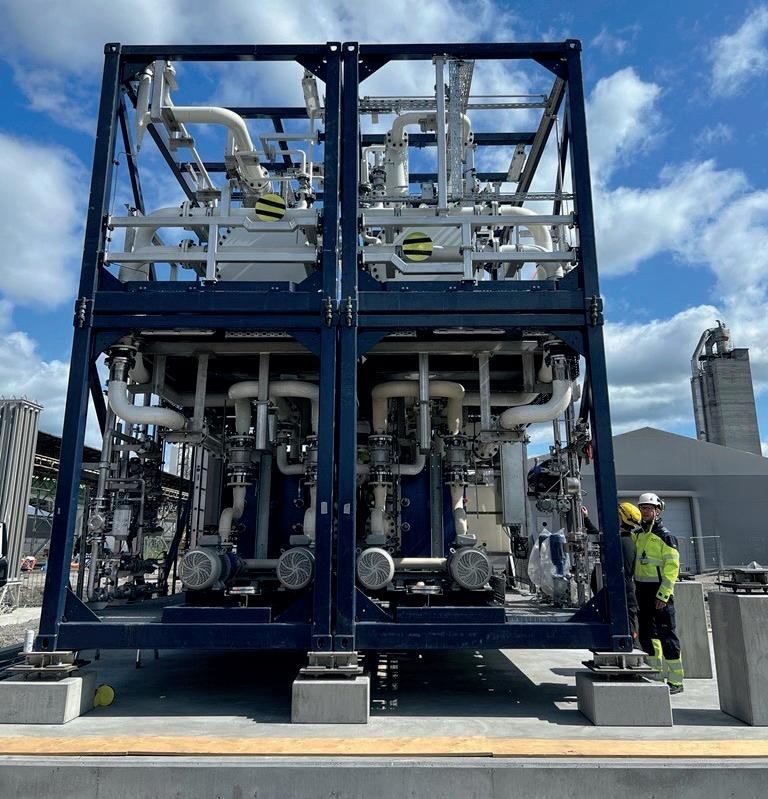
However, electrolyser R&D is unusual compared with innovation in many other sectors, as the benefits cannot stay behind closed doors. Every meaningful improvement in stack efficiency, every breakthrough in materials science, and every advance in manufacturing technique radiates outward – improving project economics not just for the company that made the discovery, but for the industry at large. R&D in electrolysis is, in the truest sense, for the collective good of the whole hydrogen economy.
This principle has guided nearly a century of work in electrolysis at Nel. Having delivered more than 7000 electrolyser stacks to over 80 countries since 1927, the company has watched its own innovations and advances – as well as those of its competitors – leading the way into an industry that is now on the brink of gigawatt-scale deployment. This article will explore how a next-generation pressurised alkaline electrolyser platform offers another example of how R&D investment is creating value beyond the company that undertakes it.
Consider what happens when an electrolyser manufacturer achieves even a modest improvement in energy efficiency. Electricity typically accounts for 50 to 70% of hydrogen production costs in large scale projects. A stack that consumes less power per kilogram of hydrogen produced does not just improve one company’s product specification – it resets the baseline for what project developers, financiers, and policymakers consider achievable.
That single improvement compounds. Project developers can model tighter economics. Lenders become more comfortable with hydrogen offtake agreements. Governments gain confidence that subsidy regimes – whether production tax credits, contracts for difference, or clean hydrogen portfolio standards – are backing technology that will eventually stand on its own.
Nel’s existing atmospheric alkaline platform illustrates this incremental compounding in practice: the company has achieved approximately 2% annual reductions in specific energy consumption alongside roughly 8% annual stack cost reductions over recent years. These are not dramatic headlines, but they are the kind of steady gains that push the industry’s cost curve down.
The next-generation pressurised alkaline platform is designed to operate at below 50 kWh/kg of hydrogen with a wide load range of 15 to 100%. The system targets a step-change in operating economics, but the broader point is that these efficiency benchmarks – once demonstrated at scale – will become a new standard that every project developer factors into their models. The benchmark changes for everyone, and thus everyone must improve.
Perhaps the clearest example of R&D as shared capital lies in materials science – the catalysts, electrodes, diaphragms, membranes, porous transport layers, and coatings, working in harmony, is defining electrolyser performance. When any manufacturer invests in developing more durable membrane chemistries, reducing precious metal loadings, or engineering better electrode structures, those advances create demand signals that ripple through the entire supply chain.
Component suppliers respond by scaling production, refining their own processes, and competing on both price and quality. The result is a virtuous cycle: as more companies can manufacture catalyst-coated membranes, bipolar plates, or advanced diaphragms at scale, unit costs fall for every original equipment manufacturer (OEM) that sources from them. Individual electrolyser manufacturers may each have proprietary design approaches – their particular cell geometries, manifold configurations, or system architectures – but the underlying materials ecosystem is largely shared.
This dynamic is especially critical for the hydrogen sector today. Unlike mature industries with established supply chains, electrolyser manufacturing is still in its nascent phase, building its supplier base. Every new entrant that can produce high-quality porous transport layers or electrode coatings at volume, adds resilience
and competitiveness to the whole industry. The development of Nel’s pressurised alkaline technology, for example, required close collaboration with suppliers to develop components that meet the demands of a pressurised cell environment operating at 15 bar. The knowledge generated through that development work –around material behaviour under pressure, sealing technologies, and accelerated lifetime testing –does not remain confined to one product. It expands what the supply chain is capable of delivering to any customer.
Having more companies that can make catalyst, membrane, porous layers, and other critical components at high volumes provides both competition and economies of scale. R&D into components and manufacturing drives down cost for all OEMs.
The transition into fully automated, high-volume production lines represents one of the most consequential R&D frontiers in the electrolyser industry. Manufacturing process innovation – how components are coated, assembled, tested, and quality-controlled – determines whether the performance gains achieved in the laboratory can be delivered consistently at scale.
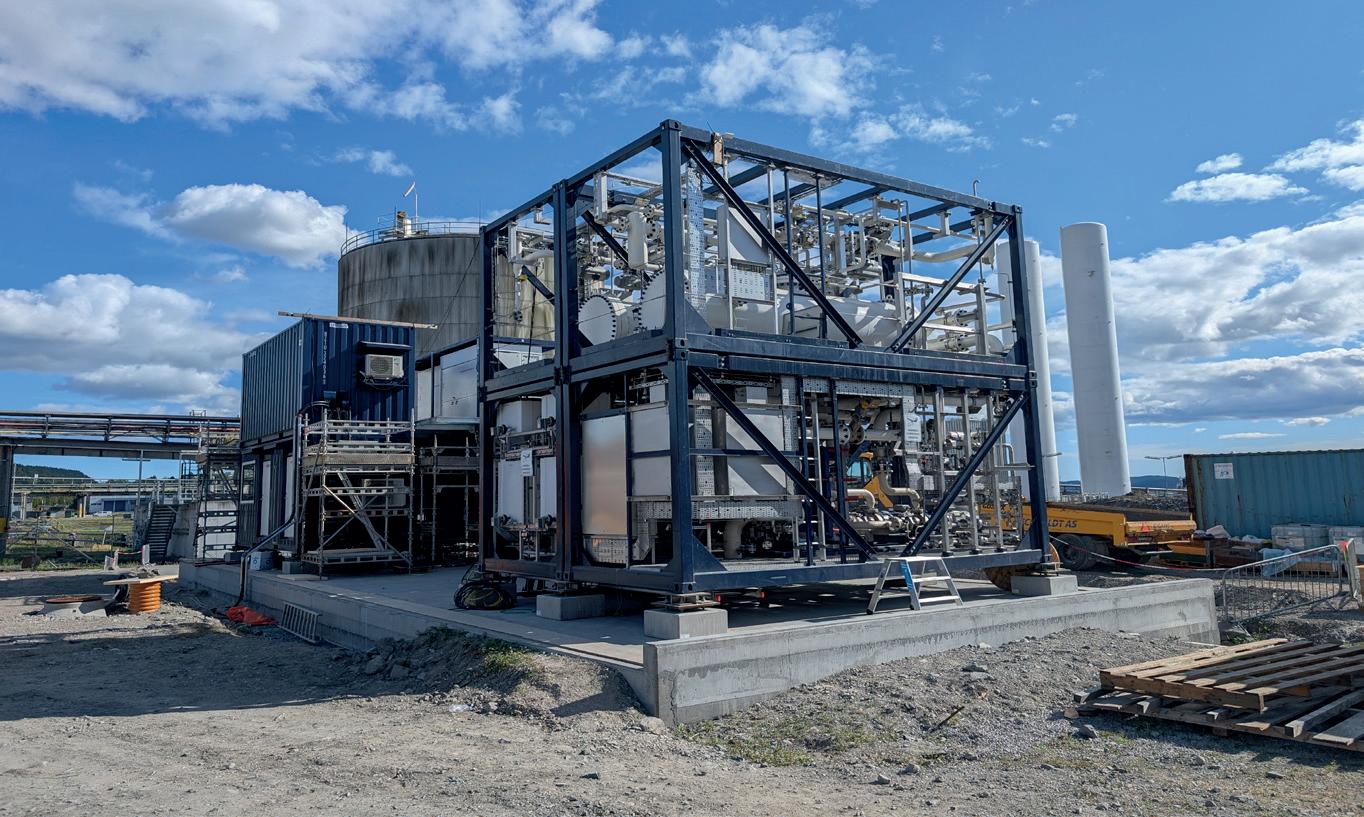
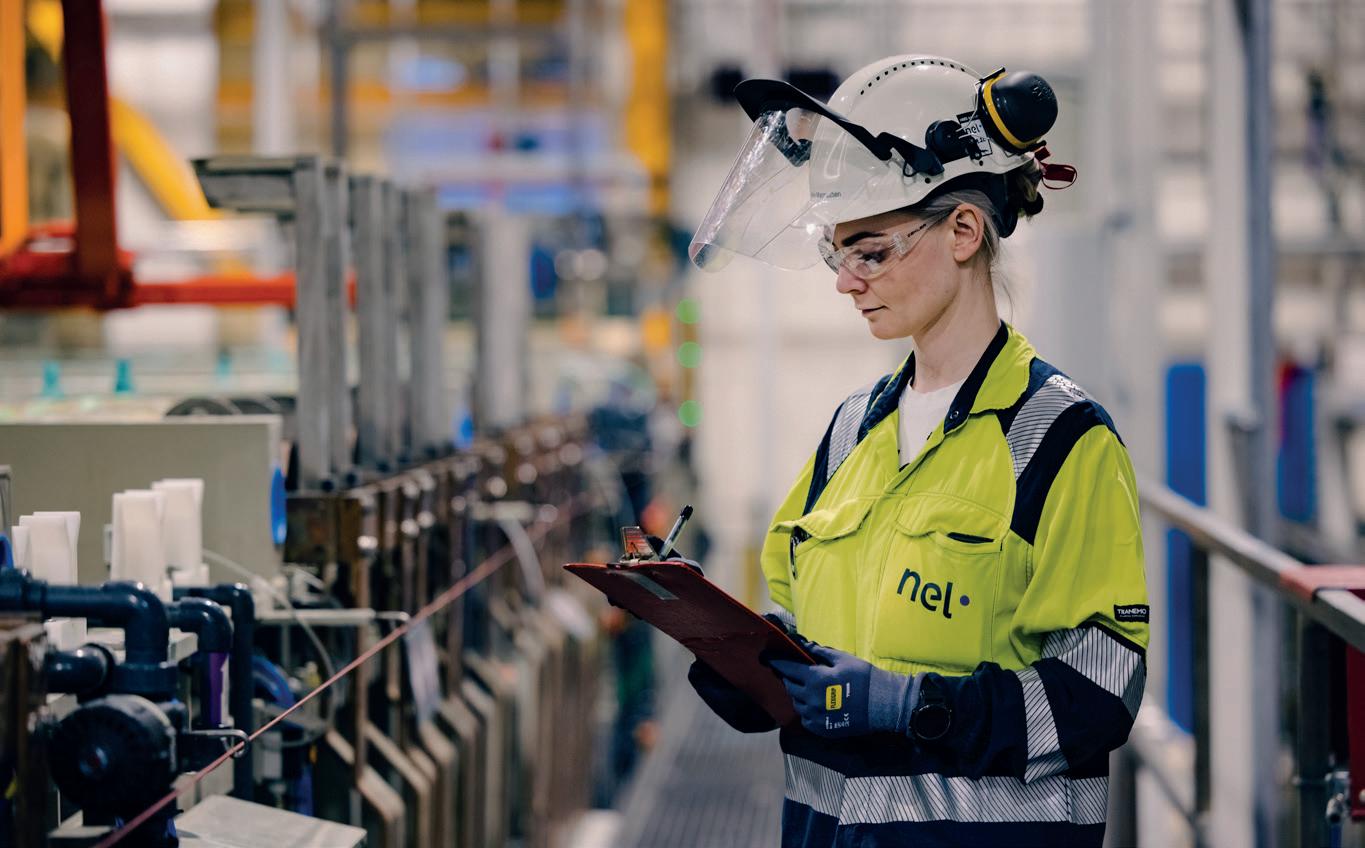
Nel has invested heavily in this area. Its atmospheric alkaline facility at Herøya, Norway, now operates at 1 GW of fully automated annual production capacity, with the potential to expand to 2 GW as market demand warrants. On the proton exchange membrane (PEM) side, a 500 MW automated production line in Wallingford, Connecticut, US, has unlocked substantial stack cost reductions through process and design optimisation. These advances follow substantial investments that reflect a commitment to the industry’s future, not just one company’s order book. But manufacturing knowledge does not stay within factory walls. Techniques for high-speed membrane electrode assembly, automated stack conditioning, and inline quality assurance become part of the industry’s collective manufacturing know-how. Equipment suppliers, process engineers, and production consultants carry these learnings across organisational boundaries. The scale of investment required to build world-class production
capacity means that no single manufacturer will serve the entire market – and the industry is stronger for it.
Nel has been awarded a grant of up to €135 million from the EU Innovation Fund to support industrialisation of its pressurised alkaline platform. The production line will be built in stages at Herøya, with total annual capacity of up to 4 GW when fully realised. This kind of public-private de-risking investment in manufacturing scale-up generates knowledge, tooling, and process capability that inevitably feeds back into the broader industry.
Electrolysis R&D extends well beyond the stack. Some of the most impactful cost reductions come from system-level innovation – rethinking how an electrolyser plant is designed, built, and operated.
Nel’s pressurised alkaline platform exemplifies this approach. The system is built around a 25 MW standard
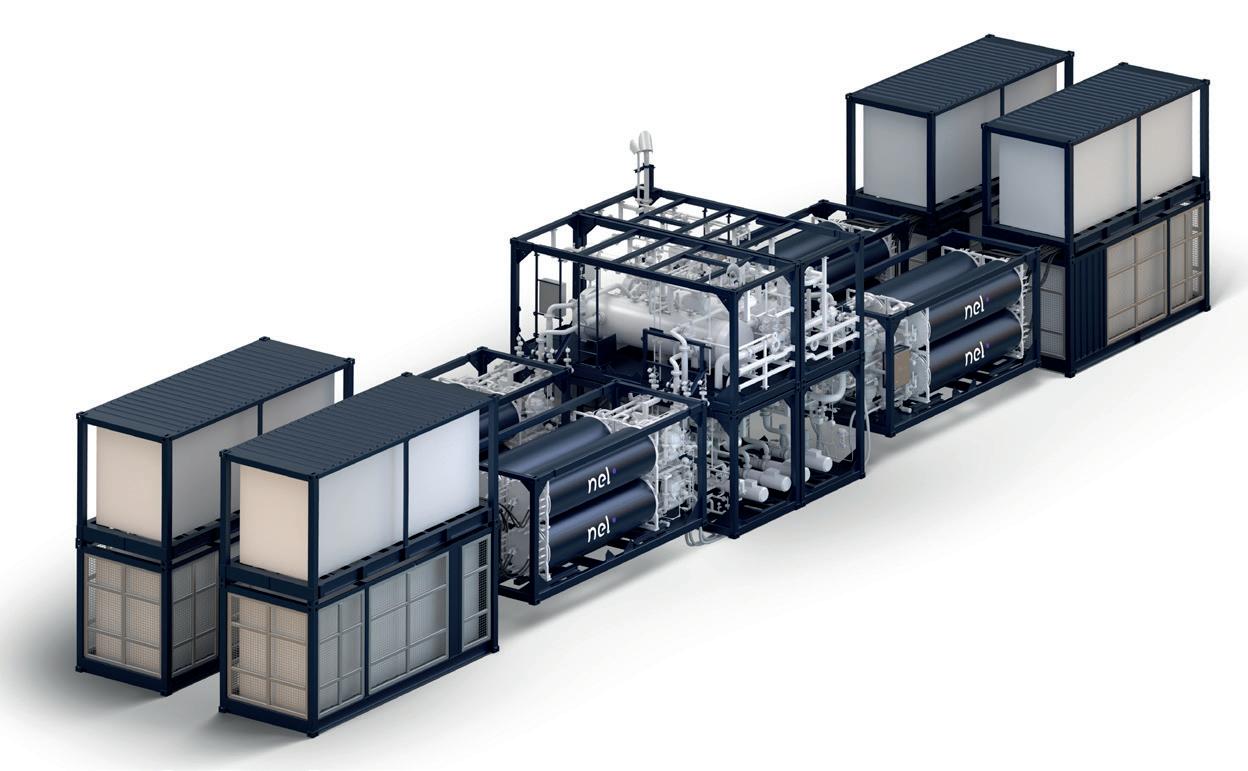
setup, installed by standard building blocks, comprising 16 individual 6.25 MW stack modules, four power modules, and a shared gas processing module. The entire system fits within a footprint of approximately 230 m 2 – an 80% reduction compared with an equivalent atmospheric alkaline installation. It is designed for outdoor operation on a flat concrete pad with prefabricated skid-mounted supports, eliminating the need for a purpose-built building. Hydrogen is delivered at 15 bar, reducing or eliminating downstream compression requirements. The modular architecture means that for plants larger than 25 MW, operators simply replicate the building block. It is worth being explicit about the mechanics here. The pressurised alkaline stack carries a higher unit cost than its atmospheric alkaline counterpart – a reflection of the additional engineering required to operate reliably at 15 bar. However, eliminating the purpose-built building, reducing civil works to a flat concrete slab, and enabling standardised outdoor installation with prefabricated skidmounted modules, contributes to a system-level CAPEX decline by 40 to 60% compared with current atmospheric alkaline solutions. Packaging, in other words, is not a cosmetic consideration – it is a primary cost lever, and one that is often underappreciated in discussions of electrolyser economics. The design principles that make this possible – standardisation, modularisation, outdoor installation, prefabrication, plug-and-play – are not proprietary concepts. They represent an emerging industry consensus around how large scale hydrogen production facilities should be engineered. Every manufacturer that adopts these principles contributes to a more predictable, bankable project model for developers and financiers alike. The 16-stack architecture also enables a level of operational redundancy that strengthens the case for hydrogen in industrial applications: operators can take individual stacks offline for maintenance or replacement without stopping production. Combined with a wide operating range of 15 to 100% load and rapid ramp-up and ramp-down capability, the system is designed to pair effectively with variable renewable energy sources – a critical requirement as green hydrogen projects increasingly couple directly with wind and solar assets.
The current generation of alkaline and PEM electrolysers continues to improve incrementally. But the industry is also investing in step-change technologies: next-generation pressurised alkaline and PEM systems, and emerging platforms such as anion exchange membrane (AEM) and solid oxide electrolysis (SOEC) that could open entirely new application spaces.
Nel’s own technology roadmap spans both its current atmospheric alkaline and PEM platforms and next-generation systems, including the pressurised alkaline platform now moving toward a commercial pilot with Norwegian Hydrogen at Rjukan, Norway, with completion expected in 2027.
These next-generation platforms build on decades of collective industry learning – from the atmospheric alkaline systems that have operated reliably since the mid-20 th century to the PEM platforms that proved themselves in demanding applications from submarine life support to semiconductor manufacturing. The companies pursuing these technologies are not starting from zero. They are standing on shared foundations of materials science, electrochemistry, and systems engineering that the entire industry has helped to build.
Industry forecasts from the Hydrogen Council and McKinsey project approximately 8 million tpy of clean hydrogen demand by 2030 where existing policy frameworks already enable a positive business case, with a further 13 million tpy unlockable through targeted infrastructure investment and continued cost reductions. 1 R&D is the mechanism that closes that gap. And the nature of electrolyser innovation means that when any company closes it, the whole industry benefits.
The hydrogen economy will not be built by any single company. It requires a healthy, competitive ecosystem of manufacturers, suppliers, developers, and integrators – all pushing the boundaries of what electrolysis technology can achieve. R&D is the shared foundation on which that ecosystem rests.
Every efficiency improvement compounds across the industry. Every materials breakthrough expands the supply chain for all. Every manufacturing innovation raises the bar for what can be produced at scale. And every standard developed makes it easier for the next project to reach final investment decision.
The question is not whether electrolyser R&D benefits the company that undertakes it – of course it does. The more important truth is that it benefits everyone. In an industry working to decarbonise some of the hardest-to-abate sectors of the global economy, that is not a side effect. It is the point.
1. 'Global Hydrogen Compass 2025', Hydrogen Council, McKinsey & Co., (September 2025).
Bleed area: 216mm x 303mm
• Extend your background to fill the full ‘bleed area’ - it’ll make sure you don’t end up with white edges round your advert when it is printed.
Trim area: 210mm x 297mm
• This is the size your advert appear
Safe area: 190mm x 277mm
• Keep all important bits of your design - text, logo, icons - inside this area. (Not your background - that still needs to run to the edges of the bleed.)
Trim area: 210mm x 297mm
Safe area: 190mm x 277mm
Art work specifications / our preferred format:
• PDF-x/1a.
• PDFs generated using Press Settings. In addition, please note the following:
• PDFs should be compatible with Acrobat 4 0 or higher
• Please ensure all fonts are embedded.
• All original graphics must be saved as CMYK at 300 dpi at the size they are to be used.
• Please ensure all PDFs are higher than 144 resolution
• Images should not be tagged with any ICC profiles.
We operate a preflight system prior to printing to check that all advertisement material complies with the above specifications. Any advertisement that does not comply with these specifications may need to be resupplied.








Nirav Shah, Evonik Catalysts, discusses how ammonia cracking can support a sustainable hydrogen economy by enabling efficient storage and transportation.
Hydrogen pipelines are poised to become central to a clean energy economy, delivering the fuel of the future to industries, power plants, and transport hubs. However, unlocking the full potential of hydrogen is dependent on overcoming the challenges of safe and efficient storage
and transportation. Low-carbon ammonia offers a promising path forward. As a carbon-free hydrogen carrier, it can be stored and shipped safely, laying the foundations for a cleaner energy future.
Ammonia cracking technologies release hydrogen at scale where it is needed. They are fast becoming critical enablers of sustainable hydrogen production. By allowing hydrogen to be transported globally in a scalable and efficient way, ammonia helps overcome existing barriers – ensuring that hydrogen pipelines can deliver on their promise of a net zero energy system.
While ammonia cracking presents vast possibilities, the industry is in its relative infancy. The process relies on high-performance catalysts to achieve optimal efficiency, but the technology offers significant scope to mature and cement its role as a cost-effective hydrogen supply solution.
Despite its potential as a clean energy driver, hydrogen is hindered by significant logistical and economic challenges. Storage requires either high-pressure compression or
cryogenic liquefaction, both of which are costly and technically demanding. Transportation via pipelines is often energy-intensive, expensive, or limited in range, making it best suited for local distribution. To move hydrogen across continents, a scalable carrier is essential – and this is where ammonia steps in.
Ammonia is the second most widely produced chemical on the planet, at around 200 million tpy, and has been safely stored and shipped for more than a century. It can be liquefied under relatively mild conditions and utilises existing global infrastructure for storage and transport. With its high hydrogen density, ammonia can be cracked back into hydrogen at the point of use, allowing nations to access carbon-free fuel without the need for transcontinental pipelines.
Combined with its established transport network, ammonia offers clear efficiency advantages. At 123 kg/m 3 of hydrogen, it delivers a 74% higher volumetric hydrogen storage density than liquid hydrogen. Gravimetrically, ammonia reaches 17.7% (wt), outperforming methanol (12.5%) and liquid organic hydrogen carriers (6%). This higher density reduces space and weight requirements, significantly lowering transport costs.
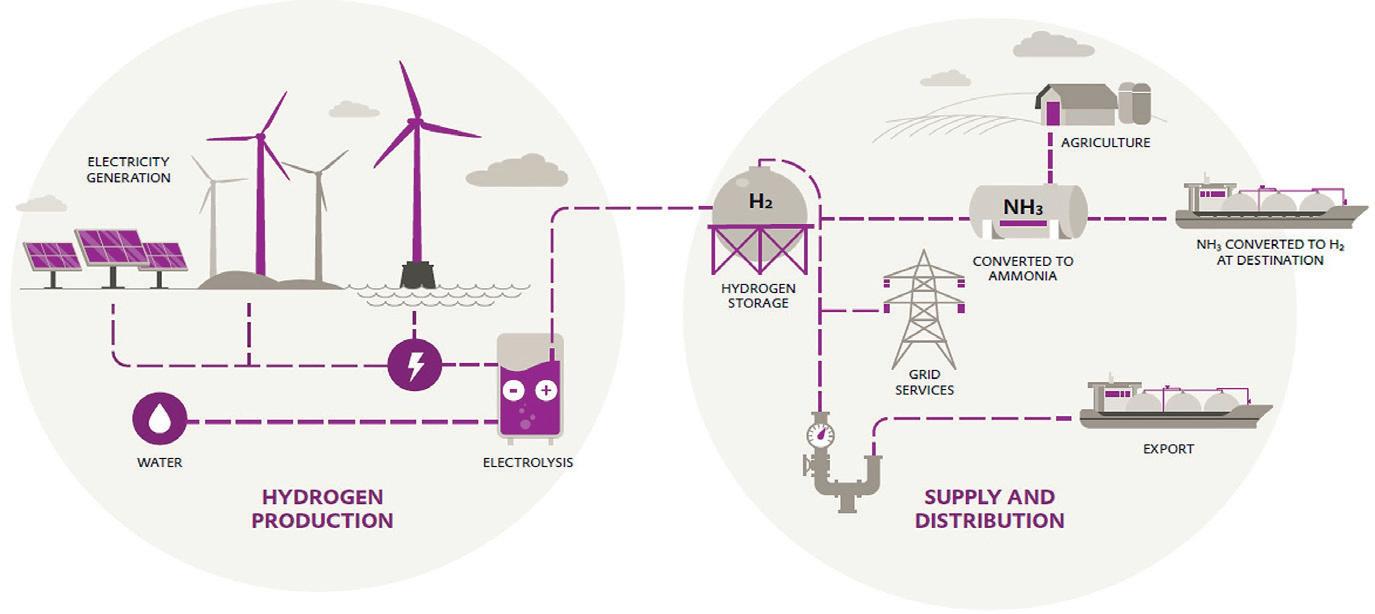
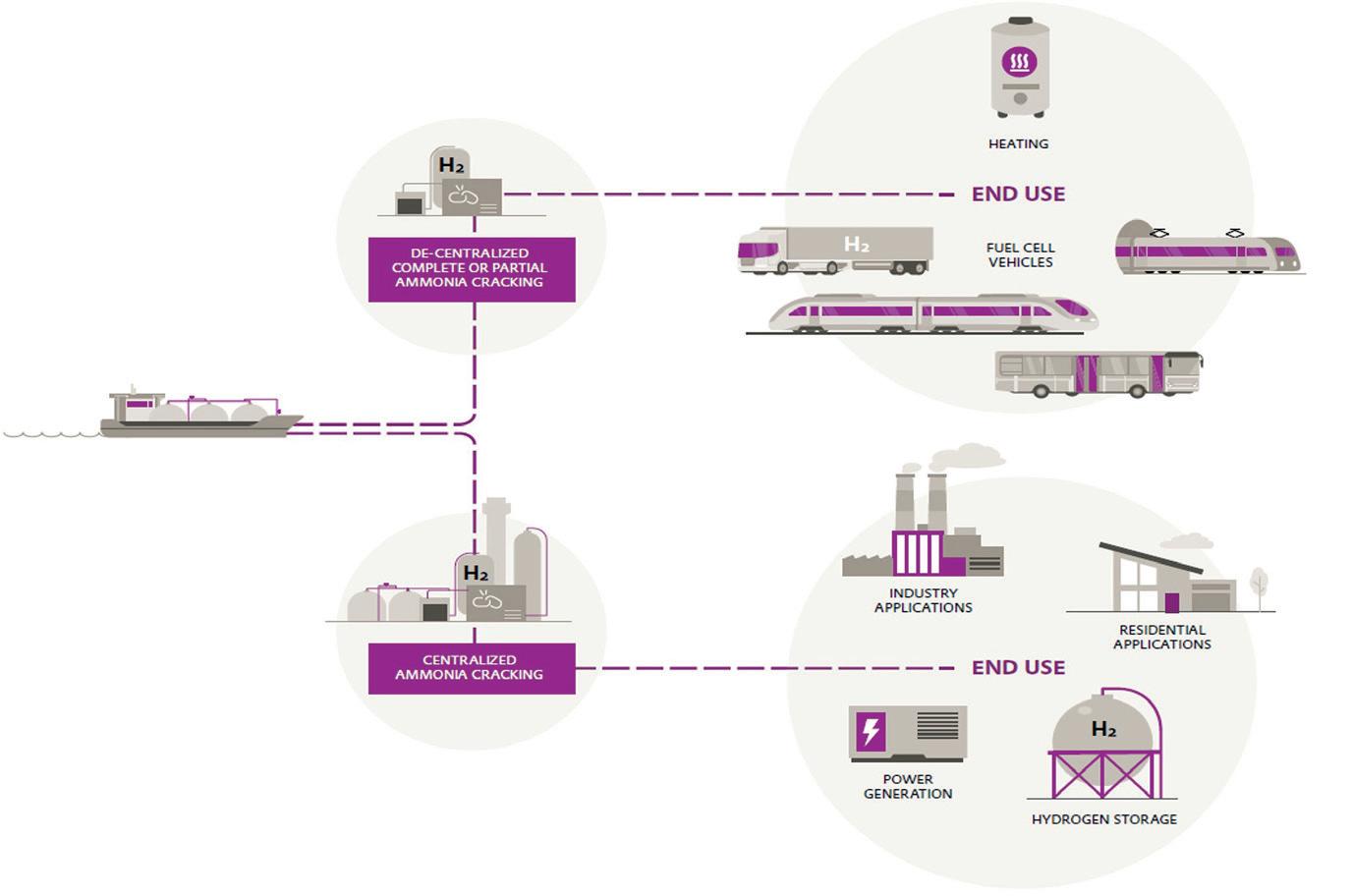
Upon arrival at its destination, ammonia undergoes cracking to release hydrogen’s green credentials. The hydrogen produced can either be used as a feedstock or carbon-free energy source for the ‘hard-to-abate’ energy demand of industries such as steel, cement or chemical production. Alternatively, it can be supplied to energy providers or utilised in the transport sector to advance fuel cell technologies, cementing ammonia’s role as a cornerstone of the sustainable hydrogen economy.
Cracking ammonia back into hydrogen requires a thermal catalytic process that decomposes ammonia into hydrogen and nitrogen. This endothermic reaction typically requires temperatures in the range of 400 - 700°C in a low-pressure environment. Its efficiency is based on minimising the external energy input required to maintain the reaction.
Typically, in the cracking process, liquid ammonia (NH 3 ) is pre-heated into a gaseous state before entering the reactor, where it passes over a catalyst bed. The resulting gas mixture is cooled and purified to yield hydrogen and nitrogen (N 2 ). Heat recovered during purification
can be reintegrated into the process to improve overall energy efficiency.
Two standard pathways are currently envisioned for scaling ammonia cracking: centralised and de-centralised approaches (sometimes referred to as complete vs partial cracking). Centralised cracking involves large reactors located near industrial hubs, ports or hydrogen import terminals. Operating at high temperatures, these facilities benefit from heat integration and are ideal for producing large volumes of hydrogen for steelmaking, petrochemicals, refining, power generation, or injection into hydrogen pipeline networks.
By contrast, de-centralised complete or partial ammonia cracking enables local hydrogen generation closer to the point of use, primarily at refuelling stations, transport hubs, or remote industrial sites. As several de-centralised applications involve burning the resulting hydrogen for propulsion or power generation purposes, partial cracking into a combustible hydrogen/ammonia mixture plays a more important role here. These systems require catalysts with high activity and lower activation energy, offering greater flexibility in operating parameters such as space velocity and activation procedures. While de-centralised units are generally less efficient and more expensive per unit of hydrogen, they provide access to low-carbon hydrogen in locations where infrastructure is limited, supporting distributed energy and transport applications.
With more than 20 million t of ammonia already traversing the globe, along with the emergence of mega-scale blue hydrogen and ammonia projects and advancements in green production, the market is witnessing unprecedented interest in safely transporting hydrogen. Ammonia’s high hydrogen density and established transport infrastructure make it a scalable carrier, but it relies on efficient cracking to unlock its potential.
Selecting the right catalyst is therefore critical. Catalysts influence the temperature, energy input, and overall efficiency of the endothermic reaction that decomposes ammonia into its separate parts. By enabling cost- effective and scalable cracking, advanced catalysts hold the key to transforming ammonia into a reliable source of carbon - free hydrogen for industry, power generation, and transport.
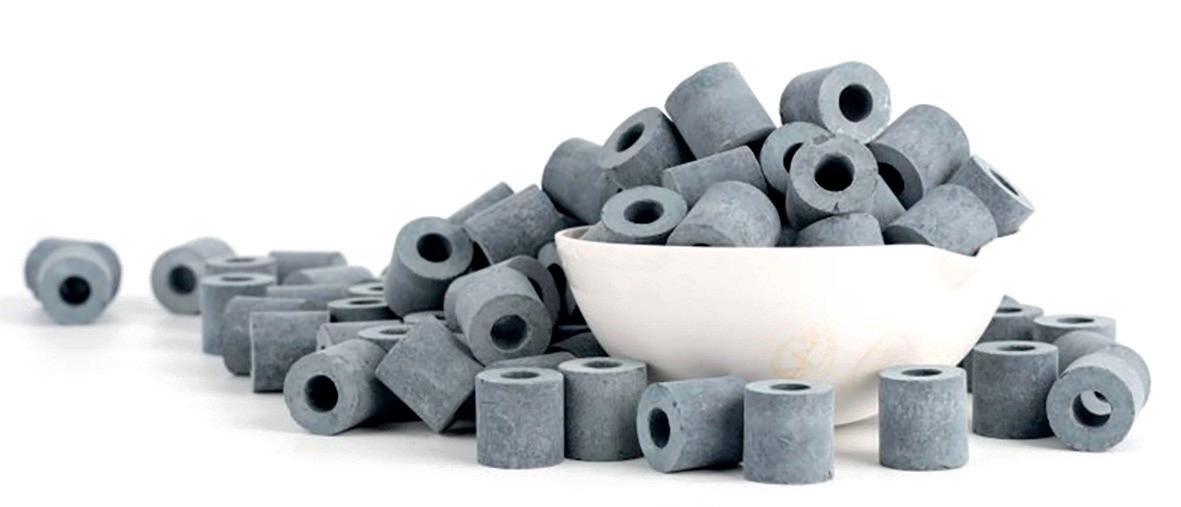
Two catalyst platforms are emerging as key enablers for ammonia cracking, engineered to deliver high performance and ultra-efficient cracking potential. Octolyst® 1700, a highly active nickel catalyst available in various shapes, hollow cylinder or tablet forms, is optimised for higher temperature centralised cracking (500 - 700°C). Its design provides high reactivity and selectivity with thermal and mechanical stability. It is efficient at ambient pressures up to 5 MPa – and performs well at higher pressures where required – and has demonstrated 100% conversion at around 680°C.
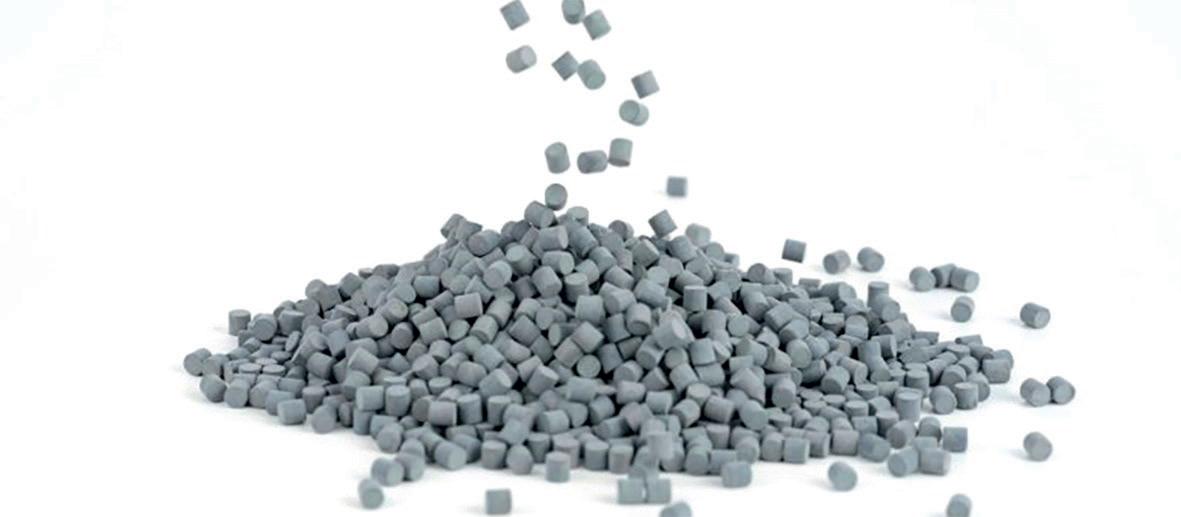
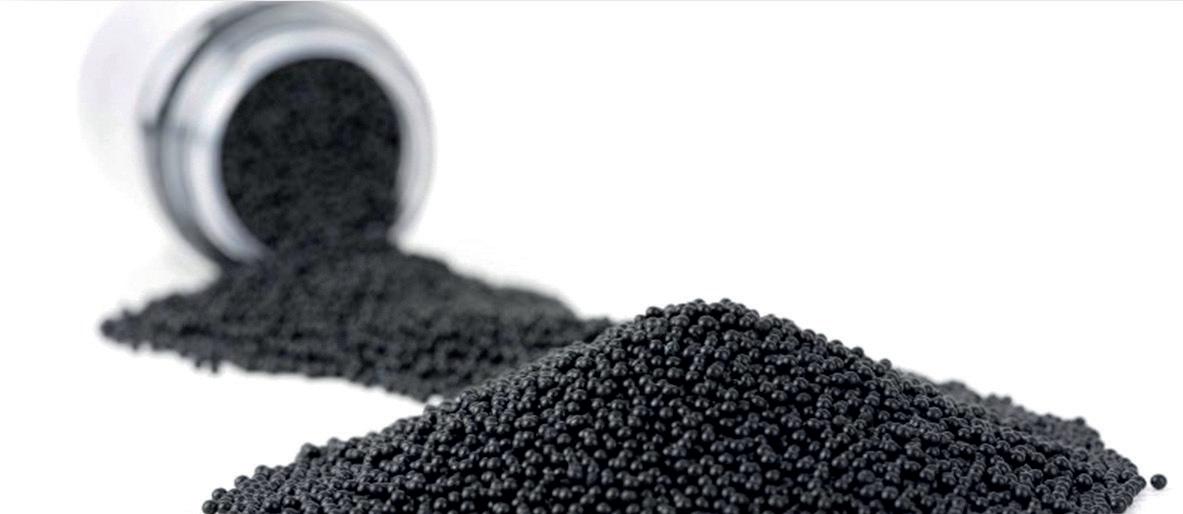
Noblyst® 3900 is a spherical ruthenium catalyst designed for excellent performance at lower temperatures (400 - 600°C). Ideally suited to the de-centralised cracking process, it offers greater flexibility in GHSV and activation procedures, performing efficiently at pressures from ambient to 2.5 MPa. In optimum conditions, it also achieves full hydrogen conversion, typically around 560°C. These platforms illustrate how catalyst design can be tailored to the demands of centralised and de-centralised cracking processes, and Evonik continues to collaborate with process developers worldwide to advance the next generation of high-performance catalysts for low-carbon hydrogen production.
Overall, ammonia cracking is emerging as a technically viable and economically attractive solution for low-carbon hydrogen distribution. It addresses the transport and storage hurdles of hydrogen production and is expected to become critical to a sustainable hydrogen economy as catalyst technologies evolve. With ongoing R&D and innovation, low-carbon ammonia will soon become central to global decarbonisation, powering industrial, mobility, and energy systems worldwide with clean hydrogen.
Christopher Polaniecki, Honeywell, USA, explores solutions to digitally unlock the potential of green hydrogen and ammonia within the competitive landscape of the hydrogen industry.

The race is on! Each of the contestants has been given a coloured jersey! However, like in many competitions, a team name, uniform colour, or home location does not inherently define its abilities, competitiveness, or differentiation vs its opponent. This article is not about teams from a sport’s league such as American football, cricket, or synchronised swimming. Rather, this article explores the race for industry growth among the colours of hydrogen and its downstream derivatives such as ammonia.
The hydrogen competitors are the colours grey, blue, and green. Grey has been the industry leader for over a half century. Grey’s profile includes hydrogen produced from natural gas or coal processed in a steam methane reformer (SMR).
Blue is steadily gaining momentum. Blue’s profile is like grey, but with the addition of carbon capture. Too early to say if and when green might become the dominant colour for new entry. Green’s profile is the splitting of water with electricity sourced from renewable power. This article will take a closer look at the playing field for the three colours.
Commercial insight is best to start with. Commercial projects passing through final investment decision (FID) is a key milestone in making abundant low carbon hydrogen and resulting ammonia production a reality. To pass through FID, projects need to be ‘bankable’, i.e., viable to make money. One hurdle to a project being bankable can be referred to as the ‘off-takers dilemma’: a project needs scale to be affordable but needs affordability to reach scale, a catch 22. Further

explanation of this statement is needed as it relates to the production of low carbon (blue or green) ammonia.
The top three reasons for this off-takers dilemma are: one, long-term cost competitiveness; two, supply chain resilience; and three, carbon certification. The challenges to each of the three dilemmas lie in the aspects of affordability, operability, and traceability, respectively (see Figure 1). Further explanation of these three aspects is immediately below, and later this article will come back to the concept of digitally unlocking these challenges.
Long-term cost competitiveness of new low carbon ammonia facilities is needed that can span 30 plus years after day one production. However, for a project looking to first pass through FID, affordability needs to be scrutinised ‘on paper’. Affordability can be better scrutinised with a digital tool for ‘what if’ scenarios to help achieve long-term cost competitiveness before the plant is built.
Supply chain resilience is needed to meet plant utilisation targets and product quality metrics. Large scale reliable operability of the emerging green colour of hydrogen and ammonia is a relatively unexplored reality. Operability in the scale up of new types of electrolyser equipment for green hydrogen and how to turn these up and down effectively and reliably is needed. Great progress has been made by the plant designers and OEMs to provide turndown of up to 10% of full load capacity. Digital tools are essential to manage such dynamic operations.
Carbon certification is needed to validate the value of lower carbon molecules and precise carbon amount. Given that the carbon intensity of the ammonia molecule cannot be directly measured, traceability of carbon intensity becomes critical. Traceability is needed to meet possible audits on a wide array of possible regulations including hourly matching of renewable power to green hydrogen production to meet proposed certification schemes. Digital solutions are essential for traceability of carbon intensity.
While both blue and green ammonia projects are faced with the three challenges of long-term cost competitiveness, supply chain resilience, and carbon certification, blue ammonia has a big advantage over green in supply chain resilience to be more confidently scaled for reliable
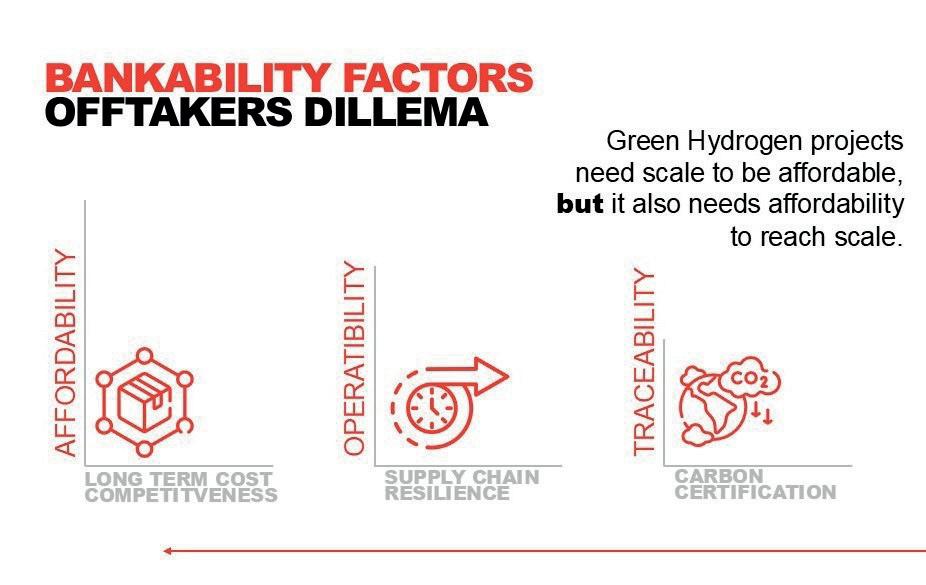
Figure 1. The top three reasons for the off-takers dilemma are: one, long-term cost competitiveness; two, supply chain resilience; and three, carbon certification. The challenges to each of three dilemmas lie in the aspects of affordability, operability, and traceability, respectively.
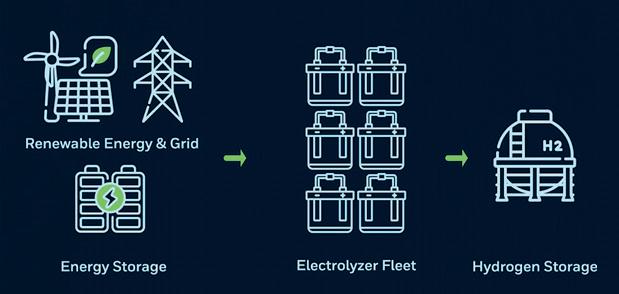
Figure 2. A BESS upstream of green hydrogen production or hydrogen storage downstream of green hydrogen production can help ensure steady flow of hydrogen to an ammonia unit. However, both of these solutions are typically cost prohibitive to green hydrogen production projects becoming ‘bankable’.
production rates and quality for operability. The following section will briefly explore why this is the case.
The blue ammonia industry indicates confidence in its ability to scale production to build new word class facilities. Two recent examples are from announcements from CF Industries and ExxonMobil.
In April 2025, CF Industries announced a joint venture with Jera Co. Inc. (JERA) for the construction, production and offtake of low-carbon (blue) ammonia. This will include a new ammonia production facility that is designed with a nameplate capacity of approximately 1.4 million tpy and is expected to capture greater than 95% of carbon dioxide generated from the production of ammonia.1
ExxonMobil in Baytown, Texas, US, is planning a facility capable of producing up to 1 billion ft3/d of low-carbon blue hydrogen and more than 1 million tpy of low-carbon (blue) ammonia. The facility will produce virtually carbon-free hydrogen where approximately 98% of CO2 is removed and permanently stored.2
One reason for industry confidence in scaling blue ammonia production is from the continued confidence in process control and operability of both the hydrogen unit and ammonia unit. While carbon capture does affect the SMR or autothermal reforming (ATR) process for typical hydrogen production, process technology for carbon capture is more proven and automation is only slightly modified relative to green hydrogen production. (This article will discuss green hydrogen challenges and digital solutions later.) For the ammonia unit, continued proven process control is a good assumption, including specifics such as advanced process control (APC) for methane slip because of the anticipated steady flow of blue hydrogen to the ammonia unit.
The topic of steady flow of hydrogen to the ammonia unit becomes very important when moving to green hydrogen. Therefore, a short further explanation of why a steady reliable source of hydrogen to the ammonia unit is given. A steady flow of hydrogen is preferable for maintaining the targeted reaction equilibrium and desired ammonia production. Disruptions in the hydrogen flow can lead to instability in the chemical reactions inside the reaction, potentially leading to an unplanned shut down.
An ‘easy’ solution for a continued supply of green hydrogen production could exist in a scenario where cost of production is not important (which does not exist in the commercial world of ammonia production). This easy solution for a reliable source of green hydrogen would include a buffer inventory of hydrogen or its ‘ingredients’. This can be done on either side of the electrolyser producing green hydrogen. Renewable power, the ‘ingredient’, can be stored through a battery energy storage system (BESS) to ensure steady state power to the electrolyser to avoid any turn downs when renewable power sources may dip (such as when the sun does not shine or the wind does not blow). An alternative or additional option is for hydrogen to be
stored after the electrolyser as buffer inventory that can be utilised when needed to keep steady state of hydrogen to the ammonia unit. The fundamental problem with either of these options is cost as BESS and hydrogen storage are expensive (see Figure 2).
Therefore, is there any hope for green hydrogen to scale with needed reliability of process flow to an ammonia unit yet not become too expensive to be commercially viable? Thankfully, there is hope and help through ‘digitally unlocking green hydrogen’s potential’.
Green hydrogen is poised to play a key role in the global energy transition – but several barriers still stand in the way of widespread adoption. To make green hydrogen practical at scale, energy use must be optimised, production processes streamlined, and cost barriers systematically addressed. One significant impediment to commercialising green hydrogen production is the misperception that it is too costly and complex for widespread adoption. Reducing the levelised cost of hydrogen (LCOH) – the average cost per unit produced over a facility’s lifetime – is essential for scaling up production. While it is a significant challenge, it is achievable. Honeywell can help digitally unlock the potential of green hydrogen by using advanced digital solutions to streamline production, optimise energy use, and reduce costs at scale.
Honeywell’s Protonium Green Hydrogen Control and Optimisation Portfolio delivers end-to-end solutions that drive both sustainability and profitability in green hydrogen production – empowering operators to maximise performance, minimise costs, and scale with confidence.
To address affordability and long-term cost competitiveness, the Honeywell Protonium Concept Design Optimiser (CDO) uses an innovative software that delivers a comprehensive approach to plant design, ensuring that every aspect of the plant is optimised for efficiency, cost-effectiveness, and sustainability. The CDO helps reduce LCOH by optimising designs for various energy mixes, electrolyser technologies, and operational scenarios. Flexible design scenarios take carbon-intensity targets into account, with user-selectable objectives and grid-to-gate value chains.
The Honeywell Protonium Unified Control and Optimisation (UCO) System addresses operability and supply chain resilience. This solution orchestrates end-to-end operations – from renewable energy inputs to electrolysis and beyond – ensuring peak performance and reduced degradation for maximum return on investment.
Protonium UCO adapts to fluctuations in power, demand, and process conditions – optimising plant performance across power conversion systems, energy storage, electrolysers, and balance-of-plant (BOP) controls. This orchestration helps extend asset life, significantly reduce LCOH, and increase plant profitability. Powered by a digital twin and predictive analytics, this system forecasts electrolyser health, fine-tunes power usage, and continuously adjusts production strategies in real time to balance performance with cost.
To address both affordability and operability, a final component of the Honeywell Protonium suite of solutions, the Honeywell Hydrogen Electrolyser Control System (HECS)

3. Honeywell can help digitally unlock the potential of green hydrogen by using advanced digital solutions to streamline production, optimise energy use, and reduce costs at scale.
is purpose-built for advanced green hydrogen plant management. This system enables precise control, real-time performance measurement, and in-depth reporting of electrolyser efficiency and degradation –enabling operators to improve operational efficiency and reduce costs. Its advanced degradation tracking capabilities benchmark electrolyser health against OEM specifications, delivering actionable insights to enhance operational efficiency and extend asset life.
To address the third and final challenge of traceability to address carbon certification, Honeywell’s carbon intensity management tool includes a carbon intensity (CI) calculator offering a range of features to meet the changing energy scenarios of ammonia production. The CI calculator provides near real time carbon intensity values. It takes into consideration the feedstock and direct process-related emissions, including feedstock carbon intensity (Scope 1), indirect emissions from external energy sources (Scope 2), and all other emissions (Scope 3) as plug in data. This management tool also includes a carbon twin feature and emissions digital twin modelling, enabling scenario-based ‘what if’ analysis for carbon intensity.
For those preparing for competition in a long race, such as by foot, boat, or vehicle to name just a few, a favourite cliché is that success is a journey, not a destination. The journey for green ammonia includes many challenges that will require several different types of solutions. Combining digital technologies with deep domain expertise can help to deliver comprehensive, customisable, and cost-effective solutions that can unify and optimise performance across the entire value chain.
1. ‘CF Industries Announces Joint Venture with JERA Co., Inc., and Mitsui & Co., Ltd., for Production and Offtake of LowCarbon Ammonia’, CF Industries, (April 2025), https://www. cfindustries.com/newsroom/2025/blue-point-joint-venture
2. ‘Marubeni and ExxonMobil’s low-carbon ammonia deal marks major step in unleashing new energy supply’, ExxonMobil, (May 2025), https://corporate.exxonmobil.com/news/newsreleases/2025/0507_low-carbon-ammonia-deal-marks-majorstep-in-unleashing-new-energy-supply
Jagadesh Donepudi and Michelle Wicmandy, KBC (A Yokogawa Company), discuss how digital twins can be used to improve operations in green hydrogen projects.
Hydrogen has become one of the most ambitious pillars of the global energy transition. Electrolyser capacity is scaling, renewable power is expanding, and investment accelerates across green, blue, and hybrid hydrogen projects. On paper, the formula appears straightforward: connect renewable electricity to electrolysers, produce hydrogen, store it, and deliver it to industry, mobility, or power markets. In practice, many projects encounter material execution challenges. What looks viable in spreadsheets often proves difficult to operate reliably in the real world. Further, this gap is leading to regret capital. That gap between design and operation has led to rework, schedule pressure, and scope changes as developers contend with cost inflation, uncertain offtake, and operability and delivery risk.1

The challenge is compounded by the market’s starting point. Global hydrogen demand remains dominated by industrial uses (notably refining and chemicals), while low-emissions hydrogen production remains limited relative to total demand. Meanwhile, the pipeline of announced electrolyser projects is large. The subset that reaches final investment decision (FID) is significantly smaller – illustrating how quickly ‘concept’ turns into ‘constraints.’2
Hydrogen is often discussed as a single technology – an electrolyser here, a storage tank there, a pipeline and a buyer. But a green hydrogen asset is a tightly coupled energy and process system that spans renewable power,
water, electrolysis, compression, purification, storage, blending, and downstream consumption.
Each layer has its own physics and constraints. In hydrogen, they are interdependent:
� A change in wind or solar output alters electrolyser loading.
� Load cycling influences efficiency, thermal behaviour, and degradation.
� Storage constraints affect dispatch choices and operating envelopes.
� Dispatch affects energy cost, emissions, and contractual reliability.
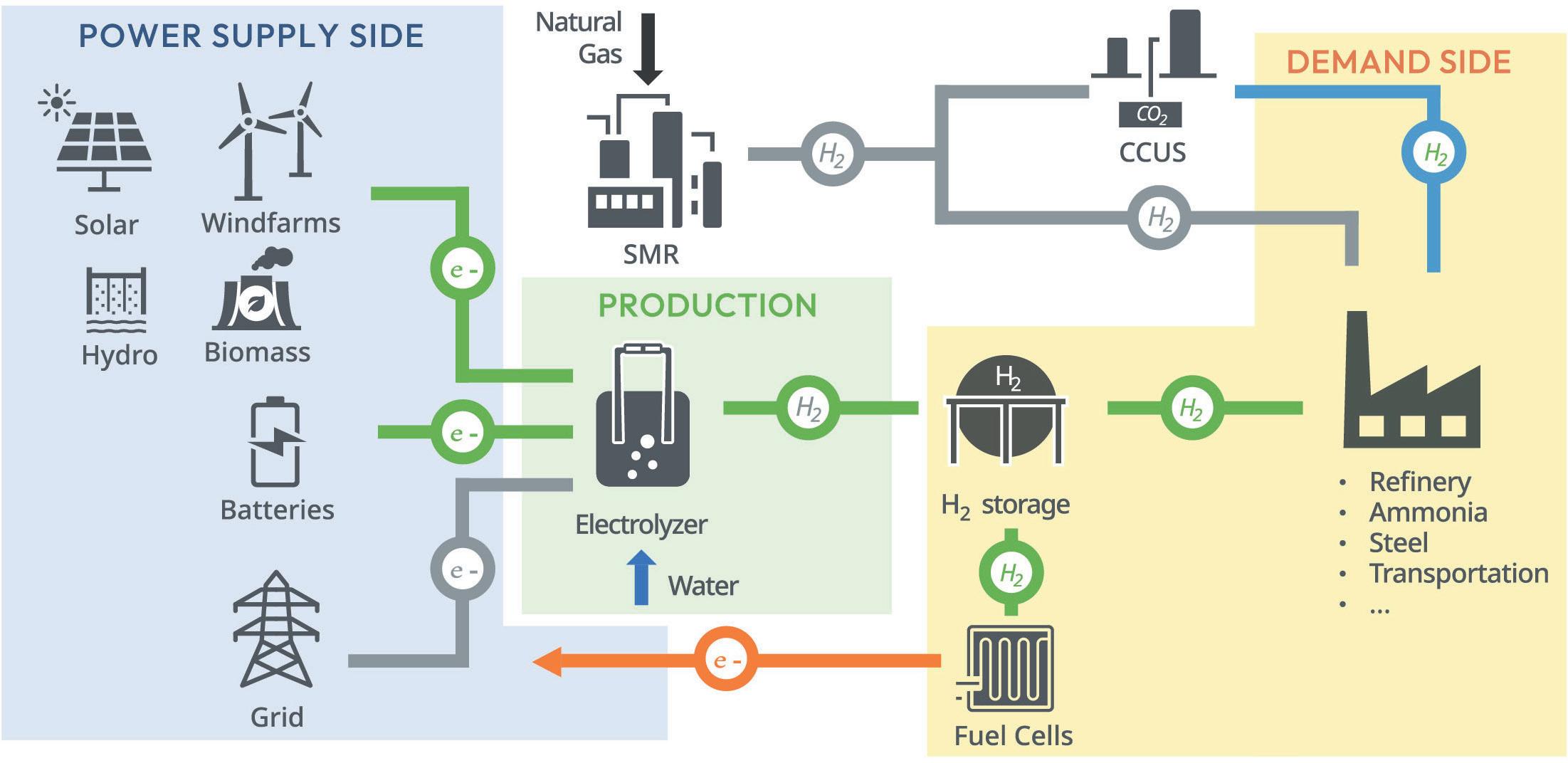
It is a chain of linked dynamics – power, plant, and product – operating on time-varying inputs and constraints, not design-point conditions. As shown

in Figure 1, hydrogen systems link renewable power, electrolysers, storage, and downstream users through a tightly coupled energy-and-molecule network.
For decades, industrial plants have been designed using steady-state cases, equipment datasheets, and nameplate capacities. That approach works reasonably well when feedstocks, utilities, and demand are stable.
Green hydrogen systems are fundamentally different. Renewable electricity is variable. Electrolysers operate across a range of loads and do not maintain constant efficiency at all operating points. Research shows that treating electrolyser
efficiency as a constant can materially misestimate hydrogen production because electrolysers spend significant time operating away from design conditions (e.g., variable efficiency overestimates hydrogen production by up to ~20% in realistic models).
Operational reality adds another layer of constraints:
y Startup/shutdown and load cycling introduce wear mechanisms and durability implications.
y Operating strategy choices – such as turning down instead of turning off – can change wear and economics.
y Integration with variable renewables requires more demonstrations and better understanding of lifecycle impacts under real cycling profiles.
Yet, many green hydrogen projects are still evaluated using a limited set of static cases: a design case, a minimum load case, and a maximum load case. These cases are used to size
electrolysers, storage, compressors, and power systems. In real operation, electrolysers ramp, idle, and cycle. Storage inventories rise and fall. Demand fluctuates. Control systems intervene. Constraints interact between power availability, equipment limits, and delivery requirements. That disconnect between static design and dynamic operation is where hydrogen projects lose reliability and economic performance.
Hydrogen does not change the need for modelling. It changes the kind of modelling required. As project data matures, design must move from concept-level assumptions to 8760-hour supply-demand profiles, electrolyser polarisation curves, and ramp and start-stop constraints. These polarisation-curve and cycling-dependent models allow renewable variability to be translated into both hydrogen output and electrolyser lifetime impacts. They replace the false assumption of constant efficiency or degradation.
Once a hydrogen plant is operating, many teams encounter a second challenge: the actual state of the system is often less certain than the data suggests.
Hydrogen is difficult to measure accurately under dynamic, variable conditions:
y Temperature and pressure swings affect density and inferred flow.
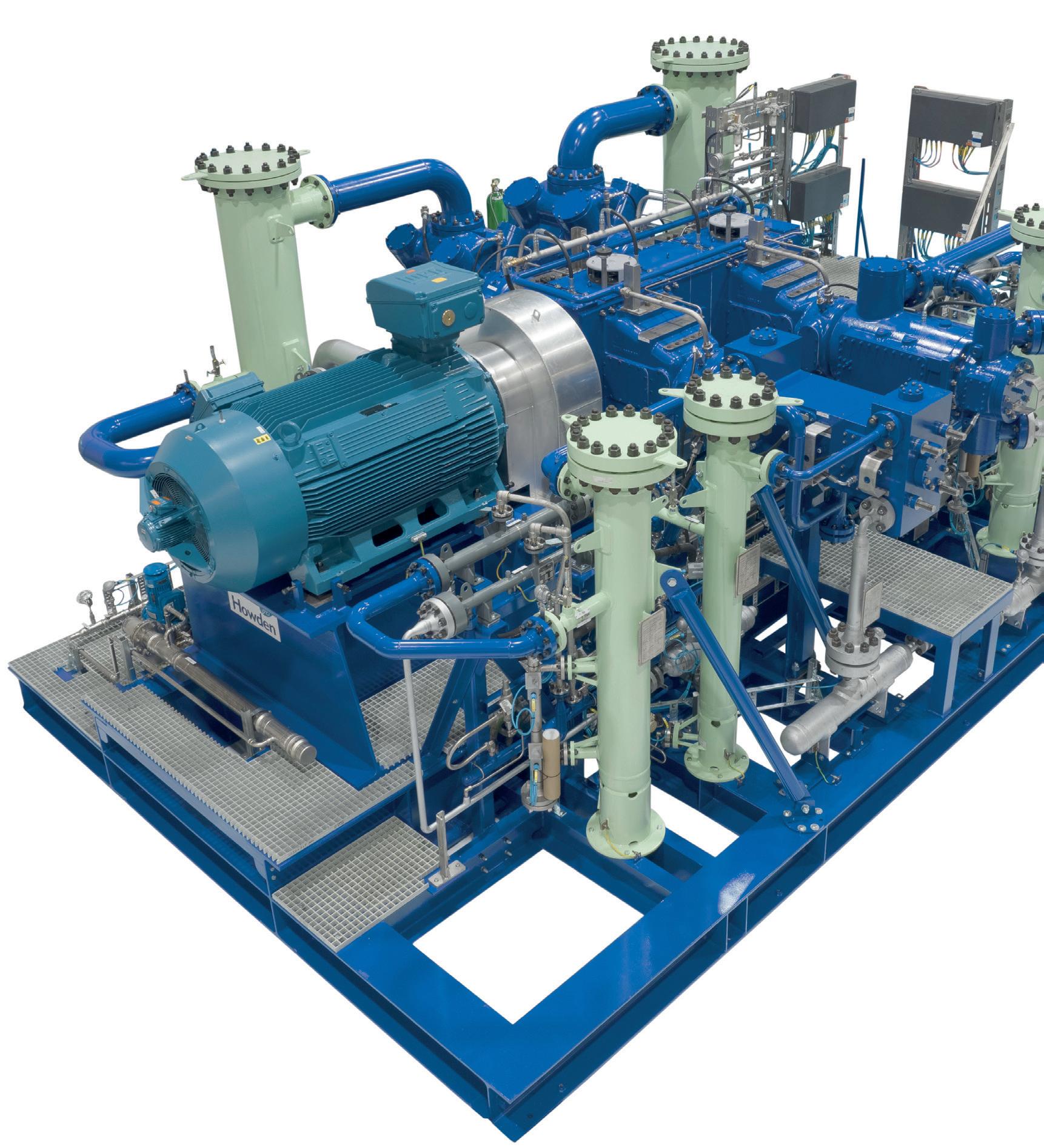
Innovative, proven equipment solutions that maximize safety, reliability and performance.
Handling hydrogen across the value chain - from production to storage to distribution and end-use. Applications include energy, green steel, transportation, refining and more.
Just a sample of the renewable hydrogen projects from around the world:
• Biomass-to-hydrogen in California
• 2022 Beijing Winter Olympic Games, China
• Europe’s largest green hydrogen plant 200MW, the Netherlands
• World’s largest hydrogen refueling station, China
• World’s first green steel project, Sweden
• World’s largest hydrogen compression solution, Kuwait
y Composition and impurities affect energy content and quality compliance.
y Meter technologies behave differently under hydrogen blends and changing conditions.
y Calibration becomes harder when the plant rarely operates at a stable ‘normal.’
This produces unreconciled measurements – numbers that look precise but may not reflect physical reality. Without a continuously validated physical model, teams struggle to answer basic operational questions with confidence:
y Is an electrolyser underperforming or is the instrumentation drifting?
y Is storage filling slowly due to compression constraints – or because flow is misestimated?
y Are offtake requirements being met – or merely assumed based on conflicting tags?
This creates a decision-grade data gap: numbers exist, but confidence lags.
In practical terms, a decision-grade digital twin links live plant data to a high-fidelity system model that supports monitoring, forecasting, optimisation, and control. The goal is not visibility, it is confidence. Such a system enables:
y Tracking electrolyser operating states and performance across time and load.
y Modelling production, compression, storage, and demand as a coupled system, as shown in Figure 2.
y Reconciling measurements against thermodynamics and hydraulics.
y Evaluating operating and economic scenarios using time-based profiles.
y Translating variability into feasible dispatch and operating envelopes.
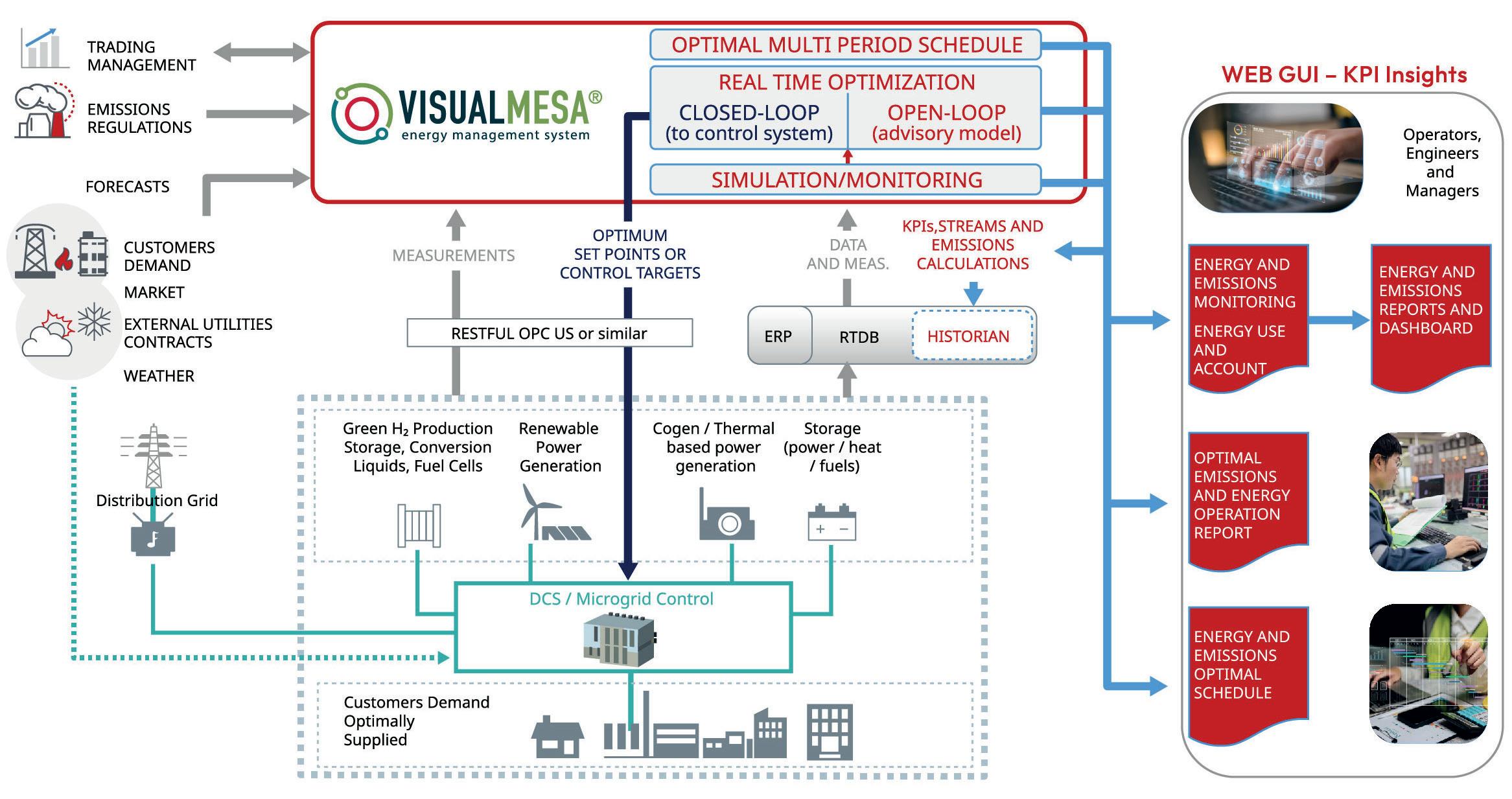
This is not additional instrumentation; it is measurement anchored to physics. It extends established data-reconciliation discipline into hydrogen systems, where uncertainty is amplified by variability. Physics-based process and network twins validate flows, constraints, and operating envelopes while real-time optimisation and scheduling convert that validated system into dispatch decisions.
In renewable-driven hydrogen systems, real-time optimisation alone is insufficient. Decisions on electrolyser loading, hydrogen storage, and withdrawal must be made against forecasts, not just current conditions.
This requires multi-period optimisation. A rolling, time-horizon scheduling layer coordinates electrolyser power use, hydrogen production, and storage across hours, days, and weeks. All physical, commercial, and emissions constraints are respected. As illustrated in Figure 2, multi-period scheduling integrates forecasts, storage, and real-time optimisation into executable hydrogen operating plans.
Multi-period optimisation integrates:
y Weather and renewable generation forecasts.
y Hydrogen demand and delivery commitments.
y Electricity prices and power purchase agreements (PPAs).
y Storage inventories and ramp-rate limits.
y Electrolyser degradation and minimum-load constraints.

The result: an executable operating schedule that keeps hydrogen production feasible, cost-effective, and compliant as conditions evolve.
Operationally, this means forecast-driven, multi-period optimisation across power supply, electrolysers, hydrogen storage, and downstream demand. Weather and renewable forecasts are used to schedule hydrogen production, storage, and dispatch in a way that maximises renewable utilisation while maintaining delivery and emissions constraints. This turns hydrogen from a static production asset into a continuously optimised energy and emissions system.
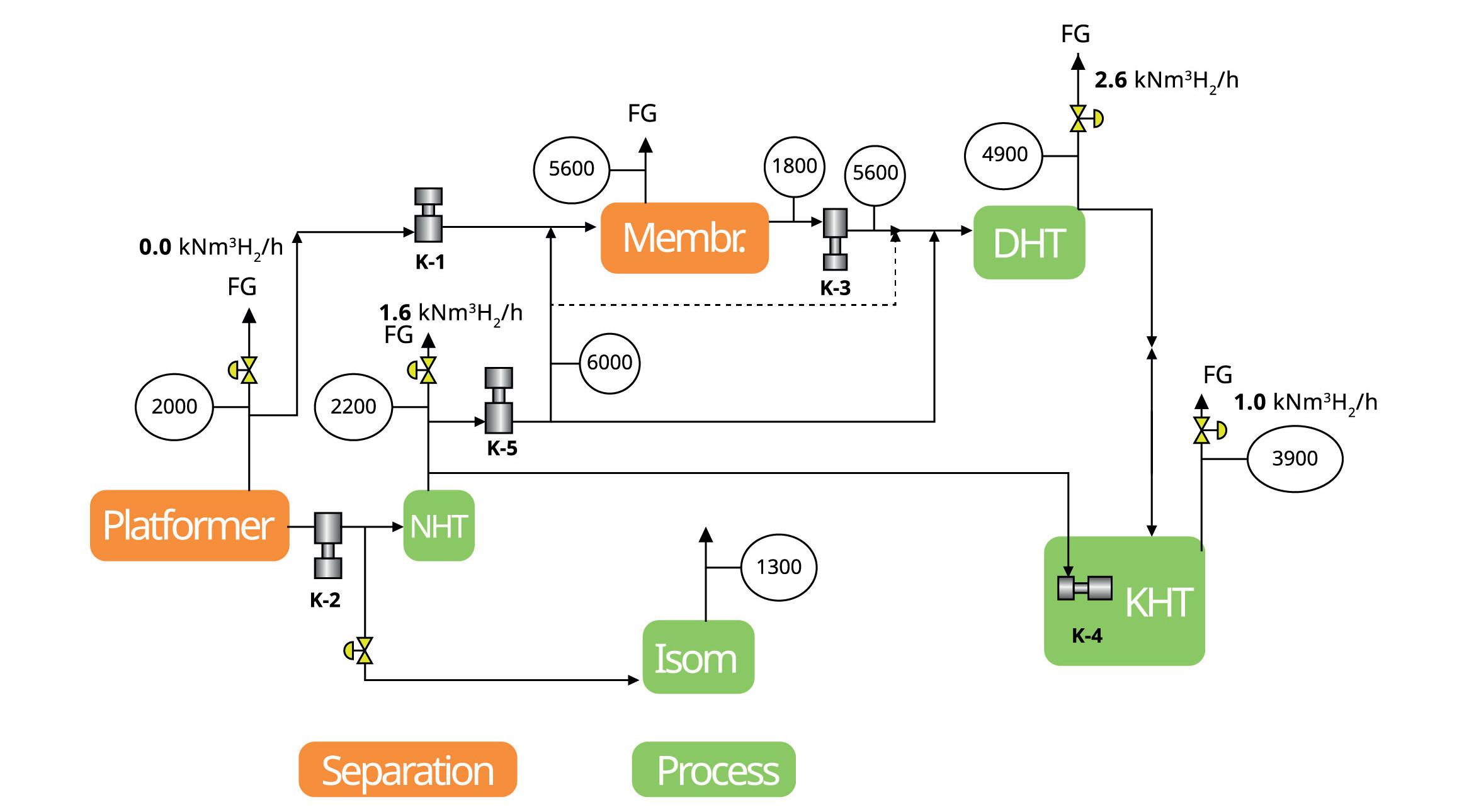
A refinery sought to integrate approximately 200 MW of green hydrogen production into its existing hydrogen network. The challenge was not simply producing hydrogen – it was managing intermittent, renewable-driven electrolyser supply while maintaining fixed hydrogen delivery requirements to critical refinery units alongside existing SMR-based hydrogen supply. As shown in Figure 3, refinery hydrogen systems consist of multiple interconnected producers, consumers, purification units, and pressure-constrained headers that govern how green and conventional hydrogen can be delivered.
The objective was to determine the minimum combination of electrolyser capacity, storage, and operational flexibility required to maintain hydrogen supply reliability under variable renewable input.
To do this, a hydrogen network digital twin was built to evaluate producers, consumers, constraints, and operating envelopes under time-varying renewable input. The study incorporated 8760-hour renewable production profiles to reflect actual operating behaviour rather than design-point assumptions. The model explicitly resolved mass-flow and pressure constraints across the refinery hydrogen headers, revealing where electrolyser output could not be physically delivered despite available capacity.
The network model was evaluated across multiple scenarios using time-series and probabilistic methods within a scheduling framework to map how constraints interact hour-by-hour across the hydrogen network. These included:
y Electrolyser banks operating under ramp, turndown, and degradation constraints.
y SMR production with fixed and variable availability
y Statistical renewable power profiles driving hydrogen production.
y Dynamic mass-balance and pressure constraints across the refinery hydrogen network.
y Alternative storage types and sizes.
y Multiple demand- and supply-side flexibility levers, including battery systems, including battery energy storage systems (BESS) to buffer renewable variability, electrolyser bank control strategies, and PPAs.
The study produced an operable hydrogen network roadmap rather than a capacity-only design. Four system opportunities were identified, resulting in an 8 - 10% reduction in net
hydrogen demand while maintaining refinery delivery obligations. More importantly, the analysis revealed how the combined green and conventional hydrogen system could be operated within physical and economic constraints, enabling:
y Storage sized for observed variability.
y Electrolyser dispatch based on network and pressure constraints.
y Electrical and molecular buffering through batteries and network flexibility.
y Coordinated operation across SMR, electrolysers, storage, and refinery demand.
y A phased pathway for integrating intermittent green hydrogen.
This allowed the system to operate closer to its true to its design limits to improve utilisation.
Most hydrogen cases rest on assumptions about electricity prices, electrolyser performance, and hydrogen sales. Their validity depends on whether the system can be operated within its physical and operational constraints.
Without validated operational models, projects compensate with conservative design:
y Oversized storage.
y Additional electrolyser capacity.
y Renewable energy curtailment.
y Restricted operating envelopes.
These measures increase capital costs and reduce asset utilisation. When operations are governed by a continuously validated model, systems can be designed and dispatched within their true feasible operating envelopes. This approach reduces both capital and operating inefficiencies.
Hydrogen projects succeed when they are operable. The difference between viable and stranded assets will be the quality of operational insight – how well projects understand system behaviour across time, constraints, and variability.
Decision-grade digital twins shift learning upstream, supporting feasibility, operability, certification, and investor-grade performance metrics across the hydrogen lifecycle. Because the digital twin maintains reconciled mass, energy, and emissions balances across time, it also enables product carbon footprint (PCF), hydrogen certification, and investor-grade key performance indicators (KPIs) to be generated from operational truth rather than post-hoc estimates.
Hydrogen must be designed and operated as a dynamic energy system, not static equipment.
1. VIRAH-SAWMY, D., BECK, F. J., and STUMBERG, B., ‘Ignore variability, overestimate hydrogen production – Quantifying the effects of electrolyzer efficiency curves on hydrogen production from renewable energy sources’, International Journal of Hydrogen Energy, 72, pp. 49 - 59, (2024), https://doi. org/10.1016/j.ijhydene.2024.05.360.
2. ‘Global Hydrogen Review 2024’, International Energy Agency (IEA), (2024), https://www.iea.org/reports/global-hydrogenreview-2024, Licence: CC BY 4.0.
HDavid Meyer, Siemens, considers how automation, simulation, and machine learning can reduce hydrogen production costs and ensure its commercial future.

ydrogen is a central component of decarbonising sectors that are difficult to electrify directly. Heavy industry, shipping, and other sectors with flexible power needs are ideal candidates for the hydrogen economy. Hydrogen has significant potential to become a mainstream fuel, but that depends as much on driving down the production costs of a high-energy process as on developing the end-user demand for hydrogen.
Hydrogen projects are large, complex undertakings. This complexity elevates the risk for hydrogen developers. Integration issues, equipment lead times, and the lack of hydrogen production knowledge in the workforce can all substantially increase the costs of a project at scale. The flexible nature of hydrogen production requires application-specific technology choices and project design, leading to an expensive development chain for hydrogen producers: working slowly from concept to
lab proof, then to a costly pilot plant, and only then being ready to scale commercially. Modern simulation tools and machine learning can reduce the time and cost of the legacy design-to-deployment chain.
Driving down the cost of green and blue hydrogen production requires scale. This means growth in both the supply of hydrogen production solutions and the deployment of large projects that capture economies of scale. Large projects create demand certainty for equipment suppliers that justifies scaling up their production, reducing costs over time. The hydrogen production economy needs bold projects big enough to change market dynamics that have not been shifted by small pilot projects.
For green hydrogen production, deploying large projects requires dramatically scaling up electrolyser manufacturing to reduce unit costs. Commercial scale operations also require sufficient water treatment equipment, as well as compression and dehydration for storage. Blue hydrogen production uses established chemical industry processes, but plant design can be a complex systems integration challenge. Both production avenues integrate process analytics and automation to drive down costs and optimise operations, adding another layer of complexity to any commercial deployment. How can hydrogen developers reduce risk when commissioning commercial hydrogen projects on a grand scale?
As industrial acceptance of the Internet of Things (IoT) and other Industry 4.0 concepts has grown over the last decade, more machines and processes generate data,
and cloud computing has driven new capabilities for industrial applications to scale dynamically. This data serves as the foundation for industrial simulation and machine learning deployments. Simulation for machine design at the front end of the development process can identify challenges and optimise code before a single machine is commissioned. Design simulation enables a systems approach to facilitate the creation of adaptable, modular plants that scale easily. Once commissioning begins, real-time data from machine deployments should be unified, standardised, and annotated to enable a universal data lake. Simulation based on live data enables machine-learning-driven optimisations of maintenance and production-level operational decisions at the plant level.
Beyond the plant level, AI analysis of the vertical integration (from upstream suppliers and distributors to end-users downstream) enables the analysis and automation of production decisions to optimise entire supply chains. This vision depends on two crucial components: open-architecture, standards-based hardware operating through a software-abstracted control layer, and a unified data lake that enables robust, real-time analysis at the edge and in the cloud.
How does this vision of interconnected machines and real-time analysis lower hydrogen producers’ costs?
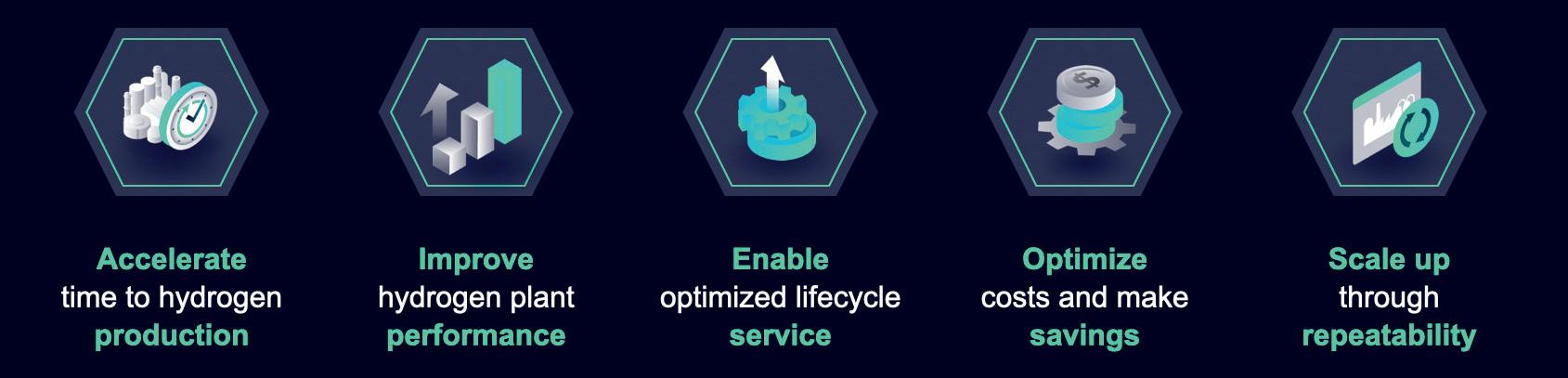
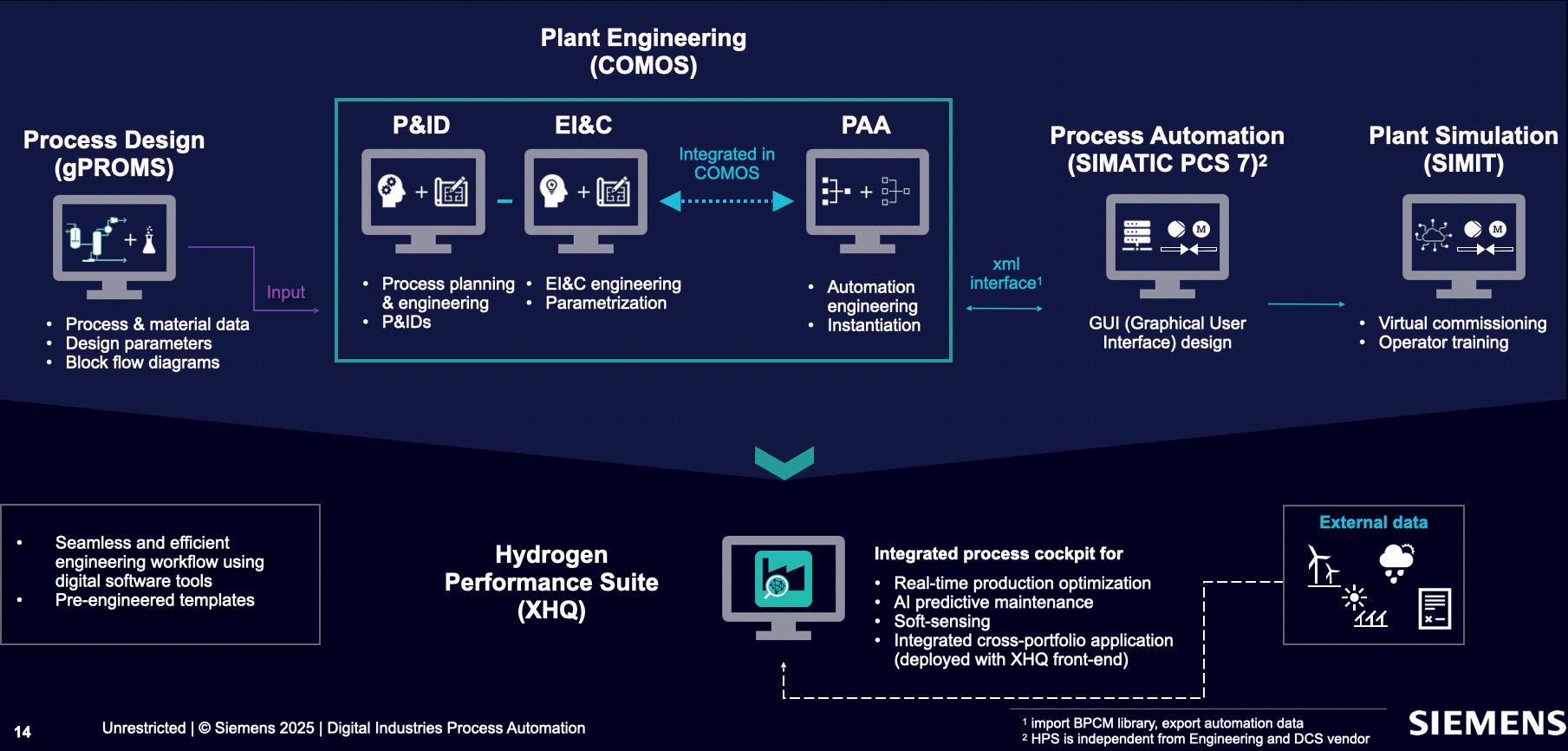
Designing for automation and machine learning with simulation lowers commissioning costs and reduces the risk of issues that extend commissioning timeframes. Especially for large greenfield projects, the design phase can account for a substantial share of a plant’s total lifetime cost. Designing for automation and machine learning from the outset, rather than adding these systems after commissioning, creates a digital foundation that minimises capital expenditures and allows for simulation to validate systems, identify challenges, and reduce risks long before a single machine is commissioned. Digital twin simulations created at this foundational level can then be used to optimise operations after commissioning. This decreased risk protects ROI targets and enables scalable deployments based on successful models.
Once operations are live, cost savings are realised through the following:
Increased uptime and reduced maintenance costs
Predictive and prescriptive maintenance models learn from sensor data and predict
component failure, and optimise maintenance schedules based on available parts and labour. Automated fault diagnostics can prevent trial-and-error troubleshooting when failures do occur. Predictive maintenance drastically reduces costs compared to a reactive approach. In green hydrogen production, trained AI models can optimise the health of electrolyser stacks by modulating current density, temperature and load scheduling. For blue hydrogen, AI models can optimise CO 2 capture chains.
Tie microgrid controls into a unified production system
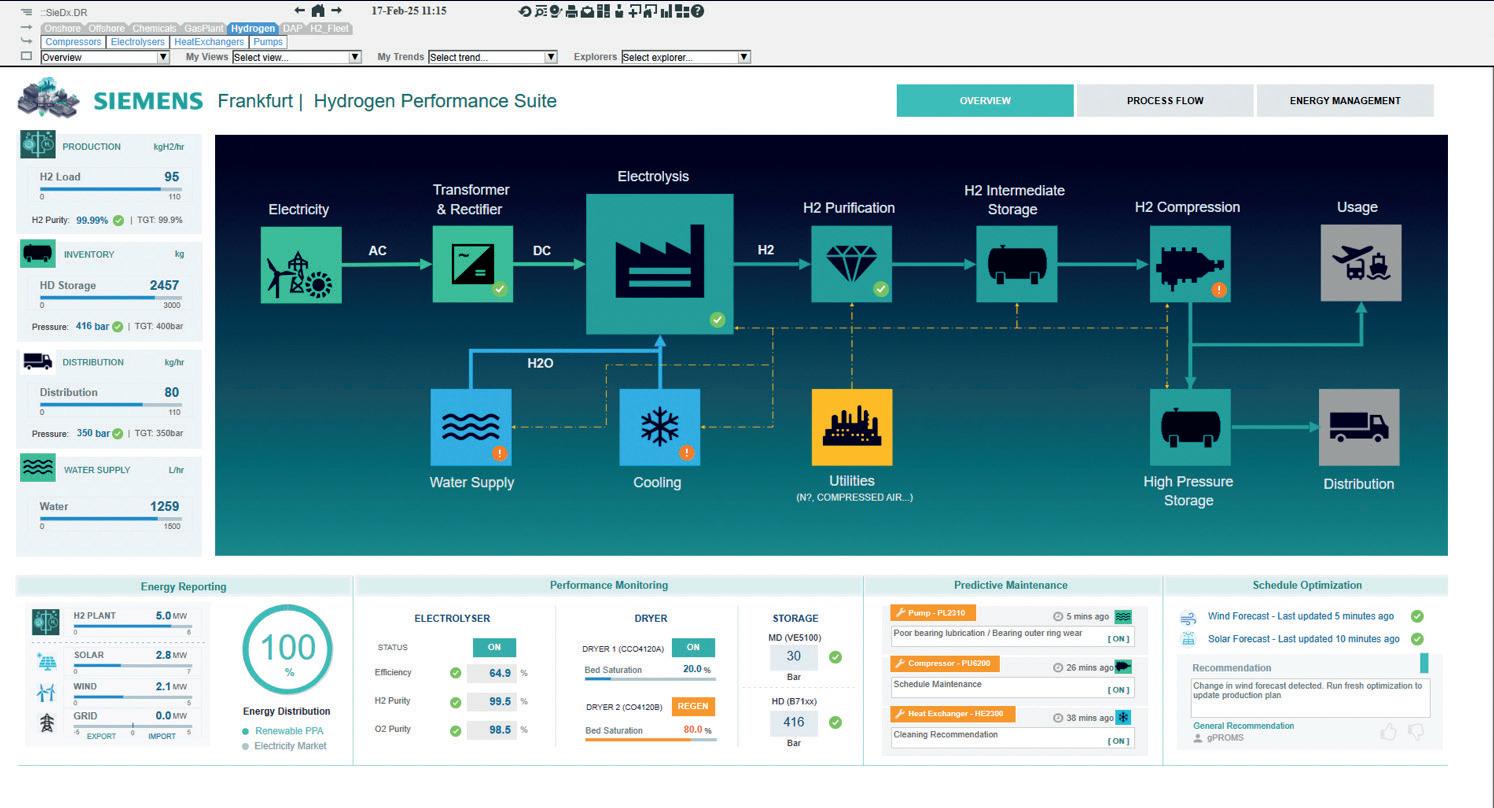
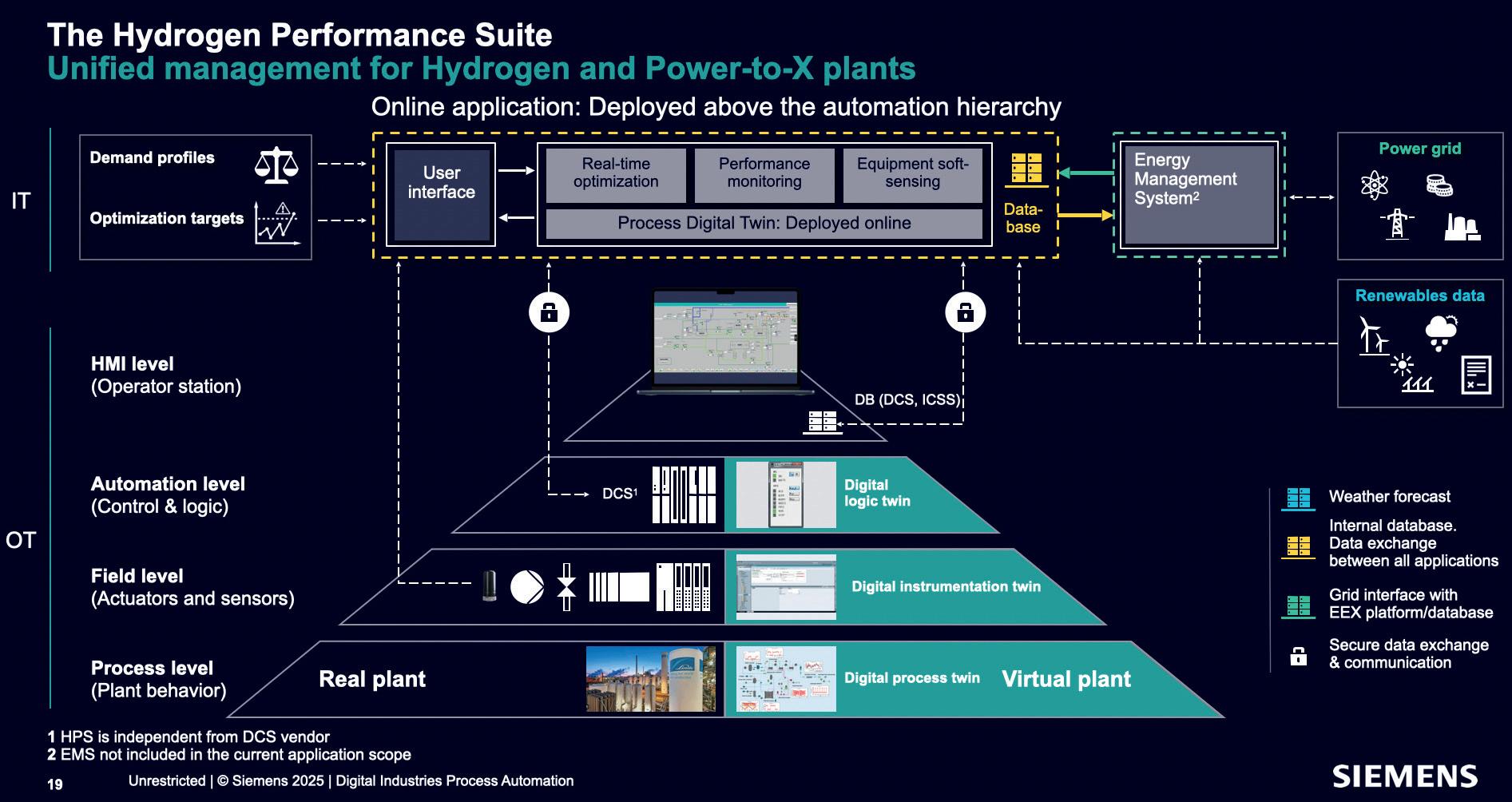
For operations leveraging solar and wind power, unified data analysis and machine learning can optimise production costs using microgrid data to predict renewable power trends. AI models use autonomous control loops to dynamically optimise process parameters, allowing hydrogen producers to minimise energy consumption and the associated costs for the power required. Dynamically adapting current density and gas compression schedules can maintain production levels at the lowest possible cost per kilogram of hydrogen.
Scaling hydrogen production requires building a knowledge base and skill set in the workforce. Simulation tools created for machine design also offer a robust training opportunity, delivering streamlined training on real machines using real data in a simulated environment. AI-enhanced operator HMI can also provide direct access to documentation and institutional knowledge, helping new employees get up to speed faster by accelerating employee onboarding.
AI-empowered scheduling can adapt production and assignments in response to unplanned events across the supply chain, minimising production losses. Models can analyse downstream market conditions and upstream
supplier availability to optimise production based on seasonality or customer behaviour.
Automation and cross-departmental optimisation within a single plant (operations, maintenance, logistics, scheduling) can be scaled to the organisational level, dynamically coordinating production availability and parts supply.
Hydrogen storage and transfer processes require management of precise safety controls and thresholds to reduce risk. Varying weather, pressure, and flow conditions create unique scenarios that can be simulated and trained for, optimising sequencing and training crews on safety through virtual environments. Having a high-quality simulator of real-world scenarios means employees can train for potential emergency situations and develop the exact safety process to address them. Especially given the global shortage of hydrogen process experts, having robust safety training and safety management systems is critical for hydrogen developers.
Producing low-carbon hydrogen at scale and meeting future low-carbon certification regulations will require holistic lifecycle accounting. Tracking electricity sources, capture percentages, leakage controls, and storage guarantees will require detailed process analytics with real-time data availability designed to provide operational traceability to meet guidelines. This sort of system-level analysis and rigour is only possible through unifying data silos to achieve systemic transparency. Even with that level of data available, producers must employ a design strategy that abstracts software from hardware to maintain that high-level analysis and oversight of processes as components change over time.
The enhancements in efficiency realised through machine learning and automation, from design through commissioning to operations, offer substantial support for lowering the cost of hydrogen production. For hydrogen to be cost-competitive, automation and machine learning will be key components to ensure plant uptime and allow dynamic production to adapt to market demand.
The hydrogen economy will continue to evolve rapidly. On the demand side, over the next five years, the industry will see continued adoption of hydrogen, from current pilots to full commercial use, as a precursor to mass fleet conversions expected in the 2030s. Long-haul deep-sea routes may favour hydrogen-derived ammonia fuels, while short-sea and coastal routes may employ direct hydrogen fuel cells. The development of hydrogen as a primary component of shipping fuel will create the baseline of demand for hydrogen production.
The 2025 changes to the 45 V tax credits for hydrogen producers mean projects must begin construction by 2028 to be eligible under the changed law. This has accelerated deployment timelines for developers. The long lead times for industrial equipment, sometimes up to two years, mean that developers who want to take advantage of 45 V have to be making production decisions now. With hydrogen demand already scaling, developers need to ensure operations can meet the rising demand on schedule. The emerging need for on-demand power generation for data centres is creating a new and quickly growing potential market for hydrogen solutions.
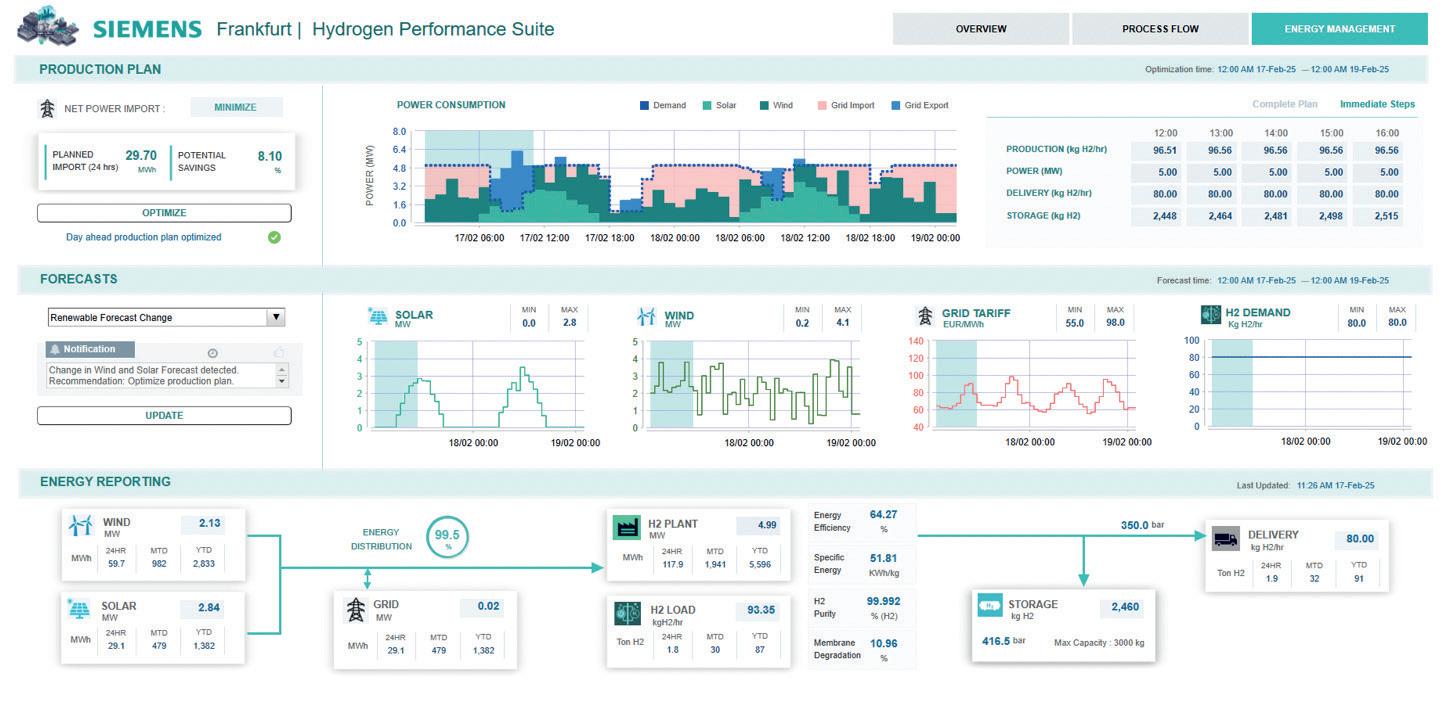
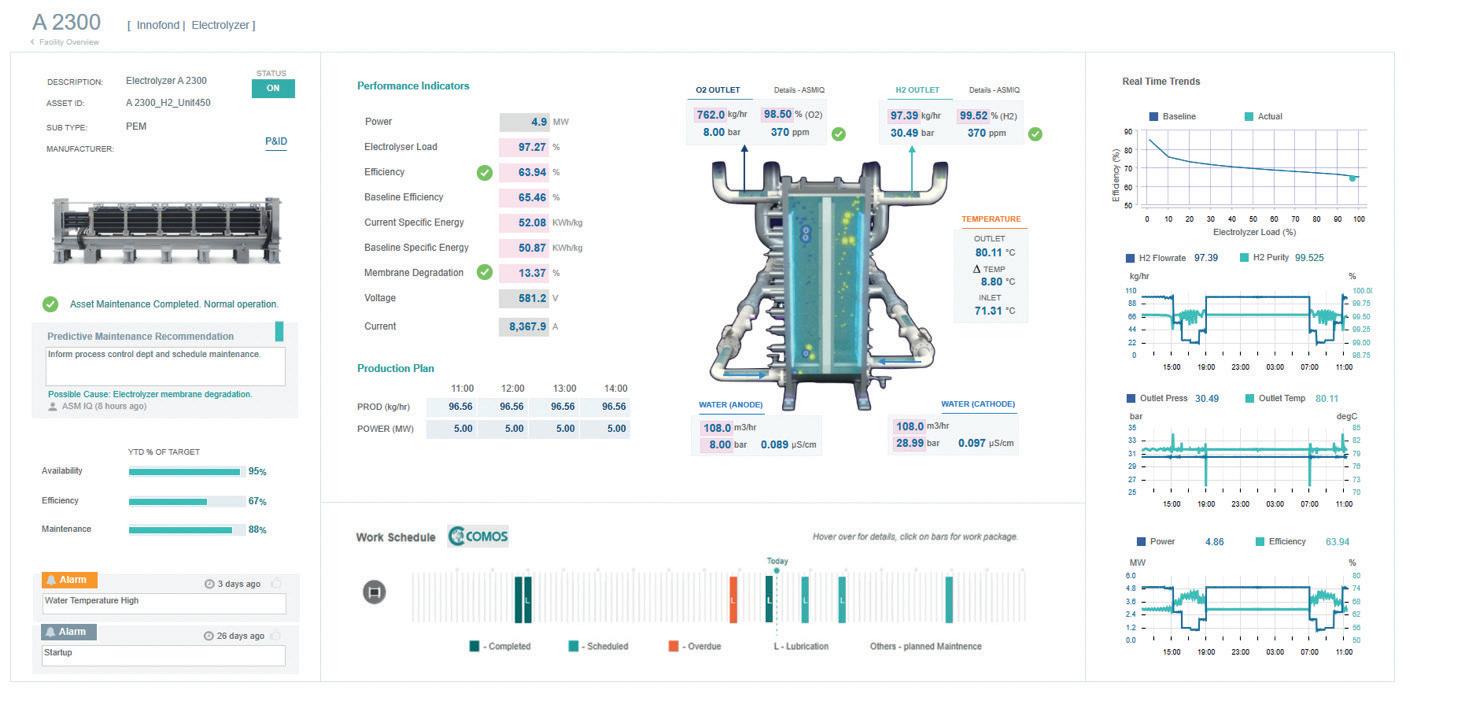
As more production capacity for hydrogen comes online, more mature hydrogen production solution providers will emerge. These vendors will offer tuned models and solutions for hydrogen production based on real-life production data. A more mature hydrogen production ‘marketplace’ will further lower the cost for greenfield production deployments as competition between solutions drives costs down.
The successful adoption of hydrogen as a mainstream fuel will depend on more than legislation and demand; it will require hydrogen developers to adapt simulation, automation and machine learning to continuously optimise every production layer and the whole hydrogen supply chain. Forward-looking systems integration to make hydrogen production modular and scalable will ensure producers are positioned to grow with demand and maintain a competitive advantage.
James Nyenhuis, Emerson, USA, outlines the importance of empowering operators with intuitive, exception-based visibility to enhance safety and scalability.
In recent years, a rapid increase in the viability of renewable energy sources and a public push for more climate-friendly energy production have increased industrial manufacturers’ and power producers’ interest in adding new green energy solutions. Solar arrays, wind turbines, hydroelectric generators, and battery energy storage systems are all becoming more ubiquitous with each passing year. Green hydrogen is another renewable solution that organisations are pursuing, but its growth trajectory is slightly different than more conventional sources (Figure 1).
Traditional renewable generation technologies like solar and wind have been in use for decades, and their efficient operation is well understood. Green hydrogen operations, in contrast, are relatively new and complex. As a result, companies are typically more cautious in green hydrogen adoption, with this cautious pace reflecting an awareness of technical and economic uncertainties. By maintaining this pace, companies give themselves time to explore the opportunities that green hydrogen provides; while

monitoring how well the technology fits into their operations and how public policies evolve over time.
As a result, there is a wide array of examples of how teams began their green hydrogen implementation journey. One global organisation has been taking approximately 20 MW of offtake from its renewable power generation units and using it to generate green hydrogen to run some on-site vehicles. Other organisations are blending green hydrogen in with their natural gas supply at increasing volumes to see how doing so impacts their combustion turbines. At the more advanced end of the spectrum, one power producer is using renewable energy to produce green hydrogen and store it in underground caves, then using that stored renewable energy to power an attached energy generation facility.
Regardless of the size and scope of the operation, the teams implementing these projects are all learning a critical lesson: green hydrogen solutions can be extremely complex across the value chain. Not only are there many individual systems required
from green hydrogen creation all the way across the production chain to energy generation, but much of the innovation in green hydrogen is also uncharted territory. That means operators must monitor processes extremely closely, collaborate, and interoperate with peers across the enterprise, and have constant visibility into the processes.
The most advanced organisations are navigating this challenge by intentionally implementing high-performance control rooms. A high-performance control room delivers visibility and data flexibility via a single control solution built on a seamlessly integrated data fabric to simplify operations at every stage (Figure 2).
One of the key challenges of managing green hydrogen operations successfully across the entire value chain is that naming and other conventions are often different on the power side of the spectrum than they are on the process industry side. For example, each side might view the meanings of HMI display colours differently. However, when the process and power worlds intermesh, teams need a standard way to interpret what they see across that spectrum. Moreover, that requirement does not end with colour coding. Alarm management philosophies, definitions of ‘criticality,’ and operations across both the power and process domains can differ if not carefully managed, leading to delays and disruption (Figure 3).
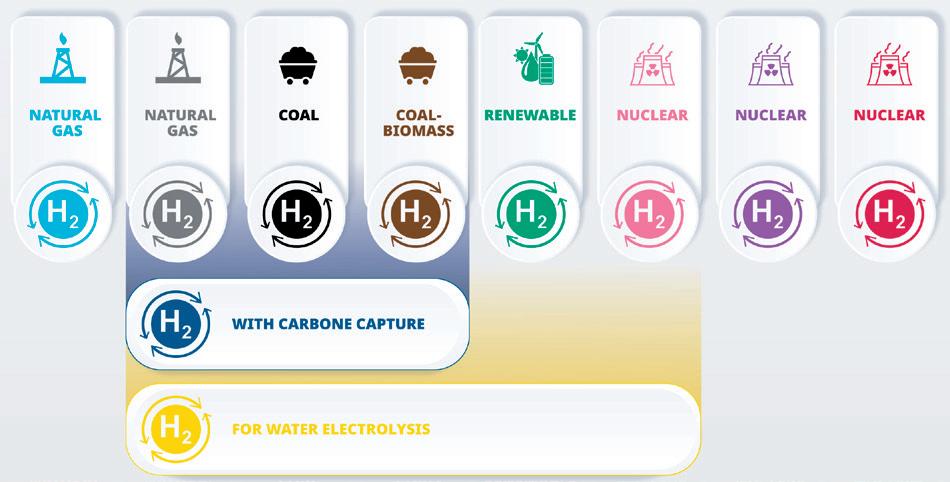
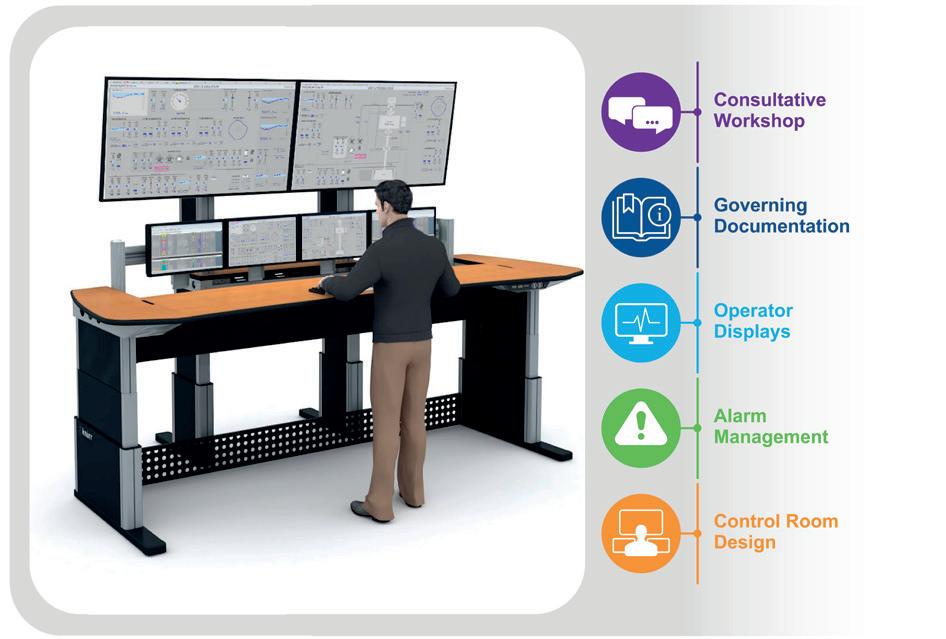
One of the key contributors to lack of consistency is the need to manage a wide array of different systems from many different solution providers, all stitched together with complex, custom engineering. To address this issue, many organisations focused on building high-performance control rooms choose to work with a single holistic and comprehensive automation solution that can manage all the technologies across their stack.
For example, if an organisation has one manufacturer’s control system managing the solar array generating energy to produce green hydrogen, multiple others managing different models of wind turbines, and yet more to manage the gas and steam turbines that use the green hydrogen, operations become complex very quickly.
Operators will first need to be trained in all the different systems to be as effective as possible. In addition, they will need to quickly differentiate among the ways the different systems display critical data, so they do not miss any important information. They will also waste significant time moving between each automation system to gain an overview of what is going on at any given moment of operation. All these delays create significant risk, particularly when trying to troubleshoot a problem when rapid response is critical. Trying to navigate extra layers of confusion can also dramatically increase operator stress.
The best modern automation suppliers have developed the right communication links to connect all critical control technologies and bring them into a single pane of glass as part of a comprehensive green energy control system. With a single, fit-for-purpose control technology in place, operators only need training in one system to understand what they are seeing at any point, and they no longer need to wade through multiple systems with differing conventions to identify if something needs their attention. Everything important is instantly recognisable and available in one place.
In the high-performance control room driven by a single, fit-for-purpose green energy control system, human machine interfaces (HMIs) are designed to help operators instantly see process anomalies – usually by identifying them as exceptions (Figure 4).
When each moment of an operator’s attention can be tightly focused on the issues that matter, problems are solved faster, and time is spent on more valuable tasks. Instead of wading through pages of alerts and trying to figure out which ones matter, operators can instantly see not only the alerts but their criticality, making it easy to prioritise action.
A high-performance control room can dramatically increase operational safety. As teams are implementing a comprehensive automation system, they can clearly define asset criticality across the enterprise and develop the best ways to view and interpret those elements. The most advanced automation software makes it easy to natively deploy technologies like advanced pattern recognition, closely coupled to the real-time control, to assist in identifying anomalies in operations as quickly as possible. Often these technologies provide the extra awareness that operators need to cut through the haze of day-to-day operation and notice that something needs attention. Modern HMIs help teams identify aberrant situations and place the tools to respond right at operators’ fingertips.
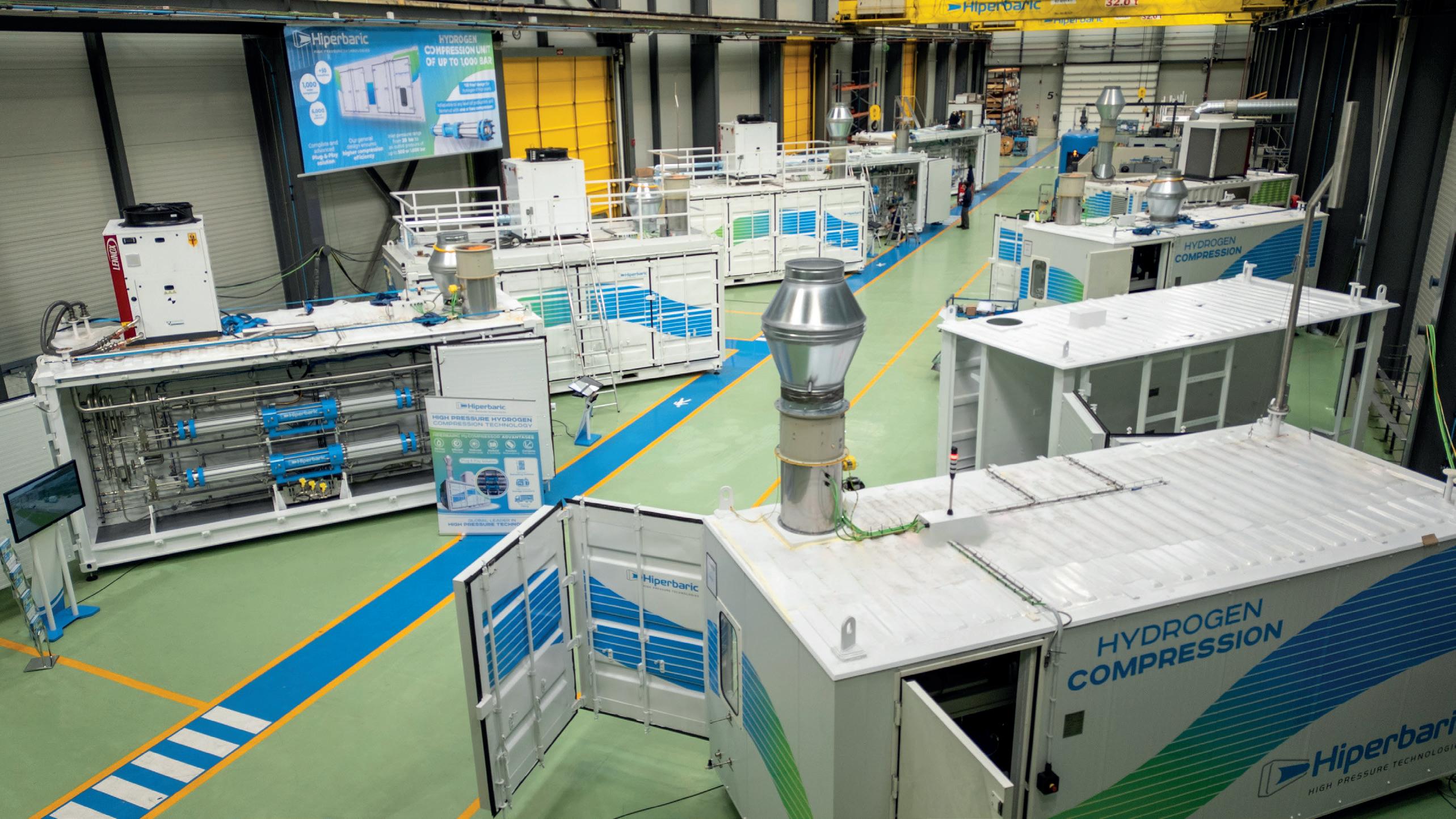

Reciprocating piston compression tech. of up to 500 or 1,000 bar
Cutting-edge design with superior cooling efficiency

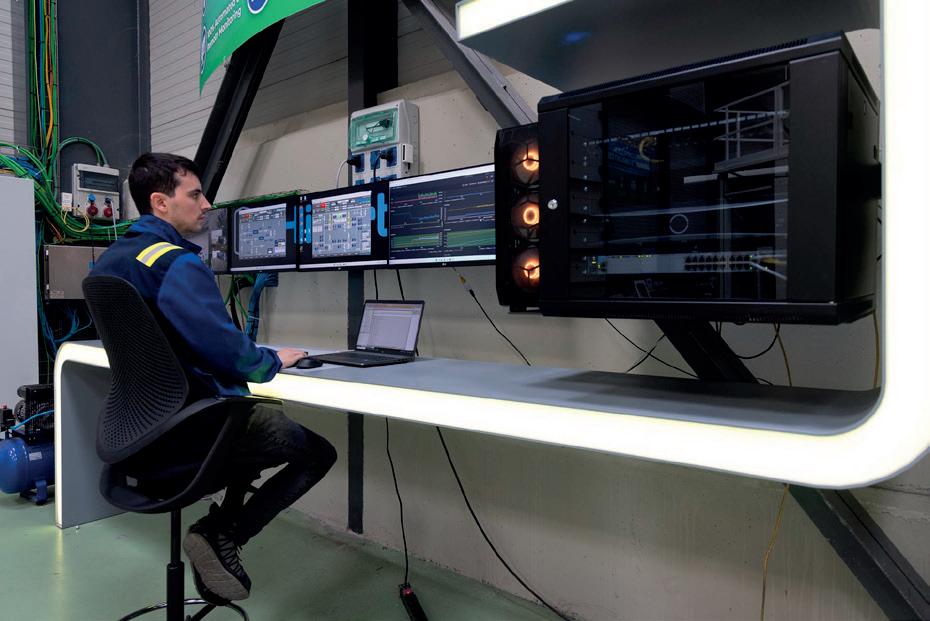
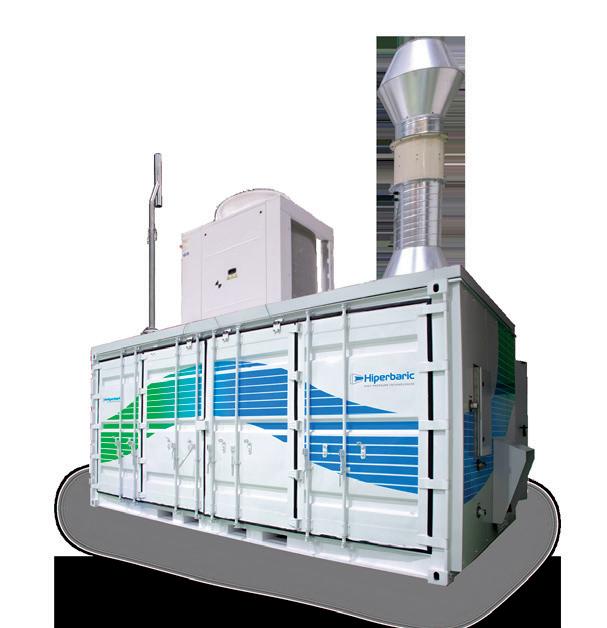

Advanced venting system for optimal safety & performance
Low-noise operation at under 75 dB (1m distance)


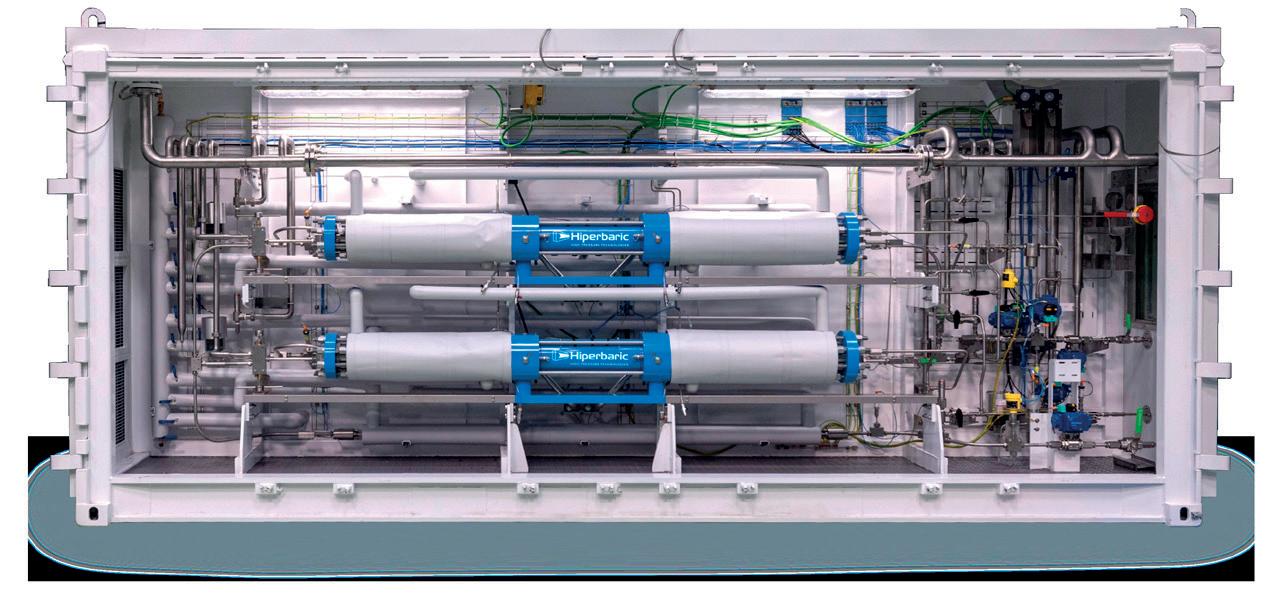
















Advanced solutions also provide extensive libraries of drag-and-drop widgets out of the box to help teams of any experience level quickly and easily develop the most effective HMIs. With just one system, it is also far easier to maintain standards. Any team can identify standards, but if they are operating a wide variety of different software applications, they will always be limited by how each of those systems implements and aligns with their vision. A single, unifying technology addresses this issue by enforcing standardisation.
With a high-performance control room, teams can significantly reduce overall cost of operations and maintenance. Every additional system the organisation needs to deploy significantly increases what the operations and maintenance teams must do to stay current on those solutions.
When a problem occurs with the automation infrastructure, downtimes are typically shorter when the organisation uses a single control solution as part of a high-performance control room. Eliminating the need to figure out which of many systems is the
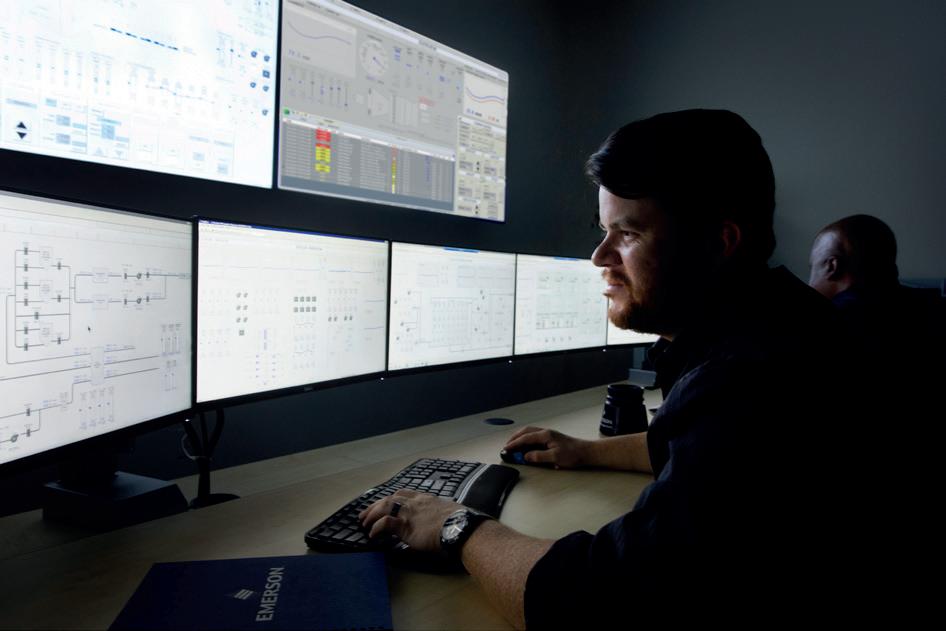
Figure 3. Implementing an integrated advanced alarm management strategy with high-performance displays contributes to a more efficient and proactive, instead of reactive, operations culture.
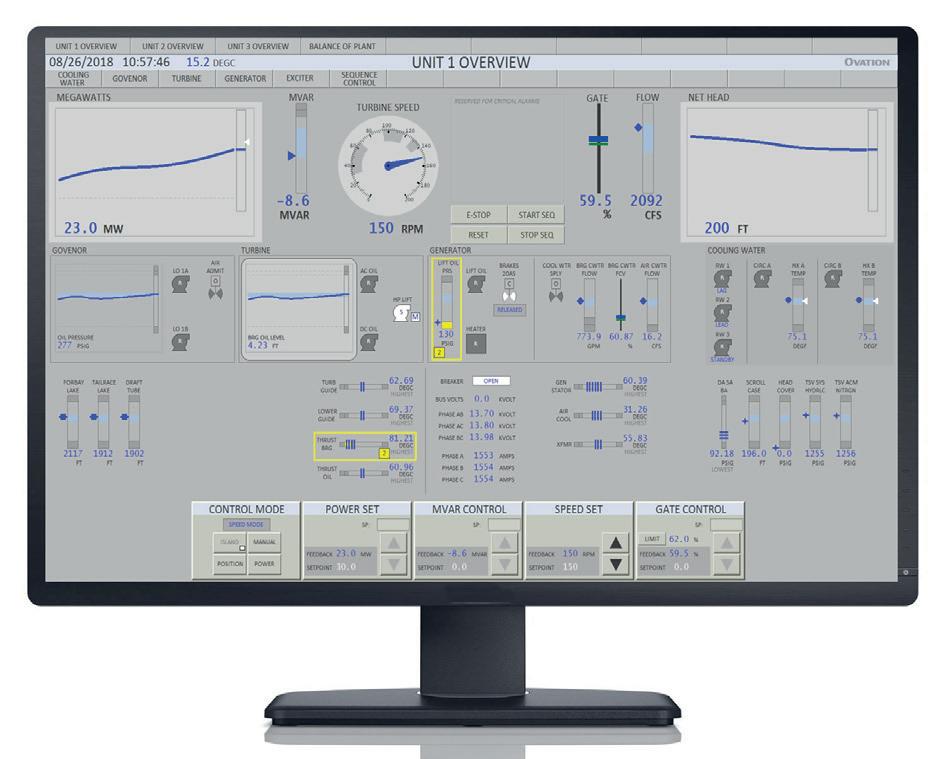
Figure 4. Typically, under normal conditions, the unified high-performance monochrome HMI display indicates no issues, so when any element appears in colour, operators can immediately see where to focus their attention.
problem helps teams troubleshoot faster. In addition, the more a team can accomplish from a single platform, the less likely it is that each technician will need to be trained – and keep that training up to date – on multiple platforms.
Teams using a single system also reduce the number of spare parts they need to keep on hand to cover hardware associated with the automation system, reducing spare parts inventory.
The complex green hydrogen chain is ripe for the deployment of artificial intelligence (AI) software to improve outcomes. With each passing year, new AI technologies unlock capabilities that will help teams better navigate the complexities of the green hydrogen enterprise. However, those tools will work best in an environment where they can seamlessly access the contextualised data necessary to deliver operational insights.
Future-focused automation suppliers are already deploying AI tools that can mine critical information from the control system’s operator action logs. Today, that data is most commonly used when something goes wrong with operations because it can provide valuable forensic evidence to demonstrate how and why a process failed, helping the team better navigate the situation in the future. However, mining that data is a complex and time-consuming process. Data engineers must comb through thousands of data points in text files to identify the most useful information before they can analyse it to draw conclusions.
AI tools will be able to sift through such data in minutes or seconds and quickly draw conclusions to help guide operations teams to answers. Yet, with AI technologies, the value of that data can be further improved, as it can be used proactively –for example, to help a team identify places where the process is too frequently operated in manual. If AI can read operator action logs continually, it can identify areas where engineers can better design the automation to avoid manual steps that demand operator attention, freeing valuable personnel to focus on more critical tasks.
Such a solution is only possible when the data that feeds the AI is not trapped within a variety of silos created by many systems stitched together through custom engineering. Instead, when teams build a high-performance control room around a single control solution designed to seamlessly move contextualised data to all personnel and applications, they can more easily feed advanced AI tools with the data they need to drive competitive advantage as the green hydrogen marketplace becomes more crowded and competitive.
Today, the green hydrogen marketplace is still very much in its infancy. However, initial investments, pilots, and experiments show that it is an industry that has the potential to grow dramatically in coming years – possibly in several different directions at once. The organisations that are bold enough today to begin implementing green hydrogen solutions are positioning themselves to secure a significant competitive advantage in the years to come. As they do so, the most successful teams will be those that take a top-down approach to their technology stack, designing from the earliest stages to deliver a high-performance control room with a holistic, comprehensive automation solution from the very earliest stages across the entire value chain. The technology exists, and the vision is clear, for those ready to capture it.
Garry Hanmer, Atmos International, UK, explains why pipeline simulation is becoming essential for emerging hydrogen systems.

Hydrogen infrastructure is entering a phase defined less by uniformity and more by diversity. New production pathways, geographically distributed hubs and cross-border transmission frameworks are placing unprecedented demands on pipeline systems. As hydrogen moves from concept to operation,
pipeline simulation is emerging as a critical engineering tool to manage uncertainty, transient behaviour, and system integration across the hydrogen value chain. This article examines recent hydrogen developments across the world and considers how pipeline simulation can support growing hydrogen infrastructure.
In recent years, hydrogen development has expanded across multiple production pathways. More recently, green hydrogen has gained renewed momentum as production efficiency improves and, with it, the potential for cost efficiency.
Researchers in South Korea have developed a new electrochemical catalyst that significantly improves the efficiency of green hydrogen production. This catalyst reduces the energy required for electrolysis and could accelerate the commercial viability of green hydrogen, effectively introducing a new, lower-cost variant of green hydrogen production dubbed ‘super green’ (see Table 1).1
If adopted more widely, such developments are likely to increase both the volume and geographic spread of green hydrogen production. For pipeline systems, this has direct operational implications.
Higher production volumes may increase utilisation of existing pipeline infrastructure, exposing pipelines to operating conditions that influence material integrity, particularly hydrogen embrittlement under cyclic loading. More frequent start-up and shutdown of hydrogen production can intensify pressure cycling, making it essential to understand how operating regimes affect material behaviour.
Pipeline simulation supports this by providing visibility into pressure, flow, and transient behaviour across the system. High-fidelity modelling enables assessment of how operating conditions propagate along a pipeline, helping identify regimes that may contribute to accelerated degradation.
On long-distance hydrogen pipelines, detailed simulation incorporating appropriate equations of state and rigorous model calibration has been shown to closely match measured flow behaviour, supporting reliable definition of operating limits and integrity margins.
As green hydrogen deployment accelerates, simulation provides a practical means of evaluating whether existing infrastructure can continue to operate safely under hydrogen service or whether operational or physical changes are required.
Alongside advances in engineered hydrogen production, interest is also growing in naturally occurring hydrogen, typically referred to as white hydrogen. Recent exploration activity and
reassessment of historical data suggest that geological hydrogen could represent a viable low-carbon energy source in certain regions, with the potential for continuous production instead of energy-intensive manufacturing processes.2
Unlike green or blue hydrogen, white hydrogen introduces a different set of infrastructure considerations. Potential geological hydrogen reservoir sites may be located far from established energy infrastructure, increasing reliance on new transmission pipelines rather than repurposed assets.
For pipeline systems, this uncertainty has direct implications for design and operation. Unlike conventional natural gas production, where reservoir performance and decline behaviour are typically well characterised, white hydrogen production profiles remain less predictable. Variability in supply rates and pressure conditions complicates pipeline sizing, compression strategy, and operating envelope definition. Designing infrastructure around a single expected production case may be insufficient where subsurface performance remains uncertain.
Look-ahead pipeline simulation supports this uncertainty by allowing engineers to evaluate how variations in white hydrogen production rates, pressure conditions, and operating strategies affect pipeline pressure, flow, and safety margins over time. By simulating anticipated operating scenarios in advance, operators can test whether proposed strategies remain within acceptable limits and identify constraints before they become operational issues.
Simulation also supports contingency planning by assessing system response to abnormal conditions, such as loss of supply, equipment unavailability, or loss of containment. For emerging white hydrogen projects, this predictive, scenario-based capability provides a practical means of managing uncertainty during both infrastructure design and early operation.
Morocco is pursuing an integrated hydrogen value chain that links renewable generation, production, storage, and export through strategically selected ports as potential nodes within a coordinated hydrogen network, where production, derivative processing, storage and bunkering can be combined to minimise costs and maximise supply chain efficiency.3
This vision involves moving hydrogen and its derivatives between multiple assets and functions: from production zones through transmission pipelines to salt cavern storage,

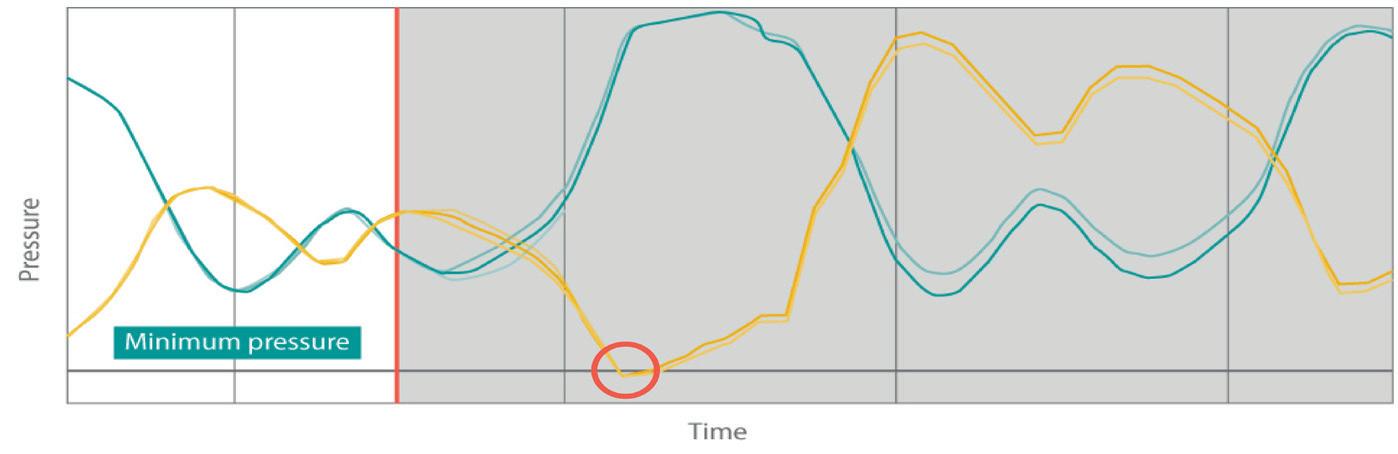
Figure 1. Trending data from a live pipeline’s recent activity (light background), along with the look-ahead’s prediction of a future scenario. The circled area signposts a potential minimum pressure violation that can be prevented by taking actions early.
onward to heavy industry, and finally to bunkering and export terminals.4 Such a multi-node system differs from point-to-point transmission in that it exhibits bidirectional flows, frequent transient events and complex interactions between pipelines, storage and downstream facilities. These characteristics introduce several challenges:
y Network topology complexity – multiple injection and offtake points increase the dimensionality of flow interactions compared to linear segments.
y Transient behaviour – storage operations, bunkering schedules and industrial draws can create pressure and flow fluctuations that propagate across the network.
y Operational coordination – maintaining system stability while meeting export windows and industrial demand requires understanding of how changes in one part of the network affect another.
Simulation addresses these challenges by enabling network-wide analysis rather than isolated pipeline assessment. By modelling the full pipeline system, including un-instrumented sections between facilities, simulation provides visibility into how changes at one node propagate through the network. Look-ahead simulation allows operators and planners to evaluate proposed operating schedules, storage injection and withdrawal strategies, and export scenarios in advance, assessing whether the system remains within defined operating limits under varying conditions.
In complex port-led systems, where operational decisions at one location can influence performance elsewhere, this type of integrated, predictive simulation supports both infrastructure planning and coordinated operation. It enables stakeholders to move from conceptual hub designs to technically robust operating strategies that account for transients, interactions, and uncertainty across the entire hydrogen network.
The agreement between German and Dutch gas transmission operators to establish a framework for cross-border hydrogen pipelines marks an important step toward international hydrogen transport in Europe. The framework aims to enable hydrogen to move between national systems, supporting industrial demand and broader decarbonisation goals while laying the foundations for a wider European hydrogen network.5 While technically feasible, cross-border hydrogen transport introduces challenges that extend beyond pipeline design. Although European standards and codes provide a framework
for alignment, individual countries retain responsibility for national regulation, operational practices, and safety requirements. As a result, parameters such as maximum allowable operating pressure (MAOP), lowest allowable operating pressure (LAOP), operating margins, and response procedures can still differ across borders, even within a single physical pipeline system.
From an operational perspective, this creates the need for coordinated system management under non-uniform constraints. Pipeline simulation supports this by enabling a single network model to incorporate country-specific operating limits and regulatory requirements within a shared framework. By modelling pressure, flow and linepack across the entire cross-border system, simulation allows operators to assess whether planned operating strategies remain compliant in each jurisdiction simultaneously, rather than evaluating segments in isolation.
Forecast-based simulation further supports cross-border operation by allowing future operating scenarios to be evaluated in advance. By analysing anticipated changes in supply, demand or equipment availability, operators can identify potential pressure violations before they occur and adjust operating plans accordingly (see Figure 1). This capability is particularly valuable where operational practices or allowable limits differ between countries, as it supports safe, efficient, and compliant operation across borders without relying on overly conservative assumptions.
As hydrogen networks become increasingly interconnected, simulation provides a common technical reference point for cross-border coordination. It enables multiple operators to understand shared system behaviour, manage regulatory differences, and operate complex hydrogen infrastructure as an integrated network rather than a collection of national assets.
Across all these developments, a common theme emerges: hydrogen infrastructure is becoming more dynamic, interconnected, and sensitive to operating conditions. As hydrogen production pathways diversify and networks expand, pipeline simulation provides a consistent engineering foundation for managing uncertainty, ensuring integrity, and supporting coordinated operation. In this context, simulation is not an optional add-on, but a core capability for the next phase of hydrogen infrastructure development.
1. https://www.energylivenews.com/2025/12/15/korean-scientistscreate-catalyst-for-super-green-hydrogen/
2. https://oilprice.com/Energy/Energy-General/White-HydrogenEmerges-as-a-Wild-Card-in-the-Global-Clean-Energy-Race.html
3. https://www.portstrategy.com/environment-and-sustainability/ morocco-a-sure-bet-for-hydrogen-development/1507060.article
4. https://hydrogenindustryleaders.com/morocco-announces-25bngreen-hdyrogen-project/
5. https://www.h2-view.com/story/german-dutch-gas-operatorsagree-framework-for-cross-border-hydrogen-pipelines/2136223. article/


Svitlana Snelder, Yann Ardouin, and Rens Hulstijn, Howden, A Chart Industries Company, explain how diaphragm compressors are being advanced to deliver reliable performance at high pressures and scaled hydrogen flows.
Hydrogen is emerging as a key enabler of the energy transition, offering a sustainable alternative to fossil fuels. To meet 2030 climate targets, hydrogen production must scale up significantly – and the same applies to transportation and mobility infrastructure. Hydrogen transportation and mobility applications require compression systems capable of handling pressures up to 1000 bar, and scaling these systems presents significant technical and economic challenges.
Tube trailer filling and fuelling applications demand technologies that combine oil-free operation,

high-pressure capability, reliability, and cost-effectiveness. While hydrogen compression is well established in refinery and petrochemical processes, scaling for renewable hydrogen applications introduces new challenges such as intermittent operation, gas contamination prevention, and stringent safety requirements.
Traditional technologies struggle when adapted for hydrogen filling and mobility applications due to a number of reasons:
� Extreme pressure requirements: tube trailer filling requires up to 550 bar; fuelling stations operate at 350 - 700 bar, with designs reaching 1000 bar.
� Intermittent operation: frequent start-stop cycles increase wear on critical components, require cost-effective hot standby solutions, and potentially raise maintenance costs.
y Footprint and modularity: compact, cost-effective compressors are essential for stations; large filling hubs need modular redundancy.
y Safety and compliance: leak prevention, embrittlement resistance, and reliable designs are critical at high pressures.
y Cost pressure: total cost of ownership matters more than upfront cost, emphasising reliability and low operating expenses.
y Unmanned operation: automated systems must ensure safety, high availability, and reliability without on-site supervision.
For hydrogen transportation and fuelling, the challenge is balancing high-pressure performance, dynamic operation, safety, and cost – areas where traditional compressors struggle. Moreover, hydrogen mobility is shifting toward heavy-duty applications, requiring very large flows and further scaling of existing technologies.
Various oil-free compression technologies can handle large hydrogen flows and high pressures – 500 bar and above – under the constraints in Table 1.
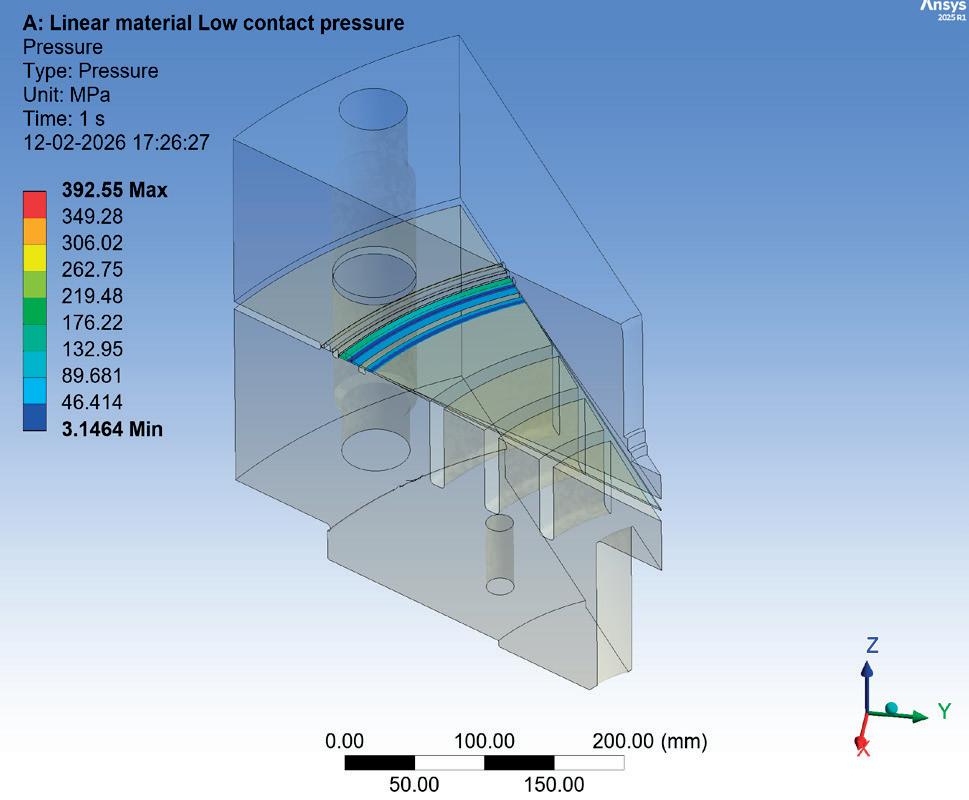
Diaphragm compressors provide an effective solution for hydrogen compression in transportation and fuelling applications. They deliver 100% oil-free operation, ensuring gas purity, and are a mature and reliable technology capable of handling pressures up to 1000 bar and beyond. Their design supports high pressure ratios, while integrated safety features – such as positive sealing and a fully enclosed compression area with no vent or gas losses – make them ideal for meeting stringent hydrogen requirements.
Recent advancements in Howden’s diaphragm compressor portfolio have enabled flow rates of up to 2450 Nm³/h (220 kg/h), keeping diaphragm technology the most established solution compared with high - pressure reciprocating compressors now entering this application space. While these reciprocating solutions show promise, they face uncertainties: limited field experience affecting reliability and operating costs, dependence on ongoing improvements in piston ring and packing case design, and critical sealing challenges that risk process gas losses.
Over the past five years, Howden gathered field experience and leveraged it to improve diaphragm compressor designs, enhancing performance and reliability in scaled-up applications. These efforts led to compressors optimised for availability and mean time between maintenance (MTBM) under intermittent conditions.
Material compatibility at high pressure
One of the key challenges is ensuring material compatibility under high hydrogen pressures. To address this, the Howden team conducted an extensive material study and implemented a dedicated qualification programme, including high-pressure hydrogen cycle tests in elevated temperature environments. This programme validated the suitability of selected materials for various discharge pressures for all compression stages, ensuring optimal performance and safety. Combined with field experience from an installed base of more than 1500 compressors, these efforts formed the foundation for a robust design.
extreme pressures
Maintaining a leak-tight system at very high pressures is critical for hydrogen applications. Howden has implemented continuous design
improvements in two complementary areas: seal materials and sealing system mechanical design. Diaphragm compressor stages are positively sealed, typically using O-rings that must withstand maximum operating pressure and rapid decompression cycles. While common polymers have proven suitable for low-pressure applications, high-pressure conditions required a dedicated development programme to evaluate alternative materials. The selected O-ring compounds successfully passed rigorous testing, including thousands of hydrogen pressure cycles in elevated temperature environments.
The second area of improvement involves advanced static and dynamic modelling. At high-pressure compression cycles, sealing performance is highly sensitive to micro-movements and component deformation – far more than in low-pressure applications. Dynamic mechanical analysis of the whole compression stage enabled the definition of specific design rules to address these challenges and ensure long-term sealing integrity (Figure 1).
Frequent start-stop cycles and fluctuating flow and pressure conditions create transient stresses, with the most critical typically occurring during start-up. To mitigate these stresses, Howden’s engineers developed solutions that include dynamic modelling of oil pressure within the compressor and pressure control valves. The integration of an improved oil pressure limiting valve has enabled better oil flow and pressure control, reducing conditions that could lead to high stress (Figures 2 and 3). Additionally, components such as membranes and oil plates were redesigned based on detailed stress analysis to improve durability and reliability.
A correctly designed filling circuit is essential to ensure proper oil filling in the head during intermittent operation. In addition to correct circuit design, early detection of anomalies is critical. To detect any oil distribution anomalies, Howden implemented real-time monitoring of the oil pressure cycle through a digital twin. If an anomaly is detected, the system triggers an immediate alarm – significantly improving operational safety and reliability.
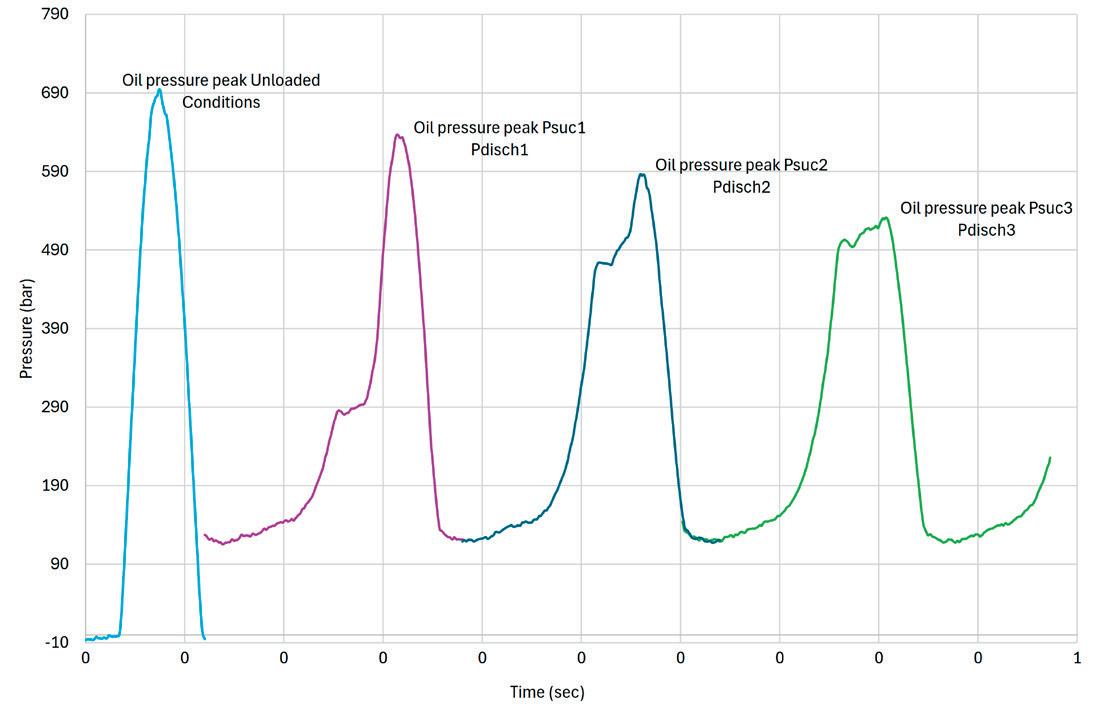
Figure 2. Compressor oil pressure peaks under different operating conditions with the standard pressure limiting valve. When the valve opening pressure is set based on the loaded operation, a high and uncontrolled pressure peak can occur when the compressor runs unloaded –typically during start-up – resulting in increased stress on the diaphragm.
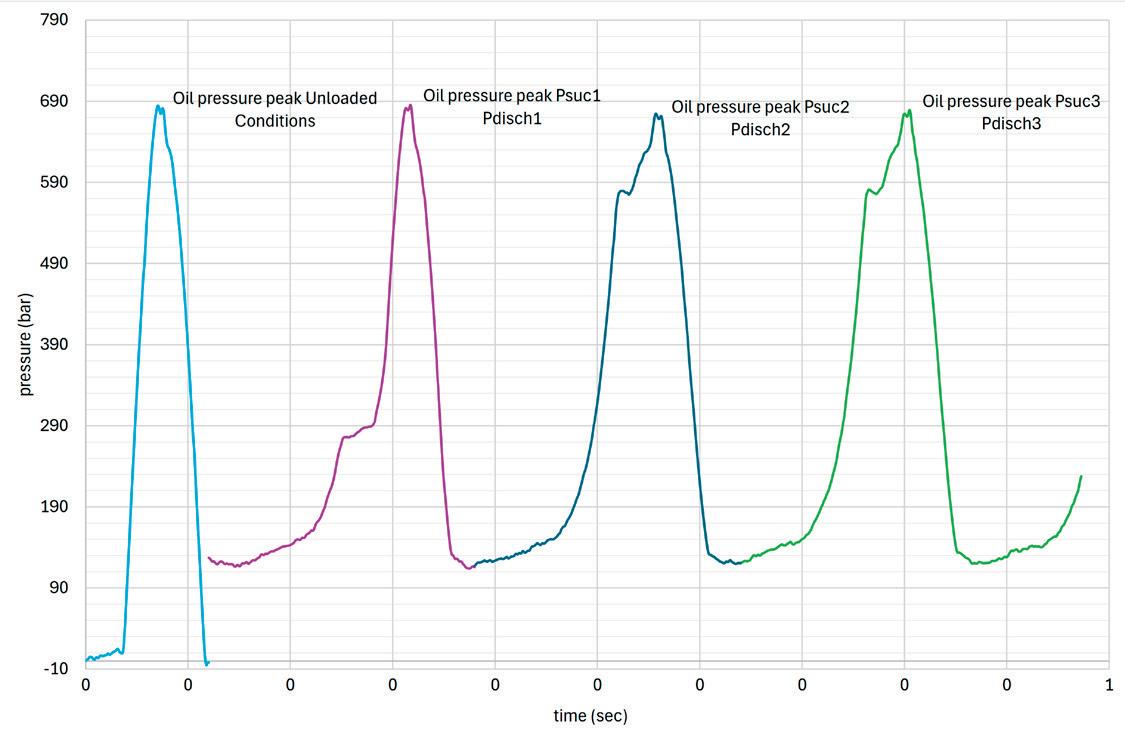
Figure 3. Compressor oil pressure peaks when using the improved pressure limiting valve. The much lower peak variability allows better control of the oil-gas pressure differential, keeping diaphragm stresses within safe limits, even during transient operation.
footprint and reasonable cost. This approach ensures high availability and extended MTBM for diaphragm compressors handling large flow rates.
Increasing volume flow for high-pressure applications naturally requires a compressor frame with higher rod load capability. Drawing on numerous references and proven designs from reciprocating compressors – also part of Howden’s product portfolio – the complete motion work in diaphragm compressors has been upscaled using established design principles, while maintaining a compact
Diaphragm compressors usually start with full main driver torque; this is rarely an issue on smaller machines but becomes a challenge for the power supply and motors of several hundred kW. Howden implemented specific modifications to oil pressure regulation in the compressor, motors and power systems to reduce transient loads, achieving smooth start-up without exceeding diaphragm stress limits.
With larger designs, unforeseen challenges emerged due to the interaction of two fluids separated by flexible
metallic diaphragms. Increasing the volume flow in diaphragm compressors requires handling a larger volume of oil per cycle, which affects mass distribution, pressure drops, oil compressibility, and heat transfer. In addition, increasing the compressor stroke for a given piston and head diameter changed the dynamics of opening and closing the oil pressure limiting valve.
These issues were resolved through advanced modelling, computing, and system optimisation, ensuring stable operation under all conditions.
Based on the gathered field experience, static and dynamic limitations were redefined for the upscaled design and the entire compressor system was re-modelled to maintain performance and reliability. In addition, manufacturing, assembly, and maintenance requirements were integrated into the design to efficiently handle larger, heavier components and ensure ease of serviceability.
Beyond safety and reliability, the hydrogen industry demands cost-effective compression solutions. To reduce total cost of ownership, Howden offers standardised compressor packages specifically engineered for large-flow, high-pressure hydrogen applications. These skid-mounted units integrate all process equipment, piping, and auxiliary systems into a single package –delivering a reliable, scalable solution that enables rapid on-site deployment and minimises installation complexity (Figure 4).
These packages can significantly reduce installation time and lifecycle costs compared to custom-built systems, while their modular design ensures easy scalability to meet future hydrogen demand.
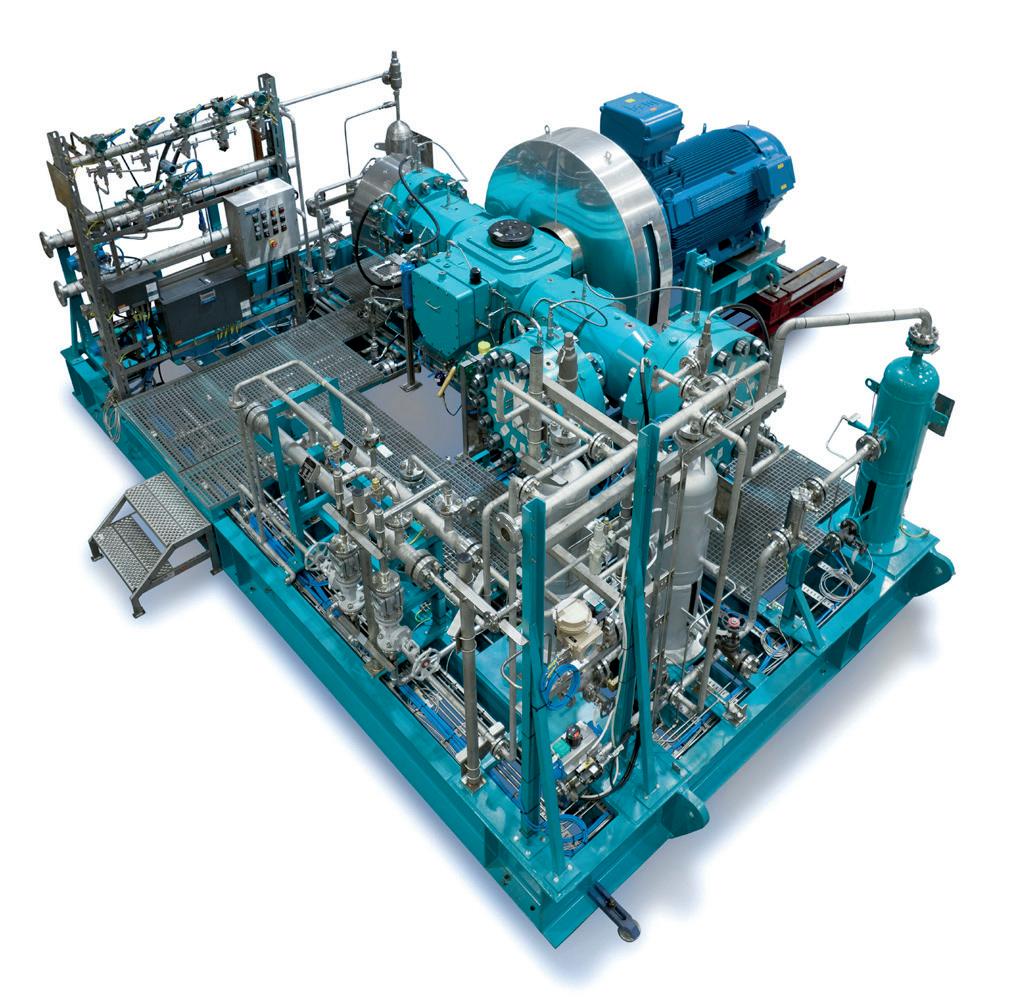
To further optimise performance, they include online condition monitoring and preventive maintenance, reducing the risk of unplanned downtime. The Howden Uptime digital suite provides comprehensive performance tracking and early-stage fault detection, while granting operators access to updated asset documentation and remote support from Howden OEM specialists. This combination ensures reliability, predictable costs, and peace of mind – while supporting sustainability through improved efficiency and reduced energy consumption.
Hydrogen mobility and transportation require compression systems capable of delivering high pressure, large flow capacities, and consistent reliability under intermittent, dynamic, and fully automated operating conditions. Diaphragm compressors have proven their ability to meet these requirements when specifically designed for this purpose and continue to evolve as global hydrogen infrastructure expands. Selecting the right compression technology – and the right technology partner – is critical for ensuring safety, efficiency, and long-term performance. As a mature, oil-free technology, diaphragm compressors ensure gas purity and leak-tight operation while achieving discharge pressures up to 1000 bar. Recent engineering advancements have extended applicability of Howden’s diaphragm compressors to large-flow, high-pressure hydrogen. Key developments include:
y Material qualification for high-pressure hydrogen: comprehensive study and testing under cyclic pressure and elevated temperature for long-term integrity.
y Sealing system optimisation: advanced static and dynamic modelling to define design rules to mitigate micro-movement effects at extreme pressures, complemented by high-performance elastomer selection.
y Stress management for intermittent operation: integration of improved oil pressure regulation, dynamic modelling of transient loads, and redesigned diaphragms and oil plates to reduce fatigue risk.
y Upscaling for large flows: adaptation of proven reciprocating design principles for diaphragm frames with higher rod load capability, maintaining a compact footprint and cost efficiency.
y System-level enhancements: digital twin monitoring, modular skid-mounted packages, and predictive maintenance tools to ensure high availability and minimise lifecycle costs.
These innovations position diaphragm technology as a robust and scalable platform for hydrogen compression in transportation and heavy-duty fuelling applications. Ongoing development in design optimisation and digital integration will further enhance reliability and performance, enabling hydrogen infrastructure to scale safely and economically in support of global decarbonisation objectives.
Frank Shoup, Manish Thorat, Brian Pettinato, Hanxiang Jin, and Derrick Bauer, Ebara Elliott Energy, explore the feasibility and impact of implementing an aluminium impeller for high-speed centrifugal compression.
The global push for cleaner renewable energy sources has created a market for the transportation and storage of low molecular weight gases like hydrogen. This raises critical questions on how to adapt current compression technologies to fit various means of production, transport, storage, and use.
Compressor designers have responded to this changing energy landscape by increasing efficiency and compression ratio performance. For hydrogen-rich gas mixtures, achieving the required compression ratio results in either a very large number of impeller

compression stages with multiple compressor bodies, or fewer compression stages with increased impeller rotational velocities. Because these performance requirements are reaching the limits of steel impellers, an alternative material will be required.
Demands for increased operational efficiencies place aluminium alloys in position for next generation high-speed compressor systems. To explore the feasibility of implementing an aluminium high-speed centrifugal compressor impeller from a design and durability perspective, this article considers the design challenges to be addressed.
Aluminium alloys possess certain material property attributes which make them advantageous over a wide range of metallic applications. These attributes include:
y High thermal and electrical conductivity.
y Reflectivity.
y Ductility.
y Low density.
y Corrosion resistance.
Aluminium alloys are also paramagnetic, with high fabricability and infinite recyclability.
The ability of aluminium to be alloyed with numerous elements enables the tailoring of properties for specific
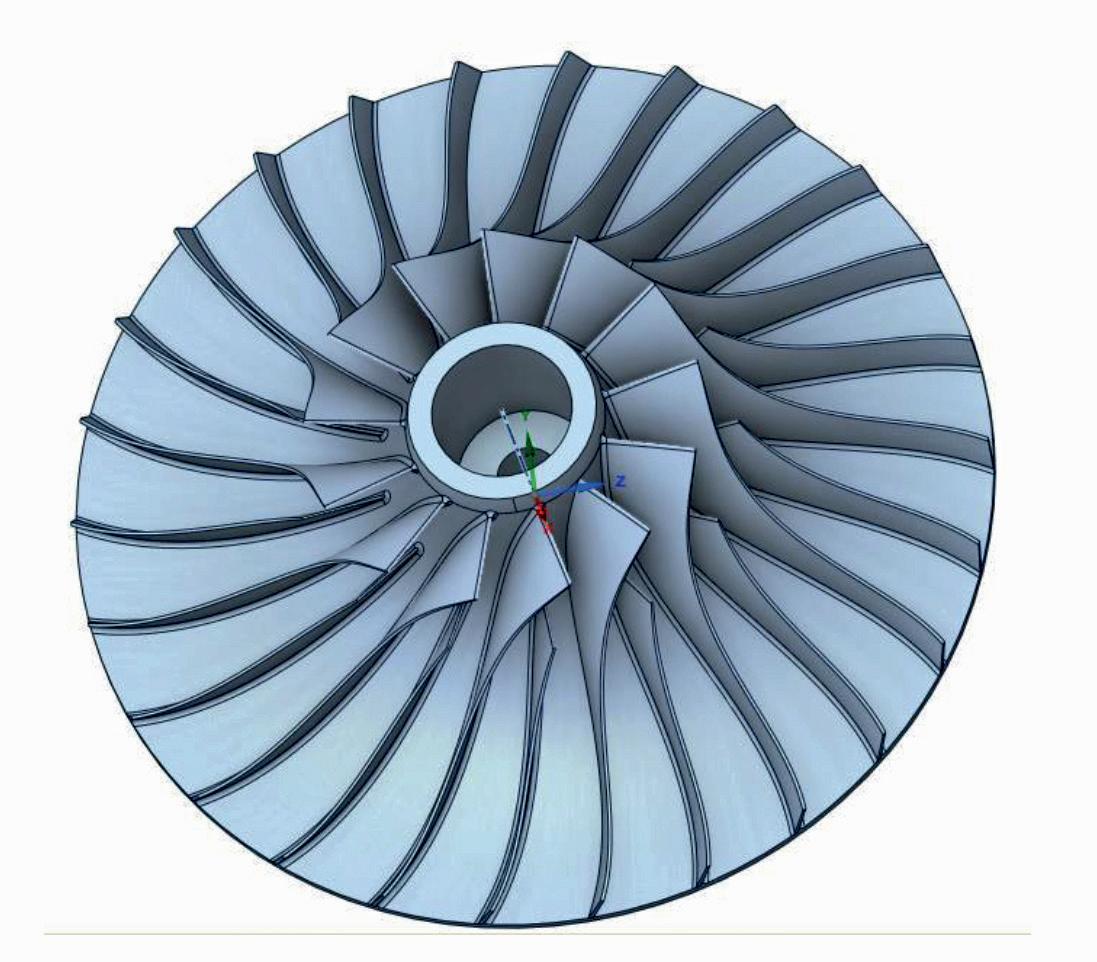
applications. The biggest impact arises from aluminium’s high strength-to-weight ratio, making it an ideal material for applications having weight-critical design drivers.
Aluminium impellers have been used extensively in turbochargers for both gasoline and diesel engines in the transportation industry, including locomotive and marine engines. For these types of components, reduced weight equates to increased performance and fuel efficiency.
A variety of aluminium alloys are already listed in the American Petroleum Institute 617 standard Annex F as ‘typical material’ for impellers, and such impellers have been used extensively for air compression.
Because Impellers are subjected to centrifugal forces which are directly proportional to the impeller mass and the square of the rotational velocity, increasing the rotational velocity exponentially increases stresses in the impeller for a given material mass. These stresses are now approaching the strength limits of conventional steel impeller materials, and a higher strength-to-weight ratio material is needed. This is referred to as the specific strength (strength/density) value which can be used to make a relative comparison of candidate materials, as shown in Table 1. Aluminium alloys are particularly attractive in this respect and have advantages over titanium alloys, with respect to cost, availability, and corrosion resistance in a hydrogen environment.
For most aluminium applications, the benefit comes in terms of component light-weighting. In this case, the lower mass (1/3 that of steel) results in reduced centrifugal stresses at higher rotational speeds, which remain within the strength capability of the alloy. For hydrogen concentrated applications specifically, API Standard 617 limits the material yield strength to 120 ksi and Rockwell C Hardness to 34 to address the influence of hydrogen embrittlement. High-strength 7xxx series Al-Zn alloys (yield: 63-101 ksi) appear to be the ideal material candidate. With all the enabling attributes of aluminium alloys, wider industry adoption for centrifugal compressor impellers makes sense, provided the design challenges can be resolved.
Historically, aluminium has primarily been used in ‘static’ structural applications, such as aircraft fuselage, wing, and empennage assemblies. While aluminium content in automotive structures has increased dramatically, highly dynamic aluminium applications have largely been limited to pistons, piston rods, drive shafts, and wheels. These components typically operate intermittently in the range of thousands of cycles per minute (600 - 5000 RPM). A viable aluminium impeller will need to operate continuously in a range an order of magnitude higher (20 000 - 40 000 RPM).
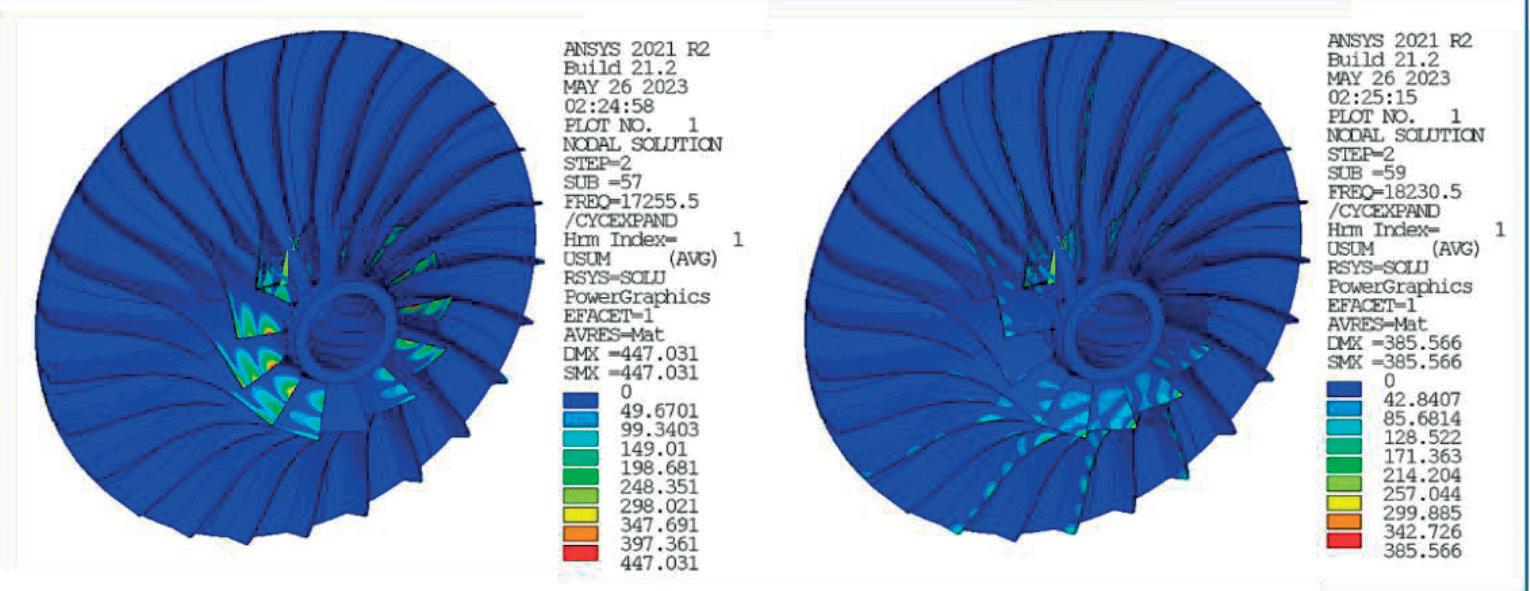
The authors specifically examined the viability of implementing a 7xxx series aluminium impeller as the primary enabler for hydrogen compressor systems. The perceived challenges included:
y High cycle fatigue (HCF) or very high cycle fatigue (VHCF).
y Operating temperature.
A podcast series for professionals in the downstream refining, petrochemical, and gas processing





Sponsored by
The rollercoaster ride of 2025
Alan Gelder, Senior Vice President of Refining, Chemicals, and Oil Markets at Wood Mackenzie, reflects on downstream developments over the past year, and looks ahead to what 2026 may bring.
LNG outlook: North and Latin America
Fauzeya Rahman, LNG Specialist and Editor at ICIS, looks at the key trends, opportunities, and challenges facing the LNG markets across North and Latin America into 2026 and beyond.
TSCA: a critical turning point
Rob Benedict, Vice President for Petrochemicals and Midstream at American Fuel & Petrochemical Manufacturers (AFPM), guides us on the latest developments with the Toxic Substances Control Act (TSCA).
SAF: ready to take flight
Maurits van Tol, CEO of Catalyst Technologies, Johnson Matthey, explores the role of sustainable aviation fuel (SAF) in reducing emissions, and outlines the most promising pathways and innovations in the sector.

Listen and subscribe here

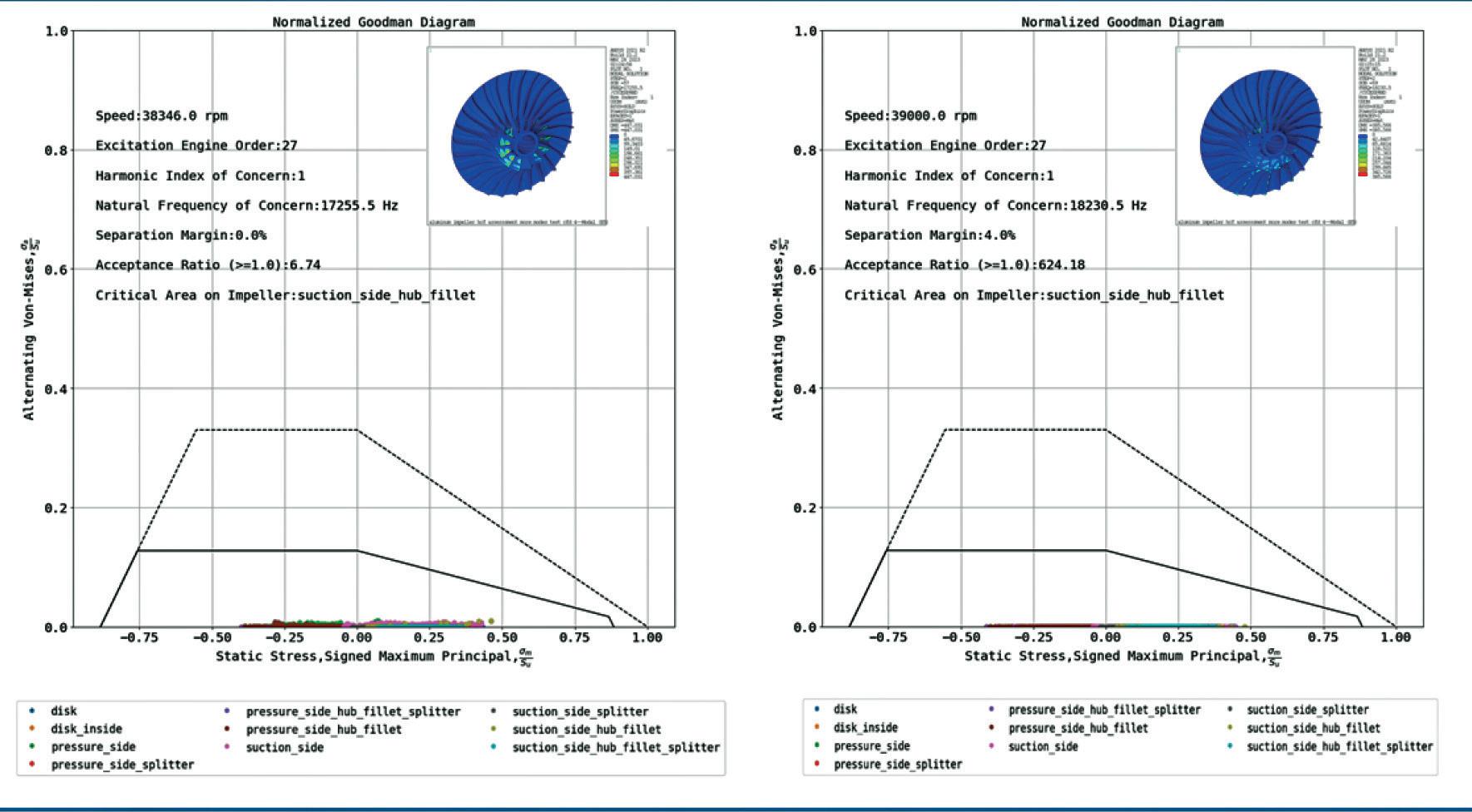
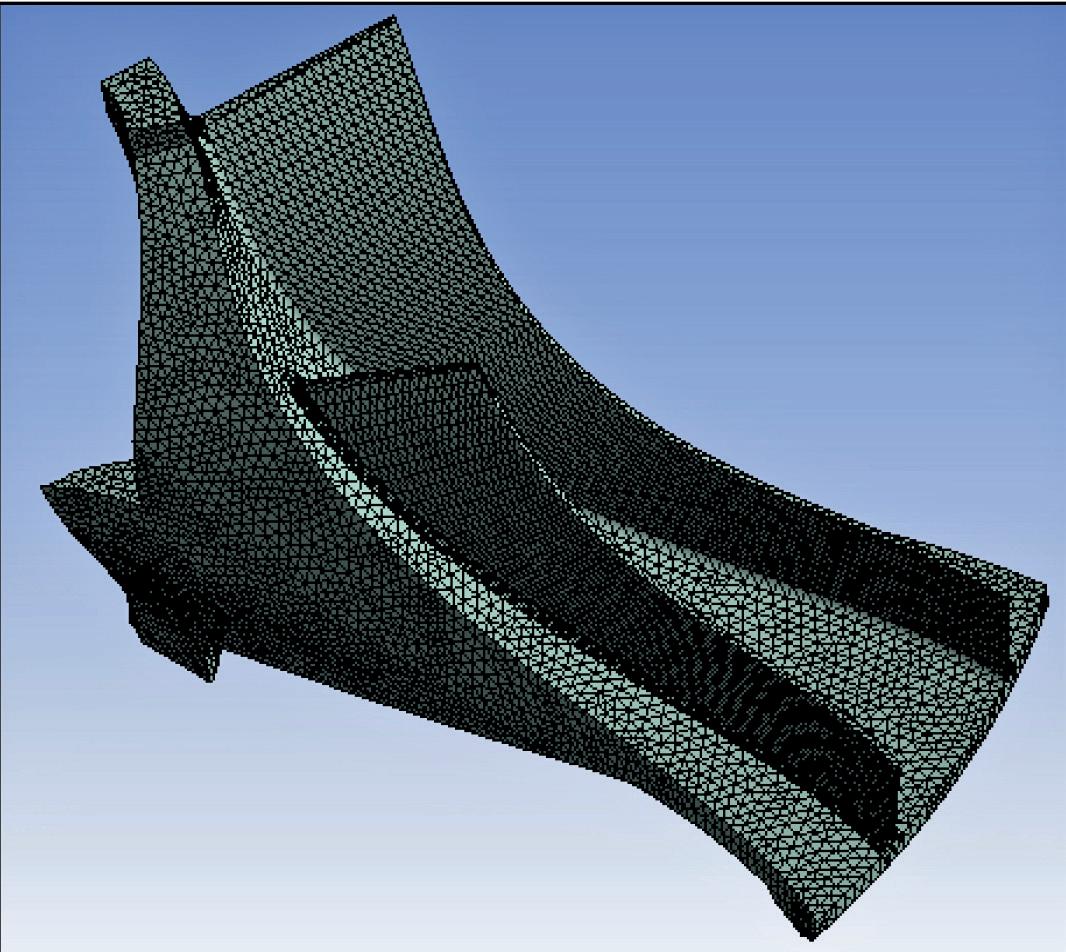
y Corrosion.
y Static strength.
To assess the suitability of the 7xxx aluminium alloy, the authors created and analysed a representative impeller geometry that featured a single piece open impeller design with a 10.65 in. dia. and 13 main blades and 13 splitter blades (Figure 1). For this aerodynamic design, the required operating speed is > 35 000 RPM, with a target life of 25 years. The authors assessed the design challenges listed above to determine which, if any, could be limiting factors for an aluminium centrifugal impeller.
Fatigue life prediction is not an exact science, but rather an empirical methodology which continues to evolve. Due to testing limitations, until recently there was limited data and knowledge of fatigue in the high cycle fatigue (HCF) and very high cycle fatigue (VHCF) range. Achieving an accurate life prediction relies heavily on a good measure and understanding of the cyclic stress/strain load history of the component from centrifugal force variations, along with downstream diffuser vane and upstream inlet vane wake interactions.
Fatigue failure in a centrifugal compressor impeller can originate from a variety of excitation sources. To illustrate the complexity of fatigue evaluation in an aluminium impeller operating in a typical hydrogen service application, the authors evaluated excitation from diffuser interaction. Details regarding impeller geometry and operating conditions are provided in Table 2.
The frequency of the excitation source in this case was assumed to be the number of diffuser vanes multiplied by the impeller speed as noted in Equation 1:
Impeller
Where fe is the excitation frequency in Hz, Ndiff is the number of diffuser vanes and RPM is the speed of the impeller in revolutions per minute.
Based on Equation 1, the maximum vane passing frequency is (27*39000/60) or 17 550 Hz. For a 25 year operation life, this amounts to 1.3 x 10¹³ cycles. Thus, the challenge under consideration corresponds to the VHCF domain range. With 26 impeller blades and 27 diffuser vanes, the first nodal diameter modes (harmonic index =1) will be excited. Modes which lay within +/- 5% of the operating speed range were analysed for fatigue evaluation. For this case, two modes, shown in Figure 2, did not meet the 5% separation margin.
To evaluate HCF performance, the authors estimated the harmonic aerodynamic loading using computational fluid dynamic (CFD) analysis, and then applied the harmonic pressure distribution on the structural impeller model to estimate the alternating stresses. Based on the mean stresses from the centrifugal stress contribution and the alternating
stresses from the diffuser vane interaction harmonic loading, the HCF fatigue evaluation demonstrated that in this case, the impeller operation was acceptable. Figure 3 shows the HCF evaluation using standard Goodman-Haigh diagrams.
Based on this preliminary fatigue assessment, an aluminium centrifugal compressor impeller appears to be feasible, even in the HCF range. For a full evaluation, other excitation sources from upstream guide vane wakes, acoustic resonances, flutter, and potential non-uniformities in the flow entering the compressor stage will need to be assessed.
The mechanical properties of aluminium alloys are noticeably impacted by elevated temperatures well below the melting point (1200°F (689°C)). All commodity aluminium alloys, including 2618 aluminium, which was developed for high temperature applications, show a dramatic loss of properties at temperatures above 392°F (200°C). Therefore, aluminium material must be assessed for compatibility with the operating environment from a temperature and time of exposure perspective, including the elevated temperature impact on fatigue performance.
Studies have shown that exposure temperatures above 400°F (204°C) drive faster deterioration of high-strength aluminium alloy strength properties. Most aluminium alloys begin to completely anneal after a few seconds of exposure at temperatures in the range of 600°F (316°C).
Creep measures the permanent, time-dependent deformation of a material when exposed to elevated temperature under a constant applied load or stress which is well below the yield value. Based on the anticipated temperature range of the compressor, it is safe to assume that some degree of creep will need to be accommodated in aluminium impeller design. At the high rotation speeds and tight tolerances required, the effects of creep displacement will add rigour to the compressor design process from a clearance and aerodynamic efficiency perspective.
For this application, inner-stage cooling of the hydrogen media maintained the gas operating temperature under 105°F (41°C). For aluminium alloys in this temperature range, there should be minimal loss of properties due to the flatness of the plateau on the strength vs temperature curve before the drop-off at the higher temperatures approaching 300°F (149°C). Controlling the operational temperature will reinforce the thermal stability of the aluminium alloy, and proven methods are available to accomplish this.
To mitigate the effects of hydrogen embrittlement due to hydrogen absorption, API Standard 617 limits the material yield strength to 120 ksi and Rockwell C Hardness to 34 for materials used in high hydrogen concentrated environments. However,
research has proven that materials with strength and hardness below the specified limits, like aluminium, are still susceptible. Although the tensile strength and yield are unaffected, there is a reduction in ductility due to the fact that hydrogen can diffuse into the metal. Because hydrogen has the smallest atomic size of any element, and the highest diffusivity, it can settle at interstitial sites within the atomic arrangement of the alloy.
While the definitive driving mechanisms of hydrogen absorption and embrittlement in aluminium alloys remains a mystery, there is increasing evidence that hydrogen embrittlement plays a governing role in stress corrosion cracking (SCC). Therefore, corrosion must be considered in component design for high hydrogen environments. Real world testing has shown that the evidence and rate of SCC increases for high-strength aluminium with an increase in temperature, humidity, and stress state. For this application, there is a high concentration of hydrogen and a high applied service stress level which will promote corrosion; however, the hydrogen-rich medium should have a very low relative humidity. For corrosion, the real question comes down to the operating temperature of the compressor.
When implementing a high-strength 7xxx series aluminium alloy in a corrosion prone application, care must be taken with regard to the material temper employed. In addition,
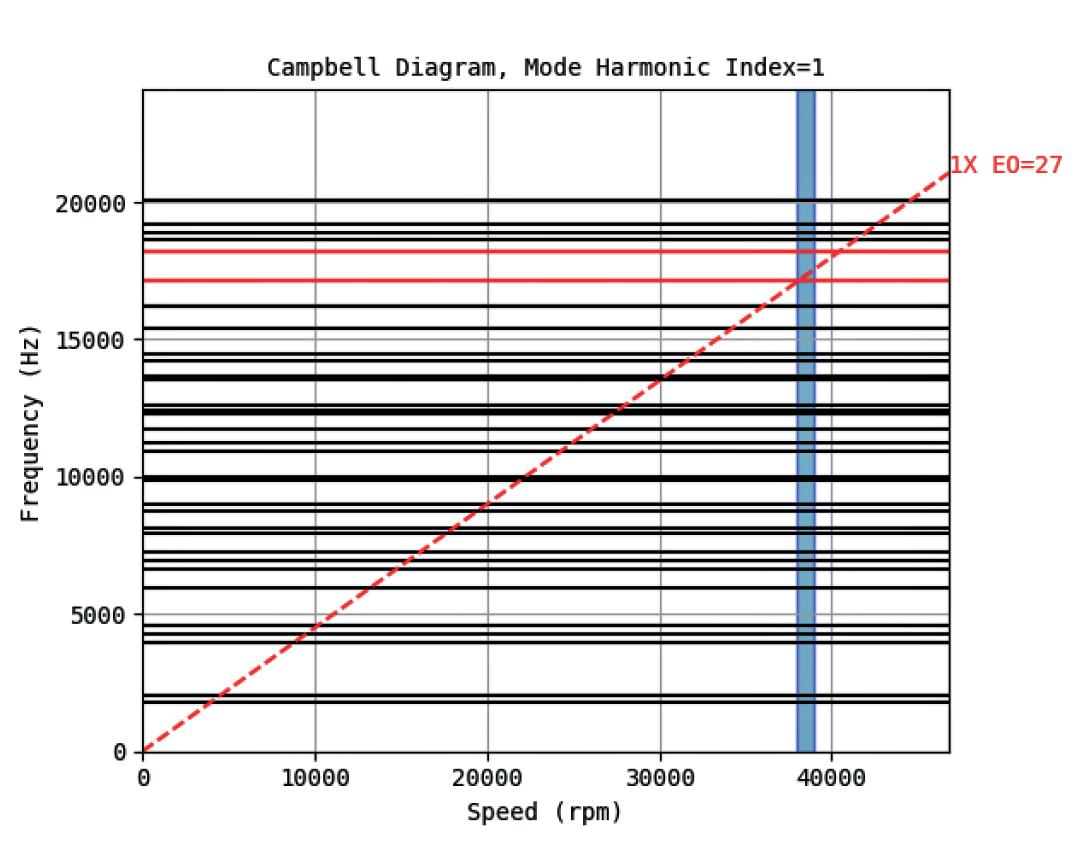
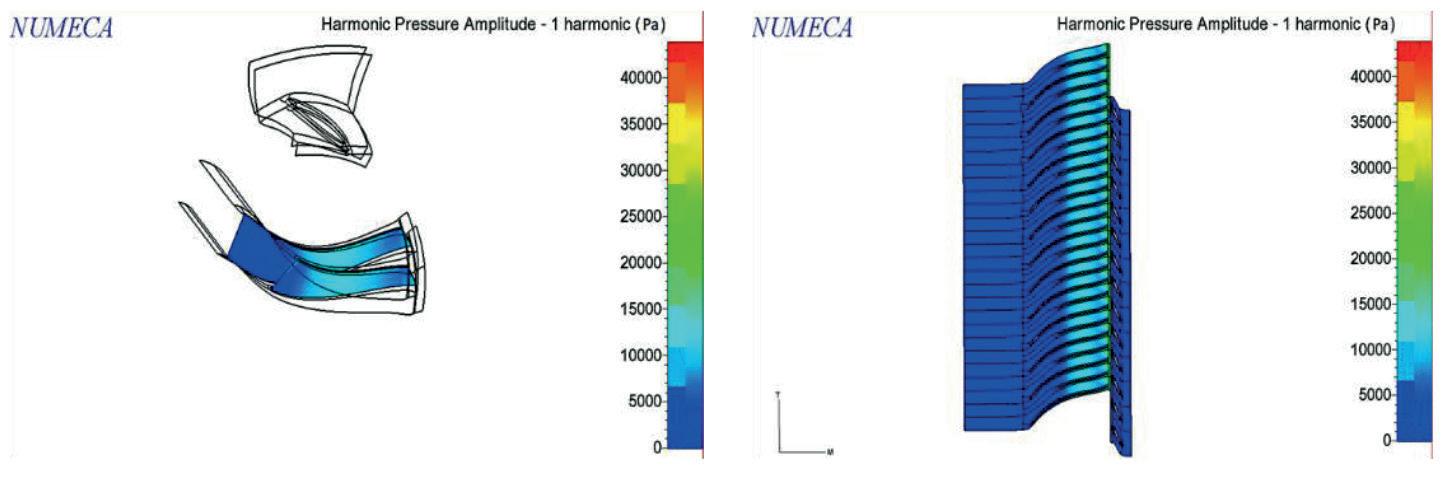
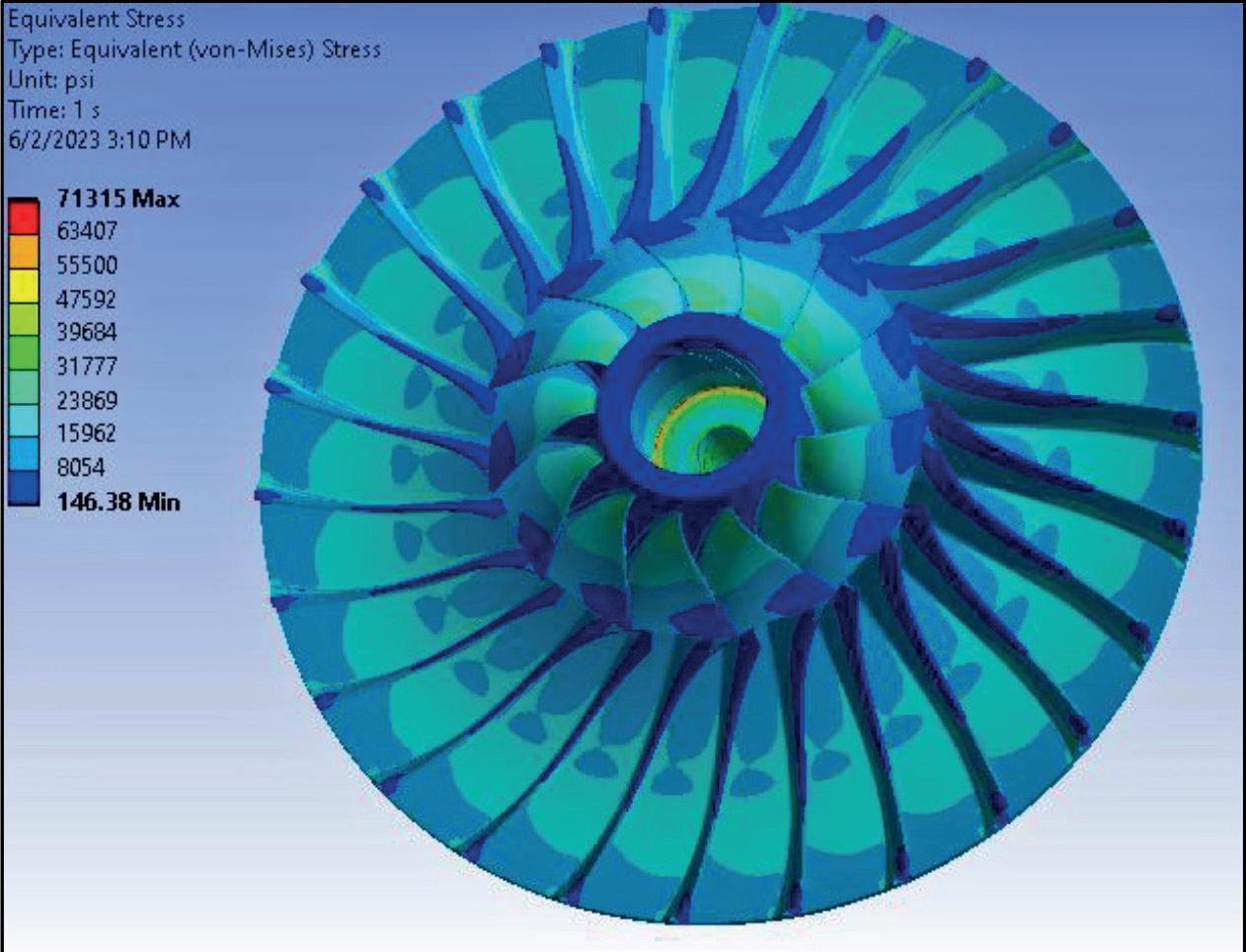
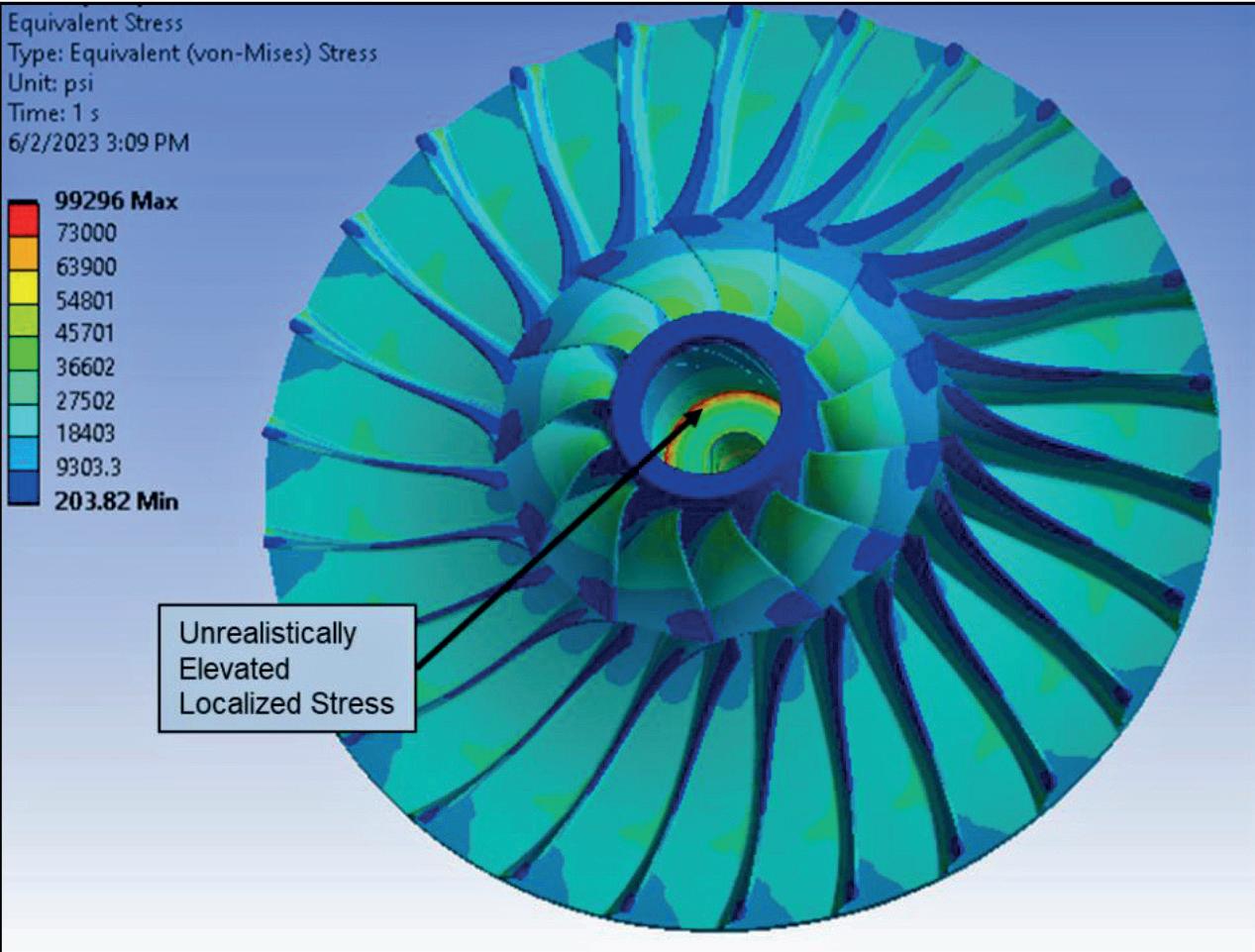
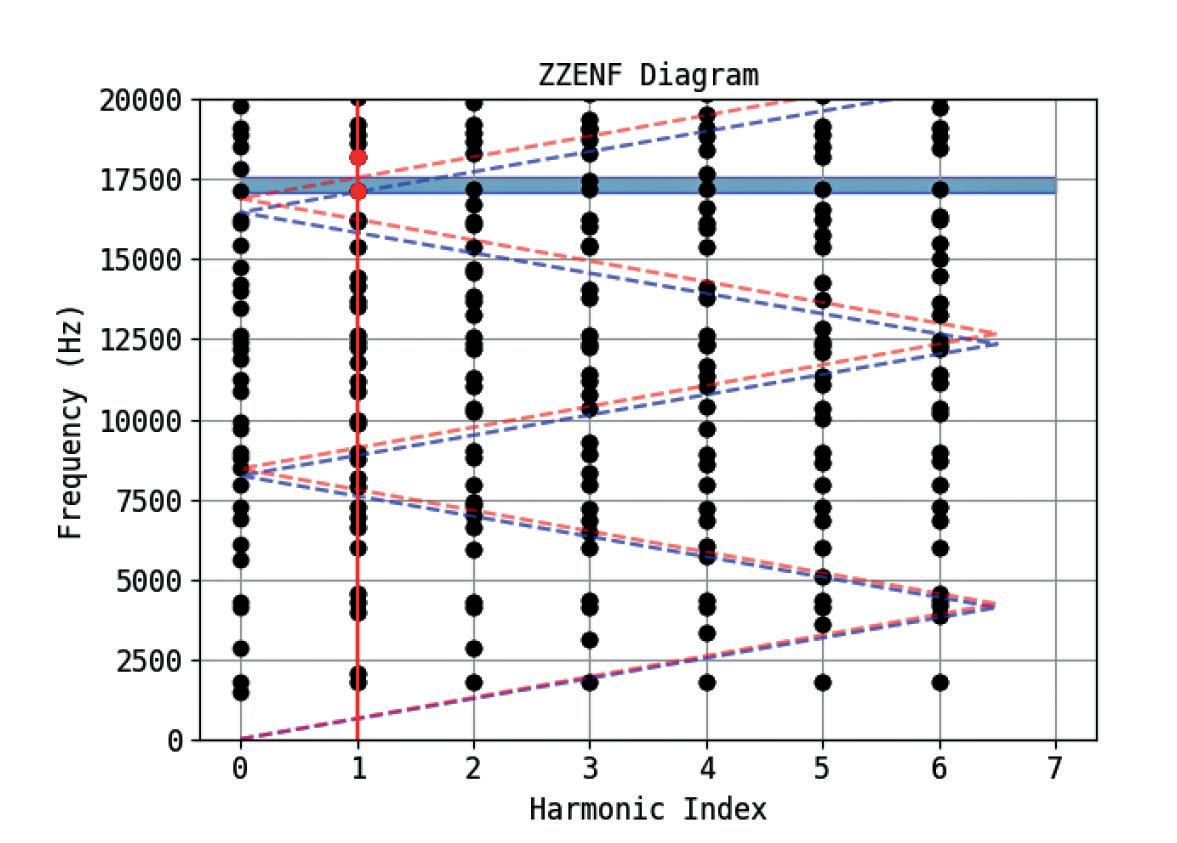
corrosion resistant coating systems can be used to supplement the oxide layer protection.
As mentioned earlier, for hydrogen-rich mediums, achieving the required compression ratio results in either a large number of impeller compression stages or increased impeller rotational velocities. Impellers are subjected to centrifugal forces which are directly proportional to the impeller mass and the square of the rotational velocity. Therefore, increasing the rotational velocity exponentially increases stresses in the impeller for a given material mass. These stresses, from the > 35 000 RPM rotational velocity, are exceeding the strength limits of conventional steel impeller materials. For this reason, the higher strength-to-weight ratio makes aluminium an attractive material for these higher speed impeller applications. Unlike most aluminium applications where the benefit comes in terms of component light-weighting, in this case, the lower mass results in reduced centrifugal stresses at higher rotational speeds, which remain within the strength capability of the alloy.
To assess this, the authors created and analysed a linear static structural cyclic-symmetry model at the required operational speed (Figure 4). The linear static material properties applied include: a density value of 0.102 lbs/in3, a modulus of elasticity value of 10 400 ksi, a tensile yield value of 73.0 ksi, and a tensile ultimate strength value of 82.0 ksi.
The results of the static centrifugal analysis, at operating speed, show that all Equivalent (von-Mises) Stresses in the one-piece impeller are below the material yield. Being that this criterion is the main driver for introducing an aluminium impeller, this result was expected and only verified. As an additional check, this analysis was repeated with the rotational velocity at spin speed (1.18X operating speed). Again, the Equivalent Stresses throughout the one-piece impeller were found to be below the material yield. Strength is therefore not considered to be a limiting factor for implementation of this aluminium impeller.
Aluminium alloys are already known to be an acceptable impeller material. This study on the further application to next generation high-speed centrifugal compressor impellers in a hydrogen-rich environment demonstrates that aluminium alloys are acceptable, albeit with challenges that must be overcome through proper engineering. The use of aluminium alloys can enable higher speeds, allowing for smaller compressor packages with additional benefits from the lighter weight such as improved rotordynamic performance with reduced bearing and seal wear.

Michael Vidovitsch, HOERBIGER, considers how hydrogen compressors can be designed to maintain efficiency under high pressures as green hydrogen scales up.
As the hydrogen economy transitions from pilot projects to industrial scale deployments, infrastructure demands are intensifying. Production facilities now routinely target capacities measured in tens or even hundreds of megawatts, while industrial distribution networks require compression pressures up to 500 bar. This scaling brings a fundamental engineering challenge into sharp focus: compression.
Hydrogen compression sits at the centre of nearly every hydrogen value chain. Whether the end use is vehicle refuelling, trailer transport, pipeline injection, or industrial storage, the gas must be compressed from electrolyser output pressures (typically 15 - 30 bar) to the pressures required downstream. For high-capacity applications, this means compressor packages that can handle substantial throughput while maintaining efficiency across variable operating conditions – a combination that legacy compression technologies – diaphragm and hydraulic compressors in particular – struggle to deliver. Reciprocating compressor technology, refined significantly over the past decades for hydrogen service, has emerged as the most viable solution for these demanding applications.
This article will outline a number of compression challenges during green hydrogen production. It will
also introduce HOERBIGER’S HCP 500, which has been designed for high-capacity hydrogen applications, delivering up to 250 kg/h with discharge pressures reaching up to 500 bar. More critically, it was engineered from the outset around the operational realities of green hydrogen production: frequent start/stop cycles, efficient part-load operation when electrolyser output fluctuates, and extended maintenance intervals that reduce total cost of ownership.
Green hydrogen production from electrolysis introduces compression challenges that differ fundamentally from traditional lower pressure industrial hydrogen applications. Refineries and ammonia plants have compressed hydrogen for decades, but these are steady-state processes with predictable flows from steam methane reforming (SMR) or other continuous sources. Electrolytic hydrogen – particularly when powered by renewable energy – operates under entirely different conditions.
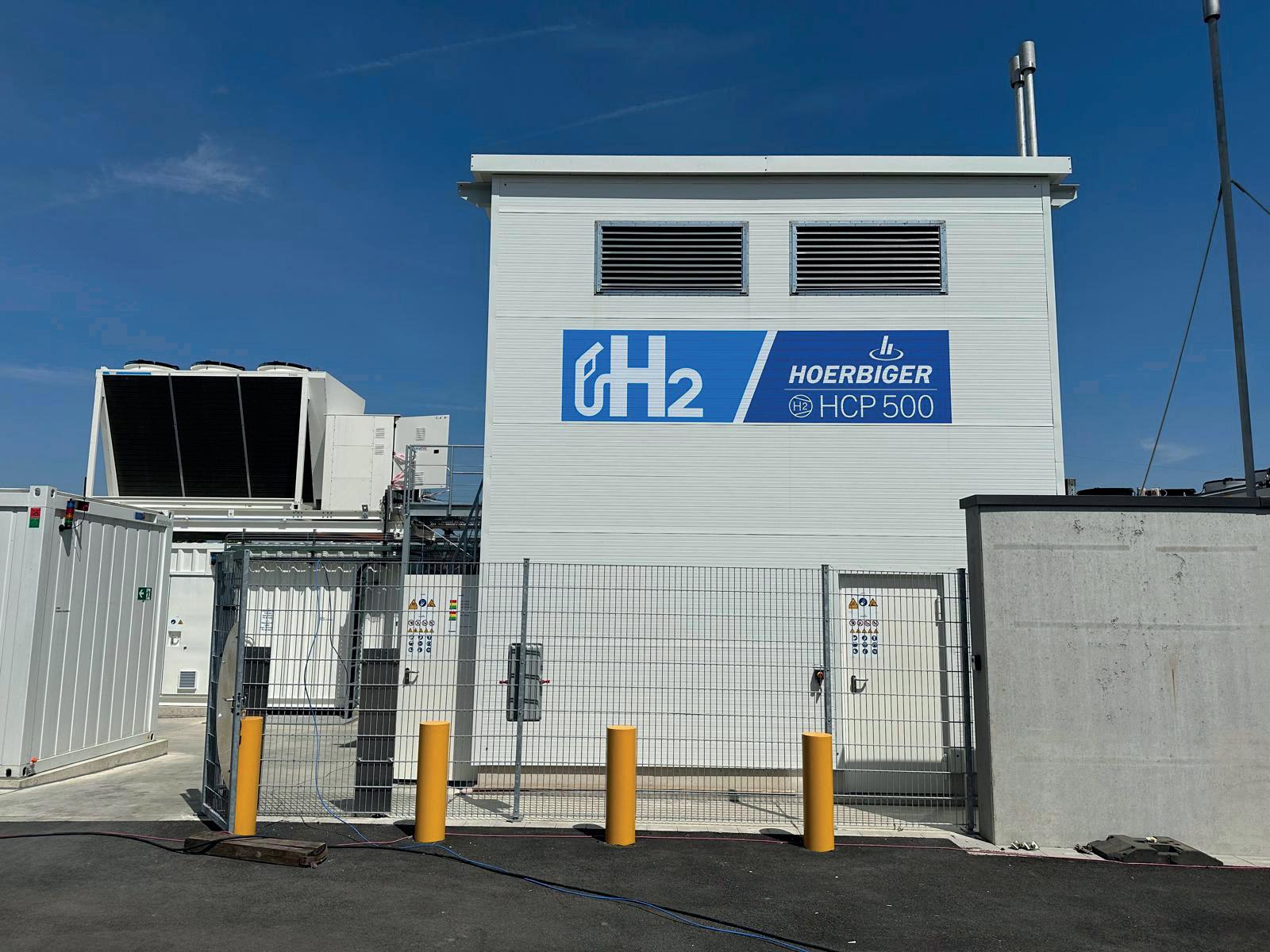
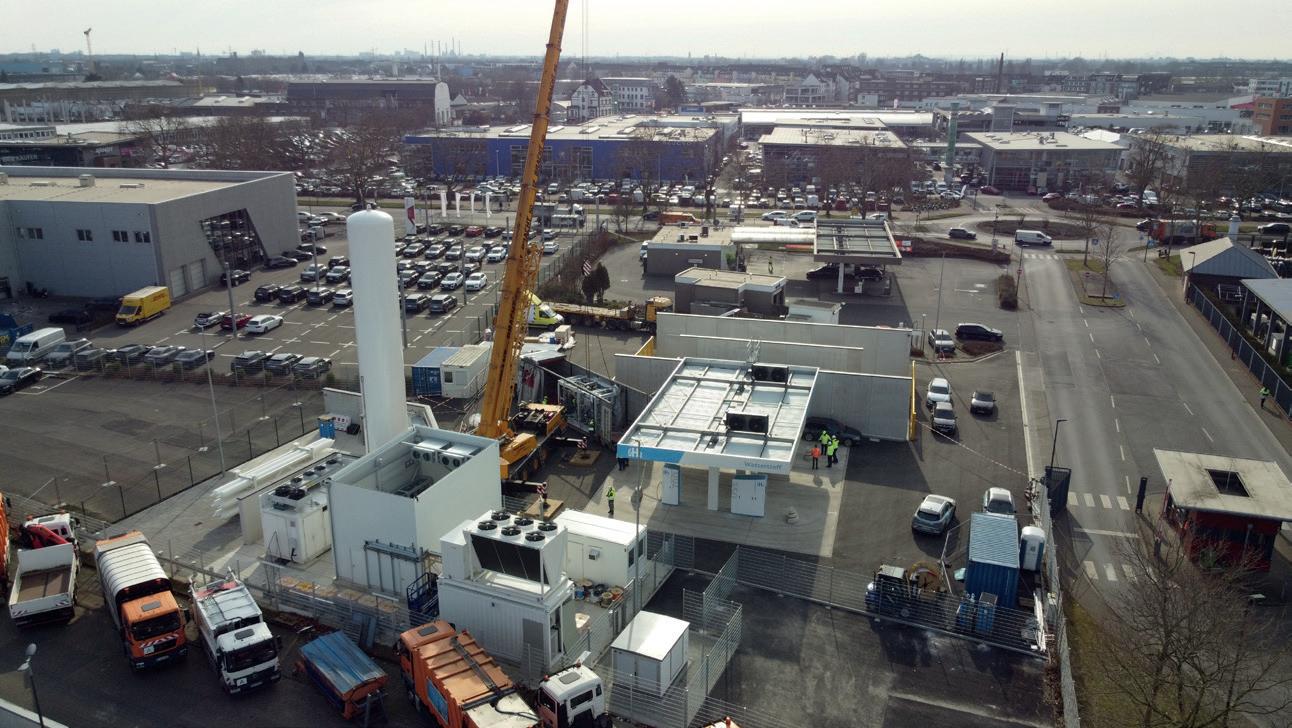
The first challenge is the load variability. When electrolyser output fluctuates with wind or solar generation, compression systems must follow. Traditional compressors – whether diaphragm, ionic, or hydraulic – were designed for steady-state industrial processes. They lose efficiency dramatically at part load or simply cannot turn down far enough to match production swings. In the worst cases, operators are forced to vent hydrogen or run bypass loops, wasting both product and energy.
The second challenge is pressure ratio. Many hydrogen applications require compression from electrolyser output (often 15 - 30 bar) to storage or transport pressures of 350 - 500 bar – a pressure ratio of 12 - 20 times. Achieving this with consistent performance over thousands of operating hours, demands compressor technology specifically designed for reliability – an area where diaphragm and hydraulic compressors fall short.
The third is throughput density. As production facilities scale toward hundreds or thousands of kilograms per hour, site footprint becomes a constraint. Many legacy technologies require multiple parallel units to achieve this throughput, multiplying both capital expenditure and maintenance burden. Finally, there is the matter of reliability in distributed deployment. Unlike centralised refineries with full-time maintenance crews, green hydrogen facilities are often remote or lightly staffed. Compression equipment must perform predictably with




ILTA 2026 is the largest event focused exclusively on the business and technology of liquid terminals.



Scan the QR code or visit ilta2026.ilta.org to register

minimal intervention, sometimes in challenging coastal or cold-climate environments.
The HCP 500 was designed around these specific challenges, rather than adapted from existing industrial compressor platforms.
At its core is a reciprocating piston compressor developed in partnership with Ariel Corp. The four-stage, two-throw vertical design is purpose-built for non-lubricated (oil-free) hydrogen compression that maintains fuel cell grade purity. The system handles suction pressures from 15 - 30 bar and can deliver discharge pressures up to 500 bar at 250 kg/h – covering the full range of typical green hydrogen applications in a single standardised package.
The technology is also equipped with an eHydroCOM capacity control system. This proprietary stepless control technology allows the compressor to modulate output from 30 - 100% of rated capacity while maintaining constant specific energy consumption at shaft. Instead of recycling gas or stage capacity in discrete steps, this system varies suction valve timing electronically, delivering only the compression work required at any given moment. For facilities downstream of electrolysers with variable output, this translates directly to lower operating costs and seamless integration with upstream production.
The complete package includes everything required for operation: compressor and motor, intercoolers and aftercoolers, pulsation dampeners, control systems, and weather-protective housing. Standard configurations achieve noise levels of 55 dB(A) at 10 m – quiet enough for deployment near residential or commercial areas. The system supports remote, unmanned operation with standard industrial control system integration.
Maintenance economics were built into the design philosophy. The rated mean time between maintenance (MTBM) reaches 4000 hours, with scheduled intervals that align with typical plant operations. Critical components
are accessible, and spare parts are standardised across the platform. This enables rapid parts availability and local service support, allowing operators to implement rolling maintenance programmes without full plant shutdowns.
The HCP 500 is in real-world operation at customer sites in Austria and Germany, delivering stable performance and validating the platform’s readiness for broader deployment. Beyond these projects, five additional units from two major projects are scheduled to become operational by the end of 2027.
The first one includes two HCP 500 units for the Agder Hydrogen Hub that will be installed in Kristiansand, Norway. They will be used to compress up to 500 kg/h of hydrogen produced by on-site electrolysers for transport via tube trailers. The hydrogen will then be used to decarbonise the local maritime industry. The project is located at the coast, where high humidity and low temperatures prevail. Additionally, the available space for equipment is limited, making the use of redundant compressors very challenging. As a result, a high-capacity reciprocating compressor proved to be the only viable solution. Due to the compressor’s vertical design, which allows a compact footprint, two of these units were selected to handle the high mass flow at the highest reliability. Beyond meeting the site’s environmental demands, the system addresses the customer’s core requirements: high reliability, predictable maintenance, and process safety.
The second project involves three units for the 100 MW Hamburg Green Hydrogen Hub. The German company Kraftanlagen Energies & Services has been commissioned to build the infrastructure around the electrolyser and has entrusted HOERBIGER with the delivery of the three hydrogen compressor packages. Due to the project’s complexity, a highly reliable compression solution was required – capable of operating with an MTBM of up to 4000 hours – while also meeting strict CAPEX and OPEX targets and fitting within a compact site footprint. Another requirement was the ability to handle a high number of starts and stops per hour to sustain demanding operations. After a thorough evaluation, HOERBIGER was selected as the supplier best positioned to meet all these critical requirements.
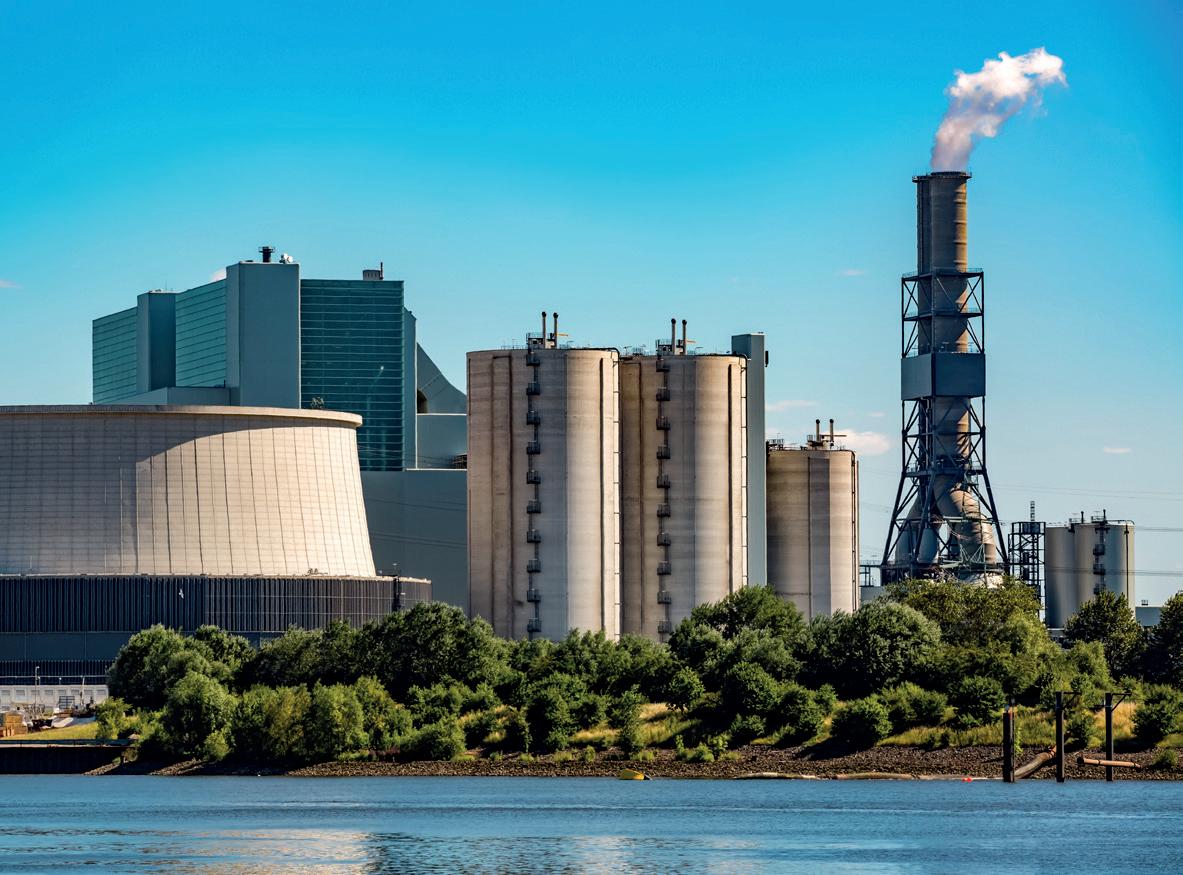
Green hydrogen at industrial scale demands compression technology that can handle what legacy systems cannot – fluctuating loads, extended maintenance intervals, reliable operation, and minimal on-site support. This article has introduced a hydrogen compressor package that has been designed for this operating environment, offering fieldproven, high-capacity compression at an industrial scale.
Daniel Patrick, Atlas Copco Gas and Process, USA, discusses how oxygen and pressure letdown recovery can create additional revenue sources from hydrogen production.
Hydrogen projects are usually planned around one main goal: producing, moving, or using hydrogen as efficiently as possible. Yet every large electrolyser, pipeline, or fuel cell installation also creates secondary streams that carry real economic or energy value. These streams often receive little attention in the early design phase and small scale projects, but at an increased scale they can make a meaningful difference in the business case.
Two of the most promising opportunities involve oxygen from electrolysis and recovering energy from pressure letdown (PLD) stations. With the right turbomachinery, both applications can turn wasted commodities into useful contributions to a hydrogen project’s economics. This article looks at how these opportunities work, where they fit, and what challenges need to be solved to make them a reality.
The oxygen opportunity: finding value in a co-product
Electrolysers do not only produce hydrogen. An indicated in Figure 1, for every 1 kg of hydrogen, about 8 kg of oxygen are

also produced. At small scale it rarely makes sense to capture this oxygen, so it is usually vented. At large scale, however, these volumes become significant.
Industries that use oxygen today include steelmaking, glass production, wastewater aeration, and various thermal and chemical processes. Most of this oxygen comes from air separation units powered by grid electricity. As industrial customers look for lower carbon sources, interest in ‘green oxygen’ from electrolysis is growing, as is interest in lower cost oxygen.
A recent review by Disha Panchawadkar looked at several examples of using oxygen from large electrolysers.1
In one scenario, a 100 MW plant added oxygen capture and compression equipment with a capital cost of about €21 million. When the oxygen was sold into established industrial markets (like a nearby steel factory), the payback period for this extra investment was just over three years. This shows that at large scale, oxygen should not automatically be treated as a waste stream, but it can instead help provide an additional revenue stream for these electrolyser projects.
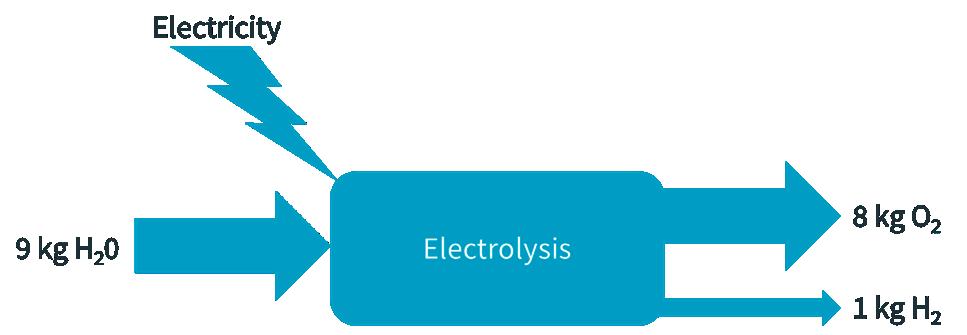
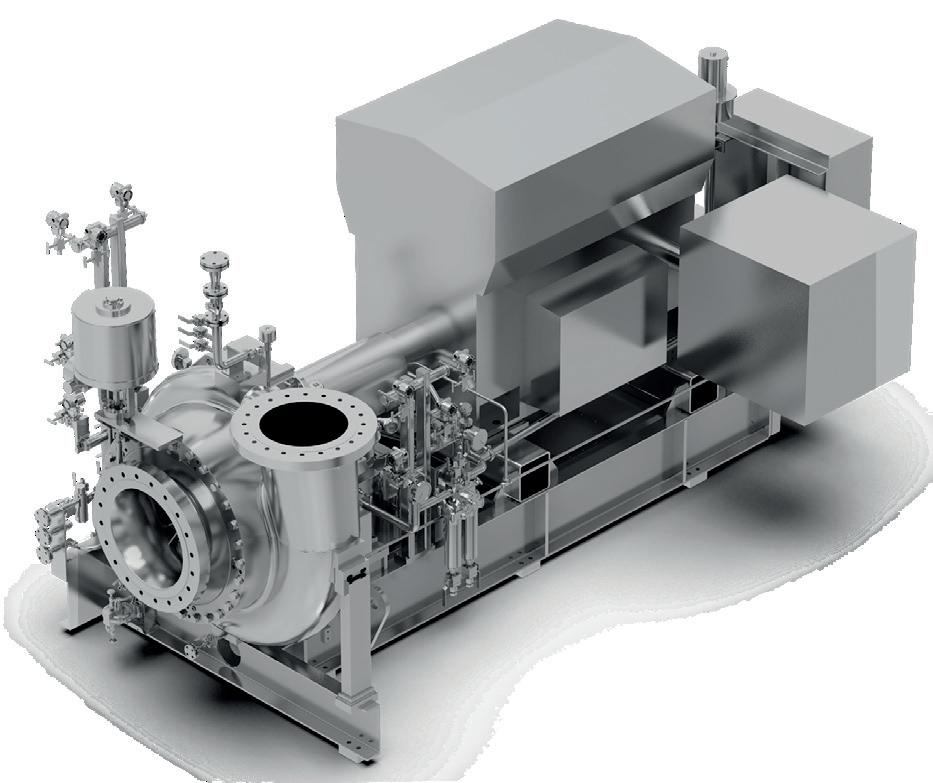
The best opportunities are locations where electrolysers and oxygen users can be co-located. Industrial clusters are ideal. Large steel mills, glass plants, cement plants, and wastewater treatment facilities all use significant amounts of oxygen already. If these users can tap into a steady local supply of oxygen, both sides benefit.
Compressing oxygen requires careful engineering and strict compliance with safety standards like those set by the European Industrial Gases Association (EIGA). Considering oxygen is a relatively heavy molecule and only modest pressure increases are needed for nearby pipeline distributions, integrally geared centrifugal compressors, as shown in Figure 2, provide an efficient and reliable machinery solution.
Because oxygen is highly reactive and flammable, safety and material selection are critical design considerations for oxygen compressors. All components that come into contact with oxygen are thoroughly cleaned and inspected to remove any contaminants. Non-sparking materials are often used for key components to lower the risk of ignition during operation. Other design measures include adjusting clearances, specialised seals, and strict temperature limits to prevent overheating. Combined with robust safety protocols and adherence to industry standards like those set by the EIGA, these design considerations ensure dependable
performance for oxygen turbocompressors to enable this additional revenue stream.
The opportunity is compelling, but several real-world challenges must still be solved.
Below a certain project size, the economics do not work. Capturing and compressing oxygen requires equipment that only pays off when volumes are high. Studies consistently show that 100 MW class and above is where oxygen begins to support the overall business case.
Oxygen is reactive, so compressors must follow strict safety standards. This affects material selection, cleanliness, seals, and temperature control.
Transporting oxygen long distances adds cost quickly. Liquefaction is possible but expensive. The strongest opportunities are sites where the electrolyser is intentionally built next to an existing industrial oxygen user. Without that co-location, the economics weaken.
Several recent studies and concept papers, such as Panchawadkar, show how oxygen from electrolysis might help improve local industrial efficiency, supply wastewater treatment plants, or support combustion processes in nearby facilities.1 While many are still at the planning or pilot stage, the direction is clear: as hydrogen production scales up, the value of its co-product, oxygen, becomes too large to ignore.
As hydrogen infrastructure grows, more users will receive hydrogen at moderate or high pressure. This includes industrial customers, pipeline networks, and emerging applications like fuel-cell powered data centres. Many of these systems, however, use hydrogen at much lower pressure. The pressure drop is usually managed with a valve. When that happens, all of the potential energy in the pressure reduction step is lost.
A turboexpander provides a different option. Instead of wasting the pressure energy, an expander converts that energy into useful work. This energy comes in the form of electrical power that offsets local loads, while it additionally produces cold energy that can support refrigeration in the same process. The natural gas industry has used PLD turboexpanders in pipeline applications for years, and the same concept applies to hydrogen. See Figure 3, which is an example of a PLD expander for natural gas service. The same principle applies to hydrogen pipelines, but without the need for pre-heating since hydrogen does not pose a risk of liquid formation like natural gas does. This eliminates a
major challenge in natural gas PLD expander projects and allows for colder outlet temperatures, which can be leveraged for cooling applications.
Radial turboexpanders are highly effective for processes involving large enthalpy drops during gas expansion. Hydrogen, due to its low molecular weight, exhibits a significantly higher enthalpy drop for a given pressure ratio compared to heavier gases. To efficiently manage this, turboexpanders, like the one shown in Figure 4, must operate at very high rotational speeds. Higher tip speeds enable the machine to accommodate larger enthalpy drops with improved efficiency. Consequently, hydrogen turboexpanders are typically designed to run at the upper limits of mechanical capability, whether constrained by tip speed or gearbox limitations, making speed a critical design parameter for hydrogen PLD expanders.
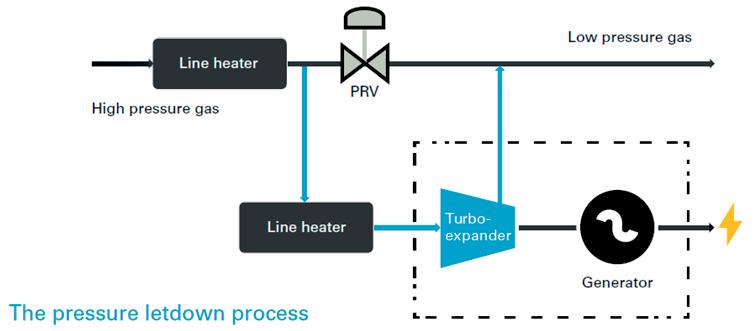
Figure 3. A typical pressure letdown (PLD) configuration with the turboexpander in parallel to the throttling valve.
Pressure recovery is most attractive when the hydrogen flow rate is high and the pressure drop is moderate. Under these conditions, the aerodynamic and mechanical solution is optimum, such that a radial expander can recover meaningful energy with good efficiency. These attractive conditions can be found in applications such as pressure-swing adsorption (PSA) systems, large scale cavern storage, line packing, or pipeline delivery points to consumers like stationary fuel cells. When the cold energy from the expander can also be used, such as for data centre cooling or other industrial refrigeration processes, then the PLD opportunity becomes even more interesting.
While published work on hydrogen fuel cells with pressure recovery is still limited, there is a well-established analogue in the natural gas sector. Studies have shown that combining a turboexpander with a fuel cell at a pressure reduction point can significantly improve overall station efficiency.2 The expander recovers energy from the pressure drop, while the fuel cell produces power and is cooled from the gas stream.
Hydrogen-powered data centres could follow a similar model. Fuel cells would provide the main electrical load while pressure letdown expanders could recover additional energy that would otherwise be wasted. This combination becomes especially compelling in locations where a high-pressure hydrogen supply will already be used for stationary fuel-cell installations.
Consider a basic hydrogen PLD example with the following conditions:
Inputs
y Gas: 100% H2
y Flowrate: 21 000 kg/h.
y Inlet pressure: 65 bara.
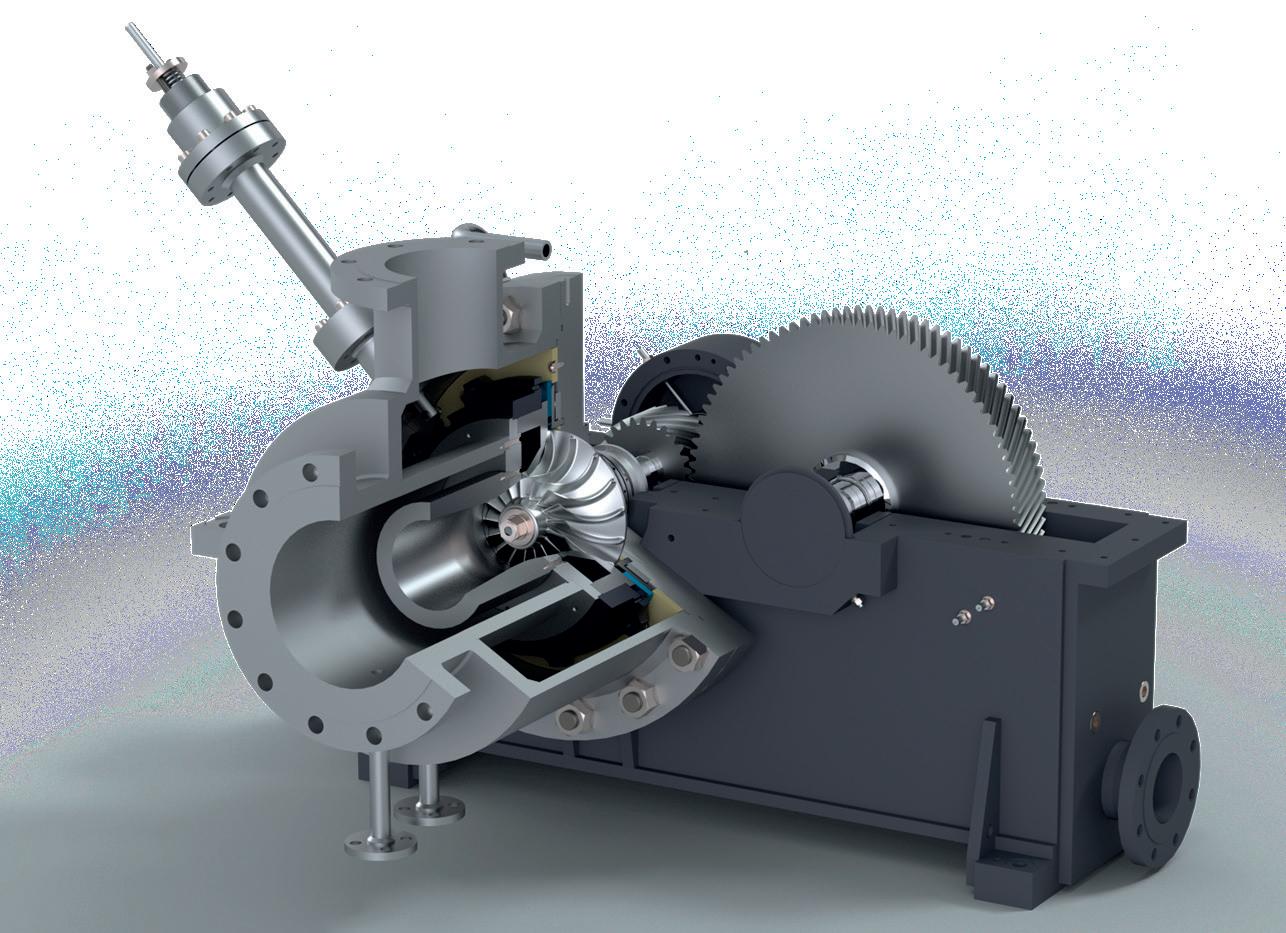
Figure 4. Integrally geared turboexpander for pressure-letdown applications. The figure shows a single stage unit, however, up to four expander stages can be mounted on a single gearbox.
y Inlet temperature: 22°C.
y Outlet pressure: 30 bara.
y Pressure ratio: 2.16:1.
y Turboexpander solution: single-train, 4-stage, integrally geared expander-generator.
y Expected power: 3.8 MW.
y Outlet temperature: -27°C.
This example considers approximately a 500 tpd flowrate and finds attractive results with both the power recovered as well as the cold energy produced. Increasing the pressure ratio would increase the power generation and provide additional cooling (lower outlet temperature), however additional stages may be required.
Pressure recovery is not a universal solution. Several challenges must be considered.
Scale: flow rate must be high enough
Small flows produce small amounts of recoverable energy. For low-flow applications, the power available may not justify
the investment. For reference, flow rates lower than 2000 kg/h of hydrogen are generally too low for turboexpanders and would likely require positive displacement type technology.
Enthalpy: large pressure drops are difficult
Turboexpanders have practical limits on the pressure ratio they can handle in one stage. Hydrogen’s low mole weight makes for high tip speeds, and higher stage counts than with hydrocarbons like natural gas. If the pressure drop is too large, the expander may need an uneconomical amount of stages. For high pressure ratios and/or low flow, a screw expander or reciprocating type may be a better fit. For reference, a modest expansion ratio of 2:1 with hydrogen will still require four expander stages. This means higher expansion ratios greater than 4:1 will require eight or more stages and quickly become overly complicated and commercially unattractive.
recovered energy must have a use
The best applications are those where both power generation and refrigeration can be used continuously. Fuel-cell powered data centres are a good example because they run continuously and can use expander power to offset auxiliary loads and utilise the expander refrigeration for supplemental cooling.
Both of these opportunities point to a simple idea: hydrogen projects should not be designed solely around hydrogen throughput. They should account for all streams that come with it. Electrolysers generate oxygen. Distribution systems create pressure differences. With the right turbomachinery, both can become assets rather than wasted inefficiencies.
This broader systems view helps project developers improve efficiency, reduce operating cost, and strengthen the economics of large scale hydrogen projects.
Hydrogen will continue to attract attention as a clean energy carrier. As production and use scale up, developers will look for every possible efficiency gain. Oxygen compression and PLD recovery are two examples where turbomachinery enables these hidden value streams at scale.
Both applications require the right site, the right equipment, and the right partners. When these pieces come together, hydrogen project economics improve and costs come down, which is a critical piece of the hydrogen puzzle.
1. PANCHAWADKAR, D. ‘Review of opportunities to valorise the oxygen generated from water electrolysis,’ MA thesis, KTH, Stockholm, Sweden (August 2024), https://www.diva-portal.org/smash/get/diva2:1901182/FULLTEXT01.pdf
2. DARABI, A., SHARIATI, A. and GHANAEE, R. et al., ‘Economic assessment of a hybrid turboexpander fuel cell gas energy extraction plant’, TÜBITAK Journal of Electrical Engineering and Computer Sciences, 24 (3): 733 - 745, (2016), https://journals. tubitak.gov.tr/cgi/viewcontent.cgi?article=2679&context=elektrik


Keigh Taylor, Black & Veatch, discusses the shift in the UK hydrogen market to focus on simple projects with long-term offtake.
The UK’s shift in its approach to hydrogen reflects an appreciation of what is possible in the near-term as well as a rejection of the ‘build it and they will come’ speculative mindset that prevailed a few years ago. As that early enthusiasm has settled, the focus has narrowed to the applications where hydrogen is genuinely required.
What is moving now are the simple projects with secure long-term purchase agreements. These are projects where hydrogen goes straight to an industrial user who knows exactly how they will use it for the long-term.
There is a reason for that. In many heavy industrial processes, there is not another way to decarbonise. Chemicals, refining, fertilizer, steel, glass, and ceramics rely on high heat or process chemistry that resists electrification;

they are hard to abate sectors. In those settings, hydrogen replaces fossil fuels.
Hydrogen also shows up in places where compliance is a factor, such as the push for more sustainable aviation fuel, where the UK and EU have carbon-intensity mandates. Similarly, hydrogen shows up in some of the smaller industrial processes, like food-related hydrogenation, where a few operators are looking to use green hydrogen in their process.
While government policy has created uncertainty in the US, the hydrogen sector has kept moving in the UK, albeit at a slower pace with less certainty than the market might like, due to consistent policymaking and long-term planning by the UK government.
Two years ago, the conversation in the UK was about putting hydrogen everywhere – distilleries, transportation,
anything that might take a molecule. No longer. The projects that still make sense are the ones where hydrogen goes directly to one user who can replace natural gas and commit to a 15-year contract to match the contracts for difference (CfDs) models that are in place.
The CfD model in the UK for hydrogen is called the Hydrogen Allocation Round (HAR) and it has allowed developers who can find buyers of hydrogen to build and operate generation plants with subsidy on the selling costs. This has driven success on projects with strong off-take, and in more than just a mandate to build plants.
However, to reach the point where a developer’s board formally agrees to commit capital to a project, commitments that cover the 15 years of the CfD are required. That is where there is still hesitation. Some potential buyers may only be interested in shorter two-year or three-year contracts, with others preferring to wait for prices to fall before they commit. And as more HAR-supported projects come through with similar needs, it becomes a question of the global market’s actual size. If the market is smaller than people expect, the same group of developers compete for the same industrial demand.
HAR2’s structure reinforces the same pattern seen in the global market: the projects that succeed are the simple, industrial ones with verified offtake. And HAR2 provides a test bed for what the market is ready to genuinely support today. The projects that will advance are the ones tied to industrial users who need hydrogen and can take it for the long-term.
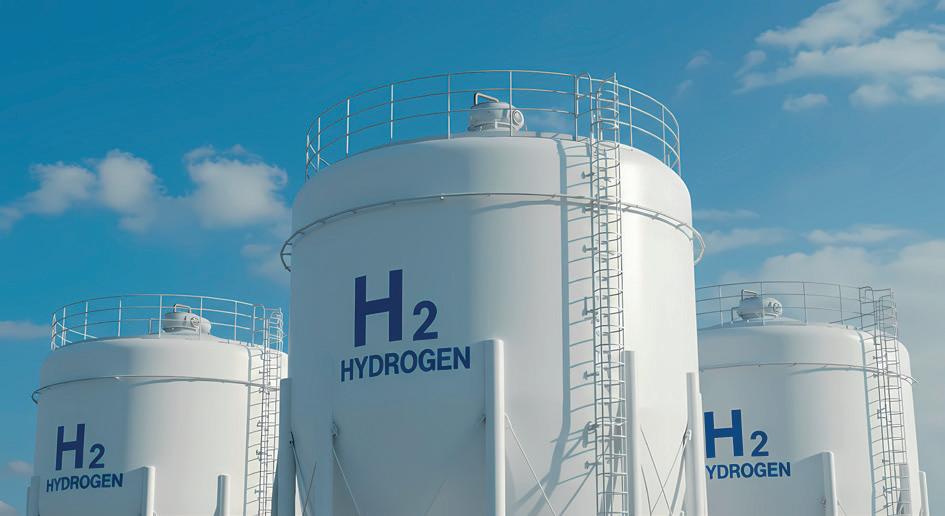
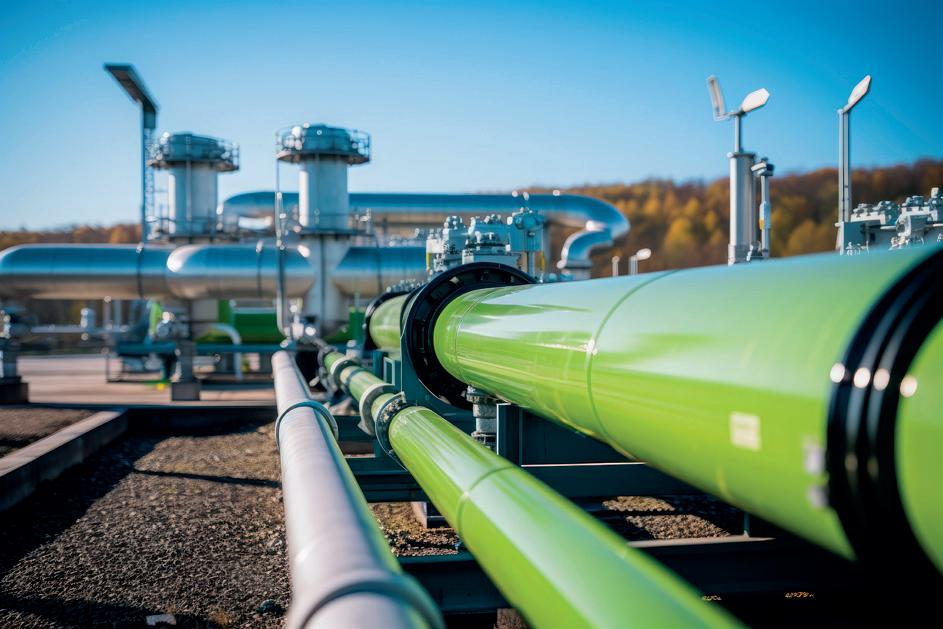
Developers appear to keep repeating the same early-stage work – the same feasibility studies, the same pre-FEED questions, the same alkaline-vs-PEM debate – even though those answers are already out there. None of that gets to the final investment decision stage (FID). What gets you there is a simple technical solution with solid offtake and a clear understanding of how the project will make money.
The earliest indicator that a project is grounded in reality is whether it has a plan for selling hydrogen today, tomorrow, and in 15 years when the energy market has evolved –and whether those plans rely on variables the developer can control.
The projects that move are the ones that keep things straightforward. As soon as different offtake routes are added, the complexity spikes. There may be a temptation to increase offtake options to reduce risks of losing the main offtake supply, but diversity in pressure and technology adds extra safety and design – high-pressure hydrogen on its own can triple the cost of pipework installation. And once you add more people and vehicles to a site to support varied offtake, the safety case gets more complicated very quickly.
Site selection is another place where projects get caught out. Many of these projects sit on brownfield land next to existing industrial users and can require substantial civil engineering.
Some developers put storage too close to where people live and then have to shift major parts of the site around because the safety studies were not completed comprehensively the first time.
Grid connections cause similar surprises. You can get into the front-end engineering and discover the grid point you planned for is not available or is constrained, forcing you to consider battery storage or co-located renewables – and each adjustment adds complexity. Some of these issues are hard to avoid but addressing them as early as possible builds success.
Venting releases hydrogen into the atmosphere, and it does not take much for it to combust. And because hydrogen is a greenhouse-enabling gas, even small releases draw attention from regulators and safety teams.
Flaring solves some of those problems but creates others. It is usually the safer option, but it adds real cost – often £1 - 3 million – and additionally you are dealing with NOX, noise, and a potential flame people can see from a long way off. So, flares come with their own safety envelopes that can create permitting challenges for a site.
None of these choices are simple, and the trade-offs matter when trying to get a project to FID.
The Aldbrough Pathfinder project is a great example of an integrated approach. In this joint project between SSE Thermal and Equinor, hydrogen is produced and stored in a salt cavern the developer controls; then it is pulled back out and burned in a gas turbine on the same site. The developers control the hydrogen’s creation, storage, and use. That gives them a guaranteed offtake and a straightforward design.

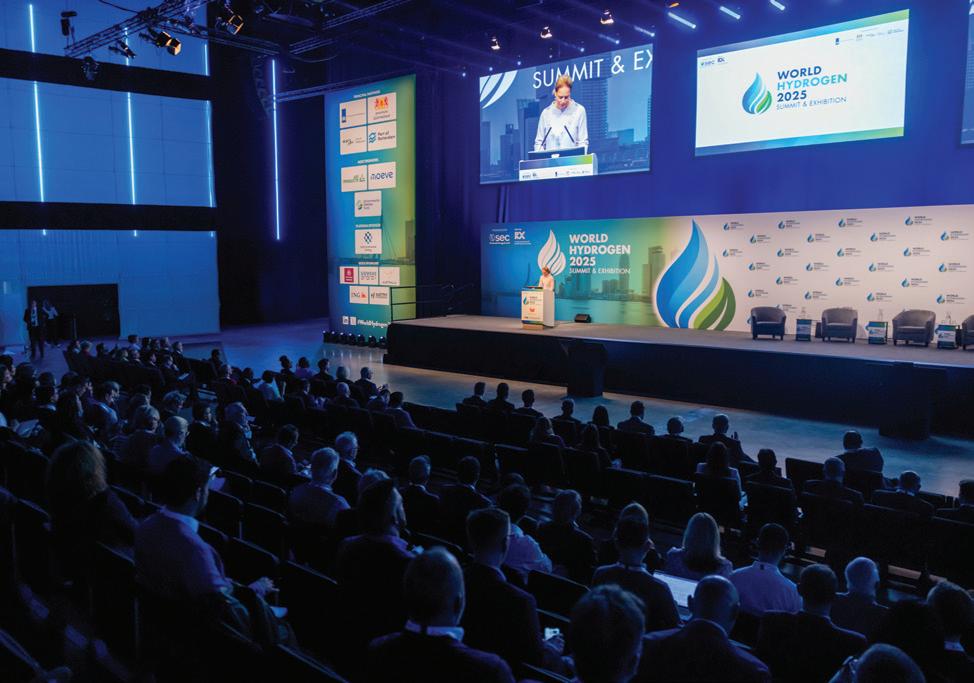
HEAR FROM LEADING HYDROGEN EXPERTS AND GOVERNMENT OFFICIALS

NETWORK WITH OVER 10,000 GLOBAL ATTENDEES ACROSS 3 EVENT DAYS
EXPLORE A WORLD CLASS EXHIBITION AND OVER 500 EXHIBITORS
THE INDUSTRY’S MOST INFLUENTIAL EVENT, WORLD HYDROGEN 2026 SUMMIT & EXHIBITION RETURNS TO ROTTERDAM FOR THE NEWEST EDITION.
JOIN THE GLOBAL HYDROGEN, CCUS AND ENERGY STORAGE COMMUNITIES AND TAKE PART IN THE CONVERSATION AS INDUSTRY LEADERS AND GOVERNMENTS COME TOGETHER TO EXPLORE PRACTICAL STRATEGIES FOR NAVIGATING EVOLVING MARKET CONDITIONS AND ENABLING THE SUCCESSFUL DELIVERY OF PROJECTS.
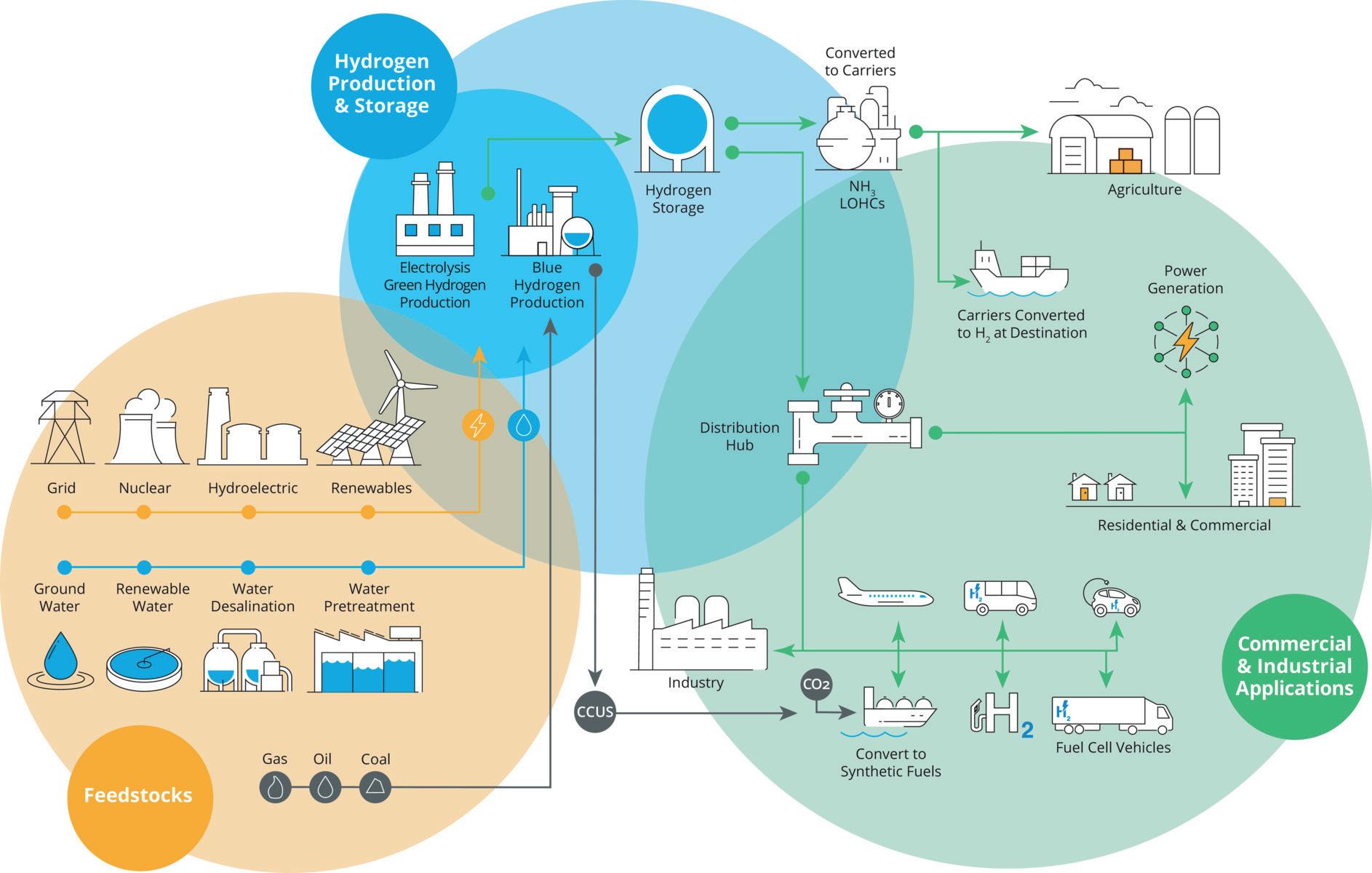
Their experience demonstrates that keeping it simple, having strong offtake, and not overcomplicating the design can really move a project forward.
The more that gets loaded onto a project, the harder it becomes to keep it on track. When developers try to achieve too many things at once, they add technologies and off-takers and extra uses, and the design balloons into something that is
difficult to get through FEED, let alone FID.
The UK’s hydrogen sector needs to enter a more pragmatic and disciplined phase, characterised by a focus on projects with clear industrial applications and dependable long-term offtake. Early ambitions to deploy hydrogen across a wide range of sectors have given way to a narrower emphasis on hard-to-abate industries where hydrogen is genuinely required for decarbonisation. As the UK progresses along its hydrogen journey, success is increasingly defined by simplicity of design, certainty of demand and realistic pathways to FID. Projects that minimise complexity, secure credible offtakers, and apply established engineering learnings are best positioned to move forward. In this context, the UK’s hydrogen strategy will evolve not through rapid expansion but through deliberate, evidence-based progress that prioritises what can work today while laying foundations for future growth.


Chris Dudfield, Intelligent Energy, UK, presents a scalable model to demonstrate closed-loop hydrogen integration and accelerate the deployment of fuel cells for aviation.
As the hydrogen sector matures, attention is moving from concepts to configurations that can genuinely accelerate deployment.
Intelligent Energy’s new Technology Development Centre at Chelveston Renewable Energy Park, UK, which will open in 1Q26, is built to fast-track the next generation of fuel cells for aviation. It also demonstrates a wider principle: how renewables, green hydrogen, and electricity can form a closed-loop system that operates independently of the grid.
This self-contained model – where wind and solar power feed electrolysis, hydrogen storage, and on-demand electricity generation – could have broad application across industry, data infrastructure, and remote power. The size of the operation at Chelveston represents a big step in proving that model.
Aviation faces one of the most complex energy transitions of any sector. Batteries remain constrained by weight and energy density; conventional turbines, even on sustainable fuels, still release CO 2 and NO x. Hydrogen fuel cells bridge that gap, combining the efficiency of electric propulsion with genuine zero-emission operation.
The IE-FLIGHT TM 300 system, developed under the UK government-backed HEIGHTS programme, delivers 300 kW in a modular format suitable for electric vertical take-off and landing (eVTOL) aircraft and short-haul regional planes. The HEIGHTS initiative, supported by the Aerospace Technology Institute, Innovate UK and the Department for Business & Trade, is addressing aviation’s core engineering challenge with fuel cells – thermal management. Patented direct water-injection cooling reduces drag and mass, unlocking high power density and improved efficiency.
Chelveston gives this programme a dedicated, hydrogen-powered development base. By producing and using green hydrogen on site, the facility enables continuous testing, validation and optimisation of fuel cell platforms without reliance on external hydrogen supply chains. It closes the loop between renewable generation, fuel production, and application – everything required to develop flight-ready fuel cell systems under real operating conditions.
The new facility, located within the 750 acre Chelveston Renewable Energy Park in Northamptonshire, houses four test cells with a combined 1.3 MW fuel cell system test capacity. The site expands the technology development facilities at the company’s Loughborough headquarters and forms part of its latest major investment programme.
To support round-the-clock operation, the centre is powered by the surrounding renewable park’s wind turbines and solar arrays, supplemented by on-site hydrogen production. Power not drawn directly from renewables drives an electrolyser capable of producing up to 450 kg/day of hydrogen. The hydrogen is stored in a 75 m 3 tank and converted back to electricity through a 3 MVA fuel cell transformer system whenever required. This linked system effectively transforms the site into a microgrid, balancing its own supply and demand using green hydrogen as the energy storage medium. The result is a facility able to operate continuously and autonomously, with zero carbon emissions. It is a development centre sustained by the same technology it develops – a complete ecosystem linking generation, storage, and use.
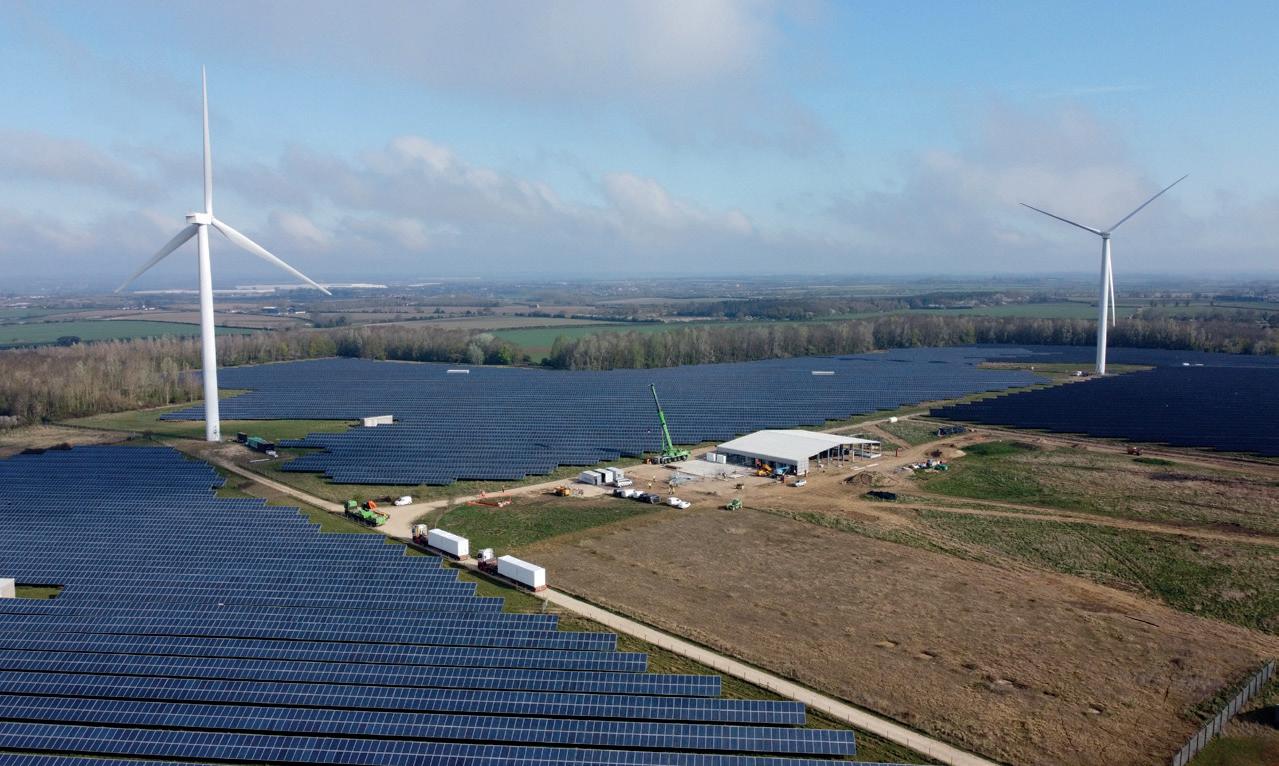
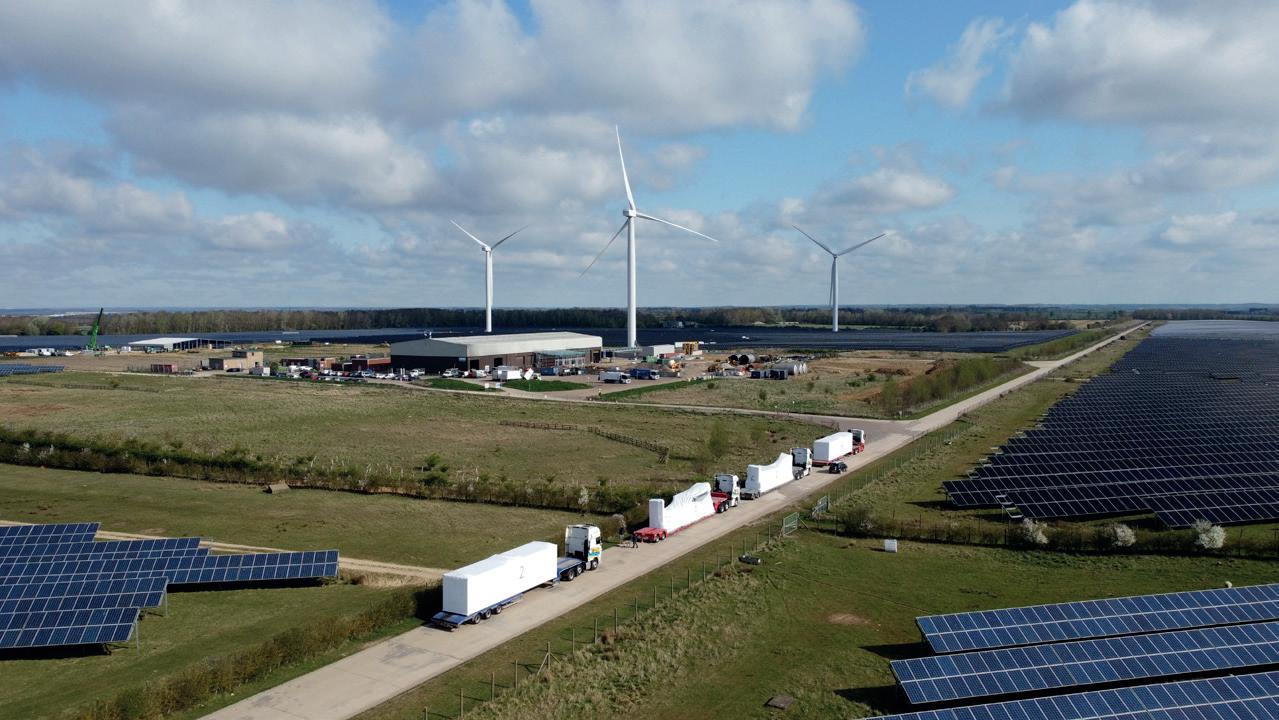
Although conceived to support aviation work, Chelveston’s configuration holds broader relevance. Its renewable-hydrogen-fuel cell cycle illustrates how surplus renewable power can be captured and stored locally rather than curtailed.
In 2024, the UK spent more than £1.5 billion compensating wind farms for constrained generation. Each curtailment represents clean electricity lost for want of flexible demand. Co-located hydrogen production addresses that inefficiency. When grid capacity is saturated, power can instead drive electrolysis, converting otherwise wasted energy into a storable, transportable fuel.
At Chelveston, this principle underpins the development centre itself. At a national scale, the same model could mitigate curtailment costs, enhance
energy security, and expand the country’s supply of green hydrogen across multiple market sectors, including heavy transport and manufacturing.
The data gathered at this site will inform not only the company’s aviation programme but also future commercial hydrogen sites. It will show how to size storage relative to generation, how to maintain water and thermal balance under variable load, and how to operate economically when grid export prices fluctuate.
In short, Chelveston will provide valuable evidence for designing scalable, commercially robust green hydrogen ecosystems.
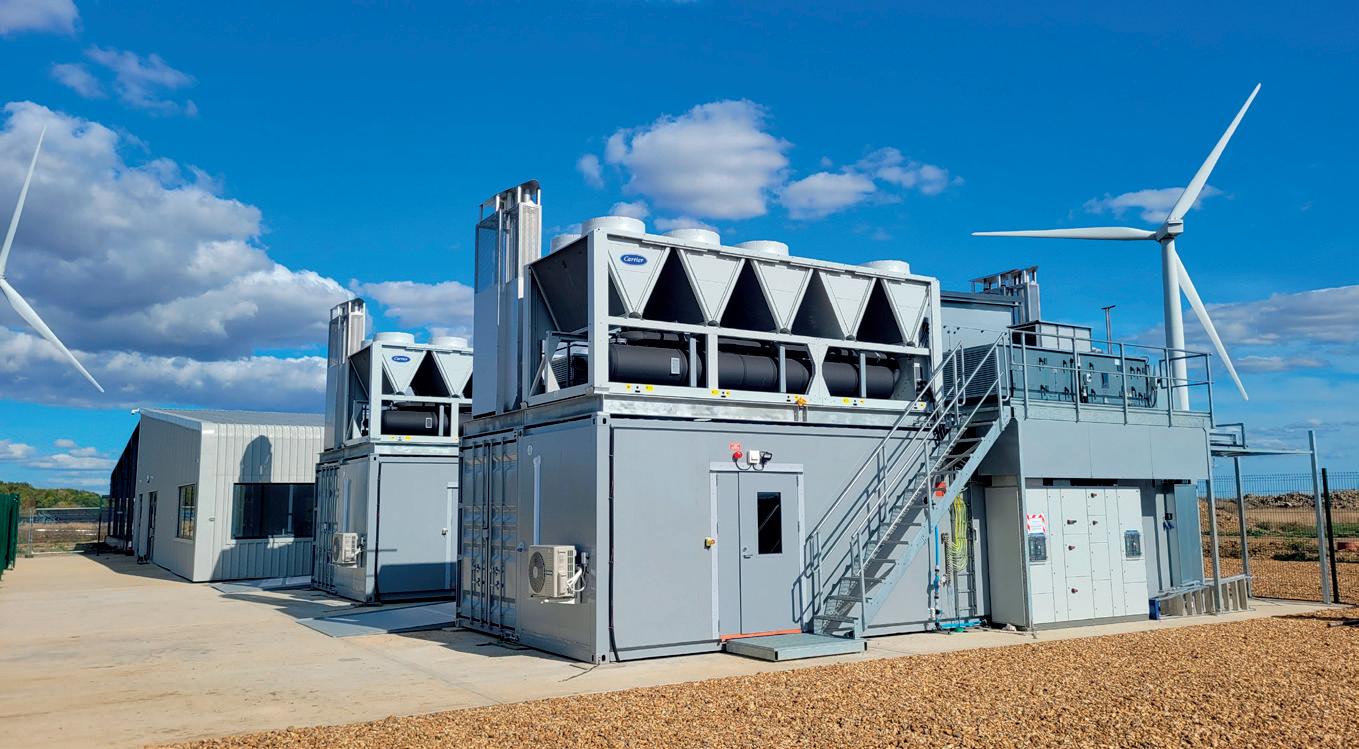
Hydrogen’s long-duration storage capability provides advantages that batteries cannot replicate at scale. Electricity stored in the form of hydrogen can be held for days or weeks, providing resilience during extended periods of low wind or solar output.
At grid level, distributed hydrogen systems could help reduce balancing costs and reliance on fossil-fuelled peaking plants. At local level, they can keep critical operations running when the grid is constrained or disrupted. Chelveston demonstrates both capabilities in miniature: grid-connected yet self-reliant, responsive yet independent.
As the UK’s energy mix tilts further toward renewables, this kind of flexible capacity will become essential. It complements electrification, creating a buffer between generation variability and continuous industrial demand.
The hydrogen economy is often discussed in sectoral terms – aviation, transport, industry, energy storage – but its most promising developments occur where these areas overlap. Chelveston exemplifies that intersection.
By coupling fuel cell development with renewable generation and hydrogen production, two of the UK’s industrial strengths are united: aerospace engineering and clean energy technology. The lessons learnt in aviation about fuel cell performance, reliability and thermal control will feed back into stationary power fuel cell systems. Likewise, the experience running an autonomous renewable-hydrogen microgrid will inform the design of future industrial infrastructure.
The UK government’s hydrogen strategy, backed by £500 million for infrastructure development, sets ambitious production targets. To achieve them, however, deployment models must evolve beyond stand-alone plants feeding distant users. Integrated sites like Chelveston illustrate an
alternative: smaller, distributed systems co-located with renewables, capable of providing immediate grid services as well as local, clean fuel supply.
Such projects would benefit from policy frameworks that recognise their dual function – as both consumers and producers of energy – and from streamlined planning and grid-connection processes. Supporting these models could deliver faster capacity growth and lower system-wide costs than large, centralised installations alone.
Intelligent Energy has developed and commercialised hydrogen fuel cells across many applications including drones, automotive, materials handling, aviation, and stationary power. Chelveston represents the next logical step: combining that expertise with control of a green hydrogen supply.
By integrating production, storage and use, fuel cell systems are taken through validation testing with an approach which embodies the company’s broader philosophy: to solve technical challenges through applied engineering and to demonstrate what a functioning hydrogen ecosystem looks like.
When Chelveston becomes fully operational, it will mark a milestone for both Intelligent Energy and the wider UK hydrogen sector. For the company, it will serve as the centre of its aviation testing programme, providing the infrastructure needed to bring hydrogen-electric flight to market within the decade.
For the energy community, it offers a working model of closed-loop renewable-hydrogen integration – a template that could be scaled and adapted across multiple sectors. Whether powering manufacturing plants, logistics hubs or research facilities, the same principle applies: generate clean energy, store the surplus as hydrogen, and use it to maintain constant, zero-carbon power.
This is how hydrogen becomes practical, not just possible. Chelveston’s purpose is to prove that model – first for aviation, then for wherever reliable, renewable energy is needed most.


Dr Barry Prince, Dr Rajendran Parthipan, and Dr Neil Glasson, Fabrum, explain why liquid hydrogen is the most viable low-carbon fuel for hard-to-abate sectors.
Hydrogen is rapidly becoming one of the most critical energy carriers for a low-carbon future. Its exceptionally high specific energy (120 MJ/kg) and its ability to be produced from renewable electricity make it a compelling solution for decarbonising applications that demand high endurance, long-range or fast refuelling – areas where battery systems face intrinsic limitations. Liquefying hydrogen increases its volumetric density beyond what can be achieved for gaseous hydrogen, and importantly, allows for storage in lighter weight tanks, such that overall system efficiency can rival or even outperform existing carbon-based fuels. Because of the above characteristics, liquid hydrogen (LH2) is emerging as a leading fuel for the so-called ‘hard-to-abate’ sectors such as aviation, heavy transport, mining, and specialised industrial operations. In aviation, LH2 enables viable hydrogen-electric flights through lightweight, onboard storage. Mining operations, which rely on extremely energy-intensive machinery, are supported by liquefaction and storage systems in remote environments. Heavy trucks, rail locomotives, and defence applications will further benefit from the long-range capability and fast-refuel profile that LH2 offers.
Storing hydrogen in gaseous form is familiar and widespread, but it is fundamentally constrained by physics. Even when compressed to 700 bar or 350 bar – a pressure requiring thick-walled, pressure vessels – gaseous hydrogen still exhibits relatively low volumetric energy density. The storage system itself becomes heavy because the tank walls must resist enormous internal forces. Gaseous hydrogen systems also require additional equipment such as high-pressure regulators, compressors, and robust safety infrastructure, all of which add mass, complexity, and cost. Moreover, refuelling a high-pressure gaseous system tends to be slower, and maintaining stable gas temperatures during fast fills requires careful thermal management.
LH2 overcomes many of these limitations by dramatically increasing volumetric density while using comparatively low pressures, typically well under 10 bar such that light-weight storage vessels can be employed. This low-pressure characteristic also reduces safety concerns.
LH2 achieves one of the highest volumetric energy densities of any physical hydrogen storage method possible, making it especially advantageous in applications where space is constrained and overall system mass is vital. In mobility sectors –particularly aviation – the relationship between stored energy, structural mass, and operational range becomes central. Here, a key metric is the gravimetric index (GI), which measures the ratio of usable hydrogen mass to total system mass.
Aviation applications impose some of the most demanding GI requirements of any hydrogen platform, as every kilogram of fuel-system mass directly impacts payload, range, and aircraft performance. Achieving high GI values therefore becomes a primary design driver, requiring lightweight structures and minimised parasitic mass.
Metallic tanks, typically used in heavy trucks and mining equipment where durability is prioritised, generally achieve GI values in the 10 - 30% range. Although lower than composite equivalents, these metallic systems offer ruggedness and reliability essential for harsh, high impact operating environments.
LH2 introduces several engineering challenges for mobility applications, particularly due to its extreme temperature and material interaction requirements. Composite structures, while offering excellent weight advantages, must be carefully engineered to manage porosity, permeability, and long-term cryogenic compatibility. Ensuring insulation reliability is equally critical, as even minor degradation in vacuum quality or multilayer insulation can significantly increase thermal ingress.
Refuelling efficiency is another key consideration. LH2 enables rapid transfer compared to high pressure gaseous hydrogen but managing thermal gradients during filling remains a nontrivial problem. Advanced multilayer tank architectures can reduce heat load and associated boil-off, supporting faster and more stable refuelling profiles. In parallel, improved insulation and precision manufacturing practices help extend dormancy periods, allowing tanks to remain sealed for longer durations without venting under certain operating configurations. Beyond these factors, LH2 storage systems must accommodate thermal cycling, sloshing behaviour, and the handling requirements of cryogenic fluids.
While gaseous hydrogen remains suitable for smaller platforms or short-range use cases, the system level advantages of LH2 –higher energy density, reduced refuelling times, and improved operational efficiency – make it the preferred solution for longrange, high utilisation, or rapid turnaround mobility applications.
Rather than offering isolated components, Fabrum develops complete storage and fuel system architectures, integrating onboard tanks with refuelling, gas delivery, boil-off management, and even small scale liquefaction systems. This holistic approach ensures compatibility, optimised performance, and effective thermal management across the entire LH2 value chain.
The company’s cryogenic systems reflect this, with full-composite LH2 tanks achieving GI values of approximately 25% for smaller aerospace vessels and exceeding 60% for larger systems, depending on geometry and operating pressures.
For mobility sectors where every kilogram counts – particularly aviation – full composite LH2 tanks offer mass efficiency. Developed specifically for aerospace and high performance transport applications, these tanks use advanced composite manufacturing methods to minimise weight. Conventional cryogenic storage systems typically rely on double skin tanks with vacuum jackets to minimise heat transfer. Fabrum’s LH2 double skin composite tanks provide a balance of lightness, structural integrity, and insulation, making them suitable for many flight and vehicle platforms.
The company’s patented triple skin architecture is designed to decouple tank refuelling from tank cooling, a capability that
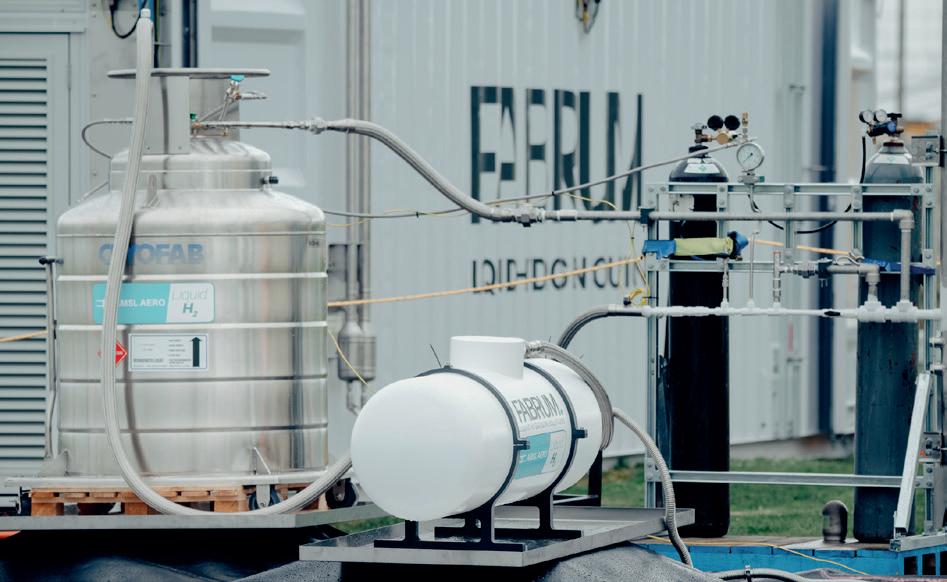
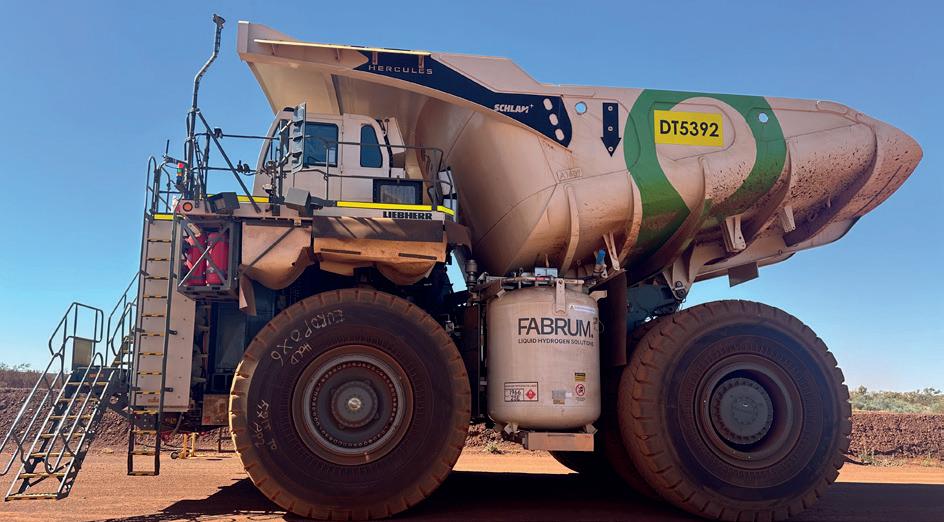
becomes especially important when refilling from ambient temperature. By introducing a very low thermal mass cryogenic shell to hold the LH2, the system isolates the thermal load associated with cooling the tank from the process of adding LH2 This significantly suppresses conductive and radiative heat ingress into the cryogenic volume.
Testing shows that this approach can reduce boil-off rates by up to 80% and cut refuelling times by as much as 70%, since the tank no longer needs to absorb as much heat during transfer. These advantages make the triple skin configuration ideally suited to high turnaround applications – such as regional aviation and heavy duty vehicle platforms – where rapid, repeated refuelling from warm conditions is required.
Fabrum’s collaborations with AMSL Aero, Stralis Aircraft, and other aerospace innovators are demonstrating how LH2 enables efficient, long-range, rapid refuelling flight operations.
The company supplies not only lightweight composite tanks but also the surrounding refuelling, gas conditioning, and integration systems necessary for safe and efficient operation. These tanks are currently deployed within several test programmes (see Figure 1) and are advancing through relevant certification processes, with partner led LH2 flight demonstration activities planned for 2026.
The advanced triple skin cryogenic designs developed for aviation significantly reduce refuelling times – attributes essential for scheduled operations.
LH2 is identified as a viable zero carbon fuel for mining because it can meet the large onboard energy demands of heavy mobile plants, which can exceed 3 t of diesel for a 12 hour shift. Fortescue selected Fabrum to supply a pilot LH2 system at its Green Energy Hub in the Pilbara, Australia, incorporating liquefaction, transfer, and onboard storage of LH2 for prototypes and other equipment. This included a system capable of liquefying approximately 400 kg/day of hydrogen, mobile refuelling capability, and cryogenic onboard storage integrated with fuel cell delivery systems.
The deployment demonstrated that LH2 tanks such as the 250 kg LH2 tank shown in Figure 2, and associated infrastructure can be safely operated in an active mine environment, including the harsh conditions of the Australian outback.
LH2 is the only zero carbon fuel whose specific energy is comparable to fossil fuels, making it uniquely capable of meeting the energy density requirements of hard-to-abate sectors such as aviation, heavy transport, and mining – applications where payload, range, and turnaround constraints render lower-energy alternatives impractical.
Its high volumetric density, low pressure operation, and compatibility with rapid refuel, high utilisation duty cycles make it the preferable choice over compressed gas for aviation, mining, heavy transport, and industrial applications. The mobility sector will rely on LH2 to achieve the ranges, payloads, and operational efficiency required to meet commercial and environmental objectives.
Francesco Dioguardi, Stirling Cryogenics, the Netherlands, illustrates how established cryogenic principles can be applied in modern liquid hydrogen systems.
The global energy transition has brought hydrogen back to the forefront as a key enabler of decarbonisation across industry, mobility, and energy systems. As demand for small and medium scale storage and long-distance transport increases, liquid hydrogen (LH2) is becoming an essential component of emerging hydrogen value chains. However, the production and handling of LH2 require highly specialised cryogenic technologies that combine efficiency, reliability, and operational flexibility. This article explores the role of Stirling Cryogenerators in modern hydrogen liquefaction, tracing their development from early scientific applications to today’s industrial scale systems. By highlighting both their historical roots and ongoing technological evolution, it

demonstrates how this technology continues to support new markets and applications. The discussion illustrates how Stirling-based systems enable accessible, scalable, and energy-efficient liquefaction solutions in a rapidly evolving hydrogen economy.
Stirling Cryogenerators were widely applied during the 1960s and 1970s for the production of LH2 at research institutes and laboratories worldwide. In materials science, small scale LH2 production enabled the study of the properties and behaviour of LH2, material behaviour at cryogenic temperatures, and the effect of hydrogen on materials.
In scientific installations, Cryogenerators have been used as LH2 re-liquefiers, to cool cold neutron moderators and to operate H2/D2/T2
distillation columns. Some of these vintage machines remain operational today. A notable example is the installation at the National Institute of Cryogenic and Isotope Separation in Romania, which was commissioned in 1973 and continues to operate reliably. In 2022 the institute bought a second Cryogenerator, not to replace the old one, but to extend the institute’s distillation capacity.
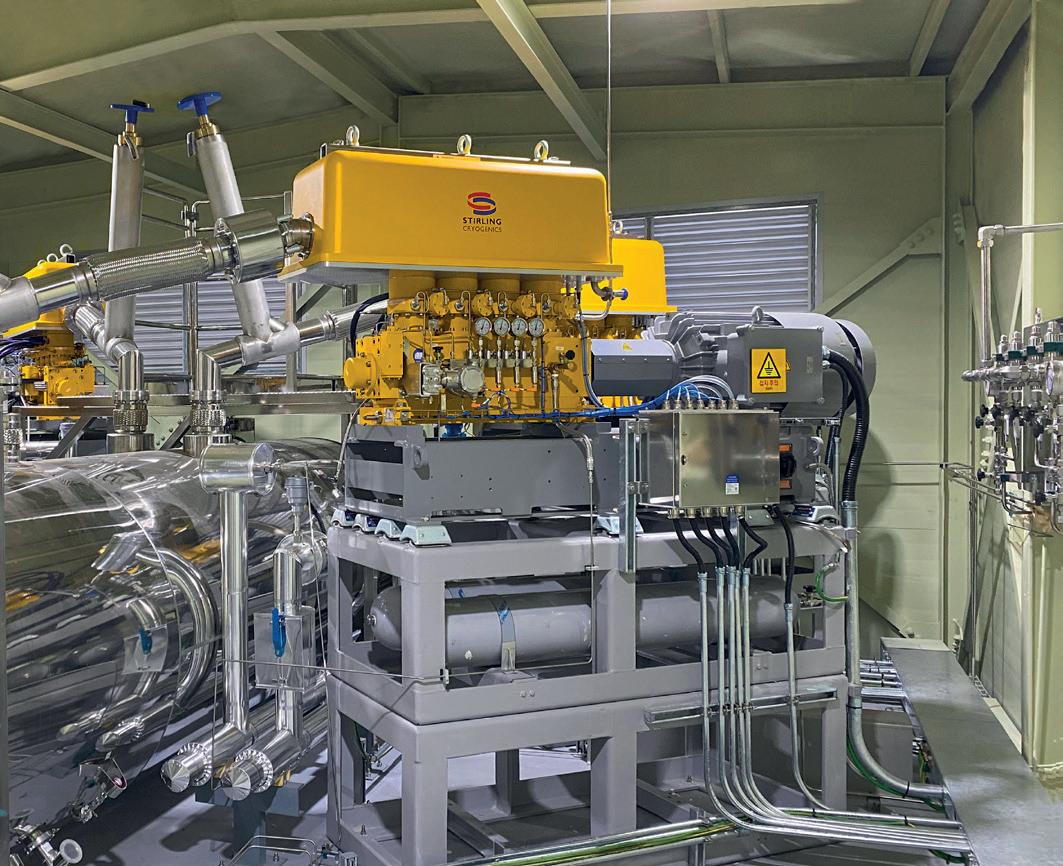
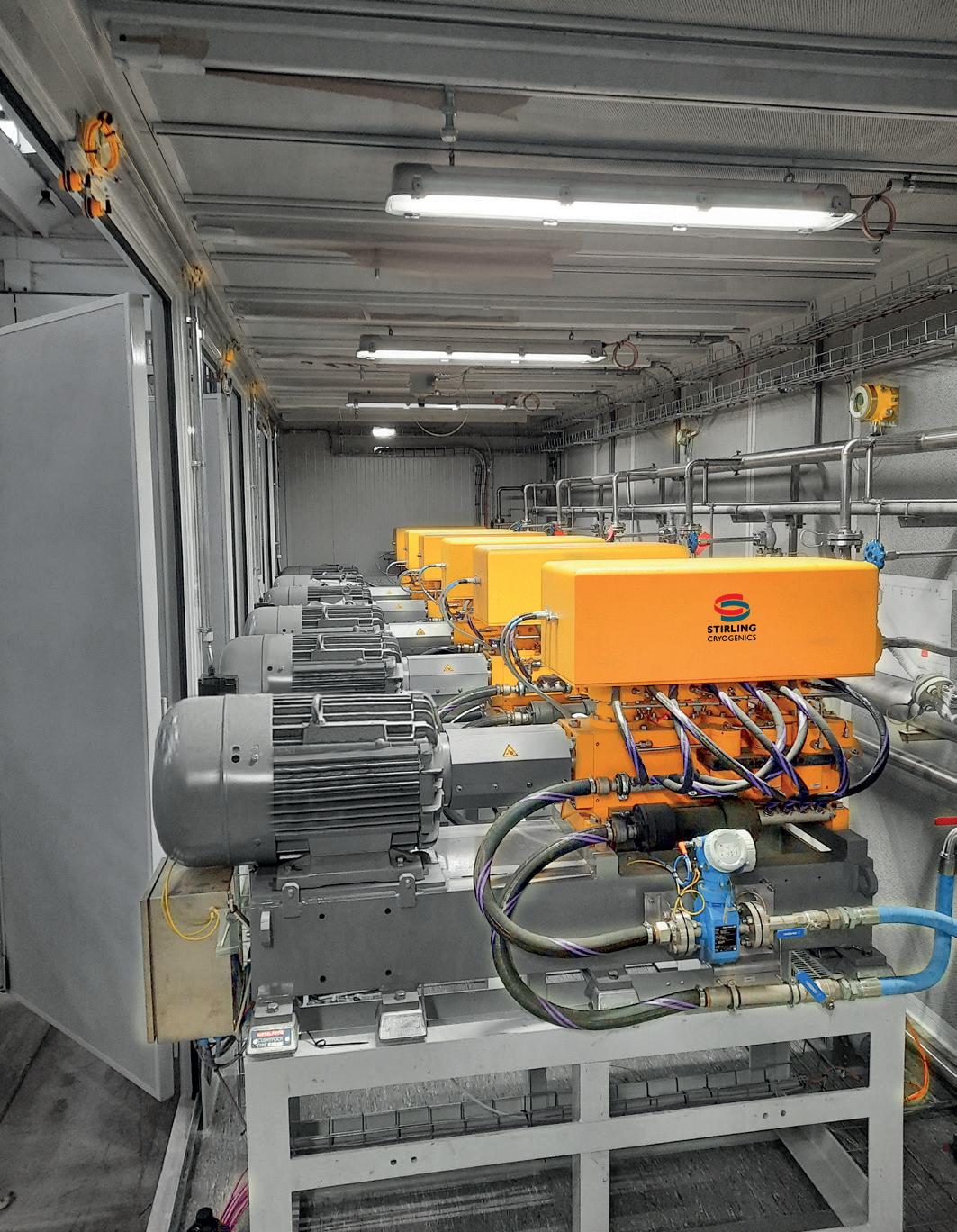
Driven by the global transition toward a low-carbon energy system, in recent years hydrogen and LH2 have once again moved to the centre of attention. Many green hydrogen gas production facilities are being built or planned, at both institutes and industries, many requiring (partial or full) liquefaction.
The Stirling cycle is a thermodynamic closed cycle invented in 1816 by the Scottish minister Robert Stirling. It was used as an engine and was considered at the time to be capable of replacing the steam engine since steam boilers were prone to life-threatening explosions. The counterpart of the Stirling engine, the refrigerator, was first recognised in 1832. Both machines experienced highs and lows during the nineteenth century. The principle behind the machines was almost condemned to obscurity after the invention of the internal combustion engine and compressor refrigerators with external evaporation.
In 1938 the Dutch Philips Research Laboratory was looking for a means to power electricity generators for short wave communication systems in remote areas without electricity supply. The practically forgotten Stirling engine attracted their attention. In 1946 Philips started optimising the Stirling cycle to be used for cryogenic cooling. The result was the development of the Stirling Cryogenerator, marking the start of significant cryogenic activities at Philips from 1954. Its Carnot efficiency is 30% at 77 K (-196˚C), resulting in a high practical overall efficiency defined as Watts of cooling power available to the application divided by kW of electric input power. Though the Stirling engine itself never became a commercial success, the Stirling Cryogenerator has been incorporated in cryogenic equipment and projects used from Antarctica to the North Pole and all over the world.
Cryogenerators have proven to be robust: units installed as early as 1958 remain in operation today. But also, the efficiency, the fast operation (from 293 K [20˚C] to 20 K [-253˚C] in less than 20 minutes), and the plug and play modulated set up have proven to be major contributors. The ability to adapt, develop, and redesign cryogenic systems to meet specific cooling requirements for new and/or emerging markets and applications has allowed Cryogenerator technology to remain relevant.
Based on the two-stage Stirling Cryogenerators, a range of system sizes have been designed, from a small laboratory scale unit producing 5 kg/day of LH2 and up to industrial scale 2000 kg/day containerised systems – all only needing hydrogen gas and electric power as input, producing converted para LH2 into a transfer vessel.
Two-stage Cryogenerators can be used as a single-cylinder configuration for liquefaction capacities of approximately 5 kg/day, and as a four-cylinder configuration delivering over 22 kg/day of LH2. Incoming hydrogen gas is precooled to approximately 80 K (-193˚C) in the first stage and then liquefied at around 22 K (-251˚C) in the second stage. After catalytic ortho-para conversion,
the LH2 flows via gravity into a transfer vessel, from which it is transferred to the storage tank.
An LH2 liquefaction system includes all necessary internal piping, instrumentation, transfer vessel, and control system. Systems are designed and manufactured in compliance with ATEX and other applicable national and international codes and standards.
purification of the incoming gaseous hydrogen. Cryogenerators can also be supplied as modules to a system integrator, building the total system with the Cryogenerators as the core.
different configurations of the Cryogenerators. One
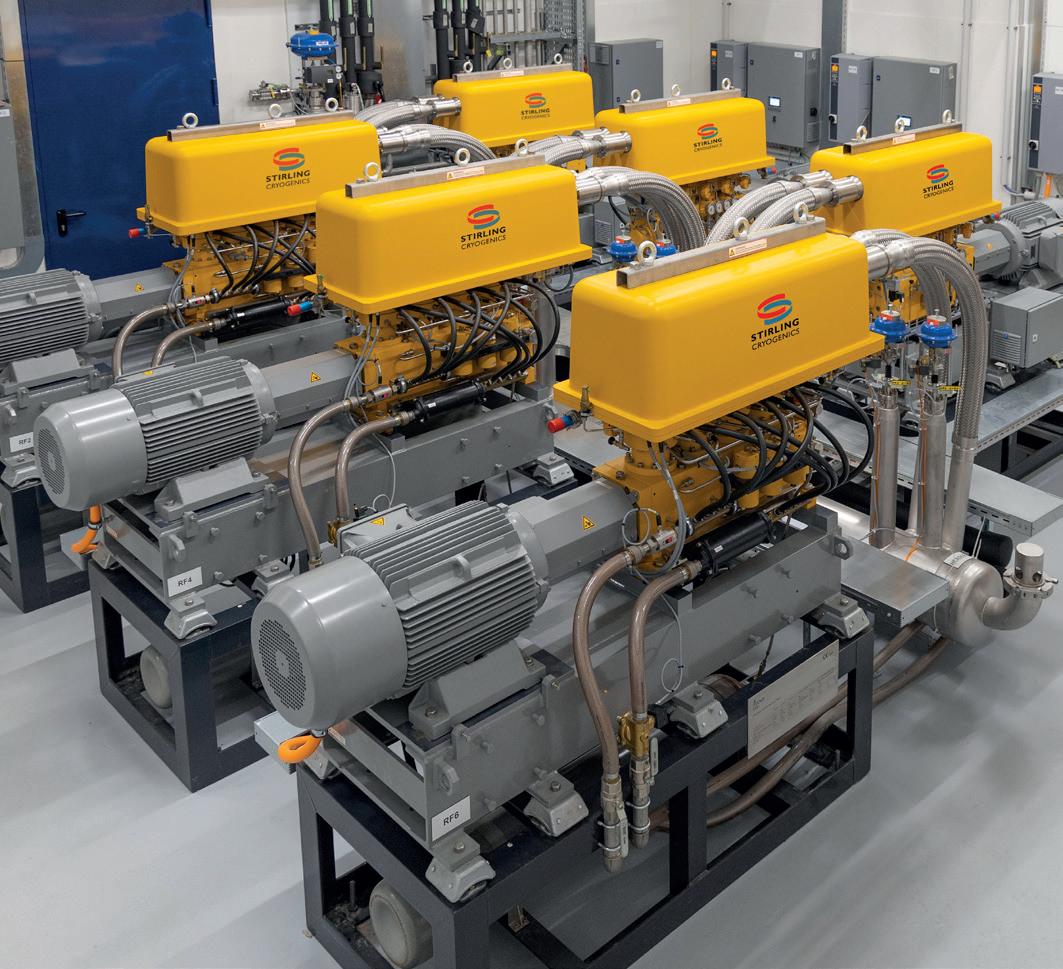







adapted by turning them on or off as required. Since each machine begins producing LH2 within approximately 20 minutes from a warm start, the system can respond rapidly to changes in available gaseous hydrogen flow.
The two-stage Stirling Cryogenerator can also be applied as a re-liquefier for boil-off gas (BOG) from LH2 storage tanks, thereby minimising hydrogen losses and preventing venting of cold gaseous hydrogen.
For these zero boil-off systems, two different concepts can be proposed:
y First is that the cold GH2 is piped to the Cryogenerator, where it is liquefied into a transfer vessel. Once the vessel is full, the liquid is pressurised to push it back to the main vessel. This concept is readily available as part of liquefaction systems from Stirling Cryogenics, provided a GH2 return line is made available from the main storage tank at the site.
y For cases where only re-liquefaction of BOG is required, the second possible concept is that the BOG does not even leave the tank but is re-liquefied and retained inside. To achieve this, the vessel shall be equipped with a coil through which cold helium (He) gas is flown. This coil acts as a liquefaction surface for the BOG, so pressure raise is countered. The helium gas is flown around in a closed loop by one of Stirling’s CryoFans from the coil inside the vessel to the Cryogenerator internal heat-exchanger, where the GHe is cooled down again. This concept needs the addition
of the helium coil at manufacturing of the vessel, having the advantage that the cooling system does not need to be ATEX-compliant.
In 2025 Stirling Cryogenics supplied four of its hydrogen re-liquefiers for a large project in South Korea consisting of several large LH2 vessels. The BOG from insulation losses and the evaporation by operational losses are collected and fed to the Cryogenerators. This flow can vary between 100 and 200 kg/day, to which the cooling capacity of the Cryogenerators is adapted. After re-liquefaction the flow is transferred back to the main LH2 vessels.
As the hydrogen economy develops, the need for reliable, adaptable, and efficient liquefaction solutions becomes increasingly apparent. This article has illustrated how established cryogenic principles can be applied in modern LH2 systems, offering modular configurations that can scale to match fluctuating supply and demand. Applications such as BOG re-liquefaction show how these systems can contribute to operational efficiency and resource optimisation. At the same time, challenges such as energy requirements, system integration, and cost considerations remain relevant factors for potential adopters. By examining historical development, current system designs, and practical deployments, it becomes clear that Stirling Cryogenics offers a viable technology in the evolving landscape of hydrogen liquefaction.

A special supplement focusing on decarbonisation pathways for the downstream sector, highlighting innovative technology and solutions that will help you thrive within the energy transition.
This special supplement focuses on decarbonisation pathways for the downstream sector, highlighting innovative technology and solutions that will help you thrive within the energy transition.

Scan the QR code to download your free copy of EnviroTech 2025.
Scan the QR code to download your free copy of EnviroTech 2024.
Hydrogen, syngas, methanol and ammonia solutions engineered by Casale to power a lower-carbon future
Discover more on casale.ch