16 The next cement boom is here: Arif Habib analysts
20 The Billion-Dollar Illusion Muhammad Azfar Ahsan
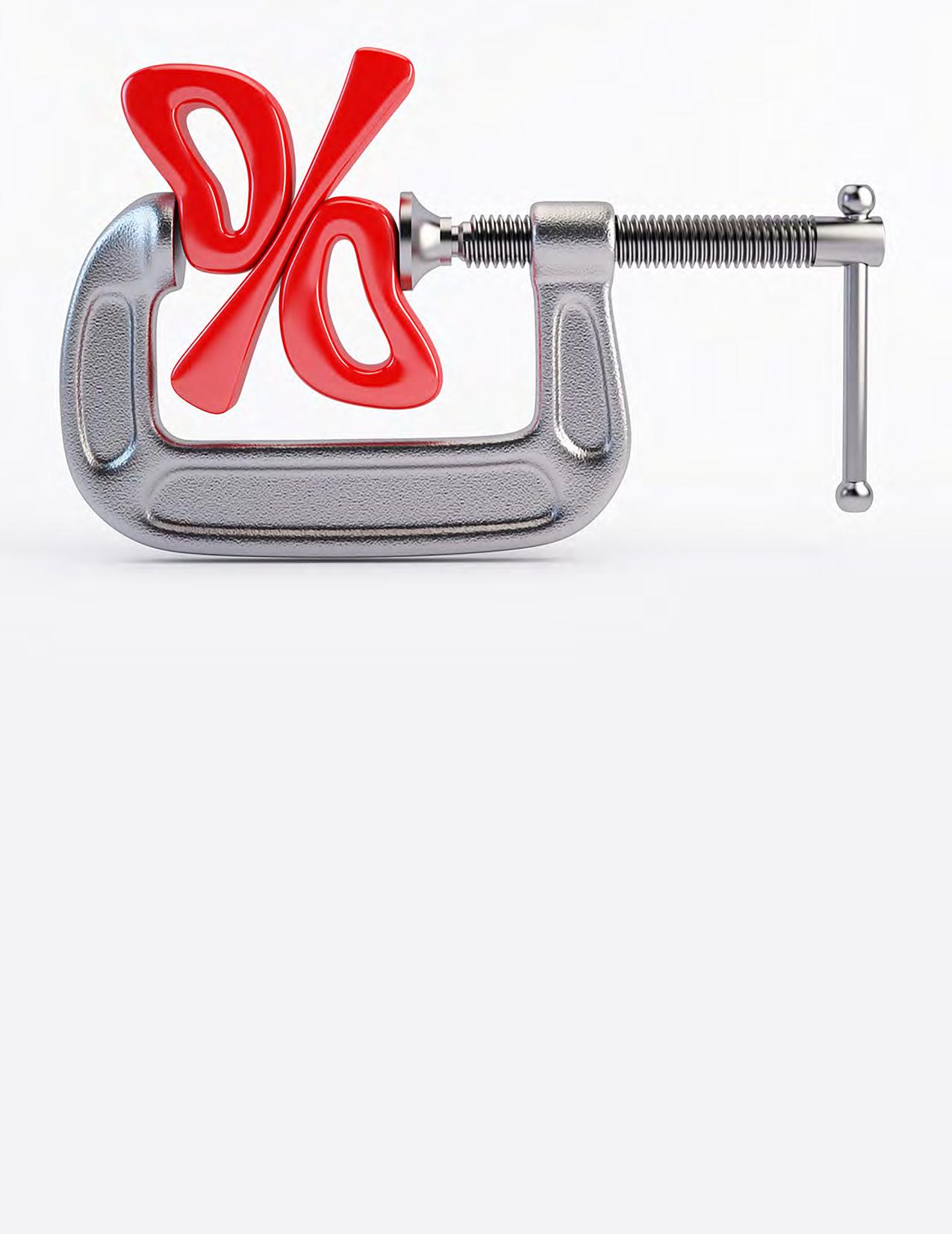
25 Why the SBP removed (most of) the MDR, and what it means for Pakistan’s banking sector
28 The buffer and the trap: What Pakistan’s Petroleum Prices Stabilization Fund must not become Usama Qureshi
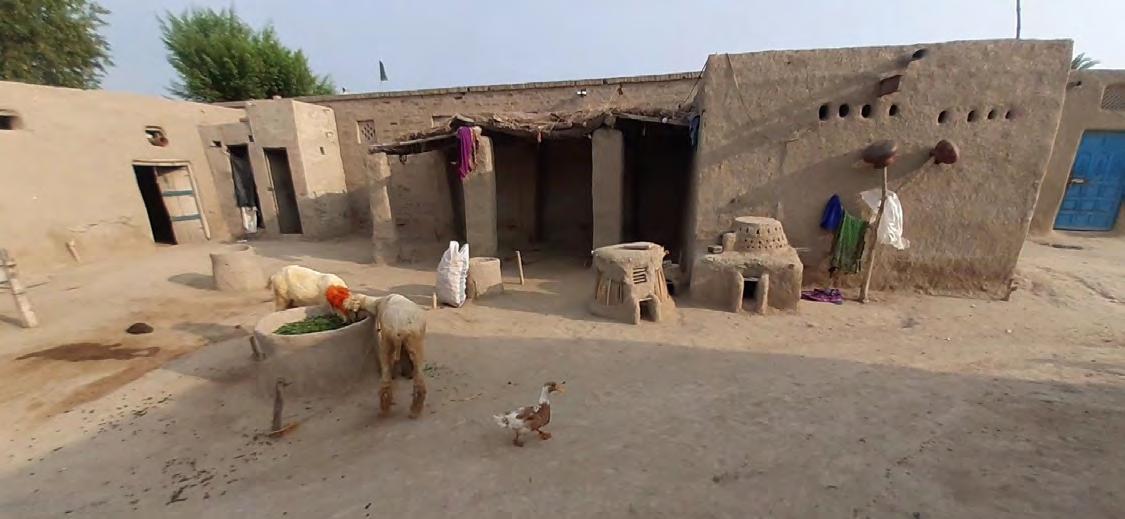
30 The Village as an Institution: Rethinking Rural Development in Punjab Ahmad Iqbal
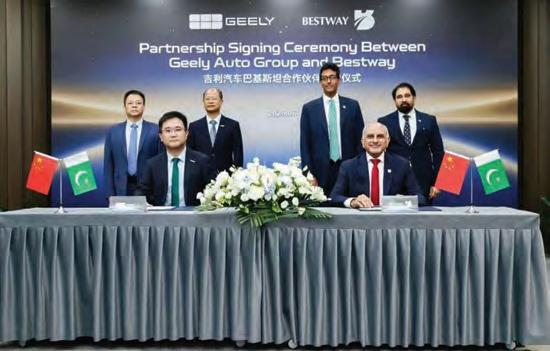
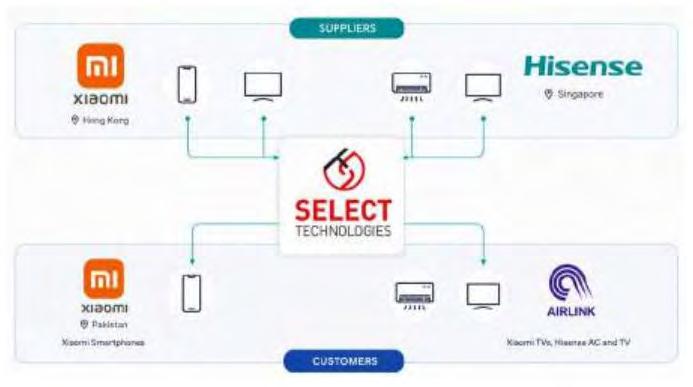
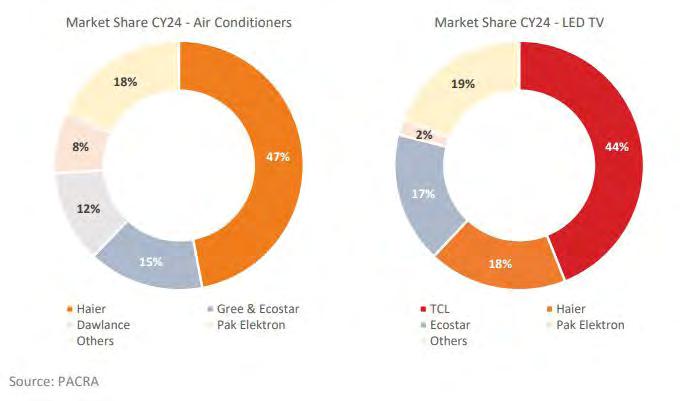
33 Where will the Select IPO go?
Publishing Editor: Babar Nizami - Senior Editor: Abdullah Niazi
Business Reporters: Taimoor Hassan | Usama Liaqat | Zain Naeem | Shahnawaz Ali | Ghulam Abbass
Ahmad Ahmadani | Aziz Buneri - Sub-Editors: Saddam Hussain | Abdul Hameed - Video Producer: Adnan Maqsood
Director Marketing: Muddasir Alam - Regional Heads of Marketing: Agha Anwer (Khi) Kamal Rizvi (Lhe) | Malik Israr (Isb) GM Special Projects Zulfiqar Butt - Manager Subscriptions: Irfan Farooq Pakistan’s #1 business magazine - your go-to source for business, economic and financial news. Contact us: profit@pakistantoday.com.pk
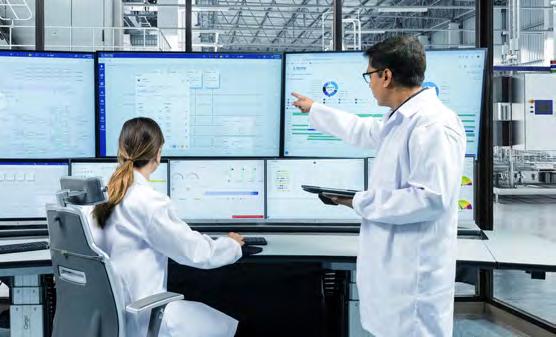
Tetra Pak® Factory OS™ is a proprietary solution that promises measurable efficiency gains without requiring major new capital investment.
Pakistan produces around 70 billion litres of milk a year, enough to rank fifth globally, yet barely 3% of it ever reaches a processing plant. The rest stays in an informal economy that sidesteps tax, cold storage, and quality testing, and undercuts the formal sector on price by doing so.
For the dairy milk processors who do operate formally, the economics have turned punishing. Industrial power tariffs alone leave Pakistani dairy operations roughly 34% costlier to run than regional peers, as per the Pakistan Business Forum’s recent estimate. The Finance Act 2024 then layered an 18% sales tax onto milk, a rate with little precedent anywhere else in the world. Fuel-dependent collection logistics add a third cost pressure: even modest fuel price rises multiply across thousands of daily routes from farm to plant, while rising temperatures and water scarcity squeeze livestock productivity too. The combined effect, by the industry’s own account: over 500 collection centers shut, brand spending frozen for two consecutive quarters, a fifth of the workforce laid off, processing plants running below half capacity while industry representatives arguing a US$30 billion dairy export opportunity facing an inevitable risk.
Against this backdrop, operational efficiency is no longer considered a nice-to-have but a profit lever still under the formal dairy processor’s own control. The logic is simple: lower waste means higher yield from the same raw milk; less downtime means more throughput without new capital spending; tighter energy use means lower cost per litre in a market where power is already the biggest burden; and more predictable operations make financial planning easier in a sector defined by volatility. None of that changes the size of the prize on offer. UHT milk remains a $60.9 billion category globally, projected to reach $73.2 billion by 2029, according to Mordor Intelligence, which explains why processors already running under capacity are being pitched on operational improvement rather than expansion. This is the gap Tetra Pak® Factory OS™ aims to address with its solution. The platform consolidates data from across a plant’s production lines to identify inefficiencies, reduce downtime, and drive continuous operational improvement. According to Tetra Pak’s comparative analysis, highly automated beverage factories achieve 20% higher overall equipment effectiveness (OEE), generate 45% less product waste, and experience 20% fewer packaging-line stoppages than less automated facilities.
For an industry where investment in new capacity has largely stalled, Tetra Pak’s central proposition is particularly relevant: Tetra Pak® Factory OS™ is designed to unlock performance improvements through automation, advanced analytics, and expert support, without requiring major investments in new production equipment. In other words, manufacturers can improve productivity, reduce costs, and enhance profitability by optimizing existing assets rather than expanding them.
The solution’s impact has also received international recognition. This year, Tetra Pak® Factory OS™ won the Microsoft Intelligent Manufacturing Award in the Scale! category, which recognizes solutions capable of delivering measurable improvements across multiple plants, production environments, and varying levels of manufacturing maturity.
Layered onto the business case is a compelling sustainability advantage. UHT processing eliminates the need for a continuous cold chain, reducing energy consumption, transportation emissions, and operating costs. Recyclable carton packaging further strengthens the value proposition by supporting circular economy goals while helping manufacturers meet evolving consumer expectations and regulatory requirements. At the same time, UHT milk’s extended shelf life significantly reduces spoilage and product losses throughout the supply chain, enabling processors to generate greater value from the same production run.
Crucially, these benefits do not require manufacturers to rebuild or replace existing plants. Instead, they enhance the performance and sustainability of current operations, allowing processors to maximize returns from the assets they already have.
This is the distinction Tetra Pak wants Pakistani dairy processors to consider: Tetra Pak® Factory OS™ offers a low-capital pathway to improving efficiency at a time when the industry has already withdrawn Rs1.3 billion annually from farmer development and Rs400 million from category-building investments. By helping manufacturers optimize existing operations rather than invest in new capacity, the platform promises measurable productivity gains without significant capital expenditure. Scan the QR code to learn more about the Tetra Pak® Factory OS™ solution. n
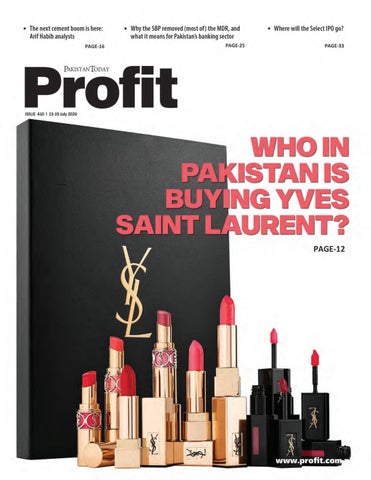
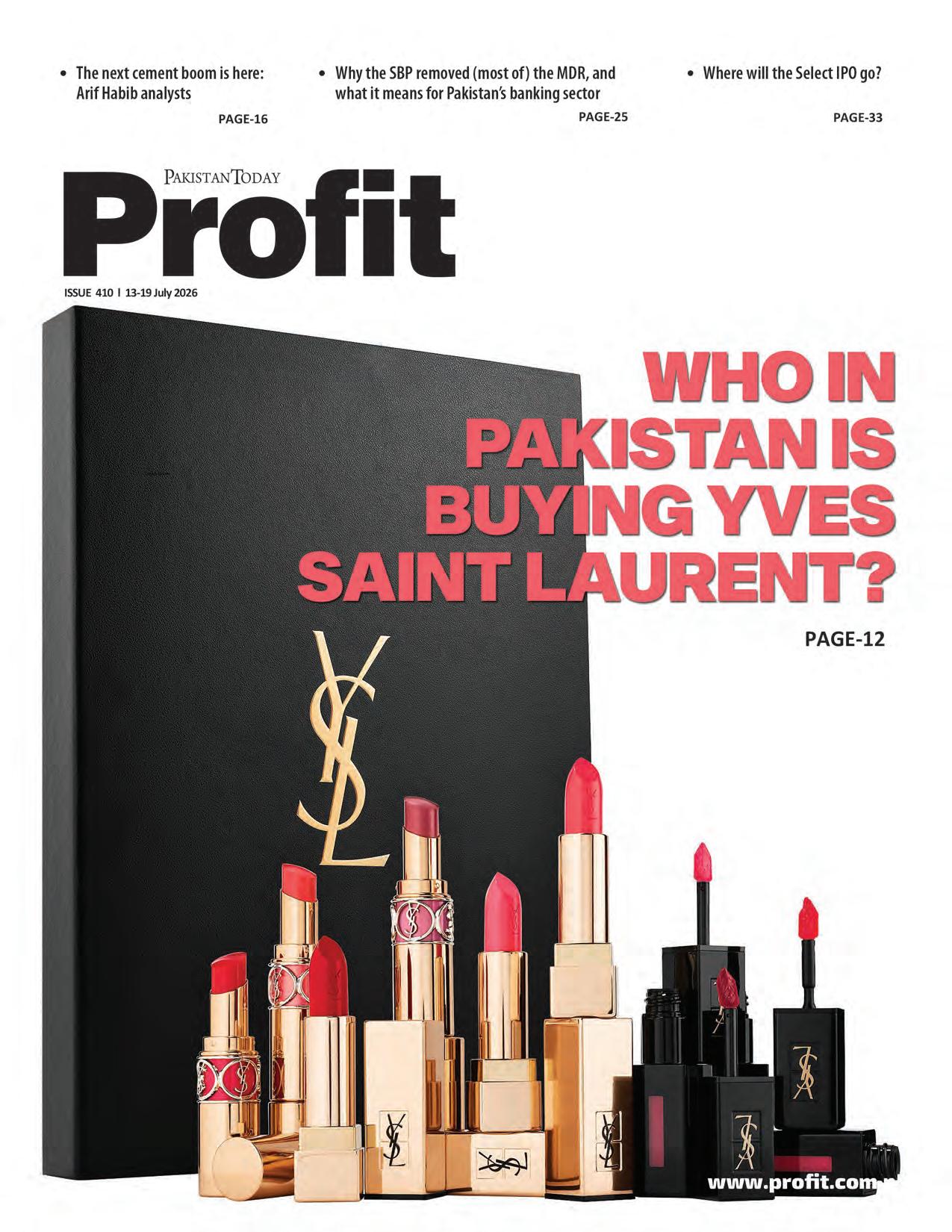
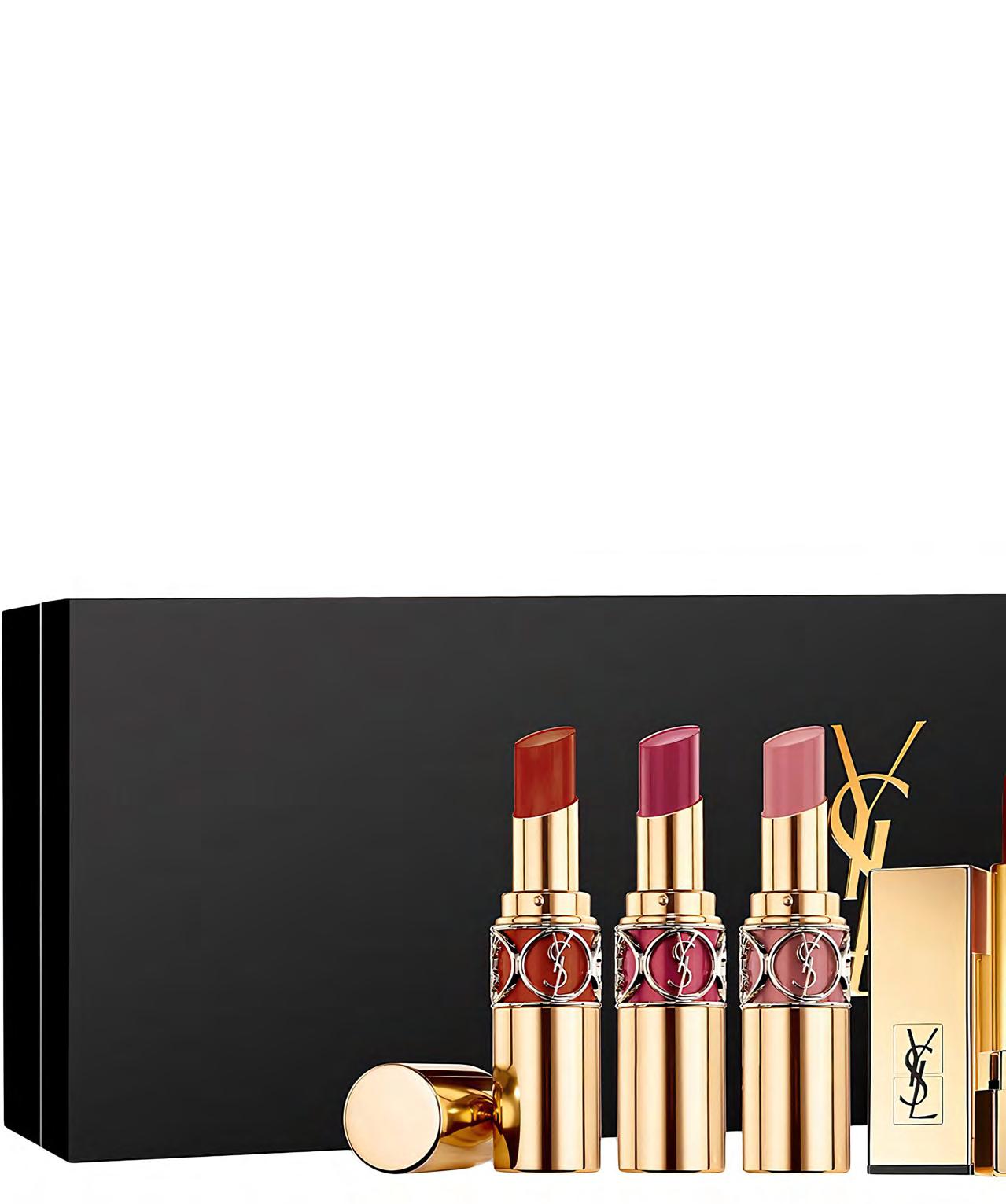
Who in Pakistan is buying Yves Saint Laurent?
The recent opening of YSL Beauty in Lahore is one among many anecdotal indicators that point towards a deeply unequal society. As the divide between rich and poor deepens, where do we begin figuring out the depth of the problem?
By Abdullah Niazi
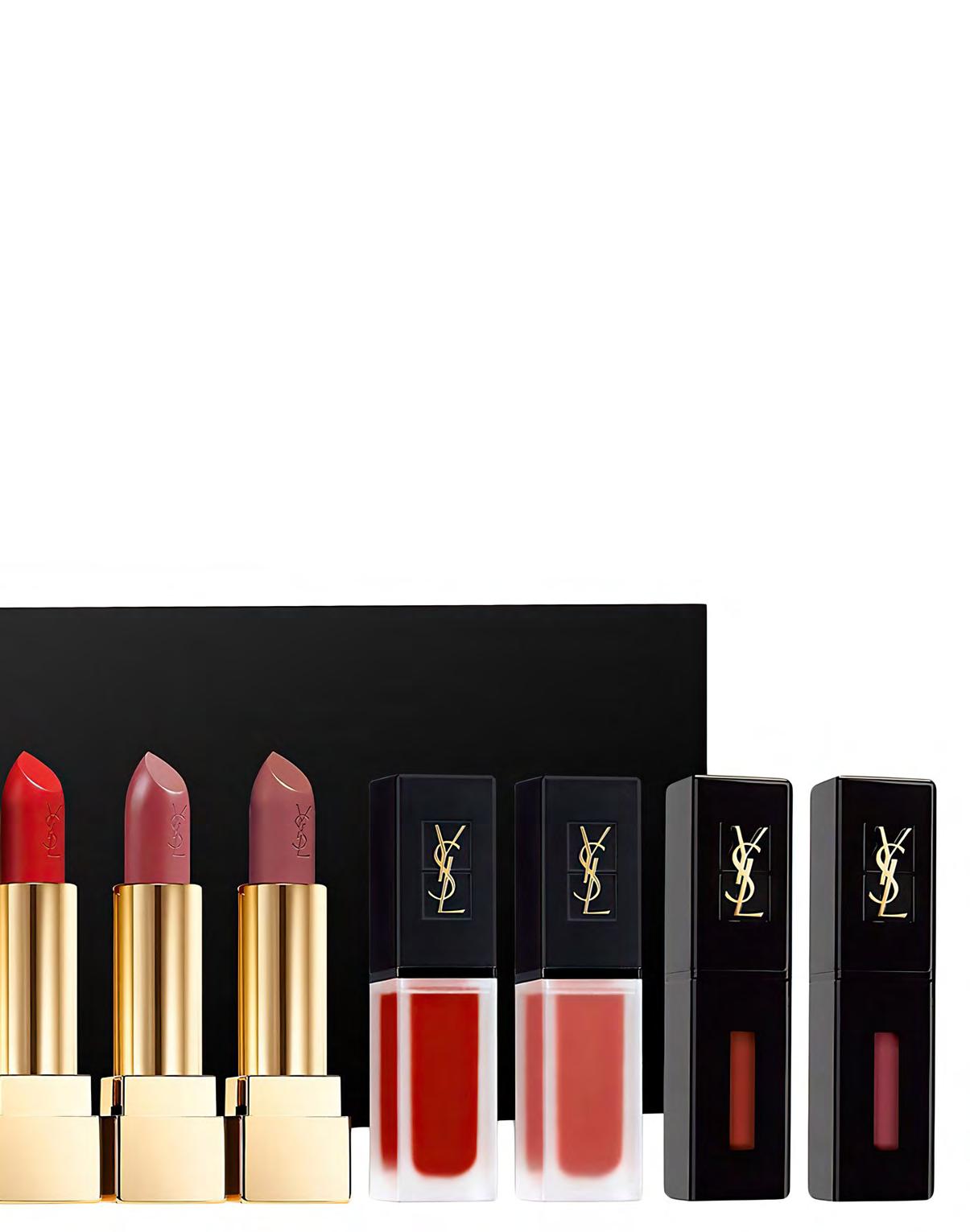
The cheapest lipstick listed on the website of the Parisian luxury cosmetics brand YSL Beauty is $43. The most expensive lipstick in their arsenal is something called “The Slim Velvet Radical Matte” which retails for $4,800.
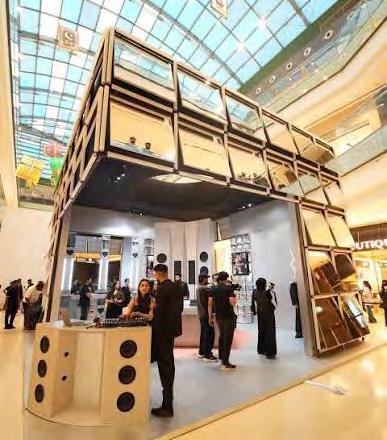
Pakistani shoppers now have at least some of these products available to them at the YSL Beauty store which opened in Lahore’s Dolmen Mall last week. In a country of nearly 26 crore, the arrival of international luxury retail brands should not be a surprise. And Yves Saint Laurent (pronounced “eve san loron”) is about as luxury as it gets. In fact, some might count it as an indicator of an economy on the right track: international labels only come to a country if they feel it has the appetite to buy their products. But exactly who is buying $40 lipsticks in Pakistan?
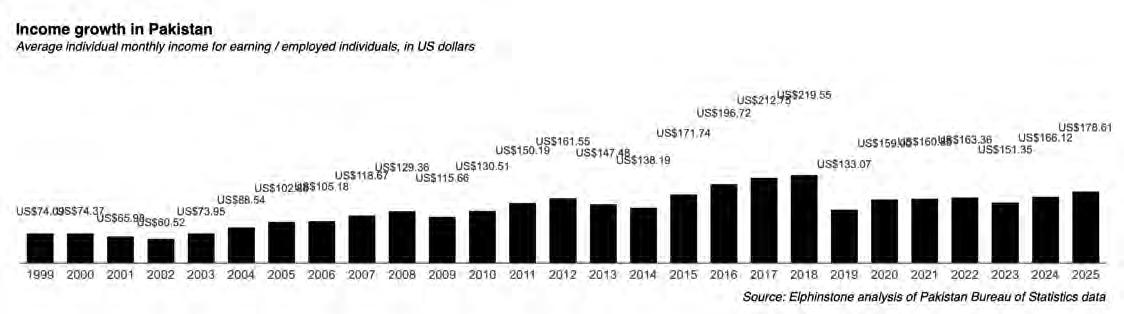
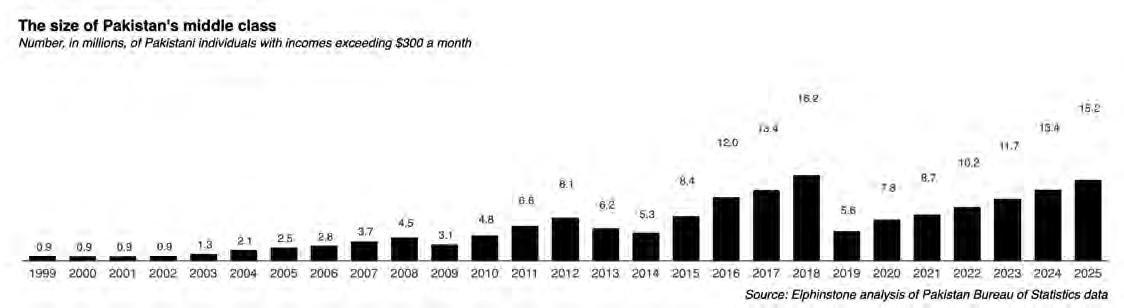
Profit’s analysis of data from the Pakistan Bureau of Statistics shows there are currently about 1.52 crore Pakistanis who earn more than $300 a month — which comes out to around Rs 84,000. The remainder of the workforce earns less than that. Out of these 1.52 crore individuals, 60 lakh earn between $300-400. For them, buying a single lipstick from YSL
Beauty in Dolmen Mall Lahore would indicate a purchase worth at least 10% of their monthly earnings. The most likely target audience for the store are individuals that earn at least $1,000 a month. According to Profit’s analysis of PBS data, there are only about 14 lakh individuals all over the country who earn that kind of money, about 1.3% of the labour force.
The market choices for this very thin segment of the workforce are increasing with
Indian economist Pranab Bardhan used the term “conclave economy” while describing the increasing inequality in India, arguing that a limited part of the economy starts to cater to a small group of affluent people. The concept replicates well in Pakistan as well.
every passing day. This comes at a time when the rest of the economy struggles with weak demand, fewer jobs and low investment. It is a classic example of what the Indian economist Pranab Bardhan describes as a ‘conclave economy’. He writes that “the pattern of high inequality tends to generate a conclave-type economy where a limited part of the economy caters to a small affluent section demanding relatively capital-intensive and skill-intensive goods, whereas much of the general economy suffers from insufficient demand and underutilization of capacity, and thus low aggregate investment and employment.”
The indicators of this inequality go far beyond luxury retail. They can be seen in everything from Pakistan’s automobile industry, to real estate development and the proliferation of specialty coffee shops. As the footprint of these investments catering to the wealthiest segments of society grow, it is worth looking at what each of them tell us about Pakistan’s growing inequality problem.
Measuring it out
As things stand there is no good way to measure just how bad income inequality is in Pakistan. There is simply not enough clean, clear, and
Historically, people have considered Pakistan to be a relatively low inequality state. Because our per capita income is so low, inequality is mostly meaningless unless you start to compare the top 1 percent with the rest of the distribution
Dr Umair Javed, Associate Professor of sociology at LUMS
relevant data available. What we can say with some degree of certainty is that Pakistan is a deeply unequal society.
But what does that mean and why does it matter? Financial or income inequality is not inherently a bad thing. Different kinds of work, the availability of capital, and differing skill levels mean any free market economy will produce a spectrum of wealth. Someone has to be the richest and someone has to be the poorest. The question of inequality is really a question of disparity. How far away is the poorest person in a society from the richest? Who lands right in the middle? How many people are closer to the richest than they are to the poorest? And who does society cater to the most?
Part of the problem in Pakistan is that it does not take much to be in the “top 10%” of the country. But being in the top 10% simply
means you are affluent compared to the 90% that fall below you. “Historically, people have considered Pakistan to be a relatively low inequality state. Because our per capita income is so low, inequality is mostly meaningless unless you start to compare the top 1% with the rest of the distribution,” says Dr Umair Javed, an associate professor of sociology at the Lahore University of Management Sciences (LUMS) in a conversation with Profit. He says that in most places in the world, wealth inequality can be gleaned by either looking at the top 10% of the population or the bottom 50%. But in Pakistan’s case this doesn’t necessarily work. “Because 90% of our population is largely income poor, even the top 10% are not meaningfully richer. In that case you really need to find an indicator for the top 1%.”
Very simply put, being near the top of Pakistan’s income distribution does not
necessarily make someone rich. In a country where most incomes are very low, an ordinary salaried professional can rank surprisingly highly, but building assets can be a Herculean task for them.
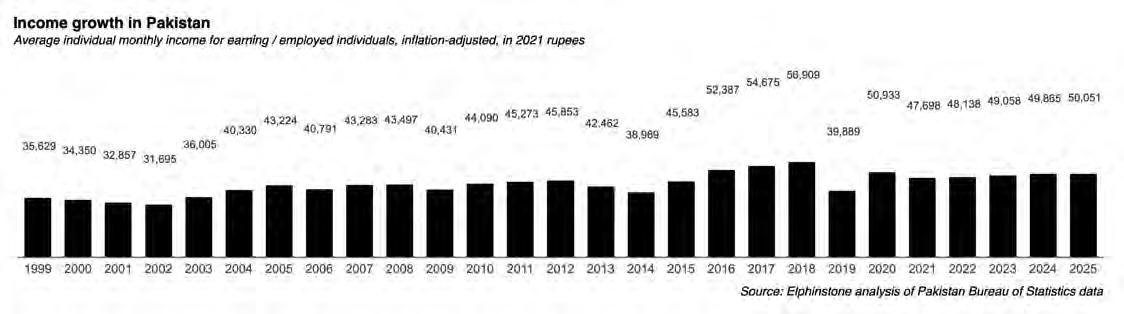
Profit’s analysis of Pakistan Bureau of Statistics data estimates that the average worker earned around Rs50,000 a month in 2025. But averages can be misleading. A small number of very high incomes can pull the figure upwards, even when most people earn much less.
The clearest way to see this is through income percentiles. In 2025, an individual earning Rs100,000 a month was already among the top 10% of earners. Rs150,000 placed someone in the top 5%, while Rs300,000 was enough to enter the top 1%. These are privileged positions compared with the rest of Pakistan, but they also show how poor the overall distribution is. A person earning Rs100,000
may be comfortable relative to most workers, yet a family living on that amount in Lahore or Karachi is hardly part of a global luxury class. Rent, school fees, utilities, food and healthcare can consume much of it.
This is why the usual comparison between the top 10% and the bottom 50% does not fully explain inequality in Pakistan. In richer economies, the top tenth is often meaningfully affluent. Here, much of it consists of salaried professionals and small business owners who are secure only in comparison with people earning far less. The top 10% looks rich because the remaining 90% is so income-poor.
Once again, take a look at Pakistan’s top earners. As mentioned earlier, in 2025 around 1.52 crore individuals are estimated to earn more than $300 a month. That falls to approximately 94 lakh above $400, 58 lakh above $500 and just 14.6 lakh above $1,000. Fewer than 4.1 lakh are estimated to earn more than $20,000 a year, equivalent to about Rs467,000 a month at the exchange rate according to Profit’s analysis of the SBP data. Even these numbers do not reveal the full distance between the richest Pakistanis and everyone else. The Rs300,000 figure is only the estimated income required to enter the top 1%; it is not the average income within that group. The same percentile may contain a salaried executive earning Rs300,000 and a business owner making several million rupees a month in cash. Official surveys cannot capture business profits, rents, capital gains, inherited assets and undeclared income. The people at the very top are precisely those least visible in the data. Pakistan may therefore appear relatively equal because most people are clustered together at low income levels. The real gulf begins where the surveys start losing sight of people.
Luxury brands are here to serve someone, but who?
And wherever surveys and data start losing sight of people, what remains behind is anecdotal evidence. That is why the YSL Beauty launch matters.
The store opened to great fanfare. The launch was flooded with influencers and celebrities complete with a Hania Amir cameo. But all of this fanfare was catered to a particular segment of society whose wealth and incomes escape tabulation.
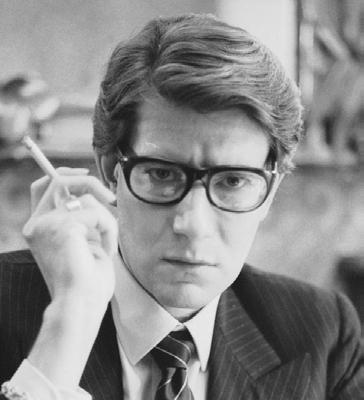
At the very least the supply of luxury retail stores would indicate there is great demand. Just take this into consideration: this does not even mark the first time a YSL brand store has opened in Pakistan. A lot of the online discourse following the opening focused on how YSL was entering Pakistan, but that had already happened a year ago. The YSL brand was created by French fashion designer Yves Saint Laurent, one of the most influential men in fashion in the 20th century. His empire was eventually split between a fashion house owned by the Kering Group and a cosmetics line called YSL Beauty owned by L’Oreal. The fashion house already opened a store in Dolmen Mall Lahore in June 2025, right next to an outlet of
French designer Yves Saint-Laurent turned his brand into an eponymous fashion empire. The fashion house is owned by the Kering Group while a cosmetics brand by the name of YSL Beauty is owned by the French MNC L’Oreal. Lahore now has stores for both luxury brands.
Dolce and Gabbana. The entry of YSL Beauty is a second, entirely independent company associated with Yves Saint Laurent to hit Pakistan’s consumer market. On the same day that it was launched, an Armani store also opened its doors in the same mall in the same city.
A quick glance through the list of retail stores on Dolmen Mall Lahore’s website or a walk through the mall itself will quickly give any frequent traveller a strong airportish feeling about the entire place. “The problem with looking at luxury retail as an indicator of inequality is that the evidence is very anecdotal,” says Dr Umair Javed. “The best and most tangible evidence comes from consumption practices for which data is publicly available”
The auto market
Perhaps nothing explains this dynamic better than Pakistan’s automobile industry. The good thing about this particular indicator is that beyond anecdotes we have publicly available information about car sales and prices. This means we can learn two things: who are car manufacturers catering to the most and how is the market responding.
For starters, if you can afford a car (any car) for your personal use then you are likely part of the top 10% we discussed above. Pakistan Bureau of Statistics data puts the affordability problem into perspective. The Household Integrated Economic Survey (HIES) 2024-25 estimates average monthly household income at Rs 82,179. Even the highest consumption quintile has an average monthly income of Rs 139,317. PBS also found that income growth since 2018-19 was stronger for the richest quintile than for the poorest, widening the absolute gap between them.
For much of Pakistan, the relevant mobility market is not cars but motorcycles. During July-May FY2025-26, Pakistan Automotive Manufacturers Association (PAMA) members reported sales of about 1.79 million motorcycles and three-wheelers, compared with 140,253 passenger cars and 43,451 vehicles in the combined jeeps-and-pickups category.
This much tells us the same story that the data has already communicated. Most people are poor, but even if you are in the top 10% the disparity between the top 5% and top 1% is far higher than one might realise. And while the data might not run a fine tooth comb against these numbers, supply-side market dynamics can give us more insights.
Profit went through a list of all the cars locally assembled in Pakistan. Overall, we determined there were around 44 cars that qualified. These cars further had around 99 substantive variants of different prices. We then assumed three broad categories for car pricing. The top category had cars that were priced over Rs 80 lakh, the middle category had cars prices from Rs 60 lakh to Rs 80 lakh, and the lowest category had cars priced below Rs 60 lakh. The last category was kept deliberately broad to include as many cars as possible. The results still showed more choice and availability in cars above Rs 8 million. In fact, there were more cars above the Rs 8 million mark than all cars underneath that price limit combined.
Car ownership already marks entry into a relatively privileged section of society. The argument is not that every car owner is rich. A family may save for years, buy second-hand or depend on several earners. But the ability to purchase and maintain any car — paying for fuel, repairs, registration and insurance — places a household above the circumstances of a large part of the population.
What is more revealing is how the market changes once this threshold has been crossed. Pakistan’s locally assembled market offers around 10 nameplates below Rs6 million, compared with more than 20 above Rs8 million. The lower end is sustained largely by familiar models: the Suzuki Alto, Cultus and Swift, the Toyota Yaris and the Honda City. These are not insignificant products. They account for a substantial share of sales. But they are mostly established nameplates rather than evidence of sustained innovation for lower-income consumers.
Cafe culture
While cars are a big ticket item, another more everyday indicator of growing income inequality comes from the growing trend of cafe culture in Pakistan.
For the longest time, the drug of choice for most Pakistani workers has been chai. Tea is the social lubricant of Pakistan. Of that, there is no question. It is the drink that, if people offer it and you say no, will result in you being seen with some degree of suspicion.
For the working class, the morning and afternoon cups of tea serve a very important role. It is milk, sugar, water, and tee that serves about 150-200 calories in energy content and about 40-60 milligrams of caffeine, which serves as an alertness boost to get through a working day but costs very little relative to any other source of calories that might be available to a working man or woman. Add in a dry roti,
and that is about 400 calories of tolerable grub that can get you through a large part of the day.
For all classes – but especially the middle class – it also serves a social function: it is the beverage to serve on social occasions, the acceptable excuse to grab a few minutes of someone’s time (especially important for people who work in sales roles), and the thing to reach for during awkward silences.
Based on projections using the Household Integrated Economic Surveys conducted by the Pakistan Bureau of Statistics, and inflation data, Profit estimates that Pakistani households spend approximately Rs800 per month on tea, and yes this includes households in the poorest income quintiles.
But over the past few years, Pakistan’s major cities have been inundated with cafes serving high-end specialty coffee. The popular addition of Match to these cafes has also kept pace with the rest of the world.
“Coffee shops are another big indicator. The average ticket size at a coffee shop is Rs 800-1500 for one person. The scale of investment over the past couple of years is significant, with 130 to 140 independent coffee shops selling specialty coffee,” says Dr Umair Javed.
Coffee still remains a niche in Pakistan, but its presence in markets is much larger. Chai is found at dhabas, in offices, and in homes. Coffee serves a similar social function but with the added infrastructure of the cafe which often offers an up-scale meeting place.
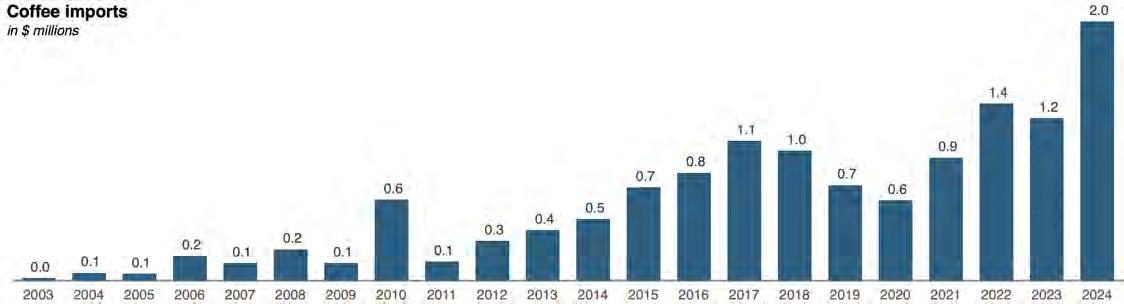
For every cup of coffee consumed in Pakistan, we consume 735 cups of tea, based on Profit’s analysis of data from the Pakistan Bureau of Statistics on the country’s imports of both commodities for the year 2024, the latest year for which complete figures are available. But in markets, while size matters, sometimes momentum can matter more, and the consumption of coffee is rising sharply. Just ten years ago, in 2014, the difference was 1,900 cups of tea for every cup of coffee, and in 2004,
the difference was even more massive: almost 14,000 cups of tea for every cup of coffee.
From a very, very low base, coffee is clearly gaining share. On a purely commercial basis, this is not a particularly important story. The total amount of coffee imported into Pakistan in 2024 was around $2 million. This is, of course, just the imported value, and for the average cup of coffee you buy at a café in Karachi or Lahore, the cost of the actual coffee itself is likely about 5-10% of the price you pay. Sales of coffee itself are approximately a $20 million market in Pakistan.
The flip side
Taken together, none of these indicators is conclusive on its own. A luxury cosmetics store, a row of specialty coffee shops or a showroom full of hybrid SUVs cannot tell us exactly how income and wealth are distributed across Pakistan. But they do tell us where businesses believe reliable purchasing power exists. Increasingly, that purchasing power appears concentrated within a narrow section of society.
There are other signs as well. Chief among them is real estate.
“The other big indicator is real estate. Wherever any land is being converted into planned real estate, we need to ask the question: what segment is it targeting? It is quite clear that developed real estate is catering to the upper end of the income distribution. Again, these are all important metrics but they all suffer from the measurability problems,” says Dr Umair Javed.
Housing is not an ordinary consumer good. It is a basic need, but in Pakistan it has also become one of the main ways to store wealth, earn speculative returns and park undocumented money. Large tracts of land are converted into gated developments designed not around what most households can afford, but around what investors expect to resell.
China offers an important counterpoint. Its government has spent years trying to reduce the economy’s dependence on speculative property investment, guided by Xi Jinping’s
principle that “houses are for people to live in, not for speculation.” The effort has not been painless, but it reflects an important recognition: a housing market should ultimately be judged by whether it provides homes, not merely by how much wealth it generates for landowners, developers and investors.
Pakistan has moved in the opposite direction. Housing schemes can expand rapidly without making housing more accessible because much of what is being developed is intended as an investment product for people who already own property. The country can therefore have a construction boom, rising land prices and expanding gated communities while still failing to provide secure and affordable homes to the majority of its population.
Some balance is necessary. Pakistani incomes have improved, even if inflation has consumed much of that increase. Pakistanis work hard, adapt quickly and aspire to better lives. In a functioning market economy, new products often enter through wealthier consumers before reaching a wider public. Coffee
The launch of YSL Beauty in Pakistan was a star-studded event. It launched a product that is meant to remain niche, aspirational, and just out of reach for most to keep its exclusivity.
is a useful example. It begins as an expensive niche, more suppliers enter, local aspirational brands emerge, competition increases and prices gradually fall. What was once exclusive can eventually become ordinary.
It is harder to imagine that process with a brand such as YSL Beauty. Its appeal depends partly on remaining expensive and exclusive. Its presence is not evidence that a mass consumer market is forming. It is evidence that a small group may be wealthy enough to sustain luxury consumption.
Even then, the commercial calculation may be optimistic. Many Pakistanis with the means to buy such products may prefer purchasing them abroad, asking relatives to bring them back or worrying that local stores carry older stock. Kiko Milano’s experience is instructive. It entered Pakistan with considerable fanfare, but has spent long periods selling products at discounts because the expected market has not always appeared.
This is the awkward truth behind the spectacle. Profit’s analysis suggests that earning Rs100,000 a month already places someone among the top 10% of earners, while Rs300,000 is enough to enter the top 1%. Only around 14.6 lakh people are estimated to earn more than $1,000 a month. At the same time, the automobile industry offers more locally assembled models above Rs8 million than below it, motorcycles outsell cars by an enormous margin, and premium cafés continue to multiply in cities where most households still budget carefully for tea.
Pakistan’s inequality is therefore not simply about some people possessing more than others. It is about institutions that repeatedly direct land, credit, infrastructure, tax advantages and investment towards those already best placed to benefit. The problem is not the existence of expensive lipstick, coffee, cars or houses. It is an economy becoming increasingly skilled at serving the enclave while failing to expand security, housing, mobility and opportunity outside it.
The arrival of luxury retail is not proof that Pakistan is prospering. It is proof that someone in Pakistan is. n
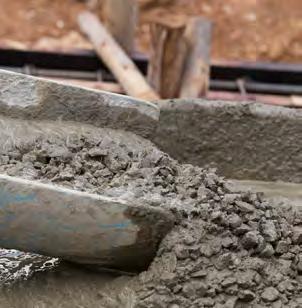
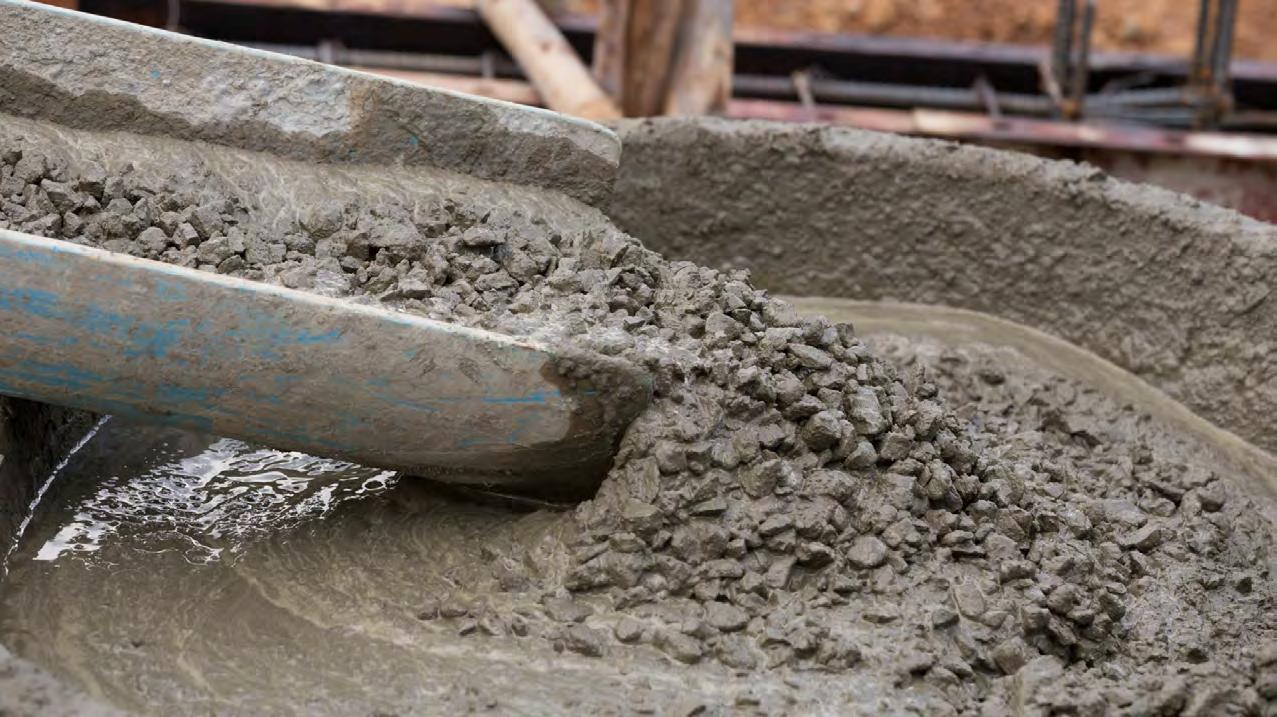
The next cement boom is here: Arif Habib analysts
Demand growth, exports, industry consolidation, and a whiff of government support are all combining to create a positive environment for the cement sector.
Pakistan’s cement manufacturers have spent much of the past four years learning an uncomfortable lesson: having more factories does not necessarily mean selling more cement.
An investment cycle begun during the latter years of the China-Pakistan Economic Corridor brought millions of tonnes of new production capacity into an industry already prone to periodic bouts of overbuilding. The expansion was followed by economic stagnation, punishing interest rates, a collapse in private construction, cuts to development spending and an extraordinary increase in the cost of coal. Companies had newer and larger plants, but insufficient demand to keep them running.
Arif Habib Ltd now believes the equation is changing.
In a report published on July 8, analysts at the Karachi-based investment bank argue that Pakistan’s cement sector is entering its next upcycle. Their optimism rests not on any single dramatic revival in construction, but on five developments occurring at approximately the same time: domestic demand is recover-
ing; the latest round of capacity additions is ending; larger manufacturers are acquiring competitors; the federal budget contains several measures favourable to construction and real estate; and exports are providing southern producers with a profitable outlet for excess capacity.
Cost structures are changing as well. Cement manufacturers are installing solar, wind and waste-heat-recovery systems; international coal prices are far below their 2022 peaks; and there is at least the possibility of relief from Punjab’s unusually onerous limestone royalty.
Arif Habib expects the sector’s aggregate profit to rise by about 5% to Rs168 billion in financial year 2026, followed by a much stronger 22% increase to Rs205 billion in financial year 2027. The brokerage describes the industry as being in the early stages of a recovery, with a clearer earnings trajectory and much of the downside already reflected in share prices.
There is already some evidence that the turn has begun. Domestic cement sales rose 9.5% to 41.5 million tonnes during financial year 2026, while total dispatches increased 7.2% to 50.5 million tonnes. Exports declined by 2.2% overall, but that headline concealed a
sharp regional divide: exports from southern factories increased 9.4%, while exports from northern plants fell nearly 54%, largely because trade with Afghanistan remained disrupted.
That is not yet a boom in the traditional Pakistani sense. It is, however, the first convincing volume recovery after several lean years. More importantly for investors, higher sales are arriving just as producers have become more disciplined about prices, more efficient about energy and increasingly willing to consolidate rather than merely build.
Cement as a leveraged bet on the economy
Few Pakistani industries are as closely tied to the domestic economic cycle as cement.
Factories sell into three broad markets. The first is public infrastructure: roads, dams, railways, government buildings and other development projects. The second is formal private construction, including housing schemes, factories, warehouses, commercial buildings and large residential projects. The
third, less visible but equally important, is the gradual construction and expansion of individual homes.
All three suffered when inflation accelerated, the rupee depreciated and the State Bank of Pakistan raised its policy rate to restrain demand and stabilise the external account. Developers found financing prohibitively expensive. Households delayed construction as steel, cement, labour and land became costlier. The federal and provincial governments reduced or postponed projects under fiscal pressure.
Arif Habib calculates that cement demand has historically grown by roughly 1.1 times the rate of real gross domestic product growth. Periods of rapid economic expansion, such as financial years 2004 to 2008 and 2015 to 2018, produced double-digit increases in dispatches. The post-pandemic rebound generated another sharp recovery in financial years 2021 and 2022.
The brokerage expects Pakistan’s economy to grow by 3.5% to 4.5% over the medium term and forecasts cement dispatch growth of approximately 7% to 8% in financial year 2027, with the possibility of faster growth thereafter.
The macroeconomic starting point is better than it was two years ago. Pakistan recorded provisional real GDP growth of 3.7% in financial year 2026, up from 3.2% a year earlier. Private-sector credit was growing by around 13% by late May, with increases in working-capital, fixed-investment and consumer financing.
Yet Arif Habib’s volume forecast requires more than GDP growth alone. Applying its historical 1.1-times relationship to economic growth of 3.5% to 4.5% would imply cement growth of roughly 4% to 5%, not 7% to 8%. The additional growth must therefore come from a catch-up in previously deferred construction, greater development expenditure, housing incentives and rising utilisation from an unusually depressed base.
There are reasons to believe such a catchup is possible. The sector has considerable spare capacity: annual production capacity is close to 79 million tonnes, compared with financial year 2026 dispatches of about 50.5 million tonnes. That implies aggregate utilisation of only about two-thirds. Manufacturers can accommodate a substantial increase in demand without immediately building another generation of factories.
But spare capacity is also the central risk to the bullish case. An industry operating well below its potential can respond to higher demand with more volume, but it can also lapse into price competition if manufacturers become impatient for market share.
The durability of the next upcycle will therefore depend not only on whether Pakistan consumes more cement, but also on whether
producers resist the temptation to undercut one another.
The expansion cycle ends — and the acquisition cycle begins
The cement industry has expanded in distinct waves. Arif Habib identifies major investment cycles in financial years 1995 to 1999, 2005 to 2011, 2017 to 2019 and, most recently, 2023 to 2026.
The latest cycle added about 16.8 million tonnes of annual capacity, marginally more than the 16.7 million tonnes added between financial years 2019 and 2022. Capacity was installed in anticipation of long-term growth in infrastructure and housing, even as actual demand was weakened by Pakistan’s balance-of-payments crisis.
History offers a warning about what happens when capacity arrives too quickly. During the expansion of 2006 to 2010, cement prices fell by about Rs100 per bag in financial year 2007 and by Rs55 to Rs80 per bag in financial year 2010. Prices recovered when utilisation improved and the investment cycle ended.
The current nominal price of approximately Rs1,447 per bag is considerably higher than the roughly Rs1,087 prevailing in financial year 2023. But much of that increase was compensation for rupee depreciation, taxation and the surge in coal prices after Russia’s invasion of Ukraine, rather than evidence of a genuinely tight cement market. Arif Habib’s argument is that improving utilisation can now allow manufacturers to defend those prices even as some input costs moderate.
The more consequential change is that companies have begun buying competitors.
Maple Leaf Cement has acquired control of Pioneer Cement. Under the original transaction, Maple Leaf agreed to acquire 58.03% of Pioneer through share-purchase agreements and up to another 11.72% through a public offer at Rs478.43 per share. Maple Leaf had already owned 7.63% of Pioneer, giving it a direct holding of 77.38% after the transaction contemplated in the Arif Habib report.
The deal gives the combined operation more than 13 million tonnes of annual cement capacity and elevates Maple Leaf from fifth place to approximately third among Pakistani producers. It also joins two northern businesses ahead of the expected demand revival.
The logic is more significant than the rankings. An acquisition removes one independent management team from the pricing market. The factories still exist and their capacity does not disappear, but decisions about production, distribution and pricing
become consolidated. Maple Leaf can optimise fuel procurement, sales territories and capital expenditure across the two companies rather than competing with Pioneer for the same customers.
A second transaction gives Fauji Cement an entry into the southern market. Fauji Cement and Kot Addu Power Company agreed to acquire joint control of Attock Cement from Lebanon-based Pharaon Investment Group, followed by a public offer that would take their combined interest to just over 92%.
The Competition Commission of Pakistan approved the acquisition in February 2026, concluding that the combined market share would remain below the statutory dominance threshold and that Pakistan’s cement market would continue to have several established competitors.
For Fauji Cement, Attock offers something that would be expensive and time-consuming to replicate: a functioning southern plant near Karachi, access to the port and an established export business. Rather than construct a greenfield factory and endure several years of approvals, financing and commissioning, Fauji can acquire production capacity already connected to overseas markets.
The involvement of KAPCO is also revealing. Pakistan’s former large thermal power producers are confronting an uncertain future as legacy power-purchase arrangements expire and the electricity system shifts away from expensive oil-fired generation. Buying into cement gives KAPCO a route to deploy capital outside its traditional business.
Arif Habib regards consolidation as structurally positive because larger manufacturers should enjoy purchasing economies, wider distribution networks, geographic diversification and greater pricing discipline. That conclusion is plausible, but not automatic. Consolidation improves discipline only if acquired capacity is operated rationally. A heavily indebted acquirer may instead run plants aggressively to generate cash and service acquisition financing.
Nor has the cement industry entirely lost its enthusiasm for building. DG Khan Cement has announced an 11,000-tonne-per-day clinker line, equivalent to roughly 3.5 million tonnes of cement capacity and described by Arif Habib as the largest clinker expansion yet undertaken in Pakistan. Kohat Cement continues to prepare a greenfield plant in Khushab of 8,000 to 10,000 tonnes per day, while Ghareebwal Cement is pursuing a revised 10,000-tonneper-day brownfield expansion.
The distinction, according to the brokerage, is that these are now strategic additions by stronger operators rather than a sector-wide rush to build. Even so, the next boom contains the seeds of the downturn that may follow it.
If every manufacturer extrapolates a few years of demand growth indefinitely, excess capacity will return.
The government provides a nudge
The federal budget for financial year 2027 adds a fiscal component to the investment case.
The government has allocated Rs1 trillion to the federal Public Sector Development Programme, compared with the revised Rs820.5 billion allocation for financial year 2026. Infrastructure accounts for Rs603 billion of the new programme, up from a revised Rs501 billion. Major allocations include the N-25 Quetta-Karachi road, the Sukkur-Hyderabad motorway, the first phase of the ML-1 railway upgrade and several water and hydropower schemes.
For cement manufacturers, the arithmetic appears straightforward: more roads, dams and public buildings should mean more cement.
The important word, however, is revised. The original federal PSDP for financial year 2026 was also Rs1 trillion, before fiscal constraints reduced it to Rs820.5 billion. By June, the government reported actual utilisation of approximately Rs598 billion, although it expected additional year-end spending. The latest budget therefore represents a 22% increase from the reduced allocation, but no increase from the amount originally promised a year earlier.
Pakistan’s cement industry has often been disappointed by the distance between PSDP announcements and actual cheques issued to contractors. Arif Habib acknowledges this directly: a Rs1 trillion programme that ultimately produces Rs700 billion of spending would materially weaken the demand forecast.
The government has also allocated Rs71 billion to the Prime Minister’s Apna Ghar housing scheme. Arif Habib estimates that the construction of 50,000 houses of 300 square feet each would require approximately 0.38 million tonnes of cement, equivalent to just under 1% of annual domestic dispatches.
That would be meaningful but not transformative. More important may be whether the programme creates financing and delivery mechanisms that can be repeated on a larger scale. Pakistan’s structural housing shortage is immense; the obstacle has never been a lack of theoretical demand, but the mismatch between household incomes, mortgage availability, land prices and formal construction costs.
The budget contains broader support for property activity. Section 7E, which imposed tax on deemed income from certain immovable assets, has been abolished. Advance tax rates on property purchases and sales have been
reduced to flat rates of 1.5% and 2.75%, respectively. The measures are intended to revive transactions and reduce the cost of moving capital into real estate.
A busier property market does not immediately produce cement demand: trading an existing plot or house consumes no construction material. But greater liquidity can encourage developers to launch projects and landowners to build rather than hold vacant property.
The most direct benefit to shareholders is a reduction in super tax. For companies earning more than Rs500 million, the rate has been lowered from 10% to 8%. Unlike banks, exploration and production companies and fertiliser manufacturers, cement producers are eligible for the concession. Arif Habib estimates that the change alone will increase aggregate sector earnings by about 3%.
That is the “whiff of government support” in the sector’s outlook: not an enormous cement subsidy, but a combination of development spending, housing allocations, property-market tax relief and a lower tax rate on corporate profits.
The battle over limestone
One of the largest potential earnings catalysts is also one of the least certain.
Punjab changed its limestone royalty from a fixed charge to 6% of the ex-factory retention price of cement. That increased the effective burden to approximately Rs1,300 to Rs1,400 per tonne of cement, compared with the Rs350-per-tonne fixed royalty used as the industry’s preferred benchmark.
The Lahore High Court upheld the revised regime, after which the Supreme Court stayed enforcement of that judgment. The dispute was subsequently transferred to the Federal Constitutional Court, where judges have questioned whether a mineral royalty can lawfully be calculated using the price of a finished cement bag.
For Punjab-based manufacturers, a return to the fixed regime would be exceptionally valuable. Arif Habib estimates that it could increase financial year 2027 earnings by 16% for Fauji Cement, 17% for DG Khan Cement, 23% for Pioneer and 31% for Maple Leaf on a consolidated basis.
Those numbers explain why the industry is pursuing the case so vigorously. They also demonstrate why investors should treat royalty relief as an upside option rather than the foundation of the thesis. The existing regime has survived one adverse judgment, and a favourable comment during court proceedings is not the same as a final order.
The royalty has competitive consequences within Pakistan as well. Punjab
factories face a higher raw-material charge than producers in Khyber Pakhtunkhwa. The difference can allow plants outside Punjab to price more aggressively in Lahore, Rawalpindi and other large northern markets, gradually eroding the advantage of proximity enjoyed by Punjab-based manufacturers.
Coal, cement prices and the new energy mix
Cement is made by heating limestone and other materials at extremely high temperatures. That makes it one of the most energy-intensive manufactured products in the economy.
Fuel and power account for more than 60% of the sector’s cost of goods sold, according to Arif Habib. Coal is the largest variable component. Richards Bay coal traded at about $80 to $90 per tonne during much of 2017 to 2019, exceeded $400 during the 2022 energy crisis and has since returned closer to $100. The brokerage’s base case assumes $100 per tonne, compared with July 2026 futures of about $106 when the report was published. The earnings sensitivity remains substantial. At $110 per tonne, Arif Habib estimates that financial year 2027 earnings would be about 14% lower for DG Khan Cement and 12% lower for Fauji Cement than under its $100 base case. At $90, the sensitivity moves in the opposite direction.
Yet the report’s tables suggest that cement prices matter even more than coal. Depending on the company, weaker-than-assumed selling prices could reduce earnings by between 13% and 29%, while stronger pricing could generate double-digit upside.
That makes consolidation central to the margin thesis. Cheaper coal is useful, but its benefit can be competed away if manufacturers reduce cement prices to chase volume. The ideal outcome for shareholders is falling input costs without falling bag prices.
Companies are trying to make themselves less vulnerable to both coal and Pakistan’s expensive electricity grid. Lucky Cement has built one of the sector’s largest renewable portfolios, supplemented by waste-heat recovery, and is adding more solar capacity at its Karachi operation. Fauji Cement says its plants collectively have about 68 megawatts of solar capacity and 65 megawatts of waste-heat-recovery capacity, with renewable sources accounting for roughly half its power mix.
Arif Habib estimates that Lucky has 89 megawatts of solar and 29 megawatts of wind capacity on a consolidated basis. Fauji Cement follows with 67 megawatts of solar, while Pioneer has approved a 28-megawatt project. Cherat, Attock, Maple Leaf, DG Khan
and Kohat have also installed substantial solar capacity.
These investments do not eliminate the need for coal: kilns still require reliable thermal energy at temperatures that intermittent solar power cannot readily supply. But renewables reduce electricity purchases, while wasteheat systems turn heat that would otherwise escape into usable power. They lower the cash cost per tonne and provide partial protection against future increases in grid tariffs.
The missing Afghan tonnes
For northern manufacturers, the closed Afghanistan border is simultaneously an export problem and a fuel problem. Pakistan’s principal crossings with Afghanistan have remained largely closed to normal trade since October 2025 amid a deterioration in relations between Islamabad and the Taliban administration. Cement exports to Afghanistan have been interrupted, while supplies of Afghan coal used by northern factories have also been restricted.
The effect is visible in the dispatch data. Northern factories exported only 777,000 tonnes during financial year 2026, down almost 54%. There were no northern exports at all in June. By contrast, southern exports rose to 8.23 million tonnes.
Arif Habib estimates that reopening the border could add around 0.8% to total industry dispatches while restoring access to Afghan coal at a discount of about 7% to 9% to international supplies. Cherat and Kohat Cement, which are geographically closer to the border, would probably benefit first.
But this is another catalyst over which cement companies have no control. The border is not closed because of customs procedures or commercial disagreement; it is caught in a much broader security confrontation. Any earnings forecast that assumes a prompt normalisation must therefore be treated cautiously.
Exports become a genuine business
If northern exports have been crippled, southern exports are becoming a more dependable part of the sector’s economics. Factories in and around Karachi have access to ports and can ship clinker or cement to Bangladesh, Sri Lanka, Madagascar, Mozambique, Kenya, Tanzania, South Africa, Iraq, the United Arab Emirates and the United States. Export diversification allows manufacturers to keep kilns running when Pakistani demand weakens and reduces their dependence on a single land market.
During the first 11 months of financial
year 2026, cement and clinker export volumes reached 8.11 million tonnes, while export earnings rose to approximately $316 million. Export revenues increased more rapidly than volumes, suggesting an improvement in realised prices.
Arif Habib estimates that southern exporters received about $36 to $38 per tonne for clinker and $44 to $45 per tonne for cement. Export gross margins averaged roughly 20% in the third quarter of financial year 2026, returning to levels last seen before the recent energy crisis. The brokerage expects margins to remain around 20% to 22%.
Lucky Cement, DG Khan Cement, Attock Cement and Power Cement are among the main beneficiaries. For these companies, exports are no longer simply a way to dispose of surplus clinker at marginal prices. At a 20% margin, they are a respectable business in their own right.
Still, exports are a buffer rather than a complete substitute for Pakistan’s domestic market. Ocean freight can change rapidly, international competitors can cut prices, and demand in importing countries is itself cyclical. The final 2026 figures also show that rising southern exports were insufficient to prevent total national exports declining because of the loss of Afghanistan.
Why Lucky and Maple Leaf stand out
Arif Habib’s preferred sector investments are Lucky Cement and Maple Leaf Cement.
Lucky is the less concentrated cement bet. Alongside its large plants in Pezu and Karachi, it owns international cement operations and businesses in automobiles, electronics, chemicals and pharmaceuticals. The brokerage expects earnings per share to rise from an estimated Rs59.5 in financial year 2026 to Rs74.1 in financial year 2027, and assigns the shares a June 2027 target price of Rs604, representing approximately 25% upside from the price used in its report.
The attraction is diversification. Stronger Pakistani cement demand helps, but Lucky can also benefit from its plants in Iraq and the Democratic Republic of Congo, improving automobile demand and earnings from other subsidiaries. That makes it less dependent on any one Pakistani construction forecast.
Maple Leaf is the more direct consolidation story. The inclusion of Pioneer gives it an estimated 15% of national installed capacity and a much larger share of the northern market. Arif Habib expects Pioneer to contribute roughly Rs6.5 to Maple Leaf’s forecast consolidated earnings per share of Rs14.5 in financial year 2027. It values Maple Leaf at Rs144 per share, around 35% above the reference price in
the report. There are complications. Maple Leaf paid a control premium for Pioneer, and the acquisition increases both assets and liabilities. It is also investing outside cement, including in Agritech, Faysal Bank and a proposed tertiary hospital in Islamabad. The business may eventually resemble a diversified holding company more than a pure cement manufacturer.
Arif Habib also discloses that it owns shares in Maple Leaf, a conflict readers should bear in mind when considering its recommendation.
Is the boom really here?
The bullish case is stronger than it has been for several years, but it is not free of contradictions.
Cement demand is rising, yet the industry still has enormous spare capacity. The government has budgeted more development spending, but it has a long history of reducing PSDP allocations during the year. Inflation was 11.1% in June 2026, while the SBP held the policy rate at 11.5%, cautioning that elevated energy prices and geopolitical uncertainty were moderating economic activity. A rapid resumption of monetary easing is therefore not guaranteed.
Coal prices have normalised from crisis levels, but remain exposed to global conflict. The Afghanistan border could reopen and restore cheap coal and exports, or remain closed indefinitely. Punjab’s royalty could be reversed, or the cement industry could lose its final appeal. Consolidation may improve pricing discipline, but new clinker lines could rebuild the overcapacity problem.
The most persuasive part of Arif Habib’s argument is not that Pakistan is about to recreate the construction frenzy of an earlier CPEC cycle. It is that cement companies no longer require such a frenzy to generate sharply higher profits.
Moderate domestic volume growth can combine with stable prices, lower coal costs, renewable power, export margins, lower super tax and acquisition synergies. None of those factors alone constitutes a boom. Together, they can produce something that matters just as much to shareholders: a rapid increase in earnings from factories that already exist.
That is what makes this prospective cycle different. The previous cement boom was principally about building capacity in anticipation of demand. The next one may be about finally making adequate money from that capacity.
The kilns are already there. The question is whether Pakistan’s economy, its government and the manufacturers themselves can avoid extinguishing the recovery just as it begins. n
OPINION
Muhammad Azfar Ahsan
The Billion-Dollar Illusion
Pakistan today enjoys greater geopolitical relevance than it has in many years. Macroeconomic stability is gradually returning after a prolonged period of turbulence. Economic diplomacy has become more active, and the country's international standing has strengthened considerably. Its constructive engagement during the recent regional crisis, together with its ability to maintain productive relationships with Washington, Beijing, Riyadh, Ankara, Doha, Cairo, Tehran, Moscow, and other influential capitals, has reinforced Pakistan's diplomatic profile. Rarely has Pakistan enjoyed such broad-based international goodwill while simultaneously regaining macroeconomic stability.
Yet one uncomfortable reality refuses to change.
Despite these positive developments, Pakistan continues to attract only modest levels of investment. If our strategic relevance is rising and macroeconomic stability is returning, why has this momentum not translated into stronger investment? Why does the gap between Pakistan's immense economic potential and its actual investment performance remain so wide?
These questions go to the heart of Pakistan's long-term economic future. As the world's fifth most populous nation, Pakistan possesses many of the attributes that investors seek: a strategic location, entrepreneurial talent, abundant natural resources, a youthful population, and access to some of the world's fastest-growing regional markets. Yet it continues to attract only a fraction of the investment flowing into comparable emerging economies. The issue, therefore, is no longer whether Pakistan has potential. The more important question is why
Writer is a public policy advocate, business strategist, and former Pakistan’s Minister for Investment and Chairman of the Board of Investment. He is a strategic advisor to leading corporate entities, focusing on business policy, investment facilitation, and leadership branding. He writes frequently on the economy, governance, and society.
that potential remains largely unrealized.
This article is not intended to question intentions. Successive governments, public institutions, Pakistan's diplomatic missions, and the business community have all invested considerable effort in strengthening the country's investment profile and expanding international economic engagement. Those efforts deserve recognition. Nor is this an argument against investor facilitation or economic diplomacy. Both remain indispensable components of any modern investment strategy.
However, after years of sustained effort and continued underperformance, perhaps the time has come to ask a different question.
Are we trying to solve the right problem?
For much of the past two decades, Pakistan's investment debate has centered on attracting capital. We have discussed incentives, taxation, special economic zones, industrial priorities, facilitation measures, regulatory reforms, sovereign engagement, and sector-specific opportunities – all are important. Yet they share a common assumption: that attracting investors is the principal challenge. Far less attention has been devoted to the more fundamental question that precedes investment itself: what enables investors to enter a market with confidence, expand over time, reinvest, and remain committed through changing economic and political cycles?
That distinction changes the entire conversation.
Over the past several years, both in public office and in my continued engagement with domestic and international investors, I have become increasingly convinced that Pakistan's investment challenge is not fundamentally about promotion. Nor is it simply about incentives, marketing, or facilitation. It is about the absence of a credible investment infrastructure: the institutional, legal, regulatory, governance, administrative, and human capital foundations that shape investor confidence over the long term. Sustainable investment is not built on announcements. It is built on institutions that function predictably, consistently, and transparently.
This is, in my view, the billion-dollar illusion. We continue to believe that Pakistan's immense potential, strategic importance, and energetic investment promotion efforts will naturally attract significant capital. They will certainly attract attention. But potential attracts interest; institutions attract investment.
Countries do not compete for investment through promotion alone. They compete by building systems that investors trust. Capital responds to policy continuity, legal certainty, regulatory coherence, competitive taxation, professional execution,
effective dispute resolution, and institutional credibility. These factors may receive less public attention than headline investment announcements, yet they ultimately determine whether investors commit capital for decades or merely express interest before looking elsewhere.
History offers an equally important lesson. Diplomatic goodwill and geopolitical relevance can open doors, but they do not automatically produce economic transformation. Strategic importance creates opportunity; only strong domestic institutions convert that opportunity into productive investment, industrial expansion, export growth, quality employment, and sustained prosperity.
Pakistan therefore finds itself at a rare strategic moment. The convergence of improving macroeconomic stability, renewed international relevance, entrepreneurial energy, and expanding diplomatic goodwill presents an opportunity that should not be wasted. Such moments are uncommon. Nations either convert them into long-term economic progress or gradually allow them to pass.
The central proposition of this article is straightforward. Pakistan's investment challenge is not a failure of ambition; it is a failure of institutional architecture. Until we shift our attention from promoting investment to strengthening the institutions that sustain it, we will continue to discuss investment potential far more often than investment performance.
The conversation Pakistan now needs is therefore not about another round of promotion alone. It is about undertaking a genuine course
correction that builds credible institutions, restores investor confidence, strengthens governance, and converts Pakistan's extraordinary potential into sustained economic progress. That, more than anything else, will determine whether this decade becomes one of transformation or yet another chapter of unrealized promise.
If Pakistan's investment challenge is structural, it must first be understood through a different lens.
Investment is often explained through incentives, tax concessions, exchange rate stability, interest rates, or fiscal adjustments. These factors undoubtedly influence investment decisions, but they explain only part of the story. Across the world, countries that consistently attract investment share a deeper common characteristic: they have built systems that investors trust. Investment is therefore not merely a response to economic opportunity; it is ultimately a response to institutional confidence.
This is where the concept of investment infrastructure becomes central.
Investment infrastructure is the integrated framework of institutions, governance, regulation, legal certainty, macroeconomic stability, administrative capability, and human capital that determines whether investment can enter an economy, operate efficiently, expand with confidence, and remain over the long term. It is not another institution to be created or another policy to be announced. Rather, it is the institutional foundation upon which successful
investment economies are built.
Viewed through this lens, Pakistan's challenge appears very different. Weak Foreign Direct Investment (FDI) is not the core problem; it is merely the visible outcome of deeper structural weaknesses. Investors readily accept commercial risk because it is inherent in business. What discourages long-term capital is institutional uncertainty, uncertainty about governance, regulation, policy continuity, legal certainty, and the consistency of execution. Markets fluctuate and business cycles change, but credible institutions reduce uncertainty and allow investors to plan for the long term.
The world's leading investment destinations have understood this distinction. Their success lies not in creating more institutions but in ensuring that existing institutions function coherently. Responsibilities are clearly defined, regulations are predictable, contracts are honored, and investors know where decisions are made, who is accountable, and how long processes will take. Confidence grows because uncertainty is systematically reduced through disciplined governance.
Investors do not invest where governments make promises; they invest where institutions keep them.
Pakistan, unfortunately, continues to struggle on precisely these dimensions.
For years, our national conversation has focused on attracting investment while paying comparatively little attention to strengthening the institutional foundations that make investment possible. We have debated incentives,
taxation, facilitation, industrial zones, and sector-specific opportunities. Each has its place. Yet one fundamental question has remained largely absent from public discourse: does Pakistan possess an investment system capable of competing with the world's leading emerging economies?
I believe the answer remains No!
To this day, Pakistan still lacks a comprehensive National Investment Strategy that integrates investment promotion, industrial policy, export competitiveness, infrastructure development, regulatory reform, provincial coordination, digital transformation, human capital development, and international economic engagement within a single long-term framework. Instead, too many institutions continue to pursue interconnected objectives through fragmented mandates, overlapping jurisdictions, and parallel decision-making. Even where intentions are aligned, execution often becomes slower, more complicated, and less predictable than investors expect.
The consequences extend far beyond administrative inefficiency. Fragmentation imposes an economic cost that rarely appears in official statistics but is carefully assessed by investors. Every additional approval, overlapping mandate, inconsistent interpretation of regulations, policy reversal, or implementation delay gradually weakens confidence. Investors compare Pakistan not only with its own past performance but also with competing destinations across ASEAN, Central Asia, the Gulf, the Far East, and an increasing number of African economies.
That comparison has become increasingly revealing. Many of our regional peers have invested as seriously in institutional reform as they have in physical infrastructure. They have modernized investment promotion agencies, digitized regulatory systems, strengthened legal protection for investors, improved investor aftercare, and embedded investment policy within long-term national development strategies. Their competitive advantage lies not simply in offering larger incentives, but in providing greater institutional certainty.
Perhaps the most striking lesson comes from Africa. Today, around ten African countries attract higher annual net FDI inflows than Pakistan. Likewise, several economies with populations barely one-tenth the size of Pakistan's now attract many times more investment each year. Their success reflects not superior geography or greater natural resources, but stronger governance, clearer rules, and more credible institutions. The lesson is unmistakable: institutional quality increasingly determines investment performance.
Another dimension of this discussion receives far less attention than it deserves: investor psychology. Investment decisions are
influenced not only by projected returns but also by confidence built over time. Investors observe whether governments honor contracts, whether policies survive political transitions, whether regulators act consistently, and whether institutions coordinate effectively. Trust is accumulated gradually, while uncertainty spreads quickly. Once confidence is weakened, rebuilding it requires years of disciplined institutional performance.
This also explains why facilitation, although essential, can never substitute for a credible investment ecosystem. Efficient facilitation undoubtedly improves investor experience, but it cannot permanently compensate for fragmented governance, inconsistent execution, or weak institutions. Facilitation strengthens a credible system; it cannot replace one.
Pakistan's investment debate must therefore evolve. The central question is no longer how to promote the country more effectively. The real question is whether we are prepared to build the institutional architecture that matches Pakistan's strategic importance, economic potential, and global aspirations. Until that conversation moves to the center of national policymaking, investment will continue to depend on exceptional efforts rather than exceptional institutions.
For a country of Pakistan's scale and potential, that is no longer merely an economic challenge. It is a strategic national imperative.
The strength of any analytical framework ultimately depends on whether it explains reality better than existing assumptions. In Pakistan's case, the evidence increasingly supports the argument that our investment challenge is structural rather than cyclical.
If the principal constraint were simply global economic conditions, many comparable emerging economies would have experienced similar outcomes. Instead, the opposite has occurred. While global capital has become more selective amid geopolitical uncertainty, higher interest rates, and slower international growth, countries across ASEAN, Central Asia, the Gulf, the Far East, and several African economies have continued to strengthen their investment infrastructure and attract substantially larger volumes of capital. They recognised that in an increasingly competitive world, investment is won not through aspirations alone, but through institutional credibility.
Pakistan's own experience over the past three fiscal years reinforces this conclusion. Net FDI inflows stood at approximately USD 1.93 billion in FY2023-24 and declined to around USD 1.82 billion in FY2024-25. For FY2025-26, net inflows are currently estimated to remain between USD 1.75 billion and USD 1.8 billion, with the State Bank of Pakistan expected to release the final figures shortly. Whatever the precise number, the broader trend is unmistak-
able. Three consecutive years have produced almost identical outcomes despite sustained economic diplomacy, increased international engagement, investor outreach, and continuous efforts to position Pakistan as an attractive investment destination.
For an economy of Pakistan's size and strategic significance, these figures should not be viewed with satisfaction simply because they remain positive. They must be measured against our own potential and against the performance of countries competing for the same global capital. Annual net FDI of around USD 1.8 billion, representing roughly 0.4 per cent of GDP, remains far below what Pakistan requires to accelerate industrialization, strengthen exports, generate productive employment, and sustain long-term economic growth. Several economies with populations one-tenth of Pakistan's now attract many times more investment. That reality should prompt a candid assessment by the Prime Minister's Office and every institution responsible for investment governance.
This reflection is particularly important because Pakistan has made genuine progress in restoring macroeconomic stability. Inflation has moderated, the external account has improved, foreign exchange reserves have strengthened, and fiscal discipline is gradually returning after an exceptionally difficult period. These achievements deserve recognition. Macroeconomic stability is an indispensable prerequisite for sustainable investment, but it is not the destination; it is the foundation upon which lasting investor confidence must be built.
The experience of the past three years also demonstrates a crucial lesson. Macroeconomic stability, while necessary, is not sufficient. Investors welcome stability, but they commit long-term capital only when they have confidence in the institutions governing investment. Stable exchange rates cannot compensate for fragmented governance. Lower inflation cannot eliminate regulatory uncertainty. Fiscal discipline alone cannot overcome inconsistent implementation, weak contract enforcement, overlapping institutional mandates, or the absence of long-term policy continuity. Investors do not invest where governments make promises; they invest where institutions keep them.
This distinction is frequently overlooked in our national discourse. We often assume that once macroeconomic indicators improve, investment will naturally follow. International experience suggests otherwise. Countries that consistently attract investment combine sound macroeconomic management with institutional coherence, legal certainty, competitive taxation, regulatory predictability, professional execution, efficient dispute resolution, and a highly skilled workforce. These are complementary strengths. None can permanently substitute for another.
The establishment of the Special Invest-
ment Facilitation Council (SIFC) reflected an important recognition that Pakistan required stronger coordination to improve its investment environment. I have consistently supported closer civil-military collaboration to strengthen Pakistan's business climate because national economic priorities demand institutional alignment rather than institutional competition. Every sincere effort to improve coordination and facilitate investment deserves appreciation.
At the same time, the experience of the past three years also highlights the natural limits of facilitation when deeper structural constraints remain unresolved. Facilitation can accelerate decisions, remove administrative bottlenecks, and improve investor engagement. It cannot, however, substitute for investment infrastructure. It cannot by itself eliminate fragmented governance, overlapping mandates, inconsistent regulation, policy uncertainty, or the absence of a comprehensive National Investment Strategy. Sustainable investment ultimately depends upon institutions that function predictably for every investor, not simply upon mechanisms designed to facilitate selected projects.
This should not be interpreted as criticism of any single institution. The challenge is far larger than any one organization because it is embedded within the broader architecture of investment governance. No institution, regardless of its authority or commitment, can permanently compensate for systemic weaknesses. Systemic challenges require systemic solutions.
One equally important indicator deserves far greater attention than it currently receives: domestic investment. Foreign investors closely observe the behavior of local businesses because domestic entrepreneurs understand Pakistan's operating environment better than anyone else. When Pakistani companies expand capacity, establish new ventures, and reinvest profits, they send a powerful signal of confidence to international markets. Conversely, when domestic investment remains subdued, foreign investors inevitably become more cautious. Foreign capital follows domestic conviction.
The same principle applies to existing foreign investors. Around the world, countries that consistently attract investment treat investor aftercare as a strategic function rather than a routine administrative responsibility. Companies already operating in a country are often its most credible ambassadors. Their decisions to reinvest, expand operations, or encourage other investors frequently generate more investment than any international promotional effort. Strengthening the confidence of existing investors is, therefore, every bit as important as attracting new ones.
Pakistan does not suffer from a shortage of opportunity. It possesses strategic geogra-
phy, entrepreneurial talent, abundant natural resources, a young population, an expanding digital economy, and growing international relevance. The challenge is that opportunity alone has never been enough. Nations succeed when they build institutions capable of converting potential into sustained investment, higher productivity, stronger exports, quality employment, and enduring economic prosperity.
That is where Pakistan's national effort must now be concentrated. The next phase of our economic journey cannot be built upon promotion and facilitation alone. It must be built upon stronger investment infrastructure, coherent governance, professional execution, and institutions that inspire confidence not merely for one investment cycle, but for generations to come.
If Pakistan's investment challenge is rooted in weak investment infrastructure rather than a shortage of opportunity, then the response must also be structural. Long-term investment cannot be built on short-term administrative responses, nor can institutional weaknesses be corrected through isolated initiatives. Pakistan now requires a genuine course correction that strengthens the foundations of its investment infrastructure rather than another cycle of incremental reforms.
That course correction must begin with a simple but important acknowledgement: despite decades of discussion about investment, Pakistan still does not have a comprehensive National Investment Strategy. Every successful investment destination operates within a longterm framework that aligns investment promotion, industrial policy, export competitiveness, infrastructure development, regulatory reform, digital transformation, human capital development, and international economic engagement. Such strategies provide continuity across political transitions because they are anchored in national priorities rather than electoral cycles.
Pakistan must embrace the same strategic discipline. We need a twenty-year National Investment Strategy that provides clarity of direction instead of periodic changes in direction. Investors understand commercial risk and changing market conditions. What they find difficult to accept is uncertainty surrounding the long-term policy environment. Stability of direction is often more valuable than the frequency of reform.
The next priority is institutional coherence. Pakistan does not need more organizations, more committees, or additional administrative layers. It needs greater clarity of purpose across the institutions that already exist. Investment promotion, facilitation, approvals, implementation, regulation, and investor aftercare should operate as components of one integrated national framework with clearly defined responsibilities. Fragmentation weak-
ens accountability, duplicates effort, increases transaction costs, and ultimately erodes investor confidence. Strong institutions are defined not by their number, but by the quality of their coordination and execution.
Professional execution must become an equally important pillar of reform. Investment governance is no longer a conventional administrative function; it is a specialized discipline requiring commercial judgement, sectoral expertise, global market understanding, negotiation skills, digital capability, and measurable performance. Countries that compete successfully for international investment have professionalized their investment institutions, empowered capable leadership, recruited subject-matter experts, and embedded accountability throughout the system. Pakistan must adopt the same approach if it wishes to compete with the world's leading investment destinations.
Equally important is a renewed commitment to investor aftercare. The most valuable investors are often those who have already chosen Pakistan. Existing domestic and foreign investors understand both our strengths and our weaknesses better than anyone else. Their decisions to expand operations, reinvest profits, and recommend Pakistan to others send a stronger signal to international markets than any promotional effort. A credible investment infrastructure therefore treats investor retention and expansion as strategic priorities rather than routine administrative functions.
Domestic investment deserves the same national attention. Around the world, foreign investors closely observe the behavior of local businesses because domestic entrepreneurs possess the deepest understanding of a country's operating environment. When Pakistani businesses invest with confidence, international investors interpret it as a powerful endorsement of the economy. When domestic investment remains subdued, foreign investors inevitably become more cautious. Sustainable foreign investment is built upon sustained domestic confidence.
Another stakeholder must also accept a greater share of responsibility. Pakistan's chambers of commerce, trade associations, business councils, and corporate leadership have consistently advocated reforms relating to taxation, energy, trade, and regulation. Those concerns remain legitimate and deserve continued attention. However, the time has come to broaden the national conversation. Business leadership should collectively advocate for strengthening Pakistan's investment infrastructure through institutional clarity, policy continuity, legal certainty, regulatory coherence, competitive taxation, professional governance, and effective investor facilitation. Reforms alone, without fixing the underlying investment infrastructure, will neither unlock domestic investment nor
attract the scale of FDI that Pakistan requires.
One issue also deserves honest reflection. For too long, many representative business organizations have remained largely silent on the structural weaknesses affecting Pakistan's investment environment. Whether out of caution or institutional habit, they have often focused on immediate business concerns while paying comparatively little attention to the deeper governance reforms that determine long-term competitiveness. Strengthening Pakistan's investment infrastructure is not solely the responsibility of government. It also requires the collective voice, intellectual leadership, and constructive advocacy of the country's private sector.
Over the past three years, I have probably used two words more than any others while discussing Pakistan's economic governance: ad-hocism and firefighting. Frankly, I am tired of repeating them. Yet they continue to define a policymaking culture that manages immediate crises while postponing structural reform. Firefighting may resolve today's challenge, but it rarely prevents tomorrow's.
The same principle applies to economic governance more broadly. Sustainable progress begins with intellectual honesty. Missed targets, implementation gaps, institutional weaknesses, and policy inconsistencies should never be explained away through optimism alone. They should be recognised as opportunities for genuine course correction. Countries build stronger institutions not by celebrating shortcomings, but by confronting them with transparency, professionalism, and determination. The real challenge is not to manage symptoms more effectively, but to strengthen the foundations that prevent those symptoms from recurring.
Ultimately, Pakistan's investment performance should be judged not by the number of announcements made, memoranda signed, or initiatives launched. Those activities may generate momentum, but they are not the true measure of success. The indicators that matter are stronger domestic investment, higher reinvestment by existing investors, rising FDI, faster approvals, predictable regulation, effective contract enforcement, growing investor confidence, and institutions that consistently deliver results.
That progression captures Pakistan's challenge. The country has demonstrated that it can engage the world and generate international interest. The next and far more important step is to build the investment infrastructure capable of converting that interest into sustained capital inflows, productive employment, technological advancement, export competitiveness, and
long-term economic prosperity. That is the essence of a credible investment state and the foundation upon which Pakistan's next chapter of economic transformation must be built.
There is, however, every reason to believe that Pakistan can write a very different economic story.
History occasionally presents nations with moments when geography, diplomacy, economics, and leadership converge to create opportunities that cannot be taken for granted. Pakistan stands at such a moment today. Its strategic location, youthful population, entrepreneurial energy, abundant natural resources, expanding digital economy, and renewed international relevance together provide a platform that many countries would readily envy. Few nations possess Pakistan’s ability to maintain constructive relationships with major global and regional powers. That diplomatic reach is an important national asset, but it must now be converted into economic strength.
History also offers a clear lesson. Diplomatic goodwill does not automatically become investment capital. Strategic relevance may open doors, but it does not by itself create industries, increase exports, generate productive employment, strengthen competitiveness, or attract sustained private investment. Those outcomes depend on the quality of domestic institutions. Countries that successfully transform geopolitical opportunity into economic progress do so because they build governance systems that investors trust.
Pakistan therefore faces a once-in-a-generation opportunity. The world appears more willing than it has been for many years to engage economically with Pakistan. Yet opportunities of this magnitude are never permanent. Nations either convert them into long-term prosperity or gradually allow them to pass. The difference is rarely one of geography or resources; it is almost always the quality of institutions, the consistency of policy, and the discipline of execution.
The central question is no longer whether Pakistan possesses investment potential. That debate was settled long ago. The real question is whether we are institutionally prepared to convert that potential into sustained economic progress. Answering that question requires intellectual honesty. For too long, we have celebrated intentions more readily than outcomes, announcements more enthusiastically than implementation, and activity more visibly than effectiveness. Investors apply a different standard. They assess whether institutions are credible, contracts are honored, policies remain consistent, regulators act professionally, taxation is competitive, and governance remains predictable over time.
Pakistan does not need to reinvent itself. It does not lack entrepreneurial talent, strategic
opportunity, natural resources, or international goodwill. What it needs is the determination to build a credible investment infrastructure founded on institutional clarity, policy continuity, legal certainty, regulatory coherence, professional execution, and a long-term National Investment Strategy that commands confidence across successive governments. Above all, it requires the courage to replace fragmentation with coherence, ad-hocism with strategy, and firefighting with institution building.
For the world's fifth most populous nation, fragmentation is no longer merely an administrative weakness; it has become an economic liability. Every year that meaningful institutional reform is delayed carries an opportunity cost measured in lower investment, fewer productive jobs, weaker export competitiveness, slower technological progress, and reduced economic resilience. The cost of preserving the status quo is steadily becoming greater than the cost of genuine reform.
The billion-dollar illusion, therefore, is not that Pakistan lacks investment potential. Few countries possess Pakistan's combination of strategic geography, entrepreneurial energy, demographic strength, natural resources, and international partnerships. The illusion is believing that these advantages alone will attract the scale of investment required to transform the economy. They will not. Capital does not invest in potential alone; it invests in credibility. It rewards countries that offer institutional confidence, policy consistency, legal certainty, and governance that remains reliable over time.
Pakistan's future will not be determined by the number of initiatives we announce or the volume of goodwill we receive from abroad. It will be determined by the institutions we strengthen, the confidence we inspire, and the investment infrastructure we build. If we seize this moment with vision, discipline, and sustained commitment, today's strategic relevance can become tomorrow's economic transformation.
The choice before us is therefore both simple and consequential. We can continue to measure success by activity, announcements, and aspirations, or we can build the institutions that consistently deliver results. The former may generate headlines; the latter will create prosperity. History will judge us not by the opportunities we inherited, but by the institutions we built and the future we left behind.
That is the genuine course correction Pakistan now requires. It is the surest path towards restoring investor confidence, unlocking domestic enterprise, attracting global capital, strengthening exports, creating productive employment, and building a stronger, more competitive, and more prosperous Pakistan. Only then will we move beyond the billion-dollar illusion and begin realizing the trillion-dollar potential that the nation has always possessed. n
Why the SBP removed (most of) the MDR, and what it means for Pakistan’s
banking sector
After levying heavy taxes on the banks, the central bank is throwing the sector a bone by letting them pay out less interest on savings accounts
For nearly two decades, the State Bank of Pakistan has required conventional banks to pay savers a minimum return on most rupee savings accounts. The rule was born of a straightforward diagnosis: Pakistan’s largest banks had enough market power, captive customers and low-cost branch networks to pay depositors meagre returns while earning wide spreads on loans and government securities.
The central bank has now concluded that at least some depositors no longer need that protection.
In a circular issued on July 6, the SBP substantially narrowed the scope of the minimum deposit rate, or MDR. From August 1, the floor
will apply only to deposits held by individuals whose monthly average account balance is Rs10 million or less. Deposits belonging to private limited companies and trusts will become exempt regardless of size, as will the portion of an individual’s deposits above the Rs10 million threshold.
The move follows an earlier relaxation announced in November 2024, when the SBP exempted financial institutions, public-sector enterprises and public limited companies from the MDR with effect from January 2025. Together, the two decisions mean that the regulated minimum return is being transformed from an economy-wide pricing rule into something closer to a consumer-protection measure for smaller retail savers.
That distinction matters. A corporate treasurer with several billion rupees to place, a trust with professional advisers or a wealthy individual with more than Rs10 million in cash is presumed to have alternatives and bargaining power. An ordinary household with Rs100,000 in a savings account is not.
The official explanation is that these larger and more sophisticated investors now have easier access to higher yielding government securities through InvestPak, the SBP’s digital government bond investment platform. Since such investors can buy Treasury bills and other government instruments directly, the central bank argues, banks should no longer be compelled to offer them a rate linked to the policy corridor. The same circular describes the two measures — the
launch of InvestPak and the narrowing of the MDR — as a way to diversify the investor base for government securities while preserving competitive returns.
There is, however, another explanation: the measure is also compensation.
Topline Securities estimates that banks may now be able to reduce their funding costs on between Rs3.5 trillion and Rs4.5 trillion of savings deposits. If banks save between 50 and 100 basis points on that pool — an outcome Topline itself describes as difficult to achieve in full – the industry could generate an additional Rs20 billion to Rs45 billion in gross income. That would soften the financial impact of the government’s discontinuation of the Telegraphic Transfer Charges Incentive Scheme, under which banks received support for attracting remittances through formal channels. The annual cost previously borne by the government under the remittance incentive is estimated at more than Rs70 billion.
In that sense, the SBP is giving banks a modest concession after several years in which the state has treated them as a particularly convenient source of tax revenue. The effective income-tax burden on banks was increased after the government abandoned the controversial advances-to-deposit-ratio tax at the end of 2024. The sector’s headline corporate tax rate was raised to 44% for 2025, scheduled to fall to 43% in 2026 and 42% in 2027, before accounting for other levies and the super tax.
Allowing banks to pay less on certain deposits does not offset all of that. But it is, unmistakably, a bone.
How much money is affected?
The new exemptions are broad enough to matter for bank earnings, but narrow enough that most ordinary depositors will remain protected.
Private-sector businesses held Rs7.1 trillion in deposits at the end of December 2025, equivalent to about 19.5% of industry deposits, according to the Topline report. Assuming that 43% of those deposits were in savings accounts and that half of the business deposits belonged to private limited companies rather than already-exempt public limited companies, Topline estimates that roughly Rs1.5 trillion of additional savings balances will fall outside the MDR.
Trusts held another Rs814 billion. Applying the industry-wide savings-account ratio would imply approximately Rs350 billion of newly exempt deposits, though Topline notes that trusts may hold a larger proportion of their funds in savings accounts than the sector average.
The largest component is wealthy individuals. Pakistanis held approximately Rs17 trillion in personal deposits as of December 2025,
of which just over Rs5 trillion was maintained in accounts with balances above Rs10 million. Applying the same 43% savings ratio produces an estimated Rs2.15 trillion of individual savings deposits on which banks will no longer be required to pay the statutory minimum.
The concentration within that affluent category is revealing. SBP data reproduced by Topline show about 193,000 accounts with more than Rs10 million each. Nearly 189,000 of them were in the Rs10 million-to-Rs100 million bracket, holding a combined Rs3.88 trillion. At the extreme end were two accounts containing more than Rs10 billion each, with a combined balance of nearly Rs26 billion.
The implication is not that all these depositors will immediately receive lower rates. The repeal of a floor gives banks the freedom to negotiate; it does not eliminate competition. A bank that cuts the return on a Rs50 million account too aggressively may simply push the depositor towards a rival bank, a money-market fund, a Treasury bill purchased through InvestPak or an Islamic deposit product.
Topline therefore assumes only a 50-basis-point reduction when estimating the impact on individual banks. On that basis, it identifies HBL as receiving the largest absolute after-tax benefit among the banks in its sample, followed by UBL and Meezan Bank. Measured per share, HBL, Bank AL Habib, MCB, Allied Bank and Meezan appear among the more meaningful beneficiaries.
Yet these estimates should be treated as an indication of theoretical pricing flexibility, not guaranteed profit. Depositors above the Rs10 million threshold are precisely the customers most likely to compare returns and move money.
Why the MDR existed in the first place
To understand why its removal is significant, it is useful to recall why Pakistan introduced the MDR.
In the years before 2008, the banking sector’s profitability had improved sharply, helped by wide spreads between the returns banks earned on assets and the returns they paid depositors. The SBP’s own retrospective assessment was unusually candid. It said banks had not adequately shared their prosperity with ordinary savers, many of whom placed funds with banks not because they had negotiated the best return but because they needed security, transactional access and a convenient place to store money.
Pakistan’s banking market had formally been liberalised and privatised, but it remained dominated by a handful of large institutions. Those banks enjoyed extensive branch networks, long-established relationships, captive payroll and corporate accounts, and access to deposits that were relatively insensitive to price.
Smaller banks could offer higher returns to attract customers, but their limited networks constrained their ability to challenge the incumbents. The SBP described the historical dominance of the largest banks as an impediment to efficient pricing in the deposit market. It also noted that the old profit-and-loss-sharing system gave banks considerable discretion over the returns ultimately declared for savings depositors.
The central bank first tried moral suasion: it encouraged banks to improve deposit returns voluntarily. When that failed to produce the desired result, it imposed a minimum return of 5% a year on savings and PLS savings deposits from June 2008.
The floor was increased to 6% in May 2012. In 2013, the SBP replaced the fixed rate with a floating formula: the minimum return would be 50 basis points below the SBP repo rate, then the floor of the interest-rate corridor, with adjustments following changes in the policy framework. The formulation was later modified as the monetary-policy corridor evolved; in recent years the conventional-bank MDR has generally been described as the policy rate minus 150 basis points.
The principle nevertheless remained the same. Because large banks might not compete sufficiently for inert retail deposits, the regulator would force them to pass a minimum portion of prevailing interest rates on to savers.
Economically, the MDR was a price floor. It protected depositors, but it also compressed bank margins whenever market forces would otherwise have allowed banks to pay less. And like most price controls, it did not distinguish perfectly between vulnerable consumers and financially sophisticated counterparties.
A multinational company, a pension trust and a household keeping its emergency savings at a branch were all potentially covered by the same regulatory formula. The exemptions introduced in 2024 and 2026 amount to an attempt to make the rule more targeted.
The Islamic-banking anomaly
There has always been an awkward conceptual divide in the MDR regime: conventional banks were told to pay a minimum interest-linked return, while Islamic banks operated under a profit-sharing framework.
The 2013 circular explicitly stated that returns on savings deposits raised by Islamic banks, branches and windows would continue to be governed by separate Islamic-banking instructions. Islamic deposits are notionally based on returns generated by an underlying pool of Shariah-compliant assets rather than a predetermined interest rate.
In practice, the SBP has still sought to prevent Islamic depositors from being paid conspic-
uously less than comparable conventional savers. Its rules permit Islamic banking institutions to forgo part of their mudarib share or provide hiba, a voluntary gift, when necessary to meet market expectations or a minimum-profit requirement.
But the legal and operational architecture is different. A conventional MDR is explicitly derived from an interest-rate benchmark. An Islamic bank’s payout is framed as a share of realised pool profits, with smoothing mechanisms available to keep returns competitive.
This distinction has become more important as Pakistan moves towards a formally interest-free financial system. The 26th Constitutional Amendment established January 1, 2028 as the deadline for eliminating riba from the country’s financial system, while the SBP has required conventional banks to prepare conversion plans and has continued to expand its Shariah-governance framework. Against that backdrop, progressively dismantling a conventional, interest-linked deposit-rate floor can be seen as one small part of a broader transition. It would be cumbersome to spend the next eighteen months refining a benchmark that may eventually have to be replaced by a different profit-distribution framework altogether.
That does not mean the SBP can abandon depositor protection in an Islamic system. The underlying problem remains: banks, whether conventional or Islamic, may possess more information and bargaining power than small savers. The regulator will still need rules on profit-pool management, weightages, disclosure, smoothing reserves and the share of profits retained by the bank. But the removal of the MDR from sophisticated and institutional deposits brings the conventional regime closer to the economic logic already used in Islamic banking: returns should ultimately reflect the performance of funds, market competition and negotiated commercial relationships, rather than a universal statutory floor.
A market that is no longer quite as sleepy
The strongest argument for relaxing the MDR is that Pakistan’s deposit market today is more competitive than the market the SBP was regulating in 2008.
The old caricature of Pakistani banking was that a handful of large institutions sat on enormous pools of cheap current and savings accounts, collected government salaries and corporate cash flows through entrenched branch networks, and had little reason to reward depositors. That description has not become entirely obsolete. But it is less complete than it once was.
Banks now compete through mobile applications, instant account opening, debit-card rewards, specialised payroll products, Islamic windows, remittance services, priority-banking lounges and large sales forces. Mutual funds
and direct access to government securities have become more credible alternatives for wealthy savers. Digital banking has made it easier to open and operate accounts without living near a branch.
And some banks have demonstrated just how aggressively market share can be taken. UBL is the clearest recent example. In 2025, the bank’s current deposits rose 71% to Rs2.7 trillion, an increase of Rs1.1 trillion in a single year. Its management said it achieved the industry’s highest mobilisation of low-cost deposits and identified that growth as a primary driver of profitability.
Total UBL deposits more than doubled to approximately Rs5.17 trillion at the end of 2025 from Rs2.64 trillion a year earlier, although part of that increase reflected the integration of Silkbank. Individual deposits rose to Rs2.48 trillion from Rs1.75 trillion, while private-sector deposits jumped to Rs1.33 trillion from Rs585 billion.
Those numbers are evidence of an active contest for funding. UBL did not obtain more than a trillion rupees in additional current accounts simply by waiting for customers to wander into branches. It invested in network expansion, digital products, remittance relationships and customer acquisition. The bank has said that growing its market share in low-cost deposits remains central to its strategy.
Meezan Bank’s growth over the past decade provides another form of competitive pressure. Its appeal is not merely financial: for many depositors, the Islamic nature of the product is itself a reason to move funds. HBL, UBL, Bank Alfalah and Askari have built priority or premium-banking propositions for affluent customers. HBL Prestige alone had about 133,000 clients and Rs386 billion in deposits, according to Topline.
Once banks invest heavily in attracting affluent customers, their ability to cut rates becomes constrained even without regulation. A relationship manager who has spent months persuading a client to transfer Rs100 million is unlikely to recommend paying that person the lowest possible rate merely because the SBP permits it.
Topline notes that deposits in accounts above Rs10 million actually declined by 3% between June and December 2025, even as overall industry deposits grew by 6%. It attributes part of the shift to changes in the tax treatment of interest income above Rs50 million and says, based on industry checks, that some of the money moved into mutual funds.
That is precisely the sort of market discipline the MDR was intended to substitute for. When depositors have no practical alternative, regulation is needed to stop banks exploiting inertia. When wealthy customers can shift into money-market funds, Islamic accounts or Treasury bills with a few instructions, competition itself begins to do more of the work.
A win for banks, but not a free lunch
The immediate stock-market interpretation is positive for banks. They gain discretion over the pricing of several trillion rupees of deposits at a time when falling interest rates are already putting pressure on net interest margins and higher taxation is absorbing a larger share of profits.
Banks with strong affluent franchises may gain the most in the near term. Topline highlights HBL, UBL, Meezan Bank, Bank AL Habib and MCB as potential stand-outs. Institutions with a high share of retail savings deposits may also have more room to benefit.
Yet the long-term effect will probably be less dramatic than a mechanical calculation suggests.
The SBP has removed a regulatory floor, not competition. Large private companies routinely solicit quotes from several banks. Trusts often operate under investment mandates. Wealthy individuals increasingly understand the yield available on government paper and mutual funds. InvestPak makes that comparison easier still. Banks may be able to shave returns on accounts whose owners value convenience, bundled services, financing relationships or prestige facilities more than the last 50 basis points of yield. They will have less success with customers who treat cash as a financial asset to be actively allocated.
The broader significance is therefore institutional rather than merely arithmetical. The SBP is signalling that Pakistan’s deposit market has matured enough for price regulation to be withdrawn from sophisticated customers while retained for smaller savers.
That is a defensible evolution. The central bank’s mistake would be to assume that the entire market has become competitive simply because part of it has. Pakistan still has low financial literacy, substantial account inertia and millions of depositors for whom moving money is neither effortless nor risk-free. Keeping the MDR for individuals with balances of up to Rs10 million recognises that reality.
The result is a two-tier system: negotiated pricing for institutions, businesses, trusts and the wealthy; regulated protection for ordinary retail savers.
For the banks, it is welcome relief after years of extraordinary profits followed by extraordinary taxation. For the SBP, it is a wager that market competition — strengthened by mutual funds, Islamic banking, digital channels and direct access to government securities — can now police the upper end of the deposit market more efficiently than a blunt price floor.
And for depositors with more than Rs10 million, the message is equally clear: the central bank will no longer negotiate on their behalf. n
Usama Qureshi
The buffer and the trap: What Pakistan’s Petroleum Prices Stabilization Fund must not become
Pakistan's federal cabinet approved the establishment of a Petroleum Prices Stabilization Fund. The Ministry of Finance has been directed to open a separate account within the Public Account of the Federation. The Petroleum Division and OGRA have been tasked with finalizing its operational framework.
The announcement was received with quiet optimism. After a quarter of historic price volatility, petrol breaching Rs. 450 per litre, diesel crossing Rs. 520 during the Hormuz crisis, followed by various reductions to now petrol at Rs. 299 per litre and diesel Rs.311 per litre. This crises left every supply chain in the country scrambling and the idea of a government buffer feels like common sense.
I want to argue that it is the right idea, implemented at the right moment, in a framework that if left unaddressed, carries the seeds of a fiscal crisis larger than the one it is meant to prevent.
The Fund as Conceived Is an Account, Not a Policy
What the cabinet approved on June 5 is, structurally, an account head with a mandate. The operational rules, how it is funded, what triggers disbursement, what triggers replenishment, and, critically, what triggers the end of disbursement are yet to be finalized. In the absence of those rules, the fund is not a stabilization mechanism. It is a reserve that a future cabinet can draw on whenever fuel prices become politically inconvenient. That distinction is not academic; it is the difference between a shock absorber and a subsidy.
Every regional peer that has walked this road before us has eventually confronted the same moment: when global prices rise and stay elevated, the political cost of passing the adjustment to consumers exceeds the political cost of drawing from the fund. At that point, the fund stops being a buffer against volatility and becomes a mechanism for suppressing prices indefinitely. The buffer
Writer is a corporate leader with over two decades of experience in Pakistan’s corporate and energy sectors. He is a published columnist and writes on energy. He posts on X as @UsamaQureshy
empties. The deficit grows. And when the fund finally runs dry, consumers absorb in a single brutal correction and every adjustment that was delayed across months or years.
This is not a theoretical risk. It happened in Thailand. It happened in Vietnam. And it can happen here.
What Regional Peers Teach Us
Thailand and Vietnam are the two most cited examples of fuel stabilization funds in Asia and together they tell a complete story — one about design failure, the other about scale failure.
Thailand kept diesel capped at $0.88 per litre through its Oil Fuel Fund even as market prices climbed well above that level. By mid-2022, the fund's deficit had crossed $2.7 billion. The 2026 Hormuz crisis finished it: the fund was depleted within weeks and consumers absorbed a sudden $0.18 per litre. 20% increase overnight, the very shock the fund was designed to prevent. The problem was not the concept. It was that no government was willing to let prices rise gradually while the reserve existed. The fund became a price suppression tool, not a buffer.
Vietnam built better rules, a mandatory per-litre levy held in audited OMC accounts, with rule-based disbursement triggers requiring inter-ministerial approval above a 7% price threshold. Its fund held $220 million by Q3 2025. It was tapped nine times in eight weeks during the 2026 crisis and nearly emptied anyway, requiring a $315 million state budget advance to keep it solvent. The combined lesson is simple: funds can absorb short shocks. They cannot absorb sustained disruptions. And without a statutory clause mandating retail price adjustment when the amount falls below a threshold, every stabilization fund eventually becomes a subsidy programme with a fancier name.
India Did It Without a Fund
The regional peer that managed the 2026 crisis most effectively did so without a dedicated stabilization fund at all. India's state-owned OMCs (IOC, BPCL and HPCL) absorbed under-recoveries on their balance sheets for 76 days after the Hormuz crisis began. Losses reached nearly $3.6 billion per month at peak. The government did not draw from a reserve. It allowed the entities to carry the loss, confident that the Price Differential Claims mechanism, the PDC system, would clear those losses retrospectively within a defined settlement window. When pressure became untenable, India raised prices in measured, pre-communicated steps across May 2026. No panic. No shortages. No emergency Senate hearings.
The model works because India's PDC settlement is automatic and time-bound. When OMCs incur under-recoveries, the government clears them within a defined window. The OMC balance sheet acts as the buffer. The settlement mechanism is the discipline.
Pakistan attempted something similar during the 2026 crisis. The government provided approximately Rs. 120 billion in crisis support through the PDC mechanism to cushion OMCs and the supply chain from the price shock. The intent was right. But of that Rs. 120 billion, Rs. 66 billion more than half remains stuck and uncleared. OMCs are carrying that gap on their books today, constraining their ability to procure, plan and invest. A PDC mechanism that settles half the claim is not a mechanism. It is a partial payment with no timeline, which in commercial terms is the same as a default.
Before Pakistan builds a stabilization fund, it needs to fix the settlement infrastructure that already exists. A new account without a functioning clearing system is a second buffer layered on top of a broken first one.
Deregulation Is the Destination — But the Road Matters
Let me say something that may be unpopular in certain policy circles: I support deregulation of the petroleum sector. A fully competitive, market-priced fuel sector with multiple private players, transparent pricing and no government interference in commercial decisions is the correct long-term destination for Pakistan. The Philippines fully deregulated in 1998. Malaysia floated diesel in 2024. India has given its OMCs effective pricing autonomy. The direction across Asia is unambiguous: governments are getting out of the business of setting fuel prices and into the business of regulating the markets that set them.
But here is the question that no one in the Government has adequately answered: if the government must announce weekly fuel prices and nine times out of ten the public reaction is negative. Either the price goes up and consumers are angry, or the price stays flat while global prices fall. The key question is, why is the government in this business at all?
Every price announcement is a political event. Sometimes a press conference, a news cycle and then a narrative to manage. The minister's phone rings. The Prime Minister's office weighs in. What should be a commercial calculation made by a regulator applying a published formula becomes a cabinet-level decision shaped by polling anxiety and IMF deadlines.
The answer is not better price announcements. The answer is to stop making them.
Give OGRA a published formula and to apply it without reference to any ministerial consultation. Let the regulator regulate and stick to the formula instead of any creative pricing architecture every week to determine what consumers pay at the pump. If the government wants to protect the poor from fuel price shocks, do it through targeted cash transfers via BISP but not through price suppression that benefits the
wealthy car owner and the industrial generator owner equally alongside the motorcycle rider it claims to protect.
A stabilization fund, designed correctly, enables this transition. It gives the government a buffer to smooth the political landing of price deregulation not a tool to perpetuate the system that made every price announcement a crisis.
The Real Crisis: Policy Inconsistency as
Investment Repellent
Here is what no one in government wants to say plainly: the stabilization fund debate, the formula changes, the PDC disputes, these are all symptoms of a single underlying pathology. Pakistan does not have an energy pricing problem. It has a policy consistency problem. And policy inconsistency, sustained over years, is the most effective investment deterrent this country has ever produced.
We speak endlessly about attracting foreign direct investment into the energy sector. We design Special Economic Zones, offer tax holidays, hold roadshows in Dubai and London and wonder aloud why capital does not arrive. The answer is sitting in every boardroom that has evaluated a Pakistan energy investment: the rules change. Not occasionally. Systematically. The pricing formula that existed when the investment was appraised is not the formula in place when the project commissions. The return that was modelled is not the return that is permitted. The “Greenfield refining policy 2023” is the most instructive example. Pakistan announced it to attract new refinery investment, a sector where the country needs capacity modernization. Existing refineries, having studied it, concluded that brownfield expansion was the more immediately executable path. The brownfield refining policy was also approved in 2023 but its implementation is still pending and the current Government is now working to resolve several issues around it.
Local Investors: The Children of a Lesser God
Every few months, a new set of officials arrives at the decision making offices with fresh a conviction that they understand the sector better than the people who have spent their careers building it. New interpretations are applied to existing polices and formulas are revised without consultation.
Foreign investors, when this happens, invoke arbitration clauses. Governments pay attention. Local investors write letters. They attend meetings. They are told to be patient. They are reminded of their patriotic obligation to keep investing in a country that treats their capital
as less worthy of protection than capital that arrives with a foreign currency denomination. We send delegations abroad to court foreign investors with preferential terms, sovereign guarantees and accelerated approvals and offering them the policy stability we deny existing industry. And then we are genuinely puzzled when those foreign investors, having done their diligence, conclude that if the government cannot keep its commitments to domestic players who have no exit option, it will certainly not keep them to investors who do.
Four Non-Negotiables for the
Framework
If Pakistan's stabilization fund is to be a genuine policy instrument rather than a political tool, four things are non-negotiable.
A statutory target sized against a sixmonth shock, not normal volatility. A minimum of $700 million to $800 million is the threshold below which the fund offers no meaningful protection. A smaller fund is not a buffer. It is an illusion of one. A mandatory per-litre levy embedded in the retail price by law, not subject to cope up with the shortfall in annual revenue targets on other accounts. The Vietnam model of OMC-held, audited contributions is the right template. Pre-defined disbursement triggers in regulation, not cabinet discretion. Two-ministry governance with rule-based thresholds is the minimum acceptable standard.
A statutory sunset clause: if the fund falls below 20% of the target, retail prices adjust within 15 days. No exceptions.This is what separates a stabilization fund from a price control mechanism with extra steps.
Closing Argument
Pakistan's decision to create a Petroleum Prices Stabilization Fund is correct in intent. The 2026 Hormuz crisis exposed what happens to an economy with no price buffer, no functioning PDC settlement and a formula that changed six times in as many weeks.
But a fund without rules is not a policy. It is an appropriation.
Build the fund. Legislate the exit clause. Clear the backlog stuck in PDC arrears of OMCs because a settlement mechanism that has cleared half the claim and frozen the rest is not working. Implement the brownfield refining policy that has been agreed for three years and delivered nothing. Give OGRA the mandate to set prices without a cabinet meeting. And please stop treating local investors as children of a lesser god because the foreign investment Pakistan keeps chasing will not arrive in this sector until the investors who cannot leave are no longer treated as expendable. The buffer is only as strong as the discipline behind it and the discipline in Pakistan's petroleum sector has been missing for long enough. n COMMENT
The Village as an Institution: Rethinking Rural Development in Punjab Ahmad Iqbal
Punjab’s central villages function like small towns, yet governance still follows colonial labels. World Rural Development Day highlights the need for municipal services—starting with waste management.
Today is World Rural Development Day. It is an appropriate occasion to ask a simple question: what exactly is a village?
The answer appears obvious. We instinctively think of a village as a rural settlement surrounded by agricultural land.
Yet the villages of central Punjab challenge this definition every day. Walk through any one of them and you will find tightly packed houses, narrow streets, busy markets, workshops, schools, clinics, mosques, transport operators and hundreds of small businesses. Agriculture surrounds the settlement, but it no longer defines life within it. Increasingly, these villages function much like small towns, even though they continue to be governed and understood as rural.
This contradiction matters because the way we classify places determines the way we govern them.
The distinction between urban and rural in Pakistan is not merely statistical; it is institutional. Much of it can be traced to the colonial administrative framework, where municipalities were created around district headquar-
Writer is a member of the Punjab Assembly
ters, cantonments and commercial centers that housed the machinery of government. These municipalities received organized civic services, while villages remained outside the municipal system regardless of how large or densely populated they became. Independent Pakistan inherited this framework and, for decades, continued to govern settlements according to administrative labels rather than their actual character.
The consequences have been profound. A densely populated village and a nearby town may share similar settlement patterns, but one receives organized municipal services while the other does not. The difference lies not in how people live, but in how the law classifies them.
Punjab has only recently begun to move beyond this colonial legacy. Successive local government laws have progressively narrowed the distinction between urban and rural local governments. Although elected local governments have yet to return under these legislative frameworks, an important policy shift has already begun. Through the Suthra Punjab Program, the Government of Punjab has extended organized waste management services to villages. This deserves recognition because it represents more than an administrative initiative. It is an acknowledgement that civic dignity should not depend on whether a settlement is officially described as urban or rural. Municipal services should follow people, not labels.
This evolution also reflects a broader reality that has been emerging for some time. In my earlier article, The Rise of GT Road Megalopolis, I argued that Punjab’s urbanization had long outgrown municipal boundaries. The province was increasingly functioning as a network of interconnected settlements rather than isolated cities separated by rural hinterlands. More recently, the World Bank reached a similar conclusion through a different methodology. Its work on Pakistan’s settlement patterns suggests that our official urban population significantly understates reality because many dense settlements continue to be classified as rural despite functioning as towns in almost every meaningful sense.
But recognizing that our villages are more urban than we once believed is only the beginning of the conversation. The more important question is whether we have misunderstood the village itself.
For too long, we have viewed the village primarily as an agricultural settlement. In reality, it is much more than that. A village is a social institution, where relationships of trust and cooperation are built. It is a political institution, where leadership emerges and collective decisions are made. It is a municipal institution that requires roads, sanitation, drainage and public spaces. Above all, it is an economic institution. It is the smallest place where people organize labour, accumulate capital, create enterprises and produce wealth.
This distinction becomes particularly important as Punjab’s agrarian economy undergoes profound change.
With every generation, agricultural land is divided among heirs. Farms that once sustained an entire household are repeatedly fragmented until they become too small to support a modern family. Ownership survives, but productivity declines. Across many villages one increasingly finds empty houses, ageing family homes occupied only occasionally, and younger generations seeking opportunities elsewhere. The challenge is not simply migration. It is that our agricultural economy is losing the economies of scale necessary to remain competitive.
The answer cannot be to abandon agriculture, nor can it be to continue dividing land into ever smaller holdings. We need to begin thinking differently about production.
One possible direction is to encourage professionally managed agricultural cooperatives at the village level. Individual ownership of land need not change. Instead, landowners could voluntarily pool production while retaining ownership in proportion to their holdings. Such an arrangement would make mechanization affordable, improve water efficiency, facilitate crop diversification, reduce input costs and strengthen access to markets. Productivity would finally benefit from scale without requiring families to surrender their property rights.
Agriculture, however, is only one part of the village economy. Across Punjab, entire villages have developed specialized skills over generations. Some are known for furniture, others for sports goods, embroidery, ceramics, dairy products or food processing. In my own constituency of Zafarwal, the village of Amwal
has built an entire local economy around the production of Spanish-style ceramic tiles. Almost every household is connected to this industry in one form or another. Yet these small producers increasingly compete against imported products manufactured in highly mechanized factories operating at enormous scale. The challenge is not a lack of skill or entrepreneurship. It is the absence of institutions that allow small producers to compete collectively.
Instead of viewing these enterprises as isolated businesses, we should begin identifying village production clusters and organizing support systems around them. Affordable finance, common facilities, design support, testing laboratories, digital marketing, export facilitation and shared logistics can transform village industries into globally competitive clusters. The same principle that makes agricultural cooperatives viable can also strengthen rural manufacturing.
There is an important lesson here from China. While much attention is given to China’s national economic strategy, its success was also built from the bottom up. Counties, townships and villages became productive economic units, each encouraged to expand output, attract investment and create employment. National growth emerged from the cumulative success of thousands of local economies.
Pakistan’s development model remains largely the reverse. We prepare national plans and provincial plans, but rarely ask a fundamental question: what is the economic strategy of this village? What does it produce? What are its competitive advantages? What industries can it support? What investment does it
require? What contribution can it make to the district economy?
Imagine if every village had an economic profile alongside its population profile. Imagine if local governments were expected not only to maintain streets and drains, but also to increase productivity, support enterprise, attract investment and expand employment. Local government would cease to be merely an administrative tier; it would become an institution for economic development.
That, in my view, is the next frontier of rural development.
For decades, we have understood development primarily as the construction of physical infrastructure. Roads, buildings and utilities remain essential, but they are not enough. The real measure of development is whether local economies become more productive, more resilient and more prosperous.
The village should therefore no longer be seen simply as a place where agriculture takes place. It should be recognized as the basic institution through which Pakistan organizes production, creates wealth and builds communities. If we can strengthen that institution through better municipal services, modern local government, agricultural cooperation and support for village industries we will do more than improve rural livelihoods. We will build a stronger national economy from the ground up.
Perhaps that is the real lesson of World Rural Development Day. The future of Pakistan will not be determined only by the growth of its great cities. It will also depend on whether we finally recognize the extraordinary economic potential that already exists within our villages and give those institutions the tools they need to flourish. n
Bestway Group Announces Strategic Partnership with Geely Auto Group for Pakistan
Bestway Group has announced that it has entered into a landmark strategic partnership with Geely Auto Group, one of China’s largest privately-owned, and among the world’s most innovative and rapidly growing, automotive manufacturers, for the distribution and assembly of Geely vehicles in Pakistan. Under the agreement, Bestway Group, through its subsidiary Bestway Automotive (Private) Limited, will operate as the sole authorised distributor of Geely Auto Group products in Pakistan, marking a significant milestone in the country’s evolving automotive landscape. Initially, a range of Geely vehicles will be introduced into the Pakistani market as Completely Built Units (CBUs), ensuring customers gain early access to Geely’s world-class products. This will be followed by vehicles locally assembled in Pakistan through Bestway’s existing automotive assembly plant in Karachi. The partnership between Bestway and Geely is expected to evolve into a longterm and broad-based collaboration resulting in enhanced localisation, strengthening of the local automotive supply chain, meaningful skills development, and employment generation.
The signing ceremony was held at Geely Headquarters in Hangzhou, China, marking the commencement of the strategic partnership between Bestway Group and Geely Auto Group.
Geely Auto Group, a globally recognised automotive powerhouse, is renowned for its unparalleled engineering capabilities, cutting-edge innovation, exceptional safety standards, engaging driving dynamics, and intuitive design. The company operates one of the world’s largest automotive research and development networks and holds an extensive portfolio of advanced technology patents.
Models Coming to Pakistan
Among the models planned for introduction in Pakistan are Geely EX5, a premium all-electric SUV that combines advanced EV technology, intelligent features, and refined comfort to redefine sustainable mobility; Geely EX2, China’s best-selling passenger vehicle in 2025, which brings together smart technology, outstanding efficiency, and everyday practicality in a compact all-electric package, and Geely Starray EM-i, which holds the Guinness World Record for the lowest fuel consumption by a plug-in hybrid SUV.
A Global Brand Portfolio
Geely Group possesses an impressive portfolio of automotive brands, spanning affordable mass-market vehicles, premium automobiles, and luxury European performance marques. The automotive brands owned, controlled, or strategically invested in by Geely include iconic brands such as Volvo, Lotus, Aston Martin, Smart, Zeekr and Lynk & Co alongside Proton, Polestar, LEVC (the iconic London electric black cab), Livan Automotive, Farizon Auto, Radar Auto (Riddara) and motorcycle brands (Benelli, QJMotor, and Keeway).
Beyond Automobiles: Smart Mobility and Aerospace
Beyond automobiles, Geely is also at the forefront of smart mobility and aerospace innovation. Its smartphone business and low-Earth orbit (LEO) satellite network form the two foundational pillars of Geely’s Integrated Space and Earth Mobility Ecosystem. Through its aerospace subsidiary, Geespace, and smartphone company, Xingji Meizu, Geely has created
a seamless, boundaryless digital ecosystem connecting smartphones, intelligent vehicles, and satellite-enabled services.
Digital Ecosystem: Smartphones and In-Car Technology
Xingji Meizu develops premium smartphones, wearable smart devices, and extended reality (XR) technologies, while Flyme Auto, Geely’s intelligent in-car operating system, serves as the digital platform underpinning its next-generation electric vehicle portfolio.
Geely is the world’s only automotive manufacturer to independently develop, own, and operate a commercial constellation of 64 low-Earth orbit (LEO) satellites through Geespace, providing advanced vehicle connectivity, high-precision positioning, and enabling the future evolution of autonomous driving technologies.
About Bestway Group
Bestway Group is a diversified multinational conglomerate with a significant presence across the United Kingdom, Pakistan, and the Middle East. In the UK, the Group owns Bestway Wholesale, the country’s largest independent food wholesaler, and Well Pharmacy, the second-largest retail pharmacy chain. In Pakistan, Bestway is the largest expatriate investor group and has been ranked No. 1 in Equity Ranking and No. 2 in Market Capitalisation by the Economic Policy and Business Development (EPBD) organisation. Its principal investments in Pakistan include: Bestway Cement Limited: Pakistan’s largest cement manufacturer. United Bank Limited (UBL): Pakistan’s largest private sector bank by market capitalisation. UBL Insurers Limited: Pakistan’s sixth largest insurance company. Bestway Renewable Technologies (BReT): A provider of solar energy, EPC, and renewable energy solutions. Bestway Packaging: A stateof-the-art cement packaging manufacturer. MAP Foods: A modern food processing company focused on export markets. Bestway Consultancy Services: Delivering professional consultancy and back-office support services.
With over three decades of experience in building, operating, and managing successful businesses, Bestway has established itself as a trusted long-term investor and partner, well positioned to collaborate with leading international organisations seeking growth opportunities in Pakistan and the wider region.
Further details regarding automotive product lineup, launch timelines, and dealership network expansion will be announced shortly.
Where will the Select IPO go?
After a record breaking IPO in 2021, Air Link Communications has put up its wholly owned subsidiary Select Technologies up to the test of going public. This is how investors responded and what the valuation tells us
By Zain Naeem
When Service Long March Tyres announced its Initial Public Offering (IPO), the market was already expecting it to be oversubscribed. Perhaps what no one expected was the sheer excitement that it would generate. During the book building stage in May 2026, the shares were subscribed in 5 seconds by institutional investors raising Rs 7.78 billion. This was the largest ever IPO in the history of the Pakistan Stock Exchange (PSX).
The record it has now set originally belonged to Air Link Communications. The smartphone assembler and manufacturer had raised Rs 6.43 billion in lieu of 90 million shares during the bookbuilding stage of its IPO in September 2021. Back then, it had been oversubscribed by 1.64x.
Now, in the middle of a series of IPOs hitting the PSX, Airlink is once again involved in an IPO. This time, its wholly owned subsidiary, Select Technologies, has made an offering. Select Technologies is a wholly owned subsidiary of Airlink and is involved in assembling smartphones under the brand name of Xiaomi.
During the book-building phase, 66.67 million shares, equivalent to 75 percent of the total offer, were fully subscribed at a strike price of Rs34 per share. As the company moves forward as a publicly listed entity, what role will it play in the Air Link umbrella, and how
did it fare in getting investors interested?
Airlink Communication
Let us start with the parent company. Airlink Communication was founded in 2010 and the main focus of the company was to look to distribute, sell, assemble and manufacture smartphones at a local level. At a time when phones were mostly being imported, Airlink looked to carry out import substitution which would allow consumers to buy cheaper phones made locally while the value addition carried out by the company could be monetized. As time went on, the company was able to go from being an importer to one that was assembling laptops, tablets and other electronic devices.
The government was encouraging this movement as well as it decreased the strain on the foreign reserves. New companies were incentivized to move away from expensive imports by being offered lower taxes, fewer capital restrictions and lower barriers of entry. As the income grew for the middle class and these devices became affordable, there was a demand for more of these products leading to growth in sales for Airlink as well.
Airlink became the new manifestation of what has previously worked wonders in Pakistan. Take a product that is being imported, gauge the demand for it and then start to manufacture it locally. The same formula worked in the 50s with the likes of Treet and Packages
and it seems like it still holds water today. Airlink started off as an Association of Partners (AOP) in 2010 and was an importer of 3G enabled smartphones. This was a time when 3G was just developing its infrastructure in the country. The company was able to cater to the demand and established its assembly and manufacturing plant as well. In a space of 15 years, it has gone from being an importer to now an exporter of laptops, smartphones and TVs as well.
The business model allowed Airlink to establish Select Technologies Limited in 2021. With an initial investment of Rs 8 billion, the new company was a wholly owned subsidiary of Airlink Communication Limited. Select looked to specialize in local assembly of smartphones, smart TVs, air conditioners and other consumer electronics. These products are being assembled with partnerships with global brands like Xiaomi and Hisense.
In its latest move, Select technologies is looking to issue 88.9 million shares at a floor price of Rs 28 per share in order to raise around Rs 2.5 billion. These funds will be utilized to expand manufacturing operations including a new air conditioner production facility and additional smartphone and production capacity.
The recent IPO (Initial Public Offer) activity at the market is nothing short of remarkable. From January 2024 to June 2026, a total 20 IPOs have taken place on the back of the market gaining visibility attributable to its recent rally.
Select technologies
The beginnings of Select technologies goes all the way back to 2021 when it initiated its primary business of manufacturing and assembling smartphones and other consumer appliances in Pakistan. The company was established under Airlink Communication to promote manufacturing and assembly of state-of-the-art smart devices under the vision of “Made in Pakistan”. In less than 5 years, the company has been able to capture a market share of 15.5% of the smartphone assembly market and 7.7% of total mobile devices manufactured in FY 2025. A partnership with Xiaomi has allowed this feat to be achieved.
As expansion has taken place, the company also manufactures and assembles consumer appliances focusing on Smart TVs and air conditions having a strategic partnership with Xiaomi and Hisense Singapore as well. This partnership allows Select to be able to use the brand name and image of these established companies and pair them with the local manufacturing capabilities. The expansion into consumer appliances has allowed for diversification of its product portfolio and broadening of its client base reducing its earlier reliance on just smartphones.
The company is currently operating under the business model of importing semi and completely knocked down kits from Xiaomi and then assembling them locally to be sold under the brand name of Xiaomi Pakistan. In terms of the smart TVs and air conditioners, the components are imported through Xiaomi and Hisense and are then assembled and sold locally. The manufacturing facilities of Select are located at Quaid-e-Azam Industrial Estate with a new facility at Sundar Green SEZ which will have a combined capacity to manufacture 7 million smartphones, 360,000 TVs and 400,000 air conditioner units on an annual basis.
Being located at Sundar Green SEZ allows the company to enjoy income tax exemption till FY 2035 which allows the company to retain a higher amount of its income. The issue that is being carried out will look to issue 88.9 million new shares which would mean that AIrlink’s current shareholding will decrease from 100% ownership down to 90% after the IPO is carried out.
The breakdown of the funds can be seen as being 25% alloted to AC assembly line, 17% being used for capital expenditure on smartphone manufacturing and 15% invested on the TV assembly line. The remaining 43% will be used for working capital requirements. The need to have such a large portion for working capital is due to the need to maintain cash margin deposits from Letter of Credit on imports being carried out.
Currently, Select is in the process of commencing production at the new facility
located at Sundar Green SEZ which enjoys an income tax exemption and a one time GST exemption on import of machinery.
On January 1st 2026, Select entered into an agreement with Hisense for manufacturing and distribution of home appliances in Pakistan with an initial focus on TVs and air conditioners. The establishment of the plant and the funds for this endeavour will be procured through the share issue and will allow the product portfolio to be more diversified.
Select’s diversification gambit
Based on the data for the last few years, it is evident to see that Select relies heavily on manufacturing of smartphones. Throughout 2023, 2024 and 2025, more than 98% of the total revenues earned by the company could be traced back to Xiaomi branded smartphones alone. It was only in the 9 months period for FY 2026 where LED TVs were able to see 9% of total sales revenue. The most recent year shows the changing pattern of demand for Xiaomi branded LED TVs which had sold around 28,000 units till March of 2026. Something that still needs to be kept in mind here is that Xiaomi contributed all of the revenues of the company clocking in at around Rs 48.4 billion for the year ended June 2025.
The encouraging thing for the company is that as it has gone from just smartphones to TVs and now air conditioners, it is reducing its dependence on just one product. This effort has further been helped by the localization incentives that are being given by the government under the Mobile Device Manufacturing regulations introduced in 2021. These regulations have facilitated local manufacturing where local manufacturing now makes up around 68% of demand.
In response to questions related to this, the company representative stated that “(l) ocal manufacturing creates value far beyond assembly. It generates employment, develops technical skills, reduces import dependence, strengthens the local supply chain, and helps conserve foreign exchange.”
“While the current policy framework has supported the growth of the sector, there is still room available to incentivize and encourage localization, technology transfer, and exports. A more supportive policy framework would enable companies like Select to invest with greater confidence, strengthen local manufacturing capabilities, and position Pakistan as a more competitive player in the regional electronics manufacturing landscape,” they went on to say.
As the smartphone industry keeps expanding, there is a rising demand for technological improvements in infrastructure and adoption in use of smartphones. In addition to
that, the introduction of Device Identification Registration and Blocking System (DIRBS) by PTA has limited illegal imports further supporting local manufacturing as well.
In regards to the costs faced, more than 96% of the costs borne by the company are made up of the cost of goods sold that it incurs on manufacturing with only 3% being related to administrative expenses. The cost of goods sold are made up of raw materials related to semi knocked down and completely knocked down units which are imported in the manufacturing process.
The marketing being carried out by Select operates by targeting the business-to-business market whereby only institutional and corporate clients are being marketed to. Rather than looking towards mass consumer advertising, the company adopts corporate and industry focused promotions only. With its foray into TVs and air conditioners, the company is now going to compete with the likes of Haier, Pak Elektron, Ecostar, TCL, Gree and Dawlance which already have a foothold in the market. The biggest player in the LED TV market is TCL with 44% market share while air conditioners are dominated by Haier with a market share of 47%.
“The air conditioner market in Pakistan is becoming increasingly competitive as new brands continue to enter the market. However, management believes that Hisense is well positioned to compete, supported by its globally recognized brand, Airlink’s extensive nationwide distribution network, strong retail presence, and comprehensive after-sales service infrastructure.”
Why go for an IPO now?
The basic purpose of having an IPO is to raise funds which will allow the company to establish a new production facility for assembling and manufacturing of air conditioners. While this seems to be a step in terms of diversification, the company is also investing a portion into TV production to manufacture large scale TVs which are 75 to 100 inches in size. There is already demand and capacity for TVs between 32 to 65 inches and the new production will cater to premium setups. A portion of the funds will also be used for smartphone machinery in order to keep operations up-to-date.
The utility of the issue is that the company expects enhanced efficiency as the process would be streamlined requiring fewer inter-line transfers and breaktime. This will reduce time wastage and allow for faster product turnover. The Sundar facility already enjoys income tax exemption which can be used to increase net margins earned by the company. The biggest reason for the IPO is to broaden
the product base of the company in order to reduce its reliance on just smartphones.
Nearly half of the funds are being allocated to working capital needs due to the cash margin requirement of the State Bank against Letter of Credit (LCs) on imports. The new products like TVs and air conditioners are also seen as being slow in terms of their turnover cycle due to their large size. A portion of the funds will be used to fund the working capital cycle of these products as well.
In the past years of operations, the capital intensive nature of the business and cash margin deposits for LCs meant that the company had to borrow funds from banks leading to a highly leveraged capital structure. With the new facility being expanded into, the working capital requirements are expected to increase further which are now being financed by investor’s funds.
“The benefits of the IPO are expected to begin shortly after the proceeds are received, with the AC, smartphone, and large-scale smart-tv plants expected to go live by 2QFY2027. The additional working capital will immediately strengthen liquidity, whilst the investment in the Sundar Green SEZ facility will enhance production capacity and operational efficiency. Management expects these initiatives to gradually translate into stronger earnings and cash flows over the next 2 to 3 years as the expansion is fully operational”
stated a company representative.
Financial performance of the company
Based on the published prospectus of the company, the data for the last 3 years has been provided which can provide a good insight into the performance of the company. In 2023, the company was able to make sales of Rs 15.4 billion which yielded a gross profit of Rs 1.3 billion. With an operating profit of Rs 1.1 billion, it could be expected that the company would be able to retain a good net profit. However, due to the all time high interest rates prevailing, the company was only able to retain Rs6 crores of profit which came to earnings per share of Rs 0.12.
The reason for high finance cost was that the company held assets of Rs 16.1 billion while equity was only Rs 5.5 billion leading to Rs 10.6 being borrowed from banks. WIth limited long term loans, the gap had to be filled with trade payables, related party loans and short term borrowings worth Rs 8.2 billion. The issue at the company is the fact that it is importing its raw materials which means funds have to be deposited when the order is placed and then this raw material has to be converted into a product and then sold. Only after these
have been sold and the funds recovered is the company able to recoup the investment they had made initially.
Due to this long nature of the working capital cycle, the company has to rely on either their own equity or borrowing.
As import restrictions were lifted in FY 2024, the sales of Select crossed Rs 73.5 billion with Rs 4 billion retained as gross profit. These converted to Rs 3.79 in operating profit and net profit was around Rs 1.6 billion for the year. Increased sales, higher retention of operating profit and falling interest rates meant that the company saw earnings per share of Rs 1.96 for the year. With an injection of equity and profits, the company was able to raise funds by themselves, however, short term borrowings almost tripled from Rs 2.5 billion to Rs 7.5 billion.
With inflation squeezing the populace, 2025 registered sales of only Rs 48.9 billion which converted into gross profit of Rs 4 billion. As the company had taken on more debt, operating profit of Rs 4 billion became net profit of Rs 1.3 billion which was Rs 1.5 billion in 2024. The earnings per share dropped slightly for the year from Rs 1.96 to Rs 1.63 in 2024. The debt that had been taken increased from Rs 7.4 billion to Rs 11.2 billion due to the fact that Select was holding a much higher inventory of Rs 12 billion which had only been Rs 5.3 billion one year ago.
The company considers 2024 to be an exceptional year and sees the results starting to normalize in 2025 and 2026. “The sales level in FY2024 should not be used as an appropriate benchmark to gauge future revenue as it reflects an abnormally high growth year due to macroeconomic factors. Industry demand remained depressed in FY 2023 due to government restrictions on LCs, which were withdrawn in the following year.”
“As such, demand for FY 2023 was satisfied in the subsequent year, leading to sales rising by 376% in FY 2024, before normalizing in FY 2025. Going forward, management expects a gradual recovery in performance over the next two to three years, supported by improving macroeconomic conditions, increased availability of consumer financing, and the
continued expansion and diversification of the Company’s product portfolio.”
The most recent year has been shown till March of 2026 which shows the downward trend in sales continuing further. The last 9 months have seen less than half the sales that had been seen in the whole of FY 2025. The positive aspect for the company has been that it has seen high gross margin and lower interest rates which have pushed the earnings per share to Rs 1.67 which had been Rs 1.63 for the whole year in 2025.
The margins being earned by Select seem to be highly volatile going from 8% to 5% and now stand at 16% for its gross margin. Similarly, the operating margin was 7% in 2023 and went down to 5% in 2024 before recovering to 13% in the last nine months. Net margin also went from 0.4% in 2023 and now stands at 6% for the last quarter.
The risky side of the business
While having a strategic partnership with a company like Xiaomi Inc. should be considered a good thing, it can also become a weakness. As a strong point, it means that all the Xiaomi phones will be produced by the Select which will make it the only manufacturer in the game, however, it also means that there will be one customer for Select in the end. In case Xiaomi starts to see falling demand, they will order less amount of phones and Select will lose out on the one customer it does have.
This seems to be what is happening here as well. Select was able to sell 2.5 million phones in 2024 which was the highest it was able to sell to Xiaomi coinciding with its highest revenues. As the sale of phones fell to only 1.9 million the next year, revenues fell. The last nine months have only seen sales of 878,000 phones which is even lower than the year before and that has led to revenues falling by two thirds to what they were in the financial year 2024.
With the introduction of air conditioners and TVs, this dependency is expected to fall with new sources of revenues coming in, however, the new products are going to be sold under the same model of selling to Hisense or Xiaomi which means that the dependency on one customer will remain. This means that Select is stuck in the middle to some extent.
On one end, they are mandated to source all their materials from Hisense and Xiaomi in order to assemble the products. Once they manufacture them, they are forced to sell these units to these companies again. This means that they can only sell to one customer and source their materials from one supplier. In addition, if either of these companies end their contracts with Select, the company cannot manufacture
the products under their brand name and will have to create its own brand for survival.
Another cause of concern is that the company has been seeing falling production in the last two years. In 2024, the maximum capacity of the plant stood at 3 million units from which more than 90% was utilized. Since then, utilization fell to less than 70% as the demand started to fall. Out of 3.5 million phone units which could be made, only 2 million were actually made by the plant. Similarly, 180,000 TV units could be produced but only 9,000 rolled off the assembly line.
The numbers are not encouraging for the period ending in March of 2026 which shows sales of only 900,000 phones which means that production has not even been able to reach 30% capacity utilisation for the period and there is excess capacity left over in the hands of the company. In an environment where sales are falling and there is excess capacity left over, the use of funds to further expand the capacity seems like an optimistic decision.
The company thinks otherwise. They expect that current utilization has little bearing on the future growth opportunities that can be expected. “The planned expansion is driven by future growth opportunities rather than current utilization levels alone. While existing capacity is primarily dedicated to smartphone assembly, the proposed investment is intended to support the manufacturing of higher-value products, including large-screen televisions and air conditioners, which require dedicated production lines and capabilities.”
“Select’s current facility at QIE does not meet the technical requirements for the production of Air Conditioners and Large-
scale TVs due to space and infrastructure constraints. The new facility at Sundar SEZ is built to enhance operational flexibility and support product diversification. It is important to note that the significant uptick in available capacity is predominantly due to improved production efficiency at Sundar SEZ, which features longer, more streamlined assembly lines that will require fewer inter-line transfer and break-time. This optimization will reduce time wastage, improve production efficiency, and enhance capacity levels through faster product turnover.”
The new plant at Sundar is expected to take smartphone production to 7 million from 3.5 million which will mostly be unutilized for the time being. Granted that the new plant will come online in the first quarter of FY 2027 which comes to around September of 2026. It still means that there is not enough time for sales to recover to a point where the expansion in capacity feels like a prudent decision.
The high debt to equity ratio is already a huge concern as it is being used to fund the working capital cycle of the company. At June end 2025, the debt to equity ratio stood at 1.57 times which meant that every Rs 1 of equity was matched by Rs 1.57 of debt. This meant that the company was exposed to high interest rate risk and its profitability was being impacted by the higher finance cost.
The valuation question
The main question in Select Technologies’ IPO is simple: how much is the company really worth, and how much of that value can investors expect to receive in the future?
Because Select does not pay a dividend, and because there are not many similar listed companies on the Pakistan Stock Exchange to compare it with, the company’s advisers used a free cash flow model to estimate its value. In simple terms, this means they tried to estimate how much cash the business could generate in the future, and then calculated what that future cash is worth today.
Think of it like this: if a shopkeeper says his shop will earn a certain amount every year for the next five years, an investor will not simply add up those future earnings. Money expected in the future is worth less than money in hand today. So the future cash is “discounted” back to today’s value. That is what this valuation model does.
To do this, the company used what is called the weighted average cost of capital. In simpler words, this is the return investors and lenders would expect for taking the risk of putting money into the business. Since Select operates in a business that can move up and down with consumer demand, exchange rates and the economy, the model assumes a relatively high level of risk. Its equity beta has been taken at 1.33, which means the company’s value is expected to move more sharply than the wider market. With a risk-free rate of 12% and an equity risk premium of 6%, the cost of equity works out to around 20%.
On the debt side, the company’s finance cost is currently estimated at around 9% and is expected to rise to 12.5%. Taken together, these assumptions are used to calculate the discount rate for Select’s future cash flows.
On paper, the method used for valuation is a recognised one. The bigger question is not the formula itself, but the assumptions that have gone into it.
Based on the company’s forecasts, Select’s enterprise value has been estimated at Rs 54.6 billion. After adjusting for debt and other items, the equity value comes to Rs 41.5 billion. Divided by 889 million shares, this gives a value of Rs 46.75 per share. Compared to the IPO floor price of Rs 28, this suggests an upside of 67%. Compared to the limit price of Rs 42, the upside is around 11%
This is where the concern begins. The valuation depends heavily on the company’s future sales forecasts. Select expects to close 2026 with revenue of Rs 50.6 billion and 1.7 million units sold. However, in the first nine months of the year, the company recorded revenue of around Rs 23 billion and sold about 900,000 units.
Put simply, the forecast assumes that the company will make almost as much revenue in the final three months of 2026 as it made in the first nine months. That is possible only if the final quarter is much stronger than the earlier part of the year.
Select’s management says the 2026
revenue forecast was prepared on the basis of its business plan and the assumptions available at the time. It says actual results will depend on market demand, customer order schedules, product mix and broader economic conditions. The company also expects the fourth quarter to be stronger because of the Hisense launch, higher planned production, increased deliveries and the timing of order execution.
The next major assumption is linked to air conditioners. Select expects to sell 53,000 air conditioner units in the first year by the end of 2027. This is expected to help push revenue to Rs 65.6 billion in 2027. Again, this is a large jump and depends on whether the company can successfully expand into a new product category.
The company says the 2027 target is based on its assessment of market potential, expansion of the distribution network, a phased increase in production and expected growth in consumer demand. It says the target is achievable under its current business plan and does not assume an aggressive market share.
The concern for investors is that these early forecasts become the foundation for the entire valuation. If the 2026 revenue number is too high, then the 2027 number also starts from a higher base. From there, future profits and cash flows also become larger. In other words, even a small overestimate at the beginning can make the final valuation look much higher.
Select’s representatives say the projections are based on a bear case scenario and already include downside risks linked to the economy, exchange rates and interest rates. For smartphones, the company says it has used International Data Corporation’s worst-case forecast for shipments. For smart TVs and air conditioners, the forecasts are linked to expected real growth in spending on consumer appliances. The company also says future growth will be supported by the local market penetration of its principal brands, Airlink’s distribution network and the new partnership
with Hisense.
This gives investors two ways to look at the IPO. On one hand, the valuation model uses a standard financial method and the company says its assumptions are grounded in its business plan. On the other hand, the nearterm forecasts require a sharp improvement in sales, especially in the final quarter of 2026 and through the launch of new product lines in 2027.
This is why a single valuation number can be difficult for ordinary investors to interpret. A better approach in such cases may be to provide a range of possible values. For example, one value could show what happens if the company meets its targets, another could show what happens if sales are weaker, and another could show a more conservative middle path. That would help investors understand the risk more clearly.
The book-building result also gave some indication of how the market viewed the offer. Select says the IPO received a strong response, with the book-building process oversubscribed by 3.23 times. The strike price was set at a 21.4% premium to the floor price, and the company raised Rs 3.02 billion in equity. Management says this shows institutional investor participation and confidence in the company’s business model and long-term prospects.
At the same time, the issue did not move as quickly as some recent IPOs, which were subscribed within seconds or minutes. Select’s offer took longer to become fully subscribed. This does not mean the IPO failed, but it does suggest that investors were more cautious.
Ultimately, the debate around Select’s valuation comes down to execution. If the company delivers the sales growth it has projected, expands successfully into new products and improves cash flows, the valuation may be justified. If sales fall short, the current value may look stretched. The real test will come after listing, when investors can compare the company’s actual 2026 performance with the numbers used in the IPO valuation. n
“First time?” conventional bankers ask cryptobros after crypto declared haram
By Profit
While a solemn, entirely decorative silence fell over Pakistan’s digital asset community this week following a fatwa declaring cryptocurrency “impermissible” due to it being “merely a record of notional numbers,” the country’s conventional banking elite reacted with a collective, deeply experienced yawn.
“Honestly, they are overreacting,” said a senior commercial banker, adjusting his silk tie while sipping high-end tea paid for by a 14% floating-rate Karachi Interbank Offered Rate (KIBOR) loan. “When we heard the news that a top cleric declared digital ledger entries ‘notional numbers,’ we looked over from our mahogany desks and just had to ask them: First time?”
According to financial sector veterans, being declared un-Islamic by a supreme religious body is not a death sentence in Pakistan;
it is practically a rite of passage into becoming a pillar of the formal economy.
“We’ve been living under the shadow of absolute, legally binding declarations against riba (usury) for over three decades,” the banker explained, gesturing warmly toward a tower of compound-interest corporate ledger files. “And look at us! We are absolutely thriving. The government borrows trillions from us every quarter just to pay the interest on the money they previously borrowed from us. If anything, being declared completely impermissible is the ultimate guarantee of a sector’s long-term sustainability.”
Local crypto enthusiasts, however, remain stuck in a bureaucratic limbo of high-tech repentance. The fatwa specifically instructed one anxious questioner to permanently delete a digital course he purchased via USDT from a WhatsApp group.
Legal and religious scholars are currently deadlocked on whether dragging a .mp4 file into the Windows Recycle Bin and clicking “Empty” counts as a full spiritual reset, or if the user must also perform a hard drive format to ensure the “notional numbers” are completely purged from existence.
“I tried to return the physical books I bought with Tether,” muttered one visibly shaken trader outside a software house in Blue Area. “But the seller’s avatar is a digital cartoon ape and his location is listed as ‘The Metaverse.’ Post Pakistan doesn’t deliver there yet.”
At press time, conventional bank executives were seen offering comforting shoulders to the distraught cryptobros, assuring them that once the initial panic subsides, they too can look forward to a bright future of being completely forbidden, highly lucrative, and fundamentally vital to the state’s survival.