
SUICIDE BOMBER KILLS 15 OUTSIDE SWAT POLICE STATION AFTER FOILED BID


TNotes
The Directorate General of Customs Valuation has issued a new valuation ruling for imported ceramic and porcelain sanitary wares revising customs values that had remained unchanged for more than two years under Section 25A of the Customs Act 1969 Valuation Ruling No 2103/2026, issued on July 28, 2026, supersedes the earlier Valuation Ruling No 1876/2024, which was issued on April 26 2024 The revision followed a representation from the Pakistan Ceramics Manufacturers Association (PCMA) submitted on April 1, 2026, seeking updated customs values for the goods The Directorate subsequently initiated the exercise and issued meeting notices to all stakeholders Consultations were held with importers manufacturers and authorised representatives on June 4 2026 and June 18 2026 Both the PCMA and the importers had committed to submit cost-of-production data for the goods in Pakistan and
China, respectively, but neither side provided substantial documentation despite being given ample time
Importers argued for a rationalisation of customs values contending that ceramic and porcelain sanitary items are prone to damage, defects and changing market trends To assess these claims, the Directorate examined import data covering the period from July 2025 to March 2026
In determining the new values the Directorate applied the valuation methods under Section 25 of the Customs Act in sequential order The transaction value method could not be used due to a lack of required information while data on identical and similar goods offered only limited guidance because of differences in market values
A market inquiry was also carried out across various markets to gather actual prices, but variation in the collected data meant it could not be relied upon alone Since manufacturer prices were unavailable the computed value method could not be applied either As a result the Directorate used the fallback method under
Section 25(9), calculating the cost and freight value after adjusting for profit margins in line with Customs Rule 121(2)
Araghchi consults Pakistan, S audi Arabia and Türkiye as Trump c alls off fresh strikes on Iran
CONTINUED FROM BACK PAGE
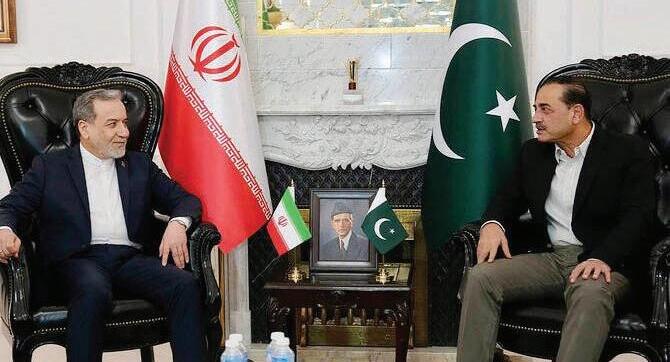
Iranian Foreign Minister Abbas Araghchi held separate phone calls today with Field Marshal Asim Munir, Chief of Army Staff of Pakistan; Hakan Fidan, Minister of Foreign Affairs of Türkiye; and Faisal bin Farhan Foreign Minister of Saudi Arabia to review the latest regional developments IRNA reported According to the Iranian state news agency Araghchi discussed what it
WB maintains ‘S atisfac tor y ’ rating for Tarbela expansion projec t
tation of the additional loan has not yet formally commenced According to the lender the Tarbela expansion programme has already increased the hydropower complex s installed generation capacity from 3,478MW at the start of the project to 4,888MW following the completion of the 1 410MW Tarbela Fourth Extension Once the Fifth Extension is commissioned installed capacity is projected to rise further to 6 418MW The Bank said the completed Fourth Extension has already added 1,410MW of renewable electricity to Pakistan's national grid, while the Fifth Extension will contribute another 1 530MW taking the total renewable generation capacity created under the programme to 2 940MW
Construction activities continue across multiple components of the project Civil works at the Fifth Extension powerhouse intake modifications and electro-mechanical installations are progressing while construction is also underway on a 500-kilovolt transmission line to evacuate power from Tarbela to the Islamabad West Substation In addition, three generating units under the Fourth Extension are already operational, and work on the Fifth Extension's switchyard and associated transmission infrastructure remains on schedule

and
were killed while many others sustained injuries
gence-based operations A day earlier five Indian-sponsored" terrorists were killed in an intelligence-based operation in the Razmak area of Khyber Pakhtunkhwa, while 24 terrorists were eliminated in Khyber district on July 29
Terrorist violence has intensified in Pakistan, particularly in Khyber Pakhtunkhwa and Balochistan, in recent
months, prompting security forces to intensify counterterrorism operations against militant groups operating in the two provinces The United Nations Security Council (UNSC) in a report released in Feb-
attacks carried out by the banned Baloch
istani security forces and projects linked to the China-Pakistan Economic Corridor (CPEC) "On September 16 2025 the BLA ambushed a Pakistani military convoy patrolling the corridor killing 32 troops While counter-terrorism operations by Pakistan restricted the BLA's operational space, it remained active," the report stated The report added that some member states had reported collaboration between the BLA the TTP and ISIL-K through shared training camps resources and coordination between commanders However, it noted that some member states assessed there was neither an association
nor growing ties between the BLA and Al Qaeda or ISIL It further highlighted that militant groups operating in Afghanistan had acquired modern weapons and equipment through cross-border smuggling and black-market trade TTP used advanced assault rifles night-vision devices, thermal-imaging devices, sniper systems and drone attack systems Most of these were provided by the de facto authorities in conjunction with weapons permits and travel documents the report said The annual report of the UN s 1988 Taliban Sanctions Committee Monitoring Team, released in August 2025, also stated that the outlawed BLA, including its Majeed Brigade, and the TTP maintained "close coordination
were "a source of pride for the entire nation " Prime Minister Shehbaz Sharif also expressed profound grief over the suicide blast extended condolences to the bereaved families and prayed for the elevation of the ranks of the martyrs The prime minister directed authorities to provide the best available medical treat-
demned the bombing and sought a detailed report from the provincial Inspector General of Police He expressed condolences to the
proud of the sacrifices rendered by the police and the Pakistan Army in the fight against terrorism adding that such cowardly attacks could never weaken the resolve of the people KP Chief Minister Sohail Afridi con-
FE D E R A L Interior Minister Mohsin Naqvi has reopened an old can of worms by suggesting that there should be more provinces Perhaps more significant is his saying that there are major problems in the country which needed solving because the current system of governance had collapsed He should know, for while the provinces handle their own law and order the Interior Ministry is informed about all of the province’s law and order problems and it is the node at which any collapse would be detected Mr Naqvi s proposal has prompted reaction from two quarters, PPP Secretary General Nayyar Bukhari and ISPR Director General Lt Gen Sharif Chauhry, both of whom stated the constitutional position that this was to be done by the proper constitutional procedure, and according to the will of the people It is worth noting that the PPP started the procedure under the Gilani government, but did not carry it further
How exactly the creation of more provinces is supposed to benefit the country and help the country solve its problems Mr Naqvi did not say except that the people would have their problems solved faster However, it is worth noting that the Musharraf Martial Law did devolve a number of powers to the district level, including policing health and education However once the political parties returned, this devolution was reversed More provinces is not a startlingly new idea One idea is to make the present civil divisions separate provinces Another is to adopt some sort of rough linguistic basis, which would see a Hindko province carved out of KP a Pashtun province out of Balochistan, one or perhaps two Seraiki and one Potohari province carved out of Punjab and a Karachi province out of Sindh It should be remembered that while India inheriting the same system of provinces, has played fast and loose with provincial boundaries, Pakistan, apart from the One Unit experiment has kept the provincial boundaries it inherited, apart from absorbing its princely states That the suggestion has come from the Interior Minister and as a solution to the country s governance problems, not for such reasons as development or linguistic or ethnic justice, does not make the suggestion correct, but does mean that it deserves much more serious attention that previous suggestions have been given Mr Naqvi s remarks included an element critical of the Prime Minister, such as his dismissal of the PM s penchant for hard work as mere firefighting, or his saying that distributing laptops (a hallmark of the PM) would not satisfy youth in which case, his suggestions of more provinces must be taken into context

Dedicated to the legac y of late Hameed Nizami Arif Nizami (Late) Founding Editor
M A
Niazi Editor Pakistan Today Babar Nizami Editor Profit
IN the long chronicle of human affairs, few pursuits have more clearly revealed the character of a people than the search for good governance Our predecessors whether the wise administrators of earlier ages or those who laid the foundations of our own constitutional order, grasped this truth with a seriousness that still commands reflection They understood that the art of governing is not a mere technique of power but a moral undertaking Authority they held is a trust held on behalf of the community to be discharged with restraint justice and an eye to the welfare of generations yet unborn Their systems, though shaped by the limitations of their times, were animated by principles of accountability, the supremacy of law over personal will, and the conviction that public office is a burden rather than a prize Courts were expected to stand as impartial arbiters; civil servants were trained to place duty above favour; and rulers at their best recognised that their legitimacy rested upon the consent and confidence of the governed We received from them a framework of institutions representative assemblies, independent judiciaries administrative services and a body of laws intended to curb arbitrary power These were not perfect creations yet they embodied an aspiration toward order tempered by fairness Public life retained for considerable periods, a measure of dignity Corruption existed, as it has in every age, but it was more often regarded as a shameful departure from the norm rather than an accepted condition of advancement The methods of our predecessors rested upon a shared moral vocabulary; honour in public dealing frugality in the use of common resources and a sense that the strong bore a particular responsibility toward the weak Where, then, do we stand today when measured against that inheritance? The forms of good gover-
Their systems, though shaped by the limitations of their times, were animated by principles of accountability, the supremacy of law over personal will, and the conviction that public office is a burden rather than a prize
nance remain visible constitutions are still sworn to, elections are still held, statutes continue to be enacted yet the substance has in many places grown thin Trust between the people and the state appears to be fading Justice is frequently perceived as uneven accessible more readily to those of means or influence than to the ordinary person Administrative machinery designed to serve is too often entangled in delay patronage and self-interest Political discourse has become coarse and transactional, with loyalty to party or person frequently eclipsing loyalty to principle or the public good The gap between proclaimed ideals and daily practice has widened leaving many citizens disillusioned and inclined to withdraw from civic responsibility altogether If failure must be acknowledged and candour requires that it should the causes are several and interwoven Foremost among them is a progressive weakening of personal character in public life Ambition has too often been severed from a corresponding sense of duty The pursuit of power and material advantage has overshadowed the older ideal of service Political culture has drifted toward clientelism wherein positions and favours are distributed as rewards rather than earned through merit Institutions that ought to act as checks upon excess have themselves become vulnerable to capture, their independence eroded by pressure inducement or the quiet fear of consequence Education which should have formed citizens capable of discerning right from expedient has frequently neglected the cultivation of ethical judgement in favour of technical competence or mere qualification Economic pressures and rapid social change have compounded these weaknesses, fostering a climate in which short-term gain appears more urgent than long-term integrity Over all has settled a collective habit of blame; each segment of society is ready to indict the others while absolving itself
Have we, then, discharged our responsibilities as individuals, as institutions, and as a nation? The record is sobering As individuals, many of us have grown content to lament the state of affairs while participating in small ways or large in the very practices we condemn evading obligations seeking special treatment remaining silent when honesty would exact a cost Institutions have too often placed institutional survival or the interests of their leaders above the purpose for which they were created In
A Roadmap to Transform Pakistan's Textile Industr y
methods help minimize waste, improve resource utilization, and enhance overall operational performance Integrating standardized work practices with error-proofing (Poka-Yoke) systems reinforced by artificial vision has proven highly effective in reducing production defects minimizing rework shortening production cycles and growing labour productivity Such modernizations allow textile firms to improve product quality while reducing production costs Competitiveness in Pakistan's garment industry depends on smarter production systems rather than faster workers Effective production planning balanced assembly lines preventive maintenance robust quality management and continuous workforce training can significantly enhance efficiency and profitability Greater investment in ERP systems, artificial intelligence, robotics Radio Frequency Identification (RFID) technology and smart manufacturing will further enhance productivity reduce costs and strengthen Pakistan s competitiveness against regional exporters such as Bangladesh, Vietnam, and China
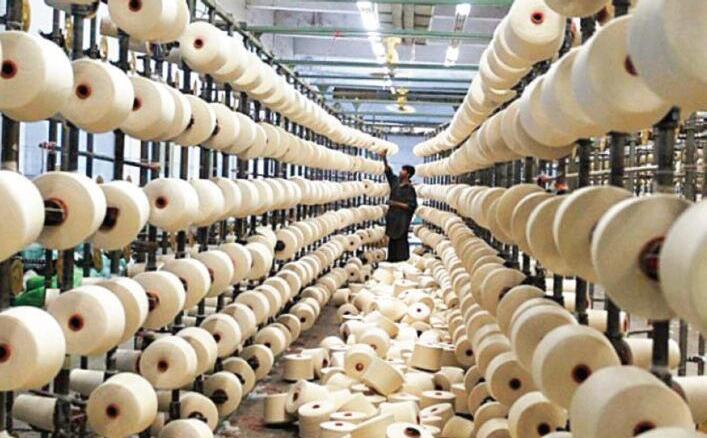
manufacturers' responsiveness to changing market demands
Fragile internet lifeline
ternational Trade Centre (ITC) indicates that countries exporting higher value-added textile products generate greater export earnings create more skilled employment and achieve stronger long-term competitiveness than those relying primarily on raw materials and intermediate goods Expanding export destinations beyond traditional marketplaces into the Gulf countries Central Asia Africa East Asia Australia and Latin America would further support Pakistan s export earnings 02 Boosting Productivity Through
procedures and modern production technologies These
03 Sustainability: From Compliance to Competitive Advantage International textile markets are increasingly driven by sustainability Global buyers now evaluate suppliers not only on price and quality but also on eco-friendly performance ethical sourcing, and social responsibility Therefore, sustainability has progressed from a compliance obligation into a significant competitive advantage Lindström's circular business model offers a valuable lesson By repairing reusing and manufacturing clothes only on demand businesses can significantly reduce waste, preserve resources, andreduce overproduction Research suggests that extending the useful life of a garment by just nine months can lower its environmental footprint by 20–30% while wearing clothing for twice as many uses may cut greenhouse gas emissions by around 44% These findings are consistent with research published by the Waste and Resources Action Programme (WRAP) and the Ellen MacArthur Foundation, which highlight the environmental benefits of extending garment lifecycles and adopting circular business models Pakistan s textile industry should accelerate the implementation of renewable energy water recycling, effluent treatment, organic cotton, recycled fibres, waste minimization, circular production systems, and internationally recognized sustainability certifications Adherence to Environmental Social and Governance (ESG) standards can strengthen access to premium international brands and environmentally conscious consumers 04 Driving Growth Through Innovation and Research Innovation has become a cornerstone of competitiveness in the global textile industry The adoption of advanced manufacturing technologies can reduce production lead times improve product quality optimize supply chains automate repetitive processes, and enhance
To support its competitive position Pakistan should foster closer collaboration among universities research institutions and textile manufacturers to develop high-value textile products such as smart textiles, antimicrobial fabrics, fire-resistant fabrics, recycled fibres, and other technical textiles Greater investment in research and development (R&D) will drive innovation expand value-added exports and strengthen the long-term competitiveness of Pakistan s textile industry Studies by the Organization for Economic Co-operation and Development (OECD) and the World Bank consistently show that investment in research, innovation and technology adoption is a key driver of productivity growth and export competitiveness 05 Human Capital and Workplace Excellence
Trained and motivated workers are essential for transforming the textile industry along with modern technology Continuousinvestment in technical education and vocational training in textile manufacturing fashion design quality management digital manufacturing, and supervisory development is vital for higher productivity Similarly important is workplace ergonomics Suitable workstation design, adaptable seating ergonomic equipment vibration reduction satisfactory lighting safe material management and improved workplace designs reduce tiredness work-related injuries and musculoskeletal disorders while improving employee well-being and operational efficiency Performance monitoring through Key Performance Indicators (KPIs) combined with employee training motivation systems and constantdevelopment programmes can further enhance productivity and product quality 06 Strengthening the Textile Ecosystem Export competitiveness cannot be sustained through factory-level performance alone It requires improvements across the entire textile value chain beginning with higher agricultural productivity through effective pest management farm mechanization improved seed varieties modern irrigation systems and greater investment in agricultural research A dependable supply of high-quality domestic cotton will
NISAR AHMAD ALVI
MUHAMMAD MOHSIN IQBAL

The Trump–Netanyahu A xis: Power, War, and the Politics of Escalation

IN the annals of political psychology, few figures have been as openly scrutinized for their personality traits as Donald Trump and Benjamin Netanyahu Both leaders have been characterized by observers and analysts as exhibiting profound narcissism an excessive preoccupation with self, a sense of entitlement, and a lack of empathy This psychological profile, when fused with immense political power, has not merely shaped domestic policy but has been a driving force in what some analysts have termed a dangerous duet of self-promotion and delusion culminating in a catastrophic war with Iran and the devastation of Gaza
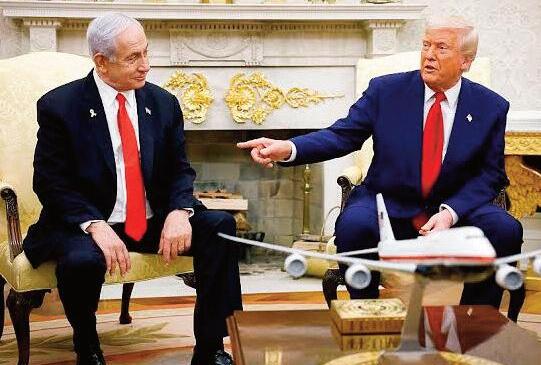
The personal dynamic between Trump and Netanyahu is often described as a meeting of "two leading pathological narcissists" Their relationship is transactional built on mutual admiration and the reinforcement of each other s grandiose self-images During a White House meeting, Ne-
tanyahu presented Trump with a letter nominating him for the Nobel Peace Prize a gesture that perfectly encapsulates the currency of their bond: validation Trump, in turn, has publicly praised Netanyahu as a "war hero," adding, "I guess I am, too I sent those planes," despite having never served in combat This assertion of shared glory reveals a fundamental inability to distinguish between the actions of others and their own perceived achievements
Their narcissism manifests in a shared worldview of zero-sum competition and personal indispensability Both men frame themselves as singular saviors uniquely capable of navigating existential threats Netanyahu portrays himself as the sole guardian of Israel against Iran and regional enemies while Trump s I alone can fix it rhetoric since his 2016 campaign till date has been a consistent theme
This belief places them "above correction " leading them to view independent judiciaries a free press and international law as illegitimate constraints on their will This is starkly illustrated by their contempt for the International Criminal Court (ICC), which Trump has actively worked to sanction and Netanyahu has dismissed as "absurd" after it issued arrest warrants for him for war crimes Trump and Netanyahu s convergence two embattled leaders seeking validation through conflict reveals less a grand strategy than a dangerous duet of self promotion and delusion" The war's narrative, however, is colored by the leaders' need for theatrical dominance Trump has threatened a "massive attack" on Iran to finish them off while Ne-
Their narcissism manifests in a shared worldview of zero-sum competition and personal indispensability Both men frame themselves as singular saviors uniquely capable of navigating existential threats Netanyahu portrays himself as the sole guardian of Israel against Iran and regional enemies, while TrumpÊs "I alone can fix it" rhetoric since his 2016 campaign till date has been a consistent theme
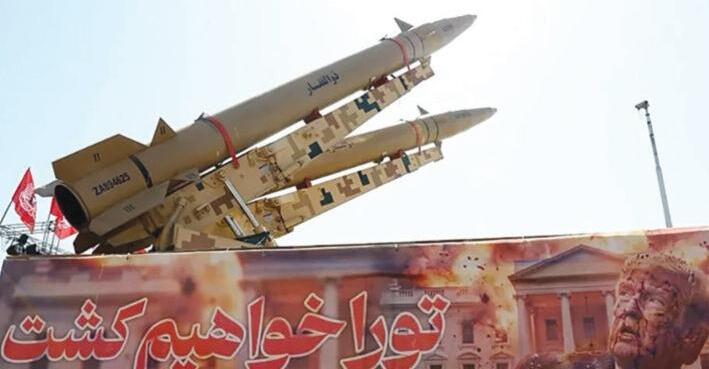
tanyahu has claimed he is reshaping the Middle East to his will Their strategy has backfired; Iran has proven resilient and willing to absorb conflict, using the war to assert greater control over the strait and attack U S allies, further disrupting global energy markets and proving the limits of U S power Nowhere is the lack of empathy associated with their leadership more apparent than in Gaza The ICC Pre-Trial Chamber has issued arrest warrants for Netanyahu for the war crime of starvation as a method of warfare and crimes against humanity including murder and persecution But both Donald Trump and Bibi in almost all their speeches blame Iran for targeting civilians The charge is familiar a rhythmic chorus in the war drums of the Middle East: Iran is indiscriminately targeting civilians It is a narrative of moral clarity, painting the Islamic Republic as a rogue actor indifferent to human life
Yet when examined through the cold calculus of civilian casualties the claim rings hollow To compare this to the American and Israeli record of civilian killing is to compare a house fire to a forest fire The United States has perfected the art of industrial-scale civilian slaughter across generations
In Korea an estimated 3 million civilians perished and the number of refugees reached 3 million In Vietnam the civilian death toll reached 2 million, with millions more refugees and victims of chemical defoliants The Iraq War (2003) claimed between 200 000 and 250 000 civilian lives creating 3 25 million refugees
The War on Terror has by conservative estimates killed over 940 000 people with 432 000 being civilians in at least 85 countries since 9/11 The list is a macabre roll call of modern history: Afghanistan, Libya, Syria, Somalia, Yugoslavia, and more
These are not accidents; they are the predictable consequences of a foreign policy driven by hegemony and a view of foreign lives as expendable Israel s record in its immediate neighborhood is equally damning Since October 2023, more than 73,000 Palestinians have been killed in Gaza According to Hamas nearly 65 000 of those are civilians and Israel continues to carry out near-daily strikes in Gazathat have killed over 1 180 Palestinians since a ceasefire with the UN reporting continuing attacks on civilians and infrastructure This is not merely combat; it is a systematic destruction of life The violence
extends to Lebanon where 3 558 have been killed and to the West Bank where settler violence and arrests of civilians are routine When the architects of this systematic destruction the United States and Israel accuse Iran of "indiscriminately targeting civilians " they perform a grotesque act of psychological projection It is the pot calling the kettle black while the pot itself is a blackened cauldron of human suffering Trump, who threatened Iran with "unconditional surrender," and Netanyahu, who has dismissed international law as "absurd," have no moral authority to condemn anyone for civilian deaths Their hands are steeped in the blood of a thousand conflicts The hypocrisy is not merely cynical; it is pathological
To ask whether these leaders have the "right" to blame Iran is to miss the point entirely Their "right" is not a moral one but a claim rooted in power and propaganda They have shown through their actions that they do not value civilian life not the lives of Palestinians not the lives of Iranians and not the lives of the millions of others who have perished in American and Israeli wars They view civilian casualties as a necessary cost, a statistic to be managed or a tool for leverage
Both Israel and the USA cite chanting of the death of America and Death of Israel by Iranians as one of the most important reasons to attack Iran Knowing very well that these slogans are not a genocidal manifesto or a declaration of capability, but rather a visceral symbolic expression of rage against two nations that have systematically subjected their country to decades of covert sabotage assassinations of nuclear scientists cyberattacks on infrastructure and overt mil-
Has Hamas abandoned armed resistance?
What they had explicitly stated was that they were willing to store their weapons and would only hand them over to the forces of a future Palestinian State


that Hamas had agreed to disarmament What they had explicitly stated was that they were willing to store their weapons and would only hand them over to the forces of a future Palestinian State So-called Phase 2 of the Gaza Ceasefire was supposed to have been reached immediately after the completion of Phase 1 For months the beginning of the second phase was floated before it was formally announced on January 15 of this year Despite the talk of multi-billion dollar investments
and Jared Kushner s half-assed PowerPoint presentations that were simply slightly altered versions of previous drafts, predictably, nothing else came of the alleged Phase 2 Back in October of 2025 I had written that the ceasefire was going to be stuck in limbo between Phase 1 and Phase 2 More than six and a half months after the declared end of the first phase, we are still in a cycle of never-ending negotiations and declarations that have so far failed to bear fruit The reason for this is crystal clear: Israel never had any intention of implementing a Phase 2 it simply wanted a break from an unwinnable forever war that was draining its armed forces, putting strain on its society and government, while extracting its prisoners Israel has killed over 1 200 people in Gaza since the ceasefire began committed thousands more violations of the agreement refused to allow basic goods to enter the besieged territory, and only advanced further into the territory while continuing its primary objective of what is called a “war”, totally flattening the civilian infrastructure of Gaza Meanwhile it has been focusing on building up a series of ISIS-linked collaborator gangs whom it supplies and pays to do its bidding in over 60% of Gaza that they have illegally occupied On the other side, Hamas snapped into action and fulfilled its side of the bargain; it has not attacked Israeli occupying forces and despite the constant airstrikes shooting and artillery fire towards Palestinian civilian areas hasn t retaliated It quickly took to securing order amongst a displaced, poor and traumatized population, agreeing to hand over control to the National Committee for the Administration of Gaza (NCAG) But handing over control of the Gaza Strip was not enough for the Israelis who continued to demand disarmament before they would even consider holding up their side of the bargain, which they have actively been going back on In an attempt to ease the civilian suffering in the Gaza Strip Hamas has now gone beyond anything they previously were obligated to do under the ceasefire agreement;
Hamas has been clear: Israel must begin its full withdrawal from the Gaza Strip and disband all of its ISIS-linked militia proxies in the territory
they have accepted a process whereby all factions will be eventually disarmed HAS HAMAS GIVEN UP ON ARMED RESISTANCE?
To clear up all misunderstandings, Hamas and their allied factions have agreed on a roadmap that would eventually lead to full disarmament but not without the Israelis cooperating and taking actionable steps towards achieving Palestinian Statehood This is precisely why it won t end up working Hamas has been clear: Israel must begin its full withdrawal from the Gaza Strip and disband all of its ISIS-linked militia proxies in the territory In return the resistance factions will begin a process of storing and decommissioning their heavy weapons, none of which will be handed over to the Israelis or any non-Palestinian entities Personal weapons will be registered, and the first handover of weapons will be done by the Palestinian police in the Gaza Strip whose role will be replaced by the National Committee for the Administration of Gaza (NCAG) security services once they enter the territory Many could even argue that this plan would mean the disintegration of Palestinian armed factions altogether if implemented Yet it is a plan that will mean that Israel fully withdraws from the Gaza Strip will allow for reconstruction and will lead to Palestinian Statehood Once a Palestinian State has been established, it would be permitted to take control of the arms of the resistance, according to Hamas There are evident dangers in pursuing this strategy because the Israelis could sim-
ply play along until they are comfortable with the results and decide then to launch a military assault However, the Israelis aren t even signaling their intent to take the first steps, let alone play along to the extent of a full withdrawal and allowing reconstruction
What has occurred to put it quite bluntly is that the people of Gaza have been abandoned For most of the population of Gaza they continue to languish in flimsy tent cities as the world forgets they even exist Their compatriots in occupied East Jerusalem and the West Bank never rose up to their aid while the only surrounding State that fought on their behalf was Yemen s Ansarallah-led government Hezbollah in Lebanon sacrificed most of its top leadership in support of Gaza, while some Iraqi factions also opened fire, but ultimately, the Palestinians in Gaza were left to fight to defend themselves otherwise The governments of Jordan Lebanon Egypt Syria and beyond all abandoned Gaza and instead sought to either recognize its existence like Damascus and Beirut or continued to expand cooperation like the regime in Cairo All the Arab and Muslimmajority countries have either fully abandoned Palestine have diplomatic and economic ties to Israel or simply turned a blind eye with the exception of the Islamic Republic of Iran
Hamas, as the governing party of Gaza, has therefore been placed in a position whereby it has three real options to fight for its people’s rights: 1) Negotiate their way towards Palestinian statehood and if not that then to alleviate their people s suffering in
Gaza 2) Give up completely 3) Launch one last offensive that will embody their motto of victory or martyrdom What Hamas and their allies are currently doing is trying their best to ease the suffering of their people and to reach an agreement which would achieve Statehood If this fails and the Israelis only continue to react with more violence option three will eventually be triggered The big question mark in this equation which could dramatically change the picture is the predicament of the regional war If the US and Israel are to get back into a full-scale war with the Islamic Republic of Iran, all the previous calculations may become irrelevant The Iranians previously tried to negotiate on behalf of Lebanon but the Israelis refused to withdraw from southern Lebanese lands Beirut and Damascus have both signed agreements with Tel Aviv Syria even established a Joint Fusion Mechanism’ with Israel that sought to achieve joint economic projects yet the Israelis have not stopped occupying more territory in the south since
QAMAR BASHIR


Smart Climate-Budgeting: Digitizing the Architecture of Green Finance in Pakistan
and verify environmental, social, and governance (ESG) compliance in real time Emerging economies like Colombia Indonesia and South Africa have already demonstrated that digital taxonomy integration significantly reduces sovereign risk premiums by providing transparent datasets to the global market
restructuring of fiscal architecture By shifting from traditional budgeting to an automated, data-driven Green Finance System and integrating algorithmic Climate Budget Tagging (CBT) directly into the federal Public Financial Management (PFM) framework Pakistan aims to eliminate discretionary spending leaks This digital overhaul ensures that every rupee allocated toward climate resilience is tracked, verified, and aligned with national adaptation goals in real time Artificial Intelligence (AI) is playing an increasingly important role in climate budgeting by helping government, businesses, and organizations allocate financial resources more effectively to climate action specifically in most of the advanced countries This is happening because AI analyses large data sets to identify areas most vulnerable to climate change, prioritizing funding where its is needed most AI also aid in predictive analytics resource optimization Monitoring and Evaluation carbon emission analysis and disaster preparedness
Globally this structural pivot aligns Pakistan with an expanding international network of techdriven sustainable finance frameworks such as Artificial Intelligence (AI), Cloud Computing blockchain Big Data and specialized Application Programming Interfaces (APIs) into the financial ecosystem Their primary purpose is to automate, track,
The backbone of this modernization is the newly deployed Pakistan Green Taxonomy (PGT) spearheaded by the State Bank of Pakistan (SBP) and the Ministry of Climate Change Global Sovereign ESG Investors Federal & Provincial Budgets Pakistan Sustainable Finance Ecosystem Commercial Banks & Capital Markets Data Integration via SBP API Algorithmic CBT via PFM Act Pakistan Green Taxonomy (MoCC) Through specialized application programming interfaces (APIs) the taxonomy standardizes environmental compliance across the commercial banking sector This digital integration automatically screens corporate lending portfolios, categorizes assets into strict "green, transitional, or red" tiers, and provides the transparent data verification required to eliminate corporate greenwashing
By establishing a digitized pub-
positioning
to attract interna-


g NESTLÉ PAKISTAN'S BIOMASS FACILITY TO CONVERT 72,000 TONNES OF AGRICULTURAL RESIDUE INTO CLEAN ENERGY ANNUALLY

disclosed that they used to sell the stolen railway tracks at Rehmani Warehouse located in Haroonabad Acting on their identification, the Railways Police immediately raided the warehouse, where Muhammad Siddique Soneja, son of Ayub Soneja and Muhammad Umar Soneja son of Muhammad Ayub Soneja were questioned regarding the purchase and sale of railway tracks During the investigation both individuals admitted that the material stored in the warehouse was stolen railway property During the search of the warehouse, stolen railway material worth millions of rupees was recovered The material had been skillfully concealed beneath other goods and machinery Approximately 32 tonnes (31 800 kilograms) of railway material were taken into custody Both suspects were subsequently arrested in accordance with the law and shifted to Railways Police Station Karachi City Inspector General of Pakistan Railways Police, Muhammad Wisal Fakhar Sultan commended the Karachi Division team for the successful operation and stated that indiscriminate action would continue under a zero-tolerance policy against all elements involved in damaging national railway assets, stealing railway material, and its illegal purchase and sale He stated that the protection of railway infrastructure and railway assets as well as the provision of safe travel facilities to passengers remains a top priority of the Pakistan Railways Police He further emphasized that no leniency would be shown to anyone involved in such criminal activities
LAHORE
Punjab Police have finalized comprehensive security arrangements for mourning processions Majalis and Urs ceremonies to be held across the province on the occasion of the Chehlum of Hazrat Imam Hussain (RA) and the Annual Urs of the Sufi saint Hazrat Data Ali Hajveri (RA) with more than 42 000 police officers and personnel to be deployed to ensure law and order Sharing details, a Punjab Police spokesperson said a total of 730 Majalis and 420 mourning processions would be held across the province to mark the Chehlum of Hazrat Imam Hussain (RA) He said that more than 42 000 police officers and personnel would perform security duties across Punjab, including Lahore In the provincial capital alone over 10 000 officers and personnel would be deployed to secure 44 Majalis and 17 mourning processions As part of the security arrangements, 390 walk-through gates and 6,427 metal detectors would be installed and used for thorough security screening Inspector General of Police (IGP) Punjab Abdul Kareem said comprehensive security measures had been put in place for Majalis, mourning processions and the Urs ceremonies of Hazrat Data Ali Hajveri (RA) He said the Chehlum processions would be monitored continuously through the Punjab
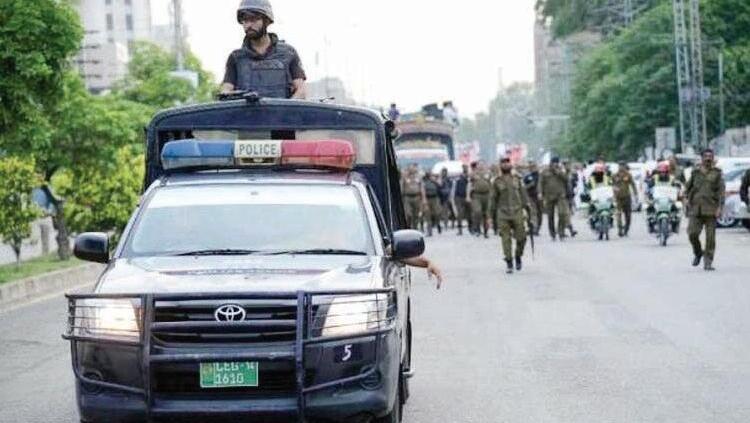
Safe Cities Authority s surveillance cameras, while the Elite Police, Traffic Police and volunteers would also assist in maintaining security and ensuring smooth movement
The Punjab police chief directed the CCPO Lahore all Regional Police Officers (RPOs) and District Police Officers (DPOs) to personally supervise security arrangements for Majalis and mourning processions He further instructed them to implement comprehensive measures for the protection of devotees arriving from across the country to attend the Annual Urs of Hazrat Data Ali Hajveri (RA) He also ordered that the Chehlum processions, Majalis and Urs ceremonies be monitored round the clock through Special Control Rooms to ensure an effective and timely security response
processions, while Lady Police personnel would conduct the search and security of female mourners He also stressed the need for effective coordination with Peace Committees community leaders civil society representatives and all other stakeholders to ensure peaceful observance of the religious events Punjab Police remain on high alert during Christian prayer services Meanwhile Punjab Police officers and personnel remained on high alert while performing security duties during Christian worship and prayer services held in churches across the province, including Lahore Earlier, Punjab IGP Abdul Kareem had directed all RPOs DPOs and senior police officers to further strengthen the security of churches He instructed supervisory officers to personally inspect security arrangements at churches, important places and other sensitive locations O ver 42,000 cops deployed for
The IGP further directed that snipers be deployed on rooftops along the routes of the mourning
LAHORE S TA F F R E P O R T The All Pakistan Business Forum (APBF) has welcomed the government’s strategy to achieve sustainable economic growth through export diversification and expansion into new international markets describing the target of raising Pakistan s exports to $100 billion by 2035 as an ambitious but achievable objective that can help place the economy on a sustainable and durable growth path
The business forum said the government s focus on transforming Pakistan s leading export clusters into globally competitive sectors while promoting non-traditional industries

AMiD secoND-PhAse voTiNg

O L L I N G for the second phase of the Azad Jammu and Kashmir (AJK) Legislative Assembly elections concluded on Sunday across eight of the nine constituencies of Muzaffarabad division and all 12 refugee constituencies with the electoral process overshadowed by allegations of rigging and violence as the Pakistan Peoples Party (PPP) accused the Pakistan Muslim League-Nawaz (PMLN) of "robbing" votes and targeting its supporters Polling for the refugee constituencies commenced at 8am and continued until
5pm while voting in Muzaffarabad division concluded at 6pm after authorities extended polling by one hour The electoral process in LA-27 (Muzaffarabad-I) was postponed due to heavy rainfall, AJK Chief Election Commissioner (CEC) Ghulam Mustafa Mughal said Polling in the constituency commonly known as Kutla was deferred until August 4 after a landslide prevented the dispatch of polling
highly encouraging , adding that reports received from the field indicated a positive trend and that voter turnout was expected to increase further as the day progressed "The polling process across the valley and the relevant constituencies is continuing in a calm and orderly atmosphere he said

Expressing optimism about the party s electoral prospects Asif said the PML-N would form the next government in AJK and continue contributing to what he described as the region's development and stability under the leadership of Nawaz Sharif Reaffirming Pakistan s longstanding position on the Kashmir dispute the defence minister said Kashmir will become Pakistan" remained the country's fundamental national stance Referring to the vision of Quaid-eAzam Muhammad Ali Jinnah he said "Kashmir is Pakistan's jugular vein " maintaining that there was no room for any alternative solution Asif also expressed regret that certain elements were strengthening the Indian lobby through what he described as negative propaganda
Highlighting Sialkot's political significance he said the city was a stronghold of refugees from Jammu with approximately 100 000 registered voters in constituency LA-36 (Jammu-III)
Iran-Pakistan ties enter ‘new era’, no ex ternal force can weaken brotherhood: Envoy
Iranian Ambassador to Pakistan
Reza Amiri Moghadam on Sunday said the longstanding relationship between Iran and Pakistan had entered a new and unique era describing the bilateral partnership as stronger than ever and resilient enough to withstand all external challenges
In a statement posted on X the ambassador said the ties between the two neighbouring countries were rooted in centuries of shared history civilisation, faith and culture, adding that the enduring relationship stood "as high as the majestic peaks of Damavand and K2"
"The historical relations between Iran and Pakistan have proudly withstood the test of time Moghadam said adding that the bond between the two nations remained "strong and enduring"
Recalling key milestones in bilateral relations he said Iran was
the first country to recognise Pakistan after its independence, while Pakistan later became the first country to recognise the Islamic Republic of Iran gestures that he said reflected the exceptional nature of the relationship
The relationship between Iran and Pakistan has entered a new and unique era incomparable to the past," he remarked
The ambassador said the growing momentum in bilateral ties over the past two years was evident across multiple sectors and underscored the deep-rooted friendship and mutual trust between the two countries
Highlighting parliamentary cooperation Moghadam said legislators from both countries had consistently stood together in support of each other describing them as the voices of their respective nations united in solidarity
He noted that the Pakistani Parliament adopted a resolution in support of Iran on the first day of
what he described as aggression by the Israeli regime
"In the presence of the president, members of the Iranian Parliament chanted 'Pakistan Tashakur while the people of Iran echoed the same sentiment in the streets proudly waving the flags of Iran and Pakistan side by side, he said
Referring to Iran s new supreme leader s first Nowruz message the ambassador said it had also underscored the importance Tehran attached to its relationship with Pakistan Moghadam said a series of high-level exchanges over the past two years had further reinforced bilateral cooperation These included Iranian President Masoud Pezeshkian s visit to Pakistan the Pakistani prime minister s visits to Iran, and interactions involving the Chief of Defence Forces, Chief of Army Staff (COAS) Field Marshal Asim Munir, and other senior officials
The Sarhad Chamber of Commerce and Industry (SCCI) has urged the federal government to take immediate steps to resolve a range of longstanding issues affecting businesses in Khyber
Pakhtunkhwa warning that trade and economic activity in the province continue to face multiple policy and operational hurdles The issues were raised by SCCI President Junaid Altaf during a meeting with Federal Interior Minister Mohsin Naqvi on the sidelines of the Pakistan Economic Summit 2026 in Islamabad, organised by the United Business Group (UBG) in collaboration with the Federation of Pakistan Chambers of Commerce and Industry (FPCCI)
Among the key concerns highlighted were the prolonged closure of the Torkham border delays in the payment of sales tax refunds, taxation imposed on exFATA/PATA areas and the continued restrictions on the movement of wheat from Punjab into Khyber Pakhtunkhwa Altaf termed the restrictions on wheat transportation illegal and unconstitutional, calling on the federal government to withdraw the measures without delay He also stressed the need for businessfriendly policies and improved facilitation to support trade and investment across the province
The chamber president further argued that Khyber Pakhtunkhwa remains underrepresented in federal boards and policymaking institutions leaving the province s business com-
munity with limited input into decisions made at the national level He called for greater provincial representation in federal decision-making forums Seeking closer regional coordination Altaf proposed the formation of a joint committee comprising representatives from Khyber Pakhtunkhwa and Balochistan to collectively pursue business and economic issues with the federal government He said the proposed forum would strengthen coordination between the two provinces while providing a more effective platform to raise shared concerns He also urged the government to introduce dedicated measures to promote tourism and attract investment, describing the sector as an important opportunity for economic development in Khyber