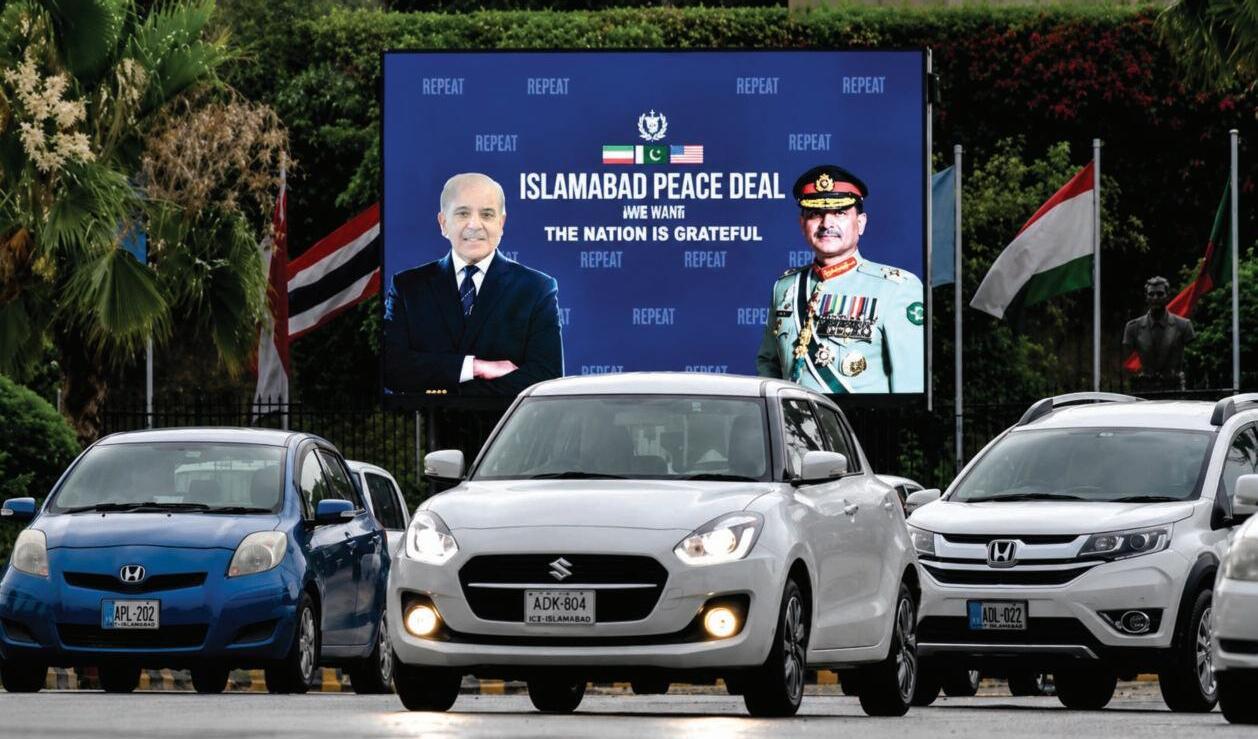
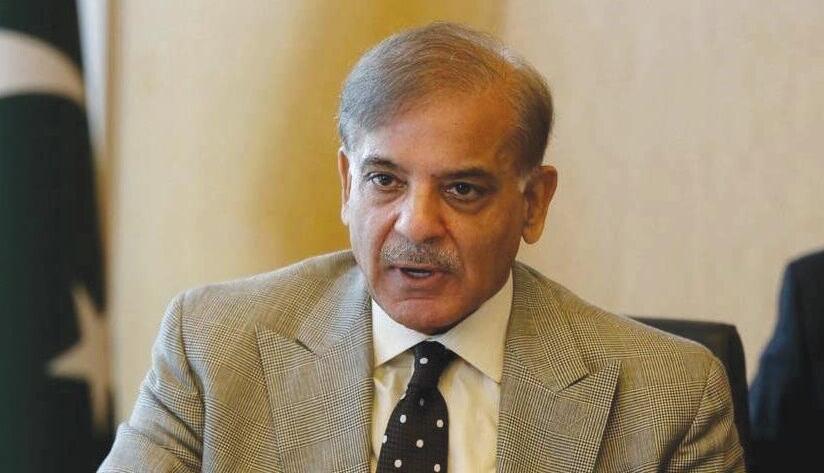
g PMO CONFIRMS PM SHEHBAZ, FIELD MARSHAL MUNIR WILL ATTEND CRUCIAL DIPLOMATIC ROUND, WHICH FOLLOWS ISLAMABAD MEMORANDUM OF UNDERSTANDING
g NEGOTIATIONS COME A S IRAN BLAMES US FOR FAILING TO STOP ISRAEL’S STRIKES IN LEBANON
g IRANIAN DELEGATION DEPARTS AS STRAIT OF HORMUZ BLOCKADE DEEPENS PRESSURE AHEAD OF NEGOTIATIONS
Pakistan-facilitated US Iran follow-up talks commence today
Pakistan s Foreign Office (FO) on Saturday announced that technicallevel negotiations aimed at implementing the landmark Islamabad Memorandum of Understanding (MoU) between the United States and Iran will commence in Buergenstock Switzerland on Sunday According to the FO, representatives from the United States and Iran, alongside mediators from Pakistan and Qatar, will participate in the discussions as part of efforts to advance the understandings reached under the historic agreement Pakistan will continue to facilitate the process in its role as mediator, with a view to advancing the understandings reached under the Islamabad Memorandum of Understanding ” the Foreign Office said in a statement
a comprehensive investigation into the incidents According to police the explosions occurred in the Phang Musa Khel area and targeted two vehicles through remote-controlled explosive devices Police said the first explosion targeted a private Datsun vehicle carrying passengers and travelling towards Domel The powerful blast killed five people on the spot and completely destroyed the vehicle Rescue teams and local residents immediately rushed to the scene and began efforts to evacuate the victims Authorities described the attack as a cowardly act of terrorism aimed at innocent civilians According to eyewitnesses and local sources, a second blast occurred nearly one kilometre away from the site of the first attack while the injured were being transported for medical treatment The second explosion killed two more people and destroyed another vehicle bringing the death toll to seven Rescue 1122 teams shifted the bodies and injured victims to Domel Rural Health Centre and Khalifa Gul Nawaz Teaching Hospital for treatment and medicolegal procedures Following the attacks, security forces cordoned off the area and launched a search operation to track down those responsible Authorities also initiated a thorough sweep of the surrounding region amid concerns that additional explosive devices might have been planted Investigators are collecting forensic evidence and examining the circumstances surrounding the coordinated attacks President Asif Ali Zardari strongly condemned the improvised explosive device attacks and expressed deep sorrow over the loss of innocent lives
ISLAMABAD
Adviser to the Prime Minister on Political Affairs Rana Sanaullah on Saturday firmly rejected reports and speculation regarding any change in the Prime Minister s Office following the passage of the federal budget for 2026-27 describing such claims as baseless and misleading
Speaking to journalists, the senior Pakistan Muslim LeagueNawaz (PML-N) leader said certain elements were deliberately spreading misinformation and fabricated narratives in an attempt to create uncertainty and political instability in the country
Responding to a question about rumours regarding the replacement of Prime Minister Shehbaz Sharif Rana Sanaullah categorically de-
nied the reports and said there was no truth in such speculation
He maintained that Prime Minister Shehbaz Sharif was leading the country effectively and had significantly enhanced Pakistan s standing on the international stage Pakistan has gained recognition and respect across the world due to the prime minister s leadership and diplomatic efforts," he said
The adviser added that the premier's sincerity, tireless work ethic and commitment to addressing national challenges had earned widespread appreciation from various segments of society According to Sanaullah, the government s performance and the prime minister s determination to steer the country through economic and political challenges had strengthened public confidence in the administration
Commenting on relations with
opposition parties the PM s adviser reiterated the government s commitment to democratic engagement and political dialogue
He said the ruling coalition had always favoured negotiations and constructive political interaction regardless of political differences
Recalling his party s time in opposition, Sanaullah noted that despite facing legal cases and political pressures, the PML-N had continued to uphold democratic norms and institutions
The democratic process remains the best way forward for resolving political issues he remarked Turning to regional developments, Rana Sanaullah welcomed recent progress regarding Iran and expressed optimism that the lifting of sanctions on Tehran would generate positive economic opportunities for Pakistan
ISLAMABAD
United States President Donald Trump has said Pakistan played a helpful role in Washington’s memorandum of understanding with Iran, according to remarks he made in an interview with Axios
When asked which world leaders he liked Trump mentioned Chinese President Xi Jinping and Indian
Prime Minister Narendra Modi before referring to Pakistan s leadership Speaking about Prime Minister Shehbaz Sharif and Chief of Army Staff and Chief of Defence Staff Field Marshal Asim Munir, he said Pakistan’s civilian and military leaders had a strong working
relationship and added that the country had assisted the United States in its contacts linked to Iran
Trump said Pakistan had familiarity with Iran and people involved in the process He described Field Marshal Munir in positive terms and also spoke favourably about the relationship between Munir and Prime Minister Shehbaz In Pakistan you have the field marshal who is great Munir he s great And you have the prime minister, and they just get along great He totally respects the prime minister It s a beautiful thing to see," He then added: "But they really helped us with this deal They knew the Iranians they
confirmed that the Pakistani interior minister was travelling to Iran as part of Islamabad's ongoing efforts concerning the US-Iran negotiation process The spokesperson also said Naqvi was expected to hold separate talks with Iranian Interior Minister Eskandar Momeni during his visit to discuss matters of mutual interest and regional cooperation Pakistan has emerged as a central mediator in efforts to reduce tensions between Washington and Tehran, culminating in a major diplomatic breakthrough earlier this month On June 15 US President Donald Trump announced that the United States and Iran had agreed to a peace framework paving the way for the signing of the Islamabad Memorandum of Understanding (MoU) The agreement was formally endorsed on June 18 when Prime Minister Shehbaz Sharif signed the document as mediator, while President Trump and Iranian President Masoud Pezeshkian signed on behalf of their respective countries The accord is widely regarded as one of the most significant diplomatic achievements in recent years ending more than 100 days of conflict and creating a framework for long-term regional stability The next phase of negotiations was initially scheduled to begin at Switzerland s Bürgenstock resort, where technical-level talks were expected to launch a 60-day implementation process under the agreement However the Swiss Foreign Ministry later announced that the meeting had been postponed while reaffirming Switzerland s readiness to host future negotiations The announcement followed reports that US Vice President JD Vance had cancelled his planned visit to Switzerland The talks were expected to focus on implementing key provisions of the agreement and establishing mechanisms for sustained dialogue between Washington and Tehran Before the postponement Iran's semi-official Tasnim News Agency reported that Iranian negotiators wanted to see concrete signs of US implementation of commitments made under the interim agreement before proceeding with further negotiations
Pakistan-facilitated US Iran follow-up talks commence today
CONTINUED FROM PAGE 01
The talks mark the first formal follow-up engagement since the signing of the agreement earlier this week which ended more than 100 days of conflict and opened a pathway toward a comprehensive settlement between Washington and Tehran Meanwhile US Vice President JD Vance said he plans to travel to Switzerland in the coming days as negotiations progress Speaking to Fox News Vance said discussions with Iran were proceeding positively, adding that US Special Envoy Steve Witkoff and Jared Kushner, sonin-law of President Donald Trump, were already in Switzerland participating in the diplomatic effort “Negotiations are going well ” Vance said while maintaining that the United States retained significant leverage in the process Iran has also confirmed its participation in the talks Foreign Ministry spokesperson Esmaeil Baghaei said Tehran would send a delegation to Switzerland to ensure implementation of commitments agreed under the accord Baghaei stressed that Iran had fulfilled its obligations under the agreement and expected reciprocal steps from Washington In Switzerland, we intend to press for the fulfilment of the other side s commitments and clarify how they plan to act on their obligations,” he was quoted as saying by Iranian media He further emphasised that the United States must ensure Israel complies with ceasefire commitments particularly regarding military actions in Lebanon
not implemented, the entirety of the agreement will be jeopardised ” Baghaei warned calling for im-
mediate measures to preserve the accord
The 14-point Islamabad MoU was signed on Thursday by US President Donald Trump and Iranian President Masoud Pezeshkian with Prime Minister Shehbaz Sharif signing as mediator on behalf of Pakistan
The agreement establishes a framework for ending hostilities, reopening the Strait of Hormuz to international commercial shipping and launching a 60-day negotiation process aimed at achieving a permanent settlement
n c
s i n o i l
e t o u n c
t a i n t y s u r r o u n d i n g t h e S t r a i t o f H o r m u z U n d e r t h e a g r e e m e n t t h e U n i t e d S t a t e s w i l l l i f t r e s t r i c t i o n s o n I r a n i a n p o r t s a n d i m m e d ia t e l y w a i v e k e y o i l s a n c t i o n s t h a t h a v e w e i g h e d h e a v i l y o n I r a n s e c o n o m y I n r e t u r n I r a n w i l l r e o p e n t h e S t r a i t o f H o r m u z , r e s t o r i n g a c r i t i c a l a r t e r y f o r g l o b a l e n e r g y s u p p l i e s a n d i n t e r n at i o n a l t r a d e T
COMMENT
Clash over E Vs shows how
TH E current debate among government ministries and the IMF representative s office illustrates how the policies it tries to impose can clash with each other, and how Pakistani policymakers have placed themselves right in the middle of a clash between two IMF programmes It is no consolation to Pakistan that it has voluntarily obtained, with great effort the two IMF programmes which are presently working against each other, and which are proving to make contradictory demands At issue are the customs duties applicable to electric vehicle imports On the one hand under its package under the IMF Resilience and Sustainability Fund, it is supposed to encourage the adoption of EVs That has been integrated into the Commerce Ministry’s auto policy which covers the import of all vehicles Under the IMF Extended Fund Facility Pakistan has agreed to reduce its tariffs and allow a level playing field for all Therein lies the clash within the IMF and for which Pakistan has to pay the price by failing to comply with its commitments under one programme or the other
One could blame the IMF for setting two contradictory goals, especially when it has linked the ESF package to a country being on another IMF package to the extent that one team is sent for the review of both packages and it issues one report Presumably any contradictions that might arise would be resolved at that time However that should not remove the responsibility of thePakistan government to form a unified view It is unseemly for the government to be involved in a dispute on this issue Apart from the Finance and Commerce Ministries, the Industries Ministry is also involved because it is the ministry in charge of the deletions programme, of which parts may receive nonconcessionary duties because they should be manufactured domestically Tariffs are supposed to afford local industry protection, and that is something the IMF opposes almost as much as subsidies Too much protection carried on for too long can make manufacturers lazy but there is no other way known of developing industry One is forced to ask whether the IMF has designed its policies to block further industrialisation, and even to deindustrialize as nascent local industry is knocked off its feet by a flood of cheap imports Its policies seem designed to achieve this, even as they also spread confusion The government must do what is good for the country, not the IMF
Dedicated to the legac y of late Hameed Nizami Arif Nizami (Late) Founding Editor
M A Niazi Editor Pakistan Today Babar Nizami Editor Profit
AF T E R consulting a wide range of stakeholders the Ministry of Planning Development and Special Initiatives introduced the 5Es Framework to steer Pakistan towards sustainable economic growth and development It outlines both short and medium-term priorities to strengthen the country s economic resilience and institutional capacity in the years ahead The 5Es agenda revolves around five key pillars: Exports EPakistan, Environment and Climate Change, Energy and Infrastructure, and Equity and Empowerment
Under the Environment and Climate Change pillar strengthening institutional legal and policy frameworks have been emphasised to address the growing risks associated with climate change This focus is particularly important given Pakistan s heightened exposure to environmental shocks and climate-related risks
The country faces mounting challenges in preserving environmental sustainability while simultaneously strengthening its capacity to adapt to climate change Pakistan is one of the world s most climatevulnerable countries According to the Global Climate Risk Index published by German watch Pakistan has repeatedly ranked among the top ten countries most affected by climate change over the past two decades, underscoring the urgency of robust mitigation and adaptation strategies The World Bank’s Business Ready report emphasizes cross-cutting themes such as environmental sustainability and gender mainstreaming particularly within public procurement systems The report encourages governments to integrate environmental considerations into procurement policies by establishing standards, guidelines, and criteria that define minimum environmental performance requirements Such measures may encompass standards related to energy efficiency reduced emissions sustainability certifications and the use of environmentally friendly materials It is also emphasized to promote eco-certification and eco-labelling systems for vendors, along with clear specifications for environmentally preferable goods and services According to the B-Ready Report 2024 under Pillar I (Regulatory Framework) Pakistan scored 59 10 points while under Pillar II (Public Services) it received 44 97 points In Pillar III (Operational Efficiency), the country achieved 65 90 points, indicating relatively stronger performance in operational aspects compared to regulatory and service delivery dimensions Pakistan annually spends around 20 percent of its GDP or $60 billion through this medium This includes approximately 90 percent of the budget of public sector enterprises Moreover, Pakistan is the
signatory of Sustainable Development Goals and Goal-12 specifically addresses the need to ensure sustainable consumption and production patterns The SDG 12 7 target aims to “promote public procurement practices that are sustainable, in accordance with national policies and priorities”
The country s public procurement system has yet to fully integrate sustainability dimensions namely social economic environmental and governance considerations into its framework Incorporating sustainable procurement parameters across the entire procurement cycle, from planning to contract award and implementation can enable Pakistan to maximize the broader benefits of public spending The adoption of Sustainable Public Procurement Policy principles within the existing system would facilitate a gradual transition toward more sustainable and green public procurement practices
Public procurement is increasingly being used globally as a policy tool to promote sustainable development by integrating environmental and social considerations into purchasing decisions In South Asia many countries have taken initiatives to integrate SPP into their frameworks Bangladesh has taken the lead by adopting a formal SPP policy in 2016, which incorporates environmental and social safeguards into public procurement India has also advanced green procurement through initiatives led by Energy Efficiency Services Limited and the Government e-Marketplace platform promoting energy-efficient and environmentally friendly products Sri Lanka and Nepal have introduced environmental considerations within their procurement frameworks, particularly in infrastructure and climate-related projects, although comprehensive policies are still evolving
The federal PPRA has recently notified the Minimum Energy Performance Standards Compliant Pakistan Energy Labelled (Star-Rated) Products Regulations, 2025 making a major breakthrough toward integrating sustainability into public procurement Under these regulations, all public sector organizations are now required to procure five categories of products including fans motors household refrigerating appliances LED lights and room air conditioners only from vendors offering products that carry star rating accredited by the National Energy Efficiency and Conservation Authority The regulations aim to ensure compliance with the Pakistan Energy Labelling scheme developed by NEECA, thereby promoting energy efficiency and environmentally responsible procurement practices across the public sector However sustainable public procurement in Pakistan is still nascent and more concrete measures are needed to integrate environmental standards and green procurement practices into the country s procurement regime A two-pronged approach is essential for this First comprehensive policy reforms should ensure that public sector organizations prioritize the procurement of environmentally sustainable products and services Second, targeted policies should be introduced to encourage manufacturers and suppliers
in strategic innovation leadership and global university commercialization models Deans and Heads of Departments require capacity building in curriculum redesign research commercialization, and industry engagement frameworks Faculty members need training in applied research methodologies design thinking and
students require structured exposure to problem-solving, prototyping, and startup development Without training the entire hierarchy,
now required to act as knowledge translators, innovation catalysts, and industry connectors
This includes integrating real industrial problems into coursework developing applied research agendas and mentoring students toward commercialization and entrepreneurship Faculty are also expected to engage with industry stakeholders, secure research funding, and contribute to intellectual property
plete and ineffective Internationally leading universities provide a clear roadmap for success Institutions such as MIT Stanford University and the University of Cambridge have built tightly integrated ecosystems where research, industry, and venture capital operate in synergy At MIT, research labs are often co-funded by industry and students are encouraged to develop startups alongside their academic work Stanford benefits from its proximity to Silicon Valley where faculty and graduates routinely transform research into globally scalable companies The University of Cambridge operates structured innovation clusters that link university research directly to technology parks and startup incubators These universities share common features: strong technology transfer offices deep industry collaboration robust intellectual property systems, and a culture that accepts failure as part of innovation Several structural issues continue to hinder collaboration between academia and industry in Pakistan One of the most significant challenges is the lack of a shared technology roadmap Industry demands short-term solutions while academia often focuses on long-term theoretical research This mismatch creates confusion in identifying mutually beneficial projects Another major barrier is idea translation Even when relevant research ideas exist they often fail to move from literature review to industry-aligned proposals due to communication gaps between researchers and practitioners Bureaucratic delays further complicate collaboration Multi-layered approvals, rigid funding structures, and inconsistent policies slow down innovation cycles Additionally intellectual property concerns and lack of
trust between institutions discourage long-term partnerships Relationship dynamics also play a critical role Industry often treats academia as a vendor rather than a strategic partner, which undermines mutual respect and shared ownership of outcomes To address these challenges Pakistan requires a structured and enforceable national framework for academia–industry integration First, research must become problem-driven HEC Pakistan should establish a national problem bank” developed in collaboration with industry stakeholders All funded research should align with real industrial and societal challenges Second every university must establish fully functional Technology Transfer Offices responsible for patents commercialization and startup incubation
These offices should be performance-driven, with measurable outputs such as patents filed startups created and industry-funded projects secured Third curriculum design must be jointly developed with industry advisory boards
This ensures that academic programs remain aligned with market needs and emerging technologies Fourth, faculty incentive structures must be reformed Promotions should not depend solely on publications but also on patents industry collaboration startups and commercialization outcomes Finally student development must follow a structured innovation pathway: Admission → Problem-Based Learning → Research Exposure → Industry Internship → Prototype Development → Startup or Patent Creation
This shifts the education model from degreeoriented to impact-oriented learning Pakistan s challenge is not a shortage of talent but a lack of integration Universities industry, and government must move from isolated operations to a coordinated innovation ecosystem Without this shift, higher education will continue producing degrees rather than solutions
The future demands a new social contract for universities one where knowledge is not only created but also transformed into economic and societal value Only then can Pakistan transition from a consumption-based academic model to a production-driven innovation economy
The writer is Director Institute of Physics Khwaja Fareed University of Engineering and Information Technology Rahim Yar Khan Pakistan
The Karachi squeeze
Privacy undone
DR MUHAMMAD BILAL TAHIR
The Biggest Gamble for the Reformists
AS
come The biggest gamble or the tests are for the Iranian society which had toiled for decades under punishments which were
based on assumptions scantily supported by facts and more by fears rather than actual capability Generations of Iranians, as well as generations everywhere might have woken up every morning though the last four decades; with the planted and hyped fear that Iran is just two weeks from developing nuclear weapons For the Iranians it is an opportunity to interact with the new world which was denied to them by the free world with a singleminded approach Towards that end; the reformist vision of talking it out with the USA was regarded as faulty analysis by the Iranian establishment on the count that like the USA s position it was fraught with assumptions, which needed a peculiar environment to nurture
Towards that end; during the period of the first JCPOA finalized by the former Foreign Minister Jawad Zarif in 2015 despite apparently cordiality between the reform camp and the IRGC there were few inklings of the disagreement where Zarif made no bones about criticizing the legendary Quds Force supremo Maj Gen Qasem Soleimani; arguing that the ‘men of the battlefield spoiled the efforts of the men of the diplomacy’
It was his famous statement before the 2024 elections that if Jalili (radical politician) ascended to the Presidency, Iran will be at war Ironically, the victory of Massoud Pezeshkian instead precipitated a series of military engagements of the scale, which for any observer were not to be contained by diplomatic words rather by the military punches of which the IRGC was capable
It is important to feel how the diplomatic blunders almost precipitated a regime
The public pressure can be gaug ed from the fact that prominent reform figures have to falsely claim that they were in the Bayat Rahbari on that fateful day; just to be in good light in front of the masses The next 30 to 60 days will not be just impor tant for the Iranian nation state , but for the political actors, who either stand to benefit from a quiet regime chang e or who would recede into oblivion
change and how the military response turned the tables The evening of February 27 ended on a positive diplomatic note that everything had been sorted out in the rehashed JCPOA and all that was needed was a bit of fine tuning between the Iranian FM and Steve Witcoff The dawn of February 28 started on the ominous note The Supreme Leader was shredded to bits by a rain of Tomahawks So much was the chaos that the current Supreme Leader ’s whereabouts were not confirmed It was a stage set for regime change from the monarchist point of view and also in parts for the reformists, who had the opportunity to fill the void However, what happened soon after within minutes was the retaliatory onslaught spearheaded by the IRGC and the regular armed forces especially the IRIAF in tandem quietly undertaking strike sorties without much fanfare For the stakeholders it was more than evident who was in charge of the affairs of the state For the evening pro-Khamenei crowd, the choices were clear, IRGC took control of the battlefield and the pro-system crowd took care of the streets Towards that end the IRGC paid heavily with the loss of men and material It systematically lost many of its senior commanders in targeted strikes, which were in all probability not possible without internal moles
The IRGC response hitting at the USAF and IDF infrastructure turned the tables in the meantime The very carefully planned attack on the infrastructure in the Gulf not just made the Gulf an unsafe place for the coming days, but also deprived the USA of all the bases it had set up during all those previous decades
The IRGC might not have the blood of too many US and Israeli combatants on its hands but it hit devastatingly at the infrastructure in a manner that the USA and the IDF had to calculate their losses As the days passed; the failure of the suspected mission against enriched uranium near Isfahan and the images of twisted wreckage of USAF C-130s exposed the fact that the US assets were airborne when hit by the Iranians and disproved the CENTCOM press note that the assets were deliberately put on fire by US troops
When these things were happening, people witnessed that for the three weeks the reform group was nowhere to be felt anywhere The talk of talks with the USA for JCPOA dissolved into thin air as the reform group knew that it was the radical street and smoke-filled battlefield controlled by the IRGC which called the shots for all practical purposes
The IRGC was in control of things
Consequently it was the position of strength which convinced the reform group to resurface again The talk of negotiations was not strengthened by the diplomatic camp rather the diplomatic camp best represented by the reformist administration found that the advantages gained by the IRGC made the situation ripe enough to take a diplomatic plunge Here it is important to note that the constant signaling by Trump within Iran was not heresy rather that had credible proofs which seems to be surfacing now, whether the stances taken by the reformist administration regarding dialogue with the USA or the new convert to the reformist camp the speaker of the Majlis who despite claims to be close to Soleimani was more in tune with Zarif than the former As things stand, there are misgivings about the new JCPOA among the opponents of the deal, within the conservative camp, in the street and as the reaction from the young supreme leader emerged Thursday Ayatollah Mojtaba Khamenei following the tradition of his father of being operationally accommodating to the sitting administrations, to be seen the way Ali Khamenei gave free hand to successive reformist presidents, argued in his message that there was great responsibility on the shoulders of the reformist administration to get to the logical conclusion of the matter Consequently the mood in the street the misgivings of the conservative camp and the word of caution from Mujtaba, all combine to suggest that talking to the USA when the
A cornered prime minister, not a contained one, is the greater danger
r a e l h a w k s i n t h e S e n a t e , a n d a f r i e n d l y e c o s y s t e m o f r i g h t - w i n g c o m m e n t a r y t h a t f r a m e s a n y A m e r i c a n p r e s s u r e o n I s r a e l a s b e t r a y a l Tr u m p h i m s e l f h a s s a i d h e w i l l m o s t l i k e l y e nd o r s e N e t a n y a h u i n t h e f a l l e l e ct i o n s e v e n w h i l e c r i t i c i z i n g h i m T h a t c o n t r a d i c t i o n i s p r ec i s e l y N e t a n y a h u ’s l e v
Iran war marks the beginning of the end for Netanyahu
As elec tion approach, it is becoming harder to imagine Netanyahu convincing enough Israelis that he is still the man who can deliver securit y, status, or dignit y
after years of unilateralism bullying, and contempt for allies
NAQI AKBAR
Reform movement in Iran digs in for the hardest test
S
F
media platform Max "The third party Israel is left aggrieved in its expectations of the complete defeat of Iran s political regime which means it will seek revenge And no Trump can order it otherwise, he said The official added that the Strait of Hormuz would continue to play a significant role in global security and energy markets
"This fragile agreement is easily blown apart by new strikes on Lebanon or other provocations And that is precisely what Netanyahu s Cabinet which clings to power through war, needs "So, it would be reckless to expect peace, and the Strait of Hormuz has truly turned into a Persian nuke as I wrote back on April 8 he said
Witkoff is
to
s
NNA
while Araghchi would
there on Saturday, Axios said The White House did not respond to questions about Witkoff's travel Iran has not confirmed Araghchi s plans Vice President JD Vance cancelled plans on Thursday to travel to the Swiss mountaintop resort of Buergenstock as preparations for technical talks were well
For decades entering a court in Pakistan was often an exhausting experience long before a case was ever heard Litigants navigated scattered offices unclear procedures repeated objections, and administrative delays that transformed access to justice into a procedural ordeal of its own Before reaching the stage of adjudication, many citizens had already endured confusion, fatigue, and repeated visits simply to complete basic formalities
This disconnect exposed a longstanding problem within the justice system: justice may be legally available yet practically difficult to access In judicial discourse, much attention is naturally devoted to judgments, constitutional interpretation, and legal principles Yet the ordinary citizen experiences the justice system differently For many litigants their perception of justice is shaped not only by courtroom outcomes but by the process surrounding them: whether procedures are understandable whether guidance is available, whether institutions appear transparent, and whether individuals are treated with dignity while seeking relief
It is within this broader context that the Public Facilitation Center established at the Supreme Court of Pakistan represents an important institutional shift in how judicial accessibility is being approached
Conceived under the vision of the Hon ble Chief Justice of Pakistan Mr Justice Yahya Afridi the initiative seeks to simplify procedural engagement between citizens and the Court Rather than requiring litigants to move through multiple disconnected offices for filing, scrutiny certified copies objections and related services the system has been consolidated into a single facilitation framework designed to provide structured guidance under one roof
The significance of such reform lies not merely in administrative convenience but in what it signals institutionally Judicial systems derive public confidence not only from the quality of judgments they deliver, but also from the accessibility and credibility of the processes through which citizens engage with them Where procedures remain fragmented and opaque trust in institutions gradually weakens Historically, procedural complexity has disproportionately affected ordinary litigants unfamiliar with legal
advanced, amid rising tension between Israel and Hezbollah Switzerland stood ready to facilitate the US-Iran talks and preparatory work continued the Swiss foreign ministry said Wednesday s interim deal requires the US Iran and their allies to declare an immediate and permanent termination of military operations on all fronts, including in Lebanon Israel says it is not a party to the deal Israel dissatisfied with Iran deal and may seek further action: Russian Security Council deputy chair Russian Security Council Deputy Chairman Dmitry Medvedev on Saturday warned that Israel has been dissatisfied with the US-Iran deal and may seek further action Iran had emerged from the conflict without suffering a loss despite the killing of the country s leader and missile strikes against its territory, Medvedev argued in a post on the Russian social
Turning to the conflict in Ukraine Medvedev said Russia should abandon remaining constraints in its approach toward Kyiv in response to increasing Ukrainian attacks on Russian cities
"Only one thing should remain beyond the acceptable for us: the deliberate killing of civilians I emphasise -- deliberate or knowingly intentional Everything else is entirely permissible he said Medvedev also questioned the relevance of existing international conventions governing warfare, saying armed conflicts had changed significantly since such agreements were drafted In the same statement he criticised reported discussions in the Netherlands about the possible establishment of camps for Russian prisoners of war He rejected the idea and made a series of remarks about European countries and the
systems Navigating technical requirements identifying relevant offices, and understanding filing processes often depended heavily on informal assistance Delays and confusion became normalized features of institutional engagement particularly for individuals already burdened by financial emotional or legal hardship
The Public Facilitation Center attempts to address this gap through procedural clarity and centralized access Services previously dispersed across multiple administrative points have been integrated into a more organized and guided structure Litigants are now able to access filing-related services, certified copy requests, case information objections removal and institutional facilitation through a streamlined process intended to reduce unnecessary movement and uncertainty
Equally significant is the growing emphasis on digitization
For decades, judicial administration in Pakistan remained heavily dependent upon manual processes, physical documentation, and fragmented record management Court fee payments filing requirements and procedural tracking often involved avoidable delays and repeated physical visits The introduction of PSID-based e-payments and e-challans marks a notable transition toward modernized judicial administration
and
same time facilitation mechanisms remain available
flecting an important balance between modernization and accessibility
The reform also reflects a broader recognition that procedural fairness is inseparable from substantive justice A citizen who enters a courthouse already overwhelmed by confusion and uncertainty is less likely to experience the institution as accessible or trustworthy regardless of the eventual legal outcome
In this respect the physical and administrative environment of courts matters more than is often acknowledged Organized facilitation, visible procedures, accessible information, and responsive administrative systems contribute to public confidence in ways that are subtle yet deeply consequential They reduce not only delays but also the sense of alienation that many litigants historically associated with judicial institutions
The impact of such measures is particularly important in societies where courts remain the final avenue of relief for vulnerable individuals When judicial systems become procedurally inaccessible, the burden falls most heavily upon those least equipped to navigate institutional complexity
Recent reforms at the Public Facilitation Center indicate an attempt to rethink this relationship between citizens and the justice system Standardized procedures, integrated digital systems, and structured facilitation mechanisms collectively represent movement toward a more citizen-oriented model of judicial administration
Importantly these developments should not be viewed as isolated administrative adjustments They form part of a larger conversation about institutional legitimacy and public trust Across jurisdictions worldwide, judicial reform increasingly recognizes that accessibility, transparency, and procedural efficiency are essential components of justice delivery itself
Pakistan’s judicial system continues to face immense structural challenges including case backlogs delays and resource constraints No single reform can resolve these longstanding issues in isolation Yet institutional improvements that simplify citizen engagement remain meaningful because they address the everyday realities through which ordinary people encounter the justice system
Reform rarely announces itself dramatically More often it appears quietly through simpler procedures reduced confusion clearer systems and institutions that become easier for citizens to approach without intimidation or uncertainty
For too long, access to justice in Pakistan has been shaped not only by legal questions but also by procedural barriers that exhausted litigants before their cases could even be heard
Efforts aimed at reducing those barriers therefore carry significance beyond administrative efficiency alone
Because the true measure of justice lies not only in the verdict ultimately delivered, but also in whether citizens can approach the system with clarity, dignity, and the belief that the institution is accessible to them in the first place
The writer is associated with judicial reform initiatives
Pool, a Washington site that Trump has sought to beautify Trump said the aircraft flies farther and faster than any Air Force One and added that it would likely take part in a flyover during July 4 events marking the 250th anniversary of US Independence Day Long-running effort to replace presidential aircraft Trump has long focused on replacing the existing presidential aircraft which have been in service since the 1990s including during his first term On Thursday White House officials bid farewell to one of the two heavily modified Boeing 747s that have carried US
China calls for stronger international humanitarian ac tion at UN
SHUMAILA NAZ
CORPORATE CORNER
PM&DC
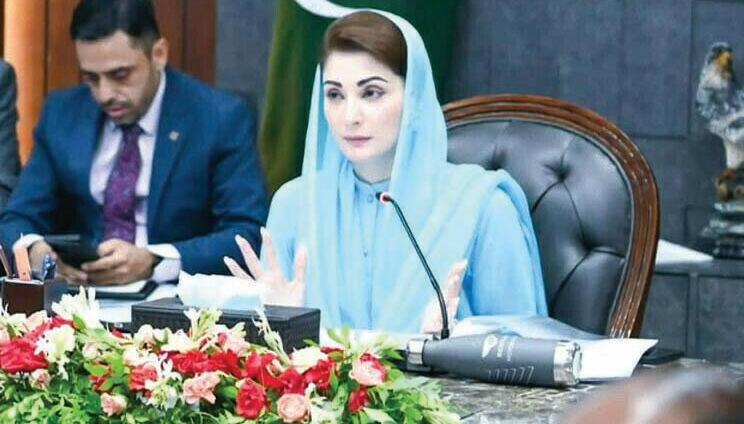
U N J A B Chief Minister Maryam Nawaz on Saturday said that 100 percent transparency and 100 percent quality remained the defining features of the PML-N governance model revealing that Rs80 billion had been saved through e-tendering under the Punjab Development Programme the largest development initiative in Pakistan’s history The chief minister emphasized that public funds were a sacred trust and must be safeguarded and utilized with utmost responsibility She stressed that roads streets and neighbourhoods could not be left
rious inconvenience to citizens, said
statement issued by the Chief Minister ’s Office (CMO) Chairing a video-link review
on development projects Maryam Nawaz fixed June 30 as the deadline for completing
sewerage and drainage schemes across the province She also imposed a province-wide ban on leaving excavation work incomplete or roads open after digging the CMO said The chief minister directed authorities to ensure the earliest installation of protective nets and meshes on all manholes and approved the involvement of traders and civil society in the manhole safety campaign During the briefing officials informed the meeting that desilting operations and underground water recharge systems had been integrated into underground water storage tanks Geo-tagging of 838,555 manholes across Punjab had been completed while installation of protective nets and meshes was in progress More than
tial information She further noted
d
The Information Minister also
curity and administrative arrange-
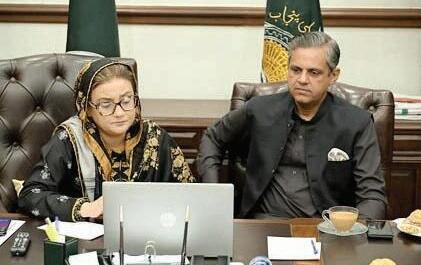
the Shahadat Conference in Chiniot district She further said that continuous water sprinkling would be carried out along procession routes to reduce the impact of heat, and smog guns have also been provided in Faisalabad for this purpose Azma Bokhari directed that an extensive awareness campaign be launched across electronic, print, and social media to keep citizens informed about traffic plans, security arrangements and other essen-
briefed the participants on the preparations and ongoing arrangements Addressing the meeting Azma Bokhari directed that foolproof security arrangements must be ensured along all routes of Majalis and processions She emphasized that all concerned departments must work in complete coordination to prevent any untoward incident and maintain peace during Muharram She further stated that Sabeels should also be established outside mosques for worshippers on Ashura to provide relief during the intense summer heat She added that district administrations remain in continuous contact with organizers of all Majalis and processions and arrangements are being finalized in close coordination
sary measures to facilitate mourners and ensure a peaceful environment Provincial Transport Minister Bilal Akbar stated that adequate police deployment must be ensured outside all mosques and Imambargahs while traffic police should timely inform the public about alternative routes along procession routes to facilitate smooth traffic flow and public convenience
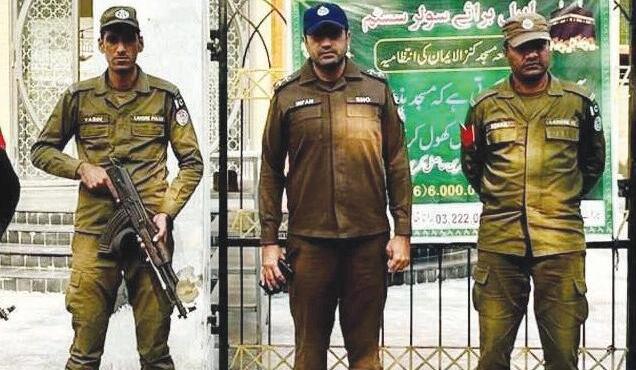
4th Muharram: O ver 31,000 Punjab Police deployed to sec ure processions, majalis
in connection with the occasion
More than 23 000 community volunteers also assisted law enforcement agencies in ensuring smooth security arrangements for processions and religious gatherings Inspector General Punjab Abdul Kareem said that security would remain on high alert across the province throughout the first ten days of Muharramul Haram He reiterated that strict implementation of Section 144 imposed by the Government of Punjab would be ensured
in security duties across Lahore and other parts of the province on the fourth of Muharramul Haram A total of 278 mourning processions and 3,907 majalis were held across Punjab, while in Lahore alone, 17 processions were taken out and 412 majalis were conducted
He further stated that aerial firing display of weapons dissemination of hate material, and any provocative activity would not be tolerated He added that no procession or majlis would be allowed at any place other than approved
routes and designated venues
The IG Punjab said that comprehensive monitoring of all activities was being carried out through cameras of the Safe Cities Authority in coordination with district administrations He added that the Counter Terrorism Department (CTD) Special Branch Traffic Police Dolphin Squad, PRU and other field formations were actively deployed for Muharram security duties
He further stressed that strict enforcement of the Loudspeaker Act would be ensured and action would be taken against individuals involved in spreading hate material or inciting content on social media He said control rooms established in all districts were linked with the Central Control Room at the Central Police Office and were maintaining round-the-clock coordination Police conduct extensive search operations for peaceful Muharram Meanwhile, Punjab Police continued proactive search operations across the province to ensure a peaceful Muharramul Haram and to counter criminal and suspicious elements
According to the spokesperson 426 search operations were conducted in the last 24 hours across Punjab, during which 13,524 suspicious individuals were questioned As a result 32 suspicious persons were arrested and 24 cases were registered
PAKISTAN’S REFUGEE POLICY ROOTED IN COMPASSION, SHARED GLOBAL RESPONSIBILIT Y: PM
Pakistan hailed for mediation role as Uzbekistan praises Islamabad’s peace diplomac y
ISLAMABAD
Uzbekistan s Foreign Minister
Bakhtiyor Saidov on Saturday appreciated Pakistan s role as a mediator and acknowledged its significant contribution to advancing international peace efforts as well as promoting regional peace and stability according to the Foreign Office (FO)
In a post on X, the FO said Deputy Prime Minister and Foreign Minister Senator Mohammad Ishaq Dar received a telephone call from his Uzbek counterpart during which FM Saidov lauded Pakistan s mediation efforts and its constructive role in strengthening regional peace and stability During the call, FM Saidov felicitated on behalf of his President and himself the Deputy Prime Minister and Foreign Minister on the signing of the Islamabad Memorandum of Understanding He also commended the leader-
ship of Prime Minister Muhammad Shehbaz Sharif DPM/FM Ishaq Dar and Chief of Defence Forces Field Marshal Syed Asim Munir for their constructive role in facilitating the process, the Foreign Office spokesperson said Both leaders expressed the hope that the progress achieved would be carried forward into the next phase of engagement contributing to lasting peace, stability and prosperity in the region and beyond They also agreed to maintain close contact on matters of mutual interest A day earlier Deputy Prime Minister and Foreign Minister Ishaq Dar held a telephone conversation with Iranian Foreign Minister Seyed Abbas Araghchi, during which both sides exchanged views on recent regional developments and expressed concern over Israel s ceasefire violations in Lebanon
During the call the DPM/FM congratulated Iran s leadership, government and people on the
signing of the historic Islamabad Memorandum of Understanding with the United States and extended best wishes for the next phase of negotiations, expressing hope for a smooth and positive outcome Foreign Minister Araghchi in turn appreciated Pakistan s constructive and sustained mediation efforts DPM arrives in Cairo to attend regional foreign ministers’ meeting Meanwhile, Deputy Prime Minister and Foreign Minister Ishaq Dar arrived in Cairo Egypt to attend the Regional Foreign Ministers Meeting scheduled for June 21 where he will also hold bilateral meetings with his counterparts on the sidelines Upon arrival, he was received by Nazih El Naggary, Assistant Foreign Minister for Policy Planning Research Crisis Management and Assessments and Pakistan s Ambassador to Egypt Ambassador Aamir Shouket, according to the Foreign Office
ISLAMABAD
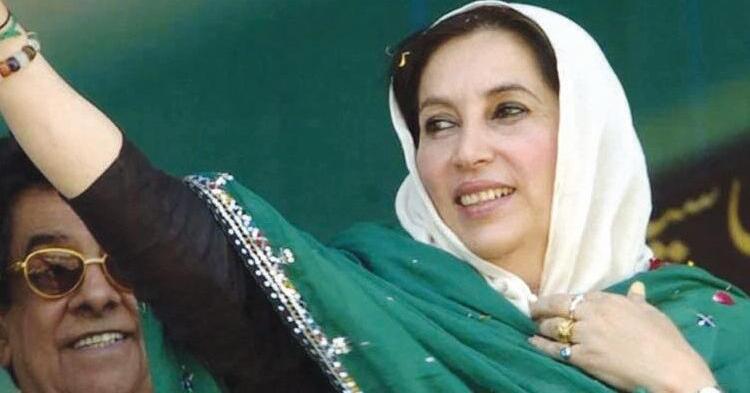
President Asif Ali Zardari on Saturday said that Shaheed Mohtarma
Benazir Bhutto inspired those who believe in democracy and championed key causes including education for children opportunities for youth reliable public services and greater participation of women in national life
In a message on the 73rd birth anniversary of Shaheed Mohtarma
Benazir Bhutto (21 June 2026) he said Today on the 73rd birth anniversary of Shaheed Mohtarma
Benazir Bhutto the nation remembers a leader whose courage, political vision and commitment to democracy left a lasting mark on Pakistan’s history ”
“As the first woman Prime Minister of Pakistan and the Muslim world Shaheed Mohtarma Benazir Bhutto broke barriers and opened new possibilities for women in public life At a time of considerable political uncertainty, she stood firmly for democratic governance constitutional rule and the right of the people to determine their future through the ballot box Her public life reflected resilience in the face of adversity and a steadfast belief in the
strength of democratic institutions he added He said, She showed that leadership is never one-dimensional She fulfilled many roles in life as a daughter a mother a wife a friend a patriot and a citizen of the world committed to peace She approached each responsibility with courage, conviction and a deep sense of duty
“She remained closely engaged with the concerns of ordinary citizens Whether speaking about employment education health services or the welfare of vulnerable communities she believed that public office carried the responsibility to improve people s lives Her politics was rooted in the conviction that progress must reach those who had long re-
mained on the margins of development he continued The President said, Her understanding of Pakistan was shaped not by distance but by constant engagement with its people She listened to citizens party workers journalists and members of civil society She worked through direct contact and sustained engagement, remaining closely attuned to public sentiment and the aspirations of ordinary Pakistanis ”
“Throughout her political life she remained committed to peaceful political expression and democratic means of dissent She firmly rejected violence as a tool of politics and consistently