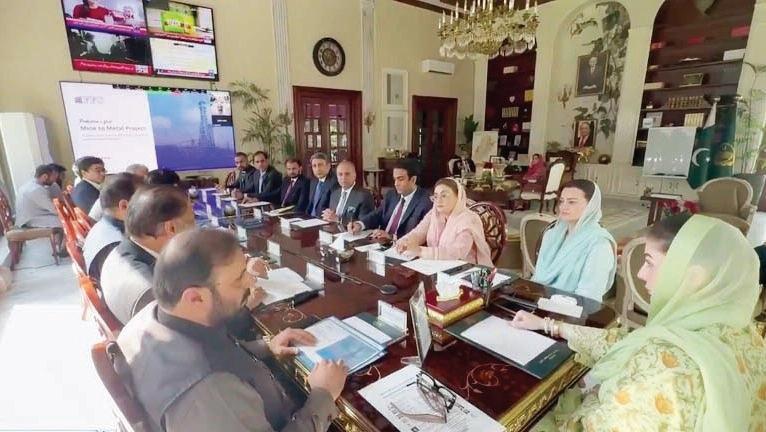
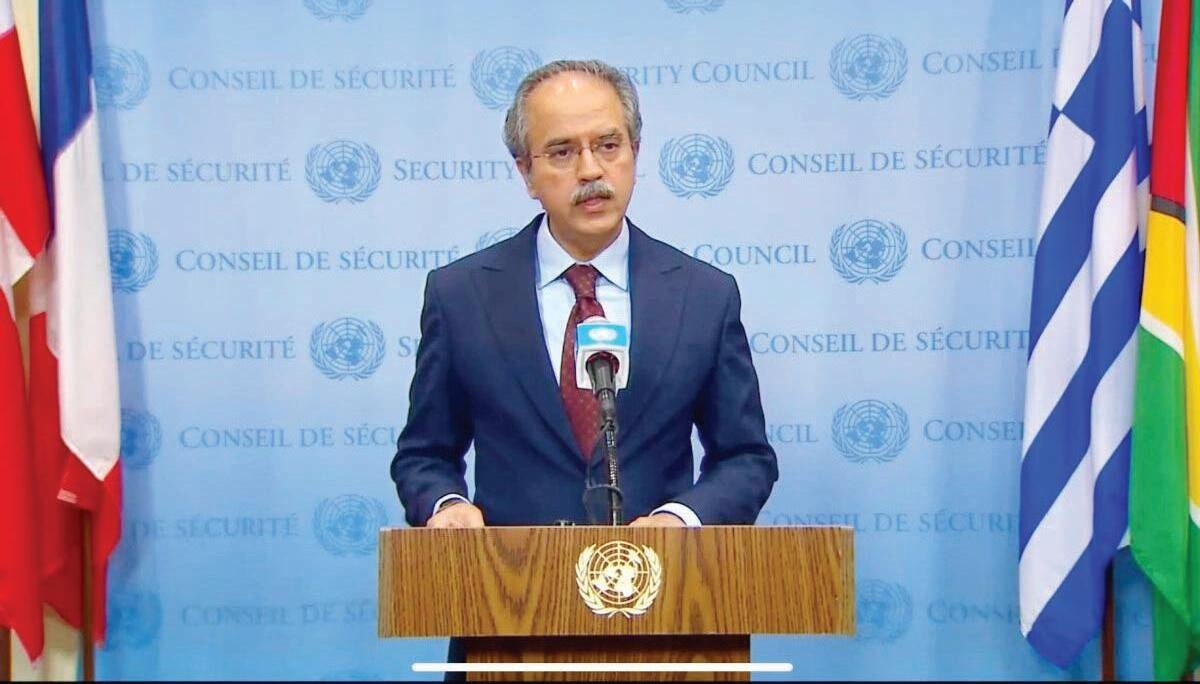
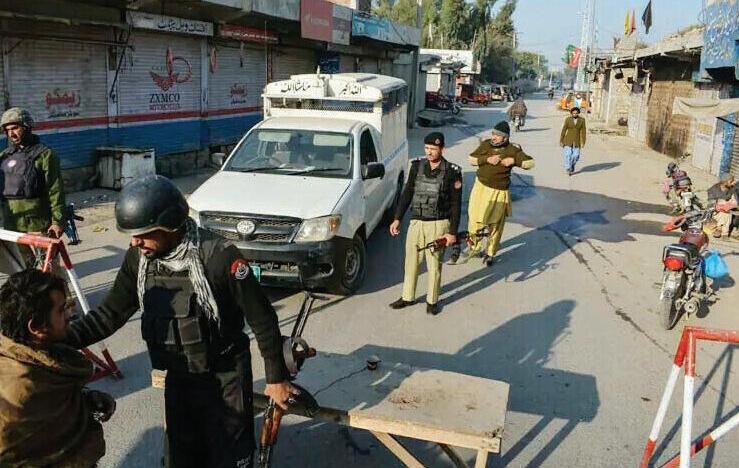
PM forms 11-member panel to review maritime trade risks, energy logistics amid regional tensions
Pakistan offers por t terminal slots to ships delayed by Gulf tensions, eyes transshipment gains
energy-related cargoes amid shifting global routes and disruption at key waterways Earlier, an 11-member committee formed on the prime minister ’s directives has been tasked with submitting recommendations within two days on a broader response strategy to safeguard maritime trade interests The chairmen of Port Qasim Authority, Karachi Port Trust and Gwadar Port Authority joined the meeting virtually and briefed participants on operational readiness including capacity for container transshipment bulk cargo handling and refuelling services
Pakistan traders seek to revive Dubai currency trade as Iran war disrupts flights: report
dirham and other non-dollar currencies are typically sent to Dubai where they are exchanged for US dollars before being brought back to Pakistan
“So far, a flight from Lahore was expected to depart at 3:30am for Dubai and our representative carrying foreign currencies would travel on the
country has begun,” ECAP Chairman Malik Bostan said The UAE is Pakistan’s secondlargest trading partner Bilateral trade reached about $10 1 billion in FY25 and prolonged disruption could affect commercial activity between the two countries Bostan added that remittance inflows typically rise during Ramazan, often increasing by around 20 per cent However the conflict has disrupted travel plans of overseas workers in the Middle East who normally bring foreign currency with them when returning to Pakistan The overseas workers in the Middle East were expected to reach Pakistan during this month but the war has stopped them ” he said adding that activity in the open currency market has slowed as both buyers and sellers remain cautious
that
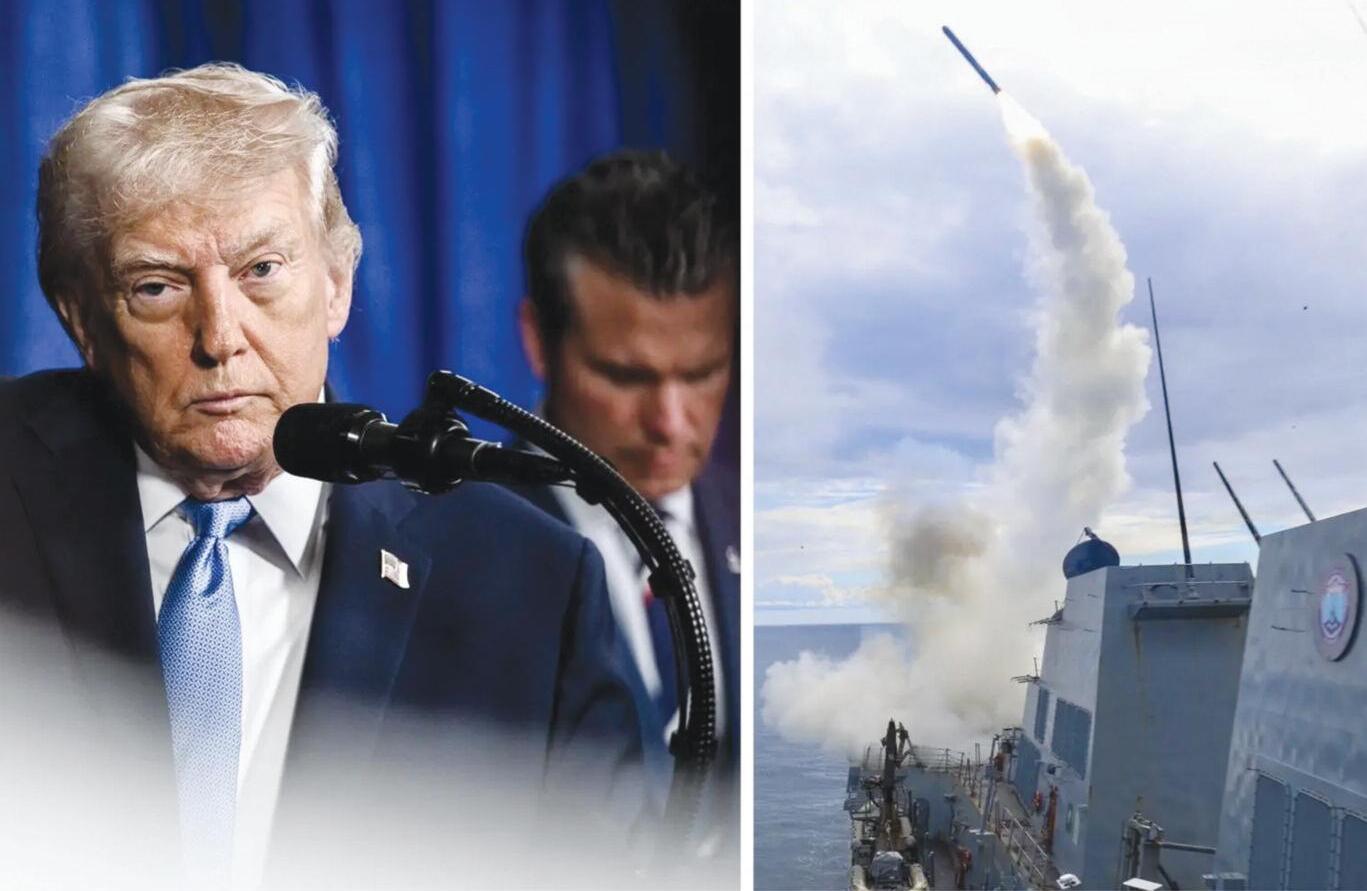
Speaking to reporters White House press secretary Karoline Leavitt said Washington was looking at potential candidates to lead Iran, a day after President Trump said the US must be involved in choosing the next leader of Iran I know there s a number of people that our intelligence agencies and the United States government are looking at, but I won t get any further on that, she added Earlier we reported Trump saying there would be no deal struck with Iran except “unconditional surrender” What the President means is that when he as Commander in Chief of the US Armed Forces, determines that Iran no longer poses a threat to the United States of America, and the goals of Operation Epic Fury has been fully realised, then Iran will essentially be in a place of unconditional surrender whether they say it themselves or not Leavitt said The United States is well on its way toward controlling Iranian airspace, White House press secretary Karoline Leavitt has told reporters, adding that Washington expects the achievable US objectives to be completed in four to six weeks We will bring you more shortly
IRANIANS, NOT ‘EPSTEIN’S
GANG’, WILL DETERMINE NA-
TION’S FATE: SPEAKER GHAL-
IBAF: “Trump still doesn’t realise what calamity he has brought upon himself and the American soldiers by martyring our Imam and he wants to dictate terms to a nation, Mohammad-Bagher Ghalibaf, the speaker of Iran s parliament, has said, Al Jazeera reports The US, he said, would now understand that “the fate of dear Iran which is more precious than life will be determined solely by the proud Iranian nation not by Epstein s gang
IRANIAN RED CRESCENT FACIL-
ITIES DAMAGED IN WAR: IRC
HEAD: Several Iranian Red Crescent facilities including “relief posts and warehouses have sustained significant damage since the war on Iran began a week ago, Jagan Chapagain of the International Federation of Red Cross and Red Crescent Societies (IFRC), has said “Communities on all sides are already paying a heavy price with deaths and injuries and damage to homes schools hospitals and other vital civilian infrastructure, he said in a post on X These and all Red Cross Red Crescent personnel and infrastructures must be protected during this challenging time ” FRANCE S MACRON EXPRESSES FULL SOLIDARITY WITH IRAQI
PM: French President Emmanuel Macron says he spoke directly with Iraqi Prime Minister Mohammed Shia al-Sudani I expressed to him France s full solidarity with Iraq in the face of the ongoing escalation in the Middle East , Macron wrote in a social media statement in French and Arabic “I reiterated my support for his resolute action to ensure that Iraq is not drawn into the conflict Iraq s stability is essential for the entire region the president added US WARNS IRAN-LINKED FIGHTERS MAY TARGET HOTELS IN IRAQI KURDISTAN: The US has warned that Iranian-backed fighters may target hotels in Iraqi Kurdistan frequented by foreigners as Washington again urges Americans to leave AFP reports US citizens are strongly encouraged to depart as soon as they are safely able to do so, and reconsider lodging options if choosing not to depart ” the US embassy in Baghdad said in a security notice
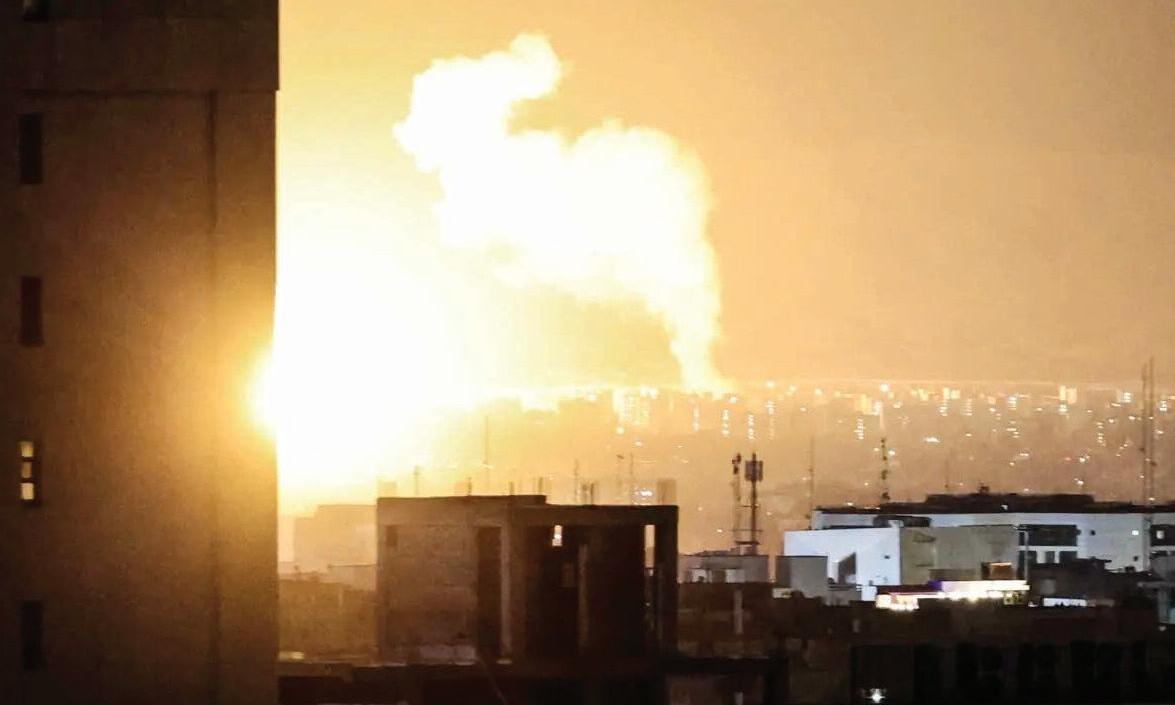
ISRAEL CLAIMS IT HIT HEZBOLLAH COMMAND CENTRES IN BEIRUT’S DAHIYEH: The Israeli military says its air force has carried out another wave of strikes on targets in Beirut’s southern suburbs
In a statement the army claimed it attacked Hezbollah and Iranian-linked command centres in Dahiyeh
According to the Israeli military, the targets included a command centre used by the Islamic Revolutionary Guard Corps Air Force a command centre used by Hezbollah s naval unit a command centre linked to Hezbollah s financial unit and a site used by the group s operating council Hezbollah has not commented on these claims Israel called for the mass evacuation of Dahiyeh yesterday displacing hundreds of thousands of residents It comes after Israel s far-right minister Smotrich warned that the Dahiyeh area would soon look like Khan Younis , a city in southern Gaza that has been decimated in Israel’s genocidal war against Palestinians in the enclave
GERMANY WITHDRAWS MORE
TROOPS FROM MIDDLE EAST:
Germany has pulled additional Bundeswehr troops out of the Middle East as tensions rise during the seventh day of the US–Israeli war on Iran, according to a German military spokesperson
The spokesperson told Reuters that soldiers deployed with the United Nations Interim Force in Lebanon (UNIFIL) are being withdrawn because of the security situation Germany had already sharply reduced its military presence in Erbil in northern Iraq
German media outlet RND reported that troops stationed in Bahrain have already returned to Germany and that preparations for withdrawals from Kuwait are under way
RND also said soldiers and staff from the German embassy in Baghdad were being relocated to Jordan Germany s foreign ministry did not immediately respond to a request for comment About 500 German soldiers are deployed across the region, mainly in Iraq and Jordan, though officials have recently moved personnel out of some
camps and reduced contingents amid rising security risks
CANADA SAYS 3 500 NATIONALS
SEEK ASSISTANCE TO LEAVE
MIDDLE EAST, GULF REGIONS:
Canada s Foreign Minister Anita Anand says that approximately 3,500 nationals requested to leave the Middle East and Gulf regions As of this morning more than 108 000 Canadians in the region have registered with Global Affairs Of these, approximately 3,500 Canadians have contacted Global Affairs to request assistance in departing”, Anand told a virtual briefing on the latest situation of Canadians in the region At this time our government continues to provide three types of departure options: first, charter flights, second, block bookings and third, ground transportation, when and where it is safe to do so ”
Describing the situation in the region as volatile and unpredictable the minister stressed that Ottawa has no intention to participate in Operation Epic Fury We were not consulted on this military operation and have not participated,” she said
SAUDI ARABIA SAYS ITS FISCAL POSITION IS STRONG AMID
IRAN WAR: Saudi Arabia s finance ministry says the kingdom s fiscal position is strong and it has access to multiple export routes, including the Red Sea, a week into the US-Israeli war on Iran Al Jazeera reports
Economic activity across Saudi Arabia continues to operate normally the finance ministry s spokesperson has said in a statement that referred to recent developments” but did not directly mention the conflict
“We continue to assess economic and fiscal indicators on an ongoing basis and current data confirm that our fiscal position and medium-term outlook remain solid, the statement adds
IRANIAN KURDISH GROUP DENIES ATTACK PLANS BUT SAY THEY WOULD JOIN US INVA-
SION: Kurdish Iranian dissident fighters based in northern Iraq say they are not planning an imminent cross-border attack on Iran, but would join a US-led ground invasion if one were launched
Officials from the Kurdistan Freedom Party PAK told The Associated Press that their forces would fight alongside coalition forces in the event of a US ground operation, though they said Kurdish groups should not act as the “spearhead” of such an attack
Khalil Nadiri an official with the Kurdistan Freedom Party PAK said the group also has armed members already inside Iran who could potentially take part in an uprising
The officials added that Kurdish groups have been in contact with the United States and Israel but denied receiving any material support from them
The comments come after Kurdish officials reportedly said earlier this week that Iranian Kurdish dissident groups based in Iraq could be preparing for a possible cross-border operation against Iran


DE S P E R AT E times call for desperate times, they say, and the government seems to be practising it in the context of the Iran-USIsrael War The government’s primary problem is how to reduce the use of fuel which is internationally going through the roof while petrol pump owners fear that many pumps may be forced to close in coming days because supplies of petrol and diesel have begun to falter The measures drew heavily on the lockdown for covid-19, when a sharp decline in the consumption of petrol and diesel was reported No social distancing or area quarantining has been ordered obviously but online learning has been mandated as has work-fromhome It has also been decided to reduce the period of fuel price fixation from the current fortnight to a week The international price hit $86 a barrel, with speculation that $100 was the next stop The problem is no longer keeping the fragile recovery going, but preventing the economy from taking a huge hit while going into an inflationary spiral from which it had been taken out with great difficulty
Meanwhile there seems no way of stopping the conflict, and it was worth noting that Pakistan s PM Shehbaz Sharif had telephonic calls with Indonesian President Prabowo Subianto and Malaysian Prime Minister Anwar Ibrahim Apart from briefing them about the conflict with Afghanistan, he also discussed how the Iranian situation was developing It is worth noting that the span of Pakistani diplomacy is now moving outside the Gulf to the Eastern Islamic countries Indonesia is friendly enough to the USA to have promised troops for the International Stabilization Force in Gaza, as well as the second-in-command of the ISF While Malaysia is not that close, it still enjoys good relations with the USA and is an active member of ASEAN the regional grouping that succeeded the US-led SEATO Cold War alliance
Failing actively defending Iran, Muslim countries have to use their good offices with the USA to explain that it cannot expect to join hands with Israel to attack Iran The USA probably over-estimates the sectarian division within Islam, and is badly wrong if it assumes that Sunnis regard the attack on Iran with any kind of equanimity just because Iran is majority Shia However so long as the USA feels it must blindly follow the wishes of the Israeli government, it will probably not try to extricate itself from this misadventure
Dedicated to the legac y of late Hameed Nizami Arif Nizami (Late) Founding Editor
M A Niazi Editor Pakistan Today Babar Nizami Editor Profit
PA K I S TA N does not suffer from a lack of legislation; it suffers from a persistent failure of implementation Each year Parliament and the provincial assemblies pass laws promising reform in governance accountability, regulatory oversight, policing, taxation, and public administration On paper, these statutes reflect modern constitutional principles and aspirational commitments They invoke the language of transparency efficiency institutional autonomy and the protection of citizens rights Yet for the ordinary citizen lived reality rarely mirrors legislative ambition Public service delivery remains uneven regulatory institutions struggle to function independently, and structural reform frequently dissolves into administrative stagnation The central crisis of governance in Pakistan lies not in the absence of law but in the enduring inability to translate law into action This implementation deficit is neither accidental nor episodic; it is structural and embedded within institutional practice
The first dimension of this problem concerns institutional capacity Complex and often ambitious statutes are adopted without ensuring that enforcement agencies possess the technical expertise professional training and operational systems necessary for effective execution Rulemaking the subordinate legislation required to operationalise parliamentary intent is frequently delayed for months or even years In some instances, the rules ultimately framed dilute the reformist objectives of the parent statute Without procedural clarity and administrative preparedness even well drafted laws risk becoming symbolic documents rather than functional instruments of governance Secondly bureaucratic inertia undermines reform in subtle yet significant ways Administrative culture in Pakistan has historically prioritised continuity over transformation Reform-oriented legislation disrupts established hierarchies, informal networks, and discretionary spaces of authority Resistance seldom appears as open defiance; instead it manifests through delay excessive procedural layering selective enforcement or rigid interpretation Over time implementation becomes negotiable rather than mandatory, and legislative purpose is gradually neutralised
Thirdly, political interference complicates institutional performance Regulatory authorities and oversight bodies may enjoy statutory autonomy yet their operational freedom often remains fragile Transfers and postings informal influence and selective enforcement distort institutional behaviour and weaken credibility When enforcement is shaped by external pressure rather than objective standards, public confidence declines Autonomy on paper does not guarantee independence in practice
Fourthly parliamentary oversight remains underdeveloped Legislative responsibility does not conclude with enactment In mature democratic systems post legislative scrutiny is an essential component of
governance Parliamentary committees routinely assess whether statutes have achieved their objectives whether implementing agencies have framed necessary rules within reasonable timeframes and whether enforcement gaps require corrective amendment In Pakistan, however, systematic monitoring of this nature remains limited Legislative debate frequently concentrates on drafting and passage but seldom evaluates execution In the absence of structured oversight, accountability weakens and performance gaps persist
The fiscal dimension further deepens the implementation crisis Reform requires resources Laws enacted without adequate budgetary allocation inevitably falter during execution Staffing shortages, limited technological infrastructure, weak monitoring mechanisms, and insufficient training programmes reflect not merely administrative shortcomings but fiscal disconnect Legislative ambition unaccompanied by financial realism produces predictable stagnation
The cumulative consequence of these deficiencies is the erosion of public trust Citizens observe a widening gap between statutory promise and administrative reality When rights are formally recognised yet remedies remain inaccessible or inconsistently applied, legality appears ornamental rather than authoritative The rule of law depends not merely upon the existence of statutes but upon their consistent impartial and predictable enforcement Uneven application undermines legal certainty and institutional credibility In many instances, the judiciary is approached to compel performance of statutory duties Through constitutional petitions under Article 199 courts are requested to direct public authorities to implement laws faithfully or to restrain arbitrary exercise of power Judicial review performs a vital constitutional function in safeguarding legality and ensuring accountability At the same time, frequent reliance on litigation to secure routine administrative compliance highlights gaps within executive processes Sustainable governance is best achieved when implementation originates within the executive itself and becomes embedded in its institutional culture thereby reducing the need for judicial intervention in matters of ordinary administration
The implementation crisis also reveals a deeper cultural challenge Legislative symbolism often substitutes for administrative discipline The passage of a law is treated as an achievement in itself generating political visibility and reformist credentials Yet
u n l e s s i m p l e m e n t a t i o n i s t r e a t e d a s a c o r e i n s t i t u t i o n a l o b l i g a t i o n .
Ias a simmering stand-off over Tehran s nuclear ambitions and regional posturing has escalated into direct military exchanges, raising fears of a wider conflagration Yet amid the clangour of conflict and the blare of headlines one striking feature of the unfolding drama has been the relative reticence
ranging from missile barrages to reported assaults on US assets in the Gulf has amplified tensions and forged an atmosphere thick with the threat of prolonged engagement The impact is not merely military In straits such as Hormuz, through which nearly a fifth of the world’s oil transits commercial and energy markets have reacted sharply to the prospect of disruptions Fear and uncertainty now stalk the corridors of global finance and diplomacy alike Amid this, Washington portrays its actions as necessary to deter a nuclear-armed Iran and shore up regional stability, while Tehran frames its resistance as defence against foreign aggression Both narratives resonate deep within their respective societies and echo through allied capitals Yet beyond the obvious protagonists, the USA, Israel and Iran, the wider reaction has been markedly subdued or cautious, particularly from Beijing and Moscow China’s position is perhaps the more intriguing The government in Beijing publicly condemns any escalation and calls for restraint and diplomacy Chinese officials have voiced concern over attacks and urged an immediate ceasefire, while highlighting the unique dangers of a broader conflict Recent statements by China s foreign minister underscore this approach, fram-
ing the situation as one that must be resolved through political means rather than force Yet beneath this diplomatic veneer lies a careful calculation China, for all its closeness in rhetoric and economic ties with Iran is deeply aware of its own global vulnerabilities Tehran remains a significant supplier of energy for Beijing and the prospect of instability in the Gulf could jeopardise Chinese industry and the broader Belt and Road economic network At the same time, China’s leadership is mindful of its delicate relationship with the USA particularly on the trade and technology fronts Aligning too openly with Iran in a confrontation with Washington could imperil Beijing s own strategic ambitions and economic interests
Analysts note that Beijing is not oblivious to Iran’s plight nor dismissive of its geopolitical role, but it is unwilling to sacrifice its broader ambitions for Tehran’s defence As one commentator put it China may hope Iran survives the crisis but it has stopped short of tangible military backing or robust diplomatic confrontation with the USA In short, China s silence is not indifference, but a measured restraint anchored in self-interest If Beijing’s stance is one of cautious diplomacy Russia’s is a blend of rhetorical protest and calculated disengagement On paper Moscow has long cast itself as a counterweight to US dominance, and has occasionally chimed in with warnings that US action could provoke broader instability In past flare-ups in the region, Russian officials have condemned Washington’s tactics, arguing that they risk unravelling global security frameworks and emphasizing that any military strikes against Iran s nuclear installations could have dire consequences However, rhetoric has largely stopped at words Moscow has refrained from any direct military intervention or robust support for Tehran in this current crisis The reasons are manifold Russia embroiled in its own commitments most notably its prolonged war in Ukraine cannot afford to further stretch its military or absorb the strategic costs of a confrontation with the USA Moreover, Russia s diplomatic calculus sees greater benefit in leveraging arms sales and political influence without committing to the defence of a vulnerable ally in a full-scale war This mode of engagement or lack thereof has not gone unnoticed in Tehran Critics within the Iranian political establishment have expressed disappointment with what they see as Moscow’s hedging, particularly after years of military cooperation and joint exercises The message unmistakably is that when real pressure arrives even longstanding partners may hesitate to put their interests on the line The muted response from Beijing and Moscow can be understood through the prism of realpolitik Neither country is prepared to
enter into a direct confrontation with the USA over Iran, regardless of prior diplomatic courtesies or economic ties For Beijing, the preservation of trade routes energy supplies and a carefully balanced relationship with Washington outweighs the benefits of backing Tehran aggressively For Moscow the constraints of its military engagements and broader geopolitical calculations shape a restrained posture that stops short of open intervention
This is not to say that China and Russia are inactive Both have called for diplomatic negotiation both have criticised unilateral military action and both harbour strategic visions for a multipolar world less dominated by the USA But when it came to this test of either escalating the conflict or positioning themselves as guarantors of Iranian security their responses have been cautious at best and conspicuously distant at worst The silence of China and Russia carries profound implications For Iran the lesson is stark: geopolitical alliances even when backed by political rhetoric or trade agreements, may falter under pressure Tehran s aspirations for reliable security guarantees now appear more distant, and its expectations of unflinching support from powerful friends have been tempered by the realities of global power politics For the wider international community this crisis reveals the limits of new alignments in a world still dominated by great power rivalry Calls for nonalignment or alternative blocs lose urgency when the actors within them opt for caution over confrontation It also places renewed emphasis on diplomacy and negotiation as pathways to defuse conflicts that have consequences far beyond the battlefield Lastly, for the USA and its partners, the restraint of China and Russia does not equate to support but neither does it open the door to a wider war among great powers That, perhaps, is the most telling feature of the current tumult: a reminder that even in a world bristling with tension the spectre of a global conflagration remains at bay not because of unanimity but because self-interest still tempers the guns of war
The writer has a PhD in Political Science and can be reached at akramzaheer86@yahoo com
Workshops aren’t
VIP visit cleans Johi
Dr MuhaMMaD akraM Zaheer
TH E decision to plunge the USA into a direct confrontation with Iran taken at the urging and on the strategic direction of Israel has triggered a chain of events that few in Washington appear to have fully anticipated What was originally conceived as a swift military operation designed to cripple Iran s capabilities and compel regime change has instead evolved into a widening regional conflict whose consequences are now rippling through military political and economic systems across the globe Inside the USA the mood has shifted from early confidence to growing anxiety as policymakers military planners and the public begin to reckon with the scale of the unfolding crisis
From the earliest hours of the conflict Iran responded with an intensity that surprised even seasoned defense analysts Waves of drones and missiles targeted US and allied installations throughout the Middle East Several facilities used by US forces experienced direct hits or operational disruption forcing commanders to reassess their logistics and operational posture across the region While Washington maintains that the majority of its capabilities remain intact the attacks have nevertheless exposed the vulnerability of a military architecture heavily dependent on forward bases and allied infrastructure
These bases spread across the Gulf and the broader Middle East serve as the backbone of US air and naval power projection They are critical for refuelling aircraft replenishing munitions and maintaining sustained combat operations Once they became targets the operational calculus changed dramatically Aircraft carriers naval task groups and combat aircraft that had been positioned for sustained operations suddenly faced logistical strain War planners who assumed a short campaign now confront the reality of an adversary capable of prolonged resistance
Compounding the strategic difficulty has been the hesitation of several allied countries
to allow their territory or bases to be used as launch platforms for the campaign Spain publicly declined to allow its bases to be used for offensive operations against Iran, while Britain clarified that it would not join offensive strikes and imposed restrictions on the use of its installations Several Gulf states adopted a posture of neutrality, unwilling to risk retaliation by becoming direct participants in the conflict
Even allies who expressed rhetorical support have quietly avoided deeper involvement, reflecting their fear that the war could spread across the region
This reluctance among partners has further constrained Washington’s options Modern warfare, especially for expeditionary forces like those of the USA, depends not only on military power but also on the political willingness of allies to provide territory, logistics, and legitimacy When that support becomes uncertain, the operational environment becomes far more complex Inside the USA itself, the political atmosphere is rapidly evolving Members of Congress from both parties have begun questioning the strategic purpose of the war Media commentators and policy analysts are asking what the ultimate objective is whether it is regime change, deterrence, or simply punishment Even the President’s own public statements have hinted at a reassessment After initially projecting confidence in the military campaign, Donald Trump acknowledged in later remarks that Iran had signalled a willingness to talk and that diplomatic channels could be reopened
This shift reflects a growing realization that the conflict may not be as controllable as originally assumed Iran’s strategy appears to rely not on conventional military parity but on asymmetric endurance Years of sanctions forced Tehran to accept that it could not compete with the USA in traditional air and naval warfare Instead, it invested heavily in missile technology, drones, underground facilities, and decentralized command structures Many of its most important missile centres are buried deep beneath mountains or fortified bunkers, rendering them extremely difficult to destroy even with advanced bunker-bust-
ing munitions As the war drags on, the economic consequences are beginning to reverberate far beyond the battlefield One of the most dramatic developments has been Iran’s declaration that the Strait of Hormuz the narrow maritime corridor through which a significant portion of the world’s oil supply passes will be closed to commercial shipping except vessels carrying Chinese flags Whether fully enforceable or not, the announcement alone has sent shockwaves through global energy markets
Oil prices surged almost immediately
Markets reacted with alarm to the prospect that even partial disruption of shipping through Hormuz could remove millions of barrels of oil per day from global supply chains The result has been a rapid rise in crude prices, which is already being felt at gasoline stations across the USA and Europe Higher oil prices inevitably translate into higher transportation costs, and those costs cascade through the entire economy
The economic logic is straightforward but devastating When fuel becomes more expensive, the cost of transporting goods from food to consumer products increases Airlines raise ticket prices, trucking companies pass on their fuel surcharges, and shipping costs climb These increases ripple outward, affecting nearly every product and service used by ordinary citizens Inflationary pressures intensify, eroding household purchasing power and deepening public frustration
For political leaders, the consequences are immediate Rising gasoline prices have historically been among the most sensitive indicators of public discontent in the USA When voters see the cost of filling their cars jump dramatically, the issue quickly becomes political Analysts already warn that if the conflict continues to disrupt oil markets, the economic backlash could undermine the Administration’s domestic support and influence the outcome of upcoming midterm elections
Beyond the economic sphere lies an even deeper concern: the potential for the conflict to ignite wider
W h y t h e C I A i s s o w o r r i e d a b o u t d r i n k i n g w a t e r W
TH E CIA calls it the strategic commodity of the Middle East But it s not referring to oil or natural gas What the US spy agency has in mind is far more prosaic: drinking water Don t underestimate it, though, because if military hostilities continue to escalate, water could become the geopolitical commodity that decides the war between the US and Iran
The Persian Gulf is gifted with a fabulous hydrocarbon endowment, worth trillions of dollars What its desertic countries don t have is water From the 1970s onwards, the oil money bought a solution: desalination plants
Today, the region relies on nearly 450 facilities to stop everyone from going thirsty
The CIA has been briefing US policymakers for decades on the inherent risk of relying on those plants for such a crucial supply In a secret assessment in the early 1980s, since declassified, the CIA said: Senior government officials in some of the countries perceive [water] as more important than oil to the national well-being More than four decades later, not much has changed Desalination remains a relatively cost-effective technology to transform seawater into drinking water The downside is the vulnerability of the installations, and the oil and gas consumption required to fire the power generators that run the plants About 100 million people live in the countries belonging to the Gulf Cooperation Council – Saudi Arabia, Kuwait, Bahrain, Qatar, the United Arab Emirates and Oman – all now under Iranian attack Kuwait, Qatar and the UAE are, for all practical purposes, completely dependent on the desalination plants, particularly for metropolises such as Dubai Saudi Arabia, and especially its capital, Riyadh, also relies heavily on them Under international law, the desalination plants are protected But I have seen enough Middle Eastern wars to know the weight of the Geneva Conventions when missiles and bombs start flying And they are: Iran has attacked a power station in Fujairah, UAE, that keeps one of the world s largest desalination plants run-
ning In Kuwait, debris from a drone interception caused a fire in one of the country’s plants The risk is enormous Take the Jubail desalination plant, located on the Persian Gulf coast of Saudi Arabia It supplies Riyadh, via a roughly 500-kilometre-long pipeline system, with more than 90 per cent of its drinking water “Riyadh would have to evacuate within a week if the plant, its pipelines, or associated power infrastructure were seriously damaged or destroyed,” according to a 2008 memo from the US embassy in the kingdom released by Wikileaks “The current structure of the Saudi government could not exist without the Jubail desalinisation plant,” the memo says Since the cable became public, the Saudis have reinforced their water network Other countries have also built up redundancy Still, all the water plants are equally vulnerable – and all of them are within range of the Iranian missiles The good news is that water is so strategic – and so human – that any Iranian direct attack on them would be considered a massive escalation, so perhaps a step too far for Tehran Still, Iran doesn’t have many options to prevail Militarily, it cannot escalate against the combined Israeli-American war machine Its only options are to hunker down, in the hope that a long-lasting conflict becomes economically too painful for its enemies, or go after so-called soft targets like energy sites, airports and water installations From its actions, it’s clear the Islamic Republic has chosen to hit soft targets and hunker down, hoping to outlast the assault Ultimately, the Islamic Republic sees surviving as winning – even if victory comes with immense losses Attacking several of those desalination plants would put Persian Gulf countries in an impossible situation Outside military circles, the Middle Eastern water desalination plants receive little scrutiny; it’s almost a taboo subject It makes sense: It’s difficult to believe that someone would deliberately target something so essential to human life
But if we have learnt anything over the past few years, it is that the unthinkable happens Remember Russia shelling the Zaporizhzhia nuclear power plant in southeastern Ukraine, the largest in Europe? Worse, perhaps, the history of the Middle East teaches us that the unthinkable has already happened when it comes to water supplies In 1991, the Iraqi troops under Saddam Hussein deliberately opened the taps of a key Kuwaiti oil pipeline, spilling the crude into the Persian Gulf The aim was twofold: hamper an amphibious landing by the US and its allies to liberate the country, and pollute the sea in the hope of damaging the nearby Saudi desalination plants Let’s hope the Islamic Republic, feeling cornered and fighting for its own survival, doesn’t resort to the very same tactics its once archenemy Saddam used But the risk is real – whether by targeting desalination plants deliberately, or by accident due to a stray missile or drone Oil is essential, but water is irreplaceable
n a l
g o v e r n m e n t N o t c o n s i d e r, n o t
m o n i t o r : r e c o g n i z e Pa h l a v i i s p o l i t i c a l
TH E help that US President Donald Trump had promised to Iranians has arrived The United States and Israel have crossed the threshold from warning to action Ali Khamenei is dead This moment is not merely a military escalation: it is a strategic inflection point But achieving a stable and lasting outcome requires strategic clarity That clarity matters now because the regime’s eventual move is predictable: it will manufacture an “acceptable” successor arrangement – packaged as reform –in order to preserve the IRGC-centered regime If Washington wavers or treats regime-managed succession as moderation, it will rescue the regime at its moment of maximum vulnerability The regime will be re-legitimized, and the strikes will have produced neither freedom for Iranians nor security for the region – only a refreshed version of the same regime This is the familiar cycle Washington has enabled for decades Trump’s Iran policy is a break from that pattern For the first time, Washington is aligning its posture with the idea of regime change THE REFORMIST TRAP: CONTINUITY AFTER DECAPITATION: One trap must be avoided: mistaking the removal of the regime’s unifying symbol for the collapse of its governing machine Ali Khamenei functioned less as the system’s day-to-day operator and more as its central seal of unity – an authority figure around whom rival factions, security organs, and patronage networks could rally With that symbol gone, the regime’s ideological core does not disappear: it disperses into the factions and actors The IRGC remains – and the question becomes which hardline faction takes over The regime will eventually try to rebrand continuity as reform It will attempt to fast-track a “national unity” successor through IRGC power bargaining, elevate familiar diplomatic faces as “reasonable” interlocutors, and offer social easing – selective prisoner releases and looser en-
forcement in a few cities – to shape the narrative while the ideological core and repressive machine remain intact Trump s coercive Iran policy is what differentiates him from Obama and Biden, who negotiated with and normalized a regime that commits mass atrocities both at home and in the region This is exactly why Washington must not swerve into diplomacy with familiar reformist faces marketed as an alternative Figures such as Ali Larijani, Abbas Araghchi, Hassan Rouhani, and Javad Zarif are not a bridge to democracy or even behavioral change for the regime They are shaped by the regime s governing system – and enable it These figures are inseparably embedded in the regime s decision-making ecosystem and are historically intertwined with its security structures – notably the IRGC Negotiating with them, especially in any outcome that stops short of regime change, does not deliver regional security It results in regime continuity under a rebranding that preserves the core ideological and power structures A stable region and a free Iran require a genuine political break, not a rotation of familiar regime enablers
RECOGNITION IS THE OPERA-
TIONAL NECESSITY: When the regime s survival strategy is rebranding, the counter-strategy is to remove ambiguity about the alternative Raza Pahlavi has been the name chanted during the 2026 uprising He has a proven leadership capacity to mobilize inside Iran and in the diaspora Pahlavi s Emergency Phase Booklet is his comprehensive, expert-oriented plan for after the regime s collapse
QaMar BasHir
SC hina's foc us on tech-led growth in 2026
YASIR HABIB KHAN
China’s Government Work Report presented during the 2026 “Two Sessions” offers an important window into how the country intends to advance toward its long-term development goals including the broader vision for 2035 The report outlines strategies aimed at sustaining economic momentum, strengthening technological capabilities and maintaining resilience amid growing global uncertainty It also emphasizes continued investment in research and development, the promotion of high-tech industries, and a commitment to peoplecentered development as China pursues its goal of building a modern socialist society
The report comes at the start of the 15th Five-Year Plan period (2026–2030), a phase widely expected to shape China s economic and technological trajectory for the next decade In this context technological progress remains central to national development policy
growth keeps pace with overall economic expansion maintain a stable balance of payments and secure grain production of approximately 700 million tonnes
Environmental sustainability remains another key focus China plans to reduce carbon dioxide emissions per unit of GDP by around 3 8 percent reflecting continued efforts to balance industrial development with climate commitments
Fiscal policy will play an important role in achieving these objectives The government plans to maintain a deficit-to-GDP ratio of about 4 percent with the fiscal deficit projected to reach 5 89 trillion yuan This expansionary stance is intended to support infrastructure development, stimulate domestic consumption, and fund technological research and industrial upgrading
frastructure capable of supporting next-generation AI systems
Private technology firms have responded positively to these policy signals, with many indicating plans to increase investment in areas such as artificial intelligence security, high-performance semiconductor chips and advanced computing technologies Strengthening these capabilities is widely viewed as essential for maintaining technological competitiveness in an era of intensifying global rivalry
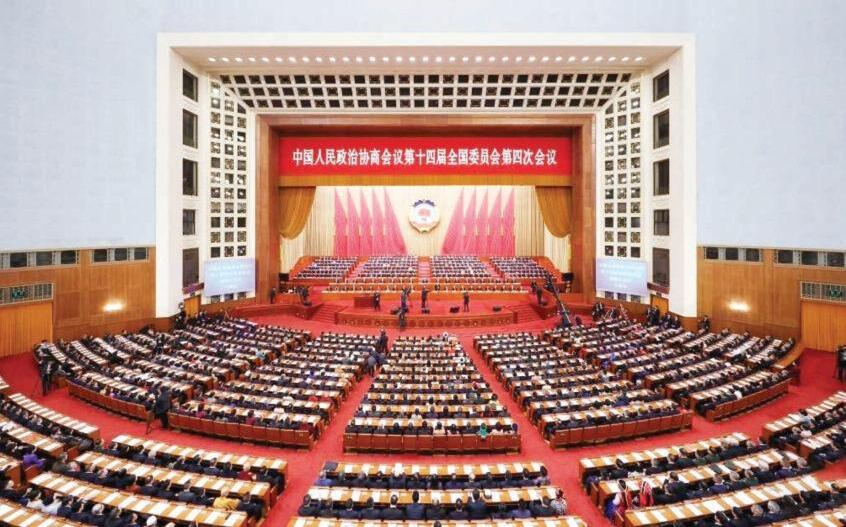
of the Communist Party of China Central Committee and chairman of the Central Military Commission made the remarks while attending a joint group meeting during the fourth session of the 14th National Committee of the Chinese People s Political Consultative Conference (CPPCC), China s top political advisory body The meeting brought together national political advisors from the Chinese Peasants and Workers Democratic Party the Jiusan Society as well as representatives from the medicine and health sector and the welfare and social security sector
During the meeting, six political advisors delivered speeches outlining proposals and recommendations related to healthcare reform, medical services, and social welfare improvements After listening to their views Xi delivered a keynote address highlighting the strategic importance of building a healthier population as a foundation for national development
Xi said that the goal of building a Healthy China by 2035 is a major strategic decision made by the CPC Central Committee He noted that the 15th Five-Year Plan period (2026–2030) would be a crucial stage for achieving this objective and called for enhanced policy coordination scientific planning and faster implementation of health-related initiatives
He emphasised that China must advance health development in accordance with its national conditions
As a socialist country and a developing nation with a vast population, China still faces notable urban-rural and regional disparities in healthcare access and services he said
Xi stressed that policy planning must reflect these realities while ensuring that healthcare reforms benefit all segments of society He also pointed out that as circumstances evolve, certain health-related policies and measures should be adjusted and optimised to meet emerging challenges
At the same time he urged policymakers to maintain strategic focus on fundamental principles in the country s health development strategy and avoid shortterm approaches that could undermine long-term objectives
Xi also commended the CPPCC for actively fulfilling its advisory role over the past year, noting that the body had contributed valuable insights on major national issues including the formulation of the 15th Five-Year Plan and broader socio-economic development policies
Separately the Chinese president visited national political advisors participating in the CPPCC session and joined discussions with representatives from healthcare, welfare and social security sectors During the interaction, he listened carefully to their comments and suggestions on improving China’s medical services strengthening public health systems and enhancing social protection mechanisms
Premier Li Qiang announced at the opening of the annual legislative session that China aims to achieve economic growth between 4 5 percent and 5 percent in 2026
While this target is more moderate than the high-growth rates of earlier decades economists view it as a pragmatic response to an increasingly complex global environment
Geopolitical tensions, supply chain disruptions, and slowing international demand have reshaped economic conditions placing greater emphasis on stability and resilience rather than rapid expansion alone
Setting the growth target within a range rather than a fixed number also provides policymakers with flexibility to respond to evolving economic conditions
Analysts note that this approach allows authorities to prioritize the quality and sustainability of growth while strengthening domestic demand and maintaining employment stability
The Government Work Report outlines several additional economic targets These include maintaining the urban unemployment rate at around 5 5 percent creating more than 12 million new urban jobs, and keeping consumer price inflation near 2 percent The government also aims to ensure that personal income
Beyond economic stability the Government Work Report places strong emphasis on science and technology innovation as the driving force behind China’s long-term modernization strategy China has pledged to accelerate efforts toward greater independence in critical technologies In the past rapid development often relied on integrating foreign technologies through open markets and international partnerships While international cooperation will remain important the current strategy places stronger emphasis on indigenous innovation and expanding domestic research capacity
Enterprises are expected to play a central role in this transformation Policymakers have stressed that companies should become the primary engines of technological advancement bridging the gap between academic research and industrial application
This reflects the growing recognition that innovation increasingly emerges from dynamic interaction between private firms research institutions and government support
One notable element in the report is the concept of a smart economy To support this vision, China plans to expand the AI Plus Initiative which seeks to integrate artificial intelligence across multiple sectors Authorities also aim to build ultra-large intelligent computing clusters and advanced digital in-
The Government Work Report also highlights the importance of developing emerging and futureoriented industries that could define the next phase of economic growth Priority sectors include integrated circuits, aerospace and aviation, biotechnology, and satellite internet services The rapidly expanding low-altitude economy which includes drone logistics and aerial mobility systems has also been identified as a potential new growth engine
China has already made notable progress in several of these fields National spending on research and development reached 3 92 trillion yuan in 2025 equivalent to 2 8 percent of GDP, marking a record level This surge in funding has supported breakthroughs in areas such as humanoid robotics, advanced artificial intelligence and biotechnology
Looking ahead the government plans to accelerate major national science and technology programs targeting frontier research fields These initiatives will focus on achieving breakthroughs in advanced semiconductors quantum technologies biomanufacturing brain-computer interfaces and nuclear fusion technologies widely considered critical to future industrial transformation
Another distinctive feature of China’s innovation model is the complementary role played by state-owned enterprises and private companies Large state firms and government-funded institutions often provide the resources needed for fundamental research and largescale infrastructure projects Meanwhile private enterprises operating closer to market demand play a crucial role in translating scientific discoveries into commercial products and services
ANKARA a n a d o l u ag e n c y
The first 100 hours of Operation Epic Fury have cost US forces at least an estimated $5 82 billion, or about 0 69% of the entire 2026 US defence budget, according to data compiled by Anadolu Anadolu estimates that the US spent $779 million in the first 24 hours of the operation As operations have continued the total operational cost of US offensives has tallied to approximately $3 3 billion with figures from the Center for Strategic and International Studies showing a similar total In addition to operational costs, the US has lost significant military assets in Iran’s retaliatory strikes According to estimates by Anadolu the US has already lost roughly $2 52 billion US asset losses
The primary contributor to the losses is a US AN/FPS-132 early warning radar system at Al-Udeid Air Base in Qatar valued at $1 1 billion which was struck by an Iranian missile on Saturday Qatar confirmed that the radar was hit and damaged On Sunday, three F-15E Strike Eagles were lost in a friendly fire incident involving Kuwaiti air defences While all six aircrew survived, the planes did not with the cost of replacing them estimated at $282 million US officials speaking to CBS News said that three MQ-9 Reaper Surveillance and Attack Drones belonging to the US Air Force have been downed so far at
s ta f f r e p
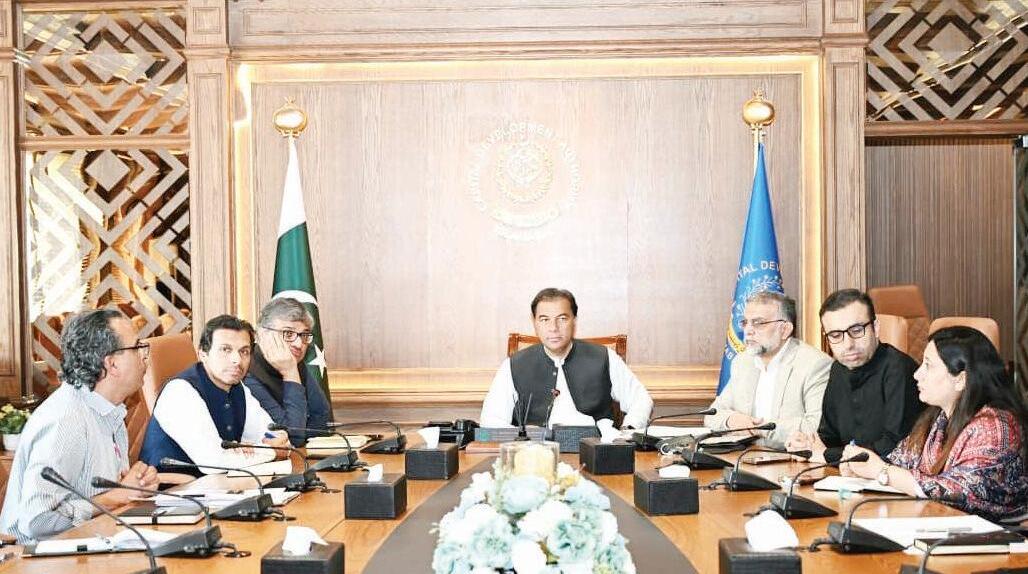
The renovation and upgradation of Basic Health Units (BHUs) in G-13 and Golra have been completed officials informed a meeting chaired by Chairman Capital Development Authority (CDA) and Chief Commissioner Islamabad Muhammad Ali Randhawa on Friday The meeting held at the CDA headquarters reviewed
dents in the
further informed that around
for
cent of the construction and renovation work at the Jhangi Sayedan BHU has been completed while the tendering process for a BHU in Sarai-Kharbooza is currently under way Participants also reviewed progress on the establishment of e-libraries in public parks, with work on-
CCPO orders tight security for foreign nationals, key installations
LAHORE
s ta f f
Capital City Police Officer Bilal Siddique
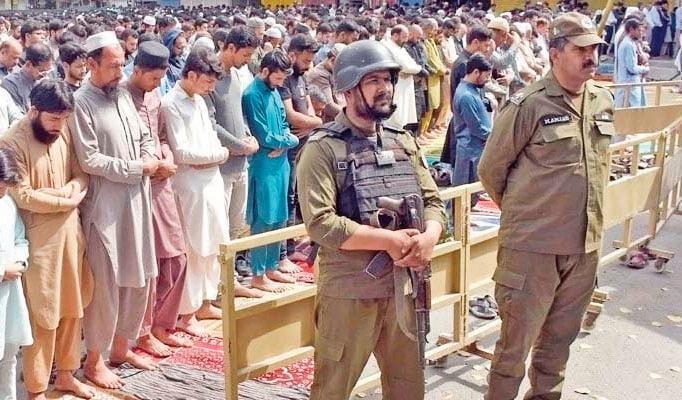
Kamyana directed officers to ensure foolproof security for foreign nationals and their installations while reviewing the performance of the Iqbal Town and Saddar divisions Chairing a meeting at the CCPO Office, he reviewed professional performance security arrangements and service delivery of both divisions The CCPO instructed officers to make strict security arrangements for Friday congregations mosques imambargahs Ramazan bazaars, commercial centres and other sensitive locations The meeting also reviewed the security plan for Youm-i-Ali (AS) and the Youm-al-Quds rally Bilal Kamyana directed that comprehensive security measures be ensured during Sehri Iftari and Taraweeh across the city during the holy month of Ramazan He further ordered intensification of combing operations against criminals and terrorists and asked the DIG (Investigation) to improve the quality and pace of investigations so that cases could be processed promptly and suspects brought to justice in accordance with the law DIG (Admin) Imran Kishwar DIG (Investigation) Zeeshan Raza SSP (Operations) Tauqeer Muhammad Naeem along with SPs ASPs circle officers SHOs and investigation in-charges of the Iqbal Town and Saddar divisions attended the meeting
going at seven locations in Islamabad as part of efforts to provide modern learning facilities for citizens The meeting also discussed the proposed National Police Hospital as well as plans to establish four emergency rescue stations in I-9 I14 G-11 and the Humak Industrial Area to enhance emergency response services Officials said the PC-1 for the
a major milestone in Pakistan’s digital transformation journey and highlights the nation s growing role in emerging technologies The platform introduces a new approach to software creation by enabling individuals and businesses to transform ideas into fully functional digital products without requiring programming expertise By eliminating complex coding processes icōd ai significantly reduces development time cost and technical barriers making innovation accessible to students entrepreneurs startups, and small-to-medium enterprises Industry experts believe this advancement will accelerate innovation across multiple sectors, including education healthcare e-commerce and public services The AI-driven engine automates application logic design workflows and deployment processes allowing users to focus on problem-solving and creativity rather than technical implementation
N E R A L S AT U N
PR OFIT
The Central Development Working Party (CDWP) on Thursday approved seven development projects worth Rs15 174 billion and recommended four major projects costing Rs108 16 billion to the Executive Committee of the National Economic Council (ECNEC) for further consideration The meeting chaired by Minister for Planning Development and Special Initiatives and Deputy Chairman Planning Commission Ahsan Iqbal, reviewed 11 development projects with a total estimated cost of Rs123 334 billion said a news release
The meeting was attended by the Chief Economist Vice Chancellor of the Pakistan Institute of Development Economics (PIDE), members of the Planning Commission, federal secretaries, heads of provincial Planning and Development departments and senior representatives from relevant ministries and provincial governments
The agenda included projects from the education and training, governance, health, higher education, information technology physical planning and housing power and water sectors aimed at strengthening infrastructure and improving public service delivery
The forum approved a project titled “Establishment of Daanish School at Azad Jammu and Kashmir (Haveli-Kahuta)” worth Rs4 687 703 million The CDWP
directed the authorities concerned to rationalise the project cost in line with the previously approved PC-I of Daanish Schools
While reviewing the proposal, the deputy chairman emphasised the importance of expanding access to quality education in underserved areas He directed the Ministry of Education to provide a year-wise breakup and operational expenditure details of all Daanish Schools
The ministry was also asked to share future financial requirements with the Finance Division for the upcoming budget and three-year projections to ensure transparency in operational commitments and the smooth functioning of these institutions
Two revised projects related to the health sector were presented during the meeting
The project titled Upgradation of DHQ Hospital District Hafizabad worth Rs7,931 330 million was recommended to ECNEC for consideration
During the discussion Ahsan Iqbal observed that the project falls within the provincial domain as it is located in a major city of Punjab He emphasised that such initiatives should ideally be financed by the provincial government in line with constitutional responsibilities
The forum noted that the federal government had already extended financial support beyond its mandated share It was decided that any additional financial liability would be borne by the Gov-
ernment of Punjab which would also reimburse excess funds released by the Centre
Another project titled National Health Support Programme (KP Component)” worth Rs1 335 million was approved after detailed deliberations
The CDWP approved a project titled Prime Minister s Scheme for Enabling Youth with Physical Challenges at HEIs through Electric Wheelchairs, Laptops for the Blind, Audio-Visual Aids – HEC” worth Rs1 846 410 million
The deputy chairman directed the Higher Education Commission (HEC) to ensure that the facility is extended strictly to full-time enrolled students of public sector universities so that the targeted beneficiaries receive maximum support A revised project titled Land Records Management Information System in the Rural Areas of ICT, Islamabad worth Rs185 691 million was also approved
The project aims to digitise land records in rural areas of Islamabad Capital Territory to improve transparency efficiency and service delivery
Two projects related to physical planning and housing were approved by the forum These include “Construction of Admin Block of Supreme Court Branch Registry at Quetta – New worth Rs231 604 million and Pakistan Audit and Accounts Academy (PAAA) Islamabad – Revised” worth Rs3,106 030 million
PESHAWAR
s ta f f r e p o r t
The Election Commission of Pakistan (ECP) has turned down a request from the Khyber Pakhtunkhwa (KP) government to postpone the delimitation process in 24 districts of the province ahead of the upcoming local government elections According to sources the KP government had sought a 180day delay in the delimitation exercise The province’s chief secretary had also written to the ECP, requesting a postponement of local body polls The letter cited the provincial government s intention to amend the Local Government Act, 2013, as well as concerns related to bad weather and the law and order situation in certain districts The chief secretary further stated that the ECP had not consulted the provincial government before starting the delimitation process Sources familiar with the matter said the ECP reviewed the contents