InTroDucTion
Welcome, creative friend. (Yes, you!) Maybe you haven’t picked up a paintbrush in years. Maybe it’s your first time ever. Or, if you’re like me, your once beloved art supplies got packed away for too long and are taunting you to begin again. In any of these scenarios, you’re here for inspiration, and you’re here because you (yes, you!) are creative.
And your creativity matters.
Play was the first language we learned as kids. And yet, as the grown-ups we are now, play can often feel frivolous.
I teach watercolor, calligraphy, and journaling all over the world, from online classes to retreats, so I’ve heard a thing or two from creatively curious people just like you:
“I don’t have the right art supplies.”
“I don’t have a creative bone in my body.”
“I have more important things to do.”
“I don’t want to ruin my journal!”
“I don’t have enough time, so what’s the point?”
“What if it sucks?”
Be honest: Did any of these resonate with you?
Anything you want to become good at takes practice. You already know this. But making art—making marks on a page, using your words, thinking deeply and differently about the world, slowing down in this furiously fast-paced life—is always accessible. And, as you’ll read throughout these pages, it’s actually very important for our well-being.
You’re not here to become a professional artist. You’re here for ideas. You’re here to tap back into your creativity—consistently.
To practice.
To be mindful.
To be present.
To try.
To play.
And in doing so, the world and your view of it will open up. I hope these pages feel both inspiring and comforting—a gentle nudge and a playful one.
You deserve this. @peakpaperco
Engaging in an activity purely for the enjoyment of it and not for an intended outcome.
Creative play is: curiosity, exploration, surprise, joy, and imagination
Creative play is not: pressure, perfection, or performance
I USED TO BE AFRAID OF MY ART SUPPLIES
The purpose of this book is simple: to help you rediscover the meaning and magic of putting pen to paper. It’s what guides my life and art practice, and it’s how I coped with the grief of losing a parent at a very young age. In my debut publication, a guided grief and keepsake journal called Forget You Not, I wrote about how people often say “there are no words” when we’re going through hard times, but your own words can actually help you heal.
It’s your own creations, not mine or the work of others, that will boost your well-being, lower your stress levels, and help ground the rest of your life.
Art and writing are irrefutably good for us—whether you write in chicken scratch or unconventionally beautiful prose. Even if you tear these pages to shreds after you fill them. We’re made to make. And yet we all experience the same, often crippling, fear of the blank page.
Along with running my company, Peak Paper Co., I’m a mom to two beautiful daughters, enjoying our riverside home and tiny studio off the shores of Georgian Bay in Ontario. The fact that I’m writing this as a full-time artist, a published author, and a teacher of art and writing around the world is beyond any dream I could have imagined for myself.
Because when I was in university pursuing my marketing degree, I quite literally hid my art supplies under my bed.
Always an “artsy kid,” I’ve had boxes of pastels, paint, paper, and journals bound to me for decades. But I couldn’t even look at them––the
daily three-page journaling exercise called “morning pages,” which I highly recommend.
Journaling, painting, drawing, and poetry—all things that inadvertently helped me cope with the pain of losing my dad (and still do). But I didn’t realize the science-backed benefits behind them until much later in life, when I started teaching art professionally.
It’s not just what you write about that helps. The actual act of putting pen to paper itself has been proven to alleviate anxiety and reduce stress. That’s why we’ll be combining art and writing so often in this journal. The combination is uniquely powerful—and uniquely yours
OVERCOMING INERTIA
The more we do something, the more we teach our brains that we’re safe and that there’s nothing to be afraid of. The less we do something, the more power it has over us and the scarier it gets.
This basic concept reminds me of an interesting word a fellow artist once used to describe feeling creatively blocked:
Inertia: Objects in motion stay in motion, and objects at rest stay at rest.
The more you do, the more you do. The less you do, the less you do.
After university, I moved across the country, and it fundamentally changed what I believed was possible and what I was capable of. Relocating does that. Travel does, too.
I was one person in a huge new city, taking art classes again and falling in love with the learning of it all. I had nothing to prove and no one
to impress. I was simply . . . curious. I was already in a state of massive change from the move, and it caused a cascade of even more motion.
Feelings of frustration turned into pride and courage along the way—not just for learning new skills, but for trying new things, for pushing myself outside of the fear mentality, and for beginning again. Making. Playing. Doing. Consistently.
When you commit to staying in motion and not to the super strict page count and outcome-based goals we usually inundate ourselves with—that’s when play begins.
It’s why you have a year’s worth of art prompts here. Prompts eliminate the blank page paralysis so you can feel the joy of the process without having to think about where to start.
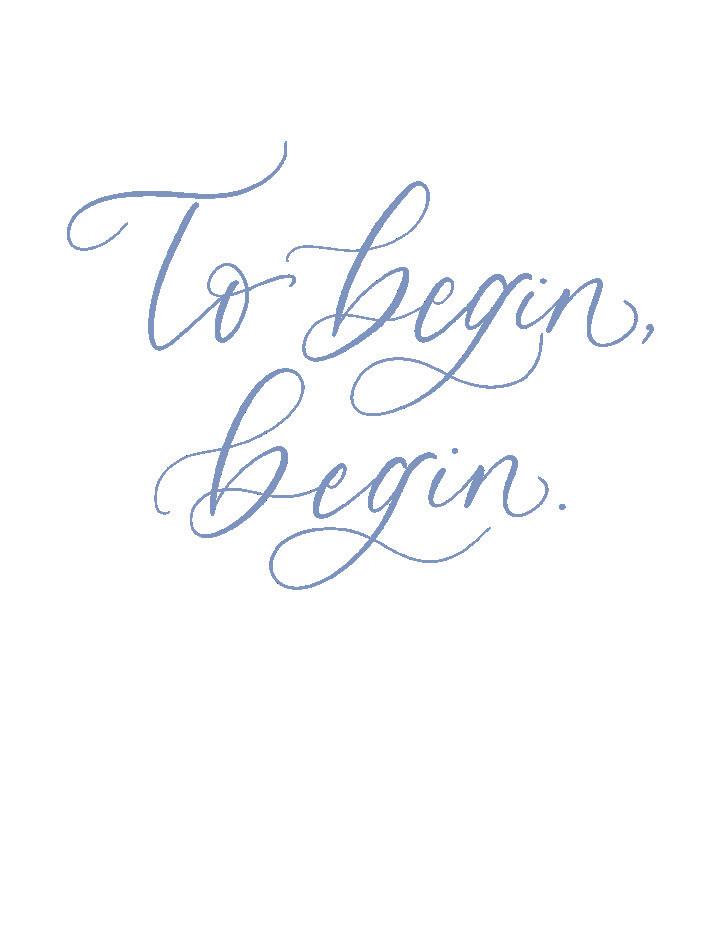
You’ll start here. On these pages. As Wordsworth wrote, “To begin, begin.”
The voices telling you not to—or that art journaling is unimportant or unserious, or that someone else could do it better, or that you don’t have the time—be damned.
To begin, begin.
WHERE CONSISTENCY COMES FROM: HABITS, ROUTINES, AND RITUALS
Consistency is an essential part of staying in motion. Sure, you could read the odd art prompt and feel the fleeting fun of inspiration when it strikes. But playing every day? That’s transformative!
I’ve hosted many writing challenges over the years and participated in more than I can count. I’ve also only partially finished a good percentage of those, and I know you’re probably worried that you’ll do the same here.
Let’s get this out of the way real quick: It’s okay to miss a few days, or even weeks, and then pick your journal back up again. It’s also okay to double (or triple!) up on prompts when you’re luxuriating in a bit of extra time or feeling a bigger spark of creative energy.
I know the feeling of wanting to give up when you don’t do something perfectly. But that’s not what we’re doing here.
We’d all love to believe that, starting today, we could easily make art journaling a daily habit. But as it turns out, our brains—and our lives—are a bit more complicated than that. A habit is something you do so often that it becomes automatic, like brushing your teeth or pouring your morning coffee. A routine is much more intentional and might involve blocking off a specific time each day, laying out your art supplies, or setting a timer for ten minutes. A routine requires a little effort at first, but repeating it over time helps turn actions into lasting habits.
To go from saying “I want to make art” to “this is just what I do,” you need a steady routine. According to one of my favorite books, Atomic Habits by James Clear, an easy way to begin a new routine is by tacking it onto an existing habit. If you already have coffee every morning, introduce your new art journaling routine right before or after that.
There’s one more layer that adds depth and meaning to the experience: ritual
If a habit is something you do without thinking, and a routine is a series of steps you follow, then a ritual is how you make those steps feel personal and meaningful
Rituals are often associated with religious or spiritual contexts, but they’re really just ways of bringing a bit of magic to the commitments you make. Maybe it’s lighting a candle with a specific scent, taking a deep breath before you begin, or playing the same song each time you sit down to journal. These seemingly small but consistent actions send a signal to your brain that this is special. When you make something into a ritual, it means it matters to you.
While habits and routines help you show up, rituals help you mindfully connect to what you’re doing.
Another fun brain fact? We’re more likely to continue doing something if it feels rewarding. The simple act of checking off a box every day you show up here makes it more likely that you’ll come back and do it again. That’s why there are habit trackers at the start of each section for you to check off prompts as you complete them!
Consider this question for a moment: What stops you from getting creative? It’s often the perceived lack of time in a day, feeling overwhelmed by the idea of having to finish something, worrying we won’t like the result, or some old story we tell ourselves about what creativity even means. What kinds of routines and rituals can you create to make it easier and more inspiring for you to begin again?
Create:
• an intentional routine
• a meaningful-to-you ritual
• a record of your daily progress
Habits: repeated unconscious or automatic actions
Routines: an intentional sequence of actions for a specific purpose
Rituals: actions performed with mindfulness and to create meaning
H a BITS rou TI n ES r IT ual S
morning coffee set out art supplies create art journaling playlist
Want to dive more into how to create better habits and replace ones that no longer serve you? Check out Atomic Habits and more recommended resources on page 326.