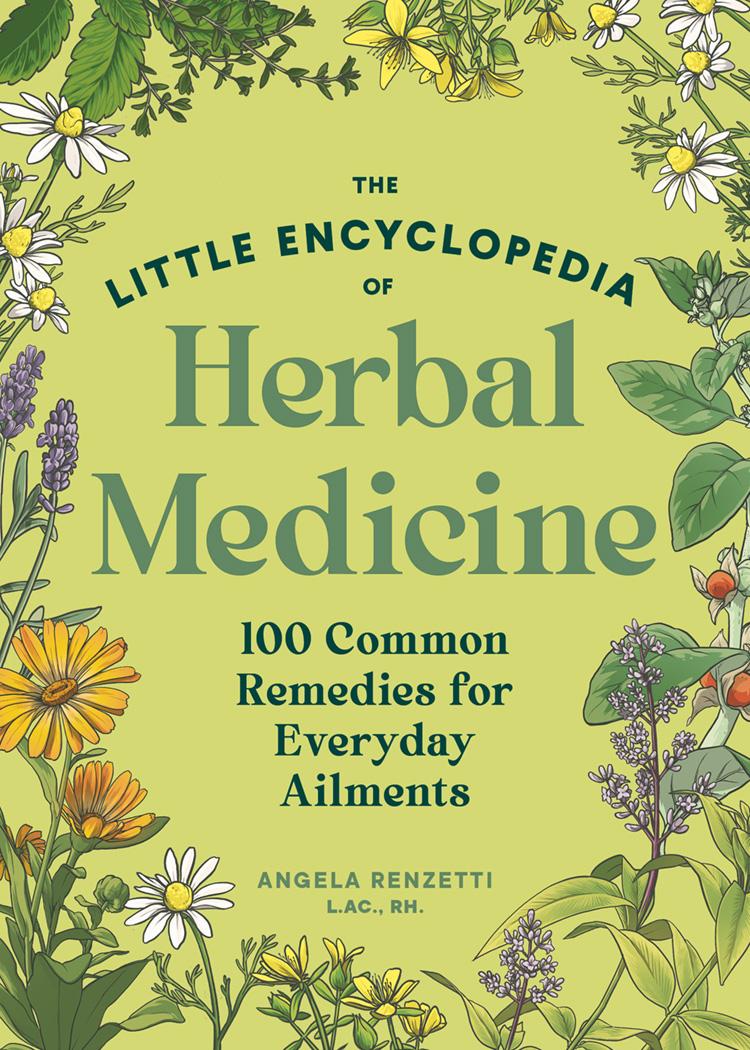
THE LITTLE ENCYCLOPEDIA OF HERBAL MEDICINE






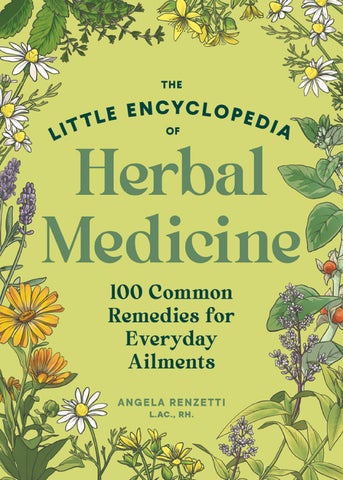
ANGELA RENZETTI , LA c , EAMP, RH
by Amanda Key
This book is for educational purposes only and does not replace professional medical advice, diagnosis, or treatment. Always consult your healthcare provider before using herbal remedies, especially if you have a medical condition, take prescription medications, are pregnant or nursing, or are treating a child.
Herbs can interact with medications and reduce or change their efficacy. “Natural” doesn’t mean safe for everyone. Start with small amounts, follow dosages carefully, and discontinue use if adverse reactions occur. For serious symptoms, seek immediate medical attention.
The statements in this book have not been evaluated by the US Food and Drug Administration. These remedies are not intended to diagnose, treat, cure, or prevent any disease.
Children, elderly individuals, and those with compromised immune systems should use extra caution. Some herbs are inappropriate during pregnancy or breastfeeding. When foraging, ensure proper plant identification—when in doubt, purchase from reputable suppliers.
The author and publisher disclaim liability from the use of information in this book. You are responsible for your own health decisions. This book is educational— not a replacement for professional medical care. Work with your healthcare provider to safely integrate herbal remedies into your wellness routine.



This book is dedicated to anyone looking to connect more with plants. Nature calls you back home.
To all my patients, students, and teachers over the years, thank you.


I began studying herbal medicine when I moved back to Seattle from China in 2011. I’d been living in Sichuan, working as a Chinese– English translator and singing in a band. During my years there, I’d gotten sick several times and discovered the power of traditional remedies.
Below my Chengdu courtyard stretched a row of Chinese medicine doctors and herb dispensaries. My Mandarin was good, but my Sichuanese was nonexistent, making it challenging to communicate when I needed help with a cold or stomachache. The herbalist would examine my tongue, take my pulse, and then gather herbs from countless drawers, scooping them into a paper bag— it felt like stepping back in time. I’d wobble home to my apartment with the earthy, bitter, pungent herbs and prepare them using a traditional method called a decoction (which we’ll explore more in this book). When I had a head cold, the healing often began as
soon as the herbs started to cook—the aromatic vapors filled my apartment, and I could feel my sinuses opening even before taking a sip. And after just the first cup of the decoction, I would often feel my headache ease, my body relax, and my symptoms begin to lift, feeling better immediately. What was this magic? Growing up on over-the- counter drugs and processed foods, natural medicine was foreign to me. When I befriended Israeli students studying acupuncture in Chengdu, my fascination with Traditional Chinese Medicine truly began.
Two years later I moved home to Seattle, planning to attend acupuncture school. But life rarely follows our plans. That summer severe reverse culture shock left me deeply depressed. One afternoon, wandering through Ballard, I discovered Dandelion Botanical Company advertising fall herbalism classes that combined local and Chinese herbs. This became my entry point— studying Chinese, Ayurvedic, and Western herbs with K. P. Khalsa at the International Integrative Educational Institute. Reconnecting with the Pacific Northwest landscape, and learning about plants I’d grown up with but never understood, proved deeply healing. My connection with nature restored my mind and spirit. Two years later I finally started acupuncture school.
During school I worked at Rainbow Natural Remedies, a Seattle wellness store with an incredible apothecary. Day after day customers arrived seeking remedies but lacking basic herbal knowledge. They didn’t know what a tincture was or how to prepare tea. Recognizing this need, I began teaching beginner herbalism classes, continuing for years to help people understand their options.
In my experience with herbal remedy books, I’ve noticed two persistent problems: poor indexing that makes finding specific remedies difficult and authors who lack the clinical experience to verify what actually works. Having run a clinic, taught countless students, and maintained my love of research, I’ve created something different— a book organized alphabetically by ailment, not by herb, so you can quickly find exactly what you need.
I hope this book introduces you to plant allies that make your life better. Nature calls you back home.

—Angela


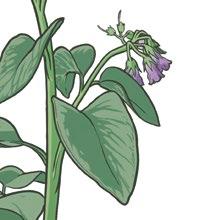


Herbal medicine is a lifelong journey. After fourteen years of study and practice, I’m still discovering new things. This book distills my experience as a clinical and folk herbalist into a practical guide for treating everyday ailments at home with proven plant allies.
Part I is essential foundational knowledge— please don’t skip it. When you encounter questions in later sections, return here for clarity.