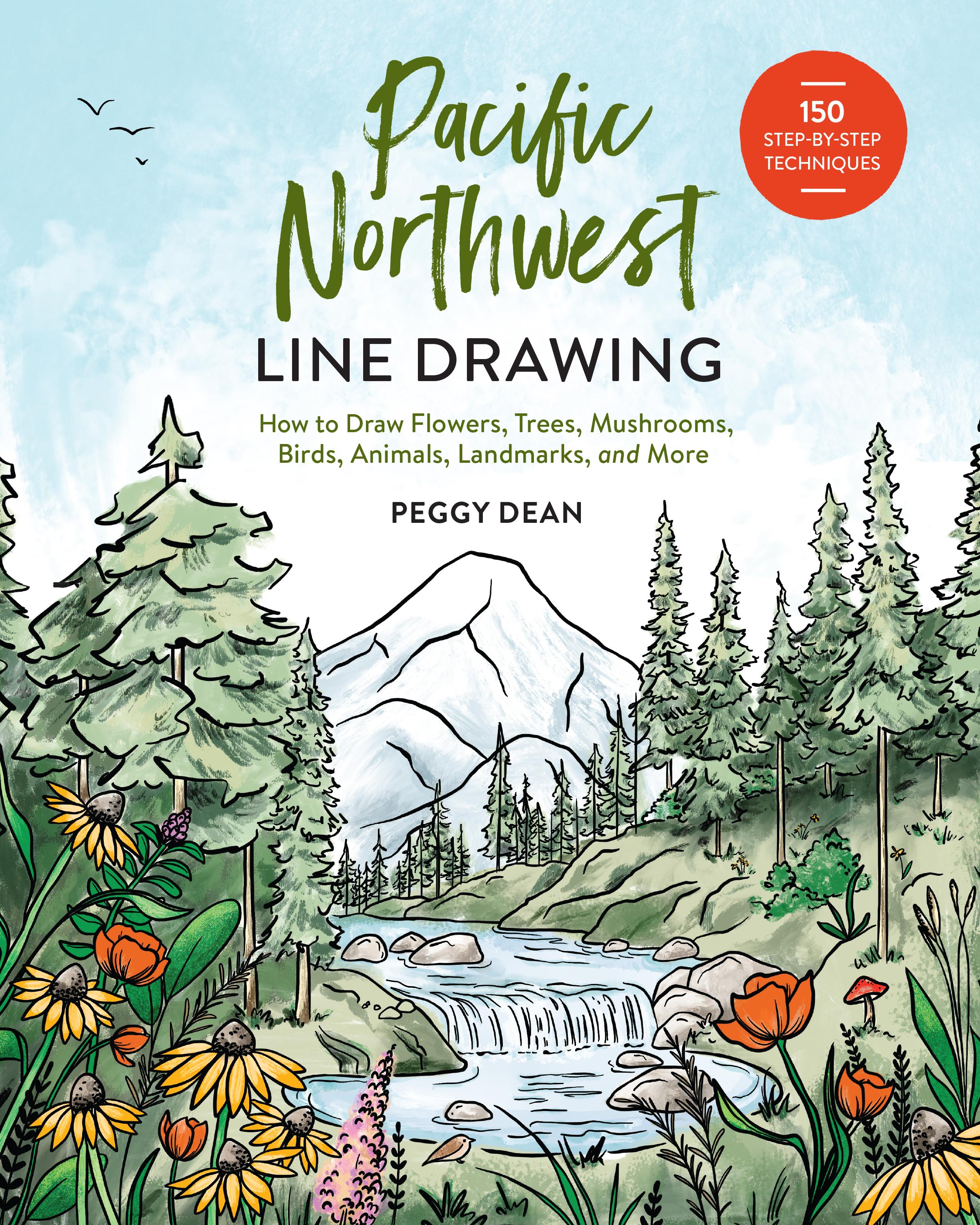
Pacific Northwest Line Drawing
LINE DRAWING Pacific
HOW TO DRAW
Flowers, Trees, Mushrooms, Birds, Animals, Landmarks, and More
PEGGY DEAN
Illustration Catalog vi Introduction ix
About Line Drawing x
Fauna 85
Landmarks 141
A Parting Note 171
Flora 1
Illustration Catalog
FLORA
Trillium 2
Lupine 3
Pacific Rhododendron 4
Oregon Grape 5
Syringa 6
Red Columbine 7
Snow Buttercup 8
Coast Silk Tassel 9
Western Yarrow 10
Yellow Marsh Marigold 11
Bleeding Heart 12
Broad-Leaved Starflower 13
Yellow Monkeyflower 14
Satin Flower 15
Henderson’s Shooting
Star 16
Checker Mallow 17
White Mountain Heather 18
Oregon Oxalis 19
Oregon Iris 20
Mariposa Lily 21
Arrowleaf Balsamroot 22
Fireweed 23
Western Anemone 24
Indian Paintbrush 25
Nootka Rose 26
Fairy Slipper 27
Twinflower 28
Skunk Cabbage 29
Woolly Sunflower 30
Common Camas 31
Sword Fern 32
Common Fiddleneck 33
Maidenhair Fern 34
Licorice Fern 35
Bracken Fern 36
Stinging Nettle 37
Beargrass 38
Sea Thrift 39
Fawn Lily 40
Bearberry 41
Western Azalea 42
Pacific Dogwood 43
Oakmoss 44
Bryum Moss 45
Chanterelle 46
Morel 47
Fly Agaric 48
Turkey Tail 49
Black Trumpet 50
Inky Cap 51
Bear’s Head 52
King Bolete 53
Douglas Fir 54
Douglas Fir Cone 55
Western Redcedar 56
Western Redcedar Branch 57
Western Hemlock 58
Western Hemlock Branch 59
Bigleaf Maple 60
Bigleaf Maple Leaf 61
Vine Maple 62
Vine Maple Leaf 63
Pacific Madrone 64
Pacific Madrone Flower 65
Ponderosa Pine 66
Ponderosa Pine Cone 67
Coast Redwood 68
Coast Redwood Branch 69
Western Larch 70
Western Larch Branch 71
Red Alder 72
Red Alder Catkins 73
Black Cottonwood 74
Black Cottonwood Branch 75
Western Redbud 76
Salmonberry 77
Thimbleberry 78
Salal 79
Marionberry 80
Huckleberry 81
Rainier Cherry 82
FAUNA
American Beaver 86
Olympic Marmot 87
Appaloosa 88
Spirit Bear / Kermode Bear 90
Columbian White-Tailed Deer 91
Gray Wolf 92
Mountain Goat 93
Elk 94
Cascade Red Fox 95
Bald Eagle 96
Western Meadowlark 97
Mountain Bluebird 98
Steller’s Jay 99
American Goldfinch 100
Pileated Woodpecker 101
Northern Spotted Owl 102
Tufted Puffin 103
Orca 104
Raccoon 105
Pygmy Rabbit 106
Douglas Squirrel 107
American Shrew Mole 108
Cougar 109
Western Tiger Swallowtail 110
Cabbage White 112
Island Marble Butterfly 113
Puget Blue 114
Harlequin Duck 115
Rufous Hummingbird 116
Salmon 117
Steelhead Trout 118
River Otter 119
Pacific Lamprey 120
Pacific Sideband Snail 121
Giant Pacific Octopus 122
Pacific Banana Slug 123
Cascades Frog 124
Common Nighthawk 125
Rough-Skinned Newt 126
Townsend’s Big-Eared Bat 127
Spotted Sandpiper 128
Harbor Seal 129
Harbor Porpoise 130
Salmon Shark 131
Steller Sea Lion 132
Marbled Murrelet 133
Gull 134
Sand Dollar 135
Dungeness Crab 136
Ochre Sea Star 137
Pacific Purple Sea Urchin 138
LANDMARKS
Multnomah Falls 142
Crater Lake 144
Haystack Rock 145
Hells Canyon 146
Snake River Canyon 148
Lassen Peak 150
Mount St. Helens 152
Mount Rainier 153
Mount Hood 154
Mount Shasta 155
Snoqualmie Falls 156
Painted Hills 158
Butchart Gardens 160
St. Johns Bridge 162
Space Needle 163
Portland Skyline 164
Seattle Skyline 166
Farmers Market 168
Introduction
Welcome to the Pacific Northwest, a land of boundless beauty. The drawings on the following pages are a love letter to the region that has captured my heart and soul. I had the privilege of growing up exploring the Pacific Northwest’s diverse ecosystems, from the towering evergreen forests to the rugged coastline, from the majestic mountains to the tranquil rivers. I love how every season brings its own palette of colors, textures, and sensations—the scent of old-growth forests, where moss-draped branches of ancient trees touch the sky; the taste of wild berries plucked from the underbrush, bursting with the essence of summer; and the feeling of cool, misty rain on your skin, a gentle reminder of all the ways this region can inspire us.
This book is organized into three main sections: Flora, Fauna, and Landmarks of the Pacific Northwest. Each section contains step-by-step drawing instructions for various subjects, accompanied by fun facts that might surprise you! Whether you’re a beginner or an experienced artist, feel free to start anywhere that inspires you. Remember, the goal is to enjoy the process and capture the essence of the Pacific Northwest through your own unique perspective.

About Line Drawing
The magic of line drawing often lies in simplicity—capturing the essence of a subject with just a few strokes. When I first started practicing line drawing, I quickly realized that it wasn’t about making perfect replicas of what I saw. It’s about capturing the way I wanted to interpret my surroundings. My lines were wobbly and imperfect, and as I progressed and my skills improved, I found myself returning to those wobbly lines because that’s what I liked most about drawing. It was freeing—not worrying about precision, and just enjoying the process.
In this book, you’ll be guided simply, line by line, and I encourage you to make it your own. We’ll explore different objects in nature, animals, and places that you can draw with only a few lines.
Over my years of practice, I’ve discovered that mastering a few key techniques can significantly enhance your drawing experience and results.
Let me share some insights to help you on your line drawing journey.
Holding Your Pen
How you hold your pen can dramatically affect the control and fluidity of your lines. For detailed work, try holding your pen close to the nib. For looser, more expressive lines, grip it further back. Experiment to find what feels most comfortable and natural to you.
Controlling Line Weight
Varying line weight adds depth and interest to your drawings. While using pens with different tip sizes is one method, you can also achieve this by adjusting the pressure you apply. Light pressure creates thin, delicate lines, while heavier pressure produces bold, striking ones. Practice transitioning smoothly between these pressures to master dynamic line work.
Creating Texture
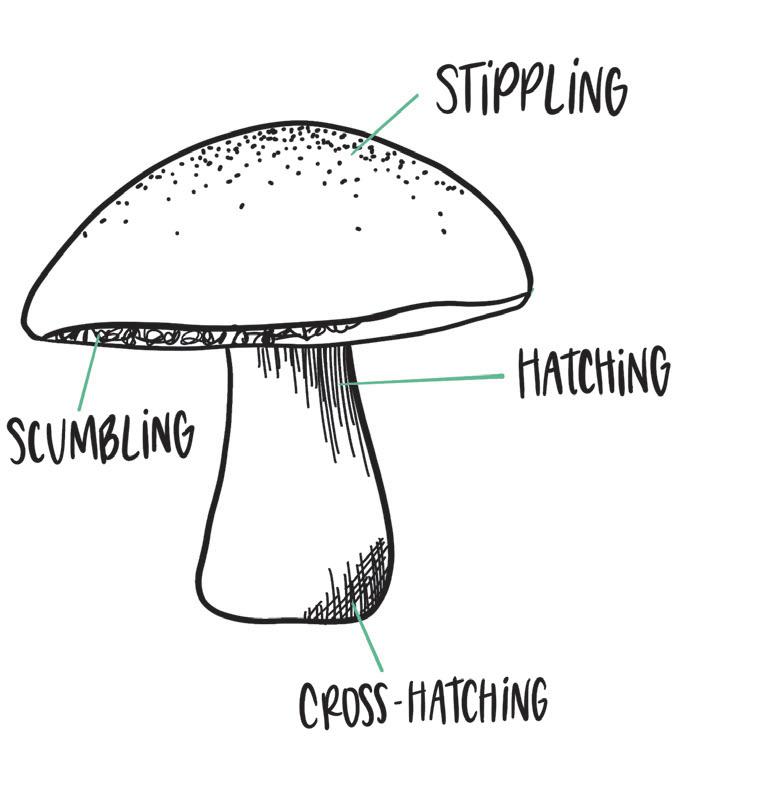
Textures bring your line drawings to life. Experiment with techniques like hatching (parallel lines), cross-hatching (intersecting lines), stippling (dots), and scumbling (scribbled lines) to add dimension and detail. Each texture technique can convey different surfaces and materials, so experiment to see what works best for your subjects.
Applications
Line drawings have a unique way of adding charm and personality to everything they touch. You can incorporate them into handmade cards, journals and planners, standalone art pieces, craft projects, digital media and graphic design, marketing and branding, tattoo art, and even educational materials! The versatility of line drawing allows it to enhance virtually any creative endeavor.
Finding Your Flow
One of the most rewarding aspects of line drawing is entering the flow state while creating. This mental state of deep focus and immersion can be achieved by starting with simple subjects, allowing yourself to draw without judgment. Let your hand move freely and embrace mistakes as part of the process. Remember, the beauty of line drawing lies in its imperfections. Each line, whether deliberate or accidental, adds character and energy to your work.
Embracing Imperfections
My favorite way to draw is to jump in with a pen, embrace imperfections that come up, and capture the energy of the moment. Line drawing allows us to exist in a place of creative play, without the need for a ton of art supplies. I present line drawing literally— line by line—to help you view seemingly complicated objects in a simpler form.
Through the step-by-step drawings in this book, you’ll see how each line builds upon the previous one, culminating in a charming final piece.
Building Confidence
As you practice, your confidence in line drawing will naturally grow. Keep a dedicated sketchbook for your line drawings, filling it with quick sketches and detailed studies alike. Over time, you’ll see your progress and identify the techniques and subjects you enjoy the most.
Every line you draw is a step toward improving your skills and developing your unique style. By focusing on simplicity, practicing key techniques, and embracing imperfections, you can create beautiful and meaningful drawings.
I encourage you to use this book as both a guide and inspiration as you embark on your line drawing journey. Remember, the most important thing is to enjoy the process and let your creativity flow.
So, grab your sketchbook and let’s get started. You don’t need to be a pro to enjoy this—just dive in and have fun. The Pacific Northwest is full of inspiration, and I can’t wait for you to see it through your own line drawings.
In the Pacific Northwest, plants do more than just color the landscape green; they’re the backbone of the ecosystem. Native plant species are essential, providing food and shelter to a wide range of wildlife, from the tiniest insects to the largest mammals.
Towering evergreens form the iconic canopy of Northwest forests. These giants create a unique microclimate, offering shade and cooler temperatures that help other species flourish. Then there are the understory plants and wildflowers, adding layers of diversity beneath the canopy. These plant species offer critical nesting sites and foraging grounds for birds, insects, and mammals.
Amid this verdant world, wildflowers emerge in springtime like colorful confetti, while mosses and lichens paint the rocks and trees in hues of green and silver.
As you draw these plants, observe how their shapes and structures reflect their roles in the ecosystem. Notice how the sturdy trunks of evergreens, the delicate petals of wildflowers, and the intricate patterns of moss each require different line techniques to capture their essence.
Trillium ovatum
Step 1 Step 3 Step 2

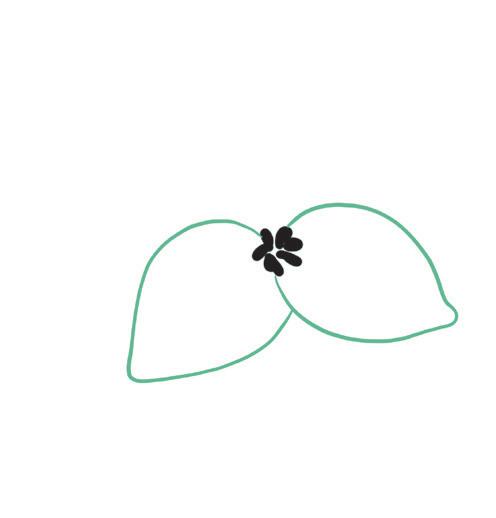
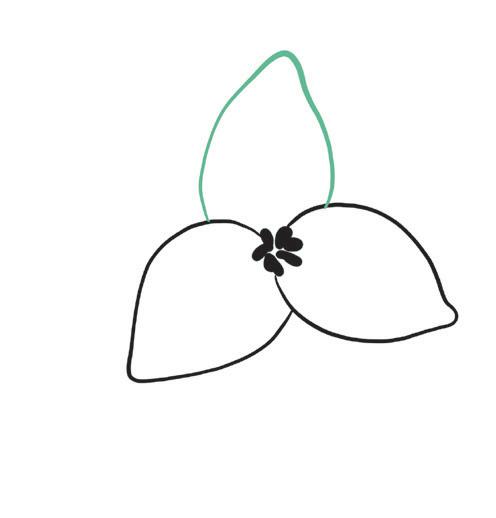
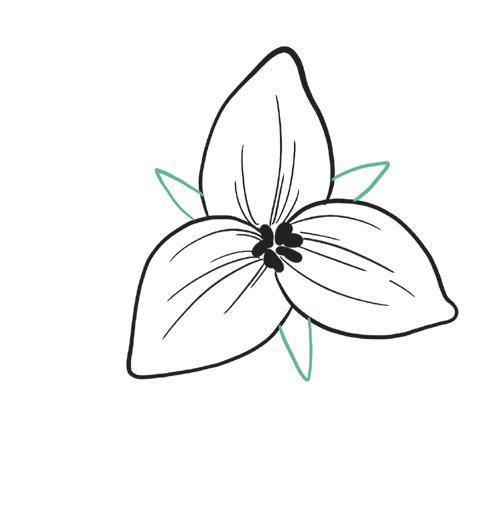


Step 4
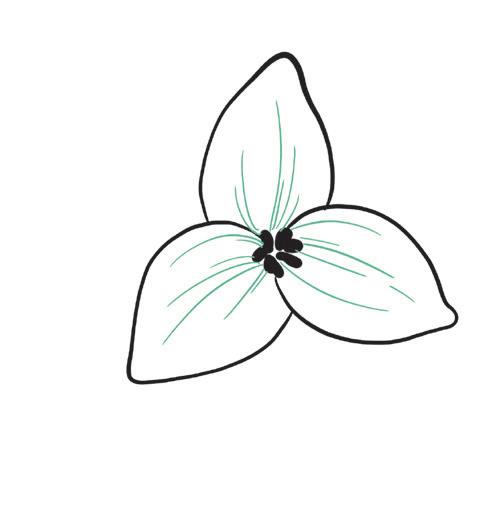
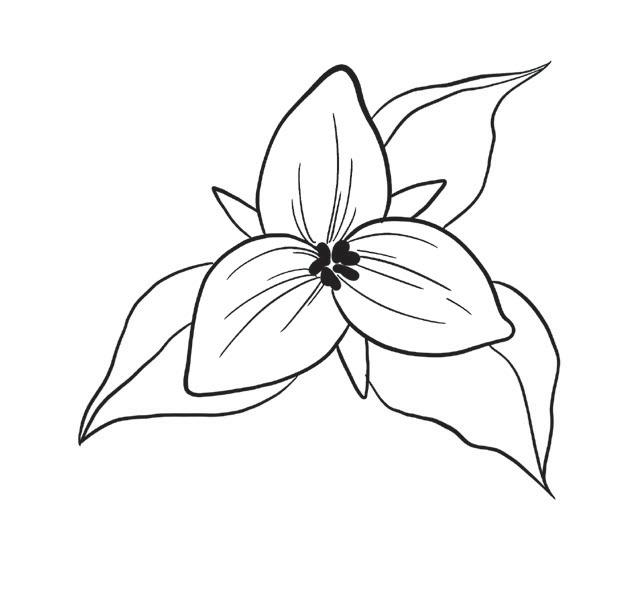

Fun Fact!
Trilliums are considered the heralds of spring, as they bloom early, before the trees’ first green leaves appear.
Step 1 Step 3 Step 2 Step 4 Step 5
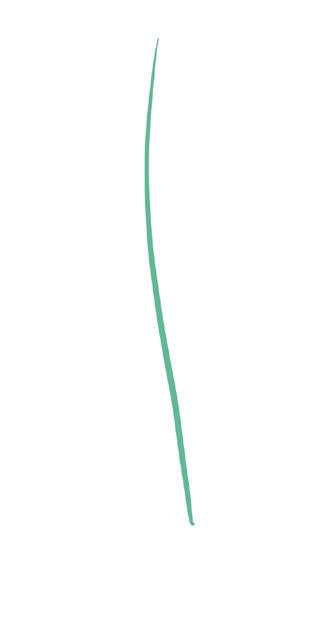

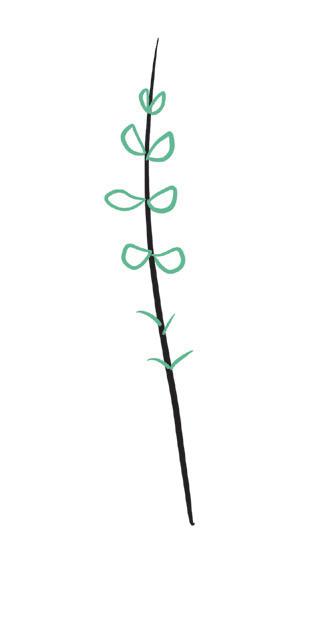
Step 6
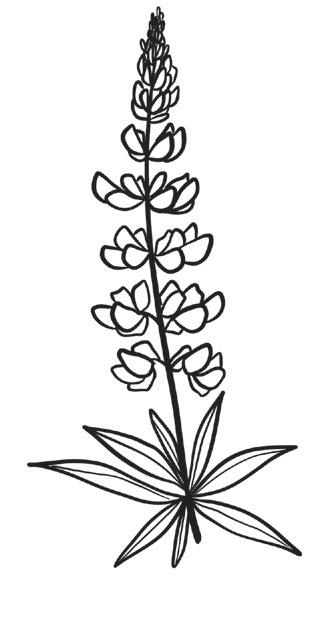
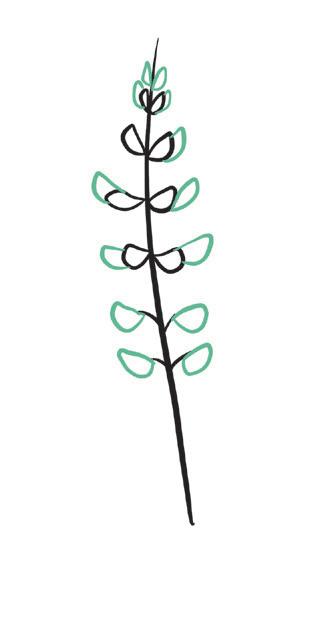
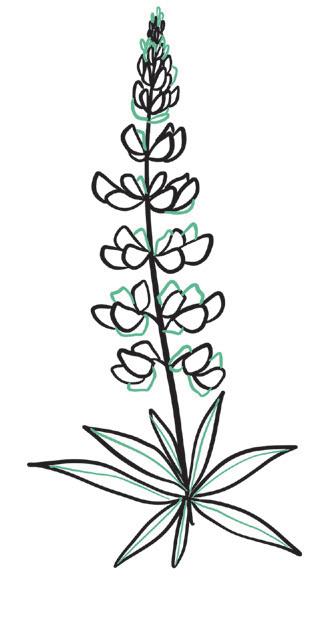

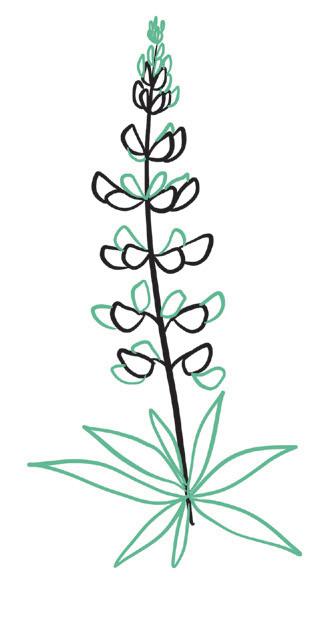
Fun Fact! Taking its name from the Latin for “wolf,” the lupine flower has the ability to enrich soil by fixing nitrogen, which, together with bacteria, allows it to convert nitrogen from air into plant nutrients.
Pacific Rhododendron
Rhododendron macrophyllum



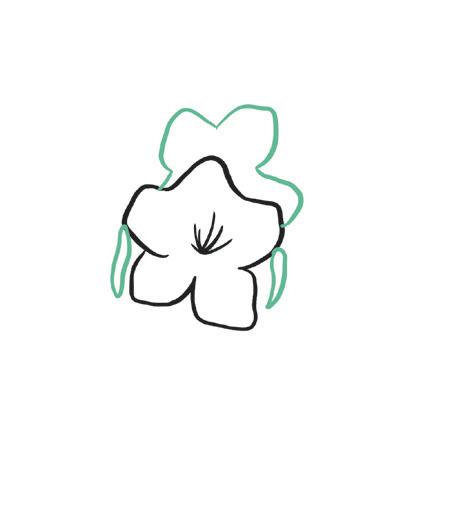
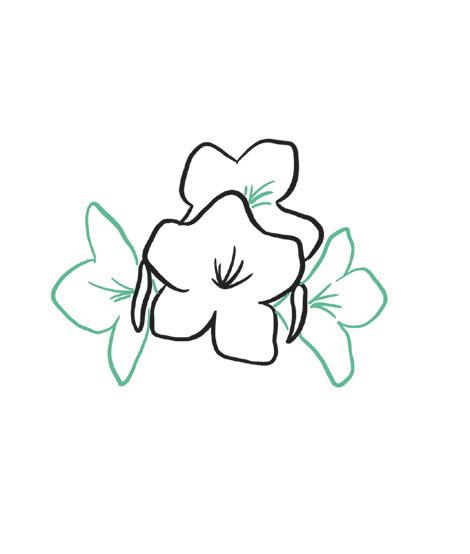

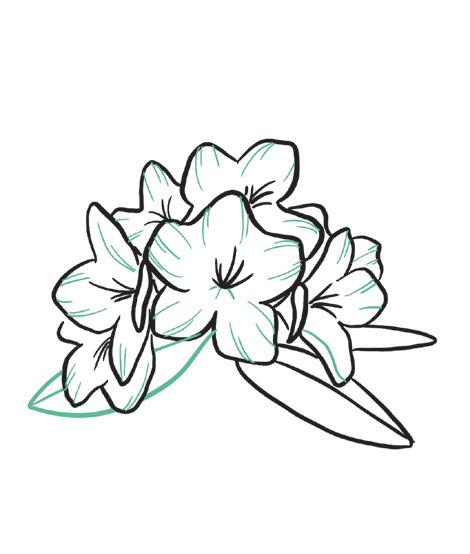
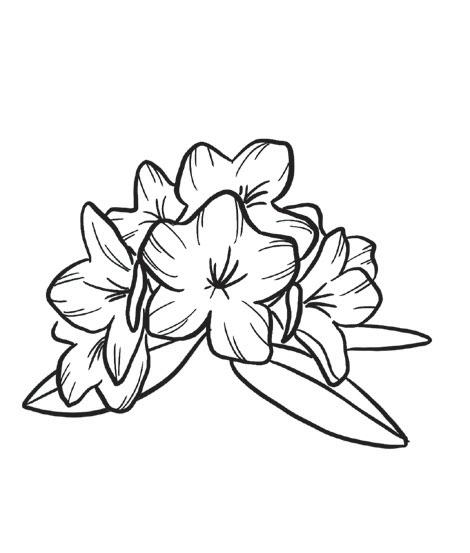


More than eight hundred species of rhododendrons are found around the world (except in Africa and South America).
Fun Fact!