PORTFOLIO
Paige Dearborn | University of Virginia | B.S. Arch 2026
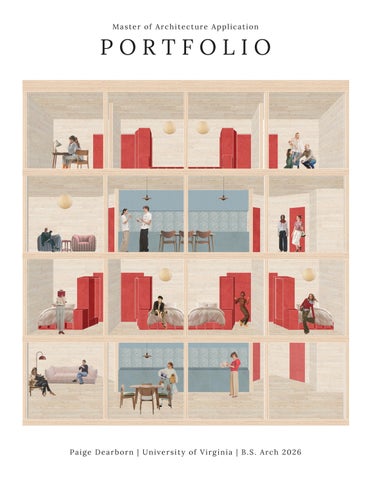
This portfolio showcases three semester-long projects I completed during my undergraduate education at the University of Virginia. It also includes a brief introduction to my ongoing undergraduate thesis project. These projects not only reflect the development of my technical skills and refinement of technique, but also the evolution of my approach to architecture.
I recognize that architecture does not exist in isolation; rather, it functions within complex economic, political, and cultural systems. I believe that architects have a responsibility and obligation to design with careful attention to these systems. Acknowledging this responsibility, I strive to design with empathy, intention, and care. Therefore, every decision I make is informed by context and grounded in site, enabling me to develop socially responsible and contextually sensitive projects that address issues of affordability, sustainability, and social equity.
Barcelona, Spain
pg. 04
Charlottesville, VA pg. 10
Washington D.C
pg. 14
Sant Adria de Besos, Spain
pg. 18
A social housing development utilizing urban strategies across scales to improve the living conditions for new and existing residents.
Fall 25 Research Studio
Professor: Manuel Bailo
Collaboration with Kira Moran
Project Role: Individually developed interiors and public space, collaborated on site master plan and facade
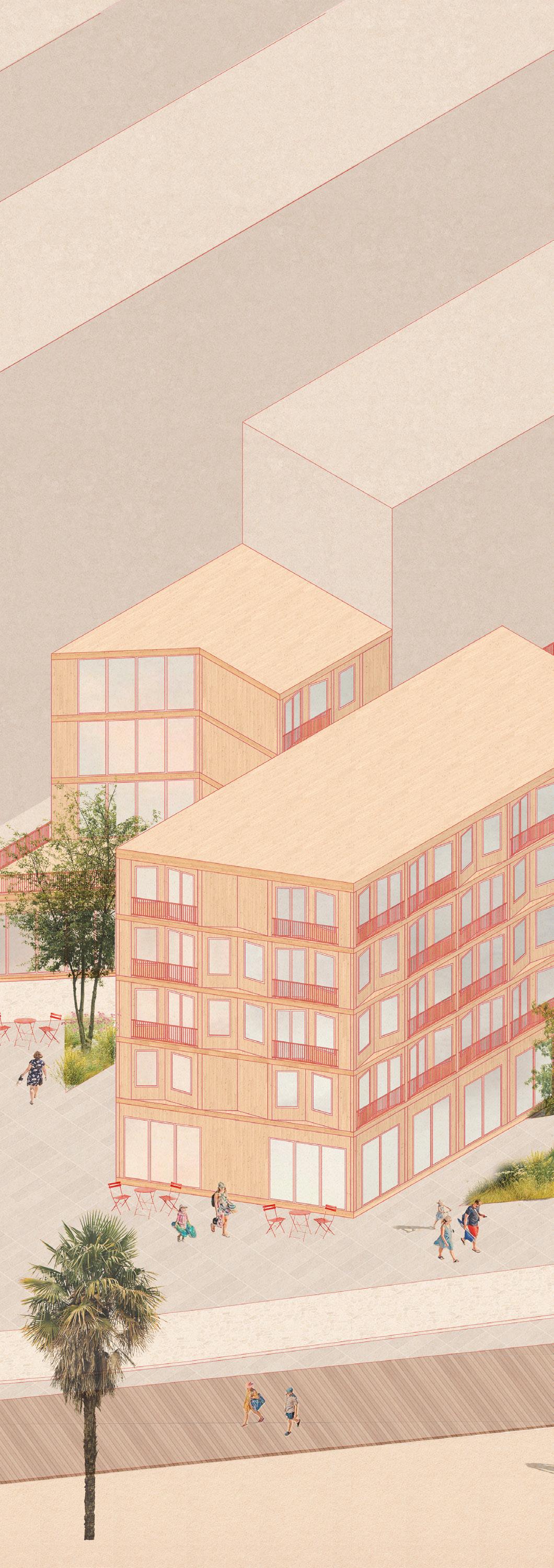
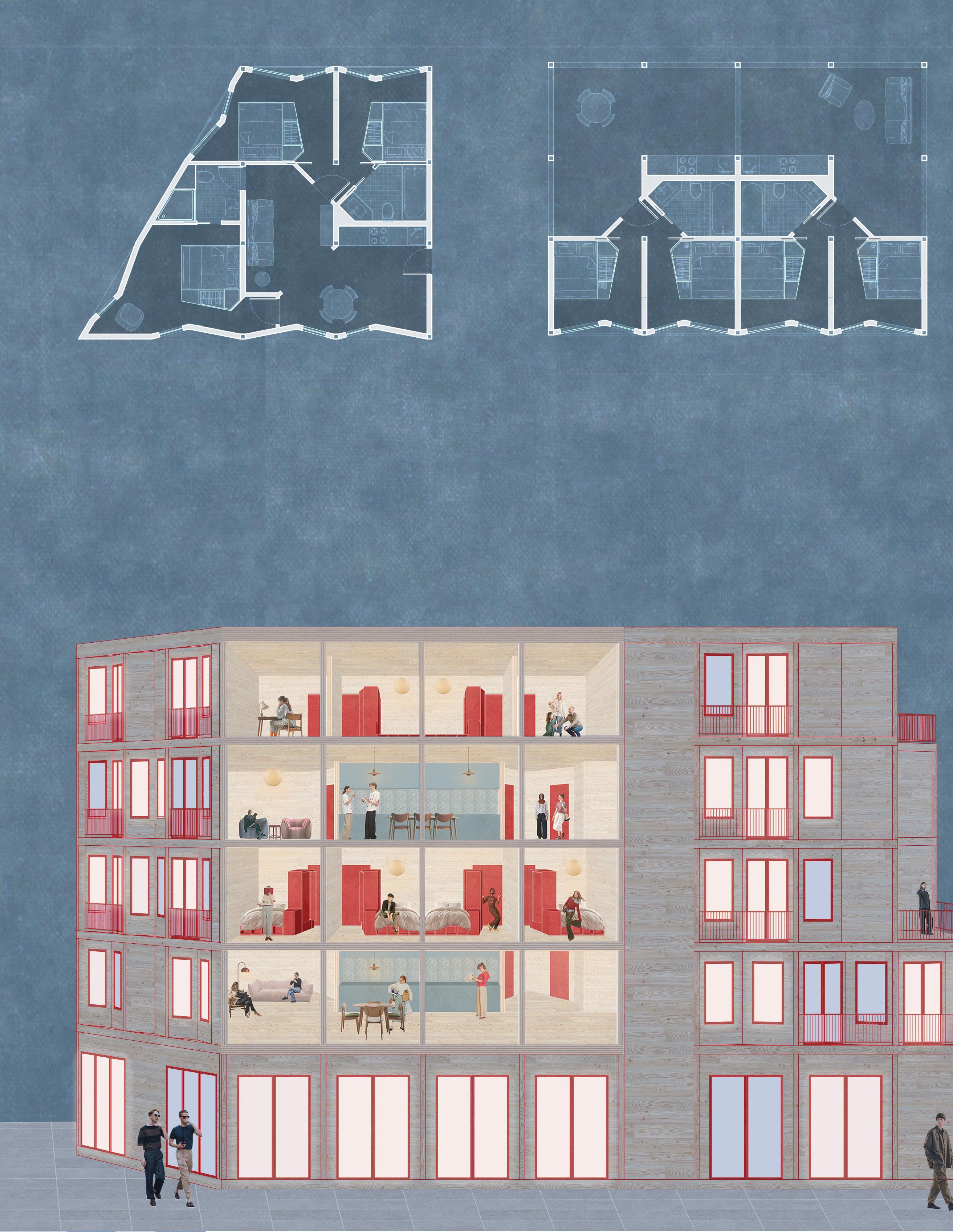
Barceloneta is a small coastal neighborhood characterized by its narrow, 30-foot rows of buildings and streets. Consequently, the neighborhood suffers from a lack of public space, poor natural light and poor ventilation. This project maintains the original grid, but resolves these issues through a series of cuts, creating a pedestrian pathway, public space and expansive communal balconies. All of these elements increase connectivity and cultivate an inward focus on the community, rather than the tourists on the beach.
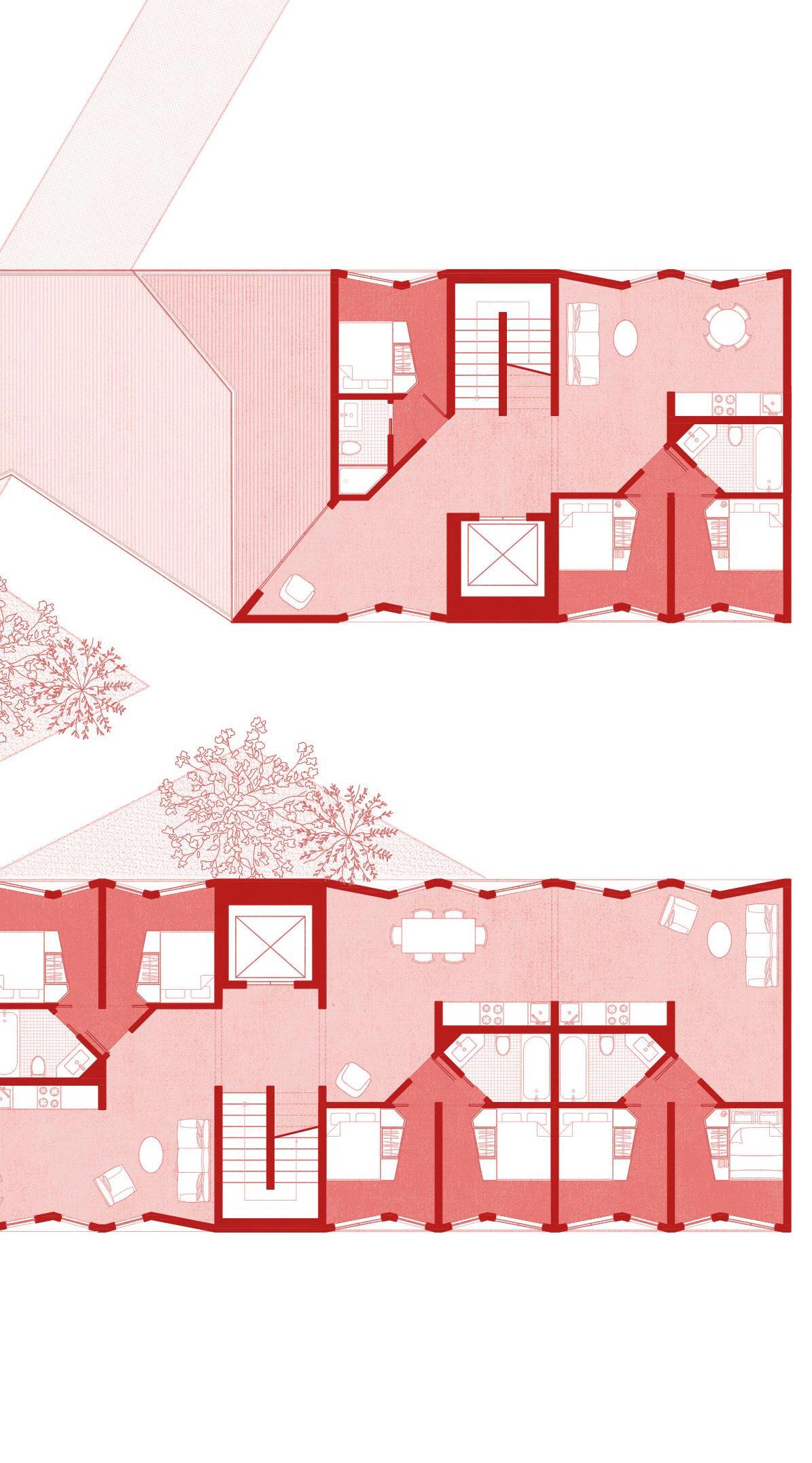
Compensating for the narrowness of the buildings, this project eliminates the traditional double-loaded corridor. Instead, it uses common space as circulation, creating expansive living, kitchen, and dining spaces. The units are organized into a grid, creating a non-hierarchical plan. This promotes adaptability and the negotiation of space between neighbors so apartments can expand or contract based on their needs.
To increase affordability and sustainability, the buildings are constructed with a timber construction system, which is fast to assemble, affordable and significantly reduces the project’s embodied carbon.

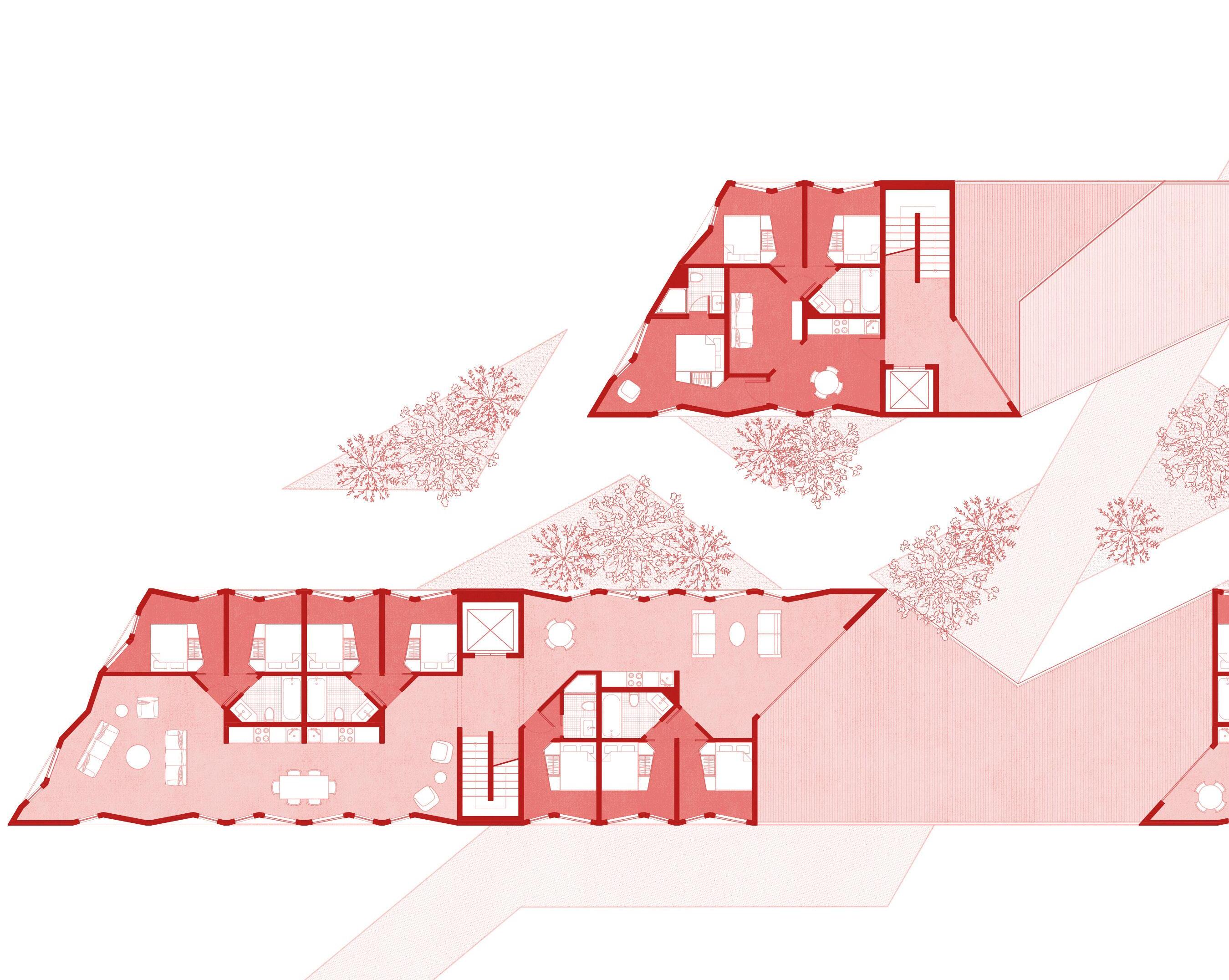
Floor plans developed and produced independently
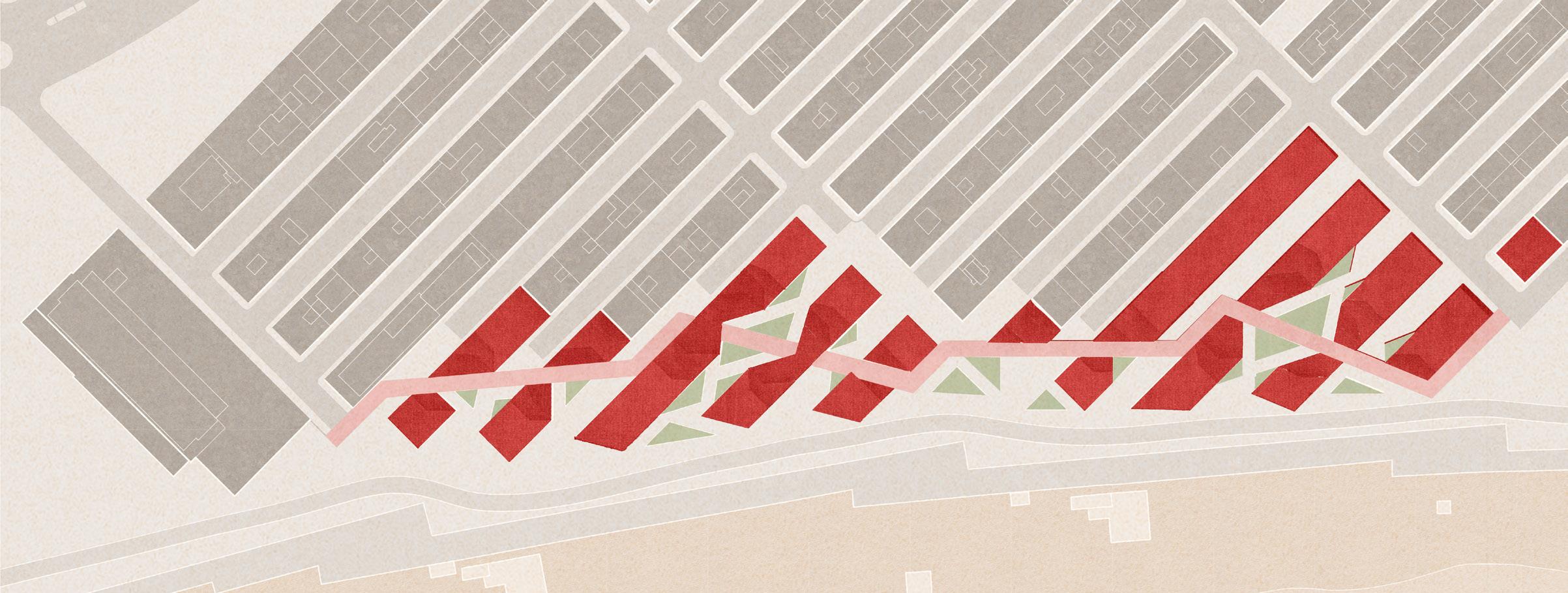
Site plan developed asnd produced in collaboration with

EXTEND
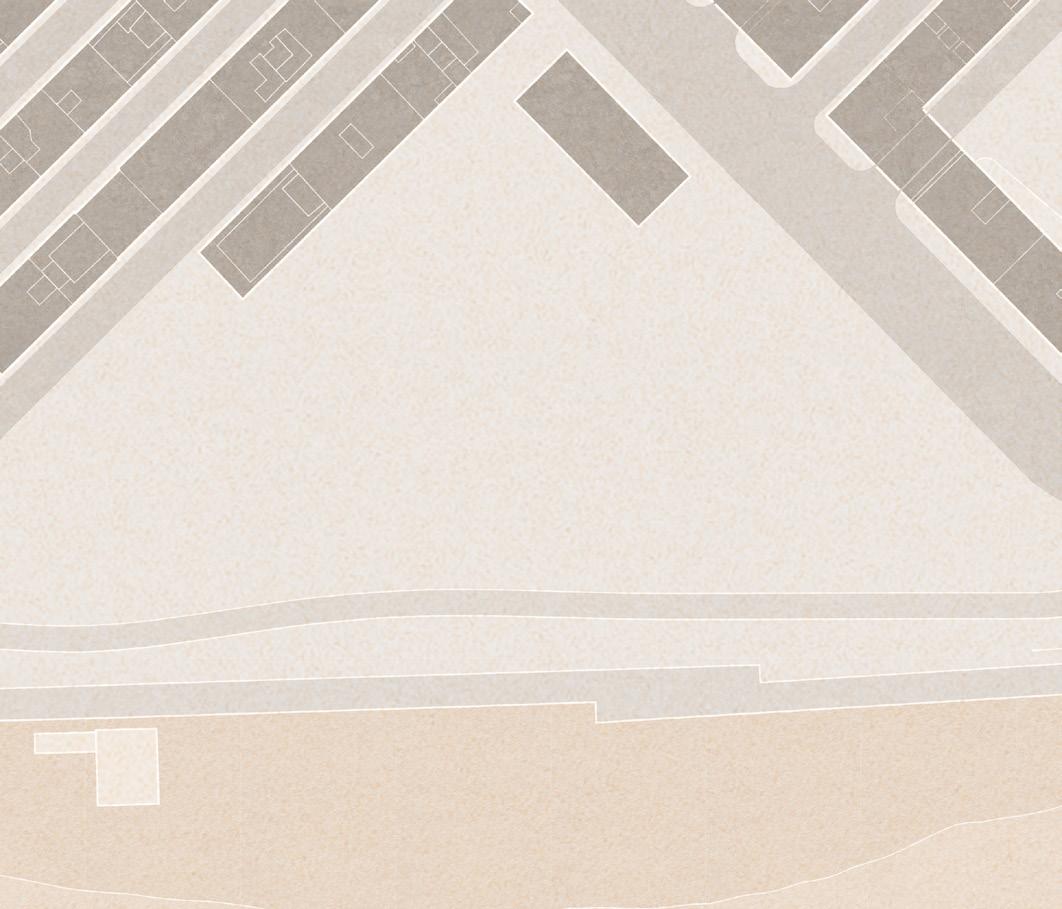
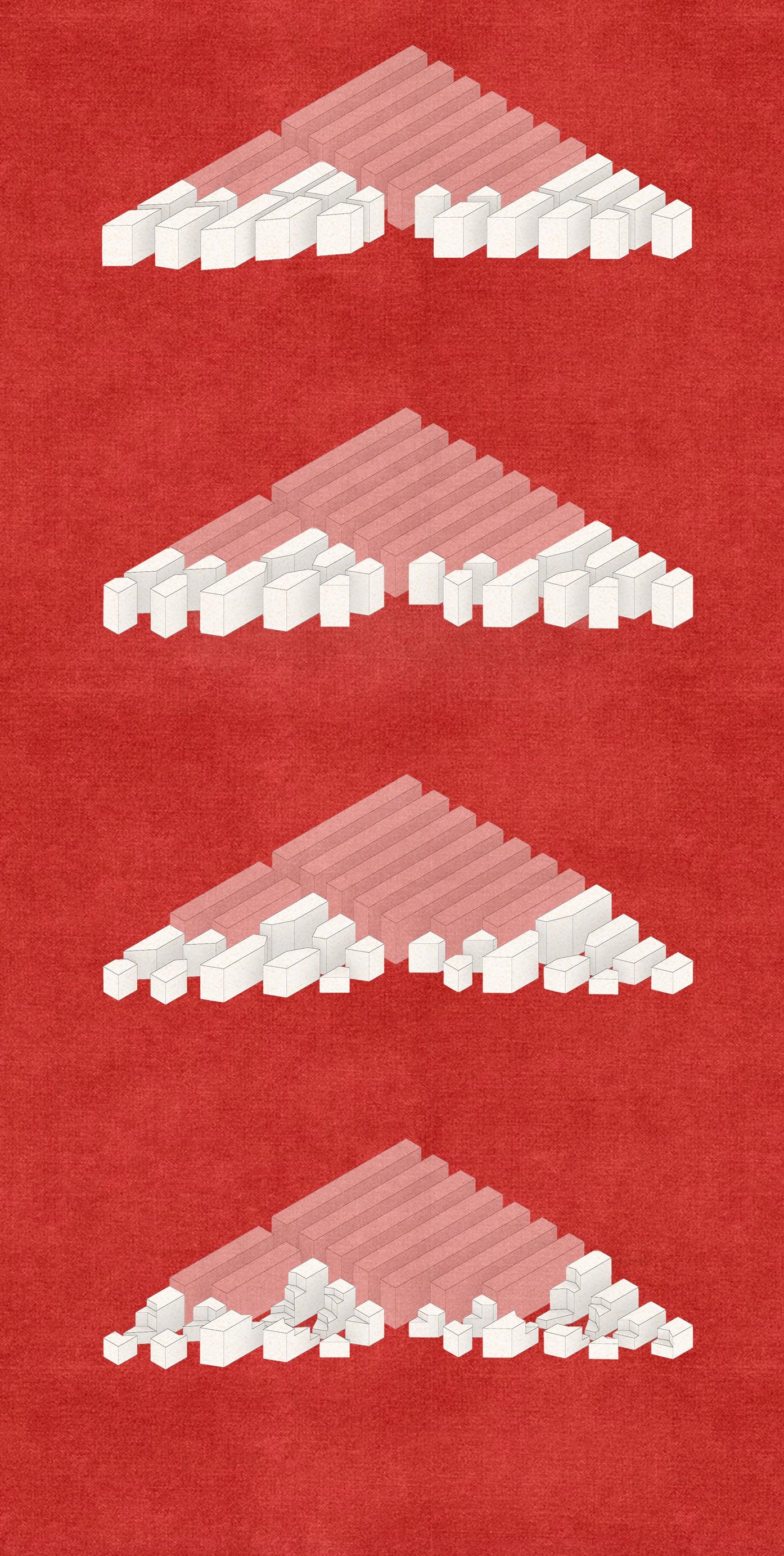
Continue the original grid
FRACTURE
Connect existing and new public spaces with pedestrian pathway between buildings
CHAMFER
Increase sea views for the second row of buildings
STAGGER
Increase views, sunlight, and ventilation
TERRACE
Create communal balconies and increase internal connectivity

A community recreational center providing privacy, dignity, sanctuary, security and social wellness for Charlottesville’s refugee population.
Spring 25 Foundation Studio V
Professor: Schaeffer Sommers
Collaboration with Henry Bruns
Project Role: Individually conducted empathic design research, developed affordances and site, collaborated on floor plans
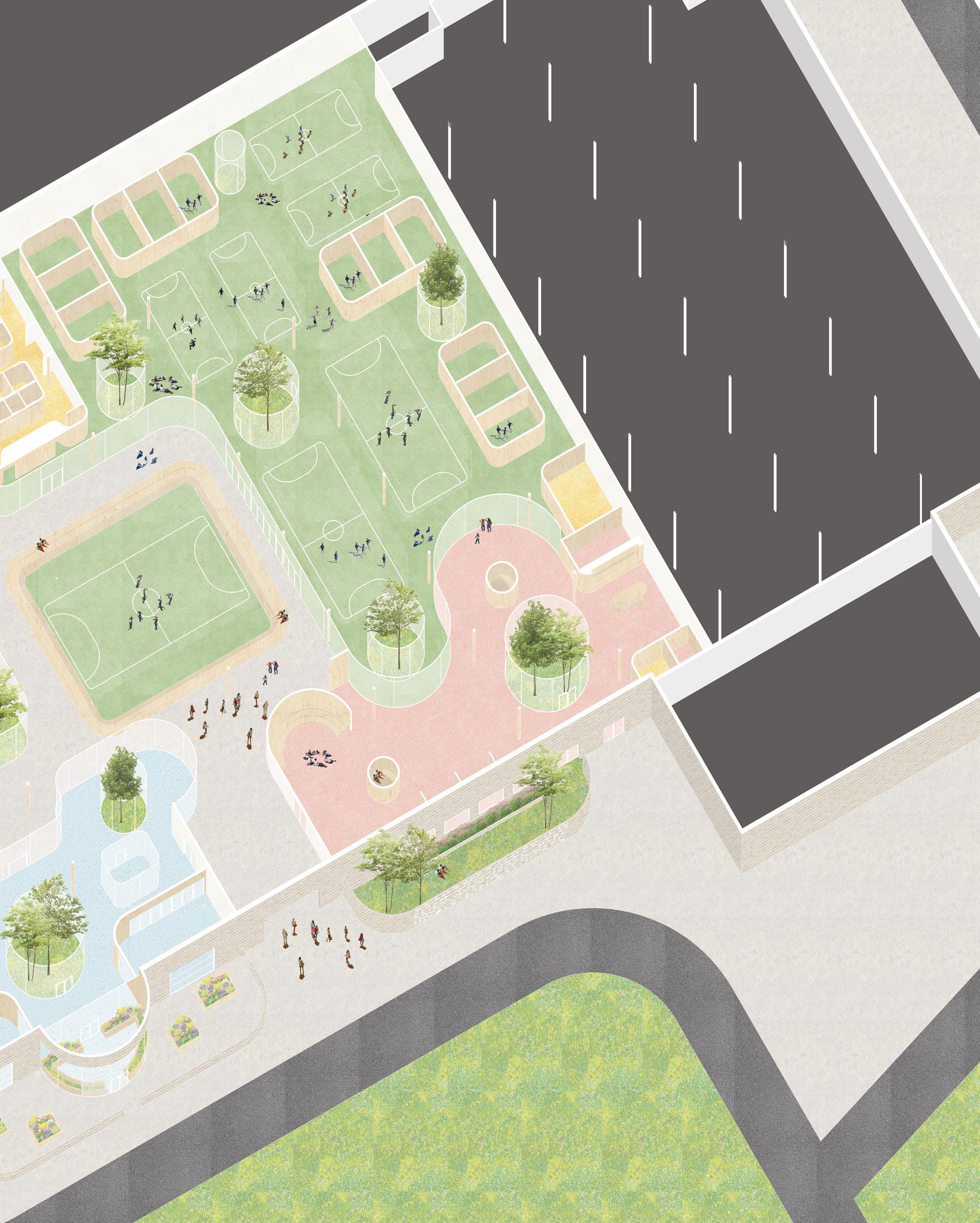
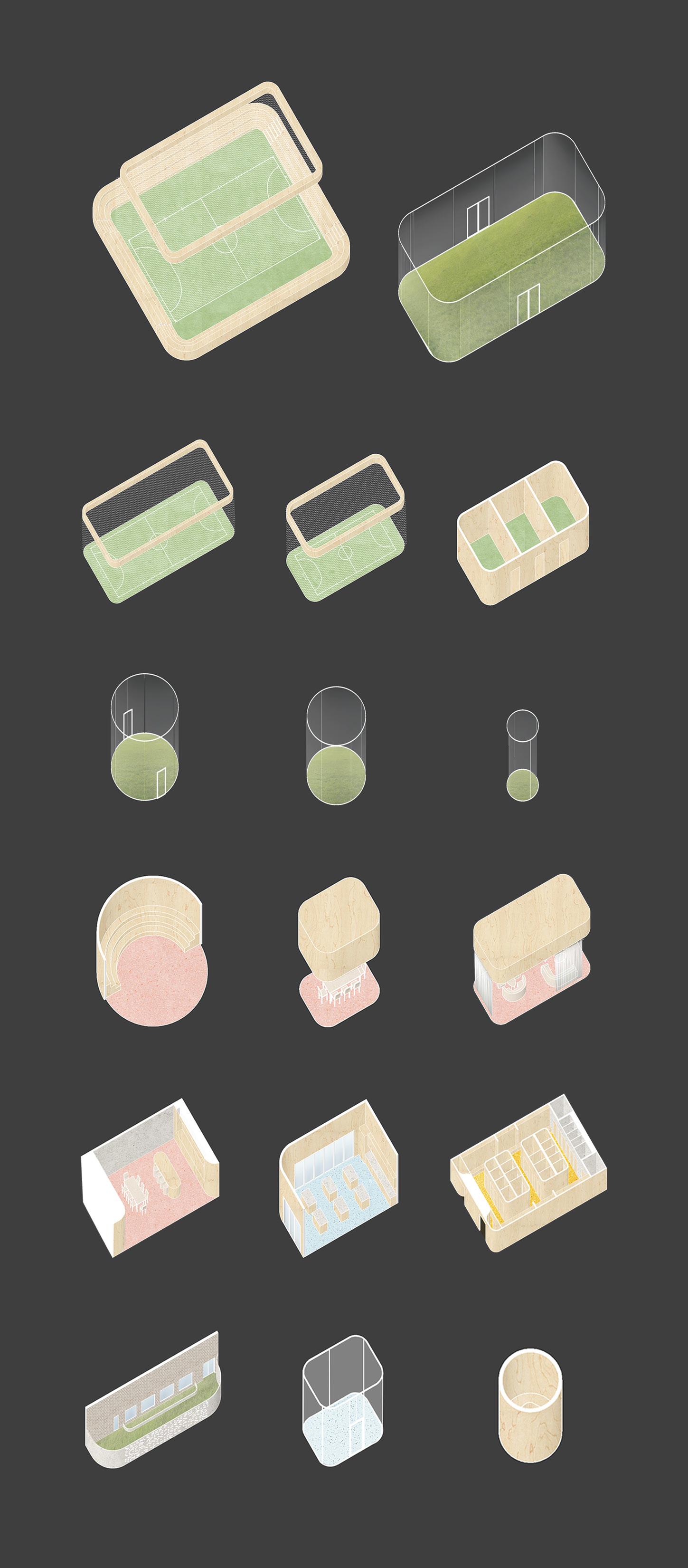
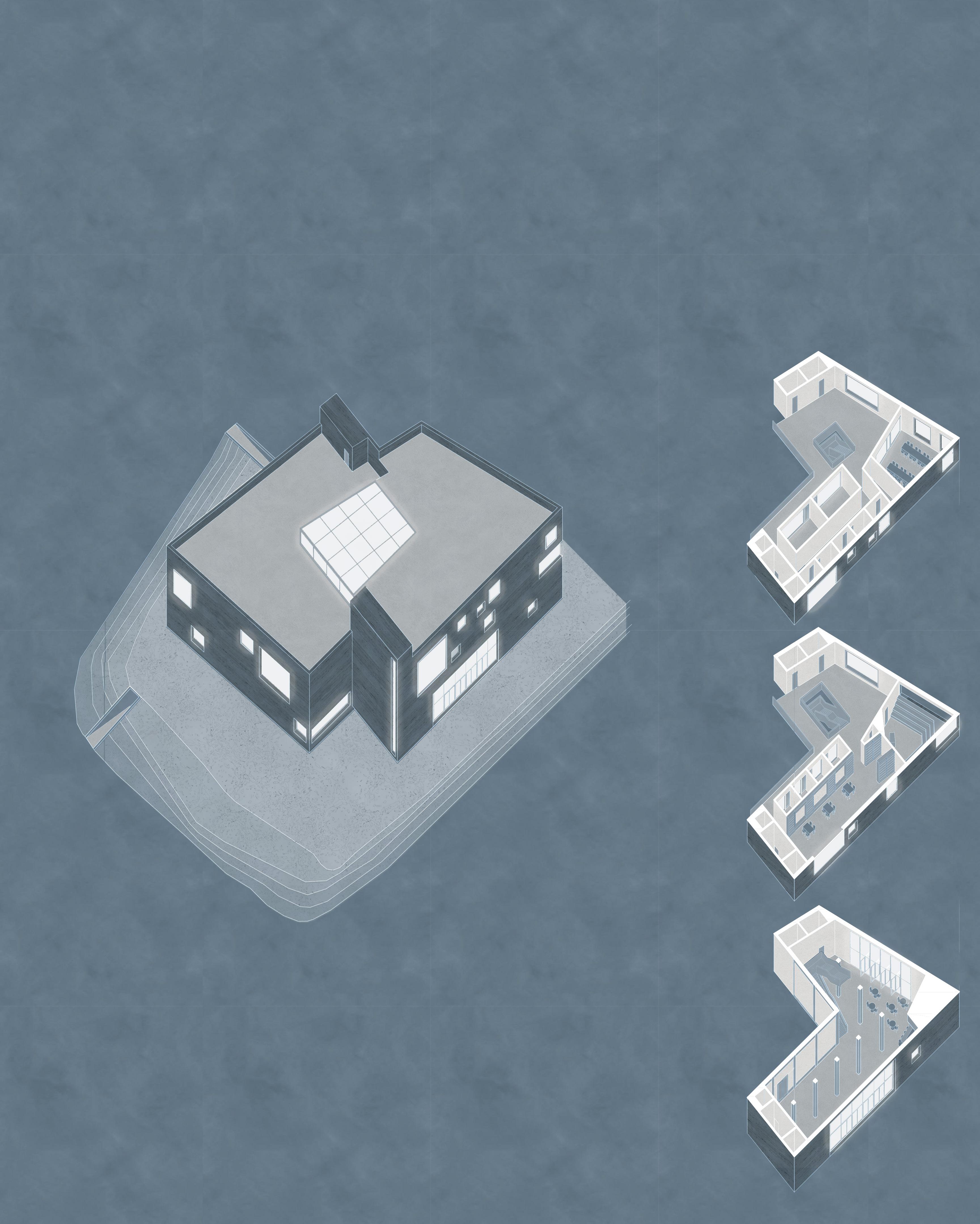
Located in Charlottesville’s Fashion Square Mall, this project transforms a vacant big box store into a recreational, educational, and mental wellness facility. Chosen for its global popularity, soccer serves as the primary program, promoting shared interests and social integration. This project reimagines soccer boxes, which are considered optimal for learning soccer indoors, through a retractable net system. This system promotes adaptability, permitting additional forms of play.
This programming is supplemented with two additional zones: mental health and educational resources. Each of these zones is tailored to meet users’ needs, utilizing psychology and architecture as tools to promote health and wellness.
Since big box stores contain very little natural light, this project integrates light wells to provide light and biophilic elements throughout the entire building. These light wells are strategically placed to ensure everyone in the building is guaranteed to be within fifty feet of a natural light source.
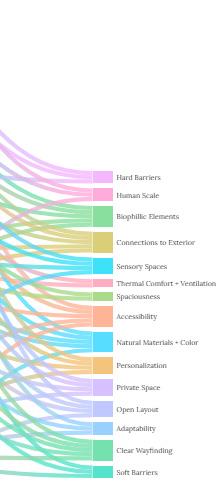
Focused on adaptability, soft barriers are utilized throughout the entire building, promoting personal autonomy by allowing users to define their own level of privacy. These adaptable elements accommodate differing needs without prescribing assumed architectural solutions.

“The environment cannot cause healing to occur but can facilitate engagement in behaviors and emotions that support healing; the environment can induce physical and emotional responses such as happiness, joy, and relaxation; and the built environment can enhance individual control and functionality—all of which are antecedents to healing.”
- Jennifer DuBose, director at Georgia Health Policy Center
How can psychological trauma in refugees be reduced through the creation of thoughtfully designed privacy, dignity, security, and social wellness?
This question guided the development of a set of spatial solutions that are associated with specific emotional light, color, and form. These affordances are placed strategically throughout the building to promote specific individuals in that space.

designed spaces, resulting in a sanctuary of
emotional outcomes through materiality, specific emotions according to the needs of
A performing arts theater that serves as a space for diverse communities to come together to appreciate one another through the form of dance, music, and theater.
Fall 24 Foundation Studio IV Professor Isaac Mangual Martinez Independent
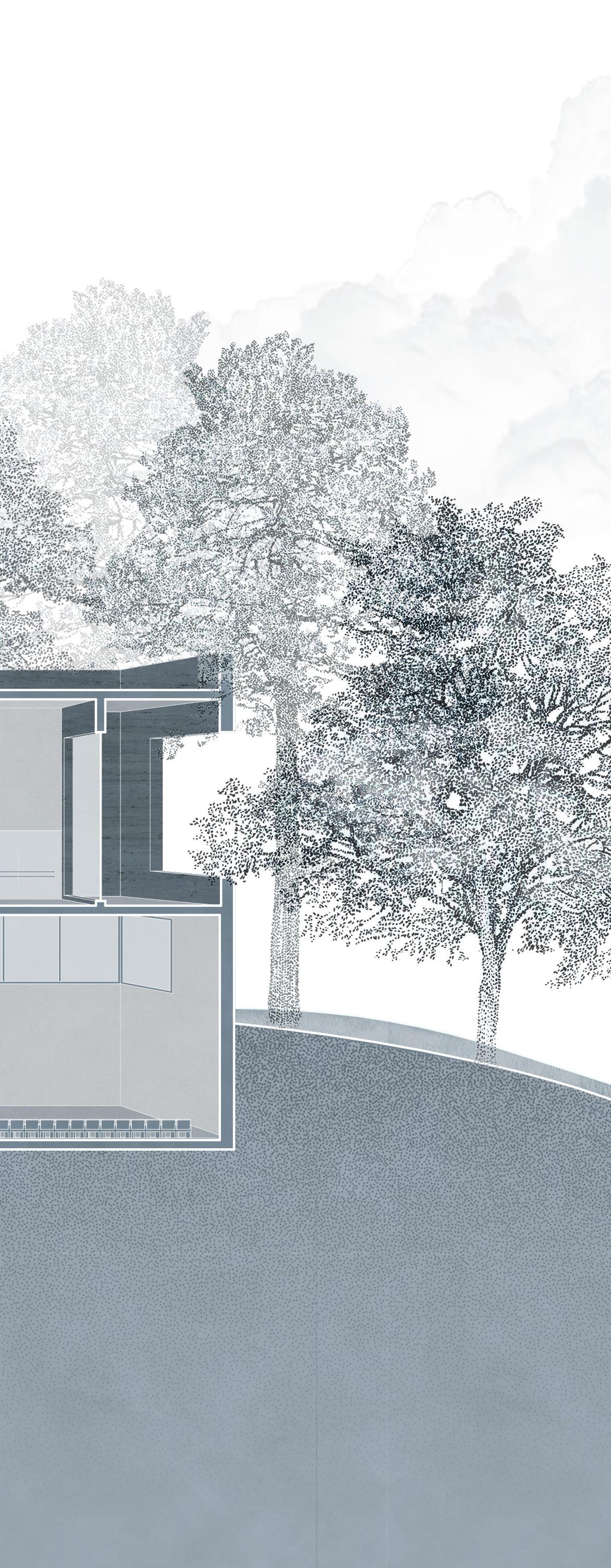
Meridian Hill Historic District is a neighborhood with a rich history and diverse culture, with the majority of activity revolving around Meridian Hill Park. Over time, the park has become a popular place not only for leisurely activities but also an important site for demonstrations, protests and cultural celebrations. This performing arts center serves the community’s desire to express their culture through dance, music and theater, becoming an extension of the activity in Meridian Hill Park. It also enables this activity to expand beyond the immediate community and take place on a larger scale.
The theater is conceived as two buildings connected by a central theater: one for performing arts and the other for civic functions. Although physically separate, these two buildings remain visually connected through the light-filled atrium above the theater. This atrium ensures that performances are visible from all floors on both sides of the building.
To further enhance the connections between the different buildings, the floor plates are intentionally misaligned to provide spectator platforms and create unique moments of engagement between the two.programs.
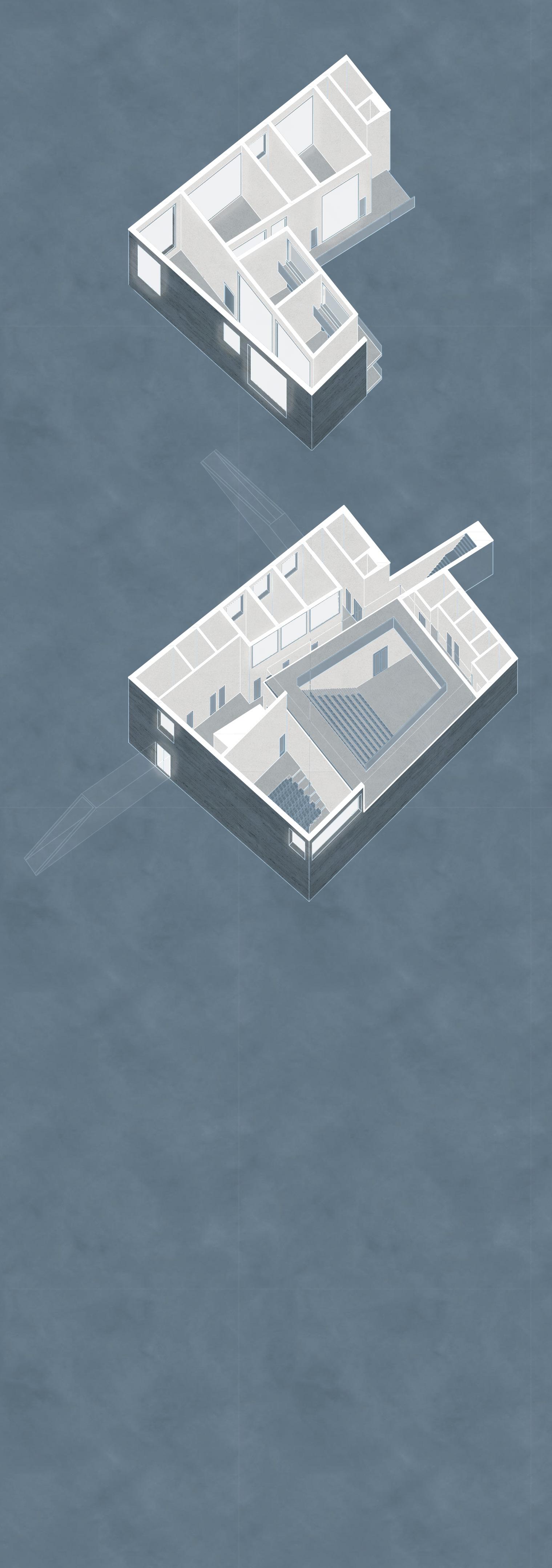

Shading indicates split-levels where floor plates are intentionally misaligned

Spring 25 Thesis Studio (In Progress)
Professor: Mona El Khafif
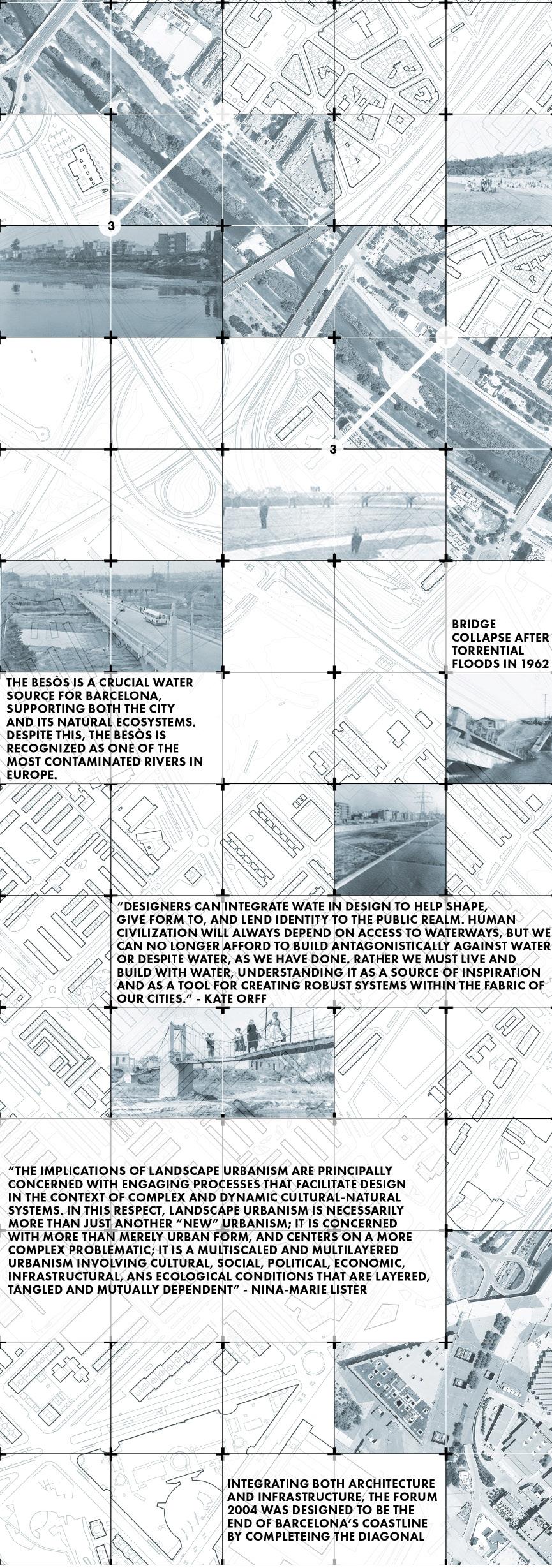
This thesis analyzes the historical development of cities and how their relationship with rivers has changed over time: from being critical to a city’s development to being neglected. Due to this neglect, rivers have become a source of disintegration and fragmentation to their surrounding communities. The challenge of this thesis is to design a project that doesn’t only establish a dialogue with the surrounding context, but also the environmental systems that exist there. Therefore, it extends the typical urban scale to include the innate ecological systems that exist on the site. To address the issues facing the communities along the Besòs River Corridor, this thesis proposes an ecological museum that redefines the city’s relationship to the river to improve the social and ecological health of the region and strengthen the connection between the river, people, and the city. Emphasizing urban regeneration, this project won’t just restore the contaminated postindustrial landscape, but will also foster a new sense of direction for the city by addressing economic, environmental, cultural, and social components.

University