Part 1: About Us
Our Services
Over the past year 2025/26, we have continued to support NHS South West London and NHS Surrey and Sussex Integrated Care Boards’ (ICBs) commissioning priorities by providing a range of specialist services:
In-Patient care
Our multi-disciplinary team on the In-Patient Unit provides expert palliative care for people at the end of their life or with complex symptoms. Last year, we cared for 300 patients and supported their families and those close to them. We offer short-term specialist palliative care with an average length of stay of just under two weeks.
Hospice at Home
Our Hospice at Home team provides advice and support to people in their homes, care homes, and clinics through face-to-face visits and video / telephone consultations. We deliver our services across Surrey Downs, North West Surrey, Kingston and Richmond. Our team is made up of clinical nurse specialists (CNSs), doctors, allied health professionals, social workers and healthcare assistants. We have a rapid response team and a night response service in parts of our care area to support patients when urgent care is needed. Our Hospice at Home team completed over 13,000 patient contacts last year for 2,267 patients.
Wellbeing Services
Through our Wellbeing Centre and virtual Wellbeing service, we help patients and carers live as well and independently as possible. Last year, we welcomed over 5,000 attendances from 466 people to our discussion and support groups, covering topics such as managing breathlessness, fatigue and anxiety.
Community Engagement Services
Bereavement and Spiritual Care services
We support families and carers through grief with a range of group sessions and individual support. Groups, including cafés and walk and talk sessions, run at the Hospice and across our care area.
Compassionate Neighbours
Compassionate Neighbours
This social movement fosters compassion and helps tackle loneliness in our local community by connecting trained volunteers with people approaching the last phase of life or those who have been bereaved and are lonely or socially isolated. We are proud to be one of twelve hospices running this programme. We now support 174 people as community members, with a year-on-year increase in the number of Compassionate Neighbours being trained – 509 so far.
This social movement fosters compassion and helps tackle loneliness in our local community by connecting trained volunteers with people approaching the last phase of life or those who have been bereaved and are lonely or socially isolated. We are proud to be one of twelve hospices running this programme. We now support 174 people as community members, with a year-on-year increase in the number of Compassionate Neighbours being trained – 509 so far.
Alongside this, our Compassionate Cafés, run by Compassionate Neighbour trained volunteers, continue to provide welcoming, community-based spaces for connection and conversation. They include the Esher Café, partner-led cafés in Cobham and Stoke d’Abernon and the Hampton Hill Café (previously a bereavement café). We also launched a new café in New Malden in June 2026 in partnership with Places Leisure.
Education and Research
Alongside this, our Compassionate Cafés, run by Compassionate Neighbour trained volunteers, continue to provide welcoming, community-based spaces for connection and conversation. They include the Esher Café, partner-led cafés in Cobham and Stoke d’Abernon and the Hampton Hill Café (previously a bereavement café). We also launched a new café in New Malden in June 2026 in partnership with Places Leisure.
Education and Research
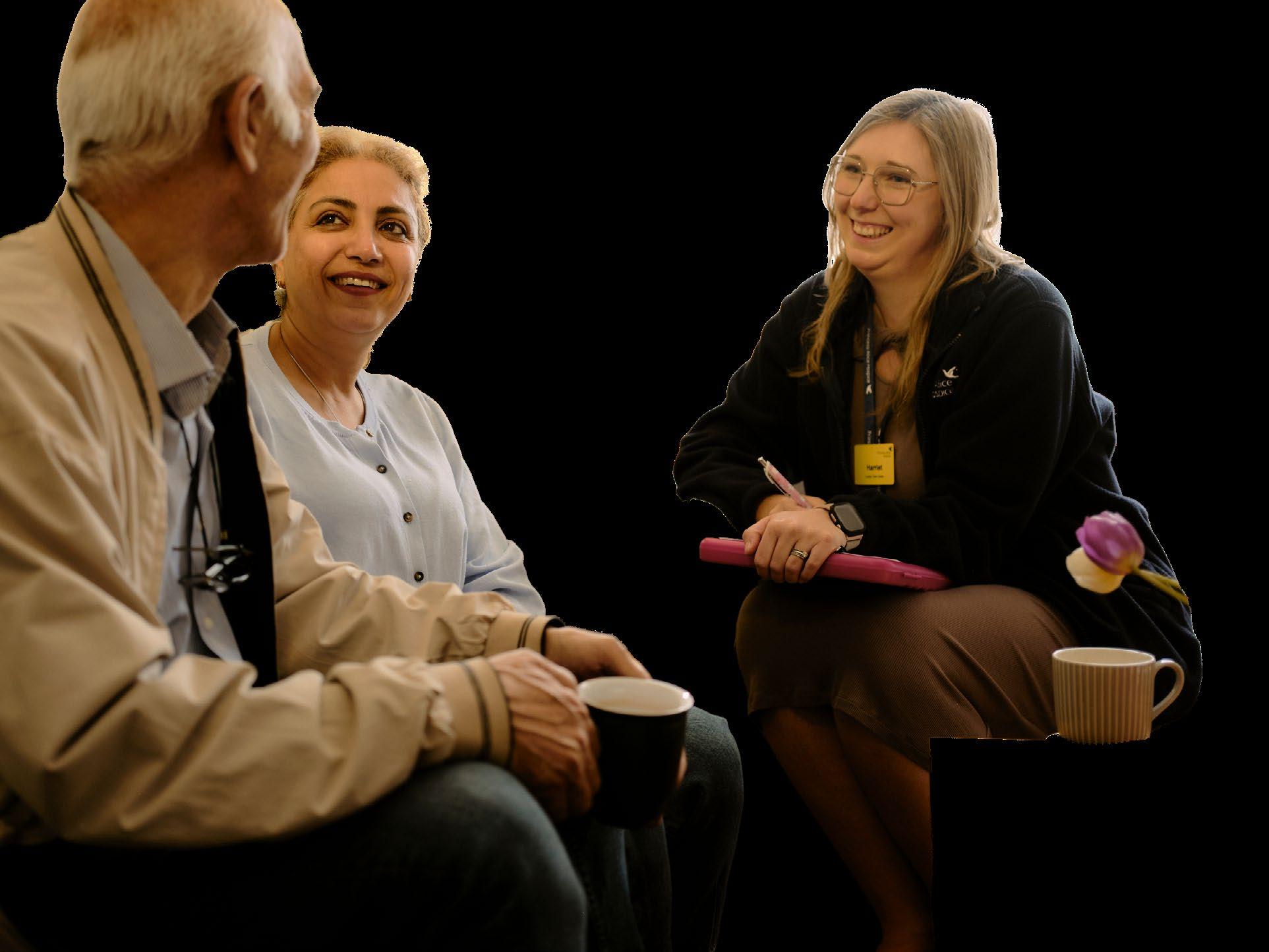
Last year, our multi-professional education team delivered sessions to a variety of care settings, such as GP surgeries, home care providers, care homes and learning disability services. We tailor our sessions to the audience to ensure appropriate accessibility. Our largest course is the European Certificate in Essential Palliative Care (ECEPC), which continues to support learners both nationally, and internationally, and continues to be provided with 12 partner hospice organisations.
Last year, our multi-professional education team delivered sessions to a variety of care settings, such as GP surgeries, home care providers, care homes and learning disability services. We tailor our sessions to the audience to ensure appropriate accessibility. Our largest course is the European Certificate in Essential Palliative Care (ECEPC), which continues to support learners both nationally, and internationally, and continues to be provided with 12 partner hospice organisations.

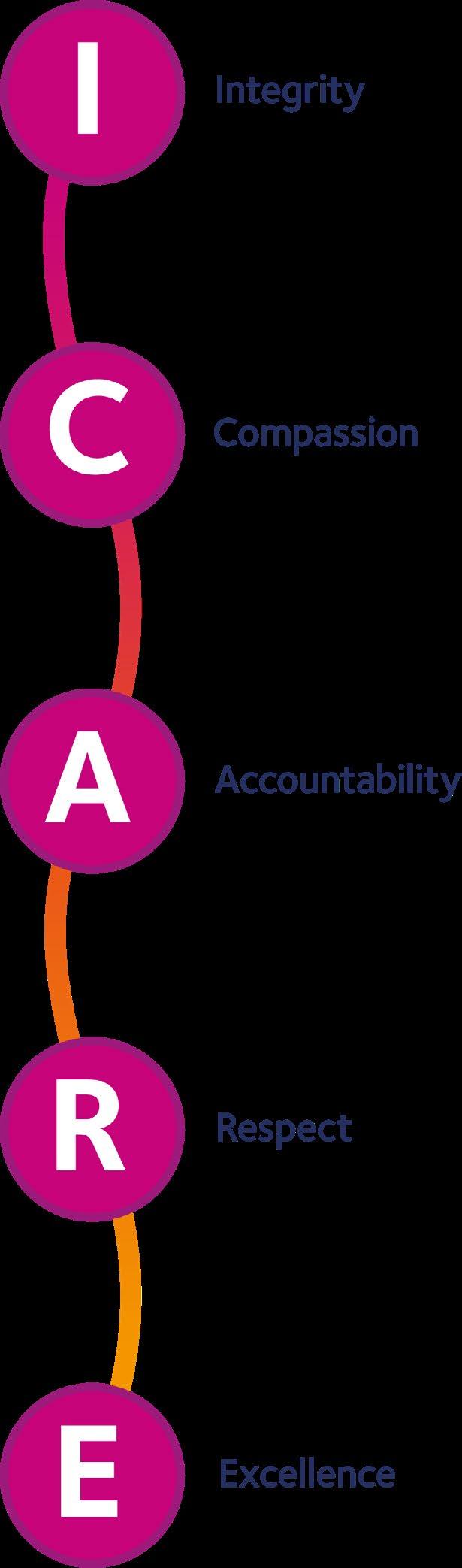
Our I-CARE Values
Our core values guide everything we do, both as an organisation and as individuals. Our staff and volunteers demonstrate these values every day:
• We are honest and open
• We are trustworthy and authentic in our dealings with others
• We always try to do the right thing
• We are kind, supportive and caring
• We have empathy and listen to those around us
• We are warm and positive in our interactions
• We work together to make the Hospice’s vision a reality
•
• We take responsibility for our work, performance and behaviour
• We acknowledge and learn from our mistakes
• We are inclusive, we value difference and work together effectively
• We are sensitive to the thoughts, feelings and opinions of others
•
• We treat everybody with dignity
• We aim to be our best
• We are forward-thinking and open to change
• We share our skills, expertise and learning, striving for excellence together
Our Strategy
Princess Alice Hospice’s current strategic period began on 1 April 2025. The plan is called Care that connects us all and is our commitment to reach people earlier, to work more closely with others, and to make sure fewer people miss out.
Our vision is that everyone in our communities should have the best possible care and support, before, during and after death. With care and support that’s right for them, more people can live well, die well and grieve well.
We are focusing on a community-first model, with most of our care delivered at home and in neighbourhood settings, supported by specialist in-patient care for those with the most complex needs. We aim to support people earlier, reduce gaps in access, and work in partnership with NHS colleagues, neighbourhood teams, local authorities and the voluntary sector to deliver safe, effective and coordinated care. By strengthening these connections, our strategy seeks to improve quality of life, ensure care is equitable and person centred, and reduce the risk of crisis for patients, families and carers throughout the end-of-life journey.
reduces the risk of crisis for patients, families and
Throughout the following sections, each project is linked to one or more of our three strategic goals:
EXTEND our reach
We will reduce gaps in care so fewer people miss out on the help they need. By reaching people earlier and delivering more care, day or night, with more specialist care in homes and communities and on our In-Patient Unit, we can support more people before, during and after death. This means care that’s easier to find, easier to access, and better coordinated - not dependent on chance, awareness or crisis.
EVOLVE our role
We will become a key partner in the wider health and care system. By sharing our expertise and working more closely with GPs, hospitals, social care and voluntary organisations, we will help care become more joined up, consistent and effective.
ENGAGE our communities
We will make sure our care is inclusive and shaped by the people we serve. By working with local communities and supporting the people who care for one another every day, we can ensure our services reflect real lives, cultures and experiences. This helps care feel relevant, trusted and inclusive, wherever it’s needed, and at the time that it’s needed.
Part 2: CEO Statement
On behalf of the Board of Trustees and Senior Leadership Team, I am pleased to present the Quality Account for Princess Alice Hospice. This report reflects on the progress we have made between April 2025 and March 2026, and sets out our priorities for the year ahead, April 2026 to March 2027.
just one in three people who could benefit from our care. Our
This year has brought moments of immense pride as we marked 40 years of providing outstanding, free palliative and end of life care to thousands of people in our community. It has been especially meaningful to reflect on the vision and determination of our founding trustees, who began fundraising over four decades ago in response to an urgent local need. Today, that need is greater than ever. We are currently able to support only one in three people who could benefit from our care. Our commitment to reaching more people, particularly those in underserved communities, continues to shape our work and guide our priorities for the future.

Our vision is that everyone in our communities has access to the best possible care and support before, during and after death. With care that is right for them, more people can live well, die well and grieve well.
This is the first year of our new strategic period and we are calling our plan Care that connects us all. It reflects our shared commitment to reaching people earlier, working more closely with partners, and ensuring that fewer people miss out on the support they need. By working alongside healthcare colleagues and community organisations, we can go further together - connecting people, services and communities so that care reaches everyone who needs it.
In line with the NHS Neighbourhood Health Framework, we will continue to evolve our role as a key partner within the wider health and care system. This is already evident in our work with partners on key initiatives, including Integrated Neighbourhood Teams and frailty ambitions. These partnerships establish Princess Alice Hospice as a trusted partner in integrated care, creating opportunities to extend our reach, transform how services are delivered, and innovate alongside NHS and community partners. We will continue to expand our reach, reducing gaps in care so that fewer people miss out on the support they need. We are also committed to deepening our engagement with local communities, ensuring our services are inclusive and shaped by the people we serve.
These commitments are reflected in three key priorities for 2026/27:
Patient safety: we will strengthen the support and development of new colleagues through the introduction of a capabilities framework across all services, the development of clear career pathways, and progress towards a sustainable workforce plan. We will ensure safe staffing levels within our InPatient Unit, in line with Hospice UK recommendations, and aim to expand our Night Response nursing services.
Positive experience: we will improve the accessibility of our information by developing Easy Read resources across our clinical and community services, and we will pilot a GP advice line with a local Primary Care Network to enhance support for patients and professionals.
Effectiveness of care: we will improve access to wellbeing services so that more people can benefit from this support, and we will establish a Homelessness Community of Practice to reach and meet the needs of some of the most vulnerable people in our community.
Over the past year, global social and economic pressures have continued to affect our work. Demand for our services is increasing, as is the complexity of needs people are living with, while costs continue to rise. Each year it costs over £12million to provide our free clinical care services to local people. Just 20% of that is provided by statutory NHS grant funding. For the remaining 80%, we rely on the generosity of our supporters, who fundraise for us in a variety of ways, including gifts in Wills, regular giving donations, buying in our shops, corporate partnerships, philanthropic gifts, playing our lottery, taking on fundraising challenges and running ‘in aid of’ events. In the last year, ongoing cost of living pressures on households meant we continued to fundraise in a challenging external environment. We stand with all UK hospices in calling for fair, sustainable funding from government, to allow us to plan ahead effectively, reduce the burden on the NHS and meet the increasing need for our services.
This means we must ask more of our community at a time when many households are facing financial challenges. We remain deeply grateful to our supporters, whose generosity enables us to raise an average of £26,000 every day, and we will continue to advocate for a fairer funding model for hospices across the UK.
Our organisational values of Integrity, Compassion, Accountability, Respect and Excellence guide our behaviours and are reflected in our work every day. I am proud of all that we have achieved over the past year. It remains a privilege to work alongside colleagues whose dedication and compassion will continue to make the difference to people at the most difficult times in their lives.
To the best of my knowledge, the information presented in this Quality Account is accurate and provides a fair representation of the quality of healthcare services delivered by Princess Alice Hospice.
Nigel Seymour Chief Executive
May 2026


Part 3: Review of last year’s priorities
Part 3: Review of last year’s priorities
In this section, we reflect on the progress made on last year’s projects and highlight any ongoing work.
In this section, we reflect on the progress made on last year’s projects and highlight any ongoing work.
Patient Safety
Patient Safety
1a. Care and support for people with learning disabilities and autistic people
1a. Care and support for people with learning disabilities and autistic people
ENGAGE our communities EXTEND our reach
ENGAGE our communities EXTEND our reach
We created an ambitious action plan to improve the care we provide to people with learning disabilities and autistic people. This work included developing a new charter and detailed guidelines to help staff deliver inclusive, respectful and accessible care.
We created an ambitious action plan to improve the care we provide to people with learning disabilities and autistic people. This work included developing a new charter and detailed guidelines to help staff deliver inclusive, respectful and accessible care.
On our IPU, we have launched a buddy system, to offer people with a learning disability or an autistic person social, emotional and psychological support. We have trained buddies from our existing volunteers and want to provide additional support alongside the support they recieve from a healthcare professional. This buddy system will also be included in our new clinical guidelines. Over the past year, we have built strong links with local learning disability and autism services. Our connections include day centres, support providers, safeguarding teams, and NHS and social care teams. We are now part of the Learning Disability Partnership Board and attend LeDeR (Learning from Lives and Deaths – People with a Learning Disability and Autistic People) reviews to learn and improve our care. We have also developed valuable relationships with learning disability nurses, professionals and frontline workers who support people of all ages, using those insights to strengthen our care. We now hold review meetings on our IPU when a person with a learning disability has a longer stay. This holistic approach allows us to consider their medical, emotional, and social needs together. Our use of hospital passports and ‘About Me’ documents continue as standard practice, and this will be strengthened through our new clinical guideline, which will set clear expectations for how we support a person with a learning disability or an autistic person. We have also invested in online resources to help us create personalised Easy Read information, supporting people to live, die and grieve well.
continues as standard practice, and this will be
Our learning disability programme of work has been presented to the statutory and voluntary organisations and as part of our Learning Disability Study Day here at the Hospice. This has opened new doors and created connections to support us in working with professionals and people with lived experience. Feedback from participants included:
On our IPU, we have launched a buddy system, to offer people with a learning disability or an autistic person social, emotional and psychological support. We have trained buddies from our existing volunteers and want to provide additional support alongside the support they recieve from a healthcare professional. This buddy system will also be included in our new clinical guidelines. Over the past year, we have built strong links with local learning disability and autism services. Our connections include day centres, support providers, safeguarding teams, and NHS and social care teams. We are now part of the Learning Disability Partnership Board and attend LeDeR (Learning from Lives and Deaths – People with a Learning Disability and Autistic People) reviews to learn and improve our care. We have also developed valuable relationships with learning disability nurses, professionals and frontline workers who support people of all ages, using those insights to strengthen our care. We now hold review meetings on our IPU when a person with a learning disability has a longer stay. This holistic approach allows us to consider their medical, emotional, and social needs together. Our use of hospital passports and ‘About Me’ documents continue as standard practice, and this will be strengthened through our new clinical guideline, which will set clear expectations for how we support a person with a learning disability or an autistic person. We have also invested in online resources to help us create personalised Easy Read information, supporting people to live, die and grieve well. Our learning disability programme of work has been presented to the statutory and voluntary organisations and as part of our Learning Disability Study Day here at the Hospice. This has opened new doors and created connections to support us in working with professionals and people with lived experience. Feedback from participants included:
receive has included:
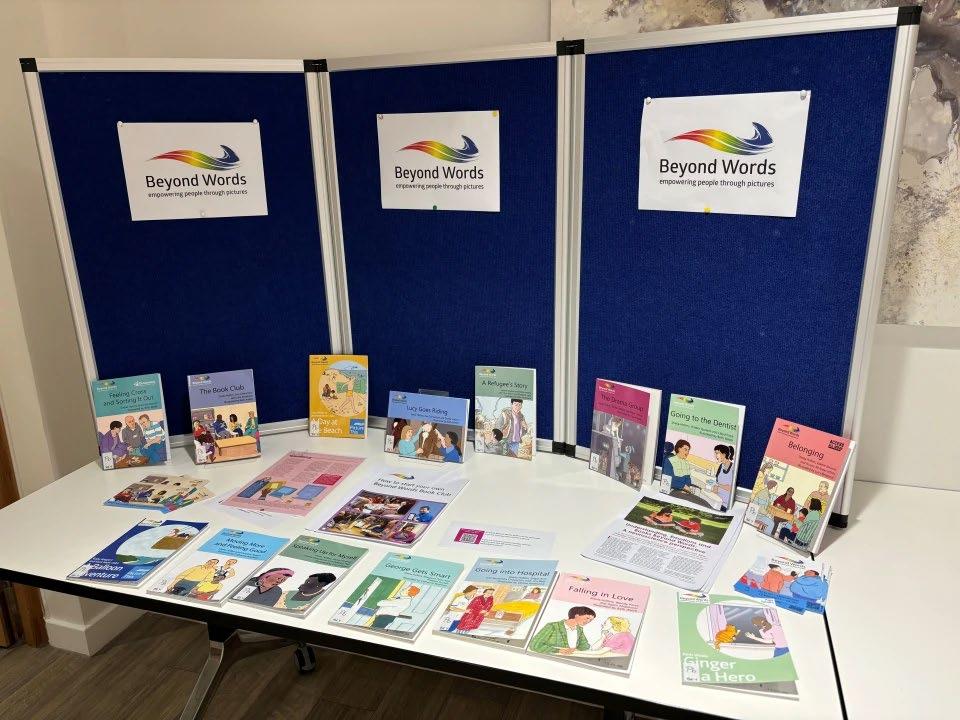
Thank you. I really loved today and found it really interesting. I particularly loved the Baked Bean choir as well as the “Books Beyond Words” book club as I found it amazing how much could come out of one picture.
Thank you. I really loved today and found it really interesting. I particularly loved the Baked Bean choir as well as the “Books Beyond Words” book club as I found it amazing how much could come out of one picture.
I hope to carry on working with Princess Alice Hospice.
I hope to carry on working with Princess Alice Hospice.
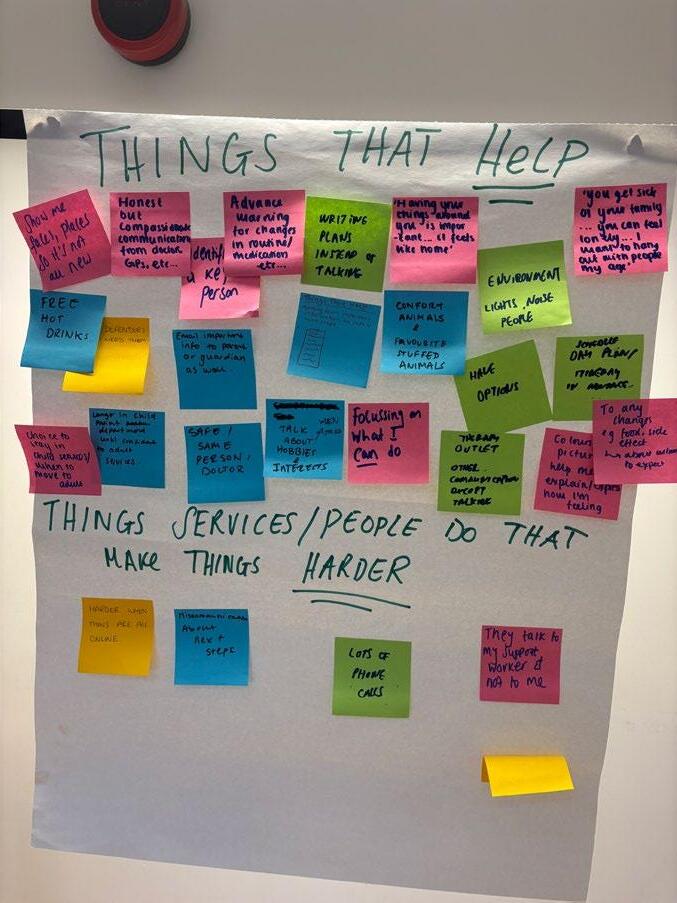
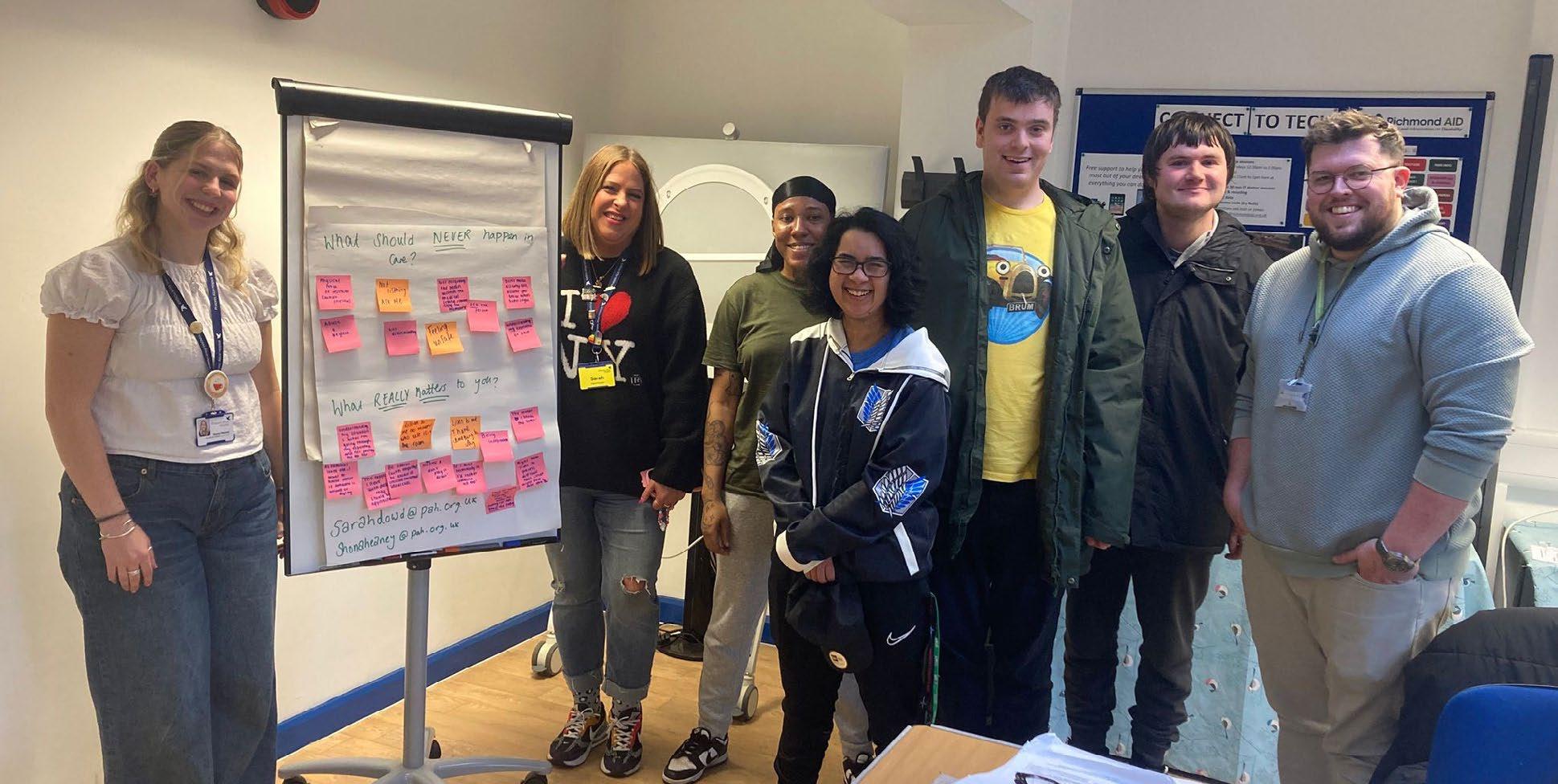
We have also begun work to hear the views and experiences of people with a learning disability or who are autistic. This involves group work using multiple accessible methods with people across ages to inform this programme of work and shape meaningful guidance for our clinical teams. We want to work in collaboration to amplify their voices.
Ongoing Work
• We will continue to work alongside the LeDeR programme.
• We are exploring accessible communication tools to support us in this work. We plan to provide personalised and meaningful, Easy Read documentation to facilitate conversations. You can read more about this work in Part 4, Priority 2a.
• We are continuing our work on our charter to support people with a learning disability and who are autistic. This charter will be realised through the creation of our clinical guidelines to support our teams.
Positive Experience
Exploring expansion of response services (rapid response and night response)
2a. Exploring expansion of response services (rapid response and night response)
EXTEND our reach
EVOLVE our role
Aim
Aim
Our aim was to provide equitable access to Hospice response services across our care area. Our plan to achieve this included collaborating with other providers to improve access and ensure we were represented in the development of Integrated Neighbourhood Teams. We also explored new advice and support offers and considered new clinical roles to meet the evolving needs of patients and families.
Progress
Progress
Whilst some progress was made this year, and additional funding was secured for a specific geographical area from the NHS, it wasn’t possible to achieve what we aspired to do. This was largely due to increased demand for our community services with limited capacity, meaning that there needed to be a focus on maintaining the current service provision.
Despite this, some progress was made with developing our rapid response service, embedding specific rapid response clinical nurse specialists within each of our locality teams. We continued to engage with key stakeholders to support patients and their families in accessing urgent support when needed.
Ongoing work
Ongoing Work
Expanding our response services remains a priority for us in the coming year. We will be looking at how we can support responsiveness within our local health landscape by better supporting GPs (see section 4 of this Quality Account to see our plans for a pilot GP advice line).
At present, the Hospice is only commissioned to provide our night response service to some parts of the communities we serve. There is inconsistency in how some people needing specialist palliative care support access this out of hours. In line with our strategy to extend our reach and engage communities, there is a need to ensure an equitable service is provided in our care area. It is therefore our aspiration to improve equity to night response nursing and support across our whole care area.
2b. Compassionate Neighbours Pathways Project
2b. Strengthening our Bereavement and Spiritual Care offering
EXTEND our reach
Aim
Aim
We explored how to extend bereavement support to the whole community and reimagined our approach to spiritual care.
Our aim was to explore how to extend bereavement support to the whole community and reimagine our approach to spiritual care.
Progress
Progress
Bereavement Care for All
We are mid-way through a strategic review of our bereavement offer, reviewing our capacity and accessibility. This work will inform the long-term strategic direction for our bereavement support. We are at the scoping stage of this work and we will be exploring how the Hospice could extend one-toone bereavement support to more people in the community, regardless of whether their loved one was supported by us.
Reimagine Spiritual Care
We have developed, advertised and recruited to a re-shaped role to support our spiritual care offer. In June 2025, our Psycho Spiritual Care Counsellor joined the team. We have also launched e-learning resources for all staff to deepen understanding of spiritual care and facilitated a multi-disciplinary workshop to ensure we are optimising our collective skills in emotional support across the IPU and community.
Digital Bereavement Journey
In January 2026, we launched our updated Bereavement Journey, including reference to a new online Book of Remembrance. We will soon be able to both post and email our bereavement information. We have reviewed and updated our leaflets that form the Bereavement Journey to ensure that they use Plain English and are more accessible.
We have also installed an iPad in our Sanctuary to increase digital accessibility, enabling on-site access so visitors can view and add dedications.
Student Counsellor Placements
Our first student Counsellor started her 9-month placement in November 2025 and is now supporting three clients per week, both face-to-face and online. Feedback from a client includes:
I really appreciated someone who clearly had expertise and extensive knowledge in this field.
‘Hear4You’
Listening Service for carers & families
Launched in June 2025, our Hear4You service offers one-to-one pre-bereavement support to carers and family members. The pathway and processes for the service are now established, and we have a team of eight trained Bereavement and Spiritual Care Volunteers. Referrals are made via our Carers Lead, which has strengthened the relationship between the teams involved and augments the current carers service, as well as the Social Work and Clinical teams.
Ongoing work
Ongoing Work
Ongoing work
Ongoing Work
Bereavement Care for All
Bereavement Care for All
We will assess the need for universal bereavement support in the community, focusing initially on the London Boroughs of Kingston and Richmond. We will consider how this could be rolled out to the entire care area we work in to ensure we offer an equitable service. We will also explore delivery models, including:
• Direct delivery by Hospice staff or volunteers
We will assess the need for universal bereavement support in the community, focusing initially on the London Boroughs of Kingston and Richmond. We will consider how this could be rolled out to the entire care area we work in to ensure we offer an equitable service. We will also explore delivery models, including:
• Commissioning or partnering with external organisations
• Direct delivery by Hospice staff or volunteers
• Any other delivery models identified in the options development
• Commissioning or partnering with external organisations
• Any other delivery models identified in the options development
• Evaluate each option and pilot recommendations in the London Boroughs of Kingston and Richmond.
• Evaluate each option and pilot recommendations in the London Boroughs of Kingston and Richmond.
Reimagining Spiritual Care
Reimagining Spiritual Care
We will continue to embed the new approach to Psycho-Spiritual Care in the IPU and Community, ensuring patients and families in spiritual distress are well supported. This includes direct patient facing work, as well as expert support to the multi-disciplinary team (MDT).
We will continue to embed the new approach to Psycho-Spiritual Care in the IPU and Community, ensuring patients and families in spiritual distress are well supported. This includes direct patient facing work, as well as expert support to the multi-disciplinary team (MDT).
community, providing expert support to the multi-disciplinary team (MDT).
Digital Bereavement Journey
Digital Bereavement Journey
We are introducing ‘Grief Chat’ - an ‘instant access’ chat service that enables users to have direct contact with a Bereavement Counsellor via a chat box on the Hospice website. The service offers ‘light touch’, immediate support and will be available for extended hours (9am – 9pm). This service will increase accessibility and is in line with our Bereavement Care for All objectives.
We are introducing ‘Grief Chat’ - an ‘instant access’ chat service that enables users to have direct contact with a Bereavement Counsellor via a chat box on the Hospice website. The service offers ‘light touch’, immediate support and will be available for extended hours (9am – 9pm). This service will increase accessibility and is in line with our Bereavement Care for All objectives.
Student Counsellor placements
Student Counsellor placements
Following the success of the first placement, we have identified additional student counsellor training opportunities. This would increase our capacity to deliver one-to-one support while making efficient use of our resources.
Following the success of the first placement, we have identified additional student counsellor training opportunities. This would increase our capacity to deliver one-to-one support while making efficient use of our resources.
Hear4You Service
Hear4You Service
We are reviewing and refining Hear4You processes to ensure they operate efficiently with clear pathways into and out of the service. An evaluation form will also be introduced to gather user feedback.
We are reviewing and refining Hear4You processes to ensure they operate efficiently with clear pathways into and out of the service. An evaluation form will also be introduced to gather user feedback.
Increase reach and accessibility of bereavement support
Increase reach and accessibility of bereavement support
Working with our Data team, we are improving the quality of data captured for individuals accessing bereavement services, including analysing historical place-based information. From April 2026, enhanced reporting will provide clearer insight into our service reach and highlight gaps or areas for targeted support. The team is also proactively updating missing information, such as postcodes, within EMIS, our client records database.
Working with our Data team, we are improving the quality of data captured for individuals accessing bereavement services, including analysing historical place-based information. From April 2026, enhanced reporting will provide clearer insight into our service reach and highlight gaps or areas for targeted support. The team is also proactively updating missing information, such as postcodes, within EMIS, our client records database.
2c. Talk Listen Connect (TLC) programme pilot
ENGAGE our communities
Aim
Talk, Listen, Connect is an initiative we developed in conjunction with Compassionate Communities UK. The aim of TLC is to upskill people to have compassionate conversations to tackle loneliness and grief in the communities we serve. We began building relationships with local employers, sports clubs, pubs, schools, colleges, faith groups and other community settings to understand how death, dying or loss is affecting their people. We initially aimed to enroll 100 community members in TLC and gather early insights to demonstrate the programme’s impact. Our longer-term goal is to expand TLC and reach 10,000 people over five years. You can read more on our website: https://www.pah.org.uk/about/ourimpact/belonging-and-inclusion/tlc-talk-listen-connect-get-involved/
Progress
Over the last year we have made significant progress in embedding the TLC programme across Princess Alice Hospice and within the wider communities we serve.
We now have six trainers and, as of January 2026, 221 TLC Connectors who are part of our TLC Network. TLC Connector training sessions have been delivered at a range of community-based locations including a leisure centre, a church, a local hostel, care settings and an inclusive community hub/ cafe.
café. 10,000 people over five years. You can read more on our website: https://www.pah.org.uk/about/ourimpact/belonging-and-inclusion/tlc-talk-listen-connect-get-involved/
Almost half of our TLC Connectors are current or former Hospice volunteers or employees. A smaller proportion - just under 10% - had no previous connection with the Hospice. Initial feedback from those trained as connectors has suggested that training has helped them feel more confident connecting with people in their community following the session.
Participant reflections included:
I listened to people’s stories — stories of connection, kindness, and the simple yet powerful ways we can touch each other’s lives. The most interesting and impactful part was realising how even the smallest gestures — a kind word, a listening ear, a moment of understanding — can make someone feel seen, valued, and less alone. It moved me deeply to see just how many people out there truly want to make a positive difference in someone else’s life. There’s something incredibly beautiful about that.
It also made us think that by practising TLC we not only benefit other people, but it also makes us feel better. So we can be both givers and receivers.
Ongoing work
Ongoing Work
The TLC programme will continue as a core community offer throughout 2026/27, with the aim of sharing its message and creating more opportunities for people to build confidence and connections in their daily lives.
Over the next year, we plan to train our Community Outreach Coordinators to deliver TLC sessions, using their established relationships within local neighbourhoods. This will help to extend the programme further and engage people who may not otherwise encounter our Hospice. We will offer sessions in partnership with local libraries, community organisations, charities and their beneficiaries, as well as any groups or individuals who express an interest. By expanding our network of TLC Connectors, we hope to support more people to feel confident alongside others when times are difficult.
charities and their beneficiaries, as


Effectiveness of Care
3a Digitising nursing documentation
EXTEND our reach
Aim
This initiative focused on digitising nursing documentation on our IPU. The aim was to ensure documentation is safe, effective and proportionate to the needs of patients and families, while reducing duplication so staff can spend more time delivering care. Building on the progress made through the introduction of electronic prescribing, we continued to bring documentation closer to the bedside.
Progress
Progress
We have made good progress in rolling out several digital care plans, replacing previous paper-heavy systems. We provided structured training sessions to support staff in using digital care plans, while still promoting accurate and comprehensive documentation.
The nursing team played a significant part in the development of digital care plans, shaping and refining them to meet the needs of the Hospice In-Patient setting. Since rolling out, staff confidence and efficiency in completing digital care plans has grown. We also worked closely with our IT Department to develop contingency plans for any periods of IT system outage.
Ongoing work
Ongoing Work
the roll out, staff confidence and department to
We continue to streamline and evaluate the effectiveness of our documentation practices, adapting our approach as technology evolves.
Emerging Projects
Last year, we outlined three projects that were in the early development stages. Below is the progress made across 2025/26:
• Carers’ outcomes
needs’
We reviewed 15 different carer needs assessment and outcome tools, comparing them against their evidence base, psychometric properties, number of items, and intended purpose. We also spoke to neighbouring hospices about their use of carer assessment and outcome tools. Each tool was considered in terms of the potential benefits and limitations of use. Unfortunately, none of these tools were found to be a good match to our current needs, but our carer pathway has subsequently been redesigned to incorporate self-referrals.
• Enhancing Transition from Child to Adult Hospice Care
Over the past year, we strengthened our commitment to improving transition pathways. As an active member of the Hospice UK nationwide network, we contributed to and learned from sector-wide work to improve transitions. This collaboration supported shared learning, alignment with national developments, and the creation of more consistent, coordinated experiences for young people and families.
We also recognise the intersection with our developing neurodivergence work. Young people with life-limiting conditions may have additional needs related to communication, sensory sensitivities, and routine. We are exploring how reasonable adjustments and learning from this work can be embedded into transition planning to ensure services remain inclusive, accessible, and responsive.
• Taking a trauma-informed approach
We continued to prioritise trauma-informed practice throughout the year. In collaboration with Surrey County Council, we hosted a trauma-informed practice workshop for internal and external colleagues, building a shared understanding of how trauma can impact people receiving palliative care and how services can respond more compassionately and effectively.
Patient
In addition, we delivered simulation-based training on our In-patient Unit to almost 30 colleagues across four sessions. This training focused on working in a trauma-informed way, with particular emphasis on recognising stigma and assumptions, and minimising the risk of re-traumatisation in our care. Simulation has provided a valuable opportunity for staff to reflect on their practice, build confidence, and embed practical skills in a safe and supportive environment.
We are committed to continuing this work, embedding trauma-informed principles across our services and strengthening our ability to provide compassionate, person-centred care.
Part 4: Future priorities
Patient Safety
1a Care and support for people with autism and learning disabilities
1a Building for the Future: Developing a Sustainable and Capable Clinical Workforce
EXTEND our reach
Why have we identified this project?
Why have we identified this project?
In line with our organisation’s strategy to extend our reach, it will be essential to have a clinical workforce that can meet the needs of patients and their families. We will need to continue to attract and retain a workforce that is fit for now, as well as the future.
An ageing workforce means we need to adapt for the future. We also want to be able to offer career pathways for our colleagues within the organisation, so that patients continue to receive outstanding compassionate care.
It has become increasingly difficult to recruit nurses with existing palliative care experience. A greater proportion of applicants are newly qualified or come with limited exposure to specialist palliative care, meaning they require structured supervision, training, and ongoing clinical mentorship. Historically, palliative care roles tended to attract more experienced nurses, but there appears to be a wider shift in workforce trends, including increased expectations around work–life balance, more flexible shift patterns, and greater advance notice of rotas. To remain competitive and improve recruitment and retention, the Hospice needs to adapt by offering greater rota flexibility and supportive pathways for developing staff skills.
Aim
Aim
• To create a resilient and sustainable workforce for now, and for future years to respond to growing demand and complexity for local communities
• To provide realistic and aspirational career plans within specialist palliative care across the range of services provided by the Hospice, and beyond
• To ensure sufficient mentorship, support and development support for new employees, whilst also supporting the existing workforce
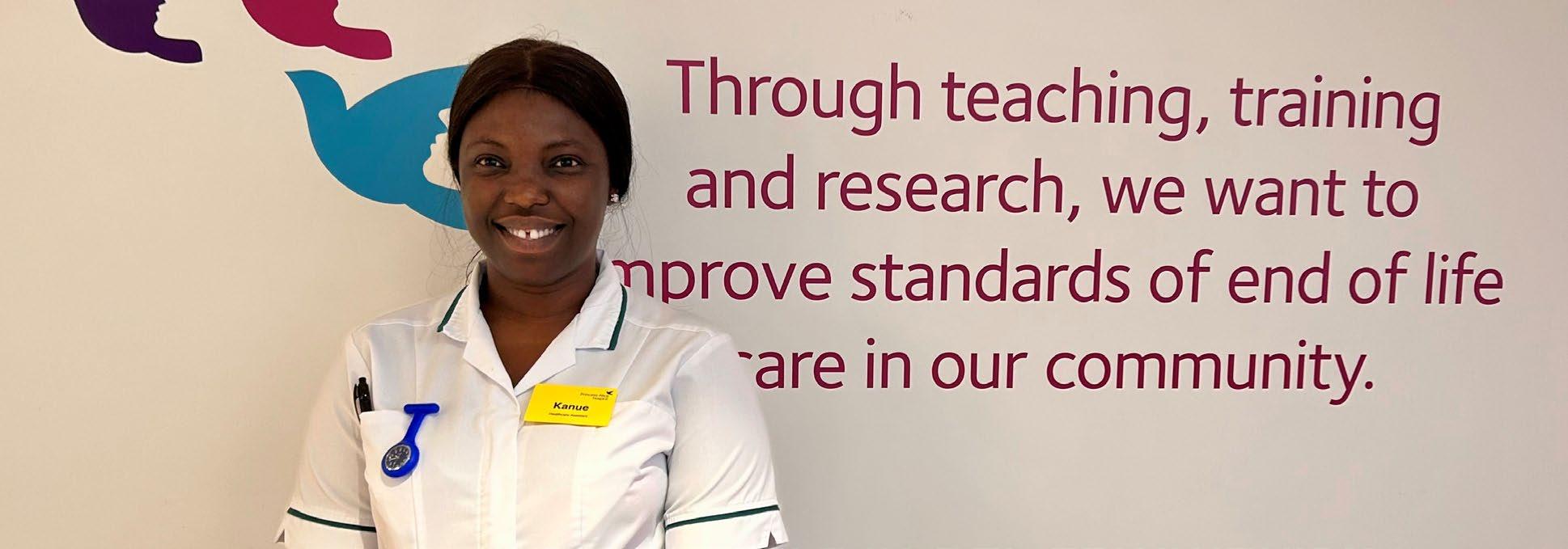

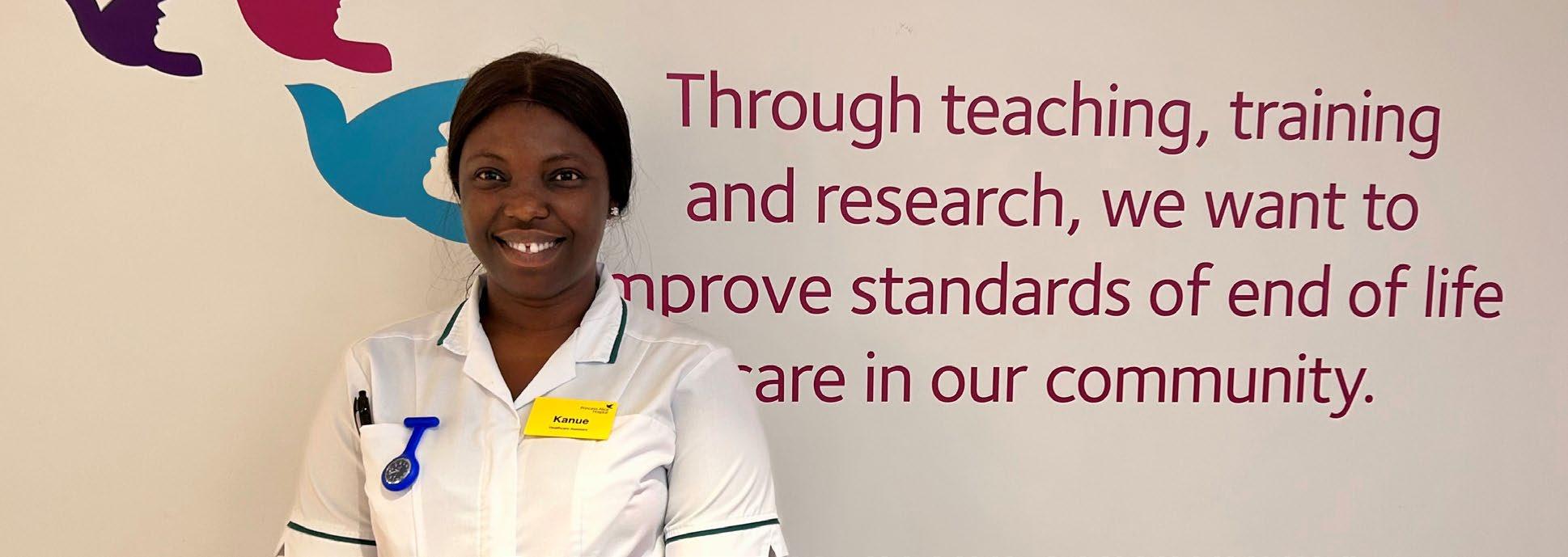
Kanue, above, has progressed from working in our housekeeping team to training to become an HCA. Kanue, has progressed from working to to become a Healthcare Assistant.
1b Safe staffing for our In-Patient Unit in line with national recommendations
EXTEND our reach
Why have we identified this project?
Why have we identified this project?
Safe staffing has been monitored and reviewed within our in-patient services for a few years. However, it is important to note that there are no set standards relating to staffing levels for the hospice sector, and limited clinical evidence available. In 2025, Hospice UK published some recommendations which build on the work the Hospice had already been doing.
This work provides an opportunity to review our current reporting, benchmark with other providers and make any appropriate changes to our established staffing based on evidence, thereby enhancing service delivery and organisational resilience.
Patients admitted for specialist palliative care present with increasingly complex clinical and psychosocial needs, requiring staff to possess advanced skills and confidence in delivering highly specialised care. To ensure the service remains effective, safe, and responsive to demand, it is essential that the workforce is appropriately trained, supported, and equipped with the right resources to meet these complexities.
Aim
Aim
Using Hospice UK Safe Staffing for In-patient Services guidance, we hope to:
services
• Review existing ways of working and develop these further over the coming year
• Create clear guidelines that support safe rota management, appropriate skill mix allocation, and a shared dependency tool used to flex staffing in response to patient acuity
• Provide internal and external assurance on compliance with safe staffing recommendations for the IPU.


Positive Experience
2a Improving Easy Read information across clinical and communities
EXTEND our reach
Why have we identified this project?
Why have we identified this project?
We have been reviewing the information we give to patients and families as part of our ongoing improvement work. Initially, we focused on using Plain English across our leaflets – a simple writing style that removes jargon, difficult language and long sentences. However, throughout this work, we realised that we have a significant gap in our Easy Read information. Easy Read is a way of presenting information with pictures and short simple sentences. It can be helpful for people with a lower literacy level or those less familiar with English.
At the moment, we offer very little Easy Read material across both our clinical services and our community services. This means some people may not be able to fully understand the information we provide. We want to make sure all our service users can access information that suits their needs, including those who benefit from Easy Read formats.
Aim
Aim
Over the next year, we will create a collection of Easy Read information for our services. We will have access to a library of approved Easy Read images, which will allow us to develop our own materials inhouse. Our aims are to:
• Create Easy Read versions of key information used by our Community teams, IPU, and Bereavement services.
• Ensure all new Easy Read leaflets follow a consistent style, using simple language, clear layouts, and supportive images.
• Have the option to create meaningful and personalised Easy Read information that can be adapted to reflect a person’s diagnosis, medical needs and social circumstances.
• Improve accessibility, so that patients, families, and carers with learning disabilities, or additional communication needs can better understand our services.
short, simple sentences. It can be helpful for people with a lower literacy needs, can better understand our services.
• Embed Easy Read into our resource development process, so that it becomes part of how we produce all patient information in the future.
• Work with staff and service users to test and refine Easy Read materials.
By the end of the year, we aim to have a reliable Easy Read resource library on our website and a process that ensures accessible information is available across key service areas.
2b GP advice line trial within a Primary Care Network (PCN)
EVOLVE our role
Why have we identified this project?
Why have we identified this project?
The GP Advice Line trial has been identified as a priority to address the growing need for timely, accessible specialist palliative care advice for General Practitioners (GPs). GPs often encounter complex palliative care situations where immediate guidance can significantly improve patient outcomes and experience. Currently, there may be delays in accessing specialist advice, leading to unnecessary hospital admissions, suboptimal symptom management, and increased anxiety for patients and families.
This project has emerged from feedback received from GPs who expressed a desire for a direct, responsive communication channel with our specialist palliative care team. By establishing a dedicated advice line, we aim to support GPs in managing their palliative patients more effectively within the community setting, aligning with our commitment to providing excellent care and positive experiences for all.
The main aims of the GP Advice Line trial are to:
• Provide timely specialist advice: Establish a responsive telephone advice line that GPs can access during working hours to receive immediate guidance on palliative care management.
• Enhance community-based care: Support GPs to manage complex palliative care patients in their own homes or usual place of residence, reducing unnecessary hospital admissions.
• Improve patient outcomes: Ensure patients receive optimal symptom management and care planning through enhanced GP-specialist collaboration.
• Build GP confidence: Increase GP knowledge and confidence in managing palliative care situations through accessible specialist support and education.
• Strengthen partnerships: Foster stronger working relationships between primary care and specialist palliative care services across our locality.
• Evaluate effectiveness: Assess the impact of the advice line through feedback from GPs and analysis of call data to inform future service development.
The trial will run for an agreed time period, during which we will gather comprehensive data and feedback to evaluate its effectiveness and inform decisions about permanent implementation. This initiative forms a key component of our broader community model of care implementation strategy, supporting our strategic goal of strengthening community-based palliative care provision.
Aim
Aim
Effectiveness of Care
3a Improving access and reach to people who benefit from wellbeing support
ENGAGE our communities EXTEND our reach
Why have we identified this project?
Why have we identified this project?
One of our key ambitions is to reach more people, so last year we commissioned an external consultant to review our care delivery model. Our aim was to identify opportunities to extend our reach in a sustainable and effective way.
As part of this review, colleagues across the Hospice highlighted barriers to timely access to wellbeing support. We identified that referrals were often made late and recognised that this reduced opportunities for early intervention. This review found that Wellbeing services are not always consistently considered within our existing referral and triage processes. As a result, people who do not meet the criteria for specialist clinical services may not always be aware of other hospice support available to them, including wellbeing, bereavement and carers’ services.
Like many specialist palliative care providers, we encounter challenges in supporting people earlier in their illness. Demand for our specialist clinical services exceeds capacity, which limits opportunities for early engagement. However, our wellbeing services offer a complementary approach, with a strong community focus and evidence-based programmes that are well placed to support people earlier in their illness. Improving access to wellbeing support will enable more people, families and carers to benefit from timely, preventative support.


Aim
Aim
The aim of this project is to improve access to wellbeing support, based on their needs rather than our organisational pathways. We will test new ways of enabling people to engage with our wellbeing services earlier and more easily.
We will explore a tiered approach to access, incorporating both self-referral and clinical referral routes to ensure patient safety whilst widening reach. We will deliver this project as a time limited pilot, testing and refining our approach within a defined period, to build evidence to inform future service development.
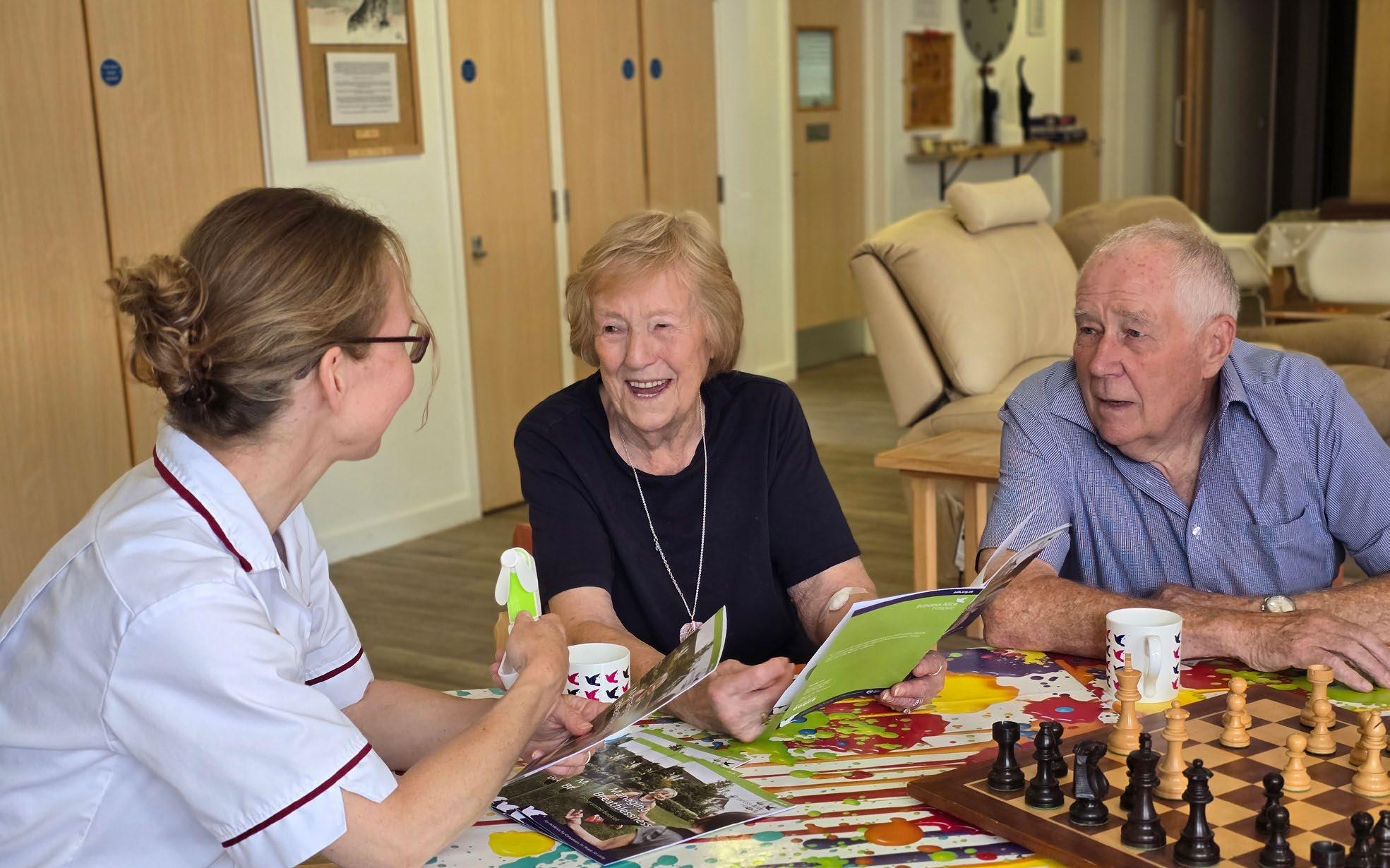
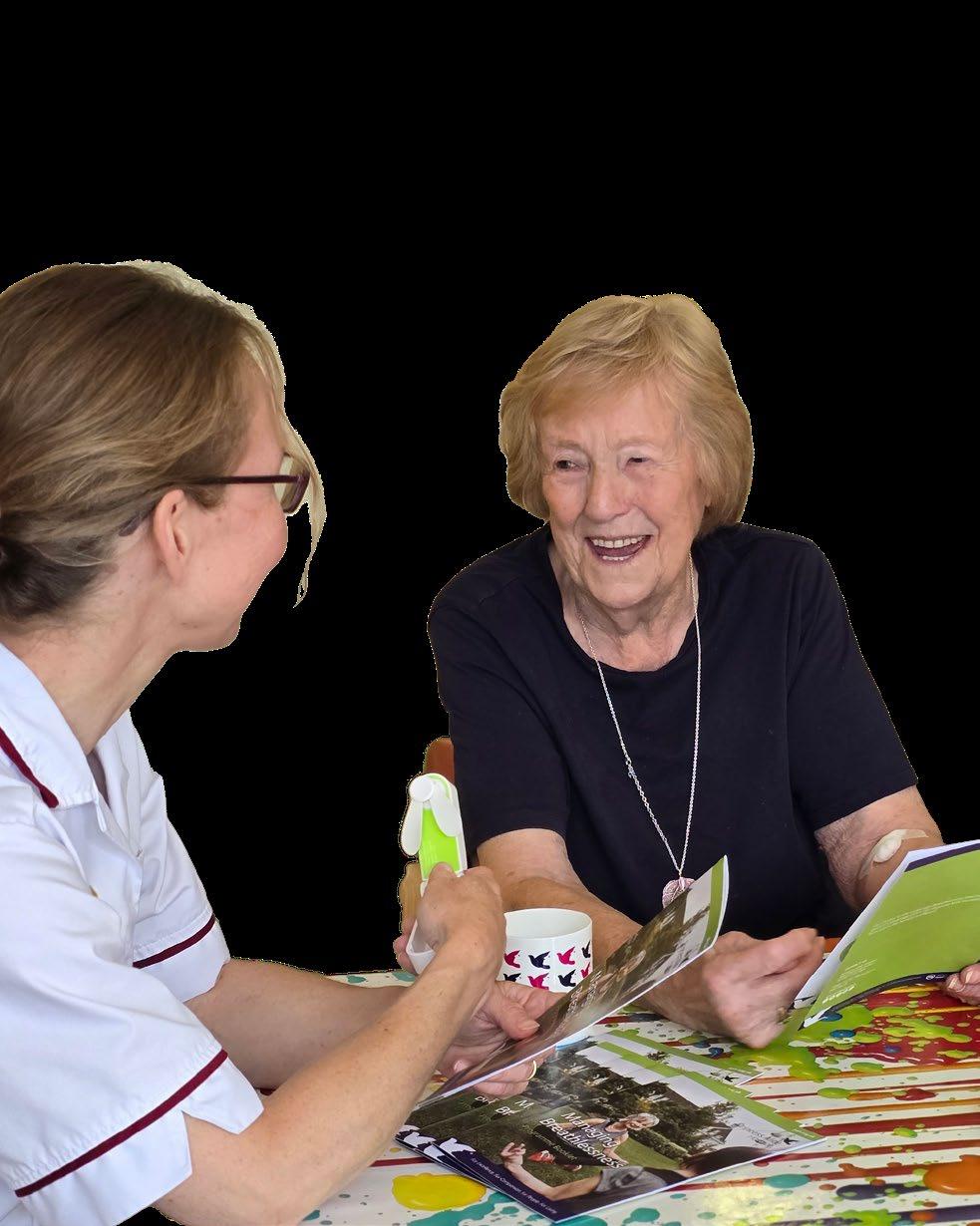
In the coming year, we will test a new approach to introducing wellbeing support by inviting all newly referred Hospice patients and their families to attend a wellbeing introduction session. This session will provide an overview of the wellbeing, carers and family support available. This will be the first step in our improvement plan and aims to reduce patients’ anxiety at the start of their relationship with the Hospice. Learning from this stage will inform how we further refine and develop access to wellbeing services.We expect this approach to:
• increase awareness and understanding of wellbeing support among patients and families
• support earlier engagement with wellbeing services, before needs escalate
• reduce barriers to access for people who may not require specialist clinical intervention
• contribute to a more cohesive experience of hospice care, with smoother movement between services based on need
Together, this will support our ambition to reach more people earlier and ensure that wellbeing support is a core and accessible part of our Hospice offer.
3b Homelessness Community of Practice
ENGAGE our communities EXTEND our reach
Why have we identified this project?
Why have we identified this project?
People experiencing homelessness face some of the poorest health outcomes in our communities. They often live with multiple physical and mental health needs, develop age-related conditions at a younger age, and encounter significant barriers to accessing timely healthcare, including palliative and end of life care.
We are involved in the IMPROVE programme, which is focused on improving palliative and end of life care for people experiencing homelessness. This programme is funded by Marie Curie and National Institute for Health and Care Research (NIHR), and we are involved as one of the IMPROVE test sites. Being part of this means we have an opportunity to bring commissioners and frontline professionals together across the London Boroughs of Kingston and Richmond to strengthen relationships, improve shared understanding and develop more coordinated support for people who are homeless and living with advanced ill health.
Richmond, to strengthen relationships, improve
Research underpinning the IMPROVE programme highlights that people experiencing homelessness often have high levels of unmet need and low access to coordinated support, despite living with complex and deteriorating health. We identified this project as a priority because these health inequalities cannot be addressed by one service alone. People experiencing homelessness are often supported by a wide range of professionals across health, housing, addiction, ambulance services, safeguarding, social care and voluntary sector services. However, these services do not always have the capability to work together in a consistent and cooperative way.
Aim
Aim
Over the next year we will launch and roll out a multi professional Community of Practice across the London Boroughs of Kingston and Richmond, using the IMPROVE intervention model. This will bring together commissioners and frontline colleagues from across sectors to support shared learning, strengthen partnership working and identify practical improvements in care for people experiencing homelessness.
We will:
multi-professional Community of Practice across the
• Explore key themes including trauma, bereavement, safeguarding, addiction and barriers to accessing care and identify opportunities for better coordinated and person-centred support
• Develop both short-term actions and longer-term improvement priorities to achieve meaningful impact.
Ultimately, we aim to improve the way services work together to support people experiencing homelessness, including those who are approaching the end of life. You can read more about the IMPROVE intervention work here:
Ultimately, we aim to improve the way services work together to support people experiencing homelessness, including those who are approaching the end of life. You can read more about the IMPROVE intervention work here: https://homelesspalliativecare.com/about/current-work-theimprove-intervention/
Part 5: Care that Connects us All: The Kingston and Richmond Programme
Actions to Date
We are committed to expanding our reach and connecting meaningfully with the communities we serve. Over the past year, as part of our strategy, we have built and deepened relationships across a wide range of local organisations, faith groups, and educational settings in the London Boroughs of Kingston and Richmond.
Our programme made strong progress over the past year, successfully recruiting two Community Outreach Coordinators to increase the team’s capacity to engage with local communities. We delivered a number of initiatives, including the ‘Your Wellbeing, Your Way’ programme and the establishment of a Compassionate Café at Hampton Hill. We also extended our Community outreach activity to a Community Light Up a Life event, a partnership with Richmond and Hillcroft Adult Community College, and engagement with All Saints Church Kingston.
community Light Up a Life event, a partnership with Richmond and Hillcroft Adult Community College, community outreach activity to a
Actions for the Future
Looking ahead, we will continue the outreach programme, focusing on deepening community relationships and identifying new collaboration opportunities with partners. We also plan to launch a Compassionate Café at the Malden Centre in June 2026.
In autumn 2026, we will pilot recommendations arising from the Bereavement Care for All scoping work, with the aim of improving access to and capacity for bereavement support. Alongside this, we will work with South West London ICB through the Skills Hub to support the roll-out of GP front-ofhouse training, as part of our Kingston and Richmond Programme.


Part 6: Education and Research
Review of last year
• We have improved the administration and therefore learner experience by automating processes for the European Certificate in Essential Palliative Care (ECEPC).
• We have successfully built a database of around 350 previous ECEPC candidates who would like to be involved in alumni activity.
• We have introduced a suite of eight communication courses in our Communicating with Confidence offer. They are appropriate for all levels between introductory and advanced, and many are suitable for non-clinical as well as clinical staff.
• Video and animation are now included in many of our online and face-to-face courses, including ‘It’s Not Micro’, our mandatory anti-racism training - sometimes this is designed and produced by us, sometimes commissioned.
delivered
• We have successfully delivered or contributed to SIMS based training of Kingston and Richmond Community staff and Healthcare students at Surrey University.
Future priorities
• Continue to automate administration processes to enhance the experience of all learners
• Influence the experience of people dying at home by building on our successful pilot of education for non-clinical Primary Care staff
• Pilot a programme for Pharmacy assistants to enhance their understanding and effectiveness for people dying at home
• Work with care homes in the Kingston and Richmond areas to trial a proactive training need analysis-based approach to education for their workforce
• Review our Education and Research strategy, working with system partners and key stakeholders to ensure we remain effective and influential in a changing health and care environment, with the aim of launching it in 2027.
Hospice UK Conference November 2025
Hospice UK Conference November 2025
Hospice UK Conference November 2025
Last year, we presented a number of clinical presentations and posters at the Hospice UK Conference in Liverpool. The event saw colleagues from across the UK Hospice sector come together to listen and learn about how we can do better for our local communities. Our research topics covered:
• Setting Up Human Factors-Based Simulation at the Hospice – A Pragmatic Approach
Last year, we presented a number of clinical presentations and posters at the Hospice UK Conference in Liverpool. The event saw colleagues from across the UK Hospice sector come together to listen and learn about how we can do better for our local communities. Our research topics covered:
• Setting Up Human Factors-Based Simulation at the Hospice – A Pragmatic Approach
Last year, we presented a number of clinical presentations and posters at the Hospice UK Conference in Liverpool. The event saw colleagues from across the UK Hospice sector come together to listen and learn about how we can do better for our local communities. Our research topics covered:
• Setting Up Human Factors-Based Simulation at the Hospice – A Pragmatic Approach
• Using the Breathing, Thinking, Functioning model to reduce negative emotions related to breathlessness
• Opening the Door to Hospice Care for People Experiencing Homelessness
• Using the Breathing, Thinking, Functioning model to reduce negative emotions related to breathlessness
• Opening the Door to Hospice Care for People Experiencing Homelessness
• Using the Breathing, Thinking, Functioning model to reduce negative emotions related to breathlessness
We also presented two oral presentations:
• Opening the Door to Hospice Care for People Experiencing Homelessness
We also presented two oral presentations:
• Becoming an anti-racist organisation by Nigel Seymour, CEO
• Becoming an anti-racist organisation by Nigel Seymour, CEO
We also presented two oral presentations:
• Becoming an anti-racist organisation by Nigel Seymour, CEO
Becoming an anti-racist organisation by Nigel Seymour, CEO
This was about a survey our employees completed in 2023 about experience of discrimination at work. 26% of respondents had experienced or witnessed discrimination; most incidents were of a racist nature. An action plan was developed and implemented in response, and you can read more about this here: https://spcare.bmj.com/content/15/Suppl_4/A3.2
This was about a survey our employees completed in 2023 about experience of discrimination at work. 26% of respondents had experienced or witnessed discrimination; most incidents were of a racist nature. An action plan was developed and implemented in response, and you can read more about this here: https://spcare.bmj.com/content/15/Suppl_4/A3.2
• Breaking the mould: reclaiming spiritual care for an evolving generation by Steve Nolan, Bereavement and Spiritual Care Lead
• Breaking the mould: reclaiming spiritual care for an evolving generation by Steve Nolan, Bereavement and Spiritual Care Lead
This was about a survey our employees completed in 2023 about experience of discrimination at work. 26% of respondents had experienced or witnessed discrimination; most incidents were of a racist nature. An action plan was developed and implemented in response, and you can read more about this here: https://spcare.bmj.com/content/15/Suppl_4/A3.2
This was about a survey our employees completed in 2023 about experience of discrimination at work. 26% of respondents had experienced or witnessed discrimination; most incidents were of a racist nature. An action plan was developed and implemented in response, and you can read more about this here: https://spcare.bmj.com/content/15/Suppl_4/A3.2
• Breaking the mould: reclaiming spiritual care for an evolving generation by Steve Nolan, Bereavement and Spiritual Care Lead
Breaking the mould: reclaiming spiritual care for an evolving generation by Steve Nolan, Bereavement and Spiritual Care Lead
Our hospice is redefining its pastoral or spiritual support as psycho-spiritual care and this presentation outlines its contribution to patient care: https://spcare.bmj.com/content/15/ Suppl_4/A4.2
Our hospice is redefining its pastoral or spiritual support as psycho-spiritual care and this presentation outlines its contribution to patient care: https://spcare.bmj.com/content/15/ Suppl_4/A4.2
Our hospice is redefining its pastoral or spiritual support as psycho-spiritual care and this presentation outlines its contribution to patient care: https://spcare.bmj.com/content/15/ Suppl_4/A4.2
Our hospice is redefining its pastoral or spiritual support as psycho-spiritual care and this presentation outlines its contribution to patient care: https://spcare.bmj.com/content/15/ Suppl_4/A4.2
You can read more about our research activity and access our above posters here: https://www.pah.org. uk/learn-with-us/our-research-activity-2/
You can read more about our research activity and access our above posters here: https://www.pah.org. uk/learn-with-us/our-research-activity-2/
You can read more about our research activity and access our above posters here: https://www.pah.org. uk/learn-with-us/our-research-activity-2/
You can read more about our research activity and access our above posters here: https://www.pah.org. uk/learn-with-us/our-research-activity-2/
Part 7: Review of Quality Performance and Statements of Assurance
Governance
• Governance structure
We have a governance structure that allows for appropriate oversight of clinical issues, improvements and projects.
Clinical and Community Quality Assurance (CCQA) is a committee of the Board, attended by the Chair of Trustees, other members of the Board of Trustees and committee advisors, as well as the Deputy CEO and Director of Care, Medical Director and CEO. They have oversight of our clinical facing services, areas for improvements and related action plans.
The Quality Improvement, Development and Patient Safety Committee (QUIPS) is a monthly meeting attended by clinical leads, the Medical Director and the Deputy CEO and Director of Care (Chair). At this meeting, our monthly clinical metrics, clinical incidents, service user feedback and progress on clinical projects are presented and reviewed. Highlights and significant areas from all other oversight meetings are also reported.
CCQA: Trustee Committee, meeting quarterly to provide oversight of clinical, community and education services. Feeds up to Board level.
QUIPS: Senior Clinical and Community teams meeting, occurring monthly to review operational funtion, regulatory compliance, risk and quality of service.
Safety Action Forum: Group meeting every 6 weeks to oversee the clinical actions as a result of incident management.
Medicines Management
Group: Quarterly group overseeing all medication related governance, operations and incidents.
Falls Group: Quarterly group overseeing all processes and incidents relating to clinical falls.
Infection Prevention & Control Group: Group overseeing infection control practices, audit and incident reviews relating to infection control.
Tissue Viability Group: Quarterly group overseeing all processes and incidents relating to pressure ulcers and wider tissue viability.
Research Committee: Quarterly committee which oversees all research functions and research governance at PAH.
Service Evaluation and Clinical Audit Committee: Group meeting every 6 months who oversee all clinical audits and service evaluations.
Incident monitoring and reviewing
When clinical incidents occur, we ensure that they are reviewed by using the right learning response method based on the incident type or the potential for learning. Afterwards, we work with teams and those affected to develop appropriate action plans in order to reduce the risk of similar incidents reoccurring. Our governance structure ensures monitoring of metrics relating to incidents on a monthly basis. Our Safety Action Forum provides oversight on the development and monitoring of action plans after incidents occur, in particular incidents that meet the thresholds we have defined in our PSIRF plan.
The following metrics reflect our incident monitoring and improvement plans:
2024/25
Incidents requiring a PSIRF defined learning response method (eg. PSII, after action review, thematic analysis)
Number of actions agreed in response to incidents, complaints, national safety alerts and reviews
*Acquired pressure ulcers are skin ulcers that develop whilst a patient is admitted on our In-Patient Unit. This represents approximately 40% of the pressure ulcers we see, with the rest developing prior to admission to the In-Patient Unit and being identified on admission. Skin changes at the end of life are common and are a contributory factor to the development of pressure ulcers.
During 2025/26, no clinical incidents occurred that resulted in severe or fatal harm and the vast majority of clinical incidents recorded were near misses or resulted in low or no harm.
Although medication incidents have increased, approximately half of medication errors did not affect patient care and related to issues such as deliveries, storage and record keeping.
The reduction in the number of actions agreed in response to safety concerns and reviews relates to:
• Fewer identified actions for our hospice services in response to national patient safety alerts during 2025/26
• Fewer incidents requiring a PSIRF defined learning response
• Fewer complaints during 2025/26 in comparison to the previous year (for more information, see section 8 of this report).
Duty of Candour
Duty of Candour is the professional responsibility to be open and honest with service users when things go wrong in their care. We ensure that we tell patients and their representatives if this happens, and that we apologise. We also work with our patients to reduce the risk of similar issues reoccurring. There are additional statutory responsibilities when an incident meets criteria known as ‘notifiable patient safety events’. This statutory process is overseen by the Head of Quality and Assurance and reported monthly at the Quality Improvement, Development and Patient Safety Committee. Princess Alice Hospice has a Duty of Candour Policy. Completion of training on Duty of Candour is mandatory for all members of our clinical staff teams. In 2025/26, one incident resulted in a statutory Duty of Candour response.
Safeguarding
Safeguarding protects the rights of adults and children to live in safety, free from abuse and neglect. Princess Alice Hospice works together with external agencies, including local authorities, who hold the duty to safeguard vulnerable adults and children at risk (or likely to be at risk) of harm. As well as external reporting of any suspected or witnessed safeguarding concerns, we monitor these on a monthly basis at the Quality Improvement, Development and Patient Safety Committee. Princess Alice Hospice has a Safeguarding Policy. Completion of safeguarding training is mandatory for all members of clinical staff.
Freedom to Speak Up
We have three Freedom to Speak Up Guardians at Princess Alice Hospice. They come from a range of professional backgrounds and work in different teams at the Hospice, thereby increasing accessibility to this service. The Guardians have direct access to the CEO and senior leadership team to raise concerns. In addition, they report any occurrences to the National Guardian’s Office.
Our activity and quality metrics
The following data shows some of the Hospice’s key activity:
Number of people / carers receiving pre and post bereavement support
There was a small reduction in admissions to our In-Patient Unit over the last year. This was to accommodate some essential heating and air conditioning work to maintain a quality environment for patients, families, staff and volunteers.
*The increase seen in clinical nurse specialist consultations by the Hospice at Home service partly reflects more accurate recording of telephone consultations on our patient record system.
Audit
Audit and service evaluation is overseen by the Service Evaluation and Clinical Audit Group. Any audits being considered are submitted to the committee before completion for review and recommendations. The completed audits then return to the group for sharing of results, but also agreement of action plans. In 2025/26, the following service evaluations and audits were completed:
• Documentation Standards audit
• Audit to assess practice around discussion and documentation of DNACPR and treatment escalation decision making on the In-Patient Unit
• Diversity and Inclusion; Assessing consistency and accuracy of recording of characteristics.
• Benchmarking of opioid related drug practices against other UK Hospices
• Audit of Strong Opioid Side Effect Management against NICE Clinical Guidelines
• Evaluation of professional duty of candour practices following clinical incidents
• An audit of electronic drug chart usage against Hospice standards
Audit of electronic drug chart usage against Hospice standards
• Quarterly hand decontamination/hygiene audit for the IPU and Wellbeing Centre
• Quarterly sharps audit
Princess Alice Hospice did not participate in any national clinical audits during this activity period, as none of the audits under the National Clinical Audit Programme were applicable to hospice settings. We continue to take part in Hospice UK national benchmarking as part of their patient safety programme.
Care Quality Commission (CQC)
Princess Alice Hospice is registered with the CQC for Treatment of Disease, Disorder or Injury.
We were not inspected during the period of this account and maintain our Outstanding quality rating, following an inspection in 2021. We achieved an outstanding rating for the key areas of Caring, Responsive and Well-Led. We achieved a good rating for the areas of Safe and Effective.
External reporting
Hospital Episodes Statistics
As a specialist palliative and end of life care provider, we do not submit data information to the Hospital Episodes Statistics because we are not eligible to participate in this scheme. We submit statistics to Hospice UK for quarterly and annual benchmarking.
Data, Security and Protection Toolkit
All organisations that have access to NHS patient data and systems must use this toolkit to provide assurance that they are practicing good data security and that personal information is handled correctly. Princess Alice Hospice achieved ‘Standards Exceeded’ (published June 2025).
Additional reporting
We report any errors relating to controlled drugs to the Controlled Drugs Local Intelligence Network, either as part of our quarterly occurrence reporting or via a drug incident report.
Infection Control
The Infection Prevention and Control (IPC) nurse lead on the IPU is responsible for auditing practice and overseeing IPC standards and reporting across the organisation. IPC training is mandatory for all clinical members of staff.
The following data reflects the occurrence of COVID-19, Clostridium Difficile and MRSA on our IPU during 2025/26.
• 0 cases of COVID-19
• 2 cases of Clostridium Difficile (unrelated cases – in both, the patient had a positive result prior to admission to the Hospice In-Patient Unit)
• 0 cases of MRSA
Part 8: Service user feedback
We value the thoughts and views of our patients and their families, and we offer a range of ways to share feedback — including postal and online surveys, tablets at key locations around the Hospice, and easily accessible contact details. Compliments, comments and complaints help us to continually improve the care and support we provide.
Complaints
In 2025/26 we received 6 complaints. We investigated the complaints thoroughly and they informed service improvements as a result.
Comments
We continue to log and analyse the full range of feedback we receive, including neutral and constructive comments, which are reviewed monthly by relevant service leads as part of the QUIPS committee. Last year we received over 110 comments, the majority through our VOICEs surveys. VOICEs is sent to families six months after a bereavement, covering all clinical services as well as the support offered following a death.
In the past year, we collected over 160 responses, with a response rate of 13%. We want to continue to maximise feedback, and we shared an updated report with our clinical service leads last autumn, including a year-on-year comparison to make it easier to identify areas of improvement or concern. Areas rated more highly included patients on the IPU and Hospice at Home feeling better supported with their spiritual and religious needs. Areas where we know there is more to do include the level of emotional support for patients and carers on the IPU, and the advice and support provided to Hospice at Home patients. Families also told us they would have welcomed more frequent and proactive contact, and greater clarity about services and individual roles.
Compliments
We are proud to receive compliments in many forms - through thank you cards, emails, verbal feedback, and our surveys. We actively encourage staff to share any verbal compliments they receive so that positive feedback can be celebrated across the whole organisation. One way we do this is through a monthly feedback newsletter, helping staff and volunteers see the difference their work makes. In the past year, we recorded over 500 compliments across our services, with some wonderful themes emerging:
We are proud to receive compliments in many forms - through thank you cards, emails, verbal on our social media channels and our surveys. We actively encourage staff to share any verbal compliments they receiveso that positive feedback can be celebrated across the whole organisation. One way we do this is through a monthly feedback newsletter, helping staff and volunteers see the difference their work makes. In the past year, we recorded over 500 compliments across our services, with some wonderful themes emerging:
• Community and IPU colleagues were praised for their compassion and the excellence of their care.
• Wellbeing patients valued the flexible format of sessions, including online options, and spoke warmly of the helpful and supportive staff.
• Families expressed deep gratitude for the caring approach of our bereavement staff and volunteers.
• Feedback for the Compassionate Neighbours team highlighted the strength of the connections formed between service users and volunteers, and how meaningful that time can be.
Examples of feedback include:
For our Community team:
The community team were great and always at the end of the phone when needed for any support with pain relief or advice.
(VOICEs survey, June 2025)
The nurses and social workers in the Community Team who stayed in touch with us are exceptional people. They helped us cope with emotional and physical pain. They guided us through the complexities of the NHS and Department of Work and Pensions (DWP) systems to find the best help and support. Every member of staff or volunteer I have met or had contact with, have treated us with courtesy, dignity and respect.
(VOICEs survey, September 2025)
I would like to thank everyone that helped look after my husband in his last days. Knowing that there was always someone I could call on was a great help, be it day or night.
(VOICEs survey, November 2025)
For our Wellbeing Centre:
As a carer I have really enjoyed the wonderful chat and the kindness. I find everything you do supportive and beneficial and I’ve appreciated everything and everyone. Thank you so much for looking after us. (Written feedback, May 2025)
For our IPU:
Everyone from the volunteers to the carers, doctor, consultant and beyond were kind, compassionate and supported us. (Friends and Family test, September 2025)
For our Bereavement service:
The hospice is the most calming and genuinely soothing place to be, mostly because of the wonderful people that work there. Every member of staff and volunteer shower us such warmth and sympathy, and you helped make one of the hardest weeks for our family more bearable. (Written feedback, June 2025)
The social workers and bereavement counsellors have helped me enormously as I continue to struggle with numbing grief, despair and loss and understanding what my life now is. I am deeply grateful for the personalised support you have given and continue to make available. (VOICEs survey, September 2025)
I attend the walk and talk bereavement walks which are perfect for me. The volunteers are brilliant. I find it really helpful to talk with others who are going through a bereavement. (VOICEs survey, January 2026)
Part 9: Workforce engagement
Our people are the beating heart of everything we do, and we have continued to prioritise employee and volunteer engagement this year.
Our people are beating of we do, we continued prioritise employee and volunteer engagement this year.
Our employee forum, Our Voice, meets on a quarterly basis and is chaired by the CEO. This forum includes representatives from across the organisation. The Volunteer forum also takes place regularly, sharing information with and getting feedback from our volunteers on a wide variety of topics.
Our employee Our meets basis and is chaired by CEO. This forum includes representatives from across the organisation. The Volunteer forum also takes place regularly, sharing information and getting from our on a variety of
Our Freedom to Speak Up Guardians are now trained and well established, holding regular sessions to provide colleagues with a confidential space to raise any concerns regarding their working environment. We have also implemented a confidential whistleblowing hotline, which is widely advertised across the Hospice.
Our Freedom to Speak Up Guardians are now trained and well established, holding regular sessions to provide a confidential space raise regarding their We have also implemented a confidential whistleblowing hotline, which is widely advertised across the Hospice.
We have continued our specific focus on anti-racism over the past year and have rolled out our ‘It’s Not Micro’ training to 80% percent of our colleagues.
We have continued our specific focus on anti-racism over the past year and have rolled out our ‘It’s Not Micro’ training to 80% percent of our colleagues.
In 2025, we completed a pulse Employee Engagement survey. In the following chart we demonstrate that the total agree responses from Princess Alice Hospice staff is favourably benchmarked against the wider Hospice network.
In 2025, we completed a pulse Employee Engagement survey, which showed that total ‘agree’ responses from Princess Alice Hospice staff compare favourably with those from the wider hospice network.
GRAPHIC
Our current People plan focuses on five key themes:
1. Growing our culture
2. Resourcing for the future
3. Developing skills and capabilities
4. Supporting engagement and wellbeing
5. Building leadership and management.
Our current People plan focuses on five key themes.
As the organisation enters a new strategic cycle, we have been developing a new plan which is supported by a new People Strategy. This will be launched in 2026/27 and will focus on three key themes:
1. Growing our culture
2. Resourcing for the future
1. Culture
3. Developing skills and capabilities
2. Capacity
4. Supporting engagement and well-being
3. Capability
5. Building leadership and management.
This focus will support our strategic aim to build and support a team of skilled people motivated to make a difference to the lives of patients, families and communities.
As the organisation enters a new strategic cycle, we have been developing a new plan which is supported by a new People Strategy. This will be launched early in 2026/27 and will focus on three key themes:
1. Culture
2. Capacity
3. Capability
This focus will support our strategic aim to build and support a team of skilled people motivated to make a difference to the lives of patients, families and communities.
Volunteers
Princess Alice Hospice volunteers are essential partners in delivering compassionate care to our communities. In sharing their time, knowledge, experience and compassion, they play an essential role across nearly every area of the charity’s work, extending the organisation’s reach and enhancing the experience of patients, families, carers and the wider community.
Princess Alice Hospice volunteers are essential delivering compassionate to communities. In time, knowledge, and they play an essential across nearly every area of the charity’s work, extending the organisation’s reach and enhancing the experience families, and the wider
We currently have over 1400 registered volunteers in over 80 different roles and areas of work based in the Hospice, across our retail network, in community settings and at home. Volunteers provide direct hands-on patient care; pastoral, spiritual and emotional support; companionship and practical support; bereavement support; administration and hospitality; and fundraising through our shops and at events, to name just a few.
We currently have over 1400 registered volunteers in over 80 different roles and areas of work based in Hospice, our retail settings and provide direct hands-on patient care; pastoral, spiritual and emotional support; companionship and practical support; bereavement support; administration and hospitality; and fundraising through our shops and at events, to name just a few.
Princess Alice Hospice volunteers enrich every aspect of the organisation - from providing companionship and bereavement support to retail, ward support, fundraising and front-of-house excellence. Their generosity allows the hospice to maintain its mission of delivering free, holistic and compassionate end of life care to patients and families across the community.
Princess Alice Hospice volunteers enrich of organisation - from companionship and bereavement support to retail, ward support, fundraising and front-of-house excellence. Their generosity allows the hospice to maintain its mission of delivering free, holistic and compassionate end care patients and families the In 2025/26 we trained retail volunteer managers and launched a retail volunteer management handbook.
In 2025/26 we trained retail volunteer managers and launched a retail volunteer management handbook.
We carried out our Volunteer Survey and are proud to report that 96% of our volunteers feel positively about volunteering and their volunteer experience with Princess Alice Hospice.
We carried out our Volunteer Survey and are proud to report that 96% of our volunteers feel positively about volunteering and their volunteer experience with Princess Alice Hospice.
• 84% of respondents feel extremely or very well supported and trained
• 84% of respondents feel extremely or very well supported and trained
• 88% of respondents feel extremely or very appreciated
• 88% of respondents feel extremely or very appreciated
• 90% of respondents are extremely or very likely to recommend volunteering
• 90% of respondents are extremely or very likely to recommend volunteering
• 73% of respondents feel their volunteering is extremely or very impactful
• 73% of respondents feel their volunteering is extremely or very impactful
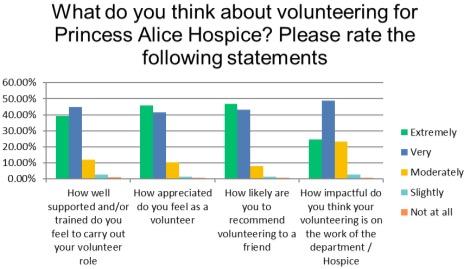

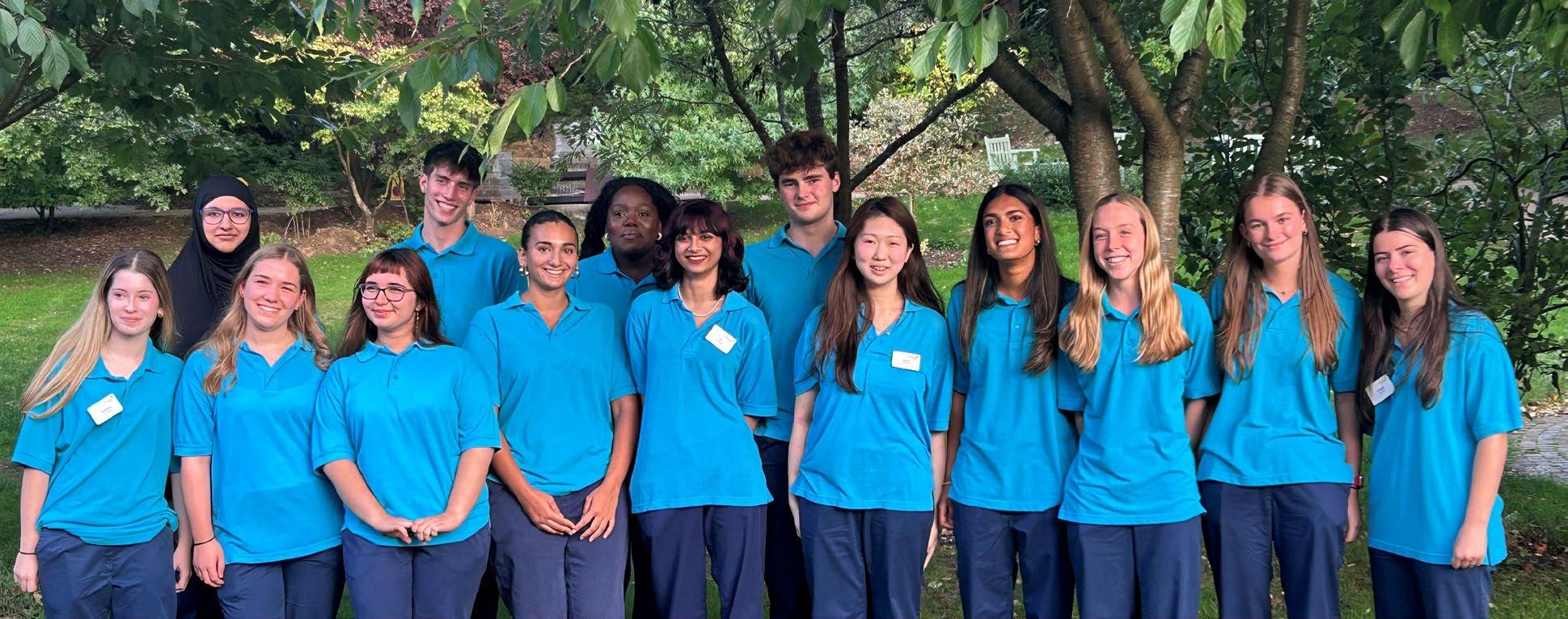

Part 10: Commissioner statement from NHS Surrey & Sussex
NHS Surrey and Sussex Integrated Care Board (ICB) welcomes the Quality Account for Princess Alice Hospice and recognises its vital role in delivering specialist palliative and end-of-life care across Surrey and South-West London.
NHS Surrey and Sussex Integrated Care Board (ICB) welcomes the Quality Account for Princess Alice Hospice and recognises its vital role in delivering specialist palliative and end-of-life care across Surrey and South-West London.
Quality Account for Princess Alice Hospice and recognises its vital role in delivering specialist palliative and end-of-life care across Surrey and South West London.
The ICB considers the report to provide a clear overview of the Hospice’s services, achievements and challenges. We acknowledge the compassion and dedication of staff and volunteers, and the Hospice’s continued contribution as a valued system partner supporting integrated, person-centred care.
The ICB considers the report to provide a clear overview of the Hospice’s services, achievements and challenges. We acknowledge the compassion and dedication of staff and volunteers, and the Hospice’s continued contribution as a valued system partner supporting integrated, person-centred care.
The ICB considers the report to provide a clear overview of the Hospice’s services, achievements and challenges. We acknowledge the compassion and dedication of staff and volunteers, and the Hospice’s continued contribution as a valued system partner supporting integrated, person-centred care.
The ICB recognises the Hospice’s commitment to improving experiences for people with a learning disability and autistic people, including participation in the LeDeR programme, and its work to improve accessibility through the development of Easy Read materials. We also recognise the Hospice’s commitment to reducing health inequalities, reaching more people across its communities, and ensuring that care remains accessible, inclusive and responsive to local needs.
The ICB have welcomed the Hospice’s engagement in improving experiences for people with Learning Disability and Autism, including participation in the LeDeR programme. There is also a clear commitment to addressing inequalities through involvement in the IMPOWER programme and the expansion of Easy Read materials to support understanding at a difficult time.
We look forward to further progress in embedding palliative care within communities through engagement with local neighbourhood teams and the development of the GP advice line.
The Quality Account demonstrates a continued focus on patient experience, personalised care, community engagement and partnership working. We particularly note the Hospice’s commitment to extending support within local communities, strengthening collaborative working with system partners and developing services that support patients and families throughout their palliative and end-of-life care journey.
The ICB have welcomed the Hospice’s engagement in improving experiences for people with Learning Disability and Autism, including participation in the LeDeR programme. There is also a clear commitment to addressing inequalities through involvement in the IMPOWER programme and the expansion of Easy Read materials to support understanding at a difficult time.
Areas of notable achievement
Areas of notable achievement
We look forward to further progress in embedding palliative care within communities through engagement with local neighbourhood teams and the development of the GP advice line.
• Community reach and engagement: Continued development of community-based initiatives and partnerships to support patients and families.
• Community reach and engagement: Strong progress in extending support through communitybased initiatives and partnerships.
Areas of notable achievement
• Patient experience: Continued focus on improving accessibility, bereavement support and personalised care.
• Patient experience: Ongoing focus on accessibility, personalised care, bereavement support and responding to feedback from patients and carers.
• Community reach and engagement: Strong progress in extending support through communitybased initiatives and partnerships.
• Partnership working: Effective collaboration with health and care partners to deliver coordinated and integrated services.
• Partnership working: Effective collaboration with system partners to deliver more integrated and coordinated care.
• Patient experience: Continued focus on improving accessibility, bereavement support and personalised care.
• Quality and safety: Ongoing commitment to learning, governance and continuous Improvement.
• Quality improvement: Demonstrated commitment to learning, governance and continuous service development.
Areas for continued focus during 2026/27
• Partnership working: Effective collaboration with system partners to deliver more integrated and coordinated care.
Areas where further assurance would be welcomed for 2026/27
• Safeguarding: Development and investment of policies and processes for patients and staff to prevent significant harm.
• Quality and safety: Ongoing commitment to learning, governance and continuous Improvement.
Areas where further assurance would be welcomed for 2026/27
• The ICB looks forward to continued engagement with the Hospice regarding its plans to further embed palliative care within local communities, including the development of neighbourhood working and the GP advice line.
• Safeguarding: Development and investment of policies and processes for patients and staff to prevent significant harm.
• Infection prevention and control: We would expect the report to include clear evidence of compliance with the Code of Practice on the prevention and control of infections, alongside the associated IPC Board Assurance Framework (BAF) and NHS England Education Framework.
• Equity of access: Reducing variation in access to services, including out-of-hours provision.
It will also be valuable to understand the impact of ongoing work to improve equity of access to hospice services, support timely access to specialist palliative care earlier in the patient pathway, and ensure services remain responsive to the needs of the diverse populations served by the Hospice.
• Workforce sustainability: Strengthening workforce capacity and resilience.
• Infection prevention and control: We would expect the report to include clear evidence of compliance with the Code of Practice on the prevention and control of infections, alongside the associated IPC Board Assurance Framework (BAF) and NHS England Education Framework.
• Earlier intervention: Supporting timely access to services earlier in the patient pathway.
• The ICB also welcomes continued dialogue regarding workforce sustainability and how the Hospice continues to develop and support its workforce to meet future service demand.
• Equity of access: Reducing variation in access to services, including out-of-hours provision.
Conclusion
Conclusion
• Workforce sustainability: Strengthening workforce capacity and resilience.
• Earlier intervention: Supporting timely access to services earlier in the patient pathway.
Conclusion
NHS Surrey and Sussex ICB thanks Princess Alice Hospice for its Quality Account and commends its continued contribution to high-quality end of life care. The priorities for 2026/27 align with system objectives, and we look forward to continuing our partnership to support further improvement.
NHS Surrey and Sussex ICB thanks Princess Alice Hospice for its Quality Account and recognises its continued contribution to providing high-quality palliative and end-of-life care. We look forward to continuing to work with the Hospice and supporting its ongoing commitment to quality improvement and patient-centred care.
NHS Surrey and Sussex ICB thanks Princess Alice Hospice for its Quality Account and commends its continued contribution to high-quality end of life care. The priorities for 2026/27 align with system objectives, and we look forward to continuing our partnership to support further improvement.

Allison Cannon Chief Nursing Officer
Allison Cannon Chief Nursing Officer
NHS Surrey and Sussex Integrated Care Board
29 May 2026
NHS Surrey and Sussex Integrated Care Board 29 May 2026
Allison Cannon Chief Nursing Officer
NHS Surrey and Sussex Integrated Care Board
May 2026
Glossary
CCQA: Clinical and Community Quality Assurance
CEO: Chief Executive Officer
CNS: Clinical Nurse Specialist
CQC: Care Quality Commission
ECEPC: European Certificate in Essential Palliative Care
EMIS: Patient records database
ES: Enhanced Support team
ICB: Integrated Care Board. At Princess Alice Hospice, our ICBs in 25/26 were NHS Surrey Heartlands ICB and NHS South West London ICB. From April 2026 they will be NHS Surrey and Sussex, and NHS South West London.
IPC: Infection, Prevention and Control
IPU: In-Patient Unit
LEDER: Learning from lives and deaths of people with a learning disability and autistic people programme.
MDT: Multidisciplinary Team
NHS: National Health Service
PSIRF: Patient Safety Incident Response Framework
PSII: Patient Safety Incident Investigation
QUIPS: The Quality Improvement, Development and Patient Safety Committee
TLC: Talk, Listen, Connect programme
VOICES: View of Informal Carers – Evaluation of Services. This is nationally validated survey used by a number of hospices to obtain the views of bereaved carers about the care of their loved one.
Contact us
Princess Alice Hospice West End Lane
Esher KT10 8NA
enquiries@pah.org.uk 01372 468811
pah.org.uk