The Princess Alexandra Hospital NHS Trust Annual Report and Accounts 2025-26
Annual Report
Contents:
1. The Performance Report – page 2
2. The Accountability Report – page 74
3. Glossary of Terms – page 133
4. Financial Statements – page 1 (Accounts)
The performance report
Overview
The purpose of this section of the performance report is to set out key information on the Trust in relation to its main objectives, strategies and the principal risks it faces.
This section includes:
• Foreword from the Chair and Chief Executive
• An overview of the Trust, its strategic objectives, organisational structure, services provided and population served
• An update regarding the Hertfordshire and West Essex Integrated Care System and the West Essex Health and Care Partnership
• Statement on adopting Going Concern basis
• A summary of the Trust’s performance (covering clinical, operational, financial and people)
Foreword from the Chair and Chief Executive Officer
Welcome to our Annual Report for 2025/26.
We are proud that in the last year the hospital has taken some significant steps forward, with improvements achieved in many aspects of our work. It is pleasing that these developments have been recognised at a national level, but our focus is on continuing that progress into the future as there is much still to do and we are committed to not standing still.
We have seen key improvements including to 18-week referral times and cancer waiting times. We have also seen substantial improvements against our urgent and emergency care standards. This is testament to the hard work and dedication of all our people and our commitment to improving services for our patients.
Our focus on improvement has been reflected in the latest NHS Oversight Framework, NHS England’s league table for acute trusts, where we have seen the third biggest improvement in the country. While we are happy to see this progress, we are determined to go even further, and our priority is sustained improvement.
On financial management, at financial year-end we have delivered our year-end position in line with our plans and have agreed next year’s plan with NHS England and our local system. We recognise the challenges of the NHS landscape, including the national NHS financial position and the ongoing impact of the extremely high demand for our services. We will continue to ensure we get the best value from every pound that we spend, both within the hospital, and within West Essex.
We welcomed the Care Quality Commission (CQC) for an ‘unannounced’ inspection from 11 November 2025, concluding at the end of January 2026. The process involved observing care, speaking with staff and patients, and reviewing records to ensure
services meet quality and safety standards, culminating in a ‘Well-Led’ assessment. We are proud to report that the inspectors told us that, throughout the process, all the conversations with patients resulted in positive feedback about the services we provide. We are enormously grateful to our expert, caring and professional colleagues across the organisation, who gave generously of their time during the inspection. We have received draft feedback (much of which we have already acted on) and some draft reports. At the time of writing, we are awaiting the final report, from which we will take any learning as we continue our improvements to the care and services we provide for our communities.
We have long-held ambitions for a new hospital on a greenfield site (by junction 7a of the M11) and, due to a variety of factors, this scheme has been further delayed. We have now begun exploring a new option to redevelop our existing site as part of the regeneration of Harlow town centre, whilst also developing new Neighbourhood Health Centres in our communities. We have made tremendous progress working with our partners in delivering the 'left shift' within the Government's NHS 10 Year Plan in our new role as Host Provider for the West Essex Health and Care Partnership. This follows West Essex being entered onto the Government's first wave of the National Neighbourhood Implementation Programme (NNHIP). We are confident of being able to make tangible progress on this in 2026/27. Our focus on neighbourhood health is integral to our forthcoming new organisational strategy, ‘Rise’ through which we aim to lift our people, our communities, and our standards together. This sets a clear, upward trajectory of continual improvement, inspired by both the regeneration of Harlow and our own determination to evolve.
There has also been significant organisational change this year, including to our executive team, where we welcomed a new Chief People Officer, Chief Medical Officer and Chief Operating Officer. A clinical divisional restructure was completed, with a current corporate restructure and other smaller consultations to ensure our structure best supports our strategic priorities and delivers the highest quality of care for our patients.
We are extremely grateful to all of our colleagues for their hard work and dedication across the year, providing the best care for our local communities. It has also been fantastic to work with our award-winning Patient Panel on a series of community engagement sessions, together with hearing the voices of our staff both through the Staff Survey, where we saw record engagement, and informally throughout the year to shape PAHT for the future. We have seen the results from the patient Friends and Family Test (FFT) steadily improving through the year – the key measure for ensuring we are providing the care and services our patients expect for themselves and their loved ones. We have seen further exciting changes to enhance the experience of patients and staff with a new, modern, high-quality website and a new magazine, InTouch, for our patients, people, and community, celebrating the incredible work happening every day across PAHT.
We look forward to working with our people, patients, community and wider stakeholders as we bring our vision of rising hope, rising communities and rising standards to fruition as part of our exciting new Rise Strategy for 2026-2031.
With our best wishes
Darshana Bawa
Chair
Thom Lafferty
Chief Executive
A note from Thom:
Darshana Bawa took on the role of Acting Chair in March 2025, just before the start of the year in review. I have been so pleased to work alongside her, as we share ambitions of driving improvement for our patients and creating a warm, welcoming environment where staff can excel. I was therefore delighted when Darshana was successful in being appointed to the substantive post of Chair in April 2026 and I look forward to us continuing to work together to such good effect.
The purpose and activities of the organisation
PAHT is a 414 bedded hospital with a full range of general acute services, including; a 24/7 Accident and Emergency Department (A&E), plus an Intensive Care Unit (ICU), a Maternity Unit (MU) and a Level II Neonatal Intensive Care Unit (NICU).
The Trust serves a core population of around 350,000 and is the natural hospital of choice for people living in West Essex and East Hertfordshire. In addition to the communities of Harlow and Epping, the Trust serves the populations of Bishop’s Stortford and Saffron Walden in the North, Loughton and Waltham Abbey in the South, Great Dunmow in the East, and Hoddesdon and Broxbourne in the West. Its extended catchment incorporates a population of up to 500,000.
The Trust owns the main hospital site in Harlow and also operates outpatient and diagnostic services out of the Herts and Essex Hospital, Bishop’s Stortford and St Margaret’s Hospital, Epping. The operation of these facilities forms part of the longer-term strategy of bringing services closer to where patients live and making services, where appropriate, more accessible and easily available to patients.
The Trust operates different services to meet the needs of its patients (see service portfolio below):
Planned Pathways Division
Care group: Perioperative medicine, theatres, critical care, High Dependency Unit (HDU), and Alexandra Day Surgery Unit (ADSU).
Care group: General surgery, upper GI, vascular, urology, paediatric surgery, surgical SDEC unit, and surgical inpatient wards.
Care group: Cancer services - oncology, haematology, Systemic Anti-Cancer Therapy (SACT) Service, and the William’s Day Unit.
Integrated Emergency and Medical Pathways
Care group: Emergency Department (including trauma), ENP service, Adult and Paediatric Emergency Department, Emergency Medicine
Same Day Emergency Care, acute medicine (including in Adult Assessment Unit, Charnley Ward and Medical Same Day Emergency Care), and Urgent Treatment Centre.
Care group: Gastroenterology inpatient and outpatient, endoscopy, and colorectal surgery.
Care group: Trauma and orthopaedics, musculoskeletal (MSK), rheumatology, Ears, Nose and Throat (ENT), maxillofacial (max fax), ENT and SDEC service.
Care group: Cardiology (including catheter lab IP and OP), respiratory services (IP, OP and associated community), and diabetes and endocrinology (IP, OP and associated community).
Care group: General medicine (including inpatient wards and outpatients), palliative care, elderly medicine (including inpatient wards and outpatients), orthogeriatric services, and acute frailty (OPAL).
Family, Diagnostics and Community
Care group: Maternity (planned inpatient i.e. labour care, Labour Ward, obstetric ultrasound, maternal and foetal specialist services, the Maternal and Foetal Assessment Unit (MAFU), maternity care, maternity inpatient wards, midwife-led Birth Centre), community midwifery, Early Pregnancy Unit (EPU), and gynaecology SDEC service (GAMBU).
Care group: Paediatric services including all children's health services (excluding Paediatric Emergency Department and paediatric surgery), paediatric SDEC, and neonatal services.
Care group: Outpatients, clinical administration, medical secretariat, outpatients' department, medical records, audiology, therapies, pharmacy, radiology and Community Diagnostic Centre (CDC), retained pathology services: histopathology, chemical pathology, blood transfusion, microbiology and mortuary, medical examiners and bereavement, and medical photography.
Care group: Oversight of all community services (including relevant contract management), dermatology, neurology, ophthalmology, breast and breast screening.
PAHT Strategy
Over the past years, our strategy PAHT2030 provided a strong and credible framework for delivering large scale transformation across the Trust. Through PAHT2030, the organisation successfully delivered and embedded major programmes spanning clinical transformation, workforce and culture, digital health, corporate improvement and preparations for a new hospital. By 2024/25, all planned PAHT2030 milestones had either been completed or transitioned into business as usual delivery, reflecting a significant increase in organisational maturity and capability.
As PAHT2030 reached completion, it became clear that the Trust required a new strategic framework, one that moved beyond programme closure and focused on sustained improvement, performance and impact. In response, PAHT2030 was formally closed and replaced with Rise.
The transition to Rise reflects:
• The successful delivery and embedding of PAHT2030 priorities.
• A more complex and challenging operating environment, requiring sharper focus on delivery, resilience and productivity.
• The need to align transformation more closely with day to day operational performance, financial sustainability and quality outcomes.
What Rise represents
Rise brings together the lessons learned from PAHT2030 into a simpler, more integrated approach that prioritises delivery, embeds improvement into core governance, divisional accountability and business as usual leadership, and focuses on measurable impact for patients, staff and the organisation.
Rise is outcomes‑driven, supporting the Trust to respond faster to emerging pressures, make better use of resources, and sustain improvements over time.
Rise now provides the Trust with a clear, flexible and sustainable framework for improvement one that builds on the legacy of PAHT2030 while better reflecting the realities of today’s NHS.
Rise was developed through a process of reflection, engagement and learning, drawing directly on the Trust’s experience of delivering PAHT2030 and on feedback from patients, communities, staff and system partners.
The resulting Rise framework is structured around three interdependent strategic objectives:
Rising Hope reflects the Trust’s commitment to compassionate, person centred care that restores confidence, optimism and trust in services for patients and staff alike.
Rising Communities recognises the Trust’s role as an anchor organisation, focused on improving population health, tackling inequalities and working in partnership with communities and system colleagues to reduce unwarranted variation in outcomes.
Rising Standards reinforces the Trust’s focus on safety, quality, productivity and continuous improvement, ensuring that high standards are not only achieved but consistently sustained.
Together, these objectives provide a unifying direction for the Trust and underpin how Rise translates strategic intent into everyday practice.
West Essex Health and Care Partnership
The Trust is the host organisation and a member of the West Essex Health and Care Partnership (WEHCP), which brings together provider and commissioning organisations with a shared purpose of improving health outcomes for the population of West Essex and parts of East and North Hertfordshire. The partnership works collectively to improve and integrate services, address the wider determinants of health and support the long-term sustainability of the local health and care system. Its shared aim is to help people live longer, healthier lives by supporting independence and providing seamless care.
Core partners during 2025/26 included PAHT, Hertfordshire and West Essex Integrated Care Board (HWEICB), Essex Partnership University NHS Foundation Trust (EPUT), Essex County Council, Hertfordshire Community NHS Trust (HCT), Primary Care Networks, Epping Forest, Harlow and Uttlesford District Councils, and voluntary sector partners. From 1 April 2026, West Essex NHS services transferred to the new Essex Integrated Care Board, replacing HWEICB.
The partnership serves a fast-growing population across commuter towns and rural communities. These communities have distinct identities and differing demographic and healthcare needs.
Key challenges identified by the partnership include:
• constrained financial resources and increasing demand arising from demographic change
• a population that is living longer, growing rapidly and experiencing increasing levels of co-morbidity, resulting in greater demand for health and care services
• marked variation in health outcomes and experiences, driven by wider social determinants of health and variation in service provision
• multiple access points for people using services
• evidence that, while some outcomes are better than average, they are achieved with comparatively high reliance on hospital-based care
During the year, the partnership developed a three-year Integrated Delivery Plan setting out the following shared transformation priorities:
• reducing health inequalities by improving identification of hypertension, working jointly to reduce childhood obesity, increasing winter vaccination uptake and improving mental health and wellbeing
• addressing dependency on acute hospitals for our frail population by delivering proactive care through Integrated Neighbourhood Team working and developing an integrated frailty pathway.
• improving access to urgent care through community-based services, including the virtual ward, Integrated Urgent Assessment and Treatment Centre, Community Assessment and Treatment Unit, and stronger discharge support, alongside joint commissioning of complex beds by Essex County Council and the ICB
• delivering elective care recovery to reduce the number of patients waiting longer for treatment
• improving outcomes for children and young people, reducing emergency attendances and admissions, and further developing the family hub in Harlow
Early progress included a reduction in frail patients attending acute hospitals for emergency care, expansion in the number of residents receiving proactive care, the launch of the Bump to Five information resource for parents during pregnancy and early childhood, increased winter vaccination uptake among at-risk groups, and improvement in PAHT urgent and elective performance standards.
During the year, the partnership developed a proposal to devolve responsibility for commissioning and delivery of West Essex health services from the ICB to the partnership. Publication of the NHS 10 Year Plan and Neighbourhood Health policy documents supports this approach to local collaboration, and West Essex Health and Care Partnership (WEHCP) is well placed to work with Essex ICB to deliver these responsibilities during the coming year.
WEHCP was selected as one of 43 wave 1 sites in the National Neighbourhood Health Implementation Programme, which aims to bring care closer to where people live, strengthen prevention and improve integration across the NHS, local government, social care and the voluntary sector. Participation in the programme has enabled the partnership to share learning with other sites, explore further development with national coaching support, and inform the expansion of proactive care for residents with multiple long-term conditions and those at risk of ill health.
Further details of the partnership’s work can be found on the WEHCP webpage of the PAHT website.
Key risks
The Trust’s Board Assurance Framework (BAF) enables the Board to oversee the principal risks to delivery of the Trust’s strategic objectives. Risks are reviewed monthly, with progress monitored through the relevant Board committees and considered by the Trust Board every other month. Each principal risk is aligned to a strategic objective.
At 31 March 2026, the Board Assurance Framework identified the following nine principal risks:
• Clinical outcomes: variation in outcomes may adversely affect clinical quality, patient safety and patient experience. Risk score: 16.
• Operating plan: there is a risk of poor outcomes and patient harm arising from an inability to deliver the national access standards. Risk score: 15.
• Electronic Health Record (EHR) implementation: the Trust faces risks to the delivery of safe, high-quality care as it continues to stabilise and embed the Alex Health EHR system. Key risks include accurate data migration, comprehensive user training, and effective engagement with clinicians and external partners to support new workflows. If these issues are not fully addressed, there is a risk to patient safety, disruption to clinical operations, and adverse impacts on regulatory compliance and financial performance. Risk score: 16.
• Cyber security: there is a risk of Trust-wide loss of IT infrastructure and systems as a result of a cyber-attack. Risk score: 15.
• Staff resilience and morale: the Trust recognises the risk of burnout and low morale among staff, which could adversely affect staff experience and, in turn, impact patients and the sustainability of recent performance improvements. Risk score: 16.
• Estates and infrastructure: there is a risk of failure within the Trust’s estates and infrastructure, which could have serious consequences for service delivery. Risk score: 20.
• System pressures: the Trust faces challenges in maintaining the capacity and capability needed to achieve long-term financial and clinical sustainability because of pressures across the wider health and social care system. Risk score: 16.
• Finance revenue 2025/26: the Trust is at risk of not delivering its financial plan because of a number of contributing factors. The annual plan requires delivery of a breakeven position, including a Cost Improvement Programme (CIP) of approximately £26.2 million in 2025/26 and delivery of Elective Recovery Fund (ERF) activity at around 128% of 2019/20 levels. ERF funding has been agreed on a block basis for 2025/26 and is linked to achievement of RTT performance by March 2026. Risk score: 12.
• Finance revenue 2026/27–2028/29: there is a risk that the Trust will not deliver its 2026/27 financial plan, which could result in an adverse cash position and affect the organisation’s medium to long-term financial sustainability. Risk score: 16.
Going concern
The Trust Board has assessed the Trust’s ability to continue as a going concern for the foreseeable future, in line with the requirements of the Department of Health and Social Care (DHSC) Group Accounting Manual (GAM). In accordance with this guidance, and consistent with previous years, the Trust has prepared its 2025/26 Annual Accounts on a going concern basis.
In approving the annual accounts, the Board of Directors has satisfied itself that the Trust has adequate resources to continue in operational existence for at least the next 12 months from the date of approval. This assessment has considered the Trust’s financial position, cash flow forecasts, liquidity, and the wider NHS funding framework, which provides assurance that financial support will continue to be made available where required. As part of the national NHS reforms set out in the 10 Year Health Plan, integrated care boards (ICBs) are required to align their boundaries with strategic local authorities wherever possible. Under these changes, Hertfordshire and West Essex ICB has been incorporated
into the newly formed Central East ICB footprint, and the Trust will transfer to the newly created Essex ICB from 1 April 2026.
The Trust has assessed the implications of this realignment for its operations, financial sustainability, and ability to continue as a going concern. At this stage, no material risks have been identified that would affect the Trust’s ability to deliver services or meet its obligations as a result of the boundary changes.
The financial requirement for 2026/27 will focus on reducing the Trust’s underlying cost base and delivering efficiencies to achieve a breakeven plan. This includes a £26.5m Patient, Quality & Performance (PQP) efficiency target, and working at a system level to deliver transformative change across the wider West Essex place.
Having considered these factors, alongside the continued expectation that NHS services will be funded and delivered within the public sector, the Board is satisfied that there are no conditions or uncertainties that cast significant doubt on the Trust’s ability to continue as a going concern. The going concern basis has therefore been adopted in preparing the Trust’s Annual Accounts.
Performance analysis
This section brings together the Trust’s financial, operational, clinical and people performance for the year, highlighting progress against core standards, key risks and the priorities that will shape delivery in 2026/27.
Financial performance
2025/26 has seen NHS organisations continue to tackle and reduce elective waits. The Trust did receive some additional income support for waiting list reduction and continued to receive significant levels of non-recurrent income seen over previous financial years
The Trust continued to reduce its use of agency staff during 2025/26; seeing a reduction in agency expenditure compared to the previous year.
Operating and Financial Review
The Trust reported an adjusted financial performance of breakeven for the financial year 2025/26 (refer to note 33 of the accounts). This represents an improvement of £1.1m compared to the deficit recorded in 2024-25.
Cost improvement
The Trust made efficiency savings of £26.18m in 2025-26, of which 42% were non-recurrent. Throughout 2025-26, the Trust used our Patients, Quality and Productivity (PQP) programme, putting the patient at the centre of everything we do and making sure we optimise productivity through high quality care.
Capital investment
The Trust invested £43m in capital infrastructure and equipment to enhance service delivery in 2025/26 and beyond. Key projects included significant investment in and completion of our
Community Diagnostic Centre (CDC), infrastructure upgrades across our estate and ICT to bolster system sustainability and resilience, Children’s Emergency Department, and Urgent Treatment Centre corridor works.
£18m of the expenditure was financed through the Trust’s self-funded capital programme, with the remaining provided via Public Dividend Capital (PDC) from the Department of Health and Social Care (DHSC).
The Trust's investment in the PAH New Hospital Programme continued in 2025/26, focusing on further developing the business case.
The planned capital investments for 2026/27 includes
• Phase 2 investment in CDC and imaging capacity
• Estates and ICT infrastructure developments
• Medical equipment replacement
• The development of our New Hospital Programme
These capital investments enable the Trust to fulfil our vision of providing high-quality care for all patients daily and underscore our commitment to Corporate Social Responsibility within the communities we serve. While we are planning for a new hospital, we acknowledge the necessity of optimising our current estate to address the short to medium-term health needs of our patients. However, this presents funding challenges and remains one of the ongoing cost pressures we are striving to balance.
Looking ahead
Looking ahead to 2026/27, the payment mechanism remains the same as 2025/26, utilising an aligned payment and incentive contract (API). It is a blended payment, made up of a variable element which funds the majority of elective care and a fixed element which is a stable, pre-agreed value for activity outside the scope of the variable element. Income contracts with the ICBs will be uplifted for inflationary impacts and offset by an efficiency requirement.
The capital allocation remains constrained, with the Trust’s capital allocation amounting to £15.7m from internally generated resources. Additional external capital funding, in the form of Public Dividend Capital (PDC), will be received to support the diagnostic capacity, estate programmes, and the new hospital programme. These significant capital investment projects will continue to enhance the care we provide while maintaining the existing hospital.
We will continue to explore opportunities to invest in our hospital to deliver the best possible care to our local population, both now and in the future, in collaboration with the Herts and West Essex system.
Key Financial Results
The following table shows a range of financial performance values taken from the accounts.
Value of borrowings (Leases - IFRS 16) (30,832) (42,920)
Value of borrowings (including loans) - -
Better payment practice code
The code sets out the following obligations for NHS organisations in respect of the payments it makes to its suppliers (please see note 31 of the accounts) principally:
• payment terms are to be agreed with suppliers before a contract commences
• payment terms are not to be varied without prior agreement with a supplier
• by default, bills are to be settled within 30 days unless other terms have been agreed
The Trust remains committed to making supplier payments within 30 days of the invoice date. Where feasible and appropriate, the Trust will expedite payments to suppliers, acknowledging its responsibility to support businesses in maintaining cash flow. As part of our enhanced focus on cash management in 2025/26, we will continue to review our payment performance and policy.
Anti-Fraud and Bribery
The Trust remains dedicated to fostering a culture that actively prevents fraud, bribery, and corruption, supported by a comprehensive range of policies and procedures designed to minimize risk in this area. We are committed to upholding the highest standards of honesty and integrity in managing our assets. Our commitment extends to the elimination of fraud, bribery, and illegal activities within the Trust, ensuring thorough investigation and appropriate disciplinary or other actions in response to any allegations. The Trust adheres to best practices as recommended by the NHS Counter Fraud Authority.
The following operational section builds on the financial overview by setting out delivery against national access standards, the governance arrangements used to monitor performance, and the improvement work undertaken across urgent, elective, cancer and diagnostic pathways.
Operational performance
The Trust’s performance against national constitutional standards and local standards is monitored and reviewed at:
• Regular Divisional Review Meetings between members of the executive team and each division
• Executive Board
• Operational Board
• Operational Delivery and Performance Group (WEHCP)
• Executive Cabinet
• Quality and Safety Committee
• Patients, Quality and Productivity meetings (PQP)
• Divisional Boards
• The Cancer Board
• The Performance and Finance Committee
• Trust Board meetings
An Integrated Performance Report (IPR) is presented to the Performance and Finance Committee, Quality and Safety Committee, Executive Board, Operational Board and Trust Board meetings. Externally, the Trust is held to account for its operational performance by NHS England and the Integrated Care Board (for 2025/26 this was Hertfordshire and West Essex ICB).
Targets and national standards
There was significant improvement during 2025/26 against the core national performance standards across urgent and emergency care, diagnostics, elective care and cancer services.
A new operational divisional structure was implemented in February 2026, centred on clinical accountability and leadership.
A number of new initiatives were introduced during 2025/26, contributing to improved performance and shorter waiting times for patients across emergency, urgent and planned care pathways.
Referral to Treatment Performance
Referral to Treatment (RTT) access target – Incomplete standard -
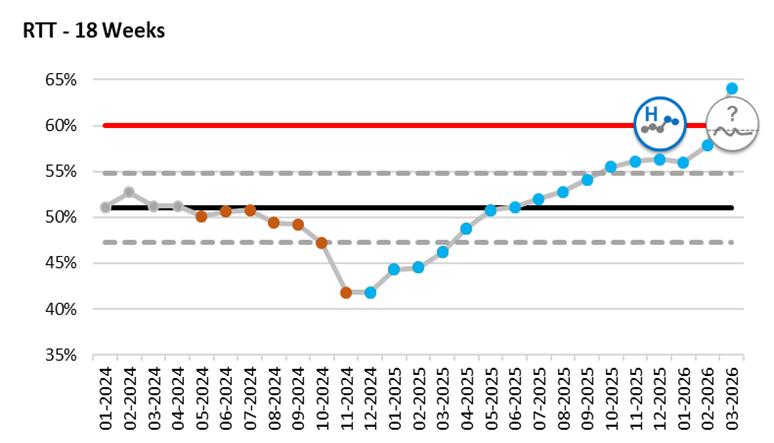
Performance against the incomplete 18-week RTT standard improved significantly during 2025/26, and the Trust exceeded its target for March 2026, achieving 64.1% against the national standard. This was supported by additional capacity, close working with community and primary care colleagues, and improved data accuracy across waiting lists.
Referral to Treatment access target – Total Waiting List Size (Total Incomplete Pathways) -
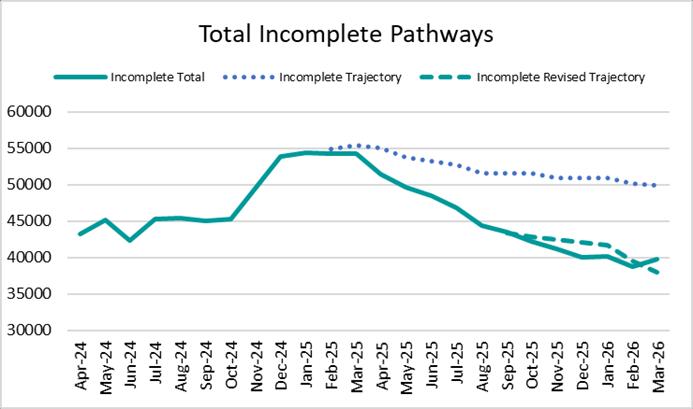
The elective waiting list reduced substantially during 2025-26, falling from 51,395 patients in April 2025 to 39,763 in March 2026.
Referral to Treatment access target – Patients Waiting Over 52 weeks -
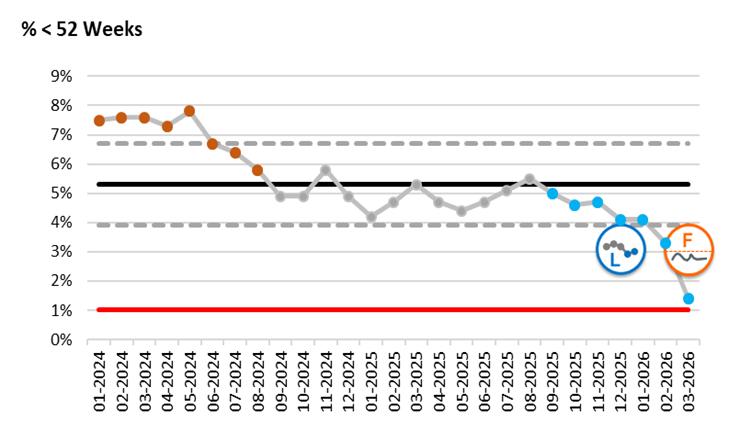
The number of patients waiting more than 52 weeks for treatment reduced significantly during the year. By March 2026, this had fallen to 569 patients, compared with 2,403 in April 2025.
Cancer performance
Delivery against the national cancer standards also improved significantly.
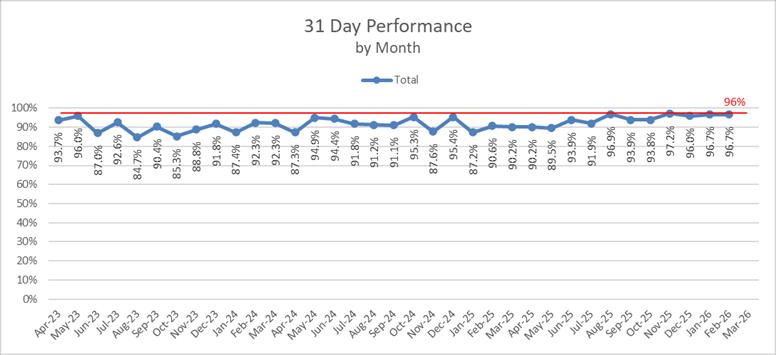
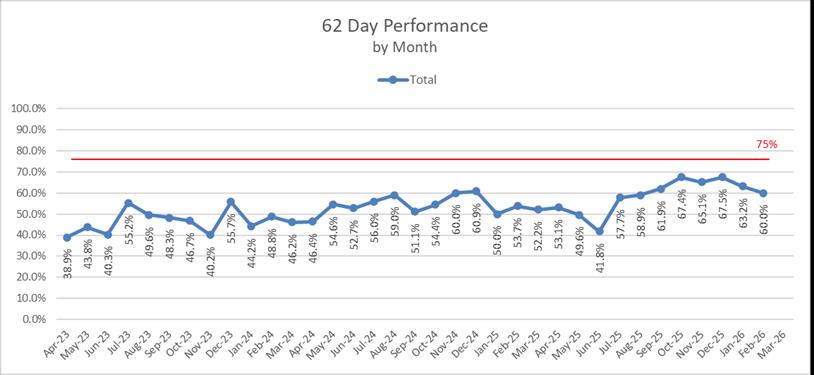
Performance against the 28-day Faster Diagnosis Standard (FDS) and the 31-day decisionto-treat to treatment standard improved substantially. Performance against the 62-day referral-to-treatment standard also improved, although it remained below the national standard. Focused improvement work will continue in 2026/27 to bring performance against the 62-day standard closer to national expectations.
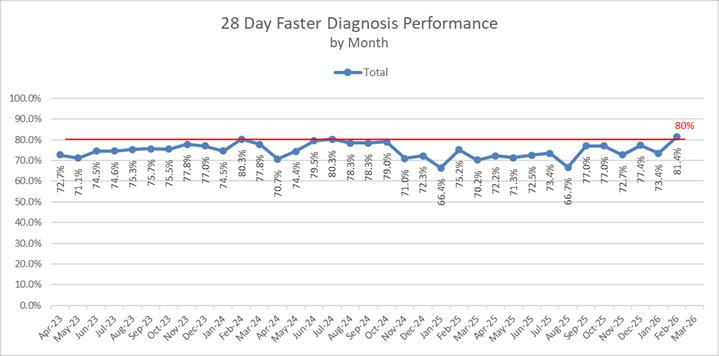
28-day Faster Diagnosis Standard (FDS) –
Performance against the FDS improved from 70.2% in March 2025 to 81.4% in February 2026. This was achieved through continued focus on the diagnostics and clinical decisions required in the early stages of the patient pathway across all tumour groups. The Trust also benefited from Cancer Alliance funding in 2025-26, which enabled investment in earlier diagnostic and clinical input across lower gastrointestinal, urology and gynaecology pathways.
31-day DTT standard (Decision to treat to treatment) -
Performance against the 31-day standard improved from 90.2% in March 2025 to 96.7% in February 2026.
62- day Standard – Referral to treatment -
Performance against the 62-day referral-to-treatment standard improved from 52.2% in March 2025 to 60.0% in February 2026 but remained below the 2025/26 national standard of 75%. Focused clinical pathway improvement work in urology, head and neck, gynaecology and lower gastrointestinal services will continue in 2026/27, with attention on the full pathway from referral to treatment to reduce waiting times in these tumour groups.
Diagnostic performance
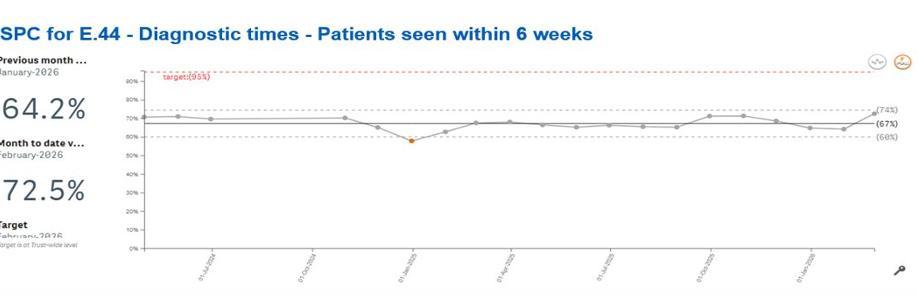
Diagnostic times – Patients Who Receive their Diagnostic Test within 6 weeks of request -
There was significant work on diagnostic pathways during 2025/26, both in terms of capacity and reporting. The new Community Diagnostic Centre (CDC) opened in March 2026, with additional CT and MRI capacity introduced as part of this development. The Trust also invested in additional insourcing for endoscopy to reduce waiting lists as quickly as possible. The new CDC will provide substantial benefits for patients across specialties by improving access to diagnostics in a location that is closer to home and more accessible.
Performance in February 2026 was 72.5%.
Urgent and Emergency Care Performance
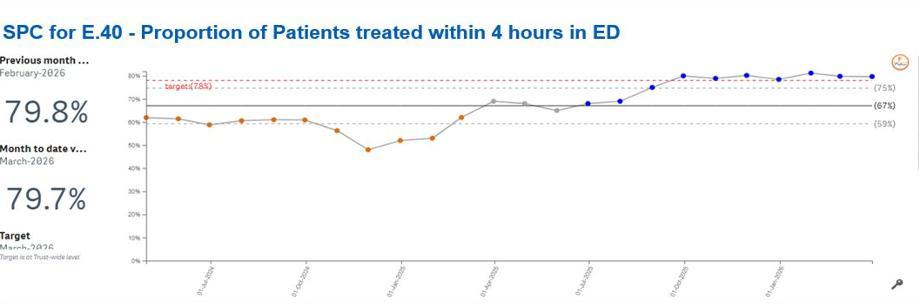
Performance against the 4-hour Emergency Department Waiting Time Target –
Performance against the four-hour standard improved markedly during 2025/26, as shown in the chart below. The Trust trialled a range of initiatives that contributed to this improvement, including additional front-door capacity during winter to support rapid assessment, further development of the Older Persons Assessment and Liaison (OPAL) model, expansion of Emergency Medicine Same Day Emergency Care pathways, a GP-led two-step streaming process at the Emergency Department front door, and a winter trial of ward-based prescribing pharmacists. This latter initiative had a significant impact on ensuring discharge prescriptions were completed earlier in the day, helping patients return home sooner.
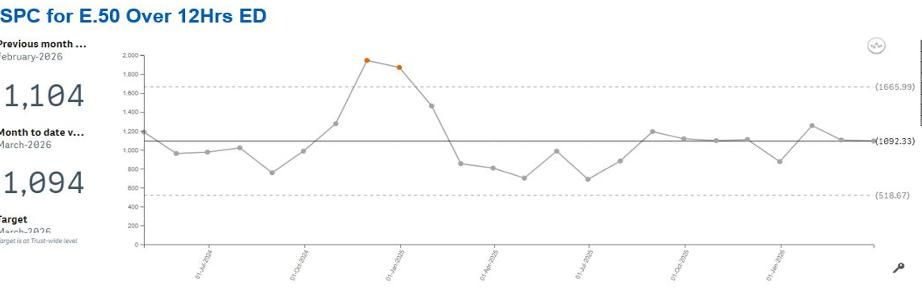
Percentage of patients who remain within the Emergency Department for 12 hours or more –
Performance against the 12-hour standard was more consistent during 2025-26, although it remains a challenge. PAHT implemented a new surge plan in 2025-26, which supported timely and appropriate escalation and action during periods of reduced flow across the urgent and emergency care pathway.
Increasing the proportion of patient discharges completed before midday will be a key improvement focus for 2026-27.
Responding in an emergency
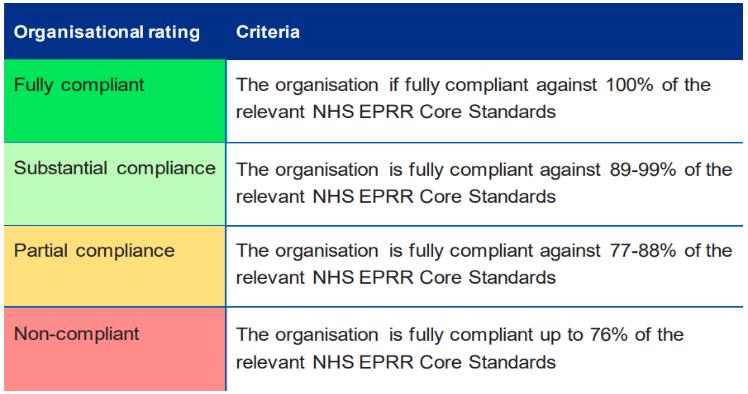
The Trust retained its status as substantially compliant against the 2025 NHS England Core Standards Assurance.
The core standards report identified several areas for improvement, with business continuity highlighted as the principal area of focus. A work plan is now in place to support delivery of the required actions.
Overall, 55 of the 62 standards were rated fully compliant and seven were rated partially compliant, resulting in an overall assessment of substantial compliance at 89%. The scoring criteria for the core standards are set out below.
A number of plans and policies relating to PAHT emergency preparedness were reviewed during the year to ensure continued alignment with national and local guidance. This included updates to the Major and Critical Incident Plan, the Adverse Weather Plan and the CBRN standard operating procedure.
Business Continuity
Business continuity management processes continued to develop during the year. This included updating the Trust-wide business continuity policy and introducing a combined business impact analysis and business continuity plan template to support divisions in reviewing and updating plans, identifying risks and strengthening preparedness.
Testing and Exercise
Throughout the year, the Emergency Preparedness, Resilience and Response (EPRR) team took part in a number of external multi-agency exercises, including Exercise Solaris, Exercise Pegasus on pandemic planning, and a cyber exercise led by the Hertfordshire Local Resilience Forum, attended by the Head of EPRR and two members of the Trust’s digital team.
The clinical performance section then considers the quality and safety of care, including infection prevention and control, learning from incidents, patient experience, mortality, health inequalities, health and safety, and quality improvement.
Clinical performance
Infection Prevention and Control
Clostridioides difficile (C. difficile)
Nationally and across the East of England, C. difficile infections continued to increase during the year, with rises in both community-onset and hospital-onset cases. A growing proportion of infections now originate in the community, often following recent antibiotic exposure, while hospitals continue to experience higher rates associated with operational pressures. High bed occupancy, limited isolation capacity, increased patient movement and greater antibiotic use during periods of system pressure all increase susceptibility and transmission risk. Combined with the organism’s environmental resilience, C. difficile remains a significant challenge for healthcare systems regionally and nationally.
At The Princess Alexandra Hospital NHS Trust (PAHT), 58 healthcare-associated cases of C. difficile were reported during the year: 38 hospital-onset healthcare-associated (HOHA) cases and 20 community-onset healthcare-associated (COHA) cases. Although the Trust exceeded its threshold of 47 cases, performance compares favourably with the wider region. PAHT recorded fewer cases than in the previous year (65 in 2024/25), and only four of the 14 Trusts in the East of England reported lower rates. PAHT’s annual rate was 26.93 per 100,000 occupied bed days, below the regional average of 30.61.
All healthcare-associated cases undergo full investigation and review through the Infection Prevention and Control Incident Oversight Group (IPCIOG) to identify any gaps in practice and monitor actions. Ongoing management is further supported through multidisciplinary ward rounds involving Microbiology Consultants and the Antimicrobial Pharmacist, together with oversight from the Antimicrobial Stewardship Group.
During the reporting year, the Trust recorded one HOHA MRSA BSI and two COHA cases. The HOHA case, identified in a baby on the Neonatal Unit, was subsequently confirmed as a contaminant following full investigation. The COHA cases were also considered likely contaminants. These reviews identified specific learning, which has been incorporated into local practice to strengthen blood culture collection processes and reduce the risk of future contamination events.
All MRSA BSI cases undergo comprehensive investigation and are reviewed through the IPCIOG. This ensures that any gaps in practice are identified, actions are implemented, and learning is shared across clinical teams. Ongoing oversight is supported by multidisciplinary collaboration, including Microbiology, Nursing, and the Antimicrobial Stewardship team.
PAHT’s performance compares favourably within the region. The Trust recorded a rate of 1.39 MRSA BSIs per 100,000 occupied bed days, slightly below the EoE average of 1.44. This reflects the continued focus on robust infection prevention measures, targeted surveillance, and strengthened clinical governance.
The Trust maintained robust oversight of its MSSA performance throughout the reporting year, ensuring structured review and organisational learning for all cases. A total of 15 HOHA cases and four COHA cases were recorded. Although no national thresholds are set for MSSA, all incidents are scrutinised through the IPCIOG governance process to identify themes, strengthen practice and support continuous improvement.
The Trust’s performance remains strong when benchmarked against the wider East of England. Our MSSA infection rate of 8.82 per 100,000 occupied bed days is significantly lower than the regional average of 13.42, reflecting sustained focus on high quality infection prevention measures. Case numbers have remained stable over recent years, with only minor and expected variation.
As with MRSA, the Trust recognises the importance of maintaining vigilance around avoidable infections. While the number of infections associated with peripheral intravenous catheters has reduced in recent years, this remains a priority area. Continued adherence to best practice in line insertion, maintenance, and timely removal is essential to sustaining improvement and minimising the risk of catheter related MSSA infections.
Gram-negative bloodstream infections (GNBSIs)
The IPC team continued to monitor trends in GNBSIs throughout the year. The largest proportion of patients with GNBSIs continued to be those with infections of urinary origin, and strategies remain in place to reduce these infections. These include sepsis prevention, urinary tract infection (UTI) and catheter-associated UTI prevention, antimicrobial stewardship to improve antibiotic treatment of UTIs, and ongoing surveillance. Improved staff education and training on GNBSI prevention remains a Trust objective for 2026/27, alongside the provision of patient information for inpatients on hygiene and hydration.
GNBSI rates for all three organisms under surveillance (E. coli, Klebsiella sp. and Pseudomonas aeruginosa) remain lower than the average EoE GNBSI rates, and lower than rates in our neighbouring Integrated Care System (ICS) Trusts. The majority of these infections have been 'no harm' incidents.
Continued vigilance is required in relation to the increasing use of carbapenem antibiotics, such as meropenem, to treat these infections. While antimicrobial resistance (AMR) continues to increase globally and nationally, this is also reflected in local Trust GNBSIs. In particular, extended-spectrum beta-lactamase (ESBL)-producing organisms are increasing gradually. Although carbapenemase-producing organisms (CPOs) remain rare in GNBSI infections at PAHT, outbreaks are being reported increasingly by other Trusts in the East of England. The Trust therefore needs to improve CPE screening for PAHT patients in order to reduce the risk of future CPE GNBSIs.
Respiratory viruses
Common winter viruses were monitored across the Trust as part of winter preparedness, supported by a comprehensive IPC campaign and respiratory virus surveillance programme. There was a particular focus on Influenza A, which was the dominant strain nationally during the winter period. Influenza A activity across the East of England and within the Trust reflected the national picture.
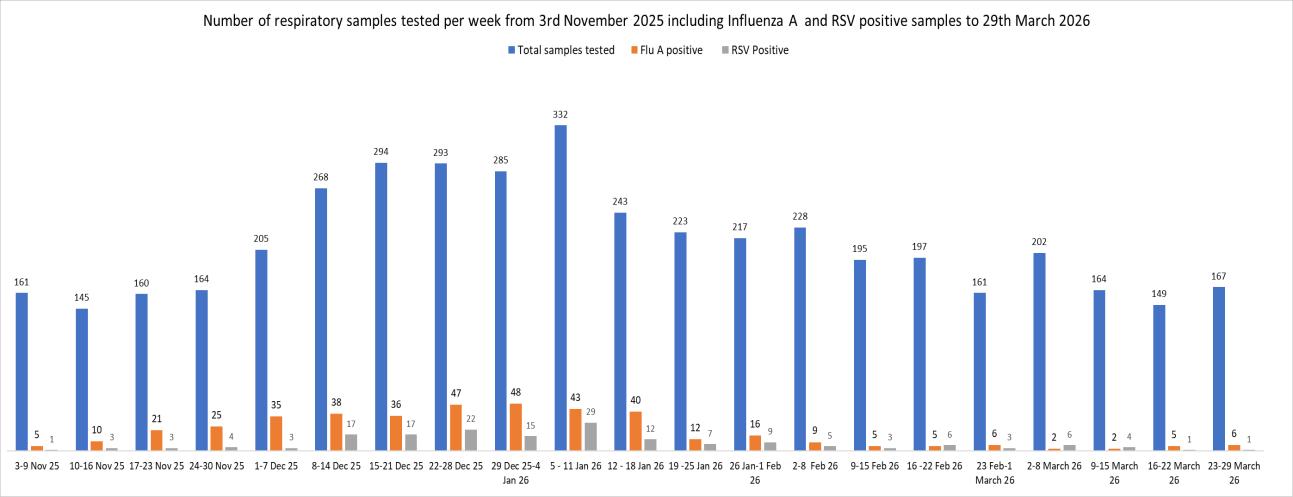
During 2025–26, the Trust reported a total of 415 cases of Influenza A with a peak in December 2025. This compares with 275 cases in 2024–25, with a peak in January 2025. Influenza B activity was low with just six cases reported for 2025/26, compared with 46 cases in 2024-25, and 12 cases in 2023-24. The Trust also reported 157 cases of RSV infection, with high case numbers in December 2025 and January 2026, and 262 cases of Covid infection.
IPC strategy:
Staff and patient protection using Influenza vaccination was a key national and local strategy, with our front-line staff having a vaccination rate of 47.4%, an all-time high.
A point-of-care (POC) testing programme at triage in both Adult and Paediatric Emergency Departments for Influenza A and B, respiratory syncytial virus (RSV) and COVID-19 was implemented from November 2025. During laboratory hours, testing was undertaken using the Cepheid GeneXpert respiratory panel, which is the preferred POC test used by HSL laboratories, now responsible for pathology services at PAHT. Out of hours, a combination of Cepheid testing in the laboratory and Abbott testing in the Emergency Department was used. The Trust aims to move to a 24/7 Cepheid testing model by winter 2026/27 in the newly refurbished Essential Services Laboratory in the pathology department at PAHT.
POC results were available in < one hour and enabled swift IPC measures. In line with recommendations in the national IPC manual, patients were successfully managed at our Trust as part of a wider group of respiratory viral infections. A winter surge plan involving Kingsmoor ward was not required. Due to developments in the prevention and treatment of Influenza, we developed a clinical care bundle to optimise care of our inpatients. Also, patients were tested and discharged from ED on anti-viral medication if medically fit enough to do so.
A range of broader IPC measures to mitigate recognised and unrecognised IPC risks remained in place across the Trust throughout the winter.
This included:
• hand hygiene
• standard IPC precautions
• a hospital cleaning programme
• use of face masks (FRSM) from mid-December 2025 until mid-February 2026 which was implemented by the Trust IPC Steering Group to further reduce the impact of Influenza A on patients and staff.
• staff education and Trust wide communication
Trends in Trust Influenza case numbers (orange bars in the Figure below), RSV numbers (grey bars) and total number of patients swabbed (blue bars) by week are shown below.
In relation to future IPC requirements, consideration should be given to monitoring fit testing for personal protective equipment (PPE) through an electronic database, and recommendations from the ventilation safety group should continue to be routinely integrated into the Trust’s IPC strategy.
Impact of respiratory viruses:
There were eight COVID-19 outbreaks recorded during the year. Only one of these involved more than 10 patients; the remaining outbreaks were small and contained. This compares to 16 COVID-19 outbreaks in 2024-25 and 32 outbreaks in 2023 -24. Patients generally had mild symptoms. The total number of patients in critical care with Flu A was low (6 patients). Relatively few patients had severe clinical disease. Four patients had Influenza A listed on the death certificate in Part 1 and three were listed in Part 2. There were six Influenza A outbreaks during the same period. RSV vaccination appeared to protect vulnerable patients at our Trust, with disease impact being minimal. The RSV vaccination campaign for elderly patients has been extended by the Joint Committee on Vaccination and Immunisation (JCVI), as this was a national observation.
The POC testing programme was supplemented by a full respiratory viral testing panel in the main HSL laboratory (off site) and provided us information about other respiratory viruses in our patient population, such as Human metapneumovirus (hMPV), adenovirus and para-influenza virus infections
By the end of February 2026 there was a reduced burden across our health care setting associated with all respiratory viruses.
Other organisms, incidents and outbreaks
Group A Streptococcus (GAS)
GAS numbers were stable this year, but this remains an organism with significant pathogenic potential. The vast majority of cases were detected from community samples and showed a significant reduction compared to last year: 177 community cases in children under 16 years, compared to 478 community cases in the same age group in 2024-25, and 154 community cases in adults, compared to 227 cases in 2024-25.
However, the number of ED attendances and hospital admissions although low, has not reduced in line with the reduction in community cases over the last year. This reminds us about how virulent this streptococcus species is, and how unwell patients with GAS infection can become. Fortunately, GAS remains sensitive to penicillin. In 2025/26, 19 children were seen in the Children’s ED, compared with 27 in 2024-25, with two admissions recorded in each year and two children admitted each year. 30 adults with GAS were seen in adult ED with six admissions in 2025/26, compared with 27 adults seen in ED in 2024-25, with eight admissions.
Norovirus
Norovirus activity has been significantly higher than usual across the region and nationally this year, with surveillance showing levels well above the seasonal average. Despite this wider increase, the Trust has not had any outbreaks this year, although these did occur in the inpatient wards at St Margaret’s hospital.
Meningococcal outbreak unrelated to PAHT but of wider relevance
Twenty-one cases of invasive group B meningococcal disease (IMD) linked to Canterbury, Kent, were identified between 16 March 2026 and 23 March 2026. Most cases had an epidemiological link to a specific nightclub in Kent or to the University of Kent campus.
• Although the UKHSA advised via Regional Cells, for Trusts and GPs across the UK to prepare to receive cases or contacts connected to the incident, the outbreak was contained locally using Ciprofloxacin single dose prophylaxis, and meningitis B vaccination of contacts. The outbreak did not spread nationally or internationally.
• The risk to the wider public was low as meningococcal disease is less contagious than infections such as measles or COVID-19, and transmission requires close, prolonged or intimate contact.
• While individual meningitis cases are not uncommon, the rapid emergence by 16 March 2026, of fifteen cases within 48 hours was entirely unexpected, as most meningococcal outbreaks involve two to four cases over a longer period. Transmission was likely due to close contact among young adults in a nightclub setting, behaviours that increased bacterial sharing, characteristics of the strain, and varying immunity levels.
• A handful of patients presented to our PAHT Emergency Department worried about meningitis during this time period, but we did not see any cases or contacts linked to Kent, or actual cases of meningitis.
• In the light of this outbreak, a national men B vaccination campaign for young adults will be considered by the JCVI (Joint Committee on Vaccination and Immunisation) in the coming months.
Overall, the Trust delivered strong IPC performance despite regional pressures, maintaining lower-than-average rates across key infection categories and strengthening governance, surveillance and clinical practice throughout the year. Continued focus on antimicrobial stewardship, rapid diagnostics and high-quality clinical care remains central to protecting patients and staff and to maintaining safe, resilient services.
Learning from patient safety incidents
Patient safety remains a priority for the Trust. We continue to work to ensure that incidents are identified, managed promptly and effectively, and that learning is shared with relevant staff to support sustained improvement in care.
A patient safety incident is any unintended or unexpected event that could have led, or did lead, to harm for one or more patients receiving NHS-funded care. This includes adverse incidents, adverse events and near misses, where an incident was identified before harm occurred.
Between 1 April 2025 and 31 March 2026, 13,362 incidents were reported through the Trust’s incident management system. This level of reporting was broadly consistent with the previous year. The distribution of incidents across the Trust’s divisions is shown below.
Incident reporting data for 1 April 2025 to 31 March 2026
Categories of non-patient safety incidents
A substantial proportion of reported incidents do not relate directly to patient safety. These are summarised below.
2025/2026
Patient Safety 8166 (61%)
Monitoring 2008 (15%)
Staff Incident 1231 (9%)
Staff Shortage630 (5%)
Equipment 552 (4%)
Security 365 (3%)
Environmental328 (2%)
Visitor 82 (1%)
Top 10 patient safety incident categories
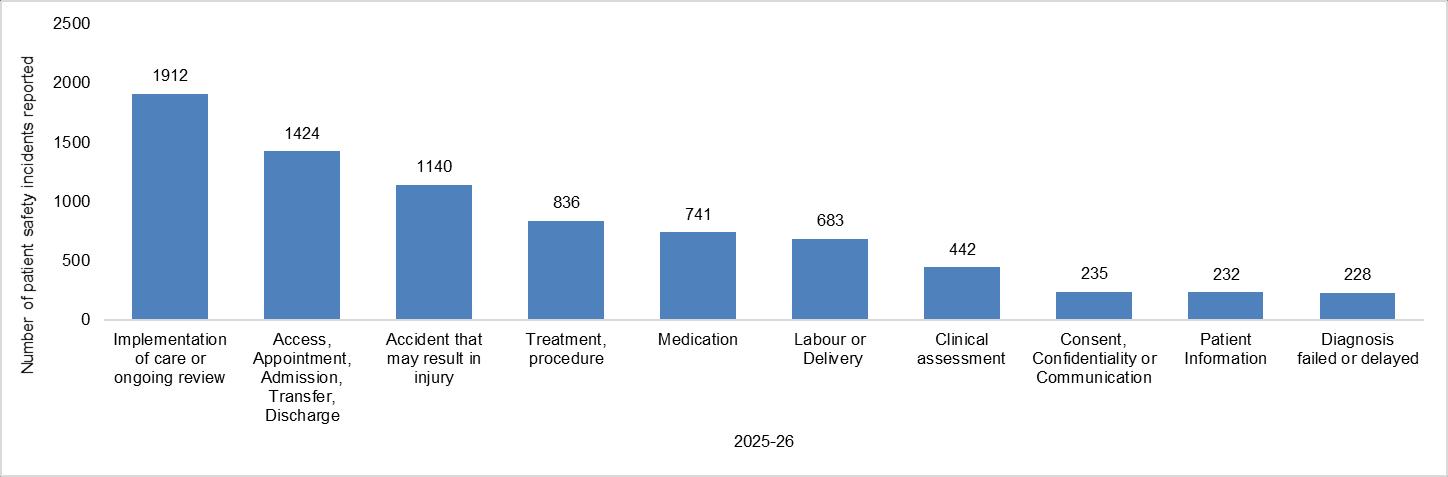
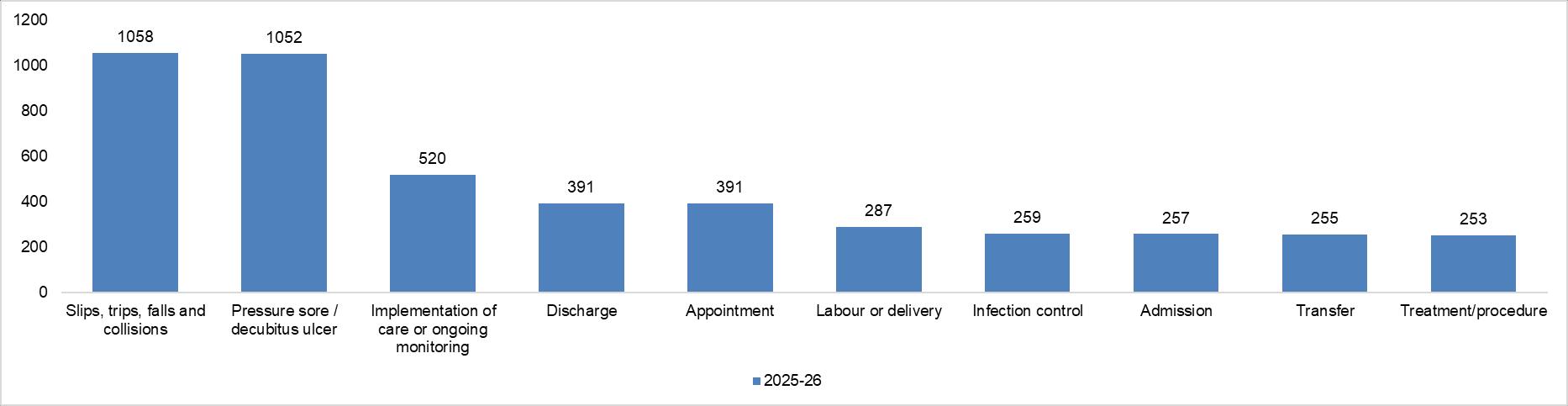
The 10 most frequently reported categories of patient safety incidents during the year are summarised below, together with the principal themes of care incidents. These are reported through the Learn from Patient Safety Events (LFPSE) service to support learning and benchmarking with comparable organisations nationally.
Top 10 categories of patient safety incidents for 1 April 2025 to 31 March 2026
Top 10 themes of care in patient safety incidents for 1 April 2025 to 31 March 2026
The Patient Safety Incident Response Framework (PSIRF) is the national approach used to identify incidents that require formal response and investigation, with a focus on learning to improve patient safety. Investigations commissioned under PSIRF are referred to as Patient Safety Incident Investigations (PSIIs).
The Trust raised nine PSII investigations during the period 1 April 2025 to 31 March 2026, compared with 13 in the previous year.
Once a PSII investigation is concluded, an action plan is developed to capture the learning identified and the recommendations required to reduce the risk of recurrence. The Trust uses a ‘sharing the learning’ report to ensure that relevant staff are informed of:
• the key issues that occurred in this incident
• the changes to practice either implemented or being completed
• what the learning from the incident is to prevent reoccurrence.
These reports are shared within the teams where the incident occurred and, where relevant, across other clinical areas and divisions. Learning is also brought together in a Trust-wide report presented through monthly or quarterly quality governance meetings, including the Quality and Safety Committee.
Of the nine PSIIs raised during 2025/26, two were classified as Never Events. One investigation has concluded and a robust action plan is in place, while the second remains under investigation. Overall, investigations for five of the nine PSII incidents had concluded by year end, with action plans developed and learning shared.
Examples of changes implemented as part of learning from incidents
Hospital acquired pressure ulcers
Reviewed and implemented a refreshed multidisciplinary pressure‑ulcer prevention pathway to support timely identification and treatment of skin damage to reduce the incidence of higher severity hospital acquired pressure ulcers.
Critical medication
The pharmacy revised its supply process for critical medications (for example, medicines used to treat Parkinson’s disease) by introducing direct communication with clinical areas when medications are ready for collection and ensuring medicines are redirected appropriately when patients are transferred between departments, supporting the timely administration of essential treatment.
Discharge summary process
The trust has strengthened the discharge summary process to ensure timely information sharing with primary care to support ongoing care and treatment following a patient’s discharge
Creative collaboration for pregnant patients
Improved collaboration between the Emergency Department and obstetrics and Gynaecology specialists for pregnant and recently pregnant patients attending the Emergency Department requiring urgent care and treatment
Neonatal Care Planning
The Trust has strengthened multidisciplinary team communication and processes for notification of babies requiring neonatal care plans.
Customer service training
The Trust implemented customer service training within outpatient services to strengthen communication and accessibility for patients with hearing difficulties.
Drug administration
Standardised competencies were developed to support consistent and safe practice in the management and administration of controlled drugs
Nerve Block Procedures
The Trust strengthened safeguards against wrong-site nerve blocks through standardised site-marking practice and reinforced multidisciplinary training and team-based checks prior to anaesthetic blocks
• , Paediatrics and Surgery
Patient experience
Patient Advice and Liaison Service (PALS)
The Patient Advice and Liaison Service (PALS) is often the public’s first point of contact with the Trust. During the year, the service responded to 5,087 enquiries, representing a 7.6% increase compared with 2024/25. PALS receives concerns by email, telephone and in person, and works closely with clinical and service teams to support timely resolution.
Complaints – Section 18 report
The Complaints team manages formal complaints relating to patient care. Each year, the Trust is required under Section 18 of the Health and Social Care Act 2009 to report on the number of complaints received, whether they were upheld, the subject matter raised, and the actions taken in response. This section is intended to meet that requirement.
Complaints received
The Trust received 651 formal complaints in year, which is a 104% increase on the previous year (319). Of the 561 complaints closed in the period, which is the point at which an outcome can be determined, 80 were fully upheld, 271 were partially upheld, and 117 were not upheld, the remainder (93) having been either withdrawn, out of time, or failed to provide valid consent.
By identifying a case as partially upheld, we mean that at least one of the concerns raised meant action was required by the Trust to address the issue.
Of the 561 cases, 1037 categorisations were made (each case can be categorised multiple times). The most frequently occurring themes related to:
Themes
Across the 565 closed complaints, 1,037 categorisations were recorded, reflecting that a single complaint may relate to more than one issue. The most frequently occurring themes were:
a. Medical and nursing care
b. Communication
c. Waiting times
Issues relating to medical and nursing care are addressed by the relevant ward or specialty, with specific actions taken in response to the learning identified in each case.
Trust-wide transformation work is underway to address outpatient waiting times and improve the overall patient pathway.
The patient experience strategy is focused on three core themes: improving communication, making effective use of technology, and embedding kindness and compassion in the services provided.
The Trust’s actions in response to these themes included:
Improving communication
• More than 2,500 nursing, midwifery and allied health professional staff completed Sage and Thyme Foundation Level communication skills training, with a pilot also undertaken involving medical staff.
• Enhanced communication training was developed and delivered for preceptorship nurses, allied health professionals and operating department practitioners.
• Support was provided to Patient Panel outreach events in Harlow, Epping and Bishop’s Stortford to improve awareness of PALS support and the formal complaints process.
• Work continued with the deaf community to improve cancer information in partnership with Anglia Ruskin University in Cambridge.
Using technology effectively
• My Alex Health, the Trust’s web-based patient portal, went live in March 2025. It provides patients with secure digital access to information relating to their care at PAHT, including appointment letters, test results and scans. To date, more than 62,000 patients have registered to use the portal, with 29 specialty services now live and five services remaining to be onboarded.
• A technology-enabled noise-at-night project remains underway, using sound meters to monitor decibel levels and support improvements to the inpatient environment.
• A project is underway to procure new digitally trackable wheelchairs, with the aim of improving wheelchair availability and management across the Trust.
Embedding kindness and compassion
• Projects were developed to support personalised care, including the provision of food and drink for patients waiting extended periods in the Emergency Department and Urgent Treatment Centre, improved discharge support, and end-of-life care through the Butterfly volunteer hub.
• Greater visibility was given to the needs of marginalised groups through Board stories focused on community outreach and work to reduce health inequalities within maternity and neonatal services.
• Sensory and therapeutic gardens on the hospital site were further developed and adopted for use by patients and staff.
Compliments
The Trust receives a large number of compliments each year in recognition of the care and support provided by staff and services. Set out below are a small number of examples received during 2025/26, which reflect the experiences shared by patients and families.
“I would like to praise all the staff that I had contact with from the caring, knowledgeable nurses, the extremely patient anaesthetist, and of course the consultant. I entered the unit completely terrified not of the procedure itself but the thought of having a general anaesthetic. If it had not been for all the staff who were so kind and patient, I was not sure I could have gone ahead.”
“My thanks and gratitude to every single member of staff at PAH, my daughter attended A&E with suspected appendicitis. The moment we arrived every member of staff was attentive and caring, escalating to surgery. The surgeons, ultrasound department, Children’s A&E, Dolphin Ward have just been amazing, helped with every query, every inch of support and care, I feel quite overwhelmed.”
“The support, dedication and encouragement continued to be provided by my midwives throughout my pregnancy. They made me feel safe and secure at a time when uncertainties still very much lay ahead. They will be the first to tell you that my biggest challenge was having the ability to trust. I can hand on heart say I trust them implicitly, no matter what, no matter the situation no matter how scared I felt. That core foundation of trust was built, maintained and will always continue to be valued. With my best interests at heart, they advocated for me time and time again when I struggled to advocate for myself.”
“I would like to express my sincere thanks for the care given to my husband during his recent visit to The Princess Alexandra Hospital. It was an extremely long day, with a wait for his procedure while being nil by mouth, but this was made much easier thanks to the kindness and professionalism of the team who looked after him.”
“I attended the radiology department and can only express my appreciation for the kindness, courtesy and professionalism of everyone I met from the receptionist, the radiographers and discharge nurse. It would be impossible to have been made to feel more comfortable or more reassured. It was a procedure I was not looking forward to, but their kindness and efficiency made the whole thing "a piece of cake".
Mortality
The Princess Alexandra Hospital NHS Trust (PAHT) is currently reporting a mortality position of higher-than-expected deaths under the Dr Foster mortality model. Deterioration in the Trust’s mortality indices was identified from June 2025.
The elevated values are primarily attributable to data quality issues arising from incomplete clinical coding at SUS+ submission.
For the period December 2024 to November 2025, the HSMR+ was 109.85 and classified as higher than expected, based on 18,930 super spells and 791 deaths, giving a crude rate of 4.18% (Figure 1).
Despite this deterioration under the Dr Foster model, the Trust’s HSMR+ has not been identified as statistically significantly higher than that of national peers over the last 12 months when assessed against the 99.8% control limit (Figure 2).
For the period December 2024 to November 2025, the SMR was 110.48 and classified as higher than expected, based on 69,219 super spells and 991 deaths, giving a crude rate of 1.43% (Figure 3).
In summary
Mortality indicators have remained elevated since June 2025. Current analysis indicates that the principal cause is data quality rather than clinical care, as set out below:
• Staffing challenges within the coding department have contributed to a backlog in coding clinical activity.
• Implementation of Alex Health, the Trust’s electronic patient record, in November 2024 created additional and unnecessary episodes of care, which distorted expected mortality calculations. This issue was not identified until July 2025.
• Clinical documentation and coding standards have, in some cases, misrepresented patients’ care and treatment, leading to inaccurate or incomplete coded activity and affecting the Trust’s mortality position.
Learning from deaths does not rely solely on mortality indices. The following processes complement the mortality data and support broader review and learning:
• The Dr Foster data set includes diagnosis-specific mortality outliers. All patient deaths within each outlier group are reviewed by clinical specialty leads and coding leads to identify potential care, treatment or coding issues.
• Every in-hospital and Emergency Department death is scrutinised by the Medical Examiner team.
• A minimum of 25% of deaths are further reviewed using the Structured Judgement Review approach, with learning shared through regular departmental mortality and morbidity meetings.
• Concerns identified through, or external to, these processes are considered through incident management arrangements using the Trust’s Datix reporting system.
The SMART database, implemented in July 2021, is now fully embedded within the Trust.
• It is used to complete Medical Examiner independent reviews and to record Structured Judgement Reviews and other mortality reviews.
• The database produces a range of mortality dashboards, enabling teams to review mortality over defined periods.
• This has proved a useful tool for identifying themes and trends in order to better understand the Trust’s mortality position and where improvement may be required.
• It also provides a digital platform to support the management and standardisation of mortality and morbidity meetings, recording reviews and tracking required and completed actions.
• An artificial intelligence (AI) tool has been developed within SMART to support the identification of themes and trends for learning.
Next steps
• The Strategic Learning from Deaths Group (SLfDG) will continue to oversee and support the mortality programme, enabling ongoing improvement in the care provided to patients.
• The palliative care and coding teams have begun attending local mortality and morbidity meetings to strengthen multidisciplinary learning.
• Extensive teaching is underway to improve clinical documentation and support accurate coding of clinical activity.
• A working group is reviewing the episode of care pathway to reduce the additional episodes created by Alex Health.
• Further implementation of the SMART system will help standardise and extend the mortality and morbidity programme across all services in the Trust.
• Learning from inquests involving patient deaths will continue to be fed into the SLfDG and mortality and morbidity meetings to support wider organisational learning.
• A Lead Mental Health Nurse has been appointed and will support mortality reviews for patients who have died with mental health conditions.
• Benchmarking with comparable trusts and coding departments will continue to support shared learning and improvement.
• Benchmarking with mortality leads in other trusts and with the regional mortality team will continue in order to share learning.
Quality improvement
The most recent inspections of the Trust were completed by the Care Quality Commission (CQC) through unannounced core services inspections using the new quality statement framework in November 2025 of:
• Surgery,
• Urgent and emergency care
• Medicine
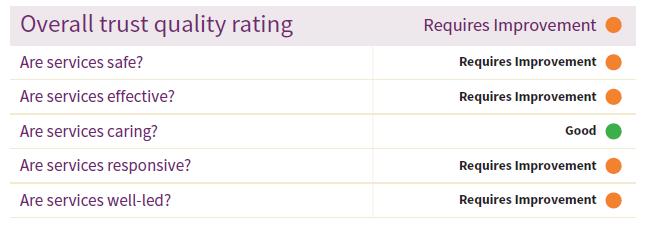
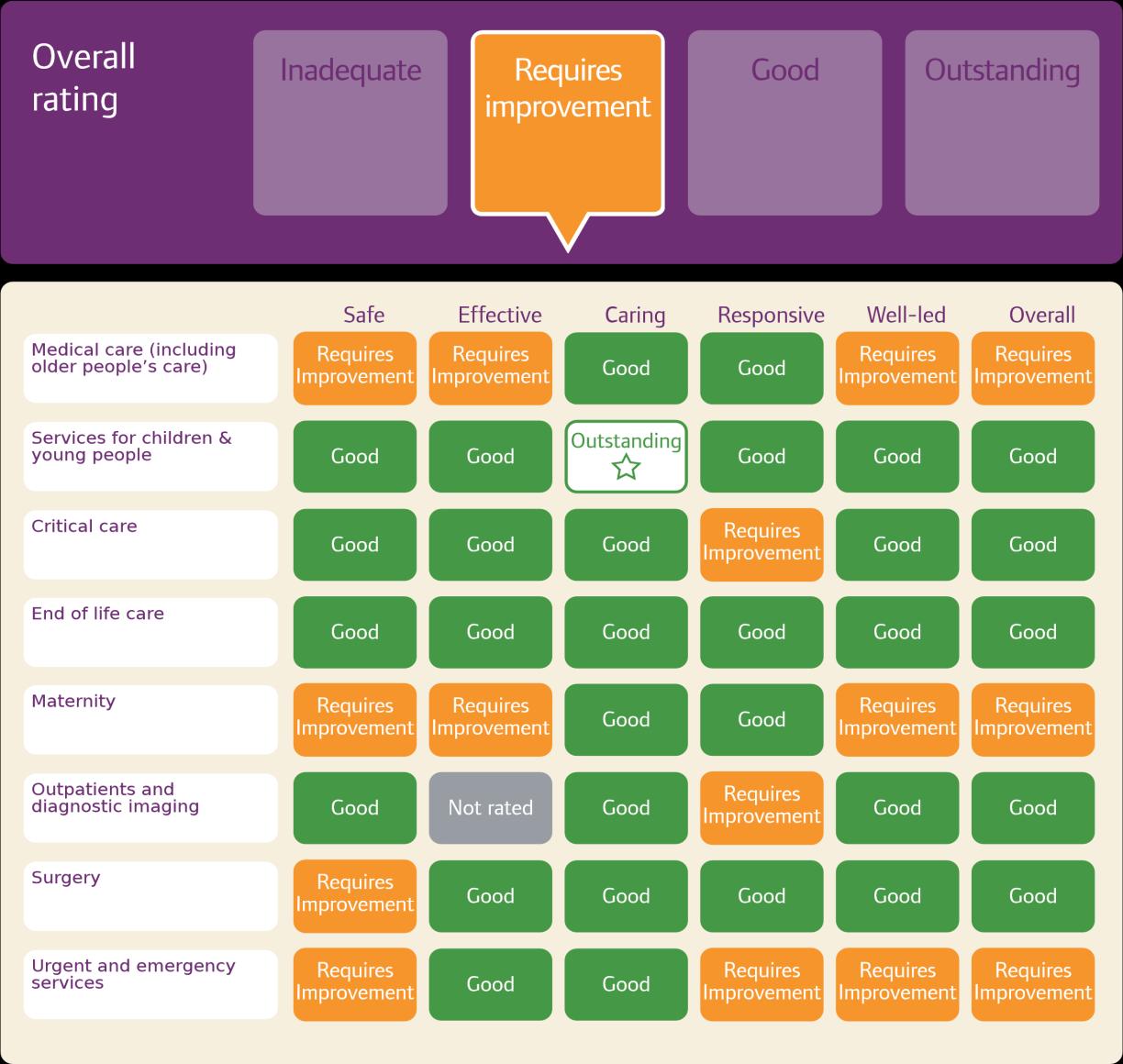
We had a Trust-wide well led inspection in January 2026. At the time of writing this we have not received the final reports. Therefore, our CQC rating remain ‘requires improvement’ from our 2021 published inspection. The CQC completed an unannounced focused inspection of the Emergency Department in March 2023 and the grading for our Urgent and Emergency Department improved.
Our overall Trust rating
Our overall ratings by service
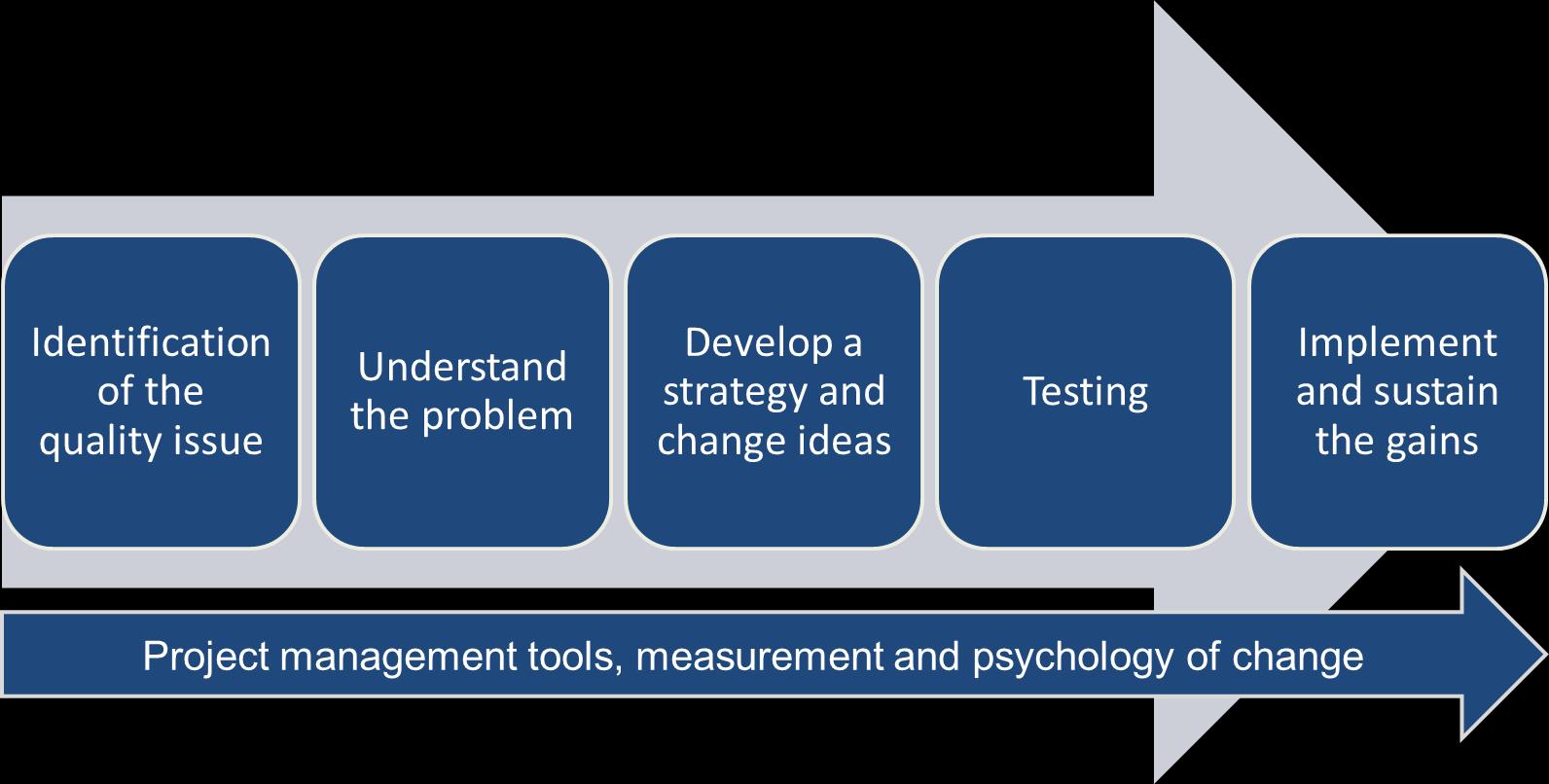
The recommendations received from the 2021 and 2023 CQC inspections were collated into individual projects and were updated by the relevant divisional teams using our quality improvement methodology to enable a consistent and sustained approach to the achievement of these objectives. Each project has a designated executive lead, a senior
responsible officer (SRO) and we have appointed a quality project management team to provide additional support.
We used our CQC quality improvement plan as a dynamic document; during the year we have added additional improvement topics into it, as we identified further areas that required improvement. The quality improvement plan is monitored monthly through the Clinical Quality Improvement Group that reports into the Trust Compliance Group and onto the Quality and Safety Committee.
Our people use the CQC inspection outcomes as the foundation upon which to critically examine our services and focus on how we plan and deliver the fundamental aspects of safe care. We have taken decisive action to change everyday activities, which have led to significant improvements.
The Trust is actively working across all our clinical services to measure our current performance position and identify the evidence we have in place to support each quality statement.
Tackling Health Inequalities
The Chief Medical Officer is the executive lead for health inequalities. The Executive Team supports the ownership and progression of actionable plans.
The Trust continues to embed equality of service delivery through its governance, strategic framework and operational practice, in line with duties under the Equality Act (2010) and NHS England’s health inequalities requirements.
The Board approved the Trust’s Health Inequalities Plan in December 2025 with reporting integrated into the Trust’s existing governance framework. Commitment to reducing inequalities is embedded into the new PAHT Rise Strategy. Executive leadership has been established with strengthened oversight and appraisal-linked objectives.
PAHT’s Patient Panel continues to support the ICB’s priority to improve access in deprived areas through outreach events. The voluntary services strategy emphasises co-design with vulnerable groups. The Community Diagnostic Centre (CDC) at St Margaret’s Hospital is now operational. The centre provides a range of diagnostic services including cardiology, respiratory testing and imaging diagnostics such as CT, MRI and ultrasound scans. The new facility is designed to help patients access important tests more quickly and closer to home. The opening of the CDC marks an important step in improving access to diagnostic services for local communities, helping to reduce waiting times and support earlier diagnosis and treatment.
Oliver McGowan training on learning disabilities and autism is now mandatory for all PAHT staff. Over 2,500 PAHT nursing, midwifery, and AHP staff have now completed SAGE and THYME communication training, with a trial undertaken involving doctors. In response to national recommendations, Martha’s Rule known within our Trust as ‘Call 4 Concern’ is now in place to support patients and families who feel their condition, or that of their loved one, is deteriorating and needs urgent review.
PAHT also supports The West Essex Health and Care Careers Pathway which is a new initiative designed to create structured routes into health and care employment. The programme supports disadvantaged groups into sustainable careers, with measurable outcomes.
An updated Integrated Equality Impact Assessment (EQIA) and Quality Impact Assessment (QIA) process has been rolled out across programmes. Health equity measures are being incorporated into the Integrated Performance Report (IPR).
The ‘My Alex Health’ Patient Portal, originally launched in March 2025, is our web-based patient portal designed to enable patients to access their information relating to their PAHT care. 29 hospital services are currently live on the portal, and 62,000 patients have registered to use it. Development of the portal was supported by a partnership with local voluntary sector organisation West Essex Community Action Network who helped us repurpose electronic devices to combat digital exclusion in deprived areas.
Health inequalities frameworks have been applied across all Quality Improvement and research programmes.
Health and Safety
The Health and Safety Committee has oversight of organisational compliance with statutory health and safety requirements and specific NHS duties. In this way compliance with external organisational requirements such as the HSE, NHS Resolution (formerly the NHSLA), Department of Health, CQC etc. are managed. The Director of Finance is chair of the Health and Safety Committee, being the director with delegated responsibility for health and safety within The Princess Alexandra Hospital.
The Health and Safety Committee is accountable to the Performance and Finance Committee (PAF) which is in turn, responsible to the Trust Board. The Health and Safety Committee is tasked with monitoring the development, implementation, audit and delivery of health and safety organisational management throughout all working aspects of the Trust’s diverse activities.
The Health and Safety team continues to provide advice and guidance in the implementation of statutory risk assessments through the various subgroups. To support the risk assessment programme, the Patient Safety and Risk Management team deliver local and open risk assessment training promoting best practice in the completion of a Trust risk assessment and the principals of effective risk management within departments and in the wider organisation. Specialist risk assessments are being completed by the Health and Safety team upon request.
Throughout 2025/6 the team has worked hard to continue with their inspection programme. These continue to be received well by the organisation. The team have also worked with the divisions and departments on several additional local initiatives.
The team has continued to promote positive health and safety working practices with the delivery of a manager’s training module. The team are programmed to deliver sessions every two months as part of the Ready to Manage programme within the Trust.
The team has been instrumental in the project for phase 1 of the provision of new wheelchairs and are now working on phase 2 for the provision of external wheelchair parks. As well as this the manual handling lead within the team has been proactively working with the falls team, procurement team and wards to improve the complement of manual handling equipment available.
Safety sub-groups for the relevant HTM’s (Health Technical Memorandums) continue to be facilitated by the team throughout the year, to monitor progress against issues, maintenance, and compliance requirements set for each. The HTM groups cover, electrical, ventilation, fire, water, waste, medical gases, lifts. In turn, these report into the Health and Safety Committee, as referenced above.
Externally, the team liaise with Essex Country Fire and Rescue service monitoring fire activities. This includes the occurrences of unwanted Fire Alarm Activations (UWFA), education, prevention and any relevant issues that arise from crew attendances.
The actions from their findings have been managed by the Fire Safety Group (Health Technical Memorandum 0503). The full review of the fire risk assessment project is almost complete, and the Interim Fire Advisor is working with the relevant “person with control” to correct any issues raised.
Interaction with HSE has been minimal over this year, mainly in the form of RIDDOR (reporting of incident, dangerous diseases and occurrences regulations) submissions. Where relevant these have been followed up further.
Overall, the team has worked well with internal and external stakeholders, following up incidents and activities to support improvement.
Quality Improvement
The purpose of the quality improvement (QI) and transformation team is to nurture an improvement culture that enables the delivery of the PAHT’s Rise Strategy and wider NHS ‘Fit for the Future: 10 Year Health Plan for England’ three shifts:
• Analogue to digital
• Hospital to community
• Sickness to prevention
We achieve this by working alongside our people, patients and wider health and care partners with a focus on two key areas:
1. Building our people’s capability and capacity in delivering quality improvement and transformational change at PAHT for the benefit of our patients, staff, and wider community.
2. Centrally coordinate and facilitate the delivery of quality improvement and transformation programmes and projects that address significant risks and/or achieve the realisation of strategic priorities.
Quality First Programme Focus and Scope
The following improvement programmes have been supported by the QI and transformation team:
• PAHT2030 Change Strategy
• Alex Health Transformation
• Outpatients Programme
• Urgent Care Programme
• Theatres
• MSK lead provider
• West Essex HCP Transformation (frailty, adult as well as children and young people)
For the year ahead (2026/27) we have aligned our quality improvement and transformation activities with strategic and organisational goals. There will be three PAHT programmes aligned with the three new divisions. The focus will be on:
• Urgent care and unplanned care
• Elective pathways (focus on theatres utilisation and elective recovery)
• Outpatients’ improvement and redesign
Patient safety and quality will be a golden thread that cuts across this and we will be held to account on delivery by our impact against core planning metrics across the five Ps (Patients, People, Performance, Population and Pounds). Ultimately, we will look to make sustainable improvement that impacts positively across patient experience and outcomes as well as the wider community we serve (population focus and care closer to home).
Linked with this will be three system integration priorities of:
• Children and Young People (Paediatrics)
• Long-Term Conditions
• Frailty
There are three cross cutting and enabling streams of work:
• Integrated Workforce Development Programme
• Neighbourhood Health Development
• Strategic estates
• Digital by default
This work will significantly support the delivery of our new and emerging Rise Strategy as we recover, renew and rise.
How we improve: PAHT Improvement Approach
At PAHT, improvement is guided by our Improvement Roadmap (Fig 1), which provides a structured and consistent approach to delivering sustainable change aligned to our strategic priorities.
The roadmap sets out the key stages of improvement from identifying and understanding problems, through to testing, implementation and sustaining gains supported throughout by project management, measurement for improvement and the psychology of change
Within this approach, we use the Model for Improvement as our core method to support teams to define clear aims, establish meaningful measures, and test practical change ideas using Plan–Do–Study–Act (PDSA) cycles. This enables a disciplined and evidence-based approach to developing, testing and implementing change.
Fig 1 – Improvement Roadmap – PAHT approach
Driving improvement through programmes of work
Quality improvement at PAHT is embedded within everyday clinical and operational practice and is enabled through a combination of capability building, programme delivery and governance oversight.
Improvement programmes are designed around priority quality and operational challenges, with clear aims, measures and accountable leadership. These are supported through structured governance arrangements, including regular reporting to the Quality and Safety Committee, ensuring transparency, accountability and continuous organisational learning.
Patient safety and harm reduction
Improving patient safety remains central to our improvement approach. Programmes have focused on reducing harm, strengthening reliability in safety-critical pathways, and ensuring that learning from incidents and mortality reviews is translated into measurable and sustained improvements in practice.
Improving patient experience
Patient experience is improved through targeted programmes that use patient feedback and insight to inform priorities, design changes and evaluate impact, ensuring that improvement is grounded in what matters most to patients and families.
Quality, productivity, and sustainability
Quality improvement also supports productivity and sustainability, ensuring that services are efficient while maintaining exact standards of safety and experience. Improvement programmes have focused on patient flow, reducing delays and improving the effective use of resources.
Governance, assurance, and learning
All quality improvement activity is supported by clear governance and reporting arrangements. Regular reports to the Quality and Safety Committee provide assurance on delivery, highlight risks, and enable shared learning across the organisation.
Digital transformation to support quality and safety
Digital transformation is a key enabler of quality improvement at PAH, supporting safer care, better patient outcomes, and more integrated pathways. During the year, we have progressed targeted digital programmes aligned to our quality priorities, with a particular focus on frailty and infection prevention and control (IPC).
The Improvement Partnership
The Improvement Partnership has played a central role in strengthening the Trust’s improvement infrastructure, with a focus on building capability at scale, developing leadership for improvement, and enabling delivery of strategic priorities.
A key achievement has been the continued growth and embedding of Quality Improvement Fundamentals (QIF) as the Trust’s core capability offer. Over the year, nearly 300 staff across clinical and corporate teams have been trained, establishing a consistent approach to improvement and supporting teams to apply methodology to real-world challenges.
Alongside this, the Improvement Leaders Programme (ILP) has been developed and launched as the Trust’s next-level offer, designed to support senior leaders to lead improvement aligned to divisional and organisational priorities. The programme brings together a multi-professional cohort working on live projects, strengthening leadership capability and creating a pipeline of strategically aligned improvement work.
To further strengthen engagement and culture, the Trust delivered its Quality Improvement Celebration Event in February, bringing together over 80 staff and showcasing more than 30 improvement projects. This has provided a platform for shared learning, recognition and connection across teams, reinforcing the importance of improvement in delivering the Trust’s ambitions.
Throughout the year, the Partnership has also provided targeted improvement support to priority programmes and teams, including facilitation, coaching, stakeholder engagement and development of measurement systems. There has been an increasing focus on strengthening measurement for improvement, supporting teams to move beyond activity to demonstrating impact and outcomes.
Impact
• Established a scalable improvement capability model, with QIF and ILP forming a clear development pathway
• Nearly 300 staff trained in QI methodology, strengthening consistency and confidence across the organisation
• Increased visibility and engagement in improvement through Trust-wide events and shared learning
• Strengthened focus on outcome measurement to support evidence-based decision making
Looking ahead
The focus for 2026/27 will be on embedding and sustaining this approach, with continued delivery of QIF and ILP, strengthening executive and divisional sponsorship, and further aligning improvement capability and delivery to the new divisional governance structures.
The people performance section sets out workforce indicators, staff experience, equality and inclusion, wellbeing, development and digital workforce transformation, showing how the Trust is supporting its people to deliver safe and sustainable care.
People performance
The Trust’s key people indicators for 2025/26 are set out in the table below.
People KPI
*Time to hire is an average as we are between two recruitment systems
The main drivers for improvement are:
• People planning
• Equality, Diversity, Inclusion and Belonging
• Staff Wellbeing
• Sustainability
• Digital
Underpinned by:
The people strategy is built around two strategic pillars:
Attract & recruit – positioning PAHT as an employer of choice by strengthening talent pipelines, broadening career opportunities and supporting inclusive recruitment. Develop and Retain – creating a culture of development, leadership and progression in which staff are supported to grow and succeed.
People Planning
During 2025/26, the Trust made significant changes to the way recruitment supports workforce planning. Jobtrain was implemented and the transition from Trac was completed. This included redesigning application forms across all staff groups, removing lengthy supporting statements, and introducing structured, skills-based questions aligned to role requirements.
The Trust also maintained effective operation of digital learning and onboarding systems, enabling timely access for new starters and supporting completion of required learning within expected timeframes.
Statutory and mandatory training compliance was sustained at or above 90% for five consecutive months through improved monitoring, greater reporting visibility, and targeted engagement with divisions.
Assessment centres were introduced as a new approach to recruitment for senior operational and clinical leadership roles. These were designed and delivered in-house and
aligned to the NHS Management and Leadership Standards (2025). They included structured exercises, scenario-based assessments, and interview panels to assess candidates consistently against role requirements.
A key focus of this approach was to improve fairness and reduce bias. This included:
• the use of trained and diverse panels, including external assessors
• structured scoring and moderation processes
• consistent assessment across all candidates
A two-stage moderation process was implemented to ensure that scoring was reviewed and calibrated before final decisions were made.
This process was used as part of a wider divisional restructure, supporting fair and transparent selection into new roles. It has strengthened consistency in senior recruitment and supports a more inclusive and objective selection process.
The work of the resourcing team was recognised nationally through shortlisting by the Healthcare People Management Association (HPMA).
Access to CPD opportunities increased, with 2,282 staff receiving CPD funding in 2025/26 compared with 948 in the previous year, representing a 141% year-on-year increase. This reflects a significant expansion in access to learning and development, aligned to the NHS People Promise commitment that we are always learning.
Appraisals were relaunched on the This is Me (TiMS) system following significant improvement work during the previous year, when staff had been using a Word-based form. A new form was developed collaboratively for April 2025, supported by workshops and training for both line managers and staff. The process has since been reviewed for 2026, with a streamlined online form and updated training materials planned for the next appraisal cycle.
The Trust continued to build on its learning, leadership and team development offer. Delivery of Oliver McGowan training was sustained through a blended face-to-face and webinar model, with delivery secured through to September 2026 and system partner engagement supporting longer-term sustainability.
The Trust continued to strengthen workforce capability by focusing learning activity on leadership development, onboarding and internal workforce pipelines, adapting delivery models in response to changing organisational demand. Apprenticeship provision also expanded, with 56 new apprenticeship starts in 2025/26, compared with 38 in the previous year.
Equality, Diversity, Inclusion and Belonging
Our Equality, Diversity, Inclusion and Belonging (EDIB) Delivery Plan sets out the actions taken to deliver the Trust’s EDIB Strategy. This includes a governance timetable to support
delivery and ensure that regulatory reporting requirements are met. The Trust is committed to creating an inclusive environment in which all staff feel a sense of belonging.
The EDIB Delivery Plan sets out the actions being taken to meet the following reporting requirements:
• EDI Annual Report – NHSE EDI Improvement Plan & East of England Anti-Racism Strategy
• Workforce Race Equality Standard
• Workforce Disability Equality Standard
• Gender Pay Gap Report
• Ethnicity Pay Gap Report
• Disability Pay Gap Reporting
• Equality Delivery System
All of these reports can be found on our website: Equality, diversity and inclusion - The Princess Alexandra Hospital NHS Trust
The EDI Steering Group (EDISG) monitors delivery of the EDIB Delivery Plan and governance framework. The group includes representatives from a range of teams and departments across the Trust and meets quarterly. Its purpose is to help shape organisational strategies and policies to improve the experience of staff and patients, particularly those with protected characteristics. A forward plan sits within the EDIB Delivery Plan to support shared learning, discussion, challenge and collaboration across the organisation.
To deliver its EDIB obligations, the Trust requires effective scrutiny, accountability and sustained commitment. In addition to meeting reporting requirements, the Trust is focused on improving workforce practices and processes so that staff feel safe and supported to speak up. This includes staff forums, focus groups, listening events, development activity and training.
In addition to responding to national NHS reporting requirements, the Trust is committed to delivering measurable change. Progress is assessed through the impact of actions taken. During the year, key areas of focus included improving outcomes for staff, particularly those with disabilities or long-term health conditions, strengthening staff and patient engagement, and addressing discrimination.
This was supported through the following actions:
• Completed the Trust’s annual EDIB reporting requirements to support assurance to the Care Quality Commission, NHS England and the East of England Integrated Care Board.
• Completed a disability audit through the Trust’s membership of the Business Disability Forum to review and improve policies and practices across the organisation. An action plan is being developed for 2026/27.
• Improved the accessibility of information across Trust communication platforms.
• Delivered staff engagement sessions in partnership with Staff Networks and the Organisational Development and EDI team to understand lived experience and respond to issues raised through the Staff Survey.
• Improved workforce profile data within ESR across protected characteristic groups.
• Reviewed systems and introduced a working group to address bullying, harassment and discrimination experienced by staff.
• Improved patient data to better support access to health services, quality of care and work on health inequalities.
• Strengthened disability access and awareness for staff and patients through training and assessment against the Accessible Information Standard.
• Implemented Jobtrain, the Trust’s new recruitment system, to strengthen monitoring and support more inclusive recruitment practices.
• Reviewed disciplinary policies and processes.
• Introduced a culture change programme to support improvement across the organisation.
Growing our Staff Networks
The Trust reviewed its staff networks during the year in line with the NHS Guidance for Staff Networks 2024. The Trust currently has three staff networks: the Disability and Wellbeing Network (DAWN), the Race Equality & Cultural Heritage (REACH) Staff Network, and Alex Pride, the LGBTQ+ Staff Network.
The REACH network has supported the organisation’s race equality work through three core objectives:
1. The promotion of Psychological Safety
2. Support for Continuing Professional Development
3. Achieving our goals through Allyship with other networks.
The DAWN network has been in place for just over a year and was established in response to staff feedback and staff survey findings. Its purpose is to provide an independent and effective voice for staff with long-term health conditions and disabilities. The network supports the Trust to better recognise and respond to the needs of staff, with the aim of improving staff experience and, in turn, patient care.
The LGBTQ+ staff network was re-established as Alex Pride. The network has invited members of the LGBTQ+ community to attend meetings to share learning and inform Trust policies and practices. Alex Pride is also linked to the East of England LGBTQ+ network. During the coming year, the Trust aims to expand its staff networks to include the following areas:
• Religion and Belief
• Women’s
• Allies
Working with our partners
The Trust continues to participate actively in the East of England Integrated Care Board EDI network. Through collaborative working with partner organisations, the Trust has contributed to the development and sharing of good practice and emerging approaches. As Integrated Care Board arrangements continue to evolve, PAHT will maintain this partnership approach to support further progress in areas including recruitment, leadership development and anti-racism awareness.
PAHT staff equality characteristics as at March 2026
Workforce gender profile compared with the previous year shows a 1% increase in male staff.
Workforce Profile by Gender
Workforce ethnic profile compared with the previous year shows a 1% reduction in White staff and a 1% increase in Asian staff.
Workforce disability profile compared with the previous year shows a 2% increase in staff who have declared their status and a 2% reduction in those who have chosen not to declare.
Staff Wellbeing
The staff health and wellbeing team at PAHT is a nurse-led, in-house service providing occupational health and wellbeing support. This includes:
• Pre-employment health screening
• Immunisation
• Self-referrals/management referrals
• Health surveillance
• Sharps/body fluid injury management
• Seasonal vaccination campaigns
• Blood borne virus management
In the NHS Staff Survey, the People Promise theme “We are safe and healthy” showed a small improvement, with 689 more staff responding to this question than in the previous year. The overall score was 5.94, the highest recorded by the Trust since reporting began in 2021, and 0.64 below the benchmark best result.
The current wellbeing offer includes:
Mental health and psychological support
• Access to independent psychological support services
• Support for staff affected by violence and aggression from patients, visitors or colleagues
Health promotion and prevention
• Health checks and vaccination programmes
• Healthy eating and hydration campaigns, including a fruit and vegetable stall on site two days a week
• Weekly wellbeing walkarounds to promote services and provide healthy food and drink
• Monthly newsletters
Supporting rest and recovery
• Promotion of rest spaces and breaks
• Supporting managers with stress risk assessments and referrals
Manager capability and culture
• Emphasis on early intervention and reasonable adjustments
Inclusion and health equity
• Ongoing work to ensure wellbeing support is inclusive and accessible for all staff groups
• Engagement with staff networks to understand specific wellbeing needs
• Monitoring of absence and wellbeing data by protected characteristics where available
Freedom to Speak Up (FTSU) continued to be used as a trusted route for raising concerns, with 151 concerns recorded in 2025/26. Key themes included bullying and harassment, staff behaviour, patient safety and workload pressures. Most concerns were resolved promptly through early intervention, and no substantiated cases of detriment were identified.
Staff survey results are also reviewed as an indicator of how comfortable staff feel raising concerns. There was little change over the year, and, despite higher response levels, the Trust remained just below the average for comparable organisations.
This Is Us Week, the Trust’s annual staff engagement event, was themed around the People Promise and aimed to provide recognition, refreshments and engagement opportunities for staff across all sites, while also working with local suppliers to strengthen community links.
Engagement with the event was measured as follows:
• 640 cooked breakfasts served to staff at the Learning and Education Centre
• 1,115 lunches (up from 700 in 2024) delivered across five locations
• 525 staff interacted with supplier stands
• 1,150 refreshments / cupcakes from the Executive Team hand delivered to staff
• 400 boxes of ‘thank you’ biscuits hand delivered to 135 departments across five sites.
The Trust’s Amazing People Awards and Patient Panel Champion Award recognised staff and teams for their contribution during the year. A total of 254 nominations were received from which 43 employees and teams were shortlisted across the following categories:
• Kindness Award
• Safety Award
• Speaking Up Award
• Learning Award
• Commitment Award
• Improvement Award
• Teamwork Award
• Engagement Award
• Inclusion Award
• Managing for Excellence Award
• Emerging Leader Award
• Inspiring Leader Award
• Patient Panel Champion Award
Awards were presented at a staff recognition ceremony held on Wednesday 19 November 2025.
Each year, the Trust recognises colleagues for long service. In 2025, this included staff reaching 20, 25, 30 and 35 years of service.
• 62 people for 20 years of service
• 43 people with 25 years of service
• 45 people with 30 years of service
• 20 people with 35 years of service
• Collectively a total of 4,440 years’ service
Long-service awards were presented at a staff recognition ceremony held on Thursday 13 November 2025.
An additional monthly recognition initiative was launched in July 2025 to acknowledge one clinical colleague, one non-clinical colleague and one team each month. Nominations are submitted by staff across the Trust through the Award Force platform and are judged by senior leaders. Winners receive a certificate and are recognised across the organisation.
By the end of March 2026, 254 nominations had been received, and 27 winners had been announced.
In 2025, 2,624 PAHT staff completed the survey, giving a response rate of 64%. This result is 17 percentage points above the median response rate for the comparison group (47%) and a 15-percentage point increase compared with the Trust’s response rate of 49% in 2024. It represents the highest response rate the Trust has achieved in the last five years, strengthening confidence that the results reflect staff experience across the Trust.
The chart above provides an overview comparison of the PAHT NHS Staff Survey 2025 results with those for 2024. PAHT improved in four domains, with further work required in the remaining areas.
It is also notable that PAHT’s scores are closer to the average for similar organisations. Although scores declined in some domains, PAHT was not an outlier.
Locally compared to last year, morale scores remain stable, and there are no statistically significant changes across the NHS People Promise compared with 2024.
Free-text comments provide direct insight into staff experience at PAHT. These comments highlight the impact of systemic pressures and point to the following themes:
• Stress and anxiety caused by staffing shortages and workload.
• Lack of follow-through concerns and a sense of being ignored.
• Desire for practical recognition, everyday appreciation, and fair treatment.
The Executive Board identified five key priorities for all divisions to address through their 2026 engagement plans:
• Priority 1 – Improve the care we deliver
• Priority 2 – Recognition and reward at divisional level.
• Priority 3 – Violence and aggression programme
• Priority 4 – Strengthen staff networks and embed EDIB.
• Priority 5 – Wellbeing of our people.
Sustainability
The Trust strengthened control of temporary staffing and improved oversight of workforce deployment by:
• Moving all temporary staffing bookings through the Trust’s rostering system, creating a single route for requesting and approving shifts. This improved visibility, reduced off-system bookings, and strengthened control.
• Implementing an electronic approval process aligned to national requirements, ensuring all requests are reviewed before fulfilment and embedding consistent governance across divisions.
• Undertaking divisional deep dives into rosters, improving oversight of workforce deployment and identifying opportunities to use substantive and bank staff more effectively.
• Long-term agency and bank usage (“long lines”) were reviewed and converted appropriate roles to fixed-term contracts. This has reduced reliance on temporary staffing and improved workforce stability.
• Direct engagement arrangements for Allied Health Professional and Healthcare Scientist bank workers were expanded, reducing reliance on external agency supply and improving cost control. This has supported a continued shift from agency to bank usage.
During the year we launched the West Essex Health and Care Career Pathway with a clear focus on:
• Providing accessible entry routes into health and care roles for people from underrepresented backgrounds.
• Promoting social mobility through paid roles, apprenticeships, and funded training linked to sustainable employment.
• Supporting inclusive progression pathways that help to address workforce inequalities.
• Actively widening participation by removing barriers to employment and training
• Aligning with local population needs by creating opportunities for people from the local community.
External partnerships included collaboration with Harlow College, through which the Trust recruited four Maintenance Operative Apprentices to support future workforce capability in estates. Further collaboration included:
• Expanding the Trust’s T Level offer and supporting four Health T Level students to secure employment offers.
• Developing 10 Health Foundation Apprenticeships for 18–21 year olds in the local community.
We continued to strengthen early careers pathways, providing 297 work experience placements per year, supporting workforce pipeline development and reinforcing the Trust’s role as an anchor institution in the local community.
Strong engagement was maintained with the Ready to Manage programme, with consistent attendance across delivery cohorts, demonstrating continued demand for structured management development support. We saw 453 colleagues participate in leadership development programmes throughout the year
Work continues to enhance workforce capability by focusing learning activity on leadership development, onboarding and internal workforce pipelines, adapting delivery models in response to changing organisational demand.
Digital
PAHT is selected as one of 40 NHS organisations across England and Wales to participate as an Early Adopter for the Future NHS Workforce Solution Transformation Programme. The Trust will:
• Influence the design and national implementation model.
• Access enhanced functionality earlier than the wider NHS
• Reduce manual processes and improve employee experience.
• Position the Trust as a lighthouse for workforce transformation.
The Trust will benefit through early access by:
• Streamlined recruitment, onboarding and talent pathways as this will improve patient care.
• Automated workflows will reduce duplication and administrative burden and time gained can be directed to frontline patient care.
• More accurate workforce and financial data to support workforce planning
• Expanded people, payroll, learning and analytics capabilities
• Improved retention and high employee morale through improved design.
• Shared learning across another NHS organisation
The Trust will enter the implementation phase in June 2026 and go-live of the new solution in June 2027.
The Trust implemented the trust-wide digital learning platform by:
• Leading the successful implementation of the This is Me System (TiMS) as the Trust’s single, central digital learning and talent management platform, establishing a single source of truth for workforce learning and development
• Consolidated fragmented learning, training, and performance activity across professional groups into one enterprise system.
• Established TiMS as the sole delivery and tracking mechanism for all mandatory and statutory training, achieving Trust-wide compliance rates exceeding 91%
• Enabled delivery of learning through multiple formats within TiMS, including:
• eLearning modules, face-to-face programmes, live virtual sessions and recorded digital learning resources
• Supported blended learning approaches, increasing flexibility, improving accessibility, and reducing unnecessary time away from patient-facing and operational services.
• Ensured consistent access to learning regardless of role, shift pattern, or location
• Increased accessibility to learning by enabling staff to complete training flexibly around shifts and clinical commitments.
• Reduced dependency on classroom-based delivery and physical training capacity.
• Improved equity of access to learning opportunities across both clinical and non-clinical staff groups.
• Enabled the Trust to deliver learning rapidly and at scale during periods of increased demand and workforce pressure.
Research, development and innovation at PAHT
There were 10 commercial portfolio studies and 75 non-commercial studies open or in follow-up, throughout 2025/2026.
The overall recruitment for 2025/2026 was 3493, made up of 8 recruits to our commercial studies and 3485 to our non-commercial.
The estate section describes how capital investment, infrastructure resilience, communitybased facilities and the New Hospital Programme support service delivery while also enabling longer-term environmental sustainability.
Improving our estate
To support the safe, effective and resilient delivery of care, the Trust continues to invest in its estate to address critical infrastructure risks while enabling service delivery and preparing for transition to the New Hospital Programme. Building on progress reported in 2024/25, the focus during 2025/26 has been on safety, resilience and creating system headroom through targeted capital investment.
Strategic Estates and New Hospital Programme
At the beginning of 2025/26, the New Hospital Programme (NHP) confirmed that land acquisition and strategic estates development planning could continue despite the Trust’s placement into Wave 2 of the national programme. As a result, work progressed to assess the feasibility of delivering a new hospital on a new site at Junction 7A (J7A), alongside a contingent position to ensure that a new hospital could also be accommodated on the current site if required. The enabling programme now includes relocation of appropriate services, parking and utility infrastructure changes, modular maternity provision and a new energy centre to support future redevelopment, along with a strategy for moving services to the community and away from the main hospital site. Discussions with the national New Hospital programme team have continued through the latter part of 2025/26 and into 2026/27. We are committed to ensuring that we deliver a new hospital for our population, as quickly as possible.
Capital Investment
In 2025/26, the Trust’s capital programme focused on safety-critical infrastructure, statutory compliance and operational resilience, with investment decisions guided by risk, regulatory requirements and service need. Key priorities included community diagnostics, urgent and emergency care capacity, electrical supply resilience, fire safety, drainage integrity, ventilation performance and domestic water safety.
Space Utilisation and Estate Optimisation
The Trust has strengthened its approach to space usage through the Space Utilisation Group (SUG), recognising that effective use of the estate is a key enabler of clinical transformation within a constrained acute site. The Trust has adopted an evidence-based, utilisation-led model, aligning workspace to actual use rather than historic allocation. This is to help support the progressive release and repurposing of space for clinical priorities, including improving patient flow, discharge processes and frontline clinical support.
While many elements of this programme are ongoing, early progress is enabling the shift of appropriate services into community settings and off-site corporate premises, in line with the national aspiration to move 40% of use off main site, thereby reducing pressure on the acute hospital and supporting more efficient patient pathways.
This approach underpins wider transformation by creating capacity for service redesign, improving clinical adjacencies and supporting modern models of care.
Increased benefits will be realised over time contributing to a more efficient, patient-centred estate that supports safer and more effective care delivery.
Community-Based Care and Diagnostic Expansion
A major achievement during the year has been the continued expansion of community-based services to improve access and patient experience.
The Trust successfully completed the relocation of phlebotomy services from the main hospital site to the Harvey Centre in Harlow town centre, achieving Practical Completion in March 2026. This move represents a key step in delivering care closer to patients’ homes, significantly improving accessibility, reducing footfall on the acute site, and supporting system flow across West Essex.
The Trust has also continued to lead delivery of the Community Diagnostic Centre (CDC) programme at St Margaret’s Hospital, Epping, working in partnership with a wide range of stakeholders. Phase 1 of the CDC reached Practical Completion in March 2026, with patient services commencing shortly thereafter. The purpose-built facility provides increased diagnostic capacity, including extended weekday hours and weekend appointments, improving access and enabling earlier diagnosis.
Following the success of Phase 1, additional funding has enabled the commencement of Phase 2. This next phase will deliver further diagnostic capacity, including two new X-ray rooms, ultrasound facilities, FibroScan/TNE rooms and additional consulting space. Phase 2
is expected to become operational in early 2027, further strengthening diagnostic provision and supporting local population health outcomes.
Emergency Department Redevelopments
Targeted investment has continued to support emergency care delivery, including completion of the adult emergency care facility and the comprehensive redevelopment of the Children’s Emergency Department, with handover scheduled for May 2026. These schemes enhance patient safety, experience and operational resilience within high-pressure clinical environments.
Backlog Maintenance and Infrastructure Risk Reduction
Significant investment has been made to address critical and high-priority backlog maintenance risks, strengthening statutory compliance and resilience across the estate. Key areas of focus included fire safety works, electrical infrastructure upgrades, environmental and asbestos remediation, drainage renewal, ventilation improvements, water system upgrades, lift reliability and structural waterproofing.
Collectively, these works support the safe operation of the existing estate, improve clinical capacity and create essential headroom for future redevelopment.
Sustainability and the Environment
Alongside safety and resilience, the Trust continues to improve sustainability performance in line with NHS green objectives. Activity has focused on improved waste segregation and recycling, targeted energy-efficiency measures and enhanced utility metering.
Additional work has also been undertaken to ensure compliance and environmental standards across the estate, including significant remedial works to protect and preserve the Trust’s heritage asset, Parndon Hall.
Collective Benefits Delivered
These investments, totalling £33m, have delivered tangible benefits for patients, staff and the wider health system. Patients benefit from safer, more reliable environments and improved access to services delivered closer to home. Staff are supported by compliant and dependable infrastructure that enables safe and efficient care delivery.
Overall, targeted capital investment has reduced infrastructure risk, strengthened resilience and supported the Trust’s transition towards a modern, sustainable estate aligned with the New Hospital Programme and long-term system transformation objectives.
Sustainability and the environment
This section consolidates the Trust’s environmental sustainability narrative, including Green Plan progress, carbon emissions, energy, waste, water and priorities for 2026/27. Estatesspecific delivery is covered in the preceding estate section, with cross-references retained where relevant.
1. Background
Our planet continues to face a climate emergency, largely driven by the ongoing reliance on fossil fuels for heat, power and transport. In response, the UK has set a legally binding target under the Climate Change Act 2008 to achieve Net Zero greenhouse gas emissions by 2050.
In 2020, the NHS set out its ambition to become the world’s first Net Zero national health service through its Delivering a Net Zero National Health Service report. The NHS has committed to achieving this target by 2040 for the emissions it directly controls (the NHS Carbon Footprint), with an interim reduction of 80% between 2028 and 2032. For the emissions it can influence (the NHS Carbon Footprint Plus), the target date is 2045, with an 80% reduction between 2036 and 2039.
Figure 1: Green House Gas Protocol (GHGP) scopes in context of the NHS (Delivering a Net Zero National Health Service, 2020)
As part of the NHS, The Princess Alexandra Hospital NHS Trust has a responsibility to contribute to these national ambitions. As a publicly funded organisation, the Trust also has a broader obligation to support the health and wellbeing of the communities it serves, recognising the close relationship between environmental sustainability and population health outcomes. By making effective use of its social, environmental and economic resources, the Trust aims to deliver improvements in health while reducing its environmental impact in both the short and long-term.
The Trust has continued to progress its commitment to environmental sustainability, with a growing emphasis on embedding sustainability within operational delivery. This includes integration across estates investment, clinical transformation, procurement and governance processes.
The year has been characterised by the continued requirement to operate within an ageing estate while preparing for the New Hospital Programme. Delays to that programme have reinforced the need to maintain, optimise and progressively improve the environmental performance of the existing estate over the medium-term, while ensuring safe and resilient service delivery. Alongside this, targeted capital investment in community-based facilities has been progressed to relieve pressure on the acute estate, improve access to care and create operational headroom within existing infrastructure.
In this context, sustainability activity has focused on targeted and deliverable interventions that support both environmental performance and operational resilience. This includes investment in infrastructure, improvements in energy and resource management, and service transformation that reduces reliance on energy-intensive acute settings.
2. Green Plan 2025–2028: Progress
The Trust has transitioned to its updated Green Plan covering the period 2025–2028. The plan is structured across 10 delivery areas and includes over 40 targeted actions spanning clinical transformation, estates and facilities, procurement, digital services and workforce engagement.
Progress against the previous Green Plan has continued, with 18 workstreams completed, 19 in progress and one outstanding, relating to biodiversity. This reflects sustained delivery across a range of initiatives, alongside a continued shift towards embedding sustainability within operational practice rather than delivering it as a standalone programme.
During the reporting period, the Trust has focused on progressing practical and deliverable actions that support both environmental performance and operational priorities. This has included strengthening governance arrangements, improving data quality and aligning sustainability activity more closely with service transformation and estate management.
The following sections summarise progress made across each of the 10 Green Plan delivery areas.
Workforce and Leadership
During 2025/26, the Trust has strengthened its approach to sustainability leadership and oversight. Greater visibility of sustainability activity across senior management and operational teams has enabled improved coordination and prioritisation of actions.
Responsibility for delivery is increasingly being embedded within operational roles, with plans to identify sustainability leads across departments and expand staff engagement and training. This approach supports the integration of sustainability into day-to-day decisionmaking and helps build organisational capability over time.
External expertise has also been engaged to support the development and delivery of carbon reduction initiatives, particularly in relation to estates performance and energy management. This has enhanced the Trust’s ability to identify opportunities, develop business cases and progress implementation.
Net Zero Clinical Transformation
The Trust has continued to progress clinical transformation programmes that support both improved service delivery and reduced environmental impact.
This has included the expansion of community-based and virtual care pathways, including ambulatory services, remote monitoring and digital-first consultations. These models reduce reliance on energy-intensive inpatient care and support improved patient flow, reduced waiting times and more efficient use of clinical space.
The shift towards delivering care closer to home also contributes to a reduction in emissions associated with patient and visitor travel. While the Trust has begun to consider how these impacts can be quantified, further work is required to develop robust measurement approaches.
Digital Transformation
Digital transformation has continued to support improvements in both operational efficiency and sustainability performance.
The Trust has expanded the use of electronic communications, including digital correspondence with patients and primary care providers, reducing reliance on paperbased processes. Online systems for booking appointments and managing clinical pathways have improved accessibility and reduced the need for administrative visits to the acute site.
A structured approach to reducing paper usage has been implemented, supported by improved monitoring of printing and the use of recycled materials. These measures contribute to reduced resource consumption and support a transition towards more efficient, digitally enabled service delivery.
Medicines
The Trust has made continued progress in reducing emissions associated with medicines and clinical gases.
A key milestone during the year has been the elimination of desflurane, which represents a significant reduction in emissions due to its high global warming potential. Work is ongoing to reduce emissions associated with nitrous oxide and Entonox, including reviewing usage patterns and improving management of clinical gas systems.
Improved data availability is supporting more targeted identification of reduction opportunities, although further work is required to fully understand and manage emissions in this area.
Travel and Transport
The Trust has taken steps to reduce emissions associated with travel and transport.
This has included reviewing the Trust’s vehicle fleet and supporting the transition towards hybrid and zero-emission vehicles, alongside improvements to staff travel schemes.
Facilities supporting active travel, including cycling infrastructure, are also being reviewed to improve accessibility and encourage uptake.
A significant contribution to reducing travel demand has been achieved through the continued delivery of services in community settings, reducing the need for patients and visitors to travel to the acute site.
Estates and Facilities
The Trust has continued to improve the environmental performance of its estate within the constraints of existing infrastructure.
Energy efficiency measures delivered have included LED lighting upgrades and optimisation of cooling systems. These works have contributed to improved operational efficiency; however, overall electricity consumption has increased during the year, reflecting increased service activity and estate utilisation.
The Trust has also strengthened its approach to energy management through enhanced monitoring, improved data visibility and the use of specialist support. This has enabled better identification of inefficiencies and prioritisation of improvement opportunities.
In addition to these sustainability-focused measures, significant capital investment has been delivered during the year to improve estate resilience, capacity and compliance.
Supply Chain and Procurement
The Trust has continued to align with national procurement requirements aimed at reducing emissions associated with the supply chain.
From April 2024, suppliers have been required to provide carbon reduction plans as part of the procurement process. The Trust has begun to develop its understanding of emissions associated with procurement activity and identify opportunities for reduction.
Improving data quality in this area remains a priority, enabling more effective engagement with suppliers and better targeting of interventions.
Food and Nutrition
During the reporting period, the Trust has progressed a number of initiatives aimed at improving the sustainability of catering services.
This includes the replacement of single-use plastics with recyclable alternatives and the introduction of more sustainable menu options. These changes have contributed to improved recycling rates and reduced environmental impact associated with food services.
Further work is planned to reduce food waste and improve overall sustainability performance within this area.
Adaptation
The Trust has continued to develop its approach to climate change adaptation.
Work has progressed to incorporate climate-related risks within the organisational risk framework, aligned with NHS guidance. This includes consideration of risks associated with extreme weather events, infrastructure resilience and service continuity.
Further development of a comprehensive climate risk assessment is planned, supporting a more structured and proactive approach to managing these risks.
Governance
To support delivery of the Green Plan, the Trust has established a Sustainability Steering Group. The group provides oversight of sustainability activity, supports coordination across departments and enables structured monitoring of progress.
The group is integrated within existing governance arrangements, ensuring that sustainability is embedded within organisational decision-making and aligned with broader strategic priorities.
During 2025/26, the Trust has also progressed the development of a Board Assurance Framework (BAF) risk for climate-related risk. This has been approved by the Board. The risk describes the identification, assessment and management of climate-related risks, including both transition and physical risks, and ensures alignment with the Trust’s wider risk management processes.
Further detail on estates investment and infrastructure improvements delivered during the last year is set out in the section Improving Our Estate (2025-26).
3. Carbon Emissions and Net Zero Progress
The NHS defines two key measures of greenhouse gas emissions, as illustrated in Figure 1. The NHS Carbon Footprint covers emissions directly controlled by the Trust, including energy use in buildings, fleet vehicles and certain medical gases. The NHS Carbon Footprint Plus represents the wider emissions that the Trust can influence, including supply chain, commissioned services, waste, staff commuting and patient and visitor travel.
During 2025/26, NHS England updated its methodology for calculating emissions across both the Carbon Footprint and Carbon Footprint Plus. Emissions data for all Trusts is now calculated centrally by NHS England and has been re-baselined to 2019/20. This reflects changes in data quality, scope and emissions factors, meaning previously reported figures are not directly comparable with the updated dataset.
The introduction of a nationally consistent methodology provides a more robust basis for reporting and benchmarking across the NHS. However, it also means that trend analysis should be interpreted carefully during the transition to the updated methodology.
The Trust’s emissions profile continues to be influenced by the condition and use of its estate, operational activity, energy demand, medical gases, transport and supply chain emissions.
Figure 2 : PAH Carbon Footprint, NHSE, 2025
Progress has been made in reducing the Trust’s Carbon Footprint from its 2019/20 baseline of 8,935.5 tCO₂e to 7,949.2 tCO₂e in 2024/25, representing a reduction of 11% over the period.
This has been supported by reductions in overall building energy emissions of 328 tCO₂e (6%) and a reduction of 586 tCO₂e (37%) in nitrous oxide emissions. Business travel emissions also reduced by 302 tCO₂e (64%) over the same period, reflecting changes in working practices, increased use of virtual meetings and more efficient service delivery models introduced following the COVID-19 pandemic.
The transition from high-carbon propellant (HFC) inhalers to lower-carbon dry powder inhalers (DPI) has also contributed to a reduction of 17 tCO₂e (15%) over the same period.
A key challenge remains the increase in building emissions relating specifically to gas consumption, which has increased by 184 tCO₂e (6%) over the period to 2742 tCO₂e. This reflects the continued reliance on fossil fuel-based heating systems within the existing estate and reinforces the need to review and refine heat decarbonisation plans during the coming year to support delivery of the NHS Net Zero trajectory.
Within the Carbon Footprint Plus, supply chain emissions remain a significant area of focus. Work continues to improve understanding of these emissions, supported by national procurement requirements for supplier carbon reduction plans and improved data reporting.
The Carbon Footprint Plus dataset demonstrates that supply chain emissions remain the dominant contributor to the Trust’s overall carbon impact, consistent with the wider NHS position. The significant increase observed during 2020/21 is likely to reflect the exceptional operational and procurement pressures associated with the COVID-19 pandemic, including increased use of clinical consumables, PPE and other medical supplies.
Following this period, emissions reduced and have since remained relatively stable, although further reductions will be required to align with the NHS Net Zero trajectory. Medical supply chain emissions remain the single largest contributor within the Carbon Footprint Plus profile, emphasising the importance of sustainable procurement, supplier engagement and service transformation in achieving longer-term reductions.
As many Carbon Footprint Plus categories are influenced rather than directly controlled by the Trust, progress in these areas will depend not only on local action but also wider decarbonisation across NHS supply chains, commissioned services and the broader economy.
NHS England is expected to update the Carbon Footprint and Carbon Footprint Plus data during the coming year as national reporting data continues to be refined and validated. As a result, reported emissions figures may be subject to future revision.
4. Gas and Electricity Energy management remains a key focus area for the Trust, both in terms of financial control and carbon reduction.
The figures in this section relate specifically to building gas and electricity consumption and associated Scope 1 and Scope 2 emissions and therefore differ from the wider NHS Carbon Footprint values presented in Section 4.
Figure 3 : PAH Carbon Footprint Plus, NHSE, 2025
Energy performance during the year was influenced by operational activity, estate utilisation, infrastructure condition and the requirement to maintain safe clinical environments.
Overall energy consumption reduced from 23,224 MWh in 2024/25 to 22,521 MWh in 2025/26, representing a reduction of approximately 3%. This reduction was primarily driven by lower gas consumption, which fell from 12,867 MWh to 11,900 MWh over the year, a reduction of approximately 8%. Associated gas emissions also reduced significantly from 2,353 tCO₂e to 2,177 tCO₂e, reversing the upward trend in gas-related emissions observed in recent years.
Electricity consumption increased from 10,357 MWh to 10,621 MWh during the same period, an increase of approximately 3%, reflecting increased operational activity and estate utilisation across the Trust. Despite this increase in consumption, electricity-related carbon emissions fell from 2,122 tCO₂e to 1,880 tCO₂e (11%). This reflects changes in emissions factors associated with the continued decarbonisation of the national electricity grid.
Overall carbon emissions associated with gas and electricity reduced from 4,475 tCO₂e in 2024/25 to 4,057 tCO₂e in 2025/26, representing a reduction of approximately 9% over the year.
PAH Gas & Electricity Consumption & Carbon
Figure 4: PAH Gas and Electricity Consumption and Carbon Emissions
PAH Carbon Emissions from Gas & Electricity
5: PAH Carbon Emissions from Gas & Electricity
Energy efficiency measures delivered during the year included LED lighting upgrades and optimisation of cooling and control systems. These measures have contributed to improved operational efficiency, although overall consumption continues to be influenced by activity levels and the limitations of the existing estate.
The Trust has also continued to strengthen its approach to energy management through improved monitoring, enhanced data visibility and specialist support. During 2026/27, a further metering improvement project will be undertaken following the award of a £70,000 grant. This project will support improved visibility of energy consumption across the estate and enable more targeted identification of inefficiencies and future investment priorities.
5. Waste
Waste management remains an important area of focus for the Trust, supporting both environmental improvement and cost control.
The Trust continued to focus on improving waste segregation, measurement and reduction. Progress has been made through improved processes, clearer segregation arrangements and increased staff engagement, supporting more effective management of waste streams across the estate.
Improved measurement remains a key priority. The Trust has continued to strengthen its approach to data collection, including improved tracking of food waste and clinical waste streams. This provides a more reliable basis for monitoring performance and identifying further opportunities for reduction.
Changes to catering operations, including the replacement of single-use plastics with recyclable alternatives, have also supported improved waste performance.
Figure
Table 1: PAH waste volume by category 2023 to 2026
₂e
Table 2: PAH waste emissions by category 2023 to 2026
Reported waste emissions are currently lower than those reported in recent years, reducing from 439 tCO₂e in 2024/25 to 239 tCO₂e in 2025/26, a reduction of approximately 46%, despite overall waste volumes increasing during the same period.
The available data suggests that improved waste segregation has contributed significantly to this reduction, particularly through a substantial decrease in clinical incineration waste and a corresponding increase in clinical offensive waste and alternative treatment streams. Clinical incineration waste reduced from 432 tonnes in 2024/25 to 207 tonnes in 2025/26, while clinical offensive waste increased from 242 tonnes to 545 tonnes over the same period.
This shift is significant because clinical incineration waste carries a substantially higher emissions factor due to the high temperatures required for treatment, whereas offensive waste and alternative treatment routes have lower associated carbon impacts. This indicates improved segregation and reduced reliance on high-temperature clinical incineration across the estate.
Table 3: PAH annual waste emissions 2019 to 2026
Overall, reported waste emissions have reduced from 468 tCO₂e in 2019/20 to 239 tCO₂e in 2025/26, representing an overall reduction of approximately 49% over the period. This suggests that ongoing improvements in waste segregation, treatment routes and waste management practices are contributing to a progressive reduction in the carbon impact associated with waste disposal across the Trust.
Waste data for 2025/26 remains subject to final validation and may be refined as part of the year-end reporting process. Reported figures currently represent the best available position based on information available at the time of reporting.
Water
Water consumption continues to be influenced by the condition and configuration of the existing estate, including ageing infrastructure, pipework condition and leakage risk.
During 2025/26, the Trust continued to monitor water consumption and undertake maintenance activity to identify and address inefficiencies where practicable. This has included ongoing reactive and planned maintenance across the estate to repair leaks, replace defective pipework and maintain the integrity of water systems. Continuous pipe maintenance remains an important part of managing water consumption and reducing avoidable losses across an ageing estate.
Table 4: PAH water consumption and associated carbon emissions 2021 to 2026
Figure 6: PAH water consumption and associated carbon emissions 2021 to 2026
Water consumption reduced from 128,562 m³ in 2024/25 to 124,907 m³ in 2025/26, representing a reduction of approximately 3% over the year. However, associated carbon emissions increased slightly from 42 tCO₂e to 44 tCO₂e due to changes in emissions conversion factors.
However, opportunities for significant reduction remain constrained without more substantial infrastructure investment and replacement of ageing systems.
The Trust recognises the importance of improving water data quality and visibility. Improved monitoring and data collection will support future efforts to identify abnormal consumption, respond to leaks and target water efficiency measures more effectively. During 2026/27, the Trust also plans to implement improved metering arrangements to support greater accuracy and understanding of water consumption across the estate.
6. Heat Decarbonisation Plan
The Trust has an established Heat Decarbonisation Plan (HDP), which sets out the longterm approach to reducing emissions associated with heating, hot water and steam generation across the estate. Thermal energy remains a significant contributor to the Trust’s carbon footprint, and decarbonisation of heat is therefore a key component of the overall pathway to Net Zero.
Delivery of the HDP has been constrained by the condition and configuration of the existing estate, together with the dependency on the New Hospital Programme. The current estate relies predominantly on gas-fired systems, and in many areas, infrastructure limitations restrict the immediate deployment of low-carbon alternatives such as electrified heating or heat pump technologies.
As a result, the focus during the reporting period has been on maintaining the safe and efficient operation of existing systems while improving the Trust’s understanding of heat demand and system performance. This includes reviewing plant operation, identifying inefficiencies and progressing preparatory work to support future decarbonisation.
In parallel, the development of new and community-based facilities, including the Community Diagnostic Centre, supports a reduction in overall heat demand intensity by delivering services in more modern environments designed to current building standards. While the specific heating approaches within these facilities vary, their delivery contributes to a gradual shift away from reliance on older, less efficient parts of the estate.
The Trust recognises that decarbonisation of heat will require a phased approach, combining demand reduction through energy efficiency measures, optimisation of existing plant and, over time, transition to lower-carbon heating solutions aligned with estate redevelopment and available funding.
The Heat Decarbonisation Plan will be reviewed during 2026/27 to reflect updated estate strategy, emerging national guidance and improved data from metering and energy analysis. This review will refine the Trust’s decarbonisation pathway and identify feasible delivery options based on the current estate and future development plans.
7. Priorities for 2026-27
During 2026/27, the Trust will focus on a programme of targeted operational and governance improvements to support delivery of the Green Plan and strengthen the foundations required for longer-term decarbonisation.
A key priority will be the implementation of a metering improvement programme. The Trust recognises that current energy data is limited by gaps in sub-metering and inconsistent visibility across sites. The programme will expand metering coverage across key areas of the estate, enabling more granular monitoring of electricity, gas and water consumption. This will improve the Trust’s ability to identify inefficiencies, track performance and prioritise investment in energy reduction measures, while also supporting more accurate reporting and alignment with national requirements.
Alongside this, the Trust will undertake a programme of Building Management System (BMS) optimisation. While existing systems provide a level of control over heating, cooling and ventilation, there remains significant opportunity to improve performance through better configuration and alignment with actual occupancy and demand. This work will include reviewing control strategies, schedules and setpoints, as well as improving integration with newly installed systems. The aim is to ensure that plant and equipment operate efficiently and only when required, reducing unnecessary energy consumption while maintaining appropriate clinical environments.
The Trust will also focus on improving its understanding of steam usage across the estate, which represents a significant but currently under-analysed component of energy consumption. Work during 2026/27 will include identifying key areas of demand, assessing usage patterns and exploring opportunities to improve efficiency. This will provide an important evidence base for future decarbonisation planning, particularly in relation to heating and sterilisation processes.
In addition to technical improvements, governance and organisational capability will continue to be strengthened. The Sustainability Steering Group will play a central role in overseeing delivery of the Green Plan, coordinating activity across departments and ensuring that sustainability considerations are integrated into operational decision-making. The group will support the development of business cases, monitor progress against targets and provide regular updates through existing governance structures.
A further priority for 2026/27 is the approval and implementation of a Board Assurance Framework (BAF) for climate-related risk. This will formalise the identification, assessment and management of climate-related risks, including both transition risks associated with decarbonisation and physical risks such as extreme weather events. Embedding these risks within the Trust’s assurance framework will ensure appropriate oversight and integration into strategic planning and decision-making.
In parallel, the Trust will continue to progress actions set out within the Green Plan, including further assessment of opportunities for solar photovoltaic (PV) installation, review of mechanical and electrical systems to identify efficiency improvements, and alignment with NHS Net Zero Estates guidance. These activities will support the development of a more robust pipeline of projects for future delivery.
Overall, the priorities for 2026/27 reflect a focus on improving data quality, strengthening control of energy systems and embedding governance structures. These steps are essential to enabling more effective delivery of sustainability objectives in the medium term and preparing the Trust for future decarbonisation of the estate
8. Climate-Related Financial Disclosures
The Trust enters Phase 3 of the NHS England Climate-Related Financial Disclosures (CRFD) framework, aligned to the Task Force on Climate-Related Financial Disclosures (TCFD). Phase 3 introduces the Strategy pillar, completing the NHS disclosure requirements across governance, strategy, risk management, and metrics and targets.
Earlier phases have been addressed through existing governance arrangements, environmental reporting, and the integration of climate-related considerations into risk management processes. This section sets out the Trust’s current position and explains how climate-related risks, opportunities, and sustainability priorities are being incorporated into planning and decision-making.
The Green Plan 2025–2028 provides the strategic framework for reducing environmental impact, improving resource efficiency, promoting sustainable travel, and supporting the wider NHS Net Zero ambition.
Governance
Climate-related matters are managed through the Trust’s established governance framework, supported by executive leadership, operational groups and formal committee reporting structures. Overall executive oversight is provided by the Chief Finance and Infrastructure Officer (CFIO), with formal scrutiny through the Performance and Finance Committee (PAF), which receives regular updates on sustainability, Green Plan delivery, climate-related risks and environmental performance. This provides a clear route for escalation to the Trust Board where required.
The Trust’s commitment to sustainability and climate-related planning forms part of its wider organisational and estate strategy. Environmental considerations are increasingly incorporated into major strategic projects, business cases and service transformation programmes, including estate redevelopment, digital transformation and community-based care models.
The Trust established a new Sustainability Steering Group (SSG), chaired by the Chief Medical Officer, to strengthen coordination and oversight of sustainability activity across the organisation. The SSG supports delivery of the Green Plan, monitors progress across key workstreams and departments and promotes integration of sustainability considerations within wider operational and clinical transformation programmes.
Green Plan actions are reviewed quarterly, with the overall plan reviewed annually to ensure objectives remain aligned with organisational priorities and NHS guidance. The SSG also supports the development of climate adaptation planning and CRFD reporting arrangements across the Trust.
Day-to-day management responsibility for sustainability is led by the Associate Director of Estates, supported by the Waste Manager and wider estates, facilities and operational teams responsible for delivery across the Trust estate.
Strategy
As part of Phase 3 of the CRFD framework, the Trust has considered how climate-related risks and opportunities may affect service delivery, the estate and future planning over the short, medium and long term.
In the short term, the principal risks relate to severe weather events such as heatwaves, storms and periods of extreme cold, which may disrupt services or increase operational demand. These risks are managed through emergency preparedness arrangements, business continuity planning and operational escalation processes during adverse conditions. Climate-related considerations are also increasingly being incorporated within wider resilience and estate planning processes, including assessment of risks associated with flooding, severe weather and infrastructure resilience.
In the medium term, the Trust recognises risks associated with rising energy costs, ageing infrastructure, changing compliance requirements and increasing pressure on resources. Opportunities during this period include improving building efficiency, upgrading plant and equipment, expanding digital and community-based services, reducing waste and progressing targeted investment in energy efficiency and low-carbon technologies.
In the long term, the Trust must plan for increased climate variability, future estate resilience and alignment with NHS Net Zero targets. This includes modernising infrastructure, reducing emissions over time and ensuring services remain sustainable and adaptable to changing environmental conditions.
Time Horizon
Key Risks
Opportunities
Short Term (1 year) Severe weather, service disruption, winter pressures Business continuity improvements
Medium Term (3–5 years) Energy cost increases, ageing assets LED, solar, digital efficiency
Long Term (10+ years)
Climate resilience, Net Zero compliance
Table 5: PAH Risk Horizon Summary
Estate modernisation, decarbonisation, NHS Long Term Plan
The Trust is already taking practical steps to manage transition risks and improve sustainability. Current initiatives include reducing paper consumption, increasing recycling, reusing furniture, improving fleet efficiency, supporting mobility aid return schemes and strengthening waste management processes.
Strategic opportunities are also being progressed through estate transformation and service redesign. The Trust continues to develop plans for future infrastructure improvements, including the New Hospital Programme, with sustainability considerations such as energy efficiency, modern methods of construction and reduced carbon impact forming part of long-term planning assumptions.
Further opportunities that support both environmental improvement and financial value are being explored, including the use of Pharmafilter waste systems, removal of nitrous oxide infrastructure, LED upgrades, solar photovoltaic installations and participation in external decarbonisation funding programmes.
Climate considerations are increasingly being reflected in strategic and financial planning, particularly in relation to estate investment, utility cost pressures, backlog maintenance priorities and future service resilience.
Risk Management
Climate-related risks are identified through a range of sources, including estates inspections, operational incidents, service pressures, resilience reviews and national guidance. Key risks considered by the Trust include severe weather events, heat stress, infrastructure vulnerability, water supply disruption and wider operational resilience risks associated with an ageing estate.
Once identified, risks are assessed using the Trust’s standard risk management methodology, incorporating likelihood and impact scoring, and are escalated through appropriate governance channels where required.
The Trust’s existing assurance arrangements support the review of risks through relevant management groups and committees. Where climate-related risks meet escalation thresholds, they may be incorporated within wider corporate or strategic risk registers, ensuring they are considered alongside broader organisational risks rather than in isolation.
The Trust also works with external partners to understand and prepare for wider system risks. Through the Emergency Preparedness, Resilience and Response (EPRR) function, the Trust engages with the Local Health Resilience Partnership (LHRP) and Local Resilience Forum (LRF), supporting planning for risks such as severe weather, infrastructure disruption and emergency response requirements.
Further work during future reporting cycles will focus on strengthening the identification, assessment and visibility of climate-related risks within formal assurance and reporting processes, including alignment with the developing Board Assurance Framework.
Metrics and Targets
The Trust monitors a range of environmental performance indicators to assess progress against its sustainability objectives and support operational and strategic decision-making.
These include total energy consumption, energy intensity (kWh/m²), utility costs, Scope 1 and Scope 2 carbon emissions, water consumption, waste recycling and segregation rates, and progress against Green Plan objectives.
Performance data is supported through a combination of internal reporting systems, the Greener NHS Dashboard and Estates Returns Information Collection (ERIC) submissions, providing a consistent basis for monitoring trends and benchmarking performance across the NHS estate. The Trust continues to strengthen its approach to environmental reporting, monitoring and data visibility to support more effective performance management and identification of future improvement opportunities.
Carbon emissions are reported in line with NHS England’s nationally defined methodology, with emissions for both the NHS Carbon Footprint and Carbon Footprint Plus calculated centrally and re-baselined to reflect updated data and emissions factors. Updated NHS Carbon Footprint and Carbon Footprint Plus data is expected to be issued by NHS England during the following financial year as part of the national reporting cycle.
Performance against environmental metrics is set out in the preceding sections, including energy, water and waste. The Trust uses these indicators to monitor trends, inform decision-making and support delivery of the Green Plan.
Conclusion
The Trust has continued to strengthen its approach to climate-related governance, sustainability delivery and organisational resilience during 2025/26. With the introduction of the Strategy pillar, the Trust has now addressed all four core CRFD disclosure areas: governance, strategy, risk management, and metrics and targets.
This reflects progress beyond compliance-based reporting towards a more integrated approach, where climate considerations increasingly inform operational planning, estate investment and long-term decision-making.
While governance and reporting processes will continue to mature over time, the Trust has made proportionate progress in line with Phase 3 expectations and current NHS guidance.
During 2025/26, the Trust has delivered measurable progress across a number of key sustainability areas, including reductions in building energy emissions, improvements in waste segregation and reduced reliance on high-carbon clinical incineration routes.
Improvements in governance, monitoring and data visibility have also strengthened the Trust’s ability to identify opportunities and support future decision-making.
However, the report also highlights the continued challenge presented by an ageing and energy-intensive estate, particularly in relation to heat decarbonisation. While progress has been made through targeted operational improvements, significant further planning, investment and long-term estate transformation will be required to support delivery of the NHS Net Zero trajectory and improve resilience over time.
The Trust remains committed to supporting the NHS Net Zero ambition and to delivering a sustainable, efficient and resilient healthcare estate for patients, staff and the wider community.
Thom Lafferty Chief Executive
The Accountability Report
Corporate governance report
Code of Governance
The Code of Governance sets out a common overarching framework for the corporate governance of Trusts, reflecting development in UK corporate governance and integrated care systems.
NHSE refreshed its code of governance to help NHS providers deliver effective corporate governance, contribute to better organisational and system performance and improvement, and ultimately discharge their duties in the best interests of patients, service users and the public.
PAHT is committed to maintaining the highest standards of corporate governance. We endeavour to conduct our business in accordance with NHS values and accepted standards of behaviour in public life, which includes the Nolan Principles of selflessness, integrity, objectivity, accountability, openness, honesty and leadership.
The Trust has applied the principles of the NHS Code of Governance on a ‘comply or explain’ basis. A self-assessment has been undertaken against the requirements of the Code, and the Trust is compliant with the principles of the Code for the reporting period
It is recognised that Darshana Bawa’s Non-Executive Director post remained vacant during 2025/26 following her appointment as Acting Chair of the Trust, as the role could not be substantively filled during this period.
Most of the provisions of the Code of Governance requiring a supporting explanation have been disclosed in this section of the Annual Report. The table below provides a reference to the location of statements that appear in other sections of this report:
Code section
Section A 2.1
Summary
The Board of Directors should assess the basis on which the Trust ensures its effectiveness, efficiency and economy, as well as the quality of its healthcare delivery over the long term, and contribution to the objectives of the ICP and ICB, and place-based partnerships.
The Board of Directors should ensure the Trust actively addresses
Section
Annual Governance
Statement and West
Essex Health and Care Partnership arrangements
Section A 2.3
Section A 2.8
opportunities to work with other providers to tackle shared challenges through entering into partnership arrangements such as provider collaboratives.
The Trust should describe in its Annual Report how opportunities and risks to future sustainability have been considered and addressed, and how its governance is contributing to the delivery of its strategy.
The Board of Directors should assess and monitor culture. Where it is not satisfied that policy, practices or behaviour throughout the business are aligned with the Trust’s vision, values and strategy, it should seek assurance that management has taken corrective action.
The Annual Report should explain the Board’s activities and any action taken, and the Trust’s approach to investing in, rewarding and promoting the wellbeing of its workforce.
The Board of Directors should describe in the Annual Report how the interests of stakeholders, including system and place-based partners, have been considered in
Annual Governance
Statement and People Performance section
Annual Governance
Statement and West Essex Health and Care Partnership
Section B 2.6
their discussions and decision-making, and set out the key partnerships for collaboration with other providers into which the Trust has entered.
The Board of Directors should keep engagement mechanisms under review so that they remain effective.
The Board should set out how the organisation’s governance processes oversee its collaboration with other organisations and any associated risk management arrangements.
The Board of Directors should identify in the Annual Report each NonExecutive Director it considers to be independent.
Circumstances which are likely to impair, or could appear to impair, a NonExecutive Director’s independence include, but are not limited to, whether a director:
• has been an employee of the Trust within the last two years
• has, or has had within the last two years, a material business relationship with the Trust either directly or as a partner, shareholder, director or senior employee of
Included in Corporate Governance section
Section B 2.13
a body that has such a relationship with the Trust
• has received or receives remuneration from the Trust apart from a director’s fee, participates in the Trust’s performancerelated pay scheme or is a member of the Trust’s pension scheme
• has close family ties with any of the Trust’s advisers, directors or senior employees
• holds crossdirectorships or has significant links with other directors through involvement with other companies or bodies
• has served on the Trust Board for more than six years from the date of their first appointment
• is an appointed representative of the Trust’s university medical or dental school.
Where any of these or other relevant circumstances apply, and the Board of Directors nonetheless considers that the Non-Executive Director is independent, it needs to be clearly explained why.
The Annual Report should give the number of times the Board and its
Included in Corporate Governance section
Section C 4.2
Section C 4.7
Section C 4.13
committees met, and individual director attendance.
The Board of Directors should include in the Annual Report a description of each director’s skills, expertise and experience.
All Trusts are strongly encouraged to carry out externally facilitated developmental reviews of their leadership and governance using the Well-led framework every three to five years, according to their circumstances.
The external reviewer should be identified in the Annual Report and a statement made about any connection it has with the Trust or individual directors.
The Annual Report should describe the work of the nominations committee(s), including:
• the process used in relation to appointments, its approach to succession planning and how both support the development of a diverse pipeline
• how the Board has been evaluated, the nature and extent of an external evaluator’s
Included in Corporate Governance section
Annual Governance Statement
Included in Corporate Governance section
Section D 2.4
contact with the Board of Directors and individual directors, the outcomes and actions taken, and how these have or will influence Board composition
• the policy on diversity and inclusion including in relation to disability, its objectives and linkage to Trust vision, how it has been implemented and progress on achieving the objectives
• the ethnic diversity of the Board and senior managers, with reference to indicator nine of the NHS Workforce Race Equality Standard and how far the Board reflects the ethnic diversity of the Trust’s workforce and communities served
• the gender balance of senior management and their direct reports.
The Annual Report should include:
• the significant issues relating to the financial statements that the Audit Committee considered, and how these issues were addressed
• an explanation of how the Audit Committee
Include in Corporate Governance section
Section D 2.6
(and/or auditor panel for an NHS Trust) has assessed the independence and effectiveness of the external audit process and its approach to the appointment or reappointment of the external auditor; length of tenure of the current audit firm, when a tender was last conducted and advance notice of any retendering plans
• where there is no internal audit function, an explanation for the absence, how internal assurance is achieved and how this affects the external audit
• an explanation of how auditor independence and objectivity are safeguarded if the external auditor provides non-audit services.
The directors should explain in the Annual Report their responsibility for preparing the Annual Report and Accounts, and state that they consider the Annual Report and Accounts, taken as a whole, is fair, balanced and understandable, and provides the information necessary for stakeholders to assess the Trust’s performance,
Included in Accounts, page 2
Section D 2.7
Section D 2.8
Section D 2.9
business model and strategy.
The Board of Directors should carry out a robust assessment of the Trust’s emerging and principal risks. The relevant reporting manuals will prescribe associated disclosure requirements for the Annual Report.
The Board of Directors should monitor the Trust’s risk management and internal control systems and, at least annually, review their effectiveness and report on that review in the Annual Report.
In the Annual Accounts, the Board of Directors should state whether it considered it appropriate to adopt the going concern basis of accounting when preparing them and identify any material uncertainties regarding going concern.
Trusts should refer to the DHSC group accounting manual and NHS Foundation Trust Annual Reporting Manual which explain that this assessment should be based on whether a Trust anticipates it will continue to provide its services in the public sector. As a result, material uncertainties over going
Annual Governance Statement
Annual Governance Statement
Included in Accounts, page 8
concern are expected to be rare.
Section E 2.3 Where a Trust releases an Executive Director, e.g. to serve as a NonExecutive Director elsewhere, the remuneration disclosures in the Annual Report should include a statement as to whether or not the director will retain such earnings.
Our Trust Board
Included in Remuneration report
The Trust Board meets bi-monthly in public. The times and venues are advertised on the hospital’s website (www.pah.nhs.uk) and Board papers are published ahead of each meeting.
The role of the Trust Board is to determine strategy and policy for the Trust, to monitor inyear performance against its plans and ensure the Trust is well governed.
The Trust Board formally operates in accordance with its governance manual comprising the standing orders, standing financial instructions and scheme of delegation. All members of the Board have the same legal responsibilities to the Trust and have a collective responsibility to act with a view to promoting the success of the organisation to maximise the benefits for the members of the Trust and the public.
There are comprehensive role descriptions for each of the key roles of Chair, Chief Executive, Non-Executive Director and Senior Independent Director. All of the directors on the Board meet the ‘fit and proper’ persons test. An annual refresh is undertaken and any new appointments to the Board are subject to completion of fit and proper person checks.
Directors declare any potential conflicts of interest as part of the Trust’s declaration of interest process. The register of interests is published on the Trust’s website: PublicationsThe Princess Alexandra Hospital NHS Trust
Each member of the Board is required to undertake an annual performance review, involving both peer review and self-assessment. The outcomes of the Non-Executive Director appraisals are reported to NHSE England and the Trust’s Remuneration and Nomination Committee, along with the Executive Director appraisals.
Objectives for each Executive Director are set as part of the performance appraisal process and a personal development plan for each is agreed on an annual basis, with mid–year reviews undertaken to monitor progress. For Non-Executive Directors, the Trust follows the
national guidance issued by NHSE for the appraisal of Trust Chairs and this has been utilised to develop a similar process relevant to Non-Executive Directors.
Committees:
The Trust Board has established the following committees to discharge its responsibilities on Board assurance:
Audit Committee
The Audit Committee provides the Board of Directors with an independent and objective review of financial and corporate governance, assurance processes and risk management across the whole of the Trust ’s activities (clinical and non-clinical) both generally and in support of the Annual Governance Statement. The Committee receives an Annual Report on risk management, clinical audit and Care Quality Commission (CQC) compliance.
In addition, the Committee oversees the work programmes for external and internal audit and receives assurance of their independence, monitoring the Trust’s arrangements for corporate governance.
The Audit Committee encourages frank, open and regular dialogue with the Trust’s internal and external auditors. The Committee Chair meets separately with both the internal and external auditors during the financial year, and the Committee’s members also meet with the auditors to facilitate an open relationship and effective communication.
Throughout the course of the year, the Audit Committee was assisted in its work by the internal audit function, which undertook detailed scrutiny of the Trust’s assurance framework. The Trust’s internal audit contract continued to be provided by BDO LLP. The Audit Committee scrutinised the outcomes of all internal audit reviews, with relevant senior management in attendance where appropriate to support its discussions. The committee approves the annual internal audit programme, which is reviewed by the executive team monthly.
The Head of Internal Audit’s annual opinion and more detail about the work of internal audit can be found within the Annual Governance Statement.
The Trust’s external audit contract was provided by Bishop Fleming for the year 2025/26 Bishop Fleming have not undertaken any non-audit work during 2025/26
Remuneration and Nominations Committee
The Remuneration and Nominations Committee determines the remuneration and terms of service of the Trust’s directors and senior managers; it also considers the overall skill mix and balance of the Board of Directors. In setting the level of remuneration, consideration is given to the market position of the Trust and its ability to attract and retain the calibre of individuals needed in these key leadership roles. This is achieved by reference to a range of comparator materials, including internal pay scales and external market and sector benchmarking information.
This year the committee also reviewed and evaluated the balance of skills, knowledge, experience and diversity of the Trust’s current Non-Executive Directors, as well as the end dates of those directors’ terms.
Performance and Finance Committee
The purpose of the Performance and Finance Committee is:
• Consider, challenge and recommend the Trust ’s operating plan to the Board
• Scrutinise operational and financial performance and monitor achievement of national and local targets and recommend any re-basing or re-forecasting of operational and financial performance trajectories to the Board
• Assure the Board of Directors that the Trust has robust processes in place to prioritise its finance and resources and make decisions about their deployment to ensure that they best meet patients’ needs, deliver best value for money and are efficient, economical, effective and affordable
• Recommend the Trust ’s cost improvement programme to the Board and monitor its delivery including investigating reasons for variance from plan and recommend any re-basing or re-forecasting of the plan to the Board
• Monitor the management of the Trust’s asset base and the implementation of the Trust’s enabling strategies in support of the Trust ’s clinical strategy and clinical priorities
• Review and monitor the management of finance, performance and contracting risks
Quality and Safety Committee
The Quality and Safety Committee (QSC) functions as the Trust’s umbrella clinical governance committee. It enables the Trust Board to obtain assurance that high standards of care are provided by the Trust and that adequate and appropriate governance structures, processes and controls are in place throughout the Trust to enable it to deliver a quality service according to each of the dimensions of quality set out in High Quality Care for All and enshrined through the Health and Social Care Act 2012.
In February 2022 a QSC Part II meeting was established to maintain oversight of maternity services. This meeting receives reports on:
• Care Quality Commission inspection reports
• Continuity of Carer Implementation
• Maternity Incentive Scheme
• Maternity KPIs and Serious Incidents
• Maternity transformation
• The 3-year Maternity and Neonatal Delivery Plan
• Health Education England reports
• National Maternity Surveys
• HSIB learning and reports
People Committee
The purpose of the People Committee is:
• To maintain oversight of the development and design of the workforce and ensure it is aligned with the strategic context within which the Trust is required to operate
• Assure the Trust Board on all aspects of workforce, staff health and wellbeing and organisational development and provide leadership and oversight for the Trust on workforce issues that support delivery of the Trust ’s annual objectives
• Assure the Trust Board that the Trust has adequate staff with the necessary skills, training and competencies to meet both the current and future needs of the Trust and ensure delivery of efficient services to patients and service users
• Assure the Trust Board that statutory and regulatory requirements relating to workforce are met
• Maintain oversight of the implementation of the Communications Strategy and delivery of communications to patients, staff, the media and stakeholders.
Strategic Transformation Committee
The Strategic Transformation Committee (“the Committee”) is responsible for overseeing the delivery of the Trust’s Strategy (PAHT2030) and transformation programmes.
The Committee monitors the external strategic environment and developments across the Integrated Care Board and the Health and Care Partnership.
This Committee was formally dissolved in May 2025.
Charitable Funds Committee
The Charitable Funds Committee was established by the Trust Board to make and monitor arrangements for the control and management of the Trust’s charitable funds.
West Essex Health and Care Partnership (HCP) Board
As the NHS statutory organisation in West Essex, PAHT are the host provider for West Essex Health and Care Partnership (the HCP) enabling effective partnership working between health and care organisations in West Essex. The HCP Board was constituted as a committee of the PAHT Trust Board in May 2025. This committee functions to enable the HCP to adopt an integrated approach to healthcare delivery, having delegated responsibility for the commissioning and management of NHS services from the ICB for the population of West Essex and the population in Hertfordshire that accesses PAHT for the majority of its urgent and elective care.
Executive Board
The Executive Board is the executive decision-making committee of the Trust, its purpose being to make management decisions on issues within the remit of the executive directors and divisional directors, to support delivery of their delegated responsibilities by providing a forum for briefing, exchange of information and decisions on issues relating to finance, quality
and operational matters. It carries out approval of business cases up to the value of £600k and review of business cases in excess of £600k before onward submission to PAF and Trust Board.
Trust Board
As of 31 March 2026, the Board consists of a Non-Executive Chair, four Non-Executive Directors and five Executive Directors; the Chief Executive, Chief Finance and Infrastructure Officer and Interim Deputy Chief Executive, Chief Medical Officer, Interim Chief Nurse and Chief Operating Officer. In addition, there are Associate Non-Executive Directors and NonVoting Executive Directors – the Chief People Officer, Chief Strategy Officer and Chief Clinical Transformation Officer.
During 2025-26, there were three changes in terms of the Trust’s Non-Executive Directors:
• Non-Executive Director George Wood left the Trust on 30 June 2025, at the end of his six-year term
• Associate Non-Executive Director Anne Wafula Strike also stepped down on 15 February 2026.
• David Baines was appointed as a Non-Executive Director from 3 November 2025.
The Chair continues to review the skills and experience required from the Non-Executive Directors and since being appointed substantive Chair of the Trust in May 2026, has begun recruiting to the vacant NED post, which could not be filled earlier in the year while she was serving in an acting capacity.
During 2025-26, the following changes occurred in relation to the Executive Directors:
• Fay Gilder, Medical Director, retired on 31 August 2025
• Stephanie Lawton, Chief Operating Officer, left on 1 August 2025
• Sharon McNally, Chief Nurse and Deputy Chief Executive, was seconded to Mid and South Essex NHS Foundation Trust in September 2025.
• Phil Holland, Chief Information Officer, left on 19 September 2025
• Giovanna Leeks was appointed as substantive Chief People Officer (CPO) on 2 May 2025 following a period as interim CPO.
• Andrew Kelso was appointed as Chief Medical Officer from 23 August 2025.
• Joanne Ward was appointed as Interim Chief Nurse from 29 September 2025.
• Anna Jebb was appointed as Chief Operating Officer (COO) from 6 October 2025
• Camelia Melody, Deputy Chief Operating Officer (COO), was appointed as Acting COO from 4 August to 13 October 2025.
Board of Directors
Non-Executive Directors
Darshana Bawa, Acting Trust Chair
Darshana worked predominantly in the commercial sector and has a successful track record in strategic planning, financial management, effective team development and corporate governance.
As an experienced Finance Director with extensive leadership experience at Board level, she was also responsible for human resources, operations and facilities.
Working across online retail, e-commerce and third-party logistics, she brings a broad perspective to this role.
Darshana joined the Board in 2021 and is chair of the People Committee and a member of the Audit and Performance and Finance Committees.
Following Hattie Llewelyn-Davies’ (our former Chair’s) appointment as Chair of Essex Partnership University NHS Foundation Trust (EPUT), Darshana was appointed as the Trust’s Acting Chair from 1 April 2025 and substantive Chair from May 2026.
George Wood, Non-Executive Director
George Wood spent 33 years with Ford Motor Company in their financial services division, which included assignments in sales, marketing, strategy and operations, and he also worked in South America for five years as vice president responsible for operations in Brazil, Argentina and Venezuela.
He joined Barking, Havering and Redbridge University Hospitals NHS Trust (BHRUT) as a Non-Executive Director and chaired the Finance Committee and was Chairman of the King George’s and Queen’s Hospital Charity. He joined the Mid Essex Integrated Care Board in April 2022 and chairs their Audit Committee.
George chaired the Audit Committee and was a member of the Performance and Finance Committee until his term ended in June 2025.
Colin McCready, Non-Executive Director
Colin McCready joined PAHT as a Non-Executive Director in February 2022.
Colin is currently a Director of Elysium Healthcare Ltd. Prior to this, he held the Chief Financial Officer (CFO) role with NHS Supply Chain and NHS Professionals, where he also held the position of CFO and then Interim Chief Executive Officer.
Prior to NHS Professionals, Colin held senior finance director roles at public sector outsourcers Serco and professional services provider Control Risks.
A Chartered Global Management Accountant and Chartered Institute of Management Accountant, Colin holds a Bachelor of Commerce (finance speciality) achieved at Queen's University in Ontario, Canada.
Colin was the Chair of the Performance and Finance Committee and a member of the Audit Committee until June 2025. Following George Wood’s (former Non-Executive Director’s) departure, Colin was appointed as Chair of the Audit Committee and continued to be a member of the Performance and Finance Committee.
Dr Oge Austin-Chukwu, Non-Executive Director
Oge joined the Trust on 4 September 2023 as an Associate Non-Executive Director and was appointed as a Non-Executive Director in September 2024.
Oge brings over 30 years of experience working within the NHS, first in obstetrics and gynaecology and later as a local GP. During this time, she has held various roles, including a Senior Partner, GP Appraiser and Medical Tutor. As a qualified leadership/executive coach, Oge works with people and organisations to support with clarity on their vision, strategy and performance.
Outside of the NHS and coaching, Oge is co-host of a podcast that provides leadership insights for Black, Asian, and Minority Ethnic (BAME) female leaders; she is the cofounder of a social enterprise that supports leaders and organisations to implement and maintain diversity and inclusion targets; she is also the chair of the charity Freedom 2.
Oge is the Chair of the Quality and Safety Committee (QSCI) and a member of the QSCII meeting and People Committee.
Liz Baker, Non-Executive Director
Liz Baker joined PAHT as an Associate Non-Executive Director in February 2022 and was appointed as a NonExecutive Director in April 2024.
She has a wealth of experience from the transportation sector, particularly in the capital delivery of large-scale rail projects such as Crossrail and High Speed 2, and major industry reviews.
Currently a programme sponsor for major railway schemes in the Midlands, Liz enjoys sharing learning across the infrastructure and healthcare sectors whilst contributing her skills to PAHT’s strategic transformation programme.
Liz’s expertise includes project and programme sponsorship, risk, change, benefits realisation and programme governance. She is a qualified civil engineer, mediator, and construction law professional with a keen interest in collaborative working practices.
Liz is a member of the Performance and Finance Committee and the Health and Care Partnership Board.
David Baines, Non-Executive Director
David is a Non-Executive Director who joined the Trust in November 2025. He was previously Chief Finance Officer for the Integrated Care 24 Group who provide 111, emergency and out of hours care in the south east of England including mid and south Essex.
The majority of David’s career has been in the health sector. After training as a Chartered Accountant in practice, David moved into the commercial sector, working briefly within local media before moving to the NHS for a few years. He then took a role in an international pharmaceutical company working both in their global research section and latterly in their European commercial sector before moving back to the NHS at East Kent Hospitals University NHS Foundation Trust.
Anne Wafula-Strike
MBE, Associate Non-Executive Director
Born in Mihuu, Kenya, Anne was a fit and healthy child before polio struck when she was two years old. After completing A-levels and graduating from Moi University with a Bachelor of Education degree, Anne taught at Machakos Technical College in Kenya.
2004 marked the beginning of an Olympic career when Anne became the first wheelchair racer from Sub-Saharan Africa to compete at the Paralympics in Athens.
In 2006, Anne became a British citizen and joined Team GB. In 2007, she was among the Commonwealth delegates invited to a recognition reception at Buckingham Palace, and she was officially recognised with an MBE in 2014 for her services to disability sport and charity work. In 2020, Anne was appointed as the Commonwealth Nations Special Envoy for Inclusion and Equality in Sports. She is a strong campaigner for diversity, inclusion, and accessible living for disabled people. Anne lives in Harlow and is proud to have taken on the role of Associate Non-Executive director at PAHT, her local hospital, in 2021.
Anne was a member of the People Committee and the Charitable Funds Committee until her term ended in February 2026.
Ralph Coulbeck, Associate Non-Executive Director
Ralph has a background of over 20 years in healthcare; currently he is the Chief Strategy and Transformation Officer at NHS Northeast London Integrated Care System. Prior to this he was the Chief Executive of Haven House children’s hospice. Previously, he was Chief Executive of Whipps Cross Hospital, where he also led the Waltham Forest Healthcare Partnership, bringing together primary care, community services and the voluntary sector to deliver improved services for local residents.
Ralph was on sabbatical for a period during 2025-26 while he was the Interim Chief Executive of NHS Northeast London Integrated Care System.
Bolanle Johnson, NExT Non-Executive Director
Bolanle Johnson is an award-winning senior manager and certified risk professional who brings a wealth of extensive expertise from within the banking and finance sector.
Bolanle has successfully integrated teams and processes, enhancing risk management and compliance. She is incredibly passionate about continuous improvement.
She is also a senior leader who is committed to achieving strategic objectives and promoting proactive risk management best practices.
Bolanle joined the Board in 2024 as part of the NHS England NExT Director scheme and was appointed as an Associate Non-Executive Director in July 2025.
Bolanle was a member of the Quality and Safety Committee for part of the year and a member of the People Committee throughout the year
Dr Ben Molyneux, Associate Non-Executive Director
Dr Ben Molyneux joined the Board as an Associate NonExecutive Director in March 2025.
He has 20 years of NHS experience and works clinically as a GP in London with a special interest in urgent care. Ben is also the Associate Medical Director of NHS North East London, responsible for the primary care needs of 2.4 million local residents.
Ben has previously chaired two national British Medical Association (BMA) committees and, in that time, led and participated in national contract negotiations for UK doctors. He has additional regulatory experience, having worked with both the General Medical Council (GMC) and Care Quality Commission (CQC).
He brings a combination of system, commissioning, primary and secondary care NHS experience to the Board.
Ben is the Chair of the QSCII (maternity) meeting and a member of the QSCI Committee.
Dr Parag Jasani, Associate Non-Executive Director
Dr Parag Jasani is a highly accomplished Consultant Haematologist with over 20 years of experience in clinical practice, research, and leadership within the NHS. He is currently the Divisional Clinical Director of a large division at the Royal Free London NHS Foundation Trust. He is recognised as a leader in his clinical specialist area with a strong track record in clinical trials, patient care, and service development.
Parag joined the Board as an Associate Non-Executive Director in March 2025.
Parag is a member of the Quality and Safety Committee, both parts I and II and the Performance and Finance Committee.
Executive Directors
Thom Lafferty, Chief Executive
Thom joined The Princess Alexandra Hospital NHS Trust (PAHT) in November 2024 from Kingston Hospital NHS Foundation Trust and Hounslow and Richmond Community Healthcare (HRCH), where he was Deputy Chief Executive and Director of Strategy. Previous to that, Thom was the Director of Strategy at Royal Cornwall Hospitals NHS Trust and has over 12 years of Board experience in areas including strategy, transformation and corporate governance.
Thom has worked with or for the NHS his whole career in a wide range of roles. He has particularly led on strategy and transformation.
Sharon McNally, Chief Nurse and Deputy Chief Executive
Sharon joined the Trust in October 2018, having previously been the Deputy Chief Nurse at Cambridge University Hospitals, a post she held for six years. Her nursing career has spanned over 30 years, working in an acute setting.
Sharon is passionate about the NHS and The Princess Alexandra Hospital NHS Trust providing high-quality, compassionate care for patients. She believes this is achievable through the empowerment and engagement of the Trust's greatest asset – our people. Sharon's portfolio includes professional leadership for nurses, midwives and allied health professionals, alongside being the director responsible for infection control, safeguarding, mental health and quality compliance.
Sharon was seconded to Mid and South Essex NHS Foundation Trust in September 2025.
Jo Ward, Interim Chief Nurse
Jo has worked at The Princess Alexandra Hospital NHS Trust since 2006 and undertaken several senior leadership roles, including Associate Director of Nursing (ADoN) for both Clinical Support Services (CSS) and medicine; and in 2024 held the Interim Deputy Chief Nurse post for a period of time.
Jo says she is “passionate about delivering high-quality patient care, workforce development and transforming patient pathways to deliver care in the most appropriate setting.”
Dr Fay Gilder, Medical Director
Dr Fay Gilder joined PAHT from Cambridge University Hospitals NHS Foundation Trust (CUHFT), where she was a Consultant Anaesthetist and the Clinical Director for Improvement and Transformation. Her portfolio includes ensuring the highest possible professional standards of our doctors, the delivery of high-quality medical education, patient safety and quality, learning from deaths and leading the risk management strategy for PAHT.
Fay retired in August 2025.
Dr Andrew Kelso, Chief Medical Officer
Dr Andrew Kelso joined The Princess Alexandra Hospital NHS Trust (PAHT) in August 2025 as Chief Medical Officer. He was previously Executive Medical Director at Suffolk and North East Essex Integrated Care Board, with a strong background in medical leadership, patient safety, integrated system working, quality improvement and equality, diversity and inclusion.
Andrew has worked in the NHS for 27 years in several hospitals in clinical and leadership roles. He is a Consultant Neurologist with an interest in epilepsy and continues to deliver outpatient epilepsy clinics for the people of West Essex and East Hertfordshire.
Stephanie Lawton, Chief Operating Officer
Steph was appointed as Chief Operating Officer in March 2015; she joined the NHS in 1992.
She has a great deal of experience in understanding the complexities of the modern NHS and has many years’ experience working in director-level roles that have spanned clinical operations, service modernisation, performance improvement, human resources and workforce planning.
Steph left PAHT following her appointment as Chief Executive of Manchester University NHS Foundation Trust.
Anna Jebb, Chief Operating Officer
Anna has worked in the NHS for over 20 years, starting through the NHS graduate scheme. Since that time, she has held several senior operational roles, mainly in the acute sector. Her most recent experience was as Acting Director of Strategy at Kingston Hospital NHS Foundation Trust, where she led on the merger of the acute and local community trusts.
Anna is passionate about delivering excellent services for patients and making sure that staff are happy and developed in the roles that they do. Anna has led on a number of transformational programmes over the years, working closely with primary care and community colleagues.
Tom Burton, Chief Finance and Infrastructure Officer and Interim Deputy CEO
Tom was appointed as Finance Director in July 2022, after joining PAHT as Interim Finance Director in May 2022.
He was previously the Strategic Planning Director for the East of England Ambulance Service NHS Trust, a secondment from his role as Operational Director of Finance for the regional NHS England and NHS Improvement teams.
He began his career as a Mechanical Engineer, before becoming an Accountant. Tom joined the NHS in 2009 from local government, where he qualified as a Public Sector Accountant (CIPFA). His experience includes financial management roles at organisations including Mid Essex Hospital Services NHS Trust, Barts Health NHS Trust and Great Ormond Street Hospital.
Giovanna Leeks, Chief People Officer
Giovanna has 20 years of experience and knowledge of people-led initiatives, including recruitment, workforce and performance management, staff wellbeing and employee relations, from both private and NHS organisations.
She started her NHS human resources (HR) career as the first Head of HR for NHS England (NHSE) Midlands and East in 2013. She has since undertaken a variety of contracts in the NHS across London and the East of England, including at Kingston Hospital, Royal Free London Group, Hertfordshire Community Trust and Lewisham and Greenwich NHS Trust, with contracts in the private sector including FTSE100 and small and medium-sized enterprise (SME) organisations.
With a commitment to high-quality services for our people and patients, Giovanna is delighted to have joined the Trust in October 2023 as the Deputy Chief People Officer, taking up the Chief People Officer role in May 2025.
Michael Meredith, Chief Strategy Officer
Michael started at the Trust in 2018. He brings a range of experience and expertise to the Trust, having started his career as a research scientist with a PhD in immunology and immunogenetics, led a technology development group at the University of Oxford and spent the last fourteen years developing commercial and strategic healthcare services for a wide range of commissioners and providers across the UK and beyond.
Jim McLeish, Chief Clinical Transformation Officer
Jim is a Registered Nurse with a specialist background in emergency care. He joined the NHS in 1990, where he has held several senior clinical and operational roles, including Director of Transformation, Director of Business Delivery and Director of Quality Improvement before taking up his current post as Chief Clinical Transformation Officer.
He has a wide range of operational management, change management, and project management experience. Jim’s role supports the Trust to develop and enhance care pathways, working alongside our clinical leadership teams to support them in delivering quality and service improvements.
Jim has a diverse portfolio, which includes modernisation and transformation of our clinical support services as well as supporting the delivery of our new system-wide transformation programme with colleagues across West Essex.
Attendance at Board of Director Meetings and Committees
Board Member Trust Board (Public and Private) Audit Committee Quality and Safety Committee Part I Quality and Safety Committee Part II Performance and Finance Committee People Committee Remuneration and Nomination Committee
Non-Executive Directors
Darshana Bawa 16/16 2/5 N/A N/A 7/11 6/6 4/4
George Wood (left 30.06.25)
McCready
Baker
Oge
Austin Chukwu 13/16 N/A 10/11 7/8 N/A 6/6 4/4
David Baines
Board Member Trust Board (Public and Private)
Associate Non-Executive Directors
Anne
Strike (left 15.02.26)
Ralph Coulbeck (on sabbatical December 2025 to 6 April 2026)
Wafula-
Bola Johnson
Ben Molyneux
Parag Jasani
Board Member Trust Board
Directors Thomas Lafferty*
* Board attendance included only as Chief Executive Officer is an ex-officio member of Board Sub-Committees.
Each director knows of no information which would be relevant to the auditors for the purposes of their Audit Report, and of which the auditors are not aware, and; has taken “all the steps that he or she ought to have taken” to make himself/herself aware of any such information and to establish that the auditors are aware of it.
Statement of Directors’ Responsibilities
The full Statement of Directors’ Responsibilities is included in the financial statements.
Statement of the Chief Executive’s Responsibilities as the Accountable Officer of the
The Chief Executive of NHS England has designated that the Chief Executive should be the Accountable Officer of the Trust. The relevant responsibilities of Accountable Officers are set out in the NHS Trust Accountable Officer Memorandum. These include ensuring that:
• there are effective management systems in place to safeguard public funds and assets and assist in the implementation of corporate governance
• value for money is achieved from the resources available to the Trust
• the expenditure and income of the Trust has been applied to the purposes intended by Parliament and conform to the authorities which govern them
• effective and sound financial management systems are in place and
• annual statutory accounts are prepared in a format directed by the Secretary of State to give a true and fair view of the state of affairs as at the end of the financial year and the income and expenditure, other items of comprehensive income and cash flows for the year.
As far as I am aware, there is no relevant audit information of which the Trust’s auditors are unaware, and I have taken all the steps that I ought to have taken to make myself aware of any relevant audit information and to establish that the entity’s auditors are aware of that information.
To the best of my knowledge and belief, I have properly discharged the responsibilities set out in my letter of appointment as an Accountable Officer.
Signed:
Thom Lafferty Chief Executive
Date: 24 June 2026
The Princess Alexandra Hospital NHS Trust
Scope of responsibility
As Accountable Officer, I have responsibility for maintaining a sound system of internal control that supports the achievement of the NHS Trust’s policies, aims and objectives, whilst safeguarding the public funds and departmental assets for which I am personally responsible, in accordance with the responsibilities assigned to me. I am also responsible for ensuring that the NHS Trust is administered prudently and economically and that resources are applied efficiently and effectively. I also acknowledge my responsibilities as set out in the NHS Trust Accountable Officer Memorandum.
The purpose of the system of internal control
The system of internal control is designed to manage risk to a reasonable level rather than to eliminate all risk of failure to achieve policies, aims and objectives; it can therefore only provide reasonable and not absolute assurance of effectiveness. The system of internal control is based on an ongoing process designed to identify and prioritise the risks to the achievement of the policies, aims and objectives of The Princess Alexandra Hospital NHS Trust, to evaluate the likelihood of those risks being realised and the impact should they be realised, and to manage them efficiently, effectively and economically. The system of internal control has been in place in The Princess Alexandra Hospital NHS Trust for the year ended 31 March 2026 and up to the date of approval of the Annual Report and Accounts.
The governance framework of the organisation
The Trust Board is responsible for making sure we provide safe, effective and compassionate care to our patients at the same time as supporting their families, relatives and carers. It does this by making the key decisions that affect our hospital and setting the values, aims and strategic direction for the Trust. It also reviews performance against our objectives, as well as against national standards and targets. It has overall responsibility for the effective control of the Trust and is accountable, through its chair, to NHS England and the Secretary of State for Health and Social Care.
The Trust Board has established the following Committees to discharge its responsibilities in relation to Board assurance:
• Audit Committee
• Quality and Safety Committee (Part I and II, the latter focusing on Maternity)
• Performance and Finance Committee
• People Committee
• Health and Care Partnership Board
• Remuneration and Nominations Committee
• Charitable Funds Committee
• Executive Board
An annual effectiveness review of each committee is undertaken to ensure they continue to meet their terms of reference. The outcomes of the reviews are reported to the Trust Board.
Following each meeting of the committees the committee chairs present written and verbal reports to the next Board meeting. These reports provide a summary of the matters discussed at the meetings, areas of risk or concern as well as areas of good news or positive performance. Progress against the committees’ work plans is also included in each committee report to Board.
Capacity to handle risk
As Chief Executive Officer, I am accountable for the overall risk management activity within the Trust. Committed leadership in the area of risk management is essential to maintaining sound systems of internal control required to manage risks associated with the achievement of the corporate goals of the Trust. The Trust’s Risk Management Strategy details my overall accountability to the Trust Board for risk management and makes it clear that managing risk is a key responsibility for the Trust and all staff employed by it. The Trust Board receives regular reports that detail quality, financial and operational performance risk, and, where required, the action being taken to reduce identified high-level risks.
I am responsible for ensuring that the Trust is in a position to provide overall assurance that the organisation has in place the necessary controls to manage its risk exposure. In discharging these responsibilities, I was assisted by the following directors during 2025/26:
• The Chief Nurse has delegated authority and responsibility for the professional leadership of the nursing, midwifery and allied health professions. The Chief Nurse role is also the executive lead for infection prevention and control with the Director of Infection Prevention and Control reporting to them. The role has delegated responsibility for reporting to the Trust Board on the delivery of quality and patient experience standards, complaints and claims management and is the Trust’s safeguarding lead.
• The Chief Finance and Infrastructure Officer (CFIO) has delegated responsibility for coordinating the management of financial and business-related risks, the Trust’s capital programme and assisted me in ensuring that the Trust’s resources were managed efficiently, economically and effectively. The CFIO is also responsible for managing the operational and strategic estates functions as well as health and safety.
• The Chief Medical Officer (CMO) has overall accountability for operational and clinical risk and incident management. This includes the establishment and monitoring of assurance mechanisms and provision of associated risk reports to the Trust Board. The CMO also has delegated responsibility for co-ordinating and monitoring the Trust’s revalidation programme for medical staff in line with the ‘Maintaining High Professional Standards’ system for the NHS. The CMO is also the Caldicott Guardian and executive lead for Environmental Sustainability and Health Inequalities.
• The Chief Operating Officer (COO) has delegated authority for managing the Trust’s performance delivery both against national operating standards and key performance indicators. The COO is also responsible for Emergency Preparedness and Planning.
• The Chief People Officer (CPO) has delegated responsibility for overseeing all people functions across the Trust, including employee relations, recruitment, staff training and managing absence as well as embedding the Trust’s people strategy, organisational development and culture programme. The CPO is also responsible for the facilities function in the Trust.
• The Chief Transformation Officer (CCTO) has delegated responsibility for the oversight and delivery of the Trust’s transformation, improvement and modernisation programmes, including the Quality First team. During 2025/26, the CCTO additionally assumed responsibility for the Trust’s information governance arrangements and is accountable for the development and implementation of the Trust’s digital strategy, including oversight of Alex Health, the Trust’s electronic health record system. The CCTO also fulfils the role of Senior Information Risk Owner (SIRO).
• The Chief Strategy Officer (CSO) has delegated responsibility for leading the development and implementation of Rise, the Trust’s forward-looking organisational strategy. The role provides executive leadership for system working, ensuring that the Trust’s strategic priorities are aligned with Integrated Care System (ICS) objectives and that opportunities for joint planning and service transformation are identified and progressed. The CSO also leads engagement with external partners, including the Integrated Care Board (ICB), local authorities, primary care, community and mental health providers, and the voluntary, community and social enterprise (VCSE) sector, to strengthen collaborative relationships, support integrated pathways and secure shared delivery of agreed outcomes.
All our people receive risk management training at induction and further updates as required. The training covers topics such as risk assessments, health and safety at work, moving and handling, fire safety, incident reporting, information governance as well as infection prevention and control. In addition to providing staff with skills and knowledge to carry out their work safely, staff are actively encouraged to report incidents and escalate any identified risks in a timely manner. In addition, thematic learning from incidents is shared through newsletters, internal safety alerts, simulation sessions and/or case scenarios through the Trust’s Sharing the Learning sessions.
We also support a programme of counter fraud training and awareness provided by the local counter fraud specialist team.
The risk and control framework
Overall responsibility for the management of risk within the Trust rests with the Trust Board. Reporting mechanisms are in place to ensure that the Board receives timely, accurate and relevant information regarding the management of risks.
The role of the risk and control framework is to identify, evaluate and prioritise clinical and nonclinical risks and gain assurance that these are properly controlled to ensure safe and effective care.
Risks facing the organisation are identified from several sources, for example:
• Risks arising out of the delivery of day to day work related tasks or activities.
• The review of strategic or operational ambitions.
• As a result of an incident or the outcome of investigations.
• Following a complaint, claim or patient feedback.
• As a result of a health and safety inspection/assessment, external review or audit report.
• National requirements and guidance.
The identification, assessment and control of risk is delegated to directors, managers, departments, wards and teams within the Trust.
The systems and processes in place for identifying, managing and monitoring risks include:
• A risk management strategy (for the effective management of clinical and non-clinical risk)
• The operational delivery of risk management arrangements is further defined within the Trust’s Risk Management Policy.
• A Board Committee structure with clear reporting lines to the Trust Board
• A Risk Management Group reporting to the Trust Board via the Executive Board meetings
• A Corporate Risk Register, Trust wide Risk Register and Board Assurance Framework, all of which are reviewed by the Risk Management Group, Executive Board and Trust Board.
• Reporting and monitoring systems for incidents and complaints
The risk management strategy, including the risk appetite statement, has been approved by the Board.
Risk is managed at different levels in the organisation. Each division and corporate department has a risk register that is regularly reviewed, ensuring that risk scores are accurate and that risks are appropriately mitigated, managed and escalated. A risk score is obtained by combining estimates of consequence and likelihood using the Trust’s 5 x 5 risk assessment matrix, it is calculated by multiplying the consequence (1 - 5) by the likelihood of a risk occurring (1 - 5). Each risk on the register has a risk owner accountable for that risk. All departmental risk leads review their risks regularly at divisional board and corporate departmental governance meetings, with oversight by senior corporate and divisional leads. Trust wide risks are discussed and monitored through relevant Trust wide groups.
Once a risk is approved locally, those with a current score of 15 to 25 and those exceeding the risk appetite for their category will be escalated to the Risk Management Group (RMG) for discussion. RMG meets monthly to review risks across all divisions as well as corporate departments. RMG will consider if the risk should be added to the Corporate Risk Register and make a recommendation to the Executive Board based on its deliberations. This process is embedded into practice.
The Trust has a Board Assurance Framework (BAF) which provides a mechanism for the Board to monitor the risks to delivery of the Trust’s strategic objectives as well as the effectiveness of the controls and assurance processes. The risks reflect the Trust’s in-year and future risks.
Each risk on the BAF has an executive lead and a designated responsible committee. The risks are reviewed monthly with executive leads and are reviewed by the relevant committees and the Trust Board bi-monthly. The Risk Management Group reviews the BAF by exception.
At the end of 2025/26 there were 9 principal risks defined on the Board Assurance Framework:
• Clinical Outcomes: Variation in outcomes can result in an adverse impact on clinical quality, safety, and patient experience. This risk is scored at 16.
• Operating Plan: There is a risk of poor outcomes and patient harm arising from the inability to deliver the national access standards. The current risk score is 15.
• Electronic Health Record (EHR) Implementation: The Trust faces risks to delivering safe, high-quality care due to difficulties in stabilising and fully adopting the Alex Health EHR system following its introduction. Key issues include ensuring accurate data migration, comprehensive user training, and effective engagement with clinicians and external partners to integrate new workflows. If these challenges are not adequately addressed, there is potential for compromised patient safety, disruption to clinical operations, and negative impacts on regulatory compliance and financial performance. The risk score is 16.
• Cyber Security: There is a risk of Trust-wide loss of IT infrastructure and systems resulting from a cyber-attack. This risk is scored at 15.
• Staff Resilience and Morale: The Trust recognises the risk of ‘burnout’ and low morale among staff, which could adversely affect staff experience and, in turn, impact patients and the sustainability of recent performance improvements. This risk is scored at 16.
• Estates and Infrastructure: There are concerns regarding the potential failure of the Trust's estate and infrastructure, which could have serious consequences for service delivery. The risk score is 20.
• System Pressures: The Trust faces challenges in maintaining the capacity and capability required to achieve long-term financial and clinical sustainability due to pressures in the wider health and social care system. This risk is scored at 16.
• Finance Revenue: The Trust is at risk of failing to meet its financial plan due to several contributing factors. An annual plan has been established to deliver a breakeven outcome, which includes a Cost Improvement Programme (CIP) requirement of approximately £26.2 million in 2025/26 and Elective Recovery Fund (ERF) delivery at around 128% of 2019/20 levels. The ERF funding has been agreed to be a block for 2025/26, linked to the achievement of Referral to Treatment performance by March 2026. The risk score for this area is 12.
• Finance Revenue 2026/27 - 2028/29: There is a risk that the Trust will not successfully deliver its 2026/27 financial plan, potentially resulting in an adverse cash position. Failure to meet the financial plan could impact the organisation’s medium to long-term financial sustainability. The risk score is 16.
Further detail on these risks and their management is outlined in this Annual Report.
Quality governance arrangements
There is clear accountability at Board level for patient safety and clinical quality outcomes, along with structured reporting of performance against these objectives. Executive oversight of quality improvement is through the Chief Nurse who, with the Chief Medical Officer, ensures an organisation-wide approach to the integrated delivery of the quality governance agenda. For any transformational change required, they are supported by the Trust’s Quality First team. The
Quality and Safety Committee has oversight of all key quality indicators including patient safety, patient experience and clinical effectiveness.
Each of the Trust’s divisions has a patient safety and quality group where themes and trends from reviews of incidents and complaints and learning are reported. Performance is reviewed at divisional review meetings. Throughout 2025/26 the Quality and Safety Committee continued to receive updates on progress against the improvement plan developed to address concerns raised by the CQC during their inspection.
Regular ‘Sharing the Learning’ reports providing an overview of themes, trends and learning arising from incidents, serious incidents and ongoing quality improvement initiatives. In January 2024 the Trust commenced management of incidents using the national Patient Safety Incident Response framework.
Mortality is monitored by the Quality and Safety Committee as well as the Trust Board. The Quality and Safety Committee receives bi-monthly reports on mortality and learning from deaths whilst the Trust Board receives an update at every public Board meeting (held bi-monthly). Medical examiners have been appointed and structured judgement reviews are undertaken.
The Quality and Safety Committee, People Committee and Trust Board receive reports on nursing and midwifery staffing levels in line with guidance received from NHS England and the Care Quality Commission on the delivery of the ‘Hard Truths’ commitments associated with publishing staffing data regarding nursing, midwifery and care staff levels.
The Trust has declared two never events in 2025/26:
• November 2025 - retained foreign object (vaginal swab)
• February 2026 - retained foreign object (retained trocar following ophthalmic surgery)
All completed patient safety incident investigations generate a ‘sharing the learning’ report which is presented locally within each team, across divisional teams and when appropriate, shared across all divisions. A report is presented to the Patient Safety Group and the Quality and Safety Committee.
Well-led Reviews
The Board completed its annual self-assessment against the Well led framework and in January 2026 the CQC undertook a Trust-wide Well Led review. The CQC inspection report is awaited.
Compliance with NHS Provider Licence
No principal risks have been identified to compliance with NHS provider licence condition 4. This condition covers the effectiveness of governance structures, the responsibilities of directors and committees, the reporting lines and accountabilities between the Board, its committees and the executive team.
The Trust ensures that short, medium and long-term workforce strategies and staffing systems are in place to provide assurance to the Trust Board that staffing arrangements support safe, effective and compassionate care and are sustainable. Compliance with the ‘Developing Workforce Safeguards’ recommendations is demonstrated through the following controls, including defined escalation routes where safe staffing is at risk and the triangulation of workforce information with quality and safety outcomes:
• The Integrated Performance Report (IPR) is received at each public Trust Board meeting and includes workforce indicators (for example vacancies, recruitment trajectories, sickness absence, turnover, appraisal rates and statutory and mandatory training compliance) alongside quality and safety metrics to enable triangulation of workforce position with patient outcomes, incidents, complaints and operational performance.
• A detailed workforce report is presented to the People Committee, where the IPR metrics are scrutinised alongside staff experience intelligence (including Staff Survey/pulse feedback, retention themes and exit intelligence) and the effectiveness of mitigating actions is reviewed.
• A safer nurse staffing report is presented to the Quality and Safety Committee by exception and bi-monthly to the People Committee and Trust Board. This includes establishment, fill rates and skill mix, triangulated with quality indicators, and provides assurance on actions taken where staffing falls below agreed thresholds (including redeployment, escalation to senior nurse/site team, temporary staffing approval, service prioritisation and, where required, formal escalation through the operational governance structure). Assurance is also provided that arrangements for nights, weekends and outof-hours periods are in place, including appropriate senior clinical oversight.
• Monthly divisional performance and governance review meetings take place where workforce and operational indicators (including vacancies, sickness absence, turnover, temporary staffing usage, maternity leave and training compliance) are reviewed alongside quality and safety intelligence. Where agreed triggers are met, mitigating actions are implemented and tracked, and risks are recorded and escalated through divisional risk registers to the Corporate Risk Register and/or Board Assurance Framework where appropriate.
• Freedom to Speak Up Guardian reports and Guardian of Safe Working reports are presented to the People Committee and Trust Board, providing assurance on the effectiveness of speak-up routes, compliance with safe working hours requirements, themes arising (including bullying and harassment where relevant) and the actions taken to address concerns and improve the working environment.
• Electronic job planning processes are in place for medical staff, supported by regular review of job plan completion and supporting professional activity, and escalation routes where risks to service delivery, training or safe working are identified.
• Bi-annual nursing and midwifery establishment reviews are undertaken and reported to the People Committee, Quality and Safety Committee and the Trust Board. The reviews utilise the Safer Nursing Care Tool (SNCT) for adult ward areas, the Baseline Emergency Staffing Tool (BEST) for the Emergency Department and Birthrate Plus for maternity. These reviews inform establishment, skill mix and deployment decisions and are supported by controls that ensure staff are appropriately inducted, trained and supervised for the roles they undertake.
• The Trust’s workforce plan underpins the annual operating plan, is reviewed by the Performance and Finance Committee and approved by the Trust Board and is supported
by governance of temporary staffing (including authorisation controls and monitoring of agency/bank usage) to ensure that short-term mitigations remain safe, value for money and appropriately risk assessed.
• The Trust remains focused on recruiting and retaining its core workforce, including nursing, through the development of new roles and workforce models (for example nurse consultants, nursing associates, clinical nurse practitioners, clinical digital nurses and professional nurse advocates) and through targeted retention and wellbeing interventions. Working with Integrated Care System (ICS) partners, opportunities for joint roles are explored where these support integrated working and new models of care. The effectiveness of these interventions is monitored through workforce metrics and staff experience measures, with risks escalated where sustained pressures could impact patient safety or staff wellbeing.
Managing conflicts of interest
The Trust has published an up-to-date register of interests for decision-making staff within the past twelve months, as required by the ‘Managing Conflicts of Interest in the NHS’ guidance.
The Trust’s Audit Committee monitors and approves the registers of interest.
Care Quality Commission
The Trust is fully compliant with the registration requirements of the Care Quality Commission (CQC).
The most recent inspections of the Trust by the CQC took place in in November 2025 in the following services:
• Surgery
• Urgent and emergency care
• Medicine
A Trust-wide well led inspection took place in January 2026. At the time of publication, the final reports have not been received.
This included a review of the Trust-wide Well Led key line of enquiry. The care services inspected were:
• Maternity care
• Medicine (including elderly care)
• Urgent and emergency care (Emergency Department)
NHS Pension Scheme
As an employer with staff entitled to membership of the NHS Pension Scheme, control measures are in place to ensure all employer obligations contained within the scheme regulations are complied with. This includes ensuring that deductions from salary, employer’s contributions and payments into the scheme are in accordance with the scheme rules, and that member pension scheme records are accurately updated in accordance with the timescales detailed in the regulations.
Equality, diversity and human rights
This is supported through an established Equality, Diversity and Inclusion governance framework, including a designated executive lead and Board-level oversight, supported by an Equality, Diversity and Inclusion steering group that monitors delivery of the EDI strategy and associated action plans. Compliance is maintained through the timely completion and review of Equality Impact Assessments for relevant policies, service change and decision-making, supported by routine workforce and patient experience reporting (including WRES, WDRES and other statutory datasets) to identify and address inequalities. Mandatory training on equality, diversity, inclusion and human rights is provided, alongside clear policies and procedures for raising concerns, managing bullying and harassment, and responding to discrimination, with access to Freedom to Speak Up, staff networks and trade union representation. Assurance is further provided through audit and internal control processes, with progress reviewed regularly and escalated through the Trust’s People Committee to the Trust Board.
Carbon reduction
The Trust has undertaken risk assessments on the effects of climate change and severe weather and has developed a Green Plan following the guidance of the Greener NHS programme The Trust ensures that its obligations under the Climate Change Act and the Adaptation Reporting requirements are complied with.
Review of economy, efficiency and effectiveness of the use of resources
The Trust has a Governance Manual comprising standing orders and standing financial instructions, which provide the framework for ensuring appropriate authorisation of expenditure commitments in the Trust. The Board’s processes for managing its resources include approval of the annual operating plan, annual budgets for both revenue and capital, reviewing financial performance against budgets, and assessing the results of the Trust’s cost improvement programme monthly.
The Trust has a process for the development of business cases for both capital and revenue expenditure and, depending on the level of investment, these are reviewed by the Executive Board, Performance and Finance Committee and Trust Board. The Performance and Finance Committee reviews productivity, operational and financial performance and use of resources both at Trust and Divisional level.
More details of the Trust’s performance and some specific Trust projects aimed at increasing efficiency are included in this Annual Report. The Trust’s external auditors are required to consider whether the Trust has made proper arrangements for securing economy, efficiency and effectiveness in its use of resources. They report the results of their work to the Audit Committee.
Information Governance/Data Security Risks
The Trust reported two Information Governance (IG) data security breaches to the Information Commissioner’s Office (ICO) during 2025/2026.
The first breach related to a complainant/patient mistakenly copied into an internal email. The email contained copy of a formal complaint letter from a different complainant/patient. The ICO closed this case with no action required.
The second breach related to potential inappropriate access of a patient record by a member of staff. This breach was reported to the ICO and was closed with a recommendation that the Trust consider taking other appropriate action. Disciplinary action has been initiated.
Data quality and governance
Data quality reports are produced and reviewed at the Data Quality Group. Quarterly updates are presented to the Performance and Finance Committee (PAF) with escalations to the Trust Board. The Information Governance Steering Group receives updates on data quality.
The Integrated Performance Report is discussed at each of the committees every month and at Trust Board bi-monthly.
Following the implementation of Alex Health in November 2024, there is an ongoing focus on improving data quality and reporting.
Elective
waiting time data
Patients who have been referred to the Trust on a Cancer Waiting Time or Referral to Treatment (RTT) pathway are managed daily by the clinical and operational teams, in line with the hospital’s Access Policy. These pathways are reviewed daily in the Patient Tracker List (PTL) meetings, chaired by the performance manager. Pathway trigger points are reviewed and remedial actions taken, if required. The PTL meetings report to the weekly Senior Operational Group and fortnightly into NHSE Tiering meetings. The senior operational meeting also reviews RTT data quality reports and determines actions to ensure there are processes to maintain accurate data recording. Data quality and operational performance reporting is an ongoing area of concentrated work following the implementation of Alex Health, the Trust’s new electronic health record.
The Trust’s Operational Board receives a summary report of performance against the national constitutional standards including actions being taken to support patient care and outcomes. The Quality and Safety Committee (QSC) receives a summary highlight report on the quality and safety elements of delivery against the Trust’s annual operating plan.
NHSE and ICB colleagues meet regularly with the senior operational and clinical teams to review recovery actions against plans and trajectories. Reporting against all statutory access reports including data quality is an area of increased focus following implementation of Alex Health.
Review of effectiveness
As Accountable Officer, I have responsibility for reviewing the effectiveness of the system of internal control. My review of the effectiveness of the system of internal control is informed by the work of the internal auditors, clinical audit, the executive team, managers and clinical leads within the Trust who have responsibility for the development and maintenance of the internal control framework. I have drawn on the information provided in this Annual Report and other performance information available to me. My review is also informed by comments made by the external auditors in their management letter and other reports. I have been advised on the implications of the result of my review of the effectiveness of the system of internal control by the Trust Board and Audit Committee and a plan to address weaknesses and ensure continuous improvement of the system is in place.
The Trust has an annual clinical audit programme in place including mandated audits addressing national and local issues, targets and performance.
The role of internal audit is to provide an opinion to the Board, through the Audit Committee, on the adequacy and effectiveness of the internal control system to ensure the achievement of the organisation’s objectives in the areas reviewed. The Annual Report from BDO, the Trust’s internal auditors, provides an overall opinion on the adequacy and effectiveness of the organisation’s risk management, control and governance processes, within the scope of work undertaken by the firm as outsourced providers of the internal audit service. It also summarises the activities of internal audit for the period.
The Head of Internal Audit Opinion (HoIA) on the Effectiveness of the System of Internal Control for the year ended 31 March 2026 as reported by BDO is:
‘Improvements required’.
No audits received no assurance ratings although the People Deployment (Rostering) and Tissue Viability audits obtained limited opinion ratings for effectiveness and Response to Coroner Requests, Estates Health and Safety and Key Financial Systems obtained limited opinion ratings for design and effectiveness.
Significant issues
The following is a summary of the significant issues which were and will continue to be the focus of the Trust Board’s attention and direct the Trust’s management efforts during 2026 (and beyond); these issues are also reflected on the Board Assurance Framework:
Cancer waits
Significant improvement has been delivered against the national cancer standards. Performance against the 28-day Faster Diagnosis Standard (FDS) and the 31-day Decision to Treat to Treatment (DTT) standard has improved. Performance against the 62-day Referral to Treatment standard has also improved, however it remains below the national standard. In 2026-27, focused clinical pathway work in Urology, Head and Neck, Gynaecology and Lower Gastrointestinal services will be undertaken to review the end-to-end pathway from referral to treatment, with the objective of improving waiting times across these tumour groups. Performance is monitored through the Trust’s operational governance framework with escalation to the Trust Board as required.
Staff Morale/Burnout
High levels of pressure continue to be experienced by our staff, with fatigue and burnout being driven by sustained high demand and the cumulative impact of prolonged periods of operational escalation. All of which adversely affect wellbeing, morale and retention. This risk will be addressed through delivery of the Rise Strategy, enabled by the People Strategy and includes targeted actions to improve safe staffing and roster fill, reduce avoidable agency use, strengthen supportive and compassionate leadership, expand access to wellbeing and psychological support, improve opportunities for learning and development, and ensure that concerns are heard and acted upon through mechanisms such as the Freedom to Speak Up process. Progress will be monitored through the Integrated Performance Report and workforce metrics reviewed by the People Committee, with escalation to the Trust Board where required.
Finance
The Trust continues to face a significant financial challenge, reflecting a historic underlying deficit position and recurrent structural cost pressures. The Trust met its financial plan for achieving breakeven and delivering a cost efficiency programme of £26.2m, alongside the delivery of key operational and elective recovery trajectories. The continued reliance on nonrecurrent support to deliver in-year plans highlights the need to address the Trust’s underlying
recurrent financial position. The scale of the efficiency requirement, and the risk of non-delivery or unintended impact on quality and performance, will continue to be actively managed through the Trust’s financial governance arrangements with regular oversight by the Performance and Finance Committee and escalation to the Trust Board as required.
Estate
The quality and safety of the estate remain a significant challenge for us at a time of financial constraint. It has been well communicated that the current hospital estate has reached its limit in terms of capacity and development. Our ability to keep up with the changing clinical landscape, technological advances and delivery of new models of care is limited by our current estate.
These key risks and concerns drive our long-term estate strategy which includes building a new hospital to address these challenges and enable the Trust to be successful in delivering integrated care. However, we still need to deliver high quality, efficient services from the current estate as we continue to progress the new hospital plans in line with the national New Hospital Programme.
Conclusion
As Accountable Officer, I receive information and assurance from a wide range of sources about the Trust’s internal control systems and structures in place to ensure the effective operation of the Trust. These facilitate the identification of strengths and areas in need of attention enabling appropriate action plans to be established and acted on.
Although significant issues have been identified as above, my review confirms that the Trust has a generally sound system of internal control that supports the achievement of its policies, aims and objectives and statutory duties. I and the Trust Board remain committed to achieving continuous improvement and enhancement of the systems of internal control.
Thom Lafferty Chief Executive
Date: 24 June 2026
Remuneration and staff report
Background
This Remuneration and Staff Report sets out information on the remuneration of senior managers in accordance with the requirements of the Department of Health and Social Care (DHSC) Group Accounting Manual (GAM). Senior managers are defined as those individuals who have authority and responsibility for planning, directing and controlling the Trust’s activities.
The majority of the disclosures within this report are subject to audit by the Trust’s external auditors. Where this is the case, the section titles have been marked “subject to audit”.
Remuneration governance framework
The Trust has established a Remuneration and Nominations Committee to support the Board in discharging its responsibilities for setting and overseeing the remuneration, allowances and contractual terms of service for the Chief Executive Officer, Executive Directors and Very Senior Managers.
The Committee’s role is to ensure that remuneration arrangements are transparent, fair, proportionate and affordable, and reflect both the responsibilities of senior leadership roles and the Trust’s obligation to demonstrate appropriate stewardship of public funds.
The Remuneration and Nominations Committee is chaired by the Trust Chair and comprises all Non-Executive Directors. The Chief People Officer attends meetings, alongside other officers where appropriate, to provide professional advice. The Committee meets at least annually and more frequently where required.
Approach to setting remuneration
The remuneration of the Chief Executive Officer and Executive Directors is determined by the Remuneration and Nominations Committee, taking account of:
• the scope, responsibility and accountability of the role
• independent job evaluation, where applicable
• relevant national pay frameworks and guidance
• external benchmarking and market information
• the Trust’s financial position and affordability
• the need to maintain internal consistency and fairness
Remuneration for the Trust Chair and Non-Executive Directors is set in line with national guidance.
In all cases, the Trust seeks to balance the need to attract and retain appropriately skilled and experienced leaders with the requirement to apply proportionate pay restraint and to align with wider public sector expectations.
Performance, appraisal and performance-related pay
The remuneration of the Chief Executive Officer includes an element of performance-related pay, which is determined in accordance with national arrangements and is subject to approval through the Remuneration and Nominations Committee.
No performance-related pay arrangements apply to other Executive Directors or Very Senior Managers.
Formal appraisal arrangements are in place for senior leaders, with:
• the Chair appraising the performance of the Chief Executive Officer and Non-Executive Directors
• the Chief Executive Officer appraising the performance of Executive Directors
Any annual pay increases for senior managers are applied in line with national pay awards and guidance and are subject to consideration of affordability and approval through the Remuneration and Nominations Committee.
Alignment with the wider workforce
In setting senior management remuneration, the Committee has due regard to pay, terms and conditions across the wider Trust workforce and the wider NHS. The Trust is committed to ensuring that senior leadership remuneration remains fair, transparent and aligned with workforce pay arrangements, and does not diverge inappropriately from those of other staff groups.
Staff report
Pay multiples
Reporting bodies are required to disclose 4 key indicators between years:
• Percentage change in salary and allowances for highest paid director from previous year
• Percentage change in performance pay and bonuses for highest paid director from the previous year
• Percentage change in average salary and allowances for employees of the entity as a whole, and
• Percentage change in average performance pay and bonuses for employees of the entity as a whole
For PAHT for 2025/26 (and 2024/25), these were:
Reporting bodies are required to disclose the relationship between the total remuneration of the highest-paid director/member in their organisation against the 25th percentile, median and 75th percentile of remuneration of the organisation’s workforce. The banded remuneration of the highest paid director/member in PAHT in the financial year 2025-26 was £235-240k (202425, £215-220k). The relationship to the remuneration of the organisation's workforce is disclosed in the below table:
Consultancy and professional services spend
Total consultancy and professional services expenditure in was £2,378k (2024/25 £1,898k).
Table 1
Relevant union officials
What was the total number of your employees who were relevant union officials during the relevant period?
Number of employees who were relevant union officials during the relevant period Full-time equivalent employee number 1
Table 2
Percentage of time spent on facility time
How many of your employees who were relevant union officials employed during the relevant period spent a) 0%, b) 1%-50%, c) 51%-99% or d) 100% of their working hours on facility time
Table 3
Percentage of pay bill spent on facility time
Provide the figures requested in the first column of the table below to determine the percentage of your total pay bill spent on paying employees who were relevant union officials for facility time during the relevant period.
Provide the percentage of the total pay bill spent on facility time, calculated as:
£294,596.00
4
As a percentage of total paid facility time hours, how many hours were spent by employees who were relevant union officials during the relevant period on paid trade union activities?
Time spent on paid trade union activities as a percentage of total paid facility time hours calculated as:
(Total hours spent on paid trade union activities by relevant union officials during the relevant period ÷ total paid facility time hours) x 100
Off Payroll Engagement
Table 1: Length of all highly paid off-payroll engagements
For all off-payroll engagements as of 31 March 2026, for more than £245(1) per day:
31 March 2026 31 March 2025
Number of existing engagements as of 31 March
Of which, the number that have existed: for less than one year at the time of reporting
for between one and two years at the time of reporting
for between 2 and 3 years at the time of reporting
for between 3 and 4 years at the time of reporting
for 4 or more years at the time of reporting
Note
(1) The £245 threshold is set to approximate the minimum point of the pay scale for a Senior Civil Servant.
Table 2: Off-payroll workers engaged at any point during the financial year
For all off-payroll engagements between 1 April 2025 and 31 March 2026, for more than £245(1) per day
31 March 2026 31 March 2025
No. of temporary off-payroll workers engaged between 1 April 2025 and 31 March 2026
Of which,
No. not subject to off-payroll legislation (2)
No. subject to off-payroll legislation and determined as in scope of IR35(2)
No. subject to off-payroll legislation and determined as out of scope of IR35(2)
No. of engagements reassessed for compliance or assurance purposes during the year
Of which: no. of engagements that saw a change to IR35 status following review
Notes
(1) The £245 threshold is set to approximate the minimum point of the pay scale for a Senior Civil Servant.
(2) A worker that provides their services through their own limited company or another type of intermediary to the client will be subject to off payroll legislation and the Department must undertake an assessment to determine whether that worker is in-scope of Intermediaries legislation (IR35) or out-of-scope for tax purposes
Table 3: Off-payroll board member/senior official engagements
For any off-payroll engagements of Board members, and/or senior officials with significant financial responsibility, between 1 April 2025 and 31 March 2026
Number of off-payroll engagements of board members, and/or senior officers with significant financial responsibility, during the financial year (1)
Total no. of individuals on payroll and off payroll that have been deemed “board members, and/or senior officials with significant financial responsibility”, during the financial year. This figure must include both on payroll and off-payroll engagements (2)
Notes
(1) There should only be a very small number of off-payroll engagements of Board members and/or senior officials with significant financial responsibility, permitted only in exceptional circumstances and for no more than six months
(2) As both on payroll and off-payroll engagements are included in the total figure, no entries here should be blank or zero in any cases where individuals are included within the first row of this table the department should set out:
• Details of the exceptional circumstances that led to each of these engagements.
• Details of the length of time each of these exceptional engagements lasted
Employee benefits and staff numbers (subject to audit)
The government announced the pay award for staff under the remits of the NHS Pay Review Body (NHS PRB) and Doctors’ and Dentists’ Review Body (DDRB) on 22 May 2025.
Staff on Agenda for Change NHS terms and conditions received a 3.6 per cent consolidated uplift with all pay uplifts backdated to 1 April 2025 paid in August 2025.
Doctors and dentists received a 4 per cent consolidated uplift with all pay uplifts backdated to 1 April 2025. This applies to:
• consultants
• specialty and specialist (SAS) doctors
• doctors and dentists in training (plus £750 consolidated)
• salaried dentists (including those working in community dental services and public dental services)
• contractor general medical practitioners
• salaried general medical practitioners pay ranges
• pay element of dental contracts
There were no uplifts in local clinical excellence awards which remained frozen and no pay uplift to the National Clinical Impact Awards therefore the award values remain at the existing amounts.
Staff sickness and ill health retirements
Annual references for staff sickness absence relate to calendar years. For ill health retirements, year references relate to financial years. Staff sickness absence data can be accessed via NHS Digital using the following link: NHS Digital Staff Sickness Data
Reporting of compensation schemes - exit packages 2025/26 (subject to audit)
There were 40 exit packages provided in 2025/26 (1 in 2024/25).
Redundancy and other departure costs have been paid in accordance with the provisions of the NHS Pensions Scheme. Exit costs in this note are accounted for in full in the year of departure. Where the Trust has agreed early retirements, the additional costs are met by the Trust and not by the NHS Pensions Scheme.
Ill–health retirement costs are met by the NHS Pensions Scheme and are not included in the table.
Reporting of compensation schemes - exit packages 2024/25 (subject to audit)
Exit package cost band (including any special payment element)
£150,001 - £200,000
Exit Packages (non-compulsory) departure payments (subject to audit)
2025/26 2024/25
Table of salaries - non-executive directors (subject to audit)
Harriet Lydia Rose Llewelyn-Davies (3)
Robin David Gerlis (3)
(2)
(2)
(1)
Dr. Ogesomekwu Austin-Chukwu (1)
Dr Parag Jasani (1)
David Baines (1)
Ben Molyneux (1)
Indicates
3 Indicates
Table of salaries - executive directors (subject to audit)
2025/2026
2024/2025
Ogechi Emeadi (RIP) (3)
Camelia
Giuseppe Labriola (3)
1 Indicates that the post holder has been in post for the whole year
2 Indicates that the post holder has been in post part year only
3 Indicates that the post holder has not been in post at all during the year
Joanne Ward (2)
Andrew Kelso (2)
Anna Jebb (2)
On 1 April 2015, the government made changes to public service pension schemes which treated members differently based on their age. The public service pensions remedy puts this right and removes the age discrimination for the remedy period, between 1 April 2015 and 31 March 2022. Part 1 of the remedy closed the 1995/2008 Scheme on 31 March 2022, with active members becoming members of the 2015 Scheme on 1 April 2022. For Part 2 of the remedy, eligible members had their membership during the remedy period in the 2015 Scheme moved back into the 1995/2008 Scheme on 1 October 2023. This is called ‘rollback’.
Where a member is affected by rollback the benefits in respect of their rolled back pensionable service during the remedy period are valued as being in the 1995/2008 Scheme. Where this results in negative real increase in pension, lump sum or CETV to be disclosed in the remuneration report tables, the negative figures must not be shown and a zero must be substituted.
Salary pension entitlement of senior managers (subject to audit)
1 Indicates that the post holder has been in post for the whole year
2 Indicates that the post holder has been in post part year only
3 Indicates that the post holder has not been in post at all during the year
Camelia Melody (2) Acting Chief Operating Officer
Tom Burton (2)
Holland (2)
Joanne Ward (2) Interim Chief Nursing Officer
Andrew Kelso (2)
CETV is the actuarially assessed capital value of the pension scheme benefits accrued by a member at a particular point in time. The benefits valued are the member's accrued benefits and any contingent spouse's pension payable from the scheme.
A CETV is a payment made by a pension scheme, or arrangement to secure pension benefits in another pension scheme or arrangement when the member leaves a scheme and chooses to transfer the benefits accrued in their former scheme.
The pension figures shown relate to the benefits that the individual has accrued as a consequence of their total membership of the pension scheme, not just their service in a senior capacity to which the disclosure applies.
The CETV figures and the other pension details include the value of any pension benefits in another scheme or arrangement which the individual has transferred to the NHS Pension Scheme. They also include any additional pension benefit accrued to the member as a result of their purchasing additional years of pension service in the scheme at their own cost.
CETVs are calculated within the guidelines and framework prescribed by the Institute and Faculty of Actuaries.
Real increase / (decrease) in CETV - this reflects the increase in CETV effectively funded by the employer. It does not include the increase in accrued pension due to inflation, contributions paid by the employee (including the value of any benefits transferred from another scheme or arrangement) and uses common market valuation factors for the start and end of the period.
Thom Lafferty Chief Executive
Glossary of terms
Acute kidney injury (AKI) - AKI is defined as an abrupt (within hours) decrease in kidney function, which encompasses both injury (structural damage) and impairment (loss of function).
Allied health professionals - Healthcare professionals working in dietetics, occupational therapy, physiotherapy, operating department assistants, radiography and speech and language therapy.
Ambulatory care - Medical care provided on an outpatient basis, includes diagnosis, observation, consultation, and treatment.
Antenatal – This is the care you receive from health professionals during your pregnancy
Antimicrobial resistance - The ability of a bacteria to resist the effects of medication (antibiotics) that once could successfully treat the infection.
Antimicrobial stewardship - A coordinated intervention designed to improve and measure the appropriate use of antimicrobials by promoting the selection of the optimal antimicrobial drug regimen, dose, duration of therapy, and route of administration.
Audiology - The study of hearing and balance.
Bacteraemia – An infection of bacteria in the blood
Board Assurance Framework (BAF) - The board assurance framework (BAF) brings together in one place all of the relevant information on the risks to the Board’s strategic objectives.
Cardiac arrest – Sudden loss of blood flow from failure of the heart to pump effectively
Cardiology - The branch of medicine that deals with diseases and abnormalities of the heart
Care Quality Commission (CQC) - CQC is an executive non-departmental public body of the Department of Health United Kingdom. Established in 2009, it is the independent regulator of all health and social care services in England
Chemical pathology – A branch of pathology dealing with biochemical basis for disease.
Chemotherapy - The treatment of disease by the use of chemical substances, especially the treatment of cancer by cytotoxic and other drugs
Chronic obstructive pulmonary disease (COPD) - The name for a collection of lung diseases including chronic bronchitis, emphysema and chronic obstructive airways disease
Clinical audits - A process aimed to improve quality of patient care and outcomes through systematic review of care against explicit criteria and the implementation of change.
Clinical coding - The process by which patient diagnosis and treatment is translated into standard, recognised codes that reflect the activity that happens to patients
Clostridium difficile (C. difficile) - Clostridium difficile, also known as C. difficile, or C. diff, is a type of bacterial infection that can affect the digestive system
Community-onset healthcare associated infection (COHA) – is when an infection is detected when a patient is a home, but they have only arrived home within two days of admission to hospital, and the patient was an inpatient in the Trust in the previous four weeks.
Colorectal care - Treatments for patients with symptoms of the gastrointestinal tract including colorectal cancer and inflammatory bowel disease.
Colposcopy and hysteroscopy services - A procedure used to examine the cervix and inside of the womb (uterus)
Clinical Diagnostic Centre (CDC) - Community diagnostic centres (CDCs) provide a broad range of elective diagnostics (including checks, scans and tests) away from acute facilities, so reducing pressure on hospitals, providing quicker access to tests and greater convenience to patients.
CQUIN - Commissioning for Quality and Innovation is a system introduced in 2009 to make a proportion of healthcare providers’ income conditional on demonstrating improvements in quality and innovation in specified areas of care
Datix - Software used in healthcare to collect patient safety incidents and for reporting adverse events
Delirium - Is a state of mental confusion that can happen if you become unwell. It is also known as an acute confusion
Dementia champions - A group of staff who have had specific training in dementia care. Their aim is to make other colleagues more understanding of why a patient may be more challenging and encourages them to tailor therapies accordingly
Dermatology - The branch of medicine concerned with the diagnosis and treatment of skin disorders.
Diagnostics - Tools used to help identify disease and illness.
Dietetics – A branch of healthcare concerned with the diet and its effects on health, especially with the practical application of a scientific understanding of nutrition.
Endocrinology - The branch of physiology and medicine concerned with endocrine glands and hormones.
Endoscopy - A procedure that allows a view the inside of a person's body
ENT clinics – An area where diagnosis and treatment are provided to conditions of the ear, nose and throat.
Enterovirus – a common cause of infection in people of all ages
Escherichia coli (E. coli) bacteraemia - Type of bacterial infection and a blood stream infection
Frailty service – Reviews frail older people using a holistic assessment of physical, mental, and social needs.
Friends and Family Test (FFT) - Test aimed at providing a simple headline metric which, when combined with follow-up questions, is a tool to ensure transparency, celebrate success and galvanise improved patient experience. It asks, “How likely are you to recommend our services to friends and family if they needed similar care or treatment?” with answers on a scale of extremely likely to extremely unlikely.
Gastroenterology - The branch of medicine which deals with disorders of the stomach and intestines.
Genito-urinary - The branch of medicine relating to the genital and urinary organs.
Governance - Establishment of policies, and continuous monitoring of their proper implementation, by the members of the governing body of an organisation
Gram negative blood stream infections (GNBSIs) - Type of bacterial infection and a blood stream infection.
Gynaecology - The branch of physiology and medicine that deals with the functions and diseases specific to women and girls, especially those affecting the reproductive system.
Haematology - The branch of medicine involving the study and treatment of blood.
Healthcare associated infections (HCAI) - Infections that are acquired as a result of healthcare. The burden of healthcare-associated infections has mainly been in hospitals where more serious infections are seen
Health Overview and Scrutiny Committee – Local authority committees that scrutinise health issues and care in their area.
Healthwatch – Obtain the views of people about their health needs and experiences of having care and social services
Hepato-pancreato-biliary (HPB) - involved in the management of gallstone disease along with benign and malignant diseases of the liver, pancreas and gall bladder.
Hospital onset healthcare associated infection (HOHA) – this is an infection that is detected three or more days after admission to hospital therefore considered to be hospital acquired.
Hospital Standardised Mortality Ratio (HSMR) - Calculation used to monitor death rates in a Trust.
Integrated Care System (ICS) – are alliances of NHS providers that work together to deliver care by agreeing to collaborate rather than compete
Inflammatory bowel disease – The name for a group of conditions that cause the digestive system to become inflamed.
Intravenous – Giving fluids or drugs directly into a vein
Klebsiella bacteraemia - Type of bacterial infection and a blood stream infection
Laparotomy - A surgical incision into the abdominal cavity, used for diagnosis or in preparation for major surgery.
Maternal and Fetal Assessment Unit - Outpatient Antenatal Unit offering planned appointments for assessment of the mother and unborn baby in pregnancy
Maxillofacial department – An area where diagnosis and treatment are provided to conditions of the mouth, face and adjacent structures
Medical examiner – senior medical doctors who are contracted for a number of sessions a week to undertake medical examiner duties outside of their usual clinical duties. They are trained in the legal and clinical elements of death certification processes.
Medicines optimisation - the process of ensuring patients are prescribed the most effective and fewest medications.
Methicillin-Resistant Staphylococcus Aureus (MRSA) / Methicillin-Sensitive Staphylococcus Aureus (MSSA) – A specific bacterial infection.
Morbidity and mortality (M&M) - Meetings established to review deaths as part of professional learning
Myocardial ischaemia - When blood flow to your heart is reduced, preventing the heart muscle from receiving enough oxygen.
National Confidential Enquiries (NCEPOD) - National Confidential Enquiry into Patient Outcome and Death
New Hospital Programme (NHP) – programme of work initiated in 2020, when the government committed to build 40 new hospitals by 2030.
National Reporting and Learning System (NRLS) - A central database of patient safety incident reports
Neonatal (NICU) - New-born children and new-born intensive care unit
Nervecentre – electronic data base where observations are recorded.
Neurology - The branch of medicine or biology that deals with the anatomy, functions, and organic disorders of nerves and the nervous system
NHS Digital – the national information and technology partners to the health and social care system.
NHS Hertfordshire and West Essex Integrated Care Board (ICB) - is the local NHS organisation that plans and oversees how NHS money is spent and makes sure health services work well and are of high quality
NHSE - NHS England is responsible for overseeing Trusts and NHS services, as well as independent providers that provide NHS-funded care
NICE - The National Institute for Health and Care Excellence provides guidance, which supports healthcare professionals and others to make sure that the care they provide is of the best possible quality and offers the best value for money.
Norovirus - A type of viral infection that can affect the digestive system
Nosocomial – a disease originating in a hospital
Obstetrics - The branch of medicine that deals with the care of women during pregnancy, childbirth, and the recuperative period following delivery.
Oesophago-gastric care – Treating patients with problems of the gullet (oesophagus) and stomach
Oncology - The study and treatment of cancer and tumours.
Ophthalmology - The study of the structure, functions, and diseases of the eye..
Orthopaedic - The branch of medicine that deals with the prevention and correction of injuries or disorders of the skeletal system and associated muscles, joints, and ligaments.
Paediatrics - The specialty of medical science concerned with the physical, mental and social health of children from birth to young adulthood
Palliative care - An approach that improves the quality of life of patients and their families facing the problems associated with life-threatening illness, through the prevention and relief of suffering by means of early identification and impeccable assessment and treatment of pain and other problems, physical, psychosocial and spiritual.
Parechovirus – a common cause of mild infection in people
Pathogen – microorganisms that cause disease
Pathology - The scientific study of the nature of disease and its causes, processes, development and consequences
Patient Advice and Liaison Service (PALS) - Offering confidential advice, support and information on health-related matters. Provides a point of contact for patients, their families and their carers.
Patient Panel - A group of volunteers who represent patients, families and carers of The Princess Alexandra Hospital NHS Trust
Patient Safety and Incident Response Framework (PSIRF) - PSIRF stands for the Patient Safety Incident Response Framework. It is the standard approach used across the NHS in England to investigate and learn from patient safety incidents
Patient, Quality & Performance (PQP) – the Trust’s cost and efficiency programme
Perioperative medicine - care of patients from the time of contemplation of surgery through the operative period to full recovery.
Personal protective equipment (PPE) - will protect the user against health or safety risks at work
Polymerase chain reaction (PCR) testing - a method widely used to look for genetic code of the COVID-19 virus, this involves taking a swab of the throat and nose. The test will confirm if a person with symptoms has the virus currently.
Pressure ulcer – injury to the skin and underlying tissue primarily caused by prolonged pressure on the skin
Pseudomonas – a specific bacterial infection.
Rapid Assessment and Treatment (RAT) - A treatment model used in emergency care to provide an early senior assessment and early treatment
Radiology - The branch of medicine that deals with the use of radioactive substances used in diagnosis and treatment of disease.
Referral to Treatment (RTT) – A constitutional standard that trusts are measured against in which a person’s waiting time starts on the day the hospital receives the referral letter from a GP to the time of first appointment or treatment
Respiratory medicine – The branch of medicine that deals with the act of breathing
Respiratory Syncytial Virus (RSV) – Respiratory syncytial virus is a contagious infection causing infection of the respiratory tract
Rheumatology - The study and treatment of arthritis, autoimmune diseases, pain disorders affecting joints, and osteoporosis
Rhinovirus – a common cause of infection in people of all ages
SAFER care bundle – practical tool that uses five elements of best practice
Sepsis and septicaemia - Sepsis is a serious blood stream infection. A serious complication is septicaemia, which is when inflammation occurs throughout the body, which can be life-threatening
Serious Incidents (SIs) - An unexpected or unplanned event that caused harm or had the potential to cause harm to a patient, member of staff, student, visitor or contractor.
SMART – mnemonic for objectives that are Specific, Measurable, Achievable, Realistic and Timely
Stakeholders - A stakeholder is anyone with an interest in a business. Stakeholders are individuals, groups or organisations that are affected by the activity of the business.
Standard Operating Procedures – A set of step-by-step instructions compiled to help workers carry out complex routine work, aimed to achieve efficiency and uniformity of performance
Standardised Mortality ratio (SMR) and Summary Hospital-level Mortality
Indicator (SHMI) - Ratio between the actual number of patients who die following treatment at the Trust and the number that would be expected to die, based on average England figures given the characteristics of the patients treated there
Streptococcus – a type of bacteria causing infection
Structured judgement review – allows trained reviewers to identify and describe the quality of care received and in so doing can create a score of that quality.
TIMS (This is Me System) – a learning and performance platform/system
Trauma Audit and Research Network (TARN) – An audit where information is collected and analysed for patients who are moderately or severely injured after an injury. Data is submitted by trusts, and a comparison can be undertaken.
UK Health Security Agency (UKHSA) – responsible for protecting every member of every community from the impact of infectious diseases
Urology - The study of urinary organs in females and the urinary and sex organs in males.
Urgent Treatment Centre (UTC) – UTCs provide urgent medical help when it’s not a life-threatening emergency
Vascular surgery – Specialists that treat people with diseases of the circulation, which can be conditions affecting arteries, veins and where there are blockages to the flow of blood.
Venous thromboembolism (VTE) - A condition where a blood clot forms in a vein, most commonly in a leg where it is known as deep-vein thrombosis (DVT), a blood clot in the lungs is called a pulmonary embolism (PE)
VTE prophylaxis/ thromboprophylaxis - The giving of a medicine or treatment to prevent a VTE
The
Annual accounts for the year ended 31 March 2026
The Directors are required under the National Health Service Act 2006 to prepare accounts for each financial year. The Secretary of State, with the approval of HM Treasury, directs that these accounts give a true and fair view of the state of affairs of the Trust and of the income and expenditure, other items of comprehensive income and cash flows for the year. In preparing those accounts, the Directors are required to:
• • make judgements and estimates which are reasonable and prudent;
apply on a consistent basis accounting policy laid down by the Secretary of State with the approval of the Treasury;
state whether applicable accounting standards have been followed, subject to any material departures disclosed and explained in the Accounts; and
prepare the financial statements on a going concern basis and disclose any material uncertainties over going concern.
The Directors are responsible for keeping proper accounting records which disclose with reasonable accuracy at any time the financial position of the Trust and to enable them to ensure that the accounts comply with requirements outlined in the above mentioned direction of the Secretary of State. They are also responsible for safeguarding the assets of the Trust and hence for taking reasonable steps for the prevention and detection of fraud and other irregularities.
The Directors confirm to the best of their knowledge and belief they have complied with the above requirements in preparing the accounts.
The Directors confirm that the annual report and accounts, taken as a whole, is fair, balanced and understandable and provides the information necessary for patients, regulators and stakeholders to assess the NHS Trust’s performance, business model and strategy
By order of the Board Chief
Chief Finance and Infrastructure Officer
Statement of Comprehensive Income
Note 33 details the movements from the deficit for the year to the adjusted financial performance surplus. The Trust's adjusted financial performance for 2025/26 is £34k surplus.
Statement of Financial Position
The notes on pages 7 to 51 form part of these accounts. The financial statements on pages 2 to 6 were approved by the Board on 24 June 2026 and signed on its behalf by:
Name Thomas Lafferty
Position Chief Executive Officer
Date 26 June 2026
Statement
of Changes
in Taxpayers'
Equity for the year ended 31 March 2026
Statement of Changes in Taxpayers' Equity for the year ended 31 March 2025
Public dividend capital
Public dividend capital (PDC) is a type of public sector equity finance based on the excess of assets over liabilities at the time of establishment of the predecessor NHS organisation. Additional PDC may also be issued to trusts by the Department of Health and Social Care.
A charge, reflecting the cost of capital utilised by the Trust, is payable to the Department of Health and Social Care as the public dividend capital dividend.
Revaluation reserve
Increases in asset values arising from revaluations are recognised in the revaluation reserve, except where, and to the extent that, they reverse impairments previously recognised in operating expenses, in which case they are recognised in operating income. Subsequent downward movements in asset valuations are charged to the revaluation reserve to the extent that a previous gain was recognised unless the downward movement represents a clear consumption of economic benefit or a reduction in service potential.
Income and expenditure reserve
The balance of this reserve is the accumulated surpluses and deficits of the Trust.
Statement of Cash Flows
1 Note 1.1 Basis of preparation
The Department of Health and Social Care has directed that the financial statements of the Trust shall meet the accounting requirements of the Department of Health and Social Care Group Accounting Manual (GAM), which shall be agreed with HM Treasury. Consequently, the following financial statements have been prepared in accordance with the GAM 2025/26 issued by the Department of Health and Social Care. The accounting policies contained in the GAM follow International Financial Reporting Standards to the extent that they are meaningful and appropriate to the NHS, as determined by HM Treasury, which is advised by the Financial Reporting Advisory Board. Where the GAM permits a choice of accounting policy, the accounting policy that is judged to be most appropriate to the particular circumstances of the Trust for the purpose of giving a true and fair view has been selected. The particular policies adopted are described below. These have been applied consistently in dealing with items considered material in relation to the accounts.
1 Note 1.1.1 Accounting convention
These accounts have been prepared under the historical cost convention modified to account for the revaluation of property, plant and equipment, intangible assets, inventories and certain financial assets and financial liabilities.
2 Note 1.2 Going concern
These accounts have been prepared on a going concern basis. The financial reporting framework applicable to NHS bodies, derived from the HM Treasury Financial Reporting Manual, defines that the anticipated continued provision of the entity’s services in the public sector is normally sufficient evidence of going concern. The directors have a reasonable expectation that this will continue to be the case.
In approving the Trust's Annual Accounts, the Board of Directors has satisfied itself that the Trust has prepared the accounts on the basis of going concern, recognising the following:
The Directors of the Trust have considered whether there are any local or national policy decisions that are likely to affect the continued funding and provision of services by the Trust. As at the 31st March 2026 the Trust was a member of the Hertfordshire and West Essex Integrated Care System (ICS). The ICS has published its Medium Term Financial Plan for the period 2025/26 - 2028/29 and this plan includes the continued provision of services by the Trust. In addition, the Trust continues to develop an Outline Business Case to build a new hospital, which is being supported by a variety of stakeholders. No circumstances were identified causing the Directors to doubt the continued provision of NHS services. For the 2025/26 financial year, the Trust achieved an adjusted control performance of £34k surplus. Income from our local Integrated Care Systems was a return of a mixture of the adapted finance regime introduced in response to the COVID-19 pandemic and activity based contracting.
For 2025/26, we continue with the funding arrangements as a mixture of fixed payment and activity based contracting, with COVID funding as a percentage (0.1%) of the contract embedded. The Trust has agreed contracts with key ICB's for continuing delivery of NHS acute services in West Essex for 2026/27 and beyond. We are leading on the development of Place within the system and, will in 2026/27 assume lead provider status for the provision of adult community services and are progressing with developments on Host Provider arrangements. We feel this will cement our ability to address some of the structural issues set out above.
In addition, the Trust has access to working capital arrangements should the need for this arise. In conclusion, these factors, and the anticipated future provision of services in the public sector, support the Trust’s adoption of the going concern basis for the preparation of the accounts.
3 Note 1.3 Charitable Funds
Under the provisions of IAS 27 Consolidated and Separate Financial Statements, those Charitable Funds that fall under common control with NHS bodies are consolidated within the entity's financial statements. IAS 1 states that specific disclosure requirements as set out in individual standards or interpretations need not be satisfied if the information is not material, and on that basis the Trust has not consolidated its Charitable Funds.
Where income is derived from contracts with customers, it is accounted for under IFRS 15. The GAM expands the definition of a contract to include legislation and regulations which enables an entity to receive cash or another financial asset that is not classified as a tax by the Office of National Statistics (ONS).
Revenue in respect of goods/services provided is recognised when (or as) performance obligations are satisfied by transferring promised goods/services to the customer and is measured at the amount of the transaction price allocated to those performance obligations. At the year end, the Trust accrues income relating to performance obligations satisfied in that year. Where the Trust’s entitlement to consideration for those goods or services is unconditional a contract receivable will be recognised. Where entitlement to consideration is conditional on a further factor other than the passage of time, a contract asset will be recognised. Where consideration received or receivable relates to a performance obligation that is to be satisfied in a future period, the income is deferred and recognised as a contract liability.
Revenue from NHS contracts
The main source of income for the Trust is contracts with commissioners for health care services. Funding envelopes are set at an Integrated Care System (ICS) level. The majority of the Trust’s NHS income is earned from NHS commissioners under the NHS Payment Scheme (NHSPS). The NHSPS sets out rules to establish the amount payable to trusts for NHS-funded secondary healthcare.
Aligned payment and incentive contracts form the main payment mechanism under the NHSPS. API contracts contain both a fixed and variable element. Under the variable element, providers earn income for elective activity (both ordinary and day case), out-patient procedures, out-patient first attendances, diagnostic imaging and nuclear medicine, and chemotherapy delivery activity. The precise definition of these activities is given in the NHSPS. Income is earned at NHSPS prices based on actual activity. The fixed element includes income for all other services covered by the NHSPS assuming an agreed level of activity with ‘fixed’ in this context meaning not varying based on units of activity. Elements within this are accounted for as variable consideration under IFRS 15 as explained below.
High costs drugs and devices excluded from the calculation of national prices are reimbursed by NHS England based on actual usage or at a fixed baseline in addition to the price of the related service.
The Trust also receives income from commissioners under the Best Practice Tariff (BPT) scheme. Delivery under the scheme is part of how care is provided to patients. As such BPT payments are not considered distinct performance obligations in their own right; instead they form part of the transaction price for performance obligations under the overall contract with the commissioner and are accounted for as variable consideration under IFRS 15. Payment for BPT on non-elective services is included in the fixed element of API contracts with adjustments for actual achievement being made at the end of the year. BPT earned on elective activity is included in the variable element of API contracts and paid in line with actual activity performed.
Where the relationship with a particular integrated care board is expected to be a low volume of activity (annual value below £0.5m), an annual fixed payment is received by the provider as determined in the NHSPS documentation. Such income is classified as ‘other clinical income’ in these accounts.
As per paragraph 121 of the Standard the Trust does not disclose information regarding performance obligations part of a contract that has an original expected duration of one year or less.
The GAM does not require the Trust to disclose information where revenue is recognised in line with the practical expedient offered in paragraph B16 of the Standard where the right to consideration corresponds directly with value of the performance completed to date.
Revenue from research contracts
Where research contracts fall under IFRS 15, revenue is recognised as and when performance obligations are satisfied. For some contracts, it is assessed that the revenue project constitutes one performance obligation over the course of the multi-year contract. In these cases it is assessed that the Trust’s interim performance does not create an asset with alternative use for the Trust, and the Trust has an enforceable right to payment for the performance completed to date. It is therefore considered that the performance obligation is satisfied over time, and the Trust recognises revenue each year over the course of the contract. Some research income alternatively falls within the provisions of IAS 20 for government grants.
NHS injury cost recovery scheme
The Trust receives income under the NHS injury cost recovery scheme, designed to reclaim the cost of treating injured individuals to whom personal injury compensation has subsequently been paid, for instance by an insurer. The Trust recognises the income when performance obligations are satisfied. In practical terms this means that treatment has been given, it receives notification from the Department of Work and Pension's Compensation Recovery Unit, has completed the NHS2 form and confirmed there are no discrepancies with the treatment. The income is measured at the agreed tariff for the treatments provided to the injured individual, less an allowance for unsuccessful compensation claims and doubtful debts in line with IFRS 9 requirements of measuring expected credit losses over the lifetime of the asset.
5 Note 1.5
Other forms of income
Grants and donations
Government grants are grants from government bodies other than income from commissioners or trusts for the provision of services. Where a grant is used to fund revenue expenditure it is taken to the Statement of Comprehensive Income to match that expenditure. Where the grants is used to fund capital expenditure, it is credited to the Statement of Comprehensive Income once conditions attached to the grant have been met. Donations are treated in the same way as government grants.
Apprenticeship service income
The value of the benefit received when accessing funds from the Government's apprenticeship service is recognised as income at the point of receipt of the training service. Where these funds are paid directly to an accredited training provider from the Trust's apprenticeship service account held by the Department for Education, the corresponding notional expense is also recognised at the point of recognition for the benefit.
6 Note 1.6 Expenditure on employee benefits
Short-term employee benefits
Salaries, wages and employment-related payments such as social security costs and the apprenticeship levy are recognised in the period in which the service is received from employees. The cost of annual leave entitlement earned but not taken by employees at the end of the period is recognised in the financial statements to the extent that employees are permitted to carry-forward leave into the following period.
Pension costs
NHS Pension Scheme
Past and present employees are covered by the provisions of the two NHS Pension Schemes. Both schemes are unfunded, defined benefit schemes that cover NHS employers, general practices and other bodies, allowed under the direction of Secretary of State for Health and Social Care in England and Wales. The scheme is not designed in a way that would enable employers to identify their share of the underlying scheme assets and liabilities. Therefore, the scheme is accounted for as though it is a defined contribution scheme: the cost to the Trust is taken as equal to the employer's pension contributions payable to the scheme for the accounting period. The contributions are charged to operating expenses as and when they become due.
Additional pension liabilities arising from early retirements are not funded by the scheme except where the retirement is due to ill-health. The full amount of the liability for the additional costs is charged to the operating expenses at the time the Trust commits itself to the retirement, regardless of the method of payment.
7 Note 1.7 Expenditure on other goods and services
Expenditure on goods and services is recognised when, and to the extent that they have been received, and is measured at the fair value of those goods and services. Expenditure is recognised in operating expenses except where it results in the creation of a non-current asset such as property, plant and equipment.
Recognition
Property, plant and equipment is capitalised where:
• it is held for use in delivering services or for administrative purposes
• it is probable that future economic benefits will flow to, or service potential be provided to, the Trust
• it is expected to be used for more than one financial year
• the cost of the item can be measured reliably
• the item has cost of at least £5,000, or
• collectively, a number of items have a cost of at least £5,000 and individually have cost of more than £250, where the assets are functionally interdependent, had broadly simultaneous purchase dates, are anticipated to have similar disposal dates and are under single managerial control.
Where a large asset, for example a building, includes a number of components with significantly different asset lives, eg, plant and equipment, then these components are treated as separate assets and depreciated over their own useful lives.
Subsequent expenditure
Subsequent expenditure relating to an item of property, plant and equipment is recognised as an increase in the carrying amount of the asset when it is probable that additional future economic benefits or service potential deriving from the cost incurred to replace a component of such item will flow to the enterprise and the cost of the item can be determined reliably. Where a component of an asset is replaced, the cost of the replacement is capitalised if it meets the criteria for recognition above. The carrying amount of the part replaced is de-recognised. Other expenditure that does not generate additional future economic benefits or service potential, such as repairs and maintenance, is charged to the Statement of Comprehensive Income in the period in which it is incurred.
Measurement
Valuation
All property, plant and equipment assets are measured initially at cost, representing the costs directly attributable to acquiring or constructing the asset and bringing it to the location and condition necessary for it to be capable of operating in the manner intended by management.
Assets are measured subsequently at valuation. Assets which are held for their service potential and are in use (ie operational assets used to deliver either front line services or back office functions) are measured at their current value in existing use. Assets that were most recently held for their service potential but are surplus with no plan to bring them back into use are measured at fair value where there are no restrictions on sale at the reporting date and where they do not meet the definitions of investment properties or assets held for sale.
Revaluations of property, plant and equipment are performed with sufficient regularity to ensure that carrying values are not materially different from those that would be determined at the end of the reporting period. Current value in existing use is defined as market value except where a building is so specialised in nature no active market exists from which to draw satisfactory transactional evidence. In this case a valuer will adopt a depreciated replacement cost (DRC) model on a modern equivalent asset (MEA) basis.
A DRC model estimates current value in existing use as the present value of the asset's remaining service potential, which is assumed to be at least equal to the cost of replacing that service potential. An MEA basis assumes that the asset will be replaced with a modern asset of equivalent capacity and meeting the location requirements of the services being provided.
Properties in the course of construction for service or administration purposes are carried at cost, less any impairment loss. Cost includes professional fees and, where capitalised in accordance with IAS 23, borrowings costs. Assets are revalued and depreciation commences when the assets are brought into use.
IT equipment, transport equipment, furniture and fittings, and plant and machinery that are held for operational use are valued at depreciated historic cost where these assets have short useful lives or low values or both, as this is not considered to be materially different from current value in existing use.
The valuation exercise was carried out during March 2026 with the valuation date being 31 March 2026. Valuations were undertaken in accordance with International Financial Reporting Standards (IFRS) as interpreted, and applied by the HMT Treasury FReM compliant with Department of Health Group Manual for Accounts. They are also prepared in accordance with the professional standards of the Royal Institution of Chartered Surveyors: RICS Valuation - Global Standards 2017 and RICS UK National Supplement, commonly known together as the 'Red Book'.
Depreciation
Items of property, plant and equipment are depreciated over their remaining useful lives in a manner consistent with the consumption of economic or service delivery benefits. Freehold land is considered to have an infinite life and is not depreciated.
Property, plant and equipment which has been reclassified as ‘held for sale’ cease to be depreciated upon the reclassification. Assets in the course of construction and residual interests in off-Statement of Financial
contract assets are not depreciated until the asset is brought into use or reverts to the Trust, respectively.
Revaluation gains and losses
Revaluation gains are recognised in the revaluation reserve, except where, and to the extent that, they reverse a revaluation decrease that has previously been recognised in operating expenses, in which case they are recognised in operating expenditure.
Revaluation losses are charged to the revaluation reserve to the extent that there is an available balance for the asset concerned, and thereafter are charged to operating expenses.
Gains and losses recognised in the revaluation reserve are reported in the Statement of Comprehensive Income as an item of ‘other comprehensive income’.
Impairments
In accordance with the GAM, impairments that arise from a clear consumption of economic benefits or of service potential in the asset are charged to operating expenses. A compensating transfer is made from the revaluation reserve to the income and expenditure reserve of an amount equal to the lower of (i) the impairment charged to operating expenses; and (ii) the balance in the revaluation reserve attributable to that asset before the impairment.
An impairment that arises from a clear consumption of economic benefit or of service potential is reversed when, and to the extent that, the circumstances that gave rise to the loss is reversed. Reversals are recognised in operating expenditure to the extent that the asset is restored to the carrying amount it would have had if the impairment had never been recognised. Any remaining reversal is recognised in the revaluation reserve. Where, at the time of the original impairment, a transfer was made from the revaluation reserve to the income and expenditure reserve, an amount is transferred back to the revaluation reserve when the impairment reversal is recognised. Other impairments are treated as revaluation losses. Reversals of ‘other impairments’ are treated as revaluation gains.
De-recognition
Assets intended for disposal are reclassified as ‘held for sale’ once the criteria in IFRS 5 are met. The sale must be highly probable and the asset available for immediate sale in its present condition.
Following reclassification, the assets are measured at the lower of their existing carrying amount and their ‘fair value less costs to sell’. Depreciation ceases to be charged and the assets are not revalued, except where the 'fair value less costs to sell' falls below the carrying amount. Assets are de-recognised when all material sale contract conditions have been met.
Property, plant and equipment which is to be scrapped or demolished does not qualify for recognition as ‘held for sale’ and instead is retained as an operational asset and the asset’s useful life is adjusted. The asset is de-recognised when scrapping or demolition occurs.
Donated and grant funded assets
Donated and grant funded property, plant and equipment assets are capitalised at their fair value on receipt. The donation/grant is credited to income at the same time, unless the donor has imposed a condition that the future economic benefits embodied in the grant are to be consumed in a manner specified by the donor, in which case, the donation/grant is deferred within liabilities and is carried forward to future financial years to the extent that the condition has not yet been met.
The donated and grant funded assets are subsequently accounted for in the same manner as other items of property, plant and equipment.
Useful lives reflect the total life of an asset and not the remaining life of an asset. The range of useful lives are shown in the table below:
9 Note 1.9 Intangible assets
Recognition
Intangible assets are non-monetary assets without physical substance controlled by the Trust. They are capable of being sold separately from the rest of the Trust’s business or arise from contractual or other legal rights. Intangible assets are recognised only where it is probable that future economic benefits will flow to, or service potential be provided to, the Trust and where the cost of the asset can be measured reliably.
Internally generated intangible assets
Internally generated goodwill, brands, mastheads, publishing titles, customer lists and similar items are not capitalised as intangible assets.
Expenditure on research is not capitalised. Expenditure on development is capitalised where it meets the requirements set out in IAS 38.
Software
Software which is integral to the operation of hardware, eg an operating system, is capitalised as part of the relevant item of property, plant and equipment. Software which is not integral to the operation of hardware, eg application software, is capitalised as an intangible asset where it meets recognition criteria.
Measurement
Intangible assets are recognised initially at cost, comprising all directly attributable costs needed to create, produce and prepare the asset to the point that it is capable of operating in the manner intended by management. From 1 April 2025, subsequent measurement of intangible assets is at cost less amortisation.
Prior to 1 April 2025, intangible assets were held under a revaluation approach reflecting current value in existing use. Revaluation gains and losses and impairments were treated in the same manner as for property, plant and equipment. On 1 April 2025, the carrying value of these assets was carried forward as ‘deemed cost’ and any related revaluation surpluses in the revaluation reserve were transferred to the income and expenditure reserve.
Intangible assets held for sale are measured at the lower of their carrying amount or fair value less costs to sell.
Impairments
Where indicators of impairment exist, the recoverable amount is assessed as the higher of its fair value and the cost to replace the service capacity. Where this is lower than the carrying value an impairment is recognised in expenditure. The recoverable amount of intangible assets under construction is assessed annually, irrespective of indicators of impairment.
Amortisation
Intangible assets are amortised over their expected useful lives in a manner consistent with the consumption of economic or service delivery benefits.
Useful lives reflect the total life of an asset and not the remaining life of an asset. The range of useful lives are shown in the table below:
Inventories are valued at the lower of cost and net realisable value. The cost of inventories is measured using the first in, first out (FIFO) method.
11 Note 1.11 Cash and cash equivalents
Cash is cash in hand and deposits with any financial institution repayable without penalty on notice of not more than 24 hours. Cash equivalents are investments that mature in 3 months or less from the date of acquisition and that are readily convertible to known amounts of cash with insignificant risk of change in value.
In the Statement of Cash Flows, cash and cash equivalents are shown net of bank overdrafts that are repayable on demand and that form an integral part of the Trust’s cash management. Cash, bank and overdraft balances are recorded at current values.
12 Note 1.12 Financial assets and financial liabilities
Recognition
Financial assets and financial liabilities arise where the Trust is party to the contractual provisions of a financial instrument, and as a result has a legal right to receive or a legal obligation to pay cash or another financial instrument. The GAM expands the definition of a contract to include legislation and regulations which give rise to arrangements that in all other respects would be a financial instrument and do not give rise to transactions classified as a tax by ONS.
This includes the purchase or sale of non-financial items (such as goods or services), which are entered into in accordance with the Trust’s normal purchase, sale or usage requirements and are recognised when, and to the extent which, performance occurs, ie, when receipt or delivery of the goods or services is made.
Classification and measurement
Financial assets and financial liabilities are initially measured at fair value plus or minus directly attributable transaction costs except where the asset or liability is not measured at fair value through income and expenditure. Fair value is taken as the transaction price, or otherwise determined by reference to quoted market prices or valuation techniques.
Financial assets or financial liabilities in respect of assets acquired or disposed of through leasing arrangements are recognised and measured in accordance with the accounting policy for leases described below.
Financial assets are classified as subsequently measured at amortised cost, fair value through income and expenditure.
Financial liabilities classified as subsequently measured at amortised cost or fair value through income and expenditure.
Financial assets and financial liabilities at amortised cost
Financial assets and financial liabilities at amortised cost are those held with the objective of collecting contractual cash flows and where cash flows are solely payments of principal and interest. This includes cash equivalents, contract and other receivables, trade and other payables, rights and obligations under lease arrangements and loans receivable and payable.
After initial recognition, these financial assets and financial liabilities are measured at amortised cost using the effective interest method less any impairment (for financial assets). The effective interest rate is the rate that exactly discounts estimated future cash payments or receipts through the expected life of the financial asset or financial liability to the gross carrying amount of a financial asset or to the amortised cost of a financial liability.
Interest revenue or expense is calculated by applying the effective interest rate to the gross carrying amount of a financial asset or amortised cost of a financial liability and recognised in the Statement of Comprehensive Income and a financing income or expense. In the case of loans held from the Department of Health and Social Care, the effective interest rate is the nominal rate of interest charged on the loan.
Financial assets measured at fair value through other comprehensive income
A financial asset is measured at fair value through other comprehensive income where business model objectives are met by both collecting contractual cash flows and selling financial assets and where the cash flows are solely payments of principal and interest. Movements in the fair value of financial assets in this category are recognised as gains or losses in other comprehensive income except for impairment losses. On derecognition, cumulative gains and losses previously recognised in other comprehensive income are reclassified from equity to income and expenditure, except where the Trust elected to measure an equity instrument in this category on initial recognition.
Financial assets and financial liabilities at fair value through income and expenditure
Financial assets measured at fair value through profit or loss are those that are not otherwise measured at amortised cost or at fair value through other comprehensive income. This category also includes financial assets and liabilities acquired principally for the purpose of selling in the short term (held for trading) and derivatives. Derivatives which are embedded in other contracts, but which are separable from the host contract are measured within this category. Movements in the fair value of financial assets and liabilities in this category are recognised as gains or losses in the Statement of Comprehensive income.
Impairment of financial assets
For all financial assets measured at amortised cost including lease receivables, contract receivables and contract assets or assets measured at fair value through other comprehensive income, the Trust recognises an allowance for expected credit losses.
The Trust adopts the simplified approach to impairment for contract and other receivables, contract assets and lease receivables, measuring expected losses as at an amount equal to lifetime expected losses. For other financial assets, the loss allowance is initially measured at an amount equal to 12-month expected credit losses (stage 1) and subsequently at an amount equal to lifetime expected credit losses if the credit risk assessed for the financial asset significantly increases (stage 2).
All outstanding non-NHS receivables over one year old are included in the credit loss allowance. Any receivable relating to prescription charges that are over six months old plus any receivable where the Trust considers there to be a high risk of being uncollectable are included. The amount included for Injury Cost Recovery receivables follows the DHSC GAM guidance (an allowance of 24.62% of outstanding receivables is included - was previously 24.45% in 2024/25).
For financial assets that have become credit impaired since initial recognition (stage 3), expected credit losses at the reporting date are measured as the difference between the asset’s gross carrying amount and the present value of estimated future cash flows discounted at the financial asset’s original effective interest rate.
Expected losses are charged to operating expenditure within the Statement of Comprehensive Income and reduce the net carrying value of the financial asset in the Statement of Financial Position.
Derecognition
Financial assets are de-recognised when the contractual rights to receive cash flows from the assets have expired or the Trust has transferred substantially all the risks and rewards of ownership.
Financial liabilities are de-recognised when the obligation is discharged, cancelled or expires.
A lease is a contract or part of a contract that conveys the right to use an asset for a period of time in exchange for consideration. An adaptation of the relevant accounting standard by HM Treasury for the public sector means that for NHS bodies, this includes lease-like arrangements with other public sector entities that do not take the legal form of a contract. It also includes peppercorn leases where consideration paid is nil or nominal (significantly below market value) but in all other respects meet the definition of a lease. The Trust does not apply lease accounting to new contracts for the use of intangible assets.
The Trust determines the term of the lease term with reference to the non-cancellable period and any options to extend or terminate the lease which the Trust is reasonably certain to exercise.
The Trust as a lessee
Recognition and initial measurement
At the commencement date of the lease, being when the asset is made available for use, the Trust recognises a right of use asset and a lease liability.
The right of use asset is recognised at cost comprising the lease liability, any lease payments made before or at commencement, any direct costs incurred by the lessee, less any cash lease incentives received. It also includes any estimate of costs to be incurred restoring the site or underlying asset on completion of the lease term.
The lease liability is initially measured at the present value of future lease payments discounted at the interest rate implicit in the lease. Lease payments includes fixed lease payments, variable lease payments dependent on an index or rate and amounts payable under residual value guarantees. It also includes amounts payable for purchase options and termination penalties where these options are reasonably certain to be exercised.
Where an implicit rate cannot be readily determined, the Trust’s incremental borrowing rate is applied. This rate is determined by HM Treasury annually for each calendar year. A nominal rate of 4.81% applied to new leases commencing in 2025 and 5.32% to new leases commencing in 2026.
The Trust does not apply the above recognition requirements to leases with a term of 12 months or less or to leases where the value of the underlying asset is below £5,000, excluding any irrecoverable VAT. Lease payments associated with these leases are expensed on a straight-line basis over the lease term. Irrecoverable VAT on lease payments is expensed as it falls due.
Subsequent measurement
As required by a HM Treasury interpretation of the accounting standard for the public sector, the Trust employs a revaluation model for subsequent measurement of right of use assets, unless the cost model is considered to be an appropriate proxy for current value in existing use or fair value, in line with the accounting policy for owned assets. Where consideration exchanged is identified as significantly below market value, the cost model is not considered to be an appropriate proxy for the value of the right of use asset.
The Trust subsequently measures the lease liability by increasing the carrying amount for interest arising which is also charged to expenditure as a finance cost and reducing the carrying amount for lease payments made. The liability is also remeasured for changes in assessments impacting the lease term, lease modifications or to reflect actual changes in lease payments. Such remeasurements are also reflected in the cost of the right of use asset. Where there is a change in the lease term or option to purchase the underlying asset, an updated discount rate is applied to the remaining lease payments.
The Trust as a lessor
The Trust assesses each of its leases and classifies them as either a finance lease or an operating lease. Leases are classified as finance leases when substantially all the risks and rewards of ownership are transferred to the lessee. All other leases are classified as operating leases.
Where the Trust is an intermediate lessor, classification of the sublease is determined with reference to the right of use asset arising from the headlease.
Finance leases
Amounts due from lessees under finance leases are recorded as receivables at the amount of the Trust’s net investment in the leases. Finance lease income is allocated to accounting periods to reflect a constant periodic rate of return on the Trust’s net investment outstanding in respect of the leases.
Operating leases
Income from operating leases is recognised on a straight-line basis or another systematic basis over the term of the lease. Initial direct costs incurred in negotiating and arranging an operating lease are added to the carrying amount of the leased asset and recognised as an expense on a straight-line basis over the lease term.
The Trust recognises a provision where it has a present legal or constructive obligation of uncertain timing or amount; for which it is probable that there will be a future outflow of cash or other resources; and a reliable estimate can be made of the amount. The amount recognised in the Statement of Financial Position is the best estimate of the resources required to settle the obligation. Where the effect of the time value of money is significant, the estimated riskadjusted cash flows are discounted using HM Treasury's discount rates effective from 31 March 2026:
HM Treasury provides discount rates for general provisions on a nominal rate basis. Expected future cash flows are therefore adjusted for the impact of inflation before discounting using nominal rates. The following inflation rates are set by HM Treasury, effective from 31 March 2026:
Early retirement provisions and injury benefit provisions both use the HM Treasury's post-employment benefits discount rate of 2.95% in real terms (prior year: 2.40%).
NHS Resolution operates a risk pooling scheme under which the Trust pays an annual contribution to NHS Resolution, which, in return, settles all clinical negligence claims. Although NHS Resolution is administratively responsible for all clinical negligence cases, the legal liability remains with the Trust. The total value of clinical negligence provisions carried by NHS Resolution on behalf of the Trust is disclosed at note 25.2 but is not recognised in the Trust’s accounts.
Non-clinical risk pooling
The Trust participates in the Property Expenses Scheme and the Liabilities to Third Parties Scheme. Both are risk pooling schemes under which the Trust pays an annual contribution to NHS Resolution and in return receives assistance with the costs of claims arising. The annual membership contributions, and any excesses payable in respect of particular claims are charged to operating expenses when the liability arises.
Note 1.15 Contingencies
Contingent assets (that is, assets arising from past events whose existence will only be confirmed by one or more future events not wholly within the entity’s control) are not recognised as assets, but are disclosed in note 26 where an inflow of economic benefits is probable.
Contingent liabilities are not recognised, but are disclosed in note 26.
Contingent liabilities are defined as:
• possible obligations arising from past events whose existence will be confirmed only by the occurrence of one or more uncertain future events not wholly within the entity’s control; or
• present obligations arising from past events but for which it is not probable that a transfer of economic benefits will arise or for which the amount of the obligation cannot be measured with sufficient reliability.
Note 1.16 Public dividend capital
Public dividend capital (PDC) is a type of public sector equity finance based on the excess of assets over liabilities at the time of establishment of the predecessor NHS organisation. HM Treasury has determined that PDC is not a financial instrument within the meaning of IAS 32.
The Secretary of State can issue new PDC to, and require repayments of PDC from, the Trust. PDC is recorded at the value received.
A charge, reflecting the cost of capital utilised by the Trust, is payable as public dividend capital dividend. The charge is calculated at the rate set by HM Treasury (currently 3.5%) on the average relevant net assets of the Trust during the financial year. Relevant net assets are calculated as the value of all assets less the value of all liabilities, with certain additions and deductions as defined by the Department of Health and Social Care. This policy is available at https://www.gov.uk/government/publications/guidance-on-financing-available-to-nhs-trustsand-foundation-trusts.
In accordance with the requirements laid down by the Department of Health and Social Care (as the issuer of PDC), the dividend for the year is calculated on the actual average relevant net assets as set out in the “pre-audit” version of the annual accounts. The dividend calculated is not revised should any adjustment to net assets occur as a result the audit of the annual accounts.
17 Note 1.17 Value added tax
Most of the activities of the Trust are outside the scope of VAT and, in general, output tax does not apply and input tax on purchases is not recoverable. Irrecoverable VAT is charged to the relevant expenditure category or included in the capitalised purchase cost of fixed assets. Where output tax is charged or input VAT is recoverable, the amounts are stated net of VAT.
18 Note 1.18 Climate change levy
Expenditure on the climate change levy is recognised in the Statement of Comprehensive Income as incurred, based on the prevailing chargeable rates for energy consumption.
19 Note 1.19 Foreign exchange
The functional and presentational currency of the trust is sterling.
A transaction which is denominated in a foreign currency is translated into the functional currency at the spot exchange rate on the date of the transaction.
Where the Trust has assets or liabilities denominated in a foreign currency at the Statement of Financial Position date:
• monetary items are translated at the spot exchange rate on 31 March
• non-monetary assets and liabilities measured at historical cost are translated using the spot exchange rate at the date of the transaction and
• non-monetary assets and liabilities measured at fair value are translated using the spot exchange rate at the date the fair value was determined.
Exchange gains or losses on monetary items (arising on settlement of the transaction or on re-translation at the Statement of Financial Position date) are recognised in income or expense in the period in which they arise.
Exchange gains or losses on non-monetary assets and liabilities are recognised in the same manner as other gains and losses on these items.
20 Note 1.20 Third party assets
Assets belonging to third parties in which the Trust has no beneficial interest (such as money held on behalf of patients) are not recognised in the accounts. However, they are disclosed in a separate note to the accounts in accordance with the requirements of HM Treasury’s FReM
21 Note 1.21 Losses and special payments
Losses and special payments are items that Parliament would not have contemplated when it agreed funds for the health service or passed legislation. By their nature they are items that ideally should not arise. They are therefore subject to special control procedures compared with the generality of payments. They are divided into different categories, which govern the way that individual cases are handled. Losses and special payments are charged to the relevant functional headings in expenditure on an accruals basis.
The losses and special payments note is compiled directly from the losses and compensations register which reports on an accrual basis with the exception of provisions for future losses.
22 Note 1.22 Gifts
Gifts are items that are voluntarily donated, with no preconditions and without the expectation of any return. Gifts include all transactions economically equivalent to free and unremunerated transfers, such as the loan of an asset for its expected useful life, and the sale or lease of assets at below market value.
Note 1.23 Early adoption of standards, amendments and interpretations
No new accounting standards or revisions to existing standards have been early adopted in 2025/26.
Note 1.24 Standards, amendments and interpretations in issue but not yet effective or adopted
Standard issued or amended
IFRS 14 Regulatory Deferral Accounts
IFRS 18 Presentation and Disclosure in Financial Statements
IFRS 19 Subsidiaries without Public Accountability: Disclosures
Reason whynot yet adopted in FReM
Accounts Not UK-endorsed. Applies to first time adopters of IFRS after 1 January 2016. Therefore, not applicable to DHSC group bodies.
Application required for accounting periods beginning on or after 1 January 2027. Standard is not yet UK endorsed and not yet adopted by the FReM. Early adoption is not permitted.
Application required for accounting periods beginning on or after 1 January 2027. Standard is not yet UK endorsed and not yet adopted by the FReM. Early adoption is not permitted.
25 Note 1.25 Critical judgements in applying accounting policies
The following are the judgements, apart from those involving estimations (see below) that management has made in the process of applying the Trust accounting policies and that have the most significant effect on the amounts recognised in the financial statements:
In the application of the Trust's accounting policies, management is required to make judgements, estimates, and assumptions about the carrying amounts of assets and liabilities that are not readily apparent from other sources. The estimates and associated assumptions are based on historical experience and other factors considered relevant. Actual results may differ from those estimates and the estimates and underlying assumptions are continually reviewed. Revisions to accounting estimates are recognised in the period in which both the estimate is revised if the revisions affects only that period or in the period of the revision and future periods if the revision affects both current and future periods.
The following are the judgements, apart from those involving estimations (see below) that management has made in the process of applying the Trust's accounting policies and that have the most significant effect on the amounts recognised in the financial statements:
The Trust has considered whether there is a need for an impairment in PPE, for the current value of capitalised assets relating to the New Hospital Programme. The Trust is assured that the new Hospital Programme is continuing, despite delays in the National New Hospital Programme. The Trust has received a commitment from the New Hospital Programme for 2026/27.
Since the announcement in 2019, the Trust has been part of the New Hospital Programme with an initial expected delivery date of 2030. However, in January 2025, the Secretary of State for Health & Social Care announced a revised implementation plan for the 40 'new hospital' schemes. This revision has adjusted the anticipated start date for construction at The Princess Alexandra Hospital NHS Trust to 2032-2034.
The Trust has conducted a thorough review of the costs incurred to date, which are currently held as Assets Under Construction (AUC). This review focused on planning and preparatory work, including business cases, consultancy, and architectural services. No changes have been made to the current carrying value in 2025/26.
Department of Health and Social Care guidance specifies that the Trust’s land and buildings should be valued on the basis of depreciated replacement cost, applying the Modern Equivalent Asset (MEA) concept. The MEA is defined as “the cost of a modern replacement asset that has the same productive capacity as the property being valued.” Therefore the MEA is not a valuation of the existing land and buildings that the Trust holds, but a theoretical valuation for accounting purposes of what the Trust could need to spend in order to replace the current assets. The MEA valuation approach continues to be adopted by the Trust (note 1.7.2). The Valuer has continued to exercise professional judgement in providing the valuation and this remains the best information available to the Trust. The valuation is not reported as being subject to ‘material valuation uncertainty’ as defined by VPS 3 and VPGA 10 of the RICS Valuation.
The Trust Management has determined that the lease term for the Herts and Essex Hopital is reduced to 32 years closer aligning the Trusts anticipated lease requirements prior to the new hospital development.
Sources of estimation uncertainty
The following are assumptions about the future and other major sources of estimation uncertainty that have a significant risk of resulting in a material adjustment to the carrying amounts of assets and liabilities within the next financial year:
In the application of the Trust’s accounting policies, management is required to make judgements, estimates and assumptions about the carrying amounts of assets and liabilities that are not readily apparent from other sources. The estimates and associated assumptions are based on historical experience and other factors that are considered to be relevant. Actual results may differ from those estimates and the estimates and underlying assumptions are continually reviewed. Revisions to accounting estimates are recognised in the period in which the estimate is revised if the revision affects only that period or in the period of the revision and future periods if the revision affects both current and future periods.
Non-Current Assets
Values are as disclosed in notes 14, tangible assets, and 13 intangible assets. Asset lives, with the exception of land, are set out in note 1.7 with maximum lives being set by reference to the type of asset and its expected useful life in normal use. Land and building lives are based on the recommendations received from the District Valuer. A revaluation of the Trust’s land and buildings has been conducted by the District Valuer (note 6). These values and assets lives reflect both local and national property indices.
Provisions for injury benefits and early retirements (note 23)
The amount recognised as a provision is the best estimate of the expenditure required to settle the obligation at the end of the year, considering the risks and uncertainties. The carrying amount of injury benefit provisions is estimated as the present value of those cash flows using HM Treasury’s discount rate. The period over which future cash flows will be paid is estimated using the England life expectancy tables as published by the Office of National Statistics.
Other Provisions (note 23)
Provisions including restructuring costs, staff claims, and employment tribunals have been estimated based on the best information available at the time of the compilation of the accounts. Estimates of employer and public liability legal claims are made on the advice received from the National Health Service (NHS) Resolutions to the size and likely outcome of each individual claim. The Trust’s maximum liability regarding each claim is limited to £10k.
We have provided for the relevant reinstatement costs for our leased\tenancy properties.
Allowance for credit losses (note 17.1)
The Trust recognises the credit and liquidity risk of receivables which are past their due date. The impairment of such debt is based on a combination of the age of the debt and likelihood of payment and information held by management on the individual circumstances surrounding the debt
The Trust' s activities are solely for the provision and delivery of healthcare and related services. The large majority of the Trust's income is received from the UK Government via NHS organisations.
The Trust's Board is the chief operating decision maker for the Trust. The Board of Directors review the financial position of the Trust as a whole in their decision making process, rather than any individual service components, in terms of allocating resources to deliver the Healthcare priorities for The Princess Alexandra Hospital patients and Harlow residents.
The Trust has therefore judged that it only operates as one business segment, Healthcare.
All income from patient care activities relates to contract income recognised in line with accounting policy 1.4
3 Note 3.1 Income from patient care activities (by nature)
*Aligned payment and incentive contracts are the main form of contracting between NHS providers and their commissioners. More information can be found in the 2025/26 NHS Payment Scheme documentation. https://www.england.nhs.uk/pay-syst/nhs-payment-scheme/
**Increases to the employer contribution rate for NHS pensions since 1 April 2019 have been funded by NHS England. NHS providers continue to pay at the former rate of 14.38% with the additional amount being paid over by NHS England on providers' behalf. The full cost of employer contributions (23.7%) and related NHS England funding (9.4%) have been recognised in these accounts.
***Additional funding was made available directly to providers by NHS England in 2024/25 for implementing the backdated element of pay awards where government offers were finalised after the end of the 2023/24 financial year. NHS Payment Scheme prices and API contracts are updated for the weighted uplift in in-year pay costs when awards are finalised.
3 Note 3.2 Income from patient care activities (by source)
4 Note 4 Other operating income
This note discloses income generated in operating lease agreements where The Princess Alexandra Hospital NHS Trust is the lessor.
The Trust has 2 operating lease agreements covering the Catering \ Retail space at the hospital main entrance and the HSL outsourced pathology service for use of the Trust's premises.
5 Note 5.2 Operating lease income
5 Note 5.3 Future lease receipts
Future minimum lease receipts due in:
- not later than one year
- later than one year and not later than two years
- later than two years and not later than three years
- later than three years and not later than four years
- later than four years and not later than five years
- later than five years
Note 6.3 Limitation on auditor's liability
The limitation on auditor's liability for external audit work is £1,000k (2024/25: £1,000k).
Note 7 Impairment of assets
/
In March 2026 the Trust's new Community Diagnostic Centre at St Margaret’s Hospital, Epping was completed and opened to receive our first patients. The CDC was included within the scope of the property revaluation exercise undertaken by Newmarks at the end of March 2026.
The valuers assessment of the depreciated replacement cost (DRC) has given rise to a £14.8m impairment..
During 2025/26 there were no early retirements from the Trust agreed on the grounds of ill-health (5 in the year ended 31 March 2025). The estimated additional pension liabilities of these ill-health retirements is 0k (£107k in 2024/25).
These estimated costs are calculated on an average basis and will be borne by the NHS Pension Scheme.
Past and present employees are covered by the provisions of the NHS Pension Schemes. Details of the benefits payable and rules of the schemes can be found on the NHS Pensions website at www.nhsbsa.nhs.uk/pensions. Both the 1995/2008 and 2015 schemes are accounted for, and the scheme liability valued, as a single combined scheme. Both are unfunded defined benefit schemes that cover NHS employers, GP practices and other bodies, allowed under the direction of the Secretary of State for Health and Social Care in England and Wales. They are not designed to be run in a way that would enable NHS bodies to identify their share of the underlying scheme assets and liabilities. Therefore, each scheme is accounted for as if it were a defined contribution scheme: the cost to the NHS body of participating in each scheme is taken as equal to the contributions payable to that scheme for the accounting period.
In order that the defined benefit obligations recognised in the financial statements do not differ materially from those that would be determined at the reporting date by a formal actuarial valuation, the FReM requires that “the period between formal valuations shall be four years, with approximate assessments in intervening years”. An outline of these follows:
a) Accounting valuation
A valuation of scheme liability is carried out annually by the scheme actuary (currently the Government Actuary’s Department) as at the end of the reporting period. This utilises an actuarial assessment for the previous accounting period in conjunction with updated membership and financial data for the current reporting period, and is accepted as providing suitably robust figures for financial reporting purposes. The valuation of the scheme liability as at 31 March 2026, is based on valuation data as at 31 March 2024, updated to 31 March 2026 with summary global member and accounting data. In undertaking this actuarial assessment, the methodology prescribed in IAS 19, relevant FReM interpretations, and the discount rate prescribed by HM Treasury have also been used.
The latest assessment of the liabilities of the scheme is contained in the Statement by the Actuary, which forms part of the annual NHS Pension Scheme Annual Report and Accounts. These accounts can be viewed on the NHS Pensions website and are published annually. Copies can also be obtained from The Stationery Office.
b) Full actuarial (funding) valuation
The purpose of this valuation is to assess the level of liability in respect of the benefits due under the schemes (considering recent demographic experience), and to recommend the contribution rate payable by employers.
The latest actuarial valuation undertaken for the NHS Pension Scheme was completed as at 31 March 2020. The results of this valuation set the employer contribution rate payable from 1 April 2024 at 23.7% of pensionable pay. The core cost cap cost of the scheme was calculated to be outside of the 3% cost cap corridor as at 31 March 2020. However, when the wider economic situation was taken into account through the economic cost cap cost of the scheme, the cost cap corridor was not similarly breached. As a result, there was no impact on the member benefit structure or contribution rates.
The 2024 actuarial valuation is currently being prepared and will be published before new contribution rates are implemented from April 2027
NEST Pension Scheme
Where staff are not eligible for, or choose to opt out of, the NHS Pensions Scheme, they are entitled to join the National Employment Savings Trust (NEST) scheme. NEST is a government-backed defined contribution scheme set up to make sure that every employer can easily access a workplace pension scheme. The employer's contribution rate in 2025/26 was 3% (2024/25 3%).
Finance
represents interest received on assets and investments in the period.
Note 11 Finance expenditure
Finance expenditure represents interest and other charges involved in the borrowing of money or asset financing.
Note 12 Other gains / (losses)
As of the financial year ending 31 March 2026, the Trust has derecognised a lease and disposed of certain Plant & Machinery. These actions were undertaken in alignment with the Integrated Care System (ICS) strategic plan for our system, specifically during the Trust Pathology transfer.
13 Note 13 Discontinued operations
7 There were no discontinued operations during 2025/26.
* From 1 April 2025, the option to apply the revaluation model in IAS 38 to intangible assets has been withdrawn prospectively. Where assets were previously revalued, the carrying value at the transition date was carried forward as 'deemed cost'.
The Trust has not previously applied the revaluation model to any of it's intangible assets.
14 Note 14.2 Intangible assets - 2024/25
15 Note 15.2 Property, plant and equipment - 2024/25
The Trust received a donation from The Princess Alexandra Hospital Charity of £26k during 2025/26 (nil - 2024/25). This was the Charities contribution towards the purchase of a new fibroscanner, with a full cost of £130k.
17 Note 17 Revaluations of property, plant and equipment
The Trust appointed Newmark Gerald Eves (GE) LLP, independent firm of professional valuers, to provide a report on the movement in building costs and land values during 2025/26 in order to update the fair value of land and buildings.
The valuations from GE have been carried out in accordance with the Valuation – Global Standards (December 2024 edition) published by the Royal Institution of Chartered Surveyors (RICS), except as otherwise stated below. We refer in this report to those Global Standards and the national standards and guidance set out in the UK national supplement (October 2023 edition) collectively as “the Standards”.
Basis of Valuations
Basis of Valuation for NHS Trust Properties
In preparing the property valuations as at 31 March 2026, Newmark (formerly Gerald Eve) has undertaken the work in accordance with the relevant professional and regulatory standards. Specifically, the valuations have been carried out in compliance with International Financial Reporting Standards (IFRS), with particular reference to:
- IAS 16 – Property, Plant and Equipment
- IAS 40 – Investment Property
- IFRS 13 – Fair Value Measurement
The Department of Health Group Accounting Manual 2024/25 and HM Treasury Financial Reporting Manual (FReM) 2025–26.
Valuation Methodology
For the valuation of the Trust’s hospital sites, the Depreciated Replacement Cost (DRC) method has been adopted. This approach has been applied to each site in its entirety, recognising that while certain elements—such as office accommodation, ancillary buildings, or car parking—may not be specialised in isolation, they are considered integral to the operation and service delivery of the healthcare estate. These components are therefore treated as inseparable from the specialised healthcare facilities for valuation purposes, as their presence enhances the overall utility and value of the site.
Replacement Cost Assessment
The replacement build cost rates used in the DRC assessments have been primarily derived from the Building Cost Information Service (BCIS) and other published cost data. These have been supplemented, where appropriate, by the valuers’ knowledge of recent construction projects undertaken by the Trust, covering both general and specialised healthcare accommodation.
For this update valuation, conducted in year four of the Trust’s standard five-year revaluation cycle, the construction cost rates have been rebased using current BCIS cost data, rather than applying indexation to previous figures. This ensures that the valuation reflects prevailing market conditions.
The applied build costs have been further adjusted to reflect a location factor specific to the Trust’s geographical area. Within this approach, the valuers have assumed an instant build scenario, excluding finance costs and contingency allowances. All DRC figures are inclusive of professional fees.
Infrastructure directly associated with buildings (e.g. drainage, service connections) has been accounted for through an uplift to the base construction cost rates. Roads, car parks, and other site infrastructure have been treated as separate assets
Plant, Equipment and Capital Enhancements
The valuations include the value attributable to items of plant and equipment that are integral to the buildings and necessary for the provision of normal building services.
In preparing the valuation as at 31 March 2026, the valuers have also taken into account the cost of significant capital improvements completed since the previous valuation (as at 31 March 2025), where such improvements can be clearly allocated to specific assets.
In addition, the Trust has advised the valuers of a number of site-wide capital projects completed during the year. The Trust has supported the allocation of these expenditures to specific buildings or blocks through a series of approximate apportionments, which have been reflected in the valuation.
Existing use value is defined in the standards as
The estimated amount for which an asset or liability should exchange on the valuation date between a willing buyer and a willing seller in an arm’s length transaction after proper marketing and where the parties had acted knowledgeably, prudently and without compulsion, assuming that the buyer is granted vacant possession of all parts of the asset required by the business, and disregarding potential alternative uses and any other characteristics of the asset that would cause its market value to differ from that needed to replace the remaining service potential at least cost.”
Specialised properties
The standards define a specialised property as: “A property that is rarely, if ever, sold in the market, except by way of a sale of the business or entity of which it is part, due to the uniqueness arising from its specialised nature and design, its configuration, size, location or otherwise.”
The FReM confirms at 6.2 that: “For specialised assets current value in existing use should be interpreted as the present value of the asset’s remaining service potential, which can be assumed to be at least equal to the cost of replacing that service potential.”
The lack of demand or market for the trust’s property in isolation from its own use means that the land and buildings identified at 5.1 qualify as a “specialised property” under the definitions in the current standards.
The standards require such properties to be valued on a Depreciated Replacement Cost (DRC) method. Information on this valuation method is provided in the Depreciated Replacement Cost Method of valuation for financial reporting guidance note (the “DRC Guidance Note”). This guidance note quotes the international valuation standards definition of DRC as:
“The current cost of replacing an asset with its modern equivalent asset less deductions for physical deterioration and all relevant forms of obsolescence and optimisation.”
Non-specialised operational properties
For the Trust’s non-specialised operational properties we have reported. Existing Use Values (EUV) in line with the adaptation of IAS 16 as defined in the FReM.
18 Note 18.1 Right of use assets - 2025/26
18 Note 18.3 Reconciliation of the carrying value of lease liabilities
Lease liabilities are included within borrowings in the statement of financial position. A breakdown of borrowings is disclosed in note 24.1.
Lease payments for short term leases, leases of low value underlying assets and variable lease payments not dependent on an index or rate are recognised in operating expenditure. These payments are disclosed in note 6.1. Cash outflows in respect of leases recognised on-SoFP are disclosed in the reconciliation above.
Income generated from subleasing right of use assets is £0k and is included within revenue from operating leases in note 4.
18 Note 18.4 Maturity analysis of future lease payments
Held at fair value less costs to sell
Inventories recognised in expenses for the year were £53,548k (2024/25: £57,060k). Write-down of inventories recognised as expenses for the year were £0k (2024/25: £0k).
(write offs) (807) (644)
as at 31 Mar 2026 3,129
20 Note 20.3 Exposure to credit risk
The Trust's credit risk is conatined within the Financial Instruments note (note 28)
and cash equivalents comprise cash at bank, in hand and cash equivalents. Cash equivalents are readily convertible investments of known value which are subject to an insignificant risk of change in value.
Note 21.2 Third party assets held by the Trust
The Princess Alexandra Hospital NHS Trust held cash and cash equivalents which relate to monies held by the Trust on behalf of patients or other parties and in which the Trust has no beneficial interest. This has been excluded from the cash and cash equivalents figure reported in the accounts.
Pensions related provisions represent amounts payable to the NHS Business Services Authority (NHS BSA) to meet the costs of early retirements and industrial injury benefits. Amounts are determined by the current level of payments and the actuarial estimates of life expectancy, as esitmates there is a degree of uncertainty regarding the value of future payments.
Legal claims relate to employer and public liability estimates made on the advice received from the NHS Resolutions and staff related employment claims which are made on the advice of the Trust's legal partners.
Redundancy provision reflects the estimated costs for any staff impacted by the Trust's divisional restructure in late 2025/26.
Other provisions include the liabilities arising from the 2019/20 clinicians’ pensions compensation scheme £555k (202324 £532k) and ,as tenants, a delapidation provision for the estimated repairs and restoration costs of returning the building to its orginal condition £124k (2023-24 £124k)
At 31 March 2026, £132,908k was included in provisions of NHS Resolution in respect of clinical negligence liabilities of The Princess Alexandra Hospital NHS Trust (31 March 2025: £116,176k).
Note 26 Contingent assets and liabilities
The Trust has a contingent liability in respect of public, patient and employee related legal claims which are manged by NHS Resolutions. The value has been advised by NHS Resolutions to be £11k.
The Trust has no contingent assets.
Note
Financial reporting standard IFRS 7 requires disclosure of the role that financial instruments have had during the period in creating or changing the risks a body faces in undertaking activities. Because of the continuing service provider relationship that the Trust has with Commissioners and the way Commissioners are financed, the Trust is not exposed to the degree of financial risk faced by business entities. Also financial instruments play a much more limited role in creating or changing risk than would be typical of listed companies, to which financial reporting standards mainly apply.
The Trust's cash management operations are undertaken by the finance department within parameters defined formally within the Trust's standing financial instructions and policies agreed by the board of directors. The Trust's treasury activity is subject to review by the Trust's internal auditors.
The Trust's financial assets and liabilities are generated by day-to-day operational activities, therefore the reported book value (amortised cost) is also deemed to be fair value.
Currency Risk
The Trust is principally a domestic organisation with the great majority of transactions, assets and liabilities being in the UK and sterling based. The Trust has no overseas operations. The Trust therefore has low exposure to currency rate fluctuations.
Interest rate risk
The Trust can borrow from the government for capital expenditure, subject to approval from NHS England. The borrowings are for 1-25 years, in line with the life of the associated assets, and interest charges at the national loans fund rate, fixed for the life of the loan. The Trust can also borrow from the government for revenue support funding, subject to approval form NHS England. Interest rates are confirmed by the lender (Department of Health and Social Care) at the point borrowing is undertaken. The Trust therefore has low exposure to interest rate fluctuations.
Credit risk
A majority of the Trust's revenue comes from contracts with other public sector bodies, the Trust has low exposure to credit risk.
Liquidity risk
The Trust's operating costs are incurred under contracts with Commissioners, which are financed from resources voted annually by Parliament. The Trust mainly funds its capital from internally generated funds. The Trust is therefore not exposed to significant liquidity risks.
Carrying values of financial assets as at 31 March 2026
Carrying values of financial assets as at 31 March 2025
28 Note 28.3 Carrying values of financial liabilities Carrying values of financial liabilities as at 31 March 2026
Total at 31 March 2026
Carrying
of financial liabilities as at 31 March 2025
The following maturity profile of financial liabilities is based on the contractual undiscounted cash flows. This differs to the amounts recognised in the statement of financial position which are discounted to present value.
one year or less
more than one year but not more than five years
more than five years
There were no cases exceeding £300k during the 2025/26 financial year, (nil - 2024/25).
During the year none of the DHSC Ministers, Trust board members or members of the key management staff, or parties related to any of them, has undertaken transactions within The Princess Alexandra Hospital NHS Trust.
The DHSC is regarded as related party. During the year, The Princess Alexandra Hospital Trust has had a significant number of material transactions with the DHSC, and with other entities for which the DHSC is regarded as the parent department.
Related parties may include but are not limited to:
The Department of Health and Social Care
NHS England
NHS Hertfordshire and West Essex ICB
NHS Mid and South Essex ICB
NHS North Central London ICB
Essex Partnership University NHS FT
NHS North East London ICB
NHS Humber and North Yorkshire ICB
Other NHS Providers
NHS Resolution
NHS Business Service Authority
Health Education England
NHS Professionals
NHS Pensions Agency
NHS Property Services
HM Revenue and Customs Local Authorities
All related party's with full year transactions above £250k are detailed in the table :
Princess Alexandra Hospital NHS Trust Charitable Fund (under the working name) The Princess Alexandra Hospital Charity (registered charity 10547745). The Trust receives revenue and capital payments from this charity and certain trustees are also members of the Trust board. The charity's objective is to provide support both generally and in certain areas of the Trust's activities. During the year the charity contributed £516k to the Trust (2024/25 - £534k)
The Better Payment Practice code requires the NHS body to aim to pay all valid invoices by the due date or within 30 calendar days of receipt of goods or a valid invoice (whichever is later) unless other payment terms have been agreed.