INDEPENDENTAUDITOR’S REPORT TO THE DIRECTORS OF THE PRINCESS
ALEXANDRAHOSPITAL NHS TRUST
Report on theAudit of the Financial Statements
Opinion on financial statements
We have audited the financial statements of The PrincessAlexandra Hospital NHSTrust (the “Trust”) for the year ended 31 March2026, whichcomprise the Statement of Comprehensive Income, the Statement of Financial Position, theStatement of Changes inTaxpayers’Equity, the Statement of Cash Flows and notes to the financial statements, including a summary of material accounting policy information. The financial reporting framework that has been applied in their preparation is applicable law and international accounting standards in conformity withthe requirements of theAccounts Directions issued underSchedule 15 of the National Health ServiceAct 2006, as interpreted and adapted by the Department of Health and Social CareGroupAccounting Manual 2025/26.
In our opinion the financial statements:
give a true and fair view of the financial position of theTrust as at 31 March 2026 and of theTrust’s expenditure and income for the year then ended;
have been properly prepared in accordance with international accounting standards as interpreted and adapted by the Department ofHealth and Social CareGroup Accounting Manual 2025/26; and
have been prepared in accordance with the requirements of the National Health ServiceAct 2006.
Basis for opinion
We conducted our audit in accordance with International Standards onAuditing (UK) (ISAs (UK)) and applicable law, as required by the Code ofAudit Practice (2024) (“the Code of Audit Practice”) approved by the Comptroller andAuditor General. Our responsibilities under those standards are further described in the ‘Auditor’s responsibilities for the audit of the financial statements’section of our report.
We are independent of theTrust inaccordance with the ethical requirements that are relevant to our audit of the financial statements in the UK, including the Financial Reporting Council’s Ethical Standard, and we have fulfilled our other ethical responsibilities in accordance with these requirements. We believe that the audit evidence we have obtained is sufficient and appropriate toprovide a basis for our opinion.
Conclusions relating to going concern
TheAccounting Officer has prepared the financial statements on the going concern basis as they have not been informed by the relevant national body of the intention to dissolve the Trust without the transfer of its services to another public sector entity.They have also concluded that thereareno material uncertainties that could have cast significant doubt over its ability to continue asa going concern for at least ayear from the dateof approval of the financial statements.
In auditing the financial statements, we have concluded that theAccounting Officer’s use of the going concernbasis of accounting in the preparation of the financial statements is appropriate.
Based on the work we have performed, we havenot identified any material uncertainties relating to events or conditions that, individually or collectively, may cast significant doubt on
theTrust's ability to continue as agoing concern for a period of at least twelve months from when the financial statements are authorised for issue.
Our responsibilities and the responsibilities of theAccounting Officer with respect to going concern are described in the relevant sections of this report.
Other information
The other information comprises the information included in the annual report, other than the financial statements andour auditor’s report thereon. TheAccounting Officer is responsible for the other information. Our opinion on the financial statements does not cover the other information and, except to the extent otherwise explicitly stated in our report, we do not express any form of assurance conclusion thereon.
Our responsibility is toread the other information and, in doing so, consider whether the other information is materially inconsistent with the financial statements or our knowledge obtained in the audit or otherwise appears tobe materially misstated. If we identify such material inconsistencies or apparent materialmisstatements, we arerequired to determine whether this gives risetoa material misstatement in the financial statements or a material misstatement of the other information. If, based on the work we have performed, we conclude that thereis amaterial misstatement of this other information, we are required to report that fact.
We have nothing to report in this regard.
Other information we are required to report on by exception under the Code ofAudit Practice
Under the Code ofAudit Practice published by the NationalAudit Office in November 2024 on behalf of the Comptroller andAuditor General (the “Code ofAudit Practice”) we are required to consider whether theAnnual Governance Statement does not comply with the guidance issued by NHS England or ismisleading or inconsistent with the information of which we are awarefrom our audit. We arenot required to consider whether theAnnual Governance Statement addresses all risks and controls or that risks are satisfactorily addressed by internal controls.
We have nothing to report in this regard.
Opinion on other matters required by the Code ofAudit Practice
In our opinion, based onthe work undertaken in the course of the audit:
the parts of the Remuneration Report and the Staff Report to be audited have been properly prepared in accordance with international accounting standards in conformity withthe requirements of theAccounts Directions issued underSchedule 15 of the National Health ServiceAct 2006; as interpreted and adapted by the Department of Health and Social CareGroupAccounting Manual2025/26; and
based on the work undertaken in the course of the audit of the financial statements and our knowledge of theTrust, the other information published togetherwith the financial statements inthe annual report for the financial year for which the financial statements are prepared is consistent with the financial statements.
Matters onwhich weare required to report byexception
Under the Code ofAudit Practice, we arerequired to report toyou if:
we issue a report in thepublic interest under Section 24 of the LocalAudit and AccountabilityAct 2014 in the courseof, or at theconclusion of the audit;
we refer amatter to theSecretary of Stateunder Section 30 of the LocalAudit and AccountabilityAct 2014because we have reason to believe that theTrust, or an officer of theTrust, is about to make, or has made, a decision which involves or would involve the incurring of unlawful expenditure, or is about totake, or has begun to take a course of action which, if followed to its conclusion, would be unlawful and likely to causea loss ordeficiency; or
we make a written recommendation to theTrust under Section 24 of the LocalAudit andAccountabilityAct 2014 in the course of, or at the conclusion of the audit.
We have nothing to report in respect of the above matters.
Responsibilities of theDirectors for thefinancial statements
As explained more fully in the Statement of the Directors’responsibilities in respect of the accounts, the Directors are responsible for the preparation of the financial statementsfor being satisfied that they give a true and fair view.They arealso responsible for such internal control as theAccountable Officer determines is necessary to enablethe preparation of financial statements thatarefreefrom material misstatement, whether due to fraud or error.
In preparing the financial statements, the Directors areresponsible for assessing theTrust’s ability to continue as a going concern and disclosing, as applicable, matters related togoing concern and using the going concern basis of accounting unless the Directors have been informed by the relevant national body of the intention todissolve theTrust without the transfer of the services to another public sector entity.
Auditor’s responsibilities for the audit of thefinancial statements
Our objectives are to obtain reasonable assurance about whether the financial statements as a whole arefree from material misstatement, whether due to fraud or error, and to issue an auditor’s report that includes our opinion. Reasonable assurance is a high level of assurance but is not a guarantee that an audit conducted in accordance with ISAs (UK) will always detect a material misstatement when it exists.Misstatements can arise from fraud or error and areconsidered material if, individually or inthe aggregate, they could reasonably be expectedto influencethe economic decisionsof users taken on the basis of these financial statements.
Irregularities, including fraud, are instances of non-compliance with laws and regulations. We design procedures in line with our responsibilities, outlined above, to detect material misstatements in respect of irregularities, including fraud.
The extent to which ourprocedures arecapableof detecting irregularities, including fraud is detailed below:
we have considered the nature of the sector, control environment and financial performance;
we have considered the results of enquiries withmanagement, internal audit and the Audit Committee inrelation totheir own identification and assessment of the risk of irregularities withintheTrust, and whether they were aware of any instances of noncompliance with laws and regulations or whetherthey had any knowledge of actual, suspected or alleged fraud;
we have reviewed the documentation of key processes and controls and performed walkthroughs of transactions toconfirm that the systems are operating in line with documentation;
any matters identified having obtained and reviewed theTrust’s documentation of their policies and procedures relating to:
o identifying, evaluation and complying with laws and regulations and whether they were aware of any instances of non-compliance;
o detecting and responding to the risks of fraud and whether they haveknowledge of any actual, suspectedor alleged fraud;
o the internal controls established to mitigate risks of fraud or non-compliance with laws and regulations;
we have considered the matters discussed among the audit engagement team regarding howand where fraud might occur inthe financial statements and any potential indicators of fraud.
As aresult of these procedures, we have considered the opportunities and incentives that may exist withintheTrust for fraud and identified the highest area of risk tobe in relation to income and expenditurerecognition, with a particular risk in relation to year-end cut off. In common withall audits under ISAs (UK) we are also required toperformspecific procedures to respond to the risk ofmanagement override.
We have also obtained understanding of the legal and regulatoryframeworks that theTrust operates in, focusing on provisions of those laws and regulations that hada direct effect on the determination of material amounts and disclosures in the financial statements. Thekey laws and regulations we considered in this context arethose related to thereporting frameworks (international accounting standards and the National Health ServiceAct 2006, as interpreted and adapted by the Department ofHealth and Social CareGroupAccounting Manual 2025/26).
In addition, we considered the provisions of other laws and regulations that do not have a direct effect on thefinancial statements but compliance with which may be fundamental to theTrust’s ability to operate or avoid amaterial penalty.These include data protection regulations, health and safety regulations, employment legislation, and money laundering legislation.
Our procedures to respond torisks identified included the following:
reviewing the financial statement disclosures andtesting to supporting documentation to assess compliance with provisions of relevant laws and regulations described as having adirect effect on the financialstatements;
performing analytical procedures to identify unusual or unexpected relationships that may indicaterisks of material misstatement due to fraud;
reviewing Board meeting minutes;
enquiring of management inrelation to actual and potential claims or litigations;
performing detailed transactional testing in relation to the recognition of income and expenditure, with aparticular focus around year-end cut off; and
in addressing the risk of fraud through management override of controls, testing the appropriateness of journal entries and other adjustments; assessing whether the judgments made in accounting estimates areindicative of potential bias; and evaluating the business rationale of significant transactions that areunusual or outside the normal course of business.
We also communicated identified laws and regulations and potential fraudrisks to all members of the engagement team and remained alert topossible indicators of fraud or noncompliance with laws and regulations throughout the audit.
As aresult of the inherent limitations of an audit, there is arisk that not allirregularities, including material misstatements in the financial statements or non-compliance with regulation, willbe detected by us, even though the audit is properly planned and performed in accordance withthe ISAs (UK).The risk increases thefurther removed compliance with a law or regulation is from the events and transactions reflected in the financial statements, given we will be less likely tobe aware of it, or should the irregularity occur as a result of fraud rather than a one-off error, as this may involve intentional concealment, forgery, collusion, omission or misrepresentation.
Afurther description of our responsibilities for theaudit of thefinancial statements is located on the Financial Reporting Council’s website at: www.frc.org.uk/auditorsresponsibilities. This description forms part of our auditor’s report.
Report on otherlegal and regulatory matters
Matter onwhich we are required to report byexception – the Trust’s arrangementsfor securing economy, efficiency and effectiveness in its use of resources
Under the Code ofAudit Practice, we arerequired to report toyou if, in ouropinion, we have not been able tosatisfy ourselves that theTrust has made proper arrangements for securing economy, efficiency andeffectiveness in its use of resources for the year ended 31 March 2026.
We have nothing to report in respect of the above matter.
Responsibilities of theAccounting Officer
As explained in the Statement ofAccountableOfficer’s Responsibilities, the Chief Executive, asAccountable Officer, is responsible for putting in place proper arrangements for securing economy, efficiency andeffectiveness in the useof theTrust's resources.
Auditor’s responsibilities for the review of the Trust’sarrangements for securing economy, efficiency and effectiveness in its use of resources
We are required under Section 21(3)(c) and Schedule 13 paragraph 10(a) of the LocalAudit andAccountabilityAct 2014 tobe satisfied that theTrust has made proper arrangements for securing economy, efficiency and effectiveness in its use of resources. We arenot required to consider, nor have weconsidered, whether all aspects of theTrust's arrangements for securing economy, efficiency and effectiveness in its use of resources are operating effectively.
We have undertaken our review in accordance withthe Code ofAudit Practice, having regard to the guidance issued by the Comptroller andAuditor General in November 2024 and related statutory guidance. We considered whether theTrust has proper arrangements in place toensurefinancial sustainability, proper governance andthe use of information about costs and performance to improve the way it manages and delivers its services.
We document our understanding of the arrangements theTrust has in place for each of these three specified reporting criteria, gathering sufficient evidence to support our risk assessment and commentary in ourAuditor’sAnnual Report. In undertaking our work, we consider whether there is evidence to suggest that thereare significant weaknesses in arrangements.
Report on otherlegal and regulatory requirements – Delay in certification of completion of the audit
We cannot formally conclude the audit and issuean audit certificate for The Princess Alexandra Hospital NHSTrust for the year ended31 March 2026 in accordance with the requirements of LocalAudit andAccountabilityAct 2014 and the Code ofAudit Practice until we have:
confirmation from the NAO that no additional work will be required in respect of the Consolidated NHS ProviderAccounts exercise.
We are satisfied that this work does not have a material effect on the financial statements for the year ended 31 March2026.
Use of our report
This report is made solely to the Directors of theTrust, as a body, in accordance with Part 5 of the LocalAudit andAccountabilityAct 2014. Our audit work has been undertaken so that we might stateto the Directors of theTrust thosematters we arerequired to statetothem in anAuditor’s report and for no other purpose.To the fullest extent permitted by law, we do not accept or assumeresponsibility to anyone other than theTrust andtheTrust’s Directors, as a body, for our audit work, for this report, or for the opinions we have formed.
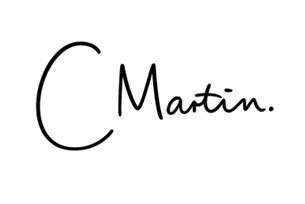
Charles Martin, KeyAudit Partner for and on behalf of Bishop FlemingAudit Limited
CharteredAccountants and StatutoryAuditors
Plymouth
Date: 26 June 2026