
Recorder
STEWARDSHIP IN ACTION Service That Improves
Our Community
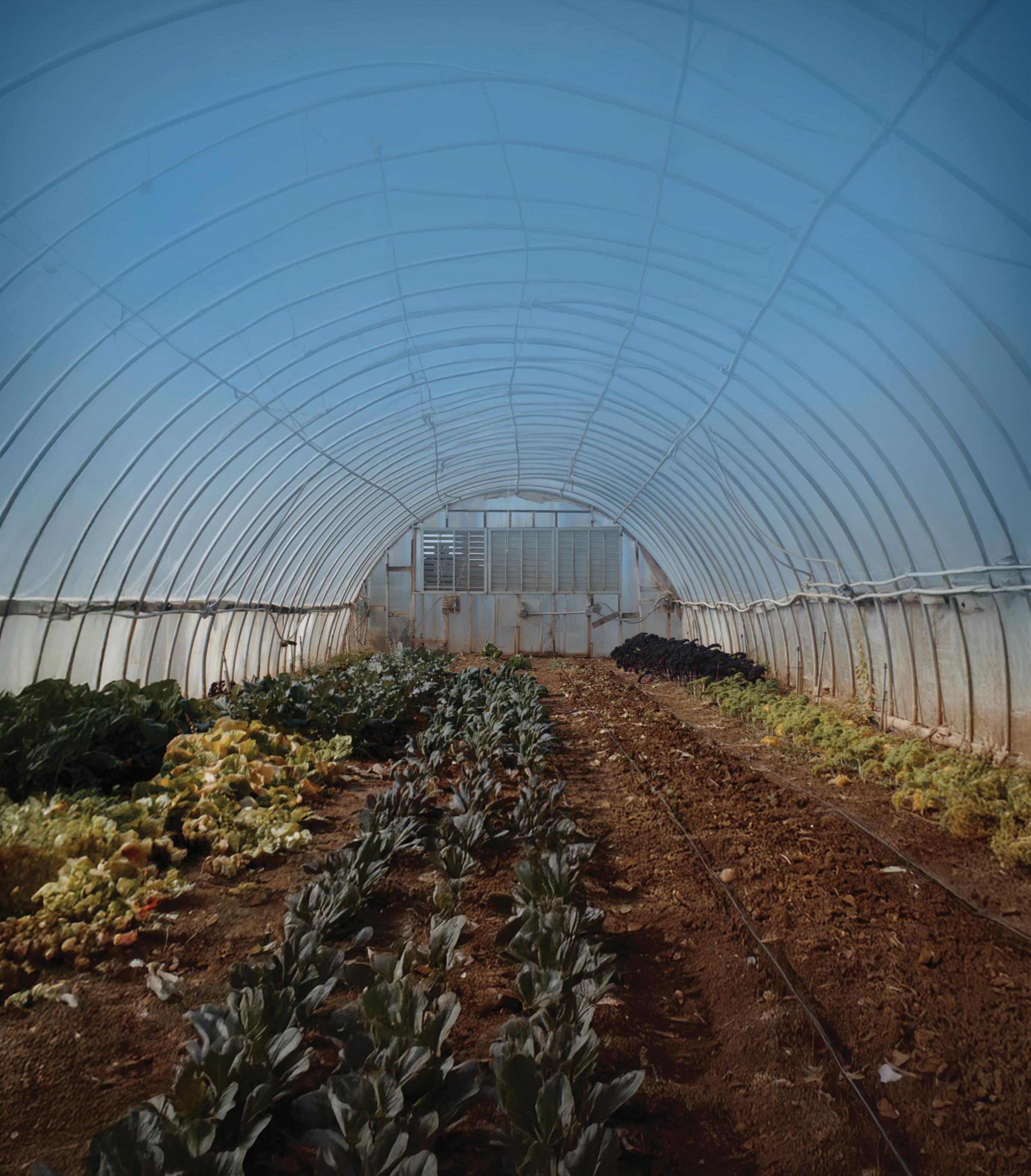
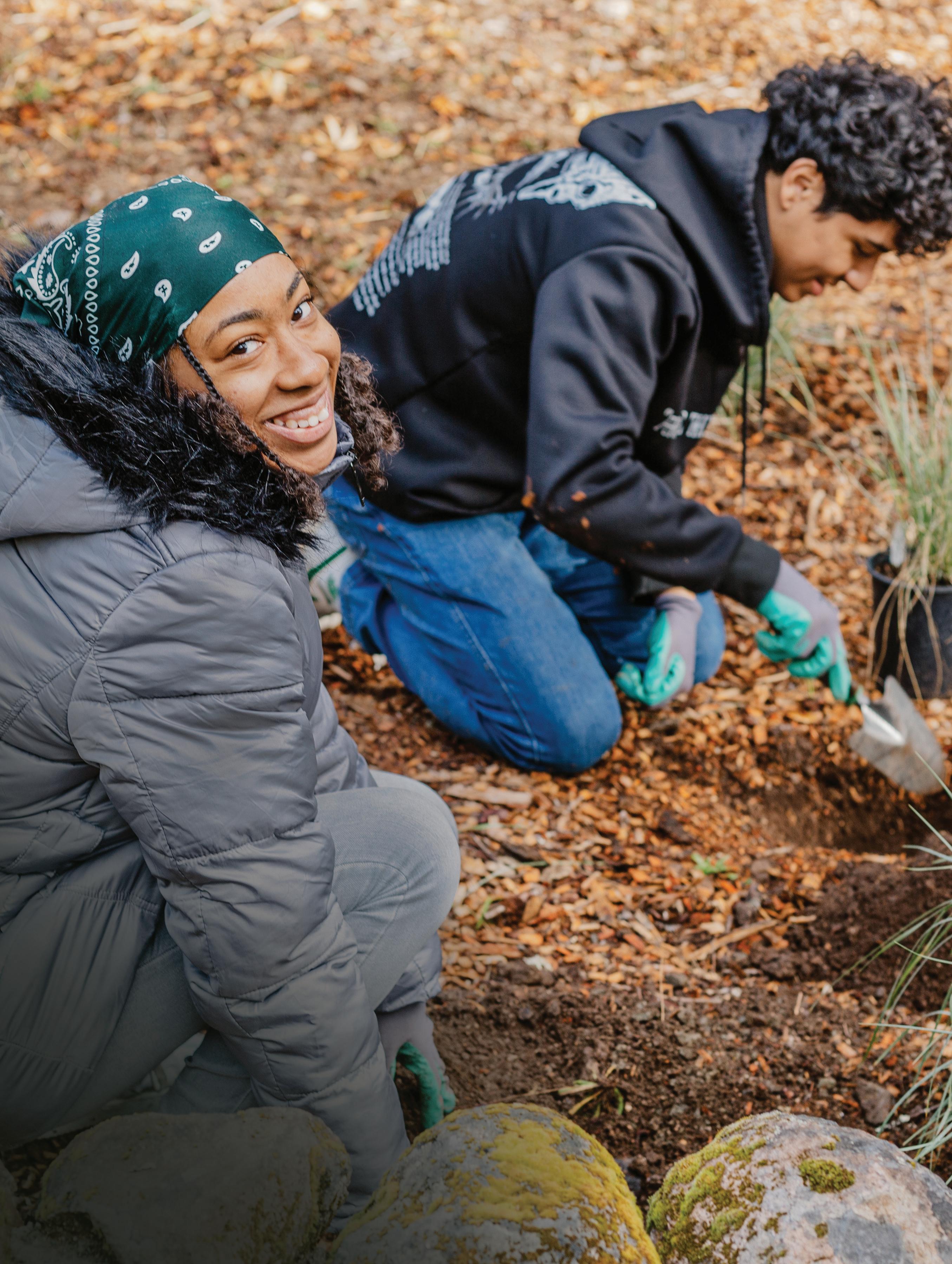
At Pacific Union College, service isn’t just something we talk about—it’s something we do together. Students, faculty, and staff partner with local businesses, support neighbors, and care for outdoor spaces. These hands-on experiences give students the chance to step outside themselves, connect with others, and see the difference their efforts can make. It’s one more way learning at PUC extends beyond the classroom.
puc.edu/experience admissions@puc.edu puc.edu • (800) 862-7080
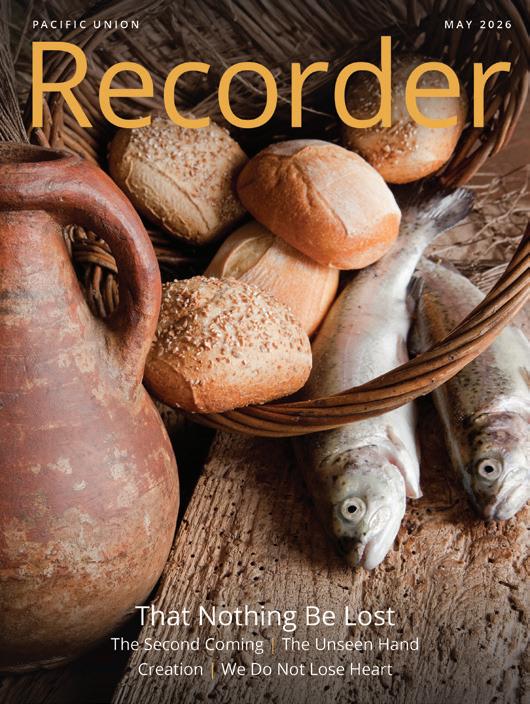
When the baskets of fragments were collected, the people thought of their friends at home. They wanted them to share in the bread that Christ had blessed. The contents of the baskets were distributed among the eager throng, and were carried away into all the region round about. So those who were at the feast were to give to others the bread that comes down from heaven, to satisfy the hunger of the soul. They were to repeat what they had learned of the wonderful things of God. Nothing was to be lost.
—Ellen
G. White, “A Lesson in Economy,”
The
Signs of the Times, Dec. 15, 1909
Recorder
Publisher Ray Tetz
Editor Alberto Valenzuela
Design/Layout Stephanie Leal • Alberto Valenzuela Printing
Adventist Health 916-742-0429
Kim Strobel strobeka@ah.org
Arizona
480-991-6777
Alexis Camacho ACamacho@azconference.org
Central California 559-347-3128
Bryan Bong bbong@cccsda.org
Hawaii 808-595-7591
Miguel Manzo communicationsdept@hawaiisda.com
What’s inside
4 That Nothing Be Lost
8 Fundamental Belief #25: The Second Coming of Christ
10 Adventist Pioneers in the West: From Small Back Rooms to Becoming Part of the Largest Protestant Educational System
16 The Unseen Hand: The Legacy of Moses’ Mother
18 Creation: Is It Important to a Seventh-day Adventist?
22 Newsdesk
24 Arizona Conference
26 Central California Conference
30 Hawaii Conference
32 Holbrook Indian School 34 Adventist Health
35 La Sierra University
36 Loma Linda University Health 37 Pacific Union College
38 Nevada-Utah Conference 40 Northern California Conference
44 Southeastern California Conference
48 Southern California Conference
52 Community & Marketplace
56 Sunset Calendars
58 We Do Not Lose Heart
Holbrook Indian School 928-524-6845 x109
Jacqui Reed jreed@hissda.org
La Sierra University 951-785-2000
Darla Tucker dmartint@lasierra.edu
Loma Linda 909-651-5925
Ansel Oliver anoliver@llu.edu
Nevada-Utah 775-322-6929
Michael Jenkins Jr. mjenkins@nevadautah.org
Northern California 916-886-5600
Laurie Trujillo
Laurie.Trujillo@nccsda.com
Pacific Union College 951-809-6777
Gene Edelbach gedelbach@puc.edu
Southeastern California 951-509-2258
Taji Saleem taji.saleem@seccsda.org
Southern California 818-546-8400
Lauren Lacson Llacson@sccsda.org
Editorial Correspondents

That Nothing Be Lost
By Ray Tetz

It is probably because of the starring role for a little boy and his lunch that the story of Jesus feeding the 5,000 is one of the first I remember learning as a child. There were other mentions of children in the Bible that were on the short list of the stories I loved hearing—the little servant girl who suggested that Naaman should go see the prophet in Israel about his leprosy, Samuel hearing God’s voice in the night, David slaying Goliath, the Boy Jesus in the Temple—and I loved them all. But the boy with the lunch was special because he came prepared. (An early Pathfinder!)
It appears to have been a special story for early Christians as well, as it is the only miracle that is recorded in all four Gospels; while each of the authors has specific purposes in telling the story, the four versions meld perfectly into a single narrative.
The Gospel of Mark places the story immediately after the execution of John the Baptist, the cousin of Jesus. In a particularly horrific scene, Herod had given in to his most vile impulses. At a lavish banquet for his political cronies, Herod had made a sport of John's death, beheading him to mollify the hateful resentment of his wife and displaying the prophet’s head on a platter.
Emotionally devastated by the news of John’s brutal murder, Jesus and His disciples returned to their boats—not to fish, but to row away from the turmoil and find a quiet place where they could regroup and pray. They sought an oasis of calm in a quiet desert location.
But they were not the only ones traumatized by the evil that characterized Herod’s rule. People began to gather where they anticipated the group would journey next. Jesus and His disciples returned to a massive crowd of people eager to hear His words and to experience healing. The Scripture records that when Jesus saw the crowds, He was moved with compassion and saw them not as an imposition but “as sheep not having a shepherd” (Mark 6:34, KJV).
There was nothing random about this description, nor was it a new phrase coined by the Gospel writer. This was language straight out of the Old Testament, directly mirroring the prophecy of Ezekiel. When exploitive and corrupt leaders abandoned their responsibilities for self-interest,
God declared that His people had become sheep without a shepherd, vulnerable to abuse from the very ones who were supposed to protect them (Ezekiel 34:5). When Jesus saw the multitude, He took them into His heart and immediately turned to ministry, healing, and teaching. And somewhere in that crowd there was a boy with a lunch of five small loaves and two small fish.
Not knowing the name of the paidarion, the little boy, strengthens the empathy we have with him—he could be our own child; he could be any of us. What little we do know of him from the context speaks volumes. He had planned ahead. He brought his own provisions and got there early so he could have a good seat. Did he hope he would be able to speak with Jesus? He was all in.
As the afternoon stretched into the early evening, a practical concern set in: the crowd was getting hungry. When the disciples interrupted Jesus in His teaching and suggested that He send the crowd home for supper, Jesus asked Philip where they could buy bread. Philip did some quick numbers in his head and declared it to be financially impossible. And it was during the ensuing handwringing and panic that I think it is possible that our nameless young friend saw what was going on, sidled up beside one of the disciples (Andrew, it turned out), and said something like, “I planned ahead. I brought a lunch. Maybe it will help.” (I think he may have been the first Pathfinder.)
It is at exactly this moment that a boy and his lunch became the catalyst for one of Christ’s greatest miracles. Unlike those who were already dismissing his heartfelt generosity, Jesus didn't scoff at the simplicity of a child. In Matthew's
account of this exchange, Jesus simply replied, "Bring them here to me" (Matthew 14:18).
I like to imagine that in less time than you can say, “What’s for supper?” that little boy was standing in front of Jesus, looking straight at Him and not saying a word as he offered Him his meal. And I’m quite certain that at that moment, Jesus—who already knew what He was going to do—was filled with love and pride for a child whose open-hearted trust stood in sharp contrast with what had been demonstrated by the disciples.
As Jesus turned His attention back to the crowd, He began to make what He planned to do very clear to everyone gathered. He asked the disciples to have everyone sit down, and what had once been just a sea of humanity quickly became little groups of families, friends, neighbors. Everyone had a place, everyone was included. Perhaps this was the first stirrings of organization for those who would someday take the name of Christ as their own. Perhaps the miracle of feeding everyone who gathered, with no one left out, was the prototype for the first church potluck!
Jesus then called on the disciples to take an active role in the miracle—not unlike the calling that each of us accept when we become His followers. It is impossible not to notice that when He took the loaves in hand, gave thanks, broke the bread, and handed it on to the disciples to distribute, He was establishing a pattern that was repeated in the upper room and has distinguished how Christians have shared in the Lord’s Supper through many generations. I wonder what that felt like—to accept the broken bread from the Lord’s hand and pass it along to someone else!
Jesus then called on the disciples to take an active role in the miracle—not unlike the calling that each of us accept when we become His followers.
The Gospel of John places this event just before Passover—a full year before the events that led to Christ’s crucifixion and resurrection. In John’s Gospel, the miracle of feeding the multitude is followed on the very next day with Christ’s startling proclamation that He, Jesus, is the Bread of Life— and the promise that anyone who comes to Him will be sustained by His love. No one went hungry that afternoon. All four Gospel writers affirm that "they all ate and were filled."
Jesus and His followers were still grieving the death of John the Baptist, but in the feeding of the multitude it became increasingly clear that Jesus had no interest in political power or human ambition. The contrast between Herod and Jesus could not be greater. At Herod’s feast, a prophet was wantonly murdered. Herod personifies the leader who exploits and destroys, the “false shepherd” who cares nothing for the flock, only himself.
But this was not the case with Jesus. Out upon the grassy plain of the wilderness of human experience, the Good Shepherd had gathered His flock, and they were feasting on God’s grace! With the humble offering of a child, He had fed and met their needs and had brought the multitude into the abundant care of God.
A momentous day had come to an end—but Jesus had one more task to lay before His disciples and followers. His “one more thing” turned out to be the defining characteristic of the community of faith that we have seen being formed in this miracle. As the meal was concluding, Jesus said to His disciples, “Gather up the fragments that remain, that nothing be lost” (John 6:12, KJV).
In The Desire of Ages, Ellen White puts these words into their cosmic context: “After the multitude had been fed, there was an abundance of food left. But He who had all the resources of infinite power at His command said, 'Gather up the fragments that remain, that nothing be lost.' These words meant more than putting the bread into the baskets. The lesson was twofold. Nothing is to be
wasted. We are to let slip no temporal advantage. We should neglect nothing that will tend to benefit a human being. Let everything be gathered up that will relieve the necessity of earth's hungry ones. And there should be the same carefulness in spiritual things” (p. 368).
This is the foundational instruction of Jesus to His church: "Gather up the fragments. Let nothing be lost.” For a world in chaos, for people who are displaced by circumstance, for those who are caught up in conflict, for those who are suffering, for the hungry and homeless, for the lonely and forgotten, for the young who are ignored and the old who are forgotten, for every person, regardless of how fragmented life has become—the church should be a community that embodies the spirit and miraculous grace of Jesus Christ. It is our sacred responsibility to be a people who believe that there is room for every person. Our standard for success is that nothing be lost.
The endless love of God for humanity is embodied in this command. It is what the apostle Peter would later describe when he wrote, "The Lord is not slow in keeping his promise, as some understand slowness. Instead he is patient with you, not wanting anyone to perish, but everyone to come to repentance" (2 Peter 3:9, NIV). When we gather the fragments, we are helping to bring to life the purposes of God—a God who looks at a broken world and works relentlessly to ensure that nothing, and not a single person, is left behind.
We are given the opportunity to be the little boy who brings his lunch to Jesus. We share with the disciples the joy of sharing the bread of life with the multitude. We are part of the little flock who follow the Good Shepherd, the One who looks with love and compassion upon a broken world and whose dedication to our salvation is new every morning.
Ray Tetz is the director of communication and community engagement for the Pacific Union Conference and the publisher of the Pacific Union Recorder.
Fundamental Belief #25 The Second Coming of Christ
By Ricardo Graham
When I meet people for the first time, the subject often turns to my preretirement employment. When I share that I am a Christian minister, they usually ask me of what church, meaning denomination.
When I tell them “Seventh-day Adventist,” some of them ask, “What is that?”—which is an easy opener to tell them about two of the significant features of our faith, which are found in our name. We keep the seventh-day Sabbath as commanded in the Ten Commandments, in commemoration of the Creation of the world as mentioned in Genesis.
And then I explain that an Adventist is anyone who is looking forward to the return of Jesus Christ.
Since the denomination's founding, this principle has been central and remains essential to our message.
The second coming of Jesus Christ is a pivotal event in Christian theology and a subject of hope and anticipation among believers worldwide. Rooted in biblical prophecy, the Second Coming refers to Jesus’ return to earth, fulfilling promises found in both the Old and New Testaments. This event is expected to mark the culmination of history, bringing judgment and restoration to humanity.
Based on textual volume alone, this belief is supreme in the New Testament. Adventist pioneer J.N. Loughborough noted that “With the closing up of the New Testament records we have the theme of Christ’s second coming clearly set before us. About one verse out of every thirty mentions in some way the second coming of our Lord Jesus Christ.”1
Throughout the Gospels, Jesus spoke about His return, emphasizing the importance of readiness and
faithfulness. Passages such as Matthew 24 and Revelation 19 describe signs and circumstances that will precede His arrival, including tribulation, cosmic disturbances, and the gathering of believers.
Think of the many texts that refer to the Second Coming—above all Jesus’ words, “I will come again” (John 14:3, NKJV). The only consolation to the grief-stricken disciples was that Jesus would return. He did so after His resurrection, and He will do so again now that He has ascended to heaven. At His ascension, the two angels told the disciples, “This same Jesus, who has been taken from you into heaven, will come back in the same way you have seen him go into heaven” (Acts 1:11, NIV).
This is a significant statement, since it refutes those who claim that Jesus’ coming will be in secret or in some mystical invisible manner—such as at baptism or at conversion. It will be literal, visible, audible, bodily, and very dramatic. (See Matthew 24:30-31.)
The apostle Paul stated, “For the Lord Himself will descend from heaven with a shout, with the voice of an archangel, and with the trumpet of God. And the dead in Christ will rise first. Then we who are alive and remain shall be caught up together with them in the clouds to meet the Lord in the air. And thus we shall always be with the Lord. Therefore comfort one another with these words (1Thessalonians 4:16-18, NKJV).
The Second Coming will also result in the “dead in Christ” being raised from their sleep and, along with the living saints, being escorted to heaven.
Though Jesus promised His return, and God cannot lie, neither He nor His disciples ever specified a date for His return. In fact, Jesus said, “But of that day and hour no one knows, not even the angels of heaven, but My Father only”
(Matthew 24:36, NKJV).
Today many other Christian communities preach the Second Coming, but back at the time of our beginnings it was not a popular doctrine. Part of our responsibility has been to rectify that and to encourage people to discover the “blessed hope” of Scripture.
The early Adventist hymn writer, Annie Smith, wrote the hymn “I Saw One Weary,” which includes these words:
While pilgrims here we journey on In this dark vale of sin and gloom, Through tribulation, hate, and scorn, Or through the portals of the tomb, Till our returning King shall come To take His exile captives home,
O! what can bouy the spirits up?
‘Tis this alone—the blessed hope.2
R.R. Bietz affirms that “The ‘blessed hope’ of the second coming of Christ is not a fringe doctrine. It is the very fabric that holds the Christian faith together. Hope is the warp and the woof of human experience. The hope of the second coming of Christ is an experience that keeps Christians looking up.”3
All well and good. But the real question is what difference does this belief make in our lives, and how do we share it?
The first problem is that though we may agree it’s one of the fundamentals, some of us no longer pay much attention to it. When Jesus said, “occupy till I come” (Luke 19:13, KJV), He didn’t mean that we should spend all our time occupying ourselves! However, most would agree that the sense of urgency has certainly waned since the early days of the church. In the most recent Adventist church survey, most members stated that they were unsure that Jesus would come in their lifetime.4
The second is the sense of a delay in the fulfillment of the Second Coming. Reference to such an “extension of time” has appeared in various church publications.5 In the words of Proverbs, “Hope deferred makes the heart sick” (Proverbs 13:12, NIV).
Thirdly, there is an increasing rejection of “scaremongering,” of frightening people into belief of a soon Second Coming. Writes Ellen White, “The shortness
of time is frequently urged as an incentive for seeking righteousness and making Christ our friend. This should not be the great motive with us; for it savors of selfishness. Is it necessary that the terrors of the day of God should be held before us, that we may be compelled to right action through fear? It ought not to be so. Jesus is attractive. He is full of love, mercy, and compassion. He proposes to be our friend, to walk with us through all the rough pathways of life.”6
We need to look again and ask what this belief means in our lives. In the words of Jack Provonsha, “Until Christians have learned what the second coming of Christ means, the event as something that happens may continue to be delayed.”7
If we believe that “The doctrine of the second advent is the very keynote of the Sacred Scriptures” (Ellen G. White, The Great Controversy, p. 299), then we will want to share this with others, referencing the New Testament’s descriptions. If this belief really makes a difference in our lives, this should be obvious in our conversations. We should be filled with the advent spirit, being enthusiastic for the arrival of our blessed hope.
Our motto should be, “The Lord is soon coming. Talk it, pray it, believe it. Make it a part of the life” (Ellen G. White, Testimonies for the Church, vol. 7, p. 237).
Ricardo Graham is the former president of the Pacific Union Conference.
1J.N. Loughborough, The Great Second Advent Movement: Its Rise and Progress (Washington, DC: Review and Herald Pub. Assn., 1905), p. 73. Note also, “This [Second Coming] doctrine is one of the fundamental doctrines of the Holy Scripture. It finds a larger place in the pages of Holy Writ than any other doctrine of the church, this glorious event being mentioned more than three hundred times in the New Testament” (Carlyle B. Haynes, Our Lord’s Return [Nashville, TN: Southern Pub. Assn., 1918], p. 13).
2Annie R. Smith, “I Saw One Weary,” Seventh-day Adventist Hymnal (Hagerstown, MD: Review and Herald Pub. Assn., 1985), no. 441.
3R.R. Bietz, “The Second Advent—The One Hope of the World Today,” Review and Herald 138, no. 23 (June 8, 1961), p. 6.
4David Trim, “Reaching the World: How Did We Do? The Global Church Member Survey 2018,” https://documents.adventistarchives.org/ ArchivesPublications/2018%20Annual%20Council%20-%20Global%20 Church%20Member%20Survey%20Data%20Report.pdf.
5As just one example, see A.G. Daniells, “Is Christ’s Coming Being Delayed? If So, Why?” Ministry Magazine 3, no. 11 (Nov. 1930), p. 5.
6Ellen G. White, “Rest in Christ,” The Bible Echo 9, no. 25 (June 25, 1894), p. 195.
7Jack Provonsha, God Is With Us (Washington, DC: Review and Herald Pub. Assn., 1974), pp. 146-147.
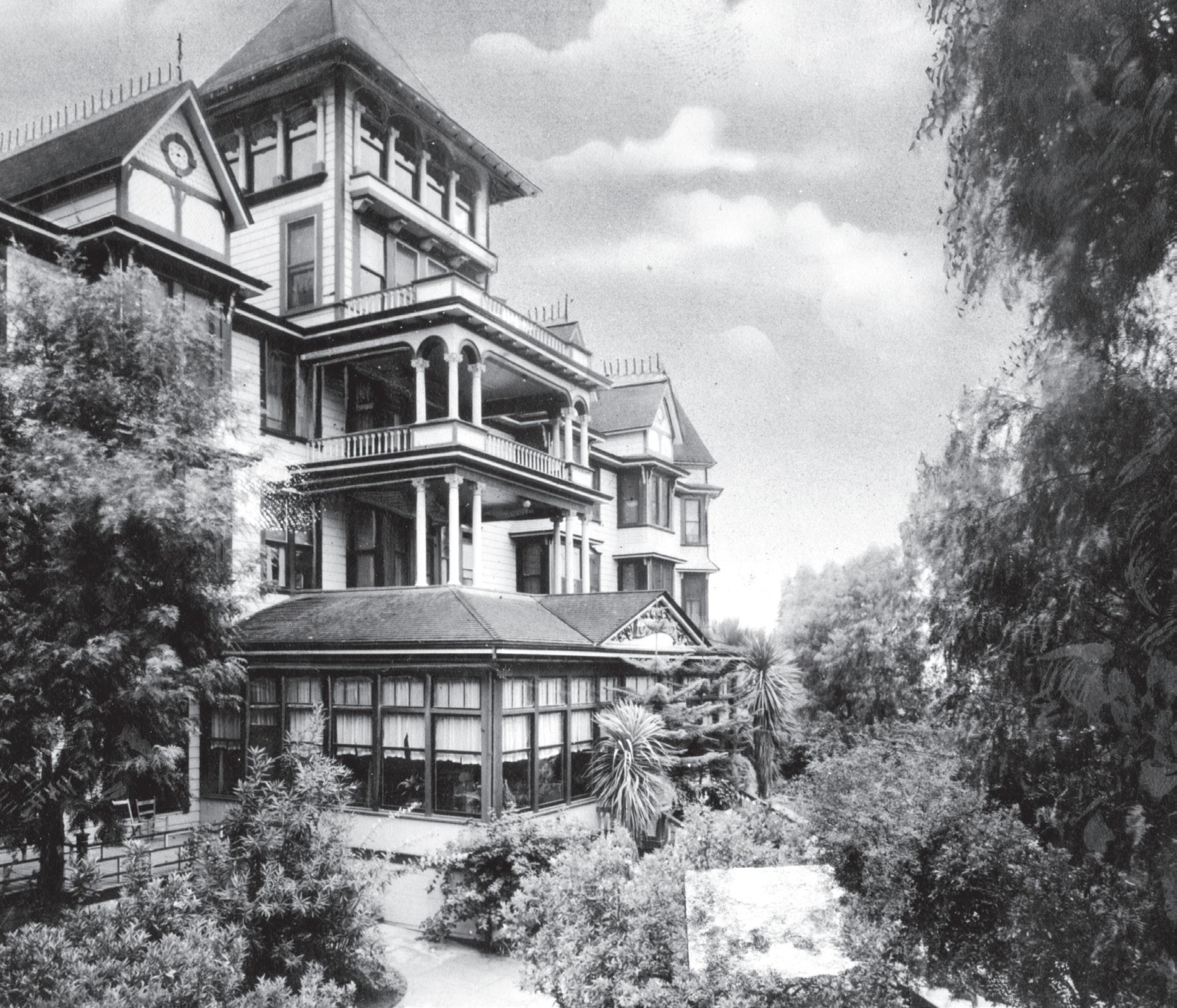
Early Loma Linda building.
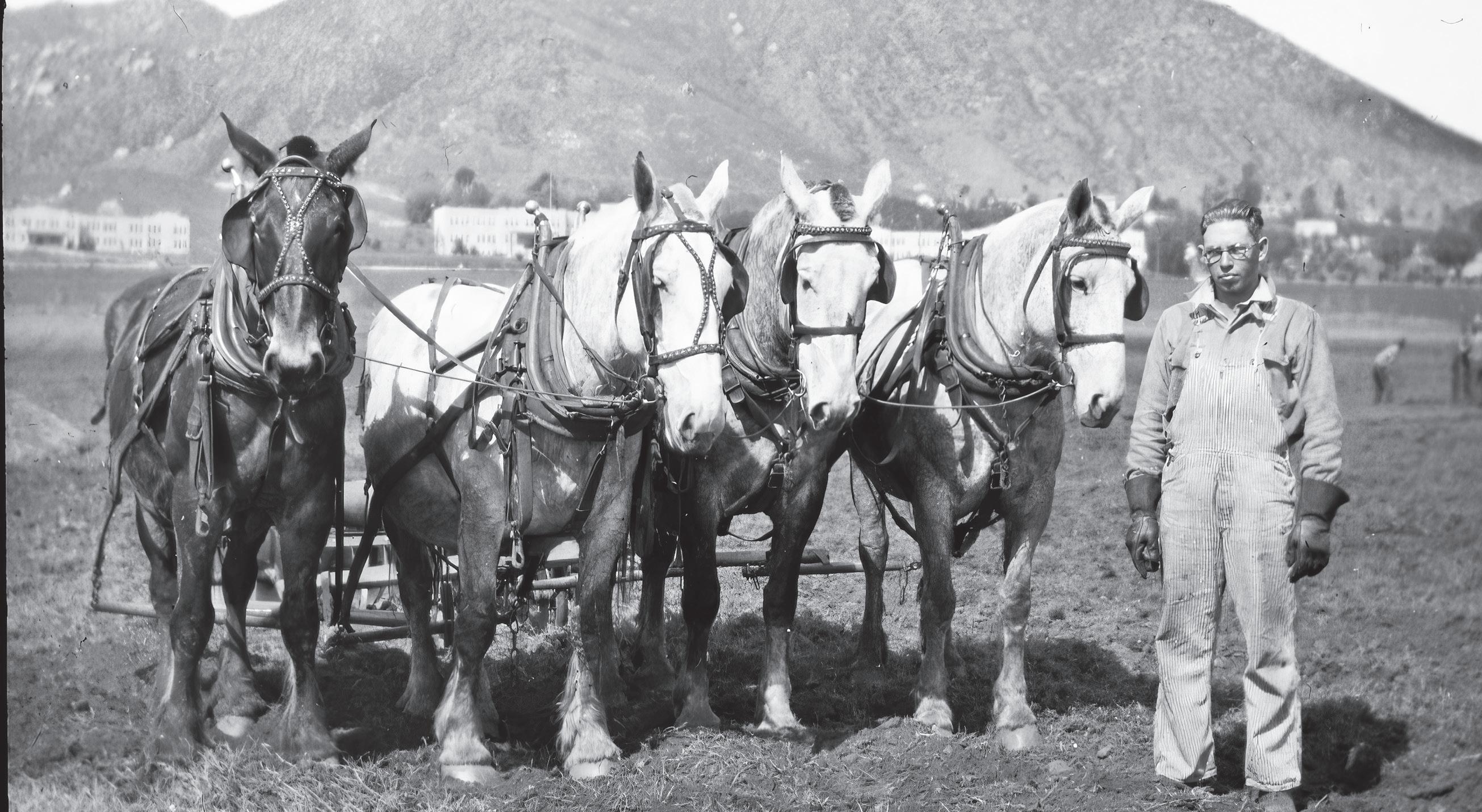
La Sierra work horses, circa 1927-30s.
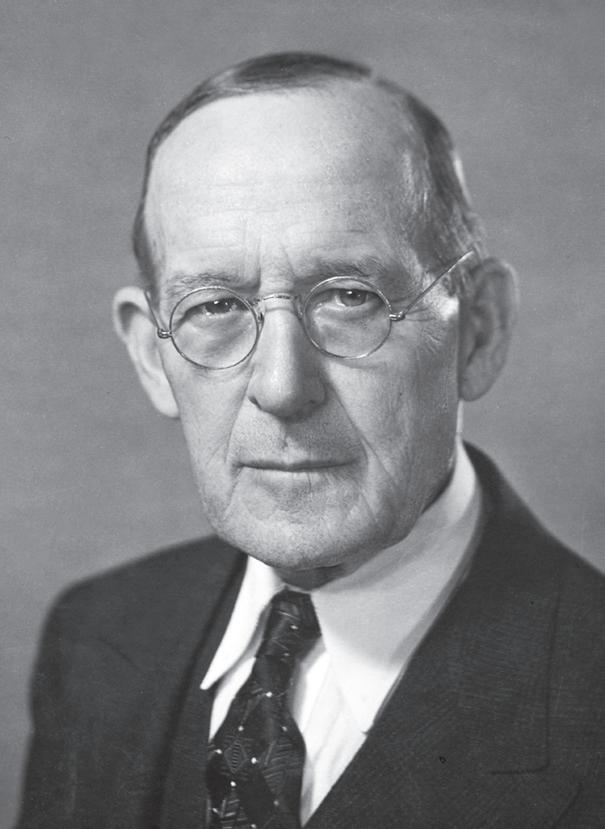
John Burden.

By the Recorder editorial staff
Pioneers in the West
From Small Back Rooms to Becoming Part of the Largest Protestant Educational System
Part 2
In Part 1, concentrating on elementary schools and academies, we looked at the development of Adventist education from very small beginnings to becoming a major worldwide program. Now we turn to higher education in the West and the three major institutions.
Loma Linda University
Probably the most dramatic story involves the founding of what was to become Loma Linda University. Ellen White played a central role in establishing this vital educational institution and securing the property. She saw the importance of combining theological education with practical skills, especially those to do with health and medicine. She spoke of “medical evangelism” and recognized how spiritual health and physical health could be combined in a way to represent the truth of the gospel, just as Jesus did.
Ellen White searched for a place where this could happen. She wrote, “On our way back to Redlands, as our train passed through miles of orange groves, I thought of the efforts that should be made in this beautiful valley to proclaim the truth for this time.… The cause of God is to make more rapid advancement in southern California than it has in the past.”1
The person she assigned to search, John Burden, discovered Loma Linda, then known as Mound City. He wrote to Ellen White, who was attending
the 1905 General Conference session back East, recommending purchase. She noted at the time, “As I read his letter, I was impressed that this was one of the places I had seen in vision.”2
The problem was the steep asking price: $110,000. But the property investors involved wanted to dispose quickly of their failed project, so they kept dropping the price, eventually down to $40,000. With the encouragement of Ellen White, Burden planned to proceed with the purchase. Before he could do so, however, he received a telegram from church headquarters ordering him not to buy it. When Ellen White heard this, she had a telegram sent to Burden, together with a follow-up letter that said:
“Your letter has just been read. I had no sooner finished reading it than I said, ‘I will consult no one; for I have no question at all about the matter.’ I advised Willie to send you a telegram without spending time to ask the advice of the brethren. Secure the property by all means, so that it can be held.”3 Burden followed Ellen White’s instructions, not listening to the objections of the brethren. Despite a number of challenges, the property was secured.
But this was just the beginning. Ellen White wrote: “With the possession of this place comes the weighty responsibility of making the work of the institution educational in character. Loma Linda is to be not only a sanitarium, but an educational center. A school is to be established here for the training of
gospel medical missionary evangelists.”4
Mound City was to be transformed into Ellen White’s vision of what Loma Linda could become. In what was a new educational venture for the denomination, “The medical school at Loma Linda is to be of the highest order, because we have a living connection with the wisest of all physicians, from whom there is communicated knowledge of a superior order. And whatever subjects are required as essential in the schools conducted by those not of our faith, we are to supply, so that our youth need not go to these worldly schools.”5
The results were spectacular. Loma Linda Sanitarium was dedicated in April 1906, with the College of Evangelists opening in September of the same year. The first commencement service was held for seven nurses in July 1907. By 1909, the College of Medical Evangelists was granted its charter of incorporation from the state. In 1910, Ellen White made it clear that this was to be a professional medical school, something the denomination had never done before.
In 1918 the college had so advanced in its training

and expertise that it received a “B” rating from the Council on Medical Education. This became an “A” rating in 1922. It was accredited by the Northwest Association of Secondary and Higher Schools in 1937, and then by the Western Association of Schools and Colleges in 1960. Today around 4,500 students attend Loma Linda University annually, and it is recognized as a world-class educational institution.
La Sierra University
The reorganization of the California Conference in 1915 that created the Southeastern California Conference resulted in a conference that did not have an academy. Since the conference administration was committed to education,
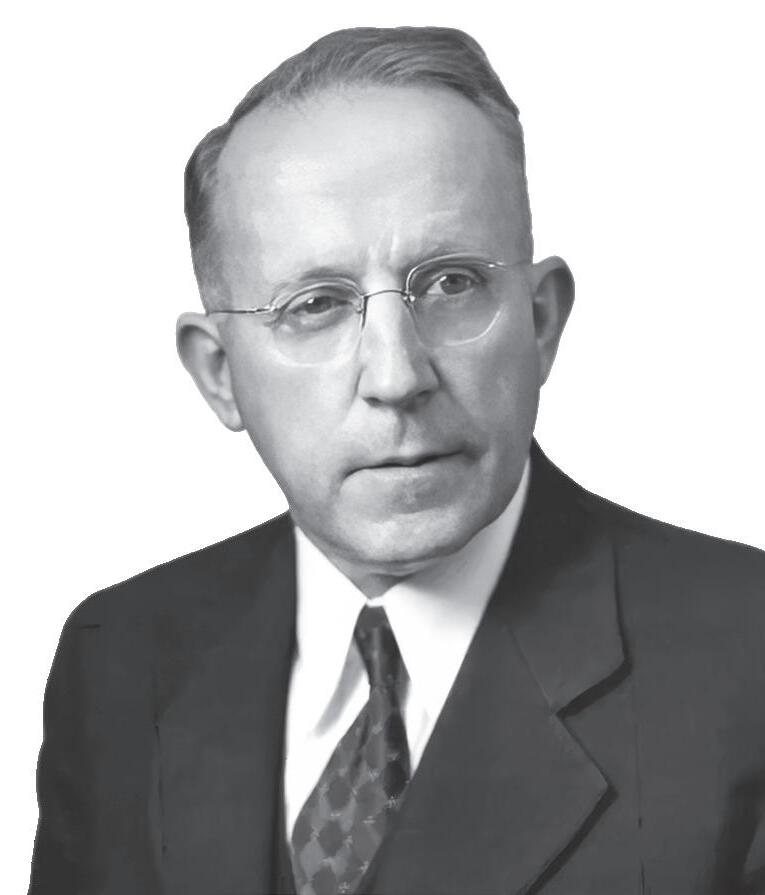
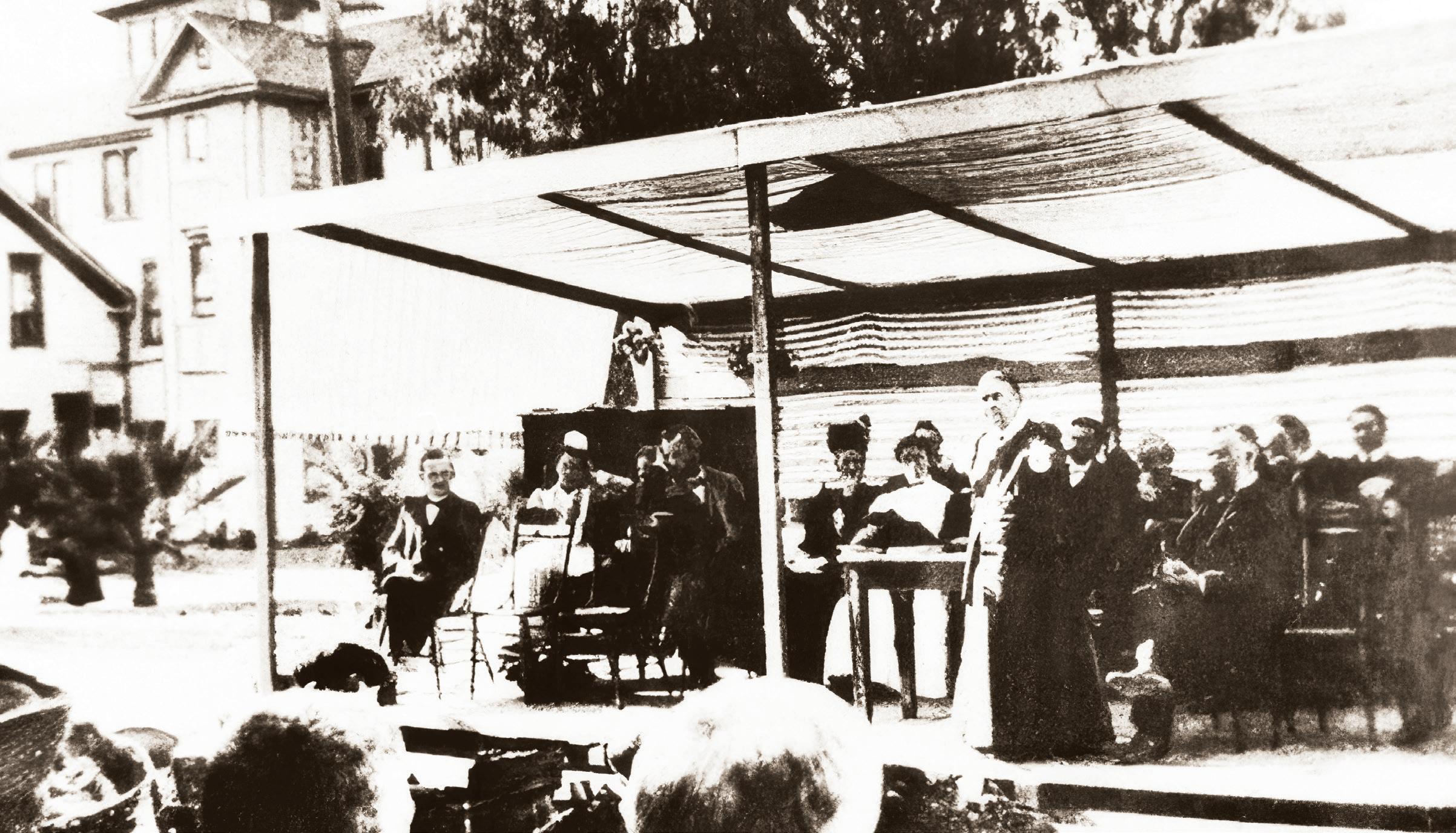
Ellen White at Loma Linda dedication.
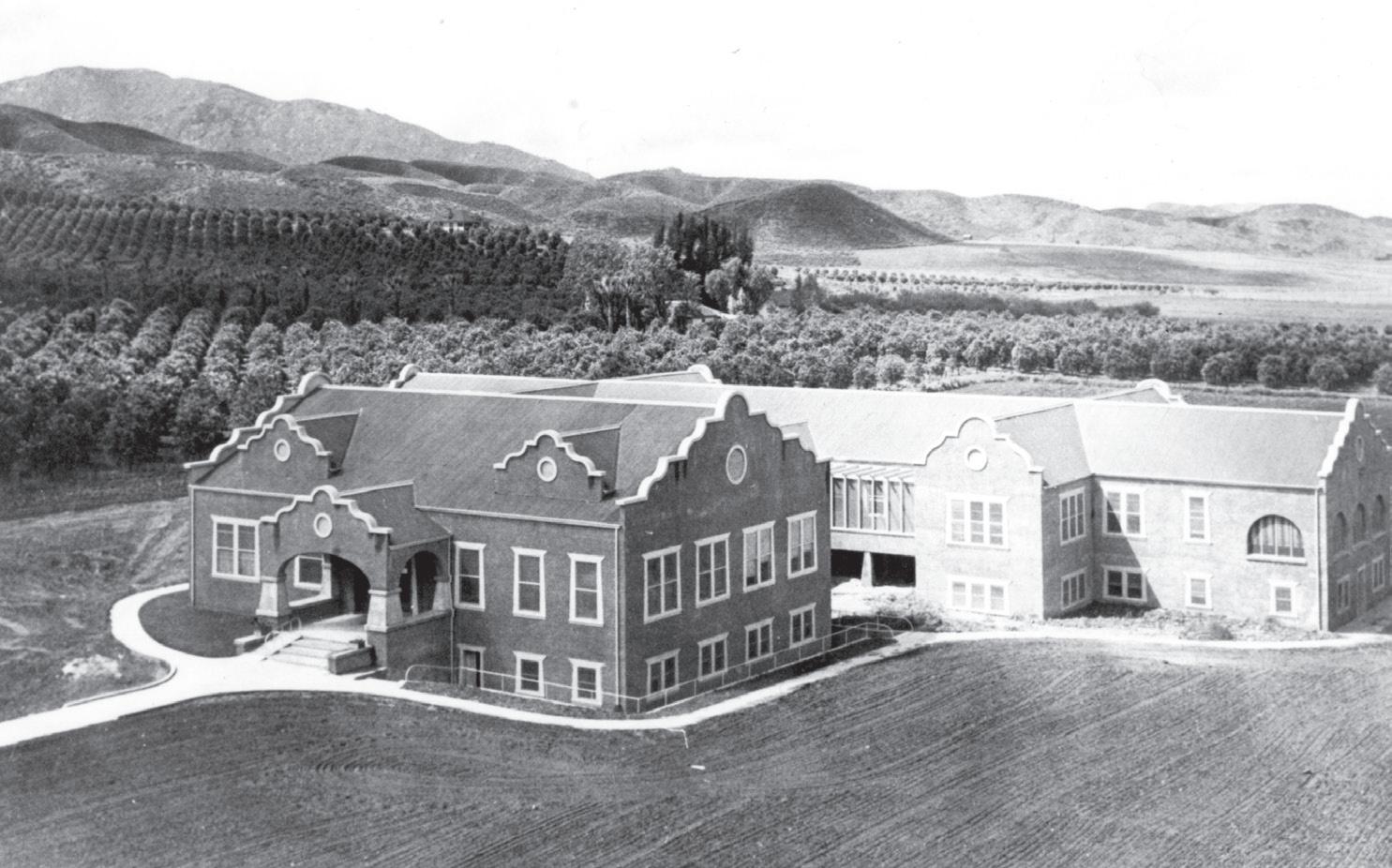
they began looking for a property on which to build. In 1922, they eventually settled on a location near Riverside called Rancho La Sierra, which had originally been part of an 1846 Mexican land grant.
The new principal, J.J. Robison, bravely announced on July 1, 1922, that the school would open on October 3. At that stage there was nothing there!
He later explained, “We did not have a building. We did not have a book in our library, nor a test tube for the laboratory. We did not have a desk or a chair. We did not even have a faculty.… But we did
Loma Linda, 1917.
have faith.… And so with faith and courage and loyal cooperation and united effort we stepped forward, facing every difficulty, confident that the Lord was leading, and that we would open school on October 3, as we had advertised.”6
The school opened on time, even though not quite finished. The girls’ dormitory was only half plastered—and since the stairs had not been installed, the girls had to access their unfinished rooms by ladder!
In a report on the inaugural reception in 1922, Varner Johns concluded, “Every lover of Christian education should have heard one of the students tell those assembled, why she came to La Sierra Academy. All our efforts and sacrifices are worth while, if only our boys and girls can be in a school where such a spirit grips the hearts of its students. They have caught the spirit of the message, and they too have the ‘vision’ of true education and of service in a world field.”7
In 1923, coursework for teacher training was added, and the school became La Sierra Academy and Normal School. With additional courses, in 1927 the name changed to Southern California Junior College. This necessitated major expansion to the institution, including extra office space, laboratory equipment, heating facilities, and library development. An elementary school
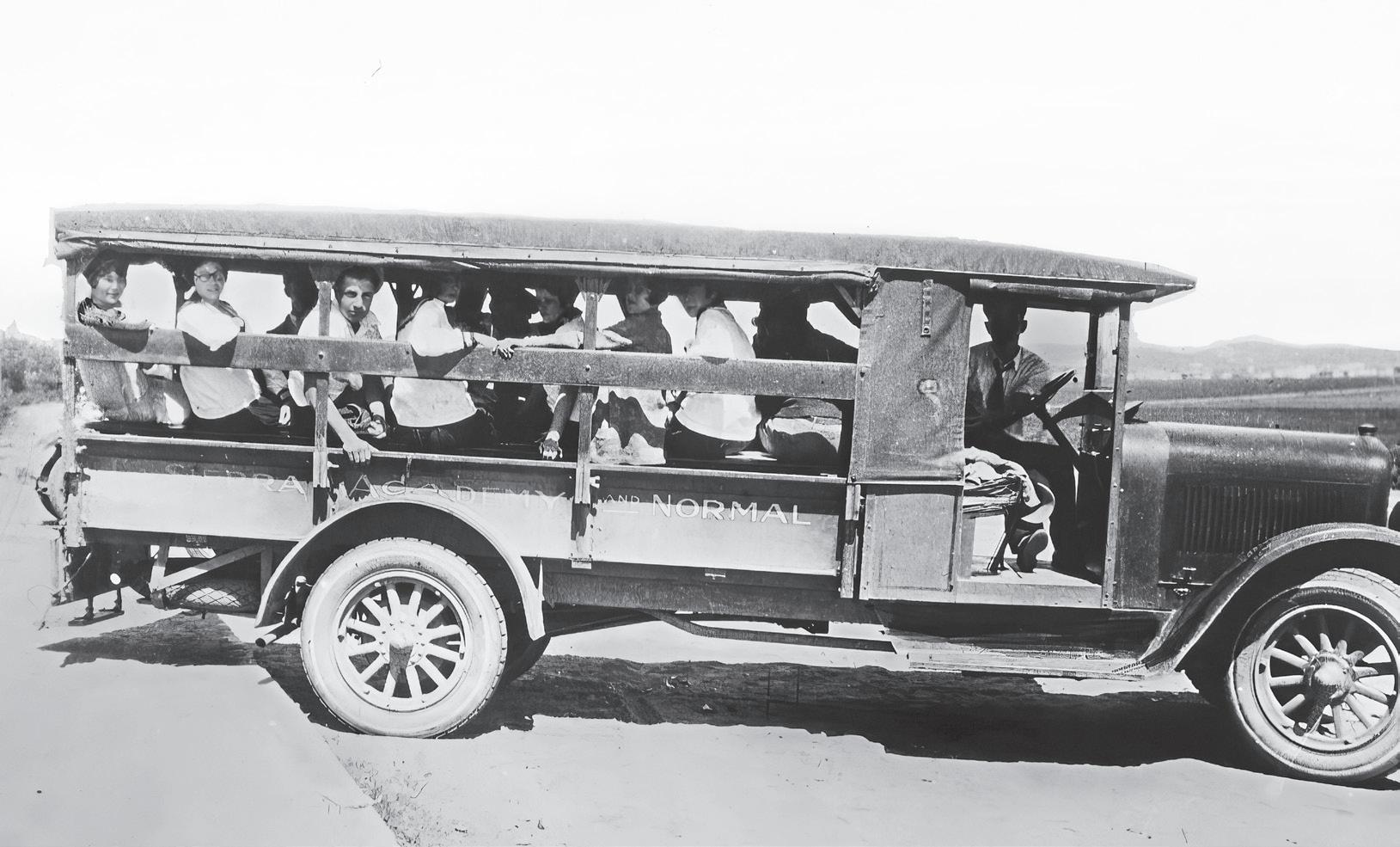
was built on the north side of the campus. Over the next three years, other facilities were added and the industrial program of the college was improved.
A new science hall was added in 1932, which led to the accreditation of the college by the Northwest Association of Colleges and Secondary Schools in 1933. A swimming pool, a camp meeting auditorium, and the Hole Memorial Auditorium were constructed between 1935 and 1937.
In 1939, the name changed to La Sierra College, and it was accredited as a four-year liberal arts college in 1946. After the war, enrollment increased rapidly, reaching 919 in the winter term of 1947-1948.
In 1967, it was decided to merge La Sierra College with Loma Linda University as the latter’s College of Arts and Sciences. However, in 1990 this arrangement was ended, and La Sierra University and Loma Linda University were reconstituted as separate institutions.
The university is accredited by the Western Association of Schools and Colleges and the North American Division Commission on Accreditation of the Board of Regents of the General Conference of Seventh-day Adventists.
Beyond the academic aspects, the real reason behind all Adventist schools is to “educate for eternity.”
As Ellen White wrote: “God would not have us in any sense behind in educational work. Our colleges should be far in advance in the highest kind of education.… There is a great deal of talk concerning higher education, and many suppose that higher education consists wholly in an education in science and literature; but this is not all.… The highest class of education is that which will give such knowledge and discipline as will lead to the best development of character, and will fit the soul for that life which measures with the life of God. Eternity is not to be lost out of our reckoning. The highest education is that
which will teach our children and youth the science of Christianity, which will give them an experimental knowledge of God's ways, and will impart to them the lessons that Christ gave to His disciples, of the paternal character of God.”8
Today approximately 2,500 students attend La Sierra University each year. It has over 60 undergraduate and over 20 graduate programs in a wide range of subjects.
Pacific Union College
Pacific Union College began as Healdsburg College, the school begun by Sidney Brownsberger in 1882 with just 28 students. A report in the Signs of the Times gives the background:
“When it was voted at the Sacramento campmeeting last year, to make an effort to start a school in California, no one imagined that so much could be accomplished in one year, nor would it have been believed if it had been predicted. No other important enterprise among Seventh-day Adventists has been so rapidly forwarded to a successful standing, and with so small an outlay of means compared to results. Bro. W.C. White has spent several weeks in Healdsburg, to aid in the work. There seems to be a general feeling among our people that the shortness of time demands that the College be placed in the highest state of usefulness in the shortest possible time. All consider that it has a mission to prepare laborers for various positions in the cause of the present truth, and all seem to realize that there is no time to be lost.”9
It was not many years before larger premises were required. A new location had to be found, and a resort property at Angwin was investigated. Ellen White was taken there to review it, and she reported:
“As I have looked over this property I pronounce it to be superior in many respects. The school could not
“Now we need not wait any longer; our school can assemble and the work begin at once.” Ellen White
be located in a better spot. It is eight miles from St. Helena, and is free from city temptations.… We realize that the Lord knew what we needed and that it is His providence that brought us here.… God wanted us here and He has placed us here. I was sure of this as I came on these grounds.… I believe that as you walk through these grounds you will come to the same decision—that the Lord designed this place for us.”10
As a result, in 1909 the church bought the Angwin Resort in the mountains above St. Helena at a cost of $60,000. Pacific Union College was dedicated on Sept. 29, 1909. The resort’s hotel, bowling alleys, and cottages were converted into dormitories, classrooms, and faculty homes, while other buildings were constructed using the timber available on the property.
But the most significance aspect was the spiritual plan. The college was created to provide both philosophical and practical instruction for the church’s young people across a wide spread of vocations, with the spiritual component of prime importance.
Ellen White commented: “Now we need not wait any longer; our school can assemble and the work begin at once. And at its very beginning, let us determine to walk humbly with God. Let us seek to make such a representation as is given to us in the words I have read to you today. If we will do this—if we will walk in God's ways and keep His charge—the light of Heaven will certainly shine upon us. If we will resolve to do our best here, exercising the physical muscles equally with the brain powers, if we will work for the harmonious development of all the powers of the being, the blessing of the Lord will rest upon us in large measure.”11
She even referenced the long uphill road to Angwin, stating that “It is true that there is a long hill to climb in order to reach the place, but that is not altogether a disadvantage. Many of us would be greatly benefited in muscle and in sinew if we did more climbing of hills.”12
The college not only provided “normal” education but also helped develop practical skills by at one time
hosting a dairy farm and a poultry farm, as well as providing blacksmithing and home economics. Later courses included aviation classes, film and television courses, and other contemporary fields of study. For an extensive narrative of the history, refer to Walter Utt’s book, A Mountain, a Pickax, a College. 13
The college has gained accreditation from the relevant organizations and has progressed with the development of higher education. For example, graduate work began in 1934 with a very successful summer program called the Advanced Bible School. This became the start of a highlevel Bible program that eventually became the Adventist Theological Seminary.
Pacific Union College has a current enrollment of 1,080, comprised of 1,035 undergraduates and 45 in the graduate program.
The West has played a major role in the development of Adventist education. From the work of one-room teacher Alma McKibbin in California— who wrote the early textbooks that were used in Adventist schools for 50 years—to the extensive network of schools across the Pacific Union, from the early days of small school classes to the major enrollment in the large educational institutions, this is the result of believing in Adventist education here in the Pacific Southwest.
1Ellen G. White, “Notes of Travel—No. 7,” Review and Herald, April 6, 1905, p. 8.
2Ellen G. White, Life Sketches of Ellen G. White (Mountain View, CA: Pacific Press Pub. Assn, 1915), p. 405.
3Ellen G. White, Progress of Work at Loma Linda, p. 2, https://egwwritings.org/ book/b291.
4White, Life Sketches, p. 406.
5Ellen G. White, Loma Linda Messages, p. 487, https://egwwritings.org/book/ b433.
6“92 Years Ago,” Adventist World, July 12, 2014, p. 30.
7Varner J. Johns, “La Sierra Academy Reception,” Pacific Union Recorder, Nov. 30, 1922, p. 4.
8Ellen G. White, Counsels to Parents, Teachers, and Students (Mountain View, CA: Pacific Press Pub. Assn., 1913), p. 45.
9“California Camp-Meeting,” Signs of the Times, Oct. 26, 1882, p. 474.
10Ellen G. White, Last Day Events (Boise, ID: Pacific Press Pub. Assn., 1992), p. 108.
11“Report of the Dedicatory Exercises of Pacific College,” Pacific Union Recorder, Oct. 7, 1909, pp. 5-6.
12Ellen G. White, “Educational Advantages of the Angwin Property,” Pacific Union Recorder, Sept. 23, 1909, p. 4.
13https://www.puc.edu/_media/pdf/about-puc/Pickax-Book.pdf.
The Legacy of Moses’ Mother
The Unseen Hand: I
By Virgina Felix

n the story of Moses—the great lawgiver, deliverer, and prophet—it’s easy to overlook the silent but pivotal figure behind his formative years: his mother, Jochebed. It’s proper that we not merely focus on Moses the deliverer but also on the mother whose faith, courage, and influence helped shape the man God would use to deliver Israel. The Bible and the Spirit of Prophecy together make it clear: behind every great calling, there is often a mother on her knees.
The world Moses was born into was hostile and terrifying for any Hebrew family. Pharaoh’s genocidal decree targeted every newborn Hebrew boy for death (Exodus 1:22). Yet, in this dark time, Jochebed shines as a woman of unwavering faith. The Bible says: “By faith Moses, when he was born, was hid three months of his parents…and they were not afraid of the king’s command” (Hebrews 11:23, NKJV).
Jochebed and Amram, her husband, defied Pharaoh not out of rebellion but out of reverence for God. Ellen White notes in Patriarchs and Prophets that “faith in God strengthened their hearts” and that Jochebed “earnestly prayed that [Moses] might be preserved from every corrupting influence” (pp. 242, 243).1 This is our first lesson: faithful motherhood resists fear with faith. Even when laws and culture turn against righteousness, mothers of courage quietly shape nations through their children.
When Jochebed could no longer hide her son, she built a small ark and placed him in the Nile (Exodus 2:3). This was not a moment of defeat but of surrender—she gave her child to God, trusting His providence. Her action parallels that of another
faithful woman, Hannah, who gave Samuel to the Lord. Ellen White explains: “The mother’s earnest prayers had committed her child to the care of God; and angels, unseen, hovered above his lowly resting place” (p. 243). Jochebed’s surrender led to an astonishing turn: Pharaoh’s daughter found Moses and hired his own mother to nurse him. She was paid to raise the child she had risked everything to save (Exodus 2:9). What Jochebed gave up in faith, God returned in abundance. Lesson two: Surrender is not loss when it is to God. Parents, when you surrender your children into God’s hands through prayer and godly example, you invite divine intervention.
Jochebed had, at most, five to twelve years to influence Moses before he was handed over to Pharaoh’s court. In those tender, impressionable years, she taught him about the true God, justice, humility, and identity. She showed him how to kneel and pray. She engraved his heart with truth. Ellen White writes: “She endeavored to imbue his mind with the fear of God and the love of truth and justice.… The lessons learned at his mother’s side could not be forgotten” (pp. 243, 244).
Despite Egyptian wealth and paganism, Moses never forgot who he was or who his God was. His mother’s brief influence laid the moral and spiritual foundation that resisted an empire. Lesson three: Short time, long impact. Parents, and especially mothers: never underestimate those early years. A mother’s influence is stronger than palaces and courts when it is grounded in the fear of the Lord.
Moses' greatness is traced not only to his calling but to his decisions. Hebrews 11:24-26 says: “By faith Moses, when he had grown up, refused to be known as the son of Pharaoh’s daughter. He chose to be mistreated along with the people of God.… He regarded disgrace for the sake of Christ as of greater value than the treasures of Egypt” (NIV). Where did he learn such sacrificial thinking? From the woman who risked everything to save him and prayed over him daily. From the woman who taught him about a God who is worth suffering for. Ellen White says: “How
far-reaching in its results was the influence of that one Hebrew woman, and she an exile and a slave... working not alone for time, but for eternity” (p. 244). Jochebed’s faith became Moses’ foundation. Her courage became his resolve. Her prayers echoed into his destiny. Lesson four: Your life preaches louder than your lips. What Jochebed lived in front of Moses stuck deeper than what she said.
We live in a world that is again hostile to children’s spiritual lives. Social media, confusion about identity, secular education, and the pressures of modern life challenge every home. But God still works through mothers like Jochebed. Mothers today may not face Pharaoh’s sword, but they face emotional, spiritual, and social battles. You may feel hidden, unheard, or exhausted. But God sees. Heaven is not moved by titles or degrees but by faithfulness in hidden things. Ellen White says: “There is no other work that can equal [a mother’s].… She is sowing seed that will spring up and bear fruit, either for good or for evil” (p. 244) . Your lap is the first altar. Your arms are a child’s first sanctuary. Your prayers may shape prophets. Your example may build deliverers. You may not be remembered by name, but your children will carry your legacy.
Jochebed’s story reminds us that God uses humble, faithful mothers to shape history. Though uncelebrated in her time, she shaped a child who would confront kings, part seas, and receive the law of God. So to every mother: your calling is not small. Like Jochebed, you may raise the next Moses—not with riches or status but with love, truth, prayer, and faith. “Let every mother feel that her moments are priceless; her work will be tested in the solemn day of accounts” (p. 244). May we, like Jochebed, entrust our children to the God who sees and answers. May we invest in eternity, for every child is precious in His sight.
Virginia Felix writes from San Ysidro, California.
1All Ellen White quotes are from Patriarchs and Prophets, Chapter 22, “Moses.”
Creation:
Is It Important to a Seventh-day Adventist?
By Leonard Brand
It would take much more than this article to fully answer this question. The short answer is to say yes, it is very important. To begin with, Revelation 4:11 tells us that “You are worthy, our Lord and God, to receive glory and honor and power, for you created all things” (NIV). In this article we will discuss reasons why it is so important. In my doctoral program in evolutionary biology at Cornell University, I learned a lot about evolution, but nothing I learned there or since then raised doubts about the reliability of the Genesis account of creation. Belief in creation or belief in evolution is not determined by whether we believe in science. It does not even depend on how much evidence there is or on our confidence in the available evidence.
At the time that Charles Darwin wrote his famous book, biologists had very limited knowledge of what makes an organism alive. That was a century before the beginning of molecular biology, and biologists did not yet know anything about genetics. In more than a century and a half since then, knowledge in those fields and many others has expanded dramatically, but during all that time there have always been knowledgeable people who

Exploring the relationship between faith and the natural world is a vital part of our Adventist faith. The Pacific Union Recorder recently invited Dr. Leonard Brand to share his perspective on science and Scripture. We value both his candor and collegiality and are grateful that he accepted our invitation.
—The Editors
believe and those who don’t believe in the Genesis account of creation. The difference has never been based on how much we know. It has more to do with Who we know. That claim needs some explanation.
Evidence (data) consists of individual pieces of information—rock samples, individual fossils, measurements, locations, identity of molecules or minerals, individual bones, physical relationships between data points, etc. For careful scientists, even with different belief systems, those individual data points should be about the same. The differences will be in the interpretations that are given for each type of evidence.
For a very practical example, consider two fossils—a fossil fish (Eusthenopteron) and a fossil amphibian (Ichthyostega)—that have similarities in some of their skull bones and consequently are considered to be our best evolutionary links from fish to amphibians (usually now referred to as the first tetrapods).1 Do those two extremely different animals have these similarities because they evolved from a common ancestor, or did a Creator make them with similarities designed to adapt them to some common environmental factor (perhaps diet)? The data are the same in each case, but the interpretations are very different.2 Finding a scientific way to test between these two interpretations may not be feasible.
“Who we know” is very relevant at this point. Does our knowledge of the God of the Bible lead us to be confident that His word is reliable, that He knows what happened, and that He has the ability to create those animals? Or do we see Genesis as a good story but not reliable history and its god as more like a mythical or abstract concept, not very helpful for explaining fossils? This is where “Who we know” becomes a critical deciding factor.
A variety of influences determine which of those two worldviews an individual believes in. Commonly a person’s educational experience pushes them strongly one way or the other. I read an article in a psychology research journal concluding that children
naturally think that things were created or designed, and “our task is to educate that idea out of them.”
I have seen this concept actively advocated in presentations at national meetings of the Geological Society of America.
The concept of worldviews is an important foundation for understanding the relationship between faith and science—and the relationship between creation and evolution in particular. Over about the past three centuries, the worldview of literal creation of life and the universe by God has gradually been replaced by the popular modern worldview that denies creation by God. According to this new worldview, the universe and life came to exist by chance operation of the laws of nature without direct intervention by God. This gradually changing perspective did not occur because of discovery of new evidence. The change was not led by new evidence but by choices.3
That claim needs some explanation. During those centuries there were very abundant discoveries of new information in physics, chemistry, biology, geology, and paleontology. Much of this massive amount of new discovery is usually described as evidence for the new worldview. But we need to understand the sequence of changes. Did new evidence lead the way to a new worldview or did the shift away from biblical thinking lead to new explanations of the evidence, which brought the new worldview?4 Study of history indicates that the second explanation is the correct one. Much of that new evidence is actually contrary to the new worldview.
Belief in creation or belief in evolution is not determined by whether we believe in science. It does not even depend on how much evidence there is or on our confidence in the available evidence.
Come back to our discussion of the fossil fish and fossil amphibian. There are excellent fossil skeletons that are being studied, but there is nothing in the skeletal evidence to tell us whether these two fossils originated by creation or by evolution. That is a choice that everyone makes, based on which worldview they have accepted as correct. Study of the history of changing scientific thinking convinces us that all through the past three centuries of changing ideas, the move away from biblical creation was led primarily by choices—not to accept the Bible account of creation but to develop new interpretations of evidence that did not require acceptance of God’s miraculous actions in history.
For those of us who have confidence in the Bible and are actively involved in research and publication in various fields of science, all that we see points to the conclusion that the popular modern worldview does not result from the evidence. It is the other way around: acceptance of the popular modern worldview leads to scientific interpretations derived from that worldview, not from the evidence.
Some of us have been involved in five decades of original research in geology and paleontology, with a number of publications in the primary scientific research journals. In that research, we often find evidence that is incompatible with accepted scientific theories. Following biblical insights in earth history research typically provides much better explanations of the evidence.5
Who do we know and trust?
Who do we know? This may not sound like good science. However, most people do not personally know the evidence. They believe what they hear or read from those whose opinions they
trust. But those trusted scholars did not observe the thousands of years of ancient history. As we mentioned above, the gradual transition from a biblical worldview to the modern secular worldview resulted not from the evidence but from a series of choices to move away from a biblical understanding of history to a worldview that frees us to accept a worldview that fits better with human ideas and doesn’t require us to believe what God has told us.6
We are now in need of a very deliberate and thoughtful reversal of that trend. Leaving the biblical worldview was a choice, and our task now is to choose a full commitment to what we are told in Genesis. God is the one who has observed the thousands of years of earth history and knows that history. Nineteenth-century thought leaders, including Darwin, Lyell, and many other influential scholars, made a choice to develop their own philosophy irrespective of what the evidence said. Their choice was first of all a religious choice rather than a scientific choice. They then developed interpretations of the evidence to fit that choice. We must now learn from this long history and make our own religious/scientific choice. We will soon also deal with the scientific part of that choice.
Do we know God? We get to know people well enough to trust them by talking to them and listening to them. Our relationship with God is no different. Do we really know Who is worthy of our trust?
What to do with science
If we make a primarily religious choice, what does this mean for science? Some will tell us that if we accept the Genesis account as literally true, we must leave our minds at the laboratory door as we enter. All of us, and many of our friends, are professional
God is the one who has observed the thousands of years of earth history and knows that history.
scientists, with a combined total of centuries of science experience, even in geology and evolution. 7 We never left our minds at the door ; in contrast, our experience is that science is clearly more fruitful and reliable when practiced from a biblical background. 8
The most successful and trustworthy science is the study of processes and events that occur today and can be studied as they happen in front of us. Since we can experience and observe these as they occur, we can test our theories and correct our wrong ideas.
The other major part of science is seeking to understand ancient biological and geological history. The carving of the Grand Canyon was a dramatic event. Do you know anyone who saw that happen? No? Perhaps that is why none of the geological theories for how that happened seem adequate. We cannot go back in time and see how that happened. Some of us are geologists and enjoy trying to understand geological history, but our explanations are untestable hypotheses. Without Genesis, we are not able to have full confidence in our explanations, and the more original field and laboratory research we do, the more we find that the evidence is much more compatible with Genesis than with secular theories.
Theistic evolution
Some Christians recommend theistic evolution (TE) as a successful compromise. This theory means that God was Creator, but He did it by evolving different forms of life over an extensive time period. We will review some reasons why TE directly and conclusively contradicts the Genesis account.9
1. Genesis says God directly created plants, fish, birds, cattle, and humans in a few days. TE says they all evolved over long time periods, even millions of years.
2. Evolution, including TE, requires very extensive death of innumerable generations over long time periods. Evolution cannot happen without all of that
death and the accompanying pain and suffering.
3. TE, and the geology and fossil record that claims to document it, would have to completely replace the story of creation and the flood.
4. If the Genesis account was false and TE was true, when Satan tempted Jesus he would have had Jesus by the throat as a deceiver. Satan is evil, but he knows the facts and he would have fully defeated Jesus.
We could continue, but these factors indicate why Theistic Evolution or any variation of it is completely incompatible with the Bible. Our amazing Creator cannot be compared or replaced by any version of an evolutionary tale. The Seventh-day Adventist denomination is built on the foundation of a literal creation and global flood and is not compatible with any version of an explanation that does not accept these biblical facts of history.
Leonard Brand is professor emeritus, Earth and Biological Sciences at Loma Linda University.
1Michael J. Benton, Vertebrate Palaentology, 4th ed. (Hoboken, NJ: WileyBlackwell, 2015).
2Leonard Brand, Faith or Science: Do We Have to Choose One? (Silver Spring, MD: Review and Herald Pub. Assn., 2025).
3Leonard Brand, “Seeking Geological Understanding: Catastrophism to Uniformitarianism and (Partly) Back to Neocatastrophism,” in Rising Waters Enduring Faith, Investigating the Historical & Global Reality of the Biblical Flood, ed. Sven Östring (Cooranbong, NSW, Australia: Avondale Academic Press, 2025), pp. 165-179.
4Brand, “Seeking Geological Understanding.”
5Leonard Brand and Arthur Chadwick, Faith, Reason, and Earth History: A Paradigm of Earth and Biological Origins by Intelligent Design, 3rd ed. (Berrien Springs, MI: Andrews University Press, 2016); Leonard Brand and Arthur Chadwick, Geological History; Insights from Genesis and Geology (Nashville, TN: New Creation, 2025, coming soon); Stephen C. Meyer, Signature in the Cell: DNA Evidence for Intelligent Design (New York: HarperOne, 2009); Stephen C. Meyer, Darwin’s Doubt: The Explosive Origin of Animal Life and the Case for Intelligent Design (New York: HarperCollins Publishing, 2013).
6Brand, “Seeking Geological Understanding.”
7Collaborating authors: Leonard Brand, PhD, LLU Earth and Biological Sciences (EBS) Professor Emeritus; Suzanne Phillips, PhD, LLU EBS Chair; Monty Fleming, PhD, LLU EBS; Southwestern Adventist University, biology: Arthur Chadwick, PhD, Jeremy McLarty, PhD.
8Brand and Chadwick, Faith, Reason, and Earth History; Brand and Chadwick, Geological History; Meyer, Signature in the Cell; Meyer, Darwin’s Doubt
9J.P. Moreland, Stephen C. Meyer, Christopher Shaw, Ann K. Gauger, and Wayne Grudem, eds., Theistic Evolution: A Scientific, Philosophical, and Theological Critique (Wheaton, IL: Crossway, 2017).
A Season of Transition: Elder Bradford C. Newton Announces Retirement Plans
Elder Bradford C. Newton, president of the Pacific Union Conference, has announced his intention to step down from the presidency at the upcoming Union Constituency Session on August 17, 2026. After more than 43 years of dedicated pastoral and administrative service, he will not seek renomination for another term and plans to formally retire from denominational employment later in the fall.
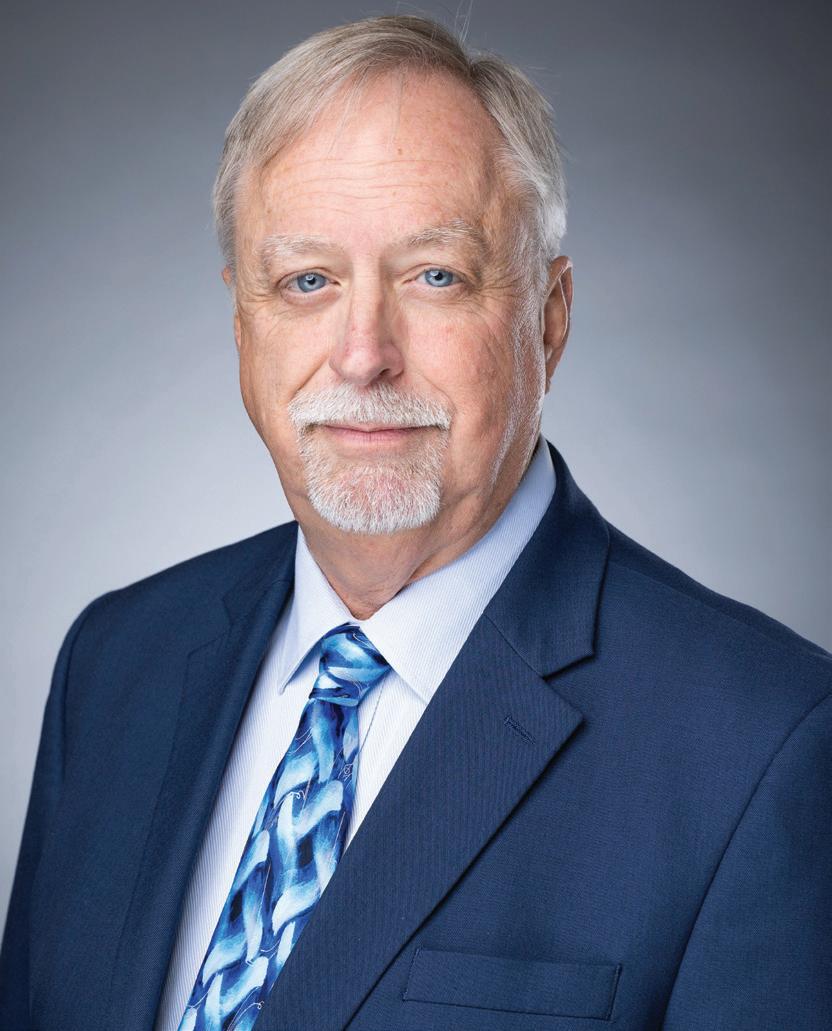
This transition represents a milestone that Elder Newton and his late wife, Jennifer Christian Newton, had prayerfully and intentionally planned together prior to her unexpected passing on March 18, 2026. It was Elder Newton’s intention to share this with the Union Executive Committee on March 19, 2026. After his wife’s death, Elder Newton revisited the decision with his adult children, and they reaffirmed the decision that had already been reached, reflecting the purpose and partnership that marked their decades of ministry together.
Speaking with gratitude about his years of service,
Elder Newton stated: “The last five years serving as your president have been among the most rewarding of our shared ministry. Looking back over more than four decades of service, I am overwhelmed by the faithfulness of God and the dedication of our members, pastors, and educators. I am also grateful beyond words for my family and particularly my wife, Jennifer, for their support, love, and wisdom during our years of ministry together.”
Elder Newton will continue to guide the Pacific Union through the Constituency Session in August, when a new president will be elected. The Constituency Session Nominating Committee will convene on May 20, chaired by Elder G. Alexander Bryant, president of the North American Division. This committee is responsible for recommending candidates for all union officers, presenting their final report and nominations to the constituency delegates for a vote in August.
Please continue to keep Elder Newton and his family in your prayers during this season of transition.
“The last five years serving as your president have been among the most rewarding of our shared ministry. Looking back over more than four decades of service, I am overwhelmed by the faithfulness of God and the dedication of our members, pastors, and educators.”
In Remembrance: Jennifer Christian Newton
Jennifer Christian Newton, wife of Pacific Union Conference
President Bradford C. Newton, passed away unexpectedly but peacefully at her home in Simi Valley, California, on March 18, 2026. She was 65.
To those who fellowshipped and worked alongside her, Jennifer was cherished for her warmth, her open-hearted manner, and the gracious way she supported the Pacific Union ministry team.
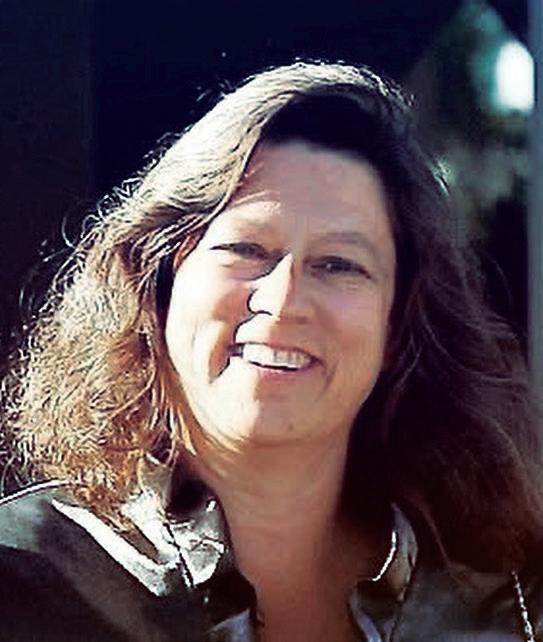
Jennifer was born on April 16, 1960, in Walla Walla, Washington. She grew up in a family well known in Adventist higher education and attended academy at PUC Prep in Angwin, California. She earned her bachelor’s degree from Andrews University, which is also where she met her future husband. She did further work to complete an MBA in Project Management from Jones International University and subsequently earned credentials as a Certified FaithBased Meeting Professional.
Family always came first for Jennifer, a priority that fundamentally shaped both her personal and professional life experiences. She adapted her career to accommodate the family moves that
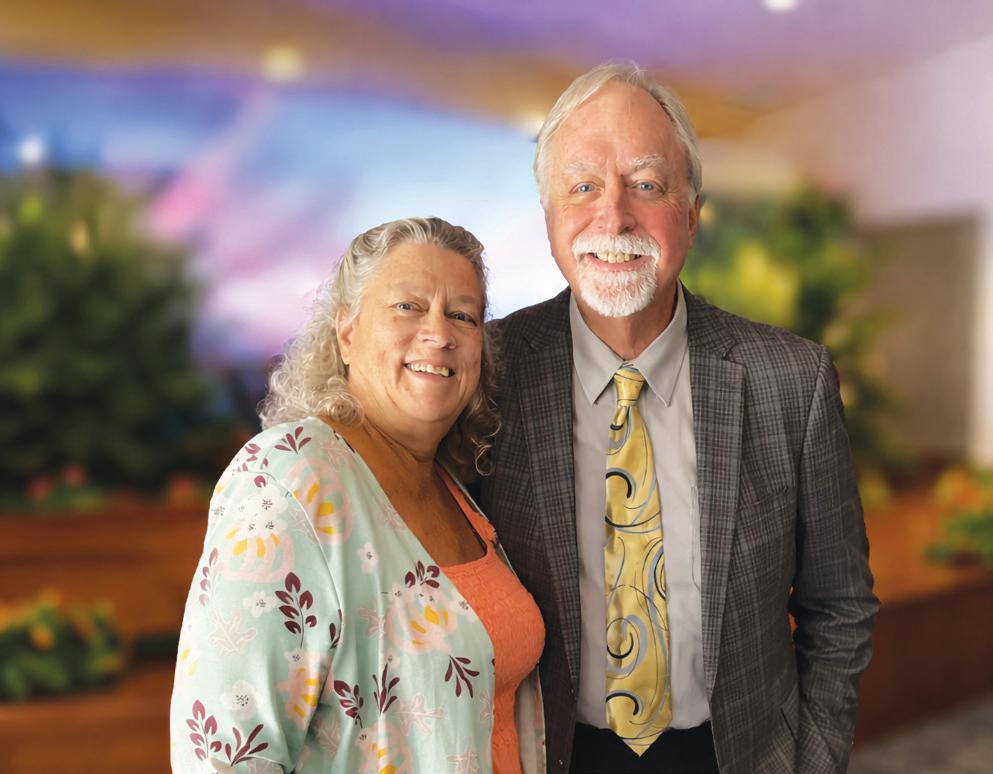
frequently accompany pastoral and administrative ministry within the Seventh-day Adventist Church. Early in her career she served as a medical transcriptionist and then worked as a teacher at Hinsdale Adventist Academy, where she taught algebra, calculus, and typing. She put her analytical skills into practice as an accountant and auditor for organizations that included the Illinois Conference, FC Commercial, and General Motors in Los Angeles. In the healthcare sector, she specialized in productivity analytics with Adventist Health and Kronos.
While many express concerns about the toll that church administration and demanding travel can exact on marriage and family life, the Newtons addressed this challenge directly. Jennifer structured her work in parallel with Brad’s so they could travel together. They were partners in life and in ministry.
Most recently, Jennifer brought unique experience and skill to her volunteer role as an associate ministerial secretary for the Pacific Union, helping to develop support networks for pastoral spouses and families and providing logistical support for ministry gatherings.
Jennifer cultivated warm relationships with her mother, children, and grandchildren. She is survived by her husband, Bradford; her daughter, Amanda Newton; her son, Tyler Newton, and daughter-in-law, Kristin Blalock Newton; two granddaughters, Macy and Chloe Newton; and her mother, Shirley Christian.
A memorial service will be held on Sunday, May 31, 2026, at 3:00 p.m. at the Simi Valley Seventh-day Adventist Church (1636 Sinaloa Rd, Simi Valley, CA 93065), with a reception immediately following. In lieu of flowers, the family requests that remembrance donations be made to the John Christian Memorial Scholarship at Pacific Union College.
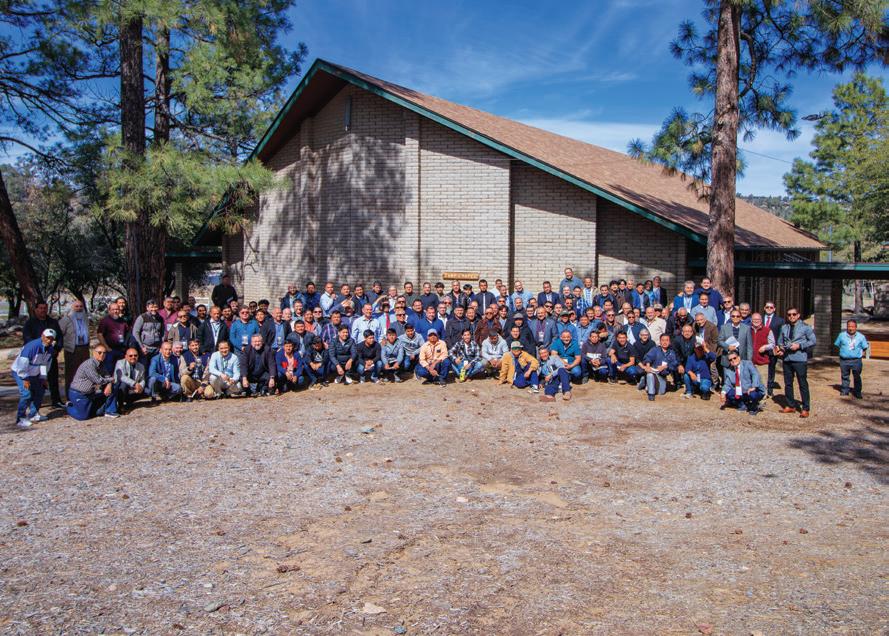
Hispanic Ministries Men’s Retreat: With Courage, Trusting in God
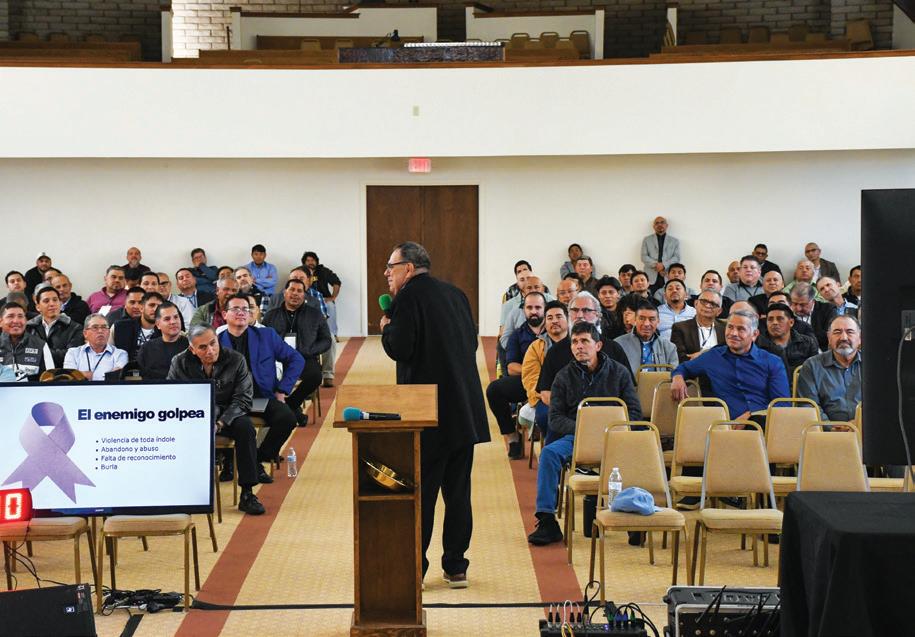
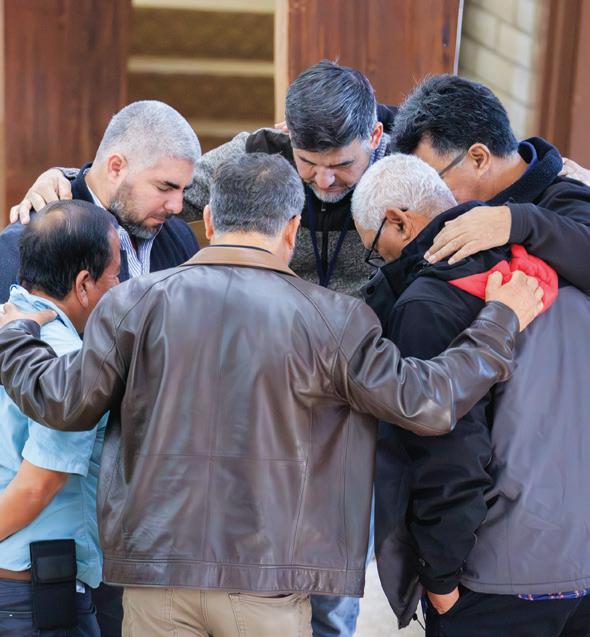
During the weekend of Feb. 27-March 1, the Arizona Conference Hispanic Ministries Department hosted its annual Men’s Retreat at Camp Yavapines in Prescott, Arizona, welcoming approximately 150 participants from across the Arizona Conference.
Held under the theme “With Courage, Trusting in God,” the retreat focused on spiritual growth, leadership development, and personal well-being. The attendees were blessed through the worship services, devotional messages, and seminar sessions designed to strengthen their faith and equip them for
service in their homes, churches, and communities.
Featured presenters Andrés Ramírez and Adolfo Ruiz led seminars on mental and physical health, offering practical insights on the challenges men face in both ministry and daily life. In addition, the retreat allowed for fellowship, group interaction, and spiritual reflection, fostering a supportive and uplifting environment.
Overall, the retreat served as a time of renewal and encouragement, strengthening participants’ commitment to lead with courage and trust in God.
By Alexis Camacho
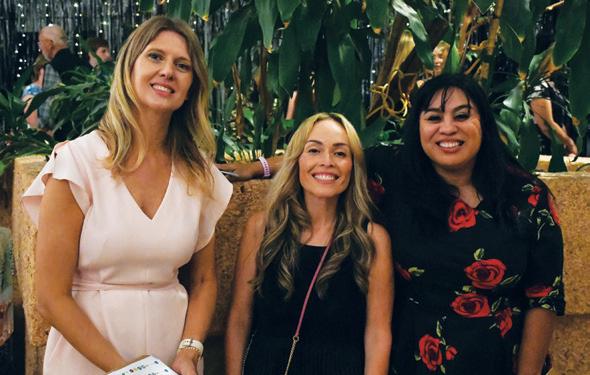
An Evening of Generosity With Purpose: Thunderbird Christian Elementary’s First Annual Dinner Auction
Thunderbird Christian Elementary’s (TCE) First Annual Dinner Auction brought together members of the community for an evening marked by generosity, fellowship, and a shared commitment to Christian education. The initiative grew out of a vision placed in the heart of TCE finance manager Shelle Blake to strengthen and enhance the elementary school facilities, creating a more supportive learning environment for students. The planning process required significant time, effort, and collaboration. For many members of the organizing
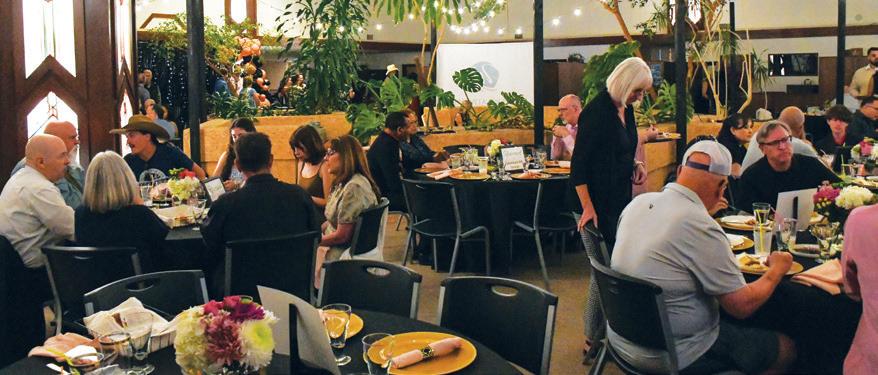
committee, this was their first experience coordinating an event of this kind. Their dedication, along with the support of parents and volunteers, played an essential role in making the evening a success.
Through the kindness and support of those in attendance, plans for meaningful improvements to the elementary building are now moving forward. The event reflected what can be accomplished when a community unites around a common mission.
By Alexis Camacho

Hispanic
Women’s Retreat: God Has Clothed Me With Promises
From March 27-29, women from across the Arizona Conference gathered in Prescott, Arizona, for a spiritual retreat titled “God Has Clothed Me With Promises.” The weekend provided participants a chance to grow closer to God, rediscover their identity in Him, and find comfort in His promises.
The retreat included Christ-centered messages, heartfelt worship, and time for meaningful connections that encouraged personal and spiritual renewal. Guest speaker Laura Minelly shared uplifting presentations focused on the value of biblical promises, women’s identity in Christ, and the importance of trusting God through life’s challenges. She encouraged everyone to move forward in faith, with hope and confidence in God’s guidance.
Devotional times, led by Lupita Castillo, invited
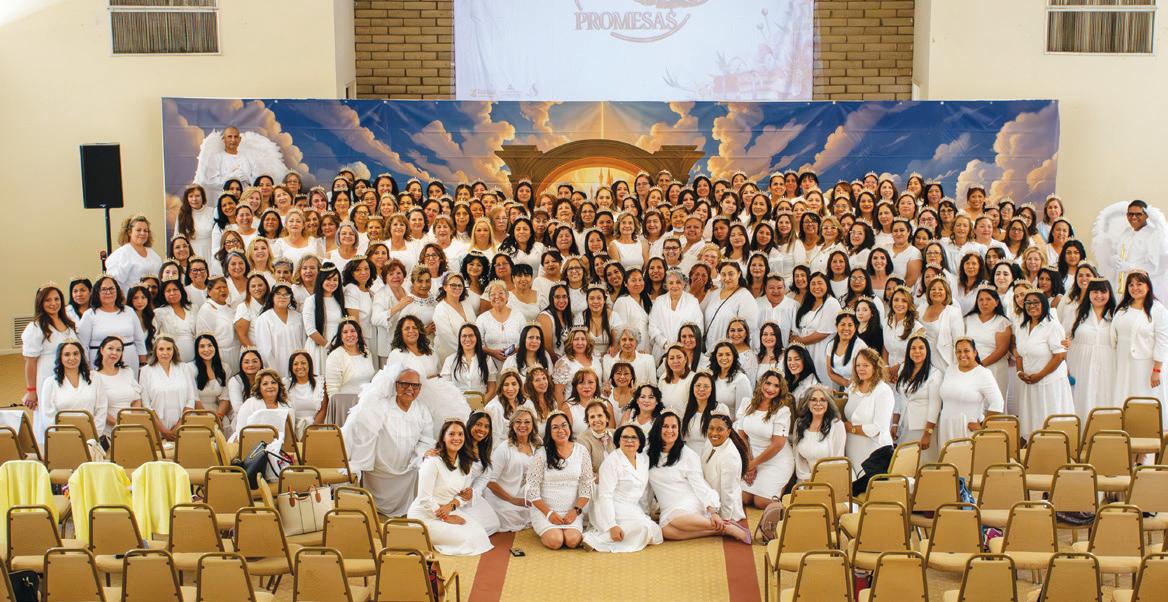
everyone to reflection and daily surrender, while music coordinated by Anny F. Marte fostered an atmosphere of reverence and closeness with God. Throughout the weekend, participants engaged in prayer, small group interaction, and fellowship, building meaningful relationships in a spirit of unity.
A highlight of the retreat was a special symbolic moment that reminded each woman of her worth and purpose, leaving a strong impression on everyone. By the end of the weekend, attendees returned home encouraged, spiritually refreshed, and inspired to keep walking in faith, holding firmly to the promises of God.
By Alexis Camacho
The Place: Where Iron Sharpens Iron in San Francisco
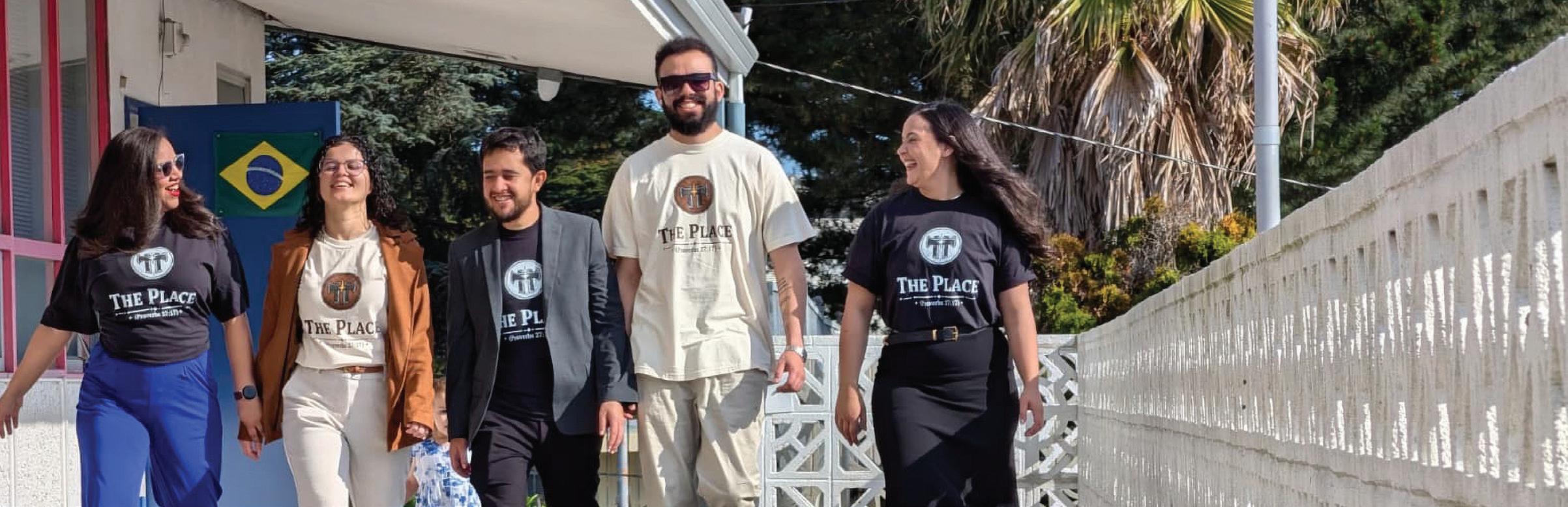
On Friday evenings in San Francisco, something different is happening. There are no rows of pews, no passive audiences waiting for a sermon to end. Instead, young adults gather around tables, open up about their struggles, and wrestle with a question that is reshaping how they think about faith: What can we actually do about it?
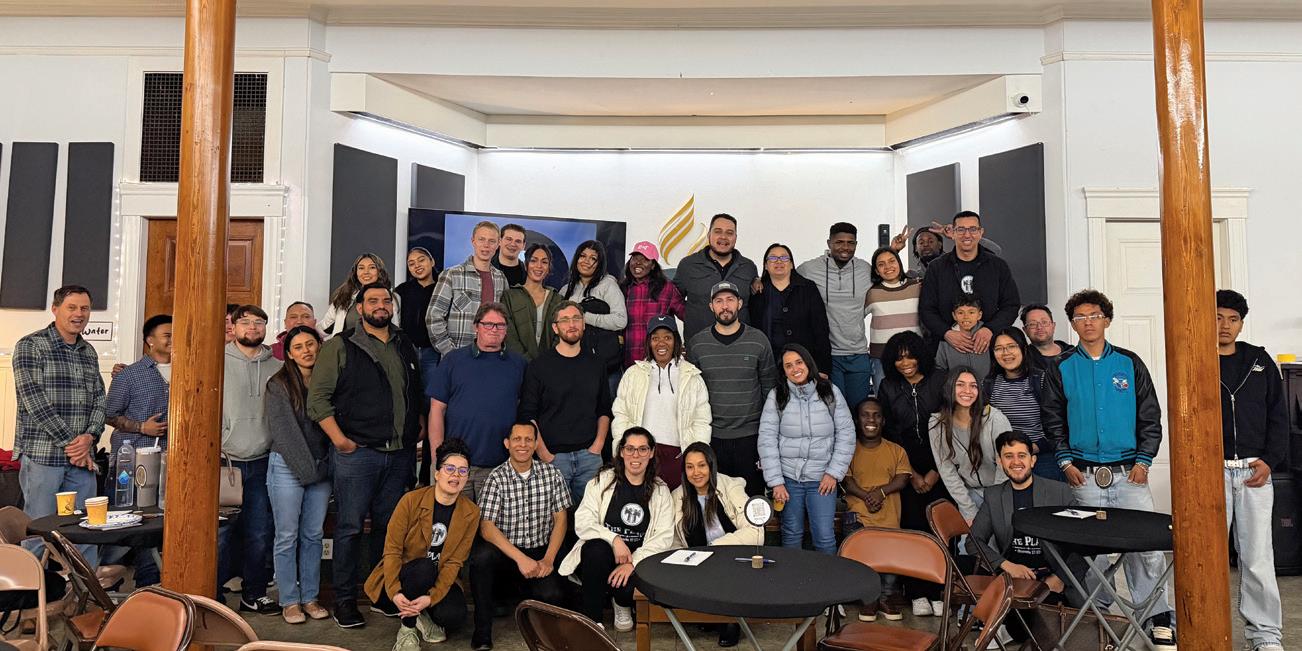
That is the heartbeat of The Place—a young adult church plant operating under San Francisco Central church. Launched just over a month ago by Pastor Jader Oliveira, associate pastor at San Francisco Central, the ministry was born from a conviction he had carried for years: too many young adults feel pressured to perform a version of Christianity at church, hiding their real struggles behind a polished exterior.
"Sometimes they felt that they didn't have a space to be themselves," Oliveira said. "They didn't find a place where they could just be—not just fulfill what they were
expected to be, like the model Christian." His answer was not another program but a different kind of space.
The name itself is rooted in Scripture. Drawing from Proverbs 27:17—"as iron sharpens iron, so one person sharpens another" (NIV)—Oliveira describes The Place as somewhere friendships are forged with purpose. "When iron hits iron, it can make damage," he said, "but if we go with the right purpose, we can sharpen each other." The name also echoes the story of Zacchaeus, evoking a specific place where an unexpected encounter with Jesus changed everything.
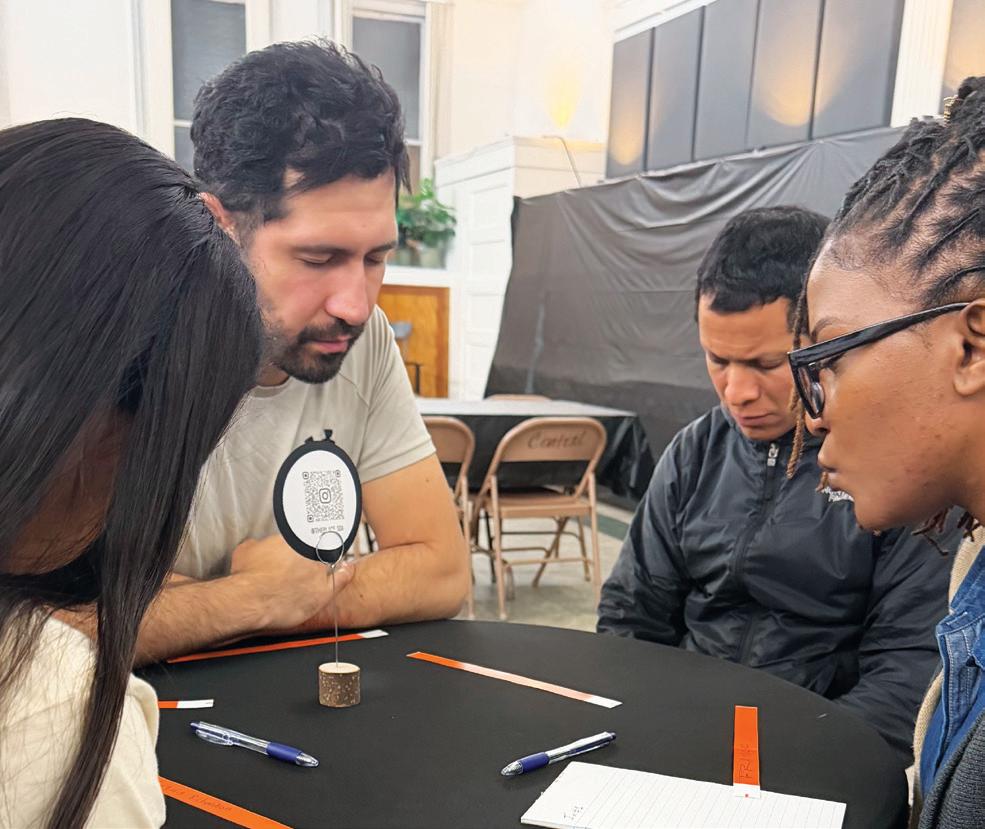
The weekly gathering follows a deliberate rhythm. Doors open at 6:00 p.m. for an hour of open conversation—no agenda, no formalities, just people talking about their lives. This is followed by 40 minutes of worship to welcome the Sabbath, a focused 20-minute message introducing a theme, and then the centerpiece: Table Talk. During this time, young adults sit together and brainstorm practical responses to what they have heard. "I want them to plan something and put it into practice," Oliveira said. "Not just sit and listen."
In a city like San Francisco, where skepticism toward organized religion runs deep, that approach is intentional. Rather than leading with advertisements or formal invitations, The Place leads with authentic friendship. The atmosphere is minimalist and intellectually honest—more like a neighborhood café than a traditional sanctuary. "In a postmodern city, people are hungrier than ever for spiritual conversation," Oliveira said, "but they're tired of programs that lack substance."
The long-term vision extends well beyond Friday nights. Oliveira is already forming teams of five to six young adults—grouped by gifting in areas such as music,
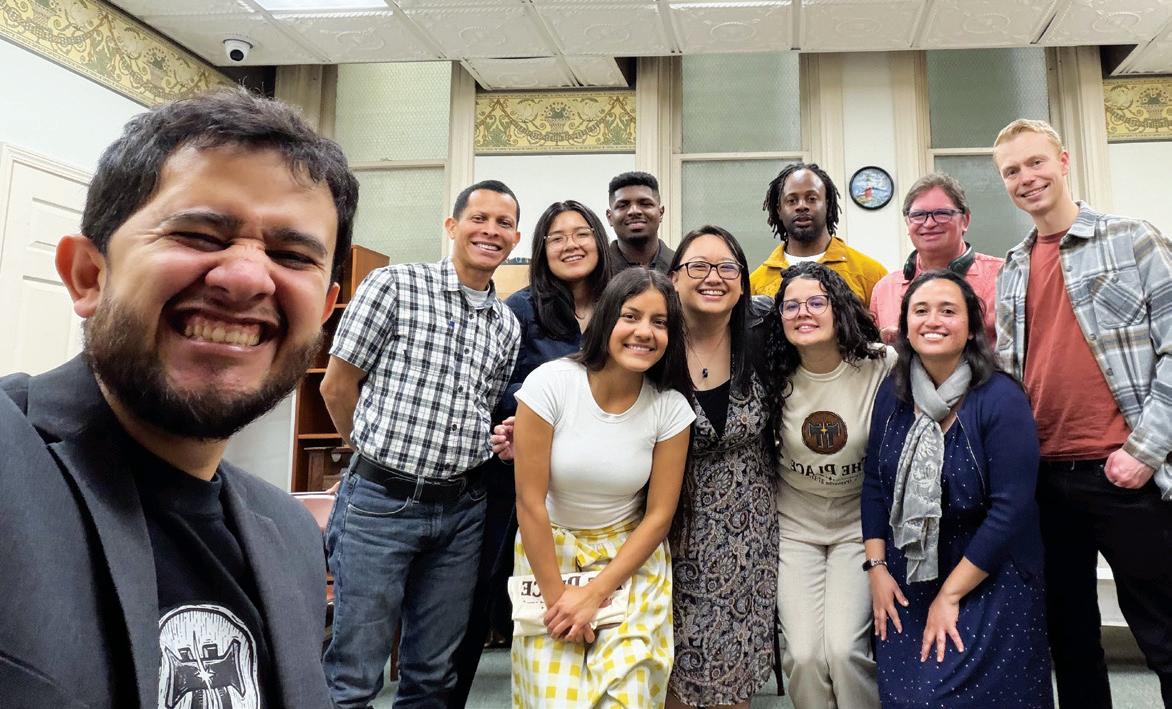
preaching, and leadership—with the goal of sending them out to serve local churches across the Bay Area. "We're not trying to take them out of their churches," he explained. "We want them to sit down, plan how they can serve better, and go do it." The Place is already drawing attendees from across Central California Conference Area 1 and the Northern California Conference, already bringing together young adults from Spanish-speaking congregations, churches in Oakland, and beyond. In just one month, approximately 40 young adults have begun gathering regularly.
The Place meets on Friday evenings to welcome the Sabbath together—and not on Sabbath morning, as traditional Adventist churches usually do. This is so The Place does not pull young professionals away from their churches and events. “We want to equip and empower our young people in ministry, but also their personal commitments to Christ,” Mark Ferrell explained. “We don’t want to pull away young people from their home churches, where they are needed, or to have them choose between a dynamic young adult group and their home church. By having our services and get together on Friday evening and Sabbath afternoons, we are working in collaboration with our Bay Area churches and their young people.” As young Adventists become involved with The Place, plans are being made to reach out to Adventists attending the secular colleges and universities in the Bay Area, as well as to create space that young professionals will feel comfortable bringing their unchurched friends, coworkers, and classmates to.
The impact is already being felt. A young man visiting from Germany attended for two weeks and left so moved that he purchased several The Place T-shirts to bring home. "He said, 'I want to replicate this in my city,'" Oliveira recalled. "He'd never seen a place where people were truly there to listen to each other—not just to sit and receive."
Oliveira also serves alongside San Francisco Central's


church planting efforts in the Brazilian community and collaborates with Pastor Mark on the conference's film ministry project, reflecting the creative, multifaceted approach the church is taking to reach its diverse urban mission field. For The Place, future plans include establishing creative studios for music and media production, equipping young adults to create content that speaks the language of a secular world.
When asked what he would say to a young adult searching for community, Oliveira's answer was straightforward: "If you're looking for a place where you can be yourself without being judged and you want to make a difference, come and help us do it. Let's make a movement." Perhaps you know of a young person living in the Bay Area; please invite them to explore The Place at www.ThePlaceinSF.org or search on Instagram for The Place in SF.
For a generation that has grown up watching the church from the sidelines, The Place is extending a different kind of invitation: not merely to observe, but to belong, to build, and to go.
By Bryan Bong
Pickleball With a Purpose: Turlock Adventist Church Reaches the Community Through Sport
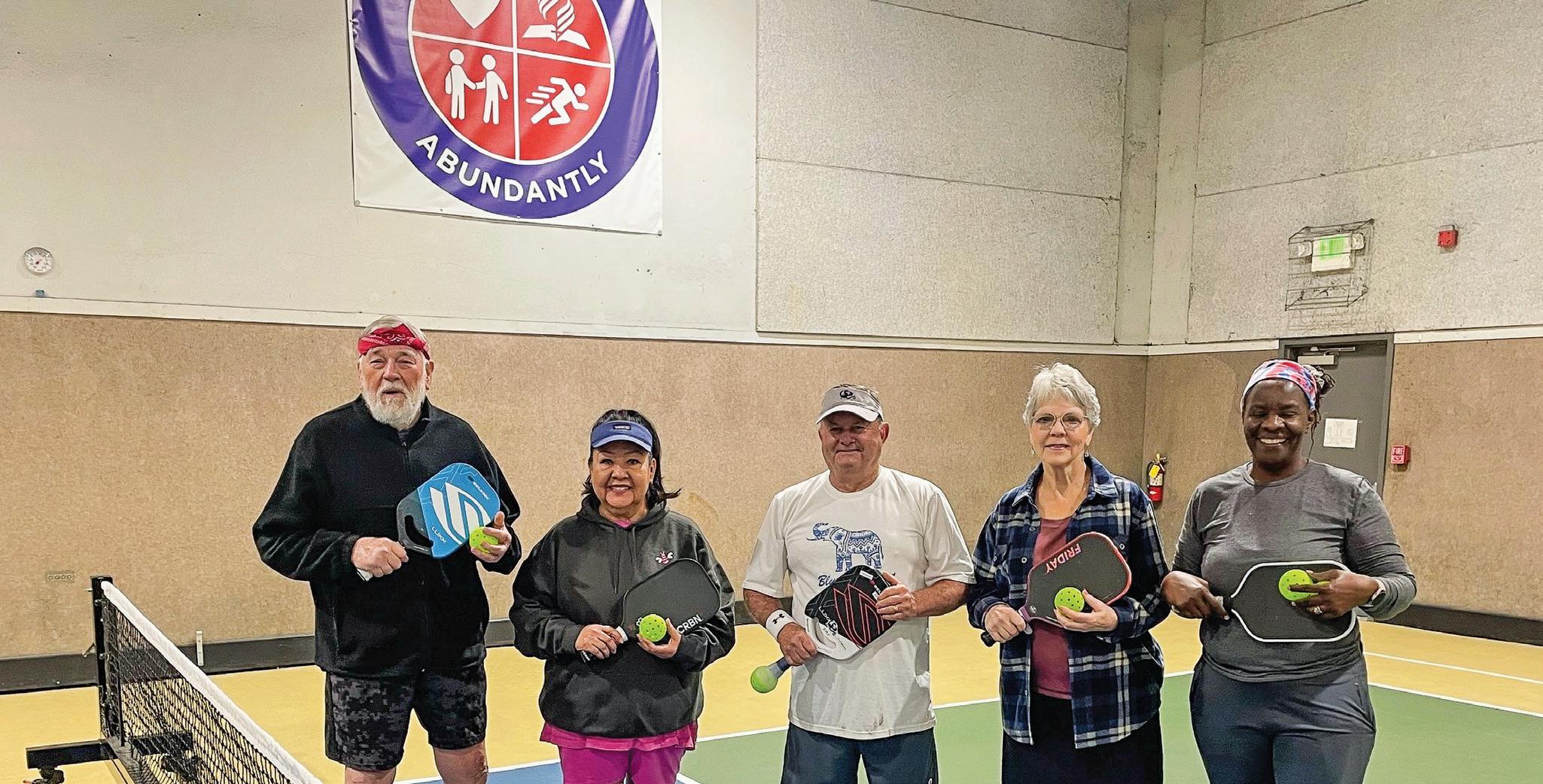
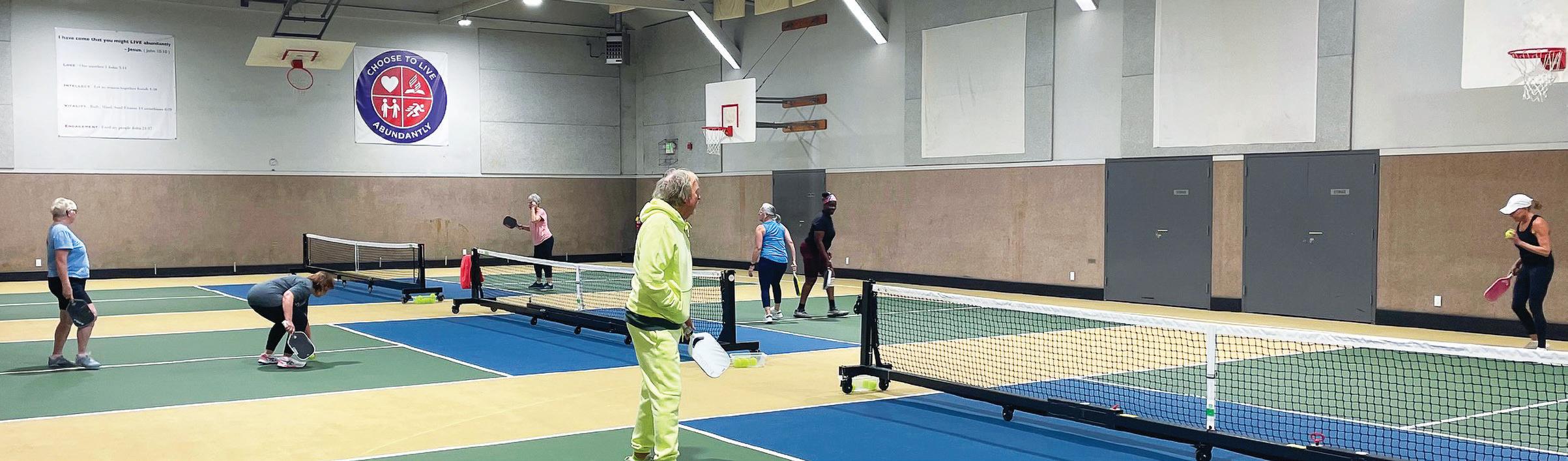
Whack! Pop! The sounds reverberate through the Turlock church gym during a session of the church’s pickleball ministry. This unique ministry has become a phenomenon in the Turlock area, drawing participants from Turlock and surrounding areas every day of the week except Sabbath. Participants include church members along with community members of all ages and all levels of skill. The main draws are state-of-the-art indoor courts as well as a friendly and welcoming environment. The level of enthusiasm in the church and community is high.
The ministry began over two years ago when church members who are pickleball enthusiasts wanted to use the church gym for play with friends from the community during bad weather. Initially the courts were simply outlined by tape, and then
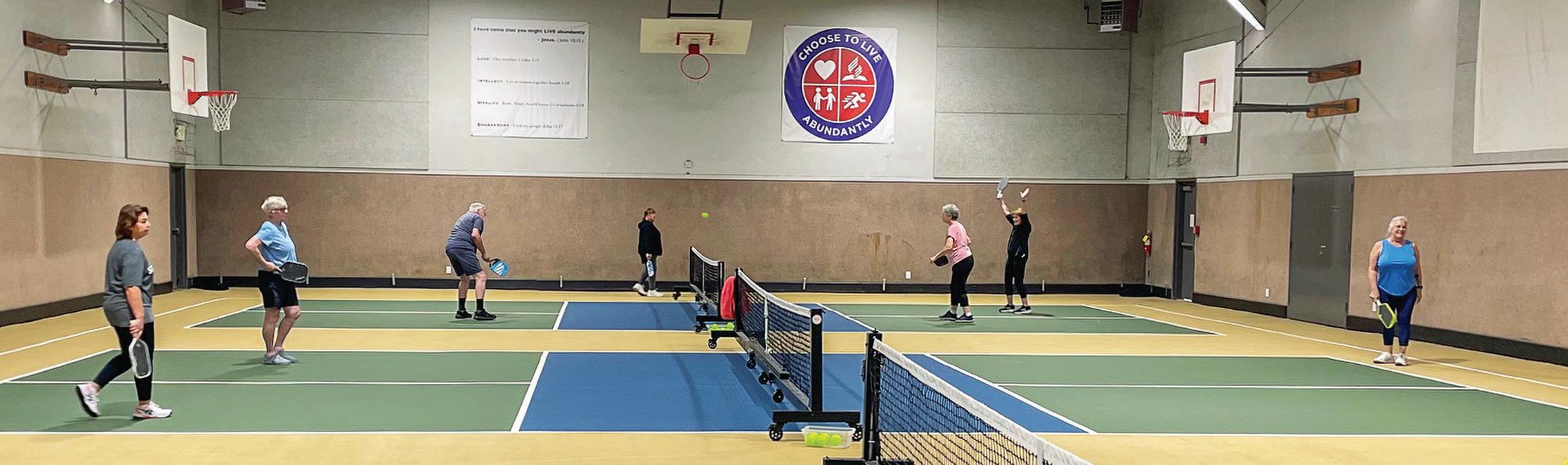
they were painted as an overlay on the basketball and volleyball lines. Participation grew as church members took up the sport and more community members found the gym to be a desirable place to play. Eventually some of the original church member players proposed improving the playing surface in the gym. Initially, a single court was installed with quality materials, but that soon generated interest in creating three specially surfaced courts and sidelines. Materials were initially donated by church members, but the final installation was paid from church funds. All labor for installation was donated by volunteers from the church and community. This has created a certain amount of community ownership of the project. What started as three sessions on Sunday has grown to at least 15 a week, with usually 16 players each session—and more on a waiting list.
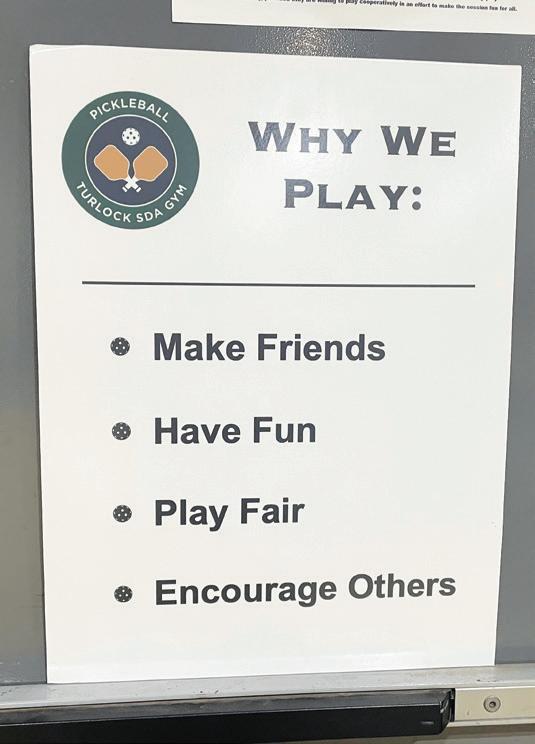
Playing time is scheduled through a free online app. Sessions fill up within minutes of posting, with waiting lists. Sessions are organized by level of skill in most cases and cost a nominal $2 per person to help cover costs of utilities, balls, and other supplies. The ministry is managed by a group of church members who are pickleball enthusiasts. Participants are encouraged to make friends, have fun, play fair, and encourage others. Making friends has truly happened as players socialize and share about their lives between games, and a strong social support system has developed that includes both church and community members. Players have had deaths in their families and other crises, and the group has responded with prayers, emotional support, and practical assistance. Articles in local magazines have noted the church’s contributions through this ministry. A local couple has formed a partnership with the ministry and sponsors an annual tournament over Veterans Day weekend to raise funds for their foundation. The foundation supports local philanthropy that honors their daughter who passed away at a young age. This has
Making friends has truly happened as players socialize and share about their lives between games, and a strong social support system has developed that includes both church and community members.
brought further positive recognition for the local church.
The overarching premise is that the best way to share Christ and Christian values is to meet people where they are rather than just preach to them or avoid contact with the world. Distinctive Adventist beliefs such as the Sabbath and emphasis on health are shared with the community through the overall schedule of play and everyday conversations with participants who ask questions about our church. Participants have frequently noted the friendliness and generosity of the local church and its members. One couple has begun to attend church. Church members also feel less isolated and more connected as members of the local community. There are many other benefits that are more subtle but nevertheless meaningful to participants, whether they are church members or have only recently become better acquainted with Adventists.
The increased use of the gym has led to improvements, including new LED lights that not only improved lighting but also reduced cost of utilities. Plans include installation of a large-screen TV (donated by the family who sponsors the Veterans Day tournament) to be used for tournaments and league play but also to stream health education messages and information of church events to which the community is invited.
By Dan Souza
Rising Above the Storm: Resilience in the Islands
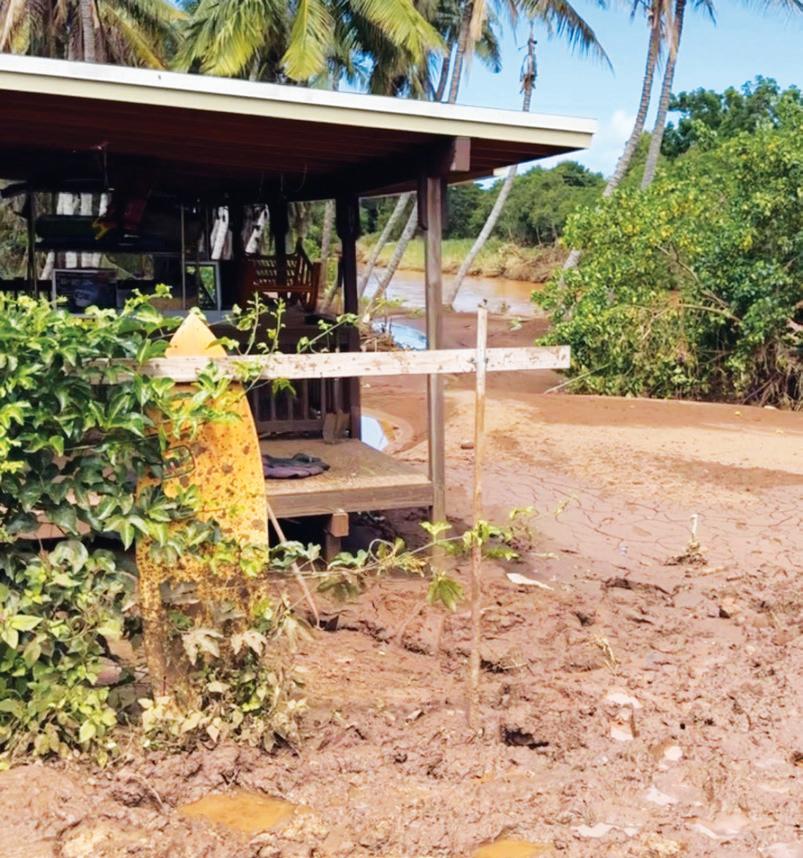

As March began and many prepared for the rhythm of spring break, nature had other plans for the Hawaiian Islands. We were met with “Kona Low” storms—a series of powerful weather systems that brought relentless wind and unprecedented rainfall. While our islands are accustomed to “winter” rains, this was a singular event. Rather than passing showers, we experienced a steady deluge spanning two weeks, with rainfall totals reaching between 10 and 30 inches in several areas.
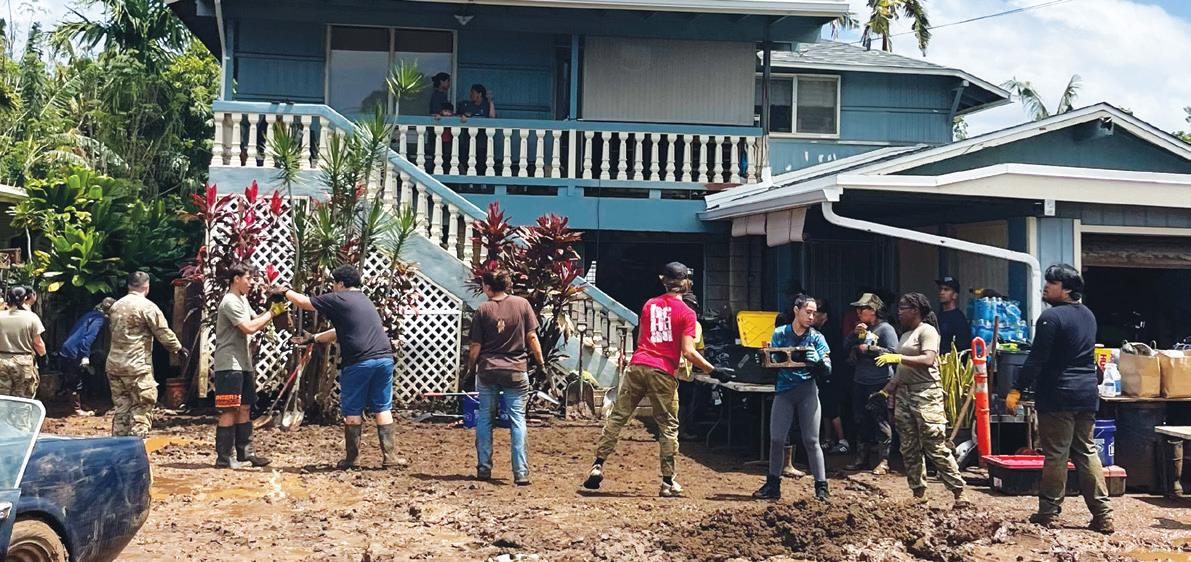
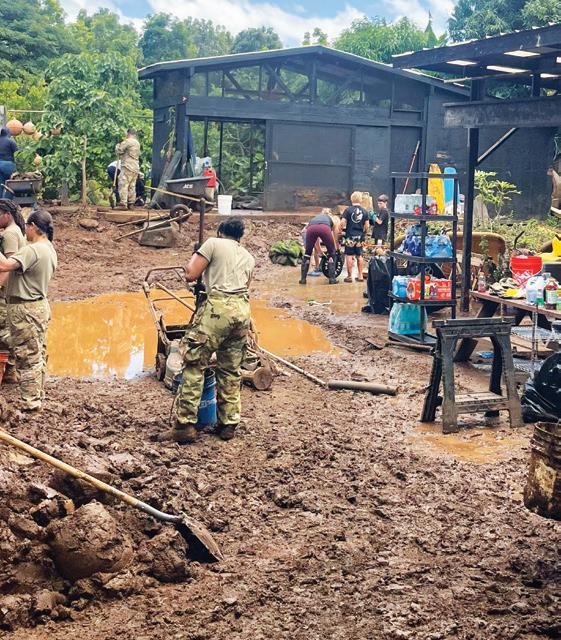
The impact was felt deeply across Honolulu, Hilo, Līhu’e, and Kahului. As the clouds finally receded and the sun returned, the extent of the damage became clear: homes were flooded and, in the most severe cases, their foundations were compromised. Yet, as the waters settled, a different kind of power began to surge through our communities.
A community united in aloha
On the North Shore of Oahu, families returned from evacuations to find their neighborhoods transformed by the floods, but they did not face the recovery alone.
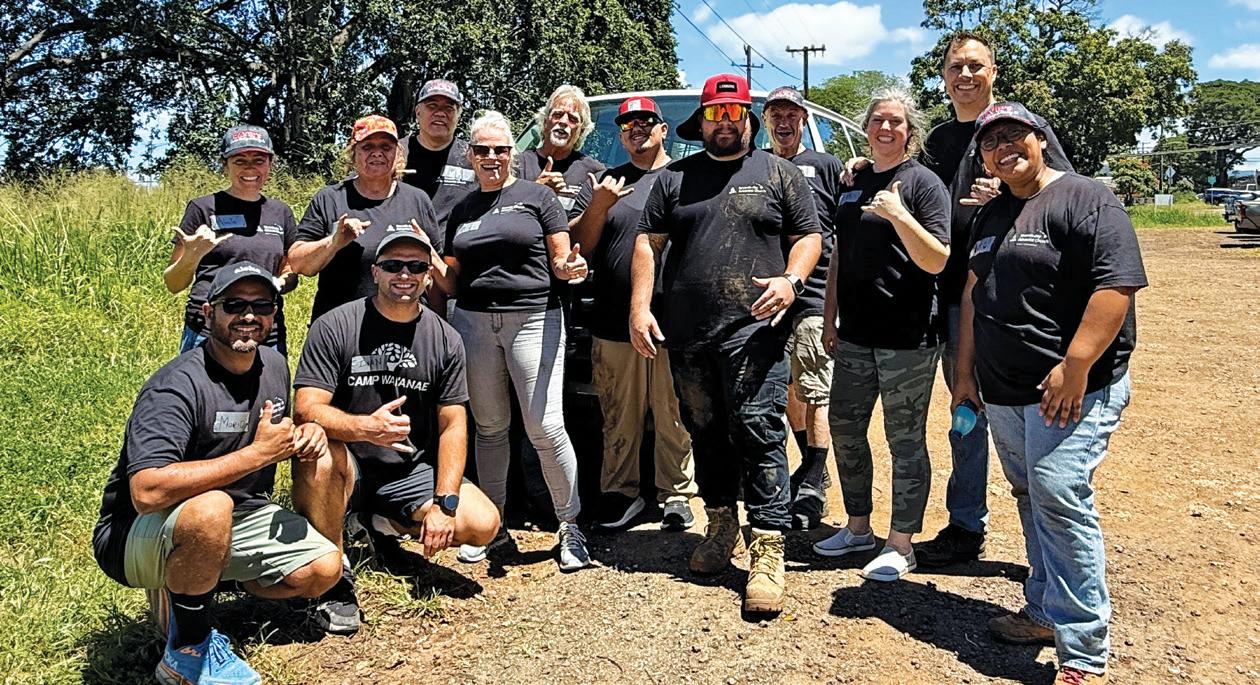
In a beautiful display of the aloha spirit, neighbors and volunteers from across the island arrived in force to stand by them. Together, they worked tirelessly to salvage cherished belongings and clear debris-strewn roads to ensure emergency vehicles could reach those in need.
This wave of compassion extended far beyond the North Shore, touching every corner of the islands as communities mobilized to provide essential resources.
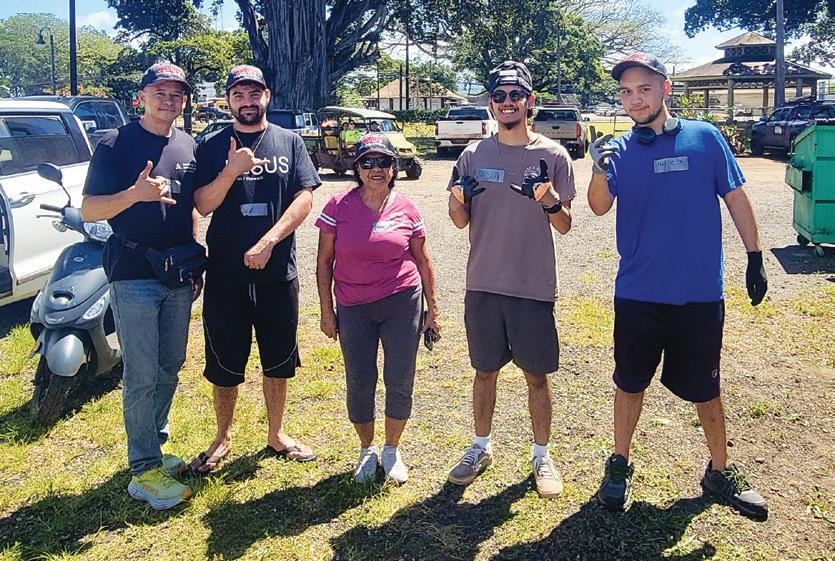
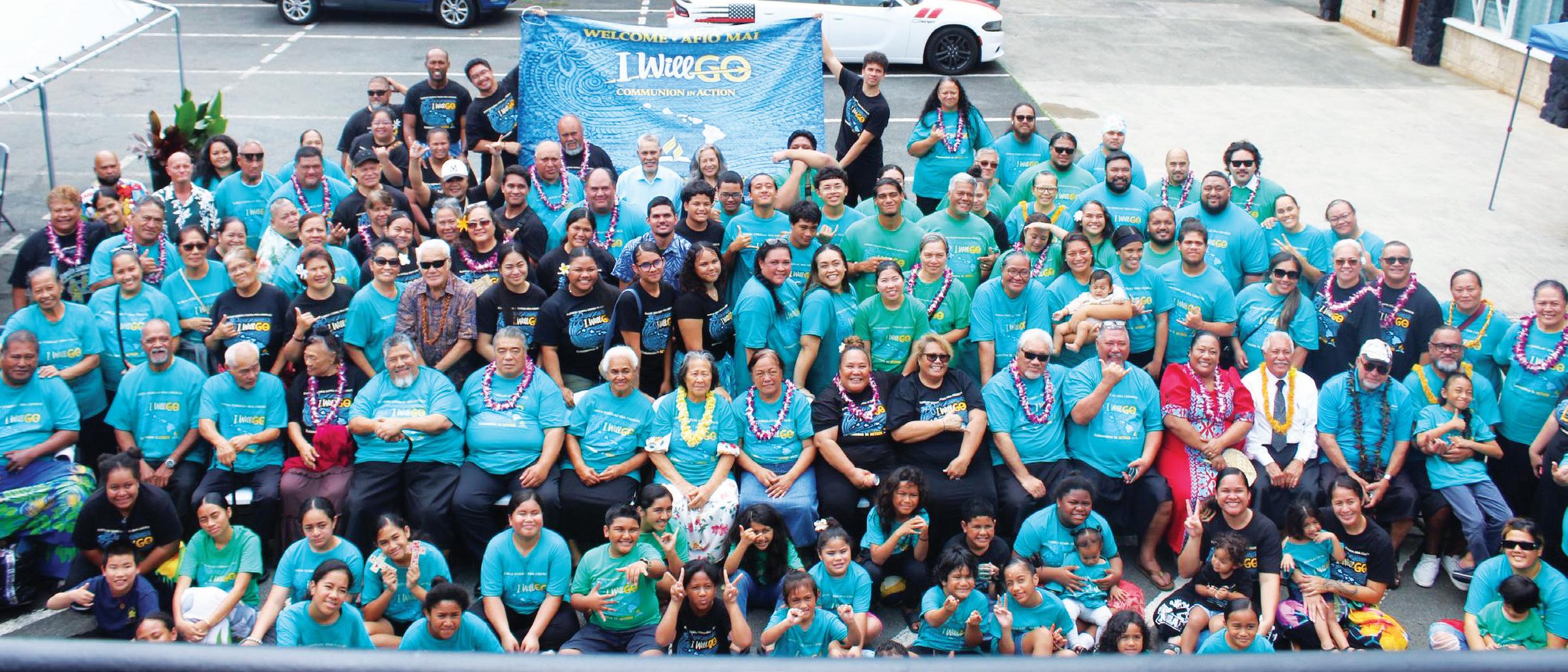
In honor of Global Youth Day on Oahu, the Samoa Tokelau and Central Tongan-English church communities organized a vital drive that provided not only food and clean clothing but also critical healthcare assistance. This spirit of service was mirrored by other local churches and volunteer organizations across the state that established distribution centers and organized cleanup crews. Through these collective efforts, our islands proved that even in the wake of a historic storm, the strength of our unity provides a foundation that cannot be shaken.



Looking forward with hope
While the initial storms have passed, we remain vigilant as we navigate the remaining weather patterns of the season. We are profoundly grateful to those who have shared our story and offered their support.
We invite you to keep our communities in your thoughts and prayers as we work side by side to rebuild. Together, we are doing more than just repairing homes; we are reigniting hope and strengthening the bonds that make our islands home.
By Miguel Manzo


Spring Transformation at HIS
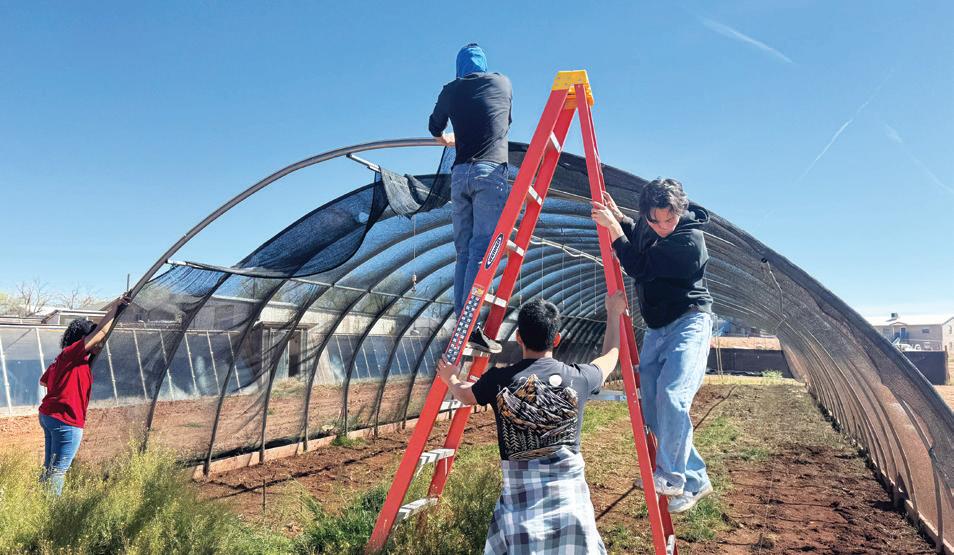
In 1 Peter 4:10-11, the apostle Peter says, “Each of you should use whatever gift you have received to serve others, as faithful stewards of God’s grace in its various forms. If anyone speaks, they should do so as one who speaks the very words of God. If anyone serves, they should do so with the strength God provides, so that in all things God may be praised through Jesus Christ” (NIV).
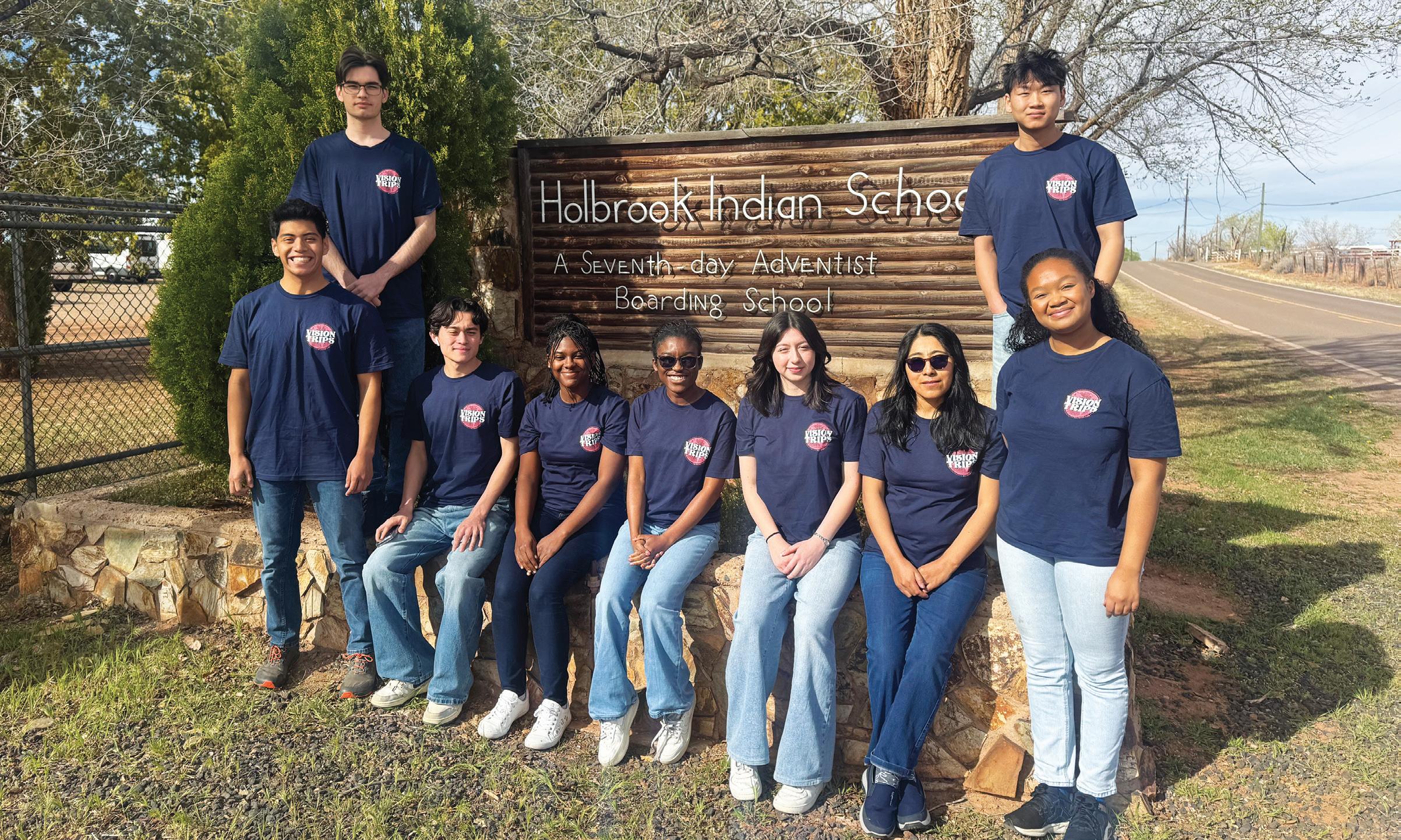
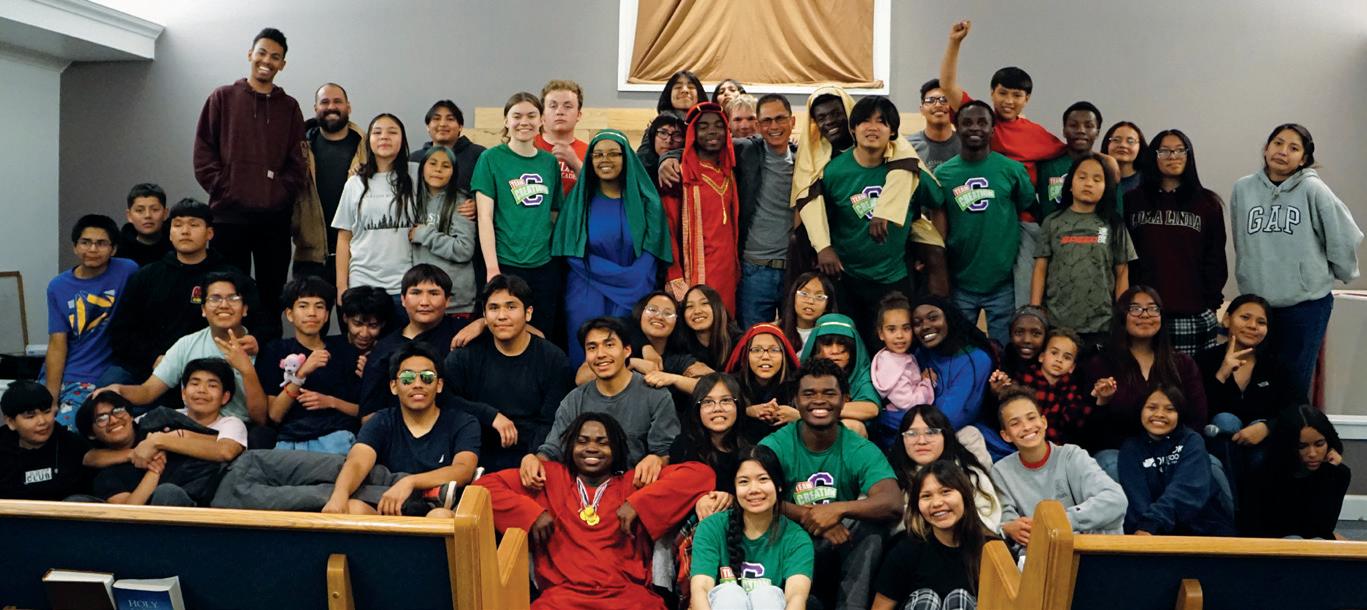
At Holbrook Indian School (HIS), we have been blessed by many faithful stewards this school year. February and March were busy months as we welcomed student and staff volunteers, first from Sunnydale Adventist Academy, then from Southern Adventist University (SAU). Both teams tackled projects that are essential to our campus being a productive and beautiful place for our students to learn and grow.
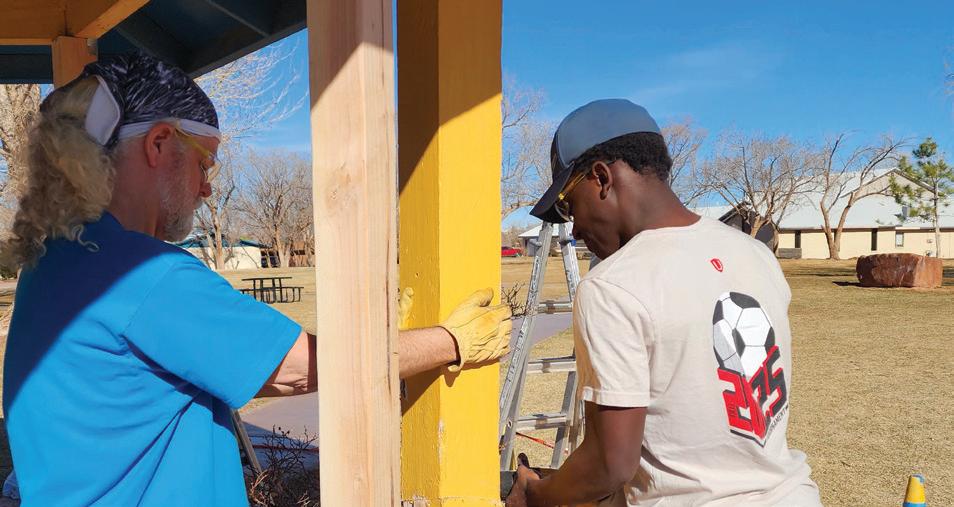
The centerpiece of these combined efforts was the total transformation of our campus gazebo. Over the years, the structure had begun to show its age with peeling paint and rotting boards, eventually becoming unsafe. The Sunnydale team took on the significant task of rebuilding the structure and applying a fresh coat of paint, while the SAU group followed up with the finishing touches. This collaborative effort has restored the gazebo, making it a sturdy, inviting landmark where students and staff can gather.
A Seventh-day Adventist Boarding Academy Serving Native American Youth Since 1946
TOP: Southern students work on the greenhouses. ABOVE: A Sunnydale student works on the gazebo.
Beyond this central project, both teams tackled essential maintenance projects and prepped our greenhouses for spring planting, which ensured that our farm is ready for the new season. From spreading gravel around the Education Center to filling potholes along our roads and clearing debris from the barn area, they made our entire campus safer and more welcoming.
and
The impact of these visits extended far beyond physical labor. While integrating themselves into our community, sharing meals in the cafeteria, and joining in evening worships, the volunteers offered encouraging testimonies and songs that inspired our students. From Sunnydale’s VBS activities to SAU’s wonderful Sabbath services, the fellowship was a powerful
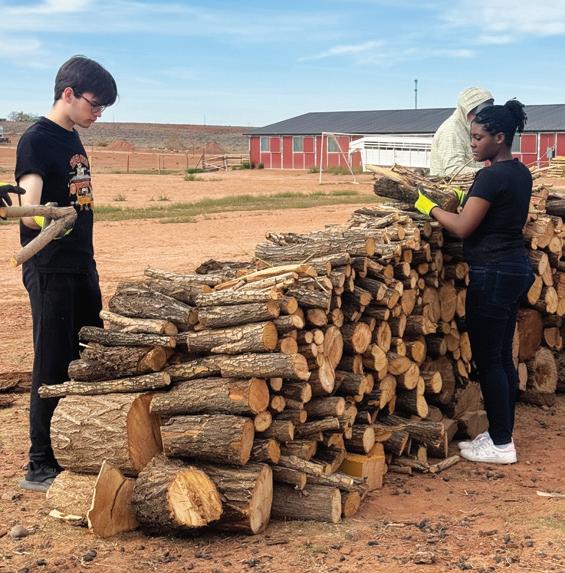
By Kirsten Knuppel
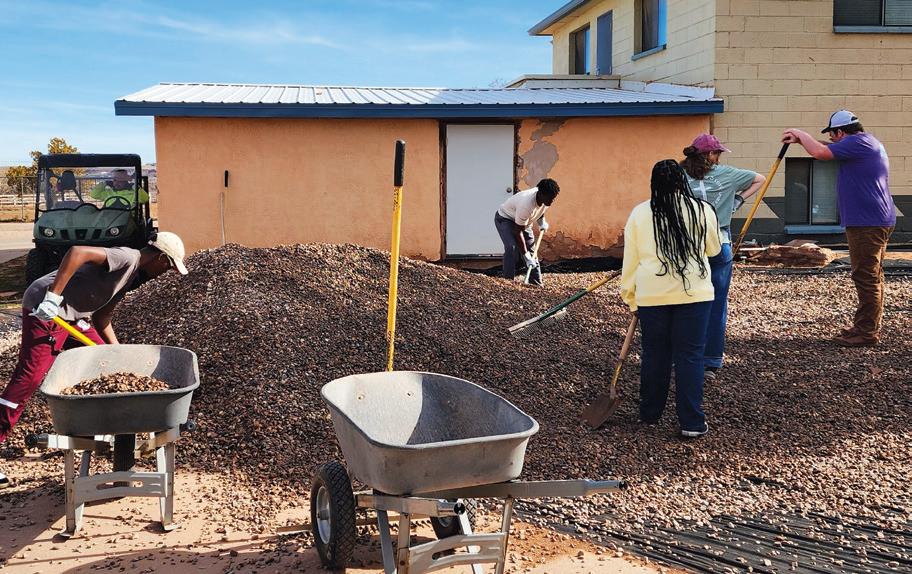
A Seventh-day Adventist Boarding Academy Serving Native American Youth Since 1946 reminder of our shared mission. We are profoundly grateful to both Sunnydale Adventist Academy and SAU for their energy and for making our campus a safer, more beautiful place to live, learn, and grow.
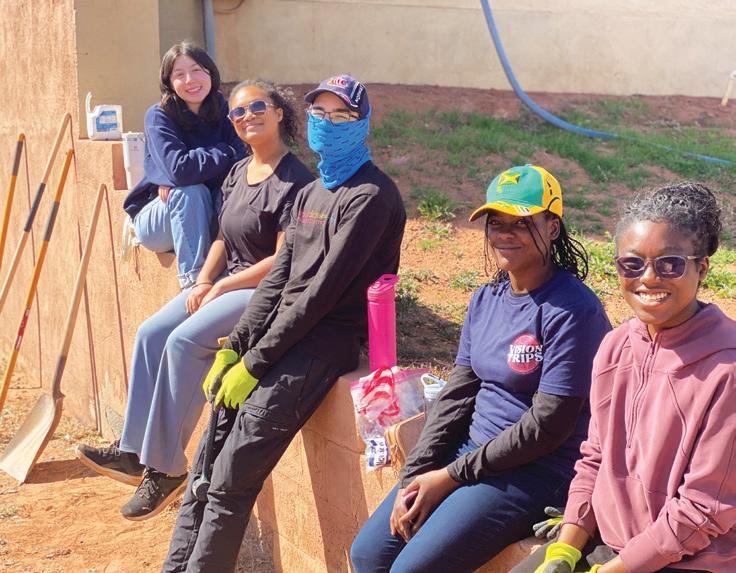
Holbrook Indian School (HIS) is a first- through twelfth-grade boarding academy operated by the Pacific Union Conference of the Seventh-day Adventist Church. HIS also manages a first- through eighth-grade day school on the Navajo reservation in Chinle, Arizona. Eighty-seven percent of funding comes from individuals who have a desire to support Native American ministries and Christian education. Your generosity makes a difference in the lives of our students, their families, and the communities they serve. Thank you for your support.
Sunnydale
Holbrook students after VBS activities.
LEFT: Southern students stack wood around the barn. MIDDLE: Sunnydale students spread gravel. RIGHT: Southern students take a break from working.
Adventist Health Serves Thousands
During Philippines Mission
Ateam of 27 Adventist Health volunteers partnered with local medical providers to care for 2,366 patients on the Philippine island of Mindoro during an Adventist Health Global Mission trip in February. By the time the last patient was seen, the impact was measured not only in numbers of patients served but in the abundance of prayer, laughter, and high-fives.
“God really blessed this trip,” said John Schroer, Adventist Health director for Global Mission. “It was a spiritual high point for all of us.”
Volunteers saw close to 500 people a day. Services ranged from routine care to complex needs, including more than 600 minor surgeries, over 1,000 dental procedures, hearing tests with hearing aid fittings, and ENT procedures. Adventist Health volunteers took with them more than 2,600 pounds of medical supplies, including dental equipment, surgical tools, an autoclave for sterilization, hearing aids, and vision supplies.
A team of 79 medical providers from the Philippines, many who work in Manila, joined the effort. The clinic was held at Adventist World Radio headquarters on Mindoro and was supported by local Adventist churches and the Adventist Church Mission of Mindoro.
Impressed to serve
Alaina Whitaker, laboratory manager for Adventist Health Sierra Vista, and her husband, Casey, felt impressed by God to serve on Mindoro. “I am a new manager and many of my staff are from the Philippines,” Alaina said. “I thought, What if I went to see where their culture is from? They were very excited, telling me, ‘Alaina, you have to do this,…eat the mangoes,…go here.’”
During the trip, Alaina conducted glucose and urine strip tests, welcomed and registered patients, and assisted the surgical team prepping surgical sites. Casey doesn’t have a medical background, but he was indispensable on the trip. He helped raise the tents, created games for the kids while they waited, and painted a mural with the teenagers. He made trips to the hardware store and was often “the muscle” on the crew. After six kids were circumcised, he was right there, high-fiving them and giving out water and treats.
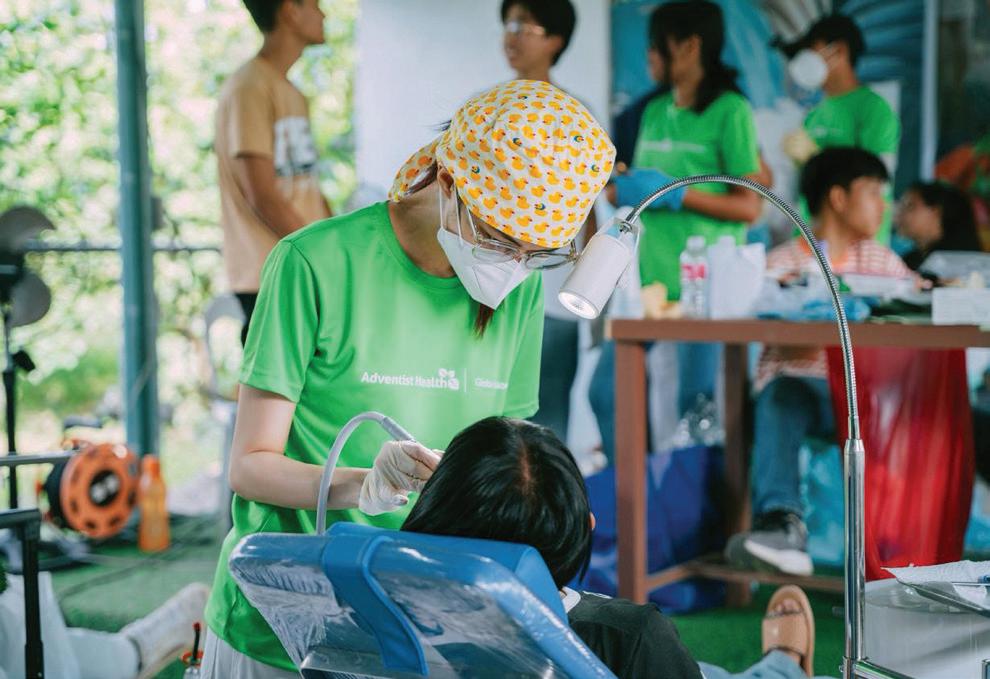
“We couldn’t speak Tagalog,” said Alaina, “so we ended up smiling and laughing a lot—the universal language! In one mountain community, they didn’t speak English, but we brought a volleyball and played with 40 kids. All we did was laugh and high-five and laugh more.”
Long lines and lots of prayer
While translators were available, Alaina says prayer became their third language.
“The days were so busy, and there were so many people waiting for care that if we waited to pray with them as they were leaving we knew it just wouldn’t happen,” she said. “So, we decided to pray whenever we were able. We started seeing the fear the kids had as they laid down for their procedures, so we started praying with them. It became a safe space to invite God in publicly and personally, and that set the tone for the rest of the trip.”
For many patients, this clinic represented their only opportunity for care. There were long lines—nearly double the expected number of patients on the final day—but no one complained about the wait.
“One of the keys to our success, in addition to continual prayer, was authenticity. When you’re real with people, they respond positively,” John said. “Our volunteers were so open about their love for God, and we were wonderfully blessed by the Filipino community. God is working!”
By Kim Strobel
Student’s Holbrook Indian School Film Selected for Festival, NAD Series
It was his own spiritual journey that inspired him—that, combined with a longstanding curiosity and the influence of a former La Sierra University associate chaplain. Student filmmaker Ezekiel Canaan Teo was compelled to capture the story of Holbrook Indian School in an inspirational short documentary, which debuted on the university’s YouTube platform on April 3.
Teo’s documentary, titled Stewards of the Earth, was also an official selection for the Sonscreen Film Festival, which was held on April 10-11. Sonscreen is an annual event for student filmmakers at Adventist schools and organized by the North American Division (NAD). This year’s festival was held at the Loma Linda University church.
Separately, the NAD is including Teo’s film in a 10part documentary web series entitled “Faith at Work: Stories of Service and Hope.” The series features projects inspired by the NAD-wide Pentecost 2025 initiative.
In 2023, while an undergraduate in La Sierra’s Film and Television Production department, Teo’s two-anda-half-minute cultural short film The Right Move won a Diversity in Film award during that year’s Sonscreen festival.
“I’ve been glad to be a part of that space,” Teo said of Sonscreen. “This is a really nice space for a lot of young creatives from the different Adventist universities to come together and share their creative work. I really enjoyed the opportunity to go there in a different capacity [this year].”
A 2025 Film and Television graduate and current
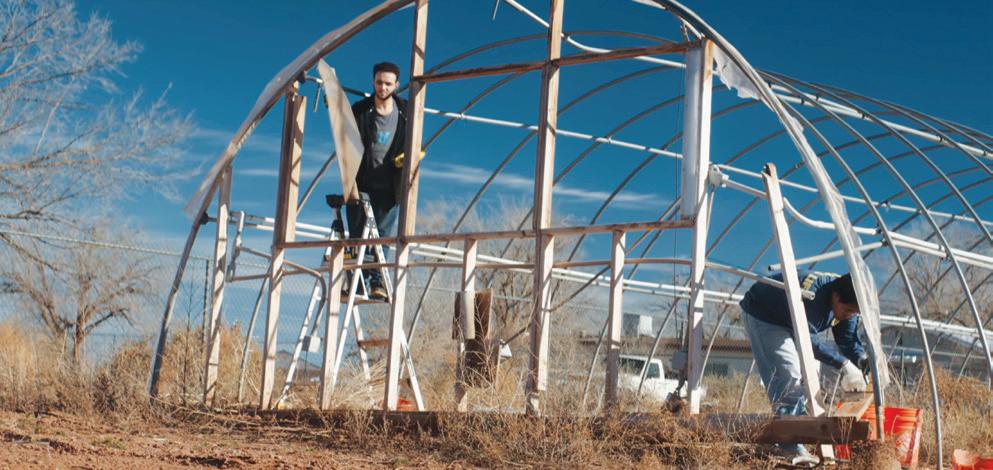
videographer and editor in the university’s marketing department, Teo this school year joined the H.M.S. Richards Divinity School’s Master of Divinity program.
Stewards of the Earth, an eight-and-a-half-minute documentary, delves into the mission of Holbrook, an Adventist boarding school in Arizona that offers education, life skills training, native culture instruction, spiritual development, and mental and physical wellness support to children from the surrounding Navajo Nation.
Teo shot the video footage as a member of a student missions team that visited the Holbrook campus during Christmas break this school year. La Sierra students re-painted the school cafeteria and demolished a windstorm-damaged greenhouse.
For Teo, the impetus to delve into the life of the Arizona school was multifaceted—in part, he was inspired by the missions-oriented example of former La Sierra associate chaplain Pono Lopez.
Teo, who was born in Alabama, spent 10 years of his youth in his cultural home of Singapore, where his parents currently live while working for the Seventh-day Adventist conference.
Teo’s faith, filmmaking, and worldview bear the influence of his multi-cultural upbringing, which enables his consideration of differing perspectives. His studies at La Sierra University have furthered his ability to think critically and consider other points of view, he said.
“So I think both in creativity and in film, and in faith, there was that journey for me, which is especially why I appreciate La Sierra University,” he said.
To view Stewards of the Earth, visit https://www. youtube.com/@LaSierraUniversityOfficial.
By Darla Martin Tucker
Screenshot from Stewards of the Earth documentary by Ezekial Canaan Teo.
See the latest news and Health & Wellness stories from Loma Linda University Health at news.llu.edu.

Loma Linda University Launches 3-Year Bachelor’s Degree in Health Science
Loma Linda University School of Allied Health Professions has launched a three-year bachelor’s degree in Health Science—a reduced unit, innovative, three-year bachelor's degree designed to provide a seamless transition into select graduate programs at Loma Linda University.
Graduates will gain valuable experience and foundational skills for a variety of careers in healthcare. The program is specifically designed to meet the academic prerequisites for several Loma Linda University graduate programs with preferred admission consideration upon program completion. This degree is an ideal launchpad for students pursuing the following competitive career pathways:
• Doctorate of Physical Therapy (DPT)
• Entry-level Doctorate of Occupational Therapy (EOTD)
• Master of Health Informatics (MSHI)
• Master of Physician Assistant (MPA)
Completing this program will set students on a fast track to advanced education, positioning them to also pursue specialized careers through Loma Linda University’s master's degree programs.
“This new bachelor’s degree program offers students an accelerated path to pursuing healthcare careers, which will help them more quickly fill workforce demands in today’s marketplace with greater affordability and accessibility,” said Craig Jackson, JD, MSW, FASAHP, dean of the School of Allied Health. “We know our graduates will have careers that will significantly impact how health is maintained and improved throughout society.”
The new program reflects Loma Linda University’s mission to prepare students for service-oriented careers in the health sciences while maintaining the highest standards of academic integrity and excellence.
PUC & LLU STEM and Health Professions Workshop: Inspiring Career Pathways
From Feb. 22 to 23, Pacific Union College’s School of Sciences and Loma Linda University Schools of Dentistry, Pharmacy, and Allied Health held STEM and health profession workshops for 75 students from Monterey Bay Academy, Mountain View Academy, Lodi Academy, and PUC Preparatory.
Hosted on PUC’s campus, the event gave academy students the great opportunity to participate in workshops focused on careers in STEM, physical therapy, dentistry, pharmacy, and psychology. In each workshop, these students received hands-on, engaging experiences led by PUC and LLU professionals and faculty.
Beginning the workshops, LLU School of Pharmacy dean Kyle Sousa, Student Services dean Willie Davis, PUC chemistry chair Kent Davis, and professor Marie Pak led a workshop instructing the students in how to prepare antiseptic solutions like those that had been made for the entire LLU campus during the covid pandemic. One student shared that it was the most hands-on workshop, providing the most information and career options.
During the microbiology session, PUC School of Sciences dean Aimee Wyrick instructed students to examine microbial samples from hand swabs before and after applying hand sanitizers in order to assess the role and efficacy of alcohol-based hand sanitizers. Assisted by PUC biology chair John Duncan and PUC biology professors Backil Sung and Brian Ness, students counted how many colonies grew and examined the different colony characteristics by the variety of organisms, with the effectiveness of the hand sanitizer determined by noticing the decrease in the number of colonies grown after applying hand sanitizer.
Throughout the engineering workshop, students explored design and material elements in buildings to reduce the spread of pathogens. From learning about the engineering design process from PUC math and physics chair James Robertson, they developed a product for schools to use to control the spread of germs.
Wes Swen and Jeremy Hubbard, from the LLU Physical Therapy Department, and PUC kinesiology professors Matt Evens and Wayne Borin introduced several specialty practices and incorporated experiential activities evaluating lower body strength, gait, and balance using ply boxes, allowing students to experience procedures
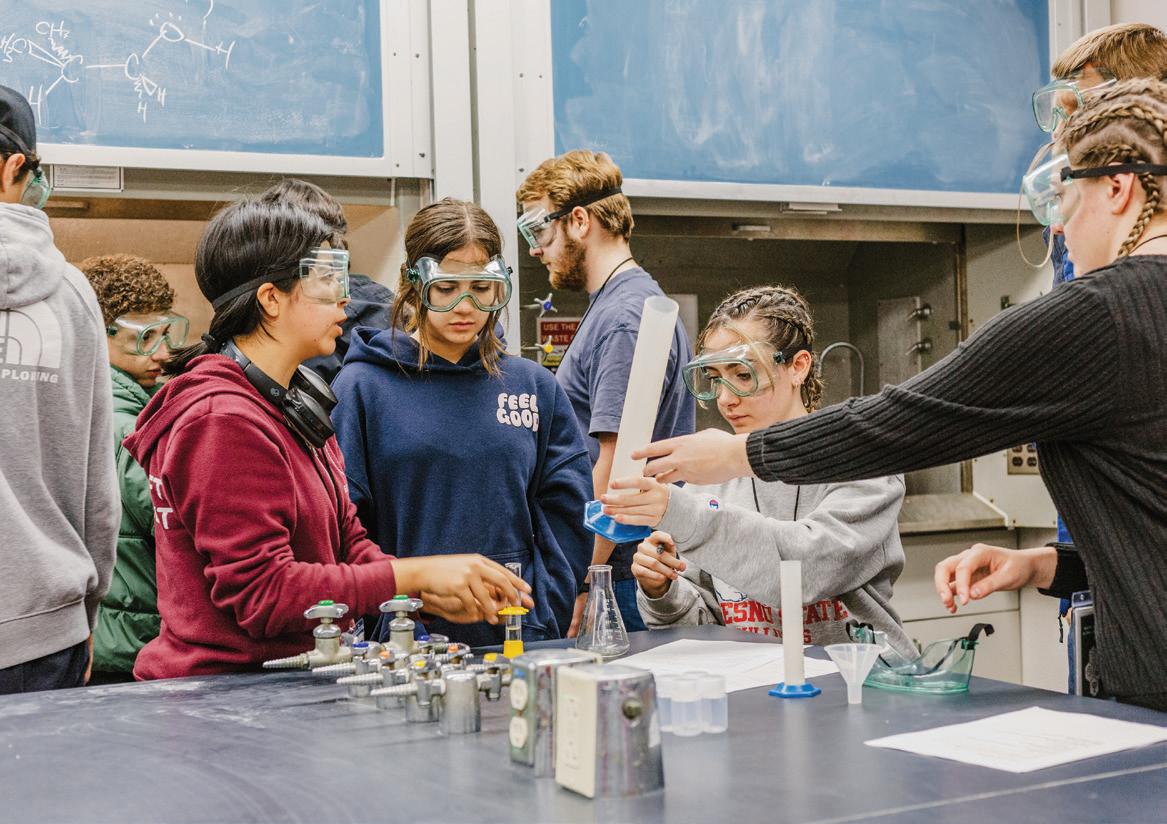
and evaluate results for cardiovascular fitness through a step test.
For the dentistry workshop, LLU’s School of Dentistry assistant director Marlise Perry taught good dental hygiene by having students apply dye to their teeth to show tartar and plaque buildup. For the psychology session, PUC’s chair of psychology and social work, Damaris Perez, taught the differences between fears and phobias, and students explored these concepts through a case study and learned how to treat them.
Students shared that they greatly enjoyed the handson learning that allowed them to learn from different professionals and opened their eyes to the different science and health professions.
While structuring this collaborative workshop, both institutions shared a purpose: to create an experience where students could enjoy learning while engaging in hands-on science in a meaningful way. “Our goal was to spark curiosity, introduce new concepts, and open doors to fields students may never have considered,” said Wyrick. “We wanted participants to recognize the connections between what they learn in the classroom and the real-world problems scientists and clinicians work to solve. Just as importantly, we aimed to create a space where students felt comfortable asking questions, exploring ideas, and discovering possibilities.”
By Ally Romanes

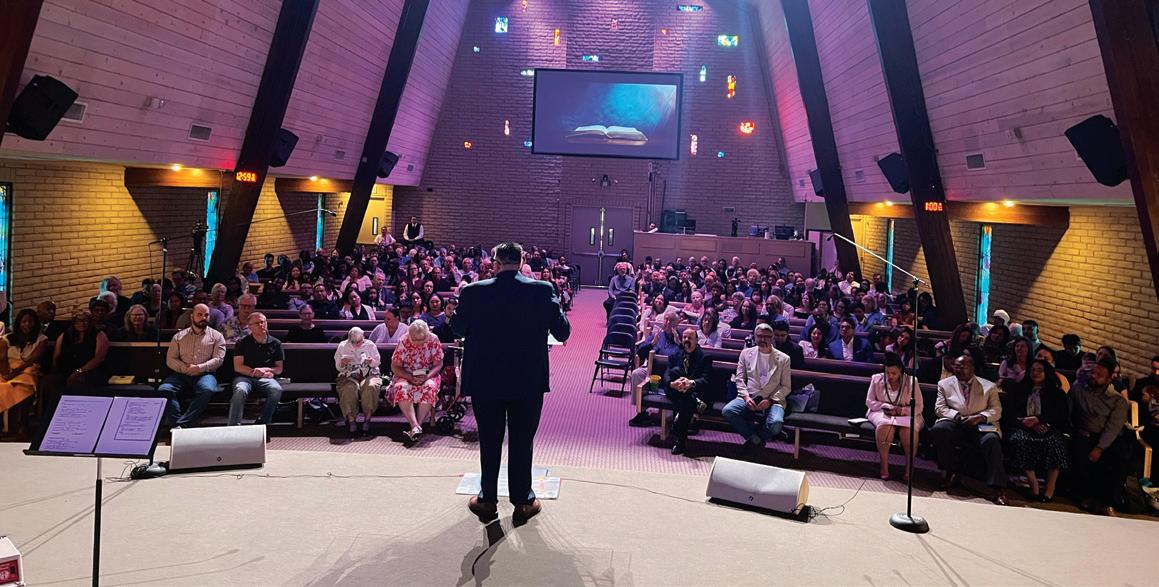
50 Years of Faithfulness
The Mountain View church in Las Vegas joyfully celebrated its 50th anniversary on March 13-14, marking five decades since opening its doors for its first service at the Jones and Oakey location in March 1976. The weekend stood as a beautiful testimony of God’s faithfulness and the enduring spirit of a church committed to mission and community.
The celebration began on Friday evening with a warm reception in the church foyer, where members and guests gathered for food and fellowship prior to the service. The evening was enriched by the presence and participation of former pastors, including Pastor Eddie Sanker (associate pastor, 1991-1994), who served as the Friday night speaker, along with others who shared in this meaningful occasion.
Throughout the weekend, several former pastors who were unable to attend sent heartfelt greetings through video messages, including Dave Gemmell, Randy Scoretz, Tammy Harbour, Tammie Lindsey, Brett Hardley, Ken Losey, and Melody Darrow. Their words reminded the congregation of the deep pastoral legacy that has shaped Mountain View over the years.
A special moment of honor was dedicated to former pastors and their families who were present, along with a time of remembrance for those who now rest in the Lord, awaiting the resurrection: José “Tony” Arias, Denny Krause, and Dave Wallace Sr., among others. Their lives
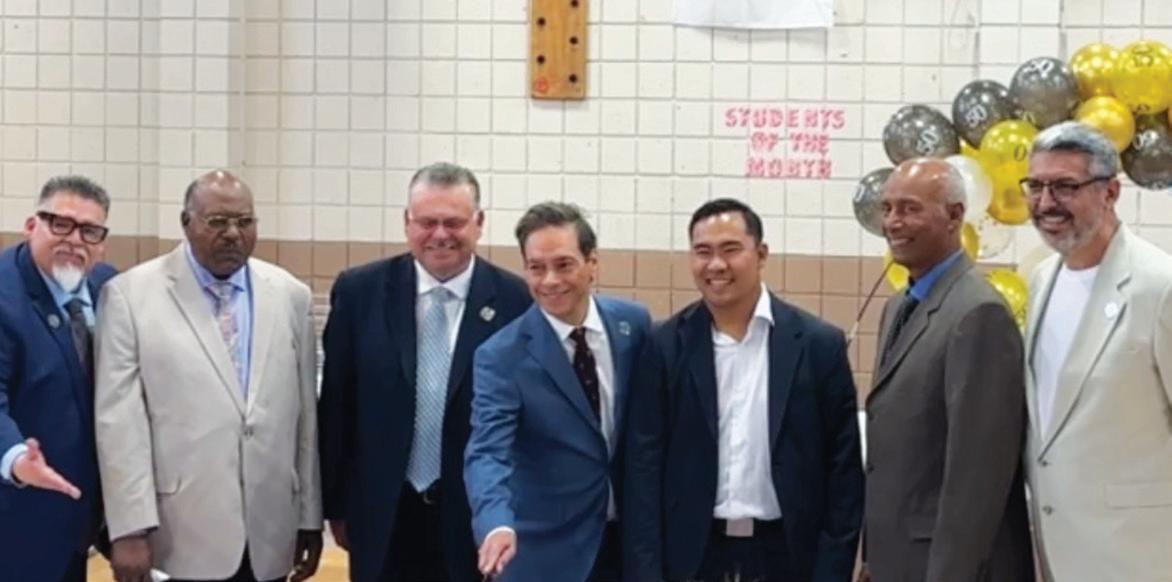
and ministry continue to inspire the church family.
The congregation also recognized long-standing members whose faithfulness has spanned decades. Special appreciation was given to those with more than 25 years of membership, particularly Judy Wegner, Allan Eaton, Lilan Hisel, and Ollien and Gerry Smith, who were part of the church family as early as 1956, when the congregation worshiped on 10th Street before relocating to its current site.
Sabbath morning began with a fellowship breakfast in the foyer, followed by a meaningful Sabbath School program featuring a panel discussion. Participants included Pastor Amos Mwero, Dr. Bobby Boles, Pastor Eddie Sanker, Dr. Elliot Piñero, and Elder Karl Byrd, who reflected on God’s work in their lives and in the life of the church.
Throughout the weekend, the spirit of worship was further enriched by inspiring musical selections from church members, highlighted by the beautiful participation of the Vegas Valley Adventist Academy choir.
The divine worship service was a powerful highlight of the weekend. With the sanctuary filled to capacity— and additional seating arranged in the main hallway— the congregation gathered in a spirit of gratitude and praise. Nevada-Utah Conference (NUC) President Carlos Camacho delivered the message, reminding all present of “The God Who Dwells and Walks With Us.” The service concluded with a moving prayer of rededication, committing both the sanctuary and its members to continue proclaiming Christ to the Las Vegas community until His return.
Among the honored guests were conference leaders Elder Chanda Henry-Nunes, NUC executive secretary, and Karen Schneider, NUC treasurer, whose presence underscored the unity and support of the broader church family.
The fellowship continued with a well-attended luncheon, where more than 150 individuals shared in joyful community. The celebration concluded on
Sabbath evening with the presence of additional pastors from across the valley, including Pastor Donald McLeod and former Pastor Marco Quateroli (associate pastor, 2000–2008), who delivered a heartfelt closing message, bringing the weekend to a meaningful conclusion.
Above all, the 50th anniversary was a profound blessing, filled with gratitude for God’s guidance in the past and hope for the future. As Mountain View looks ahead, the congregation is preparing for upcoming
evangelistic initiatives, anticipating the celebration of 100 years since the arrival of the Adventist message in the Las Vegas Valley in 1933—the very movement from which Mountain View church was born. With renewed vision and commitment, the church continues its mission, trusting that the God who has led thus far will faithfully lead into the years to come.
By Angel Heredia
Thus Far the Lord Has Helped Us
On Sabbath, Jan. 17, the Paraiso Seventh-day Adventist Company crossed a sacred milestone, officially transitioning to full church status—an achievement marked by joy, gratitude, and deep spiritual significance. What began as a small, faith-filled gathering has become a vibrant congregation, standing as a living testimony to God’s faithfulness and sustaining power.
This remarkable journey was planted and carefully nurtured under the dedicated leadership of Pastor Pedro Pozo, church growth director, whose faithful ministry over the past seven years has resulted in the planting of several thriving congregations. His vision, perseverance, and commitment to disciple-making laid the spiritual foundation upon which Paraiso church now stands.
With Pastor Carlos Camacho, Nevada-Utah Conference (NUC) president; Pastor Chanda Nunes-Henry, NUC
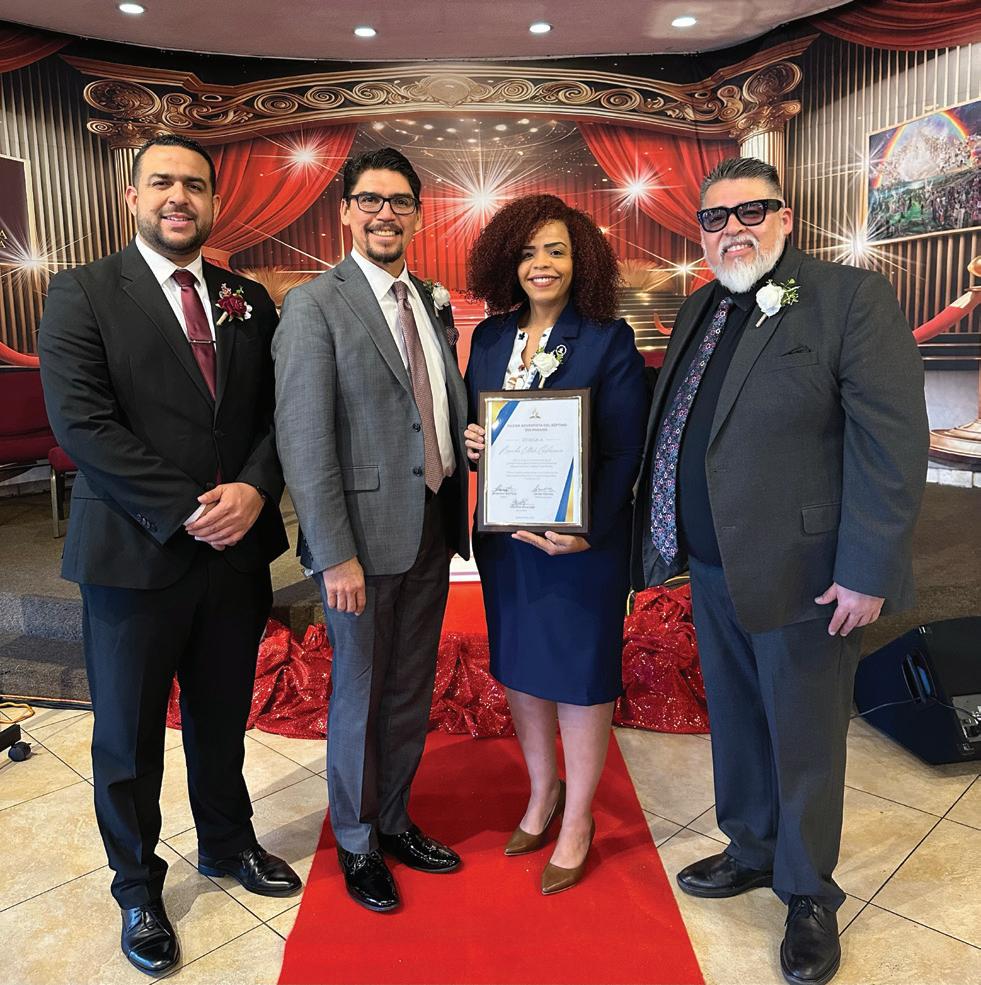
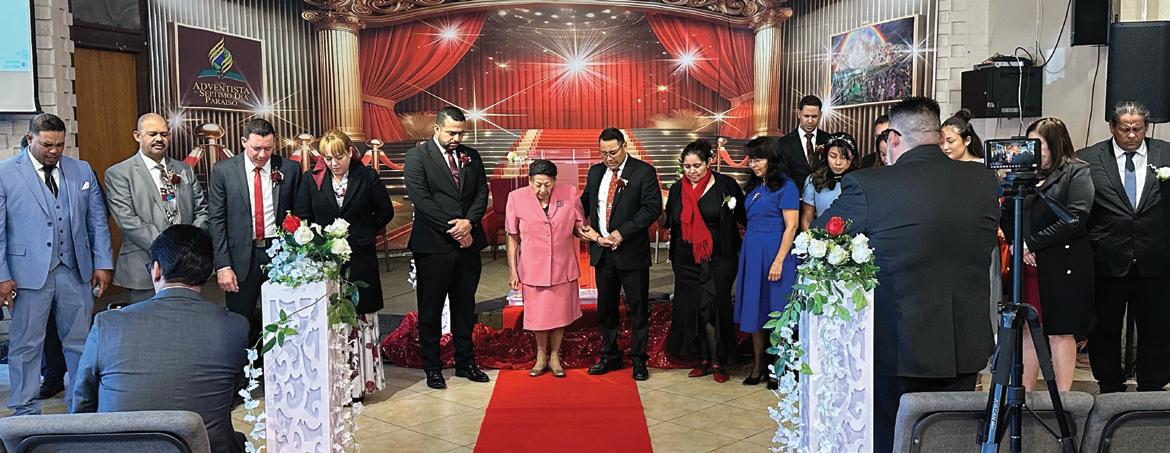
executive secretary; and Pastor Benjamin Carballo, NUC Hispanic Ministries coordinator, present, the sanctuary resonated with soul-stirring music, heartfelt praise, and a spirit of holy celebration. Under the current leadership of Pastor Elidaniel Barraza, the congregation gathered to worship, reflect, and recommit their lives to God’s mission.
The sermon, anchored in 1 Samuel 7:12, lifted high the timeless declaration: “Thus far the Lord has helped us.” Like Israel of old, the Paraiso church paused to remember every prayer answered, every obstacle overcome, and every step guided by God’s hand. Through powerful preaching and seasons of earnest prayer, hearts were renewed and faith rekindled, culminating in a spirit of reconsecration and joyful fellowship.
Ellen G. White reminds us, “Nothing tends more to promote health of body and of soul than does a spirit of gratitude and praise” (The Ministry of Healing, p. 251). Indeed, gratitude filled every corner of the sanctuary, as members celebrated not only what God has done, but what He will yet accomplish.
The day concluded with a warm fellowship feast, strengthening bonds of community and love.
As Paraiso steps forward as an organized church, it does so united, hopeful, and committed—raising its Ebenezer and proclaiming, “Thus far the Lord has helped us.”
By Chanda Nunes-Henry
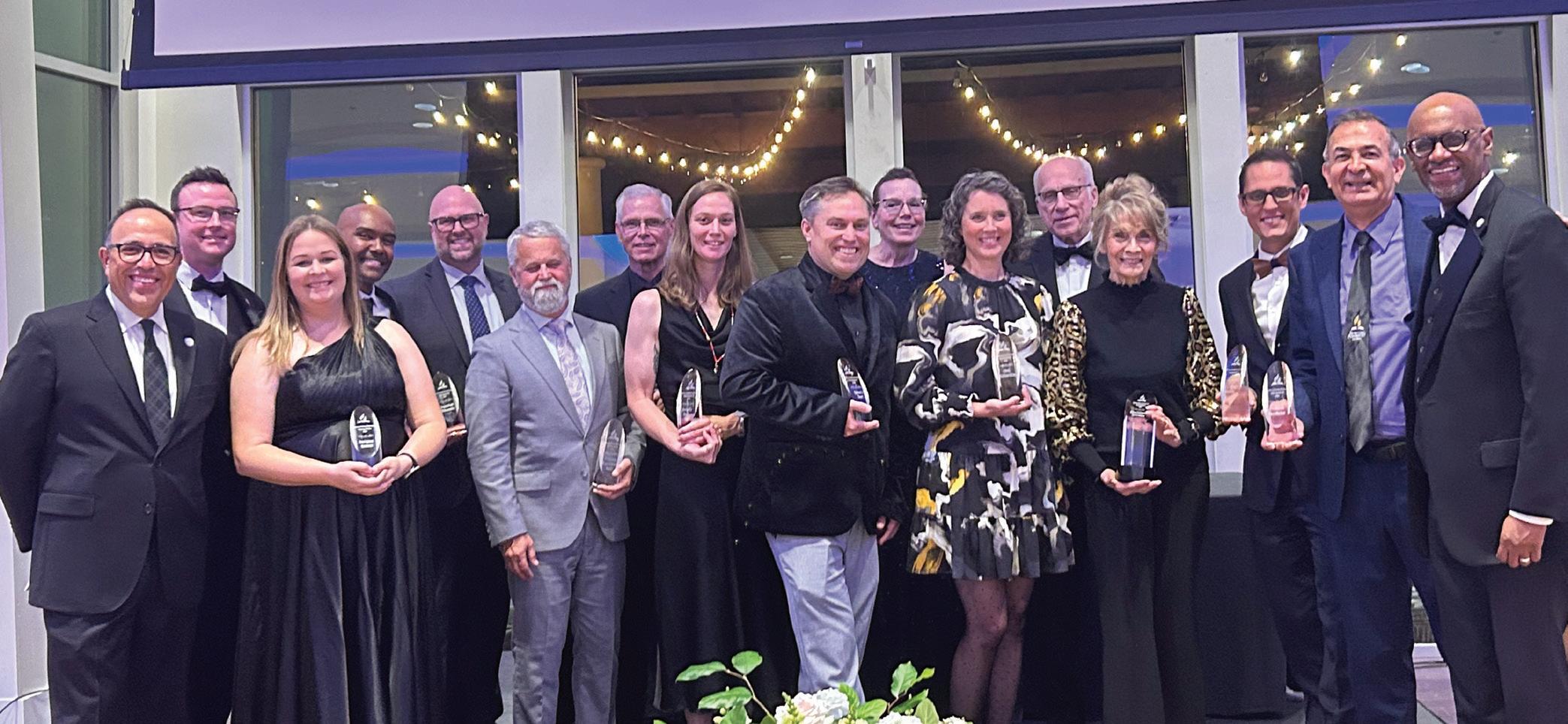
Advancing Mission Through Recognition: 2026 NCC Advantage Awards
The 2026 NCC Advantage Awards once again proved that when clarity, mission, and people align, impact grows. Each year, this event builds a clear and shared understanding of what success looks like in ministry—not just by activity but by alignment with mission and values. In doing so, it strengthens culture, creates momentum, and empowers leaders across churches and schools to replicate what works.
Rooted in Northern California Conference’s (NCC) commitment to enhance clarity across the conference, the awards honor pastors and educators who exemplify the values that drive our mission forward:
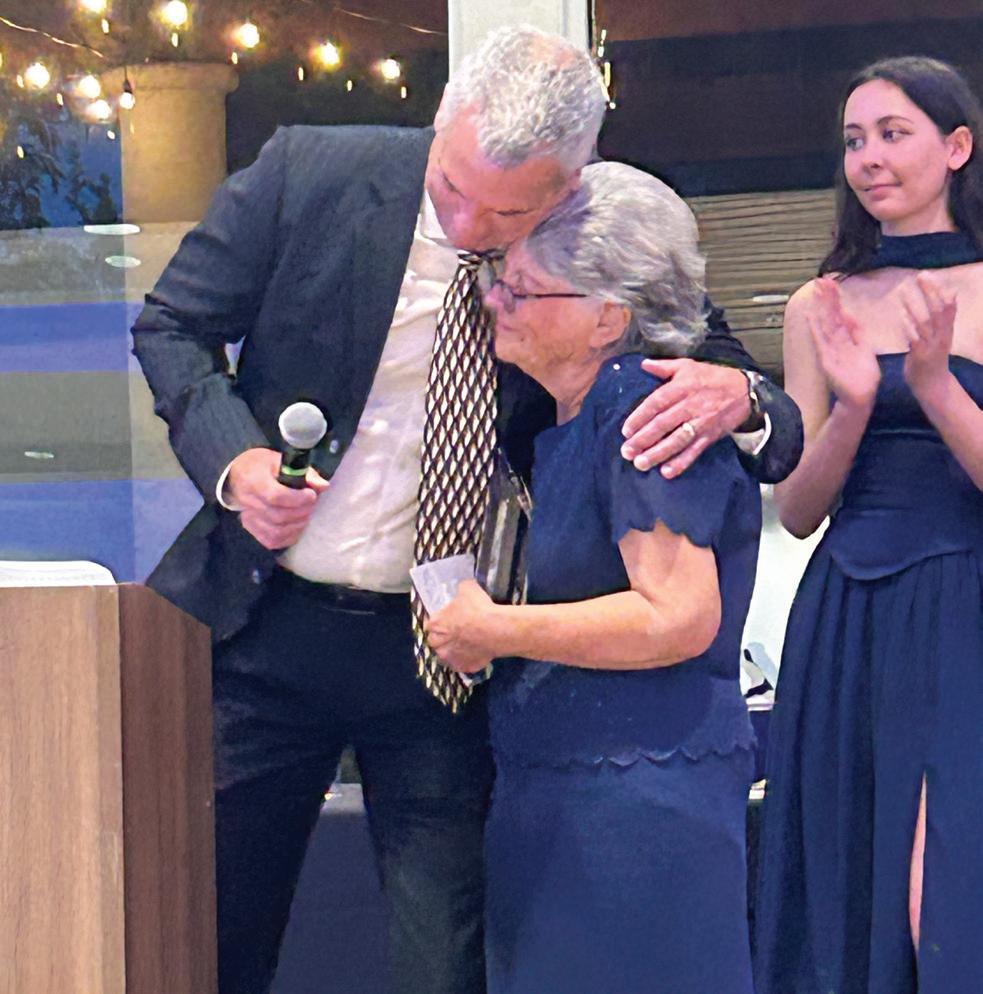
contagious kindness, a servant’s heart, passionate hard work, community relevance, organizational health, and a mission-driven focus.
Marc Woodson, NCC president, stated in his address: “The individuals we recognize tonight represent decades of dedication to God’s work. Some of them have served for three years, others for more than 50 years. Yet every one of them shares a common commitment: to serve Jesus and help others experience His love.”
This year’s event is strengthened by partnerships with Adventist Health, which continues to extend Christ’s healing ministry not only through clinical excellence but also through strategic collaboration in promoting community well-being and spiritual impact; Maranatha International; Pacific Union Conference; and The Table Group, whose investments reflect a shared commitment to advancing mission through strong, aligned leadership.
By elevating real examples of mission in action, NCC creates a shared understanding of what effective ministry looks like across churches and schools. Each nomination is submitted by their peers—leaders who have witnessed firsthand their character, commitment, and impact—making this recognition even more meaningful.
2026 Nominees by Award Category Contagious Kindness
Pastors: Adam Weeks (Auburn), Filipe Ferreira (Red Bluff), Jeff Richards (Grass Valley)
Educators: Chloe Mapa (El Dorado Adventist School),
Lorelie Krussow (Pine Hills Adventist Academy), Nancy Matthews (Vacaville Adventist Christian School)
Servant’s Heart
Pastors: Benji Ferguson (Carmichael), Josie Asencio (Antioch), Young Jin Kim (Sacramento Korean)
Educators: Amanda Gurr (Feather River Adventist School), Beatrice Ahn (Tracy Adventist Christian Elementary School), Kathyrine Schroer (Sacramento Adventist Academy)
Passionate Hard Work
Pastors: Eleazar Famorcan (All Nations Church of Elk Grove & American Canyon Fil-Am), Jaime Calvo (North Highlands, Sacramento, & Woodland Spanish), Sasa Andelkovic (Sacramento Yugoslavian & West Sacramento)
Educators: Brad Davis (Orangevale Adventist School), Chloe Mapa (El Dorado Adventist School), Nancy Matthews (Vacaville Adventist Christian School)
Mission-Driven
Pastors: Bob Parrish (Mount Shasta), Jeffrey Walper (Granite Bay Hilltop), Manny Gonzales (Lodi English Oaks)
Educators: Brad Davis (Orangevale Adventist School), Ryan Thomas (Pine Hills Adventist Academy), Sarah Danielle Sinz (Lodi Adventist Academy)
Community Relevance
Pastors: Rob Benardo (Sacramento Central), Stennett Nash (Hayward Spanish), Vicky Nelson (Lodi English Oaks)
Educators: Alexis Hasse (Echo Ridge Christian School), Lisa Bissell Paulson (Redwood Adventist Academy), Matthew Jakobsons (Sacramento Adventist Academy)
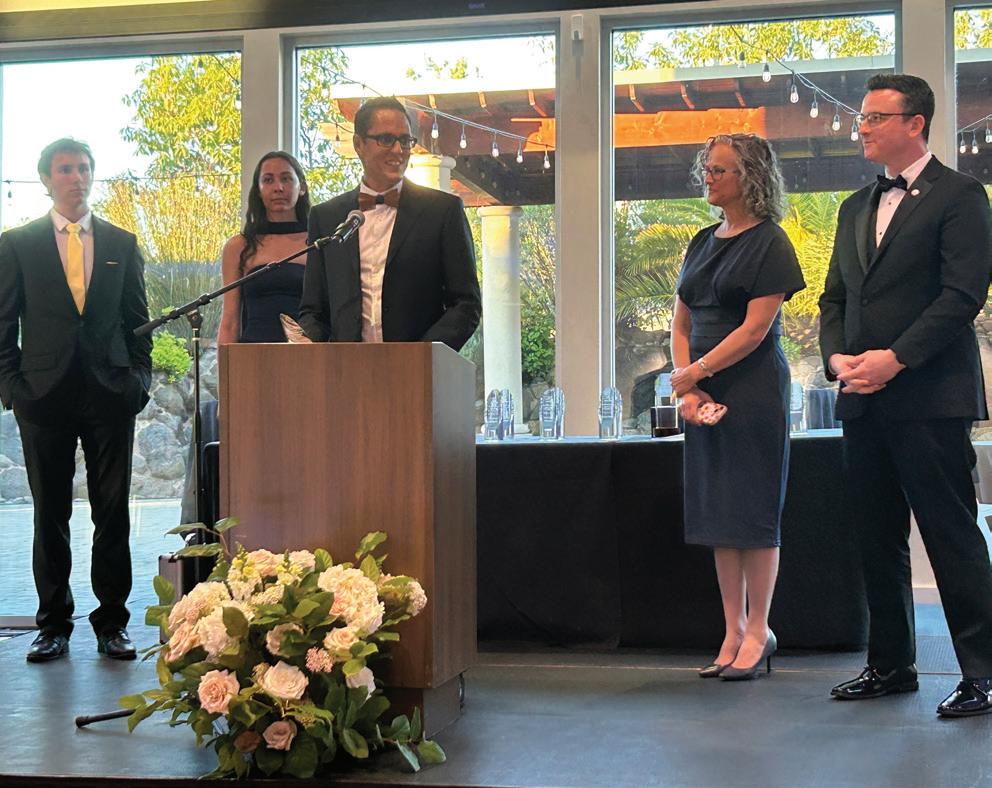
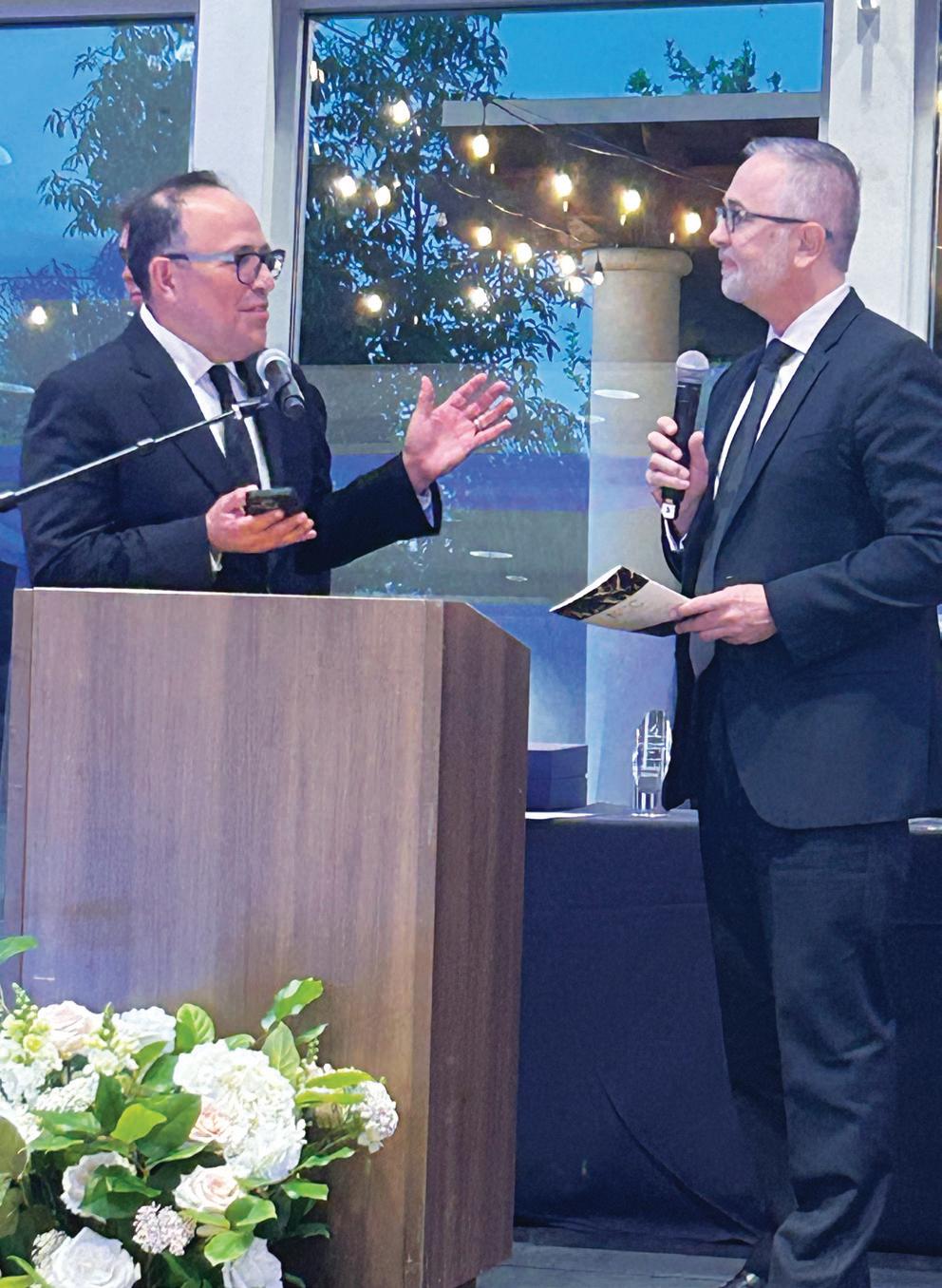
Engaged & Enthusiastic
Pastors: David Woolcock (Upper Lake and Lakeport), Jose Diaz (Fairfield & Vallejo Spanish), Nate Furness (Pacific Union College)
Educators: Duncan Paniagua (Pleasant Hill Adventist Academy), Matthew Jakobsons (Sacramento Adventist Academy), Nicholas Sigler (Rio Lindo Adventist Academy)
Organizational Health
Pastors: Damon Washington (Pittsburg & Oakland Emmanuel Temple), Mel Baga (Auburn), Zachary Reiber (Paradise)
Educators: Carrie Copithorne (Redding Adventist Academy), Leslie Bartsch (Chico Oaks Adventist School), Rick Nelson (Ukiah Junior Academy)
In a region as diverse and complex as Northern California, advancing the gospel requires clarity, encouragement, and alignment. The NCC Advantage Awards help create that environment by recognizing leaders who are not only active but also effective in connecting people to an abundant life in Jesus Christ.
By Laurie Trujillo
Building a Block of Community
The Oakland Spanish church recently led a community resource event that took over an entire city block. Residents had the chance to explore more than 20 booths offering practical support from community services, including the police department, social services, and city representatives. Some booths provided food, while others offered health screenings and wellness education.
Paul Guevara, NCC Hispanic Ministries coordinator, shared, “This event is part of the Oakland church’s ongoing plan to stay connected and relevant to the community. It was key in opening doors and strengthening collaboration between the church, the neighborhood, and the public and private services that support them.”
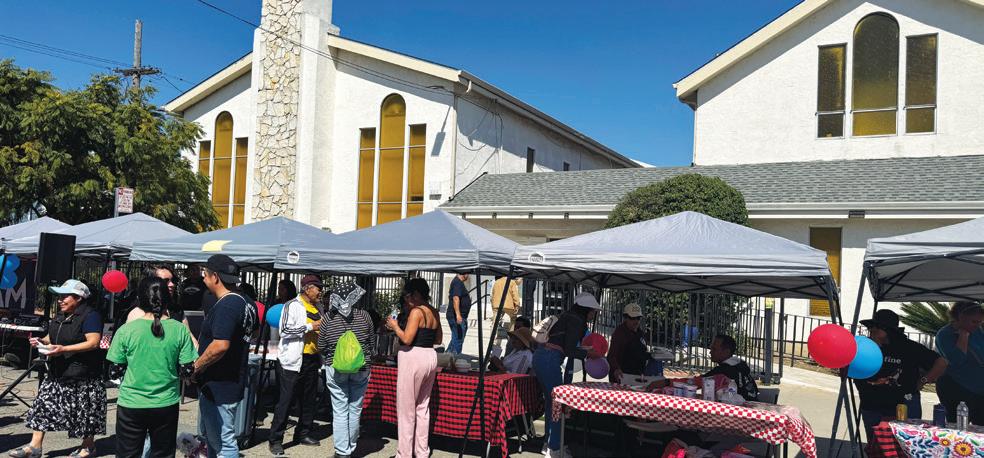
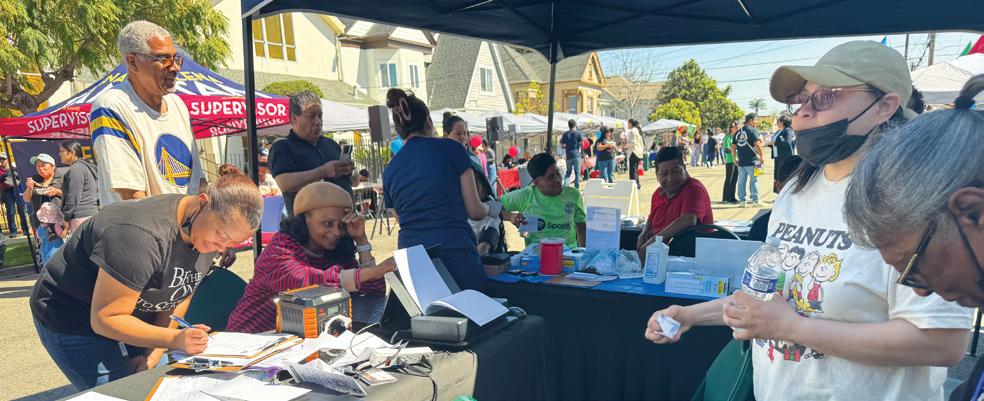
The Oakland Emmanuel Temple church brought its community health van, providing free screenings and guidance for anyone who stopped by. Food, supplies, and other essentials were offered throughout the day, creating an atmosphere of care and connection.
As neighbors moved from booth to booth, conversations and relationships developed naturally. By stepping forward as an active partner in the neighborhood’s network of services, the church demonstrated that it isn’t just present—it is proactive. That visible engagement helps the community see the church as a trusted, reliable force, building confidence that it will continue to serve and respond alongside other local leaders.
By Ken Miller
Finding Common Ground in Yuba City
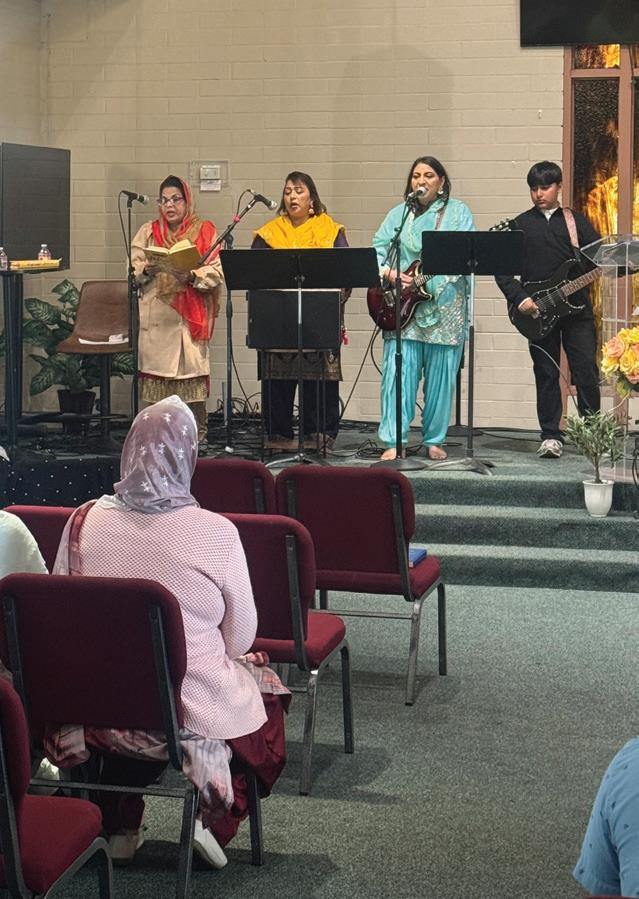
The Yuba City church recently restarted a ministry for local families from the Punjabi community, drawing nearly 50 attendees—including both Sikh and Christian households. The gathering offers a spiritual home where many first-generation residents can worship, learn, and connect with one another in a welcoming environment.
Yuba City is home to one of the largest Punjabi populations in the U.S., with many families settling over the past century to farming and support careers. Their long-standing presence gives the church a unique opportunity to connect with a community that is deeply woven into the region’s culture and daily life.
The weekly service at Yuba City church is led by Aamir Masih, chaplain at Rideout Hospital and lay pastor. It is held in the church’s youth chapel, where services in Punjabi and space for families to worship together help create a welcoming environment. Masih, inspired by the warmth he received from the church upon his return to Yuba City, wanted to be
part of their mission and subsequently lead this ministry. “By God’s grace, it has been wonderful,” he said.
Daniel Garza, pastor, shared, “The effort reflects something important about ministry today. Our community is diverse, and part of our calling is learning how to serve people in ways that make sense in their world. What began as a single Sabbath gathering is a daily reminder that being a community-relevant ministry is less about programs and more about relationships.”
By Ken Miller
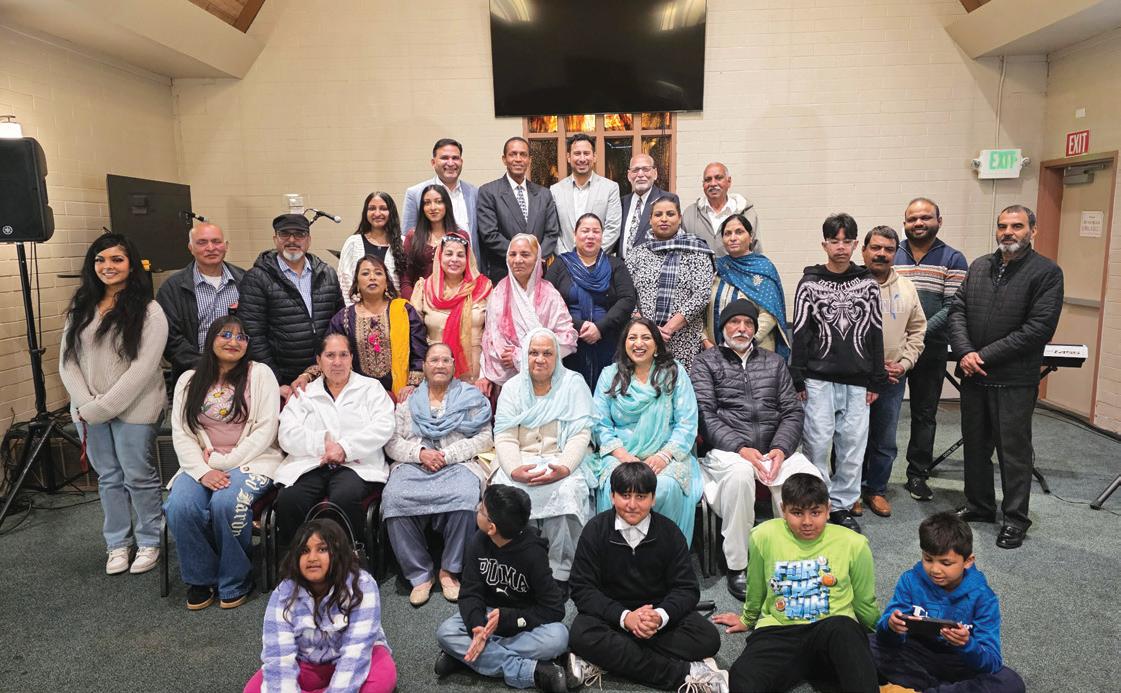
CHayward Spanish Church Begins Relational Outreach in Union City
onnection and friendship are happening at a time when it is needed the most. In March, members of the Hayward Spanish church stepped into Union City with one goal: to lay the groundwork for a future church. Every visit, conversation, and act of service was part of building relationships that could grow into a thriving congregation.
Volunteers knocked on doors, listened to neighbors’ stories, shared meals, handed out literature, and prayed with residents—meeting real needs while planting seeds for the church. Youth and young adults led activities, guided conversations, and modeled kindness and a servant’s heart, showing the community that the church is present, caring, and ready to serve.
In advance, the teams set up posters with messages of hope, invited residents to gatherings, and filled the streets with Christian music, creating spaces where neighbors felt welcome and engaged. The result?
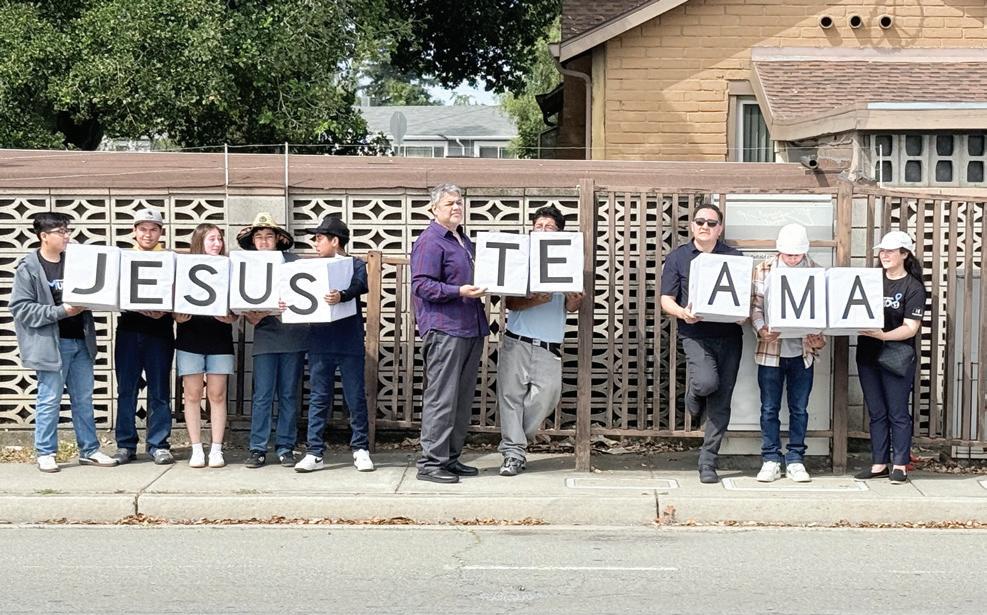
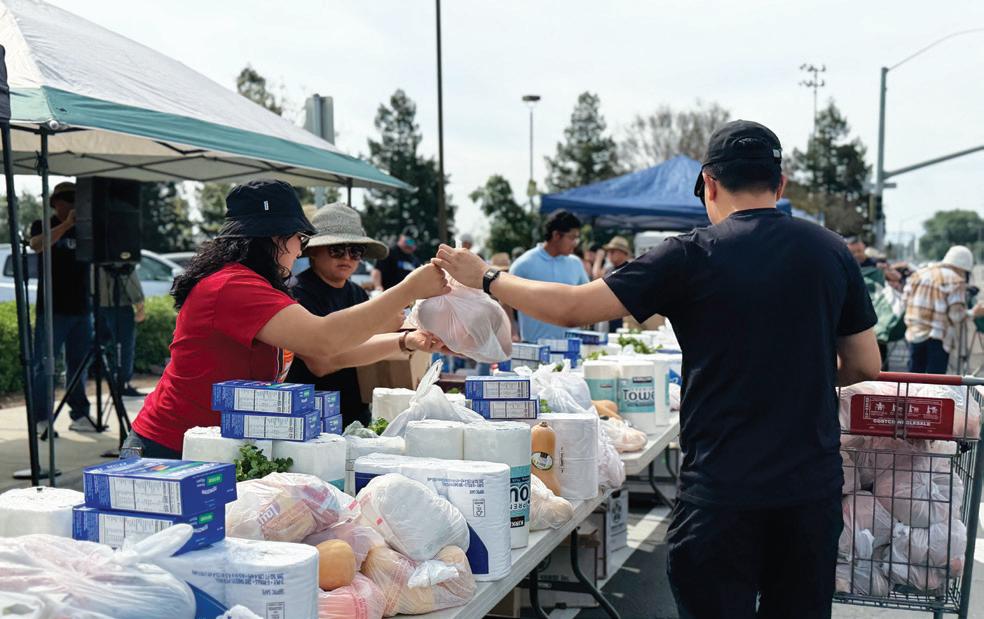
Residents opened up—some asking for prayer for family health, others eager to join a Bible study, and a few expressing interests in community meals or youth programs. Several shared contact information, giving the team a path for follow-up and ongoing relationshipbuilding.
"Seeing neighbors open up and share their needs reminded us why we serve together," said Stennett Nash, pastor of the Hayward Spanish church. "Every visit, every conversation, every act of service is a step toward planting a church here." The day ended with new friendships formed, prayer requests collected, and a sense of hope for what’s to come—a first step in a journey that will continue as the church grows alongside the community it serves.
By Communication Staff
Becoming ‘Original’: Bloom Teen Girls Retreat 2026
Three years ago, Bloom began with an idea and a group of pastors who wanted to create an event tailored to today’s girls. A common theme ran through the initial planning conversations: “We want to create something we didn’t have when we were growing up.” That same idea has been the foundation of planning year after year.
On the weekend of March 6-8, the third annual Bloom Teen Girls Retreat was held at Pine Springs Ranch. The theme was entitled “Original,” inspired by the idea that teens fear authenticity because they are worried about being ridiculed. “These teen years are extremely formative, and we wanted to empower these young ladies to be confident in their original selves,” shared Alexy Mondak, assistant youth director and Bloom co-creator. This year featured keynote speaker Amalia Goulbourne, Palm Coast pastor, who highlighted the theme by choosing women in Scripture who were not afraid to be their original selves. Worship was led by an all-female band, and “bloom groups” were introduced for girls to discuss Pastor
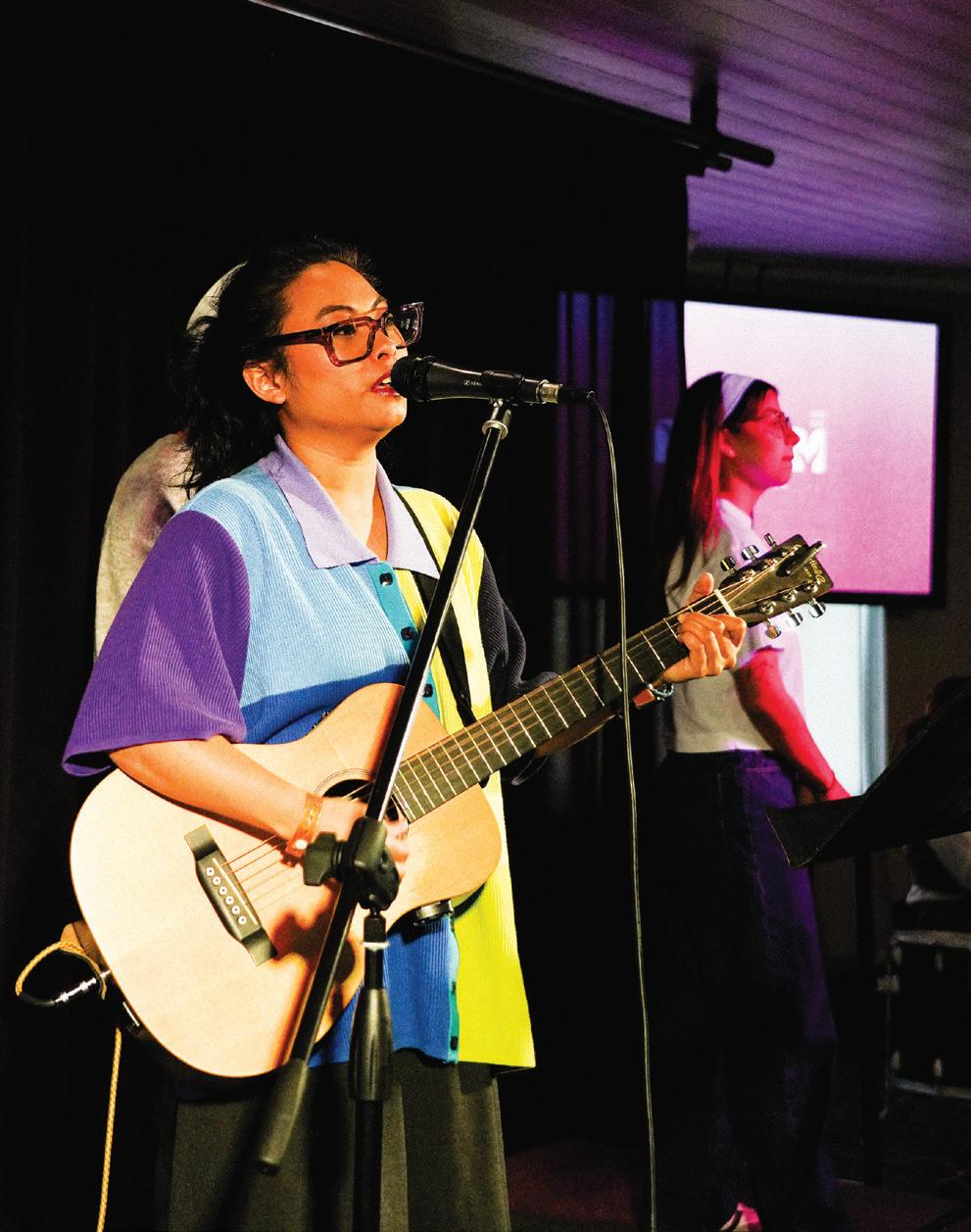
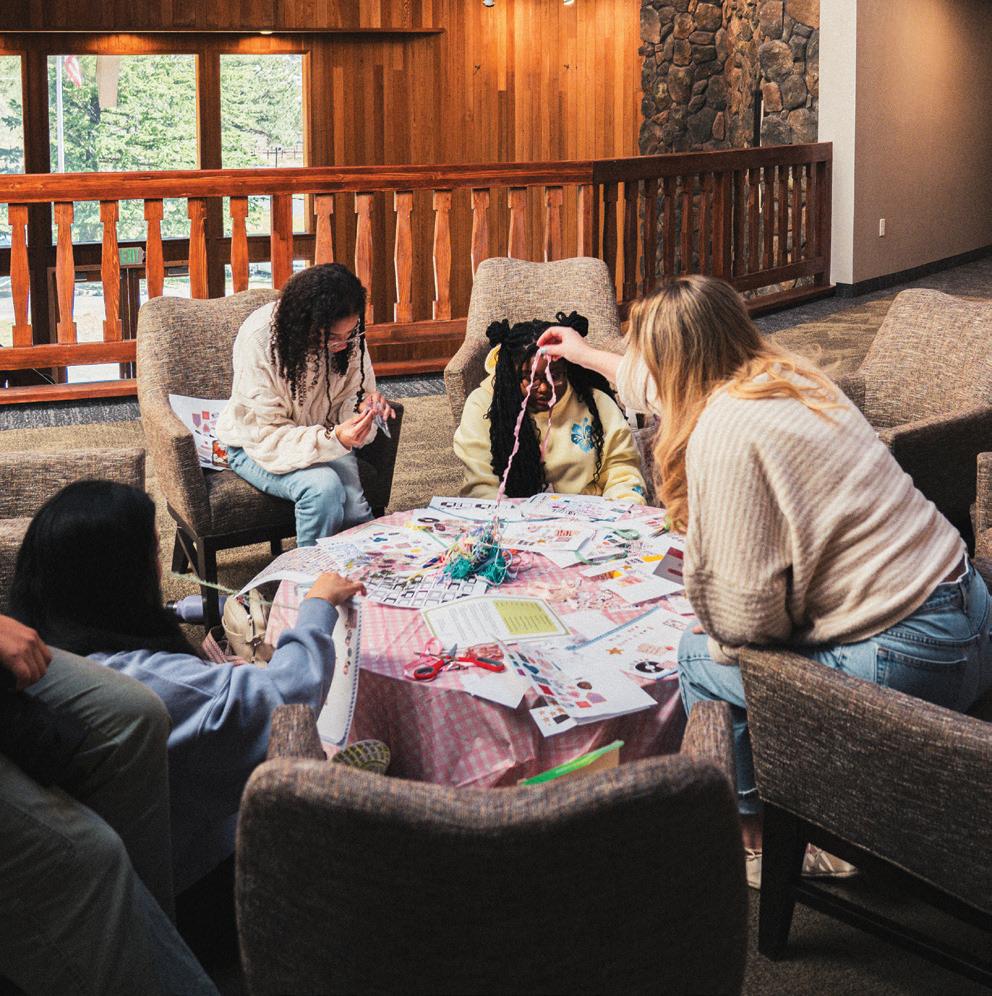
Amalia’s messages. The weekend was topped off with their annual slumber party.
This year, breakouts were centered around the theme of originality. The event provided seven options for the girls to choose from across three sessions. The breakouts allowed each participant to express their creativity through clay artwork, designing T-shirts and photo frames, songwriting, and poetry. Each breakout leader made sure to touch on the theme of originality while also teaching a craft. “It was beautiful to see the girls with their creative artwork throughout the weekend. But that’s not what makes Bloom special. It’s not about the songs or the cool T-shirts they make; it’s the sisterhood that continues to build within our Bloom community year after year,” said Mondak. “When we first started Bloom, we did not expect it to grow the way that it has.” Mondak recounted that many firstyear attendees were now preparing to graduate high school—a personal highlight of seeing young girls grow into young adults.
The Bloom team intends for the event to continue to shape the way girls grow in their relationship with Jesus and in their confidence, knowing they can achieve anything God has called them to.
By Alexy Mondak
A group of girls work on crafts together.
Princess Demiar leads worship.
PHOTOS: ALISON JIMENEZ
Collective Night Hosts 500 for a Night of Worship
On the evening of Feb. 27, the Loma Linda University Church (LLUC) auditorium was filled with over 500 young adults for a night of worship. For the second year, the Collective Night was hosted on the LLUC campus and featured diverse styles of music and expression to God. Organized by worship leader and young adult Cameron Jordan, the night was designed to bring unity in worship. “Collective Night is all about bringing people from different cultures and walks of life into one space for the shared purpose of worshipping God and strengthening the body of Christ,” said Jordan.
With Ephesians 4:3-6 as the central theme, the emphasis of oneness was the focus. As a meaningful expression of submission and exaltation to God, there is not simply one approach to worship. Jordan’s vision for the night reflected this.
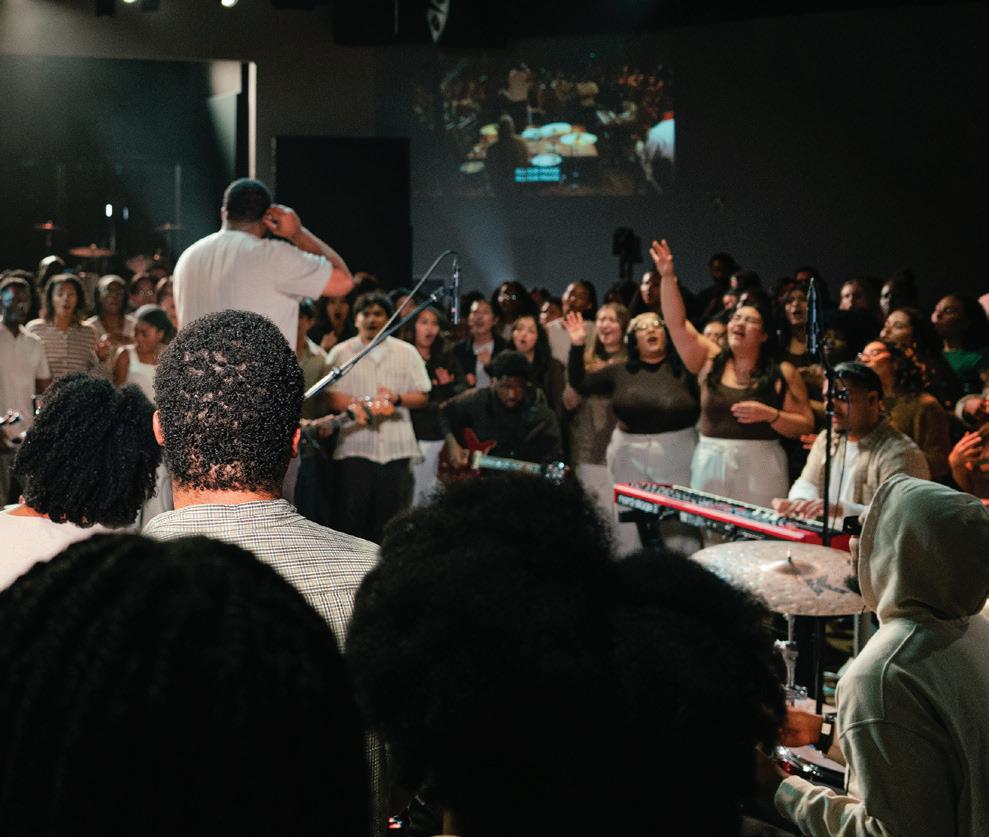
“If you look up the word ‘collective’ in the Cameron Jordan dictionary, it would say ‘an intentional gathering of people for a common purpose,’” he said. That purpose was evident not only in the diversity of musical styles represented but in the level of participation throughout the night. Reflecting on the first year, Jordan admitted he expected some hesitation. Instead, “you could see hundreds of young adults engaged through clapping, moving, and singing their hearts out to God,” a response that affirmed the need for a space free of judgment. Attendees were invited to move beyond observation into active engagement—singing, responding, and stepping into unfamiliar expressions of worship.
A short message shared by Samuel Baker, youth and young adult ministry coordinator at San Bernardino Community church, grounded the experience in kingdom culture. “One of the beautiful things of Collective Night is that we get to break down the walls of Black ministry, Hispanic ministry, or any other ministry, and we get to come here and experience kingdom,” shared Baker. The call for intentional pursuit of unity in Christ carried throughout the night into the final moments of worship.
Jordan emphasized that the event itself was a collective effort. From ministry leaders and creatives to the large ensemble of singers known as “the Collective,” the night reflected collaboration at every level. By bringing together a wide range of backgrounds and expressions, Collective Night revealed a growing desire among young adults to gather with purpose, engaging both their faith and one another in meaningful ways.
By Taji Saleem
Over 500 attendees sing during the opening song.
LEFT: Cameron Jordan leads the audience dynamically. RIGHT: Hosts Kelly Lin Dickinson and Taji Saleem welcome attendees.
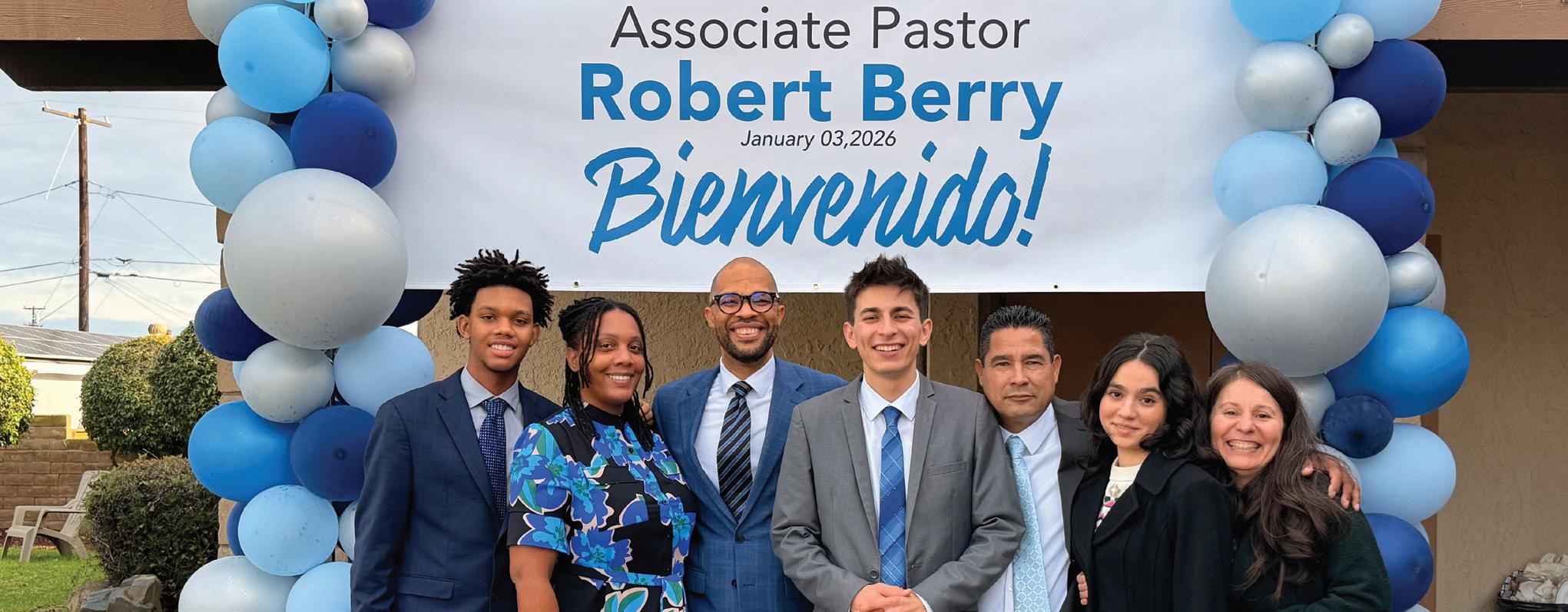
SECC Welcomes First Growing Young Leaders Pastor, Robert Berry
The Pacific Union Conference leads an initiative called Growing Young Leaders (GYL), designed to support young adults as they grow into the next generation of leadership in the church. The program began in 2015 by offering scholarships to education students. In 2022, it expanded to include theology students. Robert Berry is the first theology student to graduate from the GYL program.
Although church had always been part of his life, pastoral ministry was never part of Berry’s plan. He began to see ministry differently while serving as a youth leader. As he served, people began encouraging him to consider becoming a pastor.
Berry decided to seek God’s direction by praying for three distinct signs. One sign was that someone with experience in one of the fields he had once considered—engineering, technology, or medicine— would encourage him to become a pastor. Another was that someone he had never met would suggest ministry
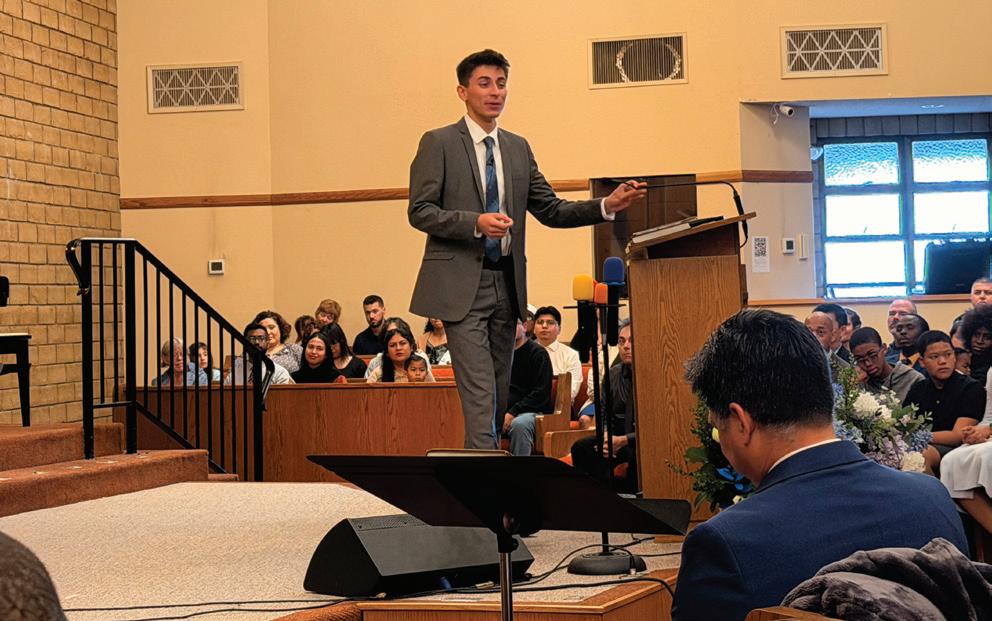
to him. A third was that God would speak through someone serving in ministry leadership beyond the local church.
Two weeks later, while attending the ordination service of his youth pastor, Berry gave the introductory remarks. Then Jonathan Park, president of the Southeastern California Conference, spoke publicly and told him he should become a pastor. Berry had never met Park before. Two of Berry’s prayers were answered at once. Later that same evening, an older man approached Berry and repeated the same message. As the man shared his story, Berry learned that he had worked as a civil engineer, in technology with IBM, and as a physician for 20 years. Berry had asked God to send someone from one of those fields. Instead, God sent someone who embodied all three. For Berry, the answer was unmistakable.
Berry enrolled in theology at Southern Adventist University. After selling his car to help pay for school, he still lacked the financial means to complete his first semester. At that critical moment, the Growing Young Leaders scholarship arrived.
Today, Berry serves as associate pastor at the Clairemont San Diego church, where he works with the Spanish congregation and with young adults and youth. He says the program shaped him through financial support, mentorship, internships, and relationships that helped prepare him for ministry. Looking ahead, Berry hopes to be a pastor who listens well, teaches Scripture faithfully, and cares deeply for the people God has called him to serve.
By Ezrica Bennett
Berry and his family take a photo alongside Senior Pastor London Lee and his family.
Berry preaches his first sermon at San Diego Clairemont church.
Sandra Fermin Ordained to the Gospel Ministry
On Saturday, Jan. 31, a meaningful milestone was celebrated as Elder Sandra Fermin was officially ordained into gospel ministry. Surrounded by family, friends, and church members, the ordination service took place at La Sierra University's Hole Memorial Auditorium, marking a full circle moment in her call to pastoral ministry.
Sandra did not set out to become a pastor. Her focus was on a music degree when her call to ministry happened during her third year at La Sierra University. She had served as spiritual vice president, participated in numerous church internships, and was involved in music recitals in Hole Memorial Auditorium. Fermin’s ministry was affirmed in 2018 when she was hired by the conference and sent to the theological seminary at Andrews University. Reflecting on pivotal moments along the way, she points to her hiring by the Southeastern California Conference as a defining experience. “That day I cried so much in gratitude, in exhaustion, and in utter shock,” she said. “The decision I had taken to pursue ministry was 100 percent true and not in my head.” She also credits the support of mentors, friends, and peers who believed in her calling before she fully embraced it herself.
For over two years, Fermin has pastored at the Loma Linda Filipino church. Despite being a Latina pastor, she has recognized her opportunity for cross-cultural ministry. “I felt empowered to be able to understand another church culture and for me to still embrace my own authenticity in it,” Fermin said.
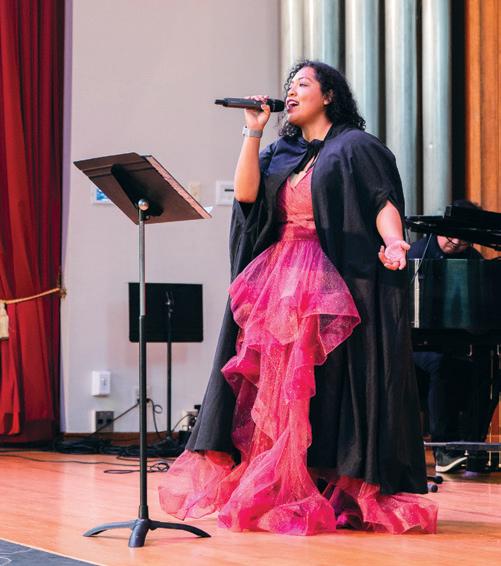
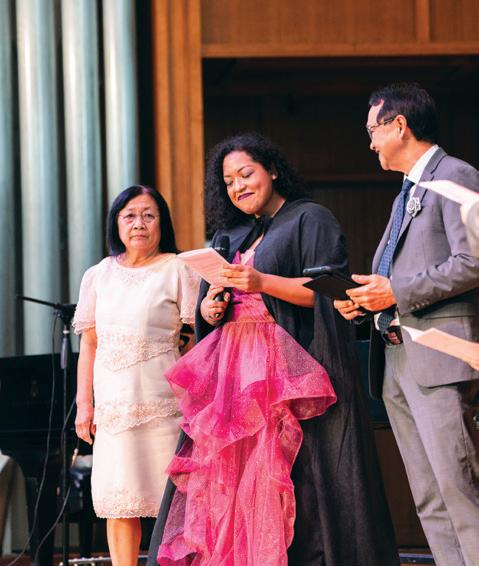
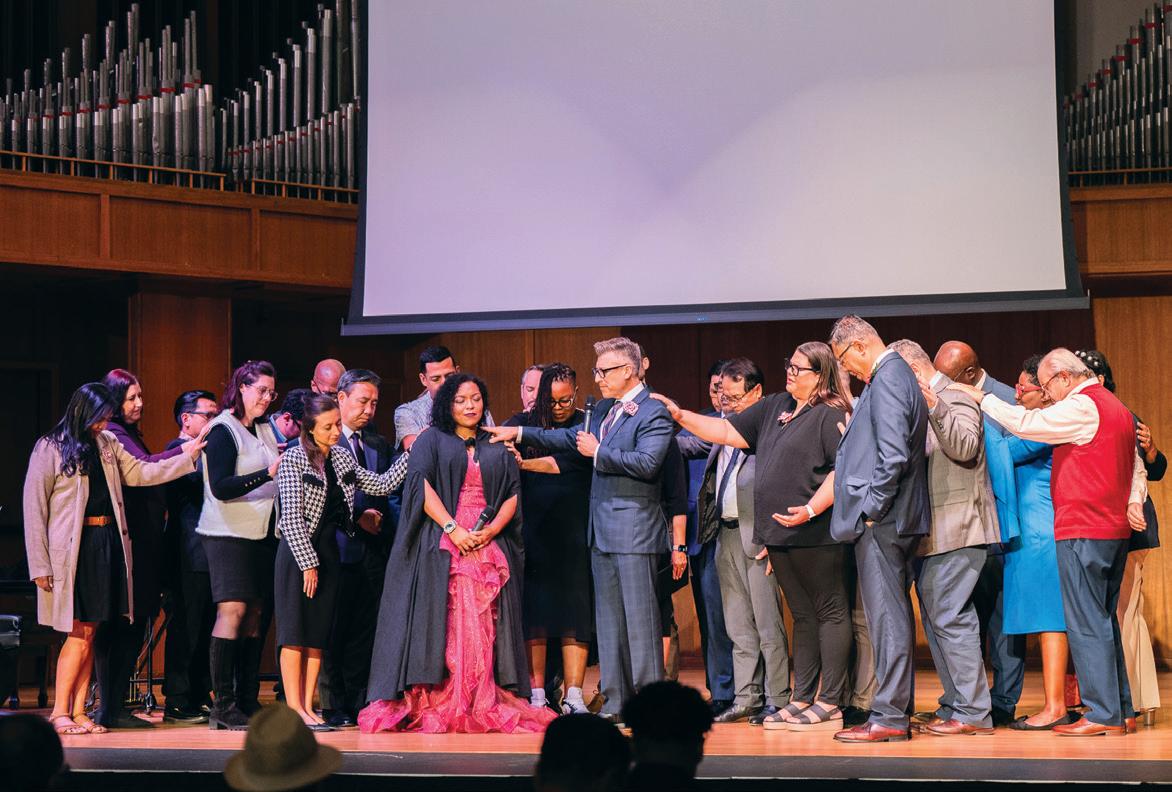
She acknowledges that ministry comes with its own set of challenges. “The reality is that ministry is mental, spiritual, and physical gymnastics,” Fermin shared. “There’s a burden and expectation that church members and society places on us pastors. We’re not perfect.” Emphasizing the importance of balance, she added that maintaining healthy boundaries, prioritizing rest, and seeking support—including therapy—have been essential.
At the heart of Fermin’s ministry is a deep commitment to walking alongside others in their spiritual journeys. “As a pastor, I can’t fix anything in their lives,” she said, “but I can be a witness to how they view God, embrace His love, and embody it with others.”
Passionate about ministering to people in life’s most critical moments, she is pursuing board certification in chaplaincy. “The reality is people need to feel seen and understood. I desire to be continuously trauma-informed and be able to provide a wholistic ministry wherever I go,” she stated. This ministry of commitment to helping others feel seen, understood, and valued exemplifies the heart of Jesus and the affirmation of her ordination.
Congratulations, Pastor Sandra!
By Taji Saleem
Fermin is prayed over by friends and colleagues during the ordination prayer.
LEFT: Fermin sings during the ordination service. RIGHT: Fermin responds during the candidate presentation.
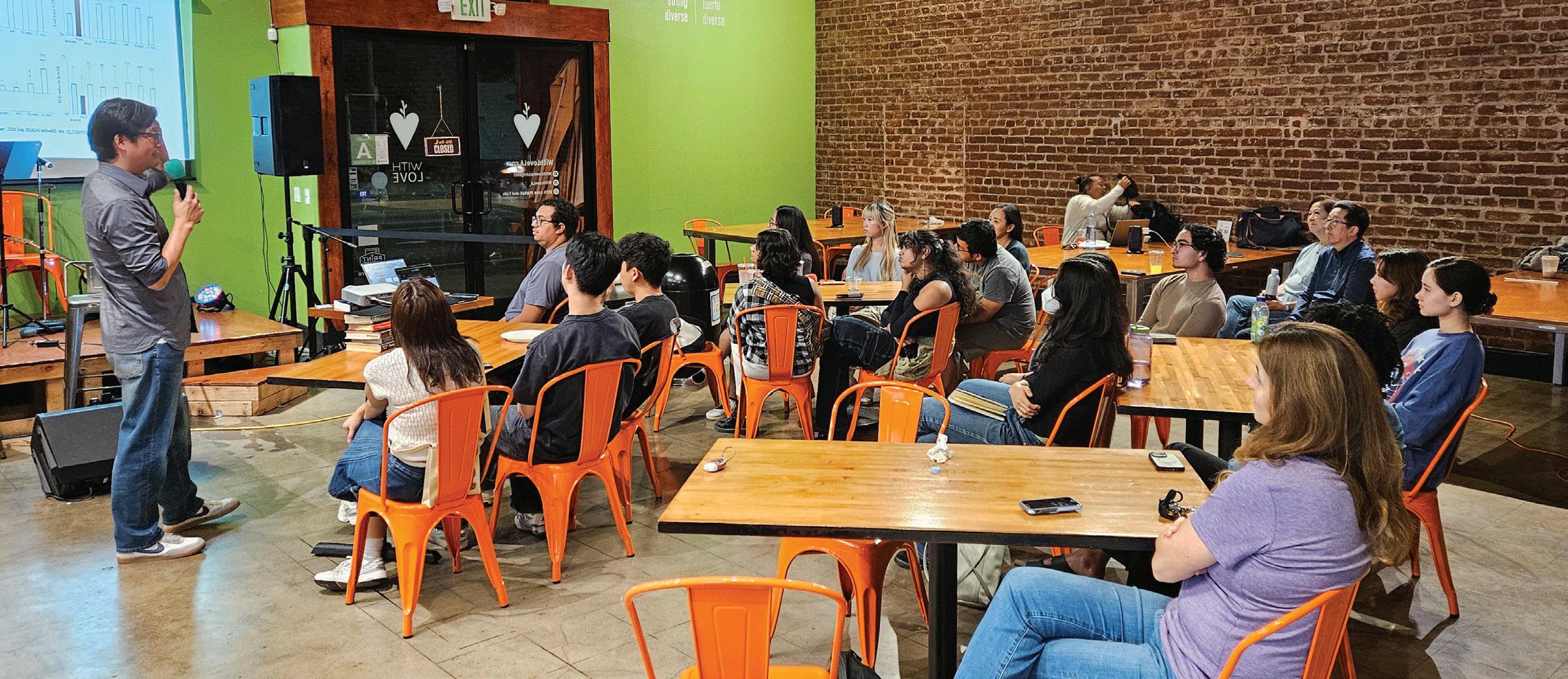
Campus Connect Ministries Is Building Bridges for Adventist Students on Public Campuses
Dafne Enriquez heard about Campus Connect Ministries through the Office of Religious and Spiritual Life at the University of Southern California (USC). To Enriquez, the ministry is “a bridge for Adventist students at colleges—a place where you can get plugged into an Adventist Christian community on your campus and also meet other students who share your faith.”
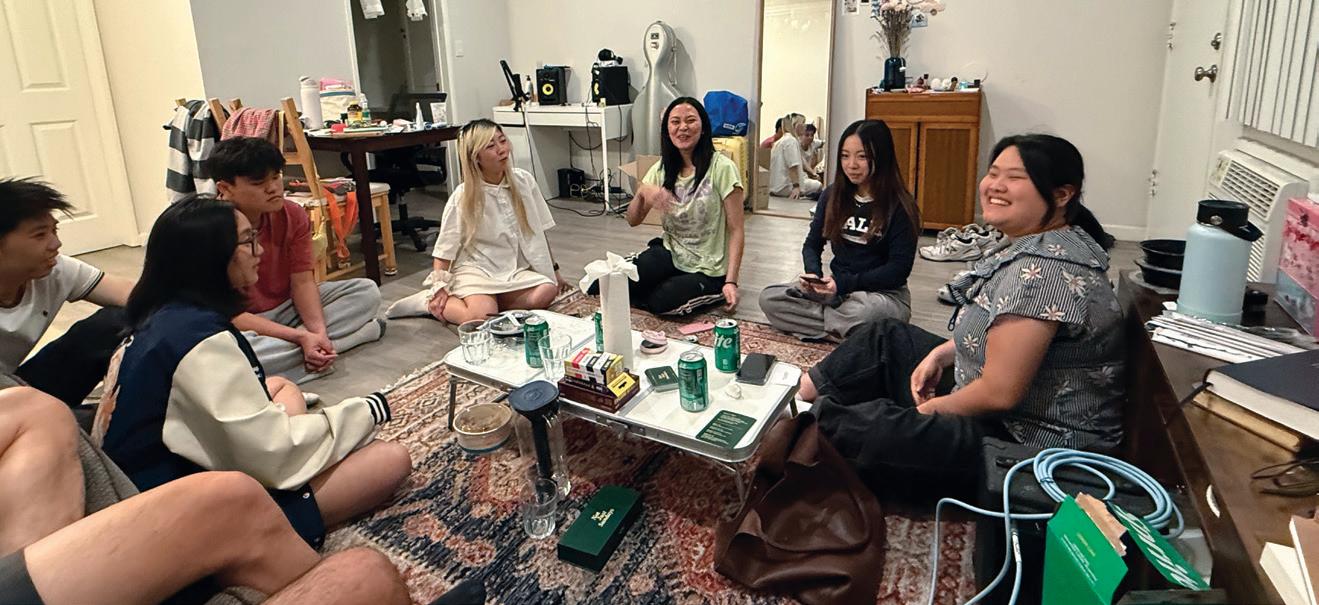
Abelle Simon, who attends Los Angeles College of Music, found Campus Connect because she was new to Los Angeles and was seeking community. Simon sees the ministry as a “casual, God-centered fellowship.” Being surrounded by a Christian community has helped her grow spiritually, and she’s grateful for “Christian friends who keep me accountable, pray for me, and encourage me.”
For students like Enriquez and Simon, finding a faith community didn’t happen by accident—it reflects a year of intentional growth for the Campus Connect team, reaching Adventist students attending non-Adventist colleges and universities in Southern California.
“Last year, we were very much in the early stages of our ministry,” said Eden Seo, Campus Connect
Ministries chaplain. “We focused on gathering leaders and volunteers who were passionate about campus ministries, establishing early contact with students and faculty at major campuses, and hosting small events. Now we have several small groups meeting regularly and some major events that brought students together from different campuses.”
This growing ministry is now led by about 20 pastors, faculty, and lay leaders. Members of the leadership team are in contact with more than 100 students across 28 local public colleges and universities. Currently five small groups meet regularly, each one ranging from five to 10 students.
To accommodate this growth, gatherings have evolved with new events this year. The team invited a therapy
The THRIVE weekend brought together students to connect, recharge, and talk about faith, wellness, and identity.
USC Students hang out with a therapy dog to combat stress during finals week.
dog to USC during exam week; invited students to hikes, beach days, Friendsgiving, and a trip to Six Flags; and hosted a two-day mental health awareness event called THRIVE. The team has also visited San Gabriel, Glendale Adventist, San Fernando Valley, and Newbury Park Adventist academies to meet seniors who are considering public colleges and universities.
While large events help students connect, small groups remain at the heart of the ministry. Some meet once a week or once a month in homes, churches, or even in classrooms on campus.
Since being a part of Campus Connect, Ryan Youk, another USC student, has reconnected with friends from his previous childhood church. “Catching up with them after years while having discussions on verses felt valuable,” he said. “Campus Connect helped me be more spiritual. I’ve been reading more Bible verses. Also, I’ve been finding ways to serve others by doing volunteer work.”
The ministry has been meaningful not only for the students but for leaders, too. For Christian Botello, associate pastor at Eagle Rock, getting involved has enabled him to mentor students in the same way he was mentored throughout his college journey.
“Campus Connect is a ministry where you can build authentic relationships and witness deep spiritual growth,” Botello said. “It’s rewarding to see relationships develop and grow among the students and see students take intentional steps to grow in their faith.”
At Pasadena City College, Yanis Chan got involved with Campus Connect in hopes of making new friends. Since joining, her faith has grown, and she hopes to share it with others. “I’ve learned more about the Bible and got closer to God, so spiritually it has helped me build
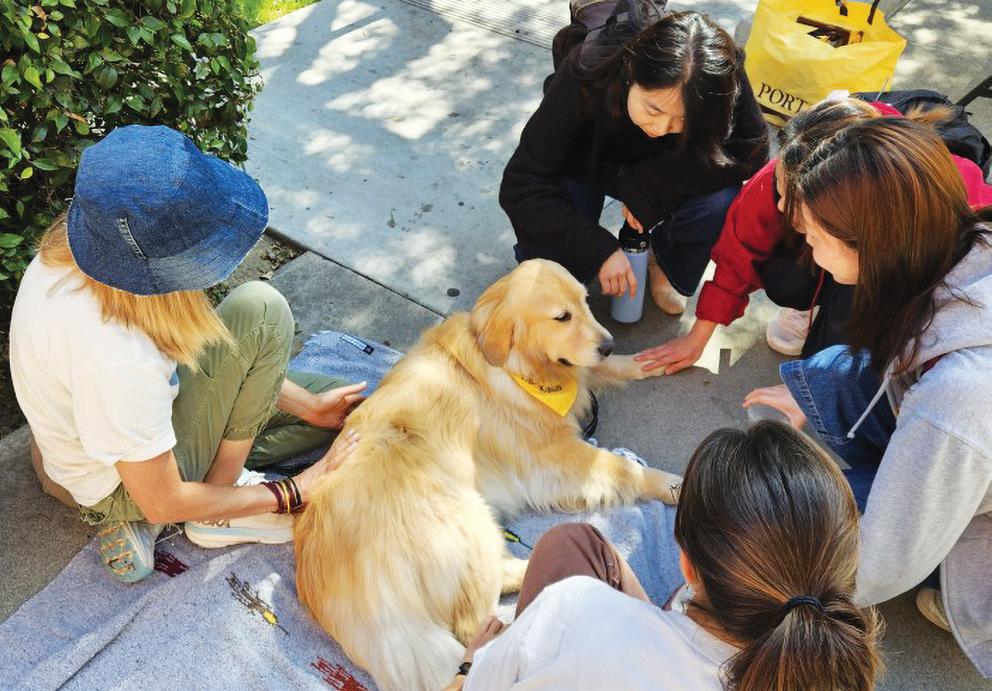
Here are three ways to get support and get involved in this ministry:
• Spread the word: Let students and families know about Campus Connect and encourage them to sign up and get connected through this contact form: https://linktr.ee/ campusconnectsda.
• Host a gathering: Open your church or home for a Campus Connect small group or event.
• Give financially: Support meals, events, spiritual retreats, and more. Donations can be made online or on mobile through Adventist Giving by selecting “Public Campus Ministries” as an offering category or on your tithe envelope.
For further inquiry about any of these options, email Eden Seo, eseo@sccsda.org.
discipline and connection with a community that I can share and grow in my faith with,” she shared. “I would like to see more retreats, worship nights, and game nights so I can invite more nonbelievers so they can feel the love of God!”
By Araya Moss
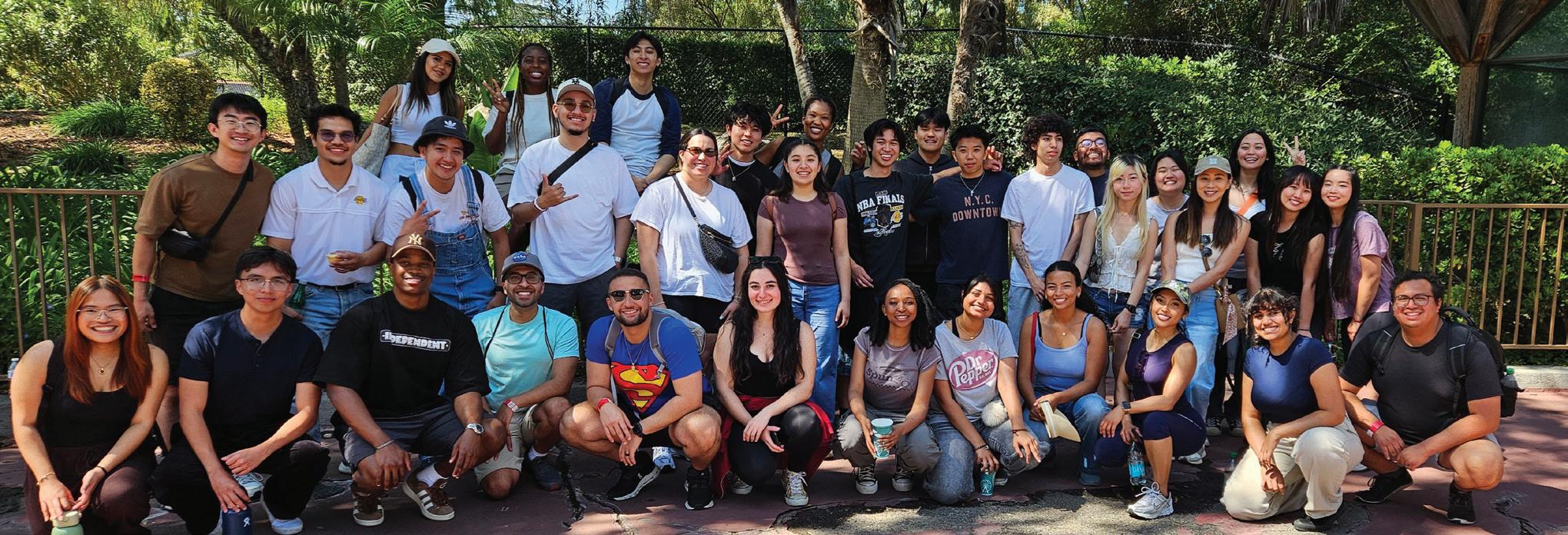
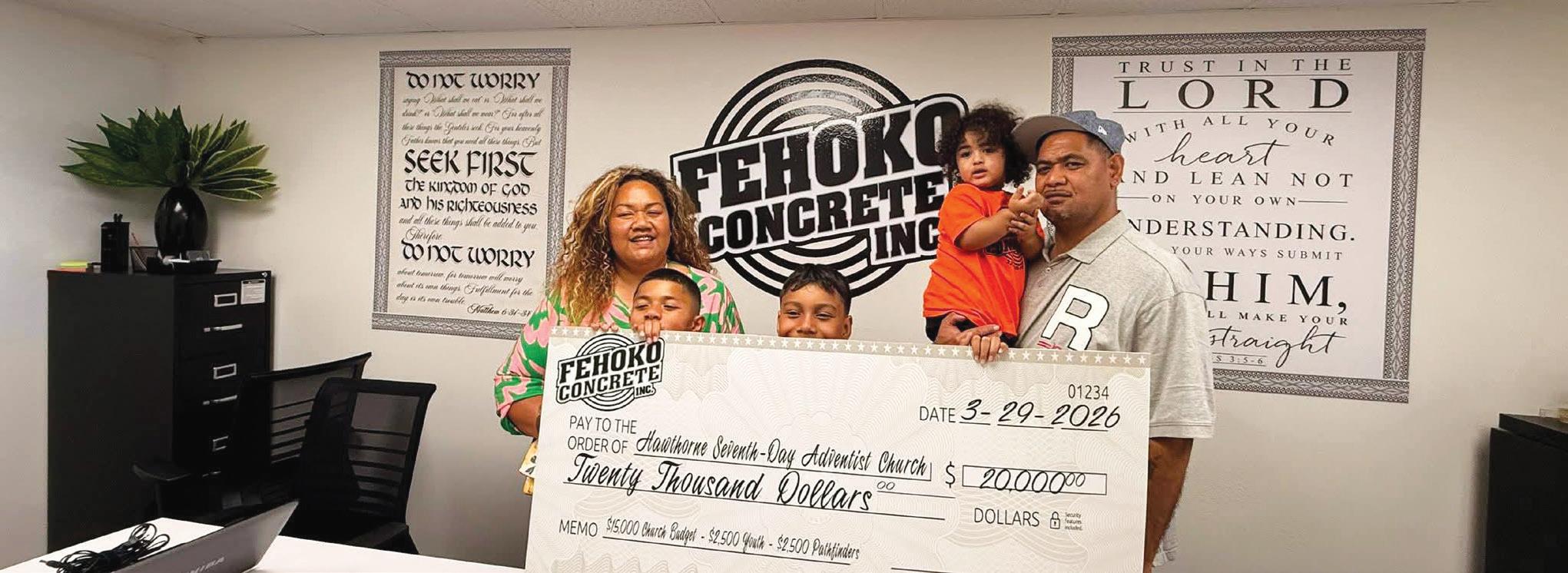
A Business Built on Faith: Fehoko Concrete Opens With $20,000 Church Donation
On Sunday, March 29, in Los Angeles, Timote and Saane Fehoko marked the grand opening and ribbon cutting of their Fehoko Concrete Inc. office with a $20,000 donation to Hawthorne church, their home church, a milestone years in the making.
Of that gift, $15,000 was directed toward the church budget, $2,500 to the youth department, and $2,500 to the Pathfinder department, reflecting a deep investment not only in the church but in the next generation.
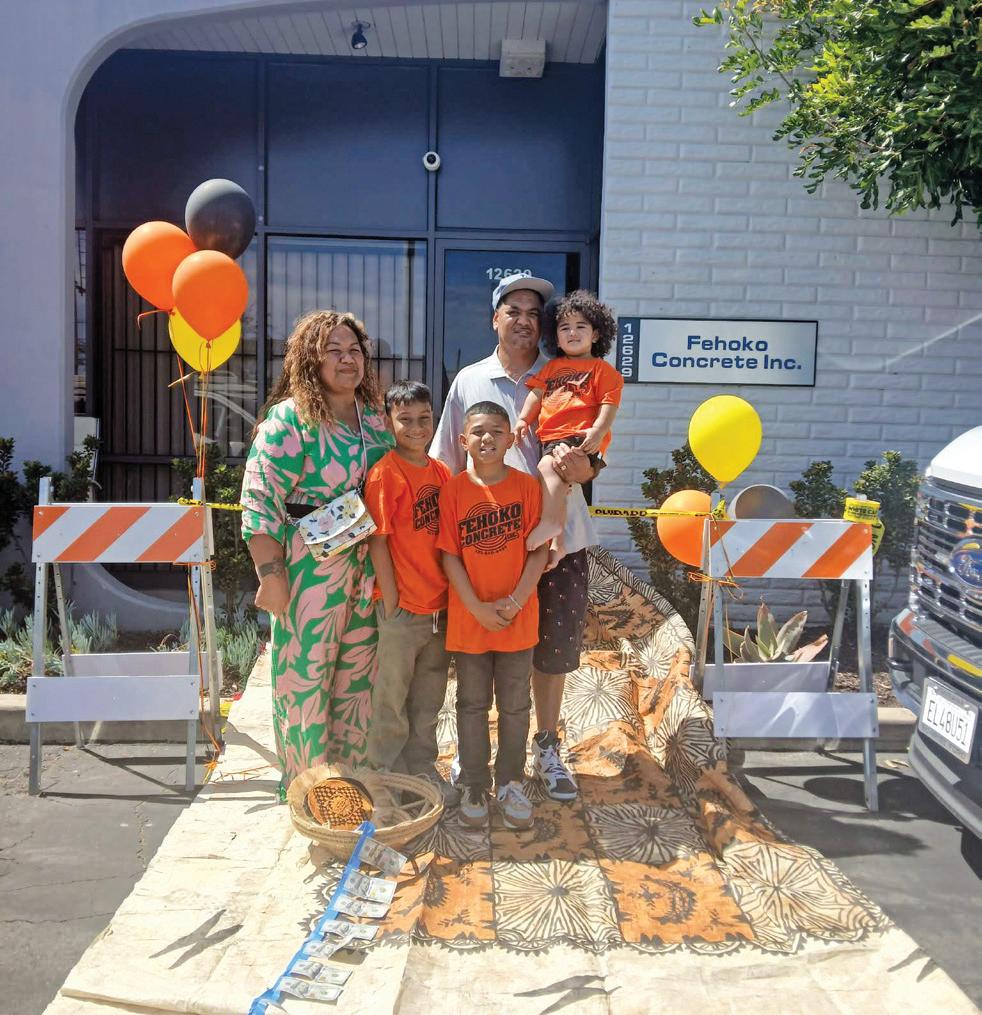
But their success has never been defined by business alone. It has also been defined by what they were willing to walk away from.
“We’ve turned down multi-million-dollar contracts,” Mote Leka said, “because it required us to work on Sabbath. That was something we were not willing to compromise.”
That conviction began early. As a young man, Timote turned down a university opportunity because it required playing basketball on Sabbath. Some believed he could have gone even further with his basketball career, but he never saw it as a loss. He believed God had other plans.
That same belief has carried into every part of his life.
“They truly live what they believe,” said Toatepi Tonga, a longtime member of the Hawthorne church. “It’s encouraging to see their family always faithfully supporting our church.”
“This family is so hardworking for the church and always with a smile,” added Sally Madrid, also a member of the Hawthorne church.
That commitment shapes their home.
“My boys know that as long as they are under my roof, we keep the Sabbath,” Timote said.
It is a standard that is not only spoken but lived out week after week.
Today, instead of chasing contracts on the weekend, Timote can be found at church, serving alongside his family, preparing for Sabbath, and helping wherever there is a need.
The same way he always has.
By Felicia Tonga
Saane, Timote Jr., Setaleki, Elijah, and Timote Fehoko (left to right) present a $20,000 donation to their home church in celebration of their newly opened office.
PHOTO: DYLAN SNYDER
Saane, Setaleki, Timote Jr., Timote, and Elijah Fehoko (left to right) stand outside their office ahead of the ribbon-cutting ceremony.
PHOTOS:
San Fernando Valley Academy Junior High Basketball Team Earns Back-to-Back Championships
This spring, the San Fernando Valley Academy (SFVA) junior high basketball team celebrated a back-to-back championship when they won the Division 1 playoff game against New West Charter School in March.
As part of the Foundation for Interscholastic Youth Athletics (FIYA) league, the SFVA Huskies participate with other elementary and middle schools across the greater Los Angeles area. After working under Brian Baroi for the 2022-2023 season, coaches Paul Velasquez and Conni Cortez stepped in to lead the team for the past three seasons, during which the team has been on a 25-0 regular season run—winning every single game. “From day one, we’ve built our program on faith, respect, accountability, discipline, preparation, and teamwork—creating a winning culture that goes beyond just basketball,” said Cortez.
“I thank God for putting us in this position,” Velasquez shared, “to have the time, ability, and opportunity to invest in these kids. For me, it’s not just about wins. It’s about building relationships and seeing these players grow. I take pride in being able to greet them not just as players but as champions—and we’ll continue to build on that moving forward.”
The players have built a strong foundation of hard work and trust, experiencing what it means to rely on
one another and stay committed to their craft. “One of my players said it best: ‘We’re not just basketball players, coach—we’re hoopers,’” Cortez recalled. “That dedication shows in how they play.”
But there’s more to the story. “Our program is grounded in faith,” Cortez continued. “We pray as a team before games and after practices, and we believe that keeps us centered and connected. We also want to recognize the support from our school community and families—this success is a reflection of everyone involved, not just what happens on the court.”
Aside from the wins, the last two seasons were personally special for Velasquez and Cortez. “Last year was especially meaningful for me because I had the opportunity to coach my nephew, Andrew, as an eighth grader and win a championship together,” Velasquez shared. “That’s something I’ll never forget. This year was just as special for coach Conni, who got to share that same experience with his son, Jacob.”
“At the end of the day, championships fade, but the impact we make on these kids—the lessons, the discipline, and the character—those are what truly last,” said Velasquez.
By Lauren Lacson
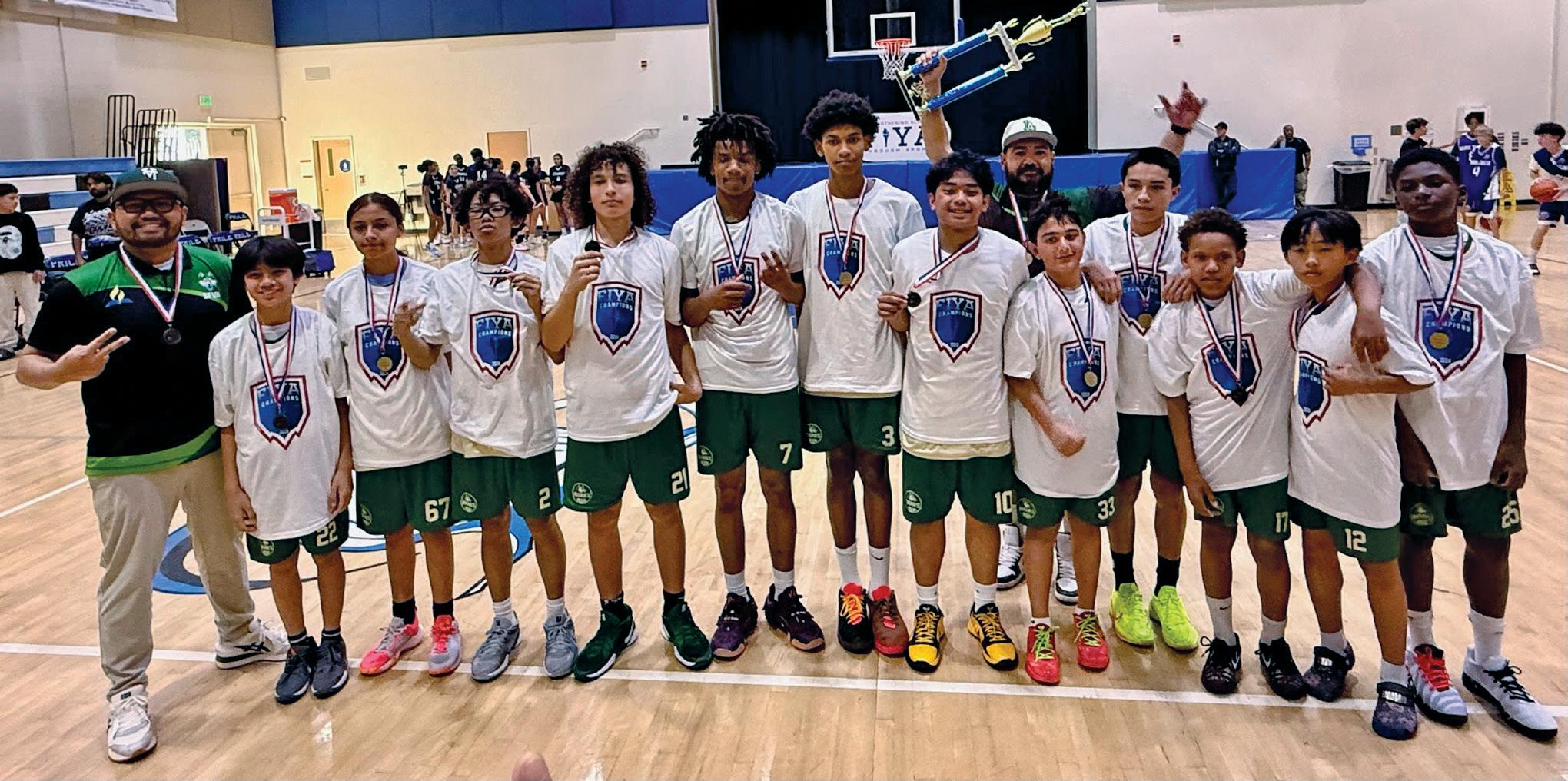
PHOTO:
Advertising
Advertising is accepted as a service to Seventh-day Adventist church members in the Pacific Union. The Recorder management reserves the right to refuse any advertisement, especially ads not related to the needs and practices of the church membership. Acceptance of any advertising shall be considered a matter of accommodation and not a matter of right, nor shall it be construed to constitute approval of the product or service advertised.
Payment in advance must accompany all classified advertisements or they will not be published. Display ads for known advertisers will be billed.
How to Submit Advertising
Classified ads must be sent with payment to the Recorder office. Display ads should be arranged with the editor (recorder@adventistfaith.com).
Classified Rates
$70 for 50 words; 75 cents each additional word. Display rates (full color only): back cover, $4,200; full page, $3,800; 1/2-pg., $2,200; 1/4-pg., $1,200; 1/8-pg., $700; $160 per column inch.
Information
The Pacific Union Recorder is published 12 times per year with a circulation of approximately 75,000. For more information about advertising, please email to recorder@adventistfaith.com.
Upcoming Deadlines
These are the advertising deadlines for the Recorder Your local conference news deadlines will be earlier. June: May 4 • July: June 4
Contributions
The Recorder pages are assigned to the local conferences, colleges, and healthcare institutions, and all content comes through the communication departments in those organizations. If you have a news story/idea, calendar announcement, etc., please contact your local communication department. See the masthead for contact information. Want tips for writing for us? See www.dailywritingtips.com/the-artof-writing-news.
Recorder Membership
The Pacific Union Recorder is provided as a free service to members of the conferences that are part of the Pacific Union Conference (Arizona, Hawaii, Northern California, Central California, Southern California, Southeastern California, and Nevada-Utah). Each conference maintains the list of members, based on the reports from their churches. If you would like to make a change to your subscription (name, address, cancellation), please contact your local conference. The staff of the Recorder does not have access to the circulation lists, other than the paid subscriptions.
Calendar
La Sierra University
Graduation 2026. La Sierra University celebrates the Class of 2026 with graduation weekend events June 1214. For more information, visit https://lasierra.edu/graduation/.
Backus Lecture. The Isaac Backus American Freedoms Lecture will be held Tuesday, May 26, 6:30 p.m., Lincoln Room, University Library. Presentations will be given by five students who will give eight-minute talks on religious liberty and other topics.
La Sierra Report. Receive news and event information about La Sierra University directly into your inbox with The La Sierra Report newsletter. Request a subscription at pr@lasierra.edu.
Pacific Union College
Graduation Weekend, June 12-14. PUC invites family and friends to graduation weekend for the class of 2026. Consecration, baccalaureate, and other events will happen throughout the weekend, with the commencement ceremony on Sunday, June 14, at 9 a.m. at Maxwell Commons. Guests should arrive at least an hour early to find parking and seats before the procession.
PacificQuest, June 28-July 3. PacificQuest is a weeklong intensive program held at PUC for students in grades 6-12 who want to be challenged academically and get a head start on college. Students will participate in academic programming in areas of STEM, aviation, and film, with daily worships, recreational opportunities, team-building exercises, and evening activities. Selection criteria are unique to each program. Students who fully participate and successfully complete the week of programming earn one unit of college credit. Visit puc.edu/pacificquest for more information.
Connect Ministries is a group of Pacific Union College students passionate about Jesus and sharing through music and worship. The bilingual team leads worship services, retreats, youth events, and any programs where they can inspire other young people to become worship leaders. Any school or church interested in having them visit, please visit puc.edu/connect.
Add PUC News in Your Church Bulletin. With many updates to share at Pacific Union College, we designed a printable bulletin insert for churches to use. Just print the PDF double sided and cut in half, then include as a bulletin insert. Download at puc.edu/bulletin.
Subscribe to the PUC Now Newsletter. Stay up to date with Pacific Union College by subscribing to
The quadrennial Constituent membership of La Sierra University will convene on the campus of La Sierra University at Hole Memorial Auditorium, 4500 Riverwalk Parkway, Riverside, CA, on Wednesday, May 13, 2026, at 1 p.m.
The purpose of the meeting is (1) to receive reports from the University and its auditor, (2) to amend the Bylaws, (3) to appoint Trustees as specified by the Bylaws, and (4) to transact other business as may be submitted by the Board of Trustees.
Bradford C. Newton, Chair
Christon Arthur, Secretary
their monthly newsletter at puc.edu/subscribe. From campus stories and alumni features to student interviews, you’ll be in the now with PUC.
Southern California Conference
Discussion on Religious Liberty , May 2, all day, with an afternoon program starting at 2:30 p.m. Alan J. Reinach, Esq., president of the Church and State Council, will address religious liberty developments. 1948 Peck Rd., Monrovia, CA 91016.
EQUIP26 , May 16, 3:00 p.m. EQUIP26, our annual conference-wide initiative created to inspire, encourage, and equip pastors and leaders, returns this spring. This free, interactive training will offer multiple breakout seminars addressing real needs of local churches with tools and resources designed to help your leaders lead, serve, and engage your church and community. This year’s event will offer classes based on the eight characteristics of healthy churches, plus four ministry classes. Each class will be presented twice, so you will have the opportunity to attend two classes. Register today by visiting scc.adventist.org/equip26. Vallejo Drive church, 300 Vallejo Dr., Glendale, 91206.
“Can U Hear Me Now?” Youth Conference , May 2225. The theme for this 14th annual youth conference is Power, Purpose, Promise. To register, visit www. canuhearmenowconference.org. Pine Springs Ranch, 58000 Apple Canyon Rd., Mountain Center, CA 92561.
Hispanic Women’s Ministries Spiritual Retreat:
Mujer Plena en la Misión , May 29-31. This spiritual retreat is a time to worship, refresh, connect, and grow together in Christ. Speakers: Eryn Castellanos, Yahaira Rivera, and Lisseth Ponce De León. Room: $210. For info and registration, contact your local church women’s ministries director, or email sccminmujer@gmail.com. Pine Springs Ranch, 58000 Apple Canyon Rd., Mountain Center, CA 92561.
Classified Employment
Elmshaven Historian/Caretaker: The Pacific Union Conference is looking for 2 part-time Historians in Residence/Caretakers for Elmshaven, the Ellen G. White home in Napa Valley, California. Positions require a strong understanding of Ellen G. White's life and writings and the history of the Seventh-day Adventist Church. Individuals must have good communication skills (Spanish speakers preferred) for guided tours and ability to climb stairs and assist with grounds/ maintenance. Ideal for a semi-retired couple. Work schedule: 1 week on/off alternating with 2nd team. Modest hourly pay with residence and utilities provided on the grounds of Elmshaven. Start date September 2026. E-mail résumé and cover letter to: stephen. mayer@adventistfaith.com; call: 805-413-7218.
Camp Cedar Falls is hiring! Live and work in God’s beautiful nature. Positions available include: Camp Ranger/Custodial and Camp Ranger/Maintenance. Opportunities available to singles, couples, and families. To learn more or apply, visit https://scc.adventist.org/ departments-ministries/human-resources/job-openings. For questions, call Camp Cedar Falls at 909-805-4104.
Pacific Union College seeks a skilled Certified Electrician with expertise in Medium Voltage Systems to join our team. C10 Contractors License or California Fire Alarm Installation Certification required as well. This role requires a strong understanding of electrical codes, safety protocols, and hands-on experience in industrial or commercial settings. https://www.puc.edu/campusservices/human-resources/careers/electrician. Email hr@puc.edu, 707-965-6231.
Pacific Union College seeks dedicated Executive Director to lead Human Resources operations and

strategy and oversee well-being and development of talented team members. Strong leadership, communication, and organizational skills are essential. https://sdawest.pub/job_posting. Email hr@puc.edu, 707-965-6231.
Pacific Union College seeks qualified candidates to fill open positions in fulfilling our mission to Learn with Purpose, Rise in Faith, and Serve in Love. Beautiful mountain campus, minutes to shopping, an hour+ drive of ocean and skiing. Current openings at https:// sdawest.pub/candidates.
Live-in companion in Madera, CA. Seeking an SDA woman to share home with a mostly independent elderly woman. Evenings/overnight preferred; minimal assistance, presence in the home. Must be reliable, kind, and comfortable with one gentle, mostly outdoor cat. Room and board plus stipend provided. Email ayomoon@gmail.com with references and brief bio.
Discover Life Church and Mother Lode Junior Academy are seeking a regular part-time Maintenance Director to provide oversight of grounds and facilities. This role includes supervising volunteers and contractors, performing basic maintenance as needed, and supporting long-term facility care. Experience in maintenance, grounds, or facilities management

preferred. For more information or to apply, please contact the church office at 209-532-3337 or office@ discoverlifesonora.org.
Real Estate
PUC commercial space for rent . Pacific Union College has commercial real estate space available for lease. The spaces are in various sizes and functionality and are available for inquiries. For additional information, please email Sam Heier at sheier@puc.edu.
Cottage for rent . Are you looking for serenity and peace? Then this rental is the perfect place for you. A small and private cottage, complete with picket fences and gardens. 1 bedroom, 1.5 bathrooms, skylights, and unique shower. Located in foothills by Collins Lake, CA. Contact John at Mountains.skyz@gmail.com.
NPAA campus home rentals . Low-cost threebedroom, two-bath home rentals are available on the Newbury Park Academy campus. Temperate climate, clean air; beaches, hiking, small town exploring within minutes. Conference and union employees are eligible to rent at NPAA. For more information on these or other available units, please contact principal@mynpaa.com or treasurer@mynpaa.com.
Summit Ridge Retirement Villages, an Adventist community in a rural setting, offers affordable homes or apartments and caring neighbors, with fellowship you will enjoy. Onsite church, planned activities, and transportation as needed. Onsite Wolfe Living Center offers independent living and nursing homes. Visit SummitRidgeVillage.org or call Bill Norman, 405-208-1289.
Country Living! Well-maintained 2018 triple-wide manufactured home in Loma Rica/Marysville with 4 bedrooms, 2.5 bath, and 2,115 sq. ft. on 10 usable acres featuring Sutter Butte views. It has spacious kitchen, solar, powerful well, septic, RV hookup, fenced garden, fenced orchard, two sheds, and a quiet, private setting. $580,000 Questions: Michelle 916-719-2393.
Virginia Mountain Escape! The VIEW captured over 1 million hits online—make it yours! Private luxury, newly built cabin, 9+ acres, pasture/woods. Near Grayson Highlands State Park. Handcrafted walnut & ambrosia maple interiors. Second-home, Airbnb, investment property or turnkey retreat. Move-in ready & fully furnished. $525,000. Contact rugbycreek@gmail.com or 276-768-7542.
Country living in Northern California : 3-bedroom, 2-bath, newly renovated home for sale on one acre, quiet street 15 minutes from Redding, mature fruit trees, grapevines, 50x80 fenced garden area with small greenhouse, irrigation system, landscaping,
3-car garage, gym, and large 18x30 shop with RV hookups. Call, text 909-735-2745.
Southern Oregon, Days Creek, country living : 10-acre property, 4+bdrm, 3.5-bath, 4,000 sq. ft, well with 3,000-gallon tank, septic system, big garden area, grapes and fruit trees, large workshop, greenhouse, woodshed/carport, lots of storage, Adventist schools and church nearby, ideal place for country living or wellness center. Call 541-825-3823, email janmay92@ aol.com.
Off-grid solar, 4+ sloped acres . Shared well, older mobile, 2 bd/1bath with 3 sheds. Near Mexico and Arizona border. God willing, moving overseas. Church with school nearby. Estimated $130K invested. No conventional financing. Cash offers. Much to include. Materials for strong greenhouse. Text, 520-858-6674 message, or email poolman52@hotmail.com.
45-acre retreat estate in Valley, Washington . This 45-acre estate offers a remarkable opportunity for Christian ministry, retreat, or community living. The main residence spans over 15,000 sq. ft. with 10 bedrooms and 11 bathrooms—ideal for hosting church retreats, leadership gatherings, discipleship training, or extended fellowship stays. Amenities include an indoor pool and spa, elevator, multiple family rooms, and spacious common areas designed for rest and renewal. Beyond the home, the property’s 45 acres feature barns, shops, guest quarters, and horse facilities—perfect for outdoor ministry, youth camps, agricultural projects, or creation care programs. Surrounded by serene mountain views, this estate provides a peaceful environment for prayer, worship, and community connection. Offered at $2,300,000. For more information, please contact: Riley Knutson, knutsonrealtor@gmail.com, 509-279-9797; Clive Osbourne, clive@cliveosbourne.com, 971-901-5350.
For Sale
Outpatient physical therapy and aquatic therapy in the foothills above Sacramento, CA. Turn-key practice, in business for over 30 years. Great referral base and solid practice. Lots of potential for growth. Great opportunity for someone wanting to establish a medical mission outpost or wellness center as well. 5400-sq-ft facility. $450,000. Flexible options to the right party. Contact levi2000@sbcglobal.net or leave message at 209-304-7455.
Vacation Opportunities
Biblical study tour of Greece. Footsteps of Apostles Paul & John in Greece! June 24-July 6, 2026. A biblical journey through Philippi, Amphipolis, Thessalonica, Vergina, Berea, Meteora, Delphi, Athens, Corinth. Enjoy a cruise to Patmos, Crete, Santorini, Mykonos, Ephesus. Experience the Greek culture and food. www.
biblicaltouring.com, George Dialectakis, 860-402-2247.
Travel on a William Tyndale Reformation tour, Aug. 26 to Sept. 11, 2026, celebrating the 500th anniversary of the English New Testament with Dr. Carl Cosaert of Walla Walla University. Explore Tyndale’s England, with an optional Germany and Belgium extension. To learn more, visit www.adventtours.org or email info@ adventtours.org.
Angwin home. Five-bedroom, three-bathroom vacation home 2 miles from PUC. Fully furnished, large kitchen, dining room, living room, family room, piano, vineyard views, WiFi, washer and dryer, BBQ, sleeps 10. Call for rates, photos and reservations: 415-539-7980 or email nroger1965@gmail.com.
Bulletin Board
LifeTalk Radio has many beautiful free digital sharing cards for all occasions. Let others know: “God Loves You.” Encourage friends and neighbors by sending a hopeful message or Bible promise via email or text. Just visit: LifeTalk.net/eCards.
Hone your fundraising skills at the 2026 Missional Philanthropy Conference at Southern Adventist University in Collegedale, Tennessee, July 14-16. Learn from nationally recognized experts in education, healthcare, corporate foundations, and nonprofit work. Registration is open through July 1 at southern. edu/philanthropyconference.
Authors , transform your manuscript into a globally distributed book. Get free evaluation from trusted SDA publisher (42 years). If accepted, we edit, design, layout, market, and distribute worldwide. Submit today: www.teachservices.com. Look for red “Submit Manuscript” button top of homepage. We buy/sell used SDA books, www.LNFbooks.com. 706-504-9192.
AdventistDating.com . Looking for meaningful, faith-centered connections? Join AdventistDating. com, where single Seventh-day Adventists meet for friendship, companionship, and love grounded in shared beliefs. Safe, sincere, and free to join. Start your journey today at AdventistDating.com—where faith meets love!
Country living for students. Check out Milo Adventist Academy in Southern Oregon: miloadventistacademy.com, admissions@ miloacademy.org, 541-825-3200.
At Rest
Ansley, Rita – b. March 28, 1945, Houston, TX; d. Aug. 11, 2025, San Diego, CA. Survivors: son, Reginald Fountain; brother, Andre Hardy; seven grandchildren.
Austin, Gloria – b. Feb. 19, 1948, Oakland, CA; d. Feb. 21, 2026, Fresno, CA. Survivors: daughters, Antionette Nelson, Katherine Nelson; four grandchildren; ten greatgrandchildren; two great-great-grandchildren.
Beardsley, Cynthia – b. Sept. 12, 1974, Deer Park; d. Jan. 4, 2026. Survivors: mother, Sally A. Beardsley; brother and sister-in-law, Joseph and Abigail Beardsley.
Bounds, Harmon – b. May 6, 1944, GA; d. Feb. 10, 2025, AZ. Survivors: wife, Annie Turner; brother, Norman Wilson.
Bradford, Charlotte – b. Dec. 28, 1935, San Luis Obispo, CA; d. Oct. 20, 2025, Spokane, WA. Survivors: son, Mark Bradford; daughters-in-law, Denise Bradford, Maria Bradford; sister, Leona Nicholas; seven grandchildren; 11 great-grandchildren. Charlotte was the longest tenured member of Bakersfield Central church, being baptized in 1947. She held many offices such as church clerk and Sabbath School superintendent.
Bradley, Panzy Emery – b. Jan. 14, 1927, MO; d. Nov. 24, 2025, Temecula, CA. Survivors: children, Carol,
May 2026 Sunset Calendar
City/Location MAY 1 MAY 8 MAY 15 MAY 22 MAY 29
Alturas (Shasta) 8:06 8:13 8:21 8:27 8:33
Angwin 8:01 8:08 8:14 8:20 8:26
Bakersfield 7:42 7:48 7:53 7:59 8:03
Calexico 7:23 7:28 7:33 7:38 7:43
Chico 8:01 8:08 8:15 8:21 8:27
Death Valley (Furnace Ck) 8:10 8:18 8:25 8:32 8:38
Eureka 8:13 8:20 8:27 8:33 8:39
Four Corners [E] 8:05 8:11 8:17 8:22 8:28
Fresno 7:47 7:53 7:59 8:05 8:10
Grand Canyon (South Rim) 7:16 7:21 7:27 7:33 7:38
Half Dome 7:48 7:55 8:01 8:07 8:12
Hilo 6:43 6:46 6:48 6:51 6:54
Holbrook (Sun City) 7:13 7:17 7:22 7:27 7:32
Honolulu 6:59 6:59 7:02 7:05 7:08
Joshua Tree 7:29 7:34 7:40 7:45 7:50
Lake Tahoe 7:52 7:59 8:05 8:12 8:17
Las Vegas 7:28 7:34 7:40 7:45 7:50
Lodi-Stockton 7:56 8:02 8:09 8:15 8:20
Loma Linda 7:33 7:38 7:43 7:48 7:53
Los Angeles 7:37 7:42 7:47 7:52 7:57
McDermitt [N] 7:49 7:57 8:04 8:11 8:17
Moab 8:10 8:16 8:23 8:29 8:34
Monterey Bay 7:56 8:02 8:07 8:13 8:18
Mt. Whitney 7:31 7:36 7:41 7:46 7:50
Napa 7:32 7:39 7:45 7:52 7:58
Nogales (rio rico) 7:03 7:08 7:13 7:17 7:22
Oakland 7:59 8:06 8:12 8:18 8:23
Paradise, CA 8:00 8:07 8:14 8:20 8:26
Phoenix 7:11 7:16 7:21 7:26 7:31
Pu‘uwaiau, Ni’ihau [W] 6:46 6:49 6:52 6:55 6:57
Reno 7:53 8:00 8:06 8:12 8:18
Riverside 7:33 7:38 7:44 7:49 7:53
Sacramento 7:58 8:04 8:11 8:17 8:22
Salt Lake City 8:23 8:31 8:38 8:44 8:50
San Diego 7:30 7:35 7:40 7:45 7:49
San Francisco 8:00 8:06 8:12 8:18 8:24
San Jose 7:57 8:03 8:09 8:15 8:20
Santa Rosa 8:02 8:09 8:15 8:21 8:27
Sunset Beach 7:56 8:02 8:08 8:14 8:19
Thousand Oaks 7:39 7:45 7:50 7:55 8:00
Gregory; stepchildren, Vickie, Patricia, Dan. Panzy spent quite a few years as a primary leader/teacher, was a head deaconess, helped with Community Services, and worked with the Discover Bible School.
Bryant, Nola – b. May 22, 1936, St. Louis, MO; d. July 22, 2024, San Diego, CA. Survivors: son, James Bryant III; daughter, Cindi Richardson; four grandchildren; five great-grandchildren.
Buchanan, Bret – b. Sept. 22, 1964, Brighton, CO; d. Feb. 21, 2026, Stockton, CA. Survivors: children, Miranda, Joshua; siblings, Mark Buchanan, Connie Buchanan, Candy Barker.
Catinean, Minerva – b. March 1, 1954, Romania; d. March 26, 2026, Loma Linda, CA. Survivors: husband, Emil Catinean; children, Steve Catinean, Penina Nadjafinia; two grandchildren.
Chonkich, Nannette – b. Jan. 20, 1940, Yonkers, NY; d. March 10, 2026, Loma Linda, CA. Survivors: husband, George Chonkich; children, George Chonkich Jr., Carolyn Heinrich, Danny Chonkich; brother, George Petti Jr.; six grandchildren; three great-grandchildren.
June 2026 Sunset Calendar
City/Location JUNE 5 JUNE 12 JUNE 19 JUNE 26 Alturas (Shasta) 8:23 8:27 8:29 8:30 Angwin 8:31 8:34 8:37 8:38 Bakersfield 8:08
“So there remains a Sabbath rest for the people of God.” Hebrews 4:9
“So there remains a Sabbath rest for the people of God.” Hebrews 4:9
Clevridge R. Sinclair – b. Oct. 13, 1933, Rio Grande, Nicaragua; d. Feb. 13, 2026, Grand Terrace, CA. Survivors: sister, Vilma Sinclair; many nieces and nephews.
Cook, Deanna – b. Dec. 24, 1968, Modesto, CA; d. Nov. 14, 2025, Modesto, CA. Survivors: husband, Jason Cook; son, Nathan; daughter, Katelyn; mother, Phyllis Denlinger; brother, Matthew Denlinger; sister, Donna Overholtzer.
Couture, Larry – b. Aug. 2, 1953, Alberta, Canada; d. March 8, 2026, Colton, CA. Survivors: wife, Cheryl; sons, Jason, Shawn; daughter, Rae-lynn Ghosh; six grandchildren.
Denney, B. Colleen – b. Dec. 7, 1936; d. Feb. 6, 2026, LaQuinta, CA. Survivors: children, Ronald Denny, Gary Denny, Sandra Martin, Kenneth Denney, David Denney.
Denney, Donald L. – b. March 21, 1933; d. Nov. 8, 2025, LaQuinta, CA. Survivors: wife, B. Colleen Denney; children Ronald Denny, Gary Denny, Sandra Martin, Kenneth Denney, David Denney.
Echols II, Ira Lee – b. Oct. 6, 1969, Memphis, TN; d. Sept. 23, 2024, San Diego, CA. Survivors: mother, Wilma Lovelace; father, Ira Lee Echols; daughters, Sabrina Echols, Sierra Todd; sister, Letrice Echols; two grandchildren.
Eñano, Esther – b. July 15, 1936, Philippines; d. Feb. 27, 2026, Carlsbad, CA. Survivors: children, Faith King, Ann Arntson; sisters, Eva Ramos, Wending Roflo; five grandchildren.
Ghelfi, Eli – b. March 19, 1942, Norway; d. March 12, 2026, Orange County, CA. Survivors: husband, Gerald Ghelfi; daughter, Brit Ghelfi Stickle; son, Curtis Ghelfi; siblings, Brit Lokna Fillmore, Roy Lokna; two grandchildren.
Ice, David – b. Sept. 26, 1944, Atascadero, CA; d. March 6, 2026, Lodi, CA. Survivors: son, Roy; daughter, DeVonna; granddaughter, Felicia. David served on the AV team at Lodi Fairmont church for many years.
Lawrence, Courtney – b. Feb. 20, 1975, San Diego, CA; d. Jan. 30, 2026, Moreno Valley, CA. Survivors: wife, Pendeza; daughter, Isabella. Courtney served at Loma Linda Academy, most recently for the Information Technology department.
Morgan, Maralyn Anne – b. Feb. 20, 1931, Loma Linda, CA; d. Jan. 10, 2026, Redlands, CA. Survivors: children, Ron Morgan, Cheryl Hoff, Rick Morgan; seven grandchildren; 16 great-grandchildren.
Nelson, Carol Mary (Brewer) – b. Sept. 3, 1921,
Shanghai, China; d. March 13, 2026, Redlands, CA. Survivors: daughters, Carol Rae Kettner, Shirley Wheeker; son, Jerry Nelson; six grandchildren; 13 great-grandchildren; one great-great-grandchild. She was the first female head elder at Corona church and volunteered many years as a marriage and family counselor at California Rehabilitation Center in Norco, CA.
Osena, Judy – b. Aug. 11, 1945, Tagoc, Philippines; d. March 6, 2026, Clovis, CA. Survivors: son, Dennis Osena; daughters, Faye Ann, Kate Martell; nine grandchildren; nine great-grandchildren.
Parker, Bruce – b. June 6, 1936; d. Sept. 22, 2025. Survivors: wife, Ann; daughters, Susan Fleming, Kristin Anderson, Erin Wickliffe, Jill Parker; eight grandchildren; one great-grandchild. He served as a missionary dentist in Japan and Guam before practicing in Rio Dell for almost 40 years. He was an elder at the Fortuna church, served as school board chairman of Fortuna Junior Academy, and was active in Pathfinders.
Peterson, Donna – b. July 21, 1930; d. Feb. 21, 2026, Placerville, CA. Survivors: daughters, Kristi, Julie, Tammy, Lyndi and their families. She was the director of the Camino church Community Service Center for many years.
Raschein, Cynthia – b. Feb. 11, 1968, San Jose, CA; d. Feb. 20, 2026, Las Vegas, NV. Survivors: husband Robert (Bob) Raschein; stepchildren, Maddison, Thomas, Morgan; five grandchildren.
Reeves, Rosemary Margaret – b. Jan. 13, 1950, Sydney, Australia; d. March 6, 2026, Vista, CA. Survivors: brother, David M. Reeves; sister-in-law, Beverly Reeves.
Roberts, Kenneth – b. April 14, 1944, Newburgh, NY; d. Jan. 13, 2026, Riverside, CA. Survivors: wife, Bernice Beddoe; children, Todd, Tami Dukie, Trenee Kysor; six grandchildren; three great-grandchildren. He taught 10 years in church schools in La Sierra and the Pacific Northwest before returning to school to get his Master of Social Work. For over 20 years he was a therapist and director of mental health children’s programs, mostly in Alaska.
Schatzschneider, Gail – b. Nov. 1, 1938, Hanford, CA; d. March 10, 2026, Loma Linda, CA. Survivors: husband, Don; sons, Eric, Mark; four grandchildren. Gail and her husband were missionaries to Bolivia, Peru, Korea, Singapore, Pakistan, India, and Malawi.
Todd, Frederick – b. Nov. 4, 1938, Stroud, OK; d. Sept. 10, 2024, San Diego, CA. Survivors: daughters, Sable Blackshire, Felecia Brown; four grandchildren.

The Last Word
By Alberto Valenzuela
We Do Not Lose Heart
There comes a time in life when the questions begin to change. When I was young, I did not imagine this season. I did not imagine I would grow older, that I would become an adult, that I would marry, have children, build a life. The future felt distant, almost unreal—as if life were something that happened to others, not something that would one day settle quietly around me.
But the years, without asking permission, have gathered. And now I find myself in the later years—the autumn of life—where the questions no longer look only forward but begin to turn inward. Not only What will I become? but What has this all meant? And perhaps more quietly, more deeply: What does it mean to grow old in the presence of God?
This question does not always arrive as a sentence. It comes in moments.
It comes when the body no longer responds as it once did. When strength is not assumed. When memory hesitates. When the roles that once felt natural now require effort. It comes through loss—of people, of rhythms, of certainties we once thought permanent.
And yet, Scripture does not avoid this reality. It speaks of it with honesty but also with a kind of steady hope. Paul describes the body as a tent (2 Corinthians 5:1). A temporary dwelling. Useful, necessary, but not permanent. That image has become more real to me now than it ever was before. There was a time when I lived as if the tent would stand forever. Now I know better. The fabric wears. The poles weaken. The structure shifts.
But the tent was never the destination.
If the body is temporary, God is not. That is where the center of gravity shifts. Isaiah speaks with a tenderness that feels almost personal: “Even to your old age and gray hairs… I will carry you” (Isaiah 46:4, NIV). There is something deeply reassuring in
that promise. Aging is not abandonment. It is not God stepping away. If anything, it is the season in which His presence becomes more necessary and perhaps more visible.
Looking back, I realize that I lived much of my life under the quiet assumption that I was in control. I made plans. I moved forward. And when things worked, I gave thanks—but somewhere inside, I also believed I was shaping the outcome. Time has a way of correcting that illusion.
Aging does not remove control; it reveals that it was never truly ours to begin with. Every breath has always been given. Every day sustained by grace. The psalmist says it plainly: “All the days ordained for me were written in your book before one of them came to be” (Psalm 139:16, NIV). There is, strangely, a kind of freedom in that realization. What once felt like surrender now begins to feel like rest.
To trust God is no longer a theological statement; it becomes a lived necessity. And what might have felt like a loss earlier in life—the letting go of control—becomes a quiet discovery: that God’s sovereignty is not against us but for us.
This also reshapes how we understand value.
We live in a world that measures worth by productivity, visibility, independence. By those standards, aging looks like decline. A narrowing. A fading relevance. But Scripture tells a different story. “Gray hair is a crown of glory” (Proverbs 16:31, NLT).
That is not how the world sees it. But perhaps the world has been measuring the wrong things all along. The years do not erase meaning; they reveal it. What is stripped away is not our worth but our illusions about what matters. What remains is quieter but deeper— wisdom, memory, presence, faith.
And this wisdom is not meant to be kept.
The prayer of Psalm 71 has begun to feel like my
own: “Even when I am old and gray,…I declare your power to the next generation” (Psalm 71:18, NIV). Aging is not a retreat from purpose. It is a reorientation of it. The form changes, yes. The energy is different. But the calling remains.
We bear fruit in other ways now. Through presence. Through listening. Through prayer. Through the stories we tell—stories not of our strength but of God’s faithfulness. The psalmist insists, “They will still bear fruit in old age” (Psalm 92:14, NIV). That promise feels less like poetry now and more like invitation.
Ecclesiastes reminds us that much of what we build does not last (Ecclesiastes 3). That realization can feel unsettling. There are things I once thought would endure that have changed, or disappeared, or simply been forgotten.
But Ecclesiastes does not leave us in despair. It redirects us.
Meaning is not found in making ourselves permanent. It is found in receiving life as a gift and living it in relationship with the One who gives it. What God gives us—a portion, a season—is enough. Not everything, but enough. And perhaps aging helps us see that more clearly. It narrows our focus, but not in a limiting way—in a clarifying one. We begin to distinguish between what is essential and what is not. What we once chased no longer holds the same weight. What we once overlooked begins to matter more.
Paul captures this tension beautifully: “Though outwardly we are wasting away, yet inwardly we are being renewed day by day” (2 Corinthians 4:16, NIV). I feel that now in ways I did not before.
The outward reality is undeniable. But inwardly— there is something else happening. A quiet renewal. Not dramatic, not visible, but real. Grace working beneath the surface.
This renewal does not deny the difficulty. There are days when the weight of time is felt more heavily. Scripture does not pretend otherwise. It speaks honestly about weakness, about sorrow, about loss. But it also insists that these do not have the final word.
“Anyone still alive has hope” (Ecclesiastes 9:4, NCV). Hope remains—not because life is easy but because God is present. And that presence calls for something from us. Not resignation but
engagement. Aging well, in the biblical sense, is not about avoiding decline. It is about responding to it— with faith, with resilience, with openness.
Gratitude becomes essential. The deliberate choice to see each day as a gift—even when it arrives quietly, without fanfare. Perspective becomes necessary. To look not only at what is seen but at what is unseen. To remember that the visible is temporary, but the invisible is eternal.
And community—community becomes indispensable. No one is meant to walk this season alone. The sharing of stories, the passing of wisdom, the simple act of being present with one another— these are not optional. They are part of what it means to belong to the people of God.
In that community, aging is not hidden. It is honored. And beyond all of this, there is the future—the promise that frames everything else.
“He will wipe every tear from their eyes. There will be no more death or mourning or crying or pain” (Revelation 21:4, NIV). That promise does not erase the present, but it gives it context. It reminds us that this is not the end of the story. That what is temporary will give way to what is eternal.
And so, I return to the question. What does it mean to grow old in the presence of God?
It means to move from control to trust. To recognize that life has always been sustained by grace. To understand that worth is not measured by what we produce but by being known and held by God.
It means to continue bearing fruit, even when the form of that fruit changes. It means to live with hope. Not because everything is easy—it is not. Not because the body remains strong—it does not. But because God is present. Because the inner life is being renewed. Because the future is secure.
We do not lose heart.
And in this season—one I once could not even imagine—I begin to see that aging is not simply something to endure. It is something to inhabit. A place where, quietly and steadily, the presence of God becomes more deeply known.
Alberto Valenzuela is the associate director of communication and community engagement for the Pacific Union Conference and editor of the Recorder