Recorder
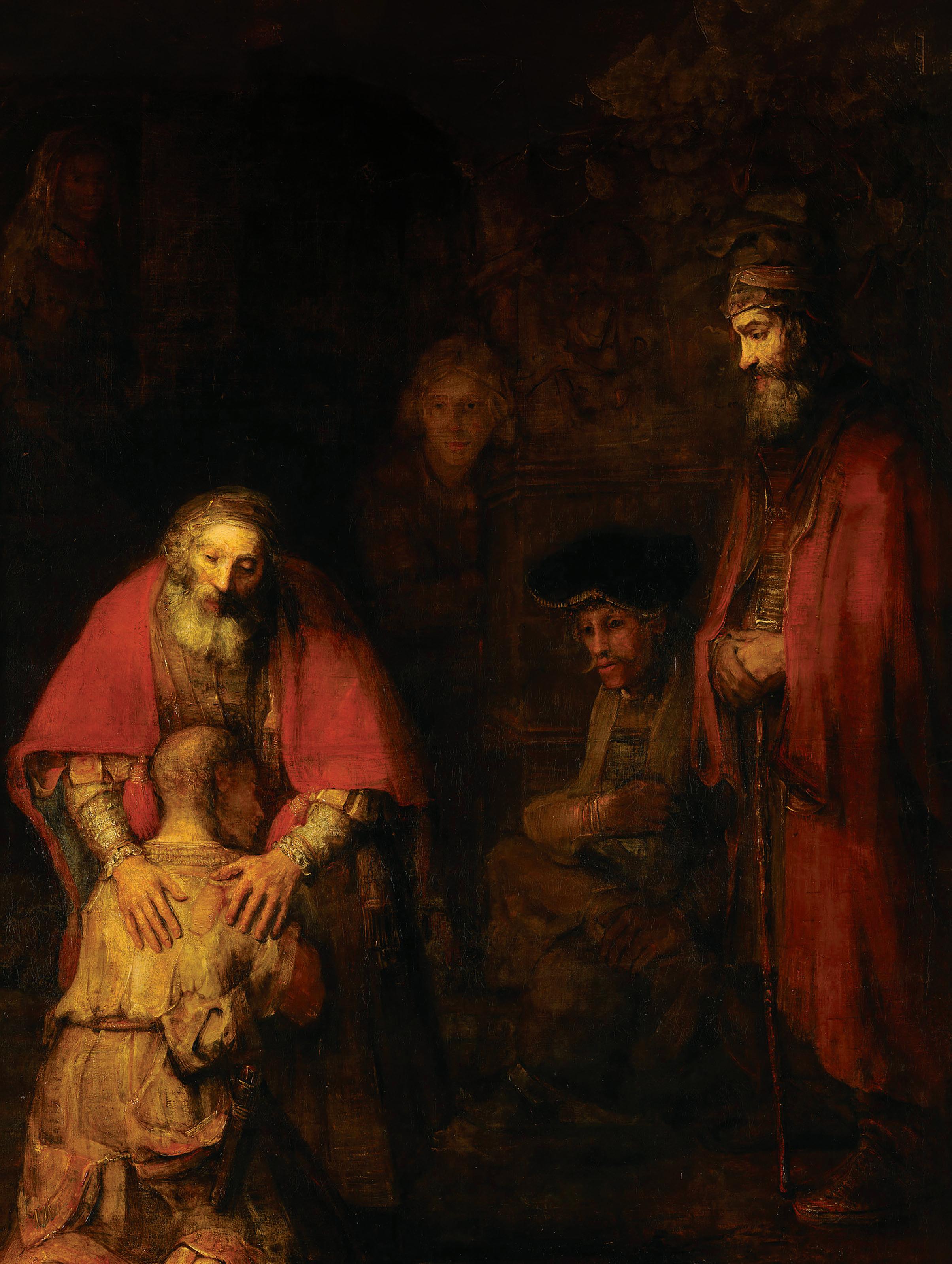
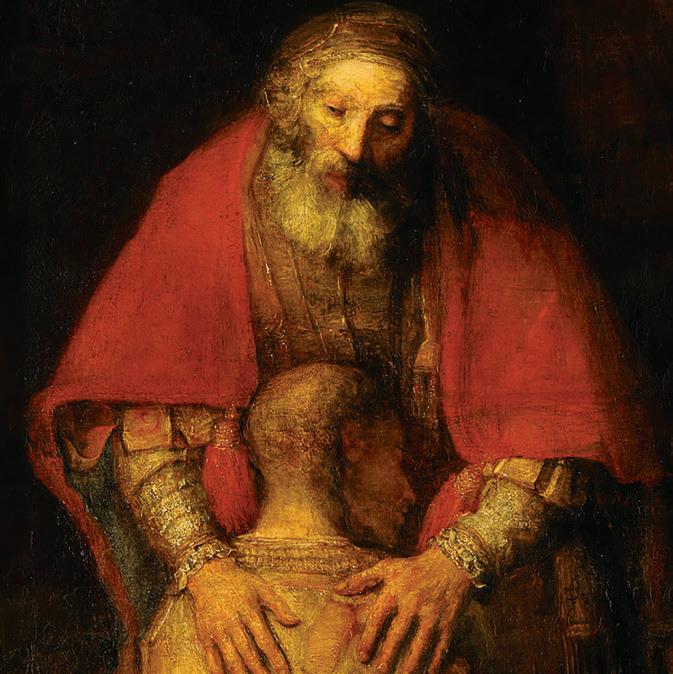
While he was still a long way off, his father saw him and was filled with compassion for him; he ran to his son, threw his arms around him and kissed him. — Luke 15:20, NIV
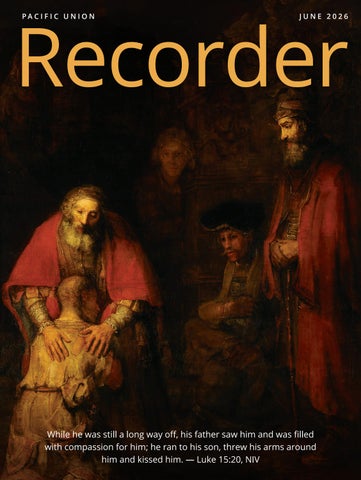
While he was still a long way off, his father saw him and was filled with compassion for him; he ran to his son, threw his arms around him and kissed him. — Luke 15:20, NIV
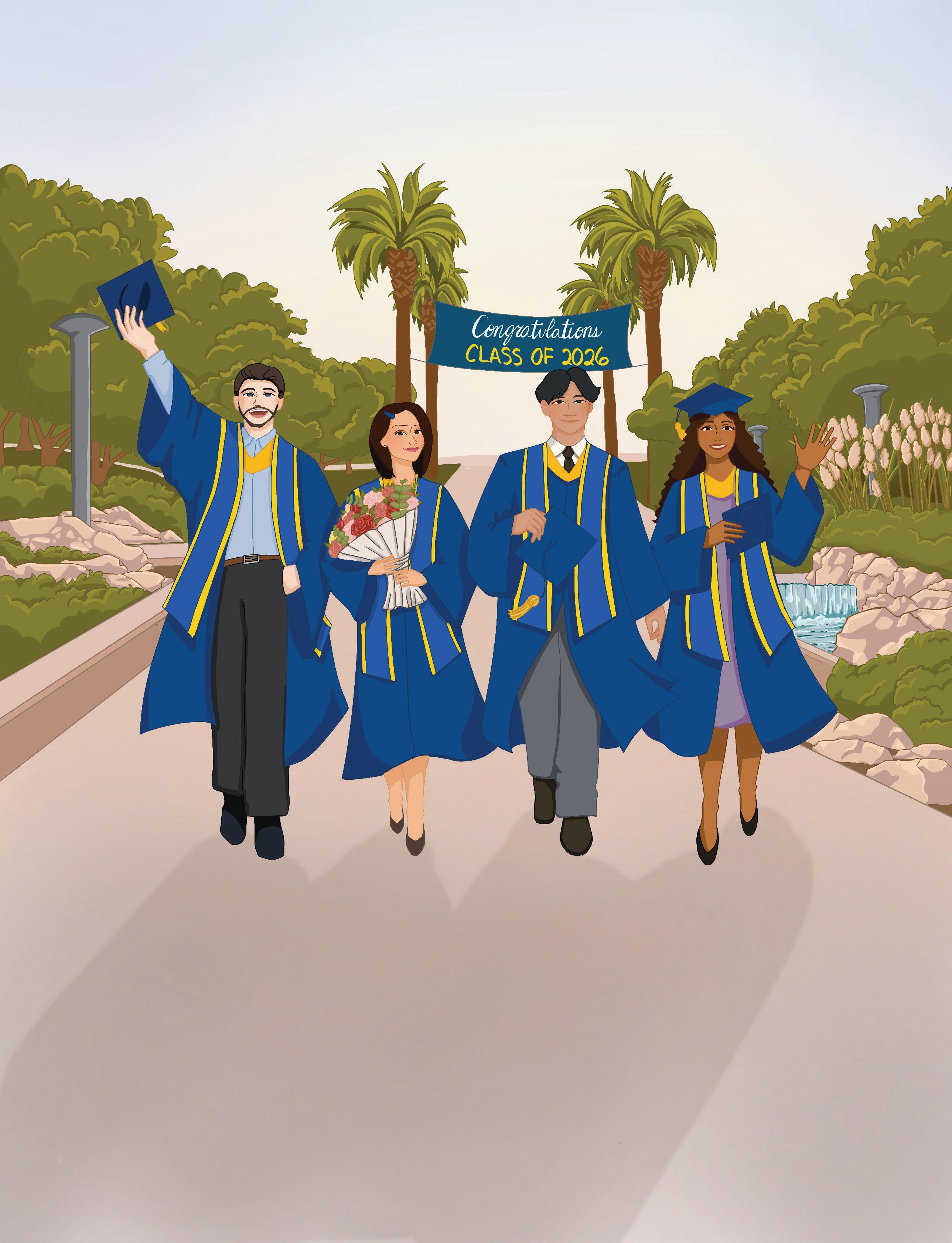
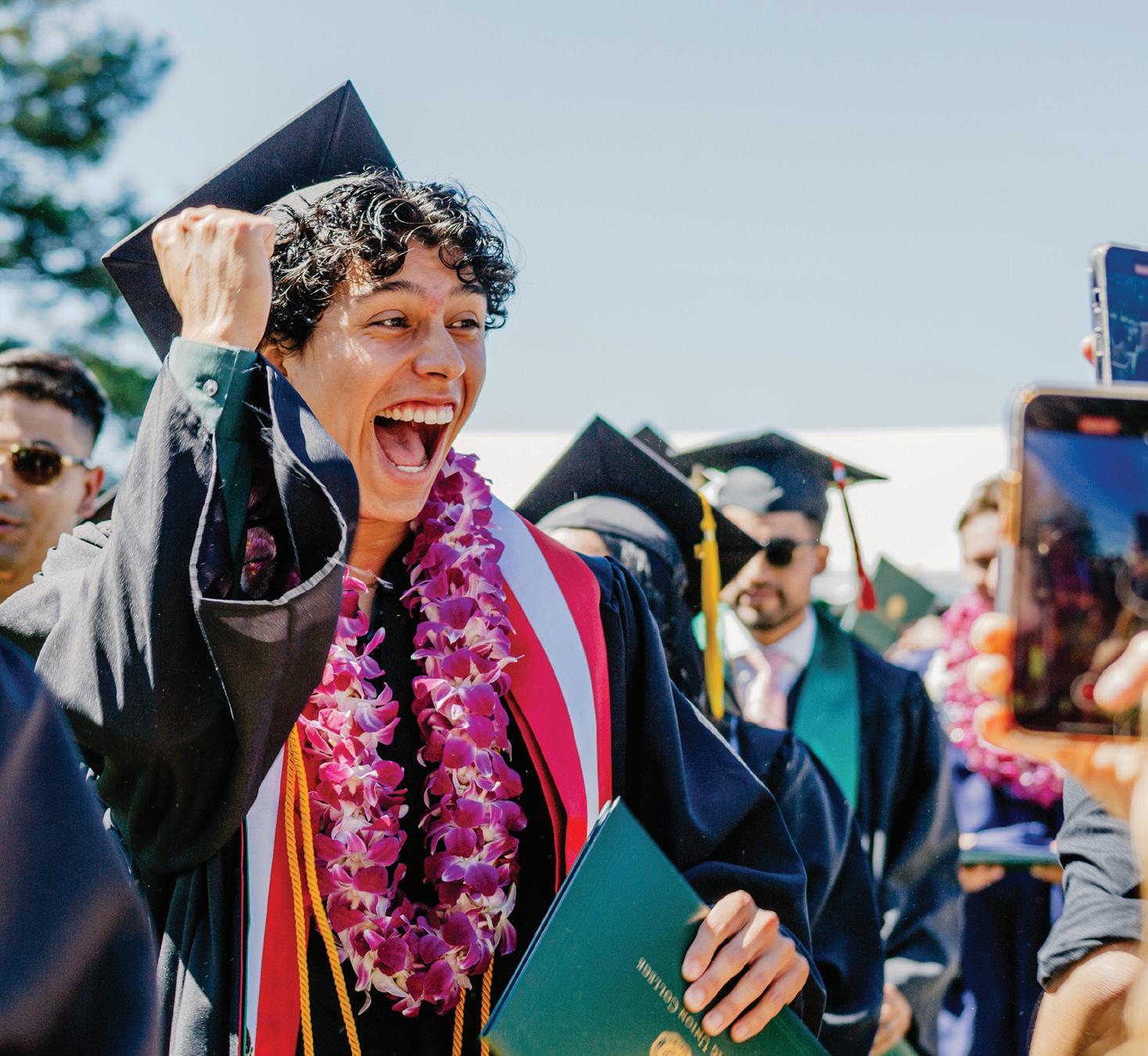
Students begin their journey in different places, each shaped by their own goals, passions, and experiences. At La Sierra University, that journey continues as you grow in knowledge, faith, and purpose.
Here, your education goes beyond the classroom, supported by a community that walks alongside you every step of the way, with scholarships up to $19K available to help make that journey possible in a place that feels like home.
This is where your next chapter begins.
Jesus had compassion on the multitudes that were about Him. And it was because of this compassion that they sought Him and followed Him so faithfully. He wants His followers here in this place to manifest His spirit of tenderness and kindness and love. If their hearts are filled with this spirit, the world will see the evidences of it, and will be impressed that they are doing an unselfish work. Our purpose as Christians should be to help one another, for this was Christ’s work, and He is to be our example.
—Ellen G. White, “Our Compassionate Saviour,” The Life Boat, Sept. 1, 1909, p. 263
4 The Compassion Factor
8 Fundamental Belief #26: Bad News, Good News
10 Adventist Pioneers in the West: The San Francisco Earthquake
14 The Subtle Danger of Covetousness: A Biblical Reflection for Today
18 My Dad’s Home Run
22 The Coins That Weighed More Than Stone
24 Newsdesk
28 Arizona Conference
30 Central California Conference 32 Hawaii Conference 34 Holbrook Indian School 36 Adventist Health 37 La Sierra University 38 Loma Linda University Health 39 Pacific Union College 40 Nevada-Utah Conference
42 Northern California Conference 44 Southeastern California Conference 46 Southern California Conference
48 Community & Marketplace
52 Sunset Calendars
Publisher Ray Tetz
Editor Alberto Valenzuela
Design/Layout
Stephanie Leal • Alberto Valenzuela
Printing Pacific Press Publishing Association www.pacificpress.com
Adventist Health 916-742-0429
Kim Strobel strobeka@ah.org
Arizona 480-991-6777
Alexis Camacho ACamacho@azconference.org
Central California 559-347-3128
Bryan Bong bbong@cccsda.org
Hawaii 808-595-7591
Miguel Manzo communicationsdept@hawaiisda.com
54 Faith, Fear, and the Cost of Fatherhood
Holbrook Indian School 928-524-6845 x109
Jacqui Reed jreed@hissda.org
La Sierra University 951-785-2000
Darla Tucker dmartint@lasierra.edu
Loma Linda 909-651-5925
Ansel Oliver anoliver@llu.edu
Nevada-Utah 775-322-6929
Michael Jenkins Jr. mjenkins@nevadautah.org
Northern California 916-886-5600
Laurie Trujillo
Laurie.Trujillo@nccsda.com
Pacific Union College 951-809-6777
Gene Edelbach gedelbach@puc.edu
Southeastern California 951-509-2258
Taji Saleem taji.saleem@seccsda.org
Southern California 818-546-8400
Lauren Lacson Llacson@sccsda.org
Editorial Correspondents

By Ray Tetz
The envelope was larger than most and looked like it might contain some photographs. There were a bunch of stamps on the upper right corner, and upon examination it was clear that it had been mailed from Nepal. It was addressed to me, with a name on the return address that I didn’t recognize.
I opened the envelope carefully and found a typewritten letter and eight photos. I will never forget the first time I looked through those pictures and the impact they had on me.
They were startling for two reasons. First, they were clearly the work of an excellent photographer who captured the full emotion of his subjects in his photographs. And second, the images were of some of the residents of Khokana, a small community that lies south of Kathmandu, Nepal, along the Bagmati River. All eight photos were of people suffering from leprosy, and despite the resulting physical deformities, their abundant humanity and desire for life could be seen in the photographs.
I was moved by these photos and immediately wanted to know more about these people—and if there was something I could perhaps do to help them. Over the next few months and years, I was privileged to be a part of the ADRA initiative that sought to address their desperate living conditions, stop the spread of leprosy to their uninfected family members, and reduce the suffering of those who had already contracted it. It was one of the first ADRA initiatives in the Hindu Kingdom of Nepal, and one of their most successful.
What I remember most vividly about the moment when I learned of the existence of the Khokana Leprosy Colony was the visceral, gut-punch impact the story and the photos had on me. I do not recall a time when I was more immediately “moved with compassion.”
It is unfortunate that this phrase has become hackneyed and tired—right up there with “thoughts and prayers” on the impact scale. “Compassion” has too often been reduced to a sympathetic sigh, a
polite prayer request, or a quick moment of sadness before turning away from seeing or hearing troubling information.
This is not the case in the New Testament, where the language is far stronger and much closer to the visceral gut-punch I felt looking at those photographs of Khokana. To better understand the way Jesus responded to human suffering—and how as disciples we are called to respond to those in need—the best place to start is with the unique word that the Gospel writers used to describe it.
In Greek, the word is a verb, σπλαγχνίζομαι, transliterated, splagchnizomai (pronounced splawnkNITZ-oh-my). Its literal translation is the “inward parts” or “entrails” (heart, liver, lungs), and it metaphorically denotes the deepest seat of emotions and compassion. The ancients did not think of the heart as the center of the deepest feelings or emotions; they saved that for the bowels. Because we associate the bowels strictly with digestion, translators understandably opt for phrases like “moved with compassion.”
But in doing so, we lose the punch-to-the-stomach impact of the original word. Their sensibilities are carried over into our language when we describe something as “gut-wrenching” or when we talk about feeling dread “in the pit of our stomach.” It was never meant to describe an abstract thought or a polite sigh of sympathy. It was an agonizing, physical ache— the kind of undeniable, muscular pull that makes it completely impossible to just look the other way.
The term appears 12 times in the New Testament, and it is found only in the Gospels of Matthew, Mark, and Luke. Whenever it occurs, it describes Jesus (in both His humanity and divinity) or it is used by Jesus to describe characters in parables.
Five times, the word describes the way Jesus responded when surveying a large crowd. When He saw the crowds “harassed and helpless, like sheep without a shepherd,” He felt splagchnizomai (Matthew 9:36). It was the motivation to miraculously feed the five thousand (Matthew 14:14) and the four thousand
(Matthew 15:32) when He refused to send massive crowds of people away hungry.
The word is also used to describe Christ’s response to the suffering of individual people. When a man suffering from leprosy fell at His feet and cried out for healing, Jesus felt splagchnizomai and reached out to touch a person others might have deemed untouchable (Mark 1:40-41).
When some sought to silence the cries for mercy and healing of two blind men seated by the side of the road, it was the Lord who stopped and felt splagchnizomai for them, touching their eyes and restoring their sight (Matthew 20:29-34).
In a little town called Nain, Jesus and His disciples came upon a funeral procession for the only son of a widow. Seeing the stricken widow, His heart went out to her, and He sought to comfort her. It was splagchnizomai for a woman cruelly deprived of both husband and son that prompted Him to go right up to the funeral bier and bring the young man back to life! The NIV tenderly ends the story with the phrase that then “Jesus gave him back to his mother” (Luke 7:11-15, NIV).
In one special story, the word splagchnizomai was spoken directly to Jesus, and it was a plea for Christ’s divine intervention. A father desperate for his son to be delivered from demon possession begged Christ: “But if you can do anything, have compassion [splagchnizomai] on us and help us.” It was this broken and hopeless father who uttered the words that have inspired so many to renew their faith in Christ: “Lord, I believe; help my unbelief!” (Mark 9:14-29, NKJV). The boy was healed through the compassion of Christ.
Jesus Himself used the word splagchnizomai to reveal the character of God and His kingdom. In the Parable of the Unforgiving Servant, a king
representing God feels splagchnizomai and completely cancels an impossible debt (Matthew 18:27). In the Parable of the Good Samaritan, the religious elite feel nothing, but the Samaritan— who is a figure of Christ’s love and care—feels splagchnizomai and stops to bind up and save the life of a man who would otherwise die from his wounds (Luke 10:30-37). It is splagchnizomai that is most lacking in those who have left the man to die or who have ignored his great need—a direct condemnation by Christ of religious behavior that is bereft of compassion and kindness.
Nowhere is the importance of splagchnizomai more powerfully affirmed than in the Parable of the Prodigal Son. Here deeply held compassion and love is the explanation of the very nature of God's posture toward us. When a discouraged and broken young son comes trudging home, drenched in failure and locked into thinking that he can no longer even be described as a son, it is the father who sees him “a long way off.” The father is filled with splagchnizomai. He doesn’t wait for an apology or demand restitution. He casts aside the conventions of patriarchal dignity and runs to embrace his son, throwing his arms around him and kissing the stench of failure away (Luke 15:20).
I was fortunate to have a father who unfailingly exhibited compassion and care to his children. He was consistently unashamed to feel splagchnizomai for those he encountered and was thus constantly engaged in helping those in need. His example forces me to confront my own reticence to abandon convention, push doubts aside, and throw myself into situations where I could make a difference. I look back on my dad’s life as an example of the splagchnizomai factor: how likely are we to respond to those around us, as God has in fact responded to us?
Nowhere
is the importance of splagchnizomai more powerfully affirmed than in the Parable of the Prodigal Son.
Christ held nothing back. In His very being He embodied the compassionate character of God. But we naturally hold back, protecting our hearts from the pain of others. The great 19th-century preacher Charles H. Spurgeon marveled at the sheer magnitude of this difference. Preaching to his London congregation on the compassion of Jesus, Spurgeon pointed out that the Gospel writers couldn't even find a word in the classical Greek language strong enough to describe what Jesus was feeling. “They did not find one in the whole Greek language that suited their purpose,” Spurgeon noted, “and therefore they had to make one.” Instead of keeping a safe, clinical distance from human misery, Jesus allowed His “whole nature [to be] agitated with commiseration for the sufferers before him.” Spurgeon described this divine splagchnizomai as “a striving of the heart—a yearning of the innermost nature with pity.”1
This is the reality the Apostle Paul was identifying when he wrote, “Therefore, if anyone is in Christ, the new creation has come: The old has gone, the new is here!” (2 Corinthians 5:17, NIV). Theologian Henri Nouwen noted that when this deeply felt compassion takes over, we are no longer concerned with an accounting of right and wrong. There is no settling of old scores or balancing of accounts—the old ledgers are destroyed.
Reflecting on the father in the Parable of the Prodigal Son, Nouwen wrote: “The father of the prodigal son is not concerned about himself. His long-
suffering life has emptied him of his desires to keep in control of things.”2
When God looks at our brokenness, He does not observe us from a clinical, disappointed distance. He is moved by compassion, motivated by an allencompassing mercy that is actively engaged with meeting our greatest need. God’s splagchnizomai is not a passive feeling that leads nowhere; it is active in love. Paul goes on to declare “that God was reconciling the world to himself in Christ, not counting people’s sins against them” (2 Corinthians 5:19, NIV).
As disciples of Jesus Christ, our highest calling is that our compassion will reflect His character and compassion. When we take on the sorrows of one another, we are aligning ourselves with the experience of Christ Himself.
To love with splagchnizomai means moving beyond that which is safe and settled. It means to experience the gut-wrenching sorrows of the lepers of ancient Galilee and of present-day Khokana. It is to heed the cries of help from those who feel unseen and unheard. It is to weep with those who have lost their loved ones. It is to actively seek God’s face amid the demons of this life, even when our experience or doubts beset us. It is to allow our hearts to be broken by all those things that break the heart of God and to be moved by everything that we believe and feel—to run to embrace, welcome, and give solace to the lost.
Note: ADRA’s work in Nepal now goes back nearly 40 years! Learn more about their ongoing efforts to bring healing and hope to vulnerable communities at adranepal.org.
Ray Tetz is the director of communication and community engagement of the Pacific Union and the publisher of the Recorder
1Charles H. Spurgeon, “The Compassion of Jesus” (Sermon No. 3438), delivered at the Metropolitan Tabernacle, Newington, published Dec. 24, 1914, https://answersingenesis.org/education/spurgeon-sermons/3438compassion-of-jesus/?srsltid=AfmBOoqDUzDNd9muWkzngmj2hYqbKhMQzi PAOfqBcf1rm4iE-ZYxdewm.
2Henri J.M. Nouwen, The Return of the Prodigal Son: A Story of Homecoming (New York: Doubleday, 1992), p. 128.
By Fernando Lista
There are certain principles and fundamentals— what we might call “laws”—that have been proven true and that affect human existence in various ways. No one in their right mind would question the law of gravity on planet Earth. We all understand its effects and how it keeps things anchored to the ground instead of floating freely. There are several other examples we could mention, such as the cycle of day and night or the changing seasons of the year.

The law of love, which defines God’s character and motivates His actions, is what leads Him to be patient with humanity.
Just as in the physical world, there are also principles and laws in the spiritual realm. One of these laws concerns the consequences of sin. The Bible states in Romans 6:23, “For the wages of sin is death, but the gift of God is eternal life in Christ Jesus our Lord” (NIV). This is not about a capricious God who delights in punishing sinners; rather, it is sin itself that results in death. This is an immutable principle, just as real as
the law of gravity, and it operates within the greater law of love that governs God’s universe.
God has the power and authority to overrule the law of sin, just as He has overruled physical laws in the past—for example, when Peter walked on water. However, if God were to arbitrarily override the consequences of sin, it would undermine justice and free choice. It would make Him appear unfair, denying the reality of human decisions and their outcomes. Such interference would create moral chaos, much like removing gravity from our planet would create physical chaos.
The law of love, which defines God’s character and motivates His actions, is what leads Him to be patient with humanity. He does not want anyone to perish but desires that all come to repentance (2 Peter 3:9). There is a delicate balance between human freedom and God’s pursuit of our salvation. How much patience does God have with sinners? A great deal—just consider the biblical record or even our own lives. Yet patience does have limits, as seen in the histories of Sodom and Gomorrah, Egypt, and even Israel itself (Ezekiel 33:11). Another spiritual law emerges here: we reap what we sow.
When we experience the first death, we “sleep,” as Jesus described it. (See John 11:11-14.) This understanding differs significantly from many common beliefs today. In death, there is no consciousness—no immortal soul departing to heaven or hell. The dead “know nothing” (Ecclesiastes 9:5). When we reflect on this, it is actually part of the good news. Who would want their deceased loved ones to witness our suffering and struggles? And what about the idea of eternal torment in hell? Would
such endless suffering not contradict God’s plan of salvation and perpetuate sin indefinitely?
The biblical answer to death is resurrection. Jesus declared, “I am the resurrection and the life” (John 11:25). This points to another spiritual law—the law of life, which flows from the very essence of God. Jesus demonstrated the certainty of this law by raising people from the dead and ultimately by conquering death Himself. Through His perfect life of love and obedience to the Father, He endured the second death—the penalty that rightfully belonged to us— and rose again to offer us life in its fullness (John 10:10).
“This is the will of him who sent me, that I shall lose none of all those he has given me, but raise them up at the last day. For my Father’s will is that everyone who looks to the Son and believes in him shall have eternal life, and I will raise them up at the last day” (John 6:39-40, NIV).
The question as we speak to others is a challenge to believe the words of Jesus, the resurrection and the life. As Tim Keller wrote, “If Jesus rose from the dead, then you have to accept all that he said; if he didn’t rise from the dead, then why worry about any of what he said?”1
So, there is bad news because of the law of sin. But there is also extraordinarily good news because of the eternal law of God’s love. Honor, glory, and praise be to the Lamb forever who conquered sin, triumphed over death, and offers eternal life to those who believe in Him.
Fernando Lista is associate director of secondary education for the Pacific Union Conference.
1Timothy Keller, The Reason for God: Belief in an Age of Skepticism (New York: Dutton, 2008), p. 202.

The biblical answer to death is resurrection. Jesus declared, “I am the resurrection and the life” (John 11:25).

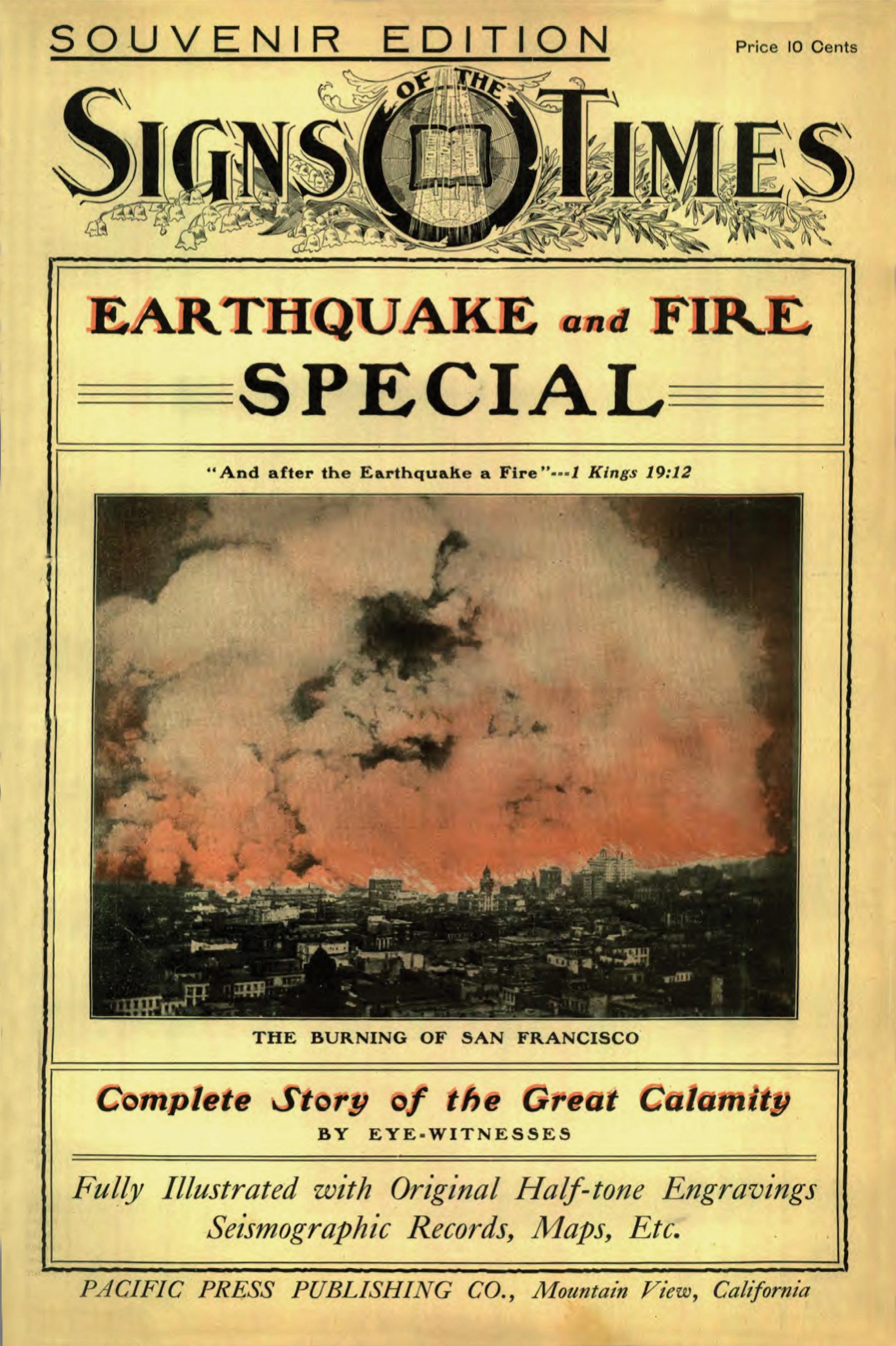


One of the most significant events of Adventism’s early days in the West was the San Francisco earthquake of 1906. Ellen White happened to be in California, attending the consecration service for Loma Linda College of Medical Evangelists and the dedication of Paradise Valley Sanatorium. She had two visions at that time, with representations of a terrible earthquake, though she was careful not to say that these visions specifically related to what was to happen shortly in San Francisco. She wrote: “While at Loma Linda, Cal., April 16, 1906, there passed before me a most wonderful representation. During a vision of the night, I stood on an eminence, from which I could see houses shaken like a reed in the wind. Buildings, great and small, were falling to the ground. Pleasure resorts, theaters, hotels, and the homes of the wealthy were shaken and shattered. Many lives were blotted out of existence, and the air was filled with the shrieks of the injured and the terrified.” 1
“On April 18, two days after the scene of falling buildings had passed before me, I went to fill an appointment in the Carr Street church, Los Angeles. As we neared the church, we heard the newsboys crying, ‘San Francisco destroyed by an earthquake!’ With a heavy heart I read the first

hastily printed news of the terrible disaster.” 2
She wrote that she really did not want to see the terrible destruction. “I did not want to see the ruins of San Francisco,” she said, “and dreaded to stop at Mountain View.” 3 But she had no choice.
“On our way home from Mountain View, we passed through San Francisco, and, hiring a carriage, spent an hour and a half in viewing the destruction wrought in that great city. Buildings that were thought to be proof against disaster, were lying in ruins. In some instances, buildings were partially sunken in the ground. The city presented a most dreadful picture of the inefficiency of human ingenuity to frame fireproof and earthquake-proof structures.” 4
Writing in the Review and Herald , she also gave her firsthand experience of the earthquake’s aftermath:
“As we traveled northward, we saw some of the effects of the earthquake; and when we entered San Jose, we could see that large buildings had collapsed, and that others had been seriously damaged. At Mountain View, the new post-office and some of the largest stores in the town had been leveled to the ground. Other buildings had partially collapsed, and were badly wrecked. When we saw the fallen walls of the Pacific Press, we were sad at heart; but we could not help rejoicing
“On our way home from Mountain View, we passed through San Fran cisco, and, hiring a carriage, spent an hour and a half in viewing the dest ruction wrought in that great city.” Ellen White
over the fact that no lives were lost.” 5
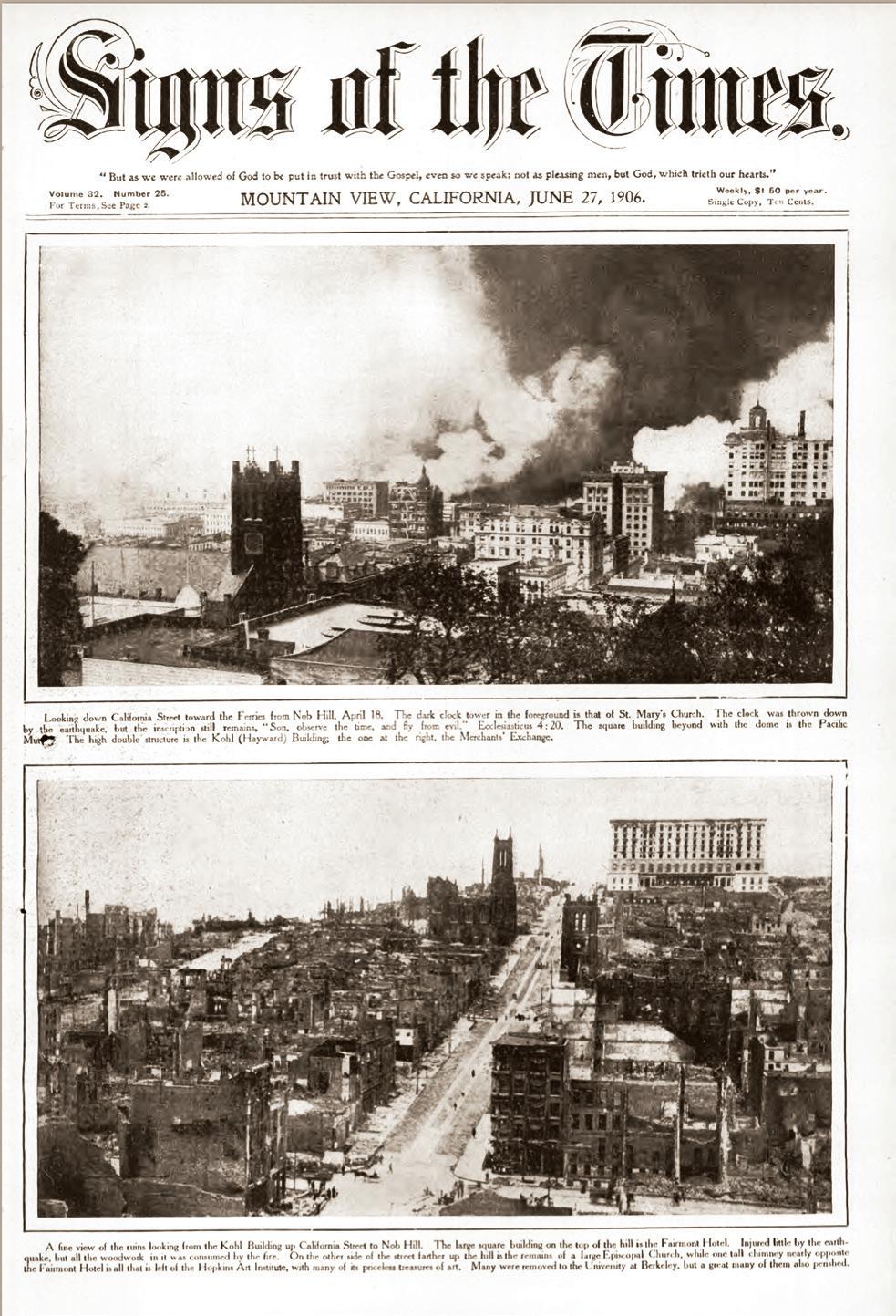
The Pacific Press buildings had suffered extensive damage estimated at the time at around $10,000, or $300,000 in today’s currency. Some Adventists had lost their homes, mostly due to the fires that followed the earthquake. The large Adventist church on Laguna Street survived. No one was hurt at the branch sanitarium downtown, though the building was destroyed, as was the vegetarian café, a food store, a home for church workers, and an Adventist doctor’s private sanitarium.
It is hard to comprehend the impact of this terrible disaster on the psyche of the society at the time. Writing in the Auckland Star of New Zealand, correspondent Edward J. Murphy wrote of the many who believed that “the world has come to an end” and that “judgment day has come.” He went on to say, “It seemed as though an infuriated giant demon had reached up from
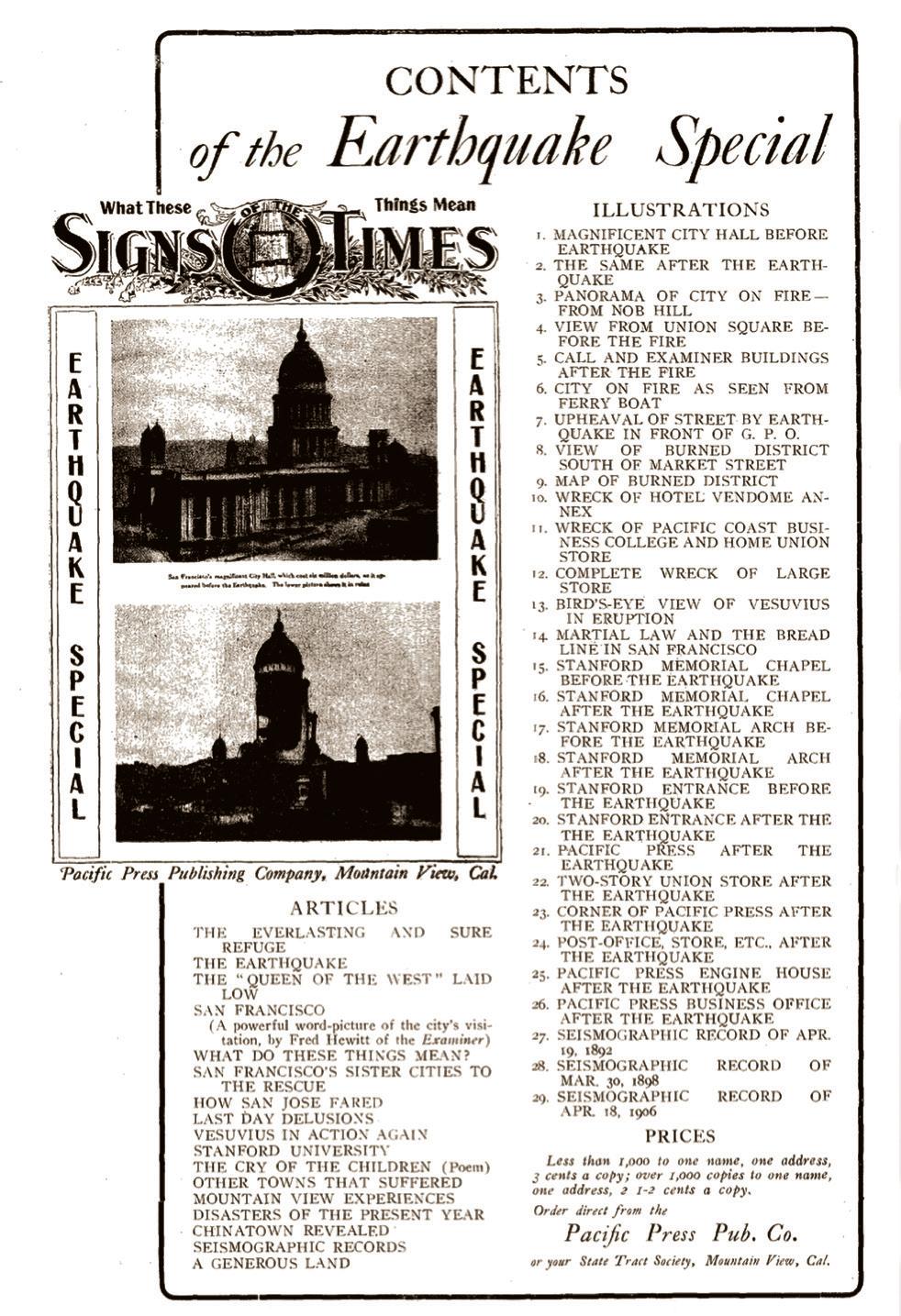
the interior of the earth, buried his steel talons in the fibers of California’s heart, and crushed and tore and shook her into the agonies of death.” 6 Adventist papers of the time tell a graphic tale of death and destruction, with many photographs of the toll taken by the earthquake. The Signs of the Times issued an “Earthquake Special,” giving the reason that “As the journal having the largest circulation in the East of any paper published on the Pacific Coast, the publishers of the SIGNS OF THE TIMES believe it duty to issue a special number devoted largely to the great calamity which has befallen the fairest section of the Pacific Coast.” 7 The “Special” also included a sermon preached by the editor that used the event to point to the importance of a secure spiritual foundation:
There are worldly cities, but there is no sure
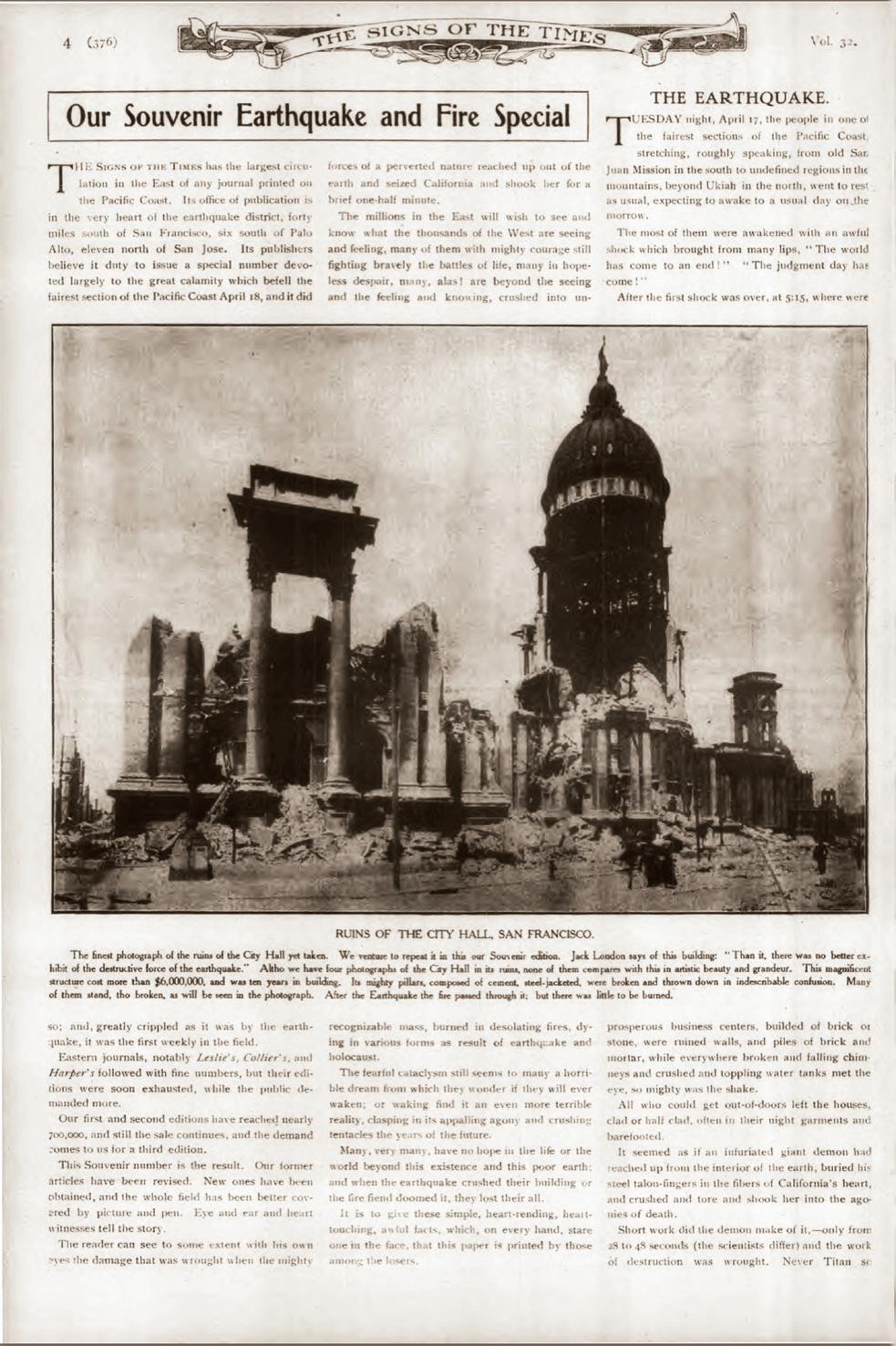
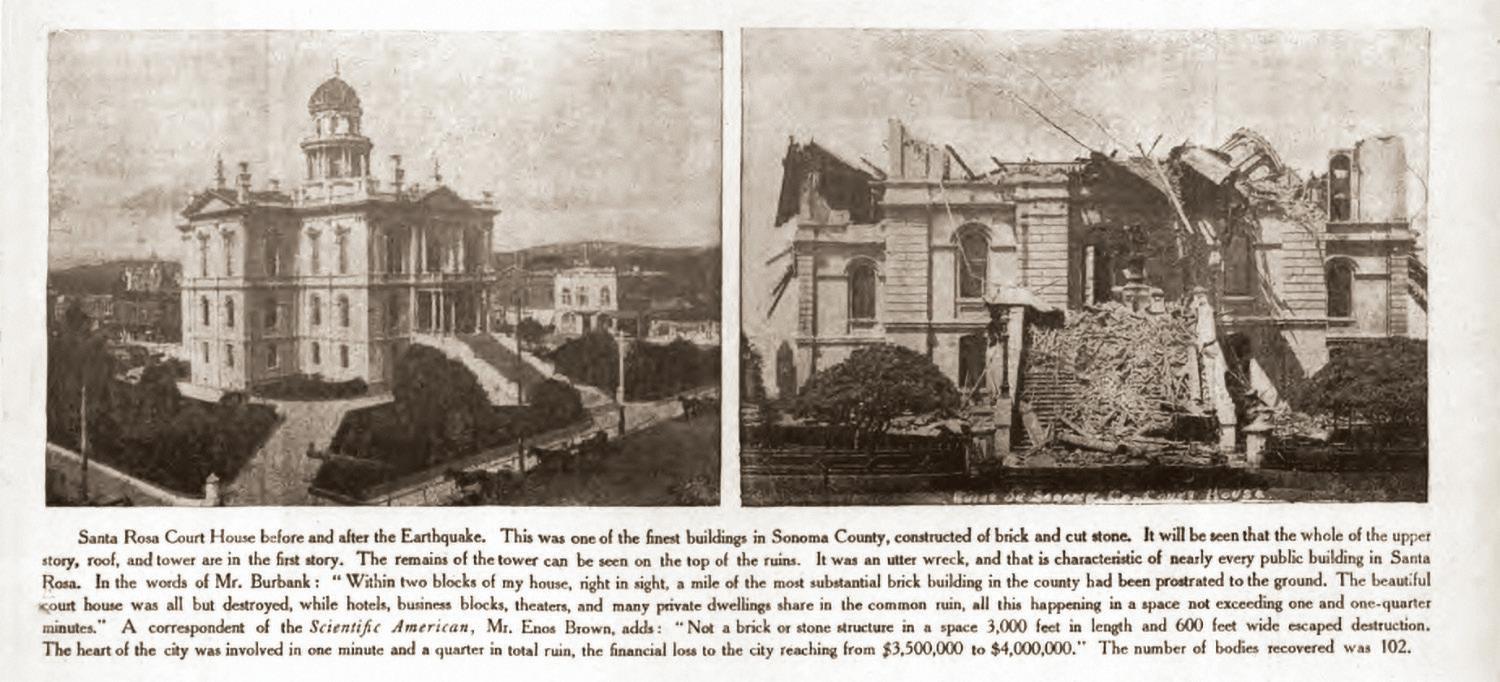
refuge there. We can not say flee to Oakland or to Chicago or to New York or to London. The next great convulsion may include one or all of these, and the proudest steel towers which men have builded may be reduced to scrap heaps. There is a city which can not be moved, the foundation of which is character. “God hath founded Zion."… What a mighty contrast is this foundation to that which earthly cities furnish. Those who builded, and thought they builded well on good foundation in San Francisco, made all possible haste to flee in the time of calamity; but he that builds in Zion shall not make haste, or as elsewhere quoted, by Inspiration, “shall not be ashamed or confounded.” No confusion shall come to him who builds on this foundation. 8
The “Special” ends with thanks to those of “A Generous Land” who have provided funds and resources to the survivors. 9
1Ellen G. White, Life Sketches of Ellen G. White (Mountain View, CA: Pacific Press Pub. Assn., 1915), p. 407.
2White, Life Sketches , p. 409.
3Ellen G. White, “A Visit to Mountain View,” Review and Herald 83, no. 29 (July 19, 1906), p. 7.
4White, Life Sketches , p. 410.
5Ellen White, “The San Francisco Earthquake,” Review and Herald 83, no. 21 (May 24, 1906), p. 7.
6Edward J. Murphy, “Destruction of San Francisco,” Auckland Star , June 30, 1906, p. 14.
7“Our Earthquake Special. Why? Why?” Signs of the Times 32, no. 18 (May 2, 1906), p. 3
8Milton C. Wilcox, “The Everlasting and Sure Refuge,” Signs of the Times 32, no. 18 (May 2, 1906), p. 2.
9“A Generous Land,” Signs of the Times 32, no. 18 (May 2, 1906), p. 16.

By Carlos Molina
Covetousness is a complex and far-reaching concept. It is often defined as an excessive desire for wealth, a craving for sensual satisfaction, or even a strong longing for something perceived as good. Yet, in the biblical context—particularly in Exodus 20:17 it represents something deeper: an attitude fundamentally opposed to the character and will of God. Covetousness is not merely a private emotion; it is a disposition that can erode inner peace, fracture relationships, and ultimately damage one’s relationship with God.
In today’s world, the drive to obtain what one desires—quickly and by any means—has become normalized. This mindset often echoes a survival-ofthe-fittest philosophy, where success is measured by acquisition rather than
integrity. The unspoken motto seems to be: If you want it, take it—no matter how 1 In such a context, covetousness is not only common; it is encouraged. Modern technology has intensified this tendency, making it possible for desire to be ignited and gratified almost instantly—sometimes with nothing more than a click.
Eight of the Ten Commandments begin with the words “You shall n ot,” underscoring the protective boundaries God established for human flourishing. The final commandment—“You shall not covet”—addresse s not only outward actions but inward motivations. It exposes the root from which many other sins grow.
Two powerful Old Testament examples illustrate the destructive consequences of covetousness. The first is found in Genesis 6, where pre-flood humanity is described as corrupt and violent. According to the biblical narrative, people took whatever they desired, often by force, leading to widespread suffering and moral collapse. Covetousness here is linked with unchecked desire and the abuse of power.2
The second example appears in 1 Kings 21 in the story of King Ahab and Naboth’s vineyard. Ahab desired Naboth’s land, but when Naboth refused to sell it, Queen Jezebel orchestrated a false accusation that led to Naboth’s execution. Through deceit and violence, Ahab obtained what he coveted. This story reveals how covetousness can align with injustice, particularly harming the vulnerable and powerless.
The Hebrew term often associated with coveting, hamad , can mean to delight in, desire, or take pleasure in something. 3 In itself, desire is not always negative. However, when desire becomes self-centered and disregards God’s will or others’ wellbeing, it turns destructive. Interestingly, the same word appears in Isaiah 53:2, where it conveys a different kind of longing—one that is n ot rooted in material or sensual attraction but in recognizing and receiving the mission of the Messiah. This contrast highlights that desire can either lead toward God or away from Him.
Covetousness is closely tied to other violations of God’s law. It can lead to idolatry, dishonor toward parents, theft, falsehood, adultery, and disregard for others’ property.
Covetousness is closely tied to other violations of God’s law. It can lead to idolatry, dishonor toward parents, theft, falsehood, adultery, and disregard for others’ property. In this sense, the tenth commandment functions as a gateway: when the heart is governed by covetous desire, other sins often follow.
The Sabbath commandment, however, offers a powerful antidote. By setting
aside one day each week to rest and remember God as Creator (Genesis 2:1-3), believers are invited to step out of the cycle of acquisition and productivity. The Sabbath becomes a space for reflection, gratitude, and realignment of priorities. It reminds humanity that life is not sustained by constant striving but by God’s provision.
Similarly, acknowledging God as the owner of all things (Psalm 24:1; Haggai 2:8) encourages practices such as tithing and offering. These acts cultivate gratitude and help place material possessions in their proper perspective. In doing so, they serve as safeguards against covetousness by redirecting the heart toward generosity and trust.
The New Testament continues this theme, using the Greek term epithumeo to describe covetous desire. This word conveys intensity—something that “boils” or “pulses” within a person. In the broader Greco-Roman world, such desire was often celebrated, even attributed to the behavior of the gods themselves.4 In contrast, the teachings of Jesus and the apostles present a radically different ethic.
Jesus’ teachings, particularly in passages like the Beatitudes (Matthew 5:2-12), emphasize humility, purity of heart, and a reorientation of desire toward God’s kingdom. His life and message reflect the enduring relevance of the Ten Commandments, not as rigid rules but as expressions of love and righteousness.
The early Christian community, shaped by eyewitness testimony and faithful witnesses, sought to embody this ethic. While there were notable failures—such as the deceit of Ananias and Sapphira (Acts 5) or Judas’ betrayal (Matthew 27)— the general trajectory of the New Testament is one of transformation. Believers are called to reject covetousness and cultivate the fruit of the Spirit (Galatians 5:22-23).
The apostle Paul addresses covetousness in multiple ways. He speaks of longing to see fellow believers (1 Thessalonians 2:17), demonstrating that not all desire is sinful. However, he also warns against sinful cravings (1 Corinthians 10:6; Galatians 5:24) and the pursuit of wealth at any cost (1 Timothy 6:9). For Paul, the issue is not desire itself but its direction and control.
The New Testament reinforces the interconnectedness of God’s commandments.
James 2:10-12 teaches that breaking one commandment affects the whole law. Jesus summarizes this unity in two foundational principles: love for God and love for neighbor (Matthew 22:36-40). These are not replacements for the law but its essence. Covetousness, at its core, violates both—it places self above God and disregards the well-being of others.
In the contemporary world, particularly in Western societies, there is a noticeable shift toward secularization. As Christian influence declines, alternative value systems often emerge—many of which prioritize self-fulfillment, consumption, and individual success. In such an environment, covetousness can flourish unchecked.
This is not a new challenge. Early Christians in the Roman Empire faced hostility and misunderstanding. Historical accounts describe them as socially disruptive because of their distinct beliefs and practices. Yet their commitment to biblical principles provided strength and identity in a hostile culture.5
Today, a similar steadfastness is needed. Remaining grounded in biblical values offers protection against the many temptations of modern life. Covetousness is closely linked to other destructive attitudes—selfishness, envy, pride, and arrogance. These traits not only harm individuals but also damage relationships and communities.
In contrast, obedience to the tenth commandment fosters contentment and respect for others. It encourages individuals to appreciate what they have and to pursue what they need through ethical and faithful means. Jesus’ counsel in Matthew 6:33—“Seek first the kingdom of God” (NKJV)—provides a guiding principle for ordering life’s priorities.
Gratitude plays a crucial role in this transformation. Recognizing God’s blessings in daily life (Philippians 4:6-7; Matthew 6:34) shifts the focus from what is lacking to what has been given. This perspective cultivates peace and resilience, even in uncertain circumstances.
Covetousness is more than a simple desire for material things; it is a condition of the heart that shapes behavior, relationships, and spiritual life. From the stories of the Old Testament to the teachings of Jesus and the apostles, Scripture consistently warns of its dangers while offering a path toward freedom.
That path is marked by trust in God, love for others, and a reorientation of desire. Practices
such as Sabbath observance, generosity, and gratitude serve as practical safeguards, helping believers resist the pull of a culture driven by acquisition.
In a world where wanting more is often seen as a virtue, the biblical call to contentment stands as a quiet but powerful countercultural witness. It invites individuals not to suppress desire but to transform it—to seek not what can be taken but what can be received from God with joy and thanksgiving.
Carlos Molina is a retired pastor and an adjunct professor of New Testament at Universidad of Montemorelos, Mexico.
1Niccolo Machiavelli, The Prince (Simon & Brown, 2011), p. 160; written around 1513.
2Ellen G. White, Patriarchs and Prophets , chapter 7, “The Flood” (Washington, DC: Review and Herald Pub. Assn.), pp. 90-103.
3“Hamad,” Abarim Publications’ Biblical Dictionary , https://www.abarimpublications.com/Dictionary/ht/ht-m-d.html.
4David Hatcher Childress, Theology of the Gods: The Incredible Sciences of The Ancients (Kempton, IL: Adventures Unlimited Press, 2000).
5Éric Fournier and Wendy Mayer, Heirs of Roman Persecution: Studies on a Christian and Para-Christian Discourse in Late Antiquity (Oxfordshire, UK: Routledge Publications, 2019).

Jesus’ counsel in Matthew 6:33— “Seek first the kingdom of God”— provides a guiding principle for ordering life’s priorities.

By Jonathan Butler
When I was 10 years old, our small front yard was a field of dreams, where my dad played catch with me until it got too dark to see the ball. Seventy years later, the memories are still vivid.
My two older brothers would rather not play catch with their younger, skinnier, pestier sibling. But Dad never said no when I came asking almost every day in spring. He saw me brandishing my brand-new Rawlings glove with that fresh leathery smell, the glove that I had mowed enough lawns to afford, and he got up from his wingback chair, put down his pipe and his Los Angeles Times, and grabbed his rumpled glove.
It would be easy for me to idealize those times. But I’m not forgetting that we practiced diving under our desks then, actually believing we could survive World War III that way. When baseball season came around, however, hope once again sprang eternal,
and not even civil defense drills or the dark prophecies about the odious King of the North could intrude on our dreams for baseball season. In Southern California in those halcyon days, there were butterflies everywhere, I went barefoot on the sunbaked sidewalks, and the blue skies above the palm trees were not cloudy (or smoggy) all day.
Playing catch with my dad, I did not think of his ever being an athlete. It did not occur to me that an old photo of him serving a tennis ball hinted at real prowess. In tossing up the ball on his serve, he got great extension, which assured a ball strike at the highest point. Later in life, I played a lot of tennis, but I was never that photogenic. It surprises me now, all these years later, how reliably Dad caught my throws and how accurately he returned them. I have come to realize there were plenty of things I did not appreciate about him. I never complimented him on anything.
Dad and I were huge fans of the Brooklyn Dodgers and rooted for them to avenge their many painful World Series losses to the New York Yankees. Dad read every night until his eyes watered, and he put me onto sportswriter John R. Tunis, who wrote wonderful novels about the Dodgers. I read his books over and over, until the spines collapsed, beginning with the first one in his series, The Kid from Tomkinsville. I was in good company reading that book. Philip Roth and Bernard Malamud were great novelists who both drew on “the kid” for their writings.
The year I turned 10 years old, Sandy Koufax came to the Dodgers without playing a day in the minor leagues. He was even more promising than the kid from Tomkinsville. Koufax was a lefty with miraculous stuff, but he could not throw the ball over the plate. He was so wild that he ranked below Tommy Lasorda on the pitching roster, and that was low. I was in academy before he went on one of the greatest streaks of any pitcher in history. In a five-year run, he won three Cy Young Awards and threw four no-hitters, including one perfect game.
His fast ball was a 100-mile-per-hour bone-chilling blur, and his curve ball looked as if it had dropped off the table.
It was not his pitching, however, that finally dazzled me the most. It was the day he refused to pitch. In 1965, he would not pitch the opening game of the World Series because it fell on Yom Kippur, the highest, holiest day on the Jewish calendar. As a devout Jew, it was the one day he would not pitch. He became an icon in the Jewish community for the stand he took, and I can think of two non-Jews who were inspired by him too. For me as an Adventist, Yom Kippur was the Day of Atonement, an eerie, remote, and mysterious day that I learned about from the Old Testament. But it was a baseball player that my dad and I admired who made that highest of holy days real to us.
Dad was not a Seventh-day Adventist—the only one in our seven-member family who was non-Adventist. He attended the Congregational Church, off and on. My mother had become an Adventist two years after marrying him. According to Mom, her conversion had been hard on my dad initially, but by the time I came along, he had made peace with a houseful of Seventh-day Adventists. When he picked us up at the Adventist school or, occasionally, showed up for a potluck lunch at church, he seemed to fit right in. People took to my dad as a warm, affable man who rid the world of strangers. The Adventists who met him said he looked like a pastor they all knew. For my dad’s part, he was relieved that the Adventists did not come across as oddballs dressed in Amish attire. I liked the way he fit right in with them, charming and making them laugh, and when we pulled him toward the car before they had to lock up the church, “Jack” and the Adventists were friends.
As a Congregationalist, Dad found Adventist Sabbath observance somewhat foreign. Every Sabbath was a sacred day, all day long, for the rest of us. Mom put us onto the sunset calendar in the Recorder, and I fretted over whether the sunset

little earlier. When was the sun fully down? Could kids in the Valley play ball later Friday afternoon than I could because their ground was flat? Laying aside such metaphysical concerns, it was Friday afternoons when I was the one, not Dad, who ended playing catch and headed into the house.
Like many boys my age, I was delusional about my ability to play baseball. I mistook passion for talent and quietly daydreamed that I might be good enough to play in the major leagues. But Danny Goldstein, our neighbor across the street who watched me playing catch with my dad, one day said, “You throw funny.” I was utterly puzzled. “What do you mean?” I asked weakly. “You just throw funny,” he repeated. I doubt that I easily brushed off Goldstein’s critique since it still comes to mind a lifetime later. I never saw myself on film. We could not have imagined, around our house, owning a film camera then. But thinking back on it, I am sure I did not extend my arm throwing a baseball anywhere close to how my dad did serving a tennis ball. I nonetheless fantasized about being such a great pitcher—a right-handed Sandy Koufax—that a team would allow me to not pitch on Sabbaths. I must have known I was slightly crazed thinking this, because I never said it out loud to anyone.
Growing up with a non-Adventist father, I hoped—and prayed—he would convert to Adventism. But looking back on my childhood later in life, I came to realize a non-Adventist father was
an advantage too. I am quite sure it broadened my outlook on people who were different from me, and it encouraged in me an empathy for others where I might have been more judgmental. When I encountered “the other”—from different religions, or backgrounds, or points of view—I invariably saw in their faces my dad’s face. I forever prayed that my dad would quit smoking a pipe, but it was about as easy for him as it was for Mark Twain, who quit “thousands of times.” I had to admit later that I never thought of smoking as a health hazard for Dad but as a sin that would keep him out of heaven. There were things about him, however, that I would not change for the world. In academy, when I wondered about becoming a minister, he brought me two books of sermons by great 19thcentury preachers—Phillips Brooks and Charles Spurgeon—who preached with a literary elegance that enthralled me. Dad liked that I practiced temperance orations around the house, and he put me in touch with a member of the Toastmaster’s Club, who coached me in his living room.
Another way he lent his support was to figure a way I could listen to Dodger games that were played on Sabbath. We hooked up one of those big, spool-to-spool tape recorders next to a radio in an upstairs bedroom and taped the game. What I remember most about listening to those games after sundown was Vin Scully’s voice. “Vinnie” was a marvel, transforming a sport into a literary event. A walking thesaurus, who scarcely ever used the same verb twice, he was a compendium of great poems in the English language as well. His rich, lyrical descriptions turned the prose of sport into poetry. In writing a novel, John Tunis could take an hour to write a sentence; Scully had only seconds to do it. After sundown Saturday night, I noticed
When I encountered “the other”—from different religions, or backgrounds, or points of view—I invariably saw in their faces my dad’s face.

how often Dad and I sat side by side listening to Vin Scully on tape, as much Scully fans as Dodger fans. The most memorable thing Dad did for me was done quietly, behind the scenes, which I would not have known about had my mother not told me. I had always wanted to play Little League and Babe Ruth League baseball. They were the organized games in town that no one in the family could join because of Saturday play. Dad saw me moping about this around the house, and he did something entirely unexpected. Without an ounce of political savvy, he got elected president of the Little League. He then, with a sweep of the pen, ruled against any Saturday games. When I outgrew Little League, Dad got himself elected president of Babe Ruth League and imposed the same “Butler Rule” of no Saturday games. I cannot think of anything that would have meant more to me at that time in my life. And a Seventh-day Adventist son had his Sunday-keeping father to thank. Between ages 10 to 15, in league play, I was mostly a second baseman. With my mediocre throwing arm, I preferred the short throw from second to first base. With reflexes no better than my throws, I liked that the ball was easier to pick up by the time it reached me at second base. I scratched out more hits than I probably deserved based on sheer desire. Desire was my talent. And I made the All-Star team every year I played. However, without any regrets, I never played in an All-Star game because they always fell on
Sabbath. Dad had no control over that. Rather than play in an All-Star game though, I wanted, in the worst way, to be a power hitter for just one day and hit a home run for my dad. But in all my years in baseball, that never happened.
Years later I was in Beirut, Lebanon, for a college year abroad. My mother wrote to tell me that Dad was going to be baptized in our home church. She was thrilled and reported that he could not have taken the whole experience more seriously. He had studiously read the Bible in a way he had not done before. He read Ellen White with great interest too, and he asked thoughtful questions about her ministry. He spent long hours with the pastor and listened intently to his counsel. He told Mom that he had never felt closer to his family—and to her— than he did right then. Mom chose to be rebaptized alongside him on that miracle of a day. I was too moved by the letter to reread it a second time. I left my dorm room and walked to the edge of the campus, where I could look out on the magnificence of the Mediterranean Sea. I thought of my parents glistening in their wet baptismal robes, and the tears streamed. I wished I could have been there for Dad’s home run.
Jonathan M. Butler is a prominent American historian of religion, specializing in Seventh-day Adventist history and the Millerite movement..
By Milly Pardo
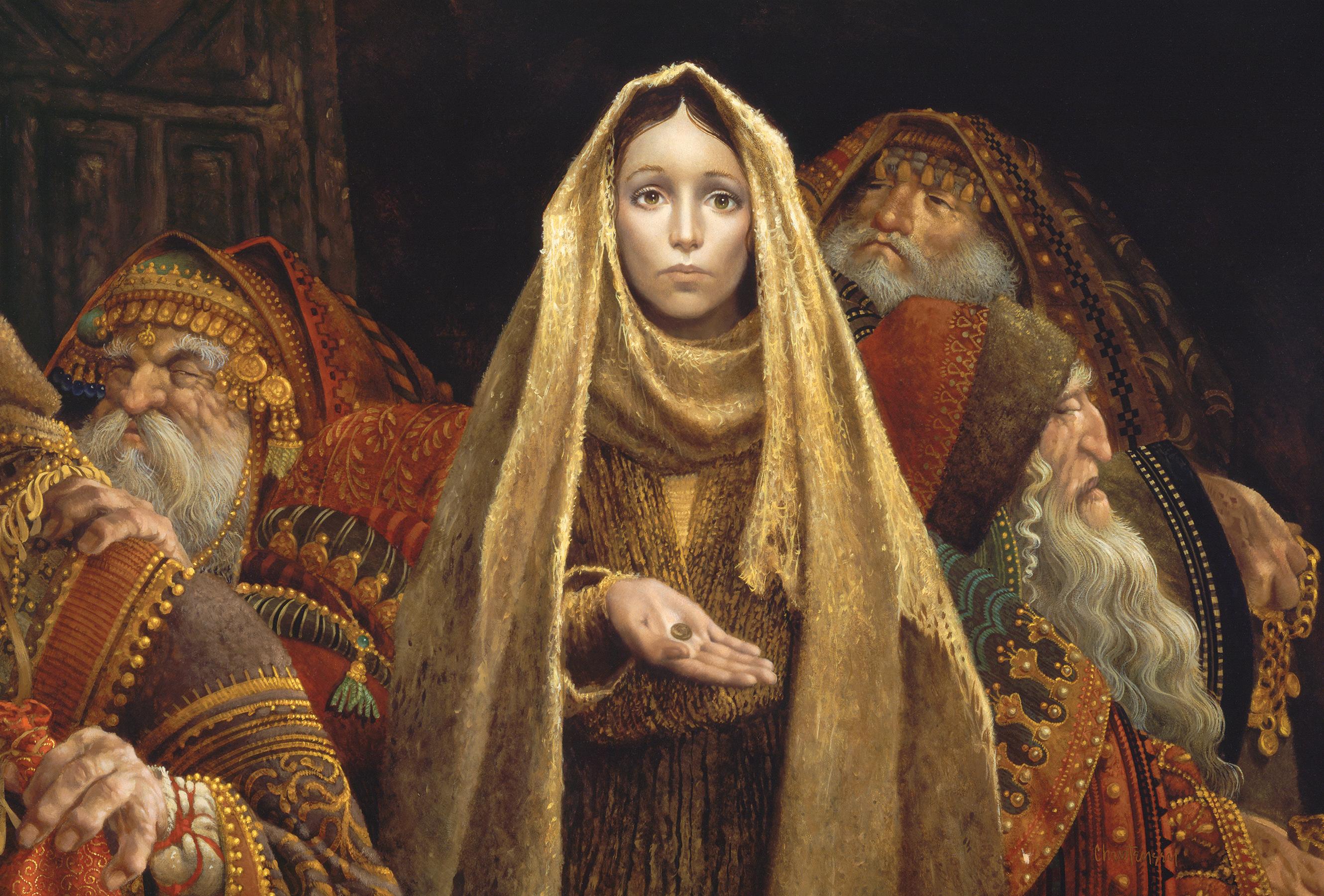
The widow moved quietly through the crowd, almost invisible among the rustle of robes, the metallic echo of coins, the solemnity of religion dressed in marble and gold. Nobody noticed her except Jesus. The rich arrived with the confidence that wealth always brings. Their offerings rang loudly against the brass receptacles, announcing themselves with the kind of noise that often substitutes for virtue. But the widow carried only two small copper coins, thin and nearly weightless—the sort of coins that disappear in the cracks of the world without anyone bending down to look for them.
Yet somehow those two coins became heavier than the stones of the Temple itself.
For years I heard that story explained as an example of generosity, a lesson in stewardship designed to encourage people to give more to the church. The widow, we were told, was the perfect believer because she surrendered everything she possessed. The story was repeated and polished until it lost the dust and sorrow of real life.
But perhaps the story is not about generosity at all. Perhaps it is about a system so consumed with preserving itself that it could watch a hungry widow empty her hands and still congratulate itself for being holy.
Jesus had already spent days confronting the machinery of religion. He walked through courts glittering with wealth while poverty lingered in the shadows. Others saw permanence; He saw
collapse. Others saw devotion; He saw exhaustion. Others heard prayers; He heard the grinding thud of burdens laid upon people already carrying too much. The widow appears almost like the final sentence of that long argument.
She does not walk away blessed with abundance. Jesus does not stop her before she drops the coins. He simply watches. Then He calls the disciples to look carefully, as though this frail woman standing before the treasury reveals more truth about the nation than all the speeches of priests and scholars combined.
The remarkable thing is not merely that she gave little. The remarkable thing is that nobody had protected her from becoming so desperate in the first place.
In the ancient world, widows often lived near the edge of survival. Without a husband, property, or legal standing, many depended entirely upon family or community compassion. Scripture repeatedly insisted that widows, strangers, and orphans were to be cared for and remembered. A society was judged not by the splendor of its temple but by the way it treated its weakest souls. And yet there she stood, alone.
I have seen versions of that widow in many places. Sometimes she is elderly and sitting quietly in the back pew, slipping folded dollars into an offering plate while worrying about rent. Sometimes it is a lonely person giving time, energy, loyalty, affection—until there is nothing left except
exhaustion. Institutions, churches, families, even friendships can slowly consume people while convincing them that sacrifice alone is holiness. But Jesus never glorified exploitation.
Again and again, He moved toward those crushed beneath invisible weight. He fed hungry crowds before preaching theology to them. He healed before demanding loyalty. He defended those society ignored. Religion for Him was never meant to become a machine that devoured human beings in order to sustain itself.
That is why the widow’s coins feel less like a triumph and more like an indictment. Her offering exposed something broken at the center of the system itself.
The disciples probably admired the Temple. Everyone did. Massive stones. Towering walls. National pride wrapped in sacred memory. But Jesus looked at those same stones and spoke of
destruction. Not one stone left upon another. Perhaps the collapse had already begun long before the Romans arrived. Maybe any structure begins dying the moment it values itself more than the people it was meant to serve.
The widow’s two coins were small enough to disappear in the treasury but large enough to expose an entire moral failure. And maybe that is why Jesus pointed to her. Not because God delights in watching the poor surrender their last breath to religious obligation, but because heaven notices what the world ignores. Christ saw what others refused to see: a fragile life standing beneath the crushing weight of public holiness.
The tragedy of the story is not that the widow gave too little. It is that she had so little left to give.
Milly Pardo, a retired social worker, writes from Southern Florida.
Elder Kamil Metz has been appointed director of Literature Ministries for the Pacific Union Conference, a role in which he will guide the union’s literature evangelism portfolio. Metz will provide strategic leadership for literature ministries across the seven conferences of the Pacific Union and coordinate collaborative initiatives with the North American Division and other partners.
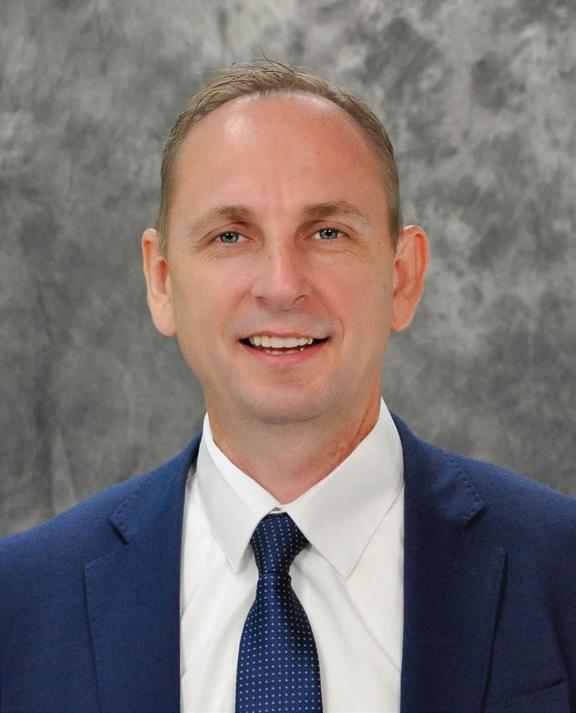
Metz will work closely with conference administrators and literature leaders to strengthen a shared vision for literature ministries, mentor emerging leaders, and foster collaborative planning among Youth Rush, GLOW, SOULS West, and other outreach initiatives. With nearly three decades in literature ministry and pastoral work, Metz brings a broad understanding of how literature evangelism can support church growth, discipleship, and community engagement. His leadership has included directing conference-wide literature ministries, guiding student and young adult teams, and helping congregations integrate literature sharing into their overall evangelistic strategy. He has also provided global coordination and training for literature initiatives in multiple world regions, giving him a unique perspective on how best practices can be contextualized for the Pacific Union.
With more than 28 years of experience in literature ministry, pastoral ministry, and global outreach, Metz is widely known for building teams and mentoring young leaders. His ministry has included helping churches develop practical, mission-focused outreach that connects with local communities and diverse
cultures. “Literature ministry has shaped my life and calling, and I have seen again and again how God uses simple printed pages to change hearts,” Metz said. “It is a privilege to serve alongside the leaders and young people of the Pacific Union as we share hope and truth through literature across this territory.”
A veteran literature ministries leader, Metz served for more than 17 years as director of Literature Ministries for the Michigan Conference, where he provided overall leadership for conferencewide literature ministry in churches, schools, and seasonal outreach programs. During that time, he led a year-round departmental team and coordinated up to 100 student literature evangelists each summer.
Metz has contributed to the development of training resources and ministry tools, including materials for youth evangelists and local church literature leaders, and has written for denominational resource series focused on local church personal ministries. He has also served as GLOW International coordinator, providing global coordination and strategic development for GLOW across multiple world divisions. He currently serves as a district pastor in the Indiana Conference, leading a multi-ethnic district with several congregations and a church school.
His academic preparation includes a Bachelor of Theological Studies, an MBA from Western Governors University, and training through the George King Institute, a precursor to the SOULS East and SOULS West programs.
“Literature ministry has shaped my life and calling, and I have seen again and again how God uses simple printed pages to change hearts.”
Kamil and his wife, Annette, will be relocating to the Pacific Union from their home in Evansville, Indiana, and are the parents of two young adults, Rebekah and Micah. He enjoys mentoring young leaders, engaging with local communities through creative outreach, and supporting congregations as
they discover practical ways to share their faith.
The Pacific Union Conference welcomes Pastor Metz to this strategic leadership role and anticipates the vision, experience, and spiritual commitment he will bring to literature ministries throughout the Pacific Union.
The Pacific Union Conference Office of Education has appointed Miki Akeo-Nelson to serve as associate director of secondary education, providing direct support to the union’s junior and senior academies. AkeoNelson has served as the education superintendent for the Hawaii Conference since 2014. There are some 30 academies in the Pacific Union Conference—more than 25% of the secondary education institutions in the North American Division.
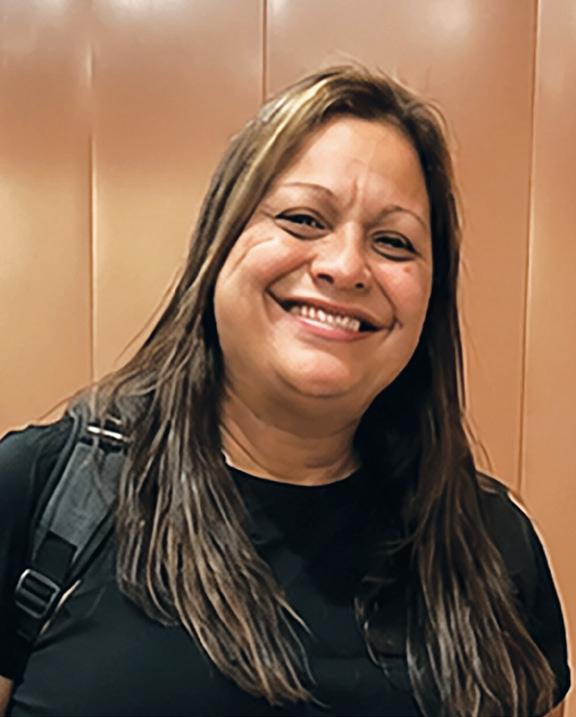
In her new responsibilities, Akeo-Nelson will work closely with superintendents and school leaders to support accreditation processes, curriculum implementation, and professional learning for secondary educators. Her long-standing involvement in Pacific Union and North American Division committees gives her a comprehensive view of how local school needs, union-wide initiatives, and divisionlevel priorities can be coordinated to strengthen
OAdventist secondary education. Akeo-Nelson holds degrees in elementary education, educational administration, and business administration, and maintains professional endorsements as an elementary teacher, principal, and superintendent.
Miki and her husband, Pastor Tim Nelson, reside in Kaneohe, Hawaii, where Tim pastors the Kaneohe and Waimanalo churches. Their daughter Madison serves as a kindergarten teacher at Loma Linda Academy, and their younger daughter, Sophia, is completing her first year of college and will enter the criminal justice program at La Sierra University in the fall.
The Pacific Union Conference welcomes Miki Akeo-Nelson to the Office of Education team and looks forward to the thoughtful leadership and deep, system-wide understanding of Adventist education she brings to the secondary program within the Pacific Union.
n a recent Sabbath morning at La Sierra University, something important was happening—though it didn’t feel like a program as much as a conversation we’ve probably needed to have for a long time. The
Conference on Disabilities, organized by Bill Davis, the Pacific Union’s Disabilities Ministries director, brought together ministry leaders and members to think more carefully—and more honestly—about how the church relates to people with disabilities.
At the center of the morning was Charlotte L.V. Thoms from the North American Division, who spoke with a combination of legal clarity, personal awareness, and biblical grounding. She didn’t begin with programs or structures but with something simpler: understanding. Drawing from the Americans with Disabilities Act, she defined disability as a physical or mental impairment that substantially limits major life activities—walking, seeing, hearing, speaking, caring for oneself. But she was quick to move past definitions.
“Disabilities ministry is not about labeling people,” she said. “It’s about recognizing a community—and responding with dignity, awareness, and love.”
That set the tone. This wasn’t about categories for their own sake, though she did outline them— cognitive, hearing, hidden, mobility, psychiatric, speech, and visual—as a way to help churches think more concretely. The point wasn’t classification; it was awareness that leads to action.
And that’s where the conversation naturally connected with what is already happening—and what is still missing—in the Pacific Union.
The department itself is new. In many of our churches, there are pieces of ministry—programs here and there, often shaped around a particular need—but not yet a cohesive vision or a dedicated department. Bill Davis has been seeing that up close. The Kansas Avenue church in Riverside stands out as something of an exception, with a long-standing and intentional approach supported by a full team. But elsewhere, the pattern is more fragmented.
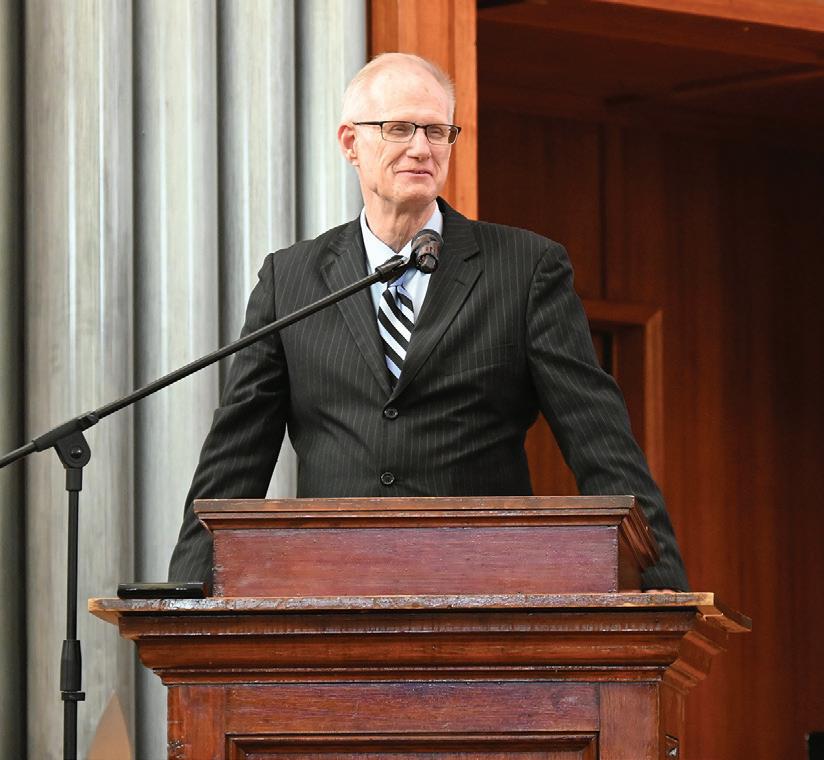
Davis isn’t discouraged by that. If anything, it clarifies the work ahead.
“My goal,” he said, “is to create awareness of the need for ministries for and by people with disabilities, to tell the stories of people whose spiritual lives are strong and vibrant, and to encourage churches to think seriously about access—not just to buildings but to congregational life and ministry.”
That last part matters. Because as Dr. Thoms emphasized, accessibility is not primarily structural— it’s relational. Clear signage, accessible facilities, thoughtful planning—all of that matters. But people need to feel seen before they feel served. And that kind of awareness doesn’t come from policy alone; it comes from a shift in how we understand community.
Throughout her presentation, she kept returning— quietly but firmly—to the example of Christ. The Gospels, she reminded those present, are filled with moments when Jesus stopped for people that others passed by. People on the margins. People whose needs were visible—and sometimes invisible.
“If everything Jesus did were written down,” she said, echoing Scripture, “the world itself could not contain the books. But we do know this—He made time for people others overlooked.”
That becomes, in a sense, the measure.
For many listening, the challenge was both clear and a little uncomfortable. It’s one thing to agree with inclusion as an idea; it’s another to build a culture that reflects it. Thoms acknowledged that tension. Most churches, she said, don’t feel fully prepared to lead in this area. But that’s not a reason to wait.
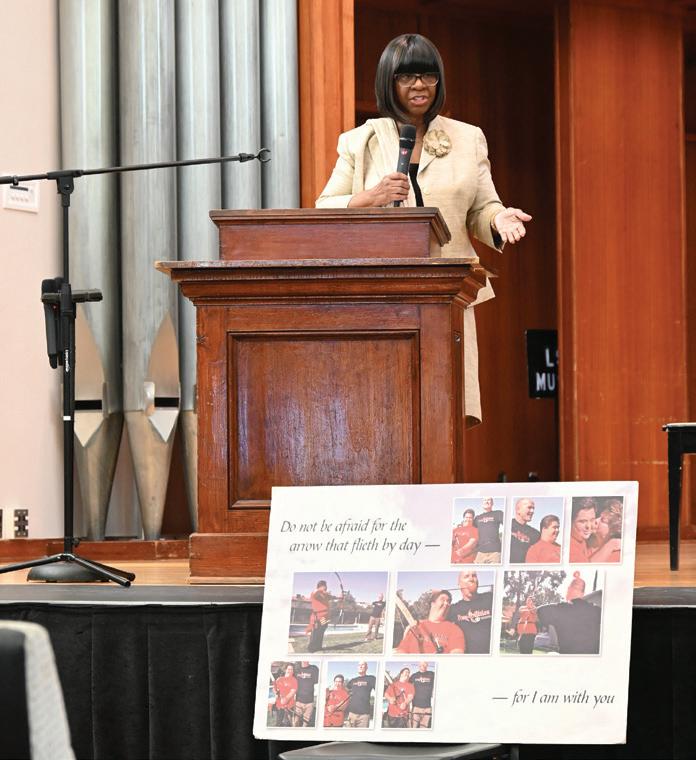
“You may not know everything at the beginning,” she said, “but you must be willing to learn—to define this ministry, to defend it, and to invite others into it.”
That sense of movement—of something beginning to take shape—was also
evident in a quiet but significant moment during the program. Thoms introduced the new North American Division Disabilities Ministries director, Andre “Bill” Watson-Payne, who will begin his role in August. For many in the Pacific Union, he is not a new face. He has served here before, including as pastor of the Honolulu Central church, and understands the context he is stepping into.
His appointment adds another layer to what is already developing locally. What Davis is building at the union level now connects to a broader, divisionwide effort—one that suggests this is not a passing emphasis but something the church is beginning to take more seriously.
And perhaps that is what lingered most from the morning—not any single idea but the sense that this is part of a larger shift.
“In the end,” Thoms said, bringing her remarks to a
close, “this is not just about accessibility. It’s about reflecting the heart of God.” That line stayed with people.
Because when churches begin to think differently about inclusion—when they move beyond accommodation into genuine belonging— they are not simply meeting needs. They are, in a very real sense, becoming more fully what they claim to be.
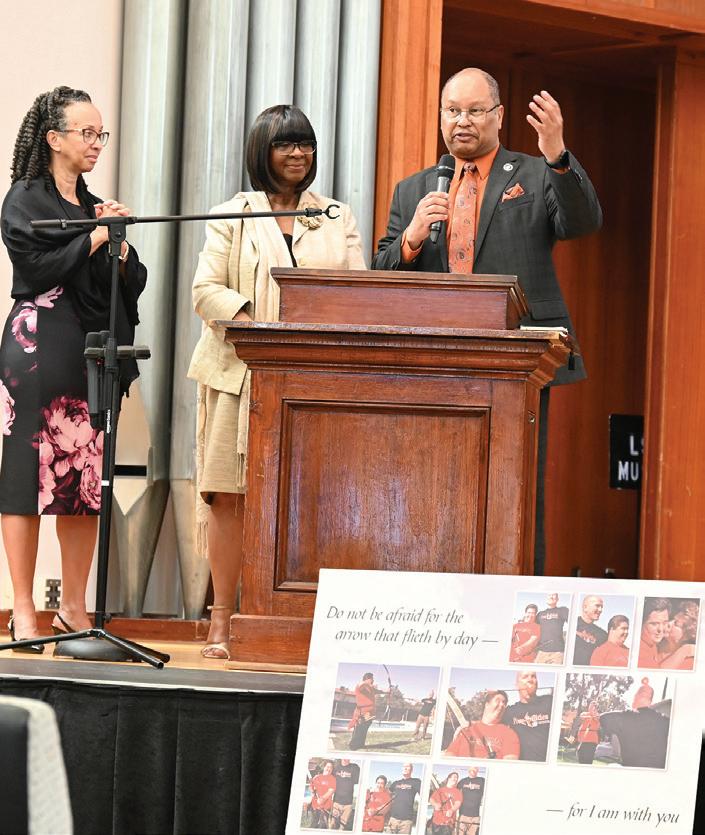
A community shaped by the gospel. And a place where no one is an afterthought.
Federal tax-law changes taking effect in 2026 could make charitable giving more beneficial, whether the gifts are from regular income or from retirement savings.
Taxpayers who take the standard deduction may now deduct up to $1,000 in cash gifts made to qualified organizations, such as your local church, school, conference, or Adventist ministry. Married couples filing jointly may deduct up to $2,000.
Roughly 90 percent of taxpayers take the standard deduction rather than itemizing. Taking the standard deduction has meant receiving no extra tax benefit for charitable giving. Now, members can take the standard deduction and still see a direct tax benefit for their generosity.
To qualify for this new deduction, gifts must be made in cash, which includes donations made by check, bank transfer, or electronic giving. Members should also keep a record of their gifts, such as a bank statement or a written acknowledgment from
the church or ministry receiving the donation.
While the new standard deduction rule helps those who are giving out of everyday cash flow, another giving option that is receiving renewed attention in 2026 is the Qualified Charitable Distribution, or QCD, from an Individual Retirement Account (IRA).
A QCD allows individuals to transfer funds directly from their IRA to their local church, school, conference, or Adventist ministry without those funds being counted as taxable income for the year. This direct transfer can satisfy an individual's required minimum distribution—and may also help prevent you from being bumped into a higher tax bracket or paying higher Medicare premiums.
Whether utilizing the new cash deduction or making a distribution from an IRA, these 2026 changes create valuable opportunities to support the mission of the church while making wise financial decisions at the same time.


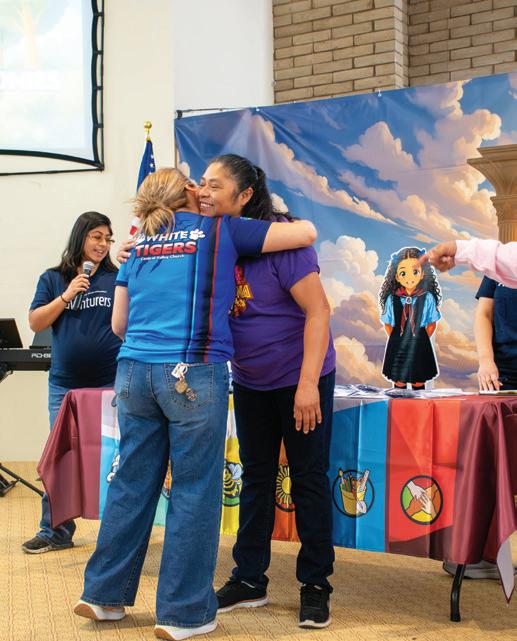
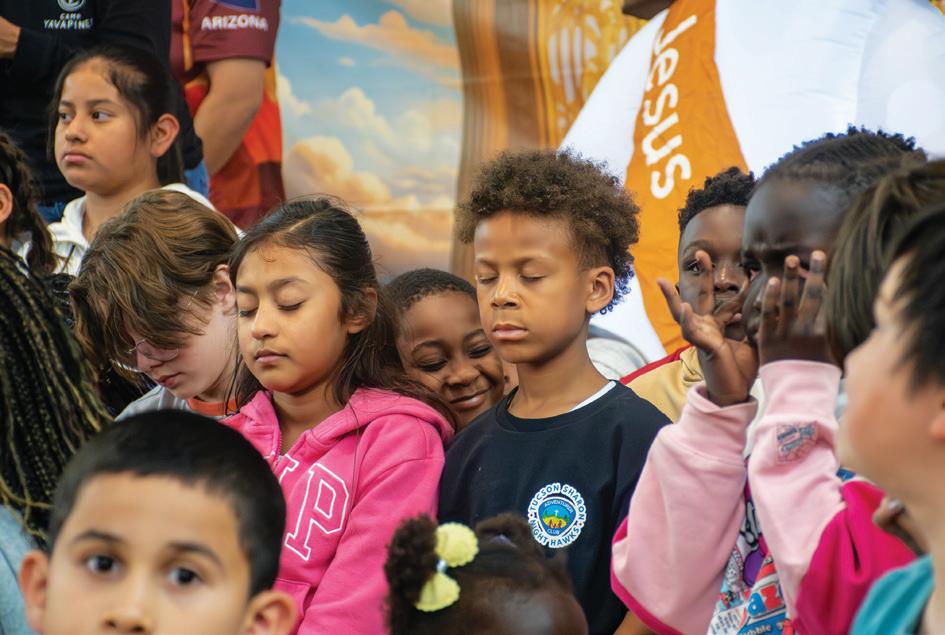
The Arizona Adventurer Family Retreat was held on May 1-3 at Camp Yavapines in Prescott, Arizona. This special weekend brought together Adventurers, leaders, and families from across Arizona for a meaningful and joy-filled experience centered on faith, fellowship, and family connection.
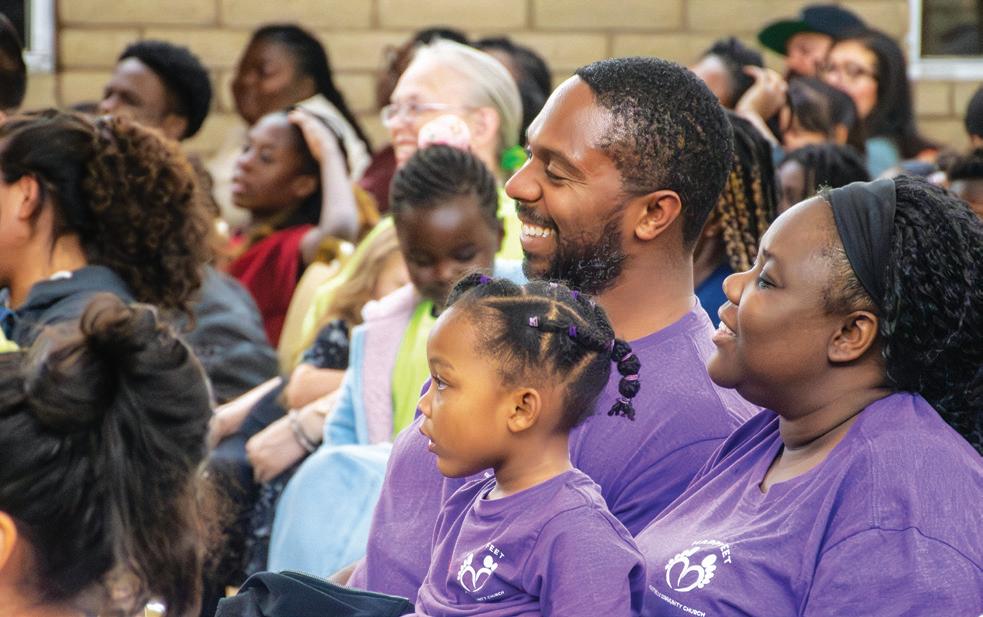
The retreat welcomed over 300 Adventurers and had a total attendance of more than 900 people, including club leaders and family members. The strong participation reflected the continued growth and unity of the Adventurer ministry, creating an exciting atmosphere throughout the camp.
The weekend theme, “Walking with Jesus,” was beautifully reflected in both the programming and the interactive activities. One of the highlights of the retreat was the involvement of various clubs that created themed booths to help children understand how they can walk with Jesus in every part of life. Booth topics included messages such as “I can walk with Jesus when

I am happy,” “when I’m sad,” “tired,” “scared,” “angry,” “bored,” and more. These creative stations encouraged children to connect real emotions and everyday experiences with their relationship with Christ.
The weekend presenter, psychologist Nitza Salazar, delivered engaging, impactful presentations that captivated both children and adults. Her dynamic approach made each session interactive, encouraging participation from the Adventurers and their parents. Through her presentations, she created an environment where families could not only listen and learn about the work of the Lord but also enjoy fun, laughter, and meaningful moments together. Her ability to connect with the audience helped make the spiritual messages practical and memorable.
Overall, the Arizona Adventurer Family Retreat was a blessed and successful event. It provided an uplifting opportunity for children and families to grow spiritually, strengthen friendships, and create lasting memories. The Adventurers truly enjoyed the weekend, which left the Adventurers and their parents encouraged and inspired to continue walking with Jesus in every season of life.
By Youth & Children Ministries
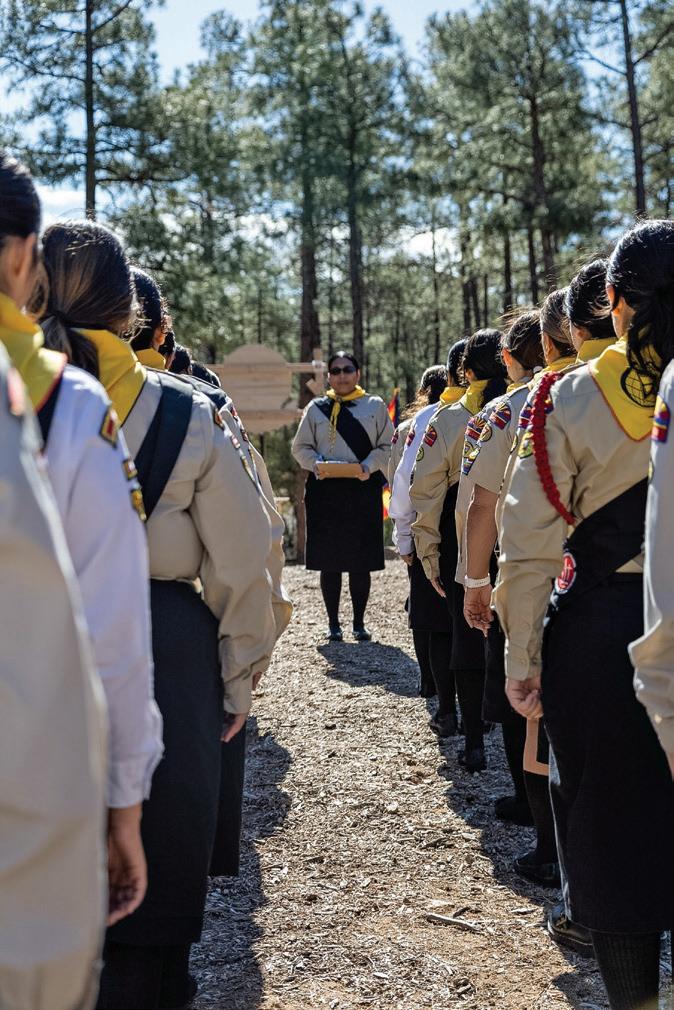
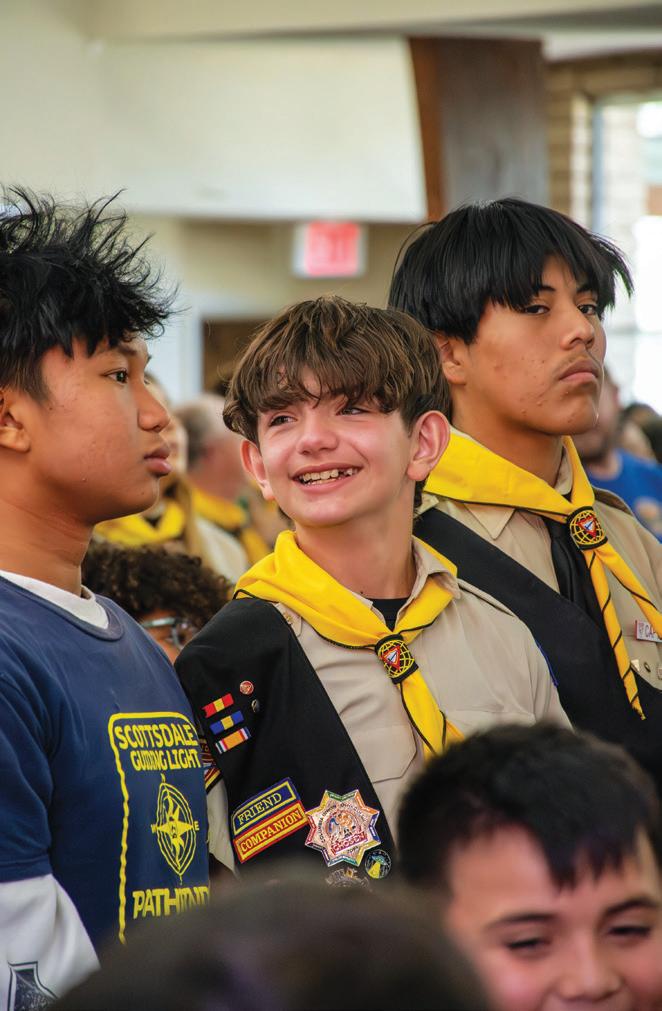
From April 10-12, the Pathfinder community gathered at Camp Yavapines for a truly memorable Camporee titled “Strong and Courageous.” Set against the beautiful backdrop of Prescott, Arizona, the weekend brought together more than 300 Pathfinders and over 800 attendees, creating an atmosphere filled with energy, fellowship, and spiritual growth.
A central highlight of the Camporee were the inspiring messages from Pastor Jamal Franklin, who spoke powerfully on what it means to live a truly strong and courageous life. His presentations resonated deeply with both Pathfinders and leaders, offering practical insights and encouragement for facing life’s challenges with faith and confidence.
In addition to the spiritual programming, participants enjoyed a variety of engaging and fun-filled activities. From an interactive Scavenger Hunt to the excitement of the Pinewood Derby and the adrenaline of the Soap Box Derby, there was something for everyone to enjoy. These activities not only provided entertainment but also fostered teamwork, creativity, and friendly competition among the Pathfinders.
The weather added its own special touch to the experience. While there were brief showers, the overall
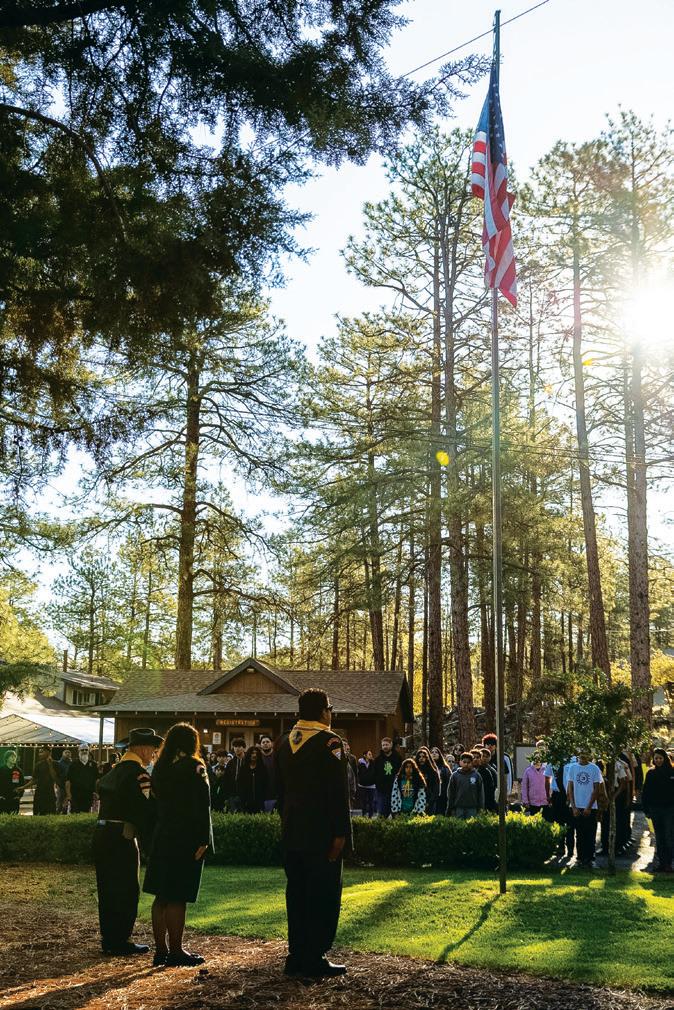
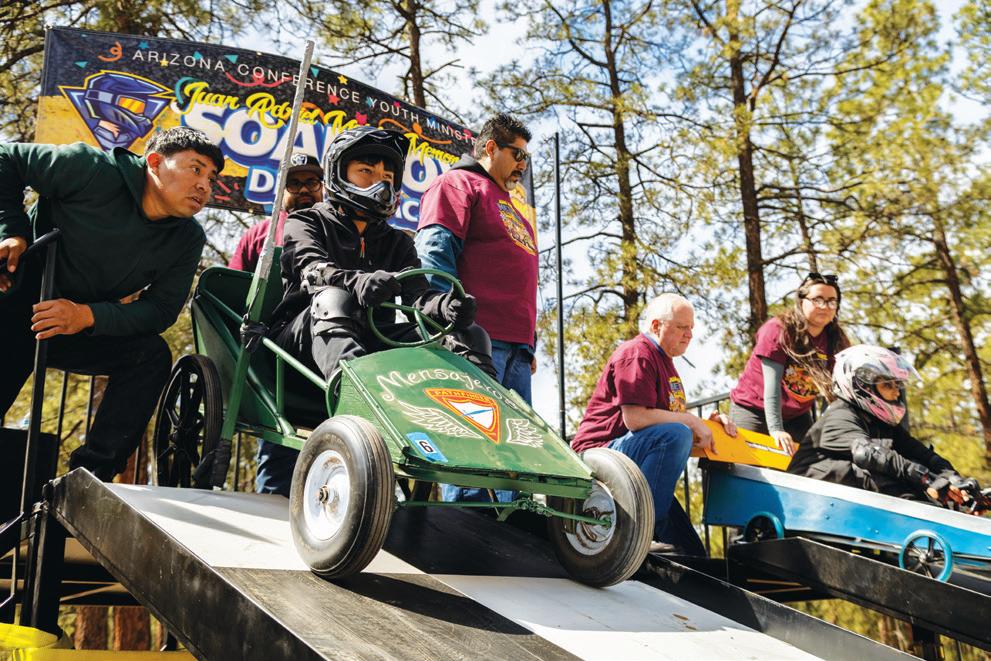
conditions remained cool and refreshing—perfect for outdoor activities and bonding with nature. Rather than dampening spirits, the weather contributed to the sense of adventure and made the weekend even more memorable.
Overall, the “Strong and Courageous” Pathfinder Camporee was an amazing and blessed event. It provided a meaningful opportunity for young people to grow spiritually, build lasting friendships, and create memories that will last for years to come.
By Youth & Children Ministries
There are times when questions arise as to how something could be possible. The only explanation might be that there were miracles—and maybe a whole lot of angels were given an extra assignment to make things happen.
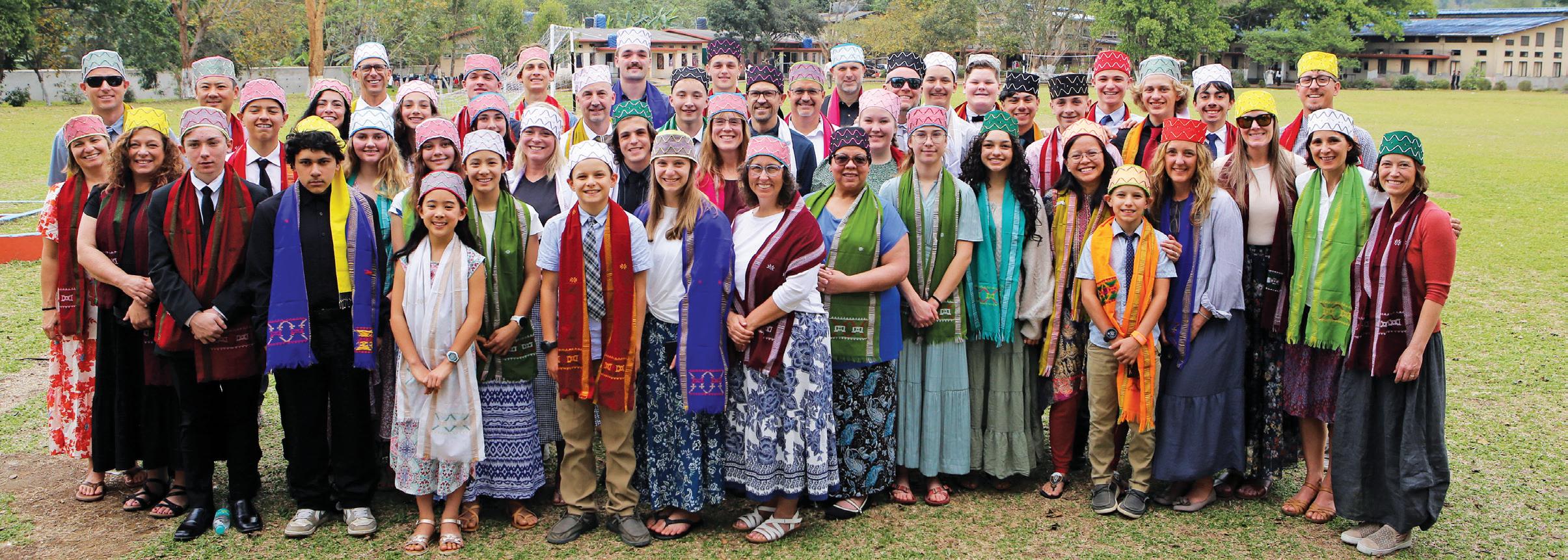
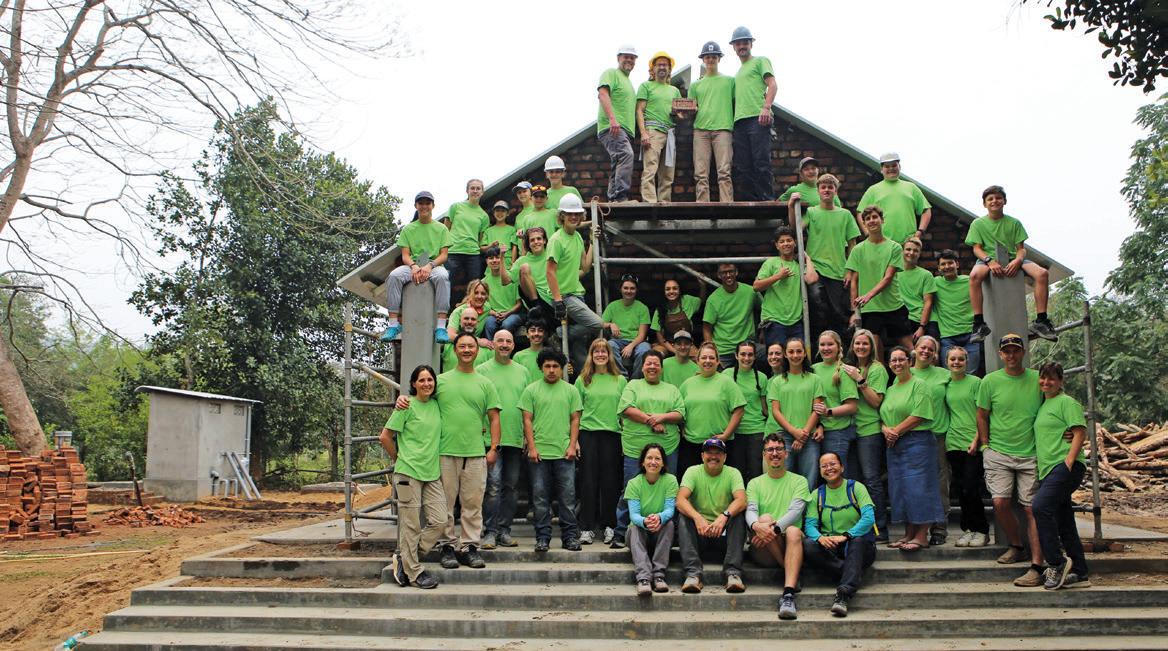
Gratitude and praise abound when looking back on the outcomes of the joint mission trip of the Discover Life Church (DLC), Mother Lode Adventist Junior Academy (MLAJA), and high school extension campus of Central Valley Christian Academy (CVCA) in Sonora. As leaders, Marielle Kahler and Jennifer Trujillo can share lots of miracles that took place during the marathon of planning the trip, which took place from March 18 to April 1.
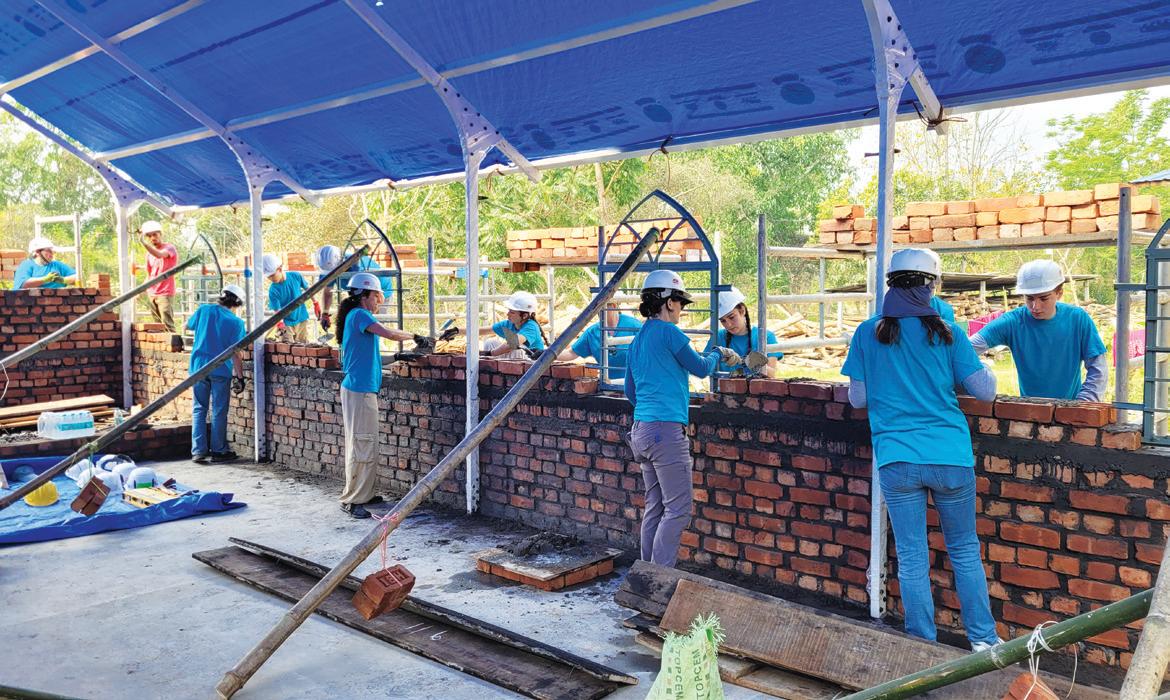
It was a long journey almost halfway around the world to the campus of Riverside Adventist Academy (RAA) in Meghalaya, located in the northeastern part of India. Travel time was 46 hours for the 21 adults and 28 young people, and the trip was amazingly smooth in spite of serious travel challenges. The angels surely were flying alongside of them.
RAA is an Adventist school with over 800 students, mostly non-Adventists, and they needed a church for
the people on campus who speak the Garo language. The story and melody of the song, “I Have Decided to Follow Jesus” originated here. It was inspired by an actual event in which a martyr took an unwavering stand for Christ, and it is their gift to the Christian world. The song is now a favorite of the Sonora missionaries.
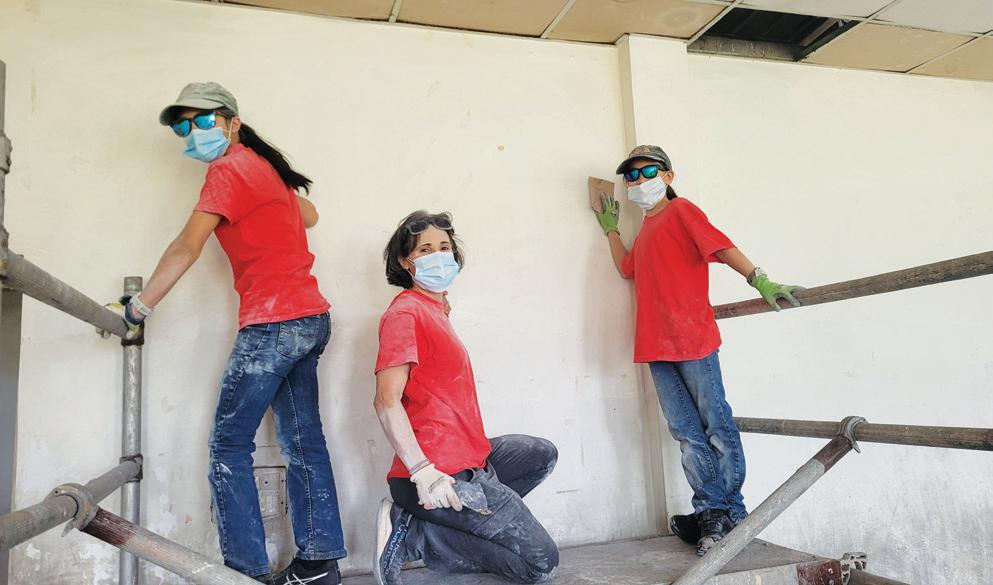
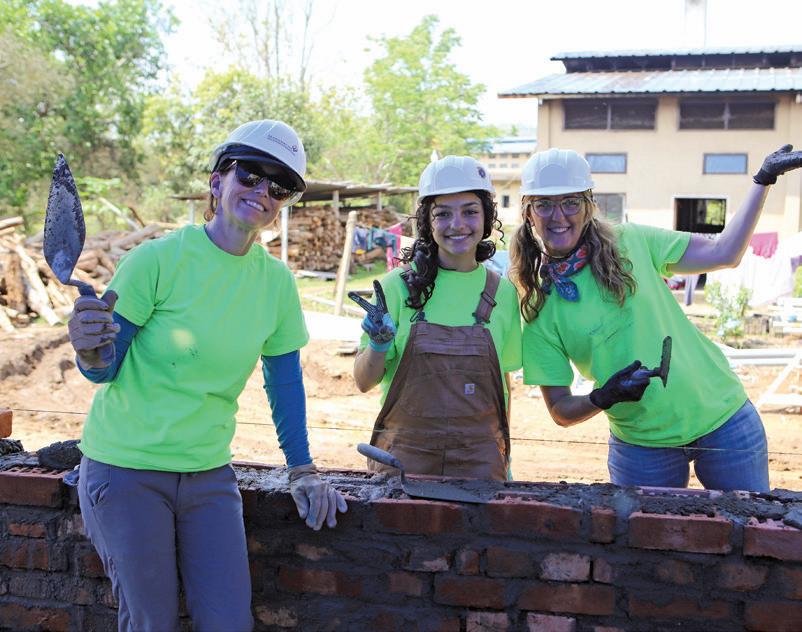
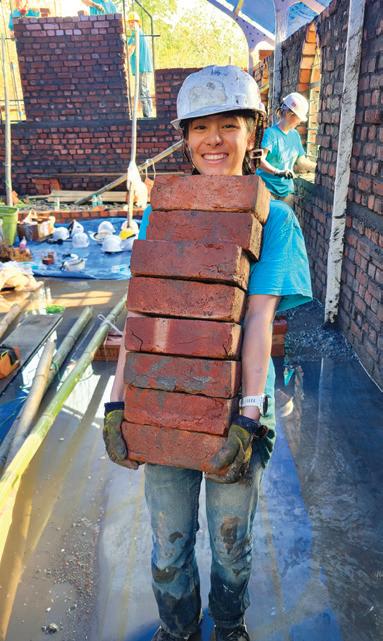
The church was to be built of brick. Maranatha Volunteers International had already laid the foundation and brought in the building materials. The assigned construction team, under the supervision of Tim Trujillo, was able to complete the project of walls, windows, and roof in four days. This was done in spite of occasional rain and even a squall that came through. Meanwhile, another group of workers, under the direction of Devanie Teel-Boyd, painted 15 classrooms and hallways.
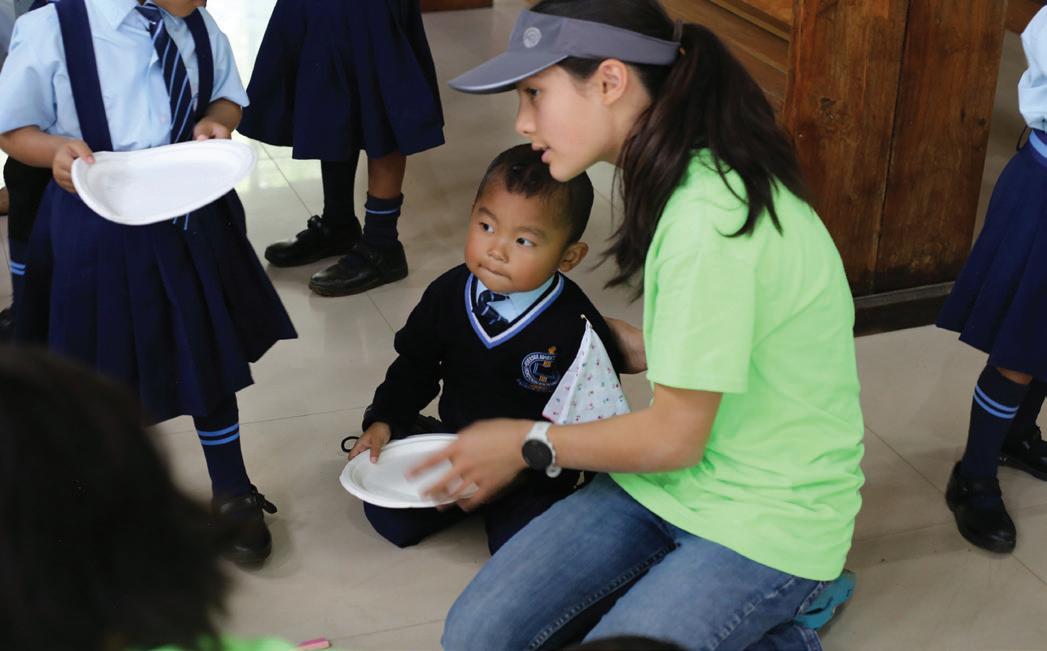
However, the mission trip involved more than just physical labor on building and painting projects. Throughout the week, the group held two Vacation Bible Schools every day for the schoolchildren and nightly Week of Worship meetings.
One of the 15 students from MLAJA and CVCASonora, Patrick Omary, an eighth-grader, commented, “The best part of the whole trip was making friends with the students at RAA.” Many others expressed the same feelings. As they worked and played together, treasured friendships were formed.
As Pastor Tyson, the DLC youth pastor, told the DLC congregation, “We do this trip for our young people. The funding, prayers, and the support of our church family are all because of the ripple effect it will have on them for the rest of their lives.”
Before leaving for home, the group was able to get a little sightseeing time in India. Excursions included a visit to Kaziranga National Park, where they rode


elephants and took a jeep ride. Special sightings included the single-horned rhinoceros and the famous golden Bengal tiger. The adventure continued on their homeward journey when they flew to New Delhi and visited the famous Agra (Red) Fort and the Taj Mahal, one of the wonders of the world. Getting a glimpse of the diverse culture of India—while eating lots of curry and rice along the way—created many memories. One member of the group, Cooper Thorn, got to celebrate his 17th birthday on three continents on their way home.
Another miracle occurred to help them arrive at home on schedule despite a departure delay in New Delhi that caused a tight connection in Istanbul. Angels must have been on duty when security escorted them to their connecting flight just before the doors to the plane were closed.
Do angels go on mission trips? The 49 people on this mission trip believe that they do. The angels also had the joy of seeing how the trip became a life-changing event for those in India and Sonora. As God promised, “I

will open the windows of heaven for you. I will pour out a blessing so great you won’t have room enough to take it in! Try it! Put me to the test” (Malachi 3:10 NLT). That is exactly what this group did, and they know that God’s words are true.
By Deloris Trujillo
An in-depth report of the trip can be found on DLC’s YouTube Channel.
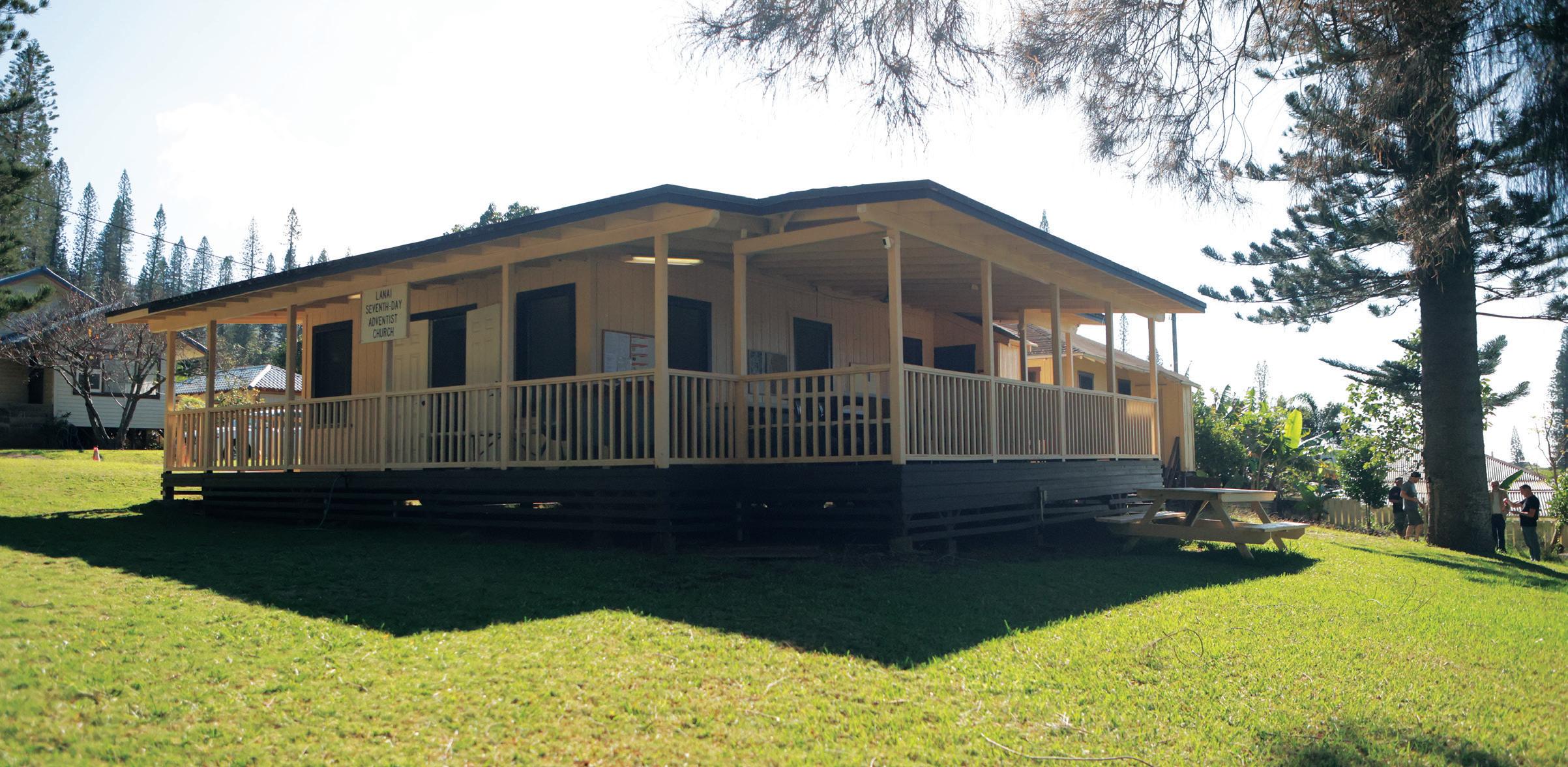
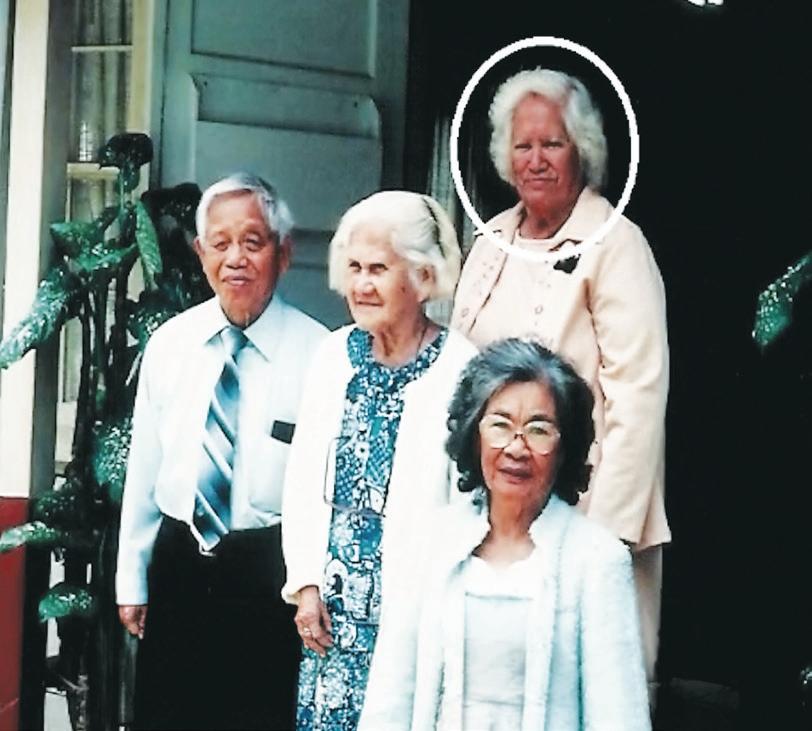
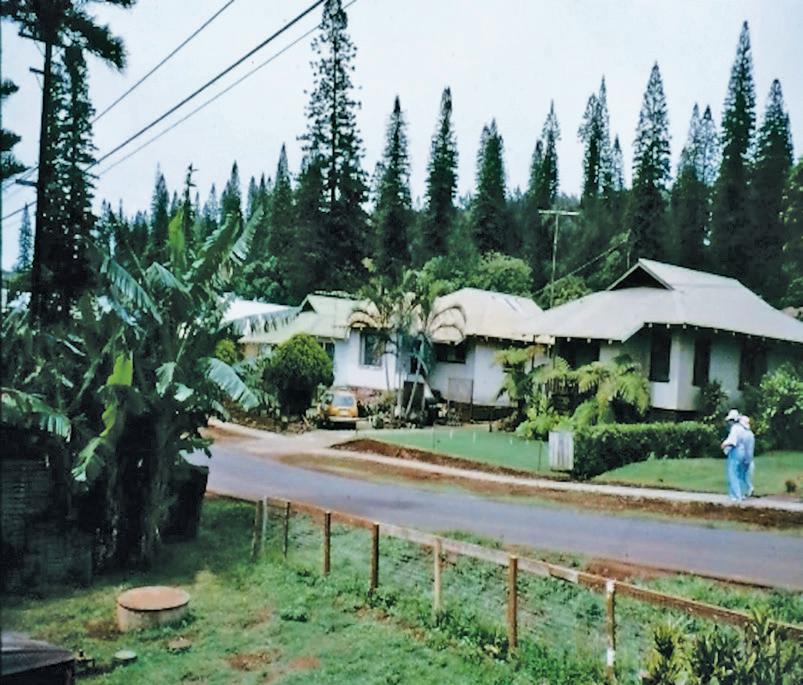
The first Adventist who stepped foot on Lanai was asked to leave after just three days. In 1945, the entire island was owned by Dole Plantation, and preachers or visitors of any sort needed to go through the right channels before arriving on the island. However, before the Adventist Bible worker left the island, he had made three Bible study connections. One of those became a founding member of what is now the Lanai Seventh-day Adventist Church.
Winnie Basques was the name of the woman who had received Bible studies, and in 1953 she wrote a letter to the Hawaii Conference, asking for a pastor. Because of that letter, Pastor Walter Barber was sent to Lanai to conduct an evangelistic series. Barber, who was the Maui pastor at that time, made his way over to Lanai and began to speak to the small group that had been started almost eight years earlier.
Barber and the group had few resources, and he asked a local supermarket owner if he could plug his projector into the spare outlet from the store so that the small group and anyone passing by would be able to view his slide presentations. On day three, when Pastor Barber was well into his series, the plantation manager called for him to meet in his office. Barber did not have permission to be in this small community, let alone hold meetings, and worried thoughts must have been racing in his mind as he went to meet the plantation manager, not knowing that this meeting would shift the direction of the little church group forever.
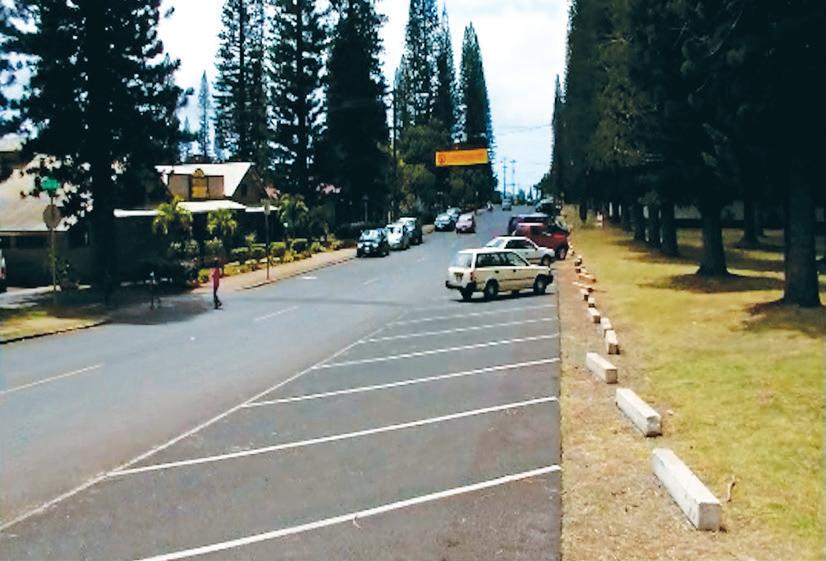
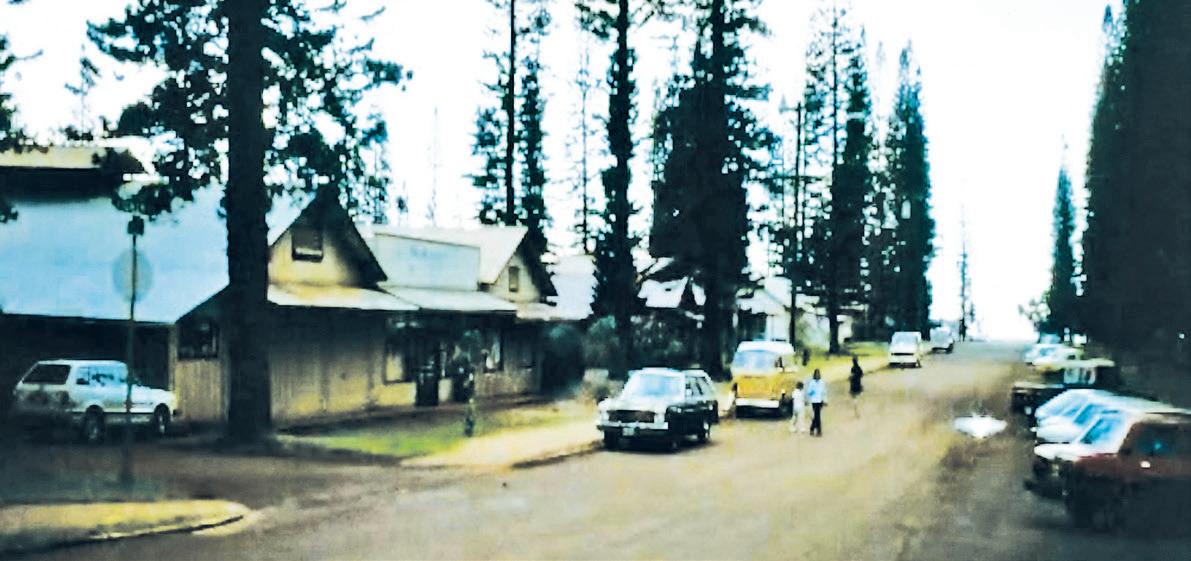
The plantation manager greeted Elder Barber warmly. “I see that you are having a hard time finding a place to hold your meetings,” he said. “I want to help you. You know we have a small piece of property right near the center of town. I think it's one of the most beautiful pieces of property we have. We can lease it to you for $1 a year. We also have a few unused plantation homes available. We could sell those to you to have on the empty lot.”
As the good news hit Pastor Barber, he had to ask the manager why he would offer to help like this. “When my mother was a patient at Washington Adventist Sanitarium before we moved to Hawaii, the people there treated her so well,” the plantation manager explained. “When I saw that the Adventists wanted to get established in the community, I knew this would be the perfect way to say thank you to the church.”
This is only a brief look into how the Seventh-day Adventist Church began to establish its roots in Lanai.
One way we are making sure that this continually growing church thrives is by expanding the parsonage that was gifted to us long ago. Today the church has two small houses on the property. One has been converted into the church sanctuary, and the other parsonage has been used by the current pastor and also contains the children's Sabbath School meeting room. The goal is to expand the parsonage and add more rooms so the children can have more space to meet and the pastor can have room for his family when he is on the island.
We are blessed to have support from our local community and volunteer contractors who have come from the mainland to offer their assistance with this project. Please keep this project in your prayers because it plays a special part in reaching Hawaii with the everlasting gospel.
By Miguel Manzo





As the end of spring draws near at Holbrook Indian School and we prepare for the transition into the summer season, our hearts turn toward the promise found in Jeremiah 29:11, “‘For I know the thoughts that I think toward you, says the Lord, thoughts of peace and not of evil, to give you a future and a hope’” (NKJV). This powerful assurance serves as encouragement to us as our students celebrate the significant milestones of our eighth-grade promotion and our 12th-grade graduation.
For our eighth-graders, this season is particularly exciting because it represents moving away from the familiarity and accomplishments of middle school and stepping into the increased responsibility and discovery of their high school years. We have watched these students grow in character and intellect, navigating the complexities of middle school with cheerfulness and resilience. As they are promoted, we encourage them to carry the lessons and memories they’ve made into this exciting next chapter, knowing they are prepared for the challenges ahead.
Simultaneously, we bid a bittersweet farewell to our 12thgrade graduates. Our seniors have reached the summit of their K-12 journey, leaving an indelible mark on our community. We see the fruit of this journey in the diverse experiences of our senior boys. Whether it was Evan reflecting on the growth found
during student leadership trips, Kenny discovering the quiet joy of cantering toward the mesa on horseback, or Draven reminding us all to cherish every laugh shared with friends, their stories reflect the depth of our school culture.
As we celebrate our graduating seniors, we are filled with pride in all they have accomplished at HIS. They now step into the future and go forth with our prayers and unwavering support behind them. They leave behind a legacy of brotherhood and leadership, stepping into a future designed for their prosperity and hope.
In the midst of celebration and planning for the future, we find our ultimate joy through the confidence that our graduates are not stepping into their next chapters alone. Jeremiah 29:11 serves as a beautiful reminder that their steps are ordered and their futures are secure in God’s hands. The "fullness of joy" (Psalm 16:11) isn't found solely in the diploma or the promotion certificate but in the peace of knowing that a good and hopeful path has been paved for them by a loving Creator. Congratulations to our eighth- and 12th-graders!
By Kirsten Knuppel
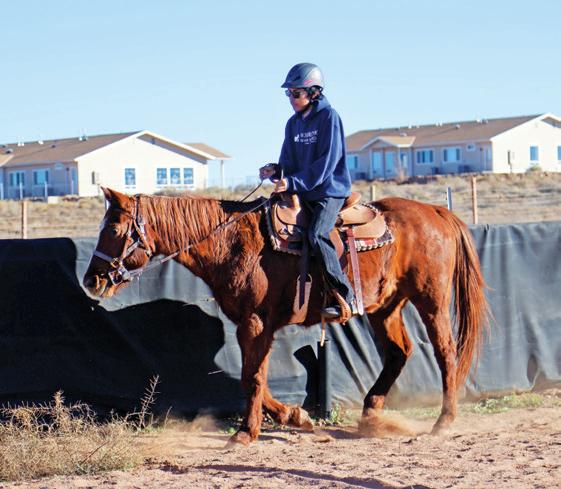
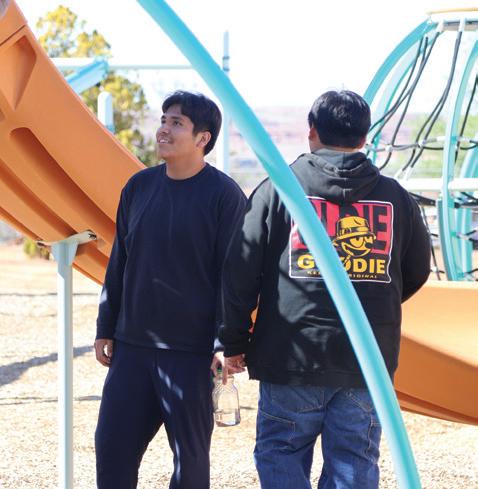

A Seventh-day Adventist Boarding Academy Serving Native American Youth Since 1946
Holbrook Indian School (HIS) is a first- through 12th-grade boarding academy operated by the Pacific Union Conference of the Seventh-day Adventist Church. HIS also manages a first- through eighth-grade day school on the Navajo reservation in Chinle, Arizona. Eighty-seven percent of funding comes from individuals who have a desire to support Native American ministries and Christian education. Your generosity makes a difference in the lives of our students, their families, and the communities they serve. Thank you for your support.

ACancer Support Group for Spanish-speaking patients and their families at the Adventist Health Bakersfield Cancer Center is helping participants feel less isolated and more supported as they navigate illness.
The group has grown from what started as a simple monthly meeting to become a robust community gathering twice a month to provide emotional, spiritual, and practical care for one another.
Staff Chaplain Elsy Quiroga said that serving as chaplain for the group has become one of the most meaningful expressions of her pastoral ministry. “Over time, I have witnessed something remarkable: individuals who are facing life-threatening illness coming together to support one another with compassion, courage, and faith,” Elsy said.
The group is organized and led by the Cancer Center Social Work team, which plans topics for discussion at each meeting, such as the importance of healthy emotions, understanding grief, and accessing available resources.
“In our gatherings, every patient is recognized as unique, valuable, and worthy of being heard,” Elsy said. “Patients often share deeply personal experiences, fears, and hopes in an environment of empathy and understanding.”
This sense of community can help participants feel less isolated and more supported as they navigate the challenges of illness. Elsy recalled visiting a patient one day in the hospital and recognizing her as one of the regular participants in the Cancer Support Group.
“She spoke honestly about her desire to continue living and about how metastatic cancer had slowly taken much of her strength,” Elsy said. “Yet what impacted me most was her peaceful smile. She radiated hope and faith. She shared that although she understood her life
might be coming to an end, God’s presence had become her greatest source of strength. She shared how deeply supported she felt through the Cancer Support Group, which had become like a family during her illness. Witnessing her faith and resilience reminded me how spiritual care can nurture hope even in the midst of suffering.”
Many patients in the group experience financial hardship, including food insecurity. When one couple in the group became aware of other group members who didn’t have enough food, they began bringing food baskets to give away at the meetings. Their generosity grew beyond the support group when organizers invited several group members to distribute food to people in need. “Through this process, patients receiving cancer care became agents of compassion, transforming their own suffering into service for others,” Elsy said.
Each year the care team also hosts a gala dinner, supported by community sponsors, where cancer patients celebrate life together. “It is a night when illness does not define them,” said Elsy. “Instead, we celebrate and honor life, gratitude, and resilience.”
This ministry illustrates how spiritual care in a healthcare setting can extend beyond individual patient visits to cultivate community. “These support group gatherings have become a place where patients, family members, and staff experience dignity, connection, and spiritual peace even in the midst of profound vulnerability,” Elsy said.
The support group has become a sacred space where patients feel safe showing vulnerability because they trust one another. It is a space where patients can feel calm and relaxed, prepared to face the next step in their cancer journey.
By Kim Strobel
When La Sierra University biochemistry and biology major Daphne Prakash graduates this month, she may enter a contractor’s position at a Southern California pharmaceutical company before beginning graduate studies at Brown University in the fall—the options are good ones. Her achievements cap a five-year university journey and exploration of the sciences, which led to the unique experience of working in her own pharmaceutical company-sponsored lab on campus.
Prakash was uncertain about her career path when she enrolled in 2021 as a biology major. But through shadowing and lab work with La Sierra biologists Nate Sutter and Lloyd Trueblood—with whom she delved into rabbit genetics and DNA mutations, marine biology, and research methods—and through studying virology, bacteriophages, and molecular cloning under virologist Arturo Diaz, her interests in a researchcentered career came into focus.
It was while studying in Diaz’s lab class that she
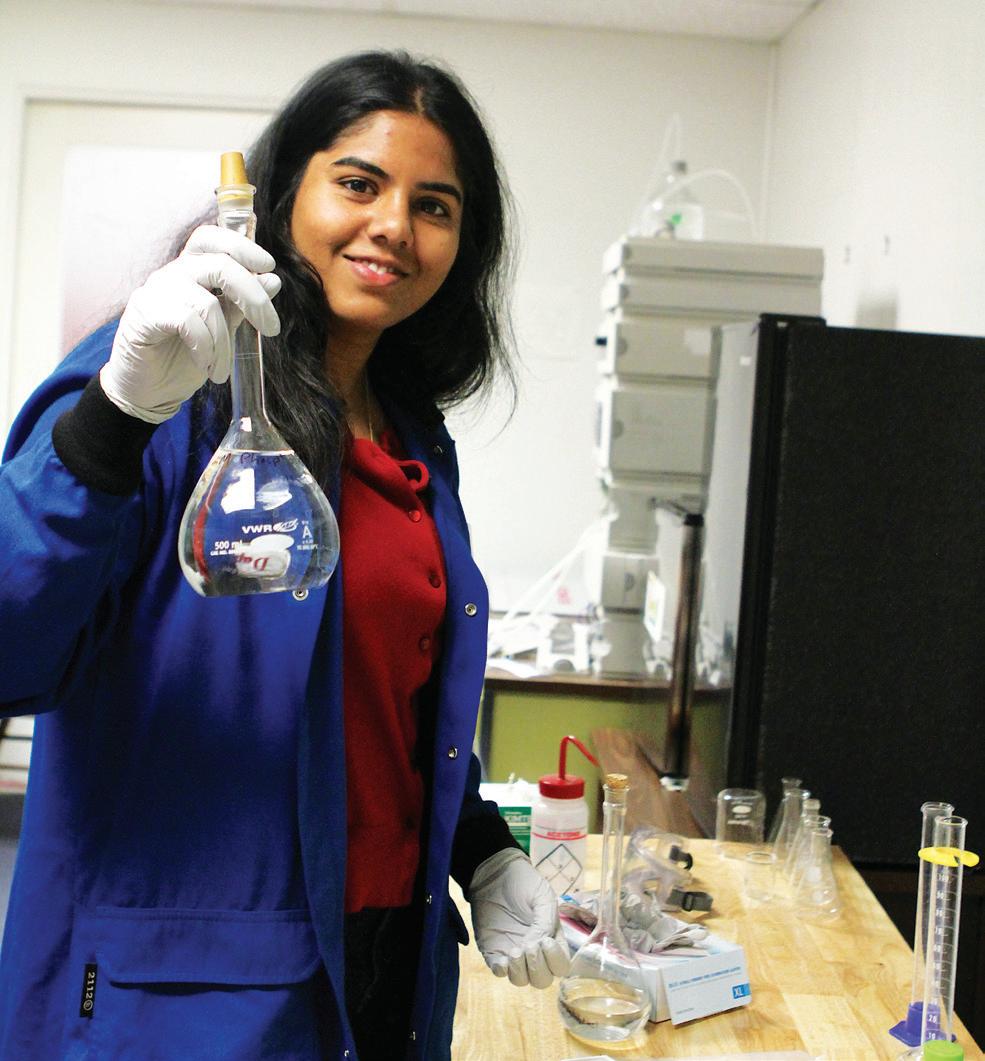
learned about an internship opportunity with a biotechnology company near San Diego, California. Prakash applied and during summer 2023 she was accepted into the company’s competitive internship program as its first La Sierra University intern. The program often draws students from large state and Ivy League schools.
Her internship responsibilities included screening and characterizing pharmaceutical formulations that can maintain or enhance stability of therapeutics in development for various rare diseases.
Sutter suggested Prakash could parlay her internship research into a university honors scholarship thesis. She had joined the honors program as a freshman. Her supervisors at the biotech company approved the concept, and through a collaboration with university administration, they set up a lab at La Sierra where Prakash could continue related research and receive academic credit.
“I do a variety of things from my lab here, mostly short experiments, scheduled around my class schedules, to help understand physicochemical properties of potential drugs,” she said in May.
Last summer, Prakash landed a temporary contractor’s position with the same biotech company to continue working on pharmaceutical development projects.
Along the way, while mulling her own career pathway after Brown University, Prakash has worked to recruit additional La Sierra students to apply for biotechnology internships and follow in her footsteps. She reflected on the impact of her educational experience at La Sierra University.
“La Sierra has transformed my life by giving me the space and support to grow into both a scientist and a good person,” said Prakash.
“I've grown up Adventist most of my life, but I think the faith-based environment at La Sierra has shaped my spiritual life in a thoughtful, open way,” she said. “I leave feeling more grounded in my own relationship with God and more intentional about how my future work and life can serve others.”
By Darla Martin Tucker
The Loma Linda University Health Board of Trustees has voted to appoint Anthony Hilliard, MD, FACC, to serve as president of Loma Linda University Health (LLUH), effective July 1. Dr. Hilliard will continue to serve concurrently as chief executive officer of the Loma Linda University Health hospitals, a role he has held since October 2024.
Hilliard will serve as president-elect through June 30, partnering closely with the current president, Richard Hart, MD, DrPH, who will remain in office through the transition.
The LLUH Board also expressed deep appreciation for Dr. Hart’s transformational leadership, which guided LLUH through a period of historic growth, strengthened mission integration, and generated significant advancement across its clinical and academic enterprises.
A Southern California native, Hilliard earned his medical degree from the Loma Linda University School of Medicine and completed his residency and cardiology fellowships at the Mayo Clinic, where he received multiple national honors. Since returning to Loma Linda University Health in 2009, he has served in progressively senior leadership roles, including division head of Cardiology; chief operating officer of the Loma Linda University Faculty Medical Group and LLU Health Care; senior vice president for Clinical Faculty Operations of LLUH; associate dean of Clinical Operations for the School of Medicine; and, since 2024, chief executive officer of the hospitals.
In 2025, Hilliard was promoted to Professor of Medicine in recognition of his sustained contributions to academic medicine, leadership, and mentorship. Nationally, he has also held leadership roles with the American College of Cardiology and the American Heart Association.
“Dr. Hilliard understands both the complexity of our integrated organization and the sacred responsibility of our global calling,” said Thomas Lemon, chairman of the LLUH Board of Trustees. “His leadership reflects Loma Linda University Health’s commitment to whole-person care— locally and around the world.”
By LLUH Staff
Pacific Union College has achieved great success in its Paramedic to RN program, allowing up to nine emergency medical technician-paramedic (EMT-P) students annually to join its already well-established LVN/Med-Tech to RN program. Since the program’s launch in 2022 and enrollment increase in 2023, it has filled a significant need in the job market, enabled PUC to expand its services, and bridged the gap for paramedics looking to advance their education and careers.
A key figure in this development is Cori Carlson, a paramedic who earned a Master of Science in Nursing and started teaching in a local paramedic program. Recognizing a significant gap in educational opportunities for paramedics seeking to transition into nursing, she approached PUC to explore the possibility of creating a dedicated pathway. Her vision was instrumental in bringing the EMT-P to RN program to life. Today, Carlson continues to play a vital role as an adjunct faculty member, teaching the required seven-day EMT-P to RN Bridge course that prepares incoming students for the expectations of the nursing curriculum.
PUC is one of only two colleges in Northern California to offer EMT-Ps an advanced-placement pathway to earn an Associate of Science in Nursing (ASN), with the option to seamlessly continue into the RN to BSN program. EMT-P students integrate directly into the second year of the nursing curriculum alongside LVN/Med-Tech students, building and advancing their scope of practice.
The 18-month EMT-P to RN program is designed and grounded in adult learning principles, allowing students to continue balancing full-time employment, family responsibilities, and academic advancement. Its session-based format enables students to maintain fulltime employment while progressing through a rigorous nursing curriculum that meets all professional standards. Students also have access to a full range of PUC support resources, including library services, tutoring, counseling, and academic advising.
Accessibility is a defining strength of the program— not only in its format but also in its location. Many prospective students were forced to travel long distances or even relocate out of state to pursue their goals. By offering this pathway in Napa, PUC has significantly
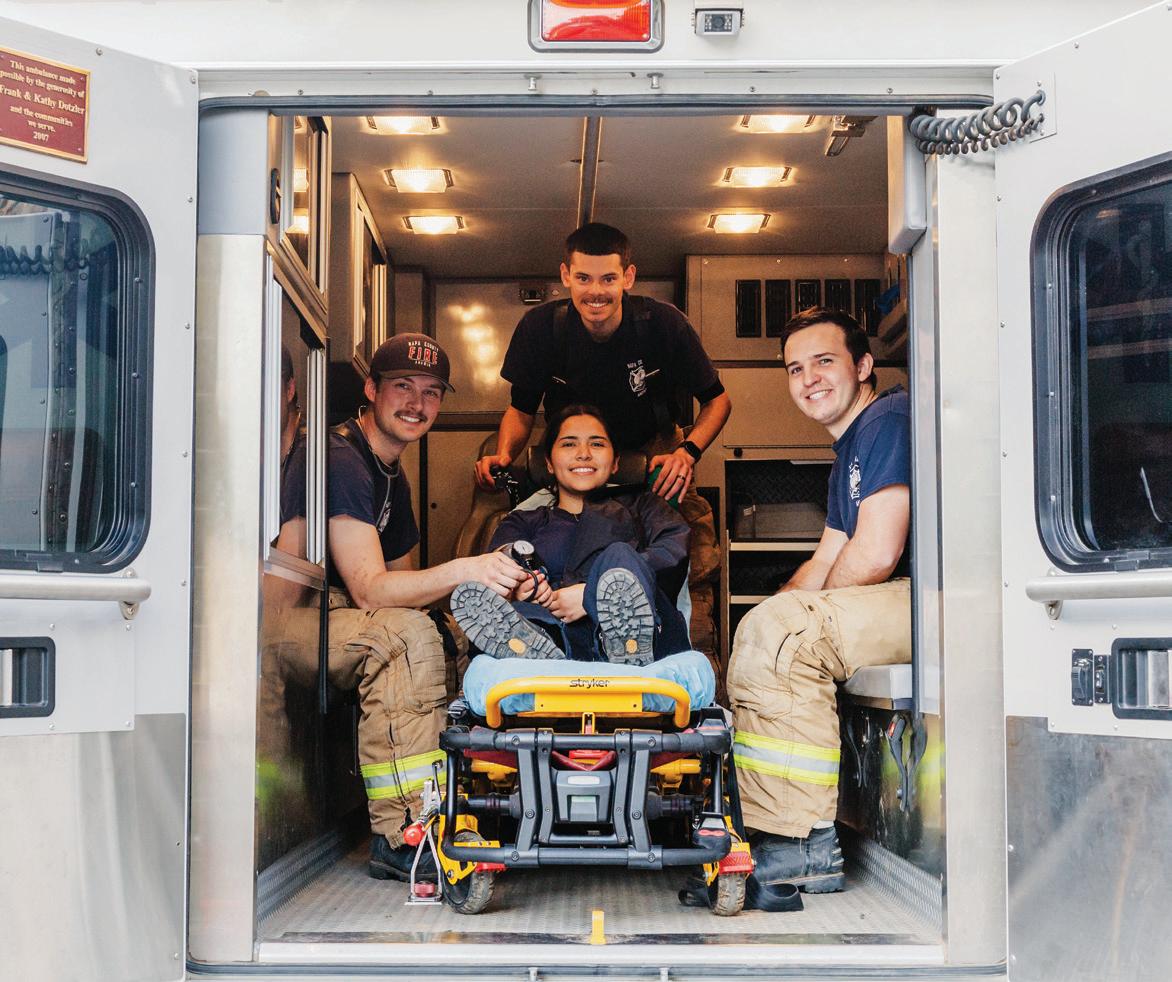
reduced those barriers, making advanced nursing education more attainable for paramedics across the Bay Area and Central Valley.
Debra Wallace, who has directed the LVN/Med-Tech program for 28 years and now oversees the EMT-P pathway, reflected on the program with pride, “I truly love this program and the students in it. They bring a depth of experience, strong focus, and an incredible level of commitment as they balance work, family, and school. It is inspiring to watch their growth as they transition into professional nursing roles.” She added, “These students are highly motivated and bring a unique perspective to patient care. They understand urgency, critical thinking, and teamwork at a high level, and it is rewarding to help them expand those skills within the nursing profession.”
To date, the Napa campus has graduated two cohorts of EMT-P to RN students, both achieving a 100% firsttime pass rate on the NCLEX-RN. A third cohort will graduate in June 2026. The success of this program has made a meaningful impact: expanding access to nursing education, supporting career advancement for paramedics, and ultimately strengthening the healthcare workforce across the region.
By Keegan Malan

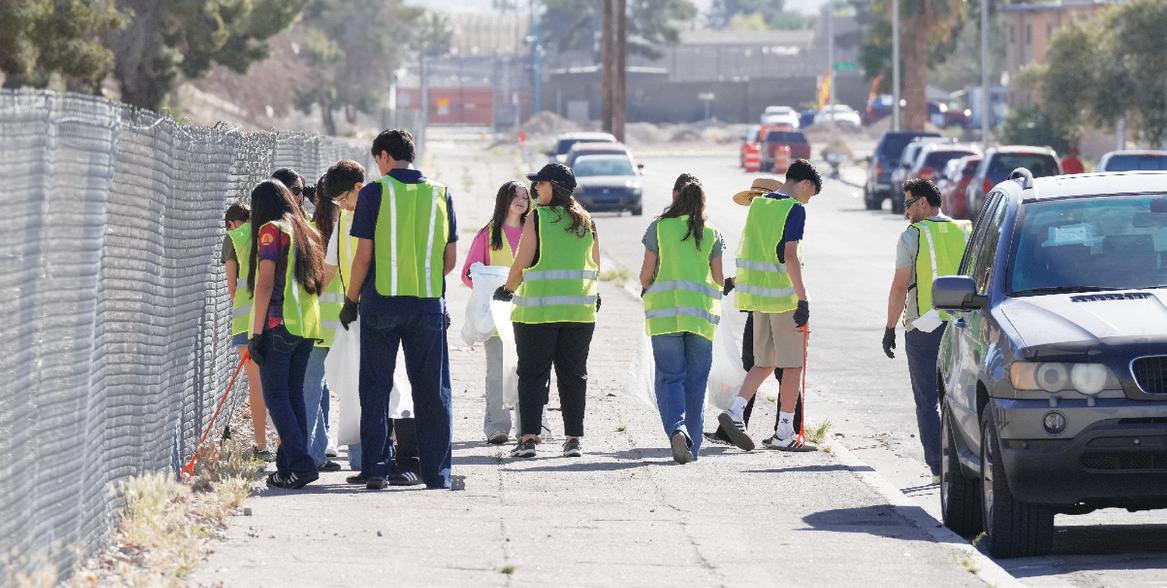
The spiritual growth and nurturing of youth and young adults remains a high priority in the Nevada-Utah Conference. With the collaboration of dedicated leaders and volunteers, three area Youth Weeks of Prayer were held in Reno (Sparks church), Salt Lake City (Wasatch Hills church), and Las Vegas (Maranatha Spanish church).
In the Reno area, youth were mentored in sermon development and given the opportunity to preach each evening. This approach not only strengthened the spiritual lives of the young speakers but also inspired their peers as they witnessed friends confidently sharing messages rooted in God’s Word.
In Salt Lake City, Pastor Mario Navarro of the Living Water Fil-Am church in Las Vegas served as the guest speaker. Known for his passion for young people, Pastor Navarro delivered messages that were both relevant and firmly grounded in Scripture, aligning closely with the week’s theme. In Las Vegas, Dina Coelho served as the speaker, calling youth and young adults back to the fundamentals of a relationship with God. Each location
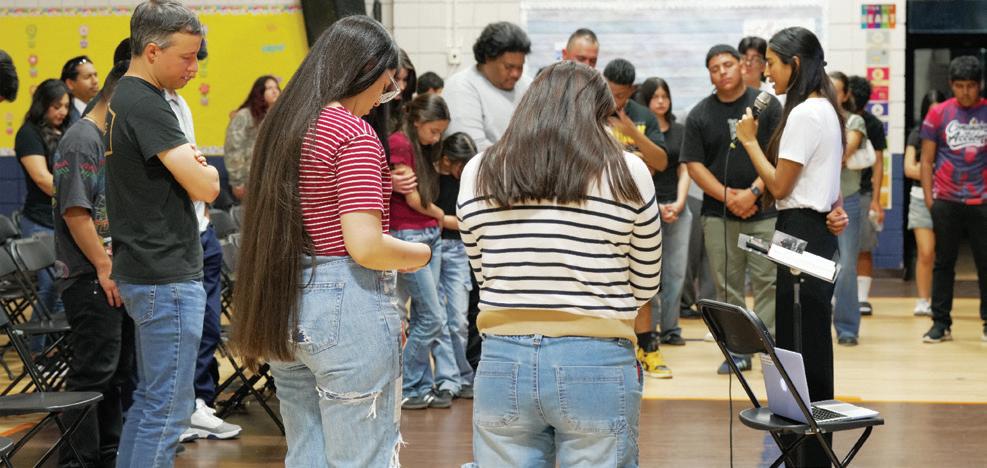
experienced a spiritually impactful week.
Reflecting on the Las Vegas experience, Jessica Pantaleon, youth leader at the Maranatha Spanish church, shared, “Throughout this week, we witnessed Jesus working in the hearts of our youth. As they encountered His love and character, it inspired them to step into their communities with humility, cleaning streets, serving the less fortunate with hygiene bags, and praying with those in need. The message of being ‘Transformed by Him’ became more than a theme; it became something they lived out.”
These Weeks of Prayer served as a prelude to Global Youth Day, held on March 21, under the theme “Communion in Action.” Youth and young adults across all three areas participated in service projects within their communities. In Las Vegas, participants partnered with the city’s Community Services Department to clean neighborhood streets and prepare hygiene kits, which were distributed to individuals experiencing homelessness.
The initiative concluded with sports nights in each area—events that continue to grow in popularity as meaningful opportunities for fellowship across generations.
Together, these experiences highlighted a powerful movement of spiritual growth, active service, and collaborative ministry among youth and young adults throughout the Nevada-Utah Conference.
By Michael Jenkins
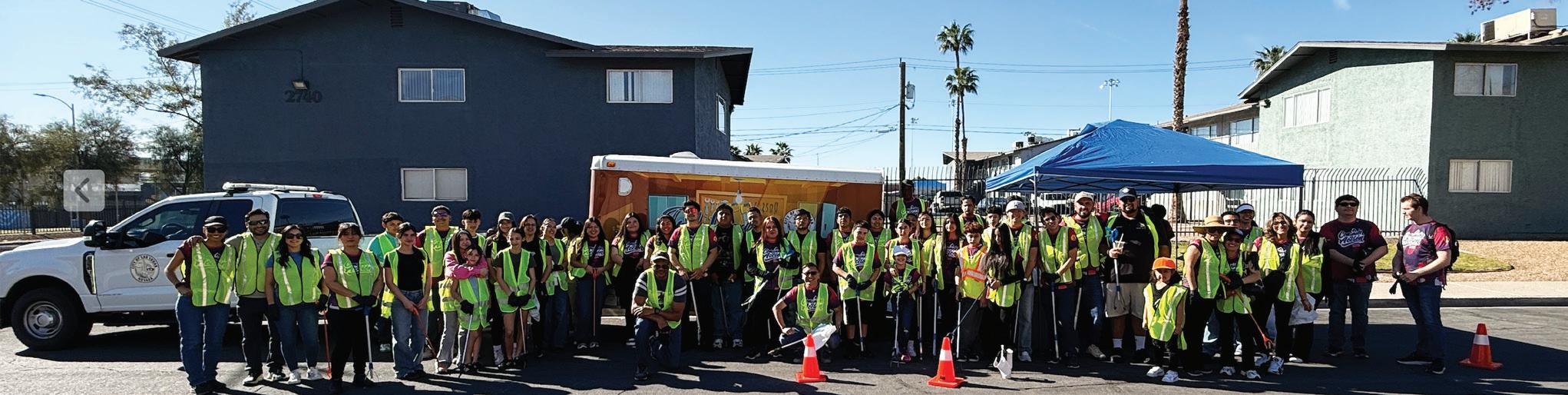
Sparks Church & Riverview Church Take the Gospel to the Neighborhood
There’s a moment every pastor knows— standing in a nearly empty room, wondering if anyone is coming, waiting and praying and hoping that God is going to do something.
Pastor Kevin Solomon, who leads the Sparks church, and Pastor Deirdré Solomon, who leads the Riverview Adventist church, know that feeling well. Leading two congregations with one shared burden for the RenoSparks community around them, they’d tried revivals, sent out mailers, and planned seminars. Doors were open, they were ready, but few or none showed up.
So they prayed, and God gave them a vision.
Instead of waiting for the community to come to them, they would go to the community. As Ellen White puts it, Jesus mingled with people, met their needs, won their confidence, and then invited them to follow Him (The Ministry of Healing, p. 143). That was the model—to do outreach Jesus’ way.
God opened a door at Marvel Way Apartments, a community of people who know what it means to start over, and the connection ran deeper than anyone could have anticipated. A beloved Riverview member named Jen had walked with people there through recovery, and when she passed away, her memorial was held on those very grounds. Family Fest was a continuation of seeds she had planted.
To make Family Fest a reality, event coordinator Lisia rallied the volunteers, Dave built the stage, the

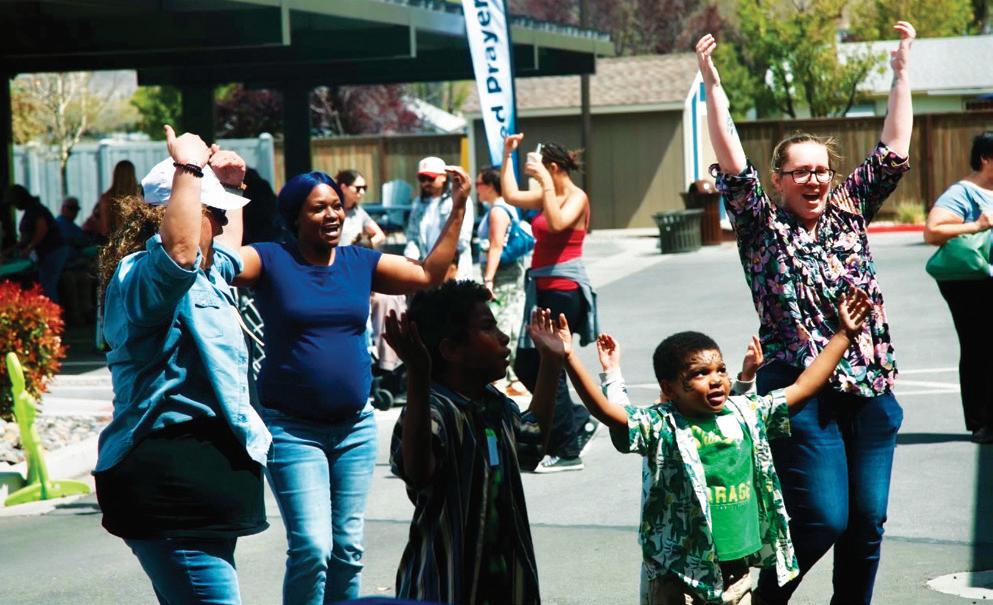
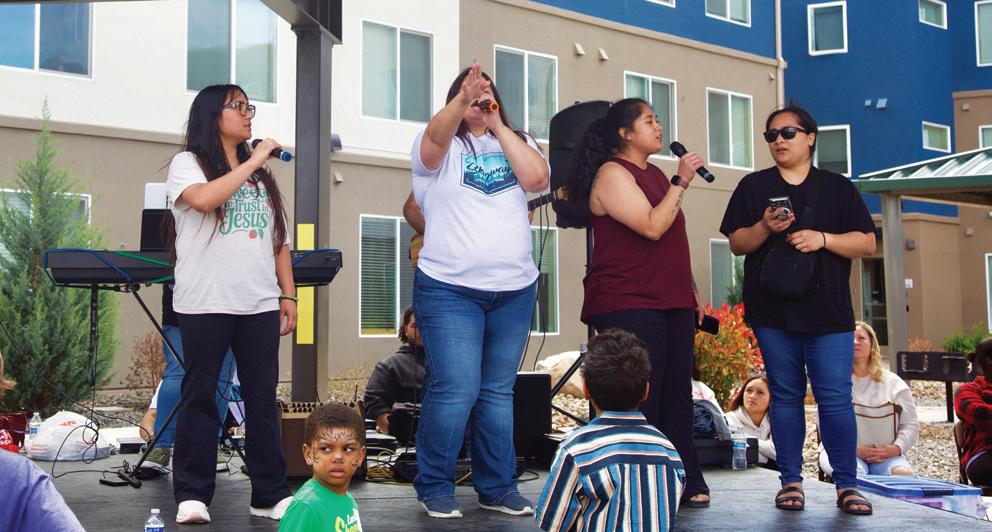
DJ kept energy high, prayer stations stood ready, and food was plentiful.
On the day of the event, over 300 people showed up—families with kids, neighbors who’d never stepped inside a church, people hungry for connection. Pastors Deirdré, Kevin, and Benjamin Carballo stepped to the stage and shared the gospel. The Reno-Sparks Hispanic congregation joined the two other churches, and what unfolded was a living picture of the body of Christ coming together. Someone asked about Sabbath, others wanted to learn about our churches, and one person summed it up simply: “We need more things like this in Reno.”
Residents shared they were genuinely touched, even surprised, that church people wanted to come to them. And the pastors remembered that Jesus didn’t wait for Zacchaeus to find his way to the temple but walked into his world and changed his life forever.
Jen would be proud.
By Kevin and Deirdre Solomon
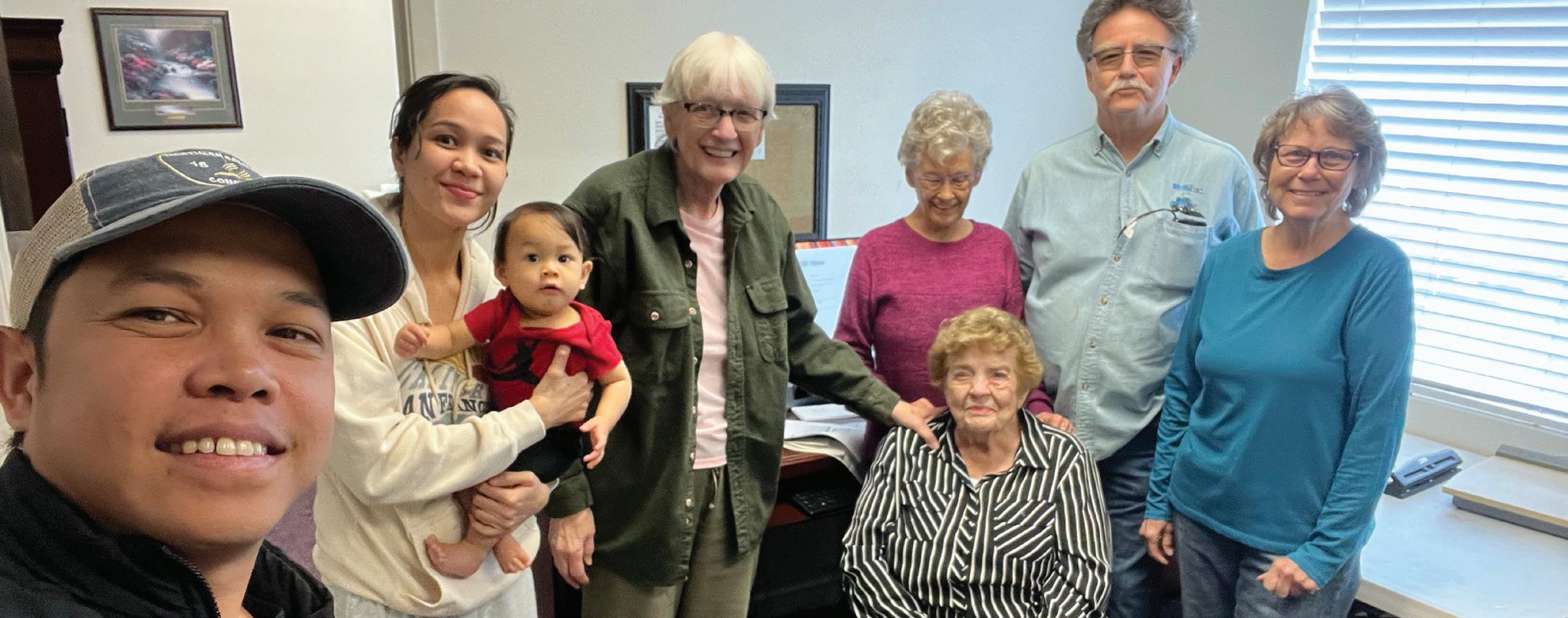
There is a quiet question that often lingers in the hearts of many believers as the years go by: When is it time to step aside? After decades of service, sacrifice, and faithfulness, it can feel reasonable—even deserved—to say, “I have put in my time. Let someone else take over. I want to travel, rest, and enjoy what years I have left.”
And yet, the kingdom of God does not measure usefulness the way the world does.
In 2018, Ruthe Levy was nominated to serve as treasurer of the Anderson church. It was not a shortterm assignment nor was it symbolic. It was real responsibility—numbers, accountability, consistency. Now, eight years later, she still serves in that same role. This April, she turned 99 years old.
Every Monday morning, she gets into her car and drives herself to church. The journey is not effortless; it includes navigating nearly a mile of steep, winding road. Many would consider that reason enough to step down. But not Ruthe.
For her, this is not about obligation. It is mission. Her question has never been, “When can I stop?” Instead, it is, “When will I have to stop because I am no longer able?” That quiet difference speaks volumes.
In a culture that often equates aging with stepping back, the life of faith calls us to a different perspective. Scripture never assigns an expiration date to purpose. As long as there is breath, there is calling. As long as there is life, there is ministry.
God does not retire His workers. Moses was called at 80. Caleb, at 85, still asked for a mountain to conquer. Anna, well advanced in years, worshiped and witnessed daily in the temple. Time, in God’s hands, does not diminish usefulness—it refines it.
What Ruthe demonstrates is something deeply powerful: service is not about age but about willingness. It is not about how much strength we have left but about how much heart we still give.
Yes, seasons change. Responsibilities may shift. The body may slow. But the mission remains. There are always prayers to be offered, encouragement to be given, wisdom to be shared, and faith to be lived out before others.
We are reminded that the work of God is not sustained by youthful energy alone but by enduring devotion. And now, we stand on the edge of eternity with a hope that burns brighter than ever—Jesus is coming soon. This is not the time to withdraw from the mission but to lean into it with renewed purpose.
The question is not, “Have I done enough?” The question is, “What can I still do?”
Each of us has a role in preparing hearts for that day. Whether through quiet faithfulness like Ruthe or through visible leadership, every act of service matters. Every life surrendered to God becomes a testimony.
So when are we too old to work for God?
The answer is simple: when He calls us home.
Until then, the mission continues.
By Rioboie Mabugay
In the winter of 1885, a preacher named Nathaniel McClure held meetings in a place most couldn’t find on a map—Dow’s Prairie. There was nothing remarkable about it: a tent, a small crowd, and a message. Yet one listener, an elementary school teacher named Henrietta Johnson, would carry that moment far beyond the prairie.
After her baptism, she enrolled at Healdsburg College, where her path in education deepened—and where she met theology student Robert Hare. They were married the same day he was ordained, and soon after they left for mission service in New Zealand and Australia, beginning a life shaped by ministry.
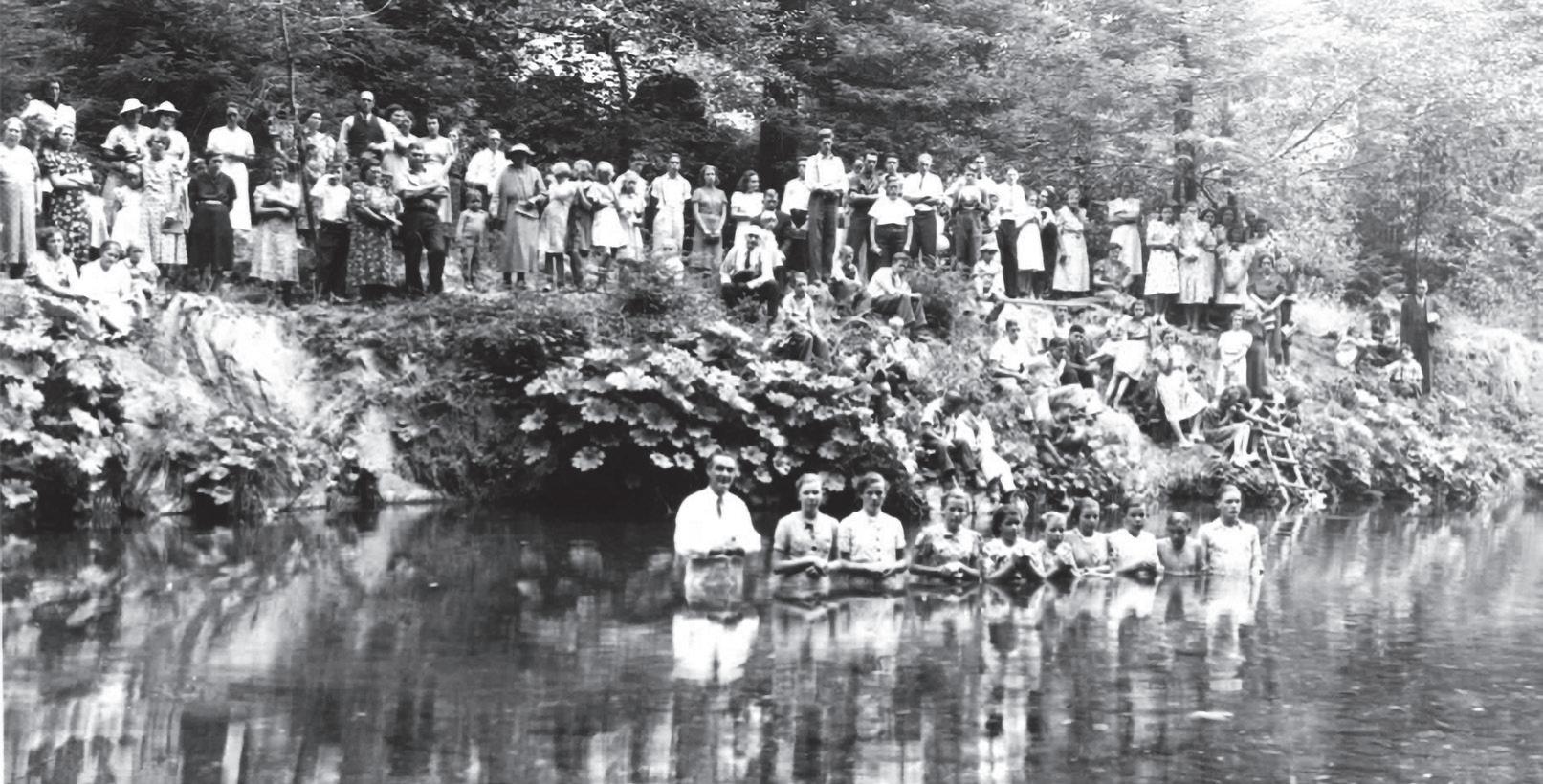
vivid storytelling and a remarkable ability to connect young people with faith. By the 1930s, his ministry had brought him to Northern California.
During those years, they welcomed a son, Eric B. Hare. He would grow to become a pastor known for
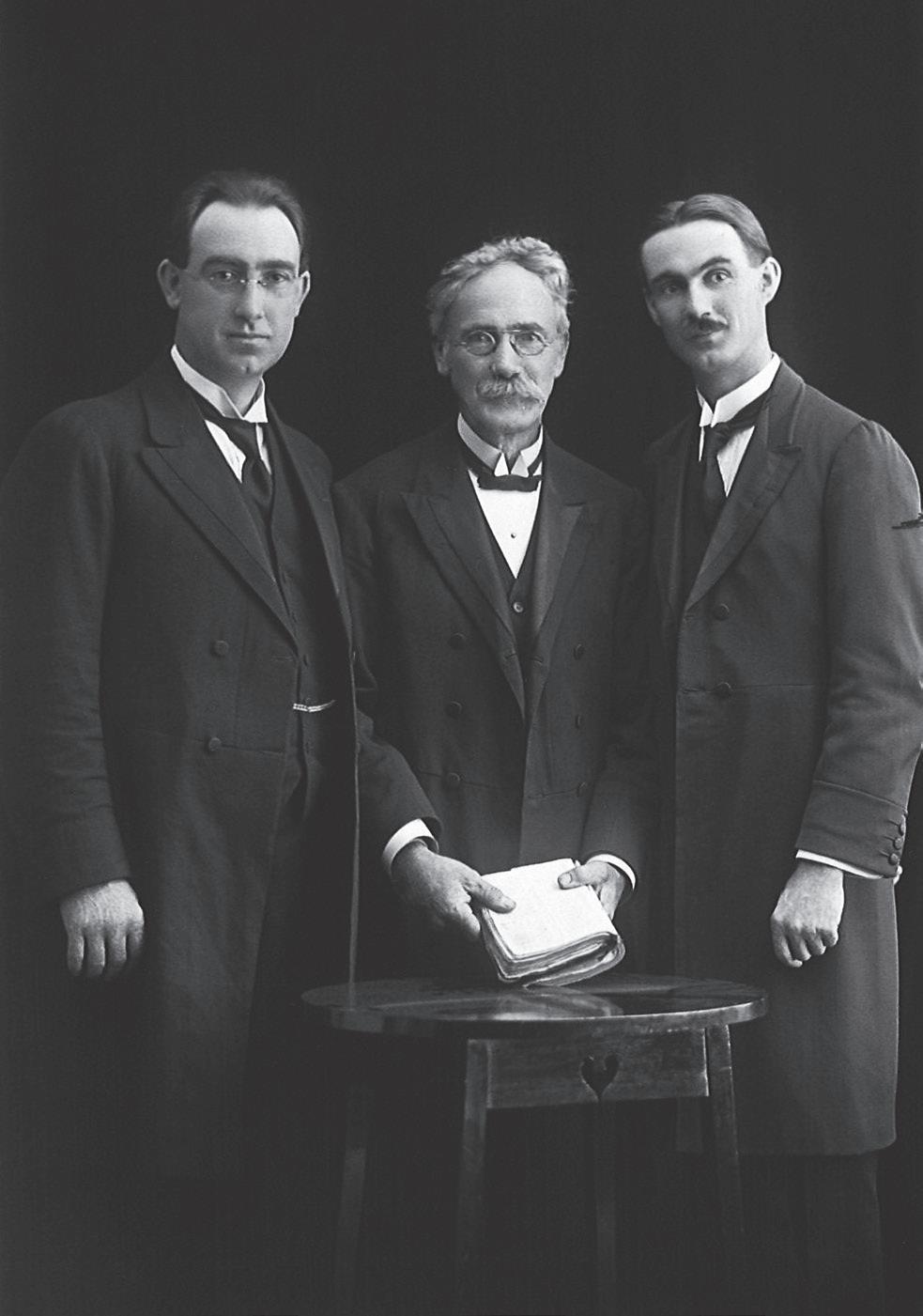
There, along Redwood Creek, a property began to be used for youth gatherings as camp ministry took shape in the region. Surrounded by towering redwoods, it offered something simple but lasting—a place set apart for worship, learning, and community. Eric B. Hare remained closely connected to this kind of ministry, once affectionately calling the redwoods “the big sticks.”
That same vision continues today through the Northern California Conference, especially at Leoni Meadows Camp. What began with a single meeting on a remote prairie grew into a movement that recognizes the value of setting young people apart in nature to encounter God. Each year, hundreds of youth and adults gather in that same spirit—stepping away from the noise of everyday life to worship, build community, and grow in faith, rooted in a legacy that stretches back to those earliest moments.
By Dale Galusha
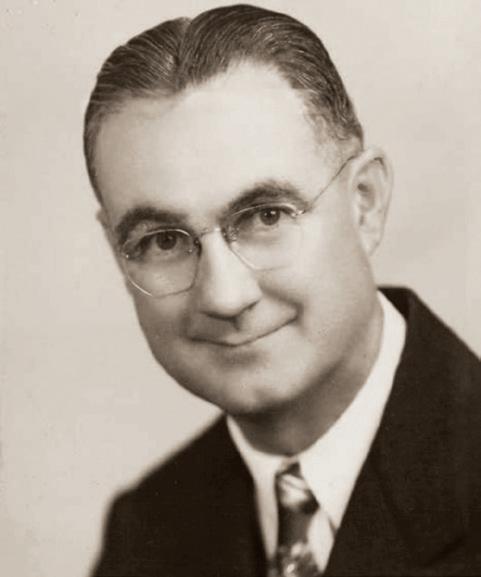
The Center for Discipleship & Evangelism (CDE) began its community engagement intensive track February 9 and 10. Partnered with Andrews University’s Center for Community Change, CDE invited 10 pastors—four from Southeastern California Conference (SECC) and six from Northern California Conference—to attend training in which outreach was the sole focus. From SECC, pastors Baron Savory, pastor at Valley Fellowship; Laffit Cortes, senior pastor of Escondido; Sandra Fermin, associate pastor for youth, young adults, and community engagement at Loma Linda Filipino; and Linda Biswas, community engagement pastor from Azure Hills, were selected to join the training across two days in preparation ahead of the launch of the community engagement track.
Each pastor had the opportunity to visit the Vista de La Sierra apartments, which opened in 2021 and provides affordable housing for individuals and families who are experiencing homelessness or are at-risk for homelessness. The intensive also included a visit to Overflow Farms, situated on the Riverside Korean church campus, which grows food for the city of Riverside.
Will Penick, ministerial director, is overseeing the partnership with Andrews University in preparation for the Center for Discipleship & Evangelism. An intergenerational team of pastors who will lead community engagement trainings for the Center is being assembled.
The intensive is just one example of intentional discipleship opportunities and resources that will be
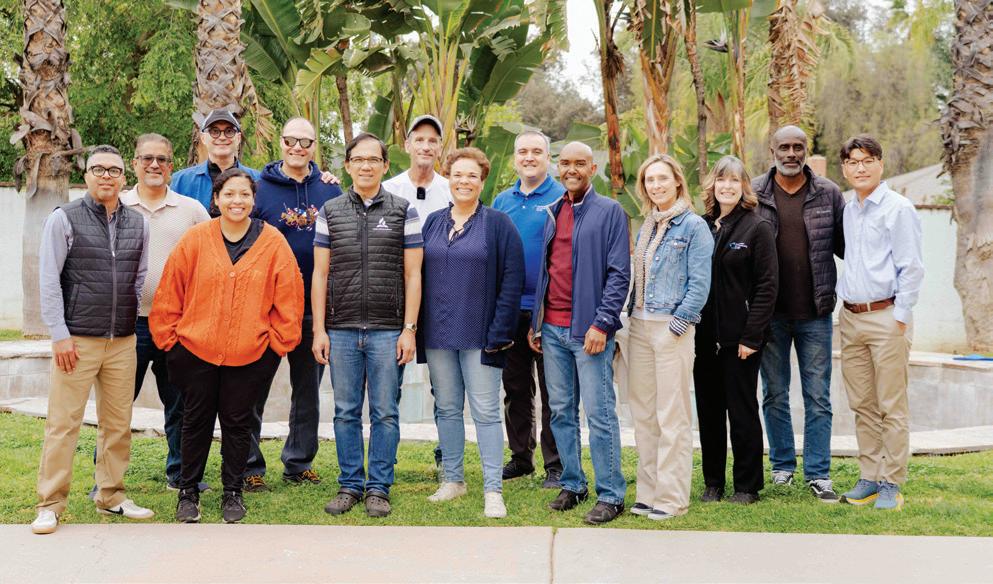
After visiting Overflow Farms, pastors take a group photo.
provided to equip pastors. “We’re equipping pastors to work alongside their members. Each pastor will work with about five members and build a team for community engagement,” said Penick. Once active, each cohort will be engaged in hands-on opportunities that will serve groups in need and will partner with conference support.
The intention is missional. “God again is telling us, ‘Go out and mingle with others and meet their needs and then give them the invitation to follow Jesus,’” Cortes stated. Through its partnership with Andrews University, the Center for Discipleship & Evangelism is laying a foundation for sustainable, community-focused ministry across the conference. This track marks a strategic step forward in equipping pastors and members to engage their communities with compassion and purpose.
To learn more about the Center for Discipleship & Evangelism, visit www.seccministerial.org/cde.
By Taji Saleem
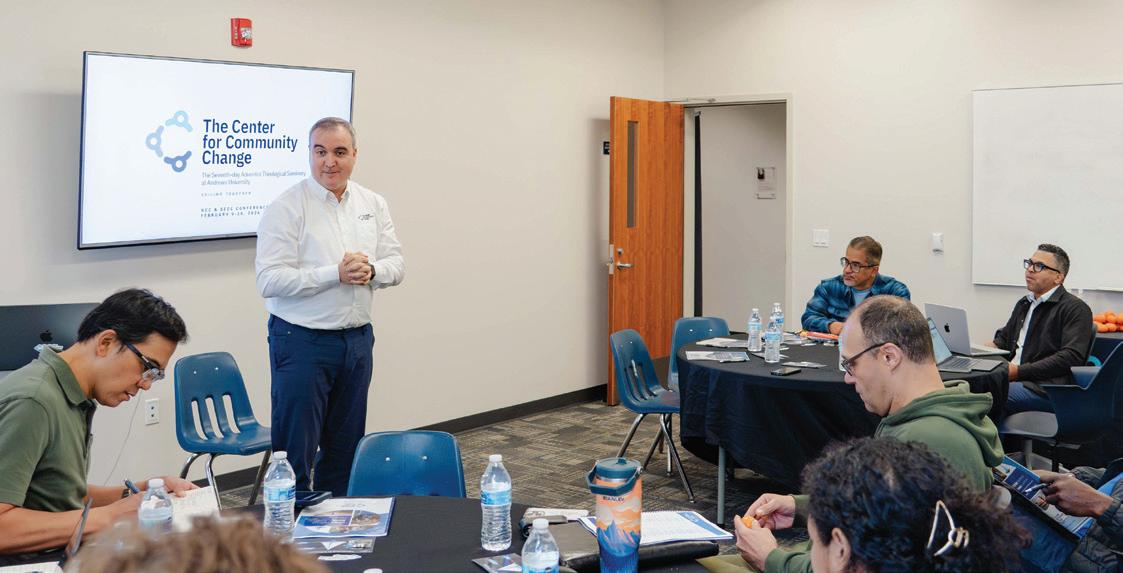
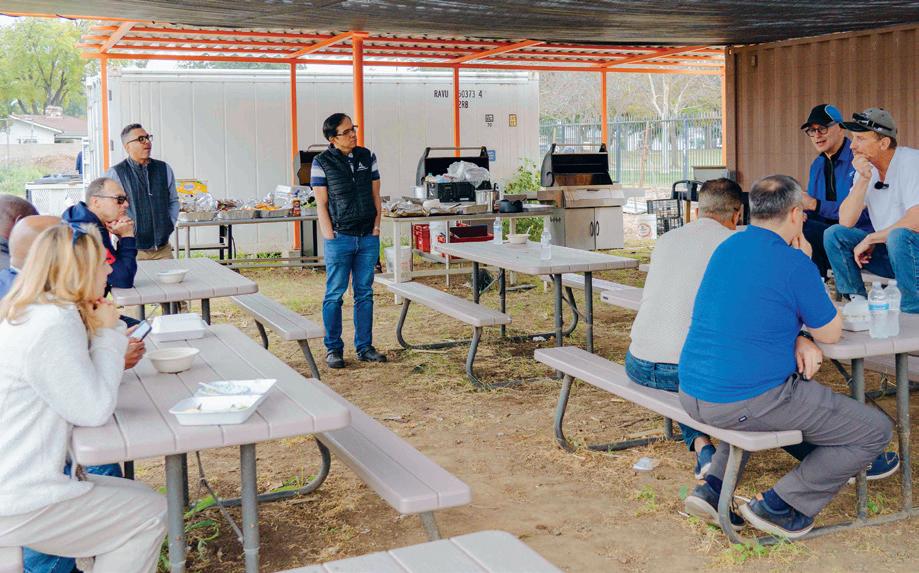
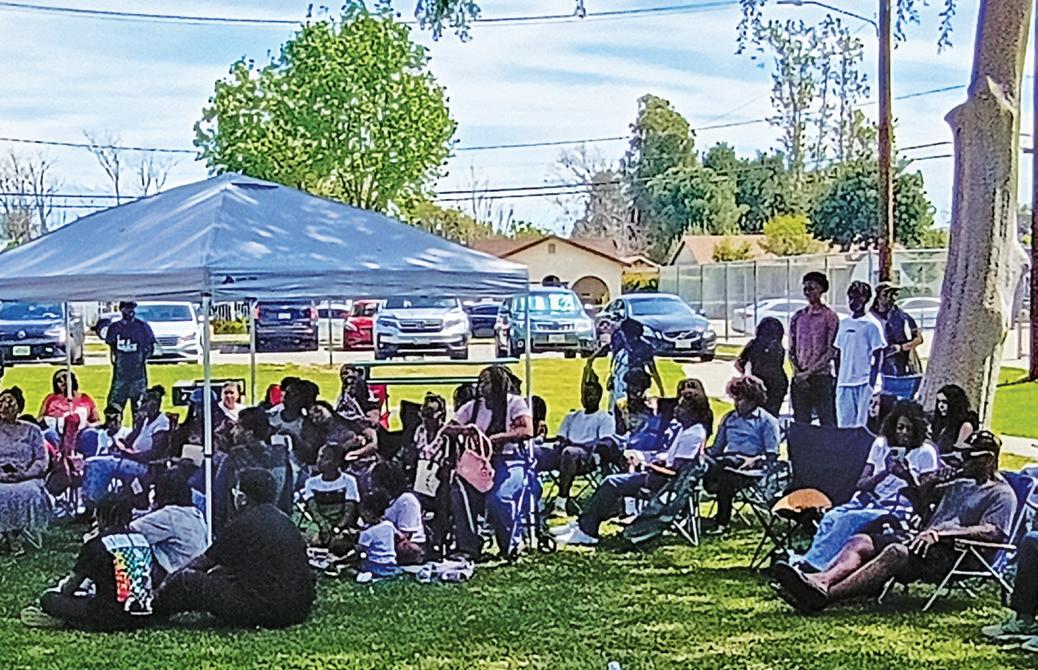
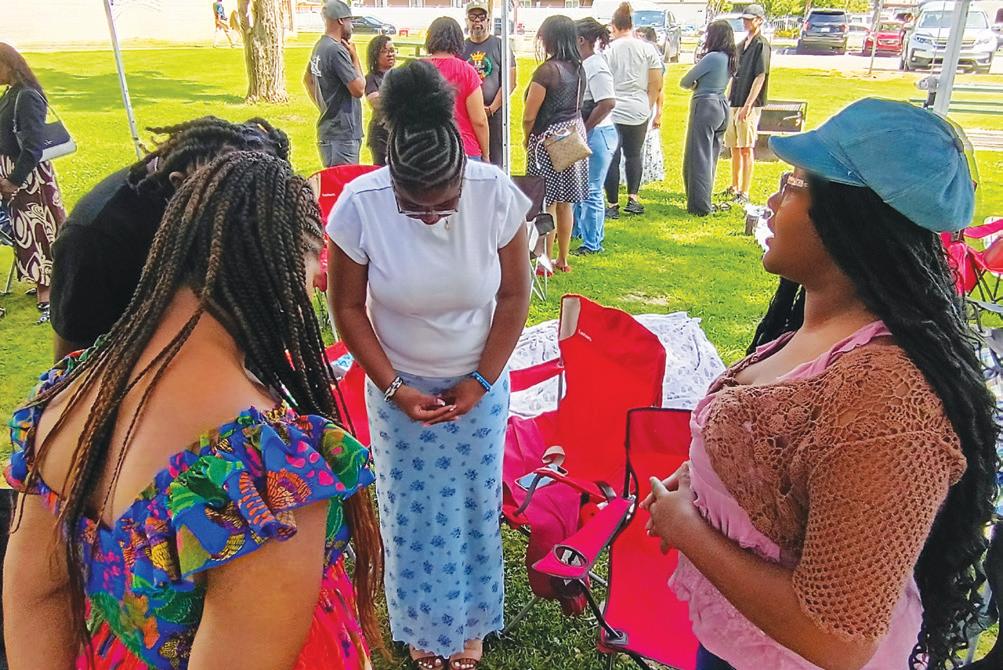
More than 100 young people gathered on March 21 for Global Youth Day, a North American Division initiative focused on inspiring youth-led service, for a full day of worship, outreach, and fellowship across San Bernardino County.
The event was hosted by Joint AY—a Black Ministries collaborative youth and young adult ministry founded four years ago by Samuel Baker, youth leader at San Bernardino Community church, and Kyle Crawford, youth pastor at Mt. Rubidoux church. “Collaboration will save this generation,” was one of the centering beliefs that helped fuel the day. The day began with church in the park at Veterans Park in Colton, where the youth-led worship service created an open and inviting space for both attendees and community members.
Linda Hernandez, an elder at 16th Street church,
talked about “Salty Christianity” in her message that challenged young people to live with purpose and impact. “We were made for more,” Hernandez emphasized, calling attendees to be active expressions of faith in their communities.
Following the service, participants engaged in a hands-on outreach project, assembling 150 sack lunches for the unhoused community throughout San Bernardino County. Each sack included a peanut butter and jelly sandwich, chips, cookies, fruit, and water. Youth volunteers worked side by side, reinforcing the event’s focus on practical service.
“It felt good to do something that actually helps people right here where we live,” said one youth participant. “It made my faith feel real.”
By Samuel Baker
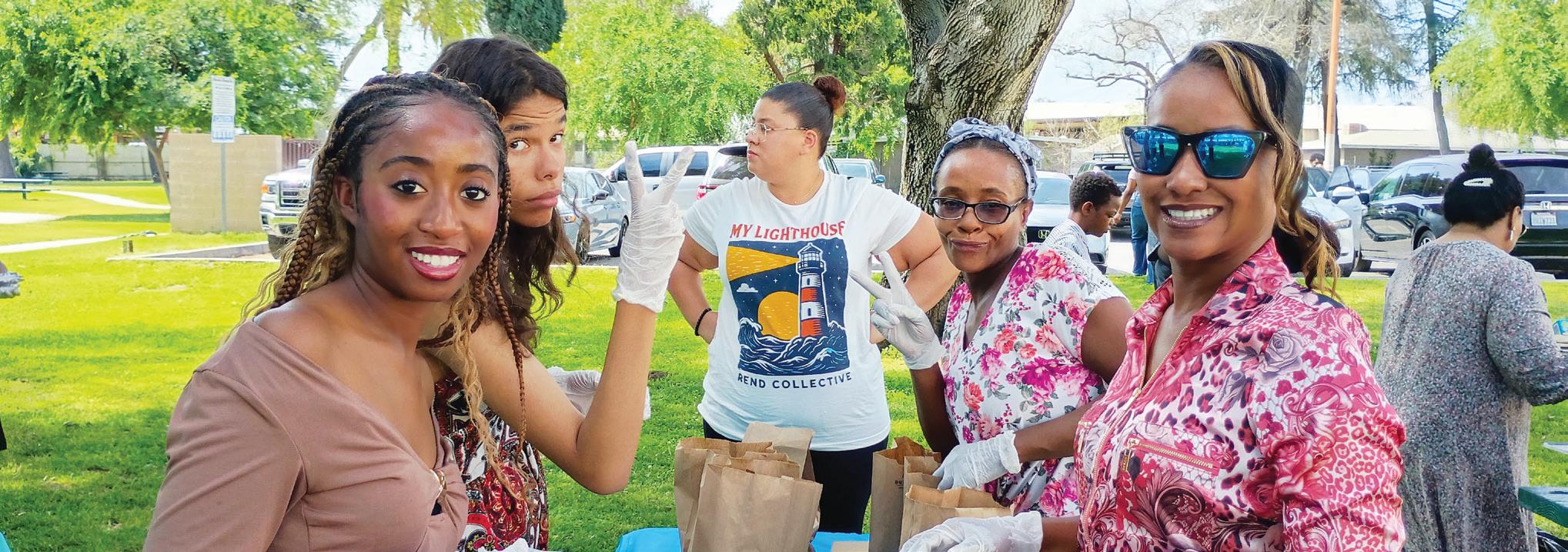
Students share their projects.
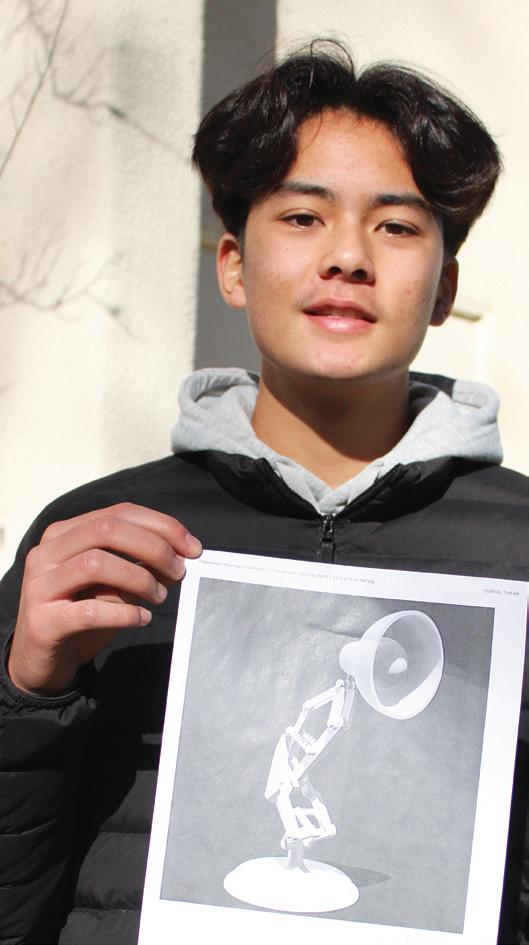

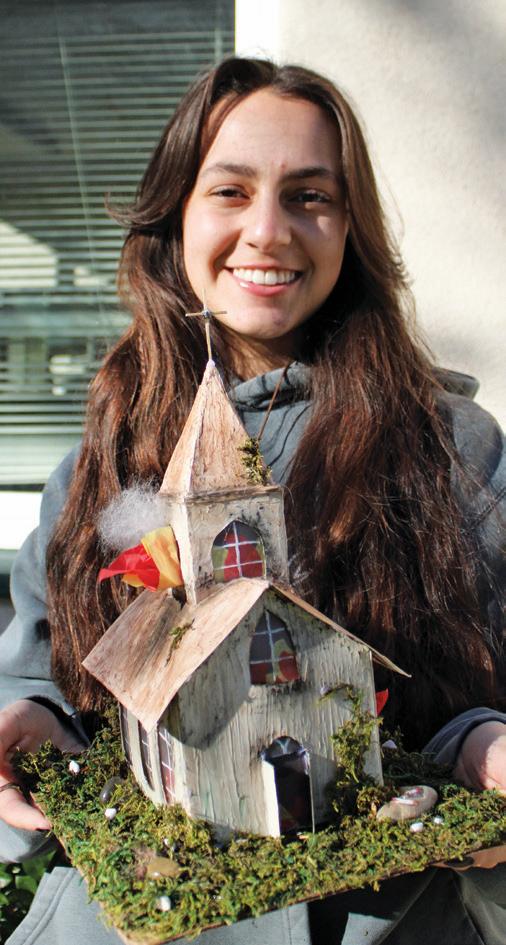
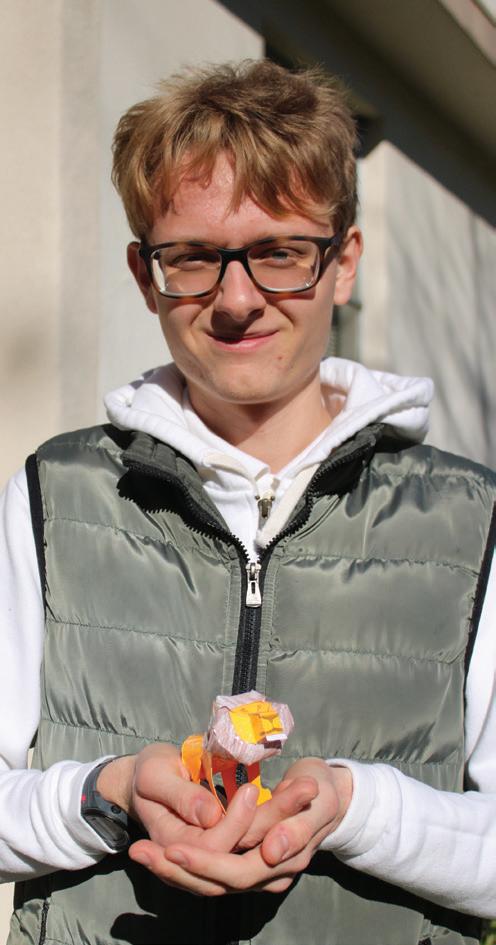
Newbury Park Adventist Academy (NPAA) is striving to bring back the joy of reading for students through a new independent reading program that launched last summer and continued throughout the 2025-2026 academic year.
As a longtime educator, Mike Taylor, NPAA English and journalism teacher, has noticed with each new generation that students are reading less.
“We came up with the idea of instituting an independent reading program where the kids can choose any book that catches their interest—fiction or non-fiction,” Taylor said. “They have approximately two months to read the book, and then they’re required to do a project about the book from a variety of options that appeals to their different learning modalities.”
Writing an epilogue or lost chapter of the book, creating a 60-second movie trailer to advertise the book, or designing a blueprint of a key setting are just a few examples of their projects. How students present the book is up to them.
“I’m trying to facilitate a culture of sharing about books—the interesting aspects of these books—so people will get a little bit more enthusiastic about reading,” Taylor explained.
For Jessica, freshman, and Joshua, junior, sharing about the books they’ve read through creative projects has been one of the most enjoyable aspects of the program. They’ve discovered new favorite books such as Where the Crawdads Sing by Delia Owens and The
Psychology of Money by Morgan Housel. This sharing has turned into recommendations for classmates.
“I like to hear about what books the other students are reading,” said Isaac, freshman. “One of my favorite books was Red Rising by Pierce Brown. I recommend that book to my fellow high school students and maybe even some older people. There’s a bit of philosophy in the story.”
More than uncovering favorite reads, the program is changing students’ relationships to books for the better. As a child, Anneliese, now a junior, didn’t enjoy reading due to difficulty staying focused and comprehending what she read.
“However, this reading program has helped shine a positive light on books for me,” Anneliese said. “It forced me to stretch my reading muscles and do something that is challenging to me. Through this process, I have found books that actually pique my interest, and my reading comprehension skills have improved a lot. Also, this program put me on to audio books, which I actually enjoyed listening to a lot! On my own, I definitely wouldn’t have read any of the books I did this year—or any at all for that matter.”
With student discussions on different titles, authors, and stories, Taylor has seen more of an interest in books during the program’s first year. Independent reading will continue this summer, and he plans to grow the program in the years to come.
By Araya Moss
This year, Grace Hill at Vallejo Drive church lived out its belief in global evangelism by taking its first global mission trip to the city of Tuguegarao, Cagayan, Philippines.
The team spent one week involved in evangelistic meetings, medical and dental services, a gospel concert, and more. During the two days of medical and dental outreach, volunteers joined from the local community, including a medical team from the Holy Cross Parish in the Philippines and the Santiago medical team from the nearby Adventist hospital. Local dentists from the Tuguegarao dental chapter provided free dental services.
As volunteer Danny Ranchez put it, “My blessing was being able to bless others as well through the power of the Holy Spirit and glorifying God, being able to work in unity to draw people closer to Jesus.”
There was also amazing support from the local area. The city mayor’s office approved a permit for use of the city gym at a fraction of the cost for the nightly evangelistic meetings, and the management of a big shopping mall allowed the use of a large open space inside the mall, normally used for business and advertising meetings. They also provided and set up furniture for the medical and dental services, as well as a stage with audio equipment where church members and volunteer singers performed an inspiring gospel concert, which helped promote the nightly evangelistic meetings.
Among the 30 people baptized was a family with
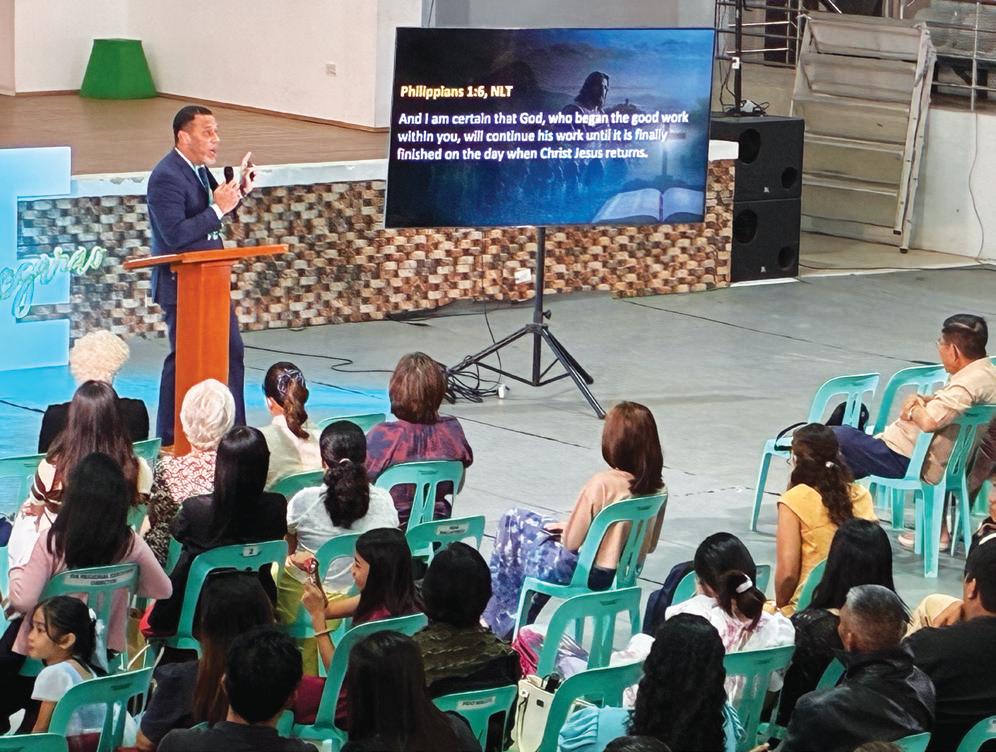
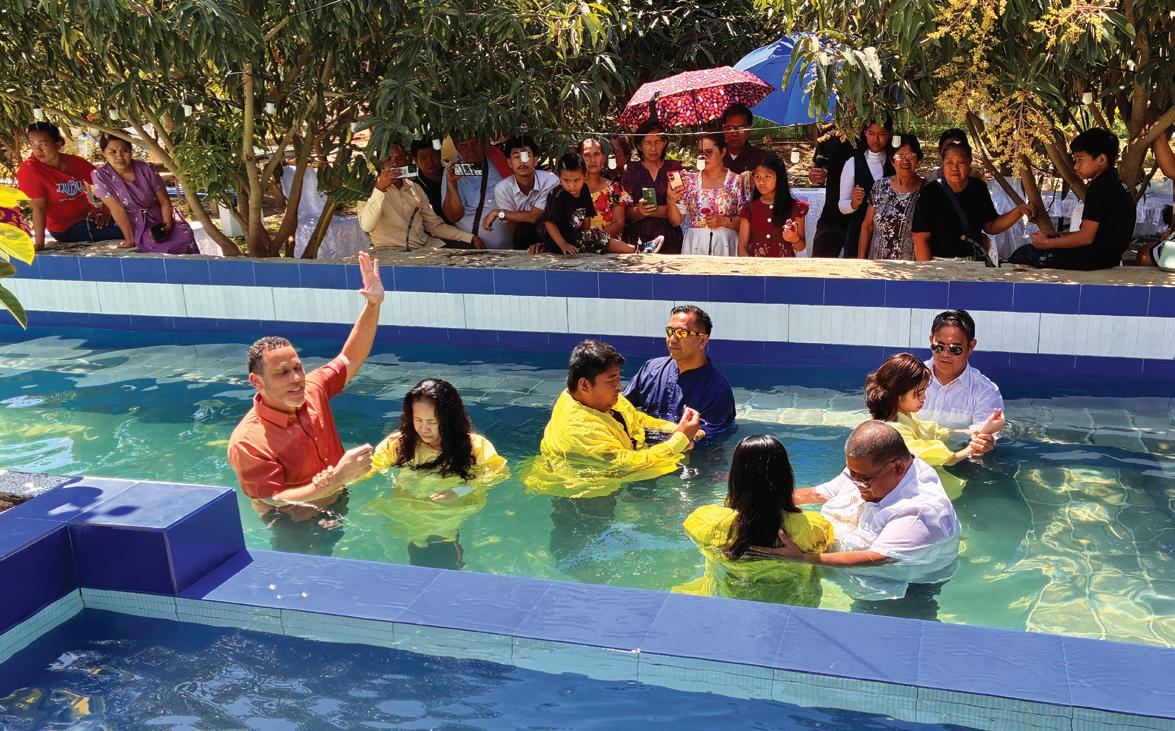
four children. Soon after the baptism, their faith was tested. The family’s eldest daughter, three months from finishing her college education, was told by her grandmother, who is Roman Catholic and living in Southern California, that she was cutting off her support for school because she was baptized into the Adventist church. The family, while heartbroken, didn’t lose faith. They continued to pray for the grandmother. One month later, she reinstated her financial support of the daughter’s college tuition.
“The number one blessing for me,” shared Jonathan Henderson, Grace Hill at Vallejo Drive church senior pastor, “was seeing people understanding the gospel for the first time. That ‘light bulb’ moment where they see God and fall in love with His character. It was truly special to see on this trip.”
The ministry of Grace Hill at Vallejo Drive church doesn’t end with this mission trip. Matthew 28:19 (NIV) says to “go and make disciples of all nations.” Discipleship goes far beyond baptism. Future plans include hiring a layman to continue nurturing the new converts and building a new church. At the current church in Tuguegarao, the roof leaks whenever it rains and there is no space for people to park their private vehicles. Supporting ministry in a city with more than 170,000 people and five universities and colleges is what the Tuguegarao mission is all about.
By Samuel Adarme with Lauren Lacson
Advertising is accepted as a service to Seventh-day Adventist church members in the Pacific Union. The Recorder management reserves the right to refuse any advertisement, especially ads not related to the needs and practices of the church membership. Acceptance of any advertising shall be considered a matter of accommodation and not a matter of right, nor shall it be construed to constitute approval of the product or service advertised.
Payment in advance must accompany all classified advertisements or they will not be published. Display ads for known advertisers will be billed.
Classified ads must be sent with payment to the Recorder office. Display ads should be arranged with the editor (recorder@adventistfaith.com).
$70 for 50 words; 75 cents each additional word. Display rates (full color only): back cover, $4,200; full page, $3,800; 1/2-pg., $2,200; 1/4-pg., $1,200; 1/8-pg., $700; $160 per column inch.
Information
The Pacific Union Recorder is published 12 times per year with a circulation of approximately 75,000. For more information about advertising, please email to recorder@adventistfaith.com.
These are the advertising deadlines for the Recorder Your local conference news deadlines will be earlier. July: June 4 • August: July 2
Contributions
The Recorder pages are assigned to the local conferences, colleges, and healthcare institutions, and all content comes through the communication departments in those organizations. If you have a news story/idea, calendar announcement, etc., please contact your local communication department. See the masthead for contact information. Want tips for writing for us? See www.dailywritingtips.com/the-artof-writing-news.
The Pacific Union Recorder is provided as a free service to members of the conferences that are part of the Pacific Union Conference (Arizona, Hawaii, Northern California, Central California, Southern California, Southeastern California, and Nevada-Utah). Each conference maintains the list of members, based on the reports from their churches. If you would like to make a change to your subscription (name, address, cancellation), please contact your local conference. The staff of the Recorder does not have access to the circulation lists, other than the paid subscriptions.
Graduation. La Sierra University’s commencement weekend will be held June 12-14 and will feature a consecration service on Friday evening, a Sabbath baccalaureate service, dedication services for School of Education and HMS Richards Divinity School graduates, and Sunday’s Conferring of Degrees on Founders’ Green at 8 a.m. Information is at https://lasierra.edu/ graduation/.
Academic Quarters. Summer quarter classes begin June 15, the day after graduation, and fall quarter classes start Sept. 21, 2026. To learn about admissions requirements, class offerings, tuition, and financial aid, visit https://lasierra.edu and click “Admissions.”
Korean Camp Meeting, July 16-26. Korean Camp Meeting will take place at PUC. It is open for all ages, providing a variety of meetings and activities expounding on Christian values in both Korean and English.
Albion Birding Bonanza, Aug. 14-17. Spend time with fellow bird lovers and alumni to relive your favorite college memories and add to your life bird list. You will learn about the activities of PUC’s biology department and interact with current students and faculty through worship and outings focused on coastal birds and biology. Visit puc.edu/birding for registration and more information. The registration deadline is July 24.
Publication Workshop, Aug. 30 – Sept. 1. The Visual Arts, Communication, and English Departments at PUC are sponsoring Publication Workshop. This event offers practical, hands-on training and valuable tips for kickstarting your school's yearbook, newspaper, or video yearbook. For more information and to register, visit pubworkshop.puc.edu.
Connect Ministries is a group of Pacific Union College students passionate about Jesus and sharing through music and worship. The bilingual team leads worship services, retreats, youth events, and any programs where they can inspire other young people to become worship leaders. Any school or church interested in having them visit, please visit puc.edu/connect.
Add PUC News in Your Church Bulletin. With many updates to share at Pacific Union College, we designed a printable bulletin insert for churches to use. Just print the PDF double sided and cut in half, then include as a bulletin insert. Download at puc.edu/bulletin.
Subscribe to the PUC Now Newsletter. Stay up to date with Pacific Union College by subscribing to their
The 32nd session of the Pacific Union Conference of Seventh-day Adventists will be held at the Marriott Esmeralda Hotel in Indian Wells, California, August 16 and 17, 2026. The first meeting of the business session will be called at 6:00 p.m., August 16. Registration will begin at 2:00 p.m. Delegates are selected by the local conferences according to the terms of the Pacific Union Bylaws. This session is called to receive reports from the officers and various departments, to elect personnel for the ensuing term, to consider revisions in the Bylaws, and to transact any other business that may properly come before the delegates.
monthly newsletter at puc.edu/subscribe. From campus stories and alumni features to student interviews, you’ll be in the now with PUC.
Southern California Conference
Family Camp at Camp Cedar Falls, June 24-28. Come enjoy and recharge as a family. Step away from the busy pace of life and make meaningful memories together through worship, nature, activities, and time to reconnect with God. All ages. Info: Call 818-546-8439 or email nbarriga@sccsda.org. Camp Cedar Falls, 39850 State Highway 38, Angeles Oaks, CA 92305.
Summer Camp at Camp Cedar Falls , June 28July 5 (Junior/Tween Week) and July 5-12 (Teen Week). Summer camp at Camp Cedar Falls is back, and we can’t wait to welcome you this summer! Info: Call 818-5468439 or email nbarriga@sccsda.org. Camp Cedar Falls, 39850 State Highway 38, Angeles Oaks, CA 92305.
Southeastern California Conference
Black Ministries Camp Meeting, June 24-27. Join us for a time of worship and empowerment. Experience Wednesday’s Night of Power, Thursday’s Paint and Heal, and Friday’s Success Summit featuring finance, media, leadership, and youth tracks. Dr. Wesley Knight and Maranda Curtis headline our Sabbath finale. Be commissioned and equipped for your purpose. Join us at Mt. Rubidoux church, Riverside, CA. Register today at MyCampmeeting.com.
Southeastern California Conference is seeking a full-time Communication & PR Specialist. This position emphasizes support and execution of communication initiatives, focusing on project management, creative
content development, writing, editing, and social media presence for the conference. Functions as writer and project coordinator for conference publications, including the Pacific Union Recorder, Conference Connections, and email newsletter. Responsible for general communication to inquiries from social media, email, and phone calls, which includes interacting frequently with church leaders, institution administrators, and the public. Assists the department with clerical, as well as other communication projects. The ideal candidate is highly organized, exhibits technical literacy, and thrives in a fast-paced environment with a keen ability to problem solve. Knowledge in photography, graphic design, web design, and content management is required. Some weekend work may be required. To apply, submit résumé and cover letter to SECC Human Resources at humanresources@seccsda.org.
Elmshaven Historian/Caretaker: The Pacific Union Conference is looking for 2 part-time Historians in Residence/Caretakers for Elmshaven, the Ellen G. White home in Napa Valley, California. Positions require a strong understanding of Ellen G. White's life and writings and the history of the Seventh-day Adventist Church. Individuals must have good communication skills (Spanish speakers preferred) for guided tours and ability to climb stairs and assist with grounds/ maintenance. Ideal for a semi-retired couple. Work schedule: 1 week on/off alternating with 2nd team. Modest hourly pay with residence and utilities provided on the grounds of Elmshaven. Start date September 2026. E-mail résumé and cover letter to: stephen. mayer@adventistfaith.com; call: 805-413-7218.
Camp Cedar Falls is hiring! Live and work in God’s beautiful nature. Positions available include: Camp Ranger/Custodial and Camp Ranger/Maintenance. Opportunities available to singles, couples, and families. To learn more or apply, visit https://scc.adventist.

org/departments-ministries/human-resources/jobopenings. For questions, call Camp Cedar Falls at 909805-4104.
Pacific Union College seeks a skilled Certified Electrician with expertise in Medium Voltage Systems to join our team. C10 Contractors License or California Fire Alarm Installation Certification required as well. This role requires a strong understanding of electrical codes, safety protocols, and hands-on experience in industrial or commercial settings. https://www.puc.edu/campusservices/human-resources/careers/electrician. Email hr@puc.edu, 707-965-6231.
Pacific Union College seeks dedicated Executive Director to lead Human Resources operations and strategy and oversee well-being and development of talented team members. Strong leadership, communication, and organizational skills are essential. https://sdawest.pub/job_posting. Email hr@puc.edu, 707-965-6231.
Pacific Union College seeks qualified candidates to fill open positions in fulfilling our mission to Learn with Purpose, Rise in Faith, and Serve in Love. Beautiful mountain campus, minutes to shopping, an hour+ drive of ocean and skiing. Current openings at https:// sdawest.pub/candidates.

Southeastern California Conference is seeking a fulltime Administrative Secretary for the Black Ministries department who provides comprehensive clerical support to the Vice President (VP) for Black Ministries and the various ministries under their oversight. The position works closely with the VP to facilitate effective and creative communication with pastors and churches—including website updates, social media, and digital newsletters—and arranges and manages logistics for special events hosted by the department. The ideal candidate is a highly organized, tech-savvy professional who thrives in a fast-paced environment and brings a creative approach to communication and problem-solving. A demonstrated ability to work with culturally and ethnically diverse groups is essential, as is a warm, collaborative spirit and strong people skills. To apply, submit résumé and cover letter to SECC Human Resources at humanresources@seccsda.org.
Ophthalmology Practice. Thriving practice in Sonora, CA, looking to hire ophthalmologist with intent to become a partner/owner. General ophthalmology with all adult areas well represented. Family-oriented community with abundant recreation opportunities. Email: tobiask@donalsoneyecare.com; Phone: 209-5322020.
Live-in companion in Madera, CA. Seeking an SDA woman to share home with a mostly independent elderly woman. Evenings/overnight preferred; minimal assistance, presence in the home. Must be reliable, kind, and comfortable with one gentle, mostly outdoor cat. Room and board plus stipend provided. Email ayomoon@gmail.com with references and brief bio.
Life Church and Mother Lode Junior Academy are seeking a regular part-time Maintenance Director to provide oversight of grounds and facilities. This role includes supervising volunteers and contractors, performing basic maintenance as needed, and supporting long-term facility care. Experience in maintenance, grounds, or facilities management preferred. For more information or to apply, please contact the church office at 209-532-3337 or office@ discoverlifesonora.org.
PUC commercial space for rent. Pacific Union College has commercial real estate space available for lease. The spaces are in various sizes and functionality and are available for inquiries. For additional information, please email Sam Heier at sheier@puc.edu.
Cottage for rent. Are you looking for serenity and peace? Then this rental is the perfect place for you. A small and private cottage, complete with picket fences and gardens. 1 bedroom, 1.5 bathrooms, skylights, and unique shower. Located in foothills by Collins Lake, CA. Contact John at Mountains.skyz@gmail.com.
Low-cost three-bedroom, two-bath home rentals are available on the Newbury Park Academy campus. Temperate climate, clean air; beaches, hiking, small town exploring within minutes. Conference and union employees are eligible to rent at NPAA. For more information on these or other available units, please contact principal@mynpaa.com or treasurer@ mynpaa.com.
Summit Ridge Retirement Villages, an Adventist community in a rural setting, offers affordable homes or apartments and caring neighbors, with fellowship you will enjoy. Onsite church, planned activities, and transportation as needed. Onsite Wolfe Living Center offers independent living and nursing homes. Visit SummitRidgeVillage.org or call Bill Norman, 405-208-1289.
Country living in Northern California: 3-bedroom, 2-bath, newly renovated home for sale on one acre, quiet street 15 minutes from Redding, mature fruit trees, grapevines, 50x80 fenced garden area with small greenhouse, irrigation system, landscaping, 3-car garage, gym, and large 18x30 shop with RV hookups. Call, text 909-735-2745.
Southern Oregon, Days Creek, country living: 10acre property, 4+bdrm, 3.5-bath, 4,000 sq. ft, well with 3,000-gallon tank, septic system, big garden area, grapes and fruit trees, large workshop, greenhouse, woodshed/ carport, lots of storage, Adventist schools and church nearby, ideal place for country living or wellness center. Call 541-825-3823, email janmay92@aol.com.
Off-grid solar, 4+ sloped acres. Shared well, older mobile, 2 bd/1bath with 3 sheds. Near Mexico and Arizona border. God willing, moving overseas. Church with school nearby. Estimated $130K invested. No conventional financing. Cash offers. Much to include. Materials for strong greenhouse. Text, 520-858-6674 message, or email poolman52@hotmail.com.
45-acre retreat estate in Valley, Washington. This 45-acre estate offers a remarkable opportunity for Christian ministry, retreat, or community living. The main residence spans over 15,000 sq. ft. with 10 bedrooms and 11 bathrooms—ideal for hosting church retreats, leadership gatherings, discipleship training, or extended fellowship stays. Amenities include an indoor pool and spa, elevator, multiple family rooms, and spacious common areas designed for rest and renewal. Beyond the home, the property’s 45 acres feature barns, shops, guest quarters, and horse facilities—perfect for outdoor ministry, youth camps, agricultural projects, or creation care programs. Surrounded by serene mountain views, this estate provides a peaceful environment for prayer, worship, and community connection. Offered at $2,300,000. For more information, please contact: Riley Knutson, knutsonrealtor@gmail.com, 509-279-9797; Clive Osbourne, clive@cliveosbourne.com, 971-901-5350.
Outpatient physical therapy and aquatic therapy in the foothills above Sacramento, CA. Turn-key practice, in business for over 30 years. Great referral base and solid practice. Lots of potential for growth. Great opportunity for someone wanting to establish a medical mission outpost or wellness center as well. 5400-sq-ft facility. $450,000. Flexible options to the right party. Contact levi2000@sbcglobal.net or leave message at 209-3047455.
Travel on a William Tyndale Reformation tour, Aug. 26 to Sept. 11, 2026, celebrating the 500th anniversary of the English New Testament with Dr. Carl Cosaert of Walla Walla University. Explore Tyndale’s England, with an optional Germany and Belgium extension. To learn more, visit www.adventtours.org or email info@ adventtours.org.
2026 Great Controversy Tour, Sept. 11-24. See the prophecies of Daniel and Revelation come alive! Visit Reformation sites in Italy, the Waldensian Valleys, France, Germany, and Switzerland. gctours@naver.com or +1202-714-8751.
Angwin home. Five-bedroom, three-bathroom vacation home 2 miles from PUC. Fully furnished, large kitchen, dining room, living room, family room, piano, vineyard views, WiFi, washer and dryer, BBQ, sleeps 10. Call for rates, photos and reservations: 415-539-7980 or email nroger1965@gmail.com.
LifeTalk Radio offers stellar programs as on-demand podcasts featuring Wintley Phipps, Gary Gibbs, Debleaire Snell, and John Bradshaw, plus health and longevity programs. Learn while you work, play, or drive. Listen online or download our app at LifeTalk.net.
Authors, transform your manuscript into a globally distributed book. Get free evaluation from trusted SDA publisher (42 years). If accepted, we edit, design, layout, market, and distribute worldwide. Submit today: www. teachservices.com. Look for red “Submit Manuscript” button top of homepage. We buy/sell used SDA books, www.LNFbooks.com. 706-504-9192.
AdventistDating.com. Looking for meaningful, faithcentered connections? Join AdventistDating.com, where single Seventh-Day Adventists meet for friendship, companionship, and love grounded in shared beliefs. Safe, sincere, and free to join. Start your journey today at AdventistDating.com—where faith meets love!
Country Living for Students? Check out Milo Adventist Academy in southern Oregon. Contact miloadventistacademy.com or admissions@ miloacademy.org, 541-825-3200.
City/Location JUNE 5 JUNE 12 JUNE 19 JUNE 26
Alturas (Shasta) 8:23 8:27 8:29 8:30
Angwin 8:31 8:34 8:37 8:38
Bakersfield 8:08 8:11 8:13 8:15
Calexico 7:47 7:50 7:52 7:53
Chico 8:32 8:35 8:38 8:39
Death Valley (Furnace Ck) 8:02 8:06 8:08 8:09
Eureka 8:44 8:48 8:51 8:52
Four Corners [E] 8:32 8:36 8:38 8:39 Fresno 8:15 8:18 8:20 8:22
Grand Canyon (South Rim) 7:42 7:45 7:48 7:49
Half Dome 8:16 8:20 8:22 8:23
Hilo 6:57 6:59 7:01 7:02
Holbrook (Sun City) 7:56 7:59 8:02 8:03
Honolulu 7:11 7:13 7:15 7:17
Joshua Tree 7:54 7:57 7:59 8:00
Lake Tahoe 8:22 8:25 8:28 8:29
Las Vegas 7:54 7:58 8:00 8:01
Lodi-Stockton 8:25 8:28 8:31 8:32
Loma Linda 7:57 8:00 8:03 8:04
Los Angeles 8:01 8:04 8:07 8:08
McDermitt [N] 8:22 8:26 8:29 8:30
Moab 8:39 8:43 8:45 8:46
Monterey Bay 8:23 8:26 8:28 8:30
Mt. Whitney 7:54 7:58 8:00 8:01
Napa 8:29 8:33 8:35 8:36
Nogales (rio rico) 7:26 7:29 7:31 7:32
Oakland 8:28 8:31 8:34 8:35
Paradise, CA 8:31 8:35 8:37 8:38
Phoenix 7:35 7:38 7:40 7:42
Pu‘uwaiau, Ni’ihau [W] 7:00 7:02 7:04 7:06 Reno 8:23 8:27 8:29 8:30 Riverside 7:57 8:01 8:03 8:04 Sacramento 8:27 8:30 8:33 8:34
Salt Lake City 8:55 8:59 9:01 9:03
San Diego 4:56 5:02 5:09 5:15
San Francisco 8:28 8:32 8:34 8:35
San Jose 8:25 8:28 8:31 8:32
Santa Rosa 8:31 8:35 8:37 8:38
Sunset Beach 8:23 8:27 8:29 8:30
Thousand Oaks 8:04 8:07 8:09 8:11
Tucson 7:27 7:30 7:33 7:34
[N]=Northernmost [S]=Southernmost [E]=Easternmost [W]=Westernmost point in the Pacific Union
“So there remains a Sabbath rest for the people of God.” Hebrews 4:9
Cortez, Rene – b. Dec. 29, 1957, Phoenix, AZ; d. April 22, 2026, Loma Linda, CA. Survivors: wife, Sheri Cortez; son, Andy; sisters, Loida Doukmetzian, Nina Cortez; one grandchild.
Hacker, Janic Elaine – b. Aug. 17, 1946, Canton, OH; d. April 20, 2026; Redlands, CA. Survivors: children, Jason, Jeff, Reagan Duncan.
Lindner, Roger – b. May 7, 1932, Hinsdale, IL; d. Feb. 4, 2026, Glendale, CA. Survivors: wife, Carole; daughters, Cynthia, Laurie, and Susan; three grandchildren. Roger graduated from Loma Linda University in 1957, and he practiced dentistry in Pasadena for 55 years.
Longo, Frances Yvone – b. June 17, 1929; d. Feb. 16, 2026, Auburn, CA. survivors: daughter, Debrah Fosket; son, Kevin Longo; five grandchildren; seven greatgrandchildren.
Risley, Cheri Lynn (Shunk) – b. Sept. 2, 1948, Wichita, KS; d. April 7, 2026, Phoenix, AZ. Survivors: husband, Edward; sons, Eddie, Tim.



Assisting families as they make educational decisions at key progression points in their student’s life

Kindergarten Scholarships
$750 $250 to
Ninth-Grade Scholarships
$2500 $1,000 to

• Not limited to members of the Adventist Church
• For full-time enrolled Kindergarten or ninth-grade students
• Nominated by the local conference education department
• Regardless of other scholarship funds or tuition assistance
• Based on submission of online essay-based application
Application deadline: Varies by conference
To apply, scan the QR code.
By Alberto Valenzuela
There are moments in Scripture that seem safely distant—stories we have heard so often that they begin to feel settled, almost predictable. And then there are moments that, if we allow them to linger, begin to press uncomfortably into our own lives. Abraham standing on Mount Moriah with Isaac is one of those moments (Genesis 22). We know the outline by heart: the command, the journey, the altar, the raised knife, the divine interruption. It is often told to illustrate the ultimate expression of faith. And yet, when that same story is read through the lens of fatherhood, it becomes far more complex, far less comfortable, and infinitely more personal. Because this is not only a story about obedience. It is also a story about a father and his son.
And once you read it that way, it is difficult not to bring your own life into it.
I find myself thinking about Camila, my daughter. From the beginning, she has had a way of grounding me, of bringing me back to what really matters, not through dramatic moments but through the small, ordinary details that quietly shape a relationship. I think of something as simple
as the way she used to say “Taco Bell” when she was a toddler: pakabai. I didn’t see it happening, but it became part of our shared language. Even now, I still say it sometimes. It is a small memory, but it carries with it something larger: presence, laughter, the sense of being fully there with her. It reminds me that fatherhood is not built on grand gestures but on the accumulation of ordinary moments we choose not to rush past.
Which is why Abraham’s story unsettles me.
Because somewhere along the way, Abraham— a man of extraordinary faith—seems to move in a direction where obedience leaves little room for relationship. He acts, he responds, he follows, but in that defining moment, he does not pause, does not question, does not wrestle as he once did when interceding for Sodom. The silence is striking. What kind of father lifts a knife over his son in the name of obedience?
Because somewhere along the way, Abraham—a man of extraordinary faith—seems to move in a direction where obedience leaves little room for relationship.
That question is not meant to dismiss Abraham but an effort to see him honestly. When we look closely, we begin to notice that his life is not only marked by faith but also by fear: the moments when he misrepresents Sarah to protect himself, the decision to send Hagar and Ishmael away, the instinct to act quickly in situations that might have called for deeper trust.
And that is where the story begins to feel uncomfortably familiar.
Because fear is not foreign to fatherhood. It shows up quietly, shaping how we respond to our children, how quickly we correct, how tightly we hold on, how much we try to control outcomes we ultimately cannot control. It hides behind good intentions, behind responsibility, behind the desire to do everything right.
I have felt that tension.
Not in dramatic decisions, but in the daily rhythm of being a father—the moments when I have had to decide whether to speak quickly or listen longer, whether to correct or to understand, whether to hold firmly or to let go a little. And what I am learning, slowly, is that fatherhood is not defined by getting every decision right but by the posture that shapes those decisions—the spirit we bring to the relationship.
The story of Abraham does not end on the mountain, and perhaps one of the most sobering aspects of the narrative is how quietly the consequences unfold. There is no dramatic confrontation, but there is distance. Sarah and Isaac move away, and when Isaac appears later, it is not to restore intimacy but to fulfill a duty. 1 Something was altered on that mountain in ways that were not easily repaired.
That quiet aftermath matters. It reminds us that even acts framed as faithfulness can carry relational consequences when they are disconnected from presence and love. It suggests that obedience, when shaped by fear, can create distance instead of trust. And it invites us to imagine a different kind of fatherhood.
Jesus offers that image in the parable of the prodigal son—a father who releases without losing connection, who allows freedom without withdrawing love, who waits without controlling,
and who, when the son returns, responds not with correction but with embrace. It is a picture of strength rooted not in control but in trust.
That kind of fatherhood is harder.
It requires letting go of the illusion that we can manage every outcome. It asks us to trust that God is at work in our children’s lives in ways we cannot see. It calls us to choose relationship over being right, presence over performance.
When I think about Camila—about the years that have already passed and the ones that remain—I am increasingly aware that what matters most is not a single defining moment but the accumulation of how I show up: whether I listen, whether I create space for her voice, whether home feels like a place where she can be herself without fear.
Those moments will never feel dramatic, but they are the substance of fatherhood.
If Abraham’s story teaches me anything, it is both a warning and an invitation—a warning about the cost of allowing fear to shape our responses, and an invitation to rethink the kind of fathers we are becoming. Because perhaps the most courageous act of fatherhood is not decisive action at any cost but the willingness to remain— to stay present, to listen, to trust, to love in ways that preserve relationship rather than fracture it.
Abraham is remembered as a man of faith, not because he was perfect but because his story, with all its tension and failure, became part of a larger narrative of grace. And that is where hope resides. Not in getting everything right, but in continuing to move—imperfectly but intentionally—toward love instead of fear, toward presence instead of distance, toward trust instead of control. Because in the end, the father our children need is not a perfect one but a present one—and perhaps that, more than anything else, is what reflects the heart of God.
Alberto Valenzuela is the associate director of communication and community engagement for the Pacific Union Conference and editor of the Recorder
1Wendy Zierler, “Sarah Finally Separates Herself from Abraham,” The Torah.com (2024), https://www.thetorah.com/article/sarah-finallyseparates-herself-from-abraham.