Yuksel Ozle Pehlivan received her MSc in Architecture–Building Architecture from Politecnico di Milano, with a master’s thesis focused on the design of a Research Center in the Milano Innovation District. She has worked on various residential and research-center projects across Chicago and Milan, gaining experience in a holistic design approach, sustainable principles, and the critical role of geometry and scale in architectural production.
She is currently pursuing a postgraduate master’s degree in Architecture and Urban Design (MSAUD) at the University of California, Los Angeles (UCLA), where her studies explore advanced visualization methods, worldbuilding, immersive environments building upon her extensive design background and complementing her in-depth research experience in Istanbul as a palimpsest city, with a strong foundation in infill strategies and the synthesis of Eastern and Western paradigms.
Upon graduation from , she worked one of the prestigious firms in Italy, Il Prisma Milano, where she and her team won first place in the “Hotel Bazzoni Competition in Lake Como” and participated in the “Bocconi University Student Center Competition.”
yuksel ozle pehlivan
Registered Architect, Chambers of Architects Section in Turkey ( UIA)
UNIVERSITY OF CALIFORNIA, LOS ANGELES
Master of Science in Architecture and Urban Design
Honors: Merit-Based Departmental Scholarship
POLITECNICO DI MILANO
Master of Science in Architecture - Building Architecture
Msc Thesis Project: Research Center in Milano Innovation District
OZYEGIN UNIVERSITY
Bachelor of Science in Architecture
Honors: Graduated as an Honor Student, Merit Scholarship
WORK EXPERIENCE
IL PRISMA
Architectural Intern ( Postgraduate and Graduate)
Bazzoni Hotel Como Competition 2023 - 1st Place
Aug 2025- Present
Milan, Italy Los Angeles, USA
Sep 2020 -Dec 2022
SKILLS
Istanbul, Turkey
Sep 2014 -Jan 2019
Milan, Italy
May 2022 -July 2023
Team : Yuksel Ozle Pehlivan, Ilaria Stroppa , Pablo Gomez, Sebastiano Pasculli, Antonella Grenci, Djordje Jokic
The project is reconstruction of Hotel Bazzoni in Lake Como, Italy.The new design will be a modern 5-star hotel in harmony with the Italian historical and cultural values. I worked with the design team on concept design and created the axonometric diagrams and perspectives.
Bocconi University Student Center Competition 2023
Team: Yuksel Ozle Pehlivan, Ilaria Stroppa
Worked on architectural drawings, concept design, and visualization with the architectural design team.
Other Projects: Hilton Milano , Bodio Center Milano and Hotel Lerici in Liguria.
TABANLIOGLU ARCHITECTS
Architectural Intern
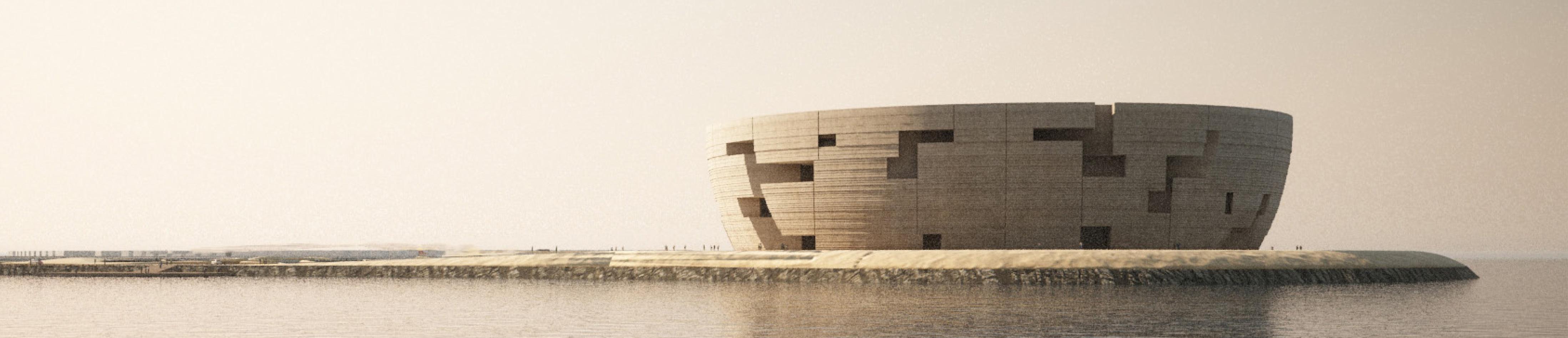
Lusail Museum Qatar, designed by Herzod De-Meuron Architects
Collaborated with the Revit-based BIM team during the executive phase of the project and contributed to 3D and 2D Revit models, specializing in worksharing workows and large scale projects.
GMW ARCHITECTS
Architectural Intern
Team: Yuksel Ozle Pehlivan, Bengisu Ilksoy
Istanbul, Turkey
Jul 2018-Aug 2018
The BIM-focused office, worked with the Revit team during the execution part of the “Central Bank of Iraq” project, designed by Zaha Hadid Architects .
ozlepehlivan@ucla.edu Los Angeles, CA
+1 310 208 9561 @yukselozleoguz
3D Modeling & 2D Drawing
Autodesk Revit
Rhinoceros
Autodesk Autocad
Visualization& Graphics
Adobe Photoshop
Adobe Indesign
Adobe Illustrator
Adobe Substance
Rendering & Real Time Environment AI based Visualization Tools
Marvelous Designer Unreal Engine (UE5)
Twinmotion
Other softwares: Adobe Premiere Pro, Runway AI
RESEARCH STUDY
Fuser Midjourney
AURA ISTANBUL - Architecture and Urbanism Research Academy
Researcher
Istanbul, Turkey
Sep 2019- Feb 2019
Conducted a research based design project on “ Tectonic of Articulation”. [Published at Aura Research Academy]
LANGUAGES
Turkish
English
Italian
REFERENCES
Gian Luca Brunetti
Ilaria Stroppa
Native Full Professional Proficiency
Pre-intermediate
Professor, Politecnico di Milano Technological and Environmental Design of Architecture, gianluca.brunetti@polimi.it
CNAAPC- Senior Architect at Il Prisma Milano, istroppa@ilprisma.com
Other references available upon request
Research Center in Milano Innovation District
A Gate to the Future
Politecnico di Milano 2021-2022, M.Sc. Thesis Project
Location: Milano Innovation District, Milano, Italy
Group: Yuksel Ozle Pehlivan, Ardit Dobroshi, Tomas Kedhi
Supervisors: Francesca Battisti, Grigor Angjeliu, Massimiliano Nastri, Giovanni Dotelli, Francesco Romano
My work: Architecture and urban design, graphics, layout, 3D modelling, sustainable technology
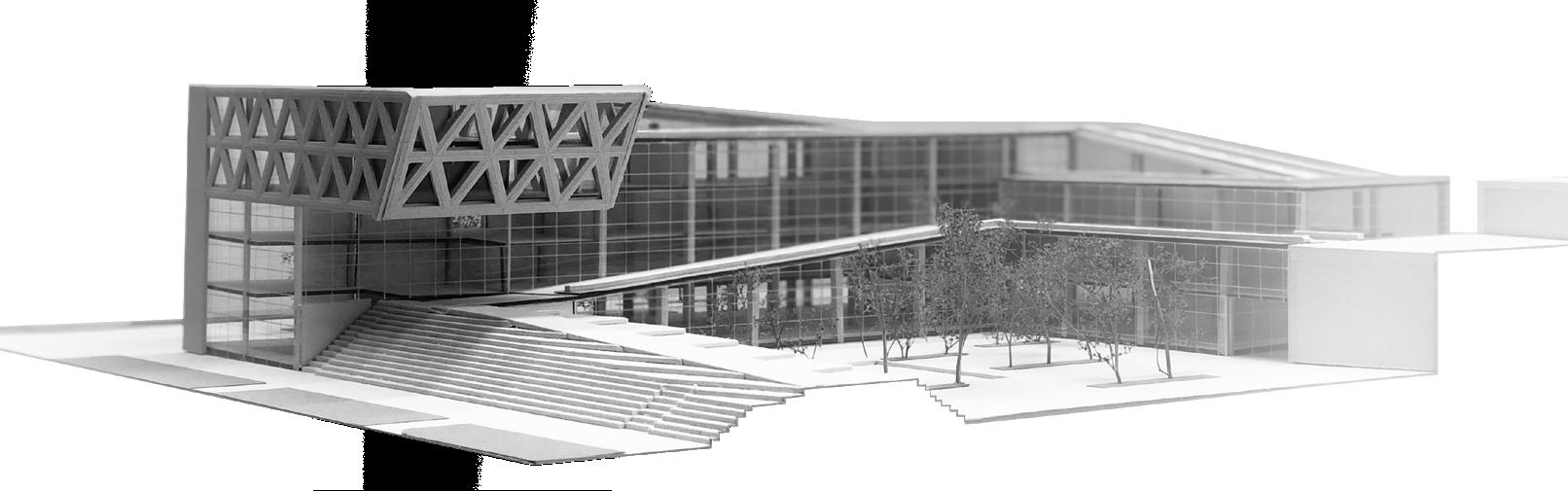
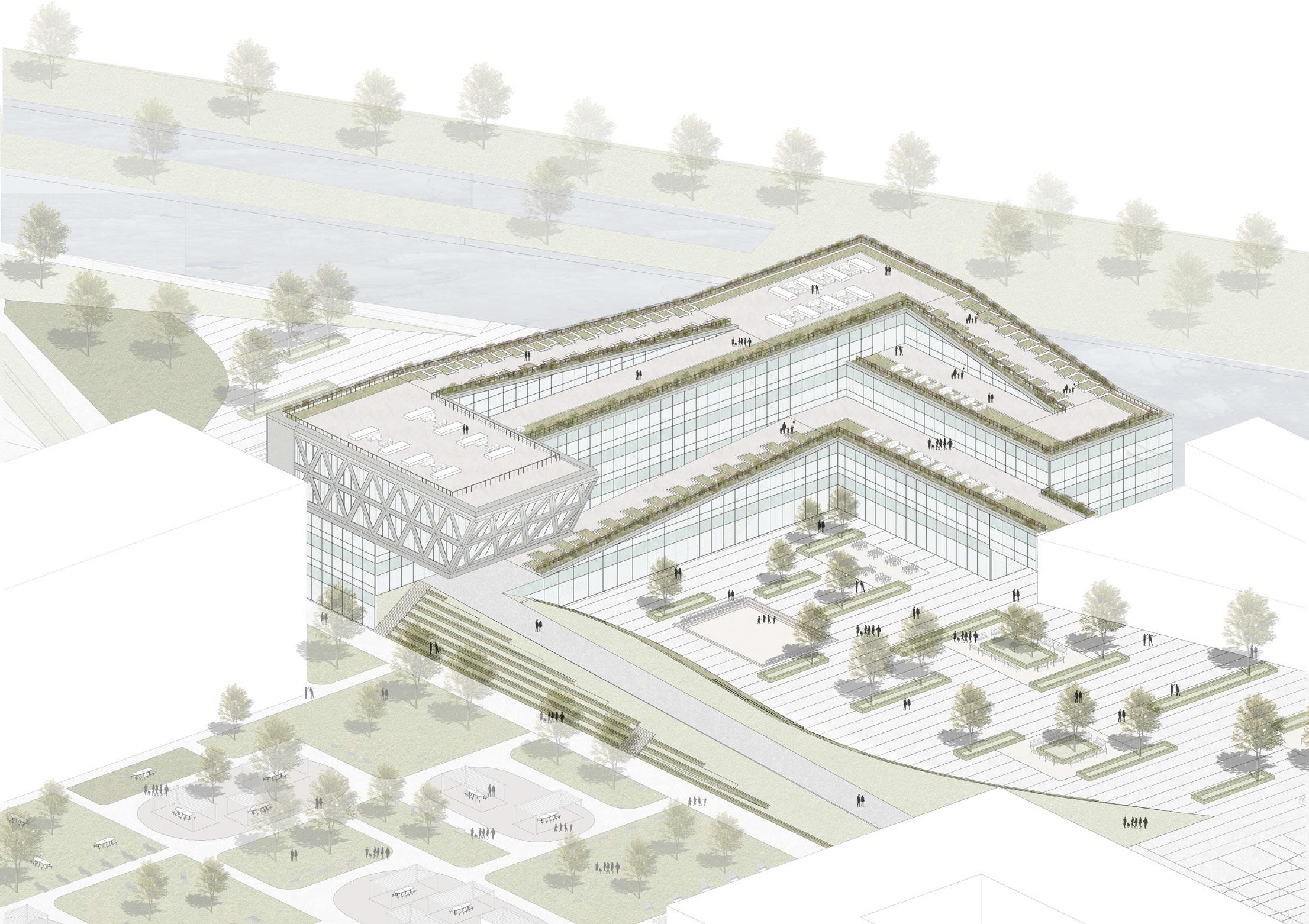
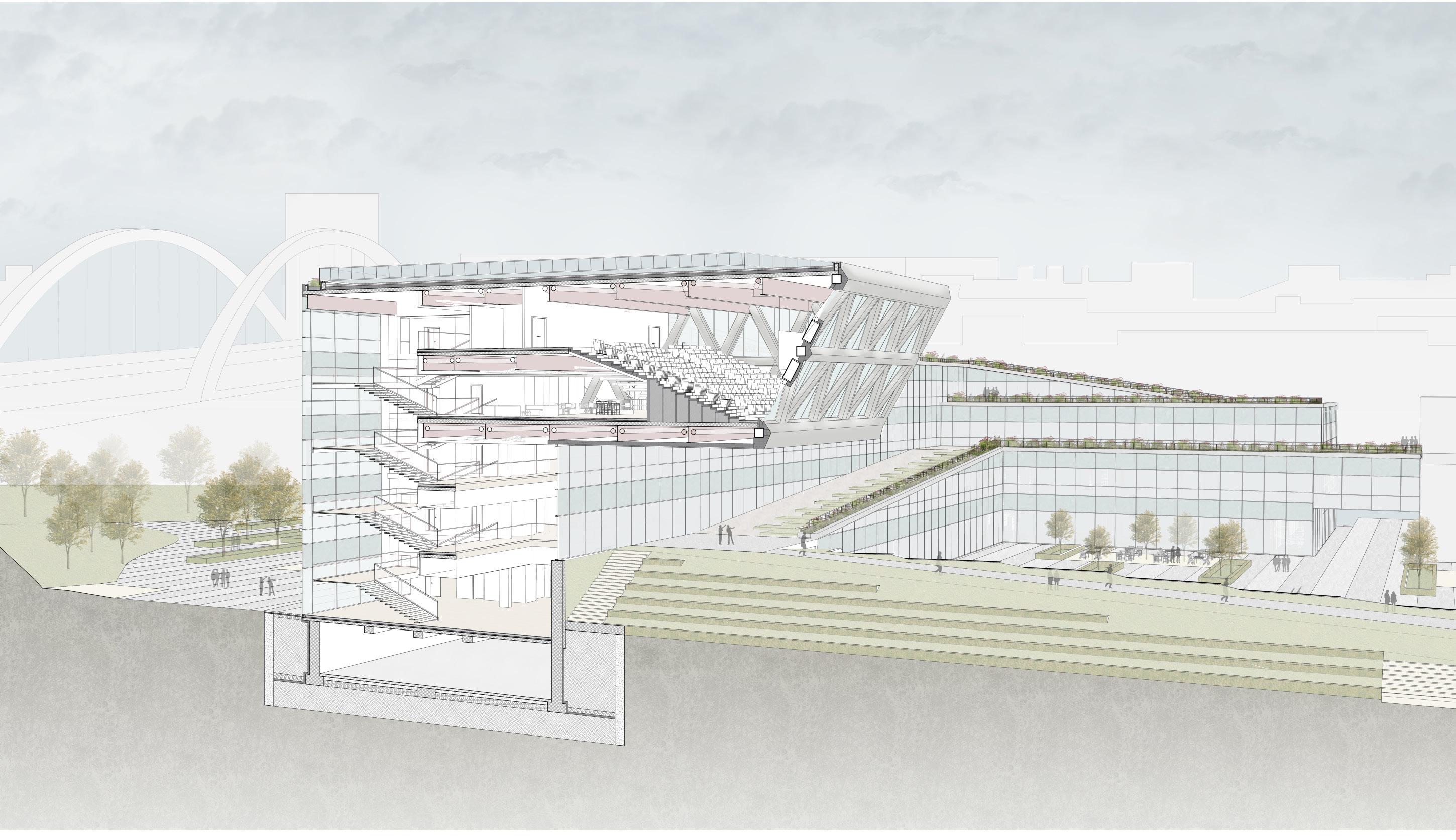
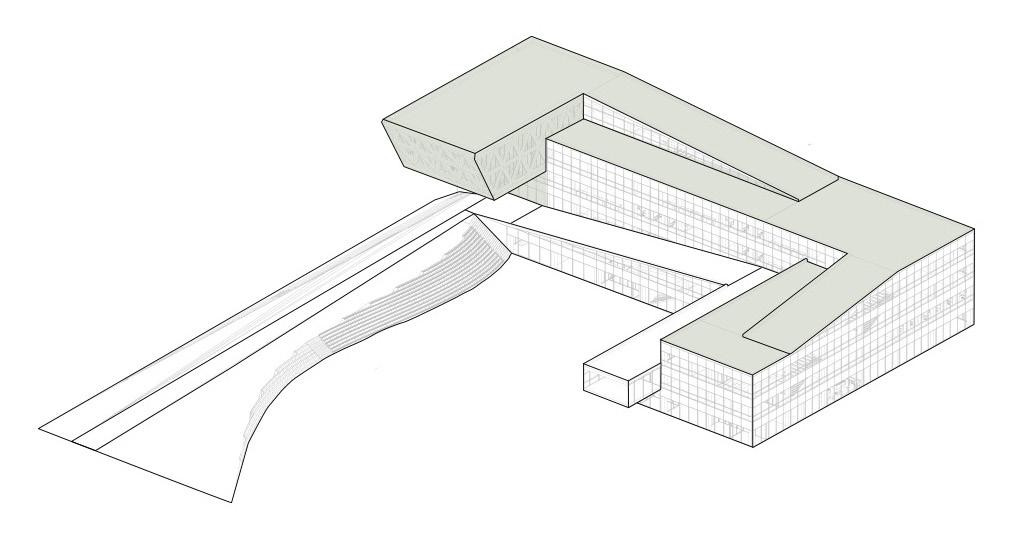
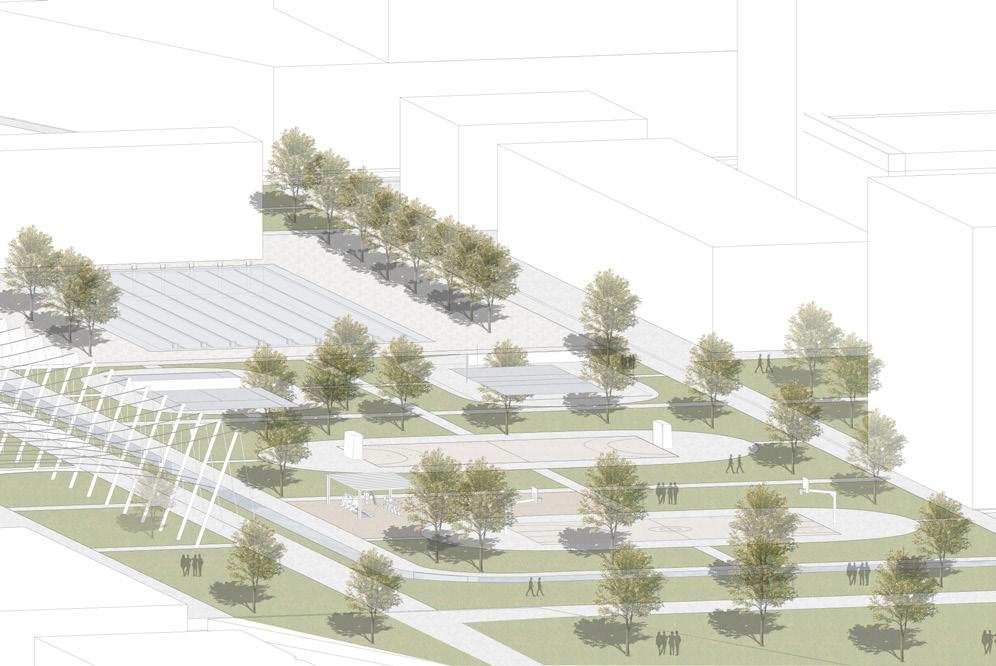
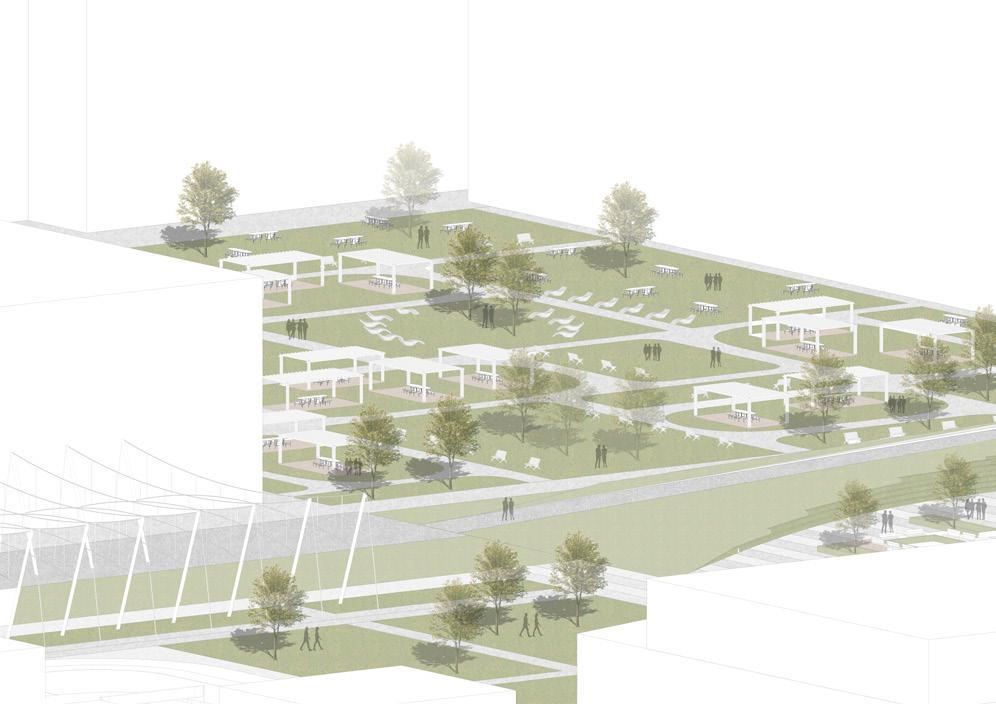
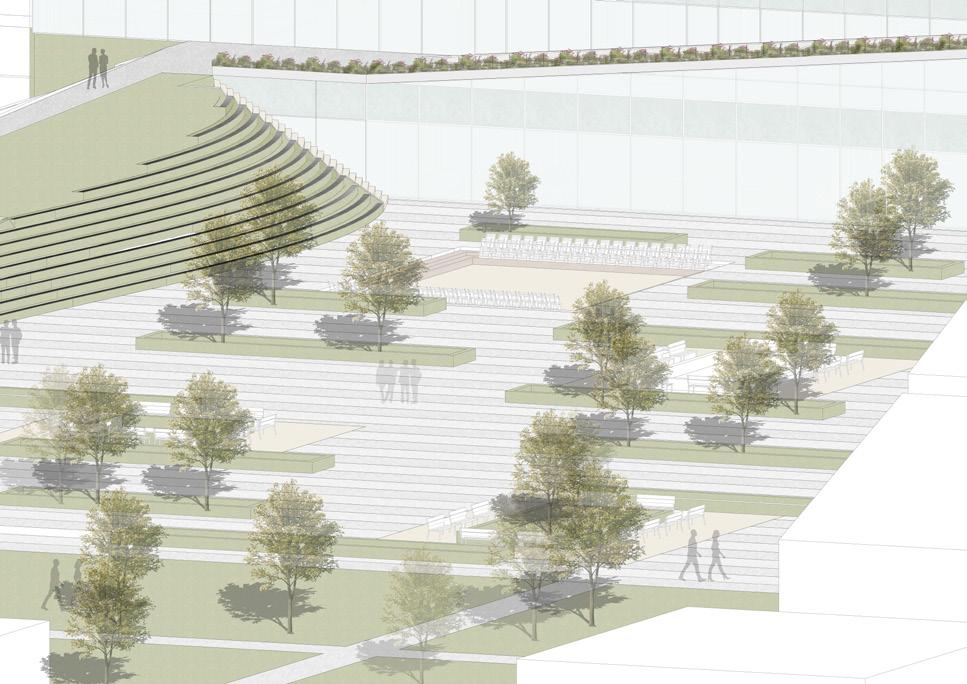
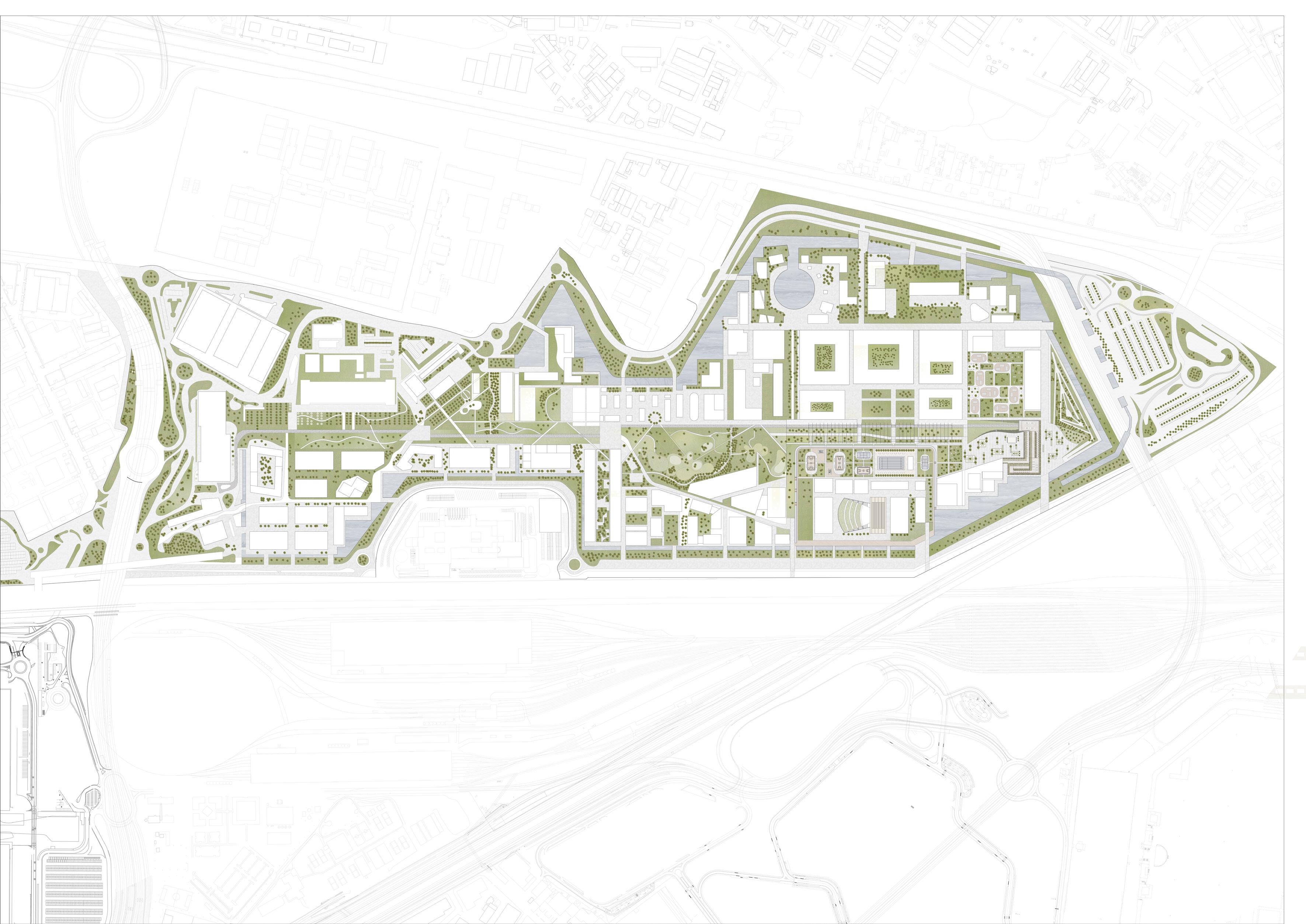
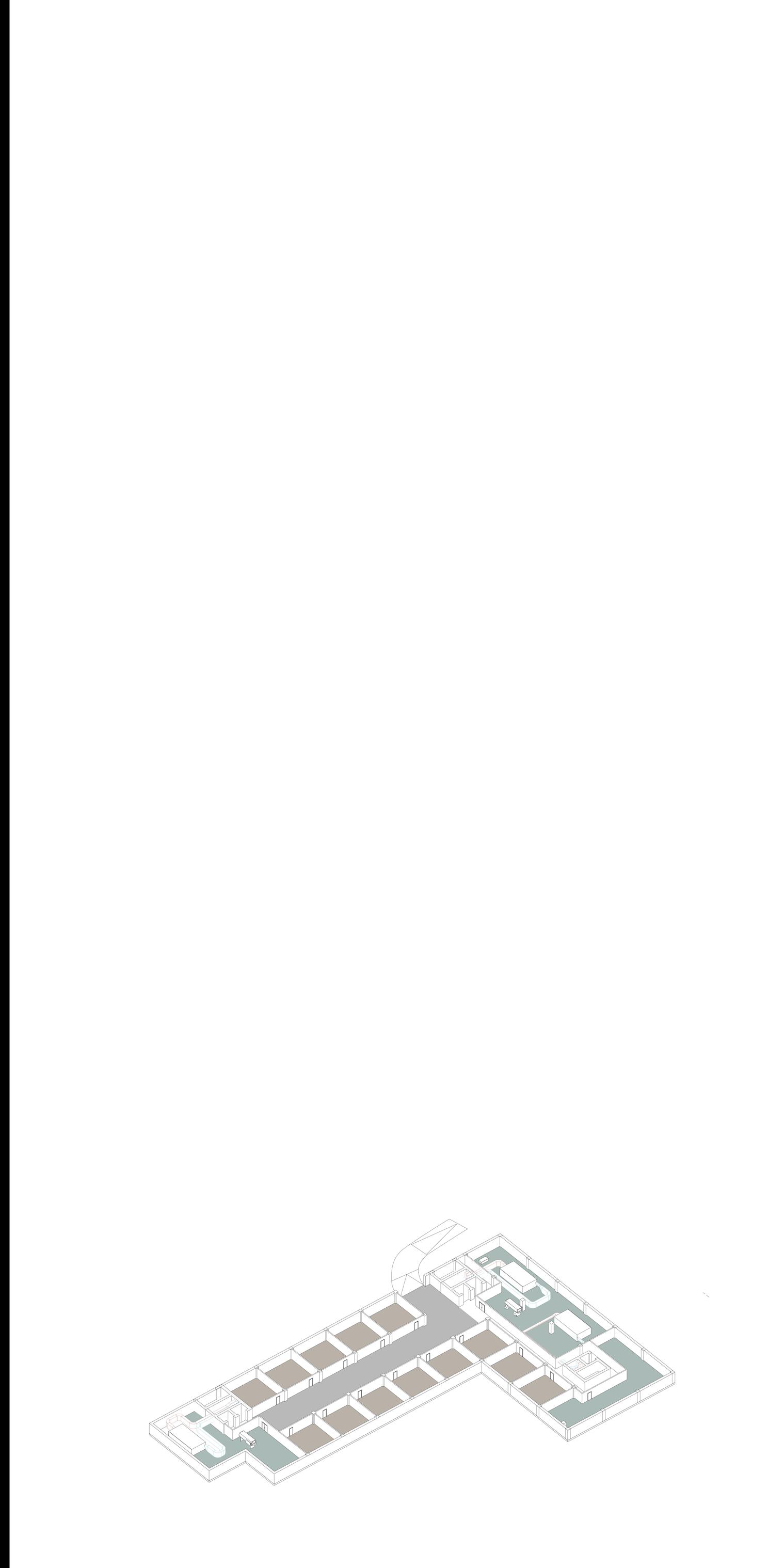
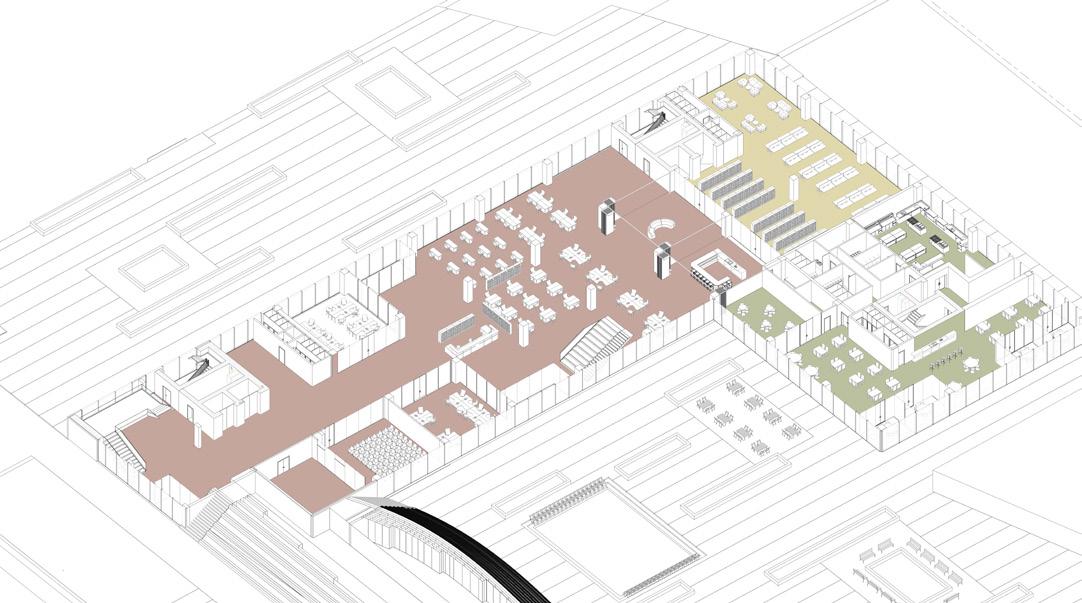
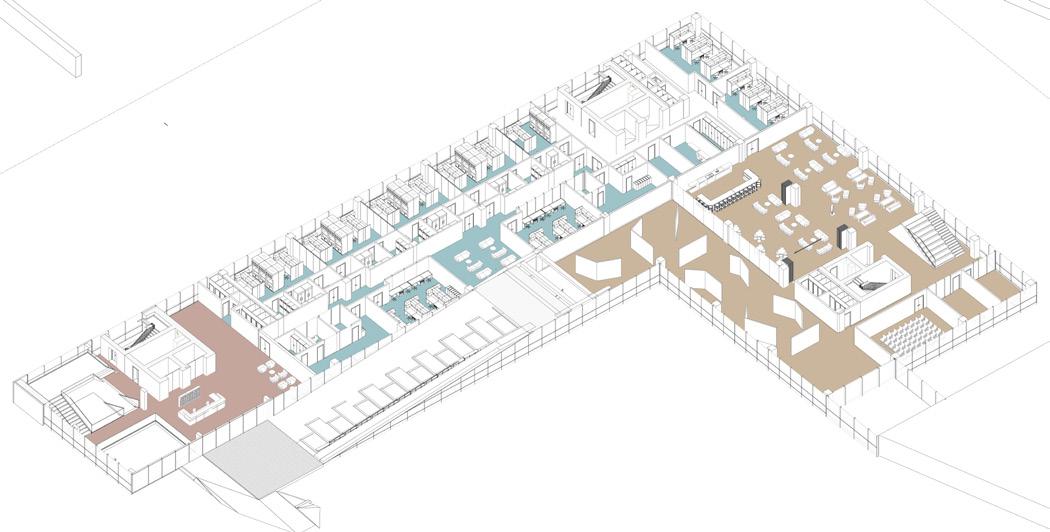
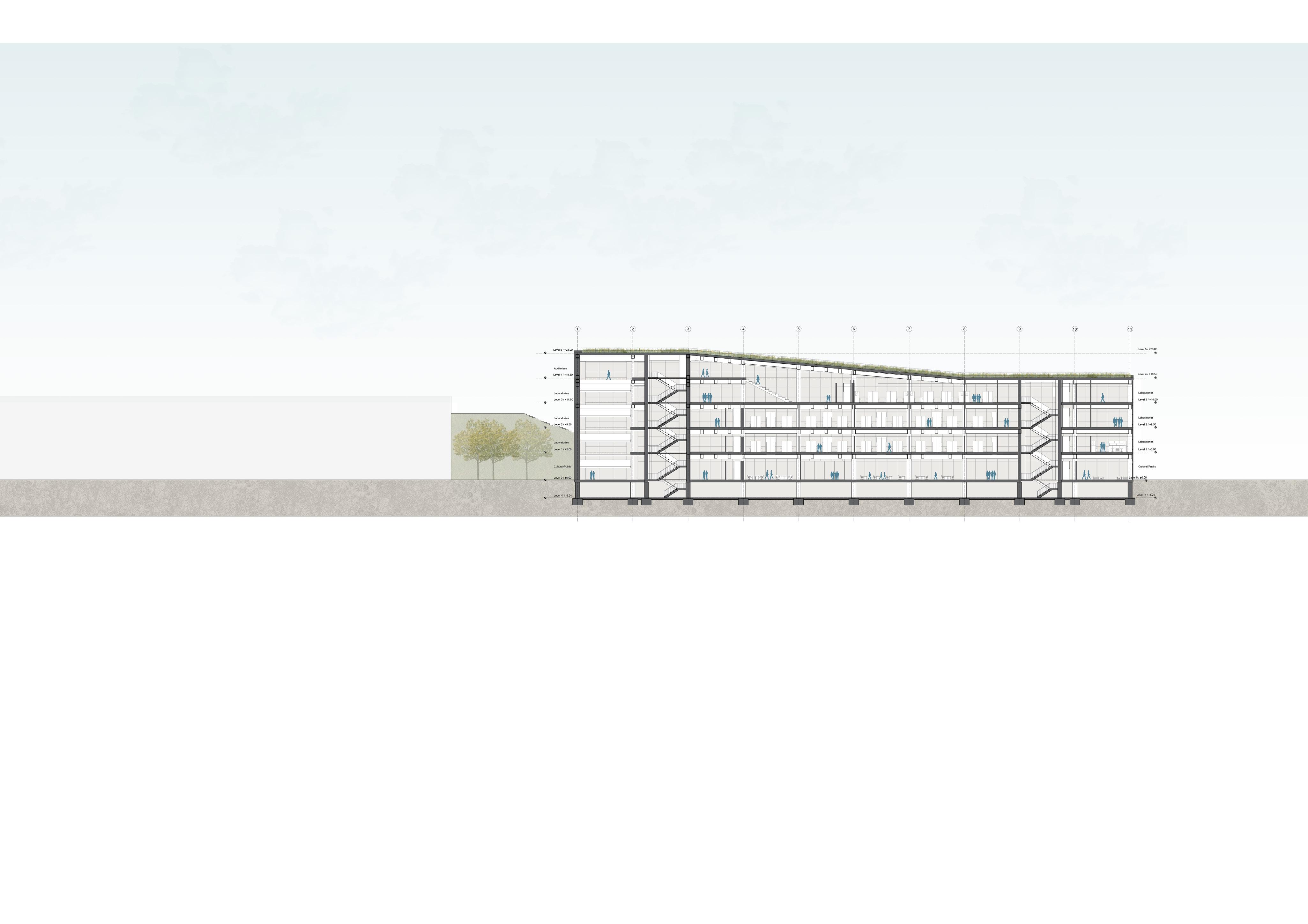
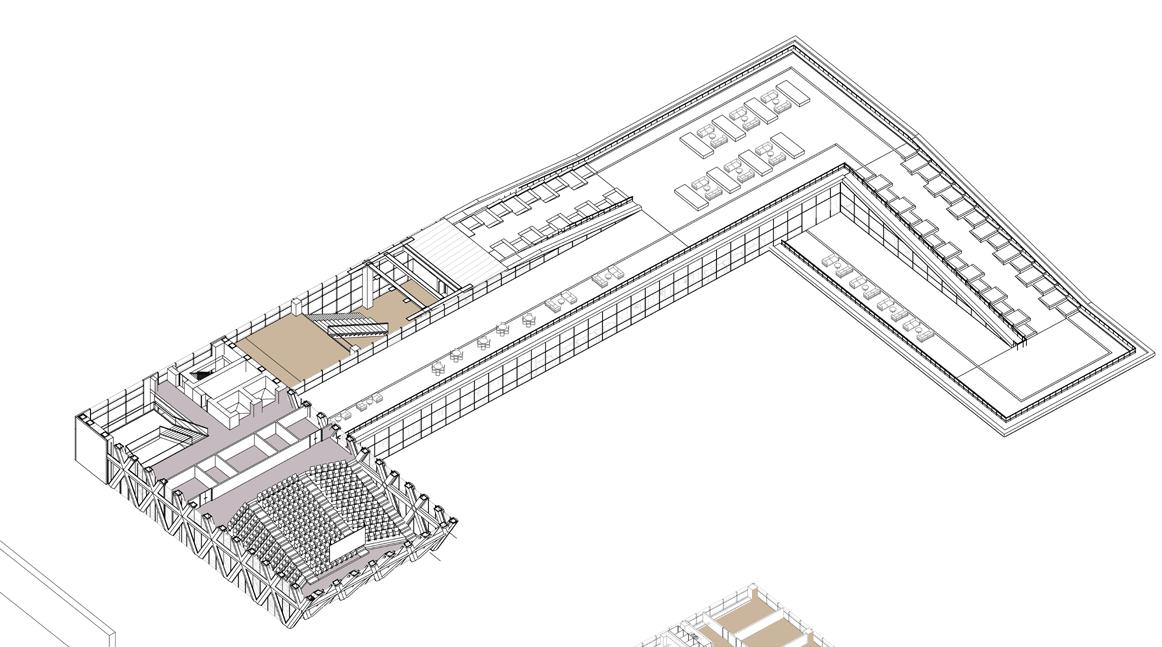
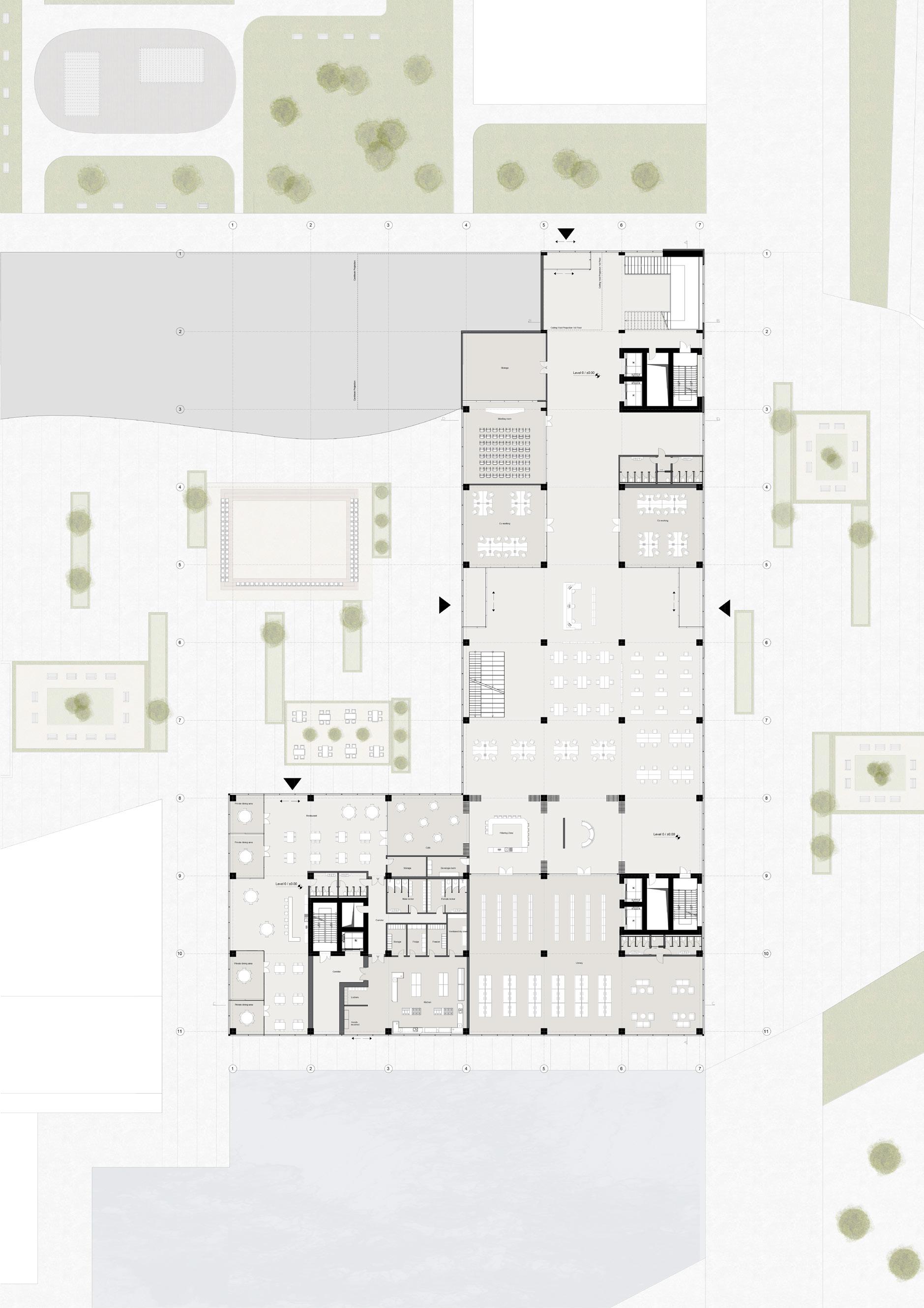
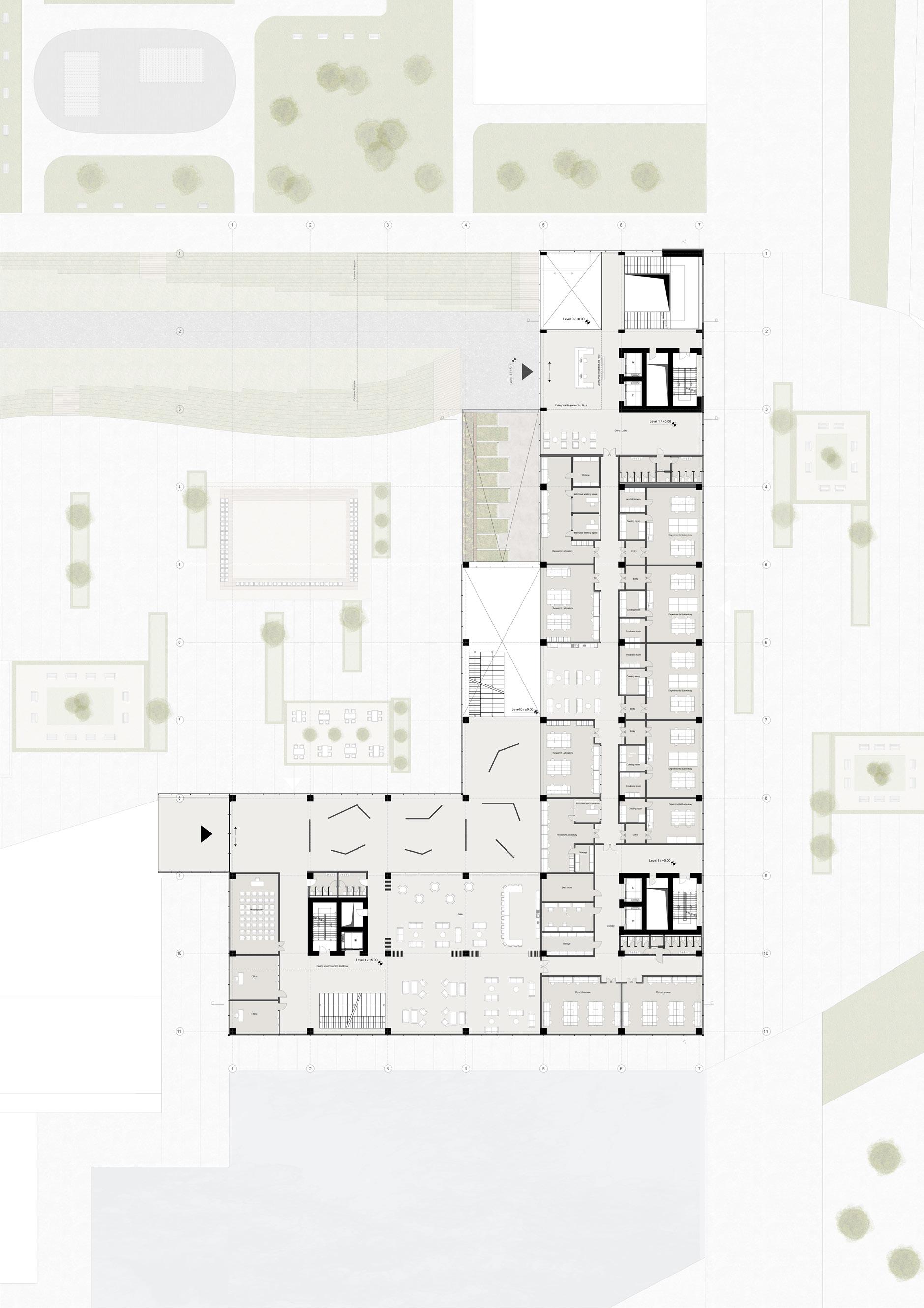
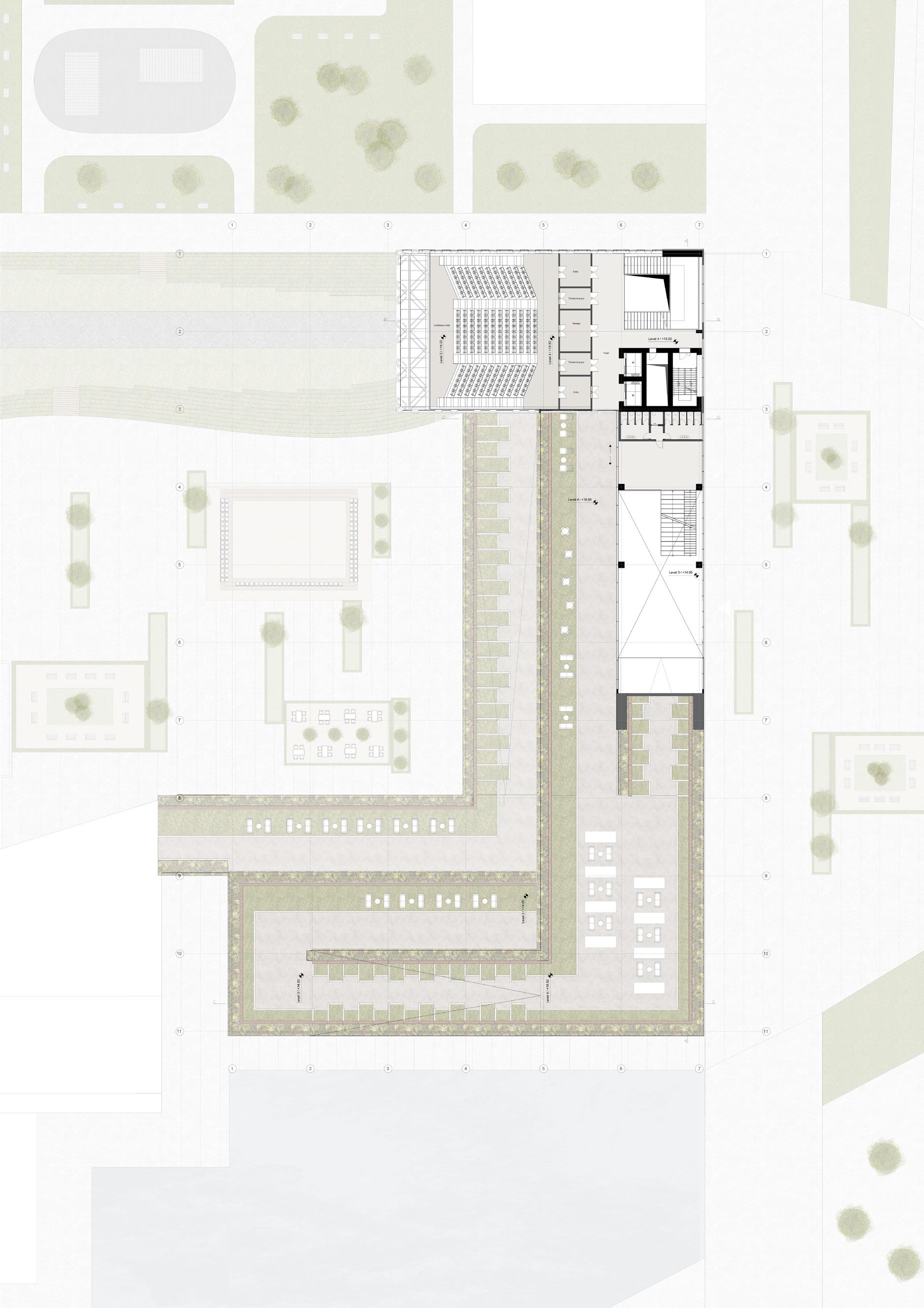
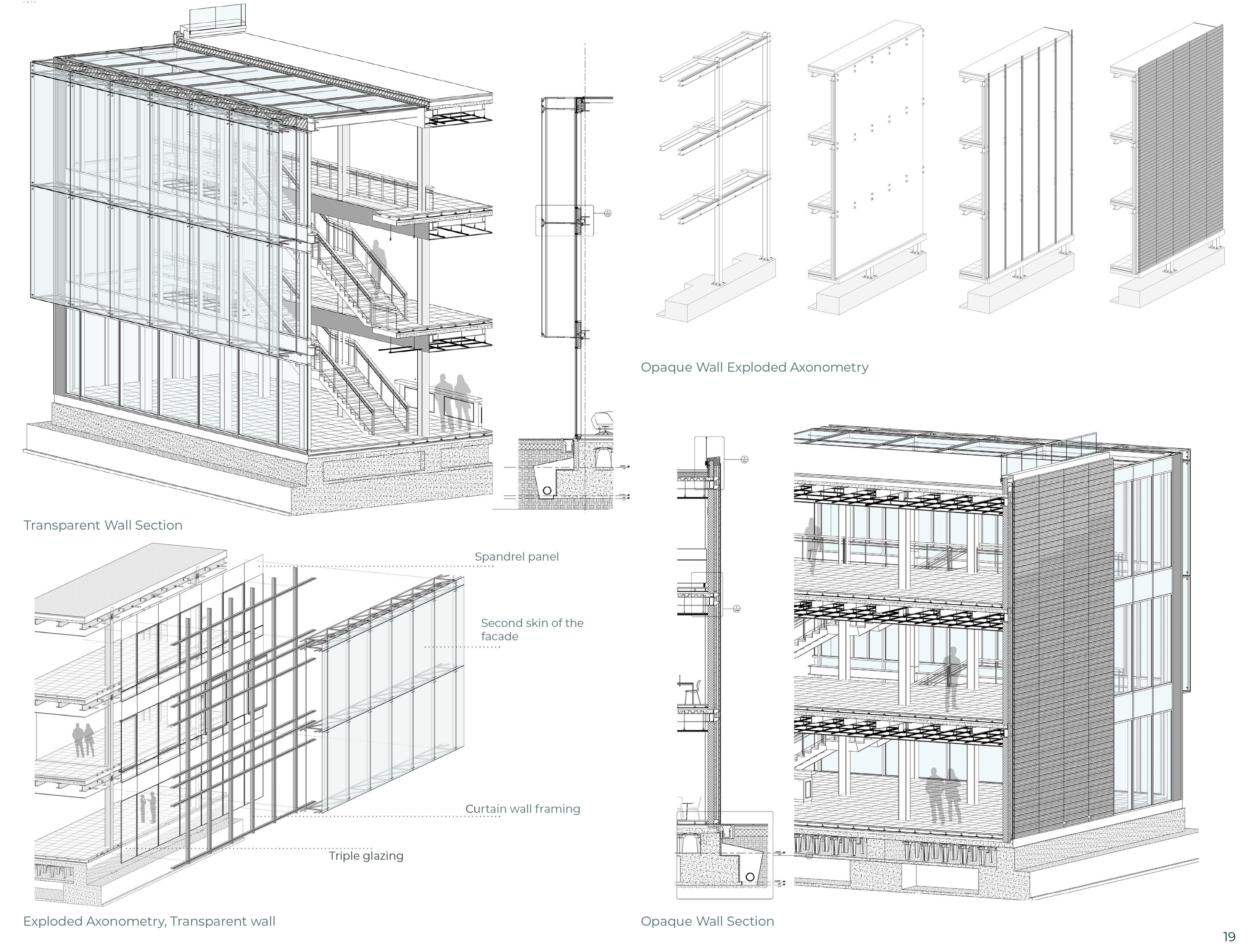
The Milano Innovation District hosted Expo 2015, today a center of knowledge and has established an ecosystem for social and economic development. The MIND’s backbone is called decumano, a long artery that starts at the western gate and ends at the eastern one, where our project is located as an ending of the artery. Our starting point was to create a proper ending by revitalizing the area with the green ramp and its master plan that transformed the area surrounding the new university campus into a park dedicated to sports and technology. The strategic location close to the new university and to the existing human technopole gave perfect ground for the development of a center dedicated to the research of natural science. The common ground (ground floor) is conceptualized as a translucent and flexible space, fully accessible by the public. In contrast, we designed the laboratories in the above levels to feature a more enclosed design.
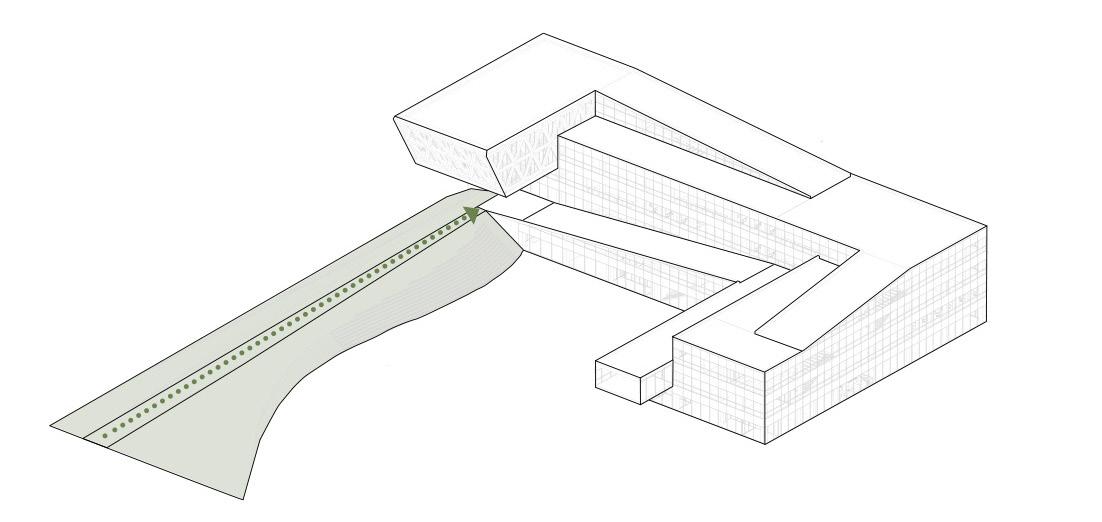
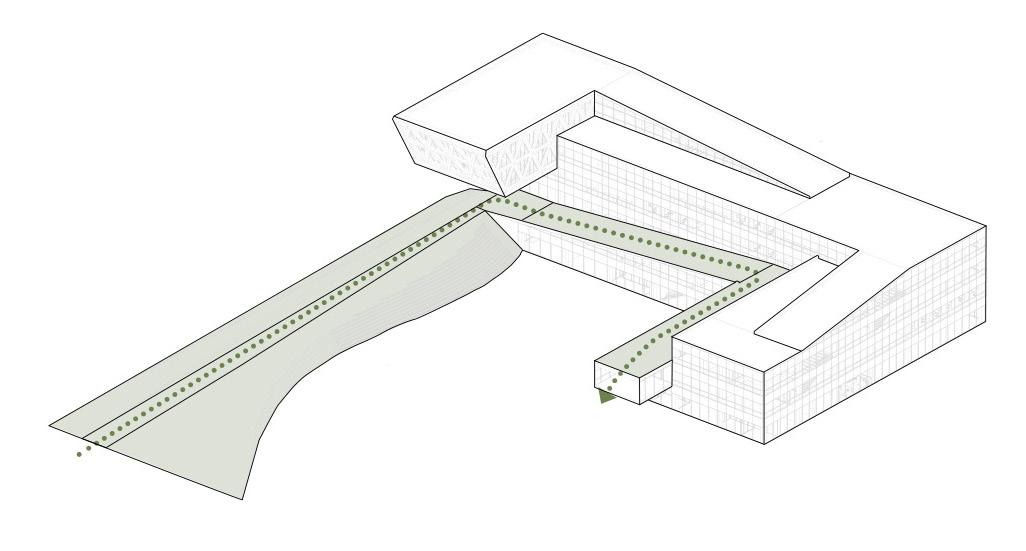
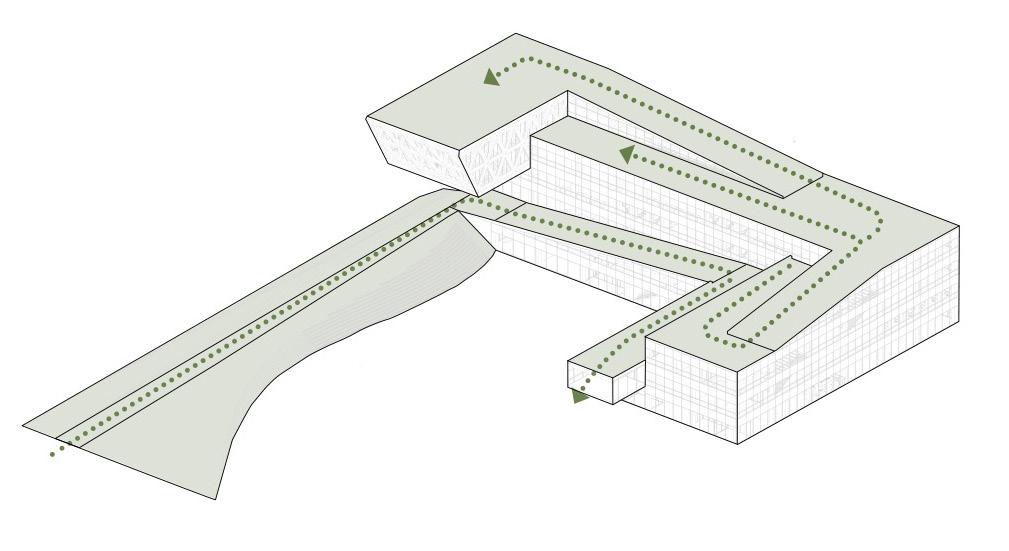
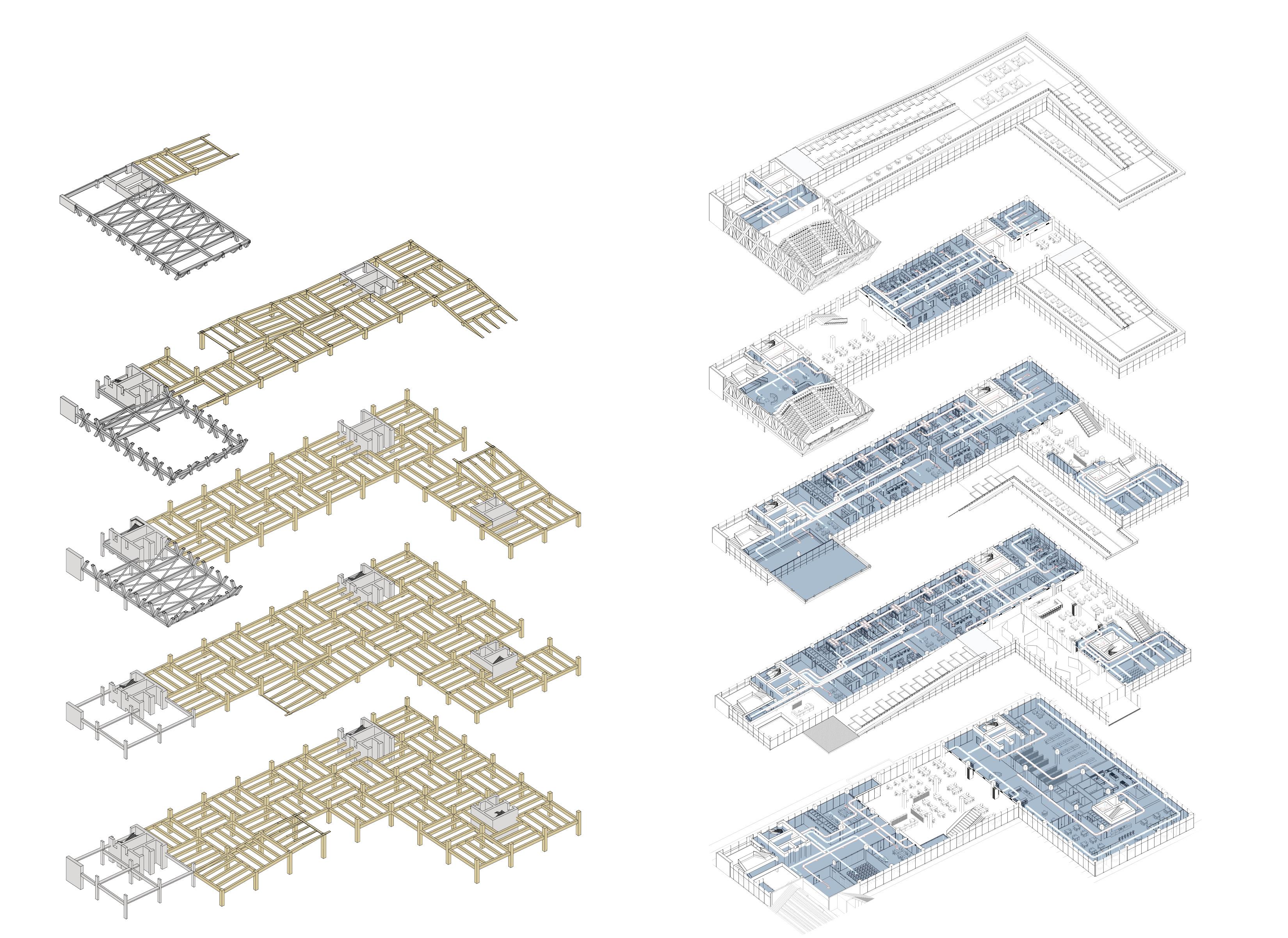
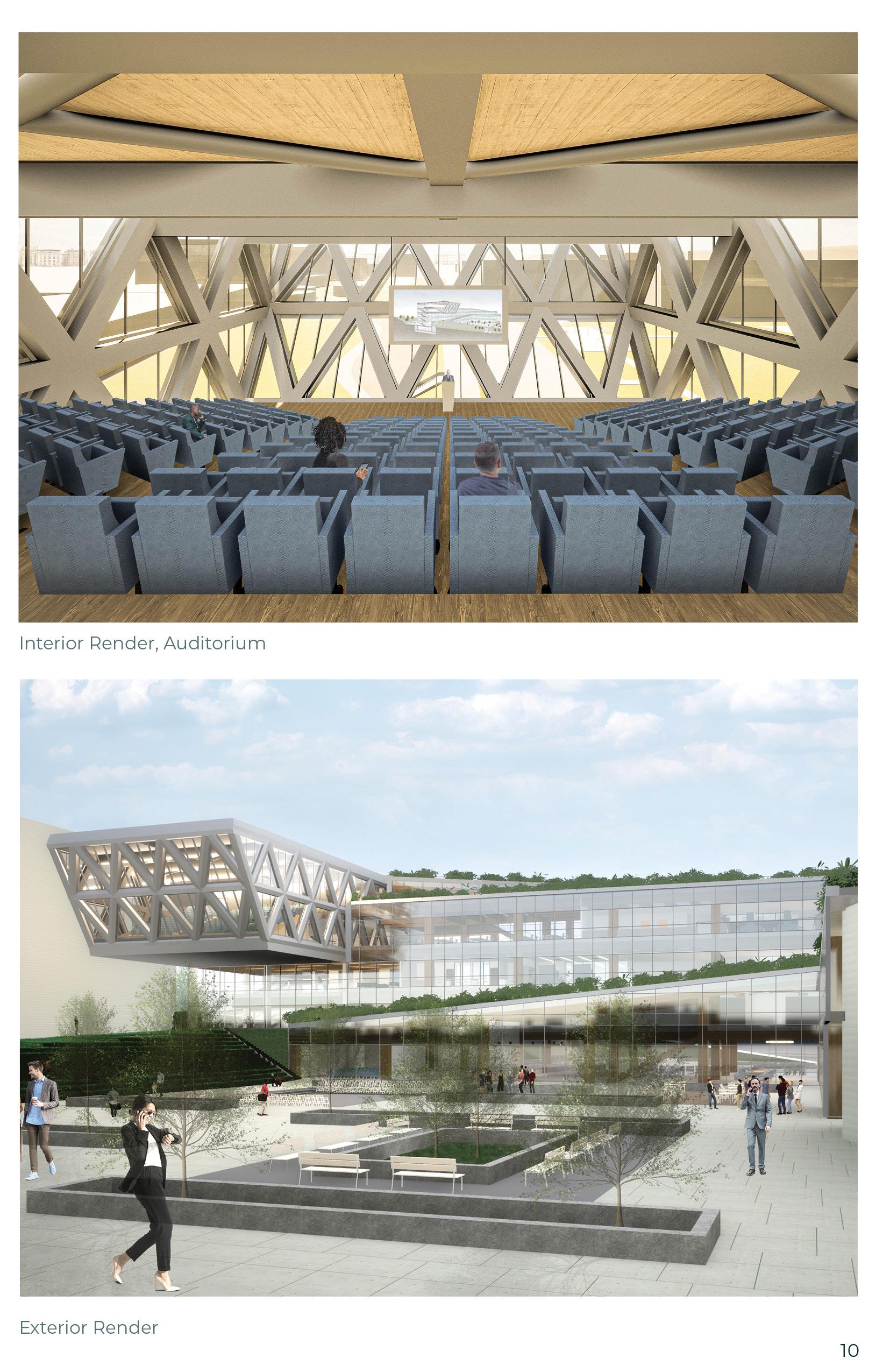
The green ramp designed to invite people through the main road and transformed into green terraces, which creates a dynamic atmosphere for the building. From a sustainable point of view, The building is composed of a wooden structure, and it also includes steel and concrete parts that are harmoniously integrated. The cantilever, where the conference hall is placed, emphasizes the entrance of the building and finishes the movement of the ramp.
Invitation: The ramp invites people
Elevation: Rising from the ground
Circulation: Creates a movement
Experience: Turns into open spaces
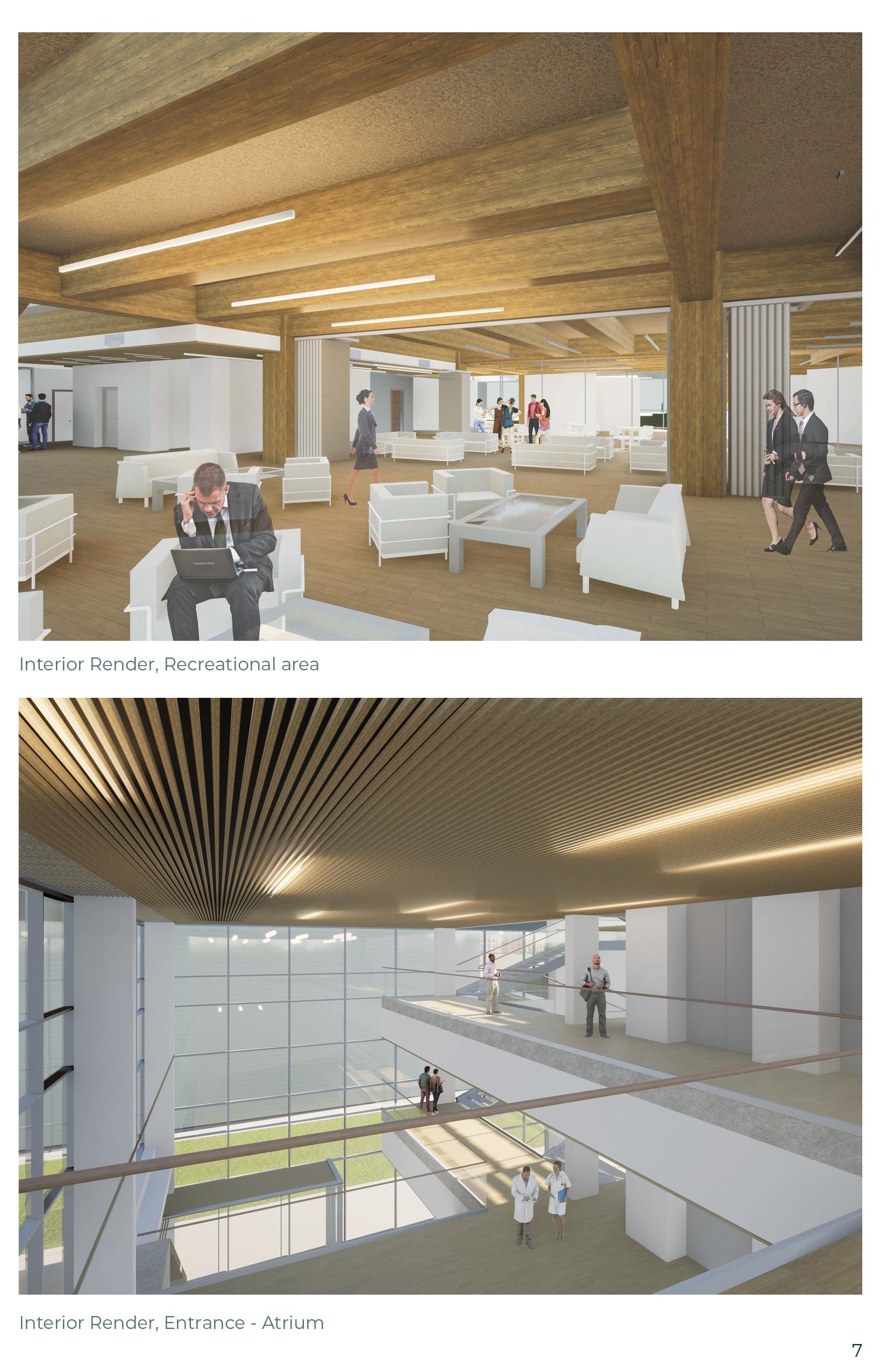
Interior Render, Entrance- Atrium
Interior Render, Common Spaces
Interior Render, Laboratory Type 1
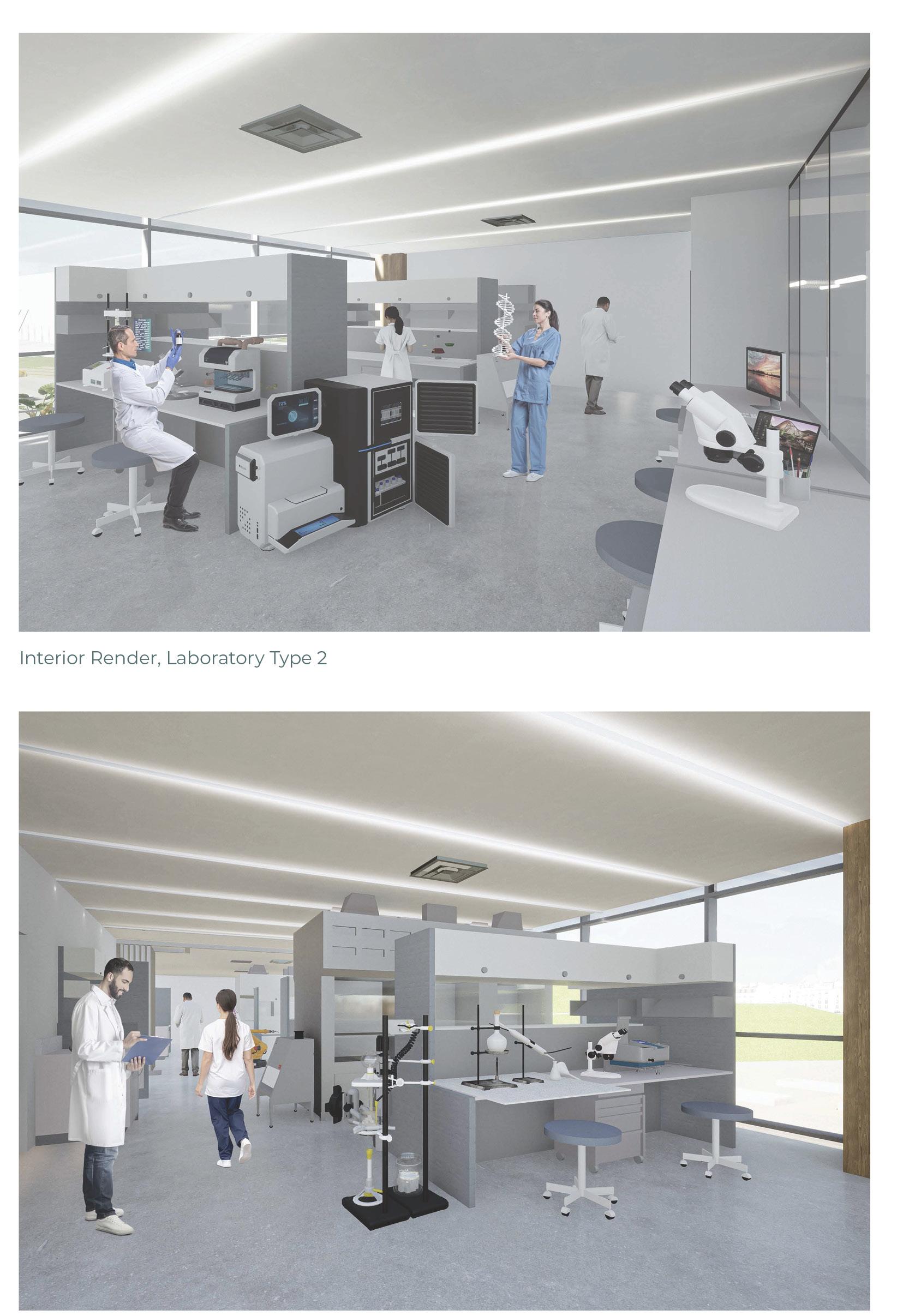
Interior Render, Laboratory Type 2
Exterior Render
Interior Render, Auditorium
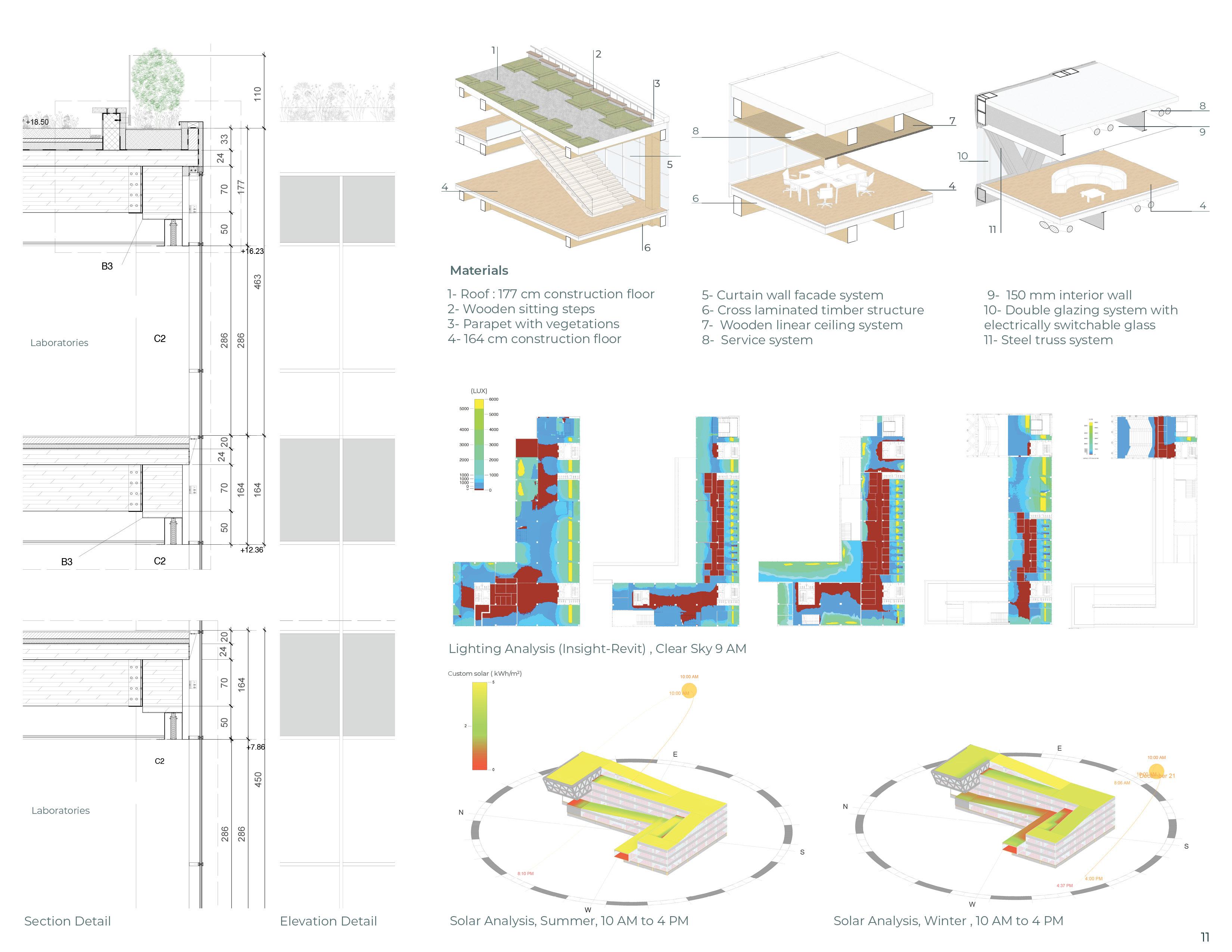
Materials
1- Roof : 177 cm construction floor
2- Wooden sitting steps
3- Parapet with vegetations
4- 164 cm construction floor
5- Curtain wall facade system
6- Cross laminated timber structure
7- Wooden linear ceiling system
8- Service system
9- 150 mm interior wall
10- Double glazing system with electrically switchable glass
11- Steel truss system
Lighting Analysis (Insight-Revit) , Clear Sky 9 AM
Green Falls: Chicago Housing Complex
Post Pandemic Living
Politecnico di Milano 2020-2021, M.Sc. Year I, Term II
Location: Chicago, United States
Group: Yuksel Ozle Pehlivan, Carlo Nessi, Zeynepnaz Kocabas, Kim Perino
Supervisors: Azzolini Andrea Matteo, Claudio Mirarchi, Maurizio Sabini, Rafael Shehu
My work: Architecture and urban design, graphics, layout, 3D modelling, sustainable technology
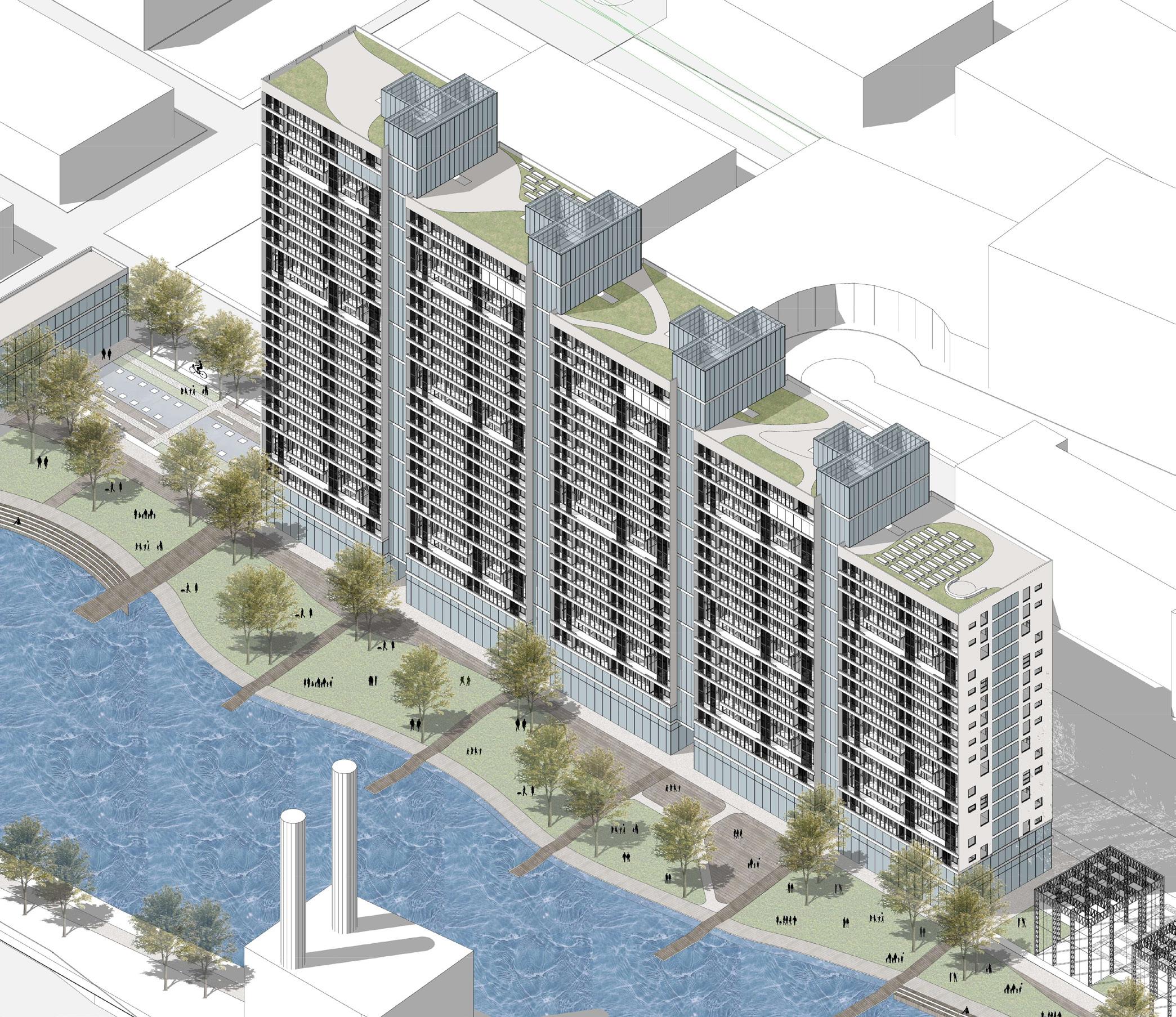
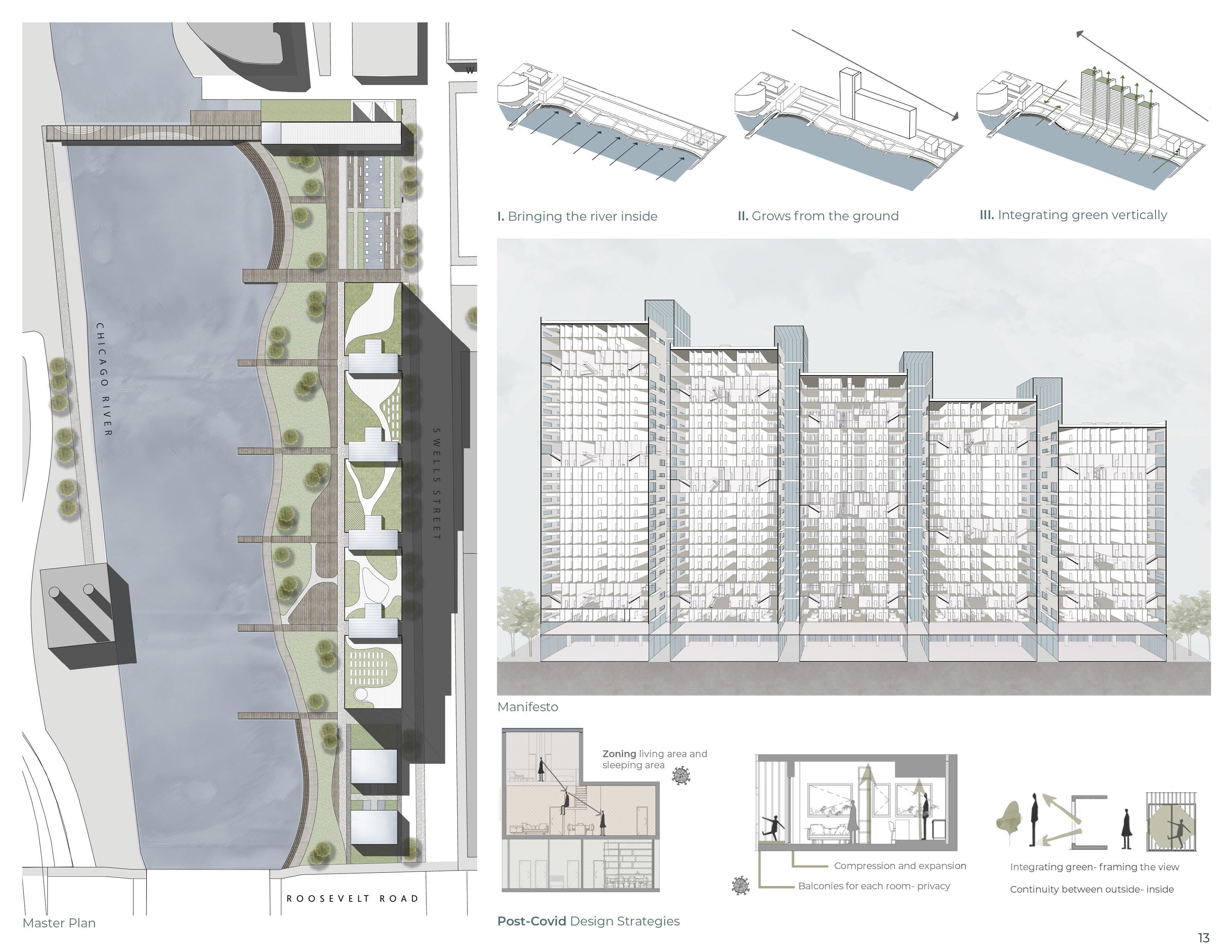
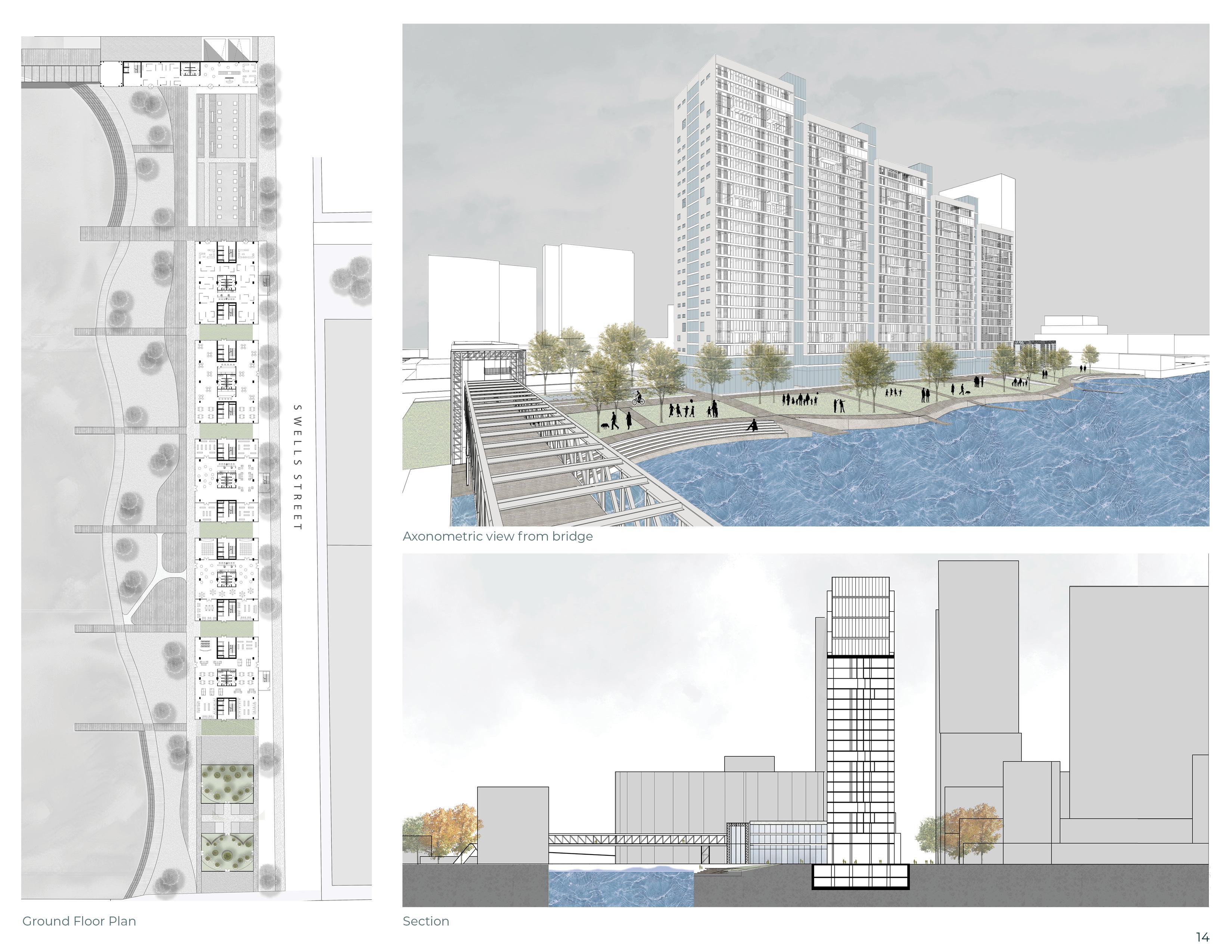
The “Green Falls” project emerges from the study of the urban strategies of Chicago, “Adding green to urban design,” and derives from the study of the urban and built environment of tall buildings in the city. The project, therefore, consists of five housing units connected by green glass galleries and pedestrian bridges between them, which form the main building.
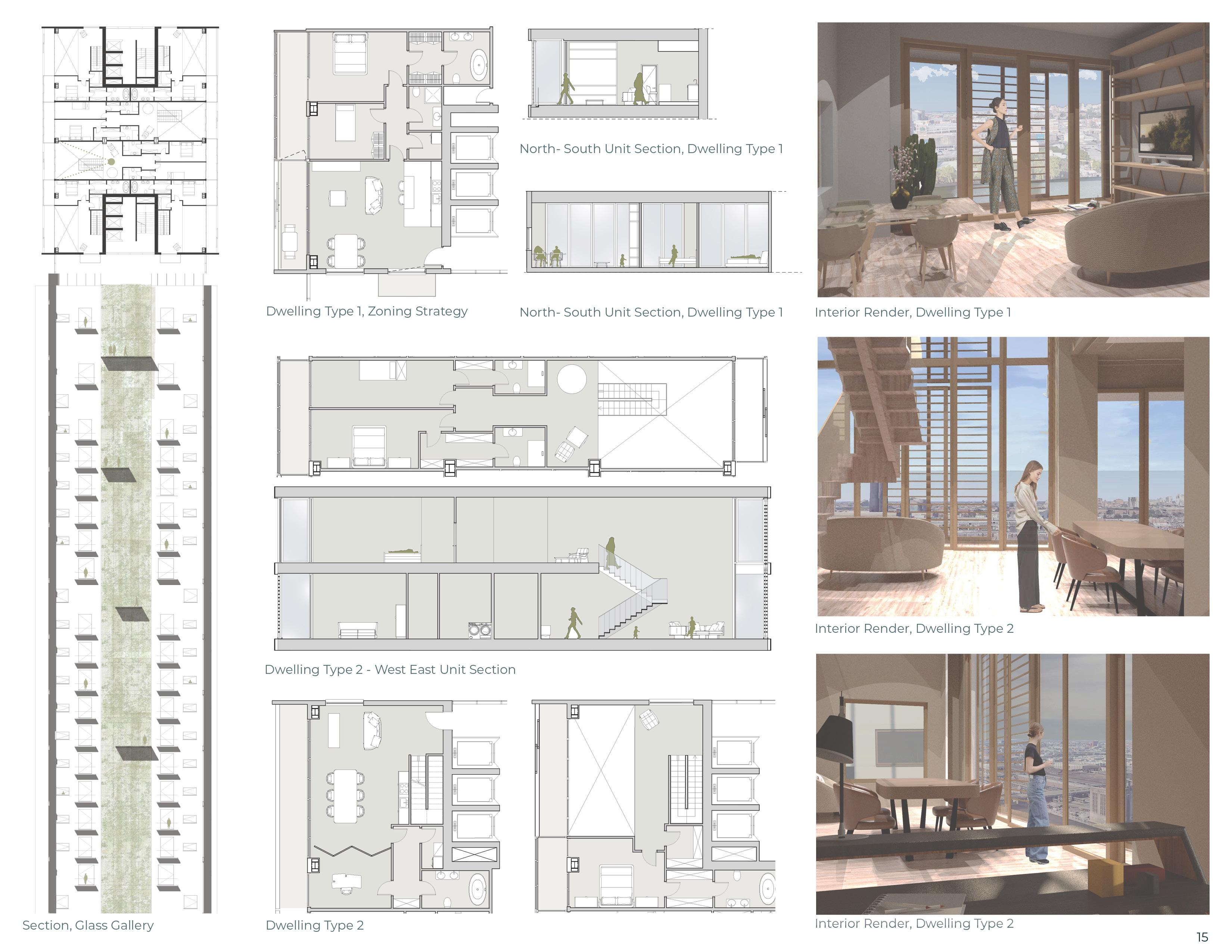
On the concept of growing from the ground, their heights increase from south to north, respecting the sun’s path. Their terraced roofs, creating a concept of green falls, offer residents different green environments with different functions. Dwelling units are designed considering post-pandemic factors such as zoning systems and convertible spaces within the house. In addition to the green roof terraces, two large winter gardens allow residents and the public to meet for educational activities or simply to relax in a forest on an urban scale. Regarding the structure, all buildings are related to each other, and the choice of structural material is steel.
In conclusion, the whole project revolves around the Post-disaster design concept combined with the city’s nature to benefit residents and their neighborhood by the keywords “Teaching – Feeding – Living – Cleaning”.
Startup Hub Milano
Co-Working
Politecnico di Milano 2020-2021, M.Sc. Year I, Term I
Location: Milano Innovation District, Milano, Italy
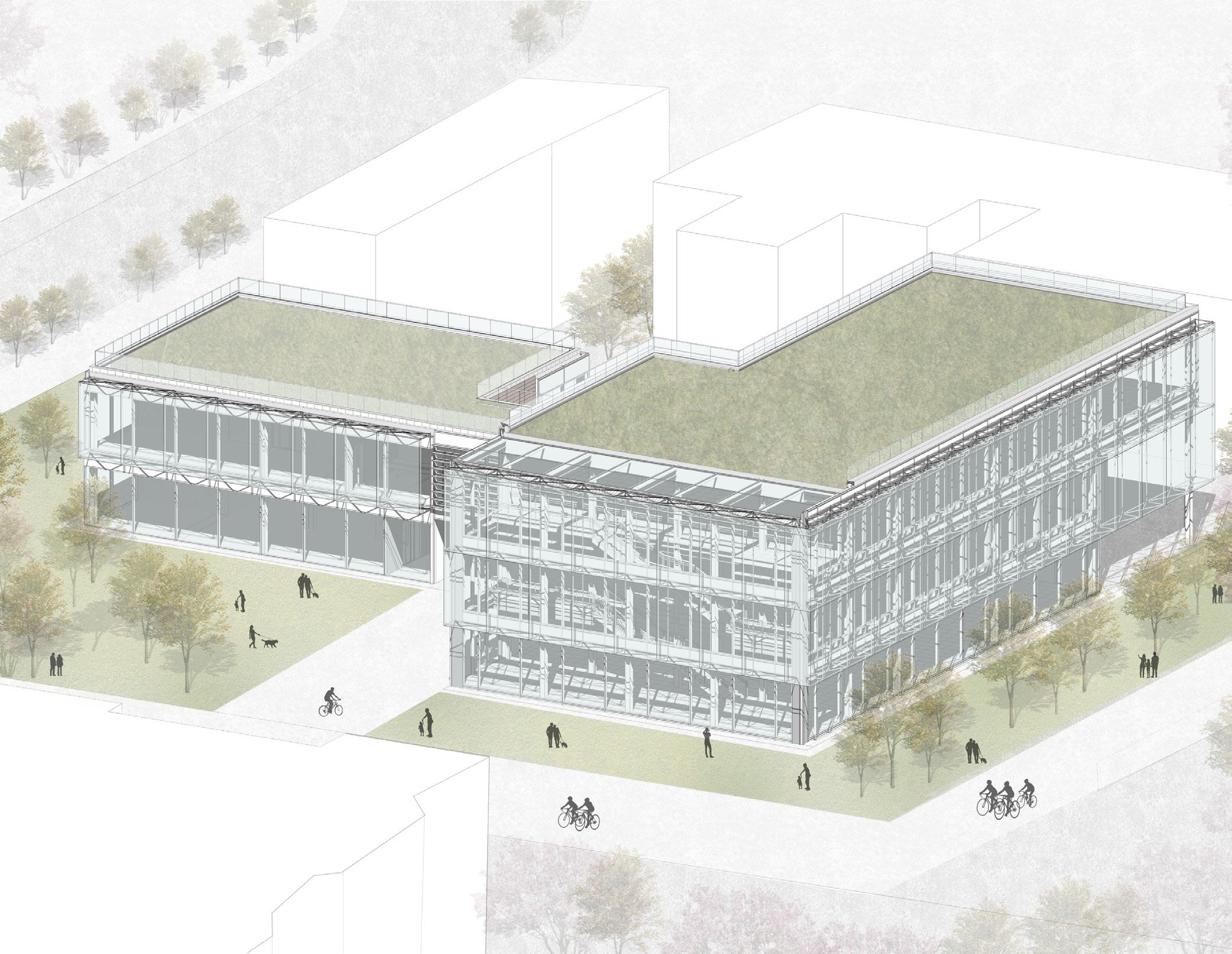
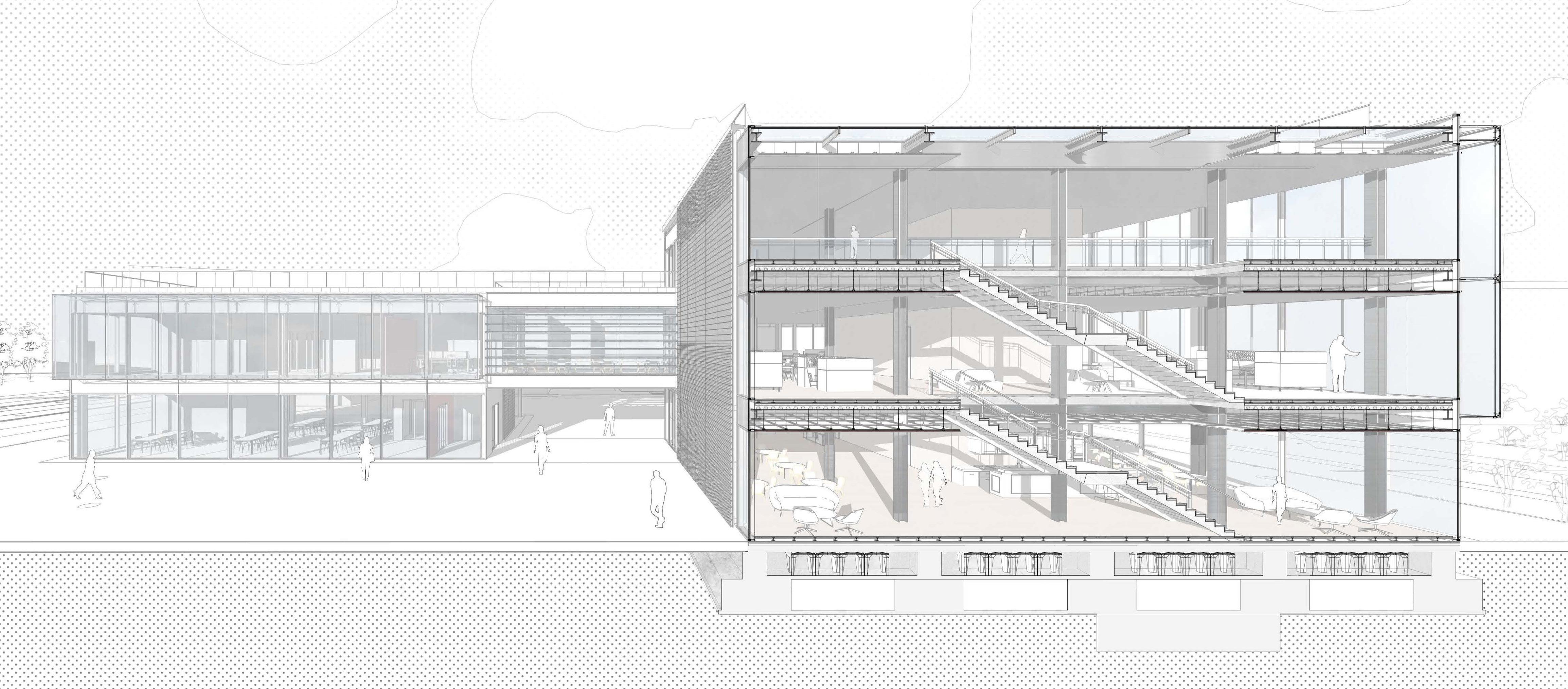
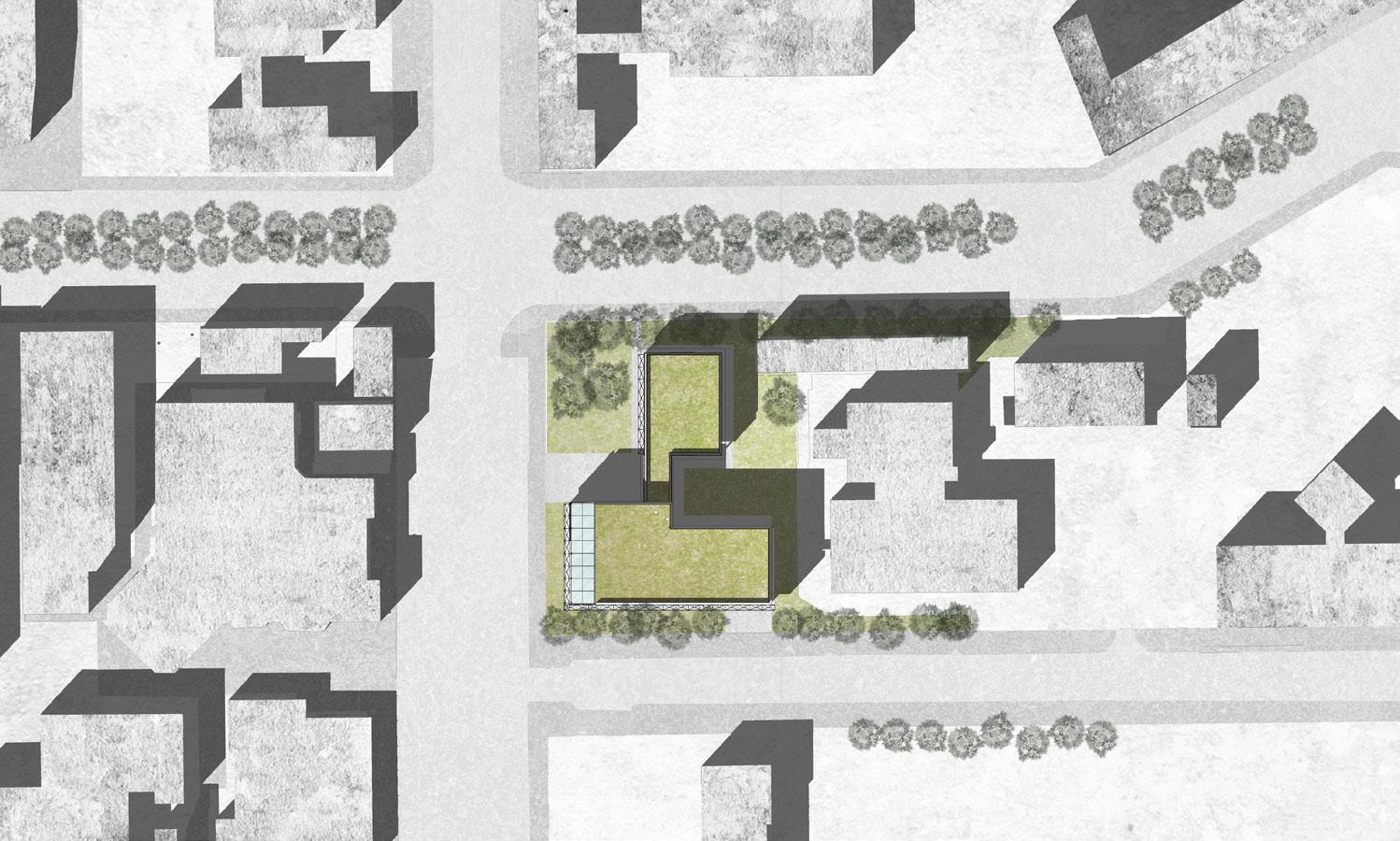
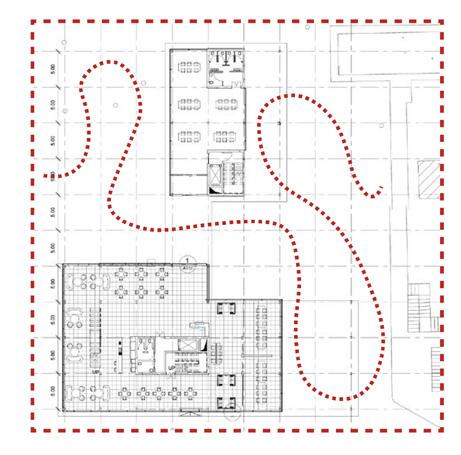
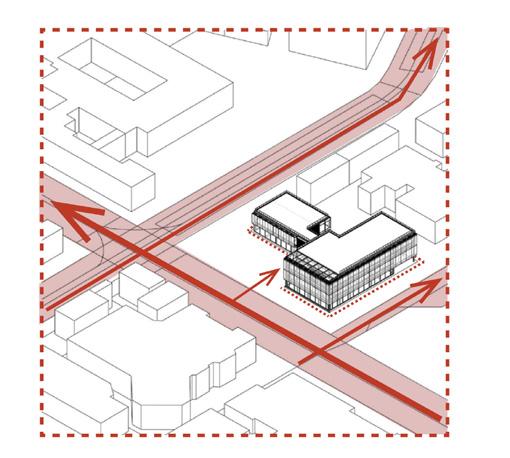
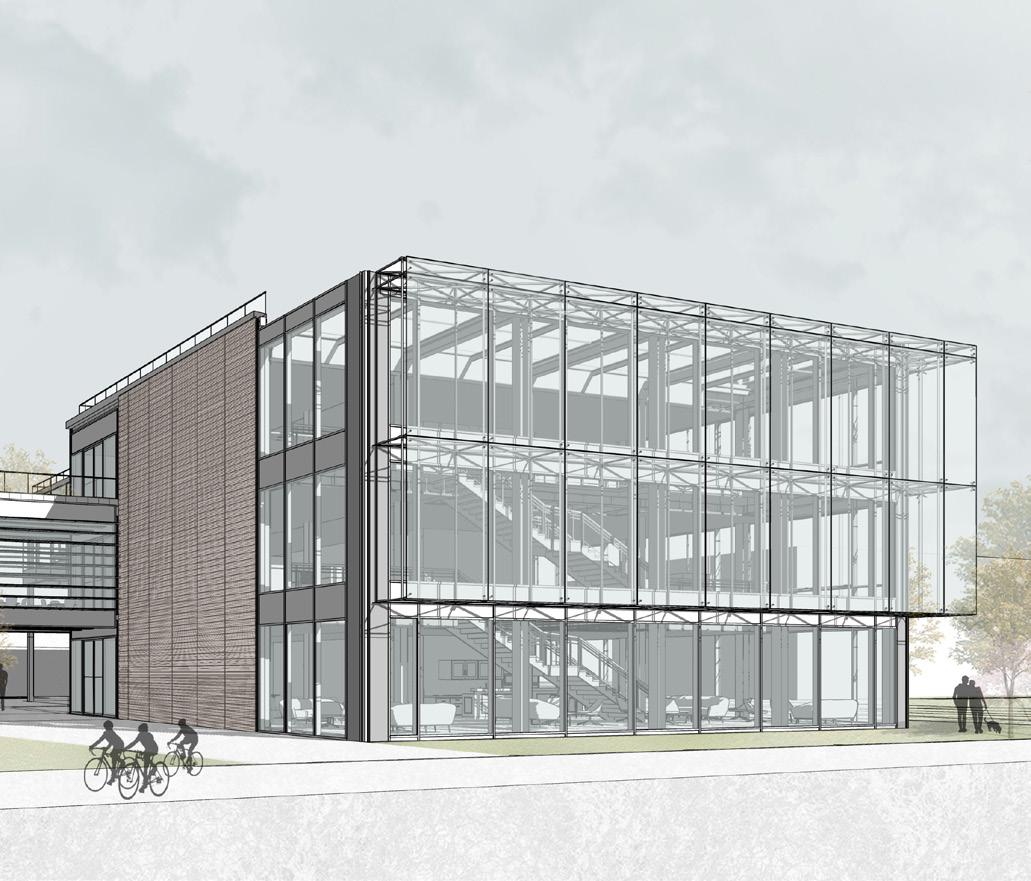
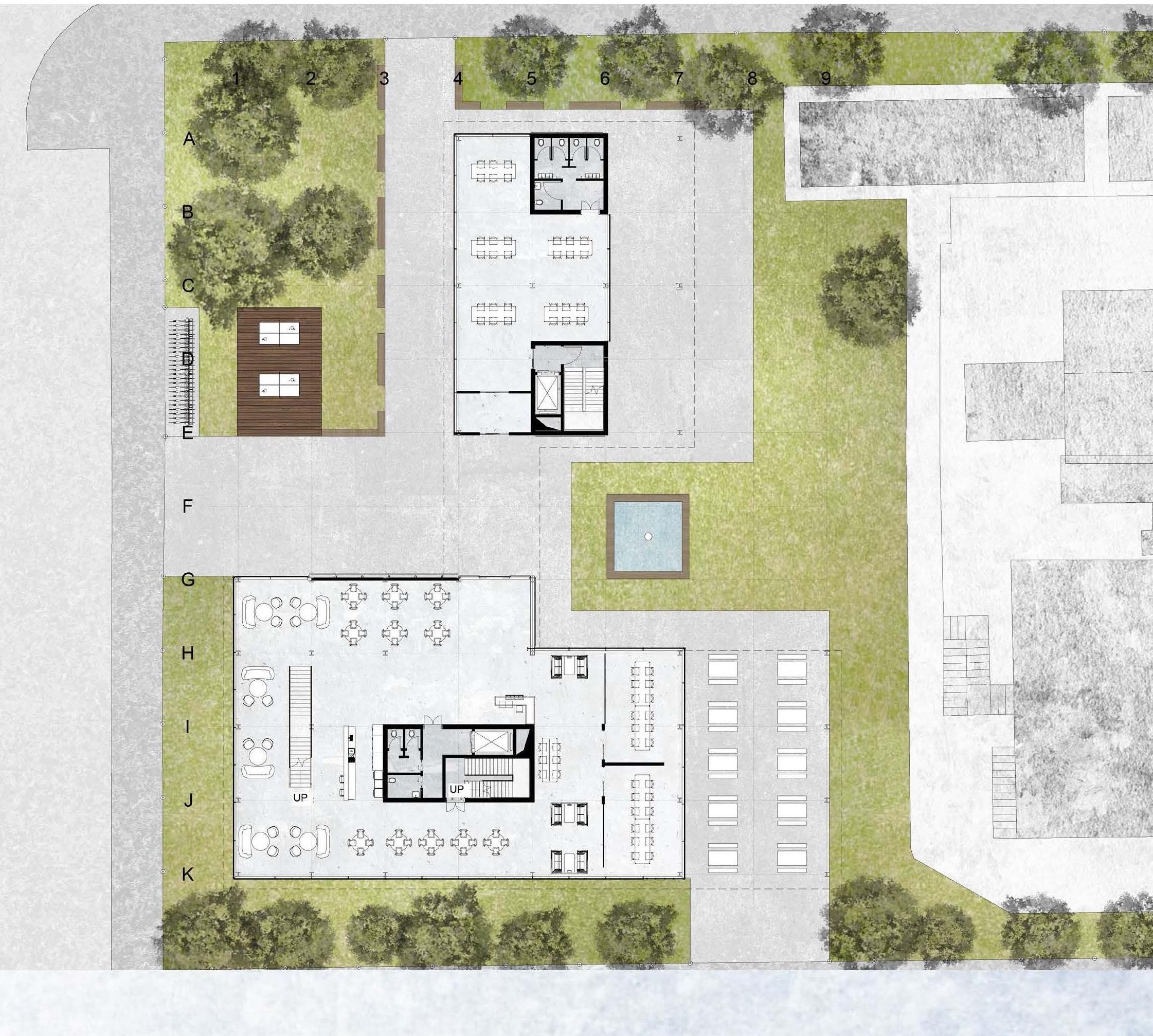
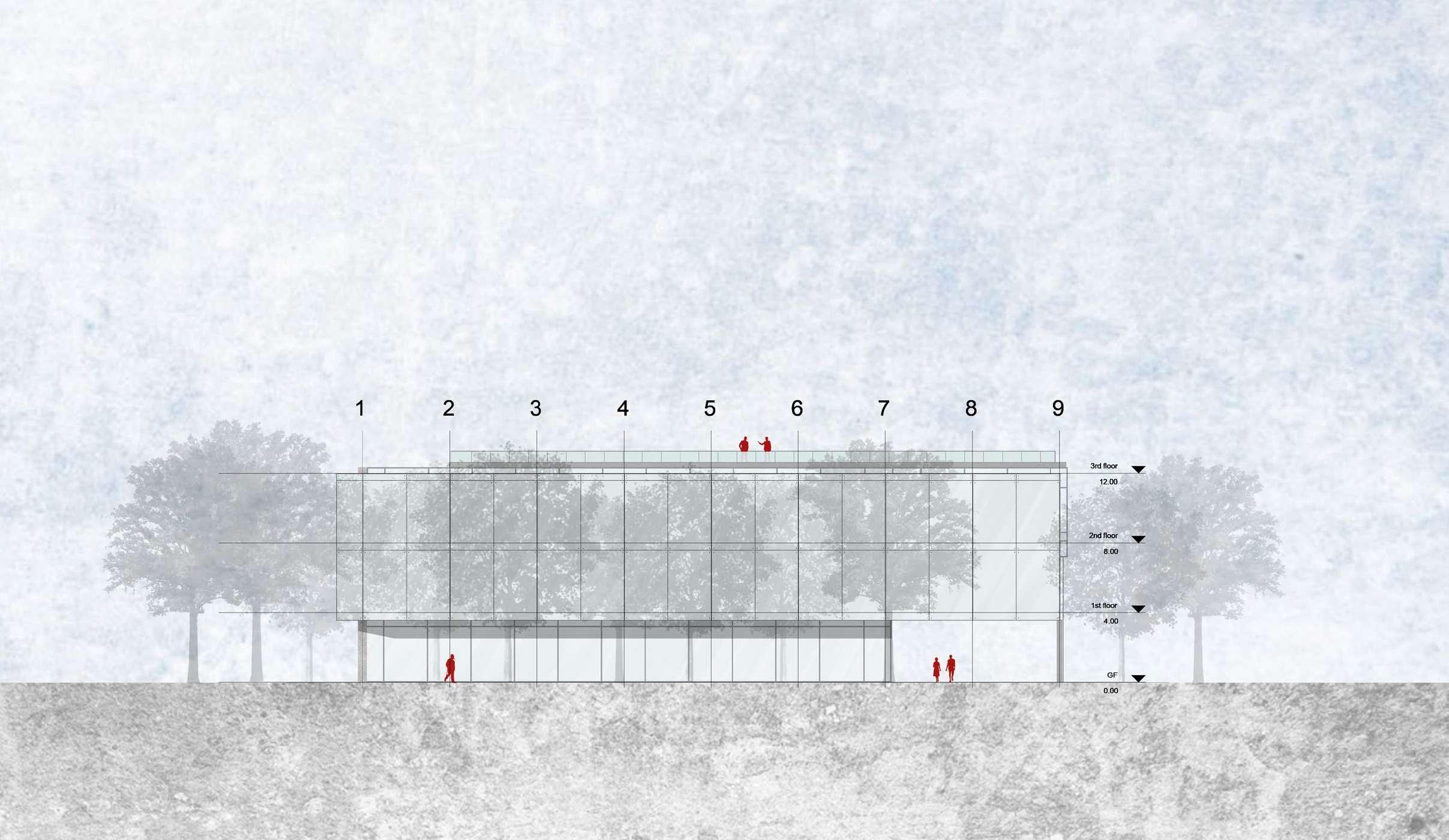
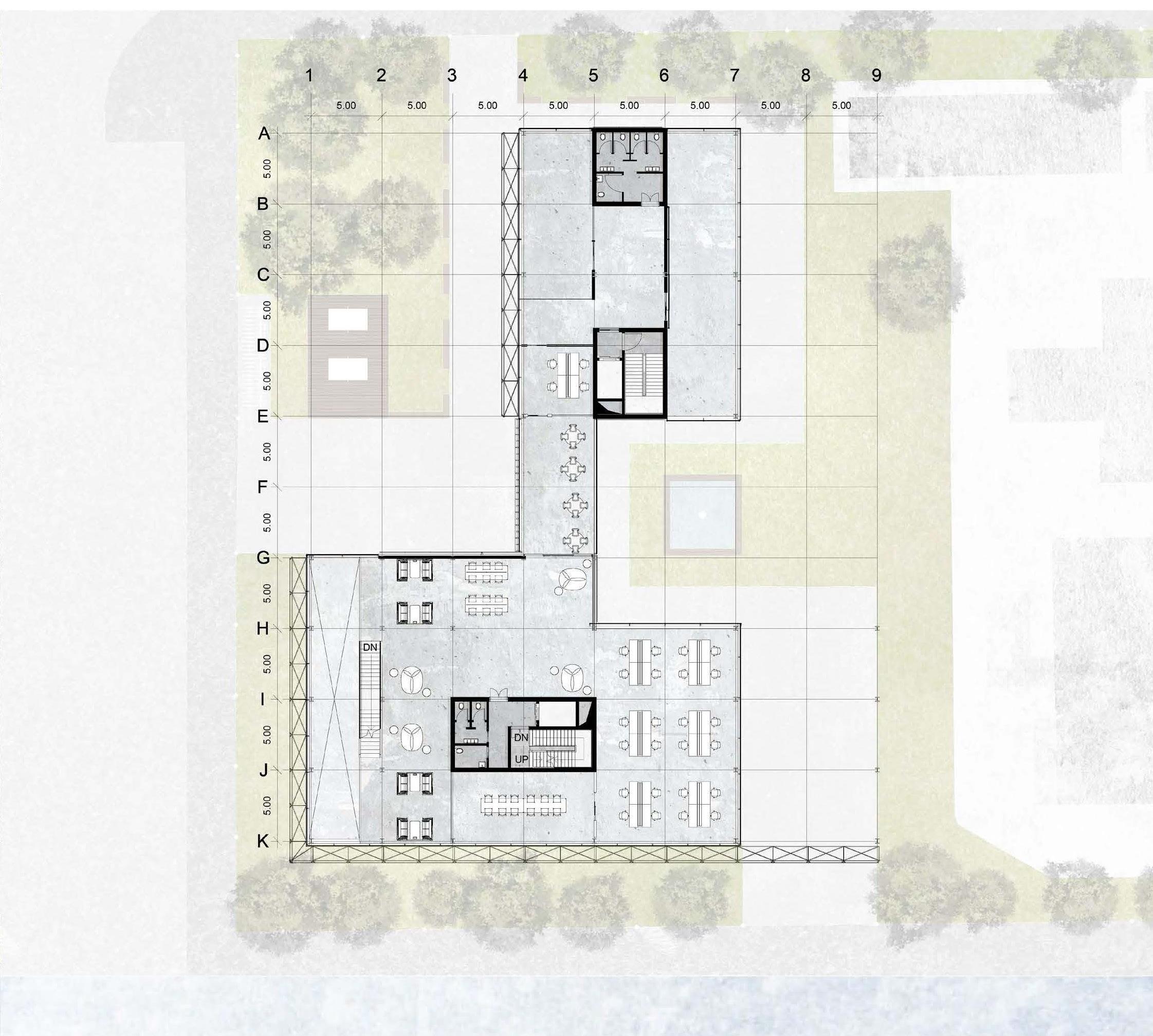
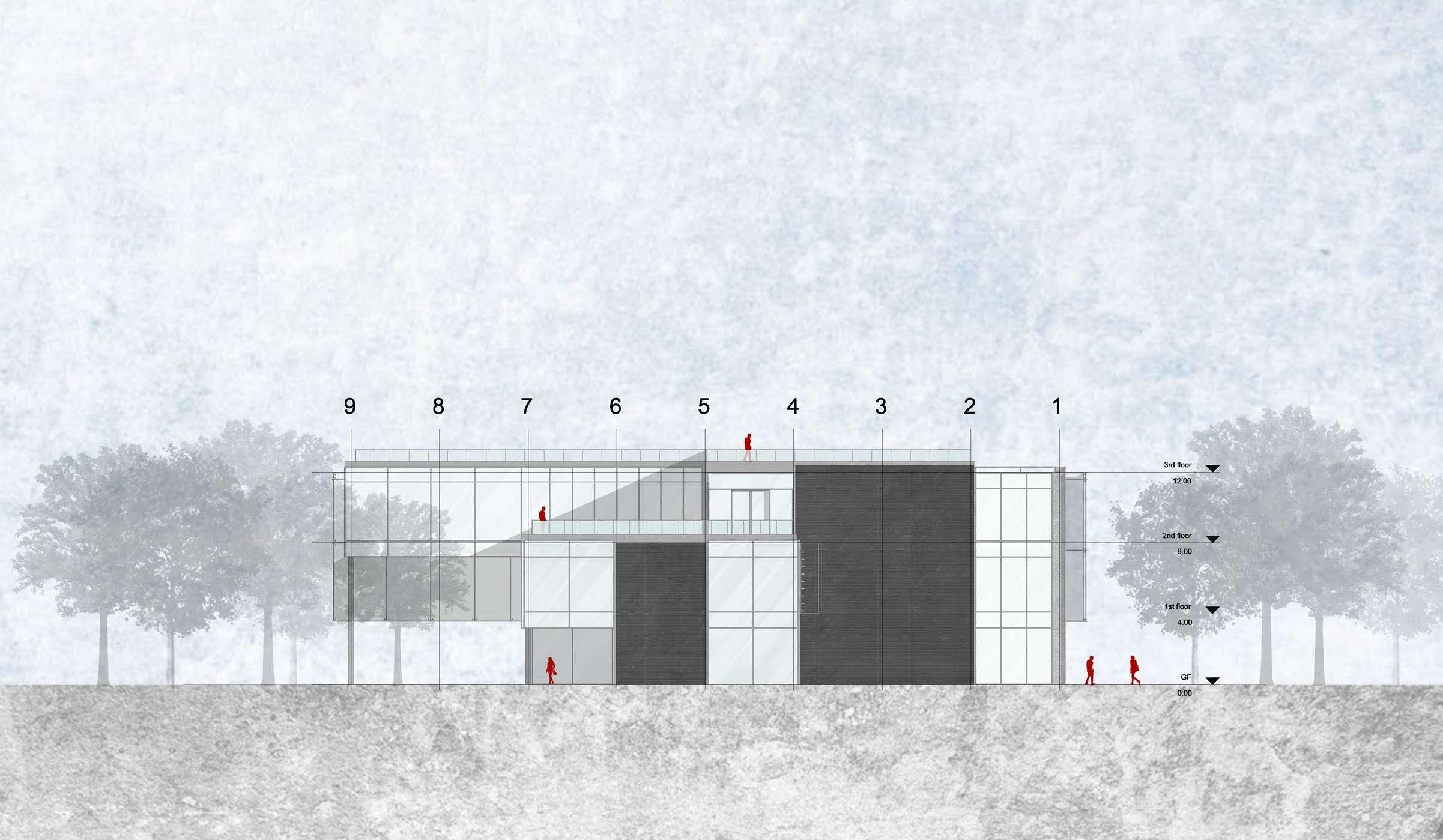
The Startup Hub project is located in Milano, between Via Ponzio and Via Bassini, near the Politecnico di Milano Leonardo Da Vinci Campus. The project is dedicated to Polimi students and other campus users. The permeable ground floor is open to users to revitalize the Via Ponzio and to connect people. During the design phase, we considered two main dimensions: firstly, respecting the natural legacy, and secondly, simplicity and interaction. We designed the building without touching the existing trees and making it compatible with the context. For the part facing Via Bassini, we designed an internal courtyard to enhance the workspace by providing natural light to all offices.
Another design principle was open spaces on different levels, which can be opened or closed by sliding walls according to necessities and functions to provide flexibility and transparency. It provides a strong visual connection between the campus and the new hub—the “public area” in the center dedicated to open exhibitions and gathering areas to create a vibrant atmosphere. The project has been done as a Revit BIM project, and the structure is composed of steel. With its simplicity and unique facade solutions, such as a double skin facade, The Startup Hub Milano provides a mesmerizing experience to all users.
Preserving the trees
Manifesto
The Maze of Awakening
UCLA 2025-2026, M.Sc. Year I, Quarter I, Tech Seminar
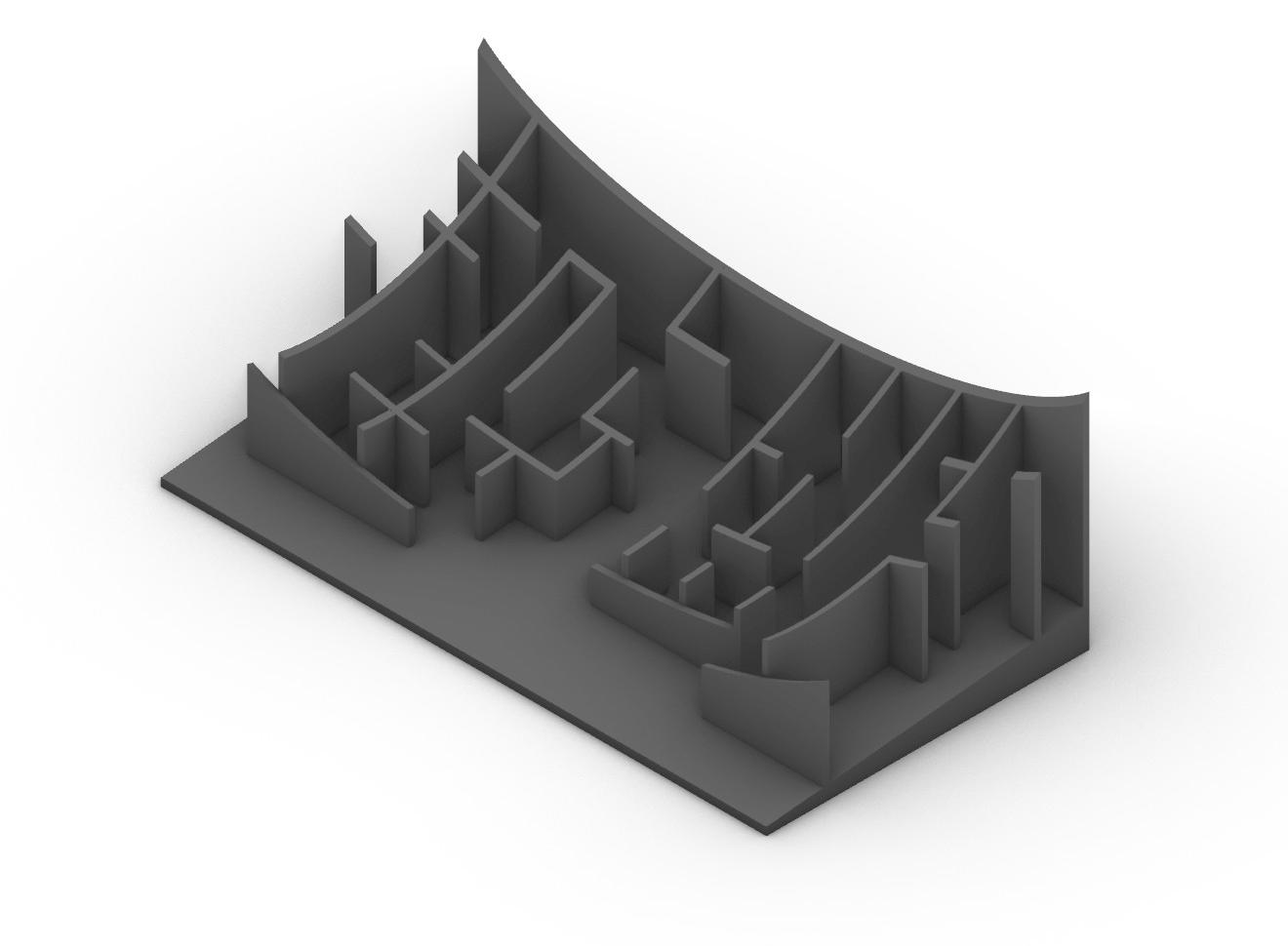
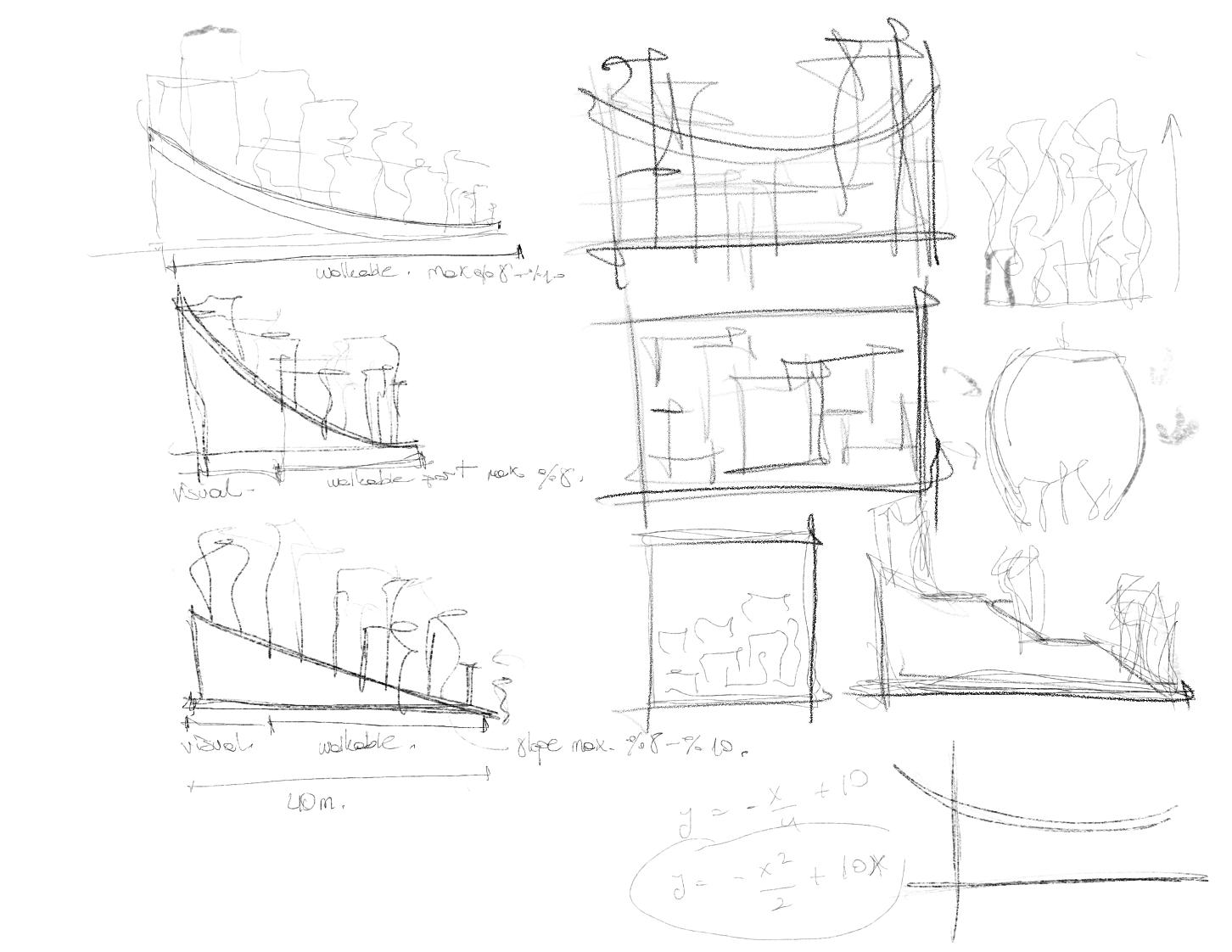
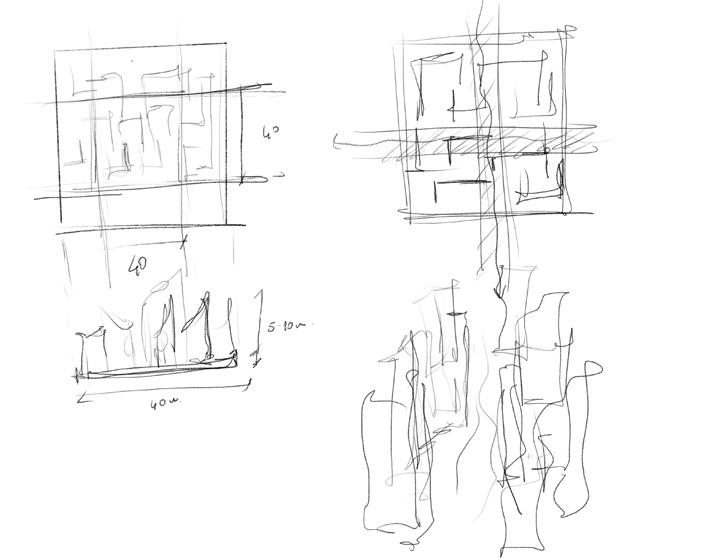
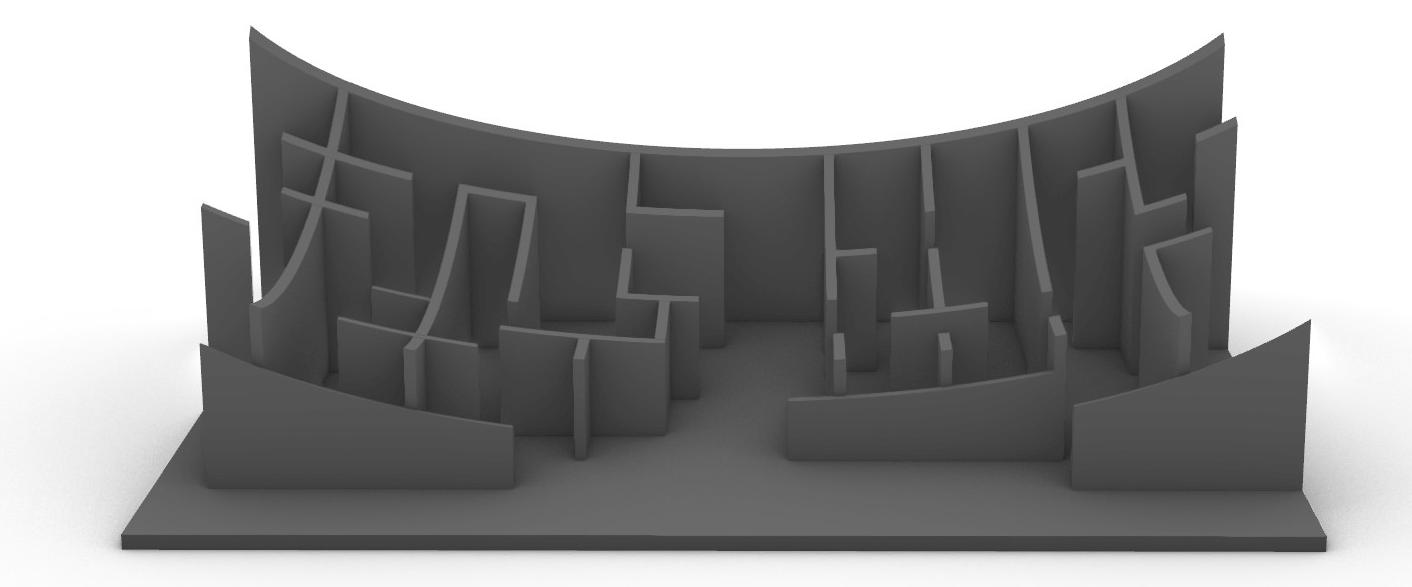
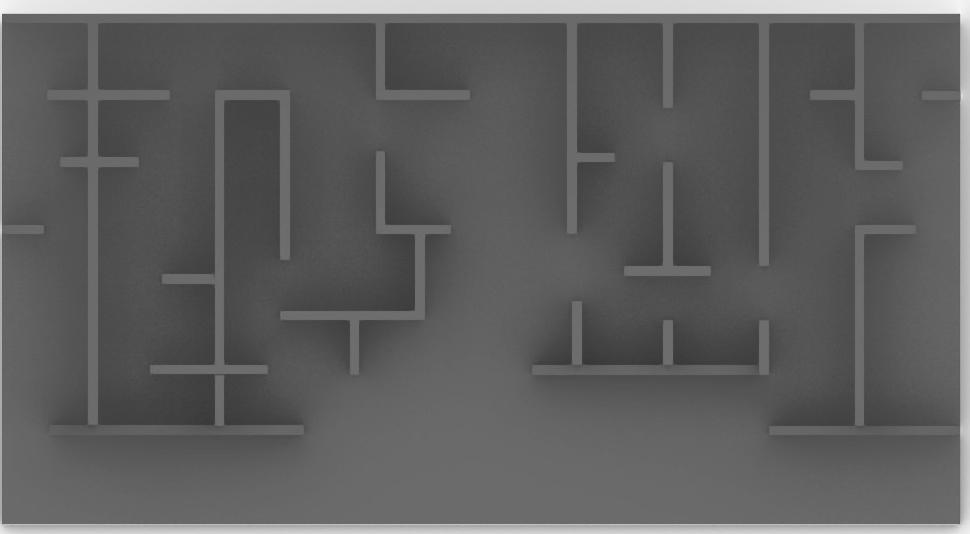
The Maze of Awakening explores architecture as a performative and experiential system through a spatial interpretation of Dante Alighieri’s Inferno (Hell). I designed a sloped, vertical maze that translates psychological states—disorientation, resistance, and gradual release—into spatial conditions. The project focuses on how geometry, light, and movement can construct an embodied architectural experience.
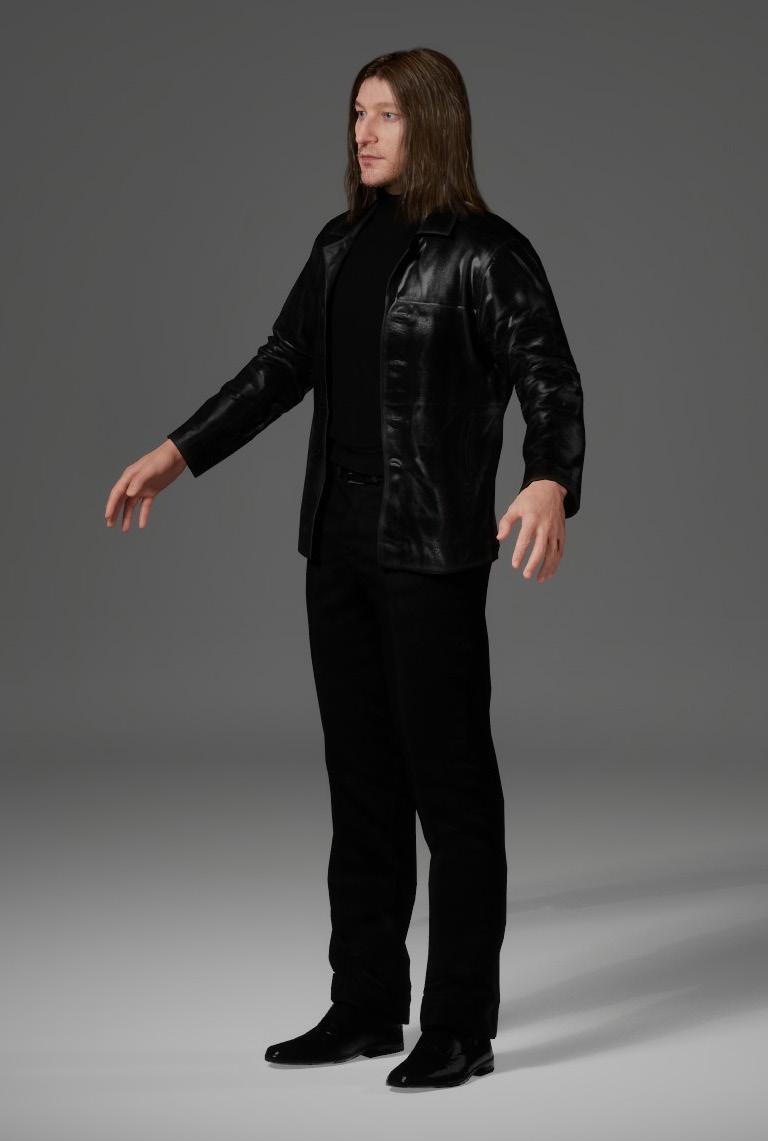
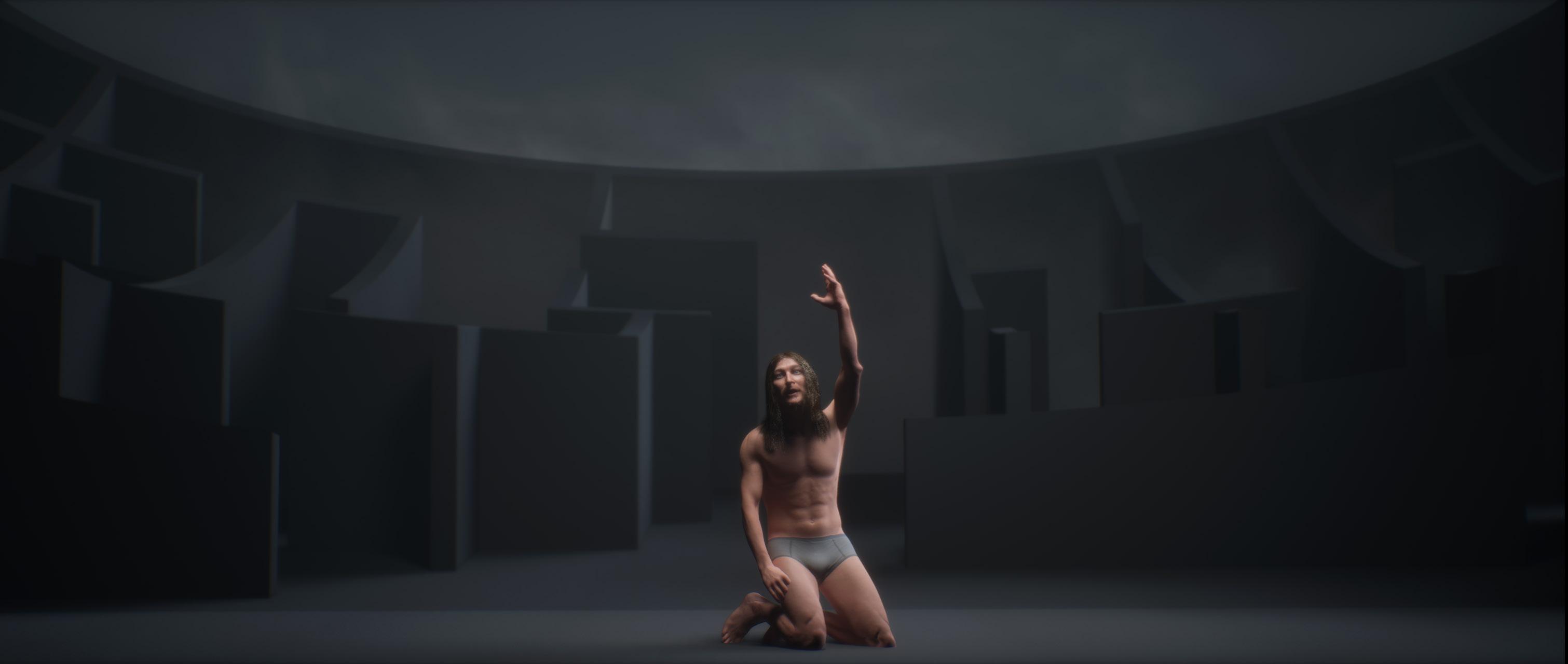
The space is activated through my own motion-capture performance, where body movement becomes a design input. Changes in balance, pace, and posture respond to sloped surfaces, compressed corridors, and controlled sightlines. These movements directly inform spatial sequencing and reveal how architecture can be shaped by human motion rather than static form.
Material density, shadow, and limited visibility define the interior, creating a continuous sense of uncertainty and spatial pressure. Light is introduced selectively from above, guiding orientation and emphasizing vertical progression. The project is developed as a short cinematic video, demonstrating how digital tools, performance, and architectural design can converge to produce immersive spatial narratives.
Excerpt from the adapted monologue used in the performance
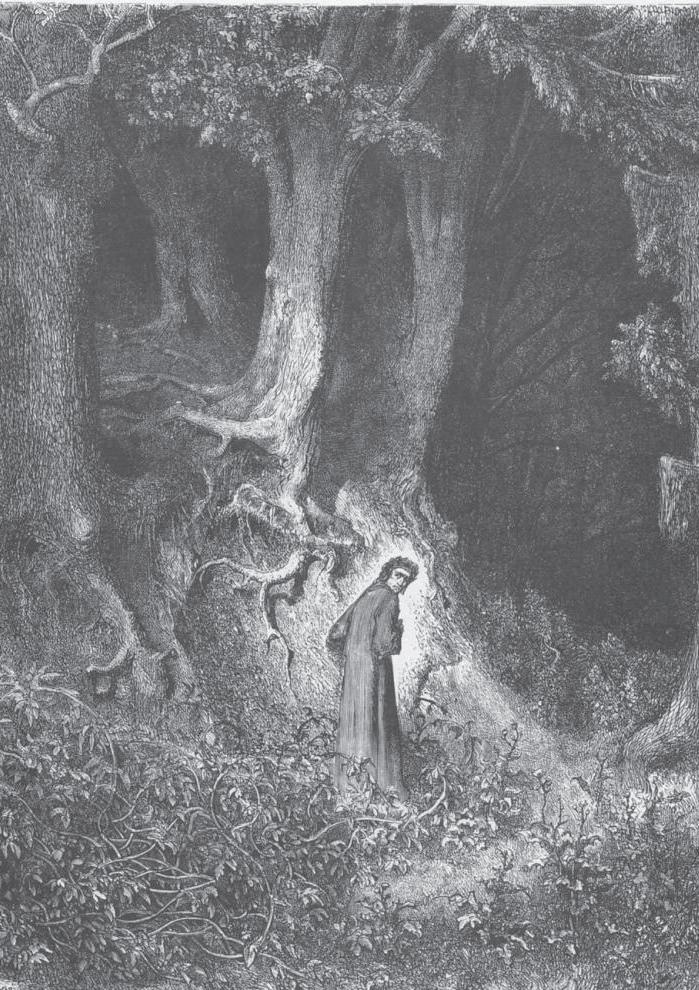
Midway through the journey of my life, I woke to find myself — lost. Not in a city, not on a road — but deep inside a shadowed forest where every path I knew had vanished. The trees were dense, twisted, and silent — and fear grew like roots beneath my feet.
The Divine Comedy by Dante Alighieri
Front view, stage
Plan, stage
Gustave Doré. Dante in the dark woods.
Plan, stage
Lighting plan, stage
“Nel mezzo del cammin di nostra vita mi ritrovai per una selva oscura, ché la diritta via era smarrita.”
“Midway upon the journey of our life I found myself within a forest dark, For the straightforward pathway had been lost.”
Lusail Museum in Qatar
Tabanlioglu Architects (TA_) 2018-2019
Location: Lusail, Qatar
Supervisor: Simge Heper
My work: Revit- BIM Modeling, Revit Family and Content Library, Materials
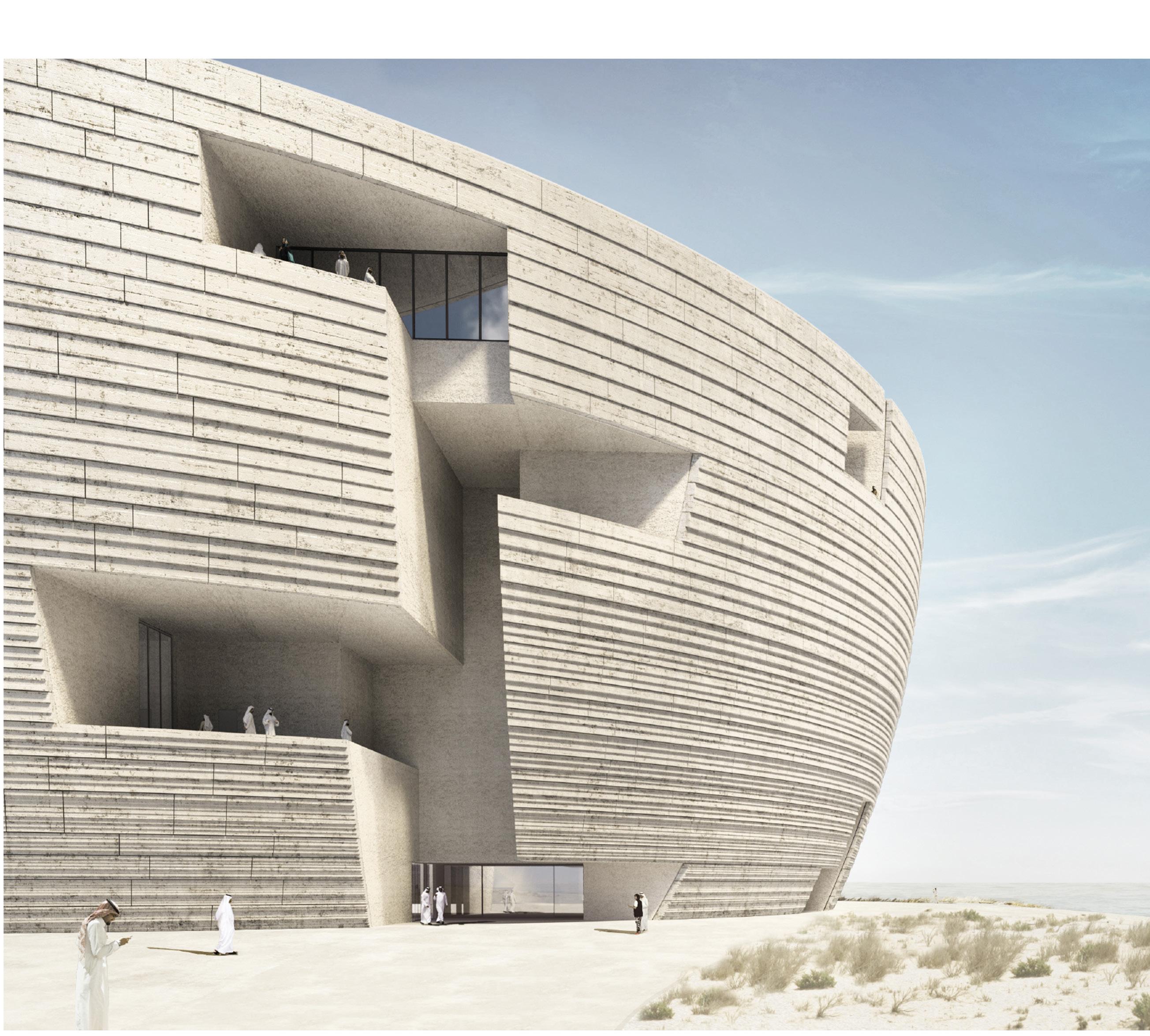
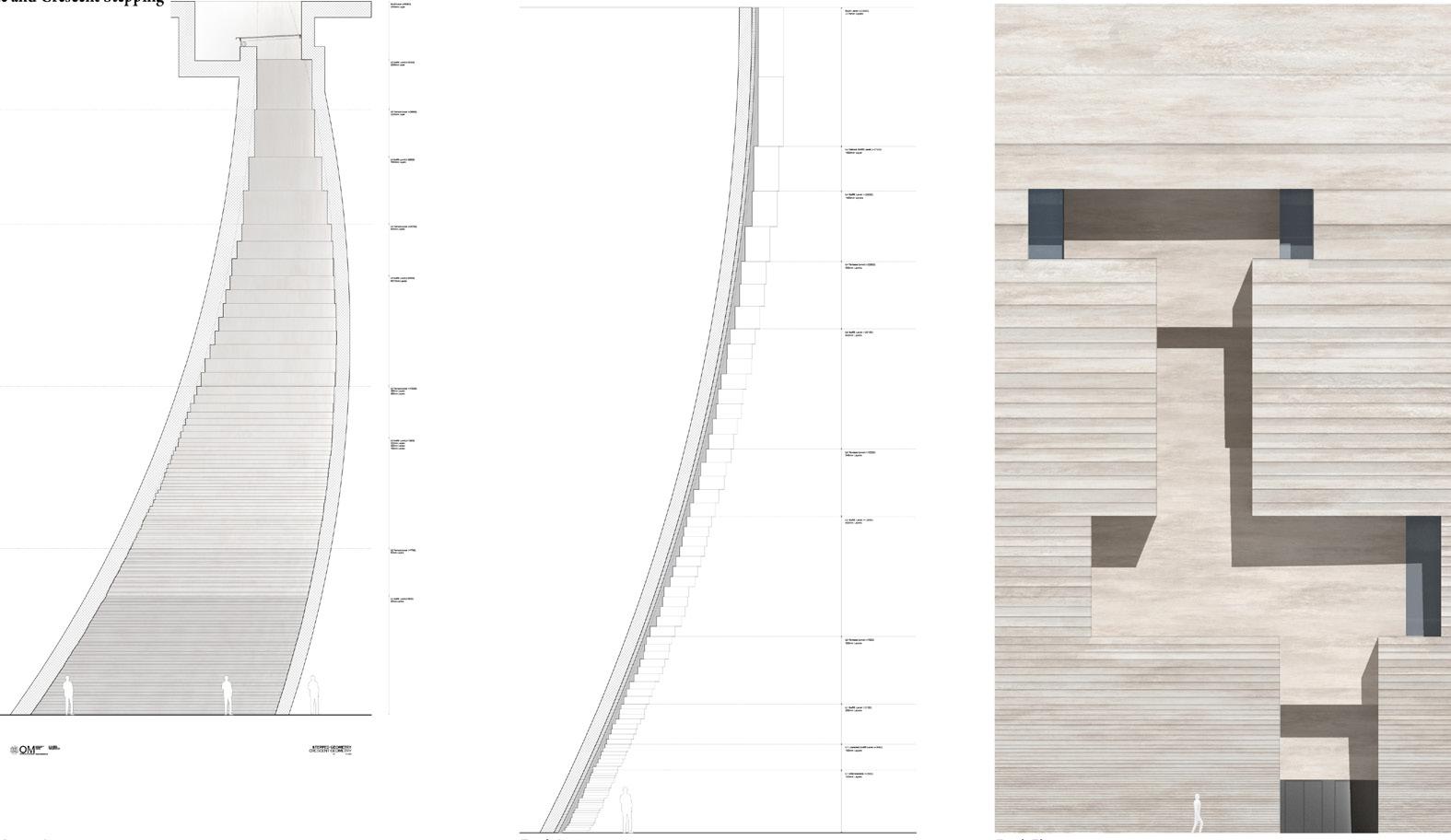
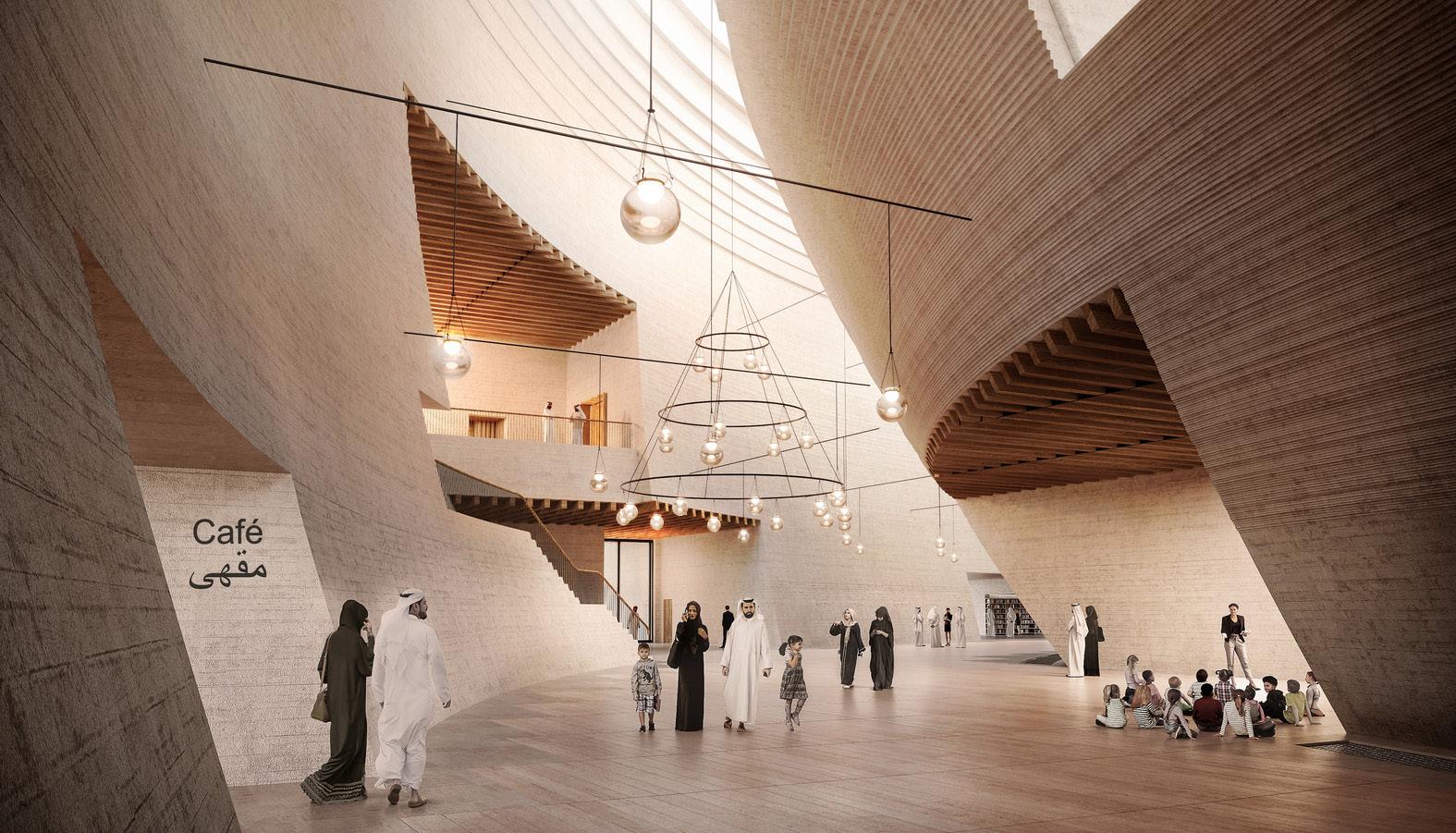
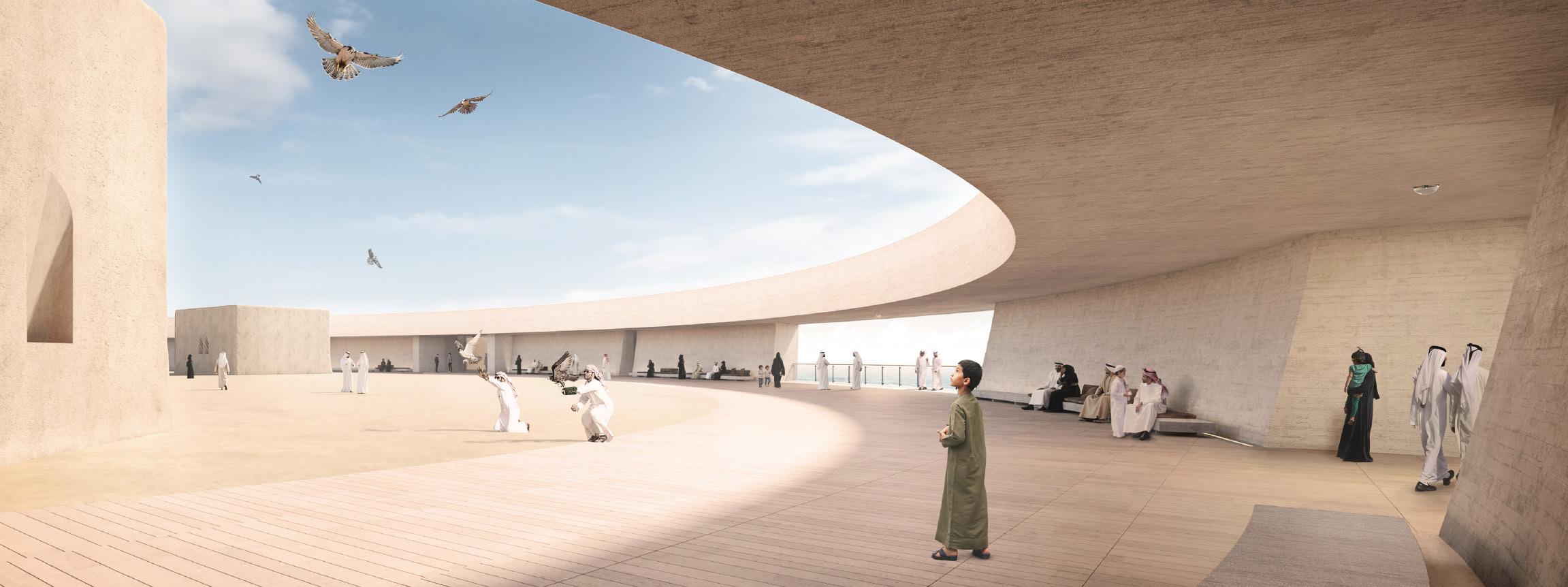
The Lusail Museum project is located in Lusail City, a significant mixed-use development in Qatar. The project is designed by Herzog & de Meuron, the project’s executive, and BIM (Building Information Modeling) development is being carried out by Tabanlıoğlu Architects (TA_) in Istanbul, which started in 2010 and is still in the development phases.
The museum aims to exhibit historical artworks, manuscripts, textiles, and objects illustrating East-West cultural dialogues It will also provide research and educational facilities, fostering academic and public engagement.
The reason behind choosing an island location is that it is the ideal location for the museum, and the museum provided the proper schedule envisioned for the island. Ancient building typologies, such as concrete structure and building geometry, form a physical unit to create monolithic expression. Besides, the concrete finish to the spherical geometry expresses the construction process by dividing the outer shell by movement or pouring joints, showing framework patterns. From a sustainability point of view, the building has been designed with the desert climate and its specific conditions in mind.
Facade and Crescent Stepping
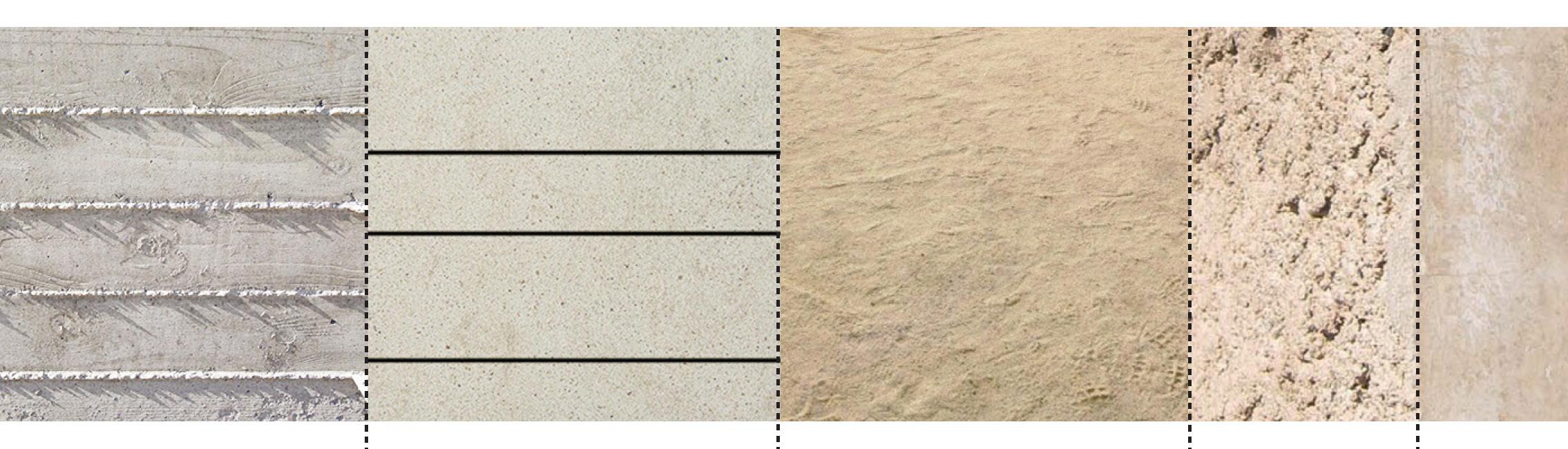
Public terrace material Palette
Exposed concrete wall Linear concrete planks
Qatari limestone fine gravel
Sprayed concrete, Cement base render flat finishing
Walkway facade Walkway Plaza
Anchors Facade
Public terraces
Interior Spaces
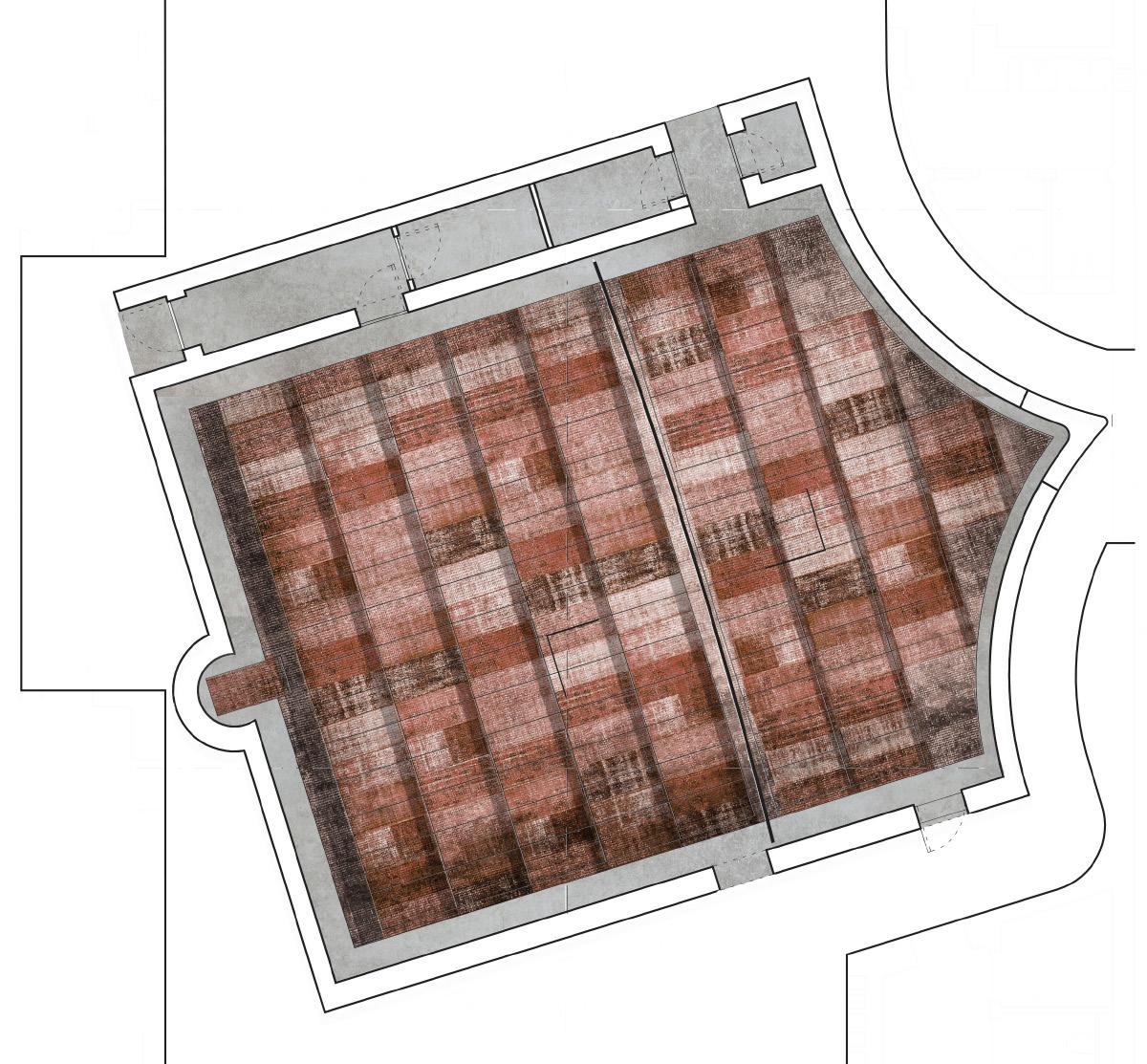
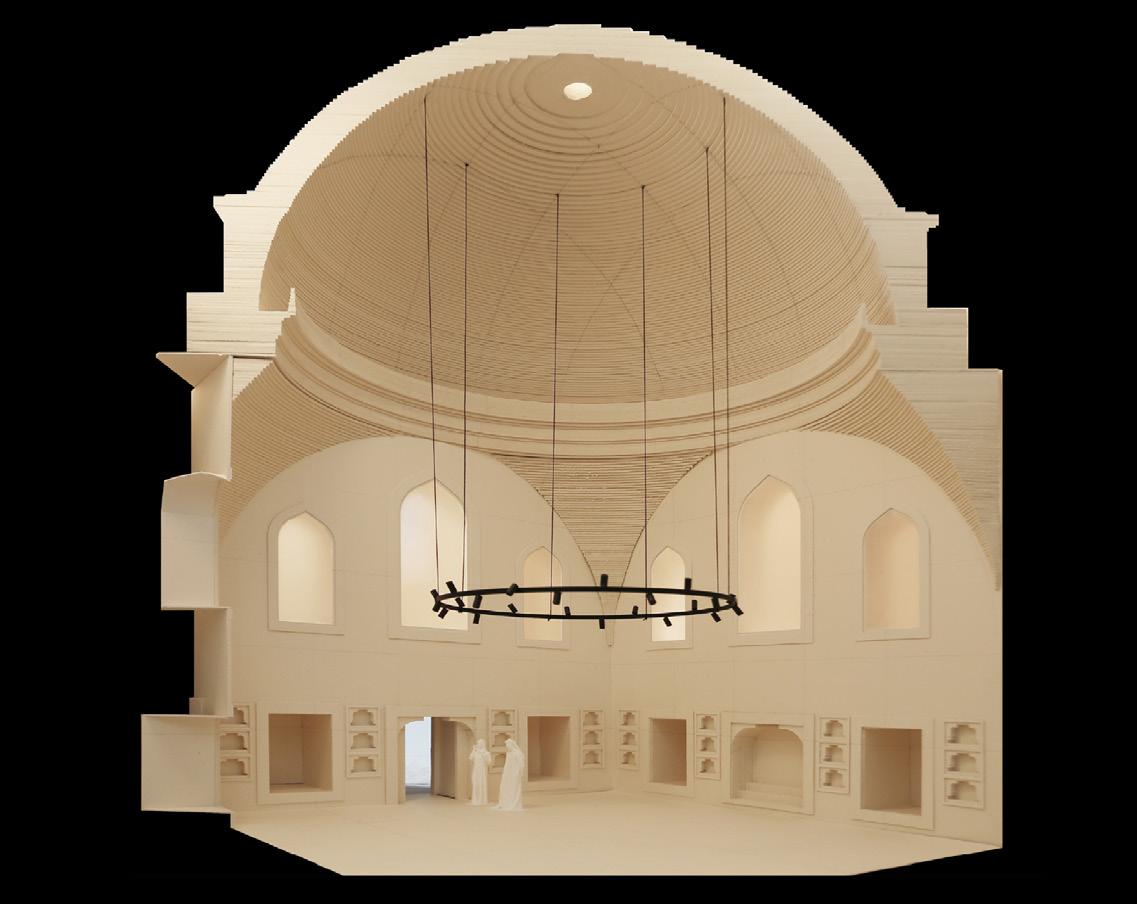
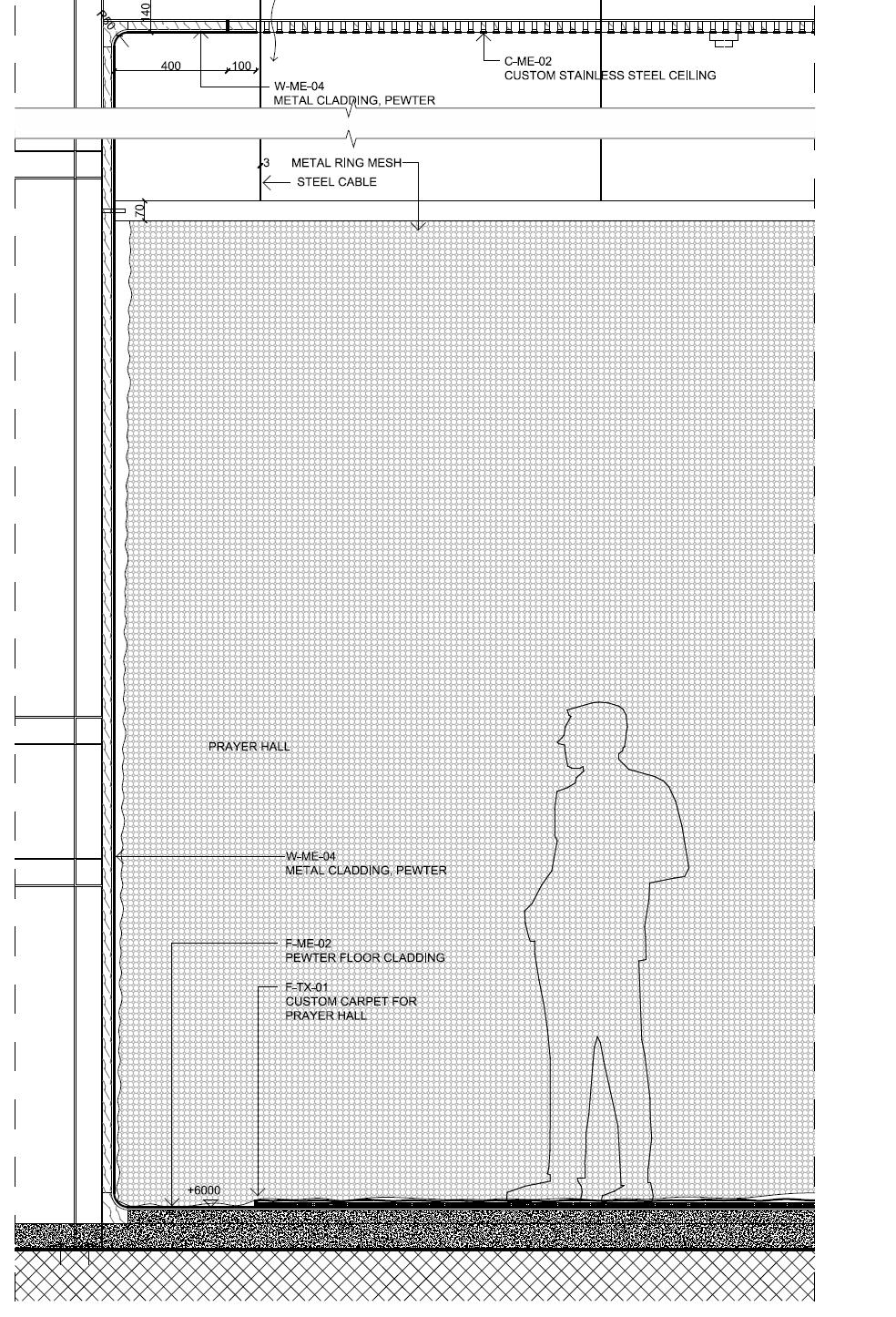
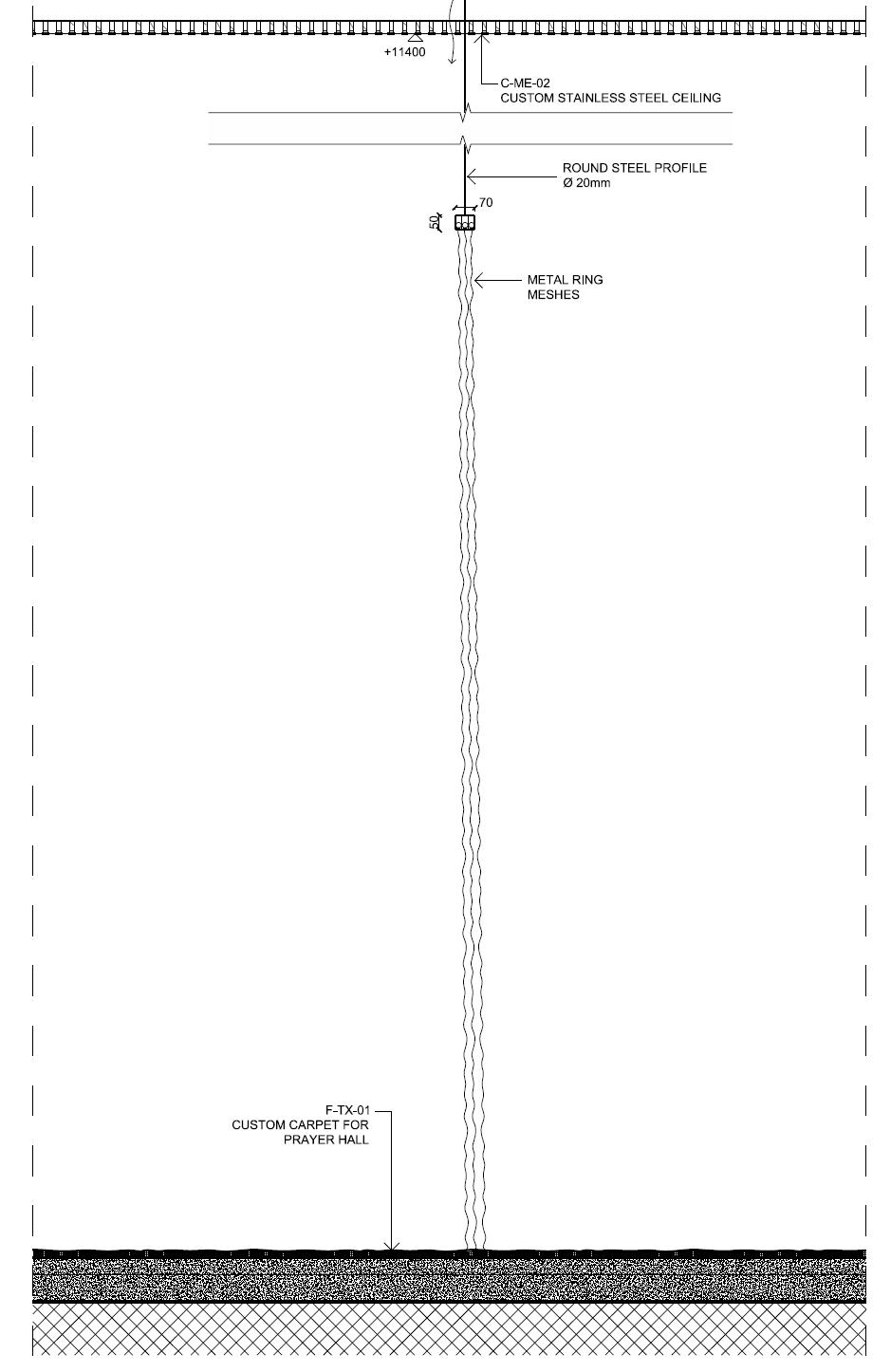
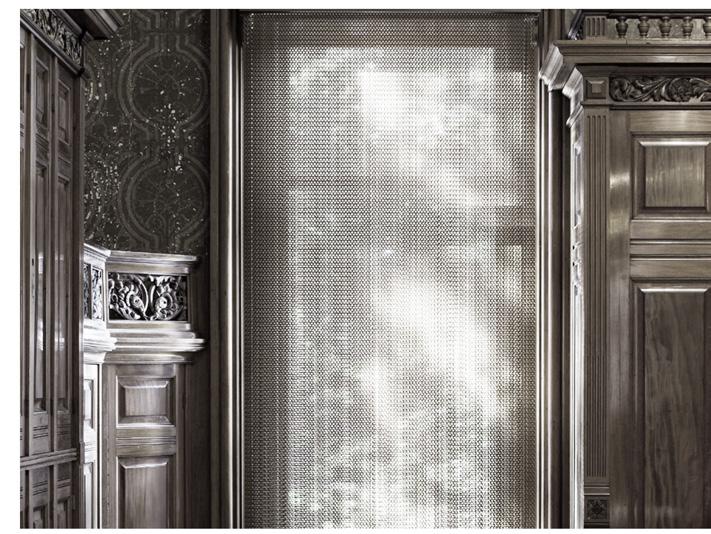
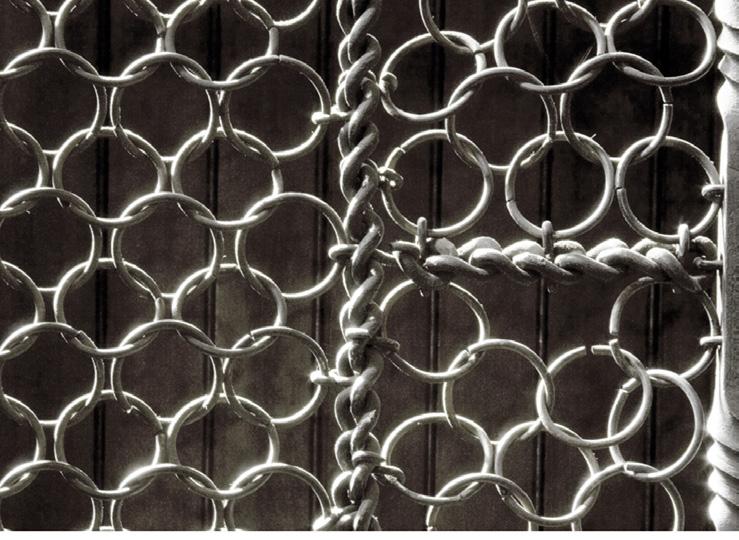
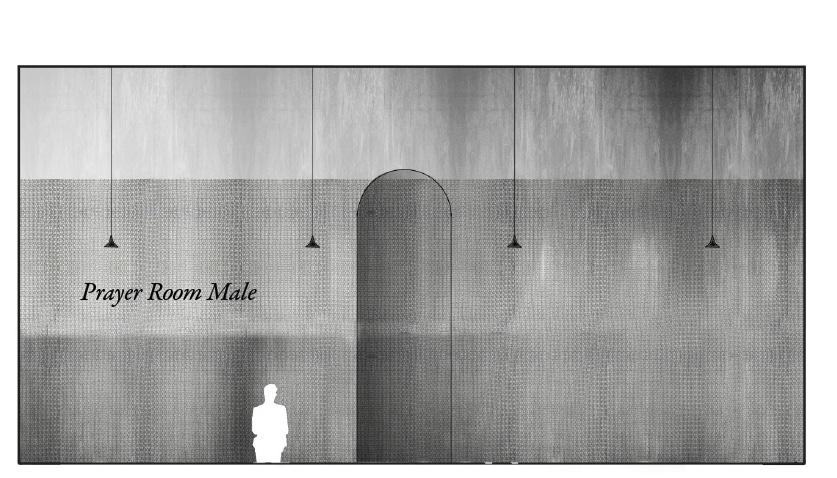
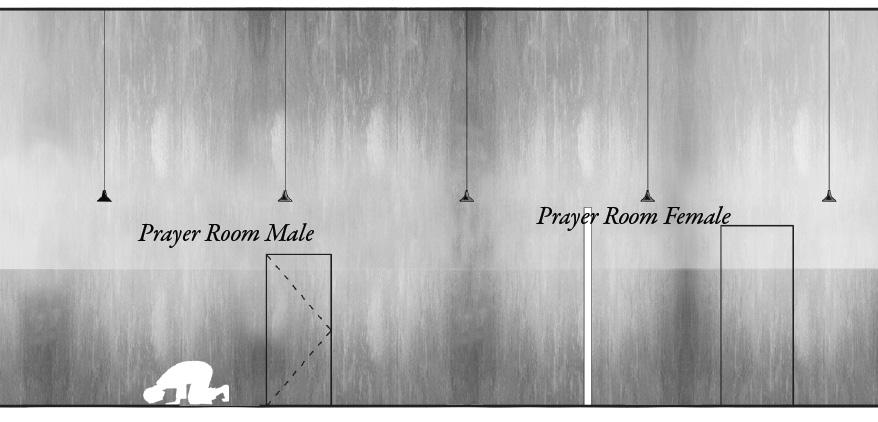
Prayer halls were one part that I worked on during the Revit-BIM project of the Lusail Museum. The Revit 3D modeling, Revit family creations, and materials process started with modeling fire cabinets, doors, and slabs, and it continued with creating the prayer hall`s meshes and coordination of the lobby and galleries.