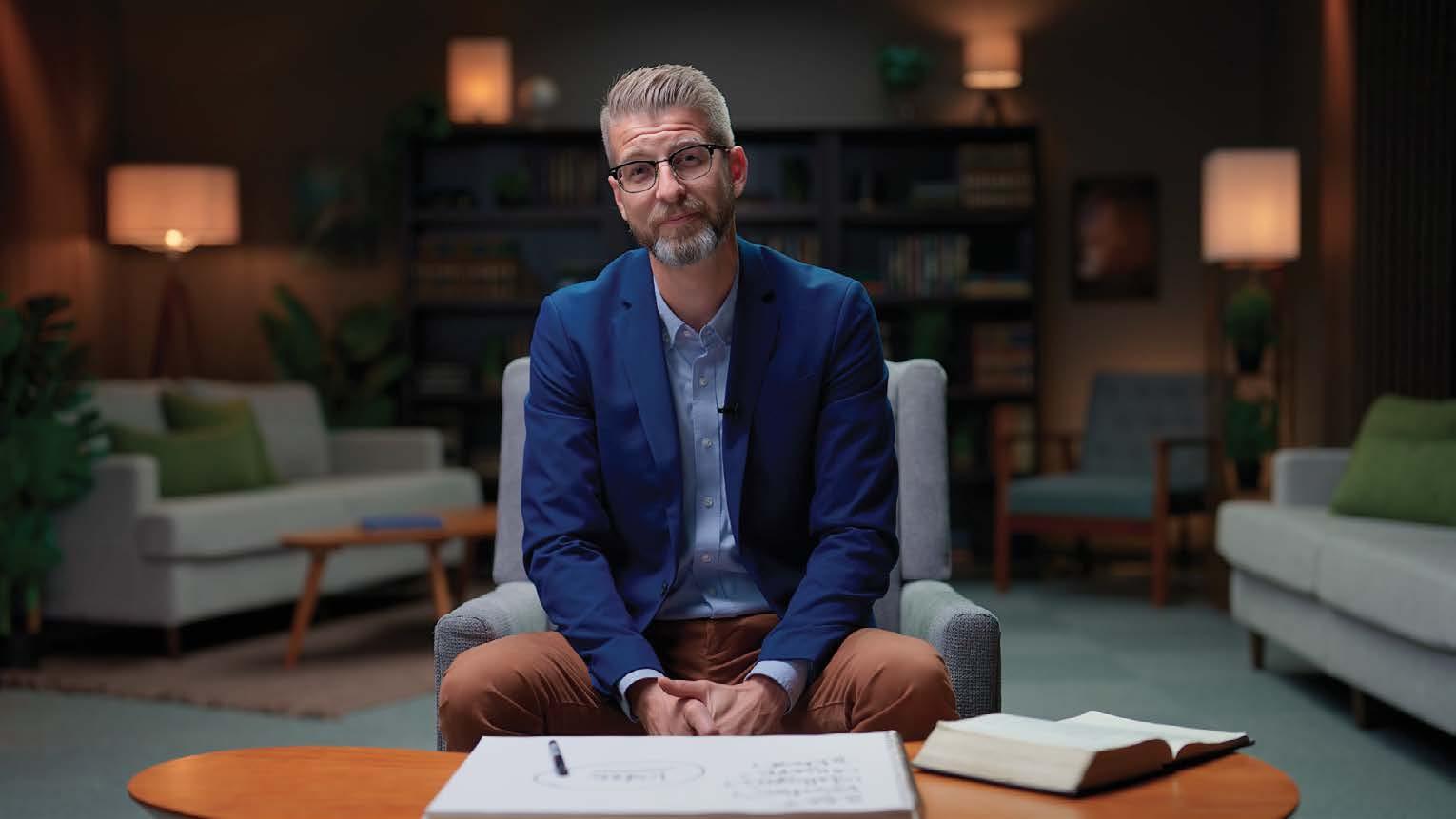
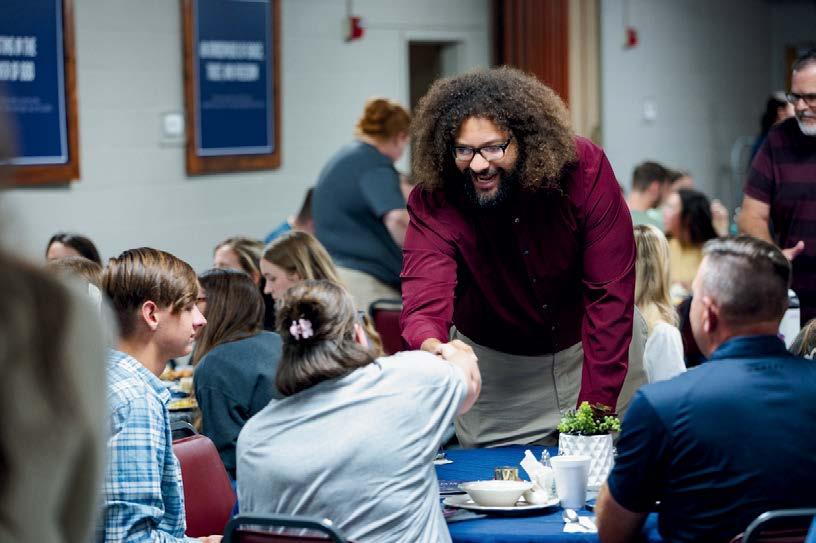
From Superhero to Sidekick: Why I Finally Answered God’s Call to Be a Preacher p. 4
Two Words That Guide Matt Merold’s Life and Ministry p. 10
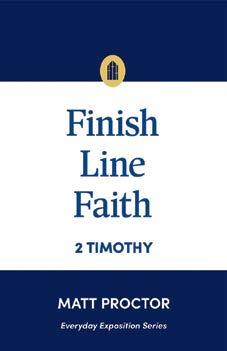
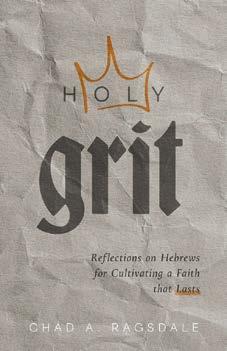
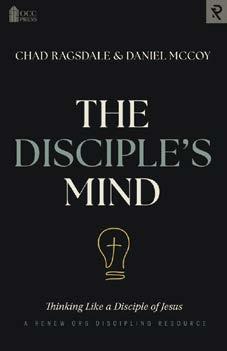
Five Great Resources for Preachers p. 24
The vision of Ozark Christian College is to glorify God by evangelizing the lost and edifying Christians worldwide. The mission of Ozark Christian College is to train men and women for Christian service as a degree-granting institution of biblical higher education. Ozark Christian College is accredited by the Higher Learning Commission (hlcommission.org), the Association for Biblical Higher Education (abhe.org), and the Association of Theological Schools (ats.edu).
Ozark Christian College admits students of any race, color, national and ethnic origin to all the rights, privileges, programs, and activities generally accorded or made available to students at the school. It does not discriminate on the basis of race, color, national or ethnic origin in administration of its educational policies, admissions policies, scholarship and loan programs, and athletic or other school-administered programs.
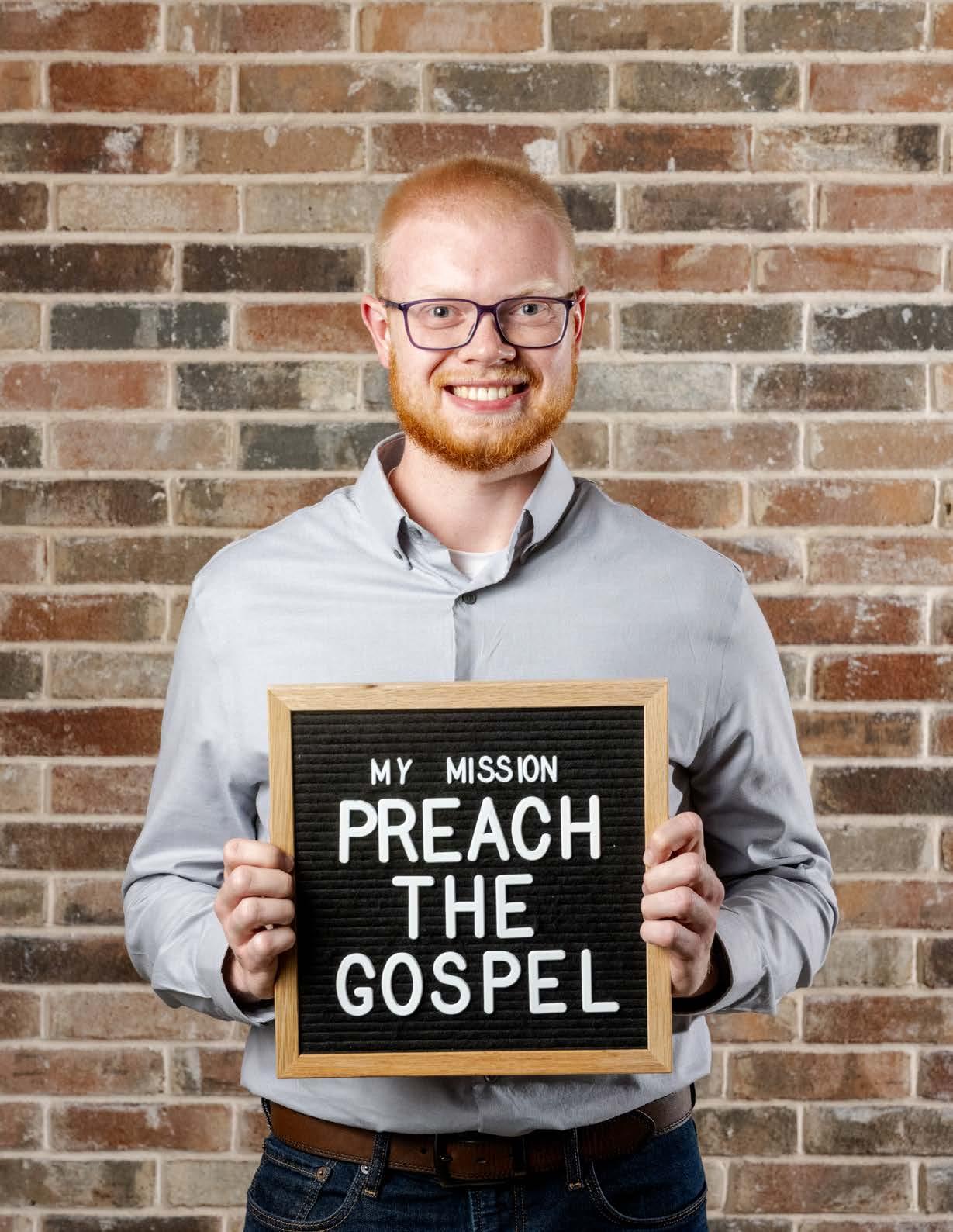
From Superhero to Sidekick:
WHY I FINALLY ANSWERED GOD’S CALL TO BE A PREACHER
Matt Proctor
Growing up, I wanted to be a hero.
As a child, I was profoundly unheroic: a quiet, skinny kid with pencil-thin arms and a paper-thin chest. I wore glasses and was a total bookworm. When I disobeyed my parents, they would ground me for a week…from reading. I was 100% pure Grade A nerd.
But when Christopher Reeve’s Superman swooped into movie theaters, my eight-year-old imagination was captured! I wanted to fly, bend steel with my bare hands, feel bullets bounce off my chest, and I wanted pectorals big enough to handle that giant red S. At eight, my chest could only handle skinny letters like a lowercase l.
Most of all, I yearned to do something important, to make a difference in the world. Superman always faced high-stakes moments—good vs. evil, lives hanging in the balance. His life was not trifled away on a Kansas farm. His powers weren’t wasted on small stuff. He did things that mattered.
Though my idols changed—next came Luke Skywalker, then Indiana Jones—my desires did not. I dreamed of great deeds, and I craved a career of consequence.
I wanted to be a hero.
You can imagine my disappointment when God called me to be a preacher.
Running from the Call of God
At first, I resisted.
Brother Bill sat beaming in the pew when, at age 13, I preached my first sermon, entitled “Jesus, a High Priest in the Order of Melchizedek.” (I told you I was a nerd.) Thereafter, every Sunday morning of my seventh-grade year, he would shake my hand as I left church and ask the same two questions:
“Matt, what are you going to be when you grow up?”
“A preacher!” I squeaked in my pubescent voice.
“And where are you going to go to college?”
“Ozark Christian College!” I answered.
My direction seemed set, and I was certain Brother Bill was right: I was called to preach.
But in high school, that certainty faded, and my compass began to waver. I was struggling in my faith. Was I just following my parents, or did I believe this Jesus stuff myself?
Even if I did believe it, ministry didn’t speak to my heroic aspirations. People watched movies about Superman, not “preacher man.” If I wanted to make my mark on the world, a pulpit didn’t seem the place to do it.
So I bailed.
I wanted to be a hero. You can imagine my disappointment when God called me to be a preacher.
I was a junior higher when I sensed God’s call to preach. My home church preacher Bill Hauser—we all called him Brother Bill—believed I was destined to preach, so he determined to “fan into flame the gift of God” in me (2 Tim 1:6).
I won a large academic scholarship to the University of Iowa, and I decided to pull a Jonah. I ran from God’s call. I scrapped my plans for Bible college and ministry, and instead I enrolled at the U of I as a journalism major. Legendary newsman Tom Brokaw once attended the University of Iowa, and like him, I would chase leads, break news, tell stories, stand in front of cameras, write books, and shape the thinking of a nation.
I couldn’t be a superhero or a Jedi, but as a journalist, I could make a difference. Glory awaited.
“Why in the World Would You Want to Be a Preacher?”
My freshman year at the university was, as you might expect, not a good year for me spiritually. I was not living under the lordship of Jesus. My heart was hard, and I was a prodigal son in a far country.
But God pursues runaways. (Just ask Jonah.) The following summer I had my in-the-belly-of-the-whale moment, and late one night, under deep Holy Spirit conviction, I surrendered to God’s plan.
But like Jonah, I did so unenthusiastically. When God finally got a hold of hard-boiled atheist C.S. Lewis, he called himself “the most reluctant convert in all England,” and that’s how I answered the call to preach—reluctantly. I obeyed with a resigned shrug, “Fine, Lord.” After all, I believed my worldchanging dreams were now dead.
No more hero. Just a preacher.
A few days before my sophomore year began, I gave up my scholarship, withdrew from the University of Iowa, and drove ten hours away to Ozark. But in the last-minute flurry, in those dark ages before cellphones and social media, I failed to let my hometown friends know.
When they finally heard where I was, my friends were flabbergasted. In high school, I had been voted Most Likely to Succeed, and my buddies all believed I would do something big, somehow put our little town on the map. I had so much potential, and now it seemed to them like I was throwing it all away. Bible college? Ministry? What a waste.
In my second week at OCC, I got a letter from one of those friends, and I will never forget the first line: “What are you doing?! Why in the world would you want to be a preacher?”
It’s a good question.
Why is the ministry of preaching a worthy use of life? After all, most people would echo my high school friend’s disbelief. Preaching doesn’t make any real difference in the real world, they think. Sermons go in one ear and out the other. Even some in the church view preaching as outdated—a “tragically broken endeavor,” as one pastor put it, a practice that “doesn’t work.”
Is preaching a waste of time? A broken relic of a bygone era?
“Why in the world would you want to be a preacher?”
It was Brother Bill who helped me answer that question, and I learned that I preach for at least three reasons: my gifting, the world’s good, and God’s glory.
I Preach Because of My Gifting
“You have a gift,” Brother Bill often said to me. “God made you to preach.”
The Holy Spirit does endow some believers to proclaim God’s Word, and during my Bible college years, I had a dawning sense that the Spirit had given me such a gift. “The place God calls
you to,” said Frederick Buechner, “is the place where your deep gladness meets the world’s deep need.”
The more I preached, the more I discovered preaching was my “deep gladness.”
When I accepted my first pulpit ministry at a church in southern Illinois, I quickly knew I’d found my kingdom sweet spot. I preached through Bible books, and the 15-20 hours I spent each week in sermon preparation were, for me, almost recreational. They were fun! Walking into my office each Monday morning, I felt like an NFL athlete stepping onto Monday’s practice field before Sunday’s big game: I was getting ready to do something hard, something I was made to do, and somehow I was getting paid to do this thing that (most weeks) I found thrilling.
Fred Craddock talks about two chairs of sermon preparation. The “hard chair” is where the preacher does his exegetical work— it’s a wooden chair, straight-backed, a little uncomfortable, forcing you to sit at attention over your biblical text. The “soft chair” is where the preacher does his creative work—it’s an overstuffed chair, comfy, letting you sink back and imagine ways to paint contemporary pictures of biblical truths.
So every Monday morning, I sat down in the hard chair, and as the days counted down toward Sunday, I dug into my text’s historical background, did word studies, searched other biblical passages, discovered my passage’s big idea, explored its nooks and crannies with the help of scholars, and finally crafted a “sermonin-a-sentence” statement. My preaching prof used to say, “The more you sweat in the study, the less you sweat in the pulpit,” and I put in the exegetical perspiration.
Then, by Wednesday or early Thursday, I moved to the soft chair, and my heart rate quickened. In my imagination, I walked through the sanctuary—thinking pastorally about the people in my pews, anticipating what they needed to hear from my text. My excitement grew as I mapped out a flow of thought to teach and persuade, colored in the sermon outline with metaphors and stories to help the truth “stick,” and ransacked my thesaurus for a few bullseye phrases. My adrenaline surged as I typed up a manuscript and practiced the sermon out loud and then out loud again.
By Sunday morning, I was amped. Like a linebacker sitting on the edge of the bench in the pre-game locker room—pads on, helmet in hand, leg bouncing with nervous energy—I was bursting to get on the field. One old country preacher described his sermon preparation this way: “First I reads myself full, then I thinks myself clear, then I prays myself hot, and then I lets myself go.” On Sunday morning, I couldn’t wait to “let myself go,” and stepping into that pulpit, opening my Bible, looking my congregation in the eye, and starting my message was the best moment of my week.
The pulpit is where I feel most fully alive. It is my “deep gladness,” and when I preach, I feel God’s pleasure.
Why in the world would I want to be a preacher? Because of my gifting.
I Preach Because of the World’s Good
I also believe preaching does the world good. The world, of course, would not diagnose preaching as its primary need. One dictionary defines a sermon as “a long, tedious speech” and lists “harangue” and “tirade” as synonyms. Our culture sees preaching as a harm more than a help.
But Brother Bill loved to quote 1 Corinthians 1:21 to me, “It pleased God by the foolishness of preaching to save those who believe.” Bill knew he was just a simple, sinful, foolish man. But he also knew: though Christ is God’s message, preachers are his method.
In 1 Timothy 4, when Paul exhorts Timothy to devote himself “to the public reading of Scripture, to preaching and to teaching,” he adds, “If you do, you will save both yourself and your hearers.” What an audacious statement! Timothy himself participates in the salvation of other human beings? Yes! A preacher with a Bible in hand helps save the world.
Preaching does the world good.
And one day, a few months into ministry, it hit me: I’d finally found my way to make a difference. I wasn’t Superman, but when I stood to preach, I did have supernatural power coursing through my veins. Now I was the one facing high-stakes moments. I was the one engaged in the clash of good vs. evil, lives on the line, helping people in need. I was the one playing a part in saving the world.
This was my chance to be a hero.
Why in the world would I want to be a preacher? Because it does the world good.
Though Christ is God’s message, preachers are his method.
God promises in Isaiah 55:11, “My word that goes out from my mouth . . . will not return to me empty, but will accomplish what I desire and achieve the purpose for which I sent it.” So I tell my preaching students that, when they grab their Bible and stand to preach, physical eyes may see a guy getting ready to monologue from some old book on a sleepy Sunday morning. But spiritual eyes see something else.
At that moment, ten thousand angels lean over the balconies of heaven, holding their breath, wondering what will happen if this time these souls really hear. Ten thousand demons glare up through the gates of hell, gritting their teeth, hoping no one pays attention.
The air is electric, crackling, charged with supernatural possibilities! All of heaven and all of hell understand that, at that moment, eternity literally hangs in the balance. When a preacher steps up with Bible in hand, the watching cosmos knows: those lives may never be the same.
In thirty-plus years of preaching, I’ve seen people decide not to take their own lives…because they heard a sermon. I’ve seen people give their marriage one last try…because they heard a sermon. I’ve seen people give up lucrative careers to become missionaries, people break off an ungodly relationship with a boyfriend or girlfriend, people become foster parents or give their money or repent of longstanding sin or share Christ with their neighbor…all because they heard a sermon.
I’ve seen people find grace in the midst of guilt, hope in the midst of grief, comfort in the midst of pain, guidance in the midst of confusion, power in the midst of weakness, all because—in the bumbling, stumbling, fumbling words of a preacher—they heard the Word of God.
I Preach Because of God’s Glory
God is good and great and full of grace, and I preach to exalt him.
That’s important to remember because doing hero work can go to your head. When I began preaching at age 23 at that little church in Illinois—80 of some of God’s best saints—the Lord began to bless.
In my first year, our church doubled to 160, saw many baptisms, started two services, hired its first youth minister, and began a building program. One Sunday, as I welcomed another visitor in the lobby, I asked, “What brought you to our church?”
“Well,” she said, “every day on my way to work, I see those little sayings on your sign.” Our building stood on a busy street with a large marquee out front, ground floodlights illuminating the sign’s message, and every Monday, I put up a new saying on the sign: “Seven days without prayer makes one weak” or something corny like that.
“Those sayings are so good!” said the visitor. “I think about them all week, and this morning, I wanted to see what this church was like.” Of course, I didn’t tell her that I was, in fact, the one responsible for the sign messages. (I wanted to. I’m like the preacher who said, “I want to be humble, but what if nobody notices?”)
The next day, as I gathered the letters for the week’s “saying,” here’s my confession: I was feeling pretty good—growing church, growing staff, baptisms, building programs, and people liked my magnificent maxims on the church marquee.
As I strode across the front lawn with the marquee letters in hand, cars whizzing by, I knew what the drivers were surely thinking: “Why, I’ve heard good things about that church. Look! That must be the dynamic young man who preaches there. He must be the one who puts up those wise and witty quotes each week!” My head was swelling. I mounted the letters on the sign and stepped back to smugly survey my handiwork.
The week’s saying—I kid you not—was, “Be humble, lest you stumble.”
And when I turned back toward the building, I tripped over the floodlights and fell on my face.
Almost immediately, I started laughing. I realized what had happened. God, up in heaven on his throne, had summoned his angels to observe: “Angels! Angels! Come here! Look: Proctor’s getting too big for his britches. Watch this.” And with a flick of his finger, he sent me sprawling into the dirt, a needed reminder that….
I’m an idiot.
And at that moment, I remembered Brother Bill’s words. When I was graduating from Bible college and applying for that Illinois pulpit, I wasn’t sure I was ready to be a preacher. So I sought Bill’s counsel. “Do you think I’m ready?” I asked him. “Maybe I should be a youth minister for a while and get more ministry experience.”
“You’re ready,” he said. “In fact, Matt, I think God will do great things through your preaching at that church.” But then he looked me straight in the eye, and with blood-earnestness, Bill said something I will take to my grave. “And when those good things happen…you keep your hands off God’s glory.”
When a preacher sees lives transformed, it’s tempting to grab some glory for yourself—to see yourself as a hero. How could I keep myself from the pride that would burn my ministry to the ground?
By remembering the real Hero.
But the good news, as Charles Spurgeon put it, is this: “I have a great need for Christ, and I have a great Christ for my need.”
The longer I live, the clearer I see the greatness of Christ. Christ’s holiness is great, enough to cover all my unrighteousness. Christ’s mercy is great, enough to forgive all my sins. Christ’s patience is great, enough to bear with my slow obedience. Christ’s wisdom is great, enough to guide me through every confusion. Christ’s power is great, enough to strengthen my every weakness. Christ’s comfort is great, enough to heal my every sorrow. Christ’s joy is great, enough to brighten my darkest days. Christ’s goodness is great, enough to satisfy my soul when even the good things of this world disappoint. Christ’s love is great, enough to rest in securely when I feel unlovable and worthless. Christ’s faithfulness is great, enough to sustain me through every tribulation until the glorious day he comes again.
The world does not need a great preacher. It needs a great Savior.
I thought I would be cast as the spiritual action hero. But I was wrong. I’m just the sidekick.
Preachers Are Sidekicks, Not Superheroes
I have preached over thirty years now, far beyond that little pulpit in Illinois. I’ve had the privilege of preaching at churches of 10 and 10,000, on national convention stages and in tiny bare block buildings in Haiti. I’ve seen God’s Word change lives: repentant souls, new believers, workers sent into the harvest field after sermons I’ve preached. I really have made a kingdom difference! I should feel, finally, like a spiritual Superman.
But I don’t.
I’m an older man these days, and if a preacher keeps himself under God’s hand long enough, the Lord shows him how weak he is. Under the Holy Spirit’s convicting work, I have come to grips with the fact that I am more dishonest, lazy, arrogant, lustful, angry, self-righteous, fearful, and selfish than I ever thought possible. No matter how hard and long I scrub, there is still sin crusted on the inside of my soul, and I understand why Paul—after thirty years of following Jesus—still said as an old man, “I am the chief of sinners.”
I’m no hero, and my chest still isn’t big enough for that giant red S.
Preachers do get to play a part in the epic drama of salvation, but it’s not the part I thought I would play. I thought I would be cast as the spiritual action hero. But I was wrong.
I’m just the sidekick.
I do have an important job to do—to study faithfully God’s Word and to communicate clearly its message. But I don’t have to manifest pulpit superpowers or be a homiletical Superman.
My job is just to preach Jesus.
He is the Conqueror on the Cross, the Slayer of Sin, the Destroyer of Death, and the Subjugator of Satan himself! The Champion of Heaven has rescued us from every enemy, and why in the world would I want to be a preacher? Because Tom Brokaw broadcast bad news, but I get to proclaim good news: Jesus saves! He is humanity’s one true Hero, and he alone deserves the glory.
So I’ll keep my hands off it.
Matt Proctor has served as president of Ozark Christian College since 2006.
The Greatest Needs of Pastors
Lifeway Research surveyed 1,000 U.S. pastors about the unique needs and challenges they face in their ministries. Here are some of the findings.
Which people dynamics at church are most challenging to pastors?
What aspects of self-care
δέω
Bible Words: IMPRISONED
Jon Kehrer
Paul’s words in 2 Timothy 4:2 serve as a charge for every new generation of ministers: “Preach the word!” It is always helpful to remember the place from which Paul issued this charge to his young protégé, Timothy: imprisoned in Rome and very likely awaiting a sentence of death.
When Paul describes his situation in 2 Timothy, he uses a form of the Greek word deō (DEH-oh) to refer to something that has been bound. Homer uses a form of this word in the famous advice Circe provided to Odysseus for sailing past the beautiful but deadly Sirens: Odysseus must instruct his men to bind his body to the mast, so that he cannot pursue them (Odyssey, 12.50). This sense of bound is also the way the word appears in various contexts within the New Testament (Matthew 13:30, John 19:40).
Over time, however, this word began to also refer not just to binding but to actual imprisonment. There are several such uses in Greek literature, such as when Thucydides
refers to imprisoned Corinthians (History, 1.30), or when Plato refers to a murderer being bound in prison for several years (Laws, 864e). In the New Testament, the word describes a demon-possessed man (Mark 5:4), Barabbas (Mark 15:7), and Peter (Acts 12:6).
That imprisonment is on Paul’s mind is no surprise, but what is surprising is how he uses the Greek word deō: Paul may be in chains, but the word of God is not imprisoned (2 Timothy 2:9)!
For us today, when we may wonder how much power preaching can possibly have anymore, it helps to recapture Paul’s vision for Scripture. Let us herald it without restraint, for there is no prison in the world that can restrain the power of God’s Word.
Jon Kehrer teaches Hebrew, Old Testament, and hermeneutics at OCC.
Two Words That Guide Matt
Merold’s Life and Ministry
On the corner of Matt Merold’s desk sits a small sign with two simple words carved into it: Preach Jesus.
It’s not flashy or profound, at least not at first glance. But to Matt, a Lincoln Christian University grad who has been serving for more than two decades at Bethany Christian Church in Washington, Indiana, those two words summarize everything that matters most to him.
“That’s my calling,” he said. “Not to build the biggest church, not to be the next celebrity pastor, and definitely not to master the art of a church coffee bar. Just preach Jesus.”
Those words have grounded him when ministry felt heavy. They've reminded him what truly counts when success tempted him to chase more. For Matt, preaching Jesus isn’t just something that happens behind a pulpit on Sunday morning. It’s a way of life.
Beyond the Pulpit
Matt grew up surrounded by people, like his grandparents Ben and Pat Merold, who, as Matt said, “made ministry look attractive, not heavy.” Many people think of Ben Merold as a giant in church growth, but Matt just knew him as Grandpa. He was the guy who told stories at the table, laughed with the family, and made following Jesus seem like an adventure.
was just as important as fruitfulness in the church.”
Matt’s parents, too, lived out quiet faithfulness. His mom served as the youth secretary at Eastside Christian Church, and his dad taught Sunday School and even became known as the “minister of caffeine” because of his faithful service in the coffee ministry at church.
They taught Matt that faith isn’t meant to be a performance on Sunday mornings, but a way of life. That truth has stayed with him. Now, as a husband to Kelli and a father to four, Matt carries that same conviction home. Whether he’s sitting around the fire pit with his family, playing guitar with his kids, or watching football with friends, he desires to show that faith is a lifestyle.
Preaching Jesus isn’t just something that happens behind a pulpit on Sunday morning. It’s a way of life.
His grandparents didn’t just preach the gospel; they lived it. They taught him through their example that “faithfulness at home
“Family isn’t separate from ministry,” Matt said. “It is ministry…If I win the church but lose my home, then I have failed at the very thing God entrusted to me first.”
For him, preaching Jesus extends far beyond sermons or stages. It’s about being fully present where God has placed him, whether that’s behind a pulpit on Sunday morning or tucking his kids into bed at night.
More than a Classroom
Before he ever preached to a crowd, Matt was a college student at LCU, where professors, mentors, and friends sharpened
Lindsey Bell
his calling and shaped his character. But, like many college students, both before and after him, he was also eager to graduate and head into the real world.
One of his professors, Dr. Marion “Doc” Henderson, kept Matt grounded. “Merold wasn’t made for the classroom,” he used to say. “He was made for the Church.” Doc was right. Matt was called to the ministry, but that ministry needed to be grounded in an excellent education first.
Lincoln was where Matt learned how to love the church well. It gave him both the tools and the passion for ministry.
Right after graduation, Matt stepped into an internship at Harvester Christian Church with his grandfather, Ben, and got a crash course in real-life ministry. While there, he learned that “books and lectures can explain ministry, but pastoral wisdom shows up in hospital rooms, living rooms, and around elder tables.”
What Leadership Really Looks Like
After his internship, fresh out of college and excited to jump into ministry, Matt began serving as lead pastor at Bethany Christian Church. But, looking back now, he admits that the men and women in that church–especially in those early years–likely shaped him more than he shaped them.
“Case in point,” Matt said. “I got pulled over three times in my first year. For speeding. In the church van. If that doesn’t prove how unqualified I was, nothing will.”
But Bethany, instead of taking away the keys or showing Matt the door, gave him patience, encouragement, and room to grow. In doing that, they taught him about God’s grace showing up in our weaknesses.
In his early years, he carried the weight of ministry on his own shoulders, doing just about everything that needed to be done. Over time and as the church grew, though, he realized something crucial: leadership isn’t about doing more. It’s about empowering more. Empowering other leaders is now one of Matt’s favorite
Leadership isn’t about doing more. It’s about empowering more.
things to do. The longer he’s in ministry, the more gladly he passes many ministry roles to other gifted leaders.
Matt now clearly understands that “the kingdom grows when leaders stop competing and start completing one another.” If the church is going to keep preaching Jesus long after this generation is gone, then we need to raise up others who can do it even better.
That conviction fuels Matt’s passion for mentoring younger preachers. He loves helping them find their voice. Because the truth is, even though the methods of reaching the lost might change in the years to come, the message of Jesus never will.
For Matt, preaching Jesus means empowering others to carry that unchanging message forward. Because the greatest sermon any preacher can give might just be the one lived out through the people they’ve poured into.
Just Preach Jesus
Back in Matt’s office, that simple sign remains—a daily reminder of why he does what he does. At the end of the day, after all the sermons, building projects, and ministry milestones, Matt doesn’t want to be remembered for the size of the church he pastors or how many campuses they have.
His deepest desire is simple: “to be remembered as a husband who loved his wife well, a dad who was present with his kids, and a pastor who pointed people to Jesus.”
Just preach Jesus.
Because at the end of the day, that’s enough.
Lindsey Bell serves as the managing editor of The Ambassador magazine.
In Good Times and Bad:
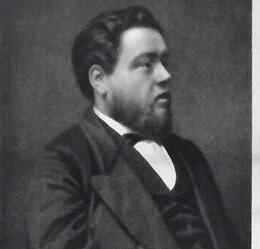
THE PREACHING PERSEVERANCE OF CHARLES SPURGEON
Matt Proctor
On my desk, I have two figures. One is a small wooden carving of Jesus washing Peter’s feet, a reminder “not to be served, but to serve” (Mk 10:45). The other figure—a gift from a friend—is a reminder to “preach the word…in good times and bad” (2 Tim 4:2, NIRV).
It’s a bobblehead of Charles Spurgeon.
A Hero Without Hardship?
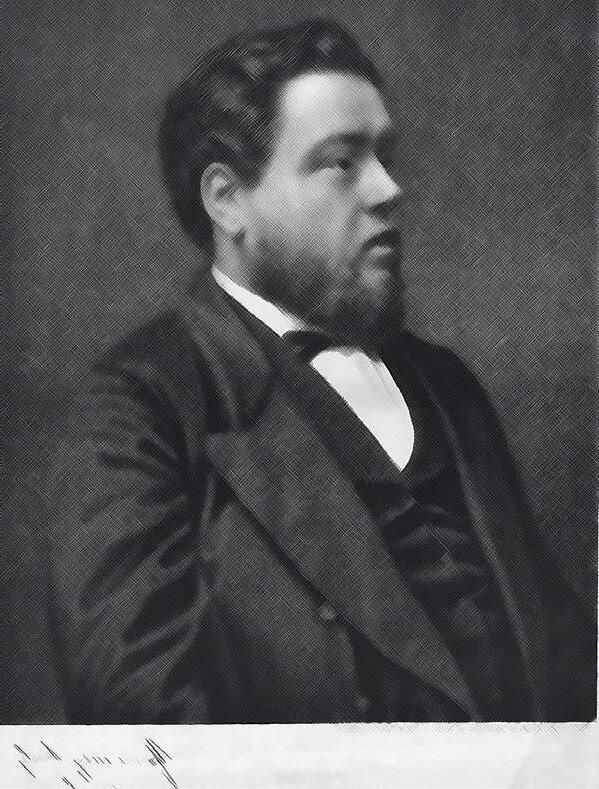
At first blush, it might look like Charles Spurgeon only preached “in good times.” After all, the pulpit ministry of this 19th-century bearded Brit—dubbed “the Prince of Preachers”— was extraordinarily blessed. Did he ever really face hardship?
At age 19, Charles Spurgeon began a thirty-eight-year ministry in London’s Metropolitan Tabernacle with about 200 people. The young man—still barely shaving—preached with a special unction: bold teaching, clear themes, vivid illustrations, pastoral tenderness, powerful delivery, and even witty humor. (When a lady once criticized him for using too much humor, he said, “Madam, if you knew how much I restrained myself, you would commend me.”)
His preaching always centered on Christ. Spurgeon said, “I take my text and make a beeline for the cross.” When his quickly-growing church built a 5,600-seat building (which remained filled throughout his ministry), Spurgeon dedicated the new house of worship with these words, “I would propose that the subject of the ministry of this house, as long as this platform shall stand, shall be the person of Jesus Christ.”
The church grew like wildfire, and as a leader, Charles Spurgeon seemed tireless. Over the years, he baptized 15,000 people, edited 324 issues of his monthly Christian magazine, read 6 serious books a week, responded to 500 letters a week, authored over 140 books, and founded an orphanage, a home for widows, and a Bible college that trained almost 1,000 pastors during his lifetime.
At Spurgeon’s 50th birthday party, the host read a list of 66 organizations he’d founded, causing one British politician to remark, “This list of associations, instituted by his genius, and superintended by his care, were more than enough to occupy… fifty ordinary men.” The famed missionary David Livingstone asked Spurgeon once, “How do you manage to do two men’s work in a single day?” Spurgeon, thinking of Christ’s power within him, replied, “You have forgotten there are two of us.”
A Preacher Without Problems?
As remarkable as his leadership was, preaching was Spurgeon’s true gift.
Spurgeon’s Sunday messages drew folks from every strata of British society—from housekeepers, factory workers, and chimney sweeps to Prime Minister William Gladstone, the royal family, and even US President James Garfield.
Each week, 25,000 copies of his sermon were sold as small pamphlets (“The Penny Pulpit”) in 20 languages, converting thousands around the world. Even when his sermons were discarded like old newspapers to be used as wrapping, they retained their power. “One woman,” writes a biographer, “was converted through reading a single page of one of Spurgeon’s sermons wrapped around some butter she had bought.”
Preparing once to guest preach at London’s Crystal Palace, Spurgeon visited the building to test the acoustics. On the platform, he cried out to the empty auditorium, “Behold, the Lamb of God which taketh away the sin of the world!” Out in the lobby, a lone workman heard the words and “was smitten with conviction on account of sin, put down his tools, and… did not rest until he was able to rejoice in Christ as his Savior.” Spurgeon accidentally led a man to Christ during a mic check!
Spurgeon once preached while he slept. (I preach while others sleep.) Laboring one Saturday evening on Psalm 110, Spurgeon could not find a satisfactory sermon for the next morning. Exhausted, he went to bed late. In the middle of the night, his wife Susannah heard him talking in his sleep, and, realizing he was preaching in his slumber, she grabbed a pen and scribbled down his words. The next morning, Susannah handed him the
notes—a sermon on Psalm 110—explaining what had happened. After reading what she’d written, Spurgeon exclaimed, “This is wonderful!” and he preached it that morning to great response. The man wrote better sermons asleep than I can awake!
The only word I know to describe that is “anointed.”
Charles Spurgeon preached to 10 million people in his lifetime, and when I first began to study his life, his successes made his ministry look relatively easy. Maybe he only “preached in good times,” I thought, and never faced problems like the rest of us.
Boy, was I wrong.
A Tempest-Tossed Life
The deeper I dug, the more I realized: Charles Spurgeon’s life was tempest-tossed. He knew what it meant to “preach in bad times.”
In his early ministry, Spurgeon endured a terrible “storm”—a once-in-a-lifetime tragedy. At age 22, Charles was preaching to 10,000 in the Surrey Gardens Music Hall when someone in the crowd yelled, “Fire!” In the ensuing, panicked stampede, Spurgeon tried to calm the crowd, but screams filled the air, seven people were killed, and twenty-eight were seriously injured.
The young preacher was devastated. His deacons carried him out, almost unconscious, and in the days that followed, he was inconsolable. “My thoughts were all a case of knives, cutting my heart to pieces.” He almost decided to quit ministry, and though two weeks later he did ascend again to the pulpit, the trauma haunted him the rest of his life. He later called it “a night that can never be erased from my memory.”
• Ministry critics. The most hurtful words came from fellow Christians. London’s best-known preacher, Joseph Parker, said, “Mr. Spurgeon is absolutely destitute of intellectual benevolence.” Another London preacher, James Wells, said, “I have doubts as to the reality of his conversion.”
These hardships contributed to his lifelong battle with depression. It came on him the first time at age 24: “My spirits were sunken so low that I would weep by the hour like a child, and yet I knew not what I wept for.” Spurgeon said he knew “by most painful experience what deep depression of spirit means, being visited therewith at seasons by no means few or far between.”
Over the last twenty-two years of his ministry, his mental and physical health kept Spurgeon out of the pulpit almost a third of the time.
But he never quit.
“God
Has Never Out-Promised Himself Yet.”
Charles Spurgeon was no stained-glass saint, untouched by suffering. His soul bore bruises, and in the midst of depression, he even contemplated ending his own life: “I too could say with Job, ‘My soul chooses strangling rather than life.’ I could readily enough have laid violent hands upon myself to escape from my misery.”
Charles Spurgeon was no stained-glass saint, untouched by suffering.
It would not be the only storm he endured. In the years ahead, Spurgeon also weathered:
• Relational conflict. Charles felt the pain of betrayal when his brother James opposed him. “Ten years of toil do not take so much life out of us as we lose in a few hours by ‘Ahithophel’ the traitor.”
• Physical illness. Spurgeon suffered from rheumatism, kidney disease, and gout. “I thought a cobra had bitten me and filled my veins with poison; but it was worse—it was gout.” He lived in pain for over two decades.
• Moral failure of friends. In the spiritual battle, Charles Spurgeon lost close comrades. “On one painful occasion, Spurgeon led the congregation in disciplining an elder in the church who had fallen into lust and drunkenness.”
• Cultural hostility. London newspapers criticized him mercilessly: “pulpit buffoon,” “ranting charlatan.”
One paper mocked a young Spurgeon as a “nine days’ wonder”—a passing fad. While he sought to forgive, such words left lasting scars. Spurgeon mentioned the “nine days” quote in a sermon twenty-seven years later
Yet he never let go of God.
No matter how dark the night or deep the pain, Charles Spurgeon took shelter in the Lord’s faithfulness:
“Great is Your faithfulness” (Lam 3:23). So great that there has never been an exception. No item in the list of divine promises is unfulfilled. He honors each. His faintest word will stand firm. His least truth will never grow dim.
There is no saint who can out-believe God, and God has never out-promised himself yet. Though my troubles have multiplied upon me, He has never forsaken me.
So come, nestle down under those great wings. The wings lined with the feathers of the Eternal will be strong wings, through which no storm of trouble can ever beat.
That’s why Spurgeon’s bobblehead sits on my desk.
I’m impressed by his fruitfulness, but I am impacted by his faithfulness. He just kept proclaiming Christ no matter what, and in his final sermon before he died at 57, Spurgeon concluded, “Forty years and more have I served him, blessed be his name! His service is life, peace, joy. Oh, that you would enlist under the banner of Jesus this day!”
When storms rage in my own life, I need that reminder.
“Preach the word…in good times and bad.”
Every Tuesday morning during the school year, the Ozark family gathers to worship in the OCC chapel. Here’s a taste of what we’ve heard recently.
“The power is never in the preacher. It’s always in the Spirit. Your worth is not in what you bring to the pulpit. It’s in God who brings his power through you.”
LITO SOLORIO
OCC Trustee & Lead Pastor of Countryside Christian Church, Wichita, KS 8/26/25 Mantras
“We have to keep on showing up for our brothers and sisters in Christ, demonstrating a generosity of spirit, when we’d rather say, ‘Not today, God.’”
JESSICA SCHEUERMANN
OCC Associate Dean of Undergraduate Studies and English Professor 9/23/25 Mantras
“Maybe we’ve been leading people to the church rather than leading people to Jesus.”
JIM DALRYMPLE
OCC Chief Advancement Officer & New Testament Professor 9/30/25 Mantras
Join us in person or online Tuesdays at 9:30 a.m. CT at occ.edu/chapellive. Watch previous messages at occ.edu/chapel.
This year’s Christmas production of A Christmas Carol was a huge success, with 70 students, faculty, and staff sharing the classic story of Ebenezer Scrooge’s transformation with over 1,800 alumni and friends.
Ozark Christian College Awarded $1 Million Lilly Grant
Ozark Christian College and Lincoln Seminary have been awarded a $1 million grant from Lilly Endowment Inc. through its Pathways for Tomorrow Initiative. The aim of the initiative is to help theological schools across the United States and Canada strengthen their educational and financial capacities to prepare and support pastoral leaders for Christian congregations both now and into the future.
During the next five years, the grant will fund four strategies of Lincoln Seminary’s Lifelong Leaders Initiative:
• Launch Coaching Cohorts: Establish a structured network of coaching groups for early- and mid-career ministers, offering spiritual, personal, and leadership development through guided relationships with experienced pastors.
• Develop and Deliver Non-Credit Ministry Content: Accelerate the creation of accessible, ministry-relevant courses and seminars—delivered digitally—to equip pastors and lay leaders in theology, leadership, pastoral care, and ministry practice.
• Integrate Ministry Feedback into Theological Education: Use data from participating pastors and lay leaders to inform curriculum design and cocurricular programs, ensuring theological formation remains connected to churches’ lived realities and needs.
• Enhance Institutional Infrastructure: Expand OCC’s Idleman Ministry Center to support content delivery, program coordination, and long-term sustainability of the Lifelong Leaders Initiative.
“At Ozark Christian College and Lincoln Seminary, we train men and women for Christian service,” says President Matt Proctor, “and the Lifelong Leaders Initiative will enable us to carry out that mission within the church, offering ongoing support, education, and encouragement to ministers and lay leaders as they serve. We thank God for his continued provision to us with the Pathways for Tomorrow grant, and we’re praying that God will be honored through the Lifelong Leaders Initiative as we seek to make Christ known through the church.”
Survey Results
Student Satisfaction Survey
This fall, our undergraduate students completed a Student Satisfaction Inventory. We’re pleased to share some of the exciting results. See how OCC compares to students in other four-year private colleges.
Best Christian Workplaces Survey
The quality of instruction I receive in most of my classes is excellent. Tuition paid is a worthwhile investment.
The content of the courses within my major is valuable.
The campus staff are caring and helpful.
In October, OCC faculty and staff participated in the 2025 Best Christian Workplaces Survey. We’re glad to report that Ozark employees ranked in the 95th percentile among higher education employees, earning an overall designation of “flourishing”—the highest measure possible. When asked what they love most about working at Ozark, employees overwhelmingly answer, “Our mission of training men and women for Christian service.”
Ozark 4-year private institutions
OCC Academy: New Courses Available Soon
Ozark is excited to expand OCC Academy with two new courses from Dr. Chad Ragsdale These affordable, practical ministry training resources will soon include “Christian Worldview” and “Christian Apologetics,” each designed to deepen biblical understanding and equip believers for real-world conversations.
With accessible video teaching, guided learning exercises, and flexible pacing, OCC Academy helps Christ-followers think clearly and respond faithfully in today’s culture. Watch for these new courses coming soon at occ.edu/academy.
Serve Our City Day
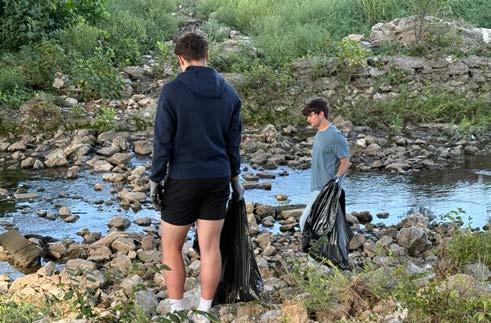
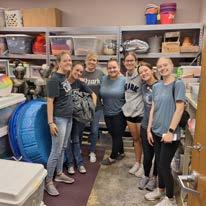
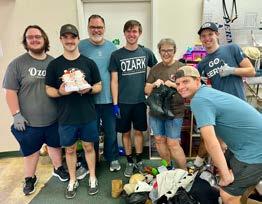
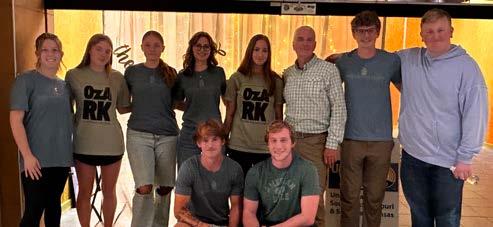
Each fall, OCC students, faculty, and staff participate in Serve Our City, a morning where we cancel class and leave campus to serve various organizations and ministries in the Joplin area. This year, 570 people served in 95 groups at 46 different project sites, making this the largest Serve Our City in the event’s history. We’re grateful for the opportunity to put our motto into action: “...not to be served, but to serve.”
Getaway, Pursue, & The Event
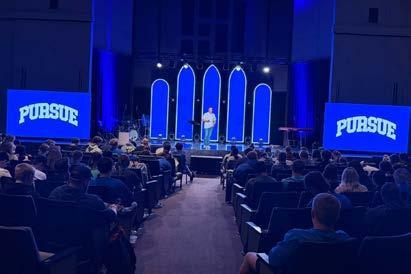
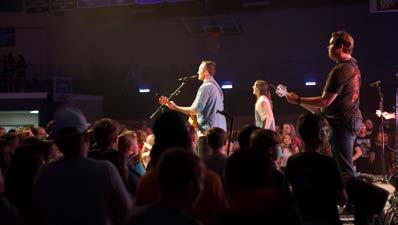
God moved powerfully at Ozark last fall as over 2,000 teens gathered to grow in faith. In September, Getaway brought more than 1,000 middle schoolers to campus for a weekend of high-energy worship, teaching, and fun. In October, Pursue welcomed 100 high school juniors and seniors exploring God’s call to vocational ministry, giving them a glimpse of college life and Christian service. In November, The Event drew 1,230 high schoolers for a powerful weekend focused on deepening their walk with Christ. We thank God for the chance to serve so many young people on campus, and we pray our teen events will bear much fruit for God’s glory.
Dr. Jerry Taylor
Jason Price Julie Gariss Cam Huxford
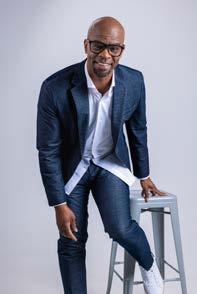
Matt Merold
Dr. Jason Poznich: Traces of Influence
Jason is a lifelong fan of the Kansas City Chiefs, the St. Louis Cardinals, and the Michigan Wolverines.
Jason enjoys Friday movie nights with his family, reading books about preaching…and, of course, cookies.
“I enjoy playing golf, running, and hiking,” says Jason. “Kayla and I try to explore at least one new national park each year, so that maybe we will have visited all of them by the time we hit 100 years old.”
When Dr. Jason Poznich steps up to preach, he doesn’t go alone. With every sermon, Jason brings the power of the Holy Spirit, the truth of God’s Word, and the influence of faithful servants who came before.
Servants like Margaret… After growing up in Miami, Oklahoma, Jason earned a bachelor’s and master’s degree in business administration at Pittsburg State University in Pittsburg, Kansas. During college, Jason served as a part-time youth minister. One Sunday, after Jason preached for the church, a woman named Margaret approached. “Jason,” she said, “I think you ought to be a preacher for the rest of your life.” God used Margaret’s words to impact Jason, ultimately leading him to enroll at Ozark Christian College.
At Ozark, Jason was influenced by professors Matt Proctor and Damien Spikereit. After graduating in 2008 and serving a yearlong residency with Canyon Ridge Christian Church in Las Vegas, Nevada, Jason and his wife, Kayla, moved to southern Illinois, where Jason served as the preaching minister at Boyd Christian Church. During his five years there, while completing a Master of Divinity at Lincoln Christian Seminary, Jason studied under Dr. Mark Scott, Dr. Jeff Snell, and Dr. Chuck Sackett.
“Every time I get up to preach or when I’m preparing a sermon,” says Jason, “I see traces of their influence.”
In the summer of 2014, the Poznichs moved to Moberly, Missouri, where Jason led the preaching program at Central Christian College of the Bible for six years. Then, in the fall of 2020, the Poznichs moved again— this time back to Joplin. Jason now leads Ozark’s preaching department and serves as professor of biblical communication and New Testament for undergraduate students. He also teaches Introduction to Preaching at Lincoln Seminary.
“Coming back to my alma mater feels like home,” Jason says. “My parents still live in the area, and it doesn’t hurt that I’m absolutely committed to and believe in the mission of Ozark to train men and women for Christian service.” After years of tracing the influence others had in his own life, today, Dr. Jason Poznich continues their legacy as he impacts tomorrow’s preachers.
FEBRUARY 16-18, 2026
Preaching-Teaching Convention
Will we see you at this year’s PreachingTeaching Convention? Join us to study what it means to be Faithful Where You Are with speakers Tyler McKenzie, Julie Gariss, Dr. Jerry Taylor, Matt Merold , Michael Hinnen, Cam Huxford , and Jason Price. Come ready to laugh at the President’s Banquet with special guest, comedian Michael Jr. Register today at occ.edu/pt
APRIL 24-25, 2026
Women’s Event
Make plans today to join us at this year’s Women’s Event on April 24-25 at OCC. With speaker Amy Storms, we’ll look at Amazing Faith encounters with Jesus in the book of John. Save your seat at occ.edu/we.
APRIL 30 & MAY 9, 2026
& Commencement
2026 Commencement for Ozark Christian College and Lincoln Seminary will be held Saturday, May 9, at 10:00 a.m. CT in the OCC MultiPurpose Building with speaker Andy Nichols. We want to make room for as many people as possible. Space is limited, so Commencement is a ticketed event. Though tickets (given to each graduate) are required to attend in the MPB, we'll have an overflow service in the Ozark Chapel, where you'll be able to watch on the screen. We’ll also livestream the ceremony. Thank you for understanding as we make room for our graduates and their guests. Join us online at occ.edu/commencement
You’re invited to our 2026 Baccalaureate Service on Thursday, April 30, at 9:30 a.m. CT in the OCC Chapel with speaker Damien Spikereit. Baccalaureate will not require a ticket to attend in person. You can also watch Baccalaureate online at occ.edu/baccalaureate
MAY 19-22, 2026
Branson Retreat
Join us at Chateau on the Lake and enjoy great Bible teaching from Matt Proctor, Dr. Fred Hansen, and Matt Stafford from across the country and find rest in the beautiful Ozark hills around Table Rock Lake. Especially for guests 55+. More information at
BRANSON RETREAT
CHATEAU ON THE LAKE MAY 19-22, 2026
JUNE 7-12, 2026
Creative Arts Academy
High school students, make plans today to join us at this year’s Creative Arts Academy, where you’ll discover how to use your gifts—photography, videography, writing, music, and more—to create Jesus culture in the world. Find out more and register at occ.edu/caa
Tuesday Tours at OCC
JUNE & JULY
Ambassador Sports Camps
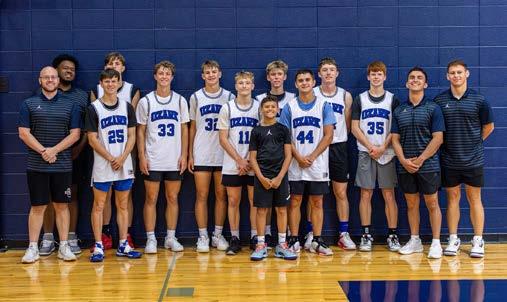
Every summer, the OCC Athletics Department hosts basketball and volleyball sports camps for kids in grades 3-12. Send your future Ambassador to camp at OCC this summer! More information coming soon at occ.edu/sportscamps.
High school juniors, seniors, and transfer students, join us for a Tuesday Tour and get a glimpse of what it’s like to attend Ozark Christian College! You’ll attend class and chapel, eat lunch with President Matt Proctor, meet professors, and take a campus tour. You’ll also receive a $1,400 scholarship when you submit your application to Ozark. Tuesday Tours are held throughout the school year. Find tour dates and details at occ.edu/tuesdaytour.
WITH RANDY GARISS, MATT PROCTOR, DR. FRED HANSEN, AND MATT STAFFORD
5Great Resources for Preachers
Dr. Jason Poznich, OCC’s Professor of Biblical Communication and New Testament, shares five of his favorite books for preachers.
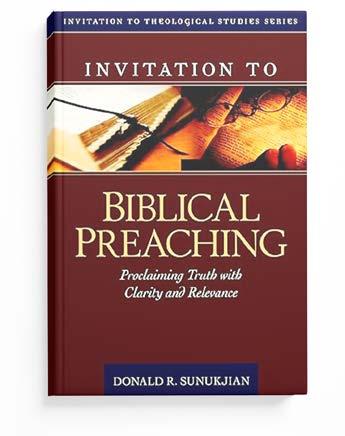
Invitation to Biblical Preaching: Proclaiming Truth with Clarity and Relevance by Donald
Sunukjian
A step-by-step guide to crafting sermons from start to finish—beginning with solid Bible study and ending with passionate, relevant delivery. Perfect for anyone wanting to communicate God’s Word more effectively.
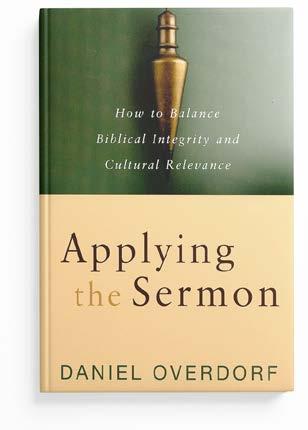
Applying the Sermon: How to Balance
Biblical Integrity and Cultural Relevance by Daniel
Overdorf
A great book for helping preachers connect Scripture to real life, making sermon application both faithful to the text and relevant for today’s listeners.
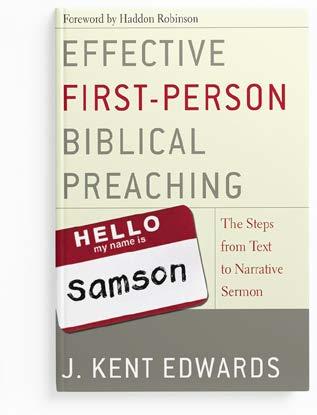
Effective First-Person
Biblical Preaching: The Steps from Text to Narrative Sermon by J.
Kent Edwards
Want to bring Bible stories to life in a fresh way? J. Kent Edwards shows how firstperson sermons can bring biblical stories to life while staying true to God’s Word.
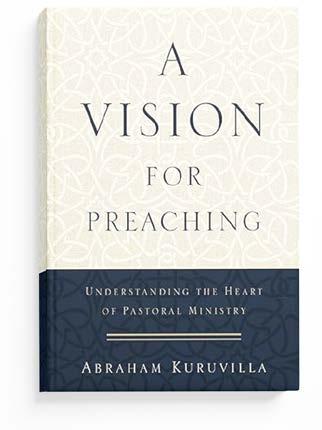
A Vision for Preaching: Understanding the Heart of Pastoral Ministry by Abraham Kuruvilla
Using insights from Scripture and church history, this book helps preachers rediscover the purpose and privilege of preaching.
Made
to
Stick:
Why Some Ideas Survive and Others Die by Chip Heath and Dan Heath
Though not technically a preaching book, Made to Stick by Chip and Dan Heath reveals why some ideas last and others don’t, offering preachers practical tools for making their messages unforgettable.
Give in a Way That Counts Twice
As part of your giving journey, did you know there’s a way to bless Ozark and enjoy meaningful tax benefits too? If you are 70½ years old or older, you can make a Qualified Charitable Distribution (QCD) right from your IRA to support Ozark Christian College.
A QCD is a gift that comes straight from your retirement account to the ministry you love— and because it goes directly to Ozark, it’s excluded from your taxable income and may count toward your required minimum distribution (RMD) for the year. That means your generosity can have an even greater impact.
Ask your plan administrator or trusted tax advisor about how this might work for your situation, and, of course, we’re here to help too. Contact Doug Miller at miller.doug@occ.edu or 417.626.1215 with any questions.
Tribute Gifts
MEMORIAL GIFTS:
David Adams
Emily Adams-Massey
Cloyd and Evelyn Arntzen
Myra Arntzen
Ruth Bunton
Beth and Tyler Branstetter
Don Burton
Stan and Teresa Roberts
Paul Butler
Larry and Sherry Lankford
Laurie Demint
Debbie and Michael Collings
Loretta Dobyns
Loretta Dobyns Estate
Gene and Delinda Jenkins
Bob and Helen Roberts
Kelly and Genevieve Dye
Max and Jackie Dye
Brice and Barbara Ferguson
Mary Riddle
Phillip Gardner
Dawn Daly
Linda Gehrig
Jim and Patsy Randall
Bob Gloss
David and Judy Parry
Dennis Hall
Deana Bond
Waylin Hoshauer
Dean and Carol Nelson
Steven Ingram
Lori Craddock
Connie Ross
Linnea Klendworth
Douglas Klendworth
Judy Lanham
Mark Lanham
Russell Lieb
Jeff and Barbara Lieb
Mr. and Mrs. Buell Mayes
Rick and Cherry Sallee
Calvin and Thelma
Randolph
Michael and Linda Vernon
Tom Ross
Connie Ross
David Shelton
Joyce Stock
Jewell Shelton
Joyce Stock
Clifford Stock
Joyce Stock
Deborah Stock
Joyce Stock
Bill Vernon
Michael and Linda Vernon
BJ Vernon
Michael and Linda Vernon
Bob Vernon
Michael and Linda Vernon
Dallas and Beulah Vernon
Michael and Linda Vernon
Don Vernon
Michael and Linda Vernon
Lorraine Vernon
Michael and Linda Vernon
Henry and Mildred Wood
Edith Geurin
Doug Miller serves as the attorney and planned giving specialist at OCC.
HONOR GIFTS:
Monte French
Michael and Vicki French
Joseph Marin
Timothy Hall
Doug Miller
Bob Marsh
Chad Ragsdale
Brad and Carolyn Neal
Andrew and Emily Trotter
Michael and Vicki French
OCC ACADEMY
A ministry training initiative from Ozark Christian College
• Hours of video content and guided, practical learning exercises.
• Perfect for church volunteers, residency programs, internal church staff hires, and personal growth opportunities.
• Featured courses include “Sent: Called by God into a Life of Vocational Ministry” and “How to Interpret the Bible.”
Stay connected to your Ozark, Midwest, and Lincoln family
Share updates on your life and ministry with OCC. We’ll print your news in an upcoming issue of The Ambassador. Send us your update at alumni@occ.edu or occ.edu/alumni
CONGRATULATIONS
OUR DEEPEST SYMPATHY
Michael Murphy (OCC 12) and Emma (Wallace) Murphy (OCC 13) welcomed Maisie Jane Murphy on August 18, 2025. Michael is the Executive Director of the Central Iowa Bible Camp.
Please lift in prayer the families of the following alumni.
Dale Arnold (OCC 74) passed away on November 8, 2025. Dale was a pastor for over 20 years and a 75-year member of Shiloh Christian Church. His wife, Julia (Holliday) Arnold passed away in 2009.
Marilyn (Goebel) Bennett (OCC 71, former staff) passed away on August 8, 2025. She lived in the Pensacola, Florida, area for over 40 years and was a member of Gulf Coast Christian Church, where she was a Sunday school teacher and choir member.
Sidney “Sid” Boudreaux (attended OCC 68-70) passed away on November 9, 2025.
Sid and his wife of 68 years, Marjory “Marj” (Ridgway) Boudreaux (OCC 75), served as missionaries in the Philippines for 22 years before returning to the Joplin area.
Robert “Bob” Brock (OCC 71) passed away on October 21, 2025, leaving behind his loving wife, Catherine (Anderson), and his four children and many grandchildren. Bob preached at churches in several states over a span of 55 years.
Dr. Charles Crane (Lincoln 75, 77) passed away on January 12, 2026. He served in various ministries throughout his lifetime in Oregon, Utah, Illinois, and Idaho. He was president of Boise Bible College from 1990 to 2007. He received the lifetime achievement award from Lincoln Christian College and Seminary in 1999.
Loretta (Roberts) Dobyns (attended OCC 52-54) passed away on September 16, 2025. Her husband, James “Jim” Dobyns (OCC 54) passed away in 2002. Jim and Loretta served in ministry with several Christian churches during their marriage.
Junie Bea Eden was born into the arms of Jesus on September 4, 2025, to Kendall Eden (OCC 18) and Kylee Eden. Kendall serves at Riverlawn Christian Church in Wichita, KS.
Luis Antonio Escobedo (OCC 07) passed away on August 3, 2025, after an illness. He was a minister in Saltillo, Coahuila, Mexico and left behind his loving wife, Berenice (Northrup) Escobedo (OCC 07).
Steven Ingram (OCC 78) passed away on November 2, 2025. Steven served in various ministries throughout his lifetime, including his most recent position at Bement Christian Church in Bement, Illinois. He left behind his loving wife, Carla (Lidgard), as well as many other loved ones.
Sylvia (Lincoln) Klor (OCC 79) passed away on October 28, 2025, leaving behind her husband of over 46 years, Russell Klor (OCC 81), as well as four children, fourteen grandchildren, and many other loved ones. Sylvia worked for the Joplin School District for over 20 years.
William “Bill” Park (MCC 62) passed away on July 30, 2025, leaving behind his wife of 63 years, Vinita (Bolster) Park (attended MCC 60-63), as well as many children, grandchildren, and other loved ones. Together, Bill and Vinita ministered in churches across North Carolina, Indiana, Kansas, and Oklahoma, with their longest service at North Side Christian Church in Oklahoma City.
CLASS NOTES
1970s
Albert “Skip” Marks (OCC 76) and his wife, Darlene (Taylor) Marks (attended OCC 71-73) minister at Hill Country Chapel in Pipe Creek, Texas, with Albert serving as the senior minister. Since beginning the ministry in 1977, they have served the community for 48 years.
1980s
Gerald “Jerry” Peterson (OCC 80, former staff) passed away on September 11, 2025, leaving behind his wife of 65 years, Imogene (Russell) Peterson (attended OCC 58-65), as well as his children, grandchildren, and many other loved ones. During his lifetime, Gerald served in churches in Texas, California, Florida, Georgia, Missouri, and Kansas. Tighe Winston (OCC 72) passed away on November 16, 2025, with his wife, Karen (Eagles) Winston (attended OCC 68) by his side. During his lifetime, Tighe ministered with Christ in Youth, as well as churches in Oklahoma, Iowa, Arizona, and Oregon, and also worked at Pacific Christian College in California.
Mike Harney and his wife Julia (Rowoth) Harney (OCC 87) left a 30year faithful ministry at West Side Christian Church in Springfield, Illinois. Mike now serves with First Christian Church in Webb City, Missouri.
David Schepper (OCC 85) received The John A. Price Excellency in Chaplaincy Award. This award is given annually to honor outstanding service and dedication in law enforcement chaplaincy.
Susan (Fousel) Wohlenhaus (OCC 87) celebrated 20 years of service at LifeChoices Health Network in Joplin.
1990s
Dr. Dustin Bailey (attended OCC 91-93) completed his PhD in General Psychology with an Emphasis in Integrating Technology, Psychology, and Learning. His dissertation topic was Nomophobia and Perceptions of Mobile Learning among Undergraduate Students. Dr. Bailey’s current research examines the role AI plays in the increased reliance on smartphones in daily life, higher education, and scholarship.
2010s
Kendall Beye (OCC 15) serves as a Customer Support Agent with Planning Center.
Joel Harney (OCC 14) and his wife Bayli (Gibson) Harney (OCC 13) ended a fiveyear ministry with the Community Christian Church in Ft. Scott, Kansas, where Joel served as an associate minister. Joel now serves at Christ In Youth.
“The Gathering,” a church plant in Naples, Florida, celebrated its oneyear anniversary. Silas “Sy” Huffer (OCC 12) and Monica (Lanzone) Huffer (OCC 11) serve at this church plant.
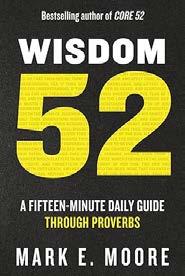
Dr. Mark Moore (OCC 86, former full-time faculty) authored Wisdom 52: A Fifteen-Minute Daily Guide Through Proverbs with WaterBrook.
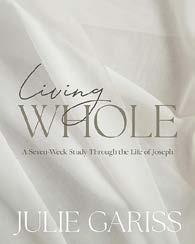
Julie (Lawrence) Gariss (OCC 18, former staff) authored Living Whole: A SevenWeek Study Through the Life of Joseph with HIM Publications.
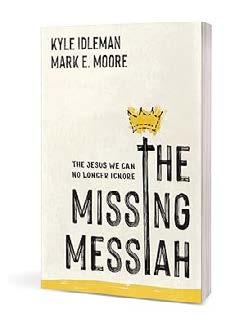
Dr. Mark Moore (OCC 86, former full-time faculty) and Kyle Idleman (OCC 98) authored The Missing Messiah: The Jesus We Can No Longer Ignore with Tyndale Elevate.
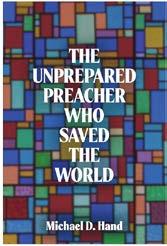
Michael Hand (OCC 08) authored The Unprepared Preacher Who Saved the World with Trilogy Christian Publishing.
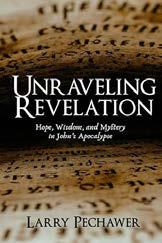
Dr. Larry Pechawer (former OCC full-time faculty) authored Unraveling Revelation: Hope, Wisdom, and Mystery in John’s Apocalypse.
We want to hear from you!
Send your life and ministry updates to alumni@occ.edu or at occ.edu/alumni.
Your news will be included in an upcoming issue of The Ambassador.
At Ozark Christian College, we’ve had one mission for over 80 years: we train men and women for Christian service.
Multiply your kingdom impact by investing in the hundreds of kingdom servants we train each year. I nvest in what matters.
Make a one-time or recurring gift today at occ.edu/give.
Non-Profit Organization
U.S. Postage PAID
Joplin, MO 64801
Permit No. 62
1111 N Main St
Joplin, MO 64801
Change service requested
ONE MORE THING
A final thought from our editor
Two Parable Prayers
Amy Storms
I’ve heard some really good sermons in my 49 years—sermons that moved me to tears, moved me to action, or moved me so much in my spirit that I couldn’t move at all. I just sat in stunned silence and let the words sink in.
I’ve heard sermons that inspired Bible-margin notes or thoughtful reflection or gut-level conviction. I’m not an “Amen”-er by nature, but I have had moments in sermons that moved me to put my hand over my heart, as though I were trying to press the words inside.
On the other hand—after all, 49 years is a lot of Sundays!—I’ve also heard sermons that were less…compelling. Sermons where I walked away unchanged, unmoved. At times, in my pride, I evaluated the message itself: the delivery, the application, the interpretation of Scripture—as though I were there to judge a speech contest and not to hear the very Word of God.
What made the difference among all the sermons? Was it the content of the messages? Maybe. Or was it more about the condition of my heart? Most definitely.
In the Old Testament, Moses and Isaiah compare God’s Word to rain and snow, coming down from heaven to make new grass and tender plants bud and flourish.1 What a great picture and prayer for preachers! But in the New Testament, Jesus compares
Amy Storms serves as OCC’s vice president of marketing and communications, English professor, and general editor of The Ambassador.
God’s Word to seed. “A farmer went out to sow his seed…” he says, “and the seed is the Word of God.”2
“What type of soil are you?” Jesus asks unhearing hearers. “What’s the condition of your heart?” Is the soil of your heart healthy—deep enough to take root and free from the rocks and thorns that would keep new grass and tender plants from budding and flourishing?
God’s Word never returns empty, Isaiah said—it always achieves its purpose.3 In other words, the problem isn’t always the preacher. More likely, it’s the listener. A hearer who doesn’t hear. And so, in all our years of Sundays, may we pray two parable prayers:
First, Lord, may we, your preachers and teachers, be faithful sowers of your Word! May we “preach the Word…in season and out of season” and do our best to present ourselves “as one approved, a worker who does not need to be ashamed and who correctly handles the word of truth.” 4
Second—and perhaps more importantly—may we be good soil—good listeners with a “noble and good heart, who hear the word, retain it, and by persevering produce a crop.” 5 May our lessons and our lives yield a crop, “a hundred times more than was sown,” 6 for the world’s good, for your glory, and for all our Sundays to come. Amen.