All advertisements, and/or editorials are accepted and published by Over the Road on the representation that the advertiser, its advertising company, and/or the supplier of the editorials are authorized to publish the entire contents and subject matter thereof. The advertiser, its advertising company, and/or the supplier of the editorials will defend, indemnify and hold Over the Road harmless from and against any loss, expense or other liability resulting from any claims or suits for libel, violation of privacy, plagiarism, copyright or trademark infringement and any other claims or suits that may rise out of publication of such advertisement and/ or editorials. Press releases are expressly covered within the definition of editorials.
Great
Minimum
Robert D. Scheper
Reducing Your Taxes as an Operator
Reducing your taxes as an Operator does NOT require an in-depth knowledge of the Canadian tax system. Drivers who say they don’t understand taxes imply that it’s far too complex for them. However, it’s not nearly as complicated as managing your logbook. In fact, logbooks are anywhere from 6-7 times more complex than Operators’ taxes. If drivers had to complete their taxes once or twice a day (like they manage their logbooks), they would learn what makes the difference very quickly.
The two systems allowed for reporting taxable income are self-employed and Incorporated. The revenue and most expenses are identical for each system, but both have their own rules and options. Self-employed is much more restricted in options, more demanding for paperwork, and higher risk for audits, but are much easier to calculate and therefore usually have lower accounting fees. Incorporating is more work, but due to being able to use Non-Taxable Benefits produces $35-45,000 lower taxable incomes.
There are a couple of reasons why most drivers struggle with believing it’s simple. Accountants entertain their complexity and promote disinformation. There are four simple rules:
1. Incorporate so you can use Non-Taxable Benefits (the ONLY reason to incorporate).
2. Never use the TL2 simplified method to deal with meal costs on the road.
Always Use the Non-Taxable Benefit system for meal costs on the road.
3. Never put a personal vehicle into your corporation.
ALWAYS Use the Non-Taxable Benefit system for personal vehicle travel.
4. Never Use Dividends (98% of operators should NEVER use it).
Following these rules will save you $13,000 per year in taxes (most of the savings coming from #2). The tricky part is REALIZING you’re doing it wrong. Assume you are!
There is a 98% chance you are overpaying in taxes because nearly all Accountants use the TL2 simplified method to deal with meals on the road. If you give your Accountant your logbooks at the end of the year, or you give them the US and Canadian days you were on the road you ARE using the TL2. If you are UNSURE if you use the TL2 or not... you ARE USING IT. To use the Non-Taxable Benefit system requires your very mild monthly participation. You CANNOT accidentally use
Non-Taxable Benefits. You cannot use NonTaxable Benefits without KNOWING it.
The National Averages for Operators’ Taxable income is $65,000 and paying taxes of $12,000-$20,000 (total). If someone uses Dividends, they are paying taxes at a higher rate than a T4 driver. Dividends are for businesses that earn taxable income well OVER $70,000. It is always better to T4 yourself $70,000 BEFORE you pay corporate taxes (and then have to pay dividend taxes). National averages show most do NOT earn that much.
If you subtract $35-45,000+ in Non-Taxable Benefits, the probability of paying dividends drop even further. Your T4 would be $30,000 +/-. DO NOT USE DIVIDENDS!
Understanding where you save taxes requires you to understand only one thing... your meals on the road. Who pays for them? It should NOT be you! It should not be a CREDIT from Canada Revenue Agency. It MUST be something your CORPORATION pays you for. It shouldn’t be a “reimbursement” for what you spend (that would require you to keep receipts). It must be a negotiated flat rate fee per day. It becomes a 100% expense for your corporation, but you pay NO taxes on it (Non-Taxable Benefit). If you understand that you can pull money from your corporation WITHOUT paying taxes, you would be right. HOWEVER, it MUST follow the rules of NTB. If your Accountant does not do it right, defend it correctly... you will have to pay all those savings BACK TO CRA. This is where the responsibility of the accountant is critical. If THEY do not understand the system, follow the rules... it will cost YOU in risk and potential taxes.
This is YOUR business (as an Operator), YOU must understand what you are doing and what risks YOU are taking. If you do it right, you will save THOUSANDS. If you don’t want to learn, if you don’t require your accountant to learn... you will overpay in taxes. End of story.
After writing about it and doing it through our firm for 23 years, I am still baffled why most Operators don’t investigate. During these difficult times, many do not have options anymore. It’s a relatively simple change for the Operator and a minor change for the accountant. If you’re an Operator, have your accountant contact me about the needed software used in the system. If they say it’s a hoax... take my advice... your ACCOUNTANT doesn’t care about your taxes.
About the Author:
Robert D. Scheper is a leading Accountant and Consultant exclusively serving the Lease/ Owner Operator industry in Canada. His first book in the Making Your Miles Count series “taxes, taxes, taxes” was released in 2007. His second book “Choosing a Trucking company” is the most in-depth analysis of the independent operator industry today. He has a Master degree (MBA) in financial management and has been serving the industry since he and his wife came off the road in 1993. His dedication, commitment and strong opinions can be read and heard in many articles and seminars. You can find him at www.makingyourmilescount. com or 1-877-987-9787.
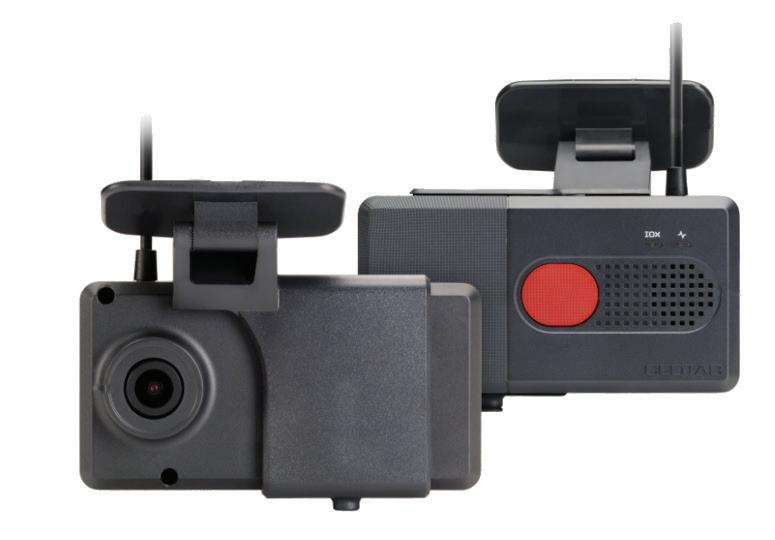
Our new Geotab Go Focus Camera Your fleet’s extra set of eyes on the road.
Intelligent safety alerts, event-driven recording and real-time insights help prevent collisions, protect drivers and cut fleet costs without invading privacy by recording only road-facing footage during specific key driving events.
Give GPS to Go Powered by Geotab a try, you won’t be disappointed.
We have been around for nearly 20 years; we are Canadian owned/ operated and we understand what customer service means!
SAFETY DAWG
Chris Harris
The Invisible Heist: How Sophisticated Cargo Theft is Plaguing Canadian Trucking
For decades, cargo theft in the Canadian trucking industry followed a relatively predictable script. A driver would leave a loaded trailer unattended at a truck stop, or a fence would get cut through at a yard lock overnight, hitch up, and drive away. It was a crime of opportunity—opportunistic, localized, and loud.
Today, that script has been completely rewritten. Cargo crime has evolved from a minor operational nuisance into a sophisticated, multi-million-dollar crisis driven by organized criminal networks. Nowhere is this trend more alarming than in Ontario’s Greater Toronto Area (GTA) and the Peel Region corridor, which has become the epicentre of a high-tech logistics war. For fleets and independent operators alike, the cargo is no longer just disappearing from the yard; it is being stolen right out from under their noses through the digital space.
The Rise of the “Fictitious Carrier”
The modern cargo thief rarely carries a bolt cutter. Instead, they carry a laptop. The fastestgrowing method of cargo crime in Canada is identity fraud and fictitious carrier schemes. In these scenarios, organized crime rings clone the identities of legitimate, highly rated trucking companies. They set up professional-
looking digital fronts, complete with fake insurance certificates, cloned CVOR numbers, and stolen corporate identities. They then log onto digital load boards, underbid on highvalue freight, and secure the contract.
Once the load is assigned, a driver—often completely unaware that they are working for a fraudulent entity—picks up the freight from the shipper. But instead of arriving at the designated distribution center, the freight is rerouted to a cross-dock operated by the criminal syndicate. By the time the broker and the shipper realize the load is late, the electronics, consumer goods, or pharmaceuticals have already been repackaged, distributed, and sold on the black market.
Why Canada? Why Now?
Several factors have combined to create a perfect storm for cargo criminals in Canada. First is the sheer volume of high-value goods moving through a concentrated geographic bottleneck. The highway networks surrounding Toronto handle billions of dollars in freight daily, providing an endless buffet of targets.
Second is the low-risk, high-reward nature of the crime. Historically, law enforcement and the judicial system have treated cargo theft as a property crime or a “victimless” commercial
loss. Compared to bank robberies or drug trafficking, the penalties for cargo theft are notoriously lenient. Yet, a single trailer loaded with high-end electronics or brand-name cosmetics can easily net a criminal syndicate over $500,000 in pure cash within 24 hours. The profit margins rival narcotics trafficking, with a fraction of the jail time if caught. Furthermore, the prolonged freight recession that squeezed the industry over recent years left many operations vulnerable. In an environment where every dollar counts, some brokers and shippers have cut corners on vetting processes to lock in lower rates, inadvertently opening the door to sophisticated fraudsters.
The Staggering Cost to the Industry
The financial fallout of this epidemic extends far beyond the value of the missing freight. When a load vanishes, the ripple effects tear through a carrier’s balance sheet:
• Insurance Pressures: Cargo insurance claims are skyrocketing. As a result, underwriters are tightening guidelines, raising deductibles, and hiking premiums. Some carriers operating in high-risk zones are finding it difficult to secure affordable coverage at all.
• Operational Friction: Vetting a new broker or carrier can no longer be done with a quick look at a website. Fleets are forced to implement multi-step verification protocols— checking phone numbers against registered regulatory databases, demanding multiple forms of ID, and utilizing advanced tracking technology. This adds time and labour to an already tight schedule.
• Reputational Damage: Trust is the ultimate currency in logistics. If a carrier or broker is tied to a major cargo loss due to a lapse in security, relationship damage with primary shippers can take years to recover.
Securing the Supply Chain
Combating this evolution in crime requires a parallel evolution in security strategy. Relying on simple padlock solutions is no longer enough. Forward-thinking fleets are now investing heavily in covert tracking technology. Instead of just placing a GPS tracker on the trailer bumper—where a sophisticated thief will look first—micro-trackers are being embedded directly inside the product packaging itself.
On the administrative side, rigid digital hygiene is the best line of defence. Crossreferencing every single load assignment, avoiding unverified digital dispatch links, and utilizing secure, closed logistics networks are becoming standard practice.
A Unified Front
The trucking industry cannot solve this crisis in a vacuum. Industry advocates are continuously pushing for specialized, well-funded cargo crime task forces within law enforcement and calling for stricter judicial penalties that match the economic damage these syndicates inflict.
Until systemic changes occur, the burden of defence falls squarely on the shoulders of transportation managers and drivers. In today’s logistics landscape, staying safe requires more than just checking your mirrors and looking out for blind spots—it requires keeping an equally sharp eye on the digital horizon.
Watt & Stewart Commodities Inc. 4134 3rd Street East, Claresholm, AB T0L 0T0
NINE (9) LONG HAUL TRUCK DRIVERS NEEDED!
(NOC: 73300)
Employer: Watt & Stewart Commodities Inc.
Work location: 4134 3rd Street East, Claresholm, AB T0L 0T0
& Various routes in Canada and USA
Vacancies: 9 Vacancies
Salary: $36.00/ Hour for 40 -70 Hours / Week (calculated based on mileage and type of rig)
Benefits: Health Benefits: Dental Plan after 3 months of employment, Health Care Plan, Vision care benefits; Financial Benefits: Mileage paid, Safety Bonus, High Mileage Bonus, Retention Bonus and Referral Bonus, Group insurance benefits; Other benefits: Free parking available; Subject to wage increase and incentives
Terms of employment: Permanent, Full time Start date: As soon as possible Employment conditions: morning, day, evening, night, weekend, on call.
Languages: English
Education: No degree, certificate or diploma.
Experience: 1 year to less than 2 years
Personal Suitability: Reliability, organized
Credentials: Driver’s license (Class 1 or A); Air Brakes Endorsement
Transportation/Travel Information: Valid driver’s license, Willing to travel cross-border, Willing to travel for extended periods.
Security and Safety: Valid passport, Medical exam, Driving record check (abstract), Driver’s validity licence check; Drug test, Criminal record check, Basic security clearance Own Tools/ Equipment: Steel-toed safety boots, cellular phone, gloves
HOW TO APPLY
By email: gparker@wattstewart.com
By mail: 4134 3rd Street East Claresholm, AB T0L 0T0
Underrepresented groups are encouraged to apply: Persons with disabilities, Indigenous people, Newcomers to Canada.
Tasks: Hauling general commodities using flatbed trailers throughout Canada and the United States; Hauling Lumber, pipe and wide loads; Plan or adjust routes based on changing conditions, using computer equipment, global positioning systems (GPS) equipment, or other navigation devices, to minimize fuel consumption and carbon emissions; Operate and drive straight or articulated trucks to transport goods and materials; Tarping and ensuring safety and security of cargo; Receive and relay information to central dispatch; Perform brake adjustments; Perform emergency roadside repairs; Record cargo information, hours of service, distance travelled and fuel consumption; Perform pre-trip, en route and post-trip inspection and oversee all aspects of vehicle; Oversee condition of vehicle and inspect tires, lights, brakes, cold storage and other equipment; Load and unload goods; Perform preventive maintenance; Mountain driving expertise; Professionalism in customer service; Communication Systems Experience: Operate GPS (Global Positioning System) and other navigation equipment, Citizens band (CB) radio; Documentation Knowledge: Trans-border documentation, Driver logbook, Bill of lading, Trip reports, Maintenance and repair reports, Accident or incident reports, Inspection report (pre-trip, en-route, post-trip).
Type of Trucking and Equipment: Tractor-trailer, Flatbed Weight Handling: Up to 23 kg (50 lbs)
Work Conditions and Physical Capabilities: Physically demanding, Attention to detail, Repetitive tasks, Handling heavy loads, Sitting for extended periods of time
WHAT YOU MUST INCLUDE IN YOUR APPLICATION
Job reference number 250501 OTR
Answer to the following screening questions:
• Are you willing to relocate for this position?
• Do you have experience working in this field?
• Do you have the required credentials listed in the job posting?
What might be required by the employer later in the hiring process: