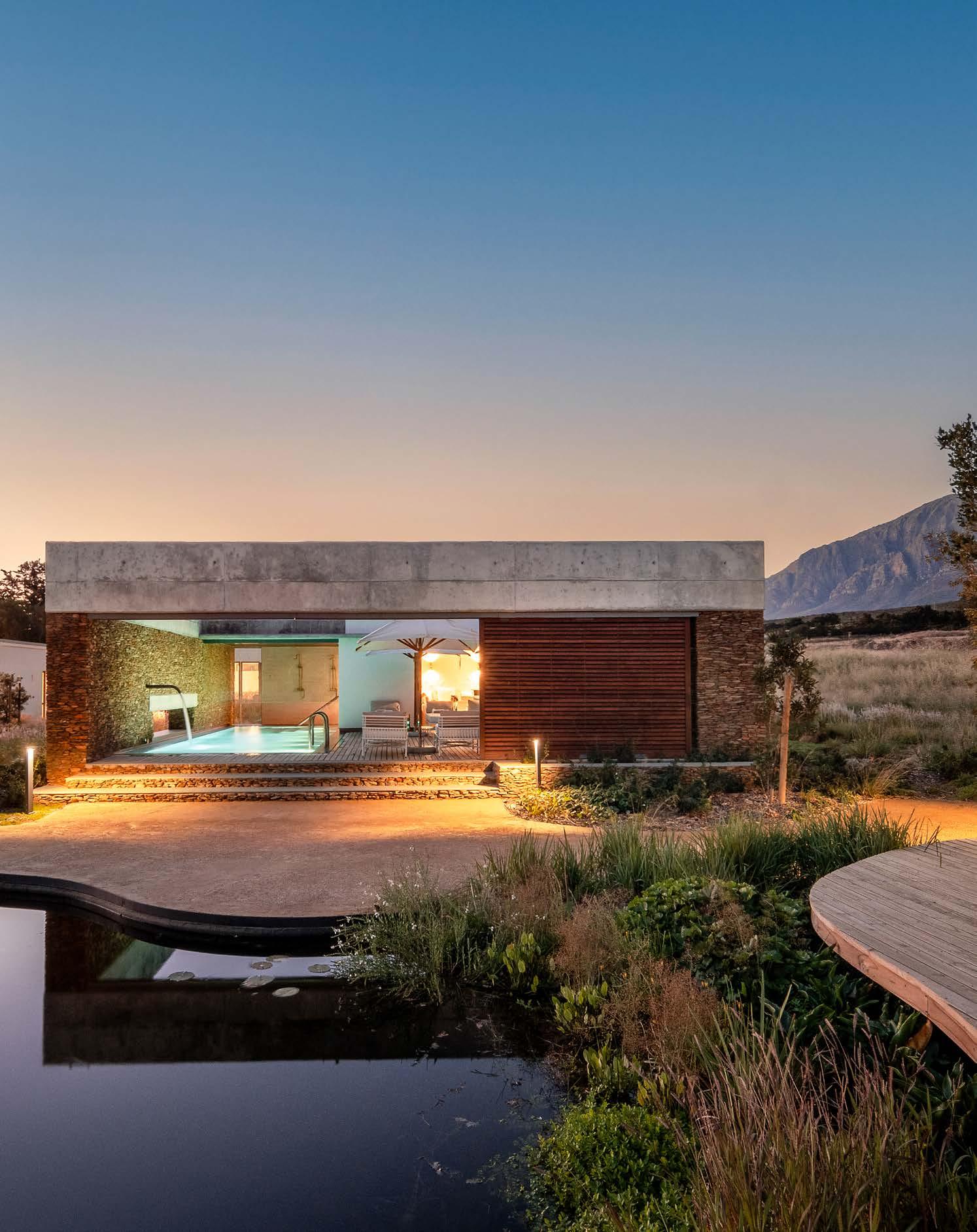
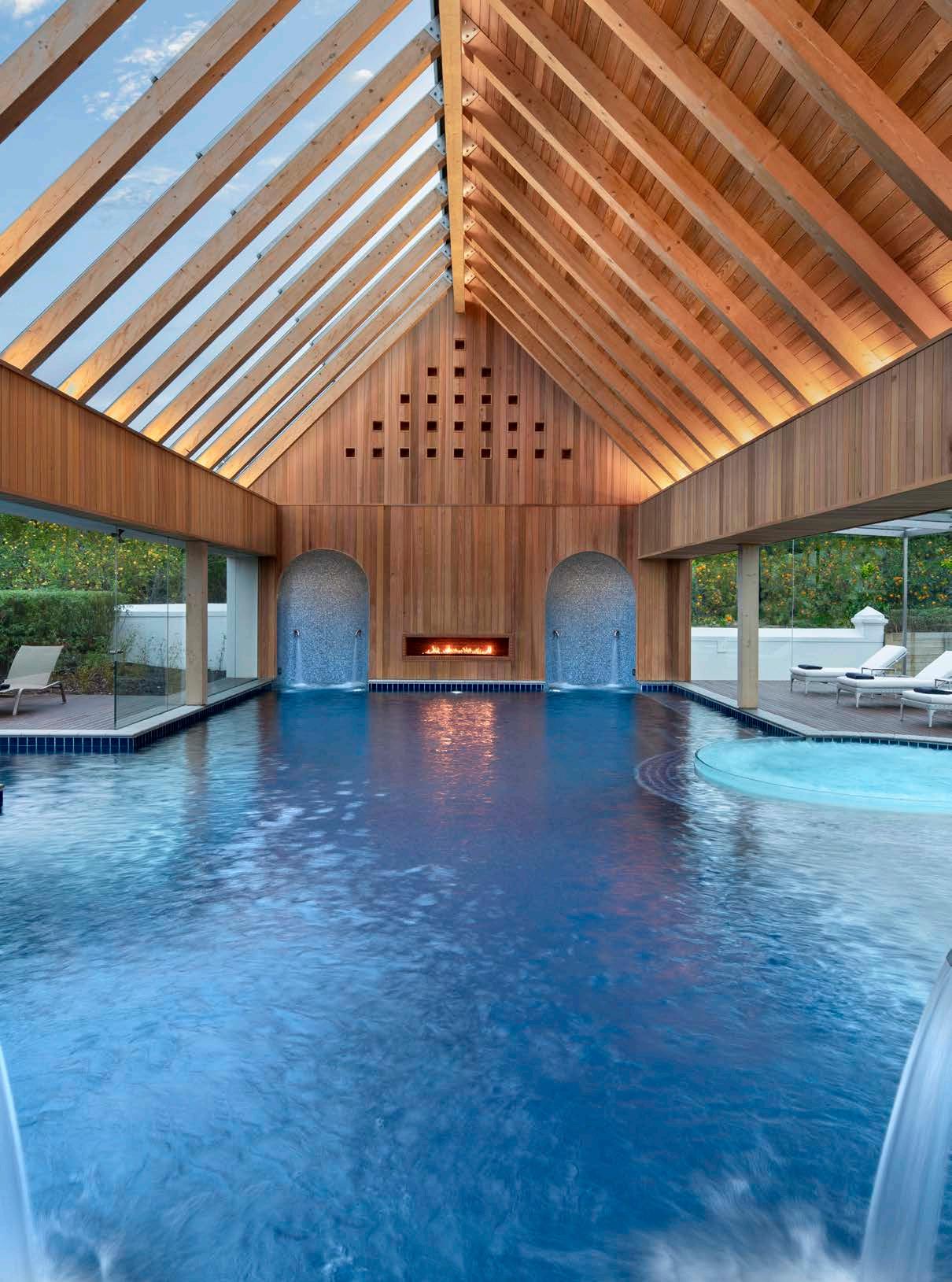
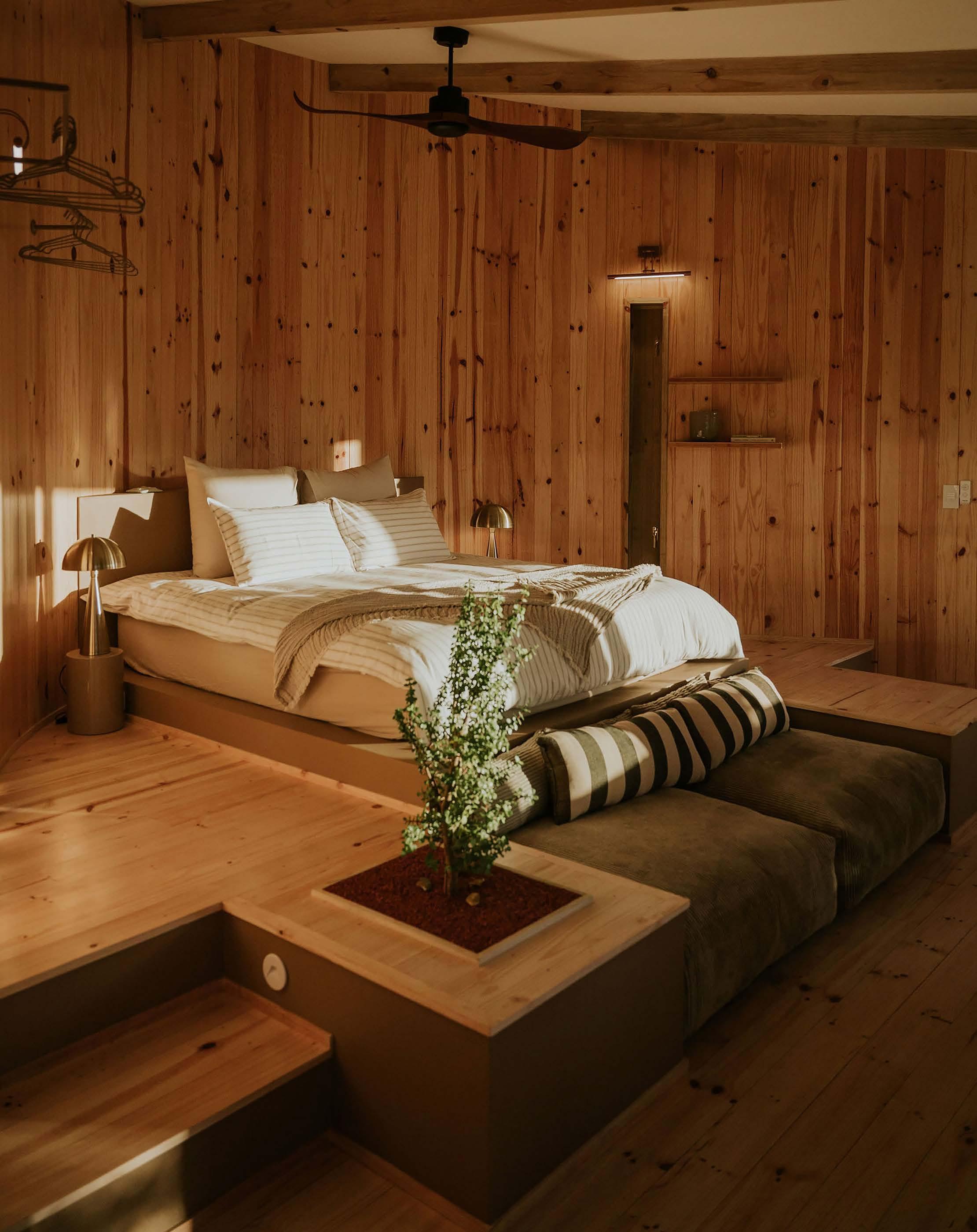
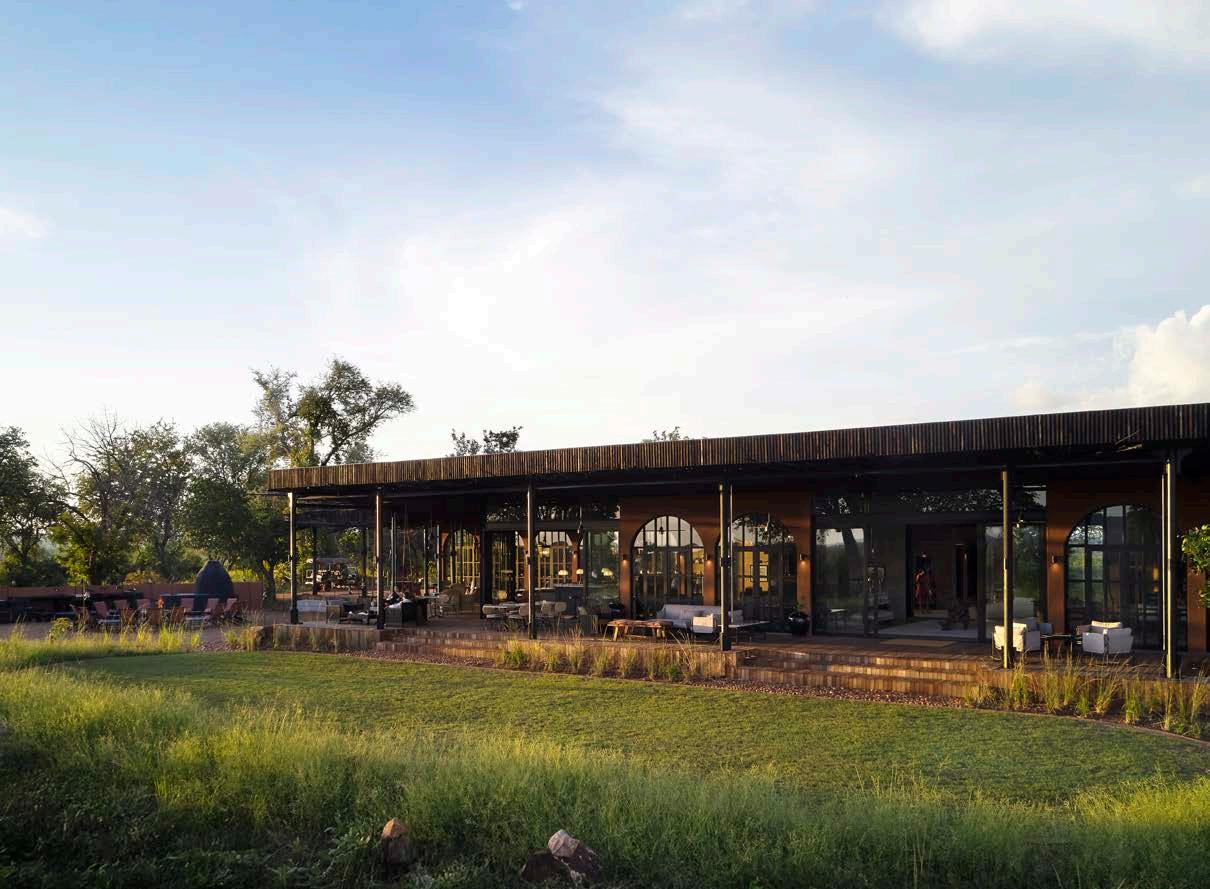
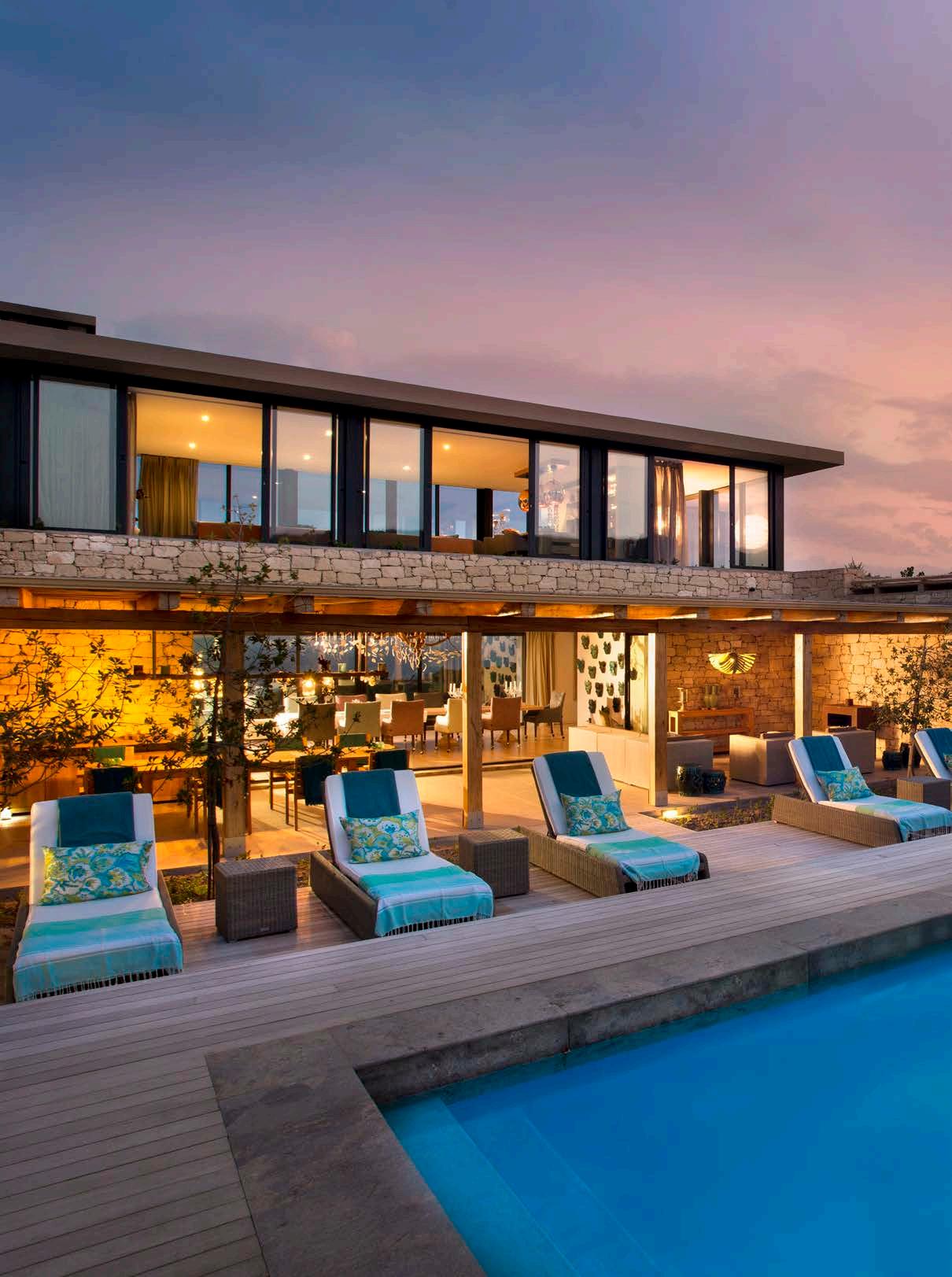
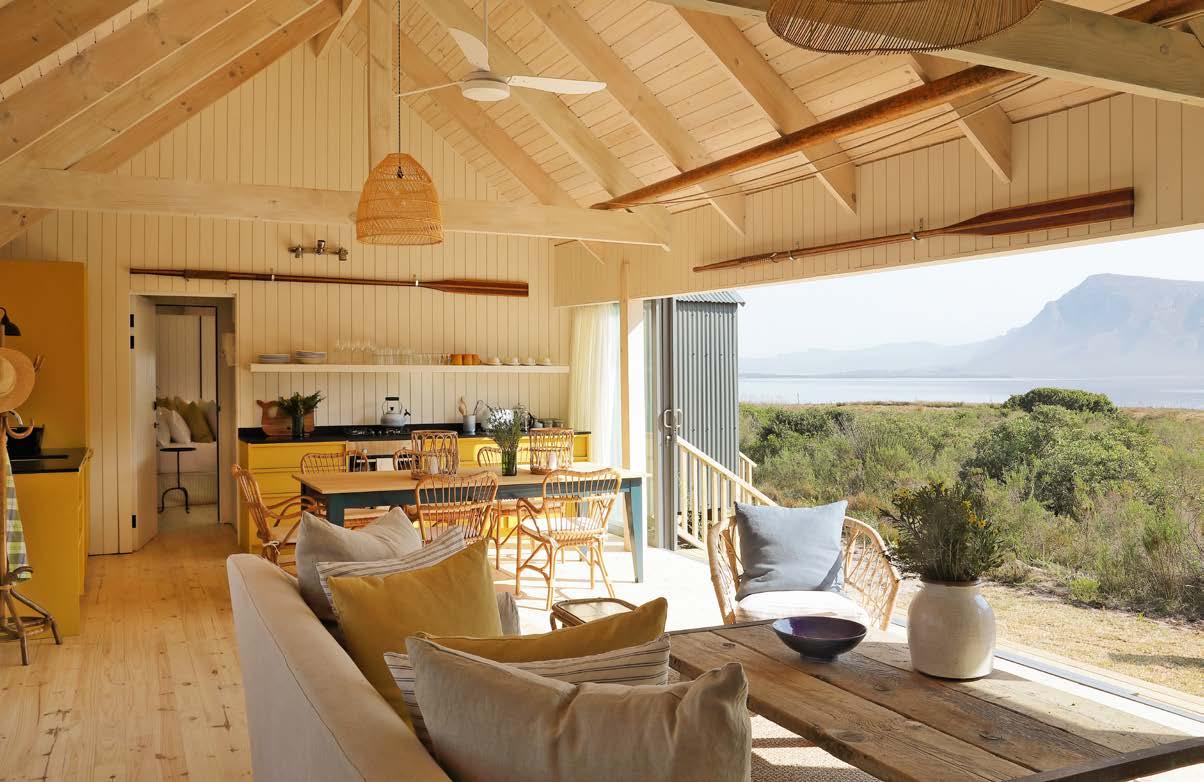
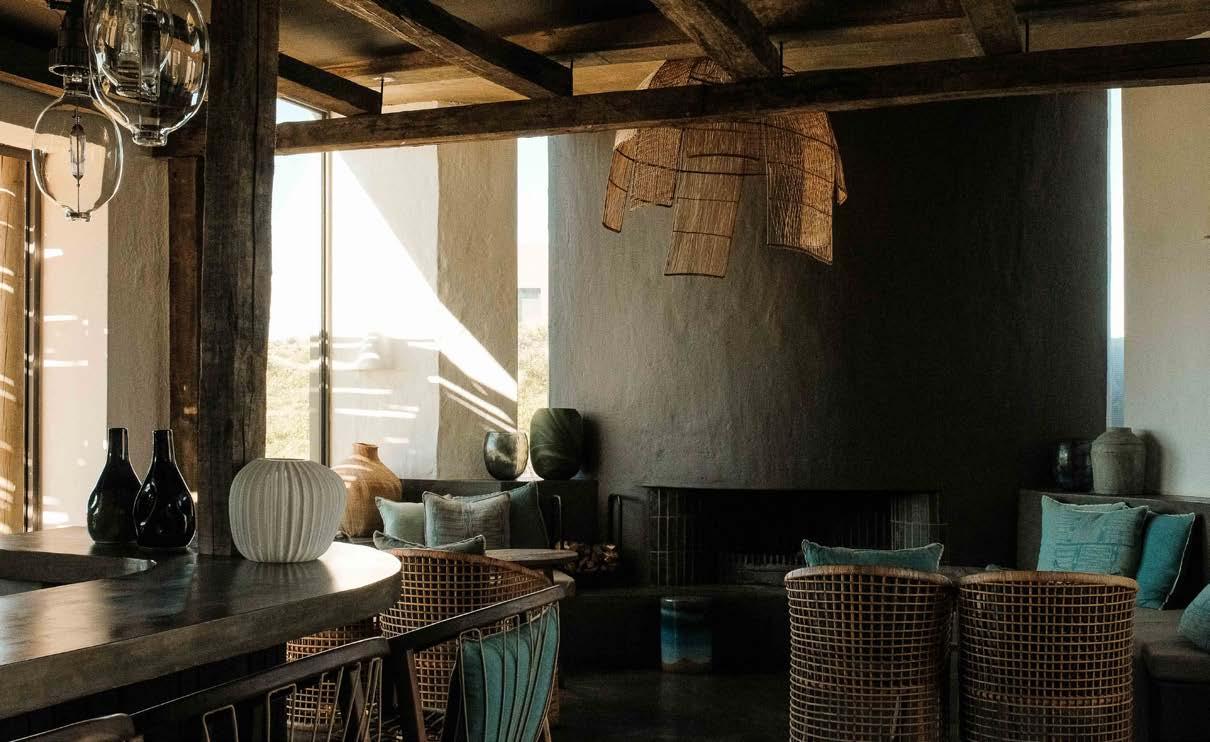
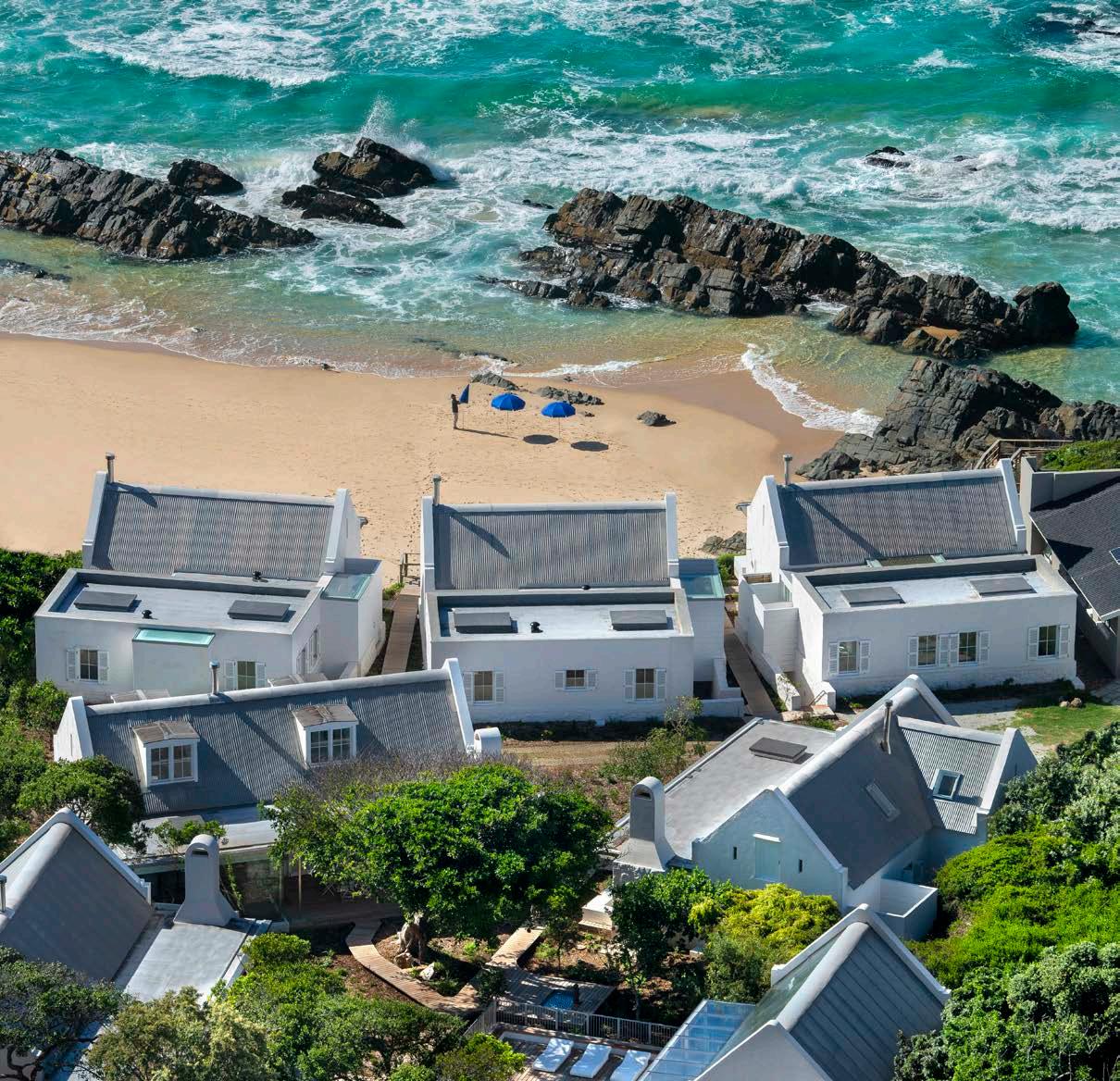
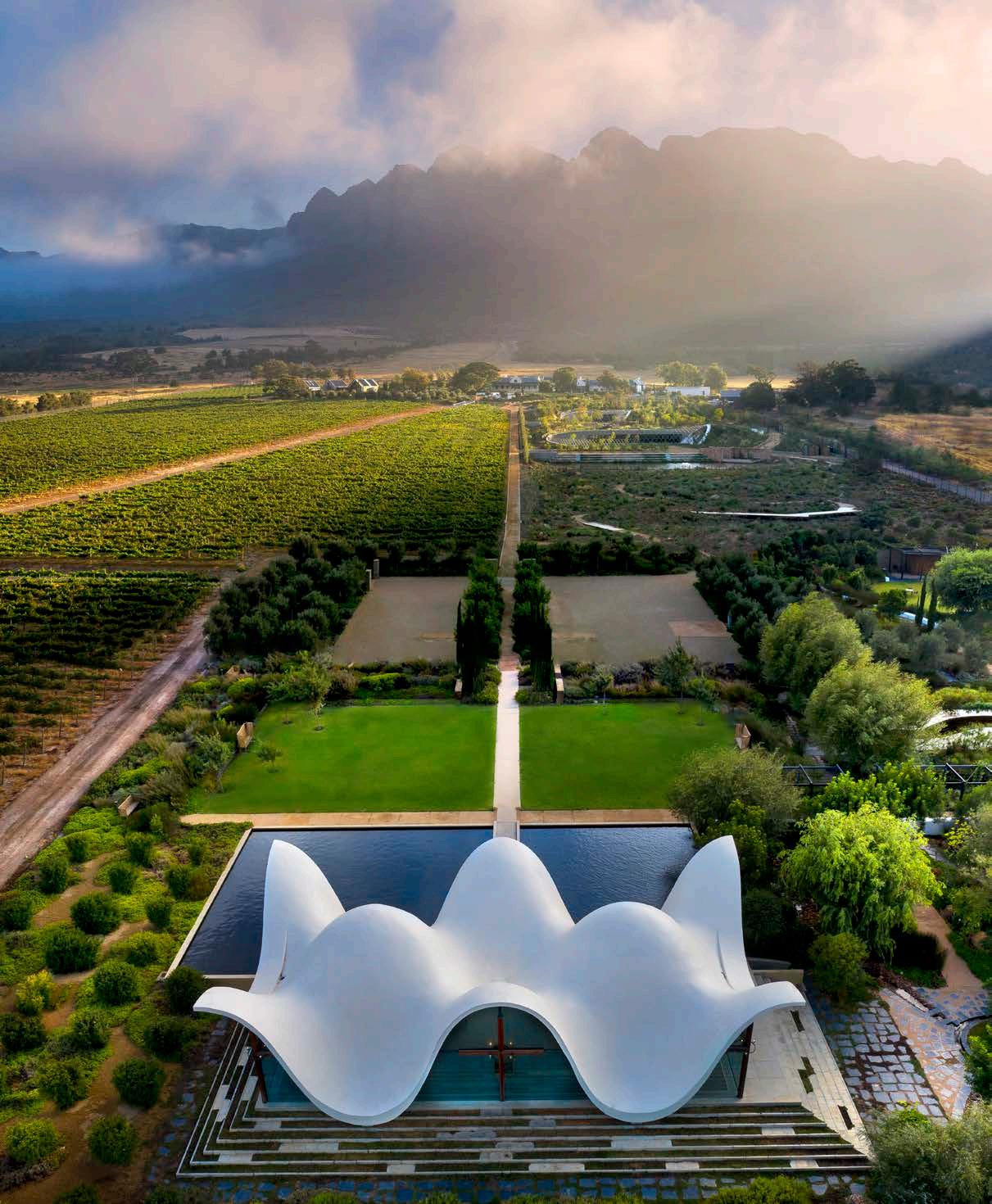
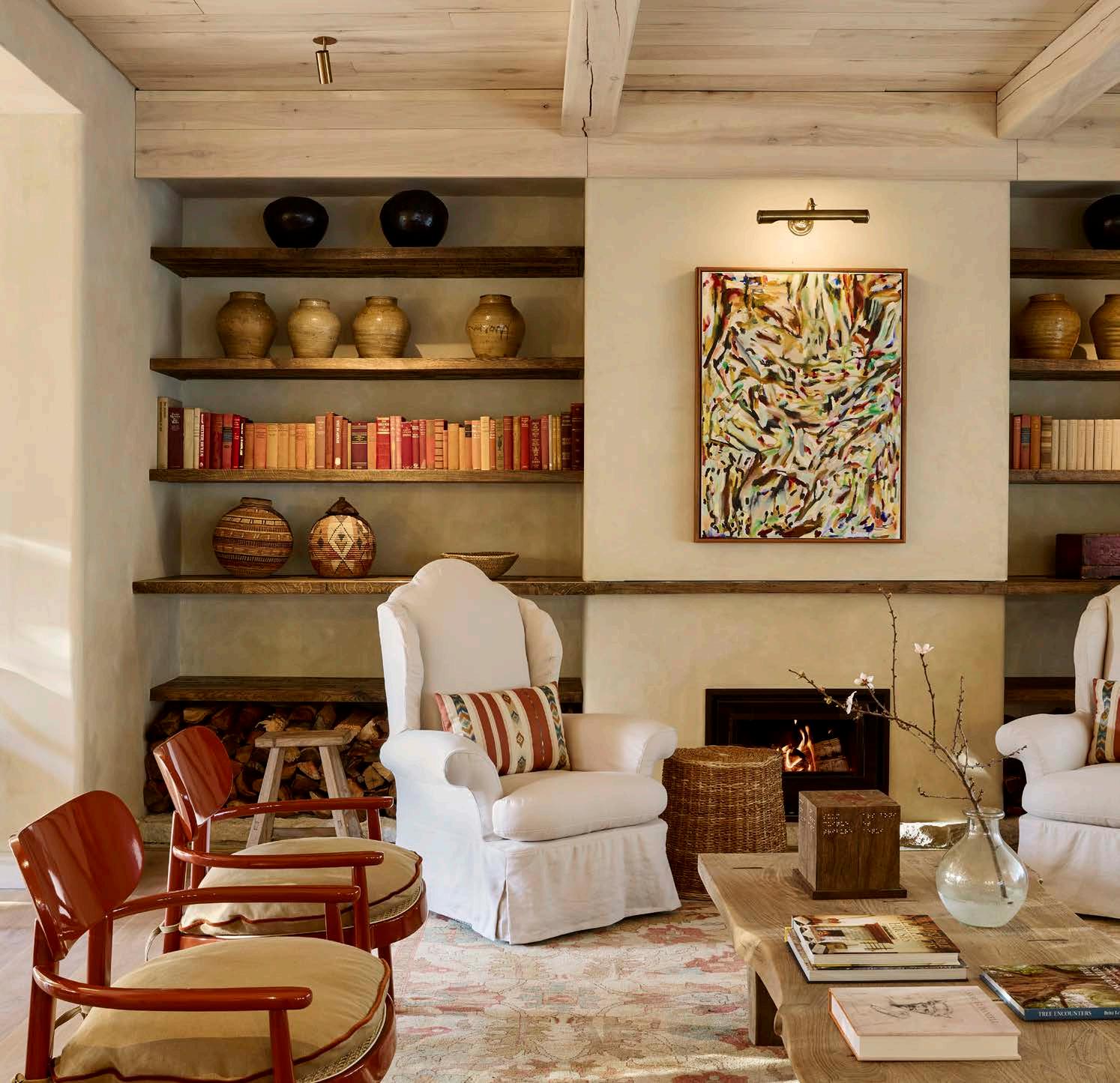
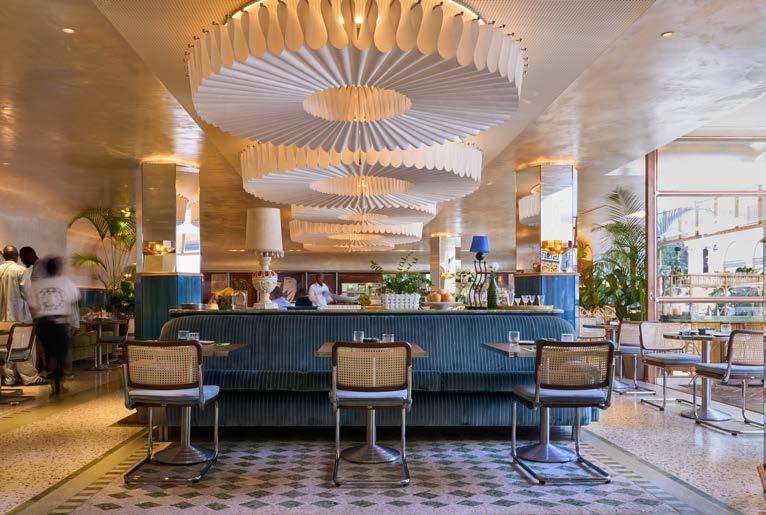
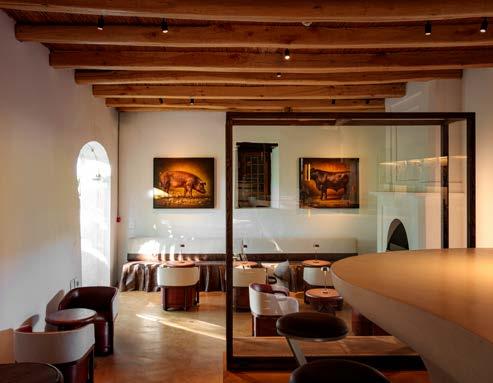
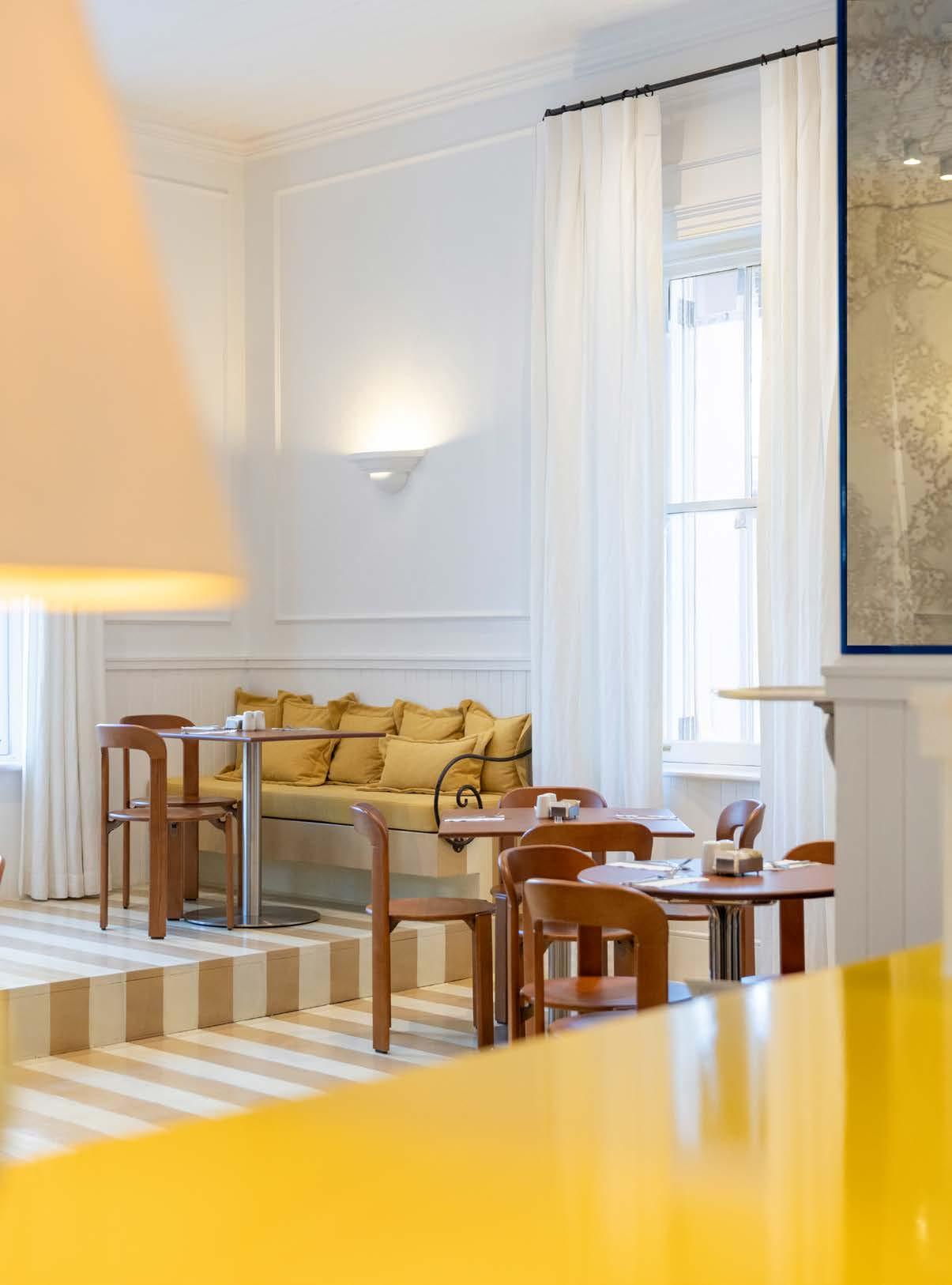
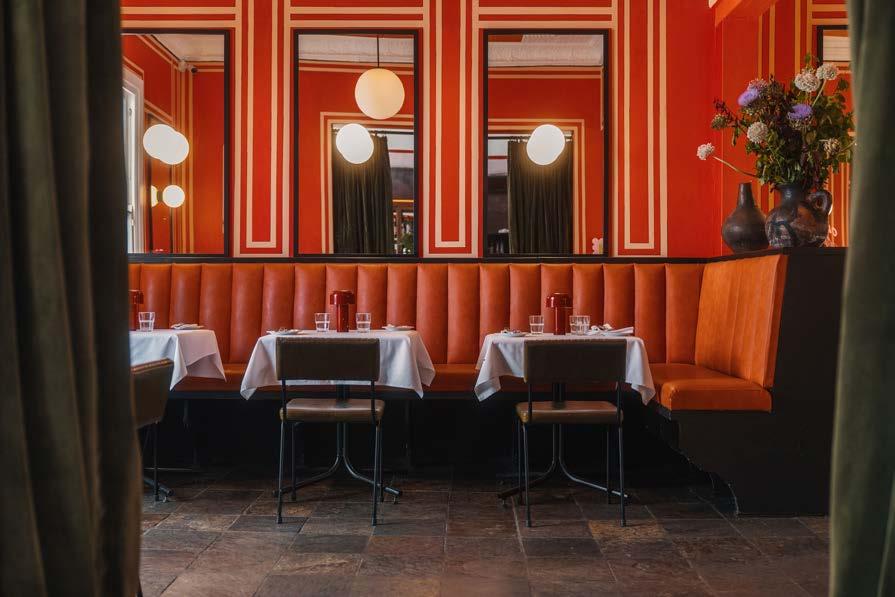
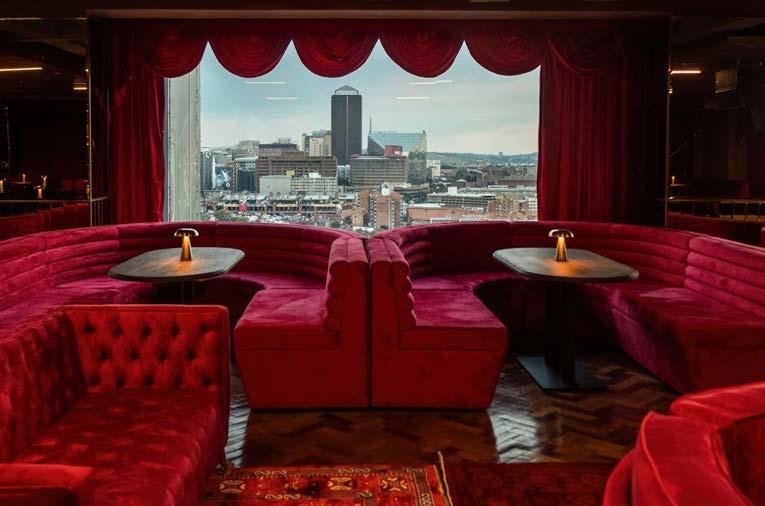
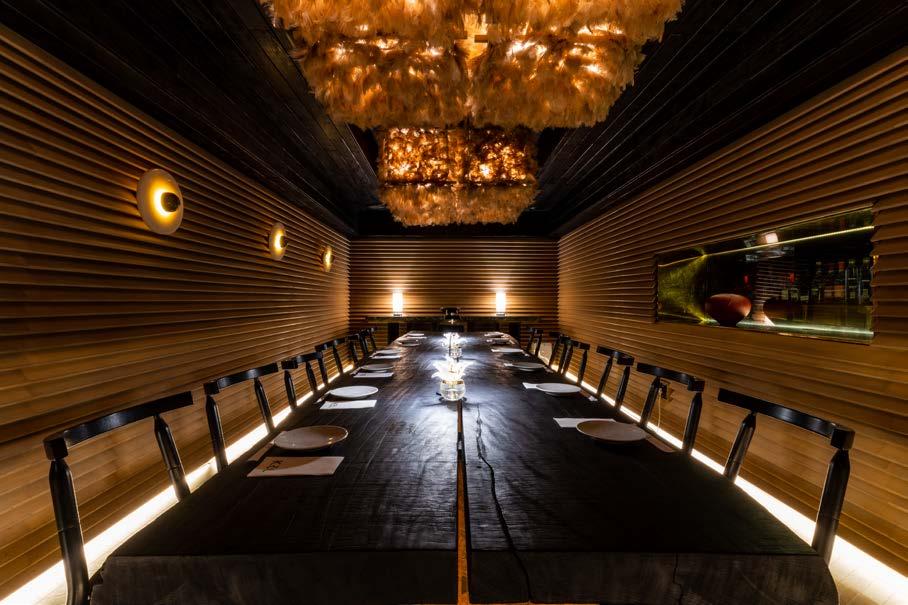
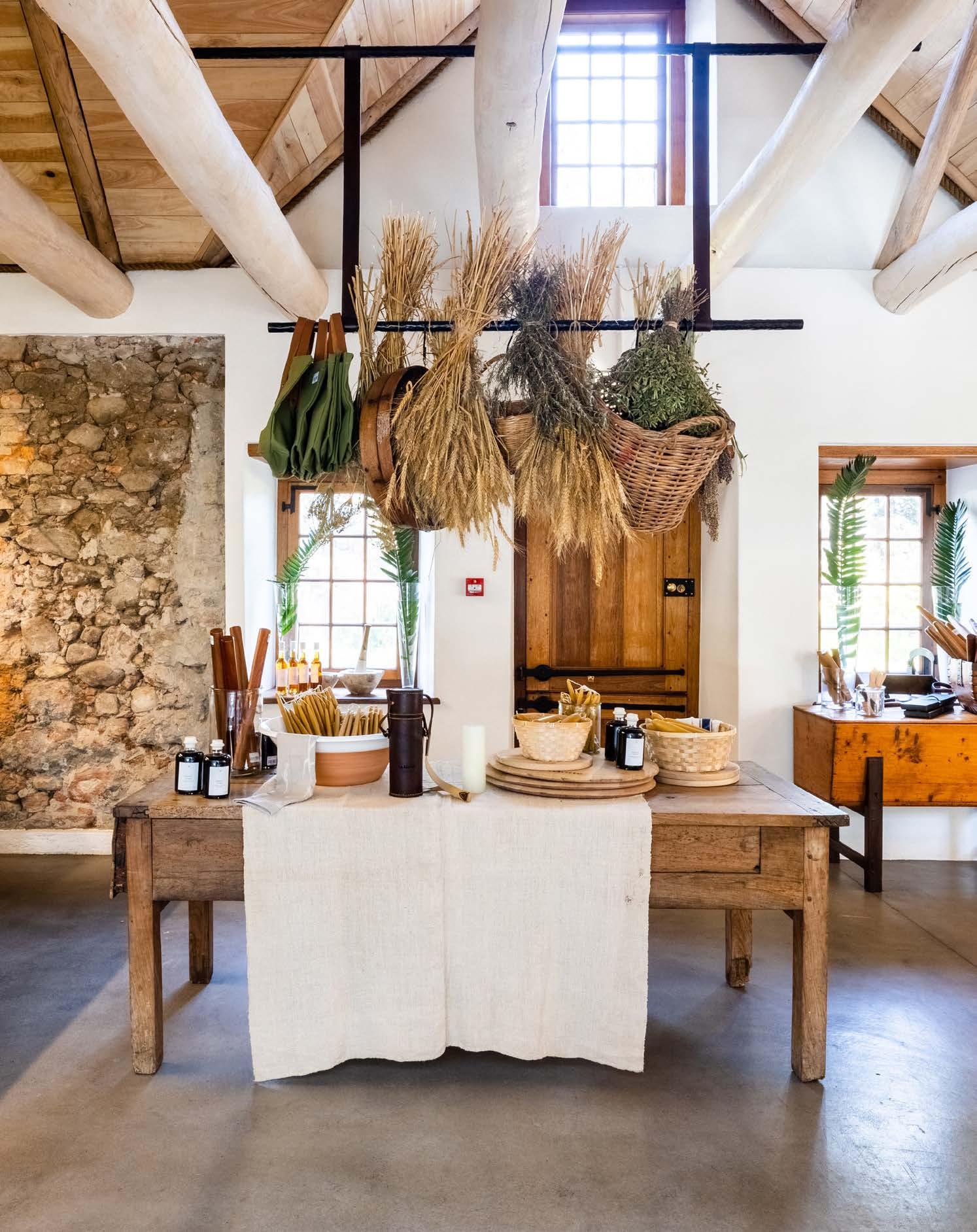
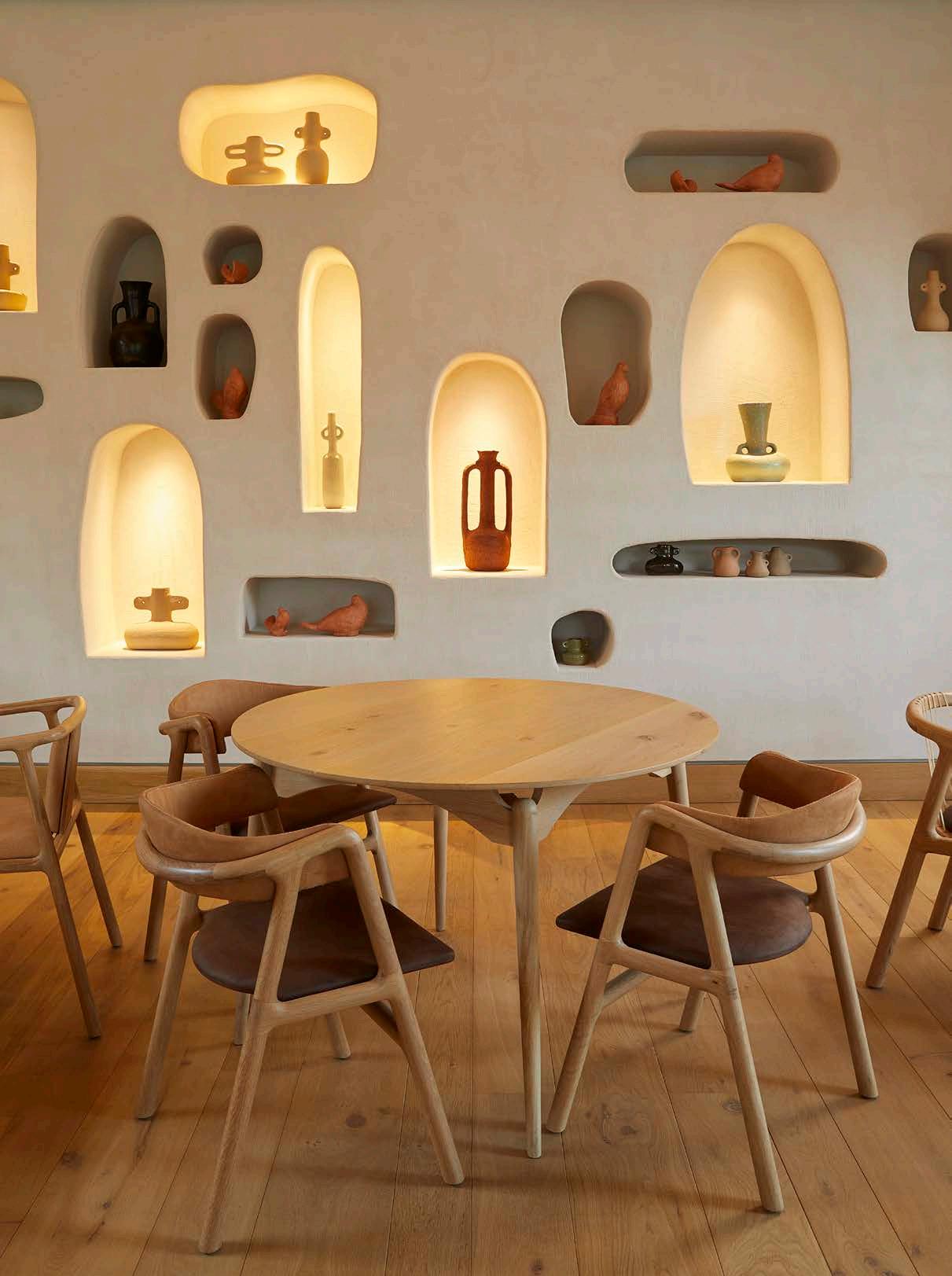
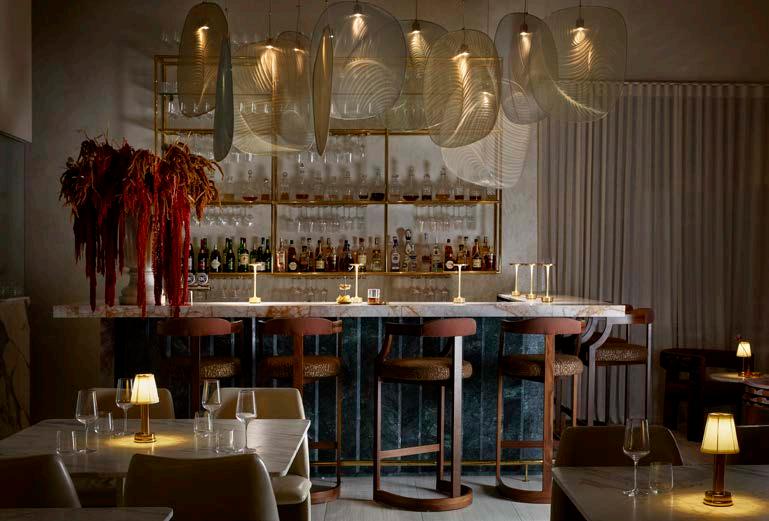
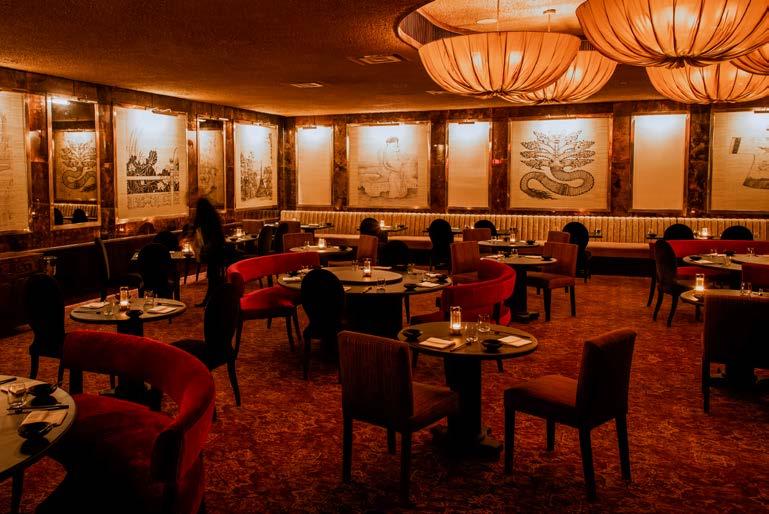
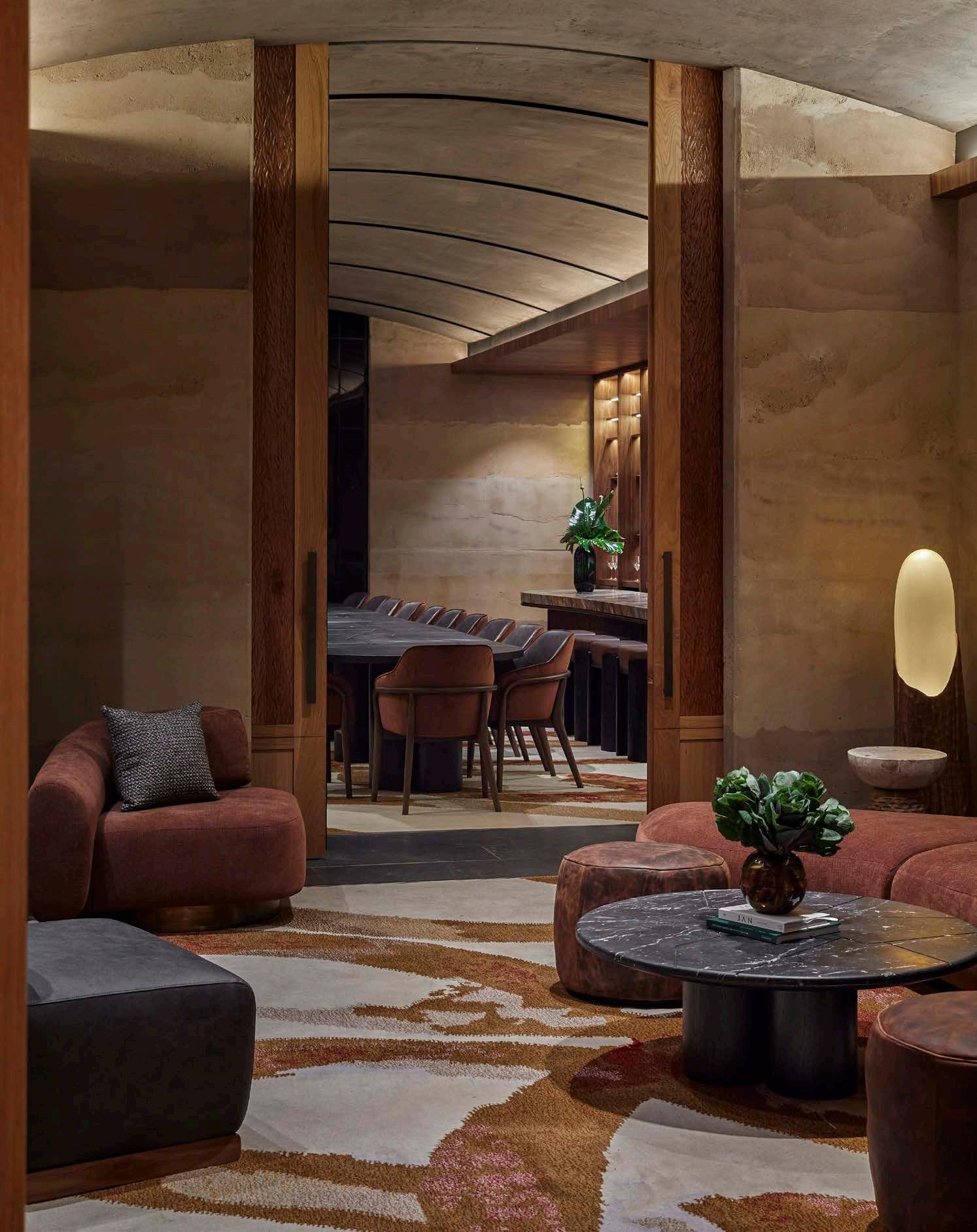
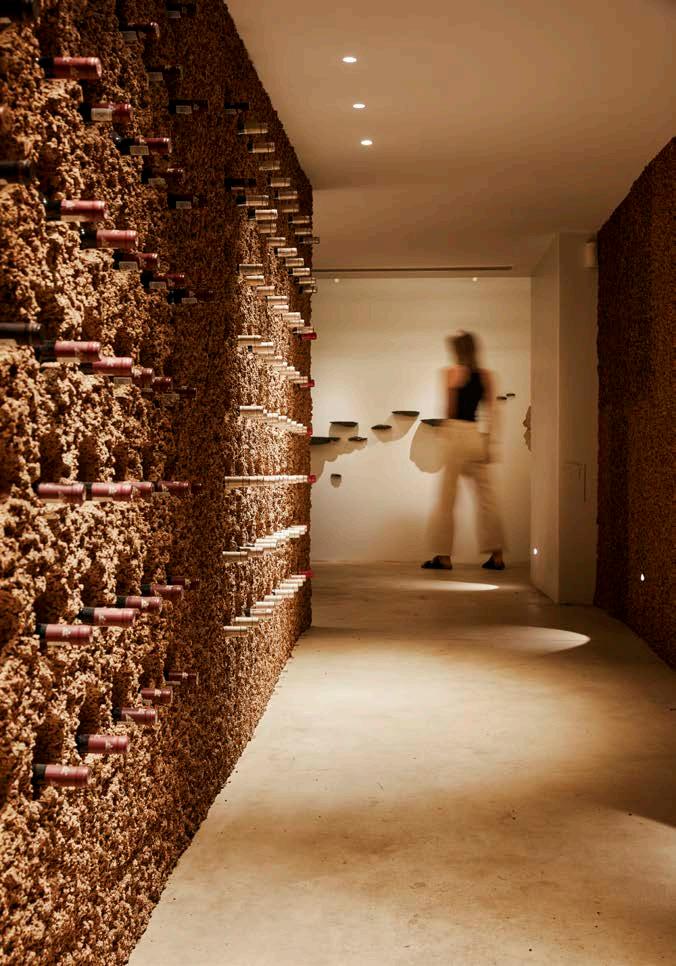
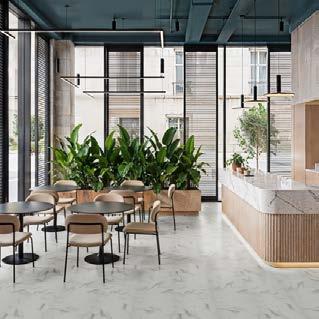
Hospitality has always carried the promise of possibility. Travel allows us to step briefly outside our own lives, to encounter unfamiliar places, and to be transported into environments composed with imagination and intent. The finest hospitality spaces understand this instinct deeply. Through architecture, narrative, materials, lighting, furnishings, and objets, they craft, almost as poetry, atmospheres that reward the journey and invite guests into a richly considered sense of place.
Scape has never been shy of a first, and Gold Key is a new editorial concept we’re exploring through a series of themed selections.
For this inaugural Gold Key issue , we sought to identify hospitality spaces where design is inseparable from the arrival and stay experience. Southern Africa offers an extraordinary canvas for this pursuit. From safari lodges embedded in vast landscapes to winelands estates, coastal sanctuaries, and sophisticated urban hotels, the region has developed a
reputation for hospitality that is both generous and designled.
Alongside our own editorial research, we invited respected designers and industry voices to share the hotels, lodges, restaurants, bars, and retreats whose designs resonate most with them.
The projects presented in these pages form the first Gold Key selection. The Gold Key serves as our seal of distinction, recognising hospitality spaces where architecture and interior design elevate the travel experience. Each project reflects a thoughtful design sensibility that frames encounters, celebrates materiality, and leaves a lasting impression on those who pass through its doors.
This issue marks the beginning of the Gold Key series, celebrating hospitality spaces that set the benchmark for design-led experiences of stay, gathering, and escape.
Chanel
Chanel Besson Editor-in-Chief | Justine Coleman Head of Sales | Sarah Ternent Designer | Jean-Marié Malan Lead Writer | Michelle Greeff Brand Manager Cayla van Coller Creative Content Lead | Azraa Khan Media Liaison | Fayyadhah Hendricks Media Liaison
Cover image by Inge Prins
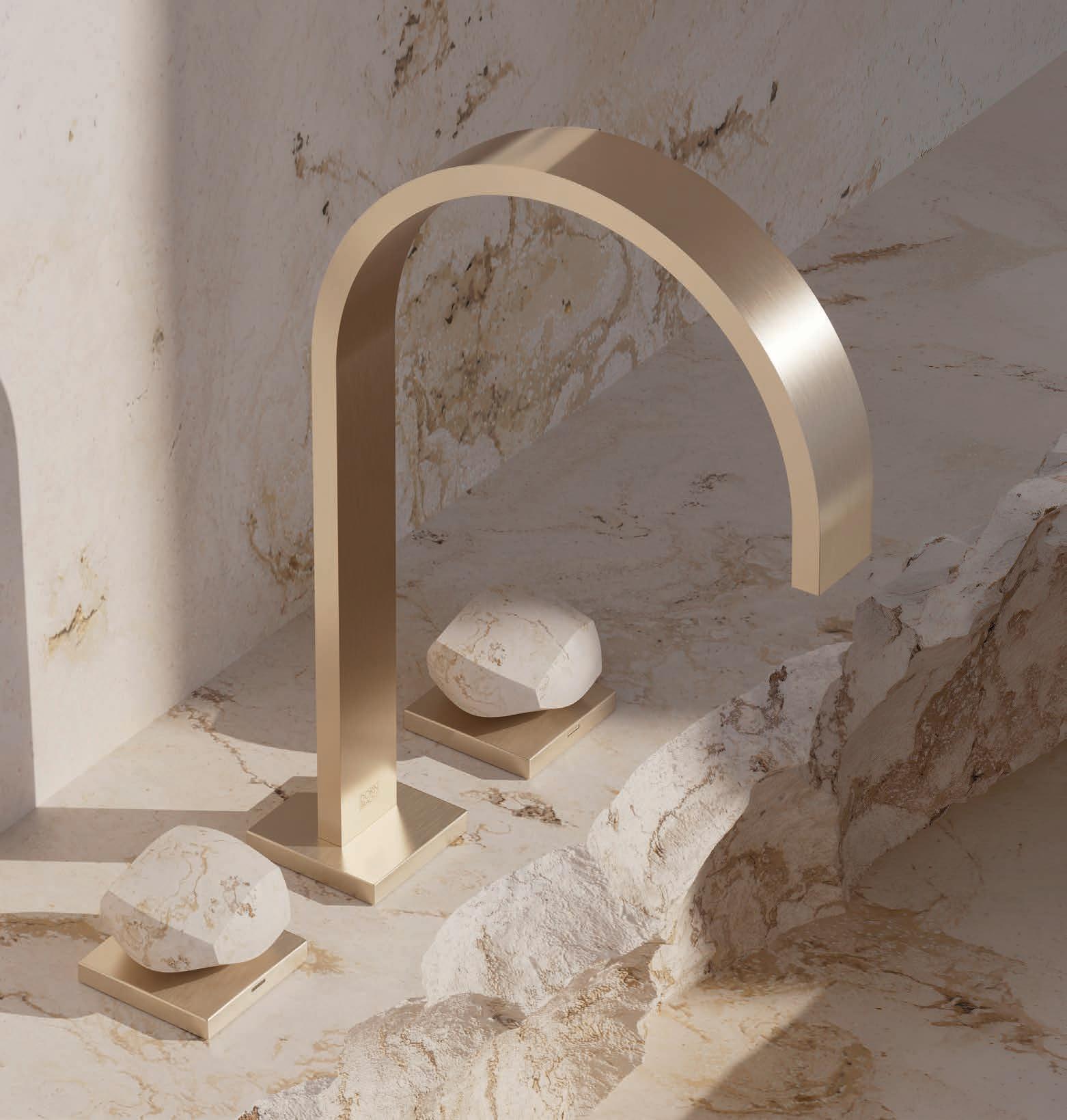
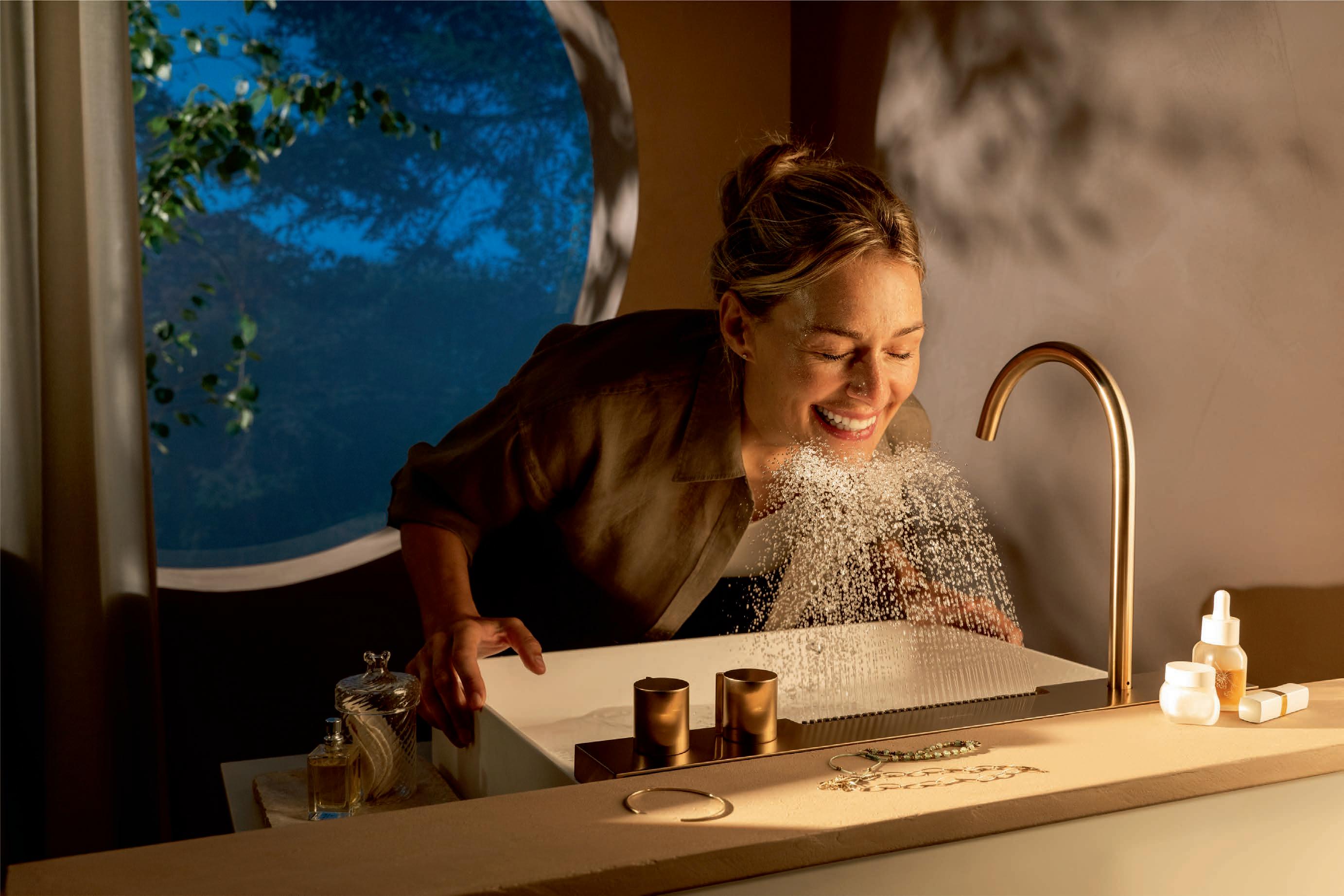
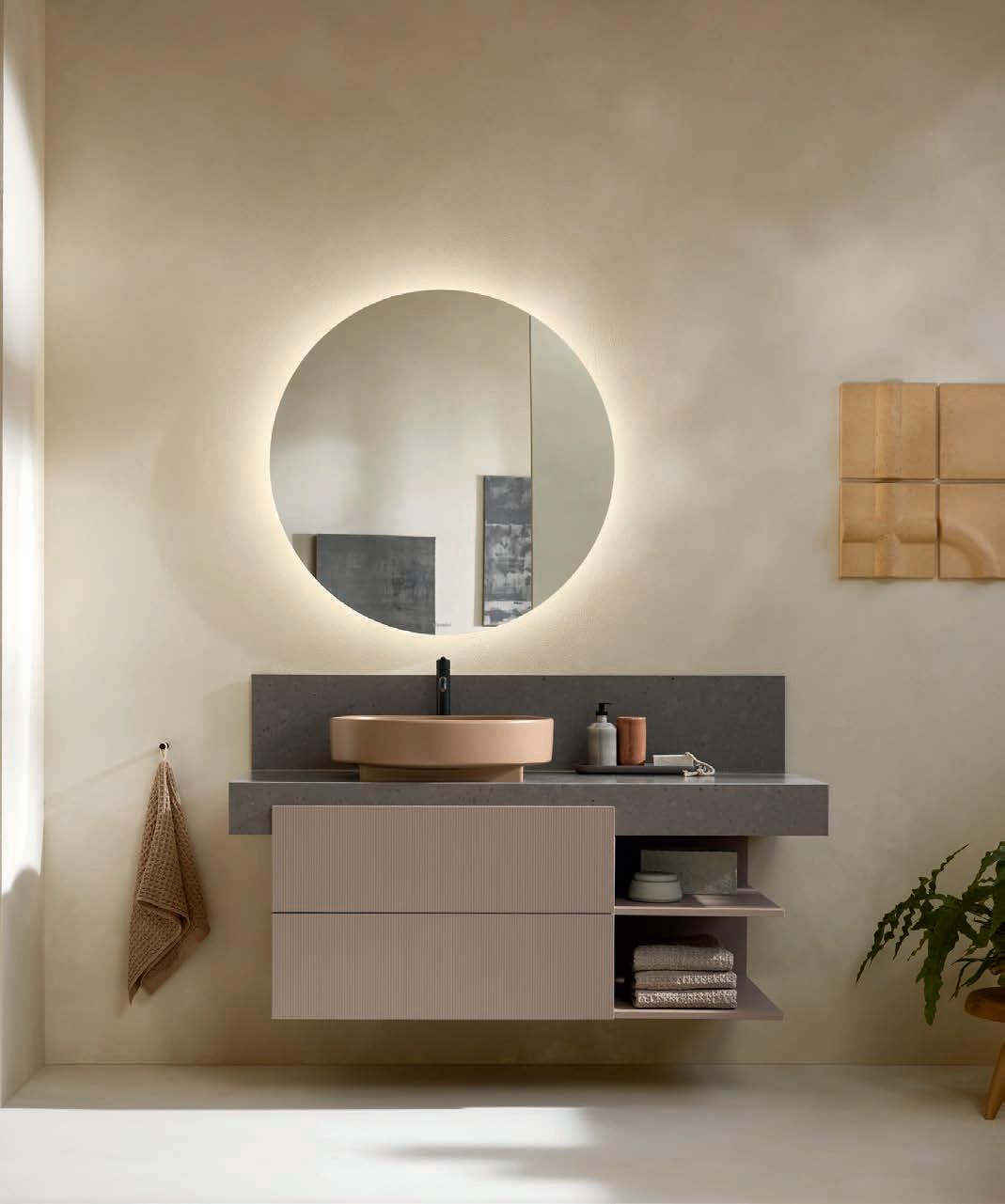
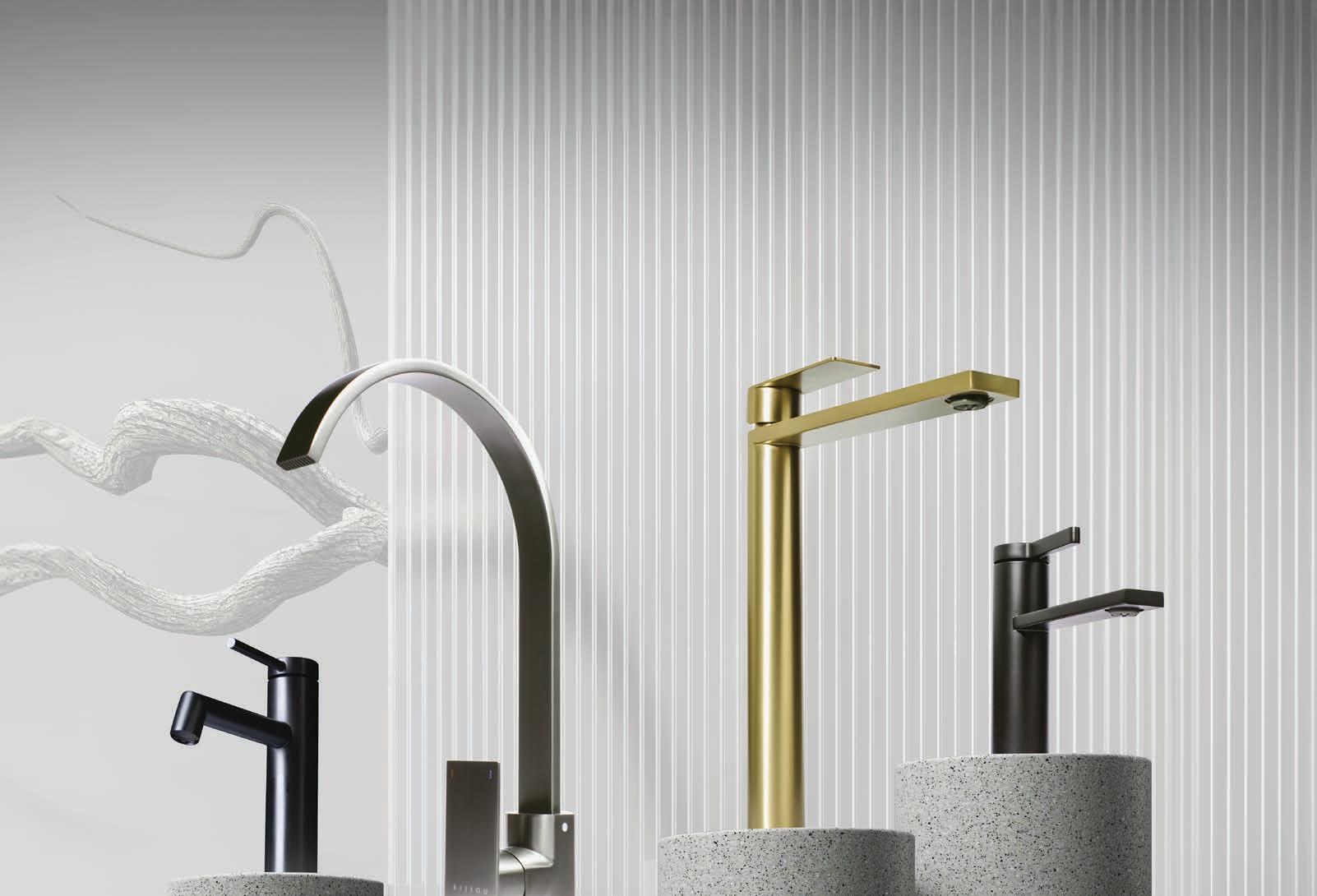
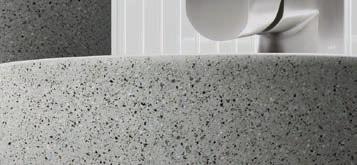
Dornbracht The Rock MEM Three-hole Basin Mixer with Pop-up Waste in Brushed Champagne. Product Code: 20713782-28
NAVIGATE
Hospitality as Possibility
Wellness
Urban
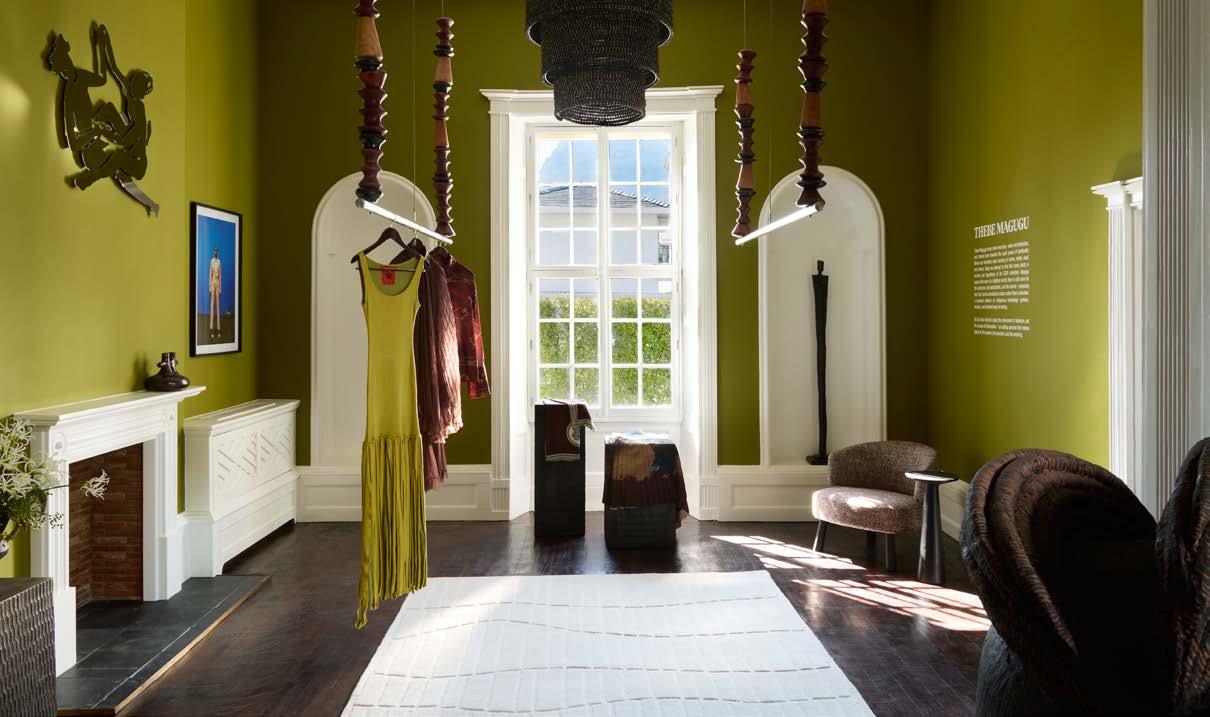
An Afro-English Dialogue: A Collaboration Between the Mount Nelson, Anna Weylandt, and Thebe Magugu
Hospitality With Intent: Fox Browne Creative on Creating Guest Experiences Off the Beaten Path
Photography by Sean Gibson
haus of innovation
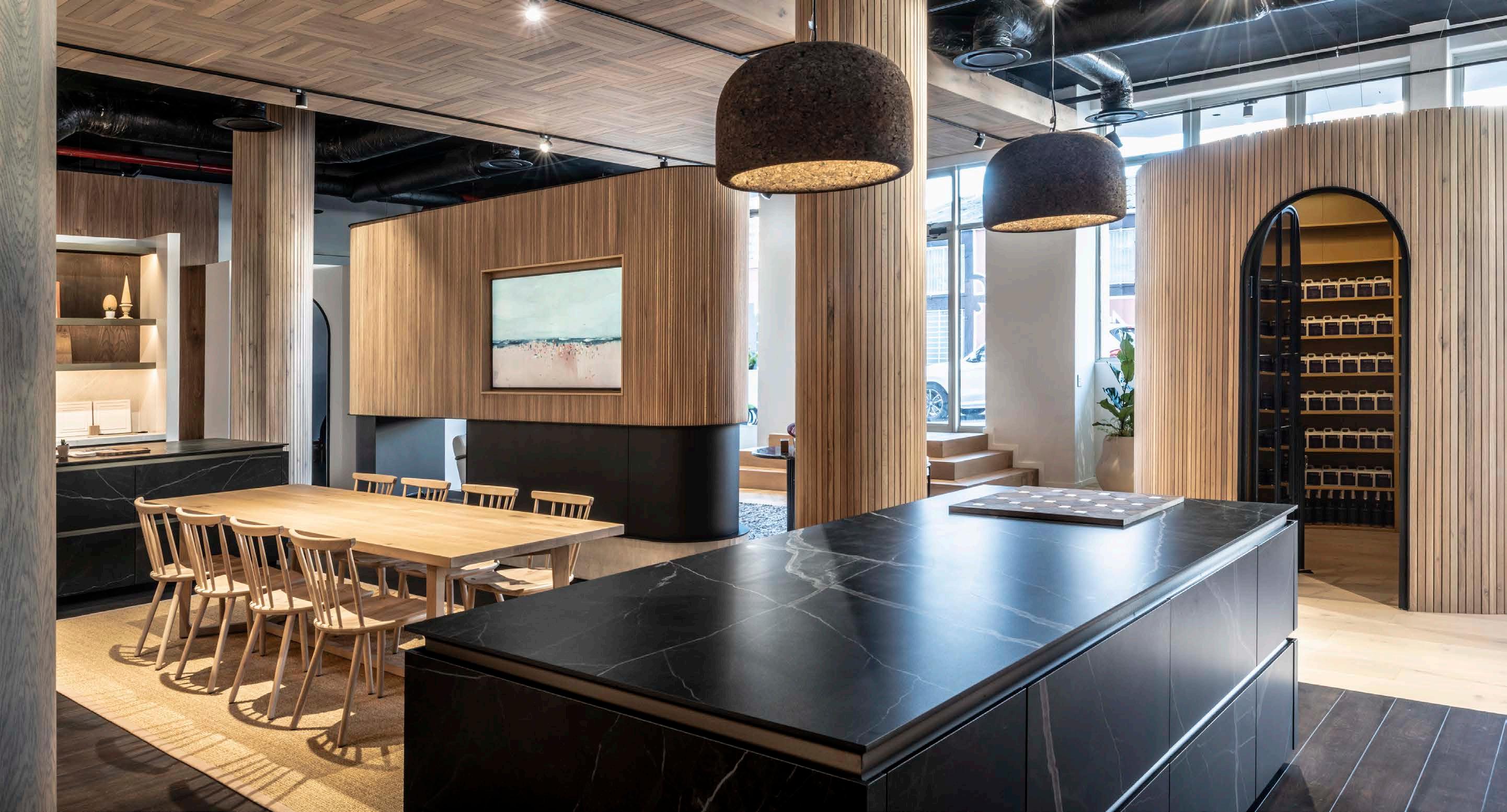
Reynaers Aluminium Cape Town Opens in Bo-Kaap, Setting a New Benchmark for Quality, Precision, and Design
220 Buitengracht Street, Bo-Kaap, has a new resident whose doors open to the public on 5 March. Reynaers Aluminium Cape Town has been in the works for nearly three years and now welcomes homeowners, architects, developers, media representatives and industry leaders to cross its threshold — and, considering Reynaers’ beautifully engineered aluminium doors, windows, façades, and handles, it promises to be no ordinary one. This purpose-built, heritage-integrated, and experience-driven showroom demonstrates what the standard in aluminium architecture can, and should, be.
Despite, or perhaps owing to, setbacks and delays, the outcome is a considered melding of history and innovation. The building is heritage-protected, which sharpened the project’s sensitivity and vision. Parts of the original stone walls have been preserved and framed behind glass panels, where historical textures contrast with minimalist contemporary lines. A central green atrium introduces a living design element, which is flooded with natural light, while open spaces and clean geometry allow for uninterrupted visual flow.
The visual ease creates a comfortable environment in which visitors can engage with the interactive elements. They are encouraged to touch and test products and systems they might otherwise specify at a distance. Sliding systems, precision movement, finishing details, fabrication standards, and façade solutions can be examined, with quality understood, and appreciated in full scale.
‘The difference in our market is often not the material itself,’ says Commercial Manager Bianca Simões. ‘It is how systems are fabricated and installed. Without clear standards and protocols, even good products underperform.’ Through certified partners and clearly defined European installation guidelines, Reynaers ensures consistent quality. Its products are engineered in Belgium and distributed in South Africa by RASA Aluminium Fenestration (Pty) Ltd., with additional operations in Johannesburg (Kempton Park). While global engineering meets local expertise, the philosophy remains practical: precision over improvisation, controlled processes over guesswork, certified fabrication over assumption and, perhaps most importantly, long-term performance over short-term solutions.
Where the city’s pulse and its tangible history converge, Reynaers Haus provides a space of exploration and possibility. Here, homeowners, architects, developers and partners can evaluate performance, refine ideas, and collaborate. It offers a meeting point and a platform for future-oriented architectural dialogue.
www.reynaers.co.za www.reynaers-haus.co.za
Photography by Sean Gibson
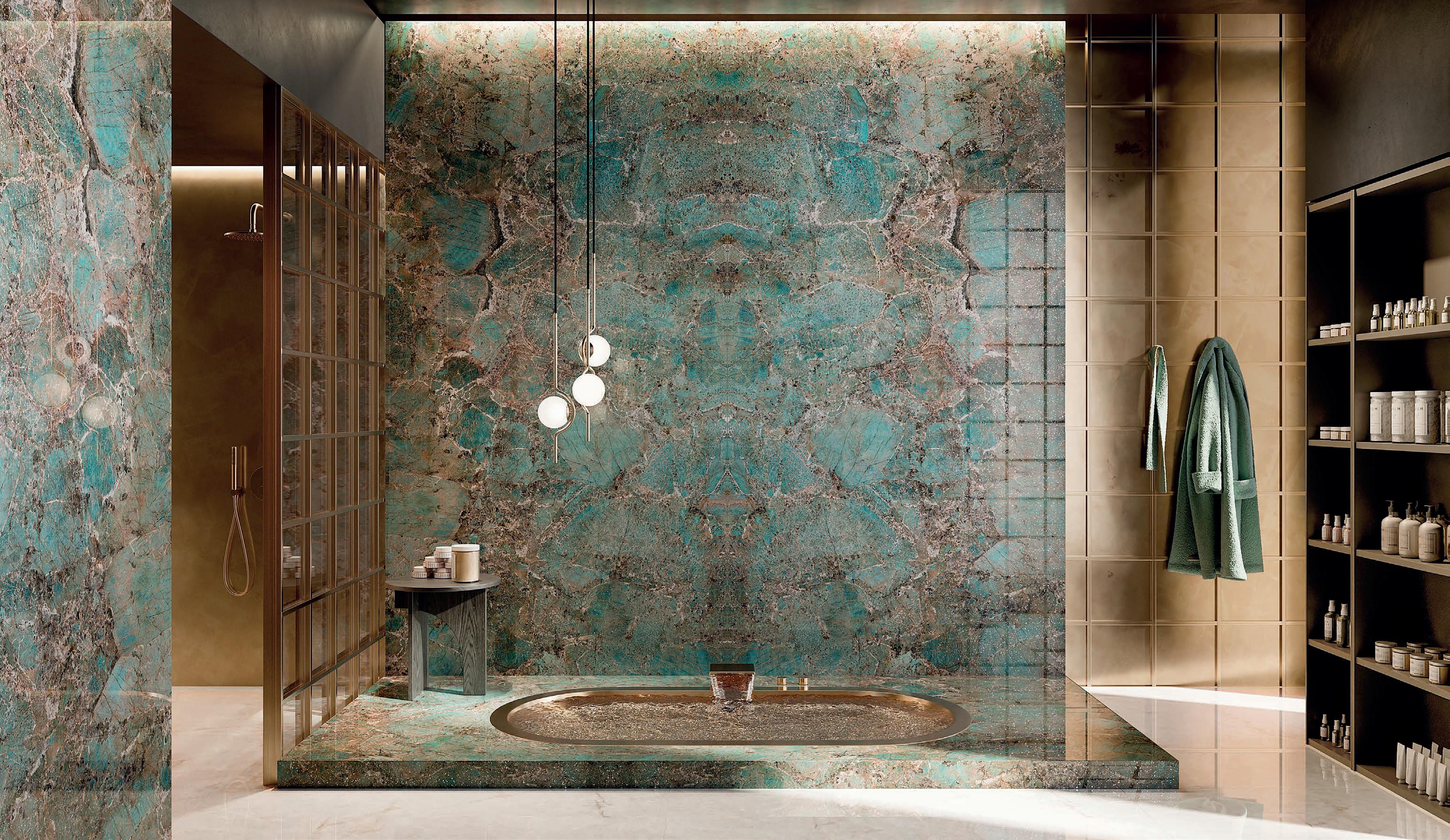
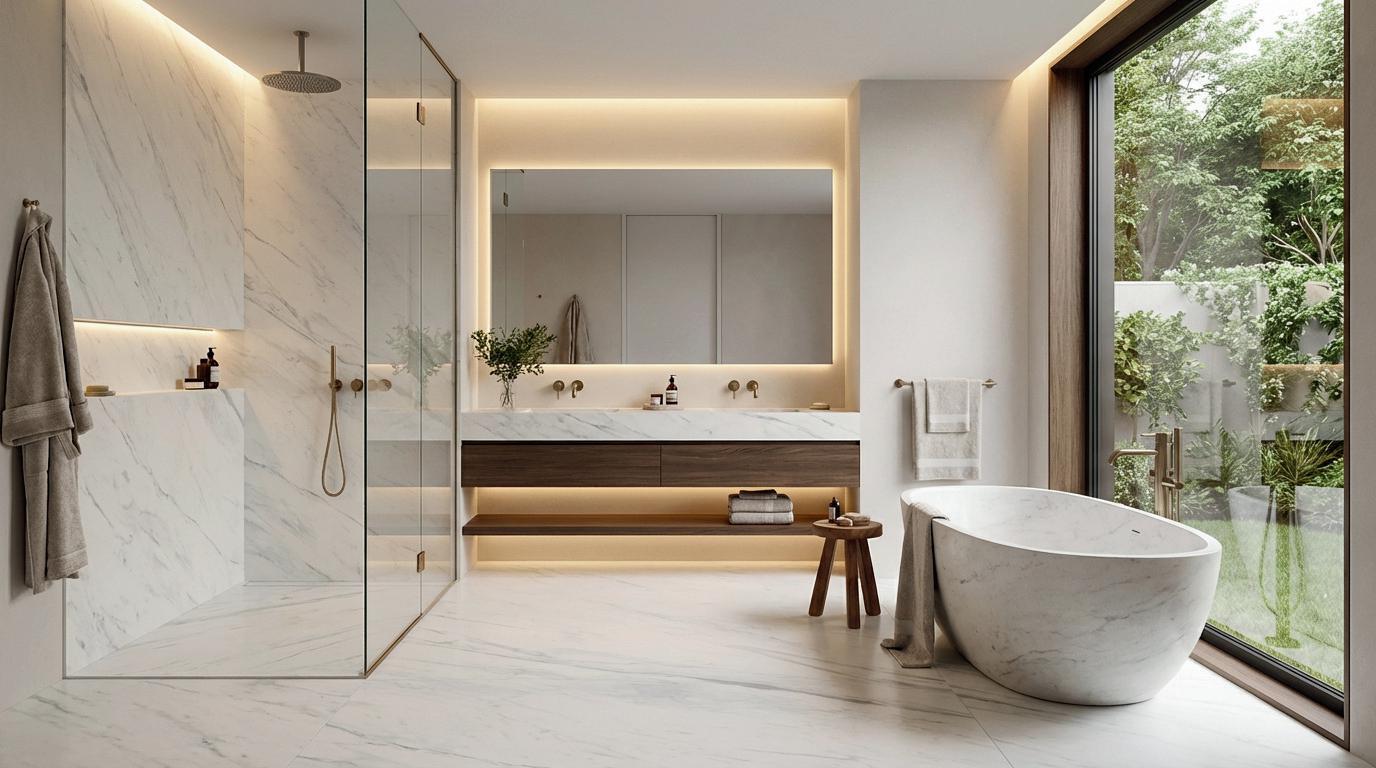
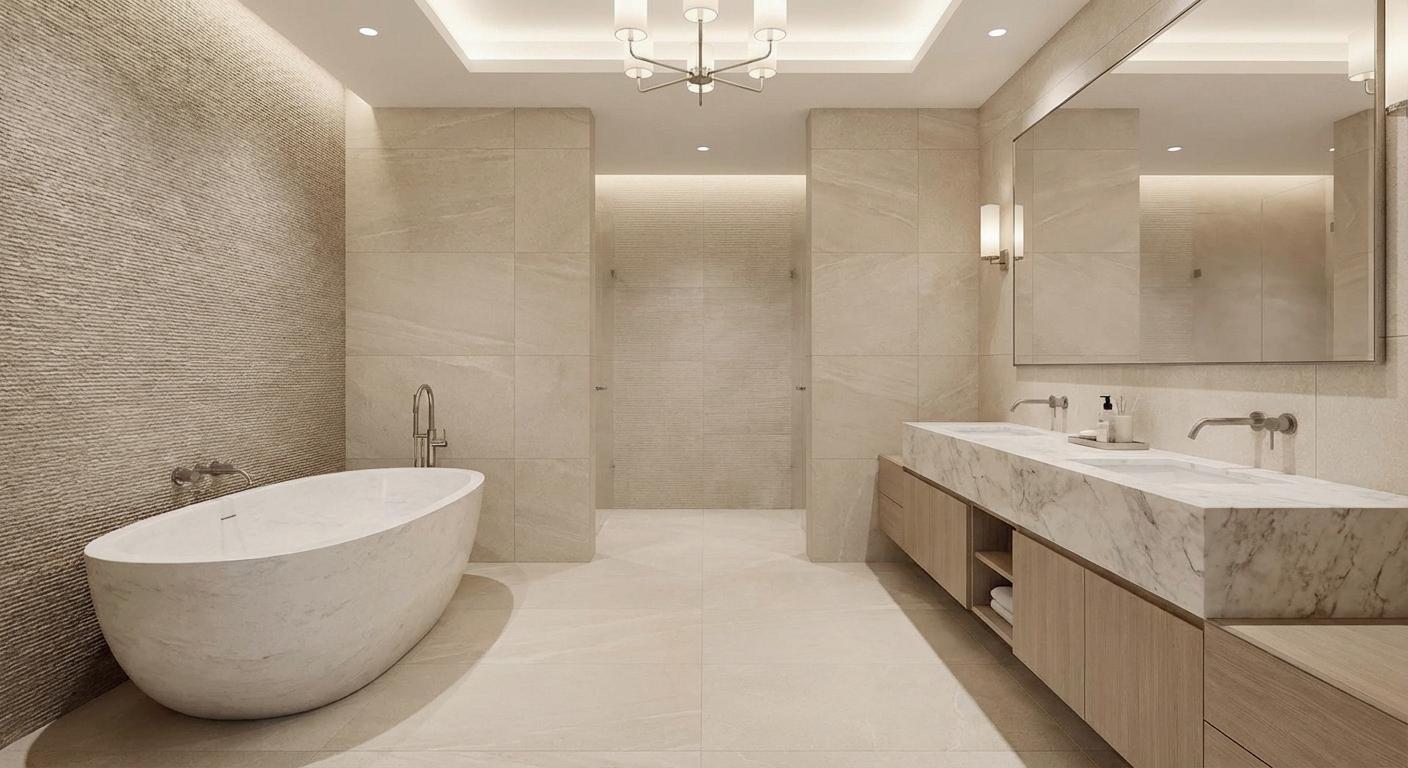
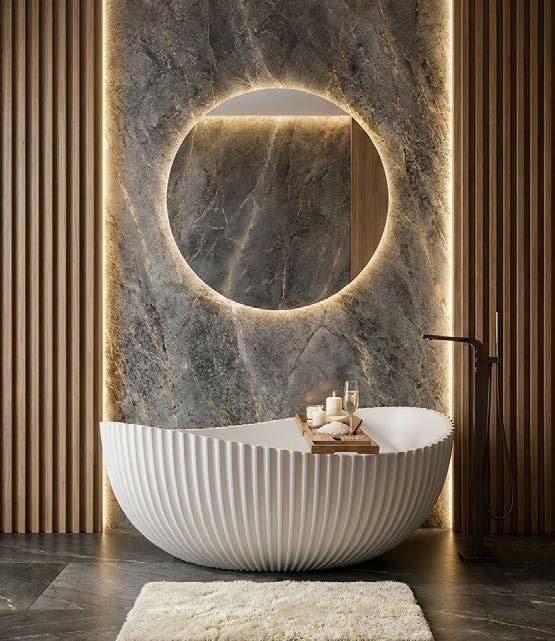
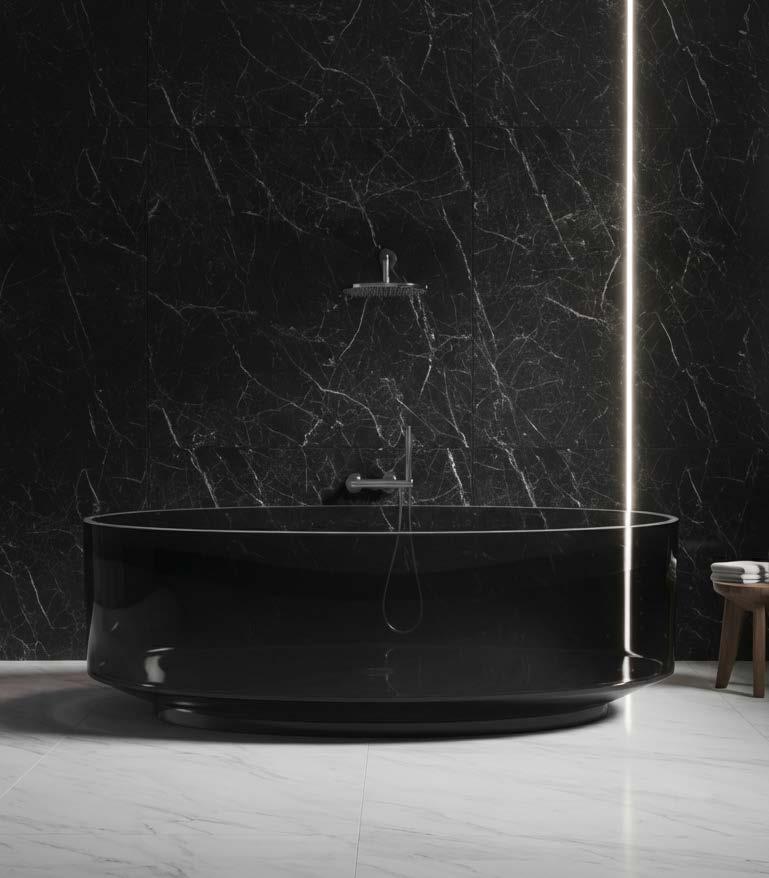
Where Bathroom Becomes Retreat
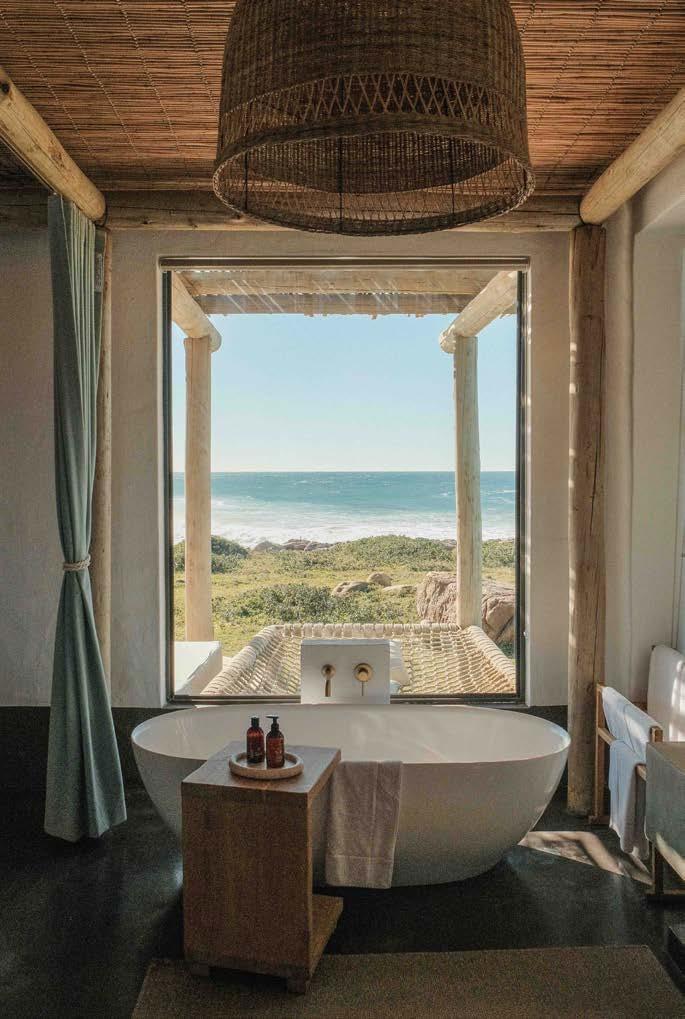
In the language of luxury interiors, few elements speak as boldly as a statement bathtub. No longer confined to mere functionality, the modern bath has evolved into a sculptural centrepiece — a defining feature that anchors the entire bathroom aesthetic. It is where design, comfort, and craftsmanship converge.
Today’s statement bathtubs are designed to command attention. Whether freestanding and elegantly curved, or sharply architectural with clean, geometric lines, these pieces transform a bathroom into a private sanctuary. Matte finishes in soft neutrals evoke understated sophistication, while high-gloss surfaces reflect light to amplify space and drama. Materials such as stone resin, solid surface, and cast marble introduce tactile richness, elevating the sensory experience of bathing.
In a modern bathroom, balance is everything. A striking tub pairs effortlessly with minimalist tapware, expansive tiles, and subtle lighting. The surrounding palette often remains calm — think warm whites, gentle taupes, and muted greys — allowing the bathtub to take centre stage. Large-format tiles and seamless flooring enhance the feeling of openness, while textured accents add quiet depth.
Placement is equally intentional. Positioned beneath a window, centred beneath a chandelier, or framed by feature walls, a statement bathtub becomes art in its own right. It invites pause. It suggests indulgence. It redefines routine.
Beyond aesthetics, these bathtubs embody a lifestyle — one that values restoration and refined living. In the fast pace of modern life, the bathroom is no longer just a utility space; it is a retreat. A statement tub transforms everyday rituals into moments of luxury.
Ultimately, a modern bathroom anchored by a statement bathtub is not simply designed — it is curated. It is where elegance meets experience, and where the art of living beautifully finds its most intimate expression.
hospitality as possibility
Gods at the Doorstep, Hotel Encounters and Meeting at a Masquerade
Words by Jean-Marié Malan
Stories of hospitality are often primarily stories about encounters: in mirrored halls that reflect a stranger’s face; in velvet, if slightly faded, hotel lobbies or bars; or in a stable in Bethlehem. In the Old Testament, a classic example appears in Genesis 18, where, in the heat of the day, Abraham notices three strangers nearby and offers to wash their feet and let them rest beneath a tree before hosting them for a feast. Earlier, Abraham, too, was made a stranger when God commanded him to leave his country, promising that he and his descendants would be blessed. Abraham's transition from stranger to host seems to enable the fulfilment of this promise, as his three guests declare that his elderly wife, Sarah, will give birth to a son. Against all odds, she does, materialising God’s promise in flesh.
There are many stories linking generous hosting with good fortune. However, more often, an act of hospitality is inherently ambivalent: the roles of foreigner and host can alternate and, when the law of hospitality is violated, their relationship can turn hostile. Hospitality also entails an encounter with the unknown. In ancient Greece, for example, the stranger at the doorstep could be Zeus, or in fact any god, in disguise. This leads anthropologist Julian Pitt-Rivers to consider the ‘association between divinity and the unknown.' The 'mystery surrounding' the stranger, writes Pitt-Rivers, 'allies him to the sacred and makes him a suitable vehicle for the apparition of God.' The stranger's potential godliness, then, lends the figure a sense of possibility.
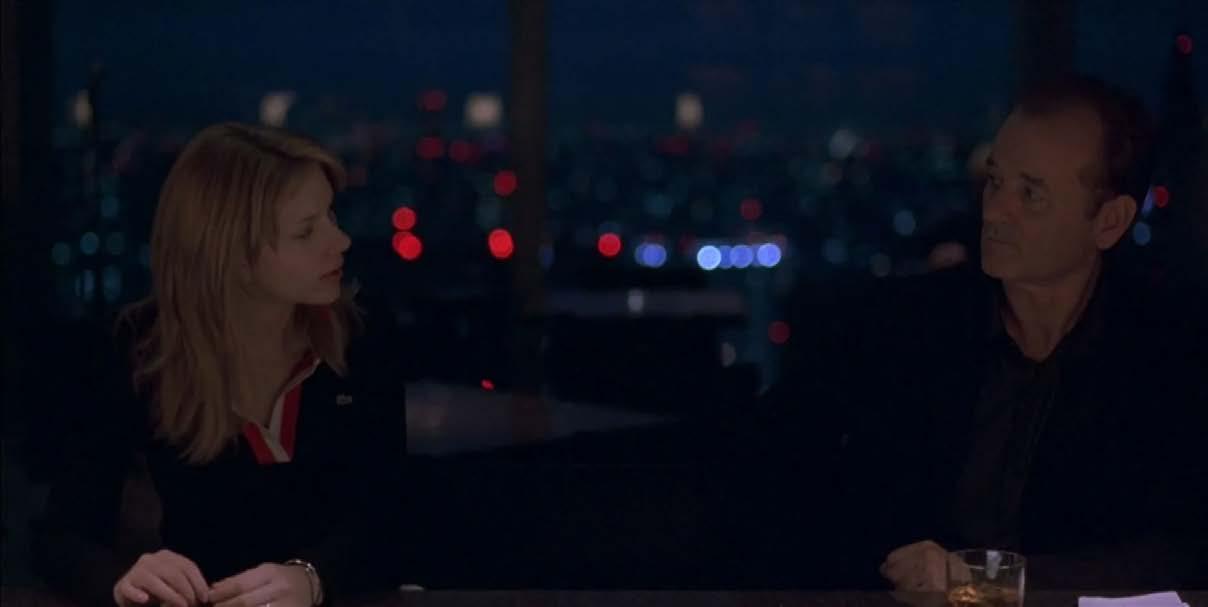
The hotel film subgenre offers many examples of encounters between strangers, but I highlight Sofia Coppola’s Lost in Translation (2003) because throughout, longing and loneliness are alleviated by a sense of possibility. Two Americans, played by Bill Murray and Scarlett Johansson, meet in the bar of the Park Hyatt Tokyo and form an unusual bond that exists somewhere between a platonic and romantic
relationship — the undefined nature of it itself suggests possibility. Although earlier scenes present Bob (Murray) and Charlotte (Johansson) as parallels, similarly lost, disconnected from home, and struggling in their respective marriages, it is only in this context of their shared foreignness that their commonalities are highlighted. They are from different generations and a vast country, making it unlikely that their paths would have crossed at home. Their proximity throughout the rest of the film offers
them temporary comfort and connection, reflected in their growing immersion in the city. While having lunch at a restaurant, Charlotte shows Bob her stubbed toe. In a gesture of care rather than genuine alarm, Bob takes her to the hospital. It is as though he assumes the role of host in this foreign city, providing the care associated with both hospitality and the hospital, spaces of shelter and attention bound by a shared etymology.
‘His
name is Romeo, and a Montague, the only son of your great enemy.’
To which Juliet responds, ‘Too early seen unknown, and known too late!’
Charlotte (Scarlett Johansson) and Bob (Bill Murray) meet in “Lost in Translation” (Sofia Coppola, 2003).
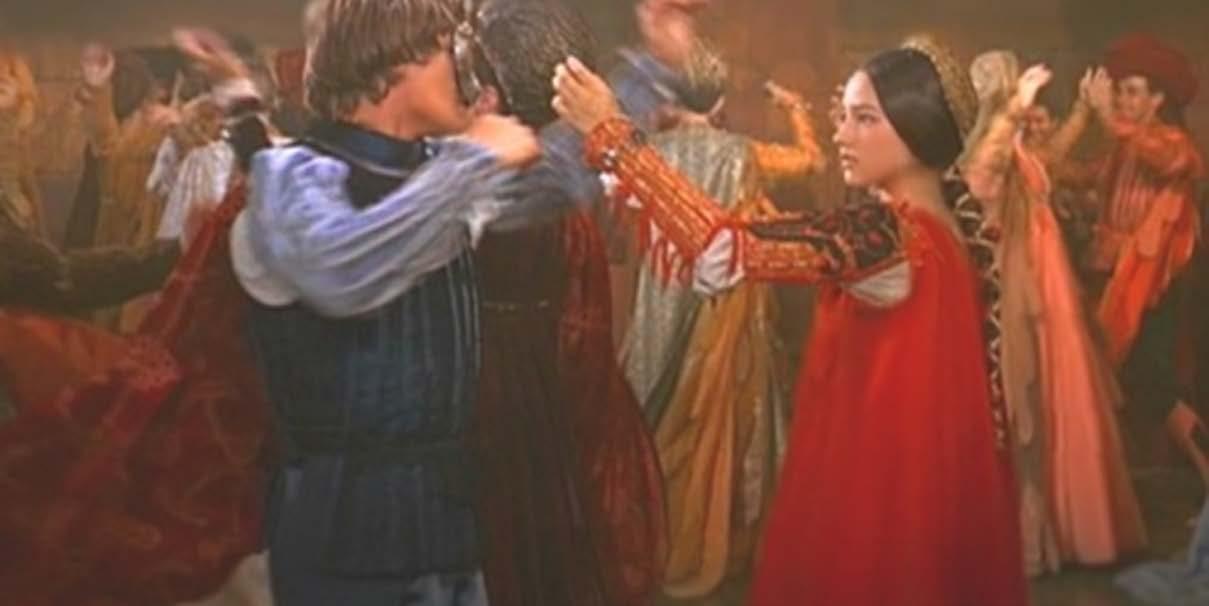
Romeo and Juliet dancing at the Capulets’ masked ball in “Romeo and Juliet” (Franco Zeffirelli, 1968).
Another familiar example of an unlikely, even impossible, connection facilitated by hospitality is Romeo and Juliet’s meeting at the pivotal masked ball in Act 1, Scene 5. As a Montague, Romeo is unwelcome at Capulet’s ‘old accustomed feast,’ and despite concealing his identity with a mask, his voice is recognised by Tybalt, who is enraged that a villain could be in company as a guest. But, as a gracious host, Capulet is responsible for the merriment of his guests, now including Romeo, and protects the peace. After their brief but rapturous meeting, Juliet learns of Romeo's identity from her nurse: ‘His name is Romeo, and a Montague, the only son of your great
enemy.’ To which Juliet responds, ‘Too early seen unknown, and known too late!’ Seeing without knowing, meeting him as a mere stranger, momentarily detaches Romeo and Juliet from their family identities, permitting them to regard each other as potential love objects rather than forbidden figures. Romeo and Juliet’s passionate pursuit of their union that follows thus began with the possibility contained in the figure of the stranger, strangers imagined as lovers rather than enemies.
In heightened form, these examples reveal something of the possibility also found in real-life hospitality experiences. Leav-
ing home to become strangers for a time allows for a degree of freedom from circumscribing associations, hierarchies, and identities, with the possibility that these may be reconfigured. In the pages that follow, we turn to the most inspiring local hospitality spaces whose exceptional designs facilitate meaningful and surprising encounters. The Gold Key is our seal of distinction — a curated selection of the very best places to stay, dine, and unwind, considered through the lens of design.
To close with the opening words of Derrida’s Of Hospitality: ‘An act of hospitality can only be poetic.’
Giovanni Andrea de’ Ferrari, “Abraham and the Three Angels” (1660-69).
wellness
Healing, rejuvenation, and rest are introspective and bodily practices, but best achieved in environments that reconnect one to nature, heritage, and self through considered design — from the eclectic to the calmly minimalist.
TIMELESS ELEGANCE
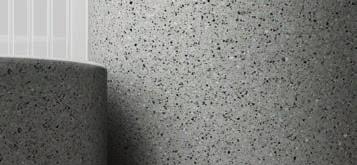
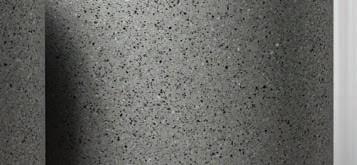
A monolithic surface that dissolves the boundary between interior and exterior.
Quartz Carpet is a hand-trowelled finish crafted from vibrant European quartz bound in UV-stable resin. Designed for galleries, upscale hotels and contemporary residences, it delivers a seamless, tactile, slip-resistant surface across varied floor plans. Its durable, hygienic composition supports effortless refurbishment over existing substrates, ensuring a refined aesthetic that performs as beautifully as it looks.
0861 782
www.quartzcarpet.co.za
sterrekopjefffarm
Interior Design: Gregory Mellor
Landscape Design: Leon Kluge
www.sterrekopje.com
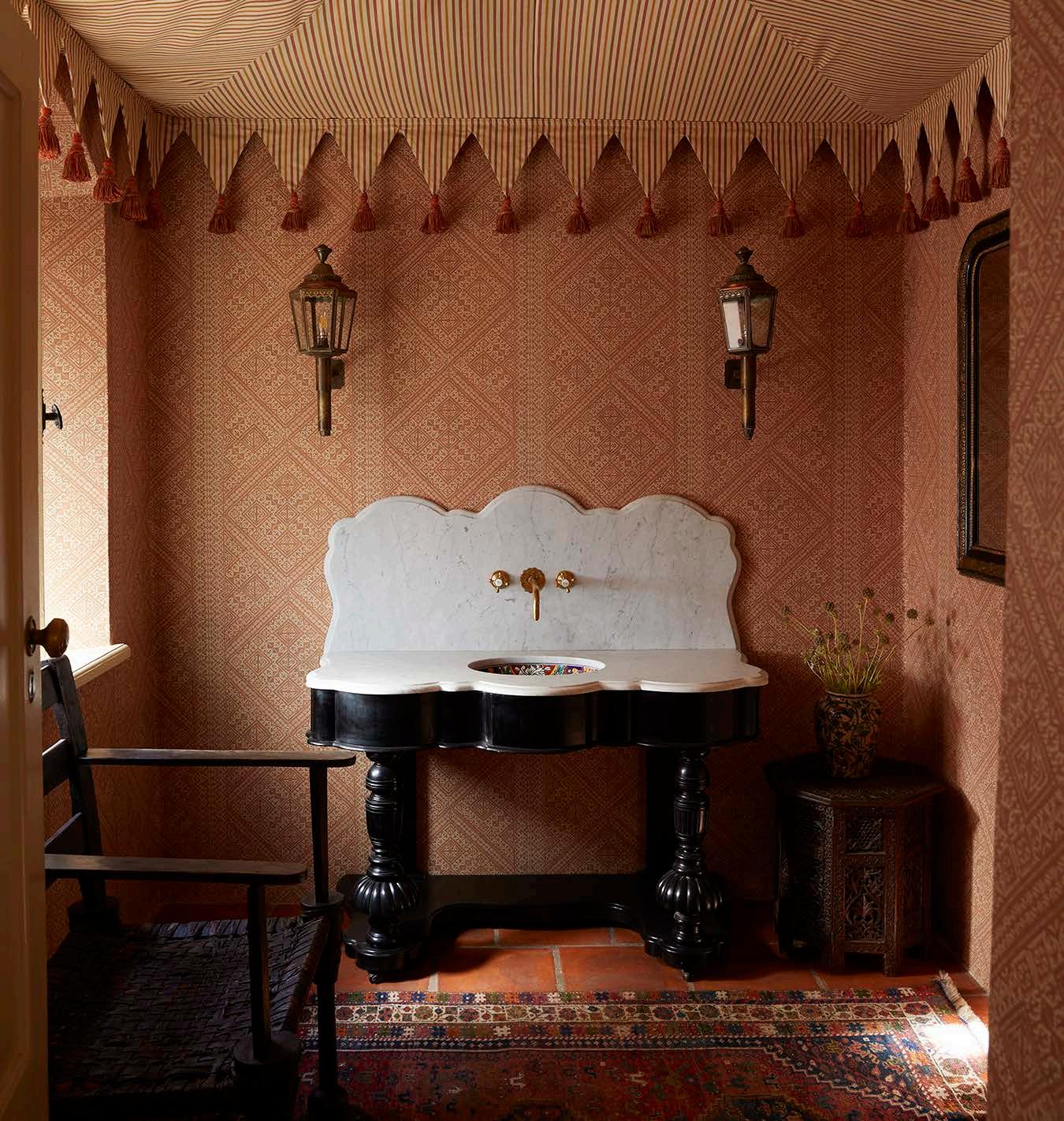
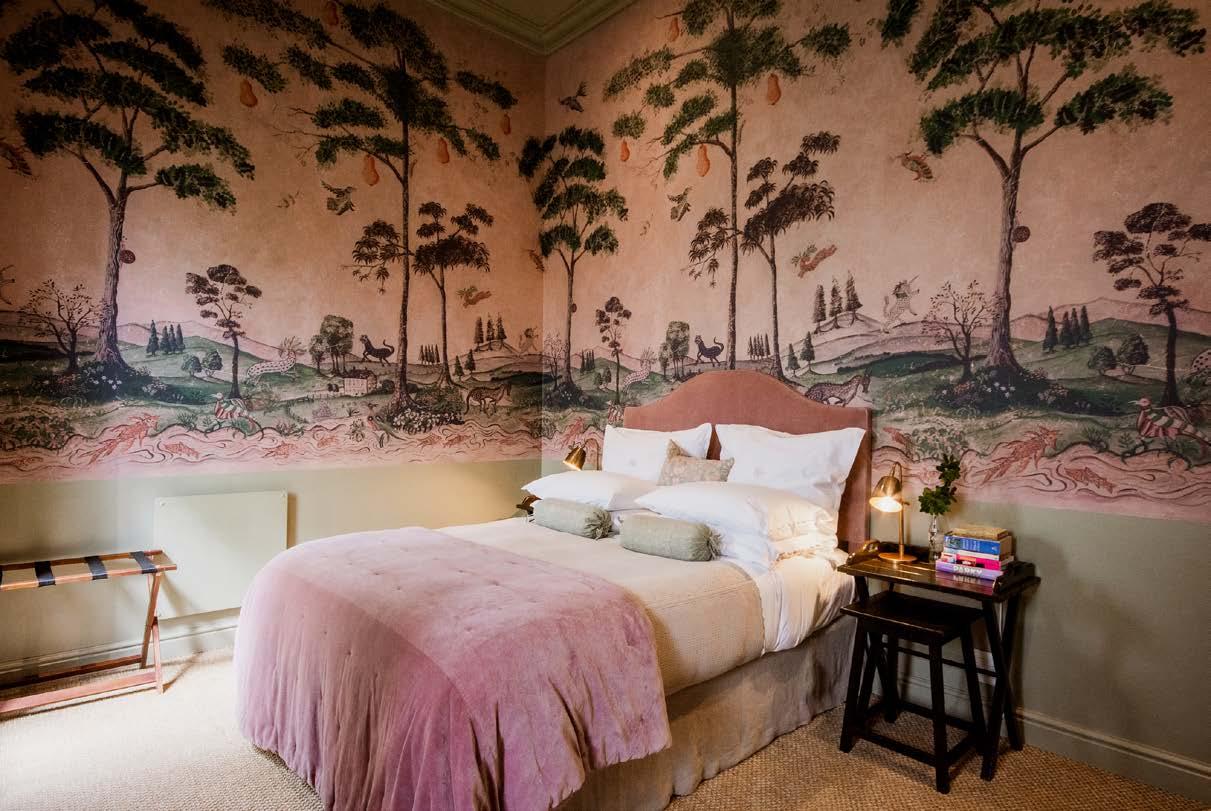
Nicole Boekhoorn and Fleur Huijskens transformed a 17th-century Cape Dutch farmhouse in Franschhoek into a sanctuary for healing, rest, creativity, and play, centred on bodily and spiritual regeneration. Interiors and gardens by the award-winning Gregory Mellor and Chelsea Flower Show Star Leon Kluge, respectively, are in dialogue. Terracotta tiles echo the fertile soil, and, like the garden, is layered with greens, rusty reds, golden yellows, and shades of turquoise. While soaking in a marble bathtub, guests look up to a wooden ceiling; while they dine on the farm’s bountiful harvest, they’re seated on naturalfibre armchairs surrounded by fresco paintings of vegetables grown in the gardens. Throughout, attention to detail fosters connection to place and to oneself, looking to the past instead of pursuing detached novelty. Oriental-inspired frescoes reflect paisley curtains and patterns created through tilework. Each room feels as though crafted over time, with each furniture piece upholstered in a uniquely patterned, rich fabric. Though eclectic, a cohesive warmth radiates across the various spaces. In this way, the retreat is both striking and comforting.
Photography by Inge Prins
Franschhoek, Western Cape
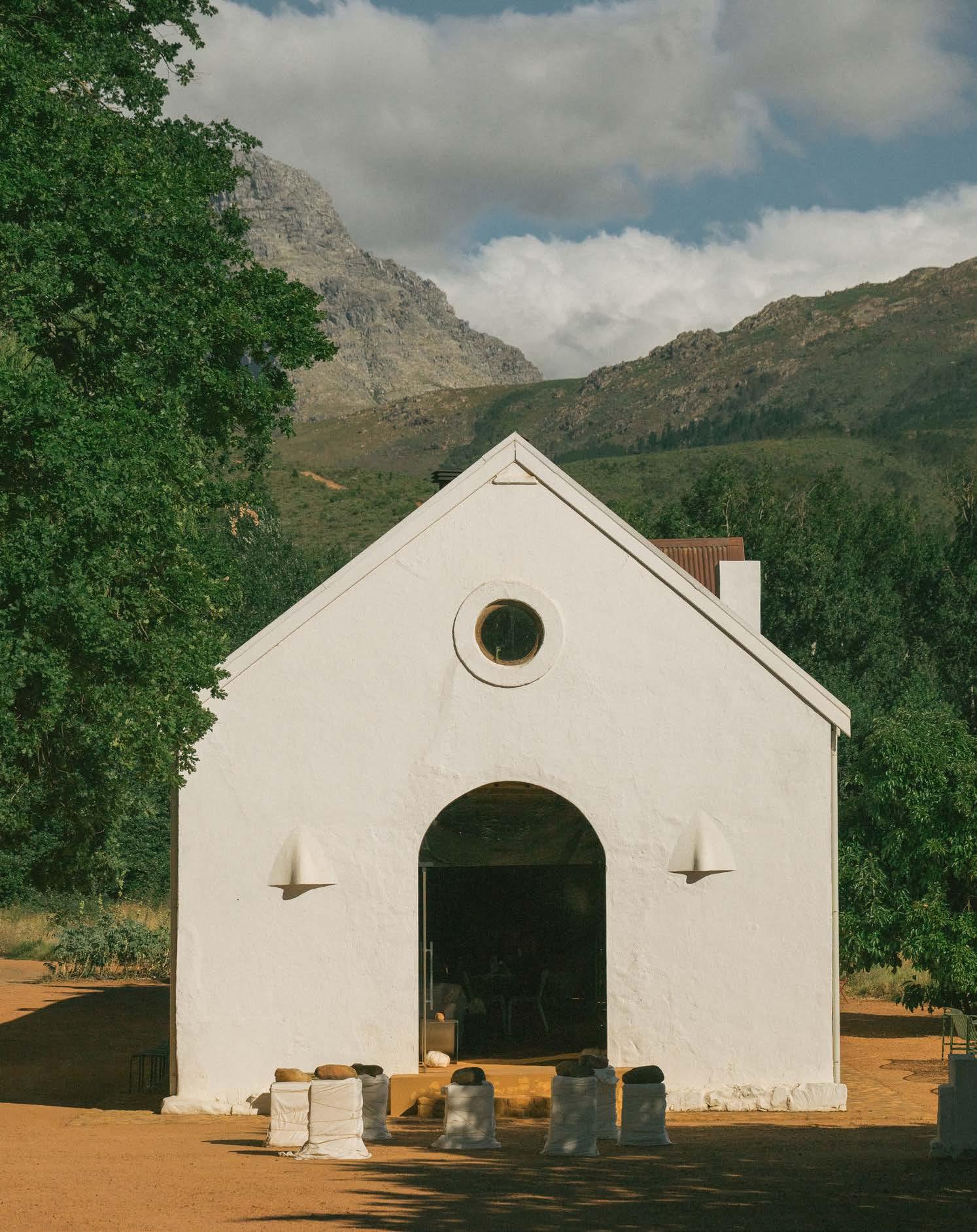
Designer and travel writer Anji Connell shares her recent experience at Kruijd, the radically grounded retreat by studio Kraak, with landscape design by DDS Projects. A restored 350-year-old farmhouse with a thatched roof, deep verandas, and stark white walls is complemented by minimalist guests-villas crafted with site-harvested adobe. Hand-plastered walls, concrete floors, untreated timber, and ceramics create luxury through restraint.
‘Visiting Kruijd was a transformative experience that deeply resonated with me. The earth-built structures feel profoundly grounding and every design element is meticulously crafted to connect harmoniously with the earth, underscoring a commitment to sustainability that allows nature to reclaim its space while enriching the visitor experience. Kruijd’s interiors are open and airy, filled with light from large windows that heighten the beauty of the outdoors. The atmosphere is truly special—almost spiritual— Kruijd feels authentic, and incredibly restorative.’
- With love, Anji Connell, Acid Plus
kruijd
Design: Kraak | Landscape Design: DDS Projects
www.kraak.co.za/kruijd
Anji Connell
Photography by La Dichosa Wellington, Western Cape
bosjes die stalle spa
Die Stalle Spa at Bosjes foregrounds a dialogue between heritage and modern wellness, thoughtfully reimagining the old stables while honouring their Cape Dutch legacy. Protecting the heritage façade, the building retains the original stone and mud-brick walls as a timeless casing. Its interiors are both warm and elegant with soft lighting, plaster cornices, basketweave floors, and brass details cultivating a sense of understated luxury. Each space — treatment rooms, a hydro pool, sauna, and a contemporary take on a Rasul chamber — unfolds with ease. A new low-slung wing mirrors the old stables, forming a courtyard that frames a lush garden. The Spa’s white plastered walls and parapet roof are seamlessly integrated into the farmstead, connecting its past and present. www.bosjes.co.za/stalle
'Stepping into Future Found Sanctuary is a powerful architectural experience that catches one completely off guard. Tucked at the foot of Table Mountain in Hout Bay, surrounded by forest and an exquisitely landscaped garden, it feels completely private, almost secret, yet you’re somehow still right at the edge of the city. That tension between total seclusion and proximity is what makes it so special. Conceived as a love letter to Cape Town by owners Jim Brett and Ed Gray, dear friends of mine from New York, every detail reflects a profound sense of care and devotion. The architecture doesn’t impose itself; it almost seems to emerge from the land.
Future Found’s architecture is not about declaration, but experience. Thoughtful, restrained, and deeply generous, this is what real luxury looks like to me.'
- With love, Trevyn McGowan, Southern Guild
Architecture: StudioMAS
Landscaping: Cherise Viljoen
Cape Town, Western Cape
Architecture: TV3 Architects
babylonstoren
Franschhoek, Western Cape
The Hot Spa, designed by TV3 Architects, uses water and warmth to expand Babylonstoren’s holistic approach to wellbeing. Tall windows frame the gardens outside, suggesting the importance of nature to rejuvenation. The sound of running water allows guests to be fully immersed in water’s therapeutic potential. Such immersion is extended to the salt room, which is built from blocks of raw Himalayan salt with its characteristic pink hue lending a soothing, healing atmosphere. Hammam treatments take place under vaulted ceilings glittering with blue mosaics, echoed in the room for the Rasul (mud bath) treatment, which has curved walls decorated with botanical green mosaics. Even these insulated spaces, then, hint at the gardens outside.
www.babylonstoren.com
Photography courtesy of Babylonstoren
nima llodge
Wilderness, Western Cape
www.nimalodge.com
Architecture: Stretch Architects
Interior Design: Vida Schiff
The simple, undulating forms of the cabins appear as though they were bent that way. The cladding heightens this effect, also in South African pine, which gives the exterior a corrugated appearance and catches the light in magical ways. From each side, the overarching form offers a unique composition: arched shapes that mimic the peaks and slopes of the mountains in the background, or dramatic diagonals that lead the eye to the heavens. The light wooden palette is used inside and on the deck, too, creating a peaceful uniformity. Though minimalist, the buildings are suffused with rhythm created by the materials, mostly wood, but also small yellow tiles used in the bathroom.
Photography courtesy of Nima Lodge
Interior Architecture: Tristan du Plessis Studio
www.terrepaisiblemedicalspa.com
Photography courtesy of Terre Paisible
terre paisible spa
Western Cape
Nestled in the Simonsberg Mountains, the Terre Paisible Medical Rejuvenation Centre and Spa was designed by Tristan du Plessis with the intent to create ‘a space that fosters calmness and relaxation, prioritising the atmosphere and experience over just aesthetics.’ Arches throughout both soften the view and create a sense of enclosure, complemented by rounded seating, a gentle palette, and cool marble finishes. Natural light streaming in through large windows warms the interiors and further animates the dappled metal ceiling feature above the pool, echoing its gentle ripples. In the beauty salon, by contrast, carefully controlled natural light creates a contemplative mood.
Franschhoek,
natura co-llab
Krugersdorp, Gauteng
Set within the water pavilion of Nirox Sculpture Park, Manthe Ribane’s Natura Co-lab space is constructed in raw wood and glass. The concept drew inspiration from materials that breathe and age with time: ancestral textures, wood, clay, linen, and stone. It is both atelier and gallery where sensory language — from handmade clay vessels to soft uniforms — harmonise with the natural surroundings. Within rustic, minimalist rectangular spaces that look out onto the gardens through humble linen curtains, Manthe is free to play. Furniture acts like sculptures and anything or anyone entering the space is bound to be touched by art.
www.niroxarts.com
Photography courtesy of Natura Co-lab
Design: Manthe Ribane and Benj Liebmann
by Elsa
bliss and stars
Cederberg, Western Cape
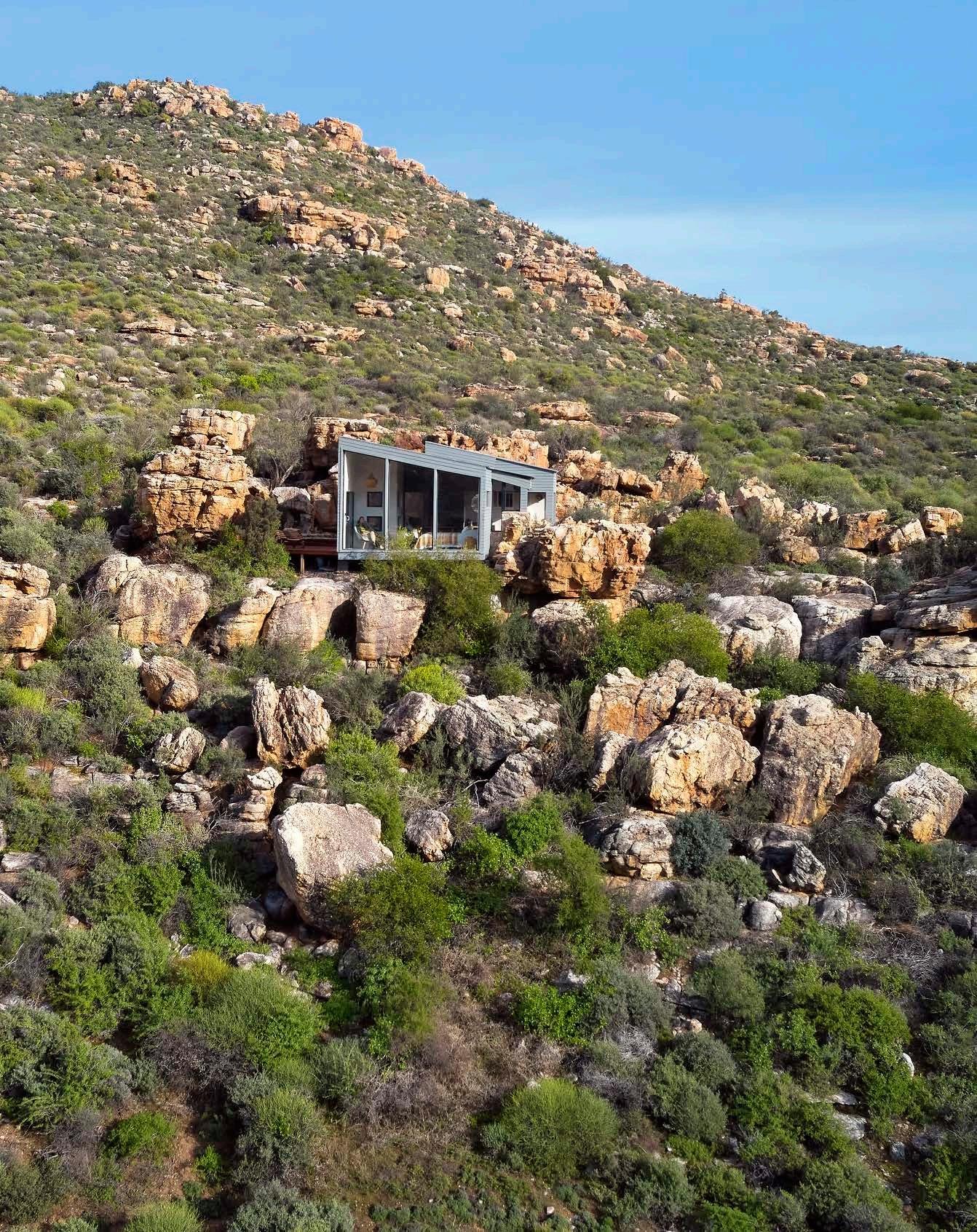
‘I’ve never experienced a place quite like Bliss & Stars, a beautiful retreat built above the Doring River in the Cederberg. In every room, large east-facing windows, left bare of curtains, frame the Cederberg rockscape and flood the interiors with light. The architecture is deeply respectful, built around existing boulders rather than imposed upon them. Everything has been constructed by hand, using local rock and river sand, with indents in the stone carefully chiselled by hand. The attention to detail is felt everywhere, from the design to the handmade organic body products. The result is profoundly calming, a place that reinspires me to be a custodian of the planet.’
- With love, Mariota Enthoven, Spier
Design: Daria and Heine Rasmussen
Photography
Young
kisawa
sanctuary
Benguerra Island, Mozambique
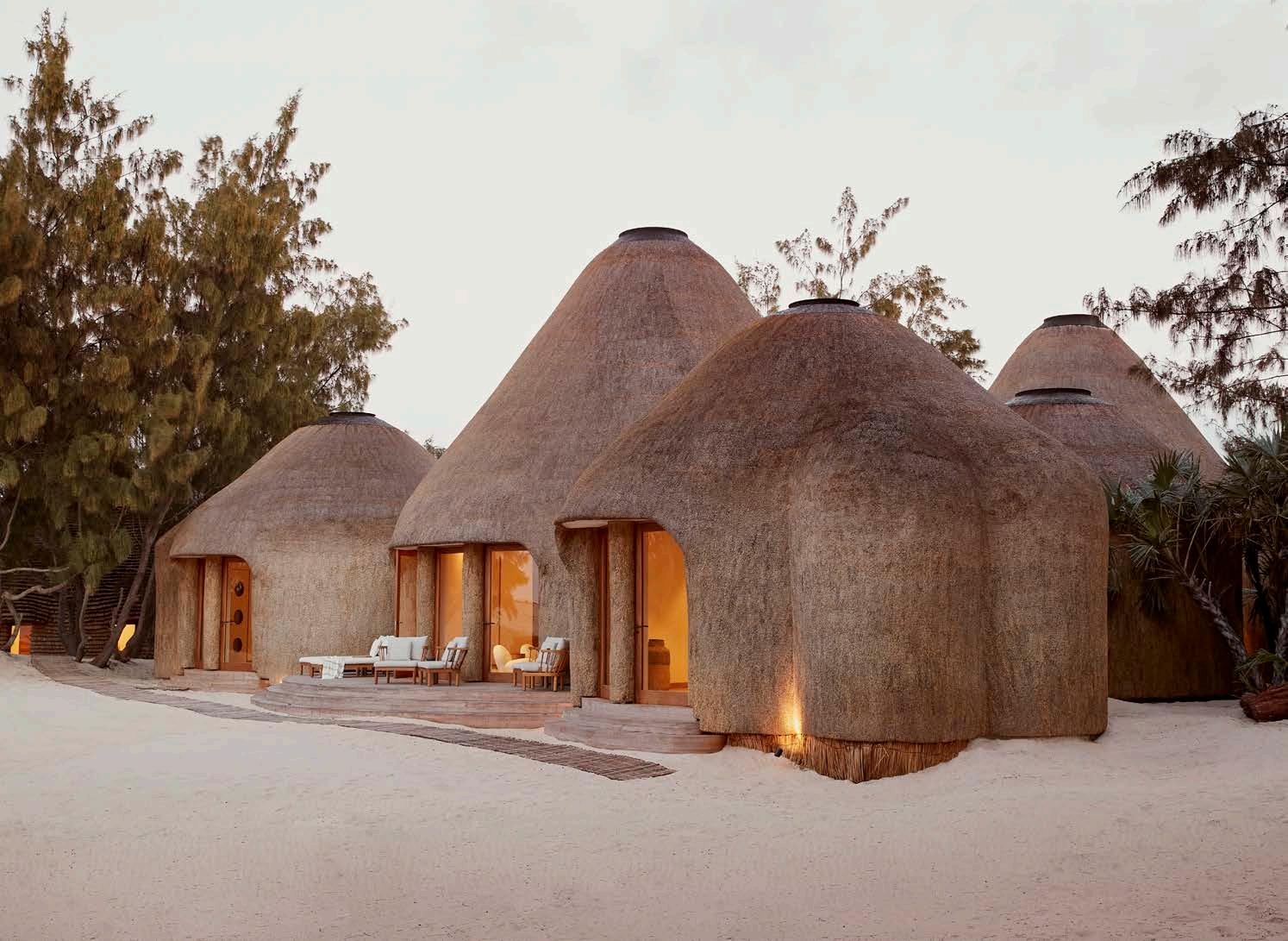
On the southern tip of Benguerra Island, the Natural Wellness Centre at Kisawa Sanctuary is a quietly radical retreat shaped by conservation and craft. It was designed by Studio NJF who worked closely with local artisans to create the striking thatched huts of the Natural Wellness Center. Each space layers African art and bespoke furnishings within open, breeze-filled interiors that continue out into the Indian Ocean horizon.
www.kisawasanctuary.com
Photography by Elsa Young
Studio NJF
Design:
THIRTY FIVE YEARS OF AWARD WINNING PROJECTS
urban
Sometimes, escaping the patterns of ordinary life requires traveling straight to the heart of a city where historic buildings and clever designs connect you to the urban pulse or offer an urban oasis to retreat from the noise.
an afro-english dialogue
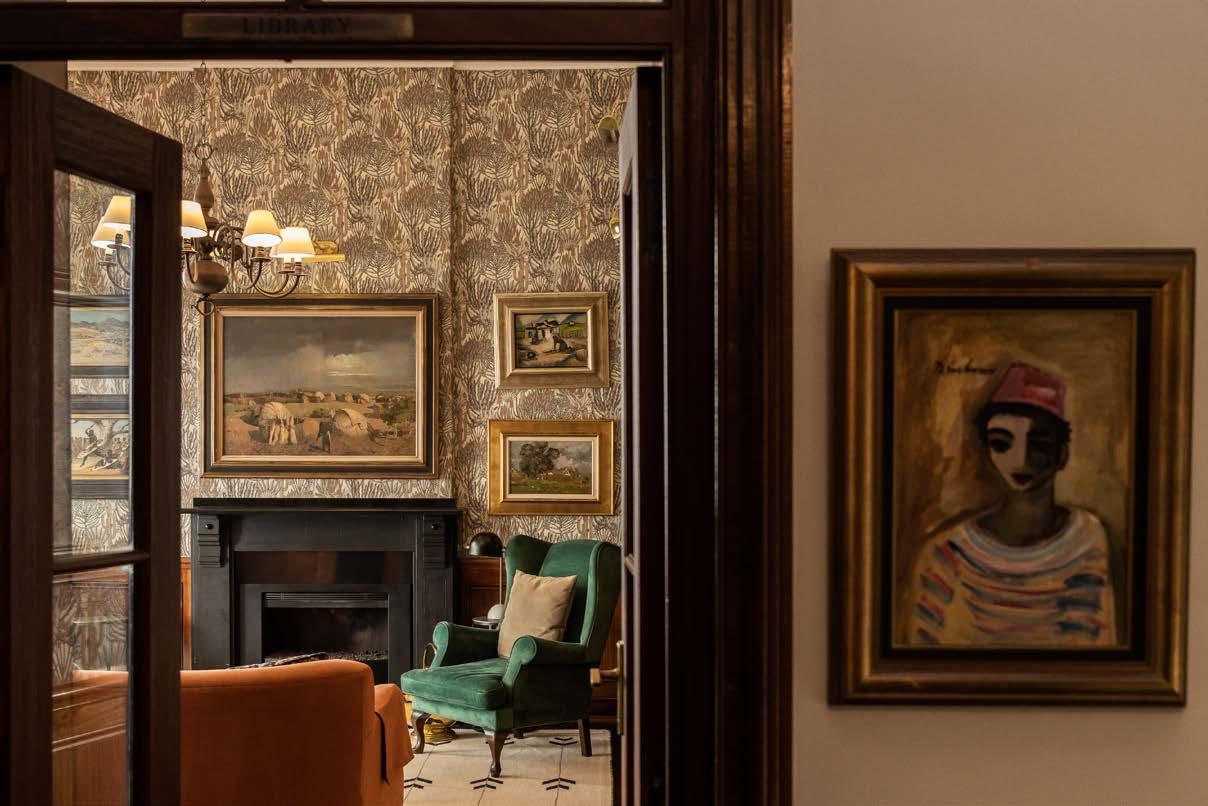
Anna Weylandt on Translating Thebe Magugu’s Storytelling into Interior Space for the Mount Nelson’s Newest Suite
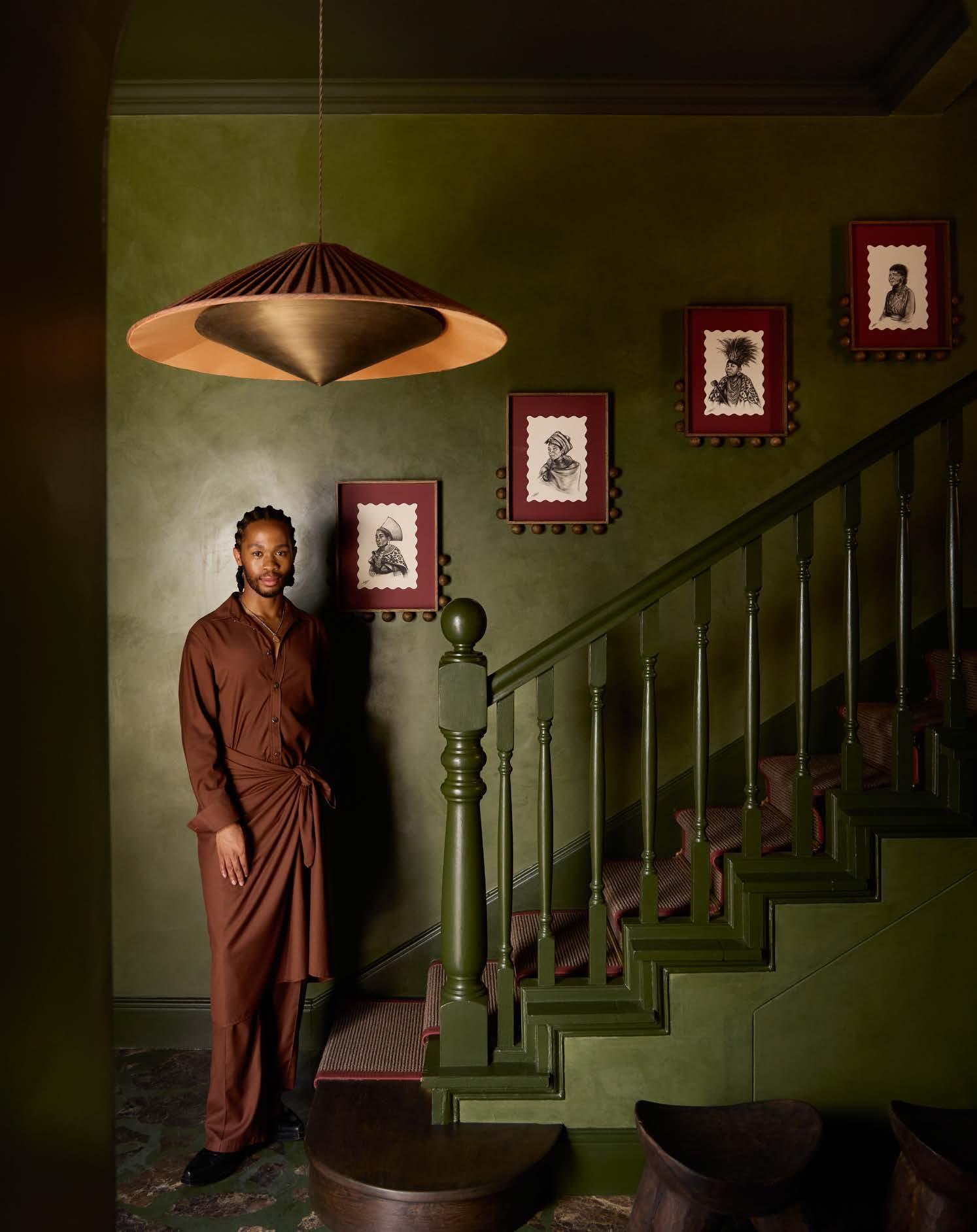
Leading up to the highly anticipated launch of the Thebe Magugu Suite at the Mount Nelson Hotel in Cape Town, we sat down with Anna Weylandt, director of StudioLandt, to gain insight into the iconic collaboration between the beloved Nellie, Anna’s pioneering design studio, and celebrated fashion designer Thebe Magugu. In the Mount Nelson’s recent press release, Thebe is quoted expressing how the project enabled him to explore how ‘fashion can live beyond the body — extending into space and atmosphere.’ Anna’s guidance was crucial in bringing such space and atmosphere to life.
Heritage is deeply ingrained in the work of each involved party — the Thebe Magugu fashion house, StudioLandt design studio, and the Mount Nelson hotel (now 126 years old). That said, each draws from a different past to preserve culture for the future. How did you balance the distinct, and perhaps even conflicting, influences to create what you call an ‘Afro-English’ aesthetic for the new Thebe Magugu Suite?
Merging these three worlds was embedded in the concept from the very beginning. We were deeply aware of the weight and significance each party brought to the table. Rather than trying to dilute or neutralise those influences, we chose to let them coexist. From StudioLandt’s perspective, the key was remaining true to who we are as a design studio while allowing the space to be shaped by Thebe’s storytelling and the Mount Nelson’s context. The result is a dialogue between past and present — a space that feels layered and considered, yet fresh and unexpected. I think that balance is what gives the suite its ‘Afro-English’ character: respectful of heritage, but not bound by it.
With its iconic pink exterior and institutional afternoon teas, the Mount Nelson is a beloved landmark in the heart of Cape Town. How did you infuse the space with a contemporary design language while still
honouring what people have come to love about the hotel?
What’s so special about the Mount Nelson is that, despite its history, it has always been quietly progressive. It understands that heritage doesn’t mean standing still. From the outset, there was a shared belief that the space could feel true to Thebe
Magugu’s brand while still sitting comfortably within the hotel’s broader narrative.
StudioLandt was trusted to hold that balance — to push the interiors forward without losing sight of their surroundings. We approached the design with great respect for the building’s proportions, elegance, and sense of ritual, while introducing a
by Inge Prins
Photography
“The result is a dialogue between past and present — a space that feels layered and considered, yet fresh and unexpected. I think that balance is what gives the suite its ‘Afro-English’ character: respectful of heritage, but not bound by it.”
more contemporary sensibility through colour, texture, furniture, and art. It was a brave move on the hotel’s part, and one that speaks to their confidence in evolving their legacy rather than preserving it statically.
You’ve also worked with Thebe on the Magugu House in Johannesburg and a limited-edition couch and duffel bag. How has your collaboration evolved since?
Each project has built on the last, strengthening the creative trust between us. This suite feels like a natural progression of that journey — and a reflection of the synergy we discovered early on. It’s been a privilege to help shape the physical expression of the Thebe Magugu brand.
Your background is in furniture design and procurement. How does working with a fashion designer differ from and enrich your usual process, and in which ways did your expertise shape the direction of the Thebe Magugu Suite?
Working with a fashion designer inevitably pushes you creatively. While our process at StudioLandt remains grounded in spatial logic and materiality, collaborating with Thebe introduced a stronger emphasis on narrative and symbolism. Our role was to translate that storytelling into a tangible, liveable space — through furniture, finishes, and flow. That intersection between fashion and interiors is where the project truly came to life.
gorgeous george
Cape Town, Western Cape
www.gorgeousgeorge.co.za
Photography courtesy of
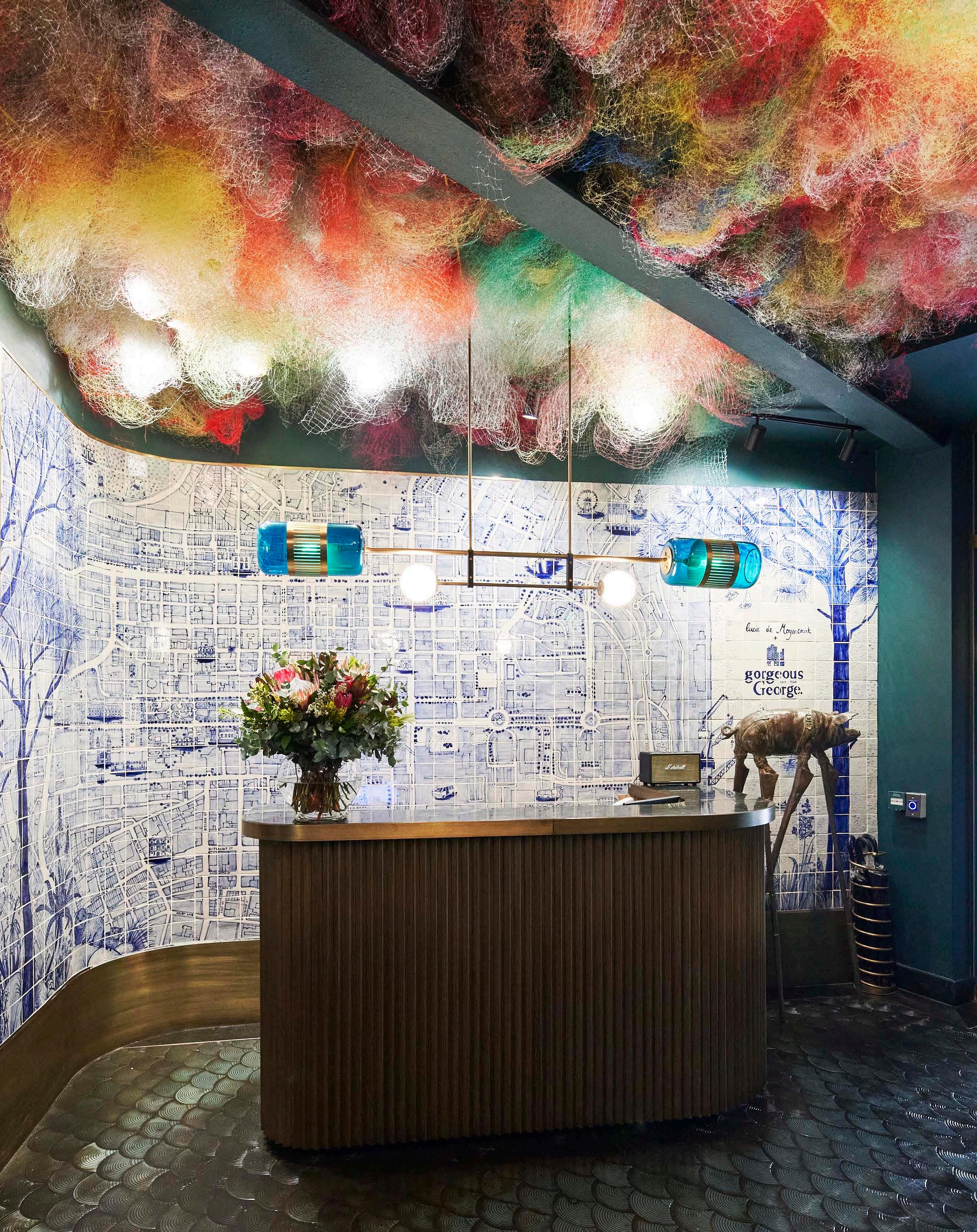
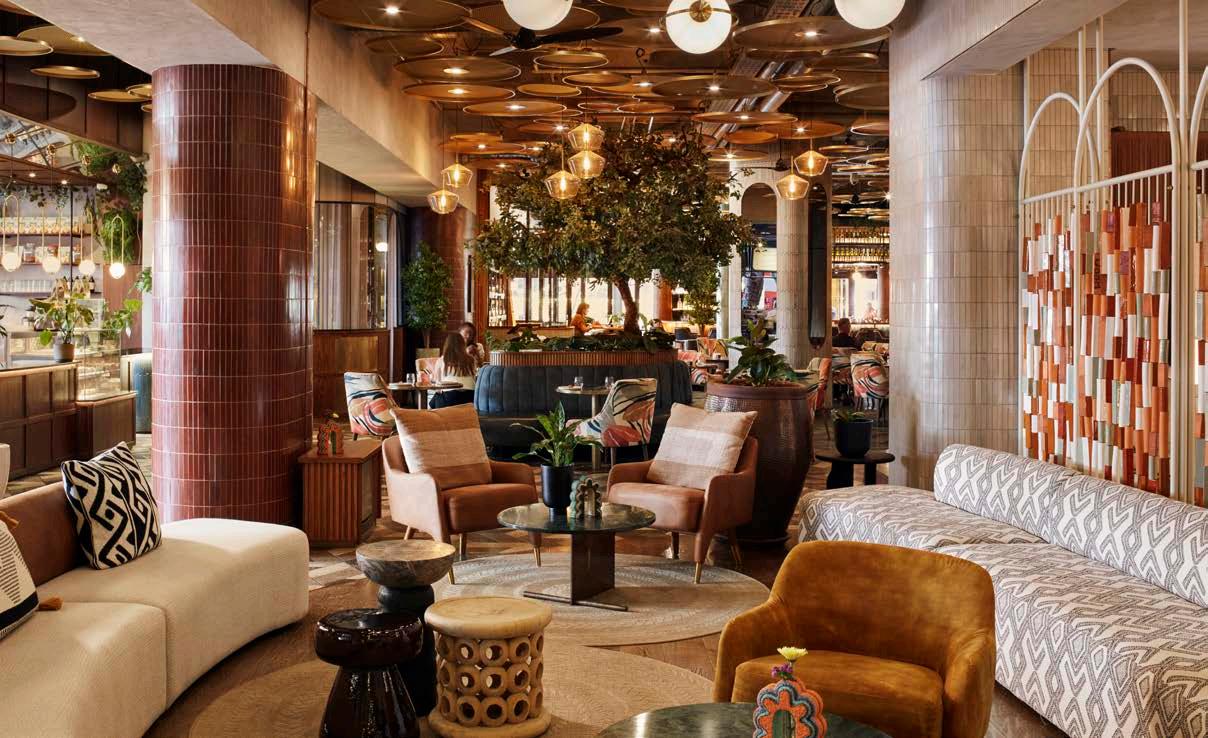
Two beautifully restored heritage buildings were connected by a rooftop bar to create Gorgeous George, a hotel born from a melding that continues to invigorate creative collaborations in Cape Town. Situated in the historic heart of the city, between Green Market Square and St. George’s Mall, the hotel reflects the essence of the city and extends its vibrancy: the rooftop bar offers views over the city lights and hum, while raw, exposed concrete and steelwork juxtaposed with modern Victorian design echo at once the grit and history of the city. Lighting and furniture by David Krynauw, Gregor Jenkin, Studio 19, Douglas&Co, and Dokter and Misses shape a gorgeous mood, while custom murals by David Brits lend soul to each room. Through interiors, Tristan du Plessis set the tone for the performances and creative engagements held regularly at the hotel.
Interior Architecture: Tristan du Plessis
Gorgeous George
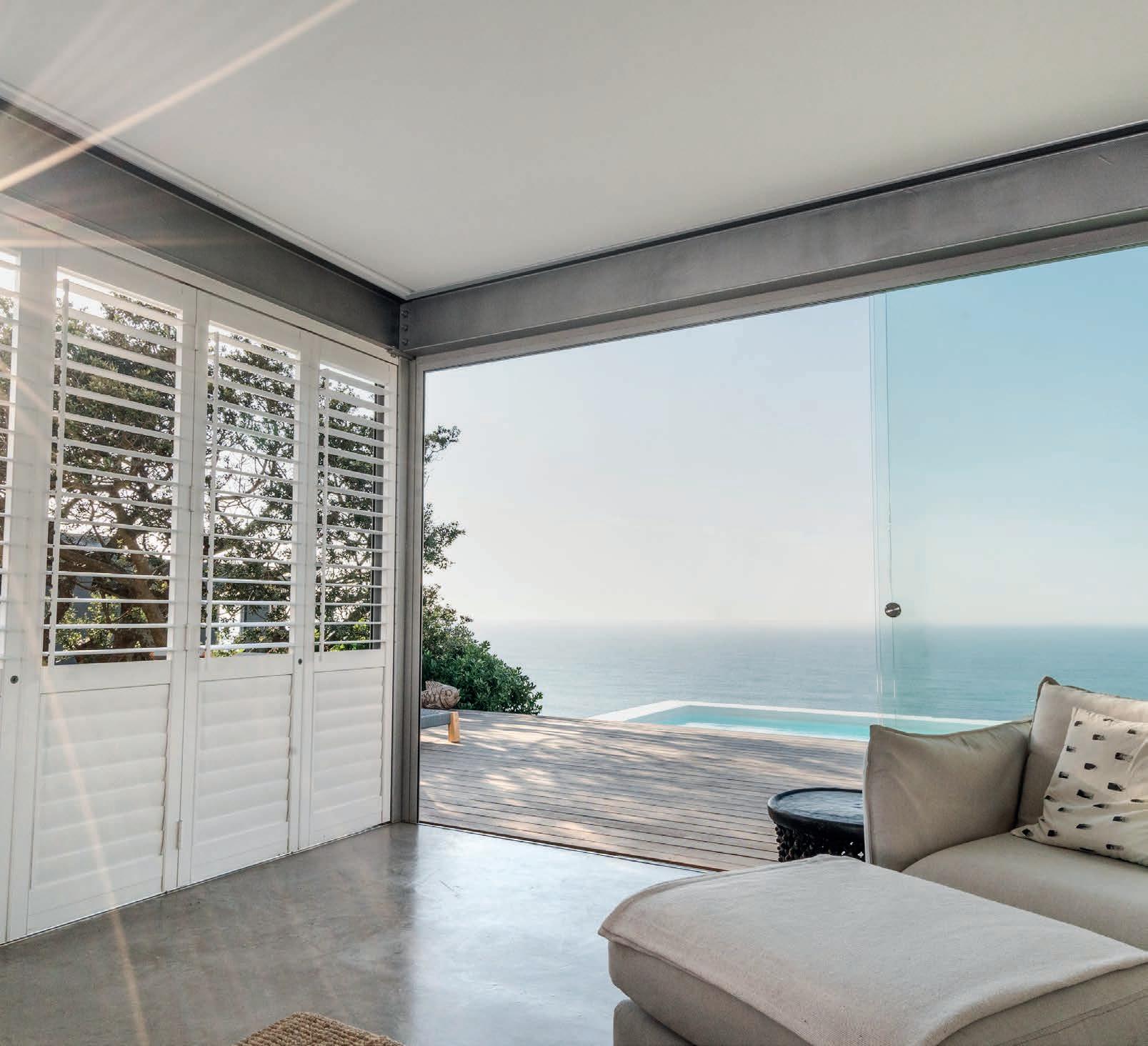
Sunflex Aluminium Shutters & SF20 Frameless Multi Sliding System
one&only cape town
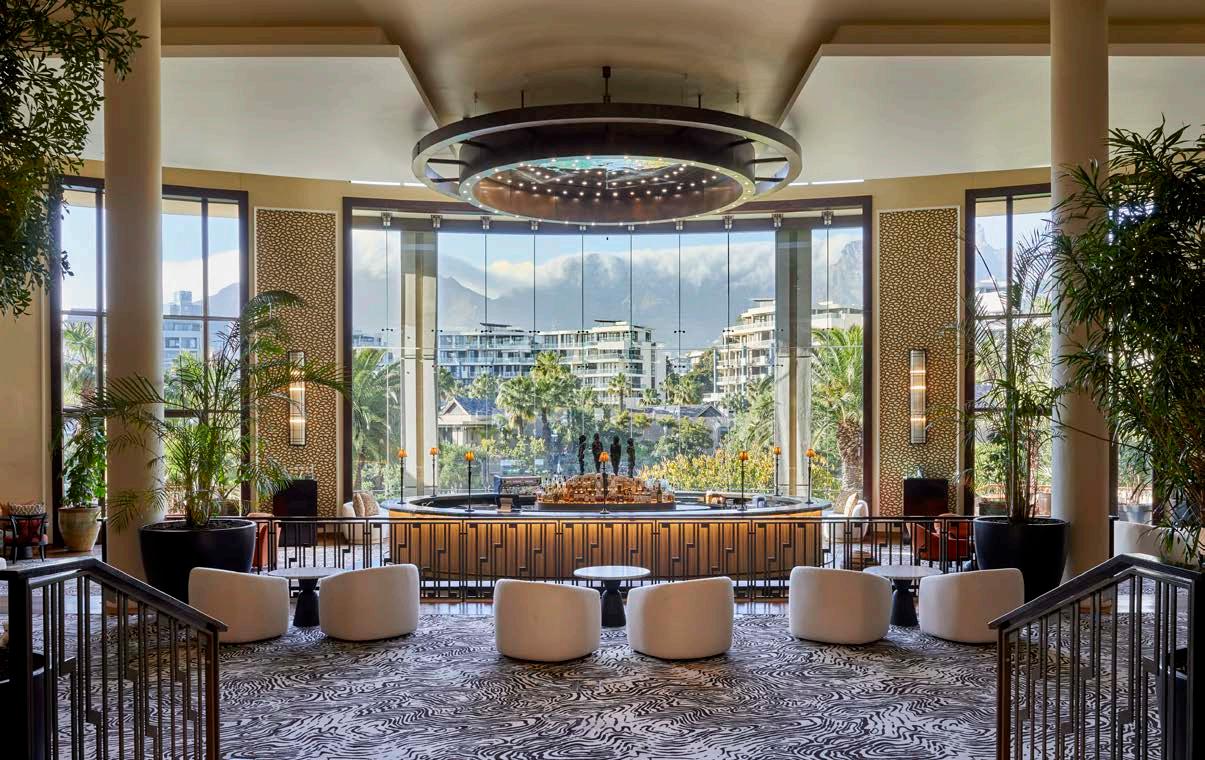
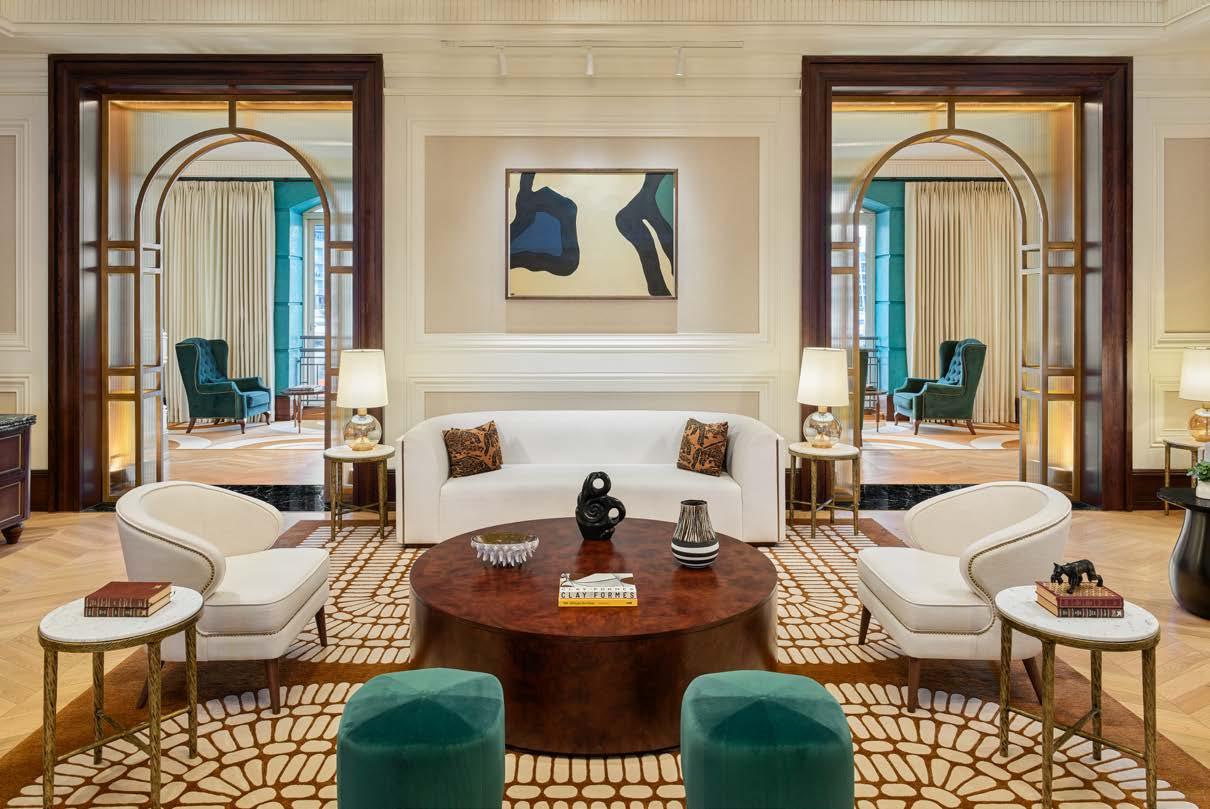
One&Only Cape Town has been reimagined through a design lens that channels the extraordinary context of its location. Table Mountain’s topography informs patterned carpets, while bamboo kelp forests inspire handcrafted detailing and tactile finishes. Throughout guest rooms and shared spaces, natural materials and layered artisanal craft shape a contemporary expression of resort luxury.
www.oneandonlyresorts.com/cape-town
Photography courtesy of One&Only Cape Town
Interior Design: Muza Lab
Cape Town, Western Cape
the silo hotel
Cape Town, Western Cape
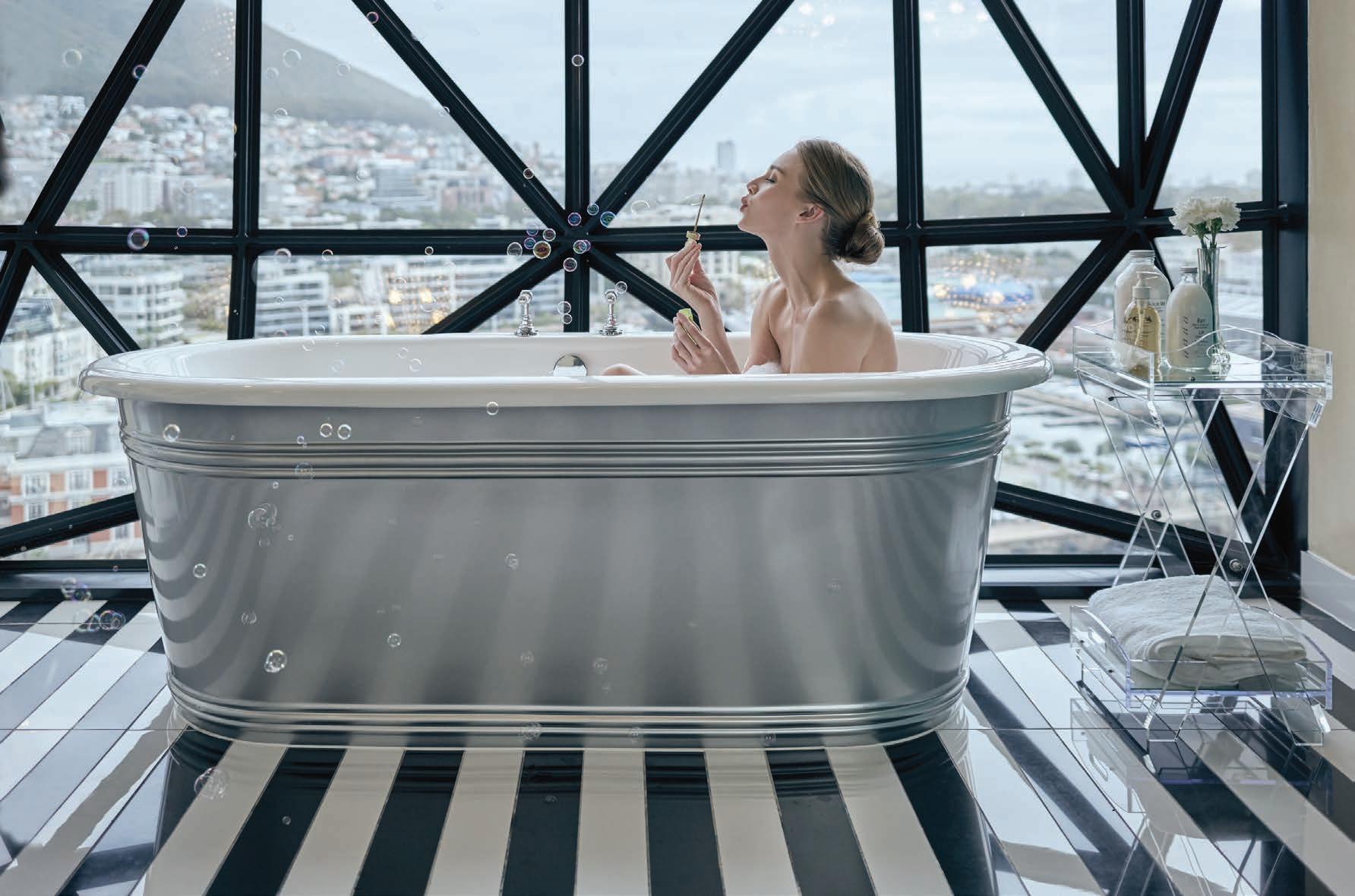
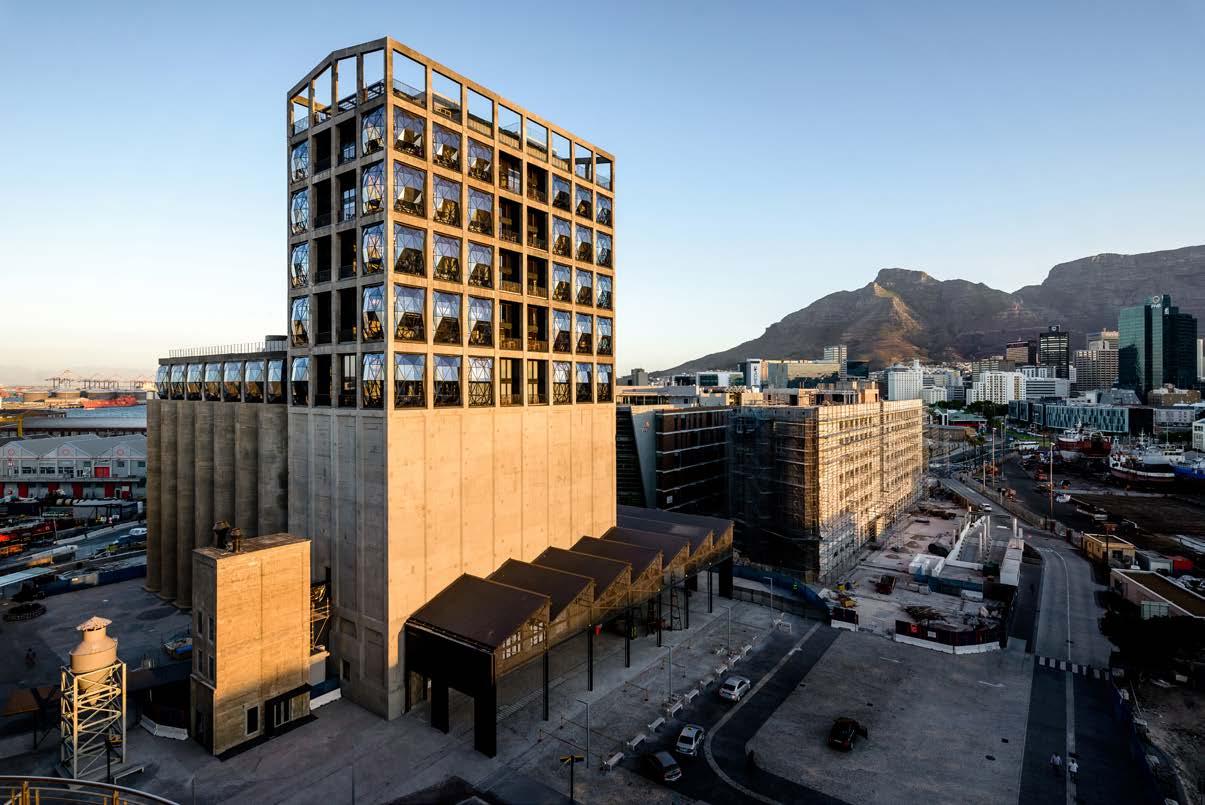
The Silo Hotel is an experience of elevation. Rising from a repurposed 1920s grain silo above the Zeitz Museum of Contemporary Art Africa, the hotel transforms industrial infrastructure into one of Cape Town’s most iconic silhouettes. Light and volume are carved from concrete while faceted windows refract sky, sea, and city. The architecture frames Table Mountain, Lion’s Head, and the city bowl as living artworks, collapsing boundaries between interior and landscape. At once sculpture, hotel, and cultural landmark, The Silo is anchored within the city’s evolving story.
Architecture: Heatherwick Studio
www.theroyalportfolio.com/the-silo-hotel
Photography courtesy of The Royal Portfolio
cape grace hotel
The reimagining of Cape Grace is a recalibration rather than a mere renovation. The hotel has been thoughtfully reworked to honour its legacy while unfolding as something exploratory and revived. Spaces flow intuitively, guiding guests through a choreography of layered encounters with light, texture, and view. The ground floor has been transformed into a connective landscape, framing the marina, Table Mountain, and the city beyond as ever-present companions. The hotel’s African influence is not emphasised but felt — in the warmth of materials, the depth of colour, the tactility of textiles, and the presence of carefully curated objects and artworks by South African creatives.
Interior Design: 1508 London
www.capegrace.com
Photography courtesy of Cape Grace Hotel
Cape Town, Western Cape
ellerman house
Perched above Bantry Bay, Ellerman House is anchored in a 1906 Cape Edwardian mansion overlooking the Atlantic. The heritage structure retains its stately proportions, verandas and terraced gardens, while interiors layer contemporary detailing within the historic shell. Here, heritage and contemporary design converge, resulting in a hotel that feels both rooted in place and confidently modern.
Architecture: GAPP Architects and Urban Designers
www.ellerman.co.za
Photography courtesy of Ellerman House
Bantry Bay, Cape Town
hyde johannesburg rosebank
Johannesburg, Gauteng
Housed within The Bank, a mixed-use development, the Hyde Johannesburg Rosebank makes its mark on Rosebank’s iconic skyline. Inside, brutal exteriors give way to layered patterns, materials, and forms that merge urban sophistication with bohemian earthiness. Oniro Studios beautifully combined terrazzo flooring, burnished brass detailing, rich upholstery, wall hangings, and sculptures to create a tactile haven. Throughout, South African artworks root the global vocabulary in cultural specificity. www.hydehotels.com/johannesburg/
Interior Design: Oniro Studios
Photography courtesy of Hyde Johannesburg Rosebank
dorp hotel
More village than hotel, the Dorp Hotel unfolds as a series of meandering paths, courtyards, and rooms that feel discovered rather than designed. Imbued with a sense of age, it blends seamlessly into the fabric of Bo-Kaap, embracing ambience and layered character. Each space carries its own essence — from salons open to birdsong and greenery to rooms centred around fireplaces, soaking tubs, and sweeping views across Cape Town. The design prioritises intimacy, quirkiness, and a scale that feels deeply human. Gardens spill into built spaces, softening edges and blurring thresholds. Here, design is about atmosphere: a soulful hillside retreat where creativity, comfort, and magic dance together. www.dorp.co.za
Interior Design: Gail Behr and Gregory Mellor Design | Landscape Design: Leon Kluge
Cape Town, Western Cape
Photography courtesy of Dorp Hotel
the peech hotel
www.thepeech.co.za
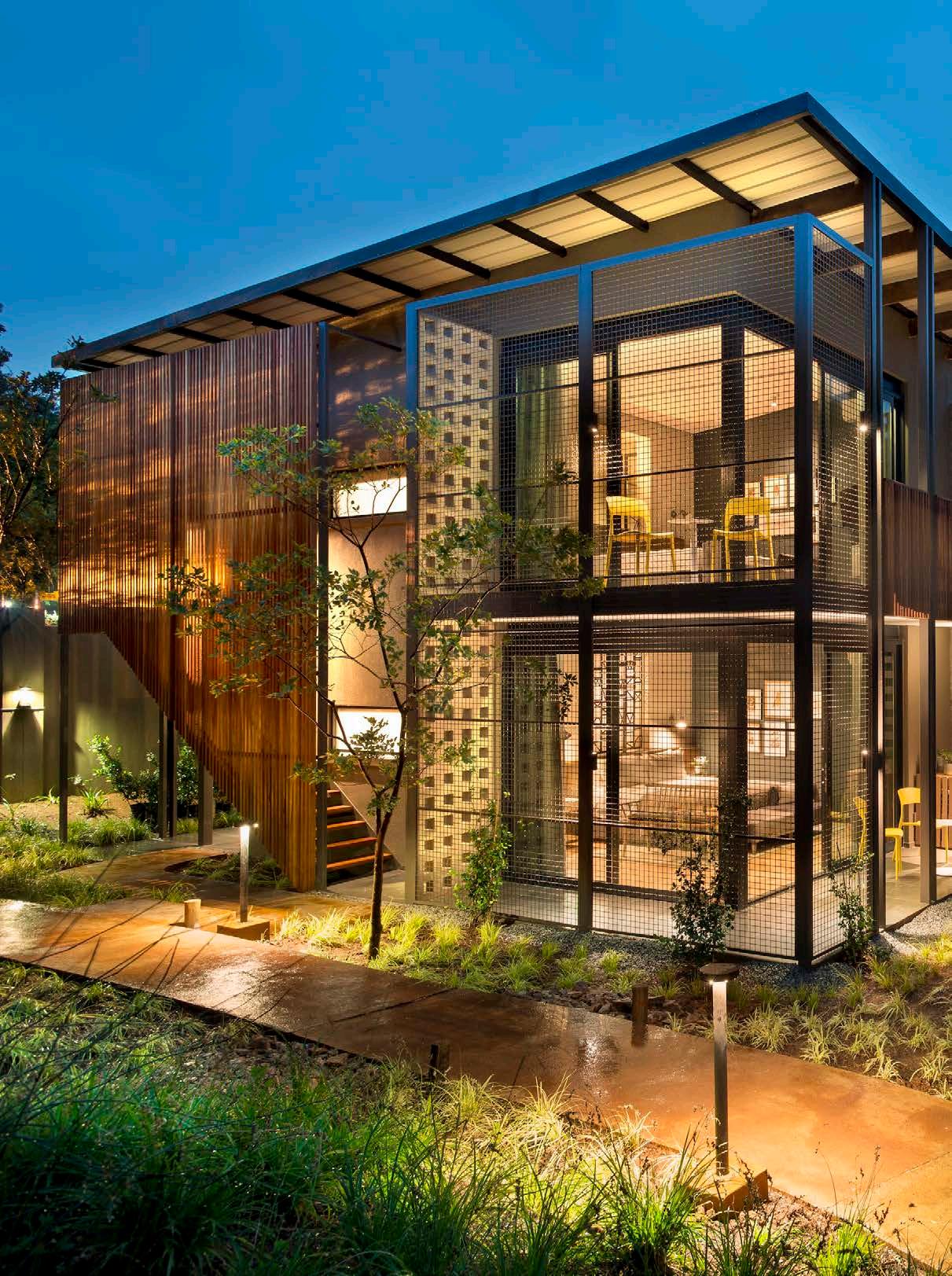
Set within a lush garden in Melrose, The Peech Hotel resists the convention of monolithic urban hotel design with a configuration of private pavilions that appear to float among the trees, rather than having been imposed upon them. Each pavilion emerges in layers, balancing permeability and privacy through planes, screens, and planting. Shifting thresholds are created through a sequence of steel mesh, timber, and masonry. Balconies evolve into outdoor rooms. Circulation paths elevate visitors into the canopy. Planting grows and changes over time, softening the façades. Its materiality echoes its leafy surroundings, while vertical steel elements introduce a gentle rhythm across the property.
Architecture: Meshworks Architecture + Urbanism
Johannesburg, Gauteng
Photography by Dook
hospitality with intent
Fox Browne Creative on creating meaningful guest experiences across Africa
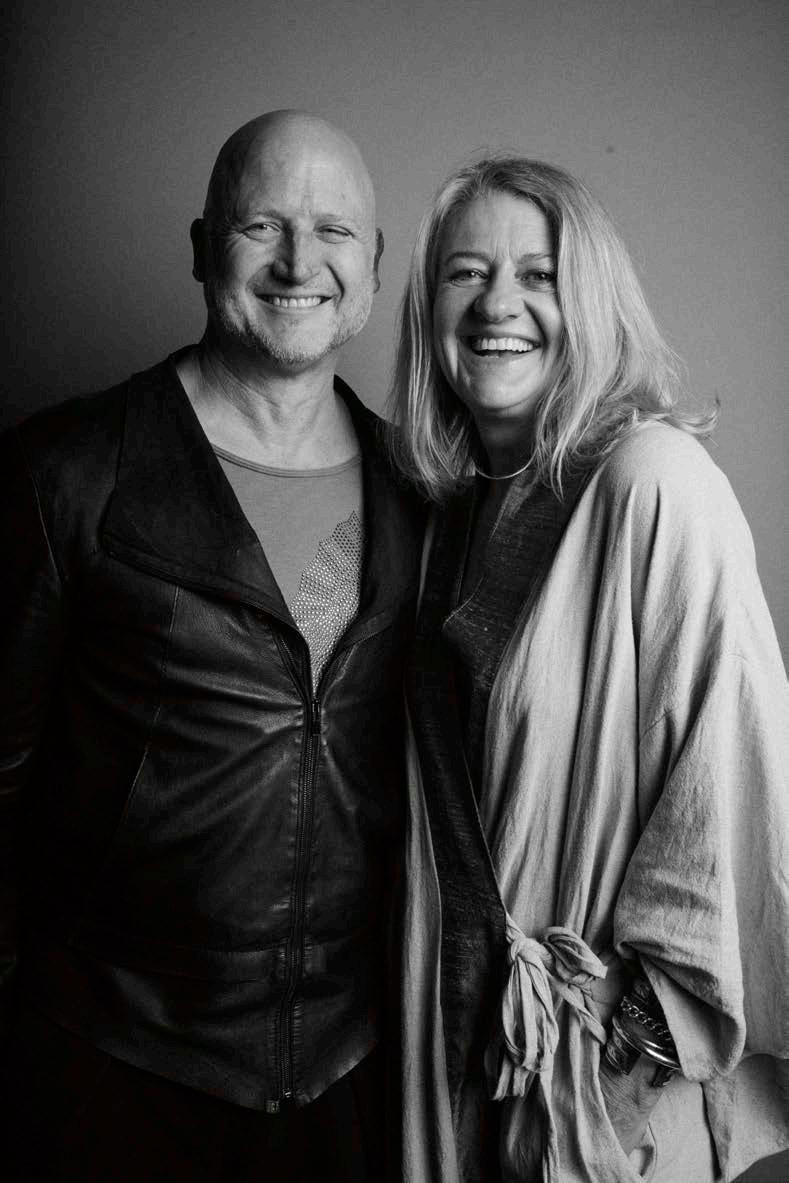
Christopher Browne and Debra Fox are partners in life and in practice, bringing a rare, holistic lens to contemporary hospitality design at Fox Browne Creative. Their award-winning studio spans architecture, interiors, and hospitality consulting, shaped by three decades of experience across more than 120 projects worldwide. With deep roots in Africa and a shared commitment to treading lightly, their work is driven by meaning, place, and the creation of deeply considered guest experiences off the beaten path.
After more than 30 years in the industry, half of which has been at Fox Browne Creative, I wonder if there is a particular phase in your process that remains the most challenging. Please explain which phase, if any, tends to bring the most unforeseen complexities and how you work through them.
DF: People often imagine our work as being about creativity alone, but the reality is closer to 10% creativity and 90% logistics, administration, problem-solving, and sheer persistence!
The most challenging — and, truthfully, the most rewarding — phase is the moment when ideas have to leave the studio and
exist in the real world. That’s when you’re sourcing or commissioning the right pieces, navigating remote locations, managing artisans, transport, customs, weather, and timing.
Getting a beautifully crafted object to a far-flung place is rarely straightforward. Floating beds across the crocodile-infested Zambezi River on mokoros and driving tractors loaded with treasures through the flooded delta, for example, are not for the faint-hearted — but it’s exactly that kind of complexity that makes the work meaningful. When everything finally comes together, you know the space couldn’t exist anywhere else, and that makes all the effort worthwhile.
There’s often the skewed perspective that Western design, building methods, and technologies are superior. Can you tell us about an African approach you have found particularly inspiring or that you have incorporated into your work?
CB: Across the continent, African design is inherently timeless because it’s rooted in meaning, memory, and place. Materials are chosen for reasons that go well beyond
how they look: availability, climate, craft, ritual, and environmental responsibility all come into play. Nothing is there by accident.
Our work is often layered rather than restrained — but those layers are intentional. Where Western design can sometimes lean heavily into efficiency and technology, African design is of the place, vibrant, communal, colourful, and unapologetically human. It’s always quietly asking: does this serve the people and the place, or just the brief?
Africa, if nothing else, teaches you that relevance lasts far longer than novelty.
In addition to creating beautiful guest experiences, you are known for your sustainable ethos. What does ‘treading lightly’ on the environment mean to you or entail in a South African context?
CB: In our world of lodge design, treading lightly is a responsibility.
For us, it’s a process. It means listening first — employing locally, building skills, making
the effort to both understand and be understood, choosing materials with their full life cycle in mind, and designing places that will still make sense aesthetically, culturally, and practically twenty years from now. It’s about really getting under the skin of a place and finding the story to tell, rather than imposing our own.
And sometimes the heaviest footprint is in fact the lightest, as concrete structures built in situ with local clay bricks demand much less resources than foreign factory-made components — it’s a constant juggle.
I see that you have worked with Nicholas Plewman Architects, Jack Alexander, and Michaelis Boyd on projects. What has been your greatest lesson collaborating with architects?
DF: Partnering with Jack for the past eight years allowed us to better control the full design journey and ensure consistency from concept through to delivery. At the same time, we continue to collaborate closely with like-minded architects such as Nicholas Plewman Architects and Mi-
Photography by Dook
chaelis Boyd, depending on the needs of the project. Each brings a distinct design sensibility, and that flexibility allows us to tailor the right team to the right place.
Shared intent matters far more than shared taste — and when that alignment exists, the work becomes not only better, but far more enjoyable.
Your main office is in Johannesburg, which is often called the world’s largest manmade forest, whether that’s true or not. Are there any surprising ways in which this city has influenced your work in remote locations?
CB: Johannesburg is a city built on industry, ambition, fragility, reinvention, and memory. It’s a city that teaches you how to survive — with grit, culture, diversity, and an energy that’s unmistakable.
Johannesburg shaped how we think about place. It made us far less interested in creating pristine, isolated bubbles and far more focused on designing inclusive environments that feel part of a living and ever-evolving ecosystem — socially, culturally, and environmentally.
“African design is inherently timeless because it’s rooted in meaning, memory, and place. Materials are chosen for reasons that go well beyond how they look: availability, climate, craft, ritual, and environmental responsibility all come into play. Nothing is there by accident.”
When leaving the familiarity of home to explore remote landscapes and its fauna and flora, architecture and design play a significant role in communicating the specificities and histories of place, deepening the overall experience.
www.andbeyond.com/lodgeeditorial/suyian-lodge/
Photography by Dook
Architecture: Nicholas Plewman
Architects, Michaelis Boyd
Architects | Interior Design: Fox
Browne Creative | Landscape
Architecture: Tufaha Africa
&beyond suyian lodge
Laikipia, Kenya
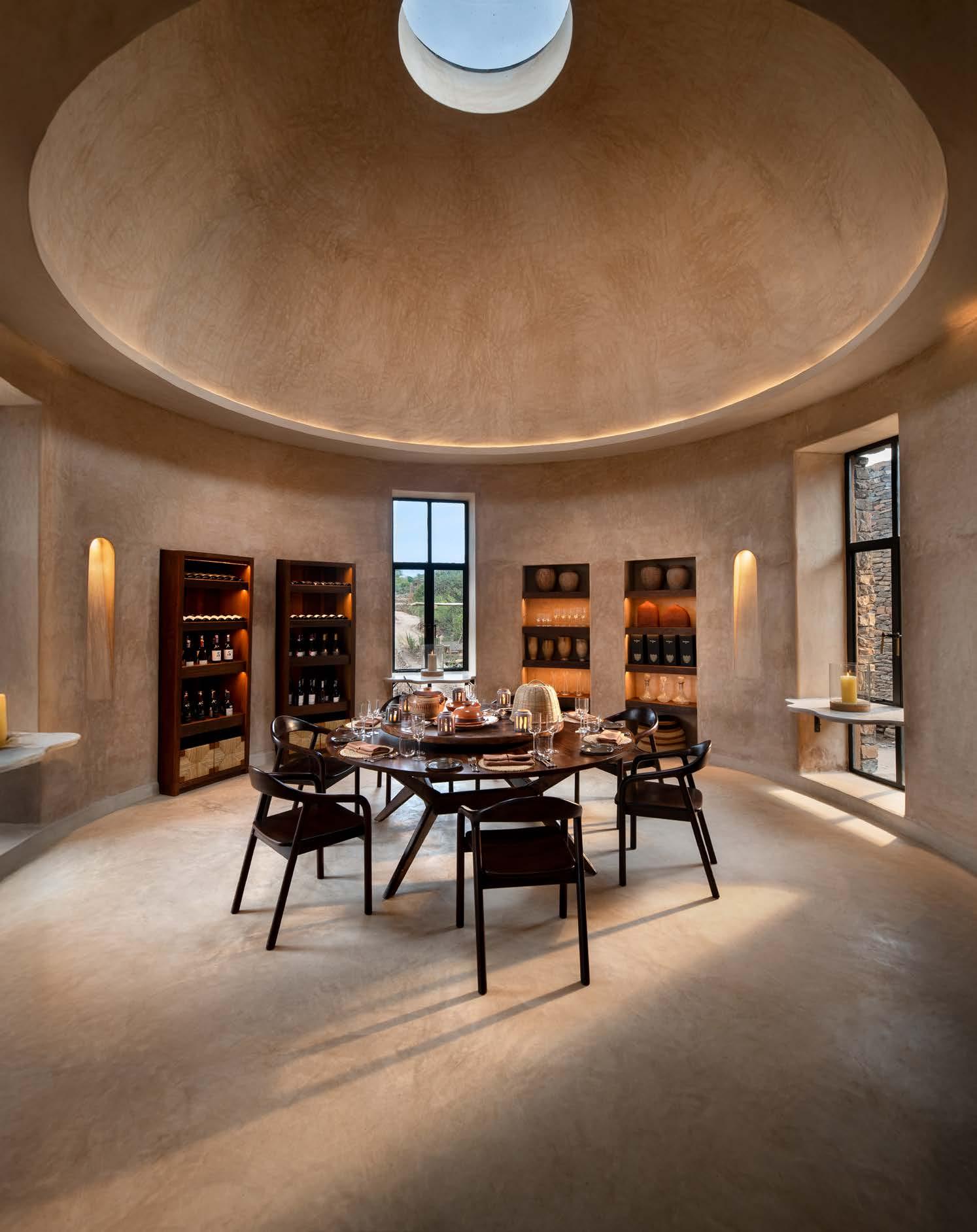
The inherent timelessness of African design, which Chris of Fox Browne alerts us to in their interview, is exemplified in the &Beyond Suyian Lodge. Rounded stone walls that lead to curved platforms or circular living spaces mirror the region’s distinctive granite outcrops, while layered planting enters into dialogue with the greenery emerging from rock fissures. Domed suites appear like rock clusters and, from within, arched doorways softly frame one’s view of the landscape. Curtains that wrap around beds are suspended from round ceiling boards, while in the wine bar, the domed ceiling is emphasised through a skylight which creates an aperture in its centre. Furniture for dining, fire-pit conversations, and leisure encourages community through its circular layout. Soft, natural colour palettes and the textures of crafted furnishings further meld with the peaceful surroundings. The lodge’s considered continuity with the landscape’s shapes and tones allow guests to withdraw for a moment like the reclusive African Wild Dog and black leopard found in the area.
kruger shalati
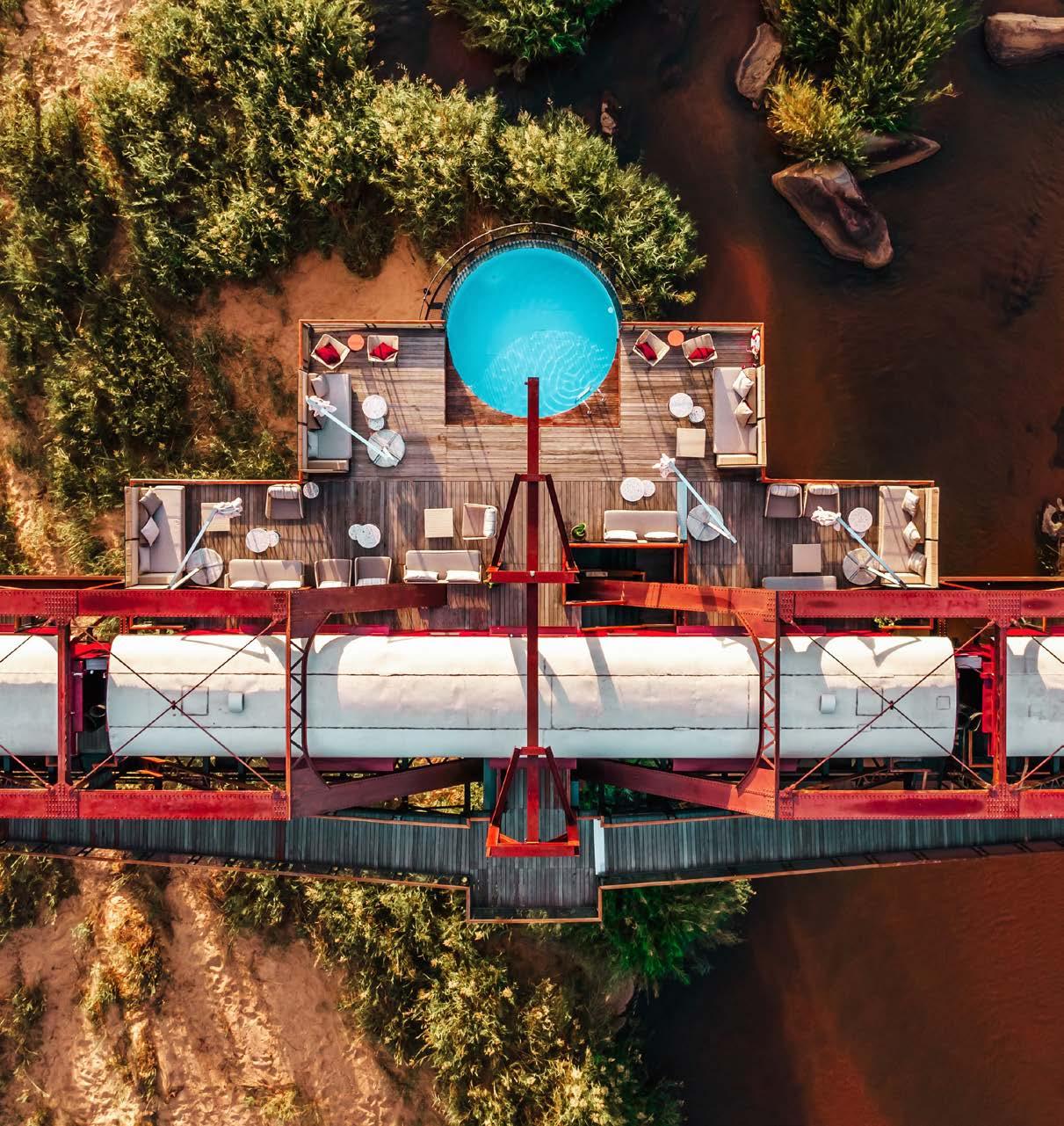
Suspended between history and horizon, hospitality becomes a journey at Kruger Shalati. Stretching across the Sabi River, the early-20th-century Skukuza railway bridge has been revived as a place of pause rather than movement. Unfolding in distinct acts, the experience commences with a theatrical arrival, a progression above the elevated gangway to a train frozen midcrossing. The Lounge Carriage anchors the journey — a suspended encounter where sunrise and sunset unfold uninterrupted, and a plunge pool cantilevers dramatically over water and wildlife. On land, Bridge House grounds the experience. Drawing from South Africa’s rail heritage, inherited structures are transformed with generous decks, layered indigenous gardens, and a controlled, utilitarian materiality. Art and furniture, sourced from local designers and emerging artists, root the project firmly in contemporary South African craftsmanship.
Interior Design: HesseKleinloog
www.krugershalati.com
Photography courtesy of HesseKleinloog
Skukuza, Mpumalanga
Architecture: Lisa Rorich Architects
Interior Design: Hint Interiors
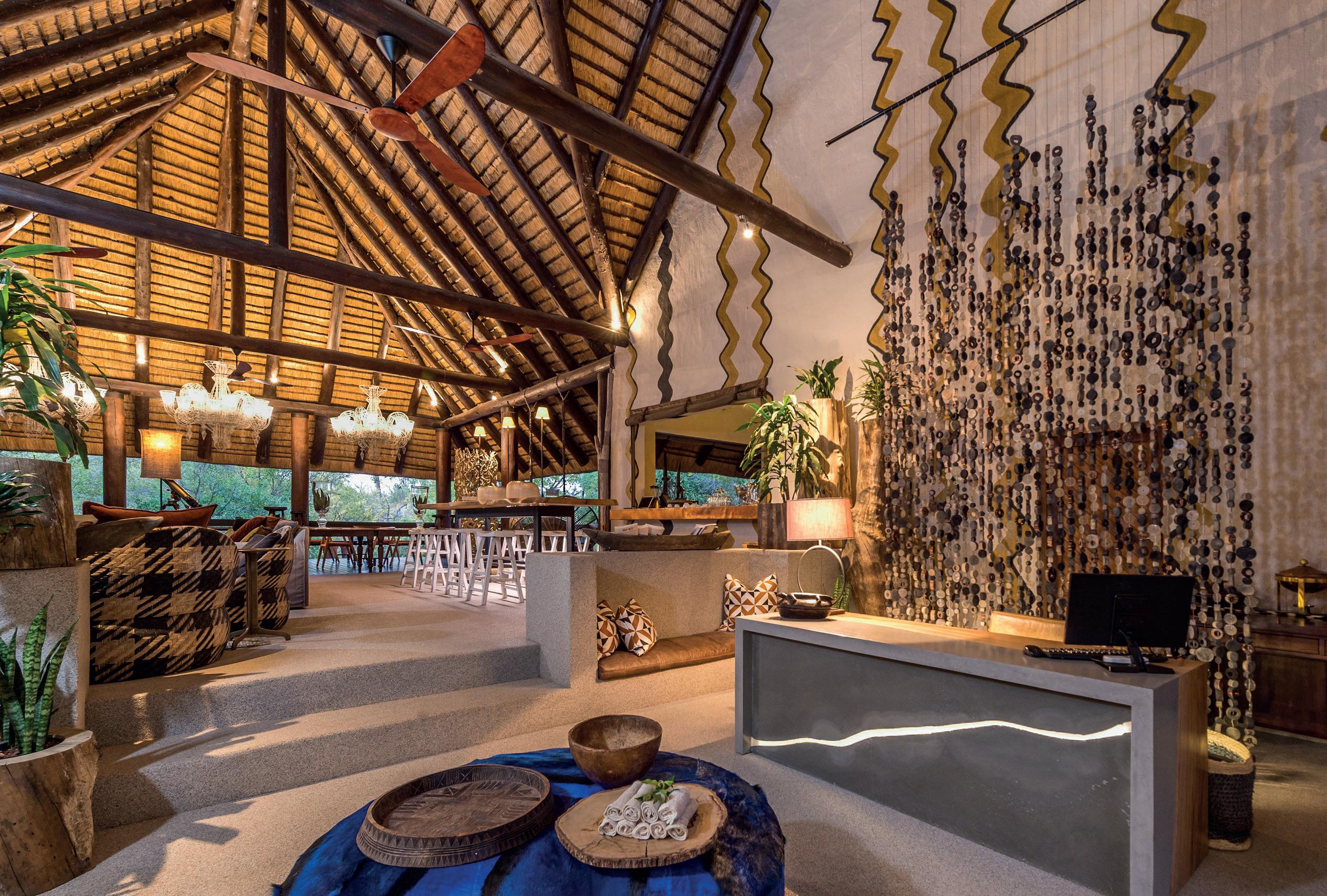
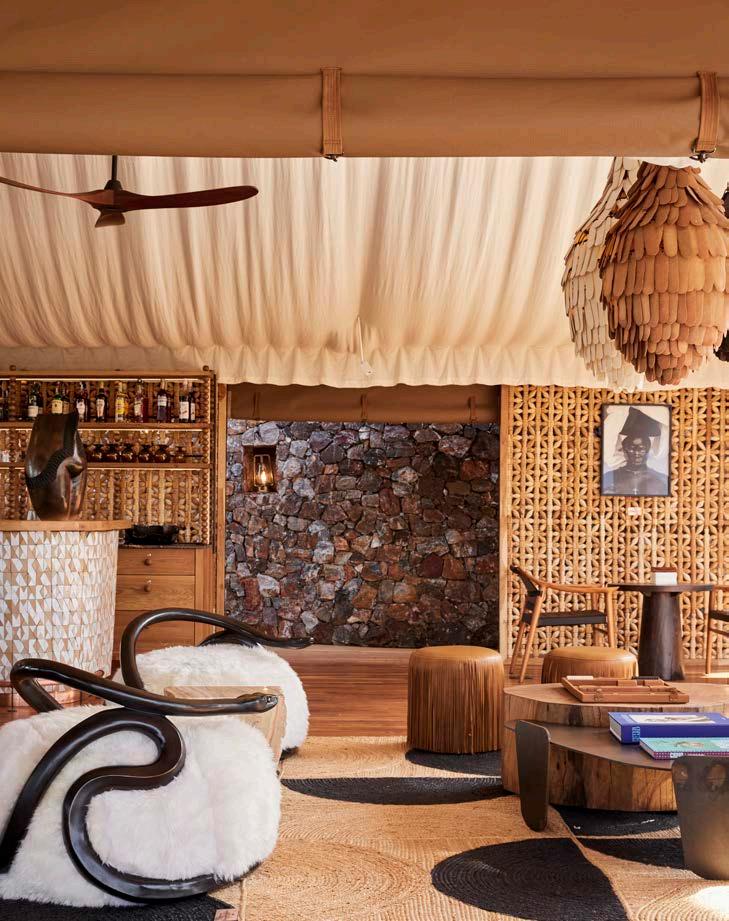
Laba Grumeti Art Lodge immerses guests not only in the wilderness of Africa but in the region’s culture, craft, and storytelling. Located within the private Grumeti Reserve on the edge of the Serengeti National Park, remoteness is the lodge’s greatest luxury. The vastness of the plains, the rhythm of the Great Migration, and the enormity of the sky all play an active role in the design narrative. Monumental stone-clad walls anchor the arrival, referencing ancient African ruins and rooting guests in history before they’re released into expansive views and lighter, tented structures that seem to float within the landscape. The lodge’s subtle drama arises from this tension between solidity and lightness. Sculptural furniture, lighting, and functional artworks by African artists are woven into the architecture itself. Textured teak, aged metals, Zellige tiles, and curved timber elements encourage touch and contemplation, while framing moments of pause against the plains. feature
www.labalaba.com/laba-laba-grumeti_en
laba grumeti lodge art
Serengeti National Park, Tanzania
Photography by Framethirtysix
Complete coating system. Complete professional service.
Reliability is at the heart of our industry, and our Professional range is no different. Product innovation coupled with our value added services gives you a distinct advantage.
Our complete coating system, spanning preparation, trim, wall and textured coatings, is designed to ensure guaranteed product performance and value from start to finish.
All Plascon Professional products with the Ecokind logo have VOC levels within the GBCSA standards for Green building ratings.
Designed for professionals.
cheetah plains
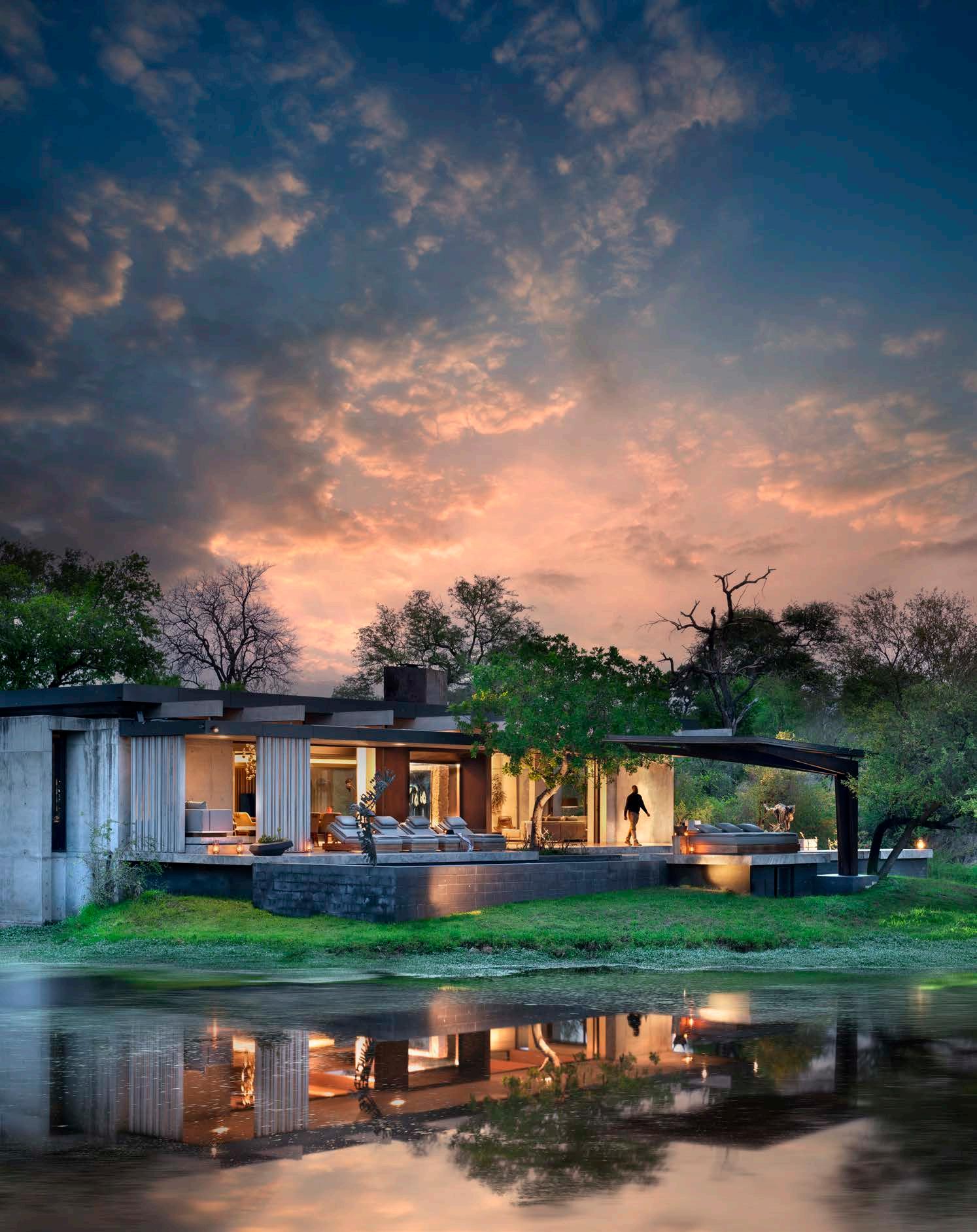
At Cheetah Plains, the safari experience is defined by the contrast between the precision of modern life and the primal force of the bush. Three private Plains Houses replace the familiar lodge typology, fragmenting the architecture into sculptural forms that settle lightly among mature trees. Moments of tension and ease are created by angular concrete planes and vast cantilevered roofs; their sharp geometries echo the thorned silhouettes of the indigenous acacia. The result is immersion: boundaries dissolve, horizons extend, and the bush is experienced viscerally rather than observed. Raw concrete, rusting Corten steel, mica stone and timber are allowed to weather and age honestly, while interiors counterbalance their severity with richly textured fabrics, bespoke furniture, and art rooted in African craft.
Sabi Sand Game Reserve, Mpumalanga
Photography courtesy of ARRCC and Cheetah Plains
baines’ lodge, an a&k sanctuary
Architecture and Interior Architecture: Luxury Frontiers
www.abercrombiekent.com
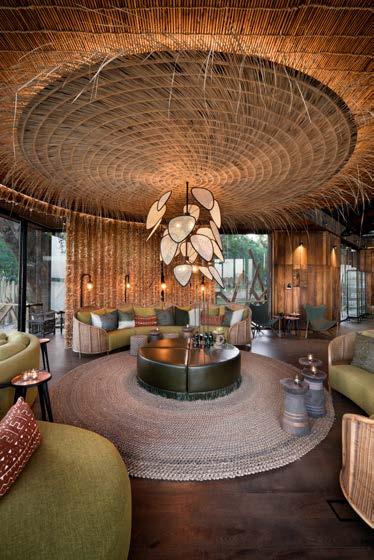
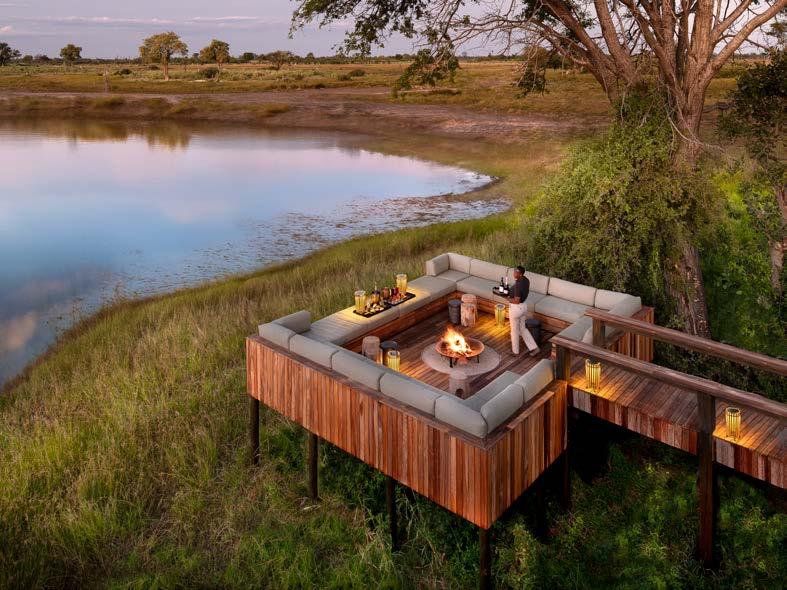
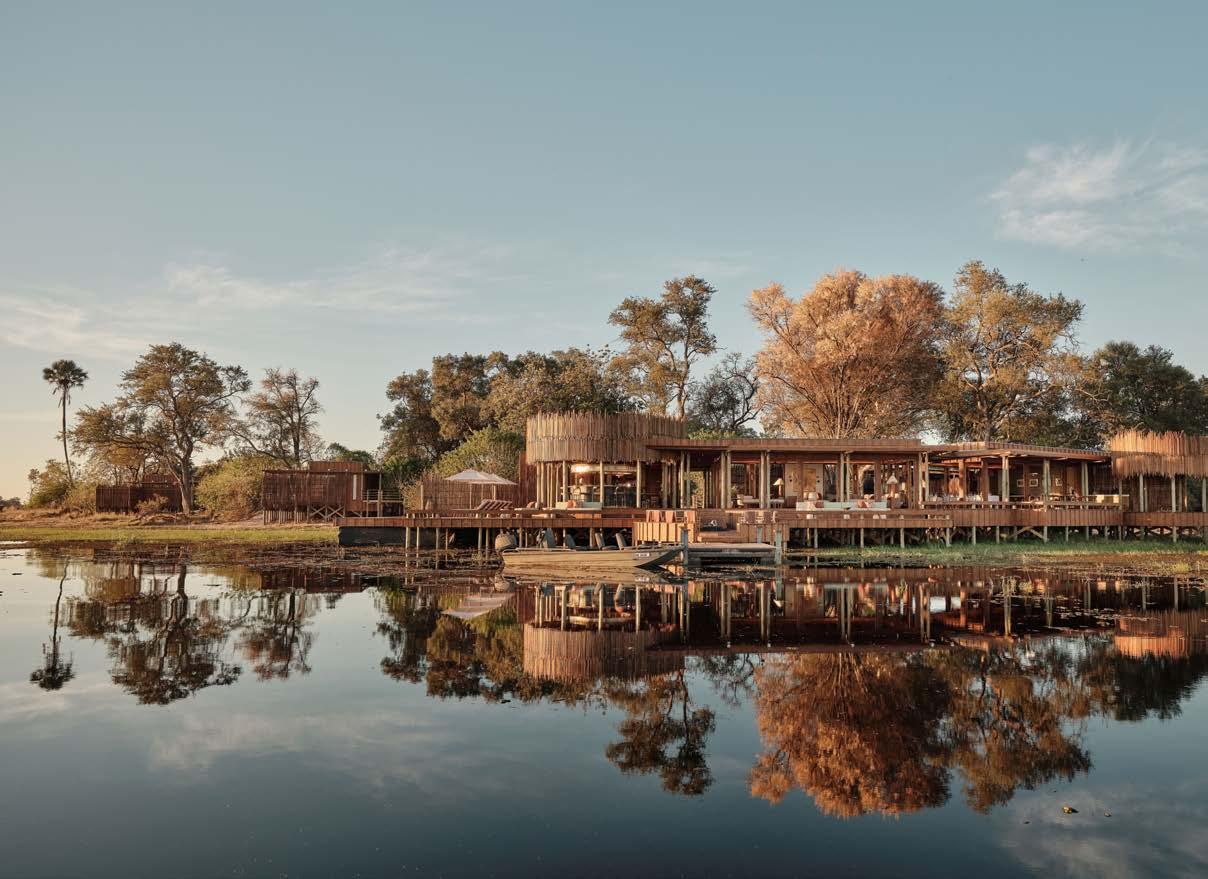
In the heart of the Okavango Delta, Baines’ Lodge reframes the safari experience through design-led restraint. Rather than competing with one of Africa’s most extraordinary landscapes, the architecture steps back, becoming a series of carefully composed frames through which the Delta takes centre stage. Conceived by Luxury Frontiers as a living gallery, the lodge invites a slow, deliberate unfolding of place. Sustainably sourced timber rises from the floodplains, positioned around existing vegetation and termite mounds. Columns replace walls, blurring inside and out, while vast overhangs and passive ventilation respond to the Delta’s seasonal rhythms, creating a space that breathes with its environment and offers comfort.
Interiors draw from the surrounding flora: earthy timbers, soft canvas walls and tactile details that reward close attention. Sculptural ceilings echo the geometry of termite mounds, carved timber reference elephant skin, and artisan-crafted elements ground the lodge in its wider cultural landscape. With just six keys, the design feels intimate and emotionally resonant, shaped by the Delta rather than set against it.
Okovango Delta, Botswana
Photography courtesy of Luxury Frontiers
Bwindi Impenetrable Forest, Uganda
silverbackllodge
Set within Uganda’s Bwindi Impenetrable Forest, Silverback Lodge defies the design tropes typically associated with African lodges. Sleek and restrained, its clean lines are rendered in charcoal and black, resulting in an understated architecture that is elegant and luxurious, standing in reverence to the surrounding ecosystem. HesseKleinloog led with a delicate sensory intervention: a form that frames uninterrupted views of the dense, mist-shrouded forest. Perched within the steep terrain, guest rooms called Nests allow guests to enjoy the drama of a landscape while retreating to comfort or soaking in private hot tubs. ‘The design concept was deceptively simple, and simultaneously complex,’ notes HesseKleinloog, whose aim was to create an experience ‘burnished into memory, while floating in the African forest.’
Photography by Delport Co.
witklipfontein eco lodge
Parys, Free State
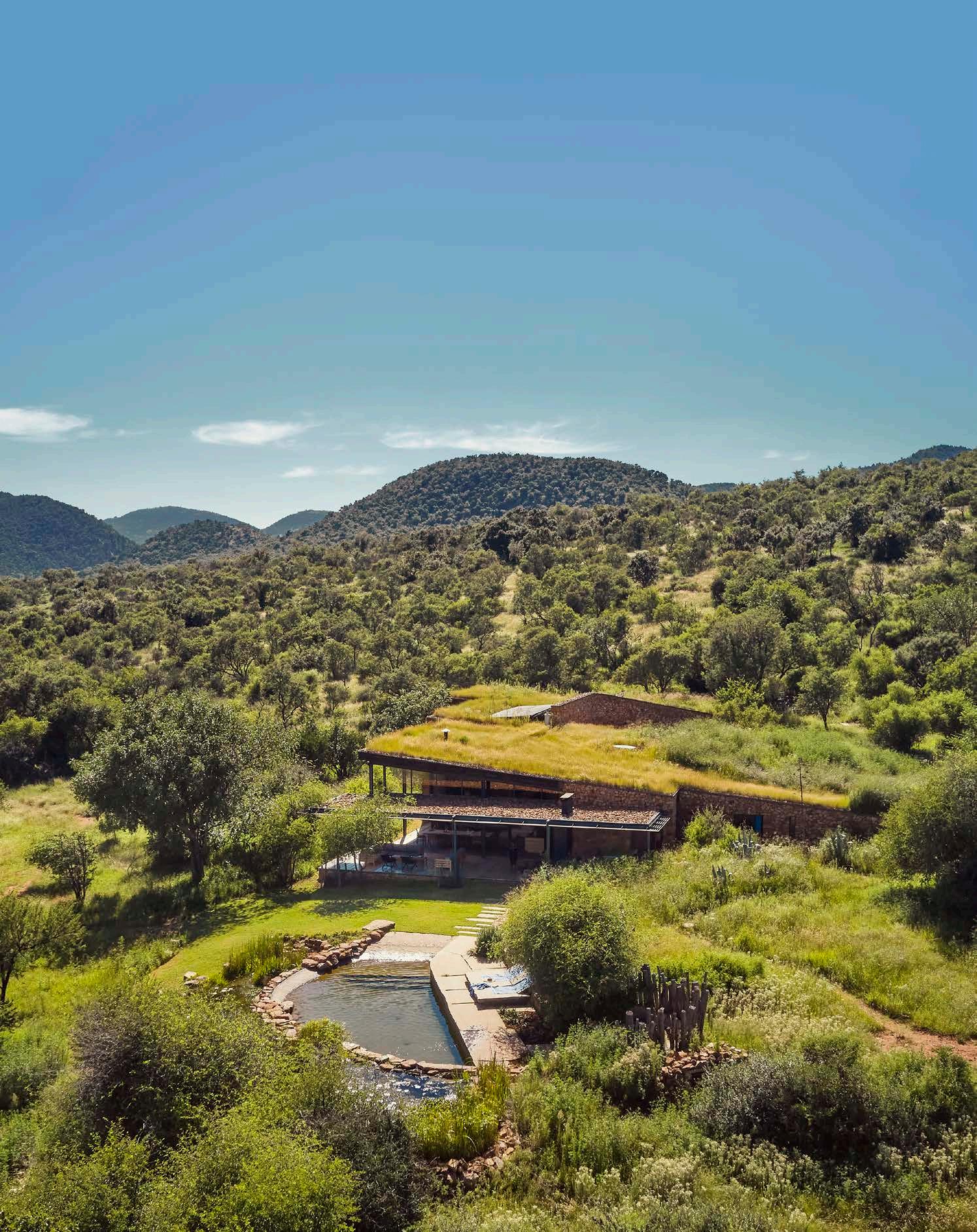
Witklipfontein Eco Lodge is a model of architecture pared down to first principles: shelter, ritual, and climactic intelligence. The Lodge is built almost entirely from earth and locally sourced materials, without cement, fully off-grid. Deeply attuned to its setting within the Vredefort Dome, form, material, and climate are inseparable here. The lodge, partially embedded in the landscape, reveals itself slowly. Thick rammed-earth and stone walls, granite floors, and a planted roof work together as a thermal casing, absorbing heat during the day and releasing it slowly as temperatures drop. Orientation and massing are carefully calibrated, allowing the building to perform without reliance on mechanical systems. The experience is sensorial and grounding, allowing guests to participate in the building’s daily performance, responding to natural cycles and subtle shifts in season.
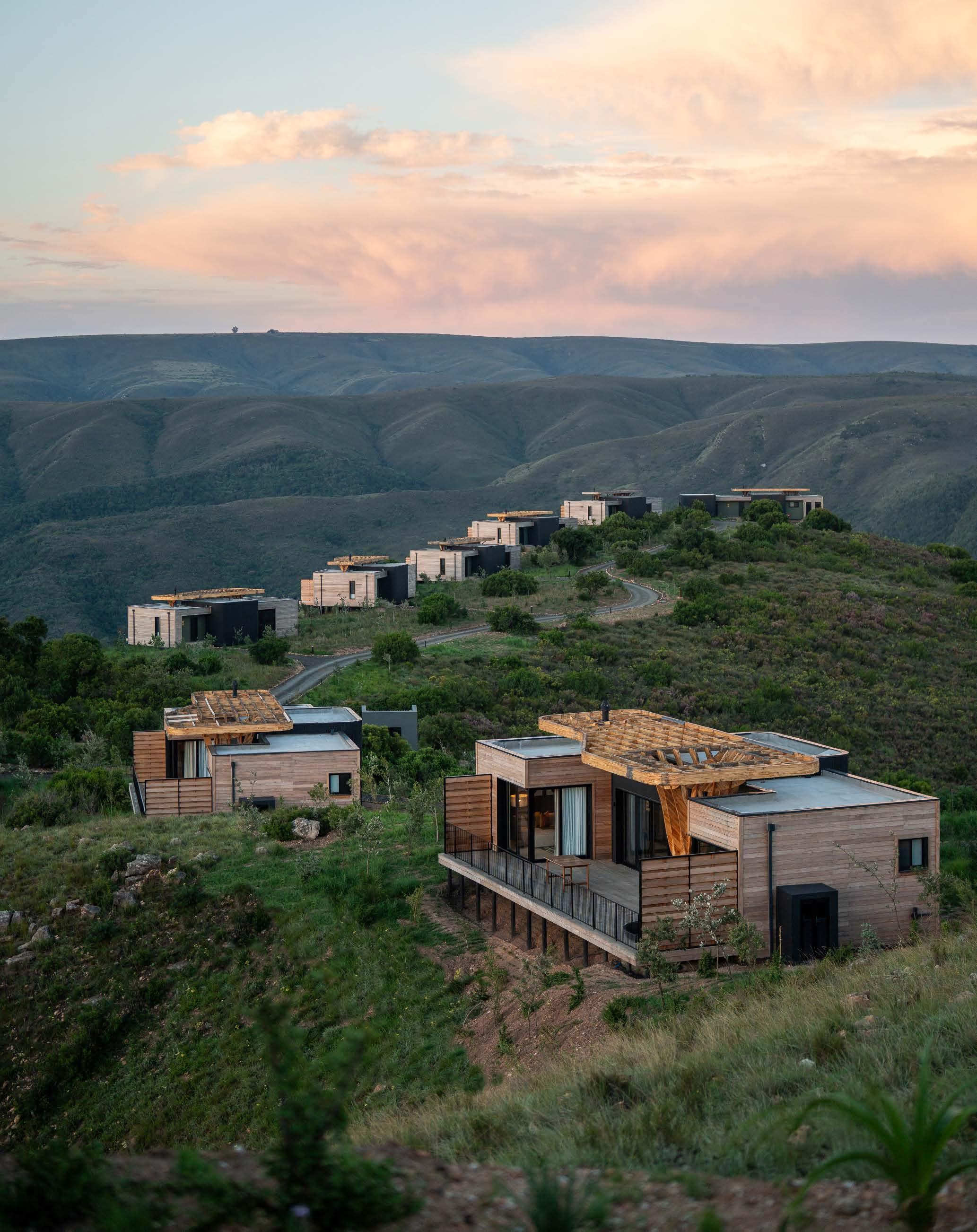
Mantis Hiddn in Addo is positioned to frame vast views while creating refuge within an exposed landscape above the Witrivier Gorge. A sculptural timber waffle canopy above the buildings abstracts the yellowwood forests hidden deep in the gorge below. Light filters through its lattice, wind passes freely, and creeping vegetation gradually softens the structure. Timber frames minimise embodied carbon, while locally sourced stone, timber cladding, reeded ceilings, handmade tiles, and sculpted brass elements introduce warmth and texture internally. Landscape, light, and weather are drawn into the daily experience through large sliding glazed façades. Public spaces, dispersed into pavilions, are linked by exposed walkways. The private villas, low, earth-embedded forms shaped by stone fin walls and green roofs, open onto rim-flow pools at the cliff edge.
Gqeberha, Eastern Cape
Photography
madwaleni river lodge
www.babanango.com/madwaleni-river-lodge
Architecture: Luxury Frontiers
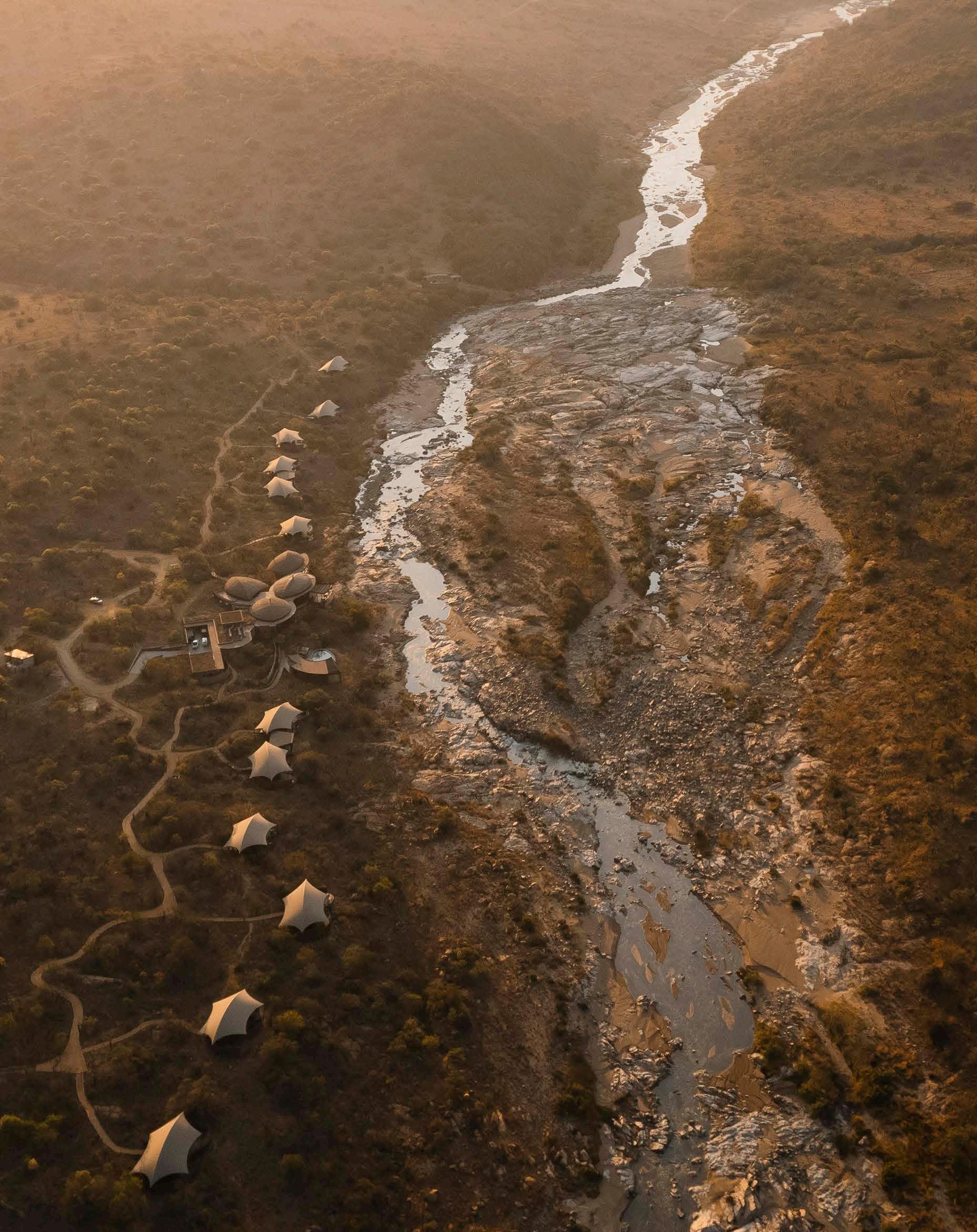
Named for its monumental granolith mountains, Madwaleni River Lodge is an exclusive retreat where three-billion-year-old rock formations, rewilded landscapes, and Zulu heritage converge. Once cattle farms, Babanango’s 20 000 hectares have been carefully rewilded, and the architecture mirrors this restoration. The twelve bespoke tented suites with sweeping curved timber beams, inspired by the Zulu shield, hold fabric membranes that collapse the boundaries between enclosure and exposure. At the centre, communal spaces gather beneath disappearing roofs and woven screens. References to basketry, beehive huts, and indigenous craft are integrated with precision, rejecting imitation.
Babanango Game Reserve, KwaZulu-Natal
Photography courtesy of Luxury Frontiers
chichele presidential lodge
South Luangwa, Zambia
The lodge is a considered dialogue between past and present. Following its closure in 2018, it has been thoughtfully reimagined, shedding its colonial overtones while honouring its historical significance. Staying faithful to the original footprint, the architecture unfolds gently across the hilltop, with twelve guest suites arranged in a sweeping arc that opens uninterrupted views across South Luangwa National Park. Private decks, circular plunge pools, and carefully framed vistas create an intimate connection to place. The main lodge asserts its presence at the apex while a reinterpreted arched colonnade traces an east–west journey from sunrise to sunset, culminating in a 360-degree boma.
Architecture: Jack Alexander Studio
Interior Design: Fox Browne Creative
www.chiawa.com/chichele-presidential
Photography by Elsa Young
masiya’s camp
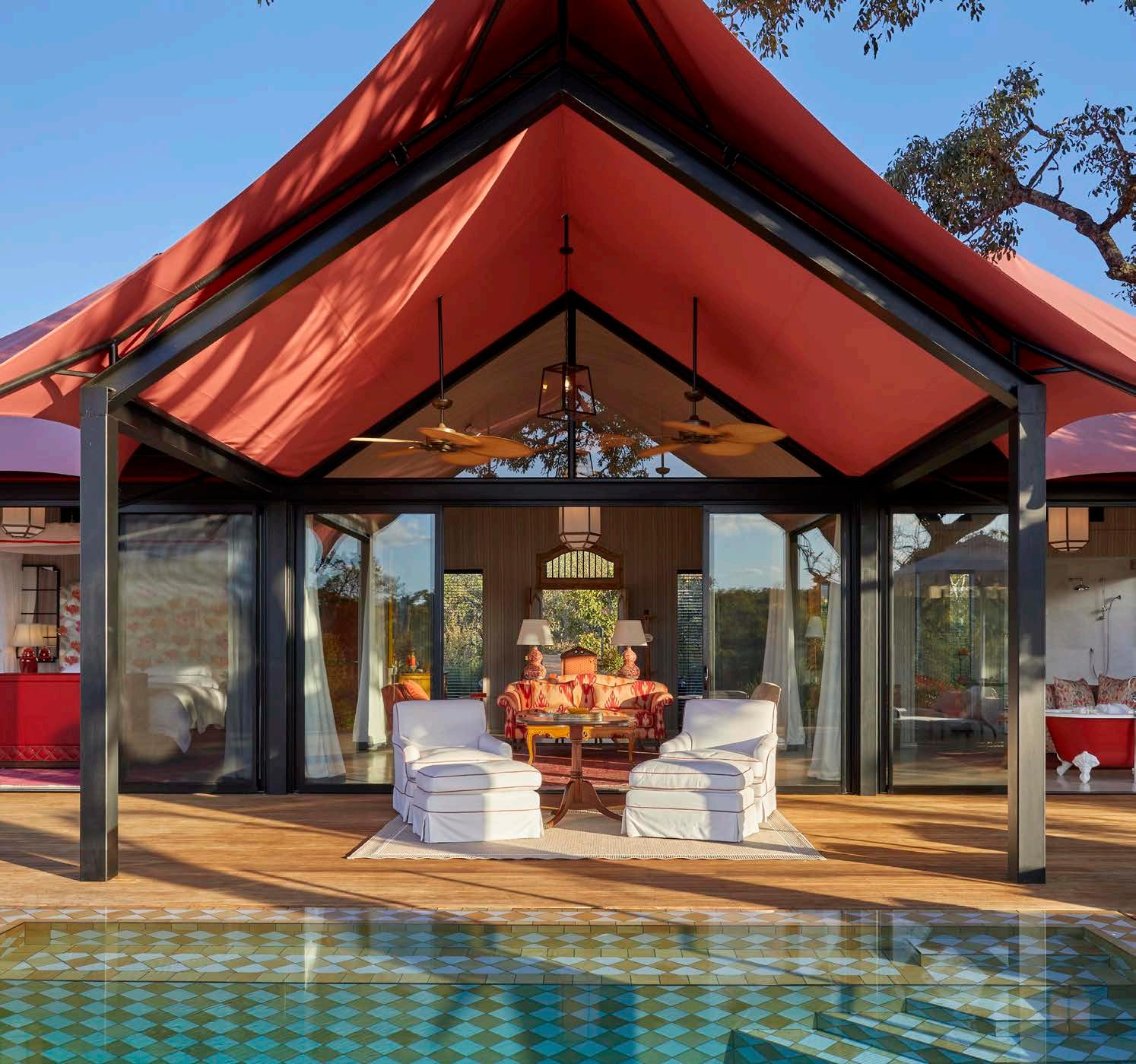
Masiya’s Lodge redefines safari architecture with six rose-pink canvas suites facing the Greater Kruger wilderness. Eschewing khaki convention, the design layers Marrakech-inspired colour, Persian rugs, bespoke Indian doors and collected vintage pieces within expansive, open-plan spaces. Floor-to-ceiling glass dissolves boundaries between interior and bush, while generous decks extend the spatial flow, creating a bold, immersive and unexpectedly vibrant interpretation of safari living.
Design: Liz Biden
www.theroyalportfolio.com/royalmalewane/accommodation/masiyas-camp/ Photography courtesy of The Royal Portfolio
Thornybush Private Game Reserve, Limpopo
coastal
There is perhaps nothing that announces a holiday more clearly than a trip to the seaside. Yet this age-old experience continues to be redefined and nuanced through innovative design.
morukuru ocean house
Situated deep within the expanse of De Hoop Nature Reserve, Morukuru Ocean House is a unique architectural intervention in one of South Africa’s most pristine coastal landscapes. Home to sweeping white beaches, rugged rock pools, and the Southern Right whale nursery just offshore, the site demands humility, and the architecture responds accordingly. Envisioned as a contemporary coastal farmhouse, the single-storey limestone structure sits low and long in the landscape. Dry-packed stone walls, sourced directly from the site, reference early pastoral kraals and weathered shoreline outcrops, embedding the building both materially and culturally within the Overberg region.
Interior Design: Dominic Touwen Design and Camilla Fraser Design feature
www.cootclub.com
coot club
Coot Club reimagines waterside living through an ingenious architectural language. The retreat draws inspiration from the humble corrugated-iron boat sheds along the region’s estuaries. The boathouses appear as a loose cluster of smaller forms. Light, vegetation, and air weave between buildings. Raised lightly on pile caps, the structures tread carefully on the land, preserving the site’s ecology and allowing indigenous planting to reclaim the space beneath and around them. Lightweight timber construction, weathered corrugated iron, timber decks, and nautical details such as porthole windows reference maritime traditions without leaning into nostalgia. Painted pine cladding, sailboat hues, and simple detailing create interiors that feel relaxed, practical, and rooted in place.
Photography by Henrique Wilding
Stanford, Western Cape
gwegwe beach lodge
Mkambati Nature Reserve, Eastern Cape
Set within the untouched terrain of the Mkambati Nature Reserve, GweGwe Beach Lodge almost recedes into the Wild Coast landscape. Envisioned as a form of ‘non-architecture’, the lodge is dispersed into low-slung, circular units tucked behind rock outcrops and dune forest. The forms draw inspiration from the Eastern Cape’s vernacular rondawel — softened, curved geometries brought into the modern era through hand-packed plaster, recessed lighting, and sculptural walls that feel both ancient and future-facing. Reclaimed wood and woven reeds gently filter light and air. Colour mirrors land and culture: coastal blues, greens, and earthen browns take their inspiration from Xhosa tradition and the surrounding landscape.
www.gwegwelodge.com
Architecture and Interior Design: Lisa Rorich Architects
Photography courtesy of Lisa Rorich Architects
blou in keurbooms
Keurboomstrand, Western Cape
Architecture: Malherbe Rust Architects
www.blouinkeurbooms.com
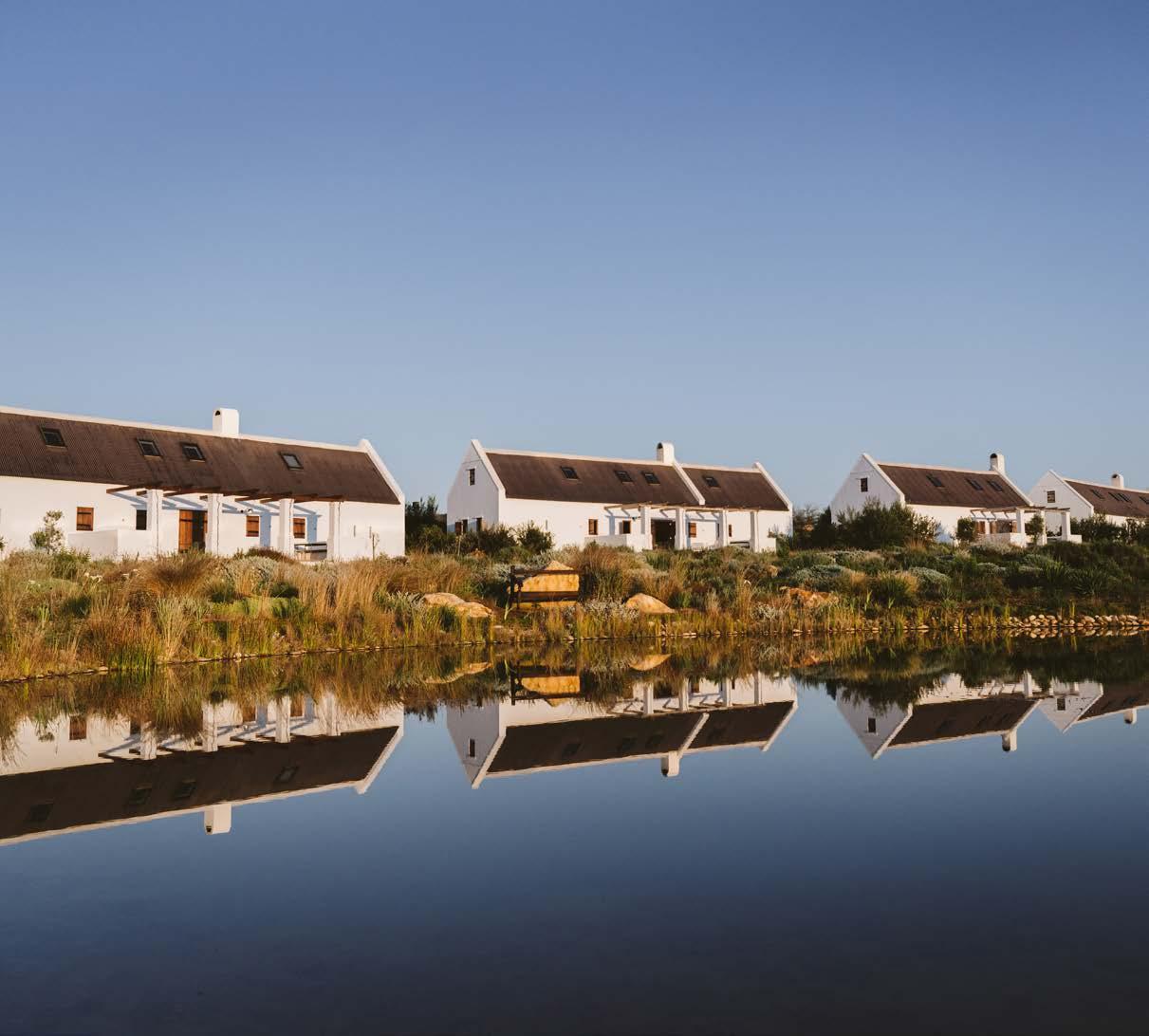
Photography courtesy of Babylonstoren
Dotted around a courtyard on the rugged coastline of Keurboomstrand, BLOU, by Babylonstoren, is a cluster of simple, whitewashed cottages that act as a canvas for the blues of ocean and sky all around. The eight cottages are named for specific shades of blue, inviting this colour into the design via association. The design hinges on pitched, corrugated, gutter-less sheets resting on English proportioned hand-wrought walls. Inside, the high ceilings create airy whimsy, which is paired with elegant ease through contemporary details. Within this minimalist framework, black-and-white vintage photographs evoke the sense of nostalgia the owners feel toward holidaying on this stretch of the coast.
Interior Design: Garden Gallery
saudade
www.saudademozambique.com
by Henrique Wilding
Set on the dunes in Mozambique’s Bazaruto Archipelago, Saudade sits gently within the landscape. Low-slung structures are woven among coconut and lala palms, indigenous bush, and soft coastal dunes. Five pitched-roof volumes rise organically, their clean, contemporary lines softened by local materials. The central covered patio, infinity pool, and tropical garden frame cinematic views of the lagoon and archipelago, coaxing guests into rhythm with the land and sea.
“Saudade is an architecturally bold, contemporary retreat that honours Mozambique’s rich artisanal heritage through the romance of its plaited, thatched fringe and palm-skirted pillars.”
- With love, Helen Untiedt, Perfect Hideaways
Photography
Vilanculos, Mozambique
tintswalo summer house
Within a 120-year-old building in the seaside village of Glencairn, Tintswalo Summer House rejects polish in favour of personality, allowing history to lead while imagination runs free. Original Oregon pine floors, timber windows, and doors are carefully repaired and left imperfect. Colour, pattern, and whimsy are layered with confidence, creating rooms that feel entirely distinct yet somehow linked. Spaces are curated through memory and emotion. Thrifted objects, familiar forms, and nostalgic details create moments that feel instantly personal, like stepping into a past you faintly recollect. Details reveal themselves over time, encouraging guests to wander, linger, and look twice. More home than hotel, Tintswalo Summer House invites guests to be themselves: relaxed, curious, and quietly delighted.
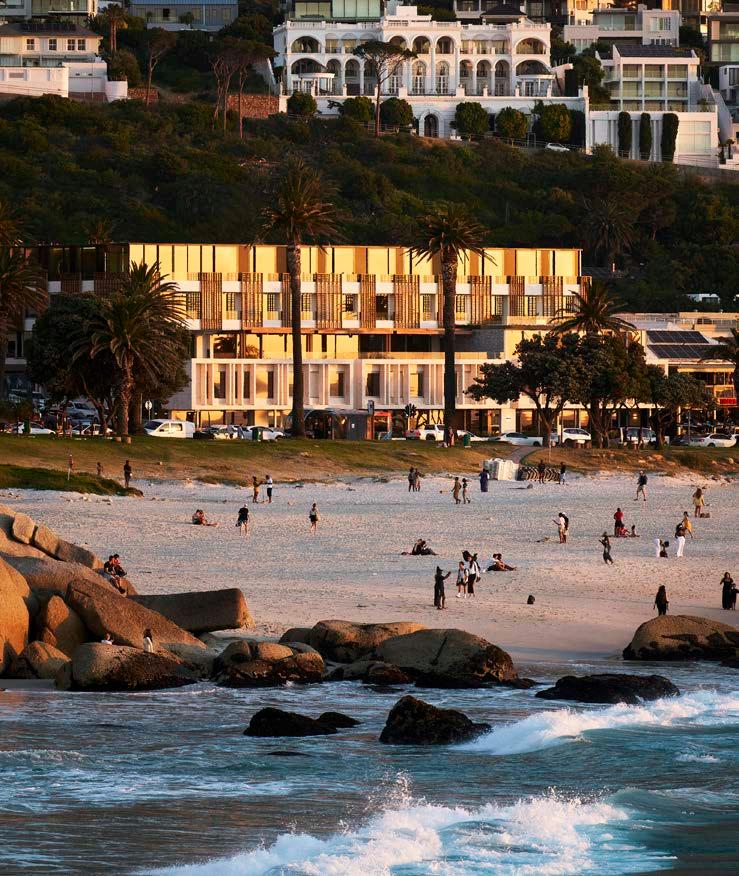
The drama of Cape Town’s two forces — mountain and sea — is embodied in the design of Morea House. Anchored along Victoria Road in Camps Bay, the hotel sits on a rare threshold where white sand stretches forward and the sheer rock face of Table Mountain rises behind. Sandy hues and linen textures dissolve into stone, timber and mountain greens, mirroring the site’s duality. Timber screens and pergolas temper robust stone façades. Inside, weathered stone and textured plasters reference erosion and permanence, while soft fabrics, ambient light, and moderate palettes introduce a sense of calm. Artworks by local and African artists ground the interiors in place, culture, and contemporary life.
“The architecture is really well thought out — I’m absolutely obsessed with Morea House’s intricate design moments. There’s not a stone left unturned when it comes to creating luxury here.”
- With love, Amanda du-Pont, Lelive
Photography by Sean Gibson
Cape Town, Western Cape
sala beach house
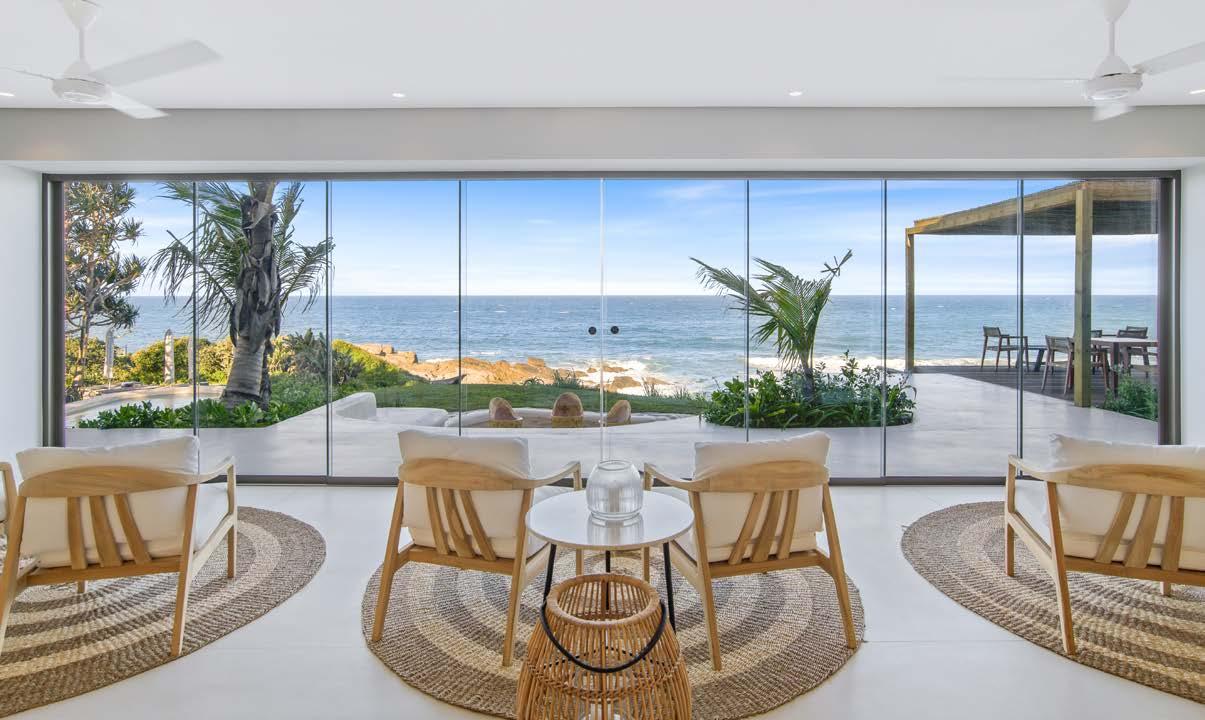
Sala Beach House is an experience of coastal immersion rather than a destination. Here, architecture recedes into landscape: terracotta-tiled walls, natural stone floors, and weathered timber echo the tones of sand and sea, grounding the space in tactility and restraint. Rattan pendants cast a soft, shifting light, slowing the tempo from sunlit afternoons to firelit evenings. Beyond, tropical gardens extend toward the shoreline, anchored by a curved firepit that draws people together. It is a design that centres calm.
Architecture: Paul Nel Architects
Landscape Architecture: Land Art Studio
www.salabeach.co.za
Ballito, Kwa-Zulu Natal
Photography by Bernice Rumble
PATRICIA URQUIOLA
the oyster box
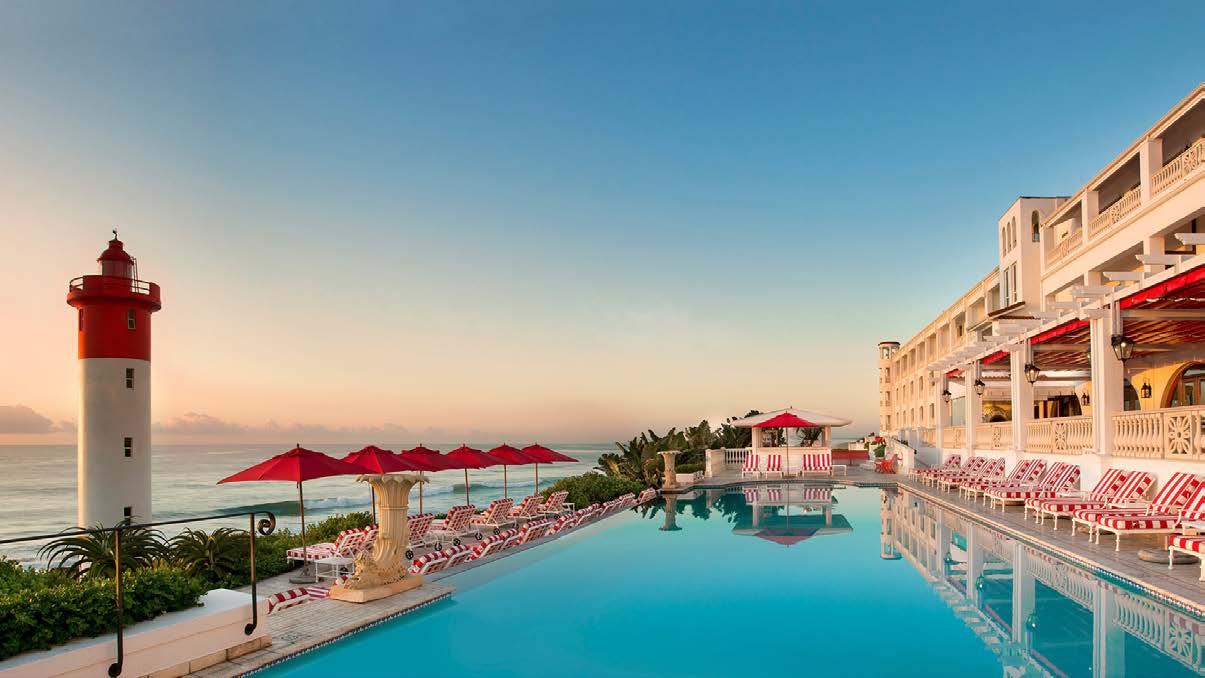
“The Oyster Box is one of my favourite hotels because it feels completely tailored to the concept; every detail has been thoughtfully designed and, crucially, carried through in the service. There is a richness and confidence to it that makes the experience transportive and cinematic, as though you’ve stepped into another place and time. It exudes luxury and nostalgia without ever feeling contrived — that sense of immersion is what makes it so special.”
- With love, Tristan du Plessis, Tristan du Plessis Studio
Architecture: Anton de Kock and KM2K Architecture and Interior Design | Interior Design: Red Carnation Hotel Collection
Umhlanga, Kwa-Zulu Natal
miavana
At Miavana by Time + Tide, luxury is inseparable from landscape. Set on the pristine shores of Nosy Ankao, the design, envisioned as a contemporary stone citadel, is both elemental and meticulous. Hand-chiselled stone walls, rosewood detailing and a restrained, modernist framework root the lodge firmly in place, while open-air pavilions and beachfront villas create a seamless flow between interior and exterior. Malagasy references, handcrafted materials, and a palette inspired by sea and sand create a visual narrative. Rather than simply being built on the island, Miavana belongs to it.
www.miavana.com
Architecture: Silvio Rech + Lesley Carstens
Photography by Oliver Fly
Nosy Ankao, Madagascar
A Timeless Design Element
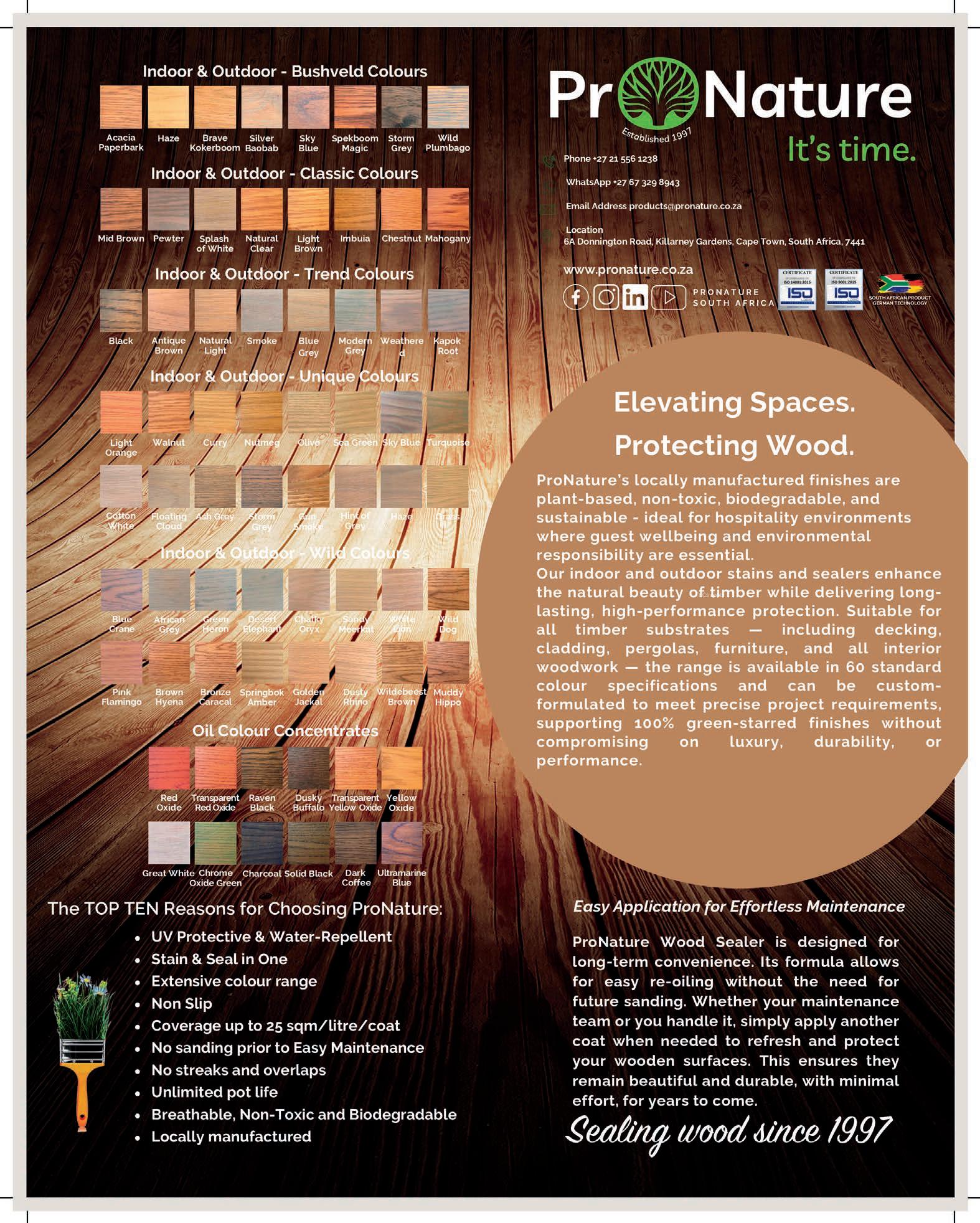
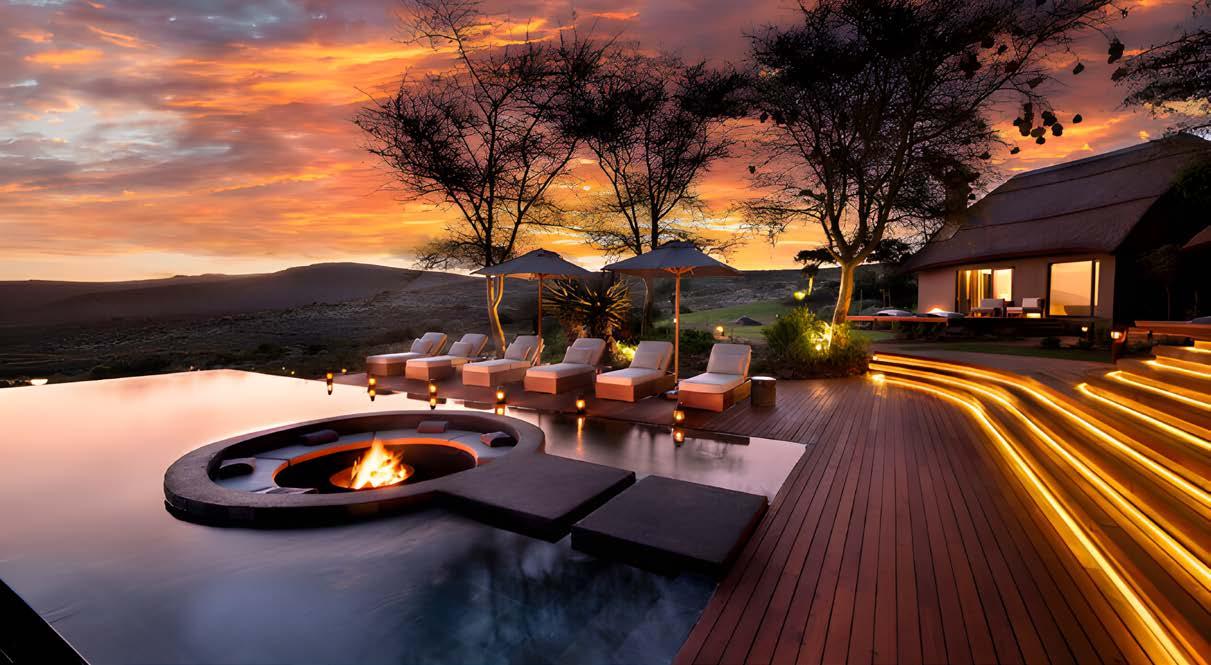
Wood has long held a special place in hospitality design — not simply as a material, but as an experience. From warm timber-clad lobbies to inviting outdoor decks, wood creates an immediate sense of welcome that few other finishes can replicate. In an era where guests seek authenticity and comfort, the tactile quality of natural timber offers a powerful connection to nature and place.
Beyond its aesthetic appeal, wood aligns beautifully with the growing demand for sustainable hospitality spaces. Responsibly sourced timber is renewable, stores carbon, and ages gracefully, allowing designers to create interiors that evolve rather than deteriorate. Whether used for flooring, cladding, pergolas, or bespoke furniture, wood introduces softness and balance, complementing steel, glass, and concrete while reducing the overall environmental footprint of a project.
Outdoor environments in particular benefit from timber’s versatility. Decking, screens, and shaded structures help blur the boundaries between interior and exterior spaces:
a key trend in modern resorts, cafés, and boutique hotels. Properly selected species and finishes can withstand harsh sun, coastal air, and heavy foot traffic while maintaining a refined, natural look.
Inside, wood brings acoustic and psychological benefits. Timber surfaces absorb sound, creating calmer dining areas and lounges, while warm tones promote relaxation: an important factor in guest satisfaction and dwell time. Designers increasingly combine raw textures with contemporary lines, proving that wood is not limited to rustic aesthetics but can be sophisticated, minimal, or boldly modern.
As the hospitality industry continues to prioritise sustainability and wellbeing, wood stands out as a timeless solution. Its natural character, durability, and adaptability allow architects and operators to craft spaces that feel grounded, inviting, and environmentally responsible, ensuring that the guest experience begins the moment someone steps across a wooden threshold.
countrysideIn herehuis, cottage, or tent, an experience of South Africa’s magnificent farms and winelands is nothing short of magical. Architecture that signals heritage or evokes narrative unites guests with the land and the people who care for it, past and present.
camp canoe
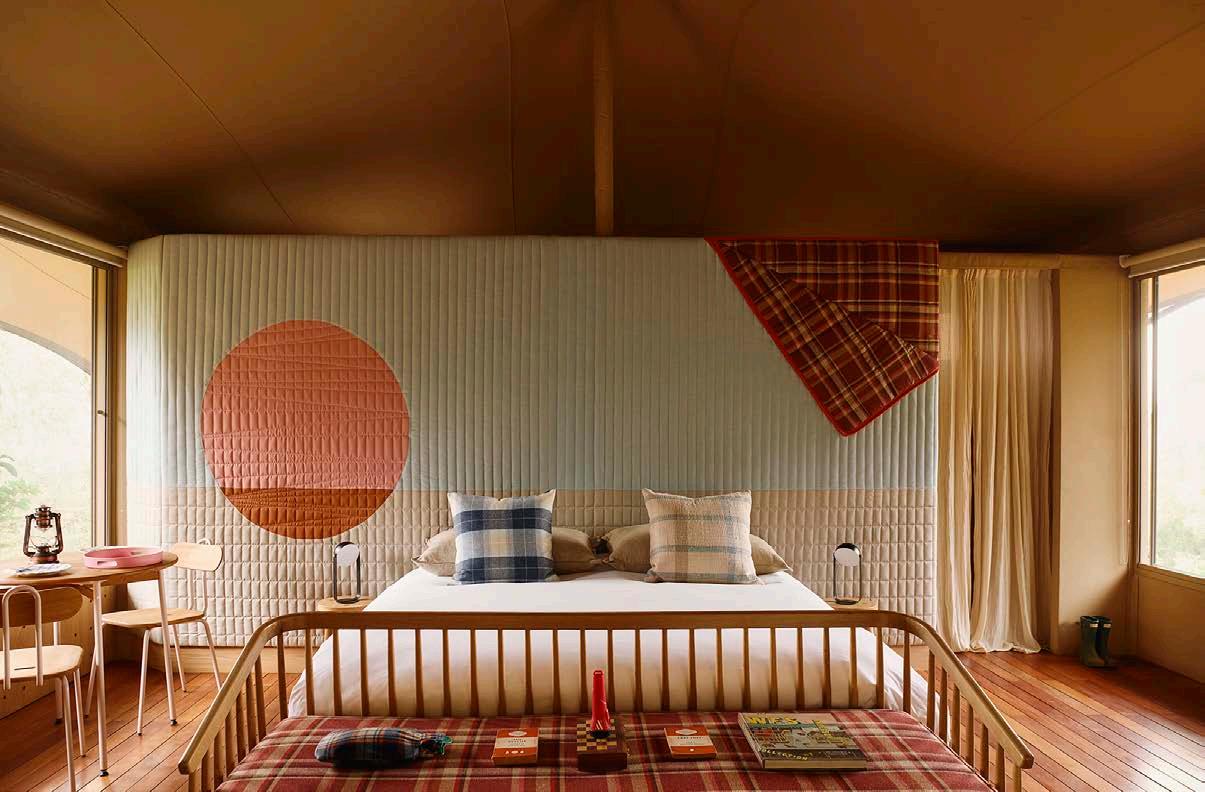
If Wes Anderson’s quirky coming-of-age film, 'Moonrise Kingdom', were set in South Africa, it would surely be in the dreamlike Franschhoek region, and now it is. A tree-lined avenue guides one up the mountain, where roomy tents are pitched on a peak on Boschendal Wine Estate. The interior design by MR. Design Studio is playful and nostalgic: soft furnishings in tartan are echoed in the blown-up pattern created through mosaic in the shower. An exaggerated, quilted headboard mimics a sleeping bag, with its corner revealing what appears to be a tartan lining, and the large orange circle to its other side is a gentle nod to Anderson’s moonrise. A simple yet refined use of wood throughout connects one to nature and the playful resourcefulness associated with camping. The Peg wall by InterDesign, for example, looks like something an advanced scout group might have built.
Interior Design: MR. Design Studio
www.campcanoe.co.za
Photography by Inge Prins
Franschhoek, Western Cape
bosjes herehuis
What makes Herehuis exceptional is not a single moment or object, but the orchestration of space, landscape, and intention. Centuries of history are distilled into a quietly luxurious domestic scale where guests can inhabit the soul of the farm. Balancing Cape Dutch lineage with a contemporary sensibility, the interiors avoid leaning into overt nostalgia. Rooms emerge as sanctuaries: natural materials, earthy palettes, and carefully considered details create an atmosphere that encourages slowing down.
‘La Cotte has always felt like a living memory of the Cape to me. Dating back to 1698, the farm honours its heritage through its classic Cape Dutch architecture, gables, whitewashed walls, deep-set windows and high timber-beamed ceilings that hold the cool of summer and the warmth of winter. The proportions are generous yet intimate, designed for slow living and quiet moments in the winelands. It’s one of my favourite places to stay when I’m in Franschhoek.’
With love, Jan Hendrik van de Westhuizen
Interior Design: Dominic Touwen
Photography by Sean Gibson
Franschhoek, Western Cape
franschhoek house
Nestled beneath a 200-year-old oak on the La Residence estate, Franschhoek House’s architecture and interiors unfold as a richly textured narrative. Liz Biden’s design balances the grandeur of light-filled volumes and expansive windows with layered materiality: vintage French elegance, vibrant African colour, and rich Indian textures. Each suite feels unique yet cohesive, creating a space that is both intimately crafted and confidently expressive.
Babylonstoren is a masterclass in restoration and restraint. Anchored by impeccably preserved Cape Dutch farm buildings, its whitewashed gables and thatched roofs honour 17th-century vernacular architecture. Contemporary insertions are subtle yet deliberate, extending historic footprints with pared-back interiors and expansive glazing. Architecture here defers to landscape, unfolding around a formal garden that choreographs movement, framing vineyards, orchards, and mountain views with quiet precision.
Architecture: Malherbe Rust Architects
www.babylonstoren.com
Photography courtesy of Babylonstoren
Franschhoek, Western Cape
spier hotel
The reimagined Spier Hotel draws on Cape vernacular farm architecture to create a village-like composition of gabled forms, timber detailing and earthy materiality. Interiors layer natural textures with contemporary South African art, grounding the experience in the local landscape and craft. The newly introduced private villas extend this architectural language into a more intimate, residential expression of the estate.
www.spier.co.za/stay/ Interior Design: Jacques Erasmus
Photography courtesy of Spier
Stellenbosch, Western Cape
Designing Outdoor Spaces That Stay Cool All Summer
Summer invites us outside. We linger longer, gather, live expansively. But as temperatures rise, outdoor spaces need more than beauty to remain usable — they require intelligence. Cooling, comfort, and longevity become design objectives. Here, considered material choices and spatial planning make all the difference.
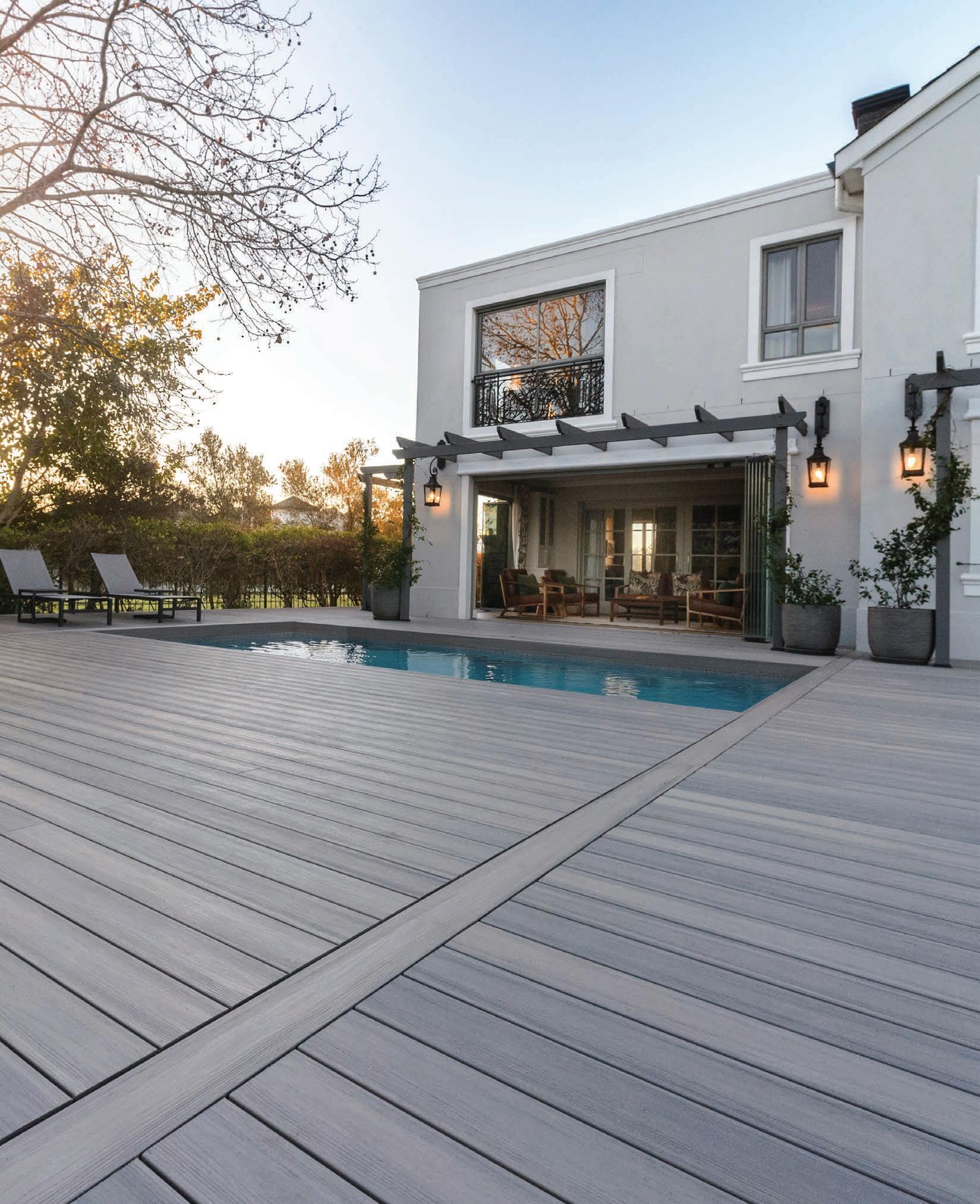
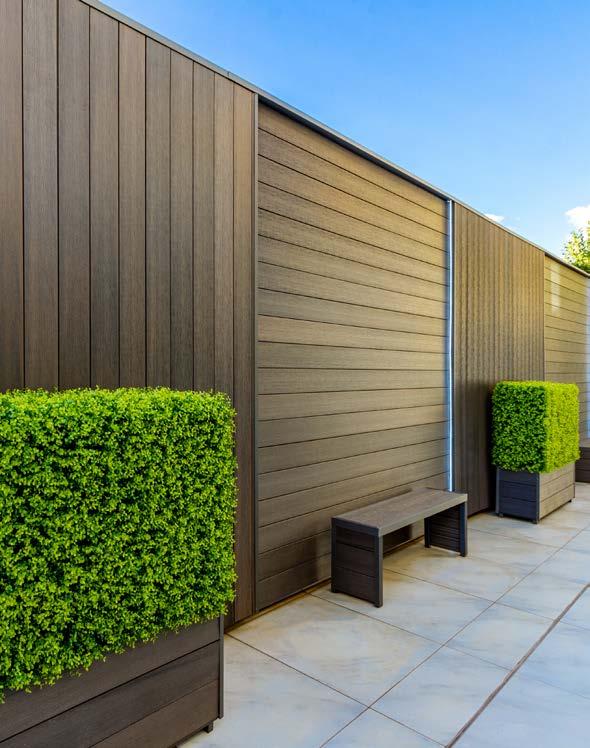
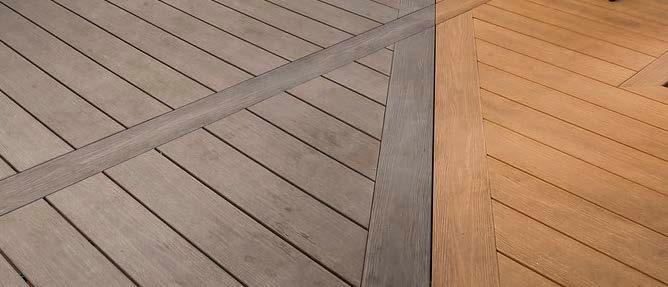
Eva-Last composite decking and cladding sits at the foundation of high-performance outdoor living: engineered for demanding climates, and designed to endure heat, sun, and moisture without compromise. Unlike traditional timber or stone, composite materials maintain structural integrity through extreme weather, allowing form and function to coexist effortlessly.
Creating cooling zones
A well-designed outdoor space begins with zoning. Pergolas, slatted screens, and layered shading structures help manage light throughout the day, offering relief during peak heat while encouraging airflow. Composite screens and architectural elements resist warping and fading while introducing rhythm and depth to façades and garden edges. These elements sculpt space, while shielding from the sun.
Suitable colour palettes
Colour also plays a powerful role. Pale greys, soft sands, and natural timber tones reflect heat rather than absorb it, creating a visual and physical sense of cool. Paired with breathable fabrics and relaxed outdoor furnishings, lighter palettes create a resort-like atmosphere that feels refreshing even at the height of summer.
Cooling elements in your design
Water features, misting systems, ceiling fans, and planting soften the environment, reducing perceived temperature through movement and shade. Composite decking’s moisture resistance makes it ideal around pools, fountains, and outdoor showers.
Absolute comfort
Ultimately, summer design is about ease. With composite materials, outdoor spaces remain elegant, stable, and lowmaintenance, allowing you to enjoy the season: relaxed, comfortable, and open to the elements.
designing stories
Verhaal Studio Reminisces About the Travels and Memories that Inform Their Layered Hospitality Spaces
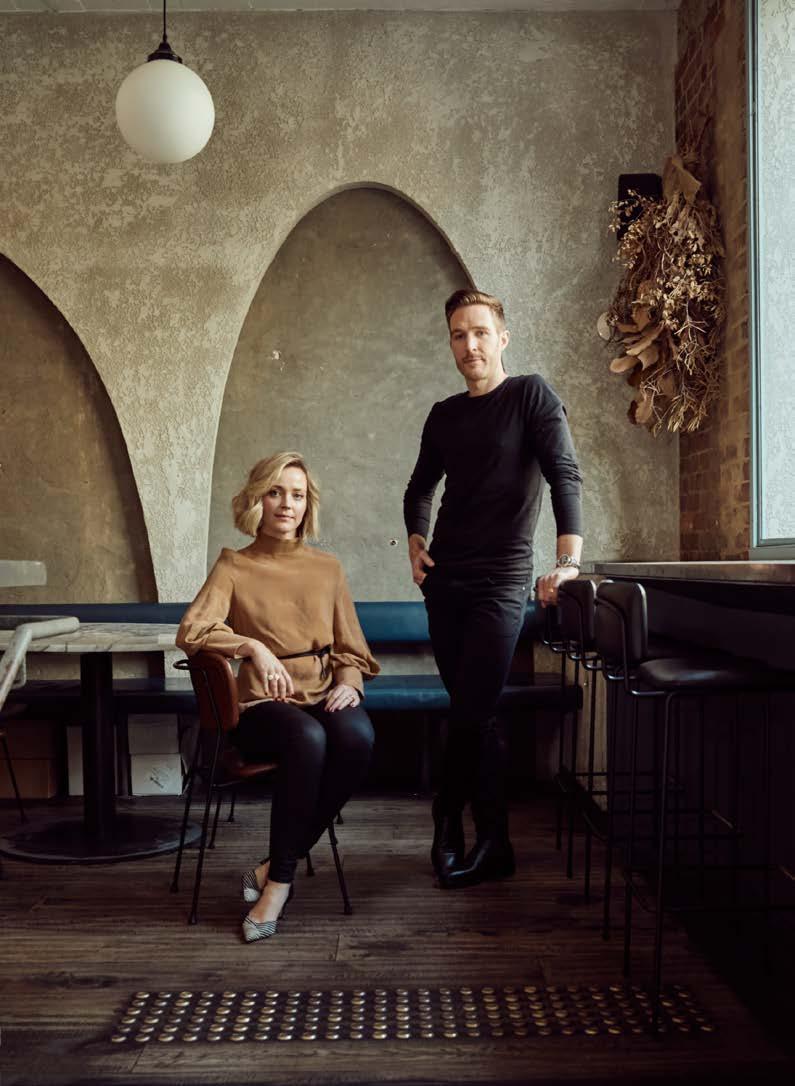
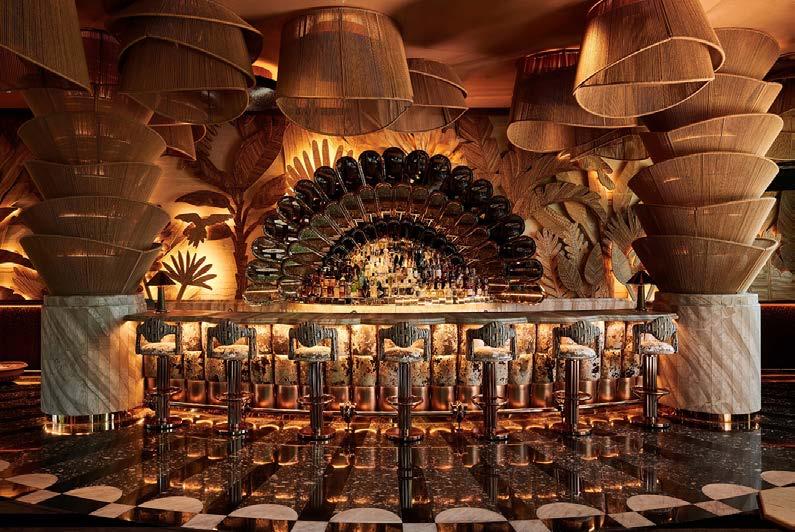
As their name suggests, storytelling has always been a point of departure for Verhaal Studio. This sensibility is evident in their use of texture, pattern, and colour — elements layered with intention and emotional weight. The studio approaches hospitality design as a narrative in its own right, resulting in spaces that feel rich, lived-in, and full of character. Just recently, their design for the LITT bar in Dubai won Best Overall Bar at the Restaurant and Bar Design Awards
We spoke to founders Neydine and Dewald about their design process, their international perspective, and a decade spent crafting hospitality spaces that linger long after the last course.
‘Verhaal’ means ‘story’, a name that reflects both your South African heritage and the narrative-driven ethos of your practice. How does storytelling influence not only the hospitality spaces you create, but also the way you collaborate as a studio?
Narrative is at our core, but it is never the end goal — it is the doorway. While story gives us direction and meaning, we ultimately strive towards a feeling: a heightened awareness of beauty and the quiet poetry of space. We ask, ‘what should linger in the body and mind of a guest when they enter?’ We are interested in creating spaces that gently shift perception, slow people down and allow them to notice beauty in unexpected ways.
This ethos also shapes how we collaborate in our truly mutlicultural team. Verhaal operates less like a traditional studio and more like a creative collective — united by a shared sensitivity to beauty, atmosphere, and human experience.
You describe the initial stages of your design process as a time of exploration and discovery. Thinking back to your work with tashas, can you describe a moment in this phase that led you somewhere unexpected and shaped the final design in a meaningful way?
One moment that unexpectedly shaped a tashas project came many years before the design even began. In 2016, we had an unhurried lunch at La Perla in Sea Point, Cape Town. What stayed with us was not sand or shoreline but the personality of the place: the colourful art, layered nostalgia, playful Italian quirkiness, and that gentle sense of being somewhere other than where we were.
Eight years later, that memory resurfaced as the emotional seed for Bungalow 34 in Dubai, developed with the tashas Group along one of the city’s most beautiful stretches near the harbour. What struck us most was how a single afternoon, separated by almost a decade, returned with such clarity and quietly guided the narrative of the project.
How do you ensure that the personal, narrative-driven elements of your design still resonate in commercial and highly trafficked environments when working with brands like tashas?
When we design high-energy hospitality spaces, we think in layers — balancing intimacy with durability and poetry with practicality. Emotional connection often lives in the smaller details, subtleties that invite touch, memory, and recognition, deepening a guest’s experience without overwhelming it.
We’re loving the look of Arlecchino in Sea Point! Could you walk us through your design process for this project?
Our inspiration was the mischievous romance of Venice in the 1970s, which we rediscovered through our children’s eyes during a family trip. I still remember buying my daughter a mask in Piazza San Marco — its dusty yet vibrant blues and greens stayed with me long after the trip and influenced the colour language of Arlecchino. From there, the concept unfolded around the theatrical geometry of the Harlequin collar, which inspired the sculptural chandeliers, and the broader legacy of the Italian Commedia dell’arte tradition.
Materially, Arlecchino balances warmth and sheen, as though the room carries souvenirs from a Venetian holiday on the
water. Bespoke chandeliers were created by my long-time friend and artist Elonah O’Neil, while the decorative elements were beautifully realised with Andrew from The Space Agent and Ilene from Munka Projects.
Travel is integral to your design process, perhaps informing your understanding of different client narratives and cultural nuances. Can you reflect on a trip that inspired a hospitality interior and explain how those experiences were translated into the finished space?
A recent family trip to Hong Kong was particularly formative. The city was overwhelming in the best possible way: a place of extraordinary contrast where street rebellion, refined luxury, and raw nature coexist in a single breath. One moment, we were enjoying delicate pastries in the Rosewood; the next, we were hiking through misty mountains overlooking a shimmering coastline.
That tension between refinement and wildness, and artifice and nature invited us to embrace multiplicity. Such emotional layering became the seed for a project we are developing in Dubai. We can’t share too much yet, but as a hint: it sits somewhere between rebellious 90s energy, Joan Miró, and the night sky.
Photography courtesy of Verhaal Studio
Photography courtesy of Verhaal Studio
“Narrative is at our core, but it is never the end goal — it is the doorway. While story gives us direction and meaning, we ultimately strive towards a feeling.”
Photography by Juliet Dune
Photography by Natalee Cocks
taste for design
30 Restaurants, Bars, and Cafés That Will Transport You Elsewhere
It’s an obvious observation that eating and drinking punctuate our average days and heighten the experience of special occasions. But it’s precisely this consistency that makes food and drink such valuable aids to memory, elevated, of course, their sensory associations. Their ability to take us back — within our own lives or, imaginatively, to ancestral times — also suggests their potential to take us forward, or elsewhere. As such, we have come to expect a transportive experience when visiting restaurants, cafés, and bars.
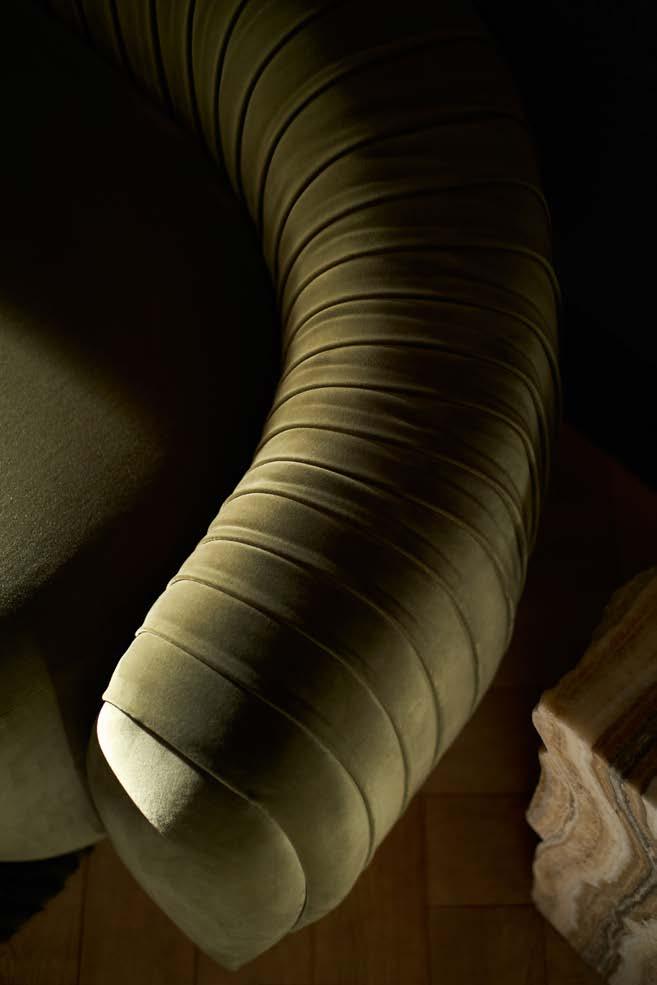
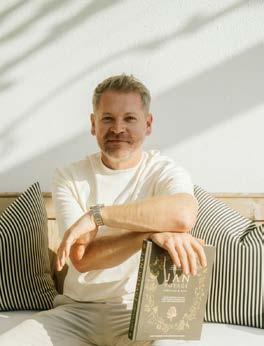
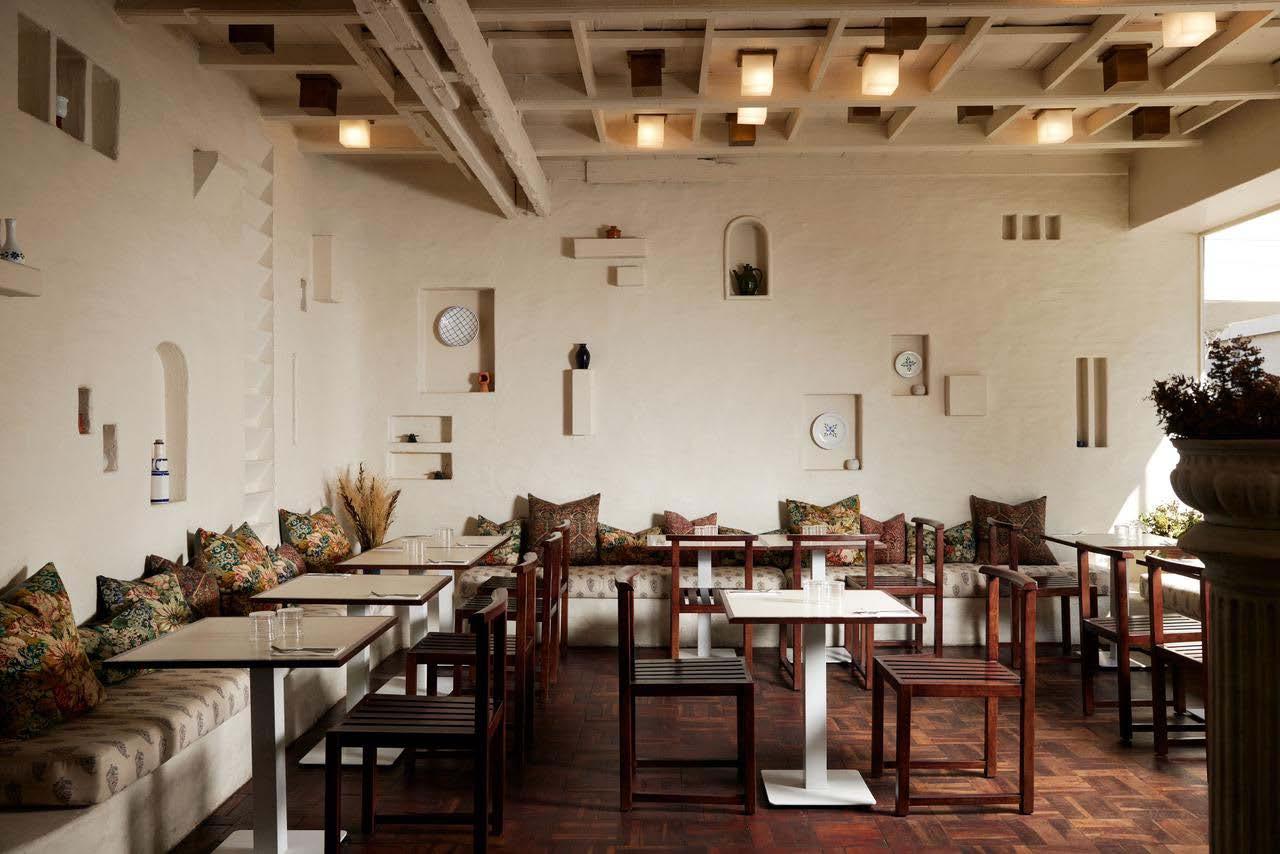
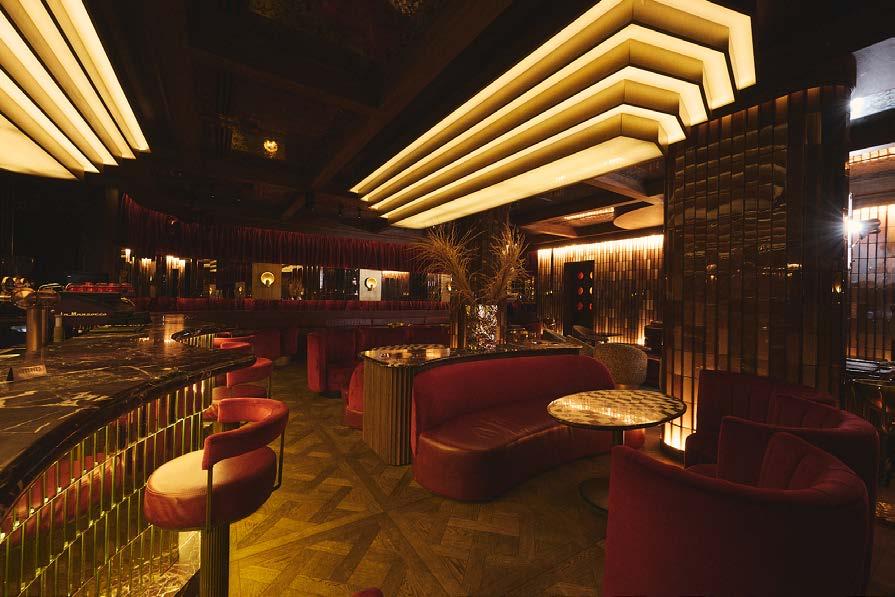
Jan Hendrik van der Westhuizen’s remark that ‘Ouzeri truly feels like an island retreat on the streets of Cape Town,’ then, is interpreted as high praise. And so is Anji Connell’s description of Amura as being like Jules Verne’s mythical underwater city. Feeling like you’ve stepped into a different city, era, or universe comes down to a composition of details. A velvet green couch poised next to an undulating sconce, the romance of dining beneath elaborate chandeliers, or the thrill of enjoying a drink in what feels like a theatre of dreams.
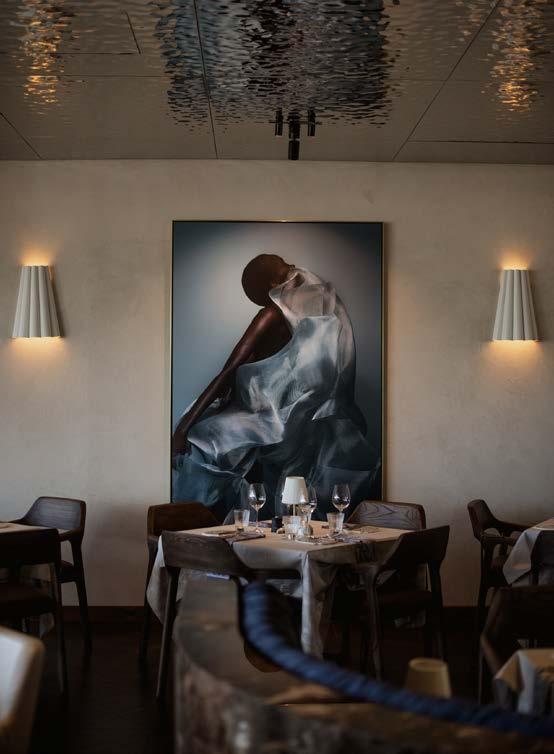
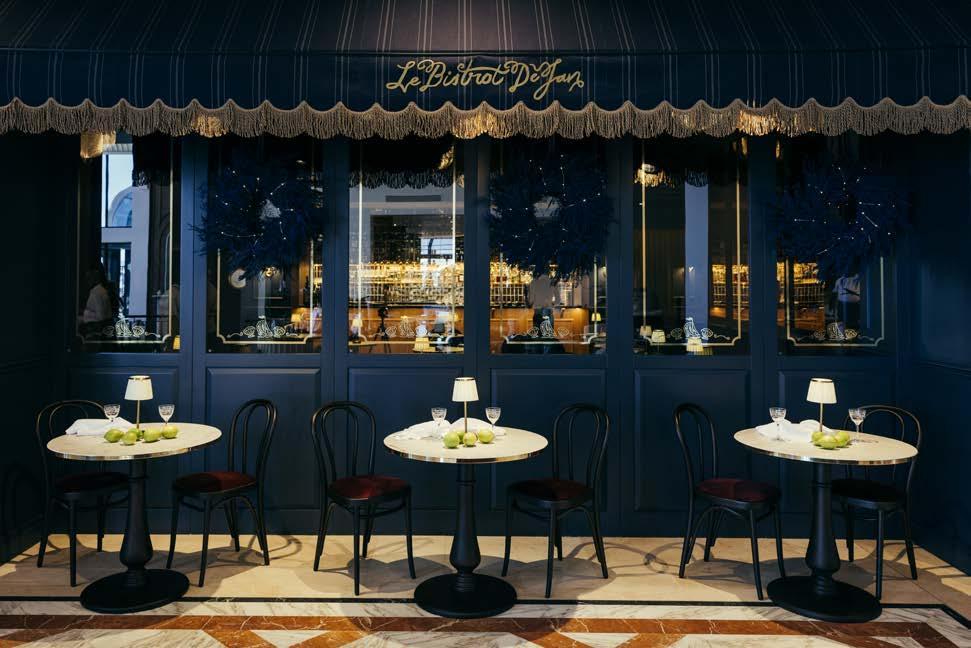
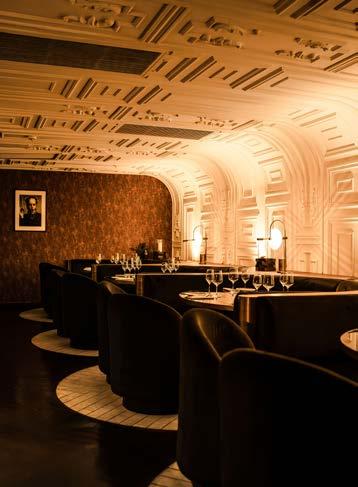
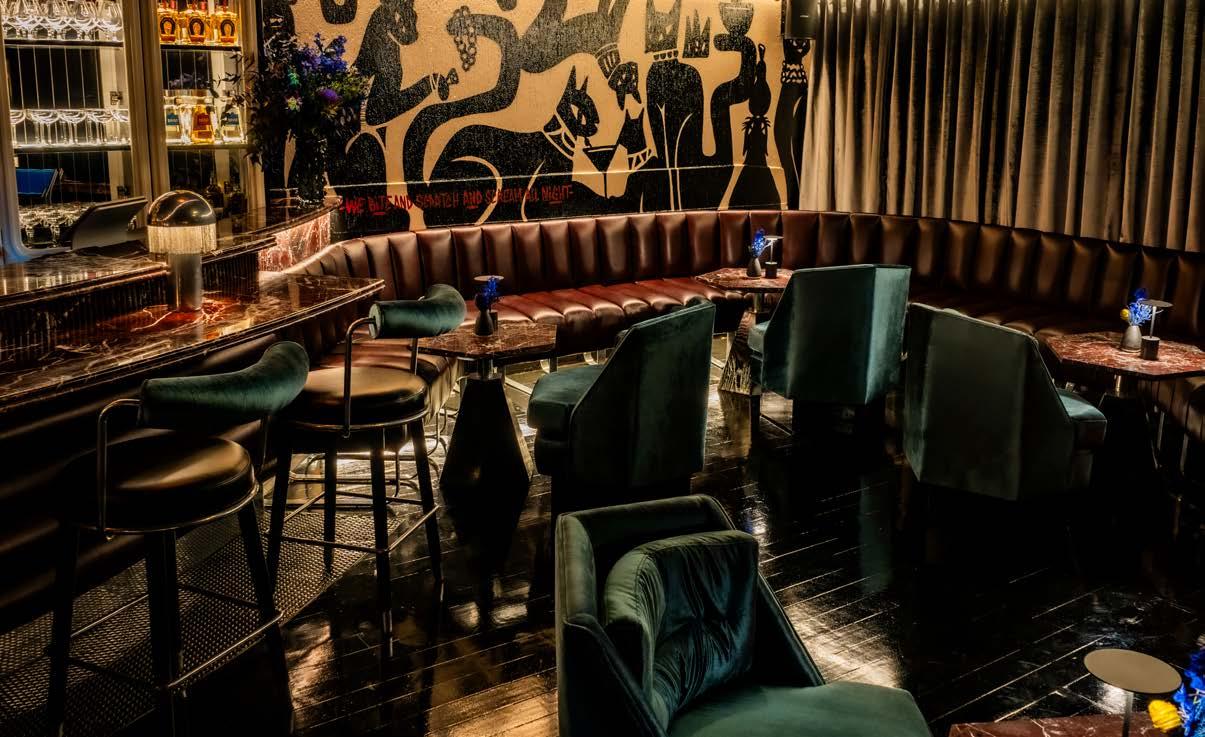
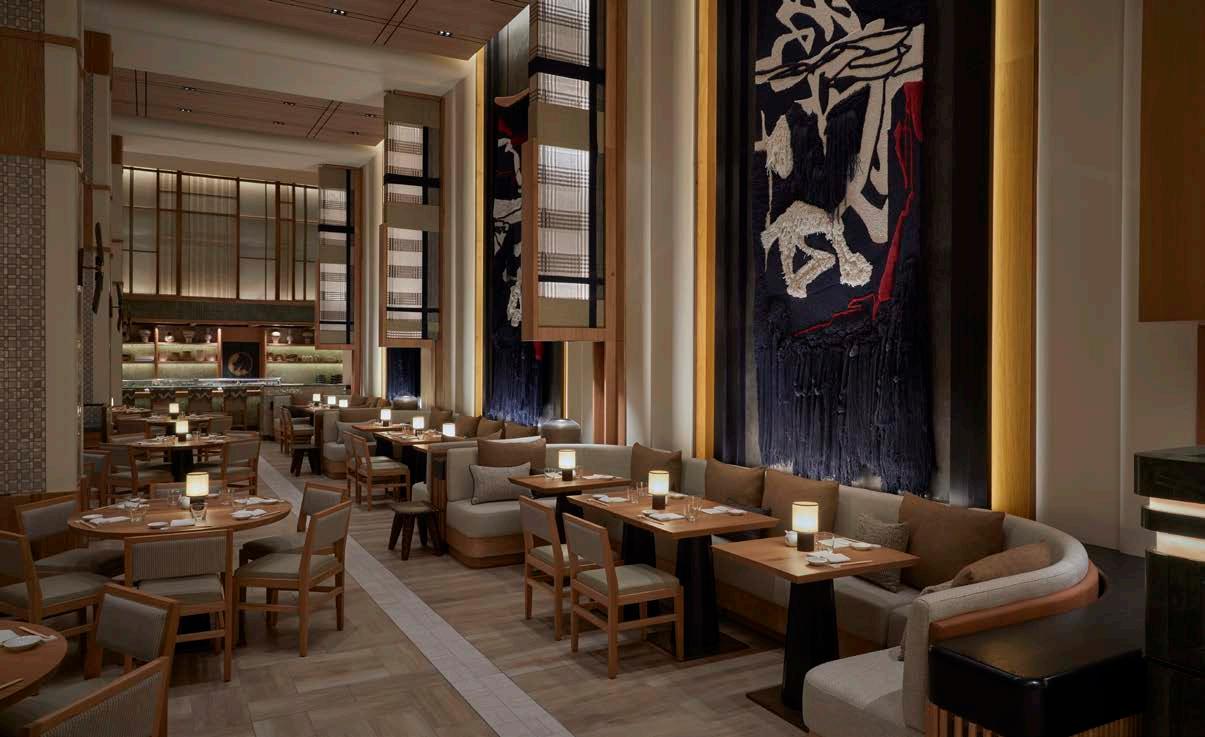
For the Scape Gold Key: Hospitality Edition, we have selected thirty restaurants, bars, brasseries and cafés across the country that exemplify the art of dining as spatial storytelling and travelling without the need for border crossing.. These are spaces where the interior, furniture, and architectural details are as thoughtfully composed as the menu itself, and where the table is only part of the stage. Peruse the list below to enter the dialogue between space and taste.
Photography by Courtney Munna
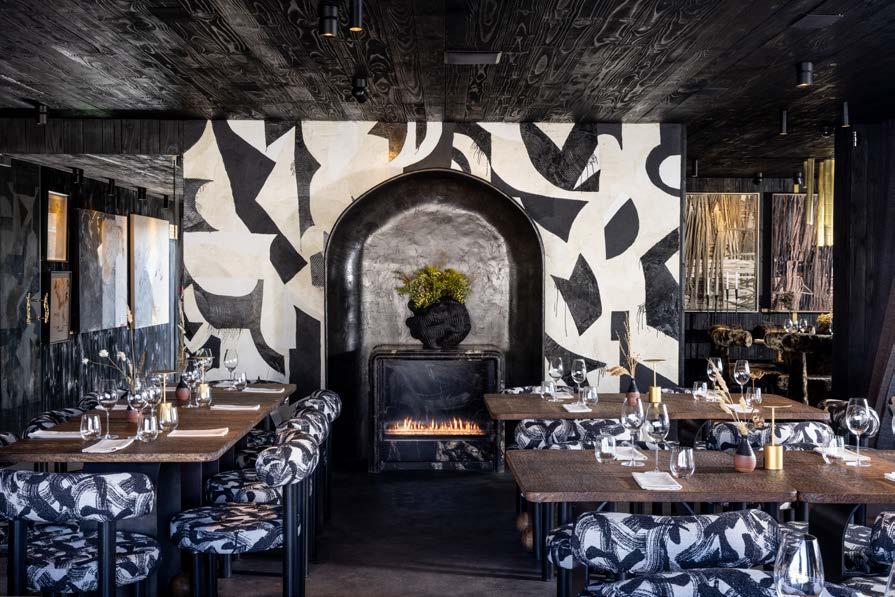
1. Akra Bar, CBD, Cape Town. Designed by Yaniv Chen
2. Amura, Gardens, Cape Town. Designed by Tristan du Plessis Studio and Blackline Group
3. Arlecchino, Sea Point, Cape Town. Designed by Verhaal Studio
4. Arum, Boschendal Estate, Franschhoek. Designed by MR. Design Studio
Photography courtesy of Amura
Photography by Adele Ferreira
Photography by Bruce Tuck
Photography by Adele Ferreira
5. Cafe Sofi, Gardens, Cape Town. Designed by Natasha and Savva Sideris, and Master Interior Architecture
6. Club Kloof, Tamboerskloof, Cape Town. Designed by Shayne Shutte and Michael Carter
7. COY, V&A Waterfront, Cape Town. Designed by KT Interior Architectural Studio
Photography courtesy of Club Kloof
Photography by Jan Ras
“When I walk into FYN, I am immediately struck by its spatial intensity. The room withholds and then reveals itself through a careful orchestration of darkness, texture, and compression.”
- With love, Stefan Antoni, SAOTA
by Bruce Tuck
Photography
Stefan Antoni
8. FYN, CBD, Cape Town. Designed by Tristan du Plessis Studio
9. Gelato Mania, Sandton, Johannesburg. Designed by Atelier Giorgio
10. Hugh's Jazz Club, Braamfontein, Johannesburg. Designed by Adam Levy
Photography courtesy of Hugh’s Jazz Club
Photography by Annalize Nel
11. Ikara, Dowerglen, Johannesburg. Designed by Atmos Architecture and Design
12. KōL Izakhaya, Hyde Park, Johannesburg. Designed by Tristan du Plessis Studio
13. La Motte Artisanal Bakery & Garden Café, La Motte Wine Farm, Franschhoek. Designed by Malherbe Rust Architects
Photography by Alexi Portokallis
Photography courtesy of KōL Izakhaya
Photography by Riaan West
Photography by Inge Prins
15.
16.
17.
14. La Petite Colombe, Leeu Estates, Franschhoek. Designed by MR. Design Studio
Le Bistrot de Jan, V&A Waterfront, Cape Town. Designed by Source IBA
Marble, V&A Waterfront, Cape Town. Designed by Irene Kyriacou and Redecco
MIRA, Sandton, Johannesburg. Designed by SODA Custom
Photography by Hanu Marais
Photography by Claire Gunn
Photography by WOM Agency
18
Photography by Mattheus Lötter
Photography courtesy of One&Only Cape Town
"I love the homage to Mediterranean heritage layered with woven textiles, tapestries, patterned fabrics and white-washed walls that reflect light beautifully. For me, Ouzeri truly feels like an island retreat on the streets of Cape Town."
- With love, Jan Hendrik van der Westhuizen, JAN
19.
18. Nine Lives, Rosebank, Johannesburg. Designed by Sketch Interior Architects
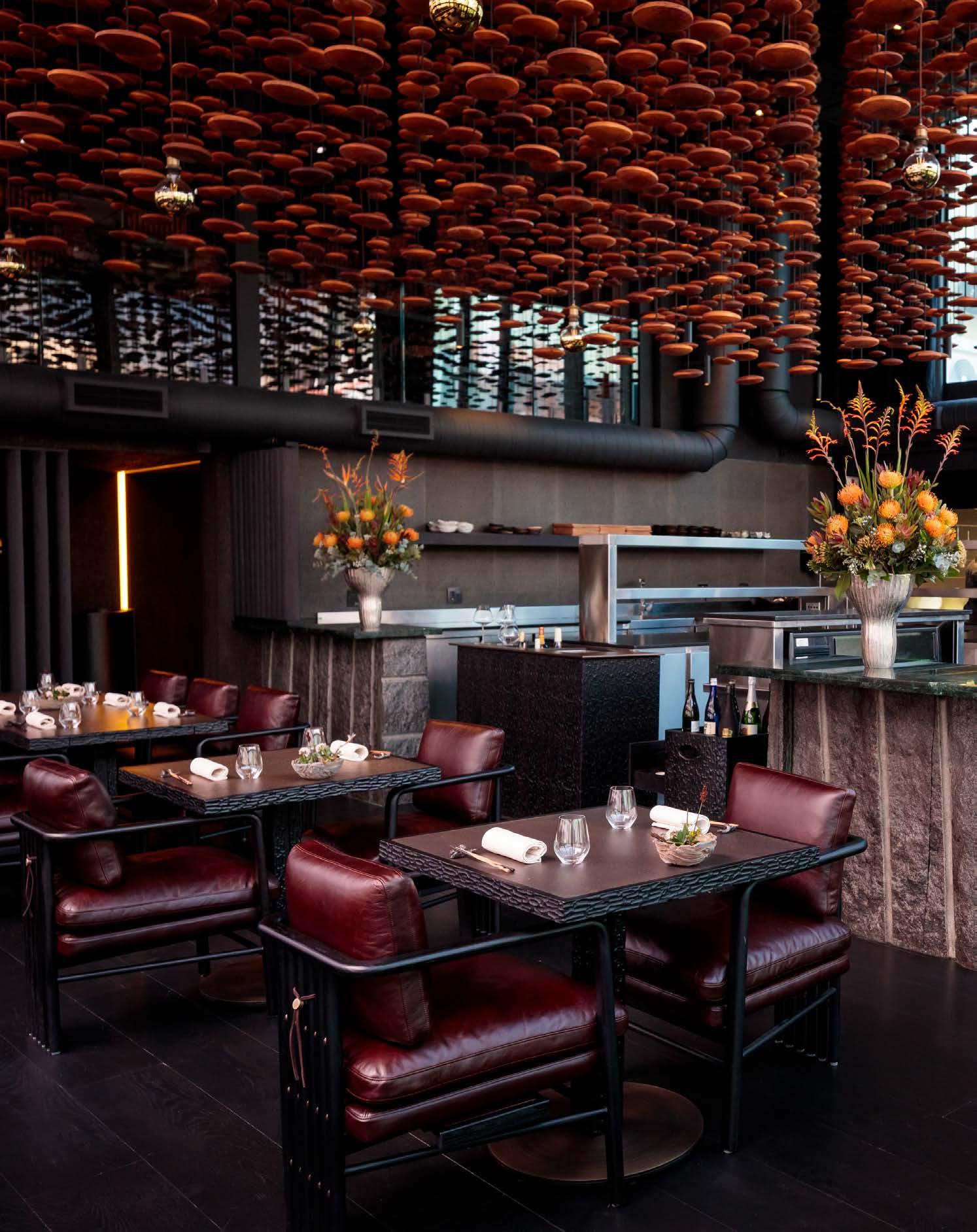
Nobu, One&Only, Cape Town. Designed by Rockwell Group and dhk Interior Design
20. Ouzeri, CBD, Cape Town. Designed by Yaniv Chen
Photography by Inge Prins
Jan Hendrik van der Westhuizen
21. Owner’s Office, eMdloti, Kwa-Zulu Natal. Designed by Tristan du Plessis Studio
22. ROOI, One&Only, Cape Town. Designed by Muza Lab
23. Rosetta Roastery, Claremont, Cape Town. Designed by Marlon James Interior Architecture
24. Saint, Sandton, Johannesburg. Designed by Irene Kyriacou, Reddeco, and Blackline Group
Photography courtesy of Owner’s Office
Photography by Greg Cox
Photography courtesy of Rosetta Roastery
Photography by Graeme Wyllie
25. Sela Vie, Val de Vie, Paarl. Designed by Maison Reyjeané
26. Tannin, CBD, Cape Town. Designed by Sketch Interior Architects
27. The Red Room, Mount Nelson Hotel, Cape Town. Designed by Karen Wilhelm and David Schneider
28. The Reserve Room, One&Only, Cape Town. Designed by Rockwell Group, dhk Interior Design, and Artep Studio
Photography by Elsa Young
Photography by Mia van Heerden
Photography courtesy of One&Only Cape Town
29. The Secret Cellar, Constantia, Cape Town. Designed by MR. Design Studio
30. Veld, Spier Wine Farm, Stellenbosch. Designed by Fusion Design & Architecture
Our Strata range turns floors into bold design statements, blending chevron elegance and the timeless beauty of oak and marble with the lasting strength of commercial-grade LVT. Belgotex.co.za