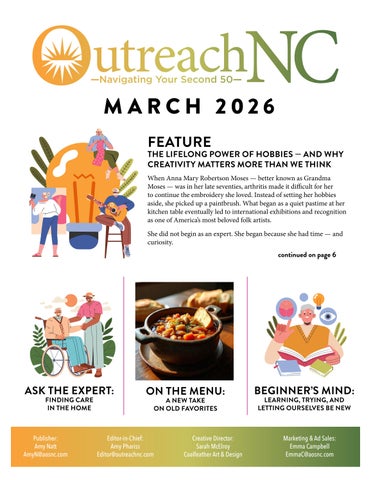
FEATURE
THE LIFELONG POWER OF HOBBIES — AND WHY CREATIVITY MATTERS MORE THAN WE THINK
When Anna Mary Robertson Moses — better known as Grandma Moses — was in her late seventies, arthritis made it difficult for her to continue the embroidery she loved. Instead of setting her hobbies aside, she picked up a paintbrush. What began as a quiet pastime at her kitchen table eventually led to international exhibitions and recognition as one of America’s most beloved folk artists.
She did not begin as an expert. She began because she had time — and curiosity.
continued on page 6

OCTOBER
LETTER FROM THE EDITOR
2022 - 2
Amy Phariss, Editor-in-Chief, OutreachNC | editor@outreachnc.com
As the days grow a little longer and the first signs of spring begin to appear, so many of us are feeling the tiniest jolt of excitement. I can hear the birds chirping as I type, and I think of pickleball, iced coffees and packing up my winter clothes. Spring is such a hopeful time.
With this bit of zest, our March feature explores the lifelong value of hobbies and creativity. Many of us think of hobbies as something extra—pleasant but not essential. In reality, creative pursuits are an essential part of emotional health, cognitive vitality, and overall well-being throughout life. Whether it’s painting, gardening, woodworking, music, writing, or learning something entirely new, creative hobbies give us a place to express ourselves, explore with curiosity instead of the pressure to perform, and experience a sense of progress and meaning.
In Ask the Expert, Amy Natt shares guidance on how to find trustworthy in-home care and what families should look for when beginning that process. We know that maintaining independence often requires practical support, and Natt’s advice helps readers find the best fit for care in the home.
In Mental Health Matters, Amy Phariss, LCMHC, looks at concept of Beginner’s Mind, a simple but powerful idea of approaching life with openness and curiosity rather than assumptions. When we allow

Phariss,
Well, it’s official: fall is here. I had my first pumpkin-spiced latte ture dipped low enough to merit a fleece.
Don’t worry. It was decaf.
ourselves to see familiar things with fresh eyes, we soften judgement and often find new ways of engaging in the world and with the people we love.
October is a gentle month. There are constant reminders of change. we are lucky, toward each other. We have lingering conversations the flames flicker. Smoke dances around us in a circle. We zip our
In this month’s feature, we’re starting an important conversation: care community for ourselves or a loved one? Fox Hollow Senior Robin Hutchings offers inside perspective for making this decision.
And because comfort and nourishment matter just as much as reflection, On the Menu offers a fresh take on classic favorites with a lightened Irish chicken and spring vegetable stew and a lemon-Irish yogurt loaf— simple, satisfying dishes that feel right at home this time of year.
In Ask the Expert, Amy Natt answers a reader’s question regarding away without any estate planning. Without a will or access to important
As you venture forth this spring, into new projects, locations or hobbies, keep Emerson’s words in mind:
Physical therapist Dr. Sara Morrison of Total Body Therapy and potential diagnostic tools used in physical therapy to help diagnose these tools differ from what other doctor’s offices may offer.
“Every artist was first an amateur.”
— Ralph Waldo Emerson
I’m going to agree with Nathaniel Hawthorne this month, who I cannot endure to waste anything so precious as autumnal sunshine spent almost all the daylight hours in the open air.
Here’s to enjoying the October sunshine, falling leaves and daylight
Indeed,
FOLLOW

facebook.com/agingoutreach/ instagram.com/agingoutreachservices/


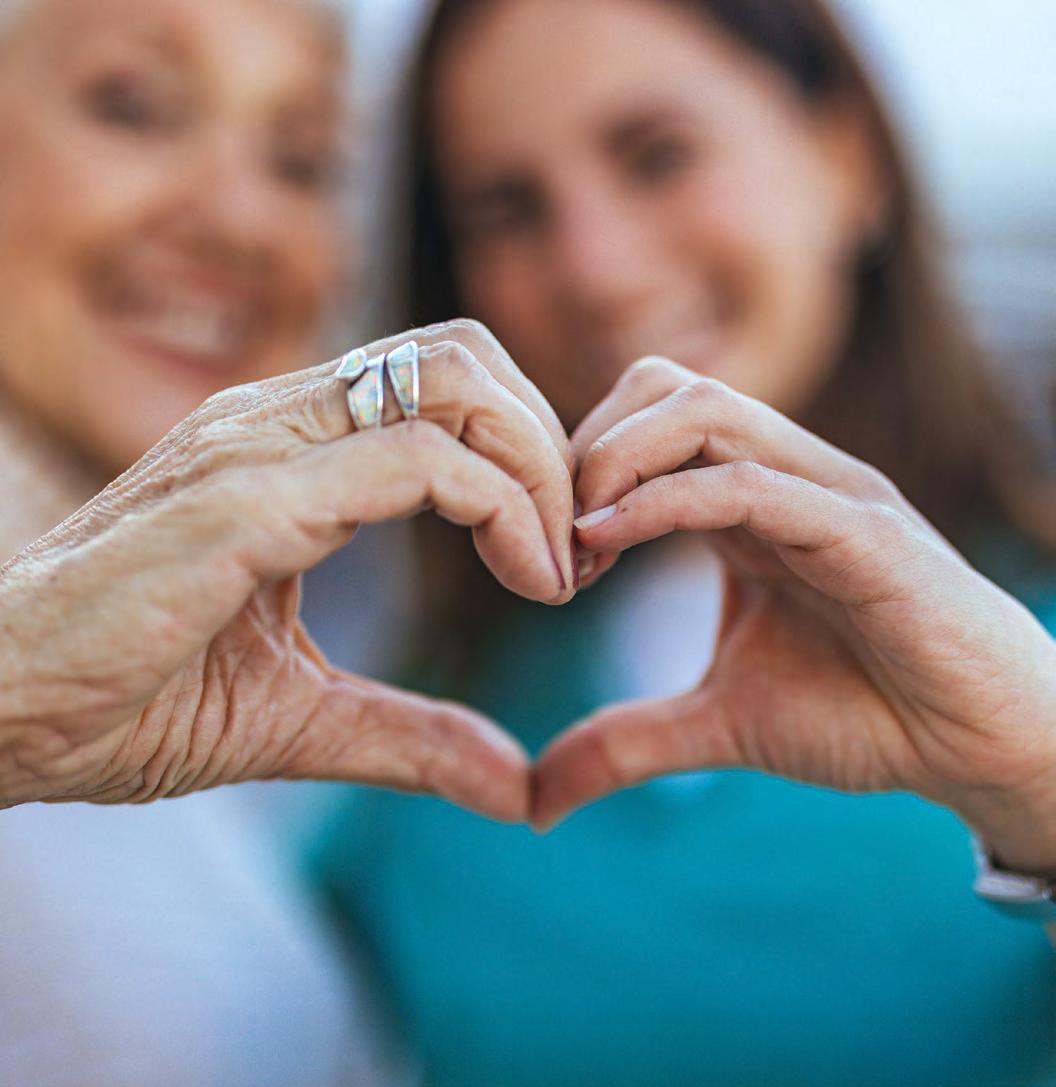
Introducing Charter Senior Living of Fox Hollow.
Formerly Fox Hollow Senior Living, our name has changed, but our commitment to area families has not. The same caring team, intimate setting and trusted Assisted Living and Memory Care you know is now backed by the strength and experience of Charter Senior Living.
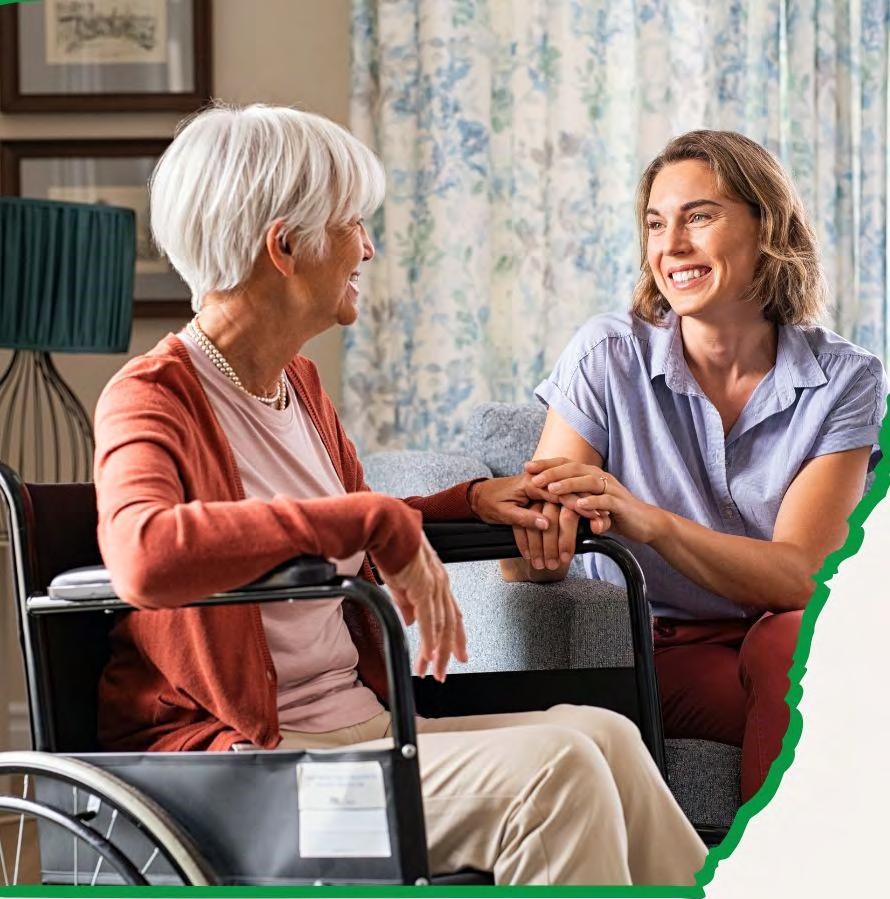
ASK THE EXPERT: FINDING CARE IN THE HOME
Amy Natt, MS, CMC, CSA - Aging Outreach Services | amyn@agingoutreachservices.com
Q: My husband is ten years older than me and is experiencing some cognitive decline. I’m worried about him when I am out of the home for more than an hour. My physician recommended I start to look for care in the home. How would you suggest I go about finding someone?
A: Finding care in the home can feel like an overwhelming task, especially if this is your first experience with in-home care. It’s important that both you and your husband are part of the process and comfortable with the person who will be coming into your home. Here are a few of the frequently asked questions and some tips that might help give you some guidance.
• What might prompt someone to look for care in the home?
There is typically some type of change in a person’s daily care needs. This change may prompt you to find a caregiver who can help provide and supplement care. Other factors might be a change in environment, like a recent move that might be disorienting, a new diagnosis or the death or illness of a spouse or care partner.
• What is meant by level of care?
The level of care is determined by the scope of care a person needs. The more assistance a person requires, the higher the level of care will be. Level of care can often be a qualifying factor for the type of care and setting care can be provided in.
• How do you determine what type of care is needed?
The level of care is typically determined by assessing how the individual performs certain tasks. A persons Instrumental Activities of Daily Living (managing finances, transportation, shopping and meal preparation, housekeeping, communication and medication management) and the persons Activities of Daily Living (ambulation, eating, dressing, toileting, bathing and transfers).
The level of assistance needed to complete these tasks will help determine if the person is independent, requires assisted care, intermediate care or skilled care.
• Who makes this determination?
This can depend on why level of care is being determined. If it’s for an insurance company, like long-term care insurance, they may send a nurse out to assess for benefit qualifications. A facility or hospital may use a medical professional to determine this for placement or rehabilitation purposes. If care is being brought into the home, a home health provider may assess the need. In some situations, the family may be determining what type of care is needed and seeking a private duty caregiver to come into the home and provide assistance. The pay source for the care typically helps guide who is making the level of care determination.
• What is the continuum of care?
The services offered along a continuum, with independent being at one end and hospice or long-term skilled nursing care being at the other. The continuum is designed to meet changing health care needs throughout the aging process. This is not always linear; a person may experience differing needs at different times. Care should be congruent with current needs. There are a lot of resources along the continuum such as home care,
meal assistance, transportation assistance, care management, assisted living, adult day programs, palliative care and many more.
• Once you determine what type of care is needed, how do you find it?
Do your homework. Beyond asking for references, make sure you are using a reputable company, not just the internet. Word of mouth is great, but a background check is even better. Hospital discharge planners, social workers, department of aging, social services and private care management firms can often provide lists of resource or providers in your area.
• Are there different providers for each type of care?
Yes, if you are looking for private duty care, a caregiver registry is a great place to find a large pool or pre-screened and vetted providers. If you are eligible for care under a program like Medicare, you will need to look at licensed home care or home health care providers.
• What safety precautions should I take before I bring care into the home?
Aside from the screening we talked about above, you can ask to interview the caregiver to ensure it is a good fit for you. If you are going through a provider, ask if they are licensed or accredited, how long they have been in business and how many caregivers they have access to. You might also want to talk to your home insurance provider and auto provider (if they will be driving your car or you are riding in their car) to see if any additional coverage is recommended.
• How is care typically paid for and by whom?
This will also be determined by the type of care and often level of care. Programs like Medicare, Medicaid and Long-Term Care Insurance, may provide some home care benefits, but to qualify, you will need to meet certain criteria and there may be limits on the amount of home care you can receive and the period of time you can continue to receive it. Other private duty care is typically an out-ofpocket expense.
• Are there times it is not practical or possible to get care in the home?
Yes, while most people would say they prefer to age in place, or remain in their own home, there can be times this is not practical. If the person has cognitive issues that result in wandering,
aggressive behaviors or other safety concerns like leaving the stove on or continued falls, it may not be safe to remain in the home. There can also be environmental concerns. Is the home accessible, or are there lots of stairs to navigate, bath tubes to climb in and out of and other issues that make it difficult to navigate? If equipment is needed, is the home able to accommodate this? Lastly, it’s important to consider cost. If you are paying privately for care, this can be $20 to $30 per hour. Is this feasible, and if so, for how long? These are all important considerations.
• What are the alternatives?
If a change in environment is needed, there are group housing options, like care cottages, independent living communities, assisted living facilities, rehabilitation and skilled nursing facilities. Level of care will help determine what alternatives to your home will be the best fit. Moving in with family may also be an option, and this decision will take into account everything we’ve explored. You’re taking the first step into finding the care that will be the right fit for you and your husband. It’s okay to start small. Pick one day a week to have a caregiver come into the home and that can be a day you plan to run errands. As you both adapt or care needs increase, you can decide to increase that schedule. Make sure the person you choose for caregiving is the right fit. If for any reason it is not a good match, keep looking for alternatives and find a person you are both comfortable having in your home.
THE LIFELONG POWER OF Hobbies — AND WHY CREATIVITY MATTERS MORE THAN WE THINK
by Amy Phariss
continued from page 1
Her story is a reminder that creativity does not expire with age. In fact, for many people, it deepens.
Hobbies are important throughout our lives. In childhood, they help us discover what we like, what makes us happy and joyful. In adulthood, they offer relief from stress and responsibility. But in later life — especially after retirement — hobbies can take on an even greater role. They provide rhythm to the days, connection to others, and a continued sense of growth.
As careers wind down and daily routines shift, it can be easy for life to become a list of appointments and obligations. If we’re not paying attention, days become moe about maintenance rather than meaning.
That is where hobbies matter.
Research consistently shows that older adults who engage in meaningful activities experience better mental health, stronger cognitive function, improved social connection, and even greater longevity. Hobbies provide stimulation, connection, and a sense of forward movement — three things the human brain needs at every age.
Often, when we think about “healthy hobbies,” we picture sports or cognitive activities. We imagine the
65-year-old woman completing her first marathon or a grandfather taking up martial arts. Walking, swimming, tennis, and golf are great for cardiovascular health and mobility. Crossword puzzles, Sudoku, and strategy games sharpen memory and logic skills.
But there’s another type of hobby that is often overlooked — and it may be one of the most powerful of all. Creativity.
Why Creativity Gets Overlooked
Creative hobbies are often dismissed as optional or indulgent. We often think of them as pleasant but not entirely necessary – as extra. We tend to elevate physical fitness and brain-training games while ignoring the power of painting, writing, music, woodworking, quilting, or storytelling.
Creativity engages the brain in a fundamentally different way. According to Karen Todd, a registered dietitian and certified exercise professional, “Creativity is vital work for the brain. It strengthens pathways that normally weaken with age and stimulates neuroplasticity, the brain’s ability to adapt and reorganize.”
While sports build strength and endurance, and puzzles build mental sharpness, creative activities integrate emotion, imagination, memory, and decision-making all at once. Creativity activates multiple brain networks simultaneously — supporting cognitive flexibility, emotional regulation, and resilience. In other words:
Sports build strength. Puzzles build sharpness. Creativity builds integration.
That integration — the blending of emotion, memory, imagination, and movement — makes creative hobbies uniquely powerful for whole-person wellbeing.
What Is Creativity?
Many people quietly believe creativity belongs to someone else — to artists, musicians, or “naturally talented” individuals. We might say, “Oh, I’m not the creative type.” Or, we may have struggled with creative classes when we were younger. We learned: I can’t draw. I don’t paint. I can’t keep a plant alive! Some of us assume creativity fades with age. Others think if they were not good at art in school, they’re not creative at all.
But creativity isn’t about talent or performance. Creativity is the ability to generate something new and meaningful.
According to a National Endowment for the Arts report developed in collaboration with researchers at the Santa Fe Institute, creativity is not a single trait but a complex process that engages multiple brain networks responsible for imagination, decision-making, and meaning-making.
It’s imagination put into action. It may look like writing a memoir, planting a new garden layout, experimenting with a recipe, choosing colors for a quilt, arranging flowers, or composing a simple melody.
FROM A BRAIN PERSPECTIVE, CREATIVITY CONNECTS MULTIPLE SYSTEMS AT ONCE — IMAGINATION, EMOTIONAL PROCESSING, EXECUTIVE PLANNING, AND MOTOR COORDINATION. IT IS NOT JUST THINKING HARDER. IT IS THINKING DIFFERENTLY.
DID YOU KNOW?
Creativity does not belong to the young. Many well-known artists and authors began — or reached their peak — later in life, proving that imagination has no expiration date.
GEORGE W. BUSH
Began painting in his 60s after leaving public office.
His artwork, including portraits of veterans and immigrants, has been published and exhibited nationally — proving that creative pursuits can begin in retirement.
LAURA INGALLS WILDER
Published her first Little House book at age 65. Her storytelling career began after decades of farm life and journalism.
FRANK LLOYD WRIGHT
Designed some of his most iconic works in his 70s and 80s, including Fallingwater. Creative peak does not always happen early.
HARRIET DOERR
Earned her college degree at 67 and published her first novel at age 74. She went on to win the National Book Award.
PETER ROGET
Published Roget’s Thesaurus at age 73. A lifelong intellectual pursuit came to fruition later in life.
CARMEN HERRERA
Sold her first painting at age 89 after quietly creating for decades. Her recognition came late — her creativity did not.
HENRI MATISSE
Created his famous paper cut-outs in his 70s and 80s after illness limited his mobility. He adapted his art to his body.
This difference matters for aging.
Why Creativity Is So Important for Senior Health
Over the past two decades, research has increasingly shown that creative engagement supports healthy aging in measurable ways.
Cognitive Function
Creative activities stimulate what researchers call cognitive reserve — the brain’s resilience against agerelated decline. A 2021 study by researchers Adelinda A. Candeias and Edgar Galindo found that creativity supports cognitive preservation in aging. Studies of older adults participating in visual arts, music, and writing programs have demonstrated improvements in working memory, attention, and verbal fluency.
Because creative hobbies require idea generation and flexibility — not just recall — they strengthen neural pathways across brain regions rather than isolating one skill.
Mental Health
Creative engagement has been associated with reduced depressive symptoms, lower anxiety, and greater life satisfaction. Even short sessions of art-making have been shown to lower cortisol, the body’s primary stress hormone.
FOR
OLDER ADULTS NAVIGATING LIFE TRANSITIONS, CREATIVITY OFFERS EMOTIONAL EXPRESSION AND MEANING-MAKING. IT PROVIDES A SENSE OF AGENCY — A REMINDER THAT GROWTH DOES NOT STOP WITH AGE.
Social Connection
Many creative hobbies naturally involve others: choirs, craft circles, writing groups, theater programs, or volunteer art projects. These shared experiences reduce loneliness and build connection — both strongly linked to improved health outcomes and longevity.
Physical Functioning
Creative pursuits often involve fine motor coordination, posture, and breath control. Knitting, painting, pottery, woodworking, and playing instruments help preserve dexterity and hand strength, which support independence in daily living.
Creativity engages the whole person — mind, body, and emotion — in a way few other activities do.
Five Myths That Hold Us Back
Despite its benefits, creativity is often blocked by common misconceptions.
Myth 1: You’re either born creative or you’re not. Creativity is a skill that strengthens with use. The brain remains capable of forming new connections well into later adulthood.
Myth 2: Creativity is only about art.
Cooking, gardening, storytelling, decorating, and even problem-solving are creative acts.
Myth 3: Creativity declines with age. While processing speed may slow, life experience deepens. Older adults bring emotional insight and memory integration that enrich creative expression.
Myth 4: If it’s not original, it’s not creative. Following a pattern, adapting a recipe, or interpreting a familiar song still involves personal choice and expression.
Myth 5: You have to be good at it.
The health benefits of creativity come from the process — focus, engagement, and flow — not the final product.
These myths can quietly prevent us from exploring interests that could significantly improve our wellbeing.
The good news is that creativity does not require dramatic change. It begins with curiosity.
Consider revisiting something you once enjoyed:
• Sketching or watercolor painting
• Playing piano or singing
• Sewing, quilting, or knitting
• Woodworking or model building
• Writing letters or journaling
Or explore something new:
• Photography
• Pottery classes
• Floral arranging
• Memoir writing workshops
• Community choir
• Learning a new instrument

• Volunteering in a creative role — teaching art, helping with theater productions, or leading a craft group
Start small. Set aside 30 minutes once or twice a week. Give yourself permission to experiment without judgment. Creativity is not about performance. It is about participation.
Hobbies enrich every stage of life, but in later years they can become especially meaningful. They remind us that growth continues. That imagination does not expire. That there is still something to shape, to build, to express.
Creativity does not belong to a select few. It belongs to anyone willing to begin.

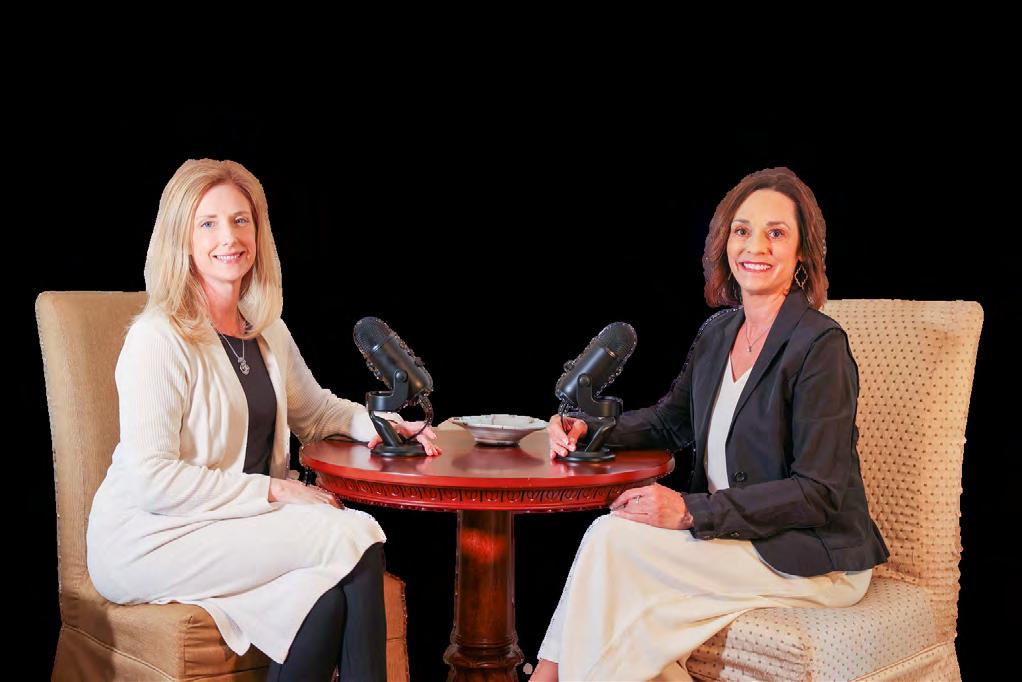



BEGINNER’S MIND: LEARNING, TRYING, AND LETTING OURSELVES BE NEW
Amy Phariss, LCMHC, Clarity Counseling/Southern Pines, NC
As adults, we’re often rewarded for knowing what we’re doing. Experience, competence, and confidence are valued—and rightly so. Over time, however, this emphasis on expertise can make us hesitant to try new things. We avoid activities where we might feel awkward, slow, or uncertain. We hesitate to begin. We’re so used to being good and competent that we forget the first part: the start.
This is where the idea of beginner’s mind is a reminder of that childlike wonder we all had, at some point, when we barreled into a new hobby or task, unbothered and unafraid. We didn’t know, yet, to be critical or judgmental. We just wanted to have fun.
What Is Beginner’s Mind?
Beginner’s mind is a concept that comes from Zen Buddhism. It refers to approaching experiences with openness, curiosity, and a willingness to not know. In beginner’s mind, we set aside assumptions and expectations and meet the moment as it is, rather than as we think it should be.
A common phrase used to describe this idea is: “In the beginner’s mind there are many possibilities; in the expert’s mind there are few.” The point is not that expertise is a problem, but that certainty can sometimes limit curiosity. Beginner’s mind keeps us open.
What Beginner’s Mind Is—and What It Isn’t
Beginner’s mind does not mean being careless, naïve, or unprepared. It does not ask us to abandon wisdom or experience. Instead, it invites us to soften our grip on judgment—especially self-judgment—and to approach learning with curiosity rather than criticism.
It’s the difference between saying: “I’m bad at this,” vs. “I’m learning.”
This shift matters more than we often realize.
How I See Beginner’s Mind in My Work as a Counselor
As a counselor, I see every day how much emotional distress is tied to a fear of getting things wrong. Many people come to therapy feeling stuck—not because they lack insight or intelligence, but because they are afraid to try, afraid to fail, or afraid of what mistakes might say about them.
When clients begin to adopt a beginner’s mind, something shifts. They become more willing to experiment with new coping skills. They tolerate discomfort more gently. They stop demanding immediate success and allow space for learning.
In therapy, progress rarely comes from doing things perfectly. It comes from being willing to try something new, notice what happens, and adjust without harsh self-criticism.
Beginner’s mind makes that process possible. Why Beginner’s Mind Supports Mental Health
Beginner’s mind supports mental health in several important ways:
· It reduces anxiety. When we release the pressure to perform or succeed, nervous system activation decreases. Curiosity is calmer than self-judgment.
· It softens perfectionism. Instead of needing to get things right, we allow ourselves to learn through experience.
· It builds resilience. When mistakes are seen as part of learning, setbacks feel less personal and less discouraging.
· It encourages flexibility. Mental health thrives on adaptability, not rigidity.
· It strengthens self-compassion. We learn to treat ourselves with the same patience we would offer someone else who is learning.
From a counseling perspective, beginner’s mind isn’t about lowering standards or accepting mediocre results—it’s about creating emotional flexibility for growth. We’re not stuck in an all-or-nothing mindset. We don’t worry as much about outcomes as we do about the process.
I find that clients who can shift into this mindset end up learning a lot about themselves, others and the world in general. When we soften our judgement, we open ourselves up to learning.
Beginner’s
Mind in Modern Life
In modern life, many of us feel pressure to be efficient, productive, and capable at all times. While these values have their place, they can feel like a lot of pressure, which actually takes some of the joy out of learning.
Beginner’s mind offers an alternative. It allows us to:
· Try new hobbies without worrying about being good at them
· Learn new skills without constant comparison (to others or to our past selves)
· Make mistakes without turning them into judgments about our worth
Whether it’s starting a creative project, learning a new technology, joining a class, or simply approaching daily tasks differently, beginner’s mind reminds us that being new is not a weakness—it’s a stage of growth.
The Role of Failure
Failure is a normal part of learning, but many adults have learned to avoid it at all costs. In my work, I often see how fear of failure leads to avoidance, stagnation, and self-criticism.
Beginner’s mind reframes failure as information rather than judgment. Instead of judging an outcome (a poorly played tennis game, a wonky knitting project), we see the outcome as a data point. We ask: what went wrong? What can I change? What did I learn? How do I move forward?
When we allow ourselves to fail gently, we build tolerance for discomfort and trust in our ability to adapt. This is a cornerstone of emotional resilience.
Practicing Non-Judgment
At the heart of beginner’s mind is non-judgment. This does not mean ignoring mistakes or avoiding responsibility. It means noticing what happens without immediately labeling it as good or bad, success or failure.
Non-judgment quiets the inner critic and creates space for curiosity, creativity, and engagement. From a mental health perspective, this shift can reduce shame and increase motivation.
Beginning Again
Spring often reminds us of fresh starts, but beginner’s mind is available year-round. We can practice it whenever we try something new—or whenever we choose to see something familiar with fresh eyes. Mental health is not built on having all the answers. In my experience as a counselor, it is often supported by our willingness to remain open, curious, and kind toward ourselves as we learn. Beginner’s mind reminds us that growth doesn’t require mastery—just the courage to begin.
ON THE MENU:
A New Take on Old Favorites
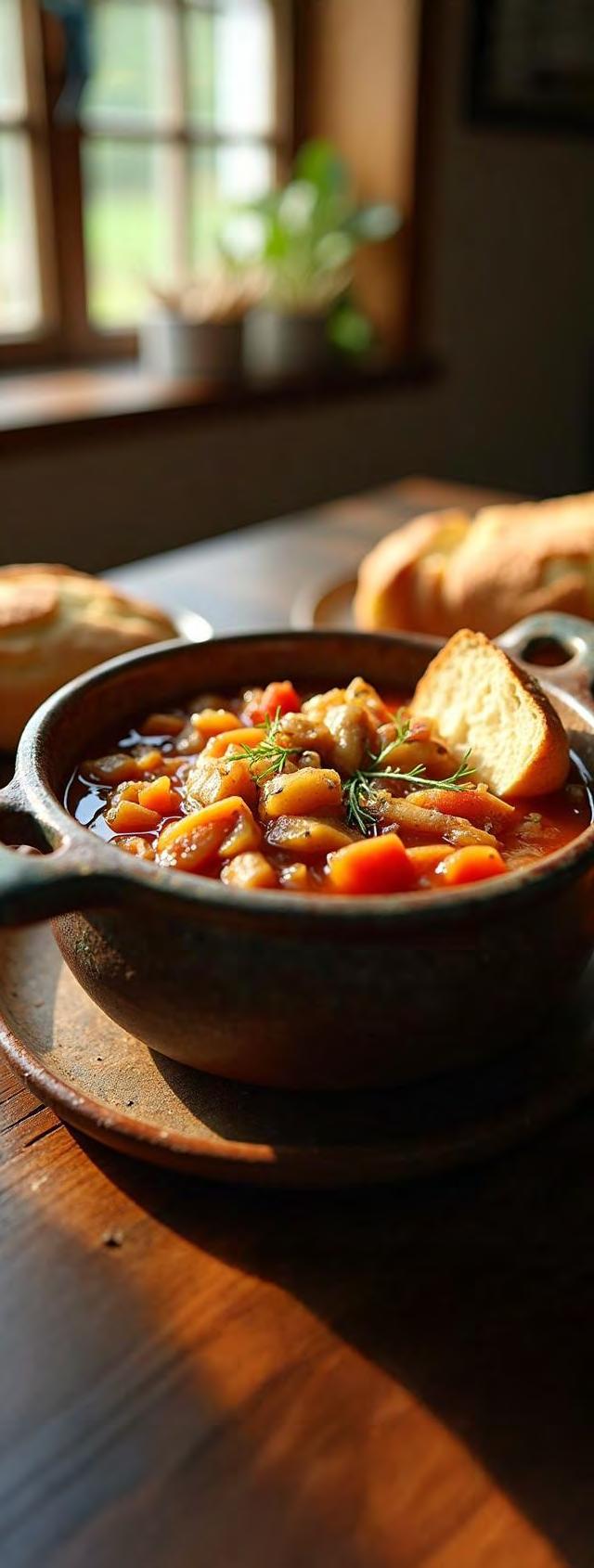
LIGHTENED IRISH CHICKEN & SPRING VEGETABLE STEW
A fresh take on traditional Irish stew
This recipe keeps the comfort of a classic stew but swaps lamb for chicken and adds spring vegetables for brightness and easier digestion.
Ingredients
1 lb boneless, skinless chicken thighs, cut into chunks
1 tbsp olive oil
1 leek, sliced (white and light green parts only)
2 carrots, sliced
2 cloves garlic, minced
2 cups baby potatoes, halved
3 cups low-sodium chicken broth
1 cup peas (fresh or frozen)
1 tsp fresh thyme (or ½ tsp dried)
Salt and pepper to taste
Fresh parsley, chopped (for serving)
Instructions
1. Heat olive oil in a large pot over medium heat.
2. Add chicken, season lightly with salt and pepper, and brown on all sides. Remove and set aside.
3. Add leeks and carrots; cook until softened, about 5 minutes.
4. Stir in garlic and thyme, cook 30 seconds.
5. Add potatoes, broth, and chicken. Bring to a gentle simmer.
6. Cover and cook 20–25 minutes until potatoes are tender.
7. Stir in peas and cook 3–5 minutes more.
8. Finish with parsley and adjust seasoning.
Serve with whole-grain bread or a simple side salad.
LEMON–IRISH YOGURT LOAF
A fresh, lighter take on traditional soda bread flavors
This recipe borrows the simplicity of Irish soda bread but softens it into a moist loaf using yogurt, bright lemon, and just enough sweetness. It’s lovely with tea, easy to slice, and feels appropriate for both spring and St. Patrick’s Day.
Ingredients
1¾ cups all-purpose flour
2 tsp baking powder
½ tsp baking soda
½ tsp salt
½ cup sugar
Zest of 1 lemon
¾ cup plain Greek yogurt
2 large eggs
⅓ cup olive oil or melted butter
2 tbsp lemon juice
Optional: coarse sugar for topping
Instructions
1. Heat oven to 350°F. Grease a loaf pan or line with parchment.
2. In a large bowl, whisk flour, baking powder, baking soda, salt, and sugar.
3. Rub lemon zest into the dry ingredients with your fingers to release flavor.
4. In a separate bowl, whisk yogurt, eggs, oil (or butter), and lemon juice.
5. Gently fold wet ingredients into dry just until combined.
6. Pour into pan and sprinkle lightly with coarse sugar if desired.
7. Bake 45–50 minutes, until a toothpick comes out clean.
8. Cool before slicing.
Serve plain, with a little butter, or alongside fresh berries.
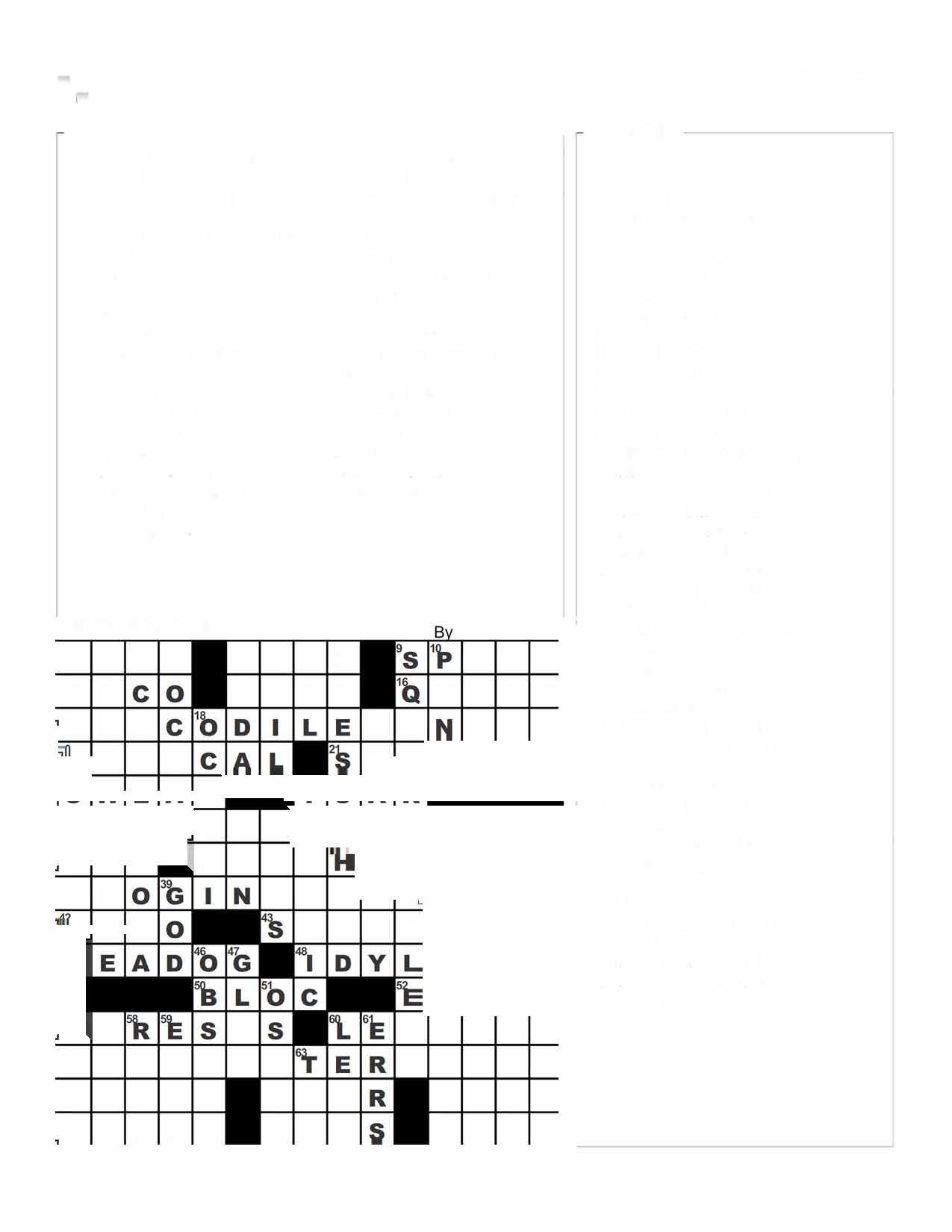
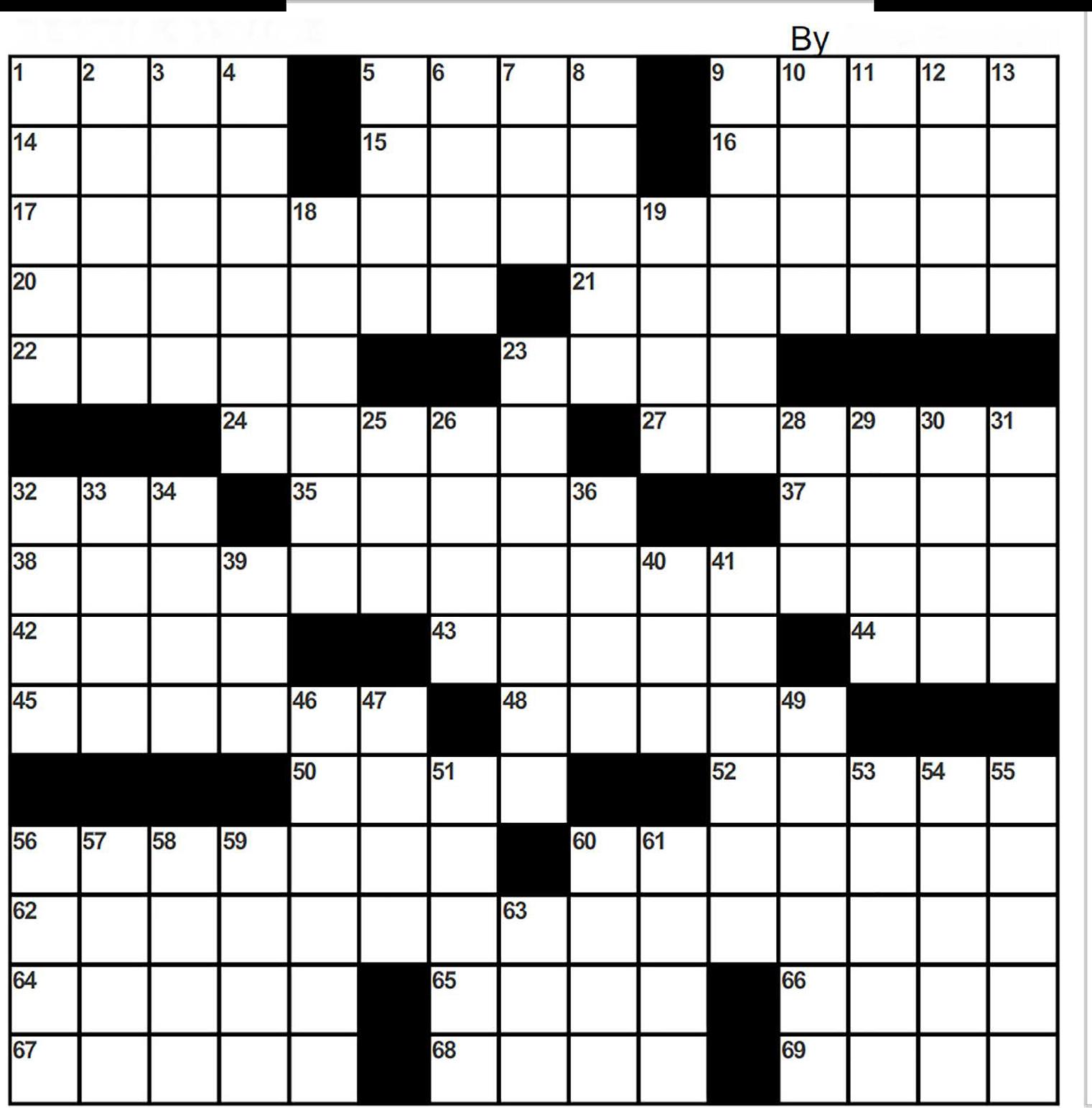
GRAY MATTER GAMES
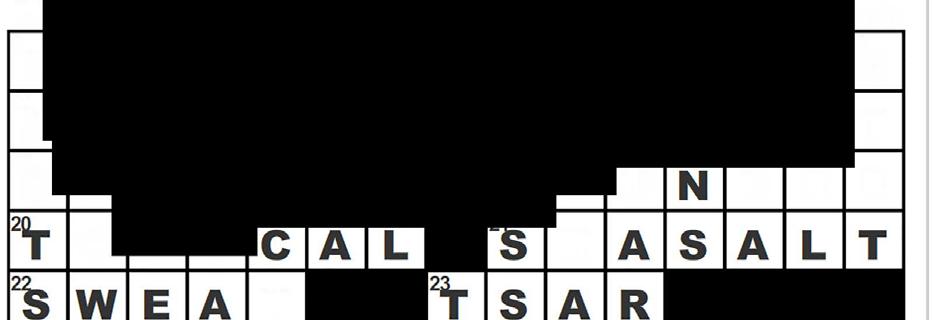
ACROSS
I) Emulate a quarterback
5) Leak through slowly
9) Prepares for a boxing match
14) With the bow, to a violinist
15) All done
16) Hushed
17) 1986 "fish out of water" film
20) Hot and sultry
21) Condiment in gourmet cooking
22) Perspiration
23) Nicholas I was one
24) Become embedded
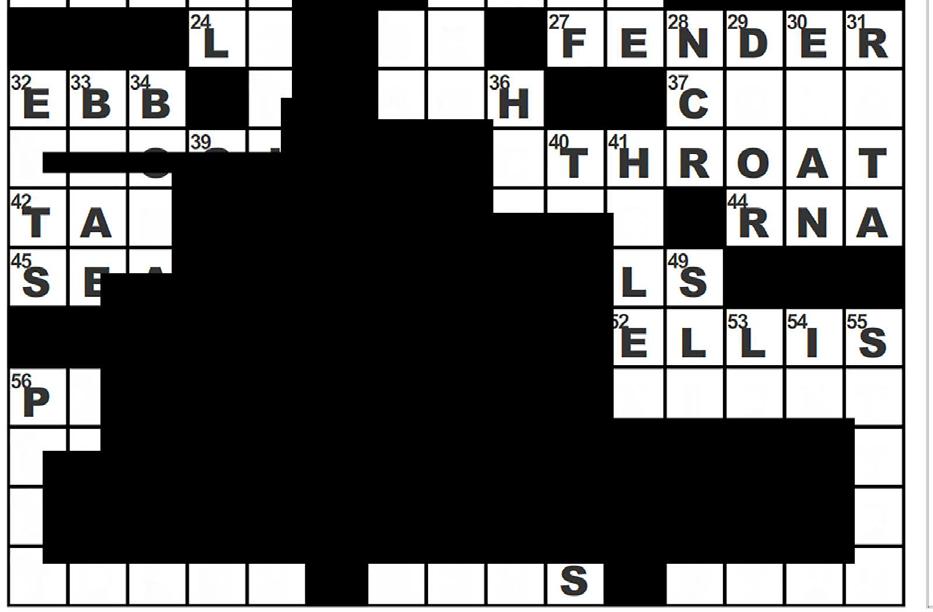
27) Tire protector
32) Recede like a tide
35) One way to cook eggs
3 7) Common beverage
38) Cause for ahem?
42) Edible Pacific tuber
43) Part of a drum kit
44) Ribonucleic acid, familiarly
45) Old sailor
48) Rustic poems (var.)
50) Christian Coalition, e.g.
52)_ Island (immigration landmark)
56) Partial paralysis
60) Not at all harsh
62) Good thing to have in the jungle
64) Farm mudholes
65) Big-mouthed pitcher
66) Noted canal
67) Is inclined
68) "Friends" friend
69) Changes hair color
DOWN
I) Formal accords
2) It points the way
3) Rifle attachment
4) Like a party animal
5) 37-Across, e.g.
6) Opposite of good
7) Anago, really
8) Fourth estate
9) Shape learned in preschool
10) Corny bits of wordplay
11) Verdi classic
12) Walk dizzily
13) Proofreader's direction
18) Multi-armed creatures
19) Unable to hear
23) "Poly" attachment, in school names
25) Have on
26) B-movie machine guns
28) Major ATM manufacturer
I) Emulate a quarterback
29) It can open for you
30) Impressive style
5) Leak through slowly
31) Pro_ (in proportion)
9) Prepares for a boxing match
32) Semiaquatic salamanders
33) Hillside, to the Scottish
14) With the bow, to a violinist
15) All done
34) When doubled, one of the Society Islands
16) Hushed
36) Be in charge of
39) "In_ We Trust"
17) 1986 "fish out of water" film
40) Make an attempt
20) Hot and sultry
41) Cosmetics queen Curtis
46) Be preoccupied with 4 7) Flippant
21) Condiment in gourmet cooking
22) Perspiration
49) Assaulted with goo
23) Nicholas I was one
51) Purple willow, e.g.
53) Distrustful
24) Become embedded
54) Private film producer, informally
27) Tire protector
32) Recede like a tide
55) Eyelid lumps
35) One way to cook eggs
56) Whispered attention-getter
37) Common beverage
57) Poker pay-in
38) Cause for ahem?
58) Form of precipitation
59) Barely managed
60) Bottom of the barrel
61) Does the wrong thing
63) A couple
REPTILE HOUSE

42) Edible Pacific tuber
43) Part of a drum kit
44) Ribonucleic acid, familiarly
45) Old sailor
48) Rustic poems (var.)
50) Christian Coalition, e.g.
52)_ Island (immigration landmark)
56) Partial paralysis
60) Not at all harsh
62) Good thing to have in the jungle
64) Farm mudholes
65) Big-mouthed pitcher
66) Noted canal
67) Is inclined
68) "Frien ds" friend
69) Changes hair color
Alice Goodwin
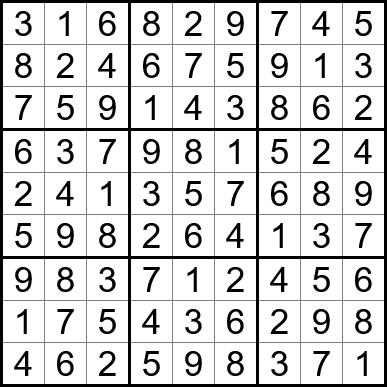
Gray Matter Games Solutions