FEATURE: THE CONVERSATION WE NEVER HAD: ASKING YOUR AGING PARENTS ABOUT MONEY BEFORE IT’S TOO LATE
A client called me two days after her mother had a stroke. Her mother was alive but not speaking. The hospital needed to know about insurance and her mother’s advance directives. Within days, she would also need to know who held financial power of attorney to pay her mother’s bills. My client, who was 58 and had spent her career running a small business, did not know the answer to any of those questions. She assumed her mother was financially fine, but did not know where the will was, who the attorney was, or what her mother wanted if this moment came.
She spent the next four months piecing it together. The accounts came out of a manila folder at the back of a closet. The will was out of date, and the law firm that created it had merged and changed its name since her mother had used it.
July is here, which is no surprise. I’m sure we all feel the dampness when we open our doors-front doors, car doors, garage doors. It clings to every surface, and I’ve begun the inevitable thoughts of a North Carolina summer: we’re halfway through it. It will end soon. Just another six weeks to go.
This month, our feature is another thoughtful piece from Senior Wealth Manager Doug Lyman – “The Conversations We Never Had: Asking Your Parents About Money Before It’s Too Late.” Lyman explores why we avoid these conversations, the pitfalls of waiting and suggestions for how to navigate this challenging conversation. He also provides practical checklists to help readers get started, including documents to gather and individual conversations to have—breaking a difficult process into manageable steps.
In Ask the Expert, AOS Care Management Lead Care Manager Jennifer Tyner helps readers understand the five key components of a care plan. From assessment to evaluation, Tyner explains each area and how they all fit together to create a care plan that to create a care plan that truly works for families.
Well, it’s official: fall is here. I had my first pumpkin-spiced latte just ture dipped low enough to merit a fleece.
Don’t worry. It was decaf.
October is a gentle month. There are constant reminders of change. we are lucky, toward each other. We have lingering conversations over the flames flicker. Smoke dances around us in a circle. We zip our jackets
In Mental Health Matters, Licensed Clinical Mental Health Counselor Amy Phariss dives into the world of hoarding with a focus on digital hoarding. With so much information coming at us all the time, many of us are finding our cloud storage overwhelmed and our phones becoming as cluttered as our hall closets. What is digital hoarding? How does it start? And what can we do to both deal with it and avoid it before it becomes an issue?
In this month’s feature, we’re starting an important conversation: care community for ourselves or a loved one? Fox Hollow Senior Robin Hutchings offers inside perspective for making this decision.
In Ask the Expert, Amy Natt answers a reader’s question regarding what away without any estate planning. Without a will or access to important
On the Menu for July are simple, easy no-bake dessert recipes. When the weather is sweltering, the last thing we want to do is turn on an oven. But sometimes, the first thing we want is a sweet treat! These recipes tackle both problems with some sweet solutions.
Physical therapist Dr. Sara Morrison of Total Body Therapy and Wellness potential diagnostic tools used in physical therapy to help diagnose and these tools differ from what other doctor’s offices may offer.
I’m going to agree with Nathaniel Hawthorne this month, who wrote:
Finally, July isn’t July without honoring our nation’s birth and history. I like President Truman’s words about our country:
I cannot endure to waste anything so precious as autumnal sunshine spent almost all the daylight hours in the open air.
Here’s to enjoying the October sunshine, falling leaves and daylight hours.
“America was not built on fear. America was built on courage, on imagination and an unbeatable determination to do the job at hand.”
Indeed,
FOLLOW US!
Keep up with all things ONC by following us on social media.
Home is Where the Hea
and with the right care, it’s where you comfortably, safely, and independe
Let us refer private-duty caregivers who wi according to your needs and schedule
Whether you need a few hours of daily perso the extra security of 24-hour care, our larg pre-screened caregivers can accommodate y S c h e d u l e a c o n s u l t a t i o n T O D
Jennifer Tyner, AOS Care Management, Lead Care Manager | jennifert@aoscaremanagement.com
Q: I just returned from a trip to visit my mother, who is now in her mid-seventies. She is happy and thriving, but we both noticed a few changes in her health and lifestyle. She has several health issues that may impact her lifestyle and functioning as she ages. How do I know if she has a good care plan in place, and what should it include?
A: This is an important question, and you’re right to be thinking ahead and considering a care plan for your mom now, before an emergency!
A good care plan is more than a list of medications or doctor’s appointments. It’s a living document that helps guide healthcare decisions, supports independence, and ensures that an older adult’s physical, emotional, and practical needs are being addressed. Whether a senior lives independently, with family, or in a care facility, a comprehensive care plan can improve quality of life and help families feel more confident about the future. The five main components of a care plan are assessment, diagnosis, planning, implementation, and evaluation.
1. ASSESSMENT
The first step is gathering information about the individual’s current situation. This includes physical health, medical conditions, medications, mobility, cognitive functioning, emotional wellbeing, social connections, daily routines, and personal preferences.
A THOROUGH ASSESSMENT HELPS IDENTIFY STRENGTHS AS WELL AS AREAS WHERE SUPPORT MAY BE NEEDED.
For example, an older adult may be physically healthy but struggling with loneliness, transportation, or memory concerns. Understanding the whole person— not just their medical diagnoses—is essential.
2. DIAGNOSIS
Once information has been collected, healthcare professionals identify the key areas of need. In this context, “diagnosis” doesn’t only refer to medical conditions. It can also include concerns such as fall risk, caregiver stress, medication management challenges,
nutritional issues, social isolation, or difficulties with activities of daily living (such as driving, bathing, chores, etc.).
This step helps prioritize what requires attention and provides a foundation for the rest of the care plan.
3. PLANNING
The planning stage focuses on setting goals and determining how those goals will be achieved. Effective goals are realistic, measurable, and tailored to the individual’s needs and wishes. The last part – regarding your mom’s needs and wishes – is important. Planning that doesn’t include her input or respect her wishes likely won’t be effective for anyone.
Some examples of realistic, measurable goals might include:
• reduce fall risk
• improve medication adherence
• maintain independence at home
• increase social engagement
• better manage a chronic health condition. Specific interventions, services, and supports are then identified to help achieve these goals.
So, if a goal is to reduce your mom’s risk of falls, you might want to remove rugs from her living space, reducing her risk of tripping or getting caught up on a rug’s edge. Some goals are relatively simple, like this, and other goals might be longer-term and more detailed.
4. IMPLEMENTATION
This is where the plan moves from paper into practice. Family members, caregivers, healthcare providers, and community resources work together to carry out the plan on a daily basis.
Implementation might be arranging transportation, scheduling medical appointments, hiring home care services, modifying the home for safety, participating in therapy, joining social activities, or establishing new daily routines. Consistent communication among everyone involved is key to success. Care teams can (and should) include several people, so open lines of communication help everyone keep the plan running smoothly and steadily.
5. EVALUATION
A care plan should never remain static. AS HEALTH CONDITIONS, ABILITIES, AND CIRCUMSTANCES CHANGE, YOU’LL WANT TO REVIEW AND UPDATE THE PLAN.
Regular evaluations help you both see what’s working well, any new challenges, and whether goals are being met. Small tweaks made over time can prevent larger problems later and make sure your mom’s care continues to meet her needs moving forward.
The best care plans are proactive rather than reactive. Taking time to assess needs, create goals, implement supports, and regularly review progress, is how families can help loved ones stay as healthy, independent and active as possible, for as long as possible. This is truly the best way to age with grace and dignity.
The Conversation We Never Had:
ASKING YOUR AGING PARENTS ABOUT MONEY BEFORE IT’S TOO LATE
by Doug Lynam
continued from page 1
The healthcare proxy named a sister who had died years earlier. The conversation she should have had with her mother over coffee at the kitchen table, in unhurried sittings spread across months, instead happened in fragments, under fluorescent light, severe stress, and mental impairment, with the clock running. She is not unusual.
Surveys consistently find that most American families never have a full version of this conversation. Adult children do not ask. Aging parents do not offer. Both sides assume there is more time, find the topic uncomfortable, and quietly hope it will take care of itself. And then a fall, a diagnosis, or a sudden death turns the conversation that should have been a slow series of comfortable questions into a crisis-room interrogation with half the parties unable to fully participate.
This article is for both sides, the parent and the adult child. The conversation can happen in pieces over months, but it cannot wait until one of you is no longer capable of having it.
WHY THIS CONVERSATION DOESN’T HAPPEN
Both sides avoid this conversation for many reasons that feel like respect but function like denial.
Adult children worry that asking about money will sound greedy, that bringing up parental finances will be heard as “I want to know what I’m getting.” That fear usually says more about the child’s anxiety than about the parent’s likely reaction. Most aging parents have wanted to have this conversation for years and have not known how to start it. Your asking is not greed. It is the opening they were waiting for. Children also avoid the topic because of its weight. Asking your mother about her end-of-life wishes is asking her to imagine her own death and asking yourself to imagine her death too. That is one of the hardest mental moves a person can make.
Aging parents stay silent for many reasons. They want to protect their kids. They have spent their entire lives shielding their children from hard things, and they cannot easily switch out of that role just because their children are now 50 or 60 years old. To them, you are always their babies. Most parents would rather suffer in
silence than impose, not realizing that the imposition stems from not talking. They also do not want to lose their role. As long as they alone know where the accounts are, they remain in charge, and for parents who have built their identity around competence, surrendering that knowledge can feel like an early defeat. And often, there is shame. Aging brings the slow accumulation of things that did not go as planned, and many parents would rather not narrate those chapters to their children.
None of this makes anyone wrong. The instincts behind the silence are tender. They are also costly. The children are left to guess. The decisions get made in vacuums. The opportunity to act with intention disappears, replaced by reactive scrambling in hospital rooms.
THE DOCUMENTS THAT MATTER
The list of documents an organized parent should have in place is shorter than people think. Without them, the family ends up at the mercy of state law, hospital protocols, and probate court.
A current will. Names an executor, distributes assets, and names guardians for any minor children or dependents. Without one, North Carolina law determines who inherits what, using fixed percentages without regard to family wishes. Wills should be reviewed every five years and after any major life event. I have watched families spend years in court over the absence of a document that would have taken three hours to draft.
Revocable living trust, when appropriate. For some families, particularly those with property in multiple states, blended families, privacy concerns, or a desire to avoid probate, a revocable trust handles asset distribution alongside or in place of a will. Trusts are not necessary for everyone, but they are necessary often enough that any parent doing estate planning should ask their attorney whether one fits.
Durable power of attorney for finances. Names a person who can handle financial matters if the parent becomes incapacitated. “Durable” is the critical word. It means the document remains in force during incapacity, which is the only time it actually matters. Without this document, a family facing an incapacitated parent has to petition the court for guardianship, which can cost thousands of dollars, drag on for months, and become a matter of public record. Healthcare power of attorney. Names a person to make medical decisions if the parent cannot speak
for themselves. This is a separate document from the financial power of attorney. The same person can hold both roles, but a parent should consider whether the person best at handling money is also the one who should be at the hospital deciding whether to continue treatment. For families with multiple children, naming one child as the financial agent and another as the healthcare agent can reduce friction and use each child’s strengths. Naming co-agents on the same document, on the other hand, can create a deadlock at the moment a clear decision is most needed, and should be considered carefully.
Living will, also called an advance directive. States the parents’ wishes about life-sustaining treatment if they are terminally ill or permanently unconscious. In North Carolina, the standard form is the “Advance Directive for a Natural Death.” This document tells the family and the medical team what the parent wants. It does not bind paramedics in a crisis, which is what the MOST form is for.
MOST form, when appropriate. In North Carolina, the Medical Orders for Scope of Treatment form is a physician-signed medical order that paramedics and hospitals are required to follow. The living will captures the parents’ wishes; the MOST form is the binding instruction in an emergency. Without one, EMS is generally required to begin life-saving treatment unless a valid medical order directs otherwise, even when an advance directive exists, because EMS follows medical orders, not wishes documents. My own stepfather had an advance directive when he was admitted at the end of his life with severe dementia, and he still received aggressive treatment that prolonged his suffering. A MOST form, discussed thoughtfully with his physician, would have changed that. For parents with serious illness, advanced frailty, or strong preferences about emergency treatment, this is a conversation worth having early.
Updated beneficiary designations. Retirement accounts, life insurance policies, annuities, and any account marked “transfer on death” or TOD pass directly to the named beneficiary, regardless of what the will says. This is the most commonly overlooked piece of an estate plan, and one of the most consequential. I have seen a widow watch her late husband’s entire 401(k) go to his first wife, because he had never updated the beneficiary form after a divorce years earlier. Beneficiary designations illustrate a larger principle: an estate plan only works if the assets
themselves are titled in line with the plan. Consider a trust without funded accounts, a will contradicted by a TOD designation, or a jointly owned account that bypasses the will entirely. These are operational failures of plans that look complete on paper.
A digital asset inventory. Most adults now manage their finances through screens: online banking, brokerage logins, password managers, email accounts holding decades of correspondence, and cloud storage. Without access credentials, the family cannot reach any of it. I have watched grown children lose access to twenty years of their mother’s photographs because no one had the password to her Apple account. The digital inventory is a secure record of important accounts and instructions for how a trusted person can access credentials if needed. Whether kept in a shared password manager or on paper in a fireproof box, what matters is that it exists somewhere other than in one head. Under North Carolina law, executors and powers of attorney do not automatically have authority over digital accounts; the will and financial power of attorney should explicitly grant access, or the family may find themselves locked out.
A letter of intent. This is the only item on the list that is not a legal document, and it is often the most useful one for the family. A letter of intent is a written, plainlanguage letter from the parent to the family. It can include things the legal documents cannot, or cannot deliver in time: the reasoning behind hard decisions, funeral and memorial wishes (which matter most in the first days after a death, before a will is typically read), the family stories that should not be lost, and what they want their grandchildren to know. The letter has no legal weight, but it carries enormous emotional weight and answers questions the legal documents leave open. In some ways, it is the only document on this list that is really about love. The others are about authority. The letter is about what the parent wants the family to know after they can no longer say it.
Documents alone do not solve the problem. They solve part of it. The rest depends on whether the family can find them, access them, and know what they say. That requires coordination, and coordination is where most estate plans fail.
These documents should be stored together, in a location an adult child or trusted person can reach immediately in a crisis. A fireproof box at home is the most reliable solution, provided someone besides the parent knows where it is and how to open it. Safe
deposit boxes are a poor choice: many banks restrict access until probate, which can lock the family out when the documents are needed most.
North Carolina also maintains an Advance Health Care Directive Registry through the Secretary of State’s office. Filing the living will and healthcare power of attorney with the registry can help healthcare providers access them more quickly in an emergency.
Once the documents are in place, copies should be sent to the people who need to act on them. Many institutions accept photocopies of the power of attorney, healthcare proxy, living will, and MOST form, though some may require originals or recently executed copies. Give a copy to each named agent, each adult child involved, and the family attorney. The MOST form should be especially widely distributed: a copy in the parents’ wallet, on the refrigerator, with the doctor, and with the family. The original will is the exception. Courts generally require it for probate, so it should stay in one known place.
Estate planning is state-specific. The documents above should be drawn up or reviewed by an estate planning or elder-law attorney in your state. For those on a restricted budget, reliable DIY estate planning software exists, and using it is better than doing nothing. Legal counsel is preferable when you can afford it. Long-term care costs, including nursing homes, assisted living, and Medicaid planning, are their own subject and deserve a separate column. Keep in mind, this is a starting point, not legal advice.
THE CONVERSATION ITSELF
When it goes well, the conversation is not really about money. It is about presence. It is about a parent saying to their children, while they still can, “Here is what I want. Here is what I am afraid of. Here is what I hope for you.”
The conversation does not require a single dramatic sitdown. It works better in pieces, over time, in low-stakes moments. A drive to a grandchild’s birthday party. A quiet evening after dinner. A morning coffee on a visit. The questions below are organized into four areas, each of which can be its own hour-long conversation, spread out across a week or a few months.
Where things are. This conversation is a practical inventory. Where are the documents? Who has access to them? Where are the accounts, the insurance policies, the safe deposit box? Who is the attorney, and is the firm still in operation? Is there a financial advisor, and what is their contact information? Is there a digital inventory of online accounts and passwords?
If something happened tomorrow, what would the first three steps be, and who would take them?
This is usually the easiest conversation to start with because it is concrete and emotionally lighter than the others. For parents who are reluctant, beginning here often opens the door to the harder conversations that follow.
What do you want medically? This conversation is built around the healthcare power of attorney, the living will, and the MOST form. Who is named as the healthcare proxy, and is that person still the right choice? What kind of medical care does the parent want if they cannot speak for themselves? Do they want to be resuscitated? Do they want a ventilator if there is no expectation of recovery? Where do they want to die, if they have a choice? These questions are uncomfortable. They are also the difference between a parent’s wishes being honored and being guessed at.
What are you worried about? This conversation is not about documents. It is about the fears that live behind them, and it is often the conversation that does the most healing. What keeps the parent awake at night about money? Is there an expense they are afraid they cannot cover? Is there a decision they have been putting off? Is there a family member they are worried about, financially or otherwise? Is there a piece of their past, a debt, a deal, or a difficult chapter that the rest of the family should know about? Many parents are also quietly worried about long-term care costs and becoming a burden to their children. This area has no checklist and no document. It exists because the rest of the conversation is incomplete without it.
What you want to leave behind. This conversation centers on the will, any trust, the beneficiary designations, and the letter of intent. What does the parent want to happen to the house, to their possessions, to their investments? Are there specific items they want specific people to have? Have they written a letter of intent, and would they like to draft one together? This is also where the parent tells the family what they want their legacy to be: what they are proud of, what they regret, what they hope is remembered. It can be a love letter that brings closure to a well-lived life.
The right time to start is sooner rather than later, before a crisis forces it. Useful prompts include a parent’s retirement, the death of a spouse, a hospitalization, a diagnosis, a fall, the first signs of memory loss, or a milestone birthday. If you find yourself wondering whether it is time, it probably is.
HOW TO START
A companion to “The Conversation We Never Had”
THE DOCUMENTS TO HAVE
• A current will
• A revocable living trust, if appropriate
• A durable power of attorney for finances
• A healthcare power of attorney
• A living will (NC: “Advance Directive for a Natural Death”)
• A MOST form, if appropriate to the parent’s health
• Updated beneficiary designations
• A digital asset inventory
• A letter of intent
Keep these together, in a fireproof box at home that a trusted person can access. Not a safe deposit box.
THE FOUR CONVERSATIONS
1. Where things are. Documents, accounts, attorney, advisor, passwords.
2. What you want medically. Proxy, end-of-life wishes, MOST form.
3. What you are worried about. The fears behind the documents.
4. What you want to leave behind. The will, the beneficiaries, the letter of intent.
START THIS WEEK
Pick one conversation. Pick one quiet hour. Start.
WHEN THE CONVERSATION GOES BADLY
It often does go badly the first time. Parents may shut down, change the subject, or say they are not ready. Do not push. Try again in a few weeks, with a different question, in a different setting. The second or third attempt usually works. If a parent flatly refuses, enlist help, whether a trusted relative, the family attorney, or a written letter the parent can read in private.
The hardest stage is not incapacity.
Most families assume the financial conversation needs to happen before a parent becomes incompetent. The reality is harder. There is rarely a clean line between competent and incompetent. Instead, there is a long middle stage of slowly increasing vulnerability. The day a parent forgets a familiar password. The time they fall for a scam. The moment they get talked into a financial decision they would never have made five years earlier. Legally, the parent still has capacity. In practice, they are no longer safe managing their finances alone. The conversation needs to begin well before that middle stage, because once it begins, the parents’ resistance is no longer just emotional. It may also be cognitive.
THE COST OF WAITING
The grief that follows a parent’s stroke or diagnosis is already enormous. Adding to it the work of constructing a financial life from fragments, of guessing what a parent would have wanted, of arguing with siblings about the meaning of a half-remembered conversation, is a kind of cruelty that too many families inflict on themselves, almost always unintentionally.
I have sat with families in those weeks, and I want to say this clearly: if you are reading this in the middle of one, the work you are doing is sacred, and you are not failing. You are doing your best in a situation where there was supposed to be more time.
The conversation about death and dying is not the hardest thing you will ever do with your family.
AVOIDING THE CONVERSATION
DOES NOT SPARE THE FAMILY PAIN. IT POSTPONES AND MAGNIFIES IT.
The conversation is what saves you from one of the hardest things.
Getting your estate organized is a gift of love to your family at one of the most emotionally fraught moments of their lives.
And as my friend Gail Rubin, a certified thanatologist, often says, “Just as talking about sex won’t make you pregnant, talking about funerals won’t make you dead, and your family will benefit from the conversation.” Start this week. Pick one area. Pick one quiet hour. Tell the person you love something true. A piece of cake afterward is optional but recommended.
About the Author
Doug Lynam is a wealth manager at Course Management Investment Advisors in Pinehurst, NC, where he works with individuals and families navigating retirement, legacy, and the emotional side of money. A former Benedictine monk of twenty years, he is the author of Taming Your Money Monster: Nine Paths To Money Mastery With The Enneagram and From Monk To Money Manager: A Former Monk’s Financial Guide To Becoming A Little Bit Wealthy -- And Why That’s Okay. His TEDx talk on financial psychology has been viewed more than 370,000 times, and his work has been featured in The New York Times, CNBC, and Kiplinger. Learn more at cmiallc.com.
Doug Lynam is an Investment Adviser Representative. Advisory services are offered through Course Management Investment Advisors, an SEC-registered investment adviser. This article is educational only and is not investment, tax, or legal advice. Consult qualified professionals before acting.
ON THE MENU: Easy No-Bake Summer Desserts
July is the perfect time for cool, simple desserts that don’t heat up the kitchen. For those of us who want to be swinging on the porch or lounging poolside, these desserts are the perfect answer to a long, hot, muggy day. Easy to make and easier to eat.
NO-CHURN PEACH ICE CREAM
Fresh peaches are one of July’s greatest treats. This creamy homemade ice cream requires no special equipment and comes together in minutes. Serves 8.
Ingredients
2 cups heavy whipping cream
1 (14-ounce) can sweetened condensed milk
2 teaspoons vanilla extract
2 ripe peaches, peeled and diced
Directions
1. Whip cream until stiff peaks form.
2. In a separate bowl, combine condensed milk and vanilla.
3. Fold whipped cream into the milk mixture.
4. Stir in peaches.
5. Transfer to a loaf pan or freezer-safe container.
6. Freeze for at least 6 hours or overnight.
LEMON ICEBOX PIE
Tangy, creamy, and refreshing, this classic Southern dessert is perfect for hot afternoons. Serves 8.
Ingredients
1 prepared graham cracker crust
1 (14-ounce) can sweetened condensed milk
½ cup fresh lemon juice
1 tablespoon lemon zest
1 container whipped topping
Directions
1. Mix condensed milk, lemon juice, and zest until thickened.
2. Fold in half of the whipped topping.
3. Spread into crust.
4. Chill for at least 4 hours.
5. Top with remaining whipped topping before serving.
CHOCOLATE PEANUT BUTTER REFRIGERATOR BARS
This recipe is a crowd pleaser. Everyone from the grandbabies to your Sunday Bible study will ask for the recipe and reach for seconds. Makes about 16 bars.
Ingredients
1 cup peanut butter
½ cup melted butter
2 cups powdered sugar
1½ cups graham cracker crumbs
1 cup chocolate chips
Directions
1. Mix peanut butter, butter, powdered sugar, and graham cracker crumbs.
2. Press into an 8x8-inch pan (you can spray with cooking spray for easier removal).
I recently returned from a trip to see my mother, and one of our afternoons was spent sorting through one of her two storage units. She has a lot of stuff! As we navigated bins, boxes and old furniture, I was aware of the mental toll this stuff takes on her. Though she certainly isn’t a hoarder…she still has some thoughts and behaviors that could easily lead in that direction. We talked openly about this, about her thoughts and feelings and about the “why” of collecting stuff vs. the stuff itself.
Then, I saw an article at Psychiatrist.com about digital hoarding. My interest was piqued, and the point was driven home further: hoarding isn’t about stuff. It’s about how we think, feel and interact with that stuff. That stuff can be physical, mental or digital.
When most people hear the word hoarding, they picture overflowing closets, stacks of newspapers, or rooms packed with belongings. Yet in today’s world, clutter doesn’t just live in our homes (or storage units) — it also lives on our phones, tablets, computers, and cloud storage accounts.
Welcome to the age of digital hoarding.
Digital hoarding refers to the excessive accumulation of digital information, files, emails, photos, screenshots,
articles, videos, and social media content to the point that it becomes overwhelming, disorganized, or difficult to manage. While researchers are still learning about this phenomenon, evidence suggests that many of the same thoughts and feelings that drive traditional hoarding can also drive digital hoarding.
FOR MANY OLDER ADULTS,
TECHNOLOGY HAS OPENED DOORS TO CONNECTION, LEARNING, AND CONVENIENCE. AT THE SAME TIME, IT HAS CREATED A NEW CHALLENGE: MANAGING A NEVER-ENDING STREAM OF INFORMATION.
Think about your own devices. How many unread emails are sitting in your inbox? How many photos are stored on your phone? How many articles have you bookmarked to read “someday”?
If you’re like most people, the answer is probably: more than you realize.
Researchers have found that digital hoarding often involves classic hoarding-related beliefs. One of the most common is the “just in case” mindset. People save emails, articles, screenshots, documents, and photos for fear they may need them someday.
Other common thoughts include:
• “This information might be important later.”
• “I spent time finding this, so I shouldn’t delete it.”
• “What if I can’t find it again?”
• “I may want to share this with someone in the future.”
• “Deleting it feels risky.”
In many ways, digital hoarding mirrors traditional hoarding. Both involve difficulty discarding possessions, anxiety about losing something important, and a tendency to overestimate the future value of items. Both can create stress, indecision, and feelings of being overwhelmed. There is a weight to stuff, even if it’s digital.
However, digital hoarding differs in one important way: there are few natural limits.
A closet eventually fills up. A garage can only hold so much. Digital storage, by contrast, often feels endless. Cloud storage, external hard drives, and increasingly large phone capacities make it easy to keep accumulating without noticing the extent of the clutter.
BECAUSE DIGITAL CLUTTER IS LARGELY INVISIBLE, IT CAN GROW UNCHECKED FOR YEARS.
Digital hoarding can show up in many forms:
• Thousands of unread emails
• Tens of thousands of photos and screenshots
• Saved articles and bookmarks that are never revisited
• Multiple copies of the same document
• Hundreds of downloaded files
• Excessive note-taking apps and digital lists
• Social media posts saved “for later”
• Text messages and conversations that are never deleted
Beyond the files themselves, many people find themselves hoarding information. Every day brings new podcasts, newsletters, news stories, YouTube videos, Facebook posts, and social media recommendations. We are constantly exposed to information that promises to help us become healthier, wealthier, happier, or more informed.
The result is information overload.
Many individuals begin collecting information faster than they can process it. Articles are saved but never read. Videos are bookmarked but never watched. Ideas accumulate faster than they can be used. Eventually, the sheer volume of information can create a lingering sense of unfinished business.
Ironically, saving more information does not always make us feel more informed. Sometimes it makes us feel overwhelmed. Cleveland Clinic psychologist Susan Albers, PsyD, says, “Studies show that digital clutter is just as toxic to your mental health as physical clutter. It triggers high levels of stress and anxiety.”
OUR BRAINS FEEL OVERWHELMED WITH CLUTTER, NO MATTER THE TYPE.
Digital hoarding also has practical consequences. People may spend significant amounts of time organizing files, searching for information, sorting photos, or managing overflowing inboxes. Others feel anxious when storage space runs low or when they consider deleting anything. People spend more time on their devices simply because they’re trying to keep up with all the content they’ve accumulated.
The goal is not to become a digital minimalist or delete everything. Instead, it’s to develop a healthier relationship with information just like we try to do with physical stuff.
Ask yourself:
• Will I realistically use this?
• Can I find it again if I truly need it?
• Am I saving this because it is valuable or because I am anxious about losing it?
• Is this adding value to my life or adding mental clutter?
Just as clearing a crowded room can create a sense of calm, reducing digital clutter can create mental space. Dr. Albers says, “Clearing out your digital clutter can make you feel more in control and empowered. It helps to give you the clarity and organization that you need to get things done.”
A cleaner inbox, fewer notifications, and a more intentional approach to information can help us focus on what truly matters.
In a world where information is unlimited, perhaps the new challenge is not learning how to acquire more—but learning how to let some of it go. We spend less time sorting, storing and organizing and more time in the moment, right now.
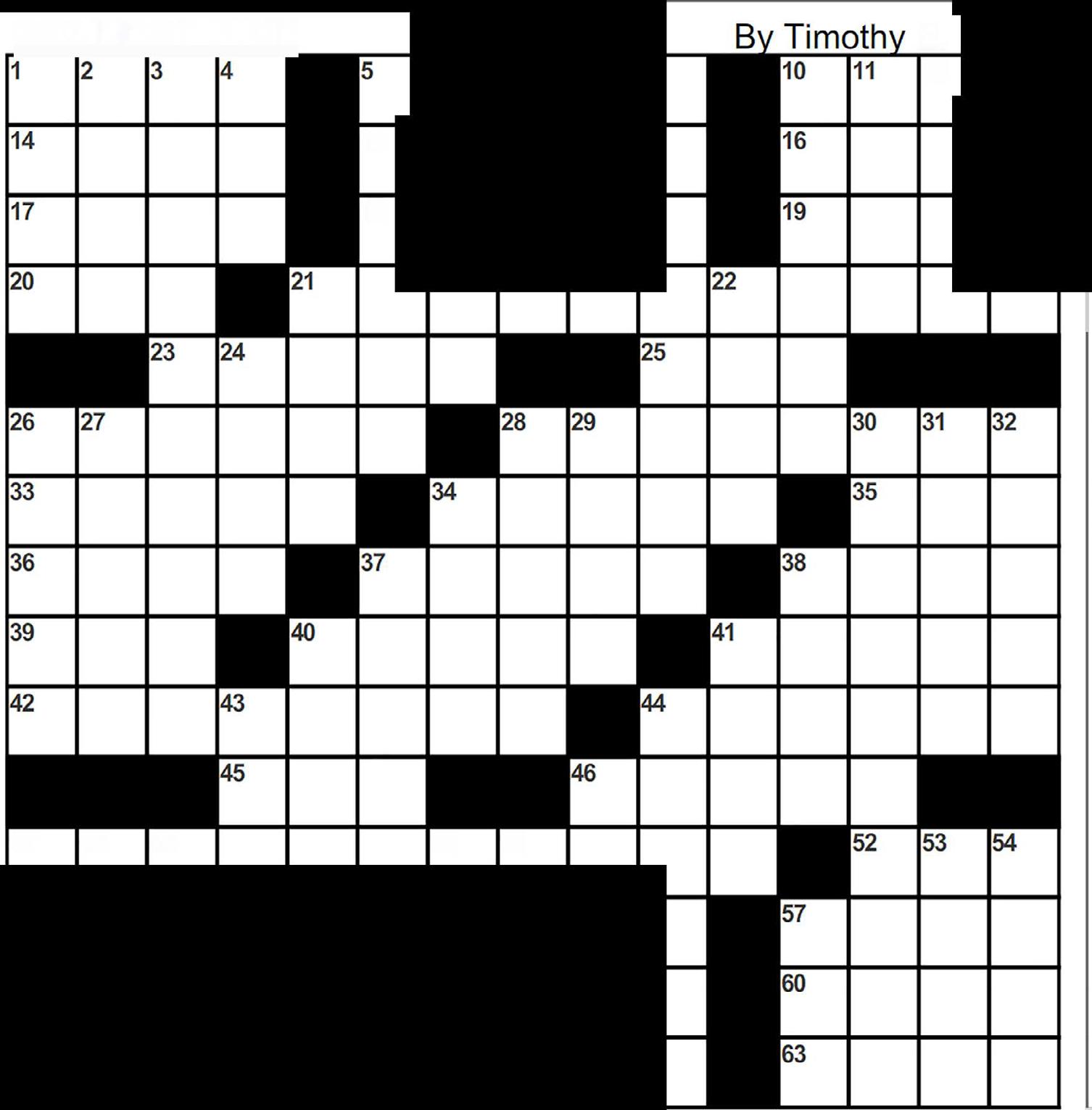
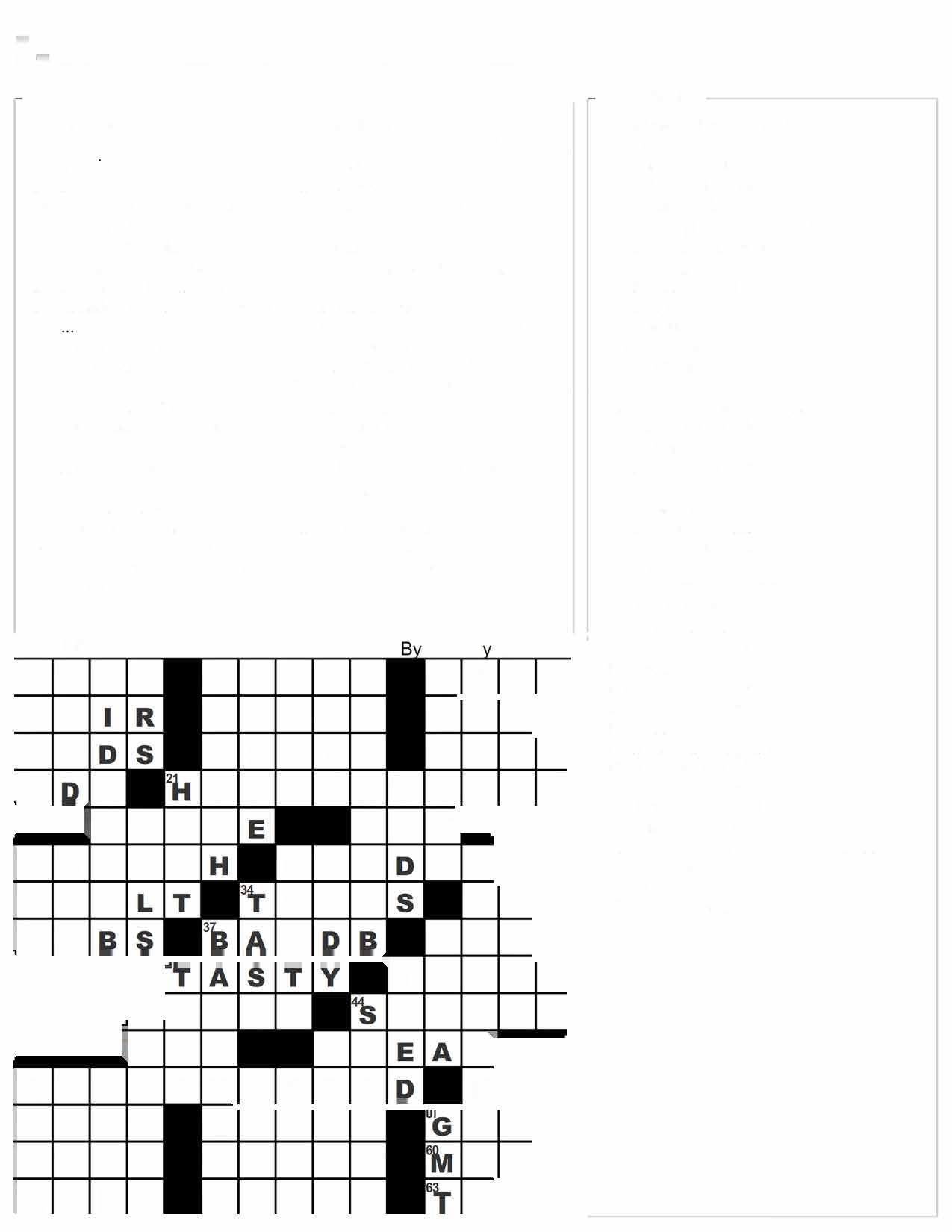
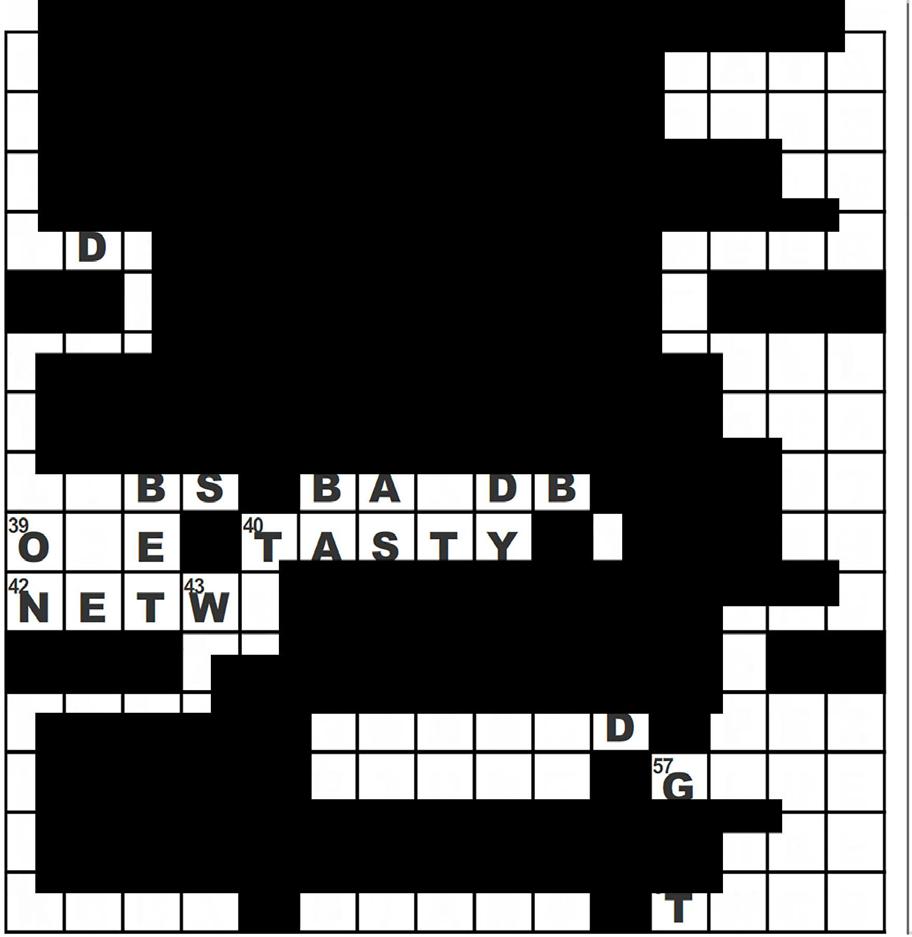
i� FreeDailyCrosswords.com
GRAY MATTER GAMES
ACROSS
ACROSS
1) Study all weekend
5) Newton with a bump on the noggin
I 0) Pompous "bye"
14) Murder mystery suspect
15) Saki's real last name
16) 37-Across booking
17) Brings to a conclusion
18) Pumpkin eater of rhyme
19) "Render therefore _ Caesar II
20) Org. approving new medicines
21) Well-connected kids' game
23) Western film "necktie"
25) Band-Aid necessitator
26) In style
28) High-pressure pitch
33) Glorify
34) One of the Barbary States
35) Constrictor snake
36) Ad-_ (improvises)
37) Well-connected travel guide listing
38) Set edge-to-edge
39) "To Crosswords" could be one
40) Sapid
41) Garbage
42) Socializes in search of new business
44) Submerged nets
45) It may appear after a long time?
46) Far from trailing
47) Like well-connected natives
52) Cap from Morocco
55) "This won't hurt _"
56) Gradually surrender to wind and water
57) Model builder's need
58) Chanel's famous fragrance
59) Where you look better upon exiting
60) "Encore!"
61) Acute, as vision
62) Astral objects
63) They provide easy times DOWN
l) Master of whipping, beating and stuffing
2) Violently split
3) What well-connected lookouts do?
4) Woman who made it official
5) Like a playfully naughty grin
6) Blue shoe material of song
7) Starting poker chip
8) Neighborhood
9) Farm storage site
10) Has faith in
11) Sensational rating
12) Carry-on bag
1) Study all weekend
13) Run_ (go nuts)
21) One expecting an RSVP
5) Newton with a bump on the noggm
22) They don't go "boom!"
I 0) Pompous "bye"
24) Lubricates
26) Breakfast side, sometimes
14) Murder mystery suspect 15) Saki's real last name