



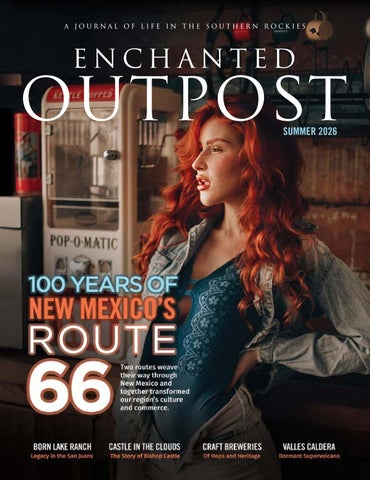
SUMMER 2026
A New Mexico Legacy In The Making
For a century, Route 66 has carried dreamers across New Mexico, weaving through neon towns, desert horizons, and stories. Its centennial honors the spirit of freedom, resilience, and discovery that shaped communities along its path, inviting a generation to rediscover the Mother Road’s promise of adventure.
The Mesmerizing Architecture of Jim Bishop
Rising from the forested mountains of southern Colorado, Bishop Castle stands as a testament to one man’s vision, perseverance, and imagination. Built stone by stone, its towers, bridges, and ironwork invite visitors into a living monument of creativity, defiance, and enduring frontier spirit still today.
Where an Outlaw Laid Down His Guns and Built A Legacy
Hidden deep within Colorado’s San Juan Mountains, Born Lake Ranch offers a rare sanctuary of alpine stillness, cabins, and wild beauty. Surrounded by towering peaks and reflective waters, the ranch embodies the spirit of the West, where solitude, nature, and heritage converge in quiet harmony.
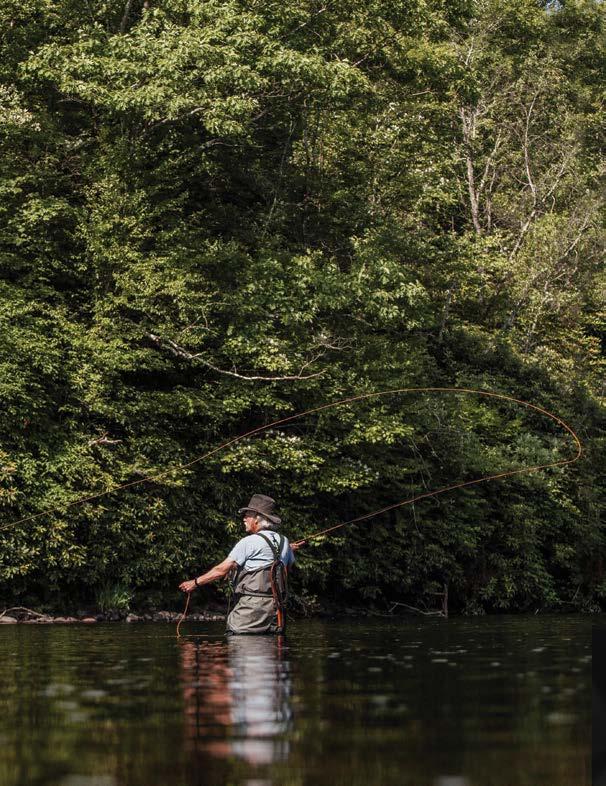
The rhythm of casting. The cold pull of current. The flash of trout snapping memory into the present. In our Adventure section, we visit seven regional rivers—woven into anglers’ hearts and local lore, with trout waiting for the wood-framed net.


SUMMER 2026
52 Capturing the View From Here
54 Road Trip Worthy: Royal Gorge
56 READ: Campfire Stories
56 TOUCH: Tierra Wools
56 LISTEN: Taos Hum
57 WATCH: Ken Ludwig’s Moriarty
57 TASTE: Shane’s Flaming Brisket Poppers
58 SUPPORT: Museum of Friends
58 SIP: Strawberry Jalapeño Margarita
58 RELAX: Plaza Hotel Las Vegas
60 CALENDAR: Featured Regional Events
62 Our Seasonal Art Exhibition
70 Las Campanas Country Club
76 Santa Fe Farmers’ Market
80 Local Craft Breweries
92 Del Norte On The Rise
100 Books of the Southwest
104 Trinidad’s Majestic McCormick Building
112 Flamenco Nuevomexicano
118 Strings of Fire: Ristras
122 Batik Life at Shalawalla Gallery
132 Fly Fishing on Seven Regional Rivers
152 Kasha-Katuwe Tent Rocks Monument
156 Hiking Long’s Canyon Trail
162 Valles Caldera National Preserve
168 Understanding Alpine Lake Algae
172 The Migration of the Miller Moths
177 A Last Look for the Season
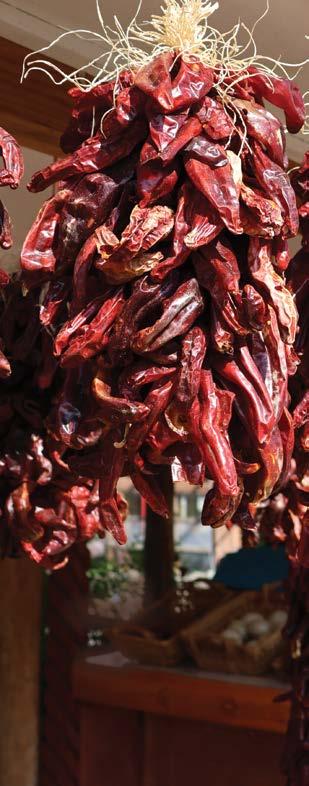
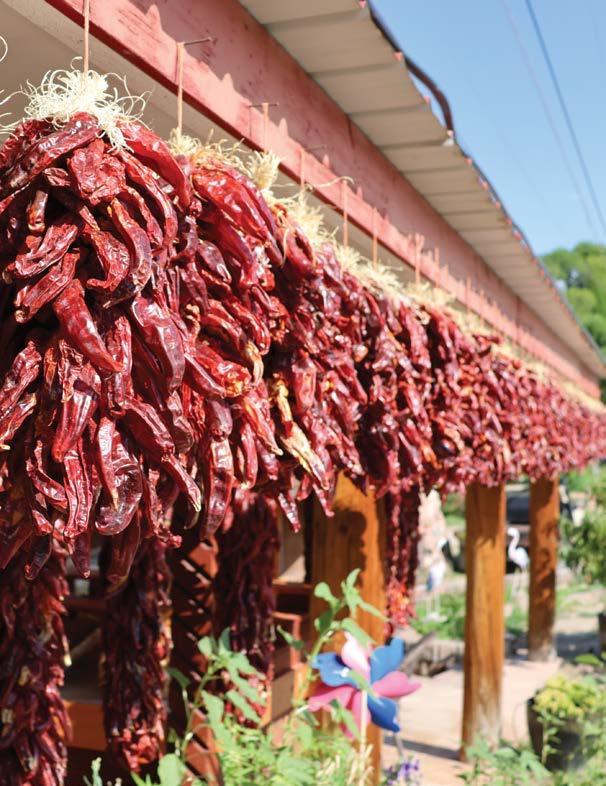
Bundles of crimson ristras hang like living lanterns, their scent sharp in the warm air, at a local farm market in Velarde, New Mexico. Ristras tell stories of harvest, tradition, and sun-dried patience. Each strand carries the flavor of the land, waiting to find its place in kitchens and memories alike. In our culture article about ristras, discover their history, uses, and nostalgic charm that is true New Mexico.



It’s the respite we all need from the mind-numbing black hole of the endless scroll.
As we enter our third year of publishing Enchanted Outpost, I thought I would take a moment to share a little about our progress. This is our fifth issue of the magazine, and in that short time we have grown in countless ways.
Launching a magazine is nothing short of daunting. The cost to print a high-quality magazine is significant, so we are profoundly grateful to all our advertisers and paying subscribers. It’s because of them (or you!) that allows us to produce quality content wrapped in the exceptional presentation we design and distribute for our region of New Mexico and Colorado.
The magazine is now distributed to over 900 locations in 40 communities, including 80 hotels in three states. We have paying subscribers in 32 states, some as far away as Alaska and New Hampshire. We’ve expanded our reach to several hundred new distribution locations in Santa Fe, Taos, Amarillo, Lubbock, and farther into Albuquerque.
We are tremendously proud of Enchanted Outpost. It’s a labor of love, and I hope that it shows. And, we hope it always finds a place on your coffee table or collected on your bookshelf. In a world of mass digital content availability, we invite you to pause, touch our pages, read our stories, and allow them to touch your heart. We’ll meet you inside on every page.
To round out our offerings, we have now launched a second publication called Go Out Guide. This pocket-sized travel companion is focused specifically on the Enchanted Circle region of northern New Mexico and highlights all the communities located on—and immediately surrounding—the Enchanted Circle Scenic Byway. Watch for this publication to expand online later this year. The first printing of Go Out Guide will
be 12,000 copies, distributed alongside Enchanted Outpost magazine at over 500 locations around the Enchanted Circle.
As if I didn’t already have enough writing to do, I’m very excited to share that I published my second book in March 2026, a hardcover titled A Return to Human Nature: A Blueprint for the Future of Humanity in the Wake of Emerging Intelligence (Outpost Alliance, LLC, available from a variety of retailers through Ingram Publishing). The audio version is also in the works. My first book, Rediscovering Your Divine Music: Finding Harmony and Balance Through Inner Peace (Token Rock Publishing, available on Amazon), was published in 2011. It centered on concepts of human sustainability on the planet through a connection to nature. In it, I outlined our need for overcoming personal belief systems and utilizing the tools of forgiveness, release, and a return to love in order to find our interconnectedness with one another.
My new book expands on that concept and outlines the opportunity humanity has to focus on the New Warrior ethos of integrity, honor, and compassion for one another. It offers a blueprint for how humans can co-create a sustainable, abundant world alongside emerging intelligence—a choice we must make as a collective species; albeit a controversial one.
If you are a reader—especially one who likes to read real books—I’m delighted to share our quality publications with you.
It is easy to scroll away your morning, lunch hour, and evening on your personal digital device. And, we acknowledge that tendency. In fact, we even embrace it at our magazines by incorporating rich digital content into our stories using QR codes. But ultimately, our publications are designed to give you a brief vacation from screen time and
“That, after all, is my life’s purpose.”
“My golden mission is to utilize my creativity and set of skills to inspire the world.”
return to the sacred space between pages of paper for a truly tactile and personal reprieve.
I’m no stranger to content creation. For more than ten years, I was host of the popular YouTube show 4XPEDITION Adventurer, which was watched by 100,000+ monthly viewers from 50 countries. The channel offers 130 one hour-long videos on outdoor adventure and the pursuit of cabin living. Through the channel, I was a social influencer for a wide range of outdoor product manufacturers. I also ran a recognized digital marketing agency in Scottsdale, Arizona for more than 16 years.
So, needless to say I have created and leveraged more content than most. And at the end of the day, I still strongly believe in the value of print publications. There’s just something about reading a book or magazine that delivers a memorable experience, unlike digital content that can often spiral into a mind-numbing black hole of dopamine trigger scrolling.
If I can entice you to read for an hour a week, immersed in the peaceful, thought-provoking yet refreshing world of print, I feel I have done my part to help ground you. And, if through my efforts I can slow humanity to a manageable pace, well then, every hour I have spent in front of my screen writing and designing the things we publish was well worth it. That, after all, is my life’s purpose. As a New Warrior of the Mankind Project® (learn more about this by reading my new book), my golden mission is to utilize my creativity and set of skills to inspire the world.

Scott Leuthold PUBLISHER & COFOUNDER
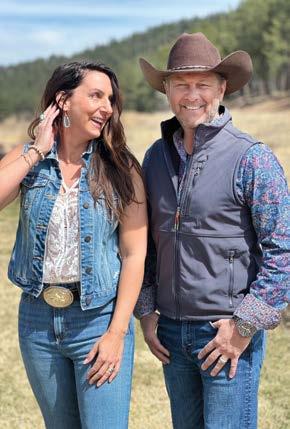
Paying forward just a little bit of love.

Our brother-in-law, Dorsell Lyrics, is a songwriter and created a song for us and Enchanted Outpost called, She’s My Home. We would like to share it with you. Scan the QR code to listen on YouTube. Everything we do is built on love: Love of New Mexico. Love of the mountains. Love of the American Southwest. Love of our clients, neighbors, friends, and family. Love for each other. Nothing else really matters. Pass it on.


Publishers and Cofounders
Scott and Heather Leuthold
Creative Director and Lead Designer
Scott Leuthold
Copy Editor
Lauren Wise Wait
Advertising Sales
Collin Leuthold, Director of Sales cleuthold@outpostalliance.com (480) 353-8798
Distribution
Heather Leuthold distribution@outpostalliance.com
Check out Go Out Guide, our new travel guide for the Enchanted Circle of New Mexico. GoOutGuide.com
Talk to us:
To leave comments, make suggestions, or report errors, please complete the contact form on our website.
Visit us online at: enchantedoutpost.com
Enchanted Outpost is distributed through a variety of outlets in northern New Mexico, southern Colorado, and Texas and by mail through subscription service.
OUTPOST ALLIANCE, LLC and Enchanted Outpost PO Box 1650, Angel Fire, New Mexico 87710
©2026 Outpost Alliance, LLC. All rights reserved.
No part of this publication may be reproduced, distributed, or transmitted in any form or by any means, including photocopying, recording, digital scanning, or other electronic or mechanical methods, without the prior written permission of the publisher, except in the case of brief quotations embodied in critical reviews and certain other noncommercial uses permitted by copyright law. For permission requests, please complete the contact form on our website.

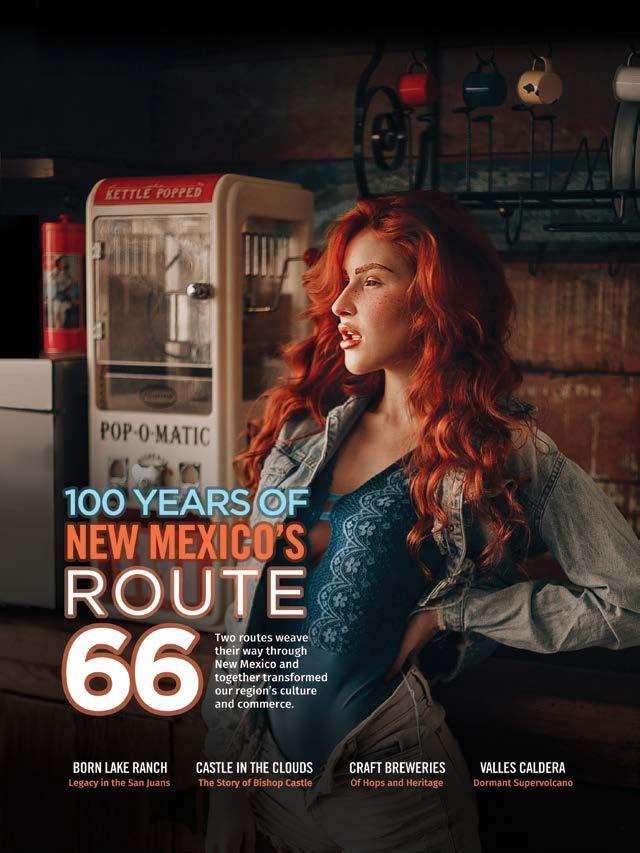
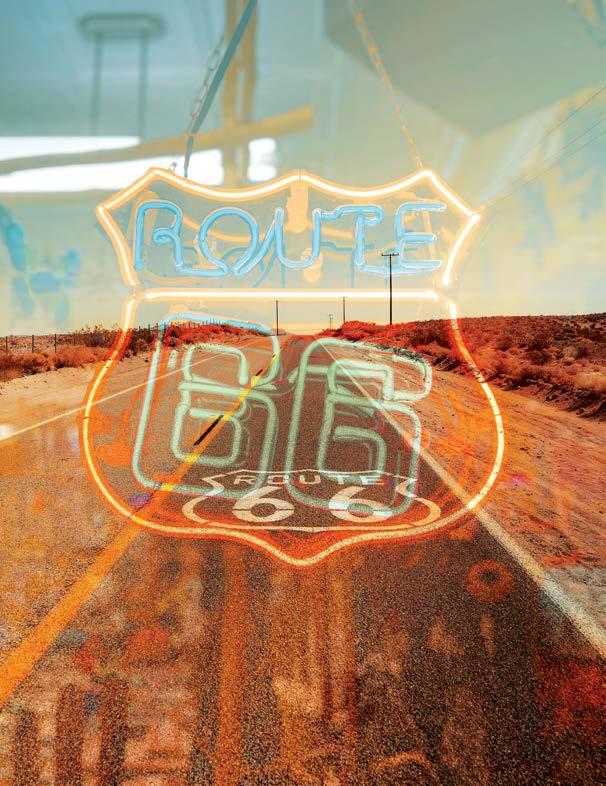
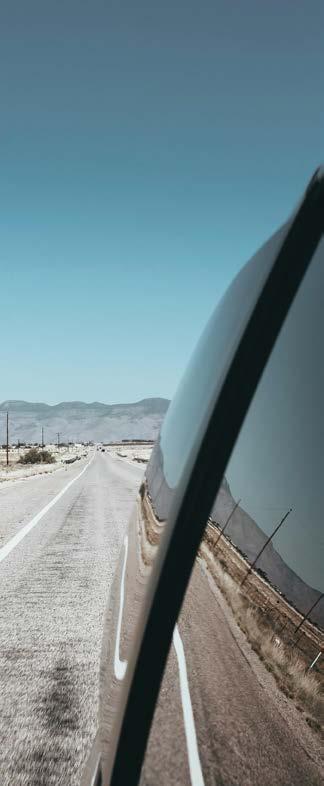
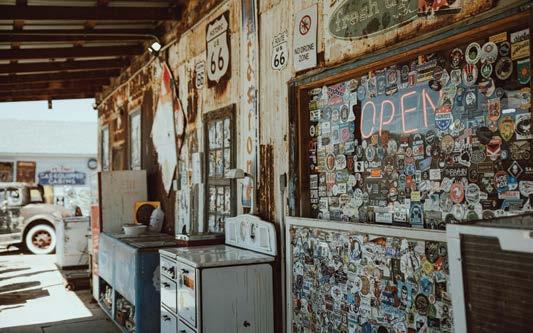
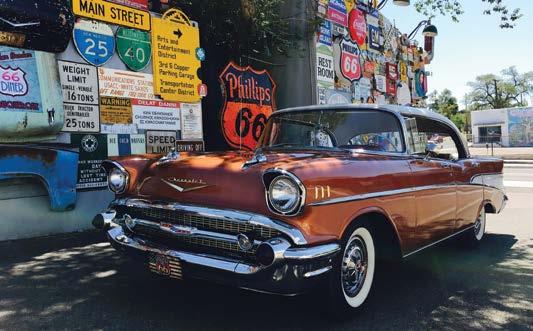
Route 66 celebrates its centennial in 2026. Communities from Chicago to Santa Monica will celebrate and New Mexico is no exception, honoring the importance the highway has played in our state’s history.
Photo: Fernando Albuquerque

Lauren Wise Wait
Lauren is an Arizonabased writer and editor who believes every great story has the power to connect and inspire. Her work has been published by VICE and LA Weekly. She loves to cook, travel, and teach her young son about desert critters and plants.

Lisa is a freelance writer living in Albuquerque, New Mexico. She loves being outdoors, hiking, backpacking, paddle boarding, and spending as much time as possible at her family’s property in the mountains near Angel Fire, New Mexico.

Johnathan Evens
Jonathan Evans is a well-known English batik artist and writer living in La Veta, Colorado where he and his wife, Beth, run Shalawalla Gallery. He is the co-author of A Book of Batik showcasing a collection of batik art and the process in creating the art style.

Shelli Rottschafer
Shelli lives in El Prado, New Mexico and Louisville, Colorado with her partner, photographer Daniel Combs, and their Pyrenees-Border Collie. She completed her doctorate in Spanish from the University of New Mexico, Albuquerque (‘05) and her MFA in Creative Writing from Western Colorado University, Gunnison (‘25).

Jane Schneider
Jane Schneider is an award-winning journalist and travel writer who enjoys hiking, paddling and exploring new destinations. She’s been published in more than 30 outlets, including Adirondack Life, Memphis Magazine, the National Parks Traveler and others.

Collin Leuthold
Collin is a creative individual with a passion for music, short film production, vintage cameras, old cars, and supporting dreams. As a Mankind Project New Warrior, he values accountability and a deeper understanding of Self. He’s originally from Scottsdale, AZ, and a graduate of Grand Canyon University.


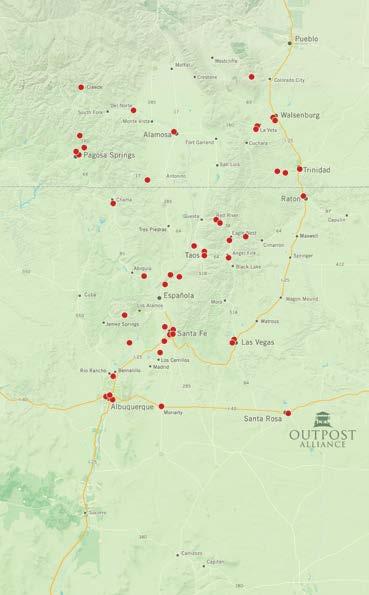
Our content and distribution region spans the state border and covers Pagosa Springs, Colorado east to Trinidad, Colorado and from Pueblo, Colorado to Albuquerque, New Mexico.
The locations of our subject matter in this issue of Enchanted Outpost are shown on the map to the right, illustrating our commitment to delivering unique stories from the 40+ communities we serve.
As an upscale, regional lifestyle magazine, we strive as a publisher to optimize our engagement with readers. To do so, you will discover opportunities with many of our articles to utilize your smartphone to extend the reading experience with interactive content. We employ the use of QR Codes to streamline the process of opening website links. As of the date of publication, all QR Codes resolved to their respective destination URLs.

QR Codes are easily read by most current model smartphone cameras. To read a QR Code, open the camera app on your phone. Point the camera at the QR Code. Your smartphone will recognize the code image and offer a link on the camera screen that you can tap with your finger. Doing so will open the website address in your smartphone browser. For further instructions, please refer to the owner’s manual of your mobile device.
We continually strive to improve the reading experience of our magazine with a goal of being the best regional lifestyle magazine in the country.
New Features:
• Added a new section called Outpost Gallery—a regional fine art exhibition located before Lifestyle.
• Renamed Waypoints’ Stay to Relax.
COVER STORY
STORY BY LAUREN WISE WAIT
In 1926, the year a gallon of gasoline cost less than twenty cents, a committee of highway officials in Springfield, Missouri agreed on a number: 66. The designation was almost an afterthought—a compromise after “60” was already taken—but the patchwork of existing roads for the new highway system now had a name. Nobody knew it would become the most storied highway in American history.
Stretching 2,448 miles from Chicago to Santa Monica, Route 66 threaded together eight states and hundreds of communities that had never before been stitched into a single national corridor. It carried Dust Bowl refugees west during the 1930s and military convoys during World War II. Then the soldiers came home and turned it into something else entirely. Veterans packed up their families and ventured west, feeding a roadside economy that announced itself in neon and ingenuity: teepee-shaped motels, iceberg-shaped shops, snake pits, giant muffler men. Each town competed for the next mile of your attention.
By mid-century, Route 66 wasn’t just infrastructure. It was mythology. In 1939’s The Grapes of Wrath, John Steinbeck called it “the mother road, the road of flight.” American songwriter Bobby Troup turned it into a song while on a road trip with his first wife, Cynthia Hare Troup, in 1946. “(Get Your Kicks on) Route 66” went on to be sung by Nat King Cole.
But the highway’s story was never only a national one. In every state it crossed, Route 66 took on the character of the land and people it served. As David King Dunaway, author of A Route 66 Companion, puts it: “To understand Route 66, you have to go back to the native settlements: the animal trails that were followed by Native Americans, and then the people
PHOTO | VINCENT GERBOUIN
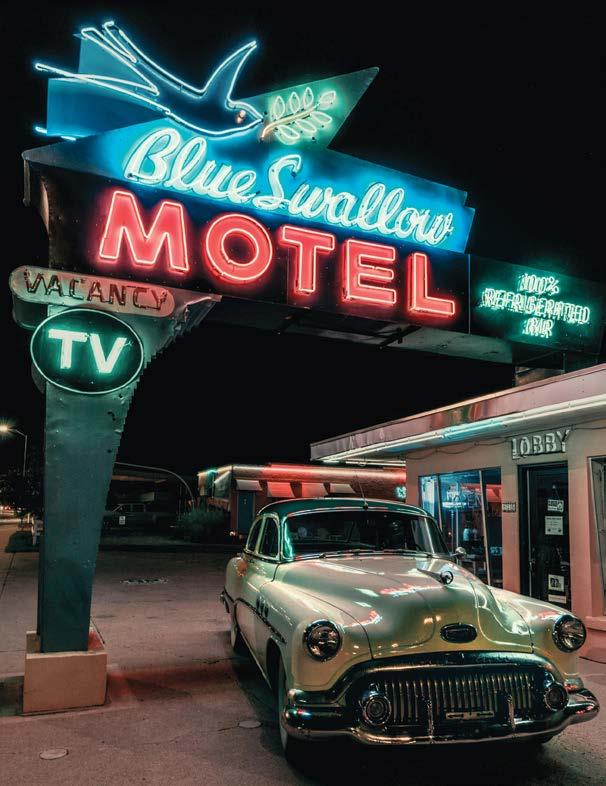
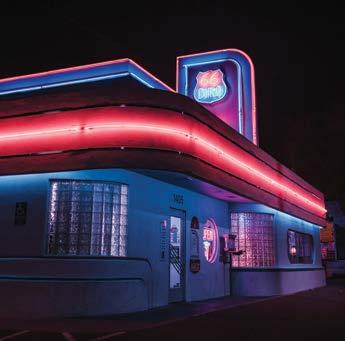
served road-tripping guests for more than 85 years. The establishment is a Route 66 landmark and is a member of the National Register of Historic Places.
“It was scenic, culturally rich, and inefficient. Much of the road between Santa Rosa and Santa Fe was unpaved and bone-jarring.
who followed the Native Americans on trains, stagecoaches. . .” Nowhere was this truer than in New Mexico, where the road wove through landscapes that had been home to Pueblo peoples for millennia, through former Spanish colonial outposts, and across mesas and high desert that challenged even the most ambitious roadbuilders of the early twentieth century.
This year, as Route 66 marks its centennial, New Mexico’s stretch of the Mother Road offers a story within the story—one of two dramatically different alignments, communities that rose and fell with the rhythm of passing traffic, and a cultural legacy that still pulses through neon-lit main streets from Glenrio to Gallup.
The Governor’s Revenge (And Other Ways New Mexico Rewrote the Map)
New Mexico is the only state where Route 66 had two fundamentally different personalities. The original 1926 alignment was a sprawling, 507mile S-curve: from the Texas border at Glenrio, the road ran west through Tucumcari and Santa Rosa before swinging north through the Sangre de Cristo foothills to Santa Fe—passing right through the historic plaza and alongside La Fonda hotel. From there, it
descended the switchbacks of La Bajada Hill, wound south through Albuquerque, continued to Los Lunas and Isleta Pueblo, then finally U-turned northwest to rejoin the east-west corridor at Laguna Pueblo.
It was scenic, culturally rich, and inefficient. Much of the road between Santa Rosa and Santa Fe was unpaved and bone-jarring.
The story of how this changed involves one of New Mexico’s most colorful political anecdotes. Former Governor Arthur T. Hannett, a Gallup man who lost his 1926 reelection bid thanks to Santa Fe political bosses, pushed for a new, shorter alignment that would bypass the capital city entirely. The move became known as “Hannett’s Joke”—revenge served on asphalt. By 1937, the realigned Route 66 cut straight from Santa Rosa through

Moriarty and Tijeras Canyon into Albuquerque, then west through Laguna—shaving 107 miles off the journey and, in the process, redrawing the economic map of central New Mexico.
The consequences were immediate. Towns along the new alignment saw a rush of new motels, gas stations, and cafés. Meanwhile, communities on the old northern loop watched their traffic vanish almost overnight. Not every bypassed town disappeared—Bernalillo, Los Ranchos, and Los Lunas have continued to grow and evolve—but the divide has never fully healed.
“Some towns have become bypassed ghost towns while others thrive as bustling tourist corridors,” says Melissa Lea Beasley-Lee, President of the New Mexico Route 66 Association and Editor in Chief of Route 66 New Mexico Magazine.
“One of the most misunderstood
aspects of Route 66 in New Mexico is its mileage,” she adds. “Many people overlook the significance of the pre-1937 alignment, which is just as important as the post-1937 route. Combined, these alignments total 604 miles, making New Mexico the state with the most Route 66 mileage among the eight states through which the highway runs.”
The second and final bypass came from Washington. President Eisenhower’s Federal-Aid Highway Act of 1956 authorized the creation of the interstate system, and Route 66—all 2,448 miles of it—was officially decommissioned in 1985.
The Towns Route 66 Built
Route 66 created communities from nothing, and when the traffic left, some returned to nothing. That tension pulses through every town along New
Mexico’s stretch of the Mother Road. Glenrio
Straddling the Texas/New Mexico state line, Glenrio is now a National Historic Site and one of Route 66’s most haunting ghost towns. In its heyday it had a motel on each side of the border—the Texas side dry, the New Mexico side selling liquor—a practical division that tells you everything about how Route 66 communities learned to serve travelers’ every need. Today, you’ll find Smoke Stop and plans to revitalize the area.
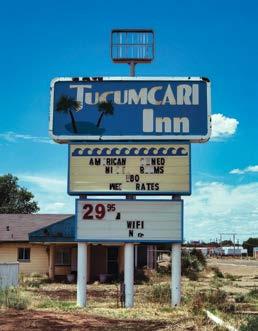
For hundreds of miles in every direction, billboards promised the same thing: “Tucumcari Tonite!” advertising 2,000 motel rooms. The town delivered. Founded in 1901 as a railroad outpost, Tucumcari became the crown jewel of eastern New Mexico’s Route 66 corridor. At the heart of it all was the Blue Swallow Motel, built in 1939. Almost every article about Route 66 mentions Blue Swallow and Lillian Redman, who arrived in New Mexico in 1915, worked as a Harvey Girl, and ran it from the late 1950s to 1998. Today, Robert and Dawn Federico, who left Chicago corporate careers during COVID to keep the neon glowing, carry on her legacy. But there are other gems here rarely mentioned. Like the Motel Safari, a motor court opened in 1959 known for its Googie-style design (a flashy mid-century style architecture), which now emphasizes two retro, 1960s-themed suites: Rawhide pays tribute to the classic Western TV series (several episodes were filmed near Tucumcari), while the Rockabilly suite honors the legendary memorabilia from renowned musicians who have stayed at the motel over the years. And Tee Pee Curios, established in 1944, whose distinctive 25-foot concrete teepee entrance remains a popular souvenir and photo stop.
In late May of 2023, a hailstorm
destroyed nearly every neon sign in Tucumcari. The New Mexico Route 66 Association launched a fundraising effort and secured a $50,000 grant from the National Trust for Historic Preservation. Nine neon signs restored—with hands-on help from Los Angeles neon professional Paul Greenstain, who volunteered his time—and four do-it-yourself restoration videos are now available on Amazon Fire TV and Roku.
Santa Rosa is the literal fork in the road. Here the pre-1937 alignment bent north toward Santa Fe while the 1937 route punched straight west—a split that defines the town’s identity. The Blue Hole, an 80-foot-deep artesian spring, draws divers worldwide. Joseph’s Bar and Grill, formerly Club Café (opened 1935), is a living artifact of the motor court era. For the centennial, Santa Rosa has invested in a new recreational park embracing a Route 66 theme, designed for both locals and visitors.
A main attraction here is the Route 66 Auto Museum, which was opened in 2000 by James “Bozo” Cordova and Anna Cordova. The museum showcases more than 30 restored vintage cars, hot rods, and antiques, including bicycles, neon signs, motorcycles, and glass fuel pumps.
From 1926 to 1937, Route 66 ran through the Santa Fe Plaza itself, where the Santa Fe Trail, the Camino Real, and centuries of Spanish colonial presence all converge in one intersection. La Fonda on the Plaza hosted Route 66 travelers alongside artists and politicians. El Rey Court, built in 1936, still operates as a reimagined motor court. When the 1937 realignment bypassed Santa Fe, the city lost its direct Route 66 connection—but its draw as a cultural
destination proved stronger than any highway.
Moriarty was born from the 1937 realignment, a fact its residents still feel. There’s the Sunset Motel, a classic mid-century motor court established in 1959 by Bill and Elaine Pogue. It is notably the last remaining original Route 66 motel in New Mexico still owned and operated by the founding family bloodline. The Whiting Bros. (Station #72) was built in 1954 as part of a large chain known for over 150 locations with bold red-and-yellow signs along Route 66, providing fuel and lodging for travelers. It is the last operating location of the historic Southwestern chain. Longtime employee Sal Lucero purchased the station in 1985, preserving the original signage and iconic style. Though it no longer sells fuel, as of March 2026, the hope is that someone will purchase it and carry on its legacy.
And few people understand what that realignment meant better than Sonja Britton, 86, who has lived on Route 66 in Moriarty since she was four years old. Her father, Hubert “Blackie” Ingram, ran a business simply called Blackie’s—a full tourist stop open from 5 a.m. to 10 p.m., selling custom-made Western suits, Stetson hats, boots, souvenirs, and local food. Sonja grew up working alongside loyal employees and a steady stream of travelers hungry for the road’s promise.
“Our customers came from near and far, excited to be traveling and experiencing the magic of Route 66, eager to buy souvenirs and taste local food,” Britton says. “My dad was charismatic and mingled with them at ease, telling them stories about local culture and history.”
When the interstate threatened to bypass small towns entirely, Blackie fought to keep highway exits for the
community. For Sonja, Route 66 was never abstract; it was survival.
“It was the heartbeat of our community,” Britton says. “It infused us with new blood in the summer and helped us survive through the winter. It kept us alive.”
Albuquerque holds a distinction unique in all of Route 66’s history: it is the only city in New Mexico to appear on both alignments. The original route ran north-south on Fourth Street through the Barelas neighborhood; the 1937 alignment ran east-west on Central Avenue. The intersection of Fourth and Central is one of the rare spots in America where two major Route 66 alignments physically cross. Central Avenue (Route 66) is the longest, continuous main street stretch of Route 66 in any city, running for 18 miles from east to west through Albuquerque.
Nob Hill’s neon strip, the KiMo Theatre (1927, Pueblo Deco), Maisel’s Indian Trading Post, and recently renovated motels like El Vado, Monterey Motel, and the Imperial all keep the corridor vibrantly alive. Hotel ZAZZ brings modern energy as a renovated motel from 1996, with a focus on art: The hotel received the 2022 Heritage Preservation Award from the New Mexico Route 66 Association and includes 48 rooms (including 6 custom suites), an outdoor pool, a courtyard, and a hidden speakeasy.
Laguna Pueblo and Pueblo Communities
Route 66 passed directly through Laguna Pueblo and near Kewa (Santo Domingo) Pueblo—part of a broader pattern in which the highway intersected with Indigenous communities in ways both exploitative and economically vital. Trading posts like Maisel’s and the De Anza Motor Lodge in Albuquerque were built to echo Pueblo design
| WENDY WEI
and employed Native craftspeople. The road through New Mexico runs through nine Native American nations, including eight Pueblos and the Navajo Reservation—a dimension of the Route 66 story that distinguishes New Mexico from every other state on the corridor.
Grants and Milan
Grants has layered identities: railroad town, Route 66 way station, and uranium-boom capital after Paddy Martinez’s 1950 discovery. For the centennial, the town completed an extensive project of at least fifteen murals through a MainStreet grant, with individual businesses adding more. Route 66 murals and the neon drivethrough arch mark the town today. In nearby Milan, a vintage gas station is being restored.
Gallup
The western anchor of New Mexico’s Route 66 corridor, Gallup is the only New Mexico city Bobby Troup name-checked in “(Get Your Kicks on) Route 66.” It’s still known as the
“Gateway to Indian Country” because it accurately highlights Gallup’s role as a travel hub into the Navajo Nation, Zuni Pueblo, and Hopi lands. The El Rancho Hotel hosted Hollywood stars filming Westerns in the 1930s through ’50s. Route 66 split into two one-way streets through downtown at Coal Ave. creating the distinctive Y shape that remains today.
The Route 66 story in New Mexico is also told in the smaller towns that bookend the major stops: San Jon, with its fading motel signs and unpaved original alignment toward Glenrio; Montoya, where Richardson’s Store served ranchers before Route 66 motorists; Newkirk, where the ruins of Wilkerson’s Store mark a near-ghost town; Clines Corners, where Roy Cline’s 1934 rest stop at the highway junction has grown into the largest Southwestern gift shop in New Mexico; and the high-desert waypoints of Prewitt, Continental Divide, Fort Wingate, and Manuelito.
What the Neon Still Knows
“In a fast-moving world, Route 66 provides something increasingly rare: a lasting sense of place that encourages people to slow down, connect, and immerse themselves in the unique character of the communities along the historic road,” says Beasley-Lee. “These sites offer more than just a glimpse into the past; they allow people to immerse themselves in the legacy of our country.”
As the centennial year unfolds, that sense of place is being actively reinforced by communities up and down the corridor. State tourism centennial grants have supported mural projects in Grants, gas station restoration in Milan, and wayfinding signage in Gallup. The NM Museum of Art’s “Roadside Attractions” exhibit runs March through October 2026. The New Mexico Route 66 Association issued a limited-edition
centennial coin that sold out within eight hours.
The clock is running on living memory, and institutions up and down the corridor know it.
“The University of New Mexico’s Route 66 Oral History Office houses ten volumes of history compiled by Dr. David King Dunaway, including his acclaimed three-hour National Public Radio series,” she says. “The National Trust for Historic Preservation provides an opportunity for individuals to ‘Share Your Route 66 Story’ on their website. And plans are underway for a National Route 66 Repository in Albuquerque—a central location for historic archives from all eight states, including video, audio, and written stories, for future generations to explore.”
But it’s the underlying stories of travelers, the somehow well-worn, yet off-the-beaten path feeling of wonder, the immersion into the legacy of this country, that make Route 66 what it is today. Not the grant-funded murals or the wayfinding signs (though those matter) but the generations still greeting visitors every day, the red and green chiles that adorn every traditional menu, the adobe that has outlasted every bypass.
A hundred years on, the Mother Road still runs through New Mexico— not because anyone needs it to get from here to there, but because the places it touches refuse to let it go. t

rt66nm.org




C L O U D S I N T H E

Drive the twisting roads of southern Colorado’s San Isabel National Forest, and there’s a good chance you will glimpse something surprising: a structure that looks pulled from the pages of a fantasy novel or a Dungeons and Dragons computer game. Spires pierce the sky above the tree line; it’s a huge structure that’s impossible to ignore. This is Bishop Castle—one of the most unexpected, mind-bending projects that I’ve ever come across. For more than twenty years I have been making the pilgrimage to visit it, often with guests, and I consider it the Ninth Wonder of the World, right up there with the Taj Mahal or Arc de Triomphe. Bishop Castle is a testament to one man’s vision and obsession. That man was Jim Bishop, who as a teenager bought a few acres of rugged land in the middle of a forest. What started as a cabin for his family grew into a lifetime’s work and a full-blown castle. Told he would never amount to anything, Jim carved his own path. He had no formal training in construction but was an expert wrought-iron worker with a job in nearby Pueblo. He learned as he went, driven by a vision he realized one stone at a time. There is also an element of personal tragedy underlying it all: Jim lost his son in a logging accident. I have always found it impossible not to read the whole Castle as a monument to that loss—and to the grief that can be transformed, stone by stone, into something magnificent. Without a plan, a blueprint, or a crew, the Castle grew steadily over six decades. It rose stone by stone, weld by weld, to an astonishing 160 feet. Jim is estimated to have handled each of the thousands of tons of rock an average of six times before it found its final resting place. He used a complex system of pulleys and a pickup truck engine to hoist massive logs and heavy stones into
Story by Jonathan S. Evans
position. His masterful wrought-iron balconies, staircases, and guard rails thread through the structure at every level. The result is both beautiful and terrifying; a monument that defies logic, belief, and more than a few building codes. Along the way, Jim fought the law, battled rules and regulations, took on the system—and won.
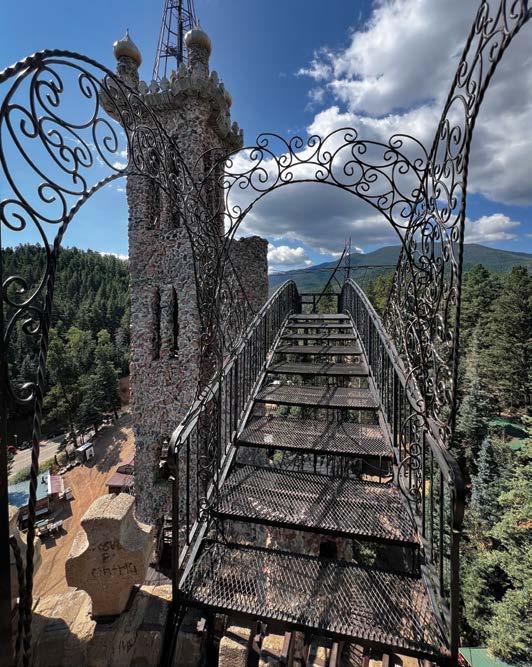
I met Jim on my very first visit. Parking on the road, I looked up to see—150 feet above my head—a man crawling across a bowed metal extension ladder suspended between two towers. He was speaking clearly about the Castle while a German film crew recorded him from one end. He later built a wrought-iron bridge between
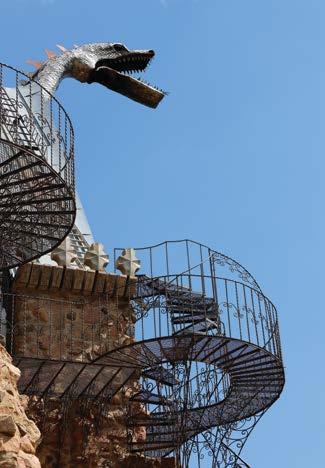
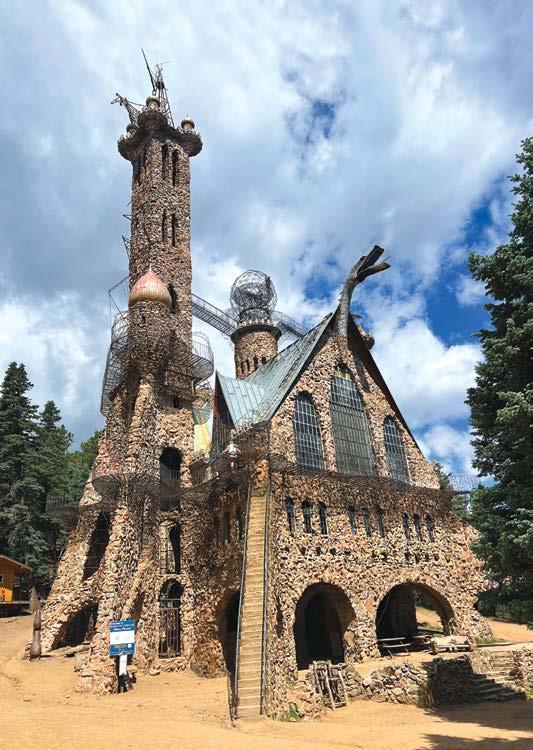
Bishop Castle was constructed by Jim Bishop across a span of more than 50 years. The stones used in its construction were harvested from the surrounding San Isabel National Forest.
PHOTO | HEATHER LEUTHOLD
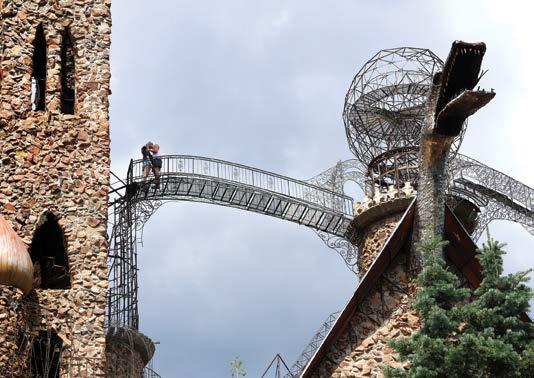
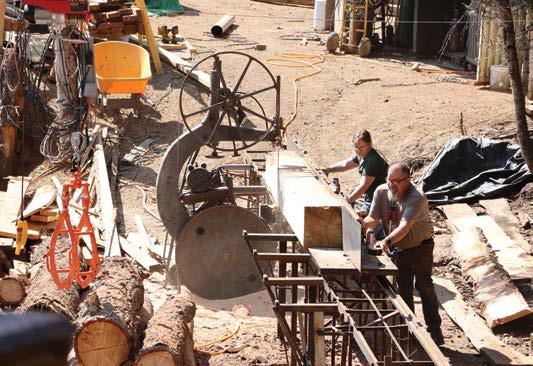
the towers, but at that moment I would not have crawled across that ladder for a million dollars. Over two decades of visits, I came to know Jim as an uncompromising man: a passionate believer in the freedom and capability of the individual. He sourced all his stone from the local mountains, hauling it by hand or small tractor, and working without formal plans, he designed and built every arch, every spiral staircase and balcony, every parapet and window. He was architect, stonemason, wrought-iron worker, crane operator, and laborer.
Jim’s almost adversarial relationship with the structure is etched into every stone. The Castle is chaotic and beautiful—patently unfinished, unapologetically rambling. Steps lead nowhere;
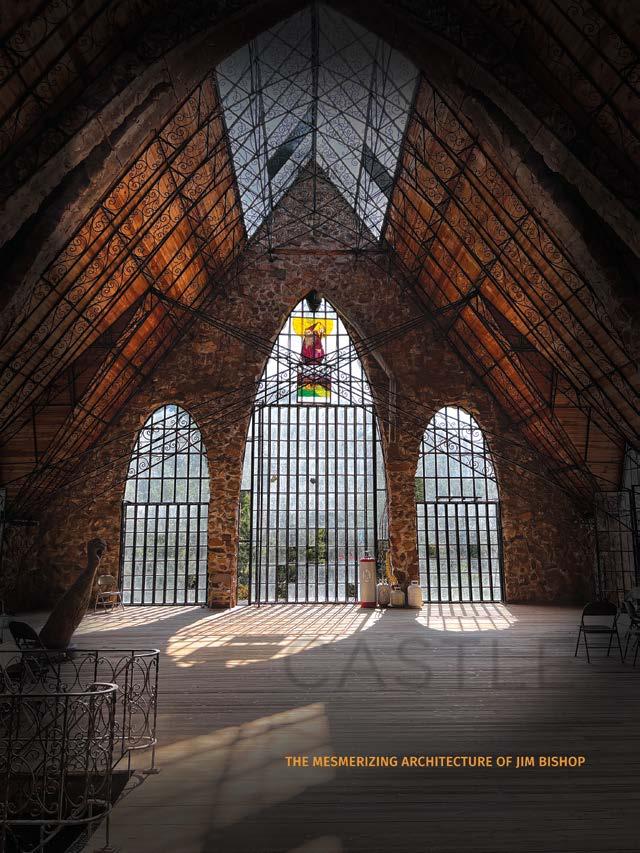
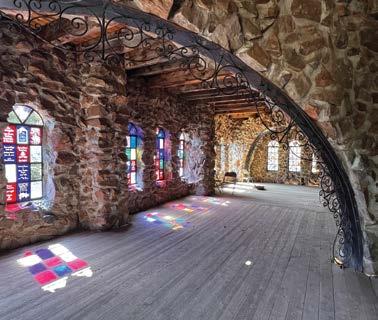
rooms seem incomplete or abandoned. It is a vivid window into a creative and compulsive mind that always had more ideas than time. The twisting staircases seem to defy physics; the giant open fireplace in the Grand Hall is a marvel of brute-force masonry; the sheer height of the King’s Tower is breathtaking. High at the front of the Castle is its most iconic feature: a massive dragon’s head fashioned from scrap metal and hospital cafeteria trays, engineered to breathe actual flames from its gaping maw in a spectacular display. Jim also created exquisite stained-glass windows using salvaged colored glass, giving the high-ceilinged Grand Hall an almost cathedral-like atmosphere, a space that has frequently hosted wedding ceremonies, and feels entirely appropriate.
On my frequent visits I watched the front Castle gate take shape and the moat take form. Jim’s energy seemed inexhaustible, and I came to understand that the aim of the Castle was always to share—his ideas, his ideals, his vision. His goal was to honor the spirit of American freedom and the dream that all things are possible with dedication and hard work.
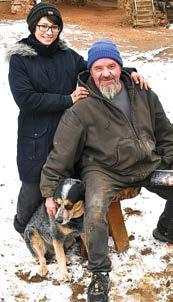
Jim’s wife, Phoebe, passed in 2018, and Jim himself died in November 2024, leaving behind not just a castle but a legend and a massive, ongoing construction project. His legacy and mission have passed to his son, Dan, and Dan’s wife, Sage. Dan grew up in the shadow of the Castle, both literally and figuratively—absorbing his father’s building techniques, improving on
them, and inheriting his father’s independent spirit and drive.
Taking over such a project is an immense task. Bishop Castle is a sprawling work of idiosyncratic genius that demands specialized knowledge to maintain, let alone build on—and Dan has stepped up. There is already a new large house being built behind the Castle where Dan and his family will live and a new larger shop is under construction. While keeping the raw, untamed spirit of his father’s vision alive, he has had to navigate the safety standards and business realities that Jim proudly ignored. Under his direction, the focus has shifted to expansion and crucial maintenance alike, ensuring that the towers, bridges, and staircases built with such audacious abandon remain safe for the thousands of visitors who come each year.
But more than just maintaining an extraordinary building, Dan is the steward of a family legacy. The Castle remains a free-to-visit site, operating on the same honor-system of donations and gift-shop sales that Jim established. It is still a place where you freely roam (at your own risk) through towering halls and clamber up dizzying staircases without any supervision, and feel the cold, rough granite stones beneath your hands.
Bishop Castle stands as a powerful monument to the mythical American Dream and the ideal of the self-made man. It is a physical embodiment of stubborn freedom, uncompromising vision and the breathtaking things that can be accomplished if one refuses to bend, break, or quit. As long as the stones are stacked and the fires
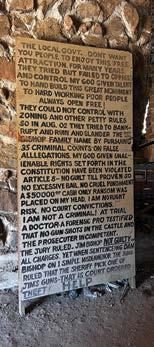
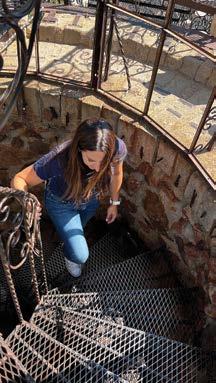
Bishop Castle contains a massive, unquantified amount of recycled iron fashioned into intricate staircases and ornate filigree, custom stained glass, and rock— over 50,000 tons of material in total.
occasionally lit under the dragon, Jim Bishop’s spirit, now channeled through Dan and Sage, will continue to tower over the southern Colorado Rocky Mountains.
Bishop Castle is located at 12705 Highway 165, ten miles west of Rye, Colorado, in the San Isabel National Forest. The Castle is open every day.
Sage Bishop’s coffee-table book
The Bishop Castle: Jim’s Legacy and Freedom’s Gift contains more than 200 photographs and chronicles the Castle from its humble beginnings to its current grandeur. Available at www. bishopcastlekeepsakes.com and in the Castle gift shop. t
Bishop Castle
Visit the Castle: 12705, Highway 165 Rye, Colorado 81069 (719) 564-4366 Online: thebishopcastle.com
Safety Notice:
Visitors assume full responsibility for their own safety and that of any children or pets in their care.
Support the Castle:
Donations are appreciated and can be made by visiting the onsite gift shop. Your support will help sustain the efforts of the caretakers.
By Scott Leuthold
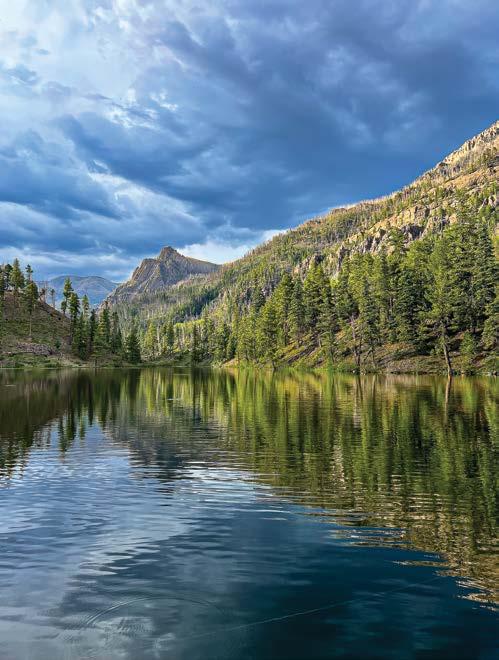
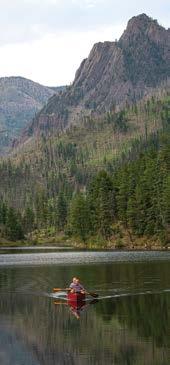
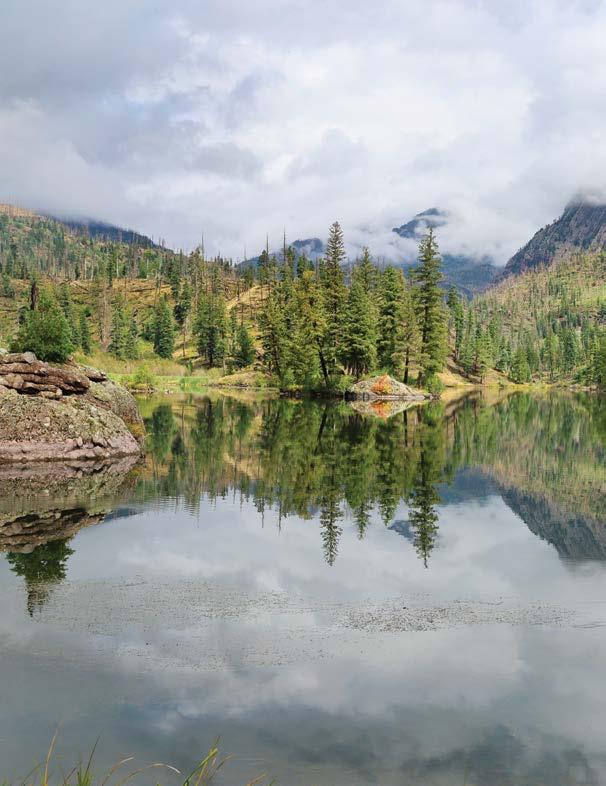
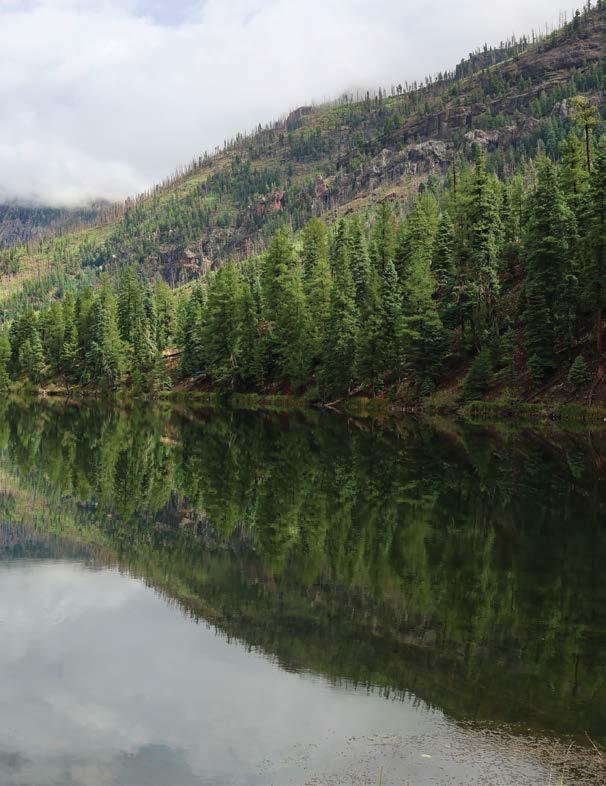
High in the San Juan Mountains of southern Colorado, at 8,369 feet above sea level, there is a lake that does not announce itself. Instead, it waits.

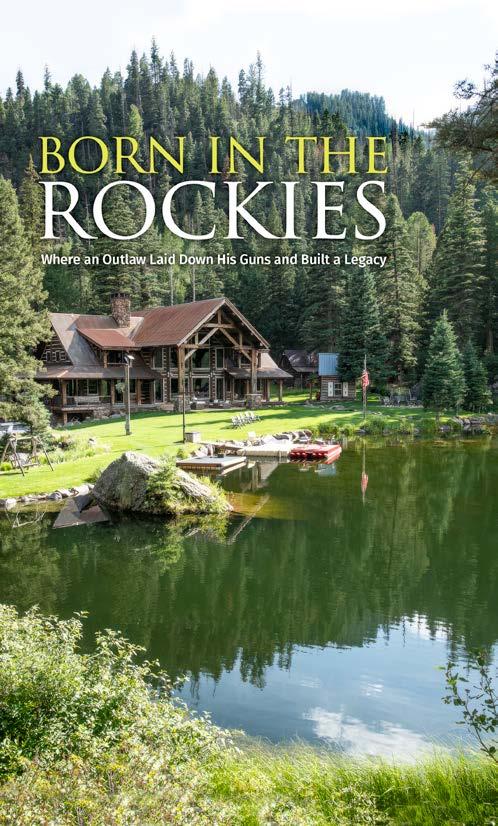
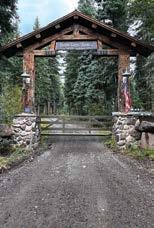
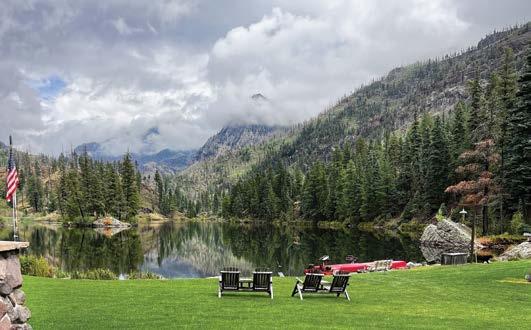
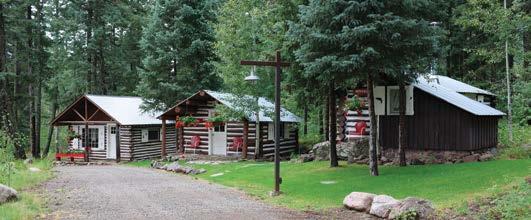
The road narrows as it climbs into the West Fork valley, tracing the course of the San Juan River as it slips through stands of spruce and aspen. The air cools. Sound fades. And then, almost unexpectedly, the trees part and the road arrives at an overarching rustic western gate, welcoming you to Born Lake Ranch. Through the gate, the drive winds farther into 155 acres of forested land, where visitors are welcomed by an enclave of tiny restored log guest cabins and just beyond, the stately presence of the Young family estate. The main lodge stands steadfast on the green grass banks of the seventeen-acre Born Lake—still, reflective, and self-contained, as though it has always known exactly where it belongs.
Long before it became a refuge for travelers, anglers, and those seeking quiet, Born Lake was chosen by a man who had spent much of his life in motion. His name was Henry Born, but the West knew him by another name: “Dutch Henry.”
Henry Born arrived in the American West as a young man in 1869, riding into Kansas as the frontier still pulsed with danger and opportunity. He became a buffalo hunter, a scout— and eventually something much more complicated. Stories placed him among some of the most legendary and notorious figures of his time. He rode the plains when the boundary between lawman and outlaw was thin, and survival often depended on which side of that line one occupied on any given day.
He was present at the Second Battle of Adobe Walls in 1874, one of the defining conflicts of the buffalo-hunting era. He crossed paths with figures like Bat Masterson and Bill Tilghman. At various times he was accused of horse theft, arrested, pursued, and, like many
men of the frontier, reshaped by the forces around him.
Yet somewhere during that life, something shifted. Perhaps it was exhaustion. Perhaps it was clarity. Or perhaps it was the quiet pull of a place he had not yet seen.
By the late 1890s, Henry Born had turned away from the restless violence of the plains and moved into the San Juan Mountains. There, in 1899, he established a homestead beside a small alpine lake that would come to bear his name. It was an act not of conquest, but of surrender—to stillness, to family, and to time.
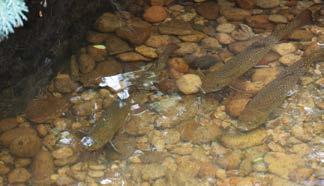
Born Lake sits in a natural basin, fed by snowmelt and mountain runoff, its waters clear and cold enough to sustain brook and rainbow trout—species Henry himself helped introduce in the early 1900s. The West Fork of the San Juan River winds along the eastern edge of the property, linking the lake to the broader watershed and the long memory of the mountains themselves.
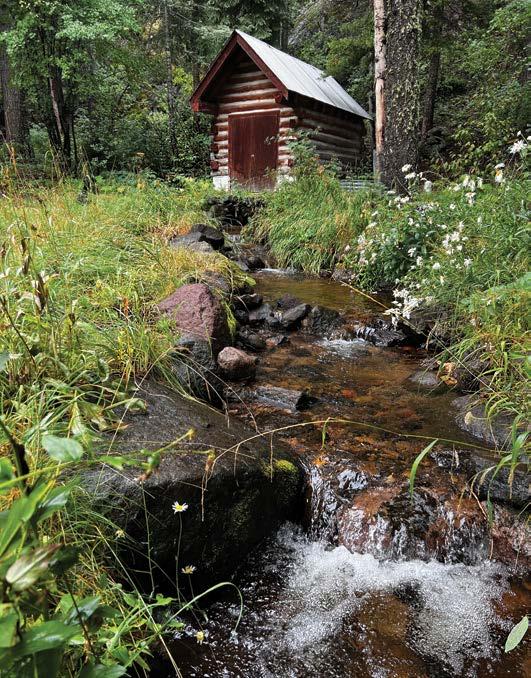
Here, Henry built a simple homestead. One-room cabins rose slowly from the earth, shaped by hand and necessity. He married his childhood sweetheart, Ida Dilabaugh, and together they raised four children in the shadow of peaks that had stood long before him and would stand long after. The transformation was not symbolic. It was literal.
The man who had once lived by the gun now tended trout hatcheries, hosted visitors, and watched his children grow.
In the 1920s and ’30s, the Born family expanded the ranch into a modest mountain resort. Guests arrived on horseback and by wagon, drawn by the promise of fishing, fresh air, and the rare experience of true quiet. Cabins were added. Meals were served. Born
Lake became not just a homestead, but a destination.
Henry Born died in 1921 at the age of seventy-one. He had outlived the frontier that had defined his youth and, in doing so, rewrote his own ending. But the lake remained.
Over the decades, ownership passed through generations and eventually beyond the Born family. In 1960, the property was purchased by the Fawcett family. Though they preserved it, Born Lake gradually entered a quieter phase. Cabins aged, paint weathered, seasons came and went with fewer witnesses. Yet, the place was never abandoned. It was watched.
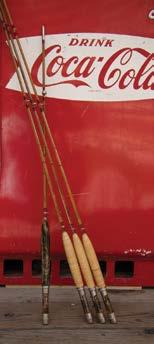
Among those who ensured its survival was longtime caretaker Paul Dufour, a Pagosa Springs resident, avid angler, and owner of PJ’s Bamboo Fly Rods, whose steady presence helped maintain the structures and spirit of the ranch through years when its future was uncertain. Caretakers like Dufour rarely
appear in headlines, but their work forms the invisible thread that prevents places like Born Lake from slipping into permanent loss.
“Serving as caretaker of Born Lake Ranch has strengthened my belief that preservation is about protecting both place and story. In the American West, history lives in the land itself—in the buildings, the fences, and the preservations carried forward by those who steward it,” says Dufour.
He did not restore the ranch for recognition; he preserved it so that restoration would remain possible. And that possibility arrived in 2012.
When Mark Young and his wife first encountered Born Lake Ranch, they did not see a ruin. They saw continuity. It was Dufour who made the introductions, and the Youngs who recognized what the property still held.
The cabins were weathered, many boarded shut after decades of limited use. Time had done what time always
does—softening edges, loosening joints, reclaiming space. But the bones remained strong. The original homestead cabin still stood. The lake still reflected the sky. The valley still held its silence.
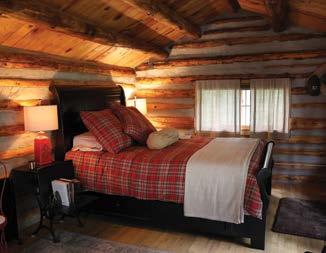
The Youngs approached the property not as developers, but as stewards. Restoration began carefully. Cabins were repaired rather than replaced to reinforce structural integrity while preserving original character. Paul Dufour continued to nurture the property in ways only a fine craftsman can—one who loves what he does and deeply respects the Born legacy. The Youngs are grateful for his insight and careful craftsmanship. It’s an effort in mutual stewardship.
“To preserve the ranch means maintaining its authenticity, not reshaping it, so future generations can experience it as genuinely as those who came before,” explains Dufour. “Just as important is safeguarding the ranch’s natural, undisrupted fishery—protecting clean water and healthy habitat so that the trout and the fishing experience remain intact for generations to come.”
The Youngs employed the services of Courtney King, a prominent Pagosa Springs architect, to help them reimagine the main lodge. Modern necessities were introduced with restraint, allowing the ranch to function without erasing its past. Fire mitigation protected the surrounding forest. Water systems were improved. Slowly, patiently, Born Lake Ranch awakened.
What had once been boarded and dormant became alive again—as something carefully refined, but also as something remembered.
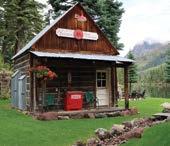
Today, eight guest cabins stand on the property, some dating back to the 1920s. The original homestead cabin has been transformed, its logs bearing the quiet testimony of more than a century of winters and summers. The lake continues to sustain its native trout
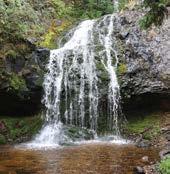
population with spawning upstream at a nearby waterfall on the property. Wildlife moves freely through the valley, unconcerned with the passage of human generations.
The work of restoration is ongoing, not because the ranch is unfinished, but because stewardship has no endpoint.
The restoration of Born Lake, with its turn-of-the-century cabins, the glacially formed lake, and numerous cascading waterfalls from Waterfall Creek (which provide fresh water and oxygen for the lake), began in 2012.
“The 155-acre property surrounded by national forest had been neglected for over twenty-five years when we purchased it,” shares Mark Young. “While the project of restoring the property was primarily Phyllis and myself in the early years, our son and daughter, along with their families, quickly became caught up in the history, beauty, and opportunity of bringing Born Lake back to life. For both Phyllis and me, it has been a personally rewarding
experience to work alongside our children and grandchildren and watch them eagerly become enchanted with its restoration. This hands-on, dirt-under-the-fingernails experience leads to pride in ownership, further developing a keen sense of stewardship for generations of Youngs to come.”
To stand at Born Lake today is to feel the convergence of lives separated by more than a century.
Henry Born, who arrived carrying the weight of a turbulent past. His family, who transformed wilderness into home. Caretakers like Paul Dufour, who protected its continuity. And the Youngs, who recognized its value not as property, but as legacy. The lake has witnessed them all. It has reflected the faces of outlaws and children, settlers and stewards. It has endured fire, snow, silence, and renewal. Through it all, it has remained still, patient, and complete.
Born Lake does not belong to any one person; it’s entrusted. And in that trust it continues to quietly hold the story of a man who came to the mountains seeking refuge, and in finding it, created something that would outlast him.
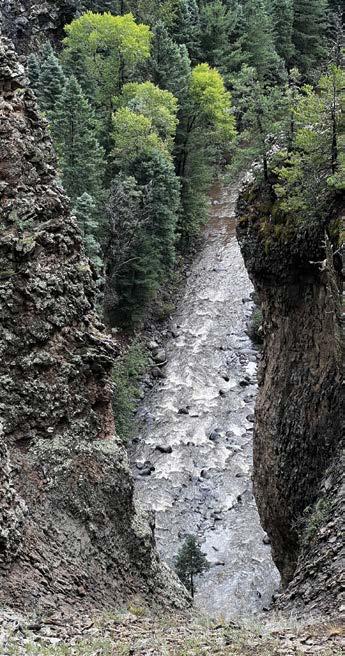
High in the San Juans, where the water reflects the sky and the past rests gently on the present, Born Lake waits, just as it always has. And with resilience and time, it will endure into the pages of a future yet unwritten. For now, it’s in the hands of the Young family, whose character and ethics will be cast upon this chapter’s pages adding yet another unfolding of the Born Lake story. To hold a place in trust is to hold the future of generations.
Sitting on the western slope of the San Juan range, perched on the high ridge of a grand chasm, the windows of Born Lake Lodge reflect the auburn sky of the setting sun cast against silver cliffs. The stillness of the lake whispers prose from an angler’s dream. Deep below, generations of trout await the ripples from insects on the surface. A wick flickers through the glass of a kerosene lantern casting a glow on the wooden dock along the bank. A man sits in a chair carefully weaving flies under a fixed magnifying glass while crickets chirp and frogs squawk their mating calls. Sparks from a camp fire flurry into the darkness of the night air while pine logs crackle. The glow of children’s faces sitting fireside warms hearts of grandparents and the laughter rises up to kiss the Milky Way.
This is legacy in action and stewardship rewarded. It’s a shining example of kindness and tenderness for the land. And, it’s an untamed landscape that shall continually be Born again. t
Born Lake Ranch is a private residence and is not open for visitation. Please respect the privacy of the property owners. Thank you.

Capturing the view from here.
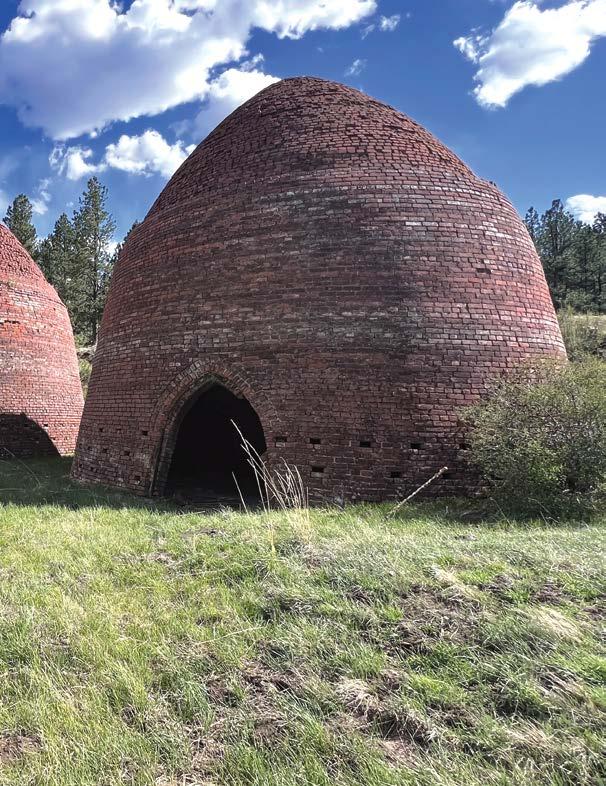
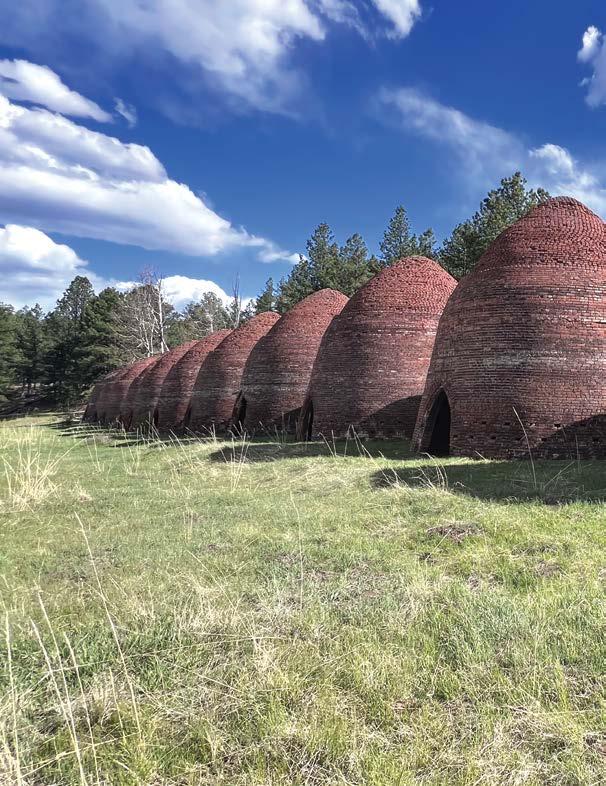
At one time there were over 200 beehive shaped ovens used for processing coal into coke for fuel.
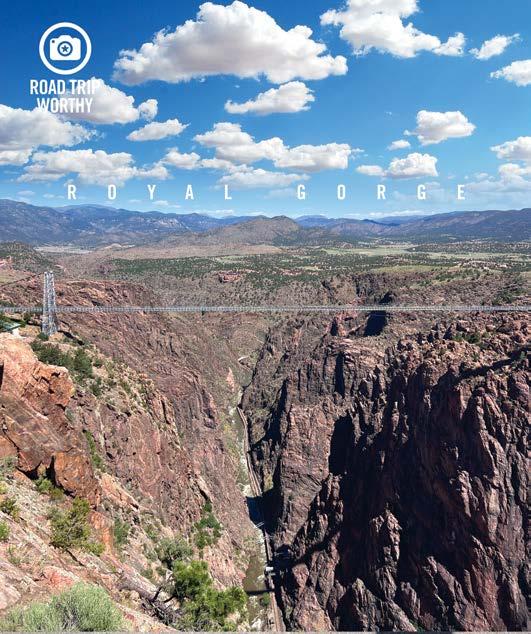
Carved over millennia by the Arkansas River, the 10-mile-long Royal Gorge located near Cañon City, Colorado plunges more than 1,200 feet into the earth, forming one of the nation’s deepest canyons. Its sheer granite walls, iconic suspension bridge, and sweeping mountain vistas capture both the raw force of nature and the enduring spirit of exploration in Colorado’s rugged landscape.

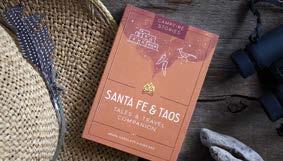
Building on the bestselling Campfire Stories series—and its shareable tales from America’s national parks—authors Ilyssa and Dave Kyu bring readers into the landscapes and living cultures of the Southwest. This series is equal parts story collection and travel companion, weaving together diverse histories, local lore, and stunning landscapes into an experience rooted in place, history, and community voice.
Each beautifully designed volume opens with a rich anthology of campfire stories: Classic passages and original poetry, historical excerpts and fresh voices, folk songs and regional myths. Together, they draw readers into the soul of each unique terrain through the timeless power of storytelling. The stories are complemented by a community-sourced mini-guide filled with recommendations for outdoor activities, cultural landmarks, and historical points of interest making it an indispensable companion for anyone eager to explore.

Call Heads or Tales: campfirestoriesbook.com
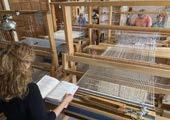
In the village of Los Ojos near Chama, nestled along the riverbanks of the Chama River, Tierra Wools presides as a guardian and storyteller of the Rio Grande weaving tradition. Beyond being a workshop, it serves as a tapestry of heritage—a cooperative where weavers, spinners, and sheep growers unite their hands and hearts. Within its walls, the gentle hum of wooden looms reverberates as local artisans transform wool from nearby flocks into intricately textured rugs, blankets, and tapestries. Skeins of hand-dyed yarn, vibrant with both natural and commercial pigments, adorn the gallery and shop, accompanied by craft kits, books, and tools for purchase. Sign up for a class in spinning, dyeing, and weaving to engage in the craft.

Weave Traditions: handweavers.com

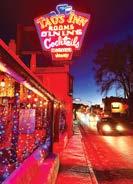
The Taos Hum, a mysterious low-frequency sound, has been reported by approximately 2% of residents and visitors in the high-desert town of Taos, New Mexico, since the early 1990s. For those who can perceive it, the noise often resembles a distant diesel engine idling or a faint whirring of machinery. It tends to become more noticeable in quiet, indoor environments during the night. Despite extensive scientific investigations conducted by the Los Alamos National Laboratory and the University of New Mexico, no conclusive source—whether geological, industrial, or psychological—has been identified. While some individuals find the persistent drone maddening, others in the community view it as an integral part of the town’s unique and mystical identity.

Tune in: bit.ly/40dJbGr

This summer, in the San Juan Mountains, Creede Repertory Theatre brings mystery and mischief to life with Ken Ludwig’s Moriarty: A New Sherlock Holmes Adventure, running June 27 through September 13. Recently named one of the “10 Best Places to See the Lights Way Off Broadway” by USA Today, Creede Rep has built a national reputation for bold storytelling, artistry and a kind of intimate mountain magic that turns every performance into an experience.
In this witty, fast-paced production, the world’s greatest detective, Sherlock Holmes, and his steadfast companion Dr. John Watson, face Holmes’ ultimate adversary: the brilliant and deadly Professor James Moriarty. When a shocking crime rocks London, Holmes is drawn into a high-stakes pursuit packed with disguises, deception, and razor-sharp banter. As the game of cat and mouse intensifies, he must outthink a rival as cunning as himself—testing his intellect, loyalty, and resolve.
Within the Creede Rep’s historic theatre, audiences can expect inventive staging, dynamic performances, and the company’s signature blend of heart and daring theatrics. Thrilling, clever, and laced with comedic flair, this reimagining of the Holmes legend promises an unforgettable night, all set against the breathtaking backdrop of one of Colorado’s most celebrated repertory theatres.


Investigate it: creederep.org/show/moriarty
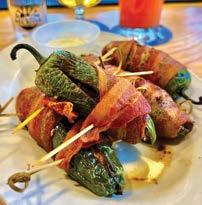
There are certain foods that taste like a place, and during summer in the mountains, Shane’s Flaming Brisket Poppers are one of them.
On Main Street in Red River, you’ll find a place that feels like home. Families meet here; visitors come back year after year. The outdoor patio is always full of life—hikers still in trail shoes, cyclists fresh off alpine rides, and families settling in for a long, relaxed afternoon.
And make sure to arrive hungry. From a smoker out back, the deep, peppery scent of brisket that’s been cooking for hours floats on the breeze, mingling with the unmistakable aroma of rendered bacon. That’s where poppers come in.
Each arrives as a small, delicious masterpiece, indulgent but not overwhelming. A fresh jalapeño stuffed with cream cheese and tender smoked brisket, wrapped tightly in bacon before being cooked until crisp. The first bite delivers: bacon snaps, the brisket is smoky, tender, almost buttery, and the jalapeño offers just enough heat with its slow-building glow.
For travelers exploring Red River, bacon-wrapped smoked brisket jalapeño poppers aren’t just a menu item, they’re part of the experience—smoky, spicy, and perfectly suited to long summer afternoons at altitude.

Hot topic: redriverbrewing.com

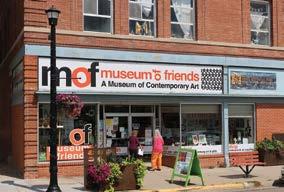
In rural Walsenburg, Colorado, the Museum of Friends (MoF) is more than a contemporary art museum—it’s officially recognized as the first counterculture museum in the United States (source: “Art in America”). A vibrant hub of creativity and community, MoF fosters connection, education, and social impact through artist residencies, public art projects, historic preservation efforts, and STEAM programs for students of all ages. From community workshops to civic engagement initiatives, MoF is deeply committed to accessibility, intercultural understanding, and art as a catalyst for meaningful change.

Express yourself: museumoffriends.org

The Neon Mallard is known for its handcrafted cocktails. The Strawberry Jalapeño Margarita is a sweet and spicy blend of strawberry-infused tequila, naranja, fresh lime juice, and agave sweetener, then topped with jalapeño-infused ice cubes for gradual heat and a tajín rim for an extra tangy kick. These combined flavors create a daring drink that is also beautiful to look at, right at home in the Neon Mallard’s moody, speakeasy-style lounge. This bold margarita is especially refreshing after a long day hiking the San Juans or unwinding in the town’s favorite hot springs.

Tease your tastebuds: neonmallard.com
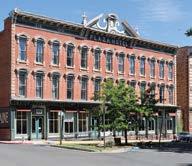
On the north side of the Las Vegas plaza, the Historic Plaza Hotel stands tall in brick, a testament to its enduring presence since 1881. Once hailed as the “Belle of the Southwest,” it welcomed travelers in dust-coated coats and polished boots when the railroad first connected the territory to the rest of the country. Merchants from the Santa Fe Trail and a new class of train travelers gathered in the lobby sharing stories; years later, silver-screen cowboys and wanderers found solace in fancy rooms with towering ceilings. Through the decades, the hotel witnessed the passage of time— whispers of the Old West giving way to the hum of automobiles—yet it maintained its dignified posture, steadfast and proud, a guardian of memory.
Today, as you cross that same threshold, the past lingers in the intricately carved woodwork and the grand staircase—however, comfortable accommodations are just around the corner soft beds, private baths, climate control, and Wi-Fi that allows you to share your own stories with the world.

Stay well: plazahotellvnm.com
With each issue of Enchanted Outpost, we add our Waypoints to a new section we are building on our website. Use your smart phone or tablet camera and the QR Code below to discover these and other great picks we’ve featured in past issues.
Or Visit: enchantedoutpost.com/waypoints

Point your smartphone camera at the QR Code. Your camera will recognize the code. Tap your screen to visit the website.


VOTED BEST PLACE TO TAKE THE KIDS IN TAOS!

twirltaos.org (575)751-1402 225 Camino de la Placita, Taos NM
Twirl is a play-based learning non-profit organization. All sales in our store are tax-free. Donations to Twirl are tax-deductible. Sales and donations support our free playspace and programming for kids & families.

Funded in part by the Taos County Lodger’s Tax.



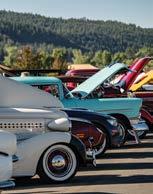
Don’t miss the 17th Annual Pagosa Springs Car Show! Free entry, food, beer, vendors, live music, a Pin-Up Girl contest, cornhole, and model car competitions. Kick off Friday at Yamaguchi Park with car previews, The Orange Whip live, and the Pin-Up Girl contest!
When: June 12-13
Where: Pagosa Springs, Colorado Visit: visitpagosasprings.com
6-7 Rio Fest Alamosa, CO - alamosa.org
7 ABQ Lowrider Super Show Albuquerque, NM goloentertainment.com
12-13 The Market at South Fork (Jun-Sep) South Fork, CO - southfork.org
13-14 Santa Fe Spring Festival Santa Fe, NM - golondrinas.org
20 Street Cars and Cable Cars Albuquerque, NM - sandiapeak.com
25-27 Air Affair Week Angel Fire, NM - visitangelfirenm.com
26-28 Santa Fe Trail Days Trinidad, CO - visittrinidadcolorado.com
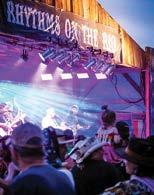
Join the annual 3–4 day family-friendly camping music festival on the banks of the Rio Grande in Del Norte, Colorado. Celebrate a laid-back, community vibe with bluegrass, Americana, jam bands, and this year’s stage headliner Leftover Salmon, a Jerry Garcia Tribute Set.
When: July 30 - August 2
Where: Del Norte, Colorado Visit: rhythmsontherio.com
2-3 Rockin’ the Rio Grande Rodeo South Fork, CO - southfork.org
2-4 76th Red Ryder Round Up Rodeo Pagosa Springs, CO visitpagosasprings.com
4 Summerfest Angel Fire, NM - visitangelfirenm.com
9-12 International Folk Art Market Santa Fe, NM - folkartmarket.org
17-19 Las Fiestas de Taos Taos, NM - fiestadetaos.com
18 Route 66 Summerfest Albuquerque, NM - cabq.gov
30-2 Creede Rock & Mineral Show Creede, CO - creede.com
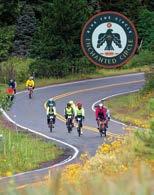
The Enchanted Circle Bicycle Tour offers participants the opportunity to ride some of the most scenic areas in the southwest. On both the 85-mile and 100-mile course, cyclists will experience rewarding climbs, rolling hills, fast descents and hairpin turns.
When: August 8
Where: Red River, New Mexico Visit: theridecollective.com
7-9 Los Alamos County Fair and Rodeo Los Alamos, NM - visitlosalamos.org
8-9 Santa Fe Beer Festival Santa Fe, NM - golondrinas.org
12-16 8750 BBQ and Music Festival Red River, NM - redriver.org
15 Grillin’ & Distillin’ BBQ Cook-Off Pagosa Springs, CO visitpagosasprings.com
15-16 Santa Fe Indian Market Santa Fe, NM - swaia.org
18 Michael Martin Murphy (Jun-Aug) Eagle Nest, NM michaelmartinmurphey.com
22-23 Trinidad TGA Charity Classic Trinidad, CO - trinidadgolfcourse.com

Spicing up your Labor Day weekend. The Creede Mountain Run and The annual Salsa Fiesta have become hot tickets over this end of summer weekend. Live music on Main Street helps you dance your way to the next chip bowl.
When: September 4-6
Where: Creede, Colorado Visit: creede.com

4-6 Caveman Music Festival Weston, CO - cavemanmusicfestival.com
5-6 Chama Valley Art Festival Chama, NM - chamavalleyartfest.org
10-12 Blossoms & Bones Music Festival Abiquiú, NM - ghostranchmusicfest.com
19 Solano’s Boot & Western Wear’s 70th! Raton, NM - solanoswesternwear.com
23-27 Santa Fe Wine & Chile Fiesta Santa Fe, NM santafewineandchilefiesta.org
26 The Rad Dirt Fest Trinidad, CO - theraddirt.com
26-27 Angel Fire Studio Art Tour Angel Fire, NM - angelfirestudiotour.org
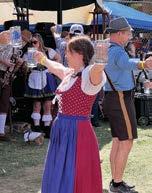
Enjoy a family-friendly three-day event celebration featuring the best craft beer, wines, spirits, artisans and food vendors producers, live entertainment, contests, and more all held at Brandenburg Park in Red River.
When: October 9-11
Where: Red River, New Mexico Visit: redriver.org
2 Gary Allen Concert Santa Fe, NM - hiltonbuffalothunder.com
3-4 Oktoberfest Angel Fire Angel Fire, NM - visitangelfirenm.com
3-4 Santa Fe Harvest Festival Santa Fe, NM - golondrinas.org
10-12 Abiquiú Studio Tour
Abiquiú, NM - abiquiustudiotour.org
24-25 Rio Grande Sky Fiesta Española, NM - riograndeskyfiesta.com
31-1 Día de los Muertos Celebration Santa Fe, NM - santafe.org Located in Santa Fe Plaza

Experience the country’s largest and oldest recycled art market—a celebration of creativity and sustainability showcasing stunning artwork made from discarded materials from upcycled apparel to vintage tin-can jewelry.
When: November 6-8
Where: Santa Fe, New Mexico Visit: recyclesantafe.org
1 Grounded In Clay (March - February) Albuquerque, NM - indianpueblo.org
26 Happy Thanksgiving! Nationwide
26 Switch on the Holidays Red River, NM - redriver.org
27-28 South Fork Yuletide Winterfest South Fork,CO - visitriograndecounty.com
27-28 Creede Chocolate Festival Creede, CO - creede.com
28 Fire and Lights Celebration Angel Fire, NM - visitangelfirenm.com
An exhibition of regional fine art.

The most compelling art is rarely found where you expect it. It emerges from coastal retreats and mountain towns, from private studios tucked behind unmarked doors and residences flourishing at the edges of the map.
The Outpost Gallery is our celebration of that spirit. Each edition, we venture beyond the obvious to spotlight the people and places that shape our region into the cultural center it is.
In this new magazine feature, we showcase painters, sculptors, photographers, and makers shaping visual culture across the region’s most compelling galleries. These are artists and gallery owners presenting with intention, unbothered by trend cycles and unbound by geography.
Whether established or emerging, their work is bold, considered, and entirely worth any collector’s attention. Take a walk through the new Outpost Gallery. The view from here is nothing short of exceptional.
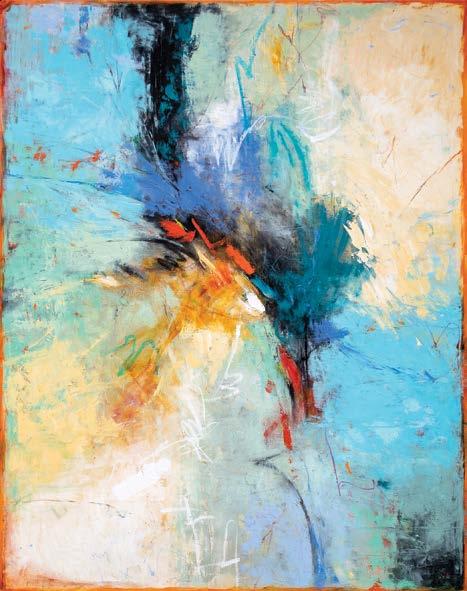



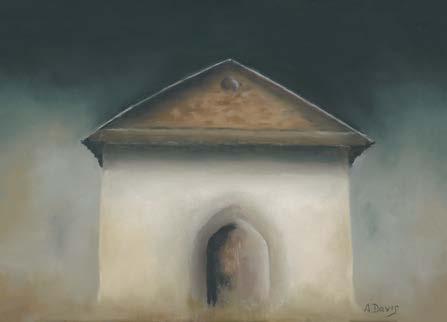
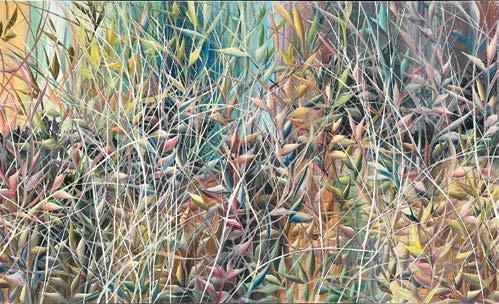
Spectrum, Oil on panel, 24 x 40 inches | Charlie Burk Winterowd Fine Art 701 Canyon Road, Santa Fe, NM 87501 (505) 992-8878 fineartsantafe.com
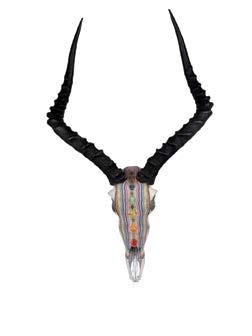
Chakra Impala, Assorted carbonchons, sterling silver filigree and glass seed beads, 24 x 14 x 7 in. | Ali Rouse Canyon Road Contemporary | 409 Canyon Road, Santa Fe, NM 87501 (505) 983-0433 canyoncontemporary.com

Conversations with Myself (1/49), Bronze on Granite Plinth, 14.25 x 8 x 5 in. | Lorri Acott Canyon Road Contemporary 409 Canyon Road, Santa Fe, NM 87501 (505) 983-0433 canyoncontemporary.com




Story by Scott Leuthold
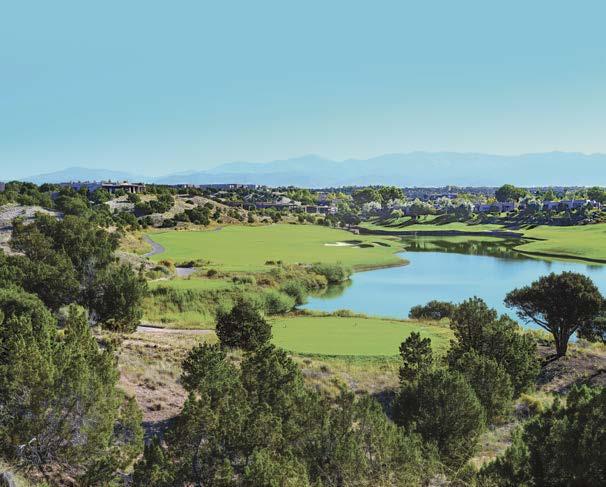
SJust minutes northwest of Santa Fe, where the Sangre de Cristo Mountains rise against vast blue skies, Las Campanas Country Club stands as one of the Southwest’s most refined private club communities.
et within nearly 4,700 acres of high desert terrain, Las Campanas was established in 1992 as a master-planned luxury community designed to blend architecture, recreation, and landscape into a seamless expression of New Mexico living.
“Las Campanas attracts accomplished, community-minded people who want Santa Fe’s culture and the high-desert lifestyle—golf, equestrian, racquets, wellness, and a real sense of belonging,” says General Manager Barry Bevers. “Many are here for extended seasons as second-home own-
ers, alongside a meaningful year-round resident base.”
After nearly two decades in Sun Valley, Idaho, Bevers relocated to Santa Fe in late 2025 to work at Las Campanas. He didn’t want “just a change.” He wanted the right one and felt that “Las Campanas stood out. It’s a member-owned club with a remarkable sense of pride, and it’s at a moment where thoughtful leadership and reinvestment can shape the next chapter in a meaningful way.”
One of those worthwhile attributes is Las Campanas’ original vision: to preserve sweeping views, native vege-
tation, and open space. Eventually, the community will include approximately 1,771 homesites, each carefully positioned to emphasize privacy, natural beauty, and architectural harmony with the surrounding desert environment. Wide streets, generous lot sizes, and preserved natural corridors already create a sense of openness rarely found in modern residential developments.
at Las Campanas glows in a
One of Las Campanas’ greatest distinctions is its proximity to the cultural richness of Santa Fe. Just a fifteen-minute drive brings residents into the historic downtown, where centuries of history, art, and architecture converge. For Las Campanas residents, this means enjoying the serenity of a private retreat while remaining intimately connected to one of America’s most vibrant cultural centers.
Santa Fe Plaza serves as the city’s central gathering place, regularly hosting artisan markets and cultural festivals. Walk in any direction, and you’ll stumble upon a range of restaurants spanning authentic northern New Mexican cuisine to innovative fine dining
(Santa Fe is consistently ranked among America’s top culinary destinations).
Nearby, Canyon Road offers one of the most renowned concentrations of art galleries in the world, featuring everything from traditional Southwestern works to contemporary international exhibitions. Luxury shopping and the Santa Fe Opera further enrich the experience of living nearby.
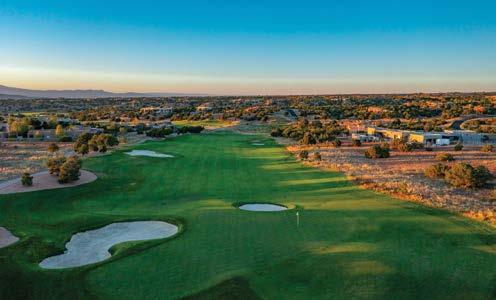
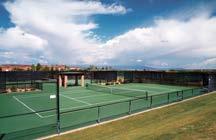
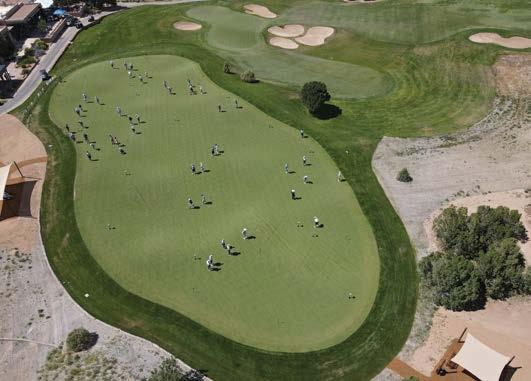
As with any luxury high desert club, golf lies at the heart of the Las Campanas experience. The Club features two Jack Nicklaus Signature golf courses, each sculpted to complement the land’s natural contours. Fairways wind through rolling hills and piñon-covered
ridgelines, offering both strategic challenges and sweeping views of distant ranges.
Elevated tee boxes reveal vast horizons, while the desert’s quiet stillness enhances the rhythm of play. These courses are not only championship caliber—they’re immersive experiences in landscape and design, reflecting Nicklaus’s philosophy of working in harmony with the terrain, rather than imposing upon it.
Las Campanas is equally distinguished by its expansive equestrian facilities. The Club’s Equestrian Center includes an indoor riding arena, outdoor training areas, and manicured
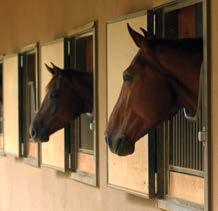
stables. From there, riders can access miles of trails that extend across protected high desert terrain, weaving through arroyos, sagebrush, and open mesas.
For other outdoor pursuits, there’s extensive hiking, biking, and walking trails throughout the community. With more than 300 days of sunshine annually, the climate encourages yearround outdoor activity, reinforcing the community’s deep connection to the natural environment.
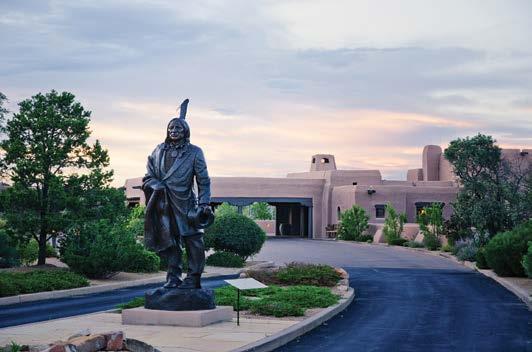
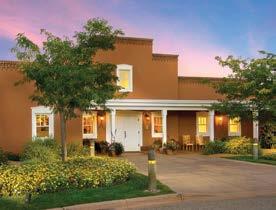
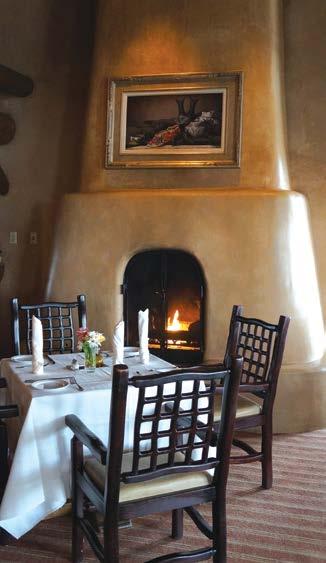
At the center of Las Campanas stands the Hacienda Clubhouse, an elegant gathering place designed in classic Southwestern architectural style. Here,
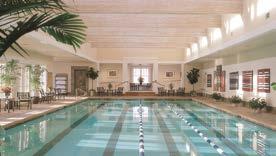
members enjoy both formal and casual dining, fitness and wellness facilities, tennis courts, and ongoing social and cultural events.
On the days not spent in town, here dining reflects the culinary sophistication of Santa Fe itself, blending regional flavors with contemporary refinement. Whether enjoying dinner on a terrace overlooking the fairways or gathering for a relaxed lunch among friends, the Club serves as both social hub and sanctuary.
“Las Campanas is as much about community as it is amenities,” says Bevers. “We host a steady calendar of experiences: seasonal dining events and tastings, wine dinners, live music, holiday and family gatherings, golf and racquet tournaments and clinics, wellness programming tied to our fitness
program, spa and salon, and equestrian clinics and special events.”
Accessibility is another defining advantage. The Santa Fe Regional Airport is located just minutes from Las Campanas, providing convenient access for both commercial and private aviation. The airport also offers direct flights to major hubs including Dallas, Denver, and Phoenix, allowing easy national and international travel.
For private aircraft owners, the airport offers full general aviation services, including private hangars, executive terminals, and dedicated fixed-base operators. This allows residents to travel efficiently while maintaining privacy and convenience—an essential feature
for those who value both mobility and discretion.
Las Campanas Country Club represents a rare balance between seclusion and connection, recreation and culture, refinement and landscape. Here, residents wake to quiet desert mornings, spend their days engaged in sport or exploration, and gather in the evenings beneath expansive southwestern skies.
“Las Campanas has already made significant investments in lifestyle and wellness. Now the vision is to build on that momentum with thoughtful, disciplined reinvestment,” reveals Bevers. “Our goal is simple: preserve what makes the Club special, modernize where it matters, and deliver a consistently excellent experience across every touchpoint.
“We have future plans guided by a multi-year roadmap that prioritizes member value and long-term stewardship. One exciting area we’re focused on is enhancing the after-golf experience—expanding outdoor seating and creating a larger, more casual gathering space with a sports-bar energy, where members can relax after a round, share a meal, and stay connected.”
It is a place shaped not only by thoughtful design, but by its relationship to Santa Fe itself: a community where natural beauty, cultural richness, and elevated living exist in harmony. t
The Club at Las Campanas 132 Clubhouse Drive Santa Fe, NM 87506 (505) 995-3500
Online: theclubatlascampanas.com


BY HEATHER LEUTHOLD
When considering history, we often think of empires, revolutions, and sweeping cultural shifts. Rarely do we imagine farmers markets or artisan gatherings as forces shaped by time’s long arc. And yet the Santa Fe Farmers’ Market stands as a living testament to history’s quiet craftsmanship. Over the years, it has weathered hardship, adapted to change, and woven itself into the fabric of community. What began as a simple exchange of goods has become something far greater—a place where struggling farmers found footing, where neighbors found one another, and where resilience reshaped lives.
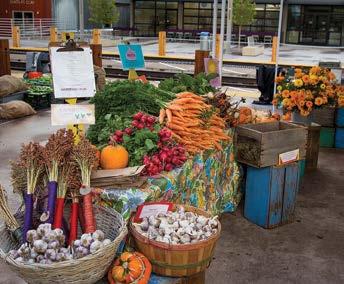

Long before the sun rises over the Sangre de Cristo Mountains on Saturday mornings, farmers idle their trucks along quiet Santa Fe streets, the scent of chile and sweet earth rising in the cool air. It began simply, as most enduring things do. In the late 1960s, the Santa Fe Farmers’ Market was nothing more than a loose circle of growers selling from tailgates and wooden crates. No grand banners. No permanent stalls. Just hands that knew the soil, and neighbors who knew the hands.
By 1971, with encouragement from the League of Women Voters and guidance from the County Extension Office, the gathering found its first true footing in the parking lot of St. Anne’s Church. Folding tables replaced truck beds. Children darted between baskets of squash and onions. What had been informal began to feel like tradition.
The market moved as it grew, like a plant seeking better light. In 1976, it took root at the Alto Street Recreation Center, where it flourished for a decade. Then in 1986, it shifted again—this time to the newly opened Sanbusco Market Center in the Railyard. There, beneath the vast New Mexico sky and along the whisper of old train tracks, the market expanded beyond anyone’s early imagination. It swelled with color and commerce until even that space could no longer contain it.
In 1995, the city of Santa Fe purchased fifty acres of historic rail yard property, land once defined by iron and steam. The future home of the market was quietly taking shape, though
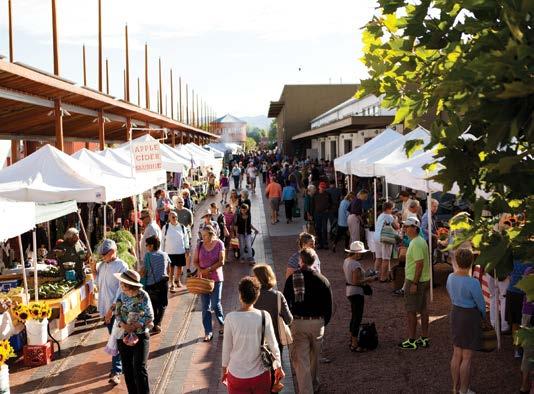
it would take years of planning and patience to see it realized.
The late ’90s brought more temporary moves within the Railyard, but each relocation seemed only to strengthen the market’s spirit. By 1999, attendance had soared to roughly 160,000 visitors annually, with more than 170 vendors offering everything from blue corn meal to pasture-raised lamb. What began with a handful of trucks had become an economic and cultural force.
In the early 2000s, community meetings filled with architects, farmers, artists, and families helped shape a Railyard Redevelopment Master Plan, one that ensured the market would remain its living heart. In 2001 alone, vendors generated over $1.5 million in sales, a
testament to northern New Mexico’s enduring agricultural traditions. That same year, members formed the Santa Fe Farmers’ Market Institute, planting the seeds for education, outreach, and a permanent home. There were still temporary sites, still dust and uncertainty. But there was also faith.
And then, in 2008, the vision became tangible: a LEED-certified market building rose from the Railyard soil. Wood, steel, and sunlight came together in a space designed not just for commerce, but for community. At last, the market had a home as enduring as the acequias and as welcoming as a neighbor’s porch.
Now the Santa Fe Farmers’ Market stands year-round in the Railyard—vibrant, resilient, and rooted. On this day,
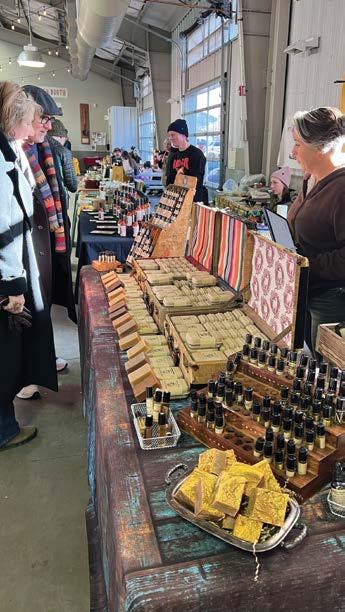
the sun shines through the canopies, illuminating the steam rolling from hot cups of coffee. The colors and smells from fresh produce fill the air. The summer morning chill doesn’t slow the rush of people with their grocery lists and tote bags, ready to be filled with soaps and lotions, teas and honey, and satchels of mushrooms that themselves are pieces of art. But creativity pulses through all the offerings. A personal favorite of this writer? The blue corn blueberry lavender donuts by Whoos, a local bakery. They’re an out-of-the-box creation you will not soon forget.
Visitors from around the world wander its aisles, yet it remains unmistakably local. Farmers still rise before dawn. Chiles still glow red against burlap sacks. And every Saturday, beneath the high desert sky, the story continues: a story that began with the back of a truck and grew into the beating heart of a city. t
Santa Fe Farmers’ Market
Santa Fe Railyard
1607 Paseo de Peralta, Suite A Santa Fe New Mexico 87501 (505) 983-4098
Online: santafefarmersmarket.com
SATURDAYS
OPEN ALL YEAR LONG 8am - 1pm
TUESDAY MARKET
May 5 – December 22, 2026 8am - 1pm
Del Sur Market
TUESDAYS JULY - SEPTEMBER (ONLY)
Presbyterian Medical Center 3pm - 6pm

Visit the Farmers’ Market website with your smart device.
BY Lisa Ragsdale and Scott Leuthold
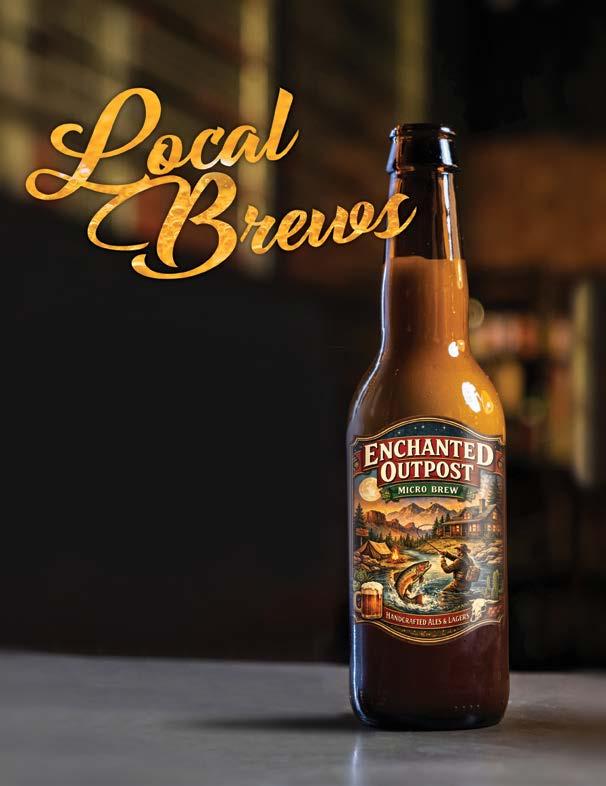
In high elevation, hot summer days are known to mix well with citrusy, hazy IPAs. Many locals consider “hazies” to be a liquid snack after a day of mowing the lawn, felling a small tree—or five— from a mountain property, or just hanging out with friends and family in the shade. Pair it with some chips and salsa or a handful of pistachios, and you practically have a meal!
There are several remarkable family owned and run breweries in the Enchanted Circle region, and the owners or brew masters are often all too happy for visitors to get an inside look at their operations and the passion that drives them. Many recount how they “left corporate” when describing the lifestyle shift they made to pursue their passion; that their passion for beer was the foundation to own and run a company doing something they loved. Brewing beer is not just business; it’s fueled by a thirst for independence, creativity, and a desire to create a fun, relaxed atmosphere for families and friends to make memories—and of course, to sample their grain and hop-based offerings. Breweries are like brews: they all have different profiles, recipes for success, and seasonal cycles. Below, we’re thrilled to introduce a range of breweries with a wide variety of styles and flavors that will appeal to any zythophile, or beer nerd, geek, or hophead. From rich estate beers to bright, fruity sours to toasty browns and ambers, the breweries rated here offer great flavor diversity, operate sustainably, and are assets to their communities. t
We’ve rated several features of each Brew Mastery from 1 to 5 with 5 being the highest rating.
Style Range
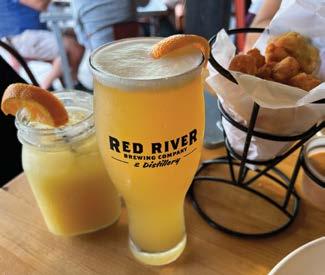
Owners: Michael and Sharon Calhoun Brew Master: Wesley Russenberger
Brief Details:
Owner is from a third-generation Red River family
Beer is brewed onsite and goes directly from a cold storage vat to the tap
Uses locally sourced hops
Locations:
Brewery & Restaurant
217 W Main Street
Red River, NM 87558 (575) 754-4422
Distillery & Tasting Room 619 E Main Street
Red River, NM 87558 (575) 754-5123
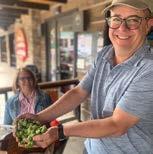
All featured brewers are listed by score— high to low and then alphabetically. Each Featured Brewer was highlighted for a Level 5 score for beer quality.
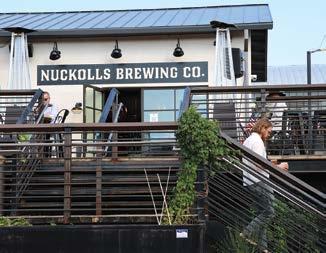
Owner: Bill Banowsky
Brew Masters: Jen Treu and James Nordby in Angel Fire and Hector Santana in Santa Fe
Brief Details:
Historic Santa Fe Railyard building designed with historic recycled materials
Beer brewed onsite in Santa Fe and goes directly from a cold storage vat to the tap True pub
for pints and conversation
Locations: 1611 Alcaldesa Street Santa Fe, NM 87501 (575) 754-4452
20 Sage Lane Angel Fire, NM 87710 (562) 881-4499
152 Old Lamy Trail Lamy, NM 87540 (505) 372-0006
Online: nuckollsbrewing.com
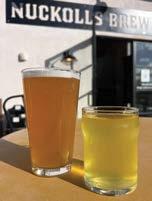
We’ve compiled a list of other regional breweries worth noting to provide convenience for local brew roadtripping in southern Colorado and northern New Mexico.
San Luis Valley Brewing Co. 631 Main Street Alamosa, CO 81101 (719) 587-2337 slvbrewco.com
DEL NORTE
Three Barrel Brewing Co. 475 Grand Avenue Del Norte, CO 81132 (719) 657-0681 threebarrelbrew.com
PAGOSA SPRINGS
The Break Room Brewing Co. 2045 Eagle Drive Pagosa Springs, CO 81147 (970) 731-0545 breakroombrewing.com
Crafty Canary Brewery 107 E 5th Street Walsenburg, CO 81089 (719) 890-1113 craftycanarybrewery.com
EO: What inspired the idea to fuse technology with clothing?
V: It was late June 2009 on Denali, and Dustin was leading his team higher into the Alaska Range. At 10,000 feet, the mornings began bitterly cold. Breath froze instantly in the air. Water bottles turned solid in the packs. Everyone moved stiffly in their parkas, just trying to shake the chill out of their bones. But a few hours later, the mountain flipped the switch. Under the thin air, high-altitude sun, and snow reflecting light from every angler. t
Alien Brewpub 6601 Uptown Blvd NE Albuquerque, NM 87110 (505) 884-1116 abqbrewpub.com
Boese Brothers Brewing 7849 Tramway Blvd NE, Suite C Albuquerque, NM 87122 (505) 557-1954 boesebrothersbrewery.com
Bombs Away Beer Company 9801 Acoma Road SE Albuquerque, NM 87123 (505) 554-3204 bombsawaybeer.com
Boxing Bear Brewing Co. 8420 Firestone Lane NE Albuquerque, NM 87113 (505) 503-6341 boxingbearbrewing.com
Brew Lab 101 Beer & Cider Co.
3107 Eubank Blvd, Ste. 12 Albuquerque, NM 87111 (505) 897-3363 brewlab101.com
Canteen Brewhouse 2381 Aztec Road NE Albuquerque, NM 87107 (505) 881-2737 canteenbrewhouse.com
Differential Brewing Co.
500 Yale Blvd SE Albuquerque, NM 87106 differentialbrewing.com
Dripline Brewery 1320 2nd Street NW Albuquerque, NM 87102 driplinebrewery.com
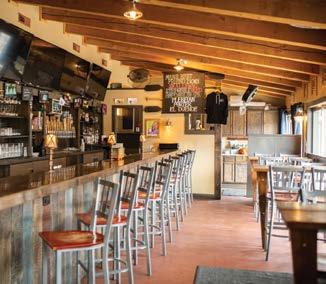
Owners: Jason and Shelly Cox Brew Master: Caleb Cook
Brief Details:
Riff Raff Brewing Company, formerly named Riff Raff on the Rio, sits on the majestic San Juan River featuring beautiful river and mountain views framed below Wolf Creek Pass.
Location: Brewery & Restaurant 356 E Pagosa Street Pagosa Springs, CO 81147 (970) 264-6274
Online: riffraffbrewing.com

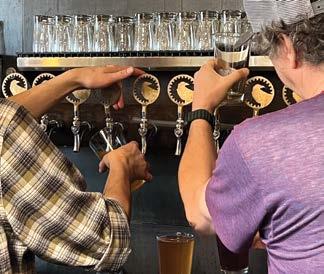
Owners: Dan Irion, Gary Feuerman, Peter Kolshorn, and Jayson Wylie
Brew Masters: Jayson Wylie
Brief Details:
The Mothership is an off-grid brewery, restaurant, and renowned indoor/ outdoor music venue located on the Hondo Mesa in El Prado, New Mexico. Features a unique “earthship”-style, clay-sculpted, acoustics-focused, amphitheater and hosts national acts.
Locations:
Taos Taproom
201 Paseo del Pueblo Sur Taos, NM 87571 (575) 758-1900 ext.2
Taos Mothership
20 ABC Mesa Road El Prado, NM 87529 (575) 758-1900 ext.1
Online: taosmesabrewing.com
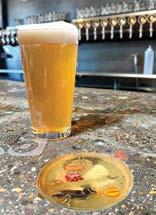
Breweries Continued:
Ex Novo Brewing Company 701 Central Avenue NW Albuquerque, NM 87102 (505) 633-9113
exnovobrew.com
Flock of Moons Brewing Co. 111 Harvard Drive SE Albuquerque, NM 87106 (505) 503-8921 flockofmoons.com
Ghost Light Saloon 1100 Bellamah Avenue NW Albuquerque, NM 87104 (505) 200-3999 ghostlightsaloon.com
Gravity Bound Brewing Co. 816 3rd Street NW Albuquerque, NM 87102 (505) 308-3081 gravityboundbrewing.com
High and Dry Brewing 529 Adams Street NE Albuquerque, NM 87108 (505) 433-5591 highanddrybrewing.com
Hops Brewery 7222 4th Street NW Albuquerque, NM 87107 (505) 361-2082 hopsbrewing.com
Juno Brewery 1501 1st Street NW Albuquerque, NM 87102 (505) 460-1339 junopub.com
La Cumbre Brewing Co. 3313 Girard Blvd NE Albuquerque, NM 87107 (505) 872-0225 lacumbrebrewing.com
EO: What inspired the idea to fuse technology with clothing?
Breweries Continued:
V: It was late June 2009 on Denali, and Dustin was leading his team higher into the Alaska Range. At 10,000 feet, the mornings began bitterly cold. Breath froze instantly in the air. Water bottles turned solid in the packs. Everyone moved stiffly in their parkas, just trying to shake the chill out of their bones. But a few hours later, the mountain flipped the switch. Under the thin air, high-altitude sun, and snow reflecting light from every angler. t
Marble Brewery 111 Marble Avenue NW Albuquerque, NM 87102 (505) 243-2739 marblebrewery.com
Nexus Brewery & Restaurant 4730 Pan American Fwy NE Albuquerque, NM 87109 (505) 242-4100 restaurant.nexusbrewery.com
Palmer Brewery and Cider House 2926 Girard Blvd NE Albuquerque, NM 87107 (505) 508-0508 facebook.com/palmerbrewery
Ponderosa Brewing Company 1761 Bellamah Avenue, Suite C Albuquerque, NM 87104 (505) 639-5941 ponderosabrewing.com
Rio Bravo Brewing Company 1912 2nd Street NW Albuquerque, NM 87102 (505) 900-3909 riobravobrewing.com
Sidetrack Brewing Company 413 2nd Street SW Albuquerque, NM 87102 (505) 800-7113 sidetracknm.com
Starr Brothers Brewing Co. 5700 San Antonio Dr. NE, Ste B1 Albuquerque, NM 87109 (505) 492-2752 starrbrothersbrewing.com
Steel Bender Brewyard 8305 2nd Street NW Albuquerque, NM 87114 (505) 433-3537 steelbenderbrewyard.com
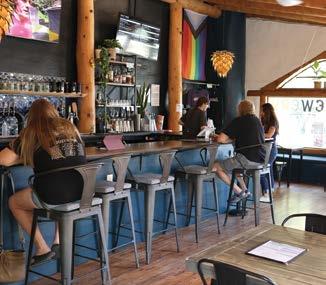
Owners: JD and Jen Lind
Brew Master: JD Lind
Brief Details: Family-friendly patio
The name is derived from JD’s imagination as a fly fisherman
The hoppy light fixtures over the bar are from a woodworker on Etsy and took Jen about 3 hours to assemble
Location: 220 South Main Street LaVeta, CO 81055 (719) 988-0323
Online: mountainmerman.com
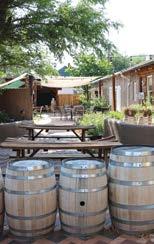
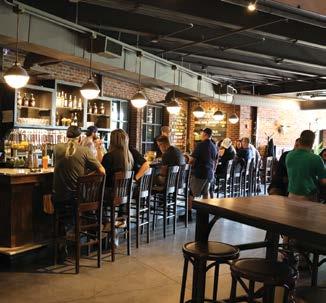
Owner: Brian Lock
Brew Master: Brian Shaffer
Brief Details:
The original New Mexico craft Brew Mastery founded by Mike Levis in 1988. Produces 40,000 beer barrels annually HQ beer garden stays lush and green with a state-of-the-art water reclamation system
Locations: 35 Fire Place Santa Fe, NM 87508 (505) 424-3333
The Brakeroom 510 Galisteo Santa Fe, NM 87501 (505) 780-8648
The Eldorado Taphouse 7 Caliente Road Santa Fe, NM 87508 (505) 466-6938
ABQ at Green Jeans 3600 Cutler Avenue NE Albuquerque, NM 87110 (505) 881-0887
Tin Can Alley 6110 Alameda Blvd. Albuquerque, NM 87113 (505) 208-0508
Online: santafebrewing.com
Breweries Continued:
The 377 Brewery 2027 Yale Blvd SE Albuquerque, NM 87106 (505) 916-0331 the377brewery.net
The Craft Room 2809 Broadbent Pkwy NE Albuquerque, NM 87107 (505) 717-1985 craftroomnm.com
Thirsty Eye Brewing Company 206 Broadway Blvd SE Albuquerque, NM 87102 (505) 639-5831 thirstyeyebrew.com
Tractor Brewing Company 118 Tulane Drive SE Albuquerque, NM 87106 (505) 433-5654 getplowed.com
Unhinged Brewing & Distillery 251 98th Street NW Albuquerque, NM 87121 (505) 382-8459 unhingedbrewing.com
Kaktus Brewing Company 471 South Hill Bernalillo, NM 87004 (833) 623-4273 kaktusbrewery.com
CEDAR CREST
Rumor Brewing Company 28 Arroyo Seco Road Cedar Crest, NM 87008 (505) 281-2828 rumorbrewing.com
EO: What inspired the idea to fuse technology with clothing?
Breweries Continued:
EAGLE NEST
V: It was late June 2009 on Denali, and Dustin was leading his team higher into the Alaska Range. At 10,000 feet, the mornings began bitterly cold. Breath froze instantly in the air. Water bottles turned solid in the packs. Everyone moved stiffly in their parkas, just trying to shake the chill out of their bones. But a few hours later, the mountain flipped the switch. Under the thin air, high-altitude sun, and snow reflecting light from every angler. t
Comanche Creek Brewery 5 Comanche Creek Road
Eagle Nest, NM 87718 (575) 377-2337 comanchecreekbrewingco.com
EMBUDO
The Blue Heron Brewing Co. 2214 NM Hwy 68 Embudo, NM 87531 (505) 579-9188 blueheronbrews.com
JEMEZ SPRINGS
Jemez Mountain Brewhouse 17691 NM-4 Jemez Springs, NM 87025 (575) 829-4222 facebook.com/jemezmountainbrewhouse
LOS ALAMOS
Bathtub Row Brewing Co-op 163 Central Park Square Los Alamos, NM 87544 (505) 500-8381 bathtubrowbrewing.coop
MORIARTY
Sierra Blanca Brewing Co. 1016 Industrial Road Moriarty, NM 87035 (505) 832-2337 sierrablancabrewery.com
RIO RANCHO
Turtle Mountain Brewing Co. 905 36th Place SE Rio Rancho, NM 87124 (505) 994-9497 turtlemountainbrewing.com

Owners: Missy Begay, Shyla Sheppard
Brew Master: Unknown
Brief Details:
Native, woman-owned and national award winners
Uses regionally sourced ingredients to create innovative brews
Maintains a very creative “book of names” ready for new brews
Locations: 608 Mcknight Avenue NW Albuquerque, NM 87102 (505) 247-9800
Rambler Tap Room 5100 East Main Street Farmington, New Mexico (505) 592-7082
Online: bowandarrowbrewing.com

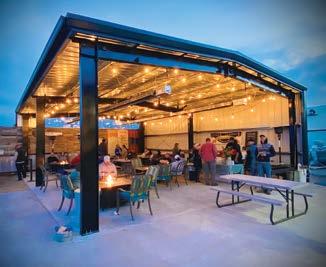
Owner: Cody family (Wayne, Tim, Jason, Josh, and Bobby)
Brew Master: Josh Cody
Brief Details:
Fourth-generation family farm producing true estate beers
Sustainable farm-to-tap operation
Family-friendly play area for children
Location: 2070 County Road 12 South Alamosa, CO 81101 (719) 580-0051
Online: cofarmbeer.com
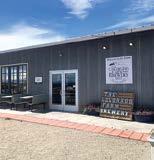
Breweries Continued:
SANTA FE
Beer Creek Brewing Co. 3810 NM-14
Santa Fe, NM 87508 (505) 471-9271 beercreekbrew.com
Desert Dog Brewery & Cidery 112 W San Francisco Street #307 Santa Fe, NM 87501 (505) 370-1046 boesebrothersbrewery.com
Keeping Together Brewery 2908 Rufina Street Santa Fe, NM 87507 keepingtogether.com
Rowley Farmhouse Ales 1405 Maclovia Street Santa Fe, NM 87505 (505) 428-0719 rowleyfarmhouse.com
Second Street Brewery 1607 Paseo De Peralta #10 Santa Fe, NM 87501 (505) 989-3278 secondstreetbrewery.com
Tumbleroot Brewing & Distilling 32 Bisbee Court #3-4 Santa Fe, NM 87507 (505) 303-3808 tumblerootbreweryanddistillery.com
RATON
Blu Dragonfly Brewing
33808 US-64 Raton, NM 87740 (575) 376-1110 bludragonflybrewing.com
Colfax Ale Cellar 215 S 2nd Street Raton, NM 87740 (575) 445-1111 colfaxalecellar.com
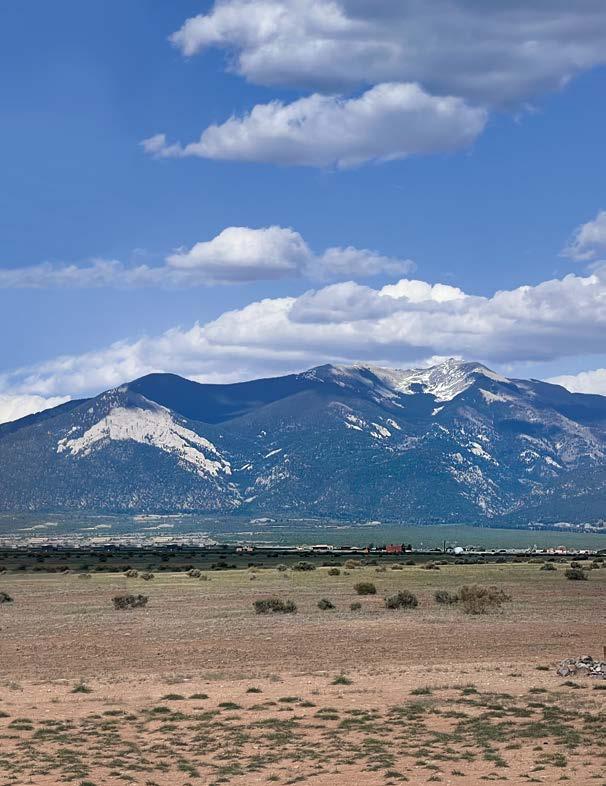
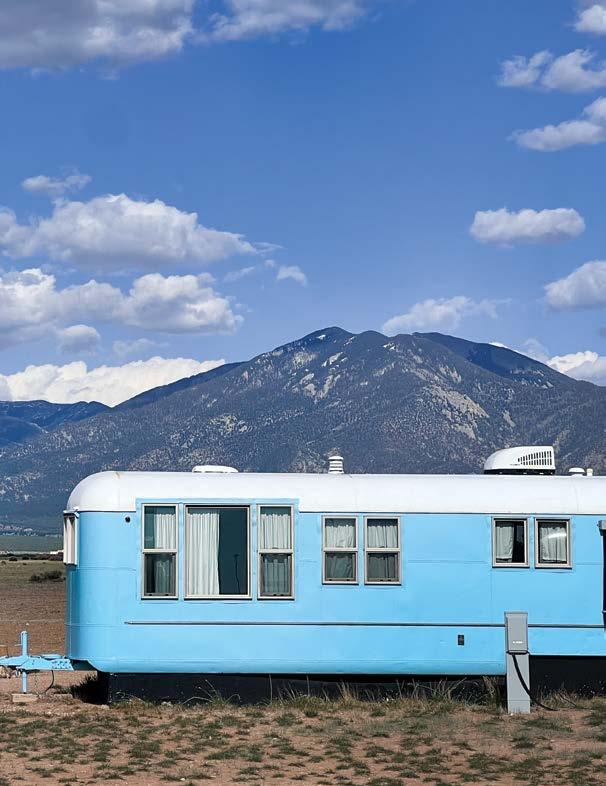
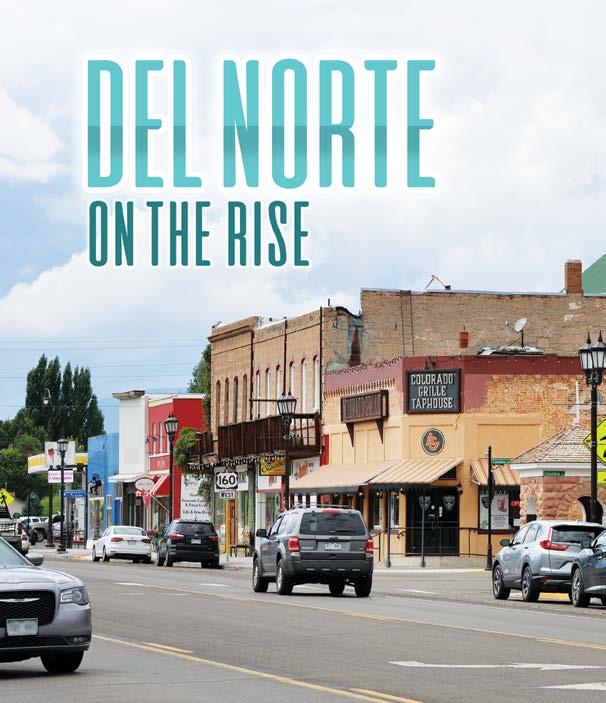
By Shelli Rottschafer and Lauren Wise
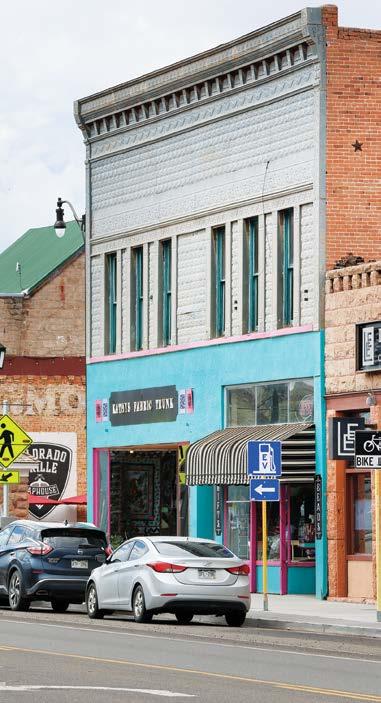
“Dell Nort.” “Monti.” “Sahwatch.” Many pronounce these names wrong the first time, until they hear locals talk of the south-central Colorado towns of Del Norte, Monte Vista, and Saguache. But a town’s name signals something deeper—and it’s rarely the first thing a visitor tries to understand.
In 1598, Spanish colonizers under Juan de Oñate first entered what is now called the San Luis Valley— lands that moved from Spanish Colonial America to Mexican territory before the U.S. claimed them in 1850. Exploring the headwaters of the Río Grande Del Norte and the San Juan and Sangre de Cristo ranges, they left their names behind: the valley so vast and mountainous they called one settlement Monte Vista. Before the Spanish arrived, these were the traditional homelands of the Ute. Saguache was a Ute settlement that opened onto meadowed parks now cultivated in wheat and adorned in sunflowers.
Del Norte was established in 1871 and incorporated the following year as a stage stop and supply town for miners. It also became a ranching center, owing to its expansive park—meadowlands dotted by cottonwoods along the Río Grande. The town has ebbed and flowed economically ever since, much like the river itself.
Today, with roughly 1,800 permanent residents, Del Norte has a new propeller: adventure tourism. Its population swells each summer with hikers and mountain bikers, and each winter when skiers and snowboarders stop in before heading thirty-five miles upslope to Wolf Creek.
The Del Norte Riverwalk anchors this revival. Its first phase, completed in 2021, runs along both banks of the Rio Grande within town, adjacent to Colorado Highway 112, with whitewater features for kayaking and rafting during spring runoff. Later in summer, a multi-use boulder and concrete play wave draws stand-up paddleboarders and body surfers willing to brave cold water. Mayor Shelly Burnett describes the Riverwalk as having “dramatically enhanced both park space and river access,” noting that the project also includes riparian restoration and a fish ladder for Rio Grande cutthroat, rainbow, and brown trout. Future phases will expand the system, keeping in view that the Río Grande Del Norte remains—as Mayor Burnett puts it—“the lifeblood” of the community.
Grand Avenue, Del Norte’s main commercial strip, is in the middle of its own transformation. “There’s a clear intent to blend preservation and innovation. We hope to enable historic identity and generation-spanning institutions to thrive alongside fresh entrepreneurs,” explains Mayor Burnett.
Newly poured wide-cement sidewalks and improved crosswalks are threading the historic segment together. On the south side, the 1874 Windsor Hotel now houses 1874 Distilling, Ltd; a craft distillery. Just down the street Raisin’ Rye Bakery turns out some of the area’s best sourdough. Three Barrel Brewing Co. draws a dog-friendly crowd to its outdoor patio. Across the street, a pink sandstone building shelters the Colorado Grille & Taproom, serving elk burgers and local meats alongside craft taps. Trade and Post—an antique and curio shop in the off-season—becomes a concert venue for local bands each summer.
Community revitalization included a new welcome monument, street resurfacing, curbs, and sidewalks.
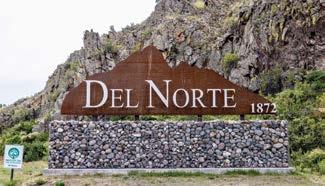
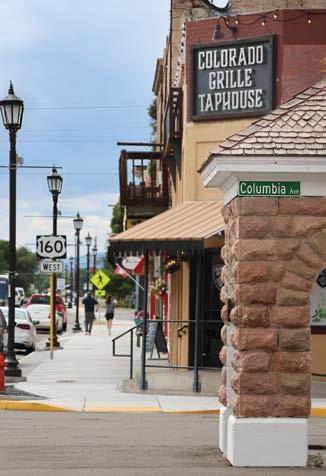
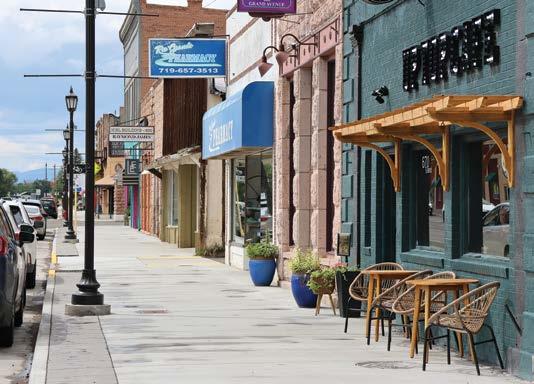
In 2024, the Pronghorn and Limekiln Trail systems drew an estimated 21,000 visitors—roughly fifteen times Del Norte’s permanent population. The trails have made the town a destination for fly fishing, rock climbing, and mountain and gravel biking.
At Rio Grande Bikes off Grand Avenue, owner “Heinz” Heinrich Flaig has found his place after stints across the mountain west—a stint with the State Forestry Service, time wrenching in Moab, and now a full-service shop where riders can rent, buy, tune, and plan. Basic tunes run $75; full-suspension gravel bike rentals go for $95. Flaig also guides single-track excursions along the Continental Divide through the San Luis Valley—a section of the
Great Divide Mountain Bike Route, which runs over 2,700 miles from Banff, Alberta, to Antelope Wells, New Mexico. Parked next door, Perko’s Pizza Food Truck (owned by Kevin Suellentrop, who also owns the building that houses Rio Grande Bikes) offers varieties such as Spicy Artichoke and the Meat-a-tarian to fuel the effort of all types of biking enthusiasts who visit from around the country.
Both Heinz and Suellentrop share the same favorite ride: El Penitente Canyon. Head out on County Road 38A, leave the asphalt for gravel, and the volcanic “Elephant Rocks” formations appear on your left—a preview of what waits ahead.
Adventure tourism is stepping up big time as the town’s economic spark,” agrees Mayor Burnett. “Community well-being is prioritized showing the town’s deep commitment to health and quality of life.
Shelly Burnett, Mayor Del Norte, Colorado
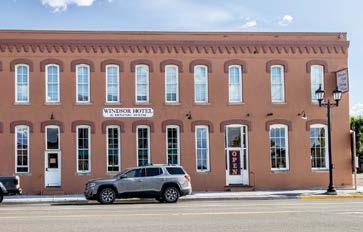
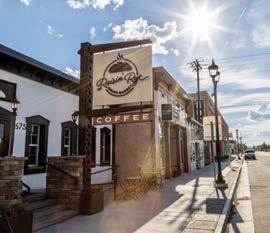
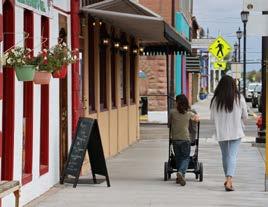
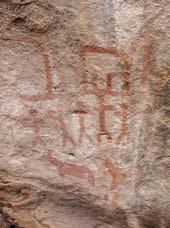
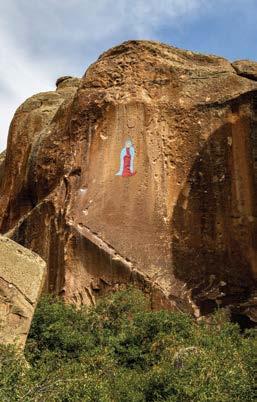
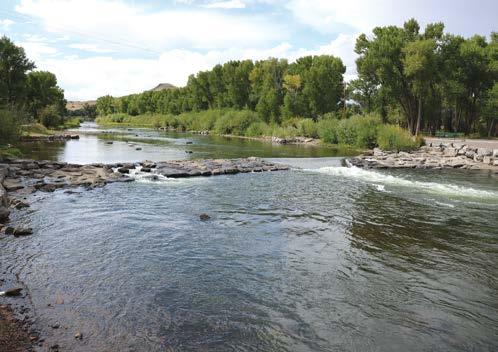
El Penitente Canyon’s thirty- to forty-foot volcanic walls have been drawing people for a very long time. At the canyon’s opening, Ute petroglyphs and pictographs—human figures, travel-lines, horses—are etched and painted into the rock face. Deeper in, wagon-wheel scars gouged into the sandstone mark where Hispano settlers hauled carretas to harvest piñón for firewood. A painted mural of La Virgen de Guadalupe, left by a member of Los Hermanos Penitentes—a Catholic brotherhood who sought solace in these walls since the 1880s—still watches over a small bench below.
In 1984, professional rock climber Bob D’Antonio added another chapter, putting in the first climbing routes that made El Penitente a premier climbing destination. Today the canyon ranges from bouldering with crash pads to
belayed sport climbs rated up to 5.13, with permanent bolts anchoring routes through cracked-slot canyons and rappel faces across 2.5 miles of trail. No new bolts are permitted. For gravel riders, the surrounding area delivers sustained packed-gravel roads edged with sage and chamisa, with occasional roaming cattle from local ranchers as company.
What Del Norte is attempting— within the town’s merging of historic and new, and the layers of outdoor adventure—is something harder than a rebranding. It’s asking visitors to arrive curious and leave accountable: to trace the wheel-ruts in sandstone, to eat the elk burger, to read the name on the building before photographing it. The Río Grande still runs through the middle of it all, cold and indifferent to booms and busts alike. The town, for now, is choosing to run alongside it. t
Visit Del Norte, Colorado
140 Spruce Street, PO Box 249 Del Norte, CO 81132 (719) 657-2708
Online: delnortecolorado.com
Del Norte River Walk: delnortecolorado.com/riverwalk-project Rio Grande County Museum riograndecountymuseum.org/del-norte

Del Norte stands on the south bank of the Rio Grande River and has incorporated the river into the community amenities with a river walk, viewing decks, and even a massive whitewater feature.
PHOTO | SCOTT LEUTHOLD

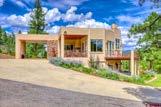

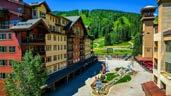
155-Acre


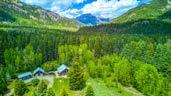

Story and Photos by Heather Leuthold
Dennis Ditmanson has been a bibliophile for as long as he can remember.
In preschool, he earned gold stars for every library book he read. His mother saved the “star sheets,” building small paper records of a growing habit that would shape the rest of his life. Even then, reading wasn’t just a pastime—it was pursuit. And pursuit, over time, became accumulation.
By the time Dennis retired after more than three decades with the National Park Service, he had built an extensive personal library. Years spent interpreting the landscapes and layered histories of the American West only deepened his appetite. The shelves filled with volumes on outlaws and lawmen, frontier trails, Native American history, conservation, and the evolving mythology of the Southwest.
Retirement, however, brought a practical challenge: space.
“If I were going to keep buying books,” he says with a smile, “I needed to sell some.”
Dennis Ditmanson, Owner of Books of the Southwest, stands ready to serve customers within Rough Rider Antiques in Las Vegas, New Mexico.
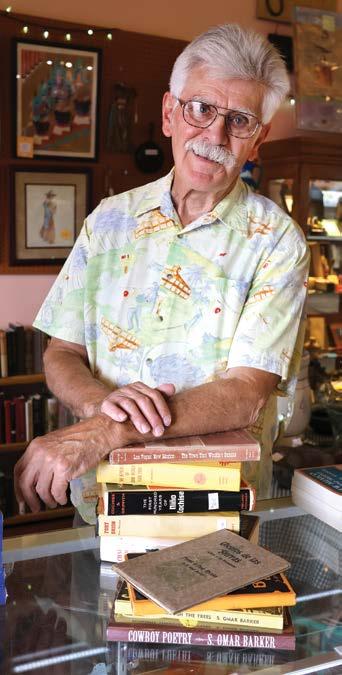
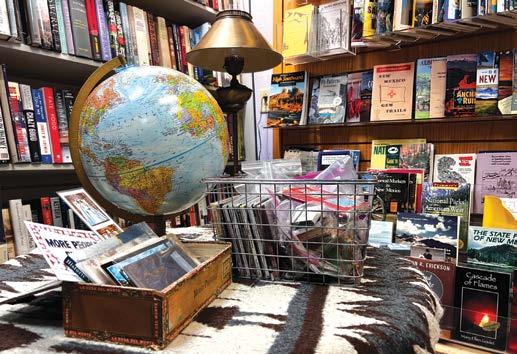
He began modestly, with a single bookshelf inside Rough Rider Antiques in the Railroad Avenue Historic District, Las Vegas. What started as a way to downsize gradually evolved into something more intentional. A brief stint at the beloved bookstore Tome on the Range, run (at the time) by the generous and knowledgeable Nancy Colallio and Jan Chapman, helped crystallize the idea. They were welcoming and supportive, modeling the kind of bookselling that is rooted in conversation and trust.
Dennis later moved his collection to a larger dedicated space within Rough Rider Antiques owned by Nancy Freeman located within the historic Railroad District in Las Vegas. As his shelf grew, so did his clarity of purpose. He knew he couldn’t be a full-range bookstore—and he didn’t want to be. Instead, he chose focus over breadth. He decided to center his collection
around the Southwest: Native American history and culture, outlaws and lawmen, the Santa Fe Trail, ranching, exploration, and the region’s complex past. A few experimental detours into unrelated subjects proved the wisdom of that decision.
Today, his carefully curated selection reflects both discipline and passion. Because he handles his own buying and stocking—frequenting estate sales, library clearances, and yard sales—he maintains an almost uncanny awareness of his inventory. He can generally recall where most any book sits on the shelf. Not always, he admits, but almost.
A favorite section for Dennis greets visitors right up front, highlighting works tied specifically to Las Vegas and San Miguel County. Among the authors he treasures most are famous cowboy poet S. Omar Barker and his brother, conservationist and writer Elliott S.
Barker. Their words carry the cadence and conviction of the land itself—stories shaped by saddle leather, river corridors, and early wildlife management in New Mexico.
The fiction shelves reflect an equally thoughtful curation. Readers will find works by Rudolfo Anaya, whose storytelling helped define modern Southwestern literature; popular novelist Stuart Woods; and two-time Pulitzer Prize-winning historian Paul Horgan, whose scholarship illuminated the region’s layered past.
Dennis hunts not only for customers but for himself, still driven by the same curiosity that once filled those preschool star sheets. The thrill of discovering an overlooked title or tracking down a sought-after volume never fades.
He is also quick to note that his bookstore does not stand alone. Rough Rider Antiques hums with variety and quality throughout—an eclectic collective of vendors offering craftsmanship, history, and surprise in every corner. Dennis considers himself fortunate to be part of that crew, grateful for the camaraderie and shared commitment to excellence that allow his specialized corner to thrive.
In the end, the boy who collected “gold stars” never stopped collecting stories. He simply found a way to share them, one carefully chosen shelf at a time. t
Location: 501 Railroad Avenue Las Vegas, NM 87701 (505) 454-8063
Books of the Southwest is located within Rough Rider Antiques in the Railroad District in Las Vegas, New Mexico.
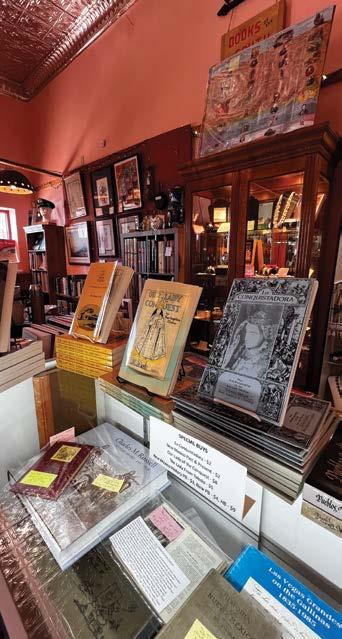
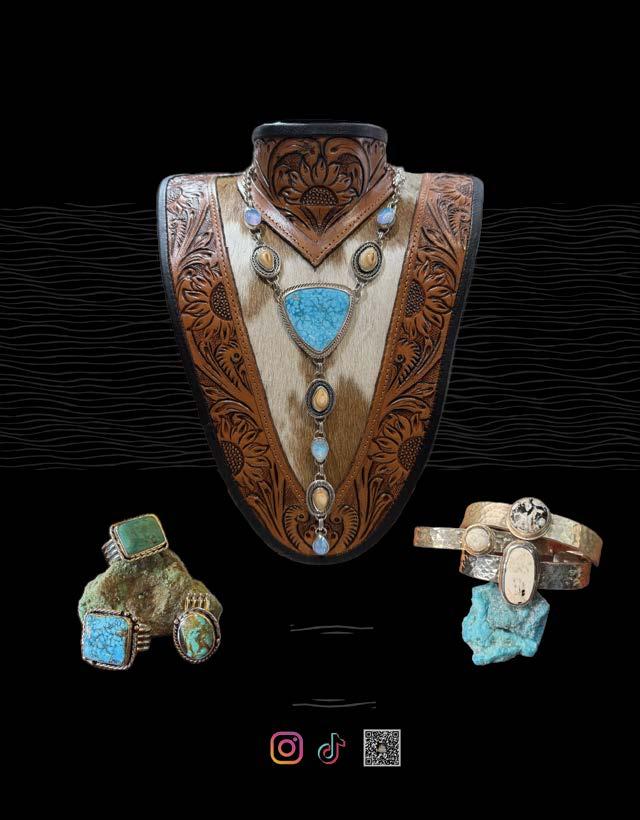


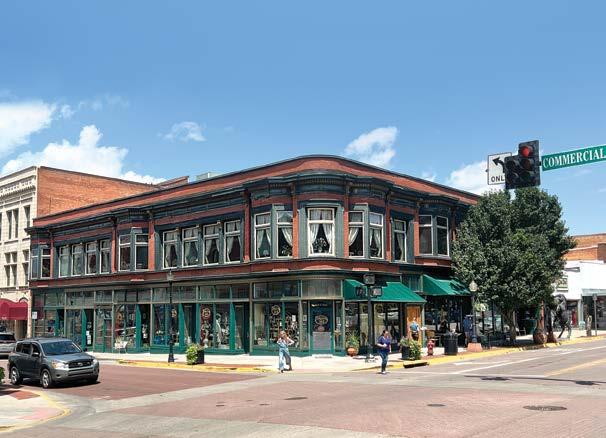
Words by Jane Schneider
While driving through southern Colorado along I-25, it’s hard not to notice the Victorian-era buildings that line the streets of downtown Trinidad. Once a prosperous coal mining town, its boom-bust economy helped to keep many of downtown’s older buildings, like the historic McCormick building, from being razed— which has created a fresh chapter for these structures and the locals who love them.
Vibeke and Lonnie Adkisson, travelers-turned-locals, are one shining example of this.
In 2004, the couple had shared Thanksgiving weekend with their family in Santa Fe and stopped for lunch in Trinidad while driving home to Denver. They’d been on the hunt for a historic building to live and work in but hadn’t found anything that appealed to them in their hometown. However, as they strolled along Trinidad’s
busy Main Street, where the famous Santa Fe Trail once ran, they found themselves transfixed.
“We were fascinated by the town’s beautiful brick buildings and streets,” explains Vibeke Adkisson. That’s when they noticed a two-story brick building at the corner of Commercial and Main Street with a For Sale sign.
In Denver the couple had owned Triple AAA Medical, an adaptive solutions medical supply business aimed at assisting people with disabilities. A diving accident at 18 had left Lonnie a quadriplegic, so he knew first-hand the challenges families faced when living with a disability. The business had done very well, but by the early 2000s the Adkissons had decided it was time to sell and retire.
“We thought we had one more project in us,” says Vibeke with a smile.
Enter the McCormick, the Trinidad building for sale that had captivated the duo. The building, which dates to 1882, had housed an assortment of businesses that reflect Trinidad’s rich history. It had been a mercantile store, a boot and shoe shop, a photography studio, a gambling hall, an architectural firm, and dental offices (to name a few). And while the structure was mostly in original condition, years of neglect and a leaky roof had taken a toll—but not an unfixable one.
“When we toured the McCormick, we found the upstairs had inflated wading pools to capture water leaks from the roof,” says Vibeke. The resulting moisture had left plaster walls veined and crumbling. But the overall structure remained surprisingly sound,
so the couple took a leap of faith and became its new owner. In March 2005, “we started doing demolition by putting a chute out of [what would become] the kitchen window,” she says.
It was Lonnie who designed the floor plans, working with a local draftsman to render the architectural drawings for what would become their spacious loft apartment on the second floor and nine storefronts on the first. He also made sure everything utilized universal design, which makes a home accessible regardless of a person’s age or ability.
“Lonnie was very creative,” explains Vibeke. “He designed the kitchen and did most of it all himself, while I did the interior design work. You could say we were pretty much a team. By then we were in our sixties and this became
our retirement project!”
The Adkissons salvaged as many original elements of the building as they could, ripping up linoleum to uncover beautiful pine flooring, scrubbing marble baseboards, and refurbishing colorful terrazzo floors. Vibeke even cleaned the vintage hardware, patiently rubbing away layers of paint from brass doorknobs and faceplates to reveal the handsome golden scrollwork beneath.
Local historian Ken Fletcher, whom the Adkissons hired to do research on the building, determined that in 1901 the architectural firm I.H. and W.M. Rapp had purchased and renovated the McCormick. Based in Trinidad in the late 1880s, the Rapp brothers (Isaac Hamilton and William Morris) designed several important public
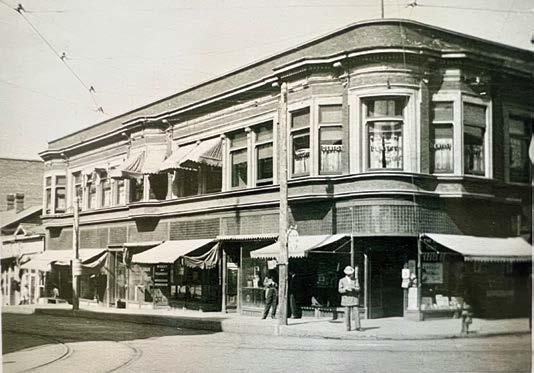
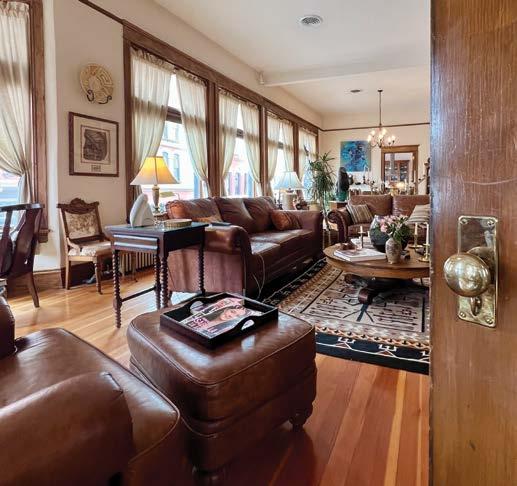
buildings in Trinidad, as well as in Walsenburg, Raton, and Santa Fe, New Mexico.
According to Fletcher’s report, “During 1902 the McCormick’s Main Street facade was completely stripped and rebuilt.” As part of their renovation efforts, the Adkissons removed the bay fronts that had been added to the front of the building in the 1950s and restored the exterior to the Rapp brother’s original design.
Over the next few years, the McCormick steadily improved, gaining
a new roof, tuck-pointed brickwork, sixty-four new windows, and restored oak moldings around the doors and windows.
With Lonnie’s passing in 2011, the 81 year old has pressed on, keeping the building they renovated together as a shining example of their partnership.
Purgatoire River Trading Co.
Energized by the McCormick’s renovation, the couple launched another venture in 2006, with the opening of the Purgatoire River Trading Compa-
“
The upstairs had inflated pools to capture water leaks from the roof.
Vibeke Adkisson Building Owner
ny, a shop brimming with handsome Native American baskets, pottery, rugs, jewelry, artifacts, and weavings. It seemed a fitting enterprise, given the history of the Santa Fe Trail and the trading posts that once existed along its route.
It was the couple’s love of Native American work that led them to launch the shop. Thanks to many years of collecting, they’d established a knowledgeable network of talented Native American craftsmen and some old-fashioned pickers. Twenty years later, business continues to be brisk and Adkisson remains a valued member of the downtown merchant association and Foundation Board Member of Trinidad State College.
“Native American artwork speaks to people of many cultures. I have customers from around the world who shop with us,” says Vibeke. “I think it helps that I speak fluent Danish, a little German, and other Scandinavian languages.”
Entering Vibeke’s loft, you’ll see the spacious, sun-filled rooms reflect her passion for art and literature.
“I don’t collect what’s chi-chi; I collect what’s beautiful to me,” she says.
Vibeke’s taste was shaped in part by her Danish upbringing, as both grandfathers were art collectors. One had been a ship’s engineer who traveled the world, eventually bringing her a first-edition copy of Mark Twain’s Life On The Mississippi, a gift she still cherishes today.
Top: The main floor of the McCormick Building offers nine store fronts including one occupied by Purgatoire River Trading Co., a long time gallery of art and fine Native American jewlery owned and opperated by Vibeke Adkisson, shown to the right with her companion, Pige, (means ‘girl’ in Danish).
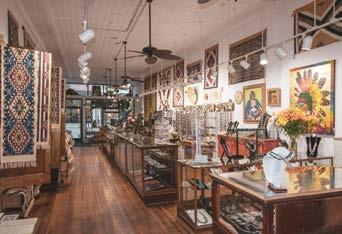

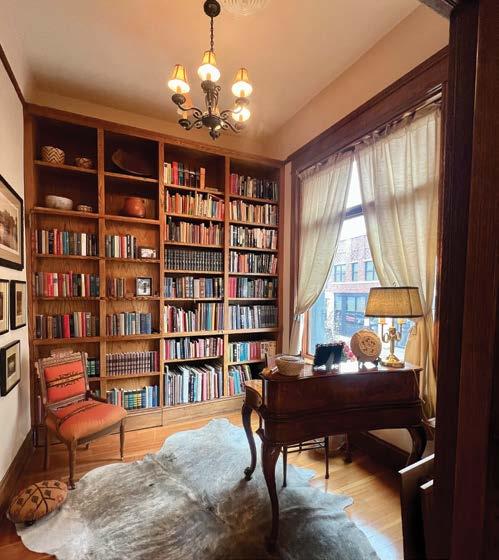
Her home holds an interesting array of artwork: European landscapes by Danish and Dutch painters reside next to Native American pots and colorful paintings of Indian braves. Look further and you’ll see tapestries, glossy blackware from the Santa Clara pueblo, and handsome geometric patterned bowls by Acoma potters. She spent time during her college years teaching on a reservation in Arizona, which gave her
new insight and appreciation of Native American culture.
Today, with her children scattered across the West, Vibeke enjoys greeting customers at her shop and discussing art with those who share her passion.
As for the McCormick, she and Lonnie realized a lifelong dream, proving it’s never too late to complete that final project. t
Purgatoire River Trading Co.
Location: 113 E Main Street Trinidad, CO 81082 (719) 845-0202
Online: purgatoirerivertradingco.com

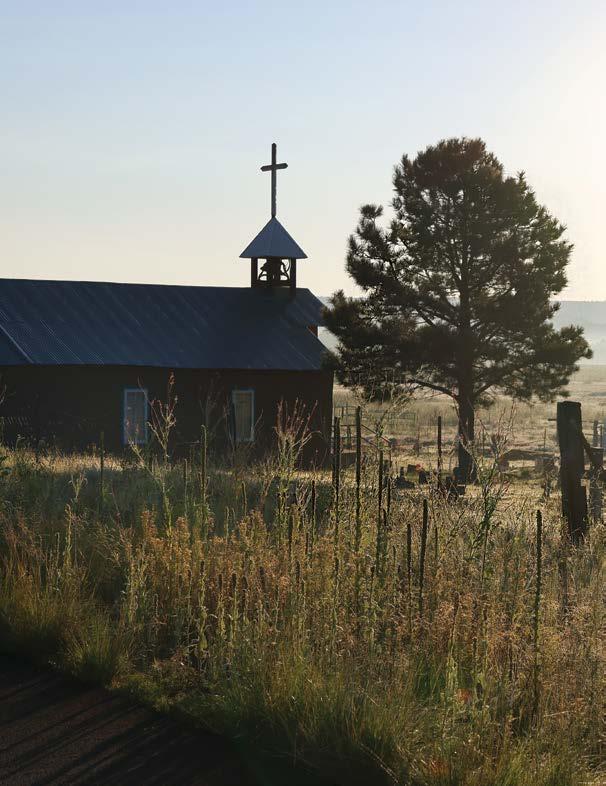
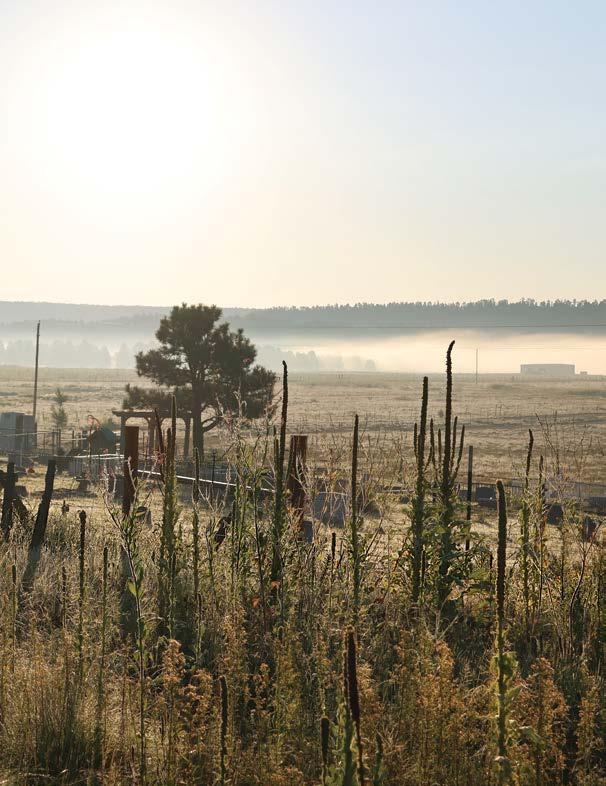
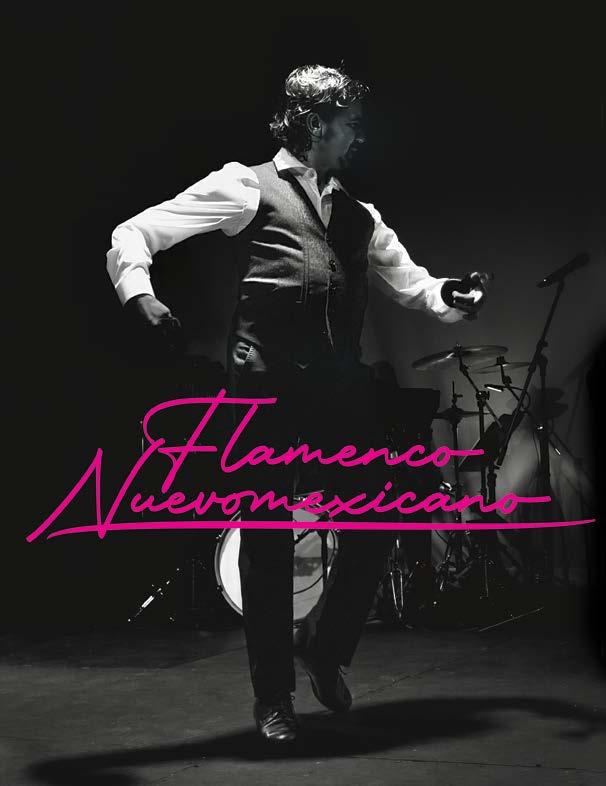
By Shelli Rottschafer
Photos by Daniel Combs

Flamenco is a living folkloric tradition of music and dance. It is rooted in Romaní (Roma) lifeways.
The Romaní have their origins in India. Centuries of migration, persecution, and social exclusion shaped them into a nomadic people with a distinct culture.
New Mexican Flamenco is “its own thing!”
Once in Spain, the Romaní—otherwise known as gitanos (gypsies)—lived and performed within cave systems in Granada, Andalusia because they were persecuted during the Inquisition. Under the Catholic rule of Queen Isabela de Castilla y León and King Fernando de Aragón, when the Spanish began immigrating to the Américas, the Romaní were amongst the conquistadores. Flamenco arrived in the Américas with the Spanish Romaní, who brought their music and dance with them. Over the centuries, flamenco in the diaspora has become “its own thing”—especially in the Land of Enchantment that
is Nuevo México. Here, the gitanos found a place to live and practice their traditions.
Early songs “tell stories of pain, loss, suffering, displacement, and heartache” (Chávez 21). Flamenco music and dance have become a symbol of a specific people. It incorporates an appreciation of culture, history, and heritage. Displays of emotion, being moved by una chispa, a spark, are known as duende, a term made popular by Spanish poet and playwright Federico García Lorca [born in 1898 and assassinated in 1936].
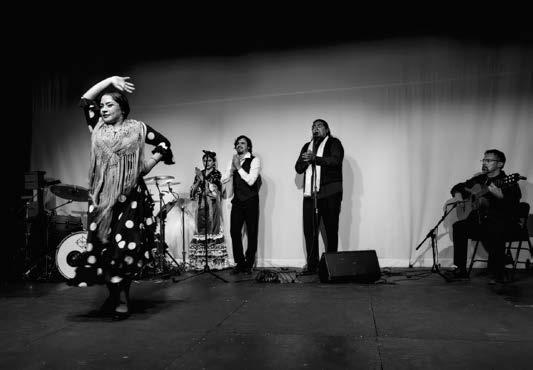
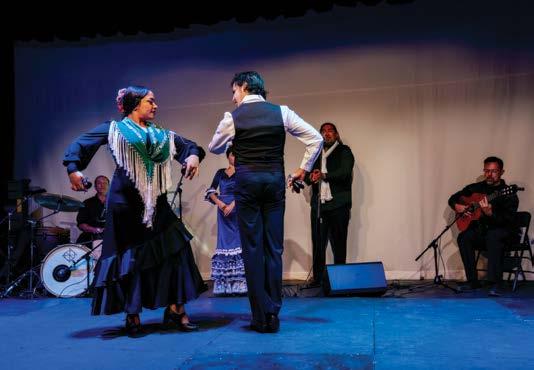
During early twentieth century tourism in New Mexico, tourists came to encounter “the exotic other without leaving the country” (Chávez 99). Fiestas hispanas highlighted dancers and musicians who had learned from community elders and performed their fusion of Mexican, Spanish, and Indigenous rhythms and dance steps.
As flamenco gained wider notoriety, dance education evolved to include it. The National Institute of Flamenco in Albuquerque was founded in 1982 by Eva Encinias-Sándoval, and is now an internationally recognized arts organization offering instruction in dance, guitar, and singing. In dance class children begin with basic pasos
(steps) and palmas (rhythmic clapping). Flamenco is a unique approach to body movement that gives alternatives to ballet, tap, or hip-hop. Each year students advance to more complex steps, dance styles, and partnered work.
The National Institute of Flamenco also collaborates with the University of New Mexico’s Department of Theatre and Dance. Flamenco is offered as a minor, students can pursue a Bachelor’s in Dance, and continue their study through a Master of Arts or Master of Fine Arts with various flamenco dance residencies. This all was pioneered by Eva Encinias.
Today, the National Institute of Flamenco is home to its own American
Flamenco Repertory: Yjastros. This name is a hybrid of hijastros—stepchildren—meaning that flamenco nuevomexicano is a unique fusion of cultures rooted there and not across the Atlantic in España. Both share their origin in Romaní tradition, but the Yjastros version of flamenco is uniquely New Mexican. The company is now guided by Eva Encinias’s children, Joaquin and Marisol Encinias, alongside their board of directors and other instructors.
A signature celebration of flamenco nuevomexicano is Albuquerque’s Flamenco Festival. Held each summer, it’s considered the most noted festival outside of Spain. It gathers bailadores (dancers), guitarristas (guitarists),
cantores (singers), and tamboristas (percussionists) from Spain, Argentina, France, and the United States.
Flamenco in New Mexico is not confined to festival season. The National Institute of Flamenco performs throughout the year—including the “Flamenco Fandanguero” at the National Hispanic Cultural Center in Albuquerque and at the Taos Center for the Arts. This performance combines both flamenco and son jarocho with dancers, singers, and musicians from Yjastros as well as guests from Mexico and Spain. These are interactive experiences where the audience is invited to join in on palmas
Although flamenco and son jarocho are “born an ocean apart,” both traditions grew from a fusion of “African, Indigenous American, Iberian, and Romaní influences” that were carried “across the Atlantic through colonization, migration, exchange, and resistance.” In nineteenth-century Mexico, the fandango brought neighbors together to sing, play, and dance upon a shared wooden platform, and the improvisation, rhythm, and call-andresponse connected people.
Another arts space that celebrates flamenco is The Wildflower Playhouse (1339 Paseo del Pueblo Sur, Taos). This is the home stage of the flamenco troupe ReVóZo, which performs there each quarter with special events over Thanksgiving and Valentine’s Day weekends. ReVóZo is led by singerdirector Vicente Griego. Griego was born in Dixon, or what locals call El Dique, and was raised along the El Río San Antonio de Embudo. He is internationally renowned for his craft.
ReVóZo also includes guitarrista Gabriel Lautaro Osuna, who is Griego’s cousin. On cajón (rhythm box) is Eddie García. García traveled the world for

his career as a percussionist, settled in Las Vegas, Nevada, and then was pulled back to his roots in Nuevo México. The bailadoras principales (principal dancers) of the troupe are Elena Osuna and Emmy “La Emi” Grimm. Emmy is originally from Chamisal, New Mexico and is Executive Director of EmiArteFlamenco Academy. Each member adds a unique aspect to ReVóZo’s fusion. They sing in Caló—a hybrid of Spanish, Romaní, and Indigenous languages. Their rhythms borrow from
multiple traditions and as Griego puts it, “ReVóZo makes their sound out of everything so that it is real.”
ReVóZo’s name is also built upon cultural fusion. Griego explains that, in Spanish, a rebozo is a shawl. “Mothers used their rebozos to shield themselves, from wind, from mal de ojo, as well as to bind their babies to comfort them.” Voz means voice, and the verb revozar means to have a voice lleno de espiritu—brimming with spirit and emotion. Revolución is revolution. In this way,
“Flamenco is home; it is community; it is tradition. Flamenco is a way to live”.
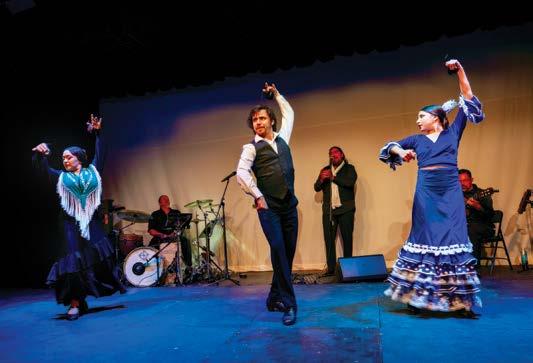
ReVóZo uses its shawl movements and passionate voices to interpret their message of cultural revolution by gathering community together in song and dance. Griego speaks of his passion that, “this art form is a testament to the beauty of our people…I don’t think of flamenco as a performance [rather] it’s a ceremony.” In Grimm’s words, “Flamenco is home; it is community; it is tradition. Flamenco is a way to live.”
Each Thanksgiving weekend, ReVóZo performs at The Wildflower Playhouse. Shows gather at 7 p.m. and close by 9 p.m. The stage is curtained in teal-blue velvet with blue backlighting. The eighty-person audience sits
in front-row reserved seats or terraced general admission. The seasoned troupe enlivens the crowd who demonstrate their appreciation with multiple ¡Qué Viva la gente! and ¡Orale! exclamations throughout the show.
At the performance I attended, Vicente Griego sang memorable flamenco puro favorites as well as tangos de piyayo, a Cuban and flamenco fusion, and the bolero “Dos Gardenias,” made famous by the group Afro-Cuban All Stars. Eddie García (cajón) and Gabriel Osuna (guitarra) accompanied the dancers. Bailador principal Carlos Andres Menchaca’s staccato footwork echoed throughout the playhouse.
Bailadora principal Isabella Alderete opened in a jet-black traje (dress) with a green rebozo and a mantilla. Later, she returned after a costume change in a black-and-white polka-dot multilayered skirt with an embroidered mauve scarf.
Both principal dancers demonstrated how to usher a new generation into this art form. Debuting that night was Bella García, Eddie’s daughter and Vicente’s niece. Bella performed sevillanas with hand-held castañuelas (castanets) and gave an emotional solo, as well as sang in chorus combined with palmas.
To close the evening, Griego offered a thought for the audience to consider; that the last song is really the first song,
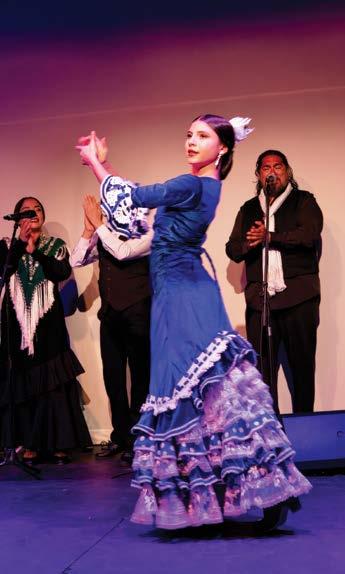
since it is the first song of, “the rest of your possibilities.” He spoke directly: “We [all] are the revolution because when we gather in community we will carry on through our love.” In this way ReVóZo’s flamenco nuevomexicano reaches toward something larger. It is an invitation to embrace one’s origins and, despite el dolor, to lift up La Raza and our shared humanity through music, dance, and language. t
National Institute of Flamenco 1771 Bellamah Ave NW Ste A Albuquerque, NM 87104 Online: nifnm.org
Tablao Flamenco Hotel Albuquerque 800 Rio Grande Blvd. NW Albuquerque, NM 87104 Online: tablaoflamenco.org
Wildflower Playhouse
1339 Paseo del Pueblo Sur Taos, NM 87571 Online: wildflowerplayhouse.org
EmiArteFlamenco Academy 3022 Cielo Court Santa Fe, NM 87507 Online: emiarteflamencoacademy.com
Festival Flamenco Albuquerque June 19-27, 2026 Online: ffabq.org
YouTube Video: Mini Performance of La Emi, Vicente, and student-recital.

DIGITAL CONTENT:
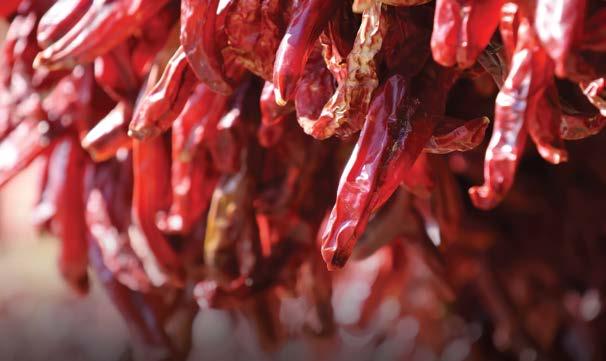

By Scott Leuthold
They hang from portal posts and adobe doorways like burning garlands, swaying gently in the high desert wind. These braided ropes of deep crimson chiles have become as synonymous with New Mexico’s ambiance as turquoise skies and the scent of piñon smoke on an evening breeze. Ristras have a long history in this corner of the American Southwest, and they represent much more than artistic decoration.
The ristra’s origins are rooted in necessity as a survival tool—a practical method of drying and preserving the chile harvest before the cold months crept down from the Sangre de Cristo Mountains. Indigenous Pueblo peoples had been cultivating chile in the Rio Grande Valley for centuries before Spanish colonizers arrived in the 1500s, and it was the blending of these two cultures that gave rise to the traditions we recognize today. After the autumn harvest, families gathered to string freshly picked red chiles together by hand—a labor-intensive process that was as much a community ritual as it was a chore. Hung in the dry, sunsoaked air, the chiles slowly dehydrated into wrinkled, brick-red pods to flavor
posole, enchiladas, and red chile sauce throughout the long winter ahead.
Over time, something shifted. What began as pantry and preservation became poetry. Neighbors noticed that a ristra hanging by the door carried a certain warmth—a signal of hospitality, abundance, and home. Folklore wove itself naturally into the tradition. It was said that a ristra hung at the entrance of a home would bring good luck and ward off evil spirits. Others believed the chiles carried protective energy, their fiery nature enough to keep misfortune at bay. Whether or not you believed the stories, there was something undeniably inviting about a home adorned with ristras—something that said welcome, come in, there is good food and warmth here.
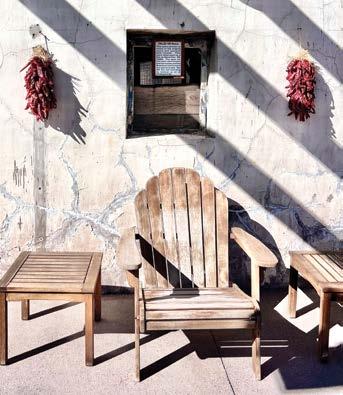
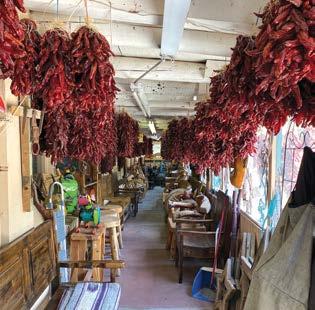
Clockwise: Ristras hang on an old adobe wall at Ojo Caliente Mineral Springs Resort; A chile pequin ristra hangs in a kitchen; Ristras hang on display for sale at Oscar’s Tree Service in Santa Fe; Ristras hang on display for sale at Camino Real Gallery in Taos, New Mexico.
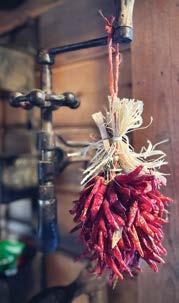
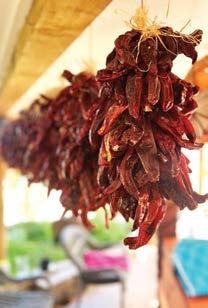
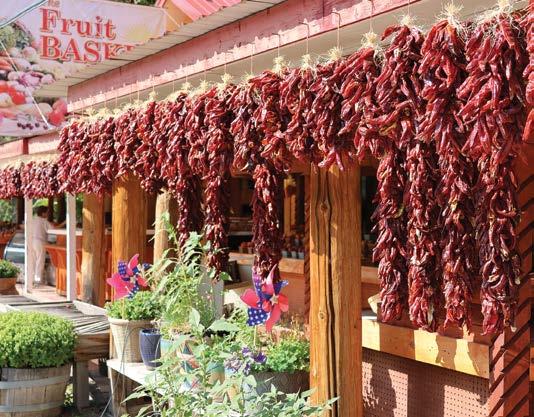
Today, the ristra endures as one of New Mexico’s most beloved and recognizable symbols. Drive through Hatch, the self-proclaimed chile capital of the world, in late summer and you’ll find them strung along rooftops, fence posts, roadside stands, an explosion of red against the pale desert sky. In Santa Fe and Taos, they hang beside hand-painted signs and wind chimes, visual markers of the region. For transplants and longtime locals alike, the sight of a ristra triggers something deep and nostalgic—a memory of harvest season, of a grandmother’s kitchen, of the particular slant of October light over the chamisa.
There is a reason people bring ristras home from New Mexico like talismans. Strung by hand, dried by sun, shaped by centuries of culture and tradition, they carry the soul of this land within them: fiery, enduring, and impossible to forget. t

Fresh ristras are in season from late August through October with peak availability around Labor Day. While they typically are sold during the fall harvest, they can often be found through the Christmas season.
Seasonal Ristras
Santa Fe Oscar’s Tree Service 1203 Cerrillos Road
Santa Fe, NM 87505 (505) 577-8337
Velarde
The Fruit Basket 1413 NM-68
Velarde, NM 87582 (505) 852-2310
Albuquerque Sichler’s Farm 820 San Mateo NE
Albuquerque, NM 87108 (505)255-3338


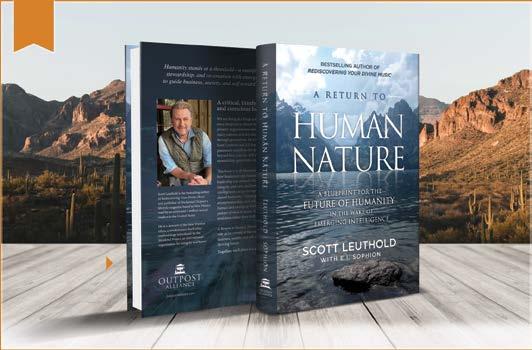

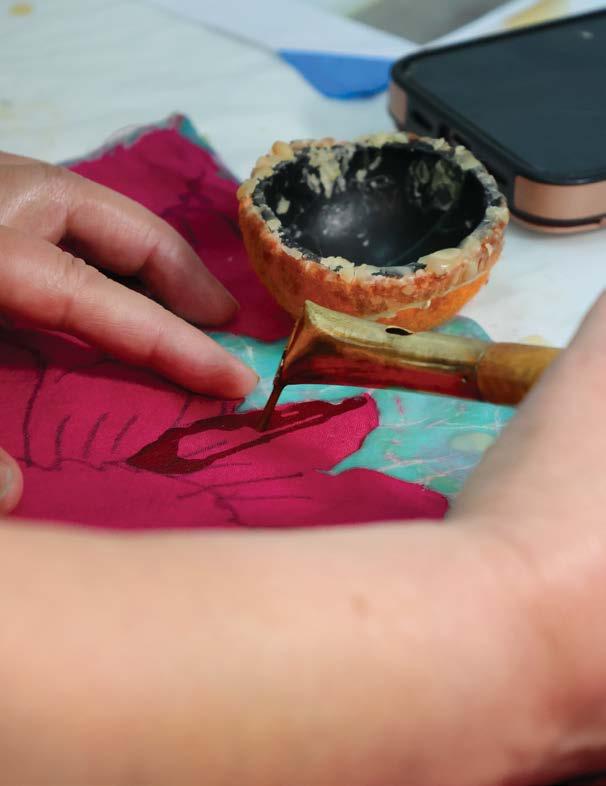
Batik Artists Jonathan and Beth Evans Share Their Abundant Talents at the Shalawalla Gallery
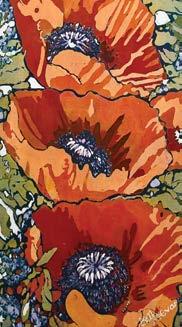
BY JANE SCHNEIDER
The charming artist colony of La Veta, Colorado, nestled at the base of the majestic Spanish Peaks, holds a number of treasures. Most notable is the Shalawalla Gallery and Gift Shop, owned by internationally recognized batik artists Jonathan and Beth Evans.
The couple’s gallery space, housed in a repurposed boxcar, is a unique shopping experience. Here you’ll find intricate batik paintings, long, flowing scarves, pillows, and shawls. In fact, the word “shalawalla” is derived from the Hindi word for “shawl guy,” a nod to the Evans’ enduring love of India. Between colorful t-shirts, frameable prints, and their popular greeting cards, you won’t leave empty-handed.
And if you’re an artist yourself—or looking to expand horizons—the Evans host batik workshops during the summer months for those interested in learning more about this ancient art form, which traces its roots back thousands of years to Indonesia. Batik, the art of decorating cloth using dye and hot wax, reaches new heights under their guidance. Classes are tailored for any level of expertise and can be scheduled at your convenience.
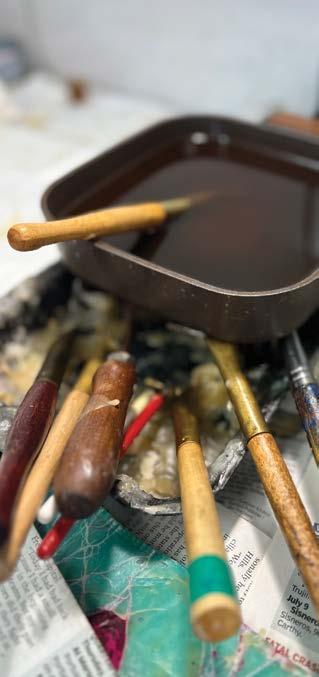
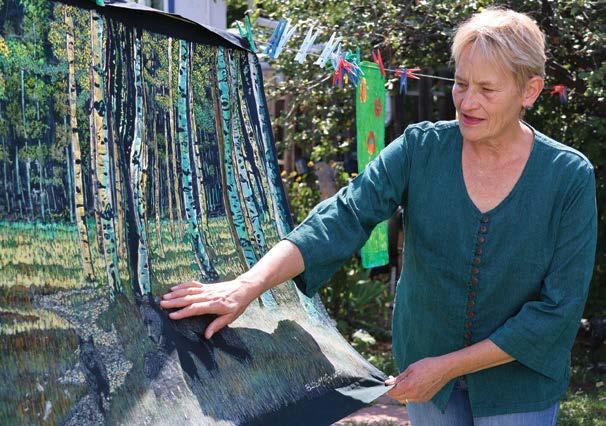
Jonathan learned batik as a public schoolteacher in his native England and began working as an artist at age twenty-six. He created his first batik shirt while living on the Spanish island of Ibiza in the 1970s, back when it was largely a Bohemian outpost, rural and unspoiled. The shirt’s instant sale gave him the powerful incentive to keep exploring batik—and that journey continues, even as Jonathan enters his eighth decade.
“I’m still learning constantly, still both loving and struggling with this uncontrollable process,” explains
Jonathan. “Still trying, unsuccessfully, to master an ‘unmasterable’ medium.” Suffice it to say: “the work is very humbling.”
Beth understands her partner’s point of view. “Batik is about patience and process and acceptance,” she observes.
Like Jonathan, Beth has spent thirty-five years mastering its nuances. While raised outside of Washington, D.C., her family often traveled west to spend time with her father’s relatives in Colorado. It was during those excursions that Beth fell in love with the state’s rugged beauty. By her mid-twenties she’d moved to the tiny mountain resort of Cuchara to sell hand-painted
clothing and experimenting with batik. She found Jonathan’s portrait work on his website in the early 2000s. Stunned by its beauty, Beth sent an email in hopes of learning more about his technique. But she soon discovered Jonathan was living a simple life, without running water or electricity, in the Himalayas of northern India. Their correspondence may have been slowed by the cranky internet cafe fifteen miles away, but they gradually bonded over a mutual love of batik, books, and music. Ten months later, the two met in London’s Heathrow Airport, where Jonathan stood holding a sign with Beth’s email address printed in bold black
letters. Twenty-four years later, their love of batik and each other endures.
The process of batik starts with the artist’s vision, the image one hopes to create, sketched in pencil on a taut piece of cotton cloth. The application of hot wax keeps the dye from penetrating areas one doesn’t want colored. After each application of wax and dye is laid down, the wax must dry and be removed before the next step can take place.
“It takes organization to realize this image you have in your head,” admits Jonathan. His batiks resemble intricate mosaics, with impressionistic patches of color and light that capture the mood of the subjects he covers. As for his imagery, India provided boundless inspiration.
“I couldn’t get enough of India and its strangeness, its culture, its warmth, and its lovely people,” he adds.
Over the course of his career, Jonathan has produced captivating portraits of villagers and buildings, cooking vessels and religious rituals—even cars and trucks, vehicles often not owned by the average Indian.
Beth’s work, on the other hand, leans more toward nature-related subjects. Her paintings capture gnarled trees, bright sunflowers, moody lakeshores, and quiet vignettes of domestic life. “I started by wanting to look at details, like leaves on the forest floor,” she says. Many people feel drawn to the intimate nature of her work and the beautiful range of colors she achieves.
But it’s a labor of love: the artistic process requires the waxing and dying of fabric multiple times, using colors that graduate from light to dark. The beauty of batik is in its many applications, as batiked fabric can be transformed into clothing or wall hangings.
“Something can go wrong every step of the way,” she says, speaking of the methodical nature of building the layers
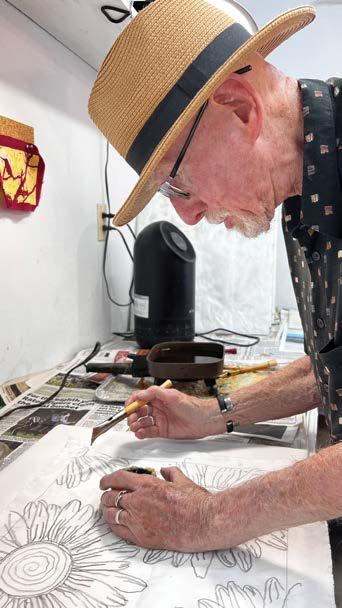
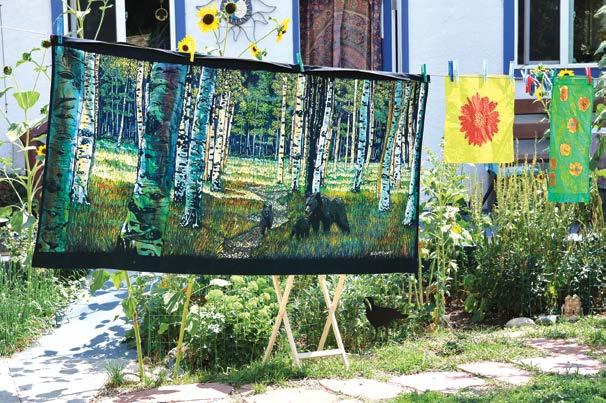
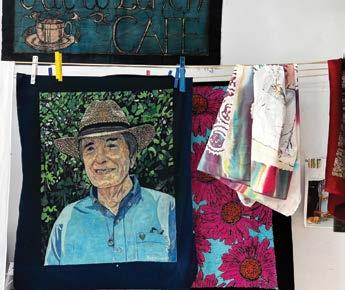
of color that gradually brings a sketch to life. “You just hope your mistake happens early on so you can start over again.”
After the couple’s initial meeting in London, Jonathan relocated to Colorado, and the couple settled into a creative routine. They’d travel to India for inspiration and creation, then return to the U.S. to sell their art. During their first year together, they spent seven months crisscrossing the U.S. in a van, participating in twenty-eight different art festivals. They would go on to show their work in the galleries of New York City, Aspen, London, and Germany.
The duo’s colorful work has the ultimate showcase in A Book of Batik (2024), a handsome coffee table book they published chronicling their artistic
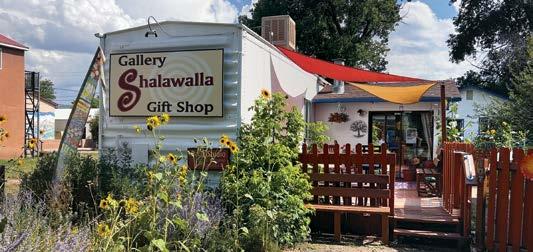
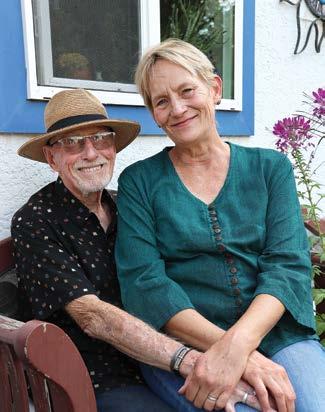
journeys, available at the Shalawalla Gallery and online on their Facebook page.
Jonathan currently serves as the chairman of the Batik Guild, a London-based nonprofit organization for batik artists. Founded in 1986, the volunteer-driven organization boasts more than 200 members. In celebration of the International Year of Batik in 2024, the couple hosted a national exhibition featuring the work of fourteen batik artists. The colorful show took place at the Estelle Center for Creative Arts in La Veta.
The Evans have managed to combine their love of batik with traveling, publishing, teaching, and creating new designs. Like the Evans’ life, it is limited only by one’s imagination. t
Shalawalla Gallery 107 W. Ryus Avenue PO. Box 433 La Veta, CO. 81055 (719) 742-3453
Online: shalawalla.com

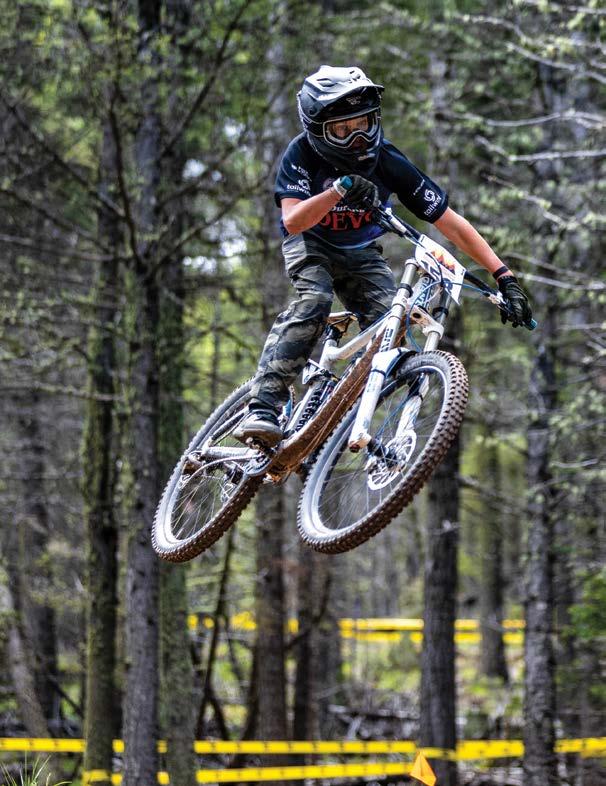
ENCHANTED OUTPOST MAGAZINE PROUDLY PRESENTS
a fly fishing story in collaboration with seven regional guides compiled and written by scott leuthold illustrations by ei sophion They say nothing ventured is nothing gained.
Seven regional world-class fly fishing rivers and the experts who guide them.
In the Southern Rockies, water does not simply move across the land. It remembers. It remembers snowmelt slipping from the high peaks of the Continental Divide; remembers cottonwoods bending into summer wind; remembers the quiet silhouettes of anglers who have stood in its currents for generations. Our rivers do not boast of their reputations. They reveal them slowly—in the drift of a mayfly, in the quiet sip of a rising trout, in the weight at the end of a long, patient cast.
The Rio Grande moves broad and steady through basalt gorge and open valley. Much of it is classic freestone water: seasonal, responsive to snowpack, alive with shifting currents and structure. Here swims the native Rio Grande cutthroat trout, crimson-slashed and resilient, holding in pocket water and seam lines that reward a careful dry-fly presentation.
The Chama River begins high along the Continental Divide before slipping through red rock country, right
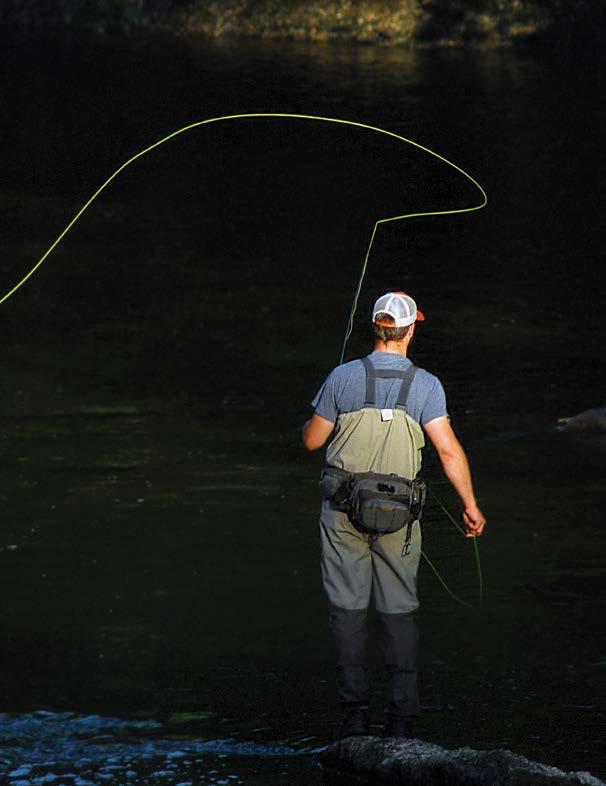
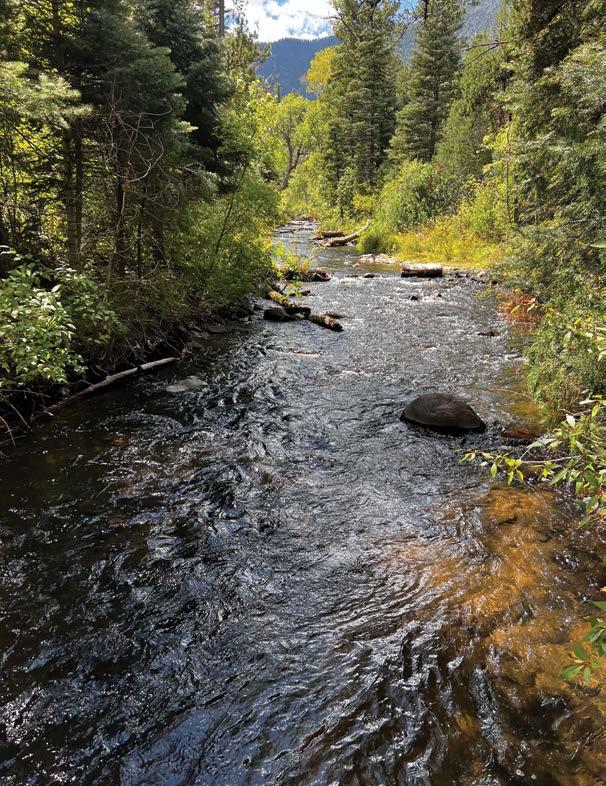
A trout is a moment of beauty known only to those who seek it.
—Arnold Gingrich
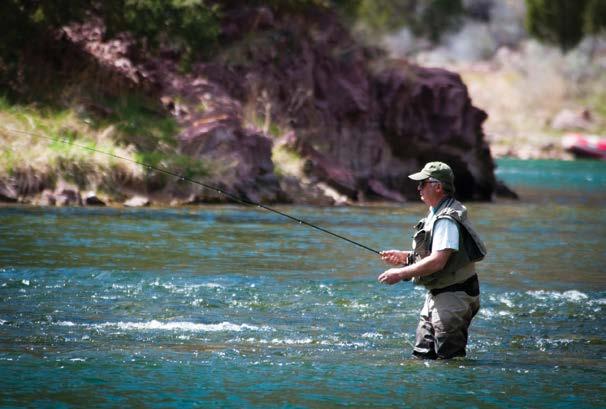

through the very landscapes that stirred Georgia O’Keeffe. Below El Vado and Abiquiú, portions of the Chama take on a tailwater character, offering steady flows and technical fishing where browns and rainbows grow strong on consistent currents. It’s a river that demands thought, such as long leaders, precise drifts, and a willingness to match subtle hatches.
Northward, the Conejos River braids through alpine meadows in classic freestone fashion: pocket water, riffles, and plunge pools alive with wild trout. The Cimarron River, particularly below Eagle Nest Dam, blends tailwater stability with canyon intimacy, producing healthy brown and rainbow trout in flows that reward stealth and fine tippet. Along the lesser-pressured bends of the Purgatoire River, anglers encounter a more rugged, solitary experience. Flows can be variable, structure complex, and fish opportunistic—a place
where reading water matters more than numbers. And then there is the upper San Juan River. Before it becomes the famed desert tailwater downstream, its high-country stretches tumble clear and cold through forest and meadow. Here, freestone character defines the rhythm, with native cutthroat strains, browns, and rainbows rising in short feeding windows, rewarding those willing to hike farther and fish lighter.
Together, these rivers form a tapestry of technical tailwaters and dynamic freestones—of deep nymphing mornings and delicate dry-fly early afternoons and evenings—each shaped by elevation, geology, and season.
Yet even world-class water is only part of the story. The guides who walk these banks before sunrise understand the nuance: when to fish small midges below a dam release, when to chase caddis in fading light, when to abandon the obvious run for the overlooked
seam. They are translators of current, historians of hatch charts, and quiet stewards of something older than sport itself.
This is their water. And for those willing to wade in thoughtfully and patiently, it remains an angler’s dream t
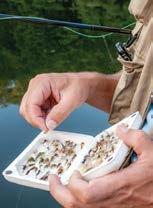
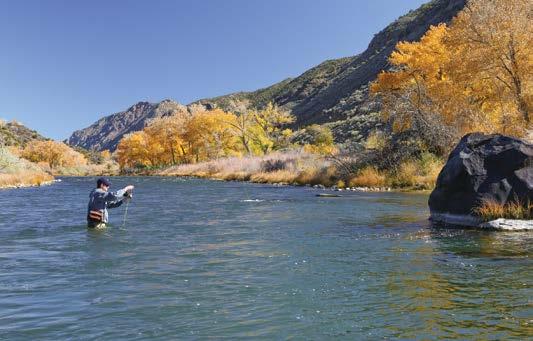
Length: 1,896 miles
Headwaters: San Juan Mountains, Colorado
Source Location: Near Stony Pass, east of the Continental Divide
Final Destination: Gulf of America near Brownsville, Texas
Featured Guide: Nick Streit
Location: 338 Paseo del Pueblo Sur, Unit B Taos, New Mexico 87571 (575) 751-1312
Online: taosflyshop.com
Rainbow and brown trout. Smallmouth bass and northern pike can also be caught.
Access varies from very easy vehicle access on the lower river near Pilar and at John Dunn bridge, to extremely difficult access (hike to only) for the rest—about 50 miles of the canyon. Trails are usually about 1 mile long and 600-900 vertical feet.
Spring hatches of blue winged olives and caddis start in March and April, and tend to be the most prolific. Baetis mayflies hatch in the fall and tend to be much more reliable, hatching every day from Noon to 3-ish, starting in September and running into December. Tricos, stoneflies and craneflies are also important food sources.
Typically, the Rio fishes best at flows under 200 CFS at the Cerro gauge.
While it’s possible to have good fishing at higher flows, the general rule is the “lower the better.” Be especially aware of spike in flows after monsoon rains in July and August, as they will muddy the river and make fishing very difficult.
On an average year, runoff usually starts around May 1st and runs into late June. However “average” years are few and far between these days.
9-10 ft 4, 5 or 6 wt. Floating line and a durable reel with a good drag.
I prefer to fish a dry dropper setup most of the time, with a large Chubby Cherynobyl Dry, then a relatively large nymph like a Poundmeister (made famous by my father Taylor Streit), and then a smaller size 16 mayfly nymph below that.
Given the trend towards warmer
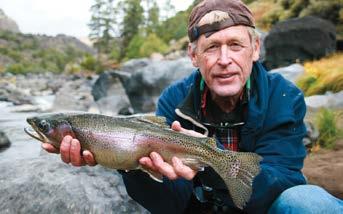
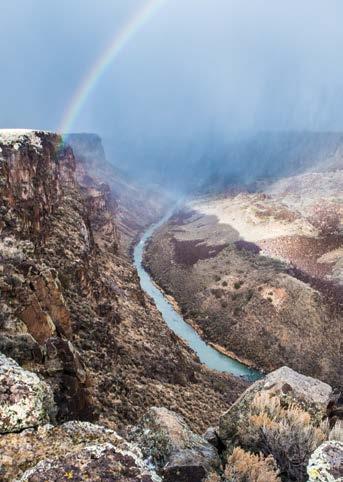
winters, the fishing has been really good in the winter months lately. And there are few other anglers to compete with.
Yes, especially on the lower river south of Taos. When water temps get close to 70 degrees, we target smallmouth bass.
Wade fishing is usually the best option in the canyon, as the logistics of floating it are difficult to downright impossible. But fishing the stretches below the Taos Junction Bridge can be fun and productive!
The Rio Grande del Norte National Monument was designated by President Obama in 2013, protecting the River for future generations.
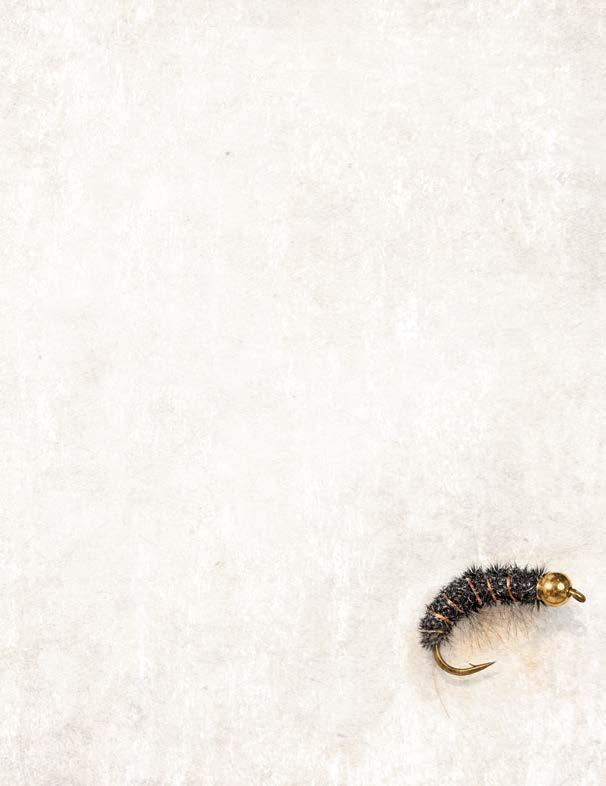
Fishing is not an escape from life, but often a deeper immersion into it.
—Harry Middleton y
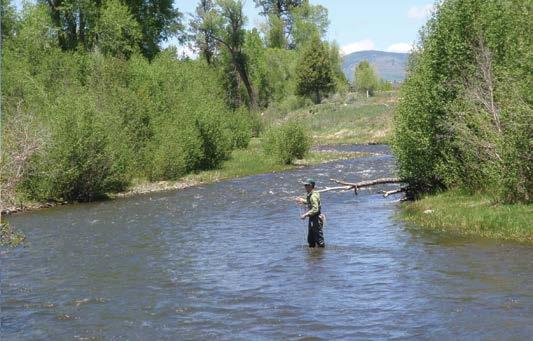
Length: 130 miles
Headwaters: San Juan Mountains, Colorado
Source Location: Confluence of the West Fork and East Fork in Archuleta County, Colorado
Final Destination: Rio Grande near Española, New Mexico
Land of Enchantment Guides
Featured Guide: Jesse Lee
Fly Fishing Outpost 1297 Bishop’s Lodge Road
Santa Fe, New Mexico 87506 (505) 629-5688
Online: flyfishingoutpost.com
The main species along the Chama River is trout. There are many different stretches that we fish with a variety of species of trout which include browns, rainbows and cutthroats. Depending on which stretch you are fishing will dictate what species one might catch.
There are a lot of very accessible public stretches of the Chama River. Some require very little walking, while others require a backpack with lunch and plenty of water. Vehicle access varies depending on the time of year, some that are best avoided if the roads are wet.
The Chama River has a large variety of insect hatches, including midges, mayflies, caddis flies and stoneflies. The insect hatches are water temperature dependent with bugs hatching year-round.
The Chama River is a complex fishery and the best flows can vary widely by location on the river. If you’ve got a question about flows, give us a call at Land of Enchantment Guides and we can provide up to date information.
Runoff is dependent on the current snowpack. Generally speaking, some stage of runoff will be happening midMay to mid-June. The stretches of river that are below dams will vary on water demand downstream.
A 4wt or 5wt rod and reel setup will take care of almost all situations.
It is always good to have a variety of flies when fishing the Chama River. The flies will vary widely depending on the area and the time of year. A few staples; Chubby Chernobyls, Pat’s Rubber Legs, Soft Hackle Hare’s Ears, Leeches and Woolly Buggers.
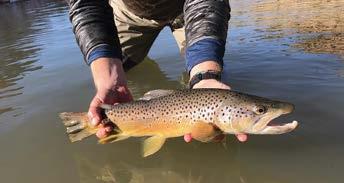
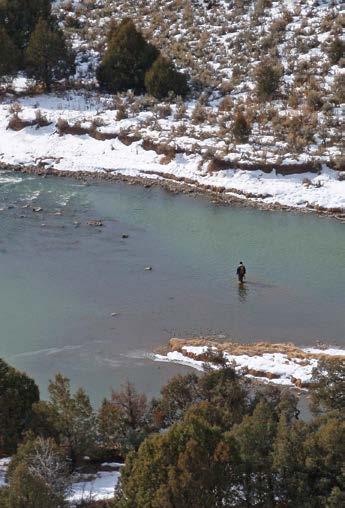
As with most fisheries the river is much more limited during the winter months. There are a few tail water stretches that provide some consistent winter fishing.
Parts of the river get too hot during the summer to safely target trout. It is always a good idea to carry a thermometer and check temps throughout the day.
The Chama River is primarily a walk and wade river. There is a small window where you can float, although the boat ramps are few and far between.
The Chama River has sustained human life for nearly 3,000 years. In more recent history, the red rock landscapes surrounding the Chama River are heavily featured in Georgia O’Keeffe’s works.
If, as I suspect, trout fishing is something of a disease, then it is also something of a therapy in itself.
—Tom Sutcliffe y
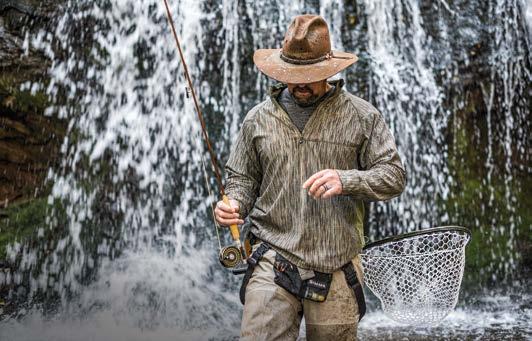
Length: 383 miles
Headwaters: San Juan Mountains, Colorado
Source Location: Near Wolf Creek Pass in Archuleta County, Colorado
Final Destination: Confluence with Colorado River in southeastern Utah.
Featured Guide: Paul “PJ” Dufour
Location: 456 Pagosa Street Pagosa Springs, Colorado 81147 (970) 946-6415
Online: pjsfinebamboo.com
The San Juan is home to several species of trout that thrive in the cold, clean waters of the San Juan Mountains. Anglers commonly encounter rainbow trout, brown trout, and brook trout, all of which have established healthy populations in the area’s rivers and tributaries. One of the most meaningful species, however, is the San Juan cutthroat trout native to the headwaters of the San Juan River basin.
Extensive public lands and waters make fly fishing widely accessible. Much of the surrounding landscape is part of the San Juan National Forest offering easy vehicle access, with pull-offs and forest roads allowing anglers to step right into productive water. Those willing to hike can find more secluded stretches of river and high-country streams.
We see a wide range of insect hatches throughout the year, with the most consistent dry-fly fishing beginning
in late spring and carrying into early autumn. As water temperatures rise and flows stabilize from spring runoff, anglers can expect strong hatches of mayflies, caddis, and stoneflies.
Many anglers find the river fishes best when flows settle into the 300–500 CFS range, when clarity returns and trout begin feeding more consistently. At those levels, the river remains healthy and well-oxygenated, and becomes more wadeable and easier to read.
Runoff timing can vary depending on snowpack, spring temperatures, and rainfall and typically begins in early to mid-May, builds through late May, and often peaks in early June as the high-country snow in the San Juan Mountains rapidly melts.
I fish bamboo exclusively. A well-designed bamboo fly rod offers a level of feel and dry-fly presentation that modern graphite and fiberglass
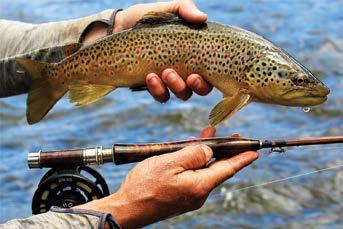
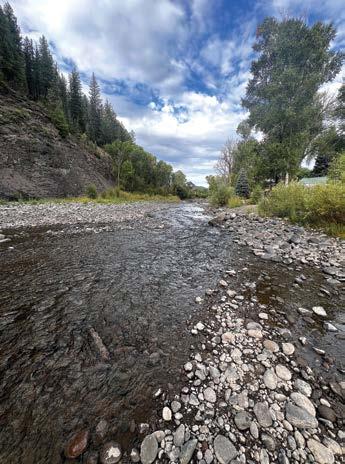
simply can’t duplicate. The progressive loading of cane allows for delicate casts, precise line control, and the kind of natural drift that dry-fly fishing demands.
I start by looking for stonefly activity in June, followed by mayfly hatches.
Many stretches of river see reduced access or shelf ice along the banks, which can limit fishing. However, the tailwater section below Navajo Reservoir provides one of the most consistent trout fisheries in the country.
During hot and dry summers water temperatures can become a concern. In drought years, when flows are low, it’s important to check water temperatures before fishing anywhere in the San Juan River watershed.
Floating can be a great way to cover a lot of water. I prefer to walk and wade, especially during the warmer months when wet wading is comfortable.
Geothermal springs feed warm, mineral-rich water into the river, helping keep portions of the river open during colder months and contributing to the mineral content that supports a healthy aquatic ecosystem year-round.

Everyone should believe in something; I believe I’ll go fishing.
—Henry David Thoreau
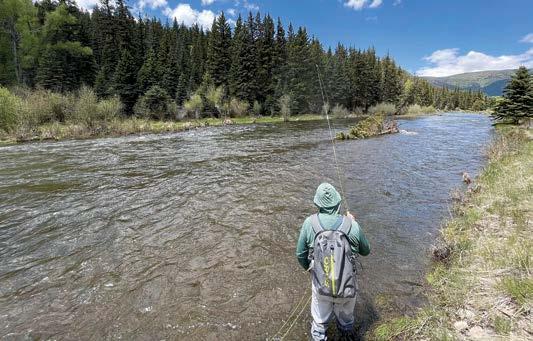
Length: 92.5 miles
Headwaters: San Juan Mountains, Colorado
Source Location: Near the Platoro Reservoir area in the eastern San Juan Mountains
Final Destination: Confluence with Rio Grande in south-central Colorado
Featured Guide: Bode Walker
Location: 34591 CO-17
Antonito, Colorado 81120 (719) 376-5660
Online: conejosriveranglers.com
The main species found in the Conejos River is trout. Typically catches include brown, rainbow, and cutbow trout.
On the lower Conejos River, just off of of Highway 17 there is vehicle access along the adjacent road. Driving up the river towards Platoro Reservoir on Forest Road 250, there are more vehicle access points, some of them with hike-in locations.
Typically starting in late May to early June we have a prolific stonefly hatch. Moving forward toward July we transition into some caddis and are favored with mayfly hatch.
On the lower Conejos River we typically see 300-500cfs, however, on the upper segment of the river we typcially see 100-200cfs.
Typically runoff happens in late April and then peak runoff happens in mid June and decreases in July. But this year is an exception with very little snowfall and unusually warm winter weather making for little runoff.
A 5wt rod is the best recommendation on the Conejos River overall.
Stonefly and mayfly nymphs are the best, such as maybe a Pat’s Rubber Leg or a Hare’s Ear fly pattern.
Winter fishing on the Conejos River can be very technical with the flows really low and fish on high alert. Fishing can also be really difficult because of ice forming over the river making it much more difficult to access.
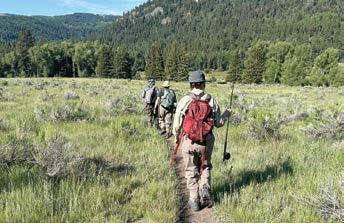
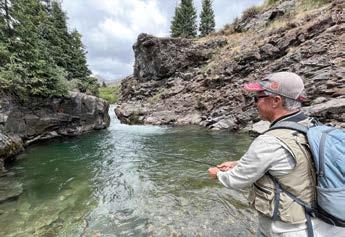
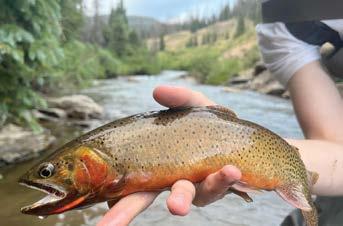
In the summer, watch out for water temperatures above 65-68 degrees. We recommend to cease fishing at that point to protect the health of fish.
Summertime is mostly walk-in andwade, but there are some possibilities of floating the river during runoff.
“Conejos” is Spanish for “rabbits,” a name likely chosen for the abundant wildlife in the area. The river, a major tributary of the Rio Grande, has been suggested as a place where the last grizzly bear in Colorado was seen. Additionally, the region was the site of a failed 1833 Mexican land grant settlement, intended to encourage settlement in the area.
yIf people prioritized leisure, nature, and quality time over the “urgent” demands of modern life, fishing poles would become scarce.
—Doug Larson
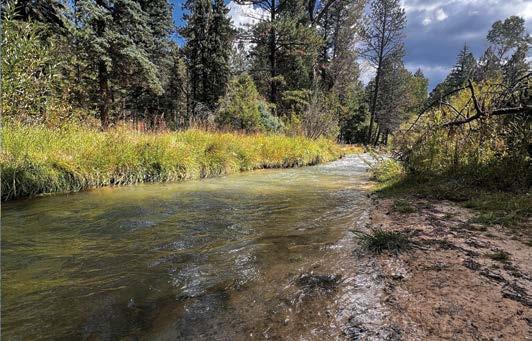
Length: 68.2 miles
Headwaters: Sangre de Cristo Mnts. New Mexico
Source Location: Near the northeast slope of Wheeler Peak in the Sangre de Cristos
Final Destination: Confluence with the Rio Grande within the Wild Rivers Rec. Area
Featured Guide: Jeff Fagan
Location:
610 E. High Street
Red River, New Mexico 87558 (575) 770-9451
Online: Facebook: @FagansFlyFishing
The main species along the Red River are rainbow trout, cutthroat trout, brown trout, and brook trout primarily managed by the Red River Hatchery near Questa.
Fishing along the Red River is typically easy vehicle access for the majority of the river. Some parking areas require a downhill walk to the river’s edge. There are fishing trails along many banks of the river.
The Red River has caddis hatches usually hatching May through October and midge hatches year-round.
The Red River flows can vary widely by location on the river but typically 40 CFS. If you’ve got a question about flows, give us a call at Fagan’s Guided Fly Fishing.
Runoff is dependent on the current snowpack. Generally speaking, some stage of runoff will be happening in late April and continues through early to mid June.
A 9 foot 4 weight rod and reel setup will take care of almost all situations.
I prefer an Elk Hair caddis and an assortment of midge patterns.
Winter fishing using streamers is a good option on the lower Red River which flows through the Wild Rivers Recreation Area in the high desert mesa below Rio Grande del Norte to its convergence with the Rio Grande.
Not typically as much of the river flows through pine forests at higher
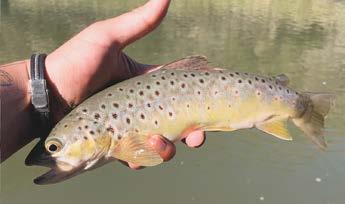
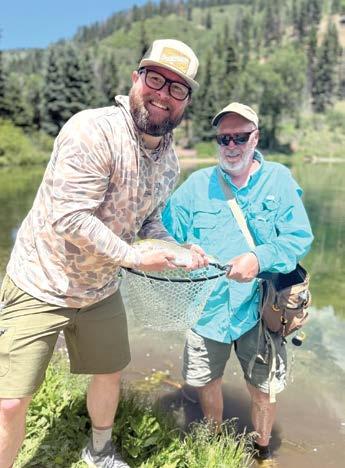
elevation. However, the lower river to its confluence with the Rio Grande can be warmer at times.
The Red River is best explored on foot. While generally not deep enough to float a raft, the river is ideal for walk and wade.
The Red River in New Mexico is a high-altitude, perennial stream that flows from 13,161-foot Wheeler Peak to its confluence with the Rio Grande, providing a rare year-round fishery where you can trout fish and ski on the same trip. It is also well known as part of the 84-mile “Enchanted Circle” and flows directly through the heart of the village of Red River. It is a federally designated Wild and Scenic River near its confluence with the Rio Grande.
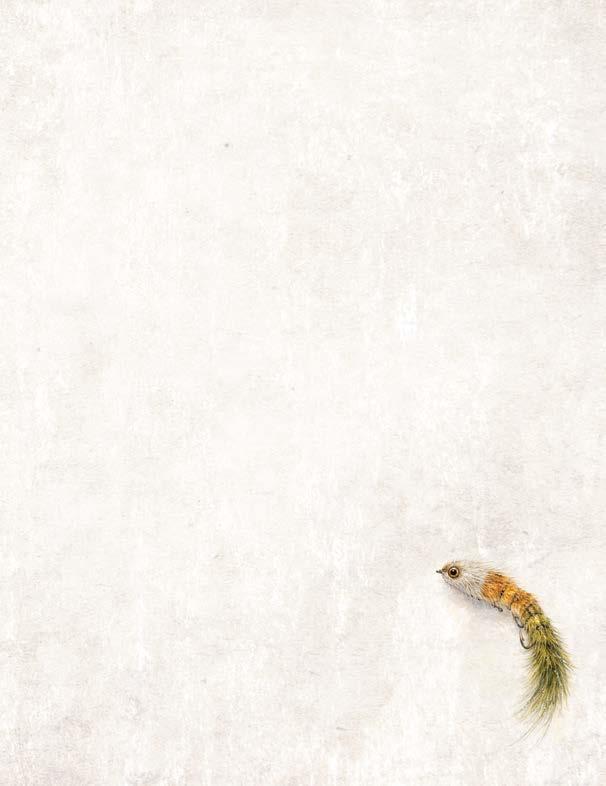
yWhen a trout rises to a fly, it does not swim as much as tilt its fins and jet skyward.
—Joseph Monninger
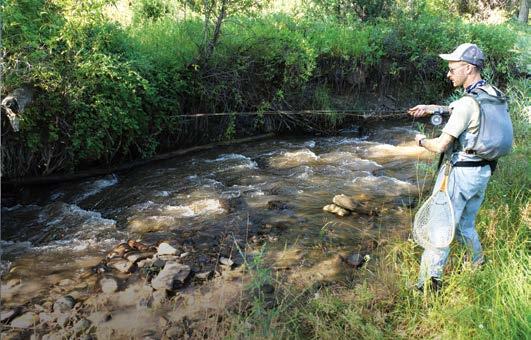
Length: 196 miles
Headwaters: Sangre de Cristo Mtns., Colorado
Source Location:
Confluence of the North Fork and Middle Fork near the Culebra Range
Final Destination:
Confluence with the Arkansas River near the Comanche Ntl. Grasslands
Featured Guide:
David Auth
Location:
304 W Main Street
Trinidad, Colorado 81082 (719) 422-8223
Online: fisherspeakoutfitters.com
The mountain sections are dominated by brook and brown trout tapering to mostly brown trout in the valley section (freestone). The tailwater section is made up of rainbow trout transitioning into catfish and some bass the further into the canyon section you go.
Of the approximately 35 miles of publicly accessible sections of river, most have at-least one parking area right on the river, hike in is the only way to really unlock more miles of river.
The freestone section of the Purgatoire has good mayfly and caddis hatch throughout the summer with some stoneflies sprinkled in. The tailwater section is made up of mostly midges and mayflies with tricos being very prevalent in August.
Tailwater fishing is best with flows between 40 and 60 cfs, being almost
unfishable above 100cfs. The freestone section fishes good between 30 and 90 cfs.
Runoff varies in the southern Rockies but most years it starts mid May and goes through June. Monsoon storms take over later in the season and can blow out the freestone section.
In the tailwater area a good 9 foot 5 weight is a great rod for some of the stronger fish you may encounter in that area while a 3/4 weight can be a lot of fun on the fish in the freestone area. Pick a reel to balance your rod with floating fly line, few areas are deep enough for a sink tip line so carrying one rod is the way to go.
Fly choice always seems to vary on the Purgatoire but some of my favorites are a Black Zebra Midge on the tailwater and an Olive Hare’s ear up in the freestone section. Swinging flies is very productive for covering water, tandem

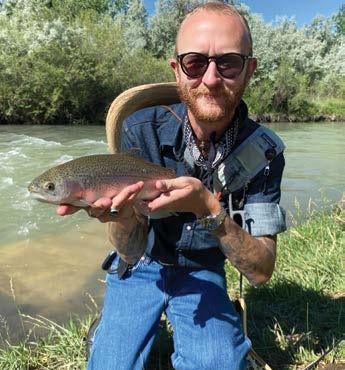
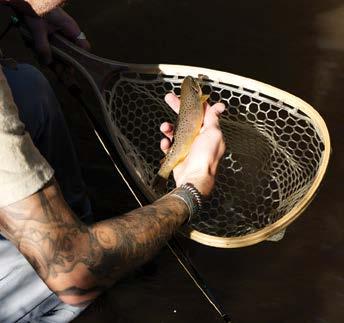
rig of an Olive Bugger and BWO Soft Hackle are a go-to.
Below the dam, water is used for irrigation and gets extremely low in the winter. I usually let the fish rest in the section for the winter so they will hopefully hold over into the next year. Above the dam water flows year round except for hard freezes.
The lower sections can get very warm in the summer but luckily the dam cools the water halfway along its journey. August is the month to be careful when fishing and keep an eye on water temps and speed of water as slower areas warm up first.
The Purgatoire is best explored on foot. While generally not deep enough to float a raft down the main issue is lack of proper put ins and take outs making foot travel the only way to fish the river.
The area hosts the largest dinosaur tracksite in North America, featuring over 1,300, 150-million-year-old footprints.
—Anthony Licata y
Fishing, like all of the great arts, has that wonderful quality of being at the same time both joyously simple and fascinatingly complex.
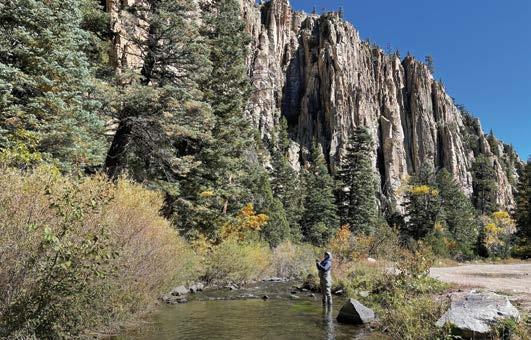
Length: 60 miles
Headwaters: Moreno, Sixmile, and Cieneguilla creeks in the Sangre de Cristo Mountains
Source Location: Eagle Nest Dam in New Mexico
Final Destination: Confluence with Canadian River
Eagle Nest Fly Shack & Lodge
Featured Guide: Tim Urtiaga
Location: 416 E Therma Drive
Eagle Nest, New Mexico 87718 (505) 485-8328
Online: eaglenestflyshack.com
Cimarron River is home to rainbow trout and brown trout.
The river is easy to navigate and hike on foot and best accessed through Cimarron Canyon State Park. Along the 10 miles of continuous public access you can find many riverside parking and camping spots.
Cimarron River offers an abundance of bug life from small mayflies and midges during the cooler months to multiple large species of stoneflies and terrestrials during the warmer months (May through September).
This river fishes great from as low as 10 cfs to 50 cfs which is controlled by Eagle Nest Lake Dam and irrigation demand downstream.
Runoff is typically April May and June, which can vary from year to year.
This river is a hot spot during runoff periods. While other rivers become too high from snow melt this river thrives during runoff due to more controlled flows out of the dam.
My favorite rod to use is a 3wt 9 foot from Lamson Waterworks. 2wt to 4wt are perfect matches for the fish and obstacles Cimarron River offers.
Eagle Nest Fly Shack & Lodge handties and stocks two very effective and recommended patterns. Cimarron Special and Hombre Tail are known for getting strikes during all seasons. In the summer time we recommend taking advantage of the amazing dryfly fishing the river offers by adding a hopper, stimulator, or Adam’s to a fly rig to enjoy one of the best top water bites in the area.
Winter fishing can be limited due to the extreme cold temps this area is known for. Temps can often reach
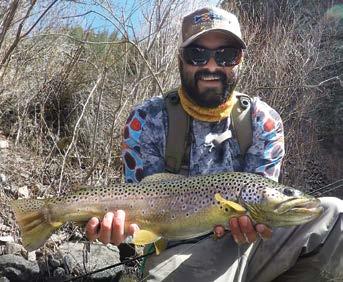
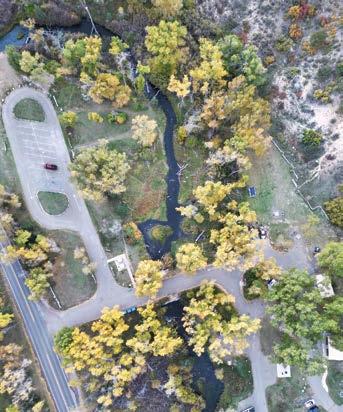
below zero during winter months leaving the river’s surface inaccessible. If you desire to try the winter months be sure to look for areas that seem to get the most sun to have a chance of finding open water.
Highs during the summer can reach around 80 degrees which typically is fine to fish as long as water flows are above 10 cfs. If the water drops too low out of the dam for any reason the water could warm up too fast which most anglers will avoid fishing during the heat of the day with the health of the trout in mind. Low flows are rare but can happen once or twice a year.
There are no options to float this river. Walking and wading this river tends to be easier than other rivers in our area. There tends to be trails from hole to hole that offer easy walking as well as easy river wading with limited obstacles to overcome.
Eagle Nest Lake dam is the largest privately built and privately owned dam in the United States.
—John Buchan y
The charm of fishing is that it is the pursuit of what is elusive but attainable, a perpetual series of occasions for hope.





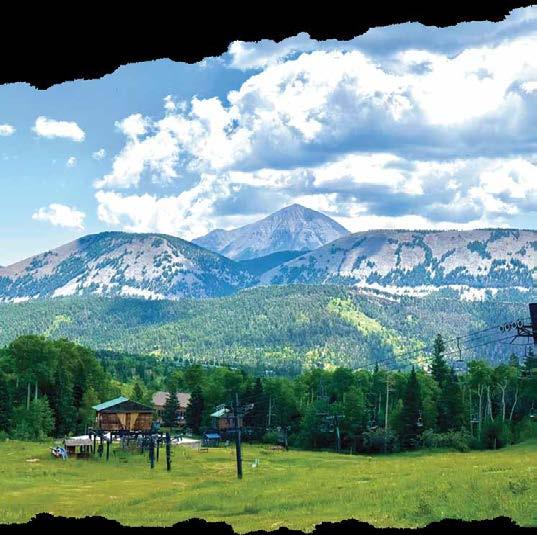

By Heather Leuthold
Rising from the high desert of northern New Mexico, KashaKatuwe Tent Rocks National Monument stands as one of the Southwest’s most striking geological landscapes.
Its name, derived from the Keresan language of the nearby Cochiti Pueblo, translates to “white cliffs,” reflecting both the monument’s cultural significance and its pale, sculpted terrain. The area is renowned for its distinctive cone-shaped rock formations—known as tent rocks—that seem almost deliberately carved, yet are entirely the result of natural forces working patiently over millions of years.
These formations originated from volcanic eruptions that occurred roughly six to seven million years ago in the nearby Jemez Mountains. Layers of ash, pumice, and tuff were deposited across the landscape, eventually hardening into rock. Over time, wind, rain, and erosion gradually wore away the softer material, leaving behind the harder capstones perched atop narrow cones. These capstones act like protective umbrellas, shielding the softer rock beneath them and allowing the
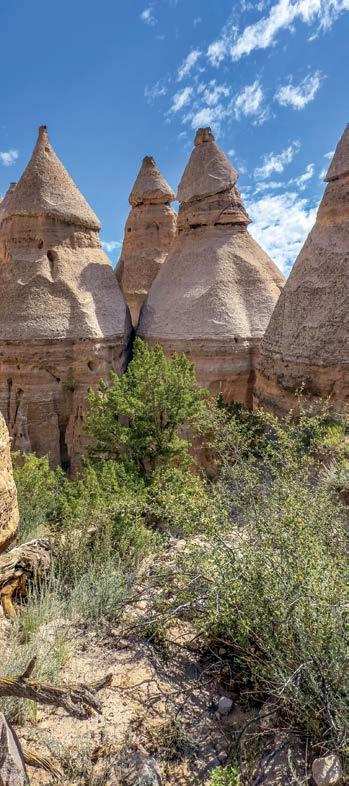
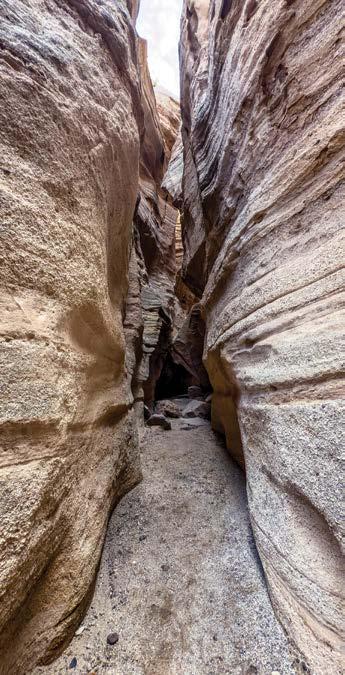
tent rocks to maintain their distinctive silhouettes. Without these protective layers, the cones would erode much more quickly and lose their unique form.
The monument’s terrain offers visitors an immersive experience in both geology and time. Narrow slot canyons wind through towering walls of volcanic rock, creating corridors that shift in color throughout the day as sunlight moves across the surface. In some places, the canyon walls close in tightly, allowing only a ribbon of sky to peek in overhead. Emerging from these passageways, hikers often reach elevated mesas that provide sweeping views of the surrounding desert, including distant glimpses of the Rio Grande valley and the layered horizons beyond.
Beyond its geological importance, the monument holds deep cultural meaning. For centuries, the land has been part of the ancestral territory of the Cochiti people, who continue to maintain a spiritual connection to the area. The formations are not merely scenic features; they’re part of a living cultural landscape, reflecting stories, traditions, and identity. This relationship underscores the importance of preserving the monument not only as a natural wonder, but as a place of ongoing cultural heritage.
Management of the monument is overseen by the Bureau of Land Management in partnership with Cochiti Pueblo. This collaboration reflects a broader effort to balance public access with conservation and cultural respect. In recent years, access to the monument has been carefully managed to protect its fragile formations and honor its significance to the Pueblo community. What makes Tent Rocks Monument especially remarkable is its sense of quiet transformation. Unlike landscapes shaped by sudden catastrophe, this place tells a story of gradual change.
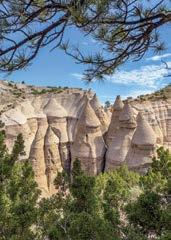
Every ridge, cone, and canyon wall reveals the patient artistry of erosion. Visitors walking among the tent rocks are not merely observing geological formations—they are witnessing an ongoing process, one that began millions of years ago and continues even now.
In a world often defined by speed and permanence, Kasha-Katuwe Tent Rocks offers a different perspective. It reminds us that even the most solid forms are shaped by subtle forces, and that beauty often emerges not from resistance, but from the gentle, persistent work of time itself. t
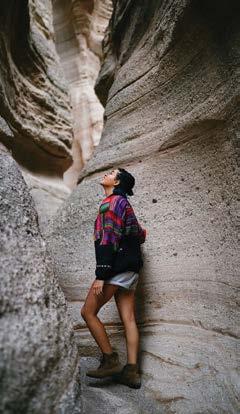
The monument is accessed via Exit 259 on Interstate 25 south of Santa Fe. Follow 57A to the Village of Cochiti. There are ADA-compliant restrooms available at the parking area. The primary access trail is the Cave Loop Trail, which is an easy-rated 1.2-mile trail. The Veterans’ Memorial Trail is a 1-mile-long loop trail rated easy. Visitation is now via advanced reservations only. A limited number are taken
through recreation.gov each day, so plan ahead and make reservations early. Tickets from the BLM are $5 per person for visitors over age 16. Those under 16 years of age are free but still require a reservation. The America the Beautiful Pass is accepted and waives the fee for the passholder and up to three additional visitors.
Visitors must also obtain a Cochiti Pueblo Tribal Access Pass directly from the Pueblo prior to entering the monument. The cost per visitor (as of publication) is $20 per person over age 16; $10 per person 2 to 16 years old; and free for visitors under 2 years old.
Bring plenty of water, as hiking mid-day can be excessively warm. Watch for rattle snakes.
Kasha-Katuwe Access
BLM Reservations
Online: recreation.gov
Cochiti Pueblo Tribal Pass
Online: purplepass.com/organizer/85097

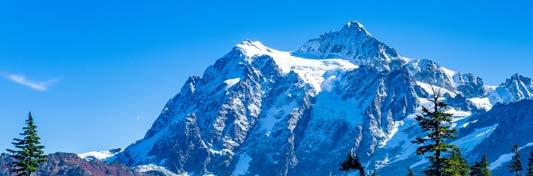

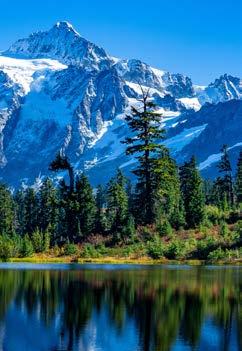

BY HEATHER LEUTHOLD
Just west of Trinidad, where the plains begin to tilt toward the foothills, a modest trail cuts through scrub oak and sandstone ledges. At first glance, Long’s Canyon Trail feels like a local’s escape: a short drive from Trinidad, quiet, edged with piñon and juniper. But embedded in its cliffs is a visible line that marks one of the most catastrophic days in Earth’s history.
Geologists call it the K-Pg boundary—once known as the K-T boundary, before the Tertiary Period was formally reclassified—the thin layer of rock that separates the Cretaceous Period from the Paleogene. It represents the moment, 66 million years ago, when a mass extinction wiped out roughly three-quarters of the planet’s species, including the non-avian dinosaurs.
The trail winds through sedimentary rock layers laid down when this region was part of a vast coastal plain bordering the Western Interior Seaway. In the late Cretaceous, southern Colorado was lush and humid—a landscape of rivers, swamps, and broad-leafed vegetation.
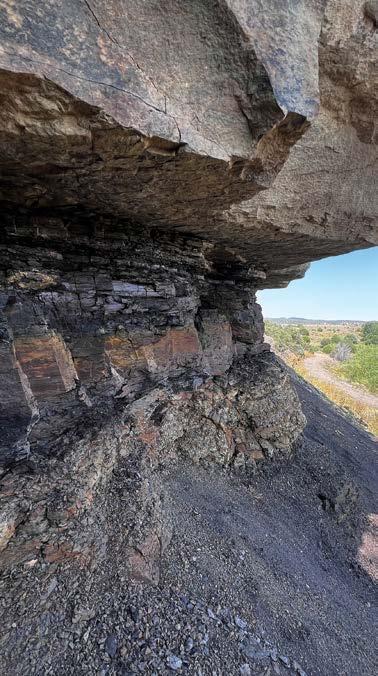
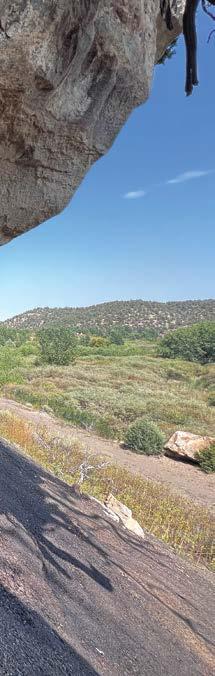
Dinosaurs walked there. Fossilized leaves and plant impressions found in the surrounding Raton Basin tell the story of a thriving ecosystem.
When a massive asteroid struck near present-day Chicxulub crater on Mexico’s Yucatán Peninsula, it unleashed energy equivalent to billions of atomic bombs. Shock waves rippled across continents. Wildfires ignited. Dust and aerosols choked the atmosphere, dimming sunlight and collapsing food chains.
In Long’s Canyon, the aftermath settled into the rock record as a narrow clay seam, often only as thick as a centimeter or two. It’s enriched with iridium, a rare element on Earth’s surface but
common in meteorites. That iridium spike was one of the key clues that led scientists in the late 20th century to confirm the asteroid impact hypothesis. Stand at the outcrop and you can sometimes trace the boundary with your finger: below it, Cretaceous rock rich with fossil pollen from diverse plant life; above it, Paleogene layers recording a dramatically altered world. In some sections of the Raton Basin, researchers have documented a sharp decline in plant diversity immediately above the boundary—a “fern spike” marking ecological recovery after devastation.
It’s humbling terrain. The canyon walls are not grand in the way of alpine peaks, yet they hold a planetary turning point. It would be easy to pass
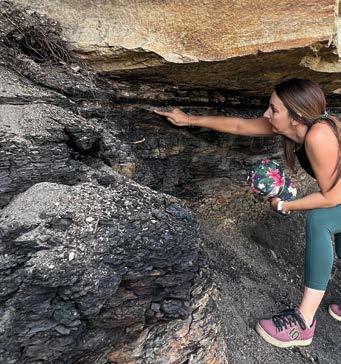
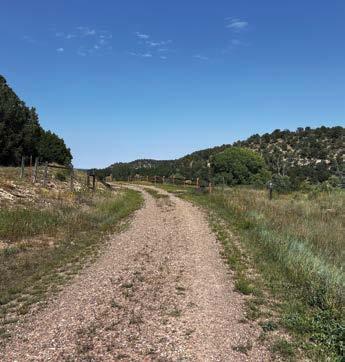
There are services in the community of Trinidad including fuel, groceries, and dining establishments. Book a stay at one of the many lodges for the weekend. There’s a wide range of activities in the area including Trinidad Lake State Park which provides full hookup RV and tent camping spots.
All vehicles are required to display a Colorado State Parks Pass which can be obtained at the Trinidad Lake State Park
visitor center. Take note that as of summer of 2025, there was no ticket kiosk at the actual Long’s Canyon Trailhead.
The 3/4 mile long trail is a two track gravel road that leads into the Long’s Canyon Trail system and the Long’s Canyon Wildlife Area. The park is situated along Highway 12, just west of town. Follow signs to “Long’s Canyon Viewing Area” to hike to the K-T Boundary.
Tennis shoes or hiking boots are recommended, bring water in the summer as temperatures can be warm. There are ramadas along the way to sit in the shade. Watch for Rattle Snakes.
The route is an easy to moderate crushed gravel pathway and can be traversed by bicycle and offers access to the Long’s Canyon Trail network within Trinidad State Park. Experience shaded ramadas with scenic woodland and marsh views for birding and wildlife viewing.
through casually, to completely miss the visual marker. Easy enough to instead focus on the scent of wildflowers or the chatter of canyon wrens, unaware that the cliff beside you archives the end of the Age of Dinosaurs.
The name may not appear in glossy national park brochures, but the rocks here rival any museum exhibit. They remind us that extinction is not abstract, nor confined to textbooks. It’s written in clay, in pollen grains fossilized under pressure, in a thin horizon that divides “before” from “after.” On Long’s Canyon Trail, deep time isn’t distant. It’s right there in the wall—a quiet, ochre-colored line marking the day the world changed. t
Long’s Canyon Trail
Visit Trinidad Online: visittrinidadcolorado.com
Trinidad Lake State Park Online: cpw.state.co.us/state-parks/ trinidad-lake-state-park
YouTube Video: A visit to the Cretaceous-Paleogene Boundary. WATCH
DIGITAL CONTENT:
















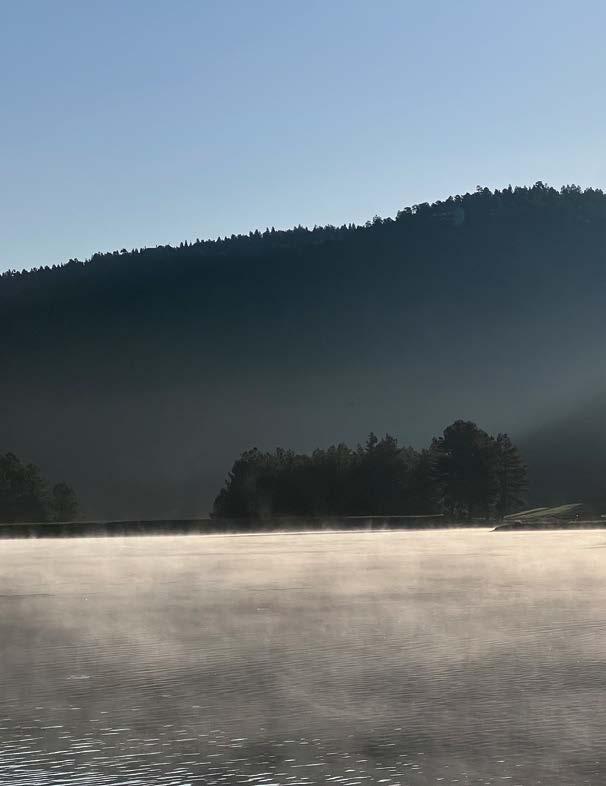
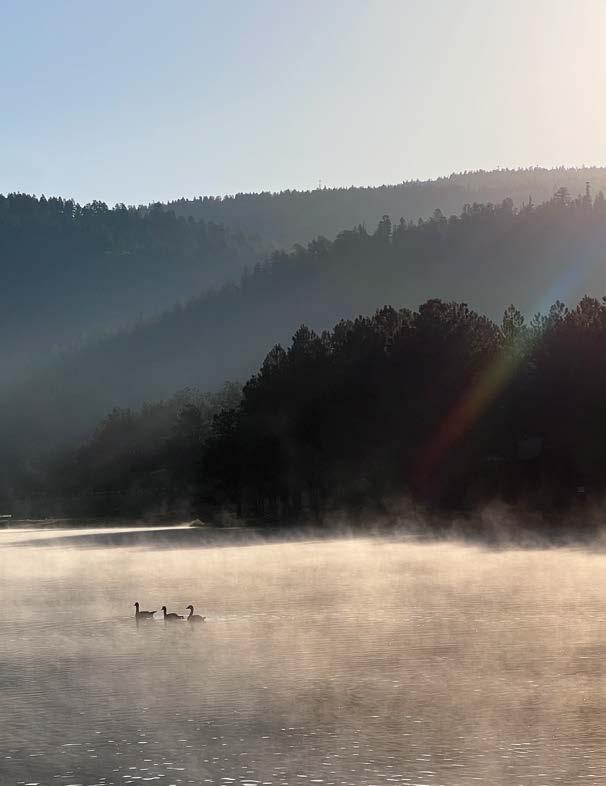
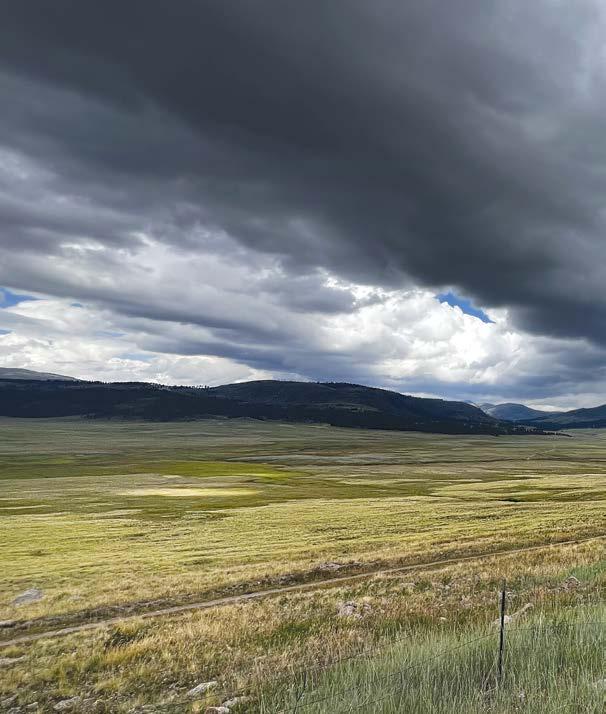
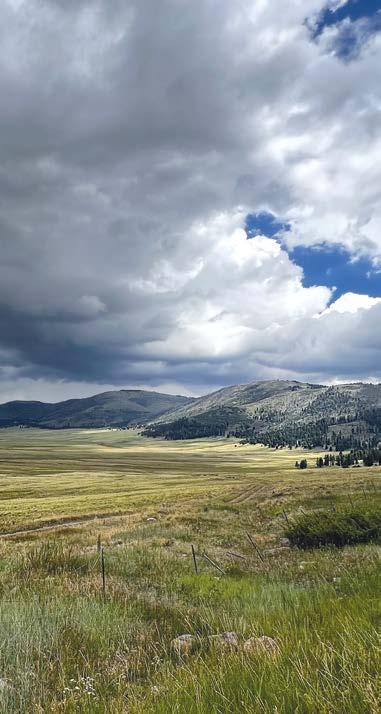
Expanse. That’s the word that comes to mind upon arriving at the Valles Caldera National Preserve. From Highway 4, which winds its way around the edge of the Preserve’s open space, it’s like looking out at the ocean; depth and distance perception dissolve.
BY LISA RAGSDALE
On an early visit, the massive, grass-covered valley opens wide, spreading to a tree line so remote it seems painted on. Driving the perimeter, a visitor might spot what appears to be a flock of geese in the grassy distance—until binoculars reveal the truth: elk, dozens of them, their size made impossible to gauge by the sheer scale of the caldera floor.
The 88,900-acre Valles Caldera was created by a volcanic eruption eons ago that eventually resulted in the 14-milewide circular depression visitors marvel at today. Massive mountain meadows and streams meander through the valley, nourishing the wildlife and flora that sustain the ecosystem. Today the caldera is dormant, but not extinct: hot springs persist and sulfuric acid fumaroles still vent there. On guided backcountry trips, the pungent sulfur rising from creeks is an unmistakable reminder that the caldera beneath remains very much alive. The name “Valles Caldera” combines the Spanish valles—large grassland meadows—with caldera, derived from the Latin for “cauldron,” a nod to the geothermal forces still simmering below. This is where the elk graze, coyote hunt, and the wildflowers grow.
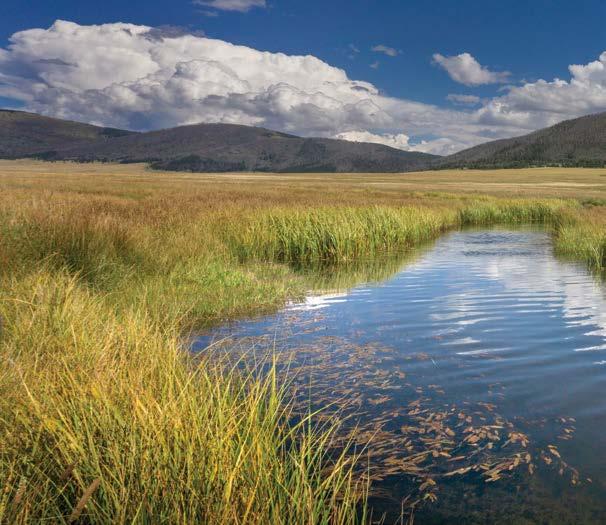
Thousands of elk roam the preserve alongside bears, coyotes, and mountain lions. Bald and golden eagles grace the preserve along with wild turkey and a rotating cast of migratory species—among them the colorful Western Tanager. The male sports a bright orange head fading to yellow on the neck and breast, with black
wings accented in yellow and white, making it easily recognizable against the dark greens and grays of the forest. The female is a muted khaki-gray with hints of yellow on the head and breast. Western Tanagers migrate annually from Canada to Mexico, sometimes staying for months in the New Mexico high country. Visitors lucky enough to
spot a nesting pair may witness their surprisingly aggressive defense of the nest; chipmunks often included among the unwelcome.
The Valles Caldera grasslands produce their greatest variety of wildflowers in July and August. Native flowers include Western Red Columbine, mullein, yarrow, two species of wild
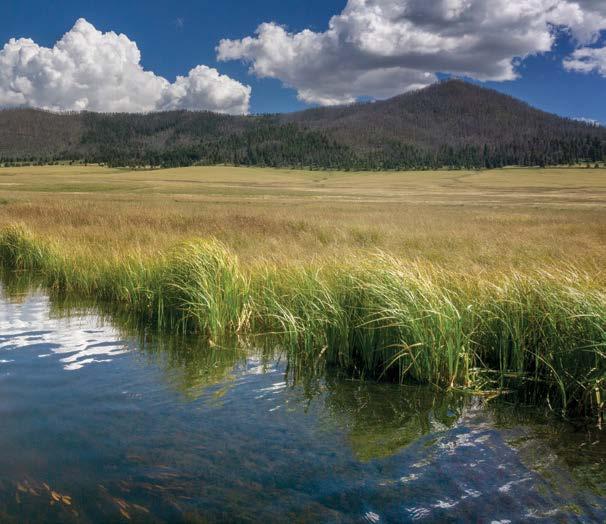
geranium (Pinewoods geranium, Richardson’s geranium), nodding onion, and Western Harebell.
The Western Red Columbine produces a sharp, noticeable contrast against the green grasses. Tall mullein with its densely clustered flowers and fuzzy, broad basal leaves grow alongside slender stalks of yarrow with their
tiny white crowns of blossoms. Mullein grows alongside the delicate Western Harebell and nodding onion. Recent seasons of welcome precipitation have brought a notable increase in nodding onion across the valley floor. The hardy geranium reliably returns each season in showy magenta, light pink, or white, depending on the species. Western
blue flag iris sprout in May and June, reaching a mass bloom in mid-June that transforms meadows into carpets of green studded with purple; as the bulbs divide, the patches spread steadily into wetter areas of the preserve. Other wildflowers appear later in the season, adding vibrant color to the valley’s wild tapestry. The surrounding forest
is mostly mixed conifer—Ponderosa, spruce-fir, and quaking aspen—whose pale spring leaves offer a subtle accent to the dark needles before transforming to brilliant gold in fall, a contrast that makes the caldera a favorite subject for photographers and painters alike.
Summer brings hiking, mountain biking, horseback riding, fishing, and leisurely drives through the preserve. Moonlit hikes are possible in summertime, and rangers offer a rotating schedule of photography workshops as well.
A fall visit may reward patient observers with herds of elk descending into the valley from the forested hillsides. Visitors should listen for haunting elk bugle calls and scan the tree line at dusk. Elk and turkey hunting is available; tags are acquired through a lottery system run by the New Mexico Department of Game and Fish. Note that fall is also prescribed fire season, so smoke, fire equipment, and crews may be in the area. Some road closures are possible.
In winter, cross-country skiing and snowshoeing offer passage deeper into the forest. A winter drive through the preserve may reveal a herd of elk in the distance, and perhaps a pair of coyotes stalking them. The coyotes zigzag stealthily toward the herd, ducking behind snow banks as they draw closer—then think better of challenging a thousand-pound elk and his companions.
Getting to the Valles Caldera takes some time from any major city in the area. Food and lodging are available in nearby towns but not at the preserve itself. Camping in the preserve is not permitted, but campsites are available at Bandelier National Monument and in
the Santa Fe National Forest. Albuquerque, Santa Fe, or Los Alamos for hotel options nearby. On-site, the Valle Grand bookstore offers snacks, drinks, books, and souvenirs, but there are no restaurants nearby.
The preserve offers no shortage of ways to explore. Besides wildlife viewing, birding, and wildflower identification, visitors can access a network of trails at varying difficulties. History Grove is one of the last remaining pockets of old-growth forest in the preserve. The Cabin District Interpretive Trail offers a short walk through a historic ranch headquarters, while the 18.6-mile Northwest Rim Trail is a favorite among trail runners. Pets are permitted on some trails but not all, so check before you go.
The backcountry is accessible year-round on foot, by bike, on skis,
snowshoes, or horseback. Vehicle access, however, is seasonal—typically November 15 to May 15—and requires a backcountry vehicle pass. The route runs from the Valle Grande front-country through the central preserve and north into Valle Toledo and Valle San Antonio. The road is gravel, often rough with potholes, wash boarding, or standing water; high-clearance vehicles are recommended. Wildlife crossings are frequent, so the speed limit is 20 mph, dropping to 10 mph in posted areas. Only 40 passes are issued daily: 35 can be reserved online, and 5 are available first-come, first-served at the Welcome Center or Volcano Discovery Center. Visitors should review all rules and regulations before setting out. t

The Preserve is open year-round, typically from dawn to dusk, for hiking, skiing, and snowshoeing, with NM State Route 4 remaining open. All access requires an entrance pass which can be purchased from the Welcome Station. Vehicular access to the interior backcountry is restricted to May 15 – November 15, while front-country access remains available. All backcountry routes may be limited at times (permit required). The Visitor Center is easily accessible and offers an opportunity to learn more about the caldera. NM State Route 4 is maintained year-round but can experience temporary closures during severe winter storms.
ADA trails are very limited within the Preserve. While the Visitor Center and some pullouts along NM 4 are accessible,
the primary trails and backcountry roads are not.
There are restrooms and a limited selection of snacks available at the Visitor Center. Fuel, groceries, and dining are available in Los Alamos, nearby La Cueva, and Jemez Springs. There is lodging in La Cueva, Jemez Springs and Los Alamos. There are no campgrounds located within the Preserve but there are National Forest campgrounds nearby.
As Valles Caldera is located at an elevation over 8,000 feet. Review road conditions prior to departure. From Los Alamos, all vehicles are required to pass through the Los Alamos National Laboratory gates. Take extra caution in the backcountry as emergency services may be limited.
Total Acres: 88,900
Base Elevation: 7,930’
Peak Elevation: 11,254’
Managed by: National Park Service Activities: Fishing, hiking, horseback riding, and birding
Historic Sites: Significant Hiking Trails: 10 (easy to difficult)
Welcome Station:
39201 New Mexico Highway 4 Jemez Springs, NM 87025 (505) 670-1612
Online: nps.gov/vall/index.htm
Hours:
Summer Hours: 8:00 am - 6:00 pm
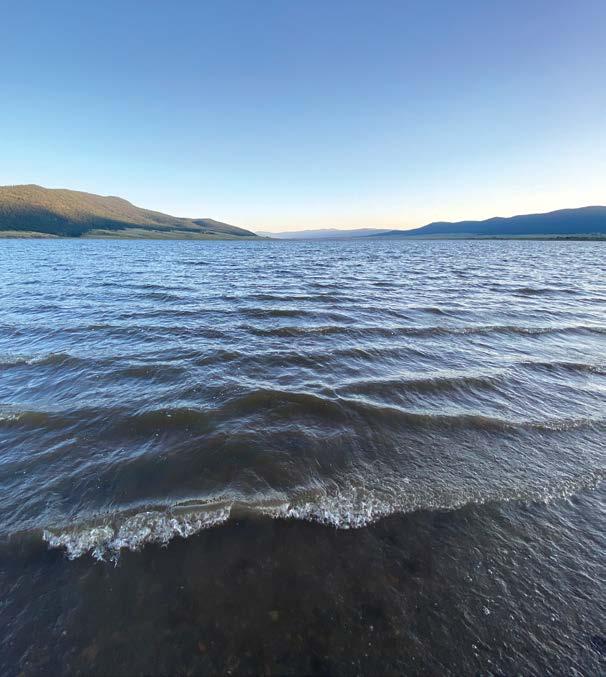
BY HEATHER LEUTHOLD
Above 8,000 feet, where spruce and fir lean into thin blue air and afternoon thunderstorms build like clockwork, the mountain lakes of northern New Mexico and southern Colorado have long been prized for their crystalline quality. In the Sangre de Cristo Mountains, the San Juan Mountains, and the high basins of the Carson National Forest, water collects in cirques carved by ice and snowmelt. For generations, anglers and hikers have described these lakes the same way: cold, clear, and startlingly blue.
But look closely in late summer and you may notice a green tinge along the shallows, a silky filament trailing from submerged rocks, or a faint cloudiness where snow-fed transparency once reigned. Algae—once sparse in these nutrient-poor waters—are becoming more visible.
Historically, most alpine and subalpine lakes in this region were oligotrophic: low in nutrients like nitrogen and phosphorus, short on growing seasons, and locked under ice for much of the year. Life persisted, but modestly. Microscopic diatoms bloomed briefly after ice-off. A few strands of green filamentous algae clung to sunlit stones. Cutthroat trout cruised through water so clear they seemed suspended in air.
Well, temperature is one element making a difference. Across the southern Rockies, ice is melting earlier and forming later. A longer ice-free season means more sunlight penetrating the water column, and more time for algae to photosynthesize. Warmer surface temperatures can also favor faster growth.
According to Jordan Mitchell, Eagle Nest Lake State Park and Cimarron Canyon State Park Superintendent, in addition to the increase in temperatures, the availability of water for waterfowl has diminished due to the disappearance of playa lakes. Yet, waterfowl that land in areas affected by blue-green algae may inadvertently transfer it to other water bodies as they fly from one to another. The same applies to boats: vessels that go into an infected lake can spread the bloom to other water if not cleaned properly.
Another factor that’s impacting the algae is nutrients. Even remote lakes are not isolated from the modern world. Nitrogen travels on the wind from agricultural areas and urban centers, falling with rain and snow onto high ridgelines. Decades of atmospheric deposition have subtly enriched some watersheds. Add concentrated recreation—backpackers, pack stock, and camps clustered near shorelines—and small inputs accumulate. In systems that evolved on scarcity, even slight
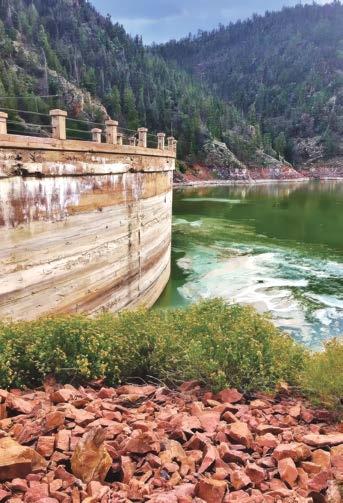
increases can tip the balance.
Most of what hikers along the shoreline see remains harmless. Filamentous green algae waving in the shallows are a natural response to sunlight and available nutrients. Diatoms—microscopic algae with glassy shells—continue to anchor the food web, feeding aquatic
insects that in turn support trout and birds.
Yet scientists are watching carefully for something rarer but more concerning: cyanobacteria, often called blue-green algae. Though less common in cold, high-elevation lakes, some species can produce toxins harmful to
dogs, wildlife, and people. As summers warm, the ecological boundaries that once limited these organisms may shift, so monitoring programs in Colorado and New Mexico are increasingly attentive to blooms in both reservoirs and backcountry waters.
But there are broader implications, because alpine lakes act as sentinels. Because they are relatively simple ecosystems—few nutrients, few species— they respond quickly to environmental change. A faint green cast in August may reflect not just a warm week, but decades of atmospheric chemistry and a steadily warming climate.
Mitchell shares that the toxicity of an algal bloom cannot be determined without taking a sample and testing it in a lab—so it’s important to steer clear of lake areas and avoid contact if the water contains any visible blooms or algae. Avoid swimming, and in the event
of accidental contact, wash it off with clean water as soon as possible.
“Algal blooms typically manifest between June and August,” says Mitchell. “Dry, sunny, and hot conditions can accelerate the blooming to start earlier in summer months, and if those conditions prolong, it can cause the algae to become more abundant throughout the summer. Whereas elevated rainfall tends to delay bloom formation and reduce their prevalence as the rains cool the day down (at least with Eagle Nest Lake).”
For travelers, the park provides updates through its Parks Reporting tab on their home web page. Additionally, the New Mexico Environmental Department Surface Water Quality Bureau actively monitors lakes and releases public notifications on their web site.
Still, on a calm morning, most of these high-elevation lakes remain
astonishingly clear. Kneel at the edge and you’ll see caddisfly cases, pebbles sharp as stars, maybe the flash of a trout. The story unfolding in their waters is subtle, written in microns and milligrams per liter. But it is there—an ecological whisper carried on mountain light, reminding us that even the highest, coldest places are connected to everything below. t
The Return of BlueGreen Algae Blooms — Our Land
DIGITAL CONTENT:

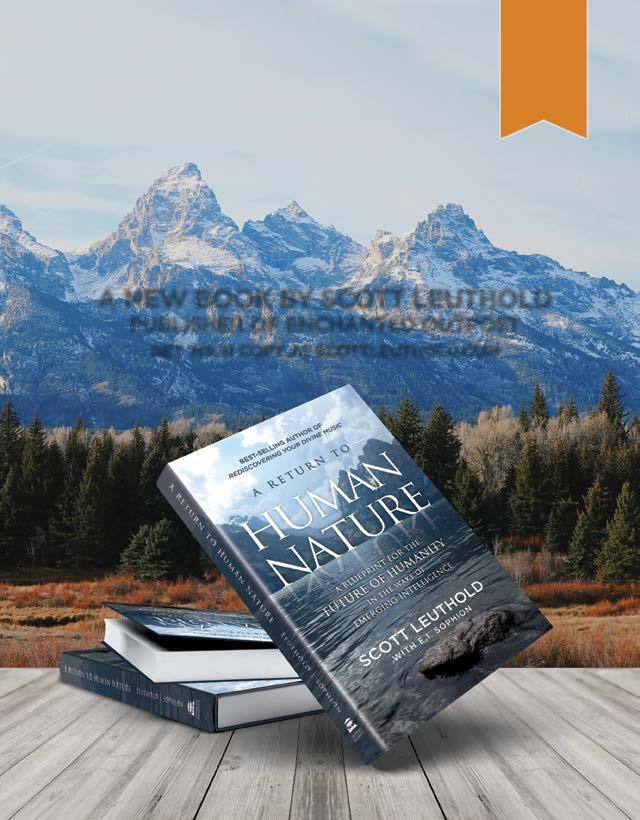



Each spring, when the winds begin to shift across the high desert, the Miller Moth lifts from the plains.
Known scientifically as Euxoa auxiliaris, the Miller Moth is the adult form of the army cutworm. Through winter, its larvae feed low to the ground across the agricultural fields and open rangelands of places like New Mexico and eastern Colorado. They remain mostly unseen during that time: small, soil-bound, and practical in their hunger. But by late May and into June, as temperatures rise and the prairie grasses begin to cure under a strengthening sun, something ancient stirs.
Drawn by warming nights and carried by prevailing southerly winds, they begin a gradual, steady migration northwestward and upward in elevation. It’s not a migration of tight formations or monarch-like rivers of color; it’s more subtle than that. They travel individually and in loose waves, flying at night to avoid heat and predators, resting by day in sheltered places—under bark, inside sheds, beneath porch eaves. Their soft brown wings, mottled in earth tones, are perfectly designed for this pause. Against adobe, wood, or stone, they nearly vanish.
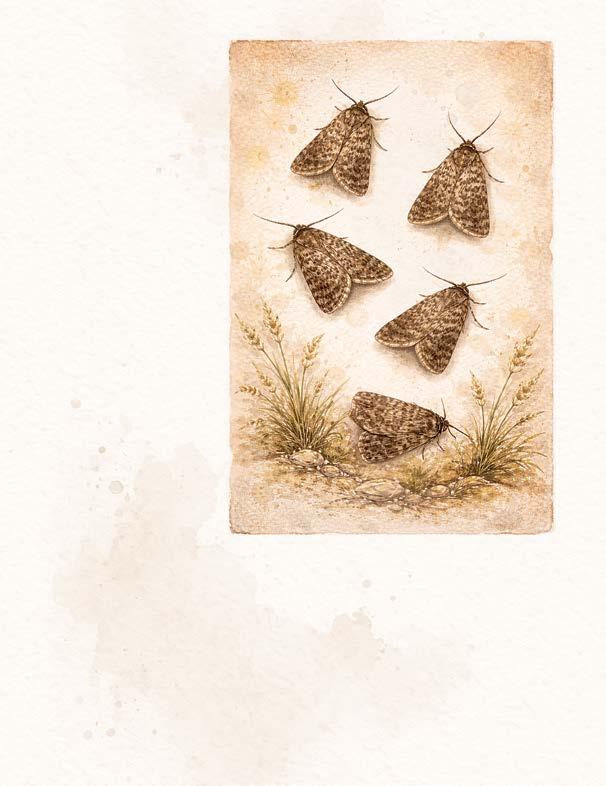
For many residents in the region, their arrival is unmistakable. Porch lights attract them in the thousands. They slip through cracks, gather in garages, flutter against television screens. They are called a nuisance—and in truth, they can be. They startle. They cluster. They leave behind a fine dust from their wings that gives them their common name “miller,” like one dusted in flour. Yet, their destination lies
farther west and higher still.
As summer advances, the moths press into the cooler elevations of the Rocky Mountains. There, above 8,000 feet, they find refuge in alpine meadows and talus slopes where daytime temperatures remain mild. They feed on nectar from high-country wildflowers—lupine, alpine sunflower, paintbrush—converting mountain bloom into stored fat. They are, in this season,
pollinators. Quiet, nocturnal ones. And they also are food.
In the high Rockies, the migration becomes a feast. Trout rise at dusk when moths fall to the water’s surface, blown in by afternoon storms. Birds glean them from grasses. Most famously, grizzly bears in the northern ranges overturn rocks to consume moths clustered in cool crevices—thousands at a time, each moth a small packet of protein and fat. In some regions, these moths form a meaningful seasonal calorie source, helping bears build reserves for winter.
By late summer, as alpine nights grow colder, the moths reverse course. They drift back toward the plains, lay eggs in open soil, and complete a life cycle tied intimately to climate and elevation. What began in desert wind concludes in harvested fields.





So yes, they invade kitchens. They thrum against lamps. They inconvenience. But they also stitch ecosystems together.
They move nutrients from cropland to alpine tundra, and feed fish that feed osprey. They sustain mammals that shape entire landscapes. Their migration is not dramatic like that of cranes or caribou, but it is no less vital.
Each June, when the warm air thickens and a brown-winged visitor appears in the lamplight, we are witnessing a thread in a much larger tapestry—one that runs from the red soils of New Mexico to the high granite shoulders of Colorado, and onward into the quiet machinery of mountain life. t

They slip through cracks, gather in garages, flutter against television screens. They are called a nuisance—and in truth, they can be.


















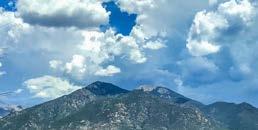









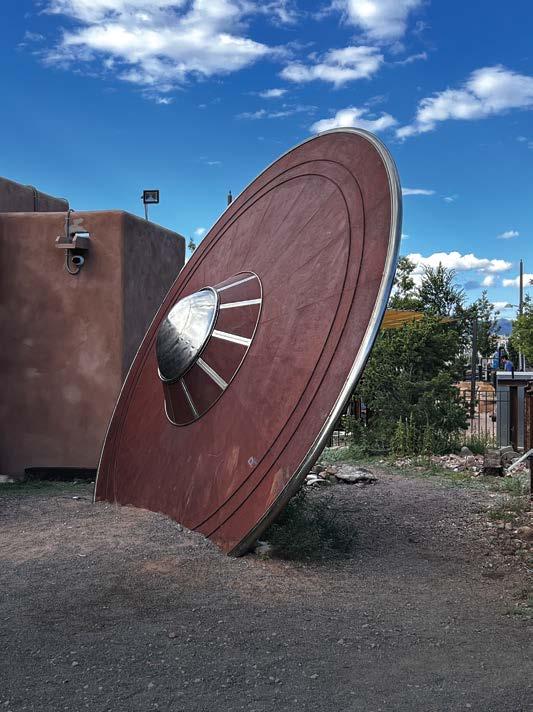
“I am convinced that UFOs exist because I’ve seen one.”
—Jimmy Carter
Located outside of our distribution area?
Consider a subscription to Enchanted Outpost! We’ll deliver a copy to your mailbox anywhere in the United States.

Annual Subscription for $24.99
(Plus tax and shipping)
Sign up for an annual subscription to Enchanted Outpost Magazine. We will send you two issues per year of our biannual magazine: Summer/Fall and Winter/Spring mailed right to your door. Plus get special bonus offers only available to subscribers to make your experience visiting our region even better!
Visit EnchantedOutpost.com and click on SUBSCRIBE or, point your smart phone camera at the QR Code to the left and tap the screen to get started.