
70+ VENDORS. EVERY SATURDAY. FRUITS
VEGETABLES FLOWERS BRUNCH & COFFEE




70+ VENDORS. EVERY SATURDAY. FRUITS

We launched Enchanted Outpost Magazine in the spring of 2024 with the intention of becoming the premier lifestyle publication of our region. Initally, however, I had planned to publish a regional visitor guide first but decided to hold off and build out my vision for the magazine instead.
When I told my team that we would be launching and releasing our first Go Out Guide this year, it was considered “ambitious”. But, alas, here we are. Our premier issue is now in your hands.
This is just the first phase of a much bigger vision and readers can expect this guide to evolve over time into something even more robust.
If there is anything about me that is widely known, it is that I am an advocate for adventure and exploration. I am known to not only thoroughly explore a region, but
to compile an archive of rich and useful information as I go for others who visit. This is something I’ve done in every place I have lived.
And so, I set out this past winter to compile and design a resource that had not been created and published in the region prior.
Taos is generally recognized as the hub community for the Enchanted Circle, and in many ways, rightfully so. However, in total, there are fourteen communities that equate to what I would consider to be our Enchanted Circle region of focus.
Outpost Alliance is commited to supporting the economic vitality of each one. And, if you would like an even broader regional focus, I encourage you to pick up a copy of Enchanted Outpost Magazine.

Scott Leuthold Publisher

Publishers and Cofounders
Scott and Heather Leuthold
Creative Director, Lead Designer
Scott Leuthold
Copy Editor
Lauren Wise Wait
Advertising Sales
Collin Leuthold, Director of Sales
advertise@outpostalliance.com
Distribution
Heather Leuthold, Director of Distribution distribution@outpostalliance.com
Go Out Guide is distributed through a variety of outlets in northern New Mexico and by mail.
©2026 Outpost Alliance, LLC. All rights reserved.
No part of this publication may be reproduced, distributed, or transmitted in any form or by any means, including photocopying, recording, digital scanning, or other electronic or mechanical methods, without the prior written permission of the publisher, except in the case of brief quotations embodied in critical reviews and certain other noncommercial uses permitted by copyright law. For permission requests, please complete the contact form on our website.


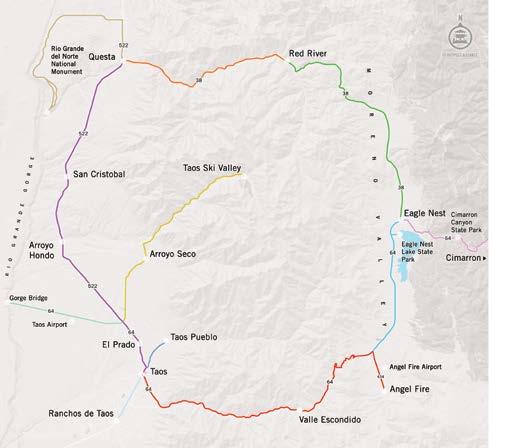

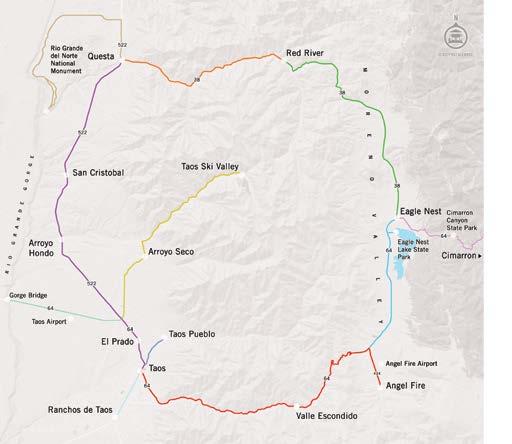
Ranchos de Taos
Taos to Questa
Taos Pueblo
Arroyo Seco to Taos Ski Valley
Rio Grande del Norte National Monument
Questa to Red River
Red River to Eagle Nest
Eagle Nest to Cimarron
Eagle Nest to Angel Fire
Angel Fire to Taos
Note:

Our general travel direction is clockwise starting in Taos. We include additional spur trips to communities located within or just outside of the Enchanted Circle.







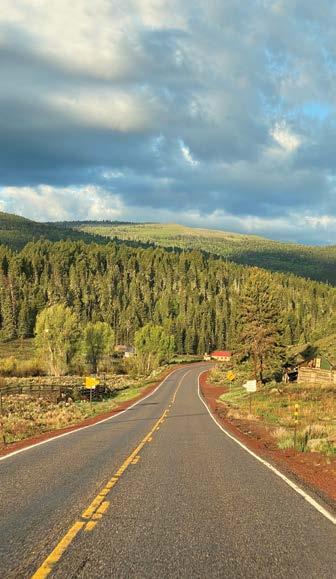
The Enchanted Circle Scenic Byway is an approximately 84-mile loop that showcases the remarkable natural beauty, cultural richness, and enduring spirit of northern New Mexico. Encircling the Sangre de Cristo Mountains, the route carries travelers through dramatic shifts in elevation and terrain, moving seamlessly from high desert plains and volcanic mesas to cool alpine forests and rugged mountain passes. Each section of the drive reveals a distinct sense of place, shaped by centuries of human history and the powerful rhythms of the natural world.
At the heart of this mountainous landscape rises Wheeler Peak, the highest point in New Mexico, reaching an elevation of 13,161 feet. The Enchanted Circle traces a broad arc around this iconic summit, offering ever-changing perspectives of its rugged slopes and surrounding ridgelines. While the peak itself lies just off the byway within the Wheeler Peak Wilderness, its presence is felt throughout the journey, anchoring the route in a sense of scale and grandeur that defines northern New Mexico’s alpine character. Many journeys along the byway begin in Taos, a town renowned
for its ancient Pueblo, historic plaza, and vibrant arts community. Taos reflects a rare convergence of Indigenous, Spanish, and Anglo influences, all grounded in a deep connection to the land. Within the area visitors find the quaint villages of Arroyo Seco and Taos Ski Valley. From there, the road climbs toward Arroyo Hondo, San Cristobal, and eventually to Questa, a mining community and the gateway to Rio Grande del Norte National Monument.
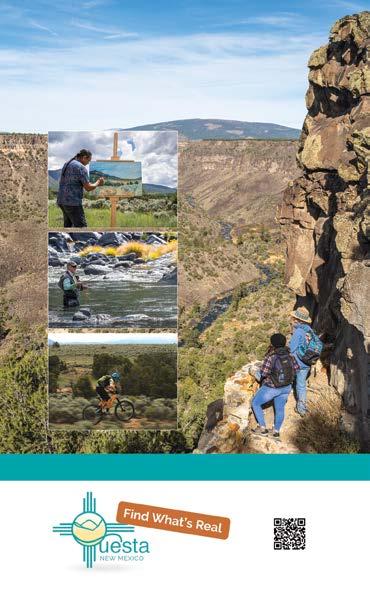
This national monument is a protected landscape established in 2013 that preserves one of the Southwest’s most ecologically and culturally significant regions. Spanning more than 242,000 acres, the monument encompasses volcanic plateaus, sagebrush plains, alpine foothills, and the deep canyon carved by the Rio Grande. Visitors can hike, mountain bike, ride horseback, fish along the river, and explore archaeological sites and historic homesteads, while wildlife such as elk, bighorn sheep, and migratory birds move through this expansive and largely undeveloped terrain.
At the heart of the monument is the Rio Grande Gorge, a dramatic
rift canyon carved over millions of years by the river’s flow. Reaching depths of up to 800 feet, the gorge traces the western slope of the Sangre de Cristo Mountains and defines the western edge of the Enchanted Circle. Its sheer basalt walls and sweeping views contrast sharply with the forested peaks to the east, offering opportunities for rafting, kayaking, hiking, fishing, and wildlife viewing amid a landscape shaped by immense geologic forces.
Continuing east, the byway winds through forested terrain to Red River, a former gold-mining town nestled within a narrow mountain canyon. Today, Red River blends its frontier roots with year-round recreation, offering a lively contrast to the surrounding wilderness. Farther north, traversing over 9,820-foot Bobcat Pass, the road opens into the expansive Moreno Valley, where Eagle Nest sits beneath wide skies and sweeping grasslands, anchored by Eagle Nest Lake and the dramatic silhouettes of nearby peaks. Just beyond, Angel Fire rests at the meeting point of forest and meadow, shaped by outdoor adventure and luxury country club living. As the route turns west, it descends Taos Canyon past Valle Escondido. Throughout the Enchanted Circle,
light and season continually transform the landscape. Snow-covered summits, summer wildflowers, golden autumn aspens, and vast blue skies create a living mosaic that invites both exploration and reflection. More than a scenic drive, the Enchanted Circle Scenic Byway is an immersive journey—one that encourages travelers to slow down, listen deeply, and experience the enduring relationship between land, culture, and the timeless beauty of northern New Mexico.
New Mexico State Tourism NewMexico.org
Visitor Information GoOutGuide.com
Regional Publication Enchanted Outpost Magazine EnchantedOutpost.com
For further information about each community in our region of focus, please proceed to that community’s section in this guide.


For travelers chasing light, landscape, and legend, the Enchanted Circle Scenic Byway offers one of America’s most breathtaking summer road trips. This 84-mile loop winds through the high peaks and deep valleys of the Southern Rocky Mountains, circling Wheeler Peak—New Mexico’s tallest summit at 13,161 feet—and passing through historic towns, vibrant cultures, alpine lakes, wild rivers, and lush high-desert meadows.
Beginning in the art-rich foothill town of Taos, one will find adventure in every direction. Think scenic overlooks in sunset hues, pinon-scented forest perfect for hiking, and cool river waters calling for summer play. Yet, a true Enchanted Circle trip isn’t about a single destination — it’s about the journey around the byway, each twist and stop offering a distinct taste of northern New Mexico’s rich and vibrant soul.
Ranchos de Taos & Taos— Ancient Adobe and Modern Soul
Your Enchanted Circle journey starts with a stone-and-adobe introduction to northern New Mexico history. In Ranchos de Taos, the iconic San Francisco de Asís Mission Church stands quiet and brooding in the early morning light — a favorite subject for photographers and painters for over a century. The thick adobe walls seem rooted in desert earth itself, echoing centuries of community and devotion. Just a few miles north lies Taos, a town that embraces both its Indigenous heritage and contemporary culture. The Taos Plaza—a historic heart framed by shade trees, galleries, boutique shops, and classic adobe buildings — is ideal for a walking tour and a leisurely lunch amid local art, jewelry, and soulful mountain views.
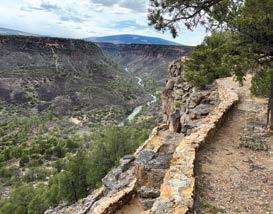
Don’t miss the Rio Grande Gorge Bridge, just a short detour west of Taos. Towering high above the river, it offers one of the most dramatic overlooks in the region; walk its length to witness the Rio Grande snaking through its deep canyon
with rugged, painted geology stretching to the horizon.
Pueblo—
No summer trip around the Enchanted Circle would be complete without visiting Taos Pueblo. This UNESCO World Heritage Site is one of the oldest continuously inhabited communities in the United States, with adobe homes rising in warm, earthy tiers beneath the mountain sky. Tours here offer insight into Pueblo life, traditions, and craftsmanship, with local artisans sharing pottery, jewelry, and woven treasures.
Respectful exploration reveals not only history but living culture — especially rewarding during summer feast days and gatherings celebrated with dance, story, and ceremonial foods.
Arroyo Seco & Arroyo Hondo—
Valleys and Hidden Waters
Heading north from Taos, the small village of Arroyo Seco slips into view — a peaceful valley between the earth and mountains. This area is a gateway to high-canyon adventures, spring-fed streams, and Manby Hot Springs, a collection of natural thermal pools nestled along the Rio Grande. Locals and visitors alike seek these steamy
waters for relaxation after a day of hiking or paddling.
Arroyo Seco also serves as a launching point toward alpine forests and high trails, perfect for picnics, birdwatching, and cooling off by mountain streams.
The drive up Arroyo Hondo Canyon is a quiet ascent from desert light into mountain shade, following the clear, rushing waters of the Rio Hondo as the air cools and the canyon narrows. Cottonwoods give way to pines, rock walls rise higher, and pullouts offer chances to pause, listen, and dip a hand or foot into the cold, fast-moving river.
At the canyon’s end, Taos Ski Valley reveals itself in its summer form — green, uncrowded, and serene. With limited lifts in motion, the village feels open and relaxed, framed by wildflower-dotted slopes and crisp alpine air. It’s a place to slow down, breathe deeply, and let the mountains set the pace.
A stop at the Bavarian Restaurant is a natural companion to a day outdoors, especially before or after hiking from the nearby Williams Lake Trailhead. The trail climbs steadily through forest and meadow to a sparkling alpine lake beneath Wheeler Peak, with the
option to continue all the way to New Mexico’s highest summit—a fitting exclamation point on a summer journey around the scenic Enchanted Circle.
Questa— A Wilderness Gateway
Returning to the Enchanted Circle
Scenic Byway back through Arroyo Seco, as the picturesque highway continues north, you’ll reach Questa, a longtime Hispanic village with genuine New Mexican character. Expect art cooperatives like Artesanos de Questa, scenic viewpoints, and a gateway to backcountry adventure.
Stop by the Red River Fish Hatchery just south of town for a free, self-guided look at how trout are raised before they’re released into
the rivers that define the region’s summer recreation.
Just outside Questa, summer trails thread into the Rio Grande del Norte National Monument, where steep canyons, rushing waters, and desert mesas beg for camping, hiking, fishing, and wildlife watching.
Red River— Alpine Escape and River Play
From Questa, the road climbs to Red River, a classic mountain town where outdoor fun and alpine scenery go hand in hand. Named for the reddish hues of its riverbed rock, Red River welcomes summer visitors with fishing along cold, clear creeks, trail hikes through wildflower meadows, and off-road paths into shaded forests offering
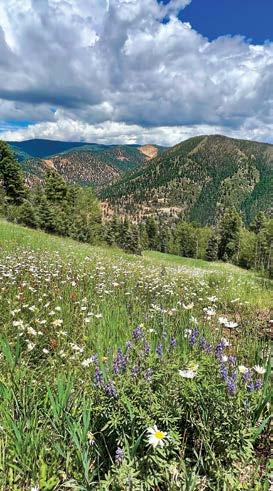
ATV adventures to high-elevation destinations.
Catch and release rainbow trout, walk beside the bubbling Red River as it tumbles through deep mountain cuts, or simply kick back with a local brew after a day in the sun.
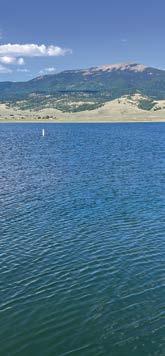
Continue over 9,820-foot Bobcat Pass into the Moreno Valley and the lakeside refuge of Eagle Nest. Here, Eagle Nest Lake State Park sprawls across 2,400 acres of cool, blue water, surrounded by forested hills and the jagged peaks of distant mountains. Fishing, boating, paddleboarding, shoreline picnics, and wildlife spotting are everyday summer pursuits.
The lake’s mirror reflections of sky and summit make dawn and dusk especially magical; time slows as osprey hover overhead and anglers cast from boats or banks, chasing trout, salmon, and northern pike. Summertime on Main Street in Eagle Nest offers the quintessential small town experience with a vibrant Fourth of July celebration and small town parade.
From Eagle Nest, a rewarding side trip leads east into Cimarron Canyon, where the road threads through Cimarron Canyon State Park alongside the clear, cold waters of the Cimarron River.
Sheer basalt cliffs rise close to the highway, streaked with lichen and shadow, while cottonwoods and Eagle Nest Lake State Park.
willows line the riverbanks. Pullouts invite travelers to linger awhile, for fly fishing, picnicking, or simply watching the river slip over rocks beneath towering canyon walls.
At the canyon’s far end lies the small town of Cimarron, rich with frontier history and Old West character. Once a hub along the Santa Fe Trail, the town offers a glimpse into northern New Mexico’s layered past, with historic buildings, quiet streets, and easy access to surrounding grasslands and foothills. It’s a gentle, grounding detour — one that adds depth and contrast to a journey around the Enchanted Circle before heading back toward Eagle Nest.
From Eagle Nest, the route bends toward Angel Fire, a mountain resort community built around outdoor adventure. In summer, the Angel Fire Resort transforms its ski lifts into scenic chairlift rides — bringing hikers, mountain bikers, and sightseers up into high meadows and ridgelines with panoramic views of Wheeler Peak and Eagle Nest Lake below.
For thrill seekers, zipline canopy tours cast you above wildflower slopes; for early risers, tethered
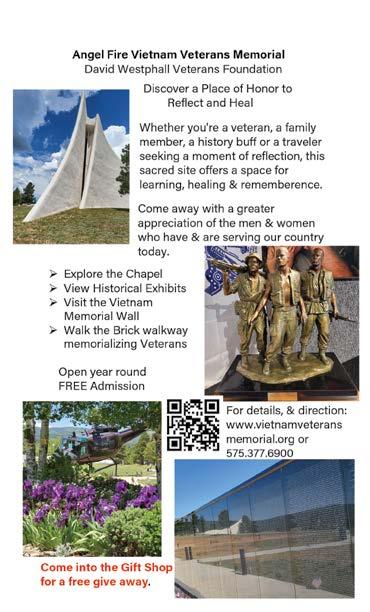
hot-air balloon flights rise with the sun, offering a sky-high perspective on the circle’s endless beauty. Also here is the Vietnam Veterans Memorial State Park, a touching tribute nestled among pines, a quiet space to reflect amid striking mountain scenery.
At the center of Angel Fire’s summertime allure is a country club with a renowned 18-hole par 72 golf course and tennis club with brand new pickleball center, and a stunning luxury RV Resort.
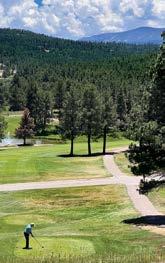
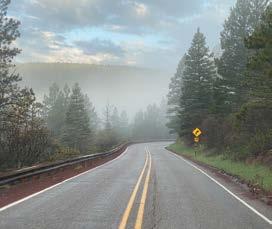
Departing Angel Fire, the Enchanted Circle Scenic Byway rises up over Palo Flechado Pass and descends into Taos Canyon. Along the winding route, stop in at the Valle Escondido Golf Club and explore the many art studios and galleries along the way. Completing the loop back towards Taos, your mind and heart will carry stories of wind-ruffled peaks, river songs, and canyon whispers. Every bend in the road, every splash in icy waters, every sunset behind the serrated skyline of the Sangre de Cristo Mountains will remind you why this winding route bears the name Enchanted.
Whether you traveled for recreation, culture, solitude, or photog-
raphy, this high desert-meets-alpine circle has something for every kind of wanderer — and invites you back again and again.
Water and altitude: You’re often above 7,000 feet— hydrate and acclimate.
Respect Indigenous spaces: Taos Pueblo is a living community —ask before photographing.
Hit the water:
Rivers like the Rio Grande and Red River are perfect for cooling off, wading, fishing, or simply skipping stones but take caution.
Sunset light is magic:
Golden hour bathes mesas and peaks in color unrivaled anywhere.

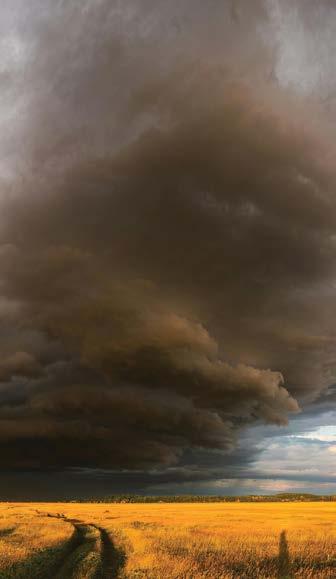
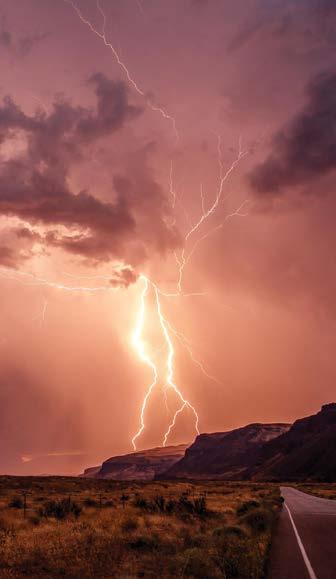
Big sky, broad high-desert and alpine vistas, and predictable summertime thunderstorms provide the key ingredients for dramatic photographs an avid photographer could only hope to capture. Discover the best places around the Enchanted Circle region to capture the stunning beauty of the monsoon season.
Somewhere between distant thunder and the scent of rain on sage, memories return of empty highways, glowing horizons, and waiting—camera ready—as northern New Mexico’s vast skies prepared their evening symphony. It’s monsoon season and the drama is about to unfold. For the storm trooper, there’s no better moment to focus, frame a shot, and reap the rewards.
Thunderstorm chasing in northern New Mexico is less about adrenaline and more about patience, light, and distance. Around Taos, the high desert breathes beneath towering anvils, where shafts of rain sweep across sage and adobe. Meanwhile, the western ridge overlooking the Rio Grande Gorge Bridge provides a striking composition, where thunderheads march down the canyon and rain sweeps across basalt walls—an unforgettable meeting of scale, light, and atmosphere.
Beyond these classic vantage points, the open expanses of the Rio Grande del Norte National Monument offer a raw stage for photography. Dark cells roll across volcanic plains toward Ute Mountain, where isolated high ground creates compelling foreground silhouettes.
To the north, the upper Red River Valley delivers drama as storms gather behind Wheeler Peak, spilling over alpine ridges and descending into meadows illuminated by fleeting sunbreaks.
From the Moreno Valley, elevation becomes your ally; broad vistas stretch from the Sangre de Cristo peaks to rolling pasture, allowing photographers to frame lightning against layered ridgelines and luminous curtains of virga. Summer monsoon afternoons build slowly, clouds stacking like cathedrals before releasing electric drama at golden hour. Winds across Eagle Nest Lake churn white caps. From its shoreline the drama unfolds with Wheeler Peak and Angel Fire’s Agua Fria Peak rising beyond.
Farther east, the grasslands near Cimarron offer uninterrupted
horizons. Sculpted supercells drift across open country, their structure revealed in full symmetry. Dusty two-tracks and quiet highways provide safe pullouts, perfect for long exposures as bolts lace the sky. The air smells of rain and juniper, wind ripples the plains, and the light turns copper as storms pass.
Farther south in the Moreno Valley, wide open valleys offer overlooks where heads of cattle and sheep graze alongside Black Lake where the vast grassland meets sheer, talus-covered mountain slopes with log cabins perched on ridgetops as a focal point.
The Enchanted Circle Scenic Byway is nothing short of a photographer’s dream and for those who venture out to chase a summer storm, clicking their shutter will capture their hearts.
Photographers around the world have framed and captured shots of our stunning landscapes, yet, few have been fortunate enough to witness the build of an epic storm system sweeping across the sage covered mesas, a distant lightning strike over our grasslands, or a dramatic deluge pummeling a pine-covered alpine slope. Are you ready? Grab your camera and go.
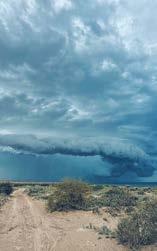
Thunderstorms can form quickly. Be sure to keep a safe distance.
If a storm becomes too active, take cover. If possible, remain in your vehicle until the storm passes. Take the necessary precautions to avoid flash flood areas that can become impassable. Stay below tree line if possible as lightning can become deadly. Proceed at your own risk.
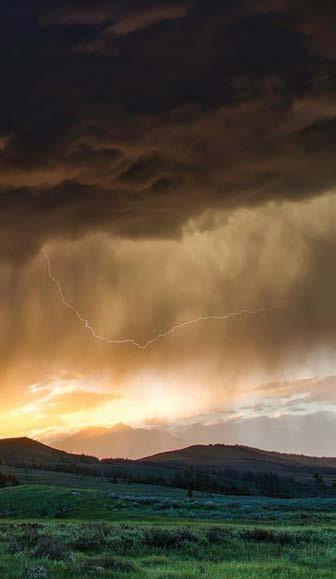
The bridge is a stunning spectacle in itself. However, when a storm rolls across the valley farther north, those distant deluges can frame around the bridge, for a stunning image.
Grande del
There are many places within the national monument that can offer stunning landscapes and sweeping vistas. Looking north toward Ute Mountain can offer a dramatic scene across the sage-covered mesa. Drive out along the gorge on the dirt roads heading north.
A hike into the Enchanted Forest Cross Country Ski Area and the Carson National Forest leads to the furthest reaching yurt of the trail system. Just beyond the yurt is a dramatic ridge that looks over the
Upper Red River Valley. Wheeler Peak stands just beyond. When a storm brews over Wheeler, this can be an epic shot.
A pull-off on Highway 38 northbound after descending into the valley below Bobcat Pass offers a stunning view of the bright green valley near Elizabethtown. Mount Baldy towers just beyond. Storms often build over the mountain offering an opportunity to capture stunning images.
When a storm brews, so do the whitecaps on this vast lake. Dramatic shots can be captured from a pulloff before reaching the Scenic View Point at the crest on Highway 64 as the route climbs out of the village of Eagle Nest toward Cimarron. Also, a hike down to the shoreline of the lake from the trail-
head at the Moreno Valley Day Use Area can also be a spectacular shot.
A bit off the beaten path but well worth the drive, this refuge is home to many migrating birds. There are several lakes and ponds that can offer a unique foreground to the many sweeping storms that roll across this vast grassland. The refuge offers free camping.
A much lesser known location for shooting is found at the farthest southern reaches of the Moreno Valley. Follow Highway 434 to its junction with Highway 120. Here you will find a vast valley that was once the set of the Montana locale of the movie Lonesome Dove. Shooting in various positions around this valley is epic during storm season.

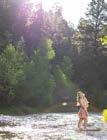
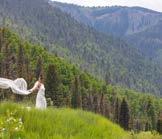





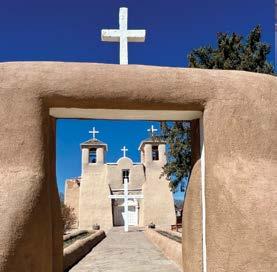
Ranchos de Taos is one of the oldest continuously inhabited communities in northern New Mexico, a small village resting just south of the town of Taos. Rooted in centuries of Indigenous, Spanish, and frontier heritage, the community carries a rhythm that feels both ancient and quietly alive. Here the high desert stretches wide beneath open skies, while cottonwoods trace the path of the Rio Pueblo.
Life in Ranchos de Taos unfolds at a different pace. Historic adobe homes and weathered fences line quiet roads, and fields once irrigated by hand-dug acequias still shape the land. At the heart of the village stands the legendary San Francisco de Asís Mission Church, its sculpted earthen buttresses rising like living clay from the desert floor.
For generations, artists, farmers,
storytellers, and travelers have been drawn to this place. Painters study the shifting light across the church walls, photographers wait for snow to soften the fields, and locals gather beneath long mountain sunsets that seem to stretch forever.
Yet what truly defines Ranchos de Taos is its quiet authenticity. This is a place where traditions endure, where faith, land, and community remain closely woven. Visitors often arrive expecting history, but they leave having felt something deeper: the steady heartbeat of northern New Mexico itself, still grounded in earth, memory, and sky.
Ranchos de Taos is an unincorporated community within Taos County. Administrative services are handled by the Town of Taos.
Elevation: 6,975 feet
Established: 1725
Population: 2,300 - 2,700
San Francisco de Asís Mission Church is famous for its massive adobe buttresses. This 18th-century church is an iconic example of Spanish Colonial architecture.
In Ranchos de Taos, the past is never far away; it lingers in adobe walls, dusty lanes, and the quiet flow of acequia water. It is a village that invites you to slow down, breathe deeply, and notice the simple beauty of place, culture, and continuity beneath the vast Sangre de Cristo Mountains that watch over it all year long, season after season, quietly shaping the soul here. INFORMATION
Visitor Center taos.org
Chamber of Commerce (575) 751-8800 taoschamber.com
Police Department (575) 758-4656

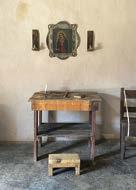
Martinez Hacienda, also known as Hacienda de los Martinez, is a hacienda built during the Spanish colonial era. It is now a living museum listed on the National Register of Historic Places. Located on the bank of the Rio Pueblo de Taos, this historic dwelling offers a glimpse into the frontier past of the region. Find the hacienda down State Route 240 from the stop light in Ranchos de Taos.
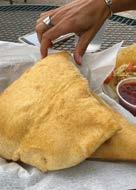
Stop into Ranchos Plaza Grill for a great lunch, and don’t miss out on the giant, homemade Sopapillas. They can be served along with your meal or as an aftermeal treat with honey. Enjoy while sitting outside under the shade trees and observing the Ranchos Plaza scenery, including the San Francisco de Asís Mission Church.
San Francisco de Asís Mission Church was the inspiration for several of Georgia O’Keeffe’s paintings and was also the subject of black and white photography by Ansel Adams and Paul Strand.

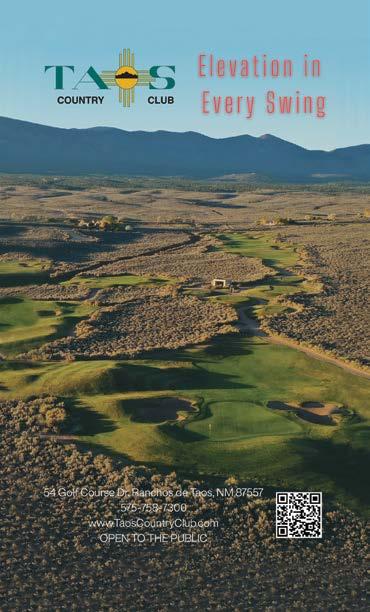
Discover Ranchos de Taos— historic plaza charm, galleries, dining, Taos Country Club and adventure hiking into Taos Canyon and beyond. Featured Listings
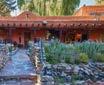



Adobe & Pines Inn
Stay with us at our 1832 hacienda-style bed and breakfast. 4107 NM-68 (575) 751-0947 adobepines.com

Ranchos Plaza Grill
Traditional Southwestern specialties: burritos, enchiladas and sopapilla.
8 Ranchos Plaza Road (575) 758-5788
@ Ranchos-Plaza-Grill

The Stakeout
Luxury weddings, restaurant, drinks and live music.
101 Stakeout Drive (575) 425-0065 stakeouttaos.com

Western Skies Gallery & Studio
Watercolors, bronze sculptures, and handmade quilts.
4079 NM-68 (541) 645-0323 westernskiesgallerystudio.com




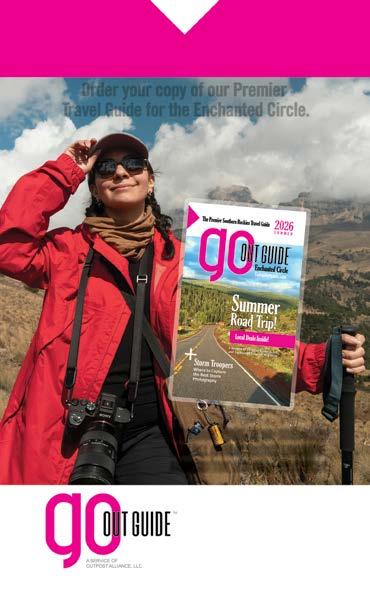
REGIONAL VISITOR INFORMATION FOR ALL COMMUNITIES LOCATED AROUND THE ENCHANTED CIRCLE.

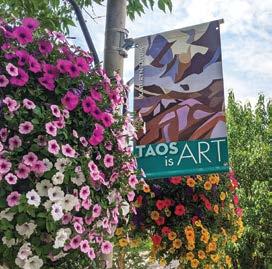
“Taos is Art”—and has been for over 100 years.
At the base of the Sangre de Cristo Mountains in northern New Mexico, Taos is a place where landscape, culture, and history meet in a way that feels both timeless and alive. Long before it became a destination for travelers and artists, the valley was home to thriving Indigenous communities whose connection to the land stretches back more than a thousand years.
At the heart of this heritage
stands Taos Pueblo, a UNESCO World Heritage Site and one of the oldest continuously inhabited communities in North America. Its multi-story adobe structures rise from the desert floor much as they have for centuries, reflecting a living culture that continues to shape the spirit of the region.
Just a few miles away, the town of Taos grew around Spanish colonial traditions brought north along the
old Camino Real. Today, the historic Taos Plaza remains the gathering place of the community, surrounded by adobe storefronts, galleries, cafés, and centuries-old churches.
Over the past hundred years, Taos has become equally famous for its creative energy. The dramatic light of the high desert drew painters such as Georgia O’Keeffe and the artists of the Taos Society of Artists, who helped establish the town as one of the most important art colonies in the American Southwest.
Yet beyond its reputation for art and history, Taos is defined by the land itself. Vast sagebrush plains stretch toward snow-capped peaks, the Rio Grande cuts deep through ancient volcanic rock, and sunsets paint the mountains in shifting shades of rose and gold.
In Taos, cultures blend, stories endure, and the rhythms of mountain, desert, and tradition continue to shape a community unlike anywhere else in the Southwest.
The Spanish village of Don Fernando de Taos was established in 1615, following the Spanish arrival in 1540. The area was later settled by Spanish colonists, with the Plaza established over 400 years ago.
Elevation: 6,969 feet
Established: 1615 (post)
Population: 6,200-6,500
Point of Interest:
The only inhabited UNESCO World Heritage Site in the U.S. and a National Historic Landmark, the Taos Pueblo dwelling has been continuously occupied for over 1,000 years.
INFORMATION Visitor Center taos.org
Chamber of Commerce (575) 751-8800 taoschamber.com
Police Department (575) 758-4656


The Couse-Sharp Historic Site preserves the studios and gardens of E. Irving Couse and Joseph Henry Sharp. Restored adobe buildings, period furnishings, and working studios immerse visitors in early twentieth-century art life, showing how northern New Mexico’s light inspired the Taos Society of Artists and its legacy today. Don’t miss “Rosie”, the surviving 1942 mobile machine shop designed by Kibby Couse which was used heavily in World War 2 by the U.S. military.
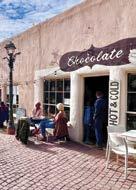
Chokolá Bean to Bar is one of the best, highly-rated treats to enjoy in Taos. Known for its unique small-batch, organic chocolate and mousse flavors, the cacao is carefully sorted by hand, choosing only the best beans. Try a shot of smooth, thick, creamy, and heavenly sipping chocolate, a pastry, gourmet coffee, or a decadent hand-crafted chocolate. The shop is located just off Taos Plaza.
Taos is home to Earthship Biotecture—one of the world’s most concentrated communities of fully off-grid, self-sustaining homes. Pioneered by architect Michael Reynolds, over 120 dwellings in the community are built from recycled tires, bottles, and cans.




Experience Taos—vibrant galleries, unique shops, diverse dining, outdoor adventures, and rich culture beneath big skies and mountain views.
Artemisia Artware
Fine handwovens and wearable art. Representing fiber artists and weavers.
103 Bent Street (575) 737-9800
artemisiataos.com

Copy Queen and King
Copy and printing services serving Taos and the Enchanted Circle.
216K Paseo del Pueblo Norte (575) 758-3999
copyqueenandking.com

Fire & Stone Jewelry Studio
Handcrafted pieces made in Taos by Regina Archuleta-Romero, Silversmith.
124 Bent Street Unit C (575) 770-1637
fireandstonegems.com

Lambert’s of Taos
Contemporary American fare with lounge and tree-shaded patio.
123 Bent Street (575) 758-7200
lambertsoftaos.com





Magpie
Not all local businesses are listed.
Taos Fine Art, Folk Art, Pottery, Jewelry, Glass...and more.
218 Paseo del Pueblo Norte (781) 248-0166 magpietaos.com

Maravilla
A new Inn, Retreat, and Farm in Taos. Reconnect with wonder.
430 Vallverde Commons Drive (575) 425-4343 maravillataos.com

Mary’s Place
Intimate live music venue inside Taos Lifestyle. Concerts almost every week!
815 Paseo del Pueblo Sur (575) 758-5885
marysplacetaos.com

Moxie
Fair Trade & Handmade shopping with unique gifts, clothing, and home decor.
216B Paseo Del Pueblo Norte (575) 758-1256 taosmoxie.com

Sarah McIntyre Photography
Fine art, portraits, 1:1 mentoring and group photography workshops.
Region-wide (505) 681-1282 sarahmpix.com

Not all local businesses are listed.
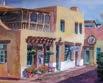



Taos Adobe Quilting
Quilting fabrics, upholstery fabric, thread, handmade pillows, and more.
102 Teresina Lane (575) 751-3219 taosadobequiltingandmore.com

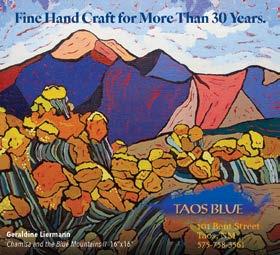
The little shop on the corner of Bent Street with fine hand crafts.
101 Bent Street (575) 758-3561 taosblue.com

Mattresses, furniture, appliances and more. Regional white glove delivery.
815 Paseo del Pueblo Sur (575) 758-5885
taoslifestyle.com

The Ranch at Taos Gallery
Colorful and masterful local Southwest paintings, sculpture, and jewelry.
117B Kit Carson Road (325) 647-5736 theranchattaos.com
























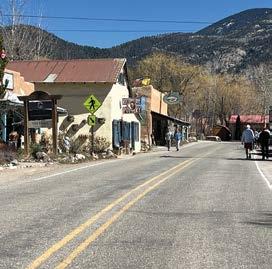
Arroyo Seco feels like a place remembered as much as visited, where time moves at the pace of wind through cottonwoods and the rhythm of water in old acequias. Tucked between Taos and the slopes of the Sangre de Cristo Mountains, the village grew from Spanish land grants of the early nineteenth century, when families settled the fertile bend of the valley and carved irrigation channels by
hand. Those communal acequia traditions still shape the landscape today, a quiet continuity linking past to present.
Historic adobe homes line narrow roads, their thick earthen walls weathered by decades of sun, snow, and monsoon rain. The small plaza, never formal yet deeply rooted, became a gathering point for farmers, ranchers, and travelers moving between Taos and the mountain
communities. In winter, wagons once creaked under loads of firewood and wool; in summer, fields of alfalfa and pastureland shimmered beneath towering afternoon clouds.
Over time, Arroyo Seco welcomed artists, skiers, and seekers drawn by the same light that captivated early settlers. Yet the village never surrendered its character. Old mercantiles, modest chapels, and hand-painted signs still suggest a slower era, while the scent of piñon smoke drifts across the valley on cool evenings. The nearby creeks, fed by snowmelt, have long offered both sustenance and recreation, their clear water echoing through generations of memory.
Standing in Arroyo Seco today, one senses layers of history resting gently together—Hispanic roots, agricultural tradition, and creative spirit. It is a place where stories linger in the adobe walls, and nostalgia arrives easily, carried on mountain air.
Arroyo Seco is a charming, 200-year-old historic village known for its vibrant arts scene, adobe architecture, and local, casual restaurants in a rural setting with easy access to year-round outdoor recreation.
Elevation: 7,634 feet
Established: 1804
Population: 2,180
Point of Interest:
The Church of La Santísima Trinidad in Arroyo Seco was first completed in 1834 and is an exceptional example of Spanish Colonial Adobe style.

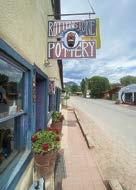

Rottenstone Pottery brightens Arroyo Seco with colorful ceramics, whimsical tiles, and hand-painted kitchenware. Sunlit shelves overflow with mugs, bowls, and folk-inspired designs, each piece reflecting mountain light and local spirit. The studio’s welcoming porch invites browsing, conversation, and discovery, where artistry, craftsmanship, and northern New Mexico charm meet in vivid form. Stop in and browse the unique collection.
Taos Cow in Arroyo Seco (and in Taos) serves indulgent ice cream, thick milkshakes, and deli sandwiches that lure travelers off the highway. Sunny outdoor tables alongside a shaded creek, flavors piled high, laughter, and mountain air turn a simple stop into tradition, where sweetness, nostalgia, and summer afternoons blend. Try their changing menu of gourmet ice cream flavors and don’t miss out on the delicious BLT.
Arroyo Seco is shaped by historic acequia irrigation, where neighbors share mountain snowmelt through hand-dug canals. Each spring, residents gather for communal ditch cleanings, continuing a cooperative water tradition dating back centuries.
Discover historic Arroyo Seco— browse charming shops and find art, cozy cafés, and scenic trails create a welcoming hub for shopping, dining, activities. Featured Listings
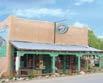

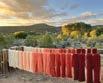
Arroyo Seco Mercantile
Specialty gifts, antiques, and unusual finds.
488 State Road 150 (575) 776-8806 secomerc.com

Sol Food Market & Cafe
Specializing in farm to table, organic ingredients and fresh pressed juice bar.
591 Hondo Seco Road (575) 776-5765 solfoodnm.com

Taos Wools
A yarn shop & weaving gallery offering natural and hand dyed yarns.
492 State Hwy 150 (575) 613-6988 taoswools.com



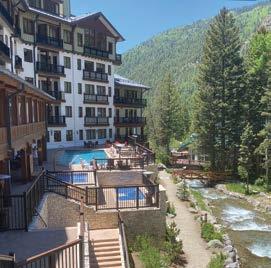
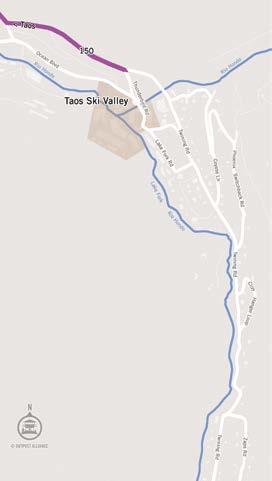
Taos Ski Valley begins where the road narrows and rises sharply into the Sangre de Cristo Mountains. What was once a quiet alpine basin became a world-class destination in 1955, when Swiss-born mountaineer Ernie Blake envisioned a European-style ski village tucked beneath rugged peaks. With determination and family support, Blake and his wife Rhoda built lifts, lodges, and a culture rooted in
challenge, community, and respect for the mountain. Their children later carried the legacy forward, preserving the independent spirit that defined the valley for decades.
In recent years, new ownership ushered in a transformative era. Significant investment by billionaire conservationist and hedge fund manager Louis Bacon revitalized infrastructure, expanded terrain, upgraded lifts, and enhanced
sustainability efforts, all while honoring the original character. The result blends modern comfort with authentic mountain grit. Winter brings deep powder, legendary steeps, and tree skiing that rewards bold lines. From groomed cruisers to hike-to terrain, the mountain invites both families and seasoned adventurers to find their rhythm in the snow.
When summer arrives, the valley shifts but never slows. Wildflower meadows replace ski runs, and cool alpine air draws hikers, cyclists, and climbers. Trails wind through forests toward high ridgelines, while the valley serves as a gateway to Wheeler Peak, New Mexico’s highest summit, passing by Williams Lake. Early mornings begin with golden light on granite faces; afternoons echo with rushing creeks and distant thunder over the divide.
Taos Ski Valley offers several upscale accommodations including The Blake, a premier 80-room luxury ski-in/ski-out hotel and residential development located at the base of Lift 1. It offers a full-service spa, rooftop hot tubs, a heated pool, and concierge services.
Discover Taos Ski Valley— world-class skiing, alpine scenery, summer hiking, and cozy village charm. Adventure, dining, and mountain experiences await year-round in this iconic Rocky Mountain destination.
Elevation: 9,300 feet
Established: 1955
Population: 77-83
Point of Interest:
The valley is a hub for hiking to Wheeler Peak (New Mexico’s tallest), fly fishing, and mountain biking. Hike to Williams Lake and return for lunch to the renowned Bavarian Restaurant.

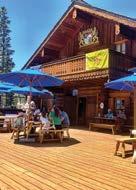

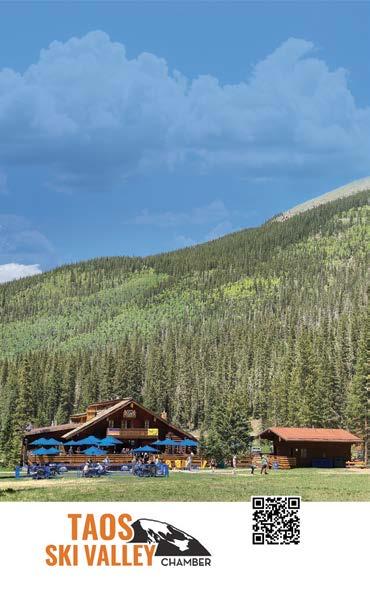
The Bavarian Restaurant at Taos Ski Valley tempts with alpine charm, crackling fireplaces, and rich European comfort food. Skiers and summer hikers gather for schnitzel, sausages, and warm pretzels, paired with mountain views. Cozy wood interiors and friendly hospitality create a perfect retreat, where hearty flavors and high-altitude air satisfy adventure-earned appetites. Delicious beers and Bavarian dishes are perfect after a long alpine hike.
The Spa & Wellness Center at The Blake Hotel offers luxury massages, facials, and wellness treatments. It specializes in performance recovery, detox treatments, and mountain-inspired, nature-focused therapies, along with yoga classes, available to all visitors. Book any massage, facial, or body treatment and enjoy complimentary access to the fitness center, steam rooms, and the pool and hot tub area.
Taos Ski Valley was one of the last major American ski resorts to allow snowboarding, officially welcoming snowboarders only in 2008, preserving its traditional skiing culture decades longer than most destinations.



Taos Ski Valley’s vibrant extensive redevelopment has brought a stylish prominade dotted with quality restaurants, bars and retailers. Here’s a few.
Andean Software
Elegant alpaca clothing, fine textiles and art from Peru, Bolivia and more. 116B Sutton Place (575) 776-2508 stonecorralmedia.com

Bavarian Restaurant
Alpine Escape For Authentic German Food And Tall Steins Of Bavarian Beer.
100 Kachina Road (575) 776-2291
skitaos.com/dining

Black Diamond Espresso
The Fastest Lift at Taos Ski Valley. Tea, Coffee, Snacks, and Breakfast. 116A Sutton Place Walk up only.

Rolling Still
The taste of time hard at work. A tasting room in Taos Ski Valley.
200 Thunderbird Road, 103B (575) 613-0326
rollingstill.com


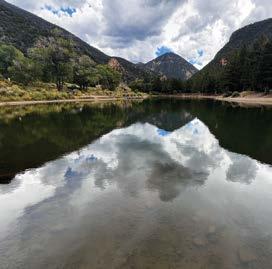
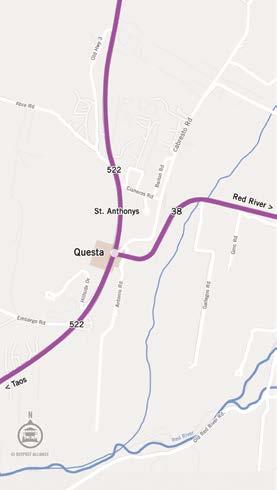
Questa, New Mexico rests quietly at the northern edge of the Taos Valley, where mountains, river, and history converge. Founded in the late nineteenth century and shaped by Hispanic agricultural roots, the village later became closely tied to mining. For decades, the nearby molybdenum mine provided livelihoods and defined the local economy, its presence visible on the mountainside above town.
When mining operations declined, Questa faced the difficult challenge of redefining itself, gradually turning toward restoration, outdoor recreation, and community-driven revitalization.
Today, Questa serves as a welcoming gateway to the Rio Grande del Norte National Monument. Just west of town, vast volcanic plains, deep canyons, and the dramatic Wild Rivers area offer hiking, wildlife
viewing, and expansive high-desert solitude. The Red River flows directly through the village, its cool waters winding past cottonwoods and fields before continuing westward to meet the Rio Grande within the monument. This confluence, carved into rugged basalt, creates one of northern New Mexico’s most striking landscapes.
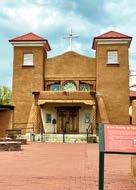
In the heart of Questa stands the historic San Antonio de Padua Church, its adobe walls and twin towers reflecting generations of faith and tradition. Nearby streets reveal a blend of old homes, small businesses, and renewed civic spaces, all part of the town’s ongoing transformation. Adding to this momentum, the newly established Eagle Rock Lake State Park and a proposed access trail connecting Questa with the town of Red River represents a bold vision—turning an industrial past into a future centered on recreation, conservation, and education.
Questa remains both rooted and evolving, a place where river, history, and resilience meet at the threshold of wild country.
Questa sits where mountains meet desert, a historic village shaped by mining, river valleys, and resilience, now welcoming travelers exploring nearby wilderness, scenic byways, and northern New Mexico’s quieter landscapes.
Elevation: 7,615 feet
Established: 1842
Population: 1,803
Point of Interest:
Rio Grande del Norte National Monument reveals vast volcanic plains, deep river gorges, and quiet horizons. The approximately 242,555acre area offers views of the Rio Grande Gorge.


Did you know?
Saint Anthony’s Catholic Church stands gracefully in Questa, its adobe walls and twin towers reflecting generations of devotion. Sunlight warms the courtyard, while simple architecture and mountain backdrop create timeless beauty. Inside, quiet reverence and local craftsmanship reveal a spiritual center deeply woven into community history. The church underwent a major multi-year restoration, which was completed around 2013, restoring it to its current grandeur.
The Questa Farmers Market gathers locals and visitors around fresh produce, baked goods, and handcrafted items. Mountain air carries conversation between booths, while seasonal harvests reflect the surrounding valley. Live music, friendly faces, and smalltown warmth create an inviting stop, where community, tradition, and northern New Mexico flavor come together each market day. Join in every Sunday in the summertime from 10 a.m. until 2 p.m.
Taos Bakes is a Questa-based company that produces premium, organic, and non-GMO snack bars, nuts, and granola. Known for unique flavor combinations, the company operates a sustainable manufacturing facility and sells products through major grocers.
Visit Questa for adventure including a visit to Rio Grande Del Norte National Monument. Enjoy local antique shops and family restaurants.


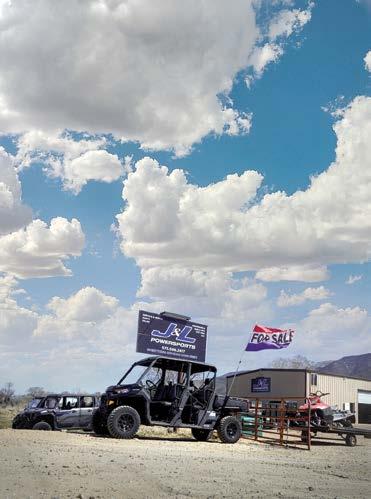
Everything off-road done right—service, repair and used units in Questa.
2627 NM-522 (575) 586-2417
jlpowersportsnm.com

New Mexican, and American dishes and delicious desserts and baked goods.
2366 Highway 522 (575) 586-2303
@frankseatsnsweets

Questa’s only locally-owned supermarket. Fresh meats and more!
5 Supermarket Road (575) 586-0233
@sdcvalleymarket


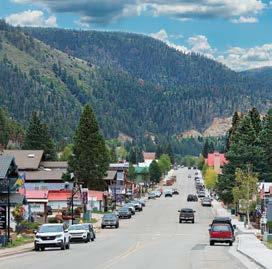
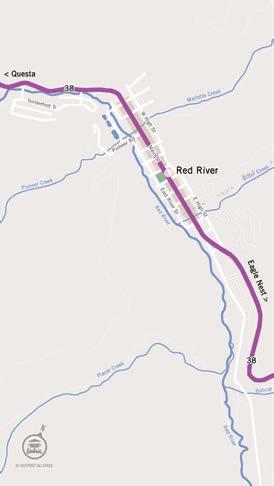
Red River began as a rugged mining camp tucked high in the Sangre de Cristo Mountains, where prospectors followed mineral veins into narrow alpine valleys. When mining faded, the community reinvented itself, evolving into one of northern New Mexico’s most vibrant mountain towns. Today, wooden bridges over the river, newly paved sidewalks, lively festivals, and a welcoming atmosphere reflect a place
that blends Old West heritage with modern adventure vacation travel. From hotels, cabin rental enclaves, and luxury short term rentals to several well-established RV resorts and national forest campgrounds, Red River has the accommodations to suit every desire.
The Red River itself flows directly through town, its clear mountain water shaping both scenery and recreation. Anglers line its banks,
children wade in summer, and the sound of rushing water accompanies strolls along Main Street. At the edge of town rises the Red River Ski & Summer Area, established in 1959 to transform the village into a yearround destination.
Winter brings skiing, snowboarding, and snowmobiling, while summer reveals a different kind of energy. Hiking and mountain biking trails climb into surrounding forests, and scenic lift rides offer sweeping views of the Southern Rockies. The town’s tourism-driven economy revolves around these outdoor experiences, drawing visitors year-round for recreation in the mountains.
Beyond the trails, Red River embraces adventure culture. ATV and side-by-side riders explore backcountry roads, and motorcycle enthusiasts gather annually for the Red River Memorial Motorcycle Rally, an event that has historically attracted thousands of riders. Combined with music festivals, family events, and riverfront relaxation, the community pulses with activity. From mining roots to mountain playground, Red River remains defined by its river, its peaks, and its enduring spirit of the outdoors.
Red River is a lively mountain town where alpine scenery, flowing river, and year-round adventure create an inviting escape, blending historic charm with outdoor recreation in the heart of the Sangre de Cristo Mountains.
Elevation: 8,750 feet
Established: 1895
Population: 456-540
Point of Interest:
Goose Lake trail climbs above Red River through forests and rocky switchbacks, leading to a high alpine basin. Wildflowers, waterfalls, and panoramas reward those who visit on foot or ATV.
INFORMATION
Community Center (575) 754-2349
redrivercommunityhouse.com
Chamber of Commerce (575) 754-2366
redriverchamber.org
Marshal’s Office (575) 754-6166

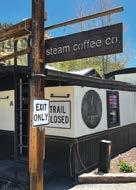
Steam Coffee & Tea Co. in Red River is a popular, family-run coffee shop located at 400 W. Main Street inside a unique, renovated train caboose. It serves handcrafted hot and iced espresso drinks—such as churro lattes and Frappuccinos— alongside fresh donuts, pastries, and lunch items like sandwiches and quiche. Operating daily from 6:30 a.m., be sure to stop in when strolling down Main Street. It’s a unique experience.
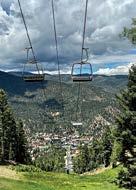
The Scenic Summer Chairlift in Red River is an experience at the Red River Ski & Summer Area that transports passengers 1,600 vertical feet from the edge of town to the summit. Operating from 9:00 a.m. to 4:00 p.m., it offers panoramic views of the town of Red River and surrounding mountains. For a vigorous experience, hike your way back down on a switchback trail lined with wildflowers. Or return on the chair lift for great views all the way down.
Red River gained national recognition in 2019 when a nearby Carson National Forest spruce was chosen as the official United States Capitol Christmas Tree, celebrated with community pride, parades, and festivities.
The adventure town of Red River offers more than 200 businesses lining Main Street with many options for accomodations, dining, and activities.



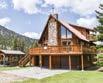
From specialty lattes to frozen and iced drinks, pastries, bagels & more!
604 E Main Street (575) 252-3000 bearlyawakecoffeeandadventures.com

Tackle, gear, elevated guided trips and community fishing experiences.
201 W. Main Street, Ste. 4B (318) 816-2742 coopersfishingclub.com

Year round destination weddings in the Enchanted Circle of New Mexico.
417 W Main Street, Ste. 105 (575) 595-1971 kwkevents.com

Year around 5-Star vacation rental experiences in Red River.
201 W Main Street, Ste. 4 (575) 252-3455
rrmountainpeakproperties.com

Not all local businesses are listed.


La Finca De Villa
Mexican dining with locations in Red River and Angel Fire.
201 W Main Street (505) 780-0881 @ La-Finca-de-Villa

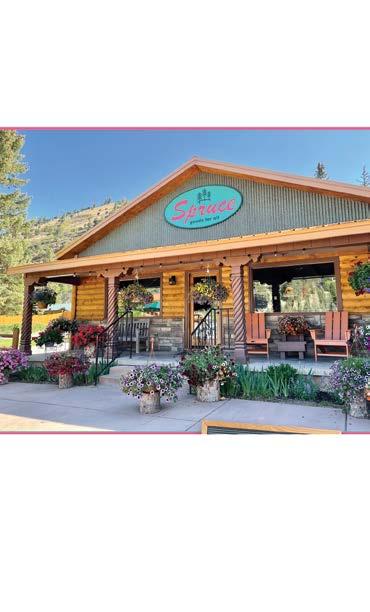
Spruce
A unique store with something for everyone in the family. Local, fair trade.
316 E. Main Street (817) 201-6586 instagram.com/spruceredriver

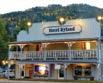
Hotel Ryland
A downtown family owned Red River hotel. Book your reservation today!
505 E Main Street (575) 754-6444 hotelryland.com






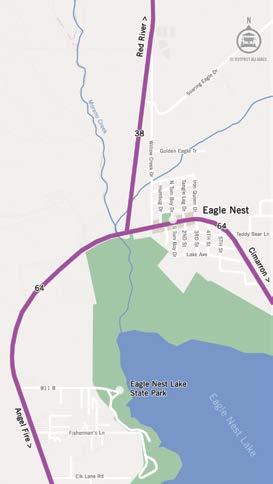
Eagle Nest rests quietly where open mountain valleys meet wide northern skies, a place where nostalgia lingers in the breeze off the water. Once a simple ranching and homesteading community, the village, originally named Therma, grew alongside the completion of Eagle Nest Dam in the early twentieth century. The resulting lake transformed the valley, creating a shimmering high-altitude reser-
voir that soon attracted anglers, campers, and travelers seeking cool summer air and peaceful scenery. Old cabins, weathered storefronts, and long views across the Moreno Valley still echo those earlier days. Mornings begin with sunlight stretching across Eagle Nest Lake, while fishermen launch small boats into calm water, continuing a tradition that has defined the community for generations. The
surrounding mountains, rising toward the Sangre de Cristo range, frame the village in every direction, giving Eagle Nest a timeless, sheltered feeling.
Today, the town balances quiet heritage with outdoor adventure. Visitors explore Eagle Nest Lake State Park, where boating, paddleboarding, and trout fishing fill summer afternoons. Hiking trails wind into nearby forests, and wildlife sightings—elk, deer, and soaring eagles—remain common. The community is also the gateway eastward into the Cimarron Canyon State Park with camping, river angling, and canyon hikes.
Community events bring the village to life throughout the year. Seasonal festivals, fishing tournaments, and holiday celebrations gather locals and visitors along the lakeshore. Small cafés, general stores, and welcoming lodges offer warm conversation and mountain hospitality. In Eagle Nest, history rests gently beside recreation, and the pace of life follows the rhythm of water, weather, and enduring northern New Mexico tradition.
Eagle Nest, on the edge of Eagle Nest Lake in Moreno Valley, offers mountain views, open skies, and peaceful waters. Considered Moreno Valley’s Main Street, stop in to shop and dine in this quaint mountain community.
Elevation: 8,200 feet
Established: 1916
Population: 317-451
Point of Interest: Don’t miss out on this year’s line up of live outdoor concerts in Eagle Nest performed by musical star, Michael Martin Murphey.
Chamber of Commerce (575) 224-6411 eaglenestchamber.org
Sheriff’s Department (575) 445-5561


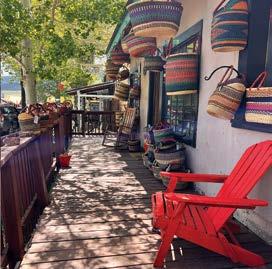
D&B Mercantile and Sweet Shop owned by David Fitzpatrick in downtown Eagle Nest offers a wide range of sweet treats including fudge, candies, and an assortment of gift items such as wooden carved statues, soap stones, baskets, and more. Located on the wooden boardwalk just east of Laguna Vista Saloon, the shop is open throughout the summer. And, did we mention he sells fudge?
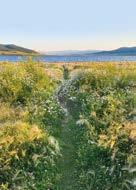
Walking the wildflower-lined trails to Eagle Nest Lake at sunset feels quietly magical. Alpine blooms sway in cooling air as the path opens to shimmering water. Across the valley, Wheeler Peak glows in fading light, its silhouette deepening as gold turns to rose. Gentle ripples reflect the sky, and evening stillness settles softly over the mountains. It’s an experience of solitude with a gentle breeze blowing across your ears.
Eagle Nest Dam is approximately 108 years old, with construction completed in 1918. It was built to impound the Cimarron River and was designated as the largest privately built dam in the United States, officially becoming a state park in 2004.
Considered the “Main Street of the Moreno Valley”, Eagle Nest offers a downtown district with quaint shops, a few quality family restaurants and more.



Full service fly and tackle shop with merchandise available in store.
247 E Therma Drive (505) 355-9681 dosamigosflyshop.com

Veteran owned/operated. T-shirts, hoodies, NM Coffee and gifts and more.
225 E Therma Drive (575) 613-3735 eaglefeathertradingpost.com

Serving Thai food in Eagle Nest and Angel Fire.
144 E Therma Street (575) 447-0909 thai-angel.com



Cimarron carries the quiet weight of frontier history, where cottonwoods line the river and time seems to move at the pace of flowing water. Once a vital stop along the Santa Fe Trail, the village welcomed traders, soldiers, and adventurers traveling between the plains and mountain passes. Wagons creaked into town, dust settling along what would become Old Town Cimarron, where adobe
buildings and wooden storefronts still hint at those bustling days.
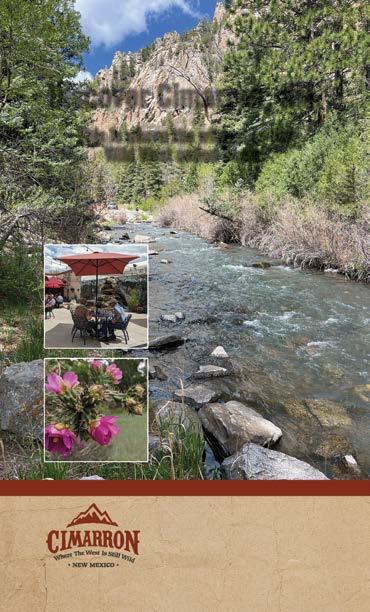
The Cimarron River winds gently through the valley, its cool waters sustaining ranches that helped shape the region’s identity. Generations of cattle operations spread across nearby grasslands, creating a ranching culture that remains woven into daily life. Above town, Cimarron Canyon State Park rises into forested slopes, where the
river narrows and trout-filled pools reflect towering cliffs. Travelers today follow the same canyon route once used by stagecoaches, now stopping for picnics, hiking, and quiet moments beside the water.
Historic landmarks deepen Cimarron’s sense of place. The St. James Hotel, with its creaking floors and bullet-marked ceiling, welcomed notable figures including outlaws, lawmen, and famous frontiersmen.
Stories of Clay Allison, Jesse James, Wyatt Earp, Buffalo Bill Cody, Annie Oakley, and Billy the Kid linger in its rooms, adding layers of legend to the town’s character.
Nearby, Philmont Scout Ranch, one of the largest private camps in the world, spreads across vast mountain terrain, drawing generations of Scouts who pass through Cimarron before heading into wilderness adventure.
Surrounding Cimarron, Bison roam vast grazing lands while Pronghorn dart along the highway. It’s a mecca for wildlife and migrating birds.
Standing in Cimarron today, one feels the convergence of trail history, ranching heritage, and mountain solitude. It is a place where stories endure, carried by the river and remembered in weathered walls.
Cimarron is a historic village where the Santa Fe Trail, ranching heritage, and mountain landscapes meet, offering visitors a quiet gateway to Cimarron Canyon, Philmont Scout Ranch, and timeless frontier stories.
Elevation: 6,421 feet
Established: 1857
Population: 717-796
Point of Interest:
The Aztec Mill Museum preserves local history within a restored gristmill, featuring pioneer artifacts, photographs, and exhibits that reflect frontier life and its Santa Fe Trail connections.


you know?
Tooth of Time Traders, a surprisingly stocked outdoor store at Philmont Scout Ranch, invites visitors to browse outdoor gear, unique souvenirs, and Scout memorabilia. Rustic charm fills the spacious store, while shelves showcase apparel, gifts, and trail essentials. Whether preparing for an excursion or seeking a keepsake, shoppers discover a welcoming stop rich with Philmont heart and the spirit of true adventure.
Kit Carson Restaurant by Mountain Magnolia, run by restaurateur Rhonda Palmonari Ladley, offers the kind of downhome cooking you would expect from a town like Cimarron rich in Western ranch heritage. One dish that stands out is the Avocado Toast layered with a fried egg. It will stick to your ribs and keep you going on your long journey across the vast sweeping grasslands ahead.
Cimarron sat within the vast Maxwell Land Grant, one of America’s largest private holdings. Established by Lucien Maxwell, it shaped ranching and settlement. Later disputes over ownership created lasting impacts on land use and community history.
Cimarron is a place with western small town charm. And, nothing illustrates that more than in the welcoming smiles of local business owners.



A popular stop for burgers and our “down-home” feel and friendly service.
31089 US-64 (575) 376-4480 facebook.com/creemee

Savor our comfort food. Dine under the stars at the largest patio in Cimarron.
617 S. Collison Ave (575) 376-2664 mvacationproperties.com

Elevate your coffee experience with quality blends from Hikers Coffee Co.
337 9th Street (575) 689-2635 hikerscoffeeco.com


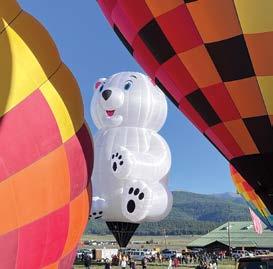
Angel Fire began as a quiet alpine valley known to early travelers for its sweeping meadows and the soft glow of evening light against Wheeler Peak. In the 1960s, developer Roy H. Lebus envisioned a mountain resort community where families could gather year-round. Roads were carved into forested hillsides, ski lifts rose above the valley, and cabins slowly dotted the landscape. What started as an ambitious
dream grew into one of northern New Mexico’s most vibrant vacation towns, while still holding onto its relaxed mountain charm.
Today, Angel Fire blends recreation with a welcoming sense of community. The ski resort anchors winter, offering groomed runs, tree skiing, and a friendly atmosphere perfect for families and seasoned skiers alike. When snow melts, the slopes transform into renowned
mountain biking terrain, drawing riders from across the region. Nearby, the Angel Fire Country Club adds another layer of mountain leisure, with its scenic golf course, tennis and pickleball courts, and social gatherings framed by expansive alpine views.
Summer brings the town to life with a colorful calendar of events. Balloons Over Angel Fire fills the valley with vibrant hot air balloons drifting across early morning skies. Weekend farmers markets showcase local produce, crafts, and friendly conversation, while outdoor concerts echo through cool evening air. Classic and sports car shows line the event lawn, and festivals throughout the season create reasons to stay awhile.
Despite its recent growth, Angel Fire still feels rooted in simple pleasures—cool mountain mornings, wildflower meadows, and sunset alpenglow. It remains a place where tradition, recreation, and community meet in the high country and where miles of forest hiking trails draw one deeper into a sense of being.
Angel Fire is a welcoming mountain village where alpine scenery, outdoor adventure, and year-round events create a vibrant destination, blending resort amenities with relaxed high-country charm.
Elevation: 8,400 feet
Established: 1964
Population: 1,100-1,200
Point of Interest:
Visiting the Vietnam Veterans Memorial offers quiet reflection and meaningful tributes. The 6,000 square foot museum includes a half-scale black granite replica wall, a Huey helicopter, and a vast exhibit collection.
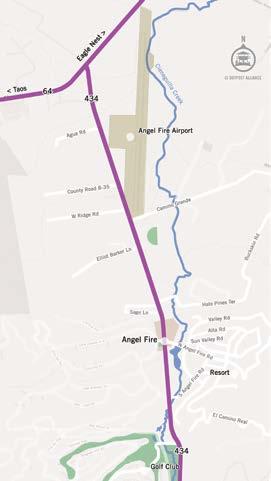


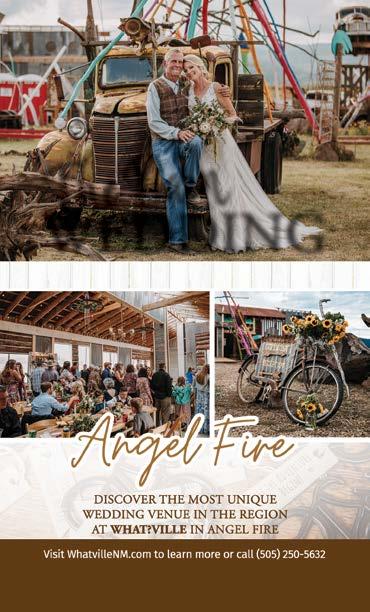
What?ville is a whimsical, 10acre outdoor art installation and gathering hub in Angel Fire created by local artist and builder Ray Renfroe. It features colorful wooden structures, recycled objects, and twinkling lights. It serves as a fun, creative community space, as well as a gathering hall named Prairie House offering a stage for live events and a dance floor. Don’t miss out on this unique and immersive experience.
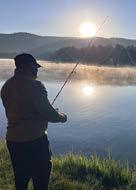
Early morning at Monte Verde Lake is hushed and serene. Mist drifts across still water as sunrise paints the mountains in soft gold. With a warm cup of coffee beside, anglers cast gentle lines, watching ripples spread while geese paddle by in uniform rows. The quiet air, rising light, and promise of the day create a peaceful mountain ritual. Stocked with Rainbows that typically reach more than 25 inches, its not only a joy to catch but a dinner to keep.
Local legend says the area now known as Angel Fire was named for its vivid sunrise and sunset glow, described by early inhabitants as “Fire of the Gods,” later interpreted by Spanish friars as “the place of the fire of the angel.”
Angel Fire offers a variety of dining options, fun outdoor activities and events, as well as a wide variety of reputable accomodations. Here’s a few.




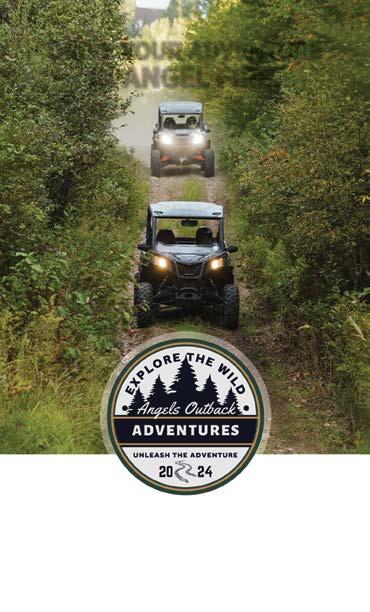
Angel’s Outback Adventures
Half-Day, Full-Day, Multi-Day. SXS Rentals for all your exploring needs.
3377 Mountain View Blvd (575) 613-8309 angelsoutback.com

Blue Grama Lamb
Locally raised, grass fed and finished LAMB from the Black Lake Valley.
NM-120 (208) 890-4339 facebook.com/BlueGramaLamb

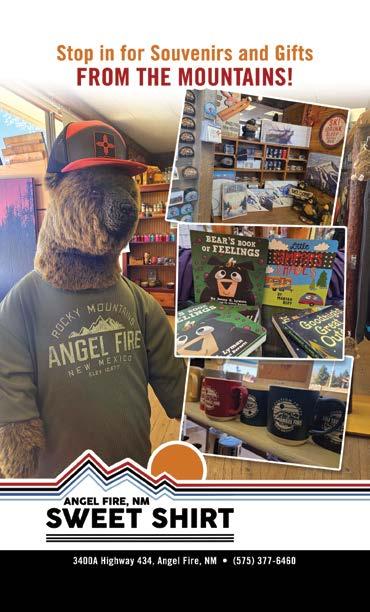
Sweet Shirt Company
Angel Fire Sweet Shirt offers Souvenirs, and Gifts from the Mountains.
3400 A Highway 434 (575) 377-6460 facebook.com/sweetshirt.af

Legacy Silver Company
Discover the timeless value of precious metals. Expert guidance in Angel Fire.
3375 G1 Mountain View Blvd. (855) 321-2580 legacysilverco.com