INDUSTRY SPOTLIGHT
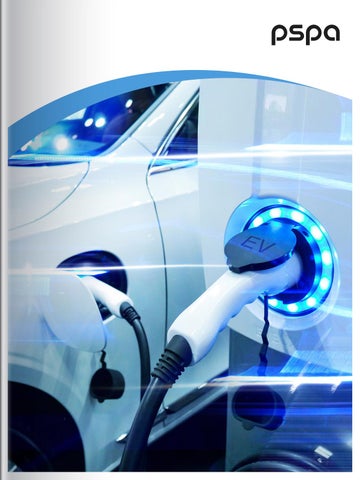
SPOTLIGHT ON E-MOBILITY IN POLAND Poland is a major player within Europe’s E-Mobility landscape, yet sector challenges prevail, including the implementation of infrastructure, and incentivising the e-generation
P
Writer: Phoebe Harper | Project Manager: Krisha Canlas
oland’s transport sector is in transition. Although still a nascent industry, the advent of E-Mobility and the role of hydrogen technologies across Europe is gathering momentum, as evidenced by ever-growing fleets of electric vehicles (EV’s) and charging stations that are reflective of the shifting transport landscape. Poland itself may still be considered a developing market, particularly when compared with other European players like Germany, France or Scandinavian countries. As such, a big challenge for the industry can be the lack of alignment between advanced markets and the infrastructure of hosting
2 | EME Outlook issue 42
countries, primarily a distinct imbalance between the amount of EVs and available charging stations. In terms of public transport, Poland hosts Europe’s largest producer of electric buses and recipient of the ’Global E-Mobility Leader 2020’ award, Solaris. Poland is also becoming an important market for the entire value chain of E-mobility. The market hosts an entire supply chain and manufacturing industry of lithium-ion batteries, from the creation of batteries, through component production, all the way to recycling facilities. The LG Energy Solution site in south-west Poland is the biggest facility in the world, with a target potential of 100 GWh and
an investment value of €3.1 billion, out of which €95 million are from public financial support. A key focus for progress is the dissemination of knowledge around E-Mobility and its unrealised potential on Europe’s journey to carbon neutrality. This will be instrumental in dispelling public hesitancy around the acceptance of low-emission transport. Within Poland itself, this is a significant challenge where there is an abundance of cheap, imported ICE vehicles readily available. This only contributes to the consumption of fossil fuels and air pollution levels that the country already struggles with, whilst complicating the sector’s development. To support this growth, the introduction of more stringent legislation on behalf of local governments and public administration will also hasten progress, as evidenced by the 2018 Act on Electromobility and Alternative Fuels.
E-Mobilty Acronyms Debunked • EV – Electric Vehicle • PHEV – Plug-in Hybrid Electric Vehicles • BEV – Battery Electric Vehicle • ICE – Internal Combustion Engine – Traditional engine system fuelled by liquids derived from fossil fuels • V2X – Vehicle-to-Everything – The advanced vehicular technology whereby vehicles can communicate with surrounding traffic and infrastructure through wireless signals
INTRODUCTION
THE POLISH ALTERNATIVE FUELS ASSOCIATION (PSPA)
EME Outlook issue 42 | 3
Green Cell promises an energetic future Every era has its symbols, but one company endeavours to make the battery a symbol of today. Green Cell wants to make the world more sustainable in terms of energy use and consumption. Green Cell invites you to the south of Poland to find out how. Established in Krakow in 2013, Green Cell is a brand of products related to charging and storing energy. After having worked in the computer service industry, Paweł Ochyński, noticed a significant lack of battery replacements. Customers were also displeased by this their laptops could still be working if they only had easier access to new batteries. Paweł decided to not only provide the batteries, but also ensure they were more efficient than factory products whilst also giving a second life to mobile devices. The founder of Green Cell also wanted to change the approach of customers to battery-powered devices whilst also extending the life cycle of products. Green Cell quickly took the next steps and began producing power adapters, chargers, cables, power banks and other accessories for smartphones, tablets or laptops. Soon the company smoothly transitioned to more advanced solutions – UPS devices, photovoltaics and EV chargers. Recently, Green Cell has become even more involved in electromobility projects. Green Cell became one of the fastest growing businesses in Europe within just a few years, accroding to the Financial Times, with reach spanning over 60 countries. With a workforce of more than 250 people, Green Cell’s mission becomes obvious by looking at its source. ECOLOGY IN A CITY FULL OF SMOG The city of Krakow is reputed as a worldwide tourist destination. But behind the charming and artistic facade of the picturesque Old Town, is Krakow’s longtime struggle with air pollution. Today, the situation has improved significantly as residents are gradually replacing het sources and more modern trams and hybrid buses appear throughout the city. This is just one example of how we can implement the ecological revolution that the world needs – and Green Cell want to take an active part in it. “People want this change and are much more aware of the environmental impact of energy production. I think that with electric cars and photovoltaics it will be easier to broaden this ‘green energy’ revolution. Transport can be greener with all kinds of EV’s and hydrogen ships. Now electronics is all about longer lifespan of products and better recycling,” explains Pawel Ochynski, CEO of Green Cell.
As one of the key players in battery production for EV’s, Poland, and by extension Green Cell, are in the position to make consumer electronics and the automotive industry greener. FROM FINGER-TYPE BATTERIES TO ELECTRIC CARS Green Cell’s strength are the batteries and accessories that precisely meet the needs of their customers, thereby increasing their independence whilst using their favourite devices for longer. This philosophy guided the brand both at the stage of introducing its own AA batteries for sale, as well as more advanced solutions. The manufacturer is ready for the era of quickly charged electric cars in our own garages thanks to wallbox chargers. The GC EV PowerBox model has as much as 22 kW of power, which allows you to charge the Tesla Model 3 (72.5 kWh) in just 6.5 hours. On the other hand, the GC EV PowerCable mobile chargers, with a power of 3.6 kW can be taken on any journey and connected to an ordinary power socket. Type 1 and 2 connectors ensure wide cooperation with various car models, whilst our 6.5 metre cable is ideal for use in generally accessible undergound garages. In addition, Green Cell has a wide selection of e-bike batteries and chargers, which have become an extremely popular means of transport across Western Europe. “Right now we are concentrating on energy storage and EV charging for the home. We want to design products that make a difference. It is very important to make a product which is easier to use and smarter with information that is provided by devices,” says Ochynski. Green Cell wants to create entire ecosystems that will cooperate with renewable energy installations to quickly and efficiently charge electric cars and provide energy to vehicles, e-bikes and scooters. ADVANTAGE THANKS TO OUR OWN DESIGNS A huge step forward for Green Cell was the creation of its own R&D department, which employs specialists in the field of Industrial Design, electronics, engineers, constructors and testers. The team responsible for Green Cell products has been operating since 2015 and regularly introduces its own ideas to the market.
attractive way. At the same time we consider the environmental and social impact of our designs,” Hojda says. TIME FOR A WORLD OF SUSTAINABLE ENERGY The history of Green Cell shows that every user of a laptop, smartphone or EV needs fresh energy. However, it is equally important that energy comes from green sources, and individual producers operating within the circular economy - a system that minimises the consumption of raw materials and environmental pollution thanks to reuse, refurb and recycling. “If you want to bring civilization to the next level and create a better world, this is the best option,” adds Paweł Ochyński, who hopes that a circular economy will become the norm on the global market. “Our role, as designers, starts at the very beginning of the process. We use empathy and various research tools to understand our clients, discover and define the design challenge and the main goals of the project. The process is iterative, so we don’t stop at the first idea, but rather explore multiple possibilities,” states Piotr Hojda, Head of Design at Green Cell. Among the projects created in the Green Cell laboratory is the PowerPlay Ultra power bank with a rare 26 800 mAh capacity, equipped with four 128 W ports. It can charge smartphones and laptops efficientlyas a small, but powerful source of energy for mobile devices, whilst also showing the direction of solutions for EV owners. Green Cell is heading towards minimalist EV chargers that will provide high power and take up minimal space in the trunk or garage. “Our design principles are clear: we strive to develop the best possible products and services that solve real problems and fulfill the authentic needs of our clients in an efficient, simple, intuitive and visually
The plans of the Polish brand Green Cell are ambitious, with a strategy that entails an annual doubling of revenues, which in 2020 amounted to €47.5 million. In addition, the company strives to become a global brand that will significantly contribute to the construction of a sustainable energy world. There are many indications that Green Cell is on the right track. Soon we will see if batteries can be a symbol of our times, and Poland will become a symbol of batteries and chargers.
+48 12 444 6247 support@greencell.global https://greencell.global EME Outlook issue 42 | 5
INDUSTRY SPOTLIGHT
Interview: The Polish Alternative Fuels Association (PSPA)
INTERVIEW
The Polish Alternative Fuels Association are the unifying, educational voice furthering the potential of low-emission transport across Poland and the CEE region. Chief Expert of the Board, Aleksander Rajch, examines the organisation today, ahead of an industry-defining decade
Aleksander Rajch Chief Expert of the Board, PSPA
EME Outlook (EO): Can you talk us through the origins of PSPA; how it came about, and its initial vision? Aleksander Rajch (AR): The Polish Alternative Fuels Association (PSPA) is an organisation focused on developing the sustainable, zero and low emission transport in Poland and the CEE Region. The organisation was founded to drive this market, with a particular focus, but not limited to, electromobility. We intend to be the voice of the industry, an entity which supports the development of rational and efficient legislation; supports the business environment through relation and market development; supports Polish companies in achieving their goals on the domestic market and abroad; supports foreign companies in succeeding on the Polish market (in the relevant area), and in the end become a meeting point for all those companies, individuals and institutions that want
6 | EME Outlook issue 42
to foster sustainable transport as a reality in Poland and the region. Since the beginning, our vision was to raise popular awareness regarding the challenges for modern transport, as well to educate the Polish public opinion about what zero and low emission transport is and why it is becoming both a priority and reality. On this basis we want to achieve our goals, becoming a leading entity to build this market in Poland. EO: Since inception, how has PSPA developed and progressed in terms of its key objectives and the messages it tries to get across? AR: In a word – dynamically. We started less than five years ago and have already managed to bring together over 140 entities from the entire value chain of E-Mobility and sustainable transport.
THE POLISH ALTERNATIVE FUELS ASSOCIATION (PSPA)
EME Outlook issue 42 | 7
HOT TOPIC:
Benefiting image and profitability at the same time Company cars and their emissions are an ongoing issue and electrification of fleets offers a sustainable and cost-effective solution while strengthening your company image in the process. How can you make eMobility work for your bottom line? “Advanced car technologies, longer ranges and systematically growing charging infrastructure – what for some might have seemed impossible a few years ago is now our reality and our future” – says Helmut Hoidn, CEO of Alphabet Poland, who spoke with us about how companies can successfully integrate electric vehicles into their fleets.
Do you see eMobility getting more traction lately among companies? HH: Yes! As technology moves forward, so do our
customers’ goals to reach sustainability targets and enhance company reputation. For the purpose of this interview, we took a closer look at the fleets of our most environmentally conscious corporate clients and their statistics speak for themselves - the share of hybrid and electric cars in their fleets already exceeds 30 percent and other cars are regularly replaced based on increasingly stringent EURO emission standards. However, not only global corporations appreciate the advantages of modern drives in their car parks. Every year, the pro-ecological awareness is growing, and with it also a group of companies determined to systematically reduce the share of combustion vehicles and reduce the overall CO2 emissions of their fleets - whether due to the company's fleet policy, total cost of ownership (TCO) or image-related aspects.
Is it hard to implement eMobility in a company fleet? HH: If you don’t have any experience with hybrid and
electric cars it could be a challenge. Luckily all you really need is a comprehensive eMobility solution and that is exactly what Alphabet offers its customers, both in Poland and across Europe. Back in 2013, we were the pioneers when developing the first holistic eMobility solution for corporate fleets – AlphaElectric. Last year our company put 21,000 EVs and PHEVs on the road, which translates to nearly 5 percent of the market share of all EV/PHEV registrations in Europe – this positions us as a market leader in the sector.
Is it true that car-sharing trend contributed to the EV popularity? HH: Yes, companies are looking more and more favorably
on electric drives in case of shared cars that perform lower mileages. This category in our fleet is dominated by BMW i3 models, the popularity of which has additionally increased after several hundred of such vehicles were made available as part of the largest in Poland and one of the largest in Europe’s fully electric carsharing scheme under the name of innogy go! Alphabet Polska financed 250 electric BMW i3s under this project, which was a key element for us in the implementation of the strategy of systematic dissemination of the idea of electromobility in our country.
Alphabet is a BMW Group company – does it mean you only lease BMW cars? HH: Not at all! Yes, we are a part of BMW Group and as such
we have a very competitive offer on all of Group’s car models, including BMW and MINI, but we are also a multi-make company, which means that we provide all car models available on Polish market (up to 3,5t). Our goal is to always find an optimal vehicle choice for our clients and turn them to EV enthusiasts, just like us!
Interested in introducing modern drives to your fleet? Contact us! Alphabet Polska Fleet Management:
alphaelectric.pl@alphabet.pl
Alphabet is a global leading provider of Business Mobility. As such, it enables companies to manage their corporate mobility in an economical and sustainable way. Founded in 1997 as a division of BMW Group, Alphabet has extensive knowledge of international fleet management and leasing. Its comprehensive portfolio includes consulting and funding as well as smart management products and services for company fleets. Alphabet’s Business Mobility solutions are tailor-made to meet specific corporate requirements. Today, Alphabet manages a portfolio of around 700,000 leased cars and light commercial vehicles of all makes and is ranked fourth in the market worldwide.
What made AlphaElectric so successful and how does it work? HH: One of our strategic goals is to promote eMobility
solutions for the benefit of the environment. And for that to happen we need to be able to provide a comprehensive solution, that is tailor-made for each customer. That’s why we have developed the “eMobility-route” with three stages: Consulting, Implementation and Daily Operations - to make sure that the transition always runs smoothly and at a comfortable pace. First, we check the optimal share of electrifiable vehicles with our electrification potential analysis (EPA), the variations of total cost of ownership (TCO) and the adjustments to the car policy. All scenarios are then analyzed together with the client to choose the best option and finetune the details. At the next step we prepare an appropriate charging plan considering the publicly available infrastructure, workplace and home charging solutions. Finally, we deliver cars with a wide range of everyday Mobility Services for driver’s support. With that we take away most burdens or uncertainties that customers might have in regards to EV’s and set them to take advantage of the very latest in electromobility.
Helmut Hoidn,
CEO, Alphabet Poland
In Poland, Alphabet also ranks fourth among the largest providers of Car Fleet Management solutions, currently managing a fleet of over 17,000 vehicles. The company started its operations on the Polish market in 2011, along with taking over the structures of ING Car Lease, which had been operating since 2001. EME Outlook issue 42 | 9
INTERVIEW
INDUSTRY SPOTLIGHT
We represent the automotive, financial, EV charging, infrastructure operators’, energy system operators’ sectors, as well as municipalities and diplomatic institutions which we worked and are still working with. We have implemented assorted media campaigns and projects, including large-scale TCO (total cost of ownership) studies, promotion campaigns, reports, conferences, webinars and major events. Annually, we organise events dedicated to Polish challenges and for business and municipal stakeholders called the New Mobility Congress, and a globally inclined event, which we co-organise with the National Centre for Climate Change, called the Global E-Mobility Forum, which gathers thousands of participants, with the official representation of numerous states around the world. We are now developing one of the largest social awareness campaigns called Elektromobilni.pl, which is a website-based nationwide communication campaign aimed at bringing the entire Polish society up to speed about the potential of E-Mobility. Over the course of 2020, we managed to successfully implement over 100 projects, strongly amplifying the discussion about sustainable transport and bringing substantive knowledge and experience to Polish households about what the on-coming transport transition really entails. EO: What do you find most exciting about working within Poland and CEE’s E-Mobility and hydrogen technology market? AR: The most exciting element is surely the fact that for Poland, but also the CEE, this market is at an infancy phase, and it is beginning to develop very rapidly. This creates a vast number of opportunities and brings forth a very interesting perspective. We have a great chance of learning from the experiences of the markets that are at a very developed stage in terms of electromobility and new mobility solutions. As of May 2021, we have a car park of 22,407 EV’s and expect to have nearly 5,000 charging points this year. At the same time, based on our own calculations which are formulated on data collection, market surveys and our own studies, we expect to have over 500,000 EV’s (both BEV and PHEV) by 2025, along with 48,000 charging points. This is to show how fast this sector will expand in just the next four years. We observe the increasing involvement of Polish local authorities and municipalities in the process of implementing low and zero emission vehicles in their fleets. Big enterprises with their
10 | EME Outlook issue 42
E-MOBILITY IN POLAND: FACTS AND FIGURES MAY 2021 • 25,407 – Electric Vehicles (12, 432 BEV’s and 12,975 PHEV’s) • 10,105 - Mopeds and motorcycles • 526 - Electric buses • 966 - Utility and freight EV’s Data from the PSPA and the Polish Automotive Industry Association
own car parks are also becoming more engaged to reduce the numbers of ICE’s and in Poland, approximately 70 percent of vehicles are company owned so this is another great prognostic. These are all sources of excitement, but also create many areas that necessitate much effort for the business community, as well as the experts and public administration. We have ahead of us a lot of work on the appropriate legislation, the public awareness regarding the challenges and why new mobility is not only inevitable, but desirable and can also be widely enjoyed. EO: On the flip side, what are its biggest challenges? AR: The challenges are manifold of course – the development of the sustainable transport market is a multi-layered and convoluted process. Firstly, the alignment of the highly developed new mobility markets with the countries that are still catching up, which is the case for Poland in terms of E-Mobility especially. This is an enormous challenge, as the perspective and needs of particular markets differ and moreover, they often develop at different pace,
“...there’s much work to do where all the market participants have a large role to play, while the pace of development is robust”
wherein some markets offer a surplus of EV’s over public charging points and others present the exact reverse. This adds to making benchmarks and roadmaps difficult. Secondly, the local, Polish challenges also contribute to many areas that need addressing. Our market struggles with the environmental and air pollution trouble, as well as reshaping our energy mix. Added to this, we have a very old car park in Poland, with an abundance of used and decrepit vehicles which were and are imported from Western EU States. These vehicles are highly affordable and hence attractive for many Polish consumers. At the same time, this represents a big problem for incentivising the acquisition of EV’s and upholds a significant source of pollution. The challenges are far more complicated to list in a short statement, but there’s much work to do where all the market participants have a large role to play, while the pace of development is robust.
EO: What trends are currently transforming the E-Mobility industry, particularly within Europe? How are you responding to them? AR: The current trends are numerous, mainly because the EU legislation sets a clear policy and strategy for the foreseeable future – one strongly limiting pollution and emissions, as well as a huge reliance on green technologies in all areas of the economy. Transport is a very significant element of this system, interconnecting various technological and business challenges. With the European Green Deal and the ‘Fit for 55’ package publicly stated as pillars of the policy outline, some of the observable trends are becoming legal obligations as well. One of the trends we see is that EV producers are striving to make their EV portfolios more accessible to all consumers. Government incentives are becoming more rational and efficient in supporting this process, with smart
INTERVIEW
THE POLISH ALTERNATIVE FUELS ASSOCIATION (PSPA)
EME Outlook issue 42 | 11
INTERVIEW
INDUSTRY SPOTLIGHT
bonus/malus policies being introduced, like in France or other developed E-Mobility markets. The EU is driving this process very strongly and decisively. Another great opportunity which responds to the realities and trends of the market is the RRF (recovery and resilience facility) which, if successfully implemented, will be a ground-breaking boost for E-Mobility and sustainable transport. Turning large agglomerations into smart cities, developing not only E-Mobility and zero-emission transport, but also autonomous and V2X (vehicleto-everything) technologies are all coming along very fast, and they will soon be our realities. Our role, as PSPA is to support this process, but also make everyone aware of what this revolution is all about, what opportunities it entails. The overall European pace for these processes is fast, so we make our best effort for the Polish transport and economy to not only be prepared for these new developments, but to join the revolution at the highest and most dynamic possible rate. EO: Have you got any projects in the pipeline that you wish to highlight? AR: We are very active in our efforts to develop
12 | EME Outlook issue 42
the sustainable transport sector in Poland and our region. Just in 2020, during the most intense COVID19 year, we implemented more than 100 projects and ventures. We definitely wish to highlight our awareness campaign – Elektromobilini.pl (electromobile Poles) – which is one of the largest and widest education campaigns regarding E-Mobility, smart mobility and sustainable transport. It’s a website-based campaign which aims to provide substantive knowledge about all areas of new mobility, but also provide a basis for the stakeholders to verify this information, as we developed applications and interactive tools within the campaign. 2021 is the second year of the campaign and we encourage all stakeholders to join us and awaken the e-generation in joining the transition to zeroemission transport. We will also be organising our two flagship events this year. The 2021 New Mobility Congress in Łódź will be a major industry event organised to discuss the most burning challenges regarding new mobility in Poland and the region – with much participation from Polish municipalities and public administration. Our second flagship project will be the third
THE POLISH ALTERNATIVE FUELS ASSOCIATION (PSPA)
EO: How do you see the industry in Poland developing over the next five years? AR: We are currently involved in a number of projects regarding this question and potential projections for the future. Our flagship project amongst these various ventures is a part of our cooperation with the European Climate Fund but we have analyses of our own, which point to one direction – the market will develop incredibly fast. The Polish transport sector presently relies heavily on fossil fuels (mostly Diesel but many LPG-powered vehicles as well), ICE vehicles and imported vehicles. The manufacturing industry in the transport sector is linked to that state of affairs, meaning mostly producing components and vehicles with ICE. This structure will evolve new companies, combined with the innovation from the rest of the world will begin the transition of the job market – so that Polish engineers, workers and entrepreneurs will begin to drive the sustainable transport industry to create more jobs and opportunities. In our view, in five years the market will have a discernible transition of jobs available in the innovative low and zero emission transport. In that time, Poland will have an EV car market of over 500,000 vehicles, with close to 60, 000 public
charging points. Much of the EU and Polish law regulating the entirety of this market will also be in place by that time and hopefully binding enough to incentivise developing the sector and slowing down the negative remnants of fossil fuel-based transport. Polish government agendas, such as the National Fund for Environmental Protection and Water Management, will most probably have a portfolio of on-going support and subsidy programmes for the market to thrive and rapidly grow. We try to be very realistic in our approach to such assessments but observing our market now and seeing how it’s really accelerating; we think that the vision above is fully viable. EO: Are you optimistic about the future of E-Mobility and hydrogen technology in Europe? AR: As a member organisation of Avere and an entity strongly in touch with the industry in Europe, we look to the future of this sector with much optimism and it’s safe to say that it is shared by our surrounding counterparts. Notwithstanding these circumstances, we have a great amount of work ahead of us. Europe as a region is diversified of course, with varying local priorities and challenges, but common goals and overarching opportunities. This is true for many other regions though, such as the United States, where some states have huge discrepancies in the field of sustainable transport. For example, the differences in EV charging infrastructure, where California represents sometimes a twenty-fold amount of charging stations of some other states like Illinois or Arizona. We have some of these characteristics in Europe as well, but smart policies with the support of NGO’s, businesses and experts will surely bring the process to synergy. Moreover, this will happen sooner than later, although the transition of the transport system is strongly connected to the processes taking place in the energy, oil and gas and industrial sectors.
INTERVIEW
edition of the Global E-Mobility Forum which we co-organise with the National Centre for Climate Change. This latter event attracts many top-tier stakeholders from around the world, including government representatives, global corporate practitioners, and experts from the world over. Before the summer of 2021, we successfully supported the launch of the “Highway to E-Mobility”, a project of lifting highway tolls (A1 and A4 in Poland) for EV’s, allowing their users to reach their vacation spots in a an environmentally friendly way and free of such charges. Apart from that we have many, many initiatives that we undertake, including our reports and analyses that really constitute the best and most credible data source for our market. We really work hard and actively to promote and develop new mobility, and we encourage everyone to reach out and cooperate. Just in the recent weeks we launched the Central and Eastern European Green Transport Initiative to develop the cooperation between CEE states in pursing the common goal of zero-emission transport and neutralising the two-speed model of developing E-Mobility in the EU.
Tel: +48 507 686 158 biuro@pspa.com.pl www.pspa.com.pl
EME Outlook issue 42 | 13
THE POLISH ALTERNATIVE FUELS ASSOCIATION (PSPA) Fabryczna 5A 00-446 Warsaw Poland Tel: +48 507 686 158 biuro@pspa.com.pl www.pspa.com.pl
PRODUCED BY EME OUTLOOK MAGAZINE