Africa Outlook, APAC Outlook, EME Outlook, North America Outlook, Mining Outlook, Healthcare Outlook, Manufacturing Outlook, Supply Chain Outlook, Food & Beverage Outlook, Construction Outlook, and Sustainability Outlook are digital publications aimed at boardroom and hands-on decision-makers, reaching an audience of more than 800,000 people around the world.
With original and exclusive content compiled by our experienced editorial team, we look to promote the latest in engaging news, industry trends, and success stories from across the globe.
Your company can join the leading industry heavyweights enjoying the free exposure we provide across our platforms with a free marketing brochure, extensive social media saturation, enhanced B2B networking opportunities, and a readymade forum to attract new investment and help you grow your business.
Visit www.outpb.com/work-with-us for details on how your company can feature for free in one of our upcoming editions.
EDITORIAL
Head of Editorial: Jack Salter jack.salter@outpb.com
Deputy Head of Editorial: Lucy Pilgrim lucy.pilgrim@outpb.com
Finance Assistant: Victoria McAllister victoria.mcallister@outpb.com
CONTACT
Supply Chain Outlook
Norvic House, 29-33 Chapelfield Road
Norwich, NR2 1RP, United Kingdom
Sales: +44 (0) 1603 904 445
Editorial: +44 (0) 1603 904 431
SUBSCRIPTIONS
Tel: +44 (0) 1603 904 431 jack.salter@outpb.com
www.supplychain-outlook.com
Follow us on Linkedin: @supplychainoutlook
WELCOME ABOARD
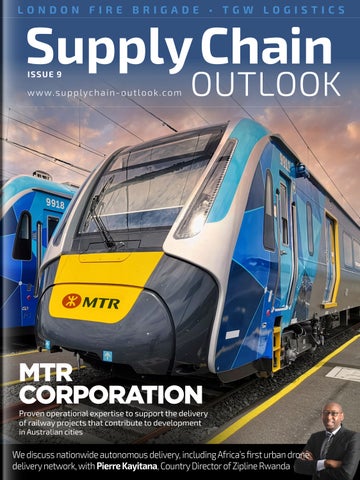
MTR Corporation (MTR), whose mission is to ‘Keep Cities Moving’, welcomes you aboard our ninth edition of Supply Chain Outlook magazine.
With a focus on innovation and customer service, MTR brings proven operational expertise to support the delivery of railway projects that contribute to development in Australian cities.
Having been present in Australia since 2009, MTR now operates in Sydney and Melbourne through its majority-owned subsidiaries, where it is committed to world-class service.
Our return ticket to this issue’s cover star, who we last spoke to in February 2024, outlines the vision of new CEO, Jeny Yeung, for next-generation train services that enhance metropolitan mobility.
“We aim to continuously improve our reliability, safety, and productivity across all our networks, ensuring sustainability, resource efficiency, and social responsibility,” Yeung sets out.
Our next stop is the UK capital, where the fire service operating environment has changed at a pace London Fire Brigade (LFB) is working hard to tackle.
Some of the most serious risks LFB is grappling with – including summer wildfires and e-bike and e-scooter fires – have only recently emerged as pressing issues.
In response to this evolving threat profile, the Brigade has made significant changes, including improved training and new equipment.
“We have to adapt in response to these risks to ensure we are ready and prepared to protect Londoners,” states Jonathan Smith, Commissioner, who we previously interviewed in March 2025.
Since our last visit to TGW Logistics (TGW), it has introduced a new executive team comprising five leaders with over 70 years of combined experience.
Their diverse backgrounds create a strong blend of perspectives and local understanding, helping align TGW’s identity and values with the region’s specific needs.
“We have been focusing on increasing our team’s expertise, streamlining the way we work, understanding industry trends, and consulting our customers on their actual needs,” updates Stipe Galic, Vice President of Business Development.
This service also calls at Inverto, Quadient, and Zipline Rwanda for industry insights across the supply chain.
We hope that you enjoy your read – and the ride.
Jack Salter Head of Editorial, Outlook Publishing
Turning Supplier Trust into a Strategic Advantage
Will Lovatt, Chief Revenue Officer at Kallikor, discusses how building trust across the supply chain is a strategic advantage and can be the centre of operational strength for supply chain organisations
Writer: Will Lovatt, Chief Revenue Officer, Kallikor
The most impactful supply chain problems rarely originate in operations. They are generated upstream, in commercial decisions made without a shared view of operational consequences.
Supplier relationships shape service levels, cost-to-serve, and supply chain resilience. Yet many organisations still treat suppliers as separate parties to be managed, rather than strategic partners to be aligned. That gap then shows up in the following way: a change looks good on paper, then performance gradually deteriorates once it hits the network.
Hidden costs appear, and inefficiencies ripple through the operation. Teams then spend weeks dealing with downstream consequences that no one intended.
It’s a commonplace pitfall that is entirely avoidable, and there’s a great business case to motivate change.
When Commercial Wins Create Operational Pain
A frequent trigger for increased risk and operational costs is a negotiation that prioritises a narrow set of key performance indicators (KPIs). Unit price, margin, and rebate structures can be persuasive in isolation, but they do not capture the operational reality across the combined system.
Even when detailed definitions of range, pack sizes, and buying multiples are covered in the initial negotiations, it’s still common for supply chain logistics to ‘bleed’ value.
Often, the issue is that small incremental changes can drive large
ripple effects later on. The pack size of a product is a prime example. A discount for buying cases of 48 might suit a supplier’s production rhythm and improve margin reporting, but it can block shelf space and push days of supply beyond an ideal inventory strategy, with additional handling work also thrown into the mix.
The same dynamic applies to minimum order quantities and where inventory is held. Retailers, for example, routinely balance fast and slow movers within the same supplier relationship, with very different implications for vehicle fill, replenishment frequency, and the best location for stock.
Some of the biggest operational shocks can even arise internally. Promotions are a key example. Whilst strategically useful, they break the conditions an efficient supply chain prefers, i.e., stable flow and predictable volume.
Promotions can create spikes that overwhelm capacity, followed by dips as customers consume stockpiled goods. They can also shift demand across adjacent products, changing
the mix in ways that undermine existing replenishment strategies across suppliers and the wider supply chain. In response, some retailers historically moved towards everyday low pricing, recognising that the operational cost of promotions outweighed the commercial upside when impacts were not understood upfront.
Negotiating with Evidence Through Shared Scenarios
Supplier trust can go a long way towards solving these challenges. In practice, it can be a strategic advantage when it improves the quality and speed of decisions across organisational boundaries. Whilst this is unlikely to entail a full ‘open book’ style collaboration, both sides need enough shared operational truth to reduce avoidable cost and risk, and to make any trade-offs explicit, rather than accidental.
Instead of negotiating by assertion, simulation allows teams to evaluate decisions through a shared, operational model of the system and test outcomes before they commit.
A simulated environment supports scenario-based thinking that reflects how supply chains actually behave. Rather than relying on a single forecast, teams can evaluate a range of plausible outcomes with collective foresight. They are able to ask themselves the crucial question –‘How would the system perform if this happened, and what would it cost?’
This range-based view or probabilistic planning is particularly useful in supplier relationships because it helps both parties see how commercial terms behave under stress and where any fragility is introduced across a wider range of possible scenarios. Strategic choices can be made on the basis of operational truth, and trust becomes tangible when it is backed by dataled evidence.
When both sides can clearly see operational impacts, conversations move faster, disputes are resolved more quickly, and agreements are more robust because they reflect reality.
A shared model also makes it possible to revisit policies via collaborative probabilistic planning, addressing issues such as product flow. Static thresholds and inherited rules often dictate whether items should, for example, route through a national distribution centre, go directly to regional sites, or flow directly to the store. However, the relevance of these rules often degrades over time as range, volume, and mix evolve.
Items held centrally unnecessarily can congest national sites and carry additional handling costs, whilst regional capacity sits underused. As costs rise, margins and service suffer, supplier relationships face greater strain. A shared model supports practical decisions about where stock should flow, and the potential ramifications for capacity and service when assumptions and volumes change.
Backed by Operational Evidence
Supplier trust becomes possible when backed by operational evidence. In volatile conditions, the supply chains that perform best are the ones that can avoid agreements that look strong on paper but create hidden costs within the network.
Decisions amongst leaders that have previously caused friction, such as increased minimum order quantities, pack size changes, or new range introductions, can be modelled in a combined system. Scenario testing and the resulting outputs can be used to align on trade-offs before they become problems.
With shared foresight and decisions that hold up in the real world, trust stops being an aspiration and starts delivering performance.
ABOUT THE EXPERT
Will Lovatt is Chief Revenue Officer at Kallikor, leading its go-to-market operation.
Lovatt has extensive experience in supply chain software and digital solutions, with senior roles at JDA (now BlueYonder), LLamasoft (now Coupa), and Deposco.
He helps organisations achieve sustainable growth, driving strategy and execution excellence across the business.
SMARTER RETURNS, STRONGER NETWORKS
We sit down with Quadient’s Lee Graham, Sales Director – Parcel Pending Locker Solutions, and Zach Teasdale, Head of Strategic Partnerships – Parcel Locker Open Networks, to discuss how smart locker networks are streamlining returns, improving security, and unlocking new commercial opportunities across the UK’s rapidly evolving parcel landscape
Writer: Lily Sawyer
The start of 2026 experienced a high of ‘boomerang parcels’ being returned to UK retailers post-Christmas, meaning the need to simplify the returns process has never been more crucial.
With an average of 20 percent of
online purchases being returned – and even more in the fashion sector – the process has become an increasingly significant consideration when it comes to retail logistics.
New trends are also emerging, such as ‘bracketing’ amongst Gen-Z
customers, which involves shoppers deliberately over-ordering multiple sizes or colours of the same item to try them out at home, before returning the majority.
“Research suggests around 60 to 70 percent of Gen-Z consumers are
now doing this, which is clearly driving higher return volumes,” introduces Lee Graham, Sales Director – Parcel Pending Locker Solutions at Quadient – the global automation platform powering secure and sustainable business connections through digital
and physical channels.
Indeed, with clothes stores like ASOS offering free delivery and returns for large orders, the trend is likely to continue.
“Some retailers are now beginning to respond in that they
are profiling customers based on their returns rates, which could become chargeable should a certain threshold be met,” adds Zach Teasdale, Head of Strategic Partnerships – Parcel Locker Open Networks at Quadient.
“Customer expectations have never been higher when it comes to the order delivery and returns processes –they expect a seamless experience without friction or delays, alongside instant refunds”
–
LEE GRAHAM, SALES DIRECTOR – PARCEL PENDING LOCKER SOLUTIONS, QUADIENT
Then, there’s the impacts of social media, with some influencers ordering large volumes of clothing to create content before sending everything back.
“Customer expectations have never been higher when it comes to the order delivery and returns processes – they expect a seamless experience without friction or delays, alongside instant refunds,” Graham reflects.
This presents a very real challenge, particularly given that processing a return can cost up to twice as much as fulfilling a delivery for retailers.
ENABLING EFFICIENCY
In the face of rising returns during busy periods, Quadient’s smart locker solutions are helping retailers and consumers navigate this process.
The company’s lockers – which are equipped with a variety of advanced,
secure, and user-friendly features –provide a convenient alternative to home collections and store returns, offering maximum flexibility.
“For us, ease of use is key. Not everyone has a printer at home, for example, so our lockers enable customers to simply scan a returns barcode from their phone, print the label, attach it to their parcel, and drop it in the locker,” Graham outlines.
With several thousand locker locations in convenient, accessible places across the UK, scale also matters to Quadient.
“From a carrier perspective, our lockers help us manage peak volumes during busy periods,” Teasdale insights.
Every December, for instance, carriers face huge pressures, which is when Quadient’s ‘drop box’ feature comes in.
Enabling 15-20 parcels to be deposited into a single column, drivers can collect multiple items from one location instead of going door to door – a far more efficient collection method.
In addition, Quadient collaborates with numerous carriers such as Evri, Royal Mail, UPS, and DPD UK, meaning multiple delivery services can be accessed in one place.
“Whilst we don’t work with every UK carrier, we cover around 65-70
percent of national parcel volume. Customers can print labels for different carriers at the same locker.
“It’s all about consolidating convenience,” Graham adds.
ALL-ROUND SUPPORT
Elsewhere, parcel theft – or ‘porch piracy’ – is a growing problem, with more than £660 million worth of parcels reportedly stolen in the UK last year.
“At Christmas especially, this sort of behaviour can be devastating for families,” Graham emphasises.
Often situated at petrol stations or 24-hour convenience stores, Quadient’s lockers provide a secure, well-lit, and closely monitored location for deliveries.
“From a security perspective, that’s a significant improvement over leaving parcels on a doorstep,” he continues.
PARCEL PENDING BY QUADIENT – AT A GLANCE
Parcel Pending by Quadient has established a widespread open network of smart lockers across the UK and Europe, partnering with major logistics carriers, retailers, and location hosts to provide 24/7 parcel delivery, returns, and, in some cases, services like luggage storage and key exchange.
Major logistics and carrier partners include:
• Evri
• DPD UK
• Royal Mail
• UPS Retail and site host partners who have installed lockers in convenient, high-traffic locations include:
• The Range – Lockers available at 200+ UK stores
• Co-op – Including East of England Co-op and Chelmsford Star Co-op
• Stonegate Group – Available at pubs including Yates’s, Slug and Lettuce, and Walkabout
• Morrisons Daily
• RONTEC Roadside Retail Limited – Petrol station forecourts under Esso, BP, and Shell
• Homebase
• Jewson – Builders’ merchant
Specialised service partners include:
• Stasher Luggage Storage
• Radical Storage – Luggage storage
• KeyNest – Key exchange for Airbnb and property management purposes
• DECATHLON – Currently only available in France for in-store pickup
“From a carrier perspective, our lockers help us manage peak volumes during busy periods”
– ZACH TEASDALE, HEAD OF STRATEGIC PARTNERSHIPS –PARCEL LOCKER OPEN NETWORKS, QUADIENT
Speaking at The Delivery Conference in London this February, Graham reminded the audience of how Quadient’s network is about much more than simply delivering parcels.
He covered the benefits of the company’s locker solutions and the broader value they can bring to retailers – such as providing opennetwork lockers at various store locations to drive footfall, private lockers for retailers’ own use, or a hybrid of the two.
Beyond parcels, Quadient is
witnessing a growing range of uses for its lockers, including luggage storage and Airbnb key exchange, amongst others.
The Library of Things, for example, is a London community-based, sustainable initiative that allows members to borrow household items – such as tools, sewing machines, gardening equipment, and camping gear – rather than purchasing them.
“Our lockers being used for projects such as these means we’re also supporting a circular economy and shared access,” Teasdale prides.
Quadient is additionally exploring using its lockers for spare parts management, or as microhubs for forward stock locations within supply chains.
“These are also exciting areas of growth for us,” he adds.
GROWTH AND DIVERSIFICATION
Looking ahead, Quadient is focused on continued growth and diversification.
“We plan to extend our footprint of locker solutions, bring on new partners, and potentially announce new carriers and retailers joining our network,” Graham reveals.
In terms of emerging technologies, the company is also in the process of developing solar and batterypowered lockers in the interest of improving both the sustainability and reliability of its operations.
“Like everywhere else in the market, there’s currently a debate around mains-powered lockers versus offgrid lockers.
“In the past, we’ve shied away from these kinds of discussions as the technological advancements we’ve made in our lockers – such as label printers – generally require a lot of power,” he discloses.
As such, in March, Quadient trialled solar and battery-powered lockers, which it hopes to distribute more widely to improve the overall network in future.
Ultimately, the company’s priorities are built around developing a stronger, more diverse network that supports retailers, carriers, and consumers alike.
With myriad socioeconomic factors leading to many companies planning for geopolitical disruption as standard in 2026, supply chains across the world are feeling the effects.
Traditionally, procurement functions have been responsible for managing supply chain risks in instances such as these, assessing supplier resilience and analysing financial stability by ascertaining whether a supplier is likely to remain solvent.
Since the onset of the COVID-19 pandemic, however, the scale and complexity of the risk involved has changed dramatically.
Disruptions are now more systemic, less predictable, and no longer just about single points of failure – risks can hit multiple areas of a supply chain simultaneously.
“You might have a financially healthy supplier that’s suddenly affected by unanticipated external shocks, which then ripple through your operations,” opens Matthew Rose, UK Managing Director of Inverto – a leading global consultancy specialising in strategic procurement and supply chain management.
Redefining Resilient Procurement
As
geopolitical volatility, climate risk, and market disruption redefine global trade, procurement is stepping into a more strategic role. In light of Inverto’s Procurement Trends 2026 report, Matthew Rose, UK Managing Director, shares how businesses are strengthening resilience, unlocking innovation, and harnessing artificial intelligence to protect margins and drive growth
Writer: Lily Sawyer
Fully acquired by Boston Consultancy Group (BCG) in 2017, Inverto operates as an independent entity within BCG, serving as its specialist arm for procurement, operations, and supply chain projects.
Rose notes how some risks are highly visible today, such as tariff volatility and global conflicts, which have become an important point of discussion amongst Inverto’s clients.
Meanwhile, less tangible challenges such as climate change have emerged as a major concern for the company’s food sector clients, with environmental changes in many regions potentially requiring them to diversify their sourcing locations.
“Over in the technology sector, we’re seeing hyperscalers investing heavily in data centres and absorbing
large volumes of supply, which has driven unexpected price increases for many,” he adds.
In response, businesses are beginning to rethink their supply chain strategies – such as one of Inverto’s customers in the manufacturing space who once opted for lean, cost-efficient production concentrated in a single location.
Now, with Inverto’s help, the client in question is manufacturing a broader mix of products across multiple sites – which may be less efficient on paper but spreads risk.
“In doing so, this client is not just safeguarding the continuity of their supply chain but preserving its margins against potential future shifts in the trade environment,” Rose points out.
Matthew Rose, UK Managing Director
ADDING VALUE AT SCALE
In the face of supply chain disruption, Inverto outlines how scaling artificial intelligence (AI) across procurement processes can add significant value.
“It’s an incredibly exciting time for AI in procurement. Historically, the sector has received less investment than front-end functions like sales and marketing – but today, the opportunities are enormous,” Rose excites.
Procurement sits at the very centre of a complex network, linking global supply chains with company demand.
Traditionally, it has operated with tools such as source-to-pay platforms or enterprise resource planning (ERP) systems – analysing spend, contracts, and capital.
“AI can analyse external data such as weather forecasts and agricultural output trends, alongside internal data, to predict price movements months in advance”
– MATTHEW ROSE, UK MANAGING DIRECTOR, INVERTO
Today, AI is having a transformative effect on these processes, enabling them to link end-to-end demand and supply signals.
“Take, for example, a chocolate manufacturer using nuts as a commodity ingredient. Nut prices fluctuate not only due to demand but also changing crop yields and weather patterns.
“AI can analyse external data such
as weather forecasts and agricultural output trends, alongside internal data, to predict price movements months in advance.
“This kind of insight allows the manufacturer to adjust ingredient mixes without compromising on the customer experience and product quality, protecting margins against commodity spikes,” Rose exemplifies.
In this way, AI brings together disparate internal and external data sets and allows complex decisions in real-time – something that previously may have taken weeks of manual analysis.
DIVERSIFICATION IS KEY
As many procurement processes become increasingly drawn to nearshoring in light of the current geopolitical climate, multi-sourcing and regional supplier networks have never been more important to supporting supply chain resilience and margin stability.
The COVID-19 pandemic provides a stark example, when Inverto saw many consumer goods organisations absorbing billions in additional working capital costs by building up local inventory to offset international supply risk.
“This kind of activity proved expensive and unsustainable –whereas today, we’re seeing more proactive modelling around risk planning,” Rose outlines.
For Inverto, this translates into diversifying supply chains and removing single points of failure by multi-sourcing across suppliers and countries.
PROCUREMENT TRENDS 2026 REPORT –PRIORITIES FOR THE YEAR AHEAD
In its Procurement Trends 2026 report, Inverto highlights four key themes set to shape procurement leadership in the year ahead:
• Beyond sourcing – AI as a connected value engine
• Resilience by design – From turbulence to controllables
• From cost to value – Procurement as an innovation and quality accelerator
• Capabilities for the future – How procurement teams level up
In light of these trends, the company anticipates how procurement will begin to define supply chain competitiveness by transforming networks, capabilities, and innovation at scale.
This could mean avoiding solesource supplier relationships or spreading demand across different regions.
“It might also involve creating optionality in components and ingredients for reducing dependency,” he emphasises.
One of Inverto’s building materials clients, for example, is diversifying across multiple Asian markets.
“Whilst still benefitting from strong manufacturing capabilities and cost structures, the client has reduced its reliance on any single country,” Rose explains.
In this way, whilst managing a broader supply base can add complexity and may increase costs, it can also create access to innovation, new ideas, and emerging markets.
GENUINE GROWTH DRIVER
With margin and revenue growth, product quality, and innovation firmly on the agenda for Chief Procurement Officers (CPOs) in 2026, supplier innovation has become a critical engine of progression.
Taking software development as an example, Rose explains how 20 years ago, a third of this kind of activity was carried out in-house.
“Fast forwards to today, and most organisations rely on specialist external providers, with the depth of expertise required to build worldclass technology often unattainable internally,” he sets out.
As a result, businesses are becoming more reliant than ever on their supply chains – particularly those in non-core areas.
At the same time, globalisation has created an enormous pool of external knowledge and capability.
“No single procurement function is able to fully access this talent pool without building the right supplier relationships,” Rose urges.
As such, by partnering with specialist providers, many of Inverto’s clients are able to not only acquire
“Generative AI is something Inverto intends to leverage, and we plan to continue investing heavily in that space in the year ahead”
– MATTHEW ROSE, UK MANAGING DIRECTOR, INVERTO
capability but also benefit from the innovation those providers bring thanks to their growing expertise.
“The challenge is cultural – if procurement’s sole focus is on price negotiation, then suppliers are unlikely to invest in innovation,” Rose details.
Therefore, CPOs must rethink supplier relationships and create partnership models, contractual incentives, and joint business planning frameworks that align objectives beyond transactional costs to succeed.
“That’s where supplier innovation becomes a genuine growth driver — not just a cost lever,” he adds.
ENABLING INNOVATION
As supply chains continue to face sustained geopolitical disruption in 2026, Inverto is looking to enable innovation for its clients across all
sectors with a twofold approach.
“First, we will expand our global footprint. We opened offices in Atlanta, the US, Bangkok, Thailand, and Riyadh, Saudi Arabia during the last 12 months, amongst other areas,” Rose tells us.
Being close to its global clients matters to Inverto, particularly as advanced procurement increasingly involves shaping demand and building supplier partnerships on the ground – not just negotiating ideas.
Secondly, the company plans to continue its investment into generative AI, which is already embedded across many of its solutions.
“For instance, we are already using AI to analyse spend data and identify value opportunities in a matter of days – a process that historically might have taken us weeks or even months,” he reveals.
Inverto is also helping its clients to monitor supplier input costs in real-time.
“If a supplier relies on commodities like nuts or fertiliser, we can anticipate their upstream cost pressures and future pricing trends by using AI technology, enabling them to mitigate inflationary risks proactively.”
As such, whilst Inverto already offers a comprehensive end-to-end suite of procurement solutions for its clients, the company understands the myriad opportunities presented by new technologies.
“Generative AI is something Inverto intends to leverage, and we plan to continue investing heavily in that space in the year ahead,” Rose confidently concludes.
Tel: 020 7043 4176 london@inverto.com inverto.com
Autonomous Delivery Across Rwanda
Adecade ago, Rwanda became the first country in the world to launch Zipline’s national autonomous medical delivery service.
Zipline, an artificial intelligence (AI) and robotics company, designs and operates autonomous logistics systems that enable on-demand delivery of blood, vaccines, and essential medicines, fully integrated into national health systems.
In Rwanda, the network supports nationwide coverage and has contributed to improvements in access to healthcare, including a reported 51 percent reduction in maternal deaths.
Now, under a historic expansion agreement between the government and Zipline, Rwanda will also become the first country with full nationwide autonomous logistics coverage.
It will deploy Zipline’s urban delivery system, known as Platform 2 (P2), starting in the capital, Kigali, where a large share of the country’s healthcare demand is concentrated.
“In addition, Rwanda will host Africa’s first AI and robotics testing and research centre, strengthening its position as a leader in advanced technology and innovation on the continent,” acclaims Pierre Kayitana, Country Director of Zipline Rwanda.
“The expansion also includes the construction of a third longrange distribution hub in Karongi, complementing existing hubs in Muhanga and Kayonza.”
The network will support
Rwanda is to become the first country in the world with nationwide autonomous delivery, including Africa’s first urban drone delivery network. We learn about this historic expansion agreement with Pierre Kayitana, Country Director of Zipline Rwanda
Writer: Jack Salter
approximately 350 local jobs and further integrate delivery data into Rwanda’s national health information and emergency response systems.
Importantly, the model reflects a strong government-led approach. The US government is providing upfront infrastructure funding, whilst the Rwanda government is committed to financing ongoing operations.
“This ensures the system is financially sustainable, nationally operated, and embedded within Rwanda’s broader strategy for resilient, technology-driven healthcare,” Kayitana affirms.
ADVANCED LOGISTICS LEADER
By scaling what began as an innovative pilot into permanent
Pierre Kayitana, Country Director
national infrastructure, Rwanda has cemented its position as a global leader in advanced logistics.
What started as a targeted effort to improve access to blood in a handful of hospitals has evolved into a nationwide autonomous delivery network embedded in the public health system.
“Today, Zipline is responsible for delivering approximately 75 percent of Rwanda’s national blood supply outside of Kigali,” highlights Kayitana.
This next phase goes further; by hosting Zipline’s first overseas R&D hub, Rwanda is positioning itself not only as a user of frontier technology, but as a place where the next generation of AI, robotics, and autonomous logistics systems will be developed. In doing so, the country is helping shape the future of global supply chains.
A decade of operational data shows the tangible impact of this
“Introducing P2 in Rwanda means the country will be the first in Africa to deploy this type of urban autonomous logistics system”
– PIERRE KAYITANA, COUNTRY DIRECTOR, ZIPLINE RWANDA
approach, as Zipline’s system has reduced medical waste by enabling centralised inventory and on-demand delivery.
It has also dramatically improved emergency response times for timecritical treatments such as blood for maternal haemorrhages.
This demonstrates that high-tech logistics can be both effective and economically efficient when deployed at national scale.
“Independent studies consistently find that Zipline’s network ranks amongst the highest-impact and most cost-effective health system
interventions studied in recent years – improving outcomes across immunisation, maternal health, nutrition programmes, and emergency care whilst strengthening the reliability of national supply chains,” Kayitana highlights.
AUTONOMOUS DELIVERY SYSTEM
Zipline’s next-generation autonomous delivery system, P2, is designed for fast, quiet, and highly precise deliveries in dense urban environments.
THE WORLD’S LARGEST AND MOST EXPERIENCED AUTONOMOUS DELIVERY SERVICE
Zipline completes a delivery somewhere in the world every 30 seconds.
The company has flown over 120 million autonomous miles and served more than 5,000 hospitals and health facilities globally.
Whilst the drones get all the glory, the real innovation is the holistic system: centralised cold chain storage, digital track and trace, and on-demand delivery.
Together, these enable a shift from a push-based system, which depends on imperfect forecasts, to a pull-based system where healthcare workers can get what they need, exactly when they need it.
Zipline partners with governments to build reliable logistics infrastructure that is embedded into their healthcare systems, supporting them to transform health outcomes and grow economies.
Unlike earlier systems built primarily for long-range medical deliveries, P2 is designed to operate within cities, enabling items to be delivered directly to homes, hospitals, offices, and public spaces with very high accuracy.
“The system uses a new aircraft design with a smaller delivery droid that lowers packages gently to the ground, allowing for maximum accuracy, which makes it well-suited for urban settings like Kigali,” explains Kayitana.
This progress has been championed by Rwandan authorities, notably the Minister of Health, Dr Sabin Nsanzimana, who was recently named to the TIME100 Next list for his work in strengthening Rwanda’s health system through data-driven decisionmaking and innovation.
Under his leadership, Rwanda has benefitted from the impact of the integration of technology into healthcare delivery, allowing for improved and more reliable access to essential services.
The introduction of the urban delivery system in Kigali will address the high concentration of healthcare demand in the capital, enabling fast and precise deliveries within dense city environments.
“Introducing P2 in Rwanda means the country will be the first in Africa to deploy this type of urban autonomous logistics system,” Kayitana tells us.
“It will expand the range of deliveries that can be supported, improve response times in cities, and further integrate autonomous delivery into everyday healthcare and commercial logistics.”
LONG-RANGE COVERAGE
The new long-range distribution centre in Karongi is built on the border between Rwanda and the Democratic Republic of the Congo (DRC), intended as a symbol of peace between the two countries.
Its overall goal is to expand delivery capacity, expected to serve
approximately 200 health posts and 60 major health facilities, reaching more than 2.9 million people.
“Together with the other hubs, it will help deliver full nationwide coverage, allowing Zipline’s network to support more than 11 million people across Rwanda,” informs Kayitana.
The addition of a third hub guarantees the provision of longrange coverage across the country, ensuring even remote and hard-toreach communities can receive critical medical supplies quickly.
By integrating this connected network into national health systems, Rwanda is building a logistics infrastructure that ensures essential medicines and supplies can reach communities quickly and reliably, regardless of location.
The new AI and robotics testing facility, meanwhile, will serve as Zipline’s first R&D hub outside the US.
“This facility will allow us to test our technology in a range of realworld conditions, including different climates and terrain, helping improve the reliability and performance of aircrafts and systems globally,” Kayitana insights.
“Independent studies consistently find that Zipline’s network ranks amongst the highest-impact and most cost-effective health system interventions studied in recent years – improving outcomes across immunisation, maternal health, nutrition programmes, and emergency care whilst strengthening the reliability of national supply chains”
– PIERRE KAYITANA, COUNTRY DIRECTOR, ZIPLINE RWANDA
“It will also support the development of local talent by creating opportunities to work directly on advanced robotics and AI systems.”
INFLUENCE BEYOND LOGISTICS
Rwanda is demonstrating that autonomous delivery works at national scale, and in real-world conditions, as part of a governmentled system.
“Independent research has increasingly validated the transformative power of this system, demonstrating that its influence extends far beyond mere logistics,” notes Kayitana.
“By optimising the delivery of
critical goods, it has fundamentally reshaped supply chain efficiency –drastically reducing waste and theft whilst virtually eliminating the risk of stockouts.”
The impact on public health is even more profound, representing some of the most significant outcomes ever documented through a supply chain intervention.
Data confirms a staggering 56 percent reduction in maternal mortality and a 42 percent decrease in zero-dose prevalence.
Zipline is the most cost-effective immunisation intervention and one of the most cost-effective maternal health interventions on record.
Beyond these clinical milestones,
the system serves as a powerful engine for economic stability.
“By creating hundreds of local jobs and safeguarding the health of the workforce, it generates tens of millions in annual economic growth, proving that a resilient supply chain is the essential foundation for a thriving society,” Kayitana closes. www.zipline.com
L-R: Caitlin Burton, CEO, Zipline Africa; Dr Yvan Butera, Minister of State, Ministry of Health; Pierre Kayitana, Country Director, Zipline Rwanda; and Jeanne Umuhire, Deputy Director, Rwanda Biomedical Centre
A DELICATE DAISY CHAIN OF EVENTS
As summer quickly approaches, thoughts turn to all things floral, but where do these beautiful blooms come from, and what processes allow them to make their way into wedding bouquets, retail displays, and traditional parades? We take a closer look at their journey
Writer: Rachel Carr
In the coming weeks, gardens, parks, and natural landscapes will come alive with vibrant summer blooms, filling the air with colour and fragrance.
However, these exquisite floral displays are not just cultivated locally; garden centres, supermarkets, and florists source their goods from diverse flower farms scattered across the globe.
As demand for fresh blooms
surges – driven by celebrations such as weddings, graduations, and other special occasions – the floral industry intensifies its supply chain efforts to ensure these breathtaking stems are readily available to meet growing consumer demand.
The floriculture supply chain is an intricate, multifaceted, and expansive network that encompasses every stage of the journey from cultivation to the moment flowers arrive at consumers’ doorsteps.
The foundation of this industry is built on skilled breeders who carefully create new flower varieties, focused on cultivating desirable traits such as vivid colours, enchanting scents, and unique shapes.
Once developed, these new blooms are propagated and nurtured by dedicated growers who provide the care they need to thrive.
To aid growth, advanced techniques
like aeroponics and hydroponics promote faster, healthier plants by delivering nutrients through nutrientrich water rather than soil. Additionally, net houses enhance light penetration, whilst shade houses protect flowers from harsh weather conditions.
Moreover, hot beds provide a controlled environment for flowers to grow by effectively managing temperature.
After the flowers reach their full potential, they are carefully harvested and prepared, which includes trimming stems, checking quality, and transporting them in optimal conditions.
Importers then take on the responsibility of bringing these flowers from various regions around the world, navigating logistics and compliance to ensure they arrive fresh and in pristine condition.
Once at distribution centres, wholesalers bulk-buy, sort, and prepare the flowers for various markets.
Finally, retailers, including local florists and supermarket chains, present these aesthetically pleasing arrangements to consumers, offering not just flowers, but also experiences that enhance significant events and occasions.
Throughout this journey from field to vase, intricate processes are crucial, ensuring fresh, high-quality flowers are readily available to brighten homes and celebrations.
A BLOSSOMING GLOBAL ECONOMY
For over 300 years, the Netherlands has been at the centre of the global cut flower trade, beginning with the introduction of bold and cheerful tulips from the Ottoman Empire in the 1500s and reaching its peak during the famous ‘Tulip Mania’ in the following century.
After the market bubble burst, the Dutch transformed the tulip industry into a global phenomenon, establishing standards in flower cultivation, trading, and enjoyment worldwide.
The country’s unique climate and soil conditions, combined with innovative agricultural techniques, ensure the Netherlands remains a global hub for flowers today.
It is home to the world’s largest flower auction, Royal FloraHolland, which benefits from advanced greenhouse technologies and strategic logistics at Amsterdam Airport Schiphol (AMS) for rapid global distribution.
However, the Netherlands is not the only country leveraging its favourable climate and agricultural techniques to dominate the market.
Colombia’s proximity to the US, especially during peak seasons, and its high-altitude climate make the South American nation ideal for premium flower cultivation.
In neighbouring Ecuador, the equatorial climate and volcanic soil produce vibrant, long-lasting roses, with major exports to the US and Europe.
Similarly, in Africa, Kenya’s equatorial climate, which allows yearround production, low labour costs, and direct flights to Europe, ensures floral freshness.
Ethiopia, meanwhile, benefits from government support for foreign investment, helping it emerge as a key supplier to Europe.
These countries play a crucial role in the global floriculture supply chain, each contributing to this blossoming industry.
BEHIND THE BOUQUET
The wedding industry heavily relies on the supply chain for floral arrangements, with a significant portion of flowers imported from Colombia and Ecuador.
Demand for flowers goes beyond bouquets; it also includes table arrangements and personalised wedding décor.
Integral to other events, parades, and cultural celebrations, flowers add colour, fragrance, and symbolism to these occasions.
Their visual appeal sets the emotional tone, transforming venues into enchanting spaces. Furthermore, flowers carry ceremonial significance in many cultures, often being tossed for good luck or used as gestures of love or sympathy.
Traditionally, different types of flowers in wedding ceremonies represent various meanings such as love, respect, and remembrance.
For example, in Indian weddings, striking marigolds symbolise happiness and prosperity, whilst in Japanese ceremonies, graceful cherry blossoms represent the transient nature of life.
Elsewhere in the calendar, poinsettias are commonly used as
However, seasonal variations affect sourcing; sunny tulips and daffodils are more abundant in spring, whilst perennial chrysanthemums and asters are more common in autumn. This natural cycle influences what can be sourced locally and what needs to be imported.
Moreover, increased demand often drives prices higher during peak holidays and special occasions, boosting sales.
During peak periods, such as Valentine’s Day, Mother’s Day, Christmas, and wedding season, careful planning and logistics are required to manage the volume without compromising freshness.
FLOWER POWER
• The floriculture industry is expected to grow from USD$76.4 billion in 2026 to USD$114.2 billion by 2035, at a compound annual growth rate (CAGR) of 4.6 percent.
• Approximately 80 percent of flowers sold in the US are imported from international markets, with Colombia supplying 65 percent of all cut flowers.
• Subscription-based floral services have experienced a 300 percent increase in revenue since 2018.
• Importing flowers to the UK from Kenya produces only onesixth of the carbon footprint compared to Dutch flowers grown in heated greenhouses.
• Maintaining a cold chain temperature of one to three degrees Celsius can double the vase life of a rose.
• A one-day delay in the cold chain can reduce the vase life of flowers by 15 to 20 percent.
However, despite the joy that flowers bring, many challenges can arise in the supply chain.
For instance, shipping delays can cause products to perish before reaching their destination, negatively impacting quality and customer satisfaction.
Additionally, product shortages caused by climate change and geopolitical events can disrupt the supply chain.
The US recently implemented tariffs across global supply chains, creating both challenges and opportunities for growers, retailers, and consumers.
THE FUTURE OF FLORICULTURE
The global floriculture industry is undergoing significant changes driven by evolving consumer preferences, technological advancements, and a heightened sustainability focus.
Whilst the industry already utilises cold chain technology to maintain the quality and longevity of cut flowers, innovations in distribution are rapidly transforming the landscape.
Technology is revolutionising processes by enhancing efficiency, traceability, and sustainability. For example, supply chain digitisation using cloud-based platforms tracks every movement of flower shipments, ensuring real-time visibility and minimising losses.
Precision agriculture employs
advanced sensors and automated systems to monitor growth conditions, ensuring optimal development whilst also minimising waste.
One innovative aspect of this approach is the use of drones equipped with artificial intelligence (AI), which provide aerial surveillance and enable targeted crop treatments.
In addition to enhancing crop management, AI is instrumental in forecasting market trends and analysing weather patterns. This predictive capability helps growers and exporters anticipate demand and price fluctuations, allowing for more informed decision-making.
Complementing these technologies, Internet of Things (IoT) devices continuously monitor essential variables such as temperature, humidity, and handling conditions during transport, ensuring flowers maintain their quality from field to market.
Blockchain technology improves the floriculture ecosystem by securely documenting flower origins and certifications, enhancing supply chain transparency.
E-commerce platforms connect growers directly with global buyers, reducing reliance on intermediaries and boosting producer profitability.
As sustainability gains importance in floriculture, it’s essential to evaluate a flower’s carbon footprint,
considering energy use, fertilisers, pesticides, waste management, and transportation practices.
By implementing a mix of technological, logistical, and policy interventions, the industry can work towards a more sustainable future, reducing the carbon footprint of the floral supply chain.
Strategies such as integrating renewable energy sources, using biodegradable packaging, supporting local growers, adopting sea freight, and optimising cold chain logistics can help reduce emissions.
Today, flowers are no longer limited to special occasions; they are part of everyday life.
Whilst they were traditionally associated with major events – such as anniversaries, weddings, funerals, and holidays – people now place flowers in kitchens, offices, boutique hotels, and retail spaces to create a pleasant atmosphere with fresh, sculptural displays.
The floriculture industry must adapt to changing consumer preferences and spending habits, particularly in terms of emotional and aesthetic appeal.
Addressing these challenges necessitates innovation, strategic planning, and effective logistics to ensure the industry remains competitive and relevant in a continuously evolving floral landscape.
SPOTLIGHT ON EAST AND SOUTHERN AFRICAN PORTS
Overcoming adversity in the continent’s maritime landscape, ports in Eastern and Southern Africa are experiencing a flurry of investment and renewed global interest, granting access to modern infrastructure and sustainable practices
Writer: Lucy Pilgrim | Project Manager: Ben Weaver
Flanked by the Indian and Atlantic Oceans, East and Southern Africa boast an abundance of aquatic and marine resources, which are increasingly being tapped into for global trade commerce and economic growth.
Indeed, the two regions place high dependency on international exports of raw materials, whilst relying heavily on imports of food, manufactured goods, and fuel from neighbouring areas.
Yet, compared to their international shipping counterparts, East and Southern Africa face challenges in infrastructure development and the effective communication of maritime information, which impede on sustainable development and economic diversification.
In addition, despite handing millions of tonnes (t) of freight per year, many ports still use ageing infrastructure which, compounded by limited berth space and cargo handling facilities, results in high congestion, waiting times, and costs.
As such, the industry is calling for increased infrastructure development, optimisation of fundamental processes, and implementation of modern technologies.
In response to these challenges, governments in East and Southern Africa, as well as external private investors, have funnelled money into expanding port space and improving container handling technology.
These investments, together with streamlined bureaucratic processes, are paving the way for greater efficiencies and gradual modernisation.
This is demonstrated by the rise of sustainabilitydriven practices and a growing focus on reducing carbon emissions, particularly within Southern African port activity.
In East Africa, the port logistics industry is enjoying significant investment that is funding digital customs systems and multimodal transport corridors.
Within this context, ports in East and Southern Africa are increasingly becoming key hubs for trade between Europe and the Middle East.
UNITING THE CONTINENT
The main ports across Southern Africa include the Port of Durban, South Africa’s most active container port, which processes 2.7 million twenty-foot equivalent units (TEUs) and is fitted with modern container handling facilities.
The Ports of Cape Town and Port Elizabeth likewise enjoy cutting-edge logistics equipment, with the former primarily focused on the exportation of agricultural products using advanced cold storage facilities and the latter integral to trade between Europe and Asia, populated with automotive and bulk commodity terminals.
Elsewhere in Southern Africa, the Port of Beira in Mozambique is used by neighbouring Zimbabwe and Zambia and has recently enjoyed a flurry of investment to advance its efficiency.
Over in East Africa, the Port of Mombasa in Kenya is the region’s largest port, handling over 25 million t of cargo annually across Kenya, Uganda, Rwanda, and South Sudan.
In Tanzania, meanwhile, the Port of Dar es Salaam acts as a gateway for trade across Africa’s Central Corridor, granting access to imported goods for landlocked countries across the continent including Rwanda, Burundi, and Uganda.
The African Continental Free Trade Area (AfCFTA), established in 2019, has further boosted inter-regional trade throughout the continent, and modern port logistics across East Africa is integral to this.
The port industry across East and Southern Africa serves to unite the continent, both internally through key trade routes and internationally as a gateway between continents.
After decades of challenges stagnating its growth, the ports sector in both regions is set to be at the forefront of Africa’s logistics transformation.
PORT MANAGEMENT ASSOCIATION OF EASTERN AND SOUTHERN AFRICA
We showcase the Port Management Association of Eastern and Southern Africa, which acts as a crucial framework for exchanging information and best practices across the industry
Established in April 1971, the Port Management Association of Eastern and Southern Africa (PMAESA) is a non-profit, inter-governmental organisation responsible for creating an enabling environment for members to connect across port management, transport, and trade.
Open to a vast remit of member operators that span both regions, the association comprises port authorities, terminal operators, government line ministries, and logistics and maritime service providers.
Uniquely, as well as East and Southern Africa, the association also includes shipping stakeholders from the Western Africa and Indian Ocean region.
PMAESA’s principal aim is to strengthen the connection between member ports, with the overarching objective of fostering regional cooperation and integration, thereby reinforcing the industry’s ongoing transformation.
This is achieved through a comprehensive framework built by collecting, analysing, and disseminating vital information to members to aid their decision-making, further supported by regional networking events and conferences.
PMAESA works to improve the operations, competitiveness, safety, security, and protection of the port environment, with the ultimate aim of advancing the productivity of ports in East and Southern Africa.
PROMOTING REGIONAL EFFICIENCY
PMAESA members enjoy a wealth of both direct and indirect benefits; principally, the association builds awareness around changing dynamics in the regional maritime industry. It also leverages a comprehensive outreach strategy whereby members are represented in the relevant organisations that shape global policy and facilitate new requirements in maritime trade, including economic commissions like the East African Community (EAC), Southern African Development Community (SADC), and Common Market for Eastern and Southern Africa (COMESA).
Richards Bay Industrial Development Zone: Boosting Regional Trade and Powering Economic Growth in Southern Africa
Located on the northern coast of KwaZuluNatal, South Africa, the Richards Bay Industrial Development Zone Company (SOC) Ltd (RBIDZ) is a designated Special Economic Zone (SEZ), encouraging trade for the attraction of international and domestic investments, and aimed at promoting international competitiveness.
As a designated SEZ, the RBIDZ is strategically positioned near the deep-water Port of Richards Bay, Africa’s leading bulk cargo port, making it a prime hub for manufacturing, logistics, and export-oriented industries.
Poised as a hub of trade activities, the RBIDZ is geared to effect real change in South Africa through the creation of employment opportunities, upgrading skills, technology transfer and broadening of the region’s basket of export products. RBIDZ offers a business-friendly environment with streamlined processes for faster project delivery.
Advantages for
Investors
Establishing Operations in the RBIDZ
• Enjoy a one-stop-shop service for permits, logistics, and customs, ensuring hassle-free setup.
• Tap into SADC and global markets with 24/7 port operations and rail links.
• Thrive in fully serviced, prime industrial land and award-winning infrastructure.
• RBIDZ is Sustainability-Focused, offering green manufacturing and eco-friendly infrastructure incentives available.
The region is designated as an energy hub and as part of positioning, a Liquefied Natural Gas (LNG) import facility is planned for development and delivery through the Zululand Energy Terminal. This enhances South Africa’s global competitiveness by positioning Richards Bay as a key export hub, capitalizing on the deep-water Port of Richards Bay. This energy hub status opens doors for green energy investments and future-proofing industries, which includes:
• Power up with LNG by 2028: Fuel cost savings and reliable energy for heavy industries.
• Incentives include tax breaks, duty-free imports, and grants for green tech adoption.
• Central Africa through the Trans-Kalahari and North-South Corridors
Equidistance Advantage
• Richards Bay is positioned to serve both domestic and regional markets efficiently:
• Johannesburg: ~600 km (~6–7 hours by truck)
• Durban: ~170 km (~2 hours)
• Maputo (Mozambique): ~400 km (~5 hours)
• Gaborone (Botswana): ~1,000 km (~10–12 hours)
• Lusaka (Zambia): ~1,800 km (~18–20 hours)
Logistics Integration with Maritime Industry
Targeted Maritime Activities include:
• Energy Infrastructure; LNG Import Facility; Shipbuilding and floating structures; Containerisation; Ship and oil platform repair; Luxury and sporting boats among others.
Be part of a Special Economic Zone driving Africa’s industrial transformation and contribute impactfully to change and development that awaits.
RBIDZ is not just an industrial zone - it’s a Gateway to Southern Africa’s economic future. With its strategic infrastructure, investment incentives, and commitment to sustainability, it thus invites businesses to unlock growth in a thriving region.
To Invest today, contact us:
The association proactively communicates with various United Nations (UN) bodies such as the International Maritime Organisation (IMO) and UN Economic Commission for Africa (ECA) on behalf of its members, alongside other global maritime associations including the International Association of Ports and Harbours (IAPH).
Moreover, PMAESA provides valuable networking opportunities for its members to connect with neighbouring port operators, including those from the Ports Management Association of West and Central Africa (PMAWCA) and the North African Port Management Association (NAPMA).
Together, these three associations established the PanAfrican Association for Port Cooperation (PAPC), a key source of connection for the continent’s port operators.
Members are afforded additional cross-sector networking opportunities during mid-term workshops
PMAESA ORGANS
• Council – The supreme policy-making body comprising full members of PMAESA.
• Board – The PMAESA Board’s responsibilities include deciding new admissions to the association, approving business plans, and overseeing the work of the Secretariat.
• Technical Committees – Composed of representatives from various member states, the Technical Committees play a major role in the management of PMAESA.
• Secretary General – In charge of the day-to-day operations of the association, including the monitoring, implementation, and coordination of financial, technical, and other administrative aspects.
and end-of-year global conferences, which are attended by C-suite executives from a wealth of areas including transport, trade, and investment.
Such events allow port operators to expand their network further across sectors and geographies, engaging with key partners in Africa, Europe, Asia, Australia, and North and South America.
For instance, PMAESA recently hosted a high-level delegation from India to explore the potential for partnership across the African ports sector, with a particular focus on ship repair services and maritime education and training.
PMAESA’S STRATEGIC PLAN
In line with PMAESA’s overarching vision to foster regional integration and global competitiveness across port operators in East and Southern Africa, the association launched its Strategic Plan 2024-2028.
The strategy was introduced as a roadmap for critical projects and programmes that will elevate productivity and enable ports to have an even greater impact on African trade.
PMAESA’s activities and flagship projects during the Strategic Plan 2024-2028 include:
• Implementing the Toolkit for Green Port Development, which will advance sustainable practices amongst ports across the region.
• Reviving the Cruise Africa brand and developing the Cruise Africa Strategy, aimed at bolstering the cruise tourism sector.
• Developing and executing the PMAESA Strategy for Africa Green Port Development, emphasising sustainable programmes.
• Creating wellness initiatives to improve the health and welfare of operators in multimodal transport corridors.
• Establishing an ‘African Ports Connectivity Portal’, which can be used as an observatory platform for port statistics that will be regularly updated to provide accurate and timely data on ongoing activities.
• Creating a ‘Pool of Experts Portal’ on the PMAESA website to streamline operations, improve communication, and allow members to access specialised knowledge.
• Updating the association’s website and maintenance, including licensing, periodic reviews, updates, and security safeguards, to enhance the user experience and functionality.
Underpinned by 45 years of experience and equipped with a forward-thinking strategy, PMAESA is wellpositioned as a centre of excellence for its members, ensuring optimum efficiency for ports across East and Southern Africa.
The global resource for supply chain professionals and organisations
As supply chain organisations worldwide confront unprecedented change, embracing technological innovations and incorporating critical environmental sustainability agendas, now more than ever is the time to showcase the strides being taken in this dynamic sector.
A multi-channel brand, Supply Chain Outlook brings you the positive developments driven by organisations across the global supply chain industry through its various platforms. Discover exclusive content distributed through its website, online magazine, social media channels, and dispatches delivered straight to your inbox with a bi-weekly newsletter.
Through these compelling media channels, Supply Chain Outlook will continue to foreground the movers and shakers of the industry.
To participate as a featured company and join us in this exciting endeavour, contact one of our Project Managers today.
On the Right Track to Shape Urban Transport
MTR Corporation’s new CEO, Jeny Yeung, outlines her vision for nextgeneration train services that enhance metropolitan mobility. With a focus on innovation and customer service, the company brings proven operational expertise to support the delivery of railway projects that contribute to development in Australian cities
Writer: Rachel Carr | Project Manager: Eddie Clinton
Through its mission to ‘Keep Cities Moving’, MTR Corporation (MTR) connects communities, fosters economic growth, and supports sustainable development.
We revisit the company, where new CEO Jeny Yeung expresses her honour in being appointed to the role.
“It’s a significant responsibility and, as such, one of my priorities is delivering new railway projects in the cities we serve. In Hong Kong, we are in a major new growth phase with six new projects underway,” she states.
“These projects are crucial to the strategic development of communities; thus, effective delivery and financial management are of the utmost importance.”
With investment standing at over AUD$25 billion, MTR aims to deliver the projects between 2027 and 2034.
“In parallel, we are looking at ways we can continuously enhance our services in Hong Kong and beyond, harnessing innovation and technology to drive smarter, more efficient operations and provide better customer service,” Yeung sets out.
“We aim to continuously improve our reliability, safety, and productivity across all our networks, ensuring sustainability, resource efficiency, and social responsibility.”
Having been present in Australia since 2009, MTR now operates in Sydney and Melbourne through its majority-owned subsidiaries, Metro
Trains Sydney (MTS) and Metro Trains Melbourne (MTM) respectively, and is committed to world-class service across the two cities.
Together with a strong team of 7,000 predominantly local staff, there have been progressive enhancements to train services and network expansion.
“I recently enjoyed visiting Australia, engaging with colleagues and key stakeholders, and experiencing new services, like the Sydney Metro M1 line and the Metro Tunnel in Melbourne,” says Yeung.
The country is an important market for MTR, where it has worked there for 17 years. Yeung was eager to make it one of her first stops after becoming CEO.
“MTR is built on a commitment to reliable, safe and efficient railway service, which forms the foundation of the trust we have earned from passengers and partners around the world. Our partnership with Australia dates back to 2009; throughout the years, we have combined local partnerships with ideas from MTR’s global network to create better journeys for the population we serve.
“We are excited to continue to take
the partnership forward, particularly in refranchising, new metro lines, and station precinct development, where we do not just provide reliable, safe, efficient and quality trips, but also enhance the communities,” she declares.
Recently, the company issued a landmark AUD$2 billion green bond –historically, the largest of its kind.
“This success demonstrates the strength of our international story
– global investors are confident in MTR’s sustainability agenda because they see the quality of our networks,” Yeung emphasises.
EXPANDING GLOBAL REACH
Developing international and Mainland China businesses is one of three strategic pillars of MTR’s corporate strategy.
WHAT ARE THE KEY FEATURES AND EXPECTED BENEFITS OF THE SYDNEY METRO M1 LINE NORTHWEST AND BANKSTOWN LINE PROJECTS?
JENY YEUNG, CEO: “The Sydney Metro M1 line demonstrates the advantages of a modern, fully automated metro for a fastgrowing city, offering frequent, air-conditioned trains, platform screen doors, level boarding, and high-quality interchanges that dramatically reduce travel times from the northwest into the CBD and key centres.
“Meanwhile, the Bankstown Line conversion will create a single 66-km spine across Sydney, transforming an old bottleneck into a high-capacity, driverless corridor with trains about every four minutes during peak times, improving reliability for communities from Tallawong to Bankstown.
“We anticipate upgraded interchanges, new retail and dining outlets, and station precincts, as well as more homes and workplaces near high-frequency transport, supporting local businesses and revitalising the area.
“For me, the benefit is twofold – a faster, more reliable driverless metro and a platform for urban renewal, private investment, and a catalyst for long-term job growth in connected precincts. We are honored and proud to be involved in these wonderful developments.”
In recent decades, the company has leveraged its Hong Kong expertise in major cities across Mainland China, Australia, the UK, and Sweden through public-private partnerships (PPPs), build-operate-transfer (BOT) concessions, and operations and maintenance (O&M) concessions.
“In cities like London, Stockholm, and Melbourne, we have improved existing networks, enhancing punctuality, reliability, and customer satisfaction, which shapes our mindset in Australia, where we are planning long-term network transformation rather than just shortterm contract compliance,” Yeung discusses.
MTM and MTS are excelling, with MTM exceeding 92 percent on-time performance and MTS achieving over 99 percent on-time performance and nearly 99 percent customer satisfaction.
These benchmarks shape MTR’s Australian targets, where on-time performance was comparatively only 86.5 percent at the time MTM took up the operations of the Melbourne network.
Furthermore, the company’s global presence allows for knowledge sharing across teams, strengthening the talents’ capabilities.
“We are proud to have built and operated one of the world’s most reliable urban railways in Hong Kong for over four decades, now carrying over 5.5 million passenger trips per day with a consistent on-time performance of around 99.9 percent. “This record has underpinned the city’s growth and boosted
“We aim to improve reliability, safety, and productivity across all our networks, focusing on sustainability, resource efficiency, and social responsibility”
– JENY YEUNG, CEO, MTR CORPORATION
MTR’s credibility for international expansion,” notes Yeung.
Another significant achievement is MTR’s Rail plus Property model, which has provided over 100,000 residential units and two million square metres of commercial space near stations, fostering integrated communities whilst financing new rail lines sustainably.
“We are proud to have carried the MTR DNA abroad, expanding
our portfolio to nearly 1,000 kilometres (km) of rail operations and showcasing our expertise in contributing to the growth of other cities,” she prides.
MTR’s transformation into a smart mobility company is highlighted by awards for AI-enabled customer solutions, such as the MTR Care App and its artificial intelligence (AI) station assistant, as well as international recognition for crowd
management innovations at Kai Tak Sports Park, a brand-new mega event compound that houses, amongst other venues, a main stadium with a capacity of 50,000 spectators in Hong Kong.
Additionally, the Sydney Metro M1 line, Australia’s first fully automated metro, represents another milestone that demonstrates the company’s long-term performance and ongoing ability to evolve.
Over a century of critical infrastructure, and still building
BAI Communications’ Chief Commercial Officer
Elyssa Rollinson on missioncritical connectivity, the Titan ICT acquisition, and why vendor-neutrality matters more than ever.
Who is BAI Communications, and where do you operate?
BAI Communications has been part of Australia’s critical infrastructure for over a century. We design, build, operate, and own networks for broadcasters, government,
emergency services, transport operators, and mining and resources enterprises - we provide a communications backbone for anything mission-critical. Most Australians interact with our infrastructure daily without knowing it. We deliver television and radio services to 99% of the population across more than 745 transmission sites, and we operate the NSW Telco Authority’s Public Safety Network, one of the world’s largest public safety radio networks. We also design and deliver private wireless networks and ICT engineering services for some of the country’s most operationally demanding environments.
What does BAI Communications bring to connectivity in mining and the resources sector?
Titan ICT – which will be brought under the BAI Communications brand from 1 May – brings specialist experience in communications for
mining and resources operations, including heavy-haul rail networks that are central to the Pilbara mining supply chain. These are demanding environments for wireless communications: long distances, unforgiving conditions, and the safety requirements are stringent. The acquisition of Titan ICT strengthens our private 5G capability. We can now offer clients an end-to-end service, from spectrum licensing and network design through to deployment and ongoing managed support, backed by people with deep operational experience in these environments. Our financial strength means that we can also deploy capital and own infrastructure to deliver shared or dedicated networks for our customers.
What does BAI Communications offer rail operators that sets it apart?
In rail, communications failure is
future by taking advantage of technology innovations in a changing industry.
Australia’s first 5G MCX rail network
Private 5G for Australia’s most remote terrain 99% of Australians 100+ years of broadcast
not an operational inconvenience, it is a safety event. Train control, workforce safety, passenger systems, and CCTV all depend on networks that simply cannot go down. We bring delivery experience in that context, not just technical capability on paper. Our engineers have worked across rollingstock wireless, wayside networks, mission-critical pushto-talk, and IT/OT convergence in real rail environments. We are also vendor-neutral. When we make a recommendation, it is based on what is operationally right for the client, not what we have a commercial incentive to sell.
How does your international rail MCX experience translate to Australia?
Several members of our rail team built their careers delivering large-scale missioncritical communications projects internationally for BAI
Communications (the Northern Hemisphere organisation is now Boldyn Networks). The experience our people have gained in establishing communications in the New York, Toronto, and London subway systems is invaluable. Our ongoing relationship with Boldyn Networks means we stay close to how 5G MCX is being implemented in networks like Deutsche Bahn, amongst the most advanced rail 5G programmes in world. This is a genuinely useful live reference point when designing something like Sydney Metro West.
Tell us about your partnership with MTR Corporation.
We have a long-standing relationship with MTR Corporation, one of the world’s most respected metro rail operators. We’re delighted to continue working with them outside their Hong Kong operations, partnering on the Sydney Metro West project,
which connects Sydney CBD to Parramatta through 24km of tunnel and eight new underground stations. BAI Communications’ role in the project involves designing, building, and operating the communications network for Australia’s first metro rail network built on a 5G MCX platform. It draws on everything BAI does: private and public wireless network design, public safety connectivity, and systems integration, all coming together to enable safety-critical communications. It is also a project that benefits directly from the international MCX experience our team carries. For Australian rail, it sets a new benchmark. For BAI Communications, it is the clearest demonstration of what we are capable of delivering.
See what we’re building.
ENHANCING THE PASSENGER EXPERIENCE
MTR’s next-generation metro trains will offer a more intuitive and comfortable environment, with open interiors, improved lighting, clearer dynamic route maps, and real-time information, for safer, easier journeys.
They will also feature advanced on-board systems and remote condition monitoring to detect issues early, enhance maintenance planning and ensure reliable service for passengers.
“We’re building on MTR’s extensive and proven experience in operating and renewing fleets on one of the world’s busiest railway networks in Hong Kong. This highly demanding discipline, coupled with a strong customer focus that is integral to MTR, will be applied to the Sydney Metro M1 line and the future Sydney Metro West line,” Yeung informs.
“Passengers on the Sydney Metro M1 line already enjoy features like open gangways, clear real-time
“Our global experience and focus on customer needs, operational excellence, quality assurance, and safety-first principles have been integral to our projects, and it continues to drive our work in Australia”
– JENY YEUNG, CEO, MTR CORPORATION
information, and level boarding on a fully automated metro. MTR will continue to provide inputs in refining train interiors, information systems, and maintenance for reliability and modernity.”
In developing Sydney Metro West, we will draw from our experience in train introductions in Hong Kong, with clear focuses on live network testing, staff training, and early customer engagement to ensure a smooth integration and an
enhanced experience.
“In Hong Kong, we’re rolling out a new generation of digital tools to enhance the railway experience for customers, whilst improving system efficiency.
“Additionally, we’re using AI to predict ridership and manage crowds at major events in Kai Tak Sports Park, which holds over 50,000 people. Our crowd-diversion system analyses billions of data points to optimise train frequencies and station
tanzhen@crrchk.com www.crrcgc.cc
A solution provider for rail transit systems.
Powered by world leading CRRC rolling stock, we deliver integrated systems and services that enhance safety, efficiency, and operational reliability.
We support operators throughout the full lifecycle of their networks, from system design and engineering to implementation, optimization, and long term maintenance. By combining industry expertise with innovative digital tools, we help clients modernize infrastructure, improve passenger experience, and achieve sustainable performance.
Our commitment is to provide tailored, high quality solutions that meet the evolving needs of urban and regional rail environments.
operations with nearly 90 percent accuracy, providing visual alerts to staff and ensuring smooth travel for passengers,” details Yeung.
MTR now offers real-time next train arrival information across the network and is expanding live crowding indicators, helping customers choose when and where to board, whilst optimising train deployment and improving on-time performance.
INNOVATING URBAN RAIL
Operating Melbourne’s large and complex urban rail network, MTM transports hundreds of thousands of people daily across 17 lines and over 200 stations, into the heart of the central business district (CBD).
“We safely and reliably run the heavy rail system in Melbourne whilst modernising it in stages – integrating new tunnels, timetables, and technology – all on a live network that the city depends on.
“We are orchestrating a highly intricate, mixed-traffic network and are committed to delivering a predictable, high-quality service for passengers,” explains Yeung.
Sydney Metro, the first fully
automated metro in Australia, emphasises turn-up-and-go convenience, state-of-the-art signalling, and the deployment of platform screen doors to enhance safety and efficiency.
The sustained growth in patronage, together with high customer satisfaction, provides clear evidence of passengers’ strong endorsement of the reliable, clean, and safe service delivered by MTS.
Both showcase professionalism in managing a high-demand suburban network.
Staying competitive in the international rail market by prioritising
TIMELINE FOR MTR AUSTRALIAN BUSINESS
2009 – The start of the franchise for O&M for the Melbourne network operated by Metro Trains Melbourne began with a competitive bid. A new franchise was awarded through direct bidding in 2017 and extended until 2027.
2014 – The operations, trains, and systems PPP for the Sydney Metro Northwest Line was awarded to the Northwest Rapid Transit consortium (with MTR as the leading member) through competitive bidding. In 2019,
safety, reliability, and customer care is central to the MTR brand.
“We are investing heavily in digital technology, data, and automation, from predictive maintenance to real-time operations control, always ensuring the journey is easier, safer, and more seamless for our customers.
“Our AI assistant, ‘Tracy’, in Hong Kong helps passengers navigate trips more intuitively, and real-time
the NSW government extended the contract to include the O&M of both the Metro Northwest Line and the Sydney Metro City and Southwest.
2019 – Launch of Sydney Metro Northwest train service by MTS.
The City Section extension beneath Sydney Harbour and into the CBD was opened in 2024.
2026 – Award of Sydney Metro West TSMO contract to Metro West Consortium (MTR 70 percent, China Railway Rolling Stock Corporation (CRRC) subsidiary 30 percent) through competitive bidding. The
indicators inform them about train crowding. Our global presence fosters a continuous learning loop, allowing us to apply insights from one city to another,” Yeung points out.
MTR actively listens to feedback, using customer insights to shape everything from timetable design to wayfinding and accessibility, rather than treating them as after-the-fact metrics.
scope includes design, construction (new trains, signalling, rail systems), and 15 years of O&M from the target opening in 2032 until 2047.
OTHER RAIL-RELATED BUSINESS
–
Metro Trains Australia operates the Rail Industry Worker (RIW) Program, a national competency management programme and database for rail workers devised by the Australian Railway Association (ARA). It ensures all site rail workers meet the required safety and technical standards. MTA has overseen the system since 2019 and recently secured a five-year contract through 2031.
Yeung with the Northern Link - Youth Ambassadors Programme
Yeung visits Sydenham Station with MTS CEO, Oliver Bratton
Ultimately, the company’s competitive edge lies in its combination of world-class engineering, operational discipline, and a human focus, allowing adaptation as the transport sector evolves.
“At home in Hong Kong, we are long-term city builders, whereas internationally, our vision is to embed our DNA of safety, reliability, and customer focus to both brownfield and greenfield projects.”
In markets like Melbourne and Sydney, MTR utilises its global playbook – from digital operations to customer experience – to assist governments in delivering stepchange improvements, whilst diversifying its earnings.
“This year, during my visit to Australia, I learned more about the growth and evolution of its cities, and how crucial public transport will be to keeping communities connected,” reveals Yeung.
For MTR, Australia represents both a responsibility to sustain the trust of passengers and government and opportunities in refranchising, new metro lines, and station precinct development.
“We aim to combine local partnerships with MTR’s global
expertise to enhance journeys and communities,” she tells us.
A VISION FOR DEVELOPMENT
MTR aims to achieve more milestones and make even greater contributions to Australia’s future railway development.
“We are proud to have collaborated with state authorities on the smooth launch of city-shaping railway services like the Metro Tunnel in Melbourne and Sydney Metro,” Yeung outlines.
“Our global experience and focus on customer needs, operational excellence, quality assurance, and safety-first principles have been integral to our projects, and it continues to drive our work in Australia.”
In Sydney, working with the New South Wales (NSW) government, MTR will open the Southwest Metro, extending the Sydney Metro M1 line from Sydenham to Bankstown later this year.
Additionally, the company has submitted a bid for the Sydney Metro Parramatta integrated station development and has recently been awarded the trains, systems, maintenance, and operations (TSMO) contract for Sydney Metro West.
This will connect Sydney’s CBD to Parramatta with a 24-km underground line featuring nextgeneration driverless trains and nine new stations, set to open in 2032.
Yeung’s priority will remain delivering a safe and reliable railway service whilst introducing digital advancements and a customercentric business, using AI and data to maximise efficiency, and provide passengers with real-time information and seamless journeys.
“Outside Hong Kong, we will deepen our market footprint in Australia, Europe, and Mainland China, focusing on leveraging our integrated rail and property capabilities and brownfield-upgrade experience, creating value for governments, communities, and shareholders.
“Sustainability and people underpin our plans – decarbonising operations, making our stations and trains more inclusive, and developing future MTR leaders to ensure long-term success,” Yeung concludes.
info@mtraustralia.com.au
mtraustralia.com.au
Yeung visits Tung Chung East Station, Hong Kong
MEETING TOMORROW’S FIRE SERVICE NEEDS TODAY
Now more than ever, London Fire Brigade must go above and beyond to protect the UK capital, which is witnessing fire risk levels like never before. Jonathan Smith, Commissioner, updates us on the Brigade’s plan of action to uphold the city’s safety and embrace technological advancements
Writer: Lucy Pilgrim Project Manager: Cameron Lawrence
Since speaking to London Fire Brigade (LFB) in March last year, the fire service operating environment across the city has changed at a pace the Brigade is working hard to tackle.
Some of the most serious risks LFB is grappling with – including summer wildfires and 200+ e-bike and e-scooter fires in 2025 – have only recently emerged as pressing issues.
“We have to adapt in response to these risks to ensure we are ready and prepared to protect Londoners,” attests Jonathan Smith, Commissioner.
In response to this evolving threat profile, the Brigade has made significant changes, including improved training and new equipment.
Yet, Smith anticipates this high-risk environment will remain for the next five to 10 years, emphasising how LFB must be relentless in how it continues to adapt and improve the provision of fire services across London.
COULD YOU TELL US MORE ABOUT YOUR HEADQUARTERS PROJECT AND HOW THIS WILL REGENERATE THE FIRE STATION?
Jonathan Smith, Commissioner:
“Our headquarters project is hugely significant for LFB. There is so much history in our original headquarters building on Albert Embankment, so the fact we will be returning there is a massive lift for the organisation culturally.”
“I’m personally really excited about the plans which will mean we have a quality, modern office space for our headquarters, as well as an upgraded fire station.
“I’m confident the project is going to set us up for the future and provide a symbolic base that reflects our function as a critical and historic London institution.”
NAVIGATING AN UNPRECEDENTED ENVIRONMENT
In the last 18 months, LFB’s firefighters have come up against an unprecedented variety of hazards, including issues in the built environment, impacts of climate change, threats from terrorism and hostile state actors, or even the pace of technological change.
These factors all point to the fact firefighting has evolved to become a highly complex and multifaceted role.
This is compounded by the fact LFB operates in a national context with pressures on public finances, causing the Brigade to think carefully about how it can operate as efficiently as possible when responding to risk.
Promoted to the role of Commissioner in July last year, Smith is hoping to overcome such unparallelled and extensive challenges by first looking inwards.
“As Commissioner, my focus is on continuing to develop a culture of high professional standards across every part of the organisation, which will underpin how we respond to the
challenges we face,” he states.
Indeed, LFB strives to tackle these obstacles head on in a number of ways.
Firstly, the Brigade is being more intelligent about how it delivers fire services and improving how it deploys its resources towards areas of higher risk.
On top of this, the organisation is continuing to refine its training offerings to better reflect the scale of risk its staff face.
“We are also further developing our professional infrastructure to ensure we have modern systems that are effective and support staff who are delivering our service across communities.
“This has to be the priority as it is the only way we can keep pace with the complex and changing environment our firefighters operate in,” Smith urges.
KEEPING LONDONERS SAFE
LFB has worked diligently over the last two years to deliver significant, urgent change.
For instance, in March 2024, the
Integrated Hard Services for High‑Performance Environments
Comprehensive engineering, maintenance and intelligent building management that keep complex estates safe, efficient and operating at their best.
ABM delivers integrated hard services that keep complex buildings running safely and efficiently. From mechanical and electrical engineering to HVAC, plumbing, fabric and critical systems, we provide resilient, compliant support for high-demand environments.
Discover what’s possible at abm.co.uk
organisation completed the last of the recommendations from Phase 1 of the Grenfell Tower Inquiry (GTI), which transformed how the fire service sector nationwide responds to incidents in high-rise buildings.
This included changes to firefighter training, improved processes for managing major incidents, and the introduction of innovative technology.
More broadly, LFB’s progress has also been recognised by His Majesty’s Inspectorate of Constabulary and Fire & Rescue Services (HMICFRS), which found the Brigade had improved in 10 out of 11 required areas in a report published in November 2024.
“As well as identifying that we are outstanding in how we respond to major incidents, HMICFRS also acknowledged improvements across areas like our operational response and how we understand risk, prevent fires, and make best use of our resources,” Smith says.
“THERE IS STILL A HUGE AMOUNT OF TECHNOLOGICAL POTENTIAL WE ARE EXPLORING, AND WE WANT TO WORK COLLABORATIVELY WITH COLLEAGUES ACROSS THE PUBLIC SECTOR TO UNDERSTAND HOW WE CAN SAFETY MAKE USE OF AI TO DELIVER THE GREATEST OUTCOMES”
– JONATHAN SMITH, COMMISSIONER, LONDON FIRE BRIGADE
“We are committed to being a learning organisation and must maintain our focus on continuing to drive positive improvement.”
This will include completing recommendations directed towards LFB in Phase 2 of the GTI, which is expected to conclude later this year.
TRUST
AND TRANSPARENCY
Maintaining
the trust of local communities across London is central
to LFB’s ability to carry out its role in serving and protecting the public.
“A huge part of what we do is trying to prevent fires and other incidents from occurring in the first place,” says Smith.
“The only way to do this is by meeting our communities where they are, understanding their concerns, and providing them with the information they need to help keep themselves safe in an accessible way.”
We‘re there for you!
For over 130 years, we have been driven by a deep commitment to strengthening national resilience and ensuring that countries, communities and critical industries are prepared, protected and able to respond when it matters most. By combining proven technology, inhouse manufacturing and full lifecycle support, our advanced engineering techniques and cutting-edge technology create highperformance products & solutions tailored to meet the specific needs of the UK Fire and Rescue Service. Every day, our solutions support those on the front line of national infrastructure and public safety.
In recent years, LFB has made real strides in the way it achieves this.
For example, it created a central team equipped with specialist community engagement experience that supports the delivery of outreach initiatives across boroughs.
LFB is likewise supported by its Community Forum, which comprises local volunteers with a diverse range of backgrounds, some of which have lived experience of fires.
“They provide us with critical scrutiny and support to improve the work we do,” Smith states.
The Brigade also measures its performance through trust gained from local communities, which it tracks using polling methods.
“I am pleased to say that public trust in LFB is in a good place. However, we cannot be complacent; we must continue to improve the way in which we engage and deliver our services,” Smith acknowledges.
SMARTER PUBLIC SERVICE
LFB stands at a pivotal moment as it considers how best to take advantage of technology to make its service more effective and efficient.
“Our use of artificial intelligence (AI) is part of this, and we have tracked productivity improvements in
“I AM PLEASED TO SAY THAT PUBLIC TRUST IN LFB IS IN A GOOD PLACE. HOWEVER, WE CANNOT BE COMPLACENT; WE MUST CONTINUE TO IMPROVE THE WAY IN WHICH WE ENGAGE AND DELIVER OUR SERVICES”
– JONATHAN SMITH, COMMISSIONER, LONDON FIRE BRIGADE
some areas where it is being used.
“There is still a huge amount of technological potential we are exploring, and we want to work collaboratively with colleagues across the public sector to understand how we can safely make use of AI to deliver the greatest outcomes,” Smith states.
However, improvements in technology go far beyond the realms of AI as LFB also considers what kind of kit and equipment it can introduce to best support its firefighters.
For instance, it recently rolled out a frontline drone capability which provides measurable benefits in situational awareness for incident commanders.
“That is just the start of what we might be able to use drones for in the future, and we’re continuing to explore what is currently in use by public services both in the UK and internationally.”
The Brigade is likewise reviewing the personal protective equipment (PPE) it provides to firefighters, as it strives to take advantage of the developments in protection from contaminants – a hazard which firefighters regularly face.
“The pace of technological change presents huge opportunities, and we must continuously assess what we can adopt to best equip our people to do their jobs, which will ultimately result in improved outcomes for the people of London,” Smith closes.
General enquiries and non-emergency assistance. Tel: 020 8555 1200 info@london-fire.gov.uk www.london-fire.gov.uk
The Approachable Alternative
Sanderson Weatherall are proud to support and advise the London Fire Commissioner, providing specialist property consultancy and professional services across a diverse and operationally critical estate for over four years. We are multi-disciplinary property consultants, delivering expert advice with commercial insight across numerous disciplines, including property management, valuation, agency, building services, rating, and
architecture; to produce measurable results. From public sector partnerships to private sector portfolios, we provide informed, accountable advice that safeguards value and supports longterm performance, out of twelve offices nationwide. Whether supporting investors, developers, lenders or occupiers, we provide strategic guidance built on market intelligence, technical expertise and trusted relationships.
Established in 2003, Abaris International Ltd is a UK supplier of specialist height safety, rope access, and water rescue equipment for professionals operating in demanding environments. Providing a nationwide supply and technical support to organisations requiring reliable safety and rescue equipment, Abaris has a strong focus on the Blue Light sector, supporting Fire and Rescue Services, Police units, and
and water operations. At Abaris International Ltd, our qualified technicians are here to provide comprehensive servicing and inspections of your PPE.
To keep your gear in top condition, contact our team at info@abaris.co.uk for more details.
The Future of Innovation in AUTOMATION
We revisit TGW Logistics’ journey with Stipe Galic, Vice President of Business Development, who discusses how a transformative market approach strategy positions companies to elevate performance in an ever-evolving industry landscape
Writer: Rachel Carr | Project Manager:
Poppi Burke
Since TGW Logistics’ (TGW) last conversation with us, it has introduced a new executive team comprising five leaders with over 70 years of combined experience, including individuals from global roles and those with deep roots in the North American market.
Their diverse backgrounds create a strong blend of perspectives and local understanding, helping align TGW’s identity and values with the region’s specific needs.
“We have been focusing on increasing our team’s expertise, streamlining the way we work,
understanding industry trends, and consulting our customers on their actual needs,” opens Stipe Galic, Vice President of Business Development.
“At the same time, strengthening relationships with existing customers is essential to our success, ensuring they feel like true partners and receive
what they deserve.”
By emphasizing seamless implementation and service, TGW has made significant progress through cultural change and organizational adjustments, resulting in a fivefold increase in pipeline and substantial growth in order intake.
The company’s primary strategy was to accelerate its North American business, resulting in order intake nearly 10 times higher than it was two and a half years ago.
“The automation market in North America was already established, and we positioned ourselves to leverage
that opportunity fully.”
To build a robust market presence, TGW is integrating marketing, business development, and solution consulting while engaging target accounts to help potential customers recognize collaboration opportunities.
“Business development is about
expertise and being present in the right places. We live by two principles: ‘without know-how, you are nobody’, and ‘time is the most precious resource – therefore every touch point with TGW should be valuable for customers’,” insights Galic.
SEAMLESS INTEGRATION
The concept of TGW as a boutique automation integrator reflects the
company’s identity and its approach to the market.
Operating as a foundation-owned company, it reinvests profits and allocates a third to its non-profit organization to fund social projects for young people.
Furthermore, its structure emphasizes long-term growth over short-term financial results, enabling strategic planning across mid- and
long-term horizons.
“We aim to co-create the future of supply chains; therefore, the term boutique fits us well, as we carefully choose our focus areas, portfolio elements, and partnerships,” states Galic.
Focusing on select industry segments, TGW aims to excel in integration rather than spread itself too thin.
CAN YOU PROVIDE SOME DETAILS ABOUT TGW’S CAMPFIRE TALK EVENTS AND HOW THEY CONTRIBUTE TO CUSTOMER RELATIONSHIPS?
Stipe Galic, Vice President of Business Development:
“These events are one of our most important formats for building genuine customer relationships.
“They originated from a spontaneous conversation with our customer, URBN, at a bar after a supply chain event.
“Most industry events, while valuable, follow a very commercial formula. We wanted to create a more human and transformative experience; therefore, we imagined a movement – that’s how Campfire Talk was born.
“It’s a space for real conversations among supply chain leaders, partners, and industry peers to learn from one another, exchange ideas, and discuss challenges and opportunities.
“Everyone is on their own journey, and Campfire Talk is about helping each other take the next step. We focus on meaningful discussions, like you would around a campfire, rather than promoting TGW technology.
“Our vision is to build an ecosystem of technology partners, supply chain leaders, and curious minds who believe in collaboration and in moving the industry forward.
“So far, we’ve hosted five events with more than 150 participants from around 80 customers and over 10 partners and consultants.
“Many relationships and projects have emerged from honest talks at these events, showing that transformation doesn’t start with a proposal or a presentation; it often begins with a conversation.”
100+ years of combined staff experience
1,000,000+
Sprinkler heads installed
The company enhances fulfillment by evolving its technology portfolio, offering solutions from entry-level to high-performance systems in the goods-to-person segment.
Additionally, TGW covers solutions in the area of goods-to-person, automated case handling, mixedcase palletizing, mobile robotics, and robotic picking, with a strong emphasis on software integration for a cohesive, future-ready system.
“The key shift in automation is prioritizing a holistic view and seamless integration over cuttingedge technologies. This minimizes the risk of isolated automation systems failing in operations.
“Ultimately, being a boutique automation integrator means choosing your fields of expertise and a defined way how you deal with your ecosystem partners and customers,” Galic expresses.
For TGW, the long-term strategy
AST Fire Protection Company specializes in the design and installation of fire protection systems for complex material handling and high-density racking environments. Since 1997, storage sprinkler systems have been a core strength of oursbacked by the installation of over 1 million sprinkler heads in storage and automated facilities nationwide.
We have extensive experience with TGW shuttle systems and advanced storage layouts, understanding that product placement and optimization are vital. Our designs accommodate tight clearances, high-density storage, and intricate material handling operations while prioritizing product and life safety.
Our team navigates evolving warehouse configurations with precision. We design to meet NFPA standards, local code requirements, and FM guidelines, bringing proven familiarity. We collaborate closely with system integrators, general contractors, and facility operators to deliver seamless solutions from design through installation.
revolves around enhancing consumer experiences through building solutions that improve the overall process and not just selling technology.
One of the benefits of automation is to address labor scarcity and spatial limitations. However, the bigger impact is on overall company performance, as it enables higher efficiency, consistent service levels, and greater customer satisfaction and loyalty.
“Automation provides the operational backbone to meet rising expectations for speed, accuracy, and flexibility, enabling companies to serve end consumers better and strengthen their brands.
“By optimizing facilities and downstream processes – such as delivery routes and store replenishment – it boosts supply chain performance.
“Without it, companies risk losing
market share and customer loyalty, thereby limiting their ability to meet market expectations. As such, strategic planning and some bold decision in terms of automation is crucial to prepare for future challenges and opportunities,” Galic outlines.
THE TRANSFORMATIVE POWER OF AUTOMATION
Galic acknowledges that automation involves both efficiency and people, with the latter often proving more challenging.
“Skepticism is almost guaranteed with automation – questions, fear, and resistance often arise. This reaction makes sense because it directly impacts real people and routines,” he points out.
“However, when implemented correctly, automation can enhance working conditions while maintaining business efficiency.”
TGW’S EXEMPLARY PROJECTS
Two notable examples of TGW’s projects come from very different industries – fashion and grocery foodservice.
Today, many companies operate legacy distribution networks throughout the US and are now re-evaluating their long-term supply chain network strategy.
“One fashion customer transitioned to a true omnichannel model after separate management of distribution channels led to inefficiencies, duplicated inventory, and limited capacity to balance peak demand across the network.”
“So, TGW implemented a goods-to-person solution called FlashPick®, which streamlined operations by sharing inventory across various channels,” Galic prides.
This game-changing solution reduced costs, consolidated two facilities into one, and improved service to stores, creating a significant financial advantage on the customer’s profit and loss (P&L) statement.
“By implementing the right solution for this environment, the financial case became extremely compelling.”
In the grocery foodservice sector, meanwhile, the focus is on enhancing order fulfilment efficiency, especially since the highest costs arise from delivering products to customers.
“Optimizing truck routes for order preparation enables more stops per delivery, resulting in substantial savings. While automation improved warehouse operations, the biggest gains we saw were in transportation.
“The key takeaway is the importance of a holistic approach and industryspecific expertise,” Galic implores.
He shares a positive example from one of TGW’s customers, where an employee felt they could work several more years due to a new goods-toperson system that alleviated physical strain.
Moreover, Galic, whose mother worked in warehouses and faced similar exhaustion, emphasizes that automation can free workers from repetitive tasks, allowing them to focus on valuable contributions that enhance the customer experience and strengthen the brand.
“If automation enables people to leave their shift less exhausted and more focused on delivering customer value, it is not just an efficiency initiative - it can also be a humancentric one.”
Combining the two worlds unites innovation and people, highlighting the importance of ‘and’ over ‘either/ or’.
Although the level of automation remains industry-dependent, it is expected to significantly impact facility operations in the future.
“In some sectors, fully automated ‘dark’ warehouses will emerge, but most will remain a mix of people, machines, and intelligent software.”
Galic envisions future distribution centers as great working environments, with strong collaboration between humans and robots, focused on value-added services and customization.
He believes these centers will evolve from cost centers to strategic assets, where technology, data, and
“WE ARE ON A GREAT PATH WITH EXISTING AND NEW CUSTOMERS, MANY OF WHOM ARE NOW AN INTEGRAL PART OF THE TGW FAMILY”
– STIPE GALIC, VICE PRESIDENT OF BUSINESS DEVELOPMENT, TGW LOGISTICS
human creativity drive service and differentiation.
“In the future, distribution centers will be smarter, more flexible, and far more connected to customers than ever before,” he predicts.
REVOLUTIONIZING MARKETING
TGW is advancing several marketing initiatives centered around three primary pillars: advertising, customer events and experiences, and consulting on automation journeys.
“The goal is to connect to
customers via any channel they want to engage while also telling our story very clearly. For years, we were seen as the industry’s best-kept secret.
“To achieve ambitious growth targets – especially when the goal is to outperform the market by up to two times – we need to be more proactive and strategic about our presence,” urges Galic.
By investing in dynamic advertising avenues, from digital marketing to podcasts, TGW has created a ‘pinball content ecosystem’ that
ensures customers engage with the company in different ways across various channels and from a variety of perspectives.
This multidimensional approach reflects the diverse needs and preferences of its audience, connecting with a wider range of consumers and resonating with their interests.
While traditionally attending large automation trade shows, TGW has consciously opted out of certain events to prioritize value.
As such, the company now hosts experience events, creating platforms for genuine business exchange and networking to better connect with customers through meaningful conversations.
“When making decisions on projects worth millions, trust in your collaborators is essential. Traditional trade shows can fall short of fostering deep, long-term relationships, even though they are useful for new technology launches.
“This is why TGW established Campfire Talk as the centerpiece of its event strategy.
“IN THE FUTURE, DISTRIBUTION CENTERS WILL BE SMARTER, MORE FLEXIBLE, AND FAR MORE CONNECTED TO CUSTOMERS THAN EVER BEFORE”
– STIPE GALIC, VICE PRESIDENT OF BUSINESS DEVELOPMENT, TGW LOGISTICS
“We are a people-oriented business, and customers now view our choices as bold and smart, eagerly asking when the next one will be,” notes Galic.
When consulting on automation journeys, TGW emphasizes understanding its clients’ specific needs and situations without pushing for sales.
“The aim is to share expertise and guide clients, highlighting our role as an automation integrator and recognizing their unique paths toward transformation, adapting our approach accordingly.
“We want to be seen as true experts who prioritize the customers’ best interests, not just short-term gains,” claims Galic.
SUSTAINABLE GROWTH STRATEGIES
TGW focuses its efforts on key industries, entering new sectors only when it has the potential to become a leading player.
“Our front-end teams are organized by industry to achieve the necessary level of expertise. Equally, we foster a culture of cross-industry knowledge exchange,” Galic highlights.
This approach has been vital to TGW’s success and will remain central to its strategy. Furthermore, North America is experiencing faster growth than Europe, presenting strong potential.
“We are on a great path with existing and new customers, many of
whom are now an integral part of the TGW family.
“Delivering projects on time and within budget is our top priority and essential for our goal of becoming the leading project delivery company,” he expands.
Another key focus is TGW’s service organization, which supports customers across North America.
“We unlock long-term value for our customers and ensure they get the most out of their automation systems by utilizing data and our expert maintenance teams. To achieve this, we work closely with our customers to put together the best maintenance package for their needs,” Galic specifies.
“Typically, that’s a mix of on-site maintenance, remote services, spare parts support, and regular consulting based on data and performance
insights. These Lifetime Services team members are integrated into the customer’s teams to create transparency and deliver daily, longterm success.”
This approach fosters on-site stability and reduces cost and maintenance risk for customers, enabling a relationship built on trust.
“We emphasize focus, expertise, purposeful consulting, creativity, honoring commitments, and highlevel execution. Adapting our structure while maintaining customer relationships is essential.”
Galic’s earnest advice is to select automation partners with genuine commitment, stability, strong ownership, and long-term service and support.
“Consider company structure, sales potential, and profit distribution, not just leadership and project teams.
Our future will be more volatile and unpredictable, and technology will evolve rapidly – the key is having a reliable partner who won’t suddenly change direction.
“Customers should seek a company with strong ownership that is committed to serving its customers and people and ready to support them through every step of their journey,” he concludes emphatically.
Tel: 616-888-2595
us.info@tgw-group.com
tgw-group.com
TRUCK COUNTRY IS PROUD TO SUPPORT OUR DEDICATED BUSINESS PARTNER, RUAN TRANSPORTATION. RUAN IS A DYNAMIC CUSTOMER THAT IS DEVOTED TO BEING THE BEST IN THE TRANSPORTATION INDUSTRY.
Our partnership with Truck Country began in 2015 with the acquisition of Freightliner trucks. Since then, they have been a strategic partner, providing exceptional vehicles and support. Their involvement includes driver and technician training and keeping our team proficient and up-to-date, which has been vital to our operational efficiency and overall growth.
At Truck Country, we take a different approach to marketing trucks through our Corporate Fleet Sales program. We are not here to simply sell you trucks. We are here to build long, sustaining business partnerships. We deliver:
• Expert account management
• Dedicated uptime support
• Quality delivery process
Scan to learn more about Truck Country’s Corporate Fleet Team and what we can do for your fleet.