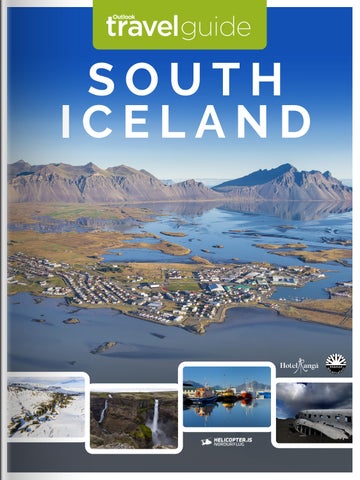
SOUTH ICELAND
SOUTH ICELAND T R AV E L G U I D E
South Iceland
UNI QUE, VISUAL LY STU NN IN G , and dominated by geological wonders, South Iceland’s active terrain is shaped by the Mid-Atlantic Ridge and diverse volcanic systems, showcasing towering waterfalls plunging into serene pools, stretches of black-sand beaches that stand in striking contrast to a vibrant blue ocean, and colossal glaciers sprawling across the horizon. A rugged, dynamic landscape tells the story of ancient eruptions and nature’s relentless forces. Each element of this stunning ecosystem contributes to its texture and form, making South Iceland a destination for any explorer. The region’s dramatic features, such as eternal, ageless mountains, pierce the sky, with ancient stone shards dominating its topography. At night, watery moonlight illuminates their snowy robes and crowns of stars. Glaciercapped volcanoes and iceberg-strewn lagoons offer breathtaking views and unspoiled beauty. Geothermal wonders interact with glacial elegance, as steam plumes and bubbling mud reveal the region’s 2 | Outlook Travel Issue 26
energy beneath the surface. One notable attraction, along the famous Golden Circle loop, is the Great Geysir, which has erupted intermittently since it went dormant in 1916. In winter, snowflakes waltz and whirl through the dark, whilst the inky expanse of polar nights gradually surrenders to the brilliance of the midnight sun that bathes the landscape in ethereal light during the summer months. Woven into the rich tapestry of the country’s folklore and mythology, the aurora borealis, commonly known as the Northern Lights, weaves a mesmerising spectacle across the night sky from September to April. Like a celestial dancer, these vibrant ribbons of colour gracefully undulate, casting a spell of wonder as they shimmer and swirl, illuminating the darkness with shades of electric green and sunlit yellow, twirling alongside deep-sea blues, rich royal purples, and fiery crimson reds. Under the expansive dome of the sky, visitors find themselves immersed in a feeling of tranquillity, wrapped
SOUTH ICELAND T R AV E L G U I D E
Unparalleled landscapes dramatically unfold whilst travelling across South Iceland, where powerful natural charm takes visitors on unforgettable seasonal journeys of the midnight sun and polar nights that evoke every emotion. The region’s soul sears a lasting memory of an enthralling saga wrapped in a contrasting realm of fire and ice WRITER: RACHEL CARR | PROJECT MANAGER: MANTE KATINAUSKAITÉ
in the stillness of the wilderness as they lose themselves in the sheer beauty and magic of the aurora. This enchanting experience lingers in the memory long after the lights fade. South Iceland’s untouched landscapes and expansive vistas create an ideal backdrop for a range of outdoor adventures. Activities such as hiking, snowmobiling, ice climbing, and skiing suit both families and adrenaline junkies. Year-round, this region has myriad offerings from exhilarating pursuits to peaceful horseback riding. Whether thrill-seeking or seeking tranquillity, there’s something for everyone. Another highlight is the entrancing Crystal Ice Cave, located within the Breiðamerkurjökull outlet of the Vatnajökull glacier. From October to April, the cave enchants visitors with its stunning, limpid blue ice walls, shaped over the years by melting water. Each visit is unique, as the ever-changing passages provide a spellbinding backdrop for photographers.
Wildlife enthusiasts will find a paradise in this diverse region, where rugged coastlines meet lush wetlands. The Flói Bird Reserve near Eyrarbakki is especially notable for birdwatching, with approximately 70 species recorded in the reserve. Elsewhere, the best places to see puffins, which have become symbols of Iceland’s natural heritage, are Vestmannaeyjar, Dyrhólaey, Reynisfjall, and Ingólfshöfði. South Iceland’s waters also attract minke and humpback whales, especially during spring and summer. At the same time, harbour seals can be spotted year-round at the Jökulsárlón glacier lagoon and Vestmannaeyjar archipelago, whilst white-beaked dolphins are also common in the latter. After a day filled with adventure and exploration, there’s nothing quite like unwinding in a hot natural pool, soaking in a geothermal bath, or relaxing at one of South Iceland’s many spa retreats. Outlook Travel Issue 26 | 3
Industry Insights
Visit South Iceland Ragnhildur Sveinbjarnardóttir, Managing Director of Visit South Iceland, delves into its transformative impact on the region’s tourism and the enhanced experiences awaiting visitors in this captivating corner of the world. Outlook Travel (OT): Firstly, can you provide an insight into Visit South Iceland, what it has achieved, and how it has shaped the region as a destination and enhanced the visitor experience? Ragnhildur Sveinbjarnardóttir, Managing Director (RS): South Iceland offers some of the country’s most diverse and dramatic landscapes, all within relatively short driving distances. It is defined by 4 | Outlook Travel Issue 26
powerful contrasts – glaciers and volcanoes, black-sand beaches and green farmland, and cascading waterfalls and vast lava fields. The interplay between fire and ice, along with the ever-changing light and weather, creates a dynamic landscape that feels different every time you visit. What truly sets the region apart is its accessibility combined with authenticity. Visitors can experience
iconic natural wonders like Seljalandsfoss and Jökulsárlón glacier lagoon, whilst also discovering local life and heritage. Visit South Iceland is the region’s official destination management and marketing organisation, working collaboratively with local stakeholders to promote it as a sustainable, high-quality destination. Since its inception, the organisation has played a key role in strengthening South Iceland’s identity, improving coordination across tourism providers, and enhancing the overall visitor experience. One of our core achievements has been developing a unified narrative for the region – highlighting not only its iconic natural attractions but also its culture, communities, and hidden gems. We have additionally focused on dispersing visitors more evenly across South Iceland and throughout the year, supporting local economies whilst reducing pressure on popular sites. Through strategic marketing, digital platforms, and partnerships, we have
SOUTH ICELAND T R AV E L G U I D E
“The interplay between fire and ice, a l o n g w i t h t h e eve rchanging light and we a t h e r, c re a te s a dynamic landscape that feels different every time you visit” – RAGNHILDUR SVEINBJARNARDÓTTIR, MANAGING DIRECTOR, VISIT SOUTH ICELAND
helped position the area as one of the country’s most diverse and accessible destinations. OT: What are the benefits of offpeak travel in South Iceland? What cultural events or festivals occur throughout the year and how is the region marketed as a year-round destination? RS: Travelling in the shoulder and off-peak seasons offers several benefits. Visitors enjoy fewer crowds, more availability, and often a more immersive and peaceful experience. It also allows for closer interaction with local communities and nature. Furthermore, September to April is when you can spot the Northern Lights, which makes visiting in the off-peak season well worth it.
South Iceland hosts a variety of cultural events throughout the year, including local festivals, food markets, music events, and seasonal celebrations such as Þorrablót in winter and vibrant summer festivals across towns in the region. We actively promote South Iceland as a year-round destination. In winter, we highlight experiences such as the Northern Lights, ice caves, glacier hikes, and cosy retreats. Spring and autumn offer milder conditions, fewer crowds, and beautiful landscapes, whilst summer brings the midnight sun, lush greenery, and access to the highlands. OT: How do geothermal baths in South Iceland differ from traditional spas, and what wellness retreats
or holistic healing centres are available in the area? Additionally, what are the health benefits of bathing in natural hot springs? RS: Geothermal energy is at the heart of life in South Iceland, shaping both daily routines and local culture. For centuries, residents have used the Earth’s natural heat for bathing, cooking, and heating their homes – traditions that continue today in towns and rural communities across the region. Geothermal bathing in South Iceland is deeply rooted in Icelandic culture and differs from traditional spas in its close connection to nature. Many geothermal baths are set in natural surroundings, offering a sense of authenticity and tranquillity that is hard to replicate elsewhere. Outlook Travel Issue 26 | 5
SOUTH ICELAND T R AV E L G U I D E
The region features a growing number of wellness experiences, from luxury geothermal spas to smaller, locally operated hot springs and retreats. These often incorporate holistic elements such as mindfulness, nature immersion, and sustainable design. Bathing in natural hot springs is believed to have various health benefits, including muscle relaxation, improved circulation, stress reduction, and enhanced well-being. The mineral-rich water combined with fresh air and scenic surroundings creates a holistic wellness experience. OT: What are some traditional dishes unique to South Iceland? Are there any local food markets where visitors can immerse themselves in the region’s flavours and culture? RS: South Iceland is renowned for its high-quality local produce. Traditional dishes often revolve around lamb, fresh seafood, and dairy products, reflecting the region’s strong agricultural heritage. Geothermal-heated greenhouses are a cornerstone of South Iceland’s food culture, allowing farmers to grow fresh produce year-round despite the challenging climate. Farmers use warm water and steam to maintain stable temperatures, creating ideal growing conditions for a surprising variety of crops. Tomatoes, cucumbers, peppers, and even strawberries thrive in these controlled environments, often just a short distance from the very geothermal sources that sustain them. Many greenhouses use advanced, sustainable growing methods, combining geothermal heat with renewable electricity and careful water management. As a result, the produce is not only fresh and flavourful but also environmentally friendly. Visitors can often tour these facilities, meet local growers, and enjoy meals prepared with
ingredients picked the same day. This close connection between energy, agriculture, and community reflects a unique Icelandic approach to sustainability, where innovation and nature work hand in hand to support local livelihoods. Visitors can enjoy locally sourced meals in farm-to-table restaurants and explore flavours such as Icelandic lamb soup, fresh fish, and artisan dairy products, including skyr. Food markets and local producers play an important role in the experience. Farm shops, roadside stands, and seasonal markets allow visitors to engage directly with producers and gain insight into local food culture. This connection to the land and its resources defines South Iceland’s culinary identity.
OT: What are the best places to spot wildlife, and how do seasonal changes affect encounters? Additionally, what conservation efforts are in place to protect wildlife and the environment? RS: South Iceland offers excellent wildlife-viewing opportunities. Along the coastline, visitors can spot seabirds such as puffins in the summer, as well as seals resting on beaches and near glacier lagoons. Inland, birdlife and unique ecosystems thrive in diverse habitats. The Arctic fox is Iceland’s only native land mammal and a resilient symbol of the country’s wild nature. In South Iceland, it inhabits remote coastal areas, lava fields, the highlands, and even the edges of glaciers, including parts of Vatnajökull National Park. Perfectly adapted to
harsh conditions, its thick fur changes colour with the seasons – white in winter and brown or grey in summer – providing natural camouflage. Elusive yet curious, the Arctic fox plays an important role in the ecosystem, feeding on birds, eggs, and small animals. Spotting one in the wild is a rare and memorable experience for visitors exploring Iceland’s untamed landscapes. Wildlife experiences vary by season – summer is ideal for birdwatching, whilst winter offers different perspectives on the landscape and fewer disturbances in nature. Sustainability and conservation are central to our work. Efforts include educating visitors on responsible travel, protecting sensitive ecosystems, and collaborating with
local and national authorities to ensure that tourism supports longterm environmental preservation. OT: What are the must-see natural attractions in South Iceland, and how do the region’s geological features reflect its history? RS: South Iceland is home to some of the country’s most iconic natural attractions. These include the famous Golden Circle, with Þingvellir National Park, the Great Geysir geothermal area, and Gullfoss waterfall; powerful waterfalls such as Seljalandsfoss, Skógafoss, and Svartifoss; expansive glaciers like Vatnajökull; blacksand beaches including Reynisfjara and Breiðamerkursandur; and remarkable geothermal landscapes. Outlook Travel Issue 26 | 7
SOUTH ICELAND T R AV E L G U I D E
The region’s geology tells the story of Iceland’s formation, shaped by volcanic activity and glacial forces over thousands of years. At Þingvellir National Park, visitors can witness the rift between the North American and Eurasian tectonic plates, whilst geothermal areas reveal the powerful forces beneath the Earth’s surface. Volcanic landscapes, glacial rivers, lava fields, and glaciercarved valleys make South Iceland a living showcase of the planet’s natural history and ongoing geological processes. One of the best ways to experience this geological diversity is by travelling along The Volcanic Way, a scenic route through South Iceland that connects many of the region’s most remarkable volcanic, geothermal, and cultural sites. The route offers visitors a deeper understanding of how fire and ice have shaped South Iceland’s landscape and communities over centuries. Learn more at: https:// www.south.is/en/destinations/ travel-routes/the-volcanic-way. OT: Are there any historical sites significant for understanding Iceland’s past? Additionally, how do UNESCO World Heritage Sites contribute to the area’s cultural and natural heritage, and what role do
8 | Outlook Travel Issue 26
they play in attracting tourists and preserving local history? RS: South Iceland has significant historical importance, with sites that offer insight into Iceland’s settlement and cultural development. Turf houses, churches, and cultural centres help bring this history to life. Þingvellir National Park, part of the Golden Circle, is a UNESCO World Heritage Site and holds both historical and geological significance. It is home to Iceland’s ancient parliament and sits on the boundary between two tectonic plates. Vatnajökull National Park, a UNESCO World Heritage Site since 2019, is one of Iceland’s most
extraordinary natural treasures. Covering around 14 percent of the country, the park is home to Europe’s largest glacier as well as dramatic volcanic landscapes, powerful rivers, and unique glacial formations. What makes Vatnajökull National Park so special is the ongoing interaction between fire and ice – volcanic activity beneath the glacier continually shapes the land, creating a dynamic environment found in few places on Earth. Visitors can experience everything from glacier tongues and ice caves to waterfalls, canyons, and vast black-sand plains. South Iceland is also home to Surtsey, a UNESCO World Heritage
“Since its inception, the organisation has played a key role in strengthening S o u t h I c e l a n d ’s i d e n t i t y, i m p rov i n g coordination across tourism providers, and enhancing the overall visitor experience”
municipalities and industry partners to improve infrastructure and manage visitor flows. Sustainability is at the core of our strategy, ensuring that tourism benefits local communities whilst protecting natural resources and delivering a great visitor experience.
– RAGNHILDUR SVEINBJARNARDÓTTIR, MANAGING DIRECTOR,
OT: How do you envision the future of tourism in the region? What developments can visitors expect?
VISIT SOUTH ICELAND
Site off the South Coast. Formed during a volcanic eruption between 1963 and 1967, the island is one of the world’s most important natural laboratories for studying how life colonises new land and ecosystems develop over time. Another important UNESCO designation in the region is Katla UNESCO Global Geopark, which showcases the unique interaction between volcanoes, glaciers, rivers, and coastal landscapes. The geopark highlights the area’s geological heritage and cultural history, helping visitors understand how powerful natural forces have shaped local communities for centuries. Recognised by UNESCO for their outstanding cultural, natural, and geological value, these sites offer an unforgettable glimpse into the forces that continue to shape Iceland today.
UNESCO designation helps preserve these areas whilst also attracting visitors interested in heritage and nature. It plays an important role in balancing tourism with conservation, supporting local communities, and ensuring that Iceland’s unique history and landscapes are protected for future generations. OT: What challenges does the tourism industry in South Iceland face, and how are you addressing them? RS: Like many popular destinations, South Iceland faces challenges related to visitor pressure, infrastructure needs, and environmental protection. We address these by promoting responsible travel, encouraging offpeak visits, and working closely with
RS: The future of tourism in South Iceland lies in sustainable growth, innovation, and deeper visitor engagement. We anticipate the continued development of highquality experiences that emphasise authenticity, wellness, and naturebased tourism. Visitors can expect improved infrastructure, enhanced digitalplanning tools, and a wider range of curated experiences that showcase lesser-known areas. Our focus remains on balancing growth with preservation to ensure the region remains a world-class destination for generations to come.
+354 560-2050 info@south.is
https://www.south.is Outlook Travel Issue 26 | 9
Your Next Adventure Is at Our Doorstep
Luxury resort South Iceland
In Focus
SOUTH ICELANDIC HERITAGE South Iceland showcases a rich tapestry of history through its settlement-era sites and landmarks that reflect Viking heritage, religious influences, and the essence of Icelandic culture. THE REG ION IS home to folk museums, centres dedicated to natural wonders, and immersive experiences that draw visitors into its storied past. This historical narrative is intricately tied to the area’s volcanic environment, which has not only influenced its society but also fostered a unique cultural identity that blends Old Norse traditions with modern values. Central to this is Iceland’s literary tradition, deeply rooted in sagas that illuminate its Viking past and emphasise themes of independence and self-sufficiency – both inherent in the Icelandic language. Visitors can explore this rich history through guided tours, scenic walking routes, and engaging museums in towns like Skógar and Eyrarbakki. One notable attraction is the Caves of Hella, located on the land of Ægissíða. Thought to predate the Viking settlement around 874 CE, they provide a glimpse into Iceland’s oldest archaeological remains, with four 12 | Outlook Travel Issue 26
of the 12 man-made caves accessible to the public. Although their origins are shrouded in mystery, some archaeologists suggest they may show signs of Celtic influence. Then there’s Skálholt Cathedral, a place of special historical interest situated in the Golden Circle. For seven centuries, it was the scene of dramatic events that shaped political, spiritual, and cultural life in Iceland. The three main local folk museums in Skógar, Vestmannaeyjar, and Eyrarbakki are definitely worth exploring, with regional artefacts, unique stories, and interesting exhibitions to discover, whilst the LAVA Centre in Hvolsvöllur, Eldheimar in Vestmannaeyjar, and Lava Show in Vík also tell stories about how volcanoes affect the communities. Together, these form a cohesive thread that connects South Iceland’s remarkable, complex, and layered history, cultural identity, and natural beauty.
SOUTH ICELAND T R AV E L G U I D E
Outlook Travel Issue 26 | 13
Hótel Skaftafell – in the middle of unique nature.
ALL PHOTOGRAPHY BY EYRÚN HALLA JÓNSDÓTTIR
Hótel Skaftafell is a family-run business where each member is involved in its operation in some capacity. The hotel’s first accommodation was in the home of the owners, Anna and Jón, in 1988. At the time, the accommodation comprised five rooms with a shared bathroom. The following year, they started construction on the first wing of the hotel, with eight rooms with a bath. Over the years, the demand and continued construction of rooms increased until 2006, when the hotel reached its current size. In addition to Hótel Skaftafell, the family runs a gas station in Freysnes across the road. In 1996, Anna and Jón decided, in collaboration with Skeljungur, to open it due to increased traffic and the demand for fuel in the vicinity of the national park. We are located in Freysnes, in the southeast of Iceland. Freysnes is about 330 kilometres (km) east of Reykjavik. Skaftafell National Park is located only 5 km west, and Glacier Lagoon and Diamond Beach are 50 km east. Svínafellsjökull is in our backyard, and we offer a walking path to the glacier that takes about 30 minutes from the hotel. Our hotel has 53 rooms, all of which are located on the ground floor alongside our restaurant. The bar is on the second floor, which has an outstanding view of the nature surrounding us. We stand out because of our family history in the area. Our family ties stem back to 1300; at that time, our ancestors were living in Skaftafell, and in 1988, our family moved to Freysnes, where we are today. Our location also makes us stand out, as we are close to the glacier and Skaftafell National Park. Our guests can take a short hike from our hotel to see the glaciers or sit at the bar to enjoy a view of the mountains, glaciers, and outstanding
nature. There is also a short car ride to Skaftafell National Park, where you can walk to Svartifoss (black waterfall), which is a popular destination. The hotel offers something for all travellers, but it is ideal for those who like nature and photography. Our inspiration for the hotel’s design and aesthetic came from the mountains and nature around us, with a bit of influence from our family history. We decided at the start of our business that we wanted to honour our family’s history, so we have some handcrafted, old furniture from our ancestors. The colours of our hotel are taken from the surrounding nature, with the dramatic contrast between glaciers and sands being a huge source of inspiration. We at Hótel Skaftafell have decided to make it our priority to refurbish the property rather than expand. As a family business, we would like to keep our property at its current size, so that it is more comfortable and personal for our guests and us. We want to make our hotel memorable for our guests and keep the family atmosphere rather than losing that intimate feeling. Hótel Skaftafell is a family business that has been in the same hands since it first started, and that is exactly what we want our guests to feel when they visit.
+354 – 478-1945 info@hotelskaftafel.is hotelskaftafell.is Hótel Skaftafell hotelskaftafell
RECOMMENDS
Eat: FOR S E A FO OD T H AT T IC K L E S T H E S T OM AC H A N D S OU L … In the charming village of Stokkseyri, Fjöruborðið restaurant offers a tantalising culinary experience with its exquisite langoustine soup. This creamy dish combines fresh crustaceans with aromatic herbs, delivering a comforting flavour for seafood lovers. The menu also features classic cocktails, fine wines, and a selection of hot drinks for cosy evenings. It also offers a thoughtfully crafted vegetarian dish and a dedicated children’s menu to cater to families. FOR A TA S T E OF V I K I NG H E R I TAG E … At the foot of Ingólfsfjall mountain, Ingólfsskáli Viking Restaurant transports you back to the Viking age. This enchanting establishment blends heritage and tradition, creating an atmosphere that immerses guests in an era where nature provided all ingredients. Rather than just dining, visitors experience Viking feasts. Imagine sipping from a traditional horn whilst enjoying meals served with fire-forged cutlery. The menu features traditional Icelandic dishes made with seasonal produce, celebrating local flavours and the land’s rich history. Every bite connects diners to the essence of the Vikings and their storied past.
Do: FOR A T H R I L L I NG A E R I A L OB S E RVAT ION… Norðurflug Helicopter Tours invites you to discover South Iceland’s breathtaking landscapes from a unique perspective, operating from its base in Reykjavík and reaching every corner of this stunning island. 16 | Outlook Travel Issue 26
Embarking on this helicopter tour is an unrivalled opportunity to witness South Iceland’s remarkable natural beauty. In just a few hours, Norðurflug Helicopter Tours will whisk you away on an adventure that takes you soaring over dramatic volcanoes, vast glaciers, and some of the most remote and enchanting waterfalls. Guests also get a close-up view of the island’s geothermal wonders, all seamlessly woven together for a memorable day of exploration. PHOTOGRAPHY © NORDURFLUG HELICOPTER TOURS
SOUTH ICELAND T R AV E L G U I D E
FOR A N AU T H E N T IC E X PE R I E NC E … Join Mr Iceland on an unforgettable horseback ride guided by a seasoned Viking through ancient paths filled with over 1,000 years of history. Refresh yourself with crystal-clear river water whilst taking in stunning mountain views. At the Efri-Úlfsstaðir farm, immerse yourself in the epic Brennu-Njáls Saga. As the sun sets, gather in the charming story barn around a long wooden table set with traditional Icelandic dishes. A talented local storyteller enchants guests with tales of elves, trolls, and ancient customs, bringing Iceland’s rich folklore to life under flickering candlelight.
Sleep: FOR I M M E R S I NG I N N AT U R E … Nestled in a stunning landscape, the family-run Hótel Skaftafell offers an abundance of hiking opportunities, with breathtaking glaciers just a short stroll from the door. Its impressive location provides panoramic views, especially from the inviting second-floor bar, where you can enjoy a drink whilst
gazing out over the magnificent Vatnajökull glacier. The accommodations are comfortably arranged across four separate buildings, all conveniently located on the ground floor for easy access. Whether you’re an avid hiker or simply looking to soak in the natural beauty, Hótel Skaftafell is the perfect getaway. FOR A N I DY L L IC C OU N T RY S I DE R E T R E AT… Hotel Ranga offers a diverse array of natural marvels, from the majestic highlands and soothing hot springs to cascading waterfalls, striking black-sand beaches, and towering volcanoes. Its exceptional location offers an ideal vantage point for witnessing the awe-inspiring Northern Lights. It features a state-ofthe-art observatory where stargazing enthusiasts can explore the night sky. The hotel boasts warm, inviting rooms that promise comfort and relaxation, paired with exquisite gourmet dining experiences that tantalise the taste buds. After a day of exploration and adventure, guests can unwind in the geothermal hot tubs, soaking under the starlit sky for a stellar end to each day. Outlook Travel Issue 26 | 17
ICELAND’S SKIES DESERVE EXCELLENCE: WHY NORÐURFLUG LEADS THE HELICOPTER TOUR MARKET
Iceland’s dramatic landscapes - cascading waterfalls, volcanic peaks, glacier-carved valleys - demand to be seen from above. Yet not all helicopter operators are created equal. In a market where safety, expertise, and genuine customer care matter most, one company consistently rises above the rest: Norðurflug
This operational advantage matters especially in Iceland’s unpredictable weather. With more aircraft in rotation, Norðurflug can adapt schedules, offer alternative tour times, and prioritize getting customers airborne safely - rather than simply cancelling bookings.
The Fleet Advantage
The team brings between 1 and 8 years of helicopter operation experience - a depth of expertise that directly impacts every flight. Experienced pilots know Iceland’s
When you book a helicopter tour in Iceland, you’re trusting your safety and experience to the operator’s resources and commitment. Norðurflug operates Iceland’s largest helicopter fleet, a distinction that goes far beyond bragging rights. This scale translates directly to reliability, flexibility, and choice for customers. A larger fleet means more tour options available daily, reduced cancellations due to maintenance, and the ability to accommodate custom private charters without compromising scheduled tours. Whether you’re interested in the iconic Reykjavík City Sights, the breathtaking Golden Circle Adventure, or a bespoke private charter tailored to your vision, Norðurflug’s diverse fleet ensures your preferred experience is available when you want it.
Safety and Experience: The Foundation of Trust In aviation, there are no shortcuts. Norðurflug’s unmatched safety record isn’t accidental; it’s built on a foundation of experienced professionals and rigorous standards.
This positioning resonates with travellers who want choice, reliability, and the confidence that comes from choosing Iceland’s most established helicopter operator. Recent accolades reinforce this standing: Norðurflug ranks among the top 10 percent of helicopter tour operators worldwide on TripAdvisor, a distinction earned through consistent excellence and customer satisfaction.
The Broader Context weather patterns intimately. They understand how to navigate challenging conditions, read the skies, and make sound decisions that prioritize passenger safety above all else. This isn’t just competence; it’s the peace of mind that comes from flying with professionals who’ve logged thousands of hours in Icelandic airspace. Norðurflug’s commitment to safety extends beyond the cockpit. Every aspect of operations - pre-flight checks, maintenance protocols, passenger briefings, and emergency procedures - reflects a culture where safety is nonnegotiable. For travellers investing in a once-in-a-lifetime experience, this commitment is invaluable.
The Customer Experience Difference Testimonials tell the real story. Passengers consistently describe Norðurflug experiences as “unforgettable”, praising the “professional and welcoming team” and calling it “the best way to see Iceland’s beauty”. What creates this distinction? It’s the combination of technical excellence, genuine hospitality, and personalised service. Norðurflug doesn’t treat tours as transactions; they treat them as opportunities to create memories. The team takes time to understand what each passenger wants to experience, offers insights about the landscapes below, and ensures every moment aligns with their vision of an ideal Icelandic adventure. This customer-centric approach extends to flexibility. Tours can be combined with unique activities - imagine a helicopter flight followed by a glacier walk, or a city tour paired with a local experience. This adaptability transforms a scenic flight into a comprehensive, tailored adventure.
Standing Out in Iceland’s Competitive Landscape Iceland’s helicopter tour market has grown, with several operators competing for travellers’ attention. Yet Norðurflug’s positioning is distinct and defensible. Whilst some competitors specialise narrowly - focusing solely on volcanoes, glaciers, or boutique private charters - Norðurflug offers breadth without sacrificing depth. The largest fleet, the greatest selection of tours, the most experienced team, and a proven safety record create a compelling value proposition. You’re not choosing a specialist; you’re choosing a comprehensive operator that excels across every dimension.
Iceland attracts over two million visitors annually, many seeking unforgettable experiences that showcase the country’s unique geology and landscapes. Helicopter tours represent a premium segment of the tourism market they’re investments in perspective, literally and figuratively. Choosing the right operator matters. You want a company with the resources to operate reliably, the expertise to navigate Iceland’s challenges, the commitment to safety that allows you to relax and enjoy the experience, and the customer focus that transforms a tour into a memory. Norðurflug checks every box. Their reputation across Google, Get Your Guide, TripAdvisor, and Reykjavik.place reflects consistent delivery on these promises. Customers return, recommend, and rave - not because Norðurflug is the cheapest option, but because they offer unmatched value.
The Choice Is Clear Iceland’s skies are extraordinary. They deserve to be experienced with a company that treats safety, expertise, and customer care as non-negotiables. Norðurflug’s largest fleet, experienced team, proven safety record, and commitment to personalised service make them the clear choice for travellers who refuse to compromise on their Icelandic adventure. Whether you’re seeking a classic city tour or a custom private charter, Norðurflug delivers - reliably, safely, and memorably. In Iceland’s competitive helicopter market, that distinction matters.
T +354-562-2500 E info@helicopter.is
SOUTH ICELAND T R AV E L G U I D E
Landmark Attractions Skógafoss Waterfall This natural wonder – the crowning jewel of the village of Skógar – features an impressive curtain of cascading water, gracefully plunging 60 metres (m) into the roaring river Skógá below. More than a visual feast, it is steeped in rich folklore. The intriguing legend of Þrasi tells a story of a settler rumoured to have hidden his treasure chest filled with gold under Skógafoss. When the sun refracts through the mist rising from the waterfall, it creates a dazzling spectacle of multicoloured rainbow arcs across the sky.
Jökulsárlón and Diamond Beach The expanse of coal-toned sand is interspersed with glimmering shards of crystalline ice that sparkle as if adorned with diamonds. This mesmerising landscape creates a striking contrast between brilliant white ice and black sand, especially in the otherworldly golden hours of morning and evening. During this magical time, light casts a radiant glow that accentuates the scene. Towering above this stunning tableau, the majestic Vatnajökull glacier looms large, casting a spell over its awe-inspiring grandeur.
Xxxxxxxx Lagoon Laugarás Cradled is Surama along an Amerindian the banks of village the Hvítá river, an idyllic (mainly serves lagoon inhabited as aby sanctuary Macushi for those seeking people) and relaxation, warmth the site for offering the first sweeping views of the community ecotourism shimmering river and creating initiative a breathtaking backdrop in Guyana. for visitors. The At the local wellness community destination, guests can manages soak in rejuvenating and maintains hot spring Surama water in a serene Eco-Lodge, which atmosphere. For the offers adventurous, tourists a a cold-plunge chance pool is filled to stay with in glacial traditional water huts, from trythe mighty Hvítá. local food On-site dining and offers explore fresh nearby ingredients nature from local farms trails.geothermal-powered greenhouses, with each and dish reflecting the region’s bounty.
20 | Outlook Travel Issue 26
SOUTH ICELAND T R AV E L G U I D E
Getting There and Around SO UTH ICELAND IS easily accessible from Reykjavík, Keflavík International Airport (KEF), and East Iceland. From Reykjavík, the western gateway to South Iceland is about a 30-minute drive, passing through towns such as Hveragerði, Þingvellir National Park, and Selfoss. For those travelling from East Iceland, driving west past Höfn, Skaftafell, and Jökulsárlón glacier lagoon provides a scenic route. Domestic flights to Höfn near the Hornafjörður fjord are also available, offering options for flexible self-drive or guided itineraries. Travellers can also arrive by sea, either on cruise ships stopping in Höfn, Vestmannaeyjar, or Þorlákshöfn, or via car ferry connection in East Iceland and to Vestmannaeyjar. Scheduled buses operate between Reykjavík and various destinations in South Iceland, connecting key towns and attractions. These services
DID YOU KNOW? •
The country’s currency is the Icelandic króna.
•
Iceland’s climate is classified as subarctic oceanic in the south and tundra in the highlands.
•
The majority of Iceland’s power supply comes from geothermal energy, making it an eco-friendly country.
•
Due to its cold climate, there are no mosquitoes in Iceland, and no military – which isn’t weather-related!
•
Unsurprisingly, the country has some of the cleanest tap water in the world.
•
According to the Global Peace Index, Iceland is the safest country in the world – a status it has held for 16 consecutive years.
include day tours, bus passes, and point-to-point connections. Guided coach tours run year-round and offer insights into the landscape, culture, and natural highlights, making them a great choice for visitors seeking an immersive experience. Whilst guided tours are a good option, self-driving is the most practical way to explore South Iceland. Renting a car at either airport is convenient, as many distances are manageable. However, a trip from Reykjavík to Jökulsárlón glacier lagoon takes nearly five hours one way, so having a vehicle maximises flexibility and comfort. A rental car also expands sightseeing options, especially for waterfalls, glaciers, black-sand beaches, and volcanic landscapes, but some highland routes require 4x4 jeeps due to the terrain. Always check road conditions and the weather, particularly from October to April, as conditions can change rapidly.
Outlook Travel Issue 26 | 21
Ph: +354 560-2050 info@south.is https://www.south.is
w w w. o u t l o o k t r a v e l m a g . c o m