INDUSTRY SPOTLIGHT
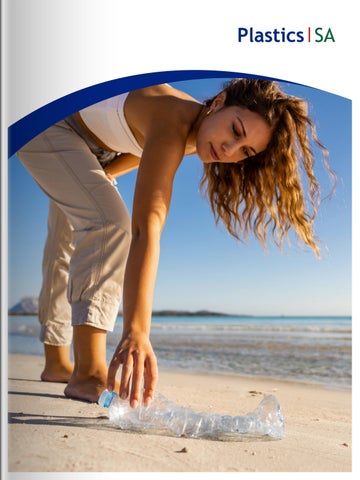
Spotlight on South African Plastics Plastics SA is championing responsible plastic packaging consumption and driving the circular company to guarantee a vital and competitive industry for South Africa. Executive Director, Anton Hanekom, tells us more Writer: Phoebe Harper | Project Manager: Jordan Levey
INTERVIEW
E
very sector worldwide relies on plastic to some degree, from the automotive industry to education. As the largest manufacturer of plastics in sub-Saharan Africa, the South African plastics industry converts approximately 1.84 million tonnes of locally produced and imported polymers each year. Faced with challenging market conditions, the industry today is defined by the prevailing trends of extended producer responsibility (EPR), responding to pressure groups, and accelerating the circular economy. Experiencing shifting market demands, most recently the overarching need for sustainability with a product that is widely perceived as an environmental threat, the industry has come to embody the versatility, resiliency and durability of the material itself. We speak with the organisation challenging the negative perception of plastics and advocating for the responsible production and consumption to make it a material of choice and guarantee the sector’s longevity. Africa Outlook (AO): Can you talk me through the origins of Plastics SA, how it came about, and its initial vision? Anton Hanekom, Executive Director (AH): Plastics SA traces its roots back to 1975 when it was informally created by representatives of various plastic organisations operational in South Africa at the time. A few years later, the Plastics Federation of South Africa (Plasfed) was officially formed and
2 | Africa Outlook issue 94
registered as a Non-Profit Company (NPC) in 1979. In 2011 the Plastics Federation of South Africa officially changed its name to Plastics SA and introduced a new brand identity as part of its aim to represent a South African plastics industry that is dynamic, modern and in step with international developments. As the umbrella organisation for the South African plastics industry, Plastics SA represents all sectors, including polymer producers and importers, converters, machine suppliers, fabricators and recyclers. Our primary focus areas have always been advocacy, providing technical training to the industry, promoting the use of plastics and educating the public on issues including recycling and litter reclamation. Plastics SA is funded by membership fees based on sales of locally manufactured and imported plastics raw materials and other contributions and sponsorships from industry associations. Most of our income is derived from our training activities within the plastics industry. AO: Since its inception, how has Plastics SA developed and progressed in terms of its key objectives and the messages it tries to get across? AH: In step with the changing needs and demands of this dynamic industry, Plastics SA has adapted its strategy and focus areas over the years. Being part of the greater, global plastics community also influences our objectives, messages and methodologies. One thing that has remained unchanged, however, has been our unwavering commitment to support our industry.
PLASTICS SA
The last decade has seen us place a much stronger emphasis on sustainability. 20 years ago, the issue of plastics at sea was of little or no importance to many - although Plastics SA was already sounding the alarm bells at the time about waste material entering the marine environment and appealing to the public to use and discard their plastics responsibly. Today, this issue has been pushed to the top of the agenda in South Africa and around the world. As a result, we have begun seeing much greater support and participation by individual citizens, communities, corporates, municipalities and national government in our various beach, river and in-land clean-ups. Our action plans have undoubtedly shifted over the last few years to a much stronger focus on the circular economy, EPR, the roles and responsibility of Producer Responsibility Organisations (PROs) in meeting collection and recycling targets, the need for effective waste management infrastructure, plastic alternatives, compostability, chemical recycling, and creating a ‘nothing wasted’ mindset to ensure that plastics do not end up in the environment. All these initiatives take place within the context of encouraging collaboration through the full value chain where everybody has a part to play. We take the role of communication very seriously and have various target audiences with whom we engage. Our efforts to educate and communicate the benefits of plastics that are fit-for-purpose to end-users are ongoing. Consumers influence the retailers with regards to the products and packaging they stock on their shelves. They are also often the most vocal pressure group, but unfortunately very often their opinions are based on half-truths that
PLASTICS SA – VISION Plastics SA’s vision is to enable a vibrant and sustainable plastics industry in South Africa, and to: • Be valued and respected by local and international industry, customers, suppliers, government, community and employees. • Promote the use of plastics as the material of choice. • Develop the skills needed through accredited training programmes. • Support environmentally responsible actions that benefit industry and society.
need to be corrected and countered. Using the power of print, broadcast and social media, we aim to provide a balanced, realistic and well-researched view about the use, reuse and recycling of plastics. The plastics industry itself is another target audience. Encouraging safe and sustainable manufacturing processes and getting the entire value chain to become involved in our efforts to be an environmentally responsible industry are key objectives. We also need the industry’s input and participation in our research for producing up-todate industry statistics. Africa Outlook issue 94 | 3
backgrounds to find new ways to solve challenges and exceed customer expectations in an environment of inclusion, diversity, and integrity. AO: Can you expand on your circular economy strategy for plastics? Africa Outlook spoke to Cicelia Van Rooi, Managing Director at Dow Southern Africa about its work in the region. Africa Outlook (AO): Briefly introduce us to Dow Southern Africa. Cicelia Van Rooi (CVR): In 2020, we marked 60 years in the region. South Africa is where we started our Africa operations and we have since expanded and established offices in several countries in Northern, Western and Eastern Africa. We also have two strategic manufacturing facilities in Egypt and South Africa. This long-term commitment really matters to us and allows us to fulfil our growth ambitions in Africa. We have products that go into the application areas of packaging, industrial intermediates, infrastructure, performance materials and coatings. The plastics industry’s contribution to South Africa’s economy in 2016 was close to ZAR 76 billion and supported jobs for 60,000 people. AO: What differentiates Dow Southern Africa from the competition? CVR: Our ambition is to become the most innovative, customer-centric, inclusive, and sustainable materials science company in the world. This is a bold ambition, but I am confident that we are putting everything in place to attain this ambition – globally, and here in Southern Africa. Our culture and our purposeful approach to create the culture we want, is what differentiates us. We believe in putting people first. Our people are using their unique perspectives and
CVR: Our circular economy strategy for plastics in Africa revolves around three main pillars: • Keeping plastic out of the environment – closing sorting and collection gaps, facilitating clean-up and education campaigns that help to demonstrate the value of plastic and that it shouldn’t be lost to waste. • Delivering solutions to advance a circular economy for plastics – a holistic suite of solutions from packaging design for recyclability, mechanical recycling and alternative end-uses for plastics that cannot be traditionally recycled. • Increasing our impact through partnerships – being humble and recognising that we can’t solve this problem on our own. We’ll use our expertise to help convene and work collaboratively with government, communities, our staff and value chain partners to drive innovation and change. This strategy led to a commitment in 2020 to accelerate these commitments: Stop the Waste: By 2030, Dow will help “stop the waste” by enabling one million metric tonnes of plastic to be collected, reused or recycled through its direct actions and partnerships. The company is investing and collaborating in key technologies and infrastructure to significantly increase global recycling. Close the Loop: By 2035, Dow will help “close the loop” by having 100 percent of our products sold into packaging applications be reusable or recyclable. Dow is committed to redesigning and offering reusable or recyclable solutions for packaging applications. AO: Could you tell us more about how you seek to rebalance the gender divide in the industry?
Dow Southern Africa supports the development of innovative circular solutions, like this Green Brick project which is a uniquely South African innovation, that upcycles a mix of sand, glass and previously unrecyclable multi-layer post-consumer plastic waste.
CVR: We believe that our people need the right culture to flourish. This includes an inclusive workplace that embraces diversity where everyone can advance and feels respected and valued. It’s the right thing to do for our employees. It’s also the right thing to do for our business, as a truly inclusive culture can help drive employee engagement, superior customer solutions and better performance for our investors. In 2017, we accelerated our actions for strengthening inclusion and diversity (I&D) at Dow. We also appointed our first chief inclusion officer and implemented a focused and holistic I&D strategy.
A clean-up event in South Africa – Members of the community, Dow colleagues and partners come together to help collect and sort plastics waste.
Additionally, we continue to make progress in key areas, especially driving action through our Employee Resource Groups (ERGs). Across Dow, our 10 ERGs answered the call to take on a greater role to foster a truly inclusive workplace. Dow’s Women’s Inclusion Network is our platform for women in the workforce. This platform is not just for women, but we actively encourage men to participate and address issues that impact women in the workplace. AO: Looking ahead, what are your key priorities for the coming year? CVR: Globally, our purpose is to deliver a sustainable future for the world through our materials science expertise and collaboration with our partners. Africa is one of the most exciting and potentially dynamic markets in the world, increasingly capturing the attention of the world’s largest businesses. The continent offers strong economic growth, increasing regional economic integration and diversification, untapped natural resources, high access to mobile technology and a young, entrepreneurial demographic. In Southern Africa, our key growth priorities include: a. Deepening our support and collaboration: Alongside our customers and partners, we want to extend our support and collaboration to innovate and develop sustainable solutions that can resolve the local needs. A good example is our newly established partnership with AECI, to support Oliver’s Village - a non-governmental organisation outside of Benoni that provides a variety of social services to the most disadvantage people of Daveyton. Through the partnership, Oliver’s village will have access
to solutions and services to enable sustainable agriculture. b. Focusing on sustainable growth: More than 96 percent of the world´s manufacturing goods are enabled by chemistry, and the potential of chemistry to bring social and environmental value is limitless. Our plan is to expand our support to other manufacturers across the region, while diversifying our product offering. c. Safety and sustainability: Safety is our number one priority at Dow. The safety of our people, customers and our products is not debatable. In 2019, Dow expanded its award-winning Product Stewardship Academy in Africa and here in South Africa, we are at the forefront of safety advocacy through Responsible Care initiative. The programme proactively engages customers to increase product safety knowledge and safe material handling practices in developing regions. d. Our people: Our people are at the core of our growth strategy. We want to continue developing our people and employee experience to ensure that they feel valued.
Dow Packaging Twitter Dow PSP LinkedIn Page Dow Africa Instagram www.africa.dow.com | corporate.dow.com Africa Outlook issue 94 | 5
INDUSTRY SPOTLIGHT
Finally, government and the business community are our third major target audience as we need their involvement and willingness to collaborate with the industry by forming public-private partnerships (PPPs) if we are to succeed in our efforts.
INTERVIEW
AO: What do you find most exciting about South Africa’s Plastics Industry? AH: The past few years have not been easy for local plastics manufacturers and recyclers. Issues such as unstable electricity supply and load shedding, high operating costs, labour unrest and the impacts of COVID-19 have left us battered and bruised. However, these players refuse to give up. They rally together when the going gets tough and are not afraid of adapting or embracing change when it is needed. Even the most difficult of challenges are faced and conquered with good nature, resilience and perseverance. Looking ahead, we are excited about the Plastics Master Plan which aims to initiate passion and enthusiasm for locally manufactured products and, in turn, grow the local plastics industry and the South African economy. As of 5th November 2021, South Africa has put into effect new EPR legislation, whereby it is now mandatory for producers of packaging to register with South Africa’s Department of Forestry, Fisheries and the Environment (DFFE), to join or create a PRO and pay the relevant EPR fees. We are excited about what this new legislation could mean for the industry in boosting our sustainability efforts to create a circular economy as citizens, retailers, brand owners, packaging manufacturers, government and the recycling industry start to collaborate with one another.
6 | Africa Outlook issue 94
AO: On the flip side, what are its biggest challenges? AH: In the wake of COP26, discussions are now taking place about the possibility of separating plastics from fossil fuels. These are noble endeavours, but it is important that we take into consideration the rights and livelihoods of workers when shifting to sustainable alternatives and processes. We must ensure that the replacement material for plastics is economical, recyclable, effective and fit-for-purpose. Plastic remains one of the most environmentally friendly materials (provided we reuse and recycle it) and will play a major role in a lower carbon future. Government’s support for initiatives aimed at reducing plastic waste has strengthened the growth of the plastics market. Despite the vocal anti-plastics sentiment, the demand for plastics continues to grow in various end-user industries, for instance in the automobile sector. As our population increases in the coming years, the demand for food will continue to rise. Food will also need to arrive fresh and intact on the consumer’s dinner table, placing a greater demand on packaging that will keep goods fresher for longer and protect it from contamination or breakage during transit. Plastics do exactly that. It is lighter to transport than alternative packaging materials and helps save on greenhouse gas emissions, but we must ensure that the packaging can be re-used or collected for recycling. Making paradigm shifts also means that the industry needs to take a long, hard look at its own methodologies and approaches. We recognise that it cannot be “business as usual” when climate change is a reality and households around the world are under pressure financially. Because the cheapest products (mainly imported) on the shelves are the ones that are being bought, the industry
PLASTICS SA
YOU SEE USED PLASTIC BOTTLES. COLLECTORS SEE VALUE.
active collectors involved in PET collection and recycling.
Recycling PET plastic bottles creates over 52 000 income opportunities every year in South Africa. Many of these are reclaimers, who help divert thousands of tonnes of PET plastic bottles from landfill. The used bottles they collect are recycled, ensuring that they become bottles yet again. This, in turn, creates more jobs, contributes to GDP, a cleaner environment and establishes a circular economy where the value of plastic bottles continues indefinitely.
R278 MILLION
Plastic bottles are not trash
55% POST-CONSUMER
beverage PET bottles collected for recycling.
OVER 50 000
The market value of post-consumer PET bought by PET recyclers. * Reported in 2020
AO: Have you got any projects in the pipeline you wish to highlight? AH: The need for current, evidence-based industry information and relevant trade data has become critical. For this reason, Plastics SA will be expanding its technical skills and knowledge base during 2022 in order to offer ongoing technical support to its members and the industry at large. We are currently in the process of developing a new knowledge base where we are hoping to attract the most experienced minds to help us grow, expand and support the industry. We have just appointed an industry stalwart to the position of Technical Operations Executive, and are
INTERVIEW
has a considerable trade deficit. We are losing ground due to our under-performing economy, so where possible, we need to cut back, redesign and become more economical without sacrificing on sustainability. Finally, we need to encourage our citizens to buy local. During 2020, the South African plastics industry recorded a R13 billion trade deficit. We need to replace these imports with locally produced and procured products. Plastics SA management team
currently recruiting for a new Sustainability Project Coordinator, who will be supporting environmentally responsible actions that benefit the industry, as well as a Research and Knowledge Management Specialist, who will be tasked with researching economic indicators and industry statistics, collaborating on and influencing research projects, maintaining access to key industry information, and creating a knowledge hub. Finally, we have created a position for an Industry Growth and Trade Specialist who will focus on creating and enabling access to information about the local and international trade environment for the development of sustainable and Africa Outlook issue 94 | 7
INDUSTRY SPOTLIGHT
inclusive growth of the industry. Our well-established training department is currently also in the process of rebranding and repositioning itself as an Academy of Learning and Development that will equip local and international learners with the latest technical and practical skills to address skill gaps facing the industry. The new academy will officially be launched early in 2022, with an expanded curriculum and a service offering geared towards appealing to our local market, whilst also adding significant value to the plastic manufacturing industries in the rest of Africa. In terms of sustainability, our various clean-up projects will continue to grow next year. This includes our river catchment projects, litter boom initiatives and various coastal and inland clean-up projects. Plastics SA will once again be involved in the hosting of the International Conference of the African Marine
Waste Network, which will take place from 25th to 29th April in Port Elizabeth. This event will aim to get representatives of various African countries to work together towards achieving “Zero Plastics to the Seas”. We are also excited to be partnering with the Council for Scientific and Industrial Research (CSIR) and Green Cape on a new pilot project entitled, “Breaking the Plastic Wave”, a world first research model that aims to cut the annual flow of plastic into the oceans by approximately 80 percent over the next 20 years by applying existing solutions and technologies. The CSIR were part of the development of this model and approached SA to become the first pilot project in the world. As part of the Working Group Steering committee, Plastics SA is populating the model with data sets; once the research has been
THE SOUTH AFRICAN PLASTICS INDUSTRY MASTER PLAN
INTERVIEW
• Value Chain Localisation – Growing local plastics manufacturing will require active identification and development of new domestic production capabilities within selected portions of the value chain to replace imports into existing markets. • Plastics and the Environment – The industry needs to take action towards creating a circular economy for plastics, eliminating plastic litter in the environment, growing recycling rates and finding solutions for plastic products that are not currently recyclable in the mechanical recycling value chain. • Tailor-Made Industrial Incentive Packages – Incentives will provide the value chain with continued resources as it attempts to upgrade and develop capabilities in the face of severe international competition. The qualification criteria can be amended to focus on employment, transformation and import replacement. • Polypropylene Beneficiation – Opportunities need to be identified and pursued where the excess of PP homo-polymer can be utilised to grow the PP conversion industry, to replace imported PP products and to stimulate the export of PP products. The development of non-petroleum sources for ethylene will increase the availability of co-monomer for the manufacturing of PP copolymers. • Testing, R&D – Many of the listed, accredited facilities are based in Europe and the US. Tests, verification and accreditation are cumbersome and expensive, with many trade opportunities missed due to incomplete documentation of proof. • Trade Environment: o Domestic Trade: Optimising the growth potential of legally compliant manufacturers in South Africa is only possible if the costing differences between legal and illegal local producers is corrected. o International Trade: There is a need for stricter control on rules of origin, anti-dumping and trade corridors. Participation in the African Continental Free Trade Agreement needs to be managed properly to ensure that the rules of origin are honoured and applied.
8 | Africa Outlook issue 94
PLASTICS SA
The Southern African Vinyls Association is the voluntary industry association representing the entire PVC value chain. SAVA strives to create a dynamic, sustainable and responsible vinyls industry in the sub-Saharan region by growing the industry and protecting its stature C Othrough N V E Ncommunicating T I O N 2 0 2 0the latest, scientifically-based and researched information. SAVA also represents 2 8 -South 3 0 O Africa C T O Bon E Rthe 2 0global 20 stage as a member of the Global Vinyl Council and Vinyl Plus.
Safe. Responsible. Sustainable.
completed, the model will provide a clear, evidencebased approach to dealing with the management of plastic waste, detailing the challenges we face and the best way to address them. AO: How do you see the industry developing over the next five years? AH: We are very optimistic about the future of the plastics industry in South Africa. Plastic has been around since the 1950s and its versatility has ensured its use in almost every aspect of modern life. We have no doubt that plastics are here to stay. We might see certain changes being introduced over the next few years in terms of focus areas, processes and messages, but plastic will continue to be one of most environmentally friendly, fit-for-purpose materials. The vocal calls we sometimes hear to ban the use of plastics is based on disinformation and without any solid evidence that can back up the claims. Not only can these irrational arguments be potentially perilous to the environment that we are trying to protect, but they could also jeopardise the livelihoods of many of our local manufacturers and their employees could be impacted by public pressure.
Virgin consumption grew by 11 percent in the last 10 years, whereas domestic recyclate consumption grew by 35 percent in the same period. Strengthening the competitiveness of the South African plastics industry will have a significant impact on the recovery of the manufacturing sector in general. For the plastics industry to grow, products and sectors need to be identified where the added value would be substantial, and the cost of manufacturing (all inclusive) would be affordable. To help us develop and maintain a plastics sector that is dynamic, vibrant and growing in line with the needs of our country and international developments, we encourage ongoing debates, discussions and partnerships. Although we might not know exactly what the future holds for us as an industry or as an organisation, we continue to dream of doing many great things that will reverberate into society for the benefit of future generations.
INTERVIEW
www.savinyls.co.za
Tel: (011) 314-4021 Info@plasticssa.co.za www.plasticsinfo.co.za Africa Outlook issue 94 | 9
PLASTICS SA No 18 Gazelle Avenue, Corporate Park South, Midrand, Johannesburg, South Africa. Tel: (011) 314-4021 Info@plasticssa.co.za www.plasticsinfo.co.za
PRODUCED BY AFRICA OUTLOOK MAGAZINE