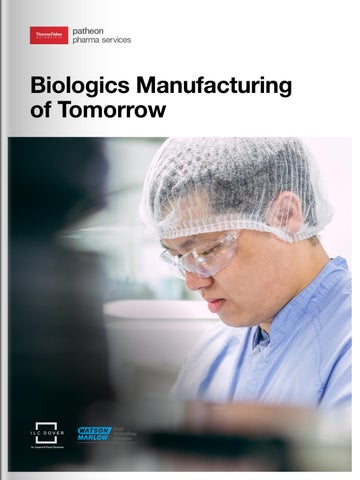
Biologics Manufacturing of Tomorrow
Biologics Manufacturing of Tomorrow Thermo Fisher Scientific’s progress over the last two years has reinforced its position as a trusted biologics manufacturing partner by expanding its sovereign capability, strengthening ecosystem partnerships, and supporting the delivery of advanced medicines from Australia to the world. We catch up with Kym Baker, General Manager, Brisbane Biologics Writer: Lily Sawyer | Project Manager: Robert Payne
2 | Manufacturing Outlook Issue 14
THERMO FISHER SCIENTIFIC ASIA PACIFIC
S
ince we last spoke with Thermo Fisher Scientific (Thermo Fisher) in 2024, its evolution continues to be defined by disciplined growth and technical excellence at its site in Brisbane, Queensland (QLD), underpinned by a very clear purpose – to help its customers bring important biologic medicines to their patients. The site specialises in clinical and commercial manufacturing and single-use biologics technology and sits within Thermo Fisher’s global biologics manufacturing network alongside other major sites in the US and Europe. “My role is to ensure we keep delivering for our customers whilst
also building the capability, culture, and resilience of the site for the longterm,” introduces Kym Baker, General Manager, Brisbane Biologics. For Baker, this means balancing dayto-day operational performance with strategic priorities such as workforce development, quality, maturity, digital enablement, safety, customer engagement, and continued future growth. “Over the past two years, our focus here in Brisbane has been on strengthening the site’s role as a trusted advanced manufacturing partner,” she insights. As such, the company’s activities in the QLD capital have continued
to support Thermo Fisher’s wider scale-up and the organic growth of its advanced manufacturing services for recombinant proteins and monoclonal antibodies. The site also reinforces the systems, talent, and cross-functional collaboration required to operate in a highly regulated biologics environment, alongside seeking multiple regulatory approvals to support its commercial programmes. With Brisbane located in a highly collaborative biomedical ecosystem, it benefits from its proximity to research institutes, hospitals, universities, and translational partners. Manufacturing Outlook Issue 14 | 3
THERMO FISHER SCIENTIFIC ASIA PACIFIC
These local institutions give Thermo Fisher a real opportunity to contribute not only as a manufacturer, but as a partner in Australia’s broader life sciences and sovereign capability agenda. “A major part of our work has been building stronger ecosystem connections,” Baker confirms.
can offer substantial savings for companies looking to take their products into the clinic at costcompetitive rates within Australia, with the added security of a strong regulatory framework,” she emphasises. The Brisbane biologics site,
HEALTHIER, CLEANER, SAFER On a mission to enable its customers to make the world healthier, cleaner, and safer, Thermo Fisher continues to provide scientific technologies across the life sciences, healthcare, applied sciences, diagnostics, environmental, industrial, and research markets in Australia. Through the Patheon™ pharma services brand, the company offers contract development and manufacturing services across the drug development journey. Indeed, the Brisbane site is specifically focused on biologics manufacturing, including clinical and commercial manufacturing, single-use technologies, and scale-up services for recombinant proteins and monoclonal antibodies. “Our client base includes pharmaceutical and biotechnology (biotech) companies, emerging biotech innovators, research organisations, universities, government agencies, and customers working across research and applied science, clinical development, and commercial manufacturing,” Baker specifies. More than 50 percent of Thermo Fisher’s Brisbane client base is Asia Pacific (APAC)-focused, though global clients are increasingly choosing Australia to leverage the R&D tax incentives and Clinical Trial Notification scheme, alongside Thermo Fisher’s PPD™ clinical research business, which supports trials across the entire development lifecycle. “Together, these incentives 4 | Manufacturing Outlook Issue 14
therefore, forms part of a wider global network, allowing customers to access both Australian expertise and Thermo Fisher’s international scale.
GROWING DEMAND Having continued to evolve rapidly over the past few years, Australia’s
permitting the intellectual property (IP) to also remain here, which is critical for the industry.”
Can you explain why university integration and STEM collaborations across government, industry, and academia are so important? Kym Baker, General Manager, Brisbane Biologics: “Collaboration is essential because no single organisation can build the future of healthcare alone. “The path from discovery to patient impact requires universities, hospitals, government, industry, manufacturers, regulators, investors, and skilled talent to work together. “In QLD, we are fortunate to be part of a biomedical ecosystem that is naturally collaborative. TRI is an example of that model, bringing together partners including Metro South Health, The University of Queensland, Queensland University of Technology, and Mater Research. “The Brisbane site’s proximity to this type of translational environment is extremely valuable because it helps connect early-stage science with the realities of development, scale-up, quality, and manufacturing. “We have historically manufactured products spun off from the University of Queensland for clinical trials, therefore translating and maintaining sovereign capability and
Recent examples of Thermo Fisher’s broader collaborations include: • Memorandums of understanding (MoUs) – The company has signed MoUs with both the University of Queensland and Griffith University, focused on advancing innovation across health, biotech, and translational research. The partnerships are anchored in key health and knowledge precincts to support industry-led growth, workforce capability, high-value jobs, and stronger local-to-global innovation pathways. • STEM focus – Thermo Fisher supports several schools with work experience opportunities and universities in STEM, alongside offering work-integrated learning internships supporting key student bodies and an Australia and New Zealand (ANZ) graduate programme. This intervention matters because not only does it help students and researchers excel in their field, but grants the industry early access to emerging talent. For the company’s Brisbane site, for example, STEM collaboration is especially important because it requires scientists, engineers, operators, supply chain experts, and leaders who truly understand advanced biologics manufacturing.
healthcare and life sciences industry has witnessed a growing demand for advanced therapies, biologics, personalised precision medicines, diagnostics, digital health, and more resilient supply chains post the COVID-19 pandemic. At the same time, the healthcare system faces ongoing challenges when it comes to workforce shortages, rising demand, cost pressures, digital disruption, and the need to modernise infrastructure and care models. From a biopharmaceutical manufacturing perspective, the opportunity is clear – Australia has world-class research, strong clinical capability supporting 10 percent of global Phase 1 clinical trials, a trusted regulatory environment, and a growing appetite to translate discovery into commercial and clinical outcomes. “The challenge now is ensuring that promising scientific discoveries do not stall because of gaps in scale-ups,
“When people feel connected to the purpose of the work and supported by their teams, they are more willing to learn, contribute ideas, and step into greater responsibility” – KYM BAKER , GENER A L M A N A G E R, BRI S BA N E BI O LO G I C S , TH E RM O FI S H E R S C I E N TI FI C
manufacturing capabilities, capital, or workforce capacity,” Baker urges. Australia’s sovereign capability has also become more prominent in recent years, with ongoing global disruptions reinforcing the importance of being able to manufacture critical medicines, vaccines, diagnostics, and other health technologies closer to home. Indeed, the National Reconstruction Fund Corporation has highlighted how sovereign control over vaccine platforms, diagnostic reagents, and medical device manufacturing helps Australia
be better prepared for health crises and less dependent on fragile global supply chains. “For QLD specifically, the opportunity is significant,” she reflects. Equipped with a highly integrated biomedical sector, the state brings together clinical care, research, manufacturing, and global industry partners with health precincts, connecting hospitals, universities, research institutes, and industry. “That is exactly the kind of environment where advanced manufacturing can thrive,” Baker adds. Manufacturing Outlook Issue 14 | 5
Engineering Efficiency and Containment in Modern Therapeutic Manufacturing The rapid evolution of biopharmaceutical pipelines driven by biologics, cell and gene therapies, and high-potency compounds has placed unprecedented demands on manufacturing systems. Facilities are under continuous pressure to improve speedto-market, ensure operator safety, and maintain strict contamination control, all while navigating increasingly complex regulatory expectations. Within this environment, the importance of engineered containment and single-use technologies has expanded significantly. These solutions are no longer viewed as incremental improvements; they are now critical enablers of modern therapeutic manufacturing. ILC Dover, an Ingersoll Rand business, has been at the forefront of this shift, supporting life sciences manufacturers with engineered solutions designed to improve process efficiency and mitigate risk across the production lifecycle.
Rising Complexity in Bioprocessing
Biopharmaceutical manufacturing is undergoing a structural transformation. Therapeutic modalities have evolved from traditional small molecules to include monoclonal antibodies, antibody-drug conjugates (ADCs), mRNA-based therapeutics,
and personalised cell and gene therapies. Each of these modalities introduces distinct processing and containment challenges. For example, highly potent active pharmaceutical ingredients (HPAPIs) require robust containment strategies to protect operators and prevent environmental exposure. At the same time, advanced biologics manufacturing demands strict control of sterile conditions to avoid cross-contamination and ensure product integrity. This convergence of potency and sterility requirements has increased reliance on flexible containment solutions and closed processing systems. Manufacturers are seeking technologies that can maintain high levels of control while supporting operational agility.
The Role of Single-Use Technologies
Single-use systems have become a cornerstone of modern bioprocessing strategies. Their adoption is driven by several well-documented benefits, including reduced cleaning validation requirements, faster turnaround times, and improved flexibility in multi-product facilities.
In powder and liquid handling applications, singleuse solutions also offer significant advantages in minimising cross-contamination risk and enabling safer handling of hazardous materials. These capabilities are particularly important in facilities working with potent compounds or small-batch, high-value therapeutics. However, the shift toward single-use is not without challenges. Integration into existing workflows, material compatibility, waste management considerations, and operator training all require careful planning. As a result, manufacturers increasingly look to solution providers not only for products but also for expertise in system design and implementation.
Containment as a Process Enabler
Historically, containment has often been treated as a compliance requirement and necessary component of facility design to meet occupational safety standards. Today, this perspective is changing. Containment is increasingly viewed as a process enabler that can directly impact productivity and product quality. Advanced containment systems, including flexible isolators and closed transfer solutions, allow manufacturers to handle potent or sensitive materials without compromising process efficiency. By reducing exposure risks and minimising contamination pathways, these technologies support more consistent and reliable operations. In addition, well-designed containment solutions can streamline workflows by reducing the need for extensive personal protective equipment (PPE) and simplifying material transfer steps. This can translate into shorter process times and improved operator ergonomics factors that are gaining importance as labour shortages and operational efficiency remain key industry concerns.
Integration Across the Workstream
One of the key challenges in modern manufacturing is ensuring that individual process improvements translate into overall efficiency gains. Optimising a single unit operation in isolation can sometimes create bottlenecks elsewhere in the workflow. To address this, there is growing emphasis on integrated solutions that consider the full manufacturing workstream, from material handling and upstream processing to downstream purification and final fill. Providers with a systems-level understanding of bioprocessing are better positioned to identify interdependencies and design solutions that align with end-to-end process requirements.
This approach helps minimise disruptions, improve scalability, and support more seamless technology transfer between development and commercial manufacturing. ILC Dover has positioned itself within this context as a provider of integrated solutions, leveraging experience across multiple process stages to support holistic workflow optimisation.
Supporting Advanced Therapies
The rise of advanced therapies, including cell and gene treatments, is introducing new technical and operational challenges. These therapies often involve small batch sizes, high product value, and complex handling requirements, making traditional large-scale manufacturing approaches less applicable.
Flexible, modular systems are therefore essential. Single-use containment solutions can support the scalability and adaptability needed for these therapies, enabling manufacturers to operate efficiently while maintaining stringent quality standards. In addition, the handling of viral vectors, genetically modified cells, and highly potent compounds requires precise control of both containment and sterility. This places further emphasis on engineered solutions that can meet dual requirements without adding unnecessary complexity to the process.
Digitalisation and Future Manufacturing Trends
Looking ahead, several key trends are expected to shape the future of therapeutic manufacturing: • • • •
Digital integration and process analytics to improve visibility and control Modular facility design to support flexible production capacity Sustainability considerations, particularly in relation to single-use systems Expansion of decentralised and regional manufacturing models
These trends will further increase the need for adaptable, efficient, and integrated solutions. Manufacturers will require technologies that not only meet current demands but can also evolve alongside changing production paradigms.
Balancing Innovation and Compliance
As innovation accelerates, regulatory expectations continue to evolve in parallel. Agencies are placing greater emphasis on risk-based approaches, quality by design (QbD), and lifecycle management.
This creates a dynamic environment in which manufacturers must continuously balance innovation with compliance. Engineering solutions that are robust, validated, and well-documented play a critical role in achieving this balance. Solution providers that can demonstrate a deep understanding of regulatory requirements while delivering technologies that enhance performance will remain key partners in the industry.
Conclusion
The expansion of GLP 1 therapies, alongside continued innovation in advanced modalities, is redefining expectations for pharmaceutical manufacturing. Contract development and manufacturing organisations (CDMOs) are at the centre of this shift, facing increasing pressure to deliver both scalability and flexibility while maintaining stringent standards for safety, quality, and regulatory compliance. For CDMOs, this challenge is particularly acute. Facilities must support a diverse client base, manage multiple products with varying containment requirements, and scale production rapidly from
clinical batches to commercial volumes - often within the same infrastructure. This places greater emphasis on adaptable technologies that can streamline changeovers, reduce cross-contamination risk, and ensure consistent performance across campaigns. Containment and single-use technologies have emerged as key enablers in this environment. They allow CDMOs to operate closed, flexible systems that can be deployed quickly, reconfigured efficiently, and validated with reduced complexity. This not only improves operational efficiency but also enhances the ability to meet tight client timelines and evolving regulatory expectations. Within this context, ILC Dover supports CDMOs by providing engineered solutions specifically designed for multi-product, high-mix manufacturing environments. Its portfolio of flexible containment systems and single-use technologies enables safe handling of both high-potency and high-volume materials, while minimising downtime associated with cleaning and changeover. By integrating containment into single-use workflows, ILC Dover helps CDMOs achieve: • • • •
Improved facility utilisation through faster batch turnaround Reduced risk of cross-contamination across client programmes Scalable solutions that transition from development to commercial manufacturing Enhanced operator safety and process consistency
About ILC Dover, Part of Ingersoll Rand Today, ILC Dover (an Ingersoll Rand business) delivers a broad portfolio that includes flexible containment systems, single-use bioprocessing solutions, bulk packaging, inflatable structures, and personal protective equipment. These solutions are designed to protect people, products, and critical infrastructure in hazardous conditions, supporting industries that require high levels of safety, contamination control, and operational efficiency Driven by innovation and customer-centric design, ILC Dover partners with organisations globally to solve complex technical challenges - particularly in life sciences manufacturing and advanced aerospace applications - while enabling safer, more efficient processes.
Equally important, ILC Dover’s partnership-driven approach aligns with the CDMO business model. By working closely with customers to understand process requirements and facility constraints, the company helps design solutions that integrate seamlessly into existing operations rather than requiring extensive reconfiguration. As therapeutic pipelines continue to diversify, spanning high-growth products such as GLP 1 therapies alongside advanced modalities, CDMOs will play an increasingly critical role in global manufacturing capacity. Supporting this evolution requires technologies that combine flexibility, containment, and efficiency within a unified framework. Through its expertise in engineered containment and single-use systems, ILC Dover is positioned to support CDMOs in meeting these demands, enabling more agile operations, improved scalability, and the reliable delivery of life-saving therapies to patients worldwide.
CONTACT US
THERMO FISHER SCIENTIFIC ASIA PACIFIC
CULTURE AND COLLABORATION
How does the sovereign manufacturing of medicinal products enable Thermo Fisher to contribute to a strong Australian pipeline? Kym Baker, General Manager, Brisbane Biologics: Sovereign manufacturing matters because medicines are not just commercial products; they are a critical health infrastructure. “The COVID-19 pandemic, geopolitical disruption, and global supply chain constraints have all demonstrated how important it is for countries like Australia to have local capability in areas such as vaccines, biologics, diagnostics, and advanced therapies to prevent supply disruptions. “For Australia, sovereign manufacturing supports health security, economic resilience, skilled jobs, and the ability to translate local research into patient outcomes and a pathway to retaining IP within the country.
10 | Manufacturing Outlook Issue 14
“It also provides emerging biotech companies with a stronger translational pathway to move from discovery to clinical trials and, eventually, commercial supply. “The Brisbane site contributes by providing specialised biologics manufacturing capability within Australia. “Our work in clinical and commercial manufacturing, singleuse biologics technology, and scale-up for recombinant proteins and monoclonal antibodies helps strengthen the bridge between Australian innovation and global patient impact. “We also contribute to the ecosystem by developing people. A strong pipeline is not only about products; it is about talent. “By building advanced manufacturing skills locally and collaborating with universities, research institutes, government, and industry partners, we help ensure Australia has the capability to support the next generation of medicines.”
Guided by Thermo Fisher’s ethos that culture and collaboration can provide the ideal infrastructure for advanced manufacturing success, Baker believes they are the ‘secret sauce’ to how the company has operated and conducted business successfully so far. “Advanced manufacturing is often discussed in terms of equipment, facilities, automation, and technology. Whilst these are critical, they are not enough on their own. The real infrastructure is culture – how people communicate, solve problems, make decisions, escalate risks, learn from mistakes, and work across functions,” she highlights. Being situated on a hospital campus only adds to this culture, with the company’s staff reminded every day of why they come to work – to make a difference and manufacture lifesaving medicines for its clients’ patients. “In biologics manufacturing, success depends on quality, consistency, discipline, and trust. A strong culture ensures that every person understands the importance of the work – from the production floor to quality assurance, engineering, supply chain, technical operations, and customer-facing teams.” This kind of collaboration also reduces friction, as Baker believes that when they are relationshipdriven, teams can move faster without compromising on quality. “They can identify risks earlier, respond to customer needs more effectively, and maintain the level of transparency required in a highly regulated environment,” she points out. At Thermo Fisher’s Brisbane site, culture is not separate from performance, but the enabler of it – helping the company operate safely, meet customer expectations, support compliance, and continue improving.
Driving Innovation in Fluid Management
Watson-Marlow Fluid Technology Solutions (WMFTS) is a world leader in peristaltic pumps and associated fluid path technologies. Dedicated to innovative fluid management solutions that help customers run more efficient, safe, and reliable processes – ensuring accurate metering, dosing, transfer and filling while reducing downtime and cost. We are experienced problem solvers in fluid management and manufacturers of bioprocessing equipment. Our solutions optimise cell culture processes by tightly controlling critical process parameters and maximising cell viability - driving consistent performance across workflows. Our validation testing services team develops rigorous, industry-standard validation studies in collaboration with fully qualified partners. Together, we deliver customised regulatory and compliance solutions that help you meet quality assurance standards with confidence - accelerating time to approval and maximising operational efficiency. +61 (2) 8787 1400 info.au@wmfts.com wmfts.com/en-au LinkedIn: watson-marlowfluid-technology-solutions
Defining purpose As a company that takes pride in the purpose of its work, Thermo Fisher understands that every decision it makes ultimately connects to someone’s health and quality of life – despite not always being able to see the patient at the end of the process. The Brisbane site is a strong example of what the company can offer in this context – scientific capability, manufacturing discipline, trusted quality systems, and a collaborative ecosystem. “Our opportunity now is to keep building on that foundation so that more Australian science can move through translation, development, manufacturing, and clinical trials to deliver a global impact,” Baker reflects.
12 | Manufacturing Outlook Issue 14
CONNECTED TO THE CAUSE With a leadership structure built around cross-functional accountability, at Thermo Fisher’s biologics manufacturing site, no single function can succeed in isolation. “Manufacturing, quality, engineering, supply chain, technical operations, environment, health, and safety (EHS), finance, human resources (HR), and customer-facing and commercial teams all need to be aligned,” Baker details. As General Manager, her role is to create clarity around priorities, remove barriers, and ensure teams are connected to both the site strategy and Thermo Fisher’s broader mission. “We rely on leaders who are technically strong, commercially aware, client and quality-focused, and people-centred,” she states. A relationship-driven culture has been essential to the company’s lasting success because it encourages
open communication and trust, and has been critical in helping Thermo Fisher to develop future leaders. “In a complex manufacturing environment, issues need to be raised early and solved collaboratively. That requires psychological safety, mutual respect, and a shared commitment to doing the right thing for both our customers and patients. “When people feel connected to the purpose of the work and supported by their teams, they are more willing to learn, contribute ideas, and step into greater responsibility,” Baker continues. She goes on to highlight Thermo Fisher’s ongoing efforts in workforce development, STEM engagement, internships, work-integrated learning, and university collaborations. “These initiatives are critical to building the skills Australia needs for advanced manufacturing and biopharmaceutical innovation,” Baker prides.
THERMO FISHER SCIENTIFIC ASIA PACIFIC
Quantity Meets Quality Manufacturing timelines are shrinking. Quality expectations aren’t.
Charles River Laboratories’ suite of QC and biosafety testing products and services can help streamline workflows, accelerate release decisions, and maintain compliance, so you can bring safe, effective therapeutics to patients faster.
Partner with us
“Our focus is to remain close to customers, understand their programmes deeply, and partner with them to provide solutions that support both immediate milestones and long-term product strategies” – KY M B A KE R, GE N E RAL MAN A GER , BR ISBANE BIOLOGICS, T HERMO FI S H E R S C I E N TI FI C
STRONG REPUTATION Historically, Thermo Fisher’s Brisbane site has made a continuous and widely acknowledged contribution to biologics manufacturing in Australia. “The site has a strong reputation, including its recognition as the International Society for Pharmaceutical Engineering’s 2014 Facility of the Year award for Process Innovation early in its lifecycle,” she smiles. More recent accolades include the facility being awarded Best Biologics contract manufacturing organisations (CMO) in Australasia by IMAPAC in
2023 during the Asia Pacific Biologics CMO Excellence Awards. In this way, the company remains focused on clinical and commercial biologics manufacturing using singleuse technology. Another important theme to highlight, Thermo Fisher’s location alongside the Translational Research Institute (TRI) on the campus of the Princess Alexandra Hospital – QLD’s second-largest hospital – places the company within one of Australia’s leading health and medical research environments.
Funded by the QLD government and TRI, the adjacent ENTRI facility adds flexible current good manufacturing practice (cGMP) capability and will further strengthen the ecosystem’s translational manufacturing output, helping to accelerate the translation of new therapies into clinical trials. “That proximity reflects the strength of the local biomedical precinct and the importance of connecting research, clinical translation, and manufacturing from research through to translation and commercial manufacturing,” Baker emphasises. The APAC region continues to be strategically important to Thermo Fisher’s overall scientific growth trajectory due to its scientific growth, expanding healthcare needs, strong clinical research activity, and increasing demand for high-quality biopharmaceutical development and manufacturing services. Manufacturing Outlook Issue 14 | 13
“For customers, the priorities are consistent – quality, reliability, speed, regulatory confidence, technical expertise, supply chain resilience, and transparent communication,” she distinguishes. Indeed, emerging biotechs need partners who can help them scale, whilst larger pharmaceutical companies require dependable networks that can support complex global programmes and research organisations that need access to technologies and services that help move science forwards.
FUTURE PRIORITIES Due to its combination of local capability and global scale, Thermo 14 | Manufacturing Outlook Issue 14
THERMO FISHER SCIENTIFIC ASIA PACIFIC
highest standards of safety, quality, and compliance,” Baker asserts. Thermo Fisher is also focused on building capability, which includes investing in its people, leadership, technical depth, digital tools, process improvement, and forging stronger connections with the wider Australian biomedical ecosystem. More broadly, it will continue to support customers across the life sciences and healthcare value chain. “Our goal is to help customers move faster and more confidently, whether they are conducting research, developing future medicines or diagnostics, running clinical trials, scaling biologics, or bringing medicines to patients,” she passionately concludes.
Fisher possesses a distinct advantage. “The Brisbane site provides highly specialised biologics manufacturing capability in Australia, whilst our broader network gives customers access to international expertise, technologies, and pathways across development, manufacturing, clinical research, and commercialisation,” Baker insights. Having grown significantly over the last two years, the company has increased capacity supply by 40 percent to meet continued client demand ahead. “Our focus is to remain close to customers, understand their programmes deeply, and partner with them to provide solutions that
support both immediate milestones and long-term product strategies,” she confirms. Looking ahead, Thermo Fisher’s future priorities are centred on quality, customer success, operational excellence, talent development, and sustainable organic growth to meet the growing need for sovereign biomanufacturing. For the Brisbane site, this means continuing to strengthen its position as a trusted biologics manufacturing partner of choice in the APAC region. “We want to ensure the site remains ready to support complex customer programmes, from clinical development through to commercial manufacturing, whilst maintaining the
Tel: +61 7 3896 2800; +1 919 226 3200 pharmaservices@thermofisher.com
thermofisher.com/patheon Manufacturing Outlook Issue 14 | 15
Tel: +61 7 3896 2800; +1 919 226 3200 pharmaservices@thermofisher.com
thermofisher.com/patheon
PRODUCED BY MANUFACTURING OUTLOOK MAGAZINE