Healthcare Outlook - Issue 12

Page 1


Africa Outlook, APAC Outlook, EME Outlook, North America Outlook, Mining Outlook, Healthcare Outlook, Manufacturing Outlook, Supply Chain Outlook, Food & Beverage Outlook, Construction Outlook, and Sustainability Outlook are digital publications aimed at boardroom and hands-on decision-makers, reaching an audience of more than 800,000 people around the world.

With original and exclusive content compiled by our experienced editorial team, we look to promote the latest in engaging news, industry trends, and success stories from across the globe.

Your company can join the leading industry heavyweights enjoying the free exposure we provide across our platforms with a free marketing brochure, extensive social media saturation, enhanced B2B networking opportunities, and a readymade forum to attract new investment and help you grow your business.

Visit www.outpb.com/work-with-us for details on how your company can feature for free in one of our upcoming editions.

EDITORIAL

Head of Editorial: Jack Salter jack.salter@outpb.com

Deputy Head of Editorial: Lucy Pilgrim lucy.pilgrim@outpb.com

Senior Editor: Lily Sawyer lily.sawyer@outpb.com

Editor: Ed Budds ed.budds@outpb.com

Editor: Rachel Carr rachel.carr@outpb.com

Copy Editor: Lauren Kania lauren.kania@outpb.com

PRODUCTION

Art Director: Stephen Giles steve.giles@outpb.com

Senior Designer: Devon Collins devon.collins@outpb.com

Designer: Louisa Martin louisa.martin@outpb.com

Production Manager: Alex James alex.james@outpb.com

Digital Marketing Director: Fox Tucker fox.tucker@outpb.com

Web Content Manager: Oliver Shrouder oliver.shrouder@outpb.com

Social Media Executive: Jake Crickmore jake.crickmore@outpb.com

BUSINESS

CEO: Ben Weaver ben.weaver@outpb.com

Managing Director: James Mitchell james.mitchell@outpb.com

Chief Technology Officer: Nick Norris nick.norris@outpb.com

Global Head of Media: Lewis Hammond lewis.hammond@outpb.com

Global Media Executive: Kai Boyle-Vennard kai@outpb.com

ADMINISTRATION

Finance Director: Suzanne Welsh suzanne.welsh@outpb.com

Finance Assistant: Victoria McAllister victoria.mcallister@outpb.com

CONTACT

Healthcare Outlook

First Floor, Norvic House, 29-33 Chapelfield Road Norwich, NR2 1RP, United Kingdom. Sales: +44 (0) 1603 804 445 Editorial: +44 (0) 1603 804 431

SUBSCRIPTIONS

Tel: +44 (0) 1603 804 431 jack.salter@outpb.com www.healthcare-outlook.com

Follow us on Linkedin: @healthcareoutlook

Follow us on X: @OutlookPublish

ONE SMALL STEP TO SAFETY

Welcome to our 12th edition of Healthcare Outlook.

A mission of critical communal care defines this issue, as it explores themes of pioneering service, steadfast resilience, and groundbreaking research.

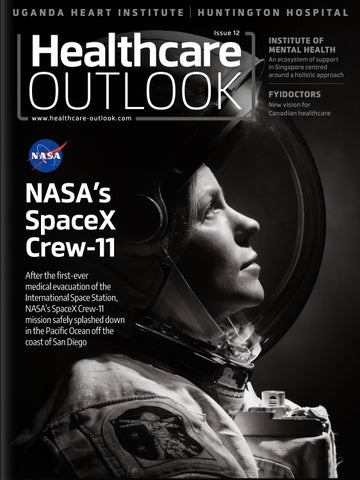
This edition’s cover represents a feat of medical perseverance, as we look at the innovative training and equipment used on the SpaceX Crew-11 mission to safely return a crewmember from orbit.

Back down on Earth, we speak with Canada’s largest eye care provider, FYidoctors, which adopts a transformative approach to eye health.

This can be seen in its vertical integration strategy, cutting-edge technology, and doctor-led model, which creates an end-to-end care approach that keeps patients at the centre of everything it does.

“Together, we form a collective of doctors who prioritise the highest possible standard of care – nothing is more important to us than the health and happiness of our patients,” shares Alan Ulsifer, Founder and CEO of FYidoctors.

Equally committed to delivering specialist care, Huntington Hospital was formed over a century ago in response to the urgent medical needs of the community.

“Over the last 110 years, Huntington Hospital has established itself as a trusted partner in the community it serves, and we have done so by providing highquality care and focusing on the needs of the community,” expands Dr. Nick Fitterman, President.

The hospital’s philanthropic beginnings can still be felt today through the establishment of a nearby women’s health centre, which offers comprehensive and personalised care.

We also explore Huntington Hospital’s partnership with Northwell Health and the ways in which it affords even more opportunities for growth and advancenent.

This latest edition also uncovers the critical role of global cell and gene therapy, as well as the changing face of Sweden – no longer just a holiday destination, but a medical prescription.

We hope you enjoy this latest issue.

AFRICA

58 South African Medical Research Council

Custodian of Health Research

40 FYidoctors

52 Huntington Hospital

A Heritage of Healing and Pioneering

Meeting the community’s unique

Conducting research on South Africa’s quadruple burden of disease

New Vision for Canadian Eye Care Canada’s largest eye care provider ASIA PACIFIC 74 Institute of Mental Health Loving Hearts, Beautiful Minds An ecosystem of support in Singapore centred around a holistic approach 66 Uganda Heart Institute

GLOBAL MEASLES NUMBERS FALL – YET RISK REMAINS

MEASLES CASES ACROSS Europe and Central Asia dropped significantly in 2025 compared to the previous year – yet UNICEF and WHO warn progress is fragile as the virus continues to spread.

Whilst cases have reduced according to official statistics, Regina De Dominicis, UNICEF Regional Director for Europe and Central Asia, advises that the disease must continue to be addressed as a priority through vaccination drives.

As such, UNICEF and WHO are working with partners - including Gavi, the Vaccine Alliance, and the European Union - to respond to measles outbreaks by engaging with communities, training healthcare workers, and strengthening immunisation programmes.

HEALTHSCOPE TRANSITIONS TO NOTFOR-PROFIT MODEL

HEALTHSCOPE – ONE OF Australia’s largest private hospital operators – is set to convert into a not-for-profit entity after lenders backed a proposal to transition its network of 31 hospitals to a new, non-denominational charitable organisation.

This new entity is expected to become the largest not-for-profit private hospital operator in the country, with surpluses reinvested into patient care, services, and staff.

The existing management structure will remain, supported by new, independent directors tasked with ensuring purpose-focused governance.

Healthscope’s transition comes after a period in receivership following financial strain and aims to secure continued care delivery,

EUROPE

PHARMA DEUTSCHLAND WARNS AGAINST PRICE HIKES

PHARMA DEUTSCHLAND, GERMANY’S largest pharmaceutical industry association by membership, warns that new drug practice regulations in the US could result in price hikes for the latest medicines.

As part of a broader overhaul of pharmaceutical policies, the US may re-evaluate how its pharmaceutical companies set their prices globally, which could see Germany and other European nations fall behind or even miss out on new medical introductions, advises Dorothee Brakmann, Managing Director.

Pharma Deutschland concluded that drugmakers active in both nations would have to re-evaluate their pricing and launch strategies.

preserve jobs, and relieve pressure on the broader health system.

EUROPEAN MEDICINES AGENCY CHAMPIONS

THE COMMITTEE FOR Medicinal Products for Human Use (CHMP) –the European Medicines Agency’s authorisation body – met in the Netherlands earlier this year, which resulted in the recommendation of six innovative new medicines for approval.

Incyte Zynyz® was recommended for the treatment of advanced anal cancer, squamous cell anal carcinoma – the first immunotherapy-based

treatment for this condition.

Meanwhile, Fylrevy by Estetra SRL was recommended for the treatment of oestrogen deficiency symptoms, whilst SHINE Technologies’ Ilumira was named as a radiopharmaceutical precursor for labelling authorised carrier medicines.

Novo Nordisk’s Kayshild also received a positive reception, whilst Kadmon Pharmaceuticals’ Rezurock was recommended to treat chronic graft-versus-host disease, and UCB’s Kygevvi was heralded as the first treatment for thymidine kinase 2 deficiency.

ELI LILLY SEEKS TO ACQUIRE ORNA THERAPEUTICS

US PHARMACEUTICAL GIANT

Eli Lilly and Company (Eli Lilly) is on track to acquire BioTech start-up, Orna Therapeutics (Orna), with a potential USD$2.4 million bid to buy the privately owned company.

The Indiana-based drugmaker has garnered recent attention thanks to its engineered circular RNA (oRNA®) technology, which can reprogramme immune cells within the body.

Eli Lilly noted in a recent statement that it intends to use the technology to develop cell therapies for autoimmune conditions.

It also cited its interest in Orna’s

lead project as another driver of the acquisition, which specifically instructs immune cells to latch onto B cells attacking tissues in inflammatory diseases.

AFRICA

FIGHT AGAINST MPOX ENTERS LONG-TERM STRATEGY

AFRICA CENTRES FOR Disease Control and Prevention (Africa CDC) has officially lifted the declaration of Public Health Emergency of Continental Security (PHECS) for mpox, signaling a shift towards longterm elimination.

Whilst some cases of the disease are still active in the Democratic Republic of the Congo (DRC), Guinea, Madagascar, Liberia, and Ghana, as of February 2026, Africa CDC is now implementing an Mpox Transition Roadmap to maintain surveillance, vaccination, and research.

EUROPE & MIDDLE EAST

WORLD HEALTH EXPO 2026 MAKES WAVES IN DUBAI

THE WORLD HEALTH Expo (WHX) 2026 marked the largest edition of the global healthcare event in its 50-year history.

Held at the Dubai Exhibition Centre, WHX hosted 235,000 professional visitors and over 4,300 exhibitors from 180 countries, bringing together healthcare leaders, innovators, and policymakers to advance medical R&D, policy alignment, and BioTech collaboration.

This year’s WHX also launched a dedicated Biotech & Life Sciences Zone on-site which spotlighted advances in genomics, precision medicine, and healthcare delivery technologies.

NORTH AMERICA

How AI Can Transform African Healthcare

The healthcare industry is at a pivotal point, with the need to merge innovative technology and a patient-first approach at the forefront. Dr Serufusa Sekidde, Chief of Staff to the CEO at Viiv Healthcare, speaks to the growing importance of artificial intelligence in healthcare, especially its role in the future of the industry in Africa

When I was a medical student in China, my mother died from tuberculosis (TB) in Uganda. What hurt the most was that I knew that the disease was not invincible.

Unfortunately, there was a perfect storm of her chest X-ray sitting waiting for weeks to be read, then her treatment being delayed, and then no one to connect the dots for her

when her treatment went awry and damaged her liver.

For millions across Uganda, Kenya, and South Sudan – the African countries where I’ve worked as a doctor – their reality is shaped by the same delays my mother faced: in seeking care, diagnosis, and in treatment. We can change the trajectory of healthcare in Africa and save people like my mother by leveraging artificial intelligence (AI).

There are three ways to do this, namely making sure the source of healthcare data is robust, leveraging AI at scale across this data as a tool of

empowerment, and lastly, humanising AI by centring it around patients and caregiver experience.

First, Africa’s healthcare data needs to be reasonably clean, complete, and compatible across healthcare centres, as a solid foundation for AI to work its magic. In my secondary school in Kenya, I remember using the Microsoft Disk Operating System (MS DOS) on a cranky desktop with a floppy disc and learning about ‘garbage in, garbage out. This is the concept that poor quality information or input produces a result or output of similar quality.

With faulty source data, AI is moot. As a consultant for the World Health Organisation (WHO) in the Middle East and Africa in 2014 and 2015, I saw first-hand how African healthcare systems are hampered by data that is not only poor quality but also neither connected nor transferable from one facility to another.

Even worse, the responsibility is left to the patients to move with their records – often incomplete – across their healthcare providers. For AI to stand a chance in African healthcare, we need good-quality healthcare data that is coordinated and connected across all hospitals and community centres.

Secondly, once we are reasonably comfortable with the source data and its governance, we need to leverage AI at scale as a tool of empowerment, rather than just automation. I’m an AI dreamer, and I can imagine a future where a digital agent in a rural South Sudan clinic – like the one I ran prior to the country gaining independence –supports nurses with reminders, tracks patient follow-ups, and escalates emergencies before they become tragedies.

I know that the quality of care by my incredibly talented African medical colleagues is top-notch, but it is the follow-up and surrounding care where we still have huge gaps in Africa. We need AI to amplify our skills, compassion, and post-hospital support.

TRANSFORMING HEALTHSEEKING BEHAVIOURS

Whilst we welcome the AI giants of the world to partner on Africa’s journey, I’m even more excited that we have our own solutions!

The continent’s AI sector is valued at USD$4.5 billion in 2025 and is rising rapidly. It is not a footnote in the global narrative. African start-ups like Kito Health – where my partner is co-Chief Medical Officer – are building digital platforms to democratise and transform health-seeking behaviour for caregivers of children.

Kenya’s Qhala, founded by Aspen New Voices Senior Fellow, Dr Shikoh Gitau, is redefining healthcare innovation through the deployment of AI to address systemic challenges such as workforce shortages, disease surveillance, and access to care.

The Africa Centre for Applied Digital Health, started by my colleague Dr John Mark Bwanika, is a Kampalabased non-profit transforming Africa’s healthcare landscape through AI and data science. All this heralds the emergence of solutions built for us, by us.

Lastly, we must centre AI-based healthcare solutions around the patient and caregiver experience.

For years, we in the African diaspora have played doctor-on-the-phone like I did with my mother when she had TB and my dad when he had a stroke, deciphering symptoms, reading emails at midnight from relatives, and navigating care from afar. It’s exhausting and unsustainable, but borne out of necessity.

Let’s leverage this experience of being caregivers to develop fit-forpurpose AI solutions. Agentic AI stands to transform this diaspora lifeline into something systematic and scalable, potentially equipping our healthcare data and memories with much-needed continuity.

For a mother managing her child’s asthma in Ouagadougou or a young man living with HIV in Lagos, these

bots could remember, remind, and ensure that no crucial detail is left behind.

BUILDING A ROBUST HEALTHCARE INFRASTRUCTURE

To be sure, Africa’s healthcare landscape is challenging. Human resources are stretched, infrastructure is crumbling, and public sector funding is insufficient, but Africa is also a continent of possibility, and AI can help us unlock doors we dared only knock on before.

As a 2025 Black British Business Awards 2025 Winner (Senior Leader – STEM category), I urge my fellow business leaders both in Africa and in the diaspora to invest in Africa’s AI-powered healthcare, not for charity, but for sustainable growth and impact.

African policymakers should invest in robust healthcare digital infrastructure and put data protection at the heart of national policy. All of us in the diaspora should embrace the lessons from our informal caregiving and help AI turn it into scalable, sustainable, and transformative digital action.

My mother’s story is, unfortunately, still not unique. The time for change, turbocharged by AI, is now.

ABOUT THE EXPERT

Dr Serufusa Sekidde, Chief of Staff to the CEO at Viiv Healthcare, is a Ugandan pharmaceutical executive. As a Senior Fellow at the Aspen Institute in the US, he advances health equity and innovation across crypto and AI via thought leadership. Sekidde is also a podcast host and award-winning rapper.

CONNECTING the CGT Community

Kim Barnes, President of Phacilitate, is deeply passionate about connecting the global cell and gene therapy (CGT) community to drive progress across the field. She speaks to us following Advanced Therapies Week, one of the most established and influential CGT conferences in the US, and outlines how the event will play a critical role in shaping the next decade of advanced therapies

Healthcare Outlook (HO): Firstly, could you introduce us to Phacilitate’s Advanced Therapies Week?

Kim Barnes, President (KB): Advanced Therapies Week (ATW) is Phacilitate’s flagship global gathering for the advanced therapies community.

Each year, it brings together senior leaders from across BioTech, pharma, investment, manufacturing, and solution providers to have forwardlooking conversations about where the field is heading and how the

industry moves forward together.

The show is deliberately focused across the whole value chain of advanced therapies, from preclinical through to on-market therapies and everything in between. That means looking at investment, clinical development, manufacturing, supply chain, reimbursement, and patient access.

But ATW is not just about content – it’s also about people. It’s where the community comes together, relationships are built, and collaborations begin, all with the shared goal of accelerating innovation and improving patient lives.

HO: What makes ATW one of the most established and influential cell and gene therapy conferences in the US?

KB: ATW has been part of the advanced therapies story for over two decades, and the event has grown alongside the industry itself, evolving in step with the expansion of CGT into mainstream healthcare innovation.

In the early years, we were 200300 people in the basement of a Washington, D.C. hotel, and that was the size of the industry.

This year, we welcomed over 2,000 attendees and more than 600 CGT developers – including people who were with us in that hotel 22 years ago. That’s been part of our DNA at Phacilitate.

That continuity has helped us build long-standing relationships and a trusted platform where meaningful conversations happen. Over time, we’ve seen many of those conversations turn into collaborations that shape how the sector evolves.

HO: How does ATW bring the global CGT community together to make progress possible?

KB: Bringing the global CGT community together is central to everything we do at Phacilitate. We have partnerships across the world in North America, Europe, Asia Pacific, and emerging regions, and this network allows us to connect different ecosystems into one shared conversation.

Alongside structured one-toone meetings, we also create more relaxed, informal networking environments where relationships can develop naturally.

Our goal is to connect the

advanced therapies industry to help them save patient lives, so it’s all about creating the environments where that can happen.

When people feel comfortable and open, that’s where the most meaningful connections and ideas tend to follow.

HO: Can you tell us about the event’s recent move to San Diego?

KB: The move to San Diego marks an important milestone for ATW and reflects how the event continues to evolve with the industry.

Until recently, we’ve always been on the East Coast – firstly in Baltimore and Washington, D.C. and then following the sunshine south to Miami, where a strong investment community was emerging in the region.

One of the reasons for our relocation was to open up to new audiences. San Diego is easier to get to from Asia, where a lot of innovation in stem cells and CAR-T therapy is happening.

We also wanted to anchor the event in a really strong BioTech hub, and San Diego offers exactly that, with its university and the wider California and West Coast life sciences

“ATW has been part of the advanced therapies story for over two decades, and the event has grown alongside the industry itself, evolving in step with the expansion of CGT into mainstream healthcare innovation”
– KIM BARNES, PRESIDENT,

ecosystem creating a powerful centre of innovation.

HO: How will ATW play a critical role in helping to shape the next decade of advanced therapies?

KB: ATW is deliberately futurefocused, with discussions framed around long-term impact rather than short-term trends.

We have lots of interactive discussions talking about what’s shaping the advanced therapies industry at the moment and how that’s going to continue shaping it for the next 10 years.

For example, the investment summit on the first day brought together the most forward-thinking investors, BioTech leaders, and strategic partners to dissect what defines a “fundable” company in 2026, explore the landscape of alternative financing models, and consider what’s next for BioTech investment.

But it’s not just about the programme – on the other side, you’ve got the community aspect. The connections made at the show are forging partnerships that will dictate how the next 10 years shape out for the advanced therapies industry.

PHACILITATE
Kim Barnes, President, Phacilitate

HO: What emerging technologies were showcased in the Innovation Zone at ATW 2026?

KB: The Innovation Zone really brings together a mix of new technologies that show where advanced therapies are heading, with a big focus on how the industry is evolving in very practical ways – how therapies are made, scaled, and ultimately reach patients.

There’s a lot of innovation happening around manufacturing and infrastructure. Companies like Bausch+Ströbel are working on modular, automated production environments designed specifically for the complexity of CGTs.

It’s about building manufacturing models that are flexible, scalable, and fit for the realities of advanced therapies, rather than trying to

adapt traditional pharma systems to something completely different.

There’s also a strong focus on platform technologies that support therapies across their full journey. ProBio is a good example of this shift toward more integrated development and manufacturing models, where therapies can move more smoothly from early development through to clinical and commercial stages.

That kind of joined-up infrastructure is becoming increasingly important as therapies move faster and pipelines become more complex.

More broadly, the Innovation Zone reflects a wider wave of new technologies across areas like vector development, automated cell processing, and biomanufacturing systems – all focused on making advanced therapies more efficient, reliable, and accessible.

It’s really about giving the community a glimpse of what’s next and the technologies that will help shape the future of the field.

HO: What other CGT innovations do healthcare executives and investors need to know about in 2026?

KB: Several key innovation themes are continuing to gain momentum across the sector, particularly as advanced therapies move from highly specialised applications toward broader clinical use.

One of the most significant shifts is around delivery models and how therapies reach patients. In vivo versus ex vivo has been a huge debate for a long time.

At the same time, manufacturing innovation is becoming increasingly critical as therapies move into larger

patient populations. Scalability, efficiency, and cost reduction are no longer future ambitions – they are operational necessities.

This includes growing attention on allogeneic or off-the-shelf therapies, alongside advances in scalable manufacturing and process automation. Digital transformation is also playing a defining role.

And, of course, artificial intelligence (AI), which is being integrated into manufacturing and clinical processes.

“ATW 2026 represents a clear step change in the evolution of the event, particularly following the transition to San Diego”
– KIM BARNES, PRESIDENT, PHACILITATE

That’s definitely a trend to keep an eye on.

Together, these developments are helping move advanced therapies closer to broader, more sustainable adoption across healthcare systems.

HO: Where is CGT investment flowing in 2026, and what does this mean for healthcare?

KB: Investment in advanced therapies is becoming more concentrated and selective, with clear divergence emerging across the market.

Investors are investing later, with more capital flowing to Series B and up. That suggests investors want to see you in Phase 2, in late-stage clinical development, rather than putting money in at preclinical Series A. It’s all about confidence-building with investors.

At the same time, the investor landscape itself is changing, with private equity playing a more prominent role alongside traditional venture capital.

While this creates pressure for early-stage companies, it also signals the growing maturity of advanced

therapies as a serious, long-term area of healthcare investment.

HO: What bottlenecks are currently holding CGT back, and where are solutions starting to emerge?

KB: Manufacturing and supply chain complexity remain some of the most significant barriers to scaling advanced therapies.

There are constant conversations about how to get therapies delivered globally at scale – from where manufacturing facilities should be based to whether production should happen at the bedside for autologous therapies. These are very real, practical challenges the industry continues to work through as the field grows.

Beyond infrastructure and logistics, funding dynamics also continue to shape what reaches patients. Investment can also be a bottleneck because without money, people can’t create therapies.

If we’re not getting investment in Series A and we’re seeing a trend of later-stage investment, newer companies might struggle to bring therapies through the pipeline.

At the same time, progress is being made. Advances in automation, smarter manufacturing technologies, and stronger end-to-end capabilities across the value chain are starting to ease some of these pressures.

The challenge now is aligning innovation, infrastructure, and investment so scientific progress can translate into real-world patient access.

HO: Finally, how did ATW 2026 compare to the previous edition in 2025, and are you excited about the future of the event?

KB: ATW 2026 represents a clear step change in the evolution of the event, particularly following the transition to San Diego.

We had more therapy developers registered than ever and more companies coming into the Innovation Zone to launch new technology at the show, with new people bringing different types of discussion and perspectives.

There’s a real sense of momentum around the future direction of Phacilitate and our global strategy. We’re launching the inaugural Advanced Therapies World in Saudi Arabia this November, creating a new platform to connect international expertise with the fast-growing Middle East and North Africa (MENA)

life sciences ecosystem.

At the same time, we’ll keep building our relationships with therapy developers and strengthening our foothold in San Diego and across the West Coast.

Looking ahead, the focus remains firmly on global collaboration and long-term impact. Ultimately, it’s about coming together to support the global patient market for CGT.

www.phacilitate.com

The Swedish Prescription

Sweden is the first country in the world prescribed to patients by doctors – welcome to a destination of a different nature

Writer: Jack Salter

Across the world, doctors are increasingly prescribing time in nature or cultural activities to support both mental and physical health.

Sweden has taken this one step further, becoming the first country to be offered on prescription.

More than just a scenic escape, Sweden is ranked as a global frontrunner in quality of life and routinely named as one of the world’s happiest nations.

As such, the Scandinavian country has been shown to support measurable health outcomes and a lifestyle centred on balance and belonging.

With easy access to both nature and culture, Sweden’s unique way of

life makes it an ideal pace to reset the mind and body.

The Swedish Prescription is a global communications initiative by Visit Sweden, the official marketing company tasked by the Swedish government with promoting the country as a travel destination.

Visit Sweden has teamed up with medical professionals ready to prescribe a stay in Sweden when appropriate so patients can benefit from the country’s restorative experiences.

Together with Yvonne Forsell, a senior professor at Karolinska Institutet in Sweden, the company has identified a set of activities visiting patients can benefit from across three areas – nature, lifestyle, and culture.

NURTURE IN NATURE

It’s well known that spending time in nature has numerous health benefits, and Sweden offers space to breathe, eases stress, and boosts energy.

Nature is always close by as there are some 100,000 lakes and over 5,000 nature reserves in the country, meaning visitors are never far away from a blue space or green area – even in the cities.

There are several activities that can boost health in Swedish nature, including forest bathing, foraging, cycling, sky watching, and sleeping.

The former is a sensory escape into nature as Sweden’s vast forests offer a tranquil retreat that can reduce stress, lower blood pressure, and improve focus.

Midnight sun in Swedish Lapland .Credit: Per Lundström/imagebank.sweden.se

Far from the everyday hustle and stress, forest bathers are immersed in the calm of the Swedish woods – engaging all the senses for a truly rejuvenating experience.

There’s something instinctively calming about being surrounded by trees; the rustling leaves, chirping birds, and earthy scent of moss all tap into a sense of peace and presence.

The foraging culture in Sweden is equally strong and, come late summer, nature lovers spend days in the forests collecting berries, mushrooms, and plants.

Sweden is also an ideal destination for cycling, which is one of the best ways to discover this beautiful country and explore its long stretches of varied coastline, bustling cities, and lush countryside.

Physical activity whilst travelling promotes well-being, and regular cycling is associated with a reduced risk of cardiovascular disease and type 2 diabetes.

Sky watching, meanwhile, is linked to reduced stress and increased emotional well-being. In addition to excellent stargazing, enjoy two seasonal natural phenomena – the Midnight Sun and Northern Lights.

The Midnight Sun – incidentally the name of Swedish singer Zara Larsson’s fifth studio album released in September 2025 – occurs in summer above the Arctic Circle when the sun stays above the horizon for several weeks.

This means it remains visible even in the middle of the night, creating extended daylight hours that can feel both unusual and fascinating for firsttime visitors.

In winter, the Northern Lights put on one of nature’s most spectacular shows, and Northern Sweden is one of the best places to experience them.

From September to March, the skies above Swedish Lapland come alive in shimmering shades of green, pink, and violet.

At night, Sweden also provides all

the right conditions for restorative sleep and ‘Swede dreams’ thanks to its natural darkness, cool temperatures, clean air, and peaceful, varied nature.

SWEDISH WAY OF LIFE

Sweden consistently ranks amongst the world’s best countries for quality of life, sustainability, safety, happiness, and more.

So, what’s the secret? Whilst there’s no single answer, the Swedish lifestyle is often highlighted due to its strong emphasis on work-life balance.

There are three simple ways to embrace the Swedish way of life, the first of which is ‘fika’ – a cherished tradition and cornerstone of daily life.

‘Fika’ usually involves freshly brewed coffee served with something sweet, with cinnamon buns being the most popular choice.

Whilst ‘fika’ may seem like just a coffee and cake break, it holds much deeper cultural significance in Sweden and is a moment to pause, connect, and recharge.

Then there’s ‘lagom’, meaning ‘just the right amount’, a uniquely Swedish concept that embraces balance, moderation, and contentment.

For Swedes, ‘lagom’ isn’t about doing less – it’s about finding harmony in everyday life, doing things mindfully, and avoiding excess.

SWEDEN HEALTH BENEFITS – AT A GLANCE

There are numerous health benefits associated with Sweden’s natural environment and way of life:

• Accessible nature – In Sweden, nature isn’t something you have to plan for –it’s all around.

• Active travel made easy – People walk and cycle as part of daily life.

• Clean air – Sweden consistently ranks amongst the top countries in Europe for air quality.

• Culture without the crowds – The country’s cultural institutions are easy to access, ranging from world-renowned modern museums to fairytale-like historic castles.

• ‘Fika’ – The daily pause for coffee and conversation is deeply embedded in Swedish culture.

• Foraging – Foraging for wild berries and mushrooms is a national pastime.

• Forest bathing – The practice of slow, mindful immersion in nature.

• ‘Lagom’ – The idea of ‘not too much, not too little’ is central to how Swedes approach life.

• Life by water – Sweden is home to some 100,000 lakes, meaning water is never far away.

• Light and dark – In the far north of Sweden, daylight stretches through the night in summer.

• Restorative sleep – Sweden’s natural environment offers ideal conditions for restorative sleep.

• Sauna culture – A way to slow down and reconnect, whether with family, friends, or yourself.

• Silence and tranquillity – Silence is part of the landscape in Sweden, found in forests, by lakes, and within city parks.

• Well-being through metal music – Music is woven into the country’s cultural fabric.

Sauna bathing is another rejuvenating Swedish ritual that has a long tradition in Scandinavia and is often combined with a refreshing dip in one of the many scenic cold bath houses along the coast.

Swedish sauna culture is relaxed and unpretentious, providing a space for quiet reflection. It also offers several health benefits, including better sleep quality and a significantly lower risk of dementia.

CULTURAL EXPERIENCES

Cultural engagement can reduce depression, anxiety, and loneliness.

Rooted in tradition yet bursting with creativity, Swedish culture has long been recognised as a source of well-being and has been available on prescription in parts of the country for over 20 years.

Museums invite guests on a journey through time where they can step into the life of a Viking, wander through fairytale-like royal castles, or take a nostalgic trip through Swedish rail history.

Sweden is also a global player in the music world and one of the most metal-dense countries per capita with over 5,000 metal bands.

Metal music has been shown to enhance positive emotions and help regulate anger, however attending live events of any genre is linked to greater life satisfaction.

Along with musicians, many inspiring women have helped shape Swedish culture, including pioneering pilgrims, courageous activists, creative minds, and cultural icons, and the country is dotted with places that pay tribute to them.

A cultural experience in Sweden will not only leave lasting memories but also nourish the mind and soul.

Hiking in the High Coast. Credits: Friluftsbyn Höga Kusten/imagebank.sweden.se

Arknat. Credit: Emmie Bolmstedt/imagebank.sweden.se
Sauna. Credit: Lena Granefelt/Johnér/Imagebank.sweden.se

FACILITATING HEALTHCARE EVOLUTION

Letsholathebe II Memorial Hospital was established in 2008 by the Government of Botswana and has been providing exceptional healthcare to local communities ever since. Hospital Superintendent, Dr Lebogang Mokotedi, gives us the full story of this game-changing facility

As it grows rapidly, the healthcare industry in Botswana is committed to sustaining the needs of the nation.”

The opening words of Dr Lebogang Mokotedi, Hospital Superintendent at Letsholathebe II Memorial Hospital, emphasise the pace at which healthcare across the nation is evolving.

With the delivery of medical care in the public sector based on a decentralised hierarchy of regional referral pathways, the process begins with local health posts and clinics which can refer patients to one of 15 primary hospitals nationwide, each equipped to manage emergencies, whilst the majority of complex cases are referred to one of 17 district hospitals.

Dr Lebogang Mokotedi, Hospital Superintendent

Healthcare remains essentially free for Batswana thanks to a committed and supportive government allocating the largest portion of the yearly budget to the Ministry of Health.

As a result, plans are in place to formalise a National Health Insurance scheme, revitalise primary healthcare, and develop additional and existing health facilities.

Challenges persist, however, with the majority of local healthcare workers opting to work in the private sector or abroad, alongside inefficiencies within the supply chain, and an exponential increase of noncommunicable diseases (NCDs) of late.

“Although the Ministry of Health has been a beneficiary to a significant portion of the fiscal budget, admittedly, the budget is never enough,” Mokotedi explains.

This reinforces the need for a judicious utilisation of funds, a conscious effort to reduce inefficiencies, and the importance of strategic project prioritisation.

However, despite these challenges, Botswana continues to reach key milestones having been recently recognised by the World Health Organisation (WHO) for its efforts towards the elimination of motherto-child HIV transmission, earning the country coveted Gold Tier status.

“The support we receive from international bodies such as the UN, WHO, and the US Agency for International Development (USAID), amongst others, has ensured critical programmes are in place to support healthcare delivery,” she passions.

UPGRADING FACILITIES

Located in Maun, the second largest village in Botswana, Letsholathebe II Memorial Hospital is a 270-bed district hospital commissioned in 2008 to replace the 150-bed Maun General Hospital, which struggled to meet the healthcare needs of a rapidly growing population.

“Our hospital serves the population of the North-West district and as a referral institution for neighbouring districts – Okavango, Ghanzi, Boteti, and Tutume,” outlines Mokotedi.

Admitting between 350 and 400 patients per month with an average occupancy rate of 75 percent, the hospital also delivers an average of 55 babies per week.

Patient care is delivered through specialist-led outpatient and inpatient services, supported by 11 admitting wards, a 24-hour accident and emergency (A&E) department, and four recently renovated theatre rooms, with a new intensive care unit (ICU) currently being developed.

Offering round-the-clock access to laboratory and radiology services, Letsholathebe II Memorial Hospital’s radiology department boasts the only computed tomography (CT) machine in the region, offering plain radiography as well as sonographic modalities.

“Apart from the usual outpatient services we also have a newly

“OUR HOSPITAL SERVES THE POPULATION OF THE NORTH-WEST DISTRICT AND SERVES AS A REFERRAL INSTITUTION FOR NEIGHBOURING DISTRICTS”
DR LEBOGANG MOKOTEDI, HOSPITAL SUPERINTENDENT, LETSHOLATHEBE II MEMORIAL HOSPITAL

renovated oral health unit, ophthalmology services, and oncology services,” she details.

The newly established haemodialysis unit, meanwhile, is operated by a private nephrologist, showcasing a successful privatepublic partnership model of service delivery.

The hospital is currently staffed by 575 dedicated healthcare workers, including 14 specialists, 14 medical officers, and 175 nurses.

“These numbers alone do not reflect the crippling shortages we’re facing with staffing or our reliance on temporary workers. For example, we have one audiologist,

one physiotherapist, and only four radiographers to meet the needs of our catchment population.”

Elsewhere, the hospital supports training though collaboration with institutions such as the University of Botswana, Institute of Health Sciences, Boitekanelo College, and others.

TRANSFORMATIVE CAPABILITIES

Having recently set up a haemodialysis unit at the hospital, Mokotedi reflects on the positive impact it’s had, particularly considering the growing prevalence of renal disease in the region.

The hospital was initially only able

to support renal replacement therapy through peritoneal dialysis, which was a nurse-led service. As such, when patients needed haemodialysis, they would be referred to Francistown, a city 500 kilometres away.

“Often, this led to patients having to relocate there in order to access the thrice-weekly dialysis and therefore losing out on their social support systems,” she affirms.

The Ministry of Health supported the new haemodialysis unit by inviting private companies to bid for the service, resulting in a private-public partnership (PPP) with the Pholong Centre for Kidney Diseases and Dialysis (PCKD).

“The ward officially opened in November 2023 and was well received by community leadership and patients who could now receive this vital service locally.”

The centre currently has 12 beds and is set to increase by four more during the current financial year to cater for the growing need, with 65 patients currently receiving this service.

The collaboration has also ensured the nephrologist who runs PCKD, Dr Walter Moloi, supports the peritoneal dialysis team to ensure a comprehensive renal replacement service.

“To further strengthen the relationship, he is involved in skills transfer through the training of medical officers in catheter insertions during his monthly visits,” states Mokotedi.

The availability of this service in the region will also promote tourism.

CARE FOR THE COMMUNITY

As the only district hospital in the North-west of the country, Letsholathebe II Memorial Hospital’s geographical location sets it apart.

Responsible for servicing a huge population as well as supporting neighbouring districts as a referral institution, the hospital’s support is crucial.

As such, management have been strategic in prioritising the maintenance and renovation of key operational areas, alongside acquiring key equipment.

Also known as the gateway to the Okavango Delta that is rich in wildlife, Maun has seen tourism in the area increase. The hospital therefore seeks

HOW DO YOU EMPOWER YOUR HARD-WORKING STAFF MEMBERS?

Dr Lebogang Mokotedi, Hospital Superintendent: “We take staff welfare very seriously. Maun is considered remote and is not a first choice for most employees; therefore, it is imperative that we maintain a healthy, motivated workforce.

“To reward staff and keep them engaged, we have recently conducted wellness activities which included excellence awards, safari trips, boat cruises, and spa dates in recognition of their contributions to our success.”

to leverage its burgeoning healthcare resources to become more appealing to international clients.

“We have a good stakeholder relationship with the tourism industry thanks to support from the Hospitality and Tourism Association of Botswana (HATAB), whose unwavering support of the health sector is exemplary,” Mokotedi tells us.

Thanks to the economic importance of tourism in the region, advocating for resources from the government becomes much easier.

The facility has therefore gained the support of key stakeholders who participate actively in the success of the hospital.

Its advisory committee, for example, is populated by leaders from the police services, political arenas, and local chieftains as well as a representation of people living with disabilities and traditional healers.

“Having key specialists in the hospital sets us apart from our neighbouring facilities and, as mentioned, we boast the only CT scan in the region as well as a recently established renal dialysis unit,” she finishes proudly.

With game-changing facilities such as these and cutting-edge technology at its disposal, Letsholathebe II Memorial Hospital looks forward to a bright future in healthcare delivery.

Harmony

In with Self

With a sincere belief that well-being begins by bringing oneself into balance, the philosophy of Santani Wellness Resort is centred around self-harmony. Vickum Nawagamuwage, Founder, passionately discusses the importance of engaging more deeply with adaptive wellness practices – such as those offered at the resort – to navigate the demands of the modern world

Santani Wellness Resort (Santani) was founded on a simple truth – that modern life in today’s digital and data-driven society moves faster than the mind and body were designed to.

Asia’s first purpose-built luxury wellness resort, Santani integrates architecture, ayurveda, mindfulness, and modern science in one seamless experience.

Set within 120 acres of former tea

estates in the Sri Lankan highlands, the resort opens onto the stunning Knuckles Mountain Range, a UNESCO World Heritage Site.

Santani focuses on healing the root cause – not just the symptoms –whether that be stress, burnout, or a deeper emotional imbalance.

“Santani is not an escape from life, but a gentle return to yourself,” introduces Founder Vickum Nawagamuwage.

Central to the resort’s vision is the ‘architecture of silence’, through which each structure, material, and view has been carefully designed to quiet the senses and reduce cognitive load.

Sustainability, meanwhile, has been built into every layer of the space –from low-impact construction and natural ventilation systems to the use of locally sourced materials and organic produce grown on-site.

By blending timeless wellness wisdom with contemporary design and science, Santani continues to redefine what sustainable luxury means — not excess, but essence.

“In the end, peace of mind is the ultimate luxury,” Nawagamuwage adds.

ADAPTIVE WELLNESS

With the pace of modern living placing unprecedented demands on people’s cognitive and emotional

systems, Santani believes that whilst biological evolution can take generations, behavioural adaptation must happen now.

“We are living through a new kind of stress and mental health crisis –one born not from external hardship, but the widening gap between what life demands and what the human system can sustain,” Nawagamuwage observes.

To close this gap, Santani thinks

our focus should be on strengthening capacity – cultivating resilience, clarity, and adaptability.

Indeed, curative healthcare has its limits; by the time illness appears, the ability to adapt is often already compromised.

As such, the resort considers the future of wellness to lie not in treatment after imbalance occurs, but in building strength before imbalance can even begin.

“Guests often describe their Santani experience not as a retreat, but as a return to themselves. Here, they slow down and learn a way of living that feels grounded and sustainable”
– V ickum Nawagamuwage, Founder, Santani Wellness Resort

Santani’s mission is to shift our perception of wellness from being an occasional treat to a lifelong practice – what it calls ‘adaptive wellness’, which places emphasis on living intelligently within the limits of our biology and demands of the modern world.

“We see wellness not as recovery, but as adaptation and prevention, helping people to strengthen their internal system before imbalance becomes illness,” he reflects.

The resort’s programmes have been created to meet the realities of modern life and adapt to the constant connectivity, mental fatigue, and rising chronic stress many of us face. Each programme integrates ayurvedic principles, functional medicine, and mindfulness training to address issues such as burnout, metabolic health, and emotional regulation.

Santani’s philosophy of adaptive wellness is a way of living that restores alignment, builds resilience, and transforms well-being into a sustainable state of balance.

THE RHYTHM OF LIFE

Guided by a philosophy of human sustainability, Santani understands that the planet cannot sustain itself unless humans first learn to sustain themselves.

Modern living has created what Nawagamuwage considers to be an evolutionary mismatch, where our environment has evolved faster than our capacity to adapt in today’s era of rapid digital transformation.

“This widening evolutionary gap has placed a question mark over our ability to survive, threatening the sustainability of humankind for the first time in history,” Nawagamuwage warns.

Santani believes the solution is to evaluate our mental fitness, spiritual awareness, and physical health.

In this context, Wellness 2.0 is Santani’s holistic and adaptive solution that provides a toolkit to make wellness a true lifestyle solution.

With each personalised ayurvedic journey offered at the resort deeply rooted in ancient therapies, Santani’s ayurvedic physicians are well versed in both ‘prakriti (one’s natural constitution) and vikriti (one’s current state of imbalance), which enables them to design tailor-made programmes.

“Each guest’s journey at Santani begins with a detailed consultation with our ayurvedic physicians, followed by a personalised plan where nutrition, therapy, movement, and rest are attuned to their individual constitution and rhythm of life,” he explains.

For some, this means a deep panchakarma detox to cleanse metabolic waste and inflammation.

For others, it might focus on stress and sleep regulation through herbal therapies, rhythmic oil treatments, yoga, and mindfulness practice.

Each journey blends traditional medicine with modern diagnostics, supported by the resort’s integrated wellness team of doctors, yoga teachers, therapists, and chefs, who work in harmony to create a holistic journey focused on restoration.

NATURE’S QUIET INTELLIGENCE

Offering immersive lifestyle retreat programmes such as hydrotherapy spa treatments and guided hikes through tea plantations, Santani seeks

to align with its core value of finding harmony in nature.

Each programme is structured around resetting internal rhythms and working with the natural cycles of the body and nature.

Days begin with a gentle sunrise yoga session overlooking the Knuckles Mountain Range, followed by personalised ayurvedic meals based on the Rasa Haya philosophy of six tastes, which balances nourishment with enjoyment.

“Guests follow a restorative routine of holistic herbal treatments, steam and sauna rituals, and sessions in our thermal saltwater pool which are designed to stimulate circulation and support detoxification,” Nawagamuwage details.

NO PAUSE MENOPAUSE

Santani’s No Pause Menopause programme has been designed to redefine how women experience menopause and reframe this season of life as a renewal and not as a decline.

Its approach is three-pronged:

1. Biological balance – Personalised nutrition and herbal formulations stabilise hormonal fluctuations, sleep, and metabolism.

2. Mental and emotional clarity – Breathwork, yoga, and guided mindfulness cultivate a sense of calm and resilience during transition.

3. Physical renewal – Targeted spa therapies, heat treatments, and restorative movement strengthen circulation and release tension.

Santani’s goal is to guide women through this chapter in their lives with awareness, comfort, and empowerment, helping them reconnect to their innate rhythm and strength.

In the afternoon, mindfulness and breathwork sessions are intended to deepen the connection between body and mind, whilst forest walks, river baths, and hikes through tea estates invite immersion within nature’s quiet intelligence.

Every element is designed to mirror nature’s balance, pairing movement with stillness and effort with ease.

“Guests often describe their Santani experience not as a retreat, but as a return to themselves. Here, they slow down and learn a way of living that feels grounded and sustainable,” he prides.

GLOBAL RECOGNITION

Looking ahead, Nawagamuwage reflects upon Santani’s key priorities for the coming year.

“Our focus now is on deepening our impact and expanding our reach,” he tells us.

Preparing to expand the Santani philosophy beyond Sri Lanka, it has upcoming properties being developed in Oman and Morocco that honour local traditions whilst preserving its core design and wellness principles.

The resort is also developing new digital wellness tools to help guests maintain their routines after they leave, turning every Santani journey into a lifelong practice.

“Alongside this, we will continue evolving our signature retreats and research-based collaborations in the ayurveda wellness space,” he adds.

Santani’s burgeoning contribution to wellness has been recognised within influential circles, with the resort having been awarded a prestigious MICHELIN Key.

“We’re one of 10 hotels and resorts in Sri Lanka to receive a MICHELIN Key and the only wellness resort in

“Each guest’s journey at Santani begins with a detailed consultation with our ayurvedic physicians, followed by a personalised plan where nutrition, therapy, movement, and rest are attuned to their individual constitution and rhythm of life”

the country to be given this global recognition,” Nawagamuwage prides.

This recognition stands as a testament to the Santani team’s quiet dedication to crafting experiences around mindful luxury and creating moments of balance and harmony for every guest.

“For us, this honour affirms that true luxury lies in peace of mindin the quiet intelligence of space,

service, and care that allows guests to return to themselves,” he passionately concludes.

Santani Wellness Resort

Tel: (+94) 76 399 1919 (Reservations) (+94) 70 366 9110 (Resort) reservations@santani.com www.santani.com

Image Credit: NASA/Josh Valcarcel

An Unprecedented Medical Evacuation

After the first-ever medical evacuation of the International Space Station, NASA’s SpaceX Crew-11 mission safely splashed

On 15th January 2026, the SpaceX Crew-11 mission returned home after more than five months aboard the International Space Station (ISS) – a hub of scientific discovery, international partnership, and technological innovation.

During the 167-day mission, four crew members – Zena Cardman, Mike Fincke, Kimiya Yui, and Oleg Platonov – travelled almost 71 million miles, orbited Earth more than 2,670 times, and completed hundreds of science experiments and technology demonstrations to advance human exploration.

The astronauts arrived on the ISS

on 1st August last year expecting to complete a standard six-and-a-half month stay, due to come home in mid-February.

However, following the last-minute cancellation of a scheduled spacewalk for Cardman and Fincke, the mission came to an end a month earlier than planned because of a serious medical concern affecting one of the crew members.

For privacy reasons, NASA did not disclose which of the SpaceX Crew-11 mission’s four astronauts was experiencing the medical issue or describe the nature of it.

This was the first time astronauts have been evacuated from the ISS due

to a medical issue since the space station was put into Earth’s orbit in 1998.

Indeed, the incident is unprecedented in the history of the ISS, which has been permanently crewed for more than a quarter of a century.

Incidentally, SpaceX Crew-11 celebrated the milestone 25th anniversary of continuous human presence aboard the orbiting laboratory in November.

The crew members safely splashed down in the Pacific Ocean off the coast of San Diego, California and disembarked the SpaceX Dragon Endeavour spacecraft after an almost 11-hour journey, before undergoing standard post-flight reconditioning and evaluations in Houston, Texas.

MEDICAL TRAINING AND EQUIPMENT

All NASA astronauts undergo basic medical training, such as how to stitch a wound, give an injection, or extract a tooth, and have regular health checks and contact with a team of doctors closely monitoring them on the ground.

The space agency additionally maintains a robust pharmacy with a substantial supply of medicines and a suite of medical equipment onboard the ISS to treat various conditions and injuries, including a defibrillator for any heart issues and portable ultrasound devices.

Communication systems on the ISS also let doctors talk privately to astronauts in space, assess their condition, and advise treatment, much like a secure video or phone consultation with a GP.

However, if a medical emergency requires a return to Earth, as in the case of SpaceX Crew-11, the astronauts come back in the spacecraft they launched aboard to receive urgent medical care.

The ISS does not have a doctor on board, but space experts say they will need to travel on missions in future as more and more humans venture into space, including for tourism and the possible occupation of the Moon or even Mars.

A RARE OCCURRENCE

Thankfully, serious medical emergencies are a rare occurrence in space, but it’s not unheard of for crew members to become unwell.

The most common problems include motion sickness, headaches and pains, dental emergencies, and even kidney stones.

Space missions have ended early due to health issues just twice before, first in 1985 when Soviet cosmonaut Vladimir Vasyutin and his colleagues retuned from a mission to the Salyut 7 space station four months ahead of schedule because of a urological issue.

The official crew portrait of NASA’s SpaceX Crew-11 members. Image Credit: NASA/Robert Markowitz

Then, in 1987, another Soviet cosmonaut, Aleksandr Laveykin, left the Mir space station early due to a heart arrhythmia.

The ISS evacuation was a test of NASA’s procedures for dealing with medical issues, and by all accounts, it passed.

SPACEX CREW-11 MISSION – SCIENCE COMPLETED

Bolstering bone resilience – Cardman worked with bone stem cells aboard the ISS to improve understanding of how bone loss occurs during spaceflight.

Studying bone cell activity in microgravity could help researchers learn how to control bone loss to protect astronauts’ bone density during future long-duration space missions and inform treatments for diseases like osteoporosis on Earth.

Tracking internal temperature – Adjusting to living and working aboard the ISS can influence human temperature regulation.

A temperature-monitoring headband that tracks how the human body regulates its core temperature during spaceflight provides an easy, non-invasive way to collect temperature data whilst astronauts conduct their daily activities.

The sensor is also being tested on Earth and may help prevent hyperthermia in people working in high-temperature environments.

Making nutrients on demand – Yogurt bags produced aboard the ISS could provide important nutrients during missions far from Earth.

Certain nutrients degrade when stored for long periods of time, and deficiency in even one can lead to illness.

Researchers are building on previous experiments to develop a method for producing on-demand vitamins and nutrients in space using microorganisms.

Cardman conducts emergency training. Image Credit: NASA/Josh Valcarcel
Cardman and Yui participate in a training simulation. Image Credit: NASA/Robert Markowitz

Brand new exclusive content, delivered safely to your inbox

As organisations worldwide navigate the new healthcare landscape, defined by technological innovation in the wake of the COVID-19 pandemic, now is the time to showcase the strides being taken in this critical sector.

A multi-channel brand, Healthcare Outlook brings you the positive developments driven by organisations across the healthcare industry through its various platforms. Discover exclusive content distributed through its website, online magazine, social media campaigns and digital dispatches, delivered safely to your inbox with a bi-weekly newsletter.

Through these compelling media channels, Healthcare Outlook continues to foreground the movers and shakers of the industry.

To participate as a featured company and join us in this exciting endeavour, contact one of our Project Managers today.

NEW

FOR CANADIAN EYE CARE

Proudly standing as Canada’s largest eye care provider, FYidoctors remains doctor-led, professionally managed, and patient focused. We speak to Founder and CEO, Dr. Alan Ulsifer, about the company’s transformative approach to eye health

The global eye care industry is a booming, multi-billiondollar worldwide market encompassing eye health products and state-of-the-art medical devices, driven by aging populations, rising digital eye strain, and increasing eye health awareness.

A plethora of exciting developments continue to accelerate across the industry including technology integration, digital health, market consolidation, and a growing focus on preventative care.

Artificial intelligence (AI) is also rapidly transforming the healthcare industry, and eye care and health is no exception.

As such, optometry, a complex field deeply rooted in intricate precision and patient care, stands at the very precipice of this technological evolution.

At the forefront of this growing sector is FYidoctors, Canada’s largest eye care provider, operating under the broader FYihealth group banner.

Founded in 2008 by a small group of independent, like-minded optometrists across Canada, the company has been leading the way ever since.

“We were determined to provide excellent, personalized care first when many in our industry were putting profits over patients, and our values have helped us grow to have clinics spread across the nation from coast to coast. Through it all, we’ve kept our patients first,” notes Dr. Alan Ulsifer, Founder and CEO.

Ulsifer believes the realm of eye care is a truly unique and fascinating industry that holds exceptional possibilities and boundless potential.

“We can learn so much about the whole body from the eyes, so the impact optometrists can have for the broader field of healthcare is

extremely exciting to be involved in,” he enthuses.

FYidoctors delivers an unparalleled patient experience built on trust, quality, convenience, and care.

Through vertical integration, leading technology, and its doctor-led model, the company offers personalized,

“WE BELIEVE EVERY CHILD HAS A RIGHT TO UNOBSTRUCTED SIGHT”
– ALAN ULSIFER, FOUNDER AND CEO, FYIDOCTORS

end-to-end vision care, from exam to eyewear.

Proudly made in Canada, the organization is rooted in the belief that better sight leads to better lives.

TRUSTED CARE

Since 2008, FYidoctors has directed a laser-sharp focus on providing the people of Canada with cutting-edge eye care based on the mantra that good eye health equates to wholebody health.

What began as a small group of independent optometrists in 2008 has evolved into one of North America’s fastest-growing doctorowned healthcare organizations, now encompassing in excess of 370 locations across multiple brands in Canada and the US, along with over 4,000 dedicated team members, including more than 730 optometrists.

FYidoctors’ vision is to create a future where every patient has access to exceptional eye care, where clinicians can thrive within a collaborative ecosystem, and where innovation continually redefines what’s possible in eye health and wellness.

“Together, we form a collective of doctors who prioritize the highest possible standard of care – nothing is more important to us than the health and happiness of our patients,” Ulsifer emphasizes.

With each clinic being doctor-led, patients receive genuine, personalized care from optometrists and team members who are truly invested in their well-being.

“In Delta, British Columbia, we own Canada’s largest and most technologically advanced ophthalmic lab, which produces more than one million pairs of customized lenses for patients every year,” he sets out.

From its doctor-led advisory committee and R&D initiatives to its patented Patient Pathway, FYidoctors keeps patients at the center of everything it does.

“As optometrists, we never stop learning. That’s why we continually invest in lens technology and cuttingedge diagnostic tools in our clinics.

“From our Optomap ultra-wide-field retinal imaging to our technologically advanced exactFit Freeform lenses, we use innovation and technology to give our patients the eye care they deserve.”

Now offering custom-crafted exactFit lenses, FYidoctors is proud to be one of the first labs in North America to use Freeform technology.

Every pair of glasses made is tailored not just to a patient’s prescription, but how they like to wear them, and perfectly tuned and quality-controlled

to ensure all details are precise.

“With a focus on continuous innovation, from advancements in AI and automation to laser technology, we relentlessly update and innovate to manufacture the best lenses available,” Ulsifer divulges.

All clinics are equipped with advanced diagnostic technology, including optical coherence

tomography (OCT) and widefield retinal imaging, ensuring comprehensive examination capability in every exam.

FYidoctors is one of the only Canadian eye care networks using a common electronic medical record (EMR) platform across all clinics, enabling consistent patient care and data-driven insights.

HOW PROUD ARE YOU TO LEAD FYIDOCTORS AND WHAT LED YOU TO THIS POSITION?

ALAN ULSIFER, FOUNDER AND CEO: “I am extremely proud to be leading the largest doctor-led, professionally managed, and patient-focused organization focused on delivering outstanding eye care.

“My career journey started out in Western Canada after I graduated from the University of Waterloo as an optometrist in 1990. After my studies, I became one of the founders and the managing partner of Northern Vision Centre, which developed into one of the nation’s largest independent optometric practices.

“I’ve always been fascinated by the entire spectrum of eye care and have been involved at political, clinical, and executive levels of the field, including my work with various not-for-profit boards, including the Alberta Optometric Association, Rotary, Optometry Giving Sight, Alberta Freestyle Ski Association, and Grande Prairie Chamber of Commerce.

“Then, in 2008, I oversaw the creation of FYidoctors, which still stands as the largest business merger in Canadian history in terms of the number of companies involved.

“Our founding group of optometrists came together and began purchasing the specialized equipment needed alongside acquiring a small optical laboratory. This was the beginning of our journey and when we officially formed the organization.”

Other recent innovations include AI processes and diagnostic improvement plans in eight areas, predictive analytics to optimize scheduling and recalls, and AI-powered marketing and call center platforms for personalized engagement.

ENHANCING LIFE MONTH

Every October, FYidoctors celebrates Enhancing Life Month.

What started as a grassroots initiative to fundraise for a good

cause on World Sight Day years ago has turned into an annual tradition across the organization, fundraising hundreds of thousands of dollars for a wide variety of causes and initiatives.

Each clinic chooses its own charity that they care about and organizes different fundraising initiatives all month long.

The organization has raised over CAD$450,000 for registered Canadian charities this past year alone.

“As a pillar of the community, we successfully partner with charitable organizations that benefit from our wide reach. Through these efforts, we fulfill our dream of enhancing lives beyond our clinics’ doors,” Ulsifer prides.

“Each of our individual clinics is home to a unique team of individuals with distinct interests and philanthropic priorities. For this reason, every FYidoctors location chooses a specific organization to support.”

The company celebrates the personal stories attached to why each charity is chosen and the impactful reasons behind its people’s investment in individual foundations, which cover a multitude of worthy causes ranging from youth health and animal welfare to community food banks and suicide prevention, all with a core belief in improving lives.

“Recently, we’ve opened up fundraising efforts to run throughout the entire year as we’ve had many within the organization who are

passionate about giving back to our communities and supporting causes they care about,” he explains.

BETTER SIGHT. BETTER GRADES

FYidoctors’ accessible eye care program, ‘Better Sight. Better Grades’, ensures every kindergarten-aged child receives a complimentary pair of glasses if needed, regardless of their family’s financial situation.

“We believe every child has a right to unobstructed sight,” says Ulsifer.

“If a child is prescribed eyewear, we

provide their first pair at no charge, adjust them, and help them adapt.” This initiative is critical. One in four school-aged children has vision problems that can severely impact their learning, yet these issues are often difficult for children to communicate or for parents to detect. Since learning is predominantly visual, from reading whiteboards to observing teachers and working on screens, undiagnosed vision problems can lead to frustration and academic struggles from an early age.

AWARD WINNERS

FYidoctors’ people-first culture continues to earn recognition at national level.

The organization has also been proud to be a six-year repeat honouree of Canada’s Best Managed Companies, recognized for leadership, innovation, and sustained growth.

The company has also been a Great Place to Work®-certified organization since 2023, named among the top 50 Best Workplaces™ in Canada, and awarded Globe and Mail’s Report on Business Best Executive Awards and Canada’s Top Growing Companies since 2022.

Elsewhere, Ulsifer was selected as EY Entrepreneur of the Year for all of Canada in 2013. Additional accolades include Best Workplace™ for Inclusion, Best Workplace™ with Most Trusted Executive Team, and Best Workplace™ for Women.

These accolades reflect an ongoing commitment to being the first choice for eye care professionals to practice and the number one place for people to work.

“By making eye care accessible, we can address vision problems before children encounter learning difficulties,” Ulsifer explains.

“This not only helps them reach their full potential but also allows for early detection and treatment of conditions like myopia.”

The program has served families across the country and empowers teachers to help students access the quality eye care they need.

LOOKING AHEAD

One of the most prominent priorities for FYidoctors moving forward is to continue its mission to improve access to eye care for all.

By leveraging the latest cuttingedge technology into its practices, the company also strives to remain at the forefront of optometry as the sector evolves and enters a new era of innovation.

Discover your perfect frame

Chic Murphy frame

Success 399 frame

“Visual Eyes is proud to support FYI with reliable service, quality product, and a partnership built on trust. We value the momentum we’ve created together and look forward to bringing even more innovation in the future.”

- Michael Hyman VP of Sales Visual Eyes Eyewear

Phone: (407) 960-2838 | Email: mhyman@veeyewear.com | www.veeyewear.com Facebook and Instagram: Veeyewear

Kering Eyewear, founded in 2014, is part of the Kering Group and is the most relevant player in the Luxury Eyewear market segment. The company designs, develops and distributes eyewear for a complete and well-balanced portfolio of 14 brands, which includes the proprietary brands LINDBERG, the undisputed design luxury Danish eyewear company. Maui Jim, recognized for its outstanding lens technology and distinctive Hawaiian heritage, and Zeal Optics, the sustainable eyewear for outdoor adventurers, as well as the Houses brands Gucci, Cartier, Saint Laurent, Bottega Veneta, Balenciaga, Chloe, Alexander McQueen, Montblanc, Dunhill, Alaïa and Puma.

INTRODUCING OPTIKAM –PRECISION, SIMPLICITY, AND A SUPERIOR EYEWEAR EXPERIENCE

Optikam revolutionizes the way eyewear measurements are captured, now offering the flexibility to take precise measurements with or without a device attached to the eyewear

The OptikamPad app is the ultimate tool for eye care professionals, helping to: Drive multiple pair sales

Upsell premium lenses

Capture precise measurements the first time

OptikamPad enhances the customer experience by:

• Assisting in frame selection

• Showcasing the benefits of premium lenses

Seamlessly capturing all necessary eyewear measurements

Deliver a personalized, efficient, and accurate dispensing experience with OptikamPad - where precision meets innovation!

www.optikam.com sales@optikam.com

Telephone:

Wide Guyz Big Al frame, inspired by your fearless leader Dr. Al Ulsifer.
The Gucci Eyewear Fall Winter 2025 collection effortlessly blends innovation with the House’s heritage, reinterpreting classic silhouettes with cutting-edge details.
“TOGETHER, WE FORM A COLLECTIVE OF DOCTORS WHO PRIORITIZE THE HIGHEST POSSIBLE STANDARD OF CARE – NOTHING IS MORE IMPORTANT TO US THAN THE HEALTH AND HAPPINESS OF OUR PATIENTS”
– ALAN ULSIFER, FOUNDER AND CEO, FYIDOCTORS

For example, the integration of AI into the field of optometry promises to transform the eye care sector in new ways.

By enhancing diagnostic accuracy, personalizing treatments, and streamlining operations, AI has the transformative potential as not merely a tool but a partner in delivering exceptional care.

“The challenge now lies in embracing this technology thoughtfully, ensuring it complements rather than replaces the human elements that define the profession,” Ulsifer muses.

COMMUNITY CONNECTIONS

Community Connection is woven into FYidoctors’ identity, inspiring national and local initiatives that make a measurable difference.

Additional community connection initiatives include:

• Mobile Optometry Clinic – FYidoctors has launched Canada’s first fully equipped Mobile Clinic – a custom-built optometry clinic on wheels featuring a modern exam lane, 400+ frames, prescription lens dispensing, wheelchair accessibility, and solar power. It aims to bring comprehensive vision care directly to remote communities, workplaces, and underserved populations. This turnkey solution eliminates barriers like travel and long wait times by delivering complete eye care services from exams to frame selection and prescription fulfillment, all under one mobile roof, with plans for a national roll-out across Canada.

• Glasses Recycling Program – In partnership with Lions Club of Canada, this program provides donated eyewear to individuals in developing countries who otherwise wouldn’t have access to proper vision care. This initiative not only supports global access to vision care but also reinforces the company’s commitment to sustainability and community involvement.

• National Natural Disaster Glasses Replacement Program – Provides Canadians with complimentary eyewear replacements that may have been broken, forgotten, or lost during Wildfire evacuations, including eye exams if needed.

• Optometric Education – With a strong history of supporting optometric education in Canada, FYidoctors recently donated CAD$5 million to the University of Waterloo’s School of Optometry and Vision Science to fund construction of the Waterloo Eye Institute, a state-of-the-art facility supporting advances in vision research, optometric education, and patient care.

Ultimately, AI’s potential in optometry is not just about efficiency or precision – it’s about redefining what’s possible.

By leveraging these tools, practitioners in organizations such as FYidoctors can elevate their practice, prioritize patient relationships, and continue to lead the way in innovative, compassionate care.

“By embracing innovation and dedicating ourselves to offering optimised eye care, we have worked tirelessly to clearly define what it will take to deliver the sense of pride we all want to feel every day coming to work.

“As a result, we look forward to continue enhancing the lives of the patients and customers that we serve, the people we work with each and every day, ourselves, and the communities in which we work and live,” he concludes with a smile.

Tel: 1-855-960-3937

support@fyidoctors.com

www.fyidoctors.com

A HERITAGE OF HEALING AND PIONEERING CARE

Huntington Hospital has evolved from its humble beginnings over a century ago to become a beacon of advanced healthcare. President, Dr. Nick Fitterman, discusses the hospital’s specialized services while embracing education through its partnership with Northwell Health

Writer: Rachel Carr | Project Manager: Callum Ovenstone

In 1916, the town of Huntington, New York was undergoing a significant transformation from a small farming community to a burgeoning urban area.

As the population expanded and economic growth advanced, new residents arrived seeking opportunities, which prompted the construction of a new hospital to provide essential healthcare services.

In response to the demand, Huntington Hospital was founded by Cornelia Prime, who recognized the

community’s urgent need for medical care and generously donated the land and resources necessary to begin building.

As a visionary philanthropist who played a crucial role in addressing community needs, she contributed not only financial support but also a strong commitment to improving local healthcare infrastructure.

At a time when women had limited rights, Prime’s leadership solidified her status as a trailblazer in Huntington.

Today, Prime’s legacy is recognized in the town with streets renamed in her honor and various community events celebrating her impact on the town, ensuring her remarkable support is never forgotten.

“Over the last 110 years, Huntington Hospital has established itself as a trusted partner in the community it serves, and we have done so by providing high-quality care and focusing on the needs of the community,” introduces Dr. Nick Fitterman, President.

Cath lab

“Becoming part of Northwell Health (Northwell), a large integrated health system, afforded us even more opportunity to grow and advance care,” he continues.

Northwell’s Center for Learning and Innovation (CLI) and Institute for Nursing (IFN) provide Huntington Hospital employees with unlimited access to ongoing education. By sharing best practices throughout the system, the hospital can both contribute to and benefit from the collective knowledge of

thousands of team members.

“We have a culture of always wanting to do better tomorrow than we did today. Never becoming complacent from past or current successes keeps all our partners eager to learn, innovate, and evolve,” Dr. Nick highlights.

TAILORED EXCELLENCE

While a typical community hospital will attempt to provide a wide range of services for everyone, Huntington Hospital has the advantage of being part of an integrated system with

specialty, tertiary, and quaternary hospitals.

These facilities are all accessible within minutes via robust transfer services, including ambulances, helicopters, and planes.

This allows the hospital to focus on the most prevalent needs of its community and develop programs of excellence, such as those for cardiovascular disease.

“We were one of the first cath labs in New York State without on-site open-heart back-up.

WHAT DOES CORE IDEOLOGY MEAN IN THE CONTEXT OF HOSPITAL CULTURE, AND WHY IS IT IMPORTANT?

Dr. Nick Fitterman, President:

“Core ideology transcends business strategy and is embedded in the MVVs of an organization. Ours is that excellence in clinical care is the best business strategy.

“We lean on this when difficult decisions arise, such as adding a new, expensive drug to our pharmacy or building a unit for an uncommon procedure. If our community needs it, we do it – even if at financial risk.

“We know that if we do what is right for our community, they’ll reward us by bringing all their other healthcare needs to us.”

Over 30 years later, we still have a very active lab that was recently refreshed with two rooms capable of doing all the advanced procedures one expects in such a lab. Therefore, we can treat any acute or chronic heart disease that does not require open-heart surgery,” informs Dr. Fitterman.

“Moreover, we included the CoroFlow Cardiovascular System in both labs to complement our women’s health program as it can diagnose microvascular angina, which predominantly impacts women, and no such lab existed in our area.”

The hospital also refreshed its very active electrophysiology (EP) lab and is planning to revise a second one.

This addresses the changing landscape of arrhythmia treatments – notably atrial fibrillation and the increasing role of ablation as a primary therapeutic option.

“Huntington Hospital also supports an aging community that needs the expansion of two additional programs – cancer treatment and orthopedics, including spine care,” Dr. Fitterman outlines.

“We have a disease-specific Advanced Certification in Spine Surgery from the Joint Commission and a clinically and academically active orthopedic residency program, which published over 40 articles in peer-reviewed journals last year.”

This type of academic currency helps the hospital attract a higher caliber of learners and attendings, further elevating the care provided.

Along with its orthopedic residency program, Huntington Hospital has podiatric surgery and pharmacy residency programs, exemplifying the hospital’s commitment to medical education.

“We will be developing our own internal medicine program in 2027 to help meet the need for more primary care in the area we serve and to create a pipeline of talent for future recruitment,” Dr. Fitterman adds.

The hospital also has high-quality programs meeting the needs of the most common cancers in the region –lung, breast, prostate, and colorectal.

“BEING PART OF THE KATZ INSTITUTE FOR WOMEN’S HEALTH ALIGNS US WITH OTHER SYSTEMWIDE COLLABORATIONS TO ADVANCE THE CARE OF WOMEN”
– DR. FITTERMAN, PRESIDENT, HUNTINGTON HOSPITAL
EP lab

“We participate in clinical studies, cancer genetics, and collaborate with the world-renowned Cold Spring Harbor Laboratory. This year, we have introduced the most advanced linear accelerator for cancer treatments called the Varian Ethos™.”

ELEVATING WOMEN’S HEALTH

Women’s health is often neglected in healthcare, and Huntington Hospital has addressed this by establishing a women’s health center nearby its main campus.

Women can receive comprehensive care for all their primary and subspecialty needs at the center, which complements the hospital’s mother-and-baby unit with beautiful suites for couples and their newborns.

“We are a center of excellence for minimally invasive gynecologic surgery, and our expert surgeons train others in these techniques,” Dr. Fitterman imparts.

Furthermore, Huntington Hospital is expanding its labor and delivery

suite to accommodate an increasing number of deliveries.

“We will continue to grow our laborist and neonatal intensive care programs. We are a site that trains and educates future obstetricians and gynecologists, thereby creating a pipeline of talent.

“Being part of the Katz Institute for Women’s Health aligns us with other systemwide collaborations to advance the care of women,” he elaborates.

Every unit and department has an alignment board visibly posted as a reminder of Huntington Hospital’s mission, vision, and values (MVVs) and strategic objectives.

The purpose is to ensure that all 2,100 team members and partners understand how every task they perform aligns with the greater mission.

“MVVs help instill a sense of purpose – this is vital in all professions but especially healthcare, which is personal, people-dependent, and a privilege to be part of.

INNOVATION IN HEALTHCARE

With the implementation of the state-of-the-art Hillrom Nurse Call system, Huntington Hospital represents a significant advancement in patient care.

By enabling more effective monitoring and a proactive approach to addressing patient needs, this innovative technology aims to enhance patients’ overall safety and wellbeing and empower healthcare staff to respond promptly and efficiently.

This initiative underscores the hospital’s commitment to improving patient outcomes and fostering a supportive environment for both patients and staff.

Mother and baby unit

“Our mission statement – ‘The right care, every touch, every time’ – is a credo we all model and live by. That is what helps drive accolades, such as the 5-star rating by the Centers for Medicare and Medicaid Services, more than any dashboard metrics,” Dr. Fitterman earnestly expresses.

ENHANCING CARE THROUGH STRATEGIC SPECIALIZATION

There has been significant activity at Huntington Hospital recently with the refurbishment of an interventional radiology (IR) suite.

This is part of a broader strategy to address cancer by relocating diagnostic and therapeutic procedures traditionally performed in operating rooms to IR suites and

support the expansion of its growing vascular surgery program.

The hospital has also opened a state-of-the-art wound care center, which includes two hyperbaric oxygen chambers, and plans to introduce a thrombectomy program to become a thrombectomy stroke center.

“As a designated primary stroke center, we are seeing more patients with acute ischemic stroke becoming candidates for thrombectomy; we feel our community needs this service closer to home,” emphasizes Dr. Fitterman.

Equally, there are plans to advance Huntington Hospital’s Level 3 trauma designation to Level 2, which it will formally achieve by adding just a few additional on-call services.

IR suite
Wound center
“OUR MISSION STATEMENT – ‘THE RIGHT CARE, EVERY TOUCH, EVERY TIME’ – IS A CREDO WE ALL MODEL AND LIVE BY”
– DR. FITTERMAN, PRESIDENT, HUNTINGTON HOSPITAL

The needs of the community drive the decision to specialize in specific programs over others. If there is a need the hospital cannot meet for any reason, such as not having enough high-quality surgeons or specialists for a particular disease, then it partners with sister hospitals across Northwell.

“We would rather transfer to a program of excellence, if we don’t have one, than build a program of mediocrity,” Dr. Fitterman declares.

EMPOWERING THE FUTURE

Huntington Hospital is proudly committed to investing in the growth and development of current and future leaders as well as frontline staff.

“In addition to CLI and IFN, we collaborate with top-notch programs at Harvard University, Cornell University, and The Health Management Academy,” Dr. Fitterman reports.

“These complement the robust physician administrative leadership programs at Northwell. These are essentially mini-MBA programs and are as impactful as any I’ve encountered elsewhere.”

This emphasis on comprehensive training and leadership reflects Northwell’s commitment to innovation in patient care.

For instance, the hospital added navigational bronchoscopy, which has expedited the diagnosis and treatment of lung cancer. It allows for much quicker and

IMPROVING ACCESS TO CARE

Disparities in the US healthcare system mean a significant number of people often forgo necessary medical care due to affordability concerns.

However, to help address this issue, Huntington Hospital opened a health center for the underinsured and uninsured, regardless of documentation status, over 30 years ago.

In the past year, the hospital relocated the center closer to the community it serves and expanded its clinical footprint.

“This center speaks to our core ideology. While we must support it financially, without it, a large segment of our community would have no such access to healthcare.

“We created a beautiful office setting and provide a high quality of care. We never want a patient to feel like they are going to a clinic,” Dr. Fitterman assures.

safer sampling of pulmonary nodules suspected of being cancer, therefore providing better patient outcomes.

In addition to these advancements, Huntington Hospital will be improving its cancer campus with the opening of the Wisser Family Cancer Center, part of the Northwell Cancer Institute.

“When complete, we will have medical, surgical, and radiation oncology on one site.

“This will be coupled with infusion bays, a genetics program, a survivorship center, and imaging, all on a single campus – it will transform cancer care in our community,” concludes Dr. Fitterman.

Tel: (631) 351-2000

huntington.northwell.edu

Huntington Hospital

CUSTODIAN OF HEALTH RESEARCH

The South African Medical Research Council is dedicated to improving the health of South Africans through research, innovation, capacity development, and technology transfer. Ntobeko Ntusi, President and CEO, outlines the organisation’s research on South Africa’s quadruple burden of disease and assesses the impact of the US funding withdrawal

More than 30 years after a peaceful transition from apartheid to democracy, South Africa (SA) has complex and dysfunctional two-tiered healthcare.

Despite serving 84 percent of the population, the public healthcare system in SA is chronically understaffed, with more than 70 percent of doctors employed in the private healthcare system.

Inadequate public healthcare funding has also resulted in a complex mix of health challenges, alongside a fragmented health system with poor management, low staff morale, and sometimes a lack of essential resources like medicines and functional equipment.

“Daily, health practitioners face moral dilemmas – staff shortages, a lack of life-saving medications,

unavailability of functional diagnostic equipment, and other resource allocation decisions,” insights Ntobeko Ntusi, President and CEO of the South African Medical Research Council (SAMRC).

Furthermore, SA’s healthcare system is contending with several colliding epidemics – HIV and tuberculosis (TB); cardiovascular disease, mental health, and other non-communicable diseases; substance abuse and violence; and an unacceptably high mortality caused by maternal, neonatal, and childhood disease.

Of the country’s population of 65 million, more than 12 percent are infected with HIV. Consequently, SA has the world’s largest antiretroviral therapy programme, subsidised by the government and provided free of charge.

This high HIV prevalence drives the TB burden; in the last 15 years, HIV infection has been associated with significant improvement in treatment outcomes. As a result of the HIV epidemic, life expectancy has not changed much over the past 35 years. Since 2012, cardiovascular disease

has been the leading cause of mortality in SA. Therefore, whilst maintaining the important gains in dealing with endemic infectious diseases like HIV and TB, it is critical that the country invests with urgency to curb the rising tide of noncommunicable diseases. Additionally, healthcare in SA has

numerous unique challenges, including a very high burden of multimorbidity and growing health disparities reflecting high levels of poverty, inequality, and unemployment.

“In SA, more than in most other contexts, medicine is practiced at a unique intersection of excellence

and inequity. We’re home to some of the most sophisticated academic hospitals on the continent and in the world but, at the same time, have deeply underserved rural, urban, and peri-urban communities where resources are stretched and access is limited,” Ntusi weighs up.

QUADRUPLE BURDEN OF DISEASE

A public entity of the SA government, SAMRC was established through statute in 1969 with a vision of improving the health of South Africans through research, innovation, capacity development, and technology transfer.

With a complement of around 800 personnel distributed over four campuses in Cape Town, Pretoria, Durban, and Johannesburg, SAMRC’s mission is to advance health and quality of life and address inequity by conducting and funding relevant and responsive health research, capacity development, innovation, and research translation.

“These activities are underpinned by our values of pioneering, partnering, excellence, respect, integrity and citizenship,” outlines Ntusi.

The scope of research conducted and funded by SAMRC includes discovery science, basic and translational research, clinical trials, epidemiology, and population and implementation research.

Increasingly, the organisation supports social and behavioural sciences as they pertain to human health and behaviour.

“Our priority areas of research focus include SA’s quadruple burden of disease – maternal, newborn, and child health, HIV/AIDS and TB, noncommunicable diseases, and interpersonal violence,” Ntusi notes.

“In addition, we support scholarship on climate change and health, digital health and artificial intelligence (AI), antimicrobial resistance, and pandemic preparedness.”

SAMRC has a strong interest in health systems and producing evidence to inform the planning and implementation of universal health coverage in SA.

In a major milestone for the country, SAMRC was instrumental in supporting the recent award of a substantial

grant for the implementation of research and health services related to lenacapavir for HIV prevention.

“Ultimately, our work is to acquire evidence-based information to inform health policy and improve the quality and health status of people in SA,” he adds.

VACCINE DEVELOPMENT AND SOVEREIGNTY

SAMRC leads many areas of scientific development in SA, where vaccine development and sovereignty have been identified as key priorities.

The World Health Organisation (WHO) recently established three African vaccine hubs in SA, Senegal, and Kenya.

HOW IMPORTANT ARE YOUR STAFF TO MEDICAL RESEARCH IN SA?

Ntobeko Ntusi, President and CEO:

“Our staff are our most valuable resource. We take a very holistic approach to how we support a culture of inclusion, respect, and equity within the SAMRC community.

“We continually strive to ensure our employees find their experience within our organisation to be transformational, allowing them to thrive to be able to reach their personal and professional goals.

“Our strategies embed diversity, equity, and inclusion (DEI) into all business operations, using employee-centric methods like feedback loops and listening tours, systemic interventions to remove bias from policies and practices, and educational initiatives such as training and clear communication about the business case for DEI.

SAMRC, together with the National Department of Health, is the implementing agent for the South African hub.

In addition, the WHO, together with the Medicines Patent Pool, has established an mRNA technology transfer platform to ensure a sustainable source of mRNA vaccine, biologic, and therapeutic platforms, with a hub in SA and nodes in 14 other countries.

“The implementation of the work of the hub in SA is led by SAMRC in partnership with Afrigen and Biovac,” Ntusi highlights.

“Through the German Development Bank (KfW), the European Commission is supporting the

“SAMRC’s approach to employee well-being is supported by leadership commitment, data collection on workforce diversity, and partnerships with external organisations. In addition, we consistently collect and analyse data to better understand our workforce, track diversity over time, and measure the effectiveness of initiatives.

“We proactively work to identify and remove bias from systems, norms, and practices that may contribute to inequality. We recognise that different individuals and groups may need different types of support to have equitable opportunities; therefore, we provide targeted programmes, such as mentoring for underrepresented groups, to address systemic barriers.”

upgrade of infrastructure for vaccine development and manufacture in SA, with SAMRC as the implementing agency for this important project.”

SAMRC has also been involved in helping the country bolster its efforts in pandemic preparedness and prevention.

The council was recently awarded large grants from the WHO and the Global Fund to support these activities across the entire spectrum of pandemic preparedness activity,

in collaboration with many national platforms.

“Since the COVID-19 pandemic, we perform weekly wastewater surveillance throughout SA and can detect microbe, pathogen, and drug levels. We can also detect new infectious disease outbreaks early,” shares Ntusi.

FUNDING RESEARCH

Dedicated to coordinating and funding health research across the

“OUR PRIORITY AREAS OF RESEARCH FOCUS INCLUDE SA’S QUADRUPLE BURDEN OF DISEASE – MATERNAL, NEWBORN, AND CHILD HEALTH, HIV/AIDS AND TB, NONCOMMUNICABLE DISEASES, AND INTERPERSONAL VIOLENCE”

country, SAMRC has 10 intramural research units.

These units conduct research in every corner of SA on the burden of disease, environment and health, gender and health, noncommunicable diseases, health systems, mental health, alcohol and substance abuse, evidence synthesis, tuberculosis, HIV and other infectious diseases, and biostatistics and nutrition.

SAMRC also has enabling platforms that serve as national core facilities for molecular biology, genomics, animal, and malaria research.

“We support the responsible conduct of research through our research ethics office and research integrity office,” Ntusi tells us.

The council funds research in all South African universities and pays particular attention to supporting historically disadvantaged institutions.

Moreover, SAMRC funds research within its sister science councils as well as in independent research institutions distributed throughout the country.

“In addition, we have about 30 extramural research units or centres of research excellence based at South African universities in seven of the nine provinces in the country,” states Ntusi.

Through co-funding agreements like the European and Developing Countries Clinical Trials Partnership (EDCTP) and the Grand Challenges programme, we are continually looking to expand the reach of our scientific support beyond our borders to the rest of the African region.”

US FUNDING WITHDRAWAL

For decades, SA has been the largest foreign recipient of US federal funding from the National Institutes of Health (NIH).

Similarly, the country has also been one of the largest recipients of overseas development assistance through agencies such as the US President’s Emergency Plan for AIDS Relief (PEPFAR), the US Agency for International Development (USAID), and the Center for Disease Control and Prevention (CDC) – all which have underpinned vital health research initiatives.

Withdrawal of US federal support for research in SA threatens not only the continuity of research but also

the national capacity to address emerging health challenges.

“The recent announcement of a pause to NIH funding to subawards outside the US represents a direct threat to global research and innovation in medical research,” Ntusi warns.

As Africa’s leading researchintensive country, SA has led the development of innovations in HIV, TB, and other infectious diseases that impact infants and children.

In addition, the country has made fundamental contributions to discovery and non-communicable diseases research, with the evidence garnered impacting clinical care and people management the world over.

Thermo Fisher Scientific’s Centre for Advanced Training and Innovative Research (CATIR) opening, 16th July 2025 Gates Foundation visit, 31 March 2025
“IN SA, MORE THAN IN MOST OTHER CONTEXTS, MEDICINE IS PRACTICED AT A UNIQUE INTERSECTION OF EXCELLENCE AND INEQUITY. WE’RE HOME TO SOME OF THE MOST SOPHISTICATED ACADEMIC HOSPITALS ON THE CONTINENT AND IN THE WORLD BUT, AT THE SAME TIME, HAVE DEEPLY UNDERSERVED RURAL, URBAN, AND PERIURBAN COMMUNITIES WHERE RESOURCES ARE STRETCHED AND ACCESS IS LIMITED”
– NTOBEKO NTUSI, PRESIDENT AND CEO, SOUTH AFRICAN MEDICAL

“Over many years, South African clinical research scientists have contributed immensely to the improvement of health outcomes of infants and people living with HIV, TB, and non-communicable diseases, changing global clinical guidance,” affirms Ntusi.

“South African science has changed global policy, guidelines, and management, and has improved the health outcomes for the most challenging public health challenges of this century.”

NIH has funded 814 direct awards and 450 subawards to South African investigators, in addition to collaborative research through network funding of the HIV Vaccine Trials Network (HVTN), AIDS Clinical Trials Group (ACTG), International Maternal Pediatric Adolescent AIDS Clinical Trials (IMPAACT), and HIV Prevention Trials Network (HPTN) to a conservative value of USD$120 million per annum for the last 10 years.

“There has been a logarithmic increase in funding since 2005 as SA has become an integral country contributing to Phase 3 prevention and treatment trials, including pivotal COVID-19 vaccine trials,” Ntusi informs us.

IMMEDIATE RESPONSE

As the custodian of health research in SA, SAMRC responded immediately to the US funding withdrawal by using its convening power to bring all research-active institutions together to ensure a coordinated national response, as well as conducting a landscape survey to understand the number of grants, staff, researchers, and students who would be affected.

SAMRC also led the fundraising efforts to provide emergency support for the national health research ecosystem from the SA government and key partners like the Gates Foundation and Wellcome Trust.

In the short term, SAMRC had five key priorities, namely the need to:

1. Provide the much-needed support to established research groups working in national priority areas to enable them to pivot to other sources of funding.

2. Support early- and mid-career scientists who have greater exposure and vulnerability from these funding withdrawals.

3. Maintain key research and clinical trials infrastructure.

4. Enable postgraduate student and postdoctoral fellows to complete their research training, which has been disrupted by the termination of research grants.

5. Support research groups undertaking interventional studies to terminate these ethically and provide resources for the follow-up of study participants.

“In the past few weeks, we have disbursed nearly ZAR400 million

IMPACT OF US FUNDING WITHDRAWAL ON SA

CLINICAL RESEARCH DISRUPTION – SA is a large recipient of NIH competitive funding, primarily in the fields of HIV/AIDS, TB, and other infectious and noninfectious diseases research. A reduction in funding not only disrupts medical research but also jeopardises the established role of SA in contributing to improving global life expectancy.

HUMAN DEVELOPMENT AND DRIVING A KNOWLEDGE ECONOMY – In SA, NIH funding directly sustains more than 2,000 academic and research support staff, however the termination of these grants is leading to widespread retrenchments, putting jobs at immediate risk. Research infrastructure, including internationally recognised technical and specialised expertise built over the last four decades, will also be lost.

NATIONAL RESEARCH AND DEVELOPMENT SETBACKS – The loss of funding will severely impact SA’s ability to conduct groundbreaking health research, particularly in fields critical to national health priorities. This will create a research vacuum, reducing innovation output and discouraging the next generation of South African scientists.

RECEDING TRUST IN SCIENCE – Clinical and scientific research on humans is predicated on the goodwill of members of society who volunteer their time and gift their clinical information and biomedical specimens to enable research conduct. Such a rapid and harmful stop to research, particularly interventional studies, is likely to harm the reputation of science and result in a caricature of the scientific endeavour as exploitative and untrustworthy.

Making good health your NEU way of life.

International pathology and diagnostic services

Our Services:

General laboratory tests: Biochemistry, Haematology, Microbiology, Immunology, Histopathology, Serology, Molecular, TB, Cytology and Virology.

Advanced pathology: Genomics, Metabolomics and Proteomics.

Specialized services: Clinical Trials, Phlebotomy and Medical Technician training programs, Food Lab and Insurance

Corporate wellness programs: Packages designed for corporates and individuals to promote employee health.

With labs and collection sites across the country, including KwaZulu Natal, Gauteng, Eastern and Western Cape

Contact us today 031 904 0500 info@neubergglobal.com

Our Accreditations and Governing bodies

to about 80 research groups that were adversely affected by these withdrawals,” acclaims Ntusi.

SAMRC’S EIGHT ACTIVITY PILLARS

• Fund research

• Conduct research

• Invest in research capacity enhancement and human resource development

• Manage and administer research

• Support health innovation

• Communicate science

• Advise government

• Build partnership

THREE KEY PRIORITIES

Given the withdrawal of US funding, SAMRC’s first priority for the coming year is to diversity its sources of funding by ensuring the South African government understands the value proposition of health research being fundamental to human capacity development and economic growth.

“The investment from our government is key to enable support from others. Aligned to this, I am in the process of establishing an SAMRC Foundation, with the goal of building a large endowment to support health research in subSaharan Africa,” Ntusi reveals.

SAMRC’s second priority is to continue to think deeply about the culture of the organisation and strive for continuous improvement through defining its core values, prioritising leadership that models desired behaviours, and actively

listening to employee feedback to understand needs and drive action.

To achieve these, the organisation needs to consistently prioritise employee well-being, embrace DEI, and ensure open and effective communication and partnerships.

“Finally, we need to be constantly thinking about how we can dismantle existing asymmetries in global health and use science and our scholarship to contribute to building a more equitable society,” concludes Ntusi.

Tel: +27 21 938 0911 info@mrc.ac.za www.samrc.ac.za

COMMITTED TO COMBATTING CARDIAC CONDITIONS

Dr John Omagino, Executive Director
PThe Uganda Heart Institute leads the fight against cardiovascular diseases through innovative research, comprehensive patient care, and a commitment to training the next generation of healthcare professionals. Executive Director, Dr John Omagino, emphasises the remarkable work being accomplished
Writer: Rachel Carr | Project Manager: Harry Thurlow

laying a vital role in the nation’s health, the Uganda Heart Institute (UHI) was established in 1988 and is currently a superspecialised leading provider of cardiovascular services and the only national referral facility for heart diseases in Uganda.

Operating as an autonomous body, mandated by the UHI Act of 2016 to manage and coordinate the country’s efforts in addressing cardiovascular diseases (CVDs), it is overseen by a Board of Directors responsible for carrying out the functions assigned by the act.

“Our vision is to be a global centre of excellence in the provision of cardiovascular care, and our mission is to provide preventive, promotive, and clinical services and

conduct research and training in the relevant science,” introduces Dr John Omagino, Executive Director.

UHI has attained the technical capacity to offer a complete range of cardiac services comparable to any centre of excellence in the world. This is for both children and adults, comprising diagnostic, non-invasive, and invasive procedures, intensive care and coronary care services, diagnostic and interventional cardiac catheterisation services, and open heart surgery.

Given the necessary operational adequate funding, UHI can comprehensively handle 95 percent of adult cases, including valve and coronary bypass surgery, plus 85 percent of paediatric cases. Additionally, it can ably teach and

train cardiac super-specialists in the cardiac super speciality and conduct high-calibre research to ensure quality care and generate the necessary data to guide policy, reducing the percentage of people being referred abroad to less than five percent.

“We serve a diverse and growing base of over 25,000 patients annually, drawn from all regions of Uganda and neighbouring countries,” Omagino explains.

UHI currently has a committed team of over 300 staff members, including cardiac critical care, adult and paediatric cardiology, cardiothoracic surgery, cardiac anaesthesia, cardiac nursing, allied and therapeutic professionals, and corporate staff, all working collaboratively to provide world-class cardiovascular care.

ADVANCEMENTS IN RHEUMATIC HEART DISEASE MANAGEMENT

UHI is internationally recognised for its pioneering research on rheumatic heart disease (RHD), a major public health burden in sub-Saharan Africa. It leads several regional and global RHD studies and has contributed to key policy documents that guide prevention and management.

“Our work includes schoolbased screening programmes, echocardiographic surveillance, and clinical trials on penicillin prophylaxis and surgical outcomes. We also engage in advocacy and health education to raise awareness and reduce the stigma associated with RHD in schools and communities,” Omagino imparts.

Moreover, as a key partner in the Pan-African Society of Cardiology (PASCAR) and RHD Action networks, UHI contributes to the global goal of eradicating the disease by 2030.

Populations affected by RHD are at an increased risk of developing various cardiovascular issues, highlighting the need for early intervention. It’s equally important to note that Uganda is enhancing its capacity to address these challenges.

“This is an exciting time to work in the cardiovascular health space in Uganda. The burden of CVDs is rising rapidly, but so is our national capacity to respond.

“We are seeing stronger government commitment, greater public awareness, and more investment in health infrastructure. Most notably, the construction of our new 250-bed, super-specialised heart hospital in Naguru will be a gamechanger for cardiac care in Uganda,” he states emphatically.

UHI is also expanding regional heart centres, regional surgical camps, training programmes, and research collaborations that position Uganda as a leader in Africa.

Of course, challenges remain, particularly in terms of limited

COULD YOU PROVIDE SOME INSIGHT INTO YOUR CAREER TO DATE AND EXPLAIN HOW YOU BECAME INTERESTED IN THE HEALTHCARE INDUSTRY?

Dr John Omagino, Executive Director: “My journey with UHI began with a deep conviction that Ugandans deserve access to world-class cardiovascular care, right here at home.

“After my master’s programme, I joined the African Research Universities Alliance (ARUA), where I was selected to join a dedicated team for specialised training at the International Heart School in Bergamo, Italy. We returned equipped with knowledge and also the essential equipment to establish what would become the UHI.

“We started modestly; our first surgeries were done with second-hand equipment in a small yellow house in Mulago. Despite resource constraints, political inertia, and competing interests, I remained committed to building a centre of excellence in cardiac care, research, and training.

“In 1996, we performed our first closed-heart surgery, and with each milestone, our belief in what was possible grew stronger. Over the years, I’ve worked closely with partners, government leaders, and our passionate clinical teams to expand UHI’s capabilities and reach.

“When private interests tried to divert our vision and bureaucratic obstacles threatened our funding, I fiercely advocated for UHI’s autonomy and mission. With the Ugandan President’s support, we secured our vote and independence in 2008, marking a major turning point.

“Today, I’m proud that UHI stands not only as a national referral centre but also a regional leader in cardiovascular care and research, saving thousands of lives, building capacity, and proving that determination, collaboration, and local leadership can deliver transformative health solutions.”

specialised personnel and access for underserved populations, but meaningful progress is being made.

“I find this sector incredibly fulfilling because it allows us to save lives, build capacity, and contribute to national development. For young professionals and innovators, this is a powerful space to be in. The potential to make an impact is real, and the future of cardiovascular care in Uganda is bright,” Omagino enthuses.

DECENTRALISED HEART CARE REACHING EVERY CORNER OF UGANDA

UHI plays a national coordinating role in Uganda’s national cardiovascular health response, working closely with the Ministry of Health and regional referral hospitals to strengthen the decentralisation of cardiovascular services through outreach programmes, local closed heart surgical camps, and capacity building.

CVDs are a major public health challenge in Uganda, contributing significantly to non-communicable disease mortality. To address this, UHI is establishing 16 regional heart centres to decentralise specialised cardiac care, reduce patient travel burdens, and improve early diagnosis and treatment.

“Phase One is already underway in Mbarara, Hoima, Gulu, Jinja, and Lira, selected and based on key factors such as land availability, proxim ity to medical institutions, and strategic national importance,” Omagino urges.

Whilst these centres take shape, UHI continues to conduct quarterly outreach visits across all 16 regions, offering screenings, minor procedures, patient treatment and post-surgery follow-up appointments, and training for local healthcare workers.

“THE POTENTIAL TO MAKE AN IMPACT IS REAL, AND THE FUTURE OF CARDIOVASCULAR CARE IN UGANDA IS BRIGHT”
– DR JOHN OMAGINO, EXECUTIVE DIRECTOR, UGANDA HEART INSTITUTE

Furthermore, a new state-of-theart cardiac facility currently under construction in Naguru will expand access to advanced cardiovascular care and reduce the need for referrals abroad.

“It will more than triple our cardiac surgical capacity from 300 to approximately 1,000 open heart surgeries annually, plus 8,000 to 9,000 interventional cardiology procedures in the two catheterisation labs (cath labs), allowing us to clear backlogs and treat more patients locally.

“This directly reduces the number of high-cost referrals abroad, saving the government and families millions of dollars per year. It will also enable us to increase our training and research capacity; we will build a self-sustaining ecosystem for cardiovascular excellence in Uganda,” Omagino promises.

FELLOWSHIP AND TRAINING FOR SPECIALIST CARDIAC CARE

UHI is steadily positioning itself as a destination for medical tourism in cardiovascular care by providing affordable, high-quality services that meet international standards. It has successfully treated patients from South Sudan, Rwanda, Burundi, the Democratic Republic of the Congo (DRC), and beyond the region.

“With our team of highly skilled specialists and state-of-theart interventions, patients are increasingly choosing UHI as a preferred alternative to expensive overseas referrals. Our vision is to become a regional referral hub for complex cardiovascular procedures,” Omagino reveals.

The, UHI began its in-house training programme in 2010 with three paediatric and adult cardiology fellows. Accredited by the Uganda Medical and Dental Practitioners Council, it has evolved into a comprehensive training hub, producing over 70 specialists across various cardiac disciplines.

In April 2021, UHI held its inaugural graduation ceremony, celebrating 49 fellows trained in multiple cardiac specialities. Its impact now extends beyond Uganda’s borders, having trained medical professionals from countries including the DRC, Liberia, and Somalia.

UHI’S STRATEGIC INVESTMENTS AND INITIATIVES

REGIONAL HEART SURGERY CAMPS – UHI is currently conducting regional closed heart surgery missions in Mbarara, Arua, Lira, and Gulu, bringing life-saving cardiac services closer to underserved populations. Building on this success, it plans to scale up these surgical camps to the remaining 12 of the 16 regional referral hospitals nationwide, further decentralising access to specialised heart care.

CAPACITY BUILDING PROGRAMME – UHI now delivers comparable, highquality fellowship training locally, significantly increasing accessibility and sustainability whilst strengthening Uganda’s national health system and regional capacity. It plans to build capacity through continuous professional development, academic exchange, and partnerships with universities and international training centres.

TELEMEDICINE PLATFORM – UHI and the Ministry of Health, along with its private partners, are piloting a telemedicine platform to support diagnosis and cardiac consultation at regional hospitals.

GREEN UHI INITIATIVE – As part of its environmental, social, and governance (ESG) initiatives, UHI has launched a sustainability campaign to promote heart health through increased environmental awareness and advocacy. The campaign focuses on tree planting, championing heart-friendly policies, and highlighting the environmental risk factors, such as pollution, that contributes to cardiovascular disease. It also seeks to strengthen partnerships with key stakeholders and raise public awareness around the critical link between a healthy environment and a healthy heart.

Founded in 2011 by Cveta Shirazi to address the glaring gap in post-sales technical support for high-value medical systems, Pacific emerged as Uganda’s first fully turnkey diagnostic medical equipment provider. With over a decade of presence and a national footprint, the company leads projects from concept to completion covering site planning, auxiliary power, installation, training, and long-term service.

“When I started Pacific, it was to show that local expertise could not only match but exceed international expectations,” says Cveta Shirazi, Founder and Executive Director. “We saw clearly that we could not rely on external service support, and our aim was to increase local capacity. This became critical during COVID-19 when borders closed. We invested heavily in training Ugandan engineers and empowering our medical community with the skills needed to operate and maintain advanced systems. We didn’t just import machines; we built trust, one project at a time.”

To date, Pacific has completed over 25 CT installations across Uganda and is the trusted MRI supplier for 7 out of 10 private hospitals.

Key achievements include:

• The landmark installation of Africa’s first ACUSON Origin advanced cardiac ultrasound system with AI at Uganda Heart Institute: introducing the highest-tier cardiac technology into clinical practice.

Led by the cross-generational mother-daughter duo of Cveta and Leila Shirazi, the company has redefined access to advanced medical technology in Uganda and today stands as a symbol of what local leadership, vision, and generational continuity can achieve. www.pacificuganda.com

Pacific Diagnostic and the Rise of Homegrown Healthcare Legacy in Uganda

In a healthcare landscape long dominated by external suppliers and foreign-led narratives, Pacific Diagnostic Uganda has carved an extraordinary path.

Pacific’s story goes far beyond logistics. With a proven record across Uganda’s top healthcare institutions and a deeply rooted service culture, Pacific has become the silent force behind some of the country’s most advanced diagnostic and surgical capacities. The company’s commitment to local service support through factory-trained engineers ensures preventative maintenance, reduces downtime, and strengthens responsiveness building resilience where it matters most.

St. Francis Hospital Nsambya remains one of Pacific’s longest-standing partnerships defined by trust, innovation, and sustained clinical impact.

“Our collaboration with Pacific Diagnostics has exemplified the power of grounded innovation. Together, we introduced Uganda’s first 128-slice CT, added MRI and high-resolution echo systems, and in 2025, upgraded to the latest 128-slice Go.Top CT still after 13 years of uninterrupted use.

• Over 30% market share in ultrasound across all brands in 2024.

• Uganda’s first 70cm bore 1.5T MRI at C-Care IHK and the first heliumfree MRI, now being installed at Kisubi Hospital.

• Delivery of advanced neurosurgical and surgical technology at Ruby Hospital.

• Recipient of two 2024 Siemens Healthineers ultrasound awards: Outstanding Performance and Standalone Sales Excellence.

This partnership has shaped a radiology department that continues to set the standard for excellence in Uganda,” says Dr. Andrew Ssekitooleko, CEO, St. Francis Hospital Nsambya.

“We are deeply passionate about transforming the healthcare sector in Uganda. This is just the beginning. Our vision is to expand access to world-class diagnostic care for every corner of the country,” says Leila Shirazi, Director of Sales and Marketing.

Despite all obstacles, Pacific continues to rise, delivering excellence with integrity, building systems that last, and proving that homegrown leadership in medtech is not just viable, it’s unstoppable. In a world of competing interests, Pacific’s unwavering focus remains on one thing: putting the development of Uganda’s healthcare infrastructure to international standards first.

For Uganda, Pacific represents more than a supplier it is a living system of excellence, proof that transformation can be led from within and made to last.

UHI’S KEY PRIORITIES

1. Operationalising the new UHI cardiac facility in Naguru, with phased opening and service roll-out beginning in 2027.

2. Scaling up regional services through outreach, establishing regional heart centres, telemedicine, and strengthening referral systems.

3. Expanding research capacity, particularly in CVDs.

4. Enhancing community-level prevention by integrating heart health education into schools, churches, workplaces, and communities.

5. Achieving international accreditation for quality standards and positioning UHI as a certified centre of excellence in Africa. Ultimately, the goal is to ensure that no Ugandan should have to leave the country for life-saving heart care.

“We currently offer seven accredited fellowship programmes which include adult cardiology, paediatric cardiology, cardiac surgery, cardiac anaesthesia, cardiac critical care, cardiac nursing, and

catheterisation technology. The programmes emphasise clinical excellence, research, mentorship, and leadership in cardiovascular health.

“Previously, specialised training required international travel at a cost

of over USD$100,000 per trainee. We deliver comparable, high-quality training locally at just a quarter of that amount, significantly increasing accessibility and sustainability, whilst strengthening Uganda’s national health system and regional capacity,” Omagino closes earnestly.

This approach not only benefits patients locally but also presents an opportunity as the UHI model of establishing a high-quality tertiary centre within a resource-constrained setting, and with government support, can be exported to developing nations.

UHI’S NEW HOME

The construction and equipping of UHI’s state-of-the-art hospital in

“OUR VISION IS TO BE A GLOBAL CENTRE OF EXCELLENCE IN THE PROVISION OF CARDIOVASCULAR CARE, AND OUR MISSION IS TO PROVIDE PREVENTIVE, PROMOTIVE, AND CLINICAL SERVICES AND CONDUCT RESEARCH AND TRAINING IN THE RELEVANT SCIENCE”
– DR JOHN OMAGINO, EXECUTIVE DIRECTOR, UGANDA HEART INSTITUTE

Naguru is a flagship national project aiming to transform cardiovascular care in Uganda.

The increasing prevalence of CVDs highlights the urgent need for a dedicated, modern cardiac facility. Considering this, the government has secured USD$70 million in financing for the hospital from the Arab Bank for Economic Development

in Africa (BADEA), OPEC Fund for International Development, and Saudi Fund for Development (SFD) to support the construction of a 250bed hospital.

The cardiac facility is being built on 10 acres and the first phase will comprise a modern complex of three main blocks – clinical, administration, and accommodation. It will house

three cardiac operating theatres, two cath labs, and a 40-bed cardiac intensive care unit (ICU), all designed to support high-volume, high-quality specialised care.

Tel: (+256) 417 720 350

info@uhi.go.ug

www.uhi.go.ug

Artist’s impression of UHI’s state-of-the-art hospital in Naguru

LOVING HEARTS, BEAUTIFUL MINDS

With a rich history of mental health care, the Institute of Mental Health is creating an ecosystem of support in Singapore centred around a holistic approach. A/Prof Daniel Fung, CEO, outlines the nation’s changing attitude towards mental illness and the institution’s vision to facilitate accessible care throughout the community

The identification, care, and treatment of mental illness have historically been influenced by social and structural stigmas that have contributed to a complex relationship with mental health across the globe.

For centuries, the realm of mental illness has been hidden from public view, with many sufferers being kept in asylum facilities or cared for in religious settings such as temples.

In a Singaporean context, the fear of the unknown and notion of hiding mental illness behind closed doors was reflected by the Mental Hospital, which was built in 1928 in a remote part of the country away from any residential or commercial areas.

“Relative to other hospitals in Singapore, it was first built very far north. The reason for this was very simple – it was a mental hospital,” states A/Prof Daniel Fung, CEO of the Institute of Mental Health (IMH).

A physical representation of the social stigma in the 1920s, the Mental Hospital was renamed Woodbridge Hospital in 1951, going through subsequent transformations that reflected the changing attitudes around mental illness.

Woodbridge Hospital later became IMH in 1993 when it moved to the current premises in Hougang which, significantly, is far more integrated into the community, leading to much

greater public awareness around the treatment of mental health as a result. Fast-forward to today and IMH has worked to transform the realm of mental health care in Singapore, both internally within its 2,000-bed hospital and across the community.

THE ERA OF RECOGNITION

Recent developments have enabled IMH to progress into people-centric and accessible support, offering a comprehensive range of psychiatric, rehabilitative, and counselling services.

Formerly known as Woodbridge Hospital and isolated from the local community (top photo), IMH is now nestled in a vibrant residential neighbourhood (bottom photo), signalling a clear departure from the previous custodial care model to one of rehabilitation, recovery, and integration

This wouldn’t be possible without the country’s growing focus on mental health and changing attitudes in the last 20 years.

“Mental health care in Singapore is in an exciting era; there is a lot more attention, support, and recognition being given,” Fung smiles.

Indeed, Singapore has implemented a multitude of significant mental health policies in the last two decades – including the Singapore National Mental Health Blueprint in 2007, which evolved into the Community Mental Health Masterplan in 2012 – each giving rise to the National Mental Health and Well-Being Strategy launched two years ago, which was prefaced around having a stepped care model.

Referred to in Singapore as a tiered system, the strategy acts as a benchmark for global best practices and creates a supportive ecosystem for those with mental health needs.

It spans from Tier 1, which focuses on promoting general well-being and resilience, to Tier 4, which provides tertiary and quaternary care for severe and complex cases.

“With the stepped care model, we can better help individuals receive the appropriate services, allowing for

better access and affordability and providing a combined mental health blueprint,” Fung elaborates.

With this in mind, the evolving role of IMH is evermore important as the institution sustains positive mental health support across Singapore.

EXPANDING CARE TO THE COMMUNITY

Prior to the launch of the National Mental Health and Well-Being Strategy, IMH had started engaging the community as early as 2007 – the same year the Singapore National Mental Health Blueprint was introduced.

The institution’s community efforts in the subsequent five years included the Early Psychosis Intervention Programme (EPIP), which offered early detection and treatment for individuals with psychosis between the ages of 16 and 40.

Meanwhile, the Response, Early intervention and Assessment in Community mental health (REACH) initiative and Community Mental Health Team (CMHT) were both launched in 2007 to provide early detection and intervention to those at risk of a mental health condition, whilst supporting those recovering

from a mental health condition in the community.

Today, IMH continues its community-focused approach by building off the cornerstones of the National Mental Health and WellBeing Strategy and the tiered-care model framework, directing its focus

IMH GREEN PLAN

In support of the Singapore Green Plan 2030 and alignment with the Green Gov.SG movement, the IMH Green Plan seeks to secure and sustain a sustainably driven facility. The initiative is outlined by five key pillars:

• Build organisational awareness through green education.

• Reduce carbon footprint.

• Boost energy efficiency and conserve water.

• Reduce, reuse, and recycle.

• Green procurement and conscious purchasing.

IMH is also part of the Global Green and Healthy Hospitals network that spans 72 countries and represents nearly 43,000 hospitals and health centres.

A/Prof Daniel Fung, CEO
Through clinical trials, such as personalised transcranial magnetic stimulation, IMH aims to validate the efficacy of cutting-edge treatments and precision modality in helping patients achieve better recovery outcomes and improve their quality of life
IMH’s CMHT visits patients in their homes to provide care to promote their independence and integration in the community

Partnering with IMH to Shape Modern, Patient-Centred Healthcare Spaces

VIC Interior Pte Ltd is proud to support the Institute of Mental Health (IMH) in creating safe, functional, and patient-focused healthcare environments. As Singapore’s only tertiary psychiatric hospital, IMH plays a vital role in the nation’s mental healthcare landscape, and VIC Interior is privileged to contribute to its ongoing transformation and development.

Visit us at www.vic.com.sg or connect via email at: sales@vic.com.sg

Phone: +65 68101358

Our team prioritises durable, medical-grade finishes, patient-friendly layouts, and compliance with BCA, SCDF, and healthcare safety regulations. By integrating meticulous planning and innovative design solutions, we help create spaces that enhance operational efficiency, staff workflow, and patient experience.

VIC Interior’s work reflects our commitment to quality, reliability, and precision, ensuring that each project supports IMH’s mission of excellence in clinical care, research, and community engagement. We take pride in partnering with leading healthcare institutions and delivering projects that combine functionality, aesthetics, and safety, tailored to the unique requirements of mental health facilities.

With extensive experience in live hospital renovations, clinic fit-outs, and IT infrastructure upgrades, VIC Interior ensures that projects are delivered with minimal disruption to ongoing operations. Our expertise spans design, project management, and turnkey execution, enabling IMH to maintain high standards of care while modernising its facilities.

Key Strengths:

• Specialised in live hospital and clinic renovations

• End-to-end design and project management solutions

• Strict adherence to healthcare safety and regulatory standards

• Focus on patient-centric, durable, and functional interior solutions

• Trusted partner of IMH and other major healthcare institutions

Through our partnership with IMH, VIC Interior continues to strengthen its reputation as a leading healthcare interior specialist, delivering environments that inspire confidence, efficiency, and care.

“MENTAL HEALTH CARE IN SINGAPORE IS IN AN EXCITING ERA; THERE IS A LOT MORE ATTENTION, SUPPORT, AND RECOGNITION BEING GIVEN”
– A/PROF DANIEL FUNG, CEO, INSTITUTE OF MENTAL HEALTH

on capability-building to equip community partners to support patients in Tiers 1 to 3.

As a result, IMH can facilitate early interventions and preventative care before significant mental illnesses emerge.

“As we developed a new tieredcare model, we asked how our care would change. In the past, we used to conduct long-term chronic care that addressed a legacy of patients who were admitted to hospital for a long time,” Fung recalls.

“If the stepped care model really works, then we will have less of such patients and more who can be treated in community and don’t require hospitalisation. This means our facility will be able to manage acute care a lot

better and earlier, which is the kind of transformation that we are trying to achieve.”

With this in mind, one of the institute’s main priorities is to facilitate greater access to key resources in the community, allowing outreach centres to effectively manage individuals’ needs beyond simple care and management.

“We strive to ensure people are well maintained within their community and the services they need are affordable,” he continues.

At the core of this endeavour is IMH’s long-standing partnerships with primary care and community partners in the local area, allowing the institute to train and equip community service providers so they can step up and support those with mild to moderate health needs and disorders.

These collaborations have seen IMH provide training and resources to general practitioners (GPs) through a range of programmes, including the Graduate Diploma in Mental Health and the Mental Health-GP Partnership Programme, thus greatly increasing mental health capabilities across the community, as well as providing training and capability-building programmes for social service agencies.

PIONEERS OF CRITICAL RESEARCH

IMH’s propensity for world-class research means that it remains up to date in the latest medical advancements and is able to obtain key information vital to policymakers and the general public, publishing over 1,000 papers in peer-reviewed journals over the last 20 years.

For instance, the institute launched the Singapore Mental Health Study (SMHS) in 2007 – a landmark study that provided insight into the prevalence of mental illness across the general population.

A follow-up study conducted in 2016 found that one in seven people in Singapore had experienced a mental illness at some point in their lifetime. Such findings from the SMHS helped to initiate and inform subsequent research, including the Well-Being of the Singapore Elderly (WiSE) study, indicating the prevalence of dementia and depression in elderly populations. Additionally significant, Mind Matters: A Study of Mental Health Literacy, published the following year, examined public awareness and the perception of mental illness in Singapore.

Other more groundbreaking research conducted by IMH includes the use of advanced intermittent theta burst stimulation (iTBS) to test how brain stimulation can help patients with schizophrenia better manage their emotions and behaviours.

More recently, the institute also launched personalised Transcranial Magnetic Stimulation for treating treatment-resistant depression.

BUILDING VITAL CAPABILITIES

IMH’s key focus going forwards is to increase bed capacity in the longterm whilst ensuring those who require urgent services are able to access help in the short-term.

“We want to make sure there are no long wait times across all levels of the hospital, whether it be for an

IMH

Guardians of Care, Partners in Trust

At the Institute of Mental Health (IMH), every moment counts – because healing begins with  safety and stability.

Since 2011, AETOS, Singapore’s leading security solutions provider, has been entrusted to safeguard this environment so healthcare teams can fully focus on their duty of care.

In close collaboration with IMH, AETOS auxiliary police and security officers undergo specialised training to respond with professionalism, readiness, and empathy. They provide assurance at every encounter, safeguarding patients, healthcare staff, and visitors with care.

As IMH continues to shape the future of mental healthcare and clinical excellence in Singapore, AETOS stands committed as their trusted security partner — protecting what matters, every day.

sales@aetos.com.sg | www.aetos.com.sg

emergency, getting an appointment to see a psychiatrist, or as an outpatient in the community,” Fung urges.

IMH also hopes to expand its research focus to not only cover epidemiological research but also translational, clinical, and implementation research, helping the institute to better understand the state of mental health across the Singaporean population, further advance the identification and treatment of mental health conditions, and shape mental health policies.

“Our expansion must be undergirded by some sort of evaluation or research; developing an academic

“Working hand in hand with IMH, we ensure our officers are not only trained in security protocols, but also equipped with the empathy needed in a healthcare environment.”

NATIONAL MENTAL HEALTH AND WELLBEING STRATEGY –AT A GLANCE

The strategy allows those with mental health needs to effectively seek help without stigma and comprises four key focus areas:

1. Expanding capacity of mental health services.

2. Enhancing capabilities of service providers for early identification and intervention.

3. Promoting mental health and well-being.

4. Improving workplace mental health and well-being.

clinical programme around mental health is important,” Fung closes.

In aid of this objective, the institute is carrying out clinically relevant research that will help it better understand

the mechanisms underlying various mental disorders and translating these findings into interventions that relieve the suffering of patients with mental illness, whilst also helping to address the real-world challenges faced by them and their families.

IMH also conducts large-scale, population-based studies to address knowledge gaps and raise awareness on mental health issues amongst Singapore’s general population and policymakers.

Going forwards, IMH will continue to collaborate with researchers, universities, and educational institutions to provide competency-based training for its support providers, be it doctors, nurses, or allied health professionals.

Tel: 6389 2000 www.imh.com.sg

Accelerating Care Pathways Developing

Turn static files into dynamic content formats.

Create a flipbook