Africa Outlook, APAC Outlook, EME Outlook, North America Outlook, Mining Outlook, Healthcare Outlook, Manufacturing Outlook, Supply Chain Outlook, Food & Beverage Outlook, and Construction Outlook are digital publications aimed at boardroom and hands-on decision-makers, reaching an audience of more than 800,000 people around the world.
With original and exclusive content compiled by our experienced editorial team, we look to promote the latest in engaging news, industry trends, and success stories from across the globe.
Your company can join the leading industry heavyweights enjoying the free exposure we provide across our platforms with a free marketing brochure, extensive social media saturation, enhanced B2B networking opportunities, and a readymade forum to attract new investment and help you grow your business.
Visit www.outpb.com/work-with-us for details on how your company can feature for free in one of our upcoming editions.
EDITORIAL
Head of Editorial: Jack Salter jack.salter@outpb.com
Deputy Head of Editorial: Lucy Pilgrim lucy.pilgrim@outpb.com
Welcome to our 69th edition of EME Outlook magazine.
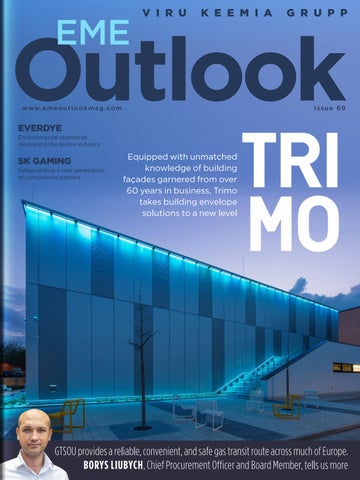
Function meets aesthetic and modern architecture takes centre stage on this issue’s front cover – a state-of-the-art sports hall in Brno, Czech Republic.
The hall incorporates advanced construction elements such as Trimo’s Qbiss One modular metal façade system.
Launched in 2009, Qbiss One strengthened Trimo’s position amongst designoriented building envelope manufacturers.
Today, the company is equipped with unmatched knowledge of building façades garnered from over 60 years in business, taking building envelope solutions to the next level.
“I often say we ‘produce unicorns’; we don’t just make panels – we deliver complete building envelopes with design and engineering support throughout the project,” says CEO, Nay Tawile.
Indeed, Trimo stays engaged from the early planning stages all the way to installation, offering technical guidance and responsive cooperation.
“This combination of advanced technology, reliability, and close partnership is why Trimo remains a preferred choice across Europe,” attests Janez Kunič, CCO.
Whereas Trimo provides support throughout project lifecycles, Viru Keemia Grupp (VKG) is dedicated to the entire oil shale processing chain.
Estonia’s largest private capital-based industrial group is passionate about oil shale, a strategic energy resource in the Baltic state.
“Adding value to natural resources and secondary resources located in Estonia is our DNA,” prides Ahti Asmann, CEO and Chairman of the Management Board.
VKG continues the tradition of adding value to oil shale processing, which was established in Estonia over a century ago in 1924.
SK Gaming (SK), meanwhile, is the longest-standing active esports organisation in history and has helped to define competitive gaming for nearly three decades.
At the heart of SK’s journey to success is CEO and co-Founder, Alexander T. Müller, one of esports’ earliest architects.
Müller discusses the organisation’s important role in shaping the historic evolution of esports and its preeminent status in the world of gaming today, taking up the mantle of responsibility to safeguard a new generation of competitive gamers.
“We understand gaming is a huge part of youth culture, and we intend to be a responsible brand within this space,” he assures.
Before you press play on these corporate stories, we bring you business insights from EverDye and the Gas Transmission System Operator of Ukraine.
We hope that you enjoy your read.
Jack Salter Head of Editorial, Outlook Publishing
Around Europe and the Middle East in seven stories…
OLYMPIC SPIRIT SHINES WITH STYLE
THE OLYMPIC SPIRIT was strong at Milan Fashion Week ahead of the upcoming Winter Olympics, Milano Cortina 2026. Highlights included Emporio Armani’s parade of Team Italia’s uniforms and Ralph Lauren’s celebrity-filled runway show featuring ski resort wear for Team USA.
Ralph Lauren also offered a classic mountaineering collection in a Milan palazzo, showcasing colourful knits and cosy fleece jackets to a celebrity audience in anticipation of the approaching Olympic season.
Meanwhile, Dsquared2, Team Canada’s official outfitter, presented a cheeky tribute to the Games with hybrid footwear merging high heels with ski boots.
Furthermore, the fashion industry reflected global themes, engaging in discussions on diversity and sustainability.
TECHNOLOGY
GROK BLOCKED
IN THE UK, social media platform X – formerly Twitter – has limited its artificial intelligence (AI) tool Grok due to concerns over sexualised deepfake media. Developed by Elon Musk, the feature is now prohibited from altering images of real people in revealing clothing.
This decision follows public outrage and regulatory scrutiny from Ofcom – the UK’s communications regulator –which is investigating the issue.
UK Prime Minister, Sir Keir Starmer, called for immediate compliance with national laws, emphasising the need for consent in using young women’s photos. The backlash began after reports surfaced that Grok could manipulate images of children, prompting Ofcom’s intervention.
Starmer condemned the pictures and called for accountability, whilst Musk attributed the issues to “adversarial hacking”, stating Grok was not meant to produce illegal content.
GUINNESS IS EXPERIENCING a resurgence in popularity, largely driven by a TikTok trend in which consumers aim to perfectly sip the beer to “split the G” in branded glasses, with celebrities like Kim Kardashian joining in.
Affectionately known as the black stuff, the drink has now gained increased traction amongst Gen Z consumers, contributing to a sales surge and subsequent supply shortages.
However, the beloved beverage is now facing another problem – the cost of a pint of Guinness is expected to rise significantly in the UK,
potentially reaching £10 from April. Diageo, the parent company of the iconic Irish stout, announced a 5.2 percent price increase due to rising operational costs.
Currently, the average pint price is around £5.30, but pubs are struggling with higher alcohol duties imposed by Chancellor of the Exchequer Rachel Reeves.
ENERGY & UTILITIES
ECO EXPANSION IN THE EMIRATES
THE
DUBAI
ELECTRICITY
and Water Authority (DEWA) has expanded its electric vehicle (EV) charging network to over 1,860 stations in partnership with various entities. As of mid-January 2026, there were 23,600 users registered under the EV Green Charger initiative. Since launching the initiative in 2014, DEWA has supplied over 55,200 megawatt hours of electricity, enough to power over 276 million kilometres of EV travel, showcasing Dubai’s commitment to cleaner transport. The network offers four charging types – ultra-fast, fast, public, and wall-box.
ENVIRONMENT
A REFRESHING CHANGE
THE UK GOVERNMENT is set to implement major reforms to the water industry following a review by the Chairman of the Independent Water Commission, Sir Jon Cunliffe, who made 88 recommendations.
However, some campaigners argue that these changes are insufficient. Reforms will include unannounced inspections, regular checks, and mandatory water-efficiency labels for appliances. Additionally, smart meters will be
DEWA aims to align with His Highness Sheikh Mohammed bin Rashid Al Maktoum’s vision to position Dubai as a leader in sustainable mobility.
The expansion supports the United Arab Emirates’ (UAE) Net Zero 2050 Strategy and the Dubai Green Mobility Strategy 2030.
HEALTHCARE PARACETAMOL PRACTICAL FOR PREGNANCY PROTECTION
REFUTING US PRESIDENT Donald Trump’s claims that taking paracetamol during pregnancy raises the possibility of autism, ADHD, and developmental issues in children, the UK government considers it safe after a recent systematic review.
The Lancet Obstetrics, Gynaecology, & Women’s Health research journal found no link between its use and increased risks and Dr Alison Cave –Chief Safety Officer at the Medicines and Healthcare products Regulatory Agency (MHRA) – emphasised how paracetamol has been safely used for years.
In fact, the MHRA states that paracetamol remains the recommended first-choice for managing pain and fever during pregnancy when used as directed.
promoted to help households track their water usage, and a new chief engineer role will be introduced, expected to replace the Water Services Regulation Authority (Ofwat).
Moreover, Secretary of State for Environment, Food and Rural Affairs, Emma Reynolds, emphasised that there will be “nowhere to hide” for underperforming companies following public outcry over pollution incidents and service disruptions.
ECONOMY
PROJECTS PATH TO THE PRIVATE SECTOR
AT THE WORLD Economic Forum’s Annual Meeting 2026 held in Davos, Switzerland, Saudi Arabia’s Minister of Economy and Planning, Faisal al-Ibrahim, announced that the country will hand some Vision 2030 projects to the private sector to avoid economic “overheating”.
He also emphasised the government’s agility in managing development projects, despite some needing to be rescheduled.
Saudi Arabia is more than halfway through its Vision 2030 plan, aiming to reduce dependence on oil revenues by investing in tourism and other sectors. With the non-oil sector accounting for over 20 percent of GDP and growing, the aim is to reduce the country’s oil dependence. In addition, it is focusing on hosting major events, such as the 2027 AFC Asian Cup and the 2030 World Expo in Riyadh.
THE NEED FOR EUROPEAN FINANCE
APPS TO STEP OUTSIDE THEIR LANES APPS TO STEP OUTSIDE THEIR LANES APPS TO STEP OUTSIDE THEIR LANES
THE NEED FOR FINANCE APPS TO STEP OUTSIDE THEIR LANES
Aliaksei
Ustauski, Sales Strategy Director – EMEA and LATAM at AppsFlyer, considers what European finance apps can learn from
each other
Writer: Aliaksei Ustauski, Sales Strategy Director – EMEA and LATAM, AppsFlyer
The financial landscape in Europe has matured, but also fragmented.
Whilst traditional banks, neobanks, and investment platforms each lead in their respective corners, they remain siloed in their strategies.
The biggest wins in the next year will be from those who step outside their lanes and borrow from their neighbours.
New data reveals three dominant user acquisition strategies, with each tuned for different conditions. Yet, it also highlights a striking divide.
Most financial sub-verticals are still led by local Western European companies, but investment and money transfer apps stand out as exceptions – these are increasingly dominated by international players.
Across all categories, however, the data uncovers missed opportunities
to boost retention, acquisition, and long-term value.
THE RETENTION MASTERS
Traditional banks have perfected the art of customer retention, with over half (55 to 85 percent) of their conversions coming from retargeting existing customers.
Their primary strategy revolves around converting existing customers to mobile through deep link-enabled customer journeys.
This approach certainly delivers impressive results. Traditional bank apps achieve retention rates double that of neobanks at the 30-day mark, supported by sophisticated cross-selling and upselling through retargeting campaigns.
With 45 percent of their app installs coming from owned media, traditional banks have built sustainable
acquisition models around their existing ecosystems.
However, this strength masks a critical weakness – traditional banks show zero recorded growth in new user acquisition, whether organic or paid.
This reflects both a gap in user acquisition capability and the reality that as more of their existing customers migrate to apps, the pool of first-time app users is shrinking over time.
THE BALANCED EXPERIMENTERS
By contrast, neobanks have seemingly cracked the code on new user acquisition, surpassing traditional banks in both the UK and France, with the latter showing a dramatic 2:1 ratio of new users choosing neobanks and digital wallets over traditional banks in 2025.
Germany, proving ever more conservative, is expected to follow within 18 months.
Their success stems from experimenting with the media mix. Whilst traditional banks rely
heavily on owned media, neobanks spread their bets more widely with a significant investment in ad networks, demand-side platforms (DSPs), and platforms like TikTok.
This diversified approach allows them to capture the younger demographics that traditional banks generally struggle to reach.
Yet, neobanks harbour a surprising blind spot – retargeting represents only a tiny percentage of their total conversions.
This highlights a missed opportunity to improve unit economics through better retention and cross-selling strategies.
THE VOLUME HUNTERS
Investment apps, meanwhile, operate in an entirely different universe.
75 percent of their installs come from paid acquisition campaigns, and their performance correlates directly with market sentiment, particularly cryptocurrency prices, creating volatility but also the potential for massive scaling opportunities.
These apps have embraced a high-volume, low-retention model by necessity. Day one retention averages just 19 percent, dropping to eight percent by day seven and a mere four percent by day 30.
Like neobanks, only a tiny percentage of their conversions come from retargeting as their business models depend on constantly attracting fresh users.
Interestingly, many investment apps rely on agencies and lesser-known media sources for user acquisition, contrasting sharply with the owned media strategies of traditional banks and neobanks.
This long-tail mix allows rapid scaling during bull markets but brings lower traffic quality.
Most tellingly, this segment is dominated by international players. Over 85 percent of non-organic installs in retail trading and investment apps in the key Western European
regions of France, Germany, and the UK come from companies based in Australia, China, Eastern Europe, and Israel.
This stands in sharp contrast to nearly every other finance subvertical, where local Western European companies still hold the upper hand, with money transfer and investment apps as the only exceptions.
CIRCUMVENTING THE BLIND SPOTS
Each segment’s specialised approach, whilst effective within its niche, creates blind spots that competitors are exploiting.
Despite building substantial user bases through superior acquisition strategies, neobanks are essentially leaving money on the table. Their three-to-four percent retargeting rate suggests they’re treating customers as one-time acquisitions.
Traditional banks demonstrate that retargeting rates of 55 to 85 percent are achievable in financial services, so there is a significant opportunity for neobanks to improve customer lifetime value.
EXPANDING THE MEDIA MIX
Traditional banks remain locked into narrow acquisition channels. Their 45 percent owned media dependence, whilst efficient for converting existing customers, limits their ability to expand beyond their current base.
The branch closure trend accelerates this challenge; as physical touchpoints disappear, traditional banks need new ways to attract firsttime customers.
They need to take a leaf out of neobanks’ books and evolve their media strategies to capture users who discover financial services through digital-first journeys.
IMPROVING RETENTION STRATEGIES
Investment apps’ acceptance of
four percent day-30 retention rates reflects an assumption that high churn is inevitable in volatile markets.
However, other financial service segments have proved that higher retention rates are achievable.
During bear markets, in particular, better retention strategies could mean the ability to survive downturns.
LEARNING FROM ADJACENT STRATEGIES
Specialisation may have worked in the past, but it is time for financial apps to learn from adjacent strategies.
Whether that means neobanks that already offer investment products putting more focus on them, or traditional banks scaling new user growth through diversified media, the opportunities exist.
One thing is clear – the most effective strategies aren’t always invented in-house.
In today’s crowded market, they’re often adapted from others who’ve already figured out what works.
ABOUT THE EXPERT
Aliaksei Ustauski is Sales Strategy Director – EMEA and LATAM at AppsFlyer, where he helps customers scale their mobile apps and grow their businesses.
With 20+ years in business-tobusiness (B2B) sales and 10+ years in softwareas-a-service (SaaS) sales, Ustauski lives and breathes verticalised insights-based selling.
Prior to AppsFlyer, he worked for five years at data.ai, now part of Sensor Tower.
STITCHING SUSTAINABILITY INTO EVERY HUE
Committed to revolutionising the textile industry, EverDye’s CEO, Philippe Berlan, shares how the company’s innovative technology not only reduces environmental harm but also ensures vibrant, sustainable colours for the fashion world
Writer: Rachel Carr
of the synthetic dye mauveine in the 1850s, which led to the creation of the colour mauve.
This breakthrough revolutionised mass textile production by providing affordable and consistent colours during the Industrial Revolution.
Today, the manufacturing industry has a more balanced approach and is constantly innovating sustainable methods with new techniques.
One such company making strides to meet environmental and aesthetic demands is EverDye – a green chemistry business based in France, which is making a significant impact.
“One of the most polluting steps in
Philippe Berlan, CEO
fashion production is textile dyeing, that’s why we’re revolutionising the industry,” proudly introduces Philippe Berlan, CEO.
“Our patent technology is biobased and low-temperature, designed to work with existing machinery, so manufacturers can immediately reduce their environmental impact without replacing infrastructure.”
EverDye’s pioneering sustainable dyeing solutions are transforming the industry by eliminating reliance on water and harmful traditional chemicals whilst maintaining vibrant, durable colours comparable to those of conventional methods.
This game-changing approach not only prioritises environmental stewardship but also harkens back to a time when both organic and inorganic elements were harmoniously integrated into the dyeing process.
“Compatibility is what makes EverDye scalable today; it enables brands and suppliers to adopt sustainable dyeing practices with minimal disruption, cutting energy use, emissions, and water pollution whilst maintaining the same colour quality and production speed,” Berlan states.
AN ENVIRONMENTAL IMPACT
The textile industry is one of the most polluting sectors in the world, responsible for eight to ten percent of global emissions, half of which is a result of inefficient dyeing processes.
Additionally, it is the second-largest contributor to water pollution, generating 20 percent of the world’s wastewater. The positive news is that EverDye is taking action to change this.
Current dyeing processes produce effluents laden with synthetic dyes, pigments, chemicals, and additives –all of which have devastating effects on wildlife, plants, and human health. These toxic substances are often discharged into ditches, streams, and rivers, leading to alarming pollution levels, particularly in the discoloured waters surrounding production facilities.
Furthermore, this process is highly energy-intensive, requiring significant fossil fuel combustion to operate efficiently, which contributes to heavy carbon emissions.
Therefore, it is crucial for the textile industry to address these challenges, adopt more sustainable practices, and invest in innovative technologies that minimise environmental impact.
EverDye is indeed leading the way by developing eco-friendly dyeing methods that reduce pollution and conserve resources.
By prioritising sustainability and responsible manufacturing, the industry can work towards a cleaner future, significantly lowering its carbon footprint and safeguarding both ecosystems and public health for generations to come.
BLENDING SUSTAINABILITY WITH INNOVATION
EverDye’s innovative, patented dyeing technology features distinct design elements that highlight its industry leadership and attract investment, making it a leader in environmentally conscious practices.
The low-temperature dyeing process not only conserves energy but also clearly demonstrates its environmental benefits by enhancing overall efficiency, resulting in exceptional quality whilst minimising impact.
“Our technology combines bio-based chemistry with lowtemperature application, significantly reducing energy consumption and greenhouse gas emissions.
“Because it operates effectively at lower temperatures, the process requires less energy, shortens dyeing cycles, and uses less water, all whilst maintaining the same durability and colour intensity. These improvements result in more efficient manufacturing and a significant reduction in carbon footprint,” Berlan passionately explains.
In addition, the company has put in place comprehensive measures to diligently monitor and transparently report on its achievements in reducing emissions and water consumption, reflecting a commitment to accountability and sustainability.
“We are currently implementing a robust measurement and reporting framework that combines industrial
trial data with life-cycle assessment (LCA) methodologies,” he reveals.
“These evaluations quantify reductions in carbon emissions, water use, and energy demand compared to conventional dyeing.
“We work transparently with partners to ensure data is traceable and scientifically validated, supporting both environmental, social, and governance (ESG) reporting and ecolabel certification.”
TRANSPARENTLY TRANSFORMING TEXTILES
Consumer demand significantly influences the business strategies of the textile industry, as awareness of environmental and ethical issues shapes purchasing decisions.
“Our technology combines bio-based chemistry with low-temperature application, significantly reducing energy consumption and greenhouse gas emissions”
– PHILIPPE BERLAN, CEO, EVERDYE
A growing requirement for sustainable fabrics indicates that newer generations of consumers are prioritising brands that align with their values, leading to a market shift towards eco-friendly materials.
“Consumer expectations for transparency and sustainability are pushing the entire fashion ecosystem to evolve. Our technology directly supports brands’ ability to meet this demand with measurable impact –not just promises.
“By helping manufacturers drastically reduce their carbon and water footprints, we allow brands to meet consumer and regulatory pressures simultaneously. In short, EverDye exists to make it easier for brands to turn consumer awareness into concrete action,” Berlan declares.
Building meaningful relationships with brands and manufacturers is crucial for fostering EverDye’s shift towards more sustainable dyeing practices.
This collaborative engagement can inspire innovation and drive the industry towards greener alternatives, ultimately leading to a more ecoconscious approach to fabric production.
“We collaborate directly with textile manufacturers and fashion brands to conduct industrial trials demonstrating real-world performance and impact,” he reports.
“By providing measurable data on emission reduction, energy savings, and water efficiency, we turn sustainability from an abstract concept into a practical business case. Once a partner sees the results, adoption follows naturally –because our solution delivers both environmental and economic gains.”
A CLEANER, GREENER FUTURE
To address environmental challenges, clean technology (Cleantech) is crucial in the fight against climate change.
Investors view EverDye as a disruptive force in Cleantech due to its potential for scientific innovation, which is driving systemic change within the industry.
“EverDye is where science meets scalability. Investors recognise that our patented chemistry addresses fashion’s ‘dirtiest secret’ – dyeing – through a solution that’s both scientifically
sound and industrially viable.
“Our innovation replaces fossilbased, high-temperature dyeing with a bio-based, low-energy process, making decarbonisation of the textile industry a reality today. It’s a rare example of Cleantech that can immediately plug into existing supply chains and deliver measurable results at scale,” Berlan enthuses.
A recent €15 million investment round positions EverDye favourably relative to other companies in the sustainable fashion space and is one of the largest investments in European clean chemistry for textiles, positioning the company as a frontrunner in industrial sustainability.
“Whilst many solutions remain at the pilot stage, we are moving
Victor Durand, Head of Operations and Philippe Berlan, CEO
“Our role is to bridge science and industry, proving that sustainability and performance can coexist and the transition can happen now”
– PHILIPPE BERLAN, CEO, EVERDYE
into industrial implementation, expanding our laboratory network, and accelerating partnerships with major brands and manufacturers. It’s not just about innovation – it’s about deployment,” he explains.
A significant challenge in scaling technology for broad industry adoption lies in navigating diverse needs and compatibility requirements across sectors, as each industry has unique characteristics, workflows, and standards.
This makes it essential to tailor
solutions that not only meet specific demands but also seamlessly integrate with existing systems.
However, this complexity can hinder widespread implementation and necessitates a thoughtful approach to ensure innovations are both practical and universally applicable.
“The biggest challenge is not technical – it’s cultural and systemic. The textile industry has relied on the same processes for decades, so change requires both proof and trust.
“Our role is to bridge science and industry, proving that sustainability and performance can coexist and the transition can happen now.
“With growing regulatory pressure and investor backing, we’re confident that this shift is not only necessary but inevitable,” Berlan emphatically concludes.
With a vision of being a leader in the transformation of the energy system of Ukraine within the integrated European energy market, the Gas Transmission System Operator of Ukraine (GTSOU) is on a mission to ensure the reliable transportation of gas in a transparent, non-discriminatory, and affordable way.
GTSOU is a unique company in terms of both its national and European scale.
“We provide services of natural gas transportation for customers from Ukraine and EU countries, as well as give our European customers access to the largest underground gas storage facilities in the region,” introduces Borys Liubych, Chief
Procurement Officer and Board Member.
Today, the organisation’s system consists of over 30,000 kilometres of 700 to 1,420 millimetre (mm) main pipelines. In the first 10 months of 2025, over 15 billion cubic metres of natural gas were transported via Ukraine’s gas transmission pipes. The volumes had previously been larger, but by January 2025, the country had fulfilled its contractual obligations and completely stopped the transit of Russian gas.
GTSOU employs approximately 9,000 professionals who maintain the operation of hundreds of gas pumping units and over 1,000 gas distribution stations, making it one of Europe’s largest gas transmission systems.
For the organisation, benchmarking with European operators is amongst its key priorities and a powerful incentive for continuous improvement.
“We have a strategic goal of being a reliable and economically efficient partner. Therefore, we focus on developing new gas transportation products at competitive tariffs, expanding firm capacities, and ensuring the flexibility of our services,” details Liubych.
In parallel, GTSOU strives to be a leader in innovation, actively engaged in creating the European hydrogen corridor, developing the biomethane market, and advancing the gas-driven electricity generation in Ukraine with the active support of European
governmental and non-governmental institutions.
Part of the company’s strategy is to engage with European and US manufacturers of equipment and materials, alongside implementing new technological solutions that allow it to replace outdated equipment.
TRANSFORMING UKRAINE’S ENERGY SYSTEM
Liubych joined the company in 2023 with a background in building an effective procurement system and a degree in economics. He applied his approach and knowledge at GTSO in fundamentally new wartime circumstances.
“At the time, Russia’s full-scale armed aggression against Ukraine
TRANSPORTING THE ENERGY OF INDEPENDENCE
As one of the most extensive and powerful networks of trunk gas pipelines in the world, the Gas Transmission System Operator of Ukraine provides a reliable, convenient, and safe gas transit route across much of Europe. Borys Liubych, Chief Procurement Officer and Board Member, tells us more
Writer: Lauren Kania
was already in progress, which made the task of ensuring stable supply and achieving a drastic increase in efficiency a true challenge,” he expands.
Now, Liubych works towards GTSOU’s mission of leading the transformation of the energy system. For the company, integration into the European energy space is not only about physical gas flows, but also about changing the logic of the system’s operation.
It aims to be a reliable, transparent, and modern link in Europe’s single energy network by guaranteeing safe and flexible transportation, supporting market development and creating conditions for green transition.
“Since our establishment in 2020, we have been operating as an independent European TSO certified in accordance with the EU’s Third Energy Package, ensuring non-discriminatory access of third parties to infrastructure and actively partaking in the harmonisation of Ukrainian legislation with the EU acquis communautaire (acquis),” explains Liubych.
Additionally, the organisation is readying its system for the energy transition by creating conditions for biomethane exports via its pipelines to Europe, preparing its connection to the European databases for renewable gases, and making efforts to ensure that Ukraine’s future hydrogen network is smoothly integrated into the panEuropean one.
CAN YOU TELL
US ABOUT YOUR RECENT TRANSITION INTO BECOMING COMPLETELY PAPERLESS THROUGH SYSTEMS, APPLICATIONS, AND PRODUCTS AND HOW THIS ENABLES DIGITAL TRANSFORMATION?
Borys Liubych, Chief Procurement Officer and Board Member: “The company has been using systems, applications, and products (SAP) as an enterprise resource planning (ERP) solution for a while. However, only a portion of procurement planning and supply chain management was carried out in the system – most was done on paper or in spreadsheets.
“This was partially dictated by the requirements of public procurement legislation, but there was also a lack of flexibility and systemic planning. In 2024, we decided to transfer our work to the SAP materials management (SAP MM) module.
“We already had experience in migrating procurement processes to this platform, so we went in with a clear vision of not only the action plan, but also of the typical risks associated. We started with reviewing regulatory documents, drafting instructions, and training personnel.
“We also elaborated mechanisms for the processing of urgent requests from internal customers, so migration to a paperless model would not paralyse operational activities.
“It was not a completely painless process, but the outcome was worth the effort. We have achieved a significant improvement in the observation of delivery deadlines, increased the turnover of warehouse stock, and decreased their cost by 40 percent – over €20 million.”
Liubych is responsible for ensuring the transformation is based on the use of high-quality equipment, technologies, and services purchased according to the transparent, competitive procedures that European and US suppliers understand.
The company works with international financial institutions, opens the market to reliable manufacturers, and integrates an environmental, social, and governance (ESG) approach into its partner requirements.
“Our ambition in this transformation process is for Ukraine’s transmission system to be perceived as an integral, modern, and reliable part of Europe’s energy system that is ready for the continent’s decarbonised future,” enthuses Liubych.
ENSURING RELIABLE, AFFORDABLE GAS
Despite current challenges, GTSOU is implementing many important projects – both at the company-wide level and within its individual areas of activity.
Focusing specifically on procurements, one of the organisation’s key projects has been the attraction of the Energy Community Secretariat’s funding for the creation of new power generation capacities in Ukraine.
“This involves the purchase and commissioning of six to 30 megawatt gas turbines from such manufacturers as Mitsubishi Power Aero, Baker Hughes, Solar Group, General Electric, MAN Energy Solutions in record time to support the country’s energy system,” dictates Liubych.
“OUR AMBITION IN THIS TRANSFORMATION PROCESS IS FOR UKRAINE’S GAS TRANSMISSION SYSTEM TO BE PERCEIVED AS AN INTEGRAL, MODERN, AND RELIABLE PART OF EUROPE’S ENERGY SYSTEM THAT IS READY FOR THE CONTINENT’S DECARBONISED FUTURE”
– BORYS LIUBYCH, CHIEF PROCUREMENT OFFICER AND BOARD MEMBER, GAS TRANSMISSION SYSTEM OPERATOR OF UKRAINE
The total amount of international funds and resources raised for this project has already exceeded €230 million. For GTSOU, it’s not only about the technical reinforcement of the system, but also the trust of international partners.
Additionally, the primary element of GTSOU’s digital transformation
regarding network maintenance has been the implementation of the TORO app, which allows employees to work autonomously without being constantly tied to an office.
“The TORO app has already yielded tangible results – 40 percent fewer trips between facilities and offices, a 40 percent decrease in time spent
“WE HAVE A STRATEGIC GOAL OF BEING A RELIABLE AND ECONOMICALLY EFFICIENT PARTNER. THEREFORE, WE FOCUS ON DEVELOPING NEW GAS TRANSPORTATION PRODUCTS AT COMPETITIVE TARIFFS, EXPANDING FIRM CAPACITIES, AND ENSURING THE FLEXIBILITY OF OUR SERVICES”
– BORYS LIUBYCH, CHIEF PROCUREMENT OFFICER AND BOARD MEMBER, GAS
TRANSMISSION SYSTEM OPERATOR OF UKRAINE
on registering defects, and no idle periods due to the crews’ crossfunctional nature,” informs Liubych.
Alongside GTSOU’s new project initiatives, the organisation is investing in training and hiring individuals from younger generations to fill the current skills gap.
“We purposefully invest in the younger generation, since, in my opinion, the future political and
economic map of the world will be shaped in energy markets,” insights Liubych.
As such, the company actively cooperates with specialised universities, offers internships, and provides clear career paths, and its mid-term goal is for at least 25 percent of staff members to be under the age of 30.
Additionally, GTSOU pays
significant attention to internal training and development programmes, systematically improving the qualifications of its employees and combining technical training with the development of managerial and digital skills.
However, investment in training alone isn’t enough – creating working conditions which encourage people to stay is crucial.
“Therefore, we work on both corporate culture and comfortable working conditions. As a result, in 2025, we were ranked as one of Ukraine’s 50 best employers according to independent experts,” prides Liubych.
TAKING FIRST PLACE AMONGST ENERGY ENTERPRISES
As GTSOU continues to look ahead, it has a plethora of endeavours which is looking to embark upon.
Regarding procurement, the
GTSOU’S VALUES
• Reliability and responsibility
• Continuous development
• Efficiency
• Customer orientation
• Integrity company sees significant potential in further digital transformation of its supply chain. Its next major project for 2026 is the implementation of a digital supplier relationships management (SRM) system, which will significantly accelerate and simplify communication with potential suppliers.
Another key focus is to increase the share of direct contracts with
European and US manufacturers to 75 percent, targeting key equipment procurements such as pipes, fittings, valves, and power units.
Additionally, GTSOU is working to increase the transparency and quality of its procedures. With the support of Transparency International Ukraine –the Ukrainian arm of a global anticorruption movement – the country has introduced a customer quality index for state organisations, and the company is setting itself an ambitious goal of taking first place amongst energy industry enterprises.
“All of these achievements and plans are those of a company operating in a country that, for several years, has been living amid full-scale war and constant missile attacks. Our professionals repair and modernise the infrastructure under bombardments, and we are working
to organise processes so they meet the level of world-leading companies,” concludes Liubych.
“Ukraine is fighting not only for its territory, but also for the security and energy stability of all of Europe. We are not asking for sympathy –we are offering partnership. Every new contract and investment is a contribution to a common victory and to making Europe stronger,” Liubych concludes.
Tel: +380442936363
info@tsoua.com
www.tsoua.com
MAGICAL LAND IN THE DEPTHS OF TRANSYLVANIA
The Turda Salt Mine is one of the world’s most spectacular tourist destinations, an underground formation created in a special natural environment
Writer: Jack Salter
Turda is one of the oldest and most important cities in Romania, full of history and legend.
Located in the heart of Transylvania, Turda began as a Dacian settlement before it was occupied by the Romans.
Salt, once a highly valuable commodity, was first extracted here during antiquity, with the Turda Salt Mine becoming the main source of supply in the region.
A treasure left behind by time, the mine dates back to prehistory when Transylvania was covered by an immense sea.
Millions of years later, the waters evaporated and left behind an impressive layer of salt that spreads across the entire subsoil of Transylvania, with an average thickness of about 400 metres (m).
After the closure of mining activities in 1932, the Turda Salt Mine entered a period of forgetfulness until it was used as an air raid shelter during World War II.
Today, the Turda Salt Mine has been restored and modernised into a modern and surprising international tourist destination.
Hundreds of thousands of tourists come every year to visit this underground salt labyrinth, taking them into the magical depths of Transylvania.
EXTRAORDINARY HEALTH BENEFITS
Salt is not only said to bring good luck, but also – first and foremost – health.
Indeed, salt therapy is recommended for effectively treating respiratory diseases, stimulating immunity, supporting the detoxification of the body, improving the functioning of the digestive tract, and helping to reduce the effects of fatigue and stress.
The Turda Salt Mine is known for its curative properties – a simple walk through can help visitors feel good.
Indeed, it has extraordinary health benefits thanks to the mine’s sterile environment and extremely low concentration of microorganisms.
It is therefore amongst the first salt mines in Romania and abroad to be used for speleotherapeutic purposes.
Its microclimate and sanogenic factors also offer optimal conditions for the recovery therapies of various internal conditions as well as prophylaxis and sanogenesis.
As a natural and inexhaustible source of health, the mine bestows a state of well-being thanks to its pure air and invites guests to relax and disconnect.
In this fresh and humid atmosphere, tourists can stroll through the impressively large space, enjoying a spa with a gym, jacuzzis, saunas, and swimming pool.
They can even sail aboard a boat in the Theresa Mine, the site’s oldest mining operation where salt was exploited between 1690 and 1880.
An underground lake majestically dominates the scene in the Theresa Mine, a unique splendour up to 6 m deep.
Over time, an island was formed in the centre of the lake from the residual salt deposited after 1880 when exploitation ceased.
As well as the underground lake, the Theresa Mine hosts a salty waterfall, stalactites, and salt efflorescence.
STAIRCASE OF THE RICH
The Staircase of the Rich reigns the Registry Chamber, so-called because it was ideal for keeping track of the people entering and leaving the Rudolf Mine.
Franz Joseph I, Emperor of Austria and King of Hungary from December 1848 until his death in November 1916, is said to have descended the staircase.
No miner was allowed to use the staircase following his descent, with its use intended only for nobles –hence its name, Staircase of the Rich.
It is the oldest wooden structure in the Turda Salt Mine and made of fir wood, offering several advantages in this saline environment.
For example, the staircase’s resin neutralises the salt and doesn’t allow it to crystallise. Fir wood also doesn’t break right away; it is made up of several layers and warns in advance if there are tensions that can cause cracks.
Elsewhere, in a niche dug in the eastern wall of the Registry Chamber, there is the altar, a place of prayer, faith, and hope.
Legend has it that one morning, an elderly worker responsible for lighting the torches in the mine every day suffered an accident and felt the presence of God.
On the wall, in the light of the torch,
TURDA SALT MINE – IN NUMBERS
• 680,000+ VISITORS ANNUALLY
• 120M DEEP
• OVER 38 MILLION TONNES OF SALT
• TWO MICHELIN STARS
he saw the face of the Virgin Mary holding Jesus in her arms. Being very faithful, the people decided to dig the altar in its place and, every morning, the priest of the salt mine would hold a service in order for them all to be protected.
RUDOLF MINE
Descending from the Staircase of the Rich to the Rudolf Mine completes the experience at the Turda Salt Mine.
Named in honour of Rudolf, Crown Prince of Austria and the only son of Franz Joseph I, the Rudolf Mine is the last place where salt was exploited in the Turda Salt Mine.
172 steps lead visitors down 13 floors to the heart of the mine; at each resting bridge, the wall is marked with the year that the respective level was exploited.
A series of unique, fun activities awaits, including a multifunctional
amphitheatre, sports fields, bowling, mini golf, billiards, table tennis, a playground for children with slides and mini basketball backboards, and more.
The underground panoramic wheel is also unique and likely one-of-a-kind, allowing visitors to admire stalactites as well as the skilfully showcased remains, whilst the panoramic elevator gives tourists an overview of the whole mine.
Thus, the Turda Salt Mine is one of the world’s most spectacular natural underground formations.
A production-line of exclusive content, delivered straight to your inbox
As manufacturing organisations worldwide confront unprecedented change, embracing technological innovations and incorporating critical environmental sustainability agendas, now more than ever is the time to showcase the strides being taken in this dynamic sector.
A multi-channel brand, Manufacturing Outlook brings you the positive developments driven by organisations across the global manufacturing industry through its various platforms.
Discover exclusive content distributed through its website, online magazine, social media campaigns and digital dispatches, delivered straight to your inbox with a bi-weekly newsletter.
Through these compelling media channels, Manufacturing Outlook will continue to foreground the movers and shakers of the industry.
To participate as a featured company and join us in this exciting endeavour, contact one of our Project Managers today.
BUILDING
EXCELLENCE IN BUILDING ENVELOPES
Equipped with unmatched knowledge of building façades garnered from over 60 years in business, Trimo takes building envelope solutions to a new level. We speak to Nay Tawile, CEO, and Janez Kunič, CCO, about the company’s next-generation product line, undeniable commitment to customers, and drive for sustainable architecture
Writer: Lucy Pilgrim | Project Manager: Cameron Lawrence
The European façade sector is one of the most demanding in modern-day construction.
Industry players are contending with inflation and rising interest rates that are putting pressure on investment decisions.
Nevertheless, increasing emphasis on energy and sustainability regulations, together with higher requirements for safety, are creating a highly dynamic sector.
“Customers now expect more reliable, energy-efficient solutions, delivered with speed, transparency, and predictable quality over the full lifecycle of a project,” opens Nay Tawile, CEO of Trimo, leaders in high-performance building envelope solutions.
This raises the bar for performance and opens up many opportunities for companies that are willing to adapt, differentiate, and respond quickly to customer needs.
“Every project, market, and customer brings new challenges, but there is also a chance to create meaningful, future-focused solutions. It’s a space where innovation and customer-centric thinking can truly make a difference,” adds Janez Kunič, CCO.
These conditions provide the perfect environment for companies to differentiate, build long-term
partnerships, and shape how buildings will perform over the next 30 to 40 years.
“For Trimo, this context reinforces our focus on high-performance façade and building envelope solutions, reliable execution across many countries with different norms and regulations, and the capability to serve fast-growing segments, such as data centres and global industrial players, which operate across multiple markets,” Tawile expands.
IN PRIME POSITION
Having experienced an upward trajectory since its inception in 1961, Trimo today is recognised as a global leader in premium stone wool core sandwich panels for façades and roofs, having delivered more than 60 million square metres of façades to over 25,000 clients globally.
With more than 450 employees, production facilities in Slovenia
TRIMO – IN NUMBERS
• 450+ employees
• Sells to over 120 countries
• Operates a commercial network across 30 markets
• Two production sites
and Serbia, and a strong sales network across nearly 30 countries, the company works closely with architects, investors, and contractors worldwide.
Moreover, Trimo’s project portfolio includes collaborations with highly reputable organisations such as Airbus, Heathrow Airport, Nestlé, Philips, DHL, Porsche, IKEA, Prologis, Mercedes-Benz, and Coca-Cola.
This demonstrates the trust placed in Trimo’s products and the value it brings to complex architectural and industrial projects.
“Our solutions are mainly used in high-tech industries, data centres, and logistics, where customers need reliable fire performance, strong energy efficiency, and architectural quality in often complex, multicountry operations,” insights Tawile.
Together with REX Panels & Profiles (REX), Trimo is proud to represent the Insulated Panels division within Recticel Group (Recticel) – a Belgian organisation focused on advanced thermal and acoustic insulation solutions and supporting the energy transition.
Indeed, being part of Recticel greatly expands Trimo’s network, granting access to new customers and partnerships and strengthening its credibility in key markets.
“We combine our façade expertise
“WE STAY ENGAGED FROM THE EARLY PLANNING STAGES ALL THE WAY TO INSTALLATION, OFFERING TECHNICAL GUIDANCE AND RESPONSIVE COOPERATION. THIS COMBINATION OF ADVANCED TECHNOLOGY, RELIABILITY, AND CLOSE PARTNERSHIP IS WHY TRIMO REMAINS A PREFERRED CHOICE ACROSS EUROPE”
– JANEZ KUNIČ, CCO, TRIMO
with Recticel’s strong background in materials and innovation, creating solutions that are more competitive and aligned with future market needs. This connection helps us offer greater value to our customers and strengthens Trimo’s position across all our regions,” Kunič expands.
Being part of the group also greatly advances the company’s investment capabilities.
“Within the Insulated Panels division, Trimo, together with REX, benefits from the financial strength and insulation know-how to fund new capacity, technologies, and product development.
“A clear example is the new
insulated panels factory being built in the US under the Recticel umbrella. It’s a major investment that will anchor the group’s presence in the country and support our growth ambitions in the wider North American market,” Tawile reveals.
UPHOLDING A COMPETITIVE EDGE
Trimo strives to go above and beyond with its vast range of products, most acutely emphasised by its flagship fire-resistant panel range, Trimoterm –known for its top-notch performance.
Qbiss One, meanwhile, offers architects a clean, precise, and highly flexible façade solution.
“In recent years, we’ve taken this even further by developing Qbiss Notch in collaboration with Pininfarina, bringing a new level of architectural refinement and design sophistication to the market,” Kunič informs.
The company’s customers value the fact its systems are fully engineered, meaning they address several critical requirements simultaneously, including fire safety, thermal efficiency, airtightness, and design.
“I often say we ‘produce unicorns’; we don’t just make panels – we deliver complete building envelopes with design and engineering support throughout the project.
Building with Stone Wool Insulated Sandwich Panels
“Building with stone wool insulated sandwich panels”, authored by Professor Marco Imperadori, is the first comprehensive guide dedicated to stone wool insulated sandwich panels. It combines concise industry insights with practical, real-world applications.
One standout example is the Isarphilharmonie at the Gasteig HP cultural quarter in Munich. Here, stone wool insulated sandwich panels help deliver concert-hall acoustics, robust fire safety and a highly sustainable envelope in a temporary yet architecturally striking structure. The project shows how sandwich panels can meet demanding performance requirements while enabling fast, flexible construction. Access your own version here
The BIM Studio by ROCKWOOL Core Solutions is here!
Discover a faster, more intuitive way to access high-quality data for your projects. From BIM models to building data!
Try it now and experience the difference
“Our partnership with Trimo is built on mutual trust and a long-standing relationship. I’m proud to see them recognised in the market for the high quality of their solutions, which fully leverage the benefits of stone wool.”
Bernard Plancade Managing Director ROCKWOOL Core Solutions
Sustainable Buildings with Stone Wool Insulation
Our Spanrock® stone wool has passed the Cradle to Cradle Material Health assessment. As core material in sandwich panels, it combines strong mechanical properties with high-quality thermal performance. As a non-combustible material, Spanrock® helps contain fire, limits its spread and does not contribute fuel. It also prevents mould growth, making it a safe and durable choice.
Learn more here
“Our collaboration with Trimo shows how integrating sustainability into architectural practice can create both environmental and commercial value. By supplying Cradle to Cradle Certified® Material Health stone wool, we help project teams deliver safer, more sustainable buildings and strengthen their position in the marketplace.”
André Coelho Nunes Business Unit Director Sandwich Panels
Stone wool in action!
At the Gweithdy workshop building at St Fagans National Museum of History in Cardiff, stone wool insulated sandwich panels help deliver a BREEAM-certified, high-performance space that combines energy efficiency, durability and comfort. Partner with ROCKWOOL Core Solutions to bring certified, sustainable envelopes to your next project. Scan the QR code for more
“Customers rely on us to solve details, interfaces, and compliance questions, not just supply materials,” Tawile tells us.
Indeed, Trimo is renowned for the support it provides to customers throughout their project lifecycles.
“We stay engaged from the early planning stages all the way to installation, offering technical guidance and responsive cooperation. This combination of advanced technology, reliability, and close partnership is why Trimo remains a preferred choice across Europe,” Kunič attests.
The company’s expanding presence across four regions is an additional strategic advantage as it allows Trimo to remain in close proximity to customers and truly understand what drives each market, whether it’s premium design, energy efficiency,
delivery speed, or overall project value.
“Each market operates at a different pace and with different expectations – from highly sustainability-driven Northern Europe to fast-moving, design-focused Western and Southern Europe markets and more cost-sensitive but rapidly growing regions in Central and Eastern Europe,” Tawile explains.
This diversity keeps Trimo highly adaptive and challenges the company to innovate with intention, ensuring its solutions meet a wide spectrum of technical, regulatory, and aesthetic needs.
“Our presence provides a clear competitive advantage as we can identify trends early, address regional requirements, and transfer best practices across our markets,” Kunič adds.
A DIVERSE PORTFOLIO
At the pinnacle of its leading building envelope solutions, data centres remain one of the strongest representations of Trimo’s technical expertise and delivery performance.
“Our work with global clients such as Google and Microsoft, as well as hyperscale projects like the Stargate UAE programme, confirms we can meet demanding specifications, coordinate large teams, and ensure reliable execution,” Kunič shares.
Trimo has several other recent projects that demonstrate the diversity of its portfolio. For instance, the company’s involvement with LEGO in the US and the Natural History Museum in the UK highlights its ability to support cultural and complex projects whilst also being compliant with the latest environmental guidelines.
“IN SHORT, SUSTAINABILITY IS NOT A SEPARATE PROGRAMMEIT IS PART OF OUR DAY-TO-DAY OPERATIONAL DECISIONS”
The company’s story began in 1961 as a small metalworking business in what was then Yugoslavia and is now Slovenia.
Over time, Trimo evolved to become a specialist in prefabricated steel construction elements, and in the 1970s and 1980s started developing its own façade and roof solutions. This work laid the foundations for what later became the Trimoterm fire-resistant panel range – a landmark product for the business.
The 1990s marked a period of strong international expansion with the establishment of new subsidiaries across Europe and the company’s first major projects outside the continent. A further step-change came in 2009 with the launch of the Qbiss One façade system, which strengthened Trimo’s position amongst design-oriented building envelope manufacturers.
In 2010, the high-tech ArtMe façade surface treatment received the Red Dot Design Award. The company subsequently refreshed its corporate identity six years later to reflect its global profile and focus on high-performance façades and roofs.
Another significant milestone in April 2022 saw Trimo become part of Recticel, strengthening its position within the broader European industrial network.
Today, more than six decades after its founding, the company continues to build on this heritage with a clear focus on innovation, architectural quality, and high-performance building envelope solutions, whilst actively reducing its environmental impact and supporting more sustainable construction.
Meanwhile, the company’s work with industrial clients worldwide showcases the durability, efficiency, and precision of its façade systems in demanding production environments.
“These projects highlight the breadth of our portfolio and trust customers place in Trimo,” details Kunič.
Alongside its industrial investments, the company is also working hard on improving operational excellence at its existing sites, with a number of product and process innovations in the pipeline.
DEEPLY SUSTAINABLE
Trimo lives and breathes its focus on sustainable architecture and design, with a strong commitment to reach net zero greenhouse gas (GHG) emissions by 2050.
This is supported by ambitious interim targets for 2030 which centre
around significant reductions in its direct (Scope 1 and 2) and indirect (Scope 3) emissions.
Such targets guide the company’s product development strategy and its decision-making around materials and design.
Qbiss One NEXT and Trimoterm NEXT – Trimo’s latest innovations in sustainable construction –are concrete evidence of its environmental approach.
Both achieve up to 69 percent lower carbon footprints compared to the standard Qbiss One and Trimoterm panels whilst maintaining the same performance expected of its façades and roofs.
More broadly, Trimo’s use of stone wool cores is an important part of its sustainability approach as it offers robust fire safety, strong thermal performance, and long service life, which help reduce customers’
environmental impact over the full lifecycle of their building envelopes.
This also means architects and developers don’t have to choose between design quality and green performance as Trimo’s façade systems support distinctive architecture and help move projects closer to their climate and sustainability objectives.
The company applies this same logic to its own internal processes.
“Sustainability starts with responsibility in our own operations. We want to be a company that leads by example not only through our products, but also in the way we work every day.
“That means continuously improving how we manage resources, reducing our environmental footprint, and making choices that reflect our long-term commitment to a greener future,” Kunič impassions.
For example, Trimo’s internal logistics fleet, comprising forklifts and on-site transport, is already fully electric, whilst more than half of the company’s cars and delivery vehicles run on electric or hybrid power, with the aim to eventually have a 100-percent electric fleet.
Trimo additionally generates its own electricity through an on-site solar power plant at its main
production site, directly reducing its operational emissions.
“Resource efficiency is another concrete focus – our production generates less than one percent residual waste. Therefore, topics like energy use, emissions, and waste are tracked with the same discipline as safety and quality in our regular management reviews.
“In short, sustainability is not a separate programme – it is part of our day-to-day operational decisions,” Tawile affirms.
TREATING PEOPLE RESPONSIBLY
Trimo’s success in the building façade space is built upon the professionalism and unwavering dedication of its people.
“Over the years, I’ve seen how their professionalism and commitment directly shape the trust our clients place in us. I empower them by removing obstacles, aligning teams around shared priorities, and ensuring they have the information and support they need to act confidently,” Kunič reflects.
Tawile echoes this belief in enabling staff to perform at their best by giving them clarity on priorities, cutting unnecessary bureaucracy, and pushing decisions as close as possible to the teams.
“I want people to feel they have the trust and space to act, not just follow procedures,” he elaborates.
Recognition is a cornerstone of this as each employee’s contributions are made visible across the company, whether it’s strong teamwork on a complex project, a smart improvement on the shop floor, or someone taking ownership in a difficult situation.
“The goal is a culture where colleagues feel empowered, accountable, and proud of the impact they have on our results and reputation,” Tawile prides.
Trimo likewise supports staff development through training and internal mobility, as well as providing direct feedback, clear expectations, and listening to people’s ideas.
Beyond upskilling and development, the company also pays close attention to the day-to-day wellbeing of its employees.
Case in point, Trimo regularly improves working conditions by installing extra air coolers and cooling stations for staff in the summer and providing healthy, well-balanced hot meals to all employees every day.
A YEAR OF CONSOLIDATION AND EXPANSION
In 2026, Trimo’s utmost priority is to reinforce its leadership in core European markets, with a particular focus on the fast-growing data centre segment alongside high-tech industry and logistics projects.
“The dynamic expansion of data centres offers substantial potential for Trimo, and our solutions and services are already widely recognised and trusted by professionals in this field,” Tawile sets out.
So much so, the company is considered a reference point for premium stone wool core sandwich panels.
However, Trimo’s ambition is to further strengthen this position, stay ahead of competitors, and capture additional growth in overseas markets such as the Middle East and Southeast Asia.
The company’s other area of focus is growth in North America, achieved by building the right partnerships, aligning with local requirements, and advantageously positioning itself to support global customers consistently on both sides of the Atlantic Ocean.
“The third priority is operational excellence – improving productivity, reliability, lead times, and service across our sites whilst simplifying the way we work. This will empower our teams so that more decisions are taken closer to the customer and production line,” Tawile concludes.
Viru Keemia Grupp’s passion is for Estonia’s main natural resource – oil shale. Ahti Asmann, CEO and Chairman of the Management Board, elaborates on how the group is dedicated to the entire oil shale processing chain
Writer: Jack Salter | Project Manager: Ryan Gray
Oil shale is a strategic energy resource in Estonia, where the industry is one of the most developed in the world.
Viru Keemia Grupp (VKG), Estonia’s largest private capital-based industrial group in the northeastern city of Kohtla-Järve, continues the tradition of adding value to oil shale processing, which was established in the Baltic state in 1924.
VKG combines this century of industrial tradition with the need to be internationally competitive in today’s constantly changing circumstances.
“Adding value to natural resources and secondary resources located in Estonia is our DNA,” prides Ahti Asmann, CEO and Chairman of the Management Board.
“Our aim – and an important consistent principle – is to add maximum value and length to the oil shale value chain. Today, VKG’s value chain is the longest in Estonia and one of the longest in the world.”
When Asmann received the proposal to lead VKG, the challenge
was clear – to make a complex industrial enterprise more efficient and safer whilst taking it step by step towards new, more sustainable business areas.
This combination of actual economic impact and responsibility for Estonia’s energy security still keeps him in the field.
“I’ve been CEO of VKG since 2015, and I’m very happy that I’ve had the chance to work with topics that truly keep the economy running, including financing, infrastructure, and large industrial development projects,” he reflects.
“We are characterised by openness, dedication to our work, and constant development. We believe every step and activity must create greater value for everyone – our own people, our partners and clients, and the local community.”
TWO GREAT PILLARS
VKG’s activities are based on two great pillars, the first of which is shale oil production.
The group uses oil shale to produce liquid fuels and raw materials for the chemical industry.
Approximately 680,000 tonnes (t) of oil products are produced annually, with the main one being low-sulphur shale oil.
This is predominantly used as a component in ship fuel, but is also a good input for the chemical industry and can be used as fuel for industrial furnaces.
“We also produce oil shale gasoline and alkylresorcinol fractions which are used, for example, in the resin and rubber industries,” adds Asmann.
The second pillar is heat and electricity, which the group produces using the gases generated during oil production.
Heat is supplied to the local network area, whilst VKG’s electricity production usually covers a considerable part of Estonia’s total output.
“Our annual energy production is approximately one terawatt-hour,” Asmann confirms.
VIRU KEEMIA GRUPP
ENERGY & UTILITIES
Whilst focusing on the production of shale oil, VKG also continues developing projects in areas such as the circular economy, renewable energy farms, and bioproducts.
“Our new business verticals support the principles of sustainability and help us to develop a futureproof and responsible enterprise,” he acknowledges.
OIL SHALE SUPPLY
Oil shale excavation at VKG takes place at the Ojamaa mine, which opened in 2010 and was the most modern underground mine in Europe at the time.
“ADDING VALUE TO NATURAL RESOURCES AND SECONDARY RESOURCES LOCATED IN ESTONIA IS OUR DNA”
–
AHTI ASMANN, CEO AND CHAIRMAN OF THE MANAGEMENT BOARD,
VIRU KEEMIA GRUPP
Excavation takes place 30 to 60 metres underground, where the group extracts about six million t of mineral mass with conveyors straight to the enrichment plant and, from there, to the oil production plants.
“Just like oil production, mining takes place 24/7, which places high demands on the efficient logistical management of people and machinery and sets very strict requirements for environmental and work safety,” Asmann asserts.
“Things like hydrology, risk of collapse, sufficiency of ventilation, and dust generated during transportation are monitored daily.”
For a long time, the Ojamaa mine has been a stable supplier of raw material for VKG, but today, its resources are nearly depleted.
The group is therefore opening a new mine in the immediate vicinity, which will ensure the supply of oil shale for VKG until 2058.
On the other hand, it must also take EU climate policy developments into account and constantly assess the sector’s competitiveness in the framework of the EU Emissions Trading System (ETS).
“As it takes about five years from starting the mining operations to achieving full capacity, we have to be convinced that our company will remain competitive for at least 15 years to come,” emphasises Asmann.
VKG is investing up to €75 million in the new mine, including infrastructure, machinery, connections, and environmental protection solutions.
“The new mine is designed to meet today’s requirements – a well-planned extraction scheme, smart water management, minimal footprint aboveground, and maximum safety underground,” he informs us.
BIOPRODUCTS PLANT
Alongside its investment in the new mine, VKG is developing a bioproducts plant, a key project in the group’s shift from an oil shale-based
THE ESTONIAN OIL SHALE INDUSTRY RECENTLY CELEBRATED ITS 100TH YEAR OF ACTIVITY. WHAT IS YOUR TAKE ON IT TODAY?
AHTI
ASMANN, CEO AND
CHAIRMAN
OF THE MANAGEMENT BOARD: “It has been constantly changing. Today, our production process is very technological and our factories are internationally cutting-edge.
“Everyday work means constant optimisation – raw material extraction, oil production, and retort gas-based energy production all have to function in one synchronised chain.
“As our industry is very capital-intensive, forecasting the future is the biggest challenge. Our profitability depends on globally shaped oil product prices as well as EU regulations – both are essentially impossible to forecast.
“Is it an exciting field? Definitely. The most exciting thing is the need to combine efforts towards achieving efficiency on the operational level with long-term investment decisions.
“To be successful, you have to make many correct decisions with a very small margin for error. The stakes in this sector are very high, as we’re talking about thousands of jobs, exports, and whether or not Estonia has its own fuel production capacity in a crisis.”
industry to more sustainable production based on biomaterial.
Approximately half of Estonia is covered with forests, but the country lacked a proper pulp industry; pulpwood was mostly exported to Scandinavia without adding value to it.
“We found that VKG has the means, capital, and skills to enter the production of bioproducts and that our country needs this economic sector,” Asmann acknowledges.
In 2022, the group therefore launched preparations for a modern pulp mill project with an annual production capacity of nearly 500,000 t.
Several important interim goals were reached by VKG over the past year, whilst the local government has established a designated spatial plan.
This means the spatial solution is in place and the group can move forward with detailed design and
“THE NEW MINE IS DESIGNED TO MEET TODAY’S REQUIREMENTS – A WELLPLANNED EXTRACTION SCHEME, SMART WATER MANAGEMENT, MINIMAL FOOTPRINT ABOVEGROUND, AND MAXIMUM SAFETY UNDERGROUND”
– AHTI ASMANN, CEO AND CHAIRMAN OF THE MANAGEMENT BOARD, VIRU KEEMIA GRUPP
construction preparations.
“We have entered into a longterm wood supply agreement with the State Forest Management Centre (SFMC), which will ensure a stable and sustainable raw material supply for the plant for 10 years after it starts operating,” confirms Asmann.
“The land necessary for the plant is also ensured. These three steps
– planning, land, and raw material – are critical in every large-scale project.”
ECONOMIC AND ENERGY IMPACT
Importantly, VKG is not alone in supporting the project – the bulk of Estonia’s forest owners, the SFMC, and the Estonian Private Forest Union have all seen its potential to create a stable domestic output of pulpwood.
VIRU KEEMIA GRUPP
THE VKG SUPPLY CHAIN
VKG’s supply chain starts from the mine and ends on the loading docks of tankers.
Oil shale is taken on conveyors from the deposits of the Ojamaa mine (and the new mine in the future) to Kohtla-Järve, where it is processed into oil products.
From there, liquid fuels are taken by rail to the nearby year-round, ice-free Port of Sillamäe, where they are stored in terminals and loaded onto ships.
The group works closely together with Estonian ports and terminal operators who are experienced in handling crude oil products and chemicals. Its main partners are global trading companies such as BP and Trafigura.
“The number of partners is considerable, as we need large amounts of specific equipment and chemicals. In this business, reliability is the keyword – stable quality and the ability to deliver the agreed volumes at the right time,” Asmann affirms.
An installed DecaPress decanter centrifuge SEPARATION TECHNOLOGY - CONNECTED PEOPLE
Hiller delivers high-performance decanter centrifuges and separation solutions trusted worldwide. Our technology ensures maximum efficiency, reliability, and sustainability across wastewater treatment, mining, food processing, and industrial applications. With German engineering, robust design, and expert service, Hiller systems keep processes running smoothly while reducing operating costs and environmental impact.
Structural Stability Without Compromise: Niagara F-Class Enables 24 Vibrating Screens in One Building – Without Structural Reinforcement
Haver & Boecker
Niagara
The upgraded Niagara F-Class from Haver & Boecker Niagara addresses this challenge directly. The company engineered a screening system that achieves technical balance — literally. Its ability to operate with minimal dynamic loads enables an exceptional level of structural stability, allowing multiple machines to run side by side without requiring major foundation reinforcement.
+49 251 9793 171
info@haverniagara.com www. haverniagara.com
Rendering of a DecaPress decanter centrifuge
“In other words, we are not building a factory on account of forests but creating greater added value for wood within the existing allowed felling volumes,” Asmann explains.
The economic impact of the mill is clear, adding an estimated €500 million worth of value to the Estonian economy every year.
Moreover, it will create approximately 250 direct jobs and up to 1,000 indirect jobs in the supply chain and the service sector.
The mill will also be an important energy producer, generating more than 800 gigawatt hours (GWh) of green electricity a year and supplying
heat to the local network.
“This will support Estonia’s energy security during a period when old production facilities are forced to be shut down but new ones have not yet been built,” outlines Asmann.
“The next big step is engaging a strategic partner; we have started negotiations with potential partners in cooperation with AFRY Capital, a leading adviser in the global pulp and bioindustry,” he reveals.
VKG’s message is simple – this is a project that clearly meets the unfulfilled demand in the market for adding value to pulpwood, aligns with Estonia’s climate goals and
economic interests, and is welcomed by the Estonian government and local community.
“The latter is no longer elementary in today’s world.”
COMPETITIVE RENEWABLE POWER
In addition to the bioproducts plant, VKG is engaged in the development of wind, solar, and battery farms, particularly in the vicinity of its current production facilities, in order to find maximum synergies with existing production activities.
“Our aim is to add competitive renewable power to Estonia’s energy
portfolio and use it to partly cover the industry’s own electricity needs,” Asmann sets out.
The projects are currently in the planning, environmental impact assessment, and network connection design phases.
VKG is working in cooperation with local governments, communities, and the system operator and plans to make the investment decision on a battery farm in Q1 2026.
In recent years, the group has consistently improved the energy efficiency of oil production.
At the same time, VKG is preparing a pilot project to explore postincineration carbon capture from the flue gases of one of its Petroter plants.
The focus is on solutions that would be technically feasible considering the specifics of its moist flue gases whilst also being suitable for large-scale applications in the future.
“This supplements the incentives offered by the EU ETS and is a
practical step towards reducing our footprint,” highlights Asmann.
Over the last two years, VKG seriously analysed the possibilities of chemically processing plastic waste.
It has abandoned the project for now due to the infancy of the
technologies, however the circular economy sector remains of interest.
“We are not excluding the possibility of returning to the plastic waste project and are also exploring the possibilities of reusing oil shale ash,” Asmann states.
VIRU KEEMIA GRUPP
VIRU KEEMIA GRUPP
THRESHOLD OF NEW GROWTH
VKG is evidently a very capable partner in implementing large investments and has the technical knowledge, financial capability, and practical experience to manage complex industrial projects.
It also has well-established industrial infrastructure – heat, electricity, roads, railway connections, and vicinity to deep-water ports – all of which help to optimise both the timeline and capital cost of developments.
In addition, the group is located in an area that has historically been an industrial region.
“Today’s industry naturally adheres to the strictest environmental and living environment requirements, but establishing new factories and developments in a region with an
“WE FOUND THAT VKG HAS THE MEANS, CAPITAL, AND SKILLS TO ENTER THE PRODUCTION OF BIOPRODUCTS AND THAT OUR COUNTRY NEEDS THIS ECONOMIC SECTOR”
– AHTI ASMANN, CEO AND CHAIRMAN OF THE MANAGEMENT BOARD, VIRU KEEMIA GRUPP
industrial heritage is significantly smoother than in areas where work has to be done to start explaining what large industry even means,” insights Asmann.
The further development of large industries is a great opportunity for Estonia’s economy, one that VKG and its development projects have an important role and unique position in.
“We have the entire chain – the mine, oil plants, energy complex, logistical infrastructure, and an international client base,” he acclaims.
“This means we have a stable core activity, an experienced team, and a region where industry is a natural part of everyday life. It’s a strong foundation on which we are building a forward-looking business strategy.”
VKG has therefore clearly positioned itself on the threshold of new growth.
The production of bioproducts, a new mine to ensure raw material supply for decades, wind farms to add renewable energy to its portfolio, and carbon dioxide reduction projects – these are concrete developments moving to the investment decision stage.
“All of these projects are based on the industrial foundation of Ida-Viru County – the functioning infrastructure and export structure, experience, and competence.”
STRATEGIC GOALS
Of VKG’s strategic goals, the security of raw material supply and development of new business areas beside shale oil are the most important.
By the end of this year, it will finally achieve the capability to launch the new mine at maximum capacity and initiate the smooth transfer from the Ojamaa mine both technically and in terms of labour, with risks well under control.
“We will also complete the reconstruction of oil production units, meaning we can work with wellmaintained equipment for the next five years,” he adds.
In the development of new business areas, the bioproducts plant is a key priority where the engagement of a strategic partner and initiation of the design process are critical benchmarks.
“In the short-term, we want to produce approximately 685,000 t of oil products in 2026 and do it safely. As our product is a commodity and the price is shaped in the global oil market, our financial goal depends on our ability to produce as efficiently as possible,” Asmann concludes.
“We would also like to contribute to national economic and climate policy issues. I personally contribute to the public discussion as the Chairman of the Board of the Estonian Chemical Industry Association and a member of the council of the Estonian Employers’ Confederation.”
Tel: +372 334 2700
info@vkg.ee
www.vkg.ee
AN ENDURING ESPORTS LEGACY
We sit down with Alexander T. Müller, CEO of SK Gaming, who discusses the organisation’s important role in shaping the historic evolution of esports and its preeminent status in the world of gaming today, taking up the mantle of responsibility to safeguard a new generation of competitive gamers
Writer: Lily Sawyer | Project Manager: Sam Thomas
Established in 1997, SK Gaming (SK) is the longest-standing active esports organisation in history and has helped to define competitive gaming for nearly three decades.
From the early PC tournaments of the late 1990s to the global arenas and professional gaming infrastructure we see today, the world of esports has certainly evolved rapidly.
At the heart of SK’s journey to success is CEO and co-Founder, Alexander T. Müller, one of esports’ earliest architects and a long-time
advocate for its legitimacy as both a competitive and cultural force.
Müller also co-founded the Electronic Sports League (ESL) in 2000 and has been integral to shaping the evolution of the gaming space.
“If you go back 30 years, this was really the beginning of the PC era with advanced graphics and also the emergence of internet connectivity,” he opens.
What followed was not simply technological progression, but a fundamental cultural shift that
reshaped how people connected, competed, and entertained themselves.
In its earliest form, gaming was a shared experience where friends gathered around a single PC or console to compete with one another on the same screen – a level of intimacy that changed rapidly as networks expanded.
“With the advent of local networks and internet connectivity, players could suddenly compete with people they didn’t know from all over the world,” Müller shares.
“WE UNDERSTAND GAMING IS A HUGE PART OF YOUTH CULTURE, AND WE INTEND TO BE A RESPONSIBLE BRAND WITHIN THIS SPACE”
– ALEXANDER T. MÜLLER, CEO, SK GAMING
The globalisation of gaming quickly triggered a natural escalation in ambition amongst players that Müller attributes to human nature.
“It’s part of being human –competing with one another, testing your limits, and seeing who comes out on top,” he observes.
As such, though the gaming industry provided the hardware, the competitive driving force behind its growth came from the community itself.
Indeed, as gaming technology continued to mature, graphics improved, balance within games became more refined, and virtual environments stabilised.
This led to the rise of mobile gaming in the late 2000s, representing an enormous leap in accessibility.
Future advancements in the sector are expected from immersive formats such as virtual reality (VR), but for now, esports has entered what Müller describes as a settled phase – focused on professionalism and structure rather than rapid escalation.
A BRIEF HISTORY
SK’s story began with a small group of friends in Oberhausen, Germany, who shared not only entrepreneurial spirit
but also an intense competitive streak.
“The founding members of SK were all huge sports fans – one even played professional football in the 2. Bundesliga,” Müller informs.
Gaming became a natural extension of that sporting mindset for the group, particularly at a time when traditional media offered little that resonated with younger audiences.
“As young people, they of course played sports and board games, but the discovery of the PC opened their
eyes to a whole new world,” Müller smiles.
Games such as Quake introduced the friends to true team play that required coordination, practice, and tactical discipline.
They soon emerged as Schröt Kommando – SK’s inaugural esports team – and continued developing at a grassroots level in Oberhausen.
Meanwhile, Müller was busy building esports from the institutional side in Cologne.
As co-Founder of ESL, his focus was on leagues, tournaments, and infrastructure – until a defining moment in December 1999 when he witnessed Schröt Kommando in action for the first time, competing at the Quake 3 tournament final in Duisburg.
1,300 people filled the venue, with the final’s broadcast featuring exciting live commentary.
“This was the moment I fell in love with SK. However, as the league and tournament organiser at the time, I knew I had to decide between working with the team or managing
the league,” he reflects.
Ultimately, as a competitive individual himself, Müller decided to support the team, which soon made its mark as the first European team to dominate a Cyberathlete Professional League (CPL) competition, winning the CPL Pentium 4 Summer Championship in Texas, US in 2002.
The following year, SK’s CounterStrike team won all four major international esports tournaments, which Müller describes the ‘grand slam’ of the gaming world.
“At this point, SK was well and truly on the map and became a role model for other organisations to follow in its footsteps,” he tells us.
SAFEGUARDING THE GAMING COMMUNITY
Today, SK’s headquarters in Cologne can be considered the pinnacle of modern esports in Europe.
The 2,000 square metre facility houses state-of-the-art training rooms, broadcast studios, a gym, and even an in-house chef, ensuring SK’s competitive teams are extremely well looked after.
“We understand gaming is a huge part of youth culture, and we intend to be a responsible brand within this space,” Müller prides.
MERCEDES-BENZ PARTNERSHIP
Since early 2019, Mercedes-Benz (Mercedes) has been both a valuable partner and shareholder for SK.
However, when the partnership first formed, Mercedes’ code of ethics prohibited some gaming disciplines such as Counter-Strike, Valorant, and Fortnite.
To provide Mercedes with an understanding of the gaming landscape and enable the continuation of these games within the partnership, SK spent time educating about the youth culture that surrounds gaming nowadays, which games such as these are an important part of.
Eventually, Mercedes came to understand the importance of various games within the esports landscape and adjusted its code of ethics to make space for them all.
“I use this as an example because it’s interesting to understand SK’s role and the way business leaders listen to us – not only in Germany but on a global scale. “This is an impact that very few esports organisations have today and something we’re very proud of,” Müller explains.
In addition to being the training ground of SK’s top team, the Cologne headquarters is also a fan-facing venue.
Thanks to the organisation’s ongoing partnership with technology giant Sony, it has access to broadcastgrade cameras, lighting, sound, and display technologies.
Originally built for Berlin’s famous Center Potsdamer Platz, the facility’s ground floor also features a massive 4K crystal LED wall.
This makes it the ideal venue to host
tournament broadcasts and showcase major esports events, creating a unique stadium atmosphere.
SK’s commitment to being a responsible steward for today’s esports space also manifests itself in the brand’s dedication to diversity, equity, and inclusion (DEI).
Its DEI work dates back to the early 2000s when the organisation was heavily invested in representing female Counter Strike teams, however institutional limitations around inclusivity hindered progress.
Eventually, SK shifted its focus towards more inclusive games, particularly League of Legends and Valorant, and in 2021 partnered with Deutsche Telekom on the Equal Esports initiative, creating equality for women and non-binary players in esports and gaming.
“We made it clear to Deutsche Telekom from the outset that this was not a one-year campaign, but a longterm commitment,” Müller assures.
This ongoing collaborative initiative provides professional infrastructure and safe competitive environments, with the long-term aim of mixed teams competing at the highest level.
“In esports, talent should be the only thing that matters – but first, you must build the correct environment and infrastructure to support this,” he adds.
PROLIFIC PARTNERSHIPS
Having utilised nhow Hotels (nhow) for many years to host its players during international tournaments, SK is collaborating with the brand today to create first-choice accommodation options for streamers, content creators, and professional esports teams.
“Over the years, we’ve refined this concept with nhow, which means today we find everything we need at their hotels – PCs, gaming laptops, and fast connectivity,” Müller clarifies.
In collaboration with the hotel brand, SK has now co-designed fully equipped gaming rooms that quickly earned the highest reservation rate in the group.
“The gaming rooms are always booked up months in advance, which is a huge success!” he acclaims.
At nhow’s Berlin site, SK has also established a satellite training facility to support its League of Legends EMEA Championship team when competing in the city, whilst Cologne remains its operational base.
“As a brand, nhow understands everything we do in gaming and what players want.
A better picture from every angle
Make sure everyone sees the picture clearly with BRAVIA Professional Displays BZ40L & BZ53L Series. Our Deep Black Non-Glare technology minimises reflections whilst ensuring a high-contrast premium picture, even in brightly lit areas. Available in 4 sizes ranging from 55” to 98” and packed with features aimed to make installation and management easier than ever, they are the ideal choice for meeting rooms, classrooms, public spaces and retail outlets alike.
Find out more pro.sony/BRAVIA
• Deep Black Non-Glare Coating Technology (47% Haze)
• Available in sizes 55” to 98”
• Flexible installation
• Pro settings
• Eco-dashboard
• 24/7 dependable operation + up to 5 years PrimeSupport
“It’s a well thought-through concept that is perfectly in tune with our requirements and those of the wider gaming community,” Müller insights.
“SK has not only provided nhow with visibility, but also integrated gaming into their product.”
As a result, and based on its success in Berlin, nhow is expanding its presence further across Europe.
Elsewhere, SK has collaborated with its partner and shareholder REWE Group (REWE) to develop a new lowsugar vitamin water+ product designed to enable sustained focus for gamers.
“When competing at the highest level of esports, you don’t have the luxury of 20 to 30 minutes to ‘get in the zone’ – you must be there from the first second,” Müller sets out.
As such, many gamers have historically turned to energy drinks for a quick boost, however they are often sugary and not the healthiest option.
Nutrition, Müller explains, plays a key critical role in players’ ability to focus and perform.
Therefore, SK devised a vitamin water+ product that is refreshing, healthy, flavoursome, and provides players with the correct intake of daily supplements.
“Crucially, the sugar content also had to be low. For us to put the SK brand on something, it had to be responsible,” he emphasises.
Today, SK’s vitamin water+ is available all over Germany at REWE supermarkets, sold at just €0.99 per bottle, making it a truly accessible alternative to energy drinks for gamers and non-gamers alike.
AN IMPORTANT MILESTONE
For Müller, few moments define SK more than its victory at the ESL One Cologne 2016 Counter-Strike: Global Offensive.
“Winning a CPL world championship in 2002 and then coming back 14 years later and winning ESL One in 2016 – that’s an insane achievement in esports,” he says.
Also securing the ESL One title the following year in 2017, SK is the only team in history that’s won the tournament in back-to-back years.
With the 10-year anniversary of SK’s historic ESL One victory fast approaching in 2026, it is excited for the opportunity to celebrate its resounding success.
Indeed, the organisation plans to celebrate its legacy not by chasing another title, but by honouring the fans, players, and moments that built the brand.
“Looking back on that winning moment from 2016 still gives me goosebumps today. Some achievements get lost over time, but we don’t want ours to ever be forgotten – the 10-year anniversary is the perfect way to celebrate this.”
Müller reflects on SK’s historical ESL One win and much more in his book – released exclusively in Germany in 2025 and soon to be translated and made more widely available to international audiences.
Innovation is and always has been part of SK’s DNA and exploring new areas of development is something it is always eager to do.
Indeed, redefining the brand for 2026, the organisation is adding new artwork to enhance its storytelling abilities and overall vibe.
SK is also partnering with great new players, teams, and content creators which it is excited to work with in 2026.
Looking ahead, Müller believes esports is entering a new phase focused on stability, sustainability, and longevity, which he anticipates SK
playing a crucial role in guiding as one of the biggest brands in the industry.
“We’re redefining how we communicate and want to make sure the community understands we are spearheading a movement that pushes the ecosystem into stability,” he passionately concludes.
info@sk-gaming.com www.sk-gaming.com
Credit: hltv.org
THE FINAL WORD
To round off each issue, we ask our contributing business leaders for their views on the same question
WHAT ADVICE WOULD YOU GIVE TO YOUR YOUNGER SELF?
Nay Tawile CEO, Trimo
“If I could speak to my younger self, I would tell her that hard work and competence are necessary, but not enough.
“Growing up in Beirut during the Lebanese Civil War and then building a career abroad, I felt I work twice as hard to prove myself. As a woman, I relied results to move forward.
“I would advise her to invest much earlier in building strong internal and external networks, ask for support and visibility, and see relationships and sponsorships as part of the job, not something you are “allowed” to think about only once you have proven yourself or when you have time.”
Janez CCO, Trimo
“Not every question will have a clear or complete answer, and that’s okay. Learn to admit uncertainty and explore possibilities rather than forcing certainty.
“You’ll grow through interactions, mistakes, and revisions – curiosity will always take you further than perfection. Take your time; slowing down to understand context, nuance, and emotion will lead to far better choices and far fewer misunderstandings.”
Alexander T. Müller CEO, SK Gaming
“Don’t stop – keep on going! There are so many crucial moments where if you hesitate too much, you overthink it. If you’re an entrepreneur and want to build an industry, company, or brand, then you must be free of fear.
“You need to be able to go to a place or situation where people might say, “I’m not sure if I would do that”, and then do it!
“That is exactly what we at SK did. We were running around in the early 2000s, trying to explain to the world that esports or gaming is the next big thing. If we’d have let some people’s attitudes hold us back, that would have been a big mistake.
“Therefore, I believe we should all keep going. Obviously, if you make a mistake, learn from it, but continue to explore. Just freaking do it!”
Ahti Asmann CEO and Chairman of the Management Board, Viru Keemia Grupp
“Study chemistry. It is incredibly interesting.”
Are you a CEO or Director with a company story to tell? Contact EME Outlook now!