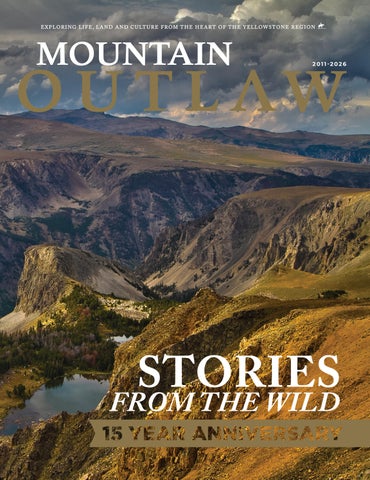
STORIES FROM THE WILD
A special 15-year anniversary edition of the best of Mountain Outlaw magazine
2011 – 2026
PARTNERING SPONSORS
Special thanks to our supporting partners for making this issue of Mountain Outlaw possible.





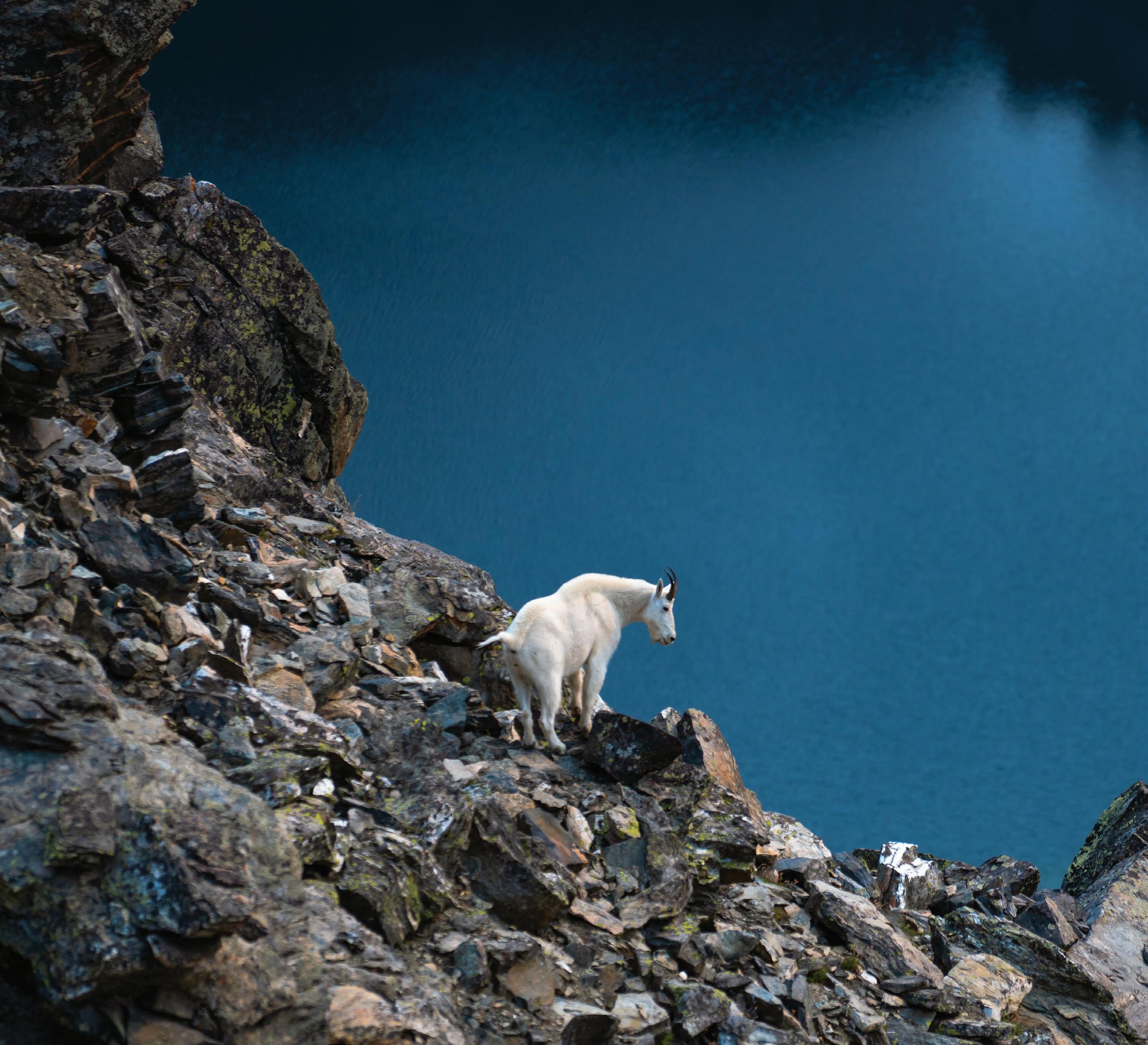
A mountain goat peers over the water of one of the Spanish Lakes in the Spanish Peaks of southwest Montana. Originally featured in Winter 2024. Photo by Ethan Schumacher
Fifteen years ago, I didn’t set out to be a publisher. I certainly didn’t imagine leading a team bold enough, or stubborn enough, to bet on print in a world racing the other direction. And yet, here we are.
Mountain Outlaw was never just a magazine. It became something more, a journal of this region. A living, breathing record of a place and a moment in time. One that I hope, years from now, my son can pull off a shelf, flip through, and relive the stories, the people, and the spirit that defined these days in the West.
At its core, this has always been about storytelling. The belief that great stories still matter. That people still crave depth, texture, and truth. That a powerful image can stop you in your tracks and say more than a thousand words ever could.
Over the years, we’ve had the privilege of sitting down with celebrities, cultural icons and even heads of state. We’ve broken stories that went on to become national headlines. We’ve leaned into the issues that shape our communities, the ones that matter when the spotlight fades. Through it all, we’ve tried to stay true to a simple principle: tell stories that mean something, and tell them well.
What I never expected, but am most proud of, is the team behind it. A group of writers, photographers, designers and thinkers who have consistently defied gravity, producing a piece of print media that holds its own in any room, anywhere. In an era that questioned the relevance of print, they doubled down on quality, creativity and conviction. That’s rare. And it’s the reason this magazine exists today.
Year over year, Mountain Outlaw has grown, in circulation, readership and impact. But more importantly, it has grown in purpose. And none of it happens without the partners who believed in it alongside us. Our advertisers have never just been sponsors, they’ve been stewards. Their support has allowed us to keep this magazine free, accessible, and uncompromising in its vision.
I’d be remiss not to mention Warren Miller, a mentor and a force of nature when it came to storytelling. Warren believed in the magic of a well-told story: in its ability to move people, to inspire them to get outside, to live a little bigger. That ethos found its way into the DNA of Mountain Outlaw from day one. It still guides us.
And while you can find this magazine online, we will continue to print it as long as you, the reader, take the time to grab a coffee, sit down and connect with it the way it was meant to be experienced. Slowing down, turning pages, and getting lost in a story is something worth preserving.
Fifteen years in, I’m less interested in looking back than I am in what’s ahead. The West is changing. The stories are evolving. But the need to capture them, to do it with honesty, beauty, and a bit of grit, has never been greater.
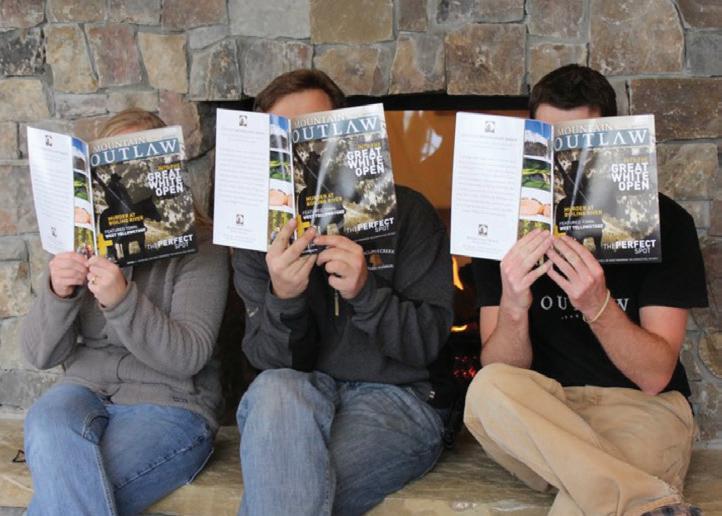
We didn’t set out to build a magazine. We set out to tell stories worth telling.
Turns out, that was enough.

Eric Ladd, Publisher

ROOTS. EXPERT GUIDANCE. EXCEPTIONAL
For more than five decades, ERA Landmark Real Estate has helped guide buyers and sellers across Southwest Montana, from Bozeman to Big Sky—encompassing the iconic Yellowstone, Madison and Gallatin River Valleys. Our reputation is built through deep local knowledge, trusted relationships, and a genuine appreciation for the communities we serve.
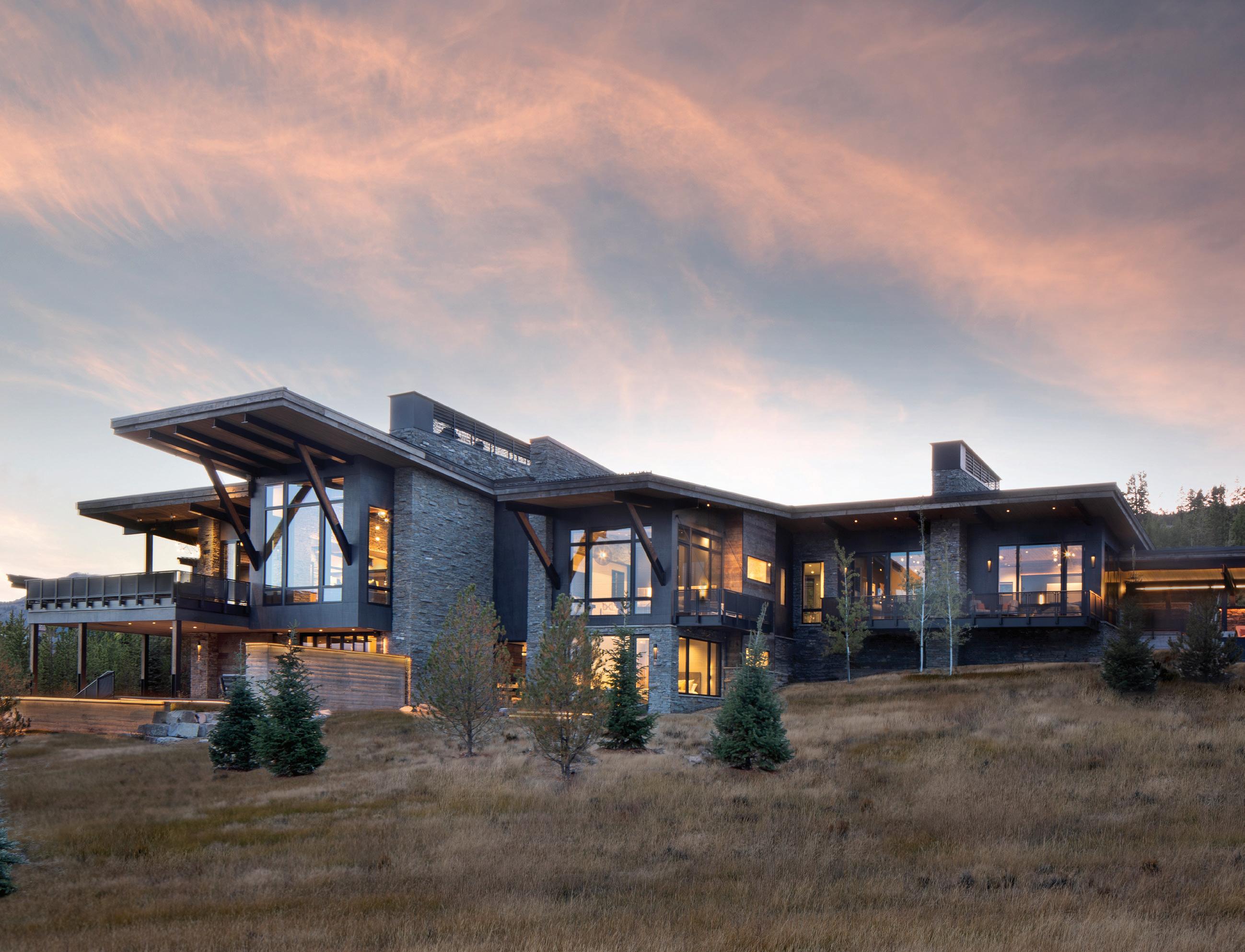
CELEBRATING 30 YEARS BUILDING LEGACY HOMES IN THE NORTHERN ROCKIES
“AS I LOOK AT MY COMPLETED HOME, I AM FILLED WITH A PROFOUND SENSE OF APPRECIATION FOR THIS TALENTED TEAM. IT WAS A PLEASURE WORKING WITH INDIVIDUALS SO COMMITTED TO THE PROJECTS SUCCESS, AND I LEAVE THIS EXPERIENCE WITH DEEP RESPECT AND ADMIRATION FOR EVERYONE INVOLVED.”
-YELLOWSTONE CLUB - BIG SKY CLIENT

INTRODUCTION
Stories from the Wild
By Mira Brody, VP of Media, Outlaw Partners
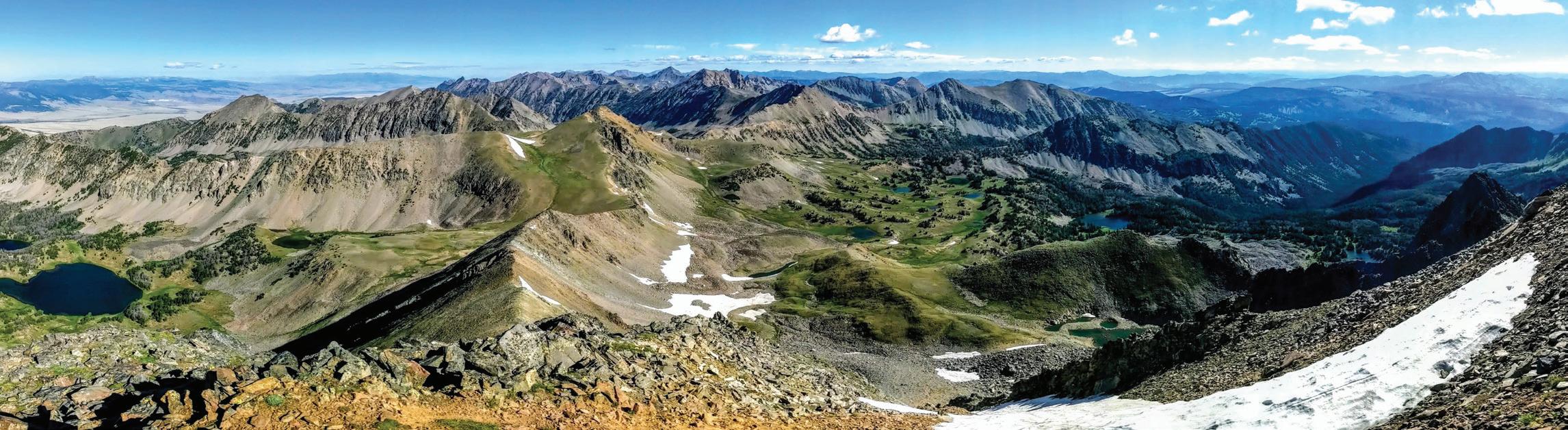
I was recently asked what my favorite piece of public land is, and I found it a difficult question to answer. Raised in the West, my childhood was shaped by wild landscapes like Mendocino National Forest, Big Sur, Yosemite National Park and Lake Tahoe. Being around public land wasn’t a choice; it was as essential as breathing.
I finally settled on the Hyalite-Porcupine-Buffalo Horn Wilderness Study Area—the Gallatin Range in my current backyard. Why? Because of its role in one of the largest intact ecosystems on Earth. Because of its seemingly infinite singletrack, and the grizzlies, moose and marmots I’ve run into on them. Because of the feeling of being wholly alone and, at the same time, filled with the pulsing energy of the wild. There’s something inarguably sacred about being consumed by a landscape where no machinery is allowed; that is accessible only by foot.
I also chose the Gallatins because I came to understand their story. Two years ago, my publisher, Eric Ladd, tasked me with reporting on how entrepreneur Tim Blixseth founded Big Sky’s Yellowstone Club (p. 146). While part of that story ends with multimillion-dollar condos and a landscape and economy forever altered, much of it reveals a broader blueprint for land management in the West. By interviewing characters who recalled the early days of conservation, railroad charters and land swaps in the Gallatin Range, I began to understand the land’s modern history, and those stories made me feel more invested.
Today, I’m lucky not only to live in southwest Montana within arm’s reach of mountains, rivers and prairies, but also to help tell their stories. As inhabitants of the Greater Yellowstone Ecosystem, we all hold a responsibility not just to experience it, but to listen and to give it a voice. In this special issue of Mountain Outlaw magazine, a culmination of 15 years
of some of our best work, you’ll hear that voice.
From the beginning, our magazine has sought out stories rooted in this landscape: backcountry skiers tracing quiet lines through the Lee Metcalf Wilderness; ranching families carrying traditions across generations; historians uncovering Yellowstone National Park’s past; award-winning artists and photographers capturing its likeness. These stories were about place, the people shaped by it, and the ways they, in turn, shape its future.
Founding Editor Emily Stifler Wolfe recently told me that the magazine’s core is its people and our ability to connect with them. “You have to find a thread,” she told me of her experience writing some of the magazine’s most prolific profiles. “You have to connect with someone from a real, honest place. What an amazing gift to be let into someone’s life, and their perspective, and their spirit and the things that are so important to them.”
By sharing stories from individuals across the Greater Yellowstone Ecosystem through long-form, in-depth reporting, we’ve highlighted the important voices connected to this region. In this anthology, we’ve selected the stories that continue to resonate—voices like former Patagonia CEO and conservationist, Kris Tompkins (p. 180); illustrator of Montana’s disappearing glaciers, Jonathan Marquis (p. 58); and Yellowstone’s winterkeeper, Steven Fuller (p. 142).
There’s an unmistakable weight of responsibility when you stand on the Gallatin Crest, looking down its spine toward the Tetons. Assembling this collection has carried a similar weight. In a world where endless streams of content compete for our attention, the stories in this magazine remain authentic, human and necessary. They ask you to pause, and to listen.
And now we ask of you, reader: Listen to the stories from the wild. What are they telling you?
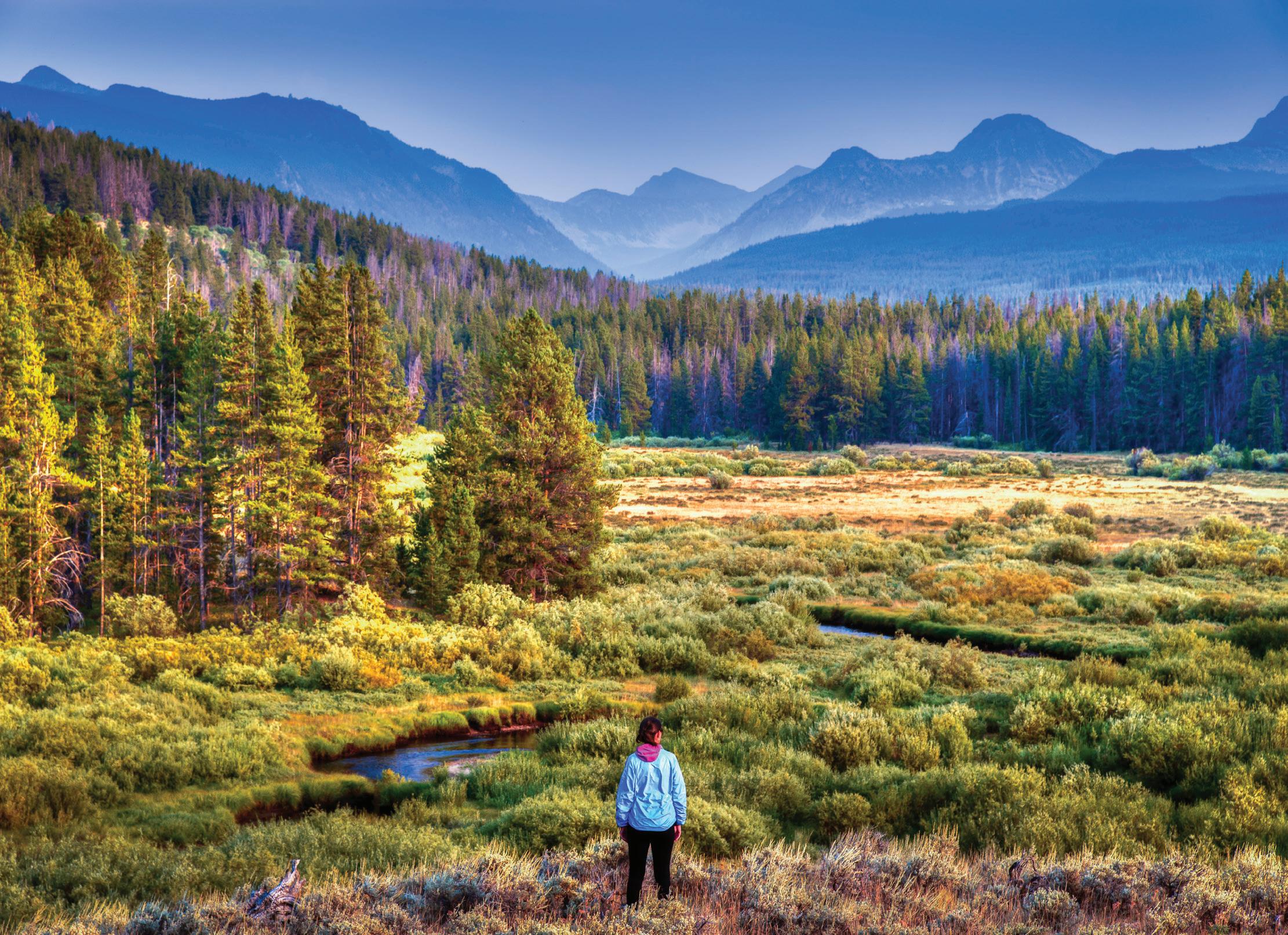
The Madison Range from Echo Peak. Originally published in Winter 2025. Photo by Anna Wern
Huffine
DEPARTMENTS
4 Our Partners Thank you to our partners
6 From the Publisher A well-told story
10 Introduction Stories from the Wild
18 Covers A gallery of past covers
OUTBOUND GALLERY
24 Taking pause SHORTS
36 Yvon Chouinard Thinks food could save the planet
40 The Power of Evel A Butte legend
44 A Merman’s Tale The Sip n’ Dip’s merpeople
LAND
48 More Than Bones The science, and economy of fossils
58 Witness Tracking Montana’s disappearing glaciers
64 Thin Black Line Colstrip’s battle with clean energy
CULTURE
74 In The Wake Six widows reflect on the lost
88 For the Love of the Game Facing ALS
96 The Fine Line Surviving the avalanche
102 Clock Struck 13 A snow-less future
112 Isolation Nation Rethinking solitary confinement
HISTORY
124 A Vision The bond between the Crow and Crazy Mountains
130 Military Cycling The 25th Infantry Bicycle Corps
134 Butte Underground Dark past of the richest hill
138 Inside the Big Burn
The infernos of 1910
142 Of Pride and Progress Yellowstone’s winterkeeper
146 Spokes in a Wheel A land swap that changed the Greater Yellowstone
DISPATCHES
154 Nepal Rebuilding after 122 earthquakes in 28 days
158 A Quiet Revolution A girls' education movement in rural Pakistan
164 Escaping Kyrgyzstan
The horseman and the hunted
OUTLAWS
172 Celebrating those who live life off-piste
LAST LIGHT
186 Bringing light to Lamar Valley
This issue of Mountain Outlaw is an anthology of previously-published stories over the last 15 years. While we’ve reviewed every piece of work for accuracy and relevancy, in an effort to preserve the work in the time they were published, many elements have retained their original form.


Owned and published in Big Sky, Montana
PUBLISHER
Eric Ladd
MANAGING EDITOR
Mira Brody
ART DIRECTOR
Robyn Egloff
ART PRODUCTION
Megan Sierra Griffin House
SALES & ADVERTISING
Ellie Boeschenstein
Ersin Ozer
Patrick Mahoney
ACCOUNTING
Sara Sipe
CHIEF OPERATING OFFICER
Josh Timon
CHIEF MARKETING OFFICER
Megan Paulson
VP DESIGN & PRODUCTION
Hiller Higman
DISTRIBUTION
Ennion Williams
Visit outlaw.partners to meet the entire Outlaw team.
CONTRIBUTING WRITERS
John S. Adams, Jessianne Castle, Richard Forbes, Steven Fuller, Andrew Graham, Steven Hawley, Joshua P. Howe, Brigid Mander, Megan Michaelson, Joseph T. O’Connor, Chad Rothacher, Alex Sakariassen, Bay Stephens, Ednor Therriault, Heidi Utz, Todd Wilkinson, Emily Stifler Wolfe
CONTRIBUTING PHOTOGRAPHERS/ARTISTS
Jason Abraham, Tayler Ashley, Shana Baisch, Lonnie Ball, Jennings Barmore, Amanda Beach, Jake Burchmore, Seonaid B. Campbell, Elena Cizmaric, Michael Coles, Seth Dahl, Tim Davis, Sophie Denison, Lynn Donaldson, Ronan Donovan, Kelsey Dzintars, Richard Forbes, Tom Fowlks, Steven Fuller, Kyle George, Isiah Gibson, Andrew Graham, Audrey Hall, Adam Hecht, Kristin Jacobsen, Louise Johns, Monica Kawski, John Klicker, Steve Korn, Ralph Kristopher, Tyson Krinke, Jeffery Kreulen, Jessica Lowry, Jeff Mangan, Thomas D. Mangelsen, James Q. Martin, Johnathan Marquis, Buddy Mays, KT Miller, Kyle Miller, Brad Orsted, Wes Overvold, Joe Paulet, Erik Petersen, Shawn Raecke, Alex Sakariassen, Ethan Schumacher, Kene Sperry, Bay Stephens, Jeremy Swanson, Jeff Vanuga, Andy Watson, Ryan Weaver, Anna Wern, Victoria Will
Subscribe now at mtoutlaw.com/subscriptions.
Mountain Outlaw magazine is distributed to subscribers in all 50 states, including contracted placement in resorts and hotels across the West. Core distribution in the Northern Rockies includes Big Sky, Bozeman and Missoula, Montana, as well as Jackson, Wyoming, and the four corners of Yellowstone National Park.
To advertise, contact Ersin Ozer at ersin@outlaw.partners or Patrick Mahoney at patrick@outlaw.partners.
OUTLAW PARTNERS & Mountain Outlaw
P.O. Box 160250, Big Sky, MT 59716 (406) 995-2055 • media@outlaw.partners
© 2026 Mountain Outlaw
Unauthorized reproduction prohibited
Check out these other Outlaw publications: Subscribe to and read Mountain Outlaw online.

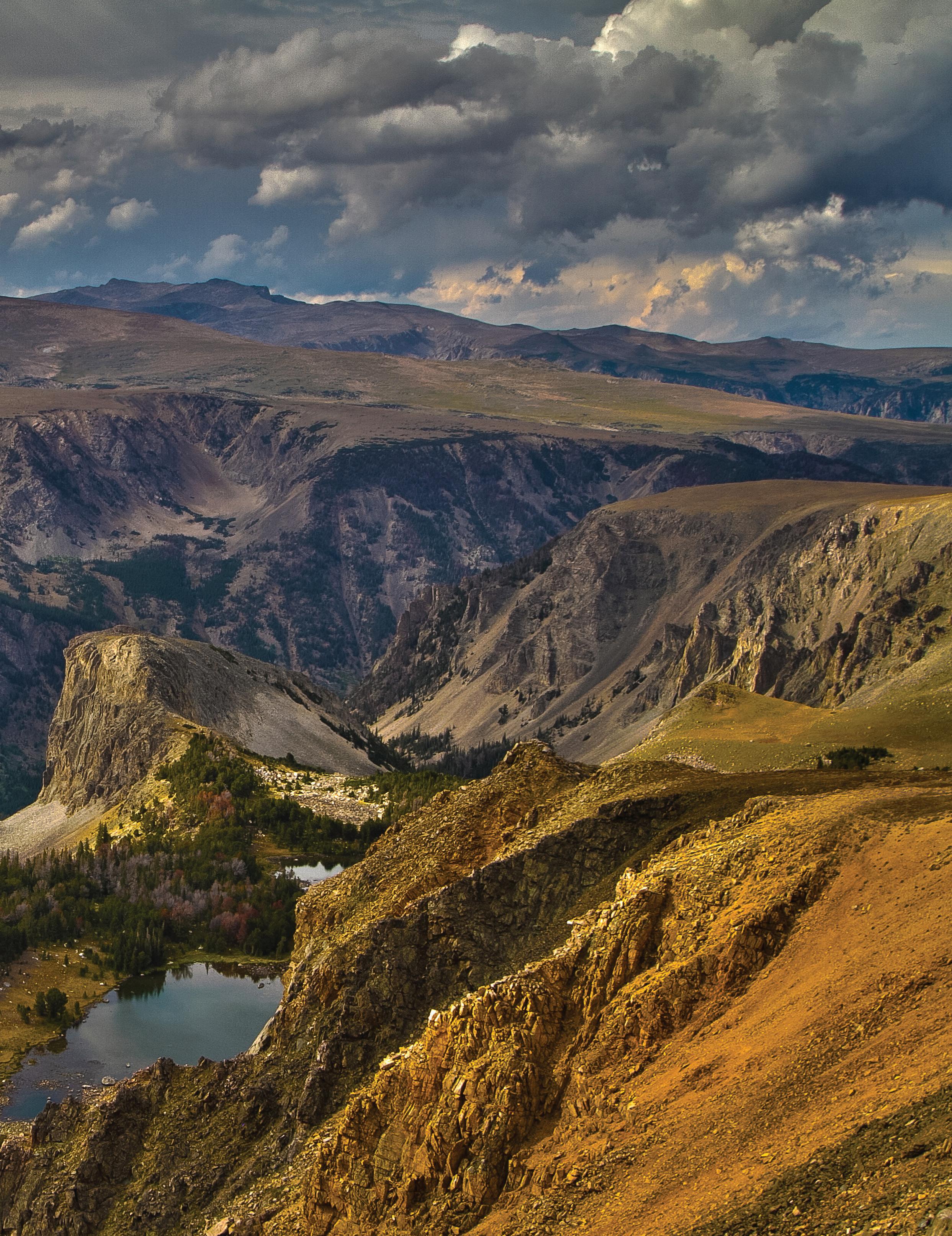
Cover: Clouds build over alpine lakes in the Absaroka-Beartooth Wilderness, a 943,626-acre area straddling the MontanaWyoming border. Originally published in the Outbound Gallery of Mountain Outlaw ’s Summer 2014 issue. Photo by Joe Paulet
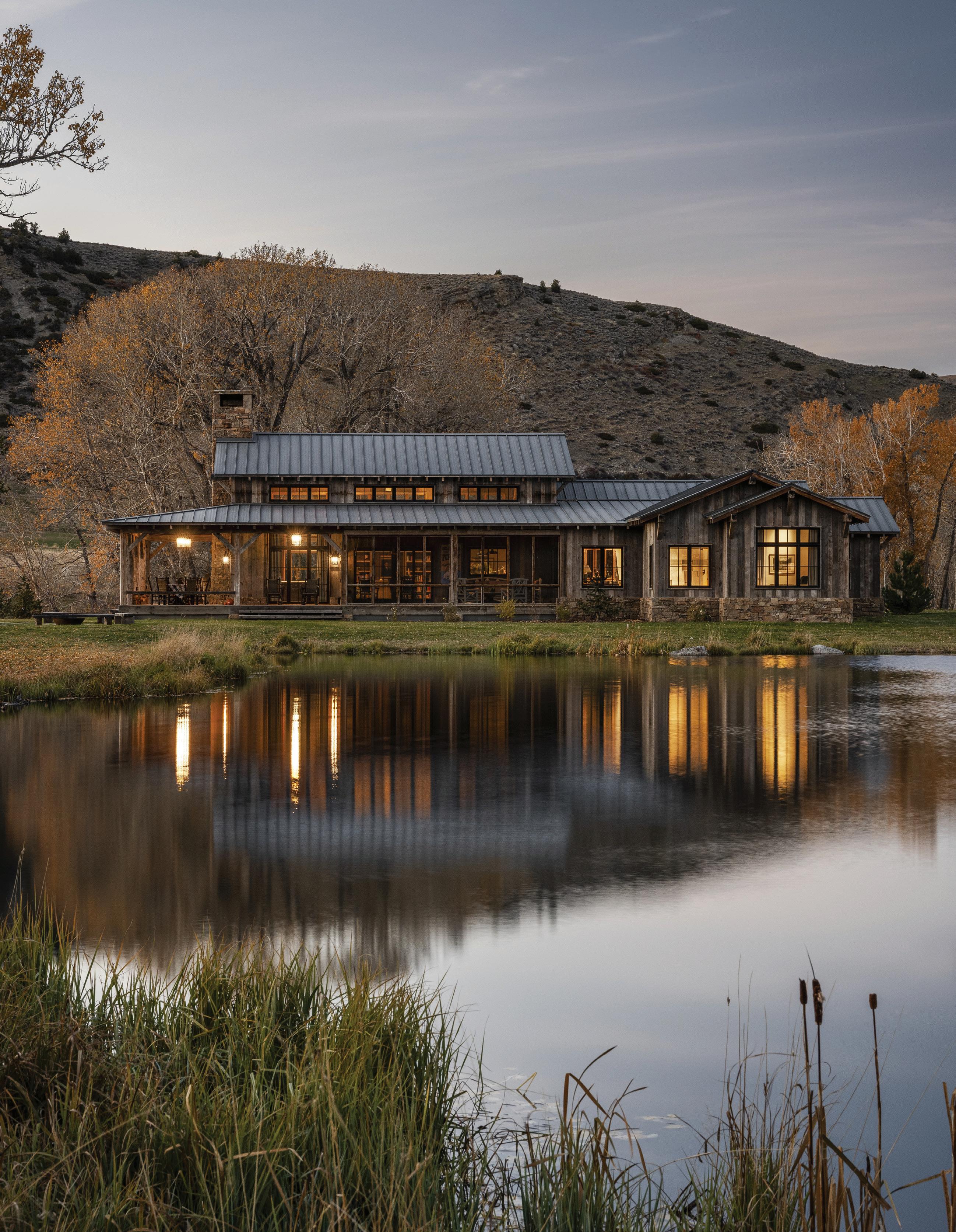
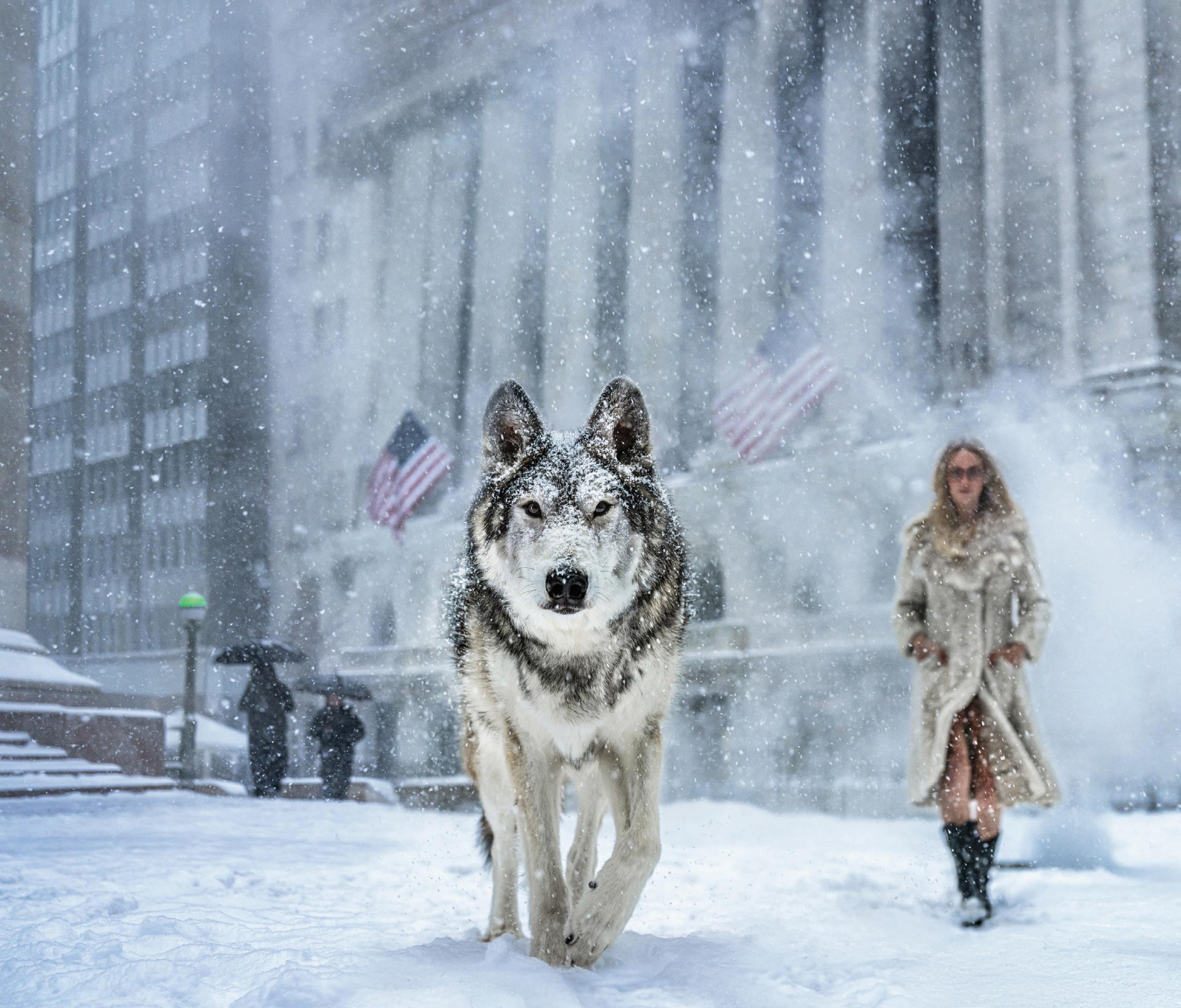


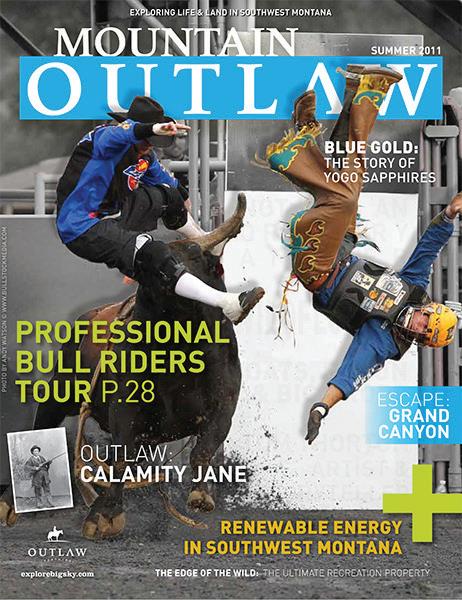
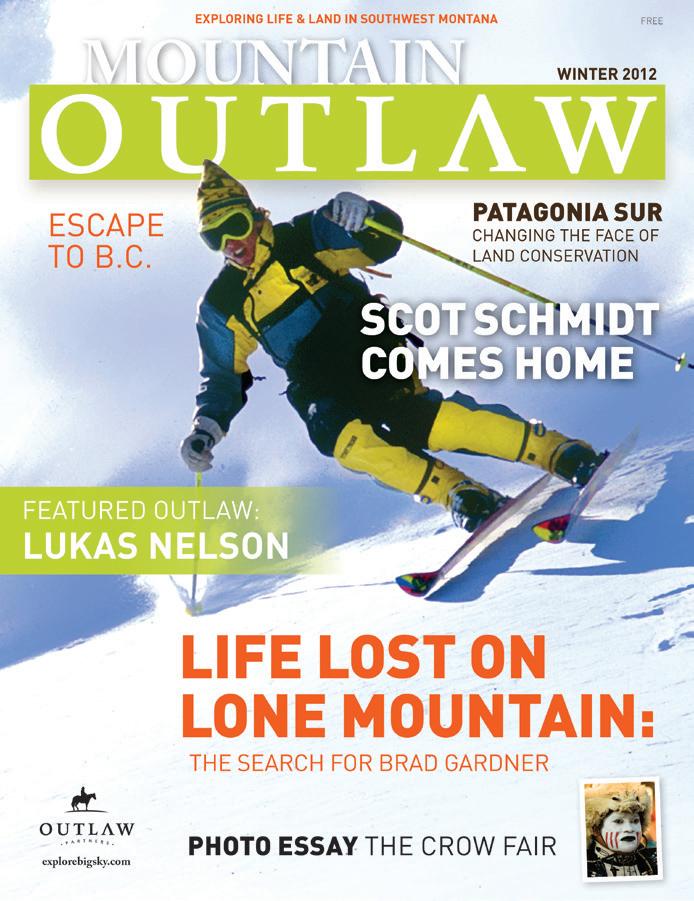
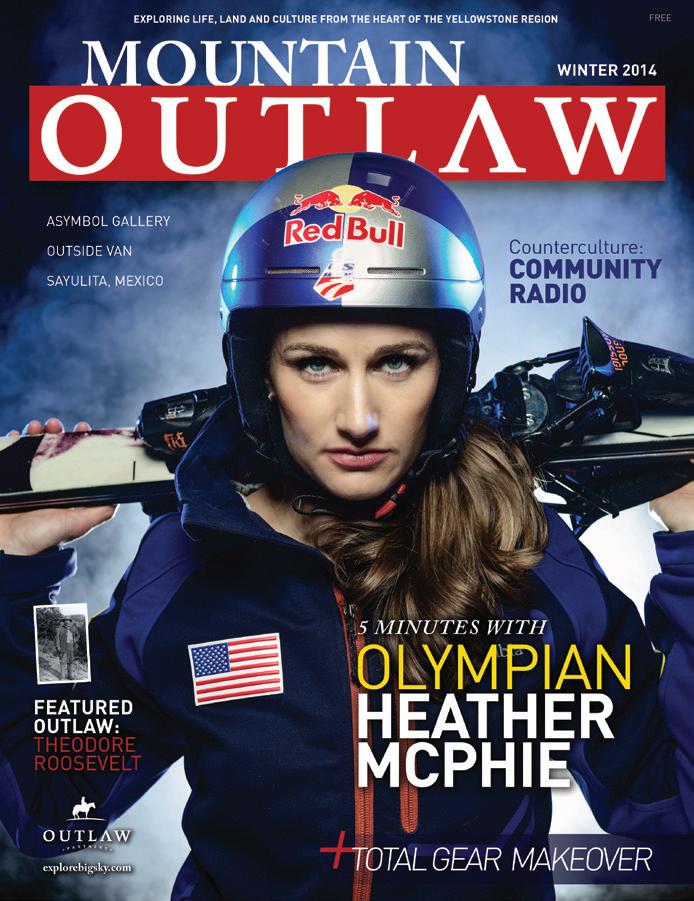
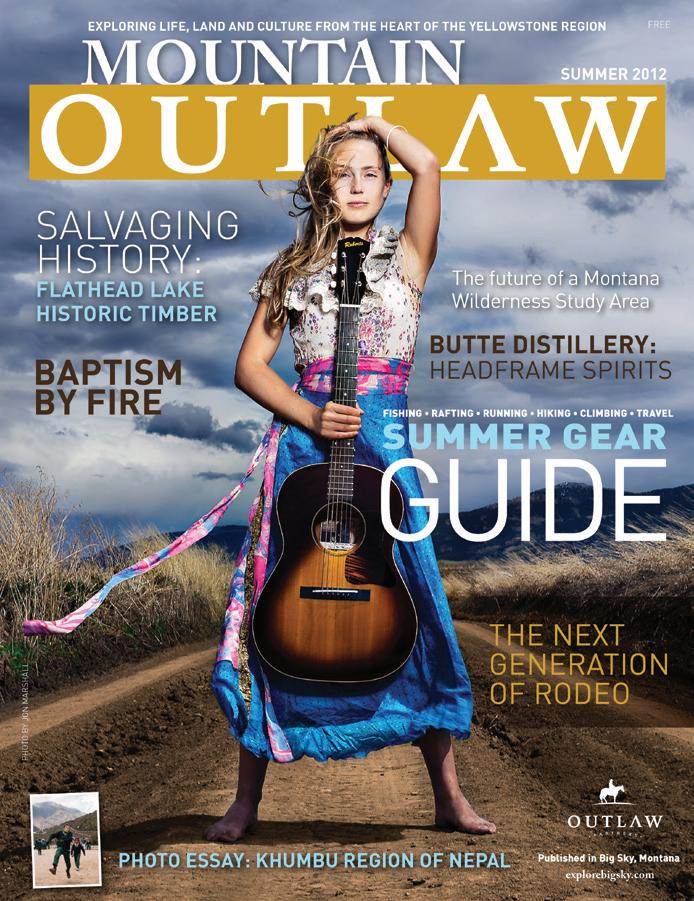
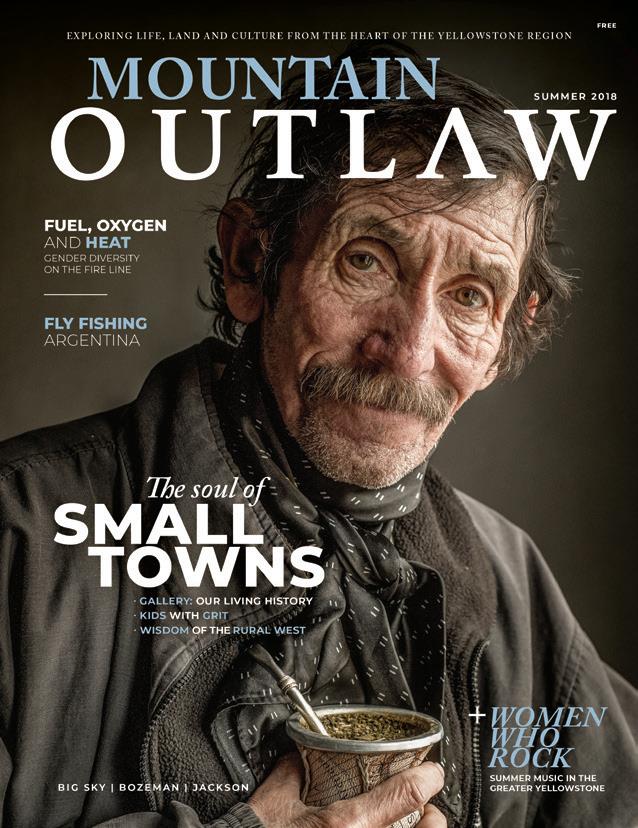
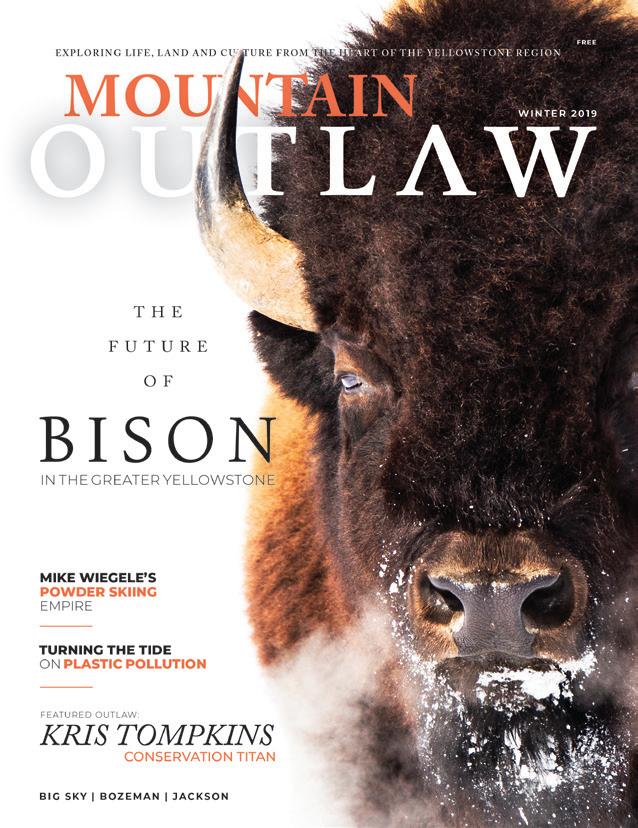
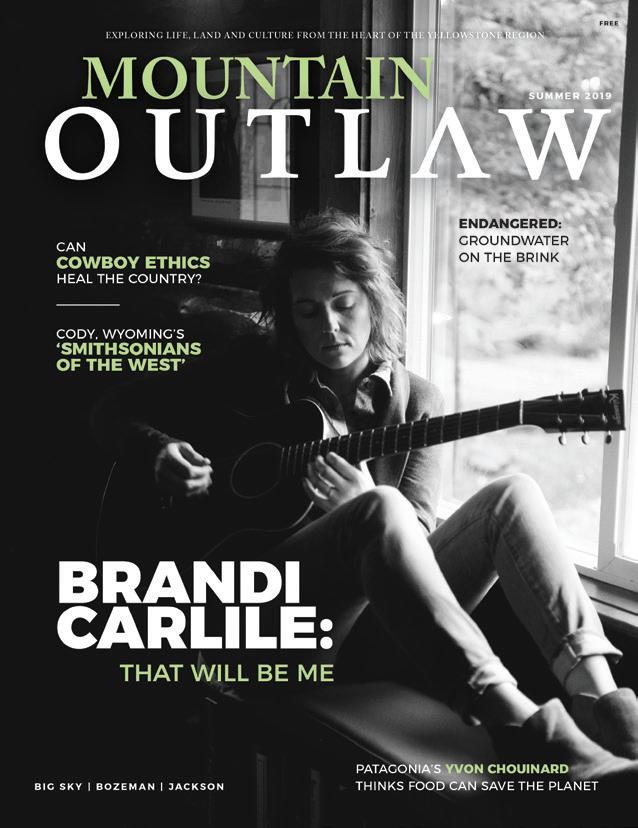
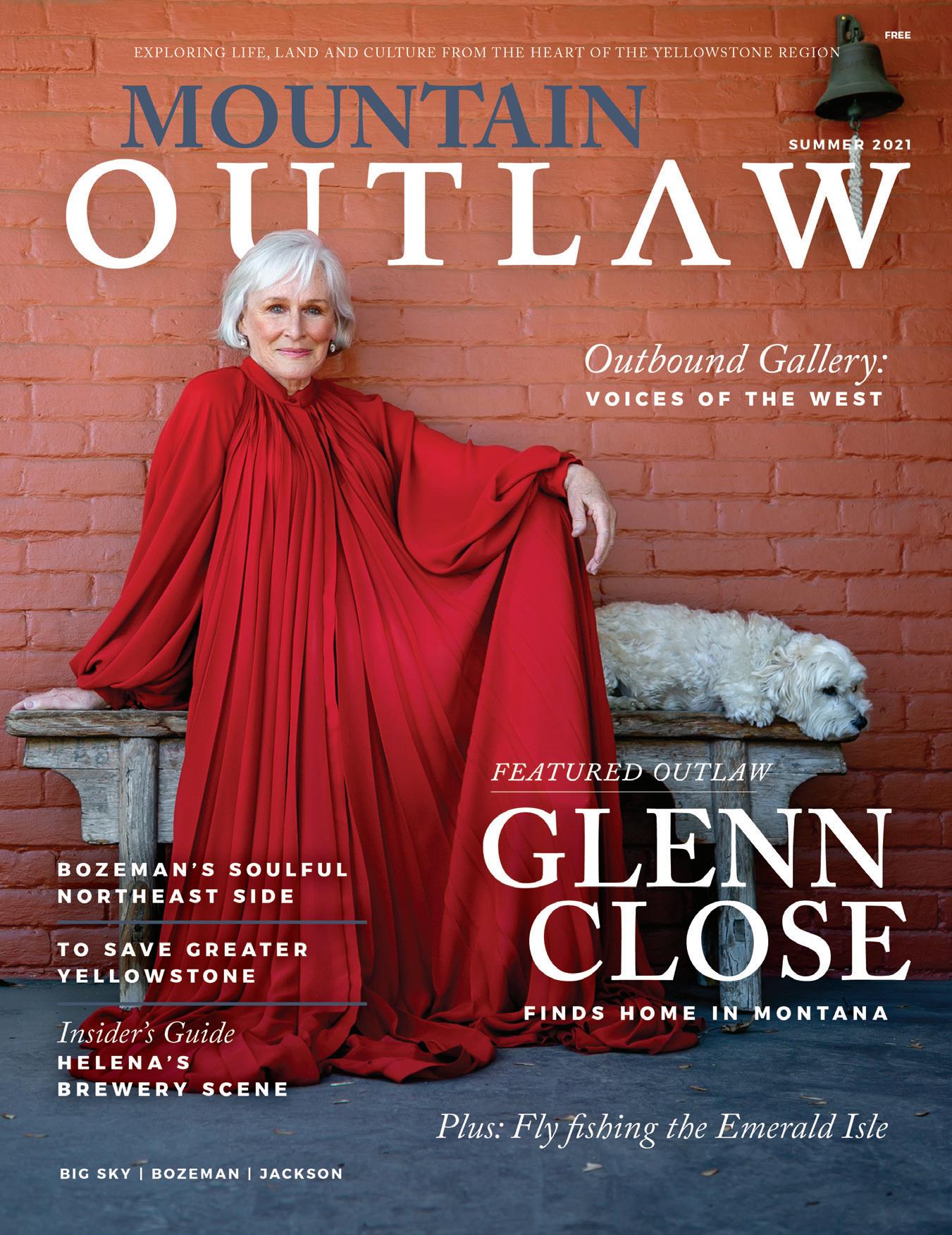
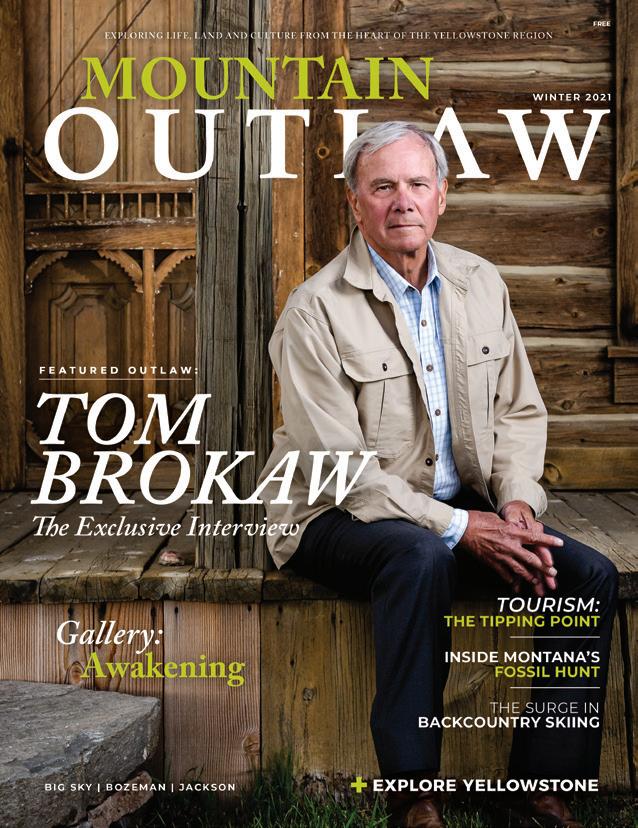
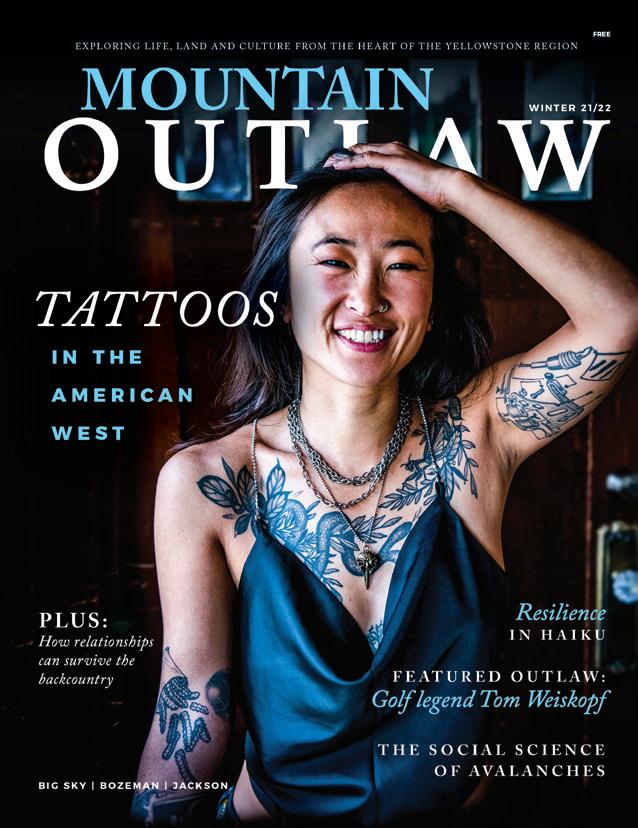
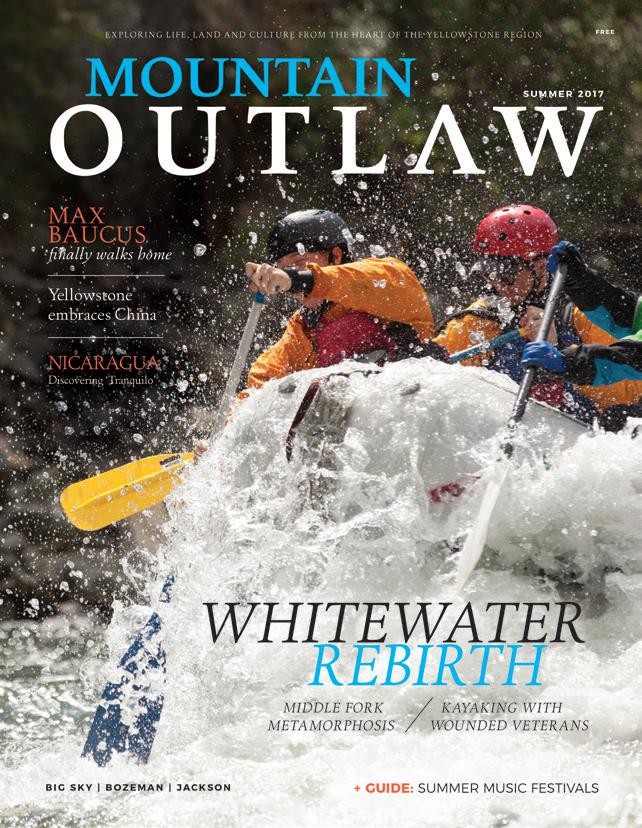
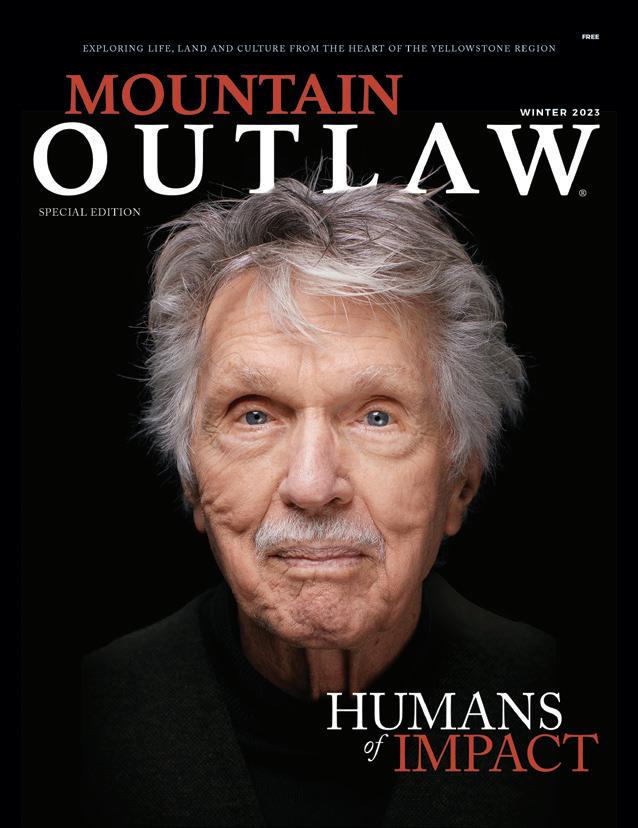
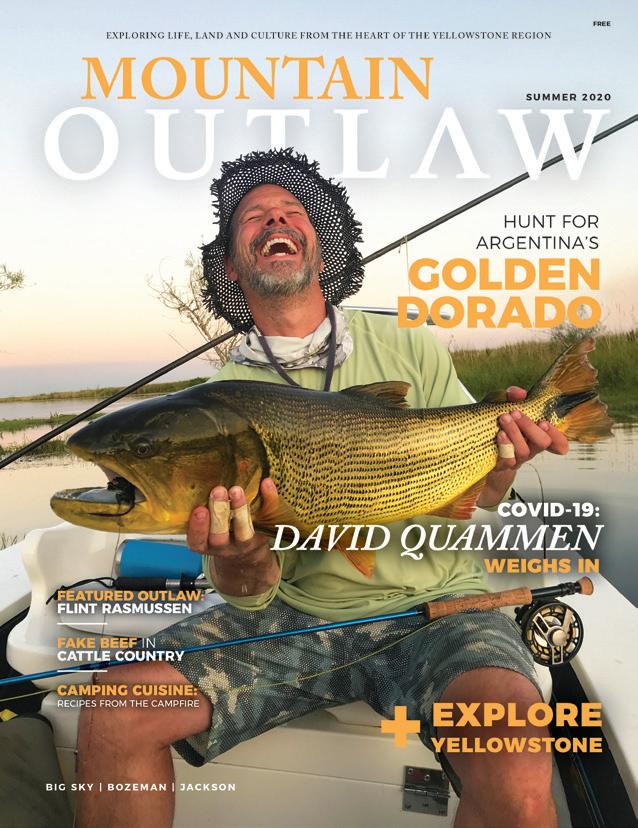
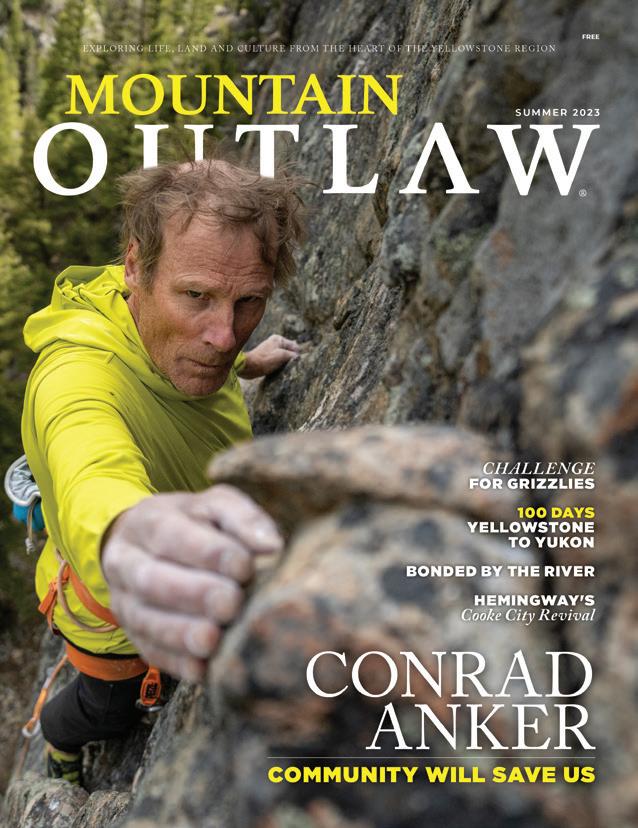
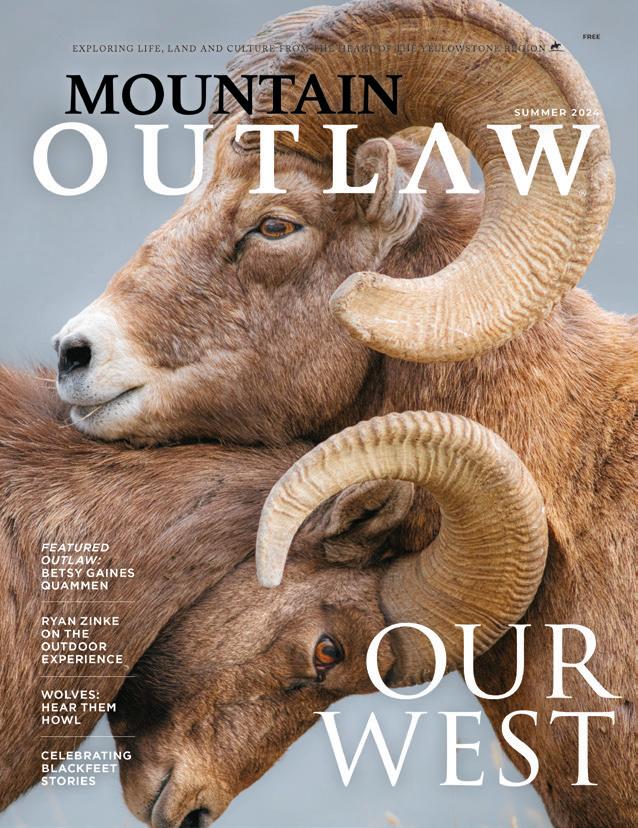
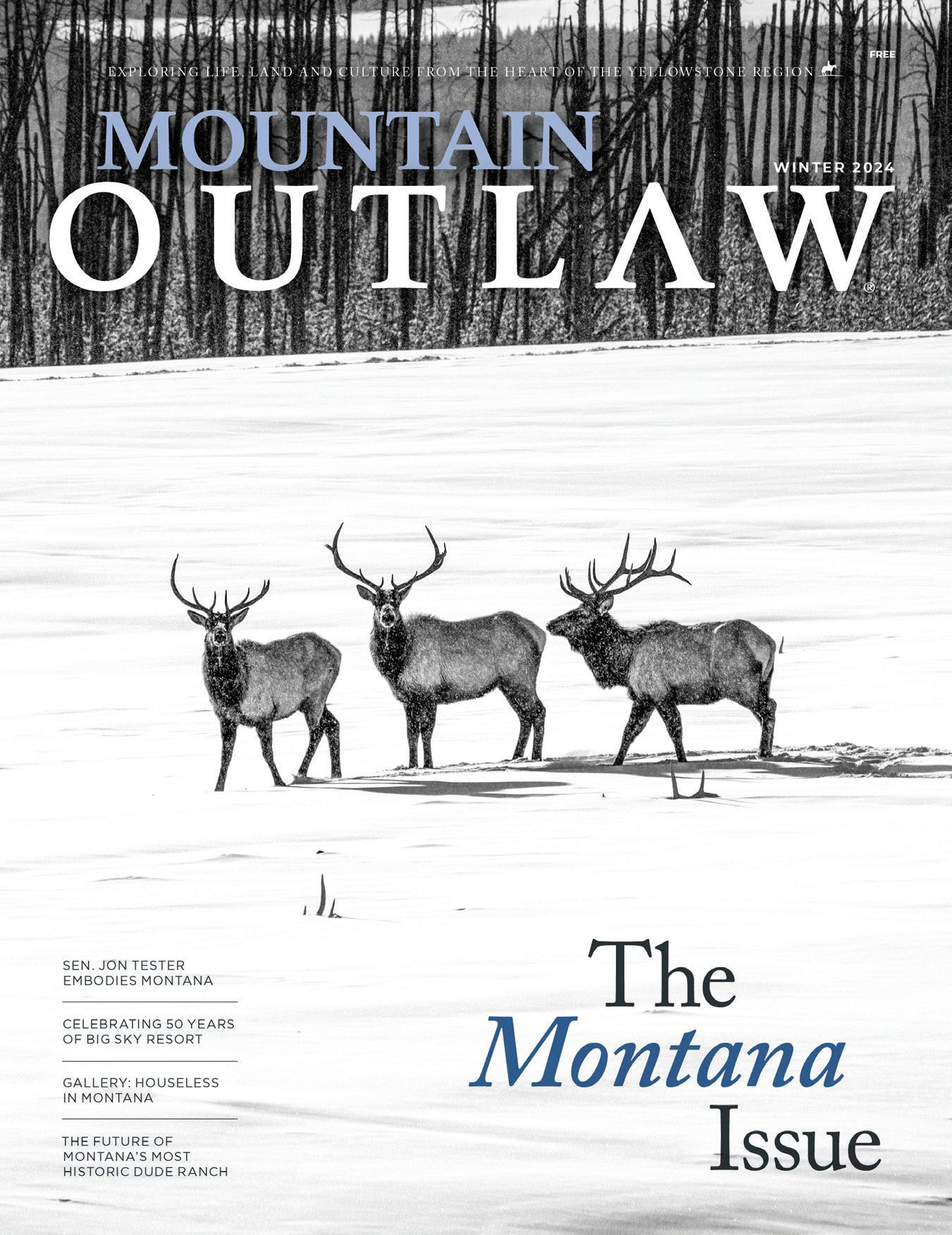
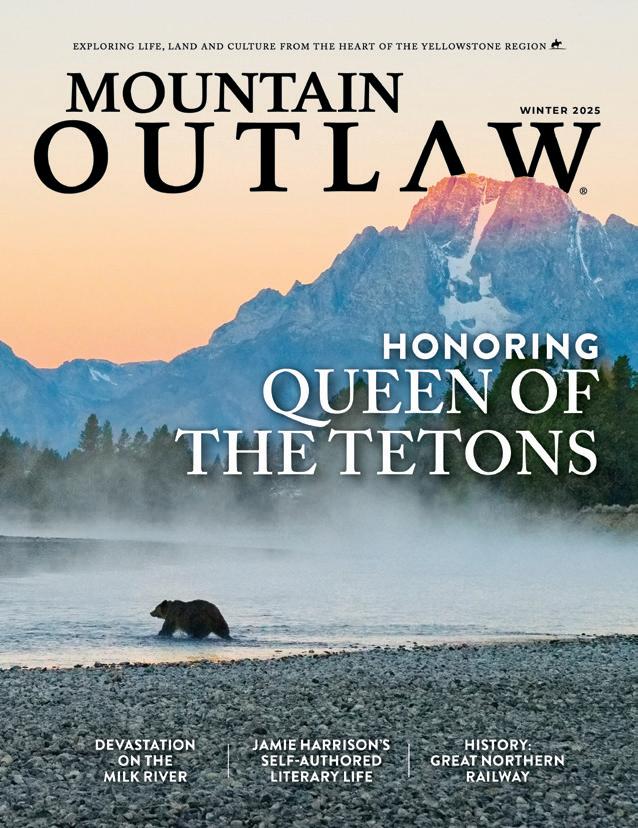
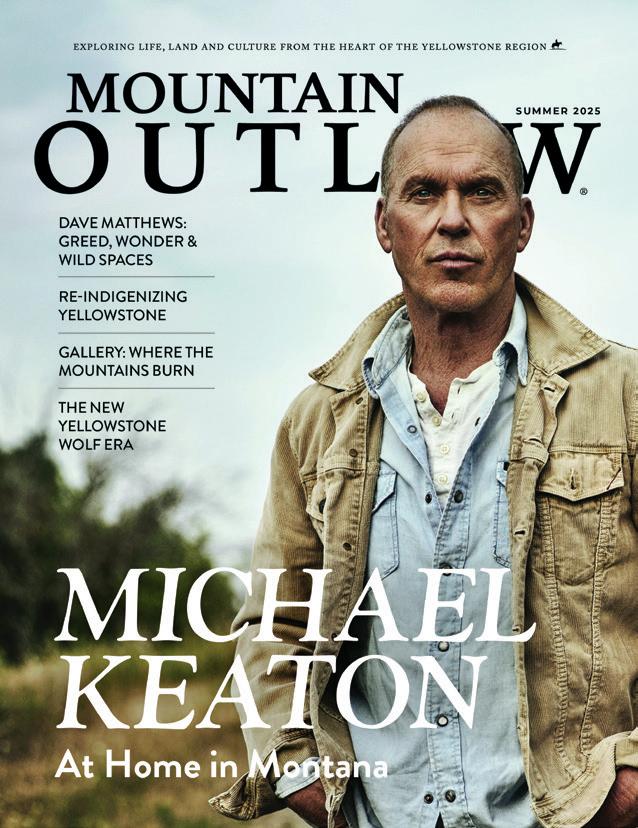
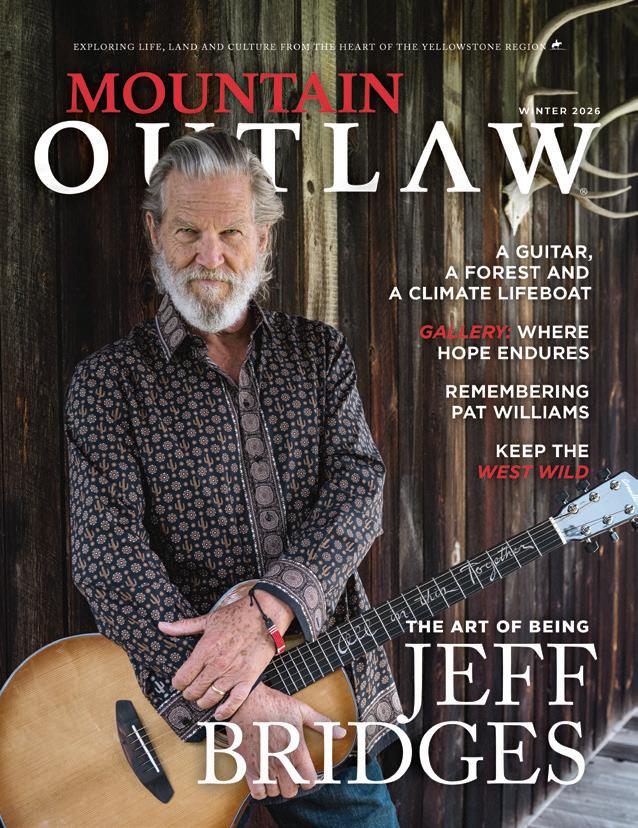
15 YEARS OF COVERS
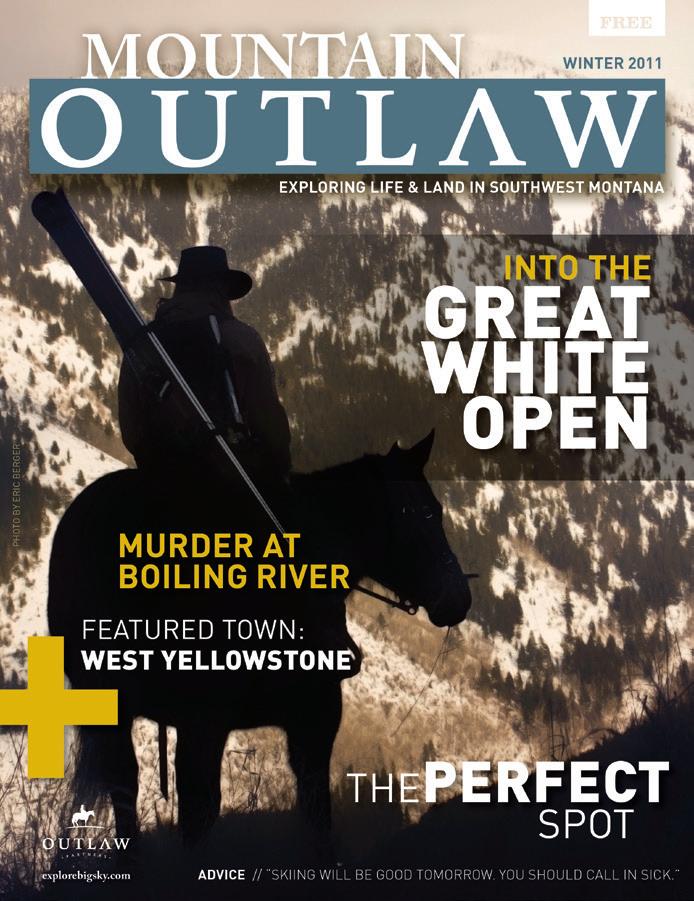
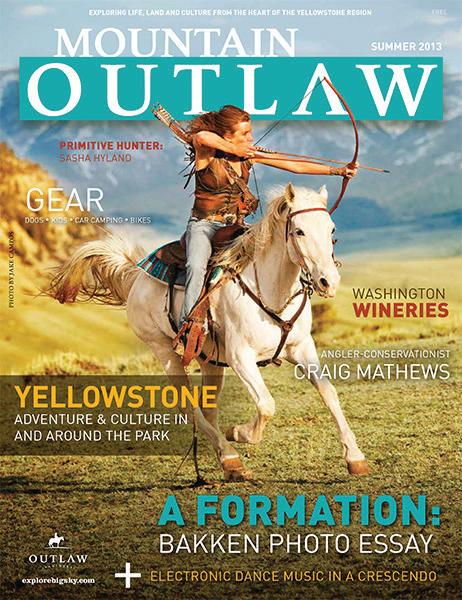
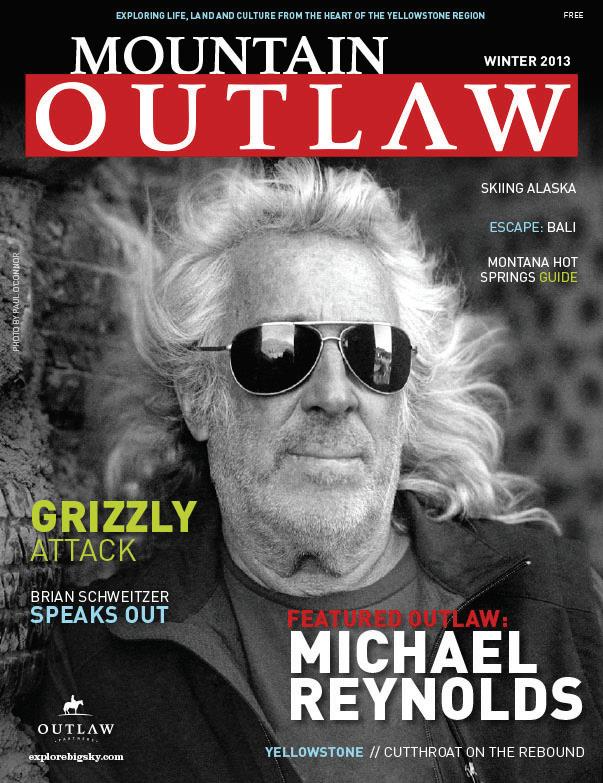
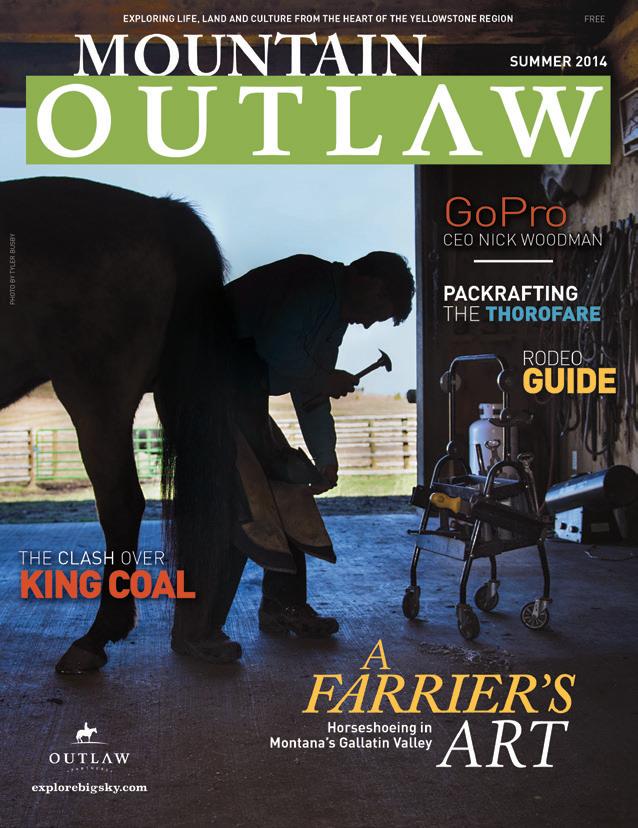
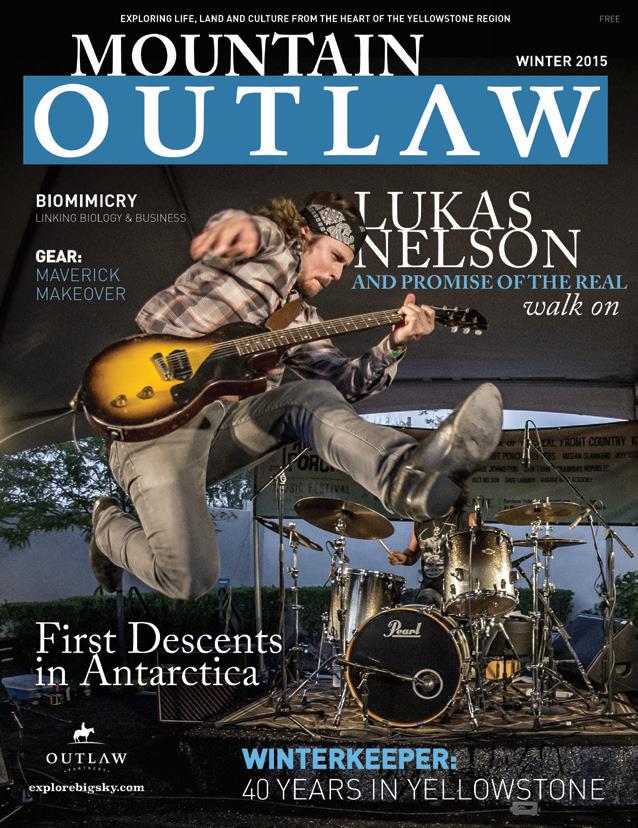
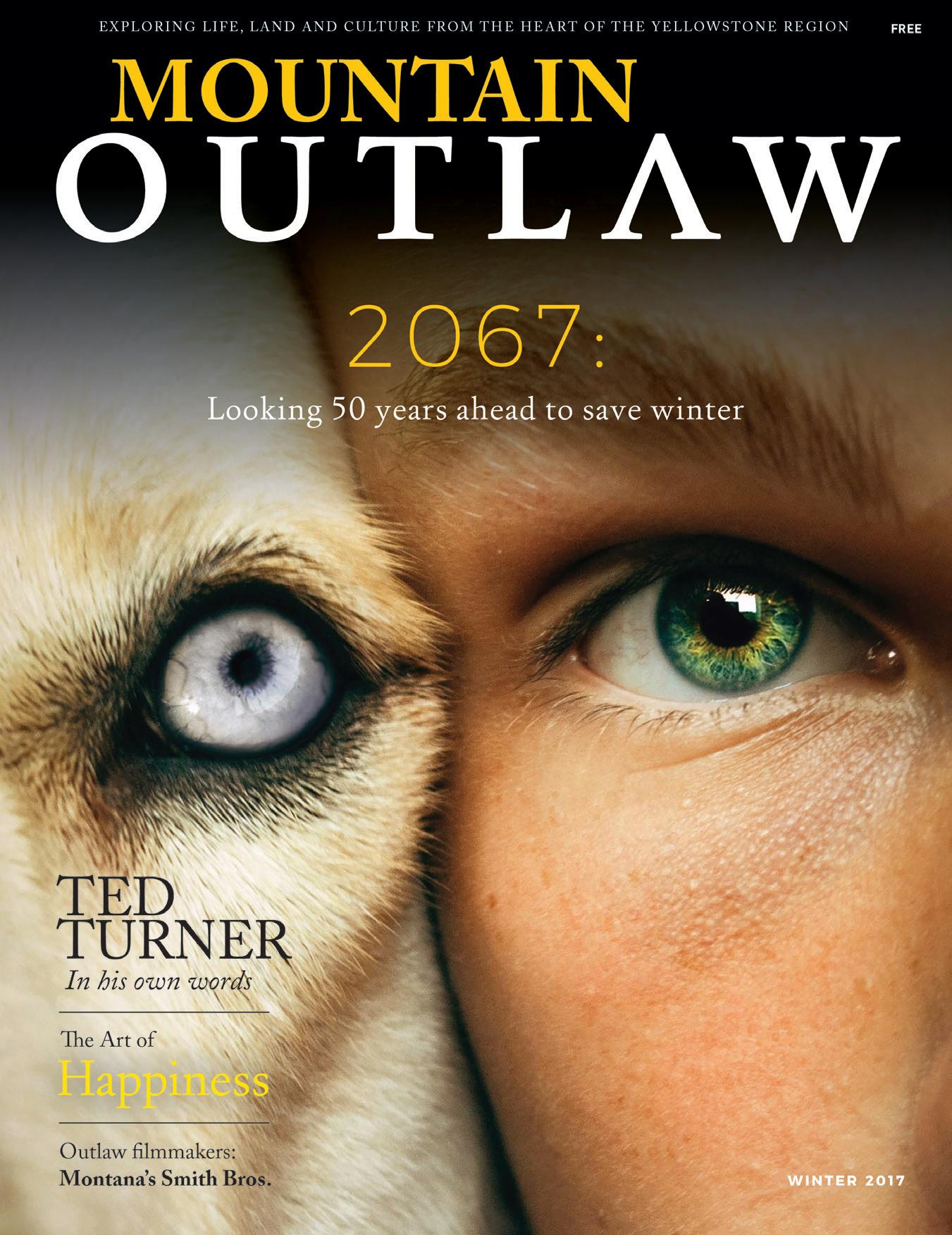
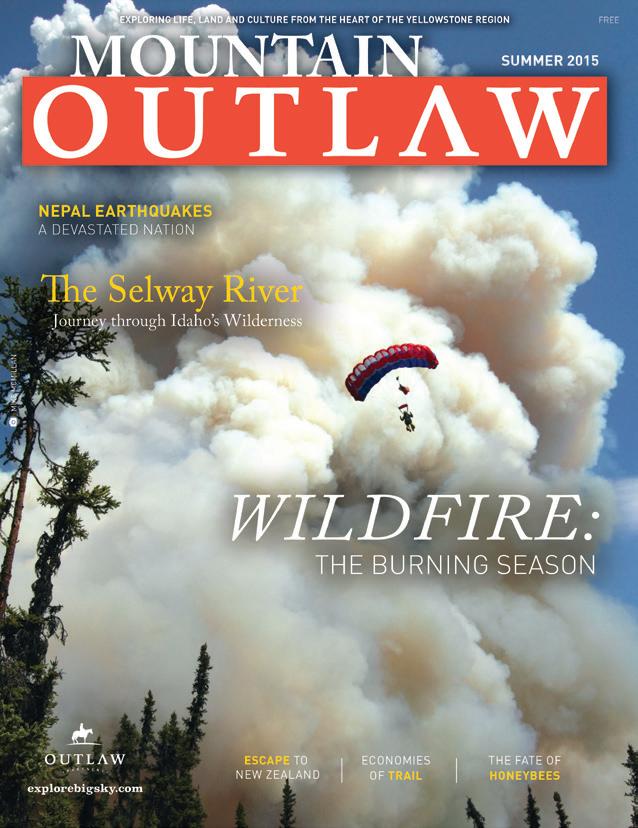
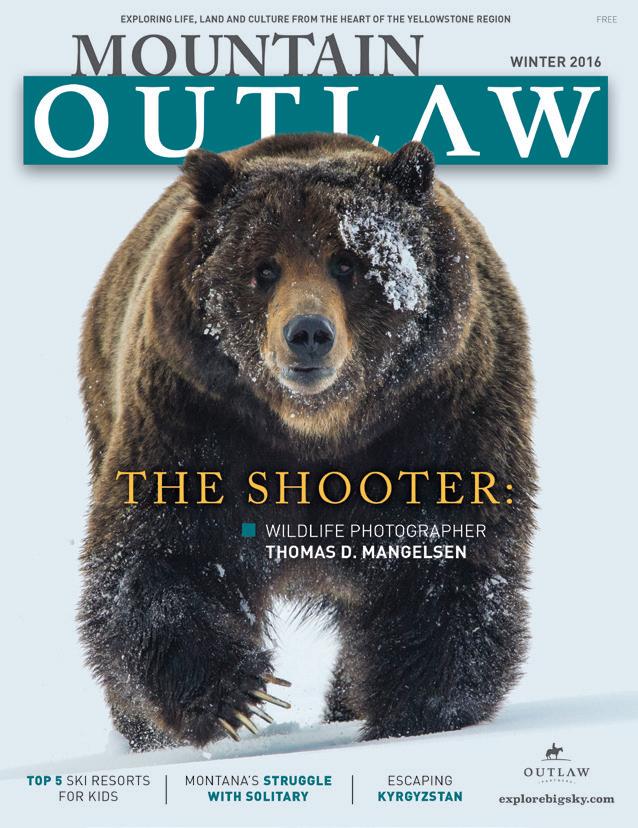
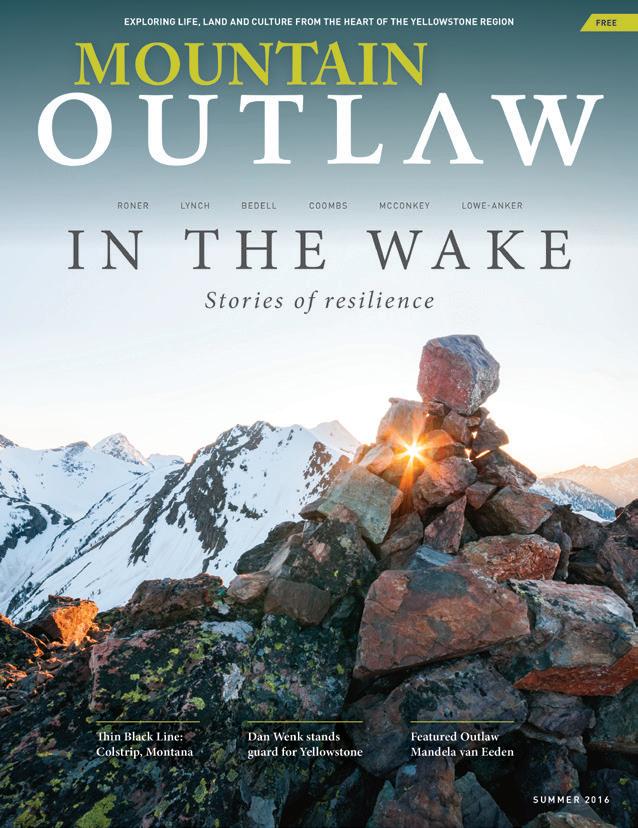
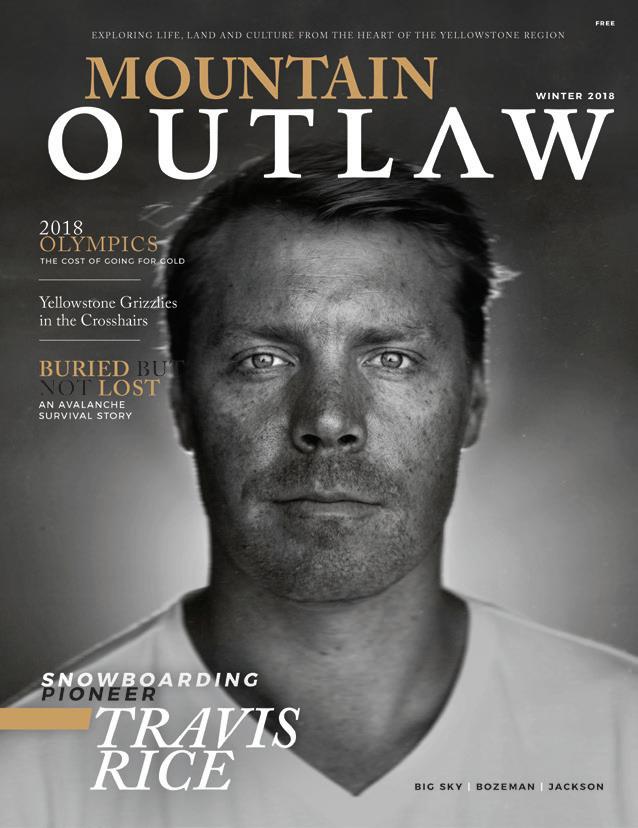
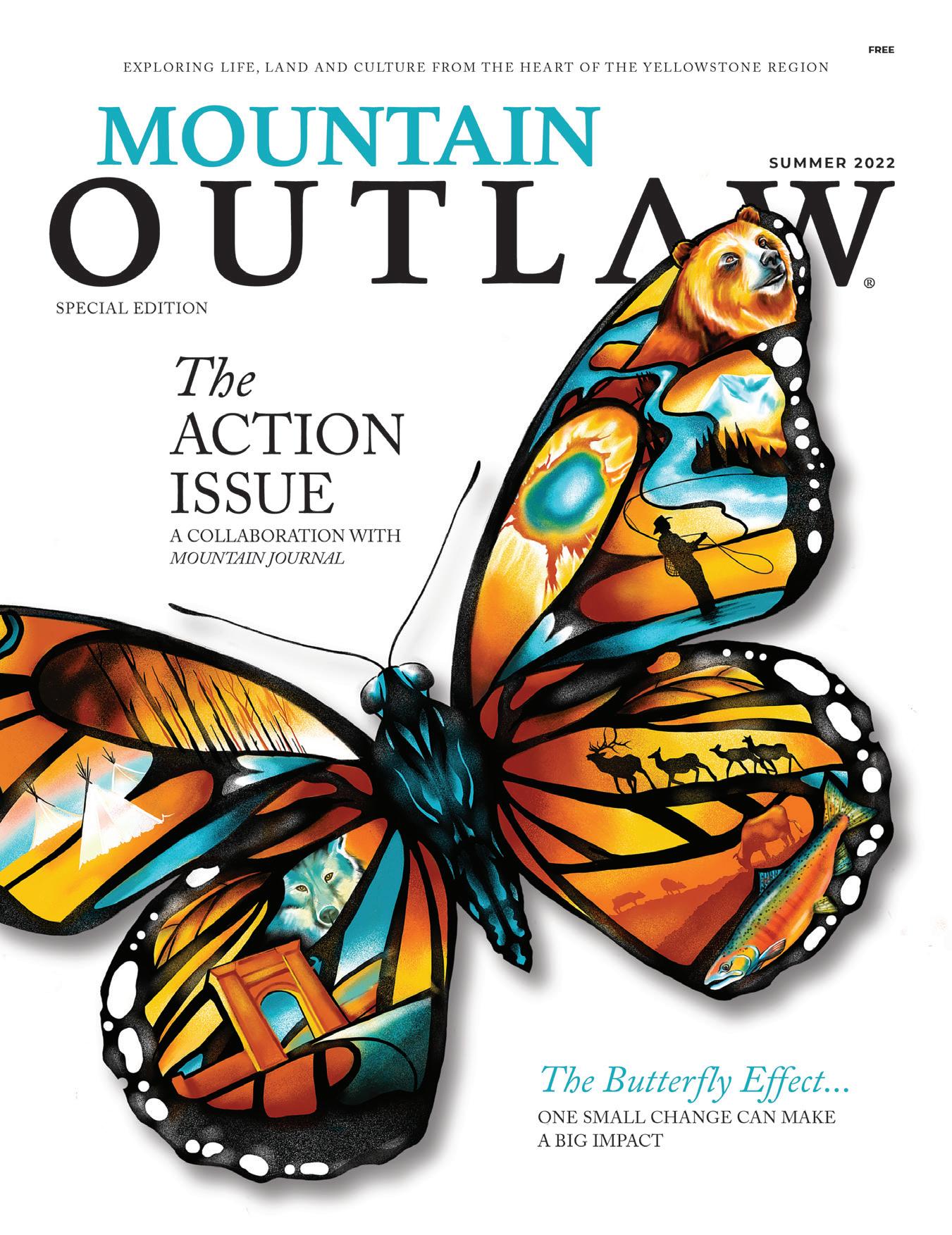
When the first issue of Mountain Outlaw hit stands, its theme was summed up simply: Powder magazine meets Rolling Stone. The goal was to capture the spirit of the West, raw adventure, grit and a little rock ’n’ roll. Inside those pages lived the stories, the people and the culture that define life in the mountains. But every story starts with a cover. Over the last 15 years, those covers have set the tone, captured a moment and reflected the evolving identity of the West. Join us as we look back at 15 years of Mountain Outlaw covers.
OUTBOUND GALLERY
Introduction by Mira Brody
“Remember the plants, trees, animal life who all have their tribes, their families, their histories, too. Talk to them, listen to them. They are alive poems.”
—Joy Harjo, excerpt from Remember
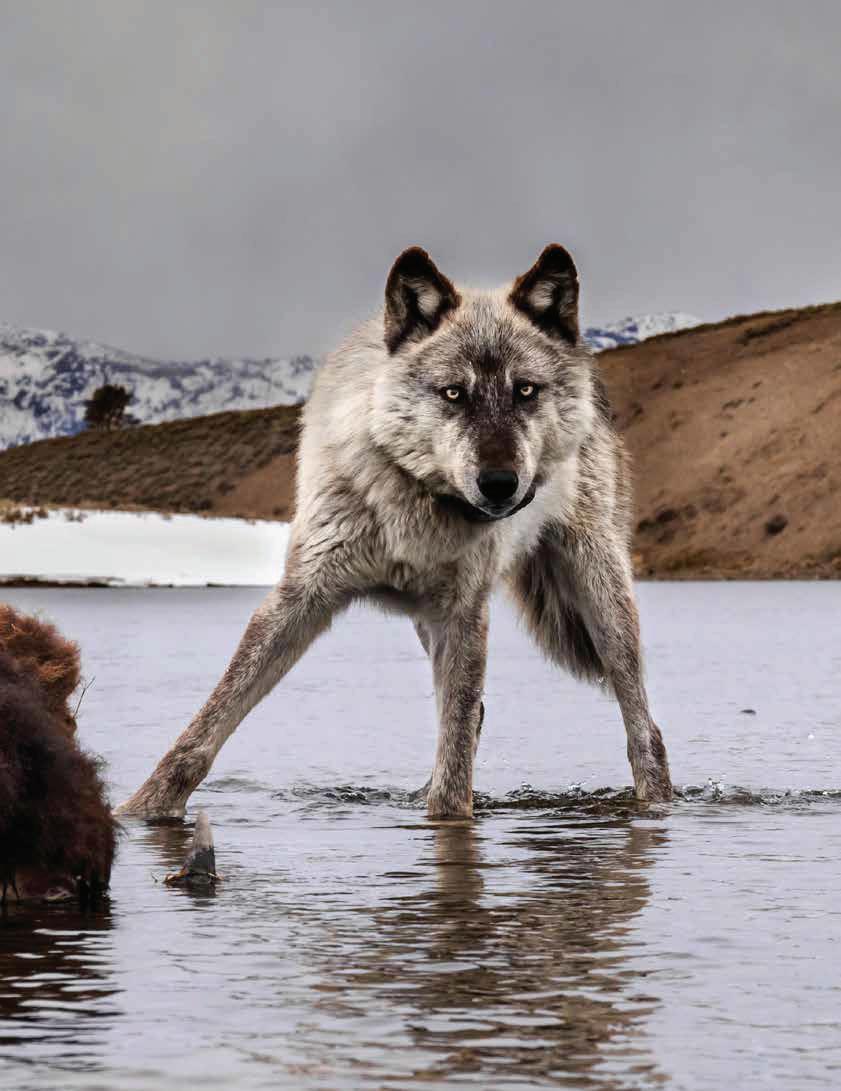
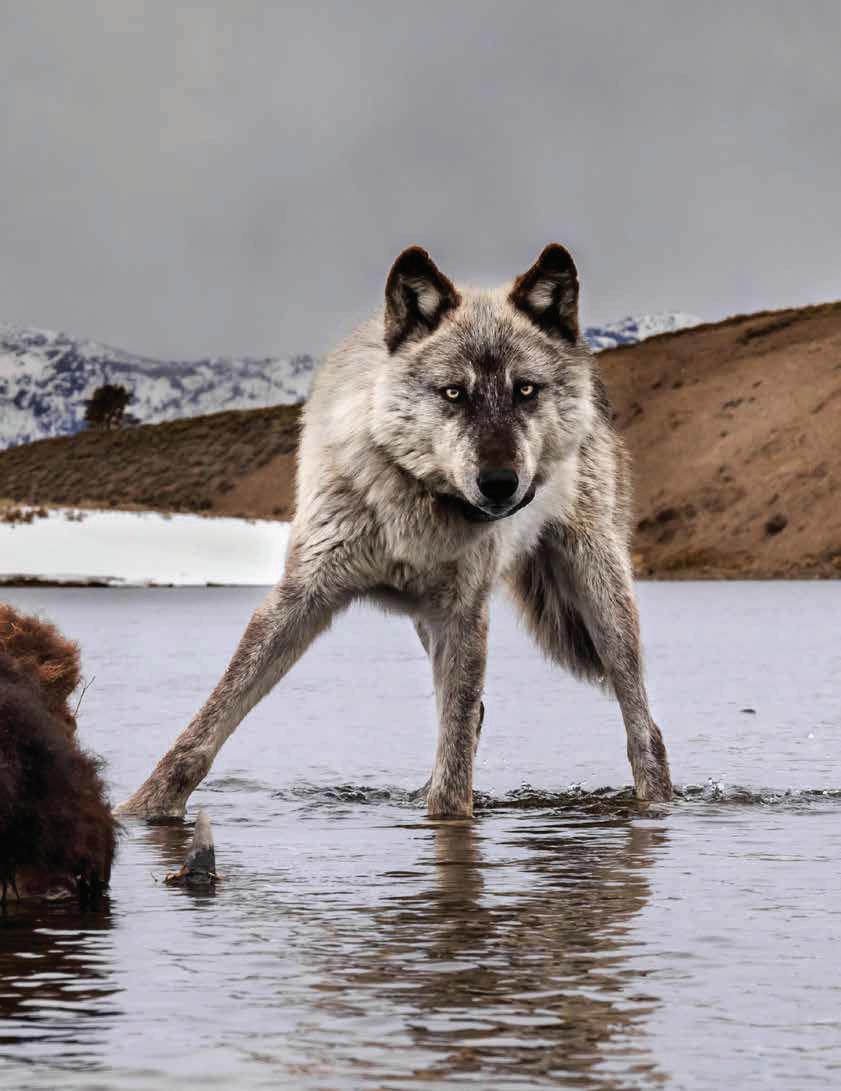
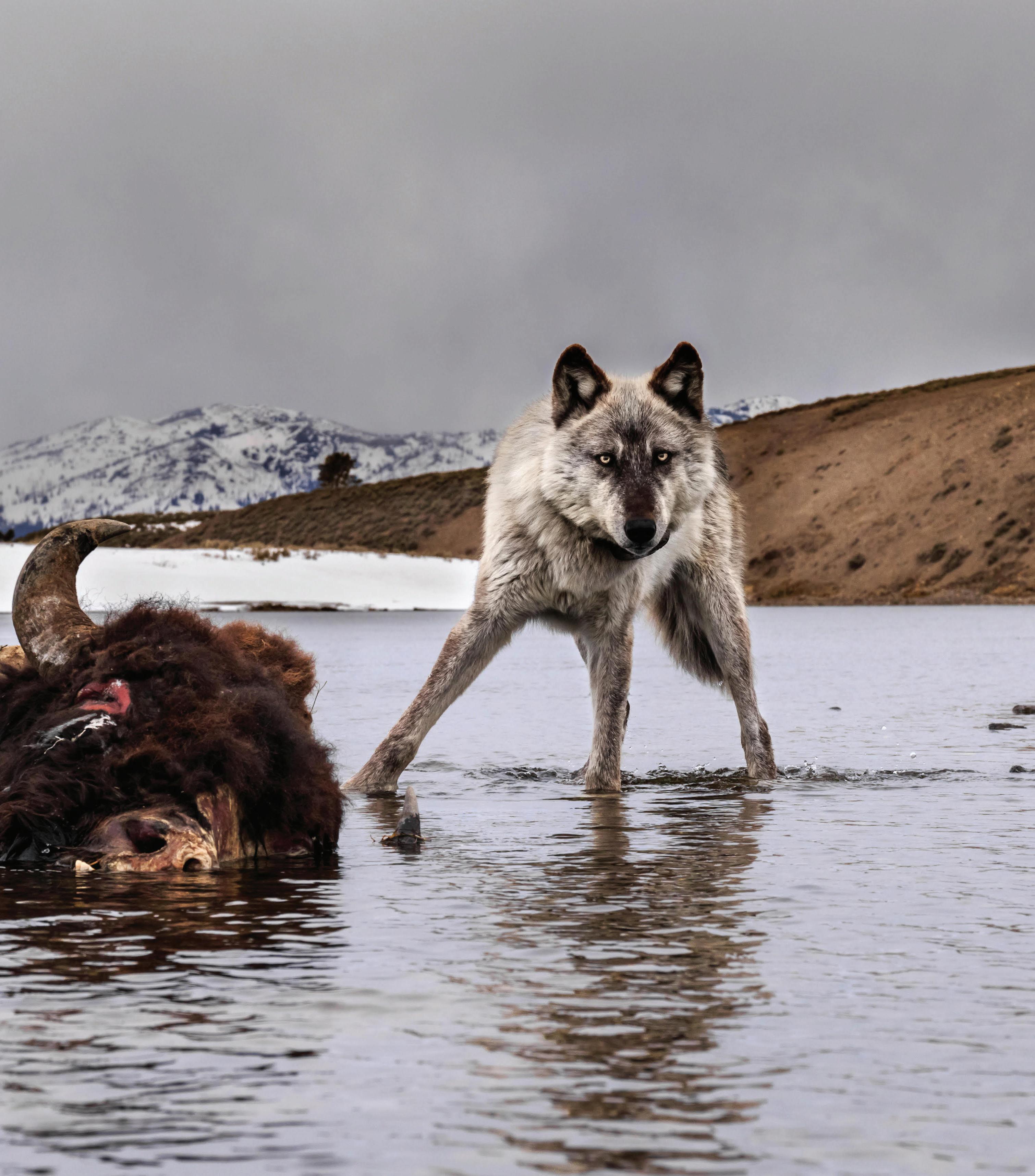
In March 2015, while on assignment for National Geographic, videographer and photographer Ronan Donovan captured this image of Mr. Blue, a black wolf of the Wapiti Pack in the Lamar Valley of Yellowstone National Park. Mr. Blue, at the time seven years old, was feasting on a bison carcass picked over by a host of other predators, most recently a grizzly. The trap camera, mounted on a pole in the Yellowstone River, audibly clicked. Mr. Blue looked up, paused and stared directly into the lens.
“That image is a portrait of him,” Donovan tells me, recalling the shot 11 years later. The distinction between that and a candid is important—while captured by a hidden trap camera in a remote landscape devoid of people, the camera’s disturbance precipitated a connection between shooter and subject.
Photojournalism is forging this connection between viewer and subject, whether that be another human, beast or landscape. Donovan—who has covered projects about wolves in the high Arctic, chimpanzees in Uganda, and a grizzly attack survivor in Cody, Wyoming—hopes his work fosters that connection and encourages viewers to reflect on our relationship in a shared landscape like the Greater Yellowstone Ecosystem.
“A still image, let’s say the Mr. Blue image, allows us to have a hypothetical and psychological dialogue with an animal,” Donovan says. “The pause is something that we don’t often get to experience … in our modern world or our modern relationship to media and journalism. And I think that photos still hold that power of a pause.”
In this 15th anniversary edition of Outbound Gallery, we’ve selected images from past Mountain Outlaw issues that allow us this pause.
Mr. Blue was a part of a larger NatGeo project called “Yellowstone Wolves”, and shared for a story called “Where Wolves Dare.” Both works of journalism illustrated deep conflict that wolf reintroduction in Yellowstone revealed in the people who share their ecosystem. Originally published in Winter 2020.
Ronan Donovan
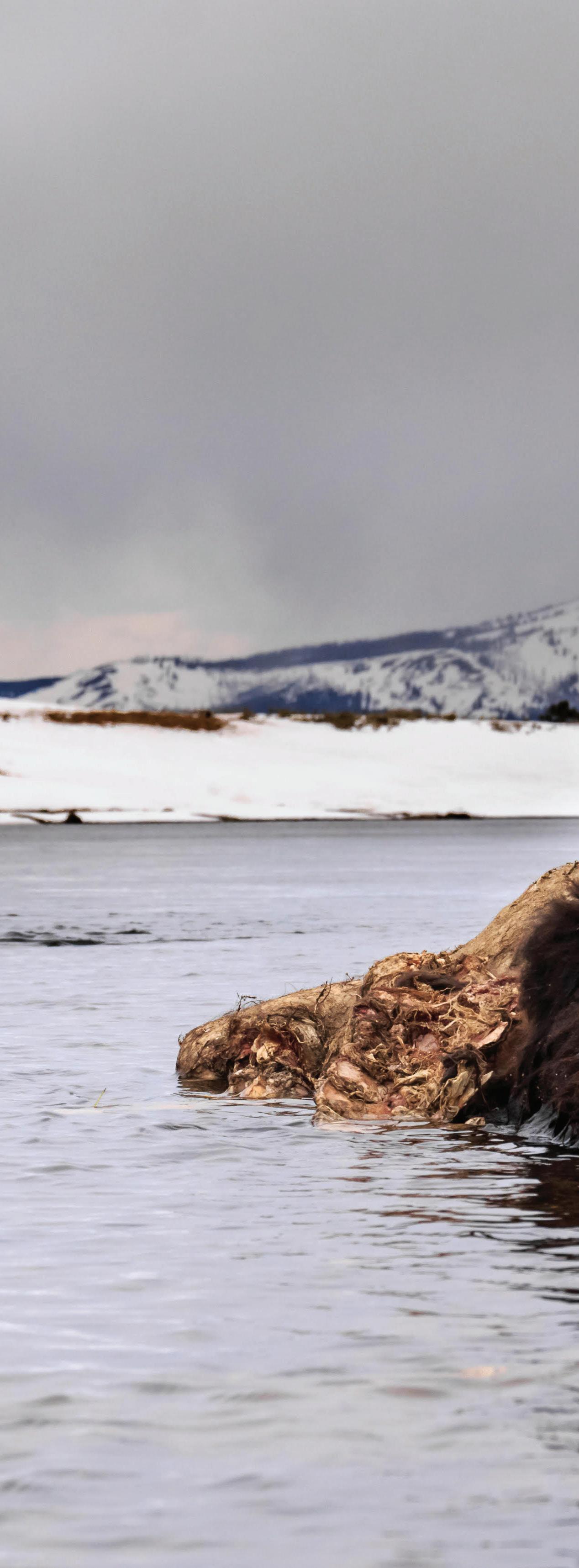

Photo by

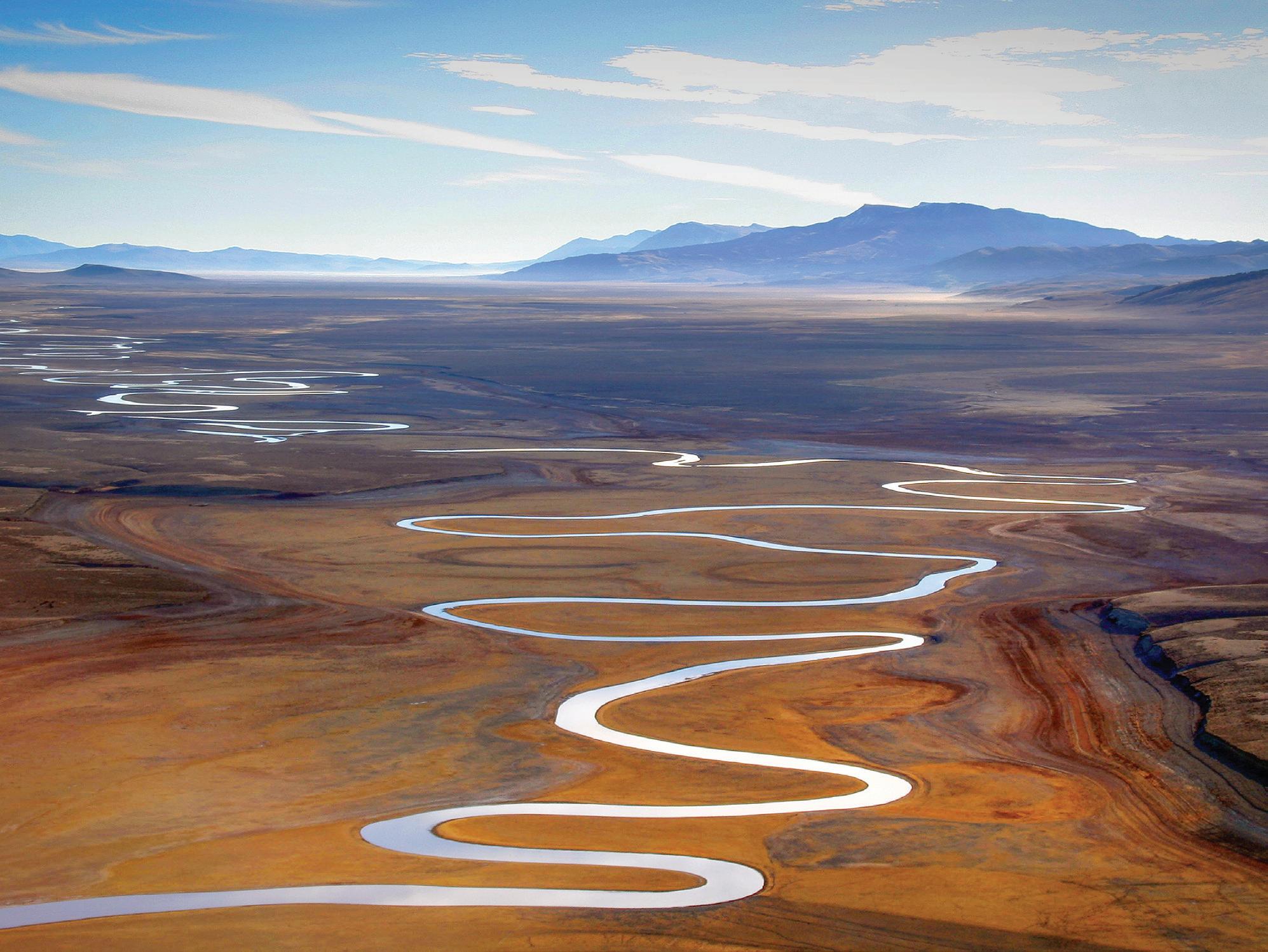
Red Rock River flows through the sediments of the unfilled Lima Reservoir, Centennial Valley, Montana. The shot was taken by photographer and pilot Chris
a volunteer for LightHawk, a nonprofit that employs pilots for conservation work.

Boyer,
Originally published Winter 2026. Photo by Chris Boyer

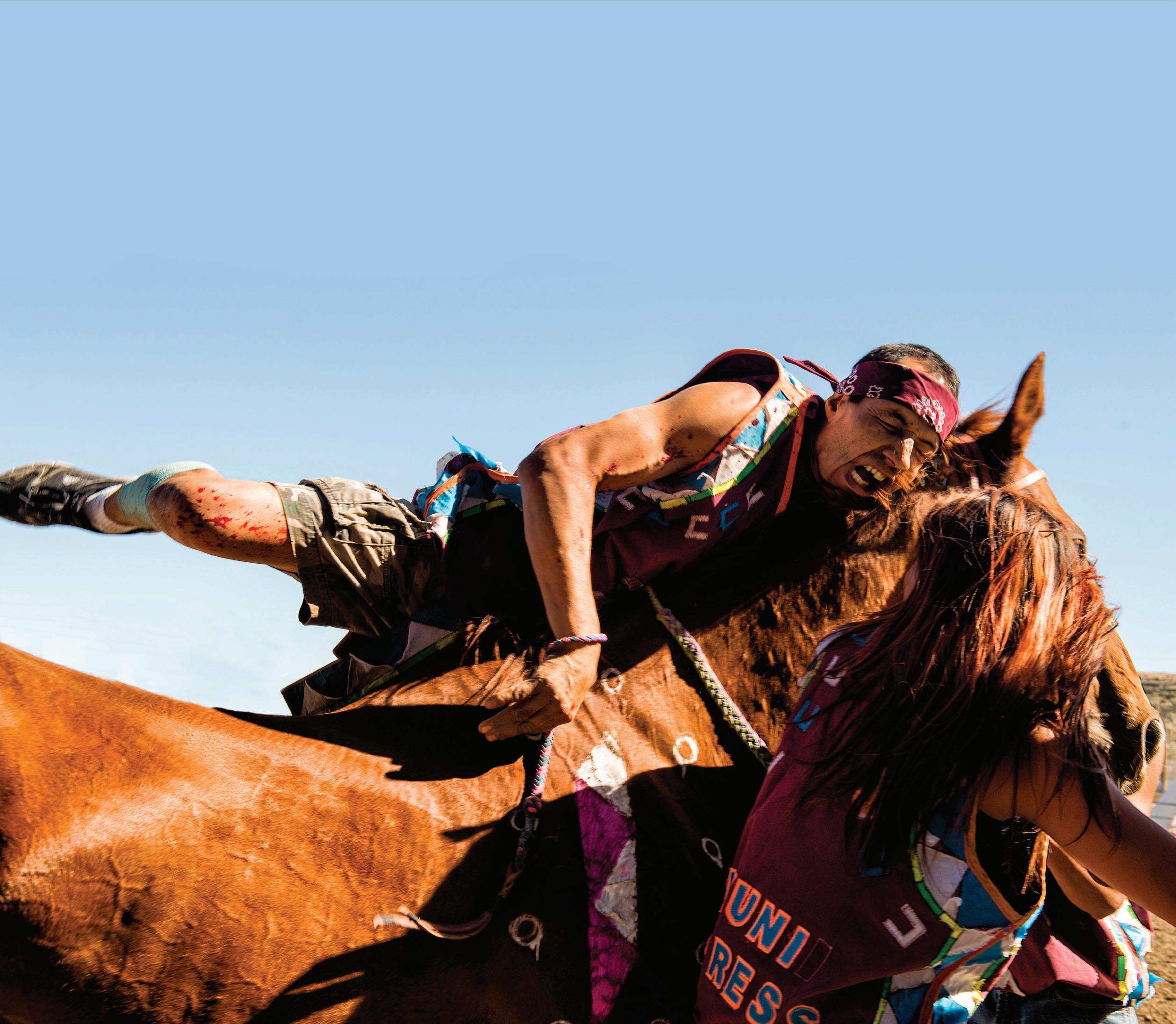
Holder Johnna LaPlantt helps rider Narcis Reevis mount during an exchange at the 2016 All Nations Indian Relay Horse Racing Championship. Originally published Summer 2017. Photo by Allen Russell
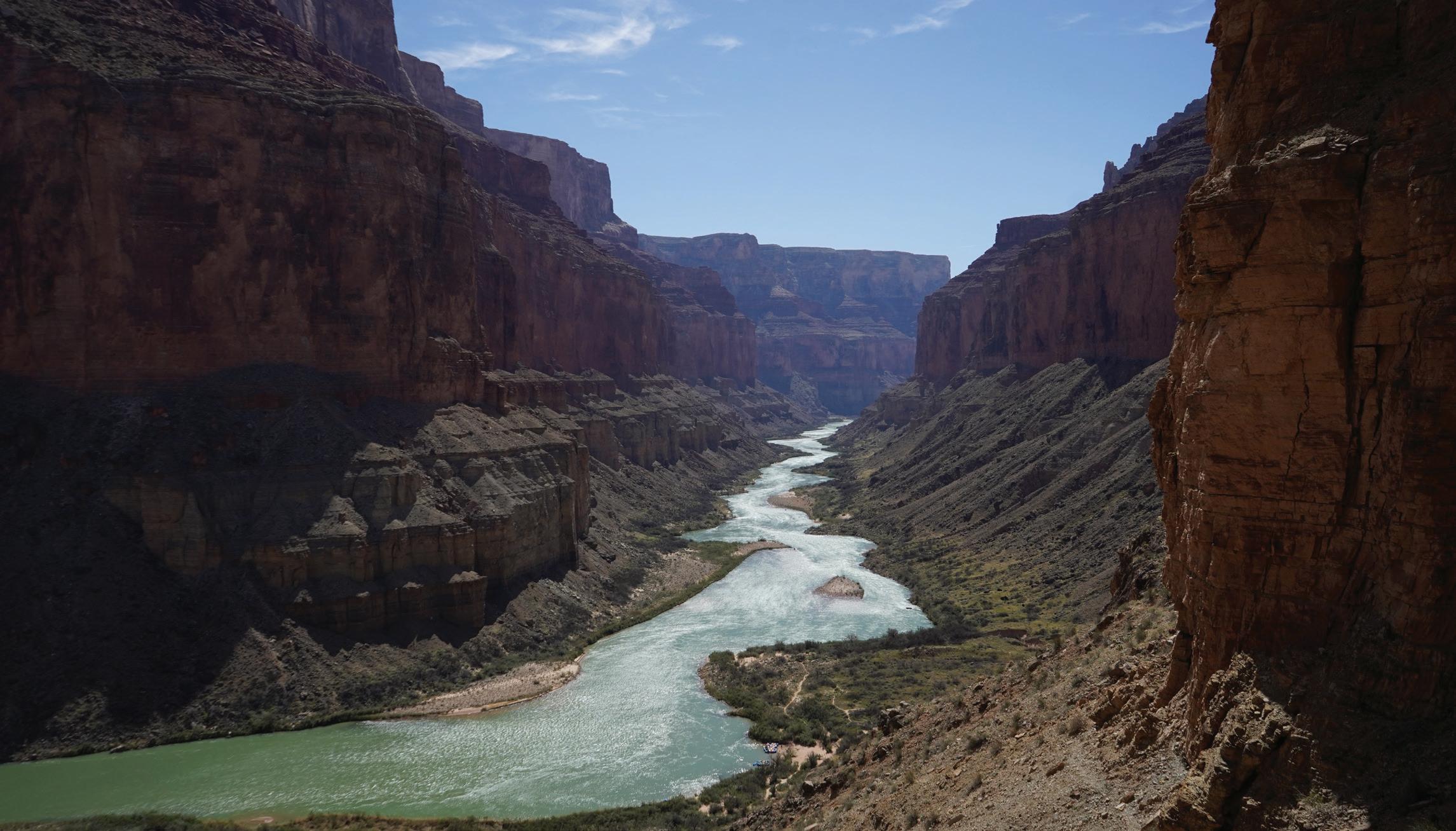
The Colorado River runs through the Grand Canyon, seen from an overlook beneath the Nankoweap Granaries, Puebloan grain storage structures that date back to 1200 AD. Featured in “The River that Reveals Us,” a personal essay about our relationship with water in the West during a trip down the Grand Canyon. Originally published Summer 2024. Photo by Colin Hislop
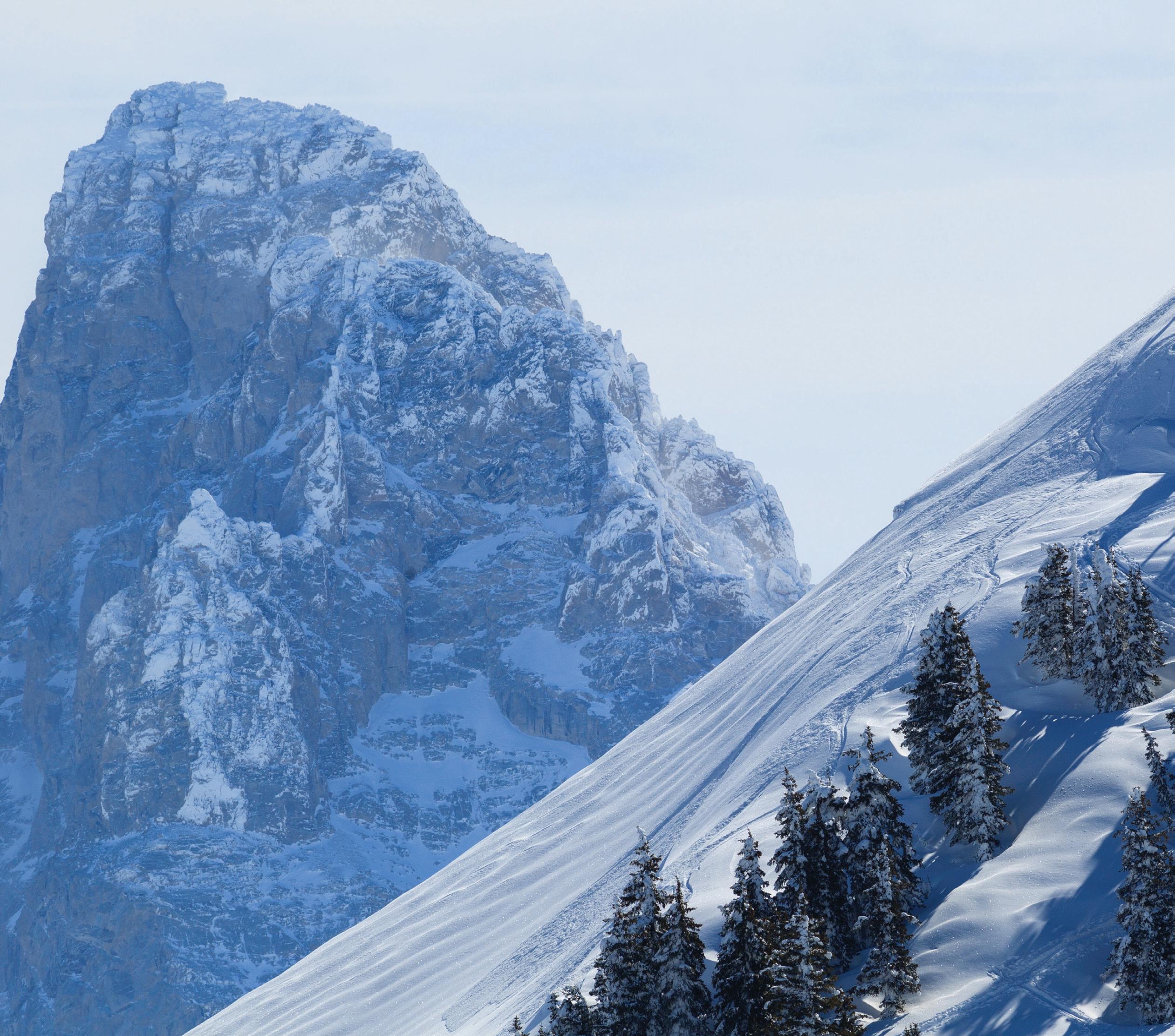
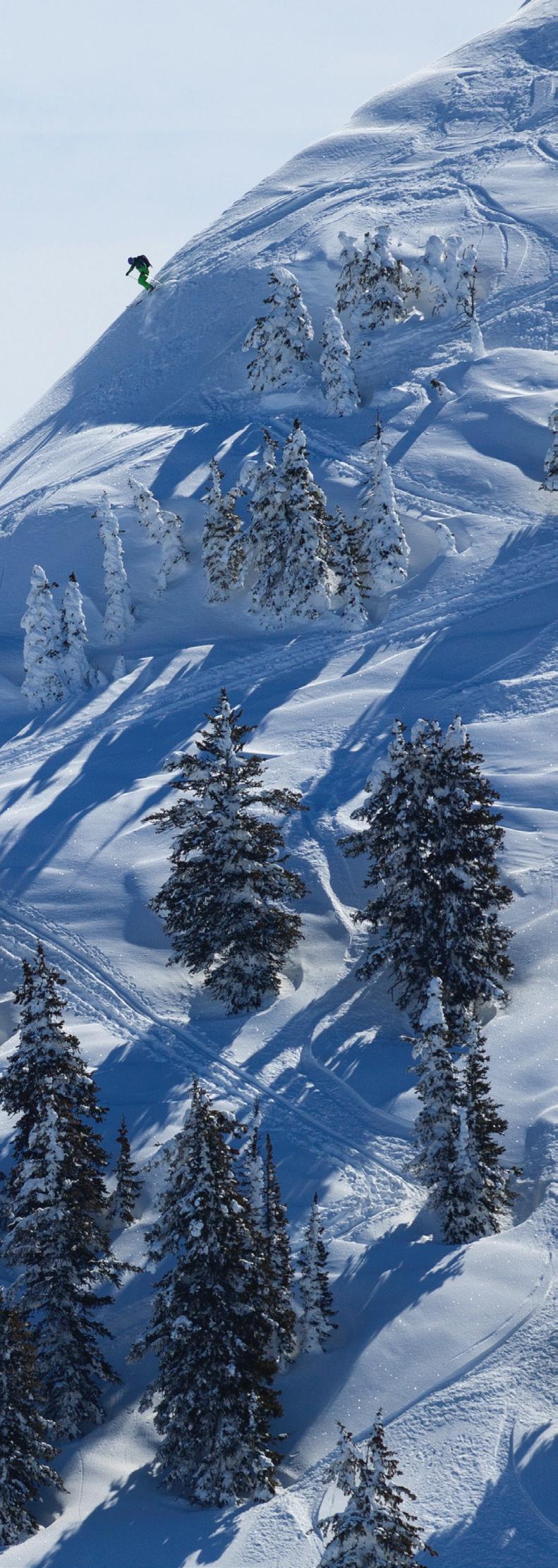
Rider Mike Leake skis the Grand Targhee backcountry with the Grand Teton looming in the background.
Originally published Winter 2015. Photo by Kevin Cass
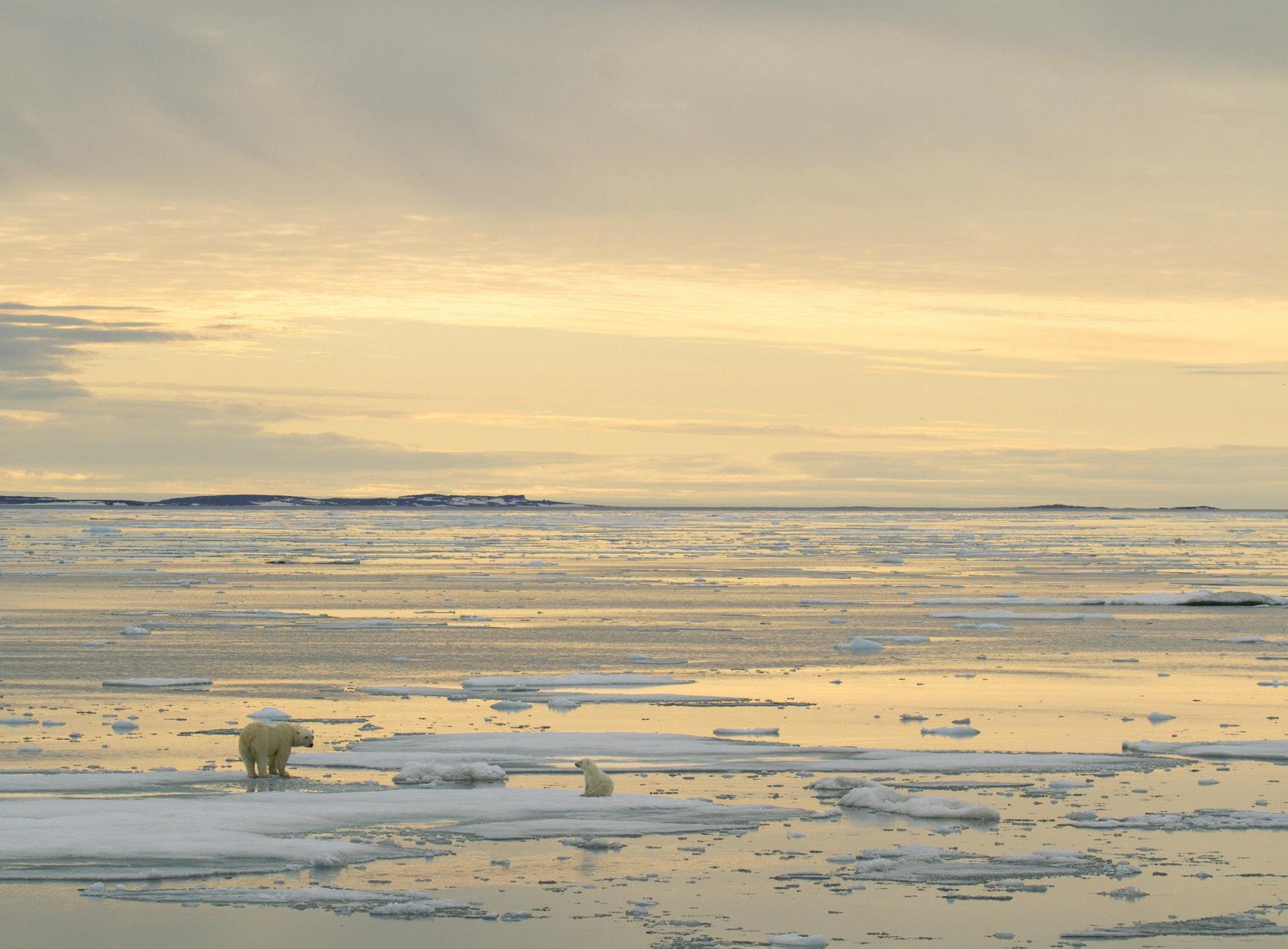
A mother polar bear and her cub bask in the midnight sun on melting summer sea ice in Northern Norway’s Svalbard archipelago. The photo highlighted the work of Bozemanbased nonprofit, Polar Bears Unlimited, that is devoted to saving their shrinking habitat.
Originally published Winter 2015.
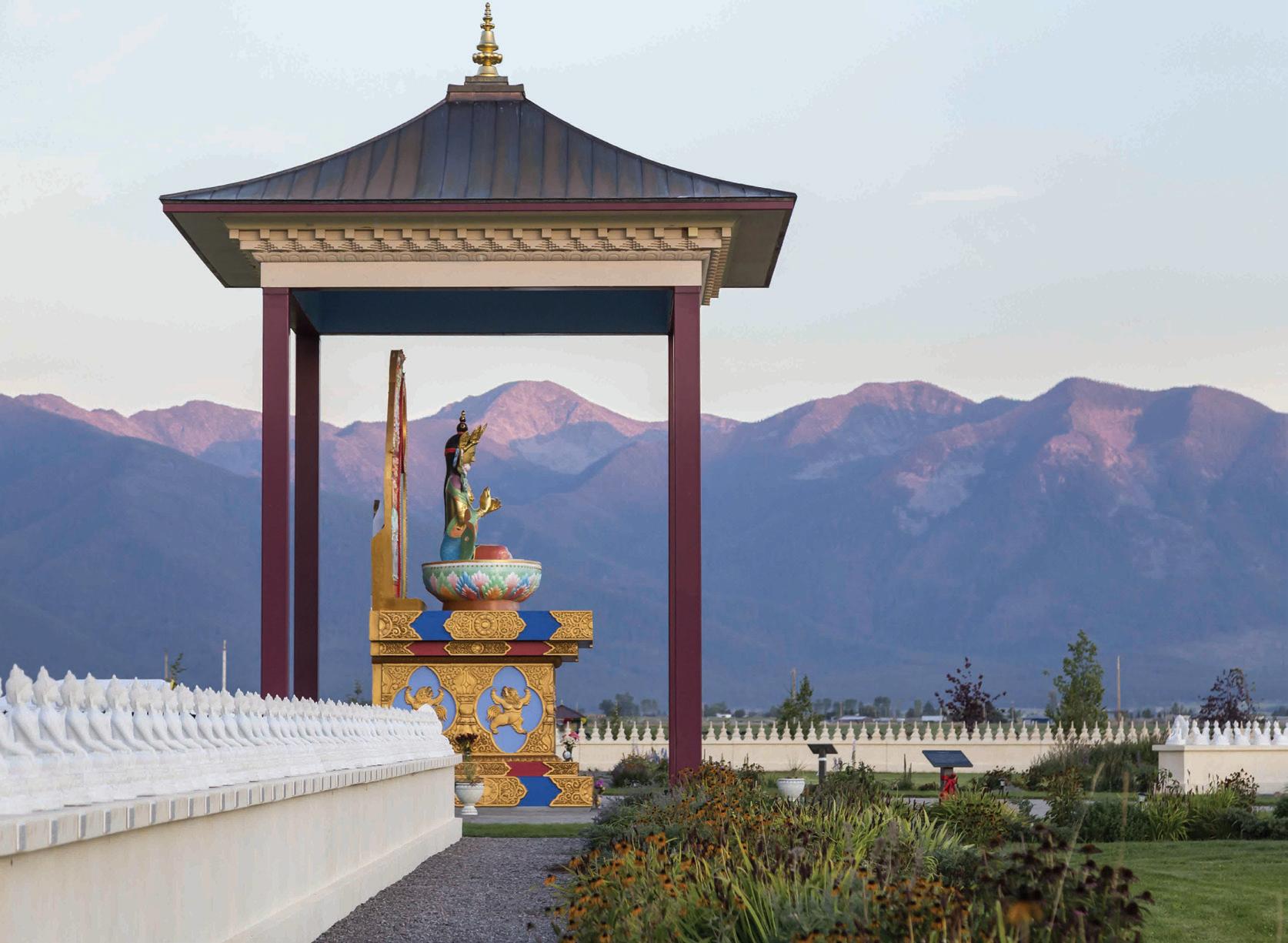
The last light of day illuminates the Mission Mountains behind the statue of Yum Chenmo. The Garden of One Thousand Buddhas lies in the Jocko Valley near Arlee, Montana.
Originally published Winter 2015. Photo by Tyson Krinke
Photo by KT Miller
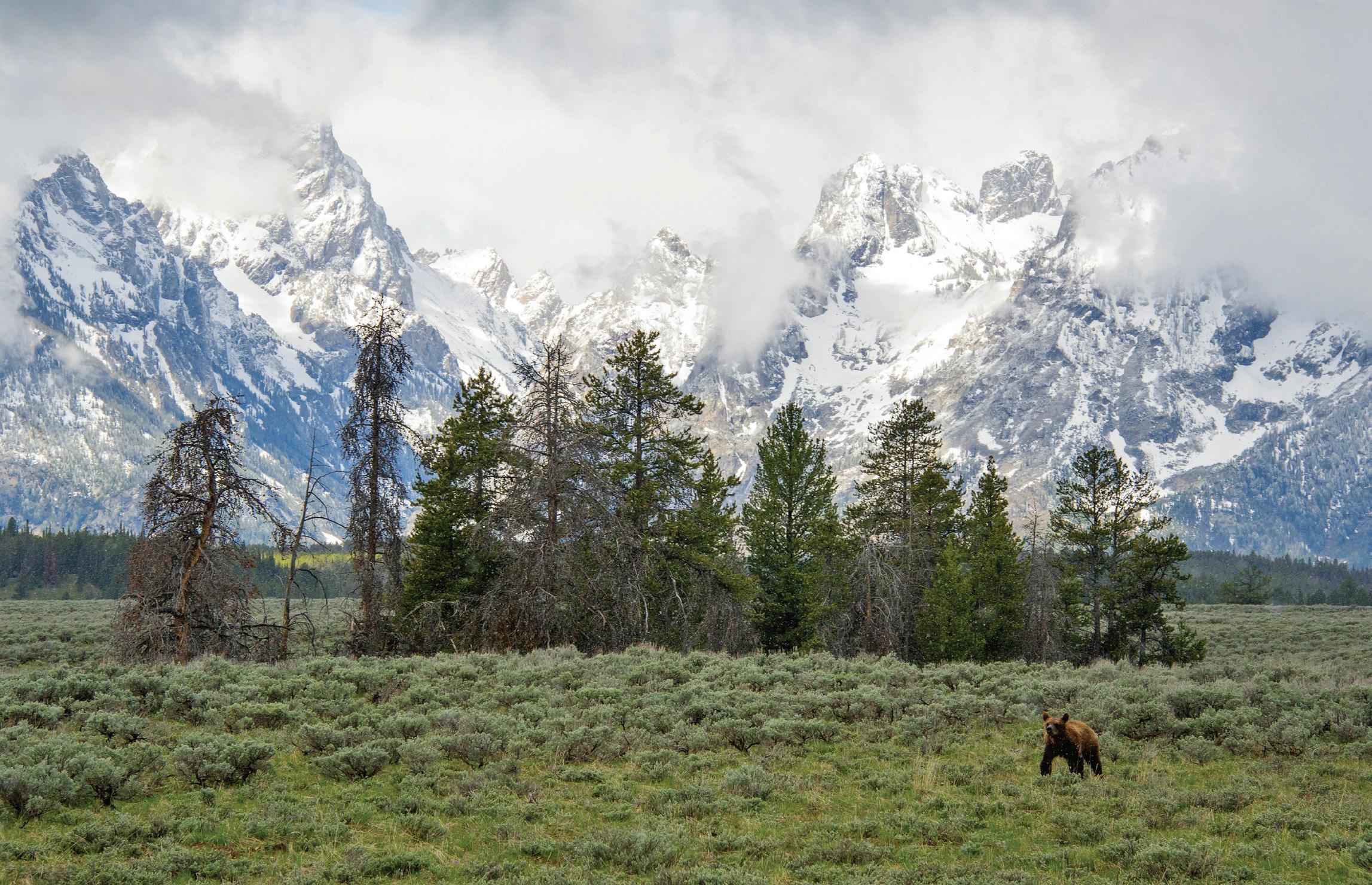
A lone grizzly cub walks across the sage flats in Grand Teton National Park. Featured in “To Kill a Grizzly,” writer Todd Wilkinson explores the fate of grizzly bears after their biological recovery, and the history of grizzly management in the Greater Yellowstone Ecosystem. Originally published Winter 2018.
Acoustically designed for superior outdoor sound projection, morning concerts are held under the Domo, one of three monolithic feats of sculptural engineering created by Spain’s Ensemble Studios for Tippet Rise Art Center. Tippet Rise is located in a 10,260acre sheep and cattle farm in Fishtail, Montana. Originally published Winter 2018. Photo by Erik Petersen
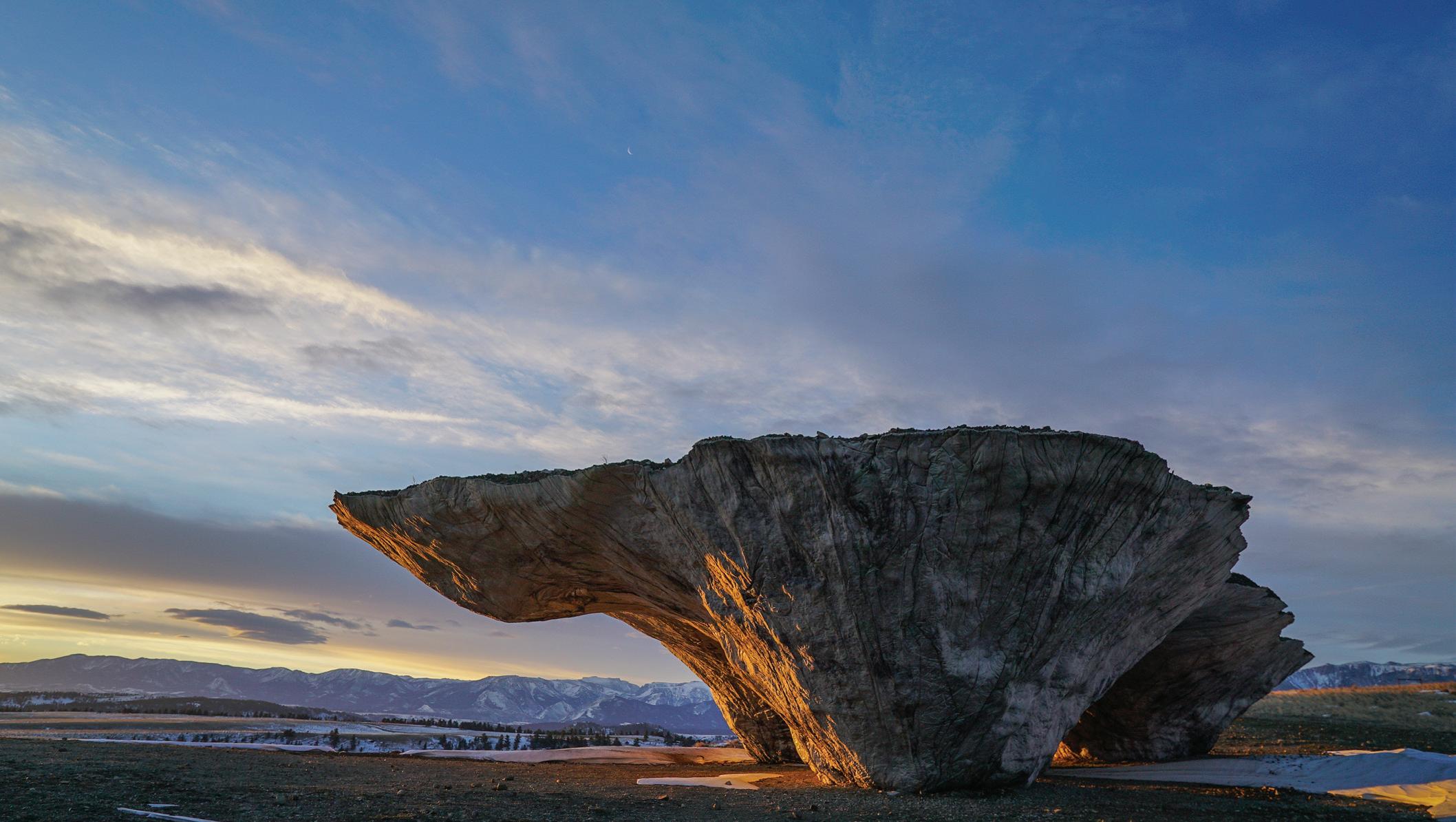
Photo by Thomas D. Mangelsen
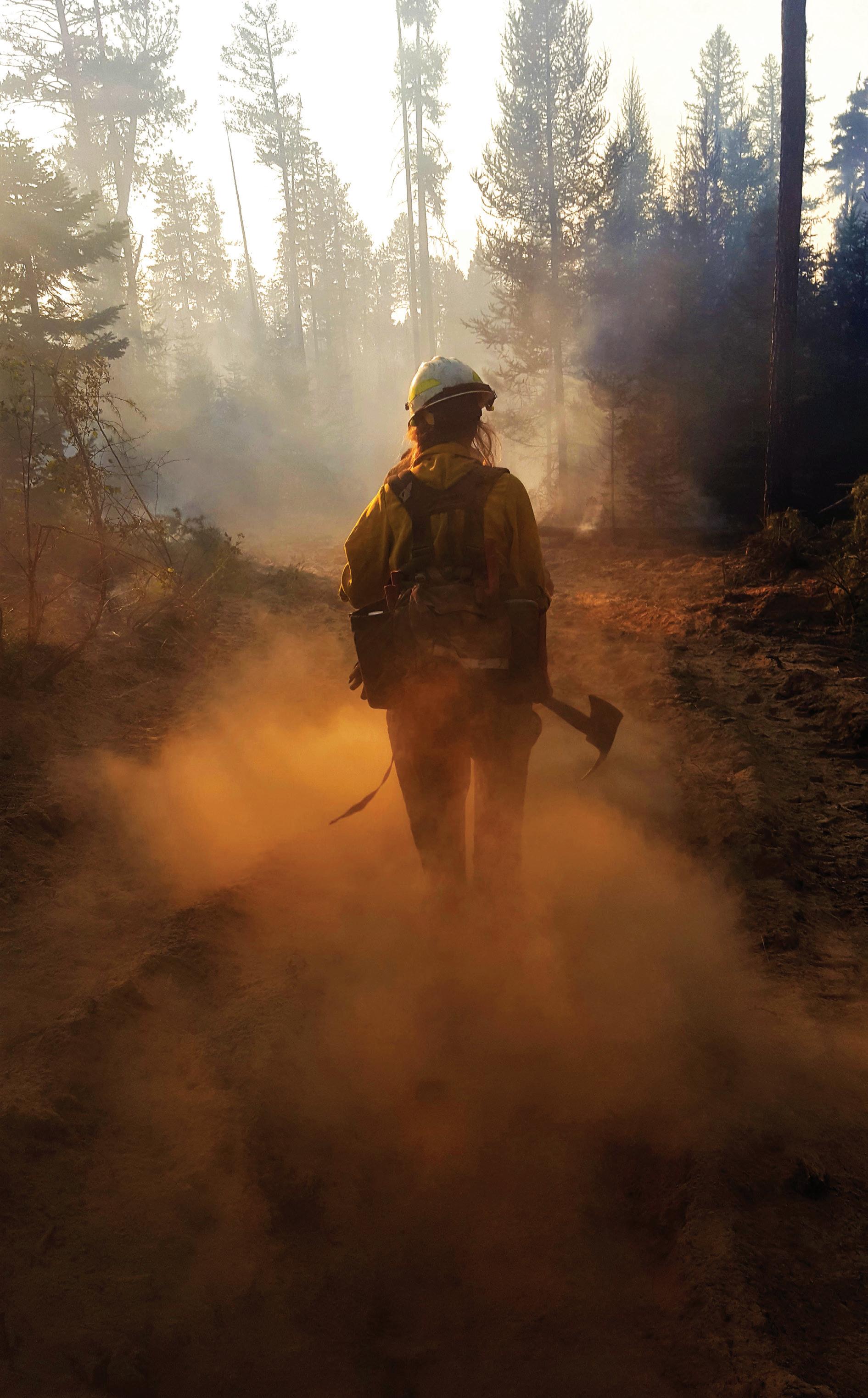
Jenna Lyons is a part of an elite hotshot fire crew. A maledominated industry, the number of women in permanent fire operations positions hovers around 12 percent in federal firefighting agencies.
In “Fuel, Oxygen and Heat,” writer Emily Stifler Wolfe dives into how the Bureau of Land Management is working to diversity its crews. Originally published Summer 2018.
Photo by Monica Kawski
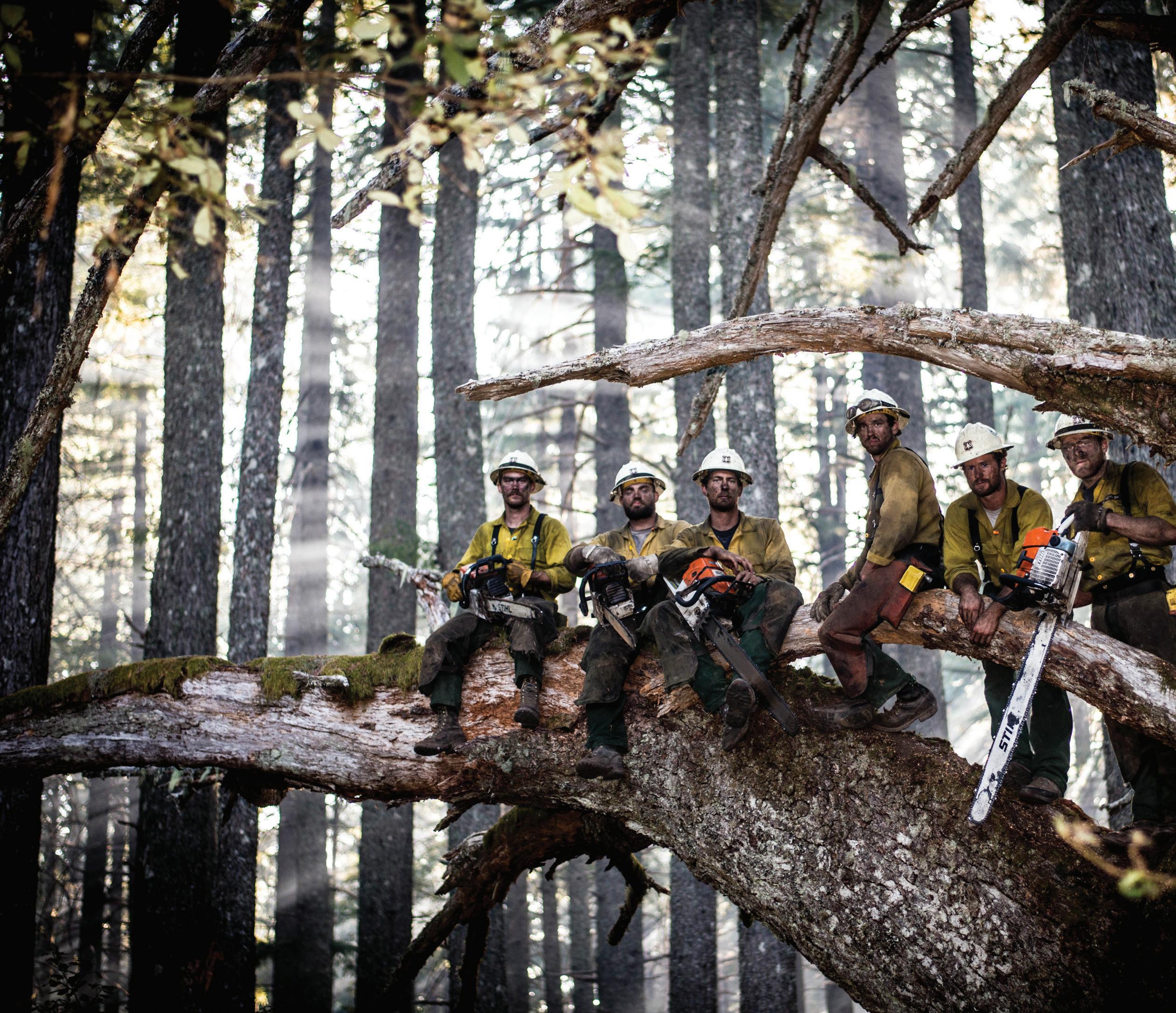
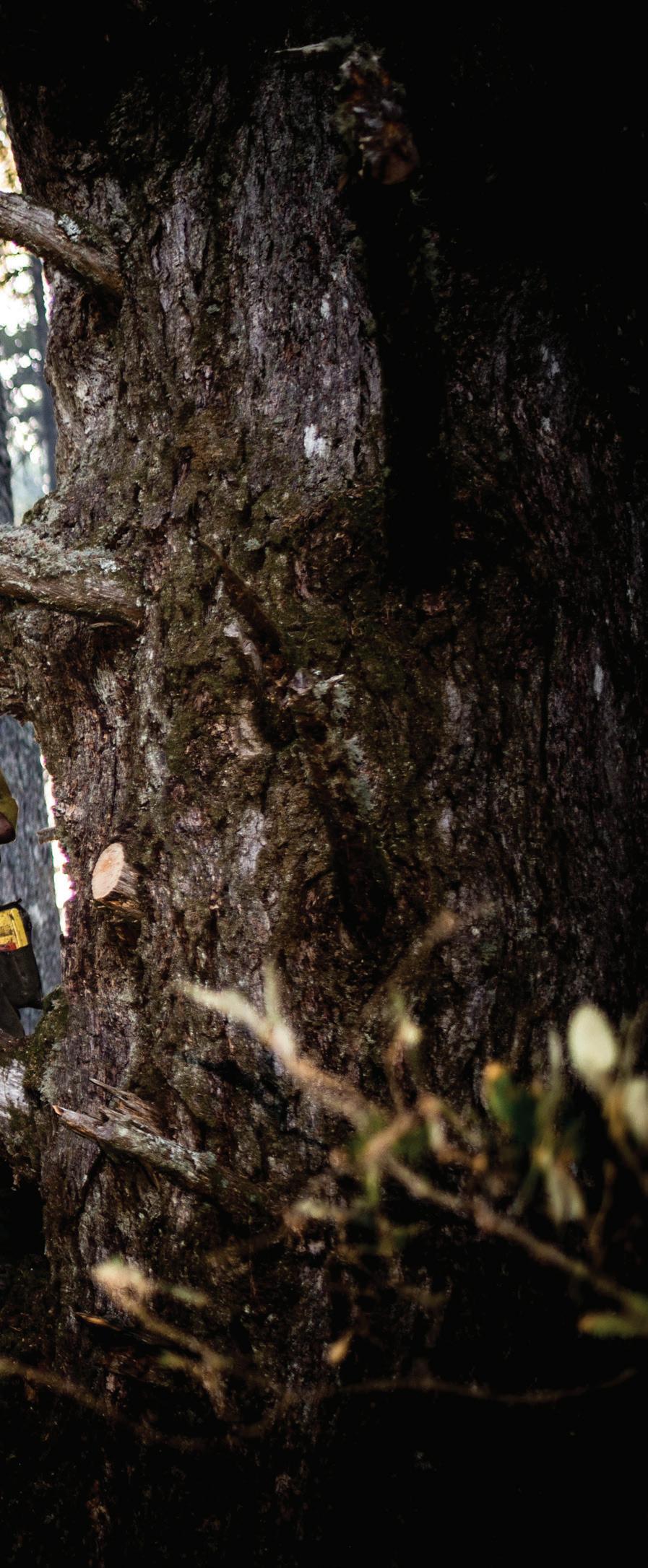
Kyle Miller is a photojournalist and captain of the Wyoming Interagency Hot Shots, an elite wildland fire crew based out of the Bighorn National Forest. Here, Miller’s crew poses for their annual saw squad photo on a Douglas fir branch in 2014 after containing a Northern California fire. Miller’s work is featured in an Outbound Gallery titled “Home is Where the Mountains Burn.” Originally published Summer 2025. Photo by Kyle Miller
A child of the Anaconda Copper Mining Company of the late 1800s, Anaconda, Montana, is both a place petrified in its history and fertile with new opportunity. The community is a patchwork of a predominantly older demographic with young entrepreneurs and families woven in. While relics like “The Stack” (top left) remain as a museum of the town’s past, new shop fronts and new faces indicate the community is undergoing an identity shift. This gallery series, titled “Community in Context,” featured an aerial view paired with portraits of community members. Originally published Summer 2023.
Boyer
During the filming of feature documentary titled “Flowing Air,” Lane Lamoreaux soars his paragliding wing above the Snake River at Swan Falls, Idaho on Jan. 27, 2019. Six years prior, a paragliding accident at California's Soboba Flight Park nearly cost him his life and now Lamoreaux faces his "alive day" with an annual sunset flight in remembrance. Originally published Summer 2021.
Photo by Seth Dahl
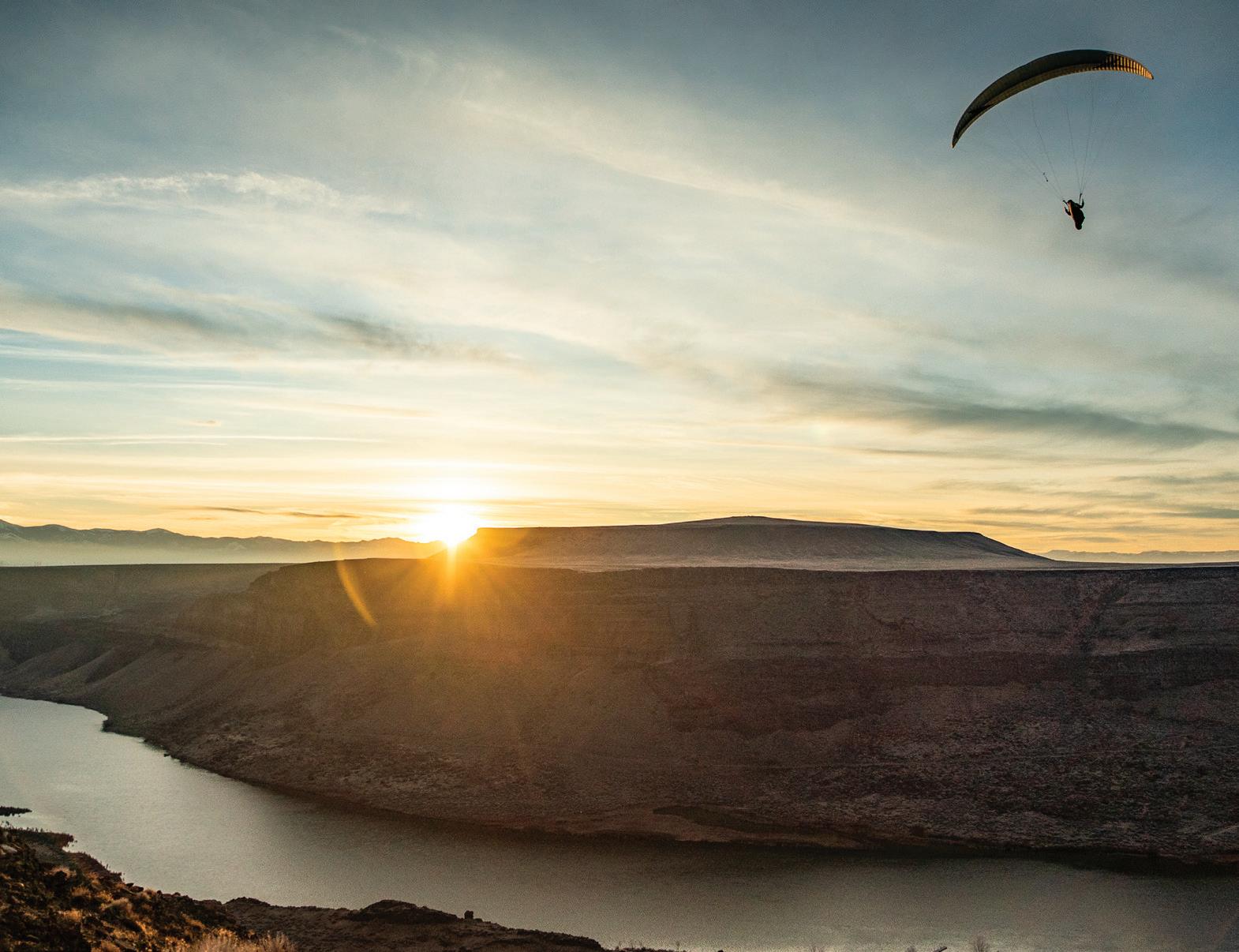
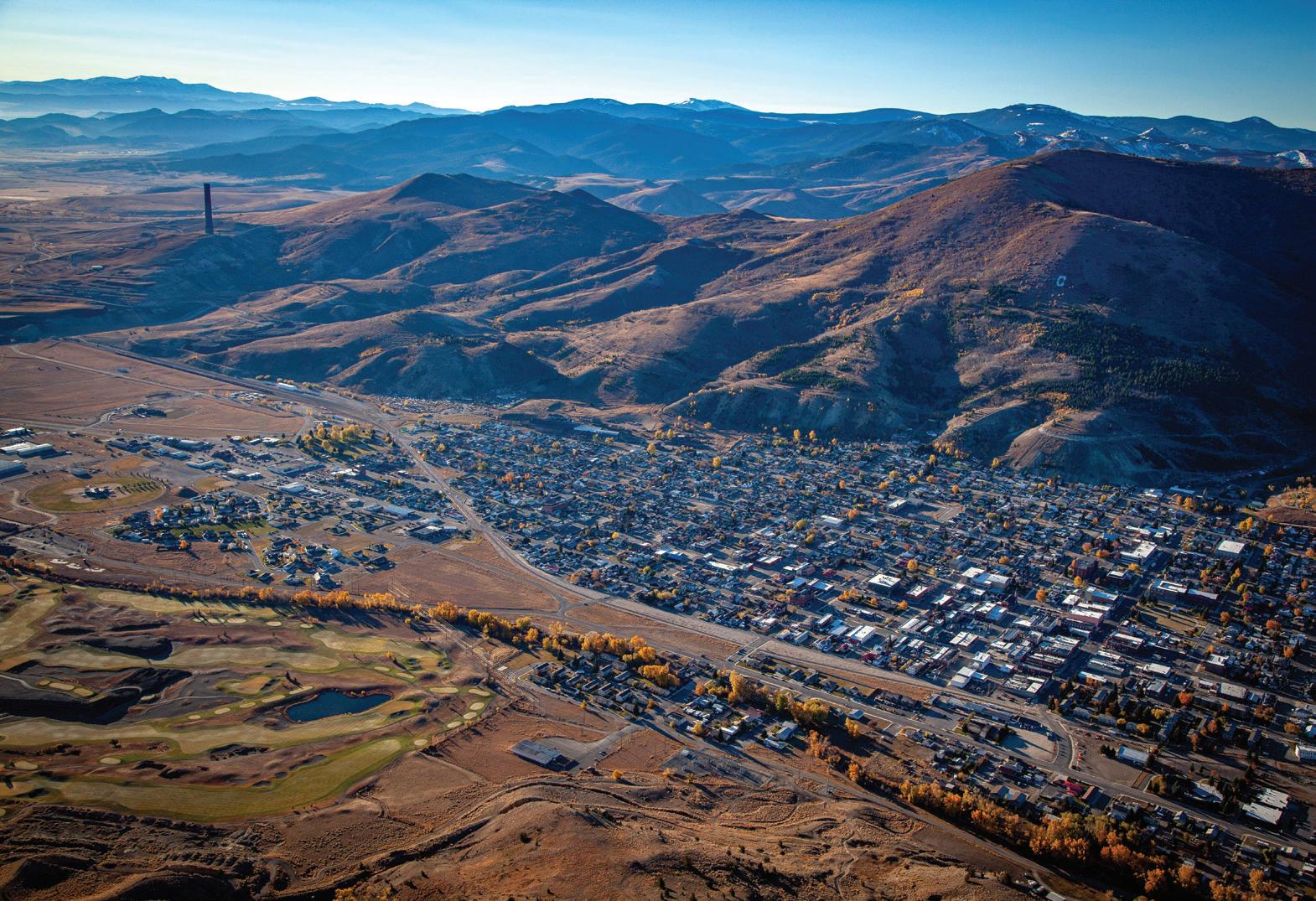
Photo by Chris
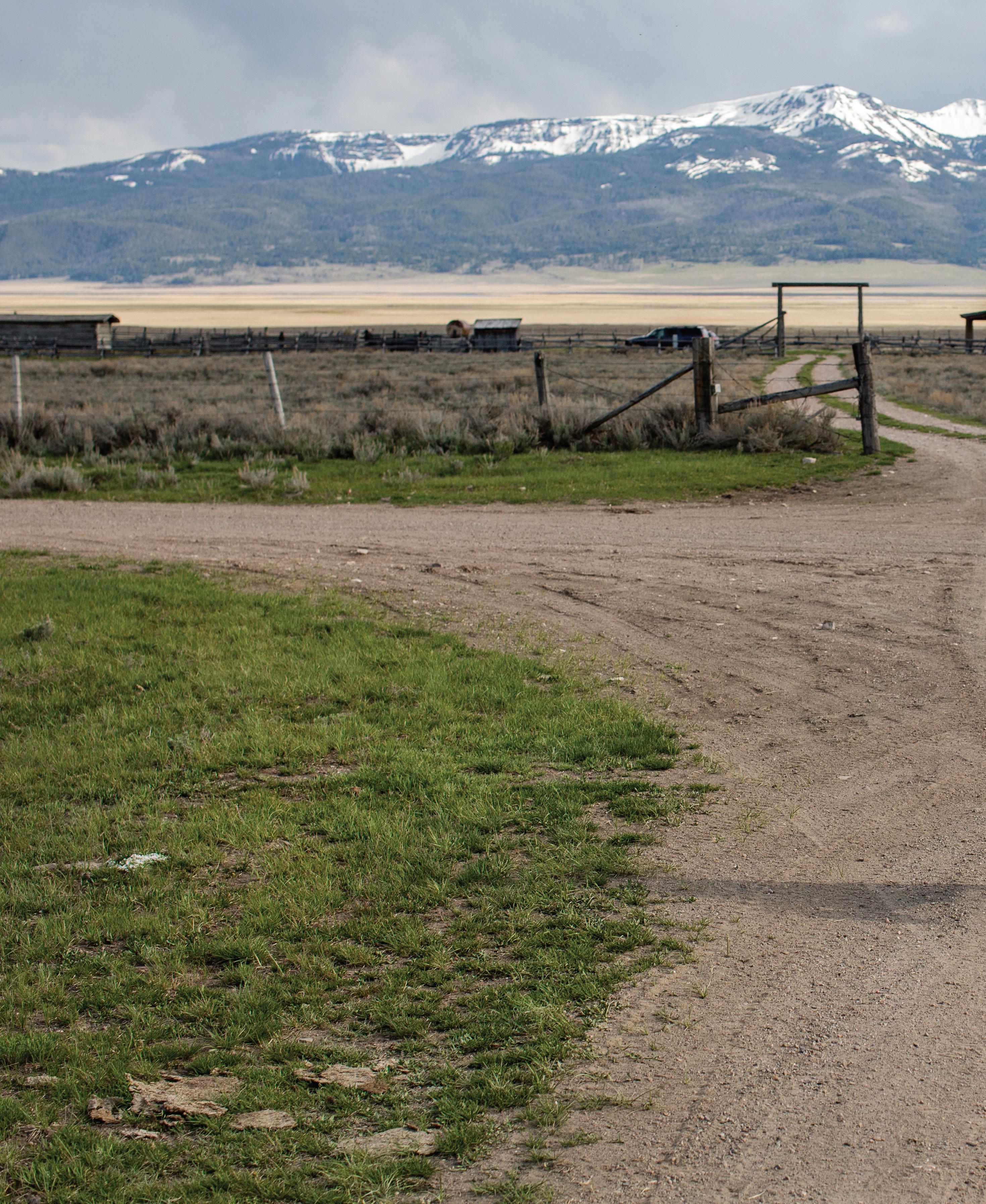
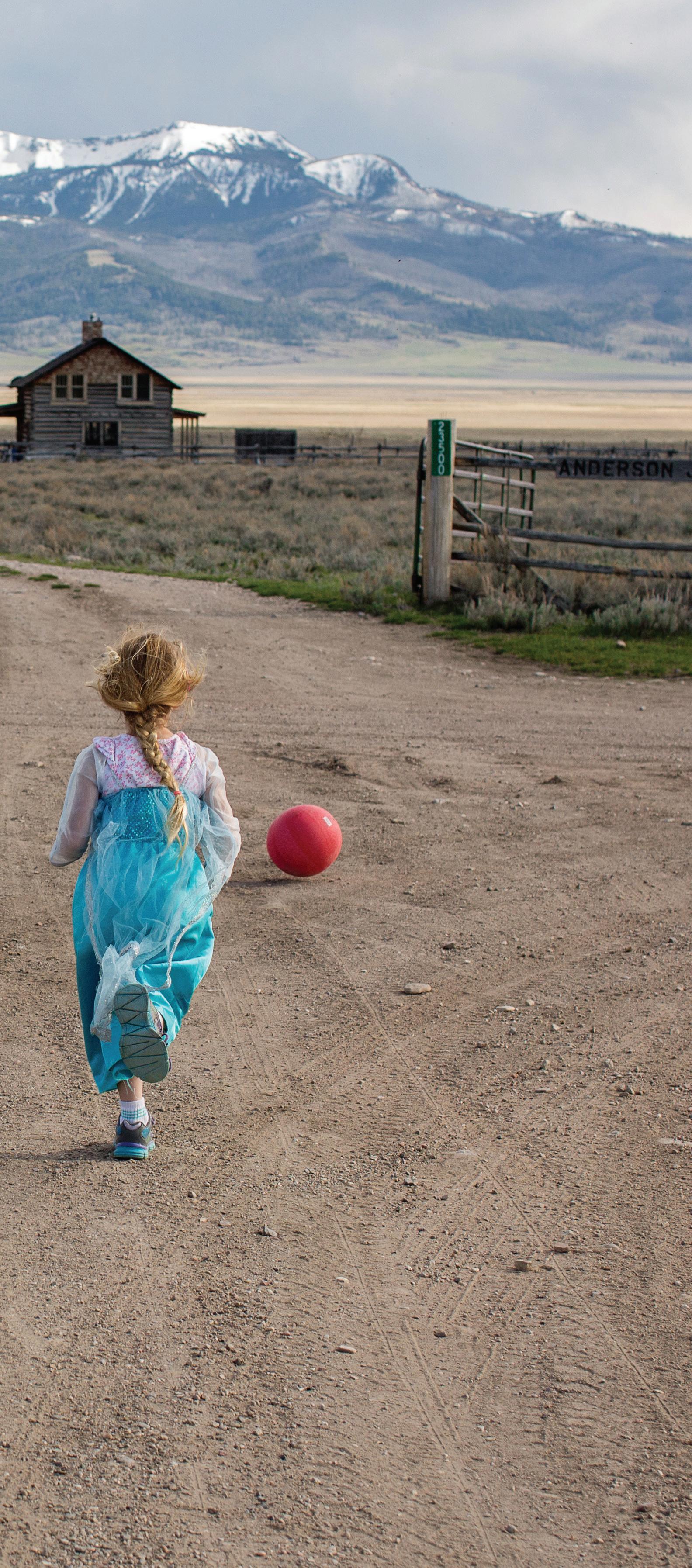
Nine-year-old Emmy Oberly on her family’s property in Big Timber, Montana.
Oberlys
Photo by Louise Johns
YVON CHOUINARD
THINKS FOOD COULD SAVE THE PLANET
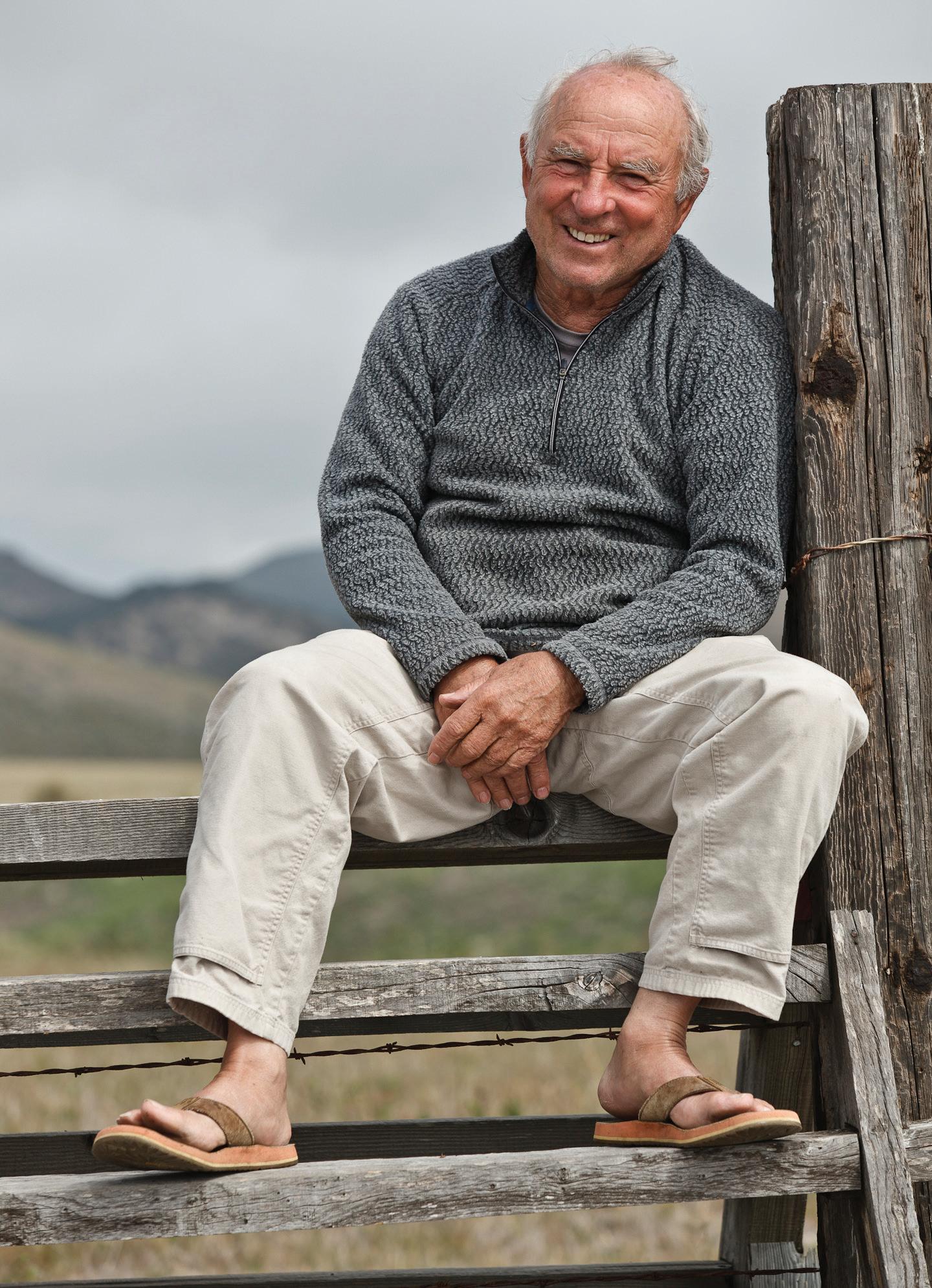
Yvon Chouinard at his ranch in Wyoming
PHOTO BY JEFF JOHNSON / COURTESY OF PATAGONIA
BY EMILY STIFLER WOLFE
Yvon Chouinard thinks food could save the planet
By Emily Stifler Wolfe
With hands thick and weathered from decades of rock climbing and blacksmithing, Yvon Chouinard piles veggies onto a plate for lunch. Focused on the organic salad bar at Patagonia’s Ventura, California, headquarters, he selects spinach, kale, romaine, edamame, radishes, fennel, quinoa, cashews. By the end he’s got a bit of everything. Literally.
In flip-flops, a short-sleeved button-down and what he told me earlier are 20-year old pants (all Patagonia), Chouinard shuffles over to the hot bar where an employee serves us mashed sweet potatoes and black bean patties (“These are really good,” he says, grinning.), and then to the checkout counter. As founder and owner of the leading outdoor clothing and gear retailer Patagonia, Chouinard pays for his food in the company’s subsidized cafeteria, just like everyone else.
Seated at one of the long tables, we hunch together to hear each other as employees pass us on their way to eat outside. “What’s important is a varied diet,” he says, “as many different things as you can get.” He’s referring to the unique nutrients of each veggie on his own lunch plate, but also to eating foods like eggs from free-range chickens, which themselves consume a wide range of plants and insects.
Now 80, Chouinard is all of 5 feet 4 inches tall but remains a giant in the world of rock climbing and conservation. He established cutting-edge climbs in the U.S. and Canada during the sport’s 1960s and ‘70s golden age and got his start in business by forging steel climbing gear in the late 1950s, which he sold out of the back of his car to fund outdoor adventures. Patagonia is now a billion-dollar company that’s donated more than $100 million to grassroots environmental causes. It has long been an innovator in apparel, visual storytelling and activism. A diehard outdoorsman, Chouinard spends
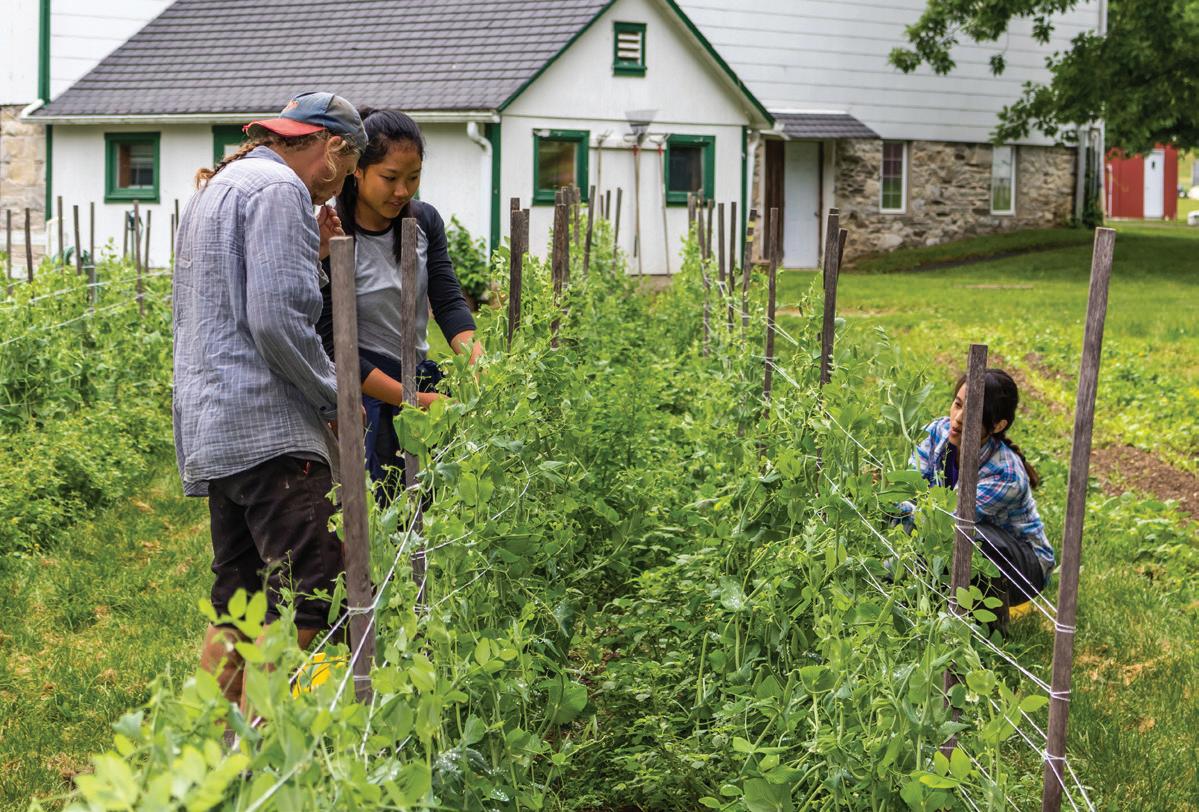
Future farmers learn regenerative organic practices in a training program at Rodale Institute in
around half his time fly fishing and surfing, and half at work. But he’s not sitting at a desk trying to sell more clothes. He’s out to stop the climate crisis, and he wants to do it through agriculture.
“We’re losing the planet. We really are,” he told me earlier that morning in his office upstairs, his voice gravelly. “And I’m not going to let it go without fighting, so we have to try harder.”
Chouinard, who is sometimes compared to conservation greats John Muir and David Brower before him, has become increasingly vocal about the role of private business in protecting the environment and public land. Maybe you’ve read how the company’s philanthropic giving has benefited the bottom line, how it sued the Trump administration for rescinding a million acres of southern Utah’s Bears Ears National Monument, or how it backed Senatorial candidates including Montana Democrat Jon Tester, a conservationist and public lands advocate. Both Chouinard and Patagonia will likely become even louder as they try living up to the company’s
Kutztown, Pennsylvania.
PHOTO COURTESY OF RODALE INSTITUTE
I really believe we need a revolution, [and] the only revolution we’re likely to have is in agriculture.
new mission: “We’re in business to save our home planet.”
For Patagonia, that means going carbon neutral and non-extractive by 2025, getting deeper into politics, and boosting support for conservation work — Chouinard estimates within five years they’ll be giving $50 million annually to grassroots environmental groups. And in 2012, he started Patagonia Provisions, a separate division of the company that sells sustainably produced and harvested foods like organic grains and responsibly caught salmon. Its goal is to create a market for climate-friendly foods.
If this seems a far cry from outdoor clothing, think
again. Patagonia has woven its interest in agriculture into textiles since switching to organic cotton in the 1990s after new T-shirt shipments made staff sick at a Boston retail store. Treated with formaldehyde like many garments, the shirts woke Chouinard to the toxic nature of conventionally grown cotton. But, with little industry demand, Patagonia had to create its own supply chain, something it’s since done with hemp, wool, Yulex (a wetsuit fabric made from tree rubber instead of the petroleum-based neoprene), and now food.
“Agriculture as it relates to food is one of the biggest contributors to climate change,” said Birgit Cameron, managing director for Patagonia Provisions. Indeed, agriculture and associated land-use account for a third
of global greenhouse gas emissions and 70 percent of water consumption, according to research conducted by the World Bank. But, Cameron says, through regenerative organic agriculture, food may also offer solutions.
This style of land management uses a combination of older farming techniques including crop rotation, reduced tillage, cover crops and livestock integration. The practice can increase yields, reduce costs, improve water and soil quality, and sequester carbon. The idea is to have the water, nutrient and energy cycles mimic those occurring in nature, says Dwayne Beck, research manager at the Dakota Lakes Research Farm in Pierre, South Dakota, and a leader in the field.
“If you don’t do that, then the ecosystem collapses. You’re mining,” said Beck, also a Ph.D. professor in South Dakota State University’s Agronomy, Horticulture and Plant Science Department.
The field is growing quickly and studies show it could help solve some of the world’s most pressing problems, among them hunger and climate change. Project Drawdown, a science-based proposal to roll back greenhouse gas emissions within 30 years, rates regenerative agriculture as number 11 in the top 100 existing solutions. Beck cautions we need more peer-reviewed science to define which techniques are truly regenerative. Organic production, for example, can be unhealthy for the environment and humans because it’s difficult to accomplish without tillage, and organic pesticides aren’t regulated or tested at the same level as commercial ones. Practice standards are also needed, and those should be defined with input from consumers and farmers, Beck says, not big business.
But none of that is stopping Patagonia. “We know enough to run
SIDEBAR
The making of a conservationist
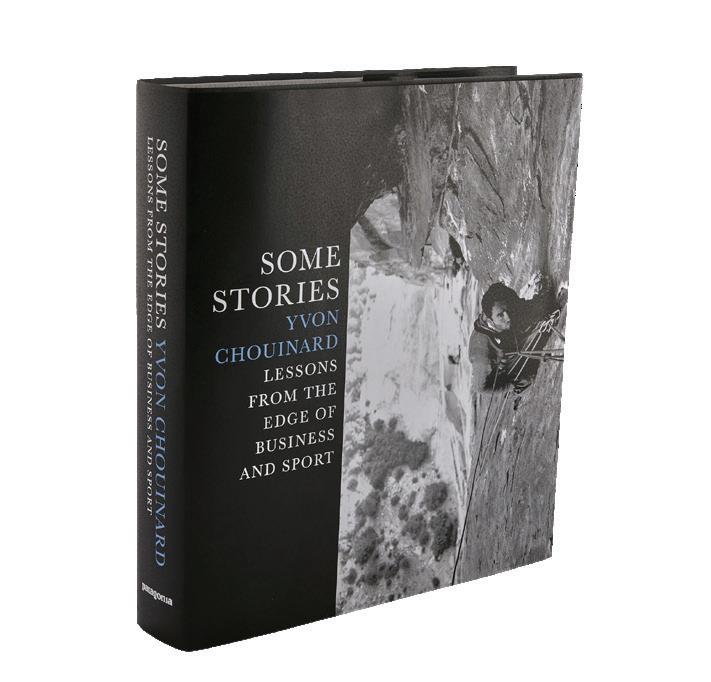
From his 1975 first ascent of the Diamond Couloir on Mount Kenya, an ice climb that no longer freezes, to the tens of thousands of Yellowstone River cutthroat trout he saw killed by disease and warming stream temperatures in 2016, Yvon Chouinard has had front-row seats to more than a half-century of environmental change. His new book, Some Stories: Lessons from the Edge of Business and Sport (Patagonia Books, April 2019), offers an inside look at how outdoor adventure made him the outspoken environmental advocate he is today. The collected stories are in turn insightful, touching, provocative and funny, and it’s easy to imagine Chouinard recounting them around a campfire. His ultimate message is that our society needs to make fundamental changes.
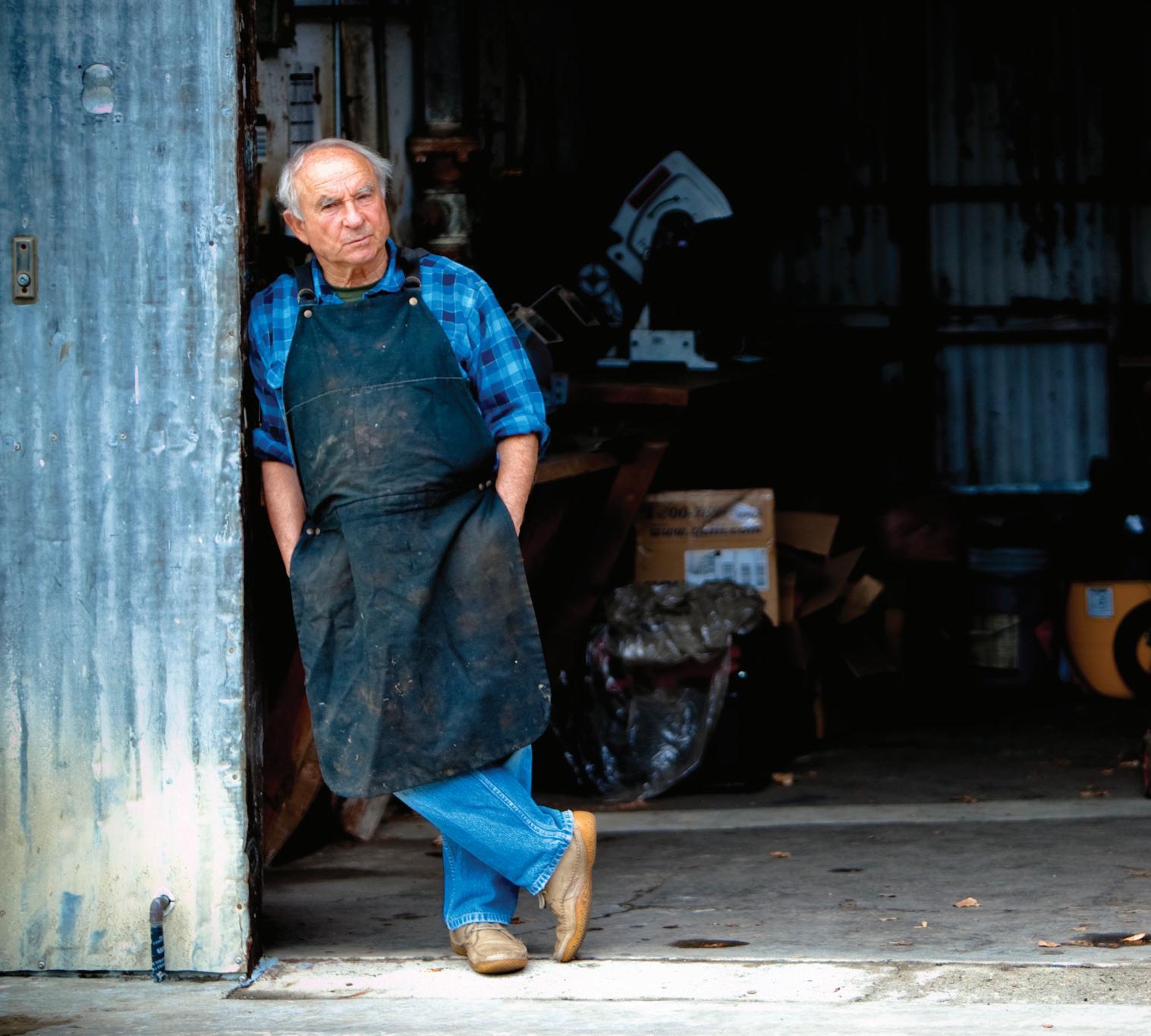
Yvon Chouinard in his original blacksmithing shop at the Patagonia headquarters in Ventura, California
PHOTO BY TIM DAVIS / COURTESY OF PATAGONIA
The Power of Evel
A brash Butte legend gets a tribute worthy of his legacy
BY JOSEPH T. O’CONNOR
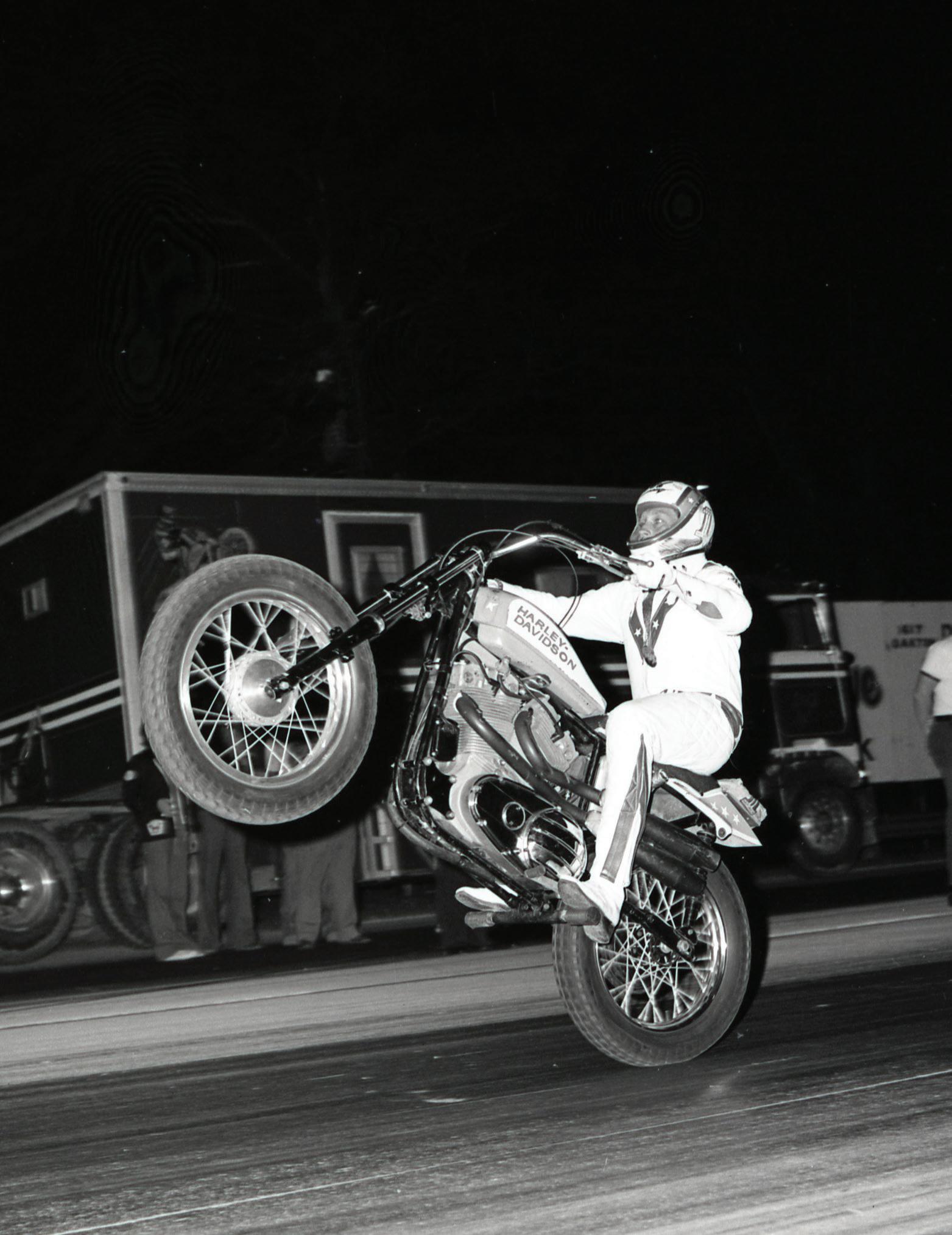

An Evel night wheelie at the Great Lakes Dragaway, Union Grove, Wisconsin, June 1973
PHOTO COURTESY OF EVEL KNIEVEL MUSEUM

The Power of Evel
A brash Butte legend gets a tribute worthy of his legacy
By Joseph T. O’Connor
When a young Robert Knievel was arrested for swiping hubcaps in his hometown of Butte, Montana, police tossed him in a cell beside notorious criminal William Knofel, nickname: “Awful” Knofel.
Knievel changed his name to “Evel,” took to motorcycle stunts and kick-started a phenomenon that took the nation by storm. That’s one story, anyway. There are others. But no matter how you turn the wheel, no one had ever seen anything like Evel Knievel.
Considered the Godfather of Extreme Sports, Knievel was part risk-taker, part master showman, and a deft entrepreneur. He hand-built his illustrious career and a splashy red, white and blue brand on the backs of powerful motorcycles and death-defying acts.
In the 1970s, Knievel became a legend and then a hero for a Vietnam War-torn America. He was pals with boxer Joe Frazier; Muhammad Ali, also a bombastic self-promoter, declared Knievel “the white version” of himself. “Kids wanted to be like me, men wanted to be me and women wanted to be with me,” Knievel once said.
“He borrowed pieces from the most flamboyant people in show business,” said Matt Vincent, the former mayor of Butte who happens to be married to Knievel’s youngest daughter, Alicia. “If you look at the way Evel dressed, you could see pieces of Liberace and Elvis Presley in his getup. At first glance you’re like, ‘This guy comes from a hardscrabble mining town like Butte?’”
Over a 15-year career, Evel Knievel amassed 172 motorcycle

B/W wheelie:
An Evel night wheelie at the Great Lakes Dragaway, Union Grove, Wisconsin, June 1973. PHOTO COURTESY OF EVEL KNIEVEL MUSEUM
jumps over everything from greyhound buses to sharks and poisonous snakes, and crashed 19 spectacular times. The short list includes the infamous 151-foot disaster over the fountains at Caesars Palace in Las Vegas, and a failed attempt to jump over a quarter-mile-wide section of Idaho’s Snake River Canyon in a steam-powered rocket called Skycycle X-2.
Knievel holds the Guinness World Record for suffering the most broken bones in a lifetime: 433. Some don’t buy that number but in the world of legends, legendary tales pervade. Now, thanks to a new museum in America’s heartland, Evel fans can count the broken bones themselves.
KNIEVEL WAS RAISED ON THE ROUGH-AND-TUMBLE STREETS OF BUTTE AND LIVED BY MAXIMS AKIN TO THE CODE OF THE WEST: BELIEVE IN YOURSELF; LIVE BY YOUR WORD; GET BACK ON THE HORSE.
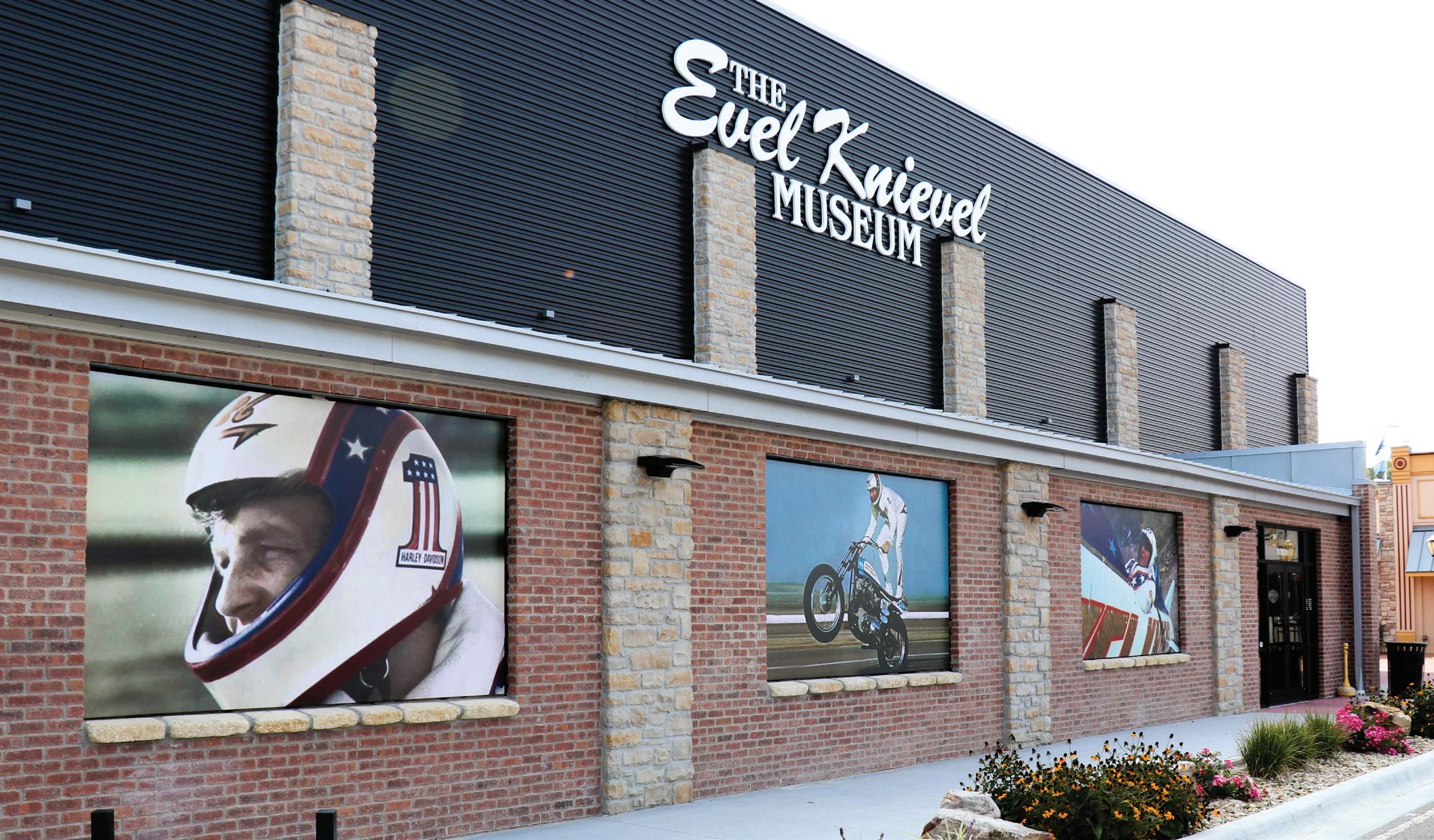
The Evel Knievel Museum launched onto the Topeka, Kansas, landscape last summer and, among its hundreds of relics, displays more than 40 X-rays of the bones broken by the greatest daredevil in American history. Since its grand opening June 30, museum co-owner Mike Patterson says he’s astounded by the sheer volume of travelers hopping off nearby Interstate 70 to glimpse the Evel display.
“In the first four months, we had [people from] all 50 states,” said Patterson, who is also the third-generation owner of the Harley-Davidson shop that was expanded to include the museum. “Almost 60 percent of our visitors are from out of state. And it’s not just people passing through, it’s people making it their destination.”
The concept for a Knievel museum took root in 2013 when Lathan McKay, a former pro skateboarder turned Evel historian asked Patterson to help him renovate Big Red, the 1974 Mack truck and trailer Knievel used to tow equipment between venues. McKay, who began collecting Evel artifacts en masse in 2012 when he met Knievel expert Scott Wiley, acquired the truck after two years of haggling with the former owner.
Patterson and his team had recently restored Jerry Lee Lewis’s vintage Harley-Davidson, and bore


a reputation beyond polished results. With initial funding from McKay’s business partner Marilyn Stemp, the crew spent the next two years restoring the truck to its original, immaculate form, but a greater objective soon became clear. “We both kind of knew that the goal was always to have a permanent museum somewhere,” McKay said.
The 13,000-square-foot homage to all things Evel now contains the world’s most extensive collection of Knievel memorabilia, including original motorcycles, leathers, road-rashed helmets, and a virtual reality stunt jump. It even holds one of the two famed Skycycle X-2s, thanks to a third partner, Jim Caplinger, who bought the rocket in Canada and helped the project through the finish line.
While Knievel’s bone-breaking motorcycle jumps draw visitors through the museum’s doors, the partners see more to the exhibit. “I hope people from Montana feel like it’s well represented,” Patterson said. “It’s a tribute to the people from Butte and Montana.”
November 30, 2017, was the 10-year anniversary of Evel Knievel’s death of natural causes at 69. In July 2007, four months before his passing, he appeared on stage with his son, Robbie, during Butte’s Evel Knievel Days, a three-day annual festival that draws daredevils, motorcycle hounds and revelers by the tens of thousands.
In a final interview in 2007, a visibly ill Knievel
A Merman’s Tale
Wherein I attempt to assimilate into the culture of the Sip ‘n Dip’s merpeople

BY EDNOR THERRIAULT
A Merman’s Tale
Wherein I attempt to assimilate into the culture of the Sip ‘n Dip’s merpeople.
By Ednor Therriault
What do you do when you’re wearing a mermaid tail and you have to pee? Well, when a bar full of people is watching, you can’t just smile and whiz in the pool like you’re at the Holiday Inn. You have to leave the water.
Forget about the ladder—I still have a big purple bruise on my right foot from trying to negotiate that thing while wearing the tail. My solution was to grab the lip of the pool, heave myself out of the water and flop onto the deck like a trained seal. Once I managed to struggle to my feet, I did the “mermaid shuffle,” a series of tiny steps to the bathroom.
Being a merman is harder than it looks.
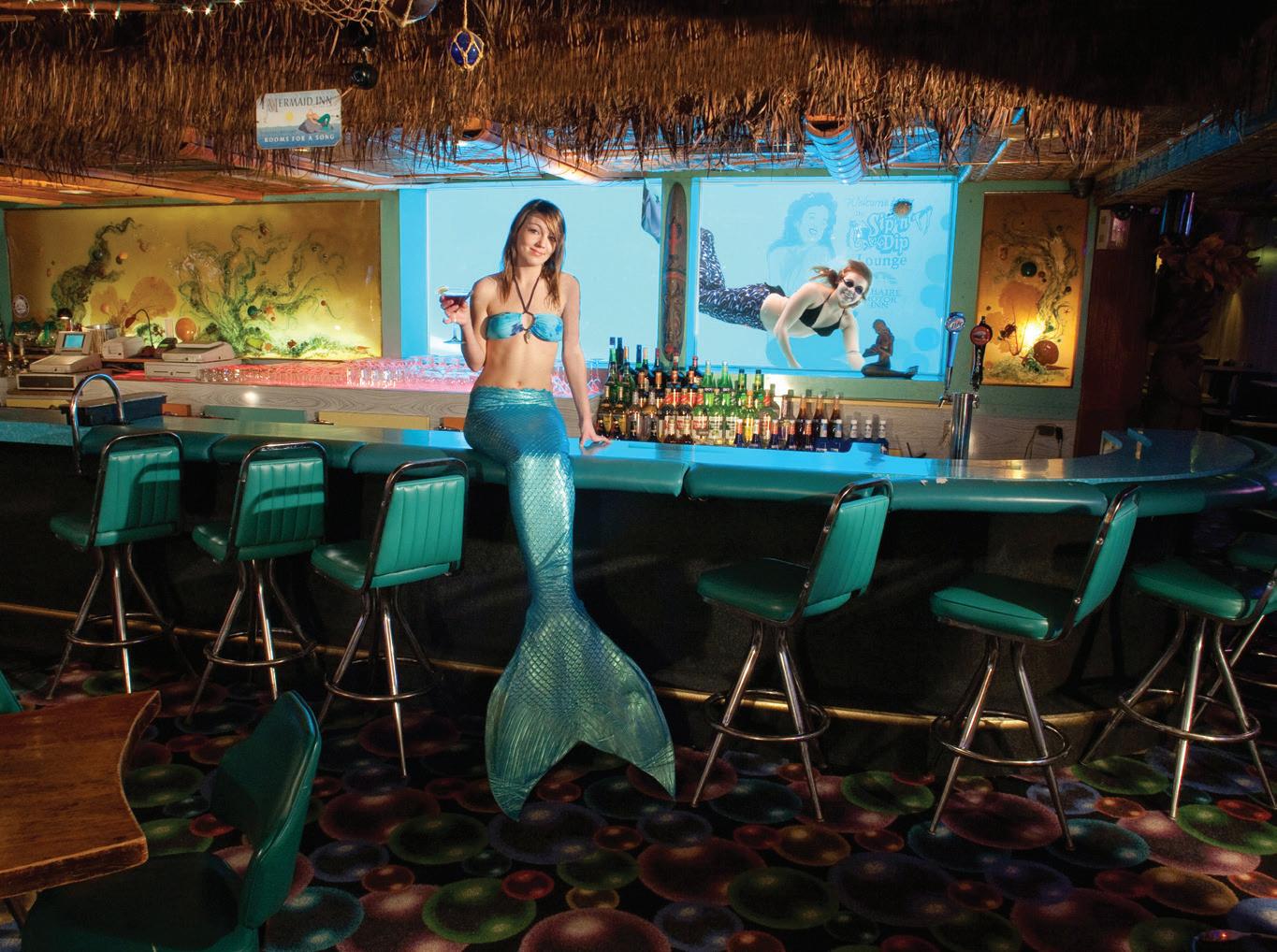
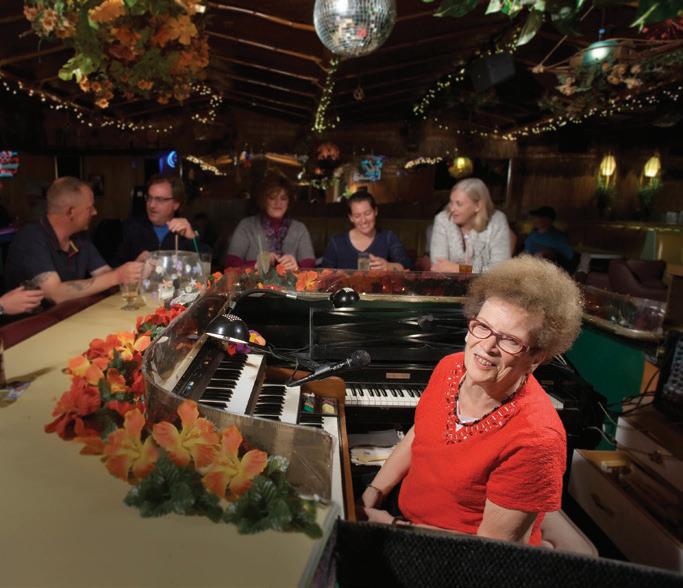
bamboo wall coverings, seashore-print vinyl booths and lacquered rattan ceiling. Strings of lights crisscross the room and there’s a piano bar near the door where “Piano” Pat Spoonheim has been playing most nights for more than 50 years. And there, behind the smiling staff making colorful drinks at the bar, is the main attraction of the Sip ‘n Dip: two large windows revealing the mermaid tank.
The author maneuvers through plastic seaweed in the Sip ‘n Dip’s famous mermaid tank.
I recently had the chance to wear a tail and swim with the merfolk at the infamous Sip ‘n Dip Lounge at O’Haire Motor Inn in Great Falls. It was ladies’ night, and they’d recently started plopping mermen into the pool to provide some eye candy for the rowdy gals at the bar. I wanted in.
We’re talking about a Montana icon here. The Sip ‘n Dip was named the “Top Bar on Earth Worth Flying For” by GQ Magazine in 2003, and when you stroll inside it’s easy to see why. The retro, tiki-themed lounge has a real you’re-on-vacation feel, with its
A dark-haired mermaid and two fit, tail-clad mermen perform lazy loops in the pool, frequently swimming over to the glass to smile, wave and blow air-bubble kisses to the delighted patrons.
One of the mermen, Perseus, glides past the glass as two women eyeball him from the bar, sipping from enormous tiki drinks bristling with umbrellas and straws. “I bet that one’s a Marine,” says one. “I’d know a military body anywhere.” She winks and gives a little wave to Perseus, who waves back and surfaces for a gulp of air. The woman puts a conspiratorial hand next to her cheek, saying sotto voce to her companion, “I want to put him in my suitcase
JEFF
and take him home.”
Unlike Perseus, I do not have a military body. I have the kind of physique that elicits comments like, “I see you wintered well.” I’m covered with a layer of what I like to call relaxed muscle. When it’s time for me to enter the pool, which is a comfy 89 degrees, I wriggle into my tail, fit my goggles over my eyes and swim toward the deep end. Well, “swim” isn’t really the right word. It’s more like doggie paddling with only the front paws, dragging around this spandex and lace contraption that pins my legs together.
A modified breaststroke allows me to plunge to the bottom of the 8-foot-deep tank, fighting the buoyancy of my relaxed muscle, and I smile and mug at the colorful shapes moving around behind the glass in the bar. I assume they’re people—I can’t see squat because every time I dive my poorly fitted goggles immediately fill with chlorinated water. Within 10 minutes my eyes are burning and I look like I’ve just come from a Cheech and Chong movie marathon.
Perseus, his fellow merman Archer and the mermaid Venus are patient and helpful with this pudgy, middle-aged writer whose main objective is to avoid drowning. Venus, a high school senior, teaches me how to blow kisses and do barrel rolls. Archer shows me how to execute a slow back loop, sucking in air at the water’s surface like a whale clearing its blowhole.
... after a half hour of looking more like a cat in a bathtub than a mythical ocean creature, I finally start to feel like I’m working it.
The bar begins to fill up and I pull a few stunts for the customers. At one point I come up for air after a particularly agile (I thought) set of moves through the plastic seaweed on the bottom. “Hey, Flounder,” says Venus, using my merman name. She’s resting at the edge of the pool, checking her phone. “My mom says you’re losing your tail.”
I look down and sure enough, my rig has slipped down several inches exposing the top of my black compression shorts.
My tail, like all the tails, was fabricated by Sandi
The Sip ‘n Dip mermaids hit the pool six nights a week and every other Sunday morning for an all-ages brunch crowd. Tuesday is Ladies’ Night, when the mermen put on a show.
“Piano” Pat Spoonheim entertains patrons at the Sip ‘n Dip piano bar three nights a week. She’s been tickling the ivories there for 50 years.
Thares, the hotel’s general manager and mermaid wrangler. “The more I sew, the better they get,” she said. Her family has owned the O’Haire since 1968, she told me that afternoon as we sat in her cluttered office piled high with boxes spilling wigs, leis, tails and glittery bras. An entire wall is covered with dozens of framed, autographed photos of celebrities including Keith Urban, Eric Church and Barry Manilow, who’ve visited the Sip ‘n Dip over the years. The idea for the mermaid bar, she said, was inspired by a visit her dad made to the Playboy Club in Chicago. In 1996 they duct-taped a green tablecloth around the waist of a willing O’Haire housekeeper, and the mermaid program was born.
The tail I’m swimming in that night is much nicer than a tablecloth, and after a half hour of looking more like a cat in a bathtub than a mythical ocean creature, I finally start to feel like I’m working it. The next day I would be sore in ways I never could have dreamed of but tonight I’m having a blast. My only real mishap comes when I swim toward the window and bang my face into the glass, suctioning my right goggle so hard to my eye socket that it takes me a couple minutes to pop it free.
After a few more swoops and loops and “flexing” of “muscles,” I decide to call it a night. Flopping out of the pool, I dry off and pull on my jeans. I’m exhausted. My sinuses feel bleached, and every light I see has a rainbow around it. In the bar I order up a well-earned pint of local Black Eagle IPA and watch the experts in the pool twist and glide effortlessly through the water. Venus sinks down to the bottom of the window, finds me at the bar, smiles and blows me a bubble kiss. I move to return the gesture, but let out a gasp. I wonder how long I’ve been holding my breath.
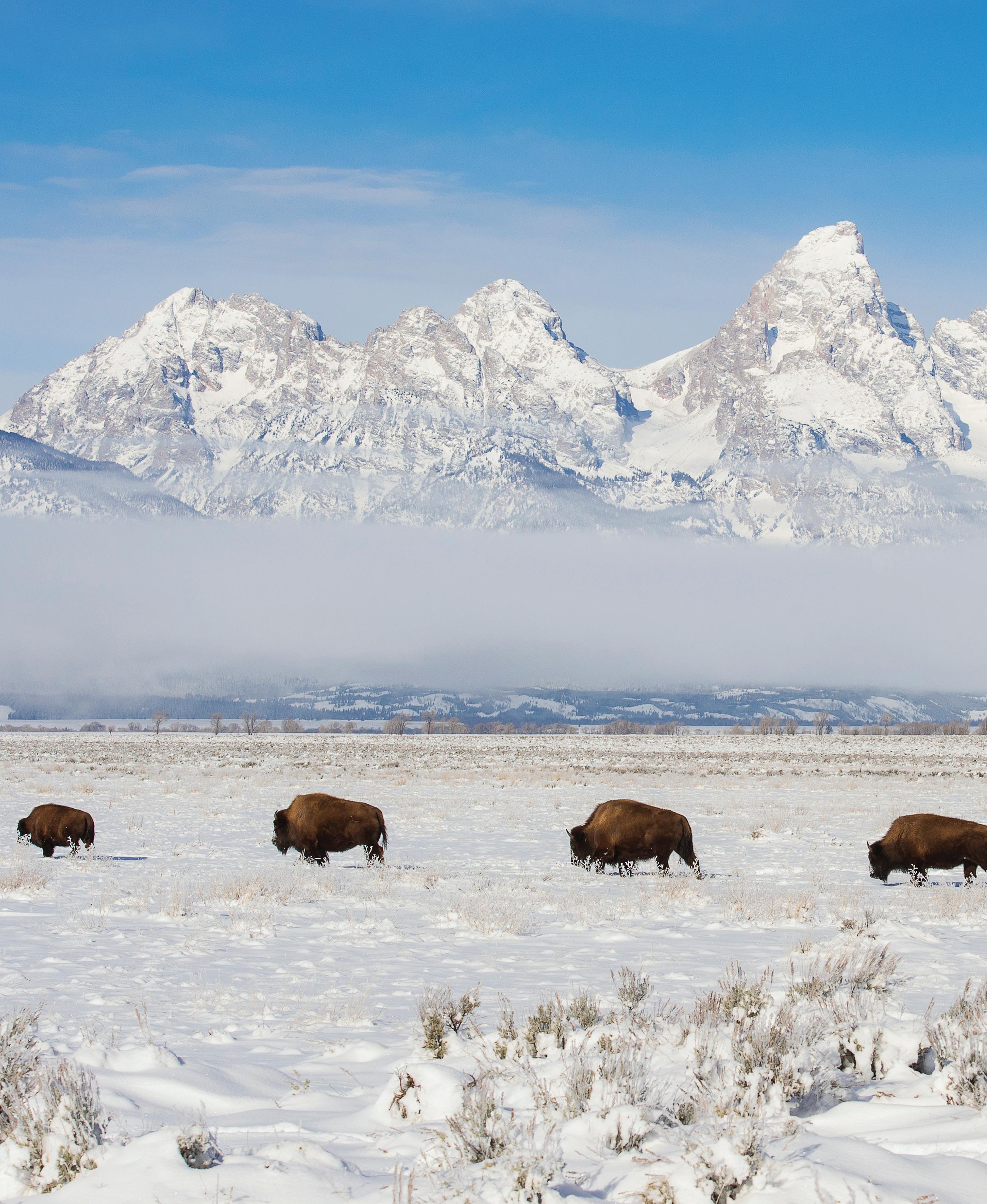
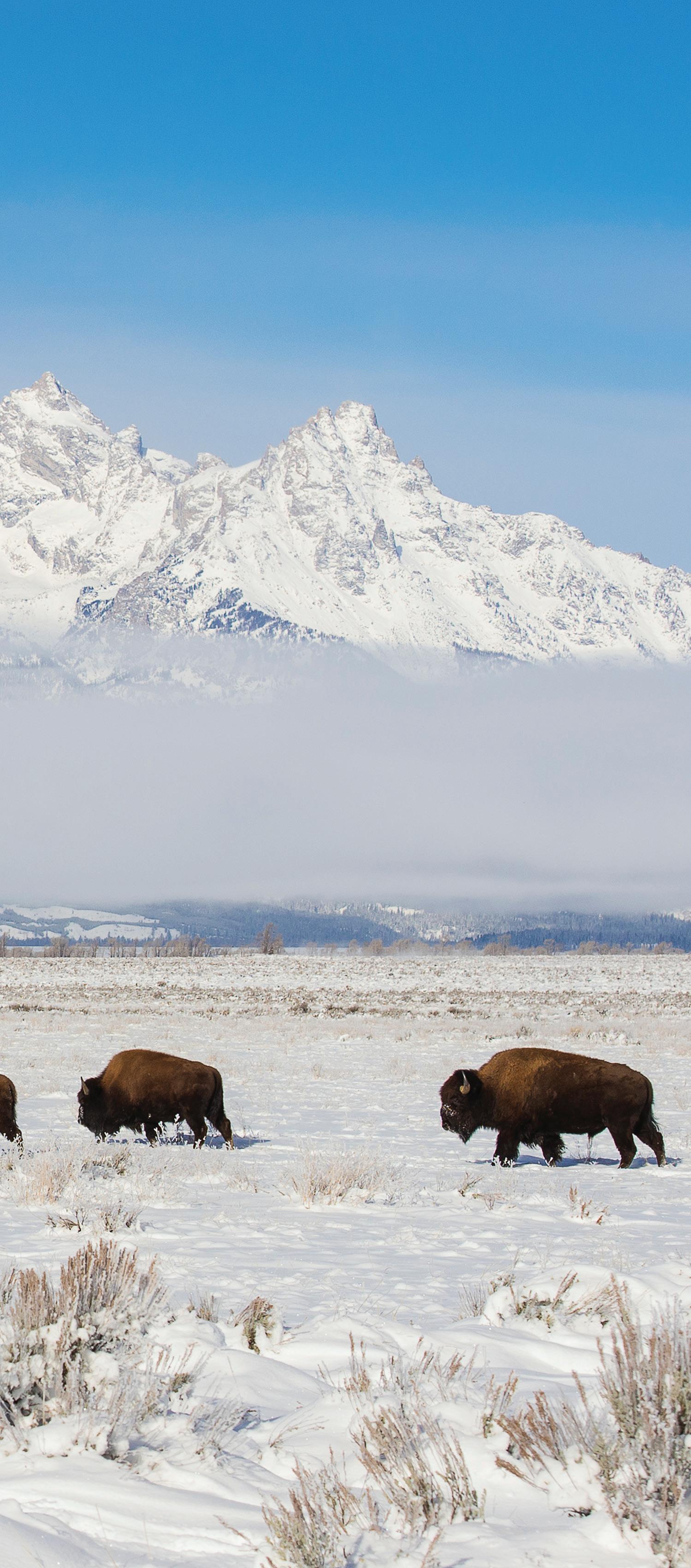
A long line of bison trek through the snow beneath the Tetons in Grand Teton National Park, Wyoming. This shot was in Winter 2016’s “The Shooter,” a feature about famed photographer Tom Mangelsen and his efforts to save the wild world through his photography work. Photo by Thomas D. Mangelsen
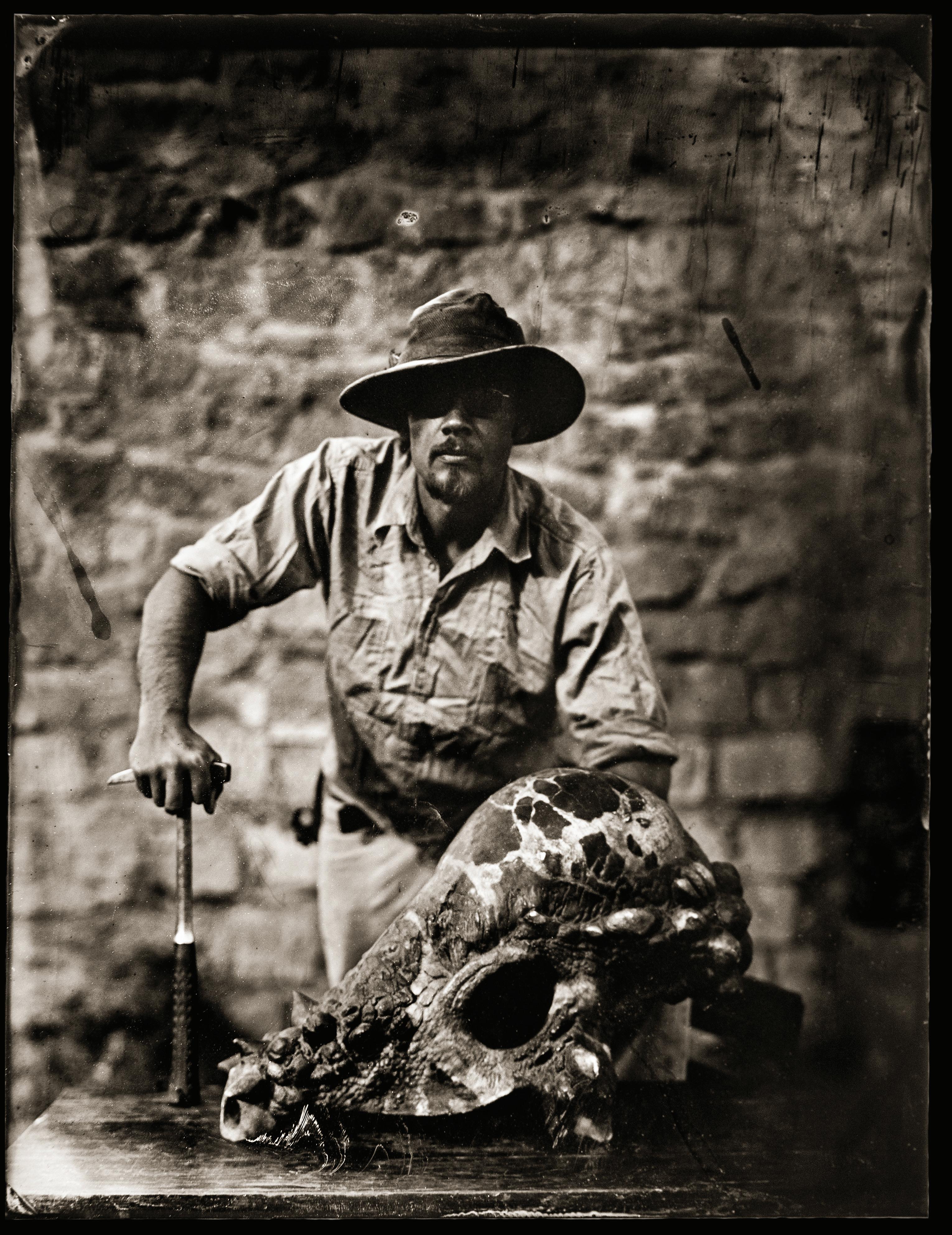
Cory Woodruff, director of paleontology at the Great Plains Dinosaur Museum in Malta, Montana.
PHOTO BY TOM FOWLKS
In Montana’s dinosaur-rich hills, fossils can be the path to scientific discovery, or a major payday
BY ALEX SAKARIASSEN
More than bones
In Montana’s dinosaur-rich hills, fossils can be the path to scientific discovery, or a major payday
By Alex Sakariassen
Dried grass encircles a large stone sign at the end of a driveway east of Glendive, within spitting distance of Interstate 94. Below the chiseled profile of a triceratops skull, the words “Baisch’s Dinosaur Digs” advertise a side-business the Baisch family have been operating on their ranch for the past 12 years. Shana Baisch walks by the sign and past an old suburban with a cracked side-view mirror toward a set of blue double doors with white trim. A dog whines at her feet. The doors open to reveal a world roughly 68 million years old.
“This is our display room,” Baisch says. “Not organized and cleaned yet for the season.”
She crosses the concrete floor to a far corner, where the pallet-sized upper skull of a triceratops weighing several thousand pounds lies partially encased in plaster. Lumpy masses of hardened earth cover the fossil below the frill and around the horns like pale grey blisters, remnants of the ancient sediments that trapped this gigantic
creature from the Cretaceous Period to the day a client from Sidney stumbled across its nasal horn in 2017. It took a bulldozer, a payloader and about 54 days, Baisch says, to move the specimen from its original resting place and into Baisch’s Dinosaur Digs HQ.
“It was in a hole about 15 feet down,” she continues, running a finger gently along a blood groove in the triceratops’ frill. “We had to pull it out of this hole and then send it down the hill that was 250 feet or something.”
Benches, tall shelves and glass display cases crowd the rest of the room, lined with bits and pieces of prehistoric flora and fauna. Fossilized palm branches, ancient turtle shells, the jaw bones and vertebrae of duck-billed Edmontosauruses, teeth from the infamous Tyrannosaurus rex. Along one wall crouches the fully articulated skeleton of a Struthiomimus, an exact replica of a specimen uncovered on the Baisch ranch and sold to a museum in Doha, Qatar, for a few hundred thousand dollars.
“Took us like 20 years, we finally got the replica,” she says. “It was 16-[feet] long.”
Baisch’s tour unfolds on my laptop screen as I sit on my deck in Missoula, some 560
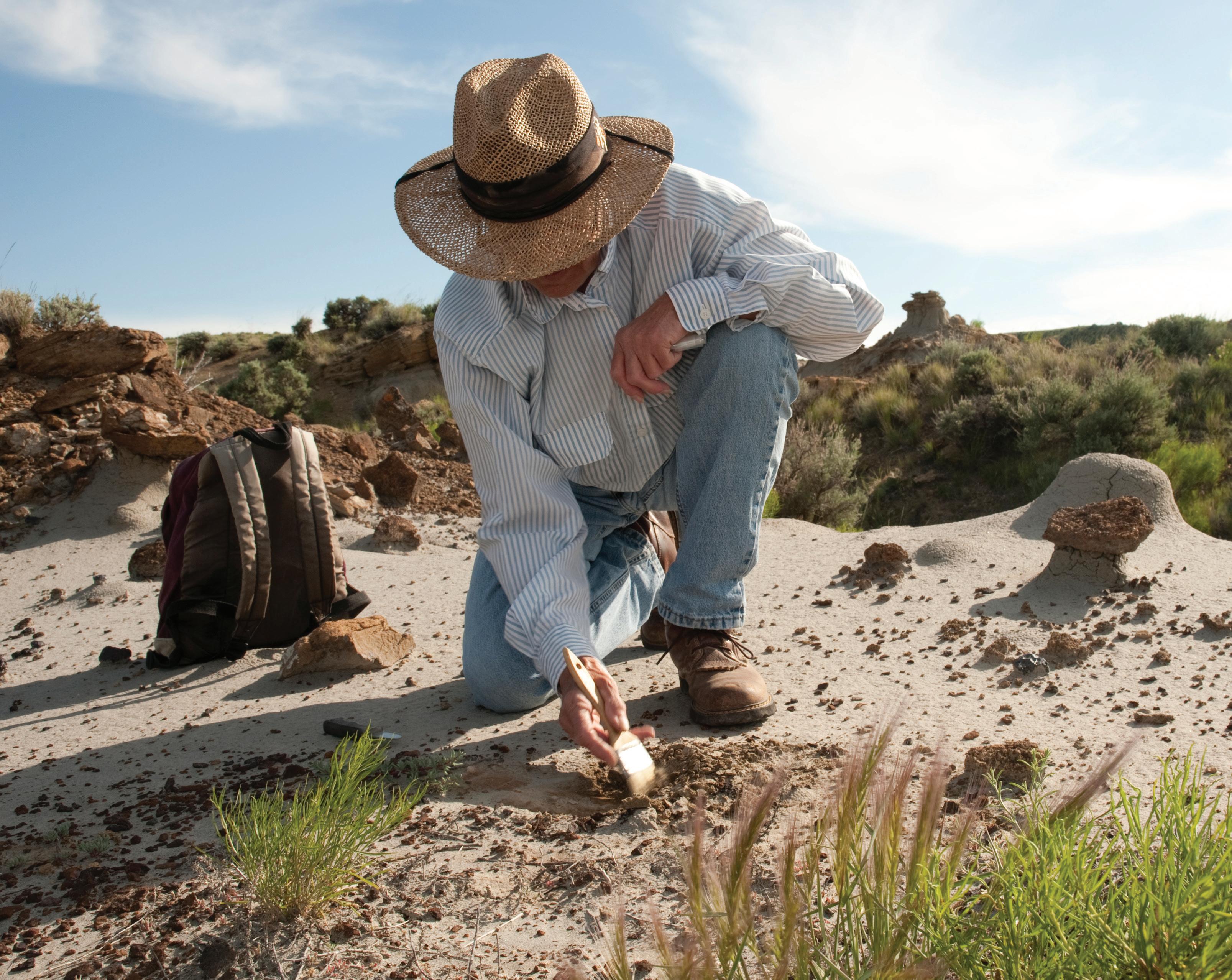
miles away. Originally, the plan was for me to see all this in person, from the display room to the mounds of sediment and mushroom-like rock caps that make up the northern slice of the Hell Creek Formation along the Montana-North Dakota border where the fossils were found. Then coronavirus swept its way into Montana. Baisch’s motherin-law Marge, who started the operation, and Baisch’s grandson are both among the demographics likely to have trouble with the disease. For their safety and
mine, I called off my field trip, and Baisch agreed to capture the experience for me as best she could on video.
Baisch and her family are members of a small but dedicated cottage industry in eastern Montana that offers dinosaur fanatics and the Mesozoically uninitiated an opportunity to unearth the monsters of our planet’s past. These fossil hunting outfits have been around for decades, operated by farmers and ranchers much the way that some ag families on
the fringes of the Bob Marshall Wilderness guide hunters and guests into the backcountry. On the Baisch’s ranch, you can pick through the hills for prehistoric bones for $120 a day—$80 for a half-day—and take home most of what you might find. To call it a side-hustle barely scratches the surface, though. The Struthiomimus that ended up in Qatar? “That one helped finish paying the ranch off,” Baisch says.
There’s money to be made in the fossil game. That sentence
alone opens a door to a nebulous world, one where the forces of science, capitalism, property rights and legal definition are in constant, dizzying contention. It’s a world that has birthed lawsuits, legislative action, criminal charges and one of the Treasure State’s most popular tourism calling cards. Welcome to Montana’s dinosaur country.
<break>
Clayton Phipps had a heck of a time finding the Nanotyran-
nus’ skull. Following along the carnivore’s neck, he came across a smooth black ridge he at first took to be the ilium, or pelvic crest. Phipps scratched his head, wondering if he’d separated the skull from the rest of the specimen with his backhoe.
“Then it dawned on me,” he says. “That skull is upside-down.”
In response, chuckles echo across the cavernous lab near Fort Peck along the Hi-Line in northeastern Montana, including the laugh of
world-renowned paleontologist Robert T. Bakker, who stands next to the specimen swinging his token white straw cowboy hat. The moment comes halfway through a video posted to YouTube in October 2011 by the Black Hills Institute of Geological Research. To date, the video only has 17,126 views. But if you’re looking for a glimpse of what might be the most famous fossil yet uncovered in Montana, that video is the best you’ll get.
Few people today know exactly
Left: Marge Baisch digging on the Baisch family ranch.
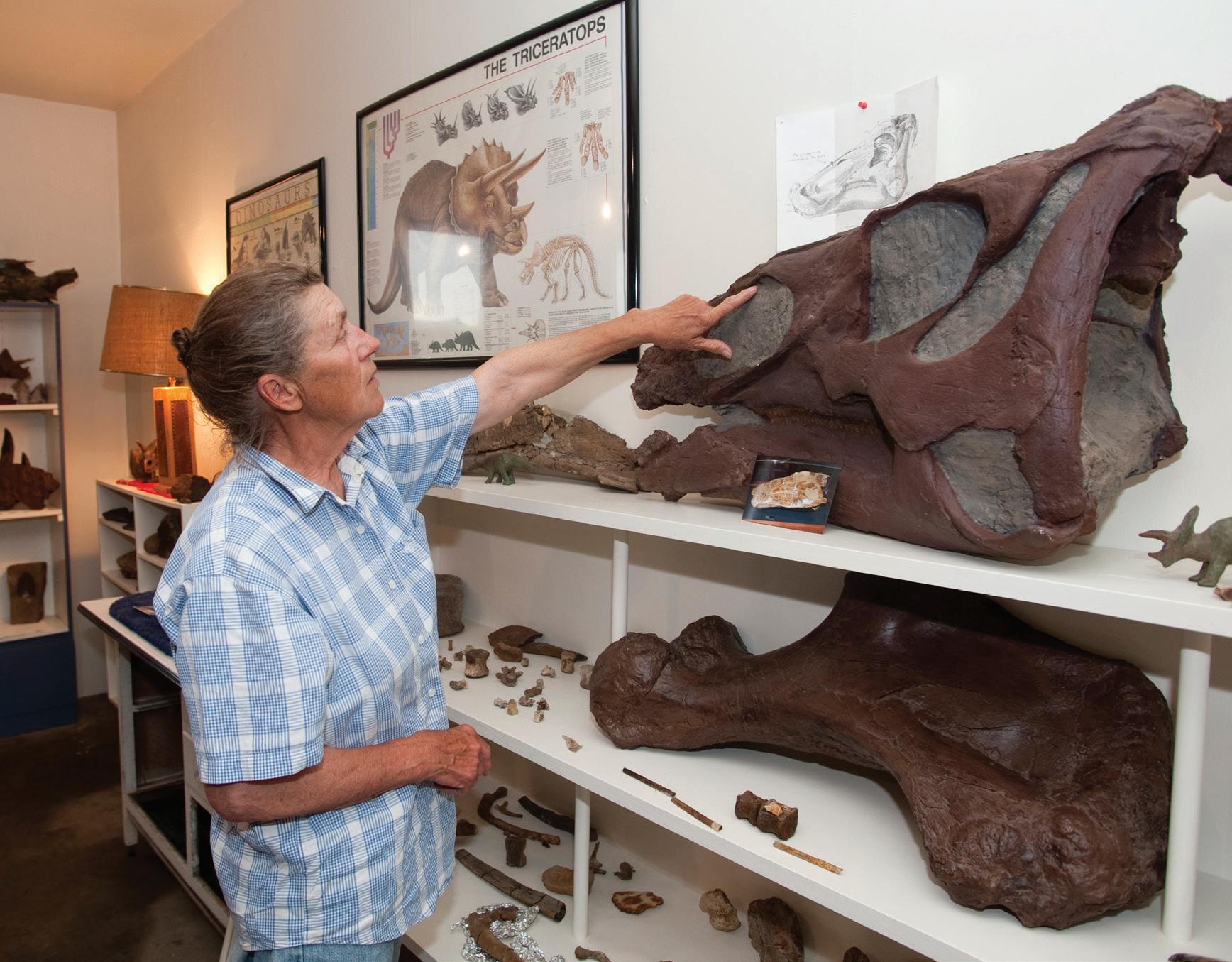
Below: Baisch pointing out a triceratops in her garage museum.
PHOTOS BY LYNN DONALDSON-VERMILLION
Brown went on to uncover the first fossils of Deinonychus, the toe-clawed inspiration for Spielberg’s velociraptors, eventually leading to the realization that modern birds evolved from dinosaurs.
where the Dueling Dinosaurs are housed. According to a 2019 article by The Guardian, the number of individuals who have even seen them remains in the low double digits. Why this fantastic discovery—a horned ceratopsian and the aforementioned T. rex-like Nanotyrannus—lies hidden away is a story that’s generated national headlines and cuts to the heart of Montana’s paleontological struggles.
Phipps and a friend first stumbled across the Dueling Dinosaurs in June 2006 while scouring the Hell Creek Formation for fossils. Phipps’s reputation as a fossil hunter in Montana, coupled with his trademark Stetson, had earned him the nickname “Dino Cowboy,” and his first big find in 2003, the spiked skull of a human-sized, plant-eating Stygimoloch, netted him $40,000. When he first saw the Dueling Dinosaurs, they were merely a pelvis and femur weathering out of the Hell Creek’s sandy, arid hills. A month later he returned to the spot with the landowners, a Glendive-area ranch couple named Lige and Mary Ann Murray. They gave him permission to
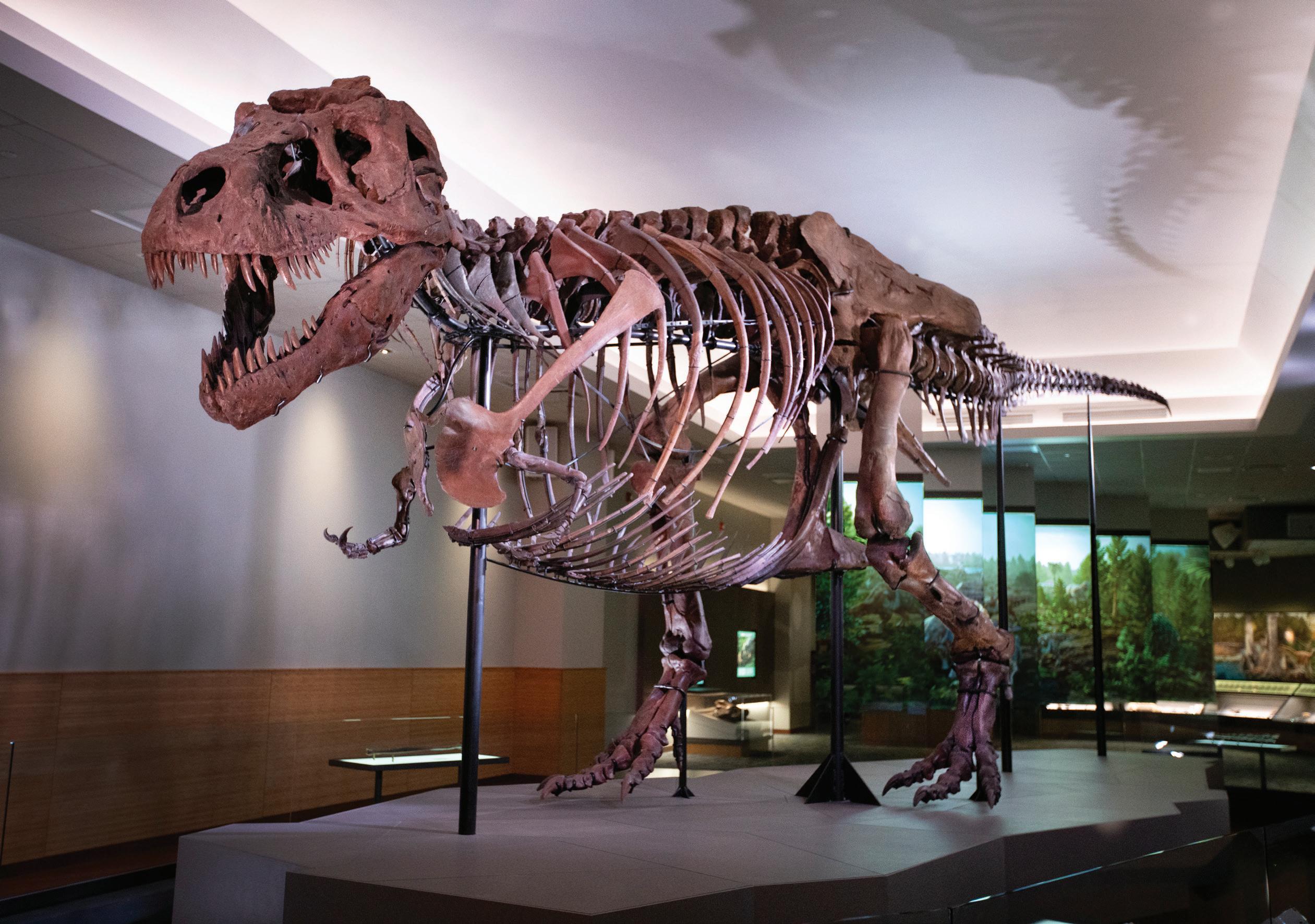
Chicago’s Field Museum of Natural History purchased Sue, one of the best-preserved Tyrannosaurus rex skeletons ever discovered, for $8.36 million in 1997.
PHOTO COURTESY OF THE FIELD MUSEUM OF NATURAL HISTORY
excavate.
What Phipps uncovered over the next three months was huge. Physically, the Dueling Dinosaurs constituted four refrigerator-sized blocks of bone and matrix—the term for the layers of hardened sediment in which fossils are trapped—each weighing multiple tons. Scientifically, the specimen had the potential to resolve an ongoing paleontological dispute over the existence of a T. rex relative dubbed Nanotyrannus. Commercially, Phipps’ discovery was appraised at between $7 million and $9 million.
The Dueling Dinosaurs weren’t the only fossils waiting to be dug up on the Murray ranch. In the seven years following Phipps’s initial find, the Murrays discovered a Triceratops foot and skull and the complete fossilized skeleton of a T. rex, all of which were put up for sale. According to records from the Ninth Circuit Court of Appeals, the
foot sold for $20,000, the skull was offered up for $200,000 to $250,000, and the Murray T. rex was purchased by a Dutch museum for “several million dollars.” The Dueling Dinosaurs themselves eventually went on the block at the New York auction house Bonhams in 2013, though none of the bids reached the $6 million reserve price.
The commodification of dinosaur remains dates clear back to the late 19th century, when famed rival paleontologists Edward Drinker Cope and Othniel Charles Marsh sank their personal fortunes into acquiring strange and as-then unknown prehistoric species. Both men employed armies of fossil collectors to scour the West, some former academics and others local thugs.
Nearly 120 years after Cope and Marsh’s so-called “Bone Wars” left both in financial ruin, a Sotheby’s auctioneer in 1997 opened the bidding for one of the best-preserved T. rex skeletons ever found at
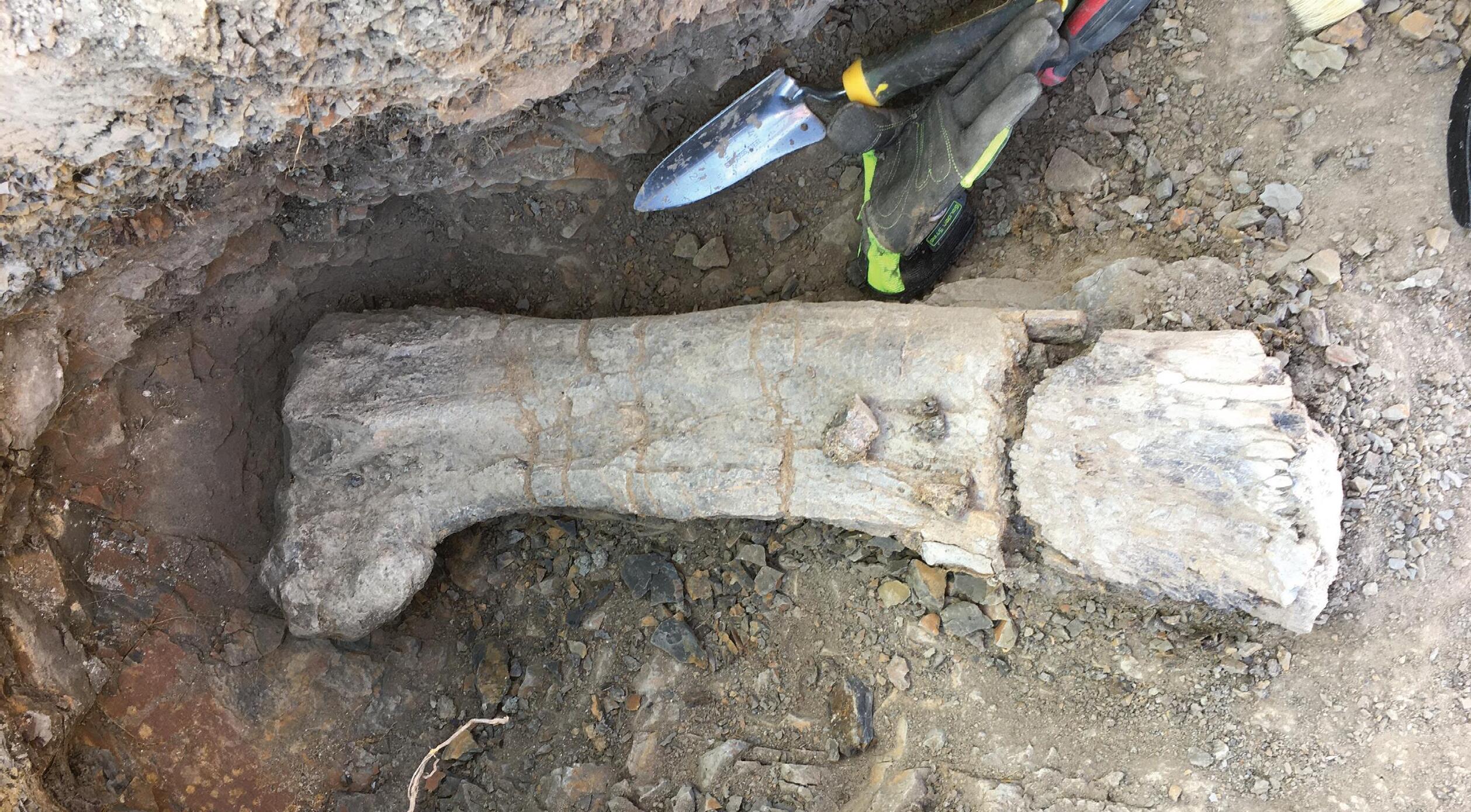
A triceratops femur found and excavated by a guest of the Baisch family ranch.
PHOTO BY SHANA BAISCH
$500,000. Museums were eager to ensure that Sue didn’t fall into private hands. The Smithsonian was reportedly prepared to spend $2.5 million for her. But thanks to financial support from major donors including McDonald’s and the Walt Disney Company, Chicago’s Field Museum of Natural History walked away with Sue for $8.36 million.
For professional paleontologists, snatching fossils like Sue from the commercial market isn’t just about displaying them for the museum-going public. Increasing our understanding of these ancient creatures and their environment depends on peer-reviewed study and guaranteed access to specimens. However, most academic publications refuse to accept scientific papers about fossils in private collections, and the Society of Vertebrate Paleontology denounces the sale of scientifically significant fossils unless the aim is to bring them into public trust.
In the scientific journal Palaeontologia Electronica in 2014, paleontologists from the U.S. and Canada declared the fight against the commercial fossil market “the greatest challenge to paleontology of the 21st century.” But the issue isn’t exactly black and white in the eyes of Cary Woodruff, director of paleontology at the Great Plains Dinosaur Museum in Malta, Montana. He’s no big fan of commercial fossil collecting himself, though he knows and even works with some collectors. Ultimately it
Commercial paleontology’s looking for the next spectacular milliondollar gold find. We’re looking for the next spectacular breakthrough, the next spectacular scientific discovery.”
boils down to a question of legality versus morality.
“All of us go out in hunting season and go on public lands,” Woodruff says. “We may be a bit jealous of those guys who can pay all this money to do a big leased hunt that’s guided on private land. But at the end of the day, they’re not breaking the law, and neither are these commercial [fossil] collectors. If they follow the laws appropriately.”
However, in 2018, the legal rug was ripped out from under paleontologists and private collectors alike. And it was all due to the
Dueling Dinosaurs.
<break>
Today, the badlands of the north-central United States invoke images of Native tribes, weary Westbound settlers and herds of bison stretching clear to the horizon. Deep cracks run down these crumbly canyon walls like fissures in dry skin. Veins of rich red run horizontally along the folds and creases of packed sediment, giving the otherwise dun-colored landscape a splash of glorious 19th century impressionism.
It was from this terrible, beautiful ground that Barnum Brown, a storied and eccentric fossil hunter, pulled a creature that shocked the world. In 1902, Brown blasted the hillsides of Montana’s Hell Creek Formation with dynamite, loosening the hard, blue sandstone to uncover a 1,000-pound elongated skull boasting rows of massive teeth. By 1906, the skeleton had been pieced together at an exhibit hall in New York, and the beast was given a name: Tyrannosaurus rex.
That’s right. Big Sky Country produced the first specimen of a prehistoric species that would go on to frighten moviegoers throughout the 1990s. And Montana hasn’t slowed in revealing its Mesozoic secrets. Brown went on to uncover the first fossils of Deinonychus, the toe-clawed inspiration for Spielberg’s velociraptors, eventually leading to the realization that modern birds evolved from dino-
saurs.
In the late 1970s, locals in Choteau stumbled across the tiny fossilized bones of baby Maiasaura, a large duck-billed herbivore. The find caught the attention of famed paleontologist and Jurassic Park dino consultant Jack Horner, who subsequently led a dig that yielded not only fossilized Maiasaura eggs but proof that these creatures reared their young in nests. And in 2000, the ground in Phillips County surrendered a stunningly preserved duck-billed specimen named Leonardo. When a NASA team X-rayed Leonardo’s stomach cavity in the mid 2000s, they discovered the remains of numerous prehistoric plants as well as potential evidence of parasitic worms.
The richness of Montana’s contribution to the fossil record leads to an obvious question: Why here? To
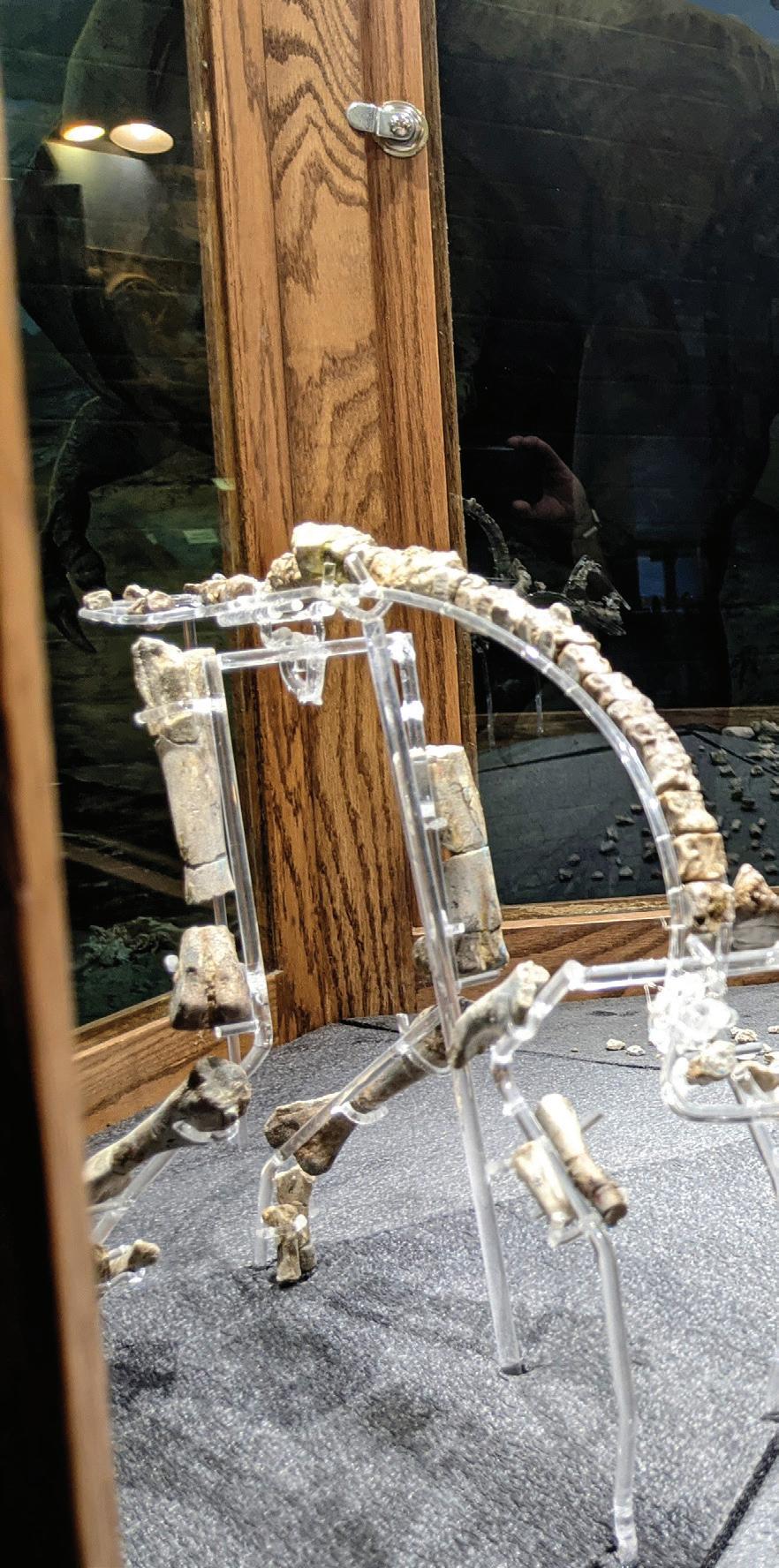
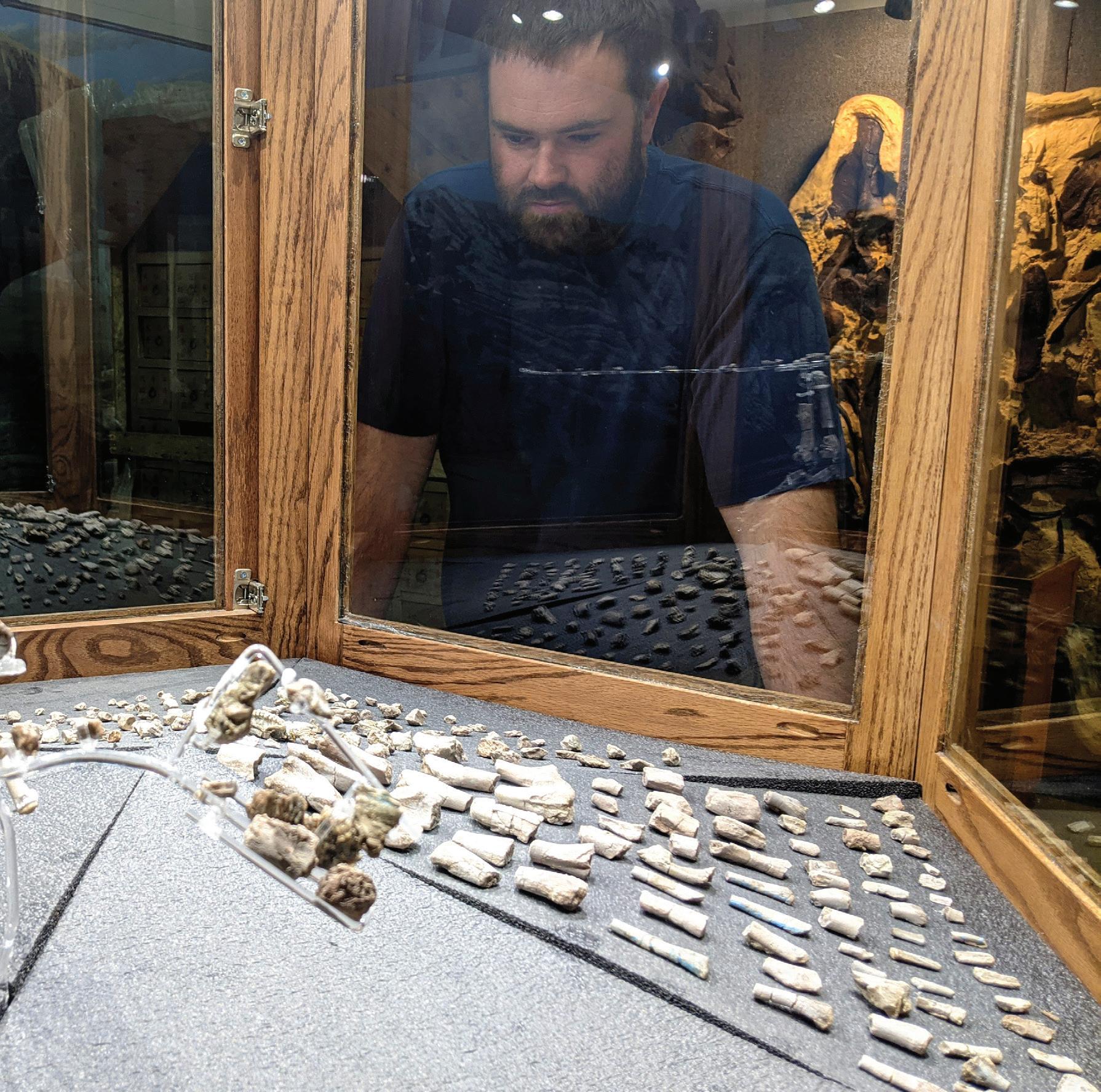
Cory Coverdell, director of paleontology at Bynum’s Two Medicine Dinosaur Center, peers through the glass at a baby Maiasaura, a duck-billed dinosaur discovered by Jurassic Park dino consultant Jack Horner.
PHOTO BY ALEX SAKARIASSEN
The selling of skeletons and dinosaur bones, it’s not like cattle. You don’t just go take your dinosaur bones to the market and sell them.
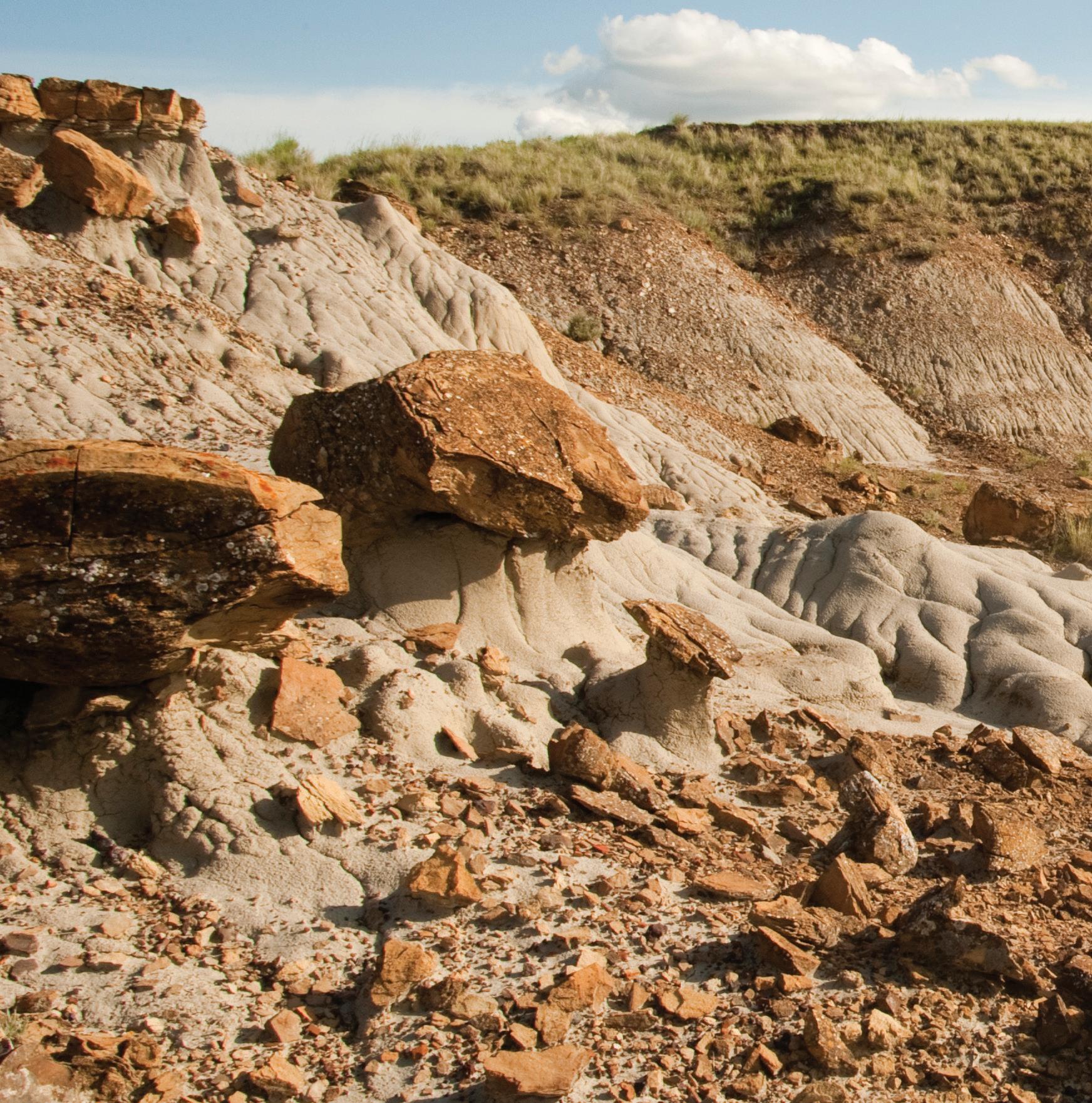
understand the Treasure State’s paleontological track record, you need to think of time in a geologic sense. Woodruff likens it to a book: Each layer of rock represents a different period of time in Earth’s 4.5-billion-year history. Dinosaurs lived during a relatively short chapter in that book, one we call the Mesozoic Era, which extended from 230 million to 65 million years ago. Though the Mesozoic is a pretty recent chapter, leafing back to it isn’t easy.
In Montana, that’s where glaciers came in. These massive sheets of ice once covered much of North America, redirecting rivers in the eastern part of the state and
leading to intense erosion of soft sedimentary rock. The results, some 11,000 years later, are the fossil-rich badlands where so many dinosaur specimens have been unearthed.
“A lot of that younger rock that was on top of the time of dinosaurs was basically carved away,” Woodruff says. “A lot of the state has been flipped open to the right page in time.”
Ready access to those pages is what’s drawn paleontologists to Montana for more than a century. It’s also given rise to the famed Dinosaur Trail, a collection of more than a dozen museums across the state that’s heavily
promoted by the Montana Office of Tourism. The trail offers visitors to far-flung towns such as Ekala, Rudyard and Harlowton a chance to not just see dinosaur fossils but to help uncover them. Woodruff’s museum is one of several that host hands-on summer dig programs for children and adults alike.
“If we’re ever going to get people to understand or want to understand how the earth works, we need to get them involved with it,” says Cory Coverdell, director of paleontology at Bynum’s Two Medicine Dinosaur Center. “It’s a different story when people are on the ground looking at what you’re doing and why you do it
Marge and Shanna Baisch dig with a client on the ranch.
PHOTO BY LYNN DONALDSON-VERMILLION
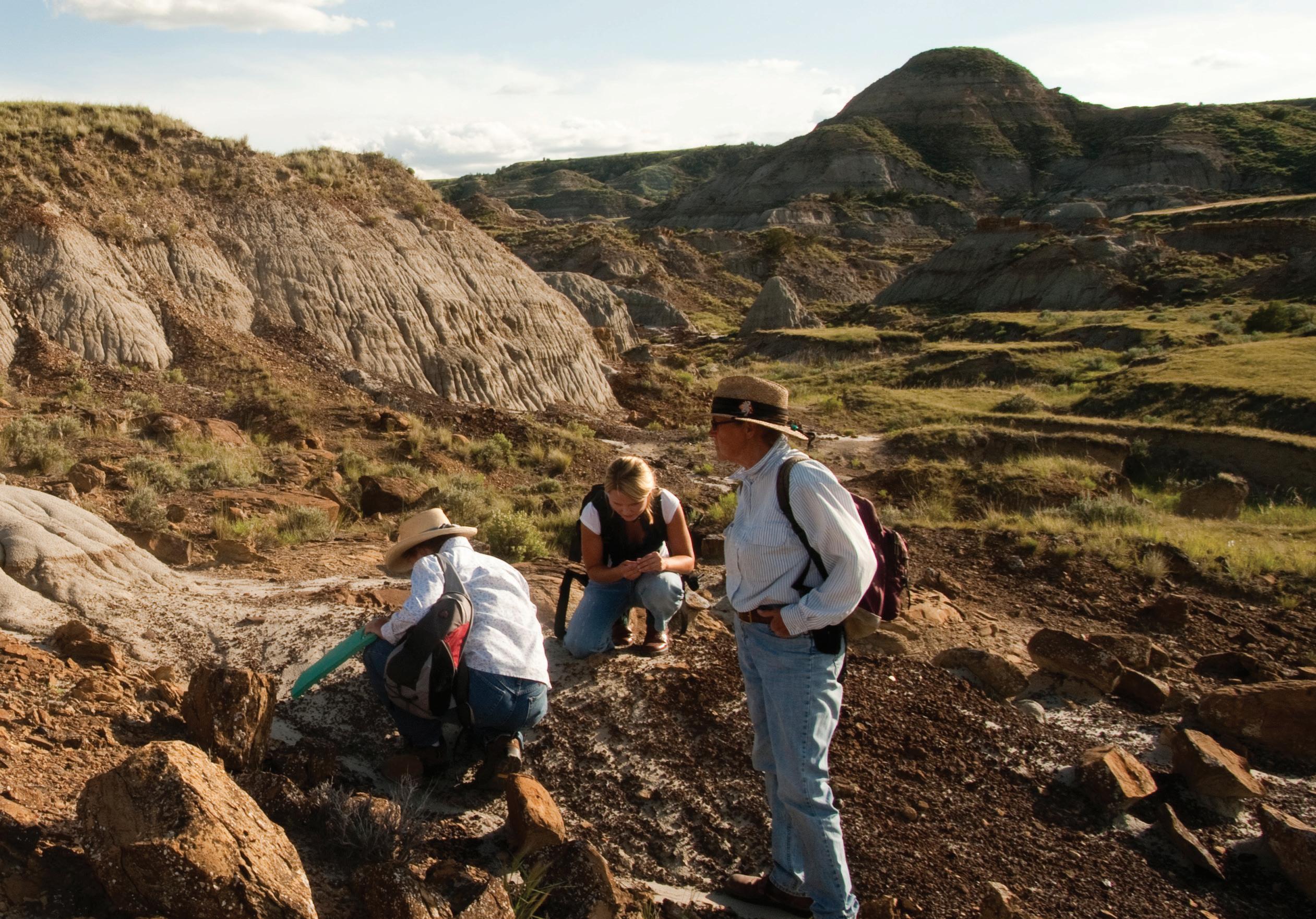
… The public makes decisions about the earth, so it’s important for people to somewhat understand what’s going on.”
The glaciers of the Pleistocene period opened the book for paleontologists, but some of those pages remain out of reach. Vertebrate fossils on public land have long been considered property of the people of the United States. Fossils found on private property, though, belong to whomever holds the surface right. And as public lands only account for approximately 29 percent of Montana, private landowners hold the keys to a significant chunk of history.
In February 2018, the Ninth Circuit Court of Appeals reversed more than a century of common agreement over fossil ownership in awarding the former owners of the Murrays’ ranch partial claim over the Dueling Dinosaurs. The owners had retained two-thirds of the mineral estate in the sale, and the court reached the unusual conclusion that fossils, like oil and gas, were part of that estate.
The legal dispute over the Dueling Dinosaurs is hardly the first, or most dramatic, example of the turbulent interplay between fossils and property rights. At 7:30 a.m. on May 14, 1992, a team of 30 FBI agents descended on South Dakota’s Black Hills
Institute of Geological Research, sealing off the firm’s Hill City headquarters and seizing the remains of Sue, the very same T. rex that five years later would end up selling at auction for a cool $8.36 million. The raid climaxed a tense ownership tugof-war between the Institute’s president, Peter Larson, and the Cheyenne River Sioux Tribe, which alleged that Sue had been illegally taken from land held in federal trust for one of its members.
“I’m reminded of the last scene in the Indiana Jones movie Raiders of the Lost Ark,” paleontologist Robert T. Bakker told The New York Times, “in which the
Marquis
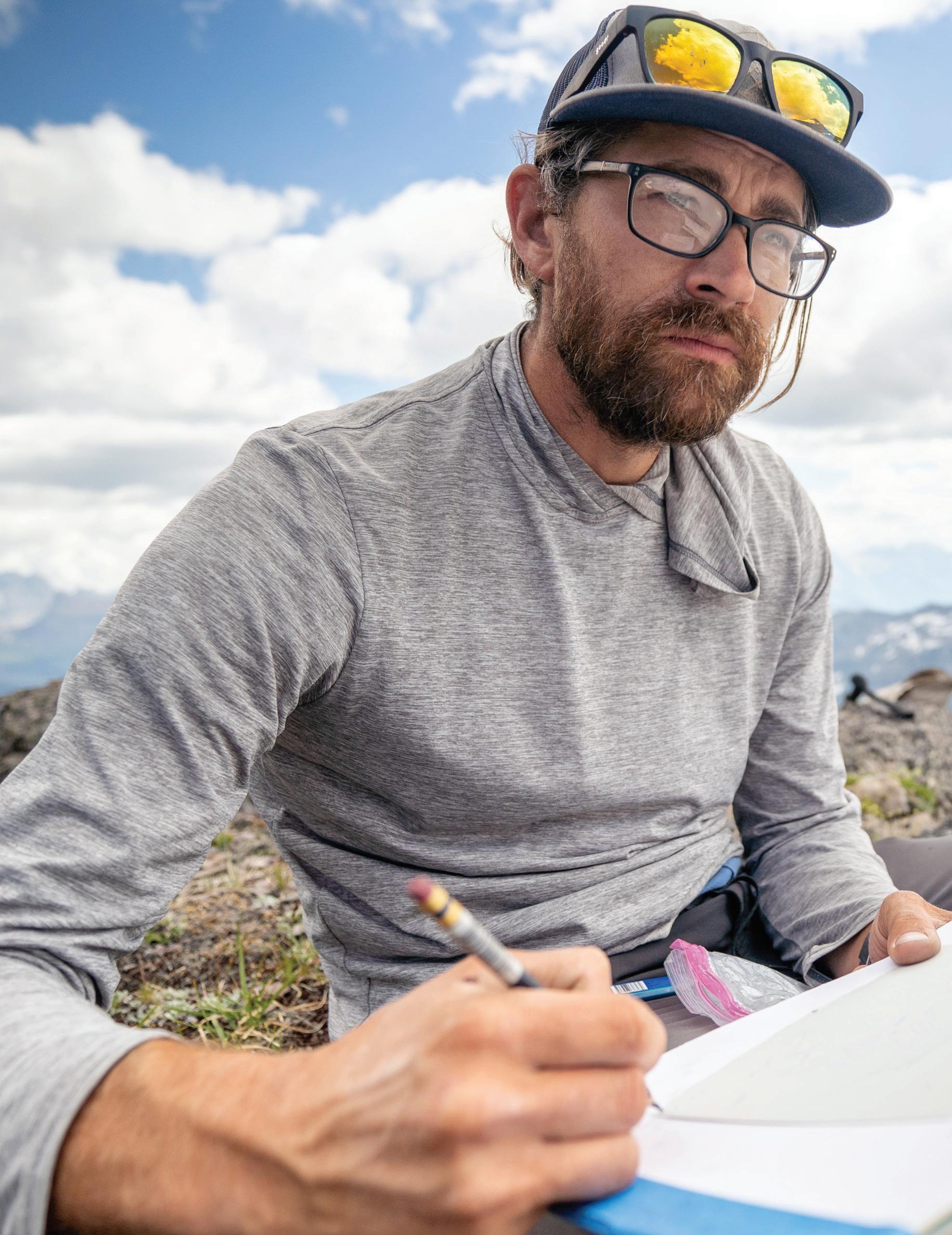
National Park. "Every time I put a pencil to paper, it's always a discovery. That's my style. I don't know what I'm doing, let me try," said Marquis.
BY RICHARD FORBES
Jonathan
draws Vulture Glacier in Glacier
PHOTO
Jonathan Marquis draws connection between Montana’s glacial and human communities
BY RICHARD FORBES
Witness
Jonathan Marquis draws connection between Montana’s glacial and human communities
By Richard Forbes
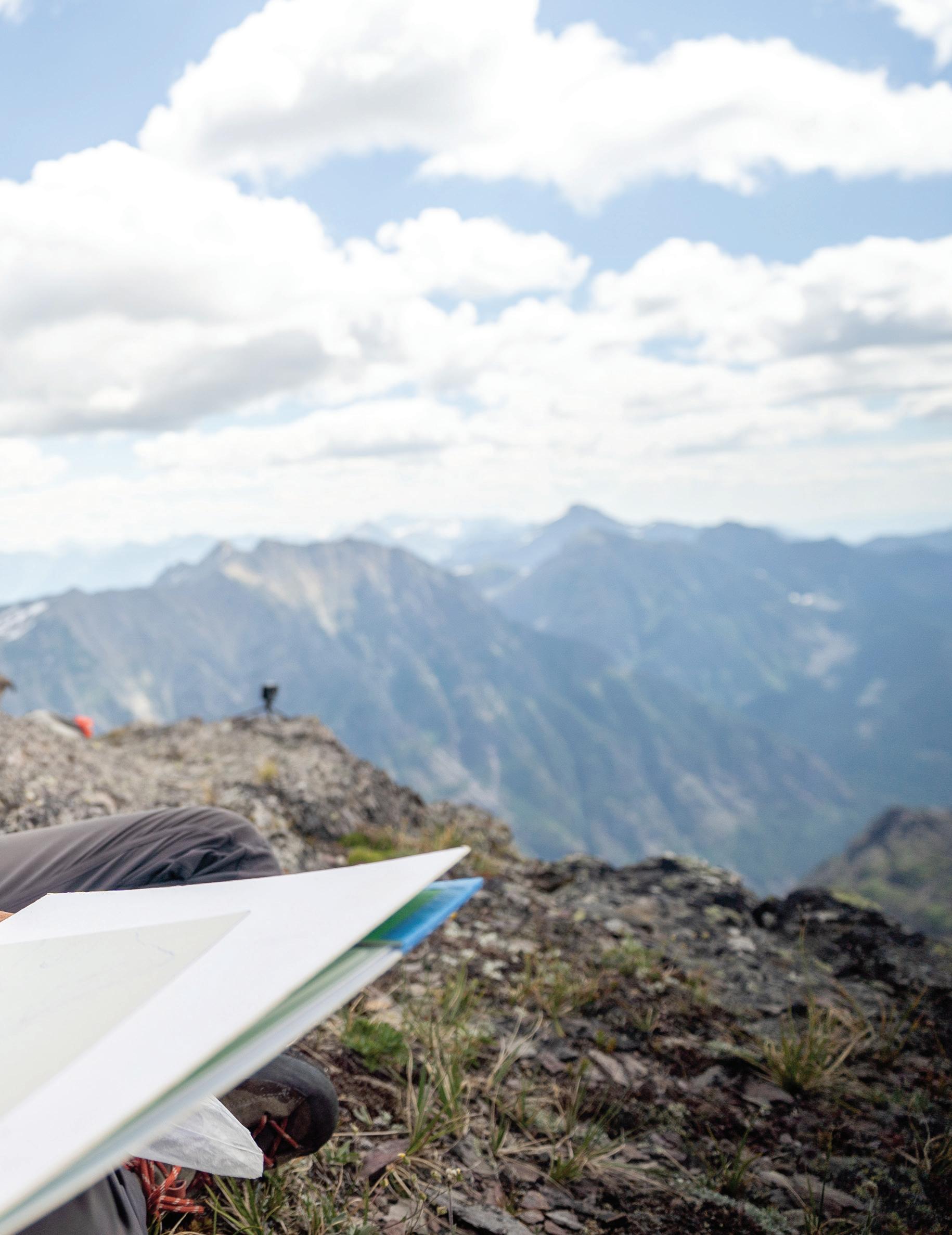
Jonathan Marquis puts pencil to paper, shap- ing the glacier as it claws the mountain before us. Lost in quiet exchange, he doesn’t seem to notice the bellowing grizzlies 1,000 feet away, their roars reverberating throughout the basin. The Vulture Glacier, wrinkled with melt lines and patterned blue ice, is perched opposite him above the lake-lined valley it carved long ago. Marquis sits cross-legged on the rocks, his body hunched, embedding himself in the landscape. glacier is a lifeworld and Marquis is bearing witness.
Over the last nine years, as part of a lifelong journey to see and share how climate change is affecting his chosen community, Marquis has visited and drawn nearly 50 of Montana’s glaciers. By the end of summer 2022, the artist only had seven left to visit.
When Marquis talks about his drawing project, people always tell him he better hurry up, be- cause he doesn’t have long.
Indeed, temperatures in Montana and the Inter- mountain West are rising faster than the global average. These rising temperatures, coupled with decreasing snowfall, are melting glaciers ever more quickly. For years now, glaciologists, climate activists and journalists have tied gla- ciers to the climate movement, using stories of the glaciers’ degradation as an emotional cata- lyst to spur people into action. But that’s only a small part of the story of glaciers. Marquis believes a singular narrative centered on loss does glaciers and the animal, plant and human communities that surround them an immense disservice, and may imply that there’s almost no hope left.
Here’s Marquis’ take: What if, instead of scaring people into addressing our fraught relationship with the planet, he used his art to show what the glaciers look like, right now? What if his drawings could show that glaciers aren’t chunks of ice, they’re beings, and therefore members our global community of humans, plants, animals and elements, each worthy of life? By offering a different way to imagine glaciers—as their own rich lifeworlds in need of caretak- ing— Marquis believes he can be part of a broad network of people inspiring a healthier relation- ship with our world.
Marquis never meant to become a landscape art- ist. Studying at Ball State, and later at the Uni- versity of Montana, he became a process artist, subscribing to an artistic movement in which the process of making art is as important as the final product. At that time, he was exploring pop art, abstract expressionism and collage. He was also pursuing his own mindfulness practice, spend- ing days wandering around the mountains near Missoula, slowing down and drawing whatever he saw. Marquis sought a long-term project in which to lose himself.
In 2013, Marquis attended a presentation by Doug Peacock, a writer and conservationist whom he’d long admired. During the Q&A, Marquis asked Peacock what a young artist could do to continue the conservationist’s work. “Bear witness to your own backyard,” Peacock said.
At first, Marquis wasn’t sure what exactly he should bear witness to, but at the time, glacial melt in Glacier National Park was all over the news. With some research, he learned there were at least as many glaciers in Montana outside the national park as inside, some only 30 miles from home. He remembers thinking, “Holy shit, a fuck-ton of wilderness glaciers in Mon- tana, and no one’s talking about those. What’s going on in there?” Marquis and his friends had spent more than a decade mountaineering throughout the state and he knew he had the skills to at least get started. He figured the proj- ect would take him six or seven years at most. Nine years later in early June of 2022, I met Marquis for a beer in Missoula. He’s thin and angular with a cockeyed smile. His eyes are expressive, and when he’s thinking hard—which is often—he squints. Even then his eyes are always twinkling with a joke, making him seem younger than his 41 years. Marquis had just arrived in Missoula from Tuc- son, where he lives most of the year teaching art at the University of Arizona and a local commu- nity college. When the spring semester ends, he drives to Montana for the summer. I’d learned about his project a few months earlier, and after an hour talking mountains, I mustered up the courage to ask if I could visit glaciers with him. He leaned forward, his eyes narrowing. “What story are you trying to tell about glaciers?”
I wasn’t sure how to answer, so I said what I knew: I wanted to tell stories about the relation- ship between people and glaciers and see what I found. That was good enough for him.
It is extremely difficult to reach most glaciers in Montana. Few have trails and most are deep the backcountry, plastered to protective cliffs and guarded by miles of dense vegetation and scree. While the West is full of peakbaggers chasing summits, few other than scientists set their sights on glaciers, and even they rarely have the funding, time or skillset to visit the most remote glaciers.
Visiting all the glaciers in Montana is a bold goal, one I can find no record of anyone achiev- ing. To pull it off, you need to be a few things: absurdly stubborn; comfortable enough in the backcountry to know you can handle whatever find; and willing to go in blind, as Montana is famous for its tightlipped outdoors communi ty. In California and Colorado, there are endless forums devoted to unraveling the mountains. In Montana, as soon as you leave the beaten path, you’re on your own. Big adventures require hours poring over maps and building trust with the small communities who know how the land- fits together. Even when you think you understand the terrain, you’ll never know what conditions you’ll find. Each trip is founded in faith, tenuous tips and the unknown.
RICHARD FORBES
In early August, we got a chance at our first glacier together. Forty miles and three days into the trailless depths of Glacier Na- tional Park, we found ourselves at Vulture Glacier. Vulture was the third of five glaciers we’d hoped to visit this trip, but the terrain was rougher than we’d expected and we realized we might only have a chance at one Marquis started a few drawings and packed them up to finish later in the studio.
I lagged as we pressed toward the next glacier, careful not to disturb a grizzly sow and her cub foraging for larvae, wrestling and bellowing at one another. Only a few years earlier, one of Mar- quis’ friends had been attacked by a grizzly a few miles away. give them space, we found a new route creeping across a steep snowfield and slogging our way fields of loose scree. At every step, the park’s infamous rotten rock crumbled underfoot and sloughed down the mountain.
From the summit, we could see at least seven glaciers, one of which Marquis hadn’t yet visited. The day was beginning to fade, so Marquis took photos to draw from later. We skidded headlong down the loose rock back to the basin and the squabbling griz- zlies.
We tiptoed past them, shielded by a rock rib, holding our breath, before safely emerging into a different valley. As the sun set, we walked by glacially-carved slabs and fields of wildflowers to camp. The next day we arrived back at the car with four glaciers, miles and 20,000 feet of ele- vation gain behind us.
Glaciers are defined as masses of ice flowing downhill under their own weight. If the ice stops mov- ing, it’s no longer a glacier. But no one knows how much ice is necessary to move downhill, and it can be hard to tell via satellite if ice is moving. For purposes of study, Montana glaciologists have adopted a standard: if by the end of summer the ice is larger than 25 acres, it’s a glacier. If it’s smaller, it’s a permanent snowfield. Glacier sizes are reas- sessed every five to 10 years.
But Marquis isn’t preoccupied with these glacial classifications and instead works from a list of Montana glaciers he compiled in 2014. He’s much more concerned with how the glacier interacts the landscape around it; how it shapes the earth in its path and feeds the communities below it with fresh, cool water.
I once asked Marquis to describe a glacier for someone who’d never seen one. He said watching as it tears the land is raw, everything around it up- turned and fresh. Glaciers are so present, he said. It’s impossible to look away. They are sublime, wondrous, frightening, rugged, exhilarating.
After nine years of seeking gla- Marquis’ life has become its own cyclical piece of pro- cess art. When the school year ends, he drives from Tucson to Missoula to stay with his friend Ryan, whom he’s known for 21 years. Marquis adventures with Ryan near town while waiting for the winter snow to melt, reveal- ing the glaciers. For the rest of the summer he stays with another just outside Glacier Na- tional Park, visiting glaciers until time to head south. He spends his fall and winter teaching art, finishing the previous season’s and preparing for the next. After years of research, he knows roughly how to reach each glacier, but each season, he calls friends for advice and asks who might be crazy enough to join the next set of trips. Every step of his process involves his community. Each of his drawings is a pro- cess in and of itself. As Marquis hikes, he immerses himself in the land, breathing it in until he reaches a glacier. Then he slows down: What is it like here? Is it raining? How does he feel? If everything allows, he pulls paper and pencils out of a Ziploc bag looks to the glacier. In that moment of connection, he and glacier begin to collaborate. Marquis bears witness, just as Peacock instructed him to do years ago, his attention flicking his paper and the snow, as fast he can take in new details. He makes a few drawings before packing up and moving on. Later he will finish drawings in Tucson aided by photographs. A single drawing can take up to 40 hours.
The reality of climate change can feel heavy—a 2020 survey by the American Psychological Association found that two-thirds of respondents felt at least some “eco-anxiety,” and a quarter of them said they felt it a lot. Perhaps the premise of Marquis’ project may feel depressing, but not to him. In fact, he spends very little time thinking about what might happen if these places disappear. He believes preemptive grief distracts from the real work to be done now: to know and protect these places. Marquis accepts that glaciers have always and will always be changing. He chooses to spend his time here by building a re- with the world, even as it changes, and through this process, he finds space for both grief and joy.
A week after visiting the Vulture Glacier, we’re in the northeast corner of Glacier National Park, seeking Miche Wabun Gla- cier. On our way to the valley where the glacier lives, we push through thickets and ford a river five times. The water is numb- ingly cold, fed by the glacier we cannot yet see.
Black clouds gather in the upper reaches of the valley. After hours spent climbing a ridge, the wind begins to whip us with raindrops. From the ridgetop, we can see the glacier more than 3 miles away. The sun is going down. We will not make it. The decision to turn back is easy.
We linger on the ridgeline for 30 minutes, taking photos and spending time with the glacier as close as we’re allowed to come. too wet for a drawing, the rain sweeping through in gusts. Marquis is bundled up in all his layers. We head down, reaching camp just as the last light leaves.
I once asked Marquis to describe a glacier for someone who'd never seen one. He said watching a glacier as it tears the land is raw, everything around it upturned and fresh. Glaciers are so present, he said. It’s impossible to look away. They are sublime, wondrous, frightening, rugged, exhilarating.
Marquis only has seven glaciers left to draw. If he wants to, he could finish next summer, and he may. But he doesn’t want to fin- ish too quickly. In fact, recently he’s been thinking he may decide to leave some glaciers uncon- tained in a drawing; to disregard the selfish impulse to see every- thing; to let something live its own life in its own way without human interference.
He also knows he’s not going to stop drawing glaciers, even when he’s finished with this project. He’s going to keep giving back to the glaciers in whatever way he can. This is his life’s work. When he’s finished with this drawing project, he’d like to have an art show and then keep making more. He tells me he’ll visiting glaciers until he can no longer walk.
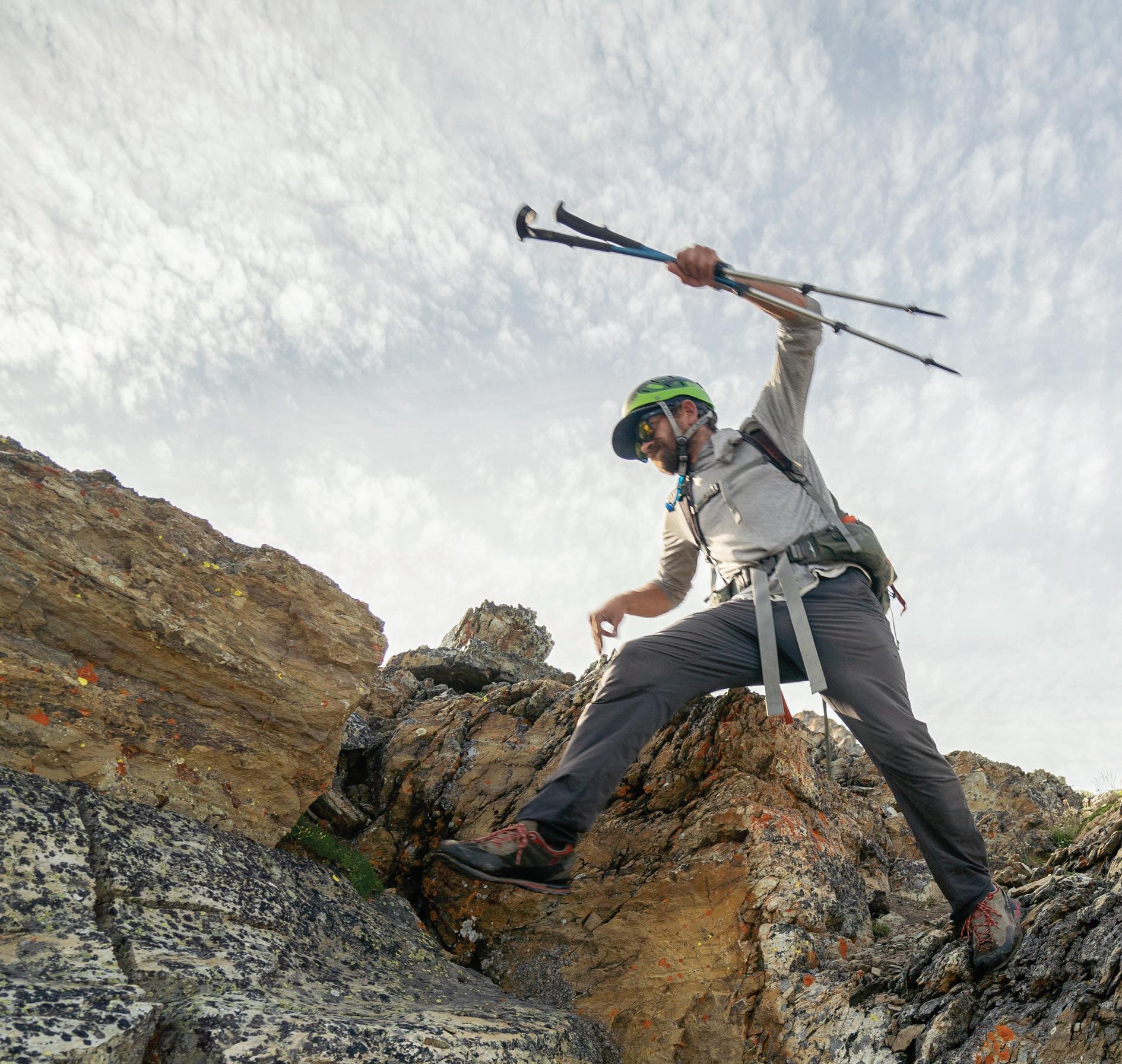
After sneaking past a pair of grizzlies in Glacier National Park, Marquis leaps over a gap on the way back to camp.
PHOTO BY

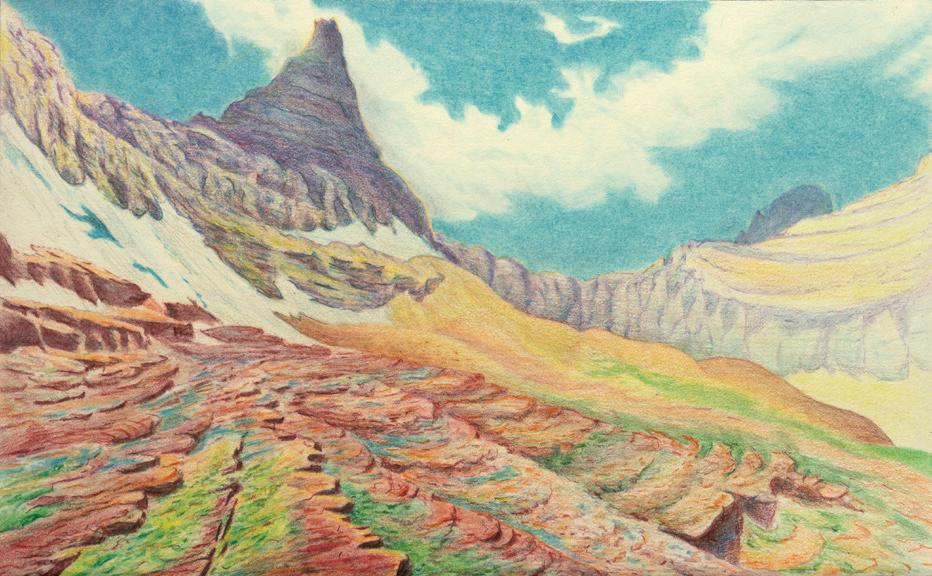
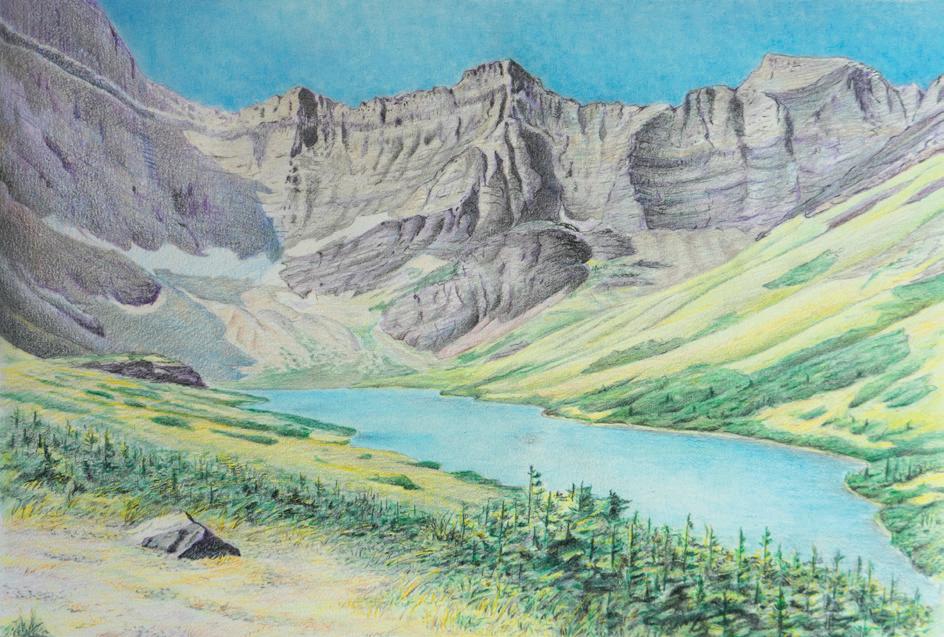
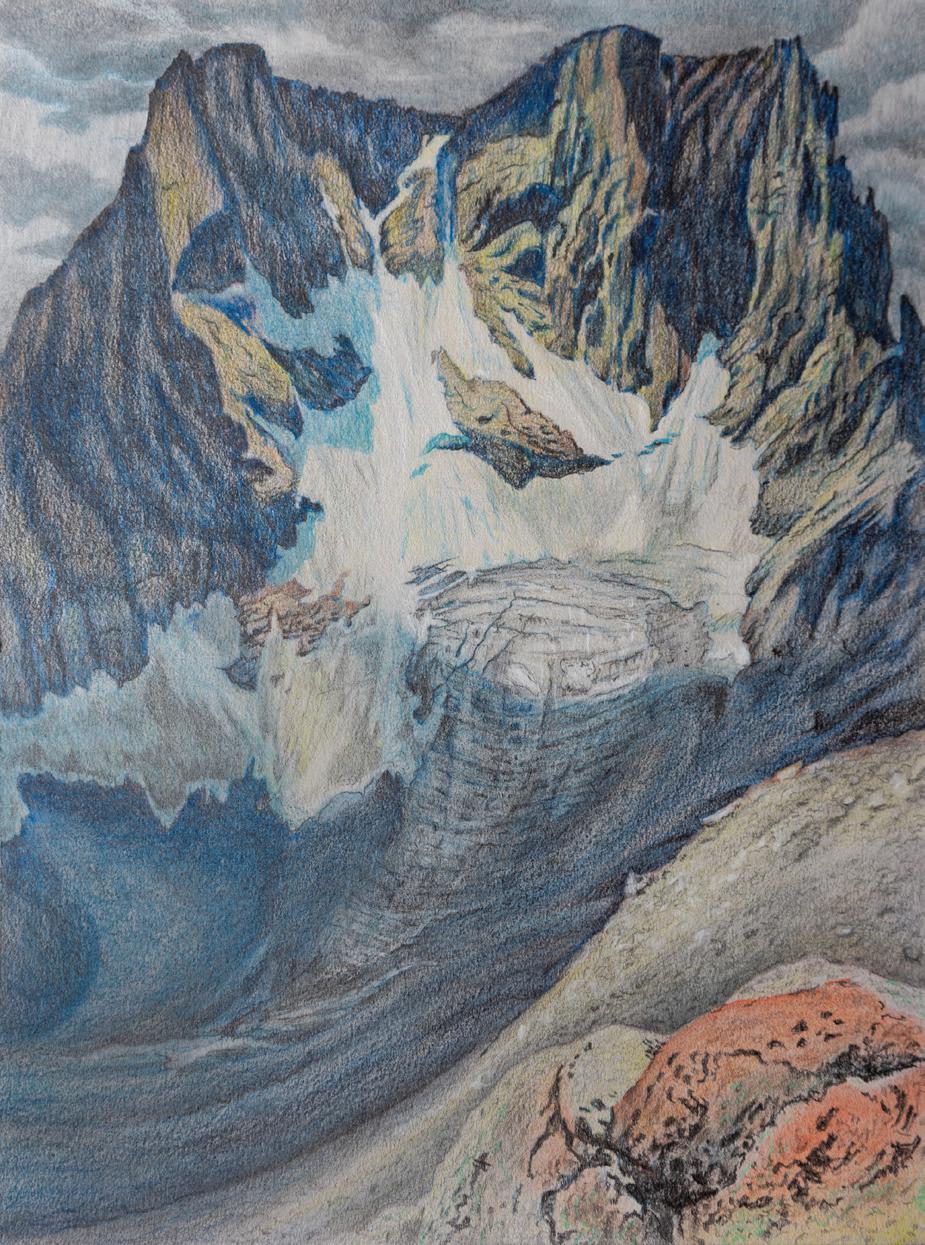
Top Left: Red Eagle Glacier drawn by Jonathan Marquis. 2022. Red Eagle Glacier is no longer large enough to be called a glacier. Bottom Left: Siyeh Glacier drawn by Jonathan Marquis. 2018.
Right: Beartooth Glacier drawn by Jonathan Marquis. 2021.
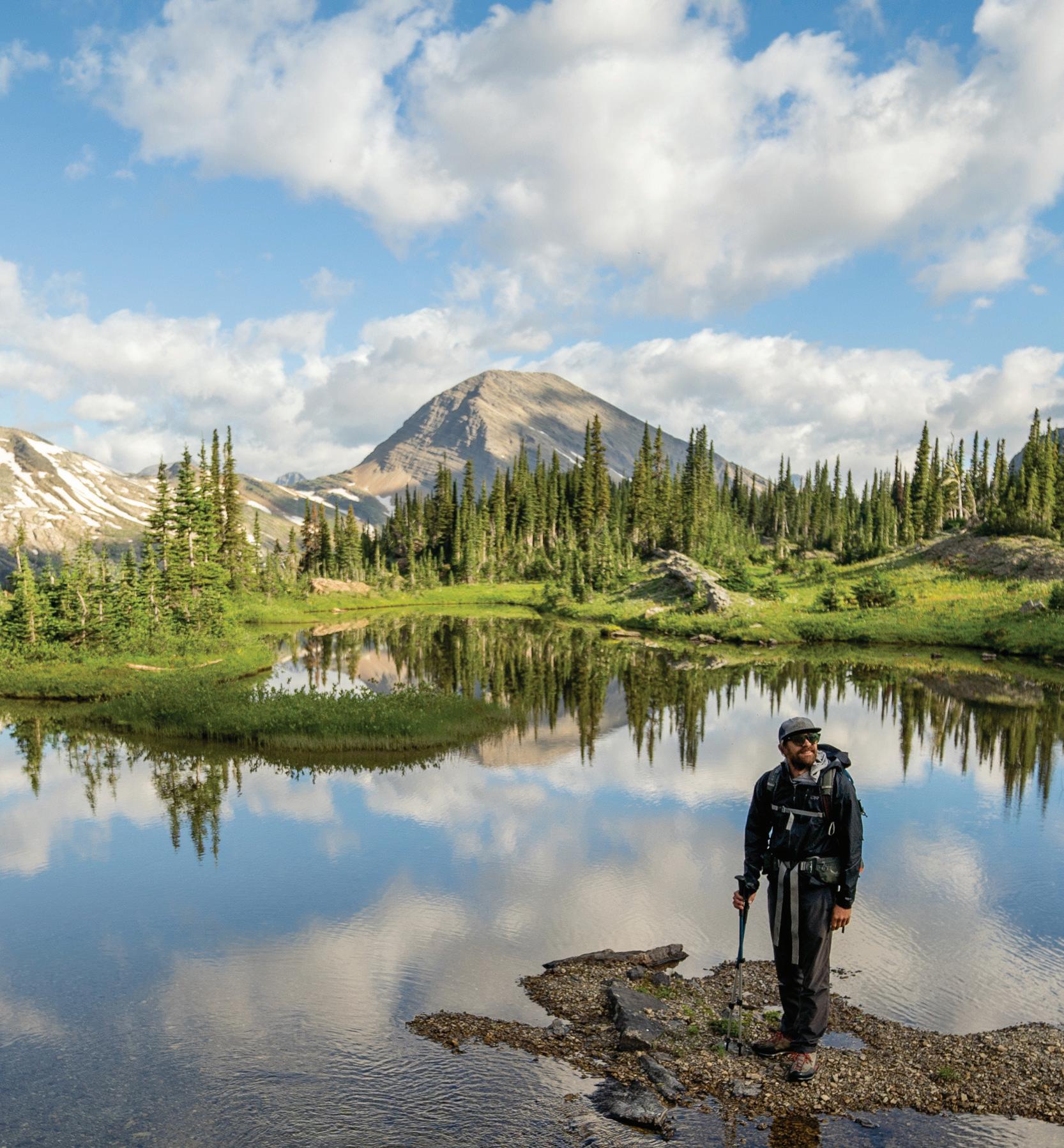
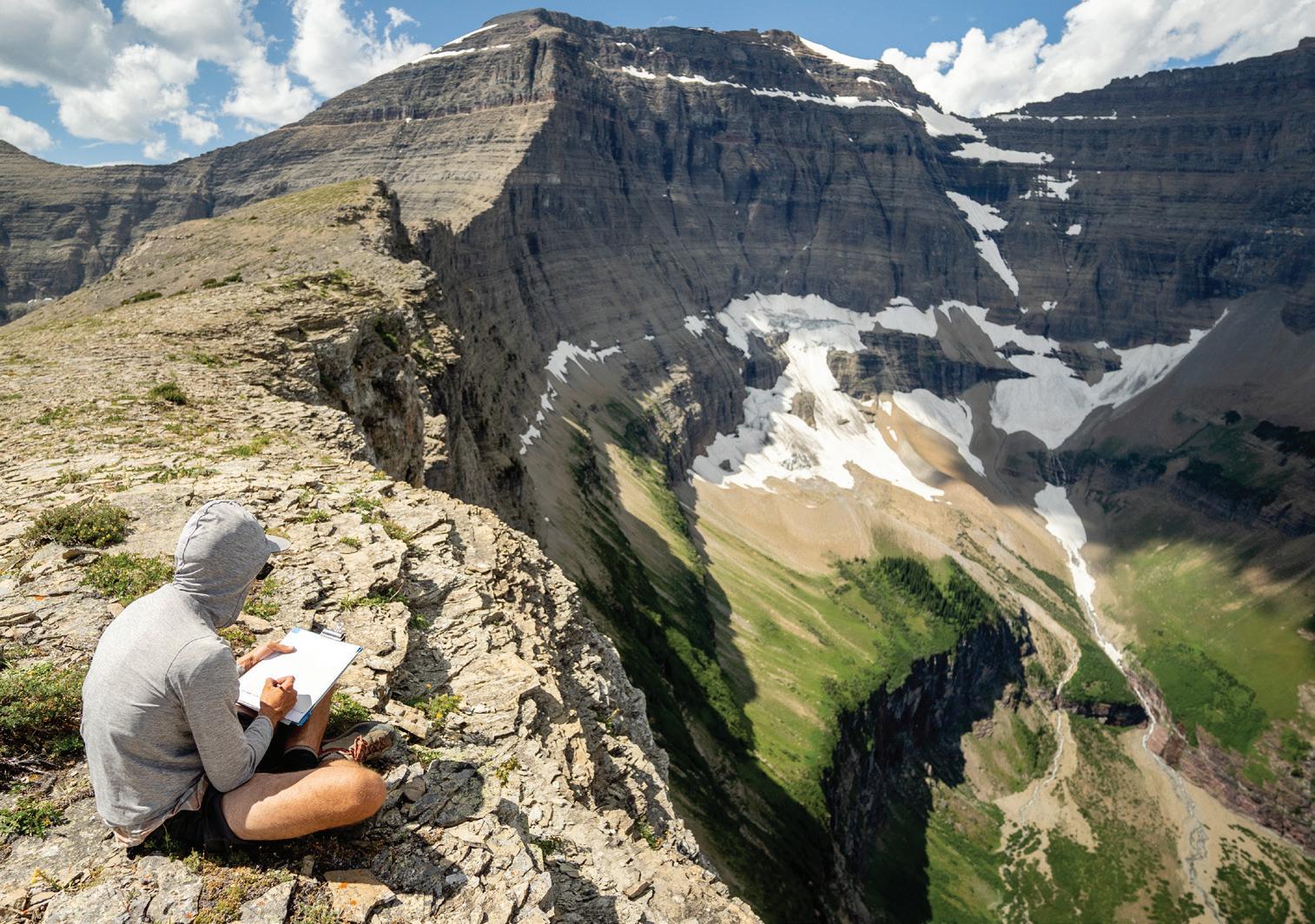
RICHARD FORBES
we can imagine a glacier as a rich life world that's in need of caretaking, we can shape the world to be more accommodating to glaciers and all other living creatures that call this place home,"
Top: Marquis takes in the views near camp. "I'm so inspired by these places that I have to make something about them, being silent isn't an option,” Marquis said.
PHOTO BY
Bottom: Marquis draws Whitecrow Glacier. "If
Marquis said. PHOTO BY RICHARD FORBES
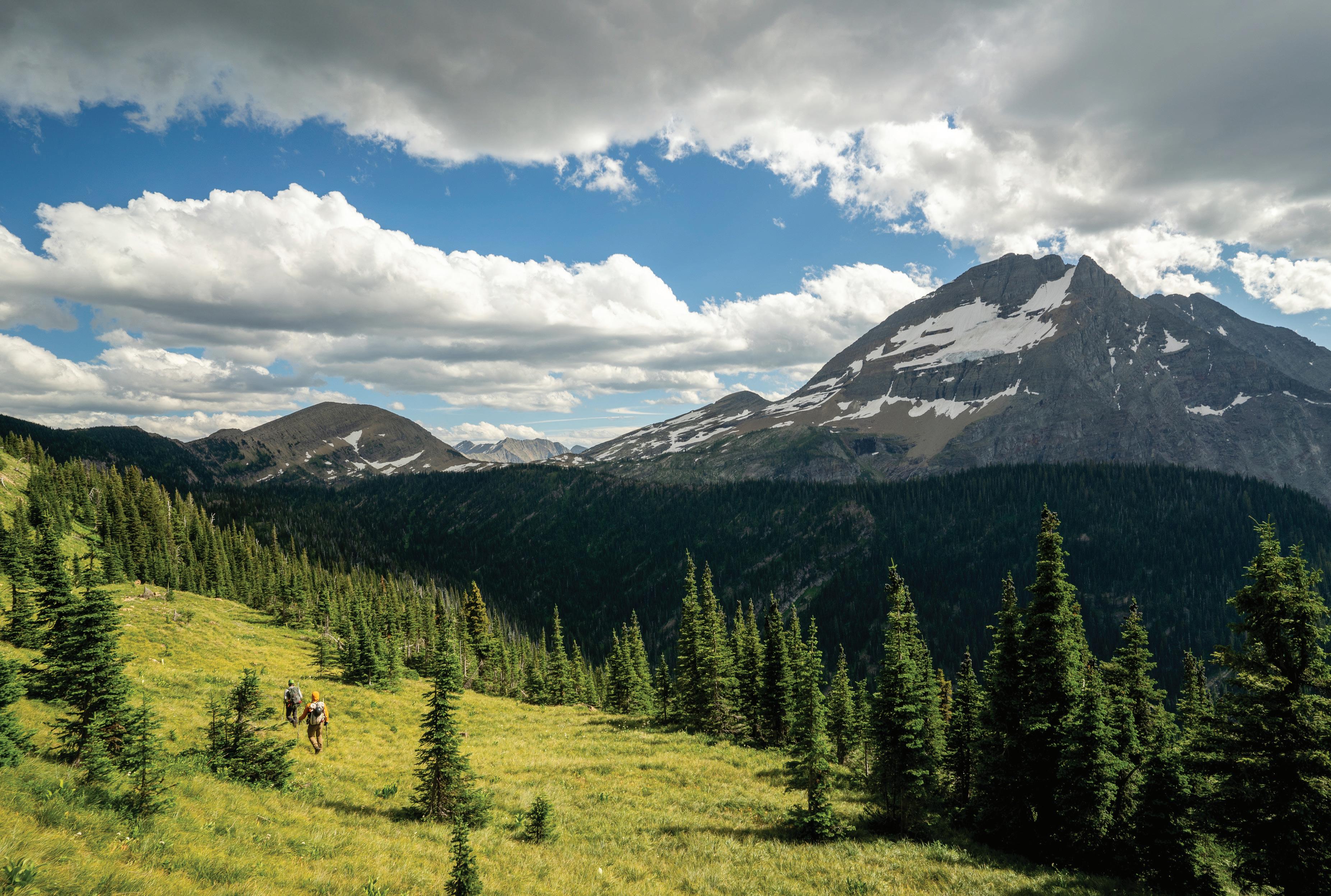
Marquis and Colin Sibbernsen cross a meadow beneath Two Oceans Glacier. PHOTO BY RICHARD FORBES
THIN BLACK LINE
POLITICS AND TOUGH CHOICES CONSUME A MONTANA COAL TOWN. AS THE OUTSIDE WORLD PUSHES FOR CLEANER ENERGY, COLSTRIP PUSHES BACK.
STORY AND PHOTOS BY ANDREW GRAHAM
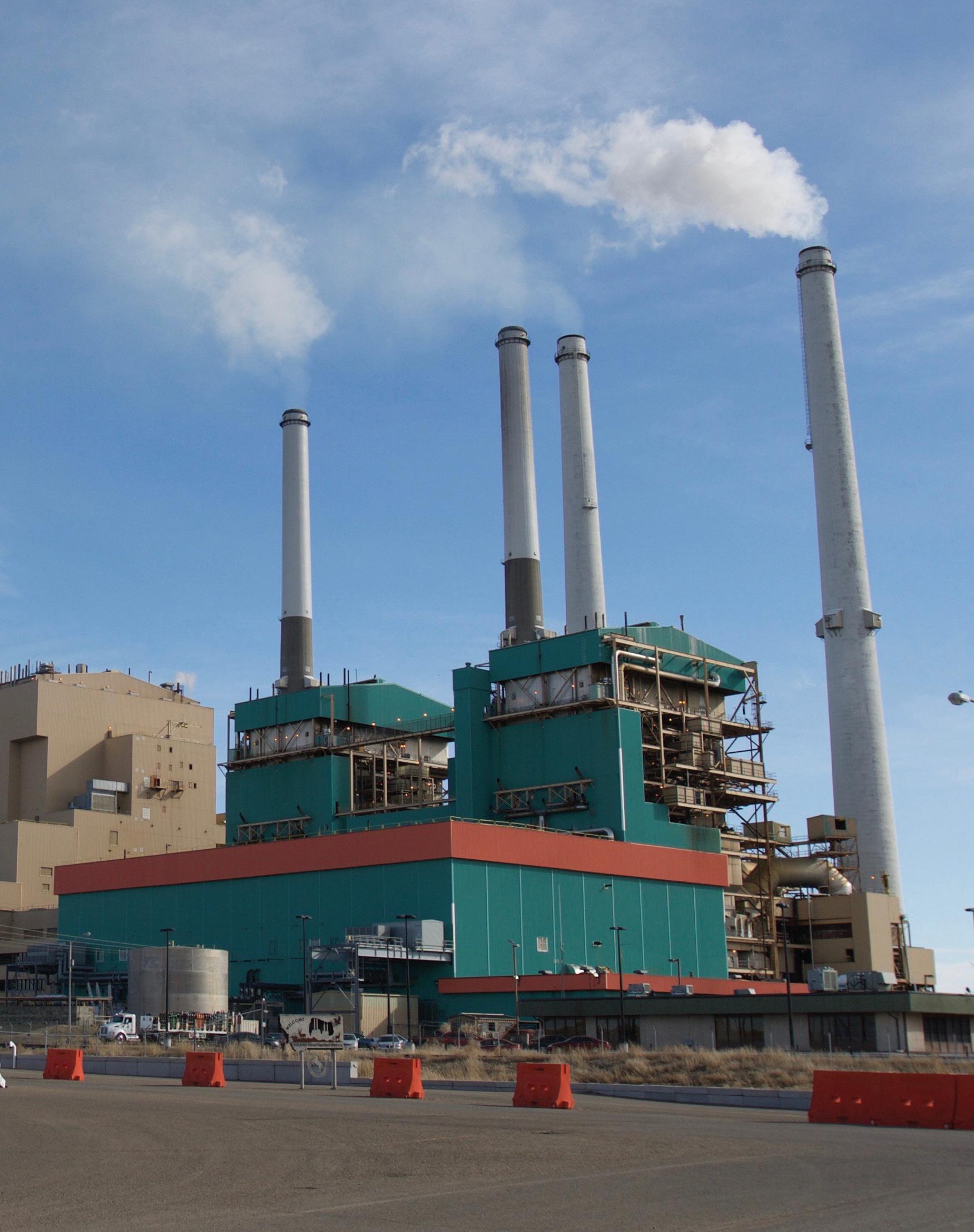
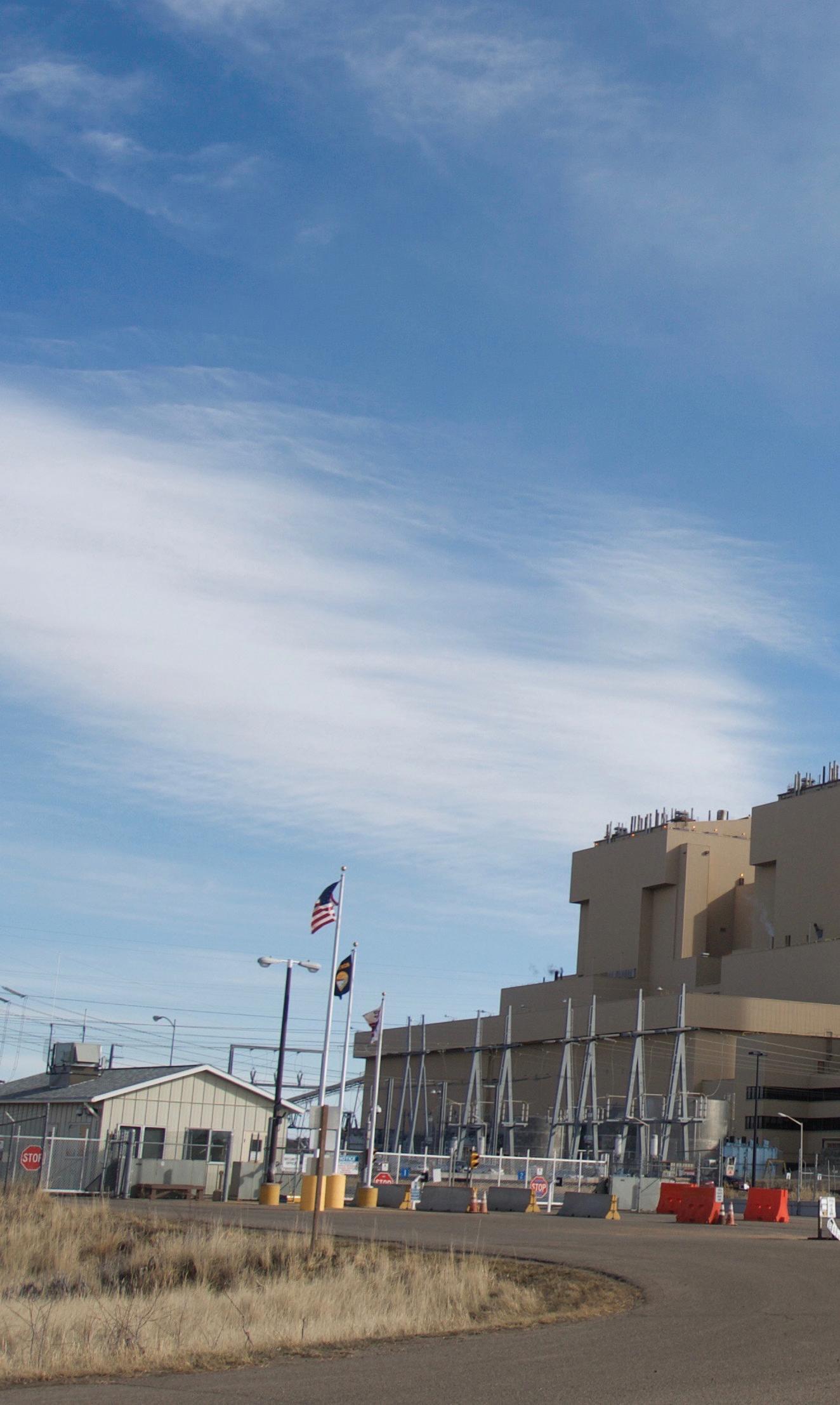
The Colstrip power plant is made up of four units. Units 1 and 2, the older green ones in the foreground, face potential closure as the result of a bill in Washington state.
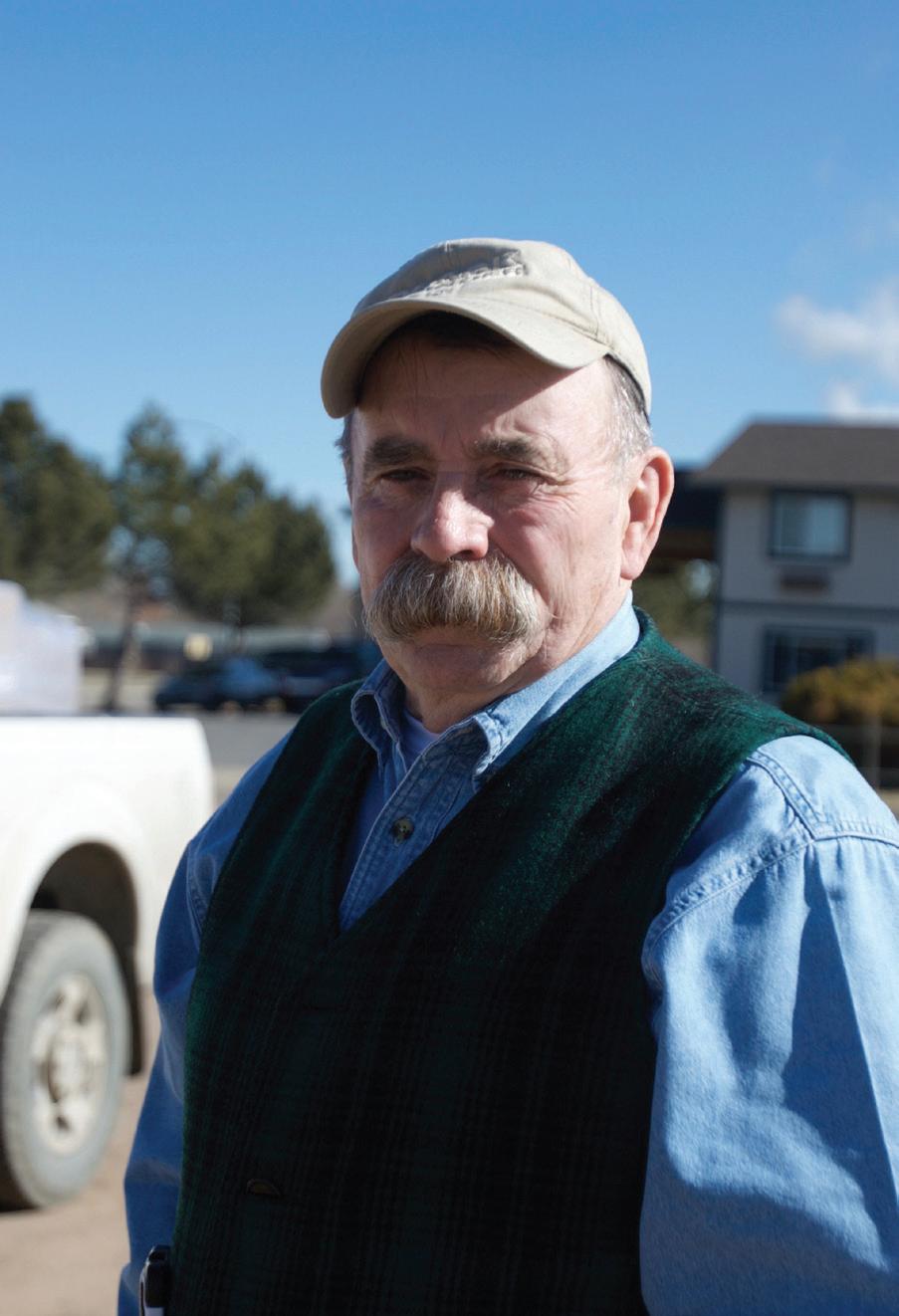
Duane Ankney, state senator from Colstrip, Montana.
The people of this city are not going to just roll over and resign themselves to being the newest victims of shortsighted anti-coal agendas.
ON A LATE FEBRUARY EVENING, cars and pickup trucks fill the high school parking lot in Colstrip, Montana, as local residents arrive for a town hall meeting. With two main employers in this town of 2,300—a coal mine and the power plant that burns its product—everyone knows everyone. Camaraderie is high, but today morale, perhaps, is less so.
Before entering the high school auditorium there are two papers to sign. One list is for attendance, signature requested; the other is for those who’d consider joining a class-action lawsuit, signature optional. “Somebody tossed out the idea that if all of us owned a bunch of houses that are worth zero, we might want to try this,” the man taking signatures explains.
The measure is preemptive it’s early days yet—but residents in Colstrip have a right to be concerned about property values. The town’s livelihood is based wholly on coal, and the picture for coal is not looking good.
By the time Duane Ankney steps up to speak, the auditorium is nearly two-thirds full. Ankney’s been Colstrip’s Republican state senator for two years, and served in the Montana House of Representatives for eight years before that. With a thick walrus mustache and self-pride in being a “straight shooter,” Ankney pulls no punches with reporters or his constituents. He starts tonight’s speech by wishing out loud that he could have been senator in the 1990s. It’s a nostalgia he’s repeated elsewhere. “I wish it were 20 years ago,” Ankney said in a recent speech, “when we worried about getting coal from point A to B.” Before politics Ankney spent 34 years mining coal, retiring as a superintendent from Colstrip’s Rosebud mine.
But while Colstrip was busy mining and burning coal, “groups were already working against us,” Ankney tells the crowd. His speech does not mention competition from low natural gas prices or the struggling export market for
coal, but instead describes powerful political forces bent on coal’s destruction. And Colstrip’s.
“None of these groups, none of them, are a friend of the working man and woman. They are your enemy. They’ll take your job and they’ll take the food off your table,” Ankney says, referring chiefly to the Sierra Club and the Montana Environmental Information Center. Both environmental groups supported the passage of a recent Washington state Senate bill, SB 6248, which carries a poignant threat to Colstrip’s livelihood.
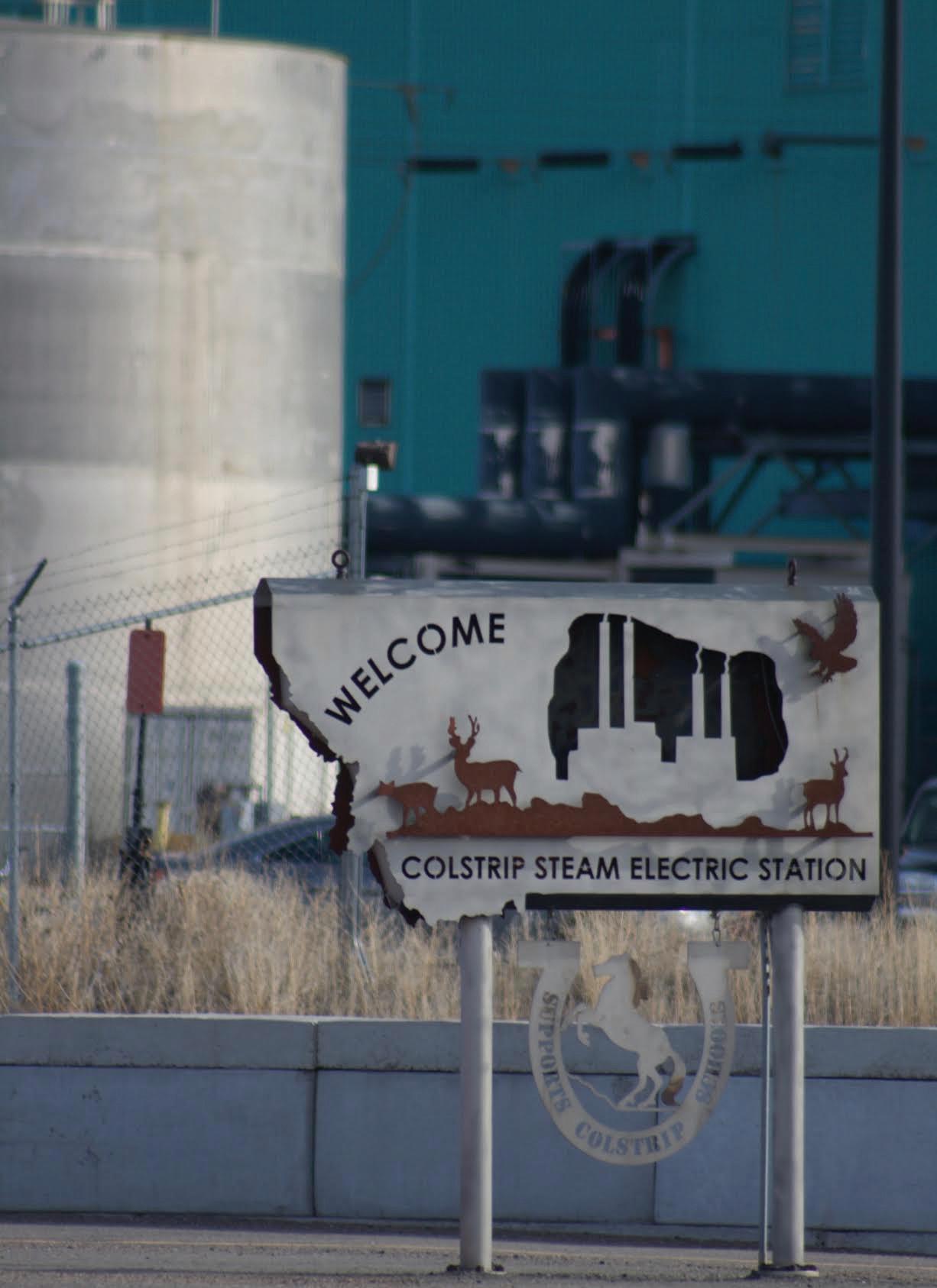
The power plant here is made up of four energy-generating units, and only a fraction of one unit is owned by a Montana utility. The vast majority of the ownership rests out of state and thus largely out of the hands of Montana lawmakers like Ankney. The Washington bill allows state utility Puget Sound Electric—which owns half of units 1 and 2—to begin planning for those units’ closure. SB 6248 sailed through both houses of Congress and was signed into law April 1 by Washington Governor Jay Inslee, despite Montana Governor Steve Bullock asking him to veto it. Both governors are Democrats.
Duane Ankney, state senator from Colstrip, Montana.
a threatened way of life
THE U.S. ENERGY INFORMATION AGENCY
PREDICTS that 2016 will be the first year energy from coal-fired power plants will be surpassed by energy from natural gas on the nation’s electric grid. The price of coal has fallen 62 percent since 2011, and Peabody Coal, the largest private-sector coal company in the world, filed for U.S. bankruptcy protection in April. Nationally, coal country is feeling the trend, and Montana has not been spared. Arch Coal, facing bankruptcy, announced in March that it would suspend a long-running application for a large strip mine and close its Billings, Montana office. The Bull Mountain coal mine, north of Colstrip, laid off 20 percent of its employees in December, and owners worry about further financial turmoil.
Washington state is also reacting to a global desire to shift away from fossil fuels. Last December, President Obama joined 200 other countries when he committed the U.S. to deep
COLSTRIP OWNERSHIP
carbon cuts at the United Nation’s climate change summit in Paris. As the state’s biggest single carbon emitter, Colstrip became front and center of the discussion as Montana considered the steep emissions cuts mandated by the U.S. Environmental Protection Agency’s Clean Power Plan, a cornerstone of meeting Obama’s global commitment.
In early February, when the U.S. Supreme Court ordered a controversial stay on the Clean Power Plan, it seemed to spell an end to that particular threat to Colstrip. Then, later that month, conservative Justice Antonin Scalia died, leaving the court split ideologically, and a majority ruling against the EPA far from inevitable. The Clean Power Plan, though stalled, remains on the table with its next court hearing coming in June, after this magazine went to press.
During the town hall meeting Ankney wears a blazer and stiff white cowboy hat, but a few hours earlier he sported a jean shirt and baseball cap, looking roadweary as he sipped coffee and greeted fellow patrons in the Colstrip Subway restaurant. Although he’s not happy about it, Ankney says he’s confident that one way or another, “we’re gonna
get a goddamn Clean Power Plan.” At the moment, however, he’s focused on Puget Sound Energy and units 1 and 2. He was on the road lobbying for more worker protection provisions before the bill passed, crisscrossing Montana and traveling once to Olympia to testify before the Washington Senate. Now he’s looking for a way the plants could keep running without the Washington utility.
He worries about the younger workers, far from a pensioned retirement, who may have to leave Colstrip if jobs dry up. They face rougher transitions than Ankney’s generation. “I could just sit out there on that place of mine and shoot wild turkeys,” he says. Young people who have invested in the town by buying homes and starting families face the loss of stability, not just a way of life.
Two such young residents, Ashley Dennehy and Lori Shaw, are rising to the occasion via online activism. They started a Facebook page and then a website for an organization called Colstrip United. The goal, Shaw said, was first to organize the town politically, but has now widened to informing the outside world and fighting “the lies and ignorance surrounding coal with
Puget Sound Electric (Bellevue, WA)
Talen (Allentown, PA)
Avista (Spokane, WA) Portland General Electric (Portland, OR)
OR)
Entrance to the Colstrip power plant
positivity and solid facts,” according to their mission statement.
Their rhetoric can be fierce. The following quote, on both Colstrip United’s website and Facebook page, defines how they see their struggle:
“The people of this city are not going to just roll over and resign themselves to being the newest victims of short-sighted anti-coal agendas. Organizations like the Sierra Club and the MEIC (Montana Environmental Information Center) don’t care about who they hurt as long as they get their way. No amount of human damage would make these radical groups see the error of their ways.”
Shaw says images of Colstrip smokestacks on cloudy days that mimic smog are one example of the misinformation she hopes to combat. The Sierra Club does indeed have such an advertisement, circulating Seattle on hybrid-electric busses. “Dirty coal from Montana or clean energy from Washington?” it asks, depicting Colstrip smokestacks on a dirty white background next to images of wind turbines framed by a clear blue sky.
The smoke from Colstrip’s stacks is visible from well outside town, at least during peak energy-use hours on colder mornings. By midafternoon on the day of Ankney’s meeting, however, the visible output was down to a puff from just one stack, like that emanating from the smoldering tip of a cigar. Montana’s big sky was as blue as the clean energy portion of the Sierra Club ad.
Lori Shaw is 24 years old and worried she’ll lose her home. People think Colstrip is comprised of a wealthy older population, which couldn’t be further from the truth, she says. Shaw grew up in Colstrip, and met her husband Walt when he moved there for high school. Walt, 26, works as an accountant for the
coal mine, which has one customer: the Colstrip power plant. “If the two units get shut down, he’s a low-level employee, he’ll probably have to go,” Shaw says. The two are concerned about keeping up with their mortgage, finding themselves unable to plan for a future knowing the town that they grew up and invested in could dry up.
It’s easy to see why the Shaws would want to stay. The rolling prairie leading into Colstrip gives way south of town to a badlands country of canyons and sandstone buttes. There is peace and quiet here, and sunsets worth settling in for.
In Rosebud County where 20 percent of people live below the poverty line, Colstrip’s median household income is around $75,000. Proceeds from coal have paid for a parks and trails system, top-notch schools and a golf course residents can use for free. In 2004, Sports Illustrated named it Montana’s best sports town for its commitment to recreation and school athletics. The high school wrestling team’s state championship in February is still a ready topic for conversation. More recently, Colstrip was named the safest town in the state, based on an evaluation of crime statistics for cities with populations over 1,500. But 80 percent of the town’s jobs come from the plant and mine, and without coal there’s no economic reason for the town to exist. Not currently, anyway.
In the Clean Power Plan, the EPA projects that reducing CO2 will result in benefits of $25 billion to $45 billion by 2030. But that is on a national and even global scale, after taking into account the many ways in which unchecked global warming could affect public health and productivity. The damage something like the Clean Power Plan or Washington state’s SB 6248 will have on Colstrip
carries much higher visibility in a regional political fight.
It’s an election year, and Montana Republican Greg Gianforte is running for his party’s nomination against sitting Governor Steve Bullock in November. Gianforte has used energy issues to paint Bullock as a job-killer, and associate him with Obama’s “war on coal.” On March 14, Gianforte held a press conference about the importance of Colstrip to Montana’s economy. Flanking him for effect were the girls of Colstrip United.
the power play
ULTIMATELY, THE WASHINGTON UTILITIES COMMISSION WILL DECIDE if and when Units 1 and 2 at Colstrip will be decommissioned. The Washington bill simply allows Puget Sound Electric to begin saving money to pay the costs of closing units 1 and 2, which the utility estimates could cost as much as $195 million. Originally, the bill said PSE’s fund could not be accessed until December 31, 2022, but Governor Inslee vetoed that section.
There won’t be any final decisions coming this year, though; the Washington utilities commission postponed hearings on the matter until 2017.
A more pressing question may be Talen Energy, a Pennsylvania-based company that runs the plant’s day-today operations for all other owners, and also owns the other half of units 1 and 2. Given pending regulations and the low price of natural gas, Talen currently has little to gain from its stake in Colstrip,
I think everybody feels now that the retirement for Colstrip 1 and 2 is inevitable, and it’s the traditional economics that are driving that.
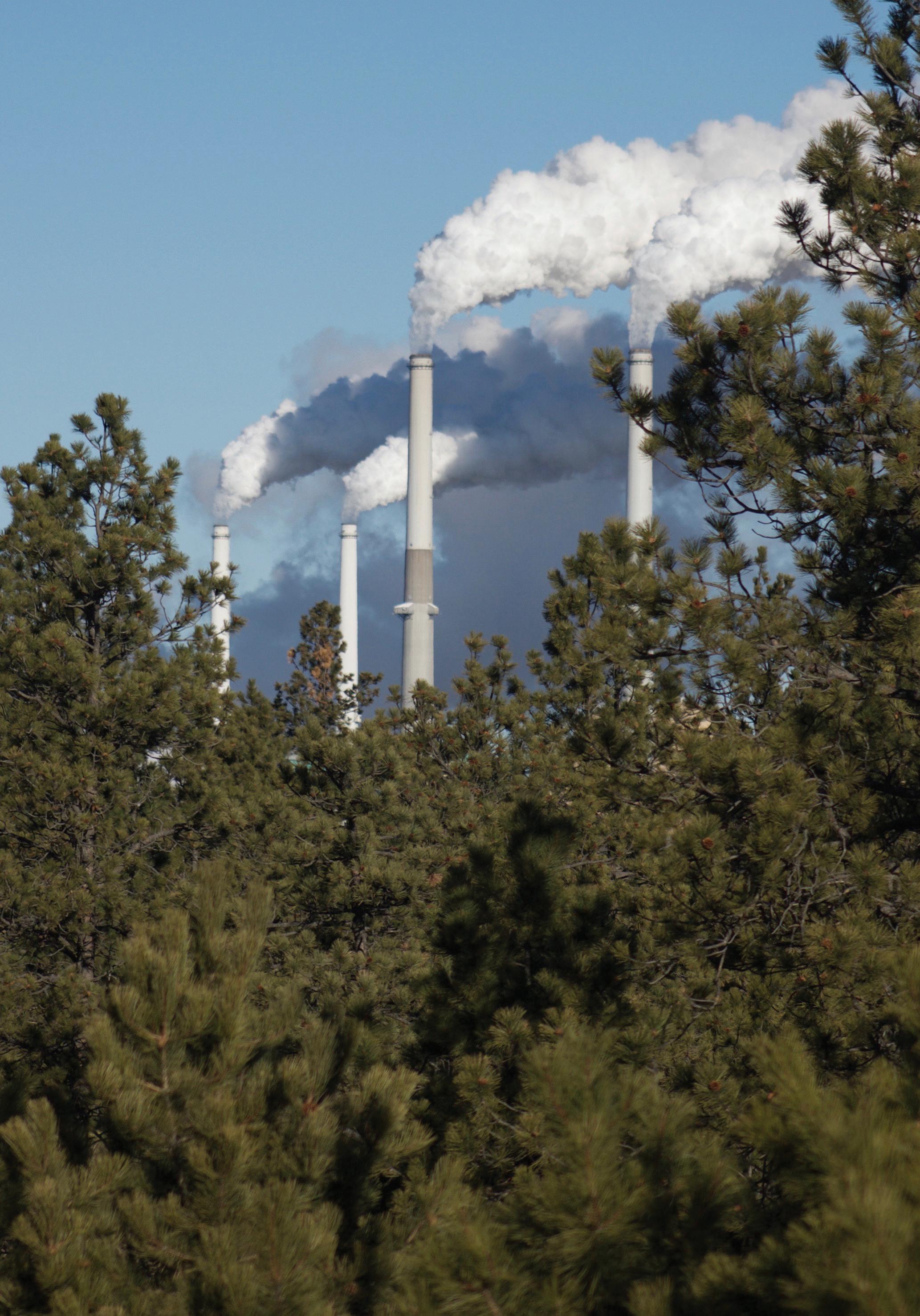
The sign at the Colstrip coalfired power plant.
mandated to PSE. Both Howell and Hedges think the Washington bill is about as good a deal as Colstrip will get, given the overarching picture for coal.
Howell says, Talen could exit stage right with no transition strategy. And that could leave workers abruptly out of jobs and without an established cleanup plan.
14.76 MILLION TONS 7.38 * MILLION TONS
according to a recent report from the financial services company UBS Securities.
While evaluating all possibilities, Talen remains focused on running the plant, said company spokesman Todd Martin. “What we won’t do is lose that focus or expend resources speculating on what comes next,” he said. “It’s simply premature.” Talen will not discuss business decisions in the press, he added, a strategy consistent with the company’s guarded nature in media outlets since Colstrip started making news with the Clean Power Plan.
But others speculate that Talen, which is a private company and not a stateregulated utility like PSE, is looking to pull out of Colstrip. As evidence they point to a failed 2013 effort by Talen to sell its Colstrip assets to Northwestern Energy.
Two such people are well aware their advice is likely unwelcome in Colstrip. Enter Doug Howell, a campaign representative from the Sierra Club, and Anne Hedges, lead lobbyist of the Montana Environmental Information Center.
They say that Talen is the more unreliable partner, and as a private company could walk away at any time without the strict cleanup responsibilities that the Washington legislature has
“I think everybody feels now that the retirement for Colstrip 1 and 2 is inevitable, and it’s the traditional economics that are driving that,” Howell says.
The Sierra Club started looking at how Washington state could exit the plant four or five years ago, according to Howell. Although he couches the PSE bill as an economic decision to protect Washington ratepayers, the Sierra Club’s Beyond Coal campaign has claimed responsibility for shuttering coal power plants and blocking new ones across the country. The organization makes no secret that its end goal is to take coal off the nation’s electrical grid.
“There’s no way that you can be responsible for all your climate emissions in Washington unless you look at the power you’re importing into the state,” Howell says.
Coal power makes up around 14 percent of Washington’s energy portfolio, and half of that coal energy comes from Montana. The rest currently is derived from the Transalta coal plant in Centralia, Washington, which is also on its way out. Howell thinks that’s somewhere Colstrip could look to see how a coal town can transition away from a one-horse economy. “We want to take care of the Colstrip workers,” he says.
The first unit in Centralia is slated to go offline by 2020, with the second shutting down five years later as the result of a deal between Transalta, environmentalists and labor unions. Transalta invested $55 million into a transition fund for Centralia. Twenty million will go to education and retraining coal workers, while the other $35 million will support the development of clean energy and energy efficiency projects. Meanwhile, the company is looking for opportunities to transition the coal plants to natural gas, whose methane emissions are also a potent greenhouse gas, but not yet in the crosshairs of those advocating action on climate change.
If those in Colstrip aren’t proactive,
MEIC’s Anne Hedges, too, would like to see a planned transition in Montana. An opportunity exists for new electricity sources in Colstrip, she says. “The wind blows out there, [and] they have transmission lines.”
Although Hedges herself can be fiery in the press, she says the politically heated rhetoric is unfortunate, which in the long run may block Colstrip residents from finding the smoothest path forward.
“I think Duane Ankney is harming more than he’s helping, because he’s not giving them a realistic perspective on the state of affairs,” she says.
Colstrip residents need someone they can trust to begin a conversation about how to best create a long-term transition to a new, more diversified economy, Hedges says. She knows that person can’t be her, or “anybody who has been working in climate change.”
People in the town, including Ankney, are largely skeptical about climate change. They like to compare carbon emissions from the power plant to those from Montana’s summer forest fires, in order to make a point about coal
... I’m not gonna apologize to anybody for the way we make a living.
MONTANA WILDFIRES
COLSTRIP PLANT
concerns being overblown. A statistic on the Colstrip United website says it would take the plant in Colstrip more than 1,600 years to release as many particulate emissions as one season of Montana wildfires.
But particulate emissions are essentially smoke, says David Klemp, and are not the same as CO2. Klemp, who heads the Air Resources Bureau of the Montana Department of Environmental Quality, says he also heard a claim that power plants would take more than 100 years to emit as much CO2 as a summer of forest fires, but wanted to test the theory.
Klemp’s department took data from the 2012 wildfire season, one of the worst in recent years, and compared it to Colstrip emissions for CO2. That year the four units of the power plant released 14.76 million tons of CO2. The DEQ is still missing wildfire data for October, but so far found that the 2012 season emitted just under half the CO2 of Colstrip. Even with the October data, Klemp says, wildfire CO2 emissions from a devastating fire year won’t come anywhere close to what Colstrip burns annually.
Washington’s bill 6248 offers a good starting point for transitioning the town away from coal, Hedges says, adding that the cleanup and environmental reclamation process will keep jobs in Colstrip even if units 1 and 2 get turned off. “Aren’t we happy that somebody’s going to have funding to clean this place up?” she asks.
Not in Colstrip they aren’t. “One positive would be to get Washington the hell out of Montana,” Ankney said to rousing applause during the town hall meeting. He feels betrayed by the Washington state legislators, whom he’s been meeting with since last summer. He asked for provisions that would more directly protect Colstrip workers, including a $55 million fund similar to Centralia’s. The bill, however, focuses on decommissioning and remediation costs, and does not specify funds for retraining workers.
Ankney is clearly a man in the fight of his life. Together with ally Jim Keane, a Montana senator from Butte, Ankney’s been hoping to drum up new
customers to replace PSE. “He’s put a lot of miles on his car,” says Keane, a Democrat who spent 11 years in Colstrip with the mine engineers’ labor union. “Frankly, so have I.”
Given the lack of provisions for workers in SB 6248, the two senators are exploring the possibility of legal action against Puget Sound Energy. “Senator Ankney and I are very certain—you want to do this to us, there’s going to be one hell of a price to pay,” Keane says.
Recently, Montana’s Governor Steve Bullock echoed the call to keep the units open no matter what PSE and Talen do. After Washington’s governor signed the bill, Bullock called for the creation of a committee on Colstrip, with the goal of exploring “alternative ownership” to keep the plant running and its jobs open.
“We’re concerned about the community, the citizens, and the jobs. This process will ultimately help develop a strategy to make sure that any impact on the community is minimal,” Bullock said in an April interview with Mountain Outlaw. “But we also need to be looking at our overall energy future.” Solar and wind energy both have high potential in Montana, he added, and hydroelectric energy currently plays a strong role in the state’s energy portfolio.
Although some of Bullock’s decisions seem inconsistent—such as calling for action on climate change while also supporting the lawsuit against the Clean Power Plan—the governor said the choice of burning coal versus arresting climate change was a false one, citing future technologies that could burn coal in a cleaner fashion or trap the carbon emissions. He’d like Montana to be at the forefront of developing those technologies, although the details of how are still vague. Bullock cited possible cooperation with the U.S. Department of Energy as well as energy programs at Montana State University in Bozeman. He also pointed out that although the Clean Power Plan set steep targets for Montana, 30 percent of the nation’s energy portfolio remains in coal.
“Tomorrow is going to look different
than today, and I’d much rather try to put Montana in the driver’s seat … than completely be reliant on companies in Pennsylvania and [elsewhere],” Bullock said.
Tipping point
DRIVING SOUTH DOWN EMPTY HIGHWAY 39 the first signs of Colstrip, before the smoke begins to show over the ridge, are long lines of empty, aging boxcars curving out of sight along the tracks. The town hasn’t shipped coal since 2005, but it used to deliver to Minnesota, Wisconsin and other population centers around the West.
It’s an old Montana story—the product is here but the buying power is elsewhere. Duane Ankney knows it, Dick Barrett and Anne Hedges know it, and Jim Keane from Butte, Montana, once the richest copper mining town in America, certainly knows it.
Colstrip and Montana can either take a pragmatic look at its future as an energy producer, Hedges says, or “let other people decide what the energy system will look like and hope for scraps.”
Ankney, too, wants his town’s destiny within its own hands. “I’m not ready to give up,” he said toward the end of his February speech, his coal miner’s voice rasping with emotion. “And I’m not gonna apologize to anybody for the way we make a living.”
Meanwhile, life in Colstrip goes on and the plant continues to burn at full capacity whenever it’s needed. On a brilliant Thursday earlier this year the sky is clear blue and the town is quiet, hard at work. The labor union at the power plant is preparing to renegotiate at the end of a four-year contract.
Business as usual.
At the mine, huge excavators called draglines clear loose earth from above black coal seams. As the battle over Montana’s energy future wages on, the plant still needs coal. Every five minutes it burns 100 tons, the equivalent load of one abandoned boxcar.
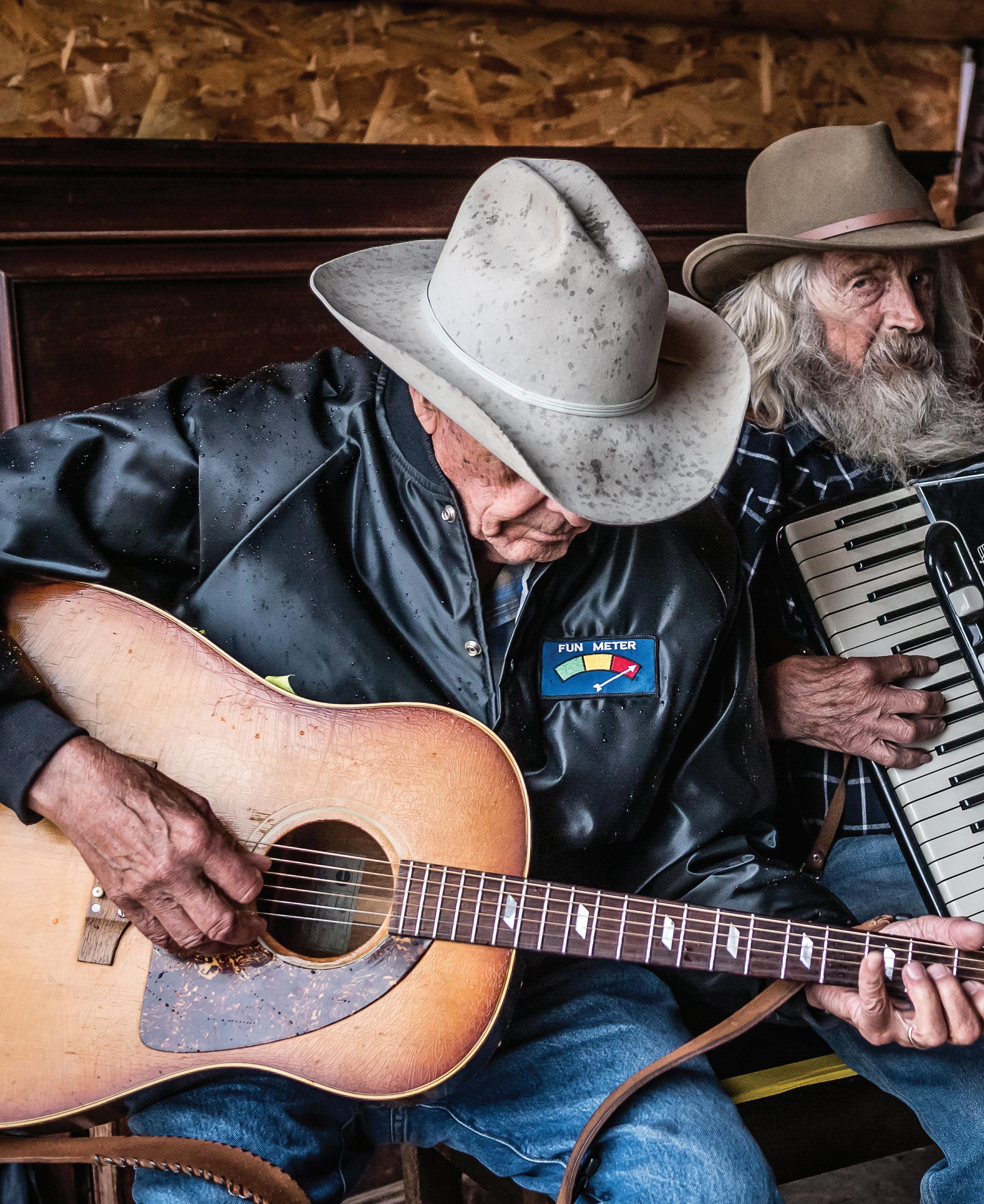
The Montana Old-Time Fiddler’s Picnic is a three-day annual event put on by musicians, celebrating old-time fiddle, bluegrass, Western swing, country and folk. The picnic was the brain child of James “Doc” Allison of Livingston, Montana. This shot was Winter 2017’s Last Light. Photo by Audrey Hall
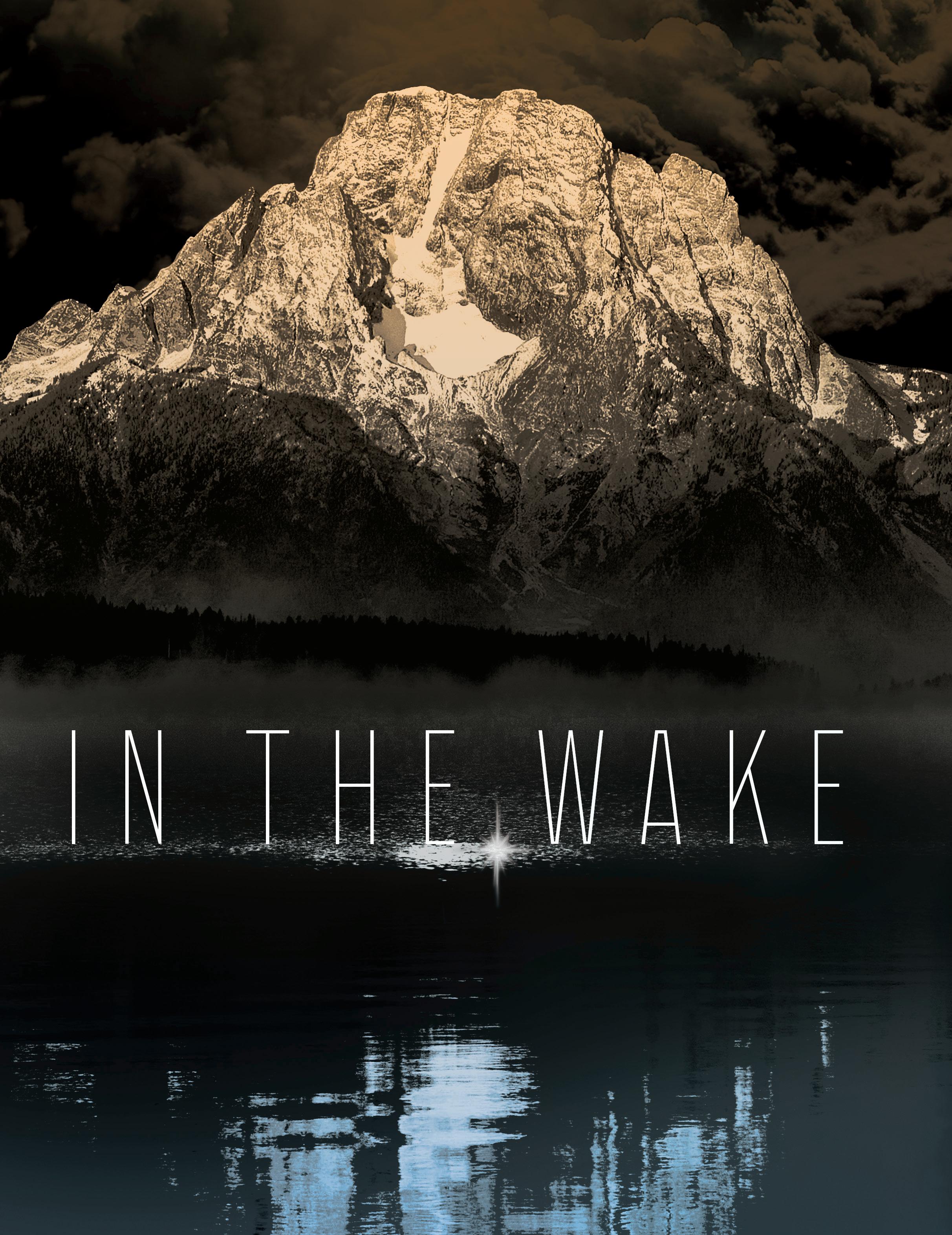
SIX ATHLETES DIED FOR ADVENTURES THEY LOVED. SIX WIDOWS REMAIN. WHEN A WORLD IS SHATTERED, THE NOISE SILENCED, WHAT LIES BEYOND? [ Stories of resilience ]
BY MEGAN MICHELSON AND BRIGID MANDER
In the Wake: Stories of Resilience
Six athletes died for adventures they loved. Six widows remain. When a world is shattered, the noise silenced, what lies beyond?
We don’t know exactly what draws us to the mountains, or the ocean, or the sky.
For some, it’s the beauty and serenity, the wild that surrounds us and the chance to exist in places where few feet have trod or skis have descended; the thrill of speed or flight; the knowledge that a positive outcome is not assured; the desire to push oneself to the brink.
For others, it’s thrill and fame and hunger: to go bigger, faster, higher. It’s a whirlwind of sponsorships and pressure and risk. The noise is loud, and the hype pervades and it’s one more trip to ski the Italian Dolomites, or BASE jump off Tahoe’s Lover’s Leap or skydive from a helicopter, or surf Mavericks. It’s all in and it’s nonstop and a rush and exhilarating and fast.
And then it stops. All is quiet. The noise silenced. And what is left?
Wives, mothers, husbands, fathers, sons and daughters.
The greater mountain community grieves for those who perished—Alex Lowe, Doug Coombs, Shane McConkey, Rob Ranieri, Luke Lynch and Erik Roner along with a long list of others—but this feature focuses on the women and their
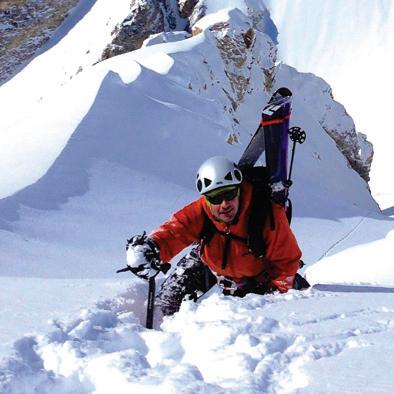
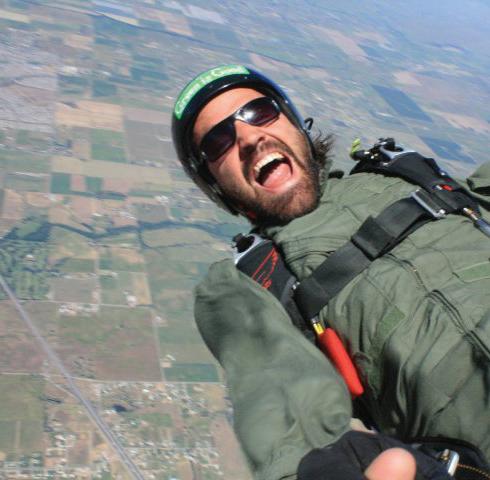
children who remain.
The following stories represent one demographic in various stages—from most recent loss to furthest out—of the grieving process as they attempt to move forward with a life forever altered.
That grief comes in waves. At least that’s what Emily Coombs says.
Her husband, renowned freeski pioneer Doug Coombs, passed away 10 years ago while attempting to reach a fallen comrade in La Grave, France.
Emily says these waves are unpredictable, varying in frequency and size. But every so often, and even now a decade later, a monster swells and swells. And it feels like it might never break. And then it does. And it almost kills you.
The six women on the following pages talk of the moments they remember most vividly about their loves, and about the second they learned it was over. They talk of crippling fear, of sadness like a vice. They talk of hope and support systems, and of how difficult it can be to accept help. They offer words of wisdom.
“Love is the greatest risk you can take in life,” Jennifer Lowe-Anker says.
Six athletes died doing what they loved: mountaineering, skydiving, skiing, BASE jumping. Six widows are left in the wake. Each woman has a different story, but they exhibit a shared strength. The sun rises and sets and rises again stronger each day. These are stories of love and fear, risk and loss. These are stories of resilience. – The Editors
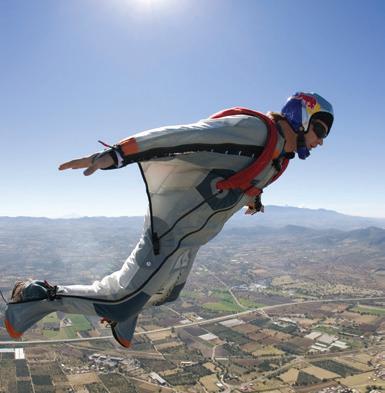

[ Less than one year ]
ANNIKA RONER
<1 year - Annika Roner
The day Erik Roner died, he offered to watch their two kids while his wife, Annika, went for a pre-dawn waterski on Lake Tahoe the morning after a lunar eclipse. When she got home, Erik was at the kitchen counter with Oskar, 5, and Kasper, 1. It was September 28, 2015.
Erik gave Annika a long kiss, and said, “I love you. I’ll see you later.” He was off to a charity golf tournament at Squaw Valley, California, where he and three others were skydiving out of an airplane to kick off the event. When
Annika’s sister called later and said Erik had been hurt, Annika rushed to the scene, her body numb and convulsing in tremors on the drive over. “I think that was Erik squeezing me as he passed away,” Annika says now.
Erik, 39, a professional action sports athlete and a star of MTV’s “Nitro Circus” show, had hit a tree on what should
have been a routine skydive for the experienced jumper. “I told Oskar the next day that Erik was gone,” Annika says. “He still thinks his dad is here, like a spirit on his shoulder who’s always there for him. When I’m having hard days, he says, ‘Come on, Mom, just ask Dad to help you.’”
For weeks after Erik’s death, friends and family gathered at the Roners’ dining room table around the clock, offering support and home-cooked meals. “This community, my friends—they’re unbelievable,” Annika says. “I’ll be in the grocery store and people will come up to me and say, ‘If I can help, let me know.’”
Although Erik was calculated with his risks and often backed away from stunts that didn’t feel right—especially after having kids—Annika still worried. “I would never tell him no. If he’s not the man he wants to be, he’s not going to be the father or the husband he wants to be,” she says. “But I was very vocal about what I was scared about.” Ask about her biggest fear and she’ll pause, then half in tears, say, “I was scared of him dying.”
Annika_Roner: Annika hangs out with Kasper (left)
Annika and Erik’s first date was spent BASE jumping in Idaho. They got married after skydiving out of an airplane onto a Lake Tahoe beach, and in her wedding vows, Annika said to Erik, “For being extreme, you’re the kindest person I know.” Erik lived his life fully—some would say on the edge—but Annika says he longed to live a simple life at home with his family. “He was ready to tone it down,” she says.
Two nights before he died, Erik told Annika he couldn’t believe how in love with her he was. “I miss his face, his expressions, his being. I miss him holding me and his kids,” Annika says. “I’m in love with someone who isn’t here anymore.”
Now, Annika is learning to cope with her new reality. “At
“ I’M A SINGLE WOMAN WITH TWO KIDS. THEY ARE MY FOCUS. THAT IS MY FUTURE. ”
[ One year ]
KATHY LYNCH

and Oskar at her home in March. PHOTO BY JASON
ABRAHAM
Kathy_Lynch:
1 Year: Kathy Lynch
On May 17, 2015, a Teton County sheriff pulled Kathy Lynch out of her afternoon yoga class. He didn’t need to speak: she knew why he was there.
Early that morning, Kathy’s husband Luke Lynch, a Jackson, Wyoming resident and experienced ski mountaineer, had set out with three other highly skilled alpinists to climb and ski the Sickle, an exposed and committing couloir on Mount Moran in Grand Teton National Park. There had been an accident in the mountains, and Luke wasn’t coming home.
A young couple with three small boys, the Lynches hadn’t discussed the possibility of either one dying in the mountains: Kathy hadn’t married someone who made a living as an extreme athlete. Luke was the Wyoming state director of the Conservation Fund, and served on various community boards.
“We both [were] adventurous people and loved to be in the outdoors,” Kathy said. “[Ski mountaineering] was dangerous but I never asked him not to go. It filled his soul. Occasionally, I would get a little worried about it, but that’s not how our marriage was—we really respected each other’s activities. If you love someone you want them to be their best self.”
Kathy found herself wholly embracing the grief, and accepting the accident in order to keep going. “I’m not angry at him … I would take him back in a
heartbeat. But I believe that Luke’s death was always in the cards … Fate, as you might call it,” she said.
“I don’t have any judgment for the type of activities that he did. Luke and his ski partners weren’t being risky in my opinion—everyone has a different level of acceptable risk. They were trained and experienced—they just had a really bad day in the mountains.”
At barely a year since the accident, Kathy hasn’t been able to do much beyond care for their three children, and carry on from day to day. “The biggest surprise for me in grief is that it can be both simultaneously excruciating and happy. Every single day I miss him. But we still laugh and dance, my children and I have a lot of fun. You have to be intentional and fight for it.
“I used to complain, but what did I have to complain about? Nothing. When I get nervous about something now, I think: I sat my kids down and told them that their dad died. How hard could this be, compared to that?”
In her home, Kathy pointed out a quiet little corner hidden away from sight. On a small table are mementos, a cryptic collection of pieces of Luke’s legacy. A twin frame shows two photos: one of Luke beaming up at his ski partners standing above him on the steep bootpack in the Sickle, taken not long before the slough swept Luke and ski partner Stephen Adamson to their premature deaths. The picture opposite shows Kathy spreading ashes into the autumn mountain air from the summit

“EVERY SINGLE DAY I MISS HIM. BUT WE STILL LAUGH AND DANCE. YOU HAVE TO BE INTENTIONAL AND FIGHT FOR IT.

“ROB WILL ALWAYS BE THE LOVE OF MY LIFE ... ANYBODY WHO KNOWS ME KNOWS THAT.”
[ Four years ]
ASHLEY BEDELL
4 years - Ashley Bedell
Ashley Bedell and Rob Ranieri didn’t have a typical wedding. The theme at Burning Man that year, 2008, was the American Dream and Ashley and Rob decided the best way to celebrate that dream was by getting married jumping out of an airplane over the Nevada desert. A video capturing their wedding shows them skydiving through the air holding hands then landing on the sand and exchanging rings and an exhilarating kiss.
“We got married how we wanted to, where we wanted to. It was us,” Ashley says. “We did it our way, like the Sinatra song, our whole relationship we did our way.”
A couple of years prior, Rob and Ashley had moved from their home state of New Jersey to South Lake Tahoe, California. Rob worked as a ski patroller at Kirkwood Resort before launching an IT business. He was always a magnet for attention, with his wild, electrified hair and the unicycle he loved to ride. Together, he and Ashley started rock climbing and Ashley, who’d always wished for the ability to fly when she blew out her birthday candles as a kid, introduced Rob to skydiving.

TOP: Dinner with the boys. Kathy with Will (left)
ter landings, he tried to escape his gear and swim to shore, but it was too cold, too far. According to the GoPro camera he was wearing, he struggled for about 45 seconds before his body shut down. Rescue teams spent hours locating him, while Ashley waited at the hospital for news on her husband’s condition.
“Rob made me believe in love,” Ashley says. “Here was this guy who accepted me for my quirky personality—I’d never had that before.”
Their daughter Willow, named after Ashley’s favorite tree, was born in late 2011. Ashley quit skydiving once they had their baby, but Rob worshipped the sensation of flying. Six months after Willow’s birth, on May 22, 2012, Rob, then 28, went skydiving over Lake Tahoe with some friends.
The winds changed when Rob jumped and he was swept toward the frigid waters of the lake. Trained for emergency wa-
After Rob died, Ashley’s world crumbled with shock. “Honestly, I turned myself off,” she says. “That was my idea of resilience—to strongly and independently face something like that and not show emotion. That’s what I had to do.”
It’s taken years for her to open up again. “It took that long to see what I was actually dealing with—Rob’s gone, he’s not coming back,” she says. “Now I actually have to deal with this.”
She and Willow, now 4, recently moved to Gardnerville, Nevada, outside of Lake Tahoe. And Ashley has been given

[ Seven years ]
SHERRY MCCONKEY
Shane McConkey was supposed to call his wife, Sherry, after every jump. But on March 26, 2009, it was Shane’s friend and BASE-jumping partner JT Holmes who called Sherry from the Italian Dolomites. He said two words: “Shane’s dead.”
They’d been filming for a Matchstick Productions ski movie when Shane’s ski BASE jump had gone terribly wrong. Sherry went silent, then screamed. Their daughter, Ayla, just 3 years old at the time, sat next to her scared and confused. Shane was 39 years old.
Sherry was in Southern California, at Shane’s dad’s place, when she got the news. On her flight home to Tahoe, the grief began to sink in and she had a fleeting morbid thought: “I remember thinking, ‘I hope the plane goes down so I don’t have to deal with any of this,’” she says.
Seven years later, the wounds feel fresh when Sherry talks about that day. But she also radiates with the glow of a woman still in love when she remembers Shane, a pioneer-
ing professional freeskier. The two married on the beaches of Thailand in 2004 and lived a vivacious, adventure-filled life in Squaw Valley, California. “He used to stare at me and smile. He just had that loving look,” Sherry says. “His eyes showed everything.”
Shane was a goofball, as well. He’d pull pranks like stuffing rocks into his friends’ backpacks or stealing cash out of their wallets. Sherry, who grew up in South Africa and left home in search of adventure at age 21, was drawn to Tahoe for the same reason Shane was: the mountains. “Being around him was nonstop entertainment,” Sherry says. “I loved him for his adventures and the way he wanted to invent things. He was the most passionate human I’ve ever met.”
When Sherry would get angry with him, Shane would look at her and say, “You’re so sexy when you’re mad.”
and Sam. Max not pictured. PHOTOS
The month before he died, Shane wrote Sherry a Valentine’s Day card—which she’s since read hundreds of times—in which he described what he loved about her. Before he left for Italy, Shane had a dream that he died, which shook him deeply. “I couldn’t sleep when he was gone because I worried,” Sherry says. “I knew the consequences. We knew he could die. We spoke about it a lot.”
At his memorial, Ayla danced amidst the throngs of people and asked, “When is Daddy coming back?” Now age 10, Ayla says goodnight to her dad before bed and although she doesn’t remember him, she often looks through the photos and footage that captured his talents and spirit.
Sherry, a quiet athlete with a stout sense of humor, has used mountain biking and yoga as therapy, but she still has hard days. “You don’t want to be without the guy you love. The pain doesn’t go away. It comes back and you can’t breathe,” she says. “But I’ve learned how to cope.”
Sherry’s also become a philanthropist: She launched the Shane McConkey Foundation two years after his death,
“AS A MOTHER, I HAVE TO SHOW RESILIENCE. I HAVE TO TEACH HER EVERYTHING THAT’S RIGHT IN LIFE. ”

[ Ten years ]
EMILY COOMBS
10 years: Emily Coombs
Ten years after her husband, iconic big-mountain skier, mountaineer and professional athlete Doug Coombs died, Emily Coombs has turned her personal tragedy into motivation to help others. For Emily, it has been a long and difficult path. Doug and Emily owned and operated a global steep-skiing camp, and were pioneers in the world of heli-skiing and guided ski trips.
Doug’s untimely death in a skiing accident in La Grave, France in 2006, left Emily devastated, without her husband, a source of income, and alone with their 2-year old son, David. “Doug wasn’t one to discuss risks; he was such an optimist. He always saw the path and the solution, not the danger. He thrived on risk, and pushed it all the time, but he had such a high level of ability,” Emily says.
“I always thought I [would] die first, because I wasn’t up to his level but was going where he was going and skiing the same things. Maybe if I hadn’t had David I would be dead by now. I wouldn’t have wanted Doug to change, though.”
BY KENE SPERRY
BOTTOM: Mementos pay homage to Luke in Kathy’s home.
When Doug did pass away after falling in an attempt to save his ski partner, Emily nearly fell to pieces.
“It was tragic; it was horrible. I was a complete mess,” Emily says. “My mother told me I had to find strength to go on, and I thought, ‘How do you find the strength?’ Then I realized you get it from other people. And you have to live your life so that you do things for other people. Thinking that way really changed me. You have to leave this earth knowing that you did something to make it better.”
Although it took some time, Emily eventually found a way to help others and to honor Doug and the sport he loved so much. In 2012, she began the Doug Coombs Foundation, a nonprofit that engages low-income children from the Jackson Hole community in skiing, soccer and climbing. The beneficiaries are mostly Mexican families, and Emily finds she can draw strength and inspiration from their perseverance in the face of hardship.
Today she runs the foundation from her home in Jackson, Wyoming, a cheerful hideaway with dogs and cats, horses, and chickens. On the walls, photos of La Grave as well as Doug and Emily’s ski life celebrate their adventures, but the foundation holds Emily’s passion these days.
“I’m attracted to these people,” she says. “To me, what they have gone through, to come to this country for
“YOU HAVE TO LEAVE THIS EARTH KNOWING THAT YOU DID SOMETHING TO MAKE IT BETTER.”
“ LOVE IS THE GREATEST RISK THAT YOU TAKE IN LIFE.”

[ Seventeen years ]
JENNIFER LOWE-ANKER
17 years: Jennifer Lowe-Anker
Jennifer Lowe-Anker knew when she married professional climber Alex Lowe that his job, and his passion, was risky. Yet as a climber herself, she understood both the dangers in the mountains and the draw of mountaineering. Alex was known as one of his era’s most extraordinary and prolific mountaineers, and traveled the globe to far-flung ranges and high peaks as a successful, sponsored athlete.
“I thought about the risks occasionally, not a lot, but we did discuss it. Nobody that takes risks thinks they are going to die,” Jenni says. “Alex thought of mountaineering as a traditional thing, not an extreme sport. He always thought of himself as a risk manager. He used to say things like, ‘You know, extreme skiing is kind of crazy.’”
But in 1999, Alex was killed in an avalanche while climbing in the Himalaya. His partner, Conrad Anker, survived. At the time, Jenni was home in Montana with their three sons, ages 3, 7, and 10.
“[The children] were my first responsibility,” Jenni says. “My sister came and helped, my friends stepped in and helped; I had an amazing community. The wave of support that came to carry me along was pretty phenomenal.
always want to, but you just don’t have a choice sometimes.”
In the months following Alex’s death, Jenni found a measure of peace in creating the Alex Lowe Charitable Foundation, which benefits indigenous mountain people and the Khumbu Climbing Center in Nepal.
“I think from my perspective now, the thing in my life that has brought me the most joy has been reaching out and caring for other people, and other things and places. Starting the foundation and working to help other people who were much less fortunate than me helped me realize my situation was not as bad as it can be.
Ashley_Bedell:
Willow starts a game of tag with her mother, Ashley. PHO-
“I was devastated when Alex died. When you lose someone you love, your life changes overnight, you go into shock. I think our minds are programmed to think we are going to be OK, but when something happens to disrupt that, it takes a while.”
The great-granddaughter of Montana homesteaders, Jenni drew some strength from her ancestry. “[Homesteading] was dangerous. It was a crapshoot whether they’d be alive from week to week. I like to think that I have some of that pioneer spirit, where you just persevere. You don’t
“Grief is a real thing. You have to walk through it. Everybody grieves differently but at the same time it opens you up: How can I make the best of it?”
Jenni also chose to write a memoir of her life with Alex and of starting over, titled Forget Me Not, published in 2009. “I wrote it for myself and my children, mostly,” Jenni says. “The book was a huge relief, and closure for my life with Alex.”
In the book and in life, Jenni makes no apologies for the risks she and Alex lived with, or for his career choice. She
FOR THE LOVE OF THE GAME

HOW ONE FAMILY’S BATTLE WITH LOU GEHRIG’S DISEASE IS INSPIRING A NATION
BY STEVEN HAWLEY

For the Love of the Game
How one family’s battle with Lou Gehrig’s disease is inspiring a nation
By Steven Hawley
Eric and Amanda Stevens look as settled into their coronavirus-induced self-quarantine as any young couple could be. On our FaceTime call, I see them sitting in their Costa Mesa, California home, couch surfing in shorts and sweatshirts, the physiques of two elite athletes making them look a little less frumpy than the standard pandemic homebody. But they also appear slightly haggard as so many of us these days do, while life has turned into a litany of dresseddown, work-from-home sick days.
Getting reacquainted with the couch, interspersed with long walks on the beach with the their chocolate lab, Duke, has provided solace in the face of the COVID-19 madness. Like most dogs, Duke is thrilled to pieces with California’s shelter-in-place order. The same can’t be said for Eric and Amanda.
“We feel like this has just been a momentum killer for us,” says Amanda, the frustration palpable in her voice.
“Just before the shutdown, we felt like
we were making real progress. But now we’re on hold, along with everything and everybody else.”
“And I can’t get the virus,” Eric says matter-of-factly. “ALS patients already have compromised lungs.”
If the Stevens couple seems familiar, it might be because Amanda was a speaker at last January’s TEDxBigSky event. As she told the Big Sky, Montana crowd then, a month after their fairly-tale wedding in July of 2019, Eric was diagnosed with Amyotrophic Lateral Sclerosis, also known as Lou Gehrig’s disease. Amanda’s brave talk, outlining the couple’s campaign to
PHOTO BY ISIAH GIBSON
Eric, Amanda and their dog Duke pose for a holiday photo in 2019. Eric was diagnosed with
gain access to promising stem cell treatment for ALS, has more than 35,000 views on YouTube. Stevens Nation, the team moniker for those who’ve climbed aboard the Stevens’ #axeALS campaign, is a growing social media phenomenon. Eric and Amanda have appeared on The Ellen DeGeneres Show—twice inside of three months.
But the line Amanda delivered inside the Warren Miller Performing Arts Center last January that didn’t leave a dry eye in the house—“My husband is dying”—is still true.
ALS is a horrific disease. There is no cure. It takes everything its victims have, starting with the lion’s share of their money—and ending with their last breath. They die because they can no longer breathe or swallow on their own. A tendency among those chronicling the deterioration of ALS patients is to focus on the full and at times happy lives it’s possible to live, even in the midst of immense pain and suffering. ALS patients recently diagnosed, still walking, talking, breathing and swallowing know what’s coming. The fear and dread are yet another variety of punishment the disease dishes out. This is the stage of ALS that Eric and Amanda Stevens are dealing with. They, along with their family and friends, are never more than a few breaths away from shedding a few more tears.
In spite of all that, what follows here is not a tragedy. It’s a love story. Like all good and true love stories, happily ever after is no guarantee. And like all true love stories, the ending remains unwritten.
To understand why this is a love story, there are some people in Eric and Amanda’s near orbit you should meet. Eric has three brothers. All four of them are ridiculously handsome and athletic, yet plain spoken, well grounded in the art of practical living, and dedicated to serving others’ needs before their own. Three of them—Jeff, the oldest, along with middle brother Brett and Eric, the youngest, are Los Angeles City firefighters. The fourth brother, Craig, in 2016 gave up catching touchdown passes from the likes of Marcus Mariota, closing the door on an eight-year career as a tight end with the Tennesee Titans. He could see the toll the game was taking on the health of his colleagues.
Among myriad hazards, football players also risk twice the probability of an ALS diagnosis. Craig witnessed Titans teammate Tim Shaw as he was cut from the Titans in 2011 after then-mysteriously declining performance. In 2014, Shaw was diagnosed with ALS. Eric also played football in high school then at Cal-Berkley, and for a year in the NFL with the St. Louis Rams. Eric’s style of play reminds Craig of ex-teammate Shaw. “They were both reckless with their bodies, headhunters,” Craig recalls.
“Eric does what he’s going to do, but he does it for everyone else. Him being himself motivates me to be myself.”
Eric and Amanda are also blessed with the kind of friends for which many of us can only wish. There are dozens of them, but three of Eric’s childhood buddies are practically family. Independently of one another they testified they are more like brothers than friends: Vince Tomich, Kevin Hawke and Mickey Mance have known Eric since they were all kids.
Stevens Nation, the name for followers of the Stevens’ #axeALS campaign, was actually invented when the Stevens and their friends were little. “My parents had four boys,” says Brett Stevens, of the family’s upbringing in nearby Palos Verdes. “But my dad has a brother who lived up the street from us who also had four boys. And there are two other brothers in my dad’s generation who had kids. So at any school or sports event, you might see eight, 10 or 12 Stevens kids running around. People started calling us ‘Stevens nation’ back then.”
Good families and the most loyal of friends are often reliable makers of true love stories. Another far less obvious connection lies in the ways love is like water. Its persistence belies its liquid lack of structure. It doesn’t talk much. Taking on the shape of whatever sized vessel it can fill, water presses on quietly, over, around, through anything, most often without anyone noticing what it’s doing, finding its way along the path of least resistance.
ALS only a month after the couple’s wedding in July of 2019. PHOTO BY TAYLER ASHLEY
Eric Stevens has been a water baby his whole life. Palos Verdes is situated near some of southern California’s better surf breaks, and Eric and Brett grew up surfing from a young age. These days, Eric’s favorite thing to do is fly fish. “Just walking along any stream in the mountains, the quiet of it, the scenery,” he says. Kevin Hawke has seen it. “Eric likes to fish,” he says, “and anyone who knows him can totally see him living along some stream in Montana, just him and Amanda and their dog.”
It was the first thing Eric could think of doing after his diagnosis. He and Vince, Kevin and Mickey drove to Mammoth Mountain, high in the Sierra Nevada, to fish and watch the water roll by. “We all just agreed we had to fix this,” recalls Mickey Mance. “After we went to Mammoth, we all agreed to dig a little deeper, looking at websites, looking at blogs, online forums, whatever we could find.”
The determination to find and advocate for better treatment for ALS was never in doubt from the day Eric shared the news of his diagnosis. But there was another problem. “After he was diagnosed, Eric didn’t want to talk about it, didn’t want to tell anyone,” Vince Tomich says. “It wasn’t that he was in denial. It’s just that Eric has never asked anyone for help. Selfless is the word. The first thing he said about his diagnosis, and he said it repeatedly, was that he wanted to make sure Amanda
The original Stevens Nation clan—Eric, his brothers and his cousins—is what inspired the name for the community of supporters that have rallied behind Eric and Amanda and their family in the effort to bring awareness to ALS. PHOTO COURTESY OF STEVENS NATION
Eric, once a fullback for the Cal-Berkeley foot-
“It made us realize that Eric was going to have a platform ... And we would have to use it.”
would be OK. He’s always been about making other people’s lives easier.”
Eric is possessed of an elusive and uncanny quality: he leads quietly, seemingly without trying, by a kind of example that others want to emulate. “He was an insane athlete, good at whatever he tried,” Tomich says. “But he was the last person you’d ever hear telling a story about himself. Eric does what he’s going to do, but he does it for everyone else. Him being himself motivates me to be myself.”
Eric was voted captain of the football team in his senior year at Cal. As the youngest of four boys, his quiet leadership qualities seem even more unusual. “None of my older brothers got to play football. My dad wouldn’t let them,” Eric says. “But I was the youngest of four and so I guess by the time I was old enough to play, my folks relaxed a bit.”
Craig, five years Eric’s senior, began flipping through the playbook of his little brother’s Pop Warner football team. In Craig’s junior year of high school, inspired by Eric’s success at the game, he decided to try on a helmet for himself. It worked out pretty well: a full ride to Cal and an NFL career.
When life changes quickly, assets that were once a tremendous help can sometimes prove a hindrance. Amanda saw her spouse’s initial reluctance to speak out, too. “It was a decision he had to make,” she says. “We knew that because of our connections as athletes, maybe we could get some attention on ALS, not just for Eric but for everybody. But Eric had to decide how much he could be out in front of people.”
The quietly fierce competitiveness, the do-it-yourself then show others how to do it ethos, would have to change. Eric’s dynamism would have to be less like a rock and more like water—finding a way to get where
ball team, also played one year in the NFL for the St. Louis Rams. PHOTO COURTESY
he wanted—to effective treatment by cutting down the path of least resistance. Walking beside peaceful waters with the hope that a fish will rise might help. Eric had always wanted to fish in Alaska. Craig had some connections from his years in the NFL. Miraculously, four spots were available at one of Alaska’s finest fishing lodges, just as the short window of summer was about to slam shut in the far north.
Bristol Bay Lodge sits in the heart of one of the world’s richest fishing grounds. For anyone who loves fly fishing, there’s no better place on earth. For the Stevens brothers, the juxtaposition of the world’s best fishing and the world’s worst diagnosis for Eric was disorienting. “The trip was kind of surreal at first,” says Brett. “We didn’t know what to talk about, or if we should
talk about it, or if we should just fish and have fun.”
Over the course of a few days, the brothers remembered what being brothers should be. “For a long time, we didn’t say anything,” Craig recalls. “Then we just started doing goofy things brothers do. One of us ate the raw heart out of the salmon we caught, and then we ate some of the eggs. We just started being how we’ve always been, laughing, cracking jokes.”
The Bristol Bay Lodge experience includes a few nights at remote fishing haunts. Rainbo Camp is situated near the tidewater confluence of two rivers, an afternoon jaunt from the proper shore of the Bering Sea. Isolated as it is, accommodations remain on the posh side of any possible camping experience:
two adults per spacious tent and a full-time camp chef, camp hosts and fishing guides. Opulence that week, however, took a back seat to brotherly love. “We just decided to all move into one tent,” Craig says. “No one really talked about it. We just grabbed some cots and made it happen. At nights we talked a lot. Not about anything serious. It was good for all of us. Then I think it was as we were leaving that Eric said ‘I want to make a difference. I want to leave a legacy, I want my name to mean something.’ So then we knew.”
What wasn’t known then was how quickly Eric’s willingness to speak out would spark a rush of support. In November of 2019, two months after Eric’s diagnosis, his brothers and friends decided to organize an oceanside cornhole tournament.

“The idea was to invite friends and family, have a barbeque and drink some beers down by the beach,” Eric says. Vince Tomich, Mickey Mance and Kevin Hawke along with Eric’s brother Brett were up to the task, which proved more than just a backyard picnic.
“We presold 2,500 tickets for the event,” recalls Mance, “and 1,500 more were walk-ups.” What started as a modest affair became something much more ambitious. A merch station sold hundreds of Stevens Nation/#axeALS hats and T-shirts. Mance, whose family owns a deli in Hermosa Beach, procured food and beverages. “It was insane,” chuckles Eric. “Kobe Bryant was tweeting about it.”
“It made us realize that Eric was going to have a platform,” Amanda
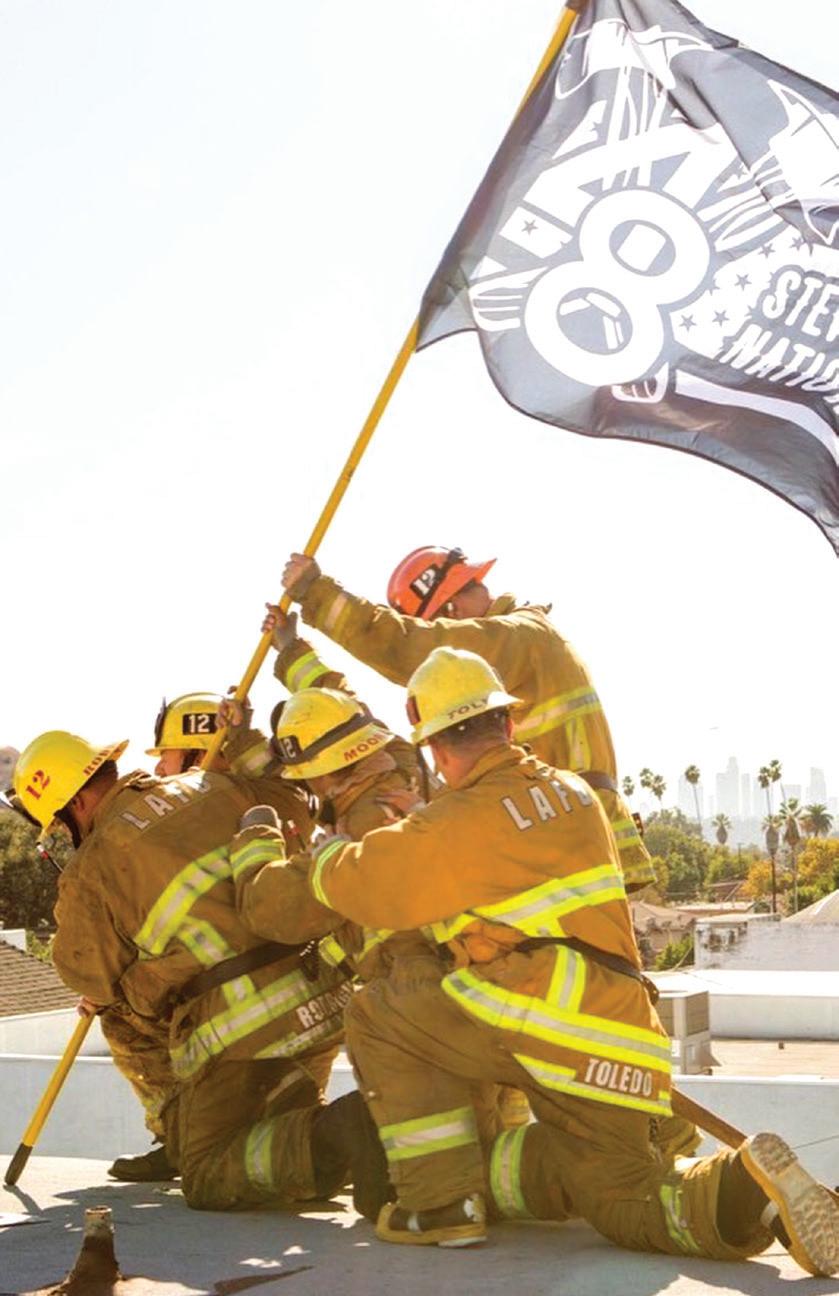
says. “And we would have to use it.”
OF CAL ATHLETICS
Eric presents a rainbow trout he caught during a fishing trip in Alaska. The Stevens brother made the trip shortly after Eric was diagnosed.
PHOTO COURTESY OF STEVENS NATION
At the Fight for Hope fundraiser, Eric’s brothers presented him with an axe and vowed to fight for
In between appearances on Ellen, a TEDx talk and managing a
“With ALS there’s no tool in the toolbox. There’s no pill to take. So we have each other.”
mushrooming social media campaign, Stevens Nation has sought justice for Eric and thousands of ALS patients like him. As Amanda describes in her TEDx talk, a small Israeli pharmaceutical company called Brainstorm is in Phase 3 of an FDA approval process for its promising ALS treatment, Nurown. The Food and Drug Administration is the federal agency charged
with approving new medicines, and ALS patients lucky enough to have gotten in on the FDA trial process are walking after being wheelchair bound, ditching respirators as the power of their own lungs returns, and talking easily after the disease compromised their ability to speak. But even those whose ALS symptoms seemed halted or reversed were cut off from the drug when the trial ended.
Drug approval is a complicated and expensive business. It often takes billions of dollars to bring a new drug into FDA-approved existence. It’s also necessary: less than a century ago, door-to-door salesmen peddled a concoction comprised of cocaine, morphine and alcohol doorto-door, a “tonic” that promised to cure whatever ailed. Yet in the case of ALS patients, the FDA has
THE FINE LINE
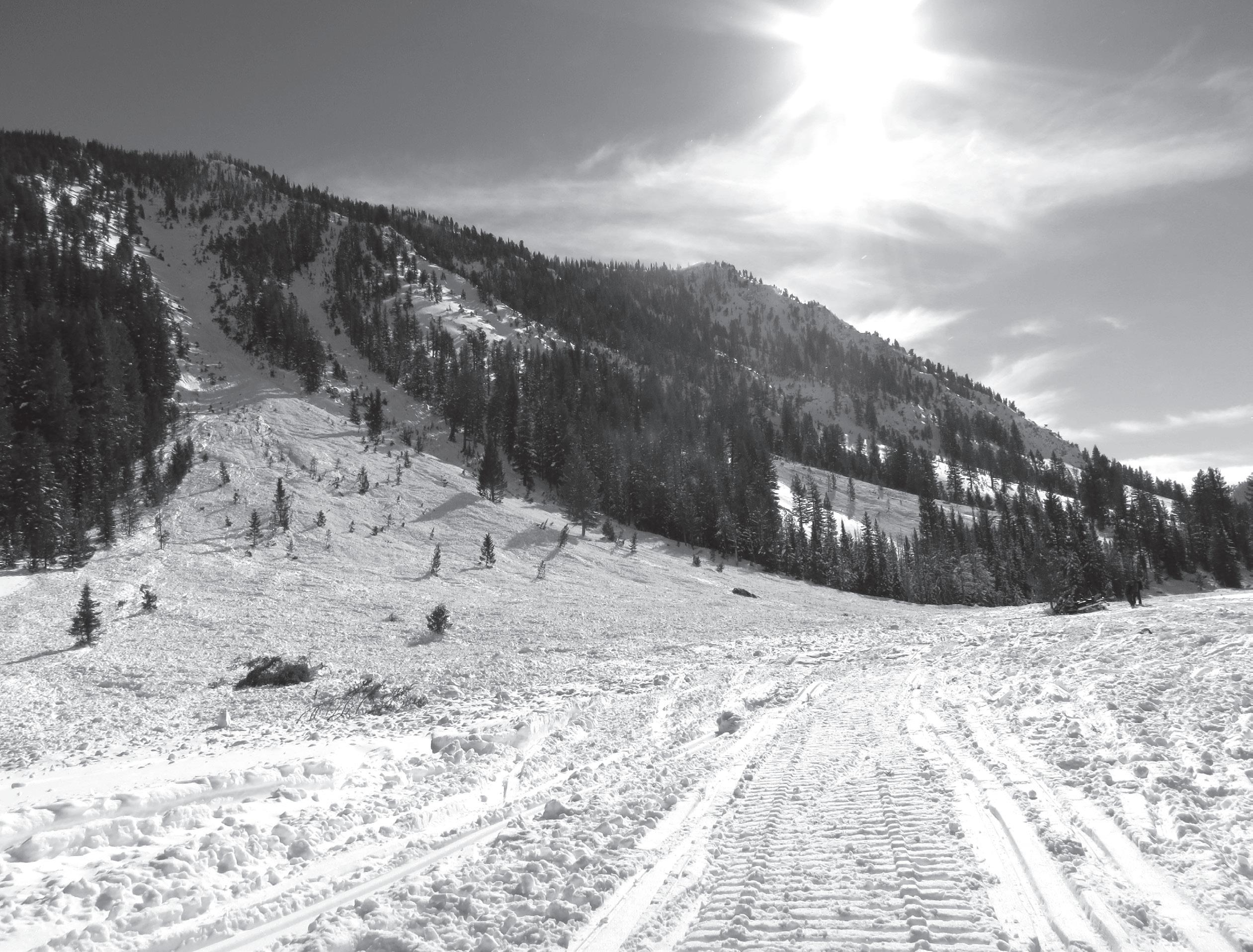
Looking up at the slope that avalanched from the toe of the debris. The burial locations are out of view to the right.
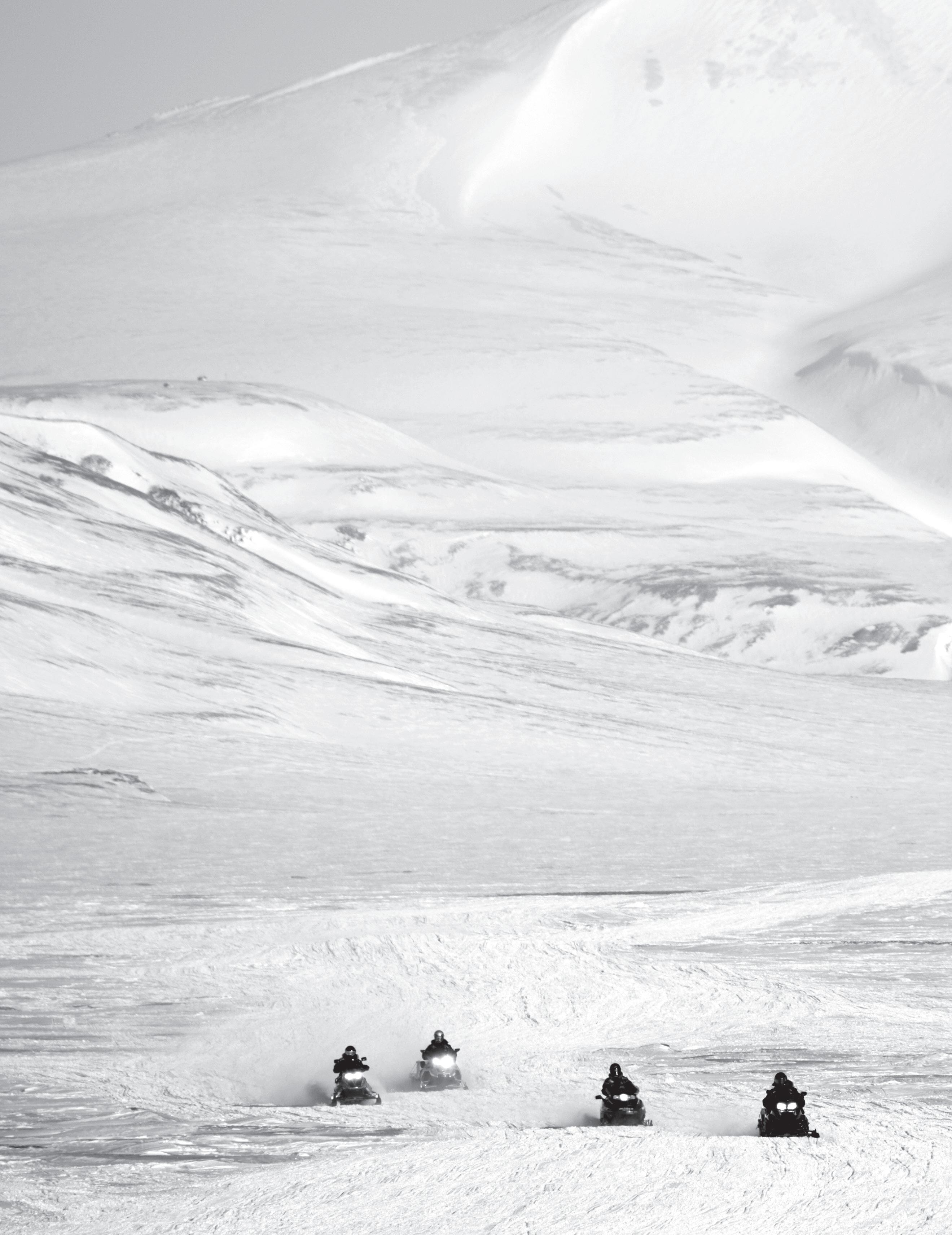
BY EMILY STIFLER WOLFE
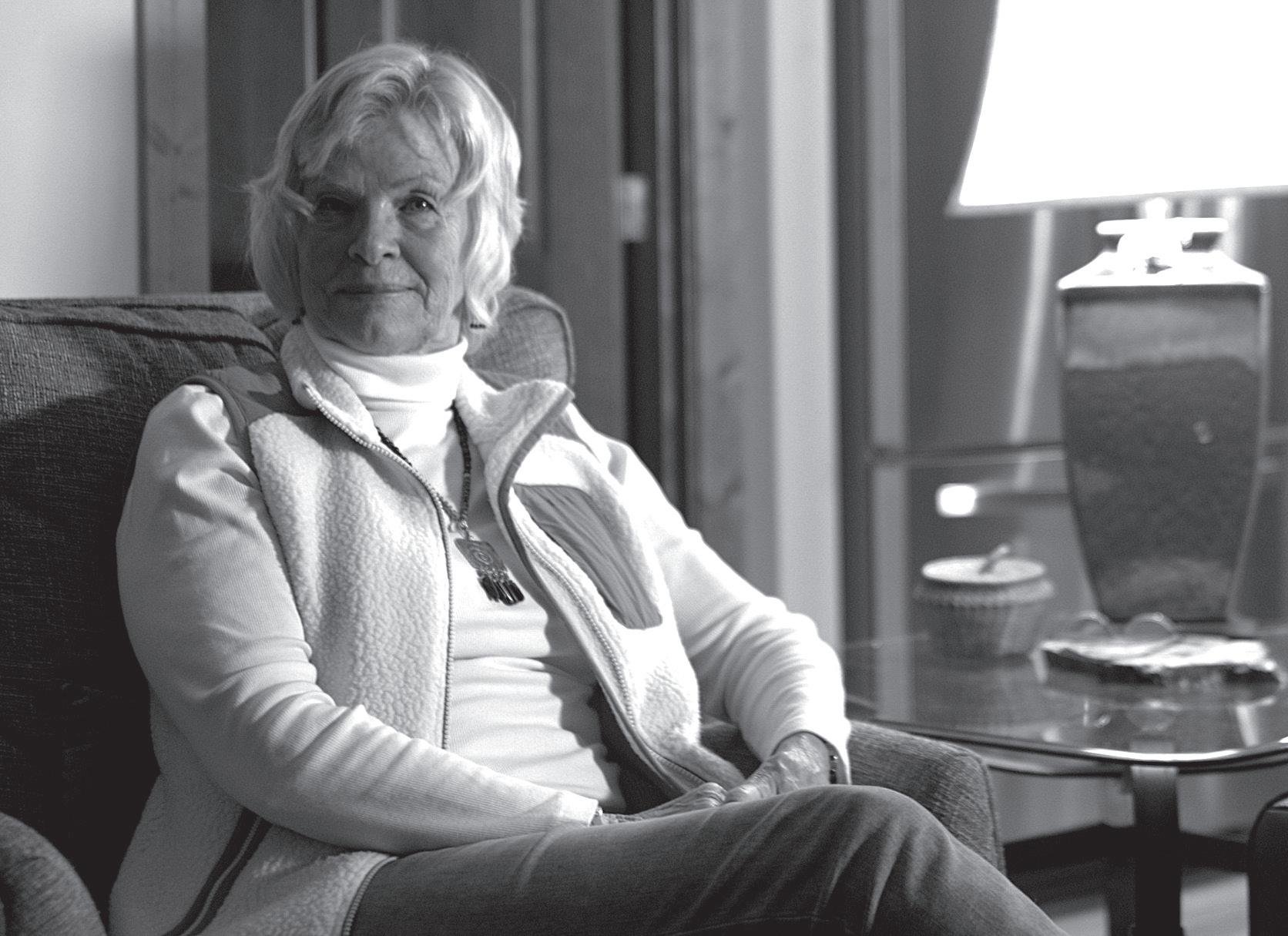
The Fine Line Surviving the avalanche at Idaho’s Frenchman Creek
By Emily Stifler Wolfe
The crack sounded like an aluminum bat colliding with a ball. Lesley Martin turned her head and saw the giant cloud of snow coming at them. She screamed.
With no time to run, she turned and dove facedown onto the ground, put her hands up to protect her face, and the avalanche buried her. As the snow slowed, Lesley cleared an air pocket in front of her snowmobile helmet with her hands, and then it stopped. She couldn’t move.
“I kept telling myself, ‘If I [panic], I’m going to die for sure,’” recalls Lesley, then 70. She tried to stay calm and breathe normally.
Soon though, breathing became difficult, and she lost her cool. She had no idea what happened to her three snowmobiling partners—if they were dead or alive, or if someone might find her.
Lesley Martin in her home in Bozeman, November 2017.
PHOTO BY RYAN WEAVER
Struggling to move, Lesley twisted her head inside her helmet and noticed a sliver of light in her left periphery. She realized she could move one arm a few inches, so she scratched at the snow beside her face. More light. Retracting her hand, she was able to pull her glove off a bit and extend her reach. She stopped when she felt cold air, afraid of plugging the hole.
“The only thing that I could do at that point was lay there and think,” Lesley wrote a few weeks after the accident. She felt comfortable, but stressed for air. How could this have happened?
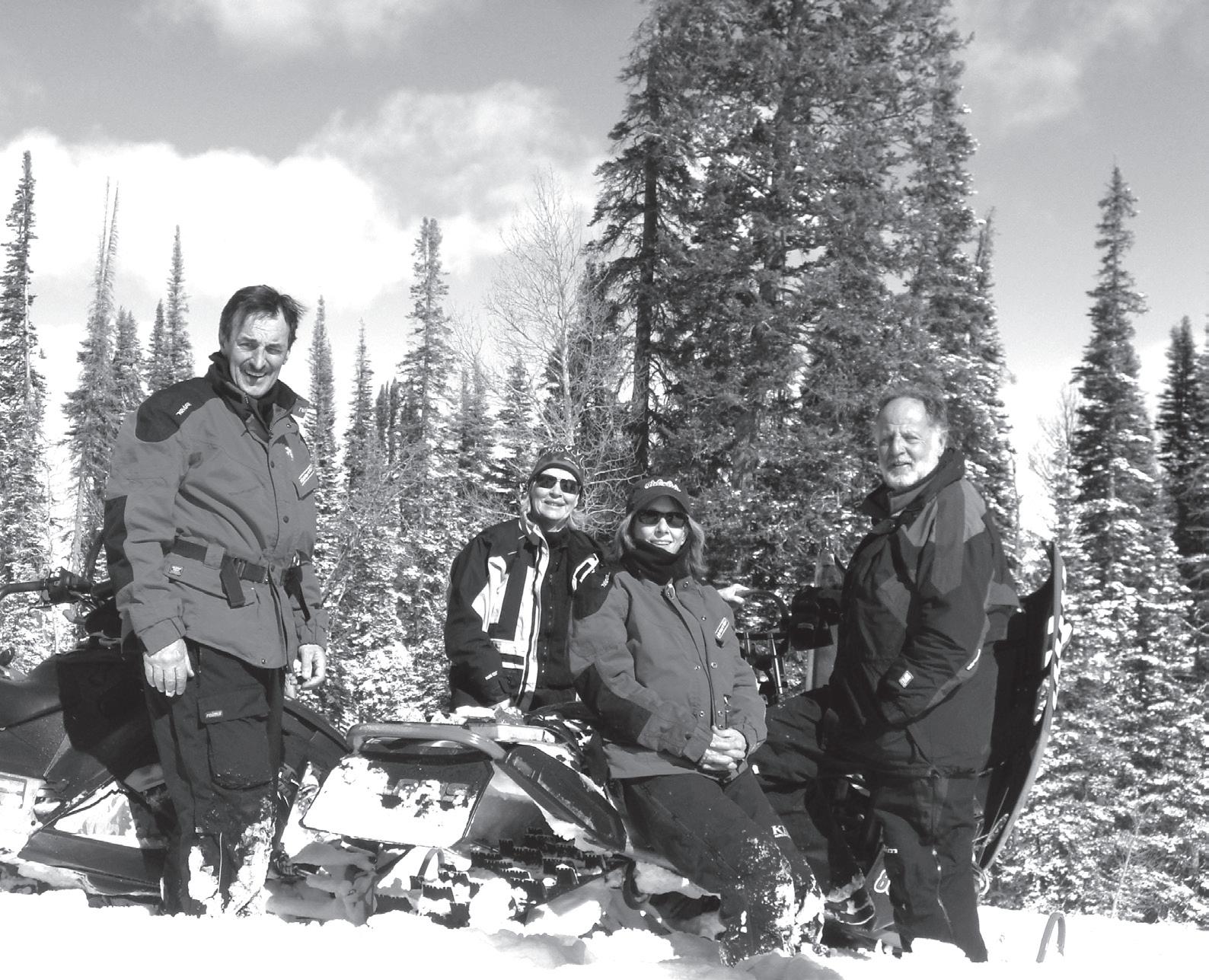
Her group thought they were being cautious by sticking to the flats. She worried about the others—her husband George and their friends Sue and Bob Swanton—and thought of their son Chad, their dogs back at home in Bellevue, Idaho. She didn’t want to die like this.
A feeling of warmth overtook her, and Lesley had a vision she was breathing into a sparkling golden globe. Eventually, the cold crept in, and she lost consciousness.
THE TWO COUPLES MET
IN 1996, when Sue bought a snowmobile from Lesley. They were all living in Washington state and became fast friends, riding together around the West—from the Pemberton Icefield in British Columbia to West Yellowstone, Montana.
The Martins moved to the Ketchum, Idaho, area in 2000, and the Swantons, now living in Oregon, were out for their annual visit. Their first day it stormed so hard they didn’t ride, and when George Martin read the avalanche advisory the next morning, February 16, 2014, the danger level was rated considerable to high. In the two weeks prior, 60 inches of snow had fallen on a weak, shallow snowpack, and both
Photo courtesy of Sawtooth Avalanche Center
human-triggered and natural slab avalanches had occurred the previous day, according to the Sawtooth National Forest Avalanche Center.
“Avalanches will likely fail on mid-storm weaknesses and could be large,” the forecast warned. “Avoid wind-loaded slopes, steep consequential terrain, and large avalanche path runouts.”
The group set out for Frenchman Creek, with a plan to play it safe in the low meadows and trees where the Martins had ridden two weeks earlier. On the 90-minute drive up Highway 75 from Bellevue, they were impressed by the amount of new snow on Galena Summit.
from 2 to 5 feet deep and was more than 1,500 feet wide. It plastered tree trunks 30 feet high with snow. The crack that Lesley heard was either mature timber snapping or the sound of the avalanche fracturing, said Scott Savage, the Sawtooth Avalanche Center forecaster who wrote the accident report.
Sue turned when she heard Lesley scream. “I remember having enough time to think, ‘We’re too far away. It’s going to maybe hit my ankles,’” Sue recalls. But the avalanche flipped her over her snow machine and rolled it onto her leg, pinning her. She felt a crushing weight on her back and chest and couldn’t breathe.
LESLEY WAS BURIED UNDER THE SNOW FOR 105 MINUTES.
They followed a lone snowmobile track up the creek for a half mile, then left the trail to play on some small hills. Three of the four snowmobiles quickly augured into the unsupportable snowpack and had to be dug out. After 2.5 miles, the trail opened into a clearing flanked by steep mountainsides, and the old track disappeared.
With such unpleasant riding, they decided to call it quits, but when Bob and George went to turn their machines around, both got stuck. Lesley and Sue helped dig out, an hour-long process that involved crawling across the snow surface in an attempt to avoid post-holing to their waists. Bob turned Sue’s machine around, while 100 feet away George helped Lesley climb out of a chest-deep hole in the snow. The Martins were laughing together when the avalanche broke above them.
Starting on a northwest-facing slope near tree line, it ran 1,500 vertical feet to the valley floor and across the creek. The crown—the top wall where the slab of snow broke loose—ranged
Bob heard the warning cry, and took one step before it hit him.
Both Sue and Bob were buried on their sides about a foot deep, and managed to push an arm through the snow to clear their faces and chests, clawing at the cement-like snow with their hands. Approximately 10 minutes after the avalanche, Bob freed his watch arm and took note of the time: 2:10 p.m. Although they were only 6 feet apart, they couldn’t hear each other at first. By 2:45, Bob was out. He grabbed a shovel from the only snowmobile left unburied and tried digging Sue’s legs out, but his frozen hands were unable to hold it, so they dug without it. By 3 p.m., she, too, was free.
They fumbled with their avalanche beacons, icy fingers almost useless. Bob managed to turn his beacon to search, and they made their way to the spot they’d last seen the Martins.
An arm was sticking out of the snow—George’s. Sue grabbed his gloved hand, hoping he would
squeeze back. Limp. The skin on his wrist was ashen. They dusted snow off his face. He was dead.
They yelled for Lesley. Nothing. Bob wanted to look for her, but Sue knew the odds were against them. They were having trouble discerning which signal was which on Bob’s old analog beacon— George and Lesley were less than 5 feet apart, and Sue’s beacon was still transmitting—and even if they did find her, they were too cold to do anything. Bob had worked as a bush pilot in Alaska and Sue was a former Navy medic, so they knew how to make decisions during stressful situations.
“Our hands were so cold, we couldn’t grab a shovel or curl our fingers around anything,” Sue said. “It just kicked in that in order for there to be any chance, we had to get help.”
IF
LESLEY CAME TO when she heard the sound of a snowmobile.
When Stevenson arrived at the avalanche debris, he started a beacon search and followed the signal to its lowest reading, 0.3 meters. The snow on the surface was soft, so he started digging with his hands. He bumped Lesley’s helmet, and she moaned. His heart jumped.
THE GROUP HAD STOPPED 20 FEET CLOSER TO THE STEEPER SLOPE, ALL
FOUR
LIKELY
WOULD
HAVE BEEN BURIED DEEPER AND ALL FOUR MEMBERS OF THE GROUP MAY HAVE PERISHED.
An hour after the avalanche struck, they made the difficult decision to go for help.
At the trailhead, the Swantons flagged down a car and asked the drivers to call search and rescue. When they pulled into Smiley Creek Lodge, a mile away, a group of experienced backcountry skiers overheard the story. Two of them, Nate Scales and Justin Stevenson, had just taken an avalanche class. They fired up their snowmobiles and pinned it to the accident site. Right behind them, the lodge general manager Alan Rooney followed them on his snow machine, and Bob Swanton, still at the trailhead, geared back up and headed in five minutes later.
“Nate, this person is alive!” he yelled. Scales, assembling his shovel, ran over and they dug frantically, clearing her face and chest. Finally, Lesley could breathe freely.
“What’s your name?” Scales asked, digging her legs out. She told him, then looked to where she’d last seen her husband. She saw Bob bent over his body, and knew George hadn’t made it.
Bob walked over to Lesley and told her that Sue was all right. As Rooney drove Lesley out the bumpy trail, she slumped in front of him, trying to relax as the cold gripped her. She felt grateful Bob and Sue were alive, but hollow inside.
At the highway, Lesley loaded into a warm car where Sue waited—the same one the Swantons had flagged down. She shook violently as people removed her wet clothes and wrapped her in blankets.
The Ketchum Fire Department ambulance soon arrived and transported her to St. Luke’s Wood River Medical Center, treating her for hypo-
The Martins and the Swantons in 2013. George Martin, who died in the Frenchman Creek avalanche, is pictured at right.
What is a Remotely Triggered Avalanche?
The group caught in the Frenchman Creek avalanche didn’t recognize they were in avalanche terrain.
“As I remember, we were out in the middle of a meadow, a long ways away from the base of the hill,” Lesley later wrote. “The last thing on our minds was an avalanche.”
But when conditions are dangerous, it’s possible to trigger an avalanche remotely, even from below.
“[Remote triggers occur when there is] a widely distributed weak layer beneath a stronger, thicker slab of snow—and something causes that weaker layer to collapse,” explained Simon Trautman, an avalanche specialist with the National Avalanche Center and former director of the Sawtooth Center. “You could think of it as a building collapsing if you knocked the pilings out from under it. Once the collapse happens, that fracture can move throughout the snowpack. In this case, it moved up the hill and caused the slab to break free and avalanche.”
Trautman recommends taking a class to learn how to recognize and avoid avalanche terrain and always reading the avalanche advisory. Beyond that, carry a full kit of avalanche gear including a shovel, probe and modern beacon on your person and practice with it regularly.
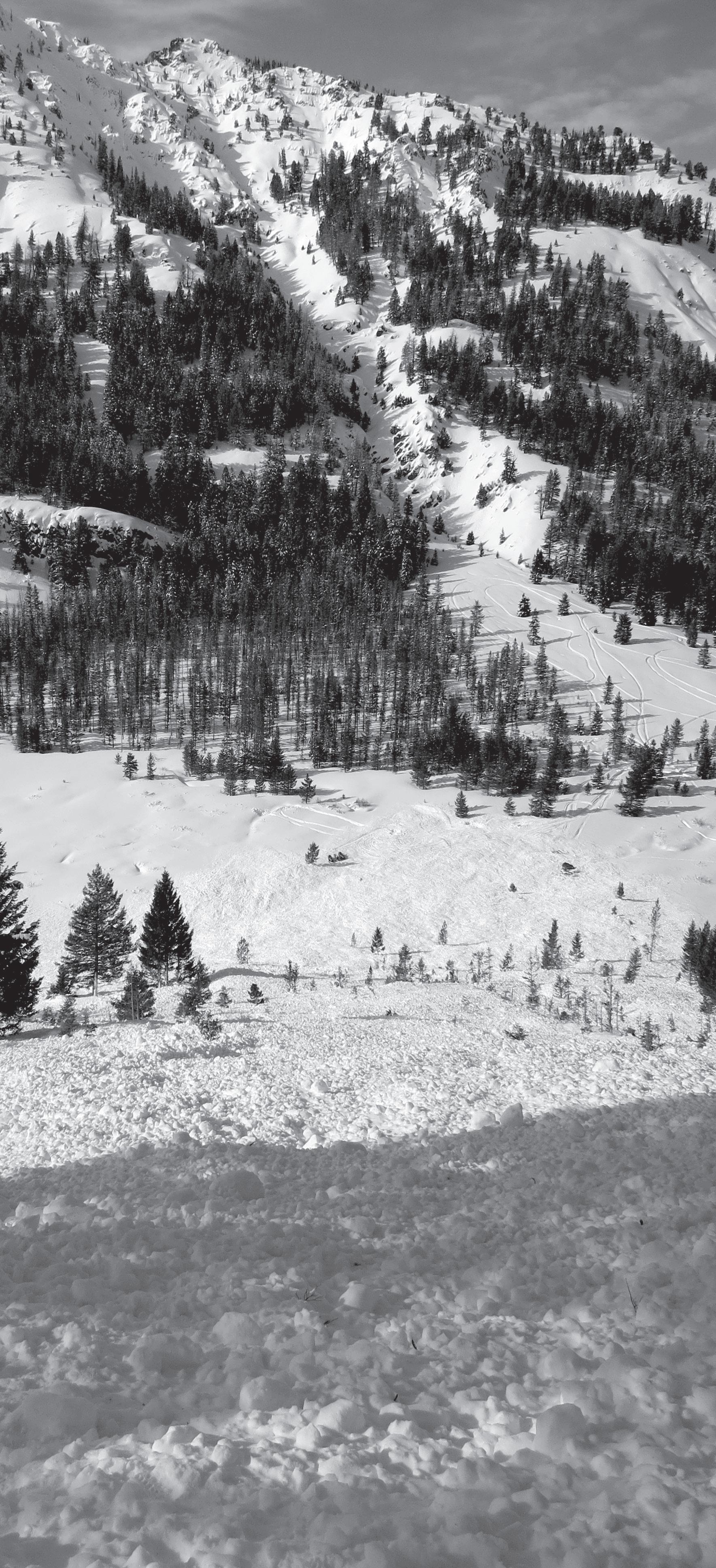
Photo Courtesy of Lesley Martin
THE CLOCK
HOW THE SKI INDUSTRY IS (AND ISN’T) HEEDING PREDICTIONS OF AN OVERHEATING WORLD
BY TODD WILKINSON
STRUCK THIRTEEN
2067: The Clock Struck Thirteen
How the ski industry is (and isn’t) heeding predictions of an overheating world
By Todd Wilkinson
You rummage through a trunk in the attic and happen upon a dusty old photo album. Flipping through its pages, you discover a series of candid poses featuring your great grandparents back in that distant winter of ‘17.
Decades before you were born, these hale frosty-faced relatives, evincing grins from their snowy past, stand in vaulted white ramparts, the curves of their landscape recognizable to you—and yet they seem so foreign. But there your ancestors are: bundled contentedly against the elements, riding packed trams to the legendary powderamas of yore; ascending to destinations like Rendezvous Bowl in Jackson Hole, the black diamond runs of Grand Targhee, to the crest of Lone Mountain, and mugging for cellphone cameras along the ridge at Bridger Bowl.
Savoring what old-timers called “downhill skiing’s golden age” in the Northern Rockies, they hit the piste in late November and didn’t quit until mid-April.
Now in your own time, it’s Presidents Day weekend 2067, a period that once represented the busiest stretch of the ski season in winters half a century ago. You find that notion unbelievable. On this mid-February afternoon, it’s drizzling as it was during the Christmas holidays and into January; the thermometer reads a balmy 60 degrees. Intrigued by the thought of what once was, you set out to find the elusive snow line.
As you wheel in a driverless car through Greater Bozeman, population 350,000, you encounter subdivisions in the Gallatin Valley stretching for 40 miles—farmland that gave way to sprawl a generation before as agriculture became unworkable in unrelenting heatwaves. Summers with only a few days of temperatures above 100 degrees in your forebears’ era now broil in triple digits for a month or more.
Few could’ve predicted that when shortages of freshwater and extreme heat events caused social unrest in the desert Southwest, from Vegas to Tucson, and when rising seas struck the coasts, more than a million “environmental refugees” would pour into Greater Yellowstone. Yet it happened.
Along the four-lane highway leading down the Gallatin Canyon to Big Sky, you find every bend of the Gallatin River crowded with masses of
anglers waiting their turns to cast, each knowing the current will be dipping fast as another short fishing season soon comes to a close. The Gallatin—formerly one of Montana’s crown jewels—once formed the cinematic backdrop to an old, old film, A River Runs Through It.
On May 1 every year, the state shutters rivers to angling and rafting because of low flows and an attempt to reduce human stress on what remains of dwindling trout fisheries. But it’s like that on every stream in the region—the Madison, Snake, Yellowstone and Big Horn.
Such a vision, what some might consider dystopia, isn’t a jeremiad coming from the mouth of a radical environmentalist. Rather, it’s a prediction made by someone who works for perhaps the best-known outdoor snowsport corporation in the world, the Aspen Skiing Company. What Auden Schendler describes as Greater Yellowstone’s futureshock can be applied to mountain towns throughout the Rockies.
“Climate change isn’t coming,” he explains. “It’s already here; we’re at the front end now. But we can alter the future for those who will be looking back from 2067. The only question is: Will they be praising us for taking action or cursing us for what we didn’t do?”
“THE WAY TO [ADDRESS THE PROBLEM] COSTS ALMOST NOTHING, BUT CARRIES RISK AND EXPOSURE: IT’S TO USE OUR VOICE AND INFLUENCE TO SPEAK OUT AND FORCE ELECTED OFFICIALS TO MOVE.”
An ardent recreationist and a family man with bills to pay, Schendler has been called a “conscientious objector” and a gadfly. He notes that as 2016 set another global record as the warmest in modern times, more than a million square miles of snowpack— an area equal in size to three Texases—that would ordinarily exist in spring has disappeared since 1970. The same as epic areas of sea ice cover in the Arctic north has shrunken back and the ice caps of Greenland are in accelerating melt.
In 2014, I listened to Schendler address the 2014 Jackson Hole SHIFT Festival on outdoor recreation, saying things about climate change the rest of his industry wouldn’t touch. I was shocked not only by his clear articulation of the science but that he still had a job. He told me his boss had his back covered.
Besides serving as vice president of environment and sustainability for Aspen Snowmass, Schendler has served as board president of Protect Our Winters, a no-holds-barred nonprofit that has more than 130,000 supporters around the globe. Their primary target is first getting the ski industry and outdoor gear manufacturers to wake up, mobilize hundreds of millions of outdoor sports enthu-
siasts around the world, then turn up the heat on Congress, governors, state houses and even local chambers of commerce.
Schendler doesn’t cloak his frustration with the ski industry. In 2016, he was asked to give a talk at the Outdoor Industry Association rendezvous in Denver. As he prepared his remarks, organizers wanted him to tone it down—to focus not on swift attitude adjustments companies must make to slow climate change, but how business can still grow and thrive in a warming world. “I told them, ‘No. I won’t do it. I don’t sugar coat,’” Schendler said. “That head-insand perspective is pervasive and it feeds into the perception that climate change is only a silly preoccupation of a radical fringe instead of being the greatest challenge for civilization of our time.”
What Schendler is advancing involves an operational question that goes far beyond the bounds of existing balance sheets pertaining to investments in snowmaking, lift capacity, real estate, and building mountain bike trails to service growing numbers of warm-weather visitors. It’s analogous to NASA, he says, identifying that an asteroid is on a direct collision course with Earth. Unlike that scenario, climate change, he notes, is already happening and the solution is
clear: reduce the amount of carbon being pumped into the atmosphere.
Apart from rationalizing inaction on climate change, based on the argument that it comes with huge costs, Schendler says politicians, corporations and citizens avoid addressing “the moral piece” of responsibility to future generations. “It’s really about how we want to live our lives, and what obligations we have as parents and citizens, even as job providers, to take big-picture steps to address the problem,” he says, then invokes something profound. “The way to do that costs almost nothing, but carries risk and exposure: it’s to use our voice and influence to speak out and force elected officials to move.”
Schendler says the National Ski Areas Association, representing 313 alpine resorts accounting for 90 percent of
Auden Schendler, Vice President of Environment and Sustainability, Aspen Snowmass and board President of Protect Our Winters
Photo by Jeremy Swanson
skier/snowboarder visits nationwide, has a program to reduce carbon emissions. Climate change will render many of those resorts no longer viable. Notably, he added, Jackson Hole and Grand Targhee in Wyoming were on the list of 2015 “climate challengers” taking modest action toward the ultimate goal of carbon neutrality. But Montana’s Big Sky and Bridger Bowl were not. Schendler has brought along his boss, Mike Kaplan, CEO at Aspen, and Otto Wieringa, general manager at Utah’s Alta. A huge irony, Schendler notes, is that companies demonstrating social responsibility can use it to attract smarter, more committed employees. “People, especially those with children, want
“GREENHOUSE
GAS EMISSIONS WILL NEED TO FALL BY AT LEAST 80 PERCENT BELOW 1990 LEVELS BY 2050 TO AVOID SOME OF THE MOST CATASTROPHIC EFFECTS OF CLIMATE CHANGE.”
to work for companies doing the right thing,” he told me.
At the urging of Wieringa and Black Diamond Equipment CEO emeritus Peter Metcalf, 14 resorts in Utah sent a letter to Governor Gary Herbert pointing out that 70 percent of Salt Lake City’s drinking water comes from snowpack and 80 percent of the state’s freshwater goes to farmers and ranchers. They also noted that by 2050, Utah’s population is expected to double to 6 million. “Do I find it a little ridiculous to be pondering whether we’ll have a ski season 50 years from now given what other more serious priorities will be?” Metcalf asks. “Completely. But whatever it takes. If businesses with the most engaged passionate audiences don’t step forward, there’s no hope.”
Outdoor recreation in the U.S. is worth nearly $650 billion annually in consumer spending and responsible for creating 6.1 million direct jobs, according to the Outdoor Industry Association. In
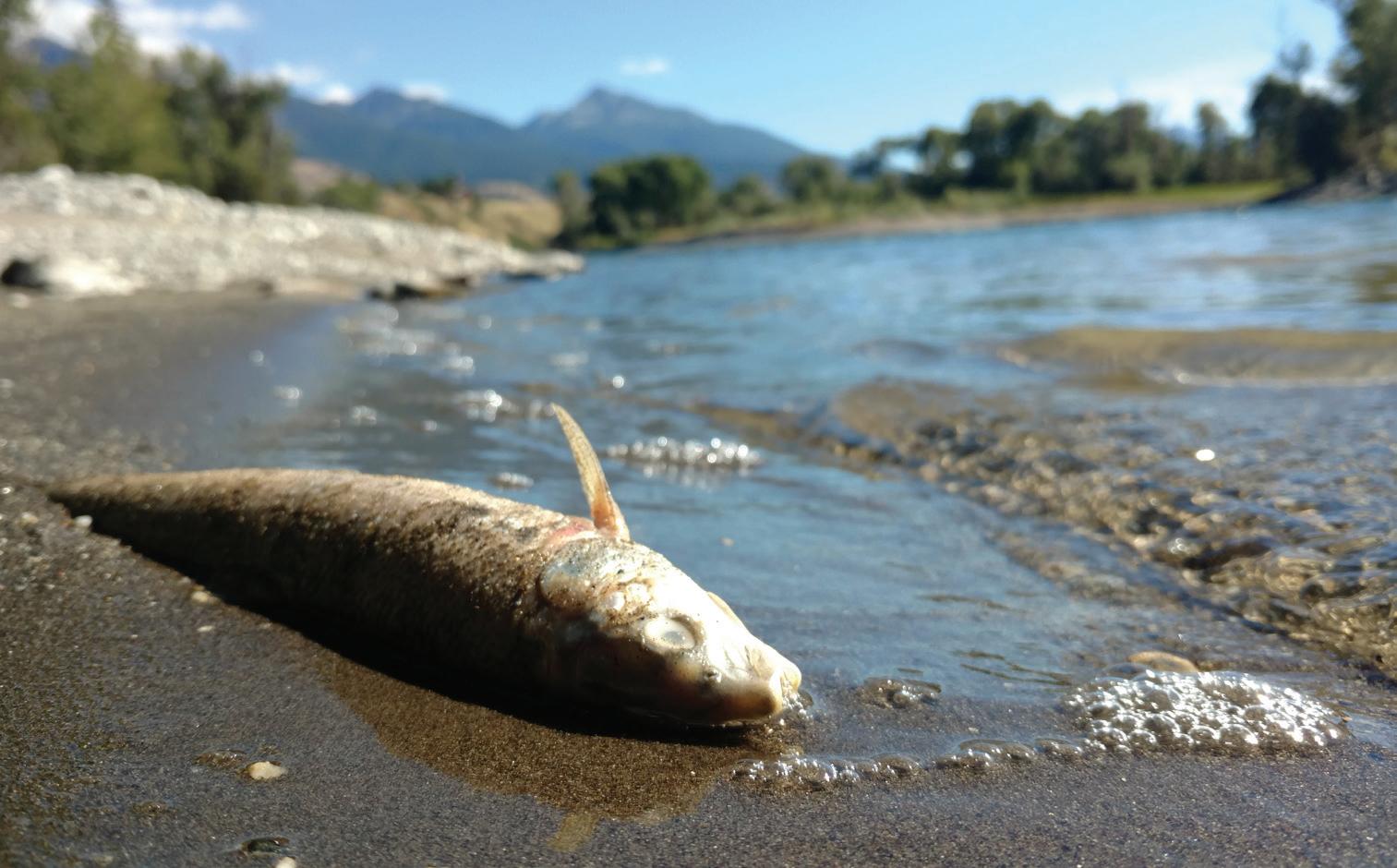
Auden Schendler, Vice President of Environment and Sustainability, Aspen Snowmass and board President of Protect Our Winters
Photo by Jeremy Swanson
Ski areas along the Rockies, including Snowbowl in Arizona; Keystone, Breckinridge and Copper Mountain in Colorado; and Grand Targhee in
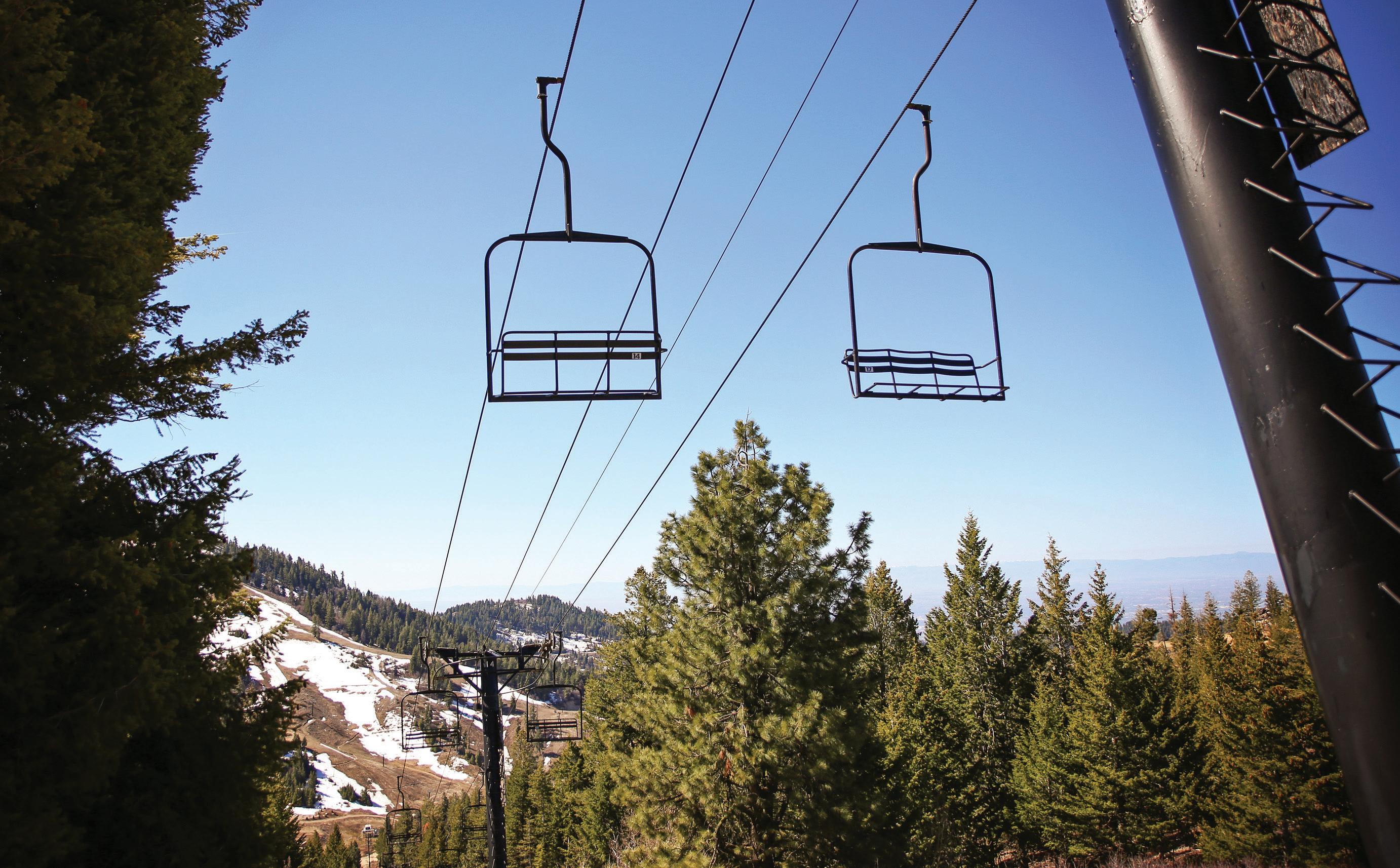
Montana alone, outdoor recreation generates $5.8 billion in consumer spending, $1.5 billion of which flows as employee wages to 64,400 jobs. It is responsible for more than $400 million annually in local and state taxes, which fund schools and other essential services.
Warning bells have been sounding. In 2006, climatologist James Hansen, now retired from his high-profile job with NASA’s Goddard Institute for Space Studies and Columbia University’s Earth Institute, said carbon-intensive business-as-usual would be a “guarantee of global and regional disasters.”
A growing group of business people and prominent outdoor folk, from Metcalf to Yvon Chouinard of Patagonia and Todd Spaletto of North Face share Schendler’s and Hansen’s contentions. Corroborated by an irrefutable body of scientific evi-
dence, they say human-caused climate change isn’t an abstraction; harbingers can be found everywhere. It’s only a matter of connecting the dots.
Last August, as I was driving to interview coal-industry officials in Gillette, Wyoming—hub of the Powder River Basin—to write a story about the link between the burning of dirty fossil fuels in power plants and greenhouse gasses, more evidence was visible.
Giant plumes of woodsmoke poured into the sky from forest fires burning in Yellowstone National Park, while along U.S. Interstate 90 the Yellowstone River had been abruptly closed to fishing and boating for 180 miles. The catalyst for the shutdown of outdoor recreation: an outbreak of a lethal kidney-destroying disease in thousands of whitefish linked to
warm water and low flows in the Yellowstone.
Dan Vermillion, a Livingston, Montana-based purveyor of global fly-fishing trips and member of the Montana Fish, Wildlilfe and Parks Commission, said scientists whom he consulted blamed it on climate change. From his office in the Yellowstone River town, Vermillion described the closure as a sobering wake-up call for the recreation industry, especially fly fishing, which is a potent engine for the regional economy.
“We’re seeing events happen with a frequency we’ve never experienced before,” he said. “The closure on the Yellowstone was a costly biggie but in fact we’ve been witnessing a rising number of user restrictions occurring on other rivers for half a decade.”
When the Yellowstone River was shut down for three weeks, Vermillion said that business at a fly shop
he once owned in Livingston dropped 95 percent in three days. Later, the same parasitic pathogen that killed the whitefish, proliferative kidney disease, turned up in seven other major trout rivers in and near Greater Yellowstone, renowned globally for its blue-ribbon streams.
Some 40 percent of people who came to Montana in 2016 for fishing did so in Park County, where the Yellowstone River flows out if its eponymous national park. By 2067 as much as 70 percent of prime cold-water mountain habitat for trout could be gone. A recent study carried out by the U.S. Geological Survey showed that trout populations in seven major river basins are already exhibiting signs of stress.
When Vermillion was a boy growing up in Billings, Montana, August was the prime month for fishing. “Now I don’t book in August because of the uncertainly over water. In my world every place we do business—Mongolia, Brazil, the Bahamas, Alaska, British Columbia and Montana—has seen dramatic changes in what used to be considered ‘normal water.’ Fishing seasons were designed around when we had the most stable water conditions but it’s all getting out of whack. You create a negative perception and then people stop coming and pretty soon you have a domino effect caused by changing climate.”
GLOBAL LAND/OCEAN TEMPERATURE INDEX
THE 10 WARMEST YEARS IN THIS 134-YEAR RECORD ALL HAVE OCCURRED SINCE 2000, WITH THE EXCEPTION OF 1998. THE YEAR 2015 RANKS AS THE WARMEST ON RECORD.
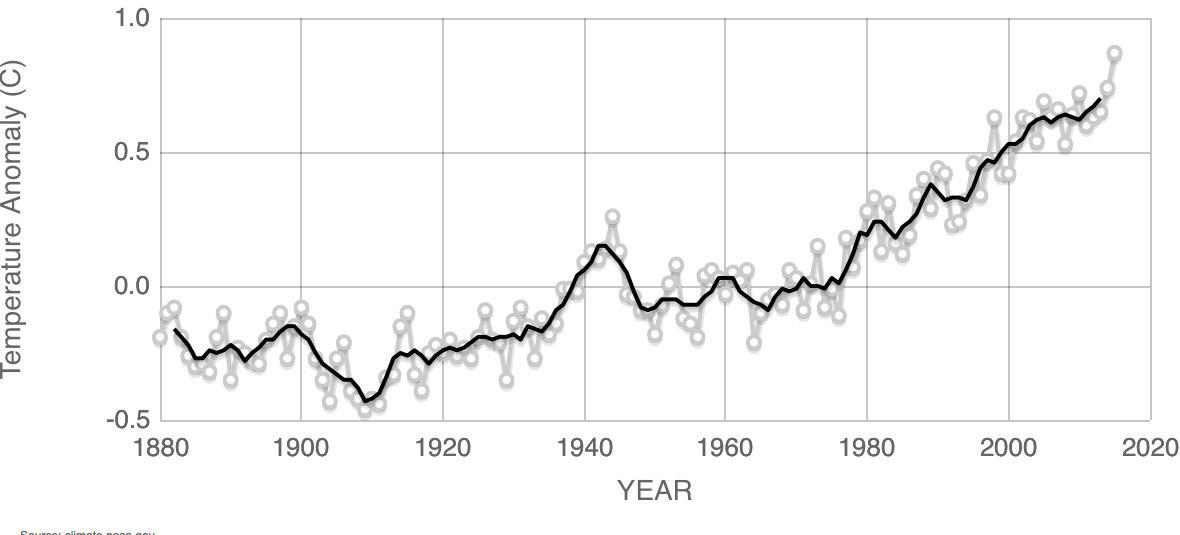
A seemingly small change in average temperature can have big effects, ecologist Mike Tercek noted in a recent special climate change edition of the journal Yellowstone Science. “Scientists predict that we will experience 3 to 8 degrees of warming in the next 100 years. In other words, the planet will experience about as much warming in the next 100 years as it did in the This
8,000 years at the end of the last ice age, but this time it will be 30 to 80 times faster,” he wrote.
Scientists in 2016 published a peer-reviewed assessment in the journal Proceedings of the National Academy of Sciences stating that since 1979, climate change is to blame for half of the drying forests in the West, expanding wildfire areas by 16,000 square miles. In addition, research spelled out in a recent U.S. Department of Agriculture report said that for every couple of degrees the Fahrenheit rises, wildfire areas will quadruple in the West.
Professor Andrew Hansen, who oversees the Biodiversity Lab at Montana State University, was among four lead authors of a new book in 2016, Climate Change in Wildlands, which offers a comprehensive overview of documented impacts and likely consequences for wild ecosystems. He recently elaborated on what it means for the Greater Yellowstone Ecosystem.
According to Hansen, the number of days below zero F in Bozeman averaged 20 during the 1950s, yet 14 in the last decade and is trending toward fewer and fewer. And the decline in snowpack has reduced river flows by about 25 percent in the Yellowstone River since then. Due to the current low flows and warmer water temperatures, summer fishing restrictions are now the norm in rivers.
VANISHING GLACIERS IN GLACIER NATIONAL PARK, MONTANA
AUGUST 17, 1984 - AUGUST 23, 2015
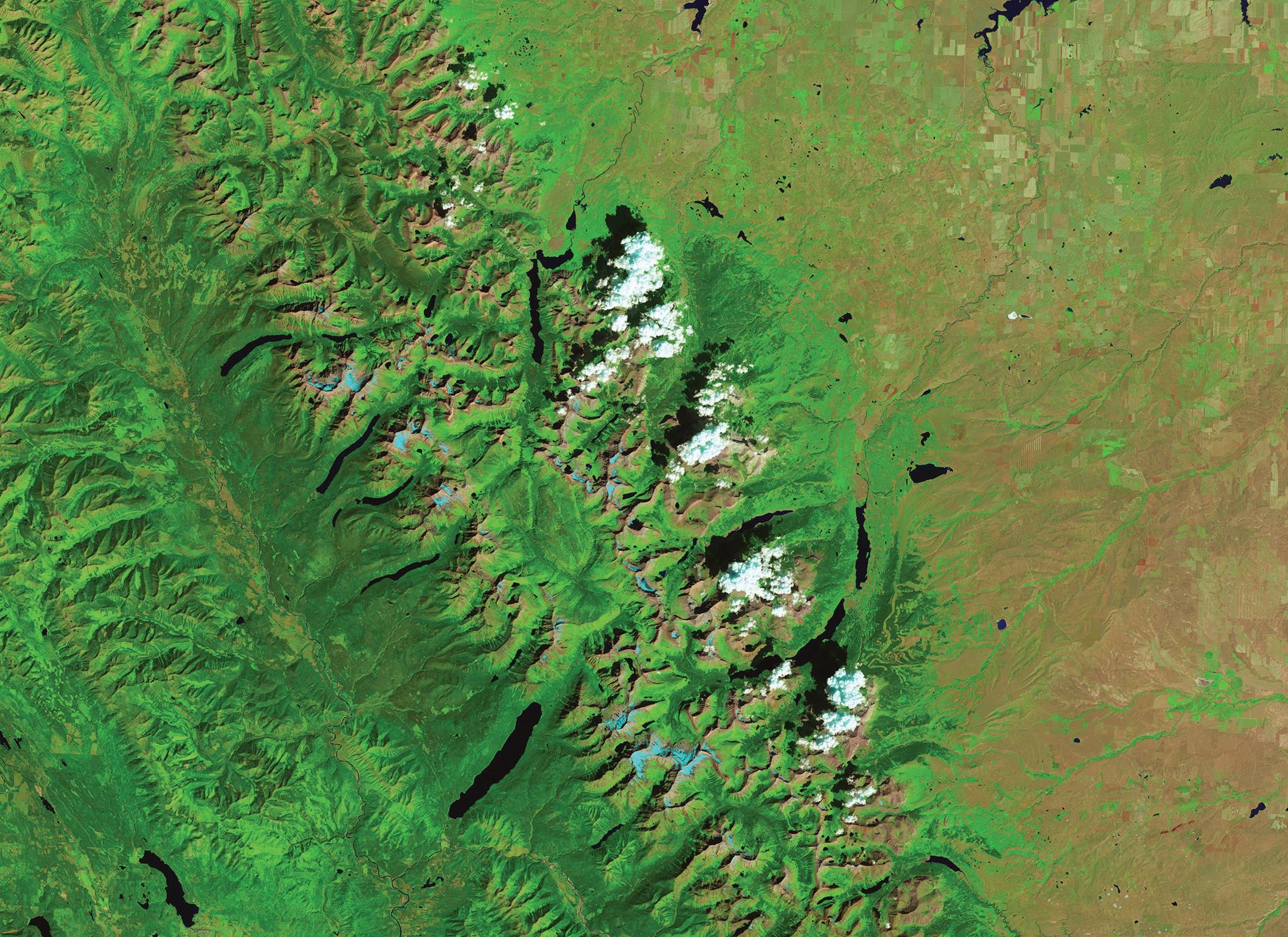
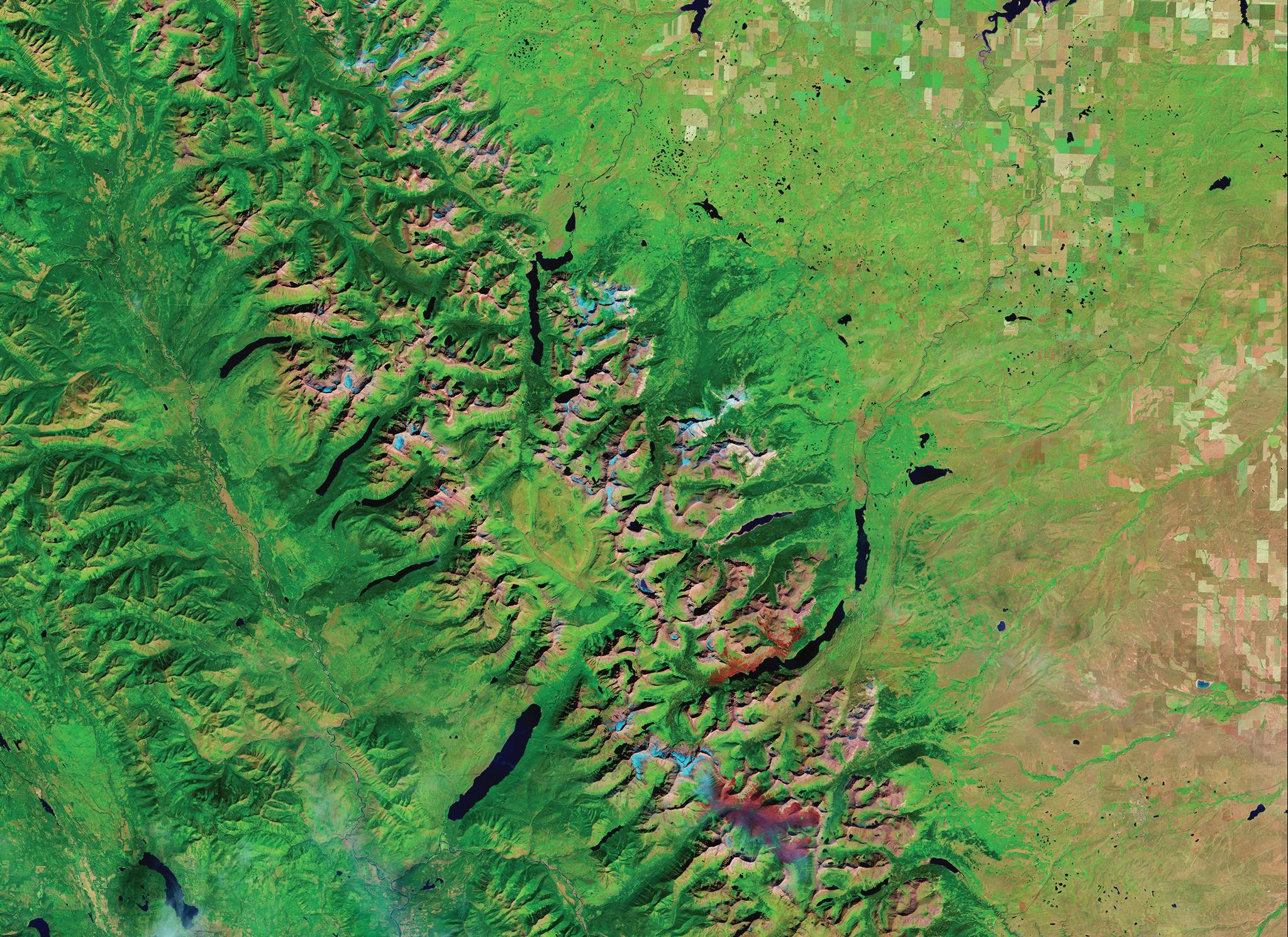
A mountain whitefish lies dead on the banks of the Yellowstone River near Pine Creek Road in Paradise Valley in August 2016.
Photo by Ryan Weaver
“I think the term climate change is more accurate than global warming,” Vermillion says. “Overall, things are warming and over decades that trend will prevail but in the meantime non-typical weather will be more profound, including oddly earlier and later snowstorms.”
Consider October 2016: Nearly 60 inches of white stuff blanketed Jackson Hole Mountain Resort, one of the snowiest in decades. But Professor Steve Running of the University of Montana, who was among a team that shared in winning a Nobel Prize for the science of climate change, says the overall trend is toward a drier interior West in which any potentially higher precipitation levels would be offset by rising temperatures.
Jesse Logan, a retired Forest Service entomologist and national authority on mountain beetle outbreaks, describes the unprecedented scale of insect attacks occurring on western forests. Some 80 percent of whitebark pine trees in Greater Yellowstone are gone from blister rust and epic infestations of mountain pine beetles fueled by warming temperatures that allow them more easily reproduce. Seeds in whitepark pine cones have been an important food source for grizzly bears prior to denning and the collapse of whitebark pine is causing bears to range more widely, increased conflicts with humans and could be resulting in smaller cub litter sizes and rates of reproduction in female bruins, independent wildlife biologist and former bear researcher David Mattson claims.
The evidence is clear, Logan notes. It’s caused by rising average temperatures. But he also points to something even more insidious: snowpack is melting during winter itself. Snowpack has functioned like massive natural reservoirs. Glaciers millennia old are fast winnowing away in Glacier National Park and could be gone in a quarter century. Sooner or later, Logan says, this affects how much recharge is occurring for
natural underground aquifers, which are being pumped faster than they’re being replenished in some valleys with rising human population. “Water is what drives everything in the arid West, from ecology to recreation and, in many ways, our economy,” he says.
The reality is that it’s Mother Nature’s great natural water reservoirs and it’s been the foundation for how the inner West functions ecologically and economically: it’s skiing, fishing and hunting, rafting, fire prevention, irrigated alfalfa for cattle, livestock production, crop harvests, forest health, survival for wildlife and the unquestioned foundation of the multi-billion-dollar agriculture and tourism industries. And it’s the lifeblood of major metro areas like Denver, Phoenix, Las Vegas and Salt Lake City. Literally, the impact of climate trickles down from snowpack in profound ways—mountain summits to the shops on Main Street in the New West. “We blindly assume that snowpack will always be there,” Schendler said.
The altered West of 2067 that he described will be the result of steady incremental changes: rising average temperatures, milding winters, heat outpacing precipitation and “unusual weather” that disrupts the order of things.
Snow levels are retreating up mountains and for ski areas in the Rockies to remain economically viable, they will have to move lifts and snowmaking above their current base operations. Even then, they will struggle as climate change devastates skiing found at lower elevations such as in New England; skiing conditions in the Sierra and Wasatch will in decades to come no longer be reliable.
The greatest enabler of the ski industry’s rise hasn’t just been putting capacity into terrain, but climate—having predictable, reliable weather as the basis of a for-profit model. But that’s changing. Schendler says other areas of the
country have been the training grounds for skiers coming to the Rockies—from New England to the Midwest and California where millions of people have been introduced to skiing. But without winters they will no longer be feeder venues, meaning revenue for Rocky Mountain resorts will tumble.
“We are already watching the decline of coastal, drive-market ski resorts. And this is where future Western skiers cut their teeth,” Schendler says, noting that recruitment of younger skiers is not keeping up with the aging ski population.
“This is a crisis of our own creation that will not go away on its own,” wrote a panel of authors who completed a report on climate change, titled Unnatural Disaster, for the National Parks Conservation Association. “It will require decisive action to reduce greenhouse gas emissions through conservation and development of carbon-free power sources. There is growing scientific consensus that greenhouse gas emissions will need to fall by at least 80 percent below 1990 levels by 2050 to avoid some of the most catastrophic effects of climate change.”
The question is: how do we do it? Apart from phasing out old coal-fired power plants, regulating methane emissions and shifting to more renewable fuels, humans must change their attitudes, experts say. “We are bearing witness to a catastrophe,” Metcalf warns. “In light of the profound, uncomfortable, and challenging truths and policy implications we have to come to grips with, incrementalism will not suffice. It’s a delusion being reinforced by a well-funded fossil fuel industry to distort the science. What we need demands leadership, guts and a forward-looking attitude that goes deeper than what’s convenient for us in the immediate now.”
After I returned from Gillette, Wyoming, Yvon
Chouinard, co-founder of the clothing manufacturer Patagonia, was passing through Bozeman. He doubts that affluent Americans are willing to inconvenience themselves with necessary lifestyle modifications to confront climate change. He said humans narcissistically deflect and point fingers but we never reflect on our impacts or hold ourselves accountable. Those who consume the most resources ought to be vilified, not held up as role models. “We’re self-centered consumers not citizens concerned about a greater good,” Chouinard said. “We’re electing people who are actually voting against our survival. It’s just like being an alcoholic and being in denial that you’re an alcoholic. And until we face up to that, nothing’s going to happen.” He has made elevating awareness of climate change a major focus of Patagonia’s marketing.
The ski industry, by striving to be carbon neutral, can reduce its fossil fuel footprint, Schendler says. But equally as valuable is the message it sends to society, namely that recreationists need to stop behaving apathetically. Skiing isn’t cheap to maintain. Adherents who own second homes in the vicinity of mountain towns live luxurious, influential lives. They can cut down on their own energy use, set an example for others, and call on political leaders they know to take action. Before any shift can occur, especially one that results in carbon reduction occurring on a large scale, the collective mindset must stop its denial.
One profound irony of dwelling today in a “post-fact” era, in which the credibility of science is under siege by fossil fuel industries trying to discredit it, is that science has been a north star for the ski industry. The very same scientific experts responsible for weather predictions, which have given the ski industry a framework for constructing successful business models, say the evidence of climate change is overwhelming.
The National Academy of Sciences, the gold standard in science, has refuted arguments advanced by climate change deniers. NAS was on the leading edge of confirming that smoking
Solitary captions: A vacant administrative segregation, or “ad seg” cell in the Mon-

America’s correctional institutions are rethinking the use of solitary confinement. In Montana, moving prisoners out of isolation presents challenges.
BY JOHN S. ADAMS
PHOTOS BY WES OVERVOLD
Isolation Nation
The nation’s correctional institutions are rethinking the use of solitary confinement. In Montana, moving prisoners out of isolation presents challenges.
By John S. Adams
Melanie Sanchez unlocks the padlock securing a barred metal door on what looks like a small, stucco toolshed.
Rusted on its hinges, the heavy door resists as if it doesn’t want to spill its secrets. “Nobody’s been down here in years,” Sanchez explains.
This solid gate guards the entrance to what is now considered a taboo form of prisoner punishment, even for the most dangerous of inmates. Behind the door a dark, forbidding staircase leads into what can only be described as a dungeon.
We’re at the old Montana State Prison in Deer Lodge, Montana, and if you’ve ever seen The Shawshank Redemption, or taken a tour of Alcatraz, you understand what this place looks like.
In 1979, the last remaining prisoners of this castle-like compound were shipped a few miles south of town to a new prison facility in the foothills of the Flint Creek Range. The old prison, which opened in 1871 when Montana was still a territory, is virtually untouched since its retirement from official business. It now serves as a museum, and offers a glimpse into the evolution of correctional thinking over the past 14 decades or so.
One by one, flashlights in hand, we descend into this underground isolation chamber known as “the hole” to the inmates who once occupied this grim facility. It’s where a 26-year-old burglar
and car thief named Larry Cheadle mysteriously perished on the dirt floor of one of these pitchblack cells on October 31, 1966.
The hole, as reported in a 1968 Associated Press newspaper article about Cheadle’s mysterious death, is “a complex of three unlighted cells beneath a prison building. Steam pipes ran through it. The furnishings were a mattress and a bucket of water.”
Our tour guide, Sanchez, says prisoners kept in these 7-foot square, white stucco rooms were also afforded a wool blanket and a bucket for excrement. Prisoners in the hole received a cup of water and a slice of bread three times a day.
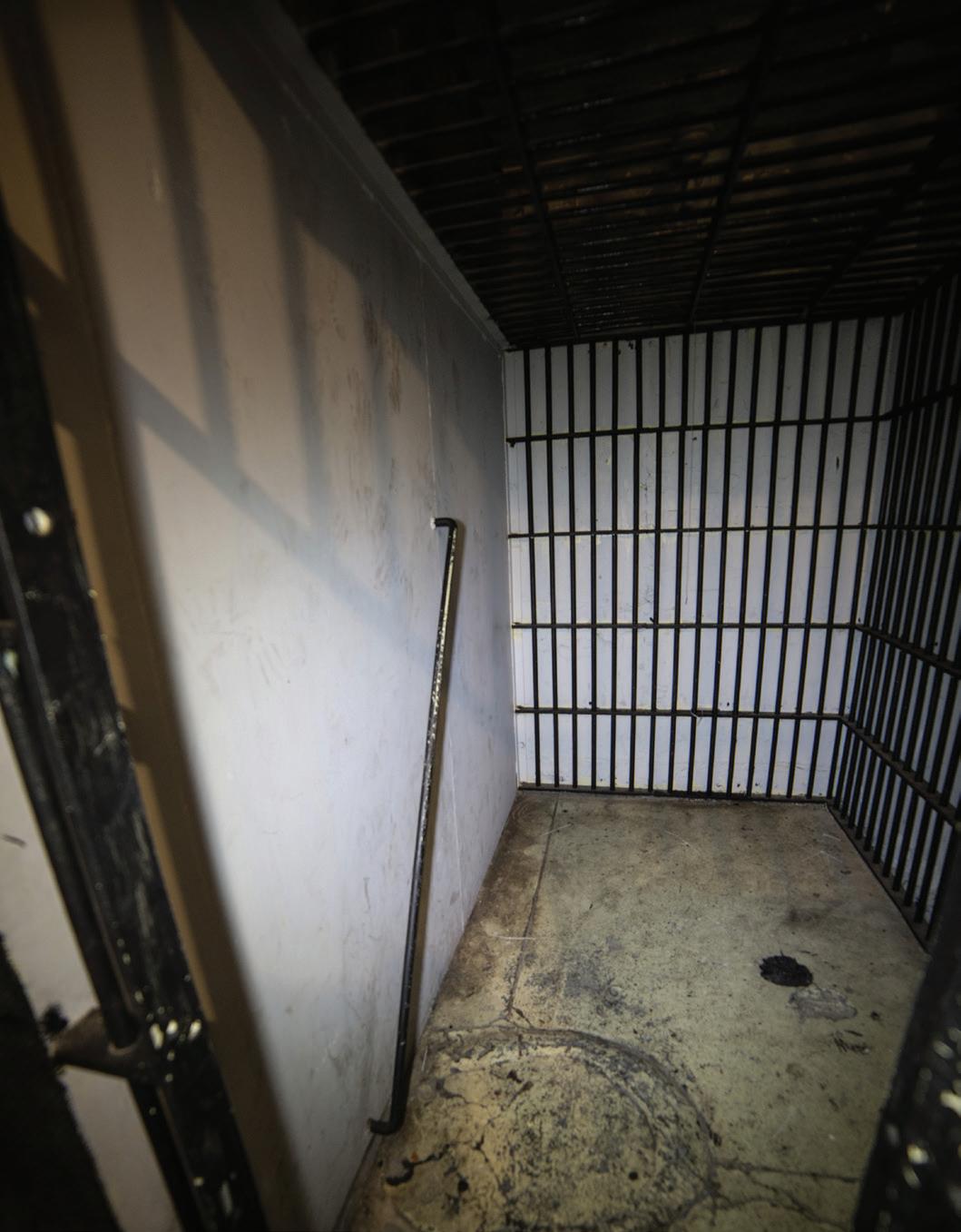
tana State Prison’s Locked Housing Unit 2, used to isolate dangerous or unruly prisoners.
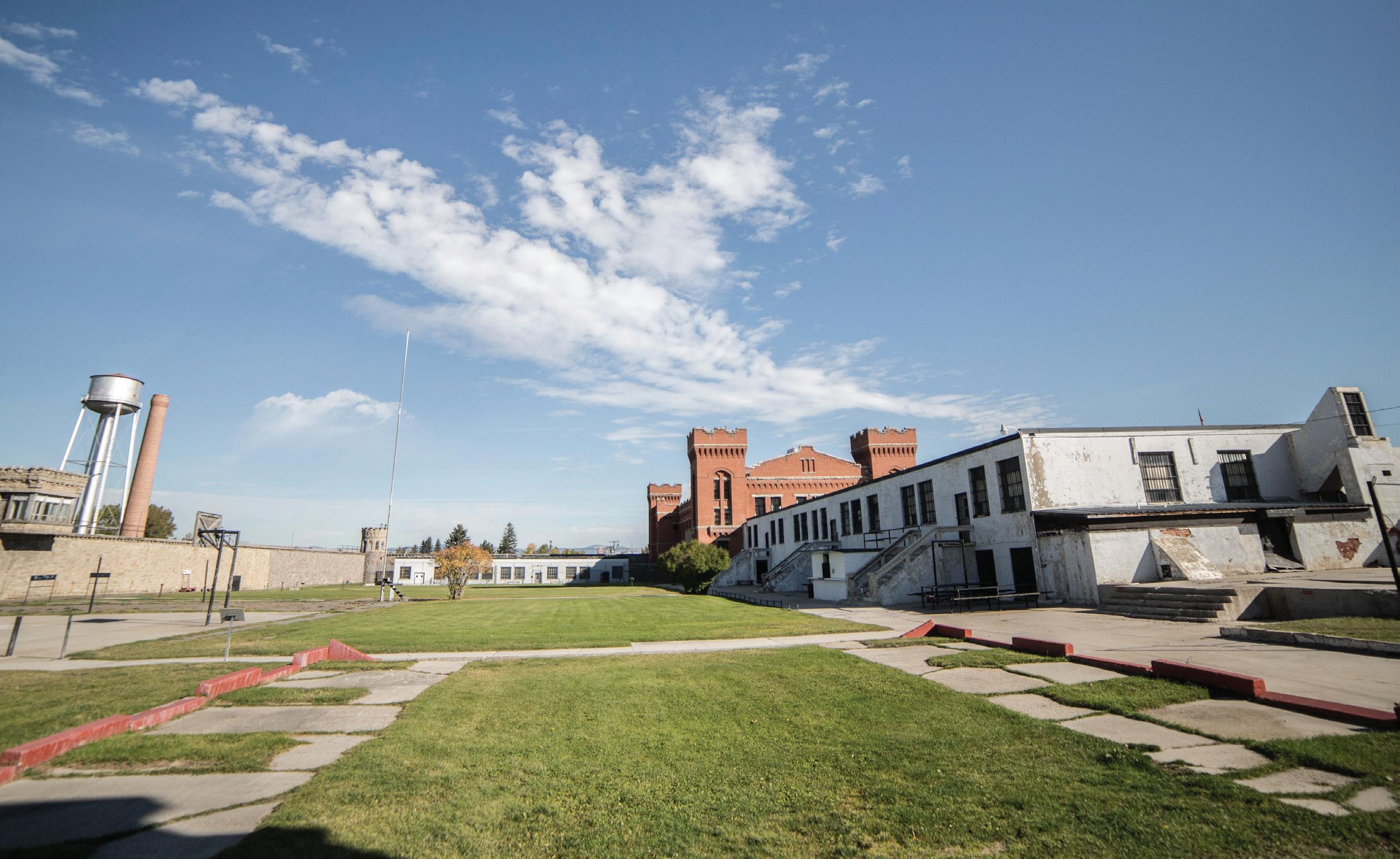
“Every third day they got a hot meal,” Sanchez says. “And every 10 days a doctor would check in on them.”
The prison stopped using the subterranean dungeon after Cheadle died here under mysterious circumstances – allegedly from heart failure – but his death and the apparent cover-up by prison officials touched off a furor in Montana. Cheadle’s mother sued the state and five prison officials for wrongful death and a violation of her son’s civil rights.
In a 1968 editorial the Helena Independent Record newspaper wrote, “ … the public has a right to know whether its prison is being used to punish inmates in an 18th century manner or whether it is seeking to rehabilitate them in the 20th century manner.”
While today’s correctional facilities are nowhere near as barbaric as “the hole,” in Montana and throughout the nation human rights groups and corrections officials are at loggerheads over the
The Old Montana State Prison employed solitary confinement units like this one
merits of isolating dangerous or unruly prisoners. What those in
the correctional community view as a continuum of maximum-security lockdown, those in the human rights camp commonly label as solitary confinement.
When the average person hears the term “solitary confinement,” an image of something not unlike the hole at the old Montana State Prison jumps to mind. It’s the stuff of Hollywood movies, but those images are rooted in reality.
After all, it wasn’t all that long ago that especially unmanageable or violent prisoners at the old prison were stripped naked and handcuffed to metal rails in “slide rail cells” or locked in pitchblack, soundproof metal boxes and left alone for weeks or months. Right up until the old state
ADMINISTRATIVE SEGREGATION CELL
prison closed in 1979, some of those seemingly medieval techniques were still in practice, according to Sanchez.
Today’s corrections officials, such as Montana State Prison Warden Leroy Kirkegard, say the corrections community has moved beyond such inhumane treatment of prisoners. “From my perspective, solitary confinement is something you’ll see at the old prison: the old, dank, dark dungeons with the hole in the floor … it has no place in modern correctional philosophy,” Kirkegard says during a recent visit to the “new” 68-acre Montana State Prison compound, which opened a few years before the old prison officially closed for good, and houses some 1,440 inmates.
Warden Kirkegard, 56, is a barrel-chested, imposing figure with a neatly groomed silver beard and balding, closed-cropped
WE TRY EVERYTHING WE CAN TO KEEP THEM OUT OF THERE. BUT SOME PEOPLE HAVE BEEN THERE A LONG TIME AND THEY’RE GOING TO BE THERE A LONG TIME.
-WARDEN KIRKEGARD
hair to match. He’s a Montana native who spent nearly 20 years of his professional life working as a correctional officer in Las Vegas before returning to his home state in 2011 as warden of the state-run men’s prison. In his beige suit and opened-collared white dress shirt, Kirkegard’s hard gaze and thin-lipped expression give the appearance of a man with little patience for bullshit.
However, Kirkegard’s imposing physical presence is offset by a grandfatherly affectation and friendly sincerity. He says he’s a nice guy whose tendency is to trust people, but his eyes tell you not to betray that trust.
featuring a “slide rail” to which guards would cuff stripped-down inmates.
Kirkegard walks us through the
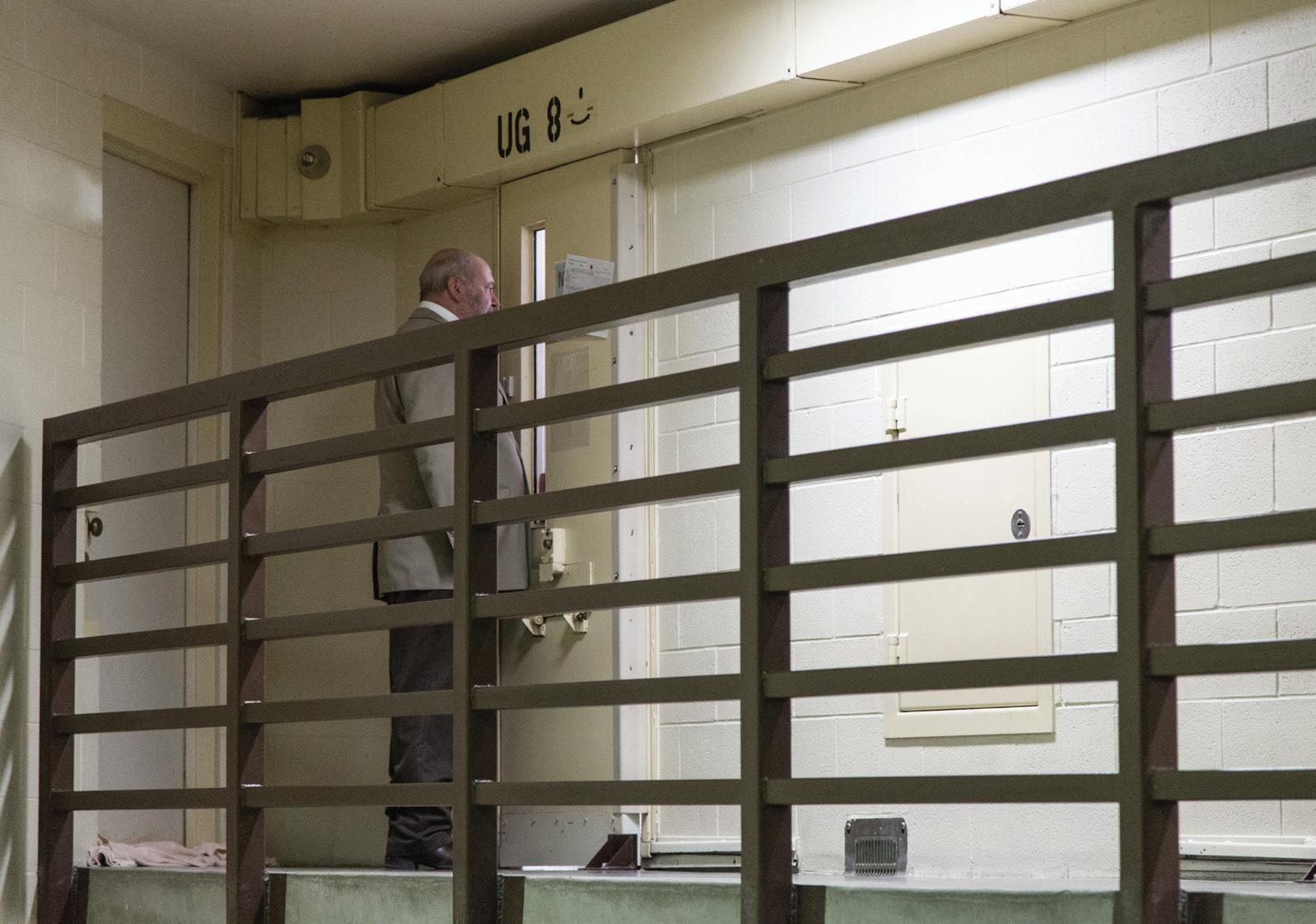
Montana State Prison grounds with the air of a tour guide. Our small party includes Kirkegard, a Montana Department of Corrections attorney, and a public relations official. As we walk, unguarded, from the prison administration building to the maximum-security unit where offenders are held in “administrative segregation,” the warden explains the layout of the facility as guards “keep an eye on us” from the towers above.
On one side of a tall, chain-link fence topped with razor wire is the area of the prison known as “low side,” housing prisoners who don’t pose a serious threat to each other or prison staff. On the other side of that fence is “high side.” That’s where the more dangerous or unruly inmates are kept under more restrictive custody.
We’re heading to the far end of the facility and its two “locked housing” units, maximum-security areas where prisoners are mostly isolated from each other in individual cells. The unit we’re about to tour on a late-September afternoon is Locked Housing Unit 2, which on this day has 52 inmates confined within six separate cell blocks.
hitchhiking.
1,440
MONTANA STATE PRISON HOUSES APPROXIMATELY INMATES
According to MSP policy, locked housing “is the primary resource for housing inmates who are unmanageable, present a threat to others or themselves, or who for other reasons require removal from the general inmate population.” Kirkegard says this unit of six custody blocks is used for “administrative segregation,” and “prehearing confinement,” two forms of isolated housing he says are necessary, but a far cry from the hole.
52 INMATES ARE IN LOCKED HOUSING UNITS (as of October 2015)
MORE THAN
80,000
Locked Housing Unit 2 is where Montana’s two death row inmates, William Jay Gollehon and Ronald Allen Smith, count their remaining days on earth. Gollehon was sentenced to death in 1992 for the beating death of a fellow inmate in 1990. Smith, the only Canadian on death row in the U.S., earned a trip to the execution chamber in 1983 for murdering Harvey Mad Man and Thomas Running Rabbit, cousins from the nearby Blackfeet Indian Reservation, after they picked him up while he was
PRISONERS IN THE U.S. ARE IN SOME FORM OF ISOLATED CONFINEMENT*
Administrative segregation is partly used as punishment, and partly as a safety precaution. Prisoners start their stint in administrative segregation, or “ad seg,” with little more than the clothes on their backs. Over time good behavior can earn back basic privileges, such as time out of the cell in the “day room,” phone calls, and possession of books or magazines.
Prehearing confinement is much the same but used to isolate prisoners for a period of time – up to two weeks – prior to in-prison hearings to evaluate their offense then dole out the punishment.
Each bed in these 8-foot by 10-foot cells is a concrete slab with a 3-inch-thick mattress. Another concrete slab serves as a desk; a sink and toilet are in the corner, next to the door.
The grounds inside the Old Montana State Prison, which ceased operation in 1979, located in Deer Lodge, approximately five miles east of the current facility.
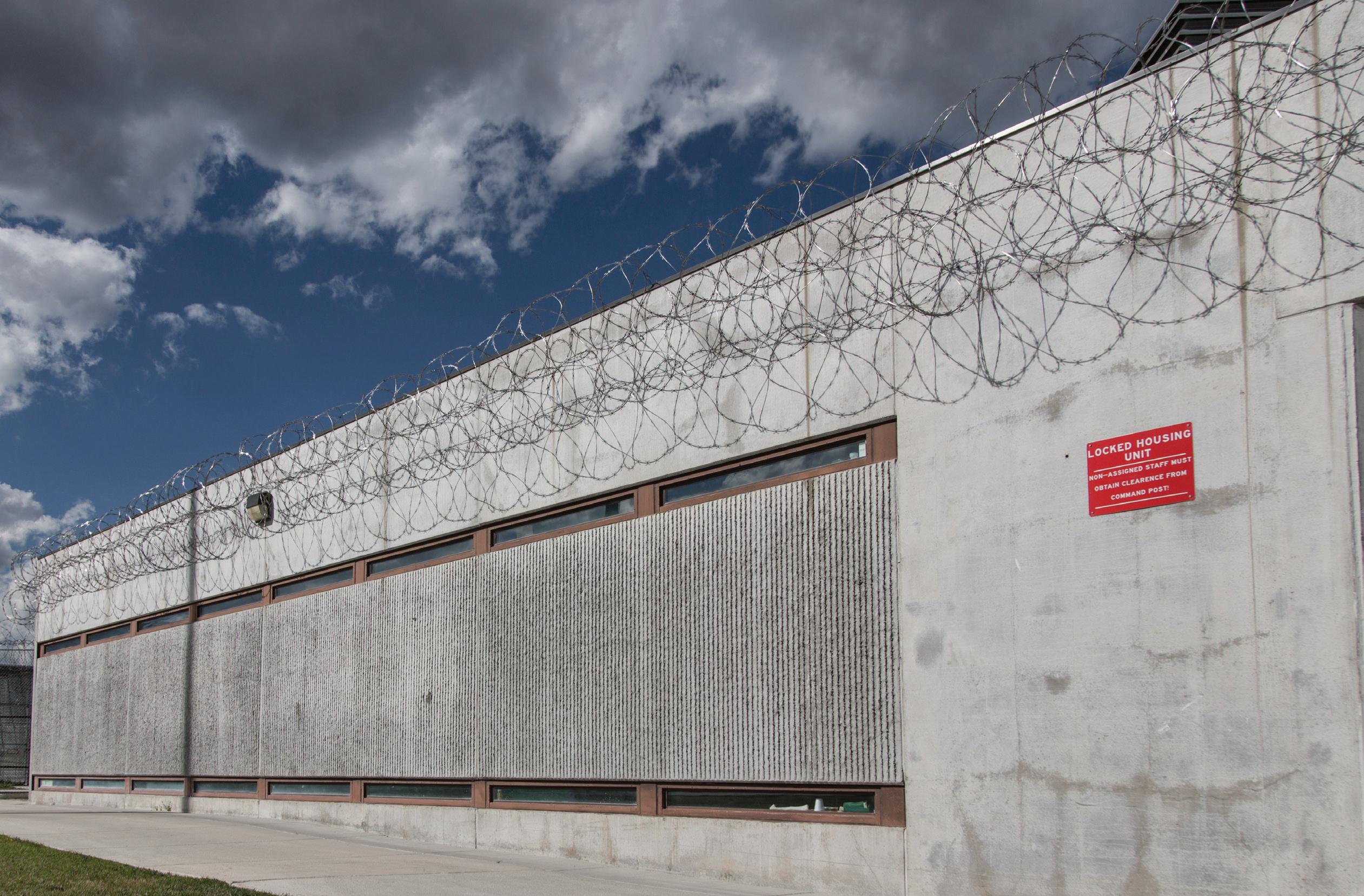
Hooks were once attached to the cinderblock walls, explains unit manager Scott Clark, but prison officials ordered them removed after some inmates tied bedding to the hooks and tried to hang themselves.
Inmates held in administrative segregation are allowed out of their cells three times a week for showers and five times a week for an hour in the rec yard, according to prison policy. In some less restrictive lockdown units, prisoners can interact with other inmates outside the confines of their cells. Prisoners held in more restrictive lockdown are never free to interact with others, except for whatever communications they can manage through air ducts, or by yelling through the slot of their heavy, steel cell doors.
“People have to earn their way into administrative segregation,” Kirkegard says. “We try
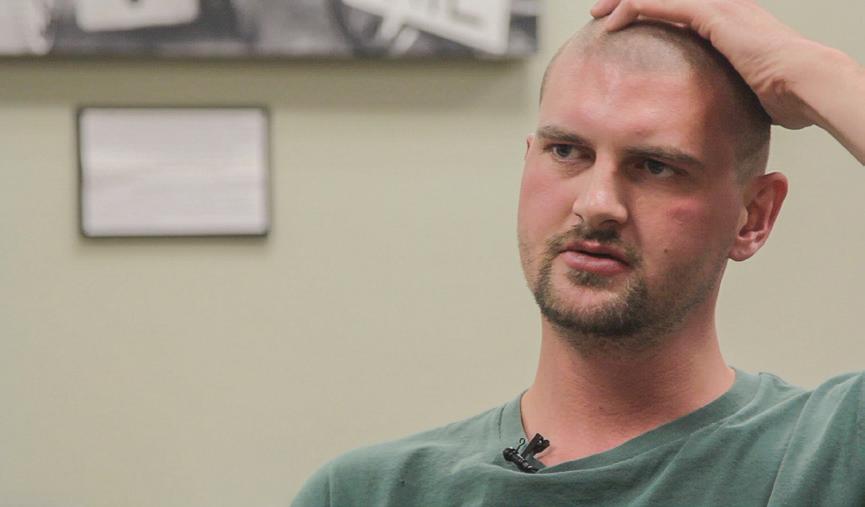
everything we can to keep them out of there. But some people have been there a long time and they’re going to be there a long time.”
Ad seg is a tool the prison must use when dealing with the most violent, most dangerous or otherwise severely out-of-control inmates, according to Kirkegard. “If I had perfect inmates here who came in and did their time, we wouldn’t have to have any of this. But unfortunately I don’t,” he says.
This is the area of the Montana State Prison human rights advocates have a problem with. To them, the difference between “solitary confine-
ment” and “administrative segregation,” “supermax,” or “lock-down,” is a matter of semantics. These cells are designed to isolate prisoners from human contact and cut them off from the world. That, the activists say, amounts to torture.
Dr. Terry Kupers is a psychiatry professor at The Wright Institute, a clinical psychology graduate school in Berkeley, California. Kupers has interviewed thousands of isolated prisoners over the past four decades, and written extensively on the effects solitary confinement has on inmates’ mental health.
Kupers is familiar with the Montana State Prison’s isolation policies in part because he served as an expert witness in a 2009 lawsuit filed by the American Civil Liberties Union of Montana on behalf of a mentally ill teenage boy named Raistlen Katka, who spent more than a year in solitary confinement at MSP. Katka twice attempted suicide in isolation by biting through the skin on his wrist to puncture a vein.
“My thought process was if I don’t die, at least I’ll get out of my cell for 30 seconds,” Katka testified in court, according to a 2010 Billings Gazette newspaper article about the case.
“It is predictable that prisoners’ mental state deteriorates in isolation,” said Kupers in a recent email interview. “Human beings require at least some social interaction and productive activities to establish and sustain a sense of identity and to maintain a grasp on reality. In the absence of social interactions, unrealistic ruminations and beliefs cannot be tested in conversation with others, so they build up inside and are transformed into unfocused and irrational thoughts.”
Kupers says it’s common for disorganized behaviors to soon emerge in isolated prisoners. Their internal impulses tied to anger, fear and other strong emotions grow to “overwhelming proportions.”
Warden Kirkegard denies that prisoners at MSP are ever subjected to total isolation. “We don’t cut people off completely,” Kirkegard says. “They interact daily with staff; they interact with medical; they interact with mental health. They interact with each other.”
Kupers maintains that while the sensory deprivation may not be total, the intermittent slamming of steel doors, yelling, and other noises do not constitute meaningful human communication. “Prisoners in this kind of segregation do what they can to cope,” Kupers says.
Some prisoners relentlessly pace around their cells and do pushups to try to relieve emotional tension. Those who are allowed books, paper and writing utensils read and write letters. Kupers says the tendency to suffer psychiatric breakdown and become suicidal is made even worse by sleep deprivation, which is a frequent occurrence among isolated prisoners.
“There are noises at night as other prisoners, for example those suffering from serious mental illness, cry out … officers yell out orders on the unit. Then, the lights are likely on all night,” Kupers says.
8-19% prisoners held in isolation have some form of mental illness*
of U.S. prisoners have psychiatric disorders “that result in significant functional disabilities”*
1 in 3
*ACCORDING TO ESTIMATES BY THE NATIONAL ALLIANCE FOR THE MENTALLY ILL
That lack of sleep intensifies psychiatric symptoms, according to Kupers, by interfering with the normal diurnal rhythm – the steady alternation of day and night that orients human beings with time – and the resulting sleep loss creates fatigue and magnifies cognitive
Warden Leroy Kirkegard speaks through the ad seg door with death row inmate William Jay Gollehon in September 2015.
Leroy McKelvey, former Montana State Prison ad seg inmate, during a September 2015 inter-
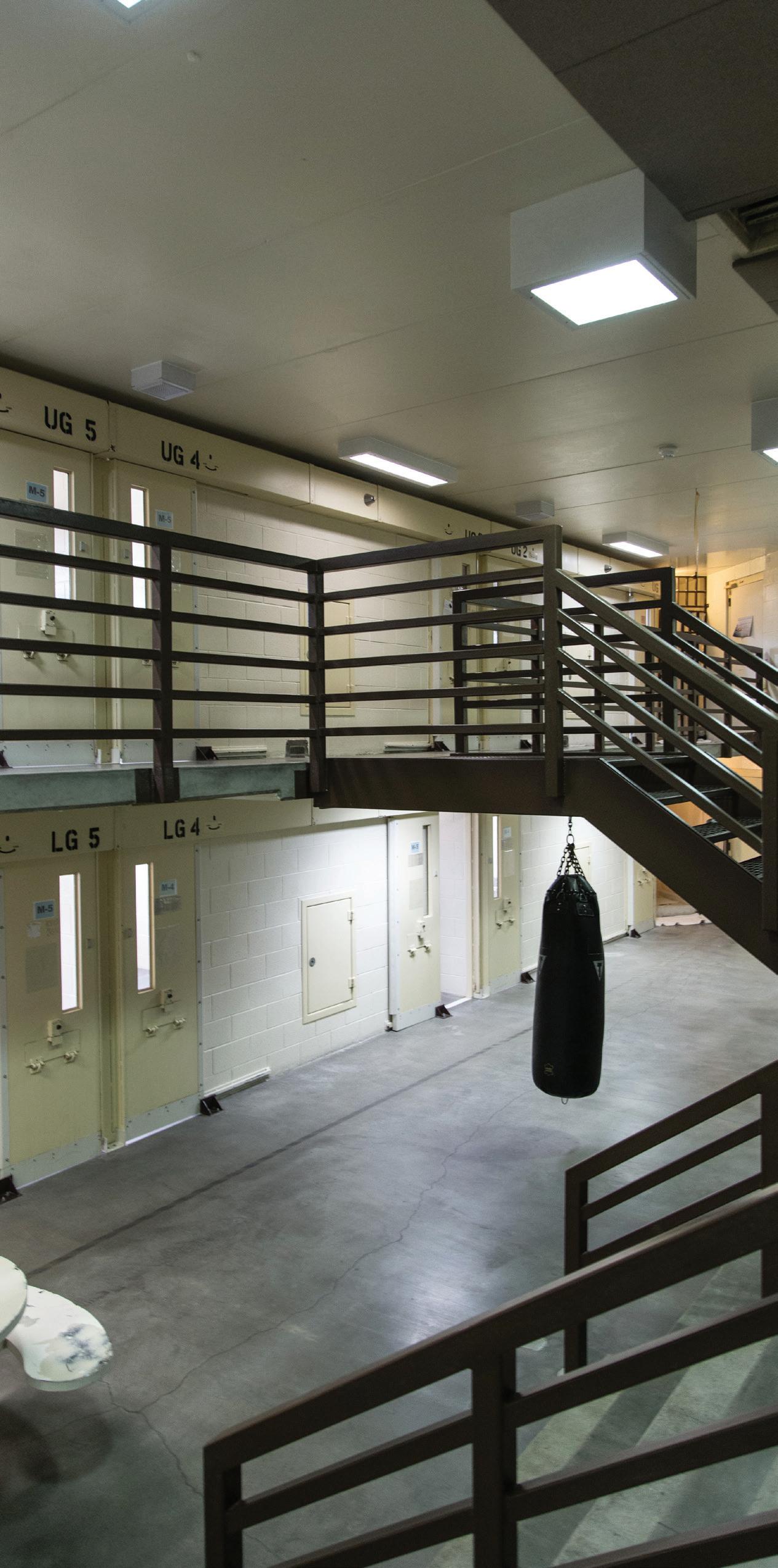
“MY THOUGHT PROCESS WAS, ‘IF I DON’T DIE, AT LEAST I’LL GET OUT OF MY CELL FOR 30 SECONDS,’”...
-RAISTLEN KATKA, FORMER MSP INMATE
problems, memory deficits, confusion, anxiety, and sluggishness.
“It is under these extreme conditions that psychiatric symptoms begin to emerge in previously healthy prisoners,” Kupers says. “Of course, in less healthy ones – and a majority of jail inmates suffer from or are prone to mental illness – there is psychosis, mania or compulsive acts of selfabuse or suicide.”
Former Montana State Prison inmate Leroy McKelvey did not cope well during his stint in “ad seg” isolation. McKelvey, 32, was convicted in 2008 of aggravated assault but found by the court to be mentally ill. He was first admitted to the Montana State Hospital in Warm Springs in January 2009 and was eventually released, but a probation violation landed him back in the state’s only psychiatric hospital in May 2012.
McKelvey has myriad mental health diagnoses ranging from schizoaffective disorder, to post-traumatic stress disorder, to antisocial personality disorder. He also suffers from drug and alcohol dependency and a host of other physical ailments and mental health issues. According to his health records, he was hospitalized more than 10 times for psychiatric conditions prior to his readmission to the state hospital in 2012.
At 5-foot 9-inches with buzz-cut hair and a short brown goatee, McKelvey is affable and recalls certain details with amazing clarity, but he’s also jumpy and doesn’t tend to hold eye contact for long. He’s proud that he has a handle on his mental illness, is holding a steady job, and is engaged to his girlfriend, who he met in a mental
health group home. On this fall day he’s raising money for a fundraising walk to benefit the Montana chapter of the National Alliance on Mental Illness.
McKelvey talks easily and openly about prison life. Remembering his “house” – or prison cell – on low side, he speaks almost fondly about work activities and prison shenanigans he and other inmates took part in.
SEGREGATION SHOULD BE UTILIZED RELATIVELY RARELY, AND ONLY WHEN LESS RESTRICTIVE AND POTENTIALLY DAMAGING ALTERNATIVES HAVE BEEN TRIED AND EXHAUSTED...
-DR. TERRY KUPERS
But when he describes the July 16, 2012 episode that landed him in pre-hearing confinement, and the events that followed, his mood becomes serious. McKelvey’s gaze hardens, his eye contact more consistent, and he responds to questions with short, direct answers the way a trained soldier might address his commanding officer.
In fact, McKelvey served tours in Iraq and Afghanistan as a U.S. Marine, he says, and according to his own account was dishonorably discharged after assaulting his commanding officer.
McKelvey says while in prison a PTSD flashback from his military days – a painful memory of watching two close buddies die in combat – sent him into a violent rage that July day in MSP. He began beating his mattress, believing it was his former commanding officer, the man he blamed for the death of his comrades.
When prison guards arrived at his cell and ordered him to “cuff up,” McKelvey refused and was physically restrained and extricated from his cell. “You can go peacefully, or you can defy orders and they’ll give you a nice shot of OC [pepper] spray,” McKelvey recalls.
That incident landed McKelvey in pre-hearing confinement, he says, which turned into stints in isolation. Here, McKelvey’s mental state rapidly
deteriorated. He threatened to kill the prison psychologist. By Oct. 31, 2012, he was referred back to the Montana State Hospital.
According to his re-admission evaluation at the hospital, “Mr. McKelvey had become unmanageable in the past few months… in the prison setting despite involuntary medication administration and maximum security placement for an assortment of out-of-control behaviors including not eating and losing weight, unable/unwilling to communicate rationally, disrobing, urinating on the floor, smearing feces, crawling in the toilet, angry/belligerent/demanding/entitled/threatening outbursts, and manipulative and drug-seeking behaviors.”
McKelvey says he begged mental health staff for anti-psychotic medications to treat his mental illnesses, but former prison staff psychiatrist Peter Edwards – who oversaw McKelvey’s mental health treatment at the time – noted that he believed McKelvey exhibited drug-seeking behavior and was “malingering,” or faking mental illness to get out of isolation.
The former inmate doesn’t recall much about his time in solitary. “I remember there was feces on the floor, toilet paper … supposedly I was eating toilet paper… I guess when I threw out toilet paper and shit, I guess I thought I was creating a new universe, which is weird,” McKelvey says with an embarrassed laugh. “I was always trying to cover my floor with my Barney Rubble suit and call it my carpet. I don’t remember getting any sleep. I thought I seen Hitler in there.”
“Barney Rubble suit” is the name prisoners use to refer to smocks worn by suicidal inmates which resemble the outfit worn by the The Flintstones cartoon character.
McKelvey says since he was on a behavioral management plan, he was fed a “food loaf,” which he described as being made of “raisins, carrots, and nasty-ass bread stuff.” He says he was so constipated from the food loaf and water diet that at one point he tried pulling feces out of his anus with his fingers. “The guards, you know, they just laughed about it,” McKelvey says.
Prison officials declined to discuss McKelvey’s case.
When an average individual is placed in isolated confinement, he will develop massive free-floating anxiety, hyper-responsiveness, paranoid ideas, confusion, perceptual distortions, and psychomotor excitement and become frightened, says Kupers of The Wright Institute.
And those are the widely reported symptoms experienced by relatively stable prisoners in isolation, Kupers says. “Just imagine how difficult it would be for someone who is prone to paranoid psychosis or suicidal despair to remain balanced.”
long histories of mental illnesses, and punishing mentally ill inmates for behavior caused by their mental illness.
According to DRM’s investigation and lawsuit, prisoners with mental illnesses were routinely subjected to months or years of solitary confinement and “behavior modification plans” that deprived them of clothing, working toilets, bedding and proper food, which only exacerbated their illness and caused needless suffering. “It’s torture. It’s inhumane,” says DRM Executive Director Bernadette Franks-Ongoy.
EACH PRISONER IN SOLITARY COSTS TAXPAYERS ANNUALLY
$75,000
$25,000
AS COMPARED TO A YEAR FOR AN INMATE IN GENERAL POPULATION*
Disability Rights Montana is a federally mandated civil-rights watchdog and advocacy organization based in Helena, Montana, and is the lead plaintiff in a pair of federal lawsuits against the Montana Department of Corrections and the Department of Public Health and Human Services. The complaints center on a practice of shipping guilty-but-mentally-ill patients from the state mental hospital in Warm Springs to the state prison in Deer Lodge without giving those patients due process.
The lawsuit against the Montana State Prison alleges the prison is guilty of a pattern of withholding medication, misdiagnosing prisoners with
If Kirkegard is a warden straight out of central casting, then Franks-Ongoy could play a middle school librarian. She has short, salt-and-pepper hair and wears dark, square-rimmed glasses. She smiles easily when she talks, but her friendly demeanor belies a fiery passion fueling her advocacy on behalf of people with disabilities.
Franks-Ongoy says DRM doesn’t typically get involved in prison litigation because such lawsuits tend to diminish an advocacy organization’s financial resources. But DRM made an exception in this case.
“Some of the things we were hearing were really outrageous in terms of prisoners being put in solitary confinement; prisoners not getting their medication, prisoners being identified as malingerers when they have mental illness,” Franks-Ongoy said on September 3, a few hours after a federal judge in Helena dismissed the corrections department from the lawsuit, though DRM is now appealing that decision. Neither side would comment on the lawsuit specifics citing the pending litigation, but Franks-Ongoy spoke openly about her fierce opposition to isolation as a form of punishment.
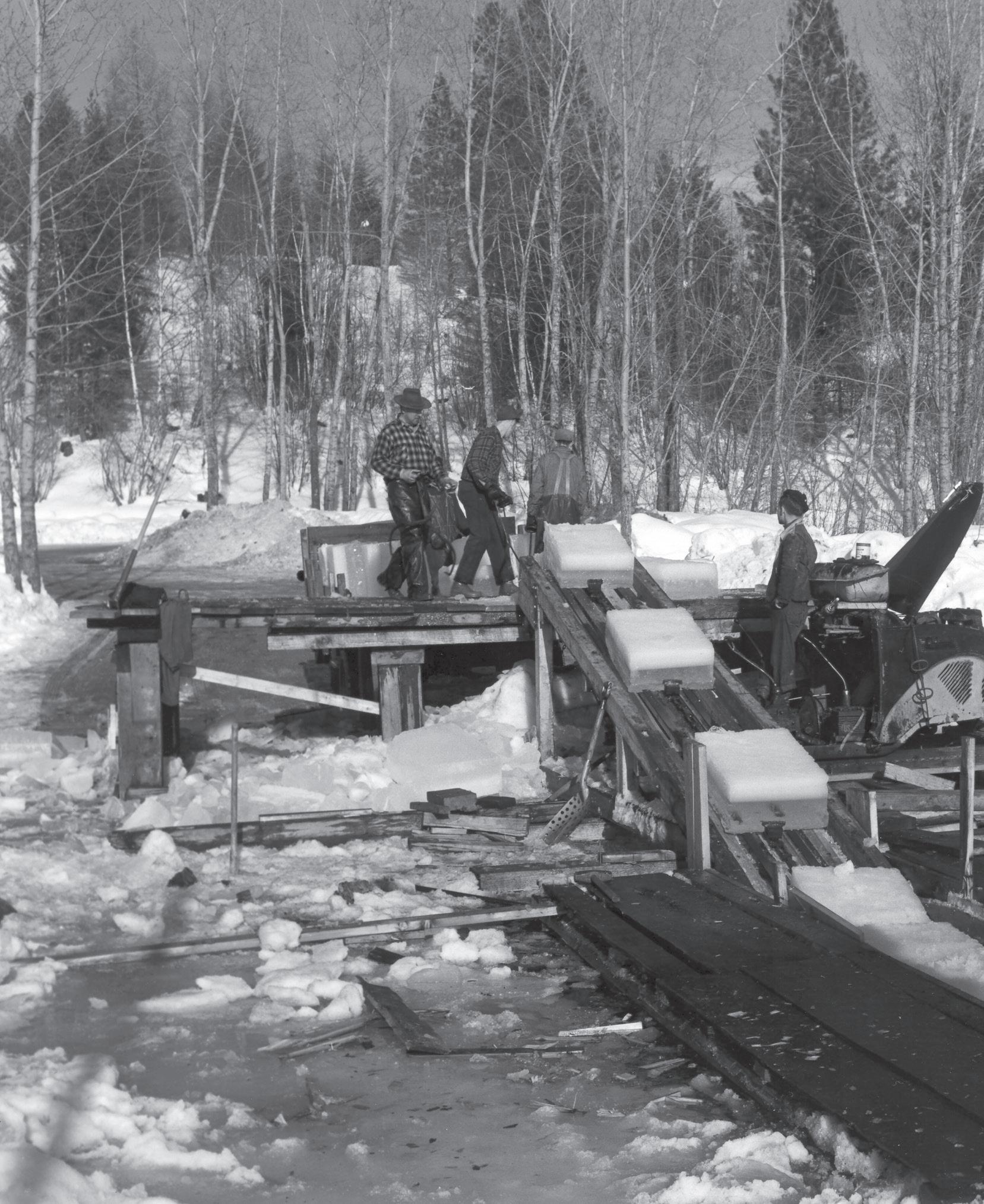
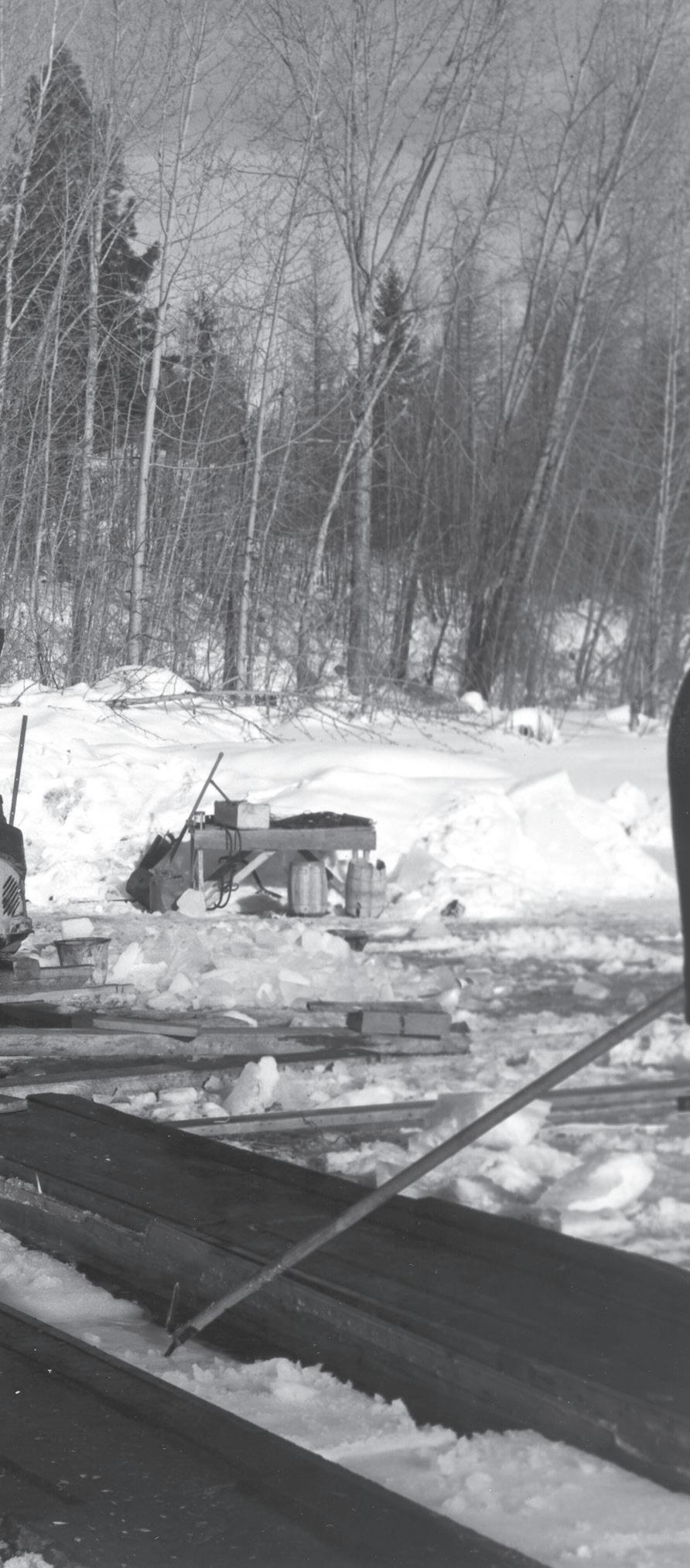
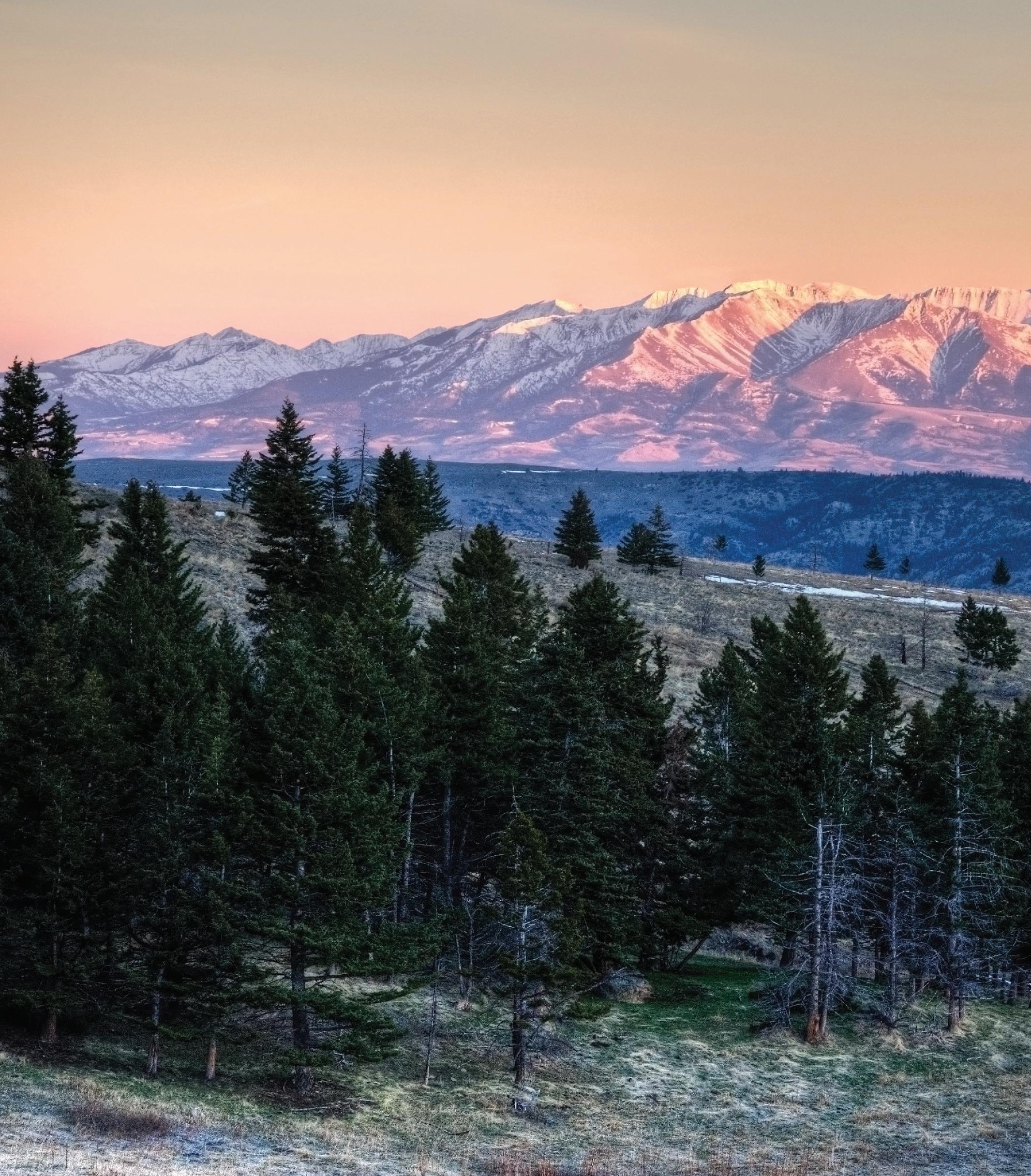
A Vision
THE LASTING BOND BETWEEN THE CROW TRIBE AND THE CRAZY MOUNTAINS
BY JESSIANNE CASTLE
PHOTO BY JEFFREY KREULEN/ADOBE STOCK
From 11,000 feet, Crazy Peak sends whispers in all directions across the landscape. It looms on the horizon northeast of Livingston, Montana, joined by the severe angles of its brethren, all gazing upon the Yellowstone River as it makes its meandering descent to the Missouri. Snow holds tight even in August on the tops of these mountains and in January whispers from the pinnacle are caught on gusts of wind that send crisp snowflakes tumbling into the air.
It was in the summer of 1857, during the short recess when winter relinquishes its stony grip on the mountains, when a 9-year-old boy tied his horse at the base of Crazy Peak and climbed toward the sky. He stopped near the top and waited, seeking spiritual guidance and blessing.
On the fourth day of prayer and fast, the boy was given a vision. Looking out across the valley, he saw the buffalo
disappear into the ground to be replaced by the white man’s cow. He saw the white man come and change the land, and he experienced a mighty storm that destroyed all but one tree in an ancient forest. Within the surviving tree, the boy saw a chickadee.
Now known as Chief Plenty Coups, the young boy came to be a great leader for his people, the Apsáalooke, or Crow tribe. Plenty Coups’ vision guided his people, and many tribal historians believe it was key to the tribe’s survival.
Awaxaawippíia, or the Crazy Mountains, are no longer a part of the Crow Reservation, but their power remains prominent in Crow Country. And as Montanans seek ways forward together amid explosive growth in the Greater Yellowstone, a powerful statewide recreation economy and the already palpable effects of climate change, the story of the Crazy Mountains offers something more.

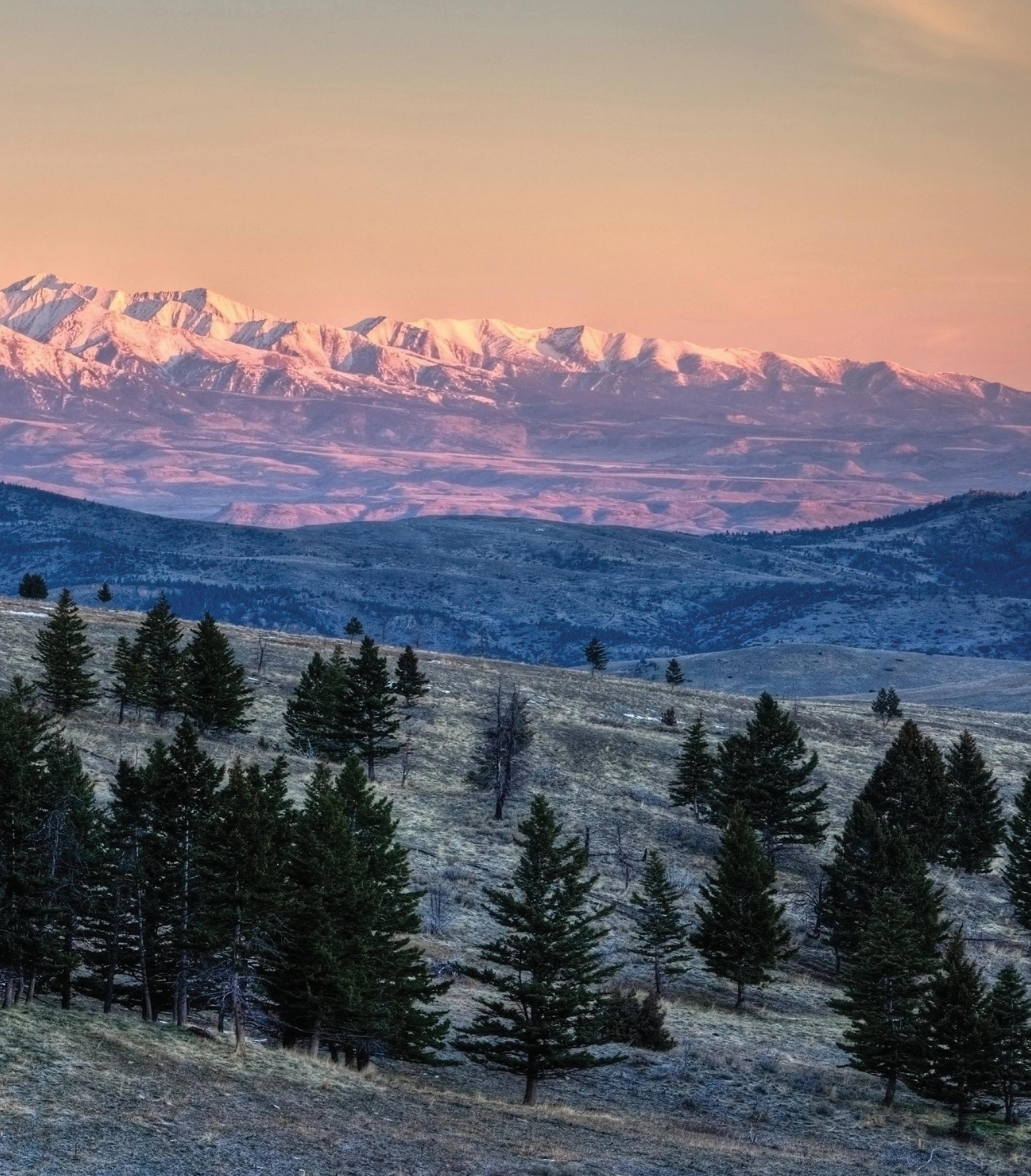
The chickadee
When young Plenty Coups—or Alaxchíiahush in Crow— came down off the mountain, he rushed to his camp to share news of his dream.
“It took a strong leader to get to that high of elevation and put his knees on those rocks, without food and water, and to get an understanding of what his purpose is in life; of who he is,” said Adrian Bird Jr., a tribal historian with the Crow Tribal Historic Preservation Office, located in the Crow Agency 60 miles east of Billings. Bird’s eyes flashed as he recounted the story. “He wasn’t thirsty when he got down to the bottom of the mountain. He wasn’t hungry. He was excited.”
Apsáalooke elder Yellow Bear interpreted the dream at the time to mean that Plenty Coups would witness the disappearance of the buffalo. It was foretelling of what would come to pass in less than a half century, and Yellow Bear said in order to survive the Crow would need to be like the chickadee, a bird notable for its ability to listen and adapt.
Plenty Coups wasn’t the first to seek a gift in the Crazy Mountains, nor has he been the last. A rich oral tradition attests to the fact that for hundreds of years, young Crow boys have journeyed to the Crazies—and the Beartooth Mountains to the south—to seek blessings.
“We’ve heard stories of Crow chiefs and medicine men who would go up into the Crazies specifically because they are high and treacherous,” said Roberta Bird, Adrian’s wife, and an employee at the Crow Agency Department of Education.
“When they were searching for a prayer they would physically try to get their body close to the Creator or God or whatever you call Him in order to pray and fast and to search for answers or prayers or good things.”
Given the powerful Crow Medicine in the Crazy Mountains, their name makes sense. Awaxaawippíia, the Birds say, is translated roughly as the Snowcapped, Ominous or Amazing Mountains.
The young chief embodied the message of his vision, guiding
his people to adapt and to work cooperatively with the white man. Crow warriors subsequently acted as scouts for the U.S. Army and leaders sought to compromise with the U.S. government. In Montana, their efforts drew the admiration of Bozeman’s founder.
“John Bozeman really loved the Crows at one point,” Adrian Bird Jr. explained, “for their protection, for their friendship, for their way of using the land. They shared their knowledge of what they used to do and how they lived and what they lived off of. We worked together and this is how far we’ve come.”
“I think that’s why we still have our reservation,” Roberta added, a smile dancing across her face. “It’s still on our land, we still have strong traditions and culture and language, all of those things are still intact.”
Even though the Crazy Mountains are nearly 100 miles from the current reservation, Crow boys still seek solace from the mountains today and the tribe actively advocates for wilderness protections on the national forest land within the 140,000-acre island mountain range.
“It’s more about the sacredness of the mountains and our ties to it,” Roberta said. “We’re not trying to exclude anybody. You wouldn’t want trash and ATVs and things running in the middle of your church.”
“IT’S STILL ON OUR L AND, WE STILL HAVE STRONG TRADITIONS AND CULTURE AND LANGUAGE, ALL OF THOSE THINGS ARE STILL INTACT.”
Plenty Coups (c.1908) PHOTO BY EDWARD CURTIS
1930.47 War Record Drawing, Crow, 1884. Pencil, ink and commercial pigment on paper. 20.5 cm x 58 cm. Provenance: Charles H. Barstow Collection, Montana State University Billings Library Special Collections
In the shadow of the mountain
The land around the Crazy Mountains, a mosaic of sagebrush hills and fertile river bottoms, was settled by homesteaders in the late 19th century like much of the Greater Yellowstone. Tribes were shuttered onto reservations through a long procession of treaties, making way for miners, ranchers and towns.
The Crow Reservation was established in 1868 at Fort Parker, a fully stockaded military post located on Mission Creek 10 miles east of Livingston. The mighty Crazy Mountains were nearby sentinels for the Crow until the agency was moved in 1875 to Absarokee on the Stillwater River farther east. In 1883, the Agency was established where it is today in eastern Montana. Along the way, the tribe relinquished its hold on its historic territory, but the Crow still maintain interest in the land.
It was 100 years later, in 1966, when Sarah Anzick’s family purchased land in the Shields Valley near Wilsall, a land graced almost daily with fiery skies as the sun rises over the Crazy Mountains. Nestled in the cradle of the Bridger Mountains and Crazies, Anzick says the landscape was her playground. “It was a very special place growing up,” she said, admitting, however, that she knew little about the area’s history.
Anzick was 2 years old in 1968 when construction workers found stone artifacts at the base of a high bluff on her family’s property. Later, they unearthed the 13,000-year-old remains of a male toddler, who had been buried with more than 100 stone and bone tools—all thoughtfully covered with red ochre.
“This is probably one of the most important skeletal remains found,” Anzick said on the phone from her home in the Bitterroot Valley. Anzick went on to become a molecular biologist at the National Institutes of Health where she studies the relationship between genetics and disease.
In the early 2000s, Anzick partnered with archeologist Mike Waters at Texas A&M University and geneticist Eske Willerslev at the Centre for GeoGenetics in Denmark in order to analyze the ancient child’s genetics.
It was a time of controversy. A few years earlier, in 1996, two college students wading in the Columbia River in Kennewick, Washington, discovered the remains of a 9,000-year old skeleton, now known as the Kennewick Man and considered among the oldest complete skeletons ever found. The discovery threw speculation into the ancestry of contemporary Native Americans and launched a protracted legal battle between the U.S. government, Native tribes and paleoanthropologists over whether ancient remains should be reburied.
Understanding the inherent risk in her quest to learn
the child’s ancestry and after visiting with several tribes in Montana, Anzick and her team continued their research, guided by Crow historian Shane Doyle, though the work remained controversial among the tribes. One tribal member was interested in learning what science could glean, but another was opposed to the work.
Anzick’s tone was cautious, a pronounced reverence in her voice. “I have so much respect for tribal communities,” she said. “I had to figure out that balance because I’m a scientist too. It’s really that quest for knowledge.”
Ultimately, analysis of the toddler’s ancient DNA revealed the boy and his relatives to be direct descendants of many contemporary Native American tribes, but most closely related to those originating in Central and South America. “All of us are 99.9 percent identical,” she said. “In that .1 percent of difference, how big is that difference? I felt like the little child gave us a gift for all of humanity but it was time to lay him to rest.”
In 2014, the ancient boy was returned to the earth, once again in the shadow of the Crazy Mountains. He was reburied near the original site where he was found and tribal representatives from around the U.S. attended the ceremony.
As owners of the land, the Anzicks remain stewards of the little boy and the artifacts once placed in his grave. Anzick says her family will protect the site but often allow access to those who ask and one day hope to install a memorial. The artifacts— chert, porcellanite, antler points and tools—are currently on loan at the Montana Historical Society in Helena where the public can visit.
“I think it’s really great that resource is there for everyone to go and enjoy and learn from,” Anzick said, adding that she thinks Native engagement is critical and that it’s important to find ways to work together. “How can we advance the wellbeing of humanity and science with the involvement of Native American communities and not leave them out?” she asked. “Really it’s communication and interaction, relationships and bonds, and trust. Trust is huge.”
Sarah Anzick, who grew up on the west side of the Crazies, carries the remains of a 13,000-year-old child during a reburial ceremony in 2014 near Wilsall.
PHOTO BY SHAWN RAECKE
Ties to the land
Bent over in a chair in the tiny Livingston airport, Shane Doyle is quiet, composed despite the loud hum of small airplanes coming and going outside.
He’s just stepped off of a six-seat Cessna 210, having circumnavigated the Crazy Mountains.
Nodding north, Doyle says his Crow ancestors wintered on the Judith and Musselshell rivers and sometimes camped in the Shields Valley and along other tributaries of the Yellowstone River. Doyle lives in Bozeman and is the program coordinator at the American Indian Institute. A Crow tribal member, he’s sought guidance twice in the Crazy Mountains through prayer and fast.
Doyle and other Crow members have asked the U.S. Forest Service to uphold treaty rights that recognize the tribes still have interests on lands that once existed on the reservation. A part of that recognition is to manage the Crazies as a sacred landscape—without new roads or trails.
“It’s going to be hard … for people to traverse that territory and that’s the way it should be,” Doyle said. “They’ve never been an easy range to navigate through. They’ve always been hard and I don’t think it’s up to us to make that easy.
“There are other sacred areas all over,” he added, referencing sites from the three forks of the Missouri to the Black Hills to central Missouri. “I think it’s real important people are aware of that.”
Doyle is among a strong cohort of Indigenous peoples seeking to reclaim their tribal heritage and achieve recognition in mainstream society after Euro-American colonization destroyed Native lifeways. He was a collaborator and principal performer in Bozeman’s Mountain Time Arts opera performance of “Standby Snow: The Chronicles of a Heatwave” produced in August of 2019, in which he sang about Plenty Coups’ vision, a prophecy Doyle interprets as a foreshadowing of climate change.
He says for Montanans to move forward together in the future, we all need to engage in conversation. “We share with each other our stories, our concerns and our vision. I think those are the ways we overcome those gaps or barriers.”
“WE
SHARE WITH EACH OTHER OUR STORIES, OUR CONCERNS AND OUR VISION.
I
THINK THOSE ARE THE WAYS WE OVERCOME THOSE GAPS OR BARRIERS.”
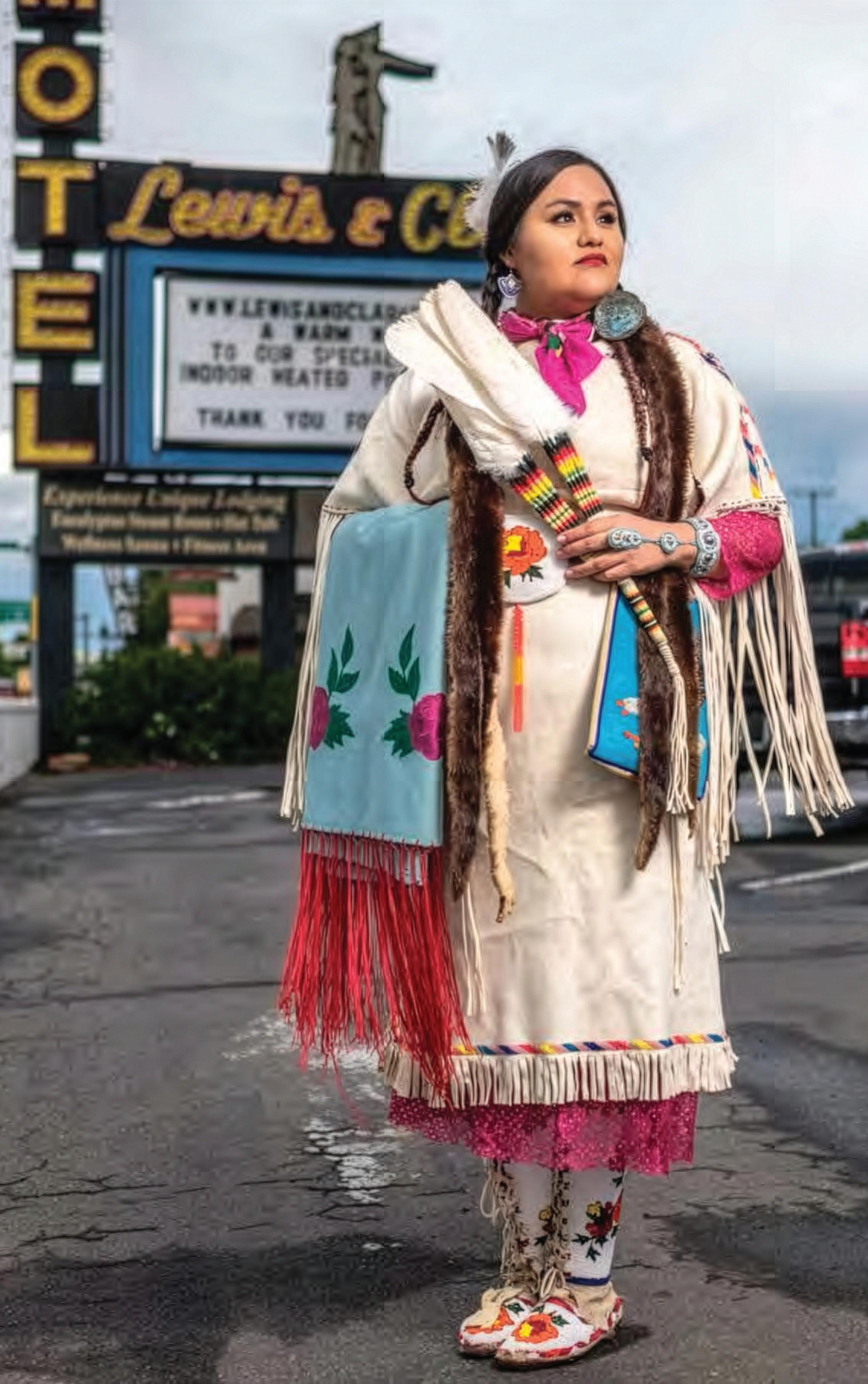
Sings In The Timber constructs portraits of women wearing traditional regalia in the built environment. Pictured is Shakira Glenn of Apsáalooke/Crow Descent
PHOTO BY ADAM SINGS IN THE TIMBER
The power of pictures
One way to prompt that conversation is through imagery.
Francesca Pine-Rodriguez grew up on the Crow and Northern Cheyenne reservations and in Billings and has been an active advocate for tribal representation in Bozeman. A member of both tribes, she says settlers moving West were sold on maps and images portraying a wide-open, unpopulated landscape.
“It’s just amazing how powerful pictures are [but] all of that was just a fantasy,” Pine-Rodriguez said. “It was really a recipe for disaster when the settlers came because they were basically bought and sold on a lie.”
A board member of the Montana movement seeking to rename the federal holiday Columbus Day to Indigenous Peoples’ Day, Pine-Rodriguez says she was recently asked to be a model in a public art project about recognizing tribal heritage. For the project, Mountain Time Arts commissioned Montana Crow photojournalist Adam Sings In The Timber to photograph five Indigenous women who live in the Gallatin Valley as a part of his national “Indigenizing Colonized Spaces” photo series. The images illustrate that wherever people go in North America, they are on Native land.
A way forward together
“Moving everybody forward together is recognizing real history,” Pine-Rodriguez said. “It’s recognizing that the land you walk on every day was a tribes’ [land] in all of North America. And to recognize it is a minimum. The next step is to honor and celebrate it.”
That recognition and celebration is just what Sings In The Timber hopes to achieve. After graduating from the University of Montana School of Journalism, he moved to Chicago and dedicated his career to capturing Native lifeways through photographs to empower Indigenous Peoples, while also educating the non-Native world.
For Sings In The Timber, reclaiming his people’s cultural history expands to the very basic use of the word “Indian.”
“Growing up, I was Indian,” Sings In The Timber told me during his recent trip to Bozeman. “[But] Indian is no longer a part of the next generation for me.” Instead, he prefers to use words like “Indigenous” or “Native.” “Out here, we don’t say ‘Indian’ anymore.”
The Crazy Mountains overlook so much more than a landscape. They are keepers of the stories of the past, and they could provide keys for the future. Those who live in the shadow of the Crazies know of their beauty, and others, those who’ve experienced or heard stories of their power, can feel their presence from afar. “Yes these are sacred [mountains]. I can feel it,” Adrian Bird Jr. said. “I can feel it seeing them from the highway.”
From all directions, the Crazies stand as united peaks, working cooperatively to give sanctuary to life, to trees, flowers, wildlife, birds—even the chickadee, one of Montana’s songbirds that stays through the winter and sings to the quiet, snowy landscape.
“We need to work together,” Adrian said.
“I know about these mountains, my son knows about these mountains. I want my grandson to know about these mountains and what has taken place here.”
Jessianne Castle is a freelance writer and editor who grew up under the Montana sky. She writes from the Shields Valley, where she explores by pen and experience what it means to be a Montanan.
TAKING HISTORICAL MONTANA ON ITS OWN TERMS
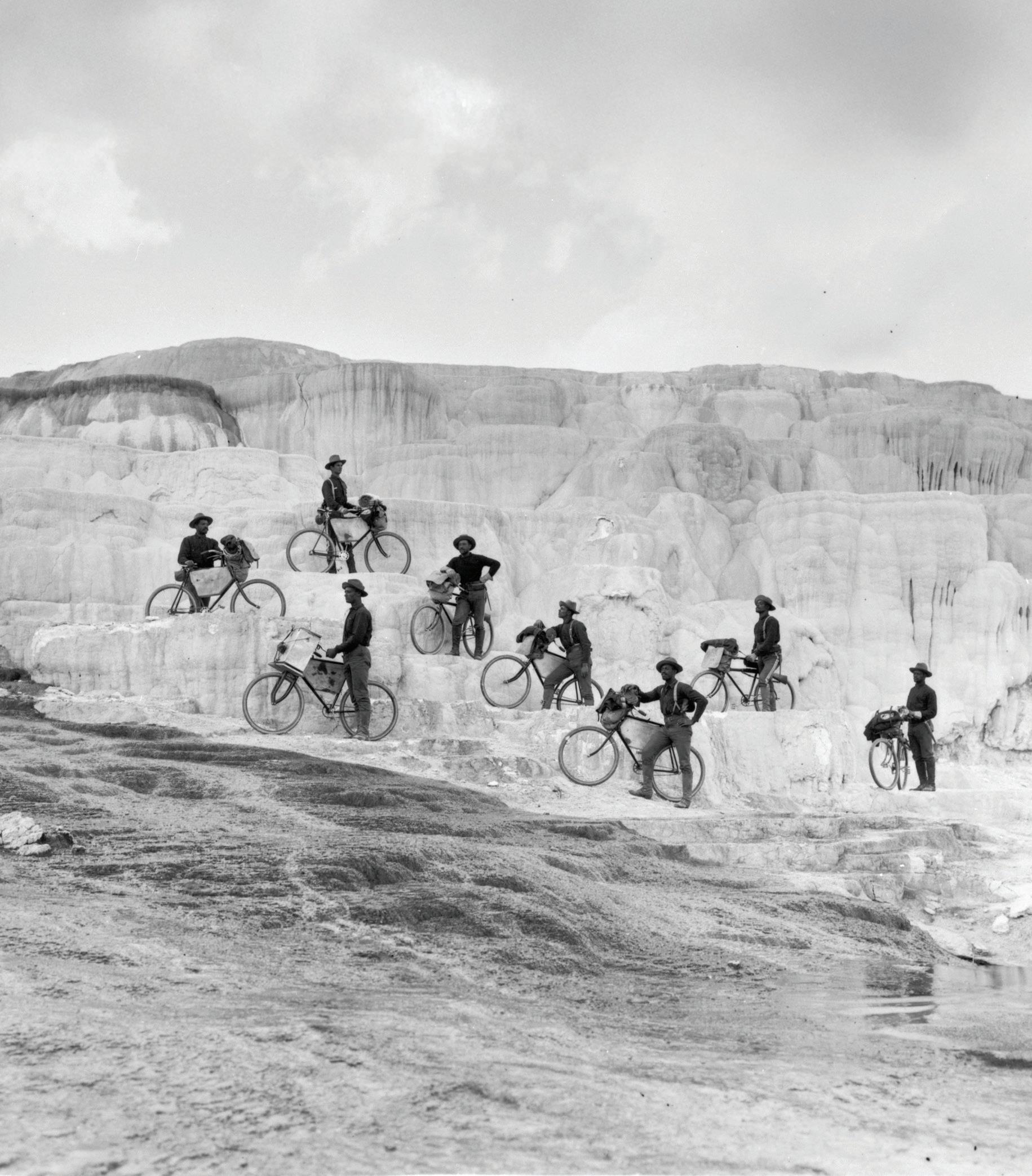
THE STORY OF
THE 25TH INFANTRY BICYCLE CORPS
BY JOSHUA P. HOWE
“Bicyclists’ group on Minerva Terrace,” Yellowstone National Park [Lt. James A. Moss’s company of the 25th Infantry, U.S. Army Bicycle Corps, from Fort Missoula, Montana ] 1896 Photo by F. Jay Haynes. Montana Historical Society Research Center, Archives.
IT IS AN ODD SIGHT. ON THE WALL OF YELLOWSTONE’S MAMMOTH HOT SPRINGS LODGE, A BLACK AND WHITE PHOTOGRAPH PORTRAYS MISSOULA, MONTANA’S 25TH INFANTRY BICYCLE CORPS.
Eight men, dressed in the high-waisted woolen pants and flat-brimmed hats of 19th century U.S. Infantry, pose on nearby Minerva Terrace. The year is 1896, and the men stand alongside simple, elegant steel-framed, fixed-gear bicycles, loaded with gear. They are fit and strong. And all of them are Black. Why were eight Black soldiers riding fully loaded bikes around Yellowstone in 1896? They were following orders. Specifically, they followed orders from Lt. James A. Moss, the ranking officer and progenitor of the U.S. Army’s first officially sanctioned experimental bicycle unit. Moss’s orders were simple: Ride to Yellowstone. Hang out. Ride back.
The advent of Missoula’s Bicycle
Corps and the account of its two major tours - the first to Yellowstone in 1896 and the second an epic slog to St. Louis, Missouri, in the summer of 1897—have become a familiar tale in Montana’s history. When Moss arrived in Missoula in 1894, 22 years old and fresh out of West Point, he found the place a little boring. The last major skirmish between Army troops and the Nez Perce was over a decade old. The men had little to do but drink and drill, and the young lieutenant didn’t particularly like either one.
So Moss turned to something he was good at: cycling. A “wheelman” himself, Moss had read manuals on military cycling from European bicycle units and from entrepreneurial American bicycle
manufacturers looking to capture the military market. In April of 1896, he petitioned the Army to allow him to form a small bicycle corps to test the bicycle as a vehicle for American military use in Montana’s rugged, mountainous terrain. In surprisingly short order, the Army approved. Military brass had only one condition: the Army would not buy the bikes. In place of Army issued machines, Moss secured modified ‘test’ versions of the ‘Spalding Racer’ and the ‘Spalding Special’ from Chicago-based A.G. Spalding and Brothers. By the fall of 1896, the 25th was rolling—first across Southwestern Montana and later, across the Eastern Rockies and the Great Plains to America’s Gateway to the West, St. Louis.
The story of the 25th Infantry Bicycle Corps has been well told. In 2000, George Neils Sorenson published Iron Riders: Story of the 1890s For Missoula
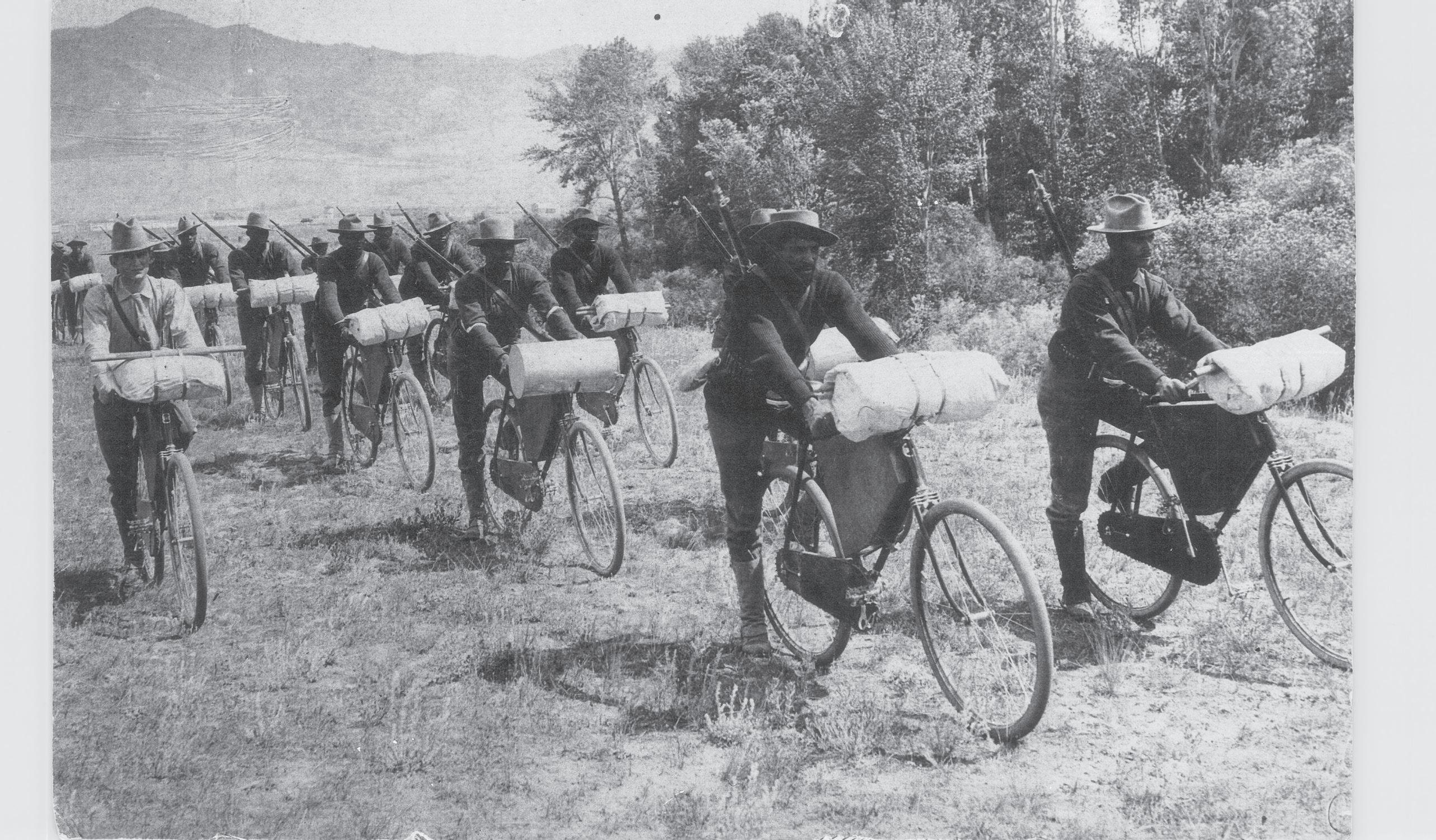
“25th Infantry Bicycle Corps before riding from Montana to St. Louis, 1897.” Photo courtesy of Archives and Special Collections, Mansfield Library, The University of Montana
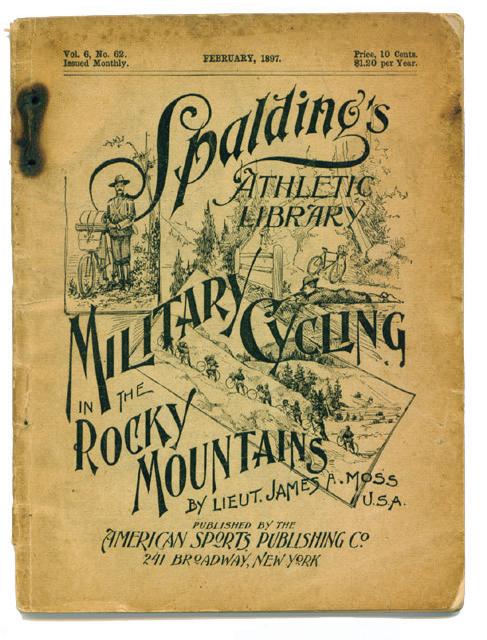
Buffalo Soldiers, and that same year PBS released a documentary, The Bicycle: America’s Black Army on Wheels. Over the past ten years, short pieces in newspapers and journals have periodically reminded Westerners of this unique moment in Montana history. A replica of one of the Corp’s original bicycles at the Fort Missoula Historical Museum ensures that it will not soon be forgotten.
As a historian, however, when I read these accounts of the Bicycle Corps and their epic Montana adventures, I feel a little uneasy. I often wonder if something important has been lost in translation. The characters seem out of place, somehow aloof from historical context. And in history, context matters.
At first, the 25th Infantry Bicycle Corps appears as a startling anomaly in our image of Montana’s historical landscape. Black men in military garb riding bicycles across the rugged 19th
century West strikes us as interesting because we imagine that they must have been so completely out of place. But the contextual dissonance that makes these characters appealing to the modern eye comes as much from a blend of present assumptions and perhaps inaccurate historical imagination as it does from the singularities of the characters themselves.
As the only officially sanctioned Army bicycle unit in the U.S.—and one operating in a rugged new state— the 25th does have a unique place in history. As a Buffalo Soldier unit, its demographic makes it more remarkable still. Upon reflection however, the 25th Infantry Corps is interesting and important in the context of the late 19th century American West because it was, in fact, hardly out of place at all. Begin with the soldiers. The histories of the individuals of the 25th Infantry
Corps remain, like the histories of many Buffalo Soldiers, obscured behind a complex shroud of prejudice, illiteracy and time. But as a group, the Black soldiers stationed at Fort Missoula reflected a constellation of national problems involving race, labor and westward expansion much larger than themselves.
The Civil War had highlighted the West as an outlet for a glut of labor precipitated by European immigration and American emancipation. After the conflict, Americans white and Black alike headed for the Great Plains. But the Plains were hardly a friendly place.
The U.S. Army was soon engaged in a series of brutal conflicts with Plains Indians that lasted more than two decades. The vastness of Western geography soon required the Army to ship more soldiers west. Faced with racially-charged complaints about stationing Black regiments near cities and towns along the Eastern seaboard in the 1860s, the Army chose Black soldiers—later called Buffalo Soldiers— as a fighting force in the Indian Wars.
In the Missoula of the 1890s, with no Indians to left fight and with few other job prospects, the Buffalo Soldiers of the 25th Infantry were not anomalies so much as relics. They were relics of the national struggle over slavery, of the brutal Indian wars then drawing to a close, and of the larger problems of race and labor endemic to the East and increasingly important to the rest of the country in the late 19th century. Today’s demographics notwithstanding, Black soldiers were not uncommon to Montana, and certainly not to the larger Mountain West.
Neither was the bicycle so strange a sight on the roads of Montana in the 1890s. Moss and the U.S. Army came to cycling at the end of a decade-long boom in cycling and bicycle design that supported more than 300 bicycle manufacturing firms and produced more than a million bikes in 1896 alone. Touted as the ‘nag of the people,’ the so-called ‘safety bicycle’ was a chain
James A. Moss’s Manual of Military Cycling, sponsored by the Spalding Company.
driven machine with pneumatic tires. Affordable, it made bikes accessible as transportation and recreation across the rigid lines of race, class and gender characteristic of Victorian culture. Bicycles were a physical embodiment of a new, mechanistic age defined by efficiency, independence and a spirit of reform. They were wildly popular and widely used, and for a time, bicycle track racing was America’s most cherished sport—more popular even than baseball. So, when Moss first asked volunteers from the 25th for the Yellowstone trip, he expressed little surprise that 46 of the men in Missoula fancied themselves excellent riders.
If the prevalence of Black soldiers and bicycles in the American West reflects the particularities of the late 19th century, so too do the specific details of the 25th’s ventures help us to understand the Bicycle Corps as a uniquely 19th century story. For example, Moss chose his routes by following the path of the railroads, which were perhaps the defining symbol of the late 19th century West. The lieutenant relied on the rails for supplies and emergency transportation, and often the group actually rode along the tracks when roads became too poor or muddy to pass.
The 25th’s first major destination, Yellowstone Park, also constituted an important touchstone of American politics and Western culture. Created by an Act of Congress in 1872, the Park characterized the Federal Government’s ambivalent approach to governance of Montana’s and Wyoming’s wild spaces. The park’s growing popularity coincided with the decline of a frontier lifestyle woven into Montana’s social fabric. By the 1890s, Yellowstone was a major American tourist destination. As David Herlihy notes in Bicycle: The History, tourists had even begun
to show up on bicycles in the park as early as 1884.
When I recall my own first encounter with the 25th Infantry Corps—the old photograph on the wall at Mammoth Hot Springs, divorced from its historical context and displayed as an anomalous artifact of Montana history—it occurs to me that the story of the 25th is an object lesson in taking history on its own terms. As both a cyclist and a historian, I find the story fascinating. Like other authors who have written about the 25th, I am drawn to it because it contrasts so sharply with my vision of the Montana of the “Old West.”
But the Montana of the Old West is not a real place; it is an imagined one. Moreover, it is one we tend to imagine rather poorly, in static and limited ways. As the history of the 25th reveals, the Montana of the 19th-century West was in fact dynamic and complex, and neither the experiences we draw on from modern American life, nor the stylized vision of history we construct from faded photographs and dusty letters necessarily helps us to understand its wrinkles.
The story of the 25th Infantry Corps reminds us that Montana of the 1890s had as many quirks and contradictions as our society does today. It was, to paraphrase the novelist J.L. Hartley, like another country; they did things differently there. As historical travelers, our subjects are not out of place; we are. To find lessons, inspiration or even simple entertainment as travelers to Montana’s past through stories like that of Missoula’s Black soldiers on bikes, perhaps we can work to learn historical Montana’s customs and speak its language.
Historian Joshua Howe is a Postdoctoral Fellow at MSU Bozeman.
For more information about Missoula’s Montana’s 25th of Infantry Bicycle Corps:
Read George Niels Sorensen’s Iron Riders: Story of the 1890s For Missoula Buffalo Soldiers.
PBS released a documentary in 2000, The Bicycle: America’s Black Army on Wheels.
The Historical Museum at Fort Missoula houses a variety of materials on the 25th, including one of the original bicycles. More recently, Cody, Wyoming resident Mike Higgins, compiled newspaper clippings from the two major tours—to create a source-based trip narrative on his 25th Infantry Bicycle Corps blog. bicyclecorps.blogspot.com
‘THE RICHEST HILL ON EARTH’
HAD A DARK UNDERBELLY IN THE EARLY 1900s.
DESCEND INTO …
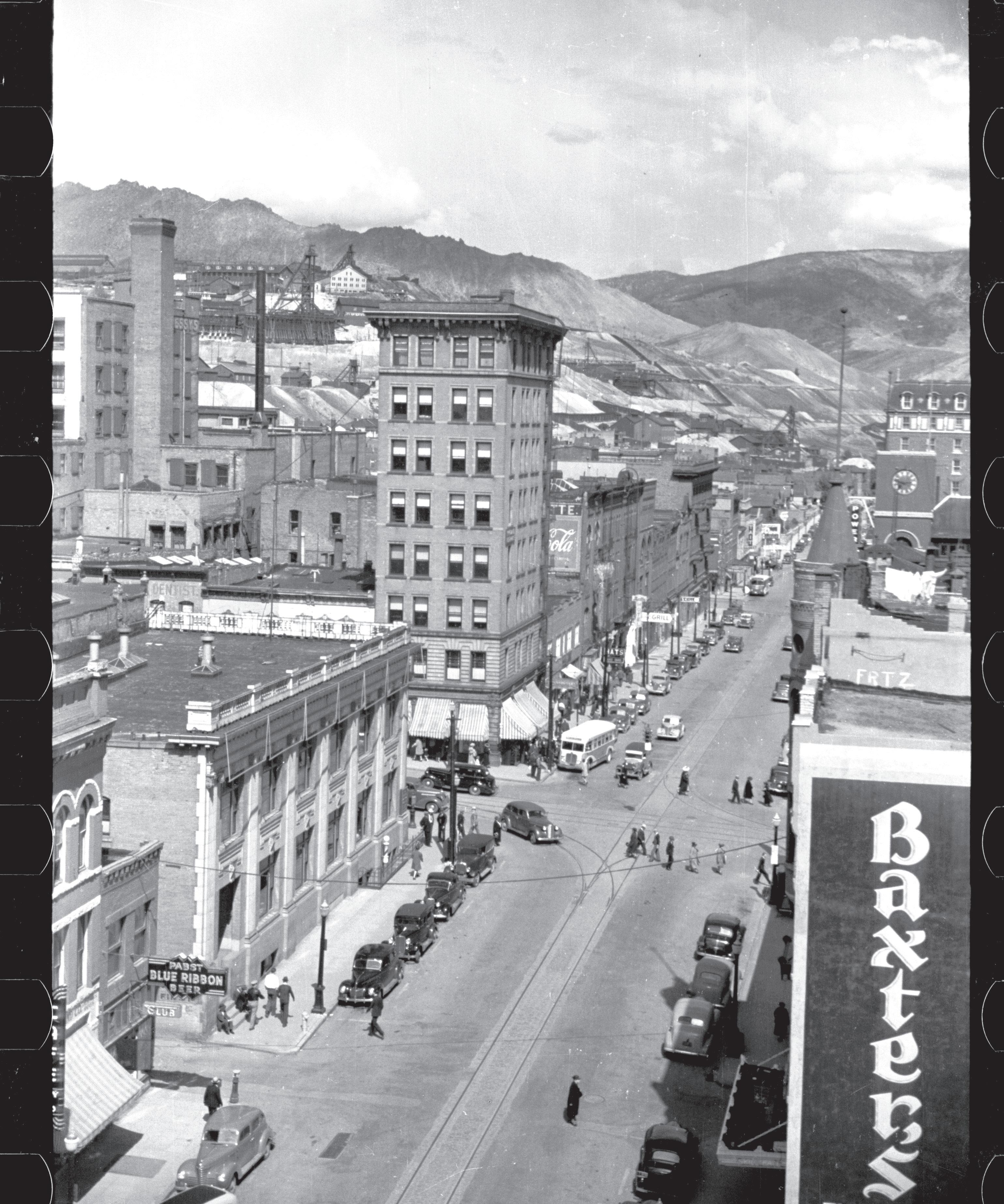
BUTTE:
BY HEIDI UTZ
AT THE TURN OF THE 20TH CENTURY, THE MILE-HIGH CITY OF BUTTE, MONTANA, WAS A THRIVING METROPOLIS.
The town had quickly progressed from a smattering of mining camps to one of immense wealth from its gold, silver, and copper mines, and contained surprisingly modern amenities. The first skyscraper west of the Mississippi, Hirbour Tower, rose from the core of the city’s Uptown district, and electricity arrived in Butte in 1882, well before most large American cities had it.
‘The richest hill on earth’ had a dark underbelly in the early 1900s. Descend into … Butte: Underground
By Heidi Utz
At the turn of the 20th century, the mile-high city of Butte, Montana, was a thriving metropolis. The town had quickly progressed from a smattering of mining camps to one of immense wealth from its gold, silver, and copper mines, and contained surprisingly modern amenities. The first skyscraper west of the Mississippi, Hirbour Tower, rose from the core of the city’s Uptown district, and electricity arrived in Butte in 1882, well before most large American cities had it. Butte hosted a rambunctious mix of hard-working, hard-playing miners from around the globe, and high-rolling entrepreneurs who leveraged its rich copper mines for all they were worth. In Uptown, the two sometimes crossed paths beneath the sidewalks, in a web of back rooms and basements that formed the Butte underground.
Within a decade, the city’s population had swollen to more than 100,000 – three times its previous size – and about 130 establishments maintained spaces in the “sidewalk below the sidewalk.” Among their ranks were extensions of stores like Gamer’s Shoes, a barbershop, and a clutch of speakeasies that sprung up like wildfire in the wake of the 1919 Prohibition Act. Kristen Inbody, writing in the Great Falls Tribune in 2014, paints a vivid picture of a town jam-packed with sensory assaults. “Pollution was so thick that the lights were on all the time, and sulfuric acid tainted the rain,” she notes. “That and the noise made basements even more appealing.” As stamp mills crushed ore and mine whistles blasted at regular intervals, the clamor indeed must have been overwhelming
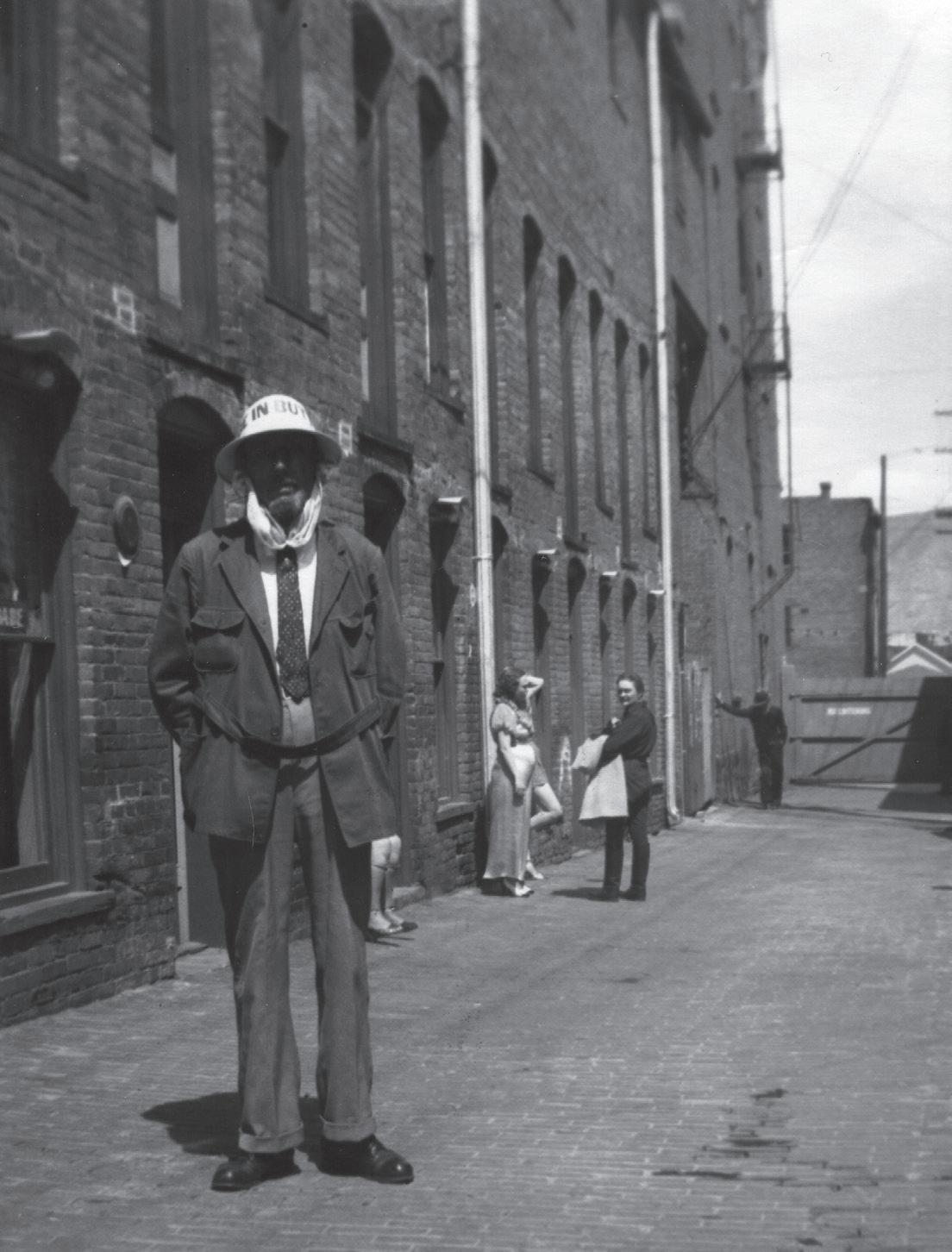
With a soaring demand for its minerals during WWI, bustling Butte employed enough miners and tradesmen to fuel “Venus Alley,” a renowned, round-theclock red-light district that employed up to 1,000 ladies of the evening. The population spike also kept retail space at a premium, says local historian Dick Gibson, author of the well-researched historical account, Lost Butte, Montana. Basements could provide additional square footage that many business owners used to full advantage.
The underground was also the perfect spot for activities that thrived in the shadows. “There’s no doubt that opium was used in the back rooms of Chinatown,” Gibson says of the two-square-block
UNDERGROUND
Butte’s red-light district, “Venus Alley,” employed up to 1,000 ladies of the evening. Butte-Silver Bow Public Archives
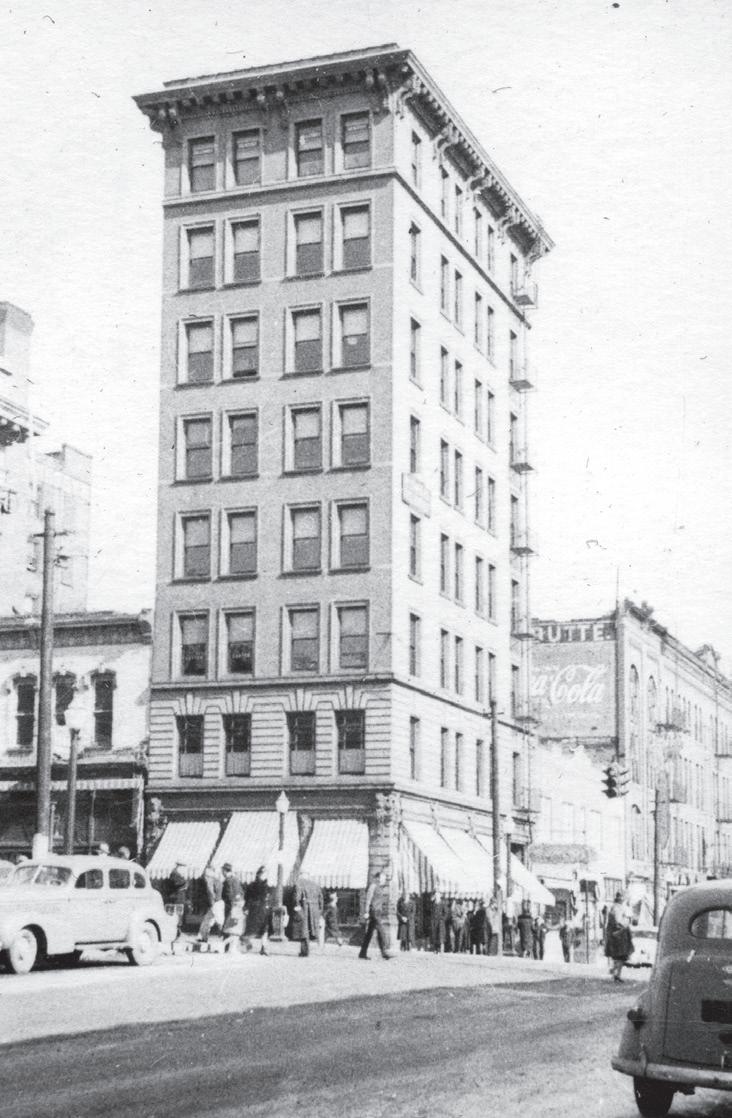
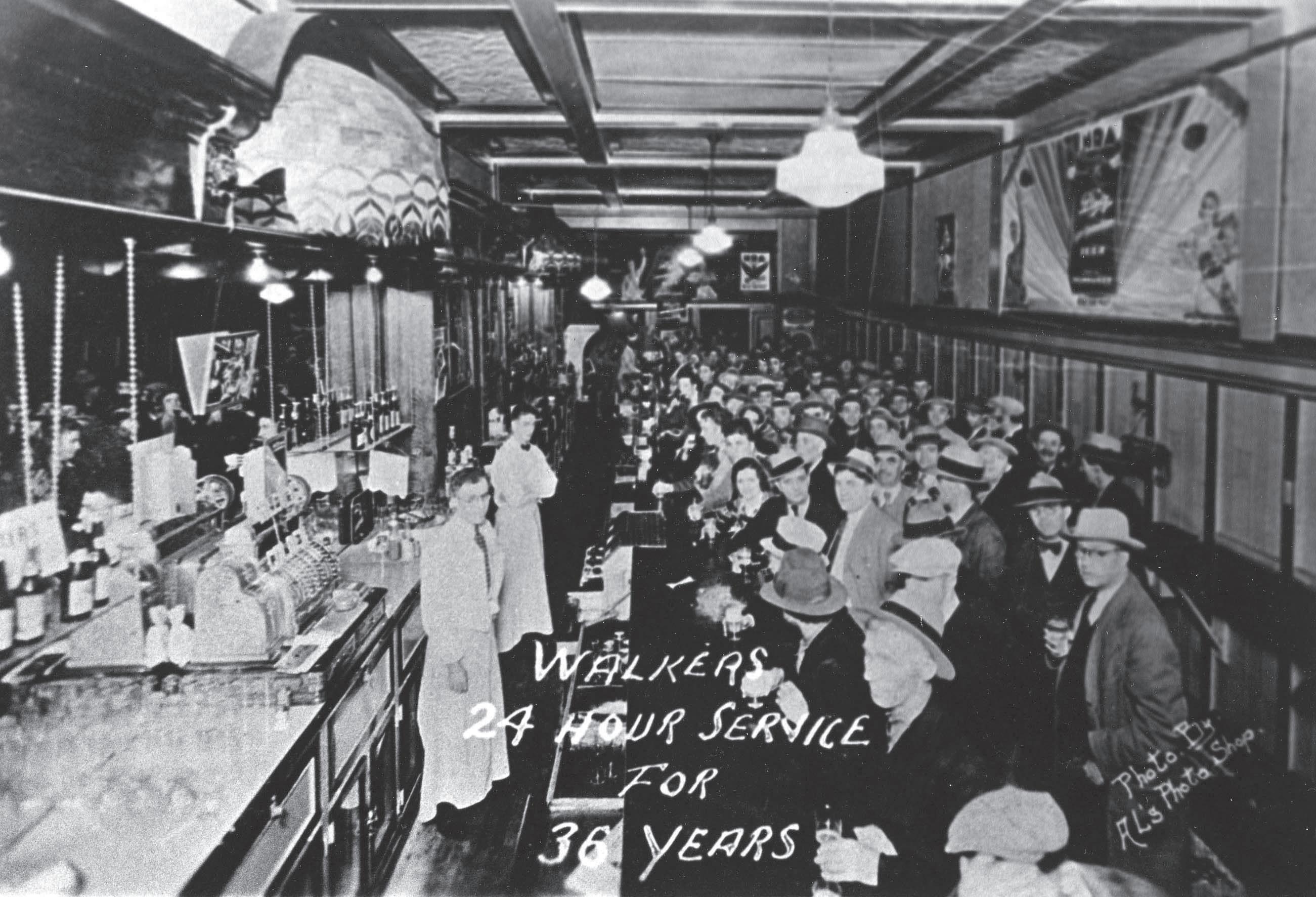
area between Galena and Silver Streets. “In 2007 an archaeological dig found 18 broken opium pipes … The Chinese population knew how to use it recreationally, but some of the non-Chinese got addicted.”
And then there were the speakeasies. In a town where any hunger – gambling, prostitution, liquor, drugs –could be satisfied for a price, it’s not surprising that Prohibition did little to slow the tidal wave of indulgence that coursed through the “richest hill on Earth.” Gibson estimates 150 drinking establishments remained open in Butte during Prohibition, more than half of the 240 saloons the town had hosted prior to the rampages of Bible-thumping temperance movement radical Carrie Nation, famed for attacking bars with a hatchet.
Most prominently, the Rookwood speakeasy, tucked away in a basement cloakroom down a marble staircase in the Rookwood Hotel, served as an
...150 drinking establishments remained open in Butte during Prohibition, more than half of the 240 saloons the town had hosted prior...
upscale gathering place in subterranean Butte. It attracted clients that may have included the mayor, police chief, and judges, to the two-way mirror at its clandestine entrance. The Italian marble–wainscoted building at 24-26 North Main Street, built in 1912, rented 45 rooms to local tradesmen – but may have been best enjoyed for its secret watering hole, which entertained flappers dancing to live jazz bands during the 1920s and early ‘30s.
Operating today as a museum, the elaborately columned room was discovered by Mike Byrnes, formerly of Old Butte Historical Adventures, during a 2004 cleaning. Its terrazzo tile floors, stained-glass skylights, elaborately carved ceilings, and mahogany moldings inset with elephant
hide had languished perhaps for more than 70 years in the exact condition they’d been left when the space was abandoned.
A green-felted poker table now sits on one end, while a carved hardwood bar with an American flag–draped backsplash shows where patrons once enjoyed locally bootlegged hooch. On the walls hang a wooden baseball betting board, some Art Nouveau prints, and several posters from the era advertising such libations as Olympia beer.
While the city was considered “wide open” for drinking, with cops being paid off to look the other way, the Rookwood did manage to find itself subject to at least one raid. On March 8, 1928, federal agents flew through its doors; destroyed its whiskey, beer, and wine stashes; and arrested notorious bootlegger Curly McFarland. It’s no wonder that most of Butte’s speakeasies sported trapdoor escape
L: The Hirbour Tower was the first skyscraper built West of the Mississippi.
R: Walker’s Bar on East Park Street in Uptown
BUTTE-SILVER BOW PUBLIC ARCHIVES
WORLD MUSEUM OF MINING
[Butte’s] 4,000plus historic structures in nine square miles form one of the country’s largest National Historic Landmark Districts.
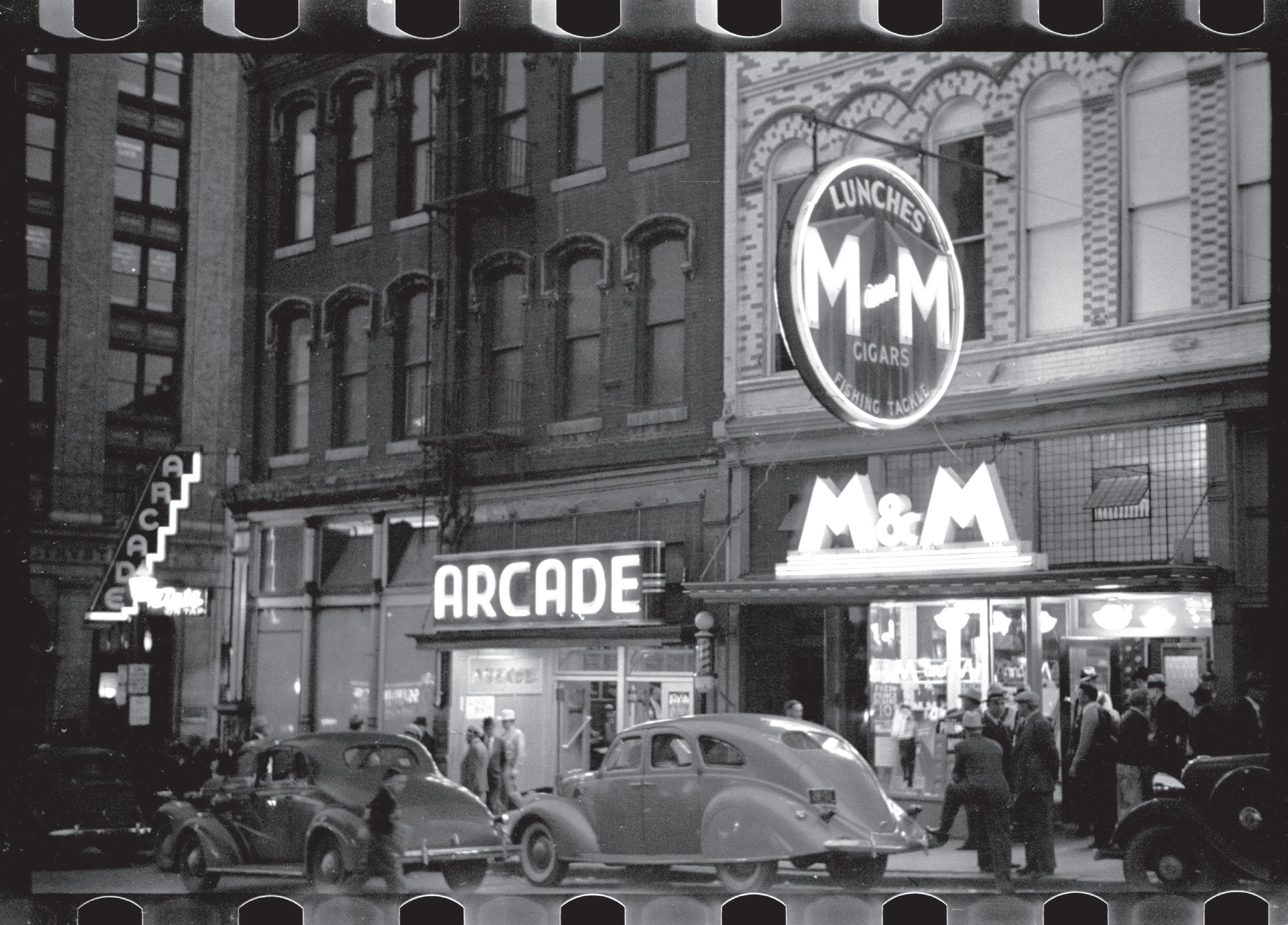
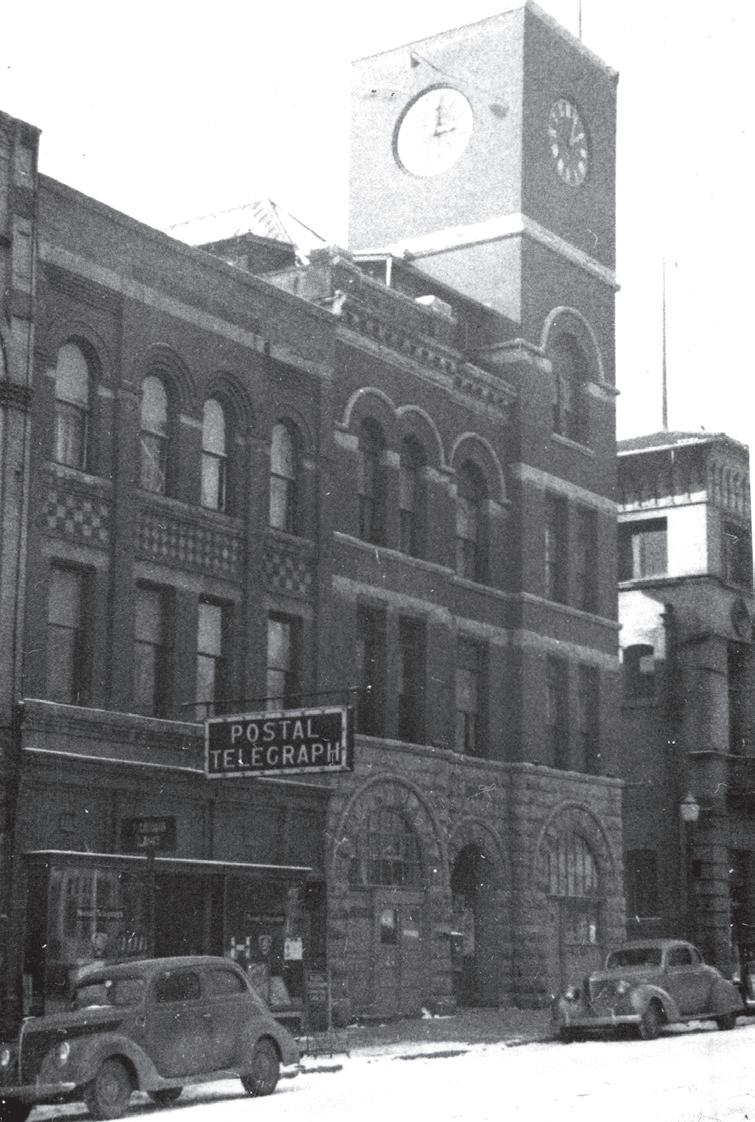
hatches.
Just down the alley, a less effervescent place to pass the time was the old city jail, aka the “Butte Bastille,” a dark, damp dungeon that occupied City Hall’s basement from 1890 to 1971. Considered a particularly brutal pen, here inmates endured lengthy interrogations, 100-degree temperatures, overcrowding, and discipline with weighted blackjacks and brass knuckles. Conditions were so bad that a 1971 federal investigation shut it down.
Now a museum with historical memorabilia, the jail once offered “three hots and a cot” to daredevil
Robert (“Evel”) Knievel, who did time for reckless driving cheek-tojowl with suspected murderer William (“Awful”) Knofel in 1956. Of their tandem incarceration, a prison guard once remarked, “What a place! We’ve got Awful Knofel and Evel Knievel!”
The city’s underbelly also saw its share of gambling, at places like the famed M&M Cigar Store at 9 South Main Street, which opened in 1890. In Prohibition-era Butte, a “cigar store” was a euphemism for an illegal bar, and thirsty patrons quickly sussed out their locations. Hosting miners and other carousers 24/7, the M&M’s first floor served as a restaurant, while card sharks
Butte.
The old city jail, aka the “Butte Bastille,” occupied City Hall’s
BOW PUBLIC ARCHIVES
basement from 1890 to 1971.
The M&M Cigar Store opened in 1890. In Prohibition-era Butte, a “cigar store” was
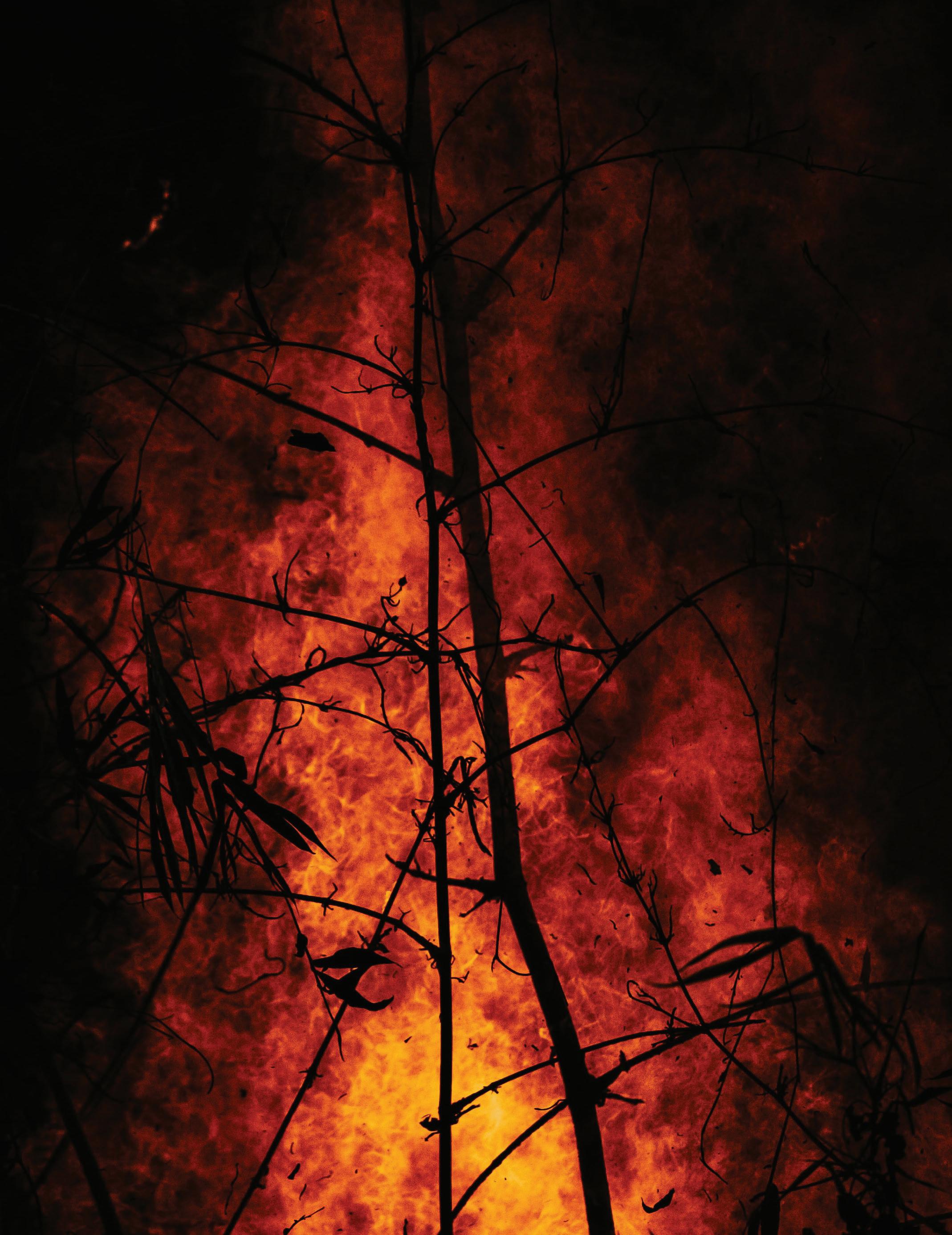
INTO THE BIG BUR N
REMEMBERING THE GREAT FIRE OF 1910
BY JESSIANNE CASTLE
ID
The burn locations from the great fire of 1910. The infamous fire, which
Into the Big Burn Remembering the Great Fire of 1910
By Jessianne Castle
Engulfed. Raging, whipping, boiling. A hurricane of fire. These are the descriptions, written on the pages of history, when dry weather met with fierce wind and mortal hubris to cause the great fire of 1910, commonly known as the Big Burn. Violent flames torched some three million acres in northern Idaho and western Montana during the wildfire’s 36-hour peak on August 20 and 21, 1910, transforming the green hues of white pine, tamarack, larch, aspen, fir and cedar—all virgin timber—into a darkened, singed and gnarled skeleton of a forest.
For the men charged with protecting the country’s newfound pride that were the national forests at a time when Teddy Roosevelt, John Muir and Gifford Pinchot were writing the
MISSOULA
HAMILTON
ST. MARIES
COEUR D’ALENE
LIBBY
KALISPELL
IDAHO
MONTANA
ST. MARIES COEUR
IDAHO
AREA BURNED
definition of conservation and public land, stopping the fire was unthinkable.
“Many thought that it really was the end of the world,” wrote “Big” Ed Pulaski, a Forest Ranger stationed between the St. Joe and Coeur D’Alene rivers in northern Idaho at the time of the Big Burn. The words of Pulaski, after which the famed and eponymous firefighting tool was named, were published in a 1923 article he penned for the magazine American Forestry. “Under such conditions, it would have been worse than foolhardy to attempt to fight the fires. It was a case of saving our lives.”
The Firestorm
The situation leading up to the August blowup was a perfect storm. A good snow year yielded way to severe drought that summer, sucking every drop of moisture from the forest, turning the mountains into stands of tinder. Timothy Egan, author of 2009’s “The Big Burn: Teddy Roosevelt and the Fire that Saved America,” described from his research that the desiccated forest was akin to walking on potato chips.
Rainless thunderstorms, new forest settlements and red-hot cinders thrown by coal-powered trains bringing progress to the West added insult to the already injured forest, igniting flareups throughout the summer months. According to one report by the U.S. Forest Service, the largest single contributor to the Great Fire was the new Chicago, Milwaukee and Puget Sound Railway, which sent trains from Tacoma, Washington, into Idaho along the St. Joe River and into the dense Bitterroot Mountains along the Ida-
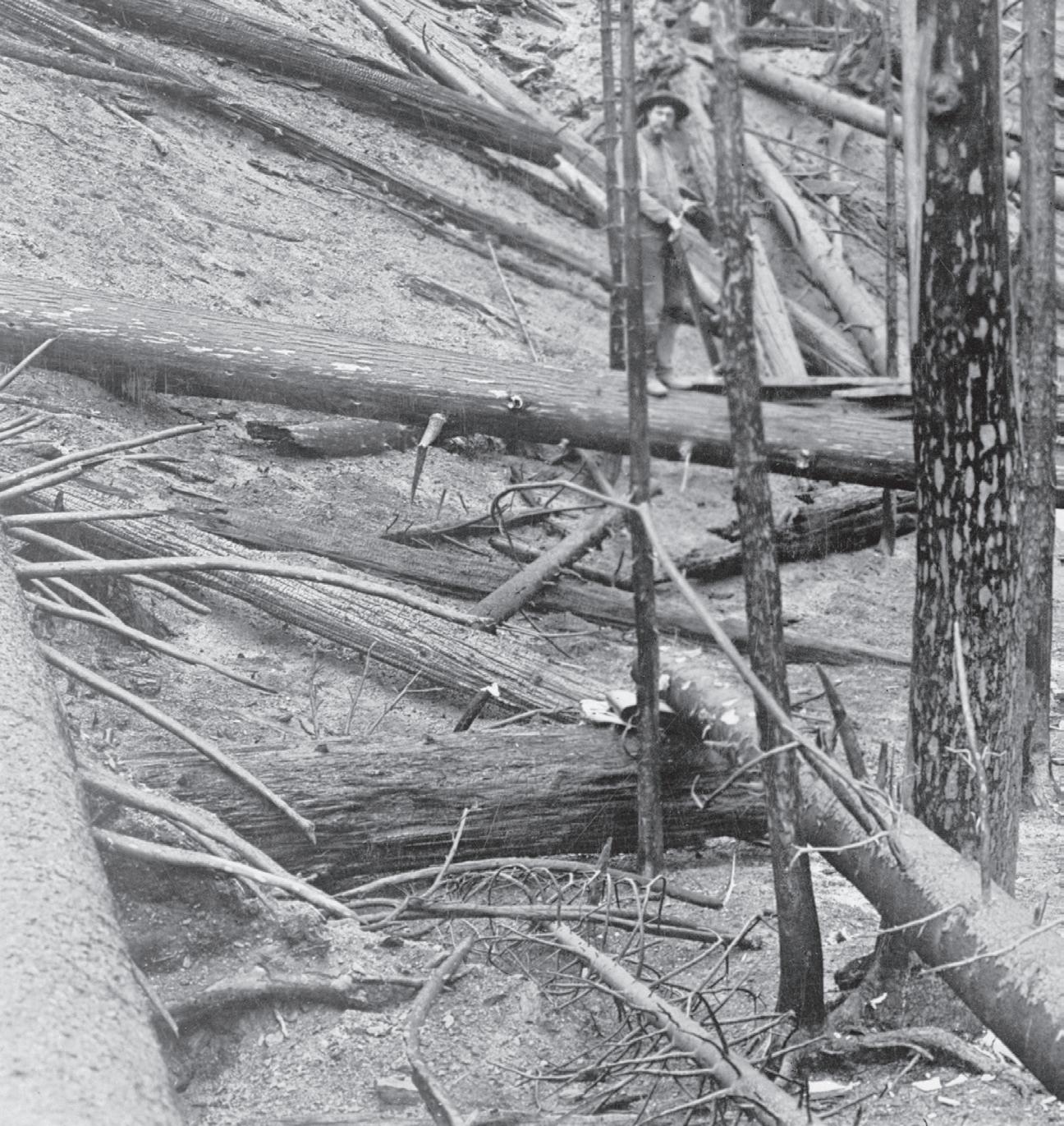
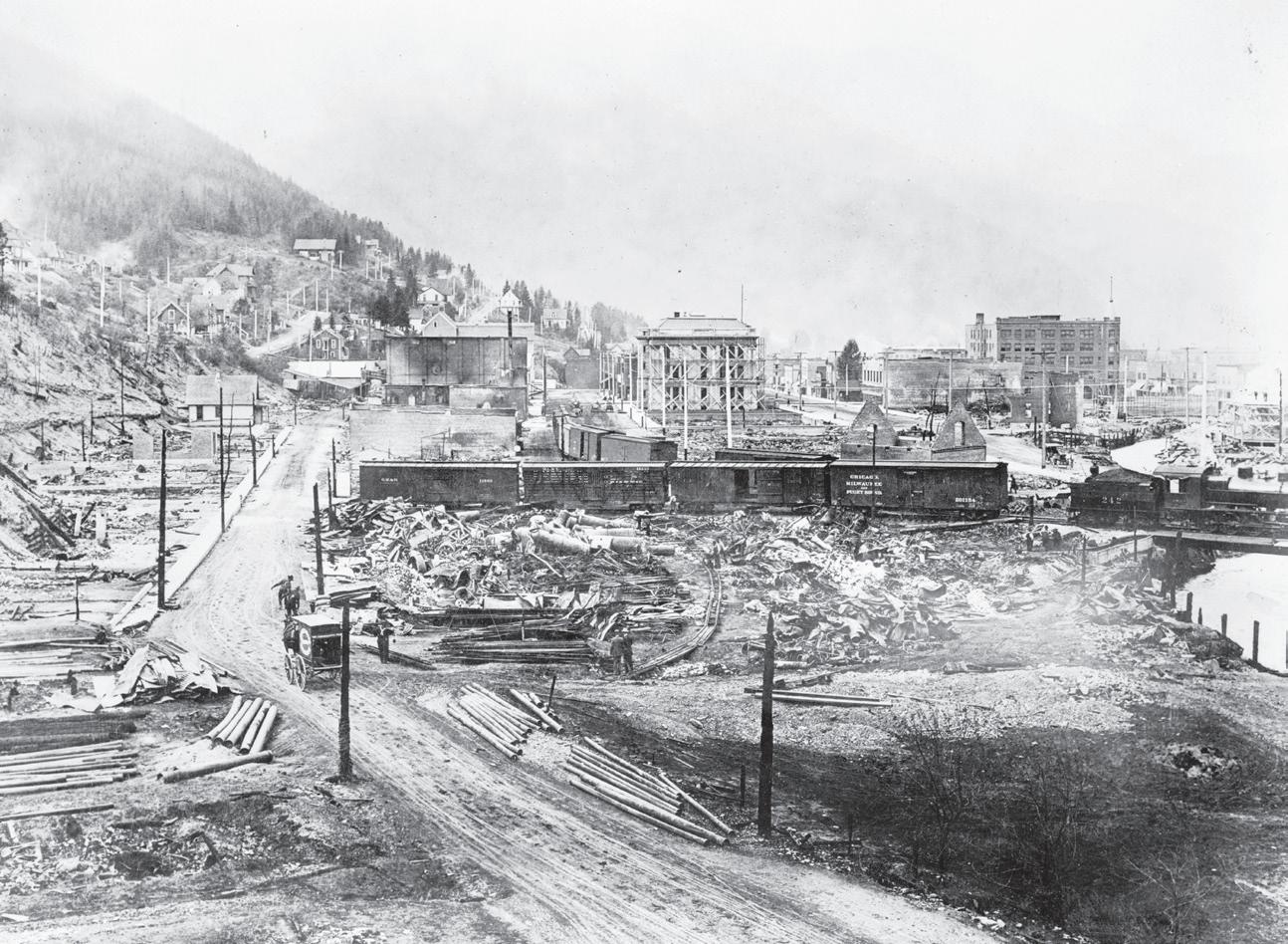
“IN A MATTER OF HOURS, FIRES BECAME FIRESTORMS, AND TREES BY THE MILLIONS BECAME EXPLODING CANDLES. ”
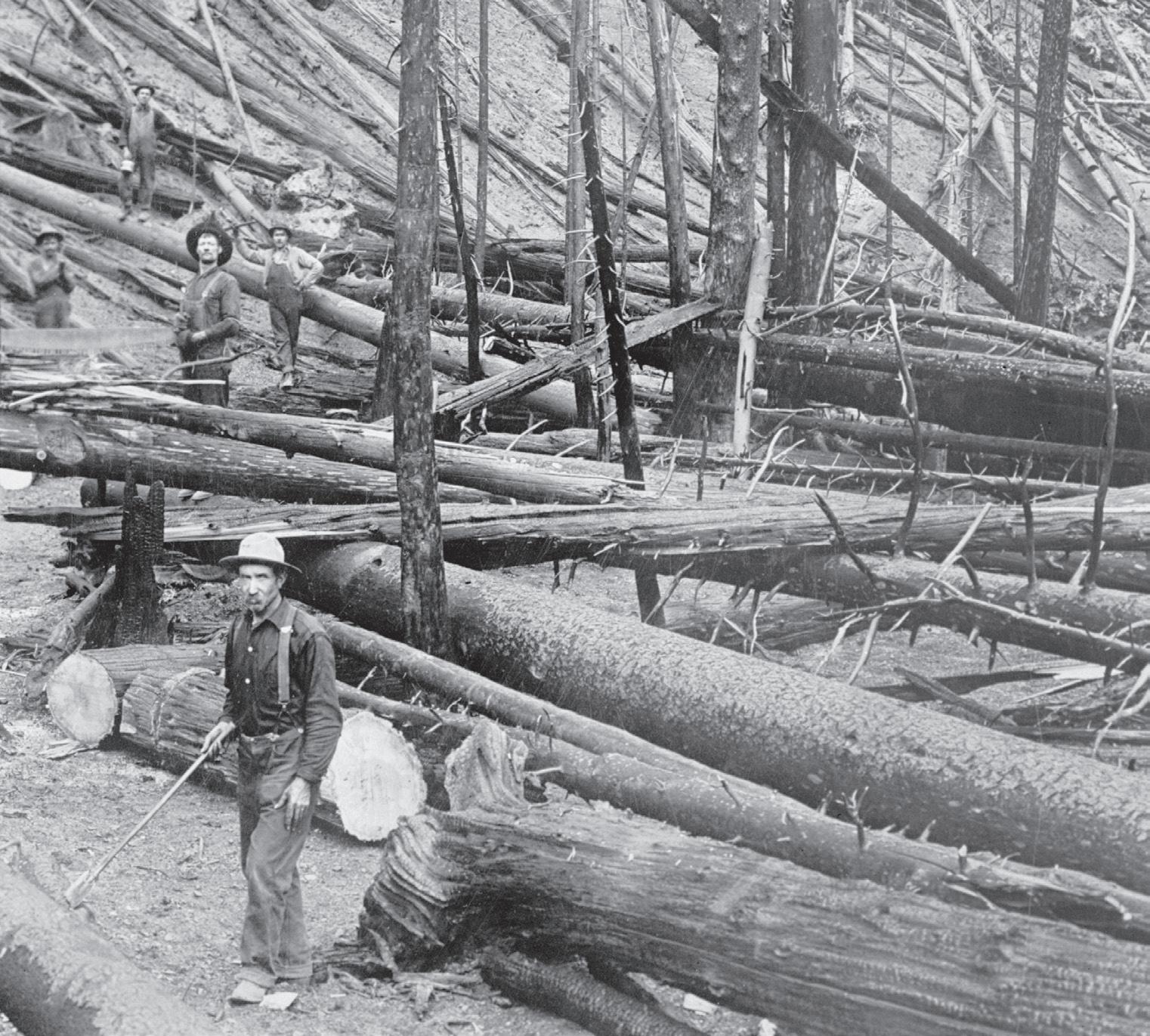
ho-Montana border en route to Chicago.
Miraculously, forest rangers, many of whom were working their inaugural season with the five-year-old fledgling government agency, were able to hold their own for a time, stymieing the scattered flames just a little longer in hopes the fall rains would come early and bring salvation. They were to protect the national forests at a time in land-management history when wolves and grizzlies had been eliminated and the only thing left in the woods to fear were the fires. And it was thought wildfires would be eliminated, too.
But wind slammed into the Northern Rockies on the afternoon of August 20, 1910, stirring the summer’s accumulation of residual smoke, embers and flickering flames until the very mountains themselves were fueling the force. Canyons and valleys became funnels for the fire-choked air, and suddenly a wall of flame was on the run. “In a matter of hours, fires became firestorms, and trees by the millions became exploding candles,” reads the Forest Service report from the disaster. The fire killed enough timber to fill a freight train 2,400 miles long.
The Big Burn ran from central Idaho east into Montana, west into Washington and north into British Columbia. On August 21, the sky was so dark ships 500 miles off
Above: A pine forest on the Little North Fork of the St. Joe River, Idaho, after the fire
the Pacific Coast couldn’t navigate by the stars. Smoke reached east into New England, and soot fell on the ice in Greenland. Light rain and snow checked the flames overnight on August 23.
Enduring the Flames
For those caught in the tinderbox 11 decades ago, surviving the wildfire was largely a matter of circumstance. The Big Blowup killed 78 firefighters and nine civilians directly, and more succumbed to smoke inhalation and flame exposure in the weeks and months that followed.
Many residents of Idaho and Montana’s mountain towns evacuated at the last hour and were saved. The Forest Service called in men from far reaches of the U.S. on the promise of regular pay in exchange for fighting forest fires alongside some 500 rangers employed nationwide. Untrained and underequipped, the crews would never be enough.
On August 7, President William Howard Taft sent 2,500 Army troops
OF PRIDE AND PROGRESS
FORTY YEARS IN YELLOWSTONE
BY STEVEN FULLER
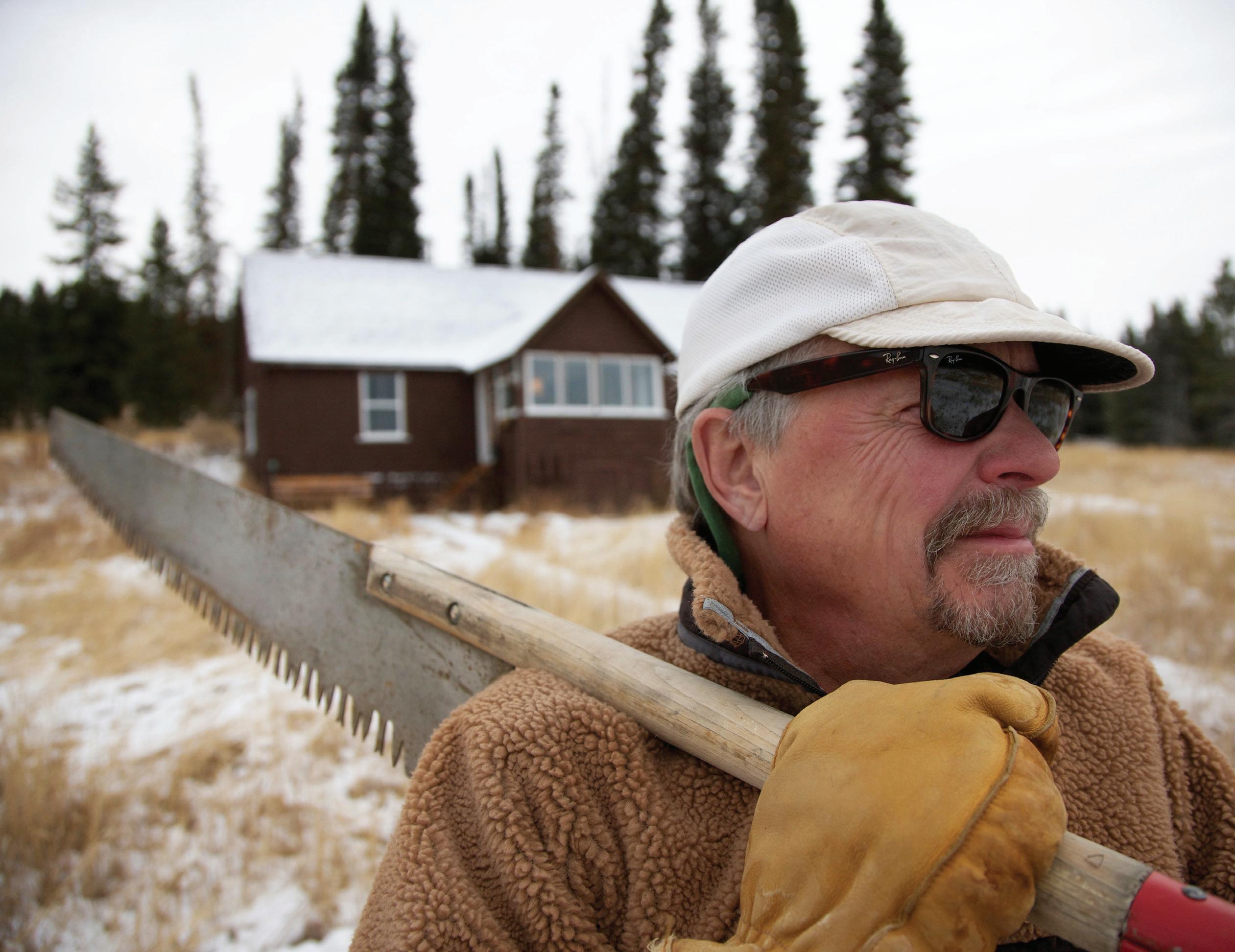
An old crosscut saw mounted on a D-shovel handle enables a winterkeeper to cut snow into upright, freezer-sized blocks that can be skidded off building
“ALL LIVING WINTERKEEPERS HAVE TESTIFIED THEIR TIME HERE WAS THE BEST IN THEIR LIVES.”
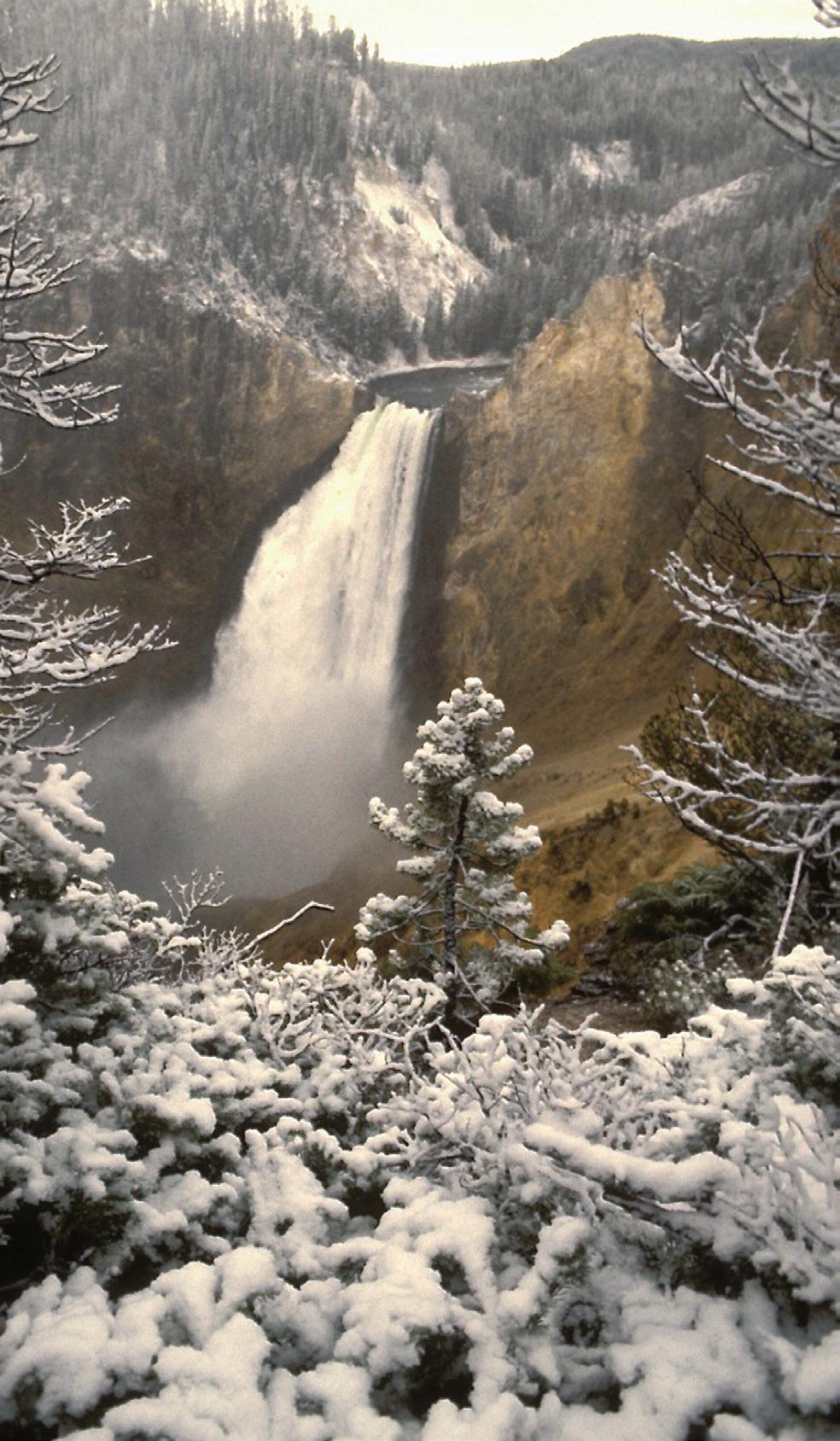

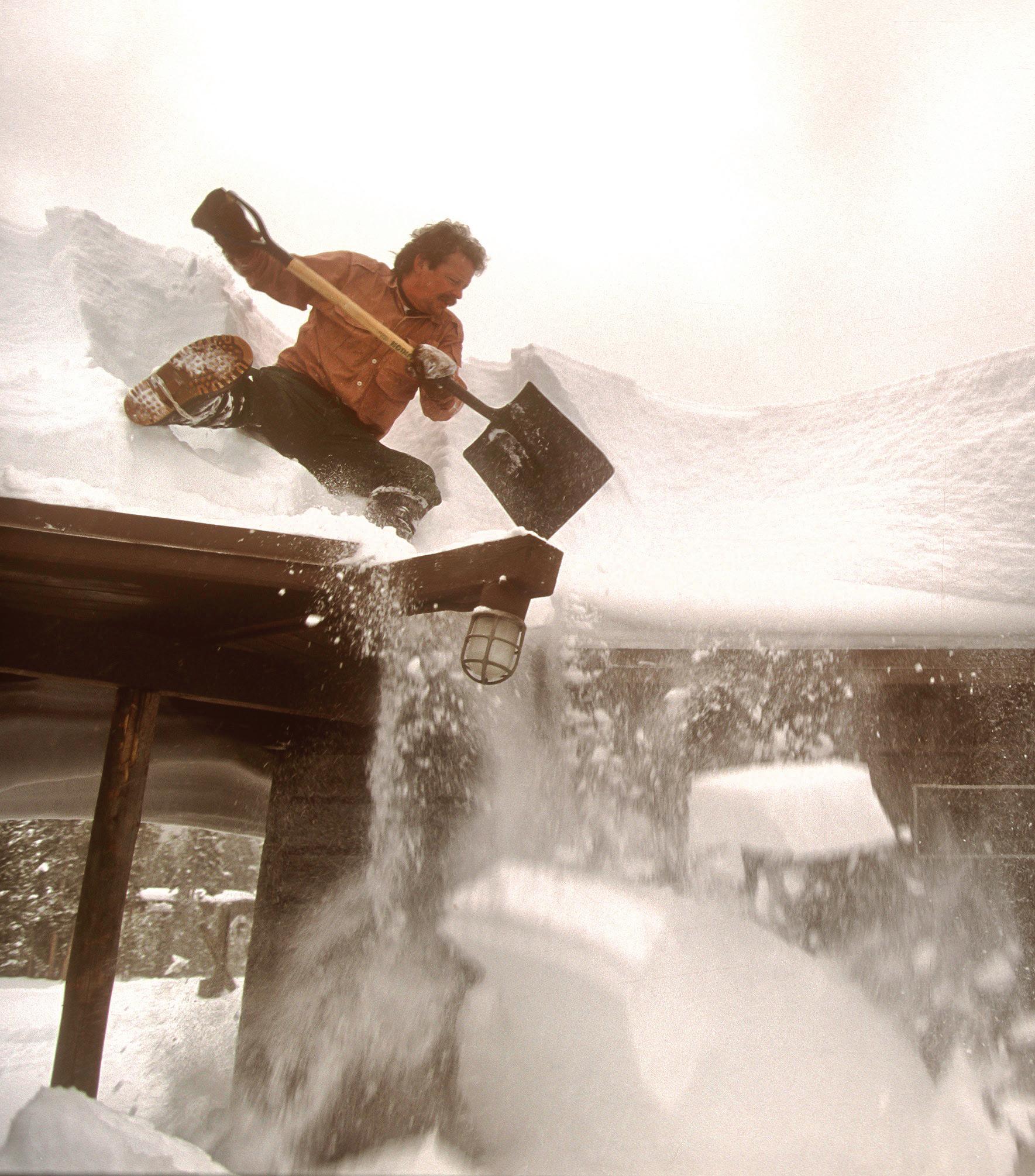
roofs. In this work, a snowblower is a useless toy. PHOTO BY JEFF VANUGA
L: The 309-foot lower falls located at the head of the Grand Canyon of the Yellowstone River. At 8,000 feet in elevation, snow can come any day of the year. PHOTO BY STEVEN FULLER
Of Pride and Progress Forty Years in Yellowstone
By Steven Fuller
If you came to Yellowstone National Park when it opened in 1872, you would have built a house here: On the Grand Canyon of Yellowstone overlooking the Yellowstone River, its famous waterfalls tumbling hundreds of feet over the cliffs. I have lived here, in the isolated Canyon winterkeeper’s house, since 1973.
The house appears in old tinted postcards
behind the Canyon Hotel, an architectural spectacle when it was built in 1910, its perimeter measuring one mile. After World War II the National Park Service determined it obsolete, and the hotel was condemned. In August 1960 it caught fire and burned for two weeks.
The fire was declared accidental, but in 1975 an old timer knocked on the door of my cabin, the only landmark left from his time in Yellowstone. We had coffee. When I asked if he was here when the hotel burned he said, “Here? Hell, I poured the kerosene!”
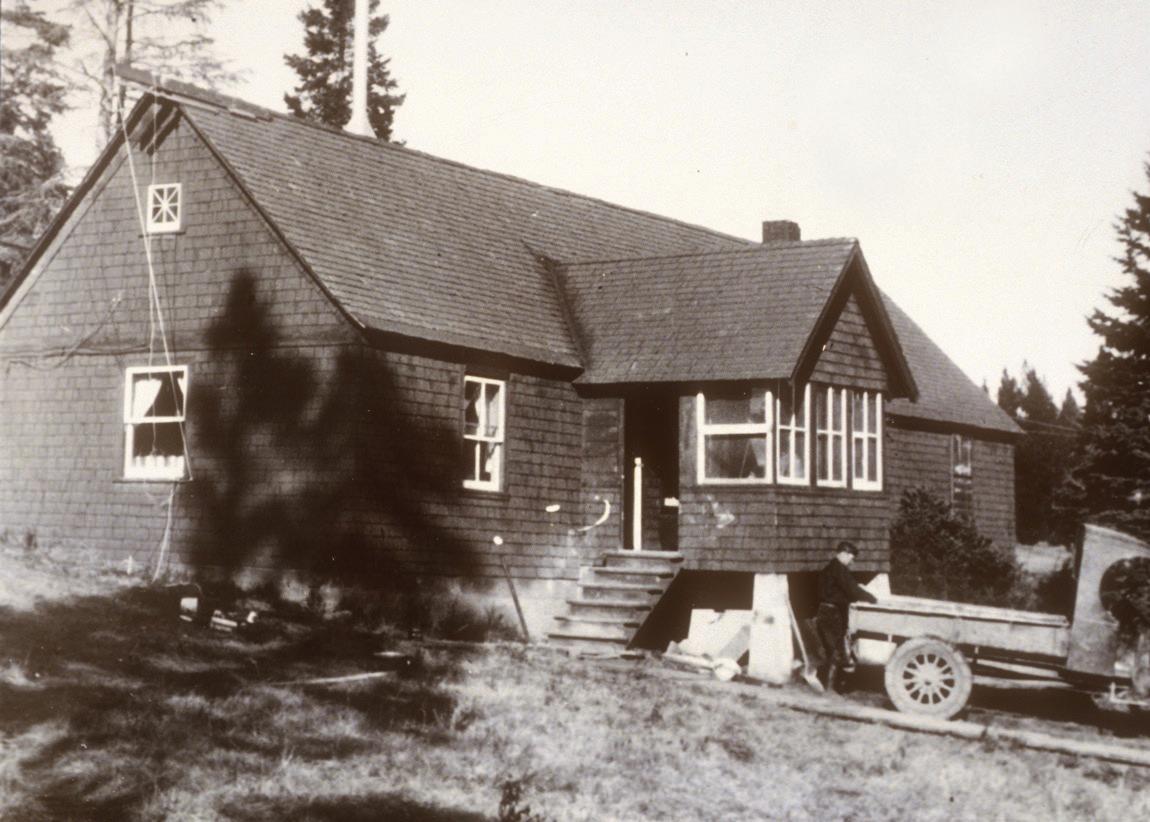
This house has been the Canyon winterkeeper’s for more than a hundred years. Since the 1880s, winterkeepers have been employed as caretakers to shovel snow off roofs of hotels closed for the long winters. I was the only applicant when I was hired in 1973. My wage was $13.25 a day.
The park looked after us. That first winter, they gave me a worn-out Johnson snowmobile. But when my wife Angela was hauling garbage, the throttle on the machine stuck and she fell off near the 1,200-foot canyon rim. Later, while I was riding it, the bicycle-style handlebars broke off in my hands.
A winterkeeper is “the toughest job in Wyoming,” Jerry Bateson, a retired winterkeeper, told me. I never thought about that until one winter when I had no snowmobile at all. I skied a mile to and from work carrying two shovels, a six-foot snow saw, and a 10-foot ladder on my shoulders from one building to the next.
The nearest neighbors lived on Yellowstone Lake, 17 snowmobile miles south: a ranger, his wife, and two winterkeepers, one known as Silent Joe. Otherwise,
average winter snow depth ranges from 3-6 feet.
PHOTO BY JEFF VANUGA
By mid-March many bears are out of winter
we had to snowmobile 34 miles to Mammoth or 40 miles to West Yellowstone to visit anyone. And it was questionable if the snowmobile would make it there, let alone back home.
Every fall we cached the supplies needed for the next five months by the case or the 50-pound bag. We baked bread, brewed beer, sprouted beans, and used powdered milk. Our mail arrived in a big canvas bag once every month or so. I listened by short wave radio to the BBC. Power outages were frequent and could last as long as two weeks. Those nights were lit by candles and Coleman lanterns.
All living winterkeepers have testified their time here was the best in their lives. One winterkeeper, circa late 1940s, visited me shortly before he died. He said he killed a grizzly bear off the front steps and poached deer to supplement the meager wages winterkeepers have always been paid.
Grizzlies are still common here. When Angela and I moved in, hundreds of nails had been driven through the back door so the protruding points would tear a
R: Steven Fuller getting it done, circa 1999. Fuller winterkeeps approximately 100 buildings in Yellowstone’s Canyon Village area, where
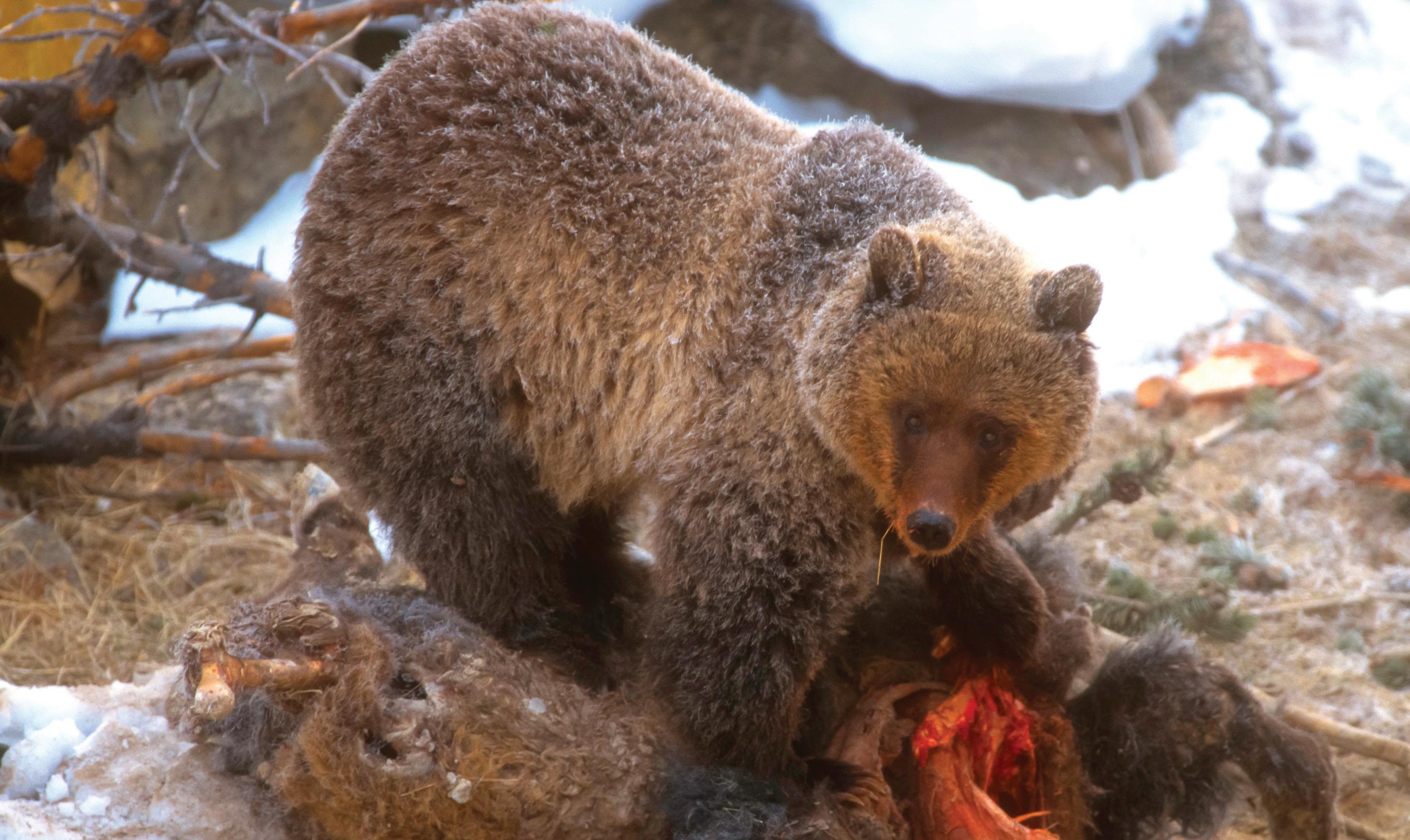
bear’s paws if it attempted to claw its way inside. I witnessed this defense firsthand on October 5 during our second winter.
Angela, eight months pregnant, our young daughter Emma, and I were enjoying a dinner of elk stew when we heard a commotion at the small kitchen window. A huge, pigeyed grizzly head intruded into the room.
My family fled the kitchen while I advanced to shoo the bear away, a difficult task since this occurred years before pepper spray was available. I first tried an ancient .22 pistol (would not fire); considered shooting a 12-gauge shotgun over the bear’s head (damage to kitchen wall too significant). I made a long pole with two
prongs wired to an electrical outlet, the idea: shock the bear while it was stuck in the window (not sure this was a good idea). Later, I tried ammonia-filled balloons (no noticeable effect on the bear). I joined the family and we bailed out a window.
“[WE] WERE ENJOYING A DINNER OF ELK STEW WHEN WE HEARD A COMMOTION AT THE SMALL KITCHEN WINDOW. A HUGE, PIG-EYED GRIZZLY HEAD INTRUDED INTO THE ROOM.”
I radioed the ranger at Yellowstone Lake. The bear was trapped and released 40 miles northeast of Canyon, but two nights later it was back trying to claw its way through the walls. Trapped again, she proved to be an elderly, underweight female unlikely to survive the winter. Ultimately she was euthanized.
Things have changed in the 41 years I’ve lived here and I’m now one of two winterkeepers left in the park. In summer 2014, Canyon was open
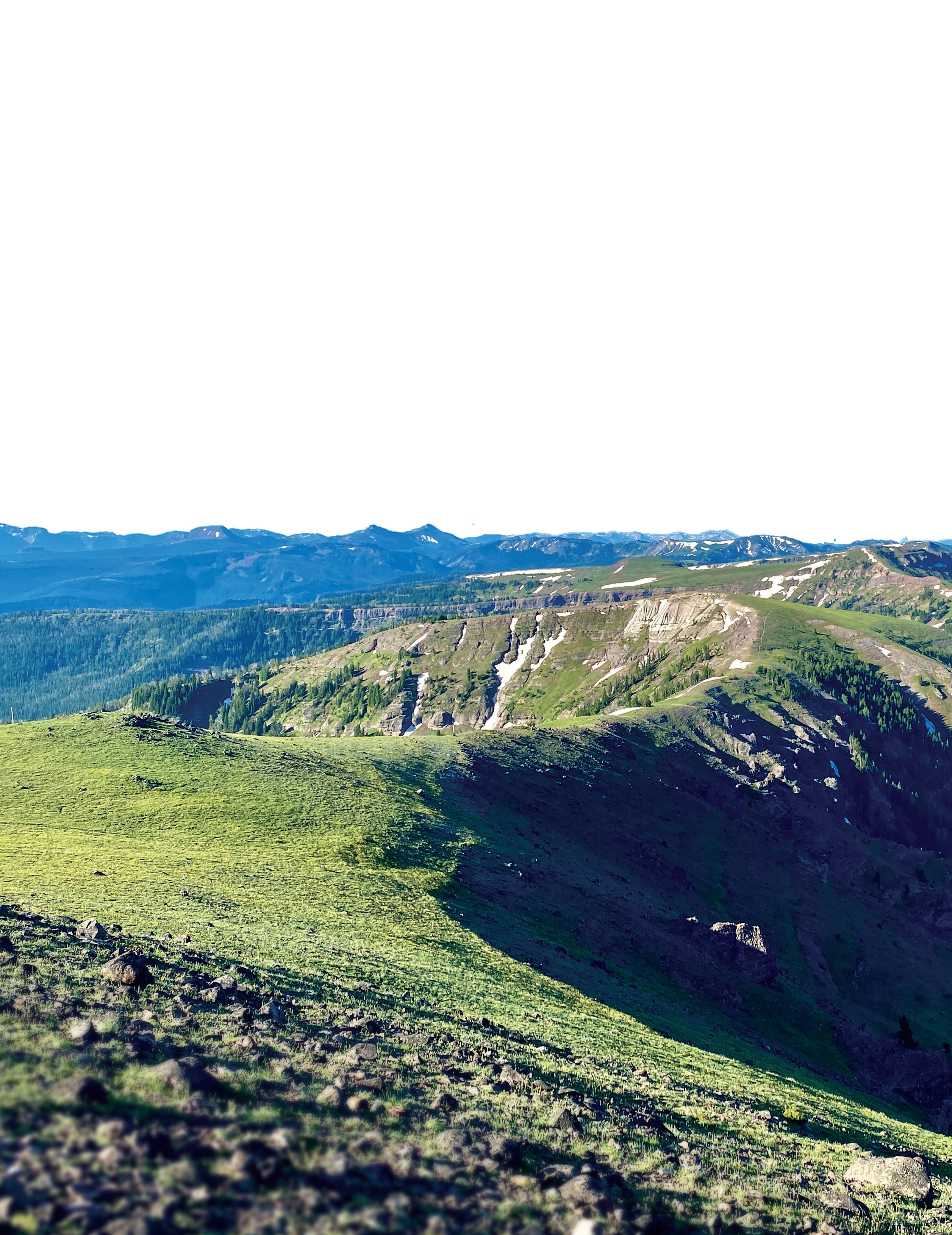

A land swap turned the fate of the Gallatin Range in motion. That fate now hangs in the balance.
By Mira Brody
It can be presumed that entrepreneur Tim Blixseth had a twinkle in his eye as he peered out the window during a fateful helicopter ride over the Gallatin Range, wild mountains stretching north from Yellowstone National Park’s upper boundary. It was 1991, 127 years after President Abraham Lincoln had signed the Northern Pacific Railroad Charter, dividing 47 million acres between Minnesota and Oregon into a checkerboard of federal and private land. Blixseth’s gaze was fixed on one such checkered parcel: 146,000 acres beginning north of the Hyalite drainage and encompassing everything from the rugged spine of the Gallatin Crest to the fertile and species-diverse Porcupine Creek as it flows into the Gallatin River.
At the time, that parcel was owned by Plum Creek Timber Company, a master limited partnership of Burlington Northern that harvested timber from remaining government-owned charter squares across the West. Although lush with timber, that particular tract in the Gallatins had proved challenging for resource extraction, as neighboring checker squares of federal land legally islanded it. But Blixseth, a keen businessman drawn to opportune circumstance, saw value beyond lumber in the land below him.
He asked the pilot to turn the helicopter back around to Bozeman and offered a decisive statement that would send a tremor across the entire gameboard and redirect the fate of the landscape: “We’ll take it.”
Blixseth, known for his eclectic portfolio of investments in the region that met with both success and failure, had just consolidated his holdings in the Pacific Northwest timber company,
Crown Pacific, and had formed Big Sky Lumber Company with partners Mel and Norm McDougal, which purchased the parcel. In a game that perhaps resembled chess more than checkers, that land became a critical pawn in one of the most significant land exchanges in Western U.S. history, an act that would consolidate that fragmented land in the Gallatins, effectively setting the board for a spectrum of fates for a critical stretch of the Greater Yellowstone Ecosystem. But decades later, another move has yet to be made.
UNTANGLING A ‘LAND DISASTER’
Bob Dennee began his personal recollection of events the same way most people involved at the time did: with a deep breath as though preparing to dive deep underwater, a pause, and the declaration of a year. It was 1992, and Dennee was the lands and realty officer for Gallatin National Forest. Big Sky Lumber had bought the 146,000 acres in the Gallatins and had presented it on a platter to the Forest Service in exchange for a smattering of other timber-laden and accessible squares in the region, as well as another piece of land known as the South Block in the Madison Range.
Dennee was the lead contact in dealings between Big Sky Lumber and the Gallatin National Forest and has what he calls a “corporate memory” of the land he’d become intimately familiar with over his career. When he talks about the history of mountain ranges in southwest Montana, it’s like listening to a witness to Pangea.
“Most people today ... they don’t recognize what took place in the 1990s and early 2000s to consolidate lands in these four mountain ranges: Madison, Gallatin, Bridgers and the Absaroka-
The Gallatin Crest stretches south from the Hyalite drainage to Yellowstone National Park. Photo by Mira Brody
Beartooths. It’s just all national forests,” Dennee said. “Most people don’t recognize, well, how did that happen? It used to be all checkerboard.”
Blixseth and his partners had bought the land not for what it could do for them, but what they knew it meant to the Forest Service and area conservationists—and what those parties would give up in exchange for it. Attorney Joe Sabol represented Big Sky Lumber in the deal.
“[Sabol] saw the long-term public value of acquiring and protecting the lands in Porcupine and Taylor Fork, and he did his best to push the owners in that way,” Dennee said.
Dennee said he spent countless hours in Sabol’s downtown Bozeman office drafting proposals alongside Blixseth, the McDougals and Sabol. Dennee, who is retired after 40 years following a legacy of land negotiation on behalf of the Gallatin Forest, said this negotiation in particular, “was a very significant part of my life.”
The exchange was made possible by two congressional land transactions: the Gallatin Land Consolidation and Protection Act of 1993, or Gallatin I, involving the Porcupine and South
Cottonwood drainages; and the Gallatin Land Consolidation Act of 1998, or Gallatin II, involving mostly the Taylor Fork, Bridger and Bangtail ranges. Pat Williams, Montana’s congressional delegate in the U.S. House of Representatives between 1979 and 1997, whose service is most marked by his conservation advocacy, sponsored the bills.
“We were facing a land disaster in the Gallatin,” Williams said. Originally from Helena, Williams spent his public life conserving the landscape he’d grown up in—he passed legislation to establish the Rattlesnake Wilderness in 1980 and the Lee Metcalf Wilderness in 1983—and with the initiative in the Gallatins, he felt a sense of urgency. He, alongside other conservationists, feared that between brute timber extraction and a looming interest in real estate development, they would soon witness the complete loss of a critical wild landscape.
“Just north of America’s first national park, Yellowstone, the Gallatin Range connects the other mountains of the Yellowstone Ecosystem much like spokes in a wheel,” Williams was quoted during the congressional hearing.
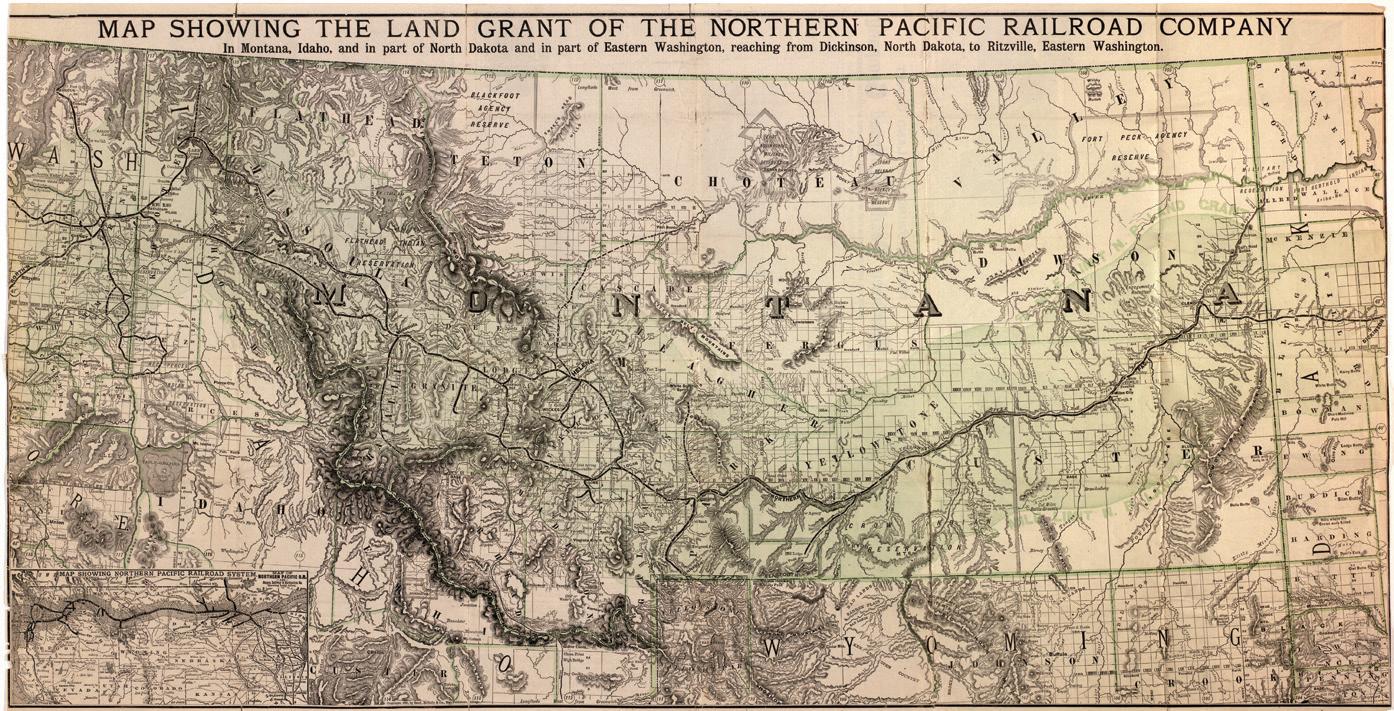
● 1864
President Abraham Lincoln signs the NPRC, dividing 47 million acres of land from Minnesota to Oregon into checkerboard.
1870 Northern Pacific begins railroad construction.
Gallatin I was well received. The individuals and organizations that testified in support of the bill were of note: Montana Gov. Marc Racicot, Bozeman Mayor Timothy Swanson, the Montana Wilderness Association, Greater Yellowstone Coalition, Rocky Mountain Elk Foundation, and The Nature Conservancy, among others. Blixseth remarked that the conservation community and the timber industry being agreeable to a deal made about more than just dollar signs marked a unique moment.
“Certainly today, if we didn’t do this trade with the Forest Service, we would make a lot more money,” Blixseth said at the hearing. “There is a tremendous demand for these properties. There seems to be a big flock of people to the state of Montana just to buy a piece of the wilderness.”
By way of the two acts, the Gallatin National Forest acquired a total of 101,000 acres of the Greater Yellowstone Ecosystem between 1993 and 1998, most of which had been marooned in checkerboard squares in the Gallatin Mountains. In return for the exchange, Big Sky Lumber acquired 5,763 acres in the north Bridgers, three sections in the Bangtails, one section in the South Fork of the West Fork Gallatin and 12,414 acres on the Flathead and Lolo national forests. This exchange included the South Block, a 15,200-acre parcel nestled to the east of Lone Mountain near what was then the sleepy ski town of Big Sky. In 1999, Blixseth opened the Yellowstone Club on that land, proving his instinct in the helicopter less than 10 years before would yield a great business opportunity.
Map courtesy of the Library of Congress
1872
Yellowstone National Park is established as America’s first National Park.
1977
The Hyalite-PorcupineBu alo Horn Wilderness Study Area is established, temporarily protecting the Gallatin Range.
SETTING THE BOARD
The story of this land swap is of course a story of land value, but to truly understand land value in the West, it’s important to understand the region’s railroad history. When the Northern Pacific Railroad Charter was signed in 1864, much of the country’s wealth was concentrated in the East. The charter was a grant provided by Congress to spread infrastructure to the unruly West with the intention of hauling and extracting resources and encouraging homesteading. It granted land in 640-acre offset squares known as sections; odd-numbered sections were given to private railroad companies and the federal government kept evennumbered sections. Many of Montana’s mountain ranges were chopped into this checkerboard.
Northern Pacific began railroad construction in 1870. In 1880, it consolidated to Burlington Northern Railroad and in 1988 formed a public company, Burlington Resources, to manage its resource assets. A corporate split established the subsidiary Plum Creek Timber Company, which inherited the surface estate of Burlington’s remaining land; mineral rights transferred to Meridian Minerals, among others.
When Yellowstone National Park was established in 1872, the Gallatins were excluded due to their complicated checkerboarding, leaving them an exposed, fragmented arm stretching north from the park’s upper boundary. Still, conservationists who’d had their eye on the land even before Blixseth’s fly-over didn’t yield in their efforts to preserve it. In the 1977 Gallatin Forest Plan, the range was designated
a Wilderness Study Area, granting it temporary protection.
By the early 1990s, Plum Creek owned 146,000 acres of squares across the Gallatin, Madison and Bridger ranges, which were intermingled with sections of other public, state and private land. Unable to extract resources from a majority of their land, whisperings of Plum Creek’s intent to sell trickled through the region.
That’s when Bob Kiesling perked up. Kiesling was the founding executive director at The Nature Conservancy’s Montana-Wyoming field office.
“That was going to create an opening for who?” Kiesling recalled of Plum Creek’s potential sell-off. “For somebody, for some government agency, for some institution like mine, The Nature Conservancy,” Kiesling said. “I mean, who would be interested in those lands that were checkerboard and private?”
If there’s anyone who recalls just how close the Gallatin and Madison ranges once were to coming under conservation ownership, it’s Kiesling. He teamed up with personal and professional acquaintance Bob Anderson, the founding executive director of the Greater Yellowstone Coalition, and by around 1985, they had outlined a vision of consolidating railroad lands, “creating a contiguous, continuous block of public land from Bozeman down to Yellowstone.”
They called it the Second Century Project, a name with meaning: If the “first century” was when the railroad land grants were issued, the “second century” would blueprint the next iteration for these spliced lands.
“Co-mingled like this, where the corporations own every other section mixed in with public land every other
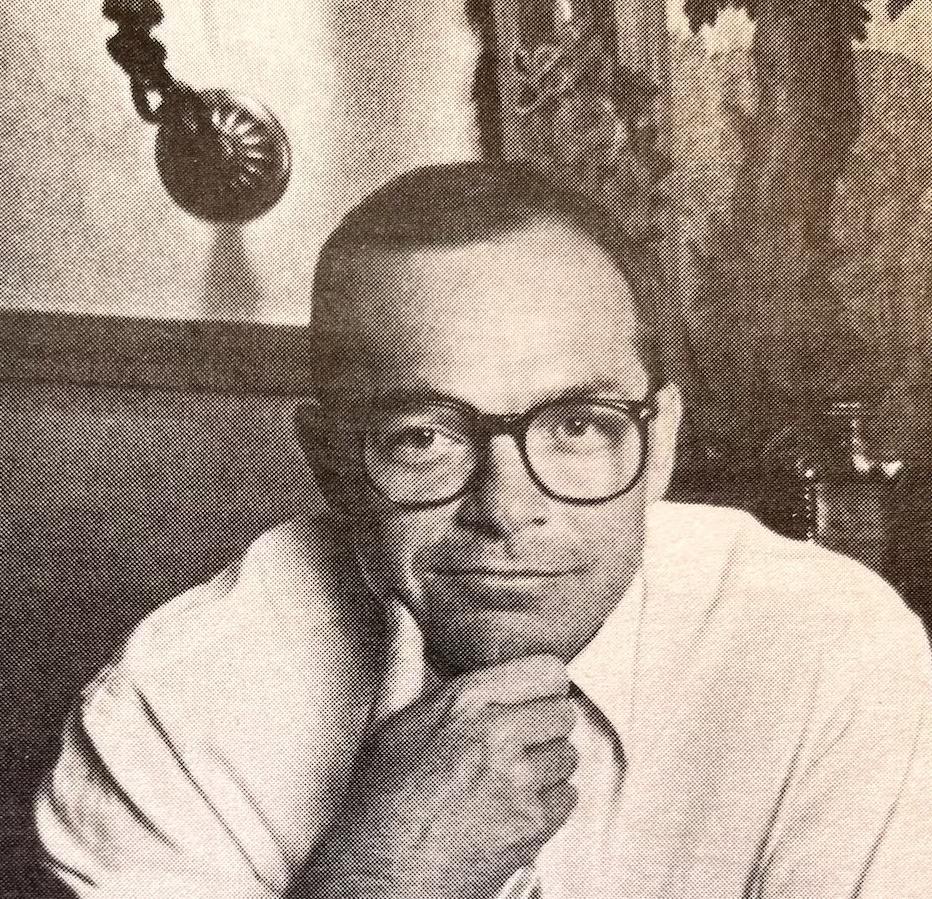
section, it’s unmanageable for both, so let’s figure out ways to move things around the map here like chess pieces,” Kiesling said. “Let’s figure out how to block up public lands where it’s most important to do so, and figure out how to get the corporations out of these highly important wild lands and into other places where they can make an economic return more sensibly.”
Just as they were setting pieces, the team fell apart. Anderson was ousted from GYC and Kiesling wasn’t able to shoulder the Second Century Project on his own. With the arrival of The Nature Conservancy’s new president, Brian Khan, Kiesling was also feeling a dramatic shift that ultimately led to his departure.
By the end of the century, Plum Creek closed its mill in the Gallatin Valley, shuttering local timber production, and murmurings of a massive land sale increased in volume. This time, it drew the attention of Michael Scott.
“There were quiet discussions that went on,” Scott recalled. Scott was GYC’s

1988
Northern Railroad forms a public company, Burlington Resources, to manage its resource assets.
1989
● 1991
Tim Blixseth flies over the Gallatins. ● 1992
Big Sky Lumber Company purchases 146,000 acres of checkerboard in the Gallatin, Madison and Bridger mountains from Plum Creek.
Timber dealer and developer Tim Blixseth untangled a mass of Greater Yellowstone landscape where others had been unsuccessful. Photo by John Klicker
first program director for six years before he served as their executive director between 2001 and 2008. With fresh staff, GYC, The Nature Conservancy and the Wilderness Society partnered to create a vision to transfer the roadless lands to the Forest Service through the Land and Water Conservation Fund. This included Porcupine Creek in the Gallatin’s Wilderness Study Area, which was rumored to soon become a massive luxury golf course development. The portions with roads would continue to be managed for timber production. Plum Creek’s shut-down mill would be converted into a value-added mill, producing building materials for the developing Gallatin Valley.
“That all blew up for a variety of personal reasons,” he said.
It wasn’t a matter of cash, explained Scott. “It came down to personality differences,” he said. The personalities being TNC’s new figurehead, Khan, and Charlie Grenier, Plum Creek’s executive vice president, and a prominent figurehead in the West’s timber industry for over a decade.
“The rumors at the time were that it came apart from conflict between the negotiators, as opposed to conflict over what the price of the deal would be,”
Scott said.
Enter Blixseth in his helicopter, a character quite unlike any this effort had yet seen. Blixseth—and the many stories written about him—tend to chart the timeline of his life by monetary ups and downs: He grew up on welfare in the logging community of Roseburg, Oregon; as a kid he sold three donkeys at a $150 profit after rebranding them as pack mules; he made his first $1 million with an investment in Crown Pacific; he
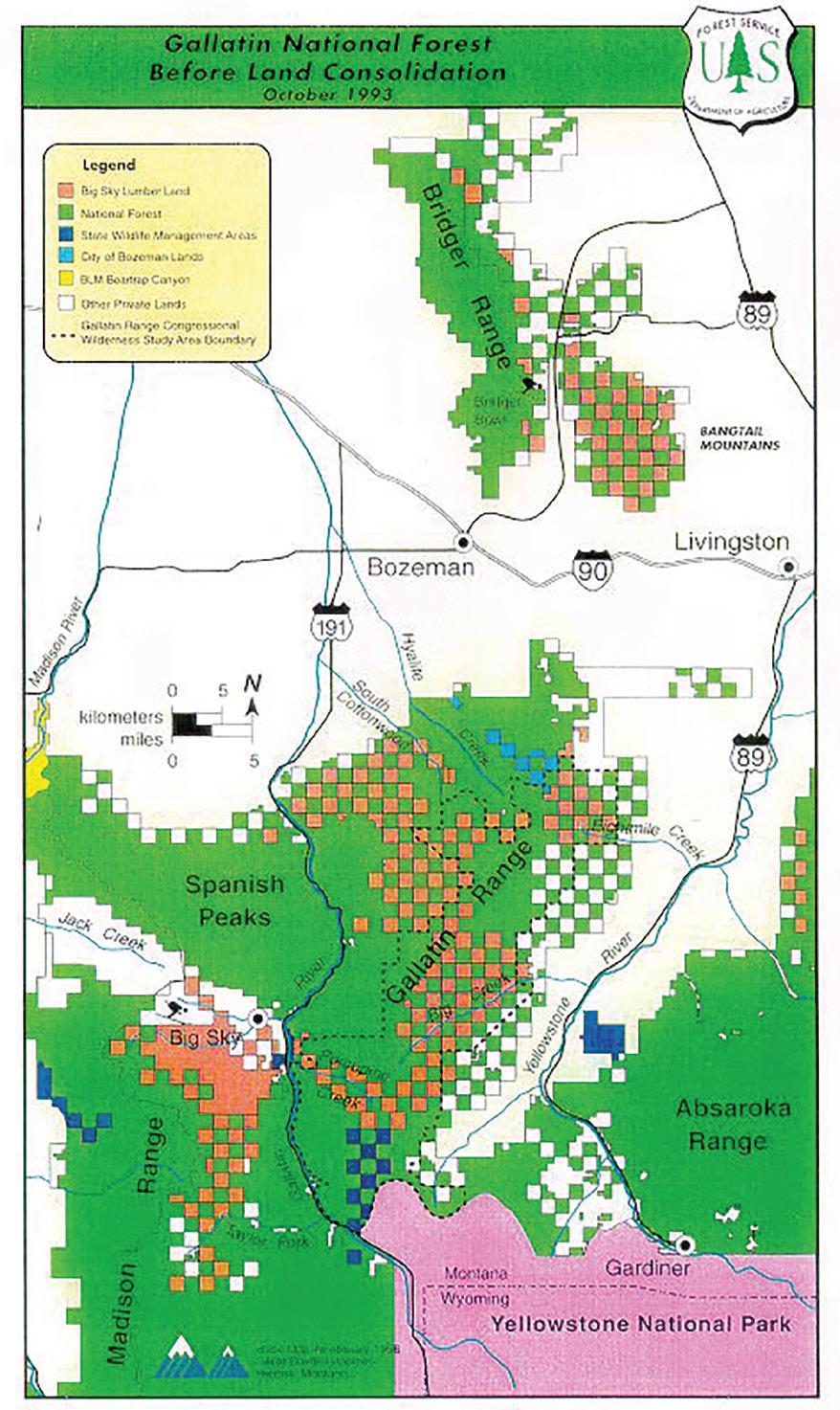
1993
The Gallatin Consolidation and Preservation Act of 1993 (Gallatin I) is approved by Congress.
founded the Yellowstone Club with a pickup truck and a hammer. By 1988 his endeavors included a string of defaulted timber sales and bankrupt business ventures. Still, Blixseth’s aptitude for recognizing opportunity was sharp, and it felt fitting that a man with a lifetime of land jiggering under his belt would successfully consolidate the Gallatins where others had struggled.
“I would say that I had to look at things that aren’t, and try to envision what they could be,” Blixseth said.
In 1992, Blixseth’s Big Sky Lumber bought the 146,000 acres of checkerboard squares in the Gallatin, Madison and Bridger ranges, as well as Plum Creek’s sawmill, for $27.5 million, turning a page that had been stuck for decades.
SERENDIPITY
“I never had a vision of Yellowstone Club,” Blixseth said. “When we first bought the property, there was roughly 15,000 acres surrounding a major ski resort, Big
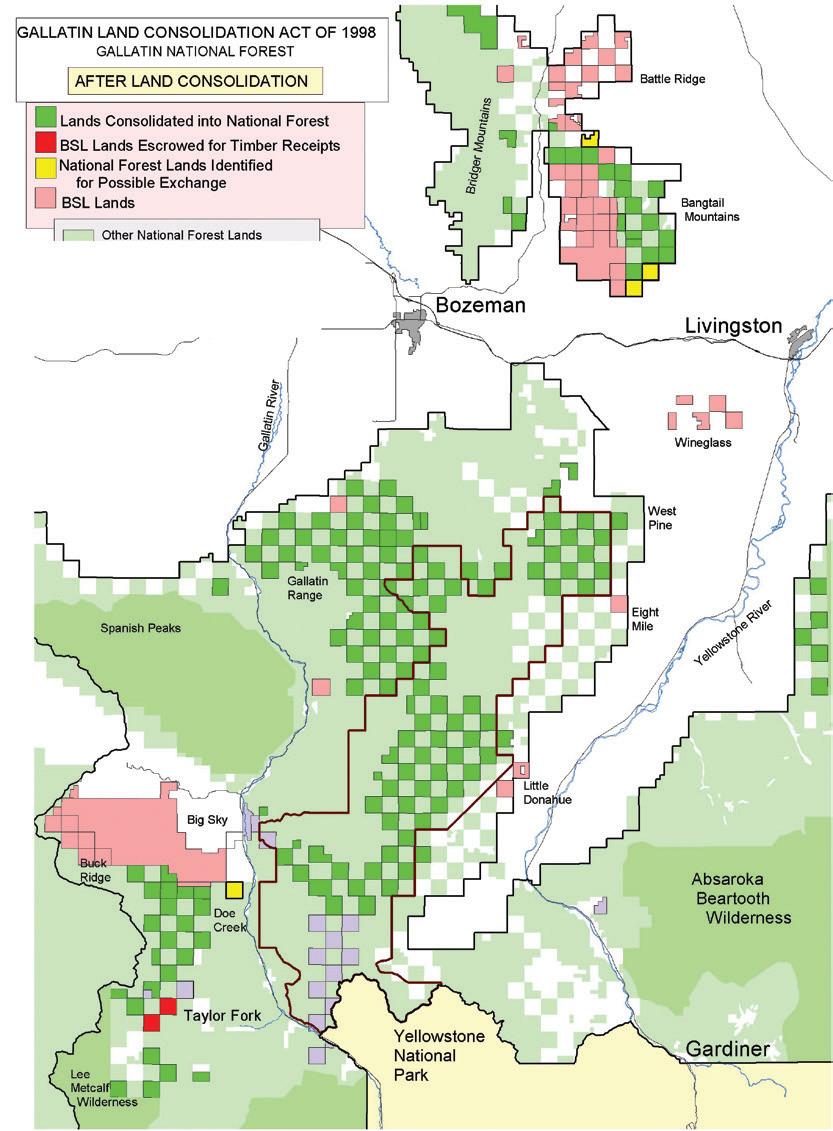
1997
Blixseth breaks ground on Yellowstone Club.
Left: Map showing land ownership right after the Big Sky Lumber purchase in 1993, but before land consolidation. Orange squares are Big Sky Lumber land purchased from Plum Creek. Green squares are existing national forest.
Right: Map showing postland consolidation in 1998. Dark green was acquired by the national forest, and orange is owned by Big Sky Lumber, including the large orange swath in the lower left, known as the South Block. Maps courtesy of the Custer Gallatin National Forest
1998
The Gallatin Land Consolidation Act of 1998 (Gallatin II) is approved by Congress.
Sky. And I just felt that the 15,000 acres had to be worth more than just cutover timber land.”
The Yellowstone Club, an elite mountain haven for the wealthy, broke ground in 1997. The club filed for bankruptcy in 2008. Blixseth left while facing a divorce and legal trouble, some of which ended in jail time for the former timber baron. In 2009, the club was purchased by Boston’s CrossHarbor Capital Partners.
Today, behind a security checkpoint lies 2,900 acres of private skiing, a 28,000-square-foot golf course, 40 miles of private hiking and mountain bike trails, fine dining and countless multimillion-dollar condos and homes. The neighboring Spanish Peaks Mountain Club and Moonlight Basin, also constructed on former Big Sky Lumber land, have taken a similar form. In January 2025, picking up the same tools Blixseth used, the Yellowstone Club exchanged 6,110 acres of private land for 3,855 acres of Custer Gallatin National Forest land in the Crazy Mountains and Madison Range. While both celebrated and criticized, this recent action echoes one thing from Blixseth’s trade: sweeping impact.
“Do I think it’s good for the community?” Blixseth said of the Yellowstone Club. “I think it’s provided a tremendous amount of jobs. It’s certainly driven real estate values through the roof. The negative? It’s probably priced a lot of the locals out of the Big Sky market, and it’s probably increased traffic a lot,” Blixseth paused, a smile clear even over the phone. “And there’s probably more egos per square inch than should be.”
Today, Blixseth’s passion is writing music. He speaks enthusiastically about “Heart of America,” the song he
wrote in 2005 for the “Today” show’s Hurricane Katrina benefit and how in a year, it raised $147 million. This fall, the band Cycamore gave it new life, a revitalization Blixseth is happy to see.
“After you die, if you write a song that’s a hit song that people will play 50 years from now, that’s more satisfying to me,” Blixseth said. “If you make a billion dollars, as soon as you die they don’t put your name on all those billion dollars.”
Blixseth leaves behind another legacy
in June 2024 that would protect 250,000 acres across the Madison and Gallatin ranges, but at this stage, it remains a debated proposal.
“There’s a reason this final designation of the Hyalite-Porcupine-Buffalo Horn has not been resolved,” Dennee said. “It’s because of the strong different interests in how best to manage that landscape.”
While he comments that the partnership’s proposal is “a compromised solution,” Dennee, who still works as
“Just north of America’s first national park, Yellowstone, the Gallatin Range connects the other mountains of the Yellowstone Ecosystem much like spokes in a wheel.” -Rep. Pat Williams
through his role in the land swap story, a narrative that has chapters yet to be written. While the consolidation accomplished in the ’90s set a playable board, today’s interested parties (still many of those same conservation groups) have yet to decide what game will be played there. The land is consolidated, yet as a Wilderness Study Area, it lacks permanent protection, and the need for such is increasing. That “tremendous demand” to buy a piece of Montana wilderness Blixseth observed in the ’90s has only grown as attention on Montana magnifies. This isn’t lost on the conservation world.
The Gallatin Forest Partnership, represented by GYC, The Wilderness Society and others, launched a proposal
a part-time consultant with the Forest Service, offers the reminder that altering the fate of a massive piece of ecosystem is not like switching on a light. The work is incremental.
“It takes incredible patience and persistence and time and effort to put together land agreements of this scale. It’s not done easily,” Dennee said. “And I feel like looking back, I was in the right place at the right time.”
Blixseth too, believes in serendipity.
“I think there’s a reason for just about everything,” he said.
Mira Brody is an avid explorer of the Greater Yellowstone Ecosystem’s open landscapes, and the VP of Media at Outlaw Partners.

Regional conservationists launch the Gallatin Forest Partnership, a group aiming to protect 250,000 acres of the Gallatin and Madison ranges.
Club exchanges 6,110 acres of private land for 3,855 acres of national forest land in the Crazy Mountains.
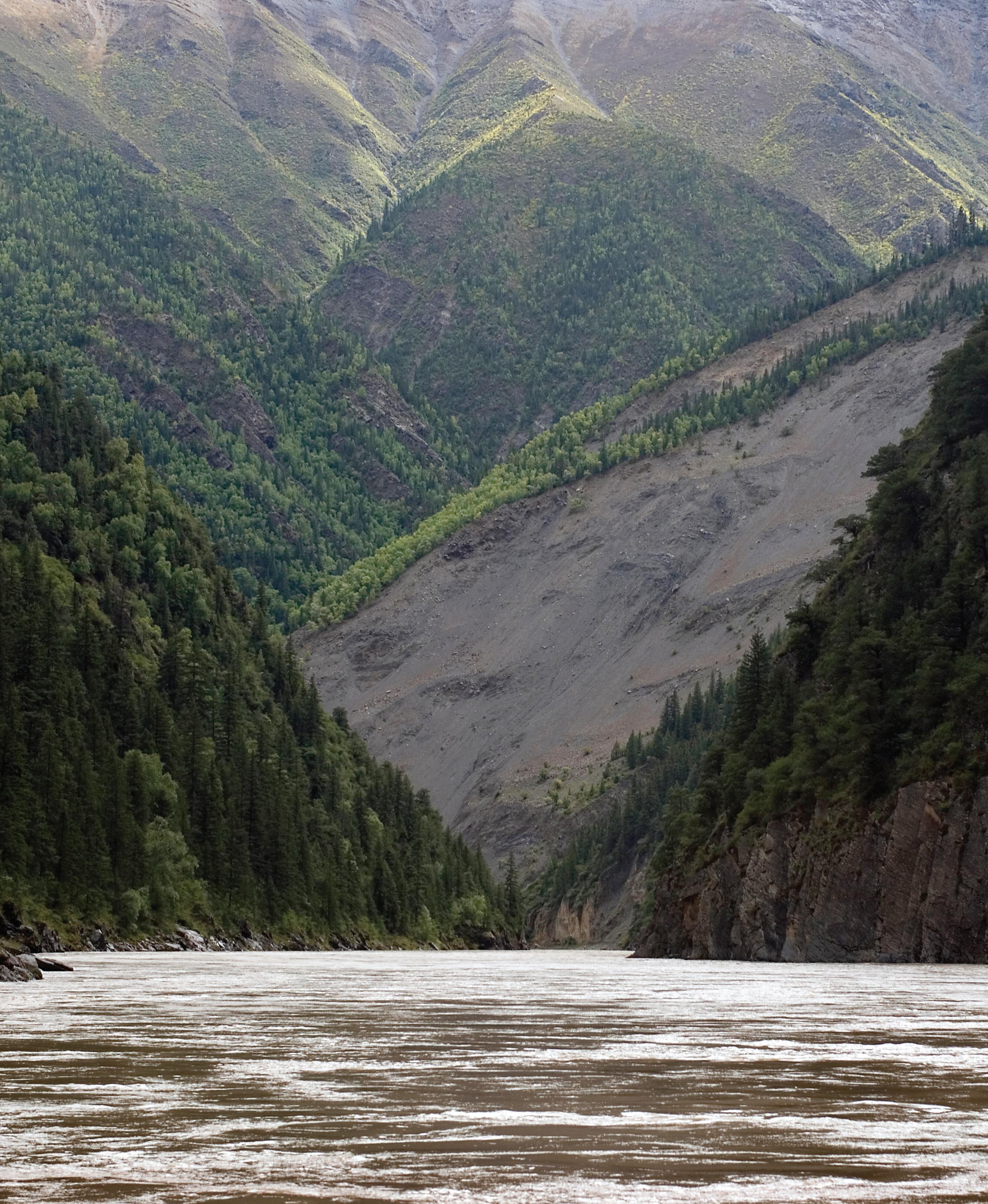
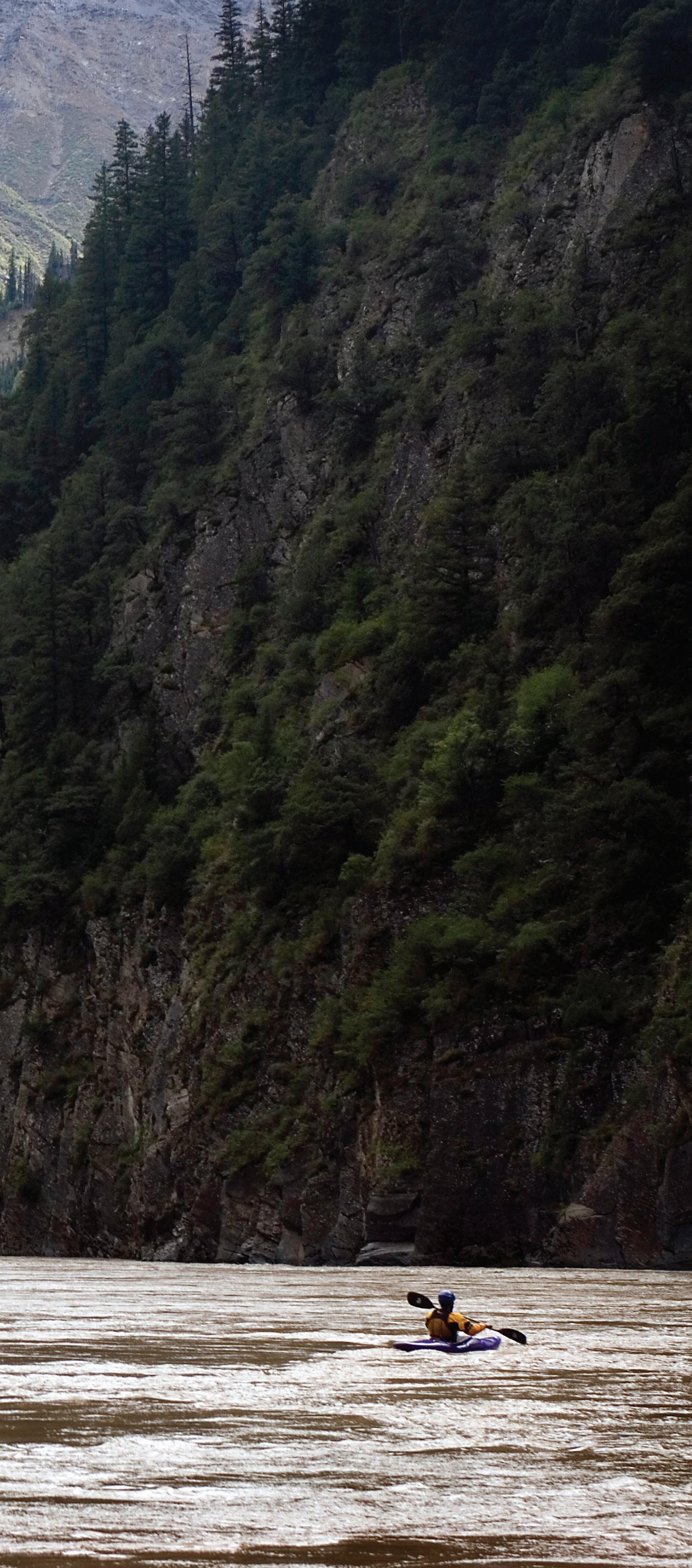
Travis Winn leads a first descent of the Salween River in Tibet in 2007. This image was in Eric Ladd’s “River People” in Summer 2023. Photo by Kyle George
A devastated nation faces years of rebuilding after 122 earthquakes in 28 days
BY ERIC LADD WES OVERVOLD
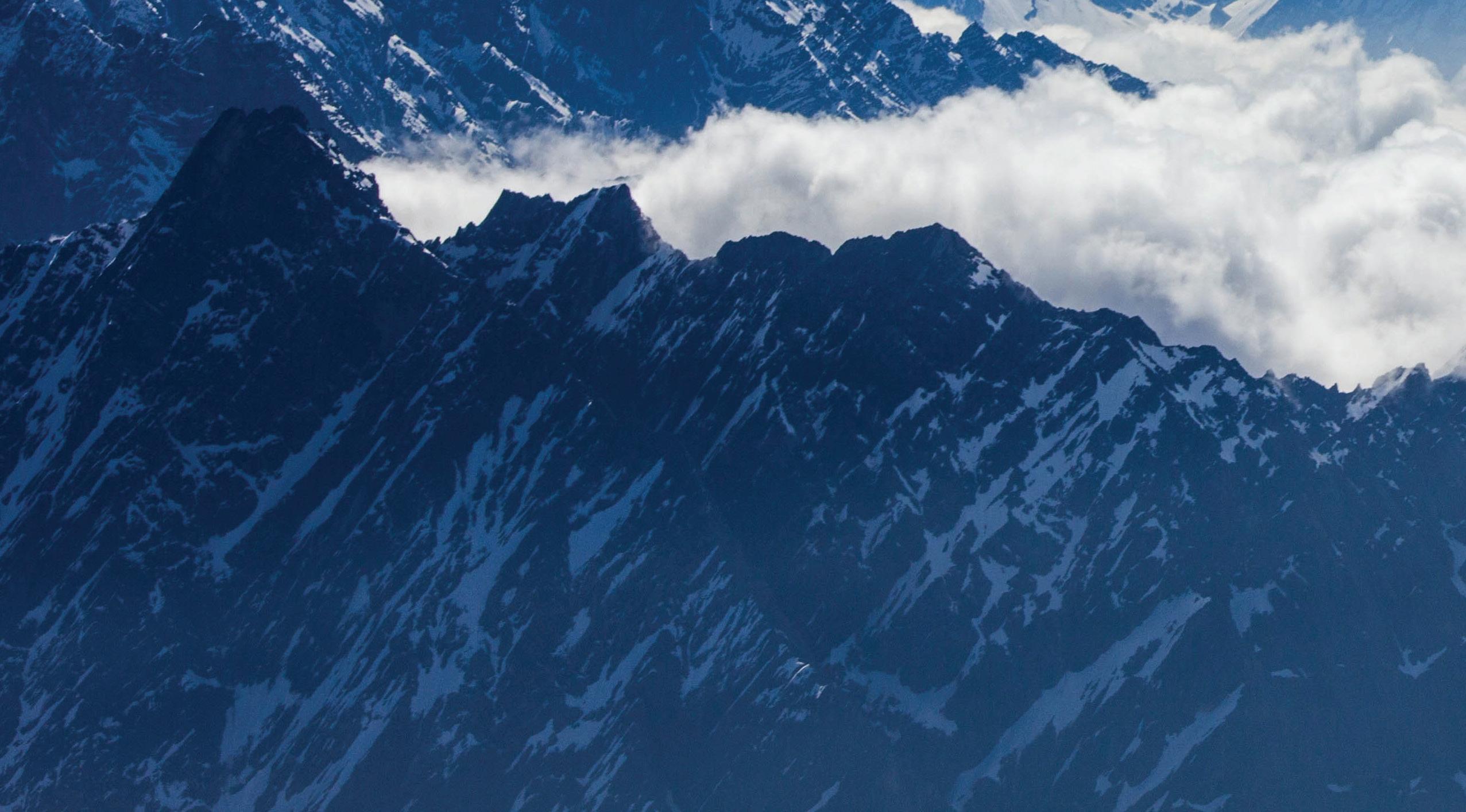
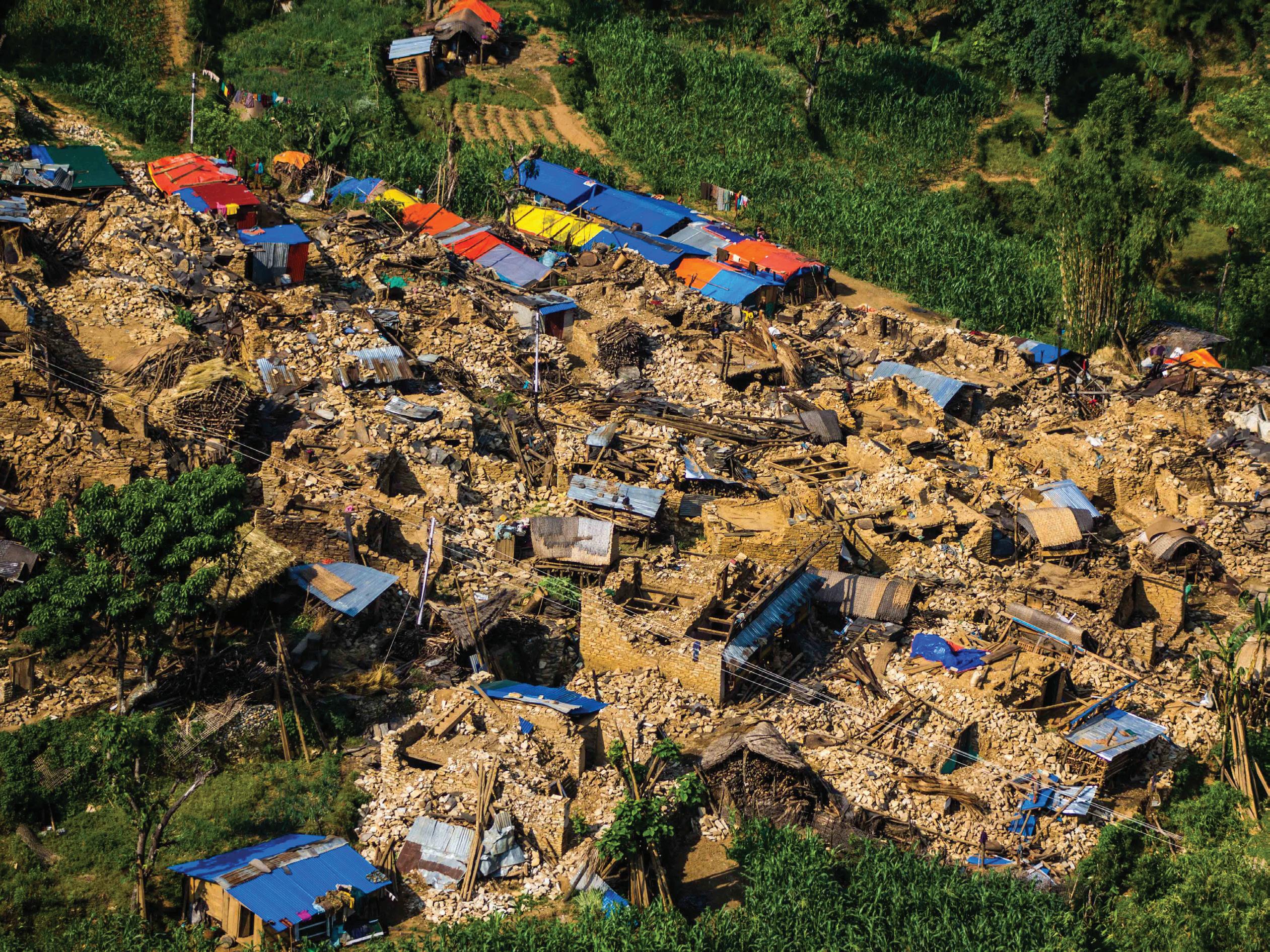
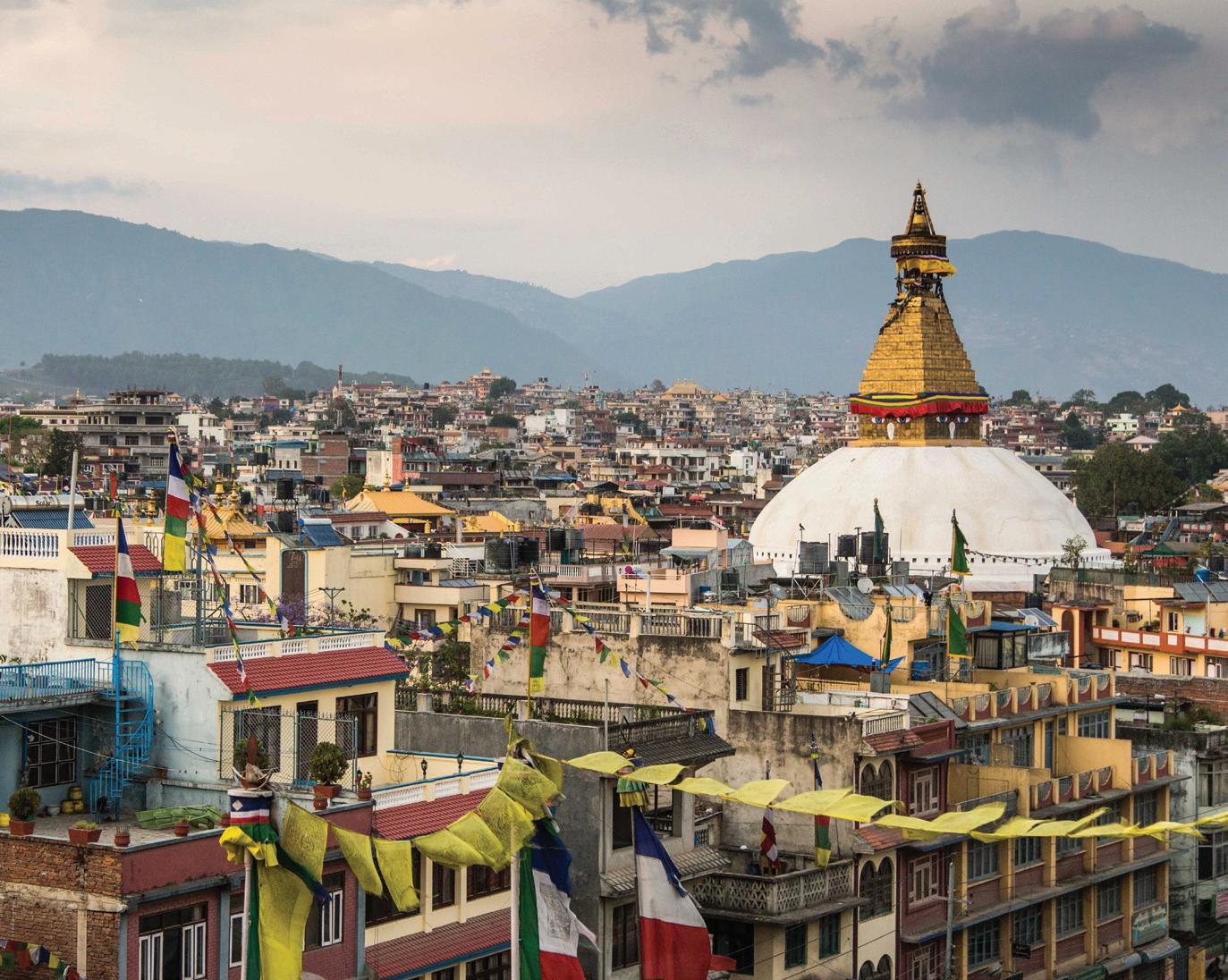
The Nepal Earthquakes:
Rebuilding a country in ruin will be years in the making
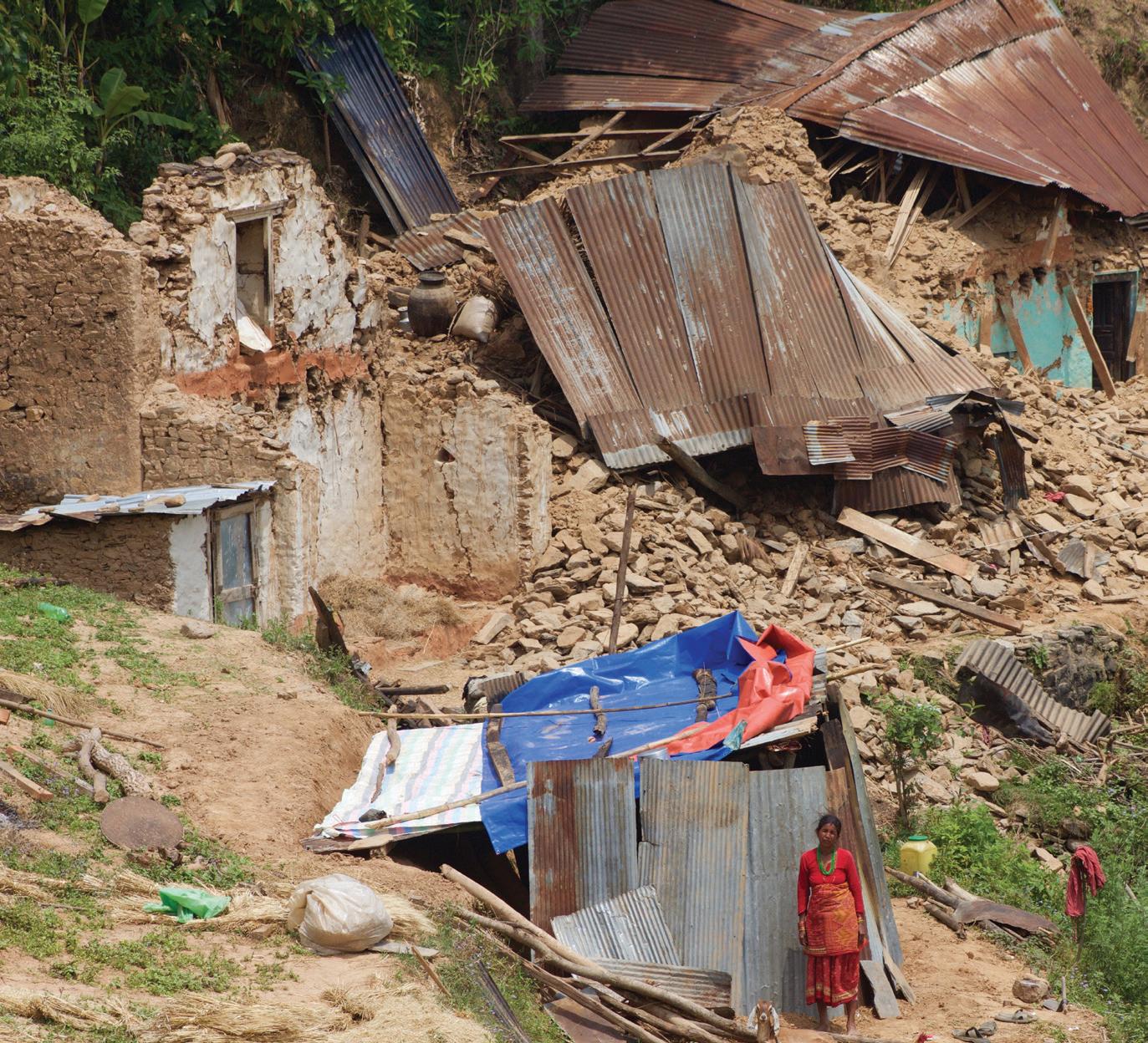
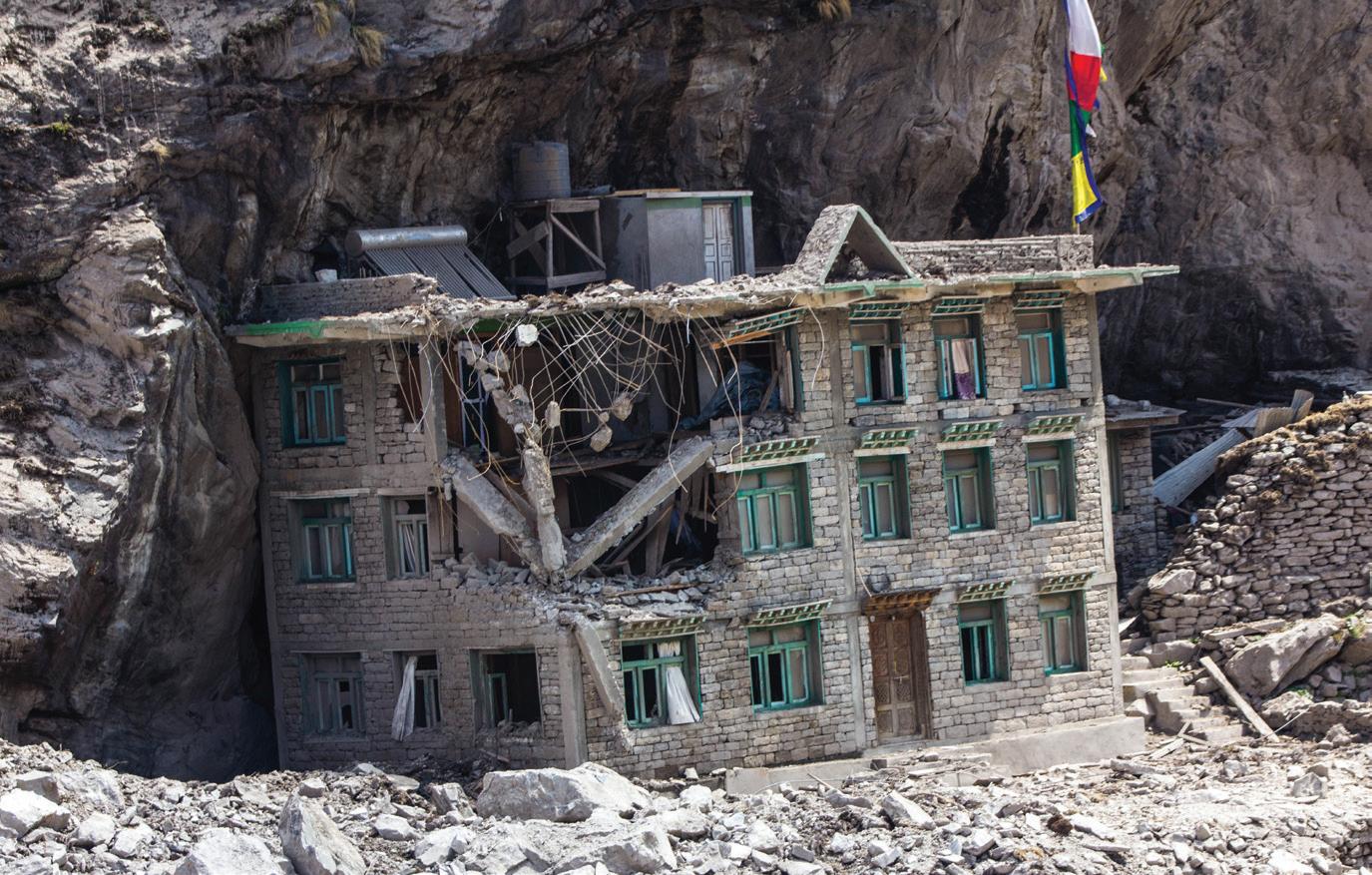
By Eric Ladd
On April 25 at 11:56 a.m. the earth shook at the top of the world.
Avalanches cascaded off Mount Everest; small farming villages throughout Nepal were leveled; Kathmandu fell into a state of panic as a 7.8-magnitude earthquake left thousands dead. Damage was catastrophic.
Nepal was already one of the world’s poorest countries lacking infrastructure, organization, or any plan to handle a disaster of this proportion. Aid groups from around the globe dispatched small crews to help with collapsed buildings, trapped Nepalese, road-system failures, and entire villages leveled. In one case, the 400-resident village of Langtang, located on a popular trekking route for tourists, was completely buried under rock and ice. The event took place in less than 15 seconds.
Then on May 12 the unimaginable happened: a second earthquake struck. This 7.3-magitude quake made a bad problem much worse, further eroding the mental confidence of many Nepalese as they raced into fields fearing the “big one” was coming next. The death toll for both earthquakes has topped 8,500 and many are still unaccounted for.
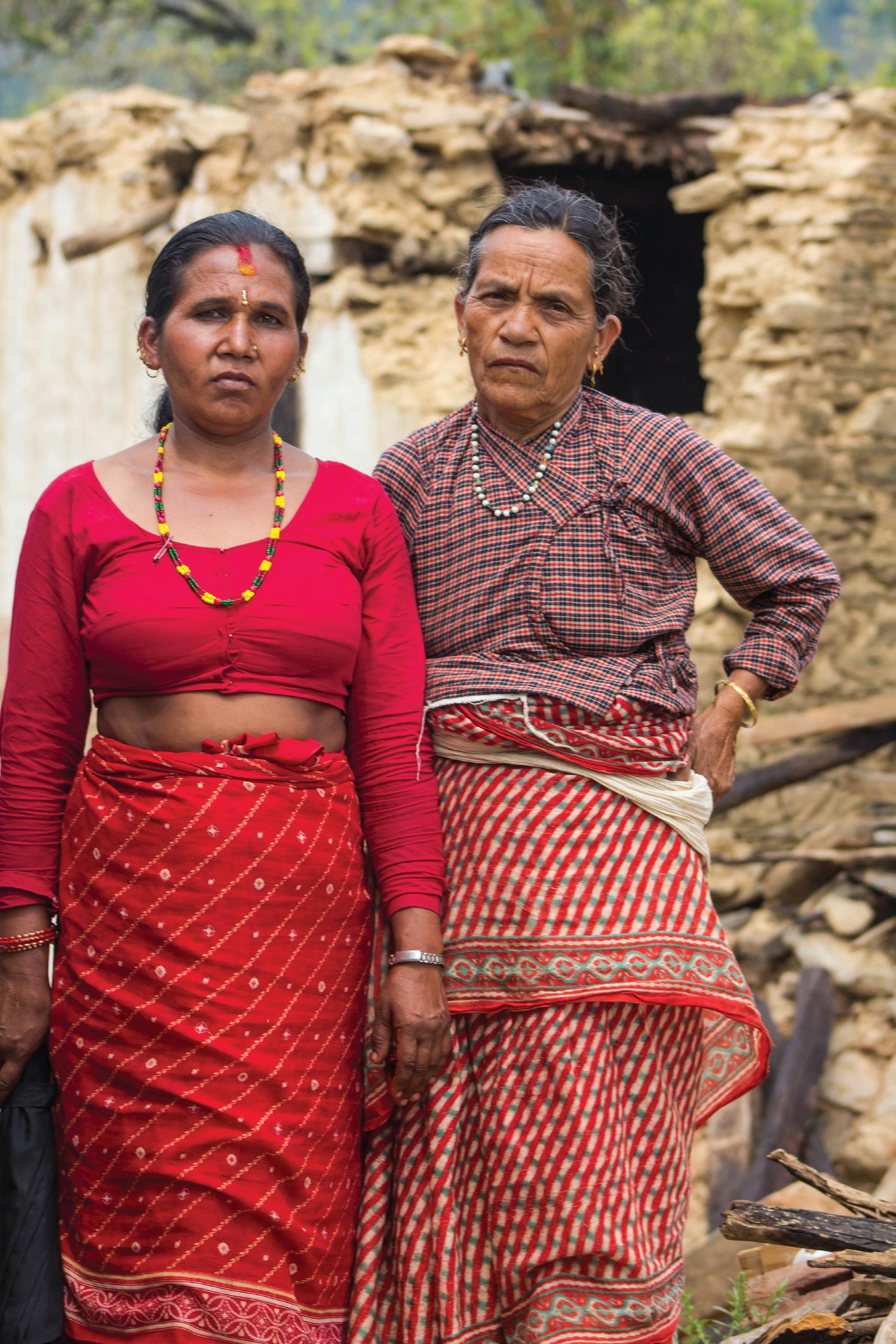
Maina Kumari Dhaka
Three weeks after the first earthquake, aid groups began packing up and leaving behind limited resources. As of May 19, a total of 15 helicopters existed in all of Nepal, a country nearly the size of the state of Illinois. Global media attention has shifted away from this catastrophe.
Layer in hundreds of aftershocks; aid groups challenged by government politics; a looming monsoon season; and an estimated 500,000 homes destroyed, and you have a nation facing years of rebuilding.
Don’t forget Nepal. A few aid groups are providing direct ways you can help:
Tsering’s Fund, focused on children’s safety and education – tseringsfund.com
Maiti Nepal, resourceful efforts focused on children and villages of Nepal - maitinepal.org
International Medical Corps, providing on-the-ground medical assistance - interna-

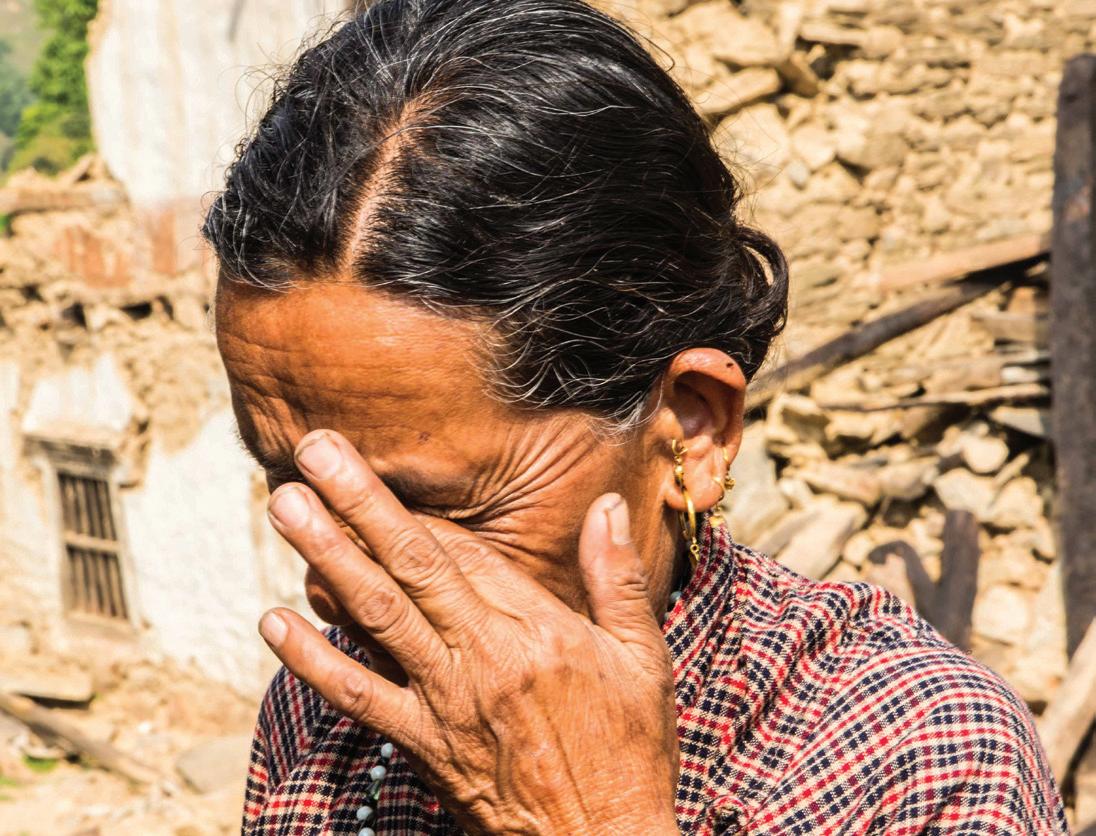
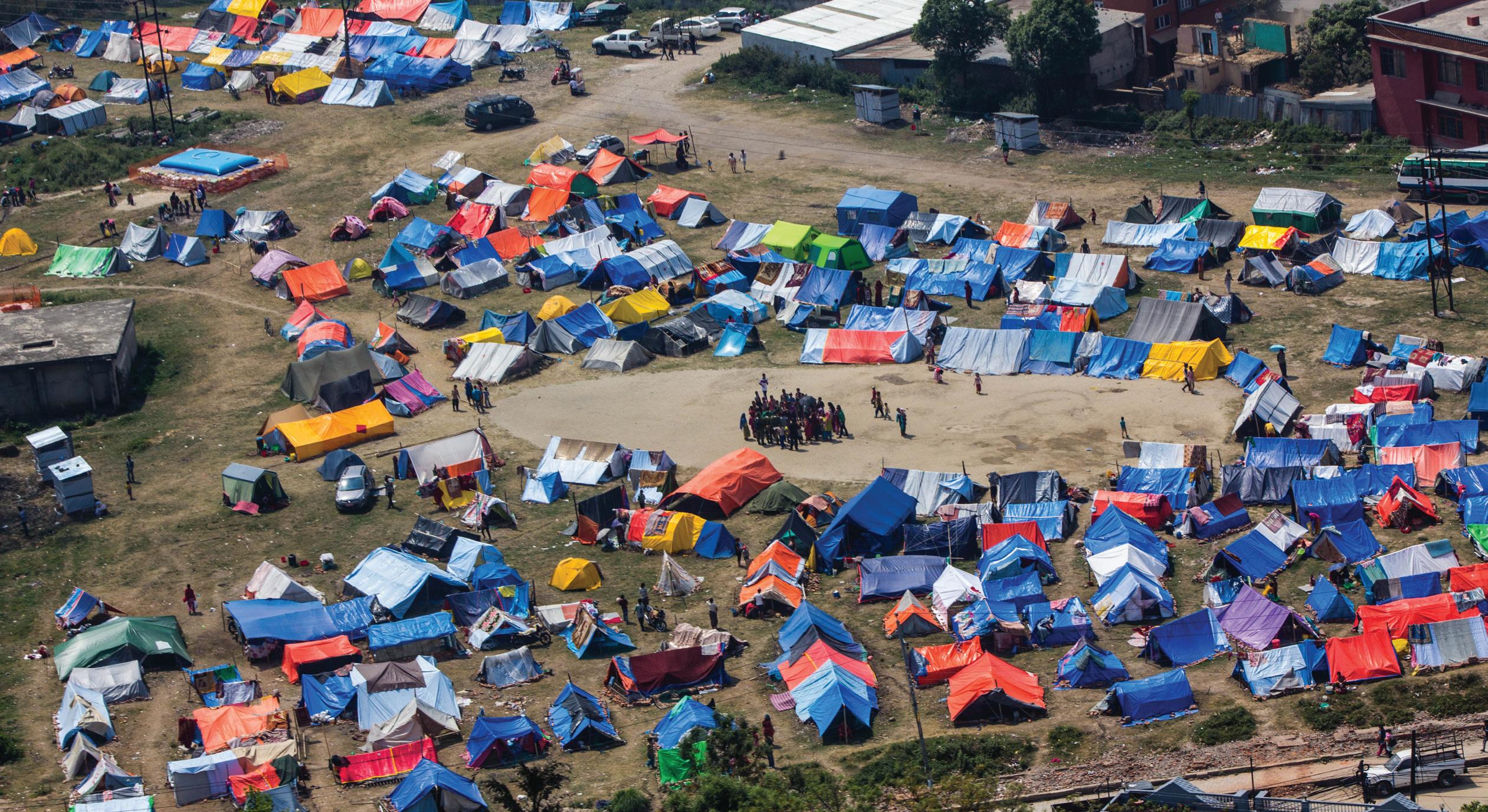
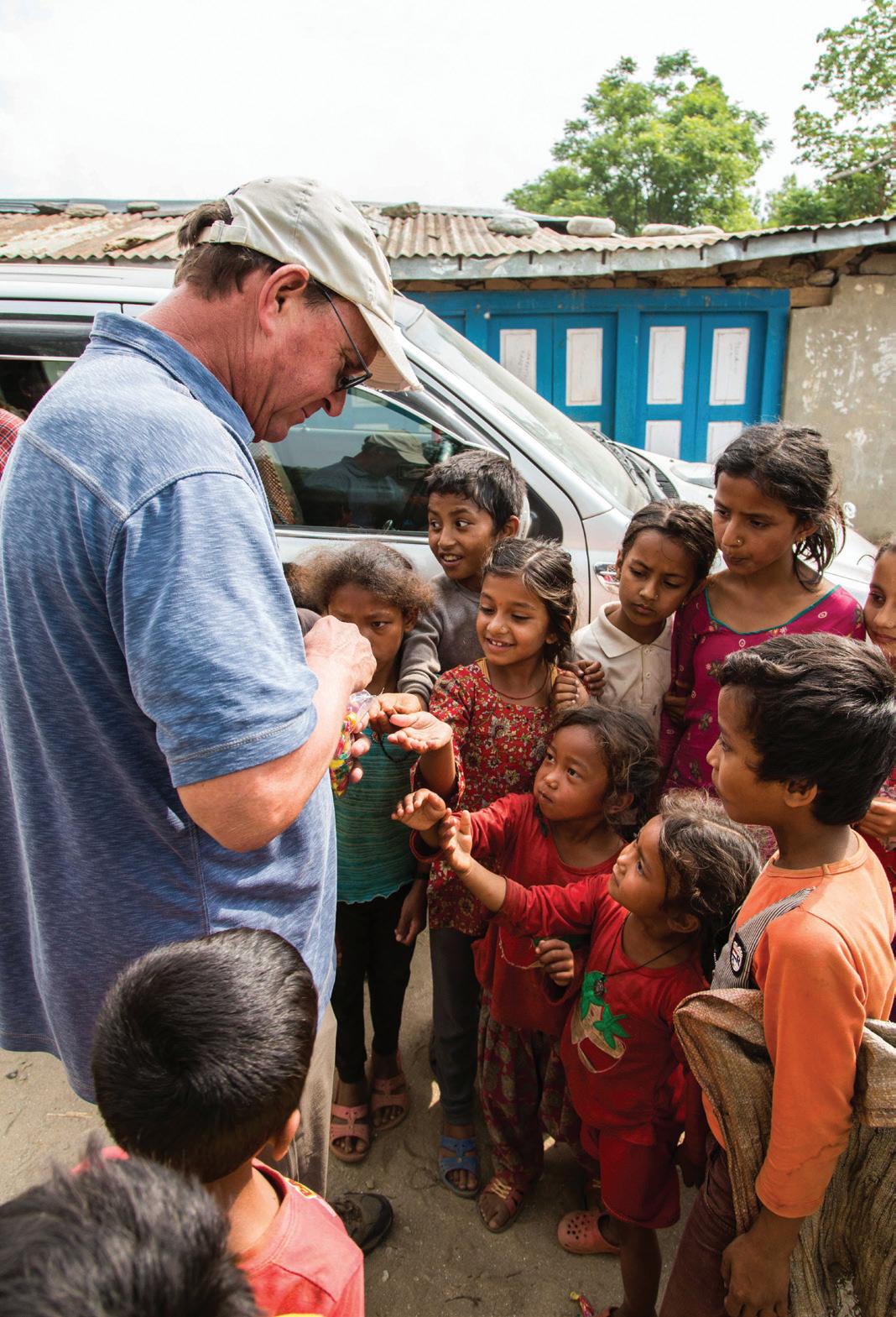
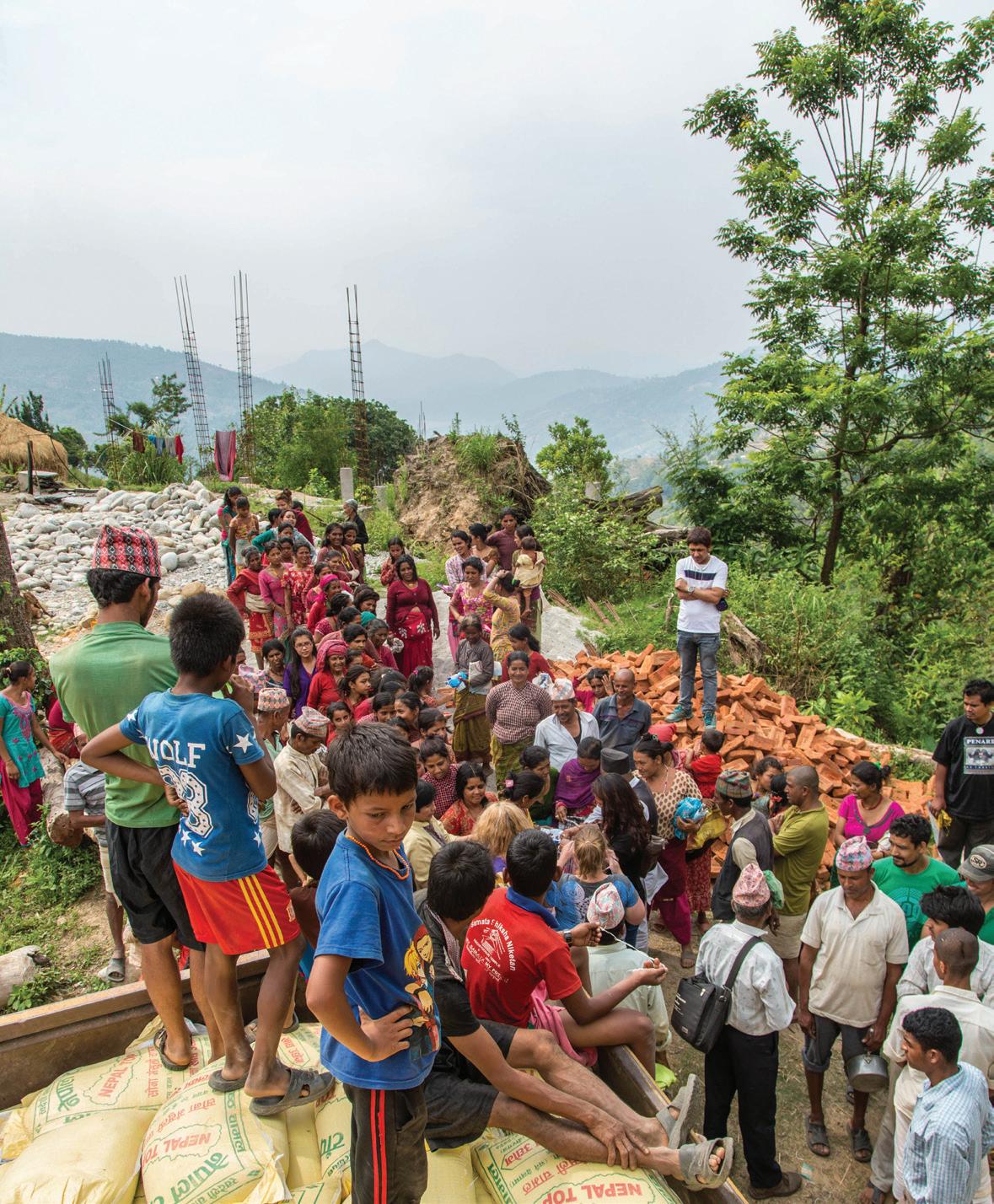
L: Dr. Peter Schmieding of Tsering’s Fund hands out candy to children. R: Nepalese in a remote village line up for three tons
Giving Voice to a Quiet Revolution
Background: A watercolor-style illustration inspired by the Karakorum Mountains. Image generated with AI. Below left: Warmed by a traditional stove, middle and high school students in rural Hushe Valley, Gyanche District, study in a blended gender classroom where girls and boys sections study together. Photo courtesy Iqra Fund. Below middle: Genevieve Walsh discusses ongoing social mobilization efforts in summer 2023 with Iqra staff Nasreen Tabassum and Nureen Fizza in the potato and wheat fields above Hushe Village, Gyanche District. Photo courtesy Iqra Fund. Below right: The traditional village core and masjid of Machulu Village, Gyanche District, with the K6 peak group, elevation 23,891 feet, towering overhead. Photo courtesy Iqra Fund.
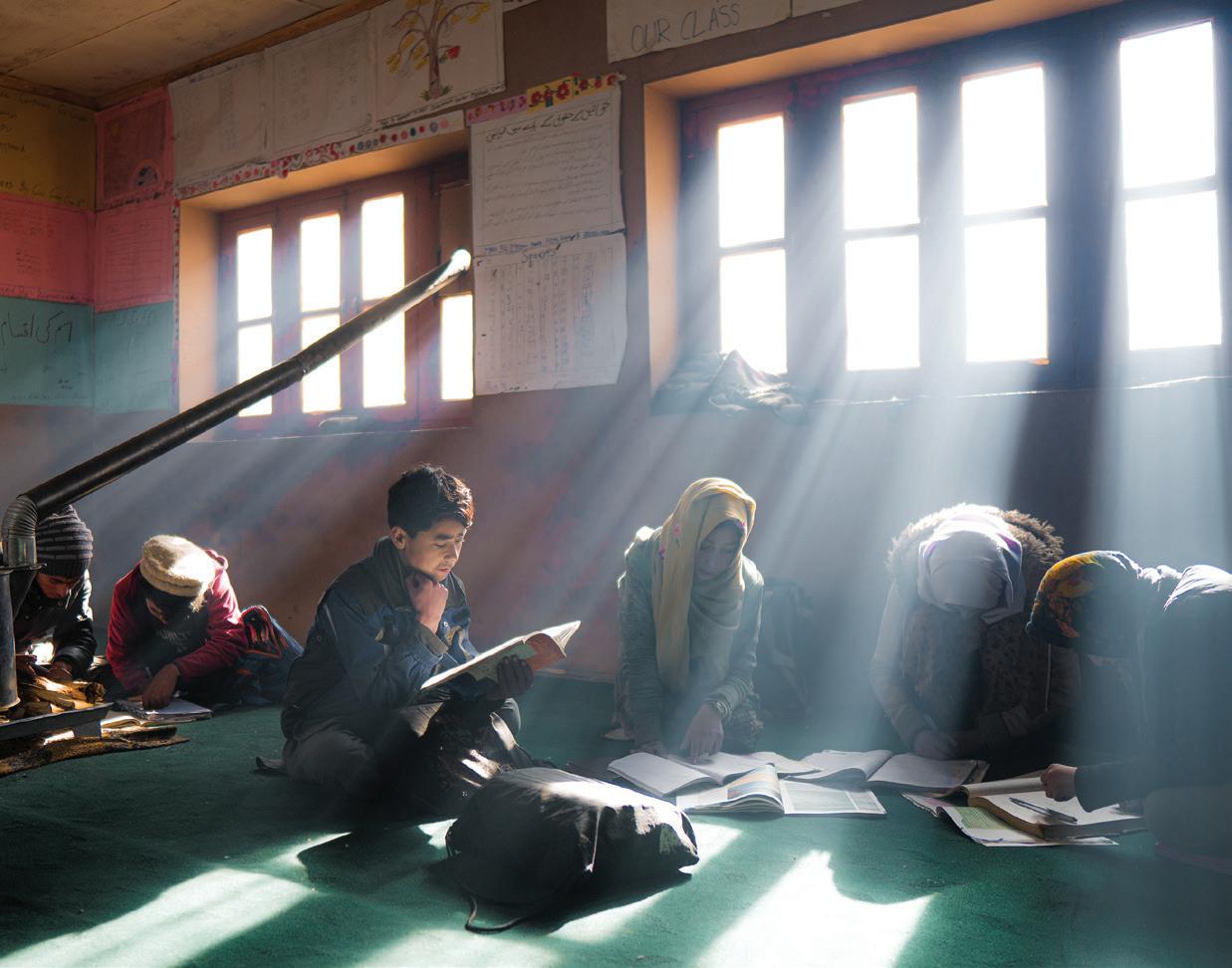
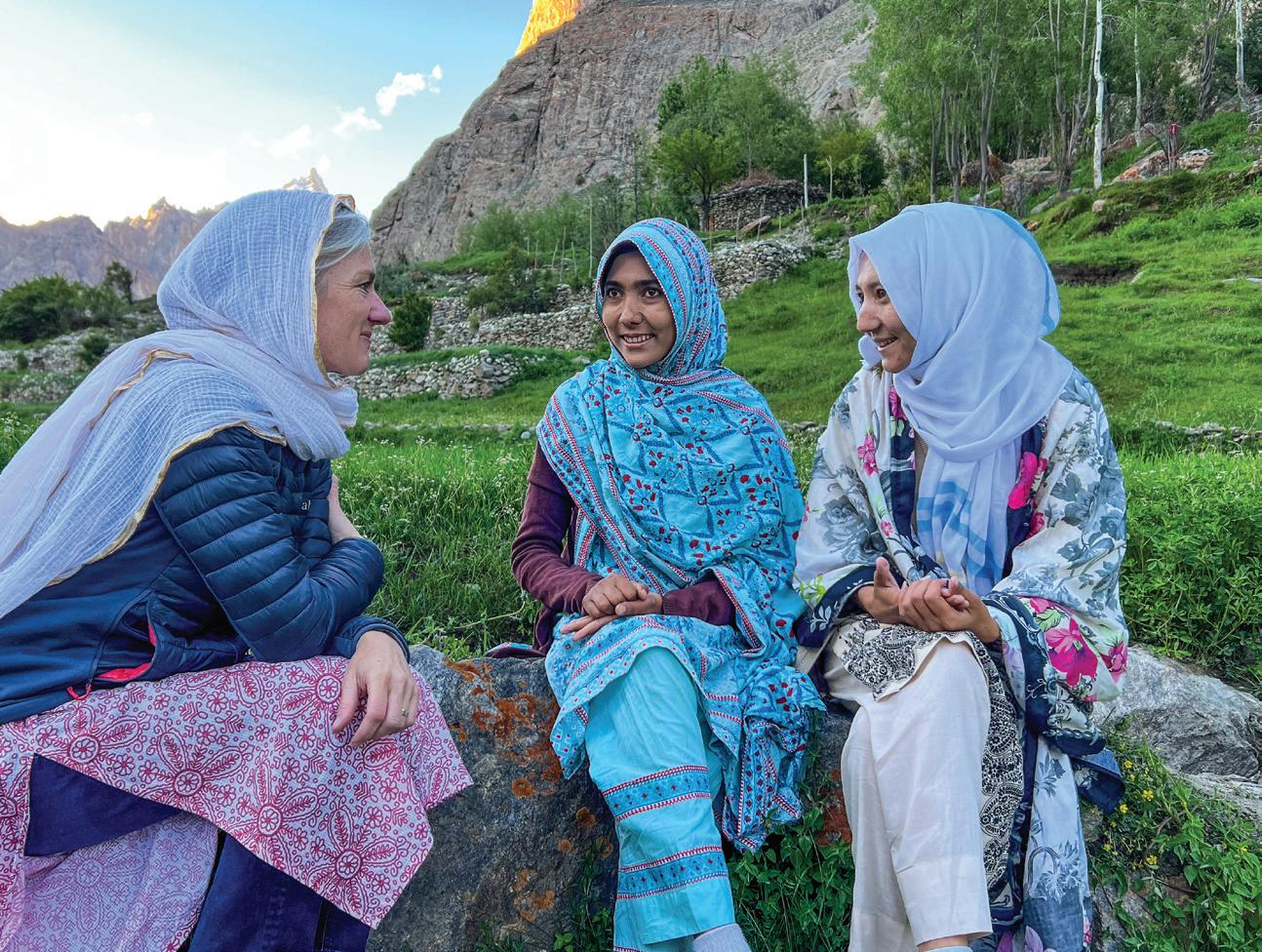
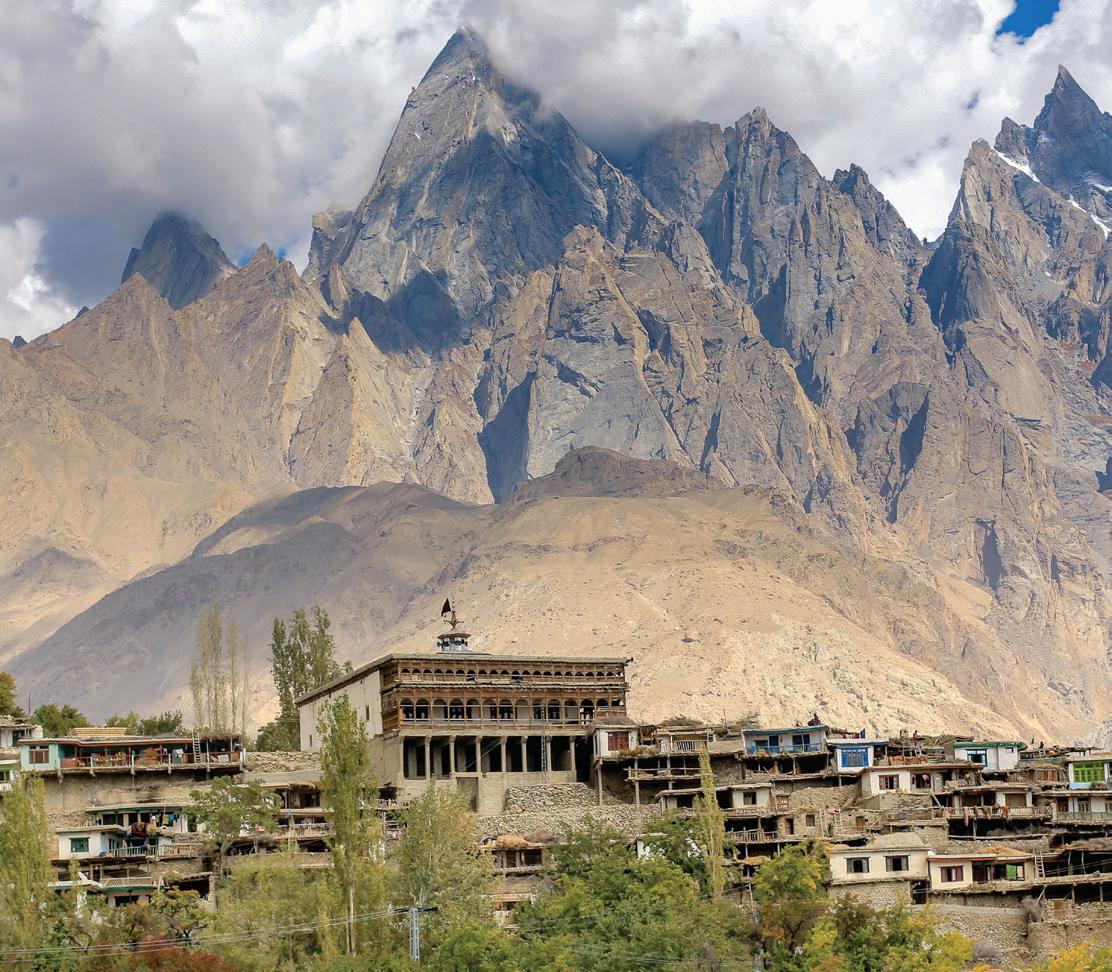
From the mountains of Montana to the Karakoram, a girls’ education movement is growing
Words
by Bay Stephens
Editor’s Note: A source in this story, DC, is referred to only by initials due to conflicts with his positioning in a region that condemns work advancing girls’ education.
Biting cold blew through the tiny northern Pakistani village of Hushe, a mere 27 miles as the crow flies from K2, the second tallest peak in the world. It was winter in 2011, and the towering mountains of the Karakoram shadowed the village much of the day.
Genevieve Walsh had spent time in Hushe before, and in villages like it around the Gilgit-Baltistan region, but this was her first winter visit. It was a recon trip of sorts, to see about partnering with the local community to provide schooling for the girls of the village. Walsh didn’t speak Balti, so a male translator acted as a linguistic liaison for her.
The people in this remote Muslim village welcomed her warmly, but for Walsh, something was lacking. “Are there any girls here, or women here, who can speak English to help translate?” she asked around the village, hoping to better connect with the women.
No, none of the women speak English, the male leaders told her.
On one of her first afternoons in Hushe, Walsh walked along the trails between homes. She passed three young girls, giggly and shy. She recognized one as Nureen Fizza, a girl of 13 or 14 whom she’d met earlier in a meeting with the translator.
“As-salamu alaikum,” Walsh greeted them with the traditional Muslim greeting meaning “peace be upon you.”
“Wa-alaikum-salaam,” the girls greeted back. And peace unto you. Walsh practiced a few words in the girls’ native language of Balti. They giggled and responded, but soon Walsh’s vocabulary ran out. She bid the girls farewell and walked on. Then from behind her, in perfect English:
“How are you finding your stay in our village, ma’am?”
Walsh whipped around.
“You speak English?” she asked.
“Yes,” Fizza said. “We’ve been learning. Do you want to come to my home for tea?” The girls brought Walsh inside and introduced her to their mother and grandmother. The women sat around and talked for more than an hour.
“Do any of the men know you speak English?” she asked Fizza. “Because I’ve been asking.”
“We’ve been learning, but we don’t tell everyone,” Fizza said. “It’s better if we just keep it quiet.”
Fizza was one of the few girls in the village attending school with mostly boys. Walsh began to grasp the power of this young generation of educated girls. She was struck by how much they honored their fathers, brothers and uncles in this traditional setting. As Walsh put it, these girls knew “this change that is happening, it needs to go slowly. … It couldn’t be this loud explosion.”
In those days, they called it a quiet revolution.
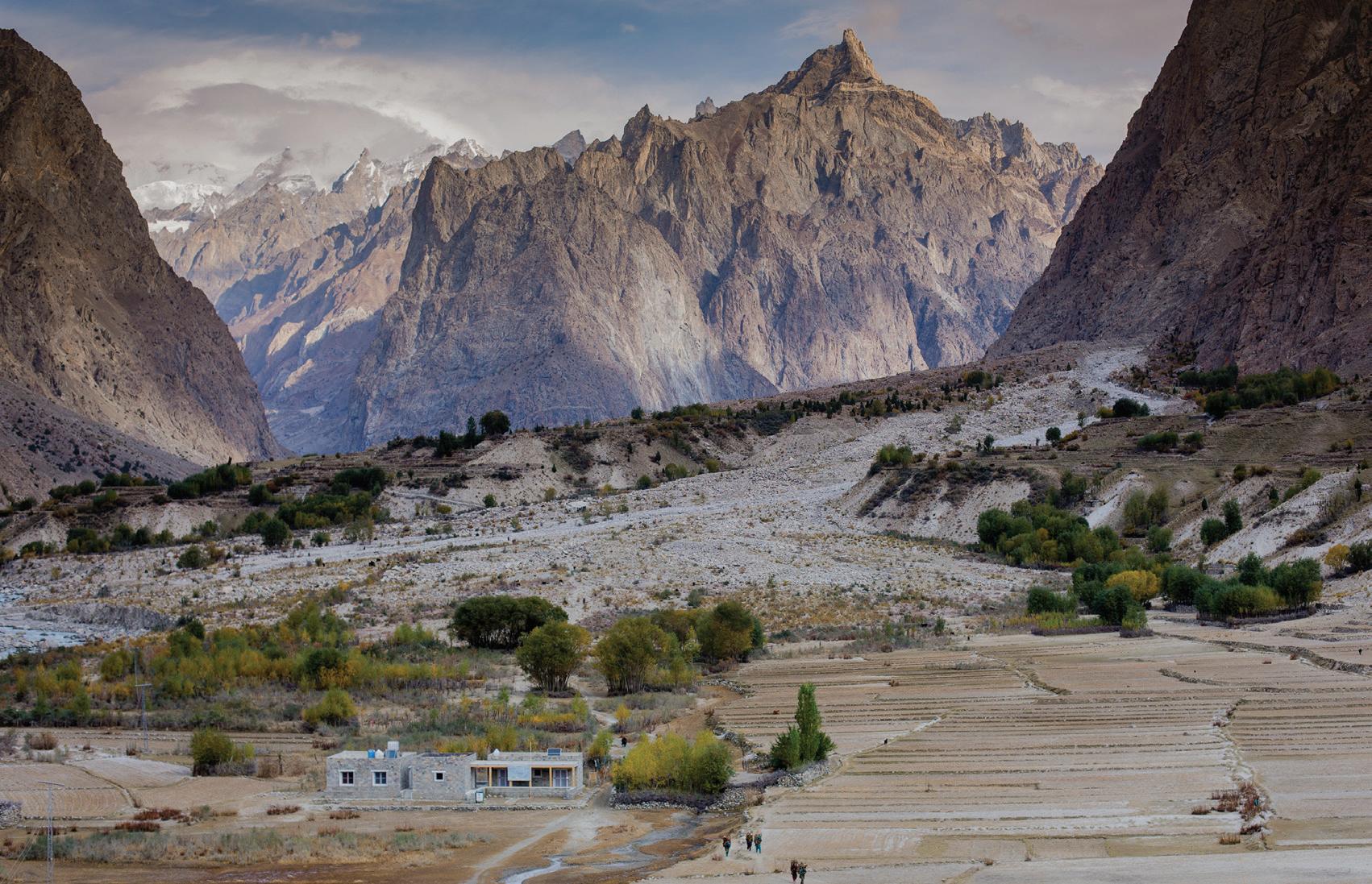
This 2011 encounter occurred just after Walsh and her partner had founded Iqra Fund, a nonprofit aimed at building self-sustaining school systems in the mountains of Northern Pakistan. The organization has since grown significantly, having established 20 village schools for grades K-8 around Gilgit-Baltistan, enrolling 4,098 students and supporting 173 teachers. Via scholarship support, Iqra Fund is also seeing 70 first-generation women through university. Fourteen Iqra Fund-supported students are now their communities’ first female teachers. Three are employed as community health professionals, bringing local healthcare— especially female healthcare—to these remote mountain communities for the first time in their histories.
The region is changing rapidly, in no small part due to the role of Iqra Fund’s community-led, sustainable education model. As the region faces rapid warming due to climate change, increased tourism and geopolitical tensions, the organization is equipping a generation of leaders who will see their villages through the complexities of the future.
“I have so much gratitude for the path that my life has taken to be able to do this incredible work in service to so many children and families,” Walsh said. “It
wasn’t always easy, but it was always the clear next step.”
Walsh describes herself growing up as the kid who didn’t fit inside the box. She was hyperactive, curious, always the dirtiest kid in class at the end of the day. She regards her younger self as impulsive, ready to try new things, which in young adulthood evolved into decisiveness and a thirst for adventure.
In a nutshell, when a woman is educated, she becomes the tide raising all ships.
She chose to pursue a teaching degree while at Montana State University in Bozeman because she thought she could teach internationally and get paid to travel. She studied abroad in Holland and student-taught in a Maori village in New Zealand where students rode barefoot on horseback to class, and
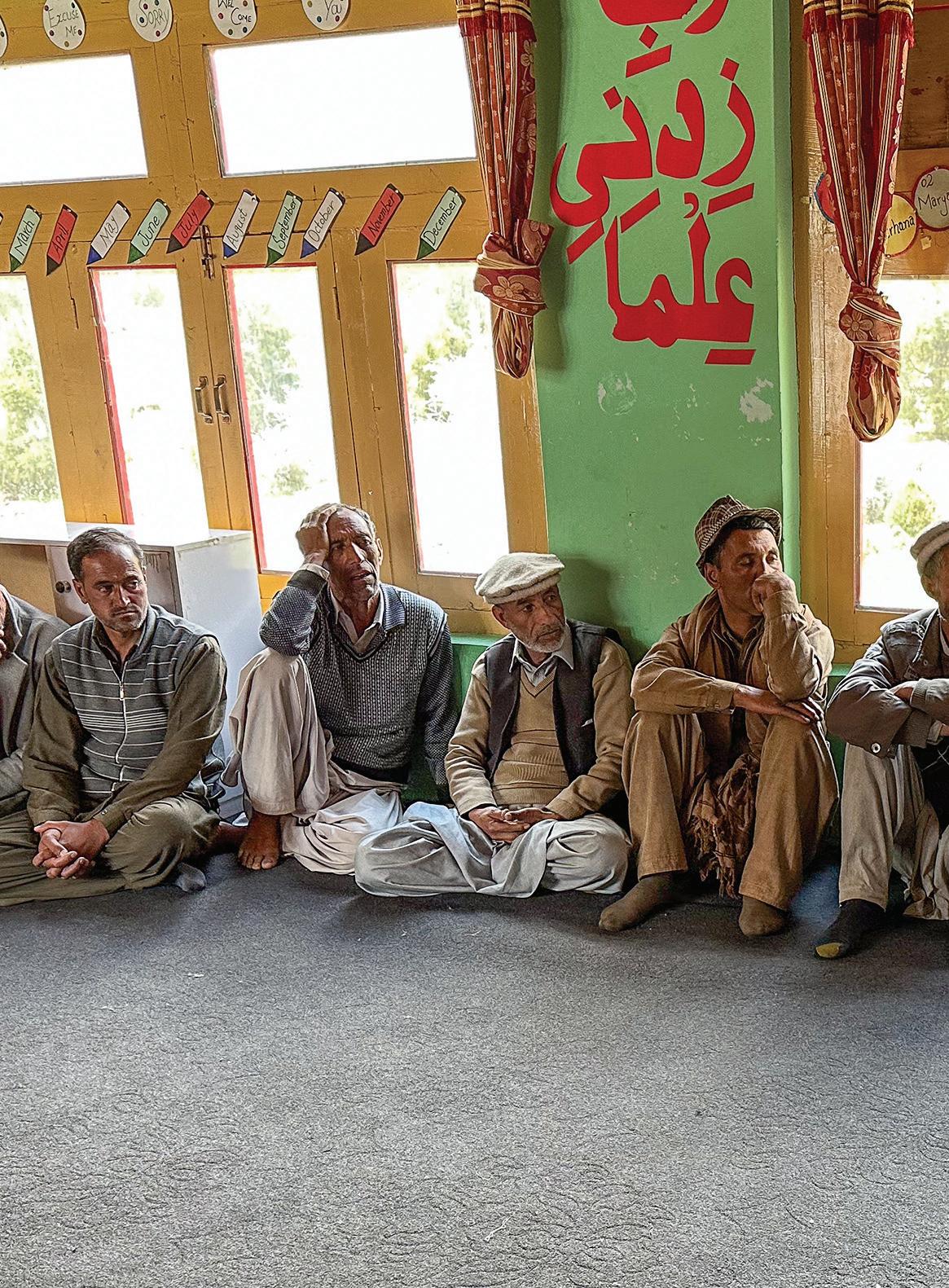
where she boar hunted with the chief. Here, Walsh experienced a deep sense of connectedness to land and community. Her time with the Maori people impacted her deeply, and Walsh carried the experience onward.
Walsh later began teaching for The Traveling School, a Bozeman-based organization that takes high-school girls abroad for a semester of school. Walsh led groups in South America, then South Africa, and even arranged for a semester in the Maori village where she’d student taught.
While teaching these girls abroad, Walsh said she came to believe that “one of the most powerful forces on earth is the adolescent girl,” especially in a supportive environment. Walsh describes this period in her life as stepping through open door after open door. “I was trusting that there was a path for me,” she said. “That every experience I’d had was leading to something next.”
In 2007, Walsh thought she would do another Traveling School semester when she started seeing DC, a former Bridger Bowl ski patroller, mountaineer and local avalanche forecaster.
“He said, ‘Hey, I’m heading to Pakistan in a couple months to go on a climbing expedition. Do you want to tag along?’” Walsh recalled.
Left: Masherbrum Peak, elevation 25,659 feet, looms above Iqra Fund’s first partner school community, Hushe Village, at the end of the road in remote Gyanche District, Gilgit-Baltistan. Photo courtesy Iqra Fund Right: Iqra Country Director Ghulam Muhammad leads a planning session with the Village Education Committee in Sultanabad Village in Skardu District, 2024. Photo courtesy Iqra Fund
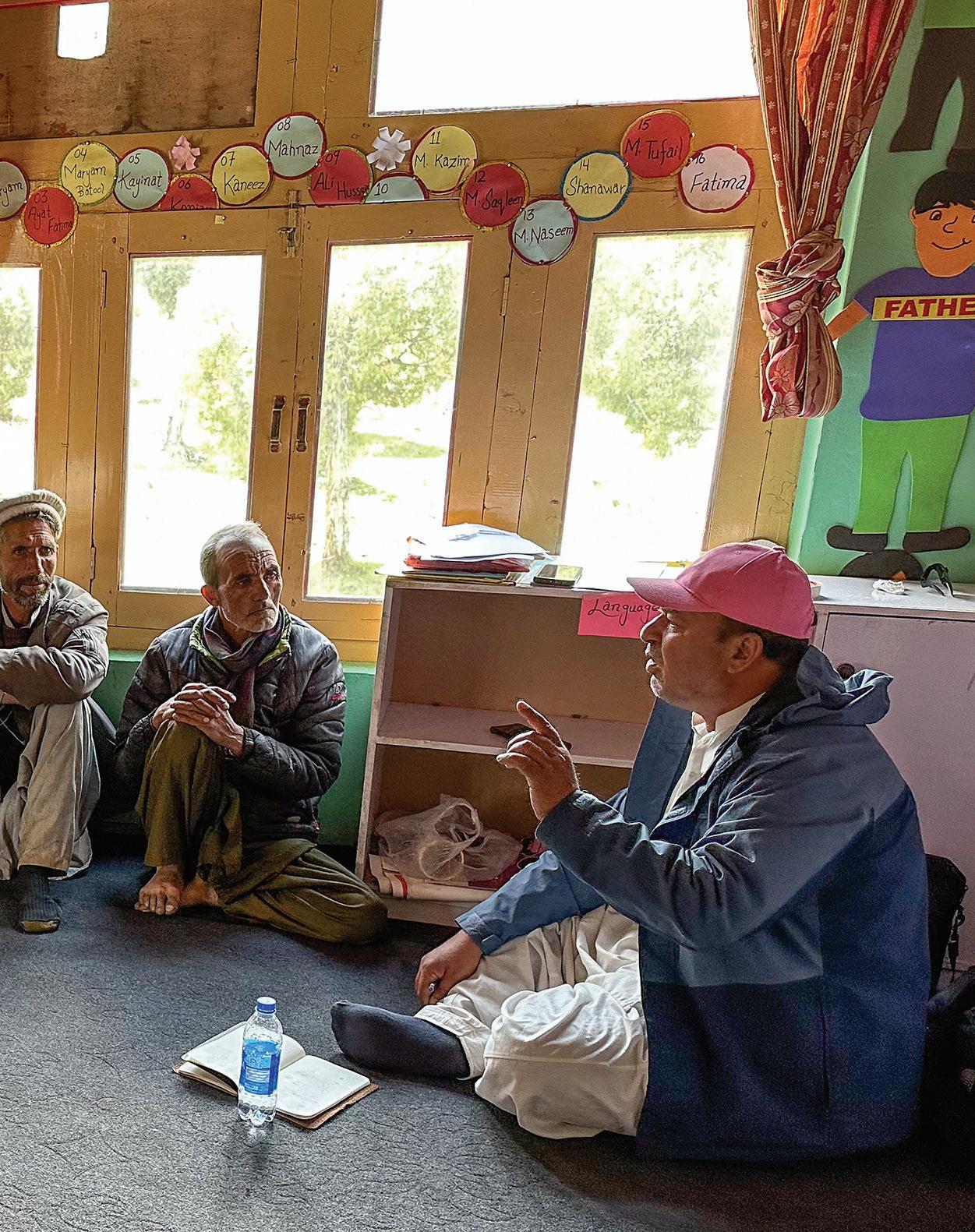
The Karakoram Range, host to four of the world’s 14 peaks over 8,000 meters, had opened up to Western climbers in the ’70s, after active hostilities in Kashmir between India and Pakistan subsided somewhat—although the region remains disputed to this day. Mountaineers flooded to the expanse of rugged and unclimbed peaks. DC began climbing there in 2000 during his off seasons from avalanche forecasting. In 2004, he had partnered up with mountaineering legend Steve Swenson, who’d been active climbing in the Karakoram since 1980. Both climbers had built relationships with the Balti people, volunteering time and money to support girls’ education in the region.
In 2007, Walsh joined DC, Swenson and another climber named Mark Richey on their trip to Pakistan to climb Latok I. She was the only woman on the expedition. As the group made their way from lowland cities up into the mountains, local women whisked Walsh away from the men at every stop. Through translators, they told her about their lives and struggles. Walsh learned that many of the girls were married off before they’d even had their first period, bearing children when they’d scarcely left childhood themselves. She learned not to ask how many children each woman had had, but how many were
still alive. Questions swirled in Walsh’s mind. She needed more time with these kind, proud and capable people.
When she parted with her group on that trip, Walsh extended her stay in Pakistan to explore for several more weeks. On her eventual flight home, she sketched out a proposal for a doctorate: “A Case Study of Educational Needs, Obstacles, and Opportunities for Girls, Women, and Teachers in Remote Pakistan.” Walsh was granted funding to spend the next four years there building a body of research for her PhD.
She found that barriers to education— cultural, social and religious— compounded with a shortage of qualified women teachers, and limited community support for girls’ education. Through interviews, surveys and field observations, Walsh theorized that directly engaging communities, training teachers and implementing culturally sensitive education would all move the needle immensely for Balti girls. GilgitBaltistan didn’t need more schools— plenty stood empty of children, instead sheltering goat herds or crops—the region needed an educational system, which required money.
Despite swearing she wouldn’t start a nonprofit at the end of her research— “I’m not going to spend the rest of my life fundraising”—it became apparent that no one else would. If she returned
to academia with a shiny doctorate, she would be turning her back on the people she’d come to love and respect. So in 2011, she and DC co-founded Iqra Fund, received their first donations, and hired their first teachers in Hushe. In Islam, Iqra means to read or gain knowledge, and is believed to be the first word revealed to the Prophet Muhammad in the Quran. It is also the name of a young girl, Iqra Afzal, who had inspired Walsh on her first trip to Pakistan.
Iqra Fund’s first priority was addressing access. If families had any means to send a child to school, they tended to choose sons over daughters. In Balti culture, sons remain part of the family, while daughters marry into another family. Educating boys was an economic calculation made necessary by the poverty of the region: If a son could earn more because of an education, some of that would come back to the family; any earnings a daughter realized would benefit someone else.
“But they didn’t realize another house will come to their home as a daughter,” said Ghulam Muhammad, the country director for Pakistan, who has been with Iqra Fund since 2012. If all the women in a community are educated, every family they marry into will see the benefits of that education. So Iqra Fund provided the means for all children— boys and girls—to go to school, which
Pakistan
the organization recognizes as a human right, as well as the best way to ensure girls receive their education. Families no longer had to choose. To boot, a mountain of research clearly defines the importance of educating girls.
“When girls are educated, child and early marriage rates decrease, families are smaller and healthier, infant and maternal mortality rates go down, wages go up, and GDP grows,” as articulated on the Iqra Fund website. “Educating girls is also one of the top means of addressing climate change.”
Girls also tend to come back to their communities after completing their education, while it’s easier for Pakistani men to work in big cities for higher pay. In a nutshell, when a woman is educated, she becomes the tide raising all ships.
After enrolling 100 percent of a village’s children, the next priority was quality, Muhammad explained. Some parents weren’t convinced of the value of education. They hadn’t received one, and the teachers in the schools that did exist frequently didn’t show up. With the power of the purse, Iqra Fund was able to seek out, vet and hire high-quality teachers in a sufficient ratio for students to thrive.
The last hurdle was sustainability. To build school systems that can outlast even the organization itself, Iqra Fund needed the communities to take ownership of the system. They couldn’t be Western schools air-dropped into the mountains. They needed to be Hushe’s school, the Machulu’s school, and Basho’s school.
“We work in these very traditional, rural regions, and everything we do … from the way that we dress to the way we speak to the way we are collectively working to protect the honor of young women—that’s vital to those relationships and sustainability,” said CJ Carter, strategic planning director for Iqra Fund. “There is no Iqra Fund without the public partnerships and social trust.”
Part of the sustainability equation includes partnering with the government to put as many teachers on their payroll as possible, even if
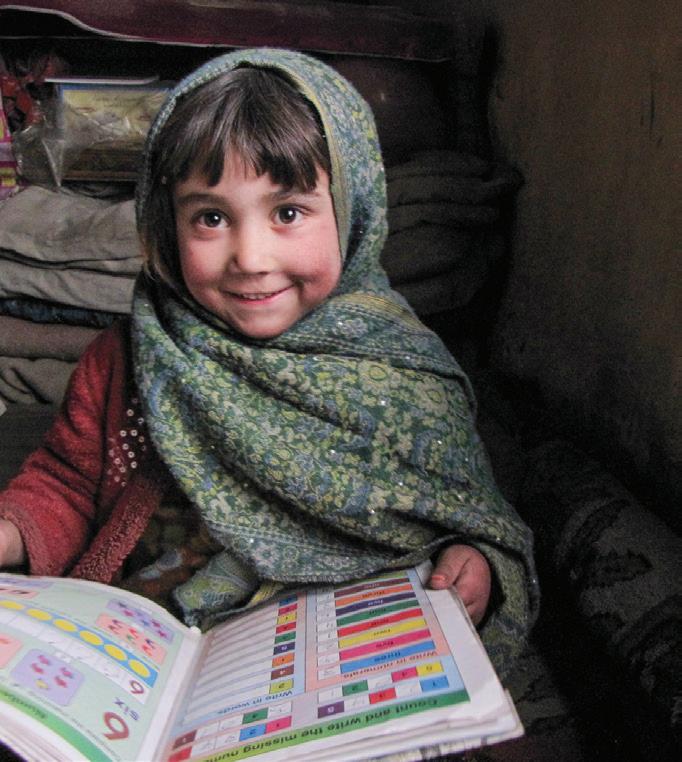
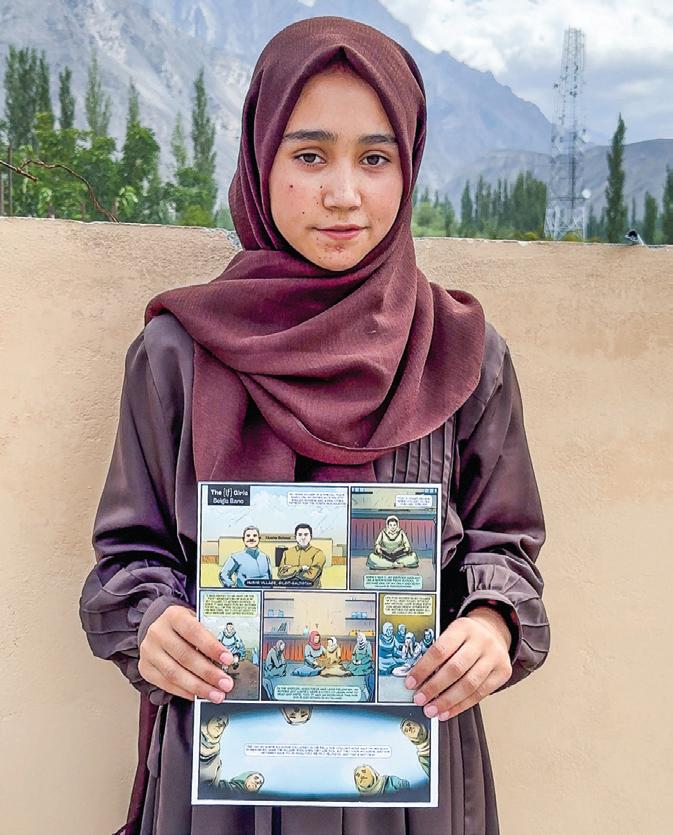
Top: Belqis
Fund's
first visit
Photo courtesy Iqra Fund Above: Bano, pictured in 2023. Photo courtesy Iqra Fund Below: Sakina Batool, the first local Lady Health Worker for the entire Basha Valley, returning to the girls' hostel for a health and hygiene workshop with current scholarship students (2023). Photo courtesy Iqra Fund
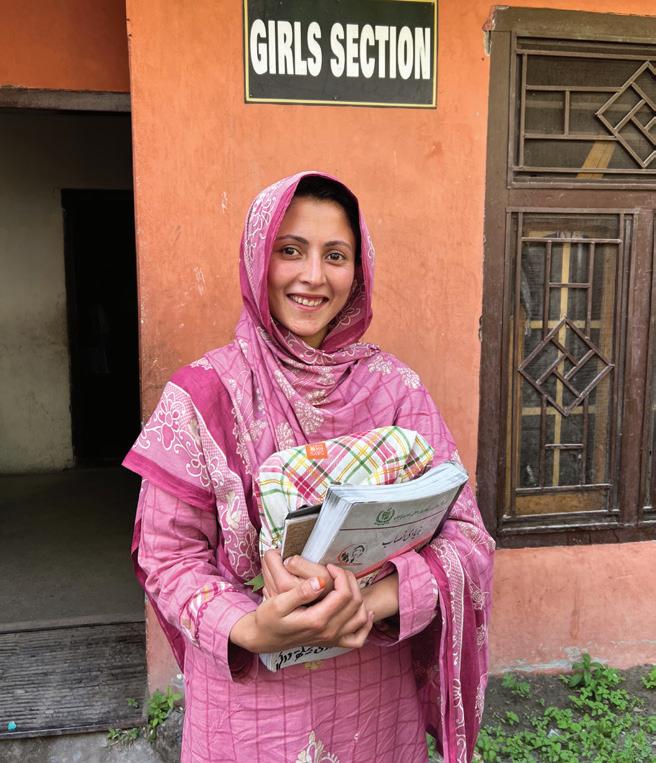
Iqra Fund helps pay their salaries. This way, if Iqra Fund was suddenly no longer able to operate in the country, the education system would endure.
Slowly, the organization gained the trust of communities, and grew up alongside its first crop of students. Initially, the goal was to provide K-8 education, but when the girls were in 8th grade, their communities pushed for 9th and 10th grades as well. Then 11th and 12th, and so on.
“Education, I must say, it is not an easy job,” Muhummad said. “It is a very long process.”
But in letting communities cast the vision and lead the way, Iqra Fund has successfully supported the first generation of educated women for many remote Balti villages. And scholarships have allowed for the next step, attending high school and college in the city of Skardu. Iqra Fund’s current initiative is to build a high school in the valley of Basha, where it educates a high concentration of students, along with transportation to school from up and down the valley. The organization hopes to build a critical mass of educated women in Gilgit-Baltistan, with this first generation paving the way for the next, until a culture of scholarship blankets the region. Walsh envisions the day when Iqra Fund can step completely out of the way because the Balti people have everything they need to continue the cycle. Currently, of Iqra Fund’s more than 70 staff members, only two are non-Pakistani: Walsh and Carter.
Education in the region may not yet be self-sustaining, but changes are already evident. The first group of Iqra Fund-supported girls are now entering the workforce. Nureen Fizza is now on staff at Iqra Fund as a social mobilizer while she wraps up her BS in chemistry. She remembers that day 13 years ago when she met Walsh, and ponders an alternate reality without Iqra Fund.
“In my village, there are many girls my age who are working in the field and getting married,” Fizza said. “They have three to four children also, so they have many challenges.
Bano, one of Iqra
first students from Hushe Village, Gyanche District, smiles. This photo was taken during Walsh’s stay in in January 2012. Belqis is the daughter of Ali Khan, one of the basecamp cooks from Walsh’s
to Pakistan.
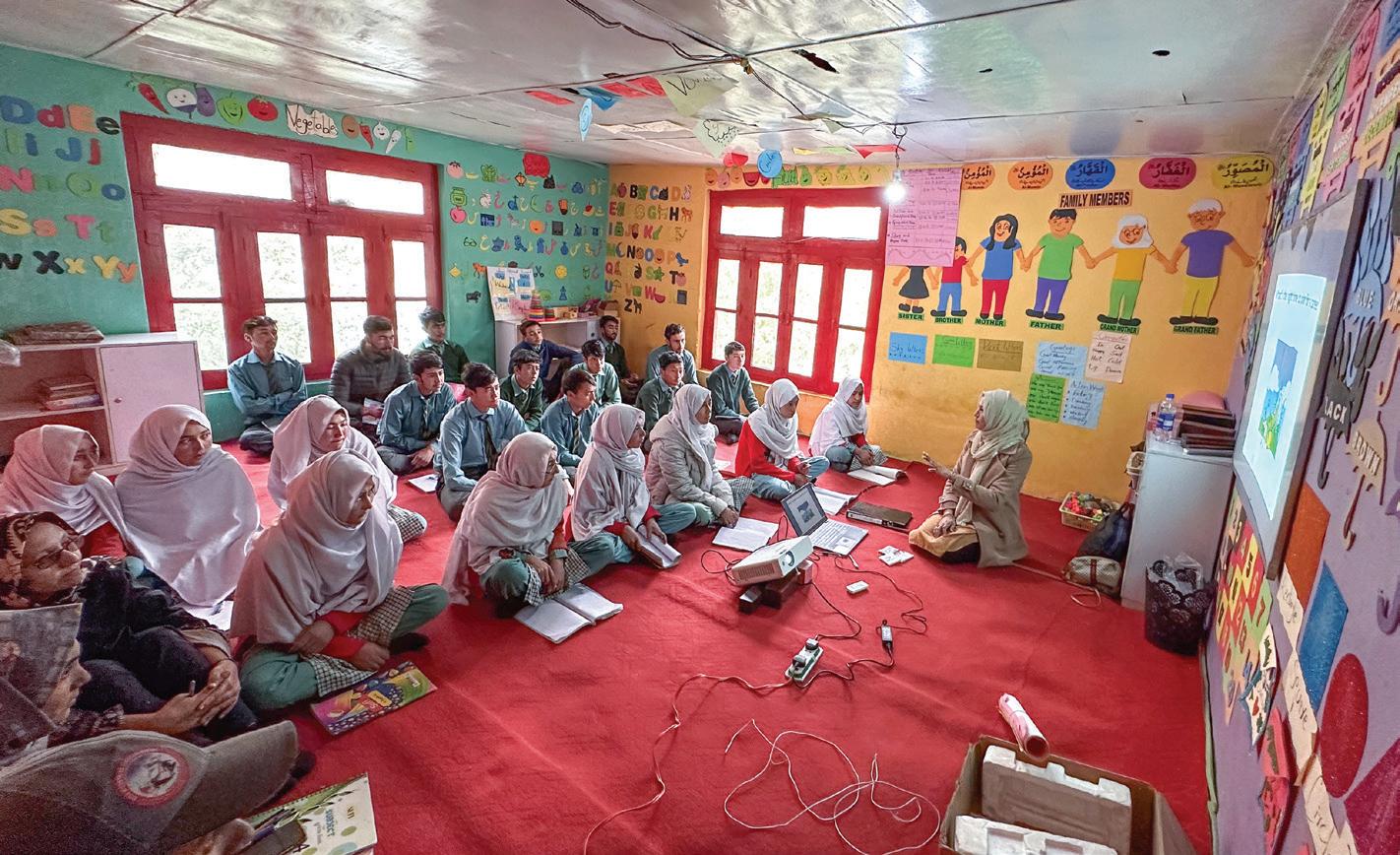
As compared to those girls, I am very thankful to Iqra Fund for their generous support.”
Belqis Bano, the daughter of the basecamp cook from DC and Swenson’s mountaineering expeditions, is now a scholarship student studying to become a doctor and achieve her definition of success.
“I think when people are able to help other people and when they make other lives [better], I think this is success,” Bano said.
And Sakina Batool, an Iqra Fund scholarship recipient from Basha Valley, has graduated and is the first female health worker in the area, delivering prenatal care to local women in the region for the first time. Her elders will not start meetings without her.
Many IF Girls, as the organization calls them, have become teachers—the first need for these communities was women to teach the girls. But the horizons expand with each class. Fizza will be the first chemistry lecturer. Madiha Noor will be the first software engineer. Amina Hanif will be the first woman owner of a mountain guiding company. And each of these pursuits will undoubtedly benefit their communities in one way or another.
As Walsh puts it, “A girl’s education is a community’s future.”
As for funding, much comes from the mountaineering community and the Pakistani diaspora. After learning
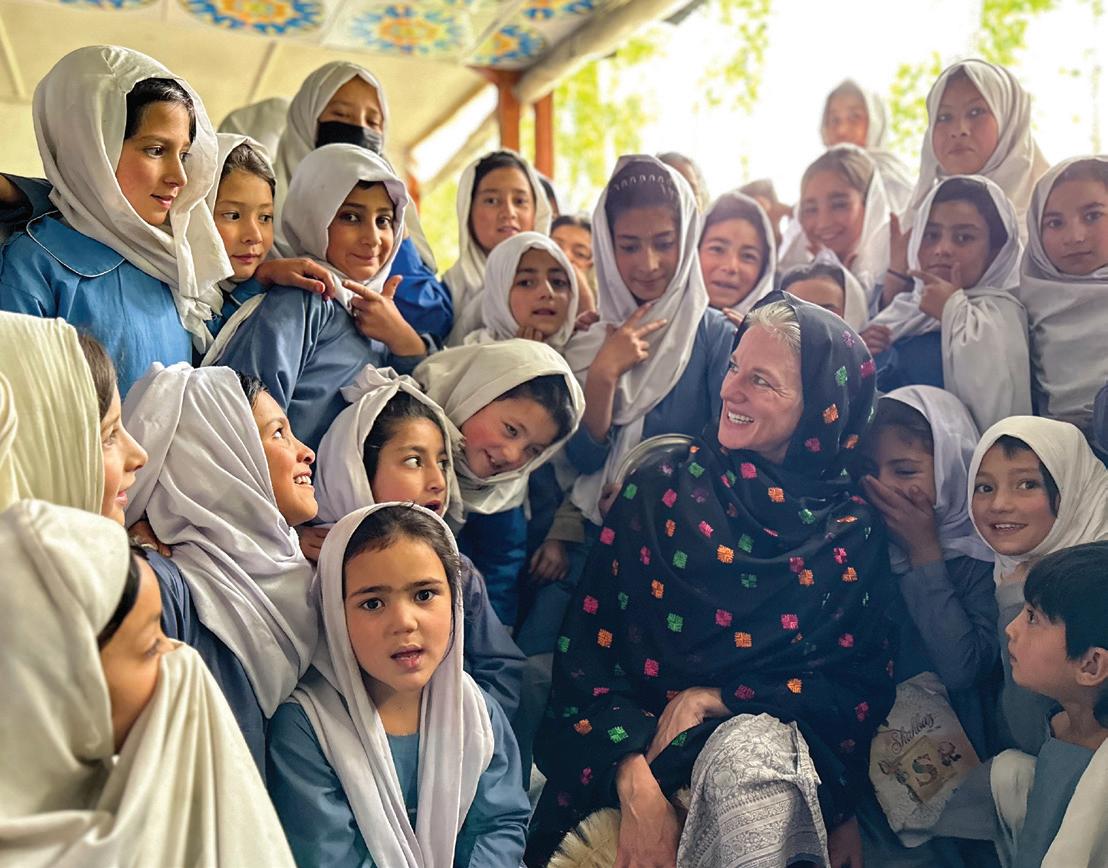
about Iqra Fund and its work in their homeland, many Pakistani-Americans have joined the movement as donors and board members. This was the case for Saima Machlovi, a neuroscientist in New York City who was born downriver from Hushe in the tiny village of Machulu.
“Since I’ve been on the board, everyone in the village knows about it,” Machlovi
"A girl’s education is a community’s future."
Genevieve Walsh, Iqra Fund CEO and founder
said. “So every time there’s a problem they would call me or they would tell my parents about it, and they are like, ‘Hey, do you think Iqra could help here?’ and we’re like, ‘Let’s look into this.’”
Iqra Fund has a $1 million operating budget. According to Walsh, 80 percent comes from 20 percent of the donors. And more than 50 percent of funding flows in during Ramadan when many Muslim donors give Zakat, an obligatory form of charitable giving. Zakat funds are earmarked for girls from
underprivileged backgrounds, a tool for social mobility in remote Baltistan.
In the face of a rapidly changing world, the importance of education cannot be understated. As Walsh explains, empowering these girls gives their communities a seat at the table in a very geopolitically important region. Pakistan is a nuclear power, regularly at war with India, another nuclear power. And its other neighbors, Iran and Afghanistan, haven’t exactly been scions of peace. Additionally, Gilgit-Baltistan is home to the largest volume of glacial ice in the world outside of the poles, providing water to some 270 million people downstream.
“Education for us here is the lynchpin to the future of the region, and I would argue the nation,” Carter said. “I see the people living in these headwaters as the guardians. And without the toolkit, that’s bad for all of us.”
With every Balti girl who completes her education, the revolution grows. And while it started with girls like Nureen Fizza learning quietly among the boys, Iqra Fund has helped to give the movement a voice and a foothold. But the Balti people will be the ones sounding the trumpet from the mountain’s top.
Bay Stephens writes from his home in Avon, Colorado, where he's lucky enough to ski patrol in the winters and trail-build in the summers.
Left: Naila Atiqa, Iqra Fund's program manager, conducts a workshop in 2024 for high school girls and boys in Hushe Village, Gyanche District. Co-education is a new concept in the region and was navigated through cultural protocol and approved through Iqra Fund partnerships with local leaders. Co-education has greatly expanded the number of young women and men who can now study in the remote mountain areas. Photo courtesy Iqra Fund Right: Walsh poses with excited primary school students in a new government school partnership in Machulu Village, Gyanche District, 2023. They had just celebrated the new partnership with two newly hired teachers, school supplies and uniforms for students. Photo courtesy of Iqra Fund
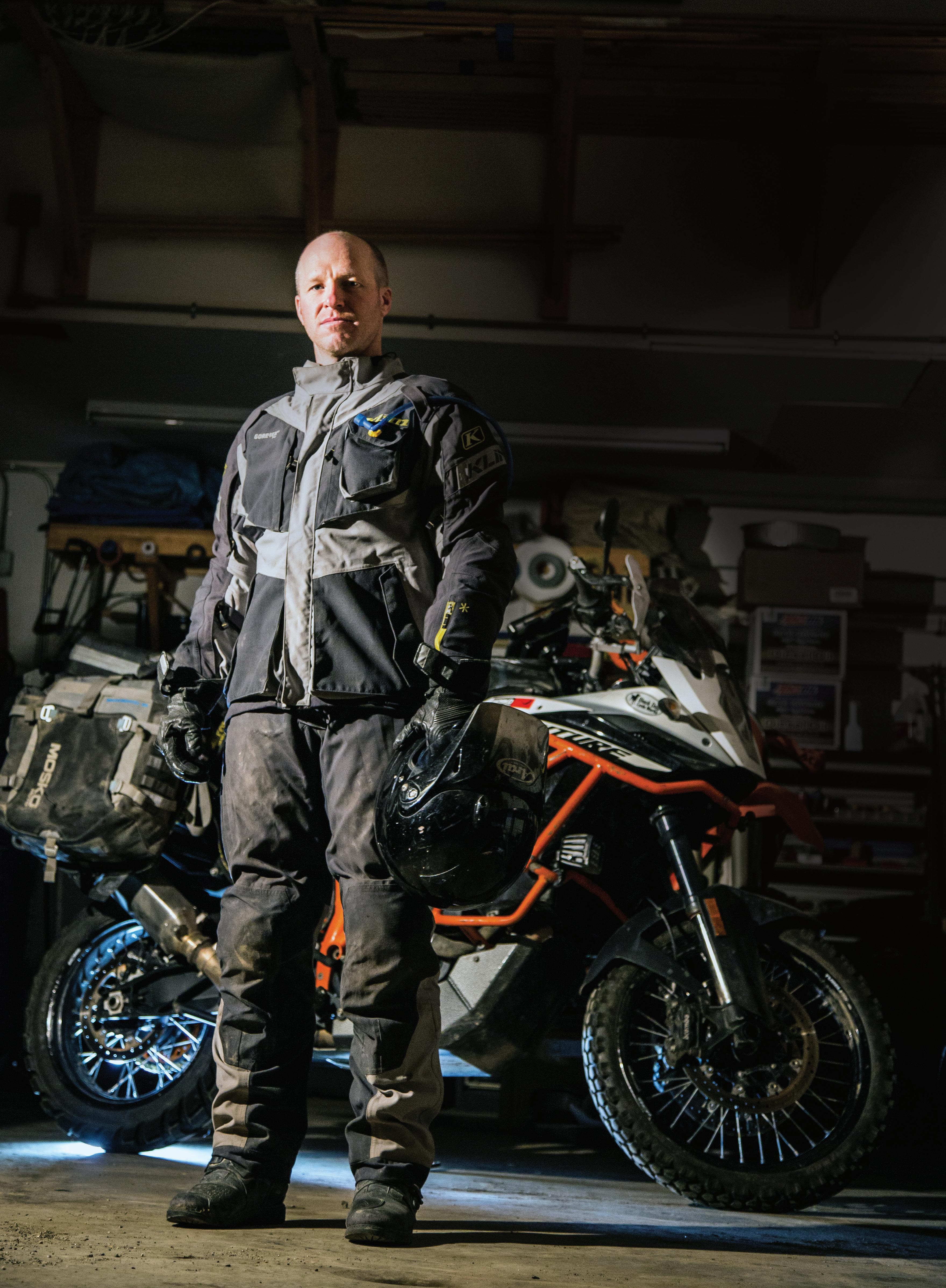
BY CHAD ROTHACHER
HORSEMAN ESCAPING KYRGYZSTAN: AND THE HUNTED THE
I
clutched my hatchet and headlamp, knowing I’d only have a split second to react, and thought about the irony of the situation. I grew up hunting in the mountains of Montana, and learned at a young age the importance of staying downwind, being silent, and staying hidden from wild game. I now had to put myself in the position of the prey – now I was the hunted.
A month earlier, on May 8, 2015, I left Montana for a 6,500 mile, solo motorcycle trip through Central Asia to explore and to test my navigation skills in the most remote and challenging environment I could find.
Departing Istanbul, Turkey, on my KTM 1190, I headed for Almaty, Kazakhstan, and all that lay between. I investigated Eastern Turkey, the wine region of Georgia, and the oil-rich town of Baku, Azerbaijan. Arriving at Baku and the Caspian Sea, I had a choice: hire a “fixer” to get me through Iran, or walk the shipyards looking for passage across the Caspian.
I played it safe securing a trip on an old Russian freighter, and four days later docked in Turkmenistan. The U.S. State Department in 2014 called Turkmenistan a “country of particular concern” for its record of religious persecution, and I made quick tracks to neighboring Uzbekistan then onto Tajikistan.
This region was decidedly challenging to navigate on the bike, and at one point I found myself lying on a goat-track road after crashing near the northern Afghan border with my bike precariously balanced above a raging, glacial-fed river. Two pulleys, fixed anchors, and a mini-winch later, I was riding north to Kyrgyzstan. The next day I was fighting for my life.
Excerpt below adapted from daily blog at chadrothacher.com.
JUNE 5
8 A.M. – Today I took a back road to Naryn, Kyrgyzstan, which will connect me to Lake Issyk Kul in two days. I stopped at a market to pick up fresh tomatoes, cucumbers, bread, and a couple duck breasts then rode up the canyon and found a perfect spot along the river to set up camp.
As I unloaded the bike, a local goat herder on horseback stopped by and we began a hand-gesturing conversation interspersed with some broken Russian I picked up on the Internet before I left. He asked the typical questions: where I’m from, how long I’m staying, if I have cigarettes or anything to eat. I tossed him a tomato and he asked for a second for his friend who sat on his horse by the road. With only one tomato left for dinner, I told him no and both men departed smiling about the mini bounty they just scored from the traveler.
I’ve been eating nothing but pasta variations for a few weeks now, so ever since I found the duck breasts at market, dinner’s been on my mind. The simple salad and fried duck was the finest meal of the trip so far – certainly topping the countless nights of noodles or mixed bag of the local fare. After dinner I stripped down for a bath in the icy cold river, then crawled into the tent to catch up on my photo downloads and journal entries. I fell asleep around 9 p.m., clean, and with a full stomach.
10:30 P.M. – I woke up to the sound of voices outside my tent. I could hear two men talking, and first assumed it was a couple locals stopping by with good intent. It’s common in this part of the world for people to visit at all hours of the day or night to say hello. I listened to the men for a minute or so hoping they would leave, then looked out the tent’s side door and caught the eyes of a man peering back at me. Before I could say anything, the men leapt on me and began smothering my head. I felt one of my worst fears was starting to unfold – a kidnapping for ransom.
The men roughed me up with punches to the side of the head and midsection, but with all the tussling and down feathers, nothing landed with any substance.
When the beating ended, the man on my back switched tactics and tried getting a bag over my head, which was still partially buried in my sleeping bag and under the shredded tent fabric. This confirmed my fear: A robbery was one thing,
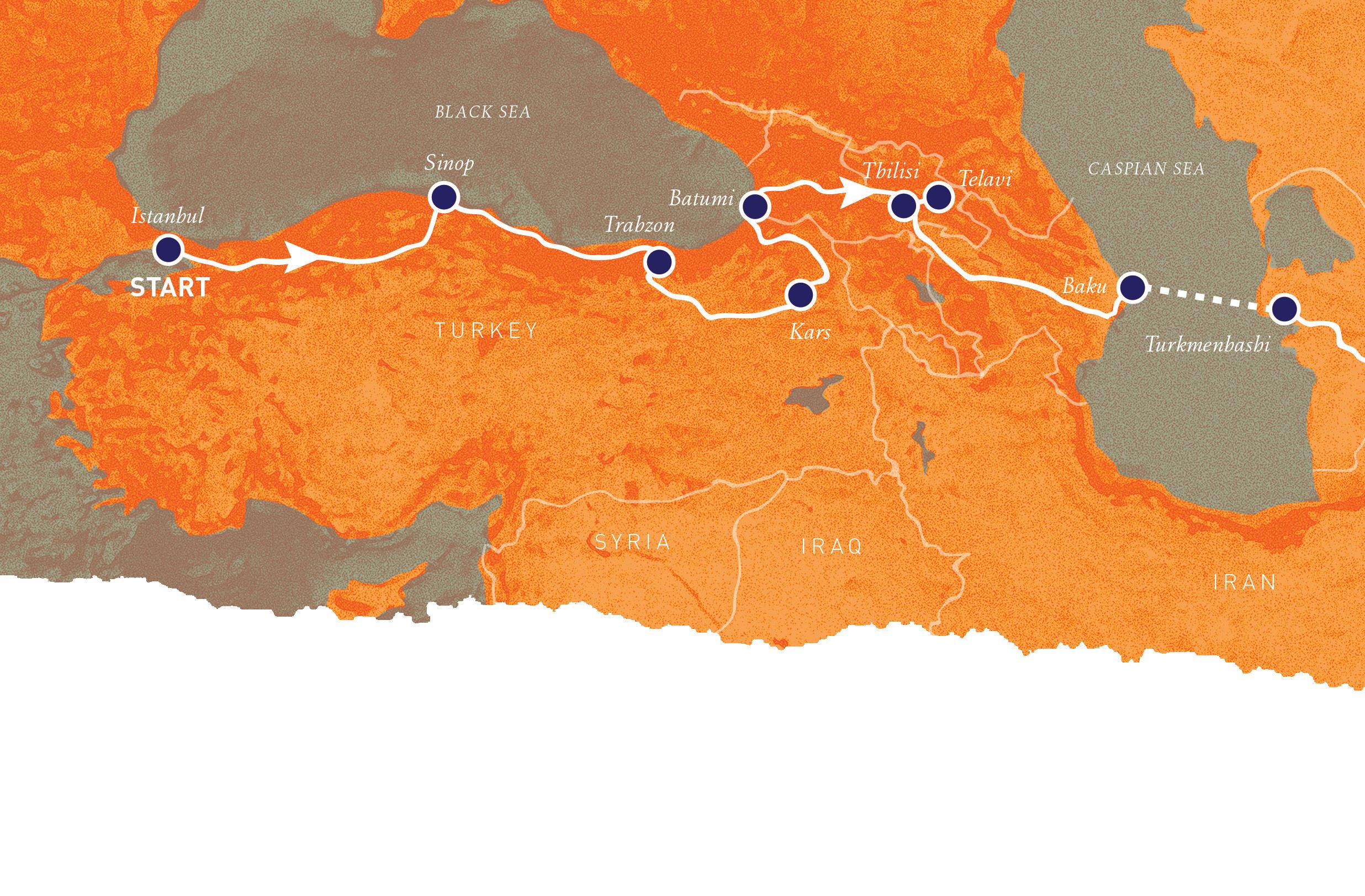
but kidnapping was an altogether different program, and something I couldn’t afford.
I don’t travel with a weapon due to border crossing requirements and differing laws between countries, but carry a small hatchet for various camp duties; it could potentially be used for self-defense.
During the next few minutes of the struggle, I decided if things went further south, I needed enough energy to break away from the assailants, grab the hatchet nearby, and start swinging. The man on my back was lightweight and weak, and I knew I could throw him in an instant and go for the hatchet. If I could limit the damage and keep from being stuffed in their vehicle, I’d be OK losing a few belongings. I had no plans of exacerbating the situation over a few items or the little cash I was carrying.
Over the next few minutes, I put up just enough fight to let the attackers know I wasn’t completely giving up. As long as I could keep the men from moving me, didn’t exert undue energy, or get beat unconscious, I felt in control. But when the man on top of me realized I could move at will, he gave up on the bag and tried to get a rope around my neck.
I somehow caught the noose with my right hand at forehead level and it was crystal clear that if the line made it to my neck, it would be the end. My mind fixated on controlling my portion of the rope.
10:45 P.M. – I went back to work on the bag zipper with my left hand. This apparently wasn’t as subtle as I thought, and I received the first blow to the back of the head. Stars appeared. A few more seconds and another blow – more stars than last
time. I knew I couldn’t take many more of these before I lost consciousness. The final blow caught me square in the back of the neck, and my head pounded as I struggled to keep conscious, still fixated on keeping the noose from slipping around my neck.
The assailant adjusted and tightened his grip on the rope, and I could hear the other man going through my bags. I knew this would soon be over, and my thoughts shifted to what might happen next. Would they throw me in the river? Start beating me again? Kidnap me? Kill me? It might have been a fear from my kayaking days, but now my biggest concern was getting thrown into the fast-moving, frigid river, while still in my sleeping bag – I would surely drown.
One more crashing forearm blow to the back of the neck snapped the thought out of my head, and the man started yelling at me as he loosened his grip.
I assumed he was telling me to keep my head down, as he jumped off and ran. I looked up as the two men crested the hill. It was dark. The moon hadn’t yet made its way into the canyon, but I could vaguely see the headlights as the car sped off.
11 P.M. – I got up, dressed, and took inventory. The robbers are gone, what next? I was still hazy from the blows to the head, and not thinking clearly. At some point I realized the gravity of the situation and needed to get my head straight to make a plan. I decided to pack up the bike and move in the
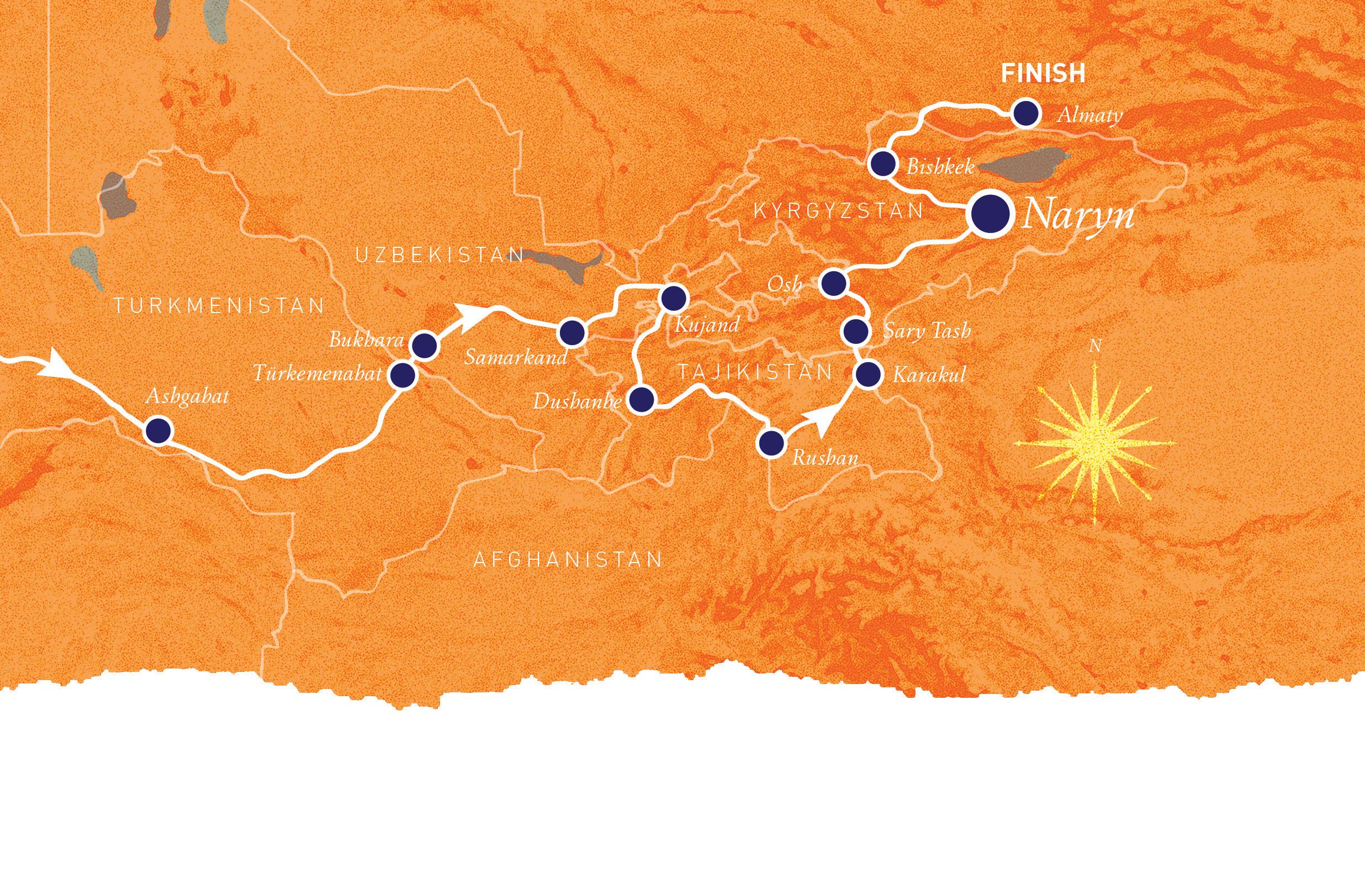
opposite direction of the car. As I packed gear at random, I realized my electronics bag was missing, which had my iPad, navigation system, passport, emergency beacon, and satellite phone – there was no way to send an emergency signal or call for help. I knew I couldn’t find my way to the next town on the labyrinth of roads in the night without navigation, and had no choice but head in the same direction as the robbers, and back to Naryn.
I loaded my bags on the bike and realized my key was missing – it was in my electronics bag. “No problem,” I thought, “I have a spare in my pack.” I found the key, put it in the ignition and went to fire it up – nothing. I tried again, nothing. The next two attempts brought the same result. I was stuck.
The robbers didn’t get my wallet or cash – ‘Not too thorough for robbers,’ I thought. It then dawned on me: They might come back once they discover the bag only had a few dollars worth of Uzbekistani som. My only option was to hide until morning. I grabbed my sleeping bag, headlamp, hatchet and Leatherman, and searched for a spot to wait out the night.
11:30 P.M. - My options were limited. I was camped on the only flat piece of ground on the valley floor, the small campsite surrounded by steep canyon walls; I was in a bowl surrounded by water on two sides at the river confluence, a cliff on the third, and the road directly above me. I found a spot 50 yards from camp, and curled up with my sleeping bag, headlamp and hatchet.
It wasn’t long after I wrapped my bag around me that I saw headlights coming from the direction the robbers fled, and ducked down as the lights went by. No problem, just traffic. But the passing car gave me the idea to flag down the next vehicle headed toward Naryn, and have them drop me at the police station – it seemed better than lying on the wet ground until morning.
11:45 P.M. – Headlights coming down the road. As the car approached, I ran up the hill waving my arms and headlamp. It wasn’t slowing down much, so I lowered my light on the vehicle and saw two young men in a white car approaching. “Shit, did the robbers double back?” They stopped beside me. The driver didn’t look over but I
saw the passenger start to get out, so I quickly moved over to meet him, hiding the hatchet behind my leg. I told him I needed to go to Naryn. He shook his head, no. I repeated myself, and got the same answer. He just stood there looking at me with his hands in his pockets – was he hiding a knife? A gun? Something wasn’t right.
I gave him a friendly “OK, goodbye” nod and started to back off. He turned and got in the car as they slowly drove away. I looked for a license plate that wasn’t there. “Holy shit,” I thought. “I was just face to face with one of the robbers.”
12:00 A.M. – I returned to my hiding spot to wait it out – no way was I flagging down another car tonight. No sooner did I think, ‘Only six hours left, no problem,’ when I saw headlights coming up the road again, from the direction of Naryn. I heard a police siren and a man on a loud speaker. It sounded like police, but there were no flashing lights. ‘No way, it couldn’t be the police,’ I thought. I didn’t buy it. The car pulled to a stop, and I watched the silhouette of a man get out and walk down the hill
Map: Chad Rothacher rode his motorcycle approximately 6,500 miles across Central Asia from Istanbul, Turkey, to Almaty, Kazakhstan last
summer. The map above shows the route of his journey.
Mountain road:
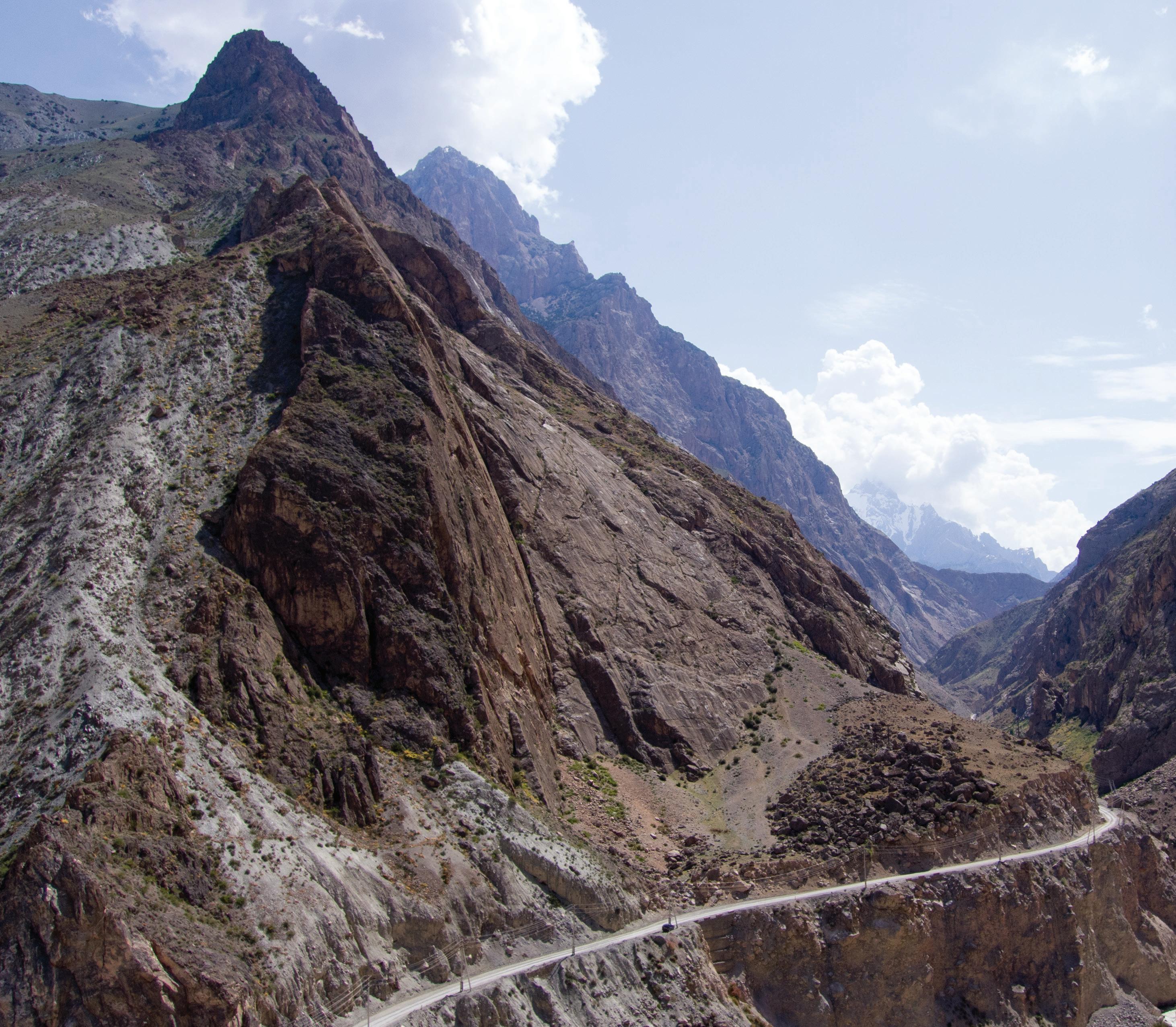
carrying a small light. I remembered the hint of a bluish glow during the robbery, and the light headed my way clearly had the blue tint of an LED. It was too familiar; no way was I coming out of hiding. The man started whistling and yelling. I knew it at the time, and it was confirmed later by one of the Kyrgyzstani military officers – the two men came back to kill me.
While the man searched the area with his light, I left my sleeping bag and slithered into the brush that lined the riverbank. I knew to keep quiet and find a position I could defend from, as well as attack if need be. A patch of heavy brush bordered the east end of the campsite, with only one
obvious way around. If they came toward me, they’d surely walk around the brush through this clearing. I decided to hide on the other side, where I could see them before they saw me. My plan was to shine my headlamp in their eyes when they rounded the corner and determine if they had weapons or not. If they did, I’d have to attack instantly. I held on tight to the hatchet in one hand and the headlamp in the other, ready to jump.
1:00 A.M. – I was a statue while they combed the area for me then I heard car doors shut. But the vehicle didn’t pull away. They were waiting me out.
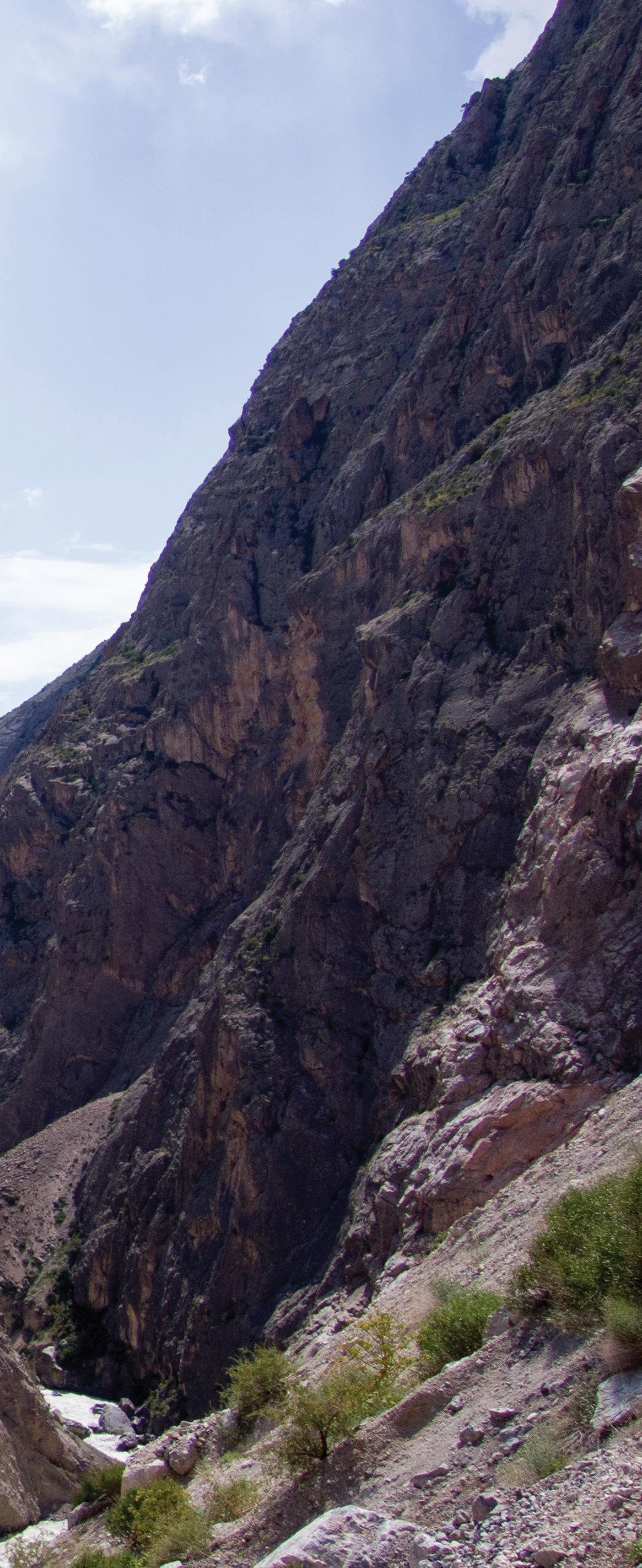
With the men directly above me on the road, I sat as still as possible, my legs intermittently falling asleep. My mind wandered to my family, and I had to fight off the thoughts. I focused on every sound, every shadow, every movement I saw in the darkness. My life depended on it. Every time my mind drifted, I snapped it back to focus on my surroundings. I could feel the slightest puff of wind; hear a mouse in the grass (which sounded like an elephant); smell the willow trees
I knew it at the time, and it was confirmed later by one of the Kyrgyzstani military officers – the two men came back to kill me.
and the dirt below me. I watched every shadow move as the moonlight slowly worked its way down the canyon walls. I’d never been so focused as I was during those haunting hours.
2:30 A.M . – I finally heard the car leave, but still had a terrible feeling they’d return or that this was just another attempt to lure me out of hiding. The police impersonation didn’t work; I was sure the silent attack would be next. There was nothing I could do but sit on the cold, damp ground and continue to stay acutely focused until daylight.
6 A.M. – I was starting to turn hypothermic, but the graying morning gave me enough light and courage to come out of hiding. I had to get to Naryn and find the police station. First I’d have to stash my gear and motorcycle in the brush hoping it would be left alone.
9 A.M. – When the first vehicle approached, I ran up the embankment and jumped in front of the car, undoubtedly startling the passengers. Ironically, they probably thought I was going to rob them. As soon as I told my story and we headed down the road, I felt the flood of emotions engulf me. The gravity of the situation became clear: I was stuck in Kyrgyzstan with no passport, no visa, no proof of motorcycle ownership (or any way to move it), and limited communication. I had no choice but to keep my shit together and figure a way out of this mess.
JUNE
6
I arrived at the local military post around 11 a.m. to find a few Kyrgyz officers, and none who spoke or understood
English. I kept telling the officers, “Embassy, embassy,” and pointing to the phone. After some convincing, I made it through to the U.S. Embassy in Bishkek and quickly found out they couldn’t do anything until I went to the capital city, about five hours away. As soon as I passed the phone back to the officer, he started yelling at the embassy operator and abruptly hung up. My heart sank – this guy just hung up on the embassy. “Now I’m really screwed,” I thought. There was no American cavalry coming to get me out of here.
After a very exhausting day of driving around with a few military officers and Saykal, a local woman who helped translate, I was finally dropped off at a dumpy hotel with strict instructions not to leave the building. After a failed attempt at a shower (there was no water in my room), I hit the sack, my head still spinning from the past 24 hours.
JUNE 7
Today it became quite clear the military had no desire to let me leave Naryn. The corruption ran deep and I knew I had to get out of there before I was moved to a holding cell for my own “safety.” There was no clear line on who I could trust, so I put my faith in Saykal and asked her to help me arrange transport to Bishkek, some 300 miles away. Early the next morning, I quietly left the hotel and met the driver at 4 a.m. in the alley for a long ride to the capital city.
JUNE 8-11
First thing Monday morning I showed up at the Embassy expecting a sense of elation similar to what you might see in movies: The guard lets you through the gate onto green grass with Americans strolling around, and you’re now free to move about on U.S. soil. It wasn’t
the movies. I was shocked to find locals, contracted as security guards, working both sides of the gate. There was no feeling of my native soil, just a couple Americans who could help very little. I was just a number stepping up to the glass, explaining my story to the clerk on the other side. I was crushed.
The next few days were spent trying to get a temporary passport – which Kyrgyzstani border guards don’t want to accept upon leaving the country or entering the next – as well as securing a new visa and technical passport for the bike.
I was stuck in Kyrgyzstan with no passport, no visa, no proof of motorcycle ownership (or any way to move it), and limited communication.
I received a call from Saykal on the night of the 9th informing me the officers had caught the robbers, one of whom was the horseman I met six days prior, and recovered most of my items. I traveled back to Naryn the next morning and spent the day interviewing with journalists and trying to negotiate the return of my motorcycle. I finally exchanged
Rothacher’s view having just ridden through the 5-km-long Anzob Tunnel, aka the “Tunnel of Death,” in Tajikistan.
PHOTOS COURTESY OF CHAD ROTHACHER
Bike and tent:
The author’s camp setup, just after crossing
cash for my items, and left town. Riding through the night, I made it back to Bishkek early the next morning.
JUNE 12
After a grueling eight hours of being hassled at the Kyrgyzstan border crossing, I crossed into Kazakhstan and arrived in Almaty around midnight. I secured shipping the following day and left for the U.S. the morning of the 13th, arriving that same evening (a 32-hour time difference) in Big Sky, Montana to a very concerned family and dog.
I’ve kept in touch with Saykal, who agreed to act on my behalf in the following months as the trial progressed. She’s told me on numerous occasions that she feels a duty to her country to stay involved with the case to the end.
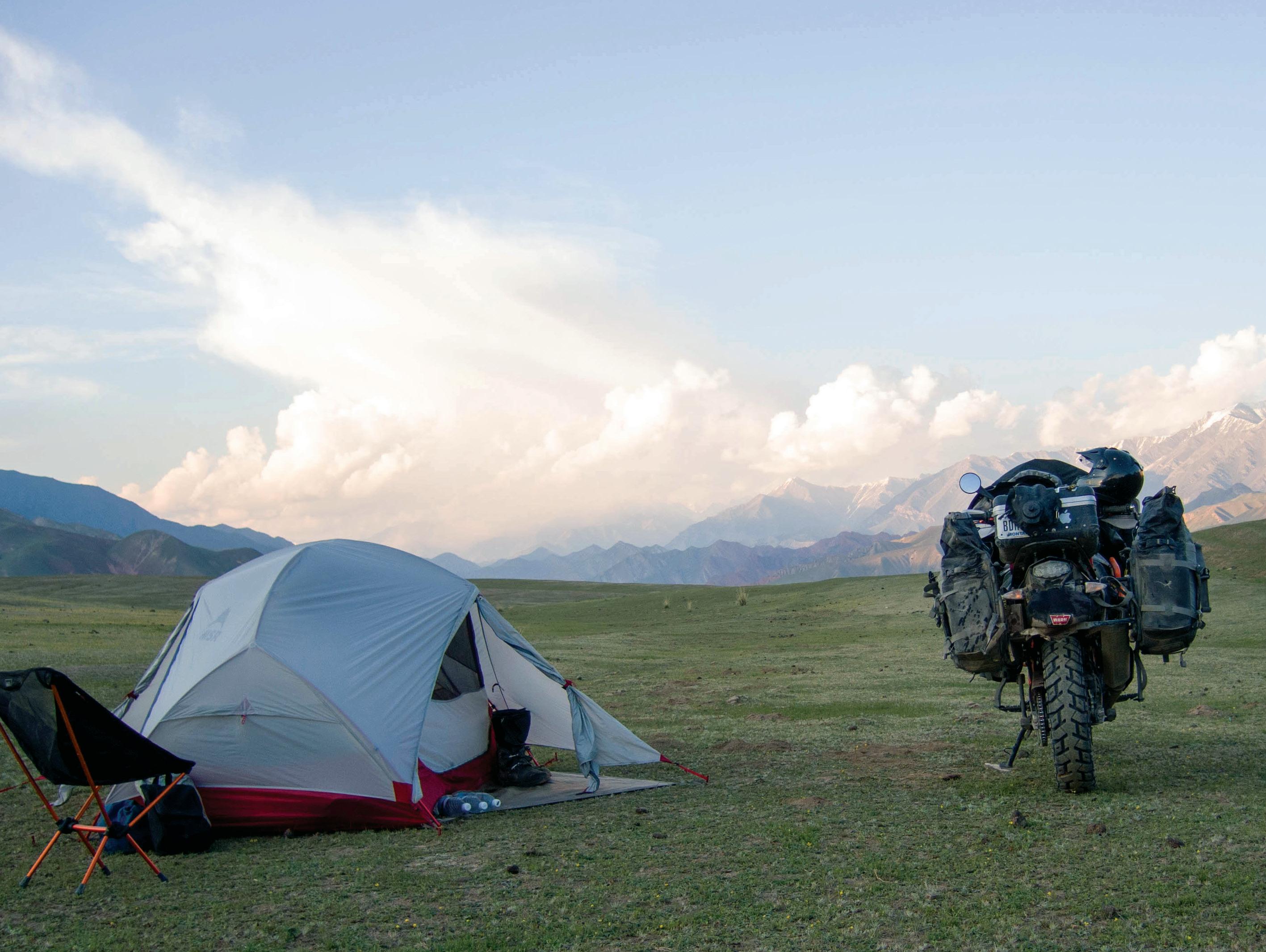
AFTERWORD
Q&A
BY JOSEPH T. O’CONNOR
Afterword – Q&A
By Joseph T. O’Connor
The ordeal Chad Rothacher faced during his five-week solo motorcycle trip across Central Asia rattled him, to a degree. But, he says, one bad experience doesn’t define an entire journey.
On November 10, five months after he returned,
Rothacher sat down with Mountain Outlaw to reflect on what he says remains nothing less than an extraordinary adventure.
Mountain Outlaw: Why did you want to take this trip in the first place?
Chad Rothacher: A couple years ago, I spent [three weeks] in Mongolia riding around solo. It was a great experience but I was looking for something more challenging. I looked around the world and there are very few places where we can really get off the grid.
M.O.: Plenty of logistics and planning were involved. What expectations did you have?
C.R.: I expected I would be in some tough situations with the bike [and] border crossings, but I also expected to find out a lot about the people living there. The expectations changed from country to country, [and] from what to see to, basically, how to [survive].
M.O.: You can’t fit much on a motorcycle. How do you prepare for a journey like this?
Map: Chad Rothacher rode his motorcycle
C.R.: My goal was to not stay in hotels. [I wanted to] to sleep outside, to eat from markets. You just go, I think. But I did a lot of research. There were some areas I wanted to steer clear of or at least skirt their borders.
M.O.: It must have been terrifying to be attacked, robbed and then hunted.
C.R.: I spend a lot of time thinking about it [but] I don’t dwell on it. What I think about most is that I impacted lives in a massively negative way. I’m not defending the guys, but … if I wasn’t there they’d still be shepherding their sheep.
M.O.: Where are the two men who attacked you now?
C.R.: They were convicted within two months and sent to prison for five years. The [justice system] moved swiftly and in this case, accurately.
M.O.: When you learned that the horseman was one of the assailants, what went through your mind?
C.R.: I was walking down the hall in the military barracks, and this guy’s coming the other way – he’s in cuffs – and I was excited in a weird way because I recognized him. But then the light bulb quickly went off, and I was so bummed, so deflated. We had this connection. I was just like, ‘Why?’
Months later … his family emailed me: ‘They’re good men, please forgive them.’ It’s hard, and you have to wonder do you forgive them or not? I forgave them the minute I sat down with them.
M.O.: Why?
COURTESY OF CHAD ROTHACHER
FEATURED OUTLAW
The American West, with its harsh and beautiful landscape, has always fostered a breed of individuals who live outside the lines—outlaws, rebels and renegades whose lives challenge the norms and embrace the untamed spirit of the surrounding ecosystem. The Featured Outlaw section of each issue has always stood as a celebration of these characters. In the following pages, meet all of our past 15 years of Outlaws, those who take the culture of the West and embrace it as a lifestyle.
Full profiles can be found online at mtoutlaw.com.
TED TURNER, WINTER 2017
Ted Turner evolved from a fiercely competitive media mogul into one of the most influential philanthropists and environmental advocates of modern times. Deeply devoted to the American West and global humanitarian causes, Turner’s legacy spans conservation and activism, defining him as a humanitarian whose words and actions continue to shape our landscape, even following his passing this past May 2026.
Photo by Elena Cizmaric
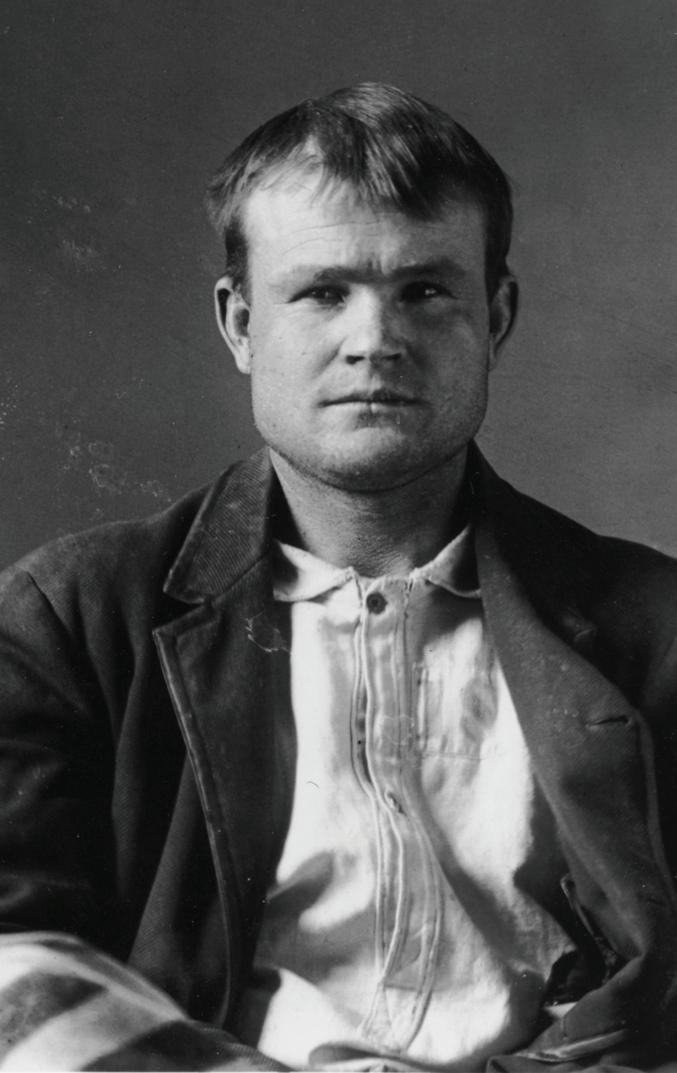
BUTCH CASSIDY, WINTER 2011
Butch Cassidy, born Robert Leroy Parker in 1866, was a notorious American outlaw and leader of the Wild Bunch gang, known for robbing banks and trains across the American West. His fame grew from his daring exploits, charisma and mysterious disappearance. Photo Public Domain via Wikimedia Commons

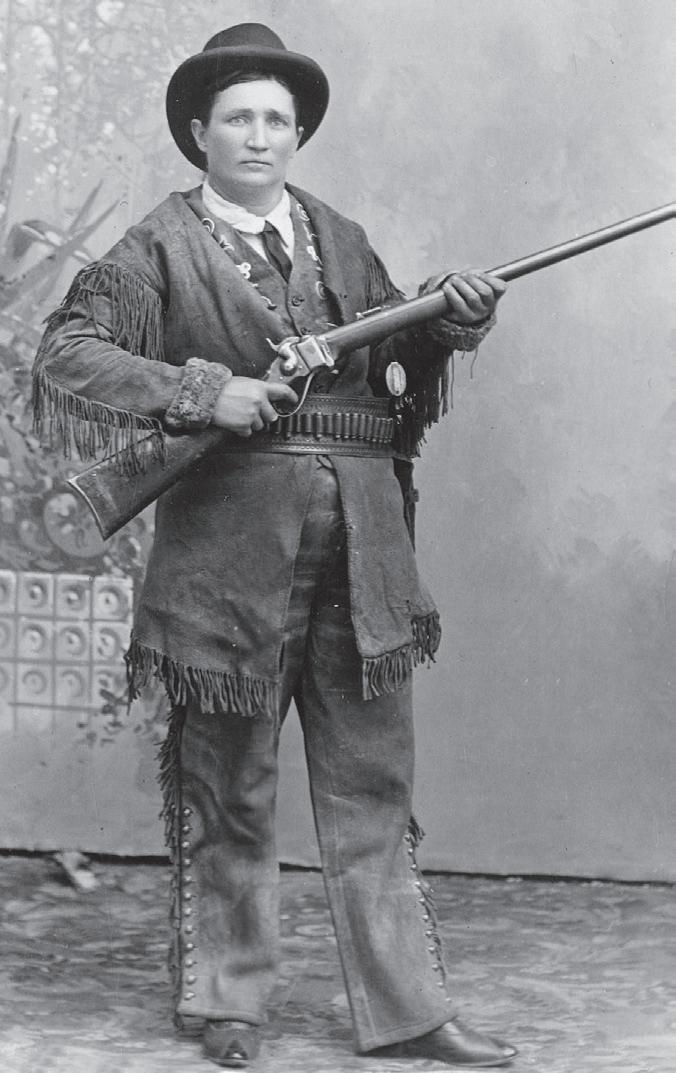
CALAMITY JANE, SUMMER 2011
Martha “Calamity Jane” Cannary was known for her sharpshooting skills and wild, untamed lifestyle. She gained fame as a scout and performer, particularly for her association with figures like Wild Bill Hickok, and became a symbol of the spirit of the American West. Photo C.E. Finn, Livingston, Montana, Public domain, via Wikimedia Commons
JOHN MORRIS JR. AND SR., SUMMER 2012
Father and son live by the creativity of their hands crafting hats at their Bozeman business, Rocky Mountain Hat Company, carrying down a core tradition of the West. Photo courtesy of Montana Hat Company
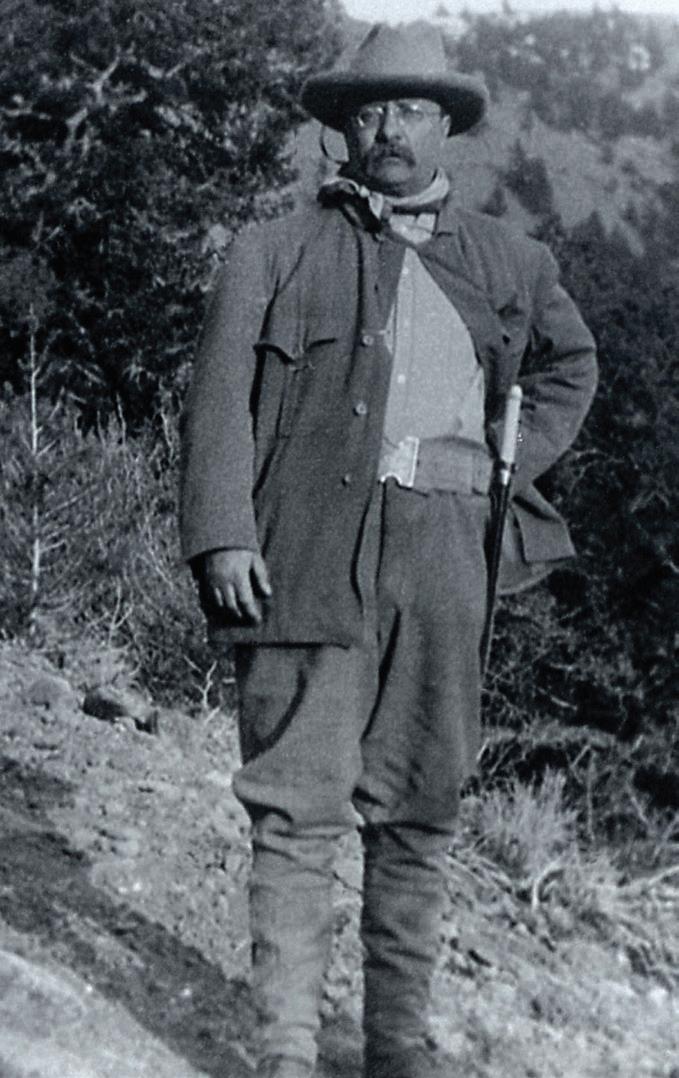
THEODORE ROOSEVELT, WINTER 2014
President Theodore Roosevelt stands as a symbol of progressive conservation values that much of the Greater Yellowstone Ecosystem benefits from to this day. Photo courtesy of NPS
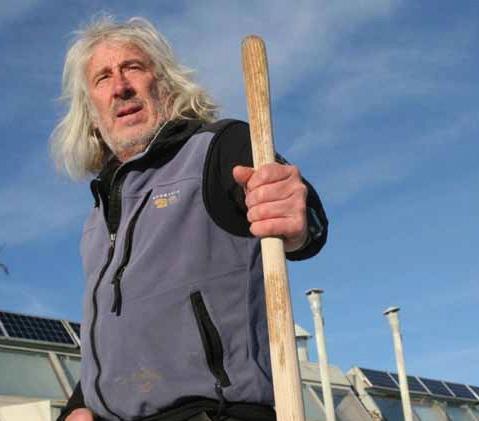
MICHAEL REYNOLDS, WINTER 2013
Twenty-five years ago, Michael Reynolds assembles progressive architectural prototypes into one seminal idea: Earthships. Photo by Kristin Jacobsen
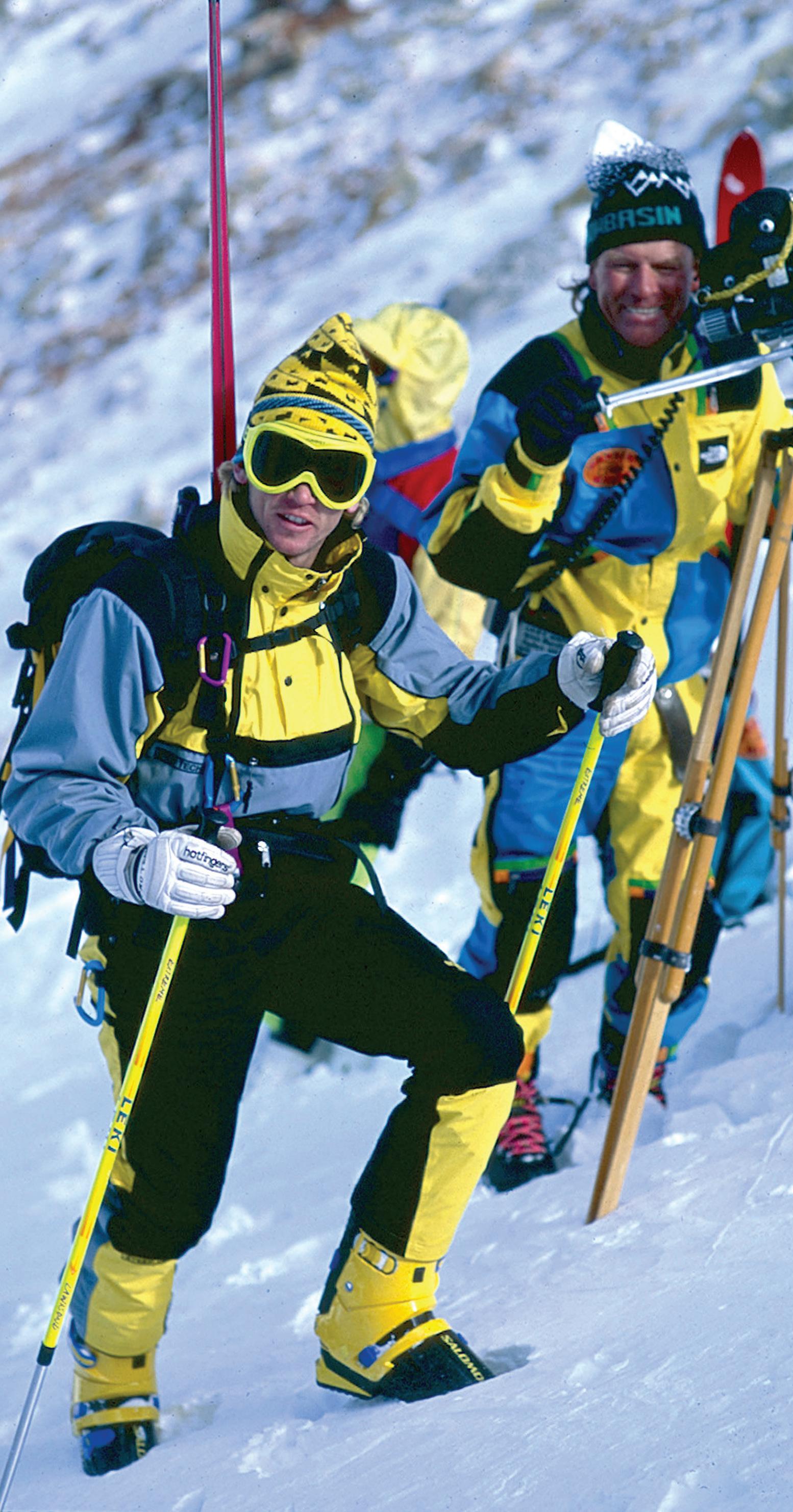
SCOT SCHMIDT, WINTER 2012
Scot Schmidt became a legend in extreme skiing on the local slopes of Bridger Bowl Ski Area and Big Sky Resort. The Helena native won the prestigious American Freeskiing Championship in 1982 and gained significant fame through his appearances in iconic ski films like “Steep,” “Blizzard of Aahhh’s,” and “The Extreme Series.” His legacy not only shaped competitive skiing but also helped define the future of freeride- and extreme skiing culture. Photo by Lonnie Ball
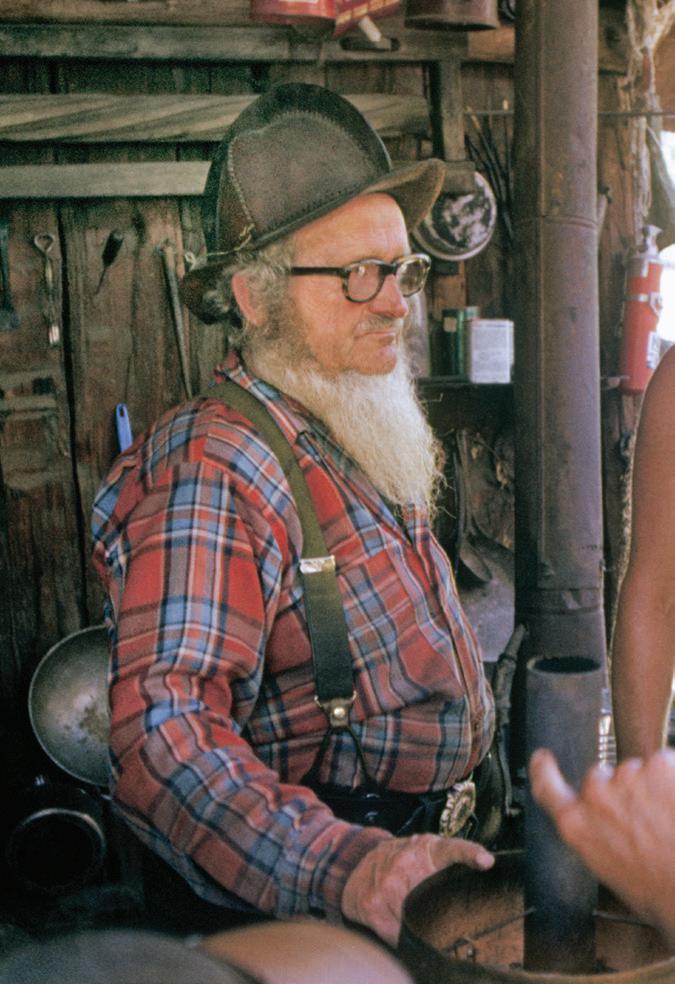
BUCKSKIN BILL, SUMMER 2013
On the banks of the Salmon River, 52 miles into the Frank Church River of No Return Wilderness, Buckskin Bill’s life was shaped by his ability to be resourceful, independent and artistic.
Photo by Buddy Mays
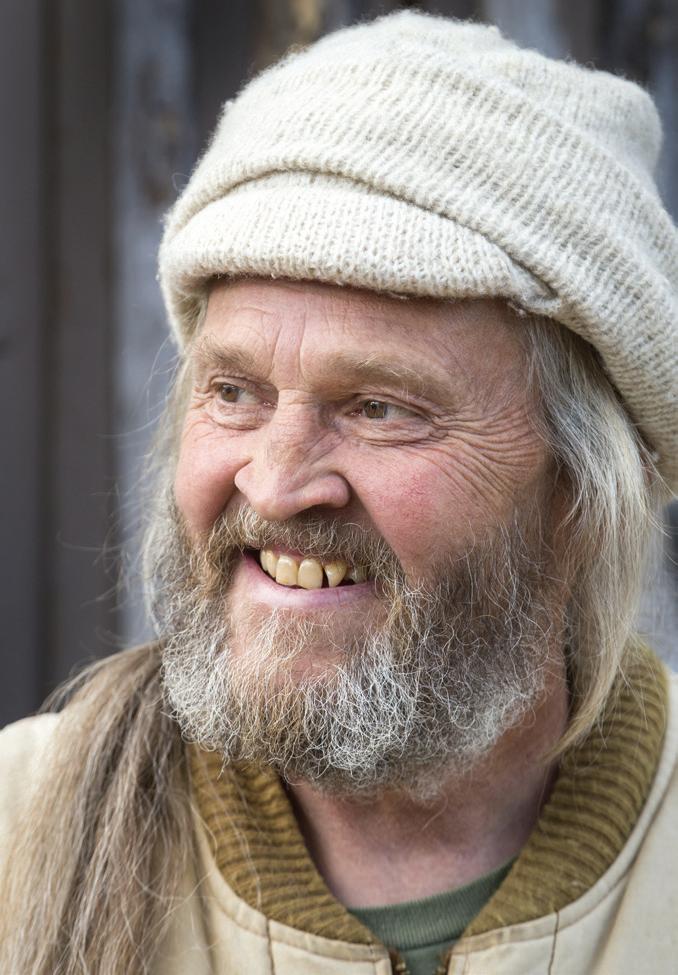
BO TIM, WINTER 2015
While Timothy “Bo Tim” Pattison passed away in early 2026, his legend lives on in his family, and the wild landscape of Big Sky, which he called home for most of his life. Photo by Tyson Krinke
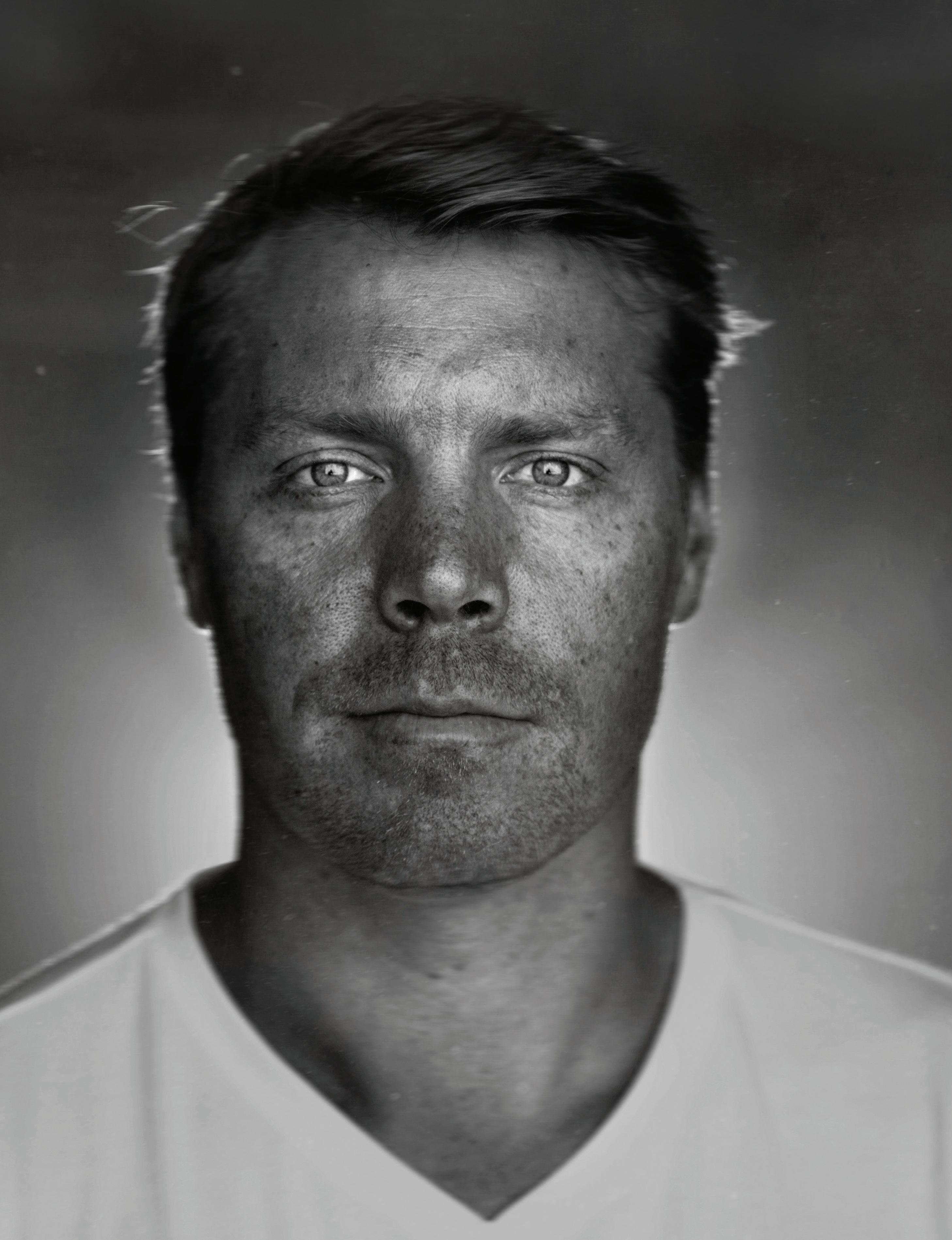
TRAVIS RICE, WINTER 2018
Travis Rice is a rare outlier in professional snowboarding whose career defied the sport’s trajectory, evolving from prodigious local talent in Jackson, Wyoming, into a globally influential rider and filmmaker. Known to juggle roles on the set of his films, Rice has expanded his impact beyond competition into ambitious film projects that blend athleticism, art an environmental inquiry. Photo by Jennings Barmore
NICHOLAS WOODMAN, SUMMER 2014
How does GoPro founder Nicholas Woodman define success? Unsurprisingly, the young entrepreneur and outdoorsman said, it’s not money, but “about waking up every day happy.” Photo courtesy of GoPro
LYNSEY DYER, SUMMER 2015
Growing up in Ketchum, Idaho, Lynsey Dyer has never been “just a girl.” And to anyone who has told the decorated ski racer she couldn’t do something, you can bet she proved them wrong. Photo by Ralph Kristopher
PHIL
CAPY, WINTER 2016
Phil Capy was known as the oldest ski patroller in the country. Born in April 1928, St. Moritz, Switzerland had just hosted the second Winter Olympic Games. Metal edges had just been introduced to skis. Herbert Hoover was elected president. Photo by Wes Overvold
VAN EEDEN, SUMMER 2016
Mandela van Eeden will run circles around you—and the planet. The radio host and international raft guide tells how the didgeridoo can save your life. Photo by Sophie Denison
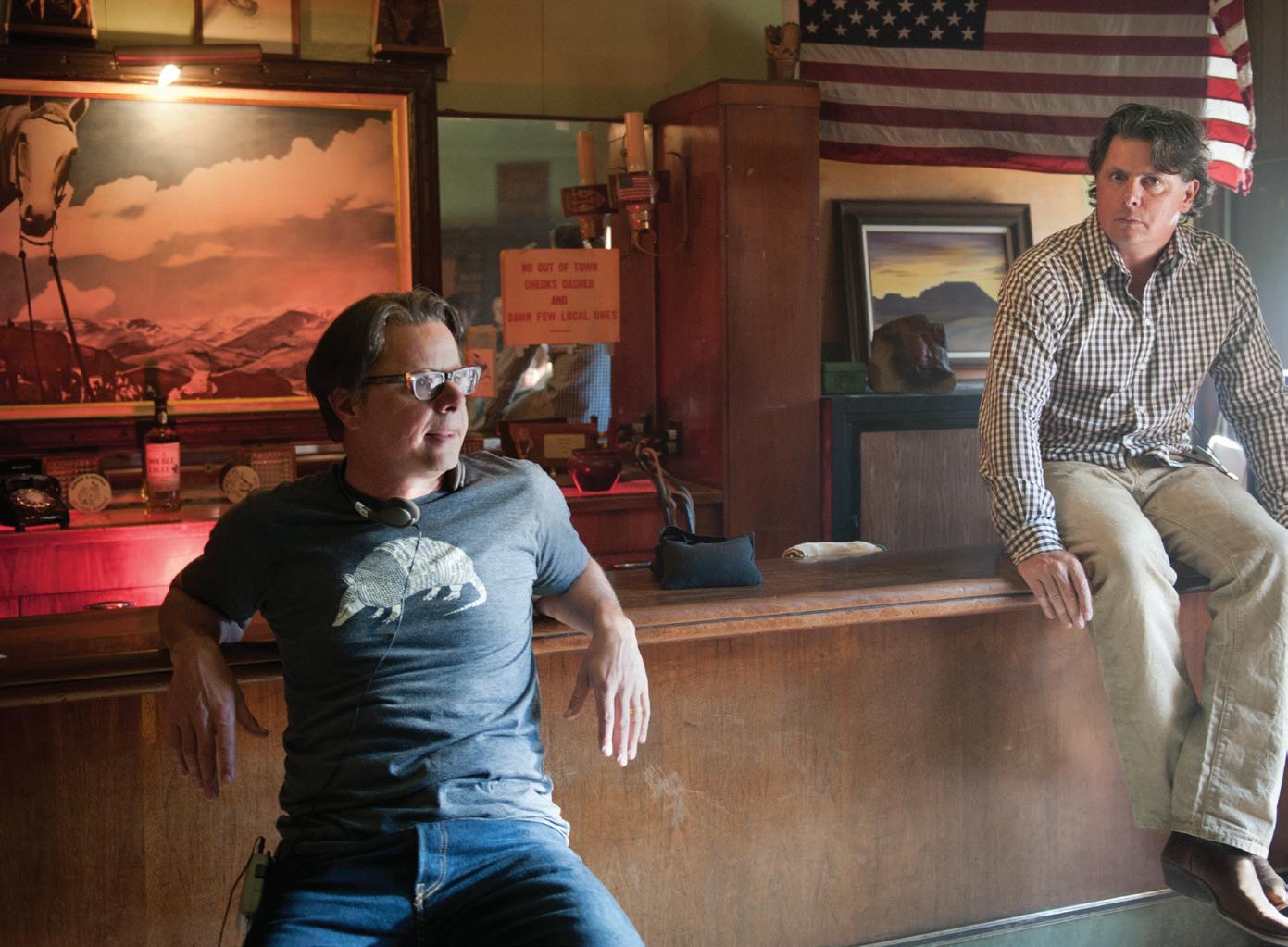
ALEX AND ANDREW SMITH, WINTER 2017
For their upcoming film adaptation of David Quammen’s book Walking Out, Montana’s own filmmaker twins tell how bitter winter, authenticity and Dungeons and Dragons inform their Montana stories. Photo by Michael Coles
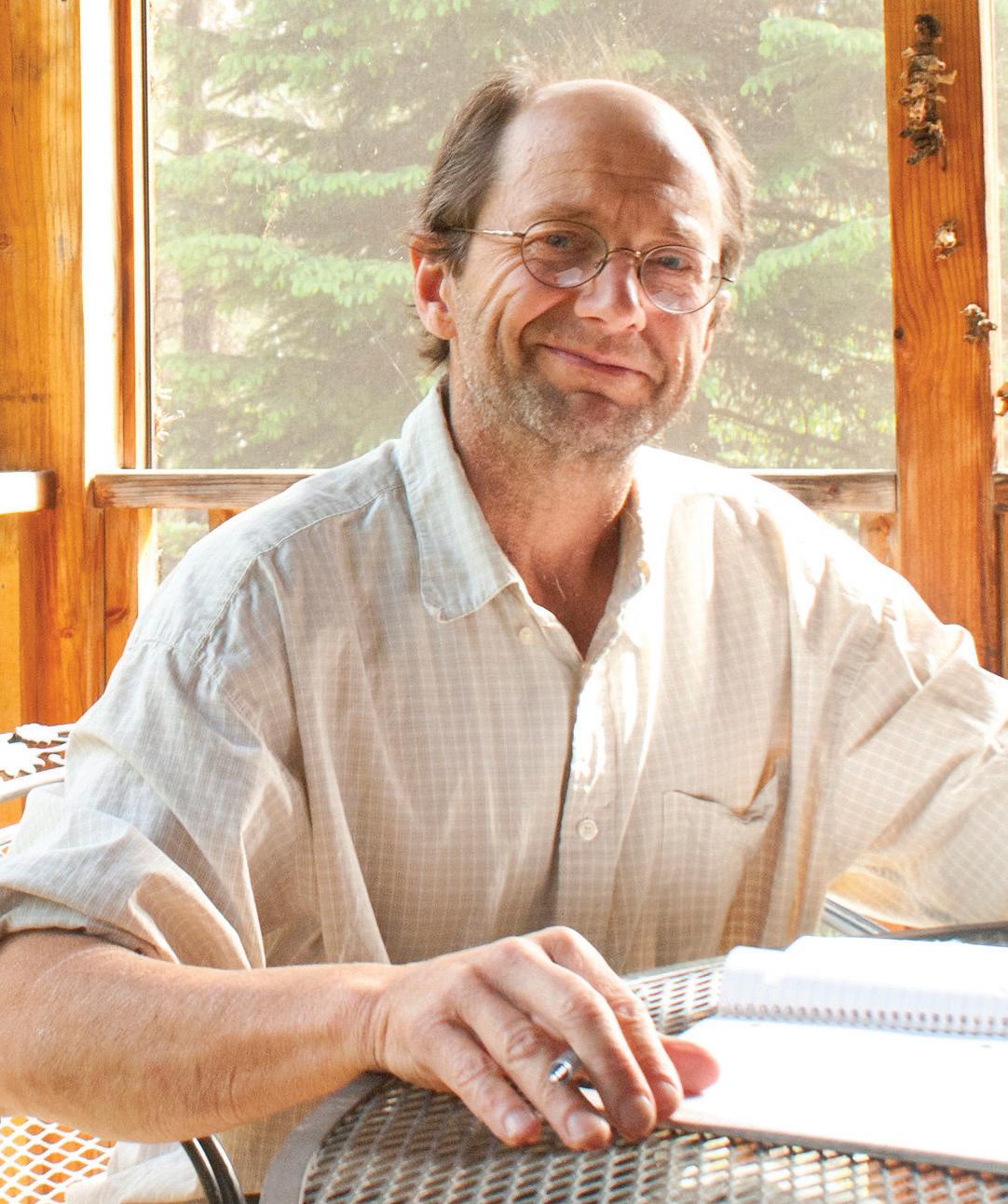
RICK BASS, SUMMER 2017
Rick Bass is the author of more than 30 books of fiction and nonfiction, served as Montana State University’s first writer-in-residence, and is a passionate environmental activist, most recently for the old growth forest he calls home in Montana’s Yaak Valley. Photo by Jessica Lowry
MANDELA
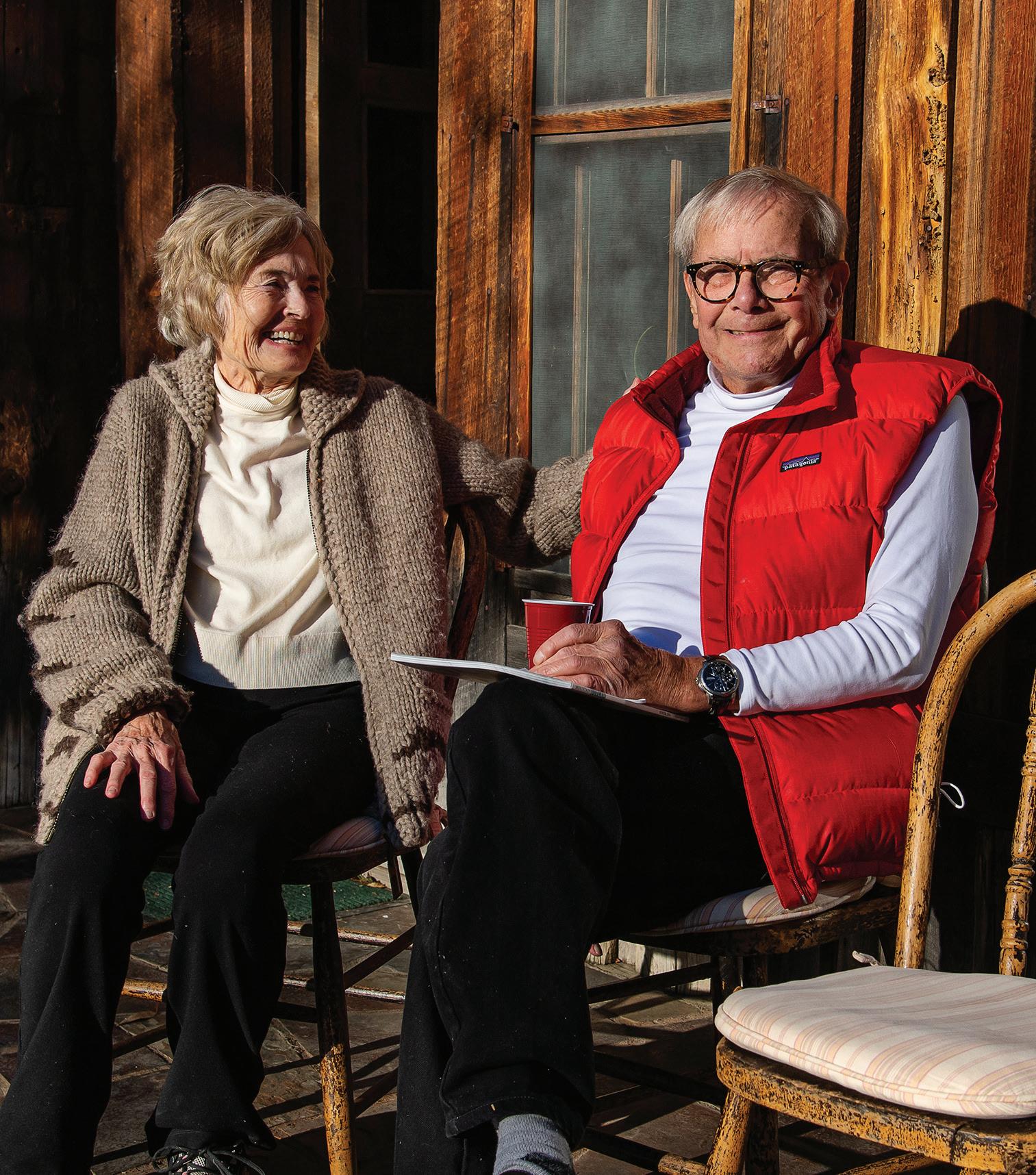
TOM BROKAW, WINTER 2021
Tom Brokaw spent half a century as one of America’s most trusted anchors. After decades in the spotlight, Brokaw finds peace at his ranch near Livingston, Montana, where he enjoys fly fishing, hunting and relaxing with his family. Despite his storied career and numerous accolades, including the Presidential Medal of Freedom, he embraces the quieter moments of life.
Photo by Thomas D. Mangelsen
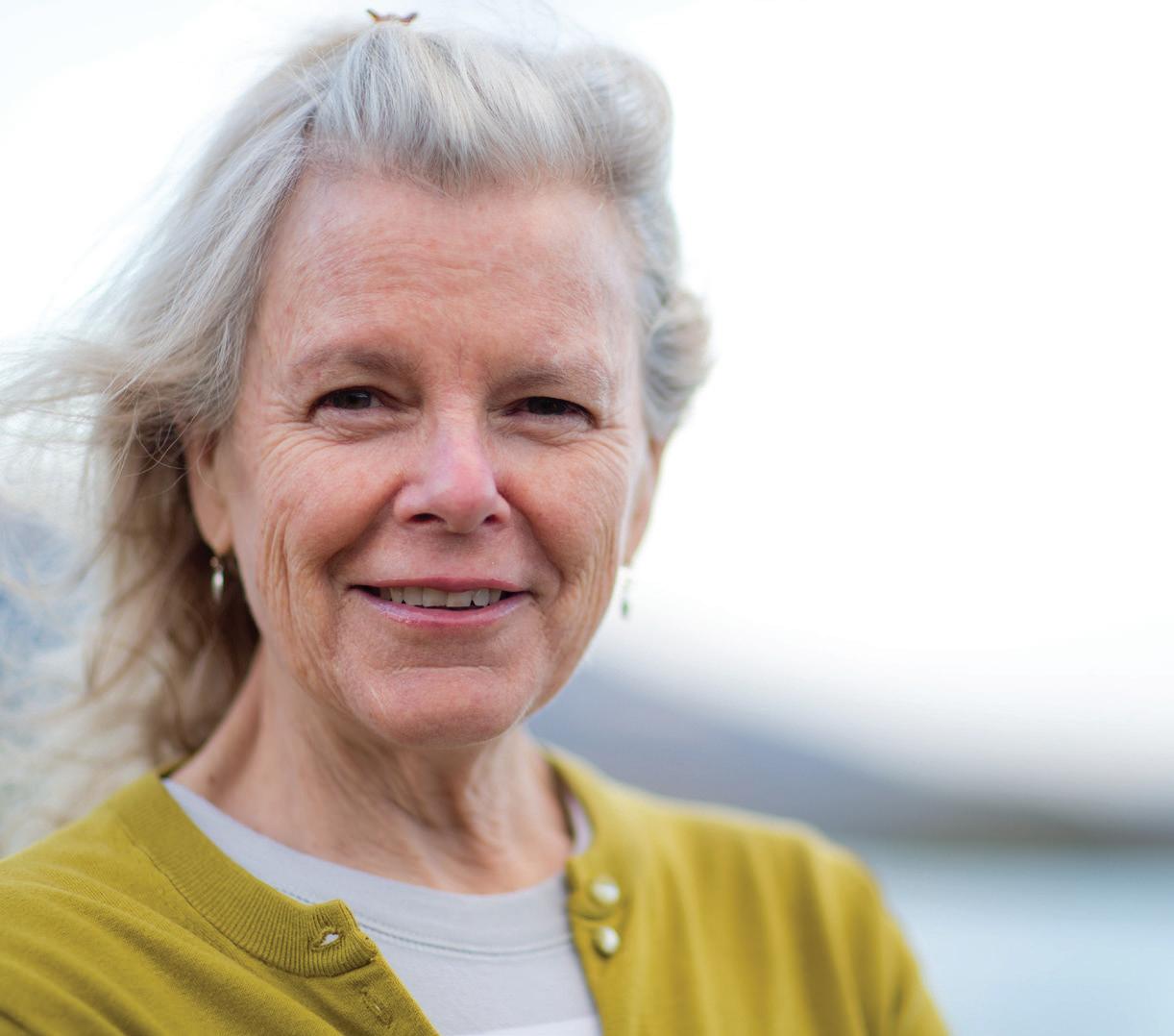
KRIS TOMPKINS, WINTER 2019
As CEO of Patagonia, Kris Tompkins helped lead the company from a small climbing gear manufacturer to an outdoor apparel titan and a pioneer for corporate responsibility. Following her retirement and marriage to Doug Tompkins, founder of The North Face, they moved to a remote farm in Chile’s Lakes District. From there, Tompkins has protected 13 million acres, and she’s not done yet. Photo by James Q Martin
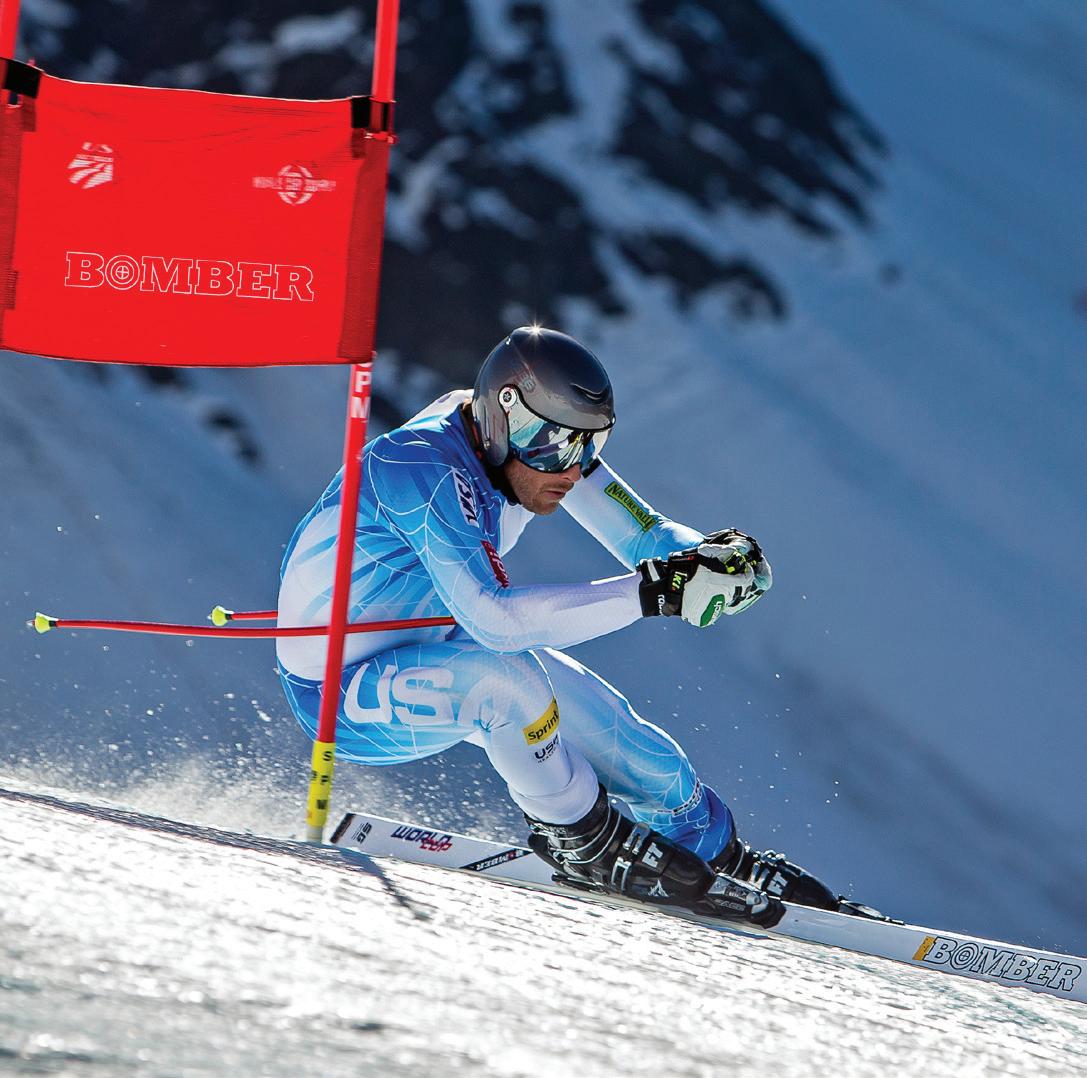
BODE MILLER, WINTER 2020
Bode Miller taught us you can catch an edge and still regain composure. He was an athlete who gambled that perseverance and resilience would eventually pay off.
Photo courtesy of Bomber Ski

FLINT RASMUSSEN, SUMMER 2020
While Flint Rasmussen won’t get on a bull, the famed rodeo entertainer was for decades the hottest thing in professional bull riding.
Photo by Andy Watson
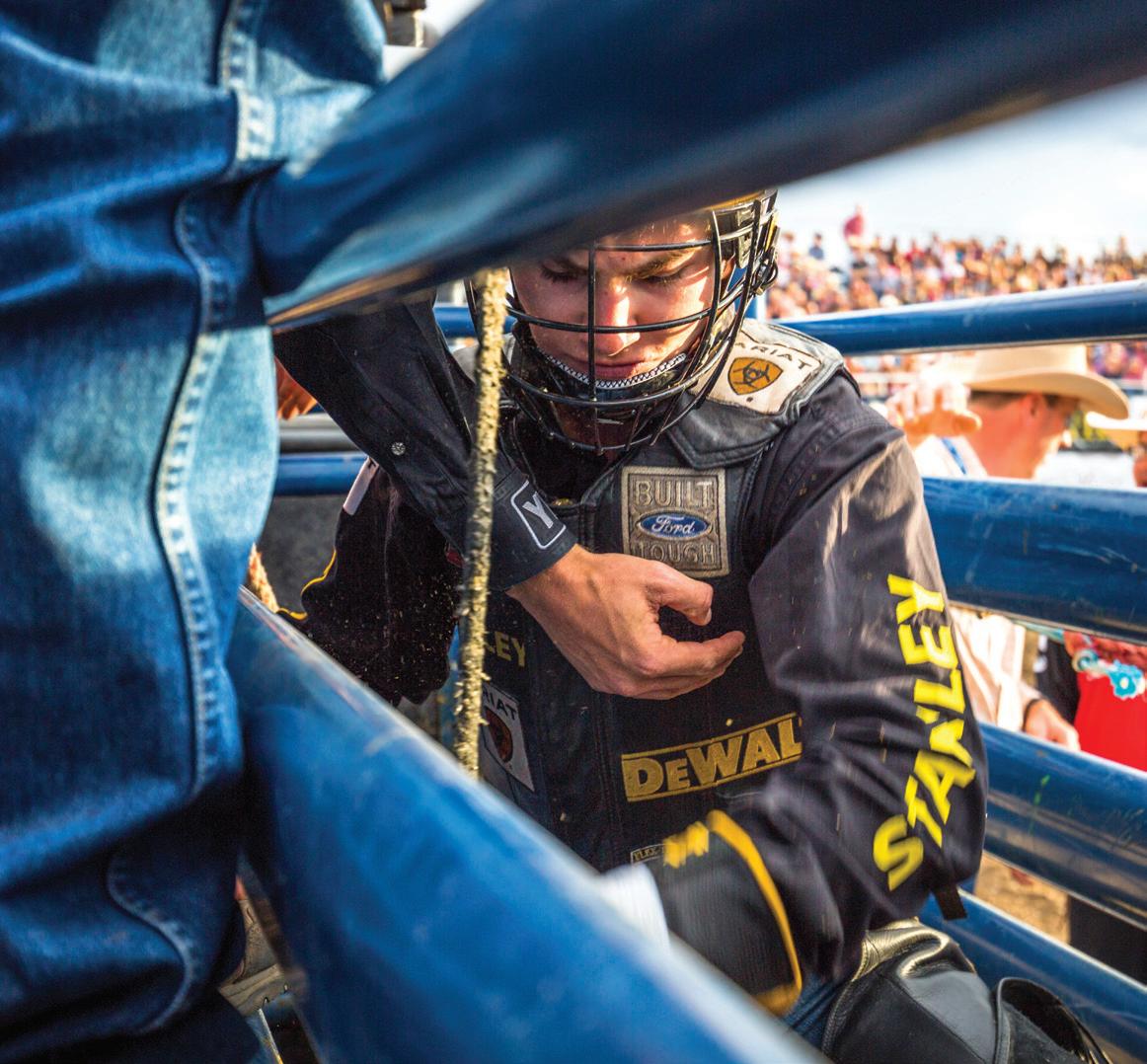
JESSE LOCKWOOD, SUMMER 2018
At 20 years old, professional bull rider Jesse Lockwood became the youngest world champion in PBR’s 24-year history, and just the second bull rider, after Silvano Alves in 2011, to capture the title a season after being named Rookie of the Year. Outlaw Partners photo

BRANDI CARLILE, SUMMER 2019
Brandi Carlile’s powerful voice has captivated audiences worldwide; she has had an eventful decade following her Grammywinning performance of “The Joke.” Amid a packed touring schedule, she finds balance through her love of nature, often fishing in Montana along with her family, and her nonprofit work with the Looking Out Foundation. Photo courtesy of Warner Music Group
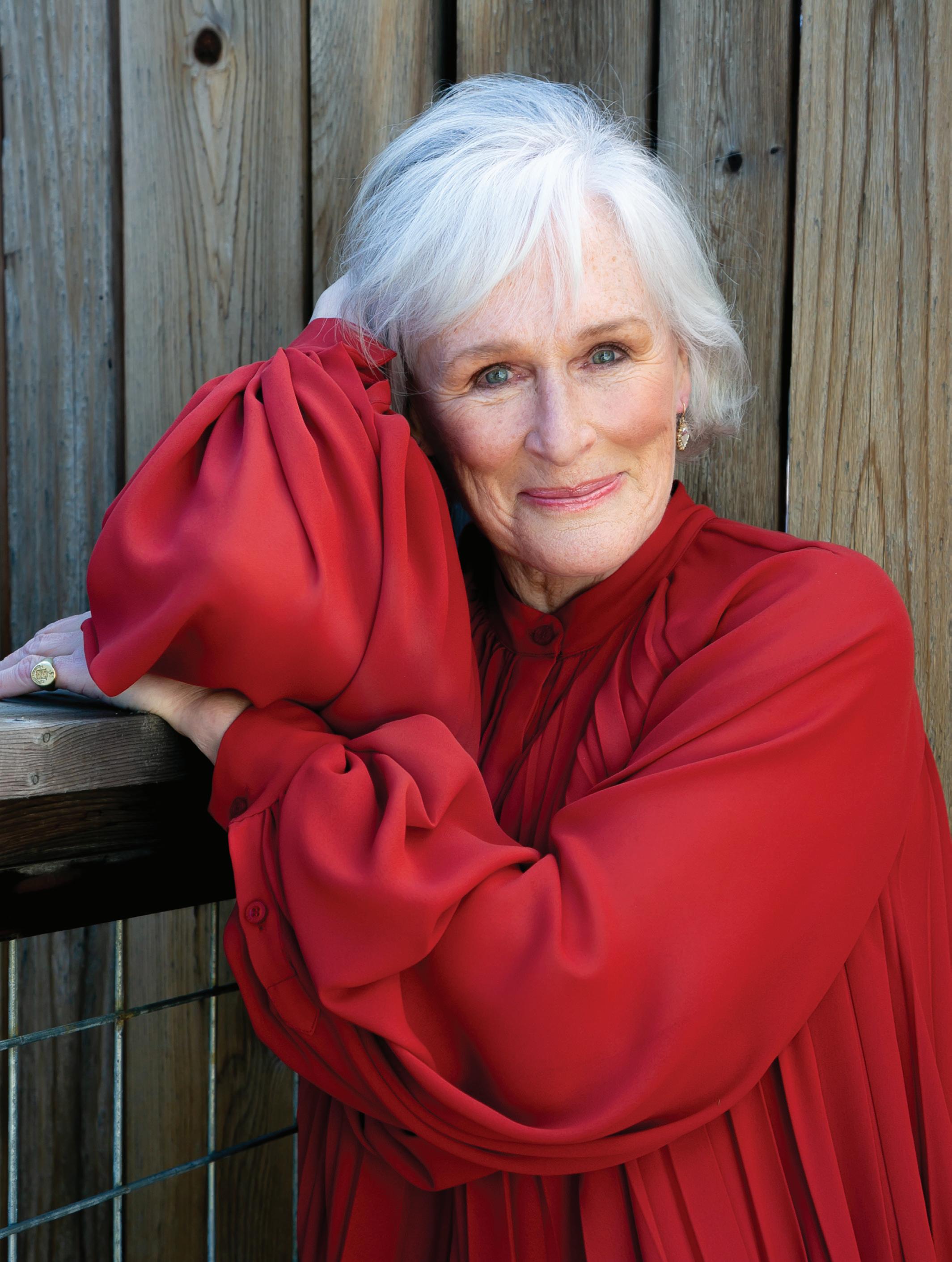
Close has been nominated for eight Oscars and is counted among the greatest and most versatile American actresses ever. Following a four-decade career in which she’s brought unforgettable characters to the big screen, today she’s coveting a personal prize that previously eluded her: reconnection to family and a slower life in Bozeman. Photo by Seonaid B. Campbell
GLENN CLOSE, SUMMER 2021
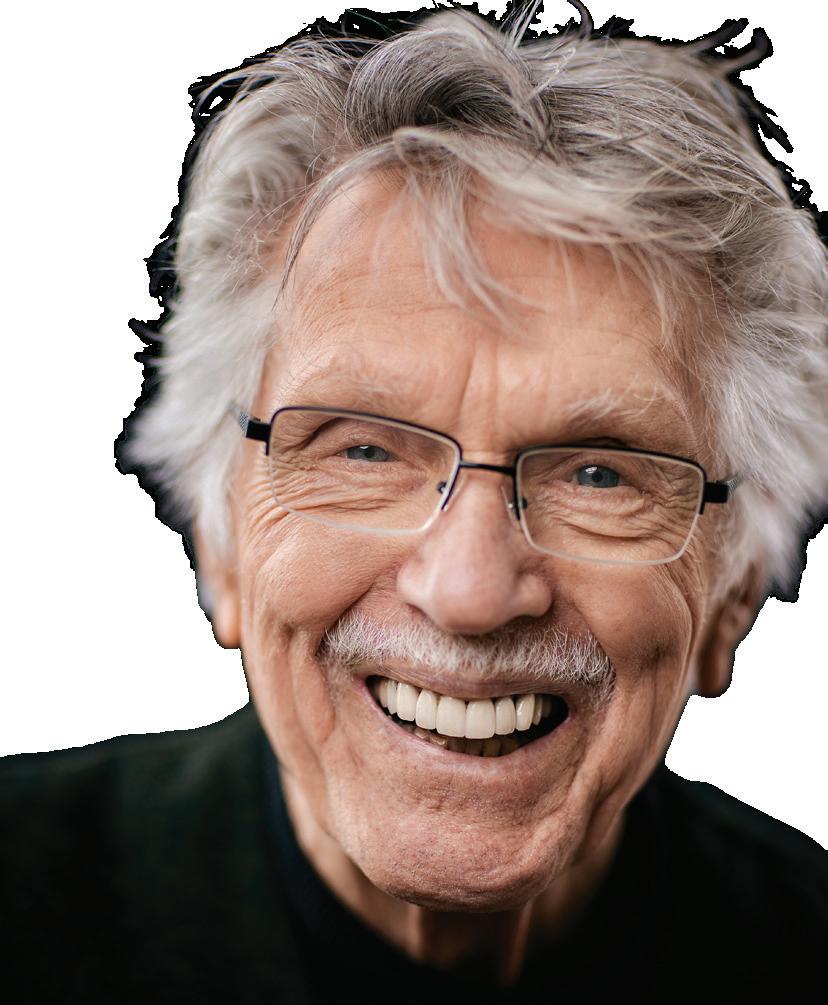
Possibly known best for his portrayal of Reverend Maclean, the Scottish-American Presbyterian minister and father in A River Runs Through It, Skerritt has aptly turned toward river conservation as his chosen legacy. Photo by Steve Korn
TOM WEISKOPF, WINTER 2022
“I just love Montana,” said Tom Weiskopf, one of the best golfers in the history of the sport, whose portfolio includes the courses at the Yellowstone Club and Spanish Peaks in Big Sky, and Black Bull Golf Course in Bozeman. “The character of the people, and everything about the scenery.” Photo courtesy of Augusta National/Getty Images
RYAN BUSSE, SUMMER 2022
When Ryan Busse talks about guns, people listen. Busse is a former firearms executive and author of Gunfight, a commentary on how the gun industry and the National Rifle Association are tearing America at the seams.
Photo by Adam Hecht
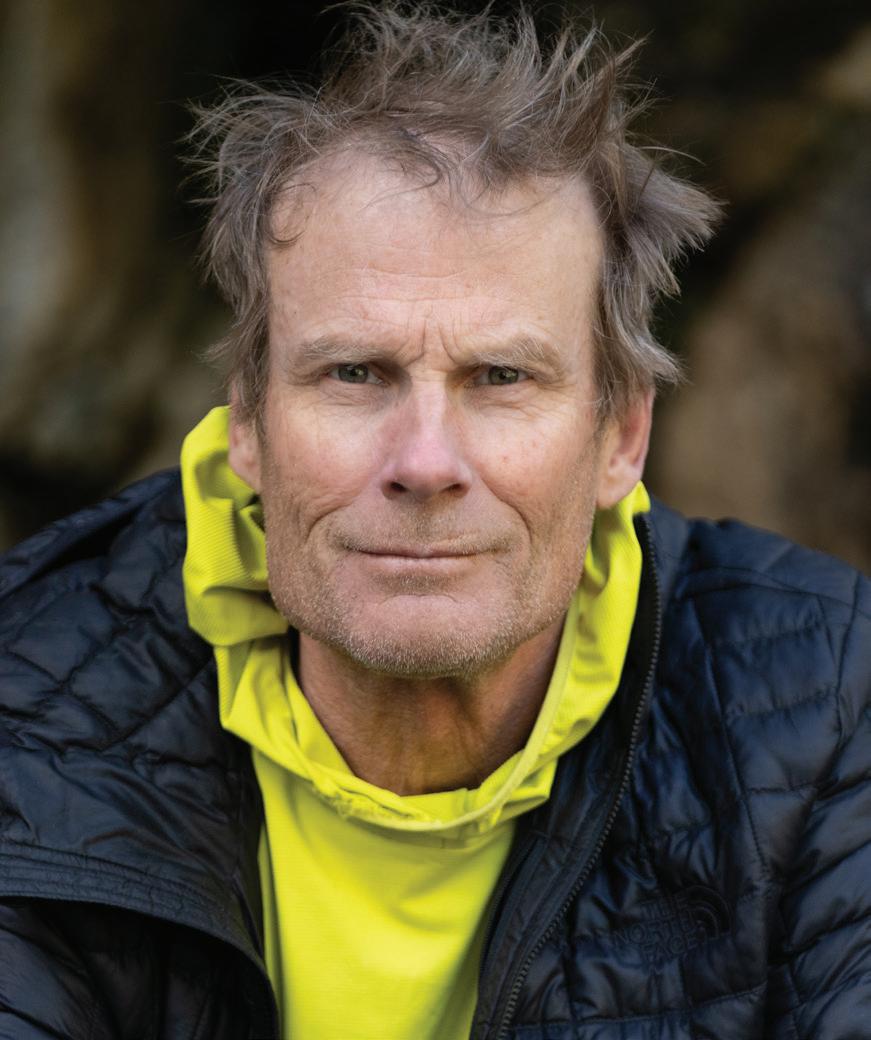
CONRAD ANKER, SUMMER 2023
Like any of us, Conrad Anker’s world view is largely informed by his religion. But he doesn’t believe in any sort of God or afterlife; he believes in gravity. In a later chapter of his life, the legendary climber is finding a route closer to his home in Bozeman, Montana. Photo by Jake Burchmore
TOM SKERRITT, WINTER 2023
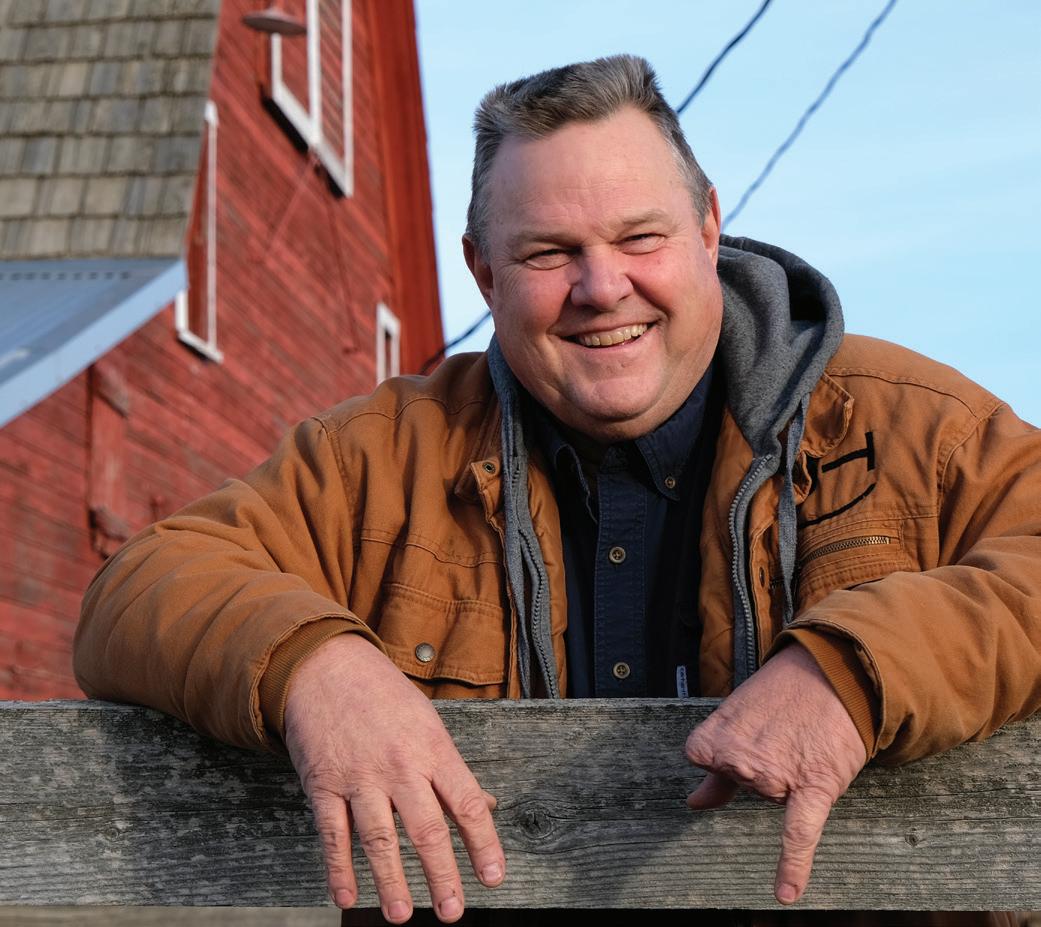
JON TESTER, WINTER 2024
Jon Tester farms grain, peas and lentils on his ranch in Big Sandy, Montana, and did so during the entire 18 years he served as U.S. Senator. During his tenure, Tester represented a dying breed of Montanan; one defined by issue and character, not party lines. Photo courtesy of Jon Tester
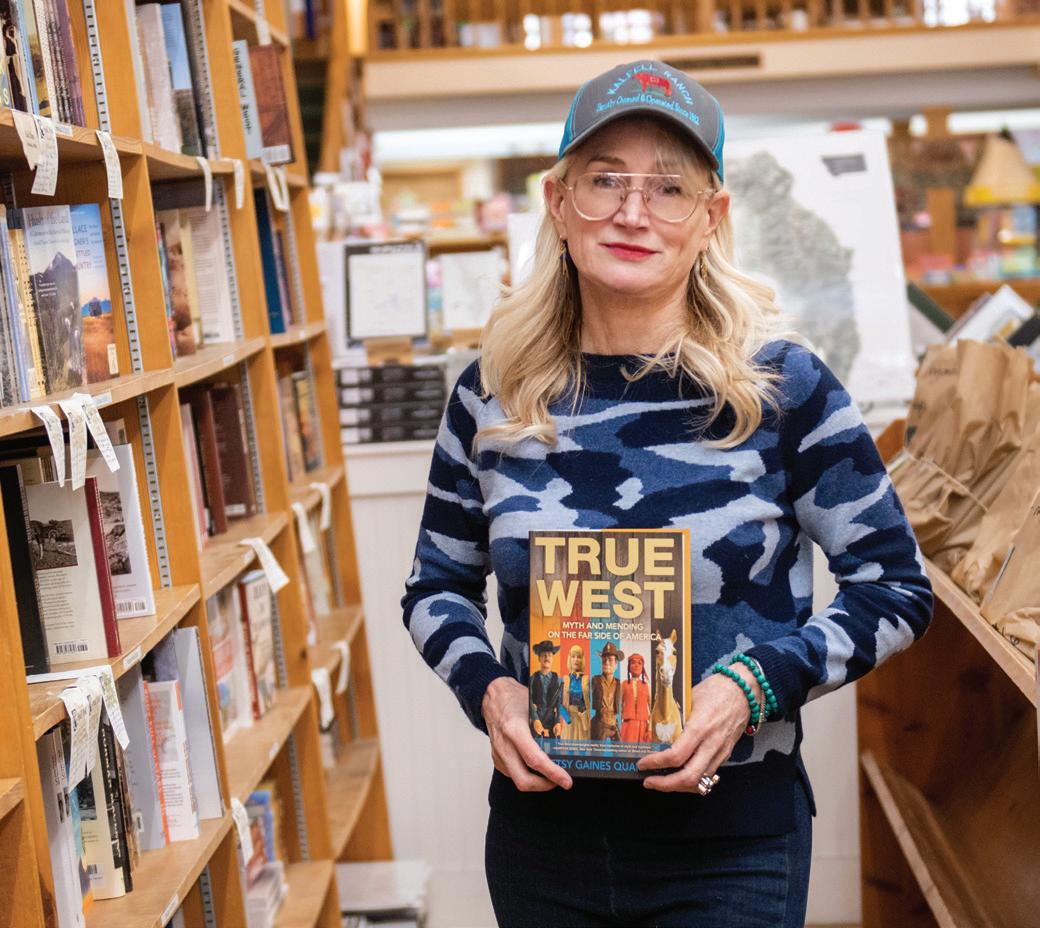
BETSY GAINES QUAMMEN, SUMMER 2024
In her book True West, writer Betsy Gaines Quammen explores the stories and beliefs that inform the way citizens of the West understand and interact with it. Photo by Lynn Donaldson
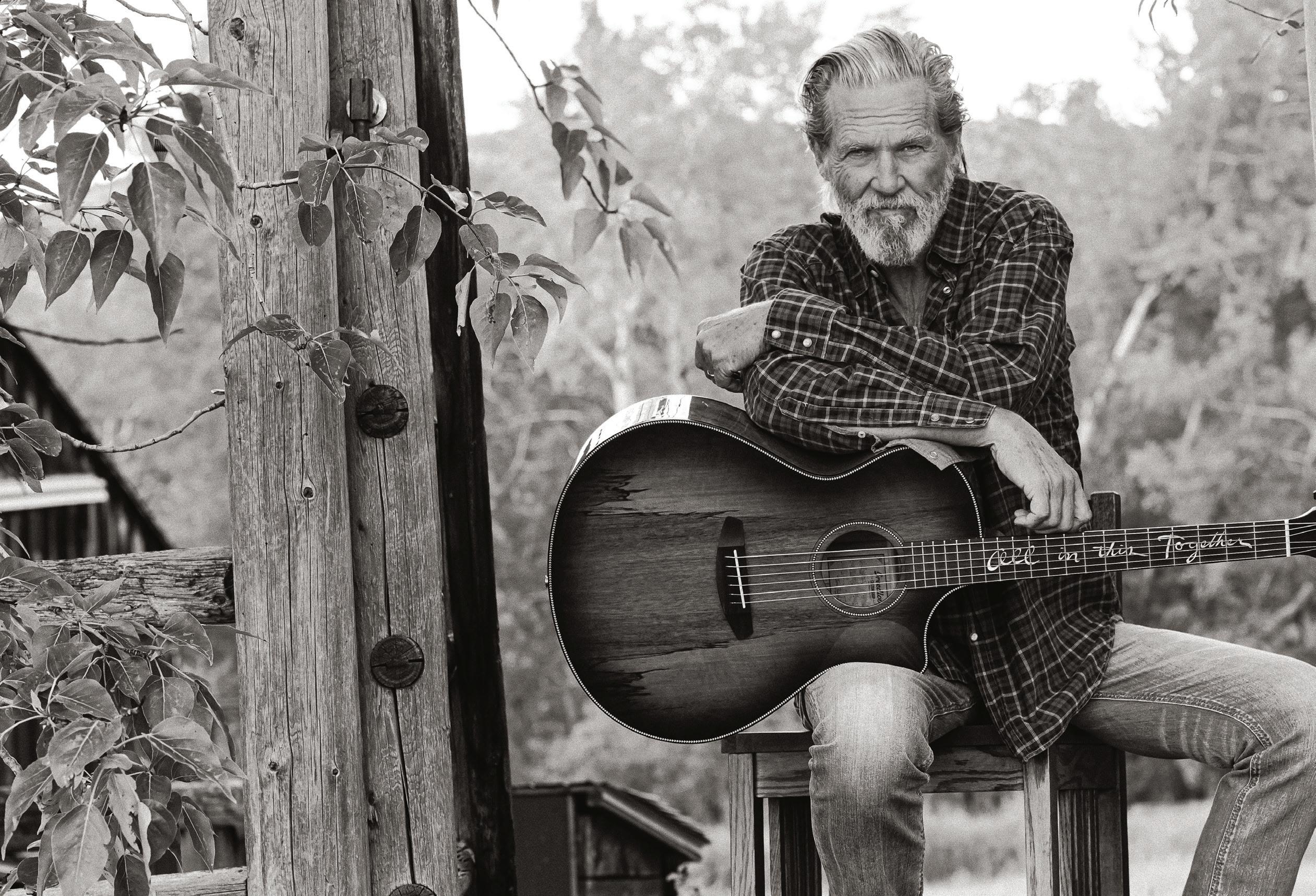
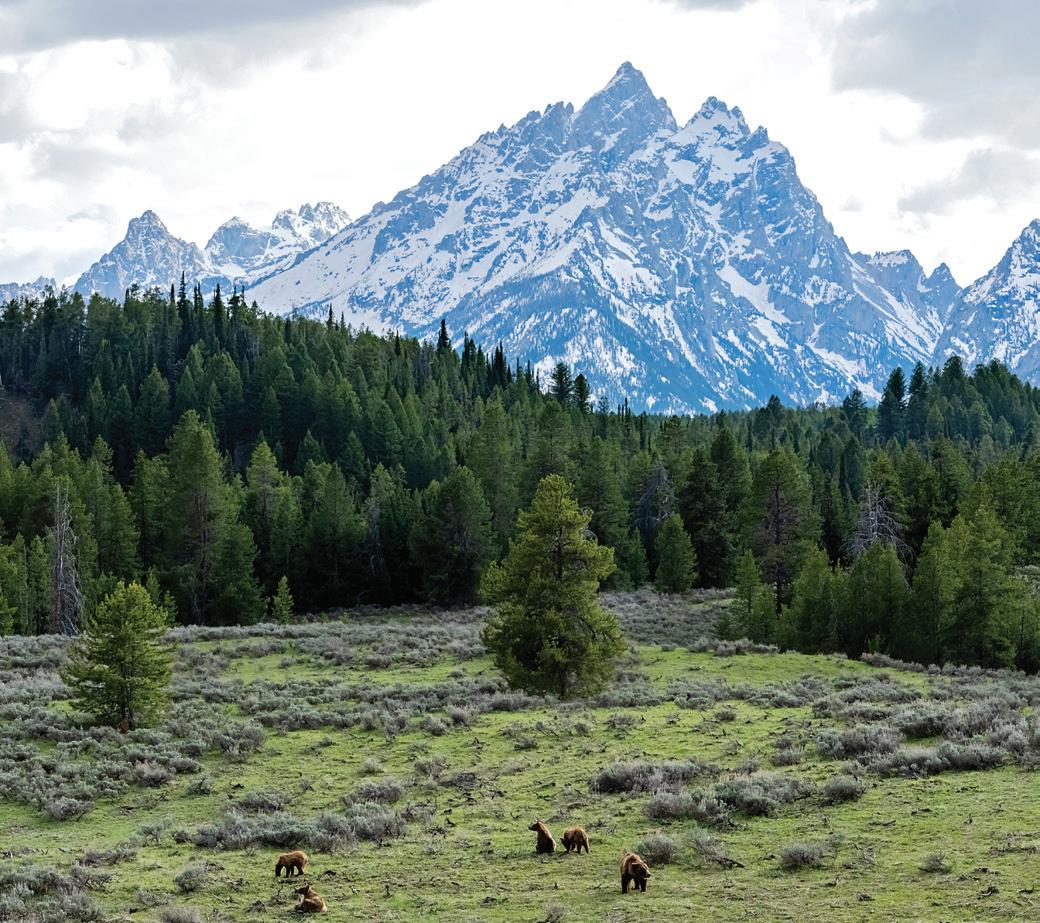
GRIZZLY 399, WINTER 2025
Grizzly 399 reigned from her throne in one of the wildest habitats in the Lower 48 for nearly 30 years, mothering 18 cubs and inspiring people across the globe to connect with and protect threatened wild species and places.
Photo by Thomas D. Mangelsen
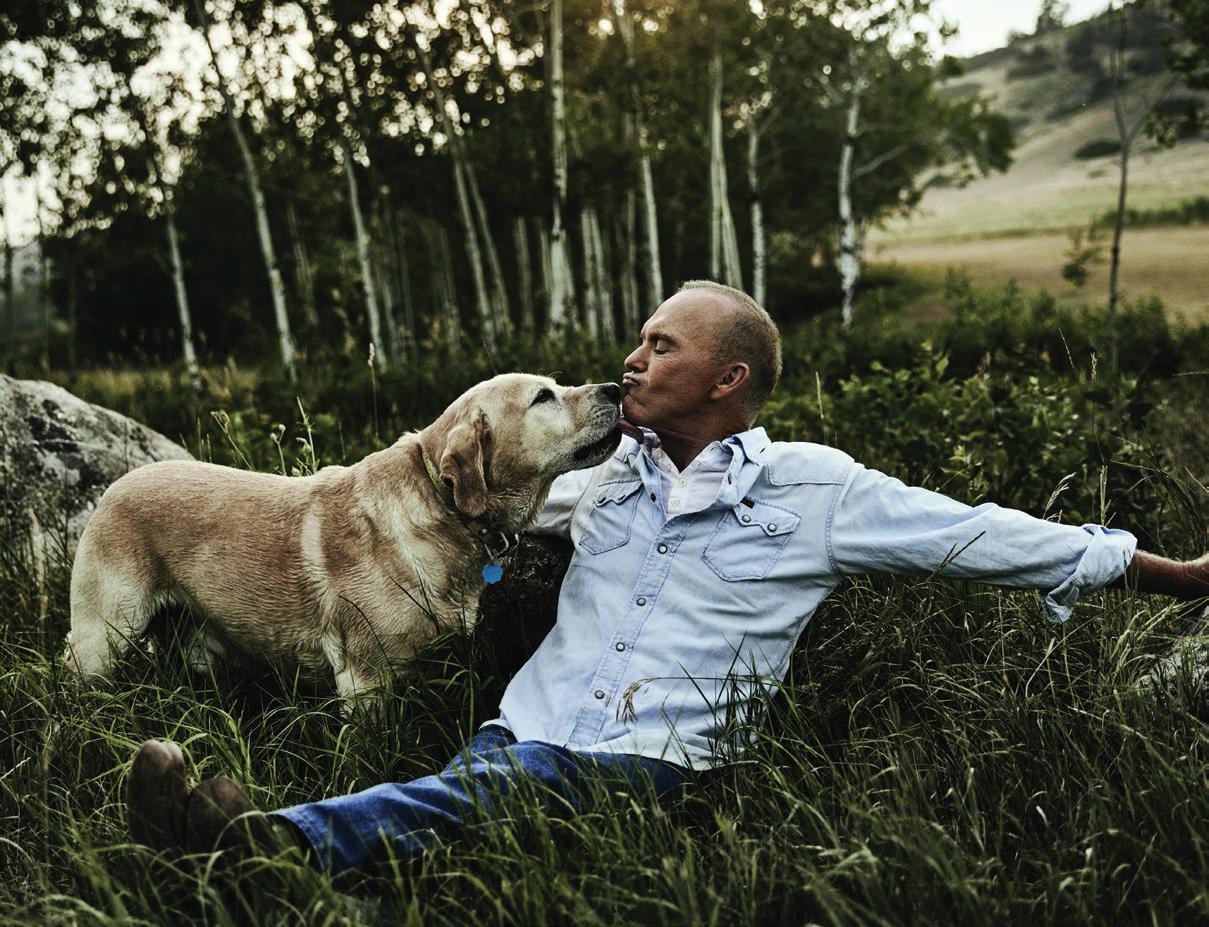
MICHAEL KEATON, SUMMER 2025
Michael Keaton, a versatile actor known for iconic roles in “Beetlejuice,” “Batman” and “Birdman”, has enjoyed a career spanning over four decades. At his home in Montana, Keaton finds solace away from the limelight, focusing on his close-knit family, his love for the outdoors and life along the Yellowstone River. Photo by Victoria Will/Getty Images
JEFF BRIDGES, WINTER 2026
Jeff Bridges, an Oscar-winning actor celebrated for his roles in “The Big Lebowski,” “True Grit,” and “Crazy Heart,” has built a career marked by what he calls, slow magic—also the name of one of his albums. Bridges spends his quieter months on a ranch in Montana where he and his wife, Susan, have summered since 1979. “Livingston is a small, tight little place,” he said. Photo by Audrey Hall
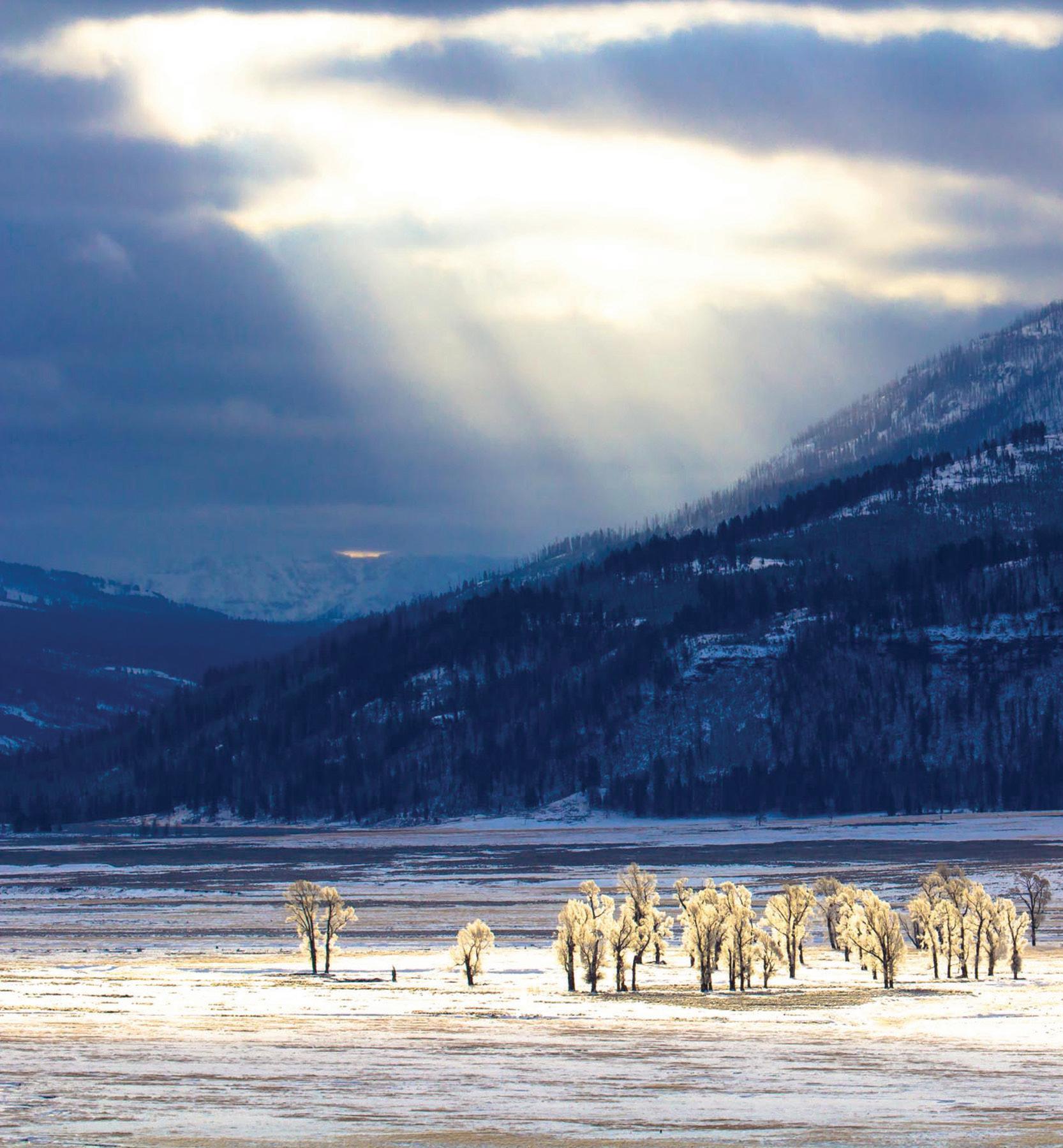
LAST LIGHT
Bringing light to Lamar Valley. Originally published in the Winter 2015 Outbound Gallery. Photo by Brad Orsted