Kaley Burns, Ali Chipouras, Mel Crichton, Nielsen Greiner, Rachel Hergett, Laynee Jones, Alex Marienthal, Benjamin Alva Polley, Brant Wiehardt
TABLE OF CONTENTS
BIG SKY FIRE DISTRICT BOARD MEMBER RESIGNS
Fire district board member John Seelye resigned abruptly in a late February meeting, as the district continues to wrestle with the $8 million budget cliff created by a Gallatin County tax error.
LOCAL STUDENT ACCEPTED TO AIR FORCE ACADEMY
Lone Peak senior Elise Daugherty is the first female student in the Big Sky School District's history to attend a military academy. Starting as a dream in eighth grade, Daugherty earned a principal nomination to the U.S. Air Force Academy from Sen. Tim Sheehy and will leave for Colorado Springs in June.
WELLNESS DISTRICT TAX IMPLICATIONS
Local infrastructure leaders clarified that if Big Sky’s Gallatin County voters elect to create a new hospital or wellness district, it won’t immediately create any additional taxes, as originally believed. Instead, the newly elected board will need to decide on potential taxes later on.
RENAISSANCE FAIRE COMING TO BIG SKY
During Memorial Day Weekend, a new kind of event will take place in Big Sky. For the first time, a Renaissance faire will celebrate Medieval tradition while raising money for U.S. military veterans’ causes, including one local cause.
FINE DINING AT BIG SKY RESORT’S M BY ALINEA
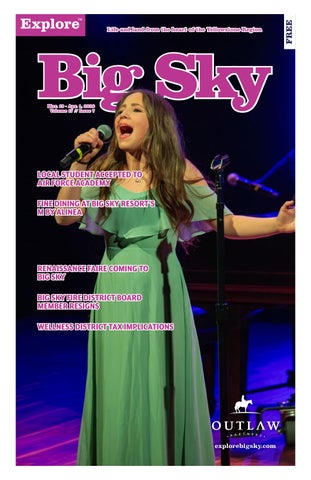
ON THE COVER:
At the March 11 school talent show, the audience popular vote crowned Lili Dalrymple for belting Loren Allred’s “Never Enough.” PHOTO BY JACK REANEY
EDITORIAL POLICIES
EDITORIAL POLICY
Outlaw Partners, LLC is the sole owner of Explore Big Sky. EBS reserves the right to edit all submitted material. Printed material reflects the opinion of the author and is not necessarily the opinion of Outlaw Partners or its editors. EBS will not publish anything discriminatory or in bad taste.
EBS welcomes obituaries written by family members or from funeral homes. To place an obituary, please submit 500 words or less to media@theoutlawpartners.com.
Food columnist Rachel Hergett writes that chef Grant Achatz has achieved something interesting in a combination of comfort and luxury at Big Sky Resort’s culinary residence. M’s tasting menu is grounded in a sense of place, then soars, she writes after visiting in early March.
LETTERS TO THE EDITOR
Letters to the editor allow EBS readers to express views and share how they would like to effect change. These are not Thank You notes. Letters should be 250 words or less, respectful, ethical, accurate, and proofread for grammar and content. We reserve the right to edit letters and will not publish individual grievances about specific businesses or letters that are abusive, malicious or potentially libelous. Include: full name, address, phone number and title. Submit to media@outlaw.partners.
ADVERTISING DEADLINE
For the April 2nd issue: March 25th, 2026
CORRECTIONS
Please report errors to media@outlaw.partners.
OUTLAW PARTNERS & EXPLORE BIG SKY P.O. Box 160250, Big Sky, MT 59716 (406) 995-2055 • media@theoutlawpartners.com
Another act from the Ophir Middle School and Lone Peak High School talent show, Judah Long and Dylan Frederick put their bottle-flipping skills on display to the instrumental tune of “Gangsta’s Paradise” by Coolio. PHOTO BY JACK REANEY
BRIEFS
NEWS IN BRIEF
BIG SKY PTO SET FOR ENCHANTED FOREST PIE AUCTION
EBS STAFF
For the 46th year, the Big Sky Parent Teacher Organization will host its annual pie auction on Thursday, March 27.
The event runs from 6 to 9 p.m. at the Lone Peak High School gym, with the fairytale theme of “An Evening in an Enchanted Forest” including a dinner, live DJ and an open bar. The auction is the organization’s largest annual fundraiser and supports educational enrichment programs, extracurricular opportunities and additional resources for teachers across the Big Sky School District. Tickets are available online.
“It really feels like a town-wide event,” event co-chair Emily Eckhoff stated in a PTO press release. “It’s not just parents who currently have kids in the schools. You see families whose kids graduated years ago, local businesses, and people from all over the community showing up to support the students and teachers. It really speaks to the heart of this town.”
According to the release, the evening will feature both a silent auction and a live auction. Silent auction highlights include “vet for a day” and a pearl bracelet from Shelly Bermont Fine Jewelry, and the live auction will include a trip to Mexico and after-hours skiing at Big Sky Resort. Attendees can also bid on teacher-led experiences, like hikes and picnics or being Principal for a Day.
Of course, pies and cakes baked by students, local businesses, and community members remain a centerpiece of the event. And for the second consecutive year, the event will be held on school grounds to maximize fundraising impact.
Child care will be available during the event, though families are asked to RSVP in advance. The event wraps with an after party at Tips Up in Town Center, including shuttle service to and from Tips Up starting at 5:45 p.m. and running until 9:15.
YELLOWSTONE CONFIRMS FIRST GRIZZLY SIGHTING OF 2026
EBS STAFF
A grizzly bear was spotted Monday, March 9 in the northern backcountry of Yellowstone National Park, marking the park’s first confirmed sighting of 2026, according to a March 10 news release from the park.
Park biologists observed the bear scavenging a bull bison carcass. Male grizzlies typically emerge from hibernation in early March, while females with cubs usually appear later in April or early May. The first reported sighting last year occurred March 14; in recent years sightings have ranged from early to mid-March.
Bears feeding on carcasses may react aggressively if people approach and visitors are urged to carry bear spray, hike in groups, stay alert and remain at least 100 yards from bears when in their habitat.
Custer Gallatin National Forest announced that a food and attractant storage order is in effect annually from March 1 through Dec. 1 across several neighboring ranger districts. The order requires all unattended food, garbage and other attractants to be secured in hard-sided vehicles, stored in bearresistant containers or hung at least 10 feet above the ground and four feet from trees or poles. Violations can result in citations and liability for damages.
GIVE BIG GALLATIN VALLEY SECURES NEW TITLE SPONSOR FOR MAY FUNDRAISING EVENT
EBS STAFF
One Valley Community Foundation has named commonFont as the new headline sponsor of Give Big Gallatin Valley, Montana’s largest 24-hour giving event.
Now in its 12th year, Give Big Gallatin Valley will run from 6 p.m. April 30 to 6 p.m. May 1, bringing together hundreds of nonprofits and thousands of donors across Gallatin County. Since launching in 2015, the event has raised more than $20.4 million for 489 local nonprofits.
“Welcoming commonFont as our new headline sponsor is an exciting opportunity to expand the partnership around Give Big,” Bridget Wilkinson, president and CEO of One Valley Community Foundation, stated in a press release. “They bring a strong culture of giving, meaningful support for their employees’ charitable efforts, and a deep connection to this community.
CommonFont is a consulting and technology firm and has participated in the event since 2021, raising nearly $39,500 through fundraising and employee matching gifts. Wilkinson expressed gratitude at their support in helping grow Give Big, “and making this year the strongest yet,” she said.
CITY SEEKS INPUT ON DOWNTOWN BOZEMAN PARKING INFRASTRUCTURE
EBS STAFF
The Downtown Bozeman Urban Renewal District, a city-appointed board that funds infrastructure improvements, is partnering with the City of Bozeman on a community survey about parking in downtown Bozeman. The online survey solicits feedback from residents, visitors, employees, business owners and others who use downtown parking and responses will help guide future strategy, outreach and education efforts related to parking.
“As we plan for the future, we want to learn what people have to say about parking in Downtown Bozeman,” Ellie Staley, executive director of BURD, stated in a March 12 press release. “As we look ahead, we want to hear directly from the community about parking in downtown Bozeman and use that feedback to guide our decisions. We remain committed to keeping our downtown vibrant and accessible for residents, employees, and visitors alike.”
The survey is open through March 30 and participants can enter a drawing for one of five downtown gift packages that include $100 in Downtown Dollars and an eight-hour parking pass for the Bridger Parking Garage.
OBITUARY
GREGORY DEAN NALLY
OCT. 18, 1956–MARCH 2, 2026
Gregory Dean Nally, 69, of Big Sky, MT, passed away on March 2, 2026. Born on October 18, 1956, he was a beloved member of his community and known for his dedication to local causes.
Dean was a 1974 graduate of Nelson County High School in Bardstown, KY. Over the most recent years, he was employed at Ace Hardware, The County Market and the Big Sky Resort Golf Course, where he was appreciated for his hard work and friendly demeanor.
He had a profound love for the outdoors, regularly engaging in walking, hiking and cross-country
skiing. Dean was also a committed volunteer, deeply involved in numerous community service organizations, reflecting his concern for local issues such as housing and food scarcity.
Dean is survived by his mother, Fern Walker Blanford; stepfather, C.A. Blanford; sister, Carla Taylor; step-siblings Jane, Mike, Perry, Betty Sue, Dean, and Cindy Blanford; and several nieces and nephews. He was preceded in death by his father, Carl W. "Sonny" Nally; brother, A. Dale Nally; stepsister, Rebecca Blanford; and grandparents, Otto and Esther Walker, J.C. and Marie Nally, and a large group of cherished friends from his community.
In lieu of flowers, contributions can be made in Dean's memory to the Big Sky Community Organization, Big Sky Community Housing Trust, or Big Sky Community Food Bank. These donations will support local parks infrastructure and assist community members facing housing and food challenges.
Dean will be remembered for his kind spirit, his passion for the outdoors, and his unwavering commitment to his community.
DEMYSTIFYING SEWER IN BIG SKY LETTER TO THE EDITOR
Dear Editor,
If you live in Big Sky, you’ve heard a lot about sewers lately. I’m a civil engineer in Big Sky and I'm writing to simplify the story! I’ll start with this: I like flushing, and I like fishing. Those two things are connected.
We’ve learned that some existing septic systems may be affecting water quality in the Gallatin River. Big Sky has a state-of-the-art wastewater treatment plant that does not discharge treated water into the Gallatin, yet many structures and homes still rely on older septic systems that seep minimally treated sewage into the ground.
The proposed Gallatin sewer line would replace many of those systems. It would run along Highway 191 from the high school to Highway 64, then up 64 to the wastewater plant. Treated water would then return to the 191 corridor to be used for irrigation or groundwater recharge. The Firelight Meadows subdivision also needs to connect to the wastewater plant to replace its aging septic.
COURTESY OF GALLATIN CANYON COUNTY WATER AND SEWER DISTRICT
Septic systems can work in rural, low-density settings. But once you have a concentrated neighborhood, sewer is more efficient, offers better protection for rivers, and is more reliable for homeowners.
The sewer projects face hurdles like permitting,
funding, environmental analysis and public scrutiny. But if we care about our landscape, our water and our wildlife in Big Sky, we'll put our "magic sauce" towards state-of-the-art flushing and fishing.
Laynee Jones Big Sky, MT
SUNDAY, JUNE 14
WELCOME COCKTAIL HOUR
G-MAN
LOCAL
FIRE DISTRICT DEALS WITH FRUSTRATION, EFFECTS OF COUNTY TAX ERROR
BIG SKY FIRE DISTRICT BOARD MEMBER ABRUPTLY RESIGNS
BY JEN CLANCEY
BIG SKY—At first, the Big Sky Fire District board meeting began as it usually does on Feb. 25. However, after public comment about 10 minutes in, board member John Seelye resigned from his position suddenly, and left the room.
Much like the silence that hung in the air after Seelye’s departure, the last six months for BSFD have been tense. Despite successes in public service, the department is handling a tumultuous financial period that began in September 2025, when they discovered a Gallatin County-caused tax error that led to BSFD over-collecting $8.3 million in four years from Big Sky taxpayers. The fire department has since adjusted its budgets for projects and leadership volunteered for salary cuts, but budgeting for the error will be ongoing.
Big Sky resident Paul Farrell, who attended the meeting virtually, gave public comment at the start of the Feb. 25 meeting. He first shared his gratitude for firefighters and EMS professionals before stating concerns about the trustees’ management.
Farrell expressed that the “unexpected tax windfall,” was not adequately questioned, and criticized the district for following the tax error with a land purchase of over $1 million. He said that he attended the February public forum between BSFD and Gallatin County officials where leaders described the tax error and stated that the overcollected taxes can’t legally be returned to taxpayers. BSFD also affirmed in the forum that the $1 million purchase of land was a useful and timesensitive expenditure to build a public safety center next to the department’s training facility.
The tax error was attributed to an inaccurate formula on a Gallatin County tax spreadsheet, leading to double the amount of levied dollars. In the public forum, leaders said that they did not question the spike in tax revenues because the error happened during a period notorious for growth and rising property taxes in Montana.
“To subsequently claim there’s no ability to repay the taxpayers while sitting on an improperly accumulated surplus is insulting and egregious management and a misappropriation of funds from the taxpayers,” Farrell said. Later, he described the error.
“The existence and explanation of the so-called double counting Excel spreadsheet error is hard to even imagine. But the failure to question and address such an obvious discrepancy for four years is unconscionable,” Farrell said. “Before even considering requesting that the voters approve a property tax increase or demanding that BSRAD increase its subsidy for the department, this leadership team should take a hard look in the mirror and be truly honest with the taxpayers and take some real responsibility for this unacceptable breach of fiduciary duty and basic trust.”
Following Farrell’s comment, board member John Seelye responded that he “didn’t sign up for this bull****.”
“I’m out,” he said. He announced his resignation and left the room. When contacted by EBS, Seelye declined to comment further. Big Sky Fire District’s website confirmed the resignation is effective as of Feb. 25.
“We extend our sincere gratitude to John for his dedicated service and commitment to the community,” the website stated. Board member Carol Collins shared that there will be more transparency in their upcoming meeting on March 25.
The board of trustees of BSFD consists of five elected or appointed members whose duties include establishing policies, approving budgets and representing community interests. Seelye previously served in 2006-09 and planned to serve from 2025-28.
After budget discussions in the meeting, Collins explained why the budget has been challenging.
“We are working through a very, very tough budget at this point because of a county error, not because of an error by anyone on the board, or staff,” Collins said.
Alan McClain shared that his motivation for joining the board was to support department staff and support public safety in Big Sky. He shared his thoughts, informed by 15 years of experience on the board, on how to move forward.
“One thing I’d also like to point out is, it’s felt pretty divisive within the fire department lately,” McClain said at the meeting. “… [The fire district is] kind of like our government, but there are three branches—there’s the firefighters on the ground, the administrative part of the group and then the board. And it’s our job to collectively work together to make decisions that are best for the department and for the community.”
Farrell offered further public comment at the end of the meeting, and said that his comments landed much more harshly than intended.
“They were meant to spur some examination and hopefully result in some answers about some of the issues raised. They were not intended to blow apart any cooperative efforts by the board of trustees, et cetera. So I apologize if they landed much more poorly than intended,” Farrell said.
Tension aside, the meeting included the decision to add a BSFD staff union member to an interlocal subcommittee between the department and Big Sky Resort Area District to represent staff priorities. The subcommittee will aid in creating potential solutions to BSFD’s funding struggles and also assess BSRAD’s involvement in community wildfire protection and response.
In the coming months, the board will continue budget discussions and updates, and describe next steps for filling the new vacancy.
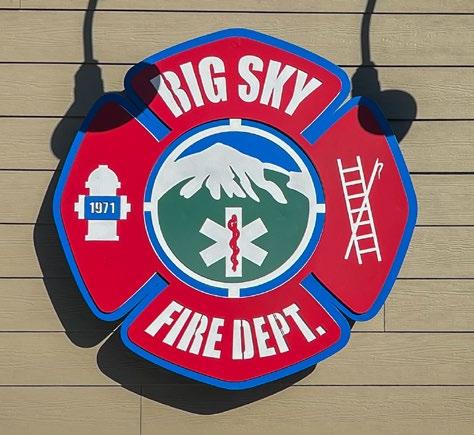
The Big Sky Fire Department sign in Town Center. PHOTO BY JEN CLANCEY
FIRST FEMALE STUDENT IN LONE PEAK HISTORY WILL ATTEND MILITARY ACADEMY
‘SHE HAS SUCH A STRONG MORAL CODE’; SET TO ATTEND U.S. AIR FORCE ACADEMY, ELISE DAUGHERTY EARNED MILITARY NOMINATIONS FROM CONGRESSMEN SHEEHY, ZINKE
BY JEN CLANCEY
BIG SKY—As the sky darkened on a September 2025 evening, Elise Daugherty ran the mile to end a physical test required for her application to U.S. military academies. Daugherty, a Lone Peak High School senior, had already completed the other physical requirements, which were recorded by Big Sky School District Athletic Director John Hannahs.
“It was kind of poetic,” Hannahs said, recalling that evening when he stood and held a stopwatch on the Lone Peak track and timed Daugherty’s mile, where, in the last 400 meters, she seemed to unlock an extra gear to finish strong. But Daugherty’s work hadn’t started or ended there. Attending a U.S. military academy had been her goal since eighth grade and she still needed to complete rounds of interviews, essays and nominations.
As a local student raised in Big Sky, she was finally rewarded for her hard work when she was appointed to the U.S. Air Force Academy in February 2026. Acceptance into U.S. military academies like the Air Force, or U.S. Naval Academy and U.S. Military Academy at West Point, is highly competitive and requires a nomination from a member of Congress. Daugherty received a principal nomination from U.S. Senator Tim Sheehy in December, and also received an alternate nomination to the U.S. Naval Academy from Rep. Ryan Zinke.
“I kind of kept it on the down low until [Sheehy’s office] did an official press release about it, and it didn’t feel real. It felt like a fever dream, truly,” Daugherty said. “Because I was just like there’s no way this is happening, and I just refuse to believe it sometimes, that all my work has paid off.”
Daugherty is the first female student from the Big Sky School District to attend a military academy, LPHS Principal Marlo Mitchem told EBS, and is among a small number of BSSD students admitted to military academies—the last LPHS student to enroll in a military academy was Beckett Johnson in 2024, the first to attend West Point.
Mitchem remembers an eighth grade Daugherty beginning to shape her future.
“I do remember that in middle school she did have this really big shift. And you can tell she was thinking about her future and she was planning and working towards it,” Mitchem said. That timeline aligns with Daugherty’s memory—she’d always planned on joining the military after graduating from high school, inspired by stories her father told her about his eight years of service in the U.S. Air Force, and learned about military academies late in middle school.
Four years later, Mitchem was “elated” when she heard that Daugherty would attend the academy.
“She has such a strong moral code,” she said. “It’s who you want in leadership positions in our U.S. military, and that made me so excited for her. She’s going to be an incredible leader.”
Daugherty’s personal journey hasn’t been without trials, though. A knee injury to her ACL and meniscus in her sophomore year left her in physical pain for months, and challenged her mindset as she took time away from sports to recover. But she kept a positive mindset, and attributes this experience to boosting her mental strength.
She also shared that there were times people questioned her ability to qualify and attend a military academy. As a young woman, she noticed that sometimes perceptions of her abilities were shaped by gender and appearance.
“But I think it could go two ways,” Daugherty said. “You can either become lesser than, because of other people’s opinions that are being forced on you because they hold certain positions of power. [Or it] can also stir up a fire inside of you … and that’s what happened to me.”
She hopes local young girls can feel inspired.
“I don’t want other little girls to feel the way I felt,” Daugherty said. Special operations, or even traveling to another country alone, seemed limited to the male experience, she felt, but she saw these expectations as a challenge, not a limitation.
“Don’t get me wrong, I’ve had a lot of support [in the process], but just growing up in certain environments, I think there needs to be a change, and if you expect other people to do it, it’s not going to happen,” Daugherty said.
That support she speaks of came from her family, friends and community members at school and in Big Sky. Her parents encouraged her throughout the application process.
“They understand that this is my dream and they want me to be happy,” Daugherty said. “So I don’t feel pressure to do it. I feel more like I have support.”
Friends and teachers offered advice and a listening ear when Daugherty contemplated how she could contribute to leadership in the military. She thanked teachers and mentors, including Patty Hamblin, John Hannahs and Tony Coppola, for supporting her.
“It was just so amazing because they wanna see me succeed. They don’t want to hold me back and hold me down. It’s been really cool ’cause I’ve come to appreciate all the work that they’ve given me,” Daugherty said. “I just appreciate all the hard things that they put me through now and all the hard work that they’ve done to get me here.”
Outside of classes, Daugherty is involved in Big Brothers Big Sisters, Rotary Interact Club, is the president of the yearbook club and has participated in the Girls State model governance competition. She’s also taken a dive into photographing lichen on rocks, which won her a regional award in 2024. At BASE, she trains in mixed martial arts.
Hannahs believes this well-roundedness will lend itself well to leadership.
“I think the first thing that’s so great about Elise is just how kind and respectful she is to everyone she meets … I think she’s very well equipped to be a valuable member of the military,” Hannahs said.
Daugherty will begin her Air Force Academy education in June in Colorado Springs. She has talked with female cadets at the academy—the incoming class in 2025 was 76.4% male and 23.6% female—who have warned her of certain challenges, but assured her that she can overcome them. Daugherty will have several years practicing the can-do mindset before she even leaves Montana.
“I’ve been told that if you wanna do it, you can do it,” Daugherty said. “It’s gonna be really tough, but you can do it.”
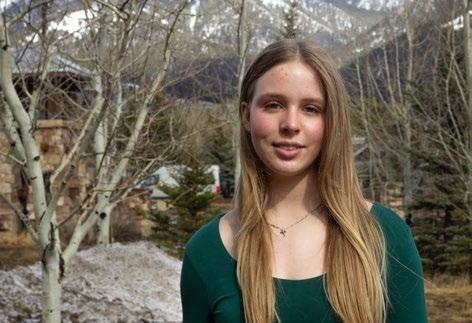
Elise Daugherty in Big Sky in March 2026. PHOTO BY JEN CLANCEY
‘NO NEW TAXES’: BIG SKY LEADERS CLARIFY HOSPITAL DISTRICT VOTE ON MAY BALLOTS
BY JEN CLANCEY
BIG SKY—Voters will not see additional taxes if they vote in favor of forming a new hospital district in Big Sky. Leaders in a Big Sky Resort Area District meeting on Feb. 11 clarified that any additional taxes won’t happen without eventual voter approval and by the elected Big Sky Wellness District boards for both Madison and Gallatin counties.
A vote on each county’s May ballots will determine if Big Sky residents seal the deal on a long fight, in local and state government, to form a new hospital district and redirect tax dollars from Big Sky’s Madison County residents, who’ve supported the Madison Valley Hospital District, to local services instead. If voters choose to support a new district formation, taxes from Madison County residents within Big Sky will gradually shift to the Big Sky Wellness District.
Now, BSRAD is working to educate residents about how this vote impacts residents.
“I do think it’s important to kind issue a correction about what we’ve been previously saying. The Gallatin [County] side, when they vote to form a hospital district, it will not [implement] any additional taxes at the outset,” Jackie Haines, BSRAD’s director of economic and strategic development, told the board. “For that board to implement taxes, in the Gallatin County portion,
that will have to be voter-approved.”
Haines repeated the clarification again, and BSRAD board member John Zirkle joined in for the third time.
“So this election: no new taxes,” Haines and Zirkle confirmed in unison.
Livable Big Sky, a campaign led by Resort Tax alongside community organizations to inform voters about ballot choices, will hold several sessions over the next few months focusing on the hospital district vote. While Gallatin County voters in Big Sky will vote whether they want to form a new hospital district, Big Sky’s Madison County voters will decide whether they will formally leave the MVHD. A separate item for both counties will be the election of a board of trustees for each district.
In a Feb. 20 Livable Big Sky press release, Kiernan Volden, director of programs for community health organization Wellness in Action, shared how a vote supporting formation would benefit residents.
“This is about keeping Big Sky livable for everyone; families, workers, seniors and visitors,” Volden stated. She noted that between 2010 and 2020, Big Sky’s population grew 54% and is expected to grow another 20% in the next 10 years.
“The ballot measures in May are a critical and rare opportunity for voters to establish a mechanism
that not only keeps local dollars in the community but creates sustainable access to funding allowing all of us to meet our community’s growing health and wellness needs,” Volden stated.
Kelly Halmes, administrator of Bozeman Health’s Big Sky Medical Center and Gallatin County resident, expressed support for a potential new hospital district in the release.
“A livable Big Sky depends on growing access to essential health care at home within our own community,” Halmes stated. “Investing in a local hospital/wellness district ensures care that reflects our community’s priorities, serves people at every stage of life, and is guided by the people who live and work here.”
Sessions about the hospital district decision will be held throughout March and April, many with familiar alliterative names like “Pizza with a Purpose” and “Ballots and Breakfast.”
Livable Big Sky held a similar series of events in 2025, discussing the renewal of Big Sky’s 3% resort tax, the Cold Smoke Bond, and the Big Sky Community Park Bond.
A candidate forum for various local government positions on the ballot, including the potential new hospital district boards, will be held on April 21 at 5:30 p.m. at the Warren Miller Performing Arts Center.
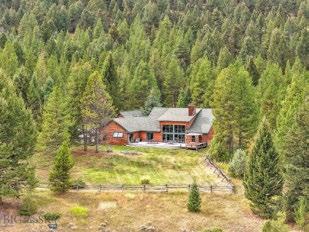
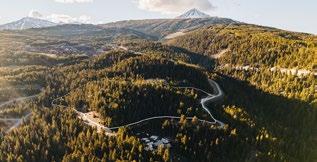
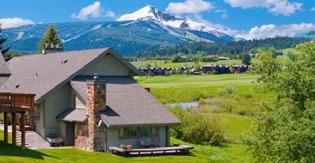
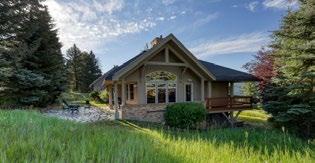
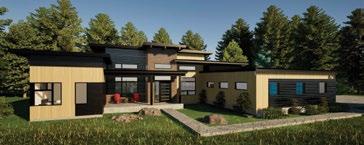
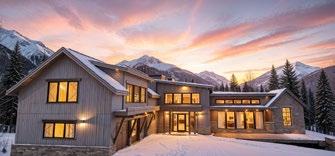
NEW CONSTRUCTION AT GALLATIN FOOTHILLS
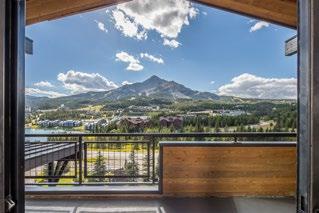
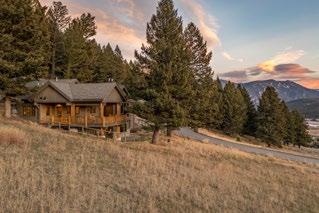
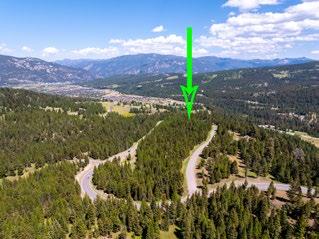
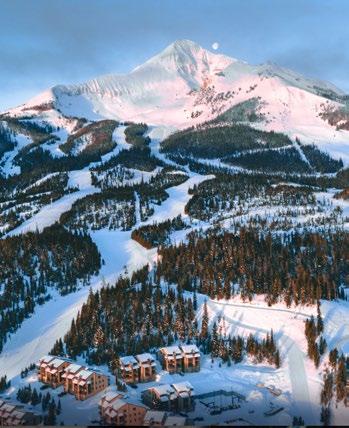
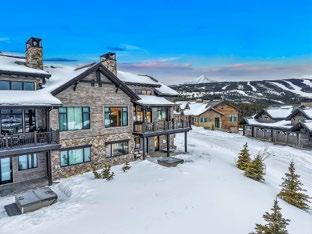
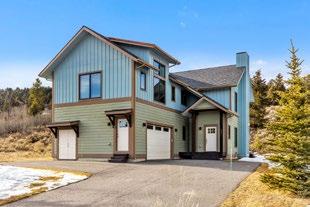
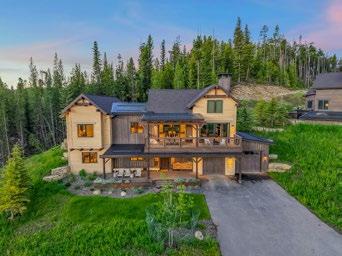
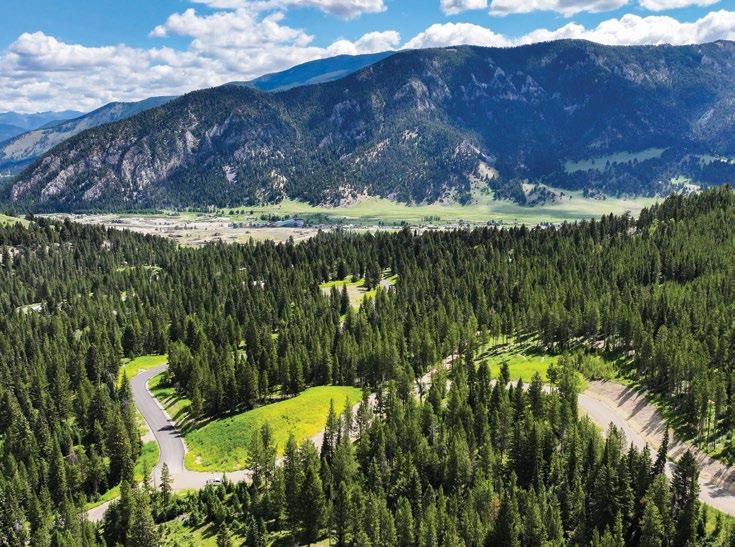
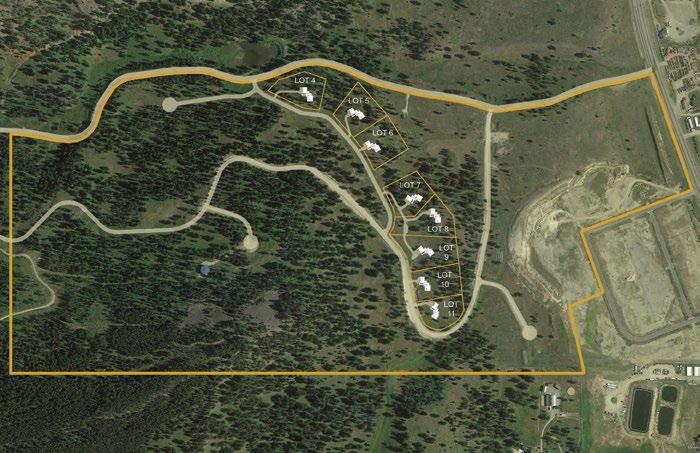
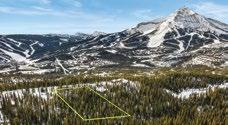
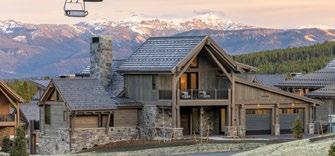
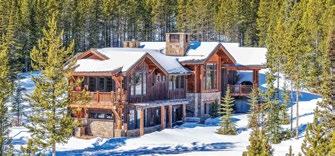
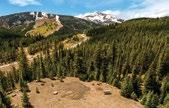
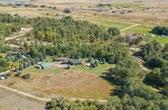
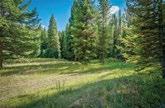
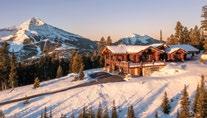
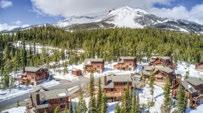
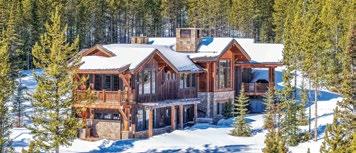
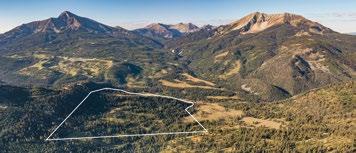
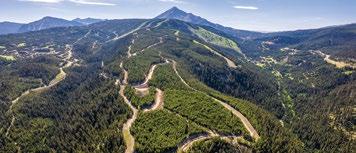
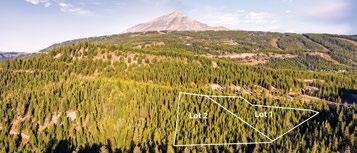
Nestled in the heart of Big Sky, Montana, Gallatin Foothills Phase 2 offers a rare opportunity to own a homesite that combines natural beauty, outdoor adventure, and convenient access to local amenities. With spacious lots ranging from 1 to ± 2 acres and over ± 75 acres of open space, this neighborhood is designed to provide privacy, stunning mountain views, and a connection to the outdoors.
Residents will enjoy a professionally built trail system by Terraflow, sledding hills, open space for XC skiing, and access to public lands for activities like snowmobiling, ATV riding, and hiking. The Gallatin River is just 5 minutes away, while Big Sky Town Center and Big Sky Resort are a 10 and 15-minute drive, respectively, creating the ultimate home base for your year-round recreation.
Terraflow Mountain
Bike Trail
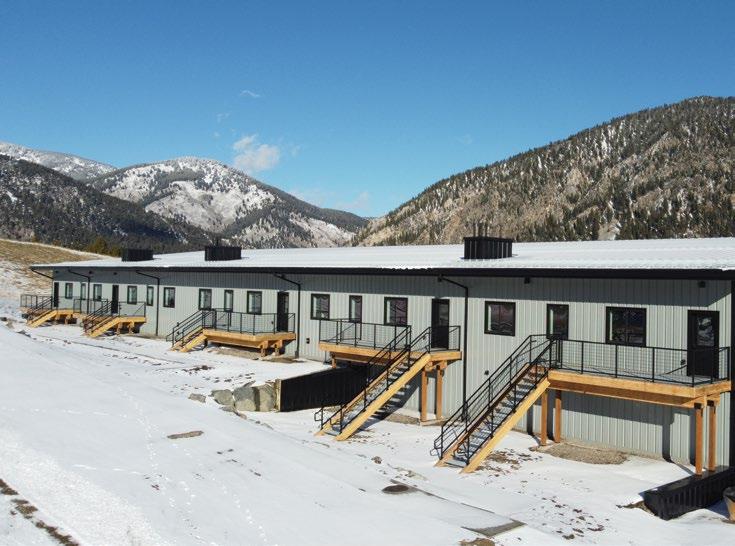
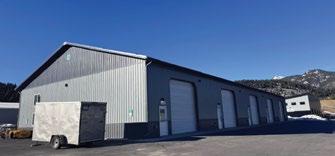
LAZY J WAREHOUSES
RARE OPPORTUNITY IN BIG SKY,MONTANA
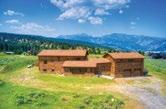
Introducing the latest phase of the Lazy J warehouses— designed to meet all your personal or business storage needs with upgrades inspired by previous owner feedback. Built to withstand Montana’s rugged elements, these units are perfect for protecting your tools, equipment, or recreational gear.
Choose from three layouts ranging from 1,116 to 2,800sqft, each featuring heat, utility sinks with hot and cold water, a 14’ roll-up door, and shared bathroom access. The smaller units are plumbed for a bathroom, with the larger units featuring a full bathroom, a mezzanine space, and a seperate entrance with private parking.
A premium steel package makes each space mezzanineready, maximizing storage while maintaining 13’9” ceiling height on the main level. Conveniently located off Highway 191, these warehouses are ideal for contractors, businesses, or anyone needing extra space for RVs, ATVs, and more.
Over half of the units are already sold—don’t miss out!
NEW BIG SKY GROUP FOCUSES ON AGING IN THE MOUNTAINS
EBS STAFF
BIG SKY—A new initiative informally called “Aging Well in Big Sky” is exploring the best practices and services needed for seniors to stay in this mountain community and overcome challenges such as geographic isolation, winter conditions, high elevation, limited public transportation for groceries and essential appointments, and a shortage of medical resources.
A press release from the “grassroots group” described a growing number of retirees and longterm locals who desire to remain in the community, citing Big Sky’s “beautiful” and “uniquely rewarding” way of life. The group launched a survey and encourages participation from Big Sky residents, especially those over 65 years of age, as well as caregivers and family members. The online survey will close at the end of March.
The short survey asks about current needs, anticipated future challenges and desired services such as transportation, in-home support, social programs or assisted-living options.
“We realized there wasn’t a clear picture of what Big Sky’s older adults are facing—or will face,” Amy Vance, a group member and founder of local nonprofit Big Sky Bandage, stated in the press release. “This community takes care of its own. We want to make sure that continues as our population ages.”
The release noted that affordable housing, especially with accessibility features such as ramps, can be a barrier to remaining in Big Sky, in addition
to many other factors. Another challenge is social connection, which is often harder for seniors to find in the winter months.
The effort aims to ensure Big Sky remains a place where residents can grow old with dignity, connection and support, according to the release. “This is our chance to plan for the future,” stated group member Laura Seyfang. “We want
LOCAL
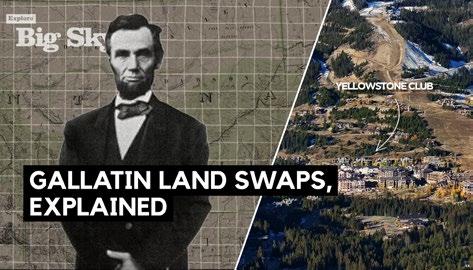
EXPLORE BIG SKY EXPLAINS: THE GALLATIN LAND SWAPS THAT MADE WAY FOR THE YELLOWSTONE CLUB
BY FISCHER GENAU
Editor's note: Explore Big Sky Explains is a new YouTube series produced by EBS and Outlaw Partners that dives deep into a broad range of topics touching Big Sky and southwest Montana.
Watch "The land swaps behind Montana's ultraexclusive Yellowstone Club" and subscribe to our YouTube channel (@explorebigsky_news) to stay up to date on new videos and releases.
BIG SKY—At a hearing in Washington, D.C. on March 23, 1993, Montana representative Pat Williams stood in front of Congress and told them that Montana was facing a “real public lands disaster.”
“I submit that the days of relatively gracious corporate neighbors in and around the Gallatin are over, and increasingly important recreation and watershed and wildlife habitat lands will be subdivided, will be harvested, will be posted off limits, will be sold for private hunting rights, unless this legislation is signed into law by this spring,” Williams said.
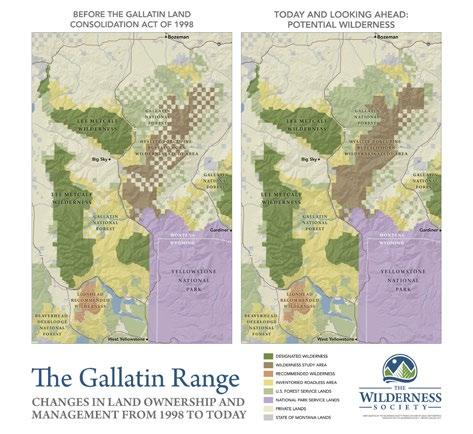
He was talking about the land immediately surrounding Big Sky, which had remained wild but was in danger of development, due to its odd checkerboard pattern of ownership that left wildlife habitat hopelessly intermingled with private land. Williams’ plea was heeded, and in 1993, the Gallatin Range Consolidation and Protection Act was signed into law, followed by another act in 1998.
Together, these two pieces of legislation swapped a smattering of lands between the U.S. Forest Service and Big Sky Lumber Company in the Bridgers,
Bangtails, Gallatins, and the Flathead and Lolo national forests for 101,000 acres of formerly checkerboarded lands, uniting wildlife habitat in the region.
This episode had lasting consequences for the future of both public land and private lands in Big Sky, and it’s a story that began almost 200 years ago.
Gallatin land swap timeline
1864
Abraham Lincoln signs the Northern Pacific Railroad Charter, giving the Northern Pacific Railroad Company 40 million acres of land in alternating 1-mile squares. This creates a checkerboard pattern of ownership along the new
route from Lake Superior to the Pacific Ocean, which cuts all the way across Montana.
1977
The Hyalite Porcupine-Buffalo Horn Wilderness Study Area is established, temporarily protecting the Gallatin Range.
1991
Entrepreneur and developer Tim Blixseth purchases 146,000 acres of land in the Gallatin Range from the Plum Creek Timber Company for $27.5 million.
1993
Montana representative Pat Williams helps pass the Gallatin Range Consolidation and Protection Act, also known as Gallatin I.
1998
The U.S. Senate passes the Gallatin Land Consolidation Act of 1998, or Gallatin II. Together, these two acts gave the Gallatin Forest Service 101,000 acres of land spanning the Gallatin National Forest and Hyalite-Porcupine Buffalo Horn Wilderness Study Area, while Blixseth’s Big Sky Lumber received a smattering of accessible, timber-rich land including a 15,200-acre parcel of land southwest of Big Sky. This mostly solved the checkerboard problem in the region and finally united wildlife habitat in the Gallatin Range.
1997
Blixseth begins construction on the Yellowstone Club in the 15,200-acre parcel obtained in the swap.
2008
After a decade of success, the Yellowstone Club files for bankruptcy during the Great Recession.
2009
CrossHarbor Capital Partners, a Boston-based private equity firm, buys the Yellowstone Club out of bankruptcy and continues operations.
2026
The Yellowstone Club continues to grow in stature and reputation. Its nearly 900 members are worth around $290 billion, and it’s attracted everyone from CEOs and tech founders to pro athletes and movie stars, bringing new business and attention to southwest Montana.
Explore Big Sky Explains is a new YouTube series that dives deep into topics touching Big Sky and southwest Montana. ILLUSTRATION BY FISCHER GENAU
BIG SKY TO HOST RENAISSANCE FAIRE IN LATE MAY
BY JACK REANEY
BIG SKY—The Magpie Foundation will present The Big Sky Renaissance Faire in Town Center on Memorial Day Weekend, offering a dragon-themed Medieval event with regional vendors.
The event will take place at the crossroads of Aspen Leaf Drive and Huntley Drive, offering a “historically-inspired medieval fantasy marketplace of artisans, craftspeople and dreamers,” according to the event website. Tickets are available online with free admission for seniors over 65 years old and children 10 and under. Natasha Bivens, CEO of the Magpie Foundation, said Big Sky offers both accessibility and natural beauty in a “stunning location,” and hopes the event serves as a showcase for similar events in the future.
The Magpie Foundation is a nonprofit based in Three Forks that specializes in helping honorably discharged veterans obtain infrastructure such as running water, septic systems and solar energy, among other support services and youth scholarships provided. The foundation has held an annual Renaissance faire fundraiser since 2023.
“The Magpie Foundation’s mission is two-fold: to improve the everyday lives of veterans with infrastructure projects, and provide an opportunity for military service members and vets to interact
with their community,” Bivens stated in an email to EBS. “Our Renaissance Faires achieve both of these objectives. Event proceeds directly fund the infrastructure projects, and attending the event provides a fun, welcoming environment for everyone.”
The foundation will donate 2026 proceeds to a veterans memorial project in Big Sky led by Patrick Griffith, a former Marine who served in the Iraq War and now owns Blue Moon Bakery.
Lone Mountain Land Company donated a small parcel of land, and the Big Sky Community Organization and Post 99 of the American Legion agreed to provide ongoing stewardship for the memorial, which will be located in the planned South Fork Park along Ousel Falls Road near Firelight Meadows.
Griffith was inspired by his travels around the state for a previous job, where nearly every community had some sort of veterans memorial. “And Big Sky just doesn’t have anything like that,” Griffith told EBS. “... “It just kind of seemed like a no-brainer that we should have something to honor these people and welcome them to the community.”
He said LMLC, BSCO and the Legion have been huge supporters and the community response has been overwhelmingly positive and rewarding.
Griffith is setting up a 501(c)3 nonprofit to begin collecting donations, and the Renaissance faire will likely be the first fundraiser. He hopes the memorial will be constructed in the next two to three years alongside the new park.
The event encourages potential vendors, merchants and volunteers to submit an online application. As of mid-March, involved vendors include performative fighters Sunz of Odin, acrobats and mermaids with Fairy Sisters, kilts by Thistle Mountain Traders, barbecue and turkey legs by The Filthy Pig, and mead by Valhalla Meadery. For activities, Bivens invites guests to test their skills in the battle arena, lock their friends in the pillory and taunt them with tomatoes, and take photos upon “the famous Throne of Destiny.”
LMLC initially brought the event to Big Sky, and will provide the space for the event as well as its role in connecting Magpie Foundation with the veterans memorial project.
“Lone Mountain Land Company is excited to be a part of the first of what we hope will be annual productions of the Renaissance Faire in Big Sky, bringing Medieval to the Mountains,” Jonathan Gans, LMLC community engagement liaison, stated in an email to EBS. “... This looks to be a really fun and exciting event accessible to and enjoyable by all of the Big Sky community.”
BIG SKY LISTINGS
BIG SKY COMMERCIAL LISTINGS
GALLATIN CANYON WOMEN’S CLUB TO HOST MSU PRESIDENT FOR COMMUNITY TALK
BY CARLI JOHNSON
BIG SKY—The Gallatin Canyon Women’s Club will host Brock Tessman, president of Montana State University, for a public community talk on April 16 in Big Sky, as part of celebrations leading up to the club’s 100th anniversary.
The free event will take place from 6 to 8 p.m. at the Warren Miller Performing Arts Center and is
open to everyone in the community. Founded in 1927, the club is approaching its centennial in 2027. Club leaders say the talk marks the beginning of a series of events planned throughout 2026 to build excitement ahead of the milestone celebration.
“This is really the women’s club inviting the entire community to the event,” said club president Amy Wisniewski. “It’s a kickoff as we start preparing for our 100-year celebration in 2027.”
During the event, Tessman will speak about his vision for the future of Montana State University and higher education in Montana. He is MSU’s 13th president and began his role in 2025.
The evening will also highlight the club’s long tradition of community scholarships. For the past 50 years, the organization has awarded a scholarship to a graduating senior from Lone Peak High School.
As part of its centennial celebration, the club plans to introduce a new “Centennial Scholarship” for a woman in the Gallatin Canyon community who wants to return to school or pursue additional training. The funding could support a college degree, certificate program or other educational opportunity.
The club, which raises funds primarily for local nonprofits and scholarships, is organizing the event with support from the Big Sky Chamber of Commerce and WMPAC staff.
More information about the event and other upcoming activities can be found on the Gallatin Canyon Women’s Club website.
The Gallatin Canyon Women’s Club was founded in 1927. COURTESY OF GCWC
BY JACK REANEY
SOUTHWEST MONTANA RESIDENTS SHARE PUBLIC COMMENTS ON ROADLESS RULE REPEAL
WITHOUT FEDERALLY PLANNED PUBLIC MEETINGS ABOUT REPEAL OF THE 2001 POLICY, ORGANIZATIONS HOST EVENTS IN BOZEMAN AND ACROSS THE STATE
BY JEN CLANCEY
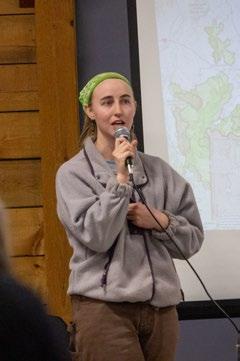
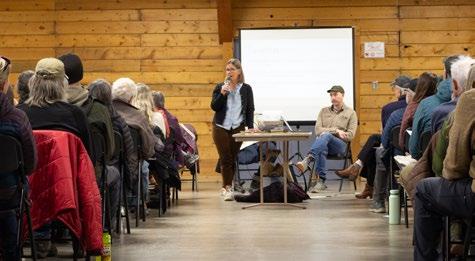
BOZEMAN—As more residents arrived at a Gallatin County Fairgrounds building on March 12, organizers unfolded and added chairs to rows of people ready to listen or offer public comment about the planned repeal of the 2001 Roadless Rule. The meeting was led by a group of organizations creating public input opportunities about the rescission of the conservation policy, and Bozeman was the second to last meeting location in a series of seven across the state.
In June 2025, the U.S. The Department of Agriculture Secretary Brooke Rollins announced intentions to repeal the Roadless Rule. Adopted under the Clinton Administration, the law banned construction, re-construction and timber harvesting on more than 58 million acres of public land. In Montana, six million acres are protected as roadless.
Hilary Eisen, the federal policy director at Wild Montana, explained that a group of public land advocates collected over 4,000 signatures and petitioned the chief of the U.S. Forest Service to hold public meetings regarding the Roadless Rule repeal, but the USFS did not respond. Thirteen organizations decided to group together and plan public meetings themselves instead.
“It needs to happen, like there needs to be community conversations about this very impactful change,” Eisen told Explore Big Sky. “So we’re hoping that maybe by demonstrating to the Forest Service how this works, that they will change their mind and they’ll hold meetings, but at the very least we are hoping that we can at least provide that opportunity.”
The event, centering on the Custer-Gallatin National Forest, began with a short panel with
Ryan Callahan, CEO and president of Backcountry Hunters and Anglers, Lisa Stoeffler, former Bozeman Ranger District leader with decades of forest management experience, and Vasu Sojitra, a professional mountain athlete, filmmaker and adaptive sports advocate.
Stoeffler described how protection has become more important since the Roadless Rule’s implementation, including threats of wildfire, water scarcity and climate change.
“There’s simply no good reason to upend the good work done at a local level with no rationale for doing so,” Stoeffler said. While the USFS has stated that roads promote access to fighting wildfires, research as reported by Robert Chaney in Mountain Journal, has shown that fire starts happen more frequently when in proximity to a road. In the meeting, Stoeffler shared that there are ways to improve the roadless rule, but warned against broad changes in lieu of carefully weighing site-specific solutions.
Sojitra also shared his perspective as an outdoors advocate with a disability.
“One of the biggest things for folks with disabilities is that we don’t need more roads to get places,” Sojitra said. “ We just need more programming to get to places.”
Sojitra also explained that through adaptive programming, he was able to fall in love with the outdoors, like many in the room, and that protecting the environment and wilderness is vital to health.
Public comment began later, and residents lined up one after the other to share what the Roadless Rule means to them, whether or not they support it, and why. Bozeman resident Karissa Wedman shared her experience working in conservation and wildland firefighting. She described her appreciation for protected public lands and noted that as a 25-year-old, the Roadless Rule has been in place her entire life.
“I would like to say something for people my age and younger,” Wedman said. “It’s that we don’t
wanna lose this. We love this, and it’s scary to think of the rest of our lives without it.”
Another Bozeman resident, Scott Bischke, described his connection with outdoor spaces in Montana.
“ We looked at the map today—just of all the road areas in Montana—and [I’m] confident to say that we have either recreated in each one of them or at the minimum been adjacent to them, fishing, hunting, enjoying the outdoors, all the different things that we do,” he said.
He then directed his comments about the current administration and urged leadership to use the Roadless Rule to protect further lands “for the critters that live there and for future Americans to explore.”
Other commenters included a Gallatin Gateway resident speaking to protect forests for future generations, including his 8-year-old granddaughter, and an Ennis resident and board member of the Montana Logging Association, who argued that the Roadless Rule needs deep reform.
The USFS is expected to release its proposed rule and draft environmental impact statement in late March or early April. When it’s released, Wild Montana will compile all of the comments collected in meetings, both verbal and written, and send the comments to the USFS. There will be hundreds, as attendance at meetings across the state was robust, Wild Montana Organizing Director Kascie Herron said.
“I’ve been blown away personally by the amount of community response that we’ve seen in each of these towns [where] we’ve held these meetings,” Herron said. She described comments from people on both sides of the argument, and noted that it was important to host meetings that promoted the democratic process typically seen in major land management decisions.
Helena was the final meeting location after Bozeman, and the coalition will now focus on communicating with attendees and preparing for the public comment stage.
Lisa Stoeffler speaks to southwest Montana residents, packed into a room at the Gallatin County Fairgrounds on March 12. PHOTO BY JEN CLANCEY
Karissa Wedman shares about the Roadless Rule. PHOTO BY JEN CLANCEY
ENVIRONMENT
DISPATCHES FROM THE WILD: MONTANA’S WILD INHERITANCE AT RISK
STEVE PEARCE AND THE FUTURE OF THE BLM
BY BENJAMIN ALVA POLLEY EBS COLUMNIST
If you care about hunting elk in crisp October air, floating a clear-running river for cutthroat trout, or simply taking your kids camping beneath a sky unspoiled by drill rigs, you should be outraged that Steve Pearce was ever considered to run the Bureau of Land Management.
The BLM is the largest landlord in the West. It oversees nearly 245 million acres of public land— millions of those acres in and around Montana’s most cherished places. This land is the backbone of our elk and mule deer herds, our sage grouse leks, our pronghorn migration routes and our blueribbon trout streams. It’s also the stage on which Montana’s hunting, fishing and outdoor recreation economy plays out.
Putting someone with Steve Pearce’s environmental record in charge of that land is like handing your cabin keys to the arsonist who’s always hated it. In the four months since Pearce was first nominated, it emerged that, if confirmed, he and his wife would divest from more than 1,000 oil and gas leases in Oklahoma to address potential conflicts of interest. While some senators strongly support his “active forest management” approach, he still faces opposition from groups alarmed by his record on public land transfers. On March 4, the Senate Energy and Natural Resources Committee voted 11-9 to advance his nomination, despite concerns from conservation groups.
Pearce’s track record is no mystery. He has consistently sided with extractive industries at the expense of wildlife, habitat and public access. He has supported opening more public lands to oil and gas drilling, weakening bedrock environmental safeguards and undermining science-based management. His votes and public statements have signaled again and again that he sees wild country as an obstacle to be overcome, not a legacy to be stewarded.
For Montana, that posture is an existential threat. Our big-game herds rely on intact winter range and unfragmented migration corridors across BLM lands. Aggressive drilling, poorly planned roads and relaxed reclamation standards shred those habitats. Once you carve up a landscape with pads, pipelines and traffic, you don’t get solitude—or mature bull elk—back with the stroke of a pen.
Anglers should be just as alarmed. Headwater streams and riparian corridors on BLM ground are the life support system for native bull trout, cutthroat and wild trout. A BLM director hostile to environmental safeguards is far more likely to greenlight development that increases sediment, degrades water quality and depletes the cold, clean flows our rivers depend on.
If Pearce takes office, outdoor recreation—and the rural economies built around it—will not be spared. In Montana, hunting, fishing and outdoor recreation pump billions of dollars into local businesses, guiding operations, gear shops and main-street cafes. People travel here precisely because of the open space, healthy herds and functioning ecosystems that BLM lands help sustain. When those landscapes are sacrificed to
short-term profit, we don’t just lose scenery; we lose jobs, identity and a way of life.
This is not a partisan issue, especially in Montana. Public lands are one of the few things we truly share: ranchers who graze allotments, tribal communities with cultural ties to these places, hunters and anglers who’ve long defended habitat, and families who just want a place to pitch a tent.
A BLM director should be a careful, sciencedriven steward accountable to all Americans— not a politician with a history of dismissing environmental protections as red tape.
Montanans know what’s at stake. We’ve fought bad ideas before—land transfers, giveaway leases, rollbacks to bedrock conservation laws—and we’ve won when we stood together. Steve Pearce’s nomination should have been dead on arrival. The fact that he was even on the list tells us how vigilant we must remain.
Our outrage must translate into action: calling elected officials, packing public hearings, writing letters and voting as if our public lands are on the line. Truly, they are. The BLM needs a director who sees these landscapes the way Montanans do: as sacred ground, not a balance sheet.
Anything less is a betrayal of the wild inheritance we’re supposed to pass on.
Benjamin Alva Polley is a place-based storyteller. His words have been published in Rolling Stone, Esquire, Field & Stream, The Guardian, Men’s Journal, Outside, Popular Science, Sierra, and WWF, among other notable outlets, and are available on his website.
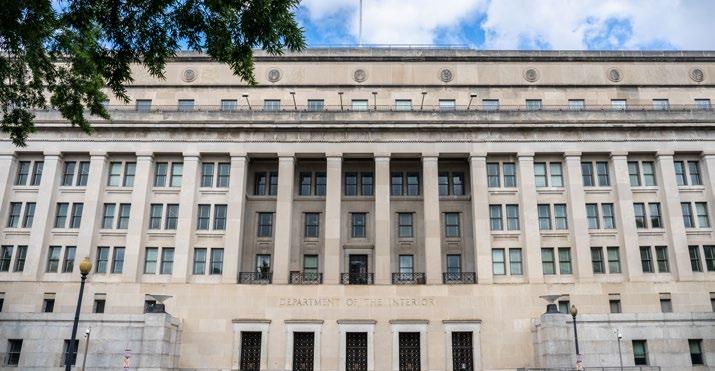
The Stewart Lee Udal Building is the main building of the US Department of the Interior, which includes the Bureau of Land Management. ADOBE STOCK PHOTO
ENVIRONMENT
WILDFIRE WIRE: Q&A WITH JEFF CADRY OF LMLC ON FIREWISE PRACTICES
BY MEL CRICHTON EBS COLUMNIST
With wildfire becoming a bigger part of our lives, especially as low snowpack increases its likelihood, I sat down with Jeff Cadry, who is leading a preventive approach to wildfire for Yellowstone Club, a.k.a. Firewise YC. Since firewise practices can apply to any community, I asked him to discuss the topic with regards to all of Big Sky, and beyond.
Wildfire Wire: Tell us about yourself.
Jeff Cadry: I came to Big Sky from Minnesota, for one year of ski bumming after college, and 15 years later, I'm still here. I got addicted to the good life. My wife and child love this community. I work for Lone Mountain Land Company as an environmental manager, a very broad title, but specifically I focus on how we manage forestry across our LMLC properties. I have a master's degree in forestry from Colorado State University, and trees and plants are my passion.
WW: You're involved with a program called Firewise Yellowstone Club. What is firewise?
JC: Firewise USA is a recognition program put together by the National Fire Protection Association to create frameworks for neighborhoods and communities to prioritize fire risks and put action on the ground.
WW: What's the benefit of that?
JC: Lots of benefits. One is mitigating the risk of wildfire burning down homes. Another is creating a safer environment for humans in the event of a wildfire.
WW: I've heard that if you minimize massive fires, you can also create better biodiversity where you've had small, limited fires. So there's healthy growth coming up underneath the canopy.
JC: Absolutely, it's more than just protecting homes, it’s also about protecting our environment. Our ecosystem evolved with fires burning regularly, and we suppressed them for the last 100 years and that has had some impact. But there are ways that we can modify our landscapes to mimic fire to create a healthier ecosystem.
WW: What do you have to do to be firewise?
JC: It starts with creating a board of community members, with the fire department—Big Sky Fire or Yellowstone Club Rural Fire Department— and then sitting down to create a plan for a risk assessment, then assessing the majority of homes in the community, putting together an action plan based off of that risk assessment, and then executing that action plan. Doing just a little bit every year can go a long way. And with all that, doing an education event for the area.
WW: You say assessing the majority of homes, so you don't need to be 100% to be firewise?
JC: Yep, the recognition can go for an entire community or an entire subdivision, but getting most of the homes in that risk assessment and pointing out the things that need to be done are the essentials.
WW: Has this been hard to do?
JC: Surprisingly no. It was a big thing to digest in
the beginning at Yellowstone Club, but the further I got into it, the more I realized that it was this framework that you're creating to apply action, and it's very well laid out by the NFPA so you bite it off in smaller chunks.
WW: You're a wildfire neighborhood ambassador, as am I. We sometimes find neighbors that push back, saying, “I'd rather let it burn; I'll take the insurance money and leave.” Do you see that in YC?
JC: I don't. For the most part, it's been met with really great reactions. In this day and age, we've seen enough mega fires throughout the U.S. that most people realize that wildfire is a real threat. It's not if a fire burns through Big Sky, but when.
WW: Are there financial benefits to becoming firewise?
JC: There are, indirectly. Insurance companies recognize the benefits of firewise. There are no guarantees that it will lower your rate, but it won’t hurt your situation if an insurance company is evaluating a property and you have a framework plan for mitigation.
WW: Recently Montana has made it easier for insurance companies to offer rebates, and if they deny insurance, they are required to provide their reasons for denial. Have you seen any effect with the high-end housing at YC?
JC: Not specifically yet, but to be fair, I'm not as involved on the insurance side.
WW: How big or how small can a firewise community be?
JC: It can be as small as your street, say two-plus homes, or it can be large—I believe up to 3,000 front doors. So there's a big range in there. And so it's up to your board to take on as many or as few homes as necessary.
WW: Can an HOA be the firewise board?
JC: Yes, the HOA can be the board. But you just need a community member involved in the HOA and the fire department.
WW: So, why you?
JC: It’s partly my job but also because I think it's a program that's worthwhile. It's a way to put ownership into homeowner's hands and show them that, “Here are your risks, and here are the ways you can manage those risks. Here's the most important and the least important priorities.” I think it gives clarity to homeowners on how they can get at these risks effectively.
WW: Anything else that YC is doing regarding fire safety?
JC: Yeah, a number of things. I think one of the most exciting prospects right now is YC, along with Big Sky Fire and the Forest Service, are working together to identify potential control lines in the event of a wildfire. Community wide, we're all working together to forward think on how we can be better prepared in the large-scale model of wildfire.
WW: You mentioned control lines—places where they can stand up to fire. We may see some work happening around this and wonder what's going on. What will we see physically?
JC: You'll see some work along roadsides, major roads and some minor roads, clearing vegetation back to the right of way and beyond. There will be activity that you may not see more on the periphery of our communities, doing fuel reduction, whether
that's in YC, Moonlight Basin, or Big Sky Fire clearing fuel breaks and creating lines for bulldozers in the event of fire.
WW: Anything else?
JC: Moonlight Basin and Spanish Peaks were recently recognized as firewise communities. We saw the work and the benefits there, and it seemed worthwhile to pursue Firewise for YC. Likewise, I think this program could apply to many communities in the greater Big Sky area, specifically HOAs. The infrastructure is set up for these communities, and it would be pretty easy to work with the fire department. I would be happy to help any HOA that wants to go through this process.
WW: Great! Back to HOAs, something we deal with as wildfire ambassadors. We have at least 80 HOAs in Big Sky. We don't exactly know their boundaries. I understand you're working on a map.
JC: We're working to put some lines on a map and really understand the extent of each of these HOAs and communities, and I think that'll be a helpful tool moving forward for wildfire risk reduction management, ingress and egress planning, and evacuation procedures. There's many benefits to identifying HOAs. You can see where your gaps are.
WW: Thanks for your time.
Mel Crichton acts as neighborhood ambassador coordinator for Fire Adapted Big Sky. He may be reached at kj9c@comcast.net.
COURTESY OF JEFF CADRY
Shift Into Luxury
THRIVING LANDSCAPES: DESIGNING FOR BIG SKY’S ENVIRONMENT
BY ALI CHIPOURAS EBS COLUMNIST
Many Big Sky homeowners want their yards to feel like a natural extension of the Montana landscape— featuring native plants, vibrant seasonal color and habitat that supports local wildlife. At the same time, growing concerns about wildfire and drought are pushing all of us to think more seriously about resilience.
There are proven ways to design native, droughttolerant and fire-resilient landscapes. But those solutions can sometimes be conflicting and don’t always align perfectly with personal goals or aesthetics.
At Alpenscapes, we hear concerns like this all the time: “I want a beautiful garden, but I’m not sure what will survive here,” or, “I still want some lawn for my kids, is that a waste of water?”
Designing in Big Sky is often about understanding tradeoffs. And that’s exactly why planning matters.
Get to know your landscape
Big Sky can be a tough place to plant. Long winters, short summers, drought, wildfire risk and a water supply tied to snowpack all influence our landscapes. Even within the Big Sky area, conditions vary widely; what works at your friend’s home in the meadow may struggle at higher elevations or down in the canyon. That’s why understanding your specific site matters.
Winter is actually a great time to observe and learn about your property. Where does snow pile from roof shedding or plowing? Where does water pool or run off when snow melts? Which areas stay shaded, and which get blasted by afternoon sun and wind?
These details matter. For example, heavy snow storage areas are often better suited to gravel and rock gardens, or hardy, low-growing native plants. Trees and shrubs planted directly below roof snowdrop zones rarely thrive.
Fire safety is part of landscape design
Creating defensible space is one of the most effective steps homeowners can take to reduce wildfire risk. It begins at your home’s foundation and extends outward across your property. Thoughtful spacing, reducing combustible materials near structures and incorporating non-combustible features like gravel paths or patios can dramatically improve safety.
Getting ahead of this work early, before vegetation fills in for the season, makes it much easier to manage.
Design with purpose
Once you understand your site, think about how you actually want to use your space. Do you need turf for the kids? A patio for gathering? Native plants that support pollinators? A lowermaintenance yard that uses less water?
Drawing a simple sketch of your property that includes features like structures, slopes, sun patterns, and defensible space zones can help give you a place to start. Start identifying plants that are already growing in your yard. From there, you can
start layering in ideas: gravel breaks near the home, native plant beds, rain gardens, permeable paths or a small, intentional lawn area.
Especially if you’re new to gardening or landscape planning, this may all feel overwhelming, but Alpenscapes’ partners are here to guide you every step of the way. The Alpenscapes partners offer free site visits, coming directly to your home to assess your landscape and provide tailored recommendations.
Awareness to action
On April 8, Big Sky SNO, in partnership with the Big Sky Fire Department, will host From Awareness to Action: Wildfire Resilience Workshop, a solutions-oriented workshop focused on helping owners associations reduce wildfire risk. Register in advance.
Alpenscapes is also excited to announce the upcoming Alpenscapes Guidebook, a practical resource filled with real design plan examples, plant lists and strategies tailored specifically to Big Sky conditions. The Alpenscapes partners, including Grow Wild, Big Sky SNO, the Big Sky Fire Department and the Gallatin River Task Force, recognized a need for more locally relevant resources to support homeowners and has shared its expertise in the guidebook.
Visit alpenscapes.org and sign up for our newsletter to stay up to date on the Guidebook release and where you can pick one up.
Ali Chipouras, writing on behalf of Big Sky’s Alpenscapes, is a sustainability and communications consultant helping organizations and communities in Montana advance their climate, resilience and communication goals.
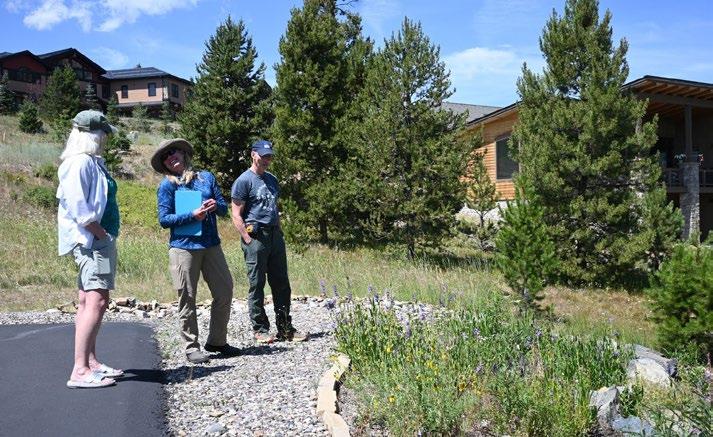
Jen Mohler with Grow Wild leads a site visit with Big Sky residents. PHOTO COURTESY OF THRIVING LANDSCAPES
THE AWAKENING OF THE WILD: 5 Reasons To Visit Yellowstone In Spring
Most travelers imagine Yellowstone National Park in summer, but spring reveals a quieter, more dramatic side of America’s first national park. From late April through early June, melting snow, surging waterfalls, and emerging wildlife transform the landscape into a season of renewal with room to explore. Here are five compelling reasons why spring is the perfect time to visit.
1. See the park come to life
Spring in Yellowstone is synonymous with baby animals. If seeing wildlife is high on your bucket list, this is arguably the best time of year to visit. In April and May, the valleys come alive with newborn bison calves taking their first clumsy steps. By early June, elk calves are often seen sticking close to their mothers near Mammoth Hot Springs. Wolves actively care for their dens and grizzlies, emerging from hibernation, are frequently seen foraging in the meadows, sometimes with babies in tow.
2. Experience the park with less crowds
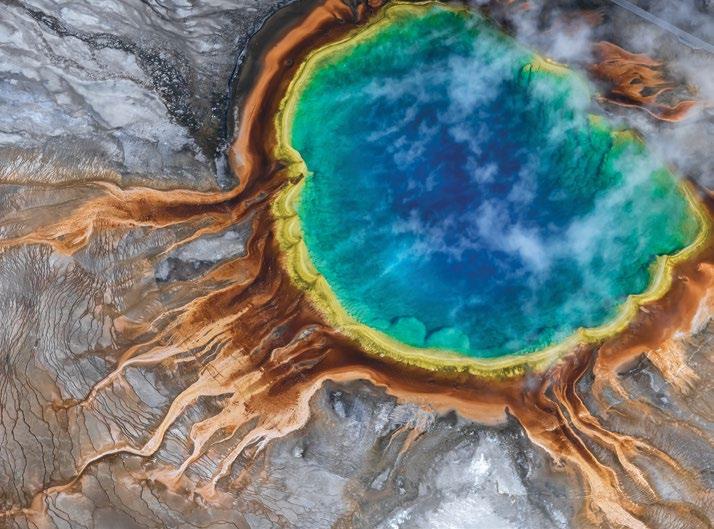
Before summer visitation peaks, the park feels open and unhurried. Enjoy iconic sights like Grand Prismatic Spring and Old Faithful with room to take it all in. Trails, boardwalks, and scenic drives are quieter and more peaceful. Spring offers a rare chance to connect with the landscape on your own terms.
3. Better lodging availability
Spring makes trip planning easier. Yellowstone’s lodges and campgrounds begin opening in late April. In-park favorites like Old Faithful Inn and Lake Yellowstone Hotel reopen with greater availability than peak summer months. Campgrounds and cabins also begin welcoming guests. You’ll have more flexibility and less competition for iconic stays.
4. Exclusive guided packages
Our spring vacation packages make it easy to explore the best of Yellowstone. For wildlife enthusiasts, we offer the Spring Wolf and Bear Discovery package in partnership with Yellowstone Forever Enjoy guided excursions into the Northern Range with a naturalist, combining safe wildlife viewing with insight into Yellowstone’s ecosystem.
If you’re drawn to Yellowstone’s geothermal features and roaring spring waterfalls, the Spring Into Yellowstone package showcases top park highlights, with opportunities to spot newborn wildlife along the way. Each package includes lodging, in-park transportation, most meals, and more, ensuring a seamless and unforgettable experience.
5. Unforgettable opportunities for adventure
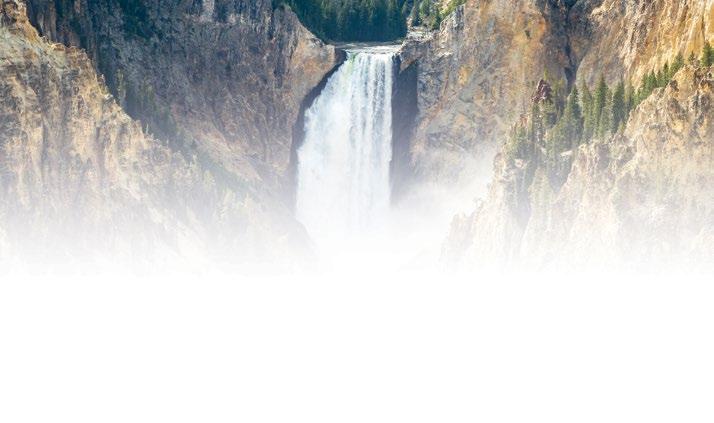
Spring is an ideal time to explore Yellowstone’s boardwalks and scenic drives as park roads reopen. Landmarks like the Lower Falls of the Yellowstone River surge with snow-melt, creating dramatic cascades and rainbows on sunny days. Enhance your visit by taking one of our daily Adventure Tours. Led by experienced guides, these tours offers expert insight and a deeper understanding of this remarkable landscape, geothermal features, history, and wildlife.
WE ARE READY TO WELCOME YOU
If you’ve been waiting to visit Yellowstone National Park, spring is the perfect time. Plan your trip now and experience the park at its most breathtaking. Whether it’s your first visit or a return, spring in Yellowstone is unforgettable.
GNFAC: SHARE AVALANCHE AND SNOWPACK OBSERVATIONS ENVIRONMENT
BY ALEX MARIENTHAL EBS COLUMNIST
At avalanche centers, we travel around the backcountry to gather data about snow stability and avalanche danger in popular recreational areas. We want to know how the snowpack is layered throughout the backcountry, where weak layers exist, or how much new snow or wind-drifted snow it might take to produce an avalanche. The snowpack and weather patterns can differ a lot across the large areas covered by avalanche centers.
Forecasters cannot travel to all corners of the forecast area every day, so we use observations from the public to help us figure out where the snow is unstable. You can help your nearby avalanche center by submitting observations through their website— visit mtavalanche.com to submit observations to the Gallatin National Forest Avalanche Center.
After a day in the backcountry let us know what you saw, especially if there were avalanches or if you triggered an avalanche. We often dig into the snowpack and do “snowpack tests” to find where the snow is unstable, as you may have seen in our videos and forecasts, but the most obvious sign that the snowpack is unstable is seeing recent avalanche
activity or triggering avalanches. When we know about recent avalanches, we don’t have to dig to look for instability.
We are familiar with the difficulty of reporting avalanche involvements, but mistakes happen, and others can learn and live by knowing about recent avalanches. We will keep your identity anonymous if desired, and we can mention vague locations to keep top secret powder stashes safe.
You do not have to submit highly detailed or technical reports. Simple information can be the most useful. Share the estimated depth and width of avalanches, and the slope aspect and elevation where they occurred, if possible. If you are inclined to dig into the snow, we like to hear about how deep the snowpack is and how deep weak layers are buried, or if you notice a different amount of new snow than what we reported.
Some areas do not have an avalanche center, but nearby avalanche centers can facilitate sharing observations. Skiers and riders in areas without an avalanche center should consider sharing observations through social media networks, such as snowmobile club pages or a Facebook group that has members who ski in similar or nearby areas. Reporting recent avalanches, signs of unstable snow or other observations can help people plan to avoid potentially dangerous areas. Go to avalanche.org to find the nearest avalanche center to your riding area and share your observations. Each avalanche center
has a place where you can submit observations to their website. If that doesn’t work, use email, social media or call and leave a message. You can find recent avalanche activity and snowpack data for areas you plan to ride on avalanche center websites. This information can prevent accidents and save lives. Thank you for your support and sharing observations.
Alex Marienthal is an avalanche forecaster with the Gallatin National Forest Avalanche Center. This was adapted from an article originally published in January 2023.
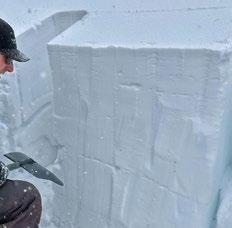
Forecaster Dave Zinn examines layers in the snowpack in Hyalite Canyon on Dec. 27. PHOTO COURTESY OF GNFAC
A&E
A LA CARTE: M BY ALINEA OFFERS THE COMFORT OF LUXURY
BY RACHEL HERGETT EBS COLUMNIST
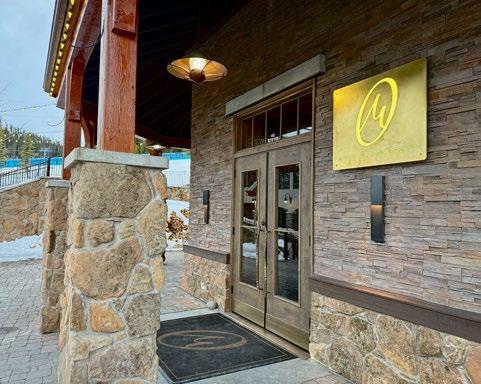
The experience of dining at M by Alinea begins with the entrance. Enter the heavy hewn doors of the pop-up concept restaurant that has graced the base of Big Sky Resort this winter and you are transported from the outdoor chill into a hug of wood and warmth, into an entry lined with soft forest green curtains—one of which is pulled aside by the staff to allow entry into the dining room. The use of liminal space feels like a welcome breath here, a moment of anticipation before the main event.
The Alinea Group is led by Grant Achatz, a chef “known for his modernist, emotional approach to cuisine,” according to his Culinary Institute of America alumni bio. He creates culinary experiences described as “experimental,” “theatrical” and “immersive.” His accolades list is long, including multiple Michelin stars and James Beard Awards. He opened Alinea in Chicago in 2005.
For the 20th anniversary world tour, the nowrestaurant-group has staged pop-ups in Tokyo, Beverly Hills, New York City and Miami Beach. In Big Sky, M has been open since December, and concludes its stint in Big Sky at the end of March. The tour concludes at the Bellagio in Las Vegas from April 16 to May 31. M, however, is unlike any of the other tour stops. It is a new concept for Achatz, a foray into so-called “alpine dining.”
“True luxury is finding the extraordinary in remote places—where a meal isn’t just served, it’s discovered,” Achatz stated in a release from Big Sky Resort. “That’s what we’re building here in Big Sky: something rare, fleeting and deeply connected to nature.”
M’s current tasting menu is 10 courses, with an optional gratin that—having tried to eat alone—I would heartily recommend sharing with a table of people. I would be remiss if I didn't note that a la carte options are available, especially given the name of this column, but a tasting menu allows a chef more control over the scope of the meal. They are able to take you on a journey through their culinary vision.
Before I took a single bite and attempted to discover Achatz’ version of true luxury, however, I discovered that the menu oozed luxury in the conventional sense as well. It included caviar, foie gras and a literal pile of shaved Périgord black truffle on top of the aforementioned gratin. Bring it on.
First to hit the table was a “shamrock green apple broth infused with spruce tips and topped with toasted pine nut froth,” served alongside a caviar topped cookie. Yes, a cookie. The meal started with perhaps the sweetest thing on the entire menu and gave it a hearty heap of Ossetra caviar from Regiis Ova, a company co-founded by Achatz’ mentor and former boss Thomas Keller. And you know what? It was incredible. My palate was dancing, taking in the unusual flavor combinations I’m doubtful I will experience again.
I’m beginning to see the chef’s vision in this
pairing. There is the element of surprise through the innovative use of alpine inspired ingredients, and both overt and subtle luxury. But despite the ways they lit my brain with its newness, each dish was, at its core, warm and comforting. M’s almondbrown butter financier with its fermented blueberry butter and sliced almonds transports me to my grandmother’s holiday cookie table. It’s essentially a thumbprint cookie, though I can’t say I’ve had a thumbprint topped with caviar. And sure, the froth and infusion added umami and herbaceousness, but the apple broth is essentially warm apple cider.
The cookie-cider duo was followed by a single bite of king crab thigh doused in a “popcorn jam” that looked and ate more like a hollandaise. My only complaint was that I wished for more. As a Montanan who has dropped a line or two in a river, trout doesn’t always feel like a luxury. M treats it as one, exploring the ingredient in a dish with birch bark smoked trout alongside a trout-skin chicharron topped with a trout mousse and birch syrup cured trout roe. I again wished for more, though not of the unnecessary tempura-fried sweet potato side.
A roasted chestnut stuffed pasta in a shape known as a “beggar’s purse” and oozing with the flavors of French onion soup prompted one of the waitstaff to remark that this is the “start of the comfort food portion of the meal.” Though I maintain the entire meal was rooted in comfort, things did get heavier. Take that croziflette gratin, which featured squares of buckwheat flour pasta rather than potatoes. It was entirely decadent in its cheesy, bacon-y gooeyness.
I was grateful for the lighter savoriness of the hen of the woods mushroom seared between a bed of herbs and an antique cast-iron iron. I love dramatic flair and presentation—as long as the actual meal
doesn’t suffer. Here, it doesn’t. M strives for and achieves European culinary precision. Each dish was impeccable, making me able to appreciate the iron and the baseball-sized truffles that one of the army of waitstaff paraded around in a satin-lined wood box and invited patrons to sniff. No invitation was needed, however, to smell the wafting aroma of the Pekin duck that also circled the room.
I appreciated the frozen pomegranate palate cleanser and the way the Aleppo peppers and pistachio oil lingered on my tongue. I could have used it earlier, though, before the ironed mushroom and its fruit-based toppings. There is only one more savory dish behind it here. Naturally, this dish was a steak. A damn good piece of ribeye accompanied by more beef and served with a proper knife. We are in Montana, after all.
Achatz has achieved something interesting in this combination of comfort and luxury. M’s tasting menu is grounded in a sense of place, then soars. It is rooted in memory then reminds you of the adventure in seeing something familiar through new eyes. Emotional cooking, indeed.
The meal’s finale was the most unassuming dish, a nearly white sphere of ice cream centered in a nearly white shallow bowl. We don’t get to see the theatrics here, though I am told they involve burning a ponderosa pine log and throwing it into an ice cream base where it is left overnight to infuse flavor. The result is an exquisite smokiness that evokes memories of campfire gatherings, of Montana, of home.
Rachel Hergett is a foodie and cook from Montana. She is arts editor emeritus at the Bozeman Daily Chronicle and has written for publications such as Food Network Magazine and Montana Quarterly. Rachel is also the host of the Magic Monday Show on KGLT-FM and teaches at Montana State University.
M by Alinea Group is a temporary culinary residence at Big Sky Resort's base area. PHOTO BY RACHEL HERGETT
COMMUNITY EVENTS CALENDAR
Read the full events calendar, or submit your own community event by scanning the QR code.
BIG SKY WINTER SHOOTOUT
THURSDAY, MARCH 26
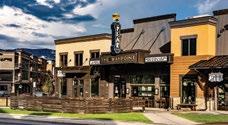
THE WAYPOINT, 5 P.M., 6:30 P.M., 8 P.M.
The Big Sky Winter Shootout will hold its 11th year at The Waypoint with three showings on March 26. Presented by Second Season, the film festival is described as “a full on visual celebration of Big Sky’s community and mountain culture,” on Second Season’s website, and is known for showing local perspectives capturing life in Big Sky.
Tickets are available online.
Do You or Someone You Know Need Help Getting Sober?
Can’t stop drinking? We get it. Contact Alcoholics Anonymous today! Call 1-833-800-8553 to talk to an AA member or go to a meeting in-person or online. For a full list of meetings visit the website, aa-montana.org, or download the MEETING GUIDE® APP IF YOU HAVE A PROBLEM WITH ALCOHOL, CONTACT AA WE CAN HELP!
PHOTO BY FISCHER GENAU
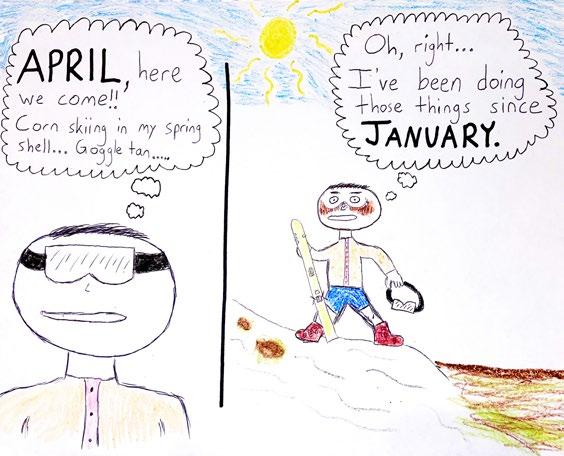
SKI TOWN VIGNETTES: THE WINTER I STOPPED CARING ABOUT THE RAT RACE
BY NIELSEN GREINER EBS COLUMNIST
I strolled up to the gondola on a mild, sunny afternoon and passed through the gate to the singles line, glancing at the number on the screen after the beep. I thought, “Only 35 days and it’s the beginning of March? Sheesh. I really dropped the ball this season.”
Prior to this winter, I had a job for many years that allowed me to ride most any day of the ski season, if I wanted. This year, things changed—or I changed.
Ski towns have their own version of the rat race. What makes our rat race any different than any other, as counter-cultural as dirtbag life may appear on the surface? The ski town rat race doesn’t involve business suits and briefcases, but Gore-Tex shells and expensive skis or boards; it doesn’t include trading on the stock market or bragging over sales figures, but trading stories on line choice and
quality, or bragging about the number of tram laps and ski days.
In ski towns and similar outdoor-lifestyle-focused destinations, we locals often pride ourselves on being independent and individualistic. Even so, like anywhere else we may quickly blend into the crowd and lose these very characteristics, adopting our own versions of “keeping up with the Joneses”—trying to ski as many days as so-and-so, for example, forcing ourselves out the door to do so when, on some days, our time may be better spent. This is just one of many examples; I’m certain you can find your own.
While I’ve had a few consecutive years of 100-plus ski days in the past, this winter I’ve taken more days off than I have in many years. Maybe it’s because I’ve been too tired to ride after the backbreaking work of snow shoveling, or picking up side work that cuts into the ski day, or long stretches of mediocre snow conditions, or a passion project that kept me days on end at my desk during a high and dry spell. Or maybe I’ve just needed a break in general. Whatever the case, I don’t go out just because I can or have to, but because I want to.
And it’s freeing to come out from under the selfimposed pressure.
I know this speaks to a certain amount of privilege, the fact that I have the time and freedom to opt out most days on what others might only be lucky enough to do one week a year. But for all of us— and I speak not only of skiing, but more broadly— there is some image to which we feel the pressure to conform, some internal or external expectation we relentlessly attempt to fulfill. Thankfully, we can train ourselves to resist, to cut back or say no, if it’s best for our own life or season.
I have friends who’ve found partners and more serious jobs and bought homes and dialed it back, still enjoying the ski town life within a healthy balance and broader rhythm. I have friends who get after it just as much as ever before, and would have nothing less.
Neither of these are right or wrong. It’s up to us to know what we need and when we need it, season to season and year to year.
Nielsen Greiner is an aspiring writer, outdoor enthusiast, and small business owner based in Big Sky. To read more, visit nielseninthewild.com.
Ridgeview Loop, Big Sky
11 Speaking Eagle, Big Sky
BUSINESS
ARE YOUR EMOTIONS COSTING YOU MONEY?
TEN PSYCHOLOGICAL TRAPS THAT DERAIL EVEN THE MOST DISCIPLINED INVESTORS
— AND HOW TO BREAK FREE FROM THEM SO YOU CAN ENJOY THE RIDE
BY BRANT WIEHARDT EBS CONTRIBUTOR
Sponsored article
Every investor knows the rules: buy low, sell high, diversify, stay the course. So why is it so hard to follow them?
The answer, more often than not, has nothing to do with spreadsheets or stock charts. It lives between your ears.
Behavioral finance is the study of how psychological factors influence financial decisions. Over the past four decades, researchers—including Nobel laureates Daniel Kahneman and Richard Thaler— have catalogued dozens of cognitive biases that cause ordinary investors to make costly, irrational choices. The good news: once you can name a bias, you can begin to tame it.
Below are ten of the most common behavioral traps, what they look like in real life, and what you can do to protect your portfolio from your own worst instincts.
"In investing, what is comfortable is rarely profitable." — Robert Arnott
1. Anchoring
Anchoring occurs when investors fixate on a specific reference price—typically the price at which they purchased a stock—and use it as the benchmark for all future decisions, even when that number is no longer relevant to the investment's current prospects.
Example: You bought a stock at $80. It fell to $45. Rather than evaluating the company on its current fundamentals, you refuse to sell until it “gets back to $80.” The original purchase price has become an anchor — an arbitrary number that has no bearing on whether the stock is a good investment today.
What to do: When reviewing any holding, ask yourself: “If I had $45 in cash today and no position in this stock, would I buy it?” If the answer is no, the anchor is controlling you—not sound analysis.
2. Prospect Theory
Developed by Kahneman and Tversky, Prospect Theory demonstrates that people do not weigh gains and losses symmetrically. Psychologically, losing $1,000 feels roughly twice as painful as gaining $1,000 feels pleasurable. This loss aversion distorts rational decision-making in predictable ways.
Example: An investor holds two positions— one up $5,000, one down $5,000. Prospect Theory predicts she will sell the winner to 'lock in' the gain (reducing the pleasure of winning) and hold the loser to avoid crystallizing the pain of a
loss. Both instincts work against optimal portfolio management.
What to do: Reframe decisions in terms of total portfolio value rather than individual position gains and losses. A dollar lost and a dollar gained should carry identical weight in your analysis.
3. Recency Bias
Recency bias is the tendency to give disproportionate weight to recent events when forecasting the future. Investors experiencing a bull market begin to believe markets only go up; investors who lived through a crash expect another around every corner. Both groups are prisoners of their most recent experience.
Example: After three consecutive years of doubledigit returns in a sector, retail investors pour money in—just as the cycle turns. Conversely, after a sharp correction, many investors move entirely to cash and miss the recovery. Market timing based on recent trends has a poor historical track record.
What to do: Study long-term market history, not just the last 12 months. A written investment policy statement that defines your strategy in advance can serve as an anchor against reactive decision-making.
"The investor's chief problem—and even his worst enemy—is likely to be himself."
— Benjamin Graham
4. Overconfidence
Study after study confirms that most investors— amateur and professional alike—believe their stock-picking and market-timing abilities are above average. Statistically, this is impossible. Overconfidence leads to excessive trading, underdiversification, and the mistaken belief that one has an 'edge' the market has not already priced in.
Example: An investor who correctly called two market moves in a row becomes convinced she has a system. She begins concentrating her portfolio in high-conviction bets and trading more frequently. Transaction costs rise, diversification falls, and a few bad calls erase years of gains.
What to do: Track every trade, including the ones you almost made. Compare your return—net of all fees and taxes—to a simple index fund over the same period. The data is usually humbling.
5. The Disposition Effect
The disposition effect—a term coined by researchers Shefrin and Statman—describes the well-documented tendency of investors to sell winning investments too quickly while holding onto losing ones far too long. It is, in part, an outgrowth of both anchoring and prospect theory.
Example: An investor's portfolio holds Stock A (up 40%) and Stock B (down 35%). Wanting to “realize a win,” she sells A and holds B hoping for
a rebound. In practice, this approach systematically harvests gains early and defers losses—the exact opposite of tax-efficient investing, and often of sound fundamental strategy.
What to do: Implement a disciplined rebalancing schedule. Tax-loss harvesting—strategically selling losers—is the rational inverse of the disposition effect and can add meaningful after-tax returns over time.
6. The Snakebite Effect
Like someone bitten by a snake who forever avoids the outdoors, investors who suffer a significant loss in a particular asset class often develop a lasting aversion to that entire category— even when the circumstances that caused the loss have long since changed.
Example: An investor who lost money in technology stocks during the dotcom bust avoided the sector entirely through the 2010s—missing one of the strongest decade-long rallies in market history. The snakebite was real, but the avoidance became a permanent drag on returns.
What to do: Separate the specific risk factors of a past loss from a broad asset class. Ask: has anything fundamentally changed? Valuations, business models, and market structures evolve. A prior loss is data, not a verdict.
7. Breakeven-itis
Breakeven-itis is a cousin of anchoring. It describes the psychological compulsion to hold a losing investment until it returns to the original purchase price before selling—not because the investment has merit, but because selling at a loss feels like admitting failure.
Example: An investor buys a stock at $60. It falls to $30. Rather than reassessing the investment on its current merits, she vows to hold until she is “made whole.” Meanwhile, the capital sits tied up in a poor investment rather than being redeployed into better opportunities. The market, of course, has no idea— or obligation—to return her stock to $60.
What to do: Recognize that the cost basis is irrelevant to an investment's future prospects. The only question that matters: is this the best use of my capital today?
8. Mental Accounting
Mental accounting—another concept pioneered by Richard Thaler—describes the habit of treating money differently depending on its perceived source or intended purpose. We place money into psychological “buckets” and apply different rules to each, even though a dollar is always worth a dollar.
Example: An investor receives a $10,000 tax refund and promptly takes a vacation and buys lottery tickets—money she would never have spent so frivolously from her savings account. Similarly,
investors often take outsized risks with “house money” (recent gains) that they would never take with principal.
What to do: Before making any financial decision, replace the label on the money with a simple question: “Is this the best use of $X, regardless of where it came from?” Treating all dollars as interchangeable leads to more rational allocation.
9. Herd Mentality
Humans are social animals wired to find safety in numbers. In financial markets, this instinct manifests as herd mentality—the tendency to follow the crowd into (or out of) investments, not because of independent analysis, but because “everyone is doing it.” Herding is a primary engine of asset bubbles and market panics.
Example: In the early months of 2021, retail investors piled into meme stocks and speculative assets largely because social media communities were celebrating their rise. Many bought at or near the top, following the herd—and absorbed devastating losses when sentiment reversed.
What to do: When your reason for investing is that “everyone is talking about it,” treat that as a warning, not a recommendation. Popularity and investment merit are not the same thing, and they are frequently inversely correlated.
10. Home Bias
Home bias is the tendency of investors to overallocate to domestic stocks and bonds simply
because they feel more familiar and comfortable. While patriotism is admirable, domestic familiarity is not an investment thesis. U.S. investors, for example, often hold portfolios with 80–90% domestic exposure despite the U.S. representing roughly 60% of global market capitalization.
Example: A Montana investor holds a portfolio consisting almost entirely of large U.S. companies and locally headquartered businesses. Emotionally, these feel “safe” because they are familiar. In reality, the portfolio is dangerously under-diversified across geographies, currencies, and economic cycles.
What to do: Build global diversification into your investment policy statement deliberately. International and emerging market exposure has historically provided meaningful diversification benefits—particularly during periods when U.S. markets lag. Familiarity and safety are not synonymous.
The Antidote: Process Over Emotion
Behavioral finance does not suggest that all investors are irrational all the time. It suggests that all investors are vulnerable to predictable, systematic errors—and that awareness alone is not enough to prevent them. The most effective protection is structure: a written investment plan, a disciplined rebalancing process, and—where appropriate—a trusted financial advisor who can serve as an objective sounding board when emotions run high.
Markets normally reward patience, diversification, and process. They normally punish impulsiveness,
concentration, and emotion. Knowing the enemy— your own cognitive biases—is the essential first step toward investing with the clarity and discipline your financial future deserves.
"The stock market is a device for transferring money from the impatient to the patient." — Warren Buffett
Brant Wiehardt is a Partner and Financial Advisor at Shore to Summit Wealth Management. He currently works and lives in Bozeman, MT with his wife and children.
Wells Fargo & Company and its affiliates do not provide legal or tax advice. This communication cannot be relied upon to avoid tax penalties. Please consult your tax and legal advisors to determine how this information may apply to your own situation. Whether any planned tax result is realized by you depends on the specific facts of your own situation at the time your tax return is filed.
This article was written by Wells Fargo Advisors Financial Network and provided courtesy of Brant Wiehardt – Associate Vice President Shore to Summit Wealth Management in Bozeman, MT at 406-219-2900.
In Big Sky, running a small business isn’t just about serving locals and seasonal visitors, it’s also about navigating the complexities of employees, affordable housing, health insurance and payroll, all while trying to stay afloat in a competitive mountain town. That’s where partnerships like the one between the Big Sky Chamber of Commerce and UnitedHealthcare come in. Together, they’ve created an association health plan that supports small business owners as part of a larger insurance group, giving them access to benefits and rates usually reserved for bigger organizations.
At the helm of this program is Carmen Cooper, CEO of UnitedHealthcare’s Northwest health plans. With a decade-long career spanning account management to executive leadership, Cooper has spent her career helping small businesses and their employees gain better access to healthcare while building strong community ties. Explore Big Sky spoke to her about Montana, regional small businesses and what makes the Big Sky community so special.
This series is part of a paid partnership with the Big Sky Chamber of Commerce. The following answers have been edited for brevity.
Explore Big Sky: Can you explain how UnitedHealthcare works with the Chamber and what that means for small businesses in the community? Carmen Cooper: I support the Pacific Northwest health plans for UnitedHealthcare, and within that, we have a relationship and a partnership with the Big Sky Chamber, where we’re able to provide an association health plan. So through this relationship, we can provide any member of the chamber, even a very small business, the opportunity to be treated like a jumbo group.
We can combine all of the chamber members into a pool of employers, and we leverage the strength of that pool to help provide service at a more aggressive rate. So we save quite a bit from a premium perspective than if the group were standing alone.
EBS: Is this something unique to Big Sky or something other chambers do as well?
CC: It’s available to all chambers across the state of Montana that want to participate, which is pretty cool. I wouldn’t say that it’s a consistent offering across all states, though. In other states some chambers have health plans attached to them. Some sponsor health plans, meaning they advocate for a particular carrier, but they don’t necessarily have a formal arrangement in place. So it is actually kind of unique and one of the few association health plans in the state of Montana today.
EBS: What role did the chamber play in bringing the program together?
MAKING IT IN
BIG SKY:
CARMEN COOPER, CHIEF EXECUTIVE OFFICER OF NORTHWEST STATES, UNITEDHEALTHCARE
CC: Well, for one, Brad Niva is an incredible resource in the community of Big Sky, just to start there. And I think the genesis of this program was really out of Brad’s focus and wish for the businesses in the chamber to have something that differentiated the value of their memberships. Health care was something he thought would be a huge advantage to those businesses. So I think a lot of it started there. He’s been incredible and instrumental for this program and overall for strengthening the chamber’s value and presence in the community.
EBS: Can you tell us a little about UnitedHealthcare and how your region works?
CC: UnitedHealthcare essentially has local offices in each state for the most part. There are some exceptions, but we deploy local teams and create local opportunities for each region, and then we take advantage of the scale of the UnitedHealthcare enterprise. For example, one of our footprints in Montana is through an incredible representative who lives in the Bitterroot Valley, and he really supports businesses across the state through his teams.
I run our Pacific Northwest health plan that includes Washington, Oregon, Alaska, Hawaii and of course, Montana. And then that rolls up into a larger national footprint.
EBS: How did you find your way into the healthcare industry?
CC: I am coming up on my 10th anniversary with UnitedHealthcare, which is wild. I actually started at UnitedHealthcare as an account manager on the small group side. So think small businesses, which are under 50 employees, that are getting coverage through the exchange or otherwise. Over time, I had the opportunity to step into new roles and new responsibilities, and now I am in the CEO role.
I think health insurance found me, but my purpose kept me here. Ultimately, being able to help people has been one of the best parts of this job. Because I think health insurance is often there to support when people have the least capacity to deal with it.
It’s been an incredible journey to be a part of the solution to the health care challenge that we have overall in America right now, and to be able to make an impact in helping people get better access to care, more affordable care and higher quality care.
EBS: What makes your team successful?
CC: I think our team is really successful, mostly because of the empathy they have for others, and they enjoy helping people. We also have people on our team who focus on helping our members live healthier lives through wellness programs. For example, we have a program embedded in the chamber plans called UHC Rewards. Essentially, if you make healthy decisions—like if you walk 10,000 steps a day or get an annual checkup—we
will reimburse you for some of your health care expenses, or in some cases, we will even just send a gift card as an incentive.
EBS: What has been your impression of the Big Sky and Montana community?
CC: I think there is a lot of support. One of my favorite events that we sponsor every year is called Digger Days, which raises money for Eagle Mount. Kids can engage with and watch heavy machinery at work. They can touch a tractor, ride in an excavator or sit in a dump truck. And there is no cooler event for a three-year-old little boy, like my son, or a little girl than getting to climb in a dump truck.
The entire event is run by volunteers, local contractors and construction crews. And multiple companies donate their machinery for the weekend. It’s a really incredible demonstration of what community in Montana looks like and how it comes together for important organizations and causes.
EBS: In such an important role of leadership and team building, what is some of the best business advice you’ve received?
CC: I think the best business advice would have to be around the concept of understanding that instead of working toward an end result, it’s often more about putting the effort in. If you hustle, everything will almost always fall in line. It’s not always about the result as much as it is about the effort. If I work hard, if I give it my all every single day, and I can put my head to bed every night knowing that I really tried and did everything I could, good things will follow.
EBS: That is really good advice, in so many aspects of life. On that note, can you think of what good things have come from your time spent in Montana? Is there a memory that stands out?
CC: Yes. It’s waking up at the Rainbow Valley Lodge in Ennis, having a hot breakfast, and then going fishing on a guided tour. I’m not actually very good at fishing, but the effort is there, and it makes you feel really good when the guides know all the flies and where to cast. Then in the afternoon, I love sitting outside on the porch and talking to the guides and hearing about their lives. Everybody is friends in Montana, and happy; it’s always nice to be a part of that when I visit for work or for fun.
PHOTO COURTESY OF UNITED HEALTHCARE
HEALTH
HEALTH BUZZ: UNLOCKING HEALTH THROUGH PATTERNS YOUR HIDDEN
BLUEPRINT FOR WELLNESS
BY KALEY BURNS EBS COLUMNIST
In the hustle of modern life, it’s easy to treat health like a checklist: eat better, sleep more, exercise. But what if true wellness isn’t just about what you do, but the patterns your body, mind and spirit are whispering to you every day?
Patterns are the hidden blueprint of your health. They’re the subtle rhythms of energy, mood, digestion and stress that, when observed carefully, reveal why you feel the way you do—and how to change it.
Imagine your health as a symphony. Each aspect— nutrition, sleep, emotional balance, movement, and environment—plays a part. If one instrument falls out of tune, the whole harmony suffers. Patterns help you detect which instruments are off and guide you to restore balance before small issues turn into chronic problems.
Some examples of health patterns are: energy dips after certain meals or at specific times of day; mood cycles that repeat weekly or monthly; digestive responses to specific foods or stressors; and sleep disruptions linked to technology, stress or lifestyle habits.
Recognizing these patterns allows you to intervene intentionally, not reactively, and transform your
health with holistic tools. Once you know your patterns, you can harness the full spectrum of holistic therapies to optimize your wellness.
Here’s a few types of therapies worth trying. These tools are precision instruments that help you work with your body’s natural patterns rather than against them.
Acupuncture balances energy pathways and reduces chronic stress or pain.
IV nutrient therapy delivers vitamins, minerals, and antioxidants directly into your system for immediate cellular support.
Functional nutrition through tailored dietary plans based on your unique digestive, metabolic, and hormonal patterns will support balance.
Mind-body practices like yoga, meditation and breathwork can rewire habitual stress responses for long-term mental clarity.
Here’s how you can get started as you look for patterns.
First, track and reflect: Keep a simple journal of energy, mood, meals and sleep for two to three weeks. Look for recurring themes, and notice triggers for fatigue, anxiety, cravings or inflammation.
Next, integrate holistic support by consulting practitioners of the above therapies to address imbalances identified in your patterns. Experiment and adjust, hearing feedback from your body to
refine your approach. Small, intentional changes will add up to profound results.
The power of awareness is magnificent. When you understand your patterns, health becomes predictable, manageable and deeply personal. No more guessing, no more temporary fixes. You’re learning the language of your own body, and every insight gives you more control over your energy, immunity and longevity. In a world that pushes quick fixes, patterns offer something deeper: a roadmap to holistic health that empowers you to live with clarity, vitality and resilience.
I’ll leave you with a small challenge.
Tonight, jot down one energy spike and one slump you experienced today. Tomorrow, try a small adjustment like a 10-minute walk, a mindful breath or a vitamin infusion, and see how it shifts your rhythm. Small experiments reveal big truths.
The more you listen to your patterns, the more your body becomes resilient, and energized. Instead of reacting to symptoms, you’re proactively guiding your health and finally experiencing holistic wellness.
Dr. Kaley Burns is a licensed Naturopathic Physician providing a wide range of services for her clients, including: Naturopathic Medicine, IV Nutrient Therapy, Regenerative Injections, Rejuvenation Therapies, Vitamin Shots, and Nutrition Counseling. She embraces a natural approach to health and aims to similarly inspire and guide others on their health journey.
ADOBE STOCK PHOTO
IT’S TIME TO PROTECT THE ELK AND DEER HERDS OF GALLATIN GATEWAY AND BIG SKY
3,562
Deer and Elk were killed by vehicles in Gallatin County since 2008.
PRIORITIZE WILDLIFE CROSSING SOLUTIONS. SUPPORT AND DONATE TODAY.
EBS STAFF CARTOON
ILLUSTRATION BY JACK REANEY
Jack Reaney's elementary school art teacher told him, point blank, he wasn't an artist. As ruthless and uninspiring as the educator's words felt, she may have had a point. Still, Jack brought his Rose Art crayons and third-grade art skills to this cartoon as part of a new Explore Big Sky series featuring cartoons by EBS writers.
The inspiration for this cartoon is obvious to anyone who spent time in Montana this winter. Record warm temperatures have made for some interesting skiing, with many days of springlike snow.
At press time, Bozeman's immediate forecast reached the 70s in mid-March. We'll see about April!
500 years ago, at least 30 million bison roamed the plains. That number is now less than 30,000. The depletion of free range bison has been attributed to:
• Decades of over-exploitation
• Decline in genetic diversity
• Habitat loss
• Human Interaction
Yellowstone National Park boasts the nation's largest free range buffalo herd, but only two others remain - the Henry’s Mountains and Book Cliffs herds, both in southern Utah.